
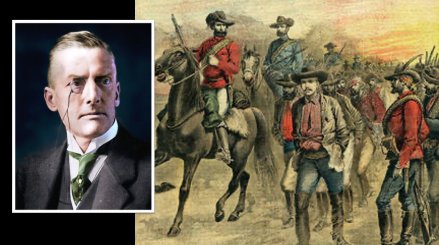
I’ve been reading up on the Jameson Raid, and whether Joseph Chamberlain, the State Secretary to the Colonies was complicit in planning the Jameson Raid along with Cecil Rhodes – and I can’t really find solid proof of this accusation – the accusation was initially levelled at Chamberlain by Paul Kruger in his attempt to link the raid as proof positive of Britain’s (i.e. Westminster and the Queen) intentions to invade the ZAR and therefore in contravention of the 1884 London Convention, taking the opportunity to insist the Convention (read suzerainty ‘lite’) is torn up, and the ZAR afforded its full rights to sovereignty (as its own ‘alma mater’ was now its threat).
So, it’s critical to Kruger that complicity is proven, a lot of committees and investigations follow that basically prove Rhodes’ complicity (resulting in his resignation) but they exonerate Chamberlain – nothing sticks to him.
Later writings during the Boer War in 1901 by Sir Graham Bower, the Imperial Secretary to the High Commissioner and subsequent Governor General – Sir Hercules Robinson – Bower reflects that Rhodes had informed Sir Hercules Robinson in October 1895 of the potential of a revolt on the reef (of which there was – the Reform Committee was getting highly agitated), which Rhodes was prepared to support whether the Colonial office was prepared to or not – and the question is asked whether Britain should intervene, Rhodes also insisting the BSAP police be moved from Betuananland (Botswana) to Mafeking in case there is a revolt. Sir Hercules Robinson would hear about none of it and confines the matter to conspiracy theory sending Rhodes on his way. Linked to this is an unsupported allegation that Chamberlain knew of Rhodes’ position in addition and an accusation of complicity is given – but it’s all highly speculative with no substance.
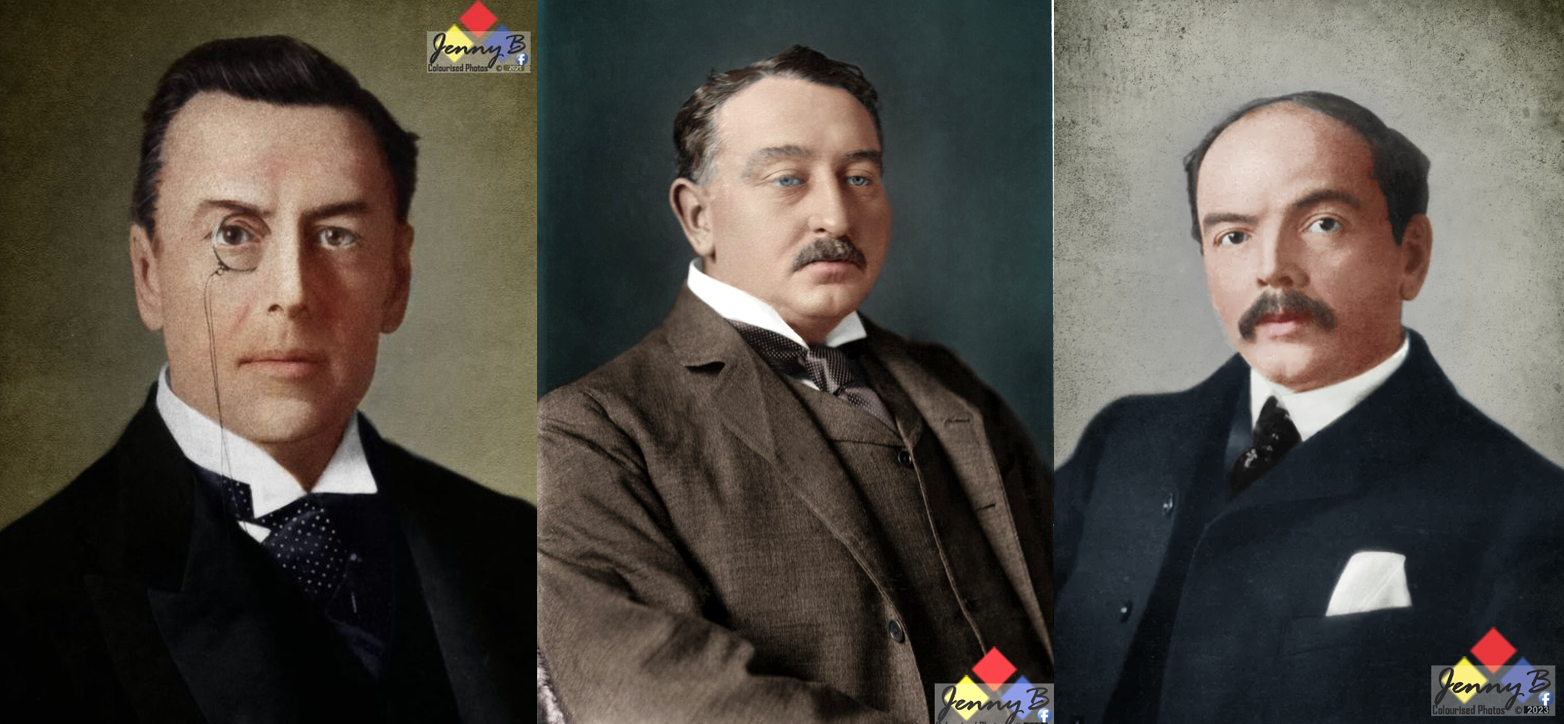
Clearly the matter of a potential revolt happening on the reef was been discussed, which is not unusual given the volatility on the reef, and a hypothetical ‘raid’ discussed should there be a revolt – which seems by all accounts to have been dismissed by both Robinson and Chamberlain.
Chamberlain had even informed the Prime Minister Lord Salisbury that a rebellion on the reef was expected given the signals coming from the Reform Committee, though he said he remained uncertain of its date. In fact, on the 26th December 1885, Chamberlain had requested his Assistant Under-Secretary to encourage Rhodes to “hurry up” and sort the matter out, as Chamberlain himself was embroiled in trying to sort out the Venezuelan crisis of 1895 and had his hands full.
Later, during investigations, Rhodes’ solicitor tried to pin pre-meditated knowledge of the raid itself (not the potential rebellion) on Chamberlain based only on the use of his words “hurry up” – the context of which is not given and at best its a stab in the dark.
As Edmund Garrett concludes in the “Story of an African Crisis” written at the time in 1897 to get to the bottom of the matter – Chamberlain may have known of a potential raid i.e. “a raid” but he did not know of the actual raid itself i.e. “the raid”.
Outside of this wishy washy finger pointing and hearsay I can find absolutely no proof whatsoever that ‘Westminster’ I.e. Britain and its ‘establishment’ in London itself, and not the Colonial office in South Africa, was aware of any raid – potential, planned or otherwise.
Chamberlain’s reaction when he hears of the raid on the 31 December 1885, says everything as to his non-complicity in the Jameson Raid and abject rejection of any idea of it – he says of the Jameson Raid now in progress;
“If this succeeds, it will ruin me. I’m going up to London to crush it”.
He then orders Sir Hercules Robinson to repudiate the raid. By this comment, Chamberlain means that the Raid is in contravention of the London Convention and it flies in the face of British foreign policy and guarantees he and others have been making to the ZAR as to ‘independence’ to deal with its own internal matters.
After the unsuccessful raid Joseph Chamberlain himself, professing his innocence in the matter, insists on a Westminster select committee to investigate the matter fully and has full powers to request any information, insisting that nothing is to be withheld. This committee later exonerates Chamberlain, however critics of it say that it closed its investigations prematurely.
Other than Kruger trying to score a political coup to get the ZAR out of Britain’s suzerainty legislation governing it, if there is any other ‘proof’ out there which links Chamberlain to the Jameson Raid beyond reasonable doubt, i.e. documented proof specifying knowledge of plans and dates, proof that can overcome scrutiny and hold up – not “Ouma se stories” – let’s please have it.
Written and Researched by Peter Dickens
Reference:
Edmund Garrett “Story of an African Crisis” published 1897
Sir Graham Bower’s Secret History of the Jameson Raid and the South African Crisis, 1895-1902 – Historical Publications South Africa
 The Observation Post
Mr Dickens, a good synopsis of what is really a prime exam of he said – he said.
SNAPE David. The Rescue they called a Raid. The Jameson Raid 1895-96. From Musket to Maxim 1815-1914. Helion & Company, Warwick, 2021.
Is a very good text on the whole sorry business, the author going through everything in the National Archives in London, no mention of any files so relating to be closed. And these with correspondence directly after the event, indicate a degree of surprise at the events.
There being no evidence for Chamberlain’s involvement, it is either having been removed or did not exist. And a 130 years later I do not think we will ever know!
Yours,
G/.
LikeLike
Pingback: The Boer War … myth-busting by the numbers | The Observation Post