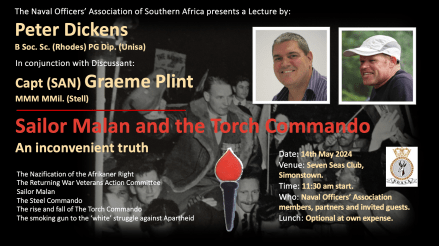
The Observation Post will be taking the circuit lecture and talk on the history of the Torch Commando to Simonstown next. It will be hosted by the Naval Officers’ Association of Southern Africa at the Seven Seas Club in Simonstown. It is a closed session for members of the Seven Seas and Naval Officers’ fraternity, their partners and invited guests.
Peter Dickens – B Soc.Sc. (Rhodes) PG Dip (UNISA) – will be presenting the lecture on the Rise and Fall of the Torch Commando, he will be joined by fellow discussant Capt (SAN) Graeme Plint – MMM MMil. (Stell). Graeme’s 2021 Masters thesis “The influence of Second World War military service on prominent White South African veterans in opposition politics 1939 – 1961” will add significant gravitas to the discussion on The Torch Commando and Sailor Malan, the South African war-time Battle of Britain ace.
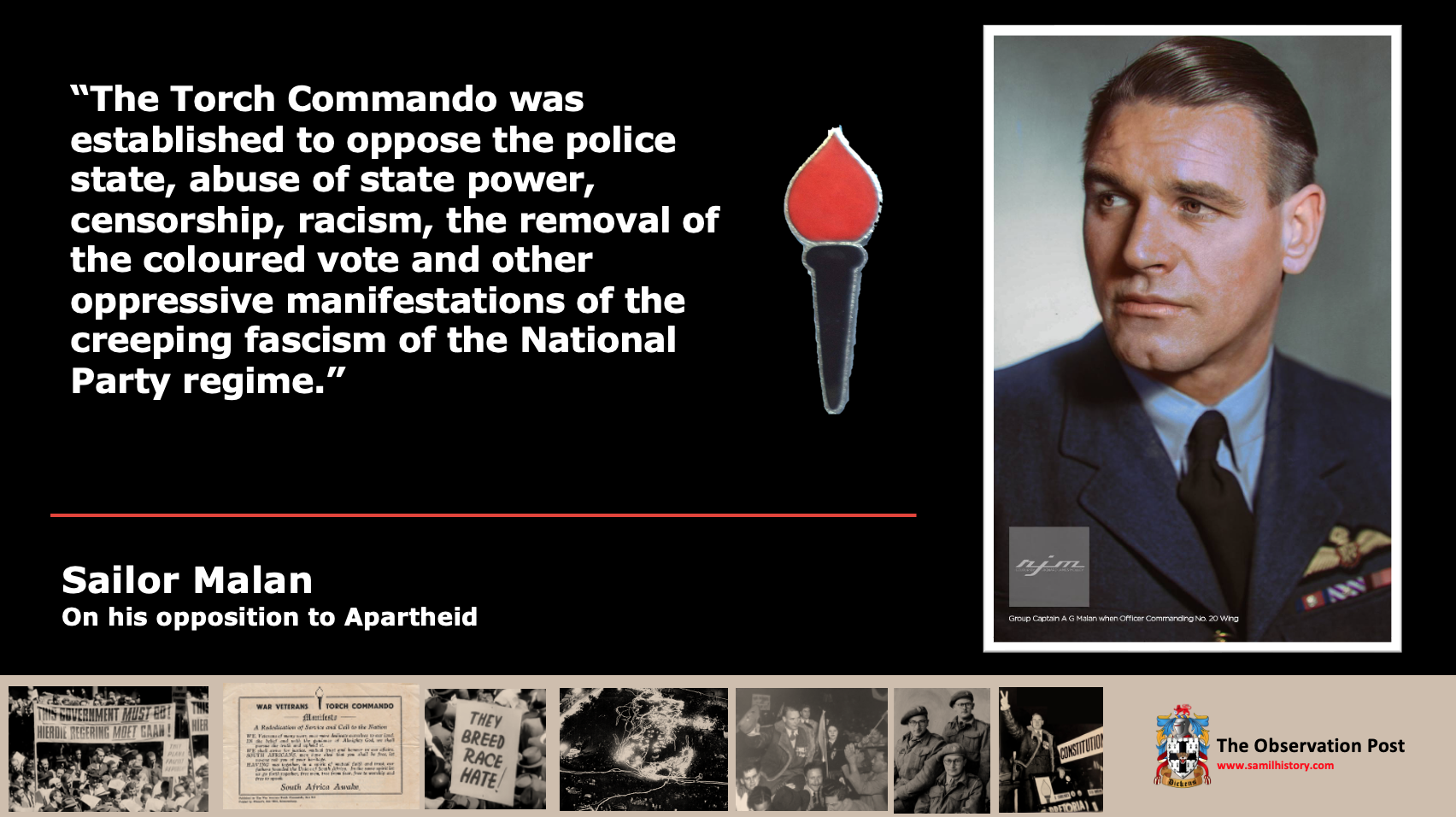
Titled ‘An inconvenient truth’ it is an in-depth look at The Torch Commando, South Africa’s first mass Anti-Apartheid protest movement and the politics of returning South African WW2 veterans.
Topics to be covered include:
The Nazification of the Afrikaner Right
TheReturning War Veterans Action Committee
SailorMalan
The Steel Commando
The rise and fall of The Torch Commando
The smoking gun to the ‘white’ struggle against Apartheid
Date: 14th May 2024
Venue: Seven Seas Club, Simonstown.
Time: 11:30 am start.
Who: Naval Officers’ Association members, their partners and invited guests.
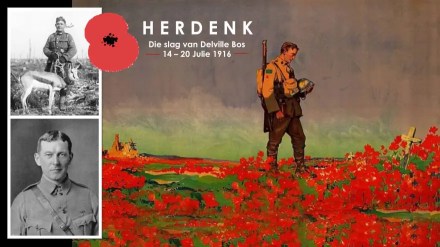
This is the Afrikaans text version of the landmark WW1 poem “In Flanders Fields” written by Lt Col John McCrae as translated into Afrikaans for the 100 year anniversary of The Battle of Delville Wood and the Somme Offensive in July 2016.
As the Battle of Delville Wood involved South Africans of both British and Afrikaner origin, and it was the battle which forged the young Union of South Africa’s identity, it was felt that it would be appropriate to translate ‘In Flanders Fields’ into Afrikaans and read it at the centenary ceremony. The poem up to that point had already been translated into a variety of languages, but not Afrikaans.
This Afrikaans translation is the result of a dedicated collaborative effort.
In Vlaandere se Velde – Deur Lt. Kol John McCrae
In Vlaand’re wieg papawers sag Tussen kruise, grag op grag, As bakens; en deur dit alles deur Die lewerikke tjilpend in dapper vlug, Skaars hoorbaar bo die grofgeskut van kanonne.
Ons is die Dooies. Dae gelede het ons geleef die dagbreek en sonsondergloed beleef. Was bemind en was verlief, nou lê ons in Vlaandere se velde.
Veg voort my Kind met alle mag; neem uit my hand die lig, met krag moet jul die fakkel dra, met eer. Wie durf Ons dood verloën, onteer – ons sal steeds dwaal, ons sal nie slaap, solank papawers groei in Vlaandere se velde.
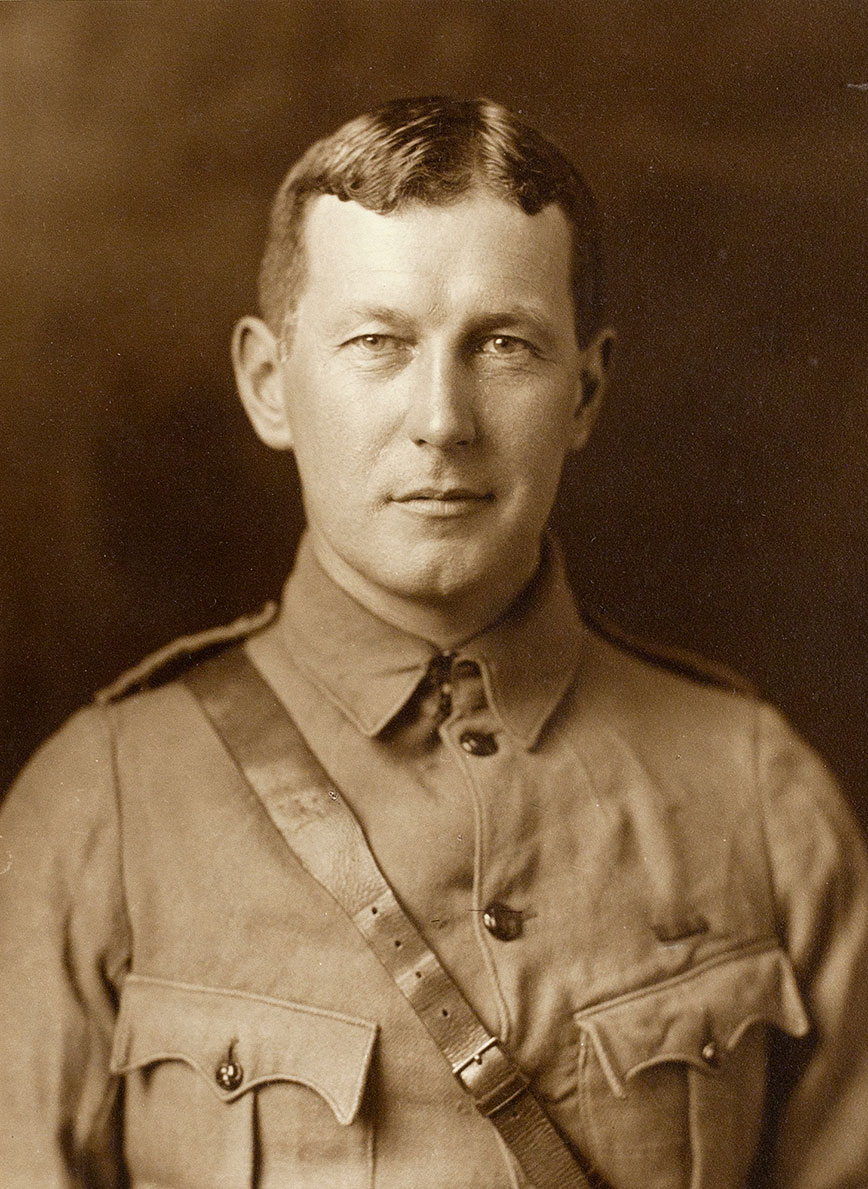
The original English version, composed by Colonel McCrae after he buried Alexis Helmer, a close friend, who was killed during the battle of Ypres. McCrae performed the burial service himself, at which time he noted how poppies quickly grew around the graves of those who died. The next day, he composed the poem while sitting in the back of an ambulance at an Advanced Dressing Station just outside the town of Ypres. This location is today known as the John McCrae Memorial Site.
Here’s what he wrote:
In Flanders fields the poppies blow Between the crosses, row on row, That mark our place; and in the sky The larks, still bravely singing, fly Scarce heard amid the guns below.
We are the Dead. Short days ago We lived, felt dawn, saw sunset glow, Loved and were loved, and now we lie In Flanders fields.
Take up our quarrel with the foe: To you from failing hands we throw The torch; be yours to hold it high. If ye break faith with us who die We shall not sleep, though poppies grow In Flanders fields.
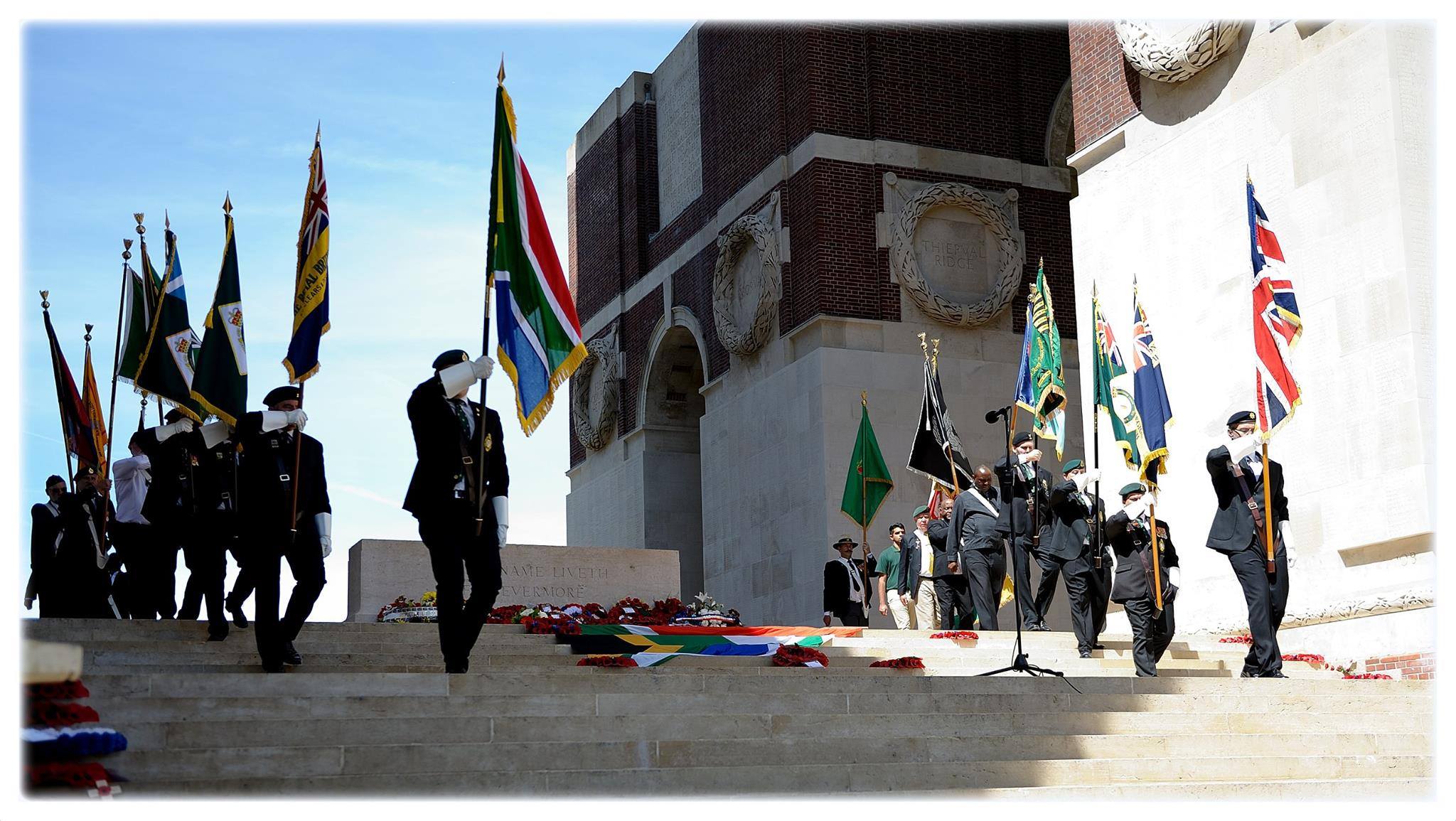
The poem was kindly translated into Afrikaans by Hendrik Neethling and Walter E. Vice as a collaboration on behalf of the South African Legion and The Royal British Legion. It was arranged and read by Karen Dickens at the Legion’s Centenary Service of the South African sacrifice on the Somme and the Battle of Delville Wood. This landmark occasion was held at the Thiepval Memorial to the missing in France on 10th July 2016.
Posted in memory of the co-author of this translation – Hendrik Neethling, may he Rest in Peace.
Written by Peter Dickens
My thanks to Theo Fernandes for the image and my wife Karen Dickens for her dedication in translating ‘In Flanders Field’ into her Mother Tongue.
Related Links and Work
Springbok Valour Some 100 dedication – Thiepval Memorial
Recently, a Boer War historian, Chris Ash published some interesting works on Breaker Morant on his blog, and it’s not what you may think of this hero to some and villain to others, ultimately executed for the murder of unarmed Boers during the South African War 1899 – 1902. It was not his trial, or the murders he committed or controversy around his execution by the British, nor the controversy of nationalists making a hero of him in latter years – simply because they saw him as a British scapegoat. It was also not the repeated attempts by current Australian social activists trying to embolden Morant as a National Australian Hero and their repeated and unsuccessful attempts to get the British government to issue a “pardon” for him and apologise for shooting him. Nah! None of that … turns out Breaker Morant was an accomplished poet – and Chris Ash simply published some of his poems.
I wrote to Chris Ash on one of the published poems and stated that it remained ironic, for all the hullabaloo over Breaker Morant and calls for his reinterment on Australian soil as a National Australian hero .. his grave in Pretoria was in fact empty, there’s nothing in it. This came as a surprise to him – and to others I’m sure as its a very little known fact.
Lt. Harry “The Breaker” Harbord Morant
Empty! Huh – no Morant, what happened and where the hell is Breaker? Well, here again there’s a little more controversy to this very controversial man.
A while back in early February 2024 I published an Observation Post on the Boer War 2 titled ‘War is Cruelty’ War is Cruelty – a very esteemed Australian based historian, Gordon Mackinlay wrote some of the content and he wrote to me to say, according to his research, Breaker Morant was gone – so too Hancock buried with him, the result of a grave robbery in the 80’s – the grave site near the hallowed acre of Afrikaner heroes in Pretoria had been tampered with – detectives found no bodies, so they put it down to a grave robbery for African “Muti” purposes. The conclusion that the bones of men executed held mystical powers and of value to practitioners of traditional African “Muti” medicine. The Australian government sponsored a nice new slab for the grave in the knowledge that neither Morant or Hancock are in it.1
On the Observation Post’s scuttlebutt Facebook group, this question was again raised, along with Danie Theron, the famous Boer Scout, whose grave was also robbed. A good friend, fellow historian and regular contributor to the Observation Post, Johann Hamman gave us some fresh insight.
Johann is a leading Afrikaans battlefield historian and I generally sit up and listen to him. The feedback as follows:
The remains of Danie Theron had indeed been stolen from his grave. 2He had been taken by two Afrikaner Weerstandsbewegin (Afrikaner Resistance Movement – AWB) members from Carltonville, but his remains had since been recovered. He was re-buried and the site was re-secured at Eikenhof. The AWB men robbed the grave of his remains because they did not want their ‘white’ Boer hero to lie among the ‘Black’ Africans buried in the same cemetery from the nearby modern township.
On Breaker Morant – he is most certainly not present in his grave anymore, however, according to Johann it is not because of any Muti-theft in the 80’s – the detectives are mistaken. When Morant was buried they poured two bags of unslaked lime on top of him, and what they buried there is no longer there as a result. There is nothing to steal.3
Johann Hamman and Gerald Leach among others, researched Morant as thoroughly as possible, and they blocked an attempt to have him pardoned as an Australian hero by Queen Elizabeth twice.
The argument was that Morant, Handcock and Taylor had been responsible for the murder of at least 36 people, of whom the youngest were Boer children of 11 years, they were murderous and their execution justified. Morant himself admitted to 12 killings at his court-martial, one was the Reverend Heese, who was the great-grandfather of Johan’s friend – the late Hendrik Neethling.4
Just to note, the British poured unslaked lime on everyone they executed in Boer War 2, Cape Rebels and Boers wearing British Khaki uniform included. There has been some research on whether unslaked lime speeds up decomposition or in fact aids preservation of the corpse, however even here school is out, some medical journals and specialists specify preservation others demonstrate the opposite – rapid decomposition.
Now, I’m pretty sure that the case on Morant is forever open to endless debate, especially in Australia, but the general conclusion most historians come to is regardless of legalise, and whether Morant was even an Australian – he was by all accounts a maverick from the get-go, his execution an inevitability and for very justifiable reasons (many in fact just conclude that ‘he had it coming’). There are countless Australian heroes from their statutory forces over the years, and to be honest they can find amongst them far more suitable candidates to honour than Morant.
Either way we cut it, whether the bones were stolen, whether they are completely destroyed by unslaked lime – or not – Breaker Morant is not there, the grave is empty.



 The Observation Post