
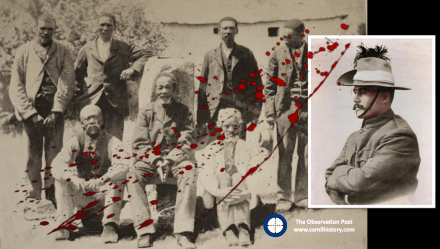
As noted in an earlier Observation Post on the massacre of Black and Coloureds in service of the British after the Battle of Tweebosch by General de la Rey’s Commando (see link )1, and as Dr. Garth Benneyworth, a leading South African War historian pointed out – a significant research gap on the historiography of the South African War (1899-1902) in this respect needs to be investigated.
This specific literacy gap evolves around a policy decision taken by Bittereinder Boer Commanders to shoot out of hand any Black, Coloured or Indian civilian, contractor or soldier deemed as being in support of the British military. No recourse to the law or a trial of any kind – they would be shot on the spot.
A number of very senior Boer Commanders are implicated in this very controversial and at times very genocidal order, and not altogether surprisingly ‘General’ Manie Maritz is in this line up. Early on in his military career Manie Maritz fledges himself as not only a racist, but also a somewhat unhinged commander very capable of murderer.
The Massacre at Leliefontein
Over two days, starting on the 31st January 1902, the Bittereinder effort of the South African War (1899-1902) a.k.a. Boer War 2, and even Jan Smuts, would emerge forever tarnished by what is considered by some as the first massacre of innocents of the 20th Century.
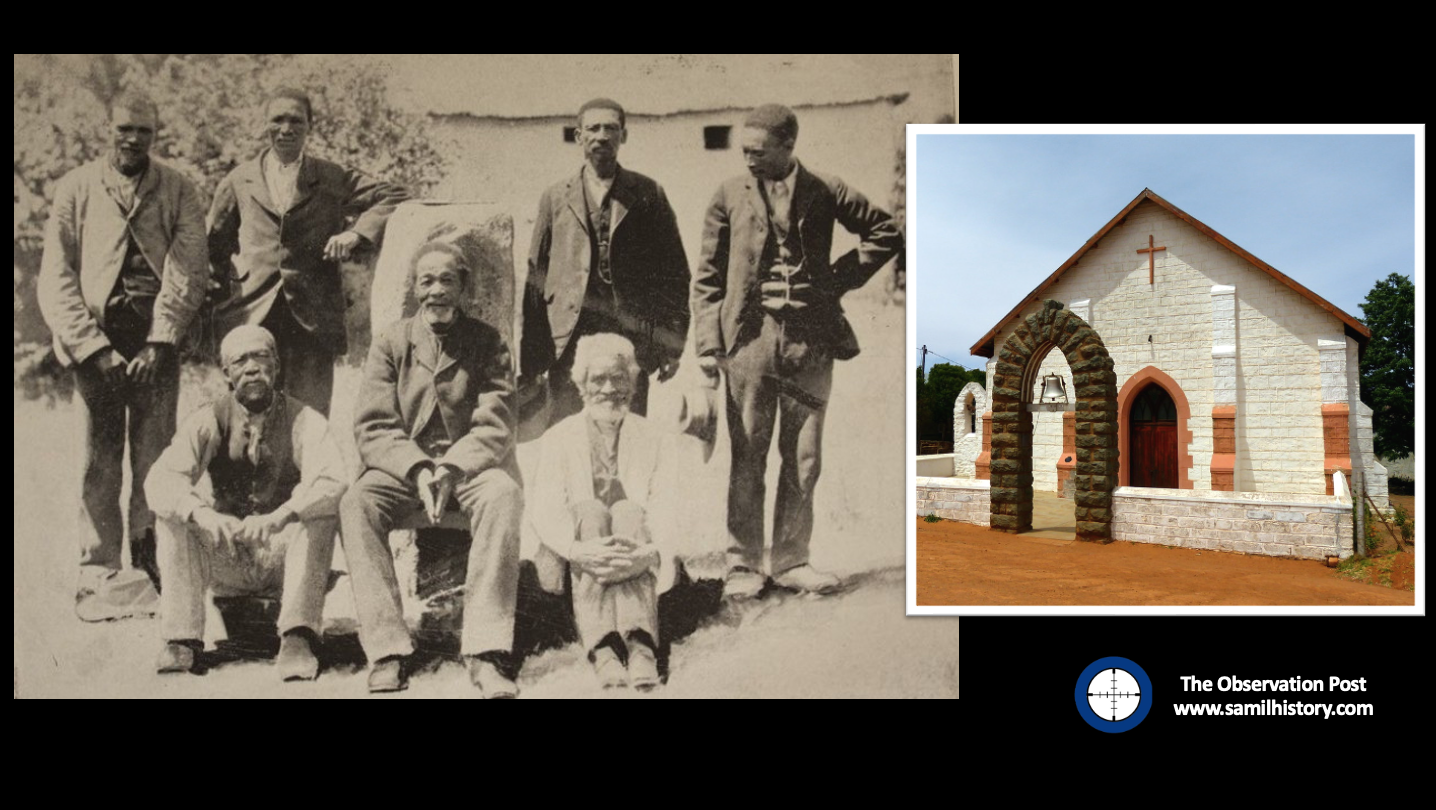
Front and centre in this controversial phase is Manie Maritz, who whilst he is under Jan Smuts’ command, rides into the ‘Nama’ missionary town of Leliefontein in the far north west Cape – deep inside the British Cape Colony. Here Maritz immediately detains the Methodist missionary – Barnabas Links – who was acting in place of the absent Rev J.G. Locke. Maritz subsequently reads out a proclamation threatening death to both residents and the town’s missionaries alike if they are found guilty of aiding or abetting the British.
This controversial order to shoot out of hand (no court Marshal, executed on the spot) any ‘coloured’ British civilians and soldiers alike if deemed in support of the British is in fact laid down by General Christiaan de Wet and it becomes policy in Boer Commandos, much to the bewilderment of the British command.
General Christiaan de Wet would inform Lord Kitchener that he personally gave ‘general instructions to our Officers to have all armed natives and native spies shot.’ Kitchener responds to de Wet and says ‘(I am) astonished at the barbarous instructions you (General de Wet) have given as regards the murder of natives … ‘ he then notifies de Wet that Boer Commanders guilty of this crime will face charges of murder and those found guilty will be executed.2
The Nama people (the local people made up of a mix of Khoi Khoi, Namibian and Tswana) and their missionaries are British subjects living in a British colony and fearing for their lives don’t take lightly to the proclamation threat from Manie Maritz and his Boer raiders and they become steadily agitated.
From here out there is a lot of conflicting account, in detaining Barnabas Links a rather strong verbal exchange over jurisdiction and authority takes place and some say Links strikes Maritz with his stick, others say Maritz strikes Links with his sjambok. Either way, a “fists and knives” scuffle breaks between a group of citizens and Maritz’ men, one Republican is injured, Links is also injured, and Maritz and his men manage to disentangle themselves from the melee, leaving 8 Leliefonteiners dead, and ride back to their rendezvous camp.
That night, Maritz and his men become indignant at their treatment at the hands of the Leliefonteiners and elect to exact revenge by wiping the missionary off the face of the earth. So, the next morning the Commando detachment numbering about 100 mounted Boers attacks the missionary in full force. The Nama and their missionaries are no match for a fully armed Boer commando, having some antiquated muskets they try and hold off the assault and most take refuge in the mission building. A further 27 Leliefonteiners are killed (some accounts say a total of 43) and approximately 100 are injured.
Maritz then directs all the surviving women and children, male survivors, and the wounded (including Links) be taken away in chains to the Boer positions surrounding Okiep, and he appoints the local blacksmith to fashion iron shackles for this purpose. Some accounts also point to general violence been meted out by the Boers against surviving Leliefonteiners after the skirmish and ‘refugees’ been hunted down and killed.
Maritz instructs that the mission station be pillaged and then burned down – all the captured sheep and grain are to be forwarded to a Boer supply depot. The mission station is completely destroyed and the dead Leliefonteiners are left where they died in the field– and here they remained unburied for months.
So, how does Smuts and his General Staff react to the news that a detachment of his Commando had ransacked a mission station and killed over 30 poorly armed or unarmed British civilians in a revenge attack? Deneys Reitz on arriving at the destroyed mission station described the scene as follows:
“We found the place sacked and gutted and among the rocks beyond the buried houses lay 20 or 30 dead Hottentots, still clutching their antiquated muzzleloaders. This was Maritz’s handiwork. He had ridden into the station with a few men to interview the European missionaries, when he was set upon by armed Hottentots, he and his escorts narrowly escaping with their lives. To avenge the insult, he returned the next morning with a stronger force and wiped out the settlement, which seemed to many of us a ruthless and unjustifiable act. General Smuts said nothing but I saw him walk past the boulders where the dead lay, and on his return he was moody and curt… we lived in an atmosphere of rotting corpses for some days.”3
Smuts, although clearly unimpressed with Maritz, actually comes through for Maritz in accounting the massacre in his letter to General de la Rey, he down-plays the instance as a ‘close shave‘ for Maritz and somewhat covers up the incident, citing that Maritz was attacked by a knobkerrie whilst acting as a peace envoy, it was taken as a sign of attack and only ‘8 hottentots’ were killed due ‘to misunderstanding and ignorance’.4
Some commentators point to this as collusion, as Maritz is completely exonerated and never held to account for the massacre – whereas similar instances of ‘murdering’ civilians in the cases of the Australian officer Lt. Harry ‘Breaker’ Morant and the Boer Commandant Gideon Scheepers landed them both in front of their respective firing squads. Some historians have argued that had Maritz been caught by the British this would have certainly been his fate.
Maritz naturally felt differently, and feels he has to answer Reitz’ allegations in his autobiography ‘My Lewe en Strewe’ and it really is an insight into the mind of Maritz. He refers to Barnabus Links in a diminutive way as the ‘hottentot Corporal’ with an arrogant swagger and becomes aggressive when Links challenges him instructing him to shut-up and know his place.5
During the massacre, Maritz claims that during a frantic re-load he manages to shoot two ‘Hotnots’ when they suddenly jump up in front of him with only one shot, one being Barnabas Links whose head the bullet grazes and the another next to Links dies of a headshot. Maritz then recounts that it could not have been classified as murder as he walks up to the wounded Barnabas Links after the massacre, and whilst he is lying bleeding on the ground Maritz decides not to shoot him and take him captive instead. His decision not to shoot him dead is according to Maritz one of compassion as he feels he is perfectly within his rights to shoot him and says:
‘I could have shot him dead, as he deserved the death penalty, he wanted to murder me and my men. If General Smuts was in my position, he would surely have shot him (Links) dead’6
Maritz’ reference to Smuts is essentially to put Deneys Reitz in his place by suggesting he knows Smuts better than Reitz, however the history of the relationship of Smuts and Reitz is one of a lifelong, mutually respectful and very tight friendship – whereas Smuts’ relationship with Maritz is one of lifelong animosity, conflict and difference of opinion. The historiography of both men shows Smuts to have liberal and sympathetic disposition to the emancipation and human rights of ‘blacks’ and ‘coloureds’, whereas Maritz displays none of these qualities – in fact the opposite is true.
Unhinged at Okiep
To further demonstrate just how far off the hinge Maritz was, the last real Boer action of the Boer War was when Jan Smuts’ Commando laid siege to the mining town of Okiep in the British Cape Colony in April, 1902. On hearing the news of the Peace Conference, Reitz writes:
‘General Smuts set to work at once. Next morning a messenger was sent into O’Okiep, to advise the garrison that both sides were to refrain front active military operations while the Congress lasted.’7
Jan Smuts then left the siege of O’okiep to take part in the final Peace talks at Vereeniging at the end of April 1902. With Smuts away Manie Maritz decided breach Smuts’ standing order and to attack Okiep with the idea of literally wiping the entire town off the map, using the commandeered Namaqua United Copper Company locomotive ‘Pioneer’ – which was used to propel a mobile bomb in the form of a wagonload of dynamite into the besieged town. The attack failed when the train derailed, snagged upon a barbed wire fence which wrapped around the points, spilling the dynamite upon the ground which burnt out harmlessly.
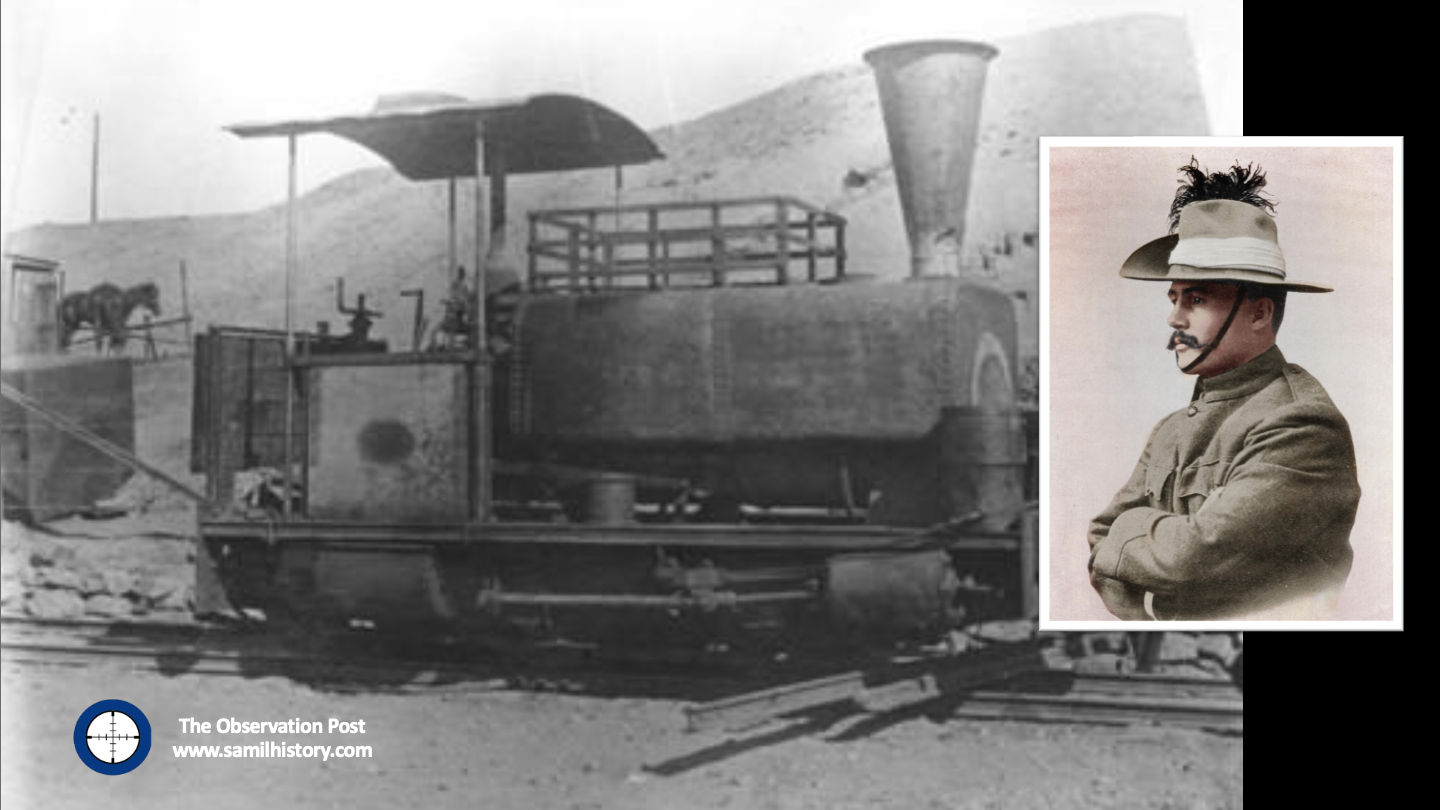
The exercise could have resulted in killing large numbers of women and children (mainly coloured) who sheltered behind the defences, the failure of the operation was a blessing at a time when deliberations at the Vereeniging peace talks potentially heralded the end of the conflict. Smuts would again gloss over the incident and cover for Maritz when he stated that the railway was still intact after the incident anyway, and since there were women and children in Okiep town, all the commando was allowed to do was to give the good citizens of Okiep a ‘tremendous fright with a harmless explosion.’
An ungrateful response
Smuts’ disposition to treating treasonous, rebellious and insubordinate Boer commanders with ‘Kidd gloves’ in the hopes of placating and consolidating their views to see his way on things would be Smuts’ greatest “Achilles heel” – as there would be no such quarter given in the way they would view or treat him in future.
Especially Manie Maritz, who challenges Smuts’ entire concept of the South African Union and even the Union’s Defence force in his own ‘Martiz’ Revolt of 1914, splitting the Afrikaner community for decades to come. The 1914 ‘Afrikaner Revolt is swiftly defeated by Louis Botha and Jan Smuts and Union forces. By the mid 1930’s Maritz would enter politics and become a hardened admirer of National Socialism (Nazism) and Adolf Hitler – becoming a Neo Nazi ‘Grey-shirt’ and then a full blown Nazi ‘Black-shirt’ before forming the National Socialist ‘Boerenasie Movement’.
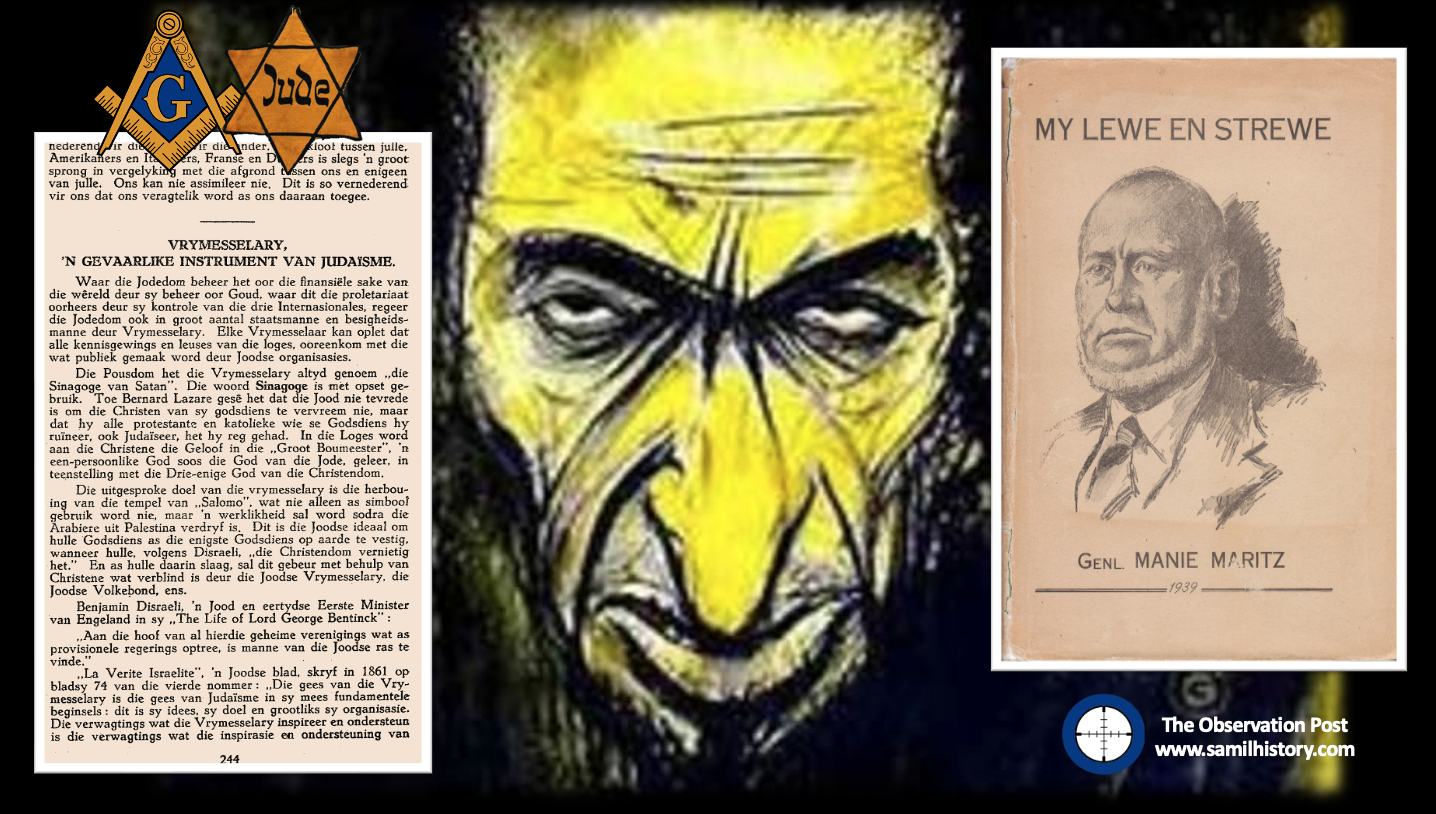
Maritz would become a convert to the racist and anti-Semitic myth ‘the Protocols of the Elders of Zion’ and convinced of a Jewish and Freemason conspiracy to world domination. He would make the ‘Protocols of Zion’ his life’s meaning and his mission to educate the Afrikaner people (his ‘Volk’) to it – and in it he would blame the ‘hidden hand’ of the Jews as the true conspiracists behind starting the Boer War. He would then go into mortal combat with General Jan Smuts calling him the King of the Jews and therefore a traitor to the Afrikaner people.8
Written and Researched by Peter Dickens
References:
- Smuts, Jannie. Jan Christiaan Smuts by his Son, London: Cassell Publishers. 1952
- D Judd & K Surridge. The Boer War. London: John Murray Publishers, 2002
- Reitz, Deneys. Commando: A Boer Journal of the Boer War, Kessinger Publishing 1929.
- Nel, Eben: Kaapse rebelle van die Hantam-karoo, Bienedell Uitgewers, 2003
- Maritz, Manie ‘My Lewe en Strewe’ Pretoria 1939
Footnotes
- Observation Post – Tweebosch Massacre, General de la Rey The Tweebosch Massacre ↩︎
- Judd & Surridge, The Boer War, p 235 ↩︎
- Reitz, Commando, Chapter 25 ‘the last phase’ on-line reference ↩︎
- Nel, Eben, Kaapse rebelle van die Hantam-karoo ↩︎
- Martiz, My Lewe en Stewe‘, p 55 ↩︎
- Martiz, My Lewe en Stewe‘, p 57 ↩︎
- Reitz, Commando, Chapter 26 ‘the lost cause’ on-line reference ↩︎
- Maritz, My Lewe en Stewe‘, pages 97 – 270 ↩︎
 The Observation Post