
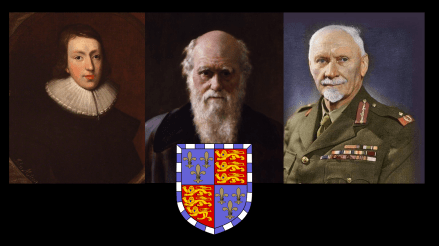
So, what do Charles Darwin, John Milton and Jan Smuts have in common? A lot it seems, and as I’m heading back into academia this year I am reminded that South Africa has produced some great men in the academic field. There is however one South African who stands head and shoulders above everyone else in terms of academic excellence, and we’ve not produced a South African since that even comes close to him.
That man is Jan Christian Smuts, a simple Afrikaner farm boy from Riebeeck-West – who, under the social construct of his time, as the younger sibling, wasn’t even supposed to go to school, the passing of his older brother giving him the sliver of an opportunity of a education and so he started late – aged 12. In just 4 years he completed all his schooling and landed up at Victoria College, now Stellenbosch University, studying law (he also joined the College’s military detachment for his first taste of military training – not a lot of people know that).
And what an education! Eventually getting a scholarship to the University of Cambridge at Christ’s College, which would eventually see him in later life as the University’s first “foreign” Chancellor in its 800 year odd history. Smut’s legal mind was something else, he took both parts of the Law Tripos in the same year and was placed first in each with distinction.
His intellect was unsurpassed, to pass an exam at Cambridge he learnt Greek (fluently) in just 6 days. His wife was no intellectual slouch either, later in life Jan Smuts and his wife Issie “Ouma” Smuts used to tease one another when one would recite a Bible verse and the other would be expected to recite the following one, from memory, in Greek!
Professor Frederic Maitland (the father of Modern English Legal History) described Jan Smuts as:
“the most brilliant student I have ever met”.
Smut’s academic brilliance did not stop at the classics and law, it even extended into science, Albert Einstein counted Smuts as one of approximately ten people that truly understood his theory of relativity.
Smuts is also the first internationally regarded South African Psychologist – whilst an undergraduate at Cambridge University, he produced a manuscript in 1895 in which he analysed the personality of the famous American poet Walt Whitman.
Smuts believed that the holistic tendency of the personality would be studied best through personology – which brings us onto his philosophy of Holism.
In writing his own philosophy “holism” Smuts was accredited as a philosopher in his own right as his work held up to peer review. Holism looked into the studies of cyclical pattens in nature that are dependent for survival on other cyclical pattens – like one culture is dependent on another (all the parts making up the whole that is society).
Holism can be defined as “the fundamental factor operative towards the creation of wholes in the universe” and was published in 1926. For Smuts it formed the grounding behind his concepts of the League of Nations and United Nations.
Although Smuts’s concept of holism is grounded in the natural sciences, Smuts claimed that it has a relevance in philosophy, ethics, sociology, and psychology. He even argued that the concept of holism is:
“grounded in evolution and is also an ideal that guides human development and one’s level of personality actualisation.”
The principal of Christ’s College, Sir Alexander R. Todd (who won a Nobel Prize for Chemistry) had the following to say about Smuts:
“…in 500 years of the College’s history, of all its members, past and present, three had been truly outstanding: John Milton, Charles Darwin and Jan Smuts.”
Now, nobody has said that of any other South African, not even Mandela. Think about that statement for a second – Smuts on the same level as Darwin and Milton, men who shaped the understanding of the human condition.
After Smuts’s death on the 11th September 1950, Sir Winston Churchill wrote to Issie Smuts and said:
“There must be comfort in the proofs of admiration and gratitude that have been evoked all over the world for a warrior-statesman and philosopher who was probably more fitted to guide struggling and blundering humanity through its suffering and perils than anyone who ever lived in any country during his epoch.”
None of Smuts’ detractors – even the ones with Doctorates like Malan and Verwoerd came close to Smuts as an academic – not one of them receiving any high degree of international peer recognition – not then and not even now. Now we have Provincial Premier’s ghost writing their masters thesis in a government completely devoid of any thought.
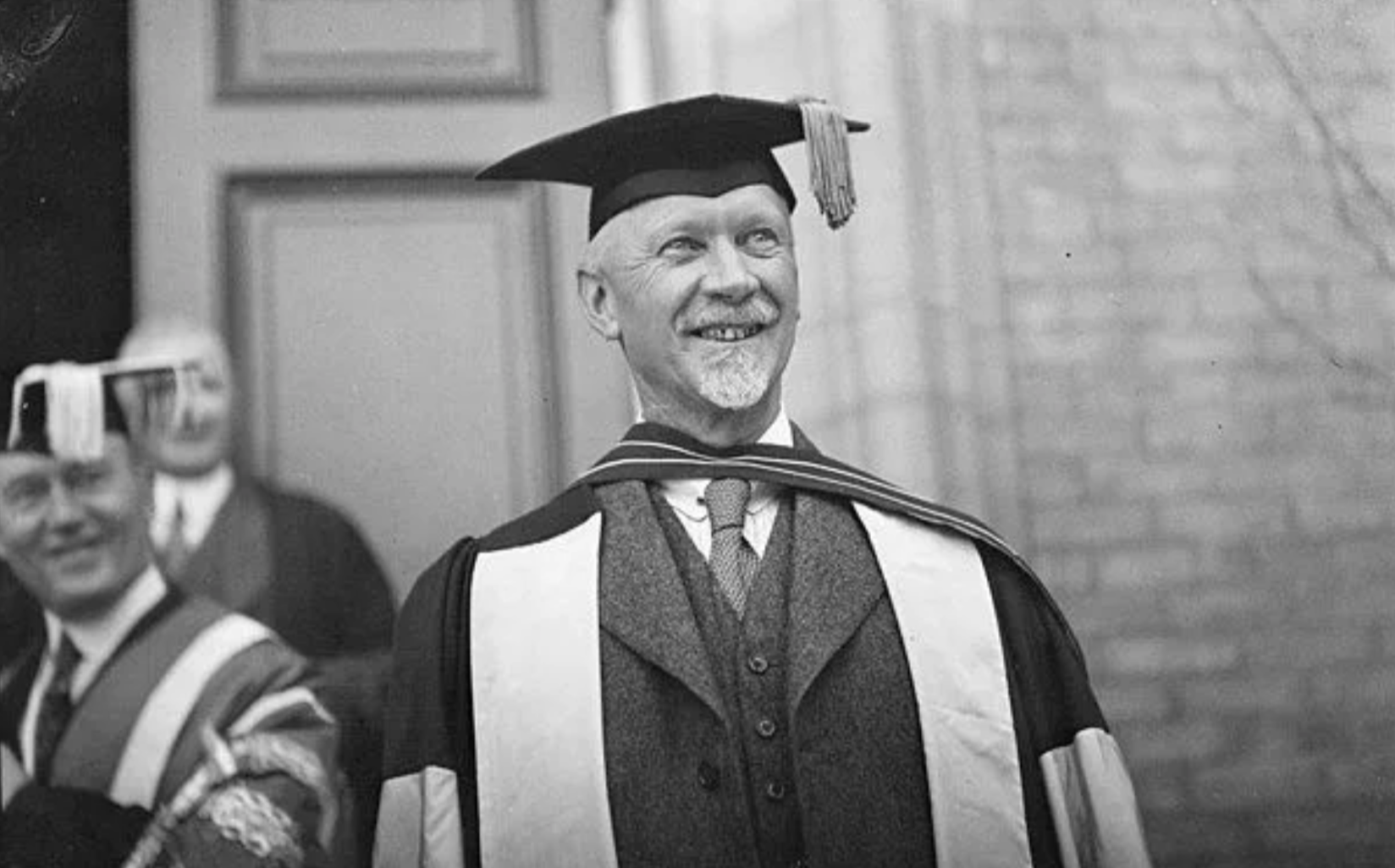
As Doctorates go, Dr. Smuts earned more Doctorates than you shake a stick at, no other academic in South Africa comes close. He obtained a Doctorates in Civil Law (D.C.L.) from Durham and Oxford Universities. He obtained a Doctorate in Literature (D. Litt.) from the University of Pretoria. He obtained Doctorates in Science from the University of Cape Town and the University of London. He obtained Doctorates in Law (LL.D.) from the following Universities: Baltimore, Cambridge, Cape Town, Cardiff, Columbia (New York), Dublin, Edinburgh, Glasgow, Leyden, Manchester, Montreal, St. Andrew’s, Sheffield, University of South Africa, Utrecht and Wales. Finally, he obtained Doctorates in Philosophy (Ph.D.) from Athens University, University of California and Stellenbosch University.
He even became the Chancellor of Cambridge University, the Chancellor of the University of Cape Town and the Rector of St. Andrew’s University in Scotland.
But for all the Doctorates in the world, Smuts would not refer to himself as a Doctor of anything, he even disliked being called a “Field Marshal” preferring to be simply referred to as “General” – a rank he obtained as a young man fighting for the Boer Republics in the South African War (1899-1902).
For all Smuts achieved, Jan Smuts would be vilified by a small group of far right Afrikaner nationalists his entire life, they would revert to belittling his intellect and academic achievements as been above his “ordinary Volk” and out of touch. On achieving acts of Union between English and Afrikaner they would paint him as somehow “British” and call him “slim Jannie” (clever little Jan) a term he personally hated.
Leif Egeland would summarise this perfectly when he said:
“Yet the great paradox of (Smuts’) life was that it is precisely because Smuts was a Afrikaner and a Boer soldier that he built up such a formidable reputation world-wide. On his many visits abroad and in his personal life, he kept the image of the Boer general, ‘one of the most romantic and bravest figures in history’. Whilst many of his countrymen described him for being an Englishman at heart, in Britain and around the world ‘General Smuts’ was respected and revered for being a true and patriotic Afrikaner – the finest example of his tribe”.
As South Africans have a wonderful story in Smuts, and what we have a character of force – a polyglot, philosopher, botanist, intellectual, lawyer, academic, politician, statesmen, reformer and warrior – a story and a man who is best summed up by Alan Paton who said:
“Even the great thought he was great.”
Written and Researched by Peter Dickens
Related work: “The force of his intellect has enriched the wisdom of the whole human race”- the death of Jan Smuts.
References:
‘Unafraid of Greatness’ Published 2015. By Richard Steyn
‘One man in his time’ Published 1964. By Phyllis Scarnell Lean
 The Observation Post