
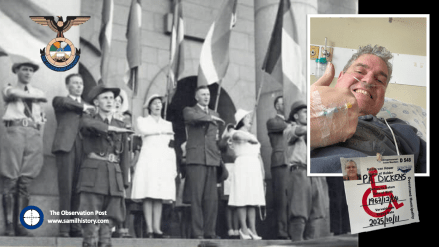
Now, I’m not one to play my “disability card”, those who know me well enough will attest that I am the very last person to do it. But sometimes you see a comment about you come out in social media that:
- Demands an answer and
- Demonstrates the complete imbecilic arrogance of the person making the comment.
Such a comment was put out by Albert Blake, the Afrikaans author on a Boer War social media site run by John Elsegood, it’s an interesting one and one that needs a little time and space to explain – here’s Blake’s comment, and I’ll quote him:
‘The problem with the sloppy work of Dickens is the result of not complying with the accepted standards for historical scientific research of original material in the archives. He writes freely about the Ossewabrandwag without ever having visited he Ossewabrandwag (OB) Archives with its thousands of documents at the University of the North West.’
Wow, arrogance and misinformation is understatement and a little libel and character assassination thrown in for measure. Now, to assume I don’t use primary source material and archive material is just plain moronic, in my specialism and on my computer are a number of archive files – either digitised or photographed for me. I have extensive archive material on the Nazification of the Afrikaner right and the Torch Commando, including much on the Ossewabrandwag (OB). These files are located from archives in South Africa and in the United Kingdom. I also have a number of ‘secondary’ source books and university thesis and papers on the Ossewabrandwag, more than enough for my current requirements.
But here’s the fun thing – all these archive files on my PC are ‘digitised’ – in other words they are photographs of boxed papers or they are are scans. There’s a reason for that. Up until 5 years ago I was resident in the United Kingdom. Researching archive material in the UK is a doddle – its easy – the National Archives are fully digitised (MI5’s archive for example) and if you are unable to draw down the file directly from the net, you can order it – all done without physically visiting the said archives.
South Africa on the other hand is a different matter, the archives are for the most part not digitised, and to get into them you physically have to visit each one personally. There are services of ‘archive hounds’ a professional service which you can pay for and brief, but if extensively researching this is both costly and inefficient. Now, as you can appreciate it’s a bit difficult whilst running a commercial concern to just up sticks and fly to South Africa to hunt around the University of the North Wests’ OB archive for a couple of weeks, especially for a ‘free’ history website which is not monetised – as the Observation Post is.
That of course does not mean I did not intend to visit various archives in South Africa and get to the files I need, as said I moved to South Africa about 5 years ago to start a craft distillery with the object of shipping finished product to the UK and I bought a craft beer concern in South Africa for the purposes of licenses and other commercial considerations. Whilst busying myself with the beer and spirits industry, one thing I did not plan on was becoming one of only 5 people in South Africa to survive Covid with the amount of complications it brought on in my case.
Of all the other things I did not foresee in life was the ongoing attempt by the great architect of universe to give me the chop – now I know I’ve pushed it, at one stage my lifestyle choices of flying, the military and wreck diving earned me a no life insurance status, so I’ve given it a go, I really have.
My journey with Covid is also a unique one, mainly because I should not have survived it. Some say it’s a miracle, I put it down to the strength of my wife and discipline I learned in the army. I seldom talk about it, and never really “in full” but Mr Blake demands an answer so here’s just some of it.
Let me also kick the first question out the way, before falling ill with Covid in July 2021, I was a healthy 53-year-old man with no Comorbidity, on no medication of any sort and no history of hospitalisation. So here goes – Covid story for those who have not read it …
I’m not dead yet!
On the 24th July 2021, I started to experience extreme lethargic symptoms and noticed traces of blood in phlegm being coughed up, my sugar levels were elevated and concerned that I was going into diabetic shock (despite never having diabetes before), I was admitted into Hermanus’ Public Hospital’s isolated Covid general ward. Whilst in the ward, my SATS (Oxygen levels) gradually deteriorated, I picked up more secondary infections and became more lethargic.
On the 1st August 2021, applications of Oxygen proved fruitless and after a triage decision I was left to die. This triggered an intervention for Private Hospital care and I was moved from Hermanus Public Hospital to Hermanus’ Mediclinic to be intubated, placed on a ventilator and induced into a coma on the same day.
On the 1st September 2021, my infection markers and SATS levels had stabilised enough to be brought out of the induced coma. Considering I had been in a coma for nearly a full month it was a marked miracle that I had experienced no brain damage, nor any loss to short- or long-term memory.
Whilst undergoing recovery therapy from the coma bronchitis set in, then suddenly my left lung self-perforated and collapsed. This was followed a couple of days later by my right lung which also self-perforated and collapsed. Drains were applied to both lungs decreasing my survivability significantly. The bronchitis evolved into bronchial pneumonia and again I picked up external infections, including a deadly fungal infection.
Becoming more critical, I was “red-lighted” by private ambulance from Hermanus Mediclinic to Tygerberg Training Hospital in Cape Town on the 2nd October 2021 and admitted into a specialised Cardiac Thoracic Specialist – intensive care unit.
During my time in this unit, I have clear memory of dying one evening after basic nurse neglect not clearing my trachea regularly, after my SATS dropped the critical alarm bell went off, a passing medic noticed the commotion, and disregarding Covid regulations entered my isolation room and resurrected me back to life. I was also diagnosed with PTSD (Post Traumatic Stress Disorder) after this and other incitements leading to it (with origin in my military experience as a commissioned officer in the South African Army). The remainder of my stay at Tygerberg now included psychological therapy.
I will say this about dying, its both scary and euphoric, scary in my case as elevated alarms kept sequencing upward for a long time and no aid was coming, no response to emergency buttons and as you have no voice on a ventilator you cannot call out, cognitively you realise you are in deep shit. Euphoric because you find yourself floating into a black tunnel – in my case to the tune of “goodbye cruel world” by Pink Floyd, being resuscitated is like someone reaching in and pulling you out.
A drain was re-set on my right lung, and I remained in ICU fighting off numerous infections and continued bouts of bronchitis. During this period, according to the attending Professor, I was ‘knocking on heaven’s door” virtually every-day, survivability in this unit over this period was placed at only 2 out of every 10 patients who would eventually survive the Covid pandemic. During this period I had more morphine induced out of body experiences than I can shake a stick at (never underestimate the benefits of morphine, its the repeated ‘cold turkey’ that sucks).
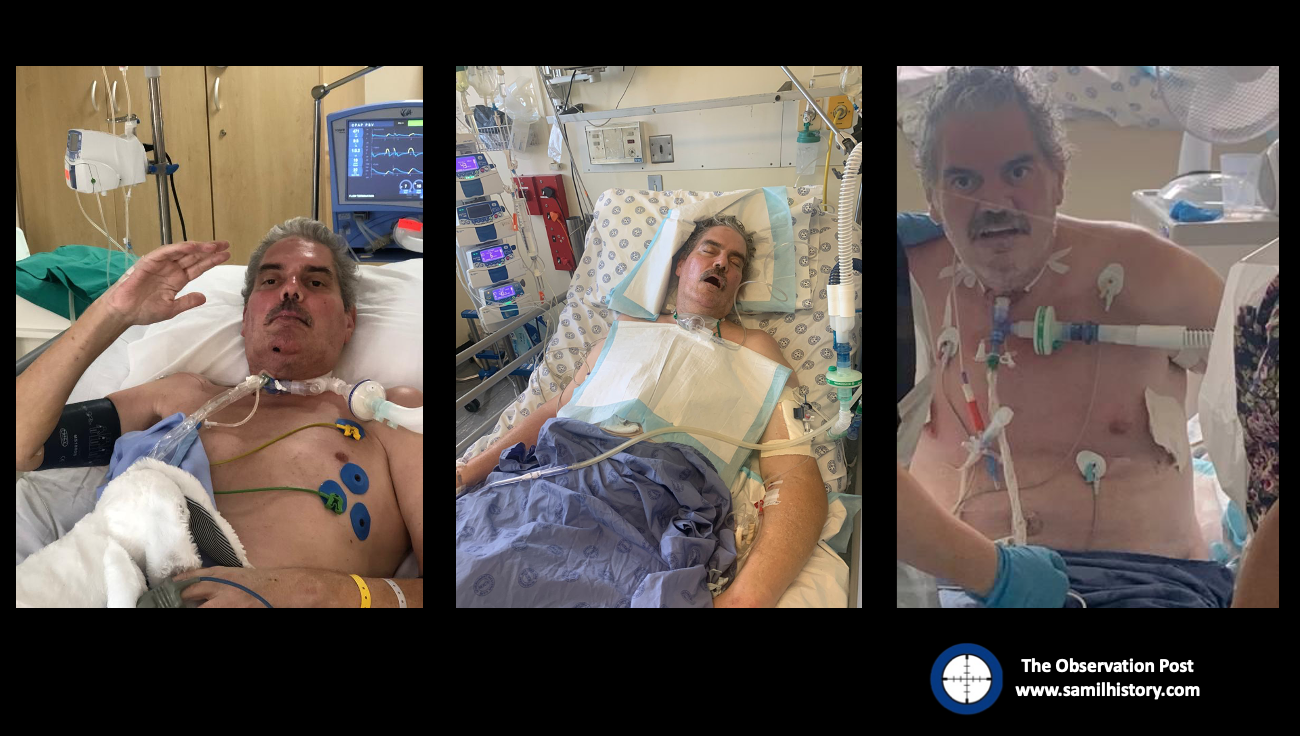
An x-ray taken of my chest on the 8th November 2021 marked a dim day as my lungs were diagnosed as “irrecoverable” and “irreplaceable” such was the damage and pulmonary fibrosis, no real ‘healthy’ tissue could be spotted and my heart was inflamed. The prognosis put my survivability at zero.
However, by Armistice Day – 11th November 2021, almost miraculously as all my limbs were still swollen from infection and I had no “A line” my vein structure non existent – things actually started to look up on my infection markers and Oxygen SATS. The artificial trachea was removed, my voice box re-attached, and I was finally moved from ICU into a ‘High Care’ ward (in all I had spent 110 days in Intensive Care Units), still on high flow Oxygen and very frail. However I was now off the ventilator – in all I hold the record at Tygerberg for being on a ventilator – a first prize I didn’t intend winning.
In High Care, the bronchitis continued, and I was unable to consume solid food. Still on a liquid diet I became immobile and an invalid – also I started to dramatically lose weight and muscle mass (in all I lost 50 Kg). The hygiene and nurse care standards in this section of Tygerberg Hospital were also inadequate and I began to deteriorate again so as to become life threatening again. An intervention was again required.
On the 23rd November 2021, I was ‘red-lighted’ by private ambulance from Tygerberg Hospital back to Hermanus (a two-hour high speed journey), in order to receive vital physical rehabilitation and specialised nutrition to arrest my now rapid physical deterioration. To do this I entered Spescare – a specialist facility.
Arriving at Spescare my condition immediately stated improving once undergoing intense physiotherapy and occupational therapy. My condition was so bad I had to even had to learn to simply take a shit in a toilet and even walk again. Basic stuff needed to be re-leaned, brushing teeth, shaving – even writing whilst I spent time getting in and out of bed using a hydraulic hoist.
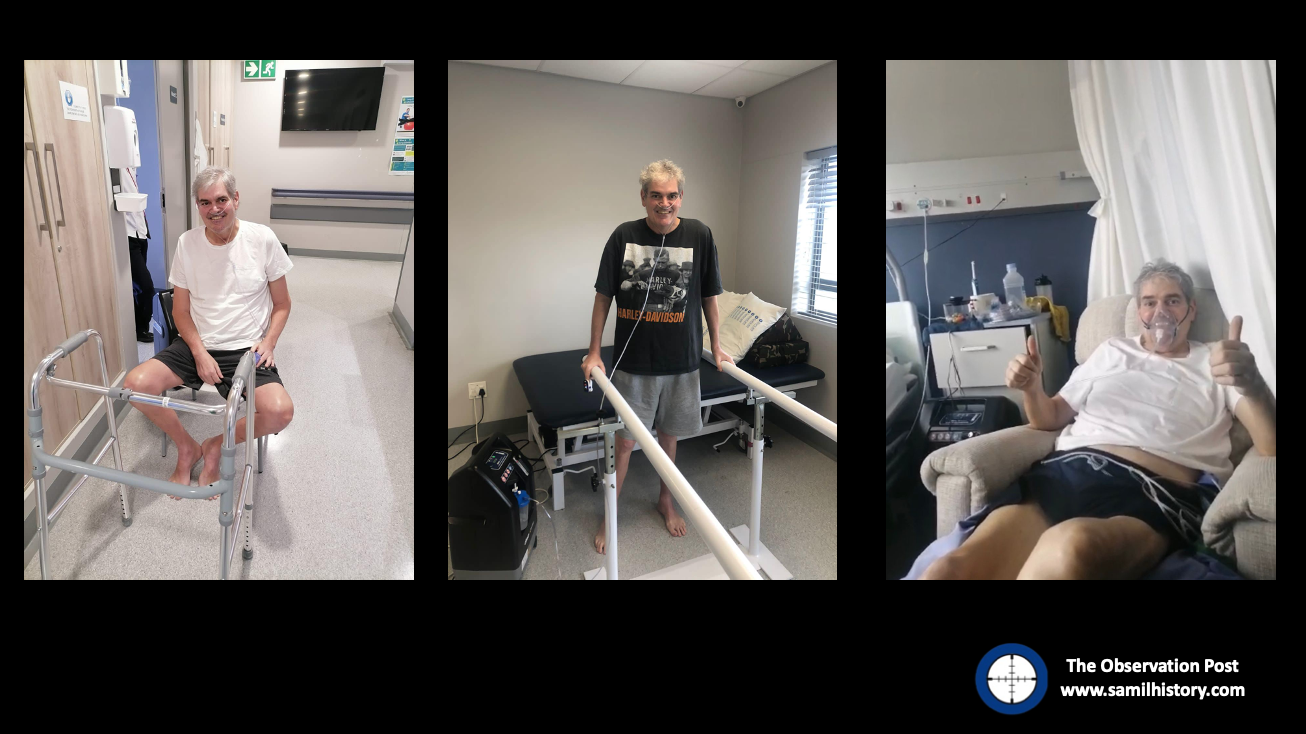
By early January 2022, I was weaned off diabetic medicines and by the end of January 2022, my health had returned sufficiently for me to continue my rehabilitation and physiotherapy sessions from home as a hospital ‘out-patient’. I rolled out of Spescare, still partially wheelchair bound and still supplemental Oxygen dependent on 6 February 2022. In all I had spent 198 days as a hospitalised patient (6.6 months).
Rehabilitation with an outsourced professional physiotherapist continued at home whilst I regained movement and strength, by July 2022, I became strong enough to discard my wheelchair and walking aids, muscle mass returned and my SATS became manageable.
By September 2023, over two years after contracting Covid, my lung damage plateaued out at 70% capacity, but only 48% ‘forced’ capacity – which is the rate of gas exchange. Less than one lung to live on – survivable, liveable but highly damaged and highly restricted.
Academia
As I could not physically get back into the beer and spirits business, my interests shifted to history writing on this blog and doing more academia. My work on Sailor Malan and Torch Commando took me onto a lecture circuit in 2023 and by early 2024 I enrolled on a postgraduate programme in history. As I already had a specialism on the Nazification of the Afrikaner Right and after drafting proposals I made arrangements to get to some of the archives in Pretoria for August 2024.
My beer company was taking part in the ‘Capital Craft’ beer festival and it presented an opportunity to get up there by vehicle – as I cannot fly due to the altitude partial pressure, so cannot breathe properly. That, and as I had support staff with me I could take Oxygen to deal with Pretoria and Johannesburg’s altitude and load shedding. It’s a little more complex moving me around, especially over thousands of kilometres – it requires logistics and support.
God’s not done
By late July 2024, just before the trip to Pretoria, a regular follow-up revealed concerns with Pulmonary Hypertension, an unusual swelling of the heart caused by strain and thickening blood. Another round in hospital, this time Worcester Public Hospital, indicated a low concern as to blood clogging but a return to Oxygen therapy to thin the blood and oxygenate it and a ‘take it easy’ policy – so no travelling to altitude.
Now I can also clock up heart attack survivor to all the above. Yup on 21 August 2024 – I just survived one of those, and I’ve learned that sometimes the bastard likes to take its own sweet time – settles in and says to itself “hi, I’m a cardio attack … only kidding … no I’m not … kidding again … not!”
Turns out all the damage to the lungs from my Covid experience has scarred and hardened them – this is making my heart work extra hard to pump the blood around them – and my heart just said “fuck you I’m done” – so now I have to be nice to it. On the 22 August 2024 an Angiogram without a sedative or anaesthetic in an unheated theatre was completed and some arteries unblocked …. that was fun …. Not! By the wonders of modern medicine – and now I have a bucket load more, I’m good to go again, just have to evolve some limitations and take things a little more easier … and I’m not dead yet!
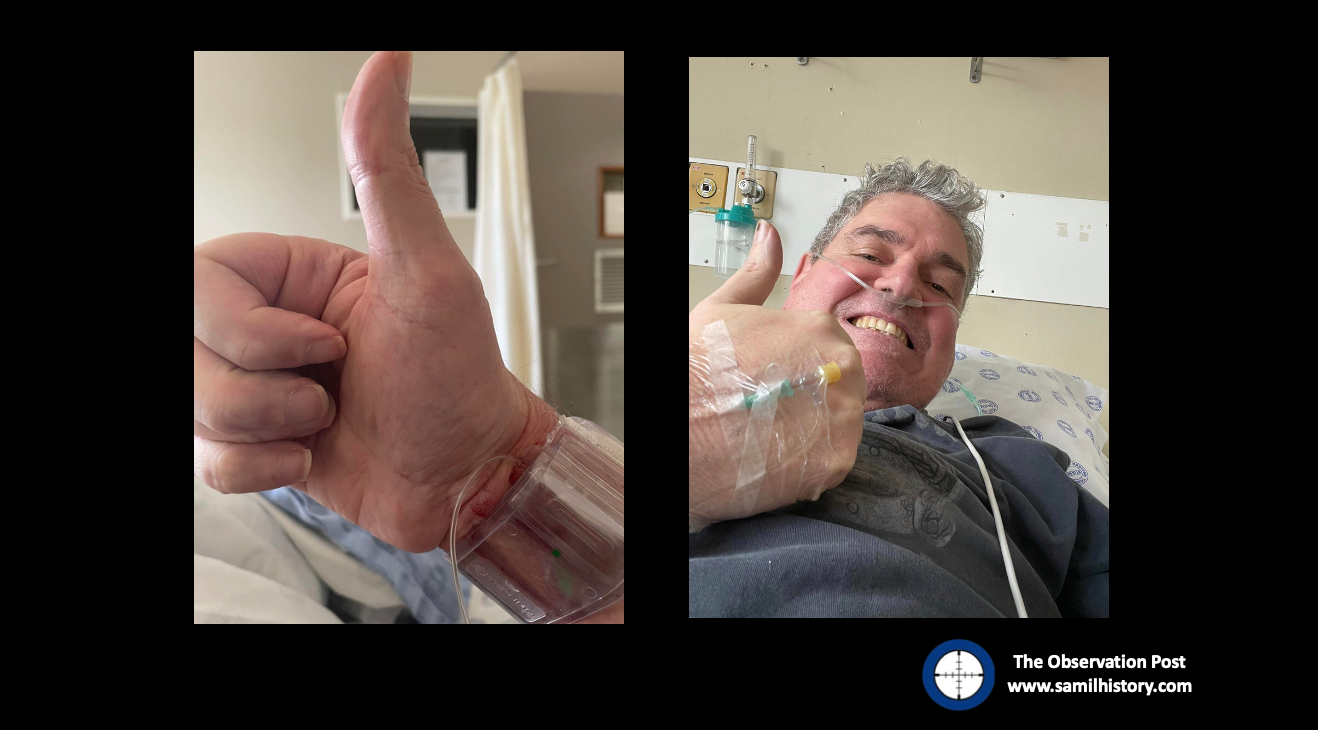
How I’m expected to travel laden with oxygen canisters and a wheel chair to dig around the OB archives in places at high altitude is anyones guess, but rest assured I am working on rehabilitation and ‘Plan B’. Which brings me to my next point – the discrimination of someone with a disability in favour of a abled bodied person. It’s called Ableism.
Ableism
Two kinds of Ableism – one by people and one by institutions, like universities and museums. In the UK, the universities and museums like the Imperial War Museum have moved quickly to digitise archives for general access but also to enable disabled people to easily access information. In South Africa that is not the case, for whatever reason, usually funding and resources, our war museums and universities are very behind the digitising project.
The other form of ‘ableism’ is someone like Albert Blake, a person who assumes that as he is able-bodied enough to hunt around an archive, everyone else should be able to in addition. Believe it or not that is a form of discrimination.
It is also not as though he has done any form of due diligence, he could have found out my status, all very odd as he’s a lawyer and before pushing out an accusation should know to do some due diligence first – he’s on my Facebook and could have sent me a PM. In addition I’ve I published on my Covid story on my social media in the past – many people have been following my journey.
He also works in the same circle I do, and could easily have contacted either one of my overseeing academics – he’s friends with both. Or, as he is also on the Observation Post’s Facebook ‘scuttlebutt’ group he could have simply asked me the question directly – all this before going out in the media with an unhinged, inconsiderate and insulting comment in the hopes of pandering to some sort of ‘Boer War’ peanut gallery. Belittling my work, making assumptions and questioning my works validity without even conducting any form of investigation or analysis.
Oh, and as far as all the accusations Blake came up of ‘Boer Bashing’ go (see my previous article ‘Boer Bashing and other Bull’), as my wife is Afrikaans and most my friends are Afrikaans just about every intervening person in saving my life is a Afrikaner – all three of my attending Physicians, all three life saving Doctors in my story (true angels), all the Doctors, nurses and physios in my rehabilitation, almost every single one a ‘Afrikaner’. So, when I say that when various troglodytes venture out of Boer War appreciation groups on this assumption I’m a Boer Basher and start throwing stones at me, they really are prejudiced and both ignorant and uniformed.
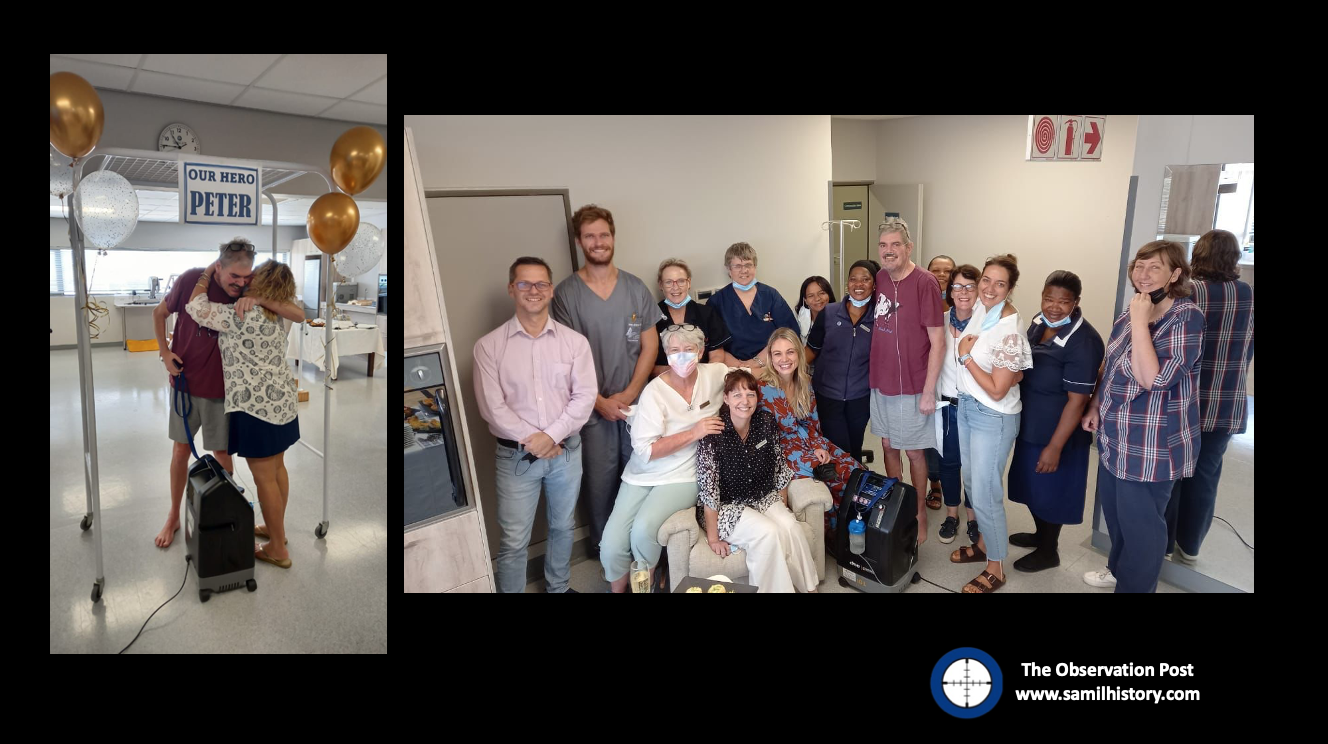
Now, I’m not the sort of person that feels sorry for myself, I’ve survived far greater adversity than any of these ‘Boer War’ hillbilly groups and their pundits can even contemplate. I do know this, my experience has taught me not to pander to fools, so I don’t ‘suffer fools gladly’ – I now just point out the odd ‘muppet’ and tell it like it is – Life’s too short and I’m not dead yet.
Written by Peter Dickens
 The Observation Post