
So, I’m reading a published Doctorate on the South Africa War (1899-1902) a.k.a Boer War 2 from the University of Pretoria by Anne-Marie Gray. It was quoted as a reference to my War is Cruelty article by a subscriber trying to prove I had a “bias”, so I’m reading it. Here’s the kicker, it just proved again to me the tremendous Afrikaner Nationalist bias Afrikaner academics have been putting through their work on the Boer War. It’s something that the University of Pretoria has been very guilty of in the past and it’s something they still continue to do – they just seem unable to shake it sometimes, even if the don’t intend to in 2024 it still comes through.
I’ve yet to see where my bias exists in a work like ‘war is cruelty’ as I strove for balance – someone has yet to empirically or even theoretically show it. However I will show empirically how a bias is applied in the link sent to the Observation Post, its Anne-Marie Gray’s work from the University of Pretoria, completed in 2004 for a Doctorate in Music, it covers the impact the Boer war has on Afrikaner music – here’s the link https://repository.up.ac.za/bitstream/handle/2263/28462/03chapter3.pdf.
This particular bias starts with the use of opposition Minister’s of Parliament (MP) quotes, writings and opinions as a “fait accompli” of the British attitude to the war, the way the way is persecuted and to the British government who they finger out as proven “warmongers”. These opposition MP’s “quotes” are even used to ground entire books and historical treatise as proof of genocide and barbarity, they become the backbone of the argument put forward by Afrikaner historians, academics and authors and by default openly demonstrating a extreme cultural and identity bias. Not only authors and academics, its even seen countless times by Boer War ‘Afrikaner’ enthusiasts on posting on social media pages in addition.
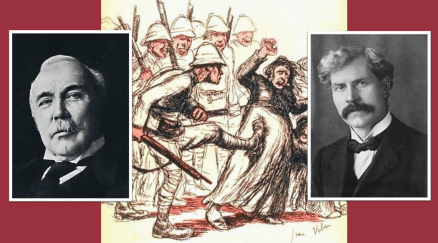
The worse case in point of this is even titling books using an opposition MP’s statement such as “Methods of Barbarism” as was done by Professor Burridge Spies (S.B.) for his book. Now this statement was made by the Liberal politician Sir Henry Campbell-Bannerman when openly condemned what he called “methods of barbarism” in the concentration camps. The problem lies with Campbell-Bannerman’s political affiliation, Henry Campbell-Bannerman is a “Whig” and a “Radical Reformer” – later a devout “Socialist” – he’s a Liberal Party leader who steered in the concepts of socialism and the welfare state. His eventual Prime Ministership is marred by failure after failure, as he – like the labourites and liberals who all come after him quickly find out – radical socialism and political pontificating on ’reforms’ – criticising operating sitting and elected governments left and right – seldom translate into sound social and economic reform.
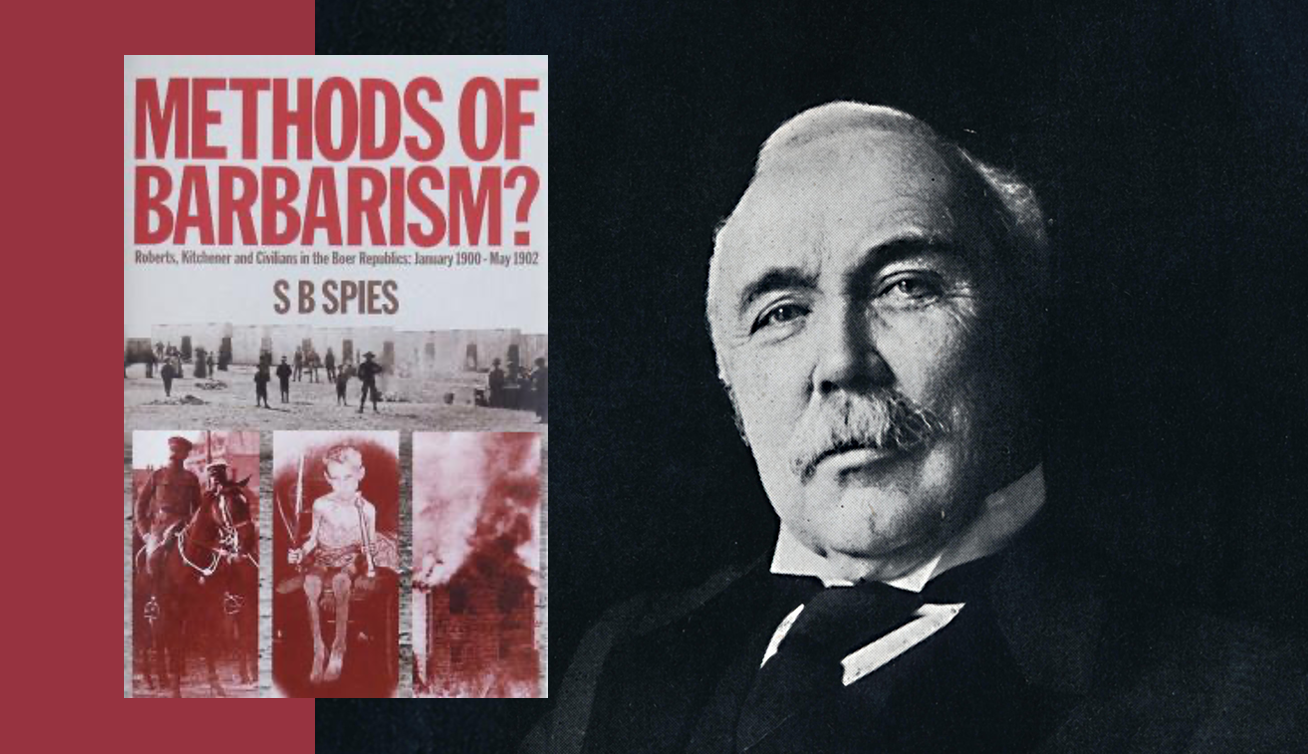
Now, like any ‘hard left’ opposition MP, Henry Campbell-Bannerman is prone to the dramatic, and he’s highly critical of the government’s policies – from economics, to spend, to welfare, to war … he is the eternal opposition bencher, like Jeremy Corbyn or Michael Foot after him, bounding out inflammatory and politically charged statements to try and make the governing party look bad. That’s his job – no opposition MP ever intends to make a Tory (conservative) government policy look good, they are in disagreement even if they agree.
To use a statement in 1901 by Liberal opposition leader like Henry Campbell-Bannerman in a Boer War context – “methods of barbarism” to then “prove” British complicity in waging genocide is like using a statement by the Labour opposition leader Jeremy Corbyn in 2021 when he said “Britain had hostile intent” against ordinary Afghans – to then “prove” Britain complicity in murderous warmongering in Afghanistan on the back of the 9/11 attacks in 2001.
You can’t build entire proven’ academic argument on what opposition MP’s say, this is like using a statement by Julias Malema to prove undeniably that all Black people hate all White people. But unfortunately academics do it. Here’s an example from Anne-Marie Gray’s doctorate:
“This is confirmed by Thomas Pakenham (1982:495) when he says that Kitchener is not remembered in South Africa for his military victory but “his monument is the camp – ‘concentration camp’, … [which] has left a gigantic scar across the minds of the Afrikaners; a symbol of deliberate genocide.”
She goes on to another example:
“James Ramsay MacDonald, afterwards Prime Minister of Great Britain and a devout Scotsman, echoed Packenham’s sentiments. He (cited in Fisher 1969:204) stated: “It was the vrouw who kept the war going on so long. It was in her heart that patriotism flamed into an all-consuming heat … She it is who feels most keenly that all her sufferings, her weary waiting and her prayers have been naught. The camps have alienated her from us forever.”
OK, two things about these statements:
On the first statement, Thomas Pakenham is a devout Irish Republican, his book “Boer War” has been torn to shreds by latter day historians because of an inherent bias, he’s also a travel writer and not a qualified historian when he writes his “Boer War” and it shows – and this is another case in point on Pakenham’s bias (see my review: Un-Packing Pakenham).
Pakenham’s statement that Kitchener committed “deliberate genocide” in the white Boer camps is unproven – even today. No case of genocide has been proven when the victims all died of a measles epidemic, followed by a typhoid epidemic. Genocide by ‘virus” has yet to be challenged. Certainly not by the 1899 Hauge Conventions which governed warfare then. That Pakenham’s “opinion” is held up as a truth is sloppy academics at best. To see far better and far more balanced work on the white Boer concentration camps see Dr Elizabeth van Heyningen works – which come on the back of a full-blown investigation into the Concentration Camps by a combined University of Cape Town and University of Warwick team and they still could not hold up a criminal case of “genocide”.
The National Party in South Africa sat in the pound seats for over 60 years, with all the budgets and resources at hand, and not one case, not one commission, not one ‘think tank’ could “prove” a case of genocide against the British and Kitchener – think about that.
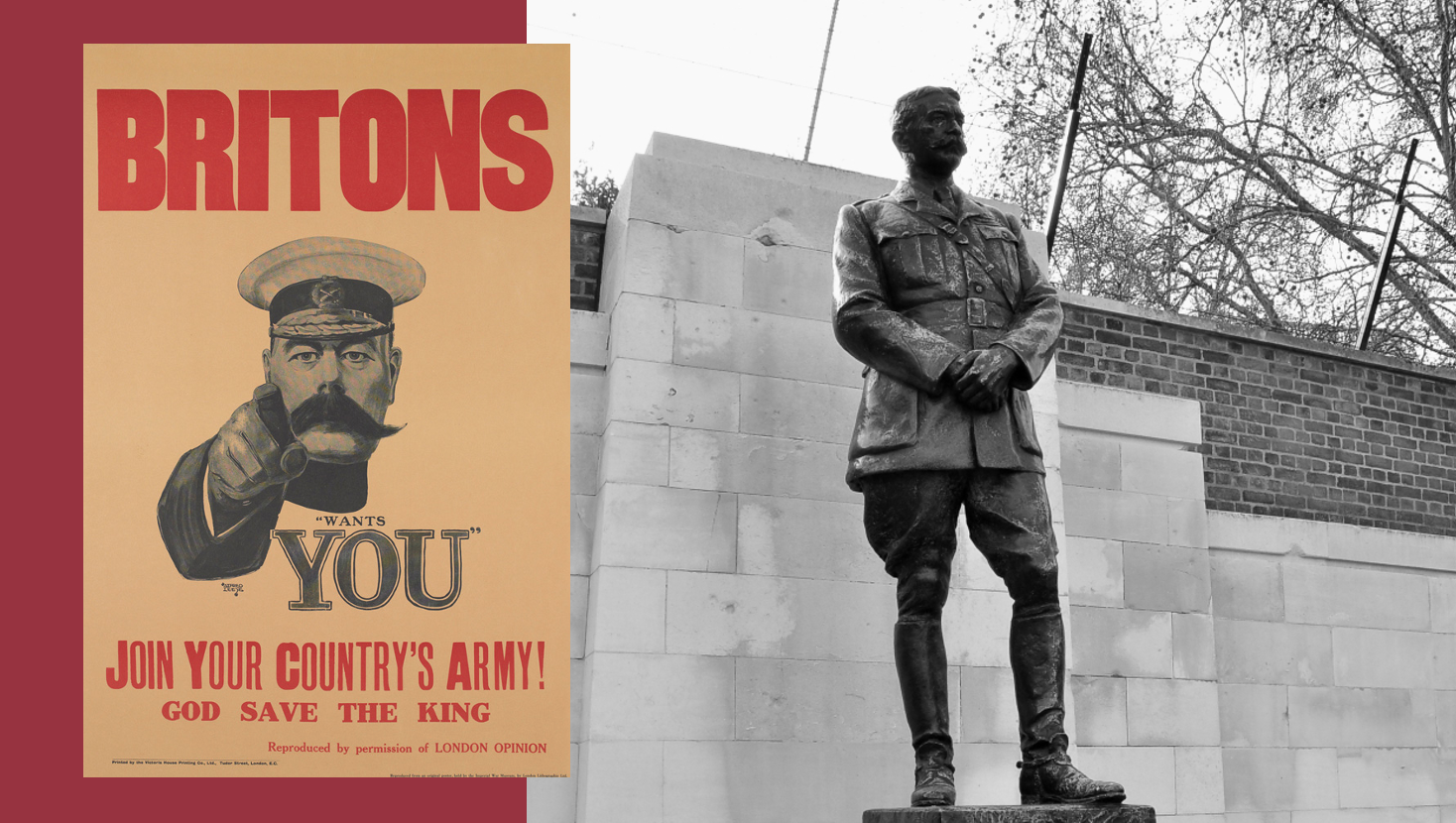
The statement that Kitchener is remembered only for the concentration camps’ is also speculation, it’s a ‘half truth’ at best – maybe in Afrikaans communities, but certainly not in English ones. Lord Kitchener goes onto to be the face for British recruitment during WW1, such is his positive association and regard during this period in his homeland. Not only then, even now, his statue stands at Horse Guards on hallowed ground reserved for Britain’s national military heroes. The truth is the British today could care not a jot what Kitchener did in South Africa, far bigger events in their history have subsequently taken place.
On the second statement, Pakenham’s opinions aside, Anne-Marie Gray then goes on try and justify Pakenham and gives academic substantiation to Pakenham’s statement by quoting James Ramsay MacDonald and giving him gravitas as a ‘Prime Minister’. But we have another problem here, and a big one at that.
Like Henry Campbell-Bannerman, James Ramsay MacDonald is an ‘opposition’ MP – and he’s even more radically left than Campbell-Bannerman, he’s the country’s first “Labour” Prime Minister, a socialist trade unionist at heart. He not only resisted Britain’s involvement in South Africa, he was, like his current protégé, Jeremy Corbyn, an avid anti-war campaigner and went to criticise Britain for its involvement in World War 1 in addition. He led minority governments and his active “pacifism” led Churchill to accuse him of not recognising the Nazi German threat. He openly supported Nazi Germany’s stance to teach the French “a severe lesson” for what they did to Germany after WW1. Heck, his golf club even expelled him because of his radical and “pacifist views” and bringing the club into disrepute.
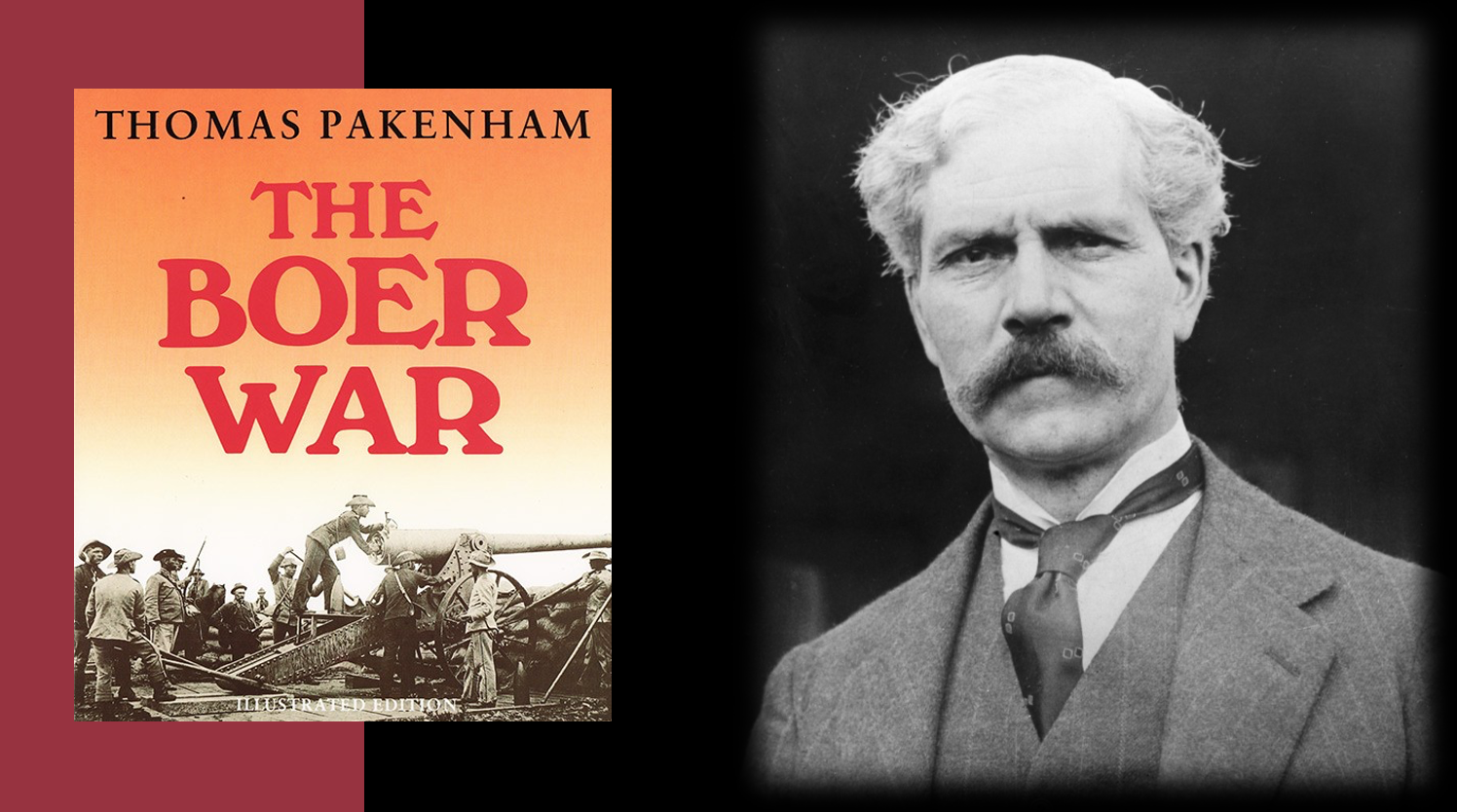
Clement Attlee, his colleague and another very famous Labourite Prime Minister even accused James Ramsay MacDonald of being a turncoat to the Labour cause and one of the “guilty men” who failed to prepare Britain for war against Hitler.
Straw man arguments
And that’s the problem with just about any thesis or book coming from Afrikaans academics, authors or commentators. It’s not just these quotes, I could go into entire Doctorates from the University of Pretoria and easily start picking them apart – quote by quote. I’m not sure if they really understand the historical figures they quote and simply relying on the secondary sources to have the understanding in the first place and then quoting them – but whichever way we cut it the over-seeing Professors should have spotted these issues – so I do believe its a confirmation bias which just sees it slip away.
It just shows that many Pro-Boer Afrikaner commentators simply do not understand British parliamentary politics, British partisan press or even British political process and the concepts of a “robust” house – I guess it’s like trying to understand “British humour” – unless you’re ‘British’ you’re not going to get it. Some even turn to academic works completed in the 80’s and then provide ’straw-man’ arguments because they cannot find quotes from the actual key players of the time to justify their argument – instead they seek them out from partisan and highly flawed historical figures – easily discredited … “straw men” in effect.
This is not to say that Thomas Pakenham or Anne-Marie Gray or Professor Burridge Spies or even his understudy Professor Fransjohan Pretorius from the University of Pretoria are all completely hopeless and their doctorates and books are not worth the paper they are written on. That would be an entirely incorrect statement, there is much merit in their work and much argument – but there is also much political bias, confirmation bias and cultural misunderstanding.
There is also much misinterpretation of British politics and British press. P. J. O’Rourke referenced Westminster styled Parliaments as “a Parliament of whores” and its a good description of them – the Westminster Commons is a theatre, the politics dramatic, floral and verbose .. in fact its great entertainment and much is said in jest or dramatised for political one-upmanship – to then use this to ground academic work is fraught with issues.
A Partisan press
Fraught with significant issues is also using British press for academic argument, what most don’t understand in South Africa, is the concept of “free press” is different in the United Kingdom than it is in South Africa. In the UK it is traditional for newspapers to declare their political affiliations and put their efforts behind this or that political party – the idea being that readers go out and buy the Daily Telegraph (Tory), the Daily Mirror (Labour) and the Independent (Liberal) – read them all and then make their own minds up. So, in Britain journalists are openly partisan and politically motivated. Then there is the “tabloid” press – which is just sensationalist trash requiring no credible sources whatsoever – then and now – mere ‘entertainment’ only. Here again South African academics made an error quoting British “correspondents” during the Boer War and here’s a good example in Anne-Marie Gray’s doctorate where she says:
“According to Hanekom and Wessels (2000:17), “de Wet can truly be described as the father of mobile warfare in South Africa.” A British correspondent wrote that de Wet’s operations would in future be studied and copied and form the subject matter of studies at every military institution. He stated that “his [de Wet’s] name will be handed down to posterity as a great exponent of partisan warfare” (FAD A296).”
Now – there are a number of problems with this statement. A “British Correspondent’s” view on de Wet is a view to sell sensationalist news using romanticised copy. It’s politically partisan and commercially driven depending on which newspaper he’s writing for and selling … “romanticising” de Wet as the “Boer Pimpernel” in British media was common – in the same way British media romanticised Winston Churchill’s escape as he “forged the mighty Apies River”. That Christiaan de Wet would go down in history as the greatest guerrilla fighter is just pure sensationalist rubbish. That he is the subject of required study at military academies is also pure rubbish.
It’s all rubbish as there is a very big problem with General Christiaan de Wet, his legacy is somewhat compromised by the old National Party and their sponsored and related ‘cultural’ organs – as he’s built into a ‘Volksheld” (people’s hero) and given a divine and almost unassailable aura. From a military history and military doctrine perspective he is in fact the very last person anyone should study.
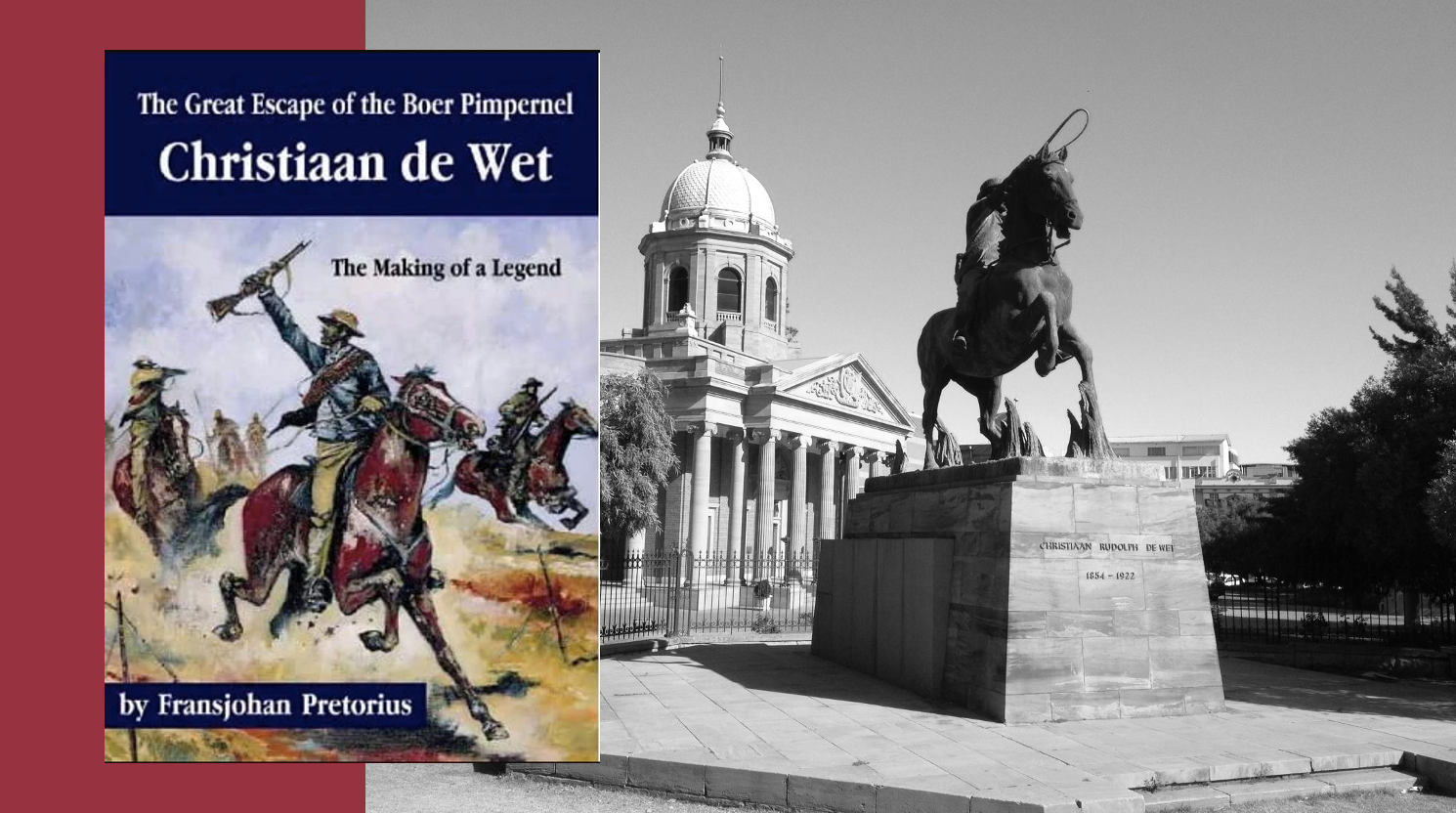
Militarily speaking, General Christiaan de Wet has a great grasp of tactical warfare, but he is highly compromised on the operational level and he’s completely hopeless on a strategic level. His campaigns are fraught with command and control errors – he is unable to link up with Cronje at Paadeburg – resulting in the first mass capitulation of Boer arms, he then leads the remaining Free State Boer Army into a poor defensive position at the Brandwater basin, abandons his command as the British close in on him and his forces and leaves a squabbling and misdirected bunch of his subordinates to surrender in the second mass capitulation of Boer arms – Surrender Hill marks the end of any hope the Boers can win the war. His insistence on laying siege to the strategically irrelevant town of Wepener is an irresponsible diversion of key resources to a worthless military target. His guerrilla invasion into the Cape Colony is an unmitigated disaster as he signals his intentions to the British, who shadow his column and chew it up – resulting in the loss of all his key logistics as he scarpers back over the Orange River with a smattering of his remaining forces and back into the Orange Free State and friendlier territory.
Even de Wet’s greatest “success” – Sanna’s Post is a Operational and Strategic failure as he is unable to effectively cut all the water supply to the British as was his stated operational objective, he does cause harm though, the resultant intermittent water supply causes significant issues as to waterborne diseases and British soldiers encamped in Bloemfontein suffer, many die, but it also leads to the unfortunate deaths of many Boer Woman and Children in the Bloemfontein concentration camp (one of the largest camps) to the same epidemics – a very tragic “own-goal”. In reality, the only effective thing de-Wet is really able to do very well is tactically evade his “hunt” and for that he is romanticised.
If you are in any doubt about the above statement, the next bit seals it. After the Boer War ends in 1902, General Christiaan de Wet joins the Boer Revolt in 1914, here he campaigns with inadequate resources and outdated doctrine – the revolt is poorly planned, poorly supported and poorly executed and he’s soundly beaten by South African Union Defence force under the command of General Jan Smuts and General Louis Botha in a matter of months, his “hunt” catches him in quick time – his old “bittereinder” guerrilla fighting colleagues showing him up as a completely inadequate guerrilla fighter. Refer my article on it Boer War 3 and beyond!
Using the secondary data source of Hanekom and Wessels to state that “de Wet can truly be described as the father of mobile warfare in South Africa” is completely unsubstantiated militarily speaking, sheer jibber-jabber and it’s completely untrue – all Anne-Marie Gray is doing is unwittingly perpetuating an Afrikaner Nationalist myth – now we can’t all together blame her as she’s not a military scientist, she’s after a degree in music, but her oversight should have pointed it out to her – problem is that her oversight is enamoured with the same bias.
In Conclusion
I am not saying that all Afrikaner academics are compromised by bias what I am saying is that holding up someones work which is clearly biased to try an dispel a “bias” in my work is very counter intuitive – it says more about the problems underpinning people’s perceptions of the Boer War – one were the entire narrative was re-written during the Apartheid period by the protagonists of white Afrikaner Nationalism, and it shows – as Afrikaner National Identity is fused into this history in such a way that it becomes a real challenge to dispel mistruths as it starts to bring people’s “identity” into question and they start to shift around uneasily and lash out at the person and not the subject. But if we are to be true to being good historians and tell an unbiased story, dispelling with these myths and ingrained “nationalism” becomes vital.
Written and Researched by Peter Dickens
Related Work
Thomas Pakenham review – link as follows: Un-Packing Pakenham
Boer Revolt 1914 – link as follows Boer War 3 and beyond!
Reference:
CHAPTER 3: A CULTURAL- HISTORICAL PERSPECTIVE OF THE BOERS DURING THE ANGLO-BOER WAR by Anne-Marie Gray, University of Pretoria repository on-line.
Image references: Wikipedia
 The Observation Post