‘An order in respect of Freemasons and Jews’

The Holocaust, the reason Freemasonry became a ‘secret’ order – World War 2 (1939-1945).

By Peter Albert Dickens

Incorrectly understood by many is the idea that Freemasonry is a “secret organisation” – however understood by only a few is why it is regarded as secretive in the first place. Upfront there’s noting secretive about it, Masonic temples and halls can be found the world over – hundreds of them, clear as a bell they stand openly in towns and suburbs all over the place, anyone is free to enquire. Of the organisation itself – many of its members are very public, and as an organisation with charity as its primary purpose they operate perfectly happily and openly in their communities and they do essential and good charity work. You can even jump onto ‘google’ and find everything you need to know from the freemasons themselves just using a simple search bar – or just buy a credible book or read a proper thesis on it – its all there, secrets included. So what’s with the big ‘Secret’ when clearly there is nothing really secretive about it?

Here’s the thing, anyone researching Freemason history will find a time before the Second World War (1939-1945) when Freemasons and masonic lodges were overtly in the public space. They participated in parades and fetes wearing all their regalia, took part in community events, photographs of all the lodge members and their names are easily found in countless local newspaper and magazine articles, the ‘worshipful masters’ quoted on many community affairs and even speaking publicly, keynote people in their society – just about everyone knew who belonged to their local lodge and they made no secret about it.

So what happened?

The answer lies in World War 2 (1939-1945), it lies in the relationship between the Holocaust and Freemasonry and how this impacted Freemasons in South Africa and in the rest of the world during and even after the war. The war is the primary reason Freemasonry “went dark” and “secret” – it is not because of any sinister illuminati’s plan to take over the world or a strange Hollywood inspired desire to protect Jesus’ bloodline by ‘rose’ hall.
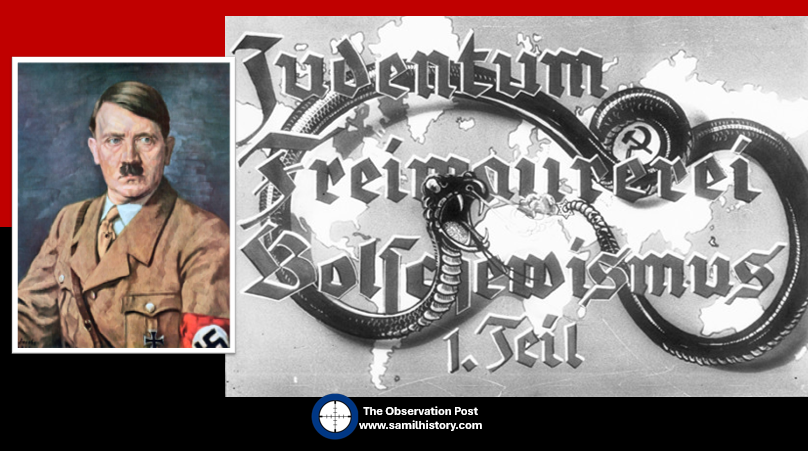
Adolf Hitler and Nazi anti-Judaism, anti-Freemasonry and anti-Bolshevik propaganda

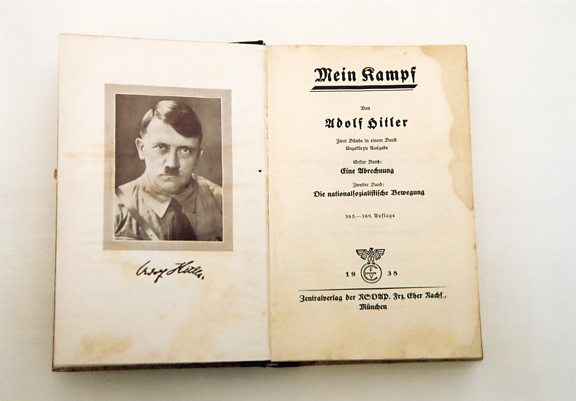
The balance Freemasons enjoyed between themselves and the societies in which they function was fundamentally changed by Adolf Hitler and his cabal. Hitler began by associating a Freemason’s conspiracy with that of a Jewish conspiracy in his political testament Mein Kampf. He said:

“To strengthen (the Jew’s) political position, he tries to tear down the racial and civil barriers which for a time continue to restrain him at every step … in Freemasonry, which has succumbed to (the Jew) completely, he has an excellent instrument with which to fight for his aims and put them across. The governing circles and the higher strata of the political and economic bourgeoisie are brought into his nets by the strings of Freemasonry, and never need to suspect what is happening.”1

Hitler would even declare that the League of Nations, the source of Germany’s dishonour, was controlled by Freemasonry. He said in a speech to Nazi faithfull in Munich in 1928:

“All of Germany is being delivered to the Freemasons through the League of Nations.”2

As early as the 5 August 1934, in a speech delivered at Essen, Dr. Wilhelm Frick, the Reich Minister of the Interior, declared:

‘It is inappropriate that a secret society with obscure aims should continue to exist in the Third Reich. It is high time that the Freemasons’ Lodges should disappear in Germany just as they have disappeared in Italy. If this is not realised in Masonic circles, I will soon help them in this direction”.3

By 28 October 1934, Frick issued a decree defining the Masonic lodges as “hostile to the state” and hence subject to closure and having their assets confiscated.4
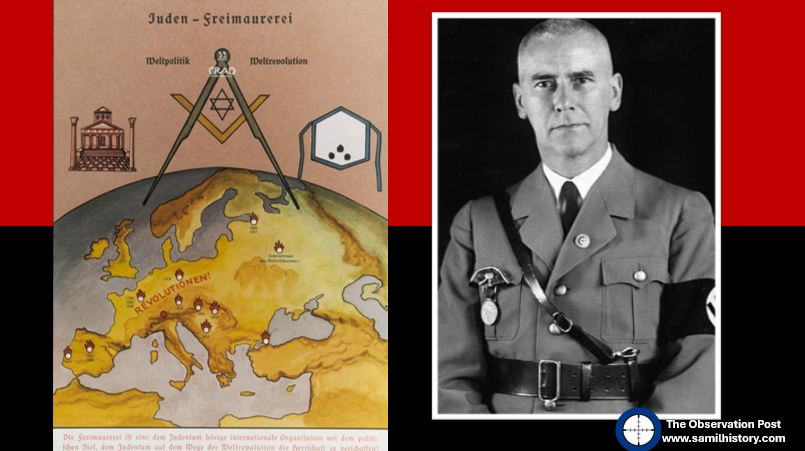
Anti Masonic propaganda poster no. 64 and portrait of Dr. Wilhelm Frick.

Nazi propaganda stated on political poster no. 64 in a series of issued posters entitled “Erblehre und Rassenkunde” (Theory of Inheritance and Racial Hygiene), published by the Verlag fuer nationale Literatur (Publisher for National Literature), Stuttgart in 1935:  

‘Freemasonry is an international organisation beholden to Jewry with the political goal of establishing Jewish domination through world-wide revolution.’5

Chief of Security Police and SD, Reinhard Heydrich regarded the Masons, along with the Jews as the

“most implacable enemies of the German race.”

In 1935 Heydrich argued for the need to eliminate and root out these “enemies” from the German world. Heydrich then created a special section of the SS Security Service (Sicherheitsdienst; SD), Section II/111, to deal specifically with Freemasonry.6
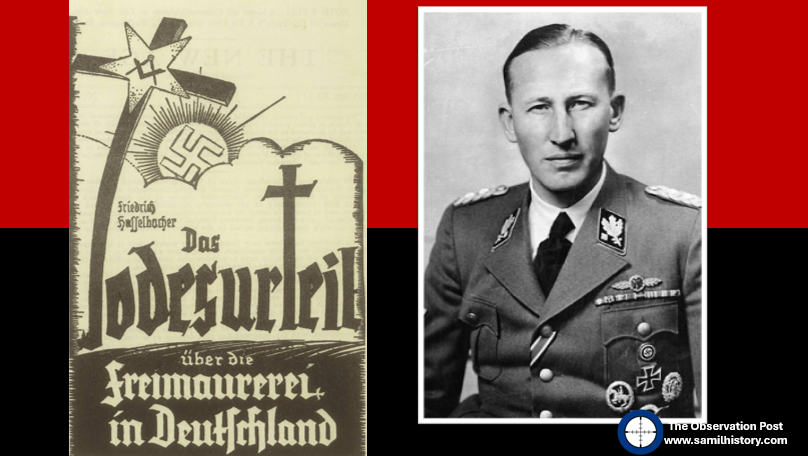
Nazi anti-Masonic propaganda and portrait of Reinhard Heydrich.

The SD argued that Freemasonry, through control of the media and exercising political influence was now in a position to provoke war, subversion, and revolution. In 1939, the SD amalgamated with another SS security department – Section VII B 1 of the Reich Security Main Office (Reichssicherheitshauptamt; RSHA), and it continued to devote itself to investigating Freemasonry.

The Exhibitions

From 1938 as Nazi Germany conquered Europe, the Germans forcibly dissolved Masonic organisations, ransacked lodges and confiscated their assets, monies and documents. Cultural artefacts and Masonic items were seized and sent to Berlin for a special rather sinister and ghoulish exhibition at the Berlin Museum. This in turn was sent to other capital cities in occupied Europe. Paris, France hosted an anti-Masonic exhibition in October 1940, as did Brussels in February 1941, so too did Nuremberg. Other anti-masonic exhibitions took place in Hannover, Düsseldorf and Erlangen all of which were aimed to ridicule and direct hatred towards Freemasons and to heighten fears of a Jewish-Masonic conspiracy.

In fact one complete lodges’ interior was removed from the Isle of Jersey for a “British” Freemasonry exhibition in Germany, this occurred after a night of heavy bombing on 29th June 1940, and the Island was invaded by Nazi Germany. Despite promises given by German commanders that Freemasons and Masonic property were not at risk, the Masonic Temple was completely ransacked and shipped off to Germany.7

The role of seizing all this wealth for the Reich was given to Heinrich Himmler, the Reichführer of the Schutzstaffel (the SS), Himmler had special dislike for Freemasons, and happily ransacked Masonic lodges out of both greed and his personal ideology.8
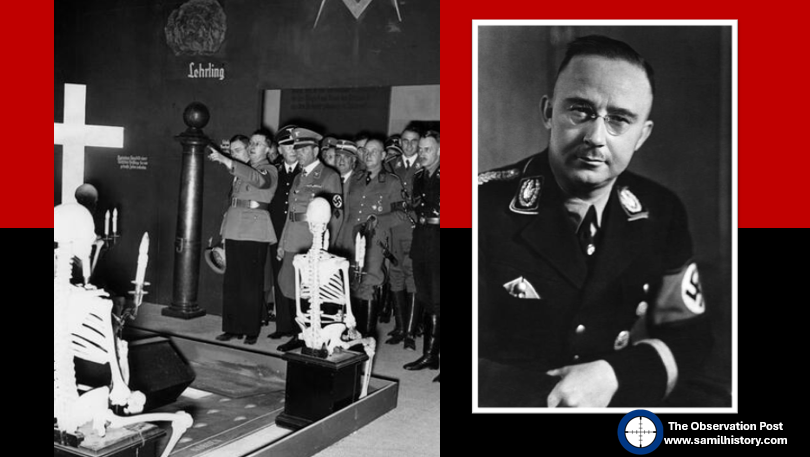
Nazi anti-Masonic exhibition and portrait of Heinrich Himmler

In all this Himmler and the SS established an interest in non-negotiable lodge property in order to further their study of Freemasonry. In 1935, guidelines were published as to the categorising of Lodge items, photos taken of them “in situation” and then removed for the anti-masonic (and anti-Jew) “exhibitions” and “museums”.

It is also worth noting that the ransacking of Masonic lodges did not just include the taking of items for exhibition, it also included the raiding of Lodge bank accounts, the taking of valuable jewels and artworks and the seizing of bank accounts of predominant Freemasons. Most lodge contents went to private homes, auction blocks or the smelter, documents and archive materials went to the Geheimenreichsarchiv (The Nazi Top Secret Government archive).9

Himmler acted as a broker for valuable acquisitions, but “he also had a special interest in lodge rituals. He was convinced high-degree Masonry involved a “blood ritual” in which:

‘the candidate cuts his thumbs and lets a little blood drop into a cup. Wine is then mixed in the bowl. Next a bottle containing the blood of the other brothers (from when they first performed this ritual) is added to the cup. The candidate then drinks the liquid, thus imbibing the blood of all Freemasons, including Jews. Thus the triumph of the Jews is complete.’10

Himmler pointed to this ritual as the means whereby Jews use Freemasonry to literally taint the blood of Aryans and to him this wildly unhinged idea of a Freemason ritual was proof positive of this. ‘The truth of the matter is that some do indeed have rituals that involve drinking wine, but references to blood are symbolic, much like the rituals performed in Christian churches.’11 This of course did not deter Himmler whose obscure view of Freemasonry was used to “study freemasonry” by ransacking lodges and looting their bank accounts for wealth.
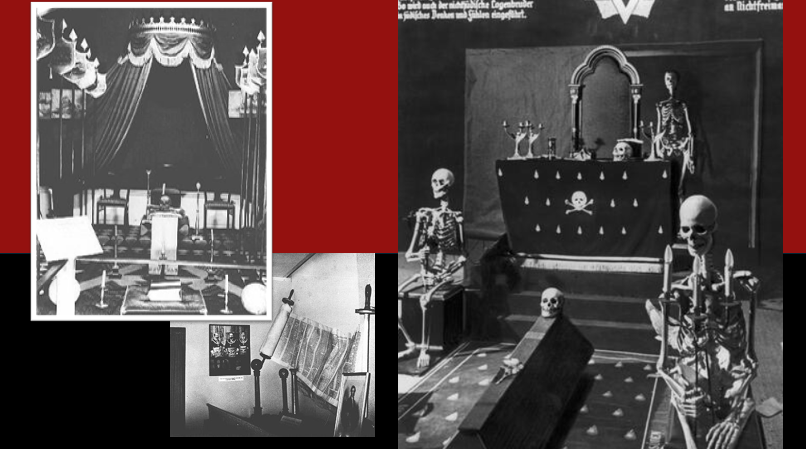
Anti-Masonic exhibitions, note the placement of skeletons in chairs and sculls and crossbones on alters to bring up the macabre and sinister – setting a scene for the occult. Note also the extensive combination of the Jewish Magen David and the Torah, Menorah etc. with Masonic items and symbology – the compasses and square etc.

One of the most infamous foreign exhibitions was the The Grand Anti-Masonic Exhibition, opened in Belgrade, in occupied Serbia on 22 October 1941. Financed by the Germans and opened with the support of collaborationist leader Milan Nedić it featured an estimated 200,000 brochures, 108,000 copies of nine different types of envelopes, 100,000 flyers, 60,000 copies of twenty different posters, and 176 different propaganda films that had previously been seen during ‘The Eternal Jew’ exhibitions in Munich and Vienna in 1937. Although being anti-Masonic in its title, the primary purpose was to promote antisemitic ideology using the Protocols of the Elders of Zion to rationalise and intensify hatred of Jews.
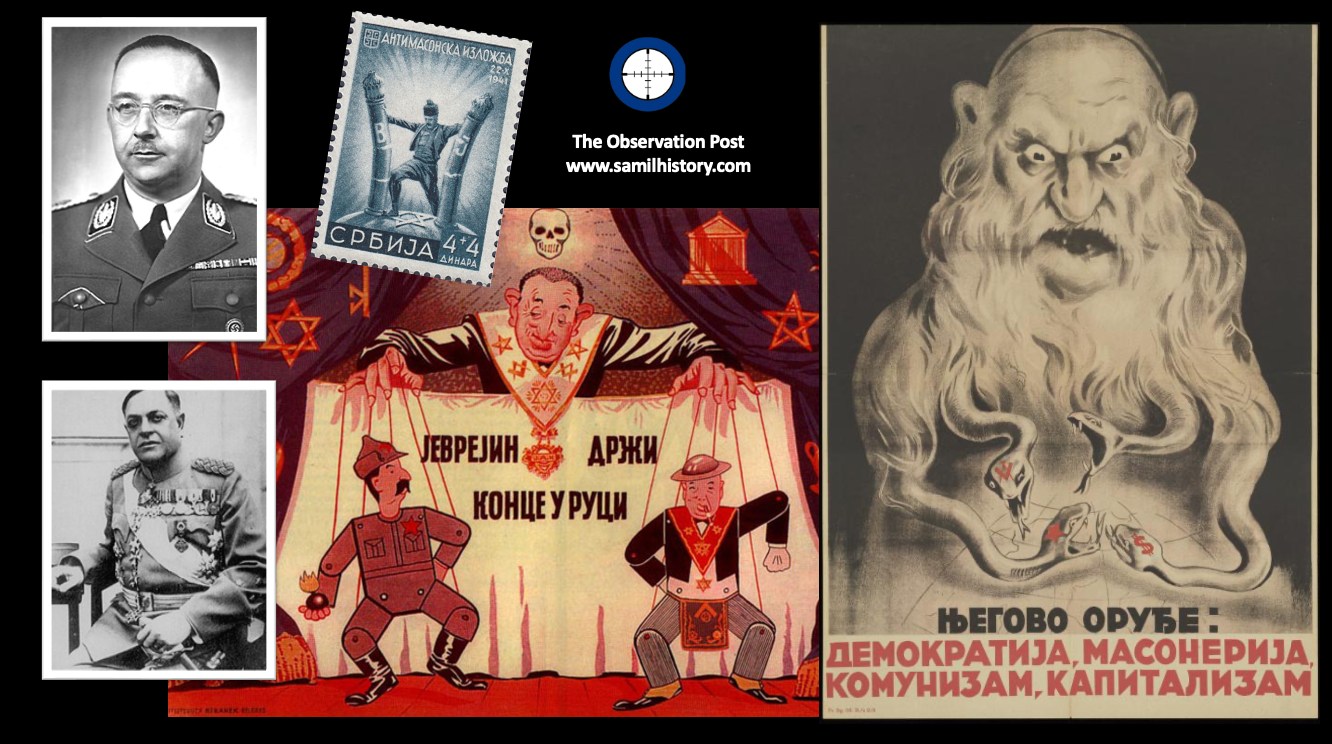
Artefacts from the Grand Anti-Masonic Exhibition. Insert pictures show Heinrich Himmler and Milan Nedić respectively.

Depicted in the image are three key artefacts from the Grand Anti-Masonic Exhibition, the Serbian anti-Semitic propaganda poster “His Weapons: Democracy, Masonry, Communism, Capitalism” issued for the Grand Anti-Masonic Exhibition opening. It has a caricature of an evil looking Jewish elderly man with a long beard that turns into snakes with symbols for Capitalism, Communism and Freemasonry.

The second poster shows the Jews and Masons controlling the Soviet Union and the United Kingdom, with marionettes of Stalin and Churchill, also depicted as a Freemason (it’s unrelated but in fact he was a mason for a short time). The caption reads: “The Jew is holding the strings. Whose strings and how? He’ll answer you. The anti-masonic exhibit”.

The final artefact is a stamp of a triumphal Serbian pushing over the two Pillars of King David’s temple, a symbol pertinent to Freemasonry and lodges, four stamps were issued by Serbian authorities and put into circulation to promote the ‘Grand Anti Masonic Exhibition’ – all depicting Judaism as being the source of all evil in the world and portraying a “strong and victorious Serbia triumphing over the plot of world domination.”

An estimated 80,000 people, including Milan Nedić and some of his ministers, visited the exhibition prior to its closure on January 19, 1942.
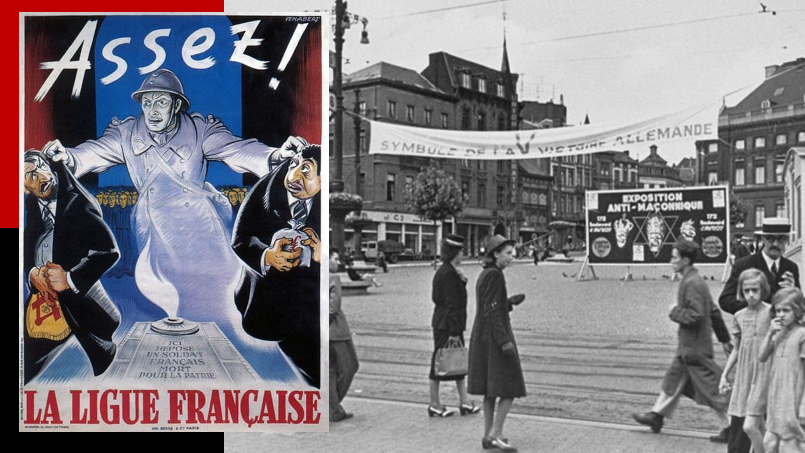
European anti-Masonic and anti-Jewish exhibition in Europe and related French League propaganda.

The central idea of all these museums and exhibitions was to promote an antisemitic work called ‘the protocols of Zion’ in which a Masonic and Jewish world order was exposed and these morbid displays brought it to life.

The Protocols of the Elders of Zion

The Protocols of the Elders of Zion, also known as ‘The Protocols’ are a fictional work, it’s a combination of a number of documents targeting Jews primarily, but also Freemasonry. It purports to be the minutes of meetings of 24 speeches made by Jewish leaders during the First Zionist Congress in 1897. It actually had its roots as early as the 1860’s in a anti-Napoleon III pamphlet and became a forged rational for the Russian pogroms against Jews. By 1903 the Protocols appeared as an appendix in an anonymous Russian antisemitic pamphlet called The Great Within the Minuscule and Antichrist. The ‘Protocols’ eventually found their way into a German antisemitic book called The Secrets of the Wise Men of Zion – the first documented version of ‘The Protocols’ published outside of Russia and published in Charlottenburg, Germany in 1920 – which was subsequently read and used widely by Hitler and the Nazi Party in Germany.
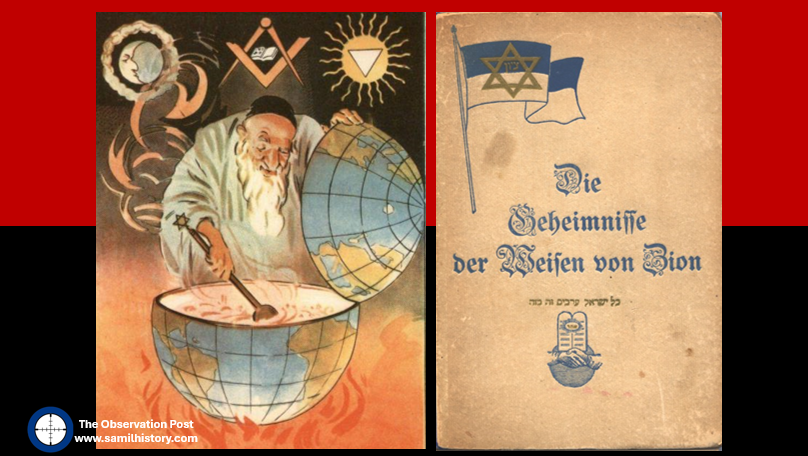
Protocols of the Elders of Zion German booklet and anti-Masonic and anti-Jewish conspiracy propaganda poster.

The Protocols of the Elders of Zion often found itself in a pamphlet format of some 70 pages. The pamphlet detailed a Satanic plot by Jewish/Zionist/Freemason conspirators to conquer the world. Alleging that Jews controlled much of the world’s finance, the media, the edu­cational institutions, the court systems and many of the world’s governments, the Pro­tocols claimed that the Jews indulged in all forms of trickery and deceit to tighten their hold. The Jews deliberately spread diseases and immorality to weaken Gentiles, and did not hesitate to use murder and terrorism to destroy all religions except their own. Jews were striving to establish their own autocracy based on a false Messiah, the “Son of David”, and posed a fiendishly devious omnipresent peril to the rest of mankind.12

Although exposed many times as a forgery, by the 1930’s it found its way into Nazi philosophy, and Adolf Hitler upfront supported its validity – now as a ‘truism’ in both Nazi Germany and occupied Europe – the ‘Protocols’ formed the groundwork to the Jewish ‘final solution’ and the holocaust.

The protocols also found their way into all sorts of propaganda, and not just Germany before and during the war, but it also found favour in antisemitic circles all over Europe and Russia – here are two French examples of it:
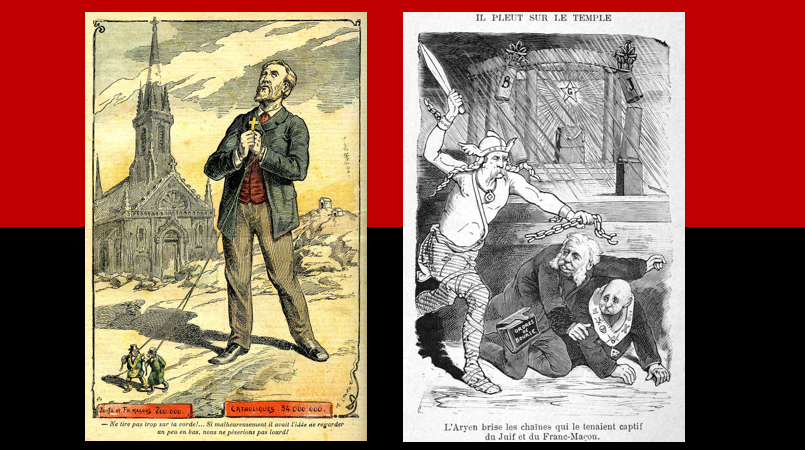
European anti-Masonic and anti-Jewish propaganda

On the left is a poster which shows an international Freemason and Jewish conspiracy (involving only 200,000 Jews and Masons) leading innocent and God fearing Catholics (the majority 34,000,000) to their nefarious ends. On the right is a French poster, very much in Nazi lore, which shows the pure ‘Aryan’ warrior striking the chain bonds of the Jew being held captive by the Freemason.

The Protocols of Zion in South Africa

In South Africa, the three main protagonists behind promoting the validity of the Protocols of the Elders of Zion are General Manie Maritz – the 1914-15 Afrikaner Revolt leader and leader of the Boerenasie Party, Louis Theodor Weichardt, a National Party stalwart who breaks away believing the party should focus all its attention on National Socialism and forms the ‘Greyshirts’ and finally the Afrikaner Nationalist ‘Broederbond’ under the Germanophile Dr. Nico Diederichs.

The Boerenasie Party

General Manie Maritz, a veteran of the South African War  and influential leader of the failed 1914-15 Afrikaner Rebellion, also admired German National Socialism. A converted antisemite, he even blamed the South African War (1899-1902), commonly called The Boer War on a Jewish conspiracy. Defeated after the Afrikaner Rebellion, Maritz would become a hardened admirer of National Socialism (Nazism) and Adolf Hitler – initially joining Theodor Weichardt and his SANP Grey-shirts, and after falling out with Weichardt over a Führerprinzip (leadership principle) conflict he joins a more hardline Nazi ‘Shirt’ movement called the ‘Black-shirts’ – the ‘South African National People’s Movement’ (Suid Afrikaanse Nasionale Volksbeweging), started by Chris Havemann in Johannesburg.

By July 1940 Maritz founded the anti-parliamentary, pro National Socialist, antisemitic ‘Volksparty’, in Pietersburg. 13This evolved and merged into ‘Die Boerenasie’ (The Boer Nation), a party with National Socialist leanings originally led by J.C.C. Lass (the first Commandant General of the Ossewabrandwag) but briefly taken over by Maritz until his accidental death in December 1940. Thereafter it was headed up by S.K. Rudman. 14 Maritz would also detail his Antisemitic and National Socialist views in his autobiography ‘My Lewe en Strewe’ (My life and Aspiration/Purpose) published in 1939 and modelled on Hitler’s own ‘Mein Kampf’.15

In 1924, Maritz would become a convert to the racist and anti-Semitic myth ‘the Protocols of the Elders of Zion’ and convinced of a Jewish and Freemason conspiracy to world domination, when he was shown the Protocols by the Kristelike-bond (Christian Bond) in Pretoria.16 He would make the ‘Protocols of Zion’ as his life’s meaning and make it his mission to educate the Afrikaner people (his ‘Volk’) to it – in it he would blame the ‘hidden hand’ of the Jews as the true conspiracists behind starting the Boer War. In ‘my Lewe en Strewe’ Maritz frames up the entire rational as to why the Jews are responsible for all the ills that have befallen the Afrikaner ‘Volk’ – and the ‘Protocols of the Elders of Zion’ are the way forward to understanding the Jewish, Freemasonry, and Communist conspiracy against Afrikaners. It starts with Maritz using a quote from President Kruger’s speech at the Johannesburg market square in February 1899, where he declared:

‘If it was possible to throw the Jewish monopolists out the country with everything they own (Sak en Pak), without getting into a war with England, then the problem of perpetual peace in South Africa be resolved’.17

Maritz then grounds his entire argument on the simple premise that even President Kruger foresaw the Jewish Problem and forewarned his people. His own warning then follows, and in the machinations of Maritz’ mind he declares:

‘Socialists, anarchists, communists, Bolsheviks, Marxists, Freemasons and super-capitalists are the key antagonists and they are none other than all Jews.’

Then Maritz concludes by way of a warning that by helping and entertaining the Jews and their requests Smuts and Botha and other Boer Generals are committing Christian fratricide :

‘… thus carry out the Jewish prescriptions and policies, perhaps unknowingly. They are the “Slavishly obedient politicians” of which the Jew speaks in his “Protocols”. One Christian must exterminate the other.’18

Part 1 of ‘My Lewe en Strewe’ covers Maritz’ autobiography – pages 1 to 96, but Part 2, the bulk of his book from pages 97 to 270 covers Maritz’ politics and ‘purpose’ and it begins with a chapter titled ‘The hidden hand of the Jew’ … and this particular theme does not stop, Part 2 covers the ‘Protocols of the Elders of Zion’ – literally translated and edited into Afrikaans with some South African references here and there to give them local flair. Abridged Protocols number 1 to number 23 and the alleged global Jewish/Freemasonry conspiracy are mapped out for simpleton consumption. Maritz also used large extracts lifted from ‘The Key to the Mystery’ 19 another discredited work on a Jewish, Communist, Freemason conspiracy and worldwide domination written by a leading Canadian antisemite – Adrian Archand.
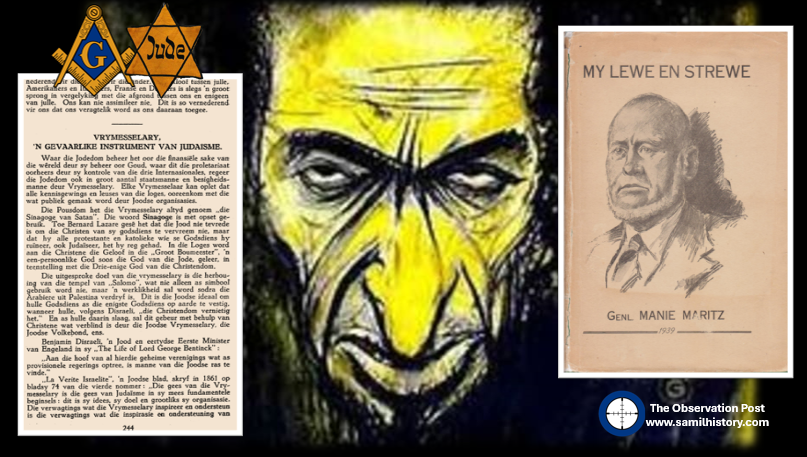
Manie Maritz and extract of his on the evils of Communism, Judaism and Freemasonry from his autobiography.

The South African Jewish Board of Deputies attempted unsuccessfully to have ‘My Lewe en Strewe’ banned for inciting race hate in South Africa. In South West Africa they were a little more successful, when taken to court Maritz was found guilty in August 1939 in Windhoek of ‘promoting a strong feeling of hostility against the Jewish race.’ and fined.20 Although Judge Hoexter described ‘My Lewe en Strewe’ as ‘filthy, contemptable and venomous racial propaganda’ according to Die Volksblad demand in South Africa for the book was off the charts, and its selling spree was only curtailed during World War 2 when it was finally banned under Smuts’ emergency regulations.21

The Grey-shirts

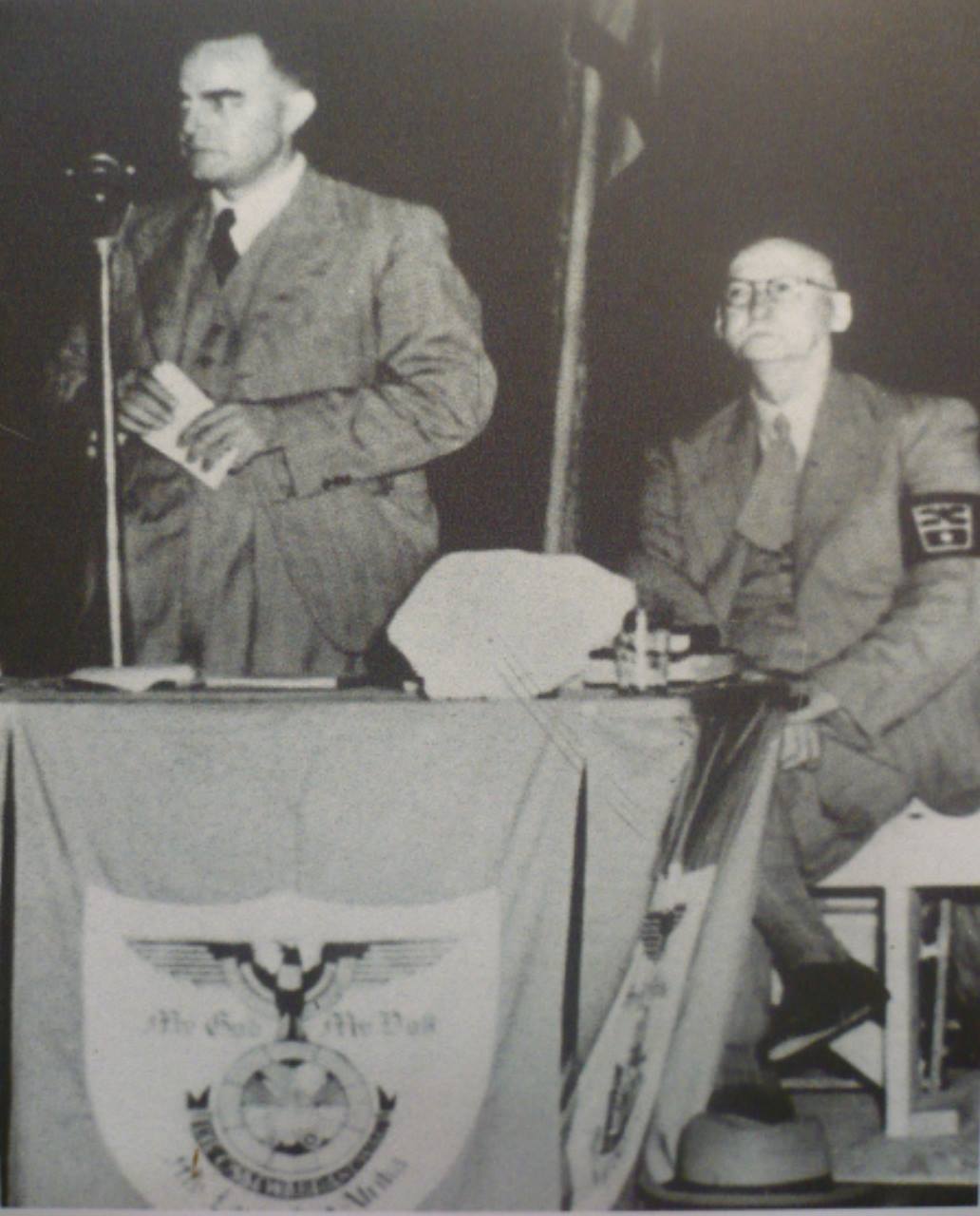
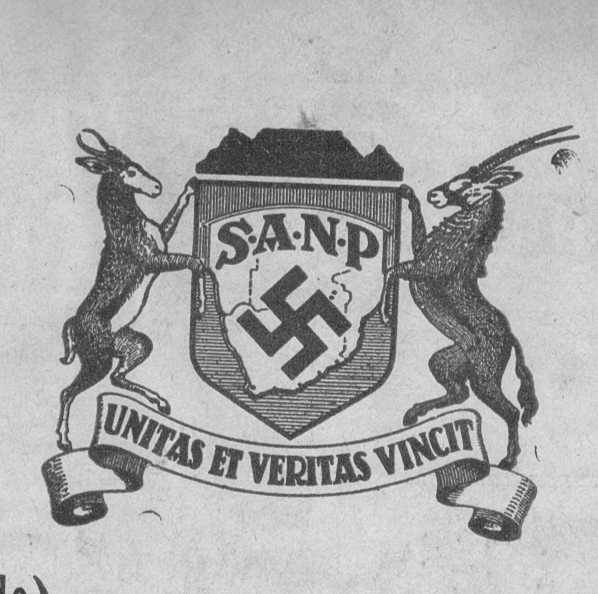
As a committed antisemite, Louis Theodor Weichardt founded the South African Christian National Socialist Movement when he broke with the National Party on the 26 October 1933. This included a paramilitary ‘security’ or ‘body-guard’ section (modelled on Nazi Germany’s brown-shirted Sturmabteilung) called the “Gryshemde” or “Grey-shirts”. In May 1934, the paramilitary Grey-shirts officially merged with the South African Christian National Socialist Movement and formed a new enterprise called ‘The South African National Party’ (SANP). The SANP would continue wearing Grey-shirts as their identifying dress and would also make use of other Nazi iconography, including extensive use of the swastika.22 Overall, Weichardt saw democracy as an outdated system and an invention of British imperialism and Jews.23
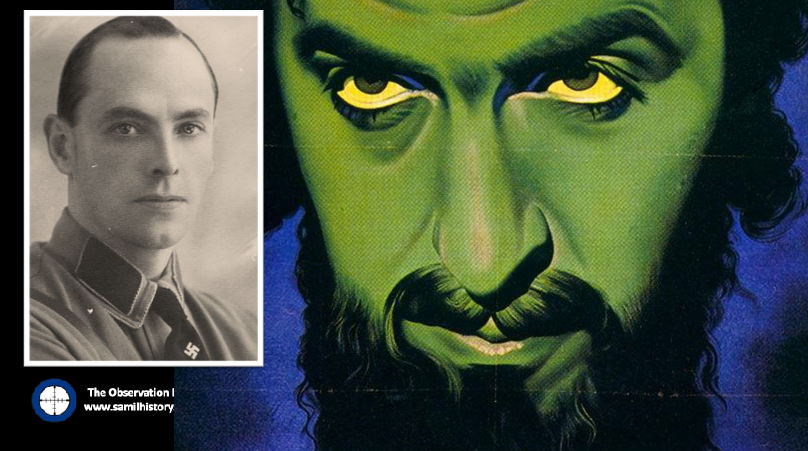
Louis Theodor Weichardt and the Nazi anti-Semitic propaganda movie poster ‘Jew Suss”

Weichardt also pitched the SANP as a fully bilingual organisation appealing to both English and Afrikaans speakers, he found favour in some English speaking corners with hardened antisemites, however for the most part his organisation and its ideology appealed to Afrikaners. Their primary communication  mouthpiece was a newspaper called ‘Die Waarheid/The truth’ which was nothing more than a vehicle to spread Nazi doctrine in South Africa – the Nazi emblem emblazoned on the masthead.

Louis Weichardt would spell out his National Socialist vision in the ‘Die Waarheid/The truth’ and trace South Africa’s problems to one source – the Jews. He claimed Jewish ‘domination’ of the legal, medical, dental, commerce, trading, liquor trade etc. as between 60% to 100%, and he would write:

“We are determined to put the Jew in his place. We are not going to tolerate bootlicking, Gentile South Africans – English or Dutch speaking – are no longer prepared to play second fiddle to these aliens”.24

As to the The Protocols of the Elders of Zion, in March 1934 when the SANP held a rally in Aberdeen in the Eastern Cape, Harry Victor Inch – one of the Greyshirt leaders – announced that he had in his possession a ‘stolen’ document from a Port Elizabeth synagogue – signed by its Rabbi – which outlined a secret plot by the Jews to destroy the Christian religion and civilisation.

The Rabbi in question was not in fact a Rabbi, he was a Jewish Reverent, Reverent Abraham Levy, and he took the SANP Grey-shirt leadership in the Eastern Cape to court in Grahamstown in a landmark case. The SANP accused; Johannes von Strauss Moltke who was the Regional SANP leader, Harry Inch, who allegedly ‘stole’ the document and David Olivier, who had printed the document for circulation as the owner and publisher of “Rapport”, another media organ of the ‘shirt’ movements. All now have to account for themselves – the case billed as a mighty ‘Gentile vs. Jew’ showdown and a legal test of the ‘Great Jewish Conspiracy.’ `

‘Die Waarheid/The truth’ would pick up this ‘Protocols of the Elders of Zion’ and really twist it for a South African audience claiming:

“the disastrous Anglo-Boer War 1899-1902 was deliberately brought about by the Jewish mine magnets who circumvented Rhodes and Kruger alike”.25

In addition, Jews were accused of inciting blacks against whites and controlling the economy, exploiting ordinary Afrikaners as part of an international Jewish conspiracy. The ‘Die Waarheid/The truth’ statements were accompanied by a propaganda leaflet printed by the SANP and distributed in Port Elizabeth.

The ‘stolen’ document was scrutinised legally, it was found to be based on the entirely discredited antisemitic ‘international Jewish conspiracy’ document – ‘the Protocols of the Elders of Zion’ and given a South African twist by the SANP. In a carefully considered 30,000 word judgement, the court concluded inter alia;

“the protocols are an impudent forgery, obviously published for the purposes of anti-Jewish propaganda”.26

As a result the three Grey-shirt leaders were all fined, Harry Victor Inch was found guilty of perjury and forging documents defaming the Jewish race and swearing under oath that those documents were genuine – and fined £1,000, later also receiving a short prison sentence. 27 David Hermanus Olivier was fined £25 for acting improperly and printing the document and Johannes von Moltke was fined £750 for “playing a leading role in the plot”.
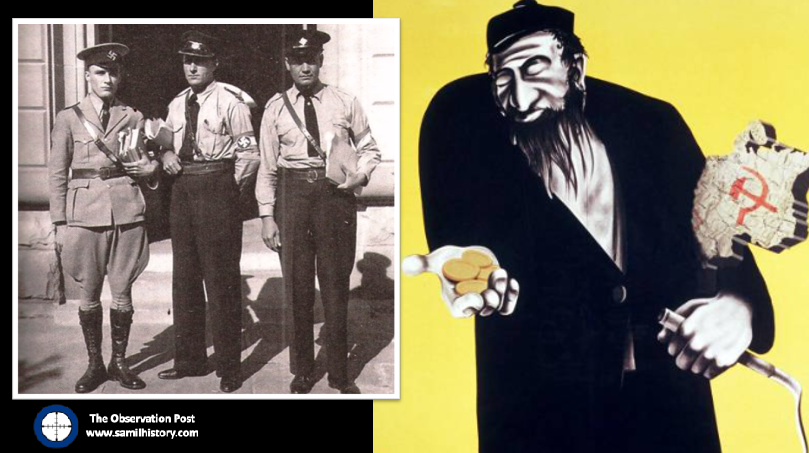
The SANP Grey-shirts on trial in Grahamstown and the Nazi anti-Semitic propaganda poster ‘the eternal Jew’.

The result was widely hailed in South Africa as a complete vindication of the Jewish people of a global plot and of Rev. Abraham Levy who brought the lawsuit against the Grey-shirt leaders.

The Afrikaner Broederbond

The Afrikaner Broederbond (AB) would also find itself immersed into this fabricated Jewish and Freemason worldwide conspiracy and it too would act. Dr. Nico Diederichs would become the Chairman of the Broederbond in 1938, in that same year he would visit Nazi Germany and became an admirer of Adolf Hitler and National Socialism. He would later meet the Nazi German ministerial delegate in South Africa – on 19 May 1939, Herr. H. Kirchner – in that meeting he confided that the Broederbond had been compromised in the past by Freemasons in the Broederbond (presumably by all the Dutch Constitution Freemasons in it, Jews were banned from the Broederbond upfront).

He declared the bond as having now been purged of its Freemasons, he had personally seen to it – and the Bond was ready to do its work on promoting anti-semitism and the National Socialist anti-democracy principle in the Afrikaner Nationalist sphere.

In fact he reassures the German delegate that the National Party had hung its hat completely on the anti-Semitic principle, and he even squashes concerns that Dr D.F. Malan was not strongly antisemite enough, confirming that he in fact is one. He goes on state that it is the Broederbond’s mission as a secret society is to both infiltrate and undermine the goals of the Smuts government and the state.28

Not to lose sight of Dr Nico Diederichs, he became a National Party MP stalwart, served as the first chancellor of the Rand Afrikaans University and became ceremonial State President of South Africa from 1975 to 1978.

The male fraternity war between the various fraternal societies in South Africa is interesting – especially the disposition of the Afrikaner Broederbond (AB) to the Freemasons – an uneasy relationship caused by the more “verlighte” (liberal) Afrikaners being members of the Dutch Freemason Constitution – and these included powerful and highly politically regarded figures over the course of the history of the OFS, ZAR and then Union, including Presidents and Prime Ministers – none of whom really favoured “Afrikaner Nationalism” as it was defined by the more “verkrampt” (conservative) Broederbonders.

That all aside, the real opponent of the AB was not the Freemasons, the real ‘cultural’ opponent is a little understood and rarely discussed “English” fraternity called “The Sons of England” – the SOE. The full name – the Sons of England Patriotic and Benevolent Society – was a fraternal society for English Protestants residing in Commonwealth countries. It was originally founded in Toronto, Canada in 1874 but it especially took root in South Africa, starting in 1881 in Uitenhage and eventually establishing a Head Office in Durban and lodges in ever major metropole. Their goal was to bring Englishmen together for mutual support, networking, and to provide financial relief to them and their families if they fell on hard times. The society acted as a cultural organisation and was run along Masonic Lodge principles, regalia and rites – it aspired to preserve and celebrate the Anglo-Protestant cultural heritage of its members – which was diametrically opposite to the Broederbond who sought to do exactly the same thing, but for the promotion and preservation of Afrikaner-Protestant cultural heritage for its members. The key difference, the SOE was not ‘secret’, it was very openly public, whereas the AB was indeed ‘secret’.
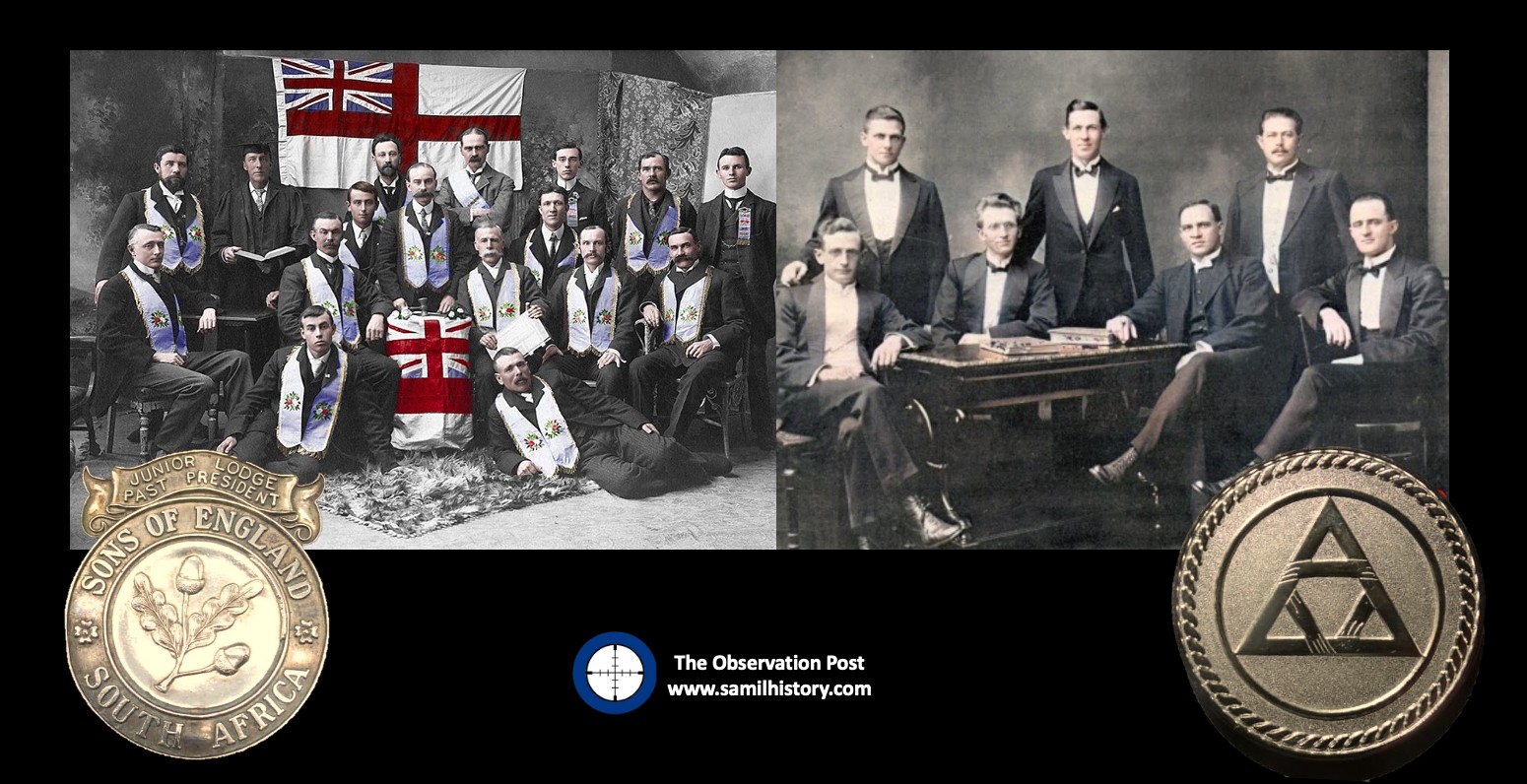
Insert picture – the original Broederbond Commitee members (right) and a SOE Lodge (left) – both marked with some of their respective symbols

Historically, the AB had three objects: to unite all Afrikaners who have the welfare of their people at heart; to foster national awareness; to implant a love of language, religion, tradition and fatherland; and to promote all of Afrikanerdom’s interests. Within the purely domestic Afrikaner arena, it acted as a secret coordinating council to weld Afrikaners into a single integrated insulated laager and as the guardian of the Nationalist spirit.29

The AB would however also lock itself in mortal combat with Freemasonry, which as a fraternity was open to men of any religion, race or creed including a great many Afrikaners in the English, Scottish, Irish and Dutch constitutions. Freemasons were specifically denied membership of the AB by the bond’s recruitment policy which was restricted to upstanding white Afrikaner adult males, protestants only, anti-Communist and specifically not a Freemason. The result of this, is that although many Afrikaner Freemasons enjoyed membership of the National Party, they did not really find themselves in key leadership roles of it – no National Party Prime Minister or President post 1948 was ever a Freemason, yet they were all Broederbonders to a man.
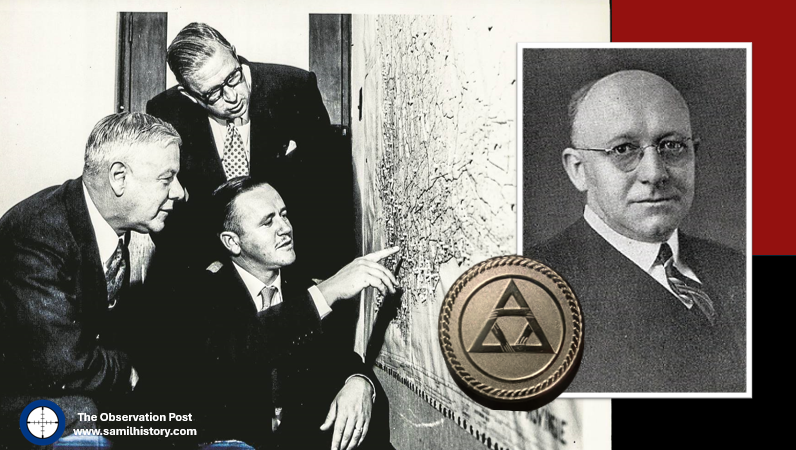
Dr. H.F. Verwoerd and fellow Broeders planning. Insert picture. Dr. Nico Diederichs and a symbol used by the Broederbond in later years as to its ‘secret’ iconography

The AB eventually even took to aggressively targeting Freemasons when it put out a circular warning its members of Freemason conspiracies and to take action via the Dutch Reformed Church, it reads:

‘Freemasons are pouncing on school committees and city councils and are not slow to seek control of cultural organisations. These fronts must be watched carefully therefore against Freemasons! Freemasonry, however innocent it might appear, is fundamentally anti-Christian and action must be taken with that in mind … action against Freemasonry must start at (Dutch Reformed) church level.’30

Inside the AB, a task force, headed by Professor F.J. van Zyl, was even set up ‘to combat communism, liberalism and other enemies such as Freemasonry.31

The campaign becomes murderous

By August 1940, the Vichy France regime also issued a decree declaring Masons to be enemies of the state. Later in Germany during 1942, Hitler authorised Alfred Rosenberg to wage an “intellectual war” against all Jews and Freemasons. This transitioned in a police response under the authority the German Armed Forces (Oberkommando der Wehrmacht – OKW) to fulfil the objectives of this war by way of a ‘final solution’.

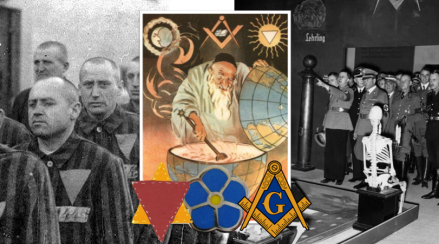
Thousands of Freemasons were arrested as ‘enemies of the state’ all over Germany and occupied Europe and sent to concentration camps. They were made to wear a red triangle on their prison uniforms to signify them as ‘political prisoners’. Jewish Freemasons were made to wear a red and yellow triangle in the shape of a Star of David – in all it is estimated that 150,000 Freemasons were murdered by the Nazi regime in their death camps by their death squads alongside 6,000,000 Jews.
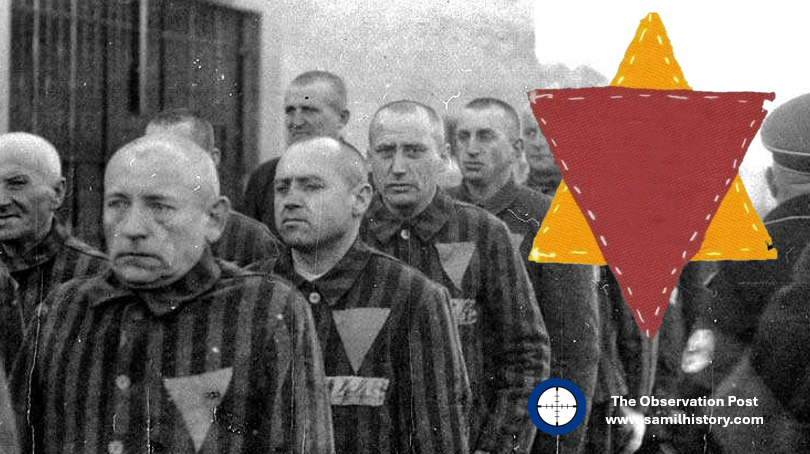
Political prisoners in a Nazi concentration ‘death’ camp wearing red ‘political’ triangles and the inverted triangles to show a Jewish Freemason with kind permission of Bro. Andrew Bergman.

After World War II, Soviet forces found much of the Masonic material that had been stolen by the Nazis. ‘They transported it to archives in Russia and Poland where the material remained unseen for more than 40 years. The Soviets, like the Nazis before them, wanted to learn about the Fraternity because, in a strange twist, they too, found Freemasonry threatening to their totalitarian government.’32

For this reason, European freemasonry including British Freemasonry, which anticipated an invasion of the British Isles by Nazi Germany decided to “go dark” in order to protect its members and its artefacts. To identify themselves Freemasons took to wearing small ‘forget-me-not’ flowers as lapel pins.

Forget me not

As Freemasonry across Europe (and in the UK and its Commonwealth) went “dark” and “secret” to protect itself from Nazi persecution – Freemasons in Europe (and in Commonwealth countries including South Africa) started to use the ‘Forget-me-Not’ flower as a lapel pin so they could recognise one another. Some lodges even became known as ‘Forget me Not’ Lodges (even in South Africa).

But why the ‘Forget-me-Not’ flower? The origins have a sinister and Nazi beginning. During the war, three Lodges were actually secretly formed inside German Nazi concentration/POW camps – to classify and identify inmates as Freemasons the Nazis used the inverted red triangle, which was reserved for ‘political prisoners’.
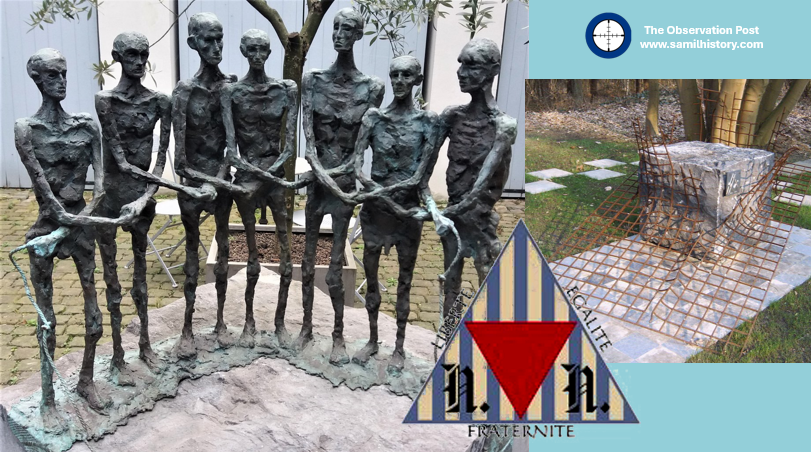
Masonic Holocaust remembrance at Esterwegen Cemetery.

The first and more famous lodge was the Liberté Chérie or Beloved/Cherished Liberty Lodge one of very few lodges founded inside a Nazi concentration camp. It was established inside Hut 6 at Esterwegen (a political prisoner concentration camp). Founded November 1943 by 7 Belgian Freemasons and resistance fighters. During its existence it ‘Entered’, ‘Passed’, and ‘Raised’ at least 2 additional members. A memorial and sculpture is now part of the memorial site of the Esterwegen Cemetery.33

The Obstinate Lodge, L’Obstinée was another Masonic Lodge founded inside the walls of a Nazi prisoner-of-war (POW) camp. Oflag X-D POW camp near Hamburg. Founded by members of the Grand Orient of Belgium. L’Obstinée was a the second Masonic Lodge and was founded in the Oflag XD camp by
members of the Grand Orient of Belgium which recognised the Lodge on14 July 1946.34

The third Lodge was “Les Frères captifs d’Allach” and who’s register is now located at the Grand Orient of France museum.35

The small forget me not flower had been used obscurely in masonic symbology in Germany from 1926. However, by a stroke of luck and irony the National Socialist (Nazi) German government decided to use a ‘Forget-me-Not’ flower as the symbol for its annual Winterhilfswerk (Winter Relief) campaign. A charitable, food, coal and clothing campaign with the slogan “None shall starve nor freeze”. Set for the harsh winter months (see insert pic of the forget-me-not used by the Winterhilfswerk charity from 1938).
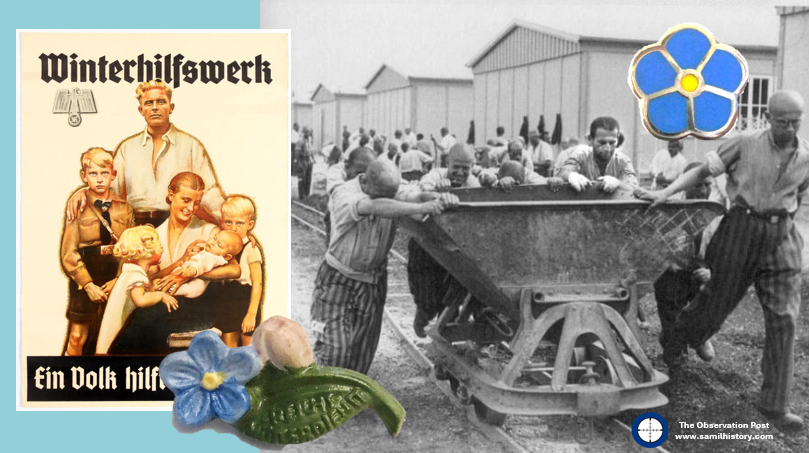
The forget-me-not worn for the Winterhilfswerk campaign and the one worn by Freemasons in remembrance of brothers in concentration camps.

As the flower pin was common to anyone supporting the winter relief campaign in Germany, this enabled some Freemasons to openly wear the Forget-me-Not as a secret sign of Freemasonry membership during the holocaust and avoid persecution or identification. The use of the Forget-me-Not lapel pin did not only occur in Germany, but Freemasons picked it as a symbol the world over during the war.36

The Forget-me-Not even appeared after the war at the first Annual Convention of the United Grand Lodges of Germany. It has continued to be worn by Freemasons world over to remember those that suffered in the name of Freemasonry.

In South Africa the Freemason fraternity would endure their remembrance duties and lament the situation in Europe, here is interesting piece of Masonic lore at Kensington Masonic Hall. It comes from Munster Lodge Irish Constitution and essentially it is a letter between a Brother and the Treasurer regarding the non-payment of his dues, it is written on the 21st April 1942 mid way though the war. It gives a grave picture of Masonry world-wide and in the occupied countries and urges the need to retain membership against difficult times. A second letter, also held at the Kensington Masonic Hall, is a set of minutes and funds raised for the family of a Freemason killed in action.37
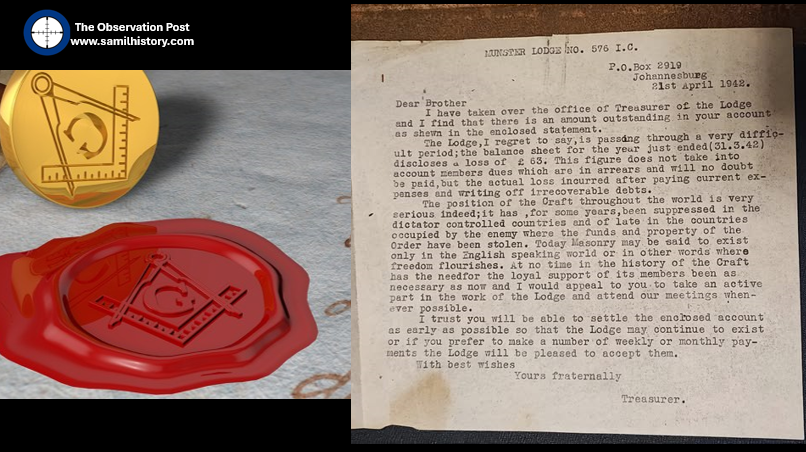
Kensington Masonic Hall artefact – with permission from Bro. Eric Cleaver

Numerous South African Freemasons served in the South African Union’s Defence Force during World War 2, and seconded to British Armed Forces, many attaining high accolade and Masons can also count many fallen amongst themselves. A notable World War 2 Freemason was the very popular Maj. General Dan Hermanus Pienaar, his role in the Battle of Al Alamein would contribute to the turning point of the war and the ultimate Allied victory. Dan Pienaar was a member of Lodge Rising Star (English Constitution) in Bloemfontein, initiated on 1 October 1935 and raised 14 April 1936. He was tragically killed during the war in an aircraft accident. 38

In Conclusion

It took some time after the war for the “all clear” to be given and for Freemasons to return to their normative position in society and open up their lodges and memberships, even as late as 2018 the United Grand Lodge of England was still calling officially for the end of discrimination of Freemasonry.

Freemasonry operates as a charity – not unlike a Lions Club or Rotary, it operates in public and as Freemasons put it – Freemasonry is organisation with secrets, but not a secret society. Freemason’s secrets are gestures, words and handshakes so they can recognise where each fellow mason is on their respective masonic journey and for the delight and surprise of the candidate passing his degrees. Freemasons have exposed their rituals, temples and gestures multiple times, and although not encouraged, the public can easily source them. 

It is important to note, as often Freemasonry is not factored in the lexicon on the Holocaust which usually focusses on the victims as being Jews, Homosexuals, Gypsies and Political Prisoners generally – it is important to stress that every single Führer Order in respect of the Holocaust started with the following words:

‘An Order in respect of Freemasons and Jews’.39


Written and researched by Peter Dickens

Footnotes

  1. Hitler, Adolf. Mein Kampf (Ralph Manheim Translation), Houghton Mifflin Company, New York, 1925 original publication, translation published 1999. ↩︎
  2. Hitler, Adolf. Speech at an NSDAP meeting in Munich, February 29, 1928. Hitler, Reden, Schriften, Anordnungen, Vol. II/2, 706. ↩︎
  3. Smith, Gary. Freemasonry and the Holocaust By W. Bro. Gary W. Smith, Pr.D.G.D.C. ↩︎
  4. Campbell, Thomas. Compass, Square and Swastika: Freemasonry in the Third Reich. Texas A&M University. 2011 – Page 119 ↩︎
  5. United States Holocaust Museum – on-line resource, fetched 1 December 2024 ↩︎
  6. Thomas, Christopher. Compass, Square and Swastika: Freemasonry in the Third Reich. PhD thesis. 2011 ↩︎
  7. Smith, Gary. Freemasonry and the Holocaust By W. Bro. Gary W. Smith, Pr.D.G.D.C. ↩︎
  8. Thomas, Compass, Square and Swastika: Freemasonry in the Third Reich, Page 126 ↩︎
  9. Thomas, Compass, Square and Swastika: Freemasonry in the Third Reich, Page 126 ↩︎
  10. Thomas, Compass, Square and Swastika: Freemasonry in the Third Reich, Page 126 – 127 ↩︎
  11. Thomas, Compass, Square and Swastika: Freemasonry in the Third Reich, Page 127 ↩︎
  12. Scher, David. Echoes of David Irving – The Greyshirt Trial of 1934. 2004 ↩︎
  13. Shain, A Perfect Storm, 230 ↩︎
  14. Bunting, The Rise of the South African Reich, 84 ↩︎
  15. Shain, A Perfect Storm, 231 ↩︎
  16. Shain, A Perfect Storm, 231 ↩︎
  17. Maritz, Manie ‘My Lewe en Strewe’ Pretoria 1939. Page 121. ↩︎
  18. Maritz, Manie ‘My Lewe en Strewe’ Pretoria 1939. Page 139 ↩︎
  19. Shain, A Perfect Storm, 230 ↩︎
  20. Shain, A Perfect Storm, 230 ↩︎
  21. Shain, A Perfect Storm, 231 ↩︎
  22. Shain, Milton. ‘A Perfect Storm’, Antisemitism in South Africa 1930-1948, (Johannesburg: Jonathan Ball Publishers, 2015) , 55–58. ↩︎
  23. Bouwer W, National Socialism and Nazism in South Africa: The case of L.T. Weichardt and his Greyshirt movements, 1933-1946. (MA Thesis, University of the Free State, Bloemfontein 2021), 18. ↩︎
  24. Shain, A Perfect Storm, 58 ↩︎
  25. Shain, A Perfect Storm, 58 ↩︎
  26. Shain, A Perfect Storm, 73 ↩︎
  27. Scher, David. Echoes of David Irving – The Greyshirt Trial of 1934. 2004 ↩︎
  28. Rein Commission. Unpublished ↩︎
  29. Bloomberg, Charles. Christian Nationalism and the Rise of the Afrikaner Broederbond in South Africa, 1918-48, Page 32 ↩︎
  30. Wilkins, Ivor. The Broederbond. Jonathan Ball Publishers, 1978. Page 150 ↩︎
  31. Wilkins, The Broederbond, 407 ↩︎
  32. Smith, Gary. Freemasonry and the Holocaust By W. Bro. Gary W. Smith, Pr.D.G.D.C. ↩︎
  33. Smith, Gary. Freemasonry and the Holocaust By W. Bro. Gary W. Smith, Pr.D.G.D.C. ↩︎
  34. Smith, Gary. Freemasonry and the Holocaust By W. Bro. Gary W. Smith, Pr.D.G.D.C. ↩︎
  35. Smith, Gary. Freemasonry and the Holocaust By W. Bro. Gary W. Smith, Pr.D.G.D.C. ↩︎
  36. The Forget-Me-Not and Anti-Freemasonry in Nazi Germany – The Square Magazine on-line. ↩︎
  37. With the kind permission of Bro. Eric Cleaver – Germiston Charity Lodge. ↩︎
  38. Rossouw, B (compiler). 250 Years of Freemasonry in South Africa, a Heritage Collection 1772 – 2022. Grand Lodge of South Africa. 2022. Page 1031 ↩︎
  39. Smith, Gary. Freemasonry and the Holocaust By W. Bro. Gary W. Smith, Pr.D.G.D.C. ↩︎

Bibliography and References

Bloomberg, Charles. Christian Nationalism and the Rise of the Afrikaner Broederbond in South Africa, 1918-48. Palgrave Macmillan. 1990.

Bouwer, Werner. National Socialism and Nazism in South Africa: The case of L.T. Weichardt and his Greyshirt movements, 1933-1946

Bunting, Brian. The Rise of the South African Reich. Penguin Books. 1964

Feng, Albert. Freemasonry: Survival and Compromise – Freemasonry in the Third Reich.

Hitler, Adolf. Mein Kampf (Ralph Manheim Translation), Houghton Mifflin Company, New York, 1925 original publication, translation published 1999.

Hitler, Adolf. Speech at an NSDAP meeting in Munich, February 29, 1928. Hitler, Reden, Schriften, Anordnungen, Vol. II/2, 706.

Maritz, Manie. ‘My Lewe en Strewe’ Pretoria 1939

Rossouw, B (compiler). 250 Years of Freemasonry in South Africa, a Heritage Collection 1772 – 2022. Grand Lodge of South Africa. 2022.

Scher, David, M. Echoes of David Irving – The Greyshirt Trial of 1934. December 2004.

Thomas, Christopher, Campbell. Compass, Square and Swastika: Freemasonry in the Third Reich. Doctorate of Philosophy thesis. Texas A&M University. 2011

Milton, Shain. A Perfect Storm – Antisemitism in South Africa 1930-1948. Jonathan Ball. 2015

Smith, Gary. Freemasonry and the Holocaust By W. Bro. Gary W. Smith, Pr.D.G.D.C

United States Holocaust Museum – on-line resource, 2024

The Square Magazine (on-line). The Forget-Me-Not and Anti-Freemasonry in Nazi Germany

Wilkins, Ivor. The Broederbond. Jonathan Ball Publishers, Johannesburg. 1978
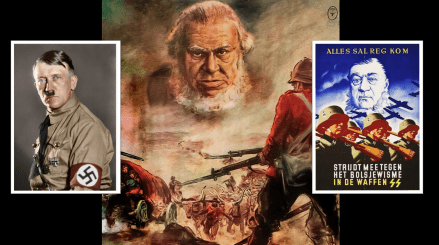
Oom Kruger, the man, the movie, the myth!

From Boer ‘Refugee Camps’ to Nazi ‘Konzentrationslager’  

In some recent social media postings, the old fracas between the Tory MP Jacob Rees-Mogg’s inflammatory statements about Boer War concentration camps and Pretoria University’s erstwhile Professor Fransjohan Pretorius’ emotionally charged response to it seems to have resurfaced (not that Rees-Mogg cares a jot, or has even responded to Professor Pretorius), a key source of the fracas in both respects – the use of language surrounding concentration camps.

The issue lies around how ‘concentration camps’ are perceived in our common modern consciousness and what the phrase means to us – not only in South Africa but world over. This was adequately demonstrated in the TV interview with Jacob Rees-Mogg, who, whilst defending Winston Churchill’s legacy, was challenged on the issue of British concentration camps in South Africa during the South African War (1899-1902) a.k.a. Boer War 2.

His response, falling back on a typical Etonian education, compared the death rate in Boer War concentration camps to the death rate in Glasgow at the beginning of the 20th Century – i.e., disease, not war, being the major issue. In Reese-Mogg’s political context he is using a ‘deflection’ as one can scalp mortality statistics and disease statistics by demographic segment and by country from 1899 to 1902 in many ways.

Rees-Mogg’s comparison of Glasgow and South African camps is, however, statistically unsound – mortality rates in South Africa during disease epidemics at the time, notably the Influenza Pandemic of 1918 would have been more compelling and comparative argument.

Rees-Mogg’s grip on disease statistics aside, he then went to state that the camps were set up for protecting Boer citizens. This is a partial truth, believe it or not, the camps were initially set up for protecting refugees – but it comes with a double-edged sword when forcibly displaced citizens were added to the genuine refugee population of the camps, hence the controversy, confusion and general indignation across the Afrikaner community.

Then, Rees-Mogg goes on to state that one should not to confuse the Boer concentration camps with Hitler’s extermination camps. This is an absolute truth, Rees-Mogg is correct, the two concepts are completely different. However, the morality issue regarding the outcome of both systems (i.e. the death of civilians in wartime) will forever be argued – especially when one starts to add modern day 21st Century WOKE sensibilities to 20th Century contexts – the idea that war kills, whether by virus or bullet, makes no difference to the dead. 

To see the full interview between Jacob Rees-Mogg (right) and Grace Blakeley (left) follow this BBC link: https://www.bbc.com/news/av/uk-politics-47247835

Wading into this fracas to “set Rees-Mogg strait” comes Professor Fransjohan Pretorius from the University of Pretoria, using equally emotionally charged language.

To see Professor Fransjohan Pretorius’ full response follow this link: https://theconversation.com/concentration-camps-in-the-south-african-war-here-are-the-real-facts-112006

What is however very interesting to this discussion, and more to the subject to this article, is just how loaded the words ‘concentration camp’ are, and it’s seen in Rees-Mogg’s co-discussant on the panel, Grace Blakeley, an academic, journalist and far left leaning political commentator who best describes herself as a ‘socialist’ – and on the Boer War concentration camps she literally loses the plot – dramatically declaring with great dollops of repugnance that “the British invented the Concentration Camp” – a complete untruth, the Spanish invented concentration camps.

Grace Blakeley then loudly proclaims with all the authority in the world  “it was systematic murder!” Now, in the 125 odd years since the war not one single case of ‘systematic murder’ in a Boer concentration camp has been proven – not then and not now – and that’s not an opinion it’s a fact, whether some like it or not. Even the old Afrikaner National Party had 40 years in the pound seats with all the resources at hand to try and ‘prove’ a legitimate case of systematic murder which could hold up to legal scrutiny and could not do it. The simple truth is that all deaths recorded in both the ‘Boer’ and the ‘Black’ Concentration camps of the Boer War are disease or health related (more on this later).  

She then excitedly declares “hundreds of thousands of people died” in the white Boer concentration camps – implying mass genocide and ethnic cleansing – whilst in truth 28,000 people died in the ‘white’ camps and about 20,000 in the ‘black’ camps (some say more) – all whilst very tragic, it is hardly ‘hundreds of thousands’ that really is hyperbole.

In Jacob Rees-Mogg’s rather measured counter response to Grace Blakeley’s wild claims he reiterates that it is “completely wrong” for her to compare the Boer War 2 concentration camps to that of Adolf Hitler’s extermination camps of World War 2.

So, how is it that Grace Blakeley (a Labour Party strategic think-tank economist with a Masters Degree in African Studies) gets her facts so woefully wrong?  

Another glaring problem with her outbursts, and its highly indicative of the issue at hand, Professor Fransjohan Pretorius in his effort to “set Jacob Rees-Mogg strait” on his facts, only takes aim at Rees-Mogg, the net result is a raft of indignation levelled directly at Rees-Mogg by many in South Africa simply because the good Professor said so. What he does not do, is take aim at Grace Blakeley, an expert in her field, for her equally stupid, emotionally charged and factually incorrect statements. This is a BBC ‘Balance’ panel of Tory and Labour after all. Here the good Professor is ‘Tjoepstil’ – nada, nothing, silent … crickets! But why? 

The uneasy answer is that he agrees with Blakeley, and by NOT “setting Grace Blakeley strait” in addition to Rees-Mogg, he tacitly approves of her statements. He is ‘weaponising’ the issue, the surge in indignation from South Africa (and even the UK) does not target the ‘Labourite’ in the debate, but rather the ‘Tory’ – nobody cares about what Grace Blakeley said, they all tacitly agree with her in addition. 

It exposes a tremendous old Afrikaner Nationalist bias, something Professor Fransjohan Pretorius is often criticised for in his history writing, and one that is currently undermining his credibility. As they say in Afrikaans “Jou onderrok steek erg uit” (your underwear slip is exposed i.e. your hidden bias is plain to see) – and by nailing his bias to the mast in the way he does – calling the British “scandalous” in addition, and politicising the issue by focusing only on the Tory MP, he creates a fracas and feeds a hungry audience seeking to chastise the British for just about every misery on the planet.

So, what’s with all this tacit approval of this Labourite’s assertions that this was a “British invention”, “systematic murder” and a genocide of “hundreds of thousands” … what’s the connection between the South African War (1899-1902) a.k.a. Boer War 2 and World War 2 (1939-1945) in weaponising words like “concentration camps” for political currency?

The answer funnily enough lies in the little Austrian born Bavarian Lance Corporal with megalomaniac tendencies, to which Jacob Rees-Mogg refers and to whom Grace Blakeley infers (more on Hitler later).

The Boer War ‘Concentration Camps’

Let’s take a quick step back, what’s with attributing the term ‘Concentration Camp’ to the Boer War of 1899 and why the confusion?

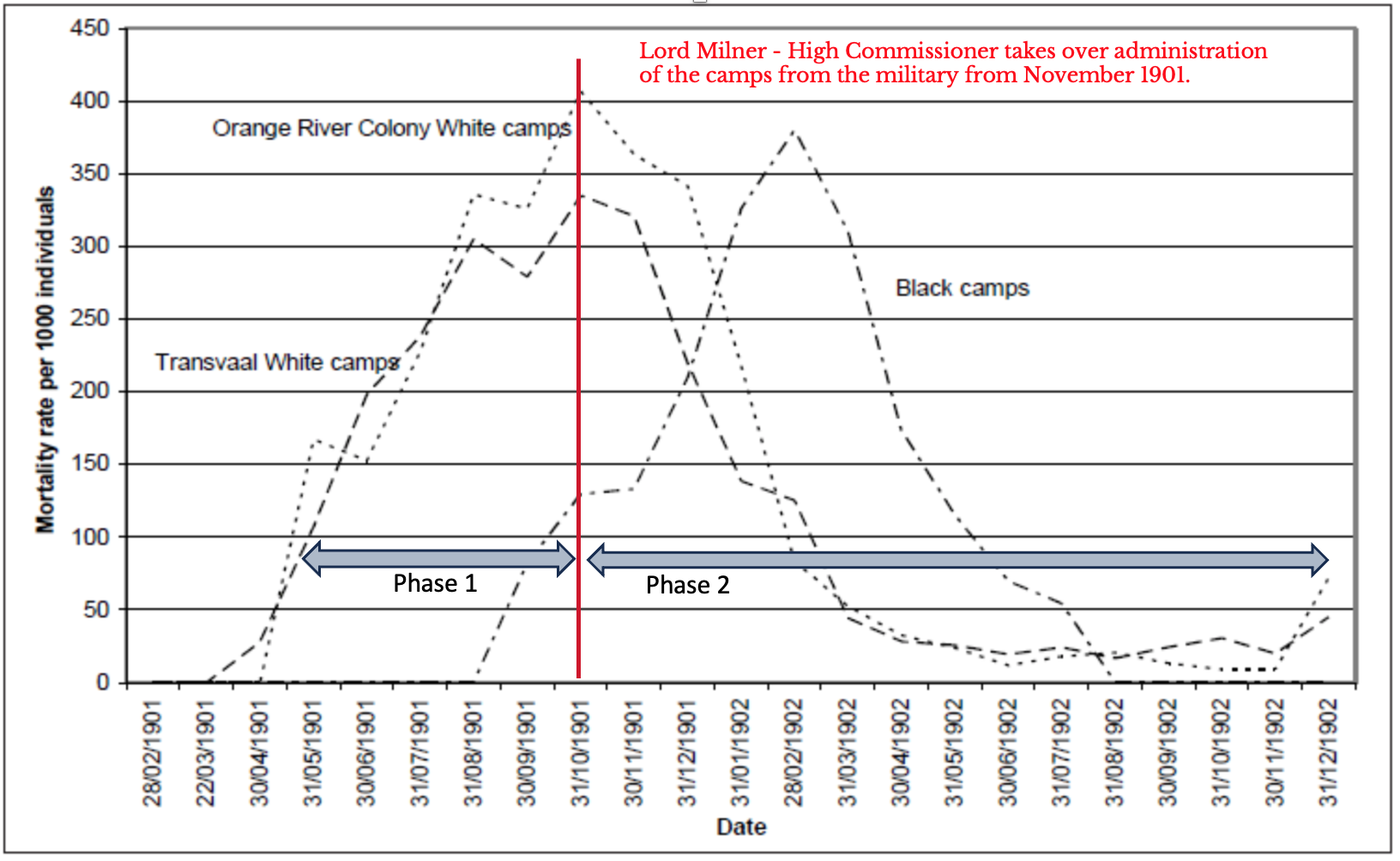
Many people have little understanding of the concentration camps of the Boer War. In essence there are two separate phases.

Data Reference: The Boer concentration camps of the South African War, 1900-1902 by Elizabeth van Heyningen.

Phase 1: Started the 22nd September 1900 – they are set up under British military administration by Major-Gen J.G. Maxwell and they are initially intended and termed as “refugee camps” for ‘hensopper’ families (Boers who surrendered early – these include men in addition) and ‘joiner’ families (Boer families whose menfolk joined the British forces and were away fighting) – they are all voluntarily seeking shelter and safety from the Guerrilla phase (Bittereinder campaign) of the war which commences from mid 1900 once Pretoria falls to the British. Here these families are, as Rees-Mogg correctly points out, “sheltered and fed” as there is a “war going on”.

The camps are also referred to as “Government Laagers” – however on the 21st December 1900 Lord Kitchener comes up with a different intention for these “Government Laagers” completely, and he decrees:

“the most effective method of limiting the endurance of the guerrillas … The women and children brought in should be divided in two categories, viz.: 1st. Refugees, and the families of Neutrals, non-combatants, and surrendered Burghers. 2nd. Those whose husbands, fathers and sons are on Commando. The preference in accommodation, etc. should of course be given to the first class. With regard to Natives, it is not intended to clear (Native) locations, but only such and their stock as are on Boer farms.”

The camp concept is then opened up from January 1901 to include “bittereinder” families, which are primarily women and children as their menfolk are still “on Commando” (and any other families for that matter), they are involuntarily displaced by Kitchener’s Scorched Earth policies and this curious concept of a refugee camp/displacement camp is expanded somewhat. Similarly, internees in the black camps (which include men and women) are civilians who are also involuntarily displaced. It’s this bit that Rees-Mogg conveniently ignores.

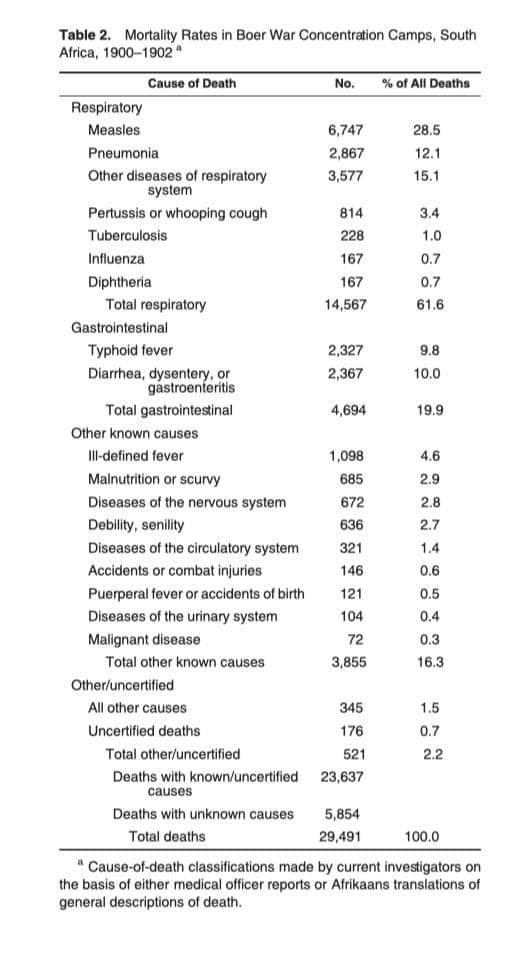
From March 1901 disease related mortality rates in the camps start to climb to unprecedented and alarming levels, and at their peak the mortality rate is driven primarily by a measles epidemic which sweeps the white camps and accounts 30% the overall deaths – as a child’s disease, along with the high infancy mortality rate and child death ratio in the Victorian period, coupled with the difficulty of wartime conditions and camp sanitary standards, by the beginning of 1902 children account for nearly 2/3 of all deaths.

The period March 1901 to November 1901 is 9 months of abject misery and suffering. However, contrary to modern propaganda, although there are many in the camps who are malnourished and conditions are extremely harsh, they are not purposefully starved to death – ‘Starvation and Scurvy’ accounts for only 3% of recorded deaths in the white camps (the records for the black camps are incomplete). There are also no recoded cases of premeditated murder or executions, all deaths are attributed to disease or medically related conditions.

The conditions and plight of the women and children in the camps, against the context of respiratory and waterborne disease, coupled with inadequate medical countermeasures and failures in administration is highlighted by the likes of Emily Hobhouse and later in 1901 by the Fawcett Commission.

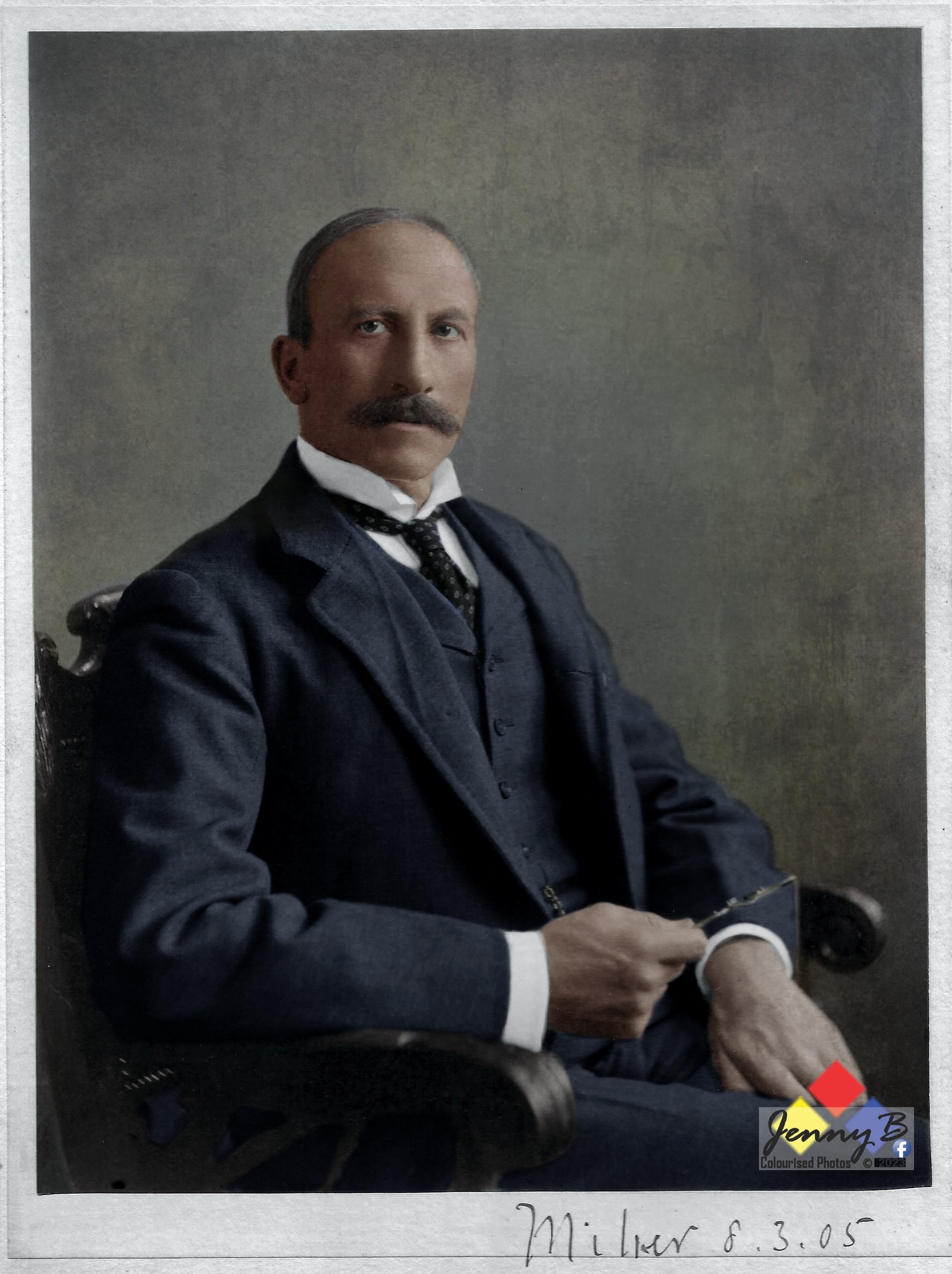
Phase 2: From November 1901 as a result of the Commission’s and parliamentary recommendations, Lord Alfred Milner, the Cape Colony High Commissioner is tasked with taking over the ‘white’ camps from the military and bringing them under civilian authority instead (the Black camps remain under military authority).

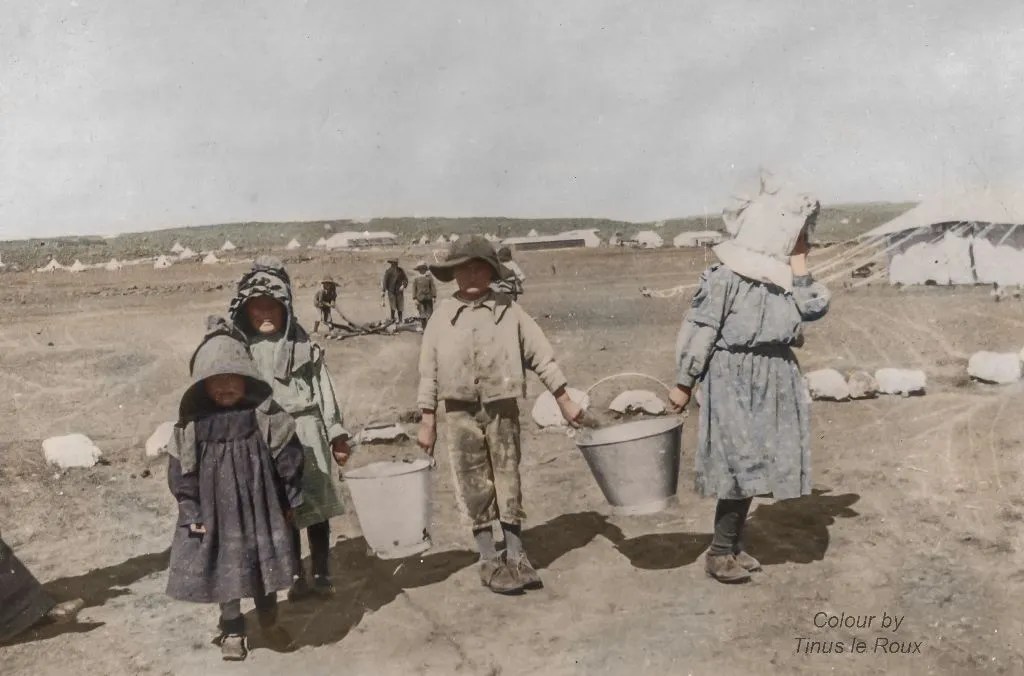
Image: Boer concentration camp – children carrying water buckets, colourised by Tinus Le Roux – note the nature of the camp – bell tents, demarkation lines and administration blocks.

As a result of Milner’s direct intervention, from November 1901 the mortality rates start to drop off dramatically as his civilian administrators and medical staff start to get on top of the epidemics, food supply and sanitary issues. They also do away with the preferential treatment of ‘hensopper’ versus ‘bittereinder’ families initiated by the military in the white camps.

Milner’s actions and policies are extremely effective, in just 4 months the mortality rates in the white camps drop to acceptable mortality rates for the Victorian era, made even more remarkable considering that these mortality rates are declining and have plateaued-out in the white camps when the Guerrilla Phase and Scorched Earth policy is at its height and at its most destructive (the black camps are a separate matter).

These ‘acceptable’ i.e. normal mortality rates in the white camps continue up to the end of the war on 31 May 1902 and then remain acceptable long after the end of the war as the camps are then used as ‘resettlement’ centres for displaced Boer families until the end of 1902.

As to Milner, it’s also an inconvenient truth, that a man so often vilified by modern white Afrikaners as the devil reincarnate, is the same man responsible for saving thousands of Boer women and children’s lives.

Look out for a future Observation Post on the Boer War camps whilst we tackle this extremely difficult, deeply tragic and often misunderstood concept of Boer War refugee/displacement/re-settlement camps for whites and refugee/displacement/labour camps for blacks (a.k.a concentration camps). This subject is highly nuanced and highly complex and it is certainly not the highly simplistic and emotionally charged outline put forward by Professor Pretorius in his response to Rees-Mogg.

What’s in a word?

The words “concentration camp” comes from two sources really, the Spanish invent the concept and are accredited with the first use of concentration camps starting in 1896 (not the British – the Spanish ‘invent’ the camps three years before Boer War 2), the Spanish call them “campo de concentración” (concentration camps) during The Cuban War of Independence (1895–98) and they ‘concentrated’ Cuban civilians in camps to break their supply lines to marauding Cuban guerrillas.

The second source of the word “concentration camp” ironically comes from the source of the argument between Rees-Mogg and Grace Blakeley, it’s the Germans. It is the ‘German’ version and evolution of concentration camps which would really weaponise the words and bring in concepts of pre-meditated genocide and systematic murder, and oddly enough it does NOT start with Adolf Hitler and his Nazi cabal, it happens well before Hitler’s time and it does NOT start in Europe, as irony goes – it starts in Africa.

Etymology of concentration camps

As to the actual etymology of concentration camps – as said earlier they start with the Spanish during Cuban War of Independence in 1896, the next country to use concentration camps are the Northern Americans (the USA) in the Philippines during the Tagalog Insurgency earlier in 1899 (as with the Spanish – the USA concentrated Filipino civilians in camps to break their supply lines to marauding guerrillas – with the same tragic outcome as the Spanish when disease takes root in the camps).

The third country to use Concentration Camps are the British in late 1900 to forcibly displace Boer ‘Bittereinder’ civilians and cut Boer guerrilla supply lines in addition to providing genuine refugee shelter to ‘Joiners’ and ‘Hensoppers’, with the same disastrous consequences as the Spanish and the Americans as disease takes root in the camps. 

To read a little in-depth more on this, follow this link to an Observation Post article: Debunking the myth that the British invented the ‘concentration camp’

As irony goes (and inconvenient truth) it is also the Germans who suggest the use of a concentration camp system during the Boer War, in addition to a Scorched Earth policy, to the British. Kaiser Wilhelm II, as a favour to his blood relative Queen Victoria – after the ‘Black Week’ British defeats to the Boers in late 1899, sets up a strategic planning session with his military elite and compiles a military strategy, not to help the Boers, but to help the British win the war and shared it with them instead. Kaiser Wilhelm II even proudly proclaiming at the end of the Boer War that the British had followed his plan precisely as he had outlined it to them – not Field Marshal Frederick Robert’s plan (see: John C.G. Röhl: The Kaiser and England during the Boer War).

Now, also as inconvenient history and etymology of concentration camps goes, the fourth country to use Concentration Camps is Germany, it’s Kaiser Wilhelm’s military elite who first uses the system for Germany – and it is NOT Adolf Hitler and his Nazi circle.

The 1st Genocide of the 20th Century

The first German concentration camps are initiated just 2 years after the Boer War, they fall part of the Herero Wars (1904-1908) in German South West Africa (now Namibia) and it is infamously officially regarded as the first Genocide of the 20th Century (not the Boer War). 

It starts in a similar vein to the Boer War’s Guerrilla Phase, the Herero lead a guerrilla campaign against the Germans to overthrow their colonial yoke. It cumulates in a battle on the 11th August 1904, known as the Battle of Waterberg and the Herero army is defeated, scattered and weakened. In October 1904, General Lothar von Trotha issued orders to kill every male Herero and drive women and children into the desert, denying them access to key water holes. In the desert ‘hundreds of thousands’ of them promptly die of thirst.

The extermination order was finally suspended by the German government at the end of 1904, the surviving tribesmen are then herded as prisoners into Concentration Camps – in German, now termed “Konzentrationslager” (Concentration Laager or ‘camp’), there are 5 concentration camps and over the course of their existence the Hereto tribe is joined with members of the Nama tribe also rebelling against the Germans. In the concentration camps the Hereto and Nama are put to slave labour in support of the German military and German settlers. Again, the camps are horrific, and the inmates starved of rations and water, disease also takes hold.

These camps are fundamentally different to the British Boer War concept, these are slave labour camps, inmates are imprisoned, there are cases of them been shot, starved and worked to death – some are even hanged. There is no real consideration to medical care and as to medical intervention, the Germans also enter the history books as the first to use concentration camp inmates for medical experimentation.

In all, between the war, the order of extermination and resultant starvation and the concentration camps engaging slave labour approximately 80,000 Hereto and Nama die.

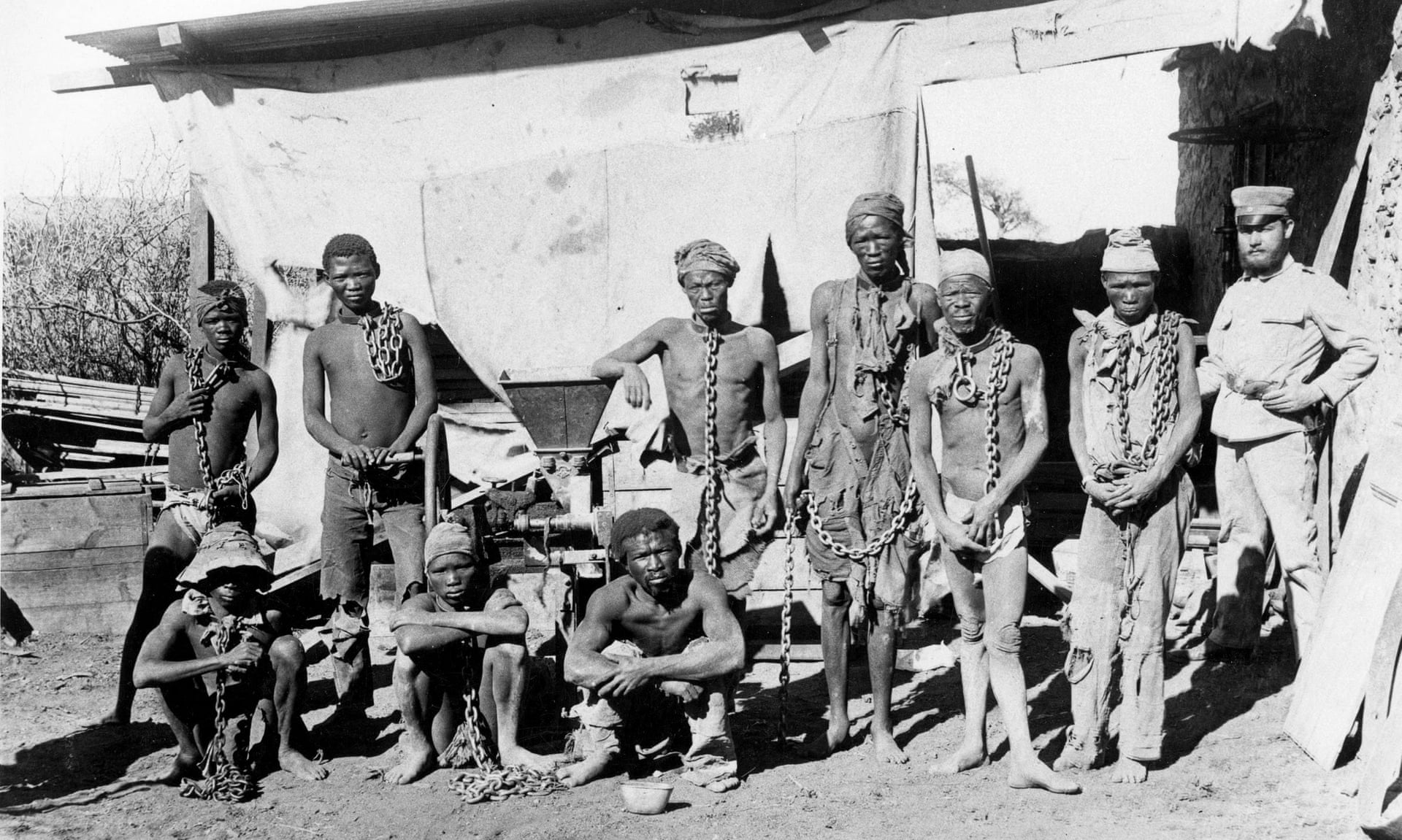
Image: Chained prisoners from the Herero and Nama tribes during the 1904-1908 war against Germany.

Modern Historians have drawn a linear connection between Germany’s ‘Konzentrationslager’ of the Namibian conflict in line with the German ‘Konzentrationslager’ of World War 2, the central thread is “pre-meditated Genocide” (systematic murder in effect). The idea of Concentration Camps to exterminate races of people and ‘purify’ the population starts with General Lothar von Trotha in his written statement on the matter;

 “I destroy the African tribes with streams of blood … Only following this cleansing can something new emerge, which will remain.”

The simple truth is, when the Nazi party came to power in Germany, this German policy of using concentration camps for ethnic cleansing and not merely for defeating ‘Guerrilla’ warfare by cutting civilian supply lines as the Spanish, Americans and British had used them – and this Genocidal intent for “Konzentrationslager” becomes highly apparent and acceptable in Germany itself.

Enter Herr Hitler

Now we get to the subject of the Austrian born Bavarian Lance Corporal with megalomaniac tendencies, to which Jacob Reece-Mogg refers and to whom Grace Blakeley infers. What is his connection to The Boer War?

If you’re a big fan of Paul Kruger and Boer Republicanism, and believe that our modern interpretations of the Boer War have nothing to Nazism – now is the chance to look away, because this next bit is going to sting somewhat – our modern interpretation of the Boer War has a lot to with Adolf Hitler and Nazism – in fact Hitler and his Nazi inner circle’s interpretation of the Boer war still guides European opinion of it in Europe and it fundamentally reinforced the Afrikaner Nationalist interpretation of it in South Africa – a legacy that continues even to this day.

Huh! How’s that all connected … Kruger, Hitler and Nationalist Afrikaner ideology and identity? Well, it starts with Herr Hitler’s enthusiasm for everything Boer War related and his dramatic and spell-binding speeches.

Hitler would record in his book ‘Mein Kampf’ that in his youth;

“The Boer War came, like a glow of lightning on the far horizon. Day after day I used to gaze intently at the newspapers, and I almost ‘devoured’ the telegrams and communiqués, overjoyed to think that I could witness that heroic struggle, even from so great a distance…” 

Then on the 30th January 1940, with Nazi Germany at the height of its influence and popularity, Adolf Hitler gave a speech at the Sportspalast and stated the following on The Boer War;

“They (Britain) waged war for gold mines and mastery over diamond mines”  

Hitler then went on in the same speech to say of the Boer War:

“After all, this entire blockade warfare is nothing other than a war against women and children just as once was the case in the Boer War … It was then that the concentration camps were invented. England locked up women and children in these camps. Over 20,000 Boer women (and children) died wretchedly at the time.”

Just about every sentence Hitler is uttering here is either pure falsehood or a half truth – blaming the British for “inventing” the “Konzentrationslager”, painting the camps as “locked” prisons, and implying the British wage genocide and not war. 

Image: Adolf Hitler speaking at the Sportspalast

Ah, but it’s just a speech Mr Dickens – you make too much of it! Hitler said many things comes the universal call … nobody took him seriously! Wrong … this gets much bigger than just a speech – this ‘Pro-Boer’ Nationalism morphs into an entire Nazi propaganda campaign – one which is regarded as the most influential and successful Nazi propaganda campaigns ever devised – so bear with me.

What Hitler is doing in his speech is using his intense ‘fame’, peaking in 1940, across Germany, Western Europe and the globe in some respects – remember that Hitler is a world player and influencer from 1935 to 1940, he is literally a “God” in Germany and Austria – what comes out his mouth people listen to and literally millions of people gobble it up as a truth. With this statement he achieves three things:

Firstly, he demonises the British (the only real “enemy” he has left in 1940) as an enemy of the German people, but also – most importantly – an enemy to Europeans at large – and he uses the Boer War for this purpose as it is in living memory for many Europeans, this deflects the focus on Germany as the enemy to Britain as the enemy of Europe. Europe is now also within the 3rd Reich’s scope of influence – which at the time needs to be viewed as sort of early version of the European Economic Union, and in 1940 it was literally at its height. 

Nazism and the concept of the 3rd Reich was a lot more popular in Europe in the lead up to World War 2 than most people would believe now. In fact its position as “anti-bolshevist” (anti-Communist) and as “anti-Judeo Capital” found vast popular appeal in right wing and conservative parties across Europe – especially in France, the Netherlands and Belgium, these people would see Nazi Germany as liberators – not invaders – and after Germany invades Western Europe in 1940 they all immediately come into government of their respective countries as collaborating parties to the Nazi cause (the conservative and popular southern based “Vichy French” government is a case in point), and they immediately engaged with the 3rd Reich and it’s regional economic and political policies. Hitler is relying on these supporters to support his view that Britain and not Germany is the true enemy, and the Boer War according to Hitler is his ‘proof positive’ of this.

Secondly, Hitler is reinforcing Anglophobia and Republicanism in South Africa through propaganda and he is giving re-assurance to the Afrikaner nationalist cause from Berlin. To understand this better, Afrikaner Nationalism starts in earnest with the establishment of the National Party in 1914 – at this stage it has as its central ideology ‘Krugerism’ – Kruger’s political philosophy and the old ZAR’s (Transvaal) Republicanism constitution and race laws (Grondwet) at its centre. An Oligarchy bordering on a Theocracy with no political emancipation for Black Africans whatsoever (the majority), and racially based franchise and citizenship restrictions for white ‘foreigners’ (read British) and Jews.

By 1940 this party has evolved its ‘Krugerism’ ideology to a ‘Christian Nationalism’ ideology – a political philosophy which B.J. Vorster (a future South African head of state) famously equated with National Socialism (Nazism) in 1942 when he said:

“We stand for Christian Nationalism which is an ally of National Socialism. You can call this anti-democratic principle dictatorship if you wish. In Italy it is called Fascism, in Germany National Socialism and in South Africa, Christian Nationalism”.

Also bear in mind in 1940, when Hitler gave this speech and referenced the Boer War, the National Party was bound to the hip with openly pro-National Socialism, Pro-Hitler, Pro-Nazi Germany movements in South Africa – domestic political organs like the South African Nazi ‘shirt’ movements – Louis Weichardt’s South African Christian Nationalist Socialist Party or “Greyshirts” and Manie Wessels’ and Chris Havemann’s ‘Democratic Movement’ or “Blackshirts”. Other Nazi ‘shirt’ organisations included the Volksbeweging (People’s Movement) or ‘African Gentile Organisation’ which was established by H.S. Terblanche. Johannes Bruwer also founded the ‘Bond van Nasionale Werkers’ (National Workers Union) which became known as the “Brownshirts”.

Added to this was the Ossewabrandwag led by a Nazi devotee – Dr J.F.J. van Rensburg who transformed the Ossewabrandwag from a predominately Afrikaner cultural movement surrounding the 1938 Great Trek Centenary into a militarised, totalitarian, anti-Semitic, anti-British, anti-Anglo/Judaism capital and pro-Nazi movement operating under the guise of an Afrikaner cultural movement. In addition, the National Party’s Defence Minister, Prime Minister Barry Hertzog’s right-hand man, Oswald Pirow was another Nazi devotee, and it inspired his organisation – the Nazi ‘New Order’ or Nu Order. Added to this is the popular leader of the 1914 Boer Rebellion – Manie Maritz, who has become an Hitler worshiper and rabid antisemite, now leading the ‘anti-democratic’, ‘one party’, ‘national socialist’ – ‘Boerenasie’ (Boer Nation) party.

Images: SANP and Ossewabrandwag

As outlined by Werner Bouwer in his ‘National Socialism and Nazism in South Africa’ – to all these South African Hitler admirers and their followers, Hitler’s assurance that the British committed a Boer ‘Genocide’ is music to their ears. They all attested to the concept that the British had tried to ethnically cleanse South Africa of the Boer nation during the war – and here one of the world’s greatest leaders, a 20th Century iconoclast who agreed with them, and whose not to believe Adolf Hitler? He is a European powerhouse, he’s at the helm of a super-power like Britain and now he’s standing up to Britain and telling it as it is – if it comes from Hitler it’s a truism, the British committed Boer Genocide and stole the Boer’s gold … and it does not end there, Hitler goes further … much further.

Enter Herr Göring

During a press interview Hermann Göring (the spokesperson on behalf of Adolf Hitler), took a leaf out his Führer’s leader’s book on the Boer War when he deflected a challenge from Sir Nevile Henderson, the British ambassador to Berlin who protested about the German government’s use of concentration camps for the political ‘re-education’ of German’s dissonant non-believers in Nazism and opposition in 1935, and using a ‘press stunt’ Göring dramatically sprung up, walked over to a bookcase and like a thespian actor, grabbed a German encyclopedia opening it at “Konzentratinslager” he read out loud,

“First used by the British, in the South African War”.

Although factually incorrect, his action served as a skilful stroke of deflection of which Hermann Göring was a past master.

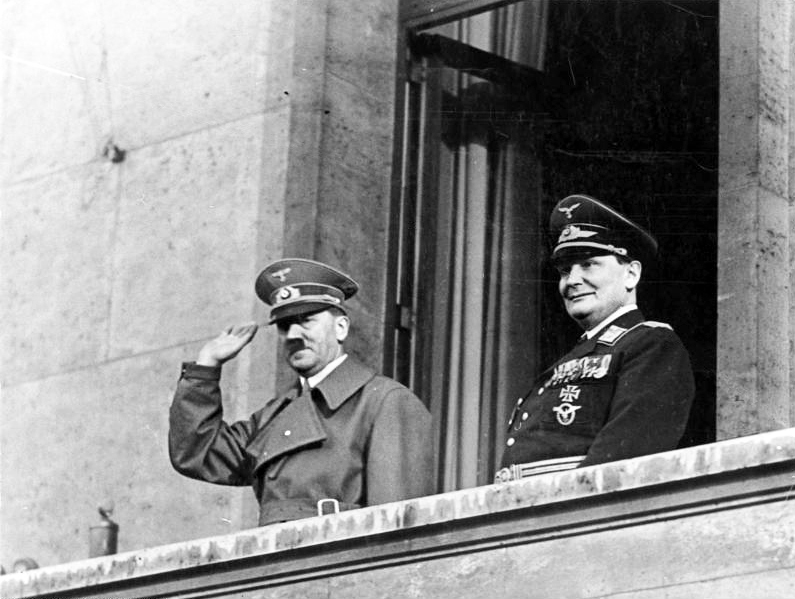
Image: Adolf Hitler (left) and Hermann Göring (right).

It was not just Hermann Göring in Hitler’s inner circle toeing his Führer’s line on the Boer War, using all the propaganda tools at their disposal, this myth was about to hit the big time as also in the ‘inner circle’ is the Nazi Propaganda Minister and he’s going to really propagate Boer War myths – not only in Germany, but also across the entire Western European continent.

Enter Herr Goebbels

Dr. Joseph Goebbels was a propaganda mastermind, he was a rabid, almost insane follower of his Führer, Adolf Hitler and a devout Nazi. 

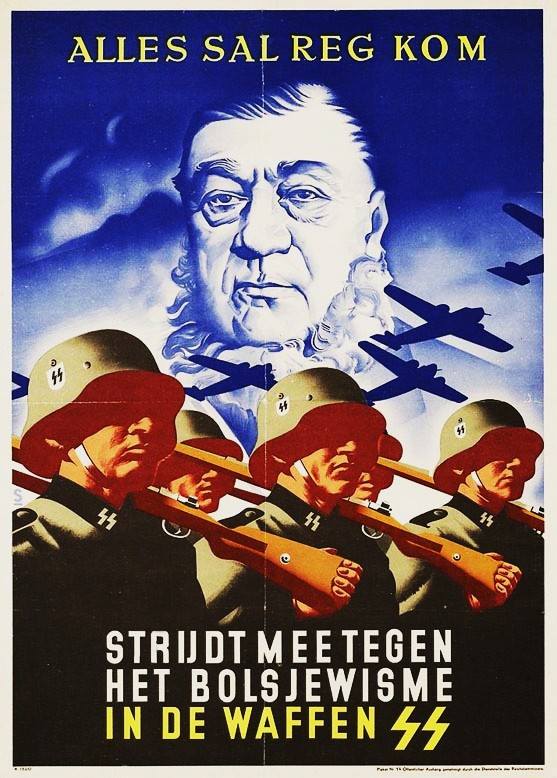
In printed media, the German propaganda machine would go even further on the back of Hitler’s speeches and use an image of Paul Kruger and the Boer War on propaganda posters to recruit Waffen SS troops in the Netherlands and Belgium, with whom these countries had an affinity for the Boer War. Both these countries proved highly fruitful in recruiting Waffen SS troops as they feared Bolshevism more than Nazism and for these conservative sections of the populations Nazism had an appeal (not to be confused with the SS, the Waffen SS also comprised ‘non-German’ and ‘foreign’ battalions – and later in the war they proved to be ferocious and devout combatants).

To see a full article on this Waffen SS campaign using Boer War triggers, follow this Observation Post link: ‘Waffen SS’ uses the Boer War to recruit the Dutch

Next up in Goebbels’ propaganda arsenal was radio. Joseph Goebbels made this radio address on 19 April 1940, on the eve of Adolph Hitler’s birthday and said:

On 3 September last year (1939), two hours after English plutocracy declared war on the German Reich, the British Prime Minister Chamberlain gave a radio speech …The point of the speech was that England had no intention of waging war against the German people … get rid of the Führer or so-called Hitlerism …. At the beginning of the war, however, they sang the same old song …. Its melody was dull and worn out. British plutocracy had tried to persuade the Boers during the South African war of the same thing. Britain was only fighting Krugerism. As is well known, that did not stop them from allowing countless thousands of women and children to starve in English concentration camps”.

Image: Joseph Goebbels making a radio address on the eve of Adolph Hitler’s birthday.

The idea that Britain and not Germany is the natural enemy of civilised Europe because of they way they conducted the Boer War and committing pre-meditated genocide in concentration camps is starting to take shape. Goebbels said of radio;

“We want a radio … that is an intermediary between the government and the nation, a radio that also reaches across our borders to give the world a picture of our character, our life, and our work.”

In this respect Radio Zeesen was also part of the arsenal, it was a Nazi German ‘International’ propaganda service radio station broadcasting in short wave in eighteen different foreign languages including Afrikaans, it broadcasted both Hitler’s speeches and Goebbels’ messages – and eagerly picked by devout Afrikaner Nationalists in South Africa.

Also, Goebbels loved, literally adored movies and the moving picture industry – he regarded this industry as his single most powerful propaganda tool, and he made a number of movies that came to define the Nazi legacy:

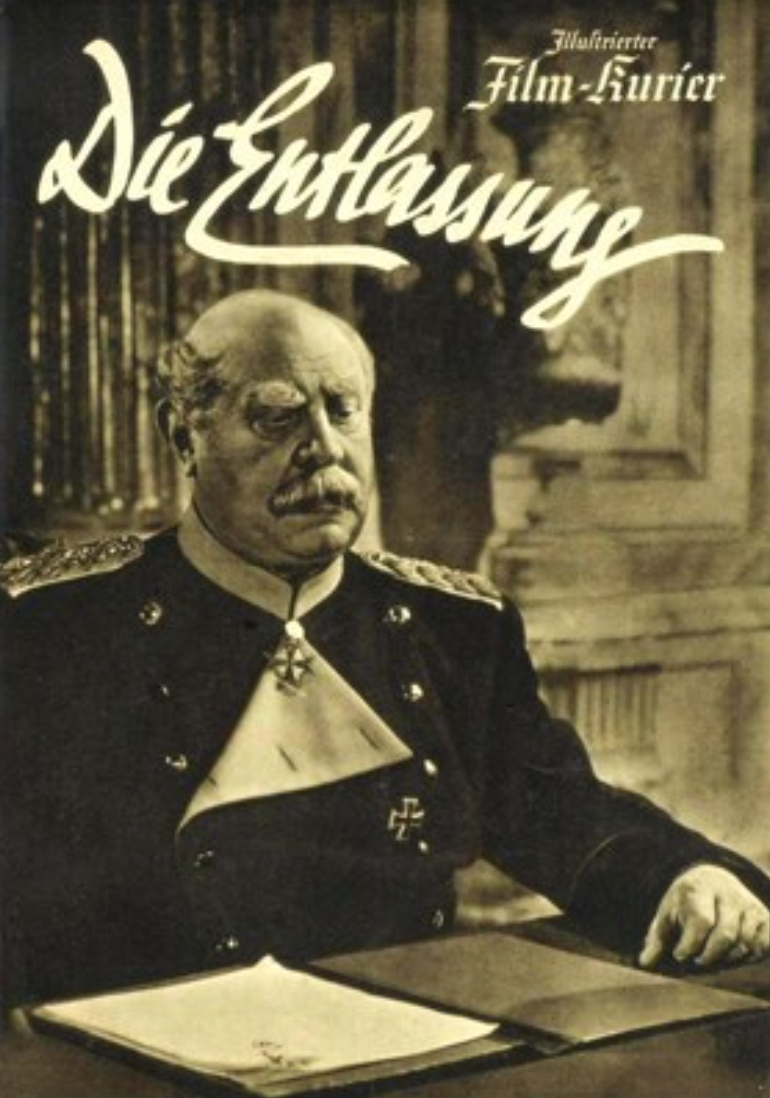
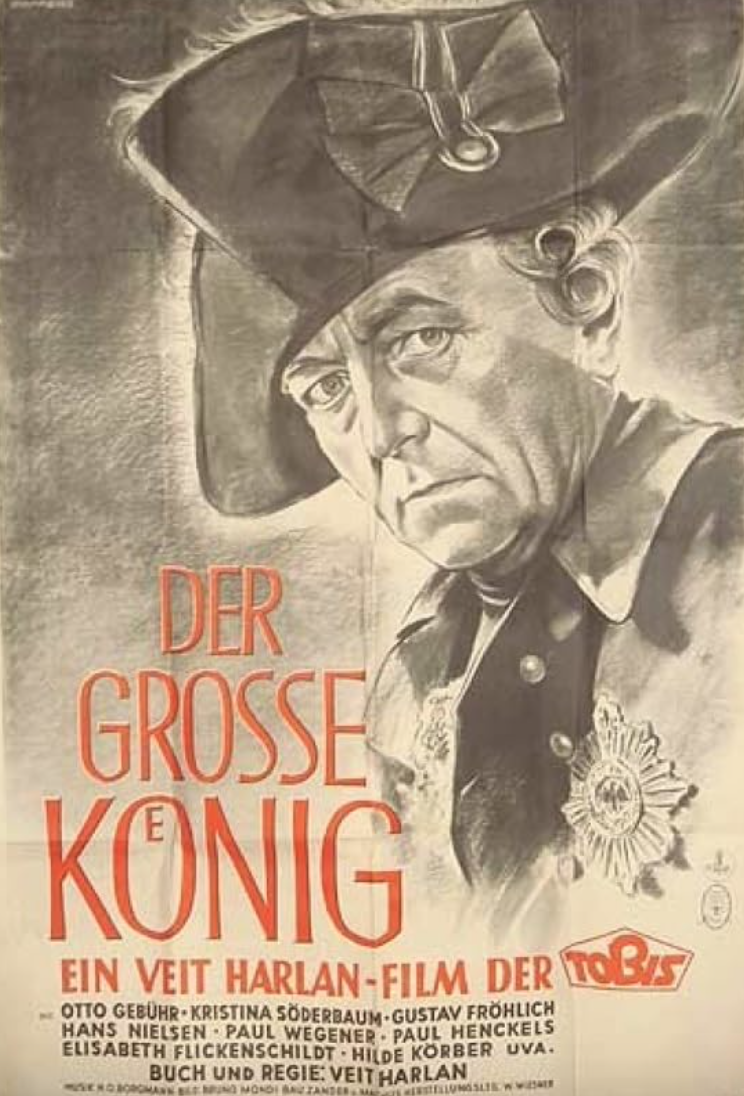
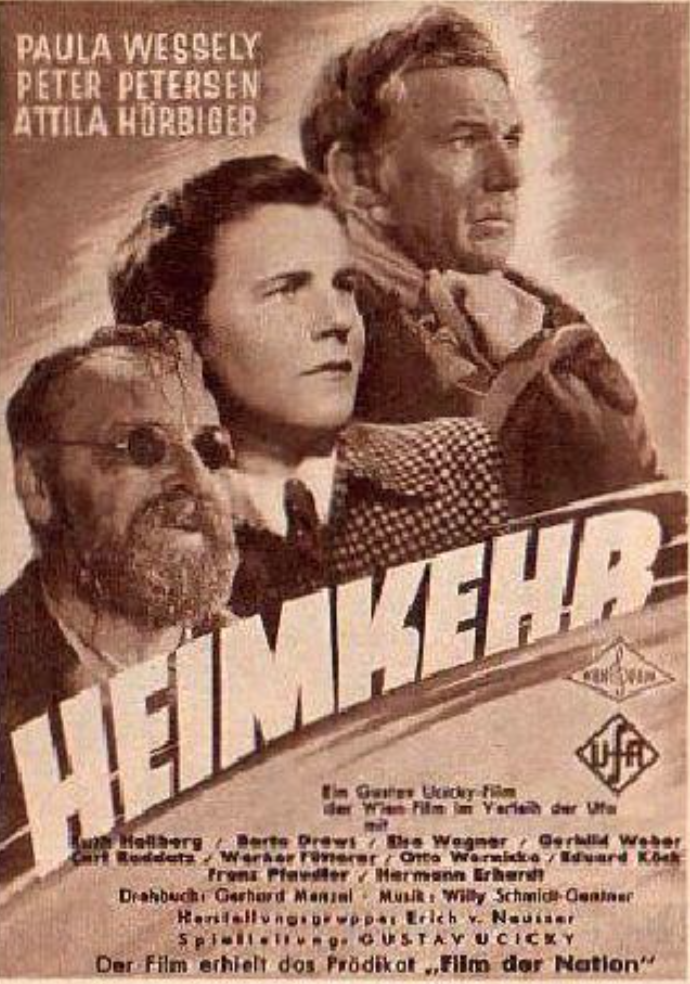
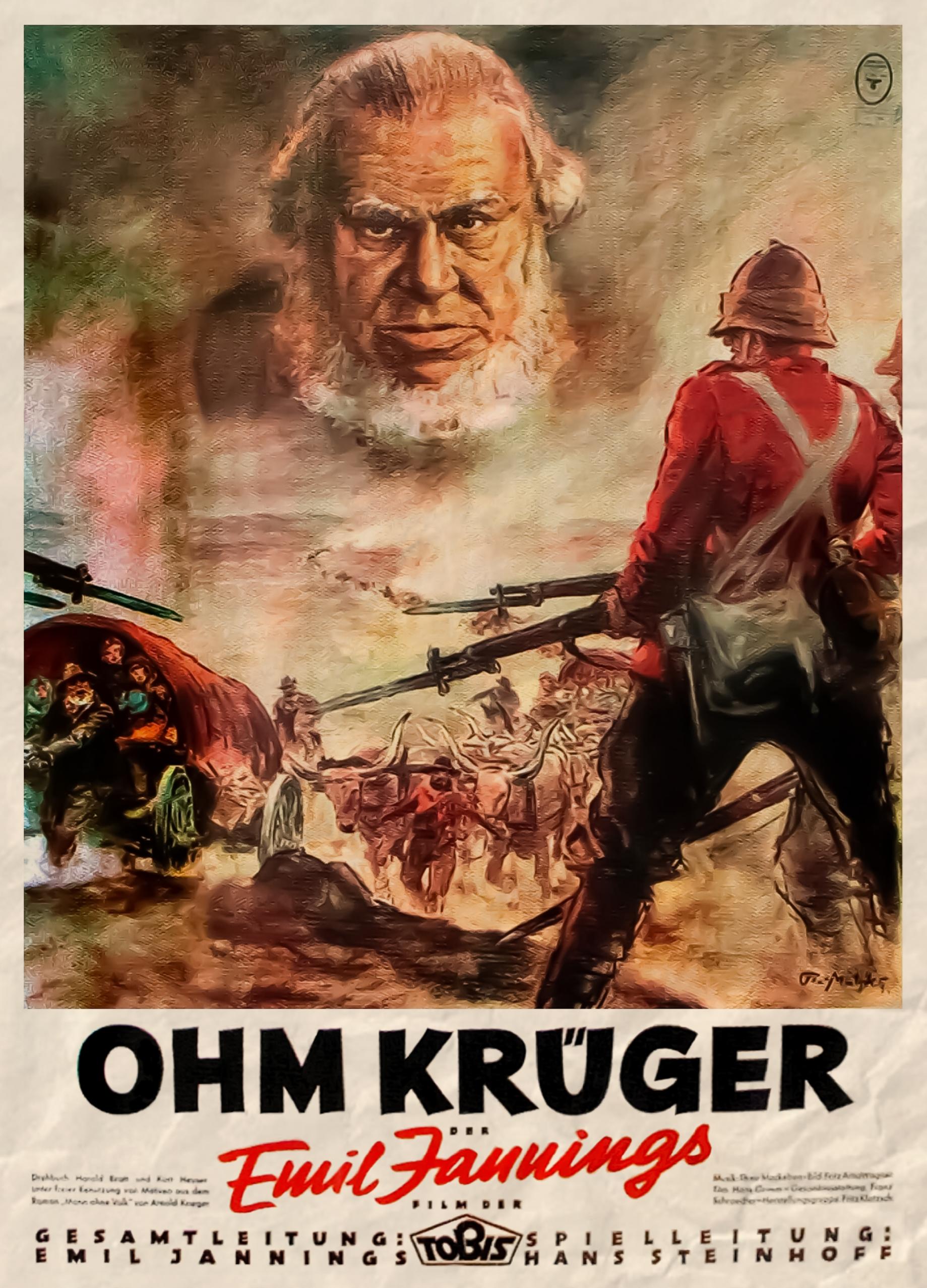
The Jud Süß  – ‘Süss the Jew’ – was released in 1940, and it became an absolute blockbuster – today it is considered one of the most antisemitic films of all time. However, even this movie did not make it to the much-converted Reich Propaganda Ministry’s “Film of the Nation” rating. Only four movies made it to this rare honorary distinction deemed critical viewing for national identity in Nazi Germany – Heimkhehr (1941) – an anti-Polish movie, Der große König (1942) – a movie about Frederick the Great of Prussia, Die Entlassung (1942) – a movie about the dismissal of Otto von Bismarck and finally …… Ohm Krüger (1941), a movie about Paul Kruger and the Boer War.

Say what? Ohm Krüger – Uncle Paul Kruger! What on earth does that have to do with German National identity, all the other movies are about Germany and the Nazi journey in forging their National Socialist identity – that all makes sense, what on earth is a movie about South Africa and the Boer War doing in the mix – what does that possibly have to do with Nazi identity?

Well, as an inconvenient truth goes, it turns out quite a lot – so let’s examine what its purpose was, how its linked to Nazim, its relationship to Concentration Camp propaganda and how it fared – its impact.

Ohm Krüger, the man, the movie and the myth 

Directed by Hans Steinhoff and starring Emil Jannings, Lucie Höflich and Werner Hinz. Although the plot has nothing to do with Germany, the story centres around a character which the Germans could admire, “Uncle” Paul Kruger – a man the Propaganda Minister wants to draw parallels to Adolf Hitler, who he deems is also a man with a common touch, from a simple background and one who is thrust into extraordinary circumstances due to international aggression and a conspiracy of greedy ‘foreigners’.

The plot revolves around a dying Kruger’s flashback, now old and blind confined to a sanatorium in Switzerland.

Harping back to an earlier time, Kruger is portrayed as having all the mystique of a great national leader at odds with Great Britain and proclaims, “With England, one cannot come to an understanding”, “We have only one aim, peace and liberty”, “One must be a dreamer to become a ruler.” Much as Adolf Hitler himself is proclaiming. 

Lord Kitchener, the British Commander in South Africa is portrayed as a sadist stating things like “No more humanity”, “We must be without mercy”, “We must set up concentration camps” and fight the war “by colonial means.” 

The film also centres on Cecil John Rhodes as the principle villain, desirous of Transvaal Gold he creates border disputes (the Jameson Raid) in cohorts with Joseph Chamberlain (the Colonial Secretary), who in turn solicits the support of Queen Victoria and Price Edward, who also become desirous of invasion once they learn of the gold in the region, Queen Victoria’s character states “If there’s gold to be found, then of course it’s our country. We British are the only ones capable of carrying the burdens of wealth without becoming ungodly”.

Kruger then tricks the British into signing a treaty which gives them the gold, but Kruger holds onto the supply of dynamite as a monopoly, which the British then have to buy from him at exorbitant prices.

Cecil Rhodes, having been tricked and outmanoeuvred by the astute Kruger, then tries to buy Paul Kruger’s allegiance offering him a ‘open’ chequebook. However, Kruger is incorruptible and rejects his offer. Rhodes then decides to expose members of Paul Kruger’s Raad (council) who are British spies on his payroll and shows Kruger a list of names. Fearing an internal plot that will over-throw his authority, Kruger decides to declare war against the British or lose his country.

The Boers are initially victorious in the war, but Lord Kitchener then rather cowardly decides to use Boer women and children as human shields and places them in concentration camps in an attempt to demoralise the Boer Army. To this point Kitchener’s character says, “an end to woolly humanitarianism, which means hitting the Boers where they are vulnerable. We must burn their farms, separate wives and children from their men folk, and put them in concentration camps. From today all Boer, without exception, are outlaws. No distinction is to be made between soldiers and civilians.”

Kruger’s own son, Jan Kruger, tries to find his wife in a concentration camp, he’s portrayed as educated at Oxford University and at first harbours pro-British sympathies, but changes his mind completely when a drunken British Sergeant assaults his wife. Jan Kruger is caught and becomes the martyr for the Boer cause when he is hanged by the neck by the British on a hill that looks like Golgotha. “I die for the Fatherland” he cries. 

Like a Shakespearean tragedy, a British soldier then shoots Jan Kruger’s wife (their children are already dead) and the interned Boer women respond angrily to the hanging, so the British then form a skirmish line and brutally massacre them – indiscriminately shooting women in the back and mowing them down as they flee the executioner’s hill with Jan Kruger swinging from a lone tree.

The flashback concludes in the Geneva hotel room. In conclusion, the dying and blind Kruger reflects on the defeat of the Boers then prophesies the destruction of Britain by major powers of the world declaring “We were a small people, but great and powerful nations will arise to reduce the British to pulp” which alludes to the German Third Reich, Fascist Italy and later Imperial Japan. 

To any historian who knows his salt, this entire plot is pure fable, it really is “Ouma se stories” – absolute ‘Hollywood’. Gold is the ‘Catalyst’ to the war but not the ‘Casus Belli’ of the war – that’s a franchise vote for a disenfranchised majority in the Transvaal. No women and children are ever shot in a Concentration Camp by any British soldier – ever, didn’t happen, there’s also no recorded ‘massacre’ as is portrayed in the movie, didn’t happen either – in fact there is also no recorded hanging in a concentration camp, public or otherwise.

The British are victorious in both phases of the war – not the Boers. Kruger’s’ son is never executed by the British, they also never shoot his wife. Kitchener goes to pains to distinguish between civilians and combatants in proclamation after proclamation. The Jameson raid is to raise ‘white’ disenfranchised miners, into revolt not hordes of native ‘blacks’ into rebellion (as is the movie’s sub plot – with Blacks depicted as ‘treasonous’, ‘primative’ and ‘ignorant’ requiring good white Afrikaner benevolence and oversight). Joseph Chamberlain is exonerated over the Jameson Raid and there is no documented proof he had oversight of the raid whatsoever, Queen Victoria certainly had no knowledge of the Raid.

Queen Victoria is also not a drunk and in fact goes out her way to affirm her wish for independence for the ZAR. Jan Kruger is never a British sympathiser, nor does he go to Oxford, also there is no such thing as list of ZAR ‘Raad’ spies shown to Kruger by Rhodes as the ‘trigger’ to the war – the ‘trigger’ to the war is the Boer invasions of sovereign British territories on the 11th October 1899. The British never seize a gold mine, they nationalise nothing, in fact they don’t even really benefit from the taxes from the mines – the mines remain in private hands, before and after the war. 

And the Nazi German propaganda machine didn’t miss a beat in the movie, the evil Cecil Rhodes is played by none other than the Austrian actor Ferdinand Marian, who was better known to German audiences as Süss the Jew in the very popular and disgustingly antisemitic “The Jud Süß” – a better villain to link Judeo-Capitalism with British-Capitalism they could not find.

As antisemitic the undertone is, as racist the overtone is, British missionaries are seen handing out rifles to Black South Africans to rise in rebellion and kill Boers singing ‘God save the Queen’ and onward Christian soldiers. Queen Victoria herself is portrayed as a cunning old harridan addicted to whisky, and a Winston Churchill look alike is portrayed as an overfed commander of a concentration camp for Boer women, who are kept in a condition of starvation and whose plight is depicted, not in bell tents on open veldt, but in an Auschwitz look-alike camp complete with towers and barbed wire containment fences.

On Churchill, the Nazi propaganda machine surrounding the movie also doesn’t miss a beat either. Churchill’s involvement in the Boer War is mercilessly exploited, even accusing him directly of implementing the concentration camp policy (which is pure fabrication) – and the following media release accompanies the film:

“The same Churchill who in South Africa saw his ideas about exterminating the Boers followed throughout, as the English rulers, voicing polished humanitarian slogans, while driven by mere greed, unleashed the most contemptible actions on a people under attack. The same Churchill is now Great Britain’s prime minister.”

Winston Churchill is an imbedded journalist and later a combatant and has nothing to do with concentration camps, in fact he never laid eyes on a Boer one – he returns to Great Britain at the end of the 1st Phase (Conventional war phase) of the war before the camp system is initiated.

British concentration camps were portrayed in the film as intentionally inhumane. Meanwhile, as irony goes, at the same time major expansion of the Nazi German system of concentration camps is taking place, designed for actual ethnic cleansing, slave labour and systematic murder and it was being enthusiastically implemented by those very same Nazi.

As extreme irony goes, the set of the British concentration camp for Ohm Krüger was actually but a few miles from a real Nazi Concentration Camp at Sachsenhausen, an interesting case of art imitating life. Out of 200,000 inmates in the real camp, half died, about 100,000 people from 1936 to 1945 – twice as many than the entire Boer War, and that is only ONE of the German concentration camps – theirs is murder on an industrial level.

Finally, as the film’s prediction goes – the world powers do not rise up to crush Britain, in fact they rise up and crush Germany. But to the power of propaganda, there are still people in South Africa and Europe who would take all of Ohm Krüger as an absolute truism – even to this day.

To see the full movie of Ohm Krüger – with English sub titles, here is the YouTube link:

What’s the outcome, how does this movie do? 

It’s a massive success, a propagandistic blockbuster, it’s by far the most expensive film produced in Nazi Germany up to that time with a 5.5 million Reich Marks budget and a massive film lot outside Berlin that resembles a mini-South Africa with 100 Longhorn cattle and African huts. Ohm Krüger offers plenty of entertainment – ‘wild west’ frontier grit alongside its vivid battle scenes, as if John Ford’s Monument Valley had been transposed onto South Africa’s Transvaal region.

It is first screened on 4th April 1941 in Germany, and it’s rolled out across Europe – it opens in Italy in September 1941, France on the 1st October 1941, Hungary on the 19th December 1941, Finland on the 15th March 1942 and it even makes it to Japan on the 2nd September 1943. It makes it way right across Europe – Bulgaria, Austria, Netherlands, Belgium etc.

Both locally and internationally, it is received to rapturous applause. It is pitched as the European cinema equivalent to ‘Gone with the wind’ and it’s a winner – literally, not only the first movie to win the converted ‘Film of the Nation’ and the award for ‘Film of Special Value in terms of state policy and art’, but importantly – it also wins the Mussolini Cup for the Best Foreign Film at the 1941 Venice Film Festival.

The movie is so popular, the Nazi propaganda machine even decided to re-release it in 1944. In the end – millions of people see it, today it is regarded as Nazi propaganda master stroke. However, as irony goes the Nazi propaganda machine ‘Bans’ the movie in 1945, not because it’s a great yarn, entertaining and an outstanding propaganda piece – but because they are concerned that the graphic massacre of Boer women at the end of the movie would upset the female population of Germany concerned about their treatment at the hands of the counter-attacking and invading Soviet Union and other Allied armies at the end of the war.

How does this movie stack up to our modern understanding of Concentration Camps, what does it do to link Nazi Concentration camps to Boer Concentration Camps? Let’s look at how the international critics review this movie in relation to this question.

Erwin Leiser in his 1974 work Nazi Cinema said;

“Ohm Kruger is meant to show that Britain is the brutal enemy of any kind of order or civilization … when England realizes that even with cannon and rifles she cannot crush the little nation whose heroic struggle is jubilantly acclaimed by the whole world, she (England) decides to commit one of the most obscene acts in the history of the world … the technique makes it possible to reveal that concentration camps were no German invention: the peculiar logic of Gobbels thereby justifies the Nazi camps.”

And Roger Manvell in his study of Films and the Second World War concludes;

The shattering conclusion to the movie, the concentration camp massacre, provokes and disturbs even today, not only due to its undeniable artistry, but more because of how it invites comparison with the still greater horrors we associate with Nazi Germany, atrocities this movie was designed to rationalize and exonerate.” 

Bottom line, the movies broad appeal, the unrelenting publicity and propaganda machine surrounding it, its popular acceptance in Europe and extensive distribution cements the idea throughout Europe that the Boer Concentration Camps are a British invention and that they are intended to ethnically cleanse the Boer nation. By demonising the British in this way, the German propaganda machine very successfully deflects and sanitisers their own Nazi ‘Extermination Camp’ Concentration Camps which are indeed intended to ethnically cleanse Europe of Jews, Gypsies, homosexuals, asylum patients and even Freemasons. 

The Nazi German death rate in their concentration camp, POW camp and extermination camp systems is on an industrial scale, 18.5 million die in total, a figure so high that it is almost impossible to comprehend – the idea that concentration camps are purposefully engineered and designed to eliminate hundreds of thousands of people at a time, the 6 Nazi extermination camps in Poland alone kill over 3 million people.

In Conclusion

The net result of it, to this day, throughout Europe (as this is all still in living memory within one generation to many) the British are forever tarnished with the idea that they “invented the concentration camp” and they committed “systematic murder” and genocide to “hundreds of thousands” of Boers as the poorly misguided and very misinformed Grace Blakeley blurts out in her response to Jacob Rees-Mogg.

Now, Grace Blakeley is not a known South African historical commentator, in fact it’s doubtful she’s ever read a proper historic treatise on the Boer War, the conversation she is having with Jacob Rees-Mogg is on Winston Churchill’s legacy, the Boer War is mentioned in passing. What she states as ‘facts’ on the Boer War are nothing more than perceptions, and in Europe the perceptions on the Boer War were driven by the both Nazi propaganda machine and the concept of the German Konzentrationslager.

Afrikaner Nationalism from 1948 and their Christian Nationalist propaganda on the Boer War is highly isolated, it exists in South Africa only, it does not make it onto a European platform in any significant way whatsoever – as far as the British education establishment are concerned the official history of the Boer War is Leo Amery’s 7 volumes titled ‘The Times History of the war in South Africa’ – end of story, and it says nothing about “systematic murder”, ethnic cleansing or the British “inventing the concentration camp”, it’s this history that Etonian teachers impart to the likes of Jacob Rees-Mogg.

Grace Blakeley has never been exposed to an Afrikaner Christian Nationalist education and it’s doubtful she’s even read Leo Amery – she would not know what a South African ‘Boer’ is if one jumped up and bit her on the bum. It’s not accredited history that is guiding Grace Blakeley, she has no clue that the Spanish and Americans used concentrations camps before the British. The Spanish who actually invented the concentration camp and whose mortality rate on Cuban civilians far exceed that of the Boer camps get away with it scot-free, even to this day, such is the power of this propaganda.

Nor has Grace Blakeley any idea of Boer mortality during the war. Her view is sheer perception based on the output of an extensive and very effective Nazi German propaganda campaign in Europe, coupled with the fact that Germany is singularly responsible for linking concentration camps to systematic murder and pre-meditated genocide, which it invented (not the British) as early as 1904, and by 1945 had perfected the killing machine on an unpredicted level. Hence the reason Jacob Rees-Mogg has to remind her that she’s promoting a Nazi construct and intensionally confusing the matter.

The erstwhile Professor Fransjohan Pretorius in tacitly harbouring the same sentiment and directly supporting Grace Blakeley as both of them are now in unison challenging Jacob Reese-Mogg, and this desire to morally “set him strait” is testament to the power of the propaganda driving both of them. In pitching his rebuttal to Rees-Mogg and approaching the media in the way Professor Fransjohan Pretorius does, he is allowing everyone else, now armed with confirmation bias, to challenge Jacob Rees-Mogg’s misunderstandings only and not challenge the Nazi inspired mistruths peddled by Grace Blakeley.

On linking Nazism, Kruger, Krugerism and Christian Nationalism, I’m afraid the hard truth is that linking Kruger to Hitler was done very effectively by the German propaganda ministry in Europe prior to and during World War 2. The Afrikaner Nationalist ‘right’ in their support of Nazi Germany during WW2 and infusing the edicts of Krugerism with Weimar Eugenics to create Apartheid after World War 2 certainly creates a linear relationship and reinforces the argument somewhat.


Written and Researched by Peter Dickens

References:

National Socialism and Nazism in South Africa: The case of L.T. Weichardt and his Greyshirt movements, 1933-1946 By Werner Bouwer

Ohm Kruger/Uncle Kruger: The notorious of Nazi Germany’s Anti-British Statements. By Blaine Taylor

Concentration camps in the South African War? Here are the real facts! by Professor Fransjohan Pretorius 

BBC On-Line: Jacob Rees-Mogg comments on concentration camps

IMDb On-Line: Ohm Krüger

Ohm Krüger: The Genesis of a Nazi Propaganda Film By Christian W. Hallstein

Films and the Second World War (1974) by Roger Manvell

Morbidity and Mortality in the Concentration Camps of the South African War, 1899-1902  (2007) by Dr Iain R. Smith (History, Warwick University) and Dr Elizabeth van Heyningen (University of Cape Town) 2007.

Nazi Cinema (1974) by Erwin Leiser

The Kaiser and England during the Boer War by John C.G. Röhl

South African Scientific Journal “The Boer concentration camps of the South African War, 1900-1902” By Elizabeth van Heyningen – Department of Historical Studies, University of Cape Town, South Africa

The Rise of the South African Reich. By Brian Bunting – published in 1964.

Thanks to JennyB Colourising and Tinus Le Roux for the colourised images.