Un-Packing Pakenham

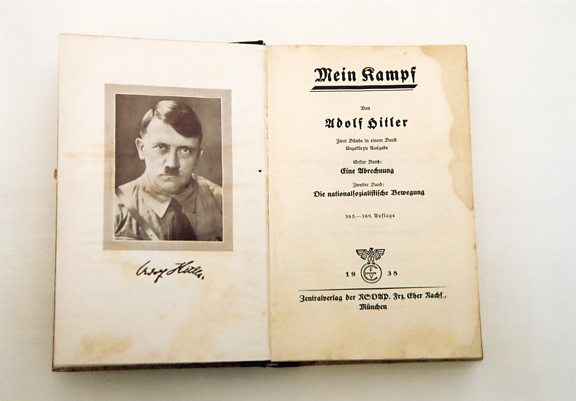
I’ve just finished reading Thomas Pakenham’s ‘The Boer War’ … AGAIN, this is my 7th time. Pakenham was the first book I read on the Boer War in the early 80’s and it has been my go-to, it’s easy and it reads like a novel, section 1 sets up a ‘gold-bug’ conspiracy complete with political intrigue, and it becomes a page turner after that.

As I’ve matured as a history lover and commentator, and even lately mapping out my own historical papers for academic scrutiny, I’ve become more astute on challenging material. I’ve learned that the closer you are to archive material and source documents the better – and this is where references and sources become critical to history books.

Doing ‘history’ on a 19th Century topic in the 21st Century is interesting, as in between there are all the 20th Century historians – and sometimes what they have penned as ‘truism’ seems to hold and is simply taken by the 21st Century historian chaps as a grounded fact and then they expounded and expanded on it without really challenging its origins, and whole historical misunderstandings are easily created.

The interesting bit is when you hit an archive and discover the 20th Century historian has not grounded the fact properly, and what has come after him is pure hyperbole – and that unfortunately is the case with Pakenham … and here’s how.

The Boer War and Race

One of the most relevant issues and topics when looking at the South African War 1899 -1902 a.k.a. Boer War 2, in the 21st Century is the topic of ‘race’ and the related topics of ‘franchise’ and ’emancipation’. To really understand how ‘race’ is viewed and acted upon in the war within the context of its time and then what role subsequent historians and commentators during the Apartheid period took to dismiss it from the narrative or side-line it as irrelevant in what has been essentially pitched as ‘white man’s war’ between two ‘white’ antagonists – the black man is a but a part player merely along for the ride. 

Even in ‘white’ communities in modern South Africa today, the ‘Boer War’ is a war from which the ‘Black’ man is excluded at the beginning and excluded at the end. They sincerely believe that. So much so, that academic attempts to re-brand the war on its official name “The South African War (1899-1902)” to incorporate the full scope and all the belligerents (black and white – British, Boer, Tswana, Swazi etc.) – still goes completely unnoticed in ‘white’ Afrikaans communities especially – and they still call it the “2nd War for Independence” (whose independence was at stake is anyone’s guess) or the “Anglo-Boer War” (Brits and Boers only thanks).

This perception starts to really take shape with historians writing on the Boer War during Apartheid, and here Pakenham in section one of his ’The Boer War’ book sets it up perfectly. From the get-go, as the good travel writer and journalist he is (he was not a qualified historian and the “The Boer War” by T Pakenham is his first real attempt at a history book), Pakenham decides on who is a villain and who is a hero, like any good novel – very important if you’re going to set up a ‘page-turner’ and reinvigorate a tired old boring subject with some flare and creative license.

Creating a Villain

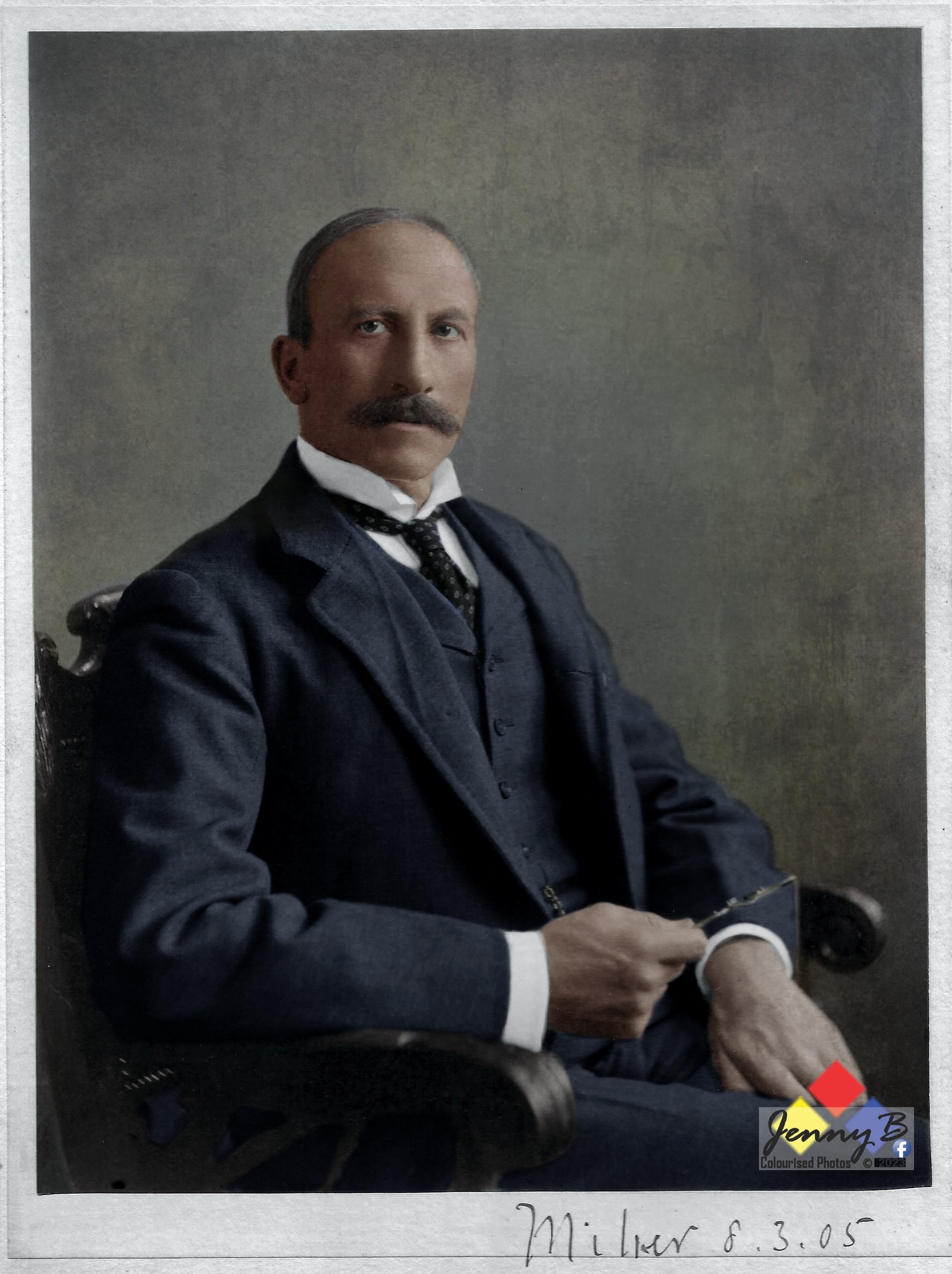
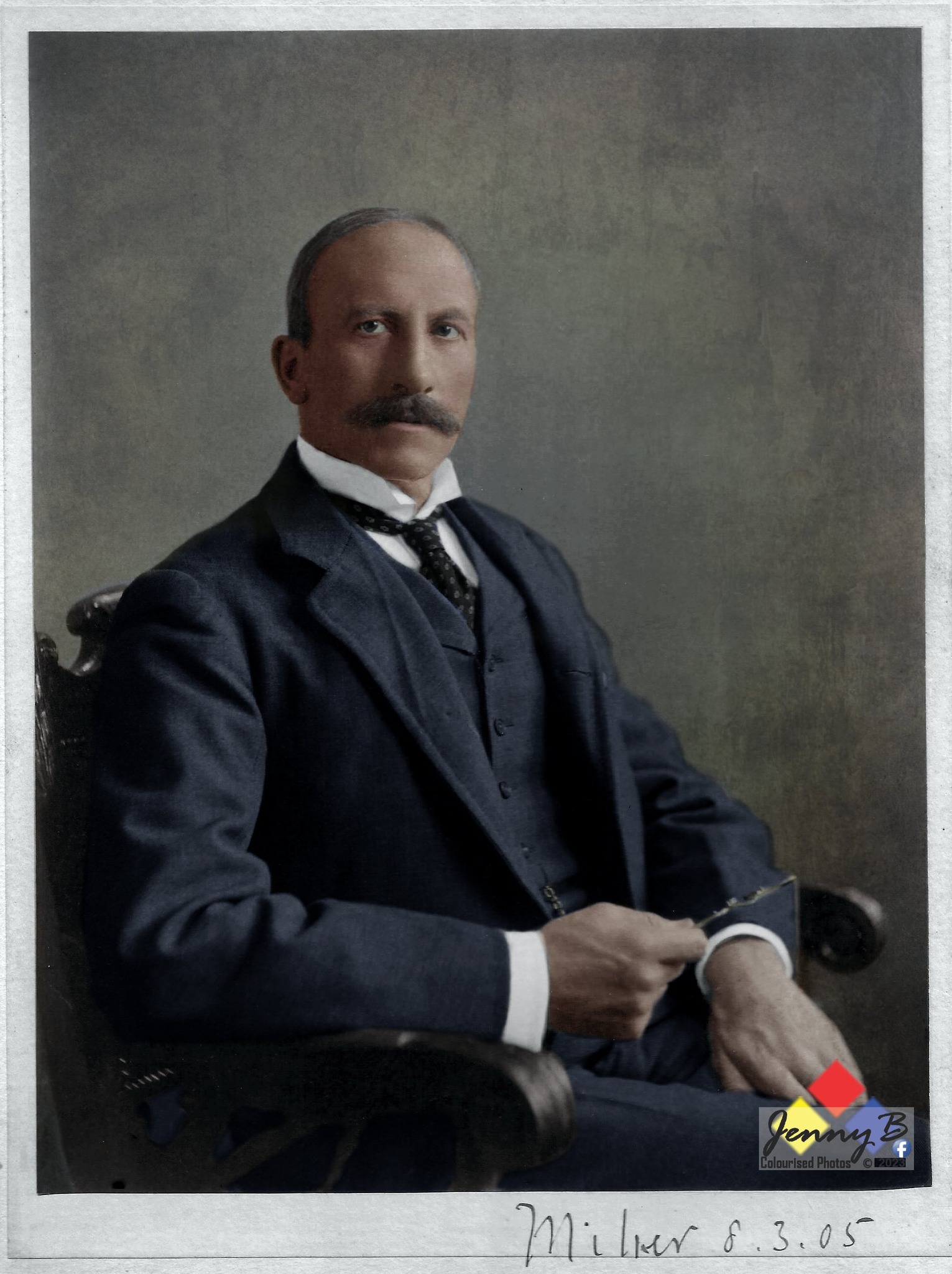
Been an Irish Republican himself, Pakenham is almost predisposed to vilifying British Imperialists. To build Alfred Milner as his villain, Pakenham uses two key meetings – one meeting with Joseph Chamberlain on 22nd November 1898 where Milner gets ‘his orders’ so to speak and one meeting with Percy Fitzpatrick from the Reform Committee (the Uitlanders) on the 31st March 1899 where he gives the ‘Uitlanders’ some advice to how to advance their cause and declares his own commitment to their cause. Seems legit right? Let’s focus on each and see how Pakenham ‘interpreted’ these meetings.

On the meeting in London with Chamberlain – Milner outlines that a “crisis” is developing over the Uitlander franchise as Kruger is simply unbending and is showing no signs of compromising. Chamberlain is of the opinion that “time” will resolve the crisis, leave Kruger to his unreasonable demands and simple democracy, civil pressure and process will see in inevitable change (in other words give Kruger enough rope and he’ll eventually hang himself). To quote, Chamberlain tells Milner to do two things 1. That a peaceful settlement is the only settlement the “British Public” i.e. Parliament will accept and 2. Keep things moving “forrarder” in South Africa (old English – ‘Forrarder’ means ‘forward’). 
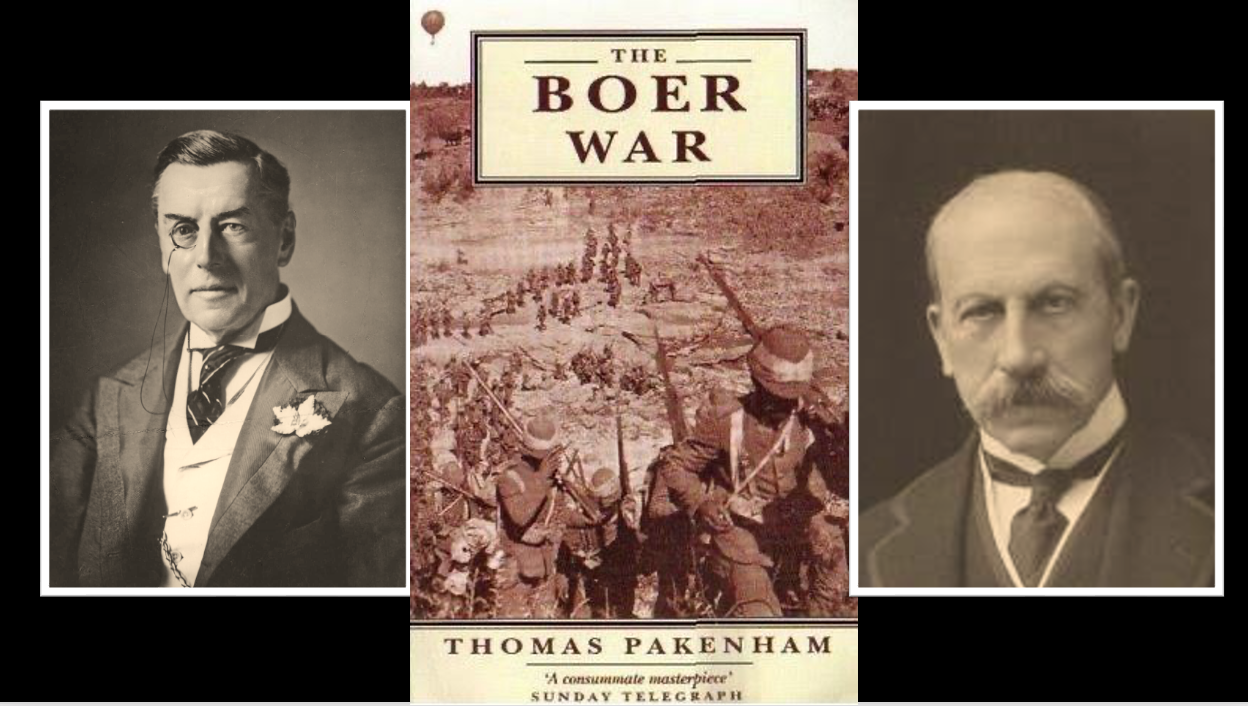
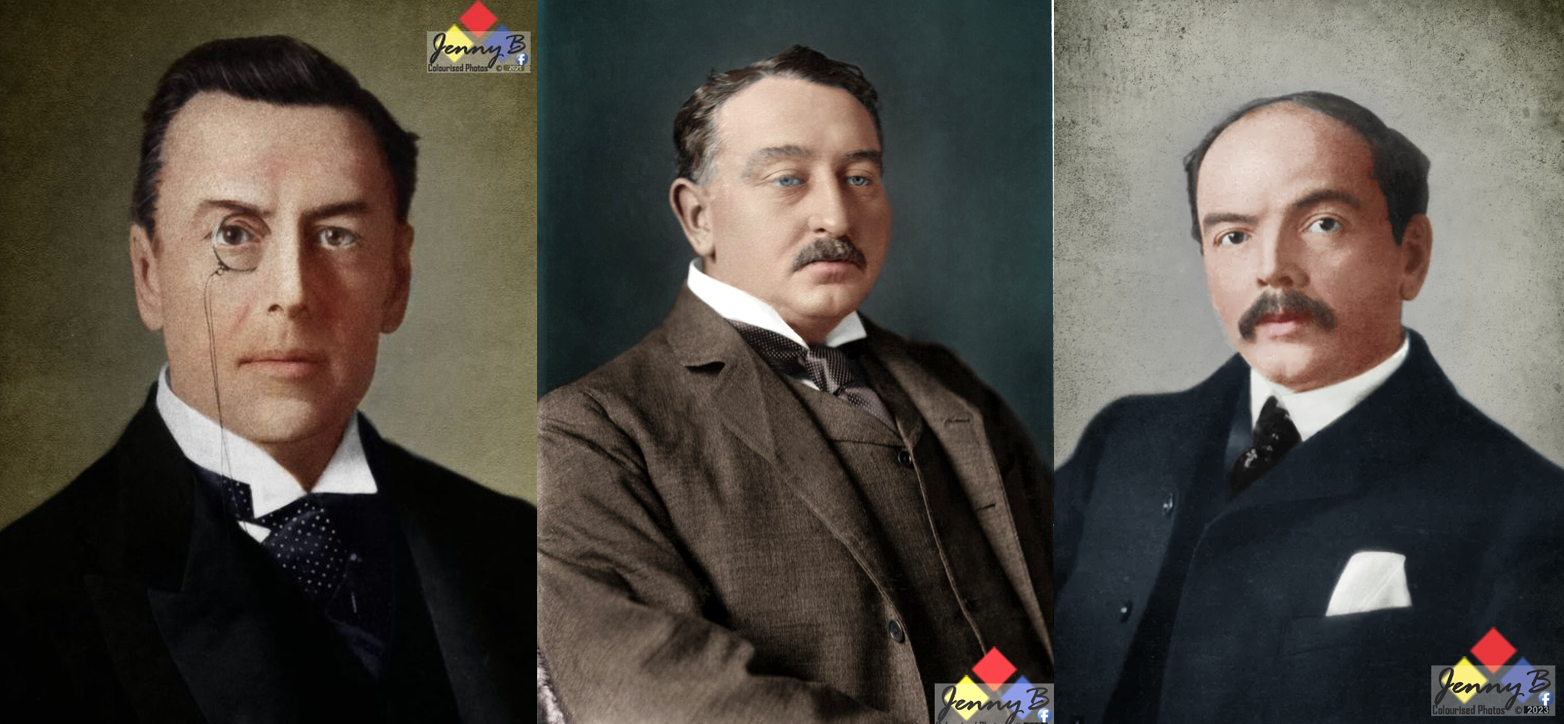
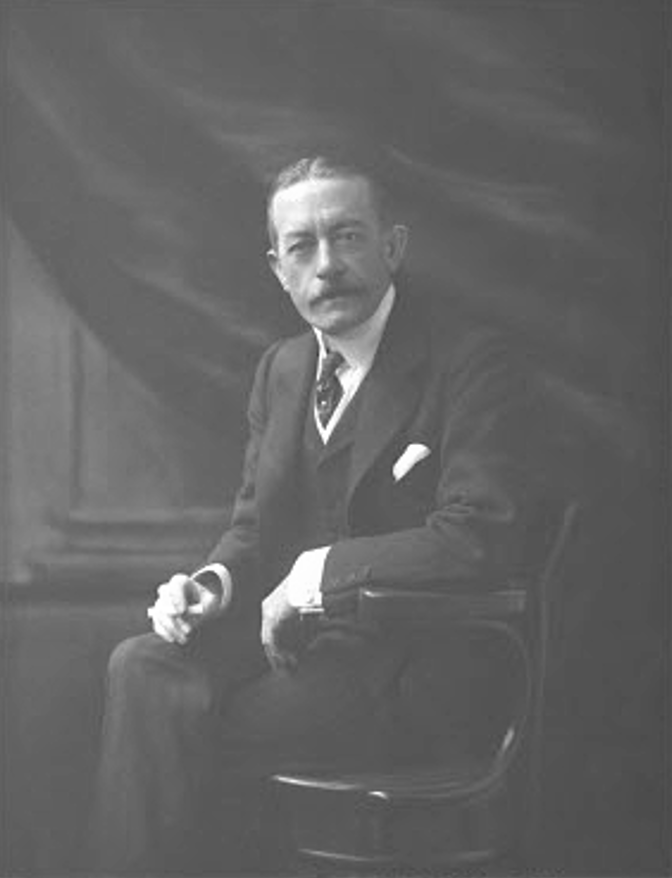
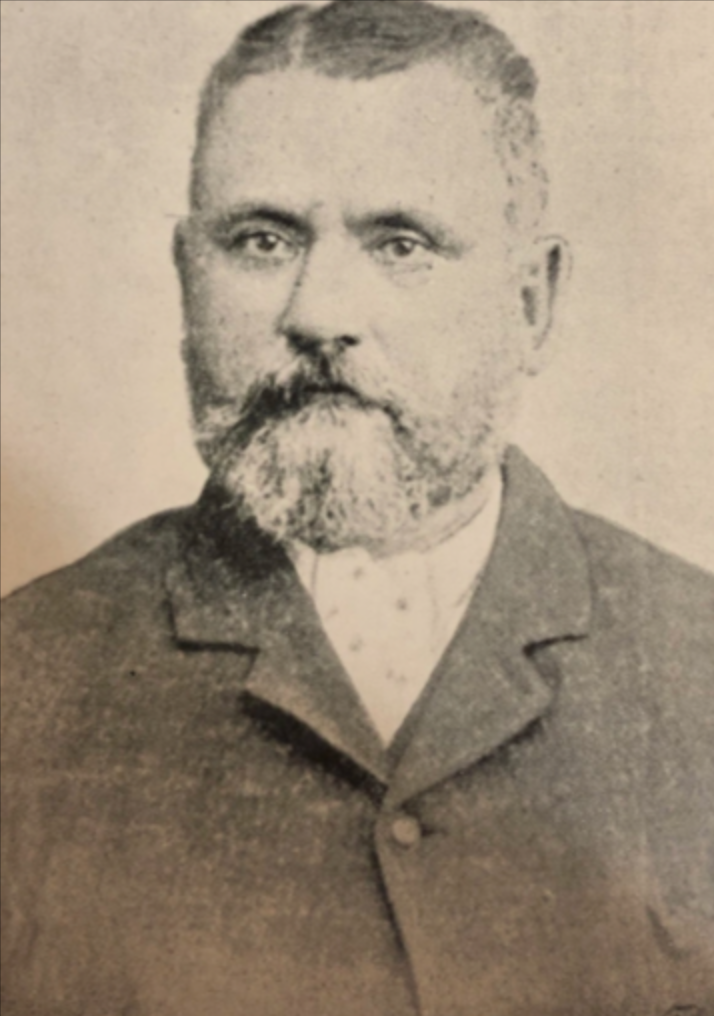
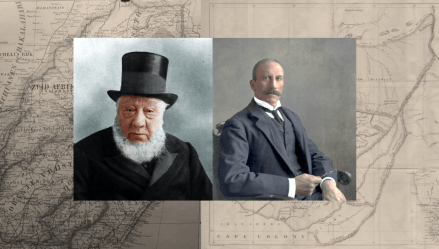
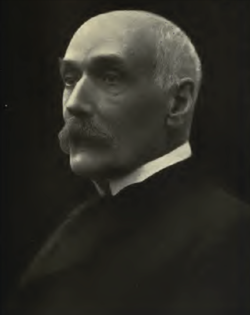
Joseph Chamberlain (left) and Alfred Milner (right)

Milner also agrees with Chamberlain that he will “screw” Kruger – now before you jump to a 21st Century conclusion, “screw” in Victorian times comes from word used to describe a prison official and the ‘screw’ was a pressure machine prisoners aimlessly turned as a punitive measure – to ‘screw’ means to “increase pressure” on Kruger politically (and not to “screw” him out of his country as would be a ‘literal’ 21st century translation and one that it is so often misquoted by Afrikaner Boer War enthusiasts).

Those are Milner’s orders – from his boss. Straightforward enough.

In a modern context Chamberlain is telling his civil servant in the colonial office in South Africa to conclude an acceptable peace without using violence and keep up the good work, keep going and keep pushing. 

But this is not Pakenham’s’ take on the meeting at all, Pakenham sets up the meeting as Milner intentions on artificially ‘working up a crises’ to urge Chamberlain to agree a pathway to war – that no such ‘pathway’ is even mentioned nor is one discussed matter not a jot to Pakenham. Thomas Pakenham then uses the phase of “moving things ‘forrander’ locally” and declares it a “hint” to Milner to continue with an aggressive ‘forward’ policy to annex the Transvaal Republic. That there is absolutely nothing backing Pakenham up in his assertion that Chamberlain is “hinting” to Milner to continue creating conditions for a war and the annexation of a Republic does not deter Pakenham at all – with no proof whatsoever he keeps up his vilification of Milner (and Chamberlain). It gets worse.

The meeting between Percy Fitzpatrick and Alfred Milner is Pakenham’s next focus. So, what happens here? – Fitzpatrick as a Reform Committee leader (and Uitlander in the Transvaal) meets with Milner to put the case of the Uitlanders, to outline their beef with Kruger as a crisis and put their franchise issue front forward. 
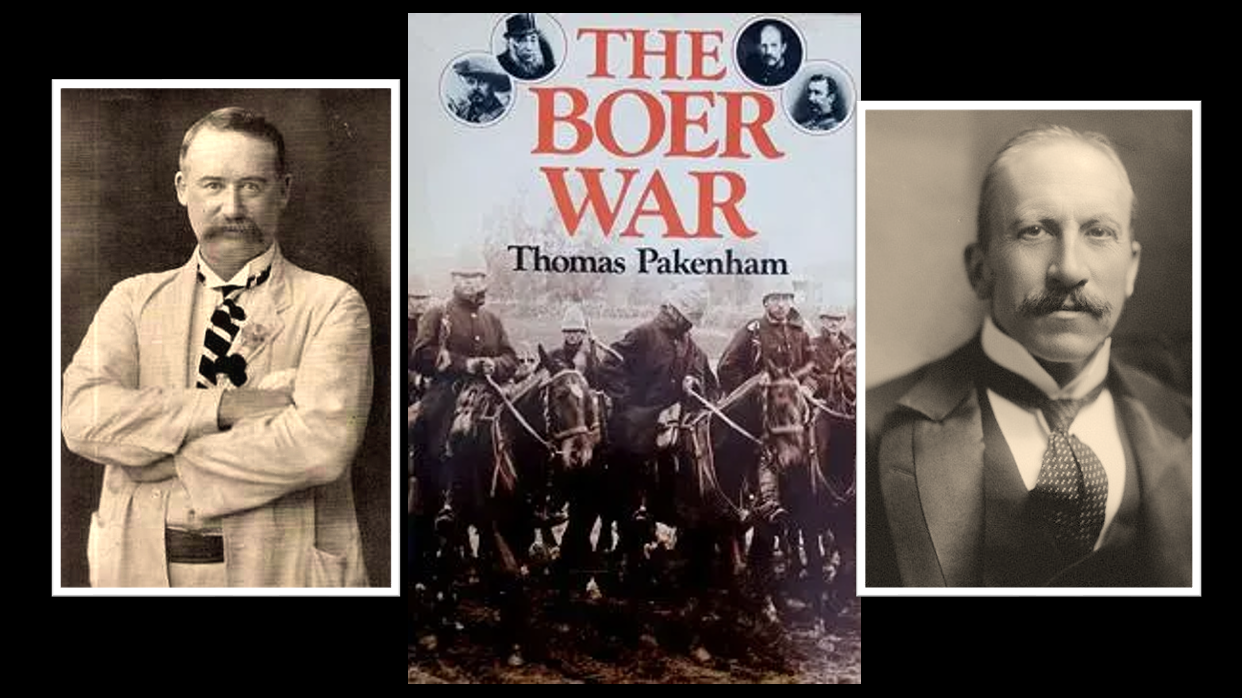
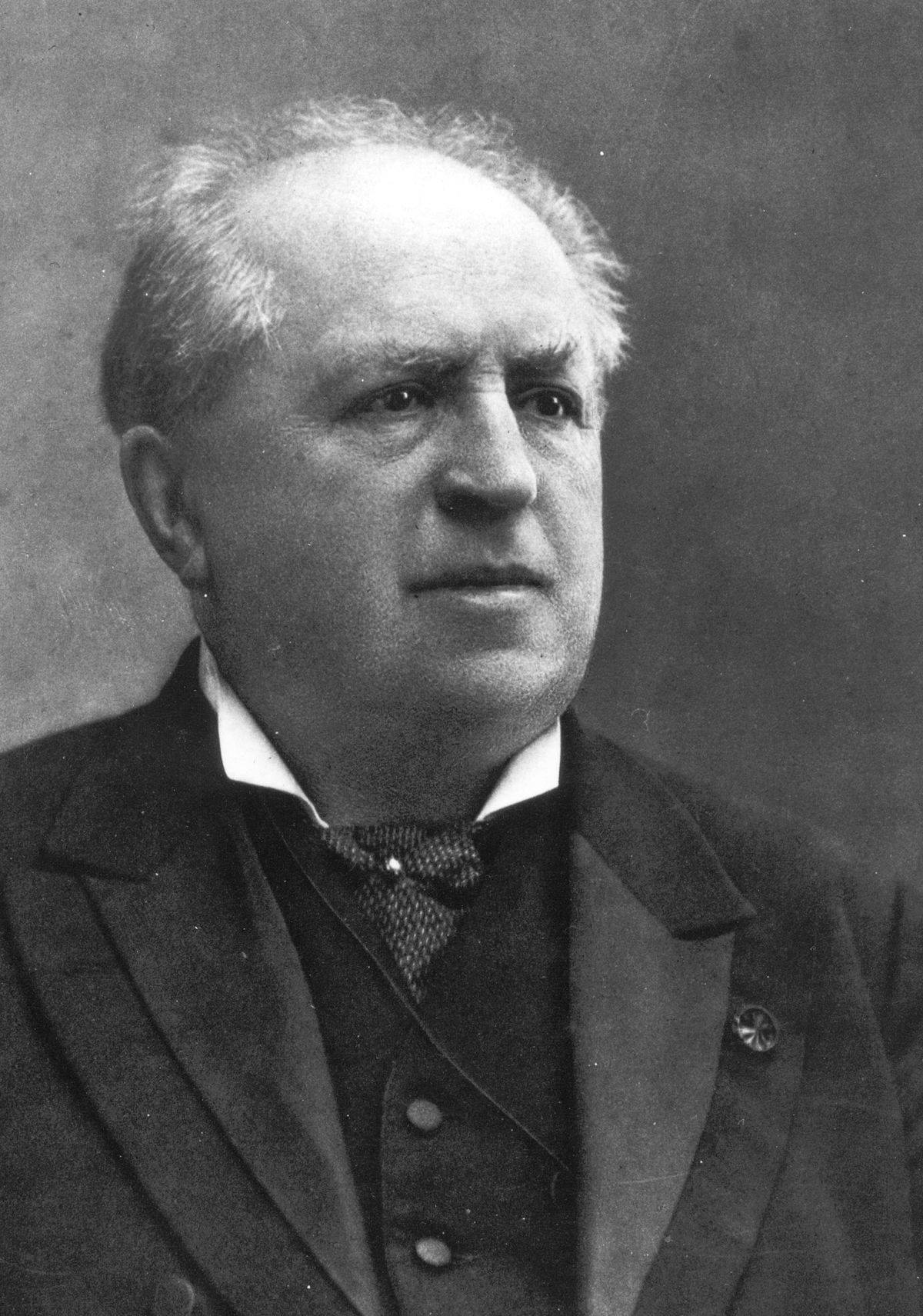
Percy Fitzpatrick (left) and Alfred Milner (right)

Milner sympathises with Fitzpatrick and says his “heart and soul” are with the miners and their predicament. He indicates to Fitzpatrick that their case is not strong enough with the British public, and this is borne out by Parliament (and by default Chamberlain) who are unmoved – he suggests the next step is for the Uitlanders to strengthen their case to the ‘British Public” is a concerted focus on British “media” (the very partisan British press) – he however distances himself personally from involvement in this media campaign and indicates the Uitlanders have to go it alone (as he does not want to be seen as partisan and he’s toeing the line his ‘boss’ Chamberlain is demanding of him). 

That’s it – in modern context, he sympathises with their cause, and he suggests they tighten up their PR and do a media blitz to strengthen their case, only he cannot be seen to be partisan to such a media campaign –  Straightforward enough.

But that’s not Pakenham’s take, instead Pakenham sees this as collusion, purposefully building a crisis for the purposes of strengthening a case for war. He concludes that Milner’s avoiding of the proposed media campaign as duplicitous behaviour – covering his tracks as he’s breaking with his Boss’ instructions and fanning a war, and Pakenham does this again with absolutely no grounded fact whatsoever. It gets even worse.

Pakenham concludes all this with, and I’ll quote Pakenham directly. 

“His (Milner’s) plan was to annex the Transvaal. He would rule it as a crown colony much as his old chief, Cromer, ruled Egypt”.

Pakenham goes on and states

“these were the dreams of Milner’s life and he saw no reason to abandon them because of one obstinate (and obsolete) old man in South Africa (editor – implying Kruger). But how to prevent Chamberlain “wobbling” and ruining everything by compromise? A delicate plan, whose object had to be kept as secret from Chamberlain as from Kruger, was taking shape in Milner’s mind.”

Wow! I mean … wow … a plan for annexation, a secret conspiracy, dreams of grandeur – a Napoleon in the guise of a British bureaucrat and who knew? …Where did Pakenham get all this information from? There must be a source, a reference of some kind, Milner must have betrayed his thoughts to a friend in a letter or similar, he’s drafted an annexation plan surely … and luckily there is a reference, Pakenham’s given it all a notation – number “25”.

Now I want to see this – it’s the entire crux of Pakenham’s argument, it’s the moment of truth, so over to No. 25 under Chapter 6 and it reads … “The evidence that Milner wanted a war is circumstantial.” Huh! … say what! There is no evidence – it’s all circumstantial – and this ‘truth’ is hidden in a notation at the back of the book! What’s going on?

Telling Porkies 

In London cockney rhyming slang if you “tell a pork pie” it’s a “lie”. Telling ‘Porkies’ is to shield or be ‘sparing’ with the truth. One clear way of telling a porkie is to tell a ‘half-truth’ its sounds legit enough and has enough gravitas on which you can base an entire argument. 

When it comes to Pakenham and ‘The Boer War’ on the issue of race and the British franchise demands outside of the ‘white’ uitlander issue i.e. the Coloured Franchise and the recognition of the rights of an urbanising Black African population drawn to mines and industry for labour – this bit of purposeful manipulation becomes masterful – as in one stroke Pakenham paints Milner as a rabid racist and he relegates the entire ‘Coloured’ franchise issue to a secondary status, citing Britain’s lip service to it because in his view deep down they are as racist and segregationist as the Boers – and he uses Milner to ‘deflect’ this rather thorny subject away from the ZAR Republic’s very racist ‘Grondwet’ and its institutionalised racism as reflected in Articles 31 and 32 (applicable to ‘white’ “non-Boers” and “coloured”, “Indians” and “blacks”) of the ZAR constitution.

What this does is relegate this issue of race to a ‘secondary’ status and builds the war as a white only affair for white rights. It goes against the another ‘narrative’ the modern black historians and academics point out – the ‘winds of war’ actually starts in earnest when Edmund Fraser meets Jan Smuts on the 23rd December 1898 and he warns the Republic that their treatment of their ‘Blacks’ is reaching unacceptable levels, he warns Smuts that issues like universal franchise and rights are the type of things the British public like to get behind because they are concepts the average Briton understands – and these easily understood equity and franchise concepts – like slavery – are issues the British government tends to go into a legitimate and justified war over. 

This meeting leaves Smuts utterly gobsmacked and under the impression that the coming war is inevitable … it’s not just about the ‘white’ miners and their rights after all … it’s much bigger than that and the British are not going to stop at insisting on the 5 year franchise for the ‘whites’ only, next is the issue of Black rights. The British also don’t let go of this – throughout the war the ‘Coloured franchise’ and ‘Black’ protectorate and recognition issues are front and forward – it’s a ‘term’ for peace when the first peace negotiations are opened up with Louis Botha in February 1901 in Middleburg and it’s still a ‘term’ for peace when the Vereeniging Peace proposals are put forward in May 1902 …. It is Smuts’ skill as a lawyer and negotiator that its ‘kicked into the long grass’ to be dealt with a ‘future and independent’ union (a move Milner very rightly and prophetically clocks as future problem). 

It’s a key part of the Boer War as the Boers continue with an entire guerrilla phase with the absolute devastation to their family and farm constructs precisely because they absolutely refuse to change their ‘grondwet’ (constitution) on franchise – and especially the coloured franchise. This is NOT what the Apartheid era politicians want taught about the war, to them it’s a whites only affair, it’s a result of a long standing feud dating back to the Voortrekkers … the ‘black’ issue is incidental and the Brits are not that serious about it anyway.

To put this very critical ‘part of the Boer War .. the entire ‘Black’ part of the war on the rump and kick it into the long grass – and in so to fall in line with the Republican narrative (and Apartheid philosophy of Boer victimisation) we need the villain to give the ‘black’ issue the old heave-ho … and Pakenham turns to Milner, his warmongering “Cromer”, so here’s the quote he users – it’s from a letter Milner writes to a friend. 

“You have only to sacrifice ‘the nigger’ and the game is easy”.

Wow, what a powerful and condemning quote – proof positive, the ‘Black’ man is the sacrificial lamb, nothing more – the British will happily deflect the black issue, they’re a pawn in their greater ‘game’ to annex the Transvaal, the British aren’t serious about the ‘black emancipation’ – it’s just a scapegoat – and Milner is a vile racist and bigot to boot! 

Ah … small problem. It’s a half truth, in fact it’s a complete misquote – and by misquoting it Pakenham is setting up an entire preconceived bias, on purpose he is guiding historic opinion and creating fiction not fact – he’s telling porkies … here’s the quote in full and when you’re done reading it you’ll realise the injustice and the depth of the problem, as Pakenham purposefully leaves this bit out, he’s character assassinating and he’s guiding an preconceived agenda – here is Milner’s quote in full:

“If I did not have some conscience about the treatment of blacks I personally could win over the Dutch in the Colony and indeed all the South African dominion without offending the English. You have only to sacrifice ‘the nigger’ and the game is easy. Any attempt to secure fair play for them makes the Dutch fractious and almost unmanageable”.

Hang on a tick, that quote is completely different … hold the horses … Milner is NOT a racist, he cares about the plight of Black South Africans, and he’s frustrated at the Republics treatment of them and their lack of resolve or plain reason to even open the subject of black emancipation and deal with it. The ‘sacrifice’ bit and even the ‘nigger’ bit is a throwaway line referring to simply leaving out the subject altogether when dealing with the Boers as it would make life easier, and it’s something (by his own consciousness) he is simply not prepared to do.

… so that’s a bit different, now you have to ask yourself – what is Pakenham trying to do why is he been deceptive – for what purpose?

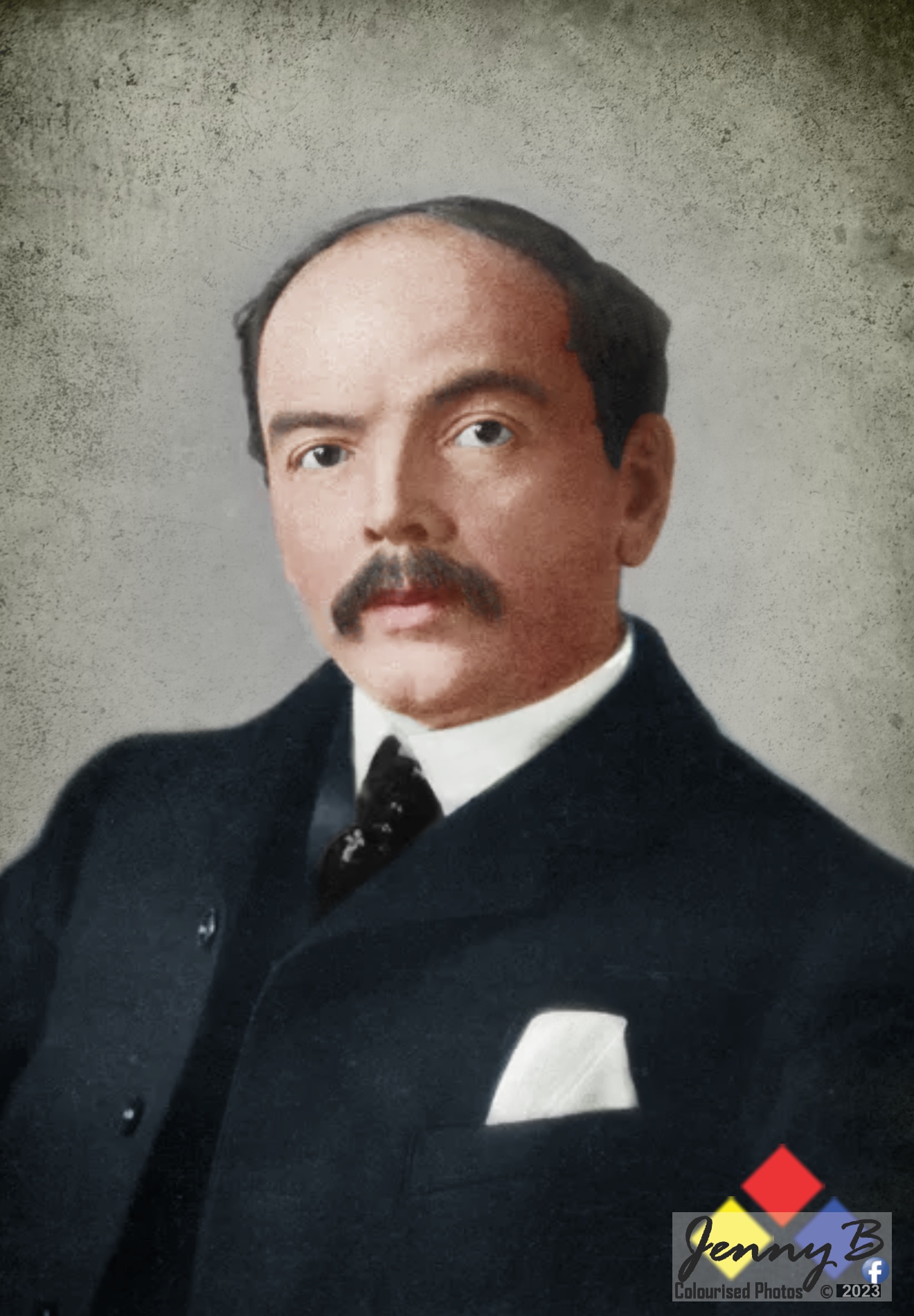
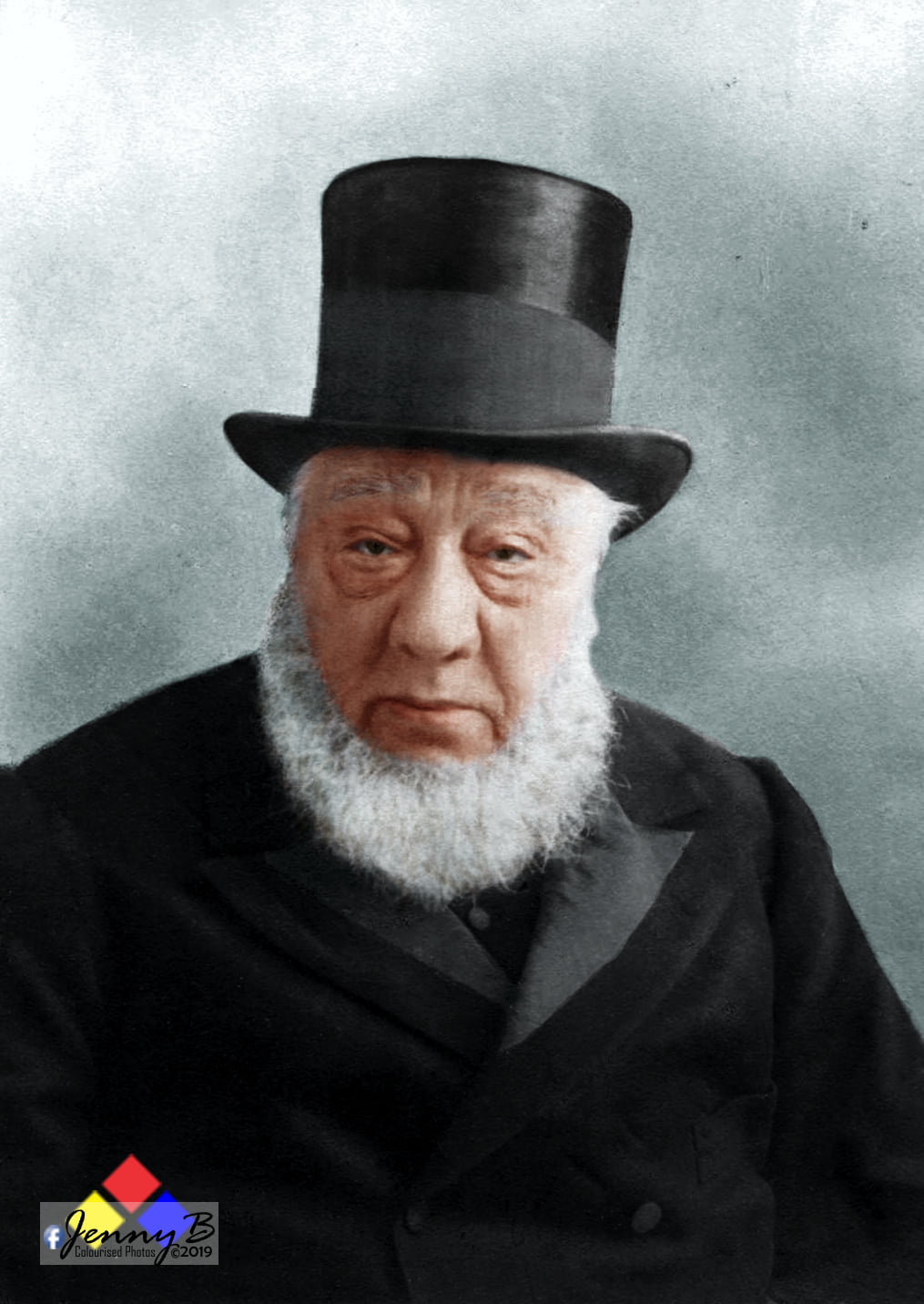
Lord Milner (left) and President Kruger (right)

Where Pakenham fails to peruse the ‘Black’ angle of the Boer War, the esteemed and renowned British historian Andrew Roberts FRSL FRHistS has a sharply different take to Pakenham’s argument and would fall back on Leo Amery and the entire black and white franchise argument in this statement of his:

“Although the Boer War has long been denounced by historians as the British Empire’s Vietnam, and characterised as being fought for gold and diamonds, and trumped up by greedy, jingoistic British politicians keen to bully the two small, brave South African republics, the truth was very different. Far from fighting for their own freedom, the Boers were really struggling for the right to oppress others, principally their black servant-slaves, but also the large non-Afrikaans white Uitlander (‘foreigner’) population of the Transvaal who worked their mines, paid 80% of the taxes, and yet had no vote. The American colonists had fought under James Otis’ cry that ‘Taxation without representation is tyranny’ in 1776, yet when Britain tried to apply that same rule to Britons in South Africa, she was accused of vicious interference’.”

Now, if we think this is all unsubstantiated character assassination so far, it gets worse again, Pakenham carries his now artificially grounded warmongering, scheming, conspiracist and racist ogre that is his Milner into the next chapters which he brands ‘Milner’s war’ and we start with the Bloemfontein conference with Kruger.

For Suzerainty Sakes

Most people have the impression that the Bloemfontein conference in June 1899 was all about Milner unbudging and arrogant and Kruger pleading and declaring all Britain wants is his country – greedy and after the gold, Pakenham highlighting Kruger’s tearful cry at the conclusion of Milner’s browbeating arrogance when the poor simple farmer stands up to leave and cries “it is our country you want” a statement which in actuality startled Krugers’ own negotiating team members like Smuts who saw it for what it was – melodrama, but not Pakenham – a whole chapter in his book is named after this statement of Kruger’s and he holds it up as proof positive of Milner’s intentions as a warmonger.

This perception of a callous British bureaucrat intent on war is carefully built by Pakenham as he very carefully omits ‘the British case’ and focuses primarily on ‘the Boer case’, and the proof is in the pudding … what if I said the whole franchise negotiation centred around the Transvaal’s Suzerainty status – and had nothing to do with ‘stealing’ the Transvaal’s gold. “Huh!”, the universal cry … what’s a Suzerainty? And here’s exactly the problem, the ‘British case’ is entirely misunderstood, and its largely thanks to Pakenham – historians prior to Pakenham, like Leo Amery extensively cover the complex issue of the Suzerainty – it’s a critical part of the Casus Belli … Packenham on the other hand merely gives it lip service and glances over it.

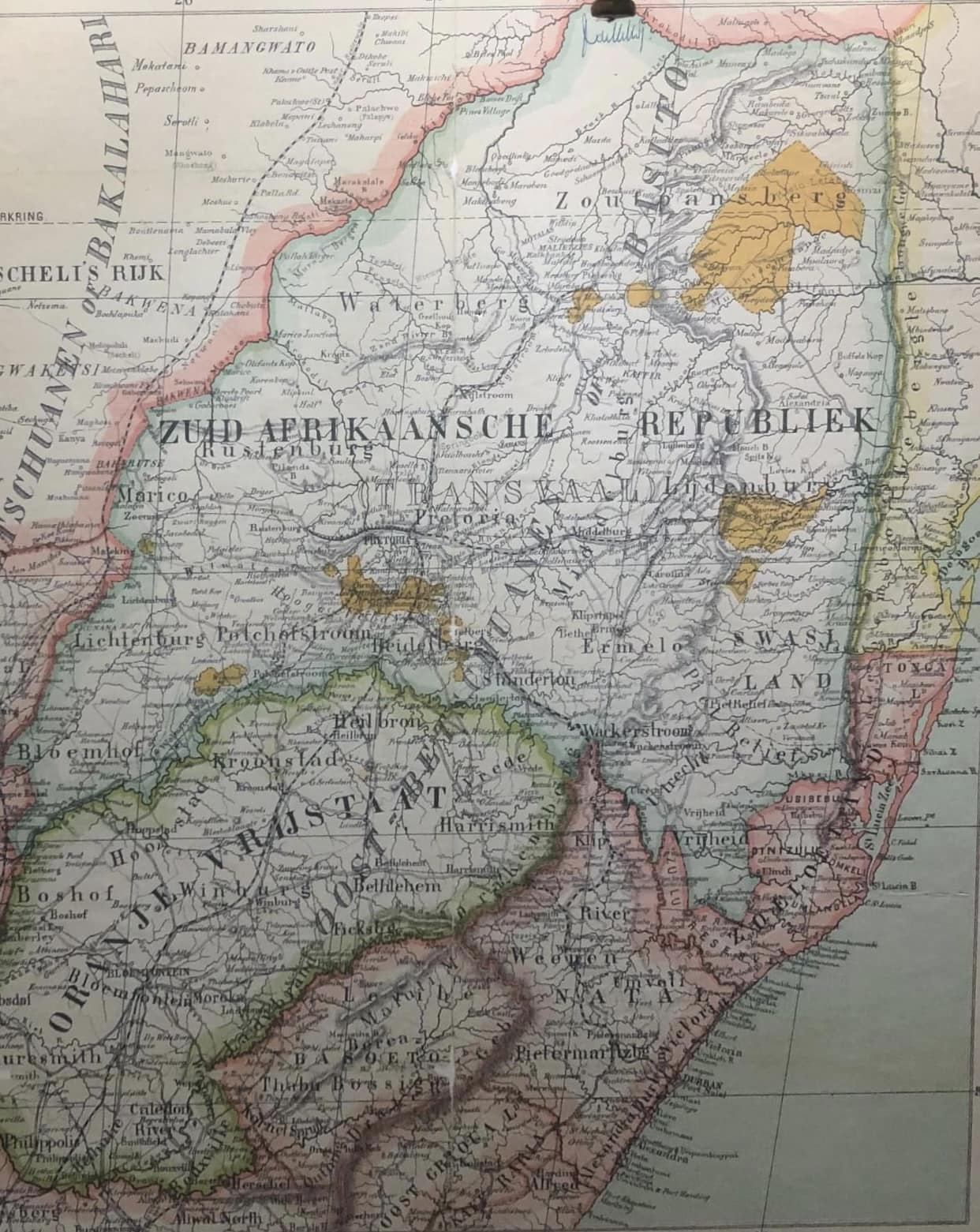
If you want to really understand the ‘road to war’ and the real underpinning issues which caused the war, you have to understand the Suzerainty, the ‘vassal state’ or ‘client state’ status of the Transvaal (Zuid Afrikaanse Republiek – ZAR) – as it was by no means, not in a month of Sunday’s, a “Sovereign” or a “fully independent” Republic. On the franchise issue, Britain was “meddling” in its own Suzerain and not in some independent state, something it regarded as perfectly legal in the spirit of the “Conventions” of 1881 and 1884.
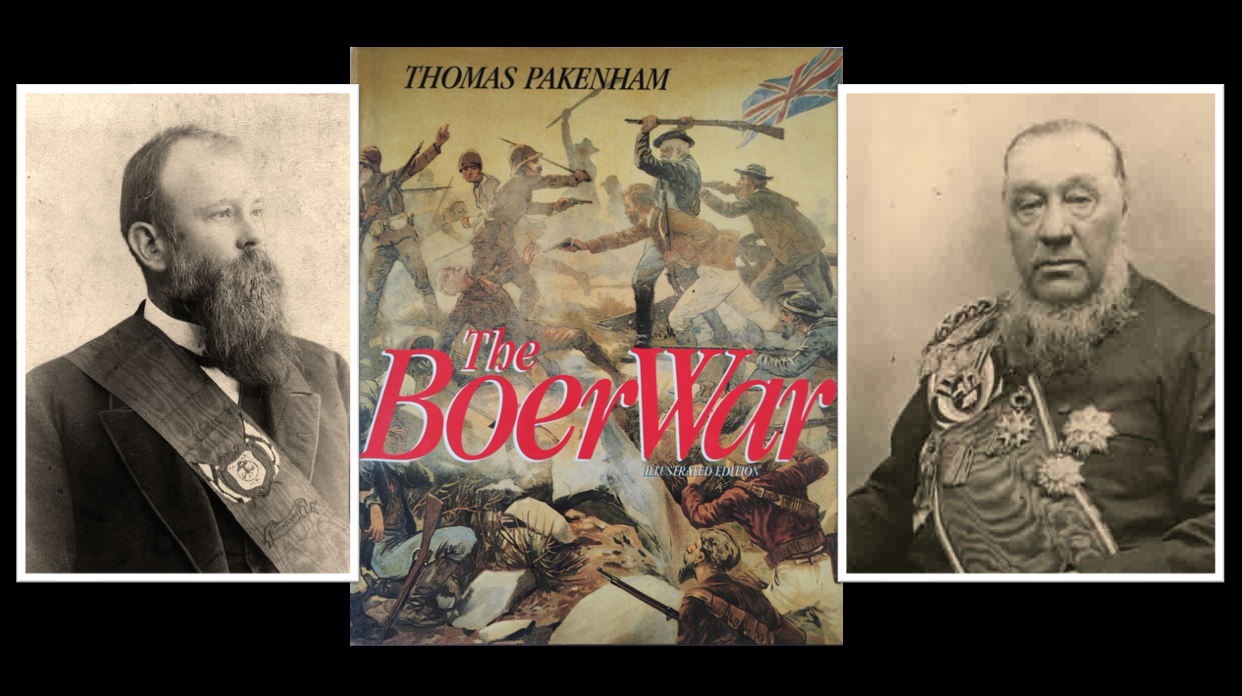
Reitz (left) and Kruger (right)

Yup, sorry to burst the bubble on this one but the ZAR was never legally “fully independent” – lots of politicians on both sides gave it lip service, promises of respect for each other’s so called “independence”, but the hard truth is that legal treaties existed, The Pretoria Convention of 1881 and the London Convention of 1884 which allowed the ZAR no foreign policy whatsoever, they had to defer all of it to Britain – for all their foreign relations and even matters pertaining to trade and trading tariffs (affecting movement of “goods” and even labour) and even their borders (their expansion plans and claims to other territories and ‘old’ Republics like Natalia, Winburg and Stellaland were clipped)– the ZAR had no legal rights in external dealings with any other country other than the Orange Free State – neither foreign treaties or even foreign trade tariff deals could be struck legally without Britain’s consent – none whatsoever. The ZAR remained a British vassal state from the day it stopped being a British colony on the 23rd March 1881 to the date the ZAR “Raad’ and Kruger declared war on their Imperial Suzerain – Great Britain, on 11th Oct 1899 – that’s a fact (and a surprise to many I’m sure). 

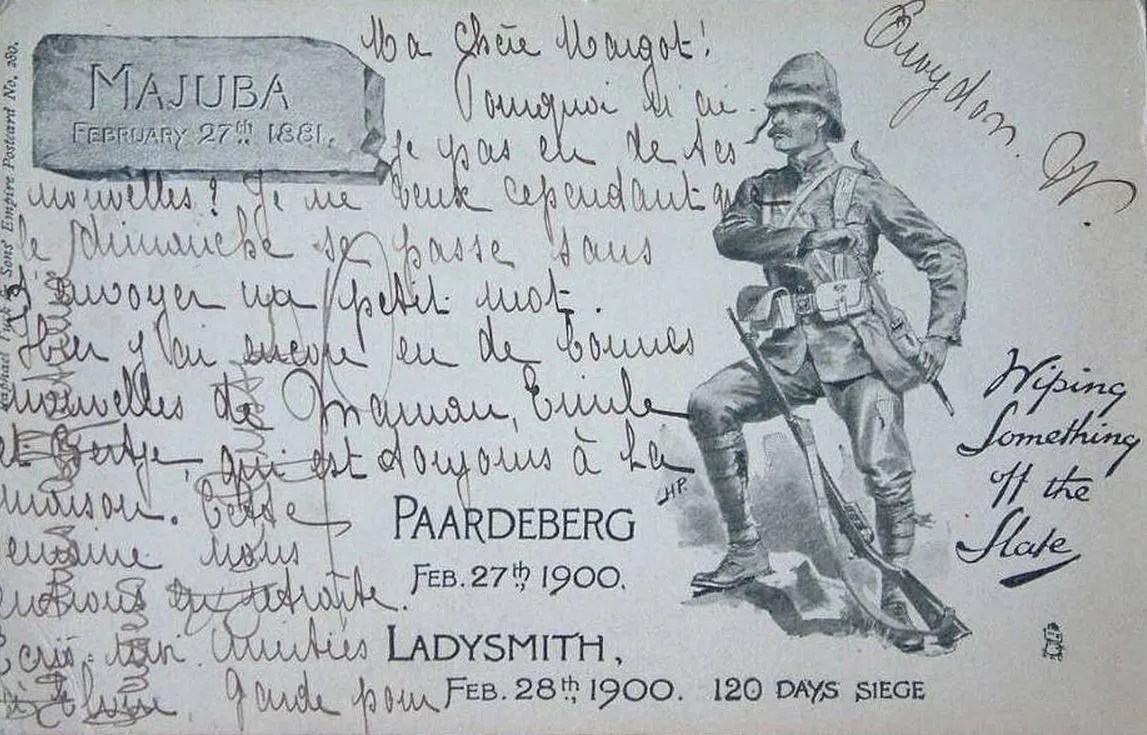
Now, you can start to see the complexity that was the backwards and forwards between Milner and Kruger. This is such a complex issue that I will be publishing an Observation Post on it called “For Suzerainty Sakes” in future, so readers have a better understanding of the causes of Boer War 2 (and Boer War 1 as the Suzerainty is a critical component of the 1st Boer War or Transvaal War 1880-1881).  Churchill when captive and been shipped to Pretoria as a POW during Boer War 2, passed Majuba mountain and lamented in his historical account on the “disgraceful peace” which resulted from Boer War 1 and the true cause of Boer War 2 – and here he is referring the “Suzerainty” and not “gold” – and he is a commentator “from the time” – a first hand account and not a later commentator “of the time” like Pakenham – a second hand account.  

Suffice to say Pakenham does not cover this issue of the ZAR’s true sovereignty in depth at all, the ‘British historians’ do, Pakenham doesn’t – choosing a rather concocted and completely unsubstantiated “conspiracy” of greedy capitalists in cohorts with Milner instead … and as a net result just about everyone in South Africa has no true understanding of what caused the war in the first place.  

Long and Short to get a better understanding, Kruger opens his negotiations with the proposal that he will only consider a 5-year franchise for the “Uitlanders” if Britain drops all Suzerainty regulations governing the ZAR. Kruger lists 12 points he wants resolved before he will consider dropping the 15 year ‘franchise’ for Uitlanders to 5 years – which would bring it in line with all the bordering states’ franchise and labour movements regulated for ‘whites’ (this includes the Orange Free State, Natal, Rhodesia, Botswana and the Cape Colony).

In fact 9 of Kruger’s points are directly related to the ZAR’s Suzerainty restrictions. If the Suzerainty regulations are dropped this would mean the ZAR could change the power balance and threaten Britain’s paramountcy and power balance in the entire region – from the Zambezi all the way to Cape Point, enabling the ZAR to go into military treaties and trade alignments with other aspirational colonial powers like Imperial Germany thereby threatening Britain’s paramountcy in favour of a Boer one. That is a WHOLE lot more to it than mere “miners rights” and their greedy “gold” magnates on the reef as it put all of Britain’s colonies and the protectorates in the whole of southern Africa in a precarious position (3 full blown colonies and 3 colonial protectorates – 6 countries in all), and bottom line, the British (the Parliament and Chamberlain) and their ‘man’ on the ground – Milner, turn round to Kruger and simply say … “No”.

What follows is a four month long cat and mouse game with the Franchise period gradually dropping to 7 years with “conditions”‘ attached, its rejected by all (especially the Reform Committee) – thereafter desperate negotiations between Jan Smuts (for the ZAR) and W. Conyngham Greene (for Britain) continue and they settle on the final offer on 19th August 1899 – it is a 5 year franchise, the ZAR agree Milner’s original term and that there will be nothing “contrary to the Convention” (the ‘Convention is the 1884 version of the Suzerainty and by this it means the Suzerainty remains in place) – the agreement is outlined in a urgent telegram from Greene to Milner, everyone is relieved as war is now avoided, job done …. not yet … Francis Reitz, the ZAR State Secretary sends the ‘formal’ offer on the 21st August 1899 – in which he outlines the 5 year franchise – all good, on the PROVISO that Britain drops the Suzerainty completely, and he is very specific so as to clear up any ambiguity Smuts may have caused – not good. This is what Reitz writes:

The proposals of this Government (ZAR) regarding question of franchise and representation contained in that despatch must be regarded as expressly conditional on Her Majesty’s Government consenting to the points set forth in paragraph 5 of the despatch, viz. :

  • (a) In future not to interfere in internal affairs of the South African Republic.
  • (b) Not to insist further on its assertion of existence of suzerainty.
  • (c) To agree to arbitration.

In Amery’s historical account, he notes at this stage it was “quite impossible for the British government to accept” Reitz’ final offer and that for the British they come to realise the ZAR has no intention to deal with the franchise issue – and this would lead subsequent historians like Paul Ludi to correctly conclude that all the subsequent Greene-Smuts talks were merely a delay tactic by Smuts to ready the two Afrikaner republics for their declaration of war against Britain.

Smuts (left) and Greene (right)

As historians go, both Leopold Amery (then) and Professor Bill Nasson (now) and Andrew Roberts (now) claim the Suzerainty (not gold and diamonds or ‘Cape to Cairo’ British Imperialism) is the Casus Belli of the 2nd Boer War. Bet you did not learn that in your Christian Nationalism School textbook … nor do you get that conclusion from Pakenham.

In Conclusion

This is NOT say that Milner is a saint – not by any stretch, he’s a hard headed British Imperialist whose expressed desire is a Federation of States in Southern Africa, all under the oversight of the British “family” of nations – and he’s no different to just about every Federalist before and after him, men like Sir Henry Barkly. Milner is also no different to the “Afrikaner” federalists who see some form of Federation between all the states – men like Smuts, Botha, de la Rey and Hofmeyr – only they see it under an Afrikaner paramountcy and not a British one. 

The Boer war is a clash of ideologies and paramountcy for complete regional oversight – and this is where Pakenham falls hopelessly flat – not only is he sparing with truths, sparing with “quotes” and sparing with ‘context’ – he blatantly sets up unsubstantiated conspiracy theory in favour of creative story telling and setting up a “good yarn” and ignores and/or manipulates the hard historical facts like the coloured and white franchise issues and the complexities surrounding the ZAR’s suzerainty – all in favour of complete fables surrounding the “gold conspiracy” and painting Milner as a “warmonger”.

The net result is “revisionist” history, a complete change in the historical narrative, and one which is so skewed to the Afrikaner Nationalist and Republicanism cause that it even had Eugène Terre’Blanche, the rabid white supremacist and leader of the Afrikaner Weerstandsbeweging radical far right “terrorist” group stand up and state that Thomas Pakenham’s “The Boer War” was the definitive work and final say on the Boer War – no need to read anything else!

Now, if the erstwhile “ET” said it, then you must know there is a tremendous bias – unfortunately as I’ve outlined here, this bias undermines the entire integrity of Pakenham’s work. There is merit in a lot of Pakenham’s work if you put his entire Section 1 aside, problem is Section 1 is so flawed and has so many holes in it, it can almost be classified as fiction – and here Pakenham is in effect using fiction to set up all the non-fiction in his subsequent sections – it almost stands in the same category as James A Michener’s The Covenant and Leon Uris’ Exodus. The BIG problem is subsequent Apartheid period “Afrikaner” historians and academics ensconced in institutions like the University of Pretoria, the Rand Afrikaans University (now RAU) and the University of Stellenbosch have taken Pakenham as their lead – and that now calls into the question the integrity of all their work in addition.

That is exactly why you should read the works of other authors on the Boer war, both the “original” old ones like Leo Amery’s The Times History of the South African War (Volumes 1 to 7), Deneys Reitz’ Commando and Churchill’s and Smuts’ definitive works of their involvement in the war – all the way to Rayne Kruger’s Goodbye Dolly Gray. Then we need to focus on the “new” ones like Dr Garth Benneyworth and his 2023 work on “Black” concentration camps and even his ground-breaking insights on battles like Magersfontein, or Dr Elizabeth van Heyningen’s ground-breaking work on the concentration camps and disease, or even the ‘British’ historians like Andrew Roberts FRSL FRHistS and his history of the English-speaking peoples and dare I say it Chris Ash BSc FRGS FRHistS and his book Kruger’s War.

The truly difficult thing for me is the realisation that my much-loved Pakenham’s ‘The Boer War’ is so flawed it now needs to make way for more definitive, revived, and new perspective on the subject – and luckily in un-packing Pakenham and packing him away – on the up-side, what Pakenham has done is a favour for all of us history lovers – as it now keeps a dusty old war alive as a subject – his work out of necessity and relevance now has to be counterbalanced and more critically scrutinised. For in truth, the last word on the Boer War has yet to be written.


Written and Researched by Peter Dickens

References:

Leopold Charles Maurice Stennett Amery (1873-1955) “The Second Boer War – The Times History of the War in South Africa 1899-1902” – Volumes 1 to 7.

The Battle of Magersfontein – Victory and Defeat on the South African Veld, 10-12 December 1899. Published 2023. By Dr. Garth Benneyworth. 

The Boer War: By Thomas Pakenham – re-published illustrated version, 1st October 1991.

The Boer War: By Thomas Pakenham – Abacas Edition, 1st October 1979.

The War for South Africa: The Anglo-Boer War (1899-1902) Published February 9, 2011 by Bill Nasson

My Early Life. A Roving Commission. Author: Churchill, Winston S, published October 1930.

Salisbury: Victorian Titan: By Andrew Roberts – January 2000 

Boer War by the numbers!

The path to the South African War (1899-1902) i.e. Boer War 2 is often misunderstood – so let’s look at the actual military numbers and the mission creep. Very often on Boer War social media appreciation sites you hear this old myth “the British intended to invade the Boer Republics and built up their forces on the borders to do so”. This build-up of British invasion forces then prompts the Boers to make “a pre-emptive strike” to “take up forward defensive positions” on British territory. The Boers didn’t start the war see! They merely forestalled the inevitable warmonger, none other than the greedy British – get it?

Problem is “I don’t get it”, my training as an Economic Historian will always lead me to look at the statistics and the ‘cold facts’ to make comparisons and conclusions, my training as a military officer will also always lead me to the science of military doctrine in analysing military history, and not a ‘mainstream’ historian’s interpretation of it. As to above assertions on invasion body troop strengths and pre-emptive strikes, let me be upfront – it’s all bunk, a complete myth and it not supported by the historical facts of the day, nor is it supported by military doctrine (then and now) and the cold hard facts – the statistics, ratios and numbers certainly don’t support it . This is again where ‘economic history’ starts to rip ‘political’ history apart, the numbers – the hard facts (measurable and accurate) start to talk and the political bollocks start to walk, and here’s how.

Looking at the numbers

So, here the numbers to the start of the Boer War on the 11th October 1899 when the Boers invade sovereign British territories:

31st July 1899 – Total British Forces in the Cape Colony, Natal, Rhodesia, and Bechuanaland (Botswana) and Protectorates = Total 8,803 men.
1st August 1899 to 11th October 1899, additional British Forces arrive = Total 6,500 men

Total British Forces in the field as at 11th October 1899 = 15,300 men

27th September 1899 – Transvaal Mobilises Forces = 26,871 men
3rd October 1899 – Free State mobilisers Forces = 21,345 men

Total Boer Forces in the field as at 11th October 1899 = 48,216 men.

The Boer forces at the commencement of hostilities when they declare war against Britain are heavily in their favour = Boer Forces outnumber the British 3 to 1.

“On the high seas” as at the 11th October 1899 are an additional 7,418 British Troops on their way to South Africa – called up to bolster an inadequate British force strength in the event of war.

Even with their arrival at the end of October 1899 (after the war has been declared) bringing the British number up to 22,708 – British Forces are still woefully inadequate, and the invading Boer Forces still outnumber them 2 to 1.

There are numerous quotes and historic references which prove the British had no intention of ‘invading’ the Boer Republics, these always result in a slinging match whilst Boer romantics profess to intelligence reports as proof positive of a plan of attack. Like any military with a military academy and a war office, a scenario plan was devised by the British, its called ‘The War Office Plan’ and it was developed in 1886 – it outlines that should the British invade the ZAR, a full Army Corps (invasion force) would assemble at Colesberg and invade the underbelly of the OFS on their way to the ZAR, avoiding mountainous defences completely and just move up the spine of South Africa over flat and easy terrain (more or less the route of the N1 today).

In reality the British made no actual invasion plans, scenario ‘top draw’ plan yes, actual plans a ‘campaign plan’ with start lines showing troop strengths, regiments and units, timelines and objectives – no, that plan doesn’t exist – an entire Parliamentary commission and Royal inquest was made in 1902 after the war ended, and they established that “no plan for campaign ever existed for operations in South Africa” (that they meant an actual operational plan), but you can put all that aside and let’s just look at the numbers.

There is simply no way, that the British intended to ‘invade’ with a force of only 22,700 troops – going up against a 40,000 strong invading Republican Boer army – just no way. Anyone whose served in the military and understands military doctrines knows, you need twice the numbers of the opponent, at least 2:1 (ideally more) before commencing with an invasion. That means Britain would have needed at least 80,000 troops (in excess of an Army Corps) in theatre before it posed any threat as an ‘invasion’ Force. It had nowhere near those numbers, and nor did it intend to have those numbers. In truth – the Boer Army, who had twice the numbers of the British Army, posed far more of an ‘invasion’ threat – and that’s exactly what they did.

Also, so you can see how the ‘numbers’ and the ‘actual’ history correlate – Lord Milner writes to Her Majesty’s government and states that Kruger is unmovable on issues pertaining the Franchise, he warns them that the ZAR is gearing for an invasion of the British Colonies with the call-up of troops and purchase of munitions, and the purchase of state of the art rifles and artillery pieces – one million Mauser rounds alone arrive in Port Elizabeth as early as the 8th July (ordered around April 1899) destined for the Republics (well before the ‘impasse’ between Milner and Kruger).

He implores the British to send a sizeable force – a full “Army Corps” – of about 35,000 troops to bolster the small garrison forces in South Africa, warning them invasion of British colonies is inevitable. 

The British War Office in London respond to Milner, they maintain that the ZAR was simply not bold enough to invade British sovereign territory, and on the remote chance that should an invasion take place, it would be a “farmers army” and could be held back by professional soldiers. 

The war office also does not want to provoke a flammable situation by sending a full Army Corps. So, they bolster the garrison forces with only 6,500 men, including colonial ‘citizen force’ units mustered from the local populations – and an additional 7,400 men “on their way” from India – the doctrine again is that even though they are outnumbered  they should be able to ‘hold the line’ long enough for an expeditionary ‘Army Corps’ to arrive. The war office estimates a ‘Army Corps’ will take four months to muster and would require a £1 million investment upfront – so not necessary unless there is an absolute and proven military threat.

The eve of war

By the end of September and the beginning of October 1899, Boer forces are amassing primarily at Laing’s neck on the Natal border and the ultimatum agreed by the Boers on the 27th September indicates that war is inevitable, presented by the 7th October 1899 to the British (4 days before they invade sovereign British territories), last minute attempts by Afrikaner Bondsmen in the Cape to get Kruger to “step-down” from his position fail, so too do last minute attempts by members of his own Raad and by his young appointed negotiator Jan Smuts in his final negotiations with Greene, even Steyn in the OFS is urged to get the ZAR to ‘step down’  – whilst all urging the ZAR to “step-down” – Kruger’s unbending demand that the 5 year ‘uitlander’ franchise would only come if the British tore up the 1884 London Convention completely and withdraw all her Suzerainty rights to the region, rights which have been in place since 1877 – this is now deemed a ‘step too far’ as it substantially compromised British paramountcy in the region. Kruger’s position remaining unchanged from the beginning of negotiations in June 1899 in Bloemfontein to the end – only with a cat and mouse game promising limited reforms and then withdrawing them in-between (more on this in an Observation Post called “for suzerainty sakes” as most people don’t understand the real Casus Belli of the war).

Kruger is superstitious, paranoid and impatient and doesn’t even wait for the presentation of the ultimatum to the British or the ultimatum’s deadline – he sees tiny troop movements of small garrison forces as the prelude of an invasion, albeit the British are by no means capitalised for such an invasion – they have not even called up their Army Corps at this point. But Kruger is on the warpath. On the same day the ultimatum is drafted – 27th September 1899 – D Day minus 14 days – Kruger telegraphed to Steyn: 

“English troops already at Dundee and Biggarsberg, and will probably take up all the best positions unless we act at once. Executive Council unanimous that commando order should be issued to-day. We beg you will also call out your burghers. As war is unavoidable we must act at once, and strongly. The longer we wait the more innocent blood will be shed through our delay. We don’t intend to have Chamberlain’s note, with your amendments re Convention, telegraphed to you till burghers are at or near borders, and till you have been informed that the English Government has acted contrary to last part thereof. “We are justified in crossing border. Plan of campaign follows.”

27th September 1899 – D Day minus 14 days – Kruger telegraphed to Steyn again (same day again):

Burghers will be in position in our territory near Laing’s Nek on Friday morning 5 a.m. All other burghers being called up to follow as soon as possible. Kock leaves with two cannons tomorrow evening, also big guns for Laing’s Nek. Will Free State then also be in position? Volksraad meets seven this evening. Can you reply by then? Plan campaign follows.” 

On the 29th September 1899 – D Day minus 12 days – Kruger telegraph to Steyn: 

“Our burghers going to hold positions on border to prevent enemy getting hold of them. You still seem to think of peace, but I consider it impossible. I am strongly of opinion that your people ought also to go to border to take positions. You think Chamberlain is leading us into a trap, but if we wait longer our cause may be hopelessly lost and that would be our trap.

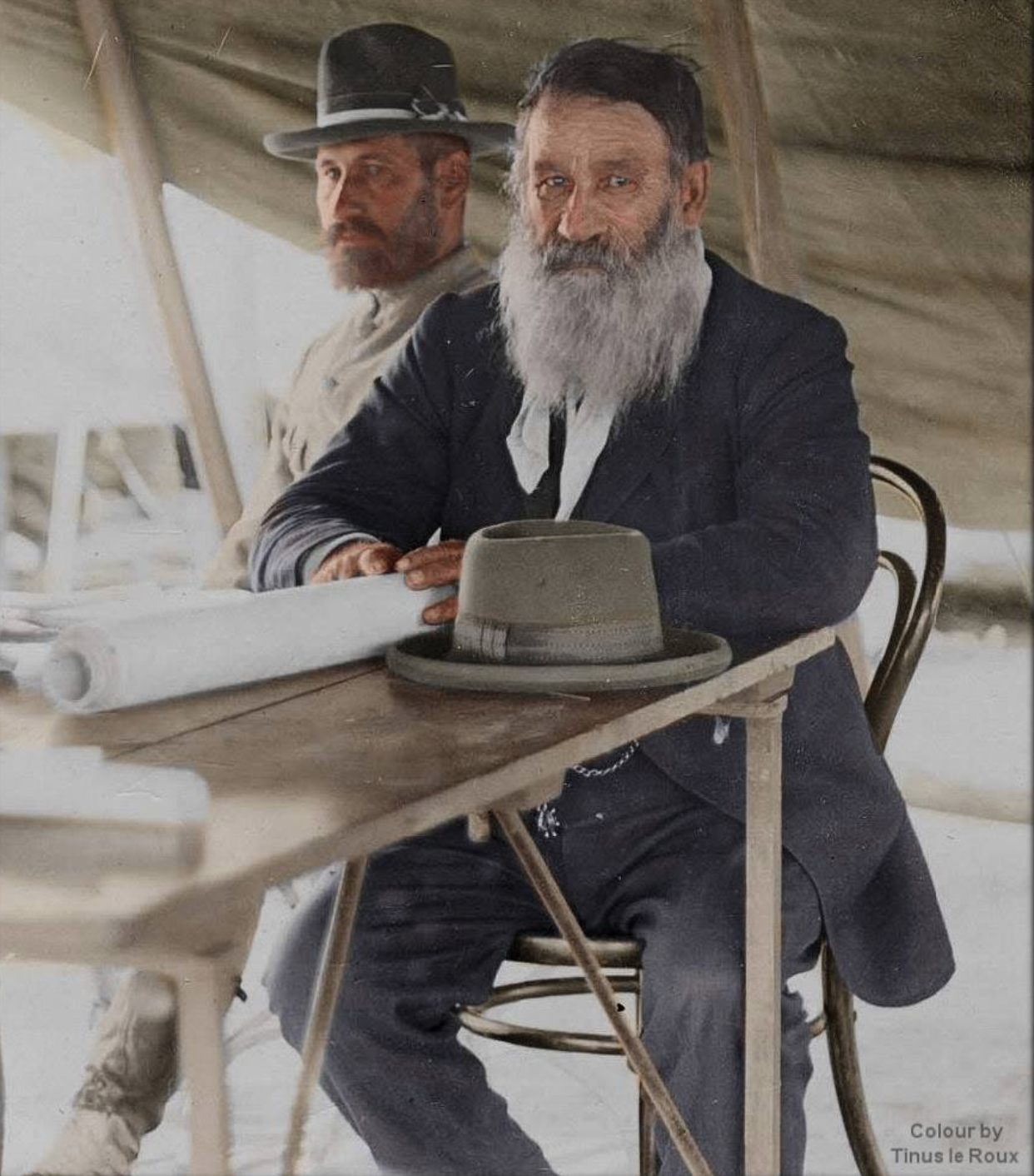
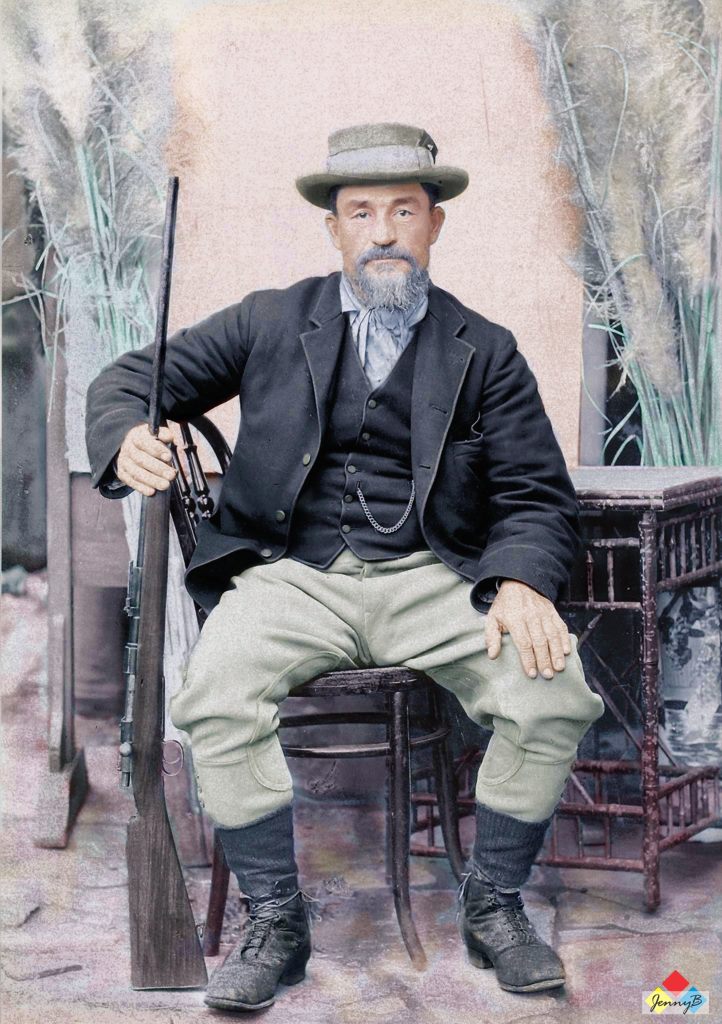
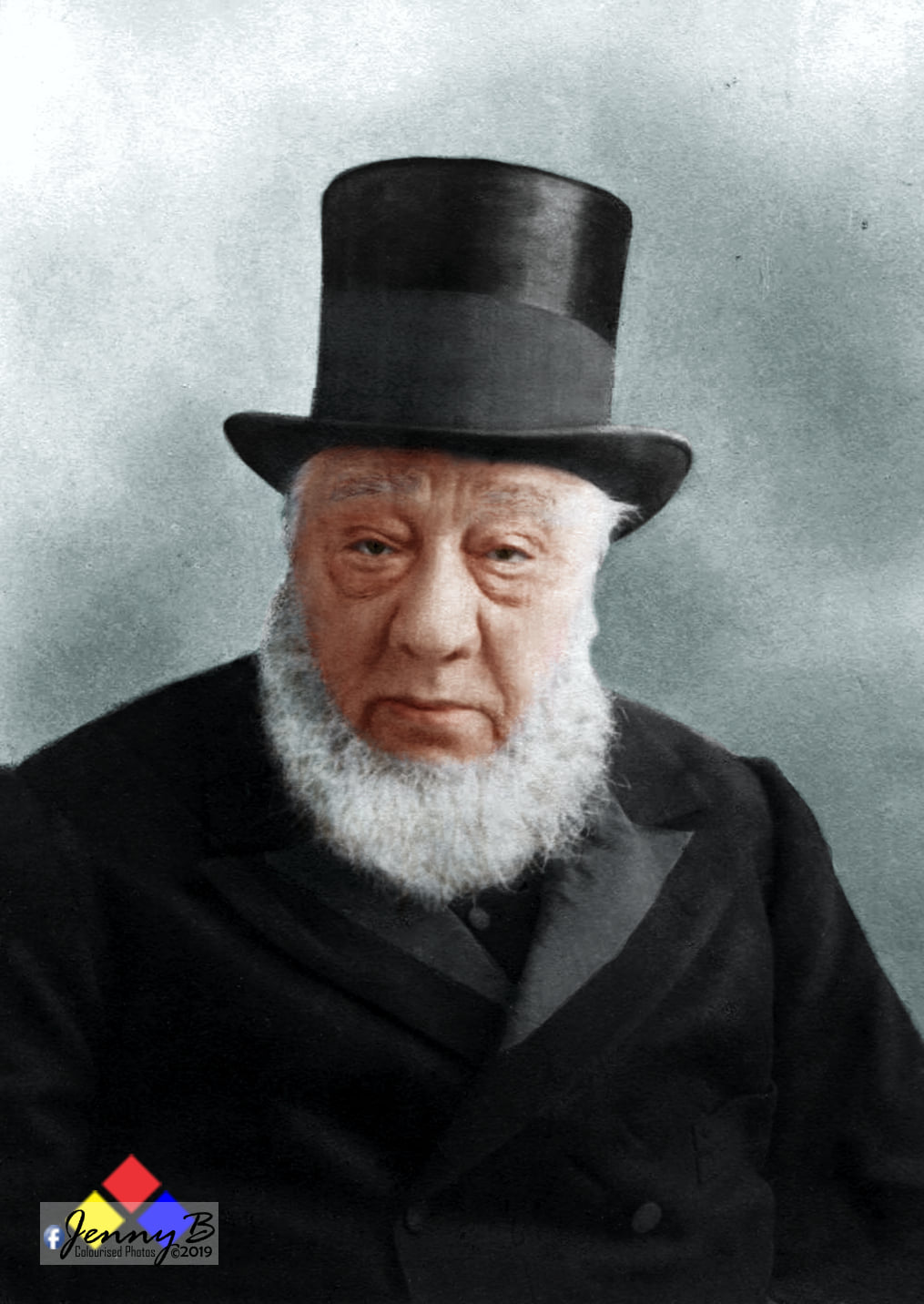
President Steyn (left) and President Kruger (right) colour by Tinus le Roux and Jenny B.

In the final minute, with war inevitable and Boers amassing on the border to invade – the British Parliament approves the request to raise the ‘Army Corps’ as a deterrent against Boer aggression and they only start calling up their reserves from the 7th October 1899 – the Boers are already mobilised and its 4 days before the Boers invade. It’s too late, this force would only be arriving in critical mass in the South African theatre by mid January 1900. 

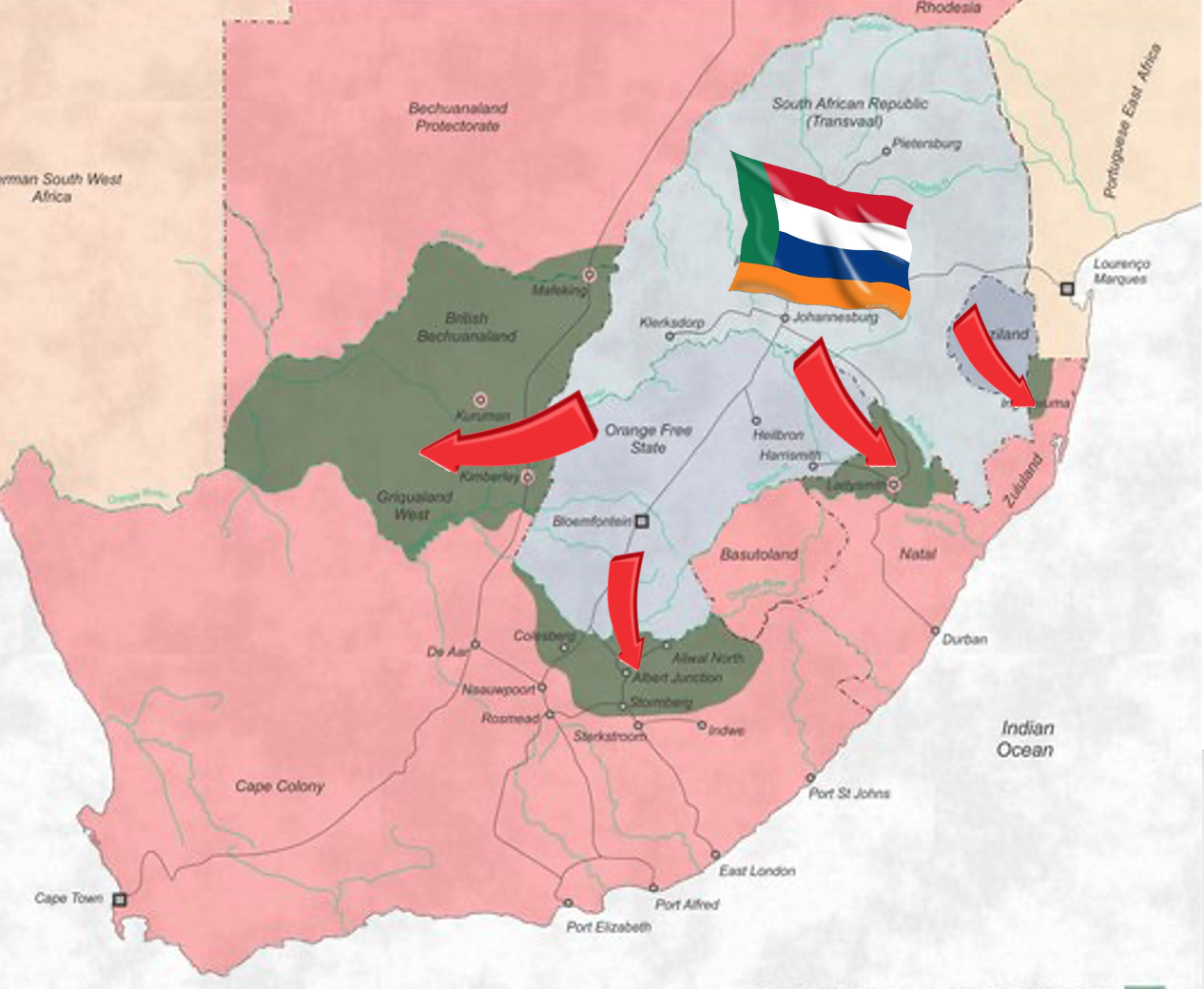
In the end, both ends of the British argument are 100% correct. Milner is 100% correct, the ZAR is a significant destabiliser in the area with territorial ambitions over Swaziland – which they annex, Rhodesia (the Adendorff trek and the Matabeleland concession) and Zululand for access to a Natal based seaport at St Lucia. President Steyn in the OFS also has territorial ambitions over Griqualand and the diamond fields in the Cape Colony.

Afrikaner Bondsmen and their supporters, men like Smuts, Botha, Hofmeyr and Reitz are all promoting the idea of a unitary Afrikaner Republic stretching from the Zambezi to the Cape. Both Boer preachers and politicians are all talking war and the removal of British influence from the entire region altogether (and Milner makes specific note of this). The two Republics are tooling up for war and the ZAR is commissioning and building massive defensive forts and buying advanced state of the art German and French siege guns. Vast stores of smokeless ammunition is been landed, and 40,000 brand new state of the art German Mauser rifles have landed – enough to arm nearly every Boer with not just one but two rifles. President Steyn has signed President Kruger’s long awaited “aggression pact” between the OFS and the ZAR on the 22nd March 1897 which locks the OFS into war even if the ZAR feels “threatened”. Simply put, the ‘winds of war are blowing’.

The purpose for going to war can best be read in the final statements made by the main protagonists. 

Francis Reitz, now acting as the ZAR’s state secretary after sending the final Boer ultimatum, concludes his speech on the eve of war with the following:

“…. from Slagter’s Nek to Laing’s Nek, from the Pretoria Convention to the Bloemfontein Conference, they have ever been the treaty-breakers and robbers. The diamond fields of Kimberley and the beautiful land of Natal were robbed from us, and now they want the goldfields of the Witwatersrand … Brother AfrikanersI The day is at hand on which great deeds are expected of us – War has broken out ! What is it to be ? A wasted and enslaved South Africa or – a Free, United South Africa?”

So, for Francis Reitz accuses the British of breaching the spirit of Transvaal’s Suzerainty, accuses them of stealing Natal and Griqualand and a threat to Boer paramountcy in the region – calling for a ‘United South Africa’ (I.e. the Afrikaner Bond’s ‘Zambezi to the Cape under a Boer hegemony’ objective).

The desire of the Boers and the desire of the British that South Africa fall under their respective paramountcy and hegemony is a clash of interests between Boer Imperial and British imperial desires on territorial expansion and control – and this is the conclusion reached by just about every Boer War historian worth his salt as the basic underlying cause of the war, it’s the Casus Belli. 

This paramountcy and desire for regional control by Boer and Brit respectively is most adequately wrapped up by Jan Smuts’ final word on the matter, when on the eve of war writes:

The aim of the war is to establish “a United South Africa, of one of the great empires (rijken) of the world… an Afrikaans republic in South Africa stretching from Table Bay to the Zambesi”.

On the British front, Joseph Chamberlain concludes his speech to Parliament on the eve of war with the following:

“… we are at war now because the oligarchy at Pretoria … has persistently pursued, from the very day of the signing of the Convention of 1881 down to now, a policy which tended to the evasion of its obligations; a policy by which it has broken its promises; by which it has placed, gradually, but surely, British subjects in the Transvaal in a position of distinct inferiority; by which it has conspired against and undermined the suzerainty, the paramountcy which belongs to Great Britain.” 

So – for Chamberlain, the spirit and agreement of the Transvaal’s Suzerainty (its status as a vassal state as prescribed by the Pretoria and London conventions) has been breached – a breach of treaty – and in so a threat to British paramountcy in the region.

The British War Office is also 100% right, they’ve matched the ‘risk’ perfectly, in terms of military doctrine they augment their forces just enough to prevent total calamity, and its seen upfront in the invasions when these small bordering garrison forces – of professional officers and men, completely outnumbered in Ladysmith, Kimberley, Kuruman and Mafeking make quick work of the invading Boers and stop them in their tracks – on the 14th October 1899 the Boer attack on Mafeking is effectively driven off, and on the 20th October the British forces in Natal are successful at the Battle of Talana Hill and the next day on the 21st October they are successful again at the Battle of Elandslaagte . 

On the 25th October the second Boer assault on Mafeking is driven off and on the 9th November, the Boer assault on Ladysmith is effectively driven off (albeit with heavy losses), the Boers then opt to put the town to siege. The siege of Kimberley starts in earnest on the 4th November with the British defenders firmly dug in, the Boers opt to shelling the town from a safe distance in the hope they capitulate. On the 13th November the Boer attack on Kuruman is successfully driven off and the Boers opt to put it that town to siege in addition. 

The Pre-emptive strike and forward defences myth 

As to a “pre-emptive strike” and “invading for the purposes setting up forward defensives” argument to forestall an inevitable British invasion so often found on Boer war appreciation sites – this is possibly the most stupid assertion and myth generated around Boer War 2 … ever, and for the following reasons:

Upfront, a ‘pre-emptive strike’ is not the plan, never is the plan. These modern-day Boer Romantics ‘couch commanders’ conveniently ignore people like the ZAR commander in chief, Piet Joubert – who states:

“The master plan was to advance rapidly on Cape Town, Port Elizabeth, East London and Durban”

Jan Smuts in his memoirs of the war refers to his direct planning to take the Port of Natal (Durban) in a rapid advance – a “Blitzkreig’ strategy.

In fact, Jan Smuts is the only man with a plan. His plan is outlined, supposedly whilst he was sick in bed. It was presented to the ZAR raad (council) in a secret session and unanimously adopted. It’s a very specific plan, it is summed up by Smuts himself who said the plan was to invade Natal from Laing’s Neck and he does on;

“The republics must get the better of the English troops from the start … by taking the offensive and doing it before the British force in SA is markedly strengthened …. the capture of Natal by a Boer force together with the cutting of the railway between the Cape Colony and Rhodesia … will cause a shaking of the Empire”.

The idea of cutting the railway line between the Cape and Rhodesia is to create an uprising of Afrikaner support in the Cape Colony for the Boer Republic cause, Smuts in his account is very reliant on this happening, he’s an ex-Cape Afrikaner Bondsman, the Afrikaners in the Cape are the majority population – the idea of taking the Cape Colony would fail if they do not rise in support. Smuts’ objective through these actions – in Natal and the Cape Colony – is to “shake up” the paramountcy and in so force better terms with the British with a peace settlement early on … not to get into a protracted and costly war, and to do all this before any sort of “army force” or “expeditionary force” can be raised in the UK – an early concept of “shock and awe” and “blitzkrieg” is Smuts’ basic military plan. Smuts’ plan is also an early form of “manoeuvre” warfare – using the Clausewitzian concept (developed after the Napoleonic wars) – using superior and simultaneous advances along “exterior” lines (a concentration in space) on an enemy using “interior” lines (a concentration of time) of communication and supply. Smuts would also apply this later when he is tasked with forming the Union Defence Force in 1910.

Smuts’ offensive plan also does not propose laying anything to siege, surrounding and laying either Ladysmith, Kimberley or Mafeking is avoided entirely, he is far more concerned with speed and a quick win before Britain can reinforce anything – especially Natal and Durban which Smuts targets his ‘seat of war’. The rapid seizing of Durban whilst its relatively lightly defended is important to Smuts, without seizing it the British will be able to reinforce and counter-attack – so the taking of Durban will either make or break the plan.

Reference: General Jan Smuts and his First World War in Africa – D. Katz

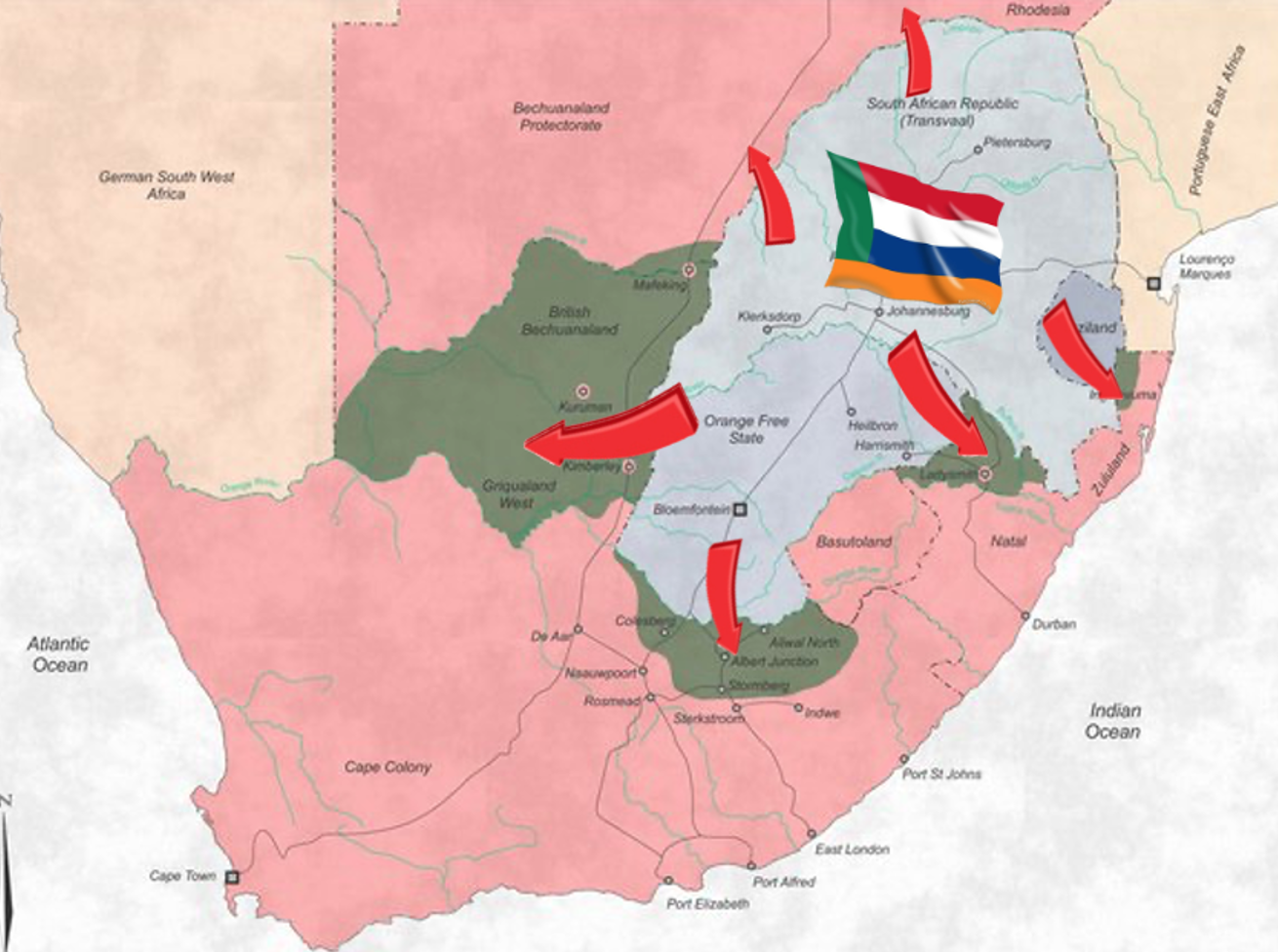
So, here’s the Boer Republics’ offensive plan – in includes Smuts’ initial offensive plan and then a greater offensive offensive advance to Port Elizabeth so as to build on a Cape Afrikaner uprising and rebellion. At the start of hostilities on the 11th October 1899, according to Jan Smuts himself, the ZAR Commandant-General Piet Joubert merely had Smuts’ broad outline of the offensive plan in his hand, he had not given it any further thought – “no comprehensive war planning” had been done on how the strategic plan would be met by any planning on a tactical level or even on the operational level (contingency planning).

On launching the offensive, only then does the Boer leadership give thought to how they inited to meet Smuts’ strategic plan on a tactical level and operational level. They draw on inspiration from the first Anglo-Boer War, the Transvaal War of 1880 to 1881 i.e. Boer War 1, this war called for laying British garrisons around Pretoria to siege and then concentrating on using the natural mountain defences around Laing’s Neck on the ZAR/Natal border which squeezed the British ‘relief column’ making their way to relive the sieges onto a single road through the mountain defences – focusing them onto Majuba where the Boers enjoyed an outstanding victory. This reasoning had worked in 1881, no reason why it would not work in 1899.

So, as a defensive strategy to augment the offensive strategy, General Piet Joubert and the Boer leadership decide on laying siege to Kimberley, Mafeking (in the Northern Cape) and Ladysmith (in Natal) – their thinking is this would split the British forces who would then be focussed on relieving these border towns and their relief columns would have to follow singular roads and railway lines to get there, easy pickings for the Boers as they had done to them at Majuba – thereby weakening the British forces further and giving the Boer’s offensive strategy in Natal all the chance of success.

Important Note, as to military doctrine as follows;

“assuming a defensive posture does not win wars and a offensive strategy is essential for winning a war, defensive stances are a temporary measure allowing for an advantage to develop, which will eventually result in offensive action to secure combat success.”

Dr. D Katz’ ‘Jan Smuts and his First World War

Jan Smuts at this point is disillusioned with the Boer leadership’s planning, he feels this offensive and defensive plan is far too complicated and questions whether the Boers are capable of launching a plan of this magnitude. He even goes as far as calling General Piet Joubert “passé” and “hopelessly incompetent”.

The Boers however, initially follow exactly “the plan” in what they do. They advance from Laing’s Neck down the centre spine of Natal heading to Durban as planned, as they push into Natal the Boer Commanders telegram Kruger to say the “Vierkleur” would be soon flying over Durban. The ZAR Chief Justice Gegorowski boasted;

“the war will be over in a fortnight. We shall take Kimberley and Mafeking, and give the English such a beating in Natal that they will sue for peace”.

The general rally call amount the Boer soldiery is that will be “eating fish” in Durban, General Louis Botha convinced he will also be “eating bananas” in Durban. They also initially follow Smuts’ offensive plan in the Orange Free State, cutting the Cape Colony and Rhodesia railway line in the first action of the war at Kraaipan on the 12th October 1899.

Their mistake, they are too cautious and instead of using their much-promoted advantage – mobility, they err on a cautious and slow advance. The plan, as Smuts predicted is overcomplicated, and in so far as intending to split the British forces between the Northern Cape and Natal, the decision to put Kimberley and Mafeking to siege in addition to the offensive plan as a defensive plan also splits the Boer forces and weakens their offensive capability, from a ‘Blitzkreig’ (lightning mobility war) perspective they are unable to put their maximum effort behind their ‘schwerpunkt’ (heavy, focus – or centre point) which is the rapid invasion of Natal and the taking of Durban. The Boers also compromise their mobility and resources in Natal when they start to lay Ladysmith to siege instead of rapidly advancing to Durban.

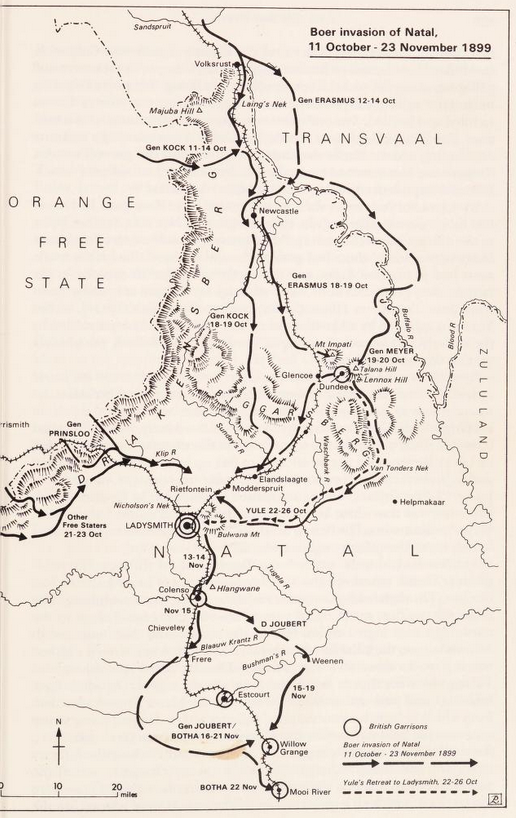
In following “the plan” – the ‘high water marks’ of the invasions i.e., where they ultimately land up. In the Natal invasion it’s just 60 kilometres north of Pietermaritzburg – Botha stops at Mooi River, this invasion has no reference to the “defence plan” whatsoever (in fact it’s the opposite), and the Boers do not take up very effective “defensive positions” to stop any sort of mythical British invasion – the positions they take up are far worse than the positions they were in before they invaded. Any military person will tell you that Rivers and Mountain Ranges make for the most formidable defences – and in the case of the Boer Republics – the Orange River, Vaal River and Drakensberg are perfect defences – no need to invade anyone, investing in these border defences would have been the logical military doctrine, and far more effective as to a “defensive strategy” without initiating a war and the risk that involves. 

Look at it from the perspective of military doctrine, the Boer “start line” is Volksrust on the border near Laing’s Neck – a most formidable defence position on the border of Natal and the “gateway” to both the ZAR and Natal, home to Majuba mountain and Laing’s neck, where the British were so soundly beaten by the Boers in 1881 – it’s a proven natural defence and one which the British could not breach just 18 years earlier.

As to continuing a deep advance (remember the offensive plan is to invade), after they are confronted by the British in the field at Talana outside Dundee on the 20th October 1899 (D Day plus 8) – the Boers are initially defeated in two pitched battles, the Boers are held up losing advantage daily. After winning the battle at Nicolson’s Neck the Boers manage to advance another 70 kilometres to Ladysmith reaching it on the 2nd November (D Day plus 24 days) – now they are now 190 kilometres into their advance from their start line on the border and nearly a month into their invasion campaign. 

So, if your strategy is only one of defence – why leave such a formidable defence and find something else? Then as to the so called amassed “British threat on the border” – the invasion force overall Commander, General Piet Joubert is joined by General de Kock from the OFS and General Erasmus and they advance from their start line for nearly 120 kilometres deep into Natal territory before they meet any significant British forces or resistance whatsoever – the British are nowhere near the “border” and “poised” to invade anything. The British have rather inadvisably split their forces between Dundee and Ladysmith. Extending military supply lines and logistics support for 120 kilometres in 1899 using wagons and horses to initiate a “pre-emptive” strike aimed at the British in Dundee is pure Hollywood, wishful thinking, it has nothing to do with military doctrine or sound military planning – or even the Boer’s plan for what it is. 

The Boer invasion of Natal as mapped.

General Louis Botha then extends the advance from Ladysmith all the way to Mooi River on the 22nd November 1899 – 100 Km away from Ladysmith and 60 km from Pietermaritzburg and now a staggering 290 km from their start line. That’s the length of the “supply” line for the Boers – their “high water” mark. No military commander in his right mind sets up a “defensive position” with a near 300 km long supply line running through enemy territory intended to support ‘defences’ – no military commander in 1899 advances near 300 km on horseback for a pre-emptive strike either – air warfare has not been invented yet and even by today’s standards a ground force invasion 300 km into enemy territory is never considered by any commander as a mere “strike” – pre-emptive or otherwise. 

The Boer high-water mark is only obtained by the 22nd November – D Day plus 43 days – now having been significantly compromised on mobility and speed. Both HMS Terrible and HMS Powerful had arrived in Durban port by the 6th November 1899, either one of these two Battle Cruisers had more fire power on board than the entire Boer invading armies combined – a Battle Cruiser defending a port from mounted infantryman on horseback is no match. The Royal Navy is Britain’s senior service and it has at its disposal the very best of all their resources and commanders, defending their ports is what the Royal Navy does best, they are very good at it.

HMS Terrible (Left) and HMS Powerful (Right)

The Boer invasion falters, it fails because they had lost their only significant advantage – mobility, aggression and speed gives way to cautiousness, they chose resource draining static warfare instead – sieges and invest into them instead, losing valuable days and sacrificing their “Blitzkreig” offensive plan altogether. 

With Botha’s objective of “eating bananas in Durban” now completely dashed, General Botha has no choice but to do what countless military commanders before and after him have done when an invasion fails – and beat a retreat, creating what are known in the military as “defensive “boxes” as you go along, the idea is to slow the enemy’s counter attack down until you can “join” with more friendly forces and consolidate – which he initially successfully does just north of the high water mark at Willow Grange on 23rd November 1899 and then further north at his next “box” at Colenso on 15th December 1899. He finally settles further north on the Tugela heights as his next defensive box, having now retreated for 80 Km, however he loses this pivotal battle and his final defensive box to the British on the 27th February 1900 (to see a defensive box retreat in action in a more recent war involving South African Commanders – see “Gazala Gallop” in WW2).

On the western front, the Boers are able to invade the arid and sparsely populated northern Cape meeting no real resistance from any British forces – as none are stationed there in any numbers – the Boers end their high water mark at the border with German South West Africa – this has more to do with the strategic imperative of opening up a sea route and port access via Walvis Bay and linking up with a “friendly state” for the purposes of supply than it does with any offensive or defensive plan offered by the Boer command. It certainly has nothing to do with a ‘pre-emptive’ strike.

On other lesser known fronts

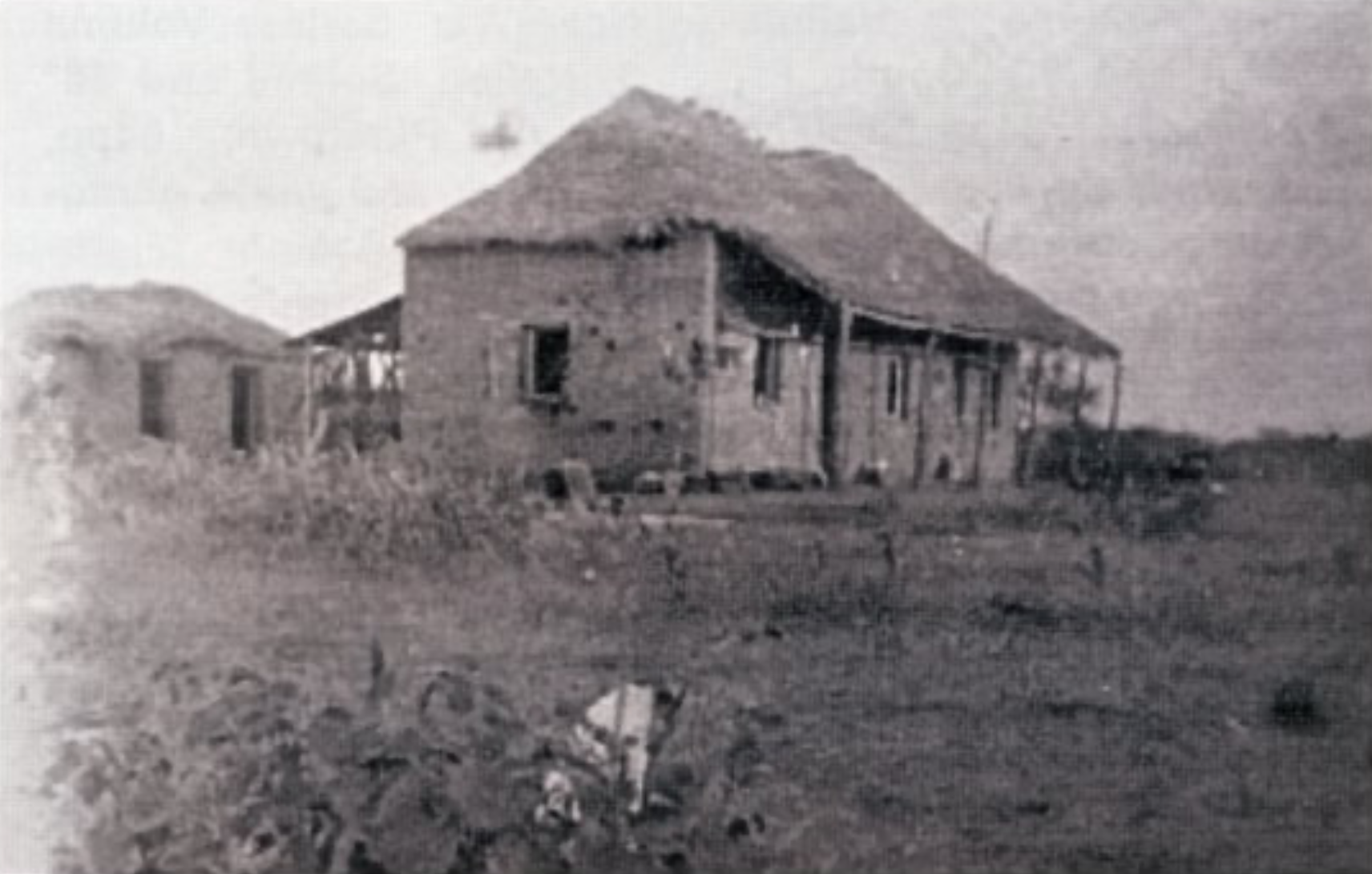
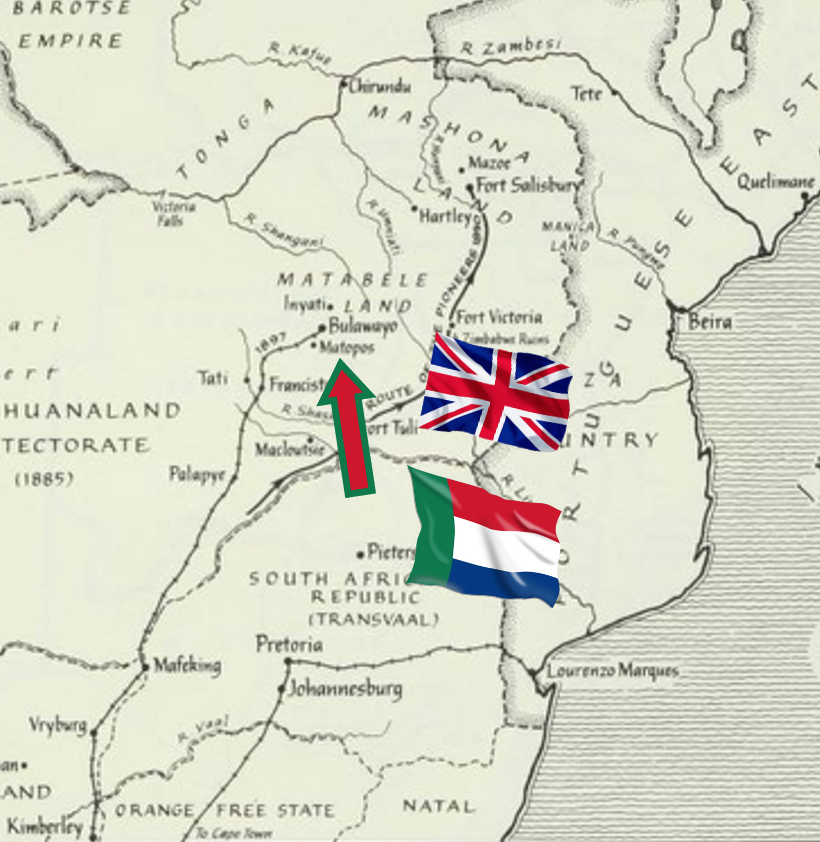
If there is any semblance of logic in invading the Cape and Natal colonies for the purposes of establishing forward defences only, there is absolutely no logic in the Boer invasions of Rhodesia (Zimbabwe) and Bechuanaland (Botswana) to suggest invading for purposes of defending – or even a ‘pre-emptive’ strike – the tiny nominal British Police forces in both these countries are no invasion threat whatsoever, and all the invasion of the Bechuanaland Kingdom does is bring the Tswana into the war as a belligerent all on their own, and the Tswana in their own right decimate the invading Boer Kommando and its laager at Derdepoort on the 25th November 1899. The small BSAP (British South African Police) base consisting of 450 British soldiers at Tuli in Rhodesia is however sufficiently professional to stop the 2,000 strong Boer Commando (now with a 1 to 4 advantage over the British) which had forged itself over the Limpopo River into Rhodesia at Rhodes Drift and other points. On the 2nd November 1899 the BSAP successfully halt them at Bryce’s Store and then repulse the invasion, although border incidents and Boer incursions into Rhodesia continue for some time – well into the Guerrilla phase.

Bryce’s Store in Rhodesia showing combat damage

What Defences?

Also, nobody has been able to point where these so called ‘invasion for the purpose of defensive positions’ are, there is no investment in resources or materials for effective defences, the Boer trenching system at the Modder River at the beginning of the war in November 1899 are proven ineffective.

The defensive earthworks that make up the trench line at defence cluster centre at Magtersfontein is merely a shallow trench converted from a natural ‘donga’ at the base of the koppie range (refer Dr. Garth Bennyworth’s groundbreaking work on this trench-line) – the British frontal attack on this trench-line is successfully repelled by the Boers on 11th December 1899 (Cronje’s only real tactical ‘victory’), but after regrouping and reinforcing the British are able to by-pass these defences completely in a highly mobile flanking manoeuvre.

No large defence fortifications are really invested in by the Boers in either Natal or the Cape Colony, and any idea of fortifying the Republics borders are in fact neglected in the drive to invade the British colonies instead. 

It is only from the beginning of the new year in 1900, that the British have been able to muster anywhere near enough troops to land in Cape Town, that they are now matched 1:1 to the Boer army, and it is on these equal footings that the British counterattack, breakout and relieve of all the major sieges. From January 1900 to July 1900 they rout the Republican armies from their colonies, relieve their sieges and in two significant manoeuvres – the Battle of Paardeberg on the 27th February 1900 and Brandwater Basin (Surrender Hill) on 30th July 1900 they break the Republican forces critical mass to fight a conventional war – Brandwater and Paardeberg alone result in the capturing 8,300 men and the Boer Army is now simply just no longer matched to the British on a 1:1 ratio, it’s now in an inadequate position – with more British troops streaming in.

The 500,000 myth

Often on Boer war sites, and even on simple things like wiki we see this statement “it took 500,000 British to defeat 20,000 Boers” – the much-touted ratio in this type of media is that the Boers were outnumbered 25 to 1, at a staggering disadvantage, but these plucky Boers held the mighty British empire at bay. Now that’s a figure designed to paint the Boer fighter as some sort of super-man and the British military as bumbling, monolithic and ineffective. But the truth is far from this and this figure is completely erroneous designed to drive Afrikaner nationalist political rhetoric – it has nothing to do with actual numbers on the ground. 

Now, here’s the truth – at no point in Boer war 2 were there ever 500,000 British troops in South Africa as boots on the ground at any one point in time – in total, over the course of the war the British called up 550,000 men – that bit is true, yes. HOWEVER the British rotated their Regiments in and out of South Africa on ‘tours of duty’ – never really sending a full regiment into the operational theatre at once, retaining many at home and in their other colonies around the world. The “high water mark” i.e., the maximum number of British Troops in South Africa at any one point in time is 230,000 men. Even pro-Boer chronologies like that of Pieter Cloete’s Boer War facts and figures reluctantly has to admit this fact. 

This high-water mark of 230,000 (including African Auxiliaries) is only peaked briefly during the Guerrilla Phase of the war – and at least 50,000 of these troops are being used to man the rather extensive blockhouse defence system stretching from the top to bottom and side to side across the whole of South Africa (as referenced by Simon C. Green in his Blockhouses of the Boer War) – over thousands of kilometers. On average during the Guerrilla Phase of the war – September 1900 to April 1902, the British enjoy 190,000 troops on the ground.

But let’s stick to the high-water marks for a proper account – the high water for the Boer forces, total Boer War – including 6,000 burghers who add onto the original ZAR and OFS Commando call-up, the statutory Boer forces, foreign volunteers and Cape Rebels is 87,365 men (possibly higher if we add African auxiliaries and rear echelon support). That means a realistic ratio between Brit and Boer at the high-water mark is a 3:1 ratio – total Imperial forces versus total republican forces. It’s a far cry from the emotionally and erroneously touted figure of 25:1.

If we want to account Boer War 2 properly and view it with balance, it would be correct and very true to say at the beginning of the war the Boers outnumber the Brits 3:1 – as the war progresses there is a juxtaposing of numbers… and by the end of war the Brits account 190,000 troops in country, Boers account 24,300 left in the field and 47,300 POW in the bag (factoring out the ‘Hensoppers’ and ‘joiners’) = 71,600 or a 3:1 ratio – Brits outnumber Boers, a reversal of the ratio the Boers enjoyed at the start of the war.

In terms of military doctrine, the above estimation is about right – to invade the British territory the Boers need a 3 to 1 advantage to be successful and to counter attack and hold the Boer territory the British need to be at a 3 to 1 advantage – and even by Guerrilla Warfare standards and the doctrine used to fight one, this number is very low. Consider the following:

American Brigadier-General Nelson Miles was put in charge of hunting down Geronimo and his followers in April 1886. Miles commanded 5,600 troops deemed necessary to find and destroy Geronimo and his 24 warriors. In Malaya in 1950 it took 200,000 British, Australian and allied troops to defeat 5,000 Communist guerrillas. In Ireland over the 30-year course of ‘the troubles’ a total of 300,000 British troops were used to contain 10,000 IRA guerrillas. Closer to home, so the arm chair Boer war generals get this – over the course of the Angolan Border War (1966-1988) and the ‘Struggle’ (1960-1994) the SADF would call up 650,000 conscripts and then hold them in reserve – MK and other non-statutory force ‘guerrillas’ at their high water mark in 1990 only have 40,000. 

The modern-day theoretical ratio of counter-insurgency forces to guerrillas needed to defeat an insurgent/guerrilla campaign is 10:1. In 2007, the US Department of Defence produced a document entitled Handbook on Counter Insurgency which quotes this as the rule-of-thumb ratio for all such operations – and that is even with the advent of modern technology in warfare fighting mere insurgents or guerrillas. Little wonder that General David Petraeus needed 180,000 coalition force troops (the same size as the full invasion force) on the ground in 2007 just to deal with the Iraqi guerrilla “surge” spearheaded by an insignificant but determined bunch of suicide bombers.

Boer bashing and other myths 

Military doctrine and planning – to anyone whose served as officer in a military, is made up of three levels – the Strategic level, the Tactical level and the Operational level (when the metal starts flying around and the rubber hits the road). Military Generals and Commanders are judged by how they relate these three components – Strategic, Tactical and Operational. German Forces during WW2 are outstanding at the Operational level, completely dazzling the enemy concentrating overwhelming firepower at the “schwerpunkt” – the ‘heavy or focal’ point. They are equally outstanding at the tactical level, consider the masterful work of Field Marshal Rommel in North Africa. But they fail at the Strategic level by overextending their resources and pandering to wayward political ideologies and ambitions – and that loses them the war.

In reality, and it’s not trying to be nasty or ‘Boer bashing’ in any way shape or form. The Boers at the ground level are a committed, determined, resourceful and extremely brave bunch. They are scarifying much and like the Japanese in WW2 have a deeply ingrained cultural sense of honour. 

But their commanders fail these brave men on all three key aspects of warfare. At an Operational level they are been asked to use a Commando system of mounted infantrymen – good for quelling poorly armed native rebellions – but absolutely hopeless when confronting a modern professional military force with modern weaponry using both combined arms and joint arms in which they are very well versed – and it quickly shows when the British are able to repel the invasions and stall them long enough to get reinforcements in whilst completely outnumbered. The British ORBATS (Order of Battle) are also far superior in just about every key engagement fought – that’s a fact.

It is often noted in all the Battle ORBATS – even the ones that mark the beginning of the war in the conventional phase, that the Boers are always “on the back-foot” always “outnumbered” almost always fighting against the odds – even for battles they win. However, this is again a function of poor leadership – at the beginning of the war the Boers outnumber the British significantly, but they don’t make use of the advantage – instead of driving their forces to their “schwerpunkt” and the “crucible” (Natal) – focusing on their plan and leveraging their only real advantage – mobility, they choose instead to divide their forces and sacrifice their mobility completely. Inexplicably they commit unusually large numbers of these highly mobile combatants and all their resources to siege warfare (static warfare) and not to defeating the enemy in the field (also a key military blunder) – high numbers of Boers sitting around and simply shelling three British towns from afar – safely out of range, and other than Ladysmith, making no real attempt to ‘take’ the town – and in doing this they allow the British to pour in all the reinforcements they need to counter-attack.

General Joubert – colour by Tinus le Roux

On a tactical level, General Joubert – tasked with the invasion of Natal fails on nearly every level, he fails to take tactical advantage of his “mobility” and fails to “take the fight to the enemy”, he fails to prevent the British forces at Dundee from “linking up” with their forces in Ladysmith (a key military blunder), and he fails to take Ladysmith when the opportunity is presented to him on a plate choosing a divine sense of providence instead (another key military blunder). By the time General Botha takes over the advantage is lost, and Buller is able to ultimately dislodge Botha at Tugela Heights with the innovative use of pontoons and manoeuvre and relive Ladysmith.

General Cronje, on a tactical level on the other front in the Cape also fails on every level, he fails in his initial defences, fails to move from his static defences in time, sacrificing mobility again and is outflanked and outmanoeuvred by a more “mobile” General French, Cronje then, for reasons known only to himself fails to link up with General de Wet and presents himself as a sitting duck to the British – the result is the 1st significant capitulation of Boer forces at Paardeberg on the 27th Feb 1900. 

General Cronje – colour by Jenny B

General Christiaan de Wet also fares no better. De Wet’s attack on Wepener is strategically un-sound, committing resources to worthless target and he’s repeatedly beaten back by a gutsy small garrison force. His plan to defend the indefensible at the ‘Brandwater Basin’ is flawed and he too presents his forces as sitting ducks in a ‘pocket’ surrounded on all sides – and then he leaves his command post on the “first train out of Dodge” as the British close in on him and leaves his squabbling subordinates and troops to fight it out instead, the result is a complete breakdown of his command and the 2nd. significant capitulation of Boer forces at Surrender Hill on the 30th July 1900.

This surrender marks the start of the Boer’s loss of the war (it’s the beginning of the end), they are unable to recover it and the surrender marks the end of the Conventional War and chalks it up as a British Victory. Often put up on a pedestal as a “volksheld” (people’s hero) unfortunately General Christiaan de Wet has the stigma of losing the Boer war for the Boer nation – it happened under his watch and his Command – literally. Militarily speaking he’s directly to blame – and he fares no better leading a doomed, inadequately armed, inadequately supported, strategically flawed, and failed Boer Revolt in 1914.

De Wet’s invasion of the Cape Colony in the guerrilla phase is also a disaster as he signals his intentions up-front to the British and over commits a slow and large wagon train which the British chew up and then they expel de Wet from the Cape with a semblance of his invasion force left over and the loss of most of his transports. Tactically de Wet is brilliant, evading his ‘hunt’ and labelled ‘The Boer Pimpernel’ - romanticised somewhat, especially his tactical victory using barefoot burghers to sneak up on the British at Groenkop. However truth be told, on both an operational and strategic level, as a commander he fails, even his victory at Sanna’s Post is somewhat flawed as an ‘own goal’.

General de Wet – Colour by Jenny B

On a strategic level, as we have seen Smuts’ strategic plan adopted by the Boer Forces is thrown out the window almost from the get-go. They start with it, but simply do not follow through with it at all, invading three British colonies and two British protectorates, splitting focus and forces – completely misreading and unable to raise the critical “Cape Rebellion” and completely sacrificing the Blitskreig concept by working to all their weaknesses and not any of their strengths. Smuts’ “Clausewitzian concept” goes out the window too – in the Conventional War phase, the Boers sacrifice their superior and simultaneous advances along “exterior” lines (a concentration in space) and revert to only using “interior” lines (a concentration of time) for communication and supply. 

In terms of strategy, on a political front, Kruger’s decision to strike out, by any type of military action you care to mention, against the world’s single biggest superpower, one whose Navy is bigger than the French, German and American Navy’s combined, at the very height of its Imperial power, is fundamentally flawed – plucky and very brave, yes – but strategically myopic and very unsound. 

The best the Boers can do from here out is a ‘hit and run’ guerrilla campaign in the hopes of wearing the British resolve down to avoid “unconditional surrender” and get better peace terms (which eventually happens). The ‘Bittereinder’ guerrilla campaign is not fought with any romantic idea of actually “winning’ the war”, the Bittereinder Generals – Smuts, Botha and de la Rey are under no illusions, they also see the resolve of their women to endure the farm clearances and concentration camps as their duty in winning a better peace – they never, during or after the war, turn to victimhood, its denies them their pride and their sacrifices. The victimhood argument is a latter day ‘politics of pain’ concept taken up by latter day “pure” Afrikaner nationalists, nearly all of whom sat out the war or were too young at the time.

Even the decision to strategically engage Guerrilla War is unsound given the extreme sacrifice of lives and livelihoods required to run this type of campaign, literally breaking the back of the Boer nation – the folly of this thinking is something even General Botha realises, and he sues for peace before his entire nation is crushed – as in his own words there will be literally nothing left to fight for. 

This is not the failure of the Boer soldier – this is the complete failure of the Boer Command. As military historians we have to look at the ‘score card’ in an objective and disparaging way – pointing out “critical failures” in doctrine it is – “boer bashing” it is not. 

The Score Card

To look at the Boer war by way of its score card we need to divide it into three broad sections – the Conventional War – Phase 1, when the Boers have the advantage, the Conventional War – Phase 2 when the British have the advantage and then The Guerrilla War (Insurgency) phase – which needs to be separate as the edicts of war change completely.

In all, for the duration of the war there are 170 significant actions fought between the Boers and the British (including their allied Black armies like the Tswana and the Swazi), these include significant pitched conventional battles, relief or success of all sieges, successful or repelled attacks and counter-attacks during all phases on strong-points (blockhouses, bases, forts) and trains, and the taking of key cities by way of military objective – Bloemfontein, Kroonstad, Johannesburg and Pretoria.

Not factored is the general carnage of destroying property – by either British or Boer actions – the Boer actions of burning down ‘British’, ‘hensopper’ and ‘joiner’ farms, ransacking and looting towns (Dundee etc.), destroying mission stations and blowing up railway track are excluded – so too is the carnage caused by the British burning down ‘bittereinder’ farms, destroying livestock and blowing up buildings. Trying to even factor this would be impossible. 

From the 11th October to 1st January 1900, the Boer forces have a numeric advantage, however the British battle order stemming and repulsing attacks on besieged towns is very good considering their disadvantage, so too the initial advance to relieve Kimberley  – during this period 21 actions are fought – the Brits win 14 and the Boers win 7.

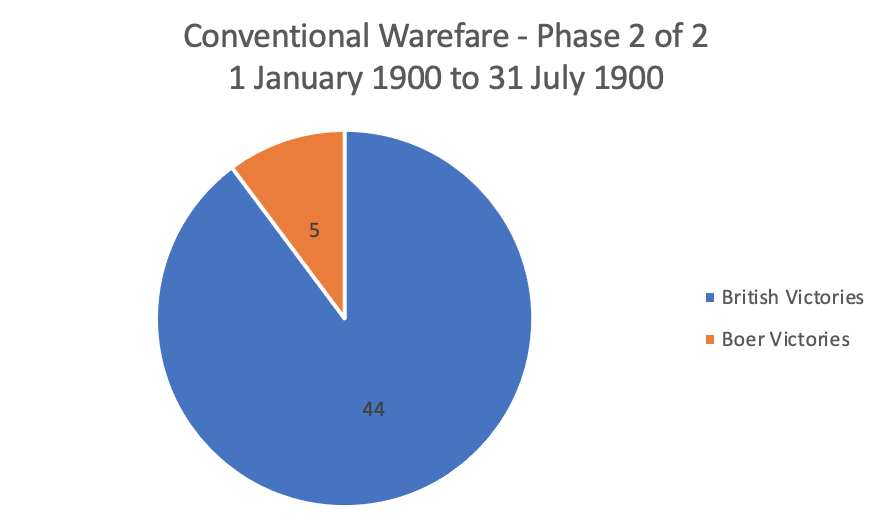
From 1st January to July 1900, the numeric components start to balance, however on a Operational and Tactical level conducting conventional combined arms – the advantage swings significantly to the British. All the major sieges are relieved, the Boers invasions are turned and they are ejected from the British colonies. The hunt into the Orange Free State decimates the fighting capability of the Boers and forces the surrender of their conventional fighting capability. During this phase 49 actions are fought – the Brits win 44 and the Boers win just 5.

Overall, for the ‘Conventional’ war phase, the balance is overwhelming in favour of the British – British win 58 and the Boers win 12. In terms of timing, the British victory in the Conventional Phase is swift – from October to July – a mere 10 months, they have reversed an invasion, captured two separate countries, taken both Boer Republic’s capital cities, taken the Boer’s economic hub, isolated both countries and starved them of external aid. Broken the critical mass of the enemy to fight conventionally, taken nearly every major gun and artillery piece, and occupied all the enemy’s fortifications and defences. By any military standards that is good Command – Strategic, Tactical and Operational.

The Guerrilla phase is completely different, there are no significant pitched battles, battles resemble skirmishes, sieges are small towns remotely accessed and the focus switches to destroying supply lines (Boer and Brit) and ‘Commando’ hunts. It’s a “slow burner” in other words not much happens for months on end for the hundreds of thousands of troops in the theatre of operations, truly a case of “war is 99% boredom and 1% terror”. From August 1900 to May 1902 – the duration of this phase – 22 months, 100 significant actions are fought that would classify a ‘clash of arms’. It works out to only about 4.5 direct classes between Boer forces and British forces per month. 

The scorecard is also in favour of the British – the Brits win 72 and the Boers win 28. To read this correctly we also need to understand that the Boer strategy in this phase is not to beat or capture British troops (they can’t keep them), generally the strategy is to harass the British, inflict some damage, retreat and fight another day. On a ratio of Brit to Boer “wins” the ratio is 2:1 – the Boers are remarkably successful at insurgency warfare, and they generally evade the ‘hunts’. The Boers do well at the tactical and operational levels and attain their objectives of wearing down British resolve and elevate their monetary and human costs of waging war – but it comes as a massive cost to the Boer lives and livelihood at the strategic level. 

For the British, they win at the strategic level, the objective of starving the Guerrillas of their supply – food, ammunition, transport, weaponry, shelter and human resources, not to get into the moral or ethics of this, this is strategy used to win just about every Guerrilla war ever fought, by Britain or anyone else – it was the focus of the Vietnam War, the South African “Border War” and even most recently the Afghanistan War. On a tactical level their ‘Counter Insurgency” measures – now known as COIN – are very successful, so much so the Boer War’s Guerrilla Warfare phase is the shortest fought Guerrilla War in modern military history.

That said, as Professor Abel Esterhuyse rightly pointed out to the Observation Post – by 1902, the Boers emerge as the masters of ‘Insurgency Warfare’ and the British emerge as the masters of ‘Counter Insurgency Warfare’ (COIN) – lessons that are still referenced at Westpoint Military Academy to this day. This mastery would also define the ‘South African’ way of fighting war, when Jan Smuts is tasked with amalgamating the Boer Commandos and the old British colonial regiments to form the South African Union Defence Force (UDF) in 1910.

Thus, the UDF was built along the lines of using effective combined arms with high degrees of mobility to deal with both conventional warfare (as is the requirement of any statutory force) in the event a Colonial Power in Africa (e.g. Portugal or Germany) invades the Union and any domestic insurgencies (initially ‘internal’ threats are defined as potential Black African uprisings) and the UDF COIN doctrine is been developed to counter-act it along with a ‘Seek and Destroy’ ethos.

Smuts is happy to cherry pick, basically he’s happy to bring all that’s great and good about the British culture of warfare – their discipline and drill (sorely lacking in the Boer army), their uniforms and rank structures (sorely lacking in the Boer army) and their very effective use of combined arms warfare and joint arms warfare (also sorely lacking in the Boer army) and combine it with the Boer culture of warfare – the use of mobility, and applying high rates of survivability thinking to tactics of assault and defence (both of which are sorely lacking in the British army). 

Smuts will build into the UDF the doctrine of highly mobile ‘combined arms’ – mainly the effective use of mounted infantry, armour and artillery (and other ‘arms’) all acting in unison and speed. Finally, he’s able to implement the doctrine of “manoeuvre” using the Clausewitzian concept. Under General Jan Smuts the UDF was shaped into a very effective fighting force, one that is far ahead of the old Boer Republics strategic and tactical constructs and doctrine. This will have far reaching consequences as this South African ‘philosophy’ of warfare would be effectively applied from the 1st World War (1914-1918), to the 2nd World War (1939-1945) to the ‘Border War (1966-1989) and its still used by the SANDF to this very day.

Casualties

The number of casualties in the Boer War needs a whole new Observation Post, as here we look at the very sensitive subject of civilian casualties – Boer, but also British and Black – the number is extreme – about 50,000 and still rising given new research – nearly all of it the result of disease – Measles and Typhoid mainly. The Measles epidemic, which swept the ‘Black’ and ‘White’ Concentration Camps and the besieged British citizens – killed nearly 40% of all the civilians succumbing to disease – measles as a ‘children’s disease’ especially taking its toll on Boer children. Not just civilians, the biggest killer of British soldiery was Typhoid and not the Boer’s bullets, nearly two thirds of all British casualties are the result of disease – young fit men who are dropping like flies from the same diseases sweeping the concentration camps and British towns under siege. Typhoid alone affects 57,684 British soldiers – killing 8,225 of them.

This is a highly sensitive and misunderstood aspect of the war – it requires a full analysis on the disease bell-curves and medical science to fully properly understand the causes and effects, and actions taken or neglected  – look out for a future Observation Post in draft called “The Boer War’s biggest killer” where we will deep dive this subject and these statistics – because if there is one “winner” of this war’s butchers bill it’s not the British or the Boers – it’s an indiscriminate cocktail of micro-organisms.

We also need to look at the Killed in Action (KIA) and Died of Wounds (DOW) and survivability ratios between Republican and Imperial forces, as the KIA/DOW figure for the Brits is around 8,000 and the KIA/DOW figure for the Boers is around 4,000 – this implies the Boers were better soldiers – for every 1 Boer killed in combat 2 Brits are killed in combat (2:1 ratio) – this leads to the myths of the Boers been “better marksman” than the British or the Boers had better command and operational prowess – the British according to these myths were then “Lions led by Donkeys”.

However truth be told is on the survivability given the respective troop size and different doctrine, if you were a British soldier in South Africa in a combat role, your chance of surviving combat without been KIA or DOW was 98% – there was a 2% chance a Boer bullet would kill you – which is pretty good survivability by British doctrine which was “Hidebound by Tradition” with costly frontal attacks and bayonet charges and antiquated cavalry and lancer charges.

If you were a Boer combatant, given your overall troop size and strength, you had a 93% chance of combat survival and a 7% chance of been KIA or DOW from a British bullet. Which is not very good given Boer doctrine actually focussed on high degrees of survivability, choosing to break engagements, reconcile and fight another day (mobility and manoeuvre) – rather than stand and be bayonetted, cleaved and then impaled from a costly British frontal assault of infantry, cavalry and lancers – none of which appealed to the Boer way of fighting and doctrine for mounted infantrymen.

Bottom line – on casualties – statistically speaking the British command in the Boer War actually was pretty good given the improvements over time in doctrine from Waterloo to the Crimean War (see chart above), the Boer command on controlling casualties and survivability on the other hand was much poorer. One thing the British are NOT are “bad shots” and their Commanders are certainly NOT “Donkeys”. Simply put, if you were British you had a better chance of surviving combat, the point where the metal is flying around, than if you were a Boer.

In Conclusion 

Numbers speak more to truths than anything else, and the truth is the numbers support the idea that the Boers invaded the British colonies whilst they were numerically inferior and the Boers numerically superior, for the purposes of changing the regional balance between Boer and Brit and establishing a unitary state under “Afrikaner” influence – and not only does the republican planning and objectives point to this, their military strategy, doctrine and statements of intent supports it – and it is statistically proven. 

The idea that the British were building up an invasion force on the borders is complete Hollywood and panders to the ‘politically inspired’ sabre waving in the “ultimatum” delivered by the Boers and not to the reality on the ground at all. The idea that the Boers invaded British colonies for the purposes of forward defences or as some sort of pre-emptive strike is also completely unsupported by what actually happens, the actual plans and this assertion is woefully unsupported by military doctrine – entirely debunked by the science of military history.

Also, the idea that the Boer command and doctrine is somehow better than that of the British is completely statistically unproven, in fact the opposite is true, the ‘numbers’ point in favour of the British – so too does an analysis of the three aspects of effective command – on the Strategic level, the Tactical level and the Operational level.


Written, researched by Peter Dickens

With thanks to Tinus Le Roux and Jenny Bosch for the use of colourised images.

Related Work

Boer War 3 – The Maritz Revolt Boer War 3 and beyond!

The Black Concentration Camps of the Boer War The ‘BLACK’ Concentration Camps of the Boer War

The intended Boer invasion of Rhodesia The planned Boer invasion of Rhodesia

The Jameson Raid ‘Hurry Up’ and prove it!

References:

“Rights and wrongs of the Transvaal war” by Edward t. Cook. Publication date 1901

Leopold Charles Maurice Stennett Amery “The Second Boer War – The Times History of the War in South Africa 1899-1902” – Volumes 1 to 7.

Military History Journal, Vol 6 No 3 – June 1984. The Medical Aspect of the Anglo-Boer War, 1899-1902 Part II by Professor J.C. de Villiers, MD FRCS.

The Anglo-Boer war: A chronology. By Cloete, Pieter G

The Battle of Magersfontein – Victory and Defeat on the South African Veld, 10-12 December 1899. Published 2023. By Dr. Garth Bennyworth.

Dr David Brock Katz; ‘General Jan Smuts and his First World War in Africa 1914 -1917’

Dr Evert Kleynhans and Dr David Brock Katz; ’20 Battles – searching for a South African Way of War 1913 – 2013’.

Anglo-Boer War Blockhouses – a Field Guide by Simon C. Green, fact checking and correspondence – 2023.

The Boer War: By Thomas Pakenham – re-published version, 1st October 1991.

Correspondence and interviews with Dr. Garth Bennyworth, Boer War historian – Sol Plaatjies University, Kimberley – 2023.

Interviews with Dr. David Broc Katz, University of Stellenbosch, South African Military Academy – Military historian – focus on Jan Smuts and fact checking Boer and British military doctrine – 2023.

Correspondence on fact checking British doctrine with Chris Ash, BSc FRGS FRHistS, Boer War historian, Fellow of the Royal Historical Society and Fellow of the Royal Geographical Society for The Boer War Atlas – 2023.

History of the war in South Africa 1899-1902. By Maj. General Sir Frederick Maurice and staff. Volumes 1 to 4, published 1906 

‘Hurry Up’ and prove it!

I’ve been reading up on the Jameson Raid, and whether Joseph Chamberlain, the State Secretary to the Colonies was complicit in planning the Jameson Raid along with Cecil Rhodes – and I can’t really find solid proof of this accusation – the accusation was initially levelled at Chamberlain by Paul Kruger in his attempt to link the raid as proof positive of Britain’s (i.e. Westminster and the Queen) intentions to invade the ZAR and therefore in contravention of the 1884 London Convention, taking the opportunity to insist the Convention (read suzerainty ‘lite’) is torn up, and the ZAR afforded its full rights to sovereignty (as its own ‘alma mater’ was now its threat). 

So, it’s critical to Kruger that complicity is proven, a lot of committees and investigations follow that basically prove Rhodes’ complicity (resulting in his resignation) but they exonerate Chamberlain – nothing sticks to him. 

Later writings during the Boer War in 1901 by Sir Graham Bower, the Imperial Secretary to the High Commissioner and subsequent Governor General – Sir Hercules Robinson – Bower reflects that Rhodes had informed Sir Hercules Robinson in October 1895 of the potential of a revolt on the reef (of which there was – the Reform Committee was getting highly agitated), which Rhodes was prepared to support whether the Colonial office was prepared to or not – and the question is asked whether Britain should intervene, Rhodes also insisting the BSAP police be moved from Betuananland (Botswana) to Mafeking in case there is a revolt. Sir Hercules Robinson would hear about none of it and confines the matter to conspiracy theory sending Rhodes on his way. Linked to this is an unsupported allegation that Chamberlain knew of Rhodes’ position in addition and an accusation of complicity is given – but it’s all highly speculative with no substance. 

Left to right – Chamberlain, Rhodes and Jameson – colourised by Jennifer Bosch

Clearly the matter of a potential revolt happening on the reef was been discussed, which is not unusual given the volatility on the reef, and a hypothetical ‘raid’ discussed should there be a revolt – which seems by all accounts to have been dismissed by both Robinson and Chamberlain. 

Chamberlain had even informed the Prime Minister Lord Salisbury that a rebellion on the reef was expected given the signals coming from the Reform Committee, though he said he remained uncertain of its date. In fact, on the 26th December 1885, Chamberlain had requested his Assistant Under-Secretary to encourage Rhodes to “hurry up” and sort the matter out, as Chamberlain himself was embroiled in trying to sort out the Venezuelan crisis of 1895 and had his hands full.

Later, during investigations, Rhodes’ solicitor tried to pin pre-meditated knowledge of the raid itself (not the potential rebellion) on Chamberlain based only on the use of his words “hurry up” – the context of which is not given and at best its a stab in the dark.

As Edmund Garrett concludes in the “Story of an African Crisis” written at the time in 1897 to get to the bottom of the matter – Chamberlain may have known of a potential raid i.e. “a raid” but he did not know of the actual raid itself i.e. “the raid”. 

Outside of this wishy washy finger pointing and hearsay I can find absolutely no proof whatsoever that ‘Westminster’ I.e. Britain and its ‘establishment’ in London itself, and not the Colonial office in South Africa, was aware of any raid – potential, planned or otherwise.

Chamberlain’s reaction when he hears of the raid on the 31 December 1885, says everything as to his non-complicity in the Jameson Raid and abject rejection of any idea of it – he says of the Jameson Raid now in progress; 

“If this succeeds, it will ruin me. I’m going up to London to crush it”. 

He then orders Sir Hercules Robinson to repudiate the raid. By this comment, Chamberlain means that the Raid is in contravention of the London Convention and it flies in the face of British foreign policy and guarantees he and others have been making to the ZAR as to ‘independence’ to deal with its own internal matters.

After the unsuccessful raid Joseph Chamberlain himself, professing his innocence in the matter, insists on a Westminster select committee to investigate the matter fully and has full powers to request any information, insisting that nothing is to be withheld. This committee later exonerates Chamberlain, however critics of it say that it closed its investigations prematurely.

Other than Kruger trying to score a political coup to get the ZAR out of Britain’s suzerainty legislation governing it, if there is any other ‘proof’ out there which links Chamberlain to the Jameson Raid beyond reasonable doubt, i.e. documented proof specifying knowledge of plans and dates, proof that can overcome scrutiny and hold up – not “Ouma se stories” – let’s please have it.


Written and Researched by Peter Dickens

Reference:

Edmund Garrett “Story of an African Crisis” published 1897

Sir Graham Bower’s Secret History of the Jameson Raid and the South African Crisis, 1895-1902 – Historical Publications South Africa

Oom Kruger, the man, the movie, the myth!

From Boer ‘Refugee Camps’ to Nazi ‘Konzentrationslager’  

In some recent social media postings, the old fracas between the Tory MP Jacob Rees-Mogg’s inflammatory statements about Boer War concentration camps and Pretoria University’s erstwhile Professor Fransjohan Pretorius’ emotionally charged response to it seems to have resurfaced (not that Rees-Mogg cares a jot, or has even responded to Professor Pretorius), a key source of the fracas in both respects – the use of language surrounding concentration camps.

The issue lies around how ‘concentration camps’ are perceived in our common modern consciousness and what the phrase means to us – not only in South Africa but world over. This was adequately demonstrated in the TV interview with Jacob Rees-Mogg, who, whilst defending Winston Churchill’s legacy, was challenged on the issue of British concentration camps in South Africa during the South African War (1899-1902) a.k.a. Boer War 2.

His response, falling back on a typical Etonian education, compared the death rate in Boer War concentration camps to the death rate in Glasgow at the beginning of the 20th Century – i.e., disease, not war, being the major issue. In Reese-Mogg’s political context he is using a ‘deflection’ as one can scalp mortality statistics and disease statistics by demographic segment and by country from 1899 to 1902 in many ways.

Rees-Mogg’s comparison of Glasgow and South African camps is, however, statistically unsound – mortality rates in South Africa during disease epidemics at the time, notably the Influenza Pandemic of 1918 would have been more compelling and comparative argument.

Rees-Mogg’s grip on disease statistics aside, he then went to state that the camps were set up for protecting Boer citizens. This is a partial truth, believe it or not, the camps were initially set up for protecting refugees – but it comes with a double-edged sword when forcibly displaced citizens were added to the genuine refugee population of the camps, hence the controversy, confusion and general indignation across the Afrikaner community.

Then, Rees-Mogg goes on to state that one should not to confuse the Boer concentration camps with Hitler’s extermination camps. This is an absolute truth, Rees-Mogg is correct, the two concepts are completely different. However, the morality issue regarding the outcome of both systems (i.e. the death of civilians in wartime) will forever be argued – especially when one starts to add modern day 21st Century WOKE sensibilities to 20th Century contexts – the idea that war kills, whether by virus or bullet, makes no difference to the dead. 

To see the full interview between Jacob Rees-Mogg (right) and Grace Blakeley (left) follow this BBC link: https://www.bbc.com/news/av/uk-politics-47247835

Wading into this fracas to “set Rees-Mogg strait” comes Professor Fransjohan Pretorius from the University of Pretoria, using equally emotionally charged language.

To see Professor Fransjohan Pretorius’ full response follow this link: https://theconversation.com/concentration-camps-in-the-south-african-war-here-are-the-real-facts-112006

What is however very interesting to this discussion, and more to the subject to this article, is just how loaded the words ‘concentration camp’ are, and it’s seen in Rees-Mogg’s co-discussant on the panel, Grace Blakeley, an academic, journalist and far left leaning political commentator who best describes herself as a ‘socialist’ – and on the Boer War concentration camps she literally loses the plot – dramatically declaring with great dollops of repugnance that “the British invented the Concentration Camp” – a complete untruth, the Spanish invented concentration camps.

Grace Blakeley then loudly proclaims with all the authority in the world  “it was systematic murder!” Now, in the 125 odd years since the war not one single case of ‘systematic murder’ in a Boer concentration camp has been proven – not then and not now – and that’s not an opinion it’s a fact, whether some like it or not. Even the old Afrikaner National Party had 40 years in the pound seats with all the resources at hand to try and ‘prove’ a legitimate case of systematic murder which could hold up to legal scrutiny and could not do it. The simple truth is that all deaths recorded in both the ‘Boer’ and the ‘Black’ Concentration camps of the Boer War are disease or health related (more on this later).  

She then excitedly declares “hundreds of thousands of people died” in the white Boer concentration camps – implying mass genocide and ethnic cleansing – whilst in truth 28,000 people died in the ‘white’ camps and about 20,000 in the ‘black’ camps (some say more) – all whilst very tragic, it is hardly ‘hundreds of thousands’ that really is hyperbole.

In Jacob Rees-Mogg’s rather measured counter response to Grace Blakeley’s wild claims he reiterates that it is “completely wrong” for her to compare the Boer War 2 concentration camps to that of Adolf Hitler’s extermination camps of World War 2.

So, how is it that Grace Blakeley (a Labour Party strategic think-tank economist with a Masters Degree in African Studies) gets her facts so woefully wrong?  

Another glaring problem with her outbursts, and its highly indicative of the issue at hand, Professor Fransjohan Pretorius in his effort to “set Jacob Rees-Mogg strait” on his facts, only takes aim at Rees-Mogg, the net result is a raft of indignation levelled directly at Rees-Mogg by many in South Africa simply because the good Professor said so. What he does not do, is take aim at Grace Blakeley, an expert in her field, for her equally stupid, emotionally charged and factually incorrect statements. This is a BBC ‘Balance’ panel of Tory and Labour after all. Here the good Professor is ‘Tjoepstil’ – nada, nothing, silent … crickets! But why? 

The uneasy answer is that he agrees with Blakeley, and by NOT “setting Grace Blakeley strait” in addition to Rees-Mogg, he tacitly approves of her statements. He is ‘weaponising’ the issue, the surge in indignation from South Africa (and even the UK) does not target the ‘Labourite’ in the debate, but rather the ‘Tory’ – nobody cares about what Grace Blakeley said, they all tacitly agree with her in addition. 

It exposes a tremendous old Afrikaner Nationalist bias, something Professor Fransjohan Pretorius is often criticised for in his history writing, and one that is currently undermining his credibility. As they say in Afrikaans “Jou onderrok steek erg uit” (your underwear slip is exposed i.e. your hidden bias is plain to see) – and by nailing his bias to the mast in the way he does – calling the British “scandalous” in addition, and politicising the issue by focusing only on the Tory MP, he creates a fracas and feeds a hungry audience seeking to chastise the British for just about every misery on the planet.

So, what’s with all this tacit approval of this Labourite’s assertions that this was a “British invention”, “systematic murder” and a genocide of “hundreds of thousands” … what’s the connection between the South African War (1899-1902) a.k.a. Boer War 2 and World War 2 (1939-1945) in weaponising words like “concentration camps” for political currency?

The answer funnily enough lies in the little Austrian born Bavarian Lance Corporal with megalomaniac tendencies, to which Jacob Rees-Mogg refers and to whom Grace Blakeley infers (more on Hitler later).

The Boer War ‘Concentration Camps’

Let’s take a quick step back, what’s with attributing the term ‘Concentration Camp’ to the Boer War of 1899 and why the confusion?

Many people have little understanding of the concentration camps of the Boer War. In essence there are two separate phases.

Data Reference: The Boer concentration camps of the South African War, 1900-1902 by Elizabeth van Heyningen.

Phase 1: Started the 22nd September 1900 – they are set up under British military administration by Major-Gen J.G. Maxwell and they are initially intended and termed as “refugee camps” for ‘hensopper’ families (Boers who surrendered early – these include men in addition) and ‘joiner’ families (Boer families whose menfolk joined the British forces and were away fighting) – they are all voluntarily seeking shelter and safety from the Guerrilla phase (Bittereinder campaign) of the war which commences from mid 1900 once Pretoria falls to the British. Here these families are, as Rees-Mogg correctly points out, “sheltered and fed” as there is a “war going on”.

The camps are also referred to as “Government Laagers” – however on the 21st December 1900 Lord Kitchener comes up with a different intention for these “Government Laagers” completely, and he decrees:

“the most effective method of limiting the endurance of the guerrillas … The women and children brought in should be divided in two categories, viz.: 1st. Refugees, and the families of Neutrals, non-combatants, and surrendered Burghers. 2nd. Those whose husbands, fathers and sons are on Commando. The preference in accommodation, etc. should of course be given to the first class. With regard to Natives, it is not intended to clear (Native) locations, but only such and their stock as are on Boer farms.”

The camp concept is then opened up from January 1901 to include “bittereinder” families, which are primarily women and children as their menfolk are still “on Commando” (and any other families for that matter), they are involuntarily displaced by Kitchener’s Scorched Earth policies and this curious concept of a refugee camp/displacement camp is expanded somewhat. Similarly, internees in the black camps (which include men and women) are civilians who are also involuntarily displaced. It’s this bit that Rees-Mogg conveniently ignores.

From March 1901 disease related mortality rates in the camps start to climb to unprecedented and alarming levels, and at their peak the mortality rate is driven primarily by a measles epidemic which sweeps the white camps and accounts 30% the overall deaths – as a child’s disease, along with the high infancy mortality rate and child death ratio in the Victorian period, coupled with the difficulty of wartime conditions and camp sanitary standards, by the beginning of 1902 children account for nearly 2/3 of all deaths.

The period March 1901 to November 1901 is 9 months of abject misery and suffering. However, contrary to modern propaganda, although there are many in the camps who are malnourished and conditions are extremely harsh, they are not purposefully starved to death – ‘Starvation and Scurvy’ accounts for only 3% of recorded deaths in the white camps (the records for the black camps are incomplete). There are also no recoded cases of premeditated murder or executions, all deaths are attributed to disease or medically related conditions.

The conditions and plight of the women and children in the camps, against the context of respiratory and waterborne disease, coupled with inadequate medical countermeasures and failures in administration is highlighted by the likes of Emily Hobhouse and later in 1901 by the Fawcett Commission.

Phase 2: From November 1901 as a result of the Commission’s and parliamentary recommendations, Lord Alfred Milner, the Cape Colony High Commissioner is tasked with taking over the ‘white’ camps from the military and bringing them under civilian authority instead (the Black camps remain under military authority).

Image: Boer concentration camp – children carrying water buckets, colourised by Tinus Le Roux – note the nature of the camp – bell tents, demarkation lines and administration blocks.

As a result of Milner’s direct intervention, from November 1901 the mortality rates start to drop off dramatically as his civilian administrators and medical staff start to get on top of the epidemics, food supply and sanitary issues. They also do away with the preferential treatment of ‘hensopper’ versus ‘bittereinder’ families initiated by the military in the white camps.

Milner’s actions and policies are extremely effective, in just 4 months the mortality rates in the white camps drop to acceptable mortality rates for the Victorian era, made even more remarkable considering that these mortality rates are declining and have plateaued-out in the white camps when the Guerrilla Phase and Scorched Earth policy is at its height and at its most destructive (the black camps are a separate matter).

These ‘acceptable’ i.e. normal mortality rates in the white camps continue up to the end of the war on 31 May 1902 and then remain acceptable long after the end of the war as the camps are then used as ‘resettlement’ centres for displaced Boer families until the end of 1902.

As to Milner, it’s also an inconvenient truth, that a man so often vilified by modern white Afrikaners as the devil reincarnate, is the same man responsible for saving thousands of Boer women and children’s lives.

Look out for a future Observation Post on the Boer War camps whilst we tackle this extremely difficult, deeply tragic and often misunderstood concept of Boer War refugee/displacement/re-settlement camps for whites and refugee/displacement/labour camps for blacks (a.k.a concentration camps). This subject is highly nuanced and highly complex and it is certainly not the highly simplistic and emotionally charged outline put forward by Professor Pretorius in his response to Rees-Mogg.

What’s in a word?

The words “concentration camp” comes from two sources really, the Spanish invent the concept and are accredited with the first use of concentration camps starting in 1896 (not the British – the Spanish ‘invent’ the camps three years before Boer War 2), the Spanish call them “campo de concentración” (concentration camps) during The Cuban War of Independence (1895–98) and they ‘concentrated’ Cuban civilians in camps to break their supply lines to marauding Cuban guerrillas.

The second source of the word “concentration camp” ironically comes from the source of the argument between Rees-Mogg and Grace Blakeley, it’s the Germans. It is the ‘German’ version and evolution of concentration camps which would really weaponise the words and bring in concepts of pre-meditated genocide and systematic murder, and oddly enough it does NOT start with Adolf Hitler and his Nazi cabal, it happens well before Hitler’s time and it does NOT start in Europe, as irony goes – it starts in Africa.

Etymology of concentration camps

As to the actual etymology of concentration camps – as said earlier they start with the Spanish during Cuban War of Independence in 1896, the next country to use concentration camps are the Northern Americans (the USA) in the Philippines during the Tagalog Insurgency earlier in 1899 (as with the Spanish – the USA concentrated Filipino civilians in camps to break their supply lines to marauding guerrillas – with the same tragic outcome as the Spanish when disease takes root in the camps).

The third country to use Concentration Camps are the British in late 1900 to forcibly displace Boer ‘Bittereinder’ civilians and cut Boer guerrilla supply lines in addition to providing genuine refugee shelter to ‘Joiners’ and ‘Hensoppers’, with the same disastrous consequences as the Spanish and the Americans as disease takes root in the camps. 

To read a little in-depth more on this, follow this link to an Observation Post article: Debunking the myth that the British invented the ‘concentration camp’

As irony goes (and inconvenient truth) it is also the Germans who suggest the use of a concentration camp system during the Boer War, in addition to a Scorched Earth policy, to the British. Kaiser Wilhelm II, as a favour to his blood relative Queen Victoria – after the ‘Black Week’ British defeats to the Boers in late 1899, sets up a strategic planning session with his military elite and compiles a military strategy, not to help the Boers, but to help the British win the war and shared it with them instead. Kaiser Wilhelm II even proudly proclaiming at the end of the Boer War that the British had followed his plan precisely as he had outlined it to them – not Field Marshal Frederick Robert’s plan (see: John C.G. Röhl: The Kaiser and England during the Boer War).

Now, also as inconvenient history and etymology of concentration camps goes, the fourth country to use Concentration Camps is Germany, it’s Kaiser Wilhelm’s military elite who first uses the system for Germany – and it is NOT Adolf Hitler and his Nazi circle.

The 1st Genocide of the 20th Century

The first German concentration camps are initiated just 2 years after the Boer War, they fall part of the Herero Wars (1904-1908) in German South West Africa (now Namibia) and it is infamously officially regarded as the first Genocide of the 20th Century (not the Boer War). 

It starts in a similar vein to the Boer War’s Guerrilla Phase, the Herero lead a guerrilla campaign against the Germans to overthrow their colonial yoke. It cumulates in a battle on the 11th August 1904, known as the Battle of Waterberg and the Herero army is defeated, scattered and weakened. In October 1904, General Lothar von Trotha issued orders to kill every male Herero and drive women and children into the desert, denying them access to key water holes. In the desert ‘hundreds of thousands’ of them promptly die of thirst.

The extermination order was finally suspended by the German government at the end of 1904, the surviving tribesmen are then herded as prisoners into Concentration Camps – in German, now termed “Konzentrationslager” (Concentration Laager or ‘camp’), there are 5 concentration camps and over the course of their existence the Hereto tribe is joined with members of the Nama tribe also rebelling against the Germans. In the concentration camps the Hereto and Nama are put to slave labour in support of the German military and German settlers. Again, the camps are horrific, and the inmates starved of rations and water, disease also takes hold.

These camps are fundamentally different to the British Boer War concept, these are slave labour camps, inmates are imprisoned, there are cases of them been shot, starved and worked to death – some are even hanged. There is no real consideration to medical care and as to medical intervention, the Germans also enter the history books as the first to use concentration camp inmates for medical experimentation.

In all, between the war, the order of extermination and resultant starvation and the concentration camps engaging slave labour approximately 80,000 Hereto and Nama die.

Image: Chained prisoners from the Herero and Nama tribes during the 1904-1908 war against Germany.

Modern Historians have drawn a linear connection between Germany’s ‘Konzentrationslager’ of the Namibian conflict in line with the German ‘Konzentrationslager’ of World War 2, the central thread is “pre-meditated Genocide” (systematic murder in effect). The idea of Concentration Camps to exterminate races of people and ‘purify’ the population starts with General Lothar von Trotha in his written statement on the matter;

 “I destroy the African tribes with streams of blood … Only following this cleansing can something new emerge, which will remain.”

The simple truth is, when the Nazi party came to power in Germany, this German policy of using concentration camps for ethnic cleansing and not merely for defeating ‘Guerrilla’ warfare by cutting civilian supply lines as the Spanish, Americans and British had used them – and this Genocidal intent for “Konzentrationslager” becomes highly apparent and acceptable in Germany itself.

Enter Herr Hitler

Now we get to the subject of the Austrian born Bavarian Lance Corporal with megalomaniac tendencies, to which Jacob Reece-Mogg refers and to whom Grace Blakeley infers. What is his connection to The Boer War?

If you’re a big fan of Paul Kruger and Boer Republicanism, and believe that our modern interpretations of the Boer War have nothing to Nazism – now is the chance to look away, because this next bit is going to sting somewhat – our modern interpretation of the Boer War has a lot to with Adolf Hitler and Nazism – in fact Hitler and his Nazi inner circle’s interpretation of the Boer war still guides European opinion of it in Europe and it fundamentally reinforced the Afrikaner Nationalist interpretation of it in South Africa – a legacy that continues even to this day.

Huh! How’s that all connected … Kruger, Hitler and Nationalist Afrikaner ideology and identity? Well, it starts with Herr Hitler’s enthusiasm for everything Boer War related and his dramatic and spell-binding speeches.

Hitler would record in his book ‘Mein Kampf’ that in his youth;

“The Boer War came, like a glow of lightning on the far horizon. Day after day I used to gaze intently at the newspapers, and I almost ‘devoured’ the telegrams and communiqués, overjoyed to think that I could witness that heroic struggle, even from so great a distance…” 

Then on the 30th January 1940, with Nazi Germany at the height of its influence and popularity, Adolf Hitler gave a speech at the Sportspalast and stated the following on The Boer War;

“They (Britain) waged war for gold mines and mastery over diamond mines”  

Hitler then went on in the same speech to say of the Boer War:

“After all, this entire blockade warfare is nothing other than a war against women and children just as once was the case in the Boer War … It was then that the concentration camps were invented. England locked up women and children in these camps. Over 20,000 Boer women (and children) died wretchedly at the time.”

Just about every sentence Hitler is uttering here is either pure falsehood or a half truth – blaming the British for “inventing” the “Konzentrationslager”, painting the camps as “locked” prisons, and implying the British wage genocide and not war. 

Image: Adolf Hitler speaking at the Sportspalast

Ah, but it’s just a speech Mr Dickens – you make too much of it! Hitler said many things comes the universal call … nobody took him seriously! Wrong … this gets much bigger than just a speech – this ‘Pro-Boer’ Nationalism morphs into an entire Nazi propaganda campaign – one which is regarded as the most influential and successful Nazi propaganda campaigns ever devised – so bear with me.

What Hitler is doing in his speech is using his intense ‘fame’, peaking in 1940, across Germany, Western Europe and the globe in some respects – remember that Hitler is a world player and influencer from 1935 to 1940, he is literally a “God” in Germany and Austria – what comes out his mouth people listen to and literally millions of people gobble it up as a truth. With this statement he achieves three things:

Firstly, he demonises the British (the only real “enemy” he has left in 1940) as an enemy of the German people, but also – most importantly – an enemy to Europeans at large – and he uses the Boer War for this purpose as it is in living memory for many Europeans, this deflects the focus on Germany as the enemy to Britain as the enemy of Europe. Europe is now also within the 3rd Reich’s scope of influence – which at the time needs to be viewed as sort of early version of the European Economic Union, and in 1940 it was literally at its height. 

Nazism and the concept of the 3rd Reich was a lot more popular in Europe in the lead up to World War 2 than most people would believe now. In fact its position as “anti-bolshevist” (anti-Communist) and as “anti-Judeo Capital” found vast popular appeal in right wing and conservative parties across Europe – especially in France, the Netherlands and Belgium, these people would see Nazi Germany as liberators – not invaders – and after Germany invades Western Europe in 1940 they all immediately come into government of their respective countries as collaborating parties to the Nazi cause (the conservative and popular southern based “Vichy French” government is a case in point), and they immediately engaged with the 3rd Reich and it’s regional economic and political policies. Hitler is relying on these supporters to support his view that Britain and not Germany is the true enemy, and the Boer War according to Hitler is his ‘proof positive’ of this.

Secondly, Hitler is reinforcing Anglophobia and Republicanism in South Africa through propaganda and he is giving re-assurance to the Afrikaner nationalist cause from Berlin. To understand this better, Afrikaner Nationalism starts in earnest with the establishment of the National Party in 1914 – at this stage it has as its central ideology ‘Krugerism’ – Kruger’s political philosophy and the old ZAR’s (Transvaal) Republicanism constitution and race laws (Grondwet) at its centre. An Oligarchy bordering on a Theocracy with no political emancipation for Black Africans whatsoever (the majority), and racially based franchise and citizenship restrictions for white ‘foreigners’ (read British) and Jews.

By 1940 this party has evolved its ‘Krugerism’ ideology to a ‘Christian Nationalism’ ideology – a political philosophy which B.J. Vorster (a future South African head of state) famously equated with National Socialism (Nazism) in 1942 when he said:

“We stand for Christian Nationalism which is an ally of National Socialism. You can call this anti-democratic principle dictatorship if you wish. In Italy it is called Fascism, in Germany National Socialism and in South Africa, Christian Nationalism”.

Also bear in mind in 1940, when Hitler gave this speech and referenced the Boer War, the National Party was bound to the hip with openly pro-National Socialism, Pro-Hitler, Pro-Nazi Germany movements in South Africa – domestic political organs like the South African Nazi ‘shirt’ movements – Louis Weichardt’s South African Christian Nationalist Socialist Party or “Greyshirts” and Manie Wessels’ and Chris Havemann’s ‘Democratic Movement’ or “Blackshirts”. Other Nazi ‘shirt’ organisations included the Volksbeweging (People’s Movement) or ‘African Gentile Organisation’ which was established by H.S. Terblanche. Johannes Bruwer also founded the ‘Bond van Nasionale Werkers’ (National Workers Union) which became known as the “Brownshirts”.

Added to this was the Ossewabrandwag led by a Nazi devotee – Dr J.F.J. van Rensburg who transformed the Ossewabrandwag from a predominately Afrikaner cultural movement surrounding the 1938 Great Trek Centenary into a militarised, totalitarian, anti-Semitic, anti-British, anti-Anglo/Judaism capital and pro-Nazi movement operating under the guise of an Afrikaner cultural movement. In addition, the National Party’s Defence Minister, Prime Minister Barry Hertzog’s right-hand man, Oswald Pirow was another Nazi devotee, and it inspired his organisation – the Nazi ‘New Order’ or Nu Order. Added to this is the popular leader of the 1914 Boer Rebellion – Manie Maritz, who has become an Hitler worshiper and rabid antisemite, now leading the ‘anti-democratic’, ‘one party’, ‘national socialist’ – ‘Boerenasie’ (Boer Nation) party.

Images: SANP and Ossewabrandwag

As outlined by Werner Bouwer in his ‘National Socialism and Nazism in South Africa’ – to all these South African Hitler admirers and their followers, Hitler’s assurance that the British committed a Boer ‘Genocide’ is music to their ears. They all attested to the concept that the British had tried to ethnically cleanse South Africa of the Boer nation during the war – and here one of the world’s greatest leaders, a 20th Century iconoclast who agreed with them, and whose not to believe Adolf Hitler? He is a European powerhouse, he’s at the helm of a super-power like Britain and now he’s standing up to Britain and telling it as it is – if it comes from Hitler it’s a truism, the British committed Boer Genocide and stole the Boer’s gold … and it does not end there, Hitler goes further … much further.

Enter Herr Göring

During a press interview Hermann Göring (the spokesperson on behalf of Adolf Hitler), took a leaf out his Führer’s leader’s book on the Boer War when he deflected a challenge from Sir Nevile Henderson, the British ambassador to Berlin who protested about the German government’s use of concentration camps for the political ‘re-education’ of German’s dissonant non-believers in Nazism and opposition in 1935, and using a ‘press stunt’ Göring dramatically sprung up, walked over to a bookcase and like a thespian actor, grabbed a German encyclopedia opening it at “Konzentratinslager” he read out loud,

“First used by the British, in the South African War”.

Although factually incorrect, his action served as a skilful stroke of deflection of which Hermann Göring was a past master.

Image: Adolf Hitler (left) and Hermann Göring (right).

It was not just Hermann Göring in Hitler’s inner circle toeing his Führer’s line on the Boer War, using all the propaganda tools at their disposal, this myth was about to hit the big time as also in the ‘inner circle’ is the Nazi Propaganda Minister and he’s going to really propagate Boer War myths – not only in Germany, but also across the entire Western European continent.

Enter Herr Goebbels

Dr. Joseph Goebbels was a propaganda mastermind, he was a rabid, almost insane follower of his Führer, Adolf Hitler and a devout Nazi. 

In printed media, the German propaganda machine would go even further on the back of Hitler’s speeches and use an image of Paul Kruger and the Boer War on propaganda posters to recruit Waffen SS troops in the Netherlands and Belgium, with whom these countries had an affinity for the Boer War. Both these countries proved highly fruitful in recruiting Waffen SS troops as they feared Bolshevism more than Nazism and for these conservative sections of the populations Nazism had an appeal (not to be confused with the SS, the Waffen SS also comprised ‘non-German’ and ‘foreign’ battalions – and later in the war they proved to be ferocious and devout combatants).

To see a full article on this Waffen SS campaign using Boer War triggers, follow this Observation Post link: ‘Waffen SS’ uses the Boer War to recruit the Dutch

Next up in Goebbels’ propaganda arsenal was radio. Joseph Goebbels made this radio address on 19 April 1940, on the eve of Adolph Hitler’s birthday and said:

On 3 September last year (1939), two hours after English plutocracy declared war on the German Reich, the British Prime Minister Chamberlain gave a radio speech …The point of the speech was that England had no intention of waging war against the German people … get rid of the Führer or so-called Hitlerism …. At the beginning of the war, however, they sang the same old song …. Its melody was dull and worn out. British plutocracy had tried to persuade the Boers during the South African war of the same thing. Britain was only fighting Krugerism. As is well known, that did not stop them from allowing countless thousands of women and children to starve in English concentration camps”.

Image: Joseph Goebbels making a radio address on the eve of Adolph Hitler’s birthday.

The idea that Britain and not Germany is the natural enemy of civilised Europe because of they way they conducted the Boer War and committing pre-meditated genocide in concentration camps is starting to take shape. Goebbels said of radio;

“We want a radio … that is an intermediary between the government and the nation, a radio that also reaches across our borders to give the world a picture of our character, our life, and our work.”

In this respect Radio Zeesen was also part of the arsenal, it was a Nazi German ‘International’ propaganda service radio station broadcasting in short wave in eighteen different foreign languages including Afrikaans, it broadcasted both Hitler’s speeches and Goebbels’ messages – and eagerly picked by devout Afrikaner Nationalists in South Africa.

Also, Goebbels loved, literally adored movies and the moving picture industry – he regarded this industry as his single most powerful propaganda tool, and he made a number of movies that came to define the Nazi legacy:

The Jud Süß  – ‘Süss the Jew’ – was released in 1940, and it became an absolute blockbuster – today it is considered one of the most antisemitic films of all time. However, even this movie did not make it to the much-converted Reich Propaganda Ministry’s “Film of the Nation” rating. Only four movies made it to this rare honorary distinction deemed critical viewing for national identity in Nazi Germany – Heimkhehr (1941) – an anti-Polish movie, Der große König (1942) – a movie about Frederick the Great of Prussia, Die Entlassung (1942) – a movie about the dismissal of Otto von Bismarck and finally …… Ohm Krüger (1941), a movie about Paul Kruger and the Boer War.

Say what? Ohm Krüger – Uncle Paul Kruger! What on earth does that have to do with German National identity, all the other movies are about Germany and the Nazi journey in forging their National Socialist identity – that all makes sense, what on earth is a movie about South Africa and the Boer War doing in the mix – what does that possibly have to do with Nazi identity?

Well, as an inconvenient truth goes, it turns out quite a lot – so let’s examine what its purpose was, how its linked to Nazim, its relationship to Concentration Camp propaganda and how it fared – its impact.

Ohm Krüger, the man, the movie and the myth 

Directed by Hans Steinhoff and starring Emil Jannings, Lucie Höflich and Werner Hinz. Although the plot has nothing to do with Germany, the story centres around a character which the Germans could admire, “Uncle” Paul Kruger – a man the Propaganda Minister wants to draw parallels to Adolf Hitler, who he deems is also a man with a common touch, from a simple background and one who is thrust into extraordinary circumstances due to international aggression and a conspiracy of greedy ‘foreigners’.

The plot revolves around a dying Kruger’s flashback, now old and blind confined to a sanatorium in Switzerland.

Harping back to an earlier time, Kruger is portrayed as having all the mystique of a great national leader at odds with Great Britain and proclaims, “With England, one cannot come to an understanding”, “We have only one aim, peace and liberty”, “One must be a dreamer to become a ruler.” Much as Adolf Hitler himself is proclaiming. 

Lord Kitchener, the British Commander in South Africa is portrayed as a sadist stating things like “No more humanity”, “We must be without mercy”, “We must set up concentration camps” and fight the war “by colonial means.” 

The film also centres on Cecil John Rhodes as the principle villain, desirous of Transvaal Gold he creates border disputes (the Jameson Raid) in cohorts with Joseph Chamberlain (the Colonial Secretary), who in turn solicits the support of Queen Victoria and Price Edward, who also become desirous of invasion once they learn of the gold in the region, Queen Victoria’s character states “If there’s gold to be found, then of course it’s our country. We British are the only ones capable of carrying the burdens of wealth without becoming ungodly”.

Kruger then tricks the British into signing a treaty which gives them the gold, but Kruger holds onto the supply of dynamite as a monopoly, which the British then have to buy from him at exorbitant prices.

Cecil Rhodes, having been tricked and outmanoeuvred by the astute Kruger, then tries to buy Paul Kruger’s allegiance offering him a ‘open’ chequebook. However, Kruger is incorruptible and rejects his offer. Rhodes then decides to expose members of Paul Kruger’s Raad (council) who are British spies on his payroll and shows Kruger a list of names. Fearing an internal plot that will over-throw his authority, Kruger decides to declare war against the British or lose his country.

The Boers are initially victorious in the war, but Lord Kitchener then rather cowardly decides to use Boer women and children as human shields and places them in concentration camps in an attempt to demoralise the Boer Army. To this point Kitchener’s character says, “an end to woolly humanitarianism, which means hitting the Boers where they are vulnerable. We must burn their farms, separate wives and children from their men folk, and put them in concentration camps. From today all Boer, without exception, are outlaws. No distinction is to be made between soldiers and civilians.”

Kruger’s own son, Jan Kruger, tries to find his wife in a concentration camp, he’s portrayed as educated at Oxford University and at first harbours pro-British sympathies, but changes his mind completely when a drunken British Sergeant assaults his wife. Jan Kruger is caught and becomes the martyr for the Boer cause when he is hanged by the neck by the British on a hill that looks like Golgotha. “I die for the Fatherland” he cries. 

Like a Shakespearean tragedy, a British soldier then shoots Jan Kruger’s wife (their children are already dead) and the interned Boer women respond angrily to the hanging, so the British then form a skirmish line and brutally massacre them – indiscriminately shooting women in the back and mowing them down as they flee the executioner’s hill with Jan Kruger swinging from a lone tree.

The flashback concludes in the Geneva hotel room. In conclusion, the dying and blind Kruger reflects on the defeat of the Boers then prophesies the destruction of Britain by major powers of the world declaring “We were a small people, but great and powerful nations will arise to reduce the British to pulp” which alludes to the German Third Reich, Fascist Italy and later Imperial Japan. 

To any historian who knows his salt, this entire plot is pure fable, it really is “Ouma se stories” – absolute ‘Hollywood’. Gold is the ‘Catalyst’ to the war but not the ‘Casus Belli’ of the war – that’s a franchise vote for a disenfranchised majority in the Transvaal. No women and children are ever shot in a Concentration Camp by any British soldier – ever, didn’t happen, there’s also no recorded ‘massacre’ as is portrayed in the movie, didn’t happen either – in fact there is also no recorded hanging in a concentration camp, public or otherwise.

The British are victorious in both phases of the war – not the Boers. Kruger’s’ son is never executed by the British, they also never shoot his wife. Kitchener goes to pains to distinguish between civilians and combatants in proclamation after proclamation. The Jameson raid is to raise ‘white’ disenfranchised miners, into revolt not hordes of native ‘blacks’ into rebellion (as is the movie’s sub plot – with Blacks depicted as ‘treasonous’, ‘primative’ and ‘ignorant’ requiring good white Afrikaner benevolence and oversight). Joseph Chamberlain is exonerated over the Jameson Raid and there is no documented proof he had oversight of the raid whatsoever, Queen Victoria certainly had no knowledge of the Raid.

Queen Victoria is also not a drunk and in fact goes out her way to affirm her wish for independence for the ZAR. Jan Kruger is never a British sympathiser, nor does he go to Oxford, also there is no such thing as list of ZAR ‘Raad’ spies shown to Kruger by Rhodes as the ‘trigger’ to the war – the ‘trigger’ to the war is the Boer invasions of sovereign British territories on the 11th October 1899. The British never seize a gold mine, they nationalise nothing, in fact they don’t even really benefit from the taxes from the mines – the mines remain in private hands, before and after the war. 

And the Nazi German propaganda machine didn’t miss a beat in the movie, the evil Cecil Rhodes is played by none other than the Austrian actor Ferdinand Marian, who was better known to German audiences as Süss the Jew in the very popular and disgustingly antisemitic “The Jud Süß” – a better villain to link Judeo-Capitalism with British-Capitalism they could not find.

As antisemitic the undertone is, as racist the overtone is, British missionaries are seen handing out rifles to Black South Africans to rise in rebellion and kill Boers singing ‘God save the Queen’ and onward Christian soldiers. Queen Victoria herself is portrayed as a cunning old harridan addicted to whisky, and a Winston Churchill look alike is portrayed as an overfed commander of a concentration camp for Boer women, who are kept in a condition of starvation and whose plight is depicted, not in bell tents on open veldt, but in an Auschwitz look-alike camp complete with towers and barbed wire containment fences.

On Churchill, the Nazi propaganda machine surrounding the movie also doesn’t miss a beat either. Churchill’s involvement in the Boer War is mercilessly exploited, even accusing him directly of implementing the concentration camp policy (which is pure fabrication) – and the following media release accompanies the film:

“The same Churchill who in South Africa saw his ideas about exterminating the Boers followed throughout, as the English rulers, voicing polished humanitarian slogans, while driven by mere greed, unleashed the most contemptible actions on a people under attack. The same Churchill is now Great Britain’s prime minister.”

Winston Churchill is an imbedded journalist and later a combatant and has nothing to do with concentration camps, in fact he never laid eyes on a Boer one – he returns to Great Britain at the end of the 1st Phase (Conventional war phase) of the war before the camp system is initiated.

British concentration camps were portrayed in the film as intentionally inhumane. Meanwhile, as irony goes, at the same time major expansion of the Nazi German system of concentration camps is taking place, designed for actual ethnic cleansing, slave labour and systematic murder and it was being enthusiastically implemented by those very same Nazi.

As extreme irony goes, the set of the British concentration camp for Ohm Krüger was actually but a few miles from a real Nazi Concentration Camp at Sachsenhausen, an interesting case of art imitating life. Out of 200,000 inmates in the real camp, half died, about 100,000 people from 1936 to 1945 – twice as many than the entire Boer War, and that is only ONE of the German concentration camps – theirs is murder on an industrial level.

Finally, as the film’s prediction goes – the world powers do not rise up to crush Britain, in fact they rise up and crush Germany. But to the power of propaganda, there are still people in South Africa and Europe who would take all of Ohm Krüger as an absolute truism – even to this day.

To see the full movie of Ohm Krüger – with English sub titles, here is the YouTube link:

What’s the outcome, how does this movie do? 

It’s a massive success, a propagandistic blockbuster, it’s by far the most expensive film produced in Nazi Germany up to that time with a 5.5 million Reich Marks budget and a massive film lot outside Berlin that resembles a mini-South Africa with 100 Longhorn cattle and African huts. Ohm Krüger offers plenty of entertainment – ‘wild west’ frontier grit alongside its vivid battle scenes, as if John Ford’s Monument Valley had been transposed onto South Africa’s Transvaal region.

It is first screened on 4th April 1941 in Germany, and it’s rolled out across Europe – it opens in Italy in September 1941, France on the 1st October 1941, Hungary on the 19th December 1941, Finland on the 15th March 1942 and it even makes it to Japan on the 2nd September 1943. It makes it way right across Europe – Bulgaria, Austria, Netherlands, Belgium etc.

Both locally and internationally, it is received to rapturous applause. It is pitched as the European cinema equivalent to ‘Gone with the wind’ and it’s a winner – literally, not only the first movie to win the converted ‘Film of the Nation’ and the award for ‘Film of Special Value in terms of state policy and art’, but importantly – it also wins the Mussolini Cup for the Best Foreign Film at the 1941 Venice Film Festival.

The movie is so popular, the Nazi propaganda machine even decided to re-release it in 1944. In the end – millions of people see it, today it is regarded as Nazi propaganda master stroke. However, as irony goes the Nazi propaganda machine ‘Bans’ the movie in 1945, not because it’s a great yarn, entertaining and an outstanding propaganda piece – but because they are concerned that the graphic massacre of Boer women at the end of the movie would upset the female population of Germany concerned about their treatment at the hands of the counter-attacking and invading Soviet Union and other Allied armies at the end of the war.

How does this movie stack up to our modern understanding of Concentration Camps, what does it do to link Nazi Concentration camps to Boer Concentration Camps? Let’s look at how the international critics review this movie in relation to this question.

Erwin Leiser in his 1974 work Nazi Cinema said;

“Ohm Kruger is meant to show that Britain is the brutal enemy of any kind of order or civilization … when England realizes that even with cannon and rifles she cannot crush the little nation whose heroic struggle is jubilantly acclaimed by the whole world, she (England) decides to commit one of the most obscene acts in the history of the world … the technique makes it possible to reveal that concentration camps were no German invention: the peculiar logic of Gobbels thereby justifies the Nazi camps.”

And Roger Manvell in his study of Films and the Second World War concludes;

The shattering conclusion to the movie, the concentration camp massacre, provokes and disturbs even today, not only due to its undeniable artistry, but more because of how it invites comparison with the still greater horrors we associate with Nazi Germany, atrocities this movie was designed to rationalize and exonerate.” 

Bottom line, the movies broad appeal, the unrelenting publicity and propaganda machine surrounding it, its popular acceptance in Europe and extensive distribution cements the idea throughout Europe that the Boer Concentration Camps are a British invention and that they are intended to ethnically cleanse the Boer nation. By demonising the British in this way, the German propaganda machine very successfully deflects and sanitisers their own Nazi ‘Extermination Camp’ Concentration Camps which are indeed intended to ethnically cleanse Europe of Jews, Gypsies, homosexuals, asylum patients and even Freemasons. 

The Nazi German death rate in their concentration camp, POW camp and extermination camp systems is on an industrial scale, 18.5 million die in total, a figure so high that it is almost impossible to comprehend – the idea that concentration camps are purposefully engineered and designed to eliminate hundreds of thousands of people at a time, the 6 Nazi extermination camps in Poland alone kill over 3 million people.

In Conclusion

The net result of it, to this day, throughout Europe (as this is all still in living memory within one generation to many) the British are forever tarnished with the idea that they “invented the concentration camp” and they committed “systematic murder” and genocide to “hundreds of thousands” of Boers as the poorly misguided and very misinformed Grace Blakeley blurts out in her response to Jacob Rees-Mogg.

Now, Grace Blakeley is not a known South African historical commentator, in fact it’s doubtful she’s ever read a proper historic treatise on the Boer War, the conversation she is having with Jacob Rees-Mogg is on Winston Churchill’s legacy, the Boer War is mentioned in passing. What she states as ‘facts’ on the Boer War are nothing more than perceptions, and in Europe the perceptions on the Boer War were driven by the both Nazi propaganda machine and the concept of the German Konzentrationslager.

Afrikaner Nationalism from 1948 and their Christian Nationalist propaganda on the Boer War is highly isolated, it exists in South Africa only, it does not make it onto a European platform in any significant way whatsoever – as far as the British education establishment are concerned the official history of the Boer War is Leo Amery’s 7 volumes titled ‘The Times History of the war in South Africa’ – end of story, and it says nothing about “systematic murder”, ethnic cleansing or the British “inventing the concentration camp”, it’s this history that Etonian teachers impart to the likes of Jacob Rees-Mogg.

Grace Blakeley has never been exposed to an Afrikaner Christian Nationalist education and it’s doubtful she’s even read Leo Amery – she would not know what a South African ‘Boer’ is if one jumped up and bit her on the bum. It’s not accredited history that is guiding Grace Blakeley, she has no clue that the Spanish and Americans used concentrations camps before the British. The Spanish who actually invented the concentration camp and whose mortality rate on Cuban civilians far exceed that of the Boer camps get away with it scot-free, even to this day, such is the power of this propaganda.

Nor has Grace Blakeley any idea of Boer mortality during the war. Her view is sheer perception based on the output of an extensive and very effective Nazi German propaganda campaign in Europe, coupled with the fact that Germany is singularly responsible for linking concentration camps to systematic murder and pre-meditated genocide, which it invented (not the British) as early as 1904, and by 1945 had perfected the killing machine on an unpredicted level. Hence the reason Jacob Rees-Mogg has to remind her that she’s promoting a Nazi construct and intensionally confusing the matter.

The erstwhile Professor Fransjohan Pretorius in tacitly harbouring the same sentiment and directly supporting Grace Blakeley as both of them are now in unison challenging Jacob Reese-Mogg, and this desire to morally “set him strait” is testament to the power of the propaganda driving both of them. In pitching his rebuttal to Rees-Mogg and approaching the media in the way Professor Fransjohan Pretorius does, he is allowing everyone else, now armed with confirmation bias, to challenge Jacob Rees-Mogg’s misunderstandings only and not challenge the Nazi inspired mistruths peddled by Grace Blakeley.

On linking Nazism, Kruger, Krugerism and Christian Nationalism, I’m afraid the hard truth is that linking Kruger to Hitler was done very effectively by the German propaganda ministry in Europe prior to and during World War 2. The Afrikaner Nationalist ‘right’ in their support of Nazi Germany during WW2 and infusing the edicts of Krugerism with Weimar Eugenics to create Apartheid after World War 2 certainly creates a linear relationship and reinforces the argument somewhat.


Written and Researched by Peter Dickens

References:

National Socialism and Nazism in South Africa: The case of L.T. Weichardt and his Greyshirt movements, 1933-1946 By Werner Bouwer

Ohm Kruger/Uncle Kruger: The notorious of Nazi Germany’s Anti-British Statements. By Blaine Taylor

Concentration camps in the South African War? Here are the real facts! by Professor Fransjohan Pretorius 

BBC On-Line: Jacob Rees-Mogg comments on concentration camps

IMDb On-Line: Ohm Krüger

Ohm Krüger: The Genesis of a Nazi Propaganda Film By Christian W. Hallstein

Films and the Second World War (1974) by Roger Manvell

Morbidity and Mortality in the Concentration Camps of the South African War, 1899-1902  (2007) by Dr Iain R. Smith (History, Warwick University) and Dr Elizabeth van Heyningen (University of Cape Town) 2007.

Nazi Cinema (1974) by Erwin Leiser

The Kaiser and England during the Boer War by John C.G. Röhl

South African Scientific Journal “The Boer concentration camps of the South African War, 1900-1902” By Elizabeth van Heyningen – Department of Historical Studies, University of Cape Town, South Africa

The Rise of the South African Reich. By Brian Bunting – published in 1964.

Thanks to JennyB Colourising and Tinus Le Roux for the colourised images.

The planned Boer invasion of Rhodesia

What! Smoking your socks again Mr Dickens! Well, here’s some really inconvenient hidden history, the ZAR Republic (Transvaal) planned to invade Southern Rhodesia, amassed thousands of their troops on the Limpopo River border in 1891, and when they sent in an advance party, the incursion into British territory was challenged by Starr Jameson and The British South African Police and the Boer leaders arrested – and all this took place BEFORE the Jameson Raid (1895 -1896) and BEFORE the South African War (1899-1902) a.k.a. The Boer War.

But, But, But … it was Jameson and the British who invaded the Transvaal Republic, not the other way round! The British are guilty of expansionism, imperialism, land grabbing and stealing minerals .. not the Boers! Afraid not – the Boers are as guilty of expansionism using military means in Southern Africa as the British, and this episode is one in many.

President Paul Kruger

But .. Rhodesia, the Boere wanted nothing to do with Rhodesia, this was not in my school history book! Well, if you a student of Rhodesian history this incident was emblazoned into the birth of Rhodesia, if you were taught a South African Christian Nationalist history, chances are you’ve never heard of it, and for good reason – it simply does not fit with Afrikaner Nationalist rhetoric surrounding the origins of Boer War 2 (1899-1902) and its just strait-forward inconvenient.

Now, I’ll make a statement, the planned Boer invasion of Rhodesia was so important to the history of the Zuid-Afrikaansche Republiek or Transvaal Republic (ZAR), it nearly cost Oom Paul Kruger his third Presidency. It’s so important that in his memoir Paul Kruger cites this specific incident as one of the key reasons hampering his second Presidency, his relationship with Britain and his aspirations to hold into Swaziland, he uses it to initially outline Rhodes’ duplicicity in the entire South African region and paint him as a scoundrel – in fact Kruger outlines this entire incident as the epicentre for Rhodes’ desire for Transvaal gold – albeit unsubstantiated and a little fantastic. This incident is that important to Kruger and the ZAR – so why do we know nothing about it?

So here’s a little inconvenient history:

1887 – Boer and British Imperial claims to modern day Zimbabwe

So, what’s the beef over Rhodesia? Well, it starts in 1887, Paul Kruger attests that although relations with the Matabele (controlling what is modern Zimbabwe) and the Boers had initially been strained, Boers hunting in their region gradually improved relations and the leader of the Matabele, Chief Lobengula, sent an envoy to Pretoria to request the ZAR take over his Chiefdom (comprising Mashonaland and Matabeleland) as a ZAR Protectorate. The ZAR in return responded by sending their envoy, Piet Grobler with a draft treaty of ZAR annexation to see Chief Lobengula in Bulawayo (Kruger himself drafted the treaty). The treaty was read to Chief Lobengula who requested time to consult the terms of the treaty with his indunas. Then, in mysterious circumstances, Grobler was murdered before the treaty could be signed.

Chief Lobengula

Chief Lobengula seems to be a rather duplicitous man, because the other side of the story is somewhat different. Around the same time, a British team in 1888 consisting of Francis Thompson, Charles Rudd and Rochfort Maguire approach Chief Lobengula for mining rights in his Chiefdom. Chief Lobengula is wary of them but goes along because he trusts Dr Starr Jameson (who as a medical Doctor also treated him for gout). He concludes a treaty with the British which gives their company – the British South Africa Company (BSAC) the sole mining and settlement rights in Matabeleland and Mashonaland in return for weapons and money, the treaty also specifically prohibits the Boers (ZAR) and the Portuguese from settling in his territory or gaining any concessions of any kind. 

Paul Kruger would claim the loss of his Matabeleland and Mashonaland Protectorates along with ZAR mining and hunting rights there, squarely solely on the shoulders Cecil John Rhodes, who he accused of being “one of the most unscrupulous characters that have ever existed”. Kruger then goes on to conclude, without an ounce of any evidence, that Rhodes and his cronies arranged the murder of his ZAR envoy to the Matabele – Piet Grobler.

In his claim to Rhodesia, President Kruger would also completely ignore the 1884 London Convention which specified that the ZAR was not permitted to expand its borders in exchange for more concession’s on the ZAR’s British Suzerainty status, the Suzerainty issue (the ZAR was a British Vassal state and not fully independent) is a primary source of discontent between Boer and Brit, British commentators at the time make note that although the London Convention did not mention Suzerainty in its pre-amble it by no means meant that the 1881 Pretoria Convention which specified Suzerainty fell away (had that been the case it would have been stated in the new agreement) and Kruger had been both deceitful and duplicitous in informing the ZAR Raad that it had. In any event, the ZAR had repeatedly breached both the Pretoria and London conventions and this was causing significant tension (The Times History of the South African War 1899-1902). For more on this see, Stealing Republics, gold, diamonds and other myths!

Not only does the ZAR have ‘buyers regret’ of its British Suzerainty, even our man Chief Lobengula has ‘buyers regret’ feeling he’s been duped when he says “Did you ever see a chameleon catch a fly? The chameleon gets behind the fly and remains motionless for some time, then he advances very slowly and gently, first putting forward one leg and then the other. At last, when well within reach, he darts his tongue, and the fly disappears. England is the chameleon, and I am that fly.” 

So, we are off to a very contentious start between the Matabele, Brit and Boer over what was to become Rhodesia – nobody happy, and no, Kruger and his Boer supporters are not just content with only farming in the confines of the Transvaal with no plans of northward expansion, the truth is they never have been. Kruger himself makes it clear when he says Rhodes used his concession “to obtain a firm footing in Matabeleland, with the intention of preventing the extension of the South African Republic in this direction.”

To secure the area as ‘British’, Cecil John Rhodes then presented this concession to British Government and obtained a Royal Charter for The British South Africa Company (BSAC) over Matabeleland and its subject state Mashonaland. The area was designated as ‘Zambesia’ and he also determined mining rights extending from the Limpopo River to Lake Tanganyika (For clarity, as ‘Zambesia’ is a relatively unknown entity as it’s so short lived, ‘Zambesia’ would officially become ‘Rhodesia’ in 1895 named after … you guessed it … Rhodes, and it was eventually spit it into ‘Northern Rhodesia’ – now Zambia and ‘Southern Rhodesia’ – now Zimbabwe in 1898). 

British South Africa Company flag

Wary of ZAR expansionism to the north of their border, the British try and clear up the matter in 1890 when a conference takes place between the Governor of Cape Colony and High Commissioner for Southern Africa – Sir Henry Loch, and President Kruger to decide on several disputed questions, especially those relating to the Boer encroachments upon the independence of the Kingdom of Swaziland. A convention was ratified in August 1890 by which, the ZAR takes over the administration of Swaziland on the condition that the ZAR makes no further concessions or treaties with indigenous chiefs to the north or north-west (i.e., anywhere in Matabeleland and Mashonaland).

The Invasion Plan

On the back of the Convention with Sir Henry Lock and President Kruger, Paul Kruger had difficulty selling it to the ZAR Volks Raad, the Raad expressed its dissatisfaction with the terms of the convention, and no sooner was it ratified than an attempt was made to violate it. 

General Piet Joubert

Despite agreements, the ZAR never takes it eyes off Matabeleland and Mashonaland, they believe they have first rights to the territory and have been thwarted by the British plotting against them, so they plan to take the region by force. The planned invasion becomes known as the Banyailand Trek, the plotters are General Piet Joubert – The Commandant General of the Transvaal, Barend Vorster, and Louis Adendorff.

Their plan calls for some 2,000 armed Boers (some sources also point to 2,000 odd Black helpers in addition) to cross the Limpopo at the Middle Drift and then trek northwards into British ‘Zambesia’, overcome relatively small British South Africa Company ‘Police’ forces present and British ‘Pioneer Settler columns’ and occupy the region for the Boers before the British can really take hold of it. The main Boer component of the trek would be drawn from the ZAR’s Zoutpansberg region.

After annexation the trekkers were to form themselves into an independent Republic and would hold a conference with delegates from Portuguese East Africa for the partition with them of the whole of Mashonaland. The prospectus went on to state that Doctors of Medicine, Ministers of Religion, Journalists and all other professions were to be represented in the expedition. After crossing the Limpopo River the trekkers would proclaim the “Republic of the North”; a provisional Government would be organised, and a constitution drawn up on the principles of the old Transvaal Grondwet of 1858.

Kruger however was a little nervous given the convention held with Sir Henry Lock and the hold he desired over Swaziland, so he needed more solid concessions to warrant an invasion, a stronger casus belli, so he opted to delay the Banyailand trek. Essentially kicked into the long grass, and it was a mistake by Kruger to do it, as if they had invaded in 1890 they stood a chance as British occupation was thin on the ground and various ‘treatise’ and rights to the area under contention, when the invasion was revisited again a year later in 1891 they had lost their initiative – Rhodes had tightened down the mining ‘concessions’, the Royal Charter and all the various treatise needed with the local inhabitants. By the 13th September 1890 the Rhodesian Pioneer Column had reached Fort Salisbury and the occupation of Mashonaland by the BSAC was now a fait accompli.   

The Adendorff Concessions

So, the ZAR needed more concrete reasons for invading to counteract all the treatise and concessions been written up by Rhodes. They would find these in Louis Adendorff (which is why this planned invasion, the Banyailand Trek is sometimes also known as the Adendorff Trek). 

Cecil John Rhodes

In March 1891 Louis Adendorff and Klein Barend Vorster rather dubiously claimed they had a Banyailand concession given by Chief Chibi to a party of 4 Transvaalers, led by Adendorff, for an area of 200 miles by 100 miles. They in turn offered the concessions to Rhodes to purchase. Rhodes concluded the concessions illegal, the plot as nothing more than blackmail and refused. Adendorff would then use this as a casus belli for an armed invasion.

So, the Zoutpansberg Boers, now led by Kommandant Ignatius Ferreira and encouraged by General Piet Joubert – the Kommandant General of the ZAR, decided to push on ahead with their plans. This reinvigorated push to invade almost immediately became known to the British Foreign Office and they took to military countermeasures to repel the Boer invasion and diplomacy. 

So, how does the plan fare?

Frederick Selous

Initially not well, the British had already got wind of the plan in early 1890. Captain Frederick Selous (for whom the famous Rhodesian Special Forces Regiment the ‘Selous Scouts’ is named) is in the employ of the British South Africa Company and pioneering Zambesia. He is in the Zoutpansberg area of the Northern Transvaal in February 1890 and comes to hear of the Boer’s plan. Selous immediately informs his good friend … none other than Cecil John Rhodes, of the details – the ZAR had planned for the invasion to take place during the approaching winter months and form themselves into an independent ‘Northern’ Boer Republic in cahoots with the Portuguese. The British react in two ways to the news – militarily and diplomatically.

On the military front, General Sir Frederick Carrington was placed in command of the area from Mafeking down the Limpopo River to the Indian Ocean with Capt. Sir John Willoughby in command of the Limpopo drifts, the British South Africa (Company) Police (BSAP) would be deployed to do this. The Bechuanaland Border Police (BBP) were used for guarding the drifts from the Transvaal to Khama’s country (present-day Botswana). Furthermore, Lt Col. Pennefather was dispatched to Fort Tuli in early May 1891 to make defensive preparations.

Sir John Christopher Willoughby

On the diplomatic front, in May 1891 the British then sent Captain Sir John Christopher Willoughby and Rhodes’ right hand man, none other than Dr Starr Jameson, to meet with Paul Kruger and to dissuade the ZAR from entering their territory or face war, not just with the British South Africa Company’s private police detachments, but against the might of a British Imperial Force if need be (the British army proper). Kruger is initially adamant and takes a very belligerent position, he responds to Willoughby with a he’ll do his best to discourage the Banyailand Trek, but in the event he’s not able to “what must be, must be” and when threatened with the might of the British Imperial Army he responded  with bravado “I have dealt with the British Army before” (Referring to the stunning British defeat at Majuba in 1881 at the hands of the Boer forces). 

He is however a little shaken by Willoughby and Britain’s threat, he is aware of his agreement over the ZAR annexation of Swaziland and any venture north would put that agreement into jeopardy too.

Kommandant Ignatius Ferreira

Kmdt Ignatius Philip Ferreira

Let’s turn to Commandant Ignatius Ferreira for a minute as he is a most interesting character. Some sources point to this being Ignatius Philip Ferreira and one is never exactly sure on which side his loyalties lay – Republican or Colonial. He was born in the Cape Colony in Grahamstown as a British citizen, becomes a diamond prospector in Kimberley. His military career starts with the Cape Colony as part of the Cape Mounted Police. He makes his way into the ZAR as a gold and diamond prospector, becomes a Field Cornet in a ZAR Kommando under Schalk Burger and takes part in various ‘Bantu’ wars fighting for the ZAR. He then establishes Ferreira’s Horse (a Cavalry unit) whilst Britain takes control of the ZAR from 1877-1881 and fights alongside the British in their various ‘Bantu’ wars. 

All in all, he a bit of a combination between raconteur, military officer, entrepreneur, miner, policeman and mercenary. He is also the chap who really established Johannesburg in 1886. The town literally sprung up around his camp, known as Ferreira’s Camp – and it now considered the original Johannesburg settlement. Ferreira also becomes a gold mining magnate in his own right. The ZAR had also been re-established under Boer authority by this stage (from 1881) and Ignatius Ferreira now finds himself in Republican Forces again as a Colonel (Kommandant) about to invade what was to become Rhodesia and wage war against the British in 1891.  Such is the rich tapestry of individuals and the history of the ZAR.

Assembly at the ‘start line’

With the invasion plan encouraged by General Piet Joubert going ahead, Louis Adendorff appealed for “five thousand armed Afrikaners, including the best fighting men South Africa could produce, the Zoutpansberg Boers”, to assemble at the Limpopo River’s main drift by 1st June 1891.

In response to Adendorff’s call, approximately a thousand Boers, with 400 wagons, under the military leadership of Commandant Ignatius Ferreira, mostly stemming from the Waterberg and the Zoutpansberg areas, began to assemble on the Limpopo River start line near ‘Rhodes’ Drift. This posed a significant threat; these numbers could easily overwhelm the small British Company Police detachments opposing them.

The British High Commissioner proclaimed that any attempt to enter the territories under Her Majesty’s protection would be met by force and the British South Africa Company immediately looked to its defences. Trenches and bunkers were dug to command the various drifts across the Limpopo and small detachments of the Bechuanaland Border Police and the British South Africa Company’s Police manned them.

Further in-land, at the Naka Pass, north of the Lundi river, The British South Africa Police D Troop and F Troop (Artillery) build Maxim gun defences dominating the Pioneer Column Road through the Naka Pass, the only real access for a trekking column to get to Bulawayo. 

1890 BSAP Troop with Maxim Guns

Paul Kruger, now highly pressurised to stop the Louis Adendorff’s trek and Kmdt Ferreira lest the ZAR face full blown war with Britain and realising the ZAR had no real appetite to become embroiled in a Central African adventure with Britain, acted decisively. Kruger issued a proclamation denouncing the Adendorff trek on behalf of the ZAR government and threatened confiscation of the lands of any Boer who took part in the trek.

Kruger’s announcement discouraged some from taking part and the numbers at the Limpopo River start line started to dwindle somewhat – however it did not stop a number of Boers digging in their heels, including their leader – Kmdt Ferreira, and continuing in their invasion plan and tooling up for it. They strongly retorted to President Kruger ‘s proclamation with a declaration of rights, in which they declared that the occupation of the lands to the north of the Transvaal by a “foreign” government was monstrous and unconstitutional. To quote their own words, “the right to decide the policy and fate of the South African Continent belongs exclusively to the South African (ZAR) nation, and any assumption of that right is illegal, unconstitutional, and an insult to the natural freedom of the South African (ZAR) nation.”

Proposed advance over the Limpopo main drift

Incursion and Arrest

Dr Starr Jameson arrived at Fort Tuli, the BSAP base in Southern Matabeleland on the border of Bechuanaland and the ZAR on 3rd June. On 20th June he left the Fort to make a tour of the Limpopo drifts and billeted near the Main drift. Suddenly things started to heat up, when on 24th June a party of 112 armed and mounted Boers appeared at the Main Drift on the ZAR side of the Limpopo – and 5 fully armed Boers including Kommandant Ferreira, crossed at the drift into the British territory on the other side.

Whether this party of 5 was a leadership detachment scouting the drift and British defences ahead of their invasion force or whether they were simply on a parley mission with the British remains unclear to history – there are two sides to this story, what is clear and known to history is that it constituted an armed incursion, and they were all arrested by a rather surprised BSAP trooper and taken into custody by the only officer at the drift, Surgeon-Lieutenant E. Goody.

By all accounts of the arrest, Kmdt Ferreira submitted quietly, but one of his companions, a robust Boer with a red tie did not submit quietly, but eventually calmed down. Dr Starr Jameson was then called in.

Captain A.G. Leonard commanding E Troop of the BSAP who were given the task of defending the major drifts, then recalls the rest of the incident in his account “Jameson then taking an interpreter and (Kmdt) Ferreira with him, went over to the Boer outspan. On arrival there, he informed them that they would not be allowed to cross the river and advised them to appoint a deputation, to whom he would be only too happy to grant an interview and having again warned them not to make any hostile attempt to invade our territory, he returned to the camp.”

The next morning the Boers sent Messrs Senekal, David Malan and Pete Marais to represent them, who intimated to Jameson that it was their intention to occupy Banyailand by virtue of a concession which they had in their possession and on the strength of which they refused point-blank to sign any document or comply with any rules or regulations of the Chartered Company.” 

Despite this bravado and postering, the Boers realised they did not really have any backing from their government and realising the British were deadly serious, decided to negotiate peacefully. Jameson welcomed any Boers entering the territory if they obeyed the Company’s laws and would offer them the same opportunities for land and business as the British Pioneer column settlers. 

The trekkers then dispersed, although some with an eye to business began selling meal, tobacco and horses to the troopers. Others applied for permission to hunt and said they would sign any documents required by the Company, others even asked if they could join the British South African Police. If anyone is wondering where all the Afrikaners who peacefully settled in Rhodesia and became Rhodesian citizens came from – a lot of it points to this episode.

The Jameson Raid

Now consider just how diplomatically that incident was settled by Dr Jameson, and then consider – that just 6 years later in 1896, the tables had turned, as Ferreira had lead a private armed expedition without the ZAR government’s official backing into Rhodesia with the idea of disposing its British government in 1891 – Starr Jameson was leading a private armed expedition without the British government’s official backing into the ZAR with the idea of disposing its Boer government. 

The outcome is that the Boers would not be so diplomatically inclined in their dealings with Starr Jameson, whom many wanted to see executed after his arrest. The Boers would also turn to the Jameson Raid as their leading casus belli for the South African War 1899-1902 – whereas their territorial ambitions in places like Rhodesia in 1891 and their aggressive policies in the region before the Jameson Raid are flat ignored.

In Conclusion

The British historians account of the Boer War fundamentally differs from the Boer historians account – and it differs on primarily on the subjects of Imperialism and victimhood.  The old Afrikaner Nationalists and their sponsored historians painted the Boers as peaceful, just wanting to farm in their place in the sun – and the British with Imperial ambition and greedy warmongers bent on destroying the Boer culture. However, anyone whose actually read a proper history book, will know that this rhetoric is nothing more than just that – the Boers were as Imperially minded as the British and as aggressive and deadly in the way they went about expanding their states in a very warmongering way.

To see this in action, consider Leo Amery in The Times History of the South African War 1899-1902 written at the time would conclude this period of the ZAR’s history, i..e. the Banyai Trek (or Adendorff Trek) from the British perspective and if you are cognisant of the ZAR as an expansionist and Imperialist nation in its own right, his conclusion rings rather prophetically true, Amery said:

“Kruger was now ” shut up in a kraal,” to use his own phrase, and his only hope of carrying out his (expansionist) policy lay in increasing his military resources, in strengthening himself by foreign alliances, and in recovering the influence he had lost in the Free State and Cape Colony, till he should be strong enough to reconquer by force from Great Britain the territories of which he considered himself unjustly robbed.”

Consider the position Kruger was in by 1896 – his entire border was hemmed in by the British, with absolutely no means of expansion and the ZAR’s British Suzerainty agreements prevented them from any international ambitions. The territories Amery specifically referred to are Bechuanaland and specifically Kruger’s ‘lost’ United States of Stellaland i.e. Kimberley (1882-1885), his ‘lost’ protectorates of Matabeleland and Mashonaland (i.e. Southern Rhodesia) in 1890, the ‘maintenance’ of the ZAR protectorate status of Swaziland and the old Klien Vrystaat Republic (1876-1891) ensuring it was not ‘lost’ to the British, his ‘lost’ Natalia Republic (1839-1843) and The Republic of Klip River i.e. Ladysmith (1847-1848), the ‘lost’ New Republic (1884-1888) and parts of Zululand he laid claim to – opening a frontier to a seaport for the ZAR (his outlined target – St Lucia and Kosi Bay). 

These are all Kruger’s ambitions going into The South African War (1899-1902), and once armed to the hilt (the ZAR goes on a massive arms buying spree with taxes obtained from Gold Mining) he follows these claims almost exactly in the Boer Republic’s invasion plans. Where they invade British territory in October 1899 is not a function of overcoming British military positions, where they invade is by design, they initially invade exactly those regions that they feel are ‘theirs’ in the first place, the regions in which they believe they have rights, concessions and treatise which pre-date the British – the invasions need to be justified and hold up to international scrutiny and make no bones – Kruger is well aware of that. It’s also reflected in the way the invasions are conducted, the invading forces very interested in immediately declaring their territorial gains (for which they had been ‘robbed’), bit by bit, as part of the ZAR Republic.

The ZAR would also not forget to attack Rhodesia during Boer War 2, on the 2nd November 1899 when 2000 Boers under the joint command of Commandants Van Rensberg and Grobbelaar did enter Rhodesia over Rhodes Drift and captured a small convoy of wagons at Bryce’s Store. A simultaneous attack on the squadron of the Rhodesian regiment under the command of Colonel Jack Spreckley holding Rhodes’ Drift was less successful. The Rhodesians held off the Boer invaders until nightfall before withdrawing in good order to Fort Tuli, unsure how to progress and a little shaken by the Rhodesian battle order the Boers entrenched their forces at Bryce’s Store and played no further action in invading Rhodesia.

Oct 1899 – Dec 1899 Boer invasions

The idea that some pre-and post Apartheid Afrikaner historians and commentators have that Kruger was merely conducting a ‘pre-emptive’ strike into British territory to counteract a mystical British invasion in Oct 1899 is not only laughable its completely unsupported by a stack of historical fact that show otherwise – it’ also wholly flies against both Kruger’s character and his actual polices.

This is not “Boer Bashing” in any way shape or form, I personally admire many things about the Boer nation, I buy into their desire for national pride, their fierce bravery, desire for independence and ambitions to gain wealth and upliftment – all whilst operating in a very hostile environment. The clash of Boer and Brit is an ideological clash on whose influence and laws the entire Southern African region is run (not just a couple of small Boer Republics), and I’ve shown this time again in previous articles. See From Union to Banana Republic! for the latest one.

What I don’t buy into is all this ‘victimhood’, ‘bullying’ and ‘mineral theft’ baloney touted out by the National Party and their cabal in response to losing the Boer War, it’s marred and peppered with political Republicanism and Afrikaner Nationalism and its historically very untrue and utterly unsupported by fact. I hope to show just one more example of the nature of the Boer Republic’s and Kruger’s policies here with the planned invasion of Rhodesia and the types of tensions that existed between Boer and Brit, it’s one of many areas of aggressive expansionist Imperialism – both Boer and Brit, causing friction. We honestly need to engage some brain matter and dispense with the old Nationalist rhetoric on the Boer War.


Written and Researched by Peter Dickens

References include: The Times History of the South African War 1899-1902 – by Leo Amery, the British correspondent for the Times covering the war. Paul Kruger’s memoir “my third Presidency”. The Adendorff Trek by E. E. Burke.

Colourised photographs courtesy and many thanks to Jennifer Bosch (Jenny B Colourised Photos).

Stealing Republics, gold, diamonds and other myths!

So here’s an old chestnut that keeps coming up on South African history social forums and it’s this:

“The British, using war (The South African war 1899-1902 aka The Boer War), stole two independent Boer Republics – the ZAR and the OFS – from the Boers.” 

Then they stole the gold and the diamonds from the Boers – Britain the bully, the Boers the victims. It’s wonderfully simple – see?   

Small problem with this statement – its utter bunk, compete rubbish, a historic mistruth and this is where understanding history in South Africa gets wonderfully fascinating.

Not surprising really, many in South Africa are still the product of a ‘Christian Nationalism’ inspired education. It’s not their fault, it’s just that propaganda has been drilled into them, so much so they believe it’s a fact .. and that’s why ‘debunking’ these myths and popping up with ‘inconvenient truths’ is both fun and educational – you learn something new.

So, lets understand why this statement is utter rubbish – complete bunk, and I’m going to start with my statement;

“The British could not steal what was already legally theirs to take!” 

WHAT! … you’re smoking your socks right?

Afraid not, .. here’s a truism and it’s a fact – at the start of the South African War (1899-1902) aka The Boer War – the Boer Republics of the ZAR and the OFS were NOT ‘Independent’ Republics at all, in fact they were both British vassal states, each known as a British ‘Suzerainty’ – and by law (the two Republic’s laws themselves and those of Britain), Britain had every right to meddle in the affairs of these two Republics. The hard truth is that these two Republics only existed at the behest of the British and were both accountable to mutually agreed British oversight.  If you think I’m talking bunk – google it now, type in (Republic name) and the word ‘Suzerainty’.

What – NOT “independent” Republics at all! What the hell is a Suzerainty anyway, and how did that come about – those devilish British stealing again, well, erm – no, they did not.  So, here’s what actually happened (and if you’re a romantic fan of fierce independent, pioneering Boere forging their own independence – now is the time to pour yourself a stiff Klippies and Coke).

The Orange Free State 

Let’s start with the Orange Free state. Now, this Republic had never in its entire history seen ‘full independence’ not even from the get go, it was and remained a British vassal state from beginning to end. In fact as a governed territory it was established as British colony first, even the capital city – Bloemfontein, was established by the British. It only became a Boer Republic when the British peaceably handed the territory to the Boers to administrate as a Republic for practical reasons – on the PROVISO that it remained a British Tributary State or British Suzerainty.

Huh .. WTF .. etc. Let me explain. Prior to the ‘Great Trek’ in September 1835, ‘Trek Boers’ from the Cape Colony (nomadic farmers) had already started to venture across the Orange River border. In the territory between Orange and Vaal rivers, these early Trek Boers were then joined by small groups of Voortrekkers in 1835/6 and they had two ways of settling down to farm land – negotiate it with the local inhabitants (and there were many inhabitants – the idea that the land was ‘empty’ is bunk) or, as was sometimes the case, take the land by gunpoint.  

So, very understandably these early trekkers almost immediately came into conflict with the local inhabitants – notably the Basuto and Griquas. This almost immediately came back to the British to resolve, as these people were after all coming from their colony. So, as a first measure to resolve any marauding on behalf of their “subjects” now Trekking outside their border – the British in 1836 issued the ‘Cape of Good Hope Punishment Act’, which ensured that any ‘Trek Boer’ or ‘Voortrekker’ or any other Cape Colony subject now outside the Cape Colony’s border for that matter was liable for all crimes committed south of the 25-degree latitude (which falls just below the old Warmbaths in the old Northern Transvaal). 

So, inconvenient truth – number 1, the ‘Trekkers’ (Voortrekker and Trek Boers) were never really ‘independent’ of British law at any time in any event. Bet you didn’t learn that in your school history book.

Conflict however persisted with Trekkers and local black inhabitants in ‘Transorangia’ as the territory was known then, and not just between white and black – the black tribes in the area were also in conflict with one another – and all this conflict was over land/territory. So, the British on the 8th December 1845 appointed Captain William Sutton as “British Resident” among the tribes living beyond the Cape Colony Frontier (black and white) to resolve all the conflicts. He was succeeded in 1846 Captain Henry Douglas Warden who bought the farm ‘Bloemfontein’ from a Griqua farmer and established– you guessed it – the capital. 

On the 3rd February 1848, to bring governance to the region, Sir Harry Smith declared the area of ‘Transorangia’ i.e. the area between the Orange and Vaal Rivers a ‘British Sovereignty’ (a colony) calling it the Orange River Sovereignty est. 1848 and went out dividing it up into districts for the Boere and the Griqua and land reservations for the Mantatee tribe, the Coranna (Koranna) tribe, the Bataung Tribe, Barolong Tribe, a tribe referred to as the Bastards tribe and a rather big swathe of territory to the Bassutos tribe. This was all overseen by a British High Court and British Governor based in Bloemfontein. The ‘Free State’ as we know it now was first a British colony and not a Boer Republic- inconvenient truth – number 2.

If you look at the map of the Orange River Sovereignty in 1850, you’ll see how these tribal lands and districts were divided – note, about a third of the landmass of what would become The Orange Free State is tribal territory – so much for the old Broederbond inspired education who said it was ‘empty’ for the Boere taking it, that’s the inconvenient truth – number 3.

Image: Map of the Orange River Sovereignty

However, all was not well as a small grouping of Voortrekkers under the leadership of Andries Pretorius became aggrieved at land concessions made by the British to the Griqua leaders and Basotho leaders. He raised a Commando, declared a Republic around Winburg and a skirmish was fought on Boomplaats farm between a British column raised to deal with the insurrection and Pretorius’ commando on the 29th August 1848. The Boer Commando lost the battle and Pretorius fled across the Vaal river into safety. The “battle” would be celebrated as a significant encounter, proof positive of the bad blood between Brit and Boer by Boer romantics in future years, to the British it was nothing but a small insurrection and an isolated footnote of history.

As to the claim of land north of the Vaal River for the Voortrekkers (what was to become the Transvaal), a convention was held called the Sand River Convention on the 17th January 1852 between Boer and Brit – and the British basically agreed that they had no interest in this territory and the Boere could declare it a independent country of their own, on the proviso (written into the agreement) that the Boere were not to practice slavery. Another inconvenient truth to those who say the Voortrekkers voluntarily left the idea of slavery behind them and did not intend to practice it – they did not practice it as they were warned by Britain not to, and then they agreed not to – inconvenient truth number 4.

Later in the year of 1852, with slavery already outlawed by the British in their Orange River Sovereignty. The British found that the remoteness, resources needed and distance of their Orange River Sovereignty difficult to manage and would have to abandon it – which would have happened had it not been for an erstwhile meeting to resolve the matter in Bloemfontein in June 1852 when all enfranchised voters in the territory – mainly the Boere and some Brits – all had a vote and declared in favour of the retention of British rule of the territory (so much for Andries Pretorius and his commando).

However, this did not really deter the British government’s resolve in the UK to finding a solution on the management of their colony in such a remote and difficult place and as a ‘minority’ people there – something had to give. So, they held another convention with the Boers called the Orange River Convention, at the Convention it was mutually agreed that the Boers take over the Colony, declare the Orange Free State as a Republic and be recognised as a self-governing state – But, and this is a BIG but – only on the PROVISO that it became a British Suzerainty – a tributary state with British oversight.

The Republic of the Orange Free State was declared (without a shot been fired mind) on the 23 February 1854, however it remained a British Suzerainty from that day forward, up to and including the South African War (1899-1902) a tad less than half a decade later – and never in that time was it ‘fully’ independent, inconvenient truth – number 5.

As to the ‘stealing of diamonds’ – the Diamond Rush in Kimberley took place in 1871 – the ‘rush’ proper – 23 years AFTER the British had already declared the region under their control and then under their Suzerainty, Kimberley did not even exist as town when the British first took control of the territory – not a single diamond had yet to be found. In any event – in 1871 a diamond rush happened and  EVERYONE – the Cape Colony, the ZAR, Griqualand and the OFS all claimed the diamond fields as theirs – the matter was put to arbitration and the Griquas won it (not the Boere and not the Brits), the Griquas in turn declared their territory a British Protectorate (fearing Boer aggression) and they later resolved that their territory be absorbed into the Cape Colony – and, no – the British did not ‘invade’ an ‘independent’ Boer republic to steal diamonds, inconvenient truth – number 6.

The Zuid Afrikaansche Republiek (ZAR)

Now, let’s turn to the Transvaal, as here the British conceded, the Voortrekkers could form a full, self-governing and whole-fully independent Republic – a Republic proper – free of British meddling. Preceding the Sand River convention – all the voortekker groupings who had settled the area of the Transvaal had established no fewer than 6 separate ‘Republics’ – so at the Sand River convention the Zuid Afrikaansche Republiek (South African Republic) or ZAR came into existence – officially on 17 January 1852 as an agreement to merge all these small republican declarations and make a proper state of them.

If you’re the Boer romantic still holding onto the idea that the Boers were an independent nation with a long history of self-governance – now is the time to refill that branders and coke.

Because, and this is the BIG kicker, the ZAR as a fully independent Republic didn’t last very long, a mere 25 years only. What the heck – the Boers only really enjoyed 25 years of full freedom in one Boer Republic only – that’s it? What the flip, what happened? 

The British up to their devilish ways again? Well, here’s a great Afrikaans term “Ja/Nee” – yes and no, but to be fair to the British, this one is a Boer ‘own goal’.

The ZAR had a rocky start from the get go – the Voortrekkers were in conflict with just about every tribe initially occupying large parts of the ZAR territory (again, the territory was not ‘empty’ as the Broederbond would have you believe) – conflicts with indigenous tribes starting with all their small isolated republics and building up to their big singular republic. 

The ZAR, far from being a pastoral little settlement just wanting to ‘farm’ in peace was a highly aggressive and expansionist state – a ‘coloniser’ in effect, to exist in a hostile environment they also had to either negotiate land or shoot their way in, and they did both – on conflict there is a reason Botswana exists as a state today (the Tswana asking Britain for ‘Protection’ against Boer expansion and aggression). Also, the ZAR was much bigger than you might imagine, its borders extended well into ‘Zululand’ as we know it now (massive swaths of ‘Kwa-Zulu Natal’ were part of the ZAR)– and herein lay a major problem for the ZAR .. the Zulu.

Map of the ZAR in 1899 after the Republic annexed Swaziland – note the borders, especially in ‘Natal’ – achingly close to St Lucia and access to the ocean.

Aggressive expansion by the ZAR had also stirred up the Pedi, led by Sekhukune I and resulted in a war in 1876 which is recorded as a Boer defeat.  Bolstered and confident, the very powerful Zulu kingdom was now also making some very threatening claims on ZAR territory. Added to this, the ZAR government was also struggling financially (remember that gold had not yet been discovered in any significant way), and it is recorded that the ZAR government faced bankruptcy – so they could not afford any more wars or defensive actions – literally. Feeling their small and vulnerable communities were about to be wiped out by the Zulu and unable to raise enough taxes – the ZAR government did the unthinkable and elected to dissolve their Republic – voluntarily and then they turned to the British for protection against the aggrieved and increasingly violent African tribes – yup, the British.

The various indigenous tribes inside and bordering the ZAR felt they had a case too, and they too called on the British to help them from what they saw as ZAR aggression, land grabbing and subjection. They too also invited the British to protect them. 

All good then, invited by EVERYONE the British peaceably moved into the ZAR on the 12th April 1877 to settle the conflicts and with no resistance from the Boers whatsoever, not a shot being fired, took down the ZAR ‘Vier-Kleur’ and hoisted the Union Flag (Jack) over Pretoria and erected a British government there.  In doing so the ex-Boer Republic also handed over their finances, tax from now out, of both Africans and Boers alike would now be collected by the British. With that the British now declared the Transvaal officially a British Colony – The British Colony of the Transvaal, established 1877.

So, here’s another staggering inconvenient truth – number 7, the ZAR became ‘British’ as early as 1877 – having existed for only 25 years. The British didn’t ‘steal’ it, nor did they ‘invade’ it – no they marched peacefully into the ZAR at the invitation of the Boers and strange as it may seem – they were welcomed as saviours by some Boers – fact. 

Now, some modern day Boer Romantics point to being ‘duped’ by deceitful and greedy British officials or state that President Thomas Burgers was nothing but a madman, senile or drunk – when he agreed to the British taking over his Republic – but that’s all debatable, I like to look at the facts and what people at the time said  – Burgers in fact blamed the ZAR ‘Raad’- Kruger and his cabal – and it really cuts to the point and the issues of the day – he said;

“I would rather be a policeman under a strong government (the British) than a President of such a State (the ZAR). It is you—you members of the Raad and the Boers—who have ruined the country, who have sold your independence for a drink. You have ill-treated the natives, you have shot them down, you have sold them into slavery, and now you have to pay the penalty.”

Incidentally (not to get too wide into this subject now as nobody comes out smelling of roses) – but the “slavery” bit Burgers refers to is the inboekselings system widely used by the Boers in the ZAR at the time – an old VOC/Dutch system of ‘indentured slavery’ – primarily of Black women and children captured and indentured to their Boer masters till 25 years of age, it also formed a lucrative trade for struggling farmers on the frontiers of the ZAR known as ‘Black Gold’ hence Burgers’ term “sold them” (and if you think I’m speaking rubbish – look it up).

Now, was everyone happy? Well, no, as you can imagine there was a bun fight amongst the Boers – some not happy with becoming British and others quite happy to crack on with the British – after all the Zulu threat had now abated – in fact the British had gone one step further and literally crushed the Zulu threat in the 1879 Anglo-Zulu War (ironically the Zulu thought the British column moving up was intended to deal with issues in their Transvaal colony, and were pretty surprised when they came under attack).

With the British crushing the Zulu threat, some Boers were pretty happy and felt they could now get on and farm safely. However, on the other hand, with Zulu threat now gone completely, it did not take long before the British policies, taxes and concessions for Black African land rights and their policies of taxation of Boer land to become an issue to some other sectors of the resident Boer population. 

It all came to a head with the Boers when the British confiscated one Boer’s wagon in lieu of his backdated tax, which he refused to pay. This brought the British into direct conflict with a Boer Commando drafted to help the farmer .. the incident exploded, 10,000 Boers led by Paul Kruger demanding the return of their old Republic and removal of the British – then they attacked the British Garrisons around Pretoria, starting on the 20 December 1880 at Bronkhorstspruit (there were no British garrisons at Johannesburg – it didn’t exist).  
This then kicked off the ‘Transvaal War’ in November 1880 (to Afrikaner historians it’s the 1st Anglo-Boer War and to the rest its simply known as ‘The Transvaal War’ – I’ll call it Boer War 1).

The long and short of the Transvaal War – it ended rather disingenuously. The British sighted a poor battlefield on top of Majuba mountain on which to hold their ‘waterloo’ and got their arses kicked (there is literally no other way to put it) on the 27 February 1881 and routed from the ZAR.

Image: Painting of Lance Corporal Joseph John Farmer, awarded the Victoria Cross for running the first aid station on the top of Majuba Hill during the battle.  Farmer raised a white cloth over the wounded to indicate their presence to the Boers.  His arm was shot through.  He raised another cloth with his other arm which was also hit.  

The Boers walked away victorious having seen the back of the ‘Rooinekke’ (red-necks) – done and dusted with British rule – back to an Independent Republic and Koeksusters and coffee (at least that’s how it was pitched). But, the truth of the matter, it was far from ‘done and dusted’ – and an ‘independent’ Republic did not materialise, as much as some would like to believe that it did.

The British, deeply aggrieved, decided against sending in a massive expeditionary force and flattening the insurrection in their colony, they sued for peace instead – they understood (as they had in the Orange River Sovereignty) that this was a difficult region, tough customers and they were at the end of the day the minority in it. So, they agreed to give the administration of it back to the Boers, to re-declare their Republic – and here’s the kicker bit – on the PROVISO that it be a British (and here’s the word again) – ‘Suzerainty’. In other words, a British tributary state or British vassal state, with no real ‘recognition’ internationally and one in which they were legally free to ‘meddle’ in at any point in time.

The Boers, over a barrel really, and happy to get back a semblance of a Republic – agreed. Two Conventions – the Pretoria convention, held on 3 August 1881 established the ZAR as a British Suzerainty and at a later convention, the London Convention, signed on 27 February 1884, in which some concessions were given to Kruger and his party as to borders, the word Suzerainty was also dropped from the pre-amble, but the the SAR still had to get permission from the British government for any treaty entered into with any other country other than the Orange Free State – Britain reserved the right to oversight and could still ‘meddle’ in the state’s affairs – a British “client” state if you will – in either event, the ZAR remained a state with mutually agreed British oversight – all the way from 1881 to ‘The South African War (1899-1902)’ a.k.a Boer War 2. It was theirs to legally intervene, a truly ‘free’ and ‘fully independent’ Republic it was not, inconvenient truth – number 8.

As to gold, the Johannesburg gold rush took place in earnest on the reef from July 1886  – 9 years AFTER the British had established interests and control of the ZAR in 1877, in fact when the ZAR became a British colony for the first time, Johannesburg had not even been established – it didn’t exist. So, no – the British did not ‘invade’ the ZAR to steal the gold, their interests were there long before significant deposits of gold were found on the Witwatersrand  – inconvenient truth – number 9.

Understanding the true causes of the South African War 1899-1902

There’s usually lively debate on Boer war forums as to the casus belli (the case for war) of the ‘South African War’ (1899-1902) – incorrectly called ‘The Boer War’.- but for clarity I’ll call it Boer War 2. They look to the greed of British Imperialism or the fact that the Boers declared war on the British in the official declaration – not the other way round .. but that would be to COMPLETELY ignore the three casus belli that Paul Kruger upfront put on the table as Boer ZAR demands at Bloemfontein when ‘negotiations’ kicked off with Alfred Milner in 1899 .. the ZAR’s status as to British oversights specified by the London Convention (which Kruger wanted removed completely) and the qualification time for ZAR citizenship of the miners on the reef (a human rights issue – nothing to do with gold per se) – which Kruger wanted extended. Then there was also the issue of a seaport, and Kruger wanted the British to concede parts of ‘Zululand’ to allow an ‘Independent’ ZAR to expand its borders and secure a vital seaport (key to maintaining future ‘independence’).

Images – President Paul Kruger (left) and Alfred Milner (right) – colourised by Jennifer Bosch.

The British would agree to none of the above, Milner was dogmatic and unmoving – their sticking point, the Franchise – they wanted 5 years qualification – and things simply went south from there – war was on the cards – again! So, let’s understand the ‘belligerence’ of the British – what’s driving it – and it boils down to this niggly issue of both the ZAR and the OFS being British client states. If you understand that, the minds of Rhodes, Milner, Kruger and even Smuts become increasingly clear – so to the casus belli, and here’s how:

Jan Smuts would very famously state that the Jameson Raid 1895 was the ‘real’ start of the Boer War in 1899 (not the Boer invasions of the British colonies), the British had betrayed the Boers and an uneasy peace existed after it – this was the Boer interpretation of events and even Smuts was sticking to it. 

The British on the other hand, viewed the start of the Boer War in 1899 somewhat differently, they viewed the Battle of Majuba back in 1881 as the ‘real’ start of the Boer War in 1899, the ‘peace’ struck with the ZAR was a ‘dishonourable’ one – the Boers had betrayed the British and retribution was coming – this was the British interpretation of events, and commentators at the time like Winston Churchill were sticking to it. 

In truth, Boer War 2 is to Boer War 1, what World War 2 is to World War 1 – a progressive extension of the preceding issues which remained unresolved (and, as inconvenient as this is – these issues were not about stealing gold or diamonds). It would be interesting to see this debate in 1941 when Churchill and Smuts became friends, but I’m sure neither changed their minds – and as to the British position and what started the war, one can clearly see it in their wartime rally call in 1899 – which was “Avenge Majuba” not “let’s go get their gold”- inconvenient truth – number 11.

Image – Postcard of the time calling for the avenge of Majuba during Boer War 2 (1899-1902) note the phrase “wiping something off the slate” – old score.

So back to Cecil Rhodes and his pals, in their minds their actions in implementing the Jameson Raid in 1895 were perfectly justified – sorting out a British Suzerainty’s governance of British citizens on the reef – so confident was Rhodes and Starr Jameson in their right to meddle in the ZAR that they did not bother to get official British government backing in Westminster for the raid (in fact in their minds it was not a raid at all – but a ‘rescue mission’). 

That the raid failed so dismally was an embarrassment to Rhodes, so much so it forced his resignation. But it did not stop Britain from sending their next ‘man’ in to replace Rhodes and ‘sort out’ their troublesome vassal state which was the ZAR – and that was Alfred Milner. Milner, very aware of the legal status of both the OFS and the ZAR as British Suzerainty States was a blunt, unabashed British Imperialist. Kruger, a Boer Imperialist (there is no hiding that fact either) was never going to get Britain to renege on its rights to the ZAR (or the OFS for that matter).

In Milner’s mind the OFS and ZAR as British vassal states had no sway whatsoever, nor did they have the right to claim ‘full’ independence – in his rather dogmatic and arrogant Victorian mind they were merely being ‘troublesome’ children of the bigger British family. Milner made it clear that he wanted ‘independent’ and ‘good civil governance’ of a ‘federated’ composition of states stretching from from the Cape to the Zambezi – all good – but here’s the kicker – ONLY under the ‘British Flag’ – he held that singular view (read agenda) from the day he landed in South Africa in 1897 to the day he left in 1905, and he made it clear it was not for changing – Kruger stood no chance in his demands to drop the ZAR’s Suzerainty status completely or for that matter his demand to gain more territory from the British for a fully ‘independent’ ZAR with a seaport.

Milner was confident enough, the British had to intervene directly with Paul Kruger on his dealings with both Jameson raiders and the round-up and prosecution of the ‘trouble-makers’ in Johannesburg (as Kruger referred them) – to this end the Jameson raiders would not be tried in South Africa but in England. Due to on-going disagreements like the ‘Drifts Crisis’ on ports of entry into the ZAR in 1895 – which kicked off the Jameson Raid, Joseph Chamberlain eventually had to remind President Kruger directly that the ZAR was still a British Suzerainty State in 1897 (incidentally the same year Milner arrived in the Cape Colony).

Image: The officers of the Jameson Raid heading to England for trail in 1896, Starr Jameson is standing in the centre – he got 15 months in prison without hard labour for contravening the Foreign Enlistment Act – of which he served 4 months only in Holloway Gaol for first-class misdemeanants.

This ‘independent’ and ‘self-governing’ unitary state from the Cape to the Zambezi – part of the British family of Nations – was so important to the British to resolve its ‘Southern Africa’ problems that it is the foundation of the Peace Treaty of Vereeniging in May 1902 to end the 1899-1902 Boer War – the guarantee of future ‘independence’ and ‘self-governance’ for the Boers, but as a more robust and formal ‘Union’ of states under the British flag rather than going back to a combination of two British colonies and two British Suzerainty states – which was the case at the start of the war. Here’s the kicker – and the inconvenient truth – number 10, ALL the Boer Generals signed up for it – not just Smuts and Botha. 

It was the ONLY way forward for peace and regional development. Fully ‘Independent’ Boer Republics were an impossibility, a pipe dream – they had never really materialised in the past and were not going to materialise in the future. The ‘Keep South Africa White” Republic pipe-dream of Dr. H.F. Verwoerd and his cabal in 1960 was an abhorrent and short lived testament to Boer independence with disastrous consequences for just about everyone – and Boer Generals like Smuts and Botha recognised the danger of hanging onto this idea from the get-go.

Huh – smoking socks again – of course the Boers could have their Republics back comes the chorus from the Boer romantics even to this day – fully independent and feasible, they would last a thousand years, the Boers just wanted to farm and be left alone, see? Well, no – a future ‘independent’ ZAR was a complete pipe-dream, even in 1899 – even if the war did NOT take place the ZAR – ‘independent’ or otherwise – would not have lasted, nor was it all about farming, it would have possibly have made it till about 1910 MAX and no further, and here’s why.

Franchise

So, we to come to the BIG sticking point between Boer and Brit – the issue of ‘Franchise’ – the vote. An issue of legality and morality for British Imperialists, an issue of power for the Boer Imperialists.  The ‘official’ and most significant casus belli of the Boer War in 1899 (not ‘Ouma’s se stories about stealing gold). The long and short here – the British – Chamberlain, Rhodes, Milner etc. felt legally obligated, politically empowered and morally compelled to ‘meddle’ in their Suzerainty and sort this issue out.

As to ‘peaceful’ pastoral farming – Paul Kruger in his memoirs would rue the discovery of Gold as the downfall of the Boers, but in reality, the discovery of gold would aid the ZAR substantially. For starters, the ‘poor’ pastoral backwater was no more – the bankruptcy prior to 1877 would be well and truly resolved by 1886 – a mere 9 years later. The ZAR was rich, tax on gold had filled the state coffers to bursting – it enabled them to finance and build security forces with state-of-the-art German (and British) weaponry. The ‘poor white’ problem of failed farmers living as bywooners had been resolved as they became urbanised and prosperous along with struggling famers who opted to become miners, manufactures, entrepreneurs etc. and a more prosperous and burgeoning urban Afrikaner middle class took shape in the ZAR. The strengthened and emboldened ‘Commandos’ were able to annex more territory – mainly Swaziland and bits of Natal and marginalise the ‘native’ threat completely. The state started to take emboldened steps on imports, ports of entry and monopolising the supply of things like dynamite. Its role on the international stage changed with its influence on the gold standard and currencies. The ZAR was ‘on the up’ and expanding, it had become a ‘Playa’ and Kruger wanted it recognised as such.

Big problem though – the majority of the miners and entrepreneurs entering the ZAR were of British extraction. They had now built a complete city for themselves in the middle of the ZAR – bigger than the Capital, Pretoria, heavily invested in manufacturing facilities, mining, housing, infrastructure and railways stretching right across the ZAR from east to west – a tented group of migrant pan miners to be over-looked they were not – they were not going anywhere, their lives and livelihood was now firmly in the ZAR and they wanted a say. The attitude of the ZAR was to treat them as ‘uitlanders’ and suppress their political aspirations as long as possible – secondary citizens with a separate ‘raad’ whilst the Boers remained in full control. This kicked off ‘revolts’, violent protests, flag burning incidents and the violent suppression of miners including maiming and murder by the notorious and hated ZAR police known as the ZARP.

These ‘uitlanders’ were also highly political and had started to unionise and form political interest groups – and fast becoming a pain in the arse for both the British establishment and the Boers. By the 28 March 1899, a petition to Queen Victoria contained 21,684 ‘uitlander’s’ signatures demanding Britain intervene in the ZAR as Kruger’s governance had become “well-nigh intolerable.”

Image: Political Cartoon of the time – note the caption.

Now think about that – 21,500 people not happy with Kruger, not just ‘uitlanders’ to be ignored – to a man, these people qualified a future voting bloc in the ZAR, and those sorts of numbers are only the ‘very angry’ ones prepared to make a mark. Really think about it, that’s twice the number of Boers they managed to muster for Boer War 1. If given a full franchise Kruger’s controlling party would be out of power – and Kruger knew it. The miners would rule the ZAR, demographically, economically, and politically the landscape of the ZAR had changed – forever. So, what did he do, he forestalled the inevitable change, clung onto power and tied to kick the franchise question into the long grass – giving his regime 14 more years (before they could all qualify to vote).
The British, and the miners would have none of it, they wanted political rights as an unflinching human right. So, they set the qualification period at 5 years. This would mean that by 1904 – in all likelihood the ZAR with Kruger and his party at the helm would cease to exist. Kruger was however pragmatic enough to know that his position was unsustainable and was prepared to, and did substantially compromise on this point, dropping the qualification to 7 years with a raft of “provisions” and eventually even prepared to meet the British demand of 5 to avoid war – but only on the proviso that Britain relinquish all its claims to the ZAR’s Suzerainty. Whichever way it goes, it would mean – that by 1907 he would be out of power, the ZAR as he knew it would be no more – sheer ‘democracy’ would have seen to that.

The Imperialists

So why Boer War 2 – democracy would have won a painless victory? Why the massive death and destruction brought onto the Boers by the British. Now that’s a good question – why? In a modern context it’s kind of like asking why it was necessary to nuke Japan in 1945, the war was won, Japan was already on its knees – why bring in the wrath of annihilation? 

It boils down to the Imperial mind – Boer and Brit.

To Milner the risk of a prolonged conflict in the ZAR would have just gone on too long with too much drawn out anguish, he feared Boer Imperialists and the possibility of Boer Afrikaners to reconcile with the Cape Afrikaners and take over the whole shooting match for themselves – merely extending the issues of the day – franchise, native rights, territorial conflicts etc. into eternity, so he wanted the whole region in unity under British oversight sooner rather than later. The result is destruction on an epic scale, sheer carnage. Hence the reason Jan Smuts wrote to him on his departure from South Africa in 1905 and said he was hated, and unless he took a reconciliatory approach in future he was not welcome back.

Now, at this point there is bound to be someone whose going to venture out and say “Kak! Man!” the Boers were not ‘Imperialists’ and ‘aggressive’ territory hunters – that’s the British! The Boers just want to Boer and be left alone. Manne – it’s time for that branders re-fill I’m afraid – if you want to understand Boer Imperialism and British Imperialism – know this, both sides were into territorial expansion and control, both sides wanted control of the whole of Southern Africa – the point of departure, the British wanted it under their influence, and the Boers wanted it under theirs. To see just how ‘Big thinking’ Boer Imperialists and British Imperialists were, one only has to look at what they decide to do after Boer War 2 aided with a little ‘helpmekaar’.

All the protagonists put aside their vast differences aside and got together to nut out a solution in 1908 and 1909, known as ‘The Closer Union Convention’ it was the CODESA of its day, a ‘whose who’ of modern Southern African history .., the old ‘Boer’ Generals – de la Rey, Hertzog, Smuts, Botha, de Wet and Burger even sucked it up long enough to sit opposite the likes of Starr Jameson and be nice. Have a look at this photo of it, it’s a stella cast of Imperialists – the heads and ministers of every British colony and ex-Republic in Southern Africa.  

Front row (left to right): Hon. J.W. Saner, (Commissioner for Public Works); Hon. J.X. Merriman, (Prime Minister, Cape Colony): Hon. M.T. Steyn (Vice-President of Convention); Hon. A. Fischer, (Prime Minister, Orange River Colony), Lord J.H. de Villiers (President of the Convention), Right Hon. General Louis Botha, (Prime Minister, Transvaal); Right Hon. F.R. Moor, (Prime Minister, Natal), Sir W.H. Milton (Administrator of Southern Rhodesia), Sir J.P. Fitzpatrick. 

Second row: Hon. E.H. Walton; Hon. Colonel E.M. Greene (Minister of Railways and Harbours); Mr H.C. van de Heerden; Dr J.H.M. Beck, Mr G.H. Maasdorp, Mr H.L. Lindsay; Hon. F.S. Malan (Secretary for Agriculture); General S.W. Burger; Hon. Dr T.W. Smartt; Hon. General C.R. de Wet (Minister of Agriculture); Right Hon Dr L.S. Jameson; Hon. H.C. Hall (Treasurer); Hon. General J.B.M. Hertzog (Attorney General); Mr C.F. Kilpin (Clerk of House of Assembly and Chief Secretary of Convention). 

Third row: General J. H. de la Rey; Mr W.R. Morcom; Hon A. Brown; Mr T. Hyslop; Mr J.W. Jagger; Hon. C.J. Smythe; Sir G.H. Farrar; Hon. General J.C. Smuts (Colonial Secretary); Mr A.M.N. de Villiers (Clerk to House of Assembly, ORC and Secretary of Convention). 

Fourth row: Mr G.T. Plowman (Secretary to the Prime Minister of Natal and Secretary to Convention); Mr W.E. Bok (Private Secretary to Prime Minister of Transvaal); Mr G.F. Hofmeyr (Clerk of House of Assembly Transvaal and Secretary to Convention); Colonel W.E.M. Stanford; Hon. C.P.J Coghlan.

And what do they come up with? The South African Union as was foretold in the Peace of Vereeniging – yes, but oh so much bigger, not just a couple of isolated Republics acting as British vassal states combined with a couple of British colonies – oh no, this is BIG thinking – they agree to a ‘Greater South Africa’ – an here’s a map of it – its in three phases – Phase 1 the initial South African ‘Union’, would incorporate Lesotho and Swaziland.

Phase 2 – this would be followed by the incorporation of Bechuanaland (Botswana), German South West Africa (Namibia), the southern half of Portuguese East Africa (Mozambique – Delagoa bay) and Southern Rhodesia (Zimbabwe).

And then Phase 3,’Greater South Africa’ does not stop at Phase 2, the next phase would see half of modern Angola, the rest of modern Mozambique (the north part of Portuguese East Africa), the whole of modern Zambia (Northern Rhodesia) and the whole of modern Malawi joining the South African ‘union’. Here’s a map of it (note Jan Smuts’ notations of ‘A’ – phase 2 and ‘B’ – phase 3).

Image: Phase settings for ‘Greater South Africa’

This sort of expansionist Imperial thinking took the idea of the ‘white race’ as the great driver of conquest and civilisation in Southern Africa (Boer and Brit, either together or separate)- starting from South Africa’s borders, then over the Zambezi River and literally all the way to the equator. This thinking also did not just materialise in 1908, oh-no … it started well before that in 1895, BEFORE Boer War 2, when Jan Smuts as the State Attorney to the ZAR started to articulate the thinking of a ‘Greater South Africa’ under ‘Boer influence’ and he was not alone, the likes of Louis Botha and many others agreed with him, not only in the ZAR, but even people like Jan Hendrik Hofmeyr in the Cape, even Kruger was an expansionist had no problem annexing territory for Boer control either – Swaziland and bits of Zululand are just two cases in point. Cecil Rhodes thought the same way, only his idea specified ‘British influence’ – hence the clash of under ‘whose influence’ – its an ideological clash – and its not the .. we just want to be left alone to Boer .. thinking at all!

Just to think, had the issue not been pushed to war, there would not have been the deep mistrust and hatred between Boer and Brit, the Boer Imperialists like Smuts and Botha in conjunction with ‘British’ like Merriman, FitzPatrick and Jameson would have established the grand ideas of ‘union’ and ‘Greater South Africa’ – no problem.

The reason ‘Greater South Africa’ did not materialise – the African tribal leaders and Kings in places like Bechuanaland, Swaziland and Lesotho were a bit jittery over the old Boer Republic’s race laws, they saw the British qualified franchise laws as hopeful but feared the Boere, so they chose a wait and see approach – see how the union’s segregation laws in the old Boer Republics and simmering Afrikaner nationalism and discontent panned out – and we all know how that panned out.

More money than you can shake a stick at!

As to the question of gold and Johannesburg – a government’s income from minerals comes in the form of tax. The plain truth is that the Boers extracted high taxation on gold for ZAR coffers until 1900, thereafter the tax went to an interim Transvaal government pending union and self governance and by 1910 – a mere decade later the money went to an independent South African Union government’s tax coffer – run by the Boers. It is impossible for Britain to even have made money from South African gold to pay for its war in South Africa and the agreed reparations to the Boers guaranteed in the Vereeniging Peace treaty after the war – the war cost Britain £210 million (a staggering £25 billion in today’s money – R 547 billion in South African Rands – that’s more money than it will take to fix our current ‘Energy Crisis’). Britain’s sojourn in South Africa in 1899 was a significant financial loss to them (and political – the ‘Khaki elections’ after the war saw the back of the Tory warmongers and regime change) – proof positive, it was not about ‘stealing gold’.

As to Johannesburg, it would remain a destabiliser – to the ZAR, then the British, then the Union of South Africa – and it’s still a destabiliser in the modern South African Democratic Republic. A true den of thieves and an economic powerhouse controlling the outcome of the entire region – from beyond Zimbabwe all the way to Cape Town, it has never changed, it’s an unflinching reality and we have to accommodate and recognise it, now and then. The idea that it could exist in the middle of some sort of pastoral Boer Republic with Boers in charge of it is just sheer deniability and wishful – pure romanticism.

In reality, in 1899 – the seat of power in the ZAR had shifted, true power – economic power – no longer sat in the ‘Boer’ Republic’s Raad in Pretoria, it sat in The Rand Club in Johannesburg – and everyone knew it, Johannesburg would dictate the future of the region, not Pretoria, or even Cape Town, not even London – and here’s the inevitable truth, it still dictates the future of the region – it’s still the power-hub – the heart of South Africa (nearly 60% of South Africa’s population now live in the Megalopolis it has created).

I mention the Rand Club in Johannesburg, as this really was the real seat of power for the ZAR, the Jameson Raid was conceived and planned in its billiards room as a privateering mission and not in the corridors of Westminster with the endorsement of the British Parliament as some Boer romantics wishfully believe.

In conclusion

At the beginning the statement was made that Britain could not steal what was already theirs – I hope this has shown that true ‘fully’ independent Boer states never really existed with any degree of longevity or sustainability. Britain, from the get-go as an International Superpower, was always going to dictate the outcome – it had an entire planet to run – a vast network of countries the world over in what it regarded as the “British’ sphere, the largest ’empire’ ever built – the Romans didn’t even come close. Just one of the two Boer Republics existed without British oversight for a mere 25 years only and by the start of Boer War 2 they were both British Suzerainty States in any event. Britain peacefully ‘gave’ its colony of the Orange Sovereignty – est. 1848 to the Boers to manage, the Boers peacefully dissolved and gave their Republic of South Africa (ZAR) to the British to manage as their colony in 1887, long before diamonds and gold respectively became an issue in these regions. That’s the uneasy and inconvenient truth of the matter.  

I also hope I’ve shown that Imperialism and colonisation – whether practiced by Boer or Brit is a bloody and violent matter and idea of free and independent Boer republics was a pipe dream – then and now. That things eventually went pear shaped between Boer and Brit and there were lots of shots fired at one another in anger is also a truism – and not just Boer and Brit, but the violence extended to everyone else in-between. I also hope I’ve highlighted the idea of ‘Boer’ victimhood as a population group seeking nothing more than a pastoral farming existence in a peaceful setting is a complete fallacy.

I’m sure someone will point out that this is ‘too simplistic’ and the issue is far more nuanced, the history far more complex and this is way too much ‘factor analysis’ – but these are the truths, they are facts – you can debate and argue them – sure – there are many other compelling facts and historical figures and you can point to them too, however, at best this missive is designed to present different perspectives to get you thinking, engage some brain cells and question political narrative on history and a piss-poor nationalistic education (the Nats then and the ANC now).

In the end, and this is a truism – it all could have been avoided had it not been for the personalities at play and their Imperial aspirations (both Boer and Brit) – the Boer War was a failure of the human condition – enfranchisement, political and economic emancipation and human rights would have marched on regardless. Looking at the complete destruction, death and tragedy that was Boer War 2 with the hindsight of some really inconvenient history – all I can say is I’ll now join those Boer romantics and pour myself a very strong Klippies and Coke.


Written and Researched by Peter Dickens

Whose land is it anyway?

It’s a thorny issue in South Africa, the taking of farm land without compensation.  However the Anglo-Boer Wars (both of them) and even the Voortrekker Zulu War carry with them some interesting history and it asks the question ‘whose land is it anyway’ One significant and conveniently overlooked answer lies in the grounding history and cause of the South African War 1899-1902 (also known as the 2nd Anglo-Boer War).

This answer makes the case for the giving of annexed land by the Transvaal and Orange Free State Republics (The Boers) back to the black indigenous peoples of South Africa who existed in those two republics prior to The South African War, and it ALSO makes a case which reinforces the ‘white’ Boer ownership of vast tracks of land in the two old Boer Republics annexed by the British during The South African War.

To many South Africans the chief cause of the Second Anglo-Boer War is completely misunderstood, it is shrouded by a National Party narrative and bias caused by the fierce sense of Afrikaner Nationalism created by this party’s ideology.   Dismiss for a minute the whole Nationalist idea that all the land was ’empty’ or bartered and traded for fairly during the Great Trek. Also, dismiss for a minute also the whole idea that the 2nd Anglo-Anglo Boer war was all only about ‘gold’ and ‘diamonds’ and British greed for it. Finally, dismiss the idea that the Boer concentration camps of The South African War were systematic ‘extermination’ camps designed to rid the British world of the Boer nation in its entirety (Nazi style).  All of these Nationalist fuelled ideas are either falsehoods or at best only half-truths.  When putting these into correct context and in the ‘inconvenient’ truth that the case for ‘who owns the land’ is found.

Let’s start with the real underpinning reason for the 2nd Anglo-Boer war (The South African War), which is the 1st Anglo-Boer War (The Transvaal War).  Like World War 2 is World War 1, Part 2, so too a key underpinning cause of  the 2nd Anglo-Boer War was the 1st Anglo-Boer War.   In effect ‘Boer War’ 2 is ‘Boer War 1’; Part 2.

1st Anglo-Boer War

The 1st Anglo-Boer War (Transvaal War) is an enigma to most South Africans, barely understood even today, the events and outrages of the 2nd Anglo-Boer War completely cloud it out, and it’s an inconvenient war to look at as it throws up these thorny truths which don’t suit the political narrative:

  • The Transvaal Republic was at one stage a British Colony BEFORE the 2nd Anglo- Boer War
  • The Transvaal Republic ‘raad’ handed their Republic, with all its wealth and their state coffers (tax), their flag and their independence to the British in April 1877 – willingly and WITHOUT one single protest or shot fired.
  • ‘Native Land’ and ‘Protection’ were also a central reason why the Transvaal Boer Republic INVITED the British to colonise their Republic.

In 1876 the tiny Boer population of the ‘Transvaal’  people was under threat from a much bigger population of warring African tribes in the Transvaal Republic and on the Republic’s borders (remember this was before the discovery of gold in 1886 and before the future ZAR Republic was rich in arms and munitions).

The reason why the Transvaal Boers were under threat is that they were annexing tribal land by force and demanding tax from various tribal groups for the land (and forcing labour) on land they were allowed to occupy. This had stirred up the Pedi, led by Sekhukune I and resulted in a war in 1876 which is recorded as a Boer defeat.  To the East the very powerful Zulu kingdom was also making claims on ‘Transvaal’ territory.

This ‘Black African’ uprising was one the Boers could not cope with alone.  So the Boers INVITED the British to Colonise their Republic and protect them.

The Black Africans in the Transvaal Republic felt they had a case too, and they too called on the British to help them from what they saw as Transvaal Republic aggression, land grabbing and subjection.  They also INVITED the British to protect them.

All good then, invited by EVERYONE in the Transvaal Republic the British moved into the Transvaal on the 12th April 1877 to settle the peace, annexed it as British Colony,  with no resistance they took down the ZAR ‘Vier-Kleur’ and hoisted the Union Flag (Jack) over Pretoria and erected a British government.  In doing so the ex-Boer Republic also handed   over the money, tax would now be collected by the British – all tax, the taxes on mining and the taxes on land.

In addition, to protect the ex-Boer capital they built forts around Pretoria (Johannesburg did not really exist as a complete mining city and some of these forts in Pretoria are still there as an inconvenient reminder of this history). For their efforts, the British got to expand their territory in Africa (more land for them) suiting their expansionist Imperialism agenda right down to the ground, everyone happy right?

But not for long, the British had crushed the Zulu threat in 1879 (Anglo-Zulu War), with the threat gone, it did not take long before the British policies on Black African land rights and their policies of taxation of Boer land became an issue with the resident Boer population.  It all came to a head with the Boers when the British confiscated one Boer’s wagon in lieu of his backdated tax, which he refused to pay.  This brought them into direct conflict with a Boer Commando drafted to help the farmer and simply put the Boers now wanted their old Republic back and the British OUT.  This then kicked off the 1st Anglo-Boer War, the ‘Transvaal War’ in November 1880.

image

The Siege of Rustenburg, 1st Anglo-Boer War

So what was the issue really – it can’t just be one wagon?  We have to ask ‘whose land is it anyway’ and ‘who really needed it protected from who’?  The Boer case lies in two events in history which occurred more or less at the same time, the ‘Great Trek’ and the ‘Mfecane’.

The turbulent early 1800’s

Its complicated history, but in a nutshell in the early 1800’s are the key, specifically the period 1819 to 1838 – this was the epicentre of events in South Africa which were to shape the problem we have in South Africa today, especially as to ‘freedoms and land’.

It all started in one part of the country on the 1st December 1834 when the British took the bold decision to ban slavery in the Cape Colony and in addition gave franchise (the ‘vote’) and property ownership rights to all its inhabitants – Black and White (Setter, Coloured and Indigenous) on an equal footing.  This did not sit well with the  mainly Dutch (with a blend of French and German) farmers many of which found themselves in an intolerable situation as ex-slave owners and they chose, just a short 6 months later, in June 1834, to up-sticks and leave the British colony and their endless meddling in their social structures, beliefs and social spheres.  At the same time taking with them into South Africa’s hinterland their ideologies of racial servitude, ideologies which would underpin the future Boer Republics which they formed.  They would also form a new nation an ‘Afrikaner’ one, with an Afrikaans language both named after their ‘land’ in ‘Africa’ – essentially a ‘White African Tribe’.

31487269_2130655337163453_5957646760985928386_n

The Great Trek – artists impression

Around the same time, in another part of the country Shaka Zulu and the Zulu nation  was born.  In 1819 Shaka Zulu managed to unite, through force and war, a number of small tribes into a newly established ‘Zulu nation’.   Like the Boer ‘Afrikaners’ their nation did not exist as a ‘Zulu’ one prior to the early 1800’s.

The 1st ‘depopulation’ of land

So when and how did these northern ‘Black African Tribes’ establish themselves in South Africa? The answer lies in the Mfecane (meaning ‘the crushing’), also known by the Sesotho name Difaqane (scattering, forced dispersal or forced migration).  This great  displacement of Black tribal people took place between 1815 and about 1840.

30806362_2130615857167401_5549917167853742007_o

King Shaka – artists impression

As King Shaka created a very militaristic Zulu Kingdom (situated in the territory between the Tugela River and Pongola River) his forces expanded outwards in a wave, subjecting or simply annihilating all other peoples.  This expansionism also became the prelude to  the Mfecane, which spread from this Zulu epicentre. The forced movement of peoples caused many displaced tribes to wage war on those in other territories, leading to widespread warfare and death as well as the consolidation of various tribes.  Notably, it brought up the Matabele actions who dominated in what was the ‘Transvaal’ when Mzilikazi, a king of the Matabele, who between 1826 to 1836 ordered widespread killings and reorganised his territory to establish the new Ndebele order. The death toll is estimated between 1 to 2 million people (it cannot be satisfactory determined), however the result can, as simply put was massive swaths of land in the region became depopulated, either entirely or partially.

Now, enter the trekking ‘white tribe’ Afrikaner Boers, who in 1836 whilst all this is taking place arrive in the same place as the Mfecane, and to survive as nation and not be ethnically cleansed  themselves in addition to the other tribes, the Boers take on by force this warring Matabele nation and then they take on the warring Zulu nation by force of arms, the cumulation was the Battle of Blood River on the 16th December 1838.

30171590_2130613020501018_7878437854953059926_o

Artists impression of the Battle of Blood River – artist unknown

The Battle of Blood River is significant, not just for the Boers, but for all future Black South Africans who are not of Zulu or Matabele ethnic origin.  In effect the Boers, by decimating the Matabele army and then the Zulu army put a temporary end to their respective fighting capabilities and therefore put an end to the Mfecane, they ended what is South Africa’s first and only mass genocide and ethnic cleansing.  It’s an ironic twist but the very existence of any of these ‘Black’ South Africans in South Africa today (other than the aforementioned Matabele and Zulu), and the very fact they are even identified as tribes and exist as nations, is largely thanks to the Afrikaner Voortrekkers – the ‘white tribe’ Boer nation.  They literally owe them their lives and nationhood.

Now, as to the old ‘half truth’ the land was ’empty’ or ‘traded fairly’ so the Boers could occupy it.  In part there is truth, some of the land had been depopulated by the Mfecane also many tribes welcomed the Voortrekkers giving them parcels of land in trade and in grateful thanks for their ‘protection’ against been slaughtered by Matabele or Zulu armies. All good right – fair is fair?  Not so, it’s only partly true.  There’s a more sinister side to the formation of the two Boer Republics, not all the land was fairly settled, the two Boer Republics also embarked on expansionism to establish borders and forced various tribal Africans from some of their land at the same time as annexing land belonging to various chiefdoms and putting it under Boer ownership.

1820 Settlers 

To be fair the Boers, the British in the early 1800’s were also securing and expanding their own borders and territory (land) and endeavoured to repel the southward migration of the Xhoza tribe, driven very much by the Mfecane up north.  This issue came to a head around Grahamstown, on what was known as the ‘Border’.

fig-8-4

British 1820 Settlers arriving in South Africa

In the UK, the end of  the napoleonic wars at the Battle of Waterloo 18 June 1815 posed a problem, they had massive unemployment, especially soldiers who were no longer needed and rising debt from fighting the wars.   They solved this by offering citizens, who were to become the ‘1820 Settlers’, their own land, and it was land which they needed reconciled on the ‘Border’ of the Cape Colony.  After a number of small wars were fought with indigenous tribes settling the ‘border’ issue – the British then went about reconciling the land under deed, some farm land was even given under deed to Black African farmers, but others remained controversial and it still is.

The even more turbulent late 1800’s

Now, fast forward to the Anglo-Zulu War of 1879 and a year later to the 1st Anglo-Boer War of 1880.  The African chiefdoms in the North and West Transvaal have recovered from the Mfecane, and have been armed in part by missionaries and traders trading rifles.  Whilst at the same time the Zulu Chiefdom bordering the ‘Natal Colony’ settled by the British and the newly minted British ‘Transvaal Colony’ also now settled by the British, is again back up to fighting strength.  ‘Land’ becomes the central problem again (the Zulu’s were really not that interested in gold).

31543425_2130621920500128_6212394080895866691_n

President Thomas Burgers

Consider for the underpinning tensions leading up to the 1st Anglo-Boer War  (The Transvaal War) in 1880.  The British annexed the Transvaal in 1877 at the invitation of the out-going ‘Boer’ Transvaal President, Thomas Burgers.  President Burgers laid squarely the blame for bringing the British to the Transvaal at the future President, Paul Kruger and his cabal.  His  blame and anger is expressed with this most extraordinary outburst and it is most illuminating:

“I would rather be a policeman under a strong government than a President of such a State. It is you—you members of the Raad and the Boers—who have ruined the country, who have sold your independence for a drink. You have ill-treated the natives, you have shot them down, you have sold them into slavery, and now you have to pay the penalty.”

The missionary, Rev John Mackenzie, gives us another example. Here is how Mackenzie described the motives behind the First Boer War: 

“The Transvaal rising (1st Anglo Boer War) was not dictated, as was believed in England, by a (Boer) love of freedom and preference for a (Boer) republic rather than a limited monarchy (Great Britain). It was inspired by men who were planning a policy which would banish the English language and English influence from South Africa. Their action was a blow directly dealt against freedom, progress, and union of Europeans in South Africa.”

30822238_2130622417166745_8255877245435884884_o

Paul Kruger

After Kruger et al regained control of the Transvaal, another missionary, the Rev John Moffat, was tasked with giving the news to some of the black tribal leaders who would again be abandoned to their tender mercies: 

“for the most part there was the silence of despair. One gentle old man, Mokhatle, a man of great influence, used the language of resignation, ‘When I was a child, the Matabele came, they swept over us like the wind and we bowed before them like the long white grass on the plains. They left us and we stood upright again. The Boers came and we bowed ourselves under them in like manner. The British came and we rose upright, our hearts lived within us and we said: Now we are the children of the Great Lady. And now that is past and we must lie flat again under the wind—who knows what are the ways of God?’”

The thoughts of a few more African leaders are equally illuminating:

In response to the endless violent expansion of the pre-annexation Transvaal into their territory, Montsioa Toane, Chief of the Barolong, requested that Great Britain take his people under imperial protection. In a letter addressed to ‘His Excellency Her Britannic Majesty’s High Commissioner, Sir P. Wodehouse, KCB’, the chief requested “refuge under your protecting wings from the injustice of the Transvaal Republic, whose government have lately, by proclamation, included our country within the possessions of the said Republic”.
He went on to explain: “…without the least provocation on our side, though the Boers have from time to time murdered some of my people and enslaved several Balala villages, the Transvaal Republic deprives us, by said proclamation, of our land and our liberty, against which we would protest in the strongest terms, and entreat your Excellency, as Her Britannic Majesty’s High Commissioner, to protect us.”

Chief-khama-IIIIn 1876, King Khama, Chief of the Bamangwato people from northern Bechuanaland, joined the appeal: 
“I write to you, Sir Henry, in order that your queen may preserve for me my country, it being in her hands. The Boers are coming into it, and I do not like them. Their actions are cruel among us black people. We are like money, they sell us and our children. I ask Her Majesty to defend me, as she defends all her people. There are three things which distress me very much: war, selling people, and drink. All these things I shall find in the Boers, and it is these things which destroy people to make an end of them in the country. The custom of the Boers has always been to cause people to be sold, and to-day they are still selling people.”

8e21cb58c3a6c0e4296505afee709889

King Cetshwayo

Even King Cetawayo of the Zulu laid the blame for the tensions which led to the Anglo-Zulu War of 1879 against the British squarely at the feet of the Transvaal Boers, now this is ironic from the leaders of Zulu themselves, he said: 

“This war (the Zulu War) was forced on me and the Zulus. We never desired to fight the English. The Boers were the real cause of that war. They were continually worrying the Zulus about their land and threatening to invade the country if we did not give them land, and this forced us to get our forces ready to resist, and consequently the land became disturbed, and the Natal people mistakenly believed we were preparing against them.”

250px-John_X_Merriman_-_Cape_Prime_Minister

John X Merriman

Just prior to the 1st Anglo-Boer and the British annexation of the ‘Transvaal Colony’, in 1885, the liberal Cape politician, John X. Merriman described Kruger’s newly independent, and ever-expanding, republic as follows: “The policy of the Transvaal was to push out bands of freebooters, and to get them in quarrels with the natives. They wished to push their border over the land westwards, and realize the dream of President Pretorius, which was that the Transvaal should stretch from the Indian Ocean to the Atlantic. The result was robbery, rapine and murder.”

30419962_2130626770499643_2719702072784891833_o

Dr Abraham Kuyper

The ZAR ‘Transvaal’ Republic’s main-cheerleader in Europe, Dr Kuyper, commented enthusiastically on the racial policies of the Republic: “The English prided themselves on protecting the imaginary rights of the natives… The Boers are not sentimentalists, but are eminently practical. They recognized that these Hottentots and Basutos were an inferior race.”

Majuba

Things came to a head in the 1st Anglo-Boer War at The Battle of Majuba Hill (near Volksrust, South Africa) on 27 February 1881.  This was the main and decisive battle of the 1st Anglo-Boer War (Transvaal War). It was a resounding victory for the Boers and the battle is considered to have been one of the most humiliating defeats of British arms in history.

30821223_2130612847167702_4007037161243377805_o

It sent the British back over their border to Natal, but it also resulted in a very uneasy ‘peace’ as to the British ‘Transvaal Colony’.  In the aftermath of the war the South African Republic (Transvaal) regained its independence. The Pretoria Convention (1881)  and the London Convention (1884) laid down the terms of the peace agreement.  In terms of land the Pretoria agreement settled the Transvaal’s borders and re-established an independent Boer Republic again, but it still had to have its foreign relations and policies regarding black people approved by the British government.  The new version of the Boer Transvaal Republic was also not allowed by the British to expand towards the West (and link with the Atlantic Ocean).

These policies meant that the Transvaal was still under British suzerainty or influence. In 1884 the London Convention was signed. The Transvaal was given a new Western border and adopted the name of the South African Republic (ZAR). Even then, the ZAR still had to get permission from the British government for any treaty entered into with any other country other than the Orange Free State.

An ‘uneasy’ peace

The Boers saw this as a way for the British government to interfere in Transvaal affairs and this led to tension between Britain and ZAR. This increased steadily until the outbreak of the 2nd Anglo-Boer War in 1899, especially with the on-set of gold mining. which saw tens of thousands of British miners settle in the Transvaal.  Gold mining was done under concession from Kruger’s government.  Kruger took the position that his people, the Boers, were farmers and not miners, so he gave British mining concerns a mandate to mine and pay the ZAR government a hefty tax for the privilege. Initially mining in the Transvaal was an all British affair – from the mining concerns, to the infrastructure (rail and buildings) and even right down to the labour.  Again ‘land’ had been conceded by the Boer Republic to British miners and companies.  As inconvenient truths go, they already ‘owned’ the gold at the onset of the 2nd Boer War and had no reason to ‘steal’ it.

The unsettling problem for the British and the Boers was a demographic and representation one, there were more Britons on the reef than Boers.  These British citizens were denied political representation and citizenship qualification periods became an issue (Kruger realised if he allowed citizenships after 5 years residency he would lose his state).

Also the Boer State was crushing political protest on the reef in a jack-booted and heavy-handed manner using their Police, known as ZARP. Things came to a head with a privateer raid (supported privately by Rhodes) called the Jameson Raid in 1895 which was planned in the billiards room of the Rand Club in Johannesburg (and not by British Parliament in Whitehall as is incorrectly assumed – in fact to British politicians the whole affair came as uncomfortable surprise).  The Raid, financed by the mine owners and not the British government, was intended to trigger a simmering civil revolt on the reef. The revolt was crushed by the Boers.

A1S7_1_20170618730957404

Jamesons Last Stand The Battle Of Doornkop 1896.

This unrest and uneasy peace established after the 1st Anglo Boer War all came to a another head when negotiations on citizenship and political representation of the Transvaal Britons broke down.  To settle the dispute the Boers declared war on Britain and invaded the British colonies late 1899 – in effect they wanted a swift victory whilst British forces were weak and unsupported by any substantial expeditionary force – as they did at Majuba and weaken the British negotiation hand, re-set the table so to speak.

It backfired. The mandate given to the Boers to re-establish their ‘British Transvaal Colony’ as an independent Boer Republic lasted barely 15 years after the London Convention peace agreement which properly ended the 1st Anglo-Boer War and finally established the ZAR territorial borders.

To the British, there was an ‘old’ score to settle with the Transvaal Boers, and it had nothing to do with ‘gold’ and everything to do with territory – ‘land’.  It is best summed up by Churchill who reflected on the 1st Anglo-Boer War as “a disgraceful, cowardly peace” – and now they wanted their Colony back.

Mjuba

Graffiti scrawled by both sides in a house recaptured by the British in the 2nd Anglo Boer War. The Boer graffiti reads: ‘Don’t forget Majuba, Boys’. British graffiti reads: ‘No fear, Boere, no fear’.

1st Anglo-Boer War – Part 2, the 2nd Anglo-Boer War

Now, as ‘Boer War’ 2 is the logical expansion of ‘Boer War’ 1, consider that these tensions over land and the whole of the Transvaal had by the late 1800’s escalated somewhat.  In the intervening period between ‘Anglo-Boer War’ 1 and ‘Anglo-Boer War’ 2,  gold was discovered in the Transvaal, and in addition to this the local Black tribes flourished, with no more large wars to fight and no Mfecane and aided by the introduction of medicine by missionaries, this mounting black population of the Transvaal added to the hundreds of thousands of mainly British immigrant mine workers now settled in the Transvaal.

Now, with a ‘old score’ to settle over the Transvaal territory, along with a simmering revolt of miners over their rights to the land, the Boer declaration of war against the British, provided a ‘Casus Belli’ to the British to again wage war them again, and so began the 2nd Anglo-Boer War (1899 to 1902). To give perspective of how long the ZAR lasted, from the time the British Union ‘Jack’ was taken down over Pretoria to the time it was put up again took a mere 16 years.

The 2nd ‘depopulation’ of land

Back to the issue of land.  During the 2nd Anglo-Boer war the British, after winning the ‘conventional’ war phase were forced into a second and more bitter phase,  guerrilla war with disposed Boer governments now ‘in the field’ and running their Republics from the veldt, a moving and endlessly fraught war where Boer forces relied on their communities and families for supply to keep the fighting.

Lord Kitchener in an attempt to bring the war to rest adopted a policy depriving the Boer forces of supply, and so began a policy of ‘concentration camps’.  This can be better described as ‘forced removal’ from land and the placing of citizens in ‘deportation camps’, it involved rounding up of both White and Black civilians in demarcated conflict zones and effectively ‘depopulating’ the land and moving all the people to isolated camps.  The policy which resulted in the deaths of tens of thousands and people deprived of their land leaves a deep scar on many South Africans, and not just the white Afrikaners, the black South Africans caught up are equally traumatised.

28699287_1608270105876259_4601684936069398143_o

So, now we have an interesting dilemma for the current citizens of South Africa who own vast tracks of land in the Republic, the inconvenient truth is that not only was it ‘depopulated’ by the Zulu Kingdom in the early 1800’s, it was depopulated again by the United Kingdom – eighty or so years later.

The international case

Now here is where the issue of land ownership gets interesting, and funnily it is in line with the issues now surrounding the Palestinian question and Israel (and best illustrated by this case as it surrounds ‘land’ ownership and war).  Many people are not familiar with the underlying problem of land under occupation in Israel.  In international law an occupying force can do anything within limitations on the land it occupies as long as a state of war exists.  This has become a thorny issue with the Palestinians who, like the Boers, were deposed of their land by war – land which the British sold to Palestinians under title-deed whist Palestine was a British protectorate (those pesky British again), and this land is now under private title deed is owned by Palestinians and occupied by Israelis – and it makes up massive portions of modern Israel.

1_244173_1_9

If given back to the legal owners it will most certainly unseat Israel as a state and put millions of dollars invested in land at risk.  The only way Israel can hold onto the land legally is to be in a constant state of war with the Palestinians (not really the other way round – see annual Palestinian protests when the bring the house keys and title deeds to their land to the fore – which over the border are now occupied by Israeli families or developed into multi-million dollar property estates and shopping malls).

How does this odd bit of International law apply to South Africa’s farmers. Simply put they were deposed of their land during the 2nd Anglo-Boer war, it came under British control under the edicts of war.  Unlike the Palestinians the Boers were allowed to return to the land, land on which families were decimated and could not be re-settled was re-allocated by the British and the Union governments after the war, the last ‘legal’ owner of this land expropriated during the war were in fact the British.    In the subsequent years after The South African War, as a colony of Britain and then under British administration and dominion as a Union, the country went about formalising land title and ownership from the old Boer Republics and concluding war repatriation and re-settlement.

Palestine-kids-key-ap-img

Palestine ‘Keys’ and ‘Deeds’ protest symbolised by their old keys to their houses in Israel

So, in our modern day, if this land is now taken away without compensation, the Israeli/Palestinian dilemma and the annual ‘keys’ protest rears it head, where the ‘British’ issue is now again at the forefront of title deeds and like the Palestinians, the dispossessed modern Boer family will want to turn to Britain for an answer, adding to the many dispossessed Zimbabwean white farmers with a similar case.  That would be a nasty surprise for the modern British Foreign Secretary.

Here’s another interesting question over South African land located in the Centre and Northern  provinces and the two seismic events that depopulated much of it, not to mention the British sale of land in the Cape, especially in contested ‘Border’ region which they purposely ‘settled’.

Would a claim now for restitution or compensation for land ‘re-appropriated without compensation’ be laid at the feet of the Zulu King or at the feet of the British Queen?

In Conclusion

All very complicated this land reformation business, now an almost impossible job to simply unbundle through declarations of ‘mine – you stole it’ and simply grabbing it.  A case example here is the land grabbing which recently took place in Midrand and Hermanus, this land has nothing to do with the disputed historical African territories unseated by the expansion and creation of the old Transvaal, Orange Free State, Natal and Cape Colony borders, and the people occupying it are not all the proper ancestors anyway.  This is a political grab using a very bent interpretation of history.

There is value in identity of having a ‘homeland’, but whose people are we referring to when we say ‘our people’, the ‘homeland of the Afrikaner nation is also Africa. By all means look at the land taken by force of arms from various Chiefdoms as their tribal land borders and were they stood after the Mfecane, and the resultant occupation by Zulu, Matabele, Brit and Boer alike and not the land ‘sold’ to the Boers or the British for that matter for trade or protection.   Present the historical evidence showing which families and grouping were unseated by force of occupation and how this ‘stolen’ land was then put under plough by the occupiers.  There’s not much to go by in the way of arable and profitable ‘land’ here, but lets challenge it properly.

Generally the historically contested farm land is nowhere near the bulk of multi-million rand privately owned title-deed farms – so really of no political value.  Unless you provide the argument that all land was occupied by whites, and this is not historically true at all.  In which case everybody who has a white skin can have his property simply taken away – now we are into a ludicrous argument, and one used to incite racial disharmony and hatred.

Urban land, depopulated by Apartheid policy only really accounts to small areas located near Johannesburg and Cape Town city centrals,  Land, which now, because it worth literally millions of Rand, is under contention, the reason for the slow progress is that multiple families are making claims to the land, families which actually own it and families which rented it.  District 6 is a prime example, it really is a political quagmire as its now vastly profit driven and less about the ‘home’ it once offered.  Also in reality it cannot be settled by huge numbers of the ‘people’ offered by the EFF – they want the nice well run profitable farm land which is under title-deed and owned for decades by private individuals (who are not Black) – whether it’s under real historic contention or not, so it’s entirely wrong of Cyril Ramaposa to cite District 6 in his SONA address as a key underpinning social cause of the ANC’s entire land without compensation drive.

The biggest dilemma facing the proposed amendment to the Constitution is that in reality the land everyone in the ANC and EFF wants and is highly productive – and its land which has not only been depopulated once, its been depopulated twice and resettled twice over after the end of the Mfcane and 2nd Anglo-Boer War respectively.

The lands negotiated with and allocated to the Zulu kingdom are even a more thornier question and we might want to ask is the Zulu kingdom is going to pay for land depopulated by their expansionism and militarism, so too can the same question be asked of the Matabele.  There another human trait here, one that will not go away once this particular monkey is out the cage, it’s called greed, and it’s an intrinsic human condition the ANC has been indulging itself in, time and again.  Here is where the Zulu have drawn the line when Mangosuthu Buthelezi rightly accused the ANC and EFF of ‘playing with fire’.

The simple truth is this.  ‘Land’ ownership in South Africa has been defined by war and armed ‘struggle’, and not just war between ‘Blacks and Whites’, war between ‘Blacks and Blacks’ and even war between ‘Whites and Whites’.  The burning question is, will it be defined again by another ‘war’  – another armed ‘struggle’?

Related articles and Links

Concentration Camps; To fully reconcile The Boer War is to fully understand the ‘BLACK’ Concentration Camps

Concentration Camps; I’m not pro Boer, I’m British, this isn’t OUR way!

Majuba; Boers; ‘Don’t forget Majuba, boys’. Brits; ‘No fear, Boere, no fear’.

Winston Churchill; Churchill’s epic ‘Boy’s Own’ Adventure in South Africa

Kruger and Victoria; Kruger “blunders” and declares war on the world’s Superpower!


Written and researched by Peter Dickens.  References from Wikipedia, the South African History Association on-line, quotes gleaned from ‘getting to the source’ by Chris Ash. Colourised 2nd-Anglo Boer War photograph copyright Tinus Le Roux.