The ‘BLACK’ Concentration Camps of the Boer War

To fully reconcile The Boer War is to fully understand the Black Concentration Camps.

Two Different Narratives
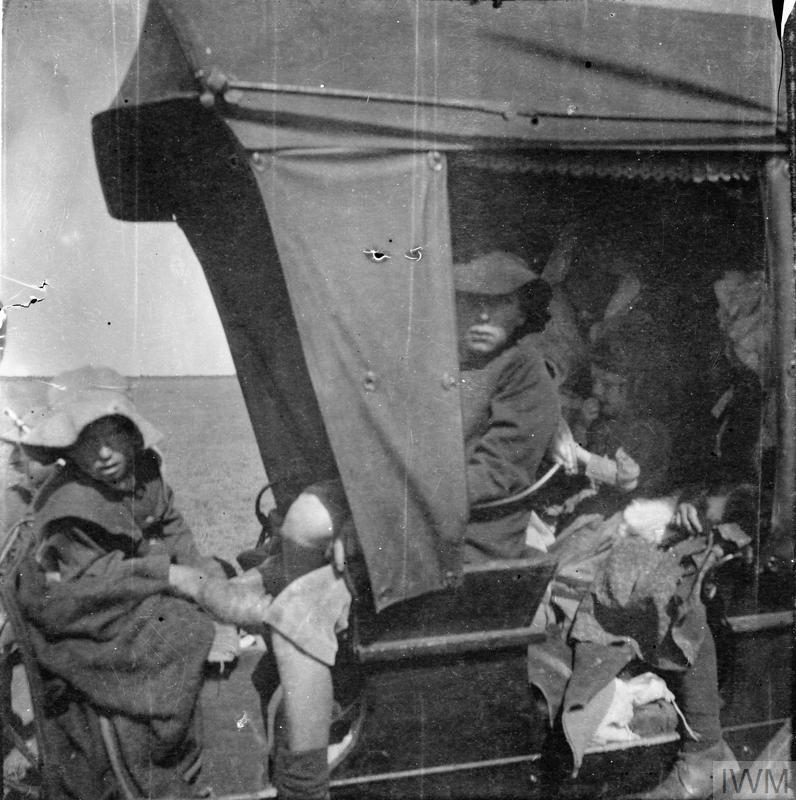
refugees

To many Afrikaans speaking white people in South Africa the narrative of what many in South Africa call; The Anglo-Boer War (1899-1902) or just shortened to The Boer War, is one of a struggle of the Boer nations for independence, the backdrop set against one of British greed for gold in The South African Republic (Transvaal) and colonial expansion by the subjugation of independent nations. The Boer’s boldly fighting against the odds against a British Imperialist invasion and then having to endure the indignity of a systematic eradication of the Boer nation and culture by means of a punitive genocide initiated by what some now regard as a Nazi styled system of British ‘concentration camps’ which murdered their women and children in their tens of thousands.  An indignity and outrage which now calls for an apology and war repatriation from the British.

18056649_10155221467369476_6950152090307411838_n

To many of the British, the story is somewhat different. The British call the war; The South African War (1899-1902) and it is one of a struggle of British migrant miners fighting against oppression and for citizen rights in The South African Republic (The ZAR or Transvaal). Followed by brave pockets of British garrison troops in border towns in the Cape Colony and Natal fighting off an invasion by the Boers of their colonies, the siege of their towns initiated by the Boer’s declaration of war on the British, and by besieging their towns subjecting British civilian men, women and children to starvation and indiscriminate shelling by surrounding Boer guns – calling for a national outrage in the UK and a ‘call to arms’ of the biggest expeditionary force seen to date to ‘get their cities back’ and save the civilians. Then after winning the conventional in a lightning war of only 9 months the British felt forced to depopulate large swathes of land bordering their supply routes to Pretoria. This was done to prevent constant attack on their supplies by Boer commandos (now with governments ‘in the field’ instead of their capital cities).  Their reaction, wherever there was an attack, just put all the surrounding farmstead folk into ‘refugee camps’ (their term for the camps) and burn the farmsteads supplying the Boer forces to the ground. All because some renegade Boer commandos didn’t ‘play by the rules’ of a conventional surrender and embarked on an unconventional phase of the war instead (guerrilla war) which threw the generally accepted rules of engagement out the window.

Nasty, very nasty history this war was, and these two different views on the subject are to a degree both ‘politically’ motivated, both conveniently serving to underpin ‘Nationalist’ ideologies and in so supporting political agendas – whether it is a Boer or British one.

A third dimension

So, somewhere between the two vastly different narratives lies the truth, but there’s a third part of the war neither of the above two narratives even begins to properly consider, and it’s a part of the Boer/South African War which fundamentally shifts all previous narratives on the war, moving it away from a war between two white tribes to a more holistic one involving all South Africans.  Ground breaking research is now been done on the ‘Black’ involvement in the war and the impact to the Black community. New understanding is coming about and it is shaking the traditional British and Boer narratives and historical accounts to the core.

african_a-b_war_prisoners_of_war_on_st_helena_parliament
Black African South African War (1899-1902) prisoners of war who were fighting on the Boer side on St Helena

At the very centre of understanding this previously overlooked aspect of the war is the unveiling of the history of the ‘Black’ concentration camps of the Boer War.  Their impact to the Black community, almost no different to the impact to the Boer community.  The only difference is the politically driven race politics post the Boer War, and especially during the Apartheid period, which simply brushed it aside as something less relevant with a brutal degree of apathy, leaving us all now with a ‘perception’ of the war rather than a truth.

In an odd sense, it is only by understanding this aspect of the war that full account and truths are established, that anything by way of ‘apologies’ or ‘reparations’ in our modern context can even be possible.

The Black History of the Boer War

So, if you are unfamiliar with the ‘Black’ part of the Boer War here it is.  South Africa’s ‘Black’ tribal population also took part in the war, on a scale most people are unaware of.

In the case of the Boer forces, very often Black farm workers took on the role of ‘agterryers’ (rear rider) in fighting Commandos, their job was a combination of military ‘supply’ and one of a military ‘aide-de-camp’ (assistant) to one or more of the Boer fighters.  These ‘agterryers’ ferried ammunition, weapons, supplies and food to the Boer combatants, they arranged feed for horses and in some cases, they were even armed.
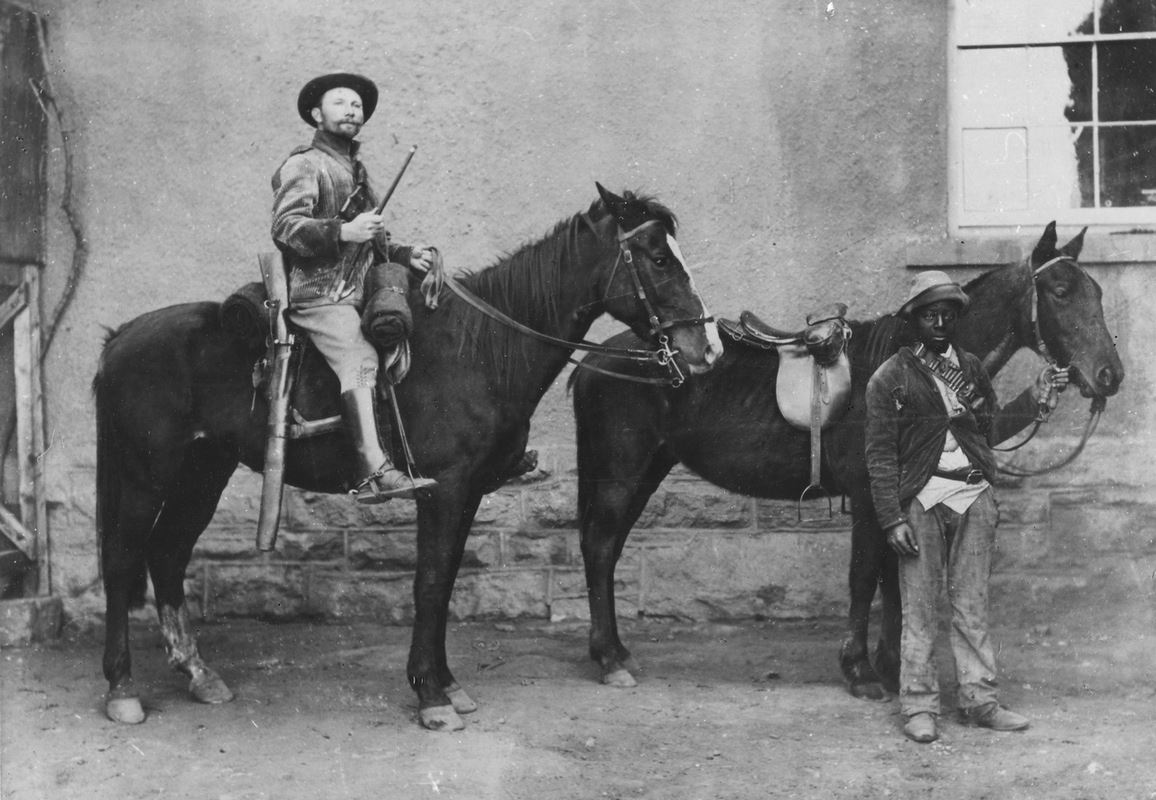
10848845_10203197575321417_1902673332588762700_o
Boer officer and his agterryer

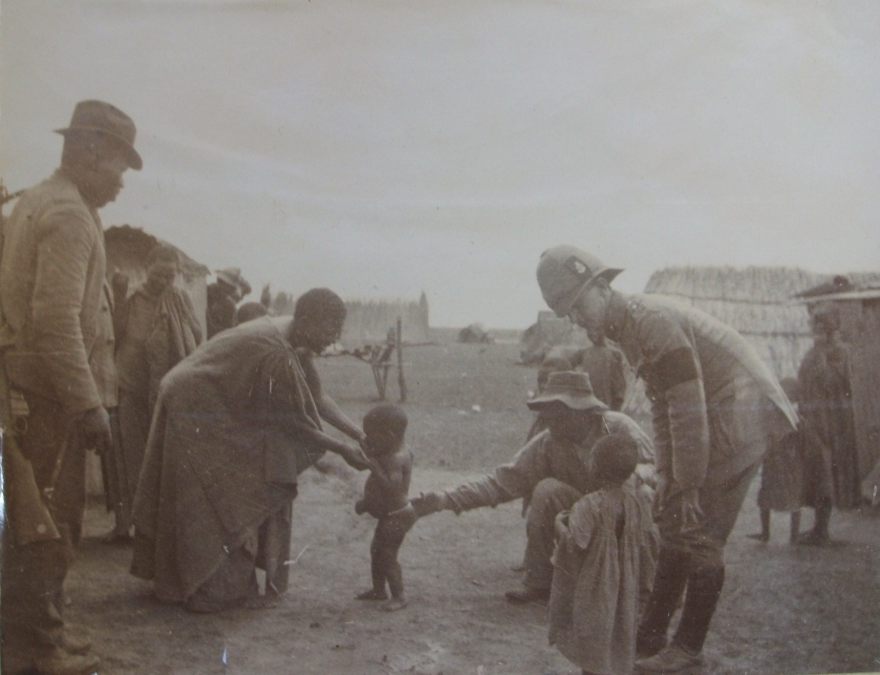
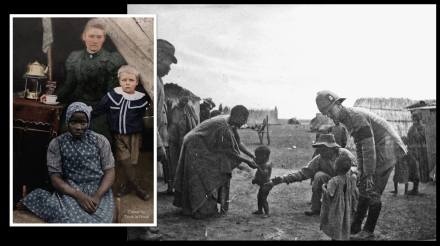
It was not only Black men in support, but Black women too, they supported the Boer women in providing food and feed to frontline commandos and when the concentration camp systems started they (with their children) were also swept up and in many cases also accompanied and lived in the tents with the Boer families interned in the ‘white’ concentration camps themselves, primarily looking after the children (black and white), sourcing food and water as well as cooking and washing.  They too were exposed to the same ravages of war in the camps as the white folk, mainly the water-borne diseases which so decimated the women and children in these camps.
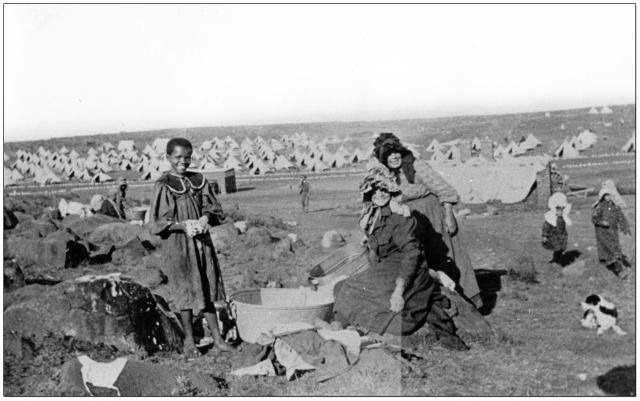
20375883_1942095356068953_3486044989180576012_n
A Black women in a Boer Concentration Camp

The British were no different, they quickly employed the local Black population as ‘scouts’ and numerous examples exist of these ‘scouts’ conducting surveillance of Boer positions and intelligence on Boer movements as well as guiding the British through the unforgiving South African terrain.
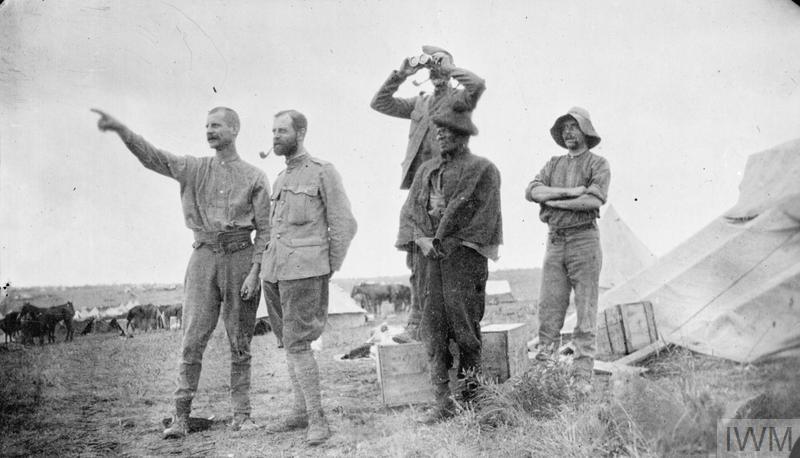
scout
British officers with a Black African ‘Scout’ observing terrain – Imperial War Museum

The British also sought manpower from the local Black population in cargo loading and supply haulage. These people were as much a part of moving British military columns as any military person involved in logistics and supply and to a degree they were also exposed to hazards of war.

brass arm
Black Africans in British Service, the brass armband signifies military service – Imperial War Museum

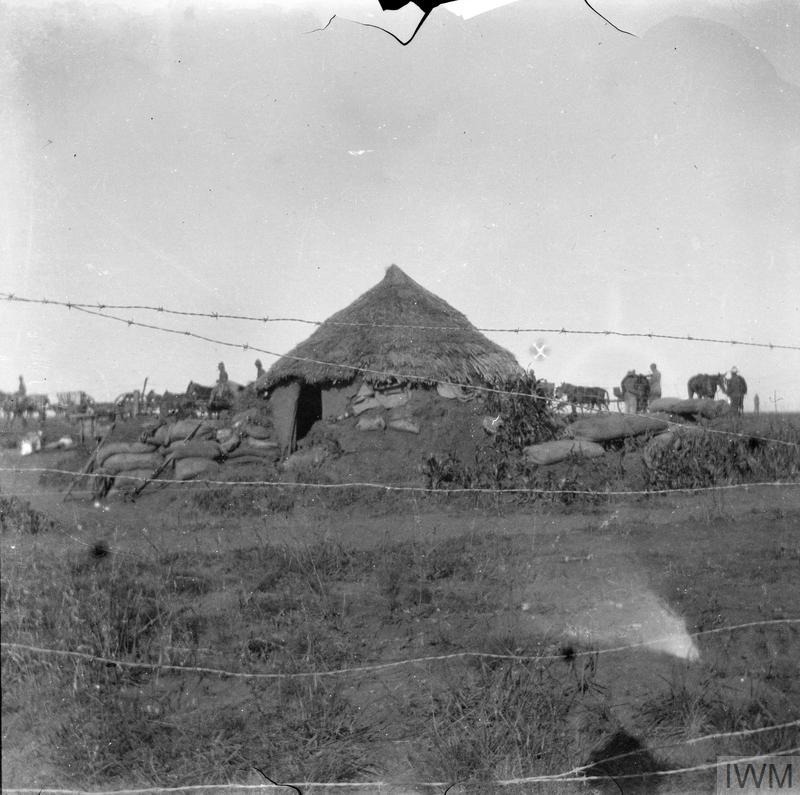
The British would also ‘commandeer’ entire Black tribal villages for the use of setting up forward bases, strong points and defences – putting entire village populations at risk and literally bringing them into their ‘war effort’.
native stronghold
Black African village taken over by the British for a strong-hold position – Imperial War Museum

There is even a recorded event when Black South Africans took a more direct role in the war. On 16 May 1902, Chief Sikobobo waBaqulusi, and a Zulu impi marched on Vryheid and attacked a Boer commando at dawn with losses on both sides.

Context behind the Concentration Camp policy

However, the biggest and most deadly impact to the Black African nations in the Boer War, came in their own earmarked British concentration camps.  So how did that come about?  To understand why the concentration camps initially came about and their purpose we need to put both the white and black concentration camps into context.

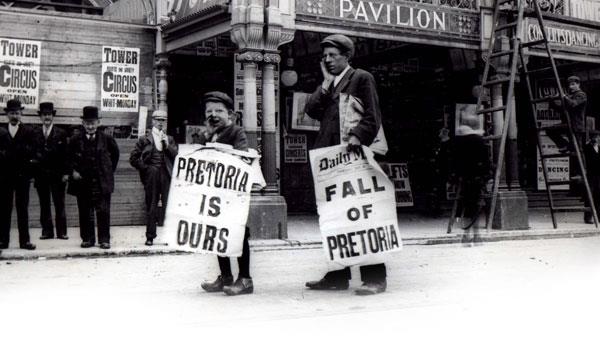
To the British, the war should have ended when they marched into Pretoria in June 1900, having now relieved the Boer sieges of their towns of Ladysmith in their Natal Colony, Mafeking and Kimberley in their Cape Colony, and having already taken The Orange Free State’s capital, and Johannesburg – the Transvaal’s economic hub.  The war was over, ‘officially’ they had annexed both republics and they even called for a post war ‘khaki election’ back in the UK to reshuffle Westminster to post war governance.
14516334_10154528497944476_6692268421857196301_n

Not for the Boer forces it wasn’t over – not by a long shot. The British in marching into Pretoria found themselves stretched deep into ‘hostile’ territory with extended and vulnerable supply lines stretching over hundreds of kilometres. Boer strategy was to move their government ‘into the field’, abandon the edicts of Conventional Warfare and embark on ‘Guerrilla Warfare’ tactics instead, to disrupt supply and isolate the British into pockets. To do this they would need food, ammunition and feed supplied directly from their own farmsteads surrounding their chosen targets. Isolated British garrisons came under attack with some initial Boer successes, their forces then melting away into the country. Easy targets were also trains and train lines, and after many a locomotive steamed into Pretoria riddled with bullet holes or didn’t make it all, Lord Kitchener got fed up at the arrogance of it all and acted decisively.

blockhouse

Kitchener concentrated on restricting the freedom of movement of the Boer commandos and depriving them of local support. The railway lines and supply routes were critical, so he established 8000 fortified blockhouses along them and subdivided the land surrounding each of them into a protective radius. Short of troops to man all these strong points (he needed 50 000 troops) and control the protective areas, Kitchener also turned to the local Black African population and used over 16 000 of them as armed guards and to patrol the adjacent areas.

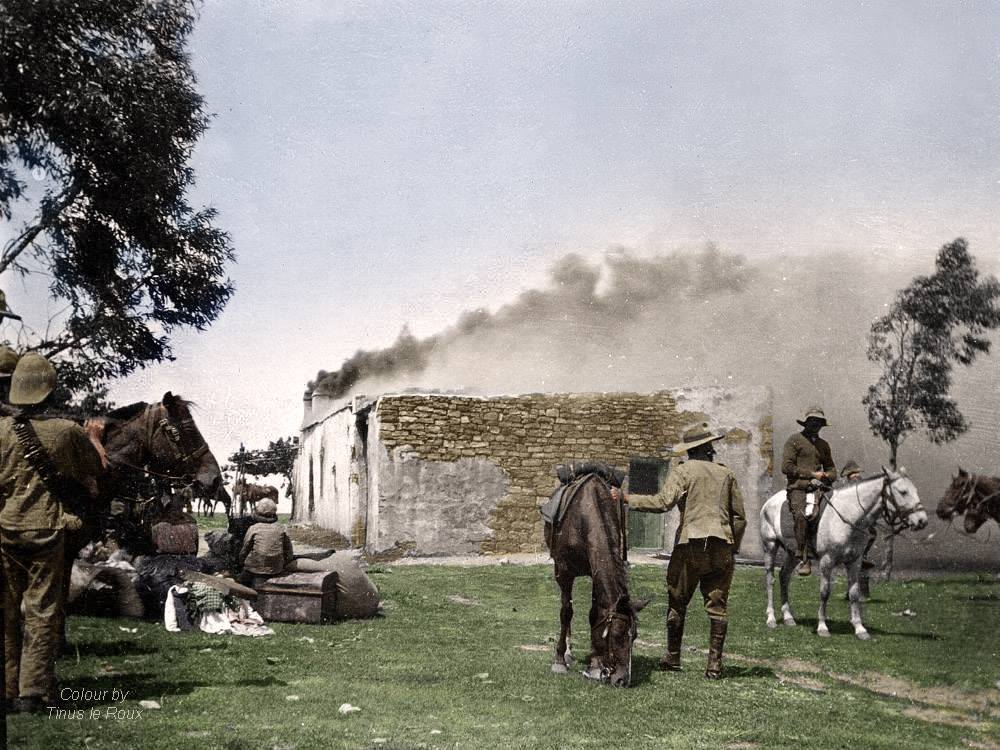
Wherever and whenever an attack took place, or where sufficient threat existed to this system, Kitchener took to the policy of depopulating the radius area, burning down the farmsteads, killing the livestock and moving all the people – both Black and White (it mattered not to the British what colour they were) into what was termed a ‘refugee camp’ by the British, these camps however were in reality a concentration camp of civilian deportees forcibly removed from their homes.
52966827_2062656877104244_6953808788189085696_o
Image: British soldiers burning a Boer farmstead. Note displaced Boer family sitting with whatever possessions they could salvage in time.  Colour by Tinus Le Roux

Two systems of concentration camps existed, one for Blacks and one for Whites.  Both were run very differently.  Victorian sentiment at the time was very racially guided.

The Boer Concentration Camps

The ‘White’ camps were tented and the ‘refugees’ (more accurately forced removed and displaced civilians) were given rations of food and water.  The British could also not afford the resources to ‘guard’ and administrate these camps, and herein lies the problem.  It was due to the lack of ability to manage the camps that some camps were managed well and others simply were not, some fell under British military command others were ‘outsourced’ to local contractors manage, and both British and quite often Afrikaner entrepreneurs were brought in to administrate the camps.  In most instances these camps were very isolated, and by isolation it simply meant the people in them had nowhere else to go (there were no Nazi styled ‘wire’ fences with prisoners shot trying to escape), the camps were in fact relatively porous with regard the movement of people in and out of them.

Image: Children fetching water, Bloemfontein concentration camp. Note general conditions and bell tents. Colourised by Tinus Le Roux

Some camps were well run, orderly with demarcated tent lines and health policies implemented based on running a normal military camp (tents and bedding were regularly aired out) and ablutions correctly located with drainage.  Other camps were not well run at all, the administrators allowing the Boer families to ‘clump’ their tents together with no proper ablution planning or health policy.  Policies on food rationing also differed from camp to camp.  In some camps, sadistic camp administrators took to punitive measures to ‘punish’ the Boer families whose menfolk were still fighting in the field to get them to surrender, literally starving these people to the point that just enough food was given to keep them alive.

47687166_1942108895825710_8580116721963106304_n
Boer family in a concentration camp with their Black domestic helper.  Colourised by Tinus Le Roux

It follows that in these camps, especially the poorly administrated ones, that disease would take root, and it came in all sorts forms ranging from poor nutrition to exposure, but it mainly came in the form of waterborne diseases from poor sanitation.  Here again, some camps were medically geared to deal with it, others not. The net result of all of this is a tragedy on an epic level.

The official figure of the death toll to white Boer women and children in the camps is 26 370, a staggering figure when you consider that only an estimated 6,000 Boer combatants in the field died in the war. Another tragedy (lesser so than life) was the loss of family heirlooms and family records to the relocation and scorched earth policies, this served to erase the inherent culture and history of the Boer peoples. The combination of both the systematic erosion of Boer culture and the astronomical rise in death rates of the ‘fountain’ of Boer race – their women and children, has left a deep scar of hatred and loss which still openly exists to this day, and for good reason.

The Black Concentration Camps

The ‘Black’ concentration camps were a different matter entirely. On the 21st December 1900, Lord Kitchener made no bones about his new concentration camp policy at the inaugural meeting of the Burgher Peace Committee held in Pretoria, where he remarked that in addition to the Boer families, both ‘stock’ and ‘Blacks’ would also be brought in.

As said, Victorian sentiment was very racially guided, and where the ‘white’ concentration camps were at least given some semblance of tents for shelter, food, aid workers, water rationing and some medical aid albeit entirely inadequate, the ‘Black’ concentration camps had very little of that.

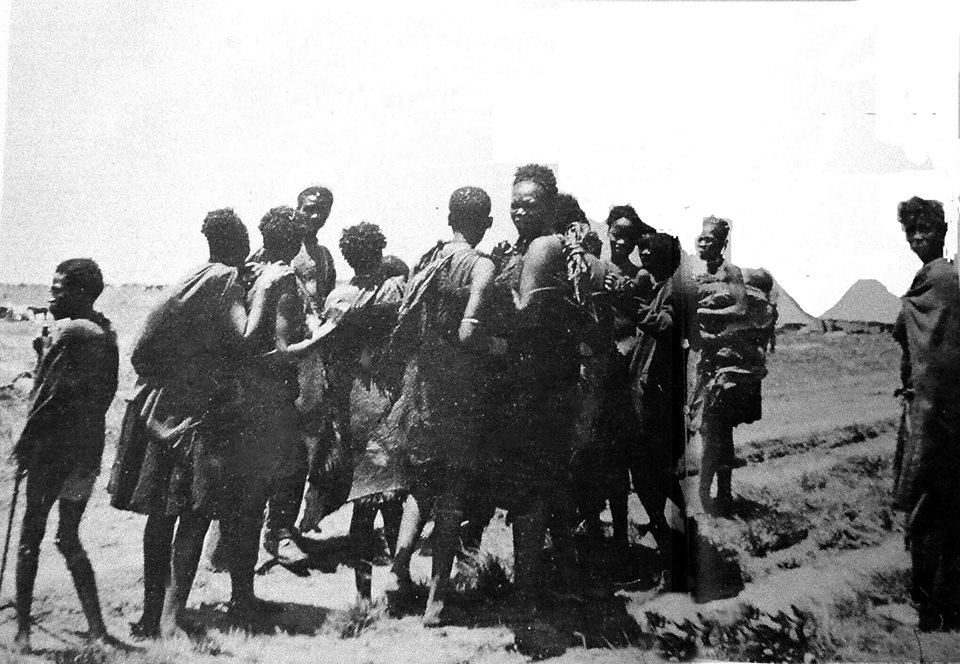
Black concentration camps, were also earmarked to isolated areas bordering railway lines so they could be supplied – with both deportees and supplies.  The isolation also became the means of containment.  However no ‘tented’ constructs were provided in most instances and these Black civilians were simply left on arid land to build whatever shelters they could scourge for.  They were also not given food rations on a system resembling anything near the system provided ‘white’ camps, in the white camps the food rations were basically free of charge, in the black camps they had to pay for it.
black women on way to concentration camp
Black women on their way to a concentration camp in the Transvaal – Imperial War Museum image

In all an estimated 130 000 black civilians (mainly farm labourers on Boer farms) were displaced and put into this type of concentration camp, 66 camps in total (with more still been identified, some sources say as many as 80 camps), all based primarily on the British fear that these Black people would assist the Boers during the war.

During early 1901, the black concentration camps were initially set up to accommodate white refugees. However, by June 1901, the British government established a Native Refugee Department in the Transvaal under the command of Major G.F. de Lotbinier, a Canadian officer serving with the Royal Engineers. He took over the black deportees in the Orange Free State in August that year and a separate department for blacks was created.

20448955_10155633958753980_1228035049095603465_o
Medical inspection inside a Black concentration camp as administered by the Native Refugee Department. Orange Free State, 1901. Note the black mourning band worn by the RAMC Doctor and the armed African wearing a British army tunic top. Children with distended stomachs inspected, including the toddler with a ruptured umbilical – starvation. In the background to right of the Doctor a child bites its fingers while witnessing this inspection. Note the shelters. No tents – caption and research by Dr. Garth Benneyworth.

Entire townships and even mission stations were transferred into concentration camps. The Black camps differed from the Boers in that they contained large a number of males. This meant the camps were located by railway lines where the men could provide a ready supply of local labour. Work was however paid, and it was via this economy that the Black deportees could properly sustain themselves in the camps.  In this respect to better understand what these camps were, the concept of a ‘forced labour camp’ would be a better definition.

Of the Black concentration camps, 24 were in the old Orange Free State Republic, 4 in the Cape Colony and 36 in the old South African (Transvaal) Republic. There was a single concentration camp in Natal at Witzieshoek, and more camps are identified to this very day . Some of the camps were for permanent habitation and others were of a temporary nature intended for transit.  Their stories speak volumes for the way they were treated.

On the 22 of January 1902, At the Boschhoek Black concentration camp the deportees held a protest meeting. Stating that when they have been brought into the camps they have been promised that they will be paid for all their stock taken by the British, for all grain destroyed and that they will be fed and looked after, none of which had not been forthcoming. They were also unhappy because “… they receive no rations while the Boers who are the cause of the war are fed in the refugee camps free of charge … they who are the ‘Children of the Government’ are made to pay’.

23 January 1902 records that two Black deportees of the Heuningspruit concentration camp for Blacks, Daniel Marome and G.J. Oliphant, complained to Goold-Adams: “We have to work hard all day long but the only food we can get is mealies and mealie meal, and this is not supplied to us free, but we have to purchase same with our own money. “We humbly request Your Honour to do something for us otherwise we will all perish of hunger for we have no money to keep on buying food.”

The ‘official’ rations were meagre at best and had to be purchased, for ‘Natives’ over 12 years of age: Daily: 1½ lbs either mealies, K/corn, unsifted meal or mealie meal; ¼ oz salt; Weekly: 1 lb fresh or tinned meat; ½ coffee; 2 oz sugar – all but the corn was to cost the Black deportee receiving it 4½d per ration.

21273552_10155443040061480_3614205256566352145_o
Black women in a Black concentration camp in Klerksdorp, note the lack of infrastructure and shelter

By 1902 18 January, Major De Lorbiniere, writes that supplying workers to the army ‘formed the basis on which our system was founded’. The department’s mobilisation of Black labour was very successful – however really this is not surprising at all considering the incentives offered. Those in service of the British and their families could buy mealies at a halfpence per lb, or 7/6 a bag, while those who do not accept employment had to pay double, or 1d per lb and 18/- or more per bag.

The camps, usually situated in an open veld, they were overcrowded, the tents and huts were placed too close together and did not provide adequate protection from the harsh African weather. They were extremely hot in summer and ice cold in winter. Materials for roofing were scarce, also no coal was provided for warmth.  In addition to this misery there was a severe shortage of both food and water (mainly fresh vegetables, milk and meat) .

Water supplies were often contaminated by disease and any form of medical attention was rare to non-existent. Abhorrent sub-human conditions meant that water-borne diseases like dysentery, typhoid and diarrhoea spread with ease and the death rate climbed drastically.
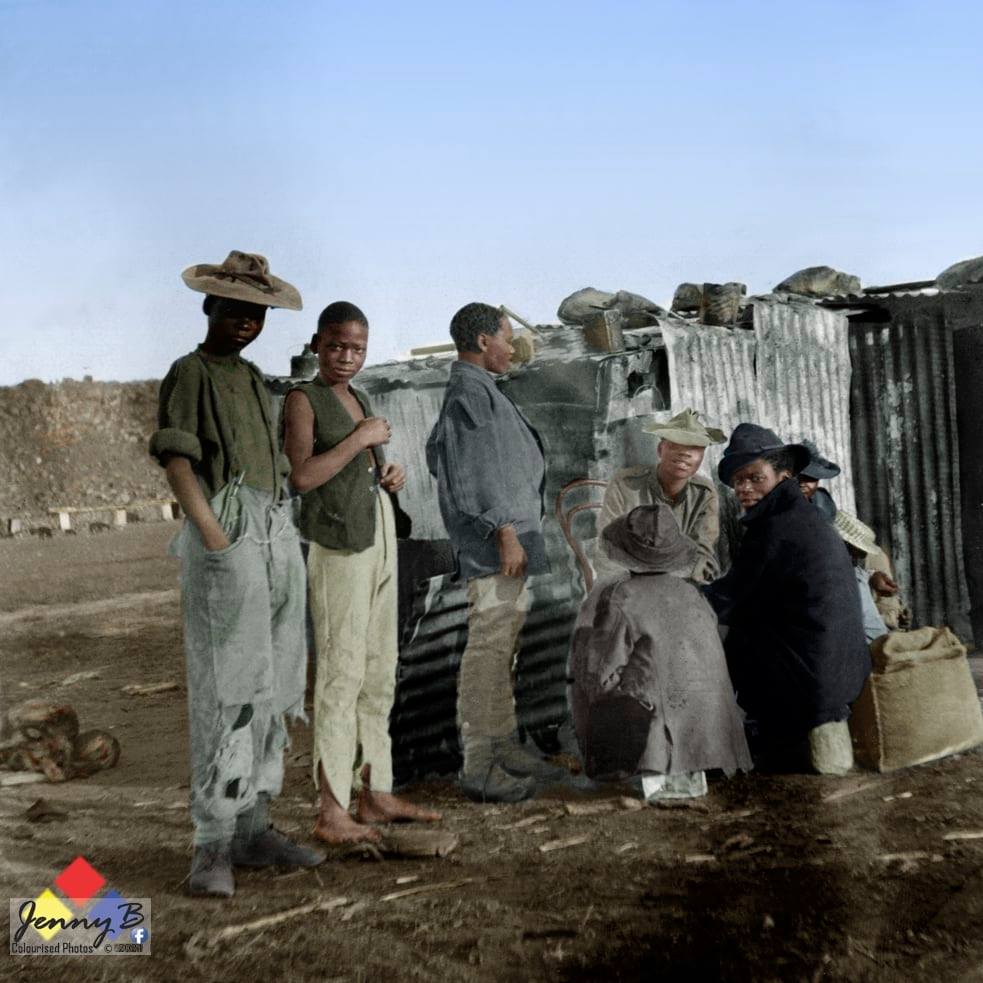
Image: Probably Bronkhorstspruit Concentration Camp. Photo source: LSE library, colourised by Jenny Bosch. Note the lack of bell-tents and use of corrugated iron sheets for shelter.

The horrific conditions these deportees subjected to were superseded only by even more abhorrent treatment, the same social diseases, exposure and nutrition problems sprung up in these camps as they did in the ‘White’ Boer camps, with the same horrific result.

Most of the deaths in the concentration camps were caused by disease, and it took root with the most vulnerable, mainly children. By this stage in the war, the death rates in the Black concentration were climbing to unacceptable levels. An aid worker, Mr H.R. Fox, the Secretary of the Aborigines Protection Society, was made aware by Emily Hobhouse that the Ladies Commission (the Fawcett Commission – looking into the problems and death rates in the concentration camps) had focussed solely on the ‘White” concentration camps and completely ignored the plight of Blacks in their concentration camps.  So, he promptly wrote to Joseph Chamberlain, the Colonial Secretary, requesting an inquiry be instituted by the British government “as should secure for the natives who are detained no less care and humanity than are now prescribed for the Boer refugees”.

On this request Sir Montagu Ommaney, the permanent under-secretary at the Colonial Office, responded that it seems undesirable “to trouble Lord Milner … merely to satisfy this busybody”.  With that swift apathy to the plight of the Black deportees came another tragedy on an epic level.

By the beginning of 1902, conditions in black camps were however improved somewhat in order to reduce the death rate. More nutrients were introduced (tinned milk, Bovril and corn flour) and shops were opened that allowed black people to buy some produce and equipment, mainly items like flour, sugar, coffee, tea, syrup, candles, tobacco, clothes and blankets.

The total Black deaths in camps are officially calculated at a minimum of 14 154 (about 1 in 10).  However recent work by Dr. Garth Benneyworth estimates it as at least 20 000, this after examining actual graveyards and factoring that burials had also taken place away from the camps themselves. Dr. Benneyworth notes that the British records are incomplete and in many cases non-existent and the fact that many civilians died outside of the camps in labour or transit or were buried in shared graves, this caused the final death toll to be much higher.  The high rate of child death in the Victorian period aside, a staggering 81% of the fatalities in the Black concentration camps were children.
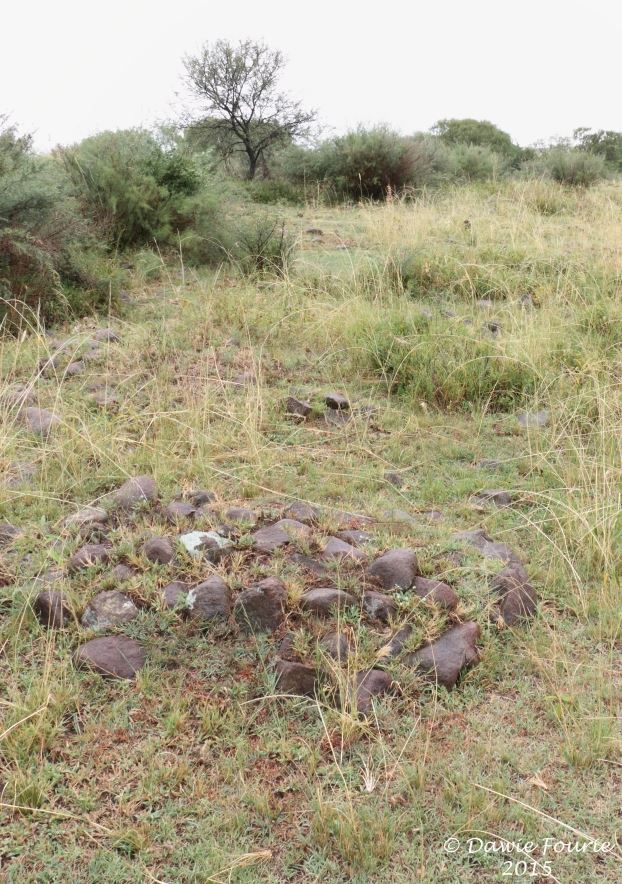
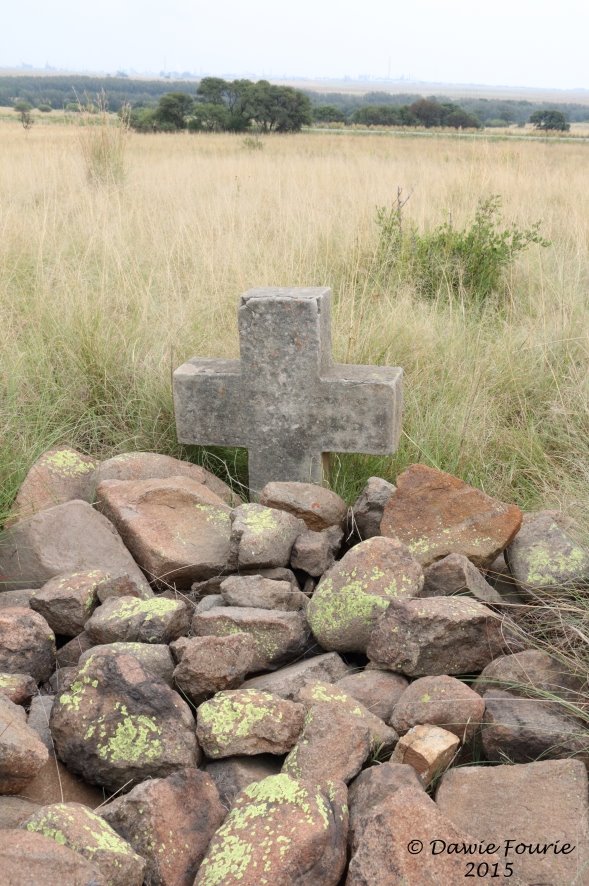
Images courtesy of Dawie Fourie

In Conclusion

Compare that to the Boer concentration camps, where the deaths are recorded are around the 26 000 mark and it becomes clear that the Black population of South Africa suffered the same as the White population during the Boer war.  However, the fact is that historical research into the Black involvement in the war is sorely missing from the general narrative.  Post the Boer war and during Apartheid a lot of research around the Boer concentration camps was done, even monuments and museums were erected to them. It served Nationalist political agenda at the time in establishing Afrikaner identity along a separate race line, so almost nothing by way of research was done on the Black concentration camps, no monuments, museums or even a solid historical account exist of them at all. The Black history of the Boer war most certainly did not make it into mainstream ‘National Christian’ government education curriculum at the time.  As a result the Boer war is simply just not properly understood to this day.

If you add to this the glossed over South African Black History behind their contributions and sacrifices in WW1 and WW2, you can see that Race Politics in South Africa has simply not taken the Black history and their sacrifice along with the mainstream historical account, especially the history prior to the implementation of Apartheid in 1948. What this alienation of critical parts of our history from the overall historical record has done, has reinforced the narrative that black lives were somehow of a lesser consequence to white lives. So, there is no surprise that most modern South Africans (mainly youth) simply can’t be bothered with properly understanding South African history prior to 1994.

There is still a very long way to go to fully understanding the war – but the future in reconciling the true effect of this war and redressing it as a nation – is to understand that the Boer War was not only a ‘white’ man’s war, nor the concentration camps strictly about Afrikaner women and children, a much bigger story exists and its one which needs to be reconciled with – and that is the suffering of South Africa’s black population and the extraordinary losses they experienced in these concentration camps too.

The redress for white Afrikaners in South Africa as to any form of global awareness and world condemnation of this tragedy to their nation lies in the reconciliation of the history with the previously unwritten and misunderstood black history behind The Boer War.  Only if his tragedy is seen as a national issue, with a common cause and reconciliatory national healing process behind it to deal properly with it, only then can amends and long awaited apologies from the British be found.


Written and Researched by Peter Dickens with references and extracts from the Military History Journal Vol 11 No 3/4 – October 1999 Black involvement in the Anglo-Boer War, 1899-1902 by Nosipho Nkuna, also references from Dr Garth Benneyworth and ‘Erasure of black suffering in Anglo-Boer War’ By Ntando PZ Mbatha.  Photo copyrights – The Imperial War Museum and Dawie Fourie.
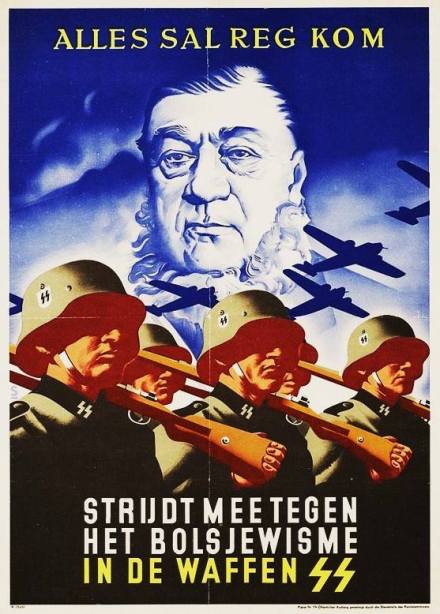
‘Waffen SS’ uses the Boer War to recruit the Dutch

An interesting Nazi propaganda poster from the Second World War, with a South African spin.

Waffen SS Propaganda and the Netherlands

At the beginning of the war, the idea of the 3rd Reich and Nazism was not central to Germany, furthermore the idea of a united Europe under the discipline and economic policies of Fascist ideologies and concepts like the 3rd Reich was widely accepted by large communities in countries like France (mainly in the South), Belgium, Austria, the Netherlands (including ‘Holland’), Hungary, Croatia, Italy, Romania and Bulgaria.

This poster, with the clever use of propaganda and imagery is a recruitment poster for the Waffen SS, aimed at Dutch Nationals (Netherlands Legion). It forms part of a propaganda poster campaign which asks Dutch nationals to question themselves on who exactly is a true Dutch patriot, implying the ones that join Germany in the fight against Bolshevism (“Communism” and Russia) are the true Dutchmen.


It pulls at a strong emotional trigger amongst the Dutch which was still very prevalent at the beginning of World War 2, which was the 2nd Anglo-Boer War (1899 – 1902). Dutch sentiment during the Boer War sided with the Boer Republics (driven by historical, language and cultural bonds) and many in the Netherlands where quite appalled by the way the British had conducted the war and the atrocities committed against Boer women and children. 

Thus the clever use of Paul Kruger, “speaking” a well-known phrase in Afrikaans (and Dutch) ‘Everything Will Be All Right” and this leads into a call to action in Dutch “Fight Bolshevism with the Waffen-SS”. At the time Paul Kruger (the last State President of the ‘Transvaal Republic’ i.e South African Republic) was internationally known as the face of Boer resistance against British occupation during the 2nd Anglo-Boer War.

JHBrand_VA1026

Johannes Brand

The phrase “alles sal reg kom” (everything will be all right) is also clever as it was coined by another Boer Republic State President – this time the Orange Free State, Johannes Brand who said in “Cape” Dutch – “alles zal recht komen als elkeen zijn plicht doet” (all will be well if everyone does his duty) and this entered popular culture as “ALLES SAL REG KOM” – both in the Netherlands and South Africa.

Subtle, but implied in the Poster by the use of Paul Kruger is the call to action to fight not only Bolshevism (Russia) but also their “allies” in the war which was the United Kingdom – so hated by many Dutch for their treatment of their “brother nation” – the Boer nation.

To really understand the Waffen-SS, it needs to be known that it was not really part of the German Army, instead it was a “political” armed wing of the German Nazi Party’s Schutzstaffel (SS, “Protective Squadron”).  The ‘SS’ and ‘Waffen SS’ are two separate entities joined at the hip.  The Waffen SS comprised military formations which were formed to include men from Nazi Germany and volunteers (and later conscripts in some cases) from both occupied and un-occupied lands.

Waffen SS Foreign Divisions

The Waffen-SS targeted occupied countries for man-power. Reason being the SS itself was limited in Germany to a very small percentage of the yearly German call up and outside of Germany they had no such restrictions on them if recruiting for the ‘Waffen’ SS.

To this end the Waffen SS initiated very strong propaganda campaigns calling members of the occupied countries to fight with them, essentially against the ‘Communist or Bolshevist Onslaught’ of Soviet Communism.  The Dutch proved the most fertile ground for this campaign, in total 25 000 Dutchmen volunteered to serve in the Waffen SS.

The Dutch by percentage of population made up the biggest number of volunteers in Europe to join the Waffen-SS. Many volunteering within six weeks of the occupation of their country by Nazi Germany.

Adolf Hitler resisted integrating the Waffen-SS into the army, as it was intended to remain the armed wing of the Nazi Party and his plan was for it to become an elite police force once the war was won.

d0f7c243df69a4e66794a0ec7629ac00

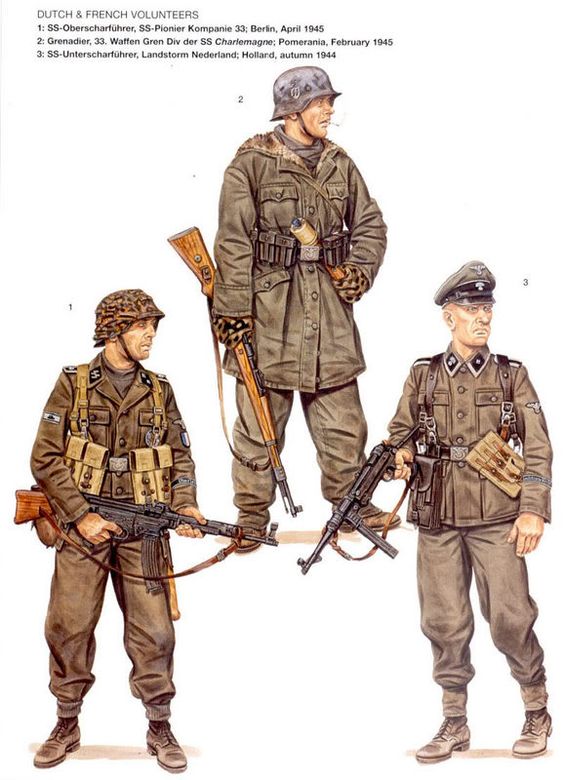
Dutch and French Waffen SS

Initially, in keeping with the racial policy of Nazi Germany, membership was only open to people of Germanic origin (so-called Aryan ancestry). The rules were partially relaxed in 1940, although groups considered by Nazis to be “sub-human” like ethnic Poles or Jews remained excluded.

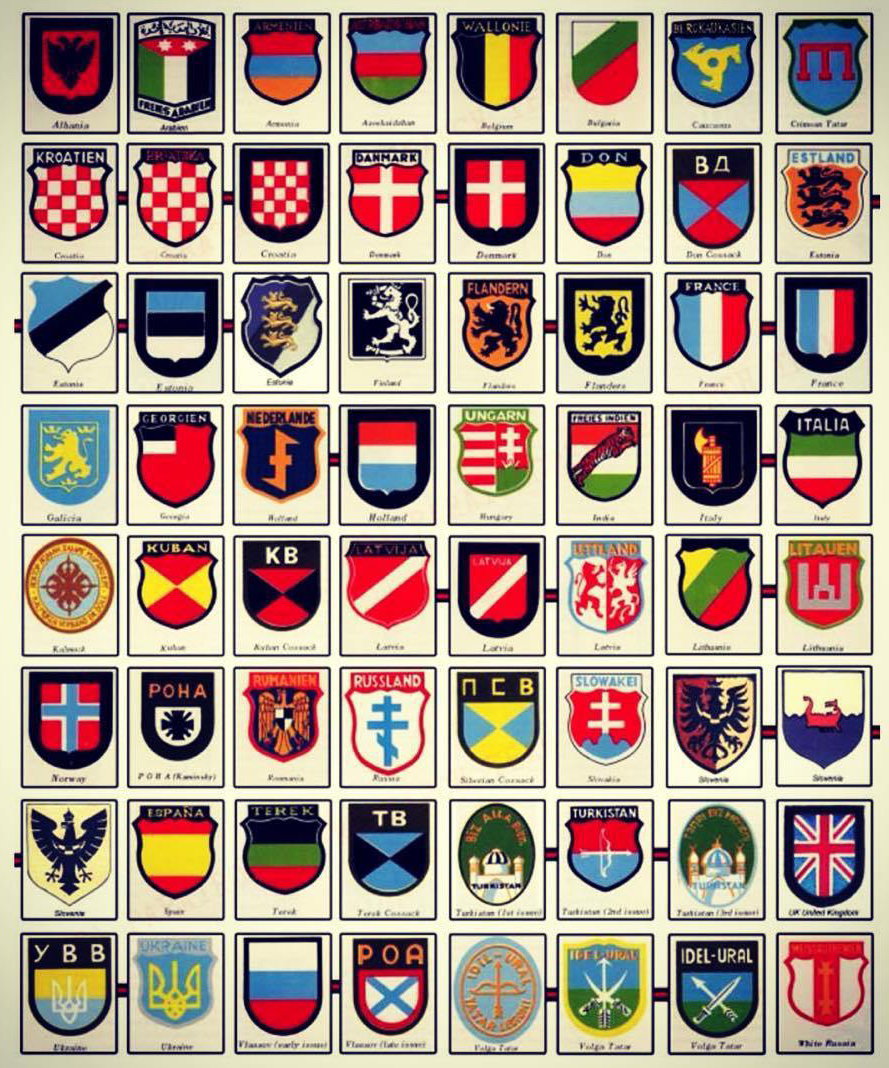
Hitler authorised the formation of units within The Waffen-SS largely or solely compiled of foreign volunteers and conscripts. Foreign SS units were made up of men from Albania, Armenia, Azerbaijan, Belarus, Belgium (both Wallonia and Flanders), Bulgaria, Croatia, Denmark, Estonia, Finland, France, Galicia, Georgia, Hungary, India, Ireland, Italy, Latvia, Luxembourg, the Netherlands, Norway, Romania, Russia (including Cossack and Tatar, Turkic SSR Republics), Slovakia, Slovenia, Spain, Sweden, Ukraine, Asian Regiment, Arab Regiment, the United States (15–20 volunteers) and British (27 volunteers – which included Commonwealth members and even included 5 South Africans).

05cf5c876b230e8a62db1b39126684da.jpg

Waffen SS foreign unit badges

The Waffen SS grew from initially 3 Regiments to over 38 Divisions in World War 2, serving alongside the ‘Heer’ (regular German Army) and the Ordnungspolizie (uniformed Police) and other security units.

Images show French and Flanders (Belgium) Waffen SS

Although having a fierce reputation in conventional fighting alongside the German army all over Europe – East and West fronts, at the post-war Nuremberg trials the Waffen-SS was condemned as a criminal organisation due to its connection to the Nazi Party and involvement in numerous war crimes.

Waffen-SS veterans were denied many of the rights afforded to veterans who had served in the Heer (army), Luftwaffe (air force) or Kriegsmarine (navy). An exception was made for the Waffen SS conscripts sworn in after 1943, who were exempted because they were not volunteers.


To read up a little more on South Africans involved in the Waffen SS, please feel free to follow this link to a previous Observation Post article.

South African Nazi in the Waffen SS

Researched by Peter Dickens with added research from Sandy Evan Hanes – reference Wikipedia.  Images – colourised Waffen SS, ‘Colour by Doug’ copyright.

The bloody South African connection with Liverpool FC’s famous “Kop” stand!

One for the football fans! Another back of the “chappie gum wrapper” did you know fact. South African military history and the 2nd Anglo Boer War specifically are forever bound in a number of terraces and stands at sports stadiums attended by hardcore fans in the United Kingdom – the most notable is “The Kop” stand at Liverpool FC’s Anfield Stadium.

Spion Kop (or Kop for short) is a colloquial name or term used for a number of sports stadium terraces and stands. Their steep nature resembles a hill near Ladysmith, South Africa, that was the scene of the Battle of Spion Kop in January 1900 during the Second Boer War.

The Battle of Spion Kop was fought about 38 km west-south-west of Ladysmith on the hilltop of Spioenkop along the Tugela River, Natal in South Africa from 23–24 January 1900. It was fought between the Boer Forces of the South African Republic and the Orange Free State on the one hand and British forces during the campaign to relieve Ladysmith. It was a British defeat.

After a tense standoff between Milner and Kruger over political and citizenship rights for the mainly British immigrant gold miners living in the Transvaal (South African) Republic. In a pre-emptive move to gain an upper hand in the negotiations, put the arrogant Milner and other British Imperial expansionist warmongers in Cape Town in their place and obtain a swift victory whilst British garrison forces were relatively weak and unsupported in Southern Africa (and whilst the Boer forces had superior fire-power, weapons technology and troop numbers) with what was hoped to be a minimum loss of life – war was declared by the Boers against the British.

President Paul Kruger and Sir Alfred Milner departing after the failed Bloemfontein conference in June 1899.

So with war officially declared on 11 October 1899 by Kruger, the Boer forces immediately went on a surprise offensive (literally the same day as declaring war) invading the two British colonies of Natal and the Cape Colony.  However the British garrison towns at Ladysmith, Mafeking and Kimberley held up the invasion and the Boer forces took to the tactic to besiege these towns, bombard them (using their famous “Long Tom” cannons and other artillery pieces) and in so literally starve them of fighting capability and pound them into a surrender.

The Victorian British political class, press (media) and public, somewhat surprised by this bold move by two small “farming” Republics invading British territory, and aghast at the starvation and bombardment of both British soldiers and British civilians alike in their  towns, then mustered the largest expeditionary force ever seen date to relieve these towns – literally to go and get them back.  However, the then world’s only real “superpower” was in for a big surprise in this first phase of the Anglo Boer War as the Boer forces initially took the upper hand and gave them a bloody nose they would never forget.

The first full attempt to relieve Ladysmith by this expeditionary force to South Africa was met with absolute disaster at Spion Kop (or Spionkop) for the British. Spion Kop (Afrikaans: Spioenkop meaning “spy hill”) is a mountain located near the town of Ladysmith, 27 km to the South West.

On the 23rd January 1900, the British climbed up the Spion kop hill at night and in dense mist. They surprised the small Boer piquet there and drove them off the kop at bayonet point. The Boer piquet retreated down the hill to their camp waking up their fellow Boers by screaming “Die Engelse is op die kop.” (The English are on the hill.). At that time a half-company of British sappers began to entrench their position on the hill with a mere 20 picks and 20 shovels (oddly – while almost 1,000 soldiers stood around idle).

As dawn broke, the British discovered that they held only the smaller and lower part of the hilltop of Spion Kop, while the Boers occupied higher ground on three sides of the British position. The British had no direct knowledge of the topography of the summit and the darkness and fog had compounded the problem. Furthermore, the British trenches were inadequate for all defensive purposes. Because the summit of the kop was mostly hard rock, the trenches were at most 40 centimetres (16 in) deep and provided an exceptionally poor defensive position – the British infantry in the trenches could not see over the crest of the plateau and the Boers were able to fire down the length of the crescent-shaped trench from the adjacent peaks.

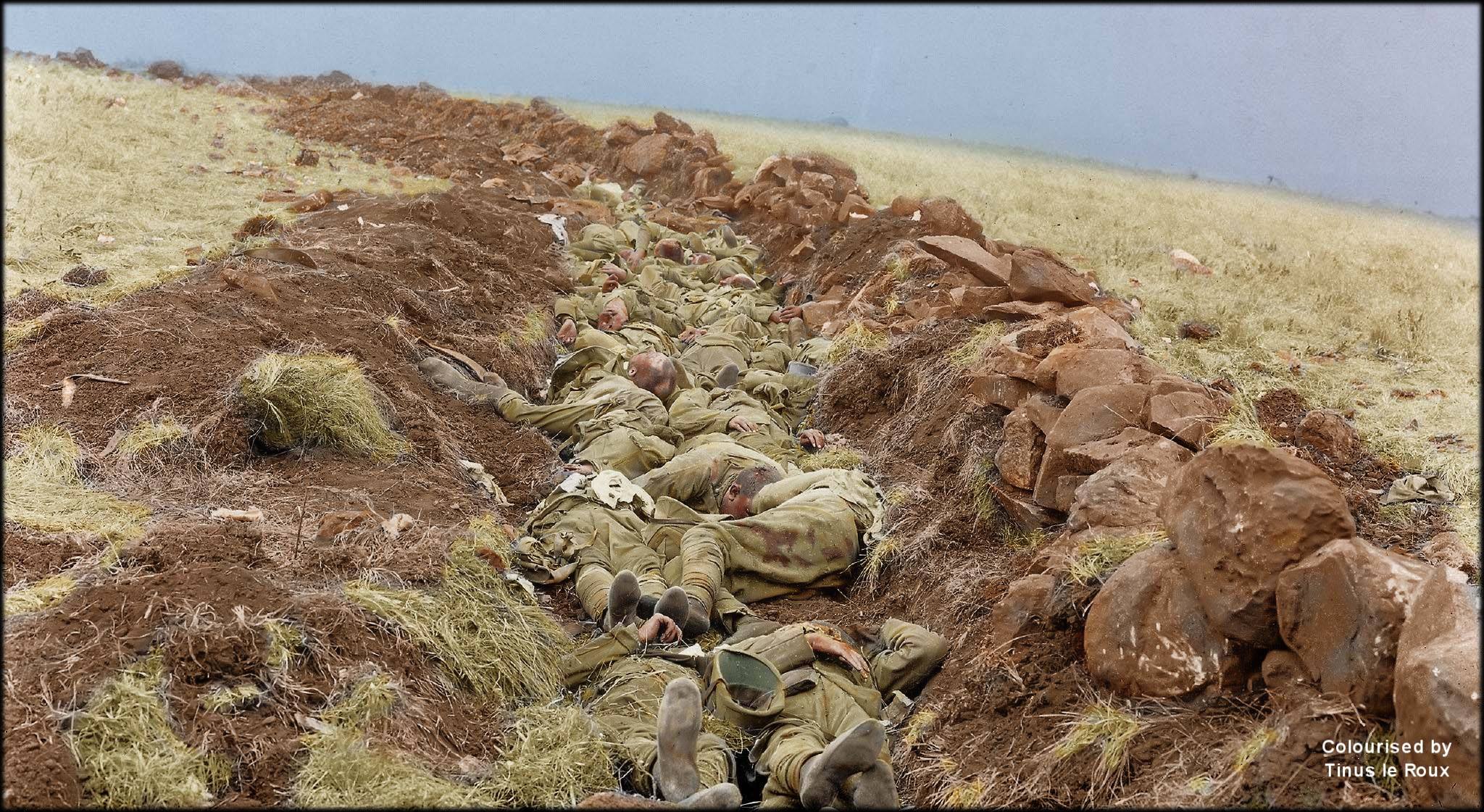
By the end of the battle, the British suffered 243 fatalities; many were buried in the trenches where they fell. Approximately 1,250 British were either wounded or captured. The Boers suffered 335 casualties of which 68 were dead.

The British, unable to hold the Spion Kop hill under withering and accurate fire from the Boer forces retreated back over the Tugela, but the Boers were too exhausted from the fight to pursue and follow up their success. Once across the river the British rallied their troops and Ladysmith would be relieved four weeks later.

This first significant loss by the British in The Anglo Boer War was to be forever emblazoned on the collective British memory, and the first recorded reference to a sports terrace as “Kop” related to Woolwich Arsenal’s Manor Ground in 1904.

However, it was in Liverpool that the tradition really took hold when a local newsman likened the silhouette of fans standing on a newly raised bank of earth to soldiers standing atop the hill at the Battle of Spion Kop.

In 1906 Liverpool Echo sports editor Ernest Edwards noted of a new open-air embankment at Anfield: “This huge wall of earth has been termed ‘Spion Kop’, and no doubt this apt name will always be used in future in referring to this spot”. The use of the name was given formal recognition in 1928 upon construction of a roof. It is thought to be the first terrace officially named Spion Kop.

The Kop became the Liverpool FC home supporters’ end of Anfield Stadium and is widely dedicated to the many Liverpool-born soldiers who died at The Battle of Spion Kop. This stand became legendary in football for the atmosphere, and is still regarded as creating the most intense atmosphere in English football, with the many songs and massive volume that LFC fans create wherever they go. The capacity is 12,409.

Even the nickname sometimes given to Liverpool supporters “Kopites” derives from this home supporters end “The Kop”.

Many other English football clubs and some Rugby league clubs (such as Wigan’s former home Central Park) applied the same name to stands in later years.

Villa Park’s old Holte End was historically the largest of all Kop ends, closely followed by the old South Bank at Molineux, both once regularly holding crowds in excess of 30,000. However in the mid-1980s work was completed on Hillsborough’s Kop which, with a capacity of around 22,000, became the largest roofed terrace in Europe.

The “Kop” stands at St Andrews (left) and Meadow Lane (right).

Even one for the golfers, The Wrekin Golf Club in Shropshire, founded in 1905, named its 13th hole Spion Kop in honour of the men from the region who fell in the battle.

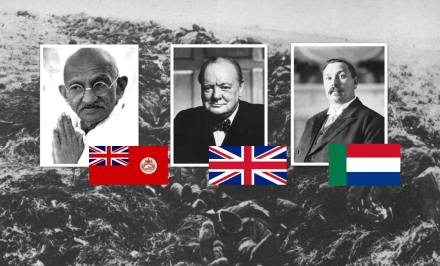
The Battle of Spion Kop was actually to shape the minds and politics of three key individuals, and in so shape the future of the world.  Involved in the Battle of Spion Kop as an Ambulance man (medic) was none other than Mahatma Ghandi, the famous Indian political reformer and spiritual leader.  Alongside him in the Battle were two other future heads of government – Winston Churchill and Louis Botha.  But that’s another story.

In part, the retribution for besieging and shelling British towns and civilians was going to come in the dehumanising approach in the way the war was conducted by the British, especially against Boer civilians in the closing phases, leading not only to atrocity but also Boer cultural annihilation. However that is also a story for another day.

Amazing how South African military history can yet deliver on some surprises, and how some very bloody and tragic events can be linked as a living memorial to the joys of watching football and singing in the stands.

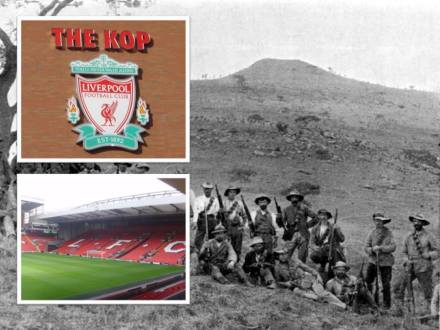
Reference Wikipedia and “The Boer War” by Thomas Pakenham. Image shows the signboard and terraces at Anfield of “The Kop” and a Boer Commando with Spionkop in the background.

The ‘Casus Belli’ for war

Comparing the ‘Gulf’ wars & the ‘Boer’ wars

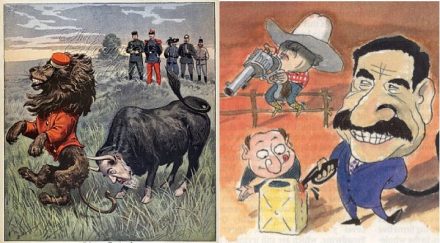
History repeats itself, that’s the ironic part. For starters let’s compare the Anglo-Boer Wars (both of them the 1st and 2nd Anglo-Boer War – one leads to the other) to the last two Gulf Wars (both of them – one leads to the other). Let’s also take the seldom used ‘Economic History’ model rather than the ‘Political’ History model for a change.

The South African War (1899 to 1902) started due to a mix of British expansionist ‘influence’ in Africa, ZAR expansionism in Africa and the wealth in the ground – gold – and attached to it was the need to stabilise the global Gold market and linked currency. There was also unfinished business surrounding previous regional destabilisation which caused the 1st Anglo-Boer War (1880-1881) and this resulted in an ‘Old Score’ Britain had to settle with the South African Republic (ZAR) – and finally the suppression and threat as to civil rights by the South African Republic (ZAR) as to the mainly British citizens working in their Republic on the mines as well as as other indigenous African population’s rights. The last two parts – white miner’s franchise and rights and black African rights and protection from ZAR aggression was the British ‘Casus Belli’ – the justified case for going to war – that, and the fact the Boer Republics declared war on Britain by invading its neighbours on the 11th October 1899 and not the other way round .. was a Casus Belli all on its own.

The Gulf War 2 (or Iraq War 2003 – 2011) started due to a mix of USA expansionist ‘influence’ in the Gulf, Iraqi expansionism in the Gulf and the wealth in the ground – Oil, and attached to it was the need to stabalise the global Oil market and linked currency. There was also unfinished business surrounding previous regional destabilisation which caused Gulf War 1 (1990-1991) and this resulted in a ‘Old Score’ the USA had to settle with Iraq – and finally the perceived threat to Americans and Israelis (or ‘the world’) from Iraqi weapons of mass destruction (entirely fabricated) and threat to civilians in various religious sects, indigenous populations and minorities in Iraq. This last part was the American ‘Casus Belli’ – the justified case for going to war. The fact that Iraq invaded Kuwait on the 2nd August 1990 and had on-going border disputes with Iran and Turkey and had previously declared war on its neighbours … was a Casus Belli all on its own.

World War 2 was a socio-political and economic consequence of World War 1, in effect it is World War 1 – Part 2 (unfinished business), so too the underpinning causes of these wars, Boer War 2, was Boer War 1 – Part 2 (unfinished business), and Gulf War 2, was Gulf War 1 – Part 2 (unfinished business).

All war has an ‘economic’ factor underpinning it, and the Boer and Gulf wars were no different. The  reasons given for the war – mainly that of ‘threat, oppression and persecution’ to minority groups in each case is no different. Like the USA in the modern-day Iraq context (citing oppression of Kurds, Christians, Kuwaitis), Great Britain also put it’s case forward to the ‘world’ (citing oppression by the Boers of British miners) and in both instances the war was passed off as entirely legitimate once it ended for these same reasons … the ‘Casus Belli’ had been made. The fact is the ‘economic’ factor underpinning both these wars was the stability of trading markets – the removal (by force if necessary) of governments, who are holding the pursestrings to these markets, and whose actions and policies around these vital commodities are perceived by global traders to be unstable. If you want to see a recent case of this – look no further Prime Minister Liz Truss, whose government was ousted in record time by the market (not by the populace), simply because the markets found her government’s policies – ‘unstable’.

In 2nd Gulf war, and in the 2nd Boer War, the governments of these vital commodities – deemed unstable by the traders/markets – receive an endless demonisation and bad press. Paul Kruger was painted as an aggressive, dictatorial, backward, ignoramus and incompetent leader of a corrupt government – and Saddam Hussein and his government received exactly the same press. In turn the ZAR painted Britain as having warmongering entrepreneurs coveting their gold – and so too did Iraq – painting the American entrepreneurs coveting their oil as warmongering.

In Iraq, America remained as an occupier after their last war – Great Britain did the same in South Africa after their last war– and in both instances the rational given to the ‘world’ was the reconstruction of the state both economically and politically until it’s perceived ‘threat’ to international mineral market stability was removed and the country was moulded into a more palatable ‘less aggressive’ version to the ‘world’. In both instances they attempted coalition political parties to govern the country as a means to gradually withdraw from direct governance, but retain influence – and in both instances injecting huge economic aid into both to ‘reconstruct’ them.

In both instances, a tiny state took on a superpower and in both instances resorted to guerrilla warfare as the only real means to fight a superpower (in Iraq’s case the ‘guerilla’ warfare phase was labelled as the ‘surge’ in 2007). In both cases civilians were oppressed and randomly imprisoned as a means of removing support to guerrilla cells. In the case of South Africa it was to curtail supply to ‘guerilla cells’  and in Iraq it was to curtail supply to ‘terrorist cells’ (both these guerrilla groupings where locally based). In both instances civilians were exploited to achieve these military objectives.

Oil in 1990 is to Gold in 1900. On the economic front the ‘world’ was presented a case that ‘aggressive’ states where not allowed to be in charge of the world economy as they hold the ‘key’ to it, and these states needed to be removed to ensure worldwide economic stability – this was argued by the USA in 1990 and by Great Britain in 1900 with a similar outcome and some support to both.

The ‘Gulf’ wars – lets face it the whole Weapons of Mass Destruction (WMD) as a ‘Casus Belli’ was a complete farce, human rights, aggression and expansionist reasons lie behind the war and millions of people were affected and will be for years to come, and whose kidding whom it was also about the MONEY i.e. market access, price stability and supply of Oil – same thing with the ‘Boer’ Wars, human rights, aggressive and expansionist reasons lie behind the war, millions of people affected for years to come, and whose kidding whom it was also about the MONEY i.e. market access, price stability and supply of Gold.

Notably, is that in establishing ‘Casus Belli’ – the USA, as a world Super-power embarked on a mission for global assurance by announcing a “coalition of the willing”- countries around the world where the USA held influence who fight side by side with USA and ‘stabilise the situation’ – Iraq could conjurer up no such significant ‘coalition’. The same is true of Britain and the South African War, it had to find a ‘coalition of the willing’ from its sphere of influence – Canada, Australia, New Zealand and India to fight side by side with them as a sort of global assurance to ‘stabilise the situation’. The Boer Republics could conjurer up no such significant ‘coalition’.

In summary, the cruel thing about history is that it repeats as it is often only one basic human condition that guides it, wealth generation (expressed by all sides in the conflict, never just one). The reasons for war are always about economic gain but they are also guided by emotional and political convictions (religion, political dogma, ethnic oppression, human persecution etc).

The even crueller thing about both Iraq and South Africa is that ‘world’ opinion will always justify the war because of the strong cases put forward before and after the war by the victor (albeit very flawed cases in both instances). For this reason it is very unlikely that the USA will be compensating Iraqi families 120 years after the war and apologising, the same is also true of Great Britain and South Africa.


Written by Peter Dickens

Kruger “blunders” and declares war on the world’s Superpower!

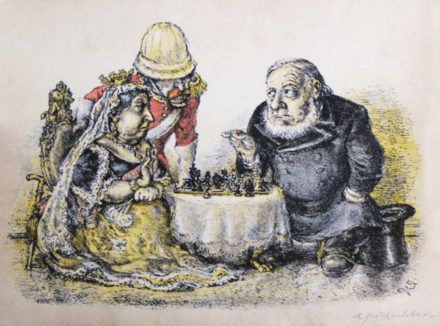
This period cartoon captures that moment when President Paul Kruger, who in a game of political chess with Queen Victoria, is about to make a “blunder” – a disastrous move in chess which is ill considered. The British Army is ominously overseeing the move and Kruger, rightfully so, looks very worried.

The “blunder” move was simply this, after much sabre rattling and posturing by Milner and other British Imperialists in Southern Africa over mineworker representation in the Transvaal, on 11 October 1899 President Paul Kruger of the Transvaal/South African Republic (a day after his 74th birthday) in alliance with another Boer Republic – The Orange Free State, in a rather surprising move to many – declared war on Great Britain.

The move by two relatively small Boer Republics to declare war on what was then the world’s only real superpower came with some astonishment to Queen Victoria and the British Government in the United Kingdom. The British Imperialists in Southern Africa, along with the British Gold and Diamond mining magnets, on the other hand could hardly believe their luck.

Alfred Milner, the Governor of the Cape Colony had taken a belligerent stand with Kruger and pressed very hard for war against the “Transvaal” Boer Republic, it essentially stood in the way of Imperial expansionist plans.  However he did not generally have poplar support back in the United Kingdom for a war .  Once the declaration of war came from Kruger it was used as a “causes belli” (a legitimate justification to go to war) to the British public.

More alarming to the British at home in the United Kingdom was that night 800 men of the Potchefstroom and Lichtenburg commandos under General Koos de la Rey (one of General Piet Cronjé’s field generals) attacked and captured the British garrison and railway siding at Kraaipan between Vryburg and Mafeking, some 60 kilometres south west of Mafeking and well inside sovereign British territory.

Thus, with the invasion by Boer forces of a British Colony, so began the Second Anglo-Boer War. Under the orders of Cronjé the Mafeking railway and telegraph lines were cut on the same day, and the dice was rolled.

Not to trivialise the matter as a game of chess, the move by Kruger would have horrific consequences for the Boer nation. The war would see the desperation of Guerrilla tactics being employed by the Boer Forces, after the “conventional” phase of the war was lost, as a last ditch effort to maintain their sovereignty “in the field”.  The use of this tactic spurred the British to fight the remainder of the war in an utterly ruthless and murderous manner, especially in the treatment of Boer women and children – the British policies of scorched earth and concentration camps would leave a very bitter and tarnished legacy.

The question we ask now, with all the 20/20 hindsight in the world is why? Why on earth would Kruger fall for all the sabre rattling and posturing by The British?   Did he not anticipate the massive mobilisation of biggest expeditionary force the British had ever assembled to go “get their Colonies back”? Did he not see the underpinning greed of mining concerns operating in Africa – did the Jameson Raid not warn him of this?

Contrary to less informed opinion, at the onset of the war there no “massive” build up of British arms along the borders of the two Boer Republics to really threaten imminent invasion of them.  “Sabre rattling” (limited reinforcements where ordered) and warnings – yes, but a vast build up of arms – no. To coin a phrase – they where playing “chess” using an age old tactic to force the hand.

At the on-set the Boer Republics in fact had the upper hand militarily and quickly put siege to the relatively small and isolated British garrisons on the two British Colony’s borders (notably Ladysmith, Kimberley and Mafeking).  At the start of the war, numbers and arms in fact favoured the Boer Republics, it was only after war was declared that a truly massive British Imperial build up of arms and men to be shipped to Southern Africa occurred.

Central to the dispute, for the British at least was the issue of workers rights and political representation of mainly British expatriate population setting up business and working on the Gold mines in the Transvaal. The two sides summited on the 15 May 1899 in Bloemfontein to avoid war and Milner and Kruger immediately clashed over the issue of citizenship – Kruger was only prepared to grant expatriates citizenship to the “Transvaal” i.e. South African Republic after 14 years of residency, Milner insisted the period be 5 years.  The issue came to head and negotiations broke down – both protagonists as belligerent to one another as ever.

Both Milner and Kruger knew that the vast number of British expatriates  in the Transvaal would unseat the Boer government by simple majority if they became citizens, to Kruger the proposals where an attempt by Britain to take over his country (and its resources) by simple subjection.  It is best summed up in his own reply to Milner when he said “Our enfranchised burghers are probably about 30,000, and the newcomers may be from 60,000 to 70,000 and if we give them the franchise tomorrow we may as well give up the Republic.’ Kruger went on to say, “It would be ‘worse than annexation’.

To the British it was a matter of individual rights to political representation in the Republic, which was now at a boiling point on the rand.  Given the simple change in the country’s demographic due to the Gold Rush, this change was likely to be permanent and these rights could not be avoided – in essence the Boer Republic would eventually cease to exist through popular vote, it was just a really a matter of when.

To the Boers it was a fight to remain in power and keep their country. It had been contested before, the British military had already taken over the Transvaal some years before as a British Protectorate (over the issue of representation again – this time the African tribes had disputed the territory) and the British had been outed by the Boers in a small and swift war (the 1st Boer War or “Transvaal War” in 1880/81) which re-gained them their sovereignty over the territory.  It however remained a disputed territory to many, it had now become even more complex with the massive influx of expatriates and business, and the memory of Britain’s control of the Transvaal was still fresh – for both the Boers and the British.

The answer to why Kruger moved when he did, lay in the hope that the initial successes of the Boer Forces against the smaller British Forces garrisoned in Natal and the Cape Colony at the time would bring about detente.  As with the victory of the Transvaal War (the 1st Boer War 1880 to 1881) to out the British from that Republic then, Kruger hoped a swift victory would bring sense to the British position with regard to British expatriates “rights” and “citizenship” on the mines in the Transvaal and put any Imperial British expansionist plans and Milner’s obstinate attitude towards the Boer Republics to bed.

In hindsight, the move was indeed a blunder, Kruger did not get the detente he sought.  Change in the Transvaal’s political and demographic make-up was inevitable, and Kruger would not embrace it – a fierce sense of patriotism and sovereignty where central edifices for him and he chose to take up arms to stall the inevitable in a last ditch effort to keep his country under Boer control (a similar parallel can be drawn years later when the “union” of South Africa was taken back politically by the hard line Afrikaner Nationalists in 1948).

No doubt “Gold” played a role, the simple fact that it was discovered is very central to the dispute.  However of interest is just how much of a factor it played – The Boer standpoint at the time was Britain’s “Gold-magnets” started the war out of greed (the Jameson raid in their eyes proved that to them).  Some modern option is the British wanted to “steal” the Republic’s gold, however the economics of matter is that the Gold was in fact already owned by the British private concerns mining it and they paid a tax to the Transvaal government for the sale of it. This agreement on ownership and tax did not change when the Union of South Africa was established after the war, so there was no real financial gain for Britain in going to war (the fact is they owned the Gold already).

What lies more at the heart of this matter of greed is “Empire” as an ideology central to the world politics at the time – the expansion of territory around the globe by the British – the concept of a “Cape to Cairo” band of control over the whole of Africa and the sun never setting on the British Union flag.  British global expansionism was central to Milner and others as Victorian characters and the two Boer Republics stood in the way of it.

To put perspective on the robust, very brave, tenacious and largely suicidal move by Kruger in today’s context – it would be akin to two relatively small prosperous oil/gas neighbouring states like “Qatar” and “The United Arab Emirates” getting into a coalition and then declaring war against the current global Superpower – the United States of America – who has vested interest in their territories (business and large numbers of expats) and in their product (oil/gas). Today’s “Oil” is yesterday’s “Gold” in the context of global monetary exchange and world dominance (the on-going wars in the Middle East involving all the Superpowers is testament to that).  There would only be one outcome, and it would be as disastrous in this comparison context now as it was for the Boer Republics in their context then.


Written by Peter Dickens

The Border War & the Lockerbie bombing connection!

You may be wondering, what the heck does the South African Border War on the SWA/Namibia and Angola border in the late 80’s have in common with Pan Am Flight 103 and the Lockerbie bombing?  Well, there is an interesting and uniquely South African connection.

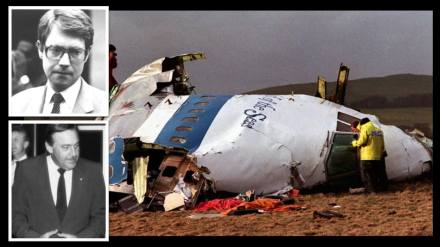
Heralding the end of The Border War in 1988, as part of the pathway to peace, the United Nations pre-empted the process and appointed a Swedish UN Commissioner for Namibia, Bernt Carlsson. In the eventuality of South Africa’s relinquishing control of Namibia.

Commissioner Carlsson’s role would be to administer the country on behalf of the UN, formulate its framework constitution, and organise free and fair elections based upon a non-racial universal franchise.

On their way to sign the brokered peace accords to end the Bush War on the 22nd December 1988 in New York, the South African VIP contingent including Pik Botha (the then Foreign Minister) and the United Nations representative – Bert Carlsson all booked their passage to New York on Pan Am Flight 103.  Pan Am Flight 103 was a regularly scheduled Pan Am transatlantic flight from Frankfurt to Detroit via London and New York.

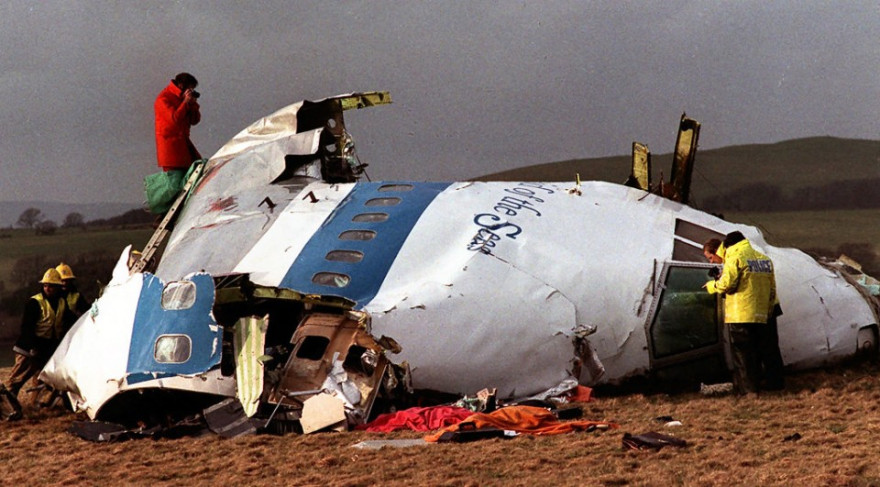
Sadly and very tragically, the UN Commissioner for Namibia, Bernt Carlsson, was not present at the signing ceremony. He was killed on Pan Am Flight 103 when it exploded and crashed on Lockerbie, Scotland on 21 December 1988 en route from London to New York City – killing all 243 passengers and 16 crew, in what became known as the Lockerbie bombing after large sections of the aircraft crashed onto residential areas of Lockerbie, United Kingdom, killing 11 more people on the ground.

bd4e1d5f0f5000d3

South African foreign minister Pik Botha, and the official South African delegation of 22 members had a very lucky escape. Their booking on Pan Am 103 was cancelled at the last minute and Botha, together with a smaller delegation, caught the earlier Pan Am 101 flight to New York.

Handed over by the Libyans and found guilty,  a Libyan terrorist, Abdelbaset al-Megrahi was jailed, the only person to be convicted for the attack. In 2003, Gaddafi, the Libyan despot, accepted responsibility for the Lockerbie bombing and paid compensation to the families of the victims.  However many questions still exist on the motive and responsibility of the bombing – with Abdelbaset al-Megrahi protesting his innocence all the way to his death bed.

With Gaddafi out of the picture now, I guess we will never know the full picture, and a tantalising titbit of a possible International terrorist conspiracy to derail the Namibian Peace Accords and/or deliver a killer blow to South Africa’s National Party elite and their policy of Apartheid will forever remain unanswered.

Pictured left is Bernt Carlsson and right is Pik Botha.


Written and researched by Peter Dickens

I’m not pro Boer, I’m British, this isn’t OUR way!

There are few times you see a balanced documentary on the The South African War (1899-1902) a.k.a. the Boer War when it comes to the issue of the British concentration camps and this landmark documentary “Scorched Earth” is another in a line up that gets it right and wrong all at the same time.

As South Africa addresses its history from a holistic perspective,  the complete story of the 2nd Anglo Boer War starts to emerge – the scale of the concentration camps as not strictly a “white” issue, but a “black” issue too is now becoming highly apparent.  That the war is now been viewed in both contexts and in the context of its historical time opens up new questions on the deep scars of hatred, still not fully addressed, affecting all of South Africa’s ethnic groups.

Apportioning ‘Blame’ 

That the concentration camps are a human tragedy on an epic level is not debatable. The key question to be addressed is the aspect of “blame”.

Can blame be put at one man’s feet – Lord  Kitchener under whose watch and policy this tragedy unfolded and a man with a disdain for the Boer nation, or does blame lie in cultural misunderstanding – actually going as far as blaming the women themselves for not following British heath regulations for tented camps, not trusting the nursing and hospital staff due to language and cultural barriers and using ancient remedies which accelerated the deadly social diseases instead?

Or, more to the point, does blame lie in the complete British maladministration of the camps, lack of medicine and lack of site and logistics planning by the British policy makers and proponents of the camp system?

7a7879c9b051127afdd349e3f9ffa2a2

White Concentration Camp of the 2nd Anglo Boer War

Does blame lie with the Boer Commanders insistence on continuing a war after it had been “lost” through conventional war – fully in the knowledge that their kinfolk and entire nation’s survival was heading to complete annihilation?

Does blame lie in the sheer racism and lack of human respect to ‘Blacks’ by prevailing Victorian’s considering them ‘less civilised’ in need of white patronage and the even harsher racist attitudes and laws in the two Boer Republics to purposefully ignore an unfolding human tragedy in the ‘Black’ camps? Does blame even lie with men at war with one another and the propaganda to paint one another as somehow lesser human beings?

20448955_10155633958753980_1228035049095603465_o

Black Concentration Camp of the 2nd Anglo Boer War

Does blame lie in the British initiating a medieval policy of putting to the crucible those women and children whose menfolk where still fighting and rewarding those whose men had stopped fighting with extra food by way of incentive?  And then the very thorny question – does blame lie in a system used by the British which had the potential to decimate a nation’s youth?

In essence, there is a strong case to argue that the concentration camps where a punitive measure to stop a phase of war which nobody really understood – the conventional war was lost when the Boer’s capital cities were taken, the decision by the Boer commanders and “government in the field” to take the war into a guerrilla one – supplied and fed by homesteads – simply brought the homesteads into the line of fire and war’s ravages – especially disease which proved the biggest killer.

To the Victorian men and women the unfolding tragedy in South Africa was shielded for much of the war and when exposed in the media by the likes of Emily Hobhouse it only really highlighted the plight of the ‘whites’. In this respect Emily Hobhouse’s words to Kitchener are sharply poignant “I’m not pro Boer, I’m British, and this isn’t our way”.

Or is the blame as simple as blaming a virus. The biggest killer in the Boer War was measles, a child’s disease which killed 30% of the white camp population, most of whom were children. It was also not this first or the last time a measles epidemic killed Boer children – epidemics existed in Voortrekker lagers log before the Boer War, with the same devastating consequences. The simple truth – the biggest killer of British soldiers in the Boer War was Typhoid, more died of disease than bullets – the same is true of the civilian populations – the British ones under Boer siege at the opening of the war, and the Boer ones under British camp oversight at the end of the war.

In Conclusion

There is a very long way to go – but the future in reconciling the true effect of this war and redressing it as a nation – is to understand that the Boer War was not only a “white” man’s war, nor the concentration camps strictly about Afrikaans women and children, a much bigger story exists and which needs to be reconciled with – and that is the suffering of South Africa’s black population and the extraordinary losses they experienced in concentration camps too – which only now are becoming fully understood.  For more on the ‘Black’ concentration camp history do visit this Observation Post link for a fuller story: To fully reconcile The Boer War is to fully understand the ‘BLACK’ Concentration Camps

The redress for white Afrikaners in South Africa as to any form of global awareness and world condemnation of this tragedy to their nation lies in the reconciliation of the history with the previously unwritten and misunderstood “black” history behind The 2nd Anglo Boer War.  Only if it is a national issue, a common cause and a national healing process implemented to dealt with it – will amends and long-awaited apologies from the British be found.


Written by Peter Dickens.  Image copyright, Imperial War Museum.  ‘Scorched Earth’ documentary, Director Herman Binge, produced for M-Net by Pearson Television, copyright 2001.

Vlamgat ….

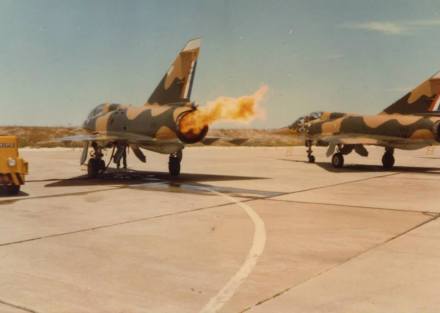
Vlamgat – the term the South African Air Force personnel affectionally called their Mirage fighter jets. Vlamgat means ‘flaming arse’ in direct translation – and for good reason.

Here two Mirage III D2Zs, numbers 843 and 849 at the weapons camp in Langebaan in 1985 – one of which is having a ‘wet start’ – where excess fuel in the combustion chamber and tail pipe is burnt off in a phenomenon called ‘torching’ .. a flaming arse indeed.

Photo copyright, thanks and courtesy to Allan Southern

The Battle of Spionkop shaped 3 future leaders – Churchill, Botha & …. Gandhi

A little more unknown military history on just how one small battle in South Africa has shaped some of the greatest men of our time, including, believe it or not, Mahatma Gandhi, the famous Indian political reformer and spiritual leader.

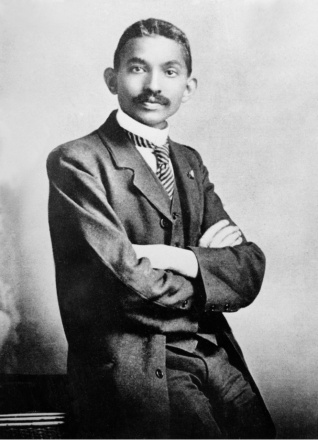
Gandhi’s formative years were in South Africa and many don’t know this, but he even took part in the 2nd Anglo Boer War. He was also present at the battle of Spionkop, fighting for the British Army as a stretcher bearer and medic.

Spionkop is such a significant battle that three future heads of government were present, Winston Churchill, Mahatma Gandhi and Louis Botha. As a result, South Africa, and that battle in particular, played a significant role in moulding the contemporary history of the world in the years to come, simply because of the way the battle influenced these three men.

Background to the Battle of Spion Kop

After much sabre rattling over British immigrant workers rights on the mines in the Zuid-Afrikaansche Republiek (Transvaal Republic) and Rhodes’ Imperial expansionist visions, The 2nd Anglo Boer War was officially declared by the Boers on 11 October 1899 when they invaded the British Colonies of Natal and the Cape.

The move by two relatively small Boer Republics – the South African Republic (Transvaal) and Orange Free State Republic – to declare war on what was then the world’s only real superpower – The United Kingdom (Great Britain) – came with some astonishment to Queen Victoria and the British Government. The British expansionist Imperialists in Southern Africa, along with the Gold and Diamond mining magnates, on the other hand, could hardly believe their luck.

From the Boer’s perspective, the pressures Milner had put on Paul Kruger’s government to grant citizenship rights to mainly British mine workers on the Rand had simply become too much to bear.  Numerically speaking there were to be more miners than Boers in the Transvaal and the granting of such rights would have ended Boer governance of the province eventually – simply by the ballot alone.

As with the 1st Anglo Boer War (or Transvaal War as it was known) fought 20 years earlier from 16th December 1880 until 23rd March 1881, the Boers banked on a quick and decisive victory over the British Colonial forces in Natal and the Cape (which were somewhat weaker than Boer forces at the start of the 2nd Anglo Boer war), and bring to an end the United Kingdom’s demands on them and give them an upper hand in re-establishing their peaceful relations with their British neighbours – exactly as they had done after their victory over the British at The battle of Majuba in the 1st Anglo Boer War.

The Boer advance was however stopped by three small garrison armies at the British border towns of Mafeking, Kimberley and Ladysmith.  The Boers promptly put all three of these towns to siege and brought up heavy artillery and cannons to bombard them, both the garrisons and the civilians alike came under repeated and constant fire, the British citizens in these towns – especially women and children, were forced to near starvation and were now living rough in bunkers, mine shafts and caves.  This prompted an outrage back in Britain and fuelled by public opinion of the arrogance of it all Queen Victoria was able to draft the biggest British expeditionary force ever seen to go to Southern Africa and get their towns back. Central to all of this was the plight of the citizens in Ladysmith – Ladysmith was to become the pride of the British empire in Southern Africa and the rally call.

General Sir Redvers Henry Buller VC landed in Cape Town on the 31st October 1899 to appraise the situation, the main body of the first wave of expeditionary forces due to arrive shortly afterward by 10 November 1899.  By the beginning of December 1899 Buller had assembled all his forces in Durban to begin the relief of Ladysmith – what the British did not expect was to get was a resounding beating, ‘Black Week’ awaited them.

Buller’s woes in Natal started  with the Battle of Colenso – which was the third and final battle fought during the ‘Black Week’ – 10th to 17th December 1899 (the other two been resounding Boer victories at Magtersfontein and Stormberg in the Cape Colony),

At the Battle of Colenso, fought on the 15th December 1899, Buller’s forces came up against well entrenched Boer forces under the command of General Louis Botha (the first of the men profiled here).  Despite a brave attempt to ‘save the guns’ at Colenso, inadequate preparation and reconnaissance and uninspired leadership led to a heavy, and in some respects humiliating, British defeat. Buller’s army lost 143 killed, 756 wounded and 220 captured. Boer casualties were only eight killed and 30 wounded.  Buller retreated to reinforce, he requested even more British expeditionary battalions from the War Office by January 1900 and next up for Buller in a second attempt to relieve Ladysmith was The Battle of Spion Kop.

In a nutshell, the Battle of Spion Kop (Dutch: Spionkop; Afrikaans: Slag van Spioenkop) was fought about 38 km (24 mi) west-south-west of Ladysmith on the hilltop of Spion Kop along the Tugela River, Natal in South Africa from 23–24 January 1900.  It was fought between the South African Republic (Transvaal Republic) and the Orange Free State forces under the command of General Louis Botha on the one hand and British forces under command of General Sir Redvers Henry Buller VC in their second push to relieve Ladysmith on the other hand.  Spion Kop occupied the centre of the Boer line, and was therefore of strategic and tactical importance.

1403133_10203084409771670_1091144163_o

Iconic photograph of British dead in situation after the Battle of Spionkop

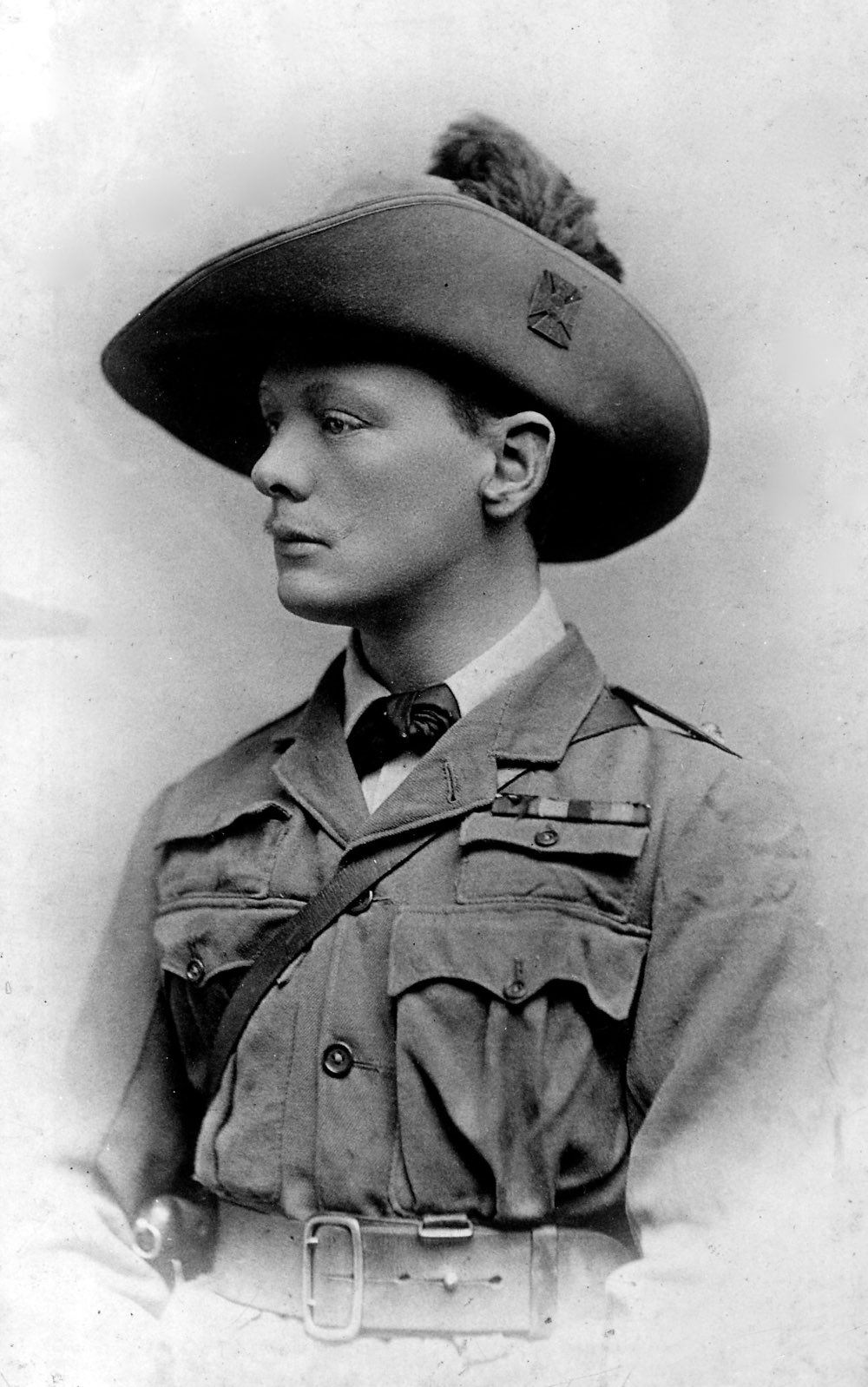
So what were these three future statesmen and reformers doing at Spion Kop? During the battle, Gandhi performed the role of a medic, Churchill acted as a courier and Botha led the Boers during the battle.  So let’s have a look at these three and their involvement a little more in depth, and chart how this singular battle affected their future views and helped shape their careers.

Louis Botha

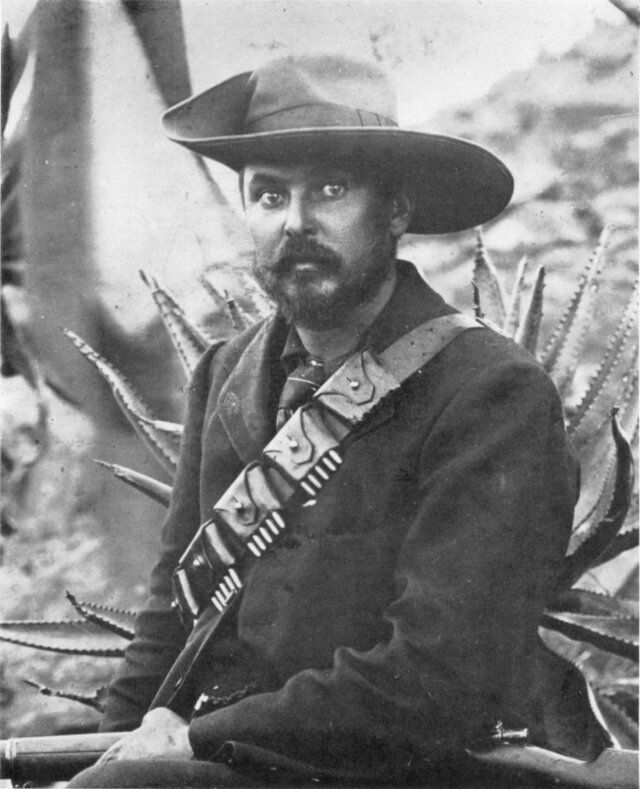
vo017cbaAt the onset of the war in 1899, Louis Botha initially joined the Krugerdorp Commando, he fought under Lucas Meyer in Northern Natal, and later as a General commanding and leading Boer forces rather impressively at the Battle of Colenso and then at the Battle of Spion kop.
General Louis Botha’s forces came up against General Sir Redvers Buller VC forces as he was trying to relieve Ladysmith.  Botha’s forces held the Tugela River and although Botha’s men were outnumbered, they were mostly equipped with modern Mauser rifles and up-to-date field guns, and had carefully entrenched their positions. In December, 1899, Buller made a frontal assault on the Boer positions at the Battle of Colenso The result was a heavy British defeat.

Over the next few weeks, Buller received further reinforcements, and he moved to cross the Tugela river and capture the hill of Spion Kop in a second attempt to advance on Ladysmith – Spion Kop lay at the centre of the Boer line, so of great strategic and tactical advantage if taken.  So on the night of 23 January 1900, General Sir Charles Warren, tasked with the advance on Ladysmith, sent the larger part of his force to secure the top of Spion Kop.

4-Boers_at_Spion_Kop_1900_-_Project_Gutenberg_eText_16462

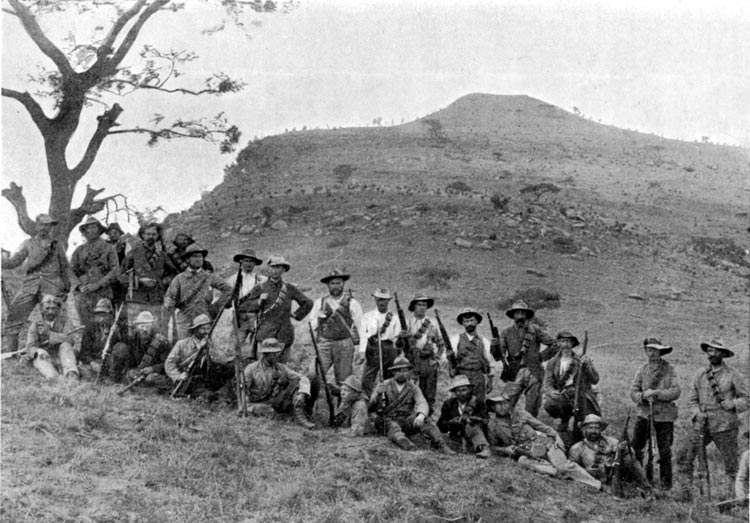
Boer Forces on Spion Kop, January 1990

The British climbed up the hill at night and in dense mist. They surprised the small Boer piquet  and drove them off the kop at bayonet point. The Boer piquet retreated down the hill to their camp waking up their fellow Boers by screaming “Die Engelse is op die kop.” (The English are on the hill.). At that time a half-company of British sappers began to entrench their position on the hill with a mere 20 picks and 20 shovels (oddly – while almost 1,000 soldiers stood around idle).

As dawn broke, the British discovered that they held only the smaller and lower part of the hilltop of Spion Kop, while the Boers occupied higher ground on three sides of the British position. The British had no direct knowledge of the topography of the summit and the darkness and fog had compounded the problem. Furthermore, the British trenches were inadequate for all defensive purposes. Because the summit of the kop was mostly hard rock, the trenches were at most 40 centimetres (16 in) deep and provided an exceptionally poor defensive position – the British infantry in the trenches could not see over the crest of the plateau and the Boers were able to fire down the length of the crescent-shaped trench from the adjacent peaks.

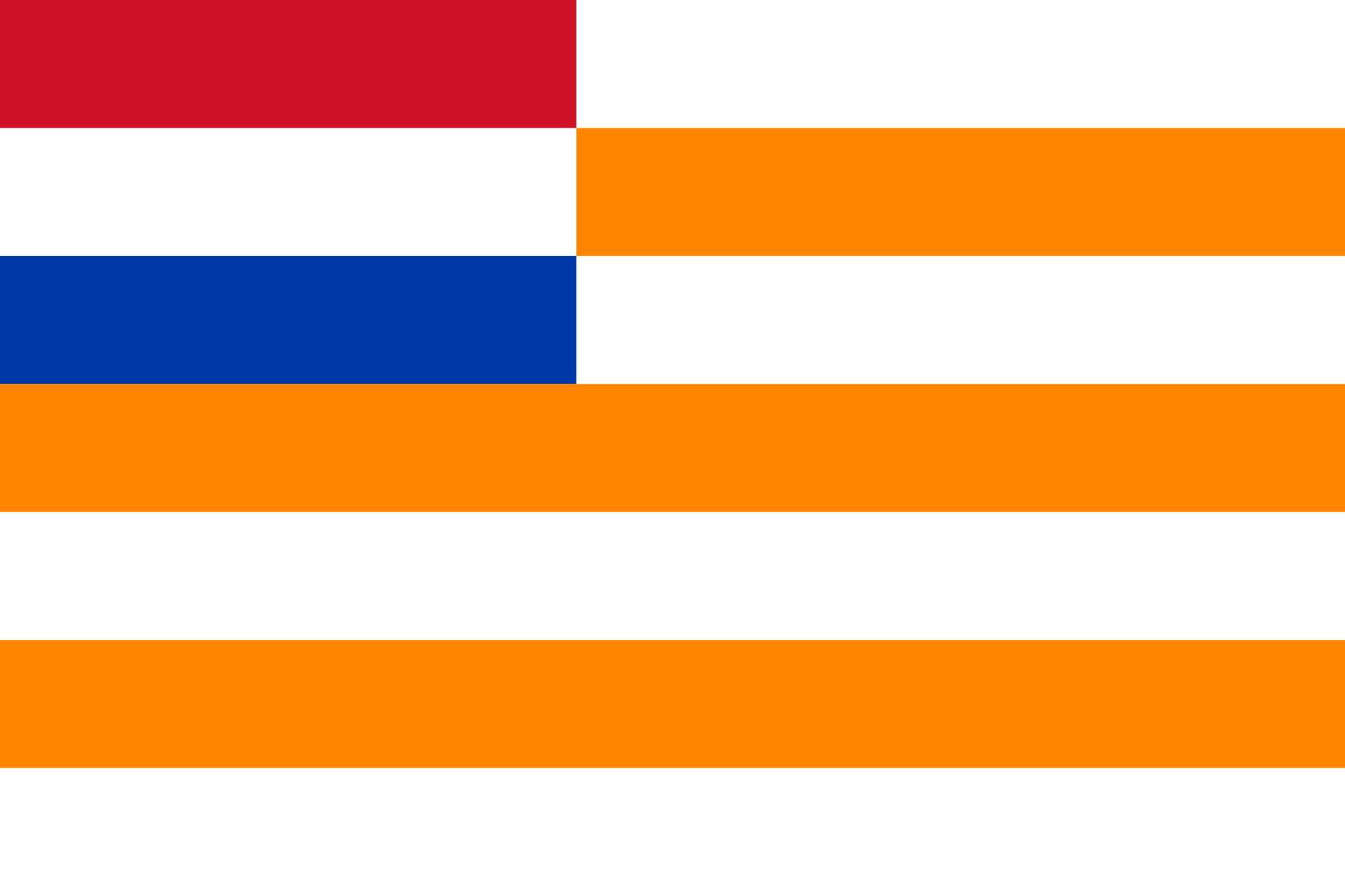
2000px-Flag_of_the_Orange_Free_State

Orange Free State Republic flag

In the resultant murderous and accurate Boer rifle and artillery fire as well as Boer assaults – the British ran up an unacceptable level of casualties and deaths – in what was to become known later as the ‘murderous acre’.  Although they eventually broke the Boer line after a herculean effort they withdrew from the hilltop as an exhausted and broken force, allowing the Boer’s to re-occupy it and win the day.

The British took 20,000 men and 36 Field Guns into the battle and by the end of the battle, the British suffered 243 fatalities; many were buried in the trenches where they fell and 1,250 wounded.  Whilst the smaller Boer force of 8000 men, 4 Field Guns and 2 cannon only sustained 68 killed 267 wounded.  It was a resounding Boer victory against the numerically superior British.

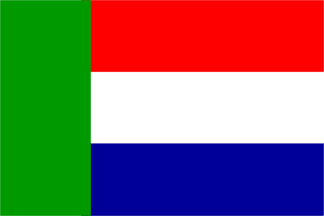
za-trans

South African Republic (Transvaal) flag

The Boers, including Botha, thought that their victory at the Battle of Spion Kop would be the end of all the hostilities, and like the end of the 1st Boer War which saw a similar British defeat on the hill of Majuba – the Boers thought the British would now sue for peace and so many of them even went home.  (see Observation Post Boers ‘Don’t forget Majuba, boys’. Brits ‘No fear, Boere, no fear’. for more on this battle).

Little did they foresee the ‘total war’ that was to become the 2nd Anglo Boer War and British resolve to not only take back their captured cities but also to eventually conquer the two Boer Republics with a degree of ruthlessness never before seen in South Africa, and never seen again.

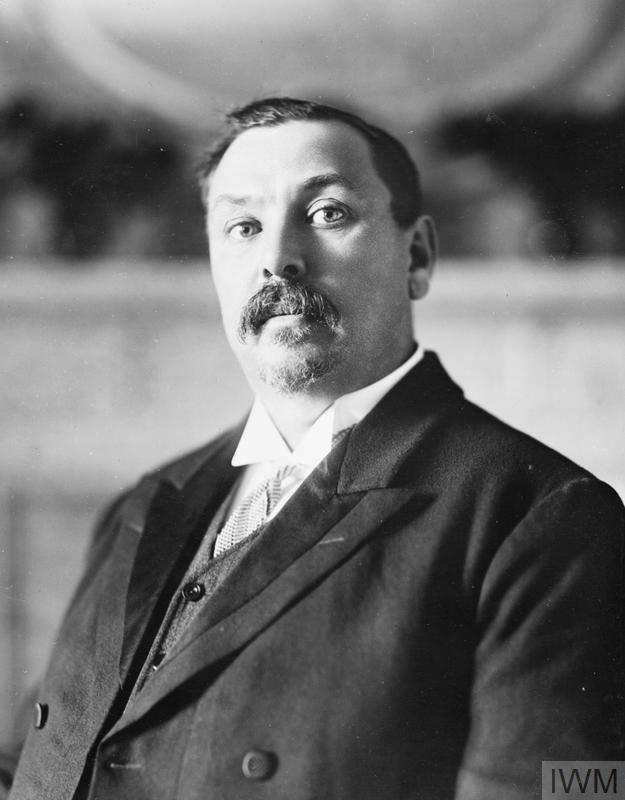
Botha

Louis Botha as the first Prime Minister of South Africa

The successes at Colenso and Spion Kop eventually saw General Louis Botha take control of all Boer Forces.  However, once the British won the conventional phase of the war and captured the capital city of Pretoria, the Boer commanders decided to move their government ‘into the field’ and embark on a new Guerrilla warfare phase.  This resulted in the British using heavily handed scorched earth and concentration camps systems to squeeze off supply to the guerrillas in the field.  The net result of these policies is that by the end of the 2nd Anglo Boer War, the Boer Republics’ farming sector was economically broken and Boer armies and Boer people’s completely decimated.

To build their country up again General Louis Botha teamed up with General Jan Smuts to propose ‘Union’ between the two British colonies and the two Boer states, take control back in the form of an independent South African parliament from Westminster (so it would be able to make its own laws) and create a new country – South Africa.  The Union of South Africa was born in 1910 with these two ex-Boer commanders leading it (without a shot been fired) and as one of these two reformers Botha took the mantle of South Africa’s very first Prime Minister.

Botha is literally the co-founder of South Africa and Smuts was very prepared to let him take the Prime Minister position as he was a far more popular man than the deep thinking broody Smuts,  here Smuts felt their relationship was perfectly balanced for the work of creating a new country and all the challenges that would bring.  Botha’s popularity, especially amongst the Afrikaner lay in his great deeds during the 2nd Anglo Boer War and his popular and likeable manner in command, this popularity was forged by his successes at Colenso and Spion Kop.

Botha would die in office on the 22 August 1919, and in a further ironic twist, it would be Field Marshal Smuts, Botha’s partner in Union who would go on to be come a key advisor and close friend to Winston Churchill during the invasion of France in World War 2 and the formation of the post war world.  To read more on Smuts and Churchill read Observation Post “The force of his intellect has enriched the wisdom of the whole human race”- the death of Jan Smuts.

Winston Churchill

Winston ChurchillWinston Churchill took initially part in the 2nd Anglo Boer War as a ‘war correspondent’ for The Morning Post.  War Correspondents like Churchill tended to be commissioned officers serving in uniform attached to Regiments or formations, their reporting was intended to toe the military line.  South Africa literally made Churchill into a national hero and it is the epicentre of his rise to political greatness.
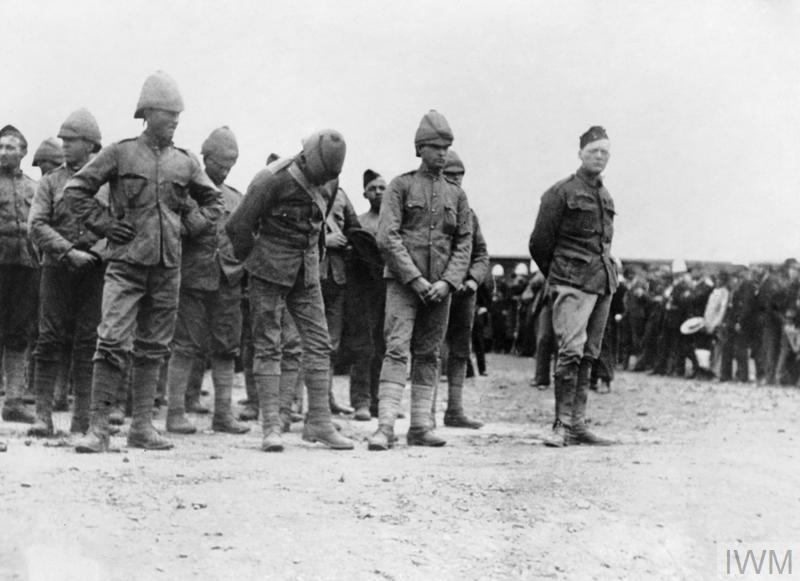
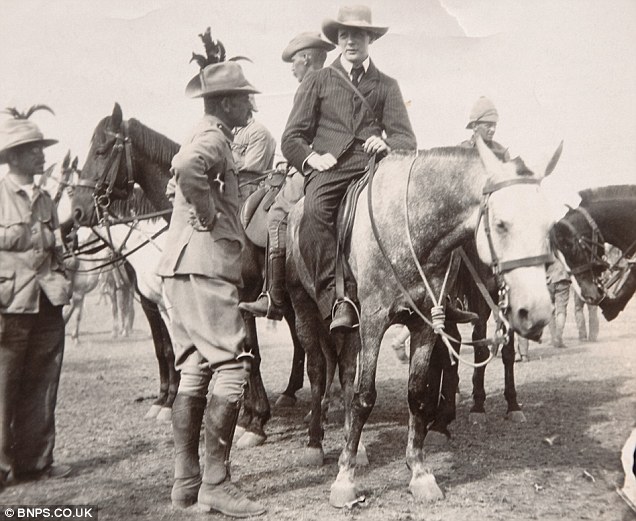
Churchill’s activities in South Africa read like a ‘Boys Own’ Adventure Novel.  His impertinent nature saw him arrive in Cape Town with General Sir Redvers Henry Buller’s expeditionary force, and he immediately teamed up with journalistic colleague John B. Atkins of the Manchester Guardian to go to the front at Ladysmith before any other journalists could do so. They took a 700-mile undefended train ride, boarded  a small steamer bound for Durban and promptly sailed into the teeth of an Indian Ocean storm. After several harrowing days, the pair arrived at Durban.

Still determined to get to see the Boer forces’ siege of Ladysmith ahead of Buller’s advancing forces, Churchill and Atkins made another dangerous train ride of 60 miles to within hearing range the artillery fire of the Boer guns on Ladysmith. Churchill, still keen on getting closer to the action accompanied a scouting expedition on an armored train. The train was ambushed by the Boers and on 15 November 1899, Churchill and after a firefight in which Winston played a direct combatant role, he was captured by none other than Louis Botha (the other future statesmen profiled here).

large_000000

Churchill – standing off-set to the right as a POW

Churchill was imprisoned in a Prisoner of War (POW) camp. He managed to escape, and with a ransom price on his head and the assistance of an English mine manager, he eventually made his way to Delagoa Bay (Mozambique) after forging rivers, hiding in mine shafts and stowing away on a train . Hailed as a hero back in England, Churchill returned to Durban.

Here Churchill joined Buller’s advance on Ladysmith and was commissioned as a lieutenant in the South African Light Horse by General Buller whilst he was basking in the glory of his well-publicised escape from Boer captivity.  By January 1900, at the Battle of Spionkop just outside Ladysmith Churchill acted as a courier to and from the summit at Spion Kop and Buller’s headquarters and made a statement about the scene: “Corpses lay here and there. Many of the wounds were of a horrible nature. The splinters and fragments of the shells had torn and mutilated them. The shallow trenches were choked with dead and wounded.”

article-2094822-118BA99F000005DC-359_636x521

Churchill on horseback during the 2nd Anglo Boer war, this photograph was taken just after his escape from Boer captivity.

1280px-Flag_of_the_United_Kingdom

British Union Flag

Later, after the war Churchill used his new-found status as a national hero and turned his attention to politics, winning a seat in Parliament in the 1906 general election.

Ironically, it was Winston Churchill who revealed that General Botha was the man who captured him at the ambush of the British armoured train he was travelling in on 15 November 1899. Churchill was not aware of the man’s identity until 1902, when Botha travelled to London seeking loans to assist his country’s reconstruction, and the two met at a private luncheon.

Churchill became the Chancellor of Exchequer (Cabinet Minister) in 1924 upon rejoining the Conservative Party. Churchill was outspoken on a number of issues, such as the danger of Germans re-armament after World War One. His warnings against Hitler were largely ignored, but at the outbreak of the Second World War, his foresight was acknowledged and he became the war-time Prime Minister. His speeches and military strategy were a great encouragement to the British, and he is regarded today as one of the greatest Britons of his time.  It is largely due to Churchill’s leadership during the war that Britain was not invaded by Hitler’s nazi forces at the on-set of The Battle of Britain, that Britain (and Western Europe for that matter) is the modern democracy with the freedoms it enjoys today is largely thanks to Churchill (whether his detractors, of which there are many, like it or not, it remains a fact).

Mahatma Gandhi

Historians have forever struggled to explain why this apostle of peace and non-violence rendered support to the British Empire in the Boer War, the 1906 Natal Rebellion and the First World War.  However what is clear by Gandhi’s own writings was that his intentions in supporting the British Army in Southern Africa was to buy the Indian population in Southern Africa more political concession and representation based on endorsement and participation in British war efforts.

Natal Colony

Natal Colony Flag

When the Boer War came about Mahatma Gandhi actually played a pivotal role in the forming Natal Indian Ambulance Corps which fell under the British Military command.  He even raised the money to form the Corps from the local Indian Community.   It consisted of 300 “free” Indians and 800 indentured labourers (Indians were encouraged to emigrate to South Africa as labourers under contract, once the specified dates of the contract finished they were “free” to own land and make their own way as citizens).

In an urgent response the siege of Ladysmith the British authorities recruited the Natal Volunteer Ambulance Corps of about 1100 local White men, at the same time Gandhi pressed for his Indian stretcher-bearers to be allowed to serve, which was duly granted.

Gandhi lawyerMahatma Ghandi first saw action with Buller’s forces at the Battle of Colenso on 15 December 1899,  when the Natal Volunteer Ambulance Corps we ordered to remove the wounded from the front line and then transport them to the railhead.
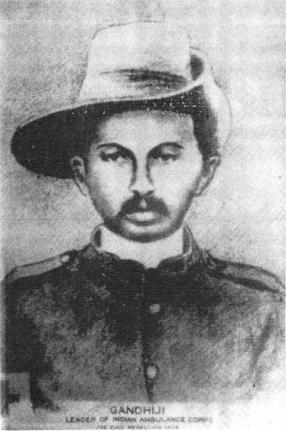
During the Battle of Spion Kop, the Natal Volunteer Ambulance Corps (including Gandhi) moved into the frontline to collect the wounded. There is even an account of Ghandi’s bearing during the Battle of Spion-Kop. Vera Stent described the work of the Indians in the Illustrated Star of Johannesburg, July 1911, as follows:

“My first meeting with Mr. M. Gandhi was under strange circumstances. It was on the road from Spion Kop, after the fateful retirement of the British troops in January 1900.

The previous afternoon I saw the Indian mule-train moved up the slopes of the Kop carrying water to the distressed soldiers who had lain powerless on the plateau. The mules carried the water in immense bags, one on each side, led by Indians at their heads. The galling rifle-fire, which heralded their arrival on the top, did not deter the strangely-looking cavalcade which moved slowly forward, and as an Indian fell, another quietly stepped forward to fill the vacant place. Afterwards the grim duty of bearer corps, which Mr. Gandhi organised in Natal, began.

ghandi7It was on such occasions the Indians proved their fortitude, and the one with the greatest fortitude was the subject of this sketch [Mr. Gandhi]. After a night’s work, which had shattered men with much bigger frames I came across Gandhi in the early morning sitting by the roadside – eating a regulation Army biscuit. Everyman in Buller’s force was dull and depressed, and damnation was heartily invoked on everything. But Gandhi was stoical in his bearing, cheerful, and confident in his conversation, and had a kindly eye. He did one good… I saw the man and his small undisciplined corps on many a field during the Natal campaign. When succour was to be rendered they were there.”
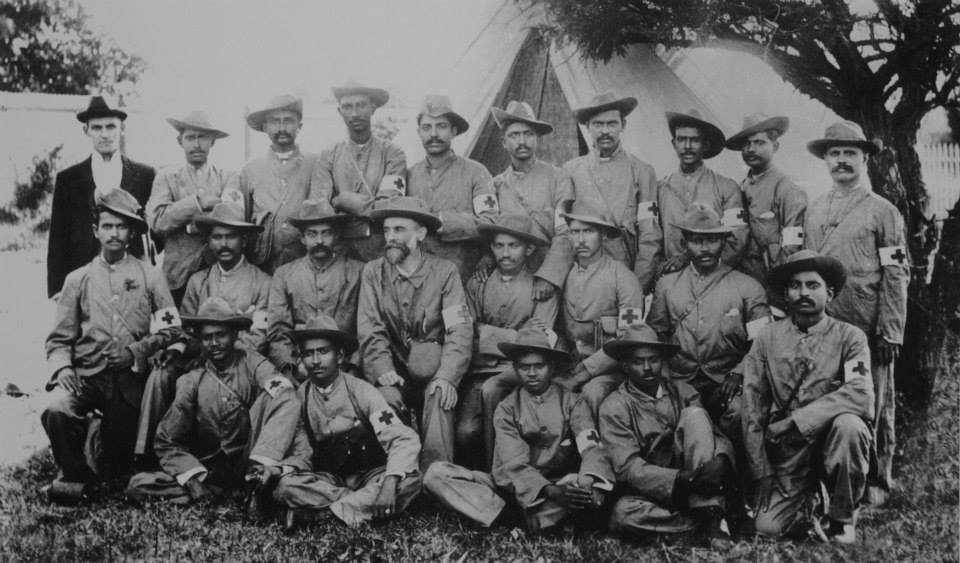
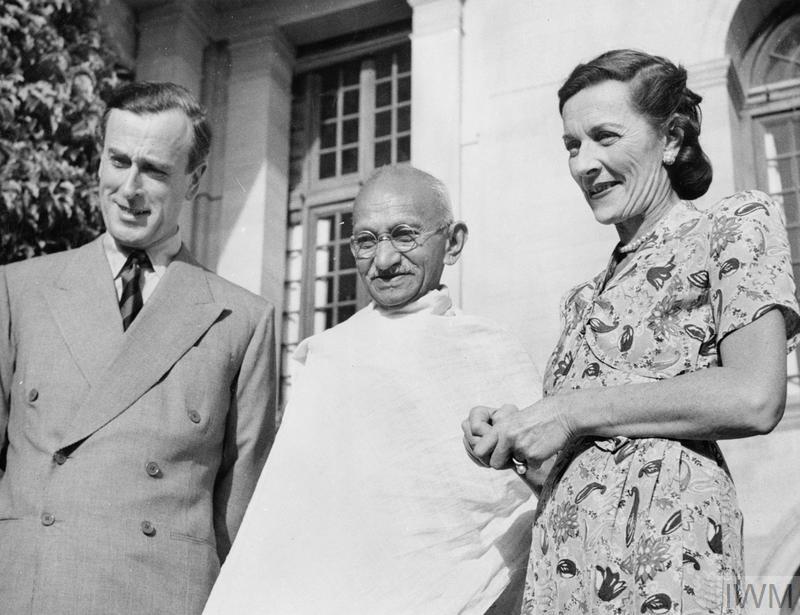
34 Indian leaders were awarded the Queen’s South Africa Medal for actions in the Boer War. Gandhi’s is held by the Nehru Memorial Museum in New Delhi.

Mahatma Ghandi remained in the military as a reservist, and was eventually promoted to the rank of Sergeant Major, he also took part in the 1906 Natal Rebellion for which he again received 1906 Rebellion Medal.  For more in Gandhi’s military service see The Observation Post Gandhi was a man of peace, but he was also a man of war! .

In the below image is Gandhi as a medic on the side of the British this time, seen in this photo with the stretcher-bearers of the Indian Ambulance Corps during the Boer War, South-Africa cira 1900.

1465327_235941723242234_756707980_n

Standing: H. Kitchen, L. Panday, R. Panday, J. Royeppen, R.K. Khan, L. Gabriel, M.K. Kotharee, E. Peters, D. Vinden, V. Madanjit. Middle Row: W. Jonathan, V. Lawrence, M.H. Nazar, Dr. L.P. Booth, M.K. Gandhi (Mahatma Gandhi), P.K. Naidoo, M. Royeppen. Front Row: S. Shadrach, “Professor” Dhundee, S.D. Moddley, A. David, A.A. Gandhi.

After the wars (Boer War and Natal Rebellion), Mahatma Gandhi’s politics began to shape up as one of non violence, and no doubt his exposure to the violence on war guided Gandhi to his philosophy of peaceful resistance.

In another irony as his political career travelled in synch with that of Louis Botha, in 1910, the same year the South African Union was established, Gandhi established an idealistic community called ‘Tolstoy Farm’ near Johannesburg. It was here, based on his wartime experience and his unsuccessful experiences of trying collaborative politics with the British, that he nurtured his policy of peaceful resistance.

Mahatma Gandhi’s political path was to cross with Louis Botha and Jan Smuts on a number of occasions over the issues of Indian rights and franchise in South Africa, and although Gandhi was arrested on a number of occasions for civil dissonance, he and Smuts developed a strong mutual respect, see Observation Post “… I am not worthy to stand in the shoes of so great a man”  for more on this unique relationship.

In all Mahatma Gandhi spent 22 years of his life in South Africa, a significant period of time, and there is no doubt the region’s politics and violence forged the man he had become by the time he returned to India in 1915.  On arrival in India he brought with him an international reputation as a leading Indian nationalist, theorist and organiser.

He joined the Indian National Congress and was introduced to Indian issues by Gopal Krishna Gokhale, his mentor. Gandhi by the time he arrived in India was utterly devout to the ideals of non-violence and universal love. He was against “untouchability” of India’s most destitute and all sorts of injustice in society. He lived a frugal life and imposed self suffering and hunger strikes to see his ideals triumph. In essence he dreamed of a “Ram Rajya” where everybody would live in peace.

In Gandhi’s in book Hind Swaraj Gandhi outlined his ideals of change via principles of non co-operation, and he declared that British rule was established in India with the co-operation of Indians and had survived only because of this co-operation. If Indians refused to co-operate, British rule would collapse and “swaraj” (self rule) would come.

Ghandi3

Negotiation of independence for India, Gandhi with Lord and Lady Mountbatten in 1947

Whist using this idea of non co-operation to fight British rule in India, he maintained his principles of truthfulness, peace and non-violence. In 1942, he launched the “Quit India Movement” to drive the British out of the country and gave the famous slogan of ‘do or die’ to his countrymen. The movement brought tremendous pressure on the British who eventually granted full independence to India in 1947.

1200px-Flag_of_India

National flag of India

He even famously crossed political paths with Winston Churchill when Churchill famously commented  “It is alarming and also nauseating to see Mr. Gandhi, a seditious Middle [Inner] Temple lawyer, now posing as a fakir of a type well known in the East, striding half-naked up the steps of the Viceregal palace, while he is still organizing and conducting a defiant campaign of civil disobedience, to parley on equal terms with the representative of the King-Emperor.”

Gandhi famously disarmed this typical Churchill rhetoric and insult when Gandhi wrote to Churchill in a letter saying, “Dear Prime Minister, You are reported to have a desire to crush the simple ‘naked fakir’ as you are said to have described me. I have been long trying to be a fakir and that [too] naked – a more difficult task. I, therefore, regard the expression as a compliment though unintended. I approach you then as such and ask you to trust and use me for the sake of your people and mine and through them those of the world.”


Written and researched by Peter Dickens.  References – wikipedia, Imperial War Museum, SAHO – South African History on-line, the escape of Winston Churchill.  Image copyright Imperial War Museum.  Colourised Spionkop image copyright Tinus Le Roux

The Horrible History and many names of Thaba Tshwane

The featured photo of the South African Army College in Thaba Tshwane has a lot of hidden history. South Africans just love re-naming things in pursuit of one political party’s agenda over that of another one, all in the interests of political narrative – all of them serving to either change or hide South Africa’s strong military and cultural heritage to suite this or that political likeness.

Take the military compound in Pretoria as an example – First it was called Roberts Heights – then Voortrekkerhoogte – now Thaba Tshwane  – even the changes in language used in the name and subsequent name changes speaks volumes.

25136980491_0dce82938e_b

Lord Roberts

The complex was founded around 1905, just after the 2nd Anglo Boer War by the British Army to garrison the city of Pretoria, and they called their new garrison area Roberts Heights after Lord Roberts.

Field Marshal Frederick Roberts (Lord Roberts) VC, KP, GCB, OM, GCSI, GCIE, KStJ, VD, Pc was one the most successful British commanders of the 19th century and the overall commander of British Forces during the 2nd Anglo Boer War.

It was however. renamed Voortrekkerhoogte (“Voortrekker Heights”) to commemorate The Great Trek in a flurry of Afrikaner nationalism which accompanied the Great Trek centenary – and what better than re-naming the hated “English occupiers” military base and removing the name of Lord Roberts – a man loathed by Afrikaners – and for good reason for many Afrikaners – the Boer war left this community deeply scarred, how the British and English South Africans felt about it at the time – different matter, to many of them Lord Roberts is a hero.  So, a controversial move that deepened social differences.

Following the end of the National Party and their influence of Afrikaner Nationalism as an ideology to govern South Africa, it was renamed again on the 19 May 1998 by the incoming ANC regime, this time called Thaba Tshwane instead.   This was done by the ANC to rid the area’s heritage of both its much hated ‘Colonial’ heritage and ‘Apartheid’ heritage with something more ‘universally shared’.

Voor

The inaugural ceremony of the Voortrekker monument at Voortrekkerhoogte, held on 16 December1949

So, Thaba Tshwane it is then, meaning of which is a little lost in translation, but some say its named after Tshwane, son of Chief Mushi, an Ndebele leader who settled near the Apies River, although there is some debate to whether he actually even existed as a historical figure (there’s a problem – there is no written or historic record – its all deeply back in a mystical oral tradition).

DSC_0594

Chief Tshwane statue

In any event, the name was changed again, and once again it was done to suit the next incoming regimes’ political narrative – the replacement of Black African culture and history over that of White African culture and history and scrubbing out anything the National Party or United Party or even the British did in the name of Afrikaner or English identity and heritage in South Africa.

The casualty in all this re-naming and one-upmanship is the actual history, the actual legacy, the golden thread that links our combined journey together – that it was British military compound established and named after Lord Roberts – was sadly even lost on the thousands of  South Africans who served there in the 70’s and 80’s who simply knew it as Voortrekkerhoogte and now even that will be sadly lost to the next generation of South Africans who serve there – who will in time just know it as Thaba Tshwane.  The actual “History and Heritage” lost forever.

To give an idea of  just how much of this rich tapestry is lost in ‘Thaba Tshwane’ can be found in one simple little cornerstone. The oldest building in the military complex is the one pictured – the “South African Garrison Institute” what is now re-named as the “South African Army College”. But here’s the really interesting bit – Lord Kitchener laid the cornerstone of this College on the 12th June 1902.

kitchener-photo-boer-war-site1

Lord Kitchener

During the Second Boer War, both Lord Kitchener and Lord Roberts (the chap they originally named Thaba Tshwane after) arrived in South Africa together on the RMS Dunottar Castle – along with massive British reinforcements in December 1899.

Following the defeat of the conventional Boer forces, Kitchener succeeded Roberts as overall commander of British Forces in November 1900. He subsequently inherited and expanded the successful strategies devised by Roberts to force the “Bittereinder” (Bitter End) unconventional Boer forces to submit.

The “Bittereinder” Boer Commandos had changed their tactics and were now using highly controversial and relatively new “hit and run” guerrilla tactics. The British in turn – in order to figure out how to stop “guerrilla war” – came up with the idea of containing the Boer’s supply line (their horse feed, shelter and food which where been provided by their families/homesteads) and placing all involved in supply (families and farm workers /servants alike) into both “White” and “Black” concentration camps respectively – and then burning the farms (a policy known as “scorched earth”).

Conditions in the concentration camps, which had been conceived by Roberts as a form of control of the families whose farms his forces had destroyed, began to degenerate rapidly as the large influx of Boers outstripped the ability of the minuscule British force to cope. The camps lacked space, food, sanitation, medicine, and medical care, leading to rampant disease and a very high death rate – especially among women and children (children particularly).

41cMeyjGDRL._SY450_You’ll recognise Lord Kitchener anywhere – he became the poster model for the “Your Country Needs You” campaign to spur British and Commonwealth men to sign up and fight in the trenches of World War 1. The poster is funnily seeing a little contemporary resurgence in celebration of the centenary of WW1.

It’s a “Horrible” history – but it’s history none the less – and for this very reason – that it is “horrible” that this history really needs to be told – lest we forget the sacrifice that it took.

Covering over it by re-naming everything, for the sake of a political one-upmanship merely washes out the country’s history, heritage and cultural understanding – it cleanses the rich tapestry that makes us unique as a nation.

In effect it takes us ‘off’ our combined journey as South Africans and does exactly the opposite of all the ‘good’ intentions for getting us to the best and most ‘shared’ option  – it separates us again, it deepens racial and cultural divide and perpetuates South Africa’s deepest problem, its on-going race politics.


Written by Peter Dickens