
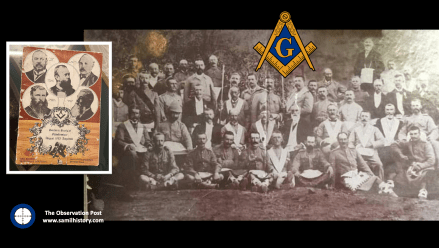
To answer a question recently posted on Boer War appreciation media as to whether Freemasonry and the Boer War are in some way linked. The origin of this bizarre statement lies in Manie Maritz, the 1914 Afrikaner Revolt leader, who became convinced of a Masonic and Jewish conspiracy to start the second Boer War. More on insane machinations of Maritz later, however to answer the question – no – Freemasonry as a fraternity and the two Boer Wars – the Transvaal Revolt (1880-1881) and The South African War (1899-1902) – have nothing to do with one another, as much as some deluded conspiracy theory driven arm-chair historians would like to to make a connection. In fact, as in many wars over centuries in many countries, Freemasons have landed up on opposing sides shooting one another – the most significant example of this is The American Civil War (1861-1865). For those ‘in the know’ Freemasonry plays no role whatsoever in starting (or preventing) wars, which is not surprising as Freemasonry is a charitable fraternity with principles relating to self actualisation and brotherhood.
It’s also not a ‘British’ thing. Freemasonry started in South Africa under the Dutch Grand Lodge, the Orient of the Netherlands in 1772 .. long before the British played any role in South Africa. The oldest Lodge is South Africa is a Dutch Constitution one – De Goede Hoop Loosie – its temple is located inside the Parliamentary buildings complex. It also does not mean the Dutch and English speaking South Africans are separated by English and Dutch constitutions, you’ll find English and Afrikaners in both. Case in point are the early Voortrekker leaders who were Freemasons – Andries Pretorius was a Freemason, he even opened up a Dutch constitution Lodge in Pretoria. Piet Retief was also a Freemason, but of the English Constitution whilst he was living in the Eastern Cape.
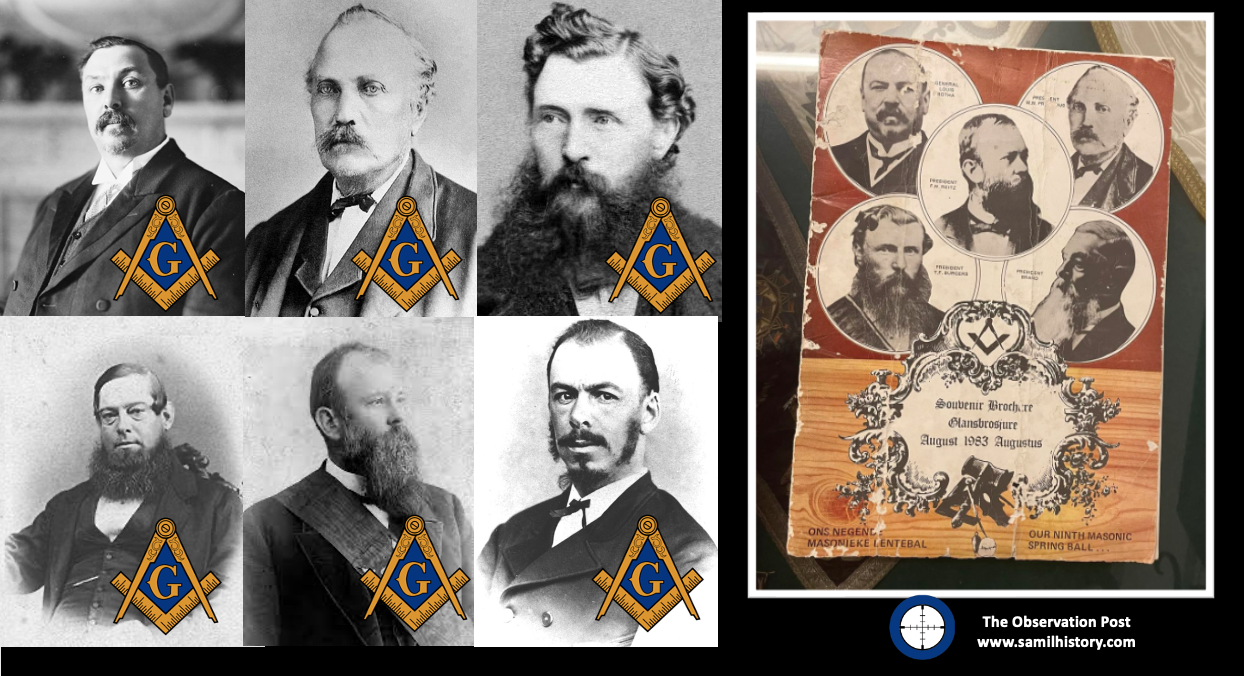
Here’s an interesting artefact, this one is located at the Pinelands Masonic complex’s historic display (my photo) – commemorating past South African state land Boer Republic leaders who were Freemasons. For interest, and it’s all in Public space – just ‘Google’it. As notable Boer Freemason Presidents and Prime Ministers go these include:
- General Louis Botha – Boer War Bittereinder General. 1st South African Prime Minister of the Union of South Africa: 1 May 1910 – 27 August 1919, Prime Minister of the Transvaal: 4 March 1907 – 31 May 1910
- President Johannes Brand – 4th President of the Orange Free State: 2 February 1864 – 14 July 1888. Awarded a British Knighthood.
- President Marthinus Wessel Pretorius – 1st State President of the Zuid-Afrikaansche Republiek (Transvaal Republic): 22 October 1866 – 20 November 1871. Established the ZAR and its constitution.
- President Thomas François Burgers – 4th State President of the Zuid-Afrikaansche Republiek (Transvaal Republic): 1 July 1872 – 12 April 1877. Introduced the ZAR’s currency.
- President Francis William Rietz – 5th State President of the Orange Free State: 10 January 1889 – 11 December 1895 and State Secretary of the ZAR in the lead up to Boer War 2.
- Acting President Pieter Blignaut – Acting State President of the Orange Free State: 14 July 1888 – 10 January 18891
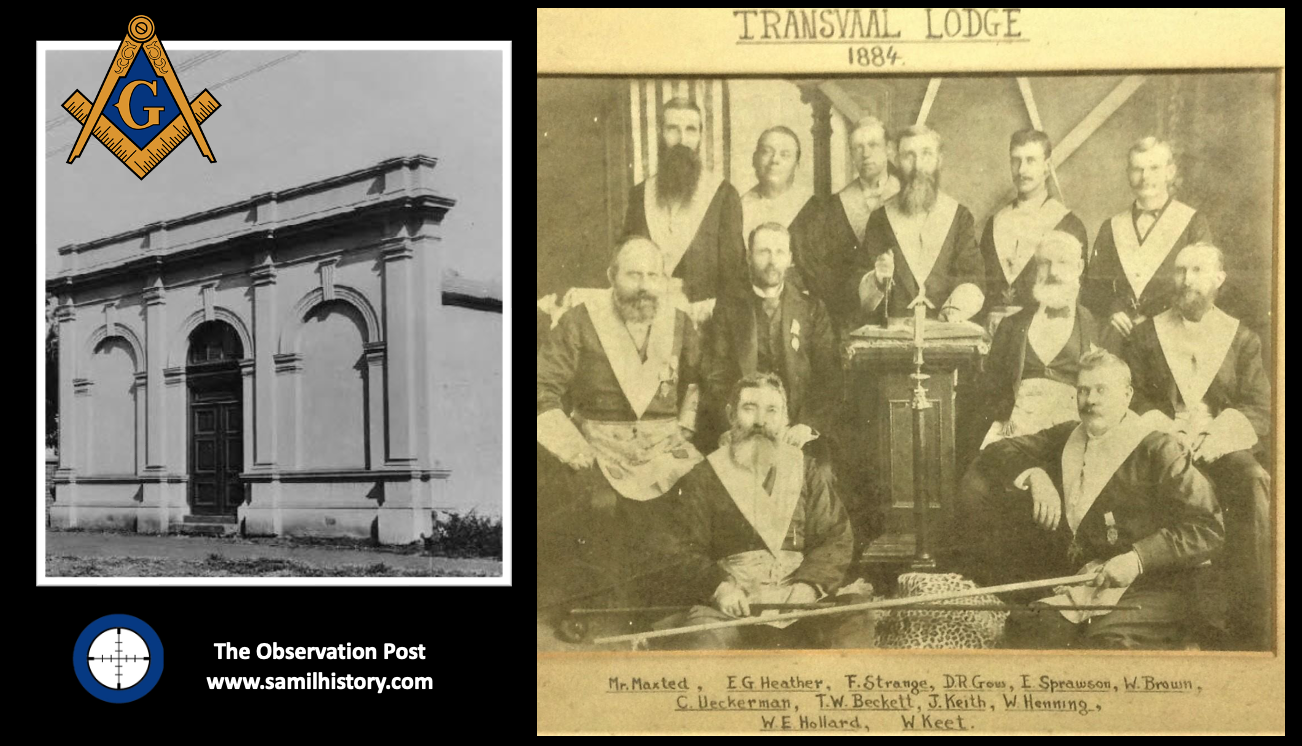
A very good barometer of the early development of the ZAR (Transvaal) and the very cosmopolitan nature of Pretoria with its Voortrekkers, NGK Churches, Jewish traders, British loyalists and Anglican Churches – before the discovery of significant gold deposits and the establishment of Johannesburg – is to look at Freemasonry in the ZAR. The first Freemasons Lodge was a Dutch constitution Lodge in 1862, the Aurora Lodge .
The corner stone of the new temple for this Lodge was laid by President Burgers, as noted, a freemason himself, on 27 May 1876. On the Freemason’s English constitution side, the ZAR voluntarily dissolved itself (led by President Burgers ironically) and it became The British Colony of the Transvaal in 1877 (the first version, there are two). The first English constitution lodge was established a year later on 15 January 1878, called the Transvaal Lodge – and its was established a mere 2 years after the Dutch’s Aurora temple was built. The Aurora temple was destroyed during a severe thunderstorm, disheartened and not keen to start all over again, the Dutch constitution freemasons joined the English constitution freemasons at the Transvaal Lodge (and here’s a rare photo of them).
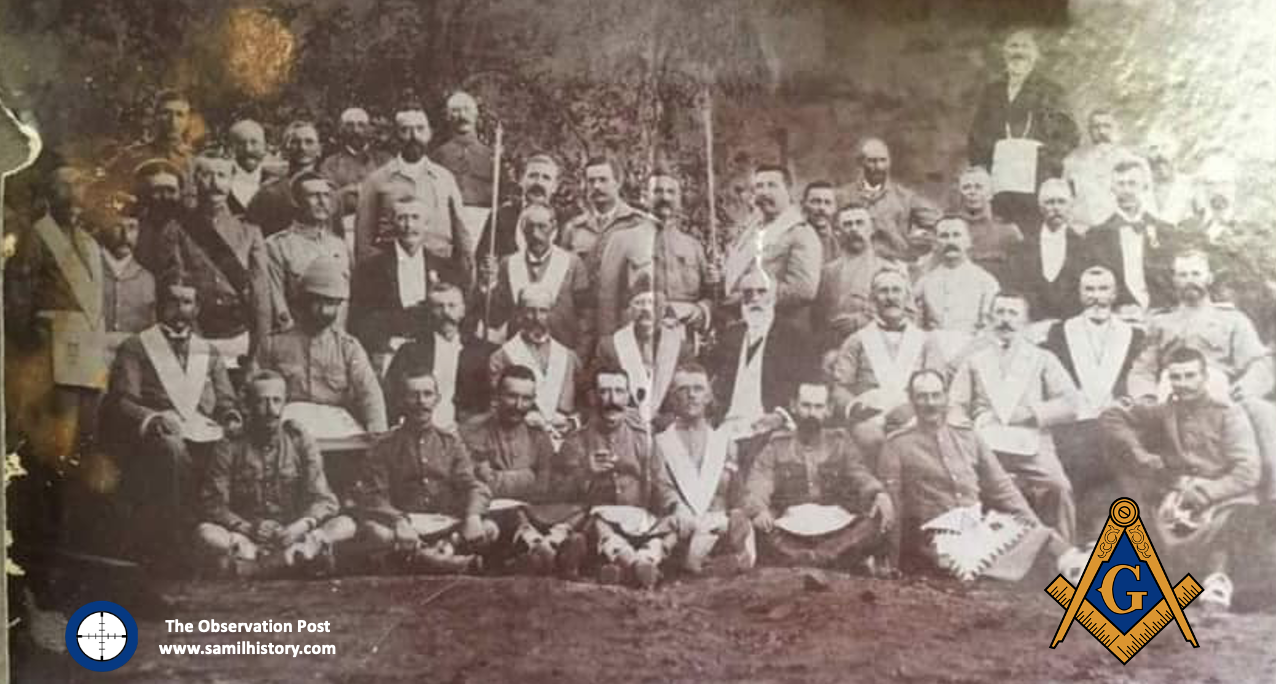
Here’s another interesting wartime photo – Dutch and English/Scottish/Irish constituted freemasons getting together in the middle of the South African War (1899-1902) a.k.a. Boer War 2 near Bloemfontein. On 12 December 1900, in the middle of the fighting a meeting was held in Jagersfontein, attended by both British (English constitution) and Boer Freemasons (some of which were Dutch constitution) – both on separate sides, but happy to meet one another under a banner of brotherhood. Here’s a fascinating picture of the occasion.
Other famous ‘Boer War’ Freemasons on the ‘Republican’ side include:
- Commandant General Petrus ‘Piet’ Jacobus Joubert, Commandant General of the ZAR Forces, Vice President to Kruger and Boer War 1 and Boer War 2 veteran. The overall commander of Boer Forces at the start of the war. and political opposition to Kruger.
- General Benjamin Johannes “Ben” Viljoen, Bittereinder Boer War 2 veteran and American Boer colony pioneer.
- Commandant Danie Theron, renowned Boer War 2 scout, bittereinder, commander and national Boer hero.
- Deneys Reitz – veteran Boer War officer and the author of ‘Commando’, although it his noted that he only became a Freemason after the Boer War, as noted his father President FW Reitz was also a Freemason.2
Of the famous ‘Boer War’ Freemasons on the ‘British’ side, these include:
- Field Marshal Lord Roberts Frederick Sleigh Roberts, 1st Earl Roberts and a Lodge in South Africa is named after him.
- Field Marshal Herbert Kitchener, 1st Earl Kitchener
- Sir Winston Churchill but only became a Freemason after he left South Africa after his service in the Boer War and returned to the UK.
- Sir Charles Warren was a notable Freemason
- Cecil John Rhodes was a very committed lifelong Freemason.3
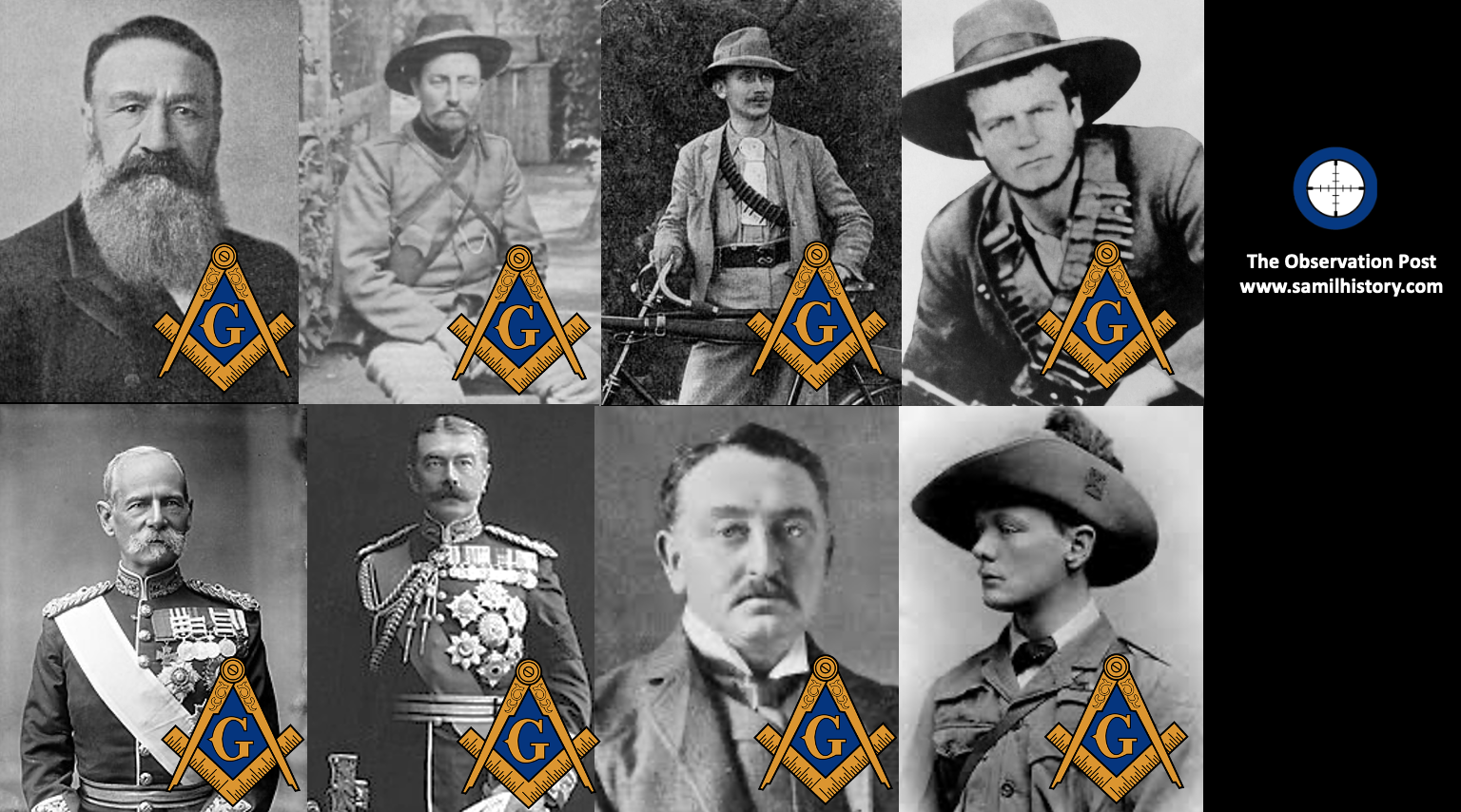
Of the famous authors associated with the Boer War, Joseph Rudyard Kipling, the famous author of the Jungle Book was a Freemason, so too was Arthur Conan Doyle. Leo Amery, who penned the first official history of the Boer War for the Times was also a Freemason.
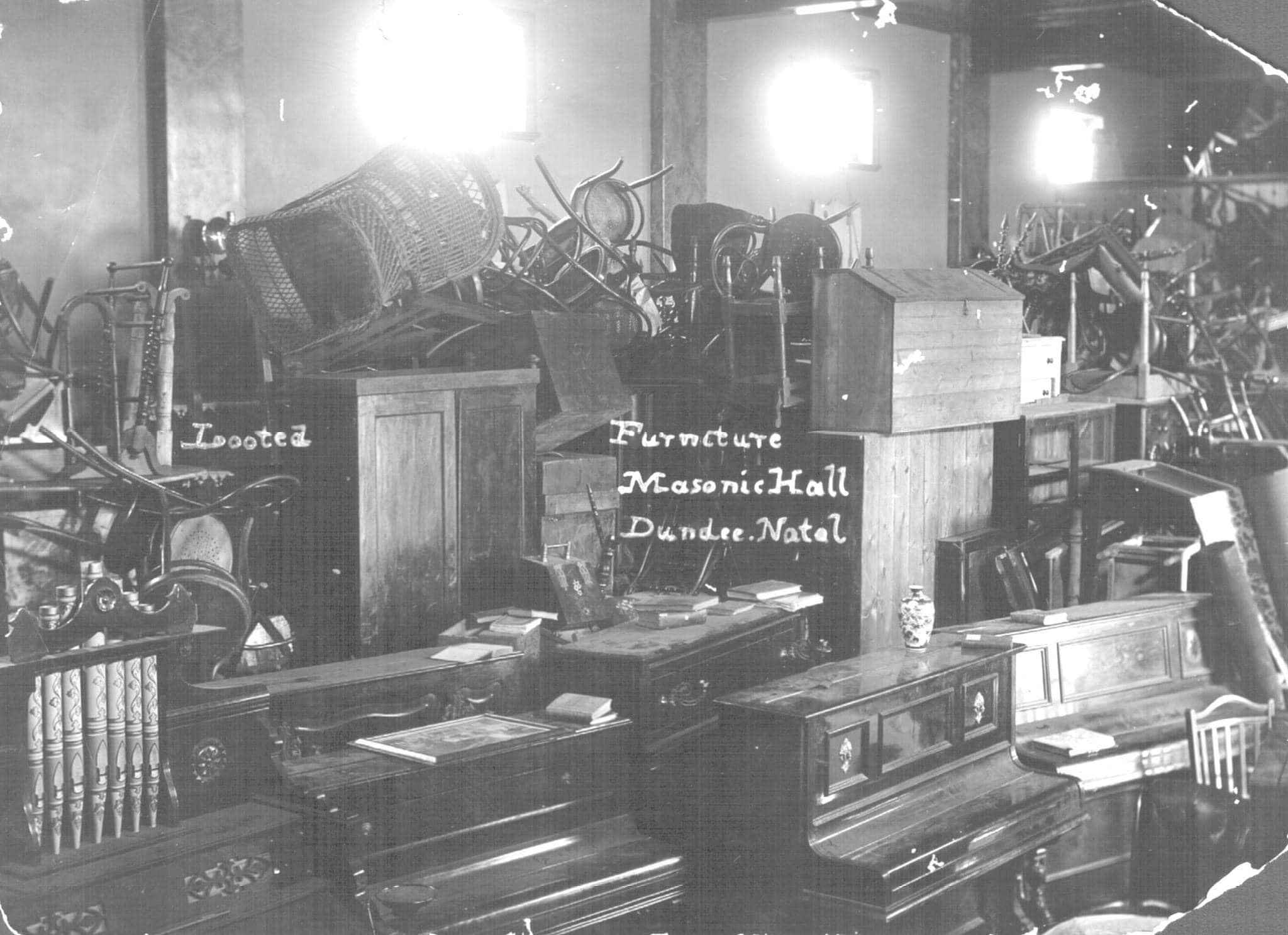
As to co-operation, during the Boer War, many lodges closed. Some of the buildings used by the Freemasons were used for hospitals such as the Masonic Lodge in Mafeking and the Masonic Temple in Johannesburg. During the Boer invasions of northern Natal at start of the war in October 1899, the Masonic Lodge in Dundee was plundered by the Boer Republican Forces, however the Lodge’s artefacts were found and respectfully returned to the Lodge by Boer Freemasons.
Noted here, is there is NO General Jan Smuts – there is no evidence whatsoever that he was a Freemason. Many historians have tried to confirm the ‘conspiracy theories’ and there is no evidence, zilch, nothing – not here in South Africa nor in Britain. Smuts is not a Freemason, no matter how much many people wish he was (conspiracists and Freemasons alike).
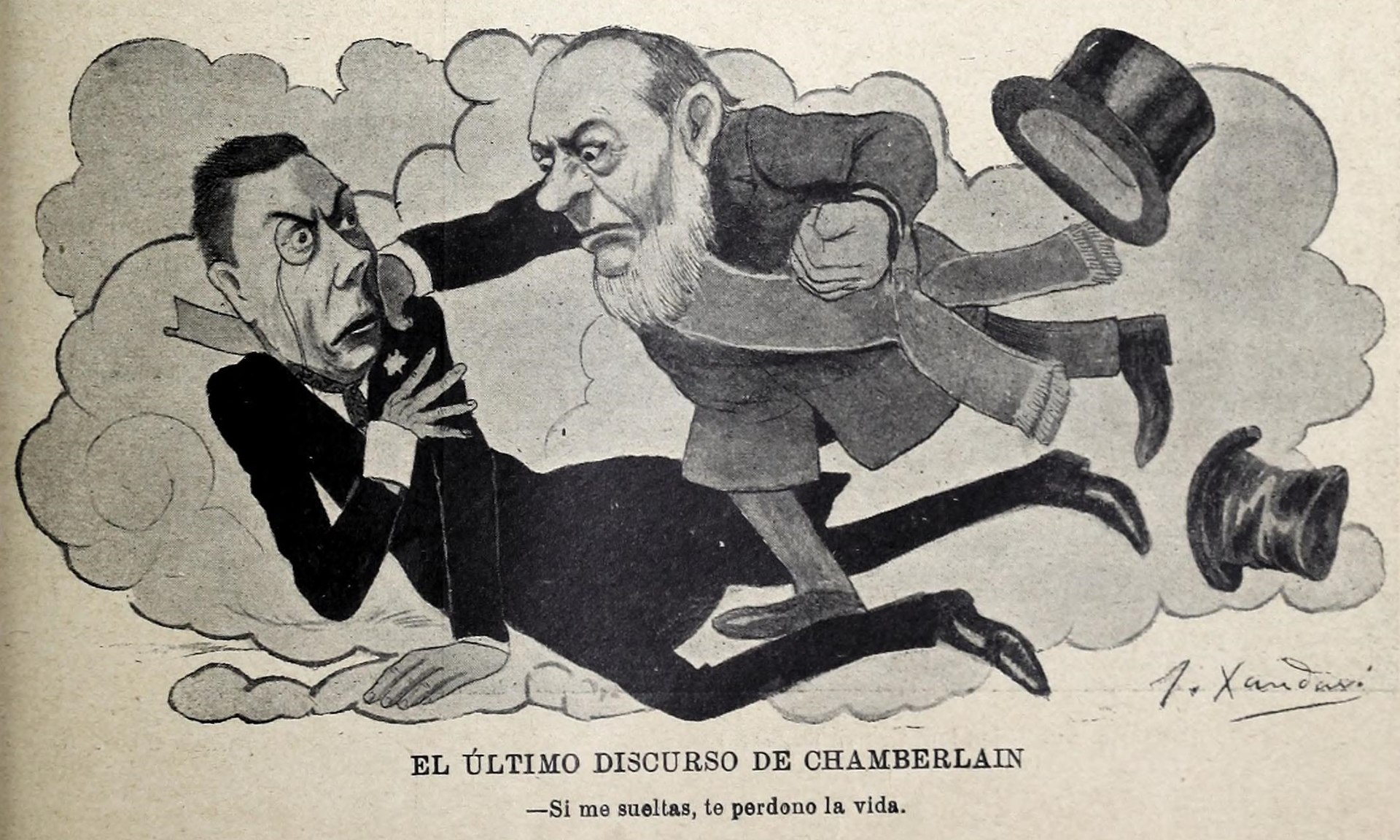
Of the other ye olde Boer Republic Freemasons in leadership roles the only other significant ones who were NOT Freemasons were President Paul Kruger (his Dopper approach would not have allowed him) and Prime Minister Barry Hertzog. Of the British ‘hawks’ in starting the Boer War, there is absolutely no conclusive evidence that either Alfred Milner or Joseph Chamberlain were Freemasons – sorry for all those conspiracy theorists again. Maybe the decision to go to war should have been left to the Freemasons to negotiate and there would not have been war in the first place … and look there – I’ve created a conspiracy with no grounding whatsoever.
Another point in the respect of famous people associated to the Boer War by way of historic sweep who are NOT freemasons .. all the ‘Pure’ National Party’s Presidents and Prime Ministers were members of the Broederbond – from D.F. Malan all the way to their last one, F.W. de Klerk and as a result of their rather perverse public animosity to Freemasonry, none of them were Freemasons. Also, none of them were ‘significant’ Afrikaners in the formation of ZAR, OFS or Union of South Africa, nor did any of them play any significant role in the Boer War – Dr D.F. Malan sat out of the war in safety – for that matter all of them sat out WW1 and during WW2 they either tacitly or overtly supported Nazism while sitting out of that war too. The best they could come up with was a ‘keep South Africa white’ South African Republic in 1961 and Freemasonry must surely thank its lucky stars that it is spared from any association with it for a change, conspiracy or otherwise.
As noted in the beginning, one origin of this bizarre link of Freemasonry to the Boer Wars is ‘General’ Manie Maritz, the Boer War Commander, 1914 Afrikaner Revolt leader and leader of the National Socialist Boerenasie movement. In the mid 1930’s Maritz would become a convert to the racist and anti-Semitic mythical and completely discredited ‘the Protocols of the Elders of Zion’ and convinced of a Jewish and Freemason conspiracy to world domination. He would make the ‘Protocols of Zion’ his life’s meaning and his mission to educate the Afrikaner people (his ‘Volk’) to it – and in it he would blame the ‘hidden hand’ of the Jews as the true conspiracists behind starting the Boer War. He would then go into mortal combat with General Jan Smuts calling him the King of the Jews and therefore a traitor to the Afrikaner people.4 Yet, believe it or not there are still some people out there who would gobble this sort of crap up.
If you want to see how this conspiracy theory nut job rubbish Maritz promulgated in action, consider this, the Broederbond opposed Freemasonry – as a net result the post 1948, the National party’s Minister of Justice C.R. “Blackie” Swart (a Broederbonder himself) famously accused the Freemasons and the ‘Sons of England’ (another South African lodge based fraternity) in the media of infiltrating Sailor Malan’s ‘Torch Commando’ political protest movement in 1952 and in so plotting to militarily overthrow his Apartheid government.5 Pure unfounded gobbledygook and you just can’t make this stuff up!
In my book none of these ‘Pure’ Afrikaner Nationalists really qualified ‘great’ Afrikaners in any event – the simple truth is that they were a fringe party of far right-wing nutters .. nothing more. Also, point to note, no – by bringing up famous Boer leaders who either were or were not part of the Freemason fraternity, I’m not “Boer Bashing” and discrediting Afrikanerdom – because that would be equally daft.
Written and Researched by Peter Dickens
References:
- 250 Years of Freemasonry in South Africa – Commemorative Publication 2022, all Constitutions. Published by the Grand Lodge of South Africa
- United Grand Lodge of England. On-line repository
- Maritz, Manie ‘My Lewe en Strewe’ Pretoria 1939
Footnotes


 The Observation Post