From a Persisting to a Raiding Strategy

A current overview of changing Israeli fighting doctrine in Gaza

20 April 2024

By: David Brock Katz

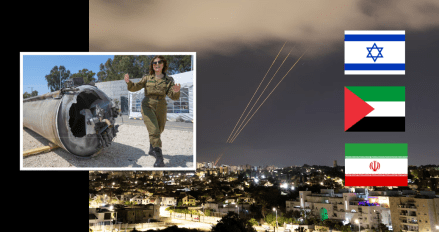
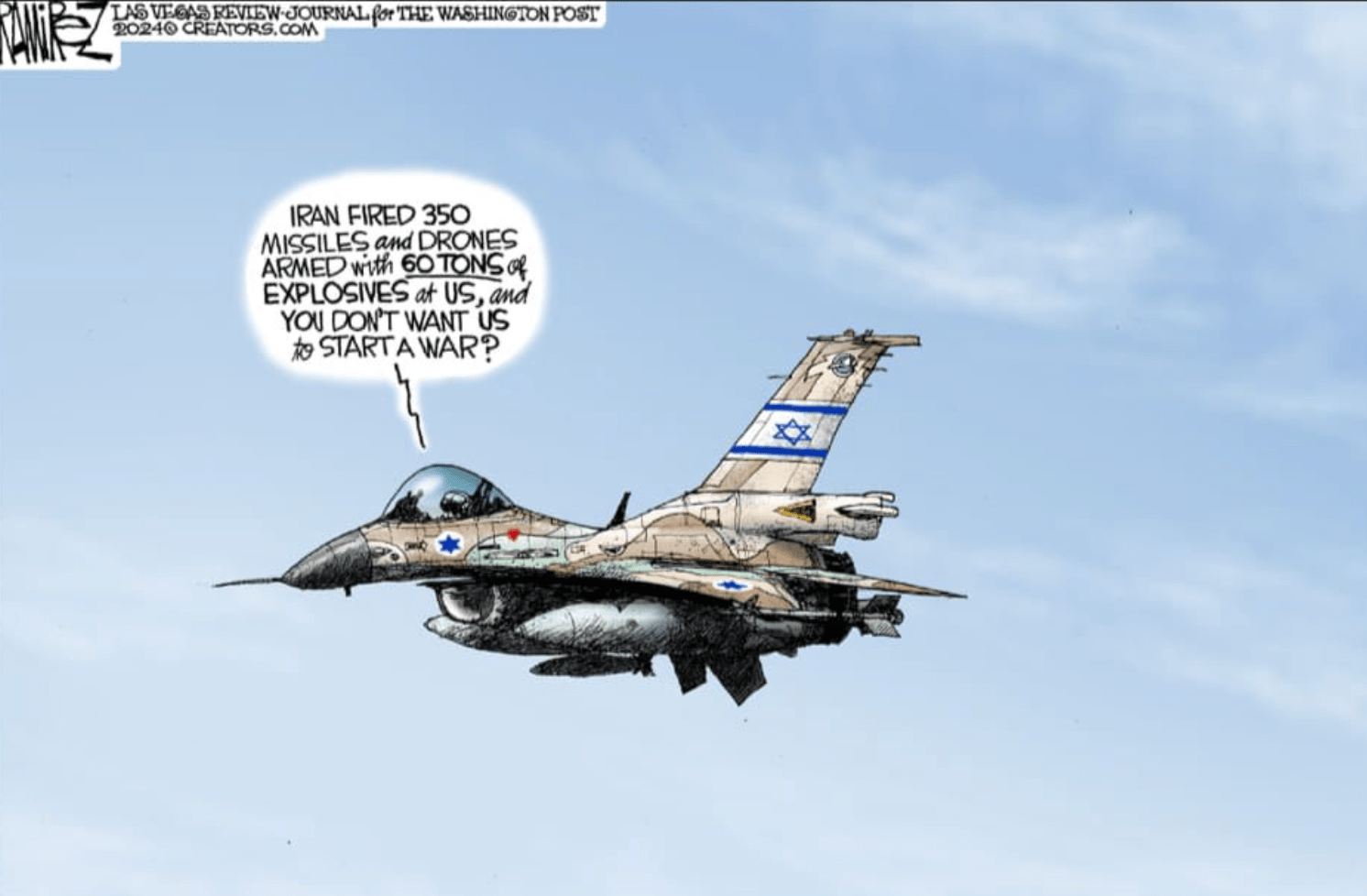
Overtaking the headlines on 8 April, which stated that Israel had pulled all its ground troops out of southern Gaza for “tactical reasons”, was the report of a massive Iranian strike of over 300 drones and missiles directed at Israel from Iranian territory. Iran’s “retaliatory” bombardment signified a significant strategic departure for the Islamic Republic of Iran. Instead of using its proxies, Hamas, Hezbollah or the Houthis, Iran attacked Israel directly for the first time in its history. In a similar fashion to the world’s initial reaction to 8 October, the attack garnered immediate condemnation from many quarters, thereby buying Israel a short respite from the constant media attacks surrounding the conduct of its war in Gaza. Despite Iran’s deadly intent, the missile attack leaves a massive credibility gap in the Iranian capability to inflict harm on Israel via the air. All but a few of the 300 missiles were either shot down or crashed on their own accord, inflicting minimal damage. Israel can claim a massive victory for its Iron Dome system and celebrate the fact that the Jordanians and Saudi Arabians accounted for several of the Iranian missile losses. However, it seems that the USA has again restricted any Israeli counterattack, which squanders a rare opportunity to neutralise some Iranian military assets. 

Quite simply, Biden and his administration have put the brakes on Israeli military actions. Israel has lost the ability to deploy its military at the operational and strategic level of war without the USA’s permission. Losing this independence of action poses a significant problem for Israel’s successful execution of the war in Gaza. The Israeli Defence Force (IDF) in Gaza deployed 18 brigades in December 2023 (about 90,000 troops) and then trimmed down to 5 brigades at the end of March. The IDF now fields a single brigade in Gaza, leaving Khan Younis and Gaza City unoccupied. Undoubtedly, the decision behind the IDF’s hasty withdrawal is not for any sound military reason. Instead, the IDF has succumbed to European and belated pressure from the USA to drastically change its tactics as world opinion has turned decidedly against the Israelis. The original IDF plan of occupying Gaza in its entirety and eliminating Hamas as a military and political force lies in tatters. 

Initially, Israel adopted a persisting strategy, placing a large number of boots on the ground, deliberately advancing at a slow, careful pace into the heart of Gaza. The IDF skilfully concentrated its forces using combined arms teams down to the lowest tactical level. They carefully accumulated overwhelming firepower at the focal points, sometimes only advancing mere meters in a given day. With great tactical skill and impeccable doctrine, the IDF produced innovative tactics to overcome most of the attacker’s disadvantages in dense urban areas. The Urban environment overwhelmingly favours Hamas. New IDF tactics are under tight wraps, but Israel’s allies are watching closely and will undoubtedly incorporate these combat innovations into their urban warfare doctrine. At least up to December, the Israelis made slow but significant progress in defeating Hamas in the field as well as destroying vast tracts of the tunnel system. The IDF badly mauled Hamas at a relatively low casualty cost, inflicting an estimated 30-50% loss on its fighting power before forcing them to withdraw to Rafah to conduct what would have been their last stand before destruction.  

Despite registering significant gains at the tactical and operational levels, Israel IS steadily losing the propaganda war. The world’s outrage at the atrocities committed by Hamas on 7 October began to recede almost immediately. If Israel ever had a chance to strike using a persisting strategy (occupy territory and boots on the ground), it would have had to execute with lightning speed. A cautious approach led to it being caught offside by the capricious support it had initially garnered on 7 October. Israel chose to minimise IDF and civilian casualties, and the sands of time have run out. The media’s constant barrage of civilian casualty figures, as reported by Hamas, has alienated many of Israel’s USA and European backers. The breathtaking hypocrisy of mainstream media has drowned out lone voices of reason, such as Douglas Murray. A discredited Norman Finkelstein, sidelined even by the Palestinians and now comparing Gaza to a concentration camp, has found new vigour and appreciative audiences. Rochdale in the United Kingdom has elected George Galloway, long consigned to the looney left fringes, as Member of Parliament on a pro-Hamas and virulently anti-Israel ticket. Friends, it would seem, are few.  

Israel has to contend with an increasingly frayed relationship with the USA. Support among younger Americans for Israel is rapidly fading. President Biden has insinuated that if the Israelis do not curtail operations in Gaza, then the supply of American arms will come under threat. There are lessons to be learned by those desirous of conducting an independent foreign policy free from American influence. A homegrown defence industry that supplies the lion’s share of one’s military needs is a fundamental prerequisite. Surely, Israel regrets abandoning the Israeli Airforce Industries Lavi Jet Fighter program in favour of the USA’s F-16? The USA no doubt had a significant role in eliminating the Lavi as a possible competitor in the lucrative arms trade industry. Israel cannot independently conduct its operations in Gaza without the USA’s implicit or explicit approval. That is the price of dependence on the USA for the supply of essential arms and munitions. Ukraine faces a similar dilemma of relying on the West to supply essential military equipment for survival. When the time comes, Ukraine will have little choice but to comply with the West’s version of a peace settlement. Israel has withdrawn from the south of Gaza and significantly reduced its troop numbers there, not of its own choice, but on instruction from the USA. 

So where to from here? The IDF has abandoned a highly successful persisting strategy, where it placed boots on the ground, occupied territory, and advanced methodically and innovatively by using combined arms warfare to eliminate Hamas’s fighting power in the north of Gaza. The military endgame was in sight. All that remained was to capture Rafah and remove Hamas in its entirety. Israel, succumbing to American pressure, now has no option but to resort to a raiding strategy. The IDF will attempt to remove Hamas targets through precision ground and air strikes surgically. The danger of this strategy can already be seen, with close to 2,000 Hamas fighters infiltrating their way back into Gaza City in the absence of Israeli ground forces. History has shown that wars cannot be won using a raiding strategy exclusively. Targeting Iranian, Hezbollah and Hamas operatives outside of Gaza to weaken the terrorist superstructure is also not a strategy which will eliminate Hamas. The hope of a more friendly future US government is uncertain and, at best, many months away. The release of hostages, if any are alive, seems remote. An emboldened Hamas continued to hold out for the best terms for a ceasefire. The Israeli retaliation for the Iranian attack was a very measured and even-handed response and an extensive counter-attack currently remains off the cards. Israel faces tough months ahead.

By Dr. David Katz  
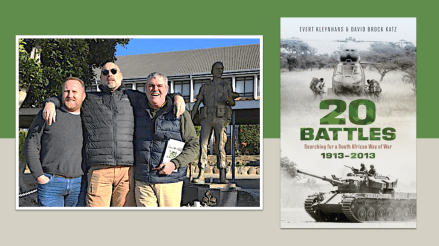
Lost and Found – The South African Way of War

I have taken a little time to review this book – 20 Battles – Searching for a South African Way of War 1913 to 2013 by Dr. Evert Kleynhans and Dr. David Brock Katz since its launch a couple of months back, time taken because I have savoured just about every battle in the 20 battles outlined in this book. As a military history lover and commentator each battle in the book has given me tremendous insight, even to battles I’ve written on in the past and thought I had a good grip on – only to find out I’m nowhere close.  

To find I have knowledge gaps was both refreshing and reinvigorating, and I now have to revisit my Observation Post articles on Delville Wood, the 1922 Rand Revolt, Sidi Rezegh, Tobruk and Cassinga completely – adding to them new insight and understanding – thanks in large part to the work outlined in 20 Battles on these battles specifically.  I also must throw my entire draft on Cuito out the window, a good thing too as I really needed better insight and a stronger grip on this very controversial battle.

20 Battles in a nutshell seeks to find and define the “South African way of war” – our preferred methodology for waging war and it tracks the development of this methodology using a historical ‘golden thread’ starting from the inception of the South African Union Defence force (UDF) in 1910 to its current manifestation as the South African National Defence Force (SANDF) conceived in 1994. The book skilfully selects battles South Africans have been involved in, which by design have helped to forge our preferred method of waging war, and it also outlines battles which have been an anathema to our military ‘DNA’ and why that is so. 

This can be extremely insightful when you learn for instance, that even our greatest sacrifice and honour, the very crucible on which our budding National Pride as a unified Defence Force was forged – The Battle of Delville Wood – is a complete and utter anathema to the South African way of fighting … even for 1916.

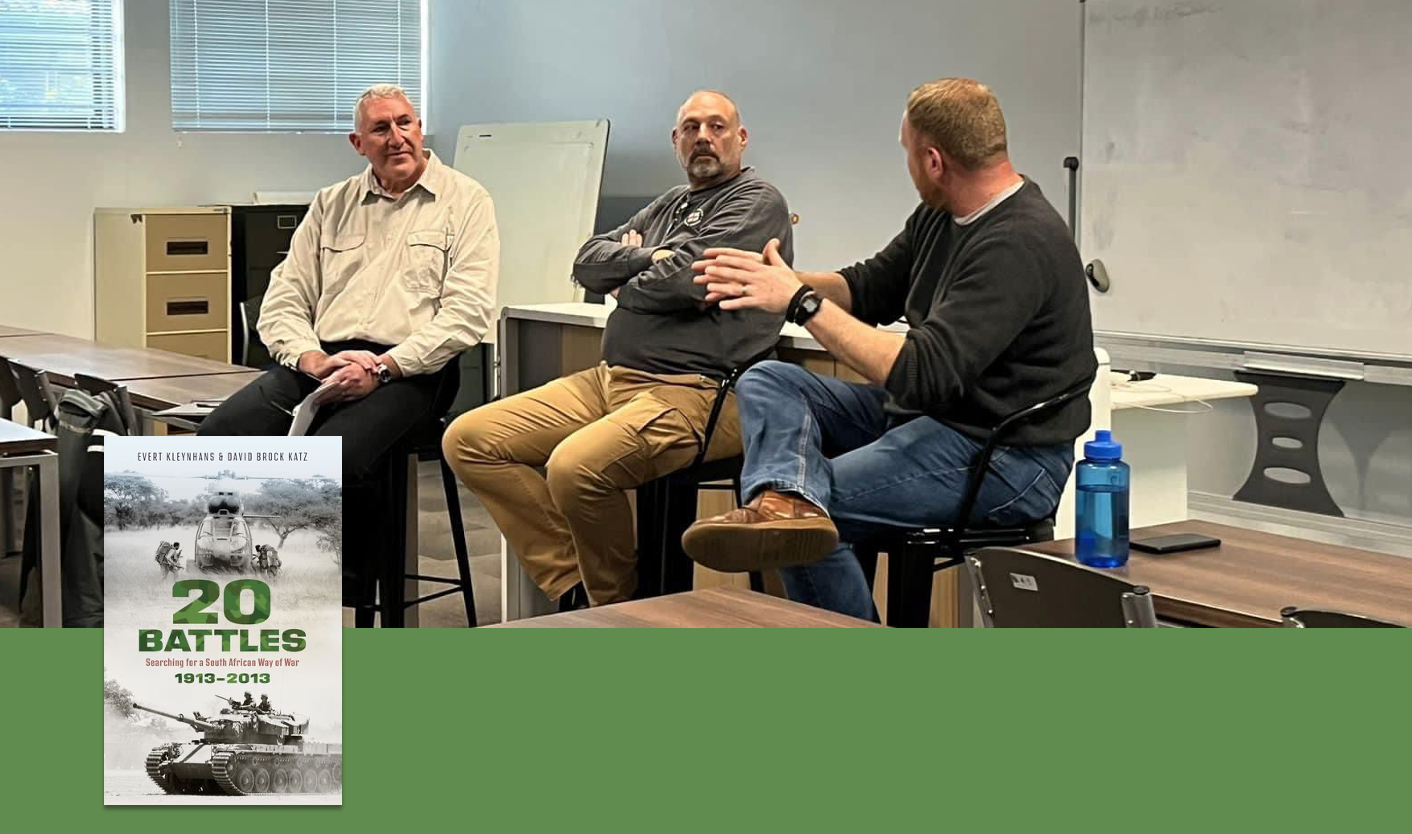
Professor Abel Esterhuyse (left) in discussion with the authors Dr. David Katz (middle) and Dr. Evert Kleynhans (right) at the Military Academy.

For me it is no surprise that 20 Battles finds the ‘Father’ of our military in the form of General Jan Smuts, he was tasked to form the Union Defence Force as the Minister of Defence. What is highly illuminating is just what a force majeure Smuts is in defining our military doctrine and way of war, not only in 1910, but throughout World War 1 and World War 2, Smuts’ fingerprints are still seen in 1981 during Operation Protea in Angola and you can even still find them writ large on the SANDF’s doctrine … even today. I have always thought of Smuts as an under-rated military genius, certainly in his own country and this book goes a long way to validate this view. 

It is Smuts’ learnings from The South African War (1899-1902) a.k.a. Boer War 2 that play such a defining a role, at the end of this war in 1902, the Republican Forces emerge as masters of waging effective Insurgency Warfare and the British and Cape/Natal Colonial Forces emerge as masters of effective Counter-Insurgency Warfare (COIN). 

Smuts also emerges from the Boer War as the only real ‘Bittereinder’ Boer General still occupying enemy territory and still waging an effective offensive campaign, and he carries his learnings over to the formation of the UDF – combining the very best of ‘Boer‘ doctrine with the very best of ‘British‘ doctrine and blends a defence force that has mobility and enveloping manoeuvre as its central premise – with both combined arms (the use of different disciplines – artillery, mounted infantry, armour etc.) and joint arms (the use of all services – Army, Navy and Air Force) all in unison and all in support. 

Smuts built the UDF along the lines of using effective combined arms with high degrees of mobility to deal with both conventional warfare (as is the requirement of any statutory force) and any domestic insurgencies defined as potential ‘Black’ African rural uprisings of the time and even ‘white’ urban uprisings of the time – the Miners’ Strike in 1922 a case in point – and the UDF doctrine is evolved to counter-act these internal insurrections – urban and rural.

Smuts is happy to cherry pick, basically he’s happy to bring all that’s great and good about the British culture of warfare – their discipline and drill (sorely lacking in the Boer army), their uniforms and rank structures (sorely lacking in the Boer army) and their very effective use of combined arms warfare and joint arms warfare (also sorely lacking in the Boer army) and combine it with the Boer culture of warfare – the use of mobility, and applying high rates of survivability thinking to tactics of assault and defence (both of which are sorely lacking in the British army). 

Smuts will build into the UDF the doctrine of highly mobile ‘combined arms’ – mainly the effective use of mounted infantry, armour and artillery (and other ‘arms’) all acting in unison and speed – preferably in an enveloping role. It’s a doctrine of “manoeuvre” using the Clausewitzian concept – using superior and simultaneous advances along “exterior” lines (a concentration in space) on an enemy using “interior” lines (known as a concentration of time) of communication and supply. 

Under General Jan Smuts the UDF took shape into a very effective fighting force, one that is far ahead of his old Boer Republics strategic and tactical constructs and doctrine which focused mainly on “interior lines”. This will have far reaching consequences for the South African military and its future successes and even failures over the next century.

What David Katz and Evert Kleynhans do from here out is take you through this century of South Africa at war – over a journey of 20 battles which show you how Smuts’ doctrine is applied – “mobility” at first defined by ‘mounted infantry’, then by ‘motorised infantry’ in WW2 and then even further evolved after Smuts’ death in 1950, as after WW2 all the Allied planners look to their old enemy – for the “German way of war” and their very effective use of “Blitzkrieg” (lightning war) and the “schwerpunkt” (heavy, focus – or centre point) of armoured and manoeuvre warfare doctrine – especially at the tactical level, and the South African military planners are no different.

In more recent history commencing with the Border War in 1966, David Katz and Evert Kleynhans show how this manoeuvre doctrine evolves further when the Rhodesian ‘Fireforce’ concepts are added into aspects of ‘vertical envelopment’ (use of paratroopers and helicopters), something which the South African Defence Force (SADF) applies for the first time in earnest during The Battle of Cassinga. 

This doctrine of manoeuvrability – horizontal and vertical, inside and outside lines of communication – a co-ordinated infantry and armour affair – adding force-multipliers such as Ratel Infantry Fighting Vehicles (IFV) and vehicles such as Casspir Armoured Personnel Carriers (APC) and others into the mix, starts to deliver the outstanding successes we see in Operation Protea and along the Lomba River in Angola during Operation Modular.

Of specific interest to anyone with an interest in military history, and anyone who is currently or has served in the military is the extensive evaluation and insight that David Katz and Evert Kleynhans take to when analysing each battle across the three core tenants of waging a battle – the Tactical level, the Operational level and the Strategic level. 

In a nutshell the Tactical level is the part where bits of metal start whizzing around, the Operational level is basically the plan and objectives going into battle and the evolved plan once bits of metal start really whizzing around in earnest and the Strategic level is the military and political intentions of going into battle in the first place – and the outcome of these intentions when the bits of metal stop whizzing around.

Analysing each battle on these three principles of military strategy makes for very enlightening reading, and for all the ‘Border Boys’ out there (Border War veterans) – wait till you get to their appraisal of The Battle of Cuito Cuanavale as its an honest, objective and highly critical ‘military’ appraisal, a true score-card on the SADF’s performance – and you’re in for some surprises I assure you – especially in light of the fact that this pivotal battle is one of the most controversial and misunderstood battles in our time. 

I can almost hear the next universal cry from all the military enthusiasts out there …

“It all doesn’t matter now anyway, the SANDF is on its knees, eaten away from the inside by political malfeasance and now it’s a shadow of its former self!” 

But here 20 Battles shows us, that over the course of history this is not the first time South Africa’s statute forces have been whittled down by political malfeasance to the point of unfit for purpose – from 1924 Hertzog’s Defence Minister Oswald Pirow rendered the UDF completely unfit and a mere shadow of itself after WW1, the learnings from WW1 and ‘the South African way of war’ had to re-learned completely to get the UDF ready for WW2. The Afrikaner Nationalists did it again after WW2, the Defence Minister appointed in 1948 was Frans Erasmus and his Erasmus Reforms completely crippled the SADF and left it utterly unfit for purpose when the Border War started in 1966 – and again the learnings from WW2 and ‘the South African way of war’ had to be completely re-learned again.

It’s here that 20 Battles shows its true colours as to what a valuable volume of work it is, as it serves to maintain the SANDF’s institutional memory, it outlines how the South African military ethos and doctrine is derived and come what may future military strategists will always be able to tap into these vital and hard fought learnings as a building block. In this respect the Military Academy at Saldanha military base is very fortunate to have good men like David Katz and Every Kleynhans working with them to maintain institutional memory.

I can almost hear the universal cry from the new generation …

“Forget about it all – we want our own ‘Black’ military history reflected in our military ethos, and not the history of Europeans and the Colonialists”

But even here 20 Battles serves to show that the art of war expressed by the SANDF is very “African” in its heritage and our philosophy of manoeuvre and envelopment can even be traced to the great Zulu General – King Shaka kaSenzangakhona.

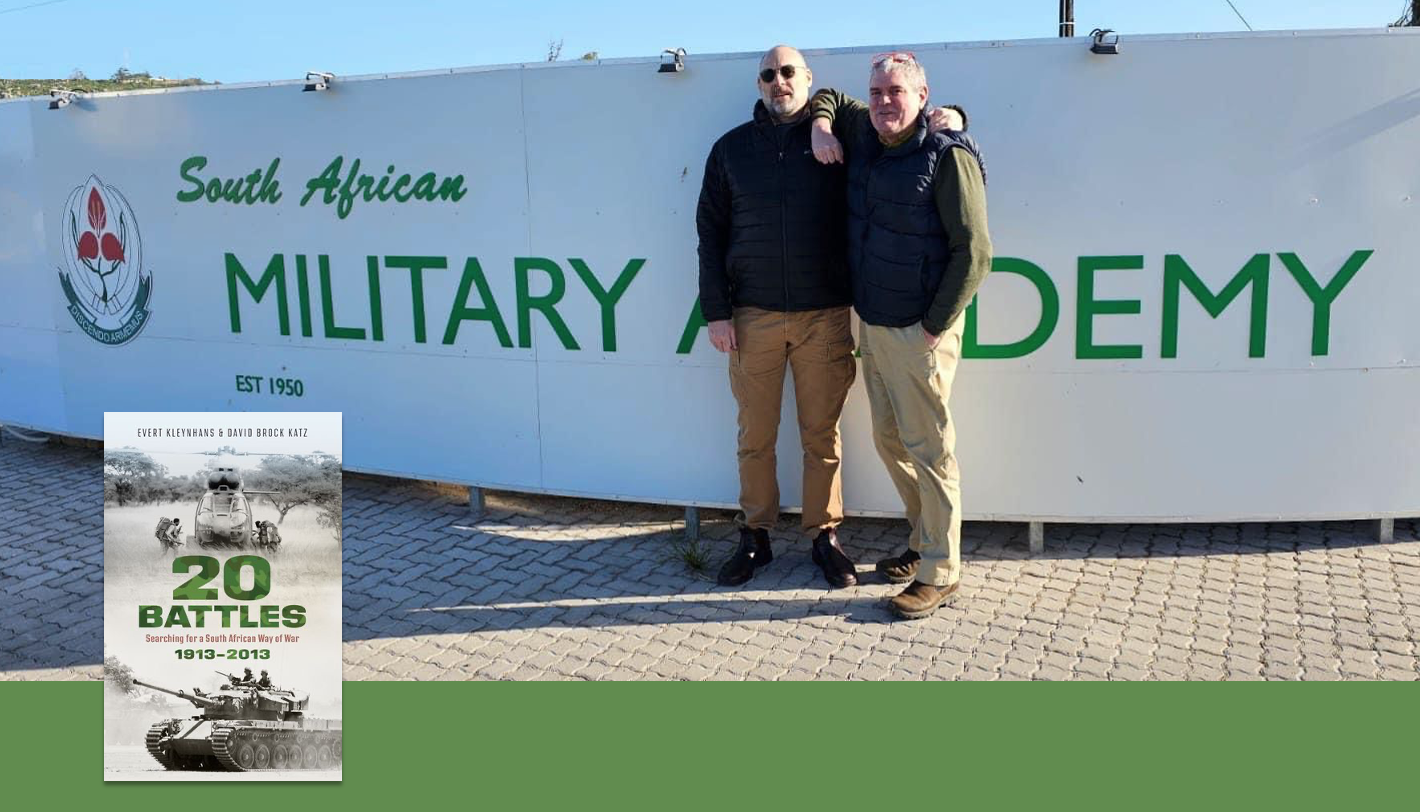
David Katz and Peter Dickens at the Military Academy in Saldanha, Western Cape.

But .. but … but, South Africa does not need all this “military doctrine” we are at peace and have been since 1994! We don’t really need a large operationally ready military force anymore comes the political inspired call of people seeking to channel all the money to pressing welfare issues instead. Not true, as to our learnings on how to handle “internal insurrection” and the potential threats – look no further than the Covid Riots in Durban in 2022. As to foreign destabilisation and threats, look no further than the Islamic Jihadist activities on our border with Mozambique. Thomas Jefferson said something that is very true even to this day:

“Peace is that brief glorious moment in history when everybody stands around reloading.”

Maintaining the SANDF’s operational capability and doctrine is vital.

The only criticism I have of 20 Battles is that it is very Army specific, the Navy and Air Force enter the equation when looking at the Joint Arms co-ordination in many of the battles outlined, however a “Sea Battle” or a “Air Battle” is not singled out to demonstrate how the ‘South African way of war’ is applied to these arms of service when acting unilaterally of one another. However, having read the book anyone with half an interest South Africa’s military history can easily see how the South ethos of manoeuvre and survivability ahead of attrition has been applied in both Navy and Air Force engagements in the past – from the anti-Submarine Warfare around the coast during WW2 to the SAAF and 2 Squadron’s approach to the Korean War.

I will say this as an ex-army officer, and I mean it – where was this sort of work when I did my National Service and Citizen Force training? As a young Candidate Officer, I would have been a zillion times wiser and rounded as an officer had the SADF taken the time to simply demonstrate how we arrived at our doctrine and ethos and how we intended to apply it going forward – instead a lot of the time was spent drilling in the Operation Procedures as they stood and learning Command and Control. In this respect I can only congratulate David Katz and Evert Kleynhans for finally pulling it all together and pushing it into the Military Academy’s arsenal for our military leaders and our current junior officers, NCO’s and warrant officers to tap into – there is no doubt that it will become a valuable asset in future.

My heartfelt recommendation – buy this book now! The book is published by Jonathan Ball Publishers and available at most major book retailers and on-line.


Written by Peter Dickens