As noted in an earlier Observation Post on the massacre of Black and Coloureds in service of the British after the Battle of Tweebosch by General de la Rey’s Commando (see link )1, and as Dr. Garth Benneyworth, a leading South African War historian pointed out – a significant research gap on the historiography of the South African War (1899-1902) in this respect needs to be investigated.
This specific literacy gap evolves around a policy decision taken by Bittereinder Boer Commanders to shoot out of hand any Black, Coloured or Indian civilian, contractor or soldier deemed as being in support of the British military. No recourse to the law or a trial of any kind – they would be shot on the spot.
A number of very senior Boer Commanders are implicated in this very controversial and at times very genocidal order, and not altogether surprisingly ‘General’ Manie Maritz is in this line up. Early on in his military career Manie Maritz fledges himself as not only a racist, but also a somewhat unhinged commander very capable of murderer.
The Massacre at Leliefontein
Over two days, starting on the 31st January 1902, the Bittereinder effort of the South African War (1899-1902) a.k.a. Boer War 2, and even Jan Smuts, would emerge forever tarnished by what is considered by some as the first massacre of innocents of the 20th Century.
Period image image of the Methodist Mission Nama Leliefonteiners – Barnabas Shaw Links seated centre. Insert image is the mission station church.
Front and centre in this controversial phase is Manie Maritz, who whilst he is under Jan Smuts’ command, rides into the ‘Nama’ missionary town of Leliefontein in the far north west Cape – deep inside the British Cape Colony. Here Maritz immediately detains the Methodist missionary – Barnabas Links – who was acting in place of the absent Rev J.G. Locke. Maritz subsequently reads out a proclamation threatening death to both residents and the town’s missionaries alike if they are found guilty of aiding or abetting the British.
This controversial order to shoot out of hand (no court Marshal, executed on the spot) any ‘coloured’ British civilians and soldiers alike if deemed in support of the British is in fact laid down by General Christiaan de Wet and it becomes policy in Boer Commandos, much to the bewilderment of the British command.
General Christiaan de Wet would inform Lord Kitchener that he personally gave ‘general instructions to our Officers to have all armed natives and native spies shot.’ Kitchener responds to de Wet and says ‘(I am) astonished at the barbarous instructions you (General de Wet) have given as regards the murder of natives … ‘ he then notifies de Wet that Boer Commanders guilty of this crime will face charges of murder and those found guilty will be executed.2
The Nama people (the local people made up of a mix of Khoi Khoi, Namibian and Tswana) and their missionaries are British subjects living in a British colony and fearing for their lives don’t take lightly to the proclamation threat from Manie Maritz and his Boer raiders and they become steadily agitated.
From here out there is a lot of conflicting account, in detaining Barnabas Links a rather strong verbal exchange over jurisdiction and authority takes place and some say Links strikes Maritz with his stick, others say Maritz strikes Links with his sjambok. Either way, a “fists and knives” scuffle breaks between a group of citizens and Maritz’ men, one Republican is injured, Links is also injured, and Maritz and his men manage to disentangle themselves from the melee, leaving 8 Leliefonteiners dead, and ride back to their rendezvous camp.
That night, Maritz and his men become indignant at their treatment at the hands of the Leliefonteiners and elect to exact revenge by wiping the missionary off the face of the earth. So, the next morning the Commando detachment numbering about 100 mounted Boers attacks the missionary in full force. The Nama and their missionaries are no match for a fully armed Boer commando, having some antiquated muskets they try and hold off the assault and most take refuge in the mission building. A further 27 Leliefonteiners are killed (some accounts say a total of 43) and approximately 100 are injured.
Maritz then directs all the surviving women and children, male survivors, and the wounded (including Links) be taken away in chains to the Boer positions surrounding Okiep, and he appoints the local blacksmith to fashion iron shackles for this purpose. Some accounts also point to general violence been meted out by the Boers against surviving Leliefonteiners after the skirmish and ‘refugees’ been hunted down and killed.
Maritz instructs that the mission station be pillaged and then burned down – all the captured sheep and grain are to be forwarded to a Boer supply depot. The mission station is completely destroyed and the dead Leliefonteiners are left where they died in the field– and here they remained unburied for months.
So, how does Smuts and his General Staff react to the news that a detachment of his Commando had ransacked a mission station and killed over 30 poorly armed or unarmed British civilians in a revenge attack? Deneys Reitz on arriving at the destroyed mission station described the scene as follows:
“We found the place sacked and gutted and among the rocks beyond the buried houses lay 20 or 30 dead Hottentots, still clutching their antiquated muzzleloaders. This was Maritz’s handiwork. He had ridden into the station with a few men to interview the European missionaries, when he was set upon by armed Hottentots, he and his escorts narrowly escaping with their lives. To avenge the insult, he returned the next morning with a stronger force and wiped out the settlement, which seemed to many of us a ruthless and unjustifiable act. General Smuts said nothing but I saw him walk past the boulders where the dead lay, and on his return he was moody and curt… we lived in an atmosphere of rotting corpses for some days.”3
Smuts, although clearly unimpressed with Maritz, actually comes through for Maritz in accounting the massacre in his letter to General de la Rey, he down-plays the instance as a ‘close shave‘ for Maritz and somewhat covers up the incident, citing that Maritz was attacked by a knobkerrie whilst acting as a peace envoy, it was taken as a sign of attack and only ‘8 hottentots’ were killed due ‘to misunderstanding and ignorance’.4
Some commentators point to this as collusion, as Maritz is completely exonerated and never held to account for the massacre – whereas similar instances of ‘murdering’ civilians in the cases of the Australian officer Lt. Harry ‘Breaker’ Morant and the Boer Commandant Gideon Scheepers landed them both in front of their respective firing squads. Some historians have argued that had Maritz been caught by the British this would have certainly been his fate.
Maritz naturally felt differently, and feels he has to answer Reitz’ allegations in his autobiography ‘My Lewe en Strewe’ and it really is an insight into the mind of Maritz. He refers to Barnabus Links in a diminutive way as the ‘hottentot Corporal’ with an arrogant swagger and becomes aggressive when Links challenges him instructing him to shut-up and know his place.5
During the massacre, Maritz claims that during a frantic re-load he manages to shoot two ‘Hotnots’ when they suddenly jump up in front of him with only one shot, one being Barnabas Links whose head the bullet grazes and the another next to Links dies of a headshot. Maritz then recounts that it could not have been classified as murder as he walks up to the wounded Barnabas Links after the massacre, and whilst he is lying bleeding on the ground Maritz decides not to shoot him and take him captive instead. His decision not to shoot him dead is according to Maritz one of compassion as he feels he is perfectly within his rights to shoot him and says:
‘I could have shot him dead, as he deserved the death penalty, he wanted to murder me and my men. If General Smuts was in my position, he would surely have shot him (Links) dead’6
Maritz’ reference to Smuts is essentially to put Deneys Reitz in his place by suggesting he knows Smuts better than Reitz, however the history of the relationship of Smuts and Reitz is one of a lifelong, mutually respectful and very tight friendship – whereas Smuts’ relationship with Maritz is one of lifelong animosity, conflict and difference of opinion. The historiography of both men shows Smuts to have liberal and sympathetic disposition to the emancipation and human rights of ‘blacks’ and ‘coloureds’, whereas Maritz displays none of these qualities – in fact the opposite is true.
Unhinged at Okiep
To further demonstrate just how far off the hinge Maritz was, the last real Boer action of the Boer War was when Jan Smuts’ Commando laid siege to the mining town of Okiep in the British Cape Colony in April, 1902. On hearing the news of the Peace Conference, Reitz writes:
‘General Smuts set to work at once. Next morning a messenger was sent into O’Okiep, to advise the garrison that both sides were to refrain front active military operations while the Congress lasted.’7
Jan Smuts then left the siege of O’okiep to take part in the final Peace talks at Vereeniging at the end of April 1902. With Smuts away Manie Maritz decided breach Smuts’ standing order and to attack Okiep with the idea of literally wiping the entire town off the map, using the commandeered Namaqua United Copper Company locomotive ‘Pioneer’ – which was used to propel a mobile bomb in the form of a wagonload of dynamite into the besieged town. The attack failed when the train derailed, snagged upon a barbed wire fence which wrapped around the points, spilling the dynamite upon the ground which burnt out harmlessly.
The locomotive ‘Pioneer’ used by Maritz to try and blow up the town of Okiep in Smuts’ absence, insert picture is Martiz portrait from the period (colourised by Jenny B Colour).
The exercise could have resulted in killing large numbers of women and children (mainly coloured) who sheltered behind the defences, the failure of the operation was a blessing at a time when deliberations at the Vereeniging peace talks potentially heralded the end of the conflict. Smuts would again gloss over the incident and cover for Maritz when he stated that the railway was still intact after the incident anyway, and since there were women and children in Okiep town, all the commando was allowed to do was to give the good citizens of Okiep a ‘tremendous fright with a harmless explosion.’
An ungrateful response
Smuts’ disposition to treating treasonous, rebellious and insubordinate Boer commanders with ‘Kidd gloves’ in the hopes of placating and consolidating their views to see his way on things would be Smuts’ greatest “Achilles heel” – as there would be no such quarter given in the way they would view or treat him in future.
Especially Manie Maritz, who challenges Smuts’ entire concept of the South African Union and even the Union’s Defence force in his own ‘Martiz’ Revolt of 1914, splitting the Afrikaner community for decades to come. The 1914 ‘Afrikaner Revolt is swiftly defeated by Louis Botha and Jan Smuts and Union forces. By the mid 1930’s Maritz would enter politics and become a hardened admirer of National Socialism (Nazism) and Adolf Hitler – becoming a Neo Nazi ‘Grey-shirt’ and then a full blown Nazi ‘Black-shirt’ before forming the National Socialist ‘Boerenasie Movement’.
Maritz’ endorsement of the Protocols of the Elders of Zion and Life’s commitment to exposing ‘the eternal Jew’ in 1938.
Maritz would become a convert to the racist and anti-Semitic myth ‘the Protocols of the Elders of Zion’ and convinced of a Jewish and Freemason conspiracy to world domination. He would make the ‘Protocols of Zion’ his life’s meaning and his mission to educate the Afrikaner people (his ‘Volk’) to it – and in it he would blame the ‘hidden hand’ of the Jews as the true conspiracists behind starting the Boer War. He would then go into mortal combat with General Jan Smuts calling him the King of the Jews and therefore a traitor to the Afrikaner people.8
Written and Researched by Peter Dickens
References:
Smuts, Jannie. Jan Christiaan Smuts by his Son, London: Cassell Publishers. 1952
D Judd & K Surridge. The Boer War. London: John Murray Publishers, 2002
Reitz, Deneys. Commando: A Boer Journal of the Boer War, Kessinger Publishing 1929.
Nel, Eben: Kaapse rebelle van die Hantam-karoo, Bienedell Uitgewers, 2003
In a new endeavour to take things a little easier, I’ve also recommitted myself to being honest and cut through the crap – and nothing beats the usual crap on Boer War appreciation groups where we get people putting up a picture of poor old Gideon Scheepers, the ‘Yster’ (stand-up) man the ‘Volks-held’ (People’s Hero), the dreadful British shot him unfairly – the end of a beautiful, young and courageous life.
So, what’s with Scheepers that he gets an annual re-post on just about every Boer War social media group, and what’s with all the admiration – we know he sprang Boer prisoners from gaol and tied a Union Jack to his horses arse, what’s not to like … he epitomises the Afrikaner spirit! … or does he?
There’s good reason he was executed, not withstanding a court case – but his case was such that the retribution, the sheer hatred the ‘British’ (actually read ‘community’) felt toward him was both palatable and certain.
Let’s put it this way – the British made dead sure he would not get the honour of a coup de grâce, in that they used dum dum (expanding) bullets to kill him upfront1 – and the officer ordered that he was not to be lowered but “dropped” into the grave – like a sad mielie sack on the command ‘Let him Drop’!2. It even left one of the British soldiers witness to the burial sick to the stomach at the disrespect shown to Scheepers in his death.3 That, and he was not afforded a marked grave (and his grave site still has not been found). Simply put the British did not want a hero made of him – EVER.
Execution of Scheepers by a British firing squad, seated in a chair, 18 January 1902
Now, you have to ask yourself – why the retribution, why the disrespect? It seems a little extreme, and at the time it was, even by war and ‘Victorian’ standards.
The answer lies in what Scheepers did – he was racist murderer and murdered blacks and coloureds indiscriminately, whether POW or not – even in context of his time and history he was viewed much like the “wit wolf” Barend Strydom is viewed now – and like ‘Breaker’ Morant who faced the same fate, he was guilty – soldier he was not, murderer he was, post war Afrikaner Nationalist propaganda and romanticism aside.
At the time Gideon Scheepers was loathed as he conducted a marauding campaign all over the British Cape Colony, train-wrecking, looting, burning down public buildings and houses belonging to loyalists, and murdering native policemen solely because of their colour. Scheepers even attempted to rob the Murraysburg branch of Standard Bank, sjambokking the manager when he refused to cooperate.
He avoided pitched battle where possible and according to H.M. Wilson, he instead
‘…confined his attention to the more genial work of robbing, burning and devastating. In his operations there was no military object; he meant, he said, to make Cape Colony a desert.’4
Even as the British ‘hunts’ after him started to chase him down and began cutting up his raids and running his Commando to ground, Scheepers found time to commit atrocities. One famous incident involved two coloured scouts who were captured by Scheepers’ Commando. Scheepers decided to be judge, juror and executioner and to murder them, despite their being in uniform and unarmed (so officially classified as Prisoners of War and subject to those conditions). The two were forced to draw lots, and the loser was immediately shot. The other was beaten and released to stagger to the nearest British outpost to tell the story as a warning to other Coloureds and Blacks who had joined the British forces.5
As to all the romanticism, consider Scheepers’ own testimony and statements.
Gideon Scheepers’ last words on the issue:
‘Thirty accusations were brought against me of “murder”, seven of “arson”, “rough” handling of prisoners, “barbaric” treatment of kaffrs etc.’6
Scheepers was particularly incensed at the accusations that he had ill-treated blacks, and that blacks were allowed to testify in court and even act as gaolers. He wrote:
‘We Afrikaners, will never find justice under the English. Everything is for the kaffirs.’7
During his trial General Christiaan de Wet tries to intervene and stay the execution of Scheepers (and that of Hans Lötter who faced similar charges of murdering “blacks” and a firing squad). De Wet writes to Lord Kitchener requesting clemency for the Boer Kommandant’s executing of Black (coloured) soldiers and civilians out of hand as he had personally given the order, he wrote:
‘the ungovernable barbarity of the natives realises itself in practice in such a manner that we felt ourselves obliged to give quarter to no native and for these reasons we gave general instructions to our Officers to have all armed natives and native spies shot.’8
De Wet then said that if anybody was responsible for shooting natives it was himself and his government.
Kitchener rejected the appeal, replying to General De Wet that Boer officers were personally responsible for their actions, and he wrote:
‘[I am] astonished at the barbarous instructions you have given as regards the murder of natives who have behaved in my opinion, in an exemplary manner during the war.’9
Kitchener then notifies de Wet that Boer officers will face the full consequences for the murder of natives and Scheepers had been found guilty and had already been executed for the crime in any event.
Conan-Doyle would say of it in his book, The Great Boer War, that Scheepers was tried
‘…for repeated breaches of the laws of war, including the murder of several natives. He was condemned to death and executed in December. Much sympathy was excited by his gallantry and his youth—he was only twenty-three. On the other hand, our word was pledged to protect the natives, and if he whose hand had been so heavy upon them escaped, all confidence would have been lost in our promises and our justice.’10
It’s little wonder that the old National Party loved Gideon Scheepers – his mother spending years searching for the grave of her son, a heart rendering story if there ever was one, and he’s one of ‘them’ – a white supremacist giving no quarter to blacks from resisting their whites-only hegemony and God-ordained claim to absolute power. The Nationalists unveiled a memorial to Scheepers on 27 May 1978 near the place of his execution as part of the events to celebrate thirty years of Apartheid (the monument is still there). Prime Minister John Vorster was the guest of honour.
In his address, John Vorster said:
‘If we are asked why in 1978 a memorial should be erected for a man who died in 1902, then the answer is simple. The life and work of this man was such that history placed him in the heroes’ gallery and nothing and no one can deprive him of that place.’11
Prime Minister BJ Vorster and the memorial unveiled by the National Party to Scheepers
Problem is, John Vorster could not even stand the idea of TV as the ‘devils message’ from the ‘Devils Box’ – ‘liberal’ thoughts and access to information would be freely available outside of all the ‘bans’ he imposed – and a mere generation later they could not hold back the tide of critical thinking, especially as to the Boer War and their hegemony of white power and claim to absolute rule. I would hate to think what the average modern South African in the ‘Information Age’ thinks of Scheepers as an Apartheid ‘hero’ now, and whether he truly deserves his place in the annuals of Afrikaner heroes according to Vorster.
I also get it, Lord Kitchener calling General de Wet a murderer, this from a man many Afrikaners like to consider a genocidal murderer in any event. I do get the irony, but whatever we may think, there are some very clear cut cases in the Boer War historiography and Scheepers does not come up as a wholesome people’s champion for Afrikanerdom. He’s in the same category as Breaker Morant, no matter how much post war sympathy 120 odd years later and no matter how many attempts at historical revisionism, it’s not going to change the fact he was a racist marauding murderer.
In my mind it would be very handy if people really understand the history before re-posting all this hero worship all the while holding onto an BJ Vorster issued Apartheid security blanket thinking the people around them are either ignorant of “their” history or if they are “English” or “Black” they are naturally biased to it anyway (as if that somehow changes the facts).
Written and researched by Peter Dickens
Colourised insert picture of Gideon Scheepers thanks to Jenny B Colourising. Main pictures shows a Black Cape Colonial policeman of the Boer War period in uniform.
References:
HM Wilson. After Pretoria: The Guerrilla War. London: Harmsworth Brothers Ltd, 1901.
AC Doyle. The Great Boer War. London: Smith, Elder & Co Publishers, Revision 1902.
D Harrison. The White Tribe of Africa – South Africa in perspective. Los Angeles: Berkley California Press, 1981.
D Judd & K Surridge, The Boer War. London: John Murray Publishers, 2002.
C Ash. Kruger’s War – the truth behind the myths of the Boer War. Durban: 30 degrees South Publishers, 2017.
Footnotes
Correspondence with South African War historian Dr Garth Benneyworth – 20/6/2024 ↩︎
So, I’m reading a published Doctorate on the South Africa War (1899-1902) a.k.a Boer War 2 from the University of Pretoria by Anne-Marie Gray. It was quoted as a reference to my War is Cruelty article by a subscriber trying to prove I had a “bias”, so I’m reading it. Here’s the kicker, it just proved again to me the tremendous Afrikaner Nationalist bias Afrikaner academics have been putting through their work on the Boer War. It’s something that the University of Pretoria has been very guilty of in the past and it’s something they still continue to do – they just seem unable to shake it sometimes, even if the don’t intend to in 2024 it still comes through.
I’ve yet to see where my bias exists in a work like ‘war is cruelty’ as I strove for balance – someone has yet to empirically or even theoretically show it. However I will show empirically how a bias is applied in the link sent to the Observation Post, its Anne-Marie Gray’s work from the University of Pretoria, completed in 2004 for a Doctorate in Music, it covers the impact the Boer war has on Afrikaner music – here’s the link https://repository.up.ac.za/bitstream/handle/2263/28462/03chapter3.pdf.
This particular bias starts with the use of opposition Minister’s of Parliament (MP) quotes, writings and opinions as a “fait accompli” of the British attitude to the war, the way the way is persecuted and to the British government who they finger out as proven “warmongers”. These opposition MP’s “quotes” are even used to ground entire books and historical treatise as proof of genocide and barbarity, they become the backbone of the argument put forward by Afrikaner historians, academics and authors and by default openly demonstrating a extreme cultural and identity bias. Not only authors and academics, its even seen countless times by Boer War ‘Afrikaner’ enthusiasts on posting on social media pages in addition.
The worse case in point of this is even titling books using an opposition MP’s statement such as “Methods of Barbarism” as was done by Professor Burridge Spies (S.B.) for his book. Now this statement was made by the Liberal politician Sir Henry Campbell-Bannerman when openly condemned what he called “methods of barbarism” in the concentration camps. The problem lies with Campbell-Bannerman’s political affiliation, Henry Campbell-Bannerman is a “Whig” and a “Radical Reformer” – later a devout “Socialist” – he’s a Liberal Party leader who steered in the concepts of socialism and the welfare state. His eventual Prime Ministership is marred by failure after failure, as he – like the labourites and liberals who all come after him quickly find out – radical socialism and political pontificating on ’reforms’ – criticising operating sitting and elected governments left and right – seldom translate into sound social and economic reform.
Henry Campbell-Bannerman
Now, like any ‘hard left’ opposition MP, Henry Campbell-Bannerman is prone to the dramatic, and he’s highly critical of the government’s policies – from economics, to spend, to welfare, to war … he is the eternal opposition bencher, like Jeremy Corbyn or Michael Foot after him, bounding out inflammatory and politically charged statements to try and make the governing party look bad. That’s his job – no opposition MP ever intends to make a Tory (conservative) government policy look good, they are in disagreement even if they agree.
To use a statement in 1901 by Liberal opposition leader like Henry Campbell-Bannerman in a Boer War context – “methods of barbarism” to then “prove” British complicity in waging genocide is like using a statement by the Labour opposition leader Jeremy Corbyn in 2021 when he said “Britain had hostile intent” against ordinary Afghans – to then “prove” Britain complicity in murderous warmongering in Afghanistan on the back of the 9/11 attacks in 2001.
You can’t build entire proven’ academic argument on what opposition MP’s say, this is like using a statement by Julias Malema to prove undeniably that all Black people hate all White people. But unfortunately academics do it. Here’s an example from Anne-Marie Gray’s doctorate:
“This is confirmed by Thomas Pakenham (1982:495) when he says that Kitchener is not remembered in South Africa for his military victory but “his monument is the camp – ‘concentration camp’, … [which] has left a gigantic scar across the minds of the Afrikaners; a symbol of deliberate genocide.”
She goes on to another example:
“James Ramsay MacDonald, afterwards Prime Minister of Great Britain and a devout Scotsman, echoed Packenham’s sentiments. He (cited in Fisher 1969:204) stated: “It was the vrouw who kept the war going on so long. It was in her heart that patriotism flamed into an all-consuming heat … She it is who feels most keenly that all her sufferings, her weary waiting and her prayers have been naught. The camps have alienated her from us forever.”
OK, two things about these statements:
On the first statement, Thomas Pakenham is a devout Irish Republican, his book “Boer War” has been torn to shreds by latter day historians because of an inherent bias, he’s also a travel writer and not a qualified historian when he writes his “Boer War” and it shows – and this is another case in point on Pakenham’s bias (see my review: Un-Packing Pakenham).
Pakenham’s statement that Kitchener committed “deliberate genocide” in the white Boer camps is unproven – even today. No case of genocide has been proven when the victims all died of a measles epidemic, followed by a typhoid epidemic. Genocide by ‘virus” has yet to be challenged. Certainly not by the 1899 Hauge Conventions which governed warfare then. That Pakenham’s “opinion” is held up as a truth is sloppy academics at best. To see far better and far more balanced work on the white Boer concentration camps see Dr Elizabeth van Heyningen works – which come on the back of a full-blown investigation into the Concentration Camps by a combined University of Cape Town and University of Warwick team and they still could not hold up a criminal case of “genocide”.
The National Party in South Africa sat in the pound seats for over 60 years, with all the budgets and resources at hand, and not one case, not one commission, not one ‘think tank’ could “prove” a case of genocide against the British and Kitchener – think about that.
The statement that Kitchener is remembered only for the concentration camps’ is also speculation, it’s a ‘half truth’ at best – maybe in Afrikaans communities, but certainly not in English ones. Lord Kitchener goes onto to be the face for British recruitment during WW1, such is his positive association and regard during this period in his homeland. Not only then, even now, his statue stands at Horse Guards on hallowed ground reserved for Britain’s national military heroes. The truth is the British today could care not a jot what Kitchener did in South Africa, far bigger events in their history have subsequently taken place.
On the second statement, Pakenham’s opinions aside, Anne-Marie Gray then goes on try and justify Pakenham and gives academic substantiation to Pakenham’s statement by quoting James Ramsay MacDonald and giving him gravitas as a ‘Prime Minister’. But we have another problem here, and a big one at that.
Like Henry Campbell-Bannerman, James Ramsay MacDonald is an ‘opposition’ MP – and he’s even more radically left than Campbell-Bannerman, he’s the country’s first “Labour” Prime Minister, a socialist trade unionist at heart. He not only resisted Britain’s involvement in South Africa, he was, like his current protégé, Jeremy Corbyn, an avid anti-war campaigner and went to criticise Britain for its involvement in World War 1 in addition. He led minority governments and his active “pacifism” led Churchill to accuse him of not recognising the Nazi German threat. He openly supported Nazi Germany’s stance to teach the French “a severe lesson” for what they did to Germany after WW1. Heck, his golf club even expelled him because of his radical and “pacifist views” and bringing the club into disrepute.
James Ramsay MacDonald
Clement Attlee, his colleague and another very famous Labourite Prime Minister even accused James Ramsay MacDonald of being a turncoat to the Labour cause and one of the “guilty men” who failed to prepare Britain for war against Hitler.
Straw man arguments
And that’s the problem with just about any thesis or book coming from Afrikaans academics, authors or commentators. It’s not just these quotes, I could go into entire Doctorates from the University of Pretoria and easily start picking them apart – quote by quote. I’m not sure if they really understand the historical figures they quote and simply relying on the secondary sources to have the understanding in the first place and then quoting them – but whichever way we cut it the over-seeing Professors should have spotted these issues – so I do believe its a confirmation bias which just sees it slip away.
It just shows that many Pro-Boer Afrikaner commentators simply do not understand British parliamentary politics, British partisan press or even British political process and the concepts of a “robust” house – I guess it’s like trying to understand “British humour” – unless you’re ‘British’ you’re not going to get it. Some even turn to academic works completed in the 80’s and then provide ’straw-man’ arguments because they cannot find quotes from the actual key players of the time to justify their argument – instead they seek them out from partisan and highly flawed historical figures – easily discredited … “straw men” in effect.
This is not to say that Thomas Pakenham or Anne-Marie Gray or Professor Burridge Spies or even his understudy Professor Fransjohan Pretorius from the University of Pretoria are all completely hopeless and their doctorates and books are not worth the paper they are written on. That would be an entirely incorrect statement, there is much merit in their work and much argument – but there is also much political bias, confirmation bias and cultural misunderstanding.
There is also much misinterpretation of British politics and British press. P. J. O’Rourke referenced Westminster styled Parliaments as “a Parliament of whores” and its a good description of them – the Westminster Commons is a theatre, the politics dramatic, floral and verbose .. in fact its great entertainment and much is said in jest or dramatised for political one-upmanship – to then use this to ground academic work is fraught with issues.
A Partisan press
Fraught with significant issues is also using British press for academic argument, what most don’t understand in South Africa, is the concept of “free press” is different in the United Kingdom than it is in South Africa. In the UK it is traditional for newspapers to declare their political affiliations and put their efforts behind this or that political party – the idea being that readers go out and buy the Daily Telegraph (Tory), the Daily Mirror (Labour) and the Independent (Liberal) – read them all and then make their own minds up. So, in Britain journalists are openly partisan and politically motivated. Then there is the “tabloid” press – which is just sensationalist trash requiring no credible sources whatsoever – then and now – mere ‘entertainment’ only. Here again South African academics made an error quoting British “correspondents” during the Boer War and here’s a good example in Anne-Marie Gray’s doctorate where she says:
“According to Hanekom and Wessels (2000:17), “de Wet can truly be described as the father of mobile warfare in South Africa.” A British correspondent wrote that de Wet’s operations would in future be studied and copied and form the subject matter of studies at every military institution. He stated that “his [de Wet’s] name will be handed down to posterity as a great exponent of partisan warfare” (FAD A296).”
Now – there are a number of problems with this statement. A “British Correspondent’s” view on de Wet is a view to sell sensationalist news using romanticised copy. It’s politically partisan and commercially driven depending on which newspaper he’s writing for and selling … “romanticising” de Wet as the “Boer Pimpernel” in British media was common – in the same way British media romanticised Winston Churchill’s escape as he “forged the mighty Apies River”. That Christiaan de Wet would go down in history as the greatest guerrilla fighter is just pure sensationalist rubbish. That he is the subject of required study at military academies is also pure rubbish.
It’s all rubbish as there is a very big problem with General Christiaan de Wet, his legacy is somewhat compromised by the old National Party and their sponsored and related ‘cultural’ organs – as he’s built into a ‘Volksheld” (people’s hero) and given a divine and almost unassailable aura. From a military history and military doctrine perspective he is in fact the very last person anyone should study.
Militarily speaking, General Christiaan de Wet has a great grasp of tactical warfare, but he is highly compromised on the operational level and he’s completely hopeless on a strategic level. His campaigns are fraught with command and control errors – he is unable to link up with Cronje at Paadeburg – resulting in the first mass capitulation of Boer arms, he then leads the remaining Free State Boer Army into a poor defensive position at the Brandwater basin, abandons his command as the British close in on him and his forces and leaves a squabbling and misdirected bunch of his subordinates to surrender in the second mass capitulation of Boer arms – Surrender Hill marks the end of any hope the Boers can win the war. His insistence on laying siege to the strategically irrelevant town of Wepener is an irresponsible diversion of key resources to a worthless military target. His guerrilla invasion into the Cape Colony is an unmitigated disaster as he signals his intentions to the British, who shadow his column and chew it up – resulting in the loss of all his key logistics as he scarpers back over the Orange River with a smattering of his remaining forces and back into the Orange Free State and friendlier territory.
Even de Wet’s greatest “success” – Sanna’s Post is a Operational and Strategic failure as he is unable to effectively cut all the water supply to the British as was his stated operational objective, he does cause harm though, the resultant intermittent water supply causes significant issues as to waterborne diseases and British soldiers encamped in Bloemfontein suffer, many die, but it also leads to the unfortunate deaths of many Boer Woman and Children in the Bloemfontein concentration camp (one of the largest camps) to the same epidemics – a very tragic “own-goal”. In reality, the only effective thing de-Wet is really able to do very well is tactically evade his “hunt” and for that he is romanticised.
If you are in any doubt about the above statement, the next bit seals it. After the Boer War ends in 1902, General Christiaan de Wet joins the Boer Revolt in 1914, here he campaigns with inadequate resources and outdated doctrine – the revolt is poorly planned, poorly supported and poorly executed and he’s soundly beaten by South African Union Defence force under the command of General Jan Smuts and General Louis Botha in a matter of months, his “hunt” catches him in quick time – his old “bittereinder” guerrilla fighting colleagues showing him up as a completely inadequate guerrilla fighter. Refer my article on it Boer War 3 and beyond!
Using the secondary data source of Hanekom and Wessels to state that “de Wet can truly be described as the father of mobile warfare in South Africa” is completely unsubstantiated militarily speaking, sheer jibber-jabber and it’s completely untrue – all Anne-Marie Gray is doing is unwittingly perpetuating an Afrikaner Nationalist myth – now we can’t all together blame her as she’s not a military scientist, she’s after a degree in music, but her oversight should have pointed it out to her – problem is that her oversight is enamoured with the same bias.
In Conclusion
I am not saying that all Afrikaner academics are compromised by bias what I am saying is that holding up someones work which is clearly biased to try an dispel a “bias” in my work is very counter intuitive – it says more about the problems underpinning people’s perceptions of the Boer War – one were the entire narrative was re-written during the Apartheid period by the protagonists of white Afrikaner Nationalism, and it shows – as Afrikaner National Identity is fused into this history in such a way that it becomes a real challenge to dispel mistruths as it starts to bring people’s “identity” into question and they start to shift around uneasily and lash out at the person and not the subject. But if we are to be true to being good historians and tell an unbiased story, dispelling with these myths and ingrained “nationalism” becomes vital.
Often on Boer war social media appreciation sites, and even on simple things like wikipedia we see this statement “it took 500,000 British to defeat 20,000 Boers” – the much-touted ratio in this type of media is that the Boers were outnumbered 25 to 1, at a staggering disadvantage during The South African War 1899-1902 a.k.a Boer War 2.
The story goes that these plucky Boers held the mighty British empire at bay. Now that’s a figure designed to paint the Boer fighter as some sort of super-man and the British military as bumbling, monolithic and ineffective. But the truth is far from this and this figure is completely erroneous designed to drive Afrikaner nationalist political rhetoric – it has nothing to do with actual numbers on the ground.
This is why I love economic history and not political history – economic history speaks the raw numbers, the statistics – the unassailable mathematical facts, and it tends to drive great holes into the ‘political’ history and its inherit political rhetoric – its the point when the facts talk and the bull walks.
Let the numbers speak!
Now, here’s the truth – at no point in Boer war 2 were there ever 500,000 British troops in South Africa as boots on the ground at any one point in time – in total, over the course of the war the British called up 550,000 men – that bit is true, yes. HOWEVER the British rotated their Regiments in and out of South Africa on ‘tours of duty’ – never really sending a full regiment into the operational theatre at once, retaining many at home and in their other colonies around the world. The “high water mark” i.e., the maximum number of British Troops in South Africa at any one point in time is 230,000 men. Even pro-Boer chronologies like that of Pieter Cloete’s Boer War facts and figures reluctantly has to admit this fact.
This high-water mark of 230,000 (including African Auxiliaries) is only peaked briefly during the late Guerrilla Phase of the war – and at least 50,000 of these troops are being used to man the rather extensive blockhouse defence system stretching from the top to bottom and side to side across the whole of South Africa (as referenced by Simon C. Green in his Blockhouses of the Boer War) – over thousands of kilometres both ways. On average during the Guerrilla Phase of the war – September 1900 to April 1902, the British enjoy 190,000 troops on the ground.
But let’s stick to the high-water marks for a proper account – the high water for the Boer forces, total Republican forces strength is 87,365 men – including 21,043 burghers who add onto the original ZAR and OFS Commando call-up later (initial call-up is 48,216), the statutory Boer forces (2,686), foreign volunteers (2,120) and Cape Rebels (13,300).
The Boer figure is possibly higher if we add African auxiliaries and rear echelon support – the “tooth to tail” non-combatant ratio – which is accounted in the British numbers in terms of administrators, doctors, pharmacists and medics, batmen, chefs, farriers, holsters, labourers, wagon drivers etc. but NOT in the Boer numbers as this would start to add women, agteryers, servants and farm hands as people acting in Boer combat supporting roles in a non-combatant capacity.
That means a conservative ratio between Brit and Boer at the high-water marks = 230,000 Brits and 87,300 Boers – a ratio of 3:1 – total Imperial forces versus total republican forces (sans the tooth to tail ratio in the Boer number). It’s a far cry from the emotionally charged and erroneously touted figure of 25:1.
Consider the size of the Republican Forces at the beginning of Boer War 2, versus that of the British. At the Boer declaration of war on the 11th October 1899 when the Boers invade sovereign British territories: The total British Forces in the field = 15,300 men. Total Boer forces assembled to attack = 48,216 men. The ratio is heavily in favour of the Boers – Boer Forces outnumber the British 3 to 1.
“On the high seas” as at the 11th October 1899 are an additional 7,418 British Troops on their way to South Africa from India and Australia – called up to bolster an inadequate British force strength in the event of war. Even with their arrival at the end of October 1899 (after the war has been declared and the Boer invasions commence) bringing the British number up to 22,708 – British Forces are still woefully inadequate, and the invading Boer Forces still outnumber them 2 to 1.
If we want to account Boer War 2 properly and view it with balance, it would be correct and very true to say at the beginning of the war the Boers outnumber the Brits 3:1 – as the war progresses there is a juxtaposing of numbers (they start to match capability in numbers from February 1900) … and by the end of war the Brits account 190,000 troops in country, Boers account 24,300 left in the field and 47,300 POW in the bag (factoring out the ‘Hensoppers’ and ‘joiners’ and factoring in the Cape Rebel POW) = 71,600 or a 3:1 ratio – Brits outnumber Boers, a reversal of the advantageous 3:1 ratio the Boers enjoyed at the start of the war.
Let the doctrine speak!
In terms of military doctrine, the above estimation on a 3:1 ratio is about right given Boer War 2 is fought in two distinctive phases, the Conventional warfare Phase (Oct 1899 to August 1900) and the Guerrilla warfare phase (September 1900 to May 1902) – to invade the British territory in Oct 1899 the Boers need a 3 to 1 advantage to be successful … and to counter attack and hold the Boer territory the British need to be at a 3 to 1 advantage – and even by Guerrilla Warfare standards and the doctrine used to fight one, this number is very low. Consider the following:
American Brigadier-General Nelson Miles was put in charge of hunting down Geronimo and his followers in April 1886. Miles commanded 5,600 troops deemed necessary to find and destroy Geronimo and his 24 warriors. In Malaya in 1950 it took 200,000 British, Australian and allied troops to defeat 5,000 Communist guerrillas. In Ireland over the 30-year course of ‘the troubles’ a total of 300,000 British troops were used to contain 10,000 IRA guerrillas. Closer to home, so the arm chair Boer war generals get this – over the course of the Angolan Border War (1966-1988) and the ‘Struggle’ (1960-1994) the SADF would call up 650,000 conscripts and then hold them in reserve – MK and other non-statutory force ‘guerrillas’ at their high water mark in 1990 only have 40,000.
The modern-day theoretical ratio of counter-insurgency forces to guerrillas needed to defeat an insurgent/guerrilla campaign is 10:1. In 2007, the US Department of Defence produced a document entitled Handbook on Counter Insurgency which quotes this as the rule-of-thumb ratio for all such operations – and that is even with the advent of modern technology in warfare fighting mere insurgents or guerrillas. Little wonder that General David Petraeus needed 180,000 coalition force troops (the same size as the full invasion force) on the ground in 2007 just to deal with the Iraqi guerrilla “surge” spearheaded by an insignificant but determined bunch of suicide bombers.
Just kidding!
The idea that it took half a million British troops to subdue a couple of thousand boers is very erroneous .. the old ‘super’ Afrikaner joke – on witnessing an advancing British ‘rooineck’ column a Boer kid asks his Dad “how many Boers are we Dad? – Answer “50 son”, and “how many British Dad?” – Answer “10,000 son”. Punchline … “Dad, does this mean we’re going to finish late again?” A joke that re-appears in different formats in countless forums, and it’s as funny as it’s statistically false and fantastical.
Written and Researched by Peter Dickens
References – all quoted statistics
Leopold Charles Maurice Stennett Amery “The Second Boer War – The Times History of the War in South Africa 1899-1902” – Volumes 1 to 7.
History of the war in South Africa 1899-1902. By Maj. General Sir Frederick Maurice and staff. Volumes 1 to 4, published 1906
The Anglo-Boer war: A chronology. By Cloete, Pieter G
Anglo-Boer War Blockhouses – a Field Guide by Simon C. Green, fact checking and correspondence – 2023.
The Boer War: By Thomas Pakenham – re-published version, 1st October 1991.
Correspondence and interviews with Dr. Garth Bennyworth, Boer War historian – Sol Plaatjies University, Kimberley – 2023.
Correspondence on fact checking British doctrine with Chris Ash, BSc FRGS FRHistS, 2023 – Boer War historian, Fellow of the Royal Historical Society and Fellow of the Royal Geographical Society.
Kruger’s War – the truth behind the myths of the Boer War: By Chris Ash, published 2014.
From Boer ‘Refugee Camps’ to Nazi ‘Konzentrationslager’
In some recent social media postings, the old fracas between the Tory MP Jacob Rees-Mogg’s inflammatory statements about Boer War concentration camps and Pretoria University’s erstwhile Professor Fransjohan Pretorius’ emotionally charged response to it seems to have resurfaced (not that Rees-Mogg cares a jot, or has even responded to Professor Pretorius), a key source of the fracas in both respects – the use of language surrounding concentration camps.
The issue lies around how ‘concentration camps’ are perceived in our common modern consciousness and what the phrase means to us – not only in South Africa but world over. This was adequately demonstrated in the TV interview with Jacob Rees-Mogg, who, whilst defending Winston Churchill’s legacy, was challenged on the issue of British concentration camps in South Africa during the South African War (1899-1902) a.k.a. Boer War 2.
His response, falling back on a typical Etonian education, compared the death rate in Boer War concentration camps to the death rate in Glasgow at the beginning of the 20th Century – i.e., disease, not war, being the major issue. In Reese-Mogg’s political context he is using a ‘deflection’ as one can scalp mortality statistics and disease statistics by demographic segment and by country from 1899 to 1902 in many ways.
Rees-Mogg’s comparison of Glasgow and South African camps is, however, statistically unsound – mortality rates in South Africa during disease epidemics at the time, notably the Influenza Pandemic of 1918 would have been more compelling and comparative argument.
Rees-Mogg’s grip on disease statistics aside, he then went to state that the camps were set up for protecting Boer citizens. This is a partial truth, believe it or not, the camps were initially set up for protecting refugees – but it comes with a double-edged sword when forcibly displaced citizens were added to the genuine refugee population of the camps, hence the controversy, confusion and general indignation across the Afrikaner community.
Then, Rees-Mogg goes on to state that one should not to confuse the Boer concentration camps with Hitler’s extermination camps. This is an absolute truth, Rees-Mogg is correct, the two concepts are completely different. However, the morality issue regarding the outcome of both systems (i.e. the death of civilians in wartime) will forever be argued – especially when one starts to add modern day 21st Century WOKE sensibilities to 20th Century contexts – the idea that war kills, whether by virus or bullet, makes no difference to the dead.
Wading into this fracas to “set Rees-Mogg strait” comes Professor Fransjohan Pretorius from the University of Pretoria, using equally emotionally charged language.
What is however very interesting to this discussion, and more to the subject to this article, is just how loaded the words ‘concentration camp’ are, and it’s seen in Rees-Mogg’s co-discussant on the panel, Grace Blakeley, an academic, journalist and far left leaning political commentator who best describes herself as a ‘socialist’ – and on the Boer War concentration camps she literally loses the plot – dramatically declaring with great dollops of repugnance that “the British invented the Concentration Camp” – a complete untruth, the Spanish invented concentration camps.
Grace Blakeley then loudly proclaims with all the authority in the world “it was systematic murder!” Now, in the 125 odd years since the war not one single case of ‘systematic murder’ in a Boer concentration camp has been proven – not then and not now – and that’s not an opinion it’s a fact, whether some like it or not. Even the old Afrikaner National Party had 40 years in the pound seats with all the resources at hand to try and ‘prove’ a legitimate case of systematic murder which could hold up to legal scrutiny and could not do it. The simple truth is that all deaths recorded in both the ‘Boer’ and the ‘Black’ Concentration camps of the Boer War are disease or health related (more on this later).
She then excitedly declares “hundreds of thousands of people died” in the white Boer concentration camps – implying mass genocide and ethnic cleansing – whilst in truth 28,000 people died in the ‘white’ camps and about 20,000 in the ‘black’ camps (some say more) – all whilst very tragic, it is hardly ‘hundreds of thousands’ that really is hyperbole.
In Jacob Rees-Mogg’s rather measured counter response to Grace Blakeley’s wild claims he reiterates that it is “completely wrong” for her to compare the Boer War 2 concentration camps to that of Adolf Hitler’s extermination camps of World War 2.
So, how is it that Grace Blakeley (a Labour Party strategic think-tank economist with a Masters Degree in African Studies) gets her facts so woefully wrong?
Another glaring problem with her outbursts, and its highly indicative of the issue at hand, Professor Fransjohan Pretorius in his effort to “set Jacob Rees-Mogg strait” on his facts, only takes aim at Rees-Mogg, the net result is a raft of indignation levelled directly at Rees-Mogg by many in South Africa simply because the good Professor said so. What he does not do, is take aim at Grace Blakeley, an expert in her field, for her equally stupid, emotionally charged and factually incorrect statements. This is a BBC ‘Balance’ panel of Tory and Labour after all. Here the good Professor is ‘Tjoepstil’ – nada, nothing, silent … crickets! But why?
The uneasy answer is that he agrees with Blakeley, and by NOT “setting Grace Blakeley strait” in addition to Rees-Mogg, he tacitly approves of her statements. He is ‘weaponising’ the issue, the surge in indignation from South Africa (and even the UK) does not target the ‘Labourite’ in the debate, but rather the ‘Tory’ – nobody cares about what Grace Blakeley said, they all tacitly agree with her in addition.
It exposes a tremendous old Afrikaner Nationalist bias, something Professor Fransjohan Pretorius is often criticised for in his history writing, and one that is currently undermining his credibility. As they say in Afrikaans “Jou onderrok steek erg uit” (your underwear slip is exposed i.e. your hidden bias is plain to see) – and by nailing his bias to the mast in the way he does – calling the British “scandalous” in addition, and politicising the issue by focusing only on the Tory MP, he creates a fracas and feeds a hungry audience seeking to chastise the British for just about every misery on the planet.
So, what’s with all this tacit approval of this Labourite’s assertions that this was a “British invention”, “systematic murder” and a genocide of “hundreds of thousands” … what’s the connection between the South African War (1899-1902) a.k.a. Boer War 2 and World War 2 (1939-1945) in weaponising words like “concentration camps” for political currency?
The answer funnily enough lies in the little Austrian born Bavarian Lance Corporal with megalomaniac tendencies, to which Jacob Rees-Mogg refers and to whom Grace Blakeley infers (more on Hitler later).
The Boer War ‘Concentration Camps’
Let’s take a quick step back, what’s with attributing the term ‘Concentration Camp’ to the Boer War of 1899 and why the confusion?
Many people have little understanding of the concentration camps of the Boer War. In essence there are two separate phases.
Data Reference: The Boer concentration camps of the South African War, 1900-1902 by Elizabeth van Heyningen.
Phase 1: Started the 22nd September 1900 – they are set up under British military administration by Major-Gen J.G. Maxwell and they are initially intended and termed as “refugee camps” for ‘hensopper’ families (Boers who surrendered early – these include men in addition) and ‘joiner’ families (Boer families whose menfolk joined the British forces and were away fighting) – they are all voluntarily seeking shelter and safety from the Guerrilla phase (Bittereinder campaign) of the war which commences from mid 1900 once Pretoria falls to the British. Here these families are, as Rees-Mogg correctly points out, “sheltered and fed” as there is a “war going on”.
The camps are also referred to as “Government Laagers” – however on the 21st December 1900 Lord Kitchener comes up with a different intention for these “Government Laagers” completely, and he decrees:
“the most effective method of limiting the endurance of the guerrillas … The women and children brought in should be divided in two categories, viz.: 1st. Refugees, and the families of Neutrals, non-combatants, and surrendered Burghers. 2nd. Those whose husbands, fathers and sons are on Commando. The preference in accommodation, etc. should of course be given to the first class. With regard to Natives, it is not intended to clear (Native) locations, but only such and their stock as are on Boer farms.”
The camp concept is then opened up from January 1901 to include “bittereinder” families, which are primarily women and children as their menfolk are still “on Commando” (and any other families for that matter), they are involuntarily displaced by Kitchener’s Scorched Earth policies and this curious concept of a refugee camp/displacement camp is expanded somewhat. Similarly, internees in the black camps (which include men and women) are civilians who are also involuntarily displaced. It’s this bit that Rees-Mogg conveniently ignores.
From March 1901 disease related mortality rates in the camps start to climb to unprecedented and alarming levels, and at their peak the mortality rate is driven primarily by a measles epidemic which sweeps the white camps and accounts 30% the overall deaths – as a child’s disease, along with the high infancy mortality rate and child death ratio in the Victorian period, coupled with the difficulty of wartime conditions and camp sanitary standards, by the beginning of 1902 children account for nearly 2/3 of all deaths.
The period March 1901 to November 1901 is 9 months of abject misery and suffering. However, contrary to modern propaganda, although there are many in the camps who are malnourished and conditions are extremely harsh, they are not purposefully starved to death – ‘Starvation and Scurvy’ accounts for only 3% of recorded deaths in the white camps (the records for the black camps are incomplete). There are also no recoded cases of premeditated murder or executions, all deaths are attributed to disease or medically related conditions.
The conditions and plight of the women and children in the camps, against the context of respiratory and waterborne disease, coupled with inadequate medical countermeasures and failures in administration is highlighted by the likes of Emily Hobhouse and later in 1901 by the Fawcett Commission.
Phase 2: From November 1901 as a result of the Commission’s and parliamentary recommendations, Lord Alfred Milner, the Cape Colony High Commissioner is tasked with taking over the ‘white’ camps from the military and bringing them under civilian authority instead (the Black camps remain under military authority).
Image: Boer concentration camp – children carrying water buckets, colourised by Tinus Le Roux – note the nature of the camp – bell tents, demarkation lines and administration blocks.
As a result of Milner’s direct intervention, from November 1901 the mortality rates start to drop off dramatically as his civilian administrators and medical staff start to get on top of the epidemics, food supply and sanitary issues. They also do away with the preferential treatment of ‘hensopper’ versus ‘bittereinder’ families initiated by the military in the white camps.
Milner’s actions and policies are extremely effective, in just 4 months the mortality rates in the white camps drop to acceptable mortality rates for the Victorian era, made even more remarkable considering that these mortality rates are declining and have plateaued-out in the white camps when the Guerrilla Phase and Scorched Earth policy is at its height and at its most destructive (the black camps are a separate matter).
These ‘acceptable’ i.e. normal mortality rates in the white camps continue up to the end of the war on 31 May 1902 and then remain acceptable long after the end of the war as the camps are then used as ‘resettlement’ centres for displaced Boer families until the end of 1902.
As to Milner, it’s also an inconvenient truth, that a man so often vilified by modern white Afrikaners as the devil reincarnate, is the same man responsible for saving thousands of Boer women and children’s lives.
Look out for a future Observation Post on the Boer War camps whilst we tackle this extremely difficult, deeply tragic and often misunderstood concept of Boer War refugee/displacement/re-settlement camps for whites and refugee/displacement/labour camps for blacks (a.k.a concentration camps). This subject is highly nuanced and highly complex and it is certainly not the highly simplistic and emotionally charged outline put forward by Professor Pretorius in his response to Rees-Mogg.
What’s in a word?
The words “concentration camp” comes from two sources really, the Spanish invent the concept and are accredited with the first use of concentration camps starting in 1896 (not the British – the Spanish ‘invent’ the camps three years before Boer War 2), the Spanish call them “campo de concentración” (concentration camps) during The Cuban War of Independence (1895–98) and they ‘concentrated’ Cuban civilians in camps to break their supply lines to marauding Cuban guerrillas.
The second source of the word “concentration camp” ironically comes from the source of the argument between Rees-Mogg and Grace Blakeley, it’s the Germans. It is the ‘German’ version and evolution of concentration camps which would really weaponise the words and bring in concepts of pre-meditated genocide and systematic murder, and oddly enough it does NOT start with Adolf Hitler and his Nazi cabal, it happens well before Hitler’s time and it does NOT start in Europe, as irony goes – it starts in Africa.
Etymology of concentration camps
As to the actual etymology of concentration camps – as said earlier they start with the Spanish during Cuban War of Independence in 1896, the next country to use concentration camps are the Northern Americans (the USA) in the Philippines during the Tagalog Insurgency earlier in 1899 (as with the Spanish – the USA concentrated Filipino civilians in camps to break their supply lines to marauding guerrillas – with the same tragic outcome as the Spanish when disease takes root in the camps).
The third country to use Concentration Camps are the British in late 1900 to forcibly displace Boer ‘Bittereinder’ civilians and cut Boer guerrilla supply lines in addition to providing genuine refugee shelter to ‘Joiners’ and ‘Hensoppers’, with the same disastrous consequences as the Spanish and the Americans as disease takes root in the camps.
As irony goes (and inconvenient truth) it is also the Germans who suggest the use of a concentration camp system during the Boer War, in addition to a Scorched Earth policy, to the British. Kaiser Wilhelm II, as a favour to his blood relative Queen Victoria – after the ‘Black Week’ British defeats to the Boers in late 1899, sets up a strategic planning session with his military elite and compiles a military strategy, not to help the Boers, but to help the British win the war and shared it with them instead. Kaiser Wilhelm II even proudly proclaiming at the end of the Boer War that the British had followed his plan precisely as he had outlined it to them – not Field Marshal Frederick Robert’s plan (see: John C.G. Röhl: The Kaiser and England during the Boer War).
Now, also as inconvenient history and etymology of concentration camps goes, the fourth country to use Concentration Camps is Germany, it’s Kaiser Wilhelm’s military elite who first uses the system for Germany – and it is NOT Adolf Hitler and his Nazi circle.
The 1st Genocide of the 20th Century
The first German concentration camps are initiated just 2 years after the Boer War, they fall part of the Herero Wars (1904-1908) in German South West Africa (now Namibia) and it is infamously officially regarded as the first Genocide of the 20th Century (not the Boer War).
It starts in a similar vein to the Boer War’s Guerrilla Phase, the Herero lead a guerrilla campaign against the Germans to overthrow their colonial yoke. It cumulates in a battle on the 11th August 1904, known as the Battle of Waterberg and the Herero army is defeated, scattered and weakened. In October 1904, General Lothar von Trotha issued orders to kill every male Herero and drive women and children into the desert, denying them access to key water holes. In the desert ‘hundreds of thousands’ of them promptly die of thirst.
The extermination order was finally suspended by the German government at the end of 1904, the surviving tribesmen are then herded as prisoners into Concentration Camps – in German, now termed “Konzentrationslager” (Concentration Laager or ‘camp’), there are 5 concentration camps and over the course of their existence the Hereto tribe is joined with members of the Nama tribe also rebelling against the Germans. In the concentration camps the Hereto and Nama are put to slave labour in support of the German military and German settlers. Again, the camps are horrific, and the inmates starved of rations and water, disease also takes hold.
These camps are fundamentally different to the British Boer War concept, these are slave labour camps, inmates are imprisoned, there are cases of them been shot, starved and worked to death – some are even hanged. There is no real consideration to medical care and as to medical intervention, the Germans also enter the history books as the first to use concentration camp inmates for medical experimentation.
In all, between the war, the order of extermination and resultant starvation and the concentration camps engaging slave labour approximately 80,000 Hereto and Nama die.
Image: Chained prisoners from the Herero and Nama tribes during the 1904-1908 war against Germany.
Modern Historians have drawn a linear connection between Germany’s ‘Konzentrationslager’ of the Namibian conflict in line with the German ‘Konzentrationslager’ of World War 2, the central thread is “pre-meditated Genocide” (systematic murder in effect). The idea of Concentration Camps to exterminate races of people and ‘purify’ the population starts with General Lothar von Trotha in his written statement on the matter;
“I destroy the African tribes with streams of blood … Only following this cleansing can something new emerge, which will remain.”
The simple truth is, when the Nazi party came to power in Germany, this German policy of using concentration camps for ethnic cleansing and not merely for defeating ‘Guerrilla’ warfare by cutting civilian supply lines as the Spanish, Americans and British had used them – and this Genocidal intent for “Konzentrationslager” becomes highly apparent and acceptable in Germany itself.
Enter Herr Hitler
Now we get to the subject of the Austrian born Bavarian Lance Corporal with megalomaniac tendencies, to which Jacob Reece-Mogg refers and to whom Grace Blakeley infers. What is his connection to The Boer War?
If you’re a big fan of Paul Kruger and Boer Republicanism, and believe that our modern interpretations of the Boer War have nothing to Nazism – now is the chance to look away, because this next bit is going to sting somewhat – our modern interpretation of the Boer War has a lot to with Adolf Hitler and Nazism – in fact Hitler and his Nazi inner circle’s interpretation of the Boer war still guides European opinion of it in Europe and it fundamentally reinforced the Afrikaner Nationalist interpretation of it in South Africa – a legacy that continues even to this day.
Huh! How’s that all connected … Kruger, Hitler and Nationalist Afrikaner ideology and identity? Well, it starts with Herr Hitler’s enthusiasm for everything Boer War related and his dramatic and spell-binding speeches.
Hitler would record in his book ‘Mein Kampf’ that in his youth;
“The Boer War came, like a glow of lightning on the far horizon. Day after day I used to gaze intently at the newspapers, and I almost ‘devoured’ the telegrams and communiqués, overjoyed to think that I could witness that heroic struggle, even from so great a distance…”
Then on the 30th January 1940, with Nazi Germany at the height of its influence and popularity, Adolf Hitler gave a speech at the Sportspalast and stated the following on The Boer War;
“They (Britain) waged war for gold mines and mastery over diamond mines”
Hitler then went on in the same speech to say of the Boer War:
“After all, this entire blockade warfare is nothing other than a war against women and children just as once was the case in the Boer War … It was then that the concentration camps were invented. England locked up women and children in these camps. Over 20,000 Boer women (and children) died wretchedly at the time.”
Just about every sentence Hitler is uttering here is either pure falsehood or a half truth – blaming the British for “inventing” the “Konzentrationslager”, painting the camps as “locked” prisons, and implying the British wage genocide and not war.
Image: Adolf Hitler speaking at the Sportspalast
Ah, but it’s just a speech Mr Dickens – you make too much of it! Hitler said many things comes the universal call … nobody took him seriously! Wrong … this gets much bigger than just a speech – this ‘Pro-Boer’ Nationalism morphs into an entire Nazi propaganda campaign – one which is regarded as the most influential and successful Nazi propaganda campaigns ever devised – so bear with me.
What Hitler is doing in his speech is using his intense ‘fame’, peaking in 1940, across Germany, Western Europe and the globe in some respects – remember that Hitler is a world player and influencer from 1935 to 1940, he is literally a “God” in Germany and Austria – what comes out his mouth people listen to and literally millions of people gobble it up as a truth. With this statement he achieves three things:
Firstly, he demonises the British (the only real “enemy” he has left in 1940) as an enemy of the German people, but also – most importantly – an enemy to Europeans at large – and he uses the Boer War for this purpose as it is in living memory for many Europeans, this deflects the focus on Germany as the enemy to Britain as the enemy of Europe. Europe is now also within the 3rd Reich’s scope of influence – which at the time needs to be viewed as sort of early version of the European Economic Union, and in 1940 it was literally at its height.
Nazism and the concept of the 3rd Reich was a lot more popular in Europe in the lead up to World War 2 than most people would believe now. In fact its position as “anti-bolshevist” (anti-Communist) and as “anti-Judeo Capital” found vast popular appeal in right wing and conservative parties across Europe – especially in France, the Netherlands and Belgium, these people would see Nazi Germany as liberators – not invaders – and after Germany invades Western Europe in 1940 they all immediately come into government of their respective countries as collaborating parties to the Nazi cause (the conservative and popular southern based “Vichy French” government is a case in point), and they immediately engaged with the 3rd Reich and it’s regional economic and political policies. Hitler is relying on these supporters to support his view that Britain and not Germany is the true enemy, and the Boer War according to Hitler is his ‘proof positive’ of this.
Secondly, Hitler is reinforcing Anglophobia and Republicanism in South Africa through propaganda and he is giving re-assurance to the Afrikaner nationalist cause from Berlin. To understand this better, Afrikaner Nationalism starts in earnest with the establishment of the National Party in 1914 – at this stage it has as its central ideology ‘Krugerism’ – Kruger’s political philosophy and the old ZAR’s (Transvaal) Republicanism constitution and race laws (Grondwet) at its centre. An Oligarchy bordering on a Theocracy with no political emancipation for Black Africans whatsoever (the majority), and racially based franchise and citizenship restrictions for white ‘foreigners’ (read British) and Jews.
By 1940 this party has evolved its ‘Krugerism’ ideology to a ‘Christian Nationalism’ ideology – a political philosophy which B.J. Vorster (a future South African head of state) famously equated with National Socialism (Nazism) in 1942 when he said:
“We stand for Christian Nationalism which is an ally of National Socialism. You can call this anti-democratic principle dictatorship if you wish. In Italy it is called Fascism, in Germany National Socialism and in South Africa, Christian Nationalism”.
Also bear in mind in 1940, when Hitler gave this speech and referenced the Boer War, the National Party was bound to the hip with openly pro-National Socialism, Pro-Hitler, Pro-Nazi Germany movements in South Africa – domestic political organs like the South African Nazi ‘shirt’ movements – Louis Weichardt’s South African Christian Nationalist Socialist Party or “Greyshirts” and Manie Wessels’ and Chris Havemann’s ‘Democratic Movement’ or “Blackshirts”. Other Nazi ‘shirt’ organisations included the Volksbeweging (People’s Movement) or ‘African Gentile Organisation’ which was established by H.S. Terblanche. Johannes Bruwer also founded the ‘Bond van Nasionale Werkers’ (National Workers Union) which became known as the “Brownshirts”.
Added to this was the Ossewabrandwag led by a Nazi devotee – Dr J.F.J. van Rensburg who transformed the Ossewabrandwag from a predominately Afrikaner cultural movement surrounding the 1938 Great Trek Centenary into a militarised, totalitarian, anti-Semitic, anti-British, anti-Anglo/Judaism capital and pro-Nazi movement operating under the guise of an Afrikaner cultural movement. In addition, the National Party’s Defence Minister, Prime Minister Barry Hertzog’s right-hand man, Oswald Pirow was another Nazi devotee, and it inspired his organisation – the Nazi ‘New Order’ or Nu Order. Added to this is the popular leader of the 1914 Boer Rebellion – Manie Maritz, who has become an Hitler worshiper and rabid antisemite, now leading the ‘anti-democratic’, ‘one party’, ‘national socialist’ – ‘Boerenasie’ (Boer Nation) party.
Images: SANP and Ossewabrandwag
As outlined by Werner Bouwer in his ‘National Socialism and Nazism in South Africa’ – to all these South African Hitler admirers and their followers, Hitler’s assurance that the British committed a Boer ‘Genocide’ is music to their ears. They all attested to the concept that the British had tried to ethnically cleanse South Africa of the Boer nation during the war – and here one of the world’s greatest leaders, a 20th Century iconoclast who agreed with them, and whose not to believe Adolf Hitler? He is a European powerhouse, he’s at the helm of a super-power like Britain and now he’s standing up to Britain and telling it as it is – if it comes from Hitler it’s a truism, the British committed Boer Genocide and stole the Boer’s gold … and it does not end there, Hitler goes further … much further.
Enter Herr Göring
During a press interview Hermann Göring (the spokesperson on behalf of Adolf Hitler), took a leaf out his Führer’s leader’s book on the Boer War when he deflected a challenge from Sir Nevile Henderson, the British ambassador to Berlin who protested about the German government’s use of concentration camps for the political ‘re-education’ of German’s dissonant non-believers in Nazism and opposition in 1935, and using a ‘press stunt’ Göring dramatically sprung up, walked over to a bookcase and like a thespian actor, grabbed a German encyclopedia opening it at “Konzentratinslager” he read out loud,
“First used by the British, in the South African War”.
Although factually incorrect, his action served as a skilful stroke of deflection of which Hermann Göring was a past master.
Image: Adolf Hitler (left) and Hermann Göring (right).
It was not just Hermann Göring in Hitler’s inner circle toeing his Führer’s line on the Boer War, using all the propaganda tools at their disposal, this myth was about to hit the big time as also in the ‘inner circle’ is the Nazi Propaganda Minister and he’s going to really propagate Boer War myths – not only in Germany, but also across the entire Western European continent.
Enter Herr Goebbels
Dr. Joseph Goebbels was a propaganda mastermind, he was a rabid, almost insane follower of his Führer, Adolf Hitler and a devout Nazi.
In printed media, the German propaganda machine would go even further on the back of Hitler’s speeches and use an image of Paul Kruger and the Boer War on propaganda posters to recruit Waffen SS troops in the Netherlands and Belgium, with whom these countries had an affinity for the Boer War. Both these countries proved highly fruitful in recruiting Waffen SS troops as they feared Bolshevism more than Nazism and for these conservative sections of the populations Nazism had an appeal (not to be confused with the SS, the Waffen SS also comprised ‘non-German’ and ‘foreign’ battalions – and later in the war they proved to be ferocious and devout combatants).
Next up in Goebbels’ propaganda arsenal was radio. Joseph Goebbels made this radio address on 19 April 1940, on the eve of Adolph Hitler’s birthday and said:
“On 3 September last year (1939), two hours after English plutocracy declared war on the German Reich, the British Prime Minister Chamberlain gave a radio speech …The point of the speech was that England had no intention of waging war against the German people … get rid of the Führer or so-called Hitlerism …. At the beginning of the war, however, they sang the same old song …. Its melody was dull and worn out. British plutocracy had tried to persuade the Boers during the South African war of the same thing. Britain was only fighting Krugerism. As is well known, that did not stop them from allowing countless thousands of women and children to starve in English concentration camps”.
Image: Joseph Goebbels making a radio address on the eve of Adolph Hitler’s birthday.
The idea that Britain and not Germany is the natural enemy of civilised Europe because of they way they conducted the Boer War and committing pre-meditated genocide in concentration camps is starting to take shape. Goebbels said of radio;
“We want a radio … that is an intermediary between the government and the nation, a radio that also reaches across our borders to give the world a picture of our character, our life, and our work.”
In this respect Radio Zeesen was also part of the arsenal, it was a Nazi German ‘International’ propaganda service radio station broadcasting in short wave in eighteen different foreign languages including Afrikaans, it broadcasted both Hitler’s speeches and Goebbels’ messages – and eagerly picked by devout Afrikaner Nationalists in South Africa.
Also, Goebbels loved, literally adored movies and the moving picture industry – he regarded this industry as his single most powerful propaganda tool, and he made a number of movies that came to define the Nazi legacy:
The Jud Süß – ‘Süss the Jew’ – was released in 1940, and it became an absolute blockbuster – today it is considered one of the most antisemitic films of all time. However, even this movie did not make it to the much-converted Reich Propaganda Ministry’s “Film of the Nation” rating. Only four movies made it to this rare honorary distinction deemed critical viewing for national identity in Nazi Germany – Heimkhehr (1941) – an anti-Polish movie, Der große König (1942) – a movie about Frederick the Great of Prussia, Die Entlassung (1942) – a movie about the dismissal of Otto von Bismarck and finally …… Ohm Krüger (1941), a movie about Paul Kruger and the Boer War.
Say what? Ohm Krüger – Uncle Paul Kruger! What on earth does that have to do with German National identity, all the other movies are about Germany and the Nazi journey in forging their National Socialist identity – that all makes sense, what on earth is a movie about South Africa and the Boer War doing in the mix – what does that possibly have to do with Nazi identity?
Well, as an inconvenient truth goes, it turns out quite a lot – so let’s examine what its purpose was, how its linked to Nazim, its relationship to Concentration Camp propaganda and how it fared – its impact.
Ohm Krüger, the man, the movie and the myth
Directed by Hans Steinhoff and starring Emil Jannings, Lucie Höflich and Werner Hinz. Although the plot has nothing to do with Germany, the story centres around a character which the Germans could admire, “Uncle” Paul Kruger – a man the Propaganda Minister wants to draw parallels to Adolf Hitler, who he deems is also a man with a common touch, from a simple background and one who is thrust into extraordinary circumstances due to international aggression and a conspiracy of greedy ‘foreigners’.
The plot revolves around a dying Kruger’s flashback, now old and blind confined to a sanatorium in Switzerland.
Harping back to an earlier time, Kruger is portrayed as having all the mystique of a great national leader at odds with Great Britain and proclaims, “With England, one cannot come to an understanding”, “We have only one aim, peace and liberty”, “One must be a dreamer to become a ruler.” Much as Adolf Hitler himself is proclaiming.
Lord Kitchener, the British Commander in South Africa is portrayed as a sadist stating things like “No more humanity”, “We must be without mercy”, “We must set up concentration camps” and fight the war “by colonial means.”
The film also centres on Cecil John Rhodes as the principle villain, desirous of Transvaal Gold he creates border disputes (the Jameson Raid) in cohorts with Joseph Chamberlain (the Colonial Secretary), who in turn solicits the support of Queen Victoria and Price Edward, who also become desirous of invasion once they learn of the gold in the region, Queen Victoria’s character states “If there’s gold to be found, then of course it’s our country. We British are the only ones capable of carrying the burdens of wealth without becoming ungodly”.
Kruger then tricks the British into signing a treaty which gives them the gold, but Kruger holds onto the supply of dynamite as a monopoly, which the British then have to buy from him at exorbitant prices.
Cecil Rhodes, having been tricked and outmanoeuvred by the astute Kruger, then tries to buy Paul Kruger’s allegiance offering him a ‘open’ chequebook. However, Kruger is incorruptible and rejects his offer. Rhodes then decides to expose members of Paul Kruger’s Raad (council) who are British spies on his payroll and shows Kruger a list of names. Fearing an internal plot that will over-throw his authority, Kruger decides to declare war against the British or lose his country.
The Boers are initially victorious in the war, but Lord Kitchener then rather cowardly decides to use Boer women and children as human shields and places them in concentration camps in an attempt to demoralise the Boer Army. To this point Kitchener’s character says, “an end to woolly humanitarianism, which means hitting the Boers where they are vulnerable. We must burn their farms, separate wives and children from their men folk, and put them in concentration camps. From today all Boer, without exception, are outlaws. No distinction is to be made between soldiers and civilians.”
Kruger’s own son, Jan Kruger, tries to find his wife in a concentration camp, he’s portrayed as educated at Oxford University and at first harbours pro-British sympathies, but changes his mind completely when a drunken British Sergeant assaults his wife. Jan Kruger is caught and becomes the martyr for the Boer cause when he is hanged by the neck by the British on a hill that looks like Golgotha. “I die for the Fatherland” he cries.
Like a Shakespearean tragedy, a British soldier then shoots Jan Kruger’s wife (their children are already dead) and the interned Boer women respond angrily to the hanging, so the British then form a skirmish line and brutally massacre them – indiscriminately shooting women in the back and mowing them down as they flee the executioner’s hill with Jan Kruger swinging from a lone tree.
The flashback concludes in the Geneva hotel room. In conclusion, the dying and blind Kruger reflects on the defeat of the Boers then prophesies the destruction of Britain by major powers of the world declaring “We were a small people, but great and powerful nations will arise to reduce the British to pulp” which alludes to the German Third Reich, Fascist Italy and later Imperial Japan.
To any historian who knows his salt, this entire plot is pure fable, it really is “Ouma se stories” – absolute ‘Hollywood’. Gold is the ‘Catalyst’ to the war but not the ‘Casus Belli’ of the war – that’s a franchise vote for a disenfranchised majority in the Transvaal. No women and children are ever shot in a Concentration Camp by any British soldier – ever, didn’t happen, there’s also no recorded ‘massacre’ as is portrayed in the movie, didn’t happen either – in fact there is also no recorded hanging in a concentration camp, public or otherwise.
The British are victorious in both phases of the war – not the Boers. Kruger’s’ son is never executed by the British, they also never shoot his wife. Kitchener goes to pains to distinguish between civilians and combatants in proclamation after proclamation. The Jameson raid is to raise ‘white’ disenfranchised miners, into revolt not hordes of native ‘blacks’ into rebellion (as is the movie’s sub plot – with Blacks depicted as ‘treasonous’, ‘primative’ and ‘ignorant’ requiring good white Afrikaner benevolence and oversight). Joseph Chamberlain is exonerated over the Jameson Raid and there is no documented proof he had oversight of the raid whatsoever, Queen Victoria certainly had no knowledge of the Raid.
Queen Victoria is also not a drunk and in fact goes out her way to affirm her wish for independence for the ZAR. Jan Kruger is never a British sympathiser, nor does he go to Oxford, also there is no such thing as list of ZAR ‘Raad’ spies shown to Kruger by Rhodes as the ‘trigger’ to the war – the ‘trigger’ to the war is the Boer invasions of sovereign British territories on the 11th October 1899. The British never seize a gold mine, they nationalise nothing, in fact they don’t even really benefit from the taxes from the mines – the mines remain in private hands, before and after the war.
And the Nazi German propaganda machine didn’t miss a beat in the movie, the evil Cecil Rhodes is played by none other than the Austrian actor Ferdinand Marian, who was better known to German audiences as Süss the Jew in the very popular and disgustingly antisemitic “The Jud Süß” – a better villain to link Judeo-Capitalism with British-Capitalism they could not find.
As antisemitic the undertone is, as racist the overtone is, British missionaries are seen handing out rifles to Black South Africans to rise in rebellion and kill Boers singing ‘God save the Queen’ and onward Christian soldiers. Queen Victoria herself is portrayed as a cunning old harridan addicted to whisky, and a Winston Churchill look alike is portrayed as an overfed commander of a concentration camp for Boer women, who are kept in a condition of starvation and whose plight is depicted, not in bell tents on open veldt, but in an Auschwitz look-alike camp complete with towers and barbed wire containment fences.
On Churchill, the Nazi propaganda machine surrounding the movie also doesn’t miss a beat either. Churchill’s involvement in the Boer War is mercilessly exploited, even accusing him directly of implementing the concentration camp policy (which is pure fabrication) – and the following media release accompanies the film:
“The same Churchill who in South Africa saw his ideas about exterminating the Boers followed throughout, as the English rulers, voicing polished humanitarian slogans, while driven by mere greed, unleashed the most contemptible actions on a people under attack. The same Churchill is now Great Britain’s prime minister.”
Winston Churchill is an imbedded journalist and later a combatant and has nothing to do with concentration camps, in fact he never laid eyes on a Boer one – he returns to Great Britain at the end of the 1st Phase (Conventional war phase) of the war before the camp system is initiated.
British concentration camps were portrayed in the film as intentionally inhumane. Meanwhile, as irony goes, at the same time major expansion of the Nazi German system of concentration camps is taking place, designed for actual ethnic cleansing, slave labour and systematic murder and it was being enthusiastically implemented by those very same Nazi.
As extreme irony goes, the set of the British concentration camp for Ohm Krüger was actually but a few miles from a real Nazi Concentration Camp at Sachsenhausen, an interesting case of art imitating life. Out of 200,000 inmates in the real camp, half died, about 100,000 people from 1936 to 1945 – twice as many than the entire Boer War, and that is only ONE of the German concentration camps – theirs is murder on an industrial level.
Finally, as the film’s prediction goes – the world powers do not rise up to crush Britain, in fact they rise up and crush Germany. But to the power of propaganda, there are still people in South Africa and Europe who would take all of Ohm Krüger as an absolute truism – even to this day.
To see the full movie of Ohm Krüger – with English sub titles, here is the YouTube link:
What’s the outcome, how does this movie do?
It’s a massive success, a propagandistic blockbuster, it’s by far the most expensive film produced in Nazi Germany up to that time with a 5.5 million Reich Marks budget and a massive film lot outside Berlin that resembles a mini-South Africa with 100 Longhorn cattle and African huts. Ohm Krüger offers plenty of entertainment – ‘wild west’ frontier grit alongside its vivid battle scenes, as if John Ford’s Monument Valley had been transposed onto South Africa’s Transvaal region.
It is first screened on 4th April 1941 in Germany, and it’s rolled out across Europe – it opens in Italy in September 1941, France on the 1st October 1941, Hungary on the 19th December 1941, Finland on the 15th March 1942 and it even makes it to Japan on the 2nd September 1943. It makes it way right across Europe – Bulgaria, Austria, Netherlands, Belgium etc.
Both locally and internationally, it is received to rapturous applause. It is pitched as the European cinema equivalent to ‘Gone with the wind’ and it’s a winner – literally, not only the first movie to win the converted ‘Film of the Nation’ and the award for ‘Film of Special Value in terms of state policy and art’, but importantly – it also wins the Mussolini Cup for the Best Foreign Film at the 1941 Venice Film Festival.
The movie is so popular, the Nazi propaganda machine even decided to re-release it in 1944. In the end – millions of people see it, today it is regarded as Nazi propaganda master stroke. However, as irony goes the Nazi propaganda machine ‘Bans’ the movie in 1945, not because it’s a great yarn, entertaining and an outstanding propaganda piece – but because they are concerned that the graphic massacre of Boer women at the end of the movie would upset the female population of Germany concerned about their treatment at the hands of the counter-attacking and invading Soviet Union and other Allied armies at the end of the war.
How does this movie stack up to our modern understanding of Concentration Camps, what does it do to link Nazi Concentration camps to Boer Concentration Camps? Let’s look at how the international critics review this movie in relation to this question.
Erwin Leiser in his 1974 work Nazi Cinema said;
“Ohm Kruger is meant to show that Britain is the brutal enemy of any kind of order or civilization … when England realizes that even with cannon and rifles she cannot crush the little nation whose heroic struggle is jubilantly acclaimed by the whole world, she (England) decides to commit one of the most obscene acts in the history of the world … the technique makes it possible to reveal that concentration camps were no German invention: the peculiar logic of Gobbels thereby justifies the Nazi camps.”
And Roger Manvell in his study of Films and the Second World War concludes;
“The shattering conclusion to the movie, the concentration camp massacre, provokes and disturbs even today, not only due to its undeniable artistry, but more because of how it invites comparison with the still greater horrors we associate with Nazi Germany, atrocities this movie was designed to rationalize and exonerate.”
Bottom line, the movies broad appeal, the unrelenting publicity and propaganda machine surrounding it, its popular acceptance in Europe and extensive distribution cements the idea throughout Europe that the Boer Concentration Camps are a British invention and that they are intended to ethnically cleanse the Boer nation. By demonising the British in this way, the German propaganda machine very successfully deflects and sanitisers their own Nazi ‘Extermination Camp’ Concentration Camps which are indeed intended to ethnically cleanse Europe of Jews, Gypsies, homosexuals, asylum patients and even Freemasons.
The Nazi German death rate in their concentration camp, POW camp and extermination camp systems is on an industrial scale, 18.5 million die in total, a figure so high that it is almost impossible to comprehend – the idea that concentration camps are purposefully engineered and designed to eliminate hundreds of thousands of people at a time, the 6 Nazi extermination camps in Poland alone kill over 3 million people.
In Conclusion
The net result of it, to this day, throughout Europe (as this is all still in living memory within one generation to many) the British are forever tarnished with the idea that they “invented the concentration camp” and they committed “systematic murder” and genocide to “hundreds of thousands” of Boers as the poorly misguided and very misinformed Grace Blakeley blurts out in her response to Jacob Rees-Mogg.
Now, Grace Blakeley is not a known South African historical commentator, in fact it’s doubtful she’s ever read a proper historic treatise on the Boer War, the conversation she is having with Jacob Rees-Mogg is on Winston Churchill’s legacy, the Boer War is mentioned in passing. What she states as ‘facts’ on the Boer War are nothing more than perceptions, and in Europe the perceptions on the Boer War were driven by the both Nazi propaganda machine and the concept of the German Konzentrationslager.
Afrikaner Nationalism from 1948 and their Christian Nationalist propaganda on the Boer War is highly isolated, it exists in South Africa only, it does not make it onto a European platform in any significant way whatsoever – as far as the British education establishment are concerned the official history of the Boer War is Leo Amery’s 7 volumes titled ‘The Times History of the war in South Africa’ – end of story, and it says nothing about “systematic murder”, ethnic cleansing or the British “inventing the concentration camp”, it’s this history that Etonian teachers impart to the likes of Jacob Rees-Mogg.
Grace Blakeley has never been exposed to an Afrikaner Christian Nationalist education and it’s doubtful she’s even read Leo Amery – she would not know what a South African ‘Boer’ is if one jumped up and bit her on the bum. It’s not accredited history that is guiding Grace Blakeley, she has no clue that the Spanish and Americans used concentrations camps before the British. The Spanish who actually invented the concentration camp and whose mortality rate on Cuban civilians far exceed that of the Boer camps get away with it scot-free, even to this day, such is the power of this propaganda.
Nor has Grace Blakeley any idea of Boer mortality during the war. Her view is sheer perception based on the output of an extensive and very effective Nazi German propaganda campaign in Europe, coupled with the fact that Germany is singularly responsible for linking concentration camps to systematic murder and pre-meditated genocide, which it invented (not the British) as early as 1904, and by 1945 had perfected the killing machine on an unpredicted level. Hence the reason Jacob Rees-Mogg has to remind her that she’s promoting a Nazi construct and intensionally confusing the matter.
The erstwhile Professor Fransjohan Pretorius in tacitly harbouring the same sentiment and directly supporting Grace Blakeley as both of them are now in unison challenging Jacob Reese-Mogg, and this desire to morally “set him strait” is testament to the power of the propaganda driving both of them. In pitching his rebuttal to Rees-Mogg and approaching the media in the way Professor Fransjohan Pretorius does, he is allowing everyone else, now armed with confirmation bias, to challenge Jacob Rees-Mogg’s misunderstandings only and not challenge the Nazi inspired mistruths peddled by Grace Blakeley.
On linking Nazism, Kruger, Krugerism and Christian Nationalism, I’m afraid the hard truth is that linking Kruger to Hitler was done very effectively by the German propaganda ministry in Europe prior to and during World War 2. The Afrikaner Nationalist ‘right’ in their support of Nazi Germany during WW2 and infusing the edicts of Krugerism with Weimar Eugenics to create Apartheid after World War 2 certainly creates a linear relationship and reinforces the argument somewhat.
Written and Researched by Peter Dickens
References:
National Socialism and Nazism in South Africa: The case of L.T. Weichardt and his Greyshirt movements, 1933-1946 By Werner Bouwer
Ohm Kruger/Uncle Kruger: The notorious of Nazi Germany’s Anti-British Statements. By Blaine Taylor
Concentration camps in the South African War? Here are the real facts! by Professor Fransjohan Pretorius
BBC On-Line: Jacob Rees-Mogg comments on concentration camps
IMDb On-Line: Ohm Krüger
Ohm Krüger: The Genesis of a Nazi Propaganda Film By Christian W. Hallstein
Films and the Second World War (1974) by Roger Manvell
Morbidity and Mortality in the Concentration Camps of the South African War, 1899-1902 (2007) by Dr Iain R. Smith (History, Warwick University) and Dr Elizabeth van Heyningen (University of Cape Town) 2007.
Nazi Cinema (1974) by Erwin Leiser
The Kaiser and England during the Boer War by John C.G. Röhl
South African Scientific Journal “The Boer concentration camps of the South African War, 1900-1902” By Elizabeth van Heyningen – Department of Historical Studies, University of Cape Town, South Africa
The Rise of the South African Reich. By Brian Bunting – published in 1964.
Thanks to JennyB Colourising and Tinus Le Roux for the colourised images.
So here’s an old chestnut that keeps coming up on South African history social forums and it’s this:
“The British, using war (The South African war 1899-1902 aka The Boer War), stole two independent Boer Republics – the ZAR and the OFS – from the Boers.”
Then they stole the gold and the diamonds from the Boers – Britain the bully, the Boers the victims. It’s wonderfully simple – see?
Small problem with this statement – its utter bunk, compete rubbish, a historic mistruth and this is where understanding history in South Africa gets wonderfully fascinating.
Not surprising really, many in South Africa are still the product of a ‘Christian Nationalism’ inspired education. It’s not their fault, it’s just that propaganda has been drilled into them, so much so they believe it’s a fact .. and that’s why ‘debunking’ these myths and popping up with ‘inconvenient truths’ is both fun and educational – you learn something new.
So, lets understand why this statement is utter rubbish – complete bunk, and I’m going to start with my statement;
“The British could not steal what was already legally theirs to take!”
WHAT! … you’re smoking your socks right?
Afraid not, .. here’s a truism and it’s a fact – at the start of the South African War (1899-1902) aka The Boer War – the Boer Republics of the ZAR and the OFS were NOT ‘Independent’ Republics at all, in fact they were both British vassal states, each known as a British ‘Suzerainty’ – and by law (the two Republic’s laws themselves and those of Britain), Britain had every right to meddle in the affairs of these two Republics. The hard truth is that these two Republics only existed at the behest of the British and were both accountable to mutually agreed British oversight. If you think I’m talking bunk – google it now, type in (Republic name) and the word ‘Suzerainty’.
What – NOT “independent” Republics at all! What the hell is a Suzerainty anyway, and how did that come about – those devilish British stealing again, well, erm – no, they did not. So, here’s what actually happened (and if you’re a romantic fan of fierce independent, pioneering Boere forging their own independence – now is the time to pour yourself a stiff Klippies and Coke).
The Orange Free State
Let’s start with the Orange Free state. Now, this Republic had never in its entire history seen ‘full independence’ not even from the get go, it was and remained a British vassal state from beginning to end. In fact as a governed territory it was established as British colony first, even the capital city – Bloemfontein, was established by the British. It only became a Boer Republic when the British peaceably handed the territory to the Boers to administrate as a Republic for practical reasons – on the PROVISO that it remained a British Tributary State or British Suzerainty.
Huh .. WTF .. etc. Let me explain. Prior to the ‘Great Trek’ in September 1835, ‘Trek Boers’ from the Cape Colony (nomadic farmers) had already started to venture across the Orange River border. In the territory between Orange and Vaal rivers, these early Trek Boers were then joined by small groups of Voortrekkers in 1835/6 and they had two ways of settling down to farm land – negotiate it with the local inhabitants (and there were many inhabitants – the idea that the land was ‘empty’ is bunk) or, as was sometimes the case, take the land by gunpoint.
So, very understandably these early trekkers almost immediately came into conflict with the local inhabitants – notably the Basuto and Griquas. This almost immediately came back to the British to resolve, as these people were after all coming from their colony. So, as a first measure to resolve any marauding on behalf of their “subjects” now Trekking outside their border – the British in 1836 issued the ‘Cape of Good Hope Punishment Act’, which ensured that any ‘Trek Boer’ or ‘Voortrekker’ or any other Cape Colony subject now outside the Cape Colony’s border for that matter was liable for all crimes committed south of the 25-degree latitude (which falls just below the old Warmbaths in the old Northern Transvaal).
So, inconvenient truth – number 1, the ‘Trekkers’ (Voortrekker and Trek Boers) were never really ‘independent’ of British law at any time in any event. Bet you didn’t learn that in your school history book.
Conflict however persisted with Trekkers and local black inhabitants in ‘Transorangia’ as the territory was known then, and not just between white and black – the black tribes in the area were also in conflict with one another – and all this conflict was over land/territory. So, the British on the 8th December 1845 appointed Captain William Sutton as “British Resident” among the tribes living beyond the Cape Colony Frontier (black and white) to resolve all the conflicts. He was succeeded in 1846 Captain Henry Douglas Warden who bought the farm ‘Bloemfontein’ from a Griqua farmer and established– you guessed it – the capital.
On the 3rd February 1848, to bring governance to the region, Sir Harry Smith declared the area of ‘Transorangia’ i.e. the area between the Orange and Vaal Rivers a ‘British Sovereignty’ (a colony) calling it the Orange River Sovereignty est. 1848 and went out dividing it up into districts for the Boere and the Griqua and land reservations for the Mantatee tribe, the Coranna (Koranna) tribe, the Bataung Tribe, Barolong Tribe, a tribe referred to as the Bastards tribe and a rather big swathe of territory to the Bassutos tribe. This was all overseen by a British High Court and British Governor based in Bloemfontein. The ‘Free State’ as we know it now was first a British colony and not a Boer Republic- inconvenient truth – number 2.
If you look at the map of the Orange River Sovereignty in 1850, you’ll see how these tribal lands and districts were divided – note, about a third of the landmass of what would become The Orange Free State is tribal territory – so much for the old Broederbond inspired education who said it was ‘empty’ for the Boere taking it, that’s the inconvenient truth – number 3.
Image: Map of the Orange River Sovereignty
However, all was not well as a small grouping of Voortrekkers under the leadership of Andries Pretorius became aggrieved at land concessions made by the British to the Griqua leaders and Basotho leaders. He raised a Commando, declared a Republic around Winburg and a skirmish was fought on Boomplaats farm between a British column raised to deal with the insurrection and Pretorius’ commando on the 29th August 1848. The Boer Commando lost the battle and Pretorius fled across the Vaal river into safety. The “battle” would be celebrated as a significant encounter, proof positive of the bad blood between Brit and Boer by Boer romantics in future years, to the British it was nothing but a small insurrection and an isolated footnote of history.
As to the claim of land north of the Vaal River for the Voortrekkers (what was to become the Transvaal), a convention was held called the Sand River Convention on the 17th January 1852 between Boer and Brit – and the British basically agreed that they had no interest in this territory and the Boere could declare it a independent country of their own, on the proviso (written into the agreement) that the Boere were not to practice slavery. Another inconvenient truth to those who say the Voortrekkers voluntarily left the idea of slavery behind them and did not intend to practice it – they did not practice it as they were warned by Britain not to, and then they agreed not to – inconvenient truth number 4.
Later in the year of 1852, with slavery already outlawed by the British in their Orange River Sovereignty. The British found that the remoteness, resources needed and distance of their Orange River Sovereignty difficult to manage and would have to abandon it – which would have happened had it not been for an erstwhile meeting to resolve the matter in Bloemfontein in June 1852 when all enfranchised voters in the territory – mainly the Boere and some Brits – all had a vote and declared in favour of the retention of British rule of the territory (so much for Andries Pretorius and his commando).
However, this did not really deter the British government’s resolve in the UK to finding a solution on the management of their colony in such a remote and difficult place and as a ‘minority’ people there – something had to give. So, they held another convention with the Boers called the Orange River Convention, at the Convention it was mutually agreed that the Boers take over the Colony, declare the Orange Free State as a Republic and be recognised as a self-governing state – But, and this is a BIG but – only on the PROVISO that it became a British Suzerainty – a tributary state with British oversight.
The Republic of the Orange Free State was declared (without a shot been fired mind) on the 23 February 1854, however it remained a British Suzerainty from that day forward, up to and including the South African War (1899-1902) a tad less than half a decade later – and never in that time was it ‘fully’ independent, inconvenient truth – number 5.
As to the ‘stealing of diamonds’ – the Diamond Rush in Kimberley took place in 1871 – the ‘rush’ proper – 23 years AFTER the British had already declared the region under their control and then under their Suzerainty, Kimberley did not even exist as town when the British first took control of the territory – not a single diamond had yet to be found. In any event – in 1871 a diamond rush happened and EVERYONE – the Cape Colony, the ZAR, Griqualand and the OFS all claimed the diamond fields as theirs – the matter was put to arbitration and the Griquas won it (not the Boere and not the Brits), the Griquas in turn declared their territory a British Protectorate (fearing Boer aggression) and they later resolved that their territory be absorbed into the Cape Colony – and, no – the British did not ‘invade’ an ‘independent’ Boer republic to steal diamonds, inconvenient truth – number 6.
The Zuid Afrikaansche Republiek (ZAR)
Now, let’s turn to the Transvaal, as here the British conceded, the Voortrekkers could form a full, self-governing and whole-fully independent Republic – a Republic proper – free of British meddling. Preceding the Sand River convention – all the voortekker groupings who had settled the area of the Transvaal had established no fewer than 6 separate ‘Republics’ – so at the Sand River convention the Zuid Afrikaansche Republiek (South African Republic) or ZAR came into existence – officially on 17 January 1852 as an agreement to merge all these small republican declarations and make a proper state of them.
If you’re the Boer romantic still holding onto the idea that the Boers were an independent nation with a long history of self-governance – now is the time to refill that branders and coke.
Because, and this is the BIG kicker, the ZAR as a fully independent Republic didn’t last very long, a mere 25 years only. What the heck – the Boers only really enjoyed 25 years of full freedom in one Boer Republic only – that’s it? What the flip, what happened?
The British up to their devilish ways again? Well, here’s a great Afrikaans term “Ja/Nee” – yes and no, but to be fair to the British, this one is a Boer ‘own goal’.
The ZAR had a rocky start from the get go – the Voortrekkers were in conflict with just about every tribe initially occupying large parts of the ZAR territory (again, the territory was not ‘empty’ as the Broederbond would have you believe) – conflicts with indigenous tribes starting with all their small isolated republics and building up to their big singular republic.
The ZAR, far from being a pastoral little settlement just wanting to ‘farm’ in peace was a highly aggressive and expansionist state – a ‘coloniser’ in effect, to exist in a hostile environment they also had to either negotiate land or shoot their way in, and they did both – on conflict there is a reason Botswana exists as a state today (the Tswana asking Britain for ‘Protection’ against Boer expansion and aggression). Also, the ZAR was much bigger than you might imagine, its borders extended well into ‘Zululand’ as we know it now (massive swaths of ‘Kwa-Zulu Natal’ were part of the ZAR)– and herein lay a major problem for the ZAR .. the Zulu.
Map of the ZAR in 1899 after the Republic annexed Swaziland – note the borders, especially in ‘Natal’ – achingly close to St Lucia and access to the ocean.
Aggressive expansion by the ZAR had also stirred up the Pedi, led by Sekhukune I and resulted in a war in 1876 which is recorded as a Boer defeat. Bolstered and confident, the very powerful Zulu kingdom was now also making some very threatening claims on ZAR territory. Added to this, the ZAR government was also struggling financially (remember that gold had not yet been discovered in any significant way), and it is recorded that the ZAR government faced bankruptcy – so they could not afford any more wars or defensive actions – literally. Feeling their small and vulnerable communities were about to be wiped out by the Zulu and unable to raise enough taxes – the ZAR government did the unthinkable and elected to dissolve their Republic – voluntarily and then they turned to the British for protection against the aggrieved and increasingly violent African tribes – yup, the British.
The various indigenous tribes inside and bordering the ZAR felt they had a case too, and they too called on the British to help them from what they saw as ZAR aggression, land grabbing and subjection. They too also invited the British to protect them.
All good then, invited by EVERYONE the British peaceably moved into the ZAR on the 12th April 1877 to settle the conflicts and with no resistance from the Boers whatsoever, not a shot being fired, took down the ZAR ‘Vier-Kleur’ and hoisted the Union Flag (Jack) over Pretoria and erected a British government there. In doing so the ex-Boer Republic also handed over their finances, tax from now out, of both Africans and Boers alike would now be collected by the British. With that the British now declared the Transvaal officially a British Colony – The British Colony of the Transvaal, established 1877.
So, here’s another staggering inconvenient truth – number 7, the ZAR became ‘British’ as early as 1877 – having existed for only 25 years. The British didn’t ‘steal’ it, nor did they ‘invade’ it – no they marched peacefully into the ZAR at the invitation of the Boers and strange as it may seem – they were welcomed as saviours by some Boers – fact.
Now, some modern day Boer Romantics point to being ‘duped’ by deceitful and greedy British officials or state that President Thomas Burgers was nothing but a madman, senile or drunk – when he agreed to the British taking over his Republic – but that’s all debatable, I like to look at the facts and what people at the time said – Burgers in fact blamed the ZAR ‘Raad’- Kruger and his cabal – and it really cuts to the point and the issues of the day – he said;
“I would rather be a policeman under a strong government (the British) than a President of such a State (the ZAR). It is you—you members of the Raad and the Boers—who have ruined the country, who have sold your independence for a drink. You have ill-treated the natives, you have shot them down, you have sold them into slavery, and now you have to pay the penalty.”
Incidentally (not to get too wide into this subject now as nobody comes out smelling of roses) – but the “slavery” bit Burgers refers to is the inboekselings system widely used by the Boers in the ZAR at the time – an old VOC/Dutch system of ‘indentured slavery’ – primarily of Black women and children captured and indentured to their Boer masters till 25 years of age, it also formed a lucrative trade for struggling farmers on the frontiers of the ZAR known as ‘Black Gold’ hence Burgers’ term “sold them” (and if you think I’m speaking rubbish – look it up).
Now, was everyone happy? Well, no, as you can imagine there was a bun fight amongst the Boers – some not happy with becoming British and others quite happy to crack on with the British – after all the Zulu threat had now abated – in fact the British had gone one step further and literally crushed the Zulu threat in the 1879 Anglo-Zulu War (ironically the Zulu thought the British column moving up was intended to deal with issues in their Transvaal colony, and were pretty surprised when they came under attack).
With the British crushing the Zulu threat, some Boers were pretty happy and felt they could now get on and farm safely. However, on the other hand, with Zulu threat now gone completely, it did not take long before the British policies, taxes and concessions for Black African land rights and their policies of taxation of Boer land to become an issue to some other sectors of the resident Boer population.
It all came to a head with the Boers when the British confiscated one Boer’s wagon in lieu of his backdated tax, which he refused to pay. This brought the British into direct conflict with a Boer Commando drafted to help the farmer .. the incident exploded, 10,000 Boers led by Paul Kruger demanding the return of their old Republic and removal of the British – then they attacked the British Garrisons around Pretoria, starting on the 20 December 1880 at Bronkhorstspruit (there were no British garrisons at Johannesburg – it didn’t exist).
This then kicked off the ‘Transvaal War’ in November 1880 (to Afrikaner historians it’s the 1st Anglo-Boer War and to the rest its simply known as ‘The Transvaal War’ – I’ll call it Boer War 1).
The long and short of the Transvaal War – it ended rather disingenuously. The British sighted a poor battlefield on top of Majuba mountain on which to hold their ‘waterloo’ and got their arses kicked (there is literally no other way to put it) on the 27 February 1881 and routed from the ZAR.
Image: Painting of Lance Corporal Joseph John Farmer, awarded the Victoria Cross for running the first aid station on the top of Majuba Hill during the battle. Farmer raised a white cloth over the wounded to indicate their presence to the Boers. His arm was shot through. He raised another cloth with his other arm which was also hit.
The Boers walked away victorious having seen the back of the ‘Rooinekke’ (red-necks) – done and dusted with British rule – back to an Independent Republic and Koeksusters and coffee (at least that’s how it was pitched). But, the truth of the matter, it was far from ‘done and dusted’ – and an ‘independent’ Republic did not materialise, as much as some would like to believe that it did.
The British, deeply aggrieved, decided against sending in a massive expeditionary force and flattening the insurrection in their colony, they sued for peace instead – they understood (as they had in the Orange River Sovereignty) that this was a difficult region, tough customers and they were at the end of the day the minority in it. So, they agreed to give the administration of it back to the Boers, to re-declare their Republic – and here’s the kicker bit – on the PROVISO that it be a British (and here’s the word again) – ‘Suzerainty’. In other words, a British tributary state or British vassal state, with no real ‘recognition’ internationally and one in which they were legally free to ‘meddle’ in at any point in time.
The Boers, over a barrel really, and happy to get back a semblance of a Republic – agreed. Two Conventions – the Pretoria convention, held on 3 August 1881 established the ZAR as a British Suzerainty and at a later convention, the London Convention, signed on 27 February 1884, in which some concessions were given to Kruger and his party as to borders, the word Suzerainty was also dropped from the pre-amble, but the the SAR still had to get permission from the British government for any treaty entered into with any other country other than the Orange Free State – Britain reserved the right to oversight and could still ‘meddle’ in the state’s affairs – a British “client” state if you will – in either event, the ZAR remained a state with mutually agreed British oversight – all the way from 1881 to ‘The South African War (1899-1902)’ a.k.a Boer War 2. It was theirs to legally intervene, a truly ‘free’ and ‘fully independent’ Republic it was not, inconvenient truth – number 8.
As to gold, the Johannesburg gold rush took place in earnest on the reef from July 1886 – 9 years AFTER the British had established interests and control of the ZAR in 1877, in fact when the ZAR became a British colony for the first time, Johannesburg had not even been established – it didn’t exist. So, no – the British did not ‘invade’ the ZAR to steal the gold, their interests were there long before significant deposits of gold were found on the Witwatersrand – inconvenient truth – number 9.
Understanding the true causes of the South African War 1899-1902
There’s usually lively debate on Boer war forums as to the casus belli (the case for war) of the ‘South African War’ (1899-1902) – incorrectly called ‘The Boer War’.- but for clarity I’ll call it Boer War 2. They look to the greed of British Imperialism or the fact that the Boers declared war on the British in the official declaration – not the other way round .. but that would be to COMPLETELY ignore the three casus belli that Paul Kruger upfront put on the table as Boer ZAR demands at Bloemfontein when ‘negotiations’ kicked off with Alfred Milner in 1899 .. the ZAR’s status as to British oversights specified by the London Convention (which Kruger wanted removed completely) and the qualification time for ZAR citizenship of the miners on the reef (a human rights issue – nothing to do with gold per se) – which Kruger wanted extended. Then there was also the issue of a seaport, and Kruger wanted the British to concede parts of ‘Zululand’ to allow an ‘Independent’ ZAR to expand its borders and secure a vital seaport (key to maintaining future ‘independence’).
Images – President Paul Kruger (left) and Alfred Milner (right) – colourised by Jennifer Bosch.
The British would agree to none of the above, Milner was dogmatic and unmoving – their sticking point, the Franchise – they wanted 5 years qualification – and things simply went south from there – war was on the cards – again! So, let’s understand the ‘belligerence’ of the British – what’s driving it – and it boils down to this niggly issue of both the ZAR and the OFS being British client states. If you understand that, the minds of Rhodes, Milner, Kruger and even Smuts become increasingly clear – so to the casus belli, and here’s how:
Jan Smuts would very famously state that the Jameson Raid 1895 was the ‘real’ start of the Boer War in 1899 (not the Boer invasions of the British colonies), the British had betrayed the Boers and an uneasy peace existed after it – this was the Boer interpretation of events and even Smuts was sticking to it.
The British on the other hand, viewed the start of the Boer War in 1899 somewhat differently, they viewed the Battle of Majuba back in 1881 as the ‘real’ start of the Boer War in 1899, the ‘peace’ struck with the ZAR was a ‘dishonourable’ one – the Boers had betrayed the British and retribution was coming – this was the British interpretation of events, and commentators at the time like Winston Churchill were sticking to it.
In truth, Boer War 2 is to Boer War 1, what World War 2 is to World War 1 – a progressive extension of the preceding issues which remained unresolved (and, as inconvenient as this is – these issues were not about stealing gold or diamonds). It would be interesting to see this debate in 1941 when Churchill and Smuts became friends, but I’m sure neither changed their minds – and as to the British position and what started the war, one can clearly see it in their wartime rally call in 1899 – which was “Avenge Majuba” not “let’s go get their gold”- inconvenient truth – number 11.
Image – Postcard of the time calling for the avenge of Majuba during Boer War 2 (1899-1902) note the phrase “wiping something off the slate” – old score.
So back to Cecil Rhodes and his pals, in their minds their actions in implementing the Jameson Raid in 1895 were perfectly justified – sorting out a British Suzerainty’s governance of British citizens on the reef – so confident was Rhodes and Starr Jameson in their right to meddle in the ZAR that they did not bother to get official British government backing in Westminster for the raid (in fact in their minds it was not a raid at all – but a ‘rescue mission’).
That the raid failed so dismally was an embarrassment to Rhodes, so much so it forced his resignation. But it did not stop Britain from sending their next ‘man’ in to replace Rhodes and ‘sort out’ their troublesome vassal state which was the ZAR – and that was Alfred Milner. Milner, very aware of the legal status of both the OFS and the ZAR as British Suzerainty States was a blunt, unabashed British Imperialist. Kruger, a Boer Imperialist (there is no hiding that fact either) was never going to get Britain to renege on its rights to the ZAR (or the OFS for that matter).
In Milner’s mind the OFS and ZAR as British vassal states had no sway whatsoever, nor did they have the right to claim ‘full’ independence – in his rather dogmatic and arrogant Victorian mind they were merely being ‘troublesome’ children of the bigger British family. Milner made it clear that he wanted ‘independent’ and ‘good civil governance’ of a ‘federated’ composition of states stretching from from the Cape to the Zambezi – all good – but here’s the kicker – ONLY under the ‘British Flag’ – he held that singular view (read agenda) from the day he landed in South Africa in 1897 to the day he left in 1905, and he made it clear it was not for changing – Kruger stood no chance in his demands to drop the ZAR’s Suzerainty status completely or for that matter his demand to gain more territory from the British for a fully ‘independent’ ZAR with a seaport.
Milner was confident enough, the British had to intervene directly with Paul Kruger on his dealings with both Jameson raiders and the round-up and prosecution of the ‘trouble-makers’ in Johannesburg (as Kruger referred them) – to this end the Jameson raiders would not be tried in South Africa but in England. Due to on-going disagreements like the ‘Drifts Crisis’ on ports of entry into the ZAR in 1895 – which kicked off the Jameson Raid, Joseph Chamberlain eventually had to remind President Kruger directly that the ZAR was still a British Suzerainty State in 1897 (incidentally the same year Milner arrived in the Cape Colony).
Image: The officers of the Jameson Raid heading to England for trail in 1896, Starr Jameson is standing in the centre – he got 15 months in prison without hard labour for contravening the Foreign Enlistment Act – of which he served 4 months only in Holloway Gaol for first-class misdemeanants.
This ‘independent’ and ‘self-governing’ unitary state from the Cape to the Zambezi – part of the British family of Nations – was so important to the British to resolve its ‘Southern Africa’ problems that it is the foundation of the Peace Treaty of Vereeniging in May 1902 to end the 1899-1902 Boer War – the guarantee of future ‘independence’ and ‘self-governance’ for the Boers, but as a more robust and formal ‘Union’ of states under the British flag rather than going back to a combination of two British colonies and two British Suzerainty states – which was the case at the start of the war. Here’s the kicker – and the inconvenient truth – number 10, ALL the Boer Generals signed up for it – not just Smuts and Botha.
It was the ONLY way forward for peace and regional development. Fully ‘Independent’ Boer Republics were an impossibility, a pipe dream – they had never really materialised in the past and were not going to materialise in the future. The ‘Keep South Africa White” Republic pipe-dream of Dr. H.F. Verwoerd and his cabal in 1960 was an abhorrent and short lived testament to Boer independence with disastrous consequences for just about everyone – and Boer Generals like Smuts and Botha recognised the danger of hanging onto this idea from the get-go.
Huh – smoking socks again – of course the Boers could have their Republics back comes the chorus from the Boer romantics even to this day – fully independent and feasible, they would last a thousand years, the Boers just wanted to farm and be left alone, see? Well, no – a future ‘independent’ ZAR was a complete pipe-dream, even in 1899 – even if the war did NOT take place the ZAR – ‘independent’ or otherwise – would not have lasted, nor was it all about farming, it would have possibly have made it till about 1910 MAX and no further, and here’s why.
Franchise
So, we to come to the BIG sticking point between Boer and Brit – the issue of ‘Franchise’ – the vote. An issue of legality and morality for British Imperialists, an issue of power for the Boer Imperialists. The ‘official’ and most significant casus belli of the Boer War in 1899 (not ‘Ouma’s se stories about stealing gold). The long and short here – the British – Chamberlain, Rhodes, Milner etc. felt legally obligated, politically empowered and morally compelled to ‘meddle’ in their Suzerainty and sort this issue out.
As to ‘peaceful’ pastoral farming – Paul Kruger in his memoirs would rue the discovery of Gold as the downfall of the Boers, but in reality, the discovery of gold would aid the ZAR substantially. For starters, the ‘poor’ pastoral backwater was no more – the bankruptcy prior to 1877 would be well and truly resolved by 1886 – a mere 9 years later. The ZAR was rich, tax on gold had filled the state coffers to bursting – it enabled them to finance and build security forces with state-of-the-art German (and British) weaponry. The ‘poor white’ problem of failed farmers living as bywooners had been resolved as they became urbanised and prosperous along with struggling famers who opted to become miners, manufactures, entrepreneurs etc. and a more prosperous and burgeoning urban Afrikaner middle class took shape in the ZAR. The strengthened and emboldened ‘Commandos’ were able to annex more territory – mainly Swaziland and bits of Natal and marginalise the ‘native’ threat completely. The state started to take emboldened steps on imports, ports of entry and monopolising the supply of things like dynamite. Its role on the international stage changed with its influence on the gold standard and currencies. The ZAR was ‘on the up’ and expanding, it had become a ‘Playa’ and Kruger wanted it recognised as such.
Big problem though – the majority of the miners and entrepreneurs entering the ZAR were of British extraction. They had now built a complete city for themselves in the middle of the ZAR – bigger than the Capital, Pretoria, heavily invested in manufacturing facilities, mining, housing, infrastructure and railways stretching right across the ZAR from east to west – a tented group of migrant pan miners to be over-looked they were not – they were not going anywhere, their lives and livelihood was now firmly in the ZAR and they wanted a say. The attitude of the ZAR was to treat them as ‘uitlanders’ and suppress their political aspirations as long as possible – secondary citizens with a separate ‘raad’ whilst the Boers remained in full control. This kicked off ‘revolts’, violent protests, flag burning incidents and the violent suppression of miners including maiming and murder by the notorious and hated ZAR police known as the ZARP.
These ‘uitlanders’ were also highly political and had started to unionise and form political interest groups – and fast becoming a pain in the arse for both the British establishment and the Boers. By the 28 March 1899, a petition to Queen Victoria contained 21,684 ‘uitlander’s’ signatures demanding Britain intervene in the ZAR as Kruger’s governance had become “well-nigh intolerable.”
Image: Political Cartoon of the time – note the caption.
Now think about that – 21,500 people not happy with Kruger, not just ‘uitlanders’ to be ignored – to a man, these people qualified a future voting bloc in the ZAR, and those sorts of numbers are only the ‘very angry’ ones prepared to make a mark. Really think about it, that’s twice the number of Boers they managed to muster for Boer War 1. If given a full franchise Kruger’s controlling party would be out of power – and Kruger knew it. The miners would rule the ZAR, demographically, economically, and politically the landscape of the ZAR had changed – forever. So, what did he do, he forestalled the inevitable change, clung onto power and tied to kick the franchise question into the long grass – giving his regime 14 more years (before they could all qualify to vote).
The British, and the miners would have none of it, they wanted political rights as an unflinching human right. So, they set the qualification period at 5 years. This would mean that by 1904 – in all likelihood the ZAR with Kruger and his party at the helm would cease to exist. Kruger was however pragmatic enough to know that his position was unsustainable and was prepared to, and did substantially compromise on this point, dropping the qualification to 7 years with a raft of “provisions” and eventually even prepared to meet the British demand of 5 to avoid war – but only on the proviso that Britain relinquish all its claims to the ZAR’s Suzerainty. Whichever way it goes, it would mean – that by 1907 he would be out of power, the ZAR as he knew it would be no more – sheer ‘democracy’ would have seen to that.
The Imperialists
So why Boer War 2 – democracy would have won a painless victory? Why the massive death and destruction brought onto the Boers by the British. Now that’s a good question – why? In a modern context it’s kind of like asking why it was necessary to nuke Japan in 1945, the war was won, Japan was already on its knees – why bring in the wrath of annihilation?
It boils down to the Imperial mind – Boer and Brit.
To Milner the risk of a prolonged conflict in the ZAR would have just gone on too long with too much drawn out anguish, he feared Boer Imperialists and the possibility of Boer Afrikaners to reconcile with the Cape Afrikaners and take over the whole shooting match for themselves – merely extending the issues of the day – franchise, native rights, territorial conflicts etc. into eternity, so he wanted the whole region in unity under British oversight sooner rather than later. The result is destruction on an epic scale, sheer carnage. Hence the reason Jan Smuts wrote to him on his departure from South Africa in 1905 and said he was hated, and unless he took a reconciliatory approach in future he was not welcome back.
Now, at this point there is bound to be someone whose going to venture out and say “Kak! Man!” the Boers were not ‘Imperialists’ and ‘aggressive’ territory hunters – that’s the British! The Boers just want to Boer and be left alone. Manne – it’s time for that branders re-fill I’m afraid – if you want to understand Boer Imperialism and British Imperialism – know this, both sides were into territorial expansion and control, both sides wanted control of the whole of Southern Africa – the point of departure, the British wanted it under their influence, and the Boers wanted it under theirs. To see just how ‘Big thinking’ Boer Imperialists and British Imperialists were, one only has to look at what they decide to do after Boer War 2 aided with a little ‘helpmekaar’.
All the protagonists put aside their vast differences aside and got together to nut out a solution in 1908 and 1909, known as ‘The Closer Union Convention’ it was the CODESA of its day, a ‘whose who’ of modern Southern African history .., the old ‘Boer’ Generals – de la Rey, Hertzog, Smuts, Botha, de Wet and Burger even sucked it up long enough to sit opposite the likes of Starr Jameson and be nice. Have a look at this photo of it, it’s a stella cast of Imperialists – the heads and ministers of every British colony and ex-Republic in Southern Africa.
Front row (left to right):Hon. J.W. Saner, (Commissioner for Public Works); Hon. J.X. Merriman, (Prime Minister, Cape Colony): Hon. M.T. Steyn (Vice-President of Convention); Hon. A. Fischer, (Prime Minister, Orange River Colony), Lord J.H. de Villiers (President of the Convention), Right Hon. General Louis Botha, (Prime Minister, Transvaal); Right Hon. F.R. Moor, (Prime Minister, Natal), Sir W.H. Milton (Administrator of Southern Rhodesia), Sir J.P. Fitzpatrick.
Second row: Hon. E.H. Walton; Hon. Colonel E.M. Greene (Minister of Railways and Harbours); Mr H.C. van de Heerden; Dr J.H.M. Beck, Mr G.H. Maasdorp, Mr H.L. Lindsay; Hon. F.S. Malan (Secretary for Agriculture); General S.W. Burger; Hon. Dr T.W. Smartt; Hon. General C.R. de Wet (Minister of Agriculture); Right Hon Dr L.S. Jameson; Hon. H.C. Hall (Treasurer); Hon. General J.B.M. Hertzog (Attorney General); Mr C.F. Kilpin (Clerk of House of Assembly and Chief Secretary of Convention).
Third row: General J. H. de la Rey; Mr W.R. Morcom; Hon A. Brown; Mr T. Hyslop; Mr J.W. Jagger; Hon. C.J. Smythe; Sir G.H. Farrar; Hon. General J.C. Smuts (Colonial Secretary); Mr A.M.N. de Villiers (Clerk to House of Assembly, ORC and Secretary of Convention).
Fourth row: Mr G.T. Plowman (Secretary to the Prime Minister of Natal and Secretary to Convention); Mr W.E. Bok (Private Secretary to Prime Minister of Transvaal); Mr G.F. Hofmeyr (Clerk of House of Assembly Transvaal and Secretary to Convention); Colonel W.E.M. Stanford; Hon. C.P.J Coghlan.
And what do they come up with? The South African Union as was foretold in the Peace of Vereeniging – yes, but oh so much bigger, not just a couple of isolated Republics acting as British vassal states combined with a couple of British colonies – oh no, this is BIG thinking – they agree to a ‘Greater South Africa’ – an here’s a map of it – its in three phases – Phase 1 the initial South African ‘Union’, would incorporate Lesotho and Swaziland.
Phase 2 – this would be followed by the incorporation of Bechuanaland (Botswana), German South West Africa (Namibia), the southern half of Portuguese East Africa (Mozambique – Delagoa bay) and Southern Rhodesia (Zimbabwe).
And then Phase 3,’Greater South Africa’ does not stop at Phase 2, the next phase would see half of modern Angola, the rest of modern Mozambique (the north part of Portuguese East Africa), the whole of modern Zambia (Northern Rhodesia) and the whole of modern Malawi joining the South African ‘union’. Here’s a map of it (note Jan Smuts’ notations of ‘A’ – phase 2 and ‘B’ – phase 3).
Image: Phase settings for ‘Greater South Africa’
This sort of expansionist Imperial thinking took the idea of the ‘white race’ as the great driver of conquest and civilisation in Southern Africa (Boer and Brit, either together or separate)- starting from South Africa’s borders, then over the Zambezi River and literally all the way to the equator. This thinking also did not just materialise in 1908, oh-no … it started well before that in 1895, BEFORE Boer War 2, when Jan Smuts as the State Attorney to the ZAR started to articulate the thinking of a ‘Greater South Africa’ under ‘Boer influence’ and he was not alone, the likes of Louis Botha and many others agreed with him, not only in the ZAR, but even people like Jan Hendrik Hofmeyr in the Cape, even Kruger was an expansionist had no problem annexing territory for Boer control either – Swaziland and bits of Zululand are just two cases in point. Cecil Rhodes thought the same way, only his idea specified ‘British influence’ – hence the clash of under ‘whose influence’ – its an ideological clash – and its not the .. we just want to be left alone to Boer .. thinking at all!
Just to think, had the issue not been pushed to war, there would not have been the deep mistrust and hatred between Boer and Brit, the Boer Imperialists like Smuts and Botha in conjunction with ‘British’ like Merriman, FitzPatrick and Jameson would have established the grand ideas of ‘union’ and ‘Greater South Africa’ – no problem.
The reason ‘Greater South Africa’ did not materialise – the African tribal leaders and Kings in places like Bechuanaland, Swaziland and Lesotho were a bit jittery over the old Boer Republic’s race laws, they saw the British qualified franchise laws as hopeful but feared the Boere, so they chose a wait and see approach – see how the union’s segregation laws in the old Boer Republics and simmering Afrikaner nationalism and discontent panned out – and we all know how that panned out.
More money than you can shake a stick at!
As to the question of gold and Johannesburg – a government’s income from minerals comes in the form of tax. The plain truth is that the Boers extracted high taxation on gold for ZAR coffers until 1900, thereafter the tax went to an interim Transvaal government pending union and self governance and by 1910 – a mere decade later the money went to an independent South African Union government’s tax coffer – run by the Boers. It is impossible for Britain to even have made money from South African gold to pay for its war in South Africa and the agreed reparations to the Boers guaranteed in the Vereeniging Peace treaty after the war – the war cost Britain £210 million (a staggering £25 billion in today’s money – R 547 billion in South African Rands – that’s more money than it will take to fix our current ‘Energy Crisis’). Britain’s sojourn in South Africa in 1899 was a significant financial loss to them (and political – the ‘Khaki elections’ after the war saw the back of the Tory warmongers and regime change) – proof positive, it was not about ‘stealing gold’.
As to Johannesburg, it would remain a destabiliser – to the ZAR, then the British, then the Union of South Africa – and it’s still a destabiliser in the modern South African Democratic Republic. A true den of thieves and an economic powerhouse controlling the outcome of the entire region – from beyond Zimbabwe all the way to Cape Town, it has never changed, it’s an unflinching reality and we have to accommodate and recognise it, now and then. The idea that it could exist in the middle of some sort of pastoral Boer Republic with Boers in charge of it is just sheer deniability and wishful – pure romanticism.
In reality, in 1899 – the seat of power in the ZAR had shifted, true power – economic power – no longer sat in the ‘Boer’ Republic’s Raad in Pretoria, it sat in The Rand Club in Johannesburg – and everyone knew it, Johannesburg would dictate the future of the region, not Pretoria, or even Cape Town, not even London – and here’s the inevitable truth, it still dictates the future of the region – it’s still the power-hub – the heart of South Africa (nearly 60% of South Africa’s population now live in the Megalopolis it has created).
I mention the Rand Club in Johannesburg, as this really was the real seat of power for the ZAR, the Jameson Raid was conceived and planned in its billiards room as a privateering mission and not in the corridors of Westminster with the endorsement of the British Parliament as some Boer romantics wishfully believe.
In conclusion
At the beginning the statement was made that Britain could not steal what was already theirs – I hope this has shown that true ‘fully’ independent Boer states never really existed with any degree of longevity or sustainability. Britain, from the get-go as an International Superpower, was always going to dictate the outcome – it had an entire planet to run – a vast network of countries the world over in what it regarded as the “British’ sphere, the largest ’empire’ ever built – the Romans didn’t even come close. Just one of the two Boer Republics existed without British oversight for a mere 25 years only and by the start of Boer War 2 they were both British Suzerainty States in any event. Britain peacefully ‘gave’ its colony of the Orange Sovereignty – est. 1848 to the Boers to manage, the Boers peacefully dissolved and gave their Republic of South Africa (ZAR) to the British to manage as their colony in 1887, long before diamonds and gold respectively became an issue in these regions. That’s the uneasy and inconvenient truth of the matter.
I also hope I’ve shown that Imperialism and colonisation – whether practiced by Boer or Brit is a bloody and violent matter and idea of free and independent Boer republics was a pipe dream – then and now. That things eventually went pear shaped between Boer and Brit and there were lots of shots fired at one another in anger is also a truism – and not just Boer and Brit, but the violence extended to everyone else in-between. I also hope I’ve highlighted the idea of ‘Boer’ victimhood as a population group seeking nothing more than a pastoral farming existence in a peaceful setting is a complete fallacy.
I’m sure someone will point out that this is ‘too simplistic’ and the issue is far more nuanced, the history far more complex and this is way too much ‘factor analysis’ – but these are the truths, they are facts – you can debate and argue them – sure – there are many other compelling facts and historical figures and you can point to them too, however, at best this missive is designed to present different perspectives to get you thinking, engage some brain cells and question political narrative on history and a piss-poor nationalistic education (the Nats then and the ANC now).
In the end, and this is a truism – it all could have been avoided had it not been for the personalities at play and their Imperial aspirations (both Boer and Brit) – the Boer War was a failure of the human condition – enfranchisement, political and economic emancipation and human rights would have marched on regardless. Looking at the complete destruction, death and tragedy that was Boer War 2 with the hindsight of some really inconvenient history – all I can say is I’ll now join those Boer romantics and pour myself a very strong Klippies and Coke.
There is a lot to be said about South Africa’s most remarkable First Lady – Sybella (Isabelle – shortened to Isie or ‘Issie’) Margaretha Smuts, or as she was affectionally known by all – simply as .. “Ouma.” However to get a really good understanding of this petite but powerhouse of a woman, one only needs to know what she endured and did during and directly after the Boer War i.e. The South African War 1899-1902, and here one only has to look at her curtain rails – yup, simple curtain rails.
Not many know this, and its not in the official tour guide, but if you ever have the privilege to visit the humble correlated iron house that Jan and Isie Smuts lived in from 1910 in Irene, near Pretoria, now a museum – you may notice the family’s bamboo curtain rails, and they tell a story, so here goes;
Image: Bamboo curtain rails, Smuts House Museum, Irene – Picture: Peter Dickens
From the beginning of 1899 Jan Smuts was a leading legal and political figure in Kruger’s government of the Zuid Afrikaanse Republiek (South African Republic, ZAR or Transvaal Republic). Smuts at the time lived with his wife Isie in a house on the corner of Troye and Walker streets in Sunnyside, Pretoria.
When the Boers declared war against the British on the 11th October 1899, it was with Smuts’ invasion plans that the Boer’s invaded the British Colonies of the Cape and Natal. War proved a highly trying time for Isie Smuts, but the worst was to come when Pretoria fell a mere 9 months into the war, and Isie bid farewell to her husband the evening of 4th June 1900 as he and General Botha rode away to take the ZAR government into the field with the other Boer commanders and commence the guerrilla warfare phase of the war, leaving Pretoria open for the British to occupy.
On occupying Pretoria the British took no time to gather whatever intelligence on the Boer army that they could, and Jan Smuts’ residence came into their sights. Using her initiative, Isie Smuts tore up all Jan’s letters written to her, except his first, and stuffed the scraps of paper into a cushion. She also rolled up Jan Smuts’ key documents and plans, deemed too important to destroy and hid them inside her ‘hollow’ bamboo curtain rails.
She also took the precaution of sewing gold sovereigns Jan Smuts had left her for a emergency, into a money belt. When she saw the enemy British soldiers approaching, “she dropped the belt into the boiling water of the kitchen copper” (Women South Africa Remembers” by Fay Jaff 1975), in spite of her protests the British soldiers entered her home, but still, she gave them freshly baked bread, still warm, from her oven.
During her separation from Jan Smuts, in August 1900 their baby son ‘Koosie’ died. Isie had to bear the burden alone, she wrote to Jan so he could learn of the loss by telegram, but the message never reached him. Jan Smuts also wrote to her, but she never received any of his letters in the first year of their separation.
By the beginning of 1901, Lord Kitchener, the British Chief of Staff, ordered that Isie Smuts be moved from Pretoria to a concentration camp in Pietermaritzburg. As a special concession, because of her status as Jan Smuts’ wife, Isie Smuts was afforded a small house near the camp. Isie packed up all their belongings and household items and effectively moved under ‘house arrest’ to Pietermaritzburg. She would pass her time making ‘comforts’ such as scarves for the women interned in the nearby camp.
Purposefully cut off from the outside world by the British, under house arrest, she was tormented with constant rumour that her husband had been killed, and likewise her husband was tormented whilst fighting in the field as he had no contact with his wife.
Eventually, a year after he departed Pretoria, in June 1901 she received her first letter from her husband, her response reveals the deep levels of trauma, she wrote, “I have read it and reread it so often that I know almost the whole by heart, and now I shall be able to live on those loving words for the many weary weeks to come . . .”
By special arrangement, Isie and Jan were allowed to see each other for a mere 24 hours in Standerton during a pause in the fighting. Isie was very ill at the time, war had taken a toll on her, she was prone to severe bouts of fatique and she weighed about 45kg. Her physical state distressed her husband, so he wrote to Lord Kitchener asking for permission to send her to Stellenbosch where her family could care for her, but his request was refused.
The couple were re-united some time after the Peace Treaty of Vereeniging was signed on 31st May 1902. Smuts urgently needed to go to the Cape Colony after the Peace was concluded to convince the acting Prime Minister, Thomas Graham to treat returning Cape Rebels fairly. On his return from Cape Town, Jan stopped in Pietermaritzburg to see his wife and reassure himself that her health was improving. Their minds were put to rest by Doctors who said she would be well enough in 6 weeks to travel back to Pretoria. Smuts went ahead to re-claim his home which had been occupied by British Imperial Yeomanry during the war.
Between May 1902 and 1910, before Jan Smuts finally re-settled the family at Irene, the Smuts’ went about re-building their lives and having children. Isie Smuts was very understandably anti-British, given her treatment by them and her witness to the camps. She insisted on a Zuid Afrikaanse Republiek ‘ZAR’ Vierkleur (Four Colour) National Flag be present at each child’s birth, so they would be born under it and not under the occupier’s British Union Jack. In all, her first children were born when the ZAR existed as an independent Republic and she ensured all her remaining children when born, would be born under the Vierkleur (not a lot of people know this either – it’s not in mainstream accounts of the Smuts’ history). Not many people know this too, but according to the family, Jan Smuts, not surprisingly considering his experience of the war, also personally harboured a similar deep disregard for the British at this time.
Picture: The Smuts family at this time, superbly colourised by Jennifer Bosch
Isie’s Anglophobia did not stop there, she was totally anti-British, and openly hostile toward them. She even went so far as to stick stamps deliberately upside down on her letters, so as to make the King stand on his head. It was much later when Lord Paul Methuen, the Officer Commanding-in-Chief in South Africa, convinced her that the British were not all bad, he helped her overcome her prejudices to eventually support her husband in his efforts to reconcile the English and Afrikaner “races” to achieve peace, stability and ‘Union’ in South Africa.
Jan Smuts would also tease her and say she would be “punished” if any of her children married a Brit in the future, which ironically several of the Smuts children did, either marrying into wholly British or half English descendants. Isie’s future would see her rise to one of the most loved people in South Africa – English and Afrikaner alike – and she hit her stride during World War 2, during Jan Smuts’ second Prime Ministership, when she headed up the wartime ‘The Gifts and Comforts Fund’ in support of the men and women from South Africa fighting in the war, even visiting them in the combat zone, but that’s a remarkable story for another day.
In South Africa, one can still find people who swallowed Smuts’ political detractors rhetoric and will say that by reconciling with the British, he did not suffer or fully understand the indignity of the concentration camps. Utter poppycock, one only has to look at the fact that he not only lost family, he nearly lost his wife, such was his conviction to get a better peace for his countrymen by engaging guerrilla war tactics and becoming a ‘Bitter-einder’ in war already hopelessly lost. Of his reasoning for enduring the ‘Bitter-einder’ campaign Jan Smuts said “… two years more of war, the utter destruction of both Republics, losses in life and treasure … Aye, but it meant that every Boer, every child to be born in South Africa, was to have a prouder self-respect and a more erect carriage before the nations of the world.”
The journey for both Jan and Isie to overcome their hatred for the British and reconcile with them in 1910 for the good of all South Africans is one of the most generous and forgiving acts ever seen in South Africa, it was only seen again in 1994 when Nelson Mandela did the same (although the same could not be said of his wife).
Jan Smuts famously said “history writes the word ‘reconciliation’ over all her quarrels” and to anyone visiting the Smuts museum in future, look up at the simple curtain rails, and remember the courage of an ‘Ystervrou’ (iron woman) who endured during a highly destructive war, literally crippling her people and her remarkable journey to reconciliation with the enemy to the benefit of all.
Written and Researched by Peter Dickens.
With grateful assistance from Philip Weyers (Jan Smuts’ Grandson) and the Jan Smuts Foundation and family. Large reference and thanks to “Women South Africa Remembers” by Fay Jaff (1975). Also, with much thanks and gratitude to Jenny B Colourisation. Photos below – Smuts House Museum in Irene, the author and his wife with Philip Weyers.
My wife and I headed into a quaint neighbourhood of Paris to enjoy some traditional French Chanson music. When in Paris eh!. Our venue sported just about everything ‘French’, right down to the menu, wine list and sing along to Jacques Brel and Édith Piaf favourites.
I glanced up at an art mural of the quarter depicting its early 20th Century heyday, and noticed its old landmark hotel was called the ‘Transvaal Hotel’, nipping outside I realised I was in the famous old ‘working class quarter’ of Paris, the epicentre of French equality and multiculturalism … Belleville … the birthplace and childhood home of Édith Piaf, with its panoramic view of the Paris at the Parc de Belleville, and I was standing in one its most well-known streets, leading to the Parc de Belleville, the ‘Rue du Transvaal’.
So what’s with all the references to the old Transvaal in middle of ‘working class’ Paris? Put simply, the French during The South African War (1899 to 1902) had been fully in support of the Zuid-Afrikaansche Republiek (the Transvaal), in fact there are a number of ‘Rue du Transvaal’ in France and Belgium named after the old South African Republic.
In Belgium a Transvaal Streets are found at Anderlecht, Binche and Quiévrain and in France, Transvaal Streets are found at Berck, Boulogne-Billancourt, Bourgoin-Jallieu, Cateau-Cambrésis, Chalon-sur-Saône, Chambéry, Colombes, Dijon, Divion, La Garenne-Colombes, Guilvinec, Le Creusot, Limoges, Lyon, Marseilles, Nantes, Pessac, Rousies, Saint-Amand-les-Eaux, Saint-Avold and Thiers Wasquehal.
There is even a Rue du Botha which joins up with Rue du Transvaal in Belleville, named in honour of Louis Botha, the famous Boer General and then Commander-in-Chief of the Transvaal Forces, who went on to become the first Prime Minister of the Union of South Africa.
But why such a strong support? Simply put there is an aged old ‘hatred’ between the French and the English, and it’s because they are diametrically opposed to one another on one key thing, Republicanism versus Monarchism (not to mention a very long history of going to war against one another).
Deep in the French psyche and value system and inbred in every French citizen are their ‘Republican’ values Liberté, égalité, fraternité ou La Mort. The literal translation of this means ‘freedom’, ‘equality’, ‘brotherhood’ or we die. Values which are in sharp contrast to the English who idolise their monarchy and class based heritage even to this day (the French guillotined their monarchy and upper-class in favour of Republicanism and this motto).
In their Republicanism and concepts of Liberty, Equality and Brotherhood they found kindred “Brothers’ in the form of the Boers of The Transvaal Republic and the Orange Free State Republic, a hard ‘working class’ and determined people (like themselves) seeking ‘freedom’ and ‘equality’ from the oppressive yoke of British Class Elitism and Monarchism. The French fully supported the Boer cause for Republic autonomy and found Britain to be unduly pressuring them, and lets not forget – the Boers were up against their old enemy; “les rosbifs” (the roast beefs) – the English.
Unlike South Africa where the legacy of the South African War (1899 to 1902) and the two Boer Republics is gradually been erased from street names, place names and places of interest for the sake of this or that changing political convenience, the French will have none it. In France they understand the need to preserve history, no matter how inconvenient, it is what has forged their identity, especially the nasty part of their past pre-revolution, and the equally nasty past of recent German occupation – all preserved.
BOER WAR CARTOON, 1899. ‘The English Lion and the Boer Bull.’ The Afrikaner bull, with the head of Paul Krueger, attacks the British lion. French cartoon from a November 1899 issue of ‘Le Petit Journal.’
In fact they surrendered their country in just six weeks of fighting when Nazi Germany invaded in 1940, simply because they understood the value of Paris, this landmark of European and historical heritage and did not want it bombed flat, as was the fate of so many other European capitals. It is why Paris remains such a unique and beautiful bastion to historical heritage to this very day.
So, when next the ‘Springbok’ rugby team are in France about to give ‘Les Bleus’ (The Blues) French national squad a pounding, take the time to extend a hand and say thank you to the French for preserving a very valuable South African historical legacy so quickly forgotten about in South Africa today and say in all honesty;
“Vive la rue du Transvaal, vive Paris, vive la France”.

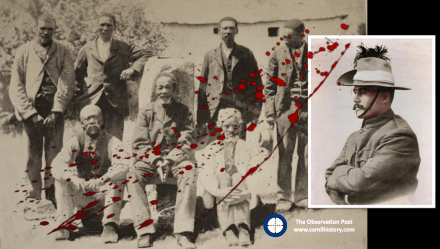
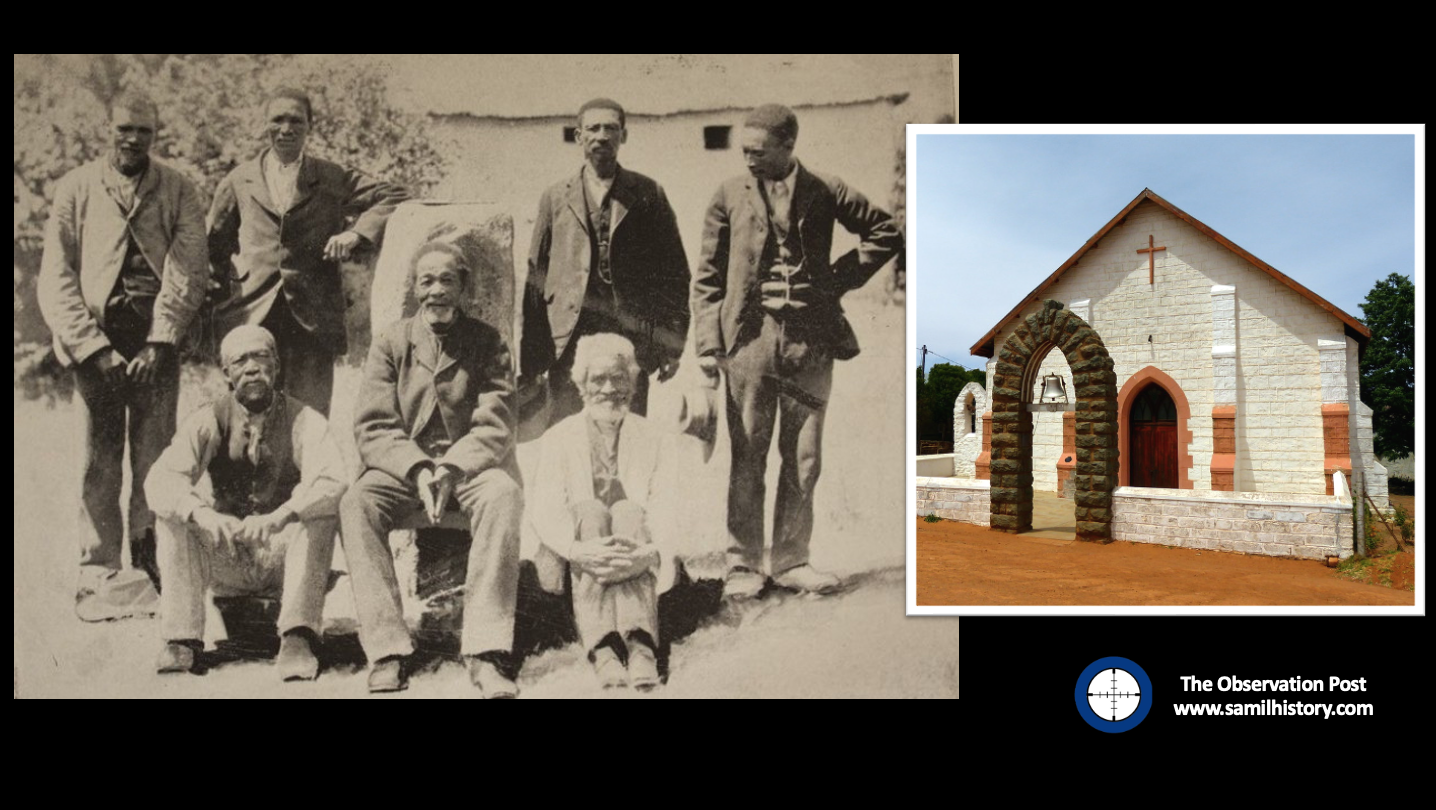
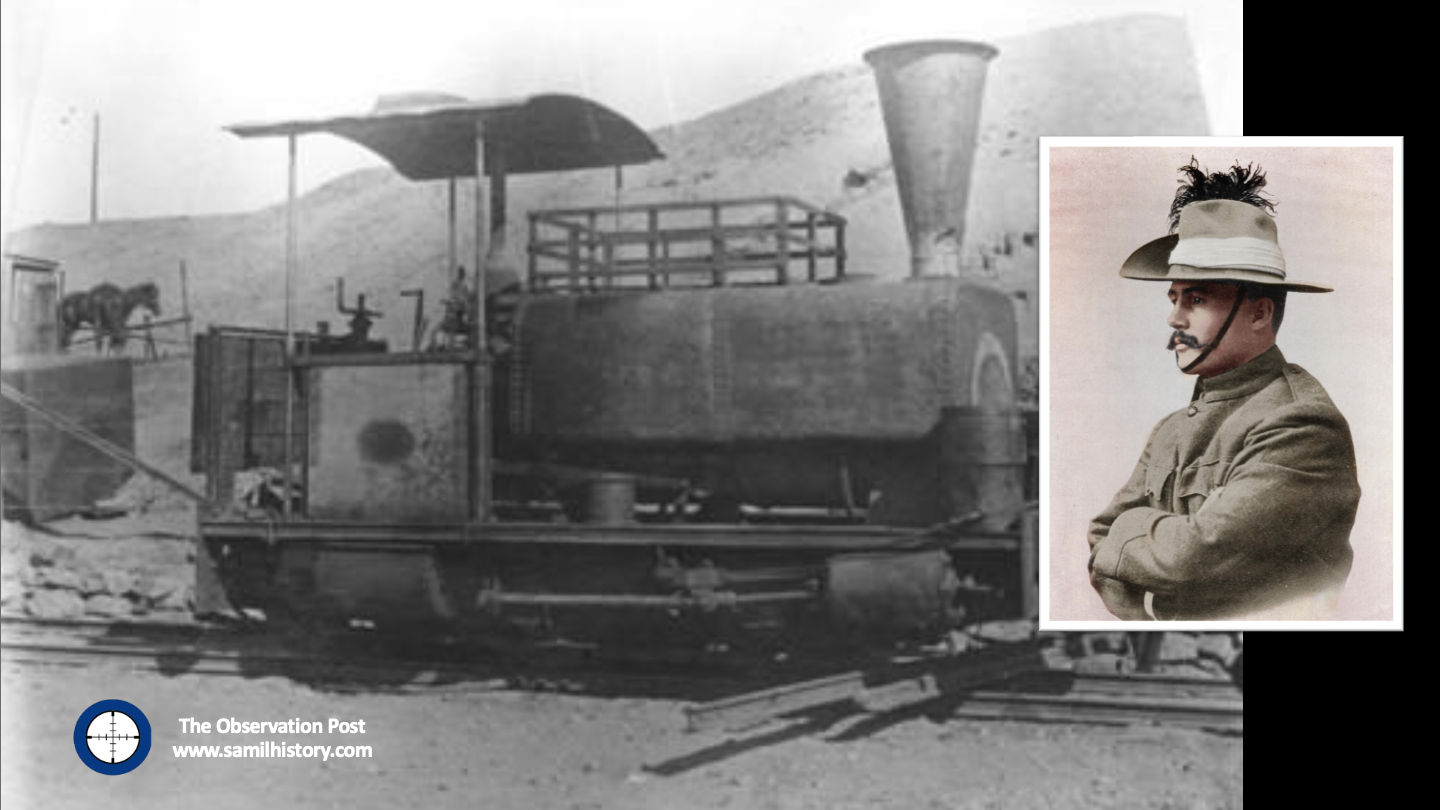
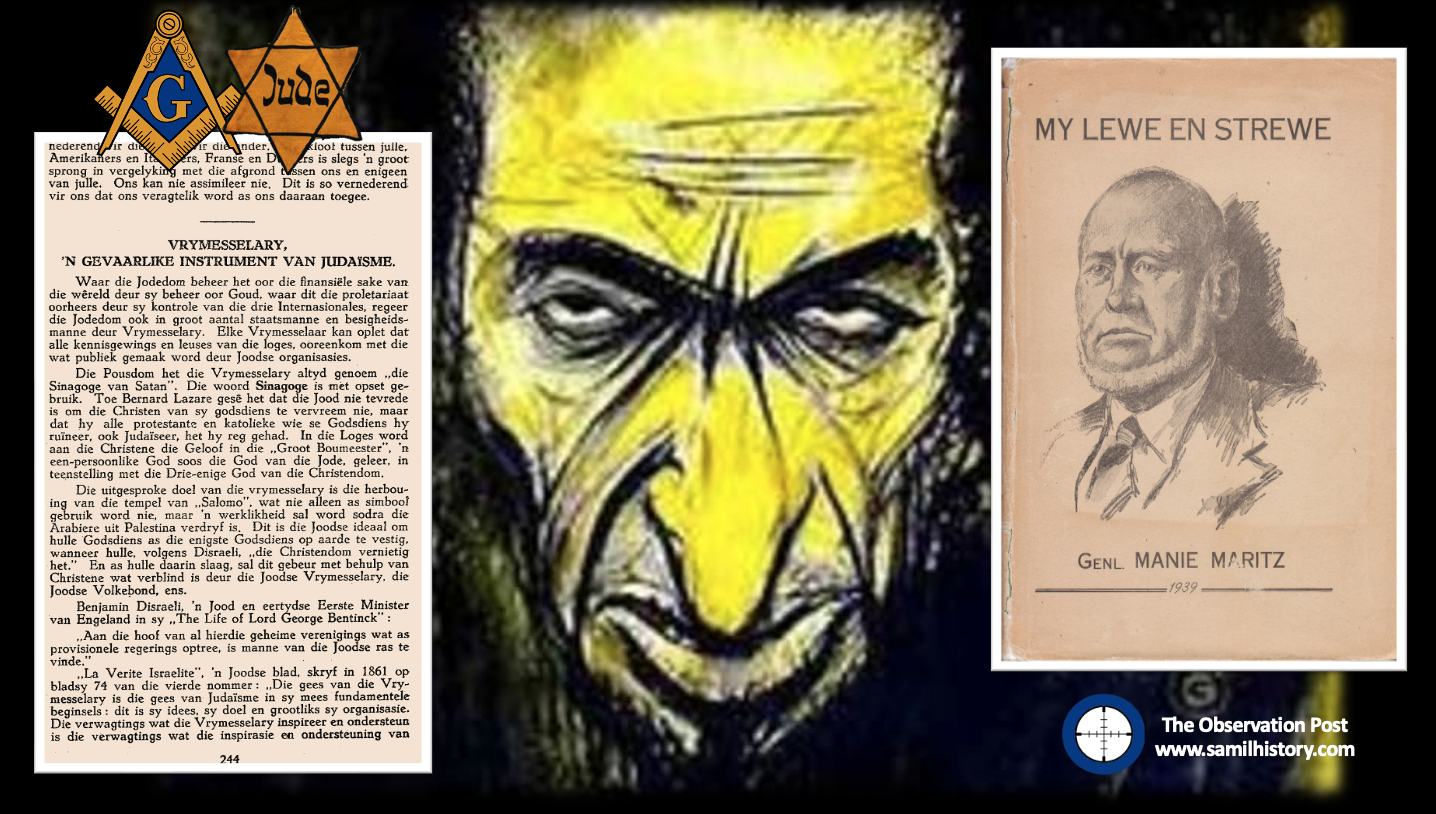
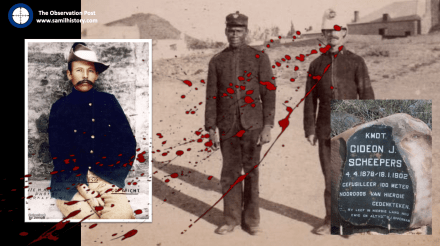
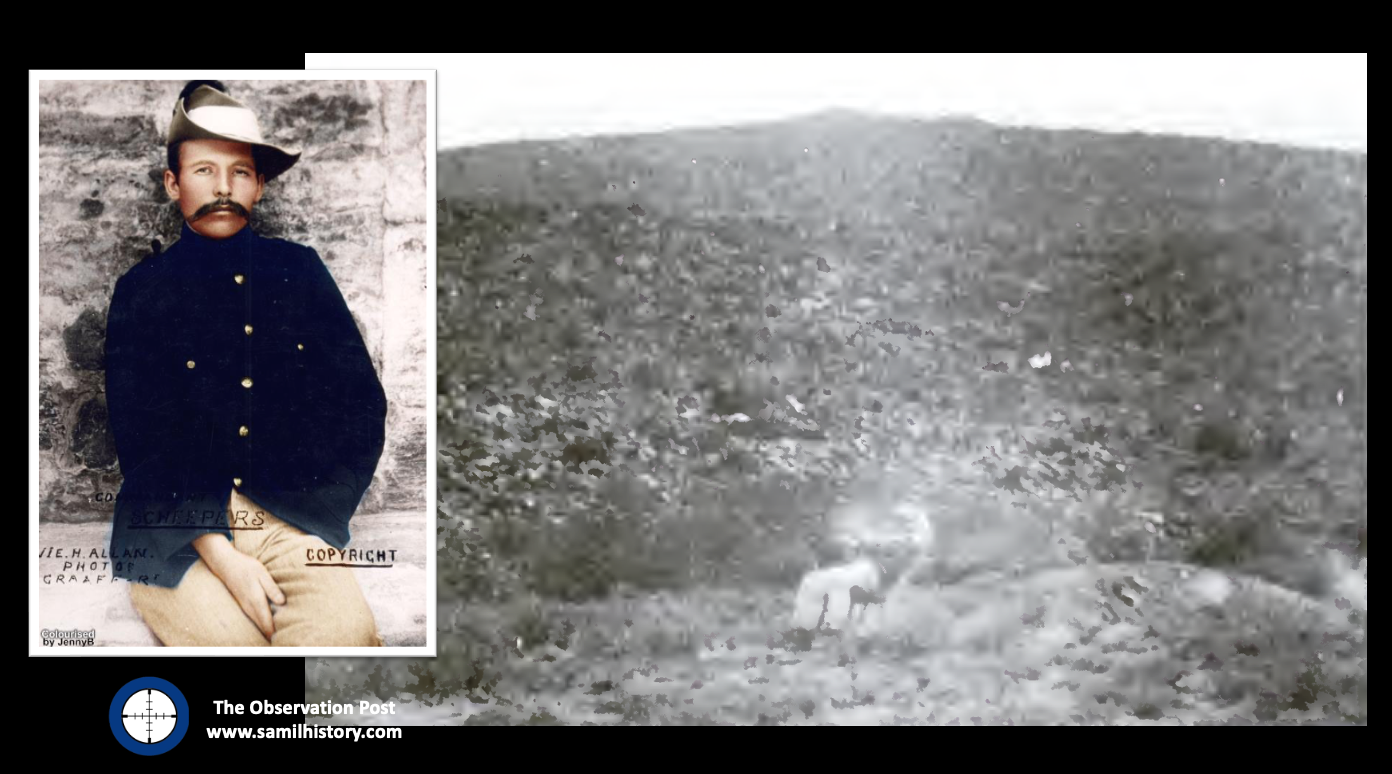
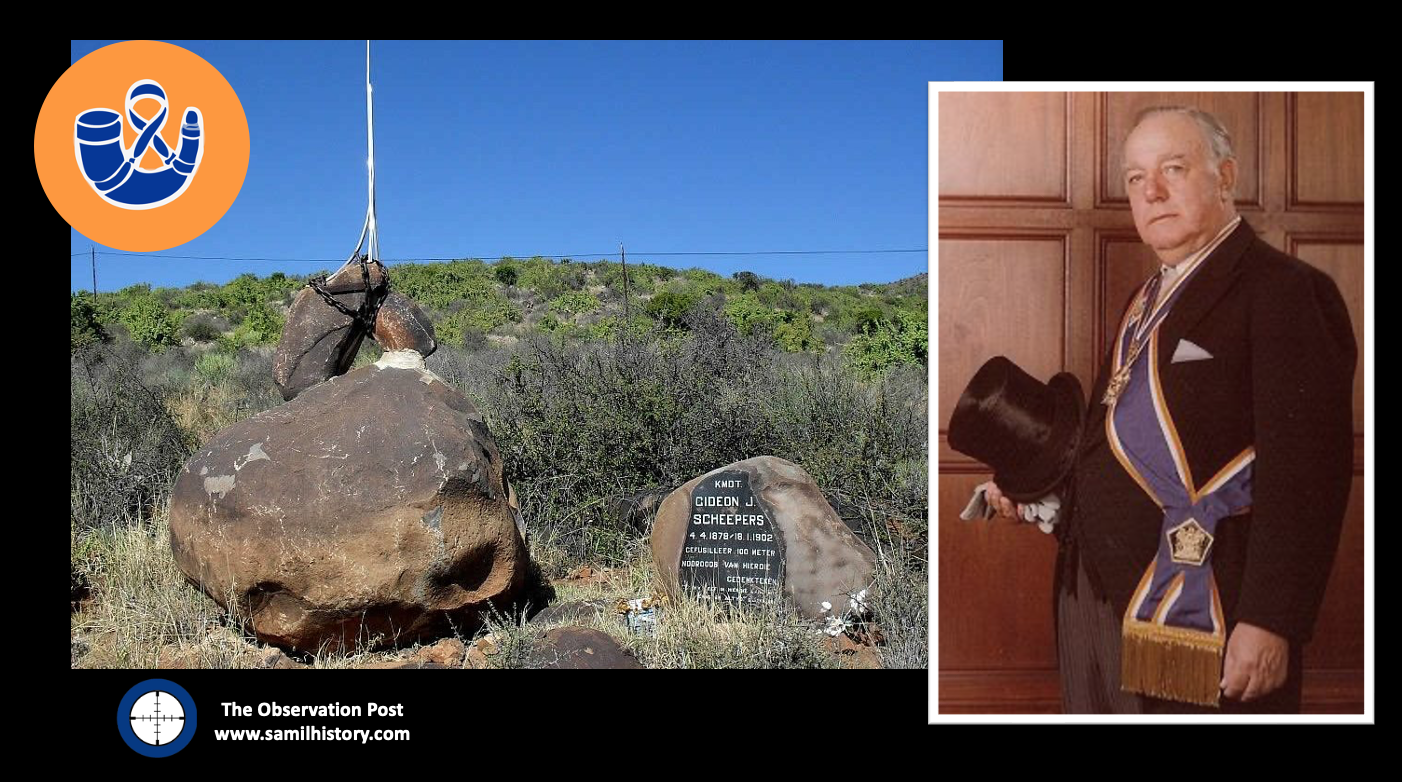
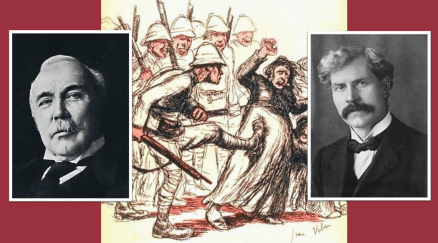
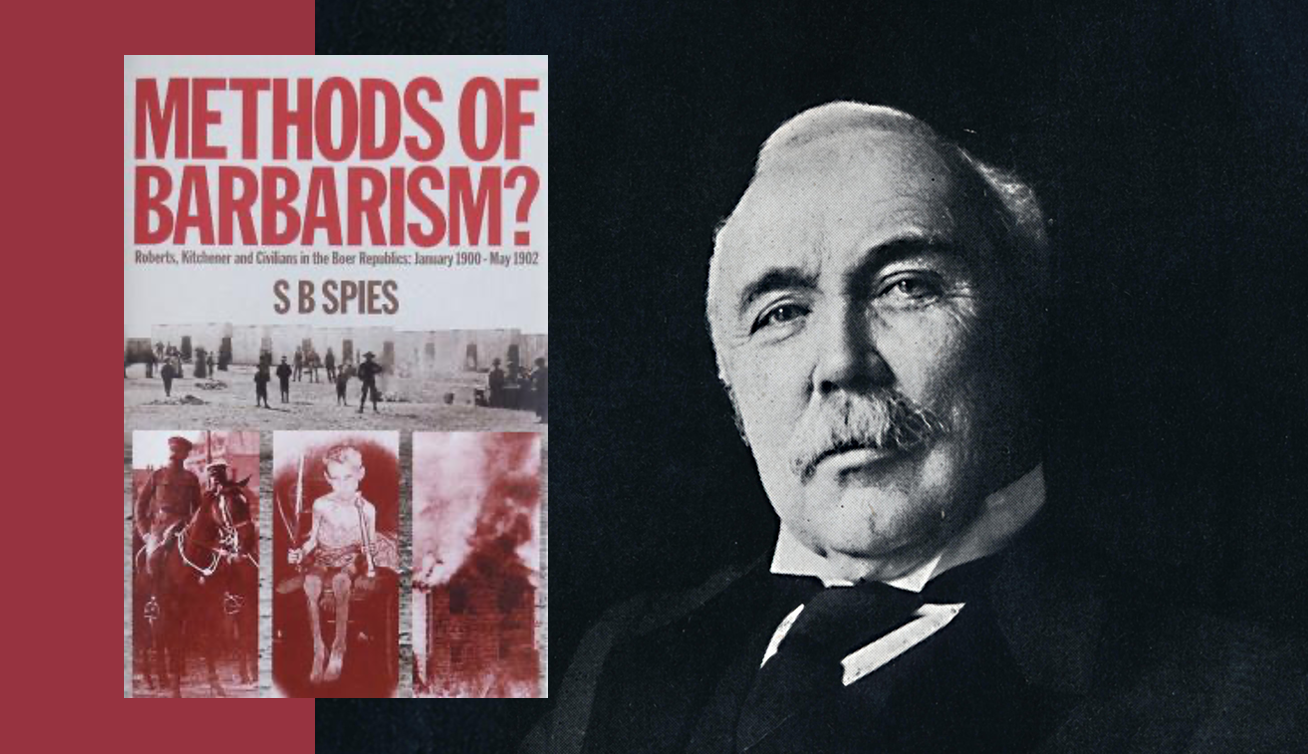
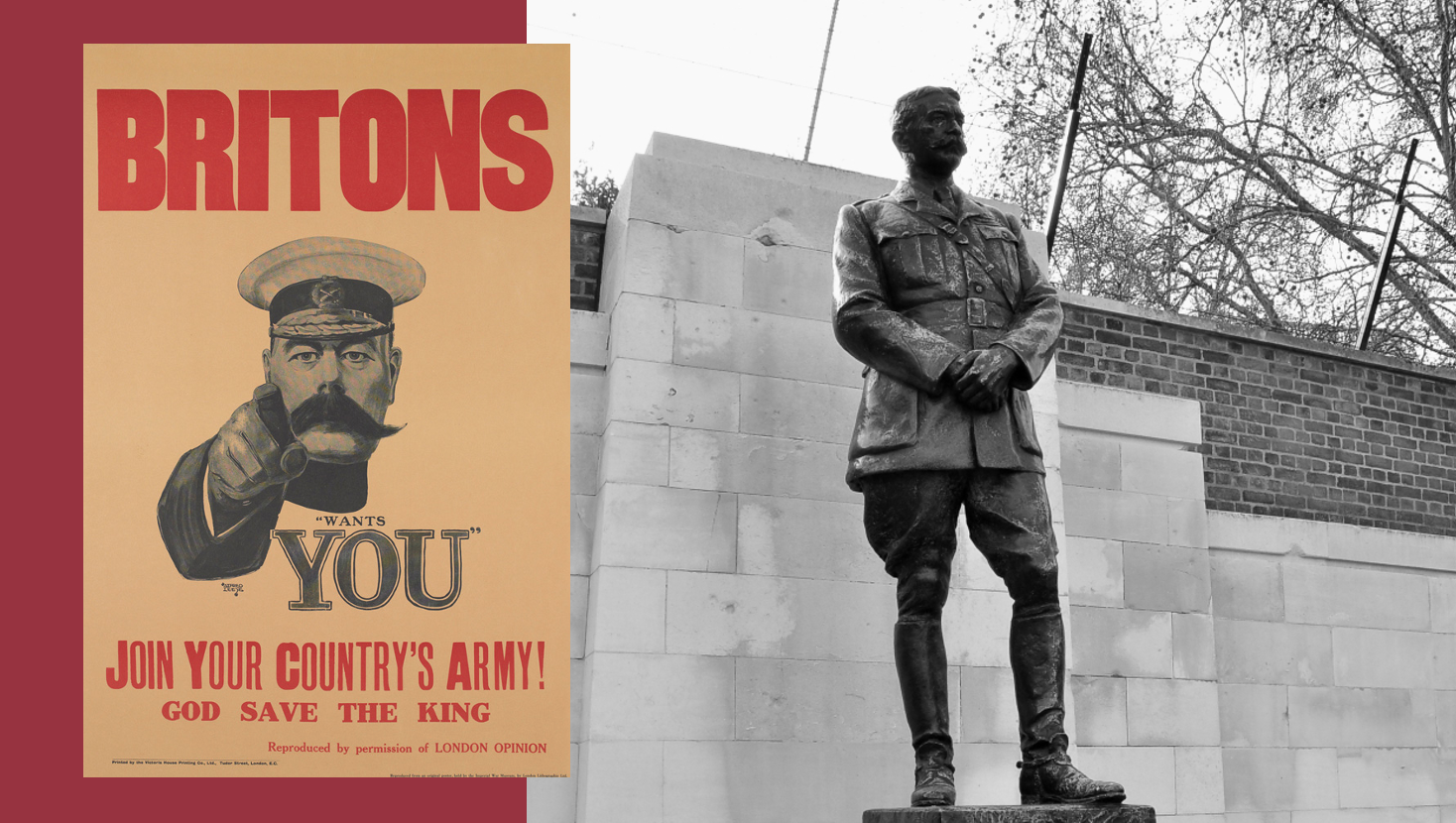
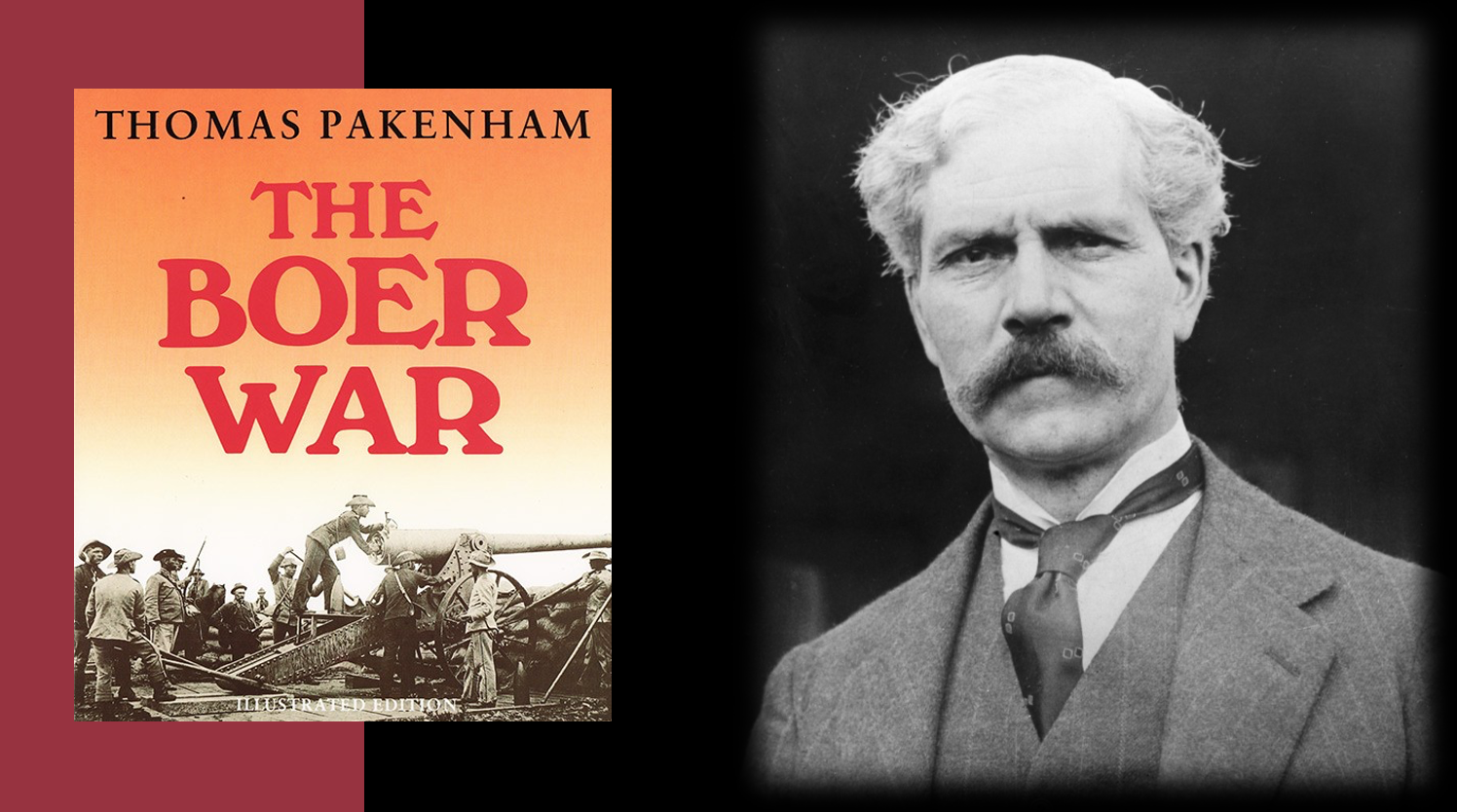
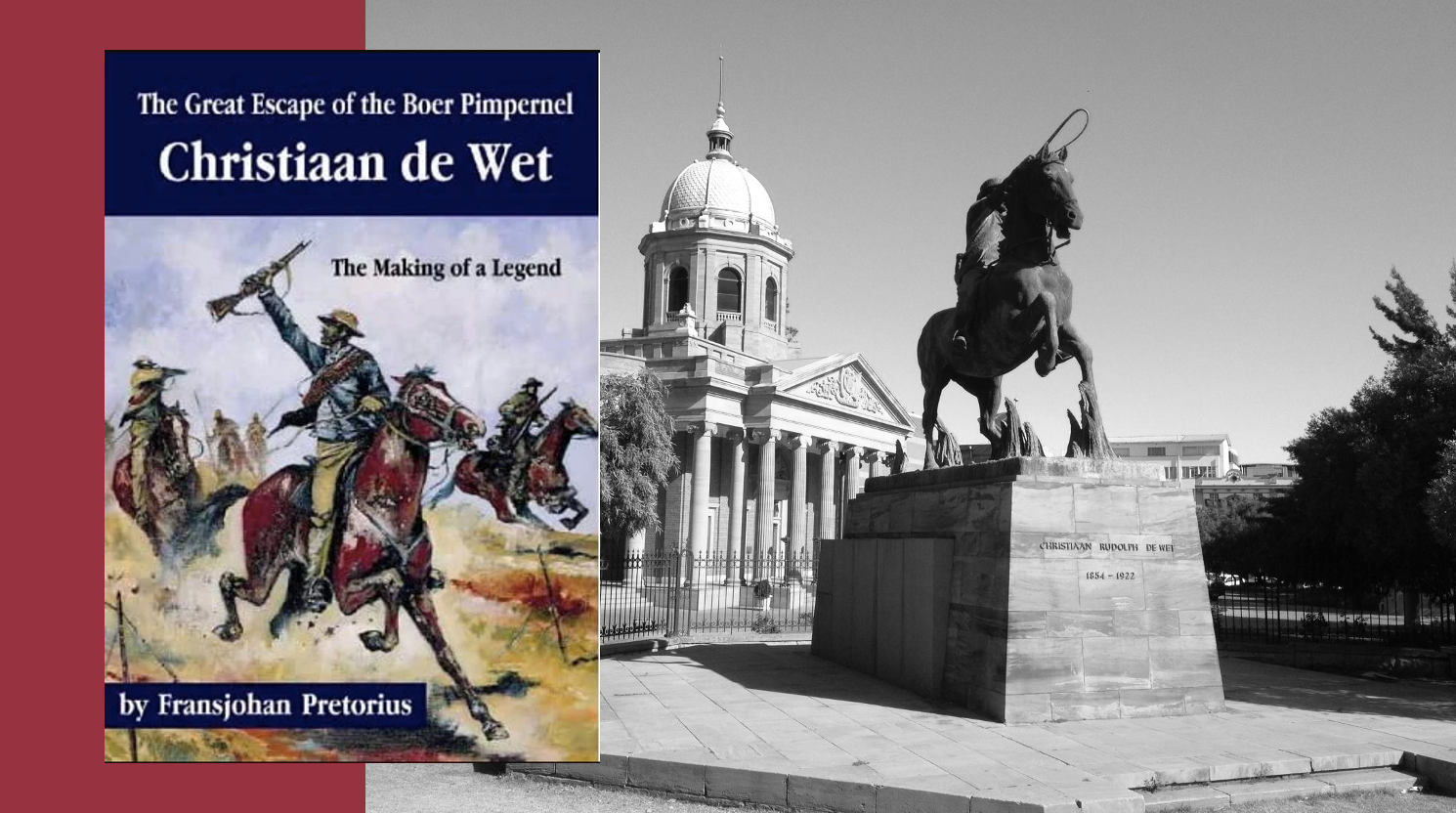
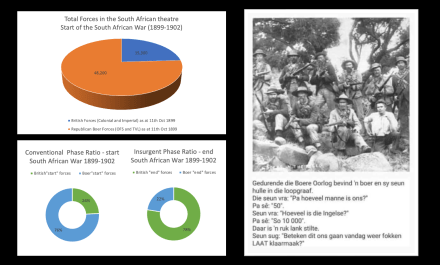


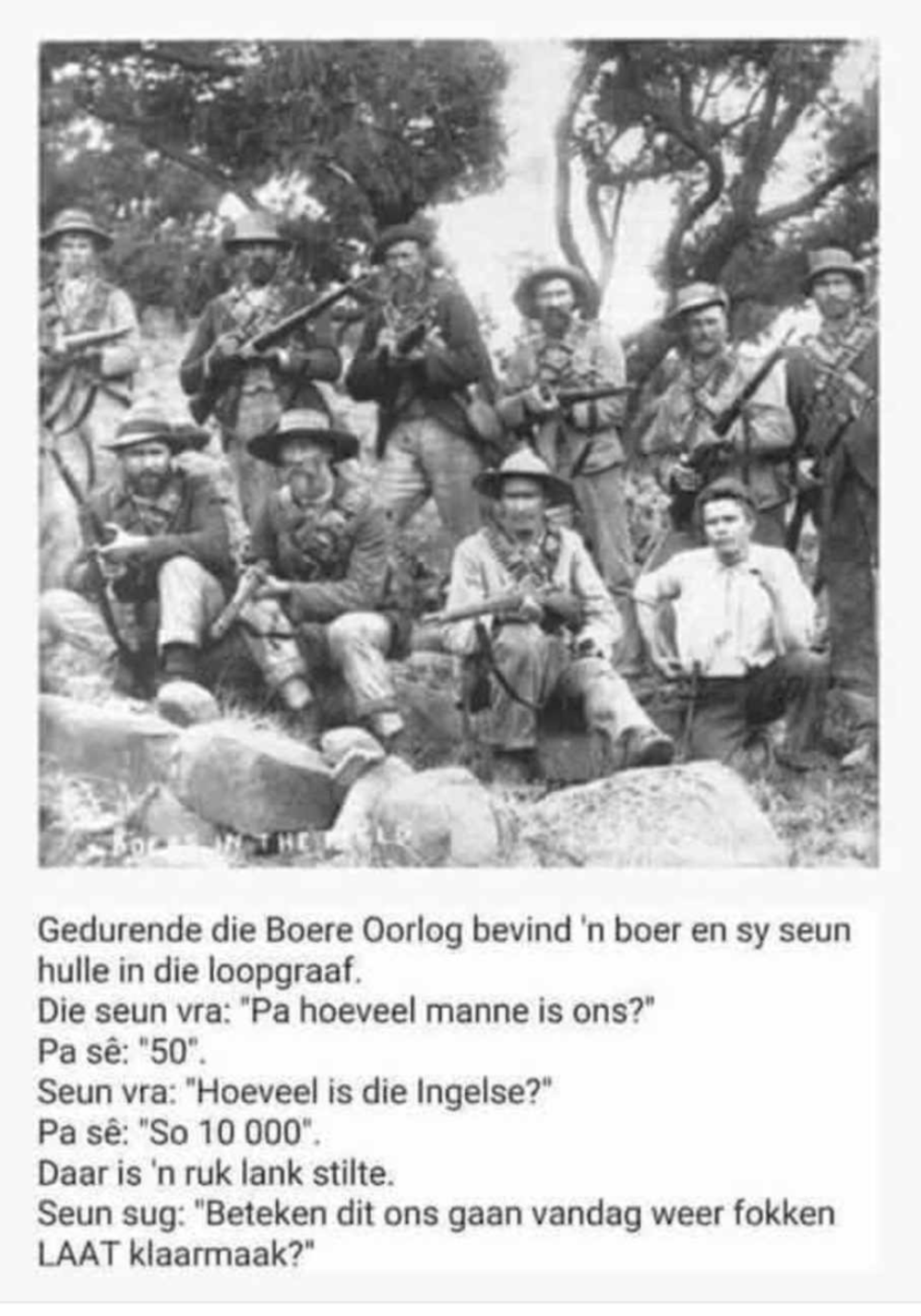
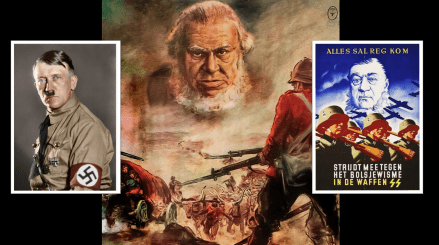

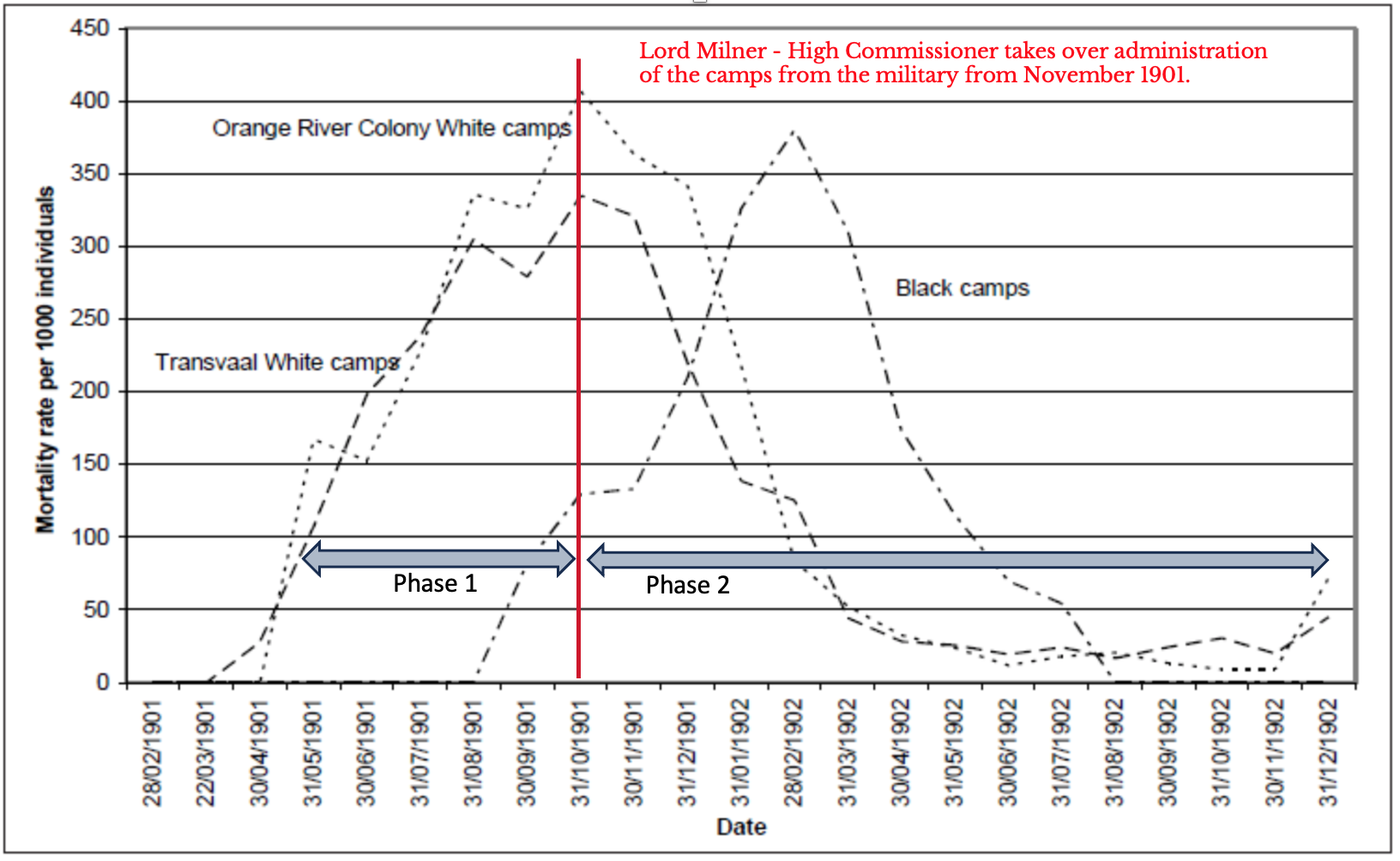
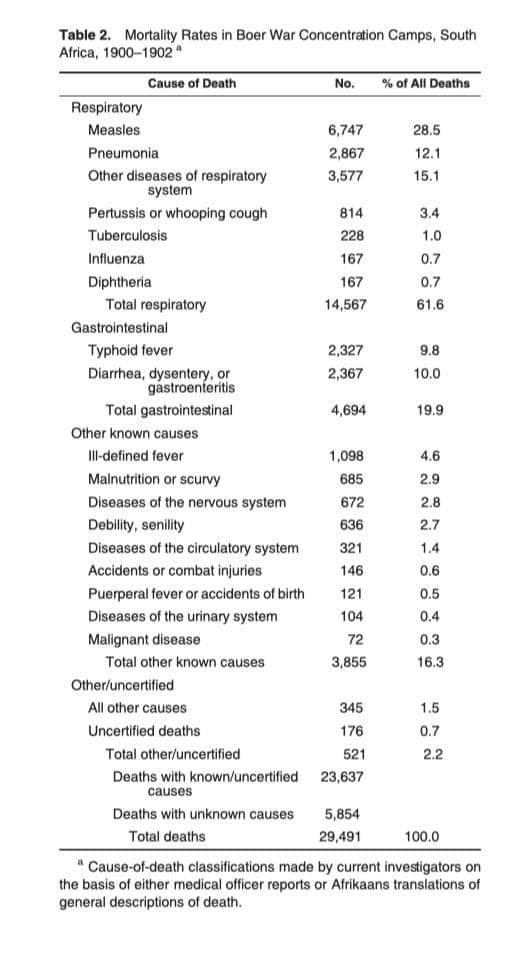
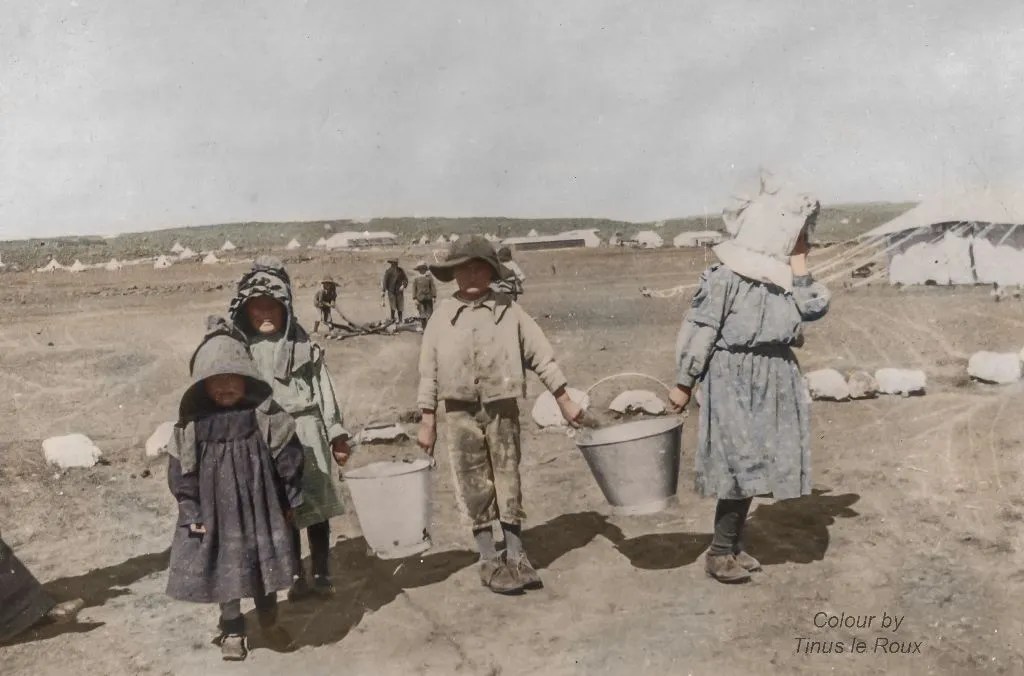
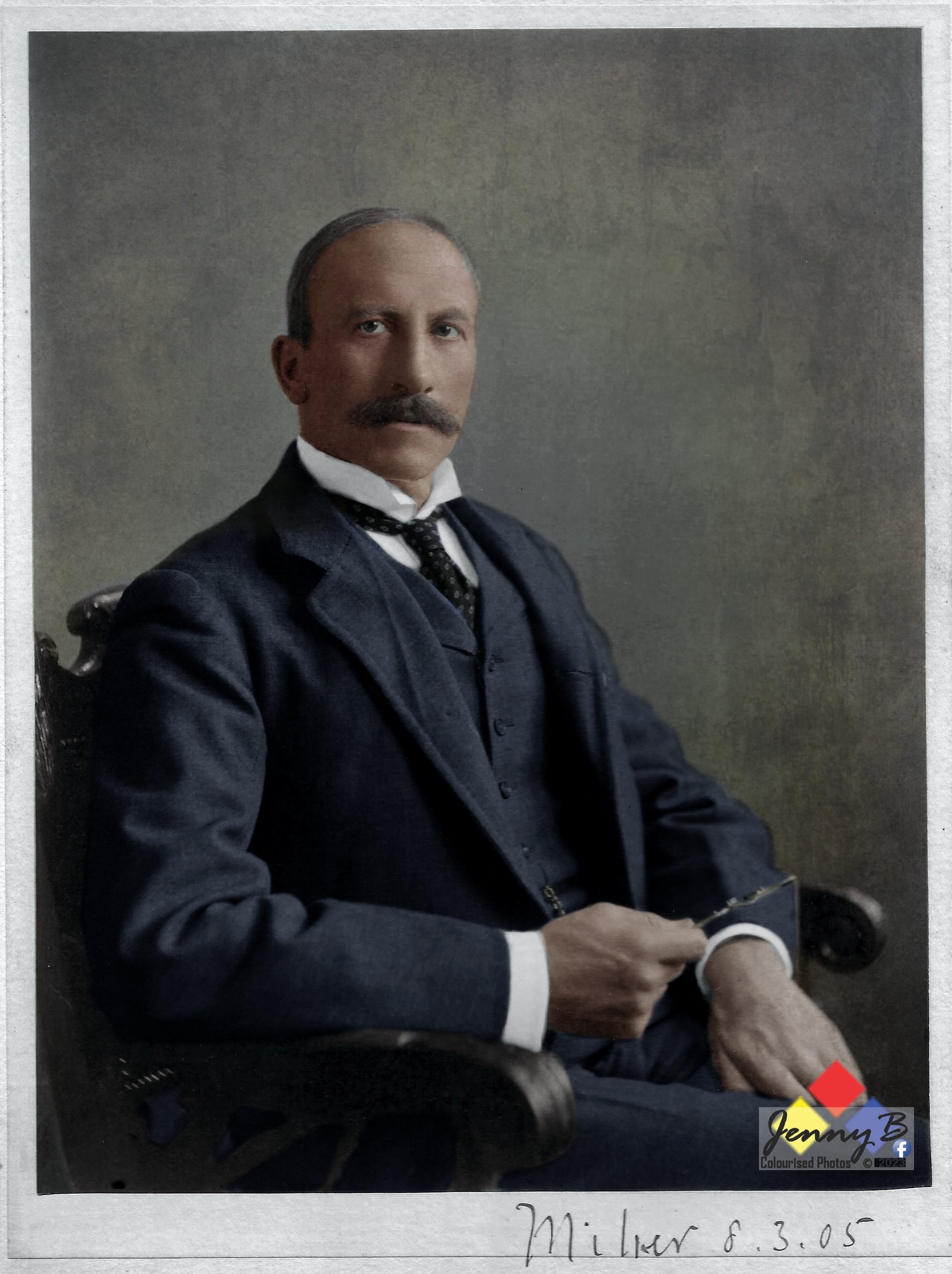

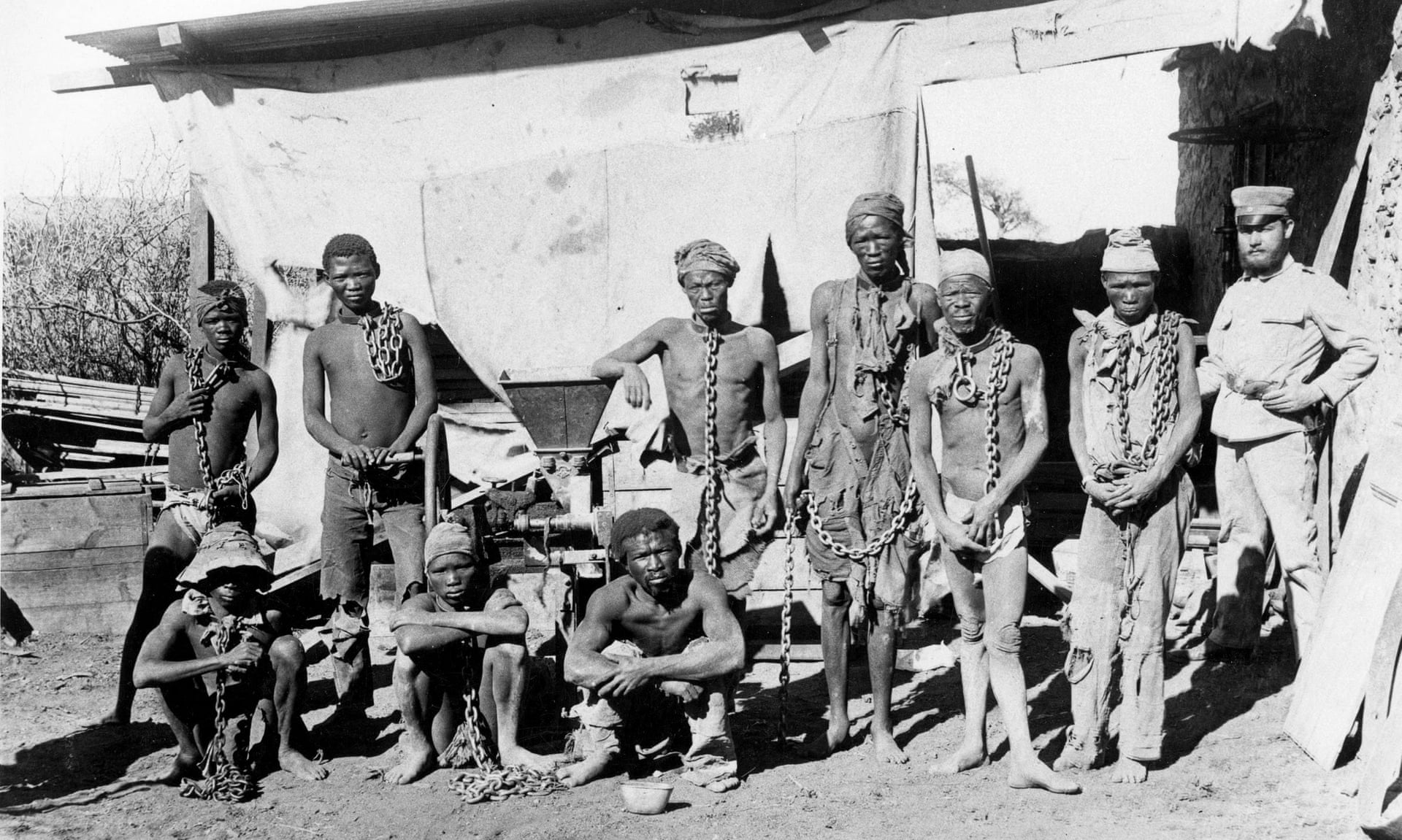

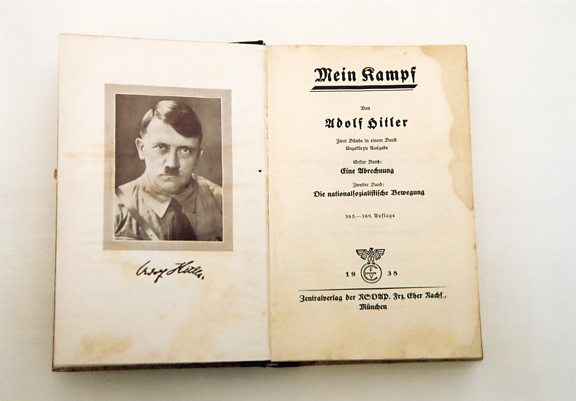

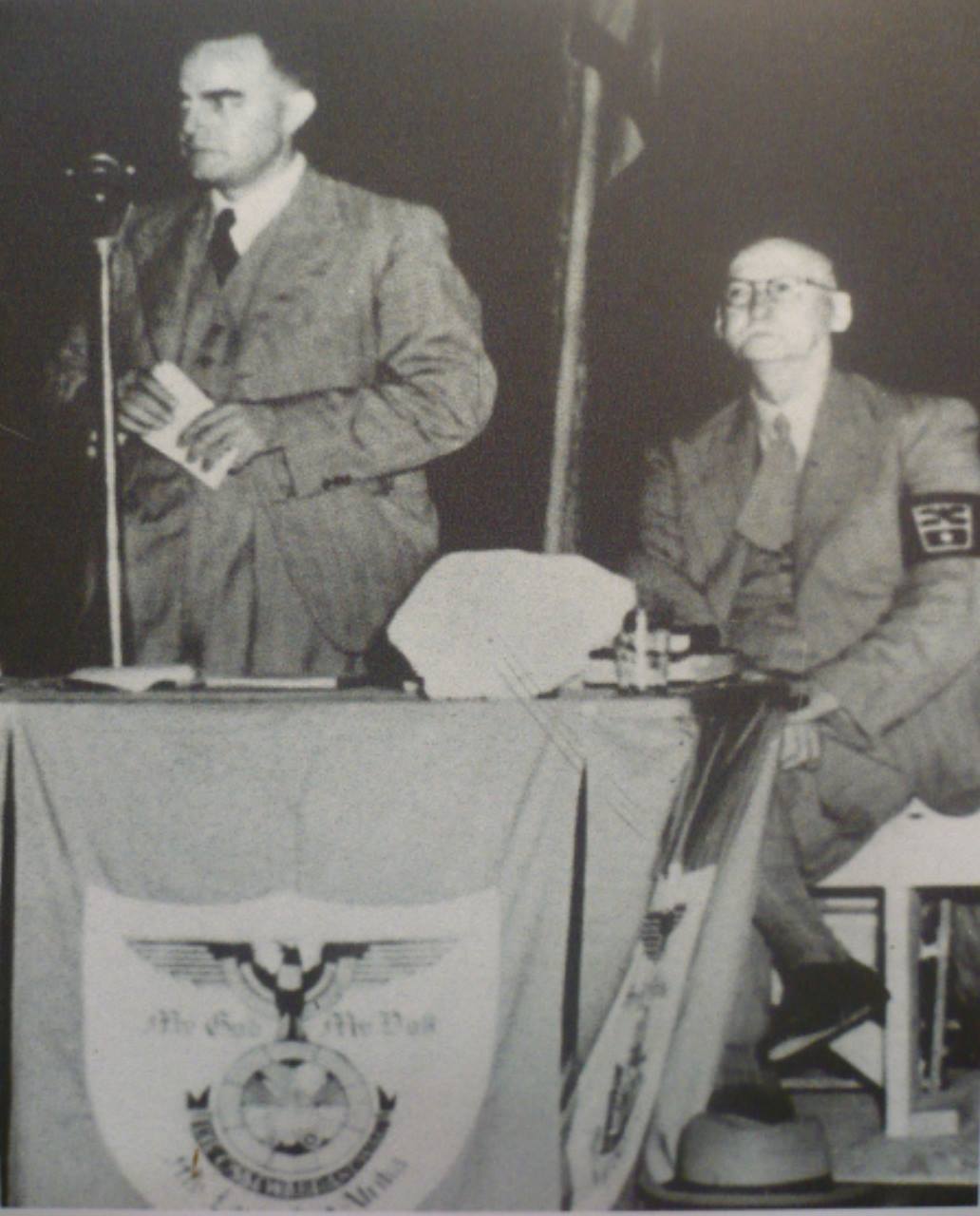
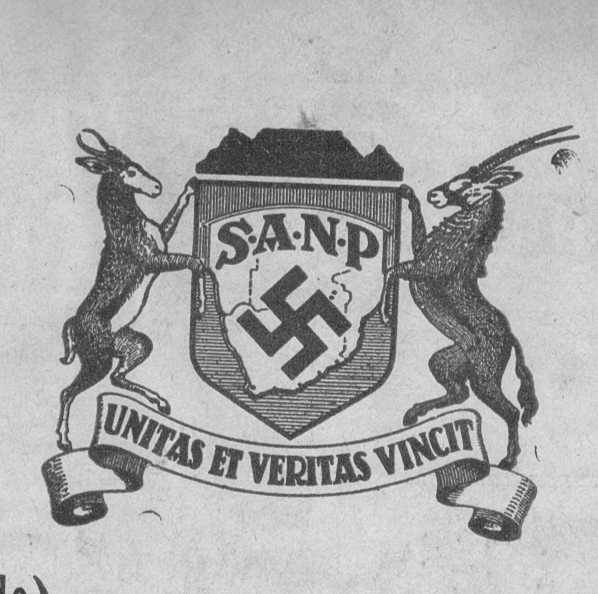


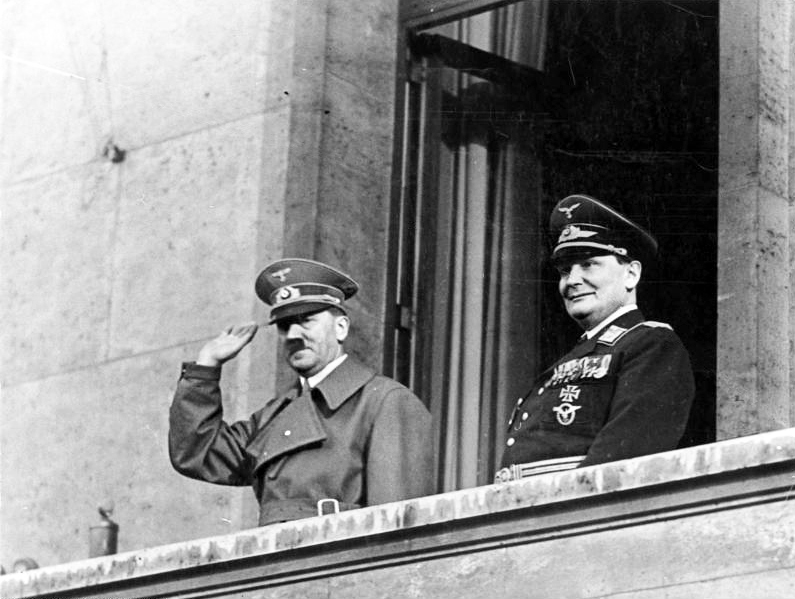
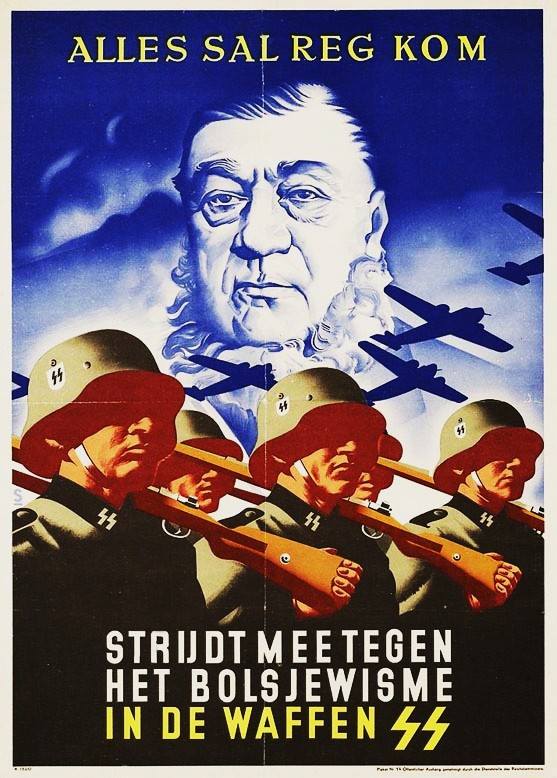

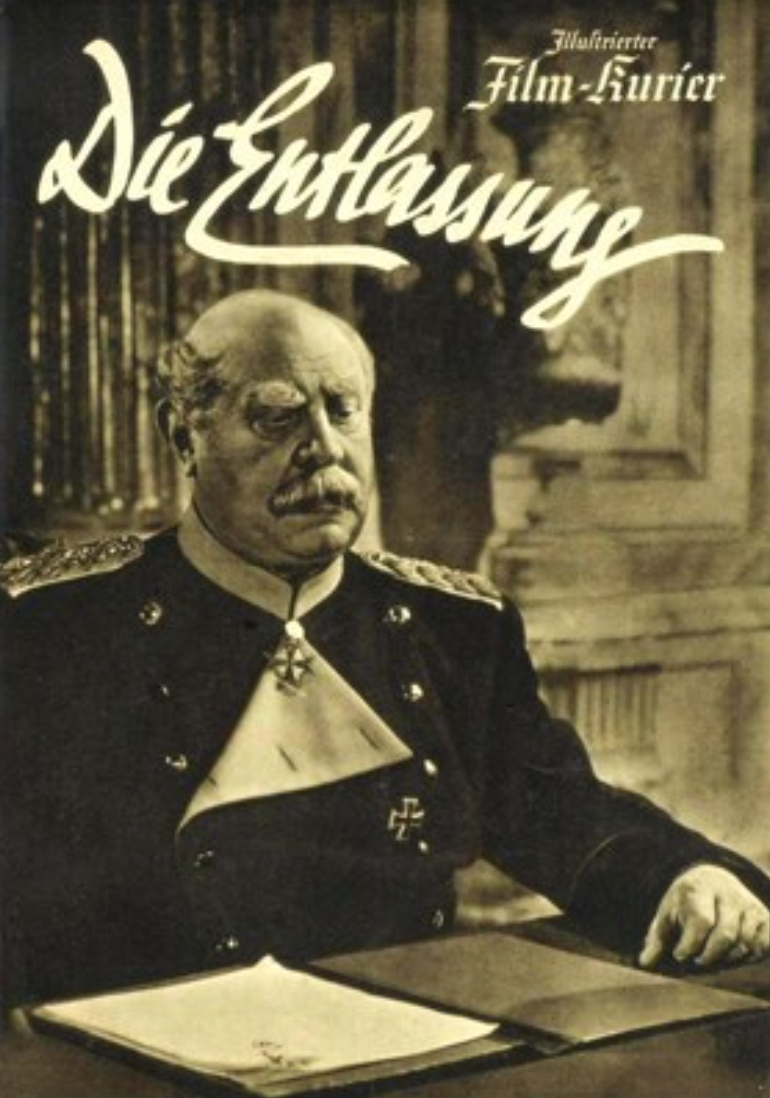
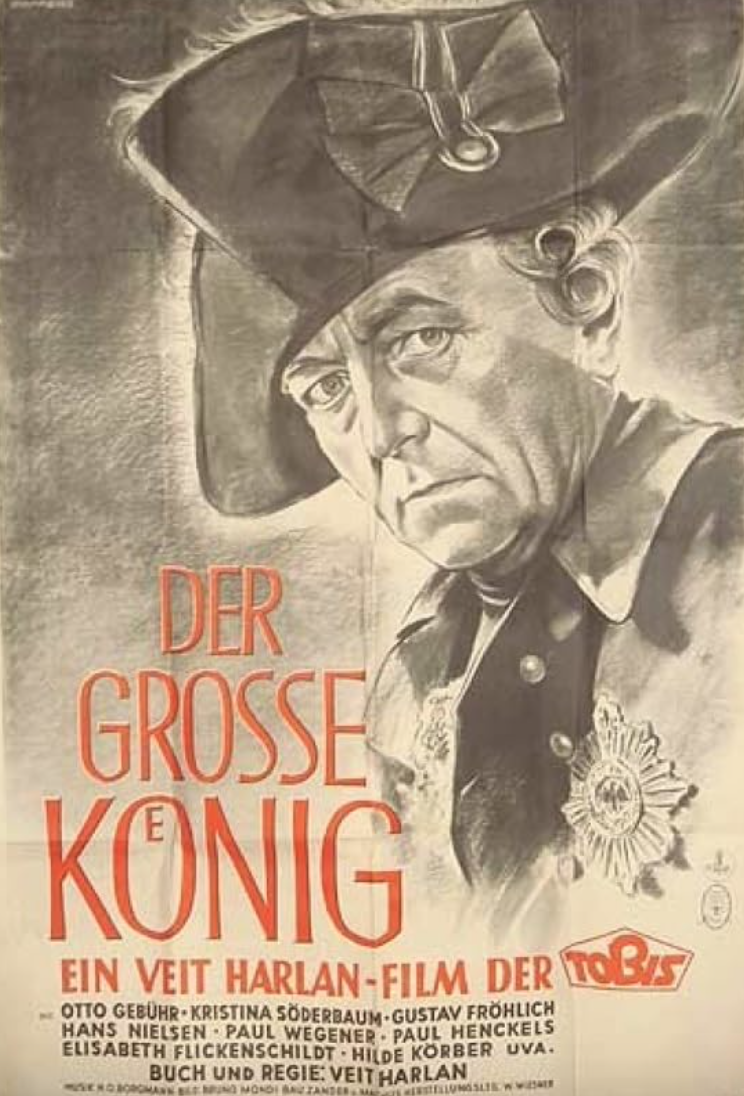
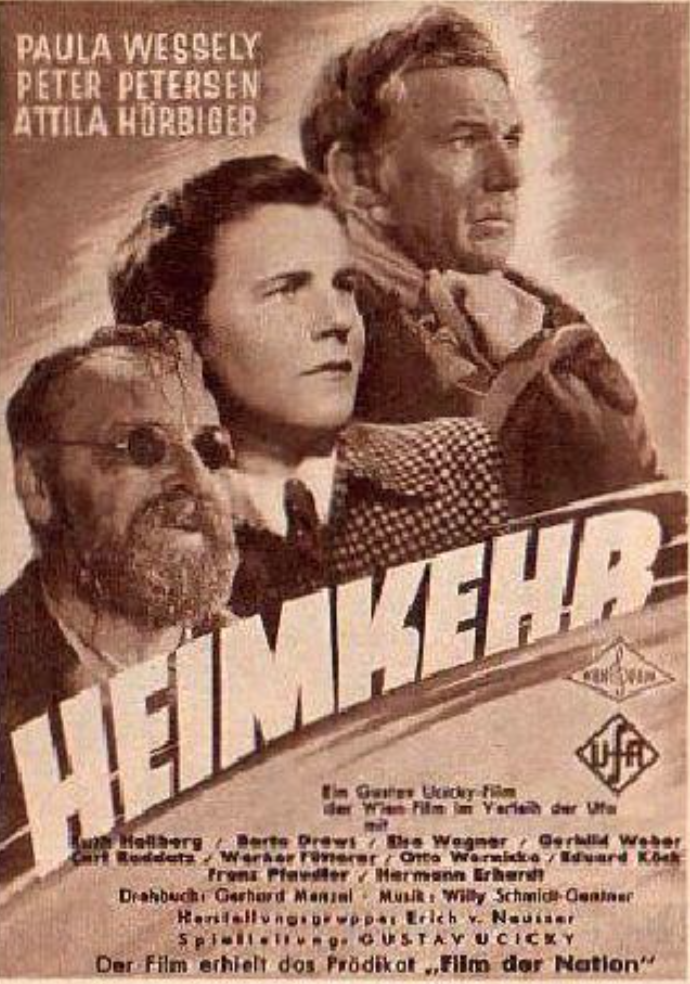
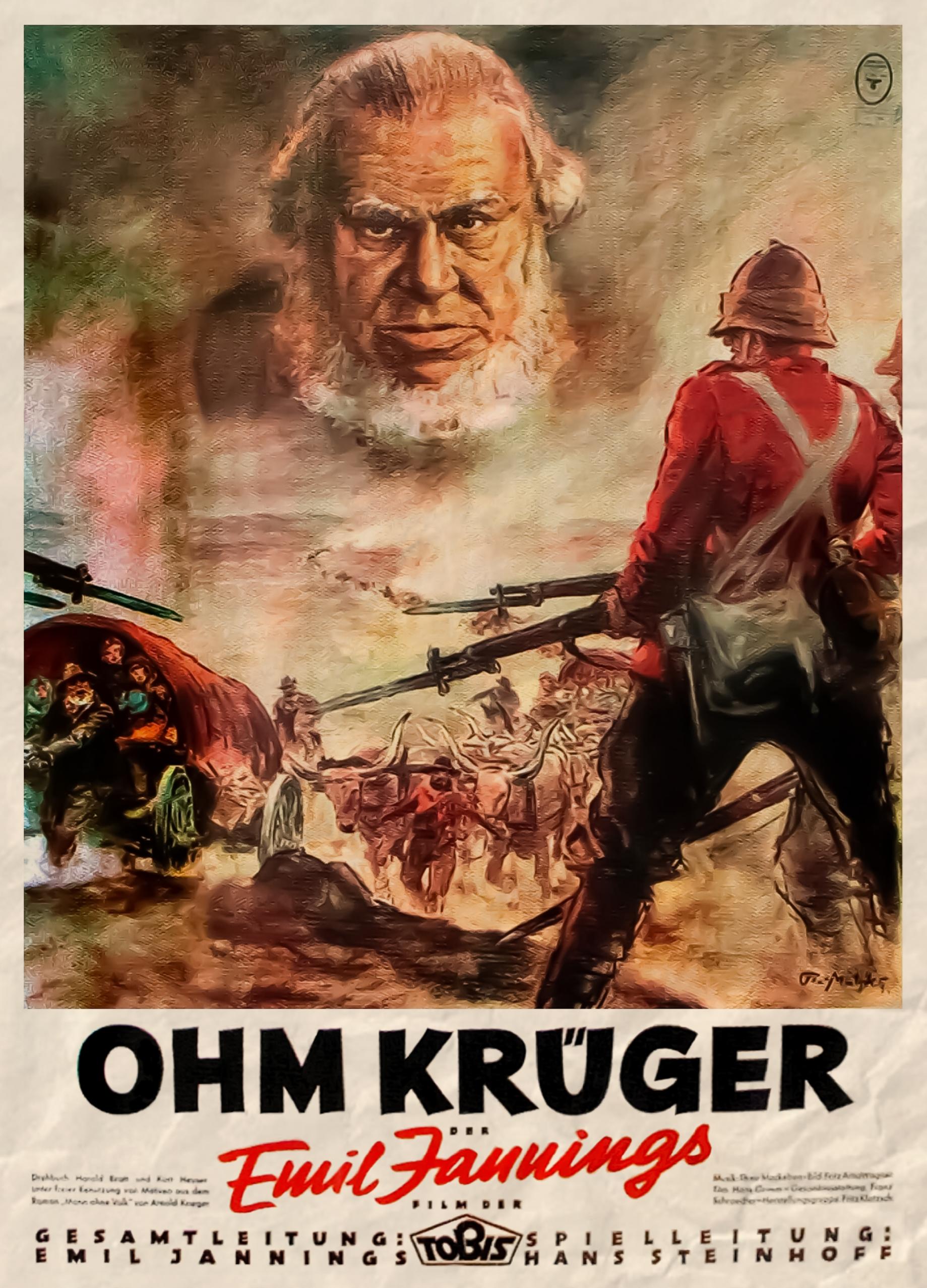
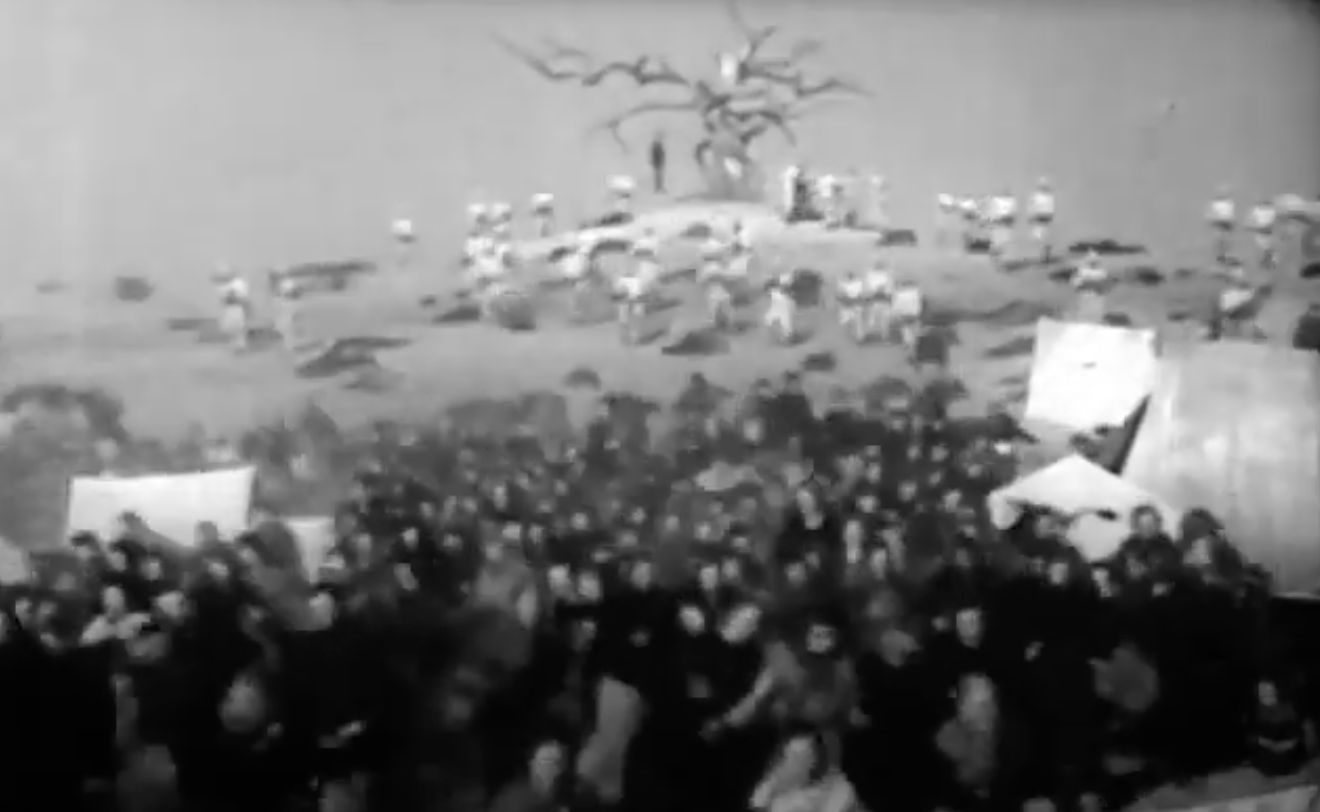

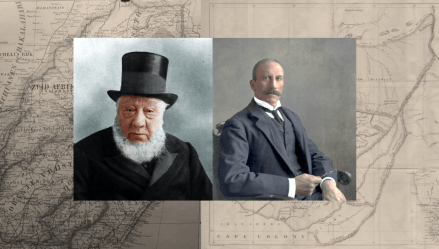

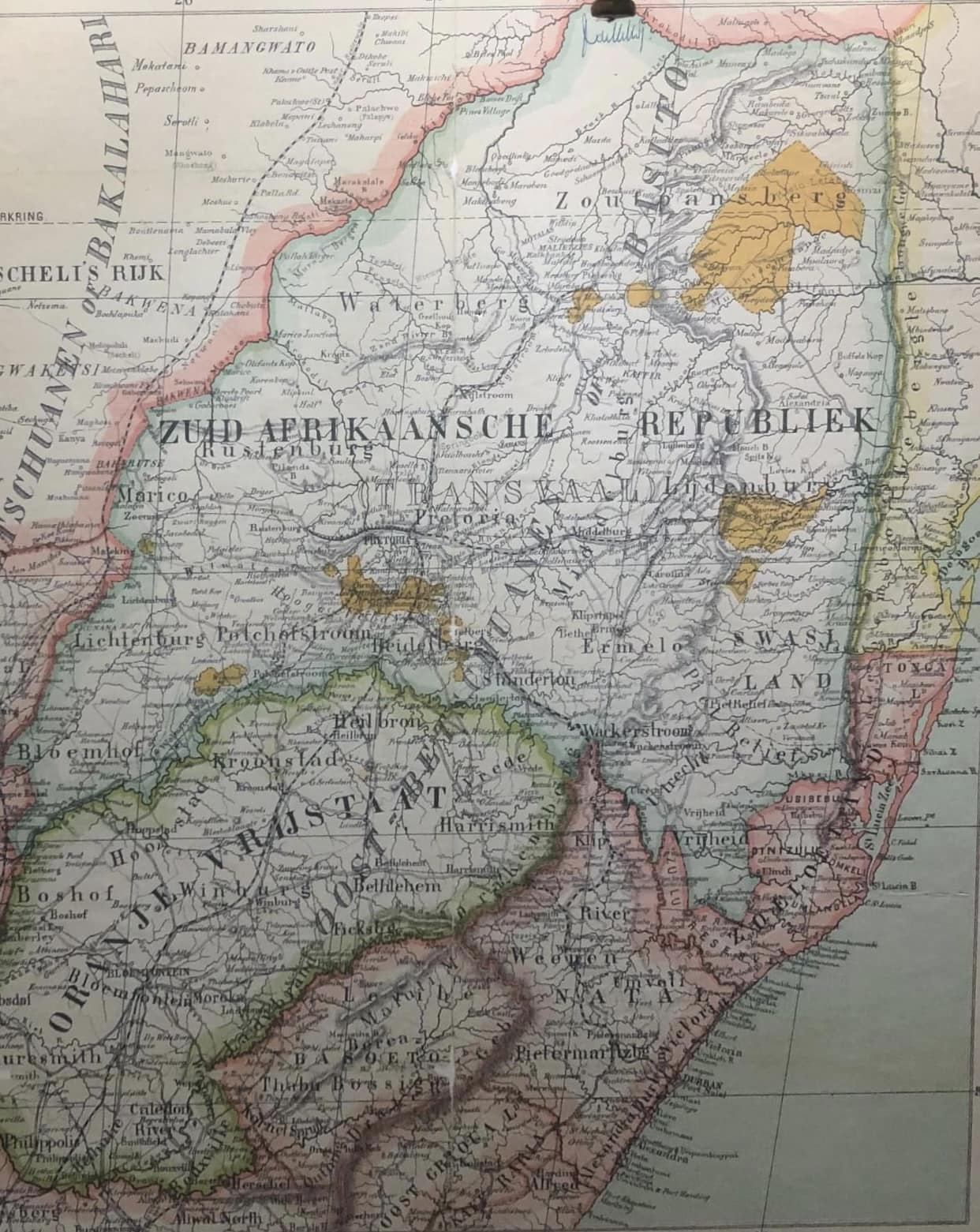
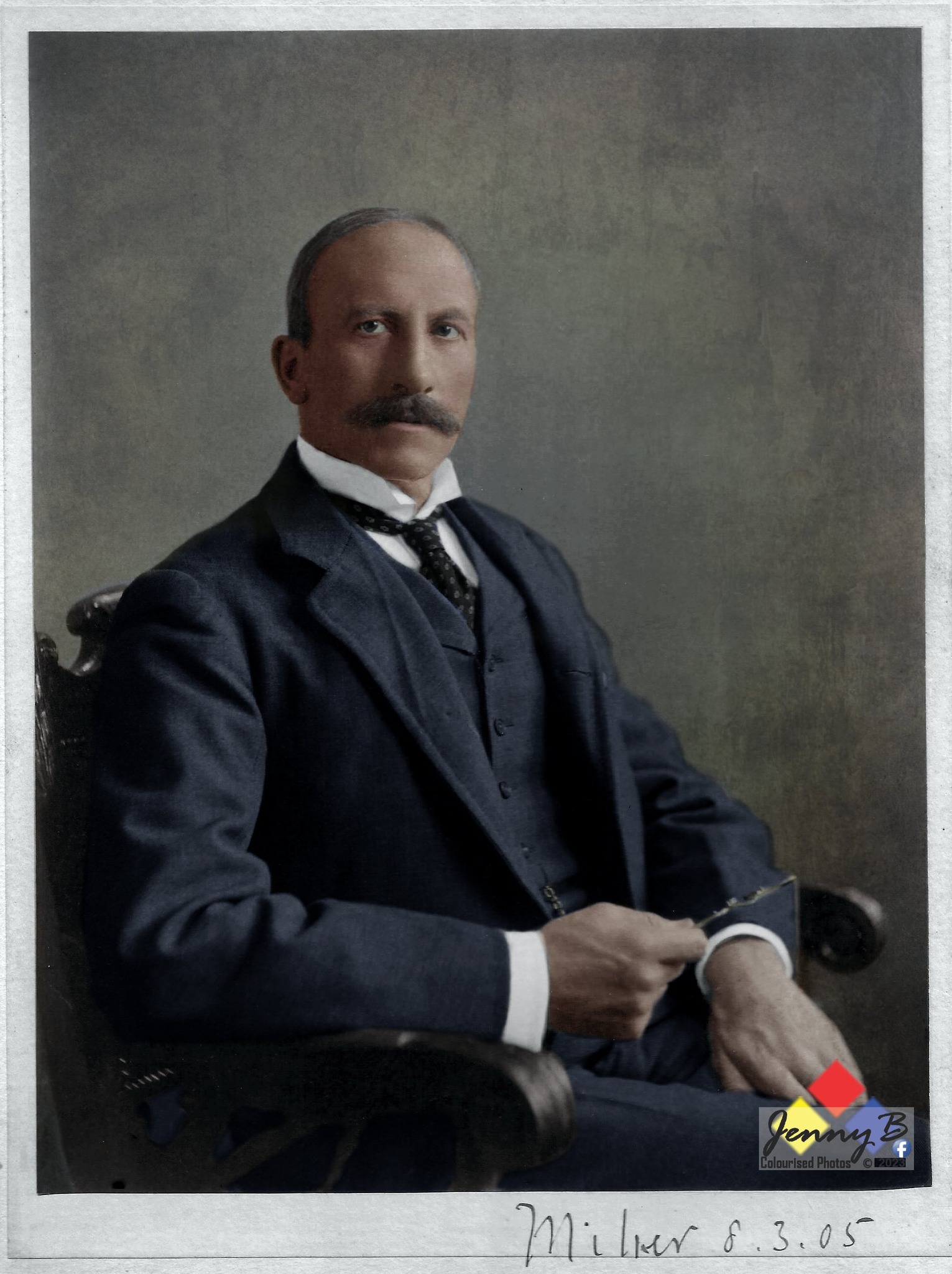
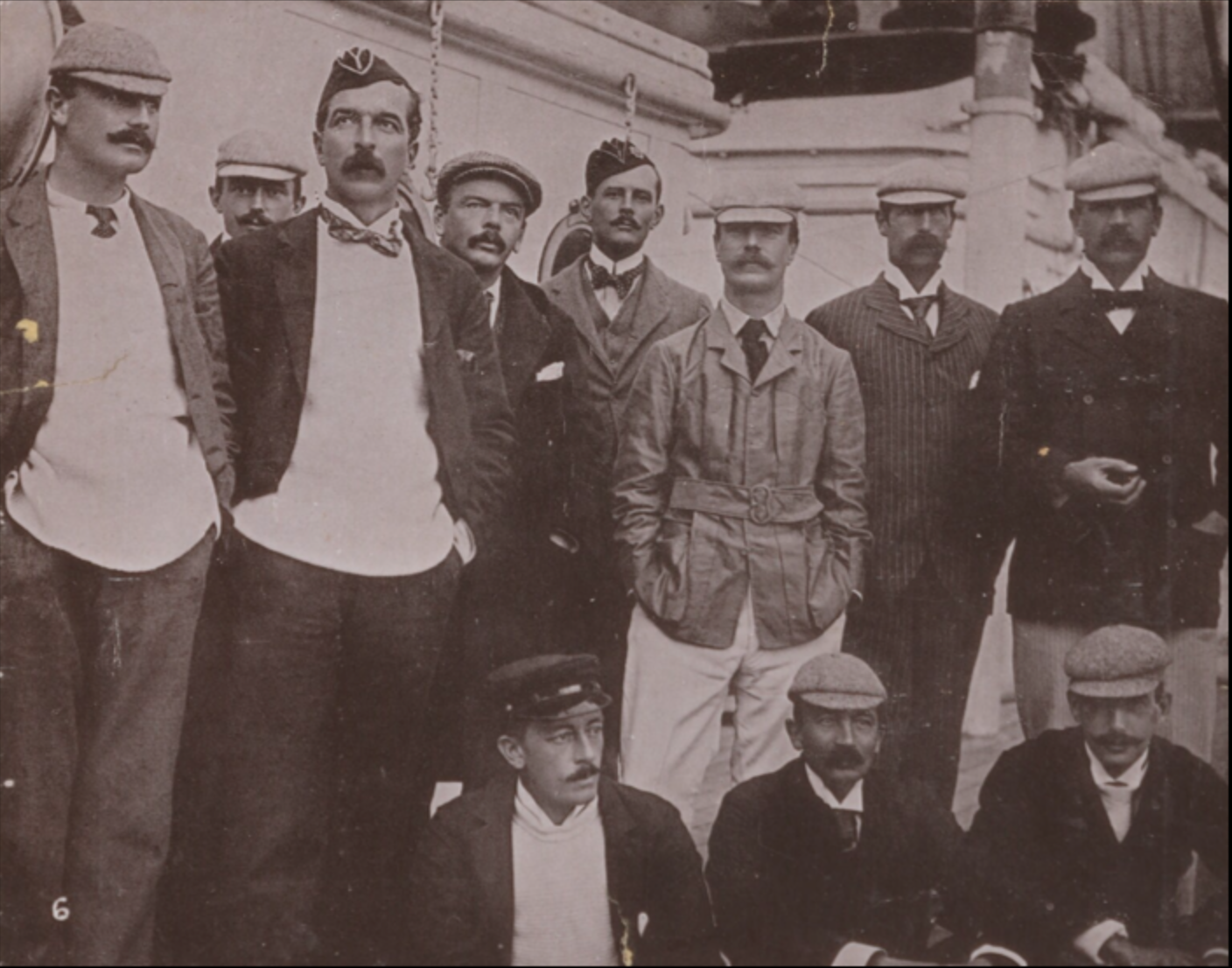

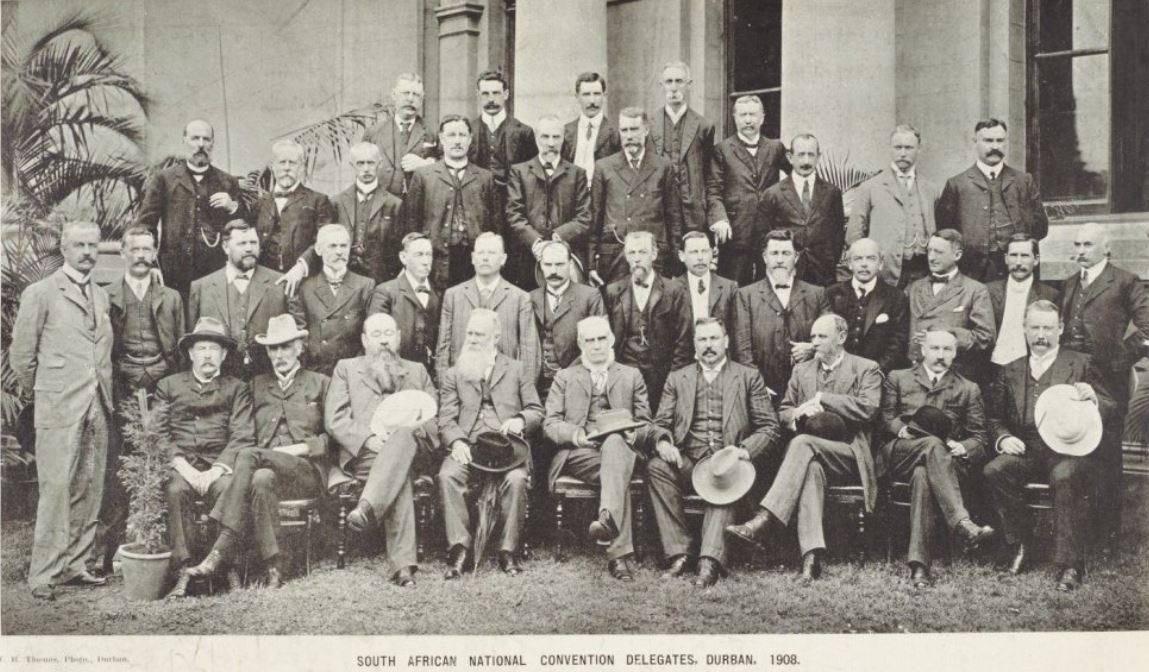


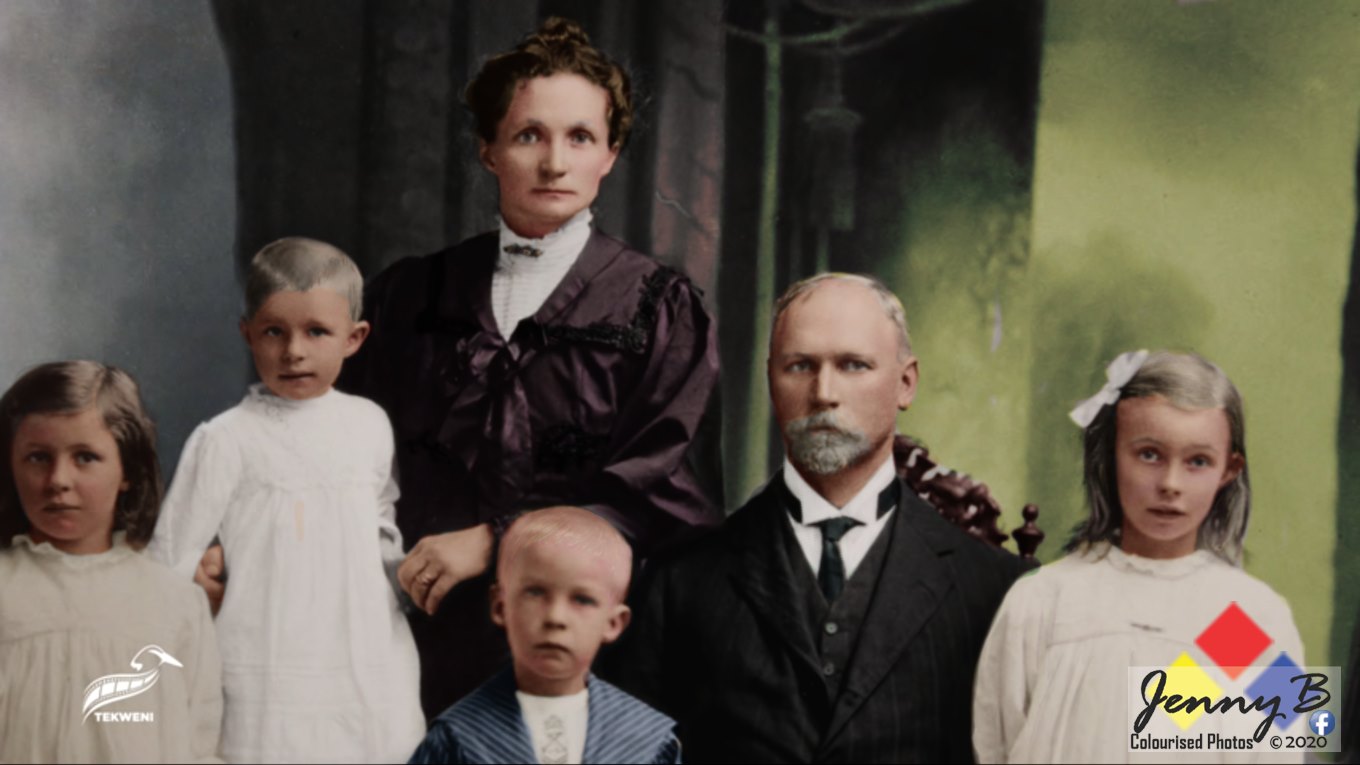

 I glanced up at an art mural of the quarter depicting its early 20th Century heyday, and noticed its old landmark hotel was called the ‘Transvaal Hotel’, nipping outside I realised I was in the famous old ‘working class quarter’ of Paris, the epicentre of French equality and multiculturalism … Belleville … the birthplace and childhood home of Édith Piaf, with its panoramic view of the Paris at the Parc de Belleville, and I was standing in one its most well-known streets, leading to the Parc de Belleville, the ‘Rue du Transvaal’.

 In their Republicanism and concepts of Liberty, Equality and Brotherhood they found kindred “Brothers’ in the form of the Boers of The Transvaal Republic and the Orange Free State Republic, a hard ‘working class’ and determined people (like themselves) seeking ‘freedom’ and ‘equality’ from the oppressive yoke of British Class Elitism and Monarchism. The French fully supported the Boer cause for Republic autonomy and found Britain to be unduly pressuring them, and lets not forget – the Boers were up against their old enemy; “les rosbifs” (the roast beefs) – the English.

 The Observation Post