Richard Stanley Lord (nickname “Dick”) was born on June 20 1936 in Johannesburg, and educated at Parktown Boys’ High School. His fascination with flying took hold playing “Biggles” high up in Johannesburg’s famous jacaranda trees.
In the late 1950’s Dick Lord wanted to join the South African Air Force. However at the time the governing National Party had targeted South Africa’s defence forces for “transformation”, effectively ridding the defence arms of all their “British” heritage and socially engineering the forces using job reservation, political appointment and nepotism to progress white Afrikaners.
In this changing political environment Dick Lord was despaired of a career in the SAAF, his Afrikaans was limited and his strong “English” heritage was against him in the now Afrikaner-dominated South African Services.
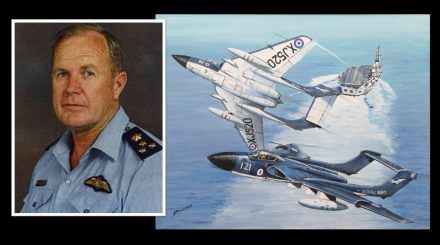
So instead he, joined the Royal Navy. His initial naval training was at the Royal Naval Engineering College, Manadon, and he gained his wings in the Fleet Air Arm in June 1959, flying Sea Venom and Sea Vixen fighters from the aircraft carriers HMS Centaur, HMS Victorious, HMS Hermes and HMS Ark Royal.
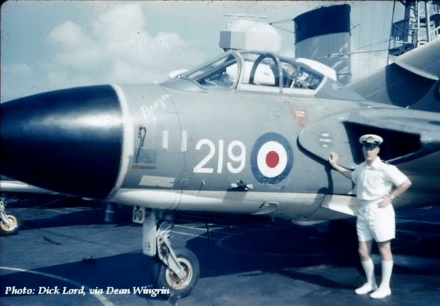
A very eventful FAA Legacy
In 1966 Dick Lord found himself in the Royal Navy’s Fleet Air Arm flying from Ark Royal off Beira, Mozambique, to enforce the oil blockade of Rhodesia following its Unilateral Declaration of Independence. After one mission to intercept a suspected blockade-runner, he returned to find that the carrier had been overtaken by a tropical storm and that her flight deck was pitching through 65ft: his aircraft caught the third arrester wire and damaged its undercarriage – reckoned a near perfect landing in the conditions.
An American “Top Gun”
Dick Lord was instrumental in the development of America’s Top Gun fighter pilot academy, made famous by the film of the same name. He established his unusual role in 1968, when he was the foremost British instructor sent on exchange at Miramar, California, to train American pilots then suffering significant losses at the hands of MiG-21s flown by the North Vietnamese.
While some criticised the performance of America’s multi-million dollar Phantom jet, Lord concentrated on sharpening his pupils’ Air Combat Manoeuvring (ACM) skills to improve their odds in a dogfight.
He and a handful of other Fleet Air Arm graduates of the Royal Navy’s gruelling Air Warfare Instructors (AWI) school in Lossiemouth, Scotland, introduced rigorous new methods for recording and scrutinising the performance of trainees during exercises.
Lord, for example, scribbled notes on a pad on the knee of his flight suit during mock dogfights, which he then exhaustively analysed on a blackboard at post-flight debriefs.
Such was the trust placed in Lord that he was granted access to classified American military documents comparing the performance of US aircraft against that of enemy fighters. This access allowed him to write, with others, the US Navy’s Air Combat Manoeuvring manual.
A year after Lord’s arrival, the tuition and methods introduced by British pilots, all graduates of the AWI school at Lossiemouth, made their way into the US Navy Fighter Weapons School, which was set up in 1969. Better known as Top Gun, it remains the most famous programme in the history of naval aviation. Soon after it was established a Phantom flown by one of its first students shot down a MiG-21, the first time a US Navy aircraft had succeeded in aerial combat in two years.
Lord enjoyed the film Top Gun, but mused that it was “remarkable that any history book studiously avoids mention of any British involvement” and added that the film had not “given us due justice”. He remained proud of his involvement, however, and during his time at Miramar had insisted on using the call sign “Brit 1”. This meant that his wingman, though American, was forced to use the call sign “Brit 2”.
Dick Lord’s wife June Beckett, a BOAC air-hostess said of the movie “Top Gun” that while Dick complained about it, she contended that the film’s portrayal of big-talking fighter pilots was extremely true-to-life, and she should know.
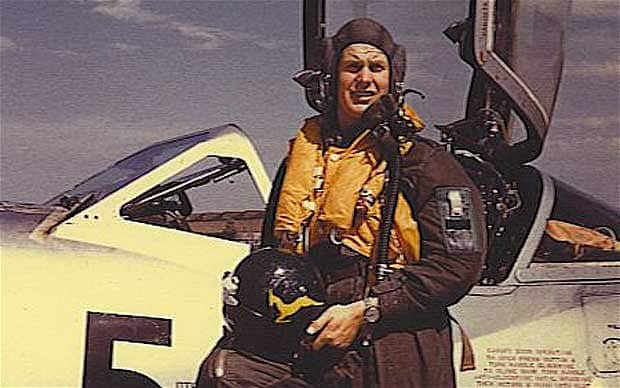
On his return to the Royal Navy he was senior instructor with 764 Naval Air Squadron where he passed on the skills and confidence that had made such an impact in America.
Back to South Africa
Dick yearned to return to South Africa, he resigned from the Royal Navy and in 1970 returned to South Africa where he converted to commercial flying and became a civil aviation instructor pilot.
However the Royal Navy would intervene in his life again, this time after a visit to Cape Town by HMS Ark Royal where a “deep chord” was struck in Dick’s heart, rekindling his love of more adventurous military flying.
Joining the SAAF
Although Dick Lord was still unable to pass the Afrikaans language test, he was able to join the South African Air Force this time due to capability gaps in SAAF caused by all their social engineering and transformation policies, it was also now at war and in need of very skilled and experienced military pilots. Conscription in the SADF had also been implemented by this time, and it involved both English and Afrikaans speaking white South Africans, so policies had to be softened somewhat.
During South Africa’s involvement in the South West Africa (Namibia)/Angola Border War and whilst in the SAAF Dick Lord flew Impalas, Sabres and Mirage Ills.
Dick Lord’s leadership skills were quickly apparent and he ultimately commanded No 1 Squadron SAAF from 1981 to 1983, later directing SAAF operations during the Border War from Oshakati and Windhoek as well as flying SAAF Mirage F1AZs.
He ended his career in charge of the Air Force Command Post in Pretoria, where he was given high accolade for his role in helping to organise the rescue operations that saved all 581 passengers and crew of the Greek cruise-liner Oceanos, which sank off South Africa’s eastern coast on August 4 1991.
Another highlight of his career was to organise, in 1994, the fly-past at the inauguration of Nelson Mandela as President of South Africa. Lord then retired as a Brigadier General and began writing about his life as an aviator.
He also wrote a number of books including
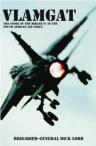
Fire, Flood and Ice (1998) about SAAF Search and Rescue missions
From Tailhooker to Mudmover (2000) – a biography
Vlamgat (2000) – a history of the Mirage fighter jet in South Africa
From Fledgling to Eagle: the South African Air Force during the Border War (2008)
Apart from flying, his passion was military music, his favourite piece being Sarie Marais, the march of the Royal Marines, which is based on an Afrikaner folk song.
Brigadier General Dick Lord died on the 26th October 2011 after a long illness. He is still sorely missed to this day.
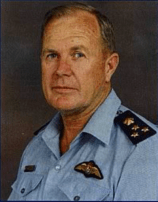
Researched by Peter Dickens. References: The Daily Telegraph, Article on Dick Lord by Rostislav Belyakov. Military History Journal Vol 15 No 4 – December 2011. Feature photo via Dean Wingrin. Painting of Royal Navy Fleet Air Arm Sea Vixens in the masthead by Derrick Dickens, copyright Peter Dickens.

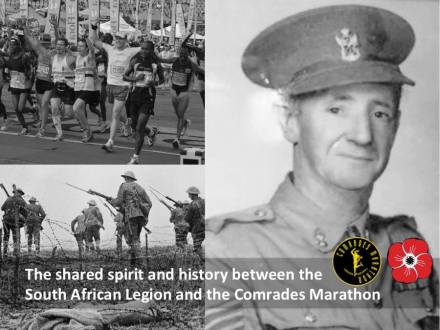
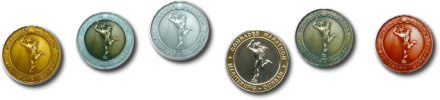
 Although The Comrades Marathon is an independent commercial concern now, The South African Legion has continued its association to the Comrades Marathon over the years and encourages all participants to wear a Remembrance Poppy in recognition of this history and the sacrifice of the fallen. In this respect the Comrades Marathon is still in fact a “living memorial” to the Great War (World War 1).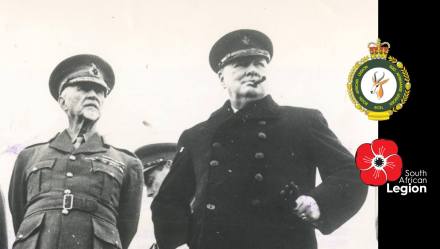
 The interesting part of digging up all the “hidden” history of the South African veteran movements after World War 2, is that occasionally you come across some hidden history about the military veterans organisation which you belong to. Did you know that both Jan Smuts AND Winston Churchill are both members of the South African Legion of Military Veterans?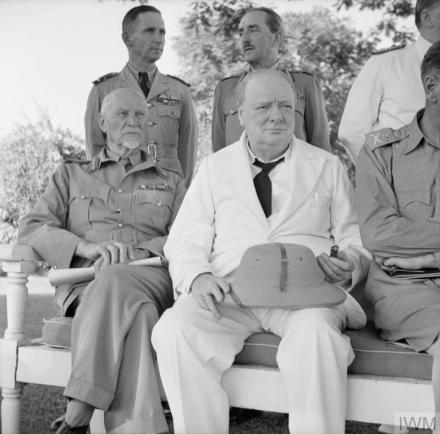
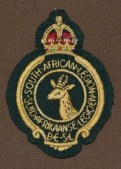 This is a standard South African Legion blazer Badge with “Kings crown” from the 2nd World War period. Note the BESL at the bottom – which stands for the “British Empire Services League” – the South African Legion along with the Royal British Legion, Royal Canadian Legion, Royal Scottish Legion, New Zealand Returned Services Association and the Australian Returned Services League are all founder members of it.
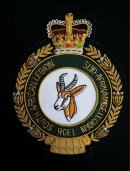 Modern South African Legion blazer badge – note the use of modern BESL the RCEL “Royal Commonwealth Ex-Services League” and Queen’s Crown” for Queen Elizabeth II who is the current Patron.
 The Observation Post