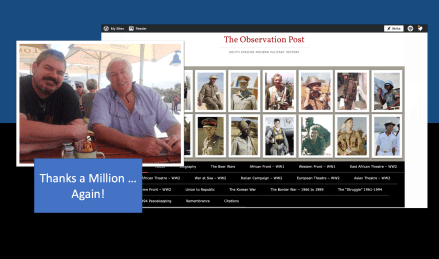
So here’s to the second million Dad! Thank you all who support this education website and blog, the past year has been tough, I was hospitalised with Covid 19 for 8 months (yup – read that again, eight friggin months and given a 1% chance of survival), so I am deeply appreciated that despite the inactivity for nearly a year the site continued to grow and continued to receive substantial support. The good news, I survived Covid (a little bent, but not broken) against all odds and I’m back on it like a bonnet.
I started this blog in November 2015 after my father’s death in Hermanus, South Africa – fondly known as ‘Professor Dickens’ to many locals (he was a visiting Prof at UCT), in a way it is a homage to the library of military history books he left to me to reference, his passion for the subject and it was really set up in his memory.
In my small way I wanted to capture the joint passion for the subject we both felt, debated and endlessly discussed over a glass of whiskey – very often overlooking Schulphoek bay from his art gallery surrounded by all his military aviation and maritime artworks.
The work in essence was a cathartic experience for me at the difficult time of my Dad’s death as it gave vent to all the knowledge and nuggets of South Africa’s military history imparted to me or inspired by my Dad, and I’m extremely happy to share all his legacy, he would have been pleased as punch with it – there are now 358 stories published, 58 stories currently been ‘polished’ waiting, and in my noggin there are at least 200 more stories waiting to out.
It has been an experiment to use this type of media for blogging history, much to the horror of some historians, as by nature social media lends itself to social interaction and opinion, so no, there are no stuffy footnotes and cross reference numbering you would expect in a history treatise, such an approach defeats the type of media used. What this form of modern communication and media does is drive interest into a subject normally discarded as boring, it rejuvenates dull date driven historical humdrum and creates conversation through sharing and interaction.
I’ve been taken aside by some historians and criticised – too much ‘factor analysis’, too much ‘causal history’, too heavy on ‘opinion’, too ‘open ended’, too much individualistic ‘writing style’, too many spelling errors etc etc, my response often is that their traditional papers and publications have reached a couple of thousand people at best, mine have reached a couple of million .. that is the power of modern internet based social media and that is the future, like it or not, and this is how it works – bite sized content drivers using enticing thought and conversation triggers. Other historian friends of mine are loving it, in fact many are a little envious, and thankfully I am now getting some serious support in key circles – academic departments at leading universities and recognised national history societies in South Africa have started to give this site (and me) a nod. I’m also getting a large dollop of encouragement from some heavy weight history academics now, especially those specialising in military history.
Funnily, the approach I use I learned whilst majoring in History at Rhodes University, basically taking ‘political’ history (which most of us learn at school) and challenging it using ‘economic history’ (and its internalised disruptor – ‘feakonomics’) and ‘social’ history in addition to draw new understanding and interesting insight. Sometimes it can make for a really fun read as it can take an old dusty ‘fact’ which everyone thinks is fully concluded and suddenly it’s on its head.
Both my Dad and I were Marketing people in our time and The Observation Post can now be found in multimedia, it has a blog with an e-mail subscription, a linked Facebook ‘Page’ (just click like and click the prompts to follow it), a linked Twitter account and even a Facebook ‘Group’ discussion forum were you can interact with me directly and share your own interesting historical nuggets with like-minded people.
Aside from my Dad, ‘Thanks a Million’ … again …. to you, all the avid followers of the blog, the readers of the material, it’s your support which keeps it going and it’s your feedback that motivates me to bring more historical nuggets so often gleaned over, written out of the school history books and ignored for political expediency in South Africa.
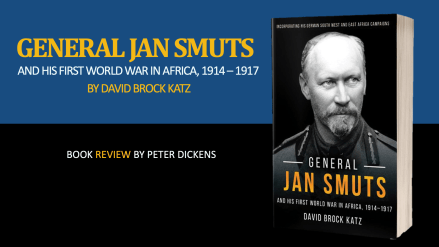
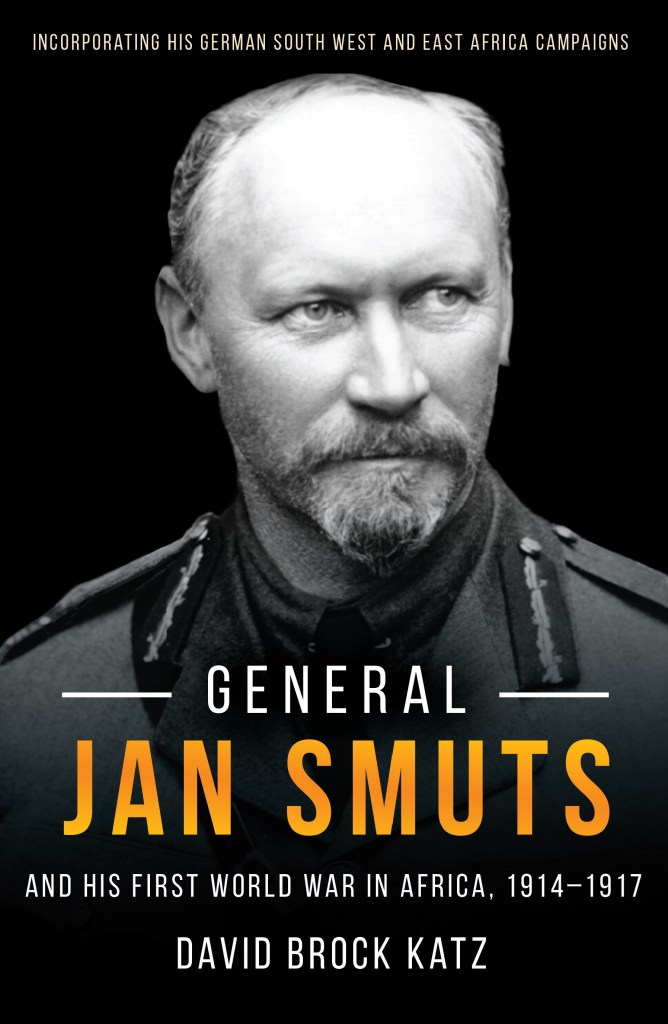
Book Review: Jan Smuts and his First World War (1914-1917) by David Brock Katz
Finally, a refreshing new look at Jan Smuts, and not a popularist novel, a proper historical treatise, so well researched it stands up to strong academic scrutiny and it will stand for some time to come.
Jan Smuts and his First World War 1914-1917 by Dr David Bock Katz is a revelation, it seeks out and finds Smuts’ essence in his military campaigning, not previously achieved by earlier historians.
It can often be said of Jan Smuts, that a Canadian student will have a better understanding of the man than a South African one. That is because Smuts has been vilified in his own country by an endless tirade of politically driven one-upmanship whether it be from far right or the far left of the political spectrum, an unabated tirade, especially from a very small but very vocal white Afrikaner right fuelled with propaganda and unhinged over the Apartheid epoch. Whereas internationally he is seen as a champion of global peace post both World Wars and a founder of the United Nations, he still stands on Parliament Square in London and in Canada even a mountain is named after him.
The political quagmire surrounding Smuts makes a new study of Smuts very difficult, the historian must ‘peel the onion’ and discard all the politically inspirated bias. Bill Nasson, one of South Africa’s most respected historians said the only way for us to understand Jan Smuts is to understand what he amounted to and to define Smuts’ essence, i.e., get to what he is all about, what made him tick and identify what he was always striving toward. Happy to report that Dr David Katz in his new book on Jan Smuts and his First World War 1914–1917 does exactly that.
Smuts was born and lived in an era of colonial expansionism, an era where Imperialism was normative and in fact a value for which European’s fought over in great life and death struggles, in Europe and across the Globe. David Katz examines Smuts in his context and removes the urge to suddenly apply a modern critical race theory bias. In doing this Katz gets to the essence of the man. He does this by drawing attention to Smuts’ plans for a ‘Greater South Africa’ one in which South Africa’s borders are drawn as high as the equator including south Angola, bits of modern day Central African Republic and the entire states of Namibia, Botswana, Zambia, Zimbabwe, Malawi, Lesotho, Swaziland and Mozambique. This idea of ‘sphere of influence’ whether under the control of an Afrikaner or a British ideal on the back of conquest and expansion, is central to ‘white’ politics of Southern Africa, pre and post The South African War (1899-1902).
A ‘man of his time’, Smuts’ philosophy of holism, basically the sum (union) of parts is greater than the whole, drives Smuts’ ideal for the union of nation states, not only South Africa as we know it, but also Southern Africa with his plans of a ‘Greater South Africa’, his concept of ‘union’ eventually extends globally with the establishment of the British Commonwealth, the League of Nations and its modern-day manifestation, the United Nations. Here, as David Katz shows extensively and rather refreshingly in his work, we see the true ‘essence’ of Field Marshal Jan Christiaan Smuts, South Africa’s most decorated General.
It also gives us the context for the Union of South Africa’s eagerness to move its borders northwards, the First World War provided both Louis Botha and Jan Smuts with the ideal vehicle, starting with the German South West African campaign (GSWA) and then the German East Africa campaign (GEA).
In these campaigns David Katz starts to shake up some preconceived beliefs about Smuts’ abilities as a General, detailing and outlining his abilities to strategise outcomes and also his ability to tactically apply them. Many commentators and historians chose to highly criticise Smuts, but usually in the context of political expediency, both in the United Kingdom and in South Africa, but here Katz exposes their ‘bias’ and even at times exposes some blatant mistruths previously held up as fact, he does this by examining the ‘primary documentation’, the boring, dusty, daunting, and rather vital extensive archives – here in South Africa and in the United Kingdom. In this primary documentation, without a political agenda, he finds the real Smuts, a true reflection of the military strategist and field commander. David’s work in this respect is extensive, it was the backbone of his Doctorate in Military History (cum laude), and it shows.
It is almost impossible to write a ‘complete’ history on Smuts in a single book, he was a man who dominated South African politics from 1890 to 1950, seven decades which see a man and his outlook change over time along with changing world orders and philosophies of governance and even warfare. This can make the subject of Smuts extremely daunting, and even impossible – where do you start, Smuts the academic, the philosopher, the botanist, the lawyer, the author, the politician, the stateman, the peacemaker, the privy councillor and finally Smuts the miliary General?
It is with some relief that David Katz hones in on only one aspect, Smuts’ First World War, it gives him the opportunity to really challenge Smuts in one sector of his life, the outcome of which is a detailed account of this one facet which reaches completely new conclusions and views.
Rightly in establishing a view on Smuts’ Generalship in World War 1, Katz also looks at the root of Smuts’ abilities as a General, forged in the South African War (1899-1902) under General Koos de la Rey and General Louis Botha. Katz then examines the complexities and challenges facing Smuts in amalgamating Colonial British and Boer Forces into a unified fighting entity and the development of a distinctively South African ‘style’ of combat fighting, a manoeuvrability ‘style’ which even our modern-day defence force still holds as a central doctrine.
Katz also reviews the Maritz Rebellion of 1914 in its correct context, as an opening act of internal aggression in South Africa’s First World War and how it strategically and even morally affected the GSWA campaign. Also, refreshingly he focusses on the cause and effect of the revolt militarily speaking and is not guided by the political fallout and resultant bias in examining Smuts’ ability as a wartime General.
Smuts’ GEA campaign often comes in for a lot of criticism, and here Katz again applies a military mind and scours the primary source material in evaluating Smuts’ effectiveness as a General, reasoning that Smuts effectively attained his objectives, reduced casualties and delivered an Allied victory and didn’t chase General Paul von Lettow-Vorbeck around aimlessly as has been suggested by past historians.
It’s a very long overdue re-assessment of Jan Smuts and his ability as a General. David Katz also wrote a book called ‘South Africans versus Rommel’ which covers Smuts in World War 2 to a degree, but we look forward to the next historical account which looks at Smuts and his Second World War 1939-1945 in its complete entity, as the next ‘bite sized’ chunk of this most extraordinary man.
In the end, the Afrikaner National Party and their opposition rhetoric aside, we may find that when it is all added together, Smuts’ 2nd Anglo-Boer War command, his First World War command, his Second World War Command, and Smuts’ net success in all three of these wars, his structure of South Africa’s defence force and doctrine, his pioneering work on structuring air-arms, air combat and air defences, his contribution as part of the British War Cabinet and the Imperial War Cabinet during World War 1 and then again in the King’s Privy Council and as Winston Churchill’s confidant and councillor during World War 2, and even his extensive role in Operation Overlord, all concluding with his role in the establishment of the United Nations, we may very well be looking at a Afrikaner farm boy with one of the greatest military minds of the 20th Century and beyond.
No small statement, you’ll find Jan Smuts’ fingerprints in just about every theatre of operations in the South African War (1899-1902), in the GSWA, GEA and Western Front theatres of World War 1 (1914-1918), and again in the East African, North African, Italy, Atlantic and European campaigns to conclude World War 2 (1939-1945) and in just about every major modern military development in between. Dr David Brock Katz’ book on Jan Smuts First World War (1914-1918) goes a long way to establishing a solid foundation on which to begin to challenge this conclusion or at the very least he gives Smuts a well-earned balanced perspective and insight.
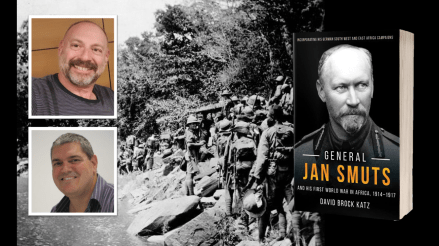
Join me for the launch of Dr. David Brock Katz’s new book, ‘General Jan Smuts and his First World War in Africa 1914 -1917′. David will be spending a little time in my hometown, Hermanus to launch this new look at Jan Smuts’ military campaign and leadership during WW1.
We will do the launch at Romantiques in Hermanus, in their cosy little theatre. David and I have agreed to do a joint talk on Jan Smuts, David will focus on Smuts in the context of his book and I will focus on Smuts – the man and his flawed genius. In all it should be a great evening for anyone who is either a student of history or has a fascination for one of Africa’s greatest sons.
We will follow up the talk with a book signing ceremony with complimentary Beer, Wine and Canapés. As a brewery owner my Company ‘The Spirit of Hermanus’ and our beer brand ‘Old Tin Hat’ will be sponsoring, along with Jonathan Ball Publishes and the venue – Romantiques. Book Mark, the appointed retailer of the book in Hermnaus will also be on hand.
For a small fee of R40 you can also stay on for a screening of Peter Jackson’s world renowned documentary on World War 1, ‘They Shall Not Grow Old’.
For those in area who wish to attend here are the details:
Date: Friday 16th September 2022
Timings:
Arrive from 17:00 for 17:30
Talk and Q&A from 17:30 to 18:30
Book Signing, Beer and Wine Evening from 18:30 to 19:30
Movie Screening ‘They Shall Not Grow Old’ from 19:30 to 21:00
Venue:
Romantiques, 18A Aberdeen Street, Hermanus, South Africa
Please note spaces are very limited, so be sure to book early.
Outline of the book
As to this new book and exciting look at Smuts’ Generalship during WW1 it has been described a ‘an engaging, well-written and meticulously researchedmilitary biography …’ – Tim Stapleton, Professor, Department of History, University of Calgary.
Jan Smuts grabbed the opportunity to realise his ambition of a Greater South Africa when the First World War ushered in a final scramble for Africa. He set his sights firmly northward upon the German colonies of South West Africa and East Africa. Smuts’s abilities as a general have been much denigrated by his contemporaries and later historians, but he was no armchair soldier. He first learned his soldier’s craft under General Koos de la Rey and General Louis Botha during the South African War (1899−1902). He emerged from that conflict immersed in Boer manoeuvre doctrine.
Jan Smuts grabbed the opportunity to realise his ambition of a Greater South Africa when the First World War ushered in a final scramble for Africa. He set his sights firmly northward upon the German colonies of South West Africa and East Africa. Smuts’s abilities as a general have been much denigrated by his contemporaries and later historians, but he was no armchair soldier. He first learned his soldier’s craft under General Koos de la Rey and General Louis Botha during the South African War (1899−1902). He emerged from that conflict immersed in Boer manoeuvre doctrine.
After forming the Union Defence Force in 1912, Smuts played an integral part in the German South West African campaign in 1915. Placed in command of the Allied forces in East Africa in 1916, he led a mixed bag of South Africans and imperial troops against the legendary Paul von Lettow-Vorbeck and his Schutztruppen. His penchant for manoeuvre warfare and mounted infantry freed most of the vast German territory from Lettow-Vorbeck’s grip.
General Jan Smuts and his First World War in Africa provides a long-overdue reassessment of Smuts’s generalship and his role in furthering the strategic aims of South Africa and the British Empire during this era.
A little on the Author
DAVID BROCK KATZ is an author and historian, wholectures at the Army and Defence Colleges of the South African National Defence Force.
He completed his MMil in Military History (cum laude) and a PhD in Military Science in the Department of Military History at the Faculty of Military Science of Stellenbosch University. He is also research fellow at the Faculty of Military Science and an active member of the Andrew Mlangeni Regiment (formerly the South African Irish Regiment). Katz is the author of South Africans vs Rommel (2019).
On-Line Orders
If you are unable to attend the launch and want this book you can obtain it on-line from amazon, takealot, Loot to Exclusive Books and more. Shop and just click on the appropriate book seller than can provide it to you.
Here we like to keep those little inconvenient truths alive and put out a little perspective, this time on the fury around death penalty ‘executions’ during the Apartheid epoch. However this time we look at the ‘other side’ of the general narrative surrounding this subject, this looks at the ANC and their use of the death penalty.
On the 22nd August in 1996, seeking amnesty for its human rights abuses, the African National Congress (ANC) dropped a bombshell when it presents the Truth and Reconciliation Commission (TRC) with a 300-page analysis documenting the ANC’s uMkhonto we Sizwe (MK) armed wing’s abuses during ‘the struggle’ period.
The document named thirty-four (34) ANC members who were executed by ANC military tribunals at their external MK bases in Angola. That’s more ANC cadre’s officially executed by their own hand than the Apartheid state managed to officially execute – almost three times as many … think about that!
What where these executions for? Most of them where cited as mutiny, murder and rape in Angola between 1980 and 1989.
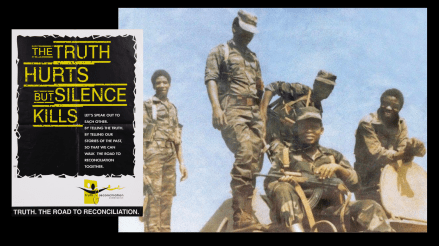
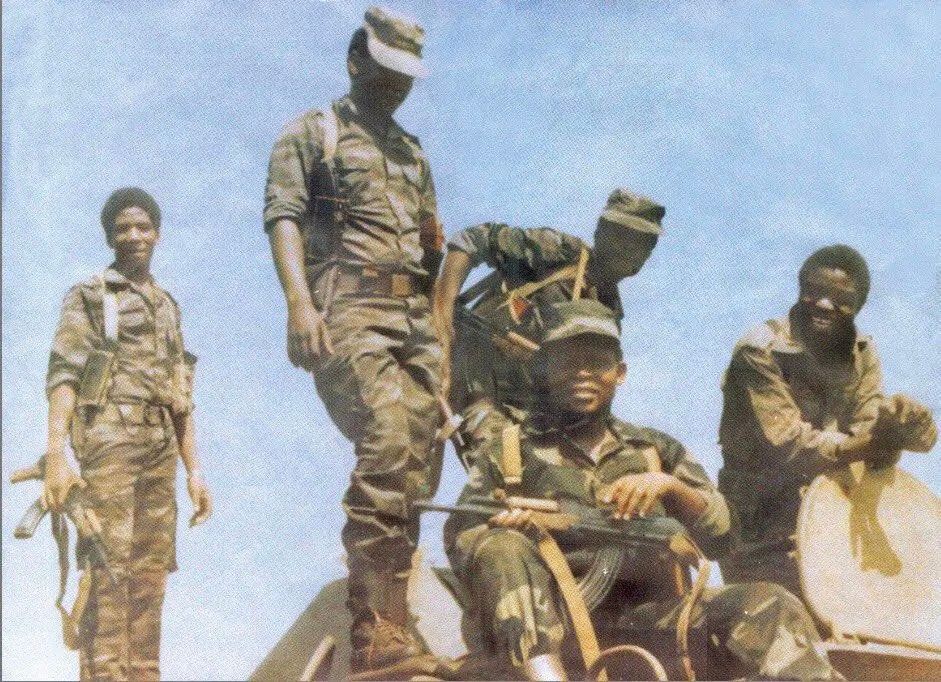
ANC MK cadres in exile
As to ‘Mutiny’ Thabo Mbeki told the TRC that a serious mutiny broke out in Pango in 1984 with the MK mutineers using machine-guns and other heavy weapons to kill the camp commanders and other MK soldiers. A military tribunal was set up by the ANC’s national executive committee and 7 MK cadres who shot other cadres were given the death penalty and executed.
There were also isolated cases in which MK recruits were executed by MK after they were tried and convicted of crimes such as raping and murdering local villagers. Examples of this;
Thabo Makhubethe was found guilty of raping an Angolan woman. A MK military tribunal ordered that he be executed by firing squad. The sentence was carried out in 1984 in Luanda. In another case, Josiah Malhobane and Jeremiah Maleka indulged in heavy drinking in Milange randomly shot at shoppers at a local market, killing two Angolan women and seriously injuring another woman and child. They were executed by a MK firing squad in 1989 at Milange.
As to South African law and the ‘Apartheid’ state, no capital punishment was executed by any SADF military tribunal under ‘military law’ during the ‘struggle’ years. In terms of the Apartheid state and civilian law, a case of ‘murder’ had to be proven before a death sentence given – it’s why so many ANC cadres were given life sentences for high treason and not death sentences, it’s also the reason why relatively few MK cadres were executed by the state’s judiciary. In all the state officially executed 14 ANC and MK cadres, they were:
In 1964 and 1965, 6 MK men were executed – Vuvisile Mini, Wilson Khayinga, Zinkile Mkhaba, Daniel Ndongeni, Nolani Mpentse and Samual Jonas for the murder of a civilian who they alleged was a police informer and other killings.
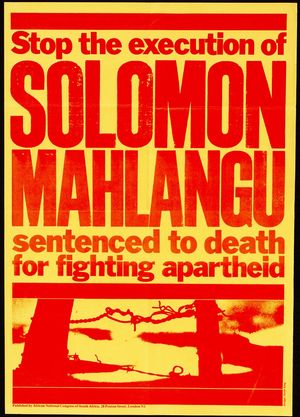
In 1977, MK cadre, Solomon Mahlangu was executed for the murder of two innocent John Orr store employees during a shoot out with Police.
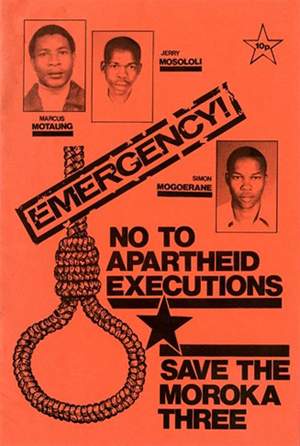
In 1983, MK cadres, Marcus Motaung, Jerry Mosololi and Simon Mogoerane (also known as the Moroka Three)– were executed by the state for attacks on Police stations and the murder of 4 Policemen.
In 1985, Benjamin Moloise, a poet and ANC activist (not MK) was executed for allegedly murdering a Policeman.
In 1986 MK cadre, Andrew Zondo was executed for placing a bomb at a shopping centre in Amanzimtoti which killed two adults and three children and injuring 161 other civilians. Alongside him two other ANC members were executed, Sipho Xulu and Clarence Payi – for murdering a famous ANC underground operative Ben Langa who they accused of being a government informer.
The last MK person to be hanged by the state was Jeffrey Boesman Mangena in 1989 for murdering a school teacher he accused of being a sellout.
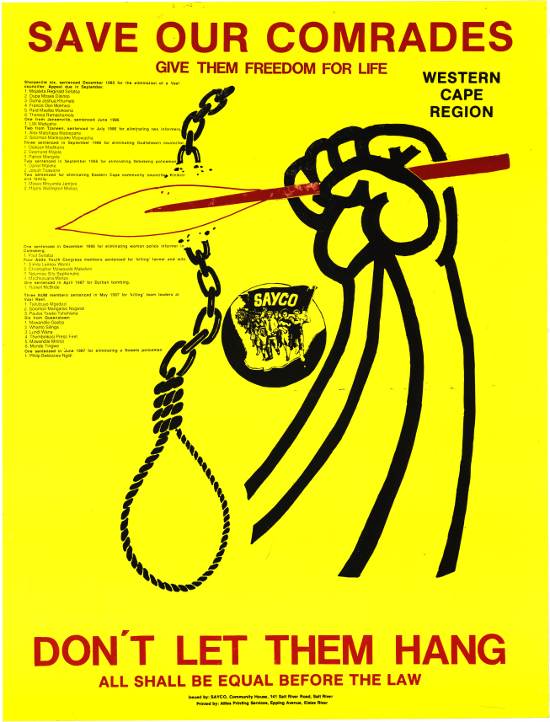
There is also a thick irony in that the international community – including the United Nations, numerous civic organisations and even the ANC themselves called on the Apartheid State to remove the death penalty as unjust and save their comrades, at the same time the ANC was implementing the death penalty with impunity, free of any legal oversight to make their own rules and with no international or civic backlash whatsoever.
This is not a tit for tat saying – look at ANC they’re bad and the old Afrikaner nationalist government is ‘good’ – its not to say the Apartheid government didn’t kill, certainly by way of ‘execution’ many more MK cadres were killed. However these murderous ‘executions’ were done by clandestine organs of state operating outside the law in many instances – the military’s CCB ‘Civil Co-operation Bureau’ and the Vlakplaas C1 unit of the ‘Police Security Branch’ to name just two. The ANC in turn executed many civilians using necklacing and other methods under the guise of the MK’s ‘self defence units’ and their ‘peoples courts’ in the townships – unhinged from any legitimate legal oversight or international condemnation again. The net result, under the ruse of ‘Total War’ – both sides in this conflict were equally guilty of many, many transgressions of human rights.
The point, is that the ANC in modern-day South Africa like to see themselves as ‘roses’ in this struggle, they’ve positioned themselves as the ‘darlings’ in the fight for democracy in South Africa, some of these cited MK members executed by the Apartheid state are eternally celebrated in the media almost unrelentingly as national heroes .. and … nothing .. absolute crickets is said of all the MK members executed by their own hand, let alone the execution by MK (outside and inside South Africa) of innocent civilians – no visits to their families by well meaning ANC officials with apologies galore.
The truth is the ANC’s hands are as blood soaked as the old National Party when it comes to human rights abuses, and here’s the inconvenient bit – the old Nats are long gone, and the ANC continue to trample on our civilian rights to this very day as the country’s political elite and governing party; pillaging the state coffers, murdering one another over political appointments and government contracts and the likes of Dlamini-Zuma and Bheki Cele running the country like a Police State.
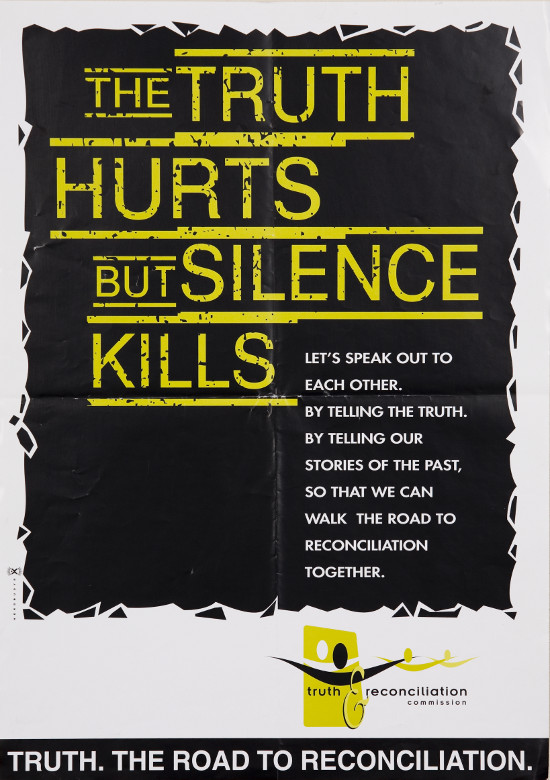
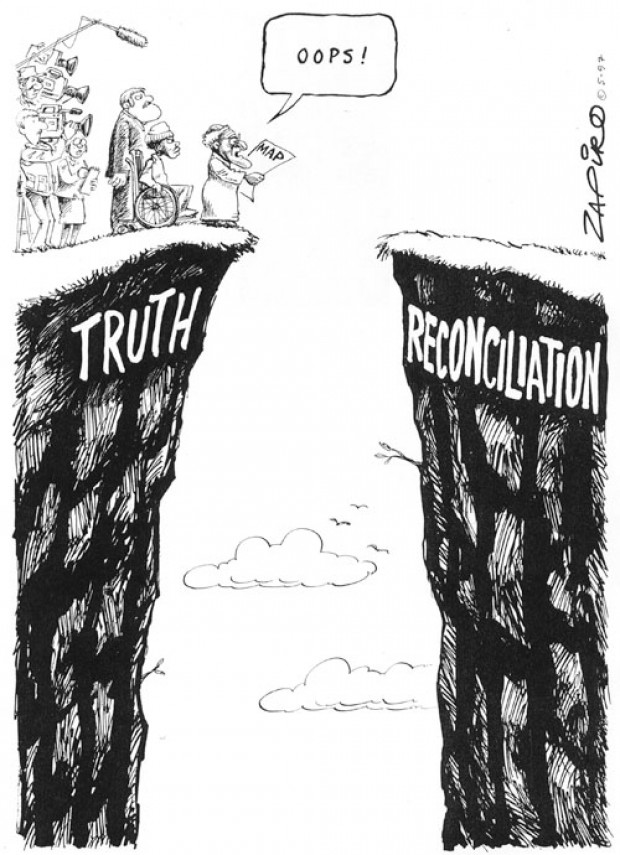
As to The Truth and Reconciliation Commission, whether the ‘truth’ ultimately set everyone free, including the ANC and its dire record of capital punishment executions, that can still be debated. However what is certain, as to Zaprio’s cartoon with Desmond Tutu, is that the gap between the ‘truth’ and that of ‘reconciliation’ is growing ever wider in South Africa today.
The big question remains for us as a nation as to who we should highlight as a war hero and who should we not – if not the ANC for helping ‘end’ Apartheid (an ironic case of an organisation steeped in human rights abuses ending a human rights abuser) – then who? To read an article on who and what qualifies war heroes for which we can all celebrate go to the following link; Tainted “Military Heroes” vs. Real Military Heroes
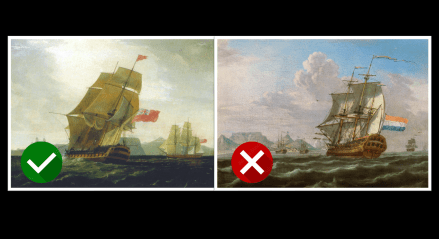
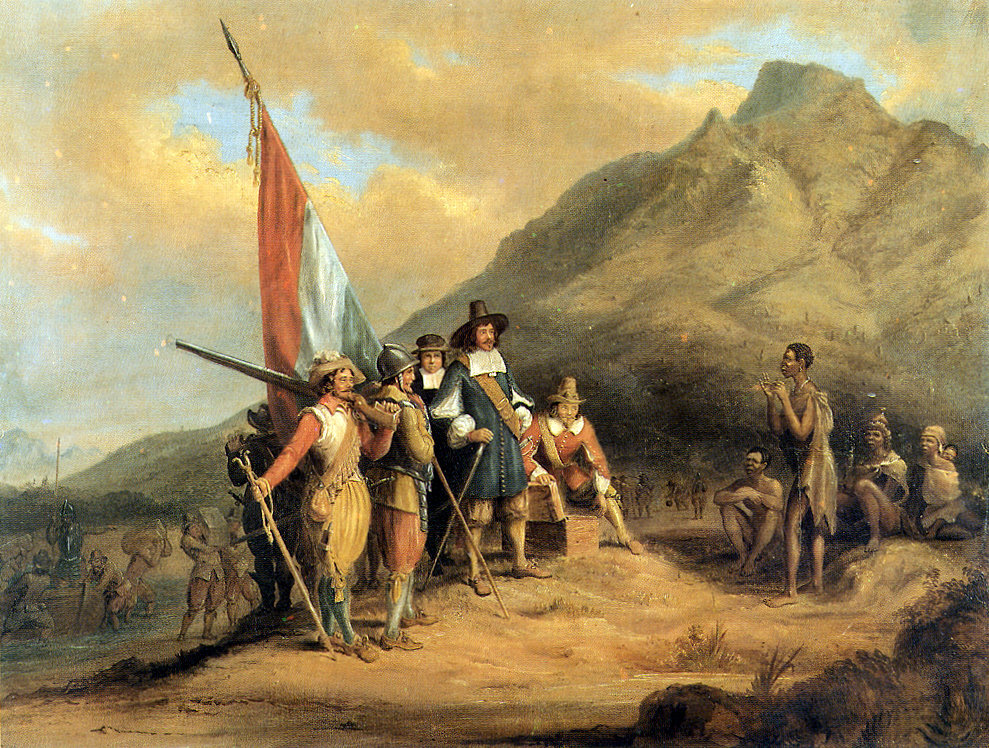
What! No way, where are your meds .. everyone knows the first colonial power to colonise the Cape were the Dutch in 1652 ... not the British. We all have the history of Jan van Riebeeck and his three ships bravely making their way into Table Bay, a landing party of Dutch settlers carrying a Dutch Prinsenvlag (Prince Flag) coming ashore in peace and to trade with a smattering of local Khoikhoi (Hottentots), planting the flag and declaring the region as Dutch.
This painting by Charles Davidson Bell says it all, it depicts the arrival of Jan van Riebeeck, first Commander of the Cape, to Table Bay on the 6th April 1652. With the Dutch came a stoic religion and a civilising mind, set to colonise the region and establish a refreshment station, mainly for the Dutch East India Company’s trading ships passing the Cape.
South Africa’s epicentre of its civilising history had begun! The event burned into South African lore by the Nationalists, commemorated for decades and on countless bank notes, statues, emblems of state, the late national flag and postage stamps.
British – 1st attempt
The British were first! … What’s wrong with you? So, here’s a little inconvenient truth. and this next bit reminds me of the Eddie Izzard’s comedy sketch “do you have a flag”. The fact is the British colonised the Cape BEFORE the Dutch, in fact 30 odd years before … to quote Izzard “no flag no country” – huh! You lie! All true I’m afraid, read on.
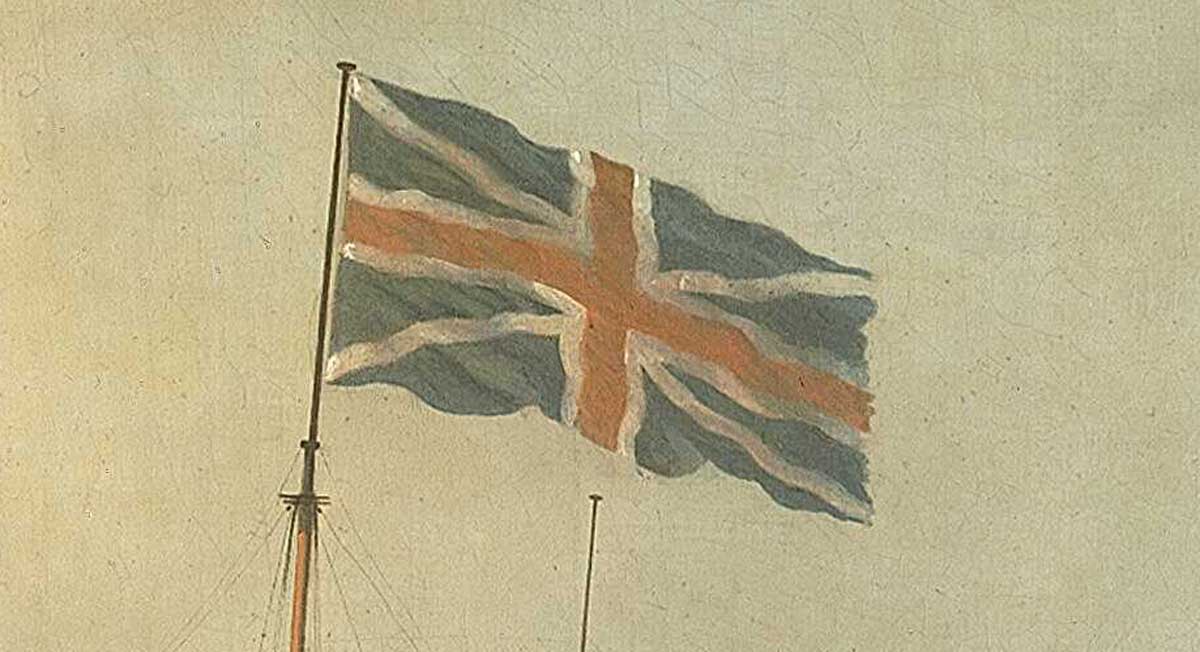
The first flag to fly over the Cape in a colonising ceremony was NOT the Prinsenvlag, the first flag was that of King James the 1st of England and Scotland – the very first Union Jack (known then as the British Flag without the Ireland inclusion – Ireland was not part of the Union then). The flag was planted on Signal Hill in 1620 – long before the Dutch did it in 1652.
That’s how insanely biased the old Christian Nationalism Education policy was and how much the conscious narrative of the country’s history has become thanks to it. If you think I’m telling ‘Porkies’, look it up for yourself, 27 March 1620 – The HMS Unitie, one of three British ships, arrives in Table Bay from England, a small settlement had already existed there to furnish passing Spanish, British, Portuguese and Dutch traders. Two of the Commanders of these ships, Captain Humphrey Fitzherbert and Captain Andrew Shilling hoist the Union Jack on the slopes of Signal Hill calling it King James Mount and take possession of the entire countryside in the name of the British Monarch. Here they planned a plantation similar to that established by the Virginia Company at Jamestown. The settlement would have provided a revitalising stop on the way to the East for all the British trading ships, mainly the British East India Company.
But nothing came of the plan, it does not seem that King James the 1st acted on it, maybe he was too concerned with uniting England and Scotland at the time, who knows? What we do know is that the British left it to be settled by the Dutch, 32 years later. As historians we don’t really know what the British did with their Colony in intervening years between the two flag planting ceremonies, nobody has really studied it. We do however know it’s been ‘written out’ of the South African narrative – however the good news I can assure you there are now some serious historians ‘on the case’.
The Portuguese
But, and this is a BIG but … neither the British, nor the Dutch can really lay claim to be the first European nation to plant a flag under Table mountain, or even the first people to start a trading station in Cape Town. The first European nation to set up trading posts at the Cape where the Portuguese. The truth is the ‘local’ Khoikhoi (the original inhabitants) were not too happy with them and saw them off in two famous instances. In 1503 (over 100 years before the British and the Dutch) Antonio de Saldanha, a Portuguese fleet commander, sailed into Table Bay and then disembarked to follow the freshwater stream to the foot of Table Mountain. During the visit, the Portuguese attempted to barter with the Khoikhoi. It failed and a group of Khoikhoi warriors ambushed the sailors wounding De Saldanha in process.
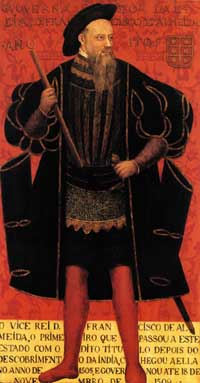
The Portuguese tried again in 1510 to colonise the Cape when Francis de Almeida the first viceroy of Portuguese Indies sailed into the Table Bay with a fleet in search of fresh water and trade. Some of his crew went to a nearby Khoikhoi settlement in the area around Salt River to trade for cattle and sheep. An armed conflict ensued. The sailors were driven back to their ships.
On hearing of the defeat de Almeida joined in with an armed expedition to deal with the Khoikhoi directly. The Portuguese force was overwhelmed and defeated, leaving 67 Portuguese sailors including de Almeida dead. These conflicts with the Khoikhoi ended any Portuguese aspirations around Table Bay and Colonising it.
As to laying a ‘claim’ the Portuguese did however erect stone crosses (padrão) at prominent points along the coast to proclaim sovereignty of the Portuguese realm by right of discovery. Dias erected his first cross on Dias Point (since renamed Lüderitzbucht in what is now Namibia),and at Kwaaihoek on the easternmost limit of Algoa Bay and on his return voyage at Buffels Bay near Cape Point.
The Khoikhoi
As to the Khoikhoi, their history in the region goes back a very long way, Khoikhoi migrants reached the Western Cape and Overberg region and began settling it good and proper by 1100 CE (that’s 400 odd years before the Portuguese). Here’s a real fun bit and inconvenient to the traditional narrative of Dutch (or even the British) idea of ‘establishing’ a trading station at Cape Town, there was one there already – the Khoikhoi had already established one.
In 1600 (52 years before the Dutch and 20 years before the British) a small community of Khoikhoi established the port of ‘Camissa’ in Table Bay. The ‘Camissa’ meaning ‘sweet water for all’ people established their port near to what is now the Cape Town waterfront/foreshore. They were known to the passing European shipping by the Dutch term for them ‘Watermans’ (water people). From what can be gathered from ship records, this indigenous people’s port serviced over 1071 ships with fresh produce and other trade; Dutch, English, Danish, Portuguese and French shipping. Stay overs in the port are recoded as been about 3 weeks and even up to 9 months. The Camissa settlement and port was seized by the Dutch in 1652 and over the next eight years the Camissa people were forced out of the area, particularly after the first Dutch-Khoi war in 1659.
As to whether the Khoikhoi were favourable to the ‘benevolent’ Dutch taking over their land, think again. Unlike the rather benevolent painting of the first Dutch interactions with the Khoikhoi for trade, some rather serious disputes broke out over land ownership and livestock. This resulted in attacks and counter-attacks by both sides which were known as the Khoikhoi–Dutch Wars that ended in the eventual defeat of the Khoikhoi, and the destruction of their society. The First Khoikhoi-Dutch War took place from 1659 – 1660 and the second from 1673 – 1677.
At the end of these wars, a ‘peace treaty’ between the Dutch and Khoikhoi was drafted and ratified by a party of Dutch and defeated Khoikhoi at the newly established ‘Castle’ in Cape Town, and it would guarantee trading terms between the two antagonists in favour of the Dutch, the KhoiKhoi were to supply a free pre-fixed quota of livestock and farm produce to the Dutch annually and stop the theft (also read land dispute) from settler’s farms . Bound to these terms the ‘original’ inhabitants of the Cape literally ‘traded’ their way into irrelevance, the gradual assimilation into the ‘servant’ sub-culture and the Smallpox epidemic in 1713 saw the destruction and eventual disappearance of their society and culture. Their legacy and DNA can still be found in the modern day Cape Coloured community.
As to the British and the Dutch, and the swings between the two. Here’s another inconvenient truth to dispel the old Nationalist folklore of nasty British Imperial intentions in ‘their land’; the ‘British’ did not invade the Cape and snatch it from the ‘Dutch’ in 1806 – they attacked the ‘French’. Huh! On drugs again eh! … No, read on.
The British – 2nd and 3rd attempt
By the time the Napoleonic Wars kicked off in 1803, the ‘Dutch Cape Colony’ was not really Dutch anymore, it was under the control of the French. The Dutch had full sway in Southern Africa for 143 years but in early 1795 in Europe, intervention by the French Republic in the Netherlands region led to the downfall of the old Dutch Republic and it was replaced with a French vassal state called the Batavian Republic. The Batavian Republic, run by the French, comprised an amalgamation of what is now Belgium, Holland and bits of Germany.
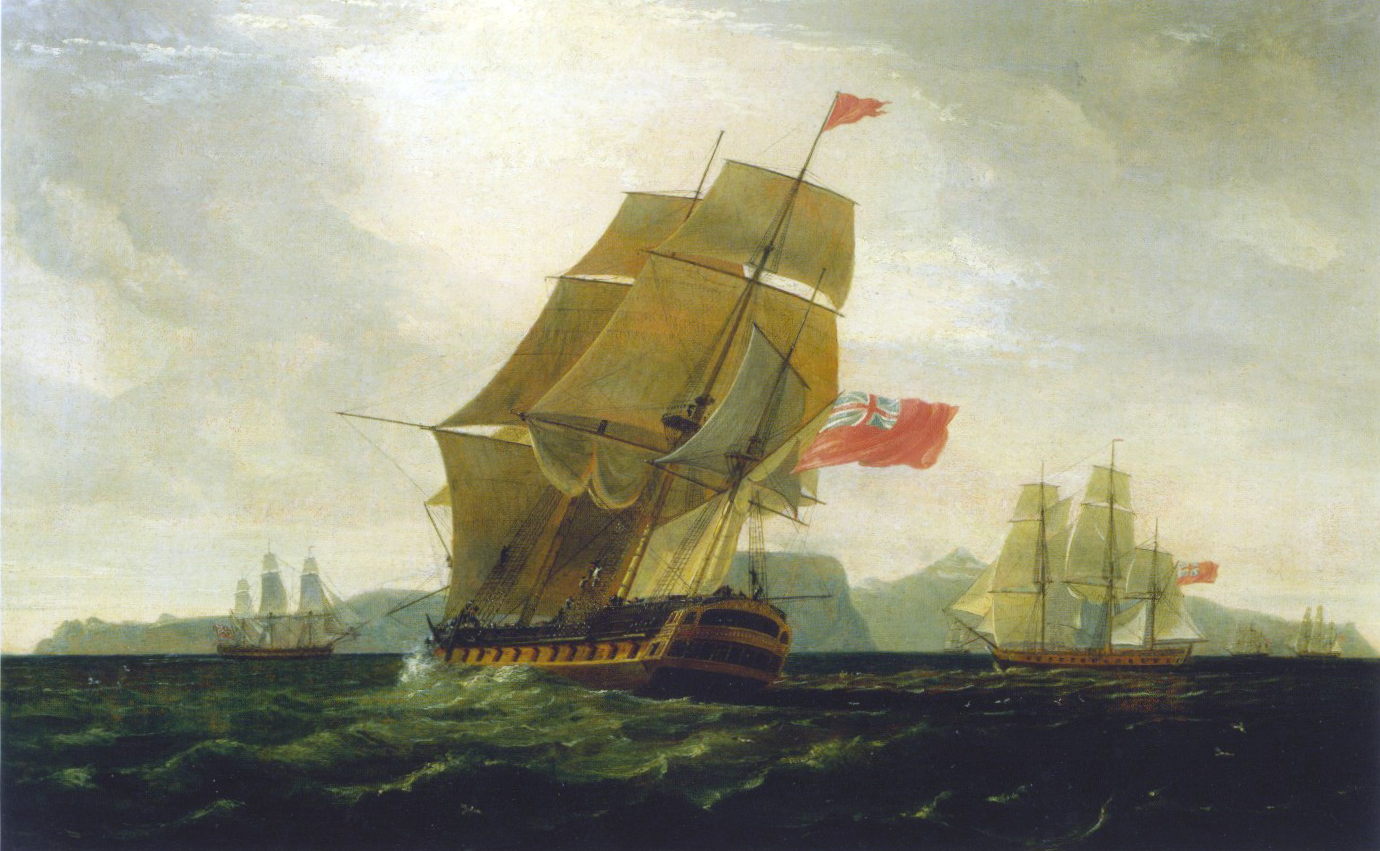
The British were at war with the French and they took the opportunity to seize the Cape Colony from the Batavian Republic (read French). Two British invasions against the Batavian Republic in the Cape, the first in 1795 (settled by the Peace of Amins in 1802 and return of the Colony to the Batavian Republic) and the second in 1805 as part of the British campaign in the Napoleonic Wars. In July 1805 a British fleet was urgently despatched to the Cape, to forestall French troopships which Napoleon had send to reinforce his Batavian Republic garrison there. The arrival of the British led to a small but significant battle between the Batavian garrison and the British called the Battle of Blaauwberg on 8 January 1806.
Here’s a painting to commemorate it, the HMS Diadem at the capture of the Cape of Good Hope, by Thomas Whitcombe. What’s interesting about this, and to quote Eddie Izzard again “we stole entire countries with the cunning use of flags!” – it’s the same Union Jack without the Ireland inclusion that the HMS Unitie had when it arrived to colonise the place in 1620, although nobody bothered to commemorate that very first colonisation of the Cape with a painting.
The Batavian garrison lost the Battle of Blauuwberg and subsequent skirmishes, over 700 dead and wounded compared to the relatively light butchers bill for the British of about 200 dead and wounded. British victory at the Battle of Waterloo and the end of French Napoleonic era effectively ended Dutch and French aspirations in Southern Africa as Colonisers.
The Anglo-Dutch Treaty of 1814 and the Treaty of Paris 1814 to end the Napoleonic wars would see the British gain official control of the Cape Colony and also remunerate the Dutch for the retention of their ex-Colony (£6 million) along with favourable Dutch trading rights, with the exclusion of Dutch slave traders, from 15 June 1814 Dutch ships for the slave trade were no longer permitted in British ports.
This brings about another inconvenient truth, the British anti-slavery position in the Cape started well before their official abolition of slavery proclamation in the Cape Colony in 1834, and this was to have a marked impact and resentment of British rule by some of the local Dutch/French inhabitants in the region – kicking off the Great Trek in 1835, but that’s a story for a different day.
The British would then have absolute influence, and a bloody one at that, in the region for the next 142 years (the same time period as the Dutch) until 1948, and finally bowing out of all influence in 1961 when South Africa was declared a Republic by the National Party who then went on to withdraw it from the British Commonwealth of Nations completely.
In Conclusion
Even though the European colonisation of the Cape can be evenly split 50/50 between British and Dutch in its time period – 300 odd years, we are still appraising things through an idea of ‘European history’, there’s evidence of discovery and trading by Chinese and Arabic explorers in Africa along the Indian Ocean coastline long before the Portuguese. The ‘European’ part of the story remains but a blimp in the actual historical timeline of human settlement in the Western Cape, at the end of the day the land belongs to the origin people’s the San and KhoiKhoi. As to ‘civilising’ – that depends on what you regard as a civilisation, the Khoikhoi had a system of communication, farming, animal husbandry, commerce, art, dance, music and laws by which their society was structured.
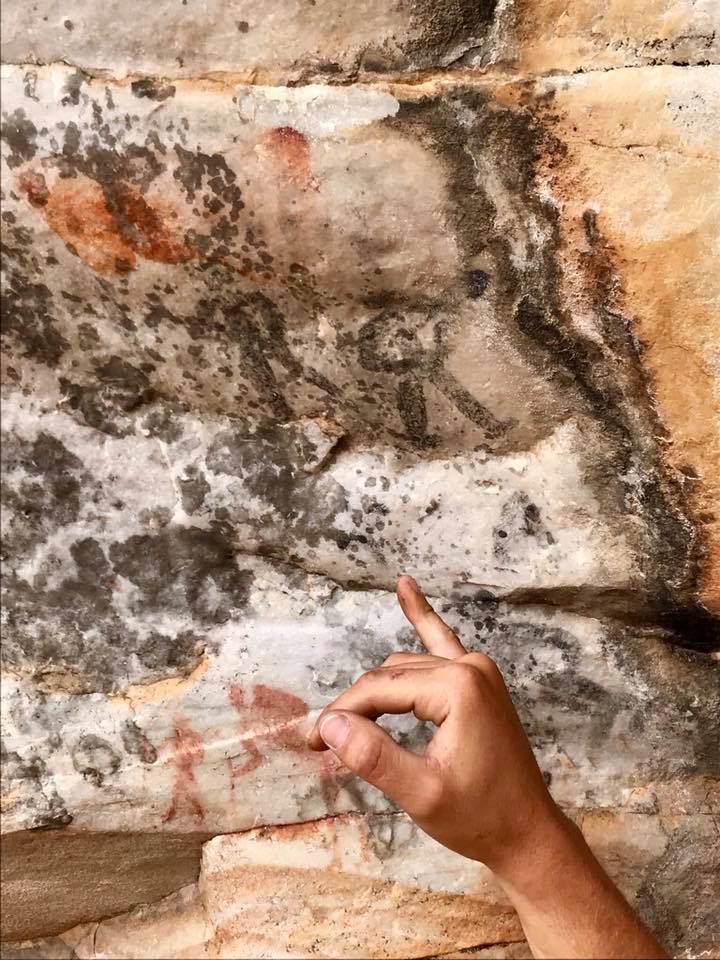
If anyone thinks they welcomed the Europeans to their lands .. history shows they did not. If you want to see that in a communication – go and look at the KhoiKhoi paintings in the Cederberg, here’s my photo – KhoiKhoi giving their fellow travellers advise as to dangerous and ‘good’ versus ‘bad’ European colonisers in the area.
Dangerous colonisers are depicted with guns above their heads – ‘bad’ colonisers in the area are painted upside down, ‘good’ are upright … many of them are upside down.
Written and Researched by Peter Dickens
Sources include the Cassima Museum, wikipedia, Day to Day Naval History of South Africa by Chris Bennett and The South African History Association (SAHA).
A friend of mine, Dennis Morton is a prolific researcher and he brought up this rather interesting history which highlights the rebellious nature and political dichotomy in white South African families perfectly. So, here’s how a Boer war rebel’s history massively impacted South Africa’s liberal political landscape.
The Irish Brigade
During the South African War 1899-1902 (the Boer War), a number of British, especially Irish found themselves in alignment with the Boer Republic cause. Many of them were working on mines in the Transvaal or had otherwise settled and repatriated in the two Boer Republics prior to hostilities. Not just Irish, these ‘burgers’ also constituted many other Britons – Scots and even the odd Englishman. At the onset of the war they volunteered to join a Boer ‘Kommando’, and this one was special, it was created by John MacBride and initially commanded by an American West Point officer – Colonel John Blake. The Commando was called ‘The Irish Brigade’ mainly because of its very Irish/Irish American slant. After Colonel Blake was wounded in action at the Battle of Modderspruit, shot in the arm, command of the Irish Brigade was handed to John MacBride. The Brigade then saw action in the siege of Ladysmith, however this was not a happy time for Irish Brigade as its members were not enthusiastic about siege tactics. After the Boer forces were beaten back from the Ladysmith by the British the Irish Brigade began to fall apart. It was resurrected again as a second Commando in Johannesburg under an Australian named Arthur Lynch and disbanded after the Battle of Bergendal.
Colonel John Blake at a Boer encampment Irish Brigade officers during the siege of Ladysmith
To say the Irish Brigade was controversial is an understatement, the whole of Ireland was still part of the United Kingdom in 1899 (the Irish Republic split came much later) and members of this Brigade ran the risk of high treason if caught, especially if their ‘citizenships’ to the Boer Republics were not in order when the war began, or if they joined and swore allegiance to the Boers during the war itself.
So, at the end of the war there are a couple of Irish Brigade Prisoners of War who were captured and sent to St. Helena (which was the main camp for Boer POW) and they needed to be repatriated, in their case – the United Kingdom. The issue of treason hangs heavily on both of them.
Firstly, Prisoner 3783, Thomas Enright, an Irishman, who at one time was in the British army during the Matabele War and had changed allegiance to the Boer Republics, joining the Irish Brigade. The issue been the date of his burger citizenship which exceeded the amnesty for who was and who was not considered a ‘Burger’. The cut off for amnesty on oaths of allegiance by ‘foreigners’ to the Boer Republics was given as 29th September 1899.
The second is Prisoner 15910, John Hodgson, a Scotsman born at Paisley in the United Kingdom, he emigrated to Southern Africa in 1891. He lived in Rhodesia and moved to the Orange River Colony until 1896. He took the oath of allegiance to the South African Republic – ZAR (Transvaal) on the 28th or 29th December 1899, which was after the amnesty date. He served in the Irish Brigade under Blake and was captured by the British on 19th November 1900.
Luckily for both these men, they are not prosecuted for treason (which carried the death sentence) and repatriated to the United Kingdom after some heady politicking. Here’s where we stop with Thomas Enright and follow the Scotsman, John Hodgson.
On John Hodgson’s repatriation he is immediately ostracised by the British community because of his role on the side of the Boer Republics and six months after his return to the United Kingdom, he illegally boarded a ship bound for Port Elizabeth, South Africa. Here he set up shop working as a book-keeper and by 1904 John Hodgson’s family reunited with him in the Cape. Now, here’s the interesting bit that so often plagues ‘white’ South African families, although John Hodgson joined the Boer forces as a rebel, he, like many other Boer veterans, also harboured liberal political beliefs. He supported legal equality and the extension of a non-racial franchise (vote to all – Black emancipation) in Southern Africa.
Liberalism in South Africa
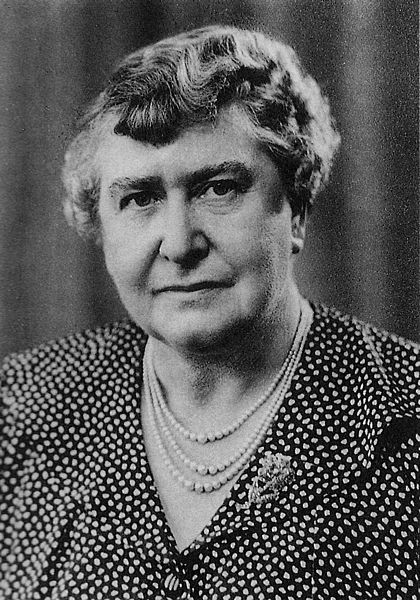
John Hodgson’s daughter, did not fall far from the tree, John’s rebellious and highly liberal nature rubbed off on her, she was Violet Margaret Livingstone Hodgson, who later married another liberal, William Ballinger. Margarat Ballinger would go down as a powerhouse in liberal politics in South Africa.
Margarat Ballinger would become the first President of The South African Liberal Party when it formed in 1953 and she would serve from 1937 as a Member of Parliament alongside Jan Smuts and his heir apparent Jan Hofmeyr. Highly vocal, she represented the Eastern Cape on the ‘Native Representatives Council’.
By 1947 her plans included new training and municipal representation for South African blacks and improved consultation with the Native Representatives Council. Time Magazine called her the ‘Queen of the Blacks’. Time Magazine went on to say Ballinger was the “white hope” leading 24,000,000 blacks as part of an expanded British influence in Southern Africa. Her Parliamentary career would take a dramatic turn when the National Party came to power in 1948.
By 1953, the ‘liberal’ side of the United Party lay in tatters, both Jan Smuts and Jan Hofmeyr had passed away in the short years of the ‘Pure’ National Party’s first tenure in power between 1948 and 1953. The Progressive Party and Liberal Party of South Africa would take shape to fill the void left by Smuts and Hofmeyr. The Liberal Party of South Africa was founded by Alan Paton and other ‘liberal’ United Party dissidents. Alan Paton came in as a Vice President and Margarat Ballinger the party’s first President. Unlike the United Party, the Liberal Party did not mince its position on the ‘black question’ and stood for full ‘Black, Coloured and Indian’ political emancipation and opened its doors to all races, they stood on the complete opposite extreme to the National Government and Apartheid and to the ‘left’ of the United Party.
Liberal Party of South Africa logoAlan Paton, addresses a crowd about the harm caused by the Group Areas Act
Margarat Ballinger strongly voiced her anti-Apartheid views, opened up three ‘Black’ schools in Soweto without ‘permission’ and was one of a vocal few white voices openly defying H.F. Verwoerd. In 1960 she left Parliament when the South African government abolished the Parliamentary seats representing Black South Africans.
The Apartheid government’s heavy clampdown on ‘white liberals’ after the Sharpeville Massacre in 1960 forced many Liberal Party members into exile and many others were subject to various ‘banning’ actions locally. By 1968 the Apartheid government made it illegal for members of different races to join a singular political party, and instead of abiding the legislation (which the Progressive Party and others did), the Liberal Party stood it’s ground and chose to disband rather than reject its black members.
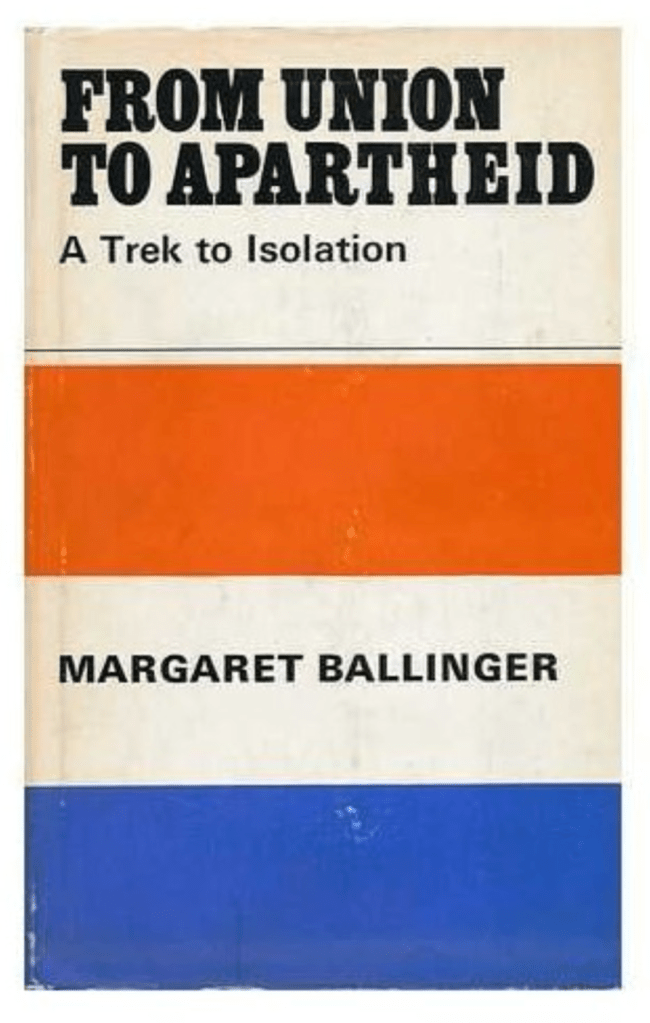
Not without a passing shot, in 1960 Margarat Ballinger published a scathing critique of Apartheid in a book she wrote called “From Union to Apartheid – A Trek to Isolation”. Ironic considering her family’s journey as a supporter of the ‘Boer’ cause. Regarded today as a ‘must read’ for anyone studying this period of South African history and Liberalism. She also wrote a trilogy on Britain in South Africa, Bechuanaland and Basutoland. Margarat passed away in 1980, before she could see the end of Apartheid.
In Conclusion
So, there you have it, an unusual and very South African family story, a strong minded Brit turned Boer rebel and his equally strong minded daughter, one who would become a pioneer of woman and liberalism in South Africa. It also reminds us as to the complexities and paradoxes of The South African War 1899-1902 and the different political sentiments at play within the Boer Forces, some of which can still surprise many today.
Written by Peter Dickens with great thanks to Dennis Morton for his research and writings.
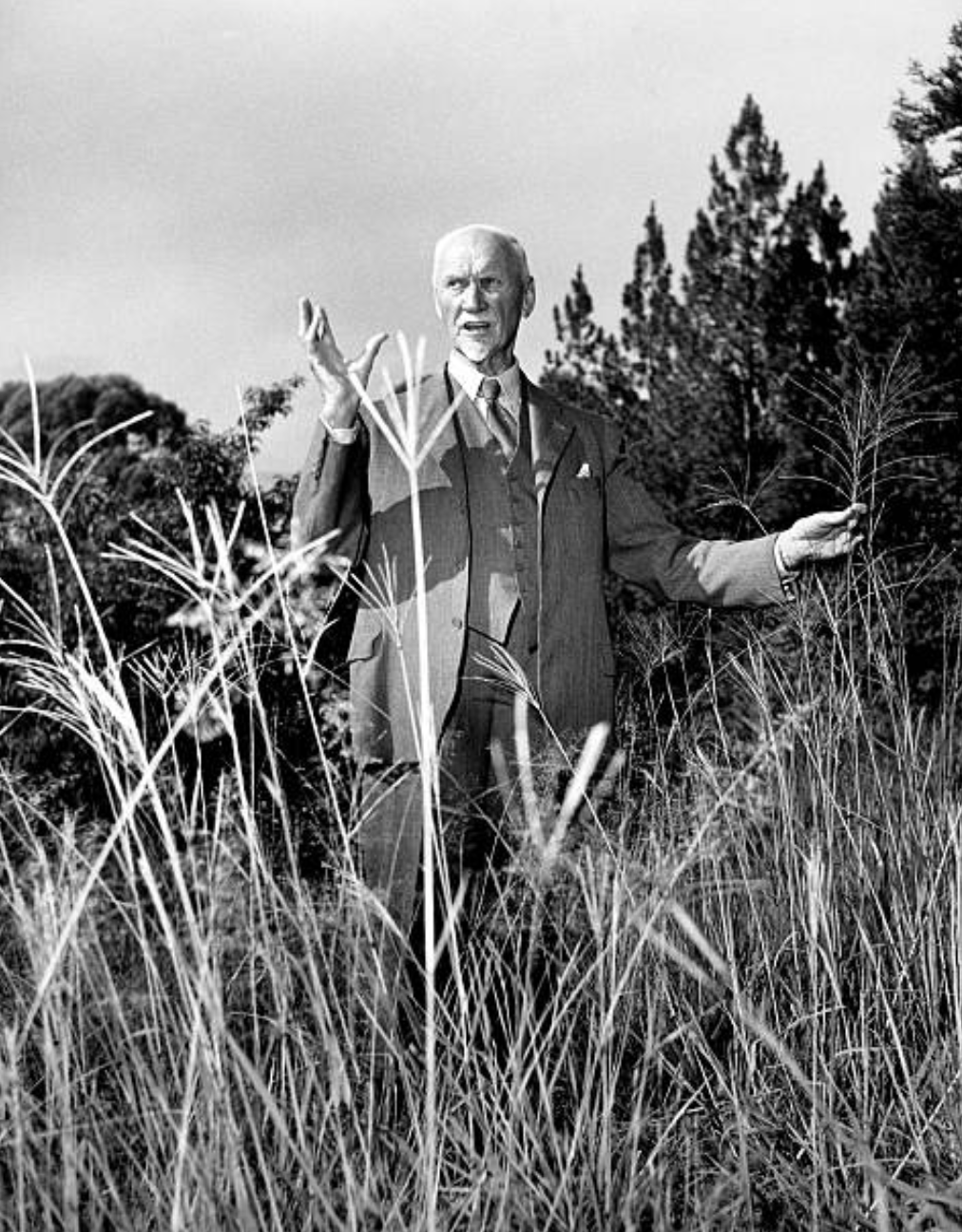
What I personally find rather funny is when everyone bangs on about Jan Smuts’ politics, when even Jan Smuts admitted that in his heart he was simply a botanist. It’s not an area people often associate with Smuts, but it’s central to understanding his philosophy of Holism, and therefore central to his political philosophy. Smuts himself often lamented that all he really wanted was to left alone and record the wonderment of our environment and our spiritual place in it.
Smuts loved, simply loved Botany, and at many points in his life would be off on this or that botanical excursion in Southern Africa. Central to Smuts’ view in Botany is grasses, not the pretty stuff, the simple grasses of the veldt. To Jan Smuts the grasses are the ‘origin’, the epicentre of the circle of life, the key that unlocks evolution and even creation. Simply explained the grasses nourish animals, other animals nourish on them, and when an animal dies it simply returns to the soil in some form or other and in turn nourishes the grasses.
Now, I’m sure there are Botanists all over going what about ‘water’, what about ‘gasses’, what about ‘insects’ and I’m sure Smuts would have loved the arguments, but I’m no botanist. I would however say Smuts’ love for grasses even brought him a little Botanical fame as he ‘discovered’ a grass.
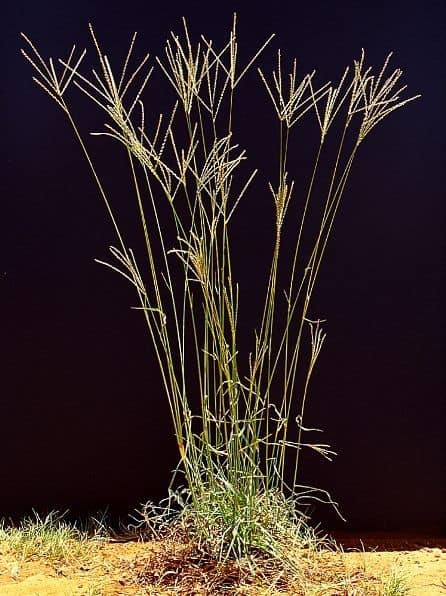
Smuts Finger Grass
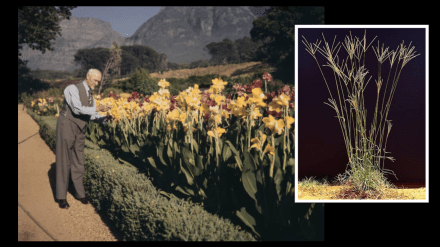
This is it, in 1924 Smuts, an amateur botanist, identified a group of Digitaria plants on his farm Doornkloof at Irene near Pretoria and brought this under the attention of Sydney Margaret Stent, a famous South African botanist. Stent’s main interest was grasses, and according to Smuts, this group of plants differed from other finger grasses in the area because of its acceptability by animals. Material collected from these plants brought upon a new species named after Jan Smuts called Digitaria smutsii. Or, as it simply is now known ‘Smuts Finger Grass’.
The grazing value of Digitaria smutsii became very popular in the early 1930’s under the influence of research done by Dr Pentz and Dr Pole-Evans. Although considered a new discovery in its time, much later on the grass was discovered to have the same properties to a previously discovered grass called Digitaria eriantha and in 1981 the botanical name of Smuts’ grass was changed to Digitaria eriantha cultivar Irene. It is still available for animal feed today.
Smuts summed up this love he had for Botany and grasses perfectly when he said “Myself, when young, loved nature rather than sport, and took to Botany as a hobby. Gradually I began to realise that the Family of Grasses was the most important of all, and did my best to become acquainted with that perhaps most difficult of all plant families. … it is one of the largest of all families in botany, and the flowers are mostly very small and insignificant, and often call for the use of lenses to distinguish them properly. No wonder that other easier, more gaudy and attractive families are preferred by botanical beginners. But once you take a little trouble … their attraction and their glory grow on you, until at last you surrender completely to their charm.”
Philosophy
This cycle of life bit is best explained in Smuts’ holism philosophy – all things are in a ‘whole’ (Holism) and inter-dependent on one another. Like animals and grasses are a cyclical ‘whole’, so to are human individuals dependent on another forming groupings or ‘wholes’ and these groupings work with other groupings to make up nation states – which become inter-dependent on other Nation States and ta dah! We have the United Nations – Jan Smuts’ ultimate political goal, and organisation he wrote the mission statement for, and it calls for political emancipation of all human beings and a bigger purpose, a more peaceful union of Nation States dependent on one another to progress the shared ideals of liberty and freedom. The fact that the United Nations today focusses a lot of its energy on climate change and the importance we as individuals and nations have in the protection of our fragile environment, this alone would have pleased Smuts no end.
In Conclusion
No point trying to expose Smuts as a bad politician or give other politicians credit for one-upmanship over Smuts. Even Smuts admitted he was not great at politics, he left the ‘people skills’ needed for it to Louis Botha and willingly took a back seat, circumstances and fate would push him to the front again.
So, getting Smuts all bogged down in party political racism issues, or more bogged down in the Boer War, Martitz Revolt, Jopie Fourie, Rand Revolt and even Afrikaner Nationalism issues, is merely a rabbit hole, a diversion away from the big picture of what Jan Christiaan Smuts was really all about … the cycle of life and that cycle’s relationship with the human condition and mankind as a whole.
Don’t take my word for it on the oscillating relationship between botany, cycle of life and spiritualism, here’s Jan Smuts in his own words “… evolution is the gradual development and stratification of progressive series of wholes, stretching from the inorganic beginnings to the highest level of spiritual creation.”
The fact is, then and now, no Politician in South Africa, present and past, not one (Nelson Mandela included) – can hold a flame next to Smuts, and it is little wonder when Smuts died King George VI wrote to his wife Isie and said “the force of his intellect has enriched the wisdom of the whole human race“.
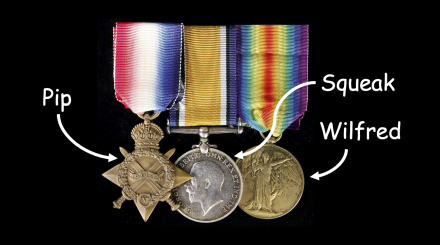
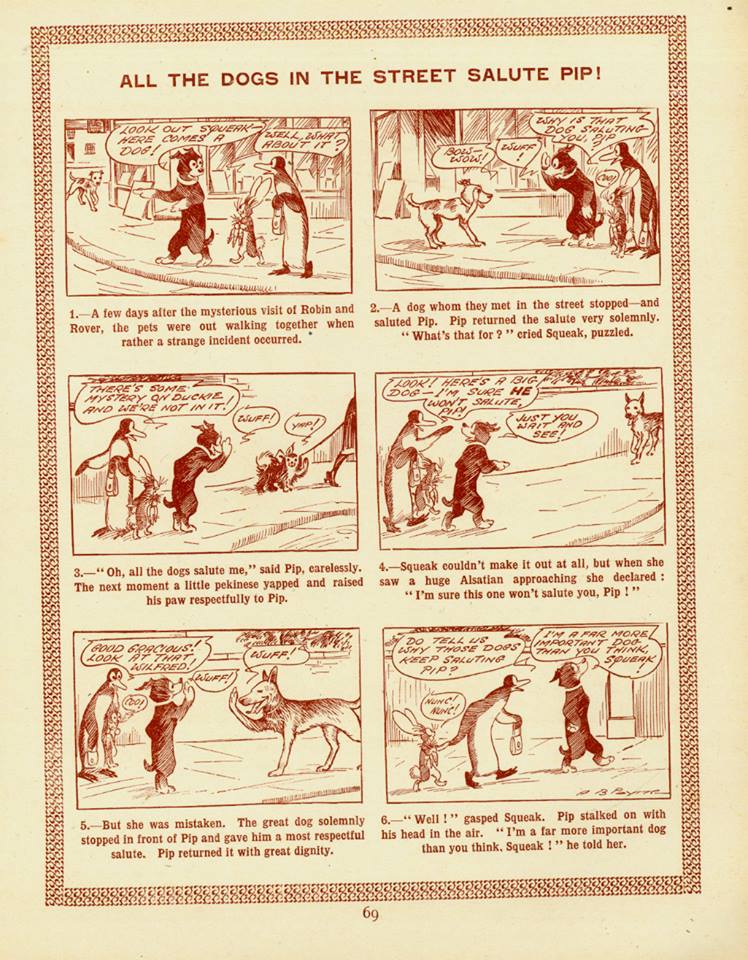
Understanding your Great Grandfather’s or Grandfather’s World War 1 medals. Now this is the standard set issued to many who fought for British and Commonwealth (Empire) side in WW1, affectionately known by the veterans as “Pip, Squeak and Wilfred”. The affection comes from a popular British cartoon series at the time called The adventures of Pip, Squeak and Wilfred and consisted of three characters.
The origins of the characters is interesting. Pip, a dog, was discovered begging by a policeman on the Thames Embankment and was sent to a dogs’ home, where he was bought for half a crown. Squeak was a penguin, who was found in the London Zoo after hatching on the South African coast years before. Wilfred, a rabbit, was found in a field near his burrow and was adopted by Pip and Squeak.
In terms of their military meaning and importance, these are them in order of precedence – left to right.
Now, “Pip” is The ‘1914 – 1915 Star,’ campaign medal awarded to officers and men of British and Imperial forces (including the South African Army) who served in any theatre of the First World War against the Central European Powers during 1914 and 1915. Distinguished by the ribbon in the colours of the British Union Flag/Jack “washed” out.
“Squeak” is the ‘British War Medal,’ campaign medal of the United Kingdom which was awarded to officers and men of British and Imperial forces (including South Africa) for service in the First World War. The front depicts King George V with a latin inscription about the King, similar to what you would find on coins. The back shows the dates of the First World War and St. George on horseback. The colour of the ribbon has no known significance.
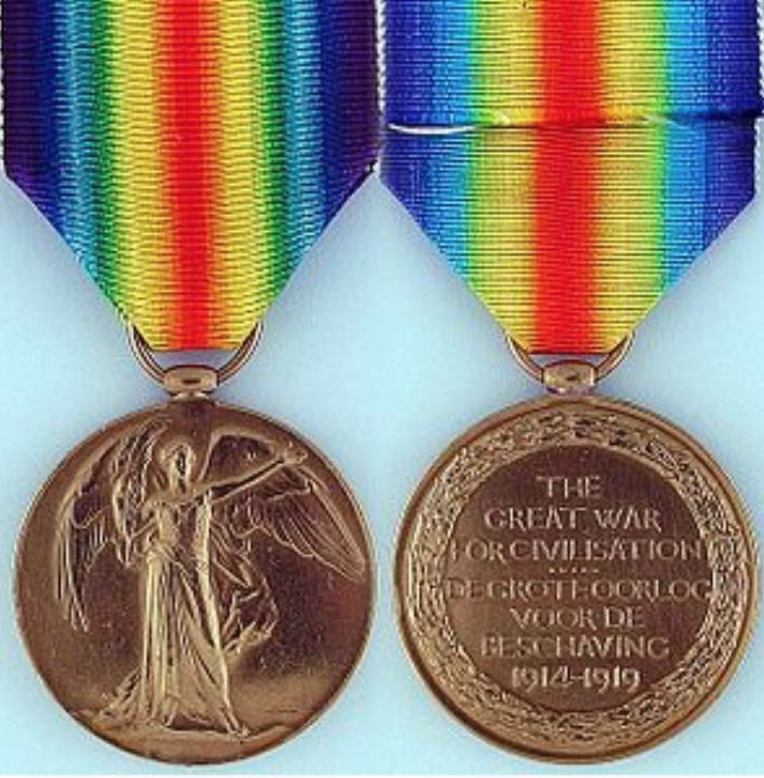
Finally “Wilfred” – The ‘Victory Medal’ (South Africa) is the Union of South Africa’s version of the Victory Medal (United Kingdom), a First World War campaign medal of Britain and her colonies and dominions. The medal, never awarded singularly, was awarded to all those South Africans who were awarded the 1914–15 Star, or to all those who were awarded the British War Medal.
What makes the South African version of the Victory Medal unique to all the others issued to veterans of Britain and her Imperial Allies around the world is found on the Reverse. All Victory Medals have the words “The Great War for Civilisation” written in English on the back, the South Africans ones have it in Dutch in addition.
Note; the date on the back ‘1914-1919’ does not depict the end date of the war which was 1918 instead it commemorates the date from which the war was formally remembered – 1919.
The Victory Medal’s ribbon represents the combined colours of the Allied nations, with the rainbow additionally representing the calm after the storm. The ribbon consists of a double rainbow with red at the centre.
These medals are worn in precedence to the World War 2 medals if your ancestor or parent fought in both WW1 and WW2. If your ancestor also fought in the Boer War, those medals i.e his Boer War campaign medals (whether he fought on the British side or the Boer side) will precede these WW1 ones in the more ‘senior’ position. The basic rule with medals basically is the closer to the centre of the body (the heart), when the medals are worn on the left breast, the more senior the medal or decoration.
The first ‘war’ a veteran fights in – all his campaign medals for that war – will precede the next war that he fought in and all those campaign medals. Decorations (higher awards for bravery and the like) precede ‘all’ campaign medals regardless of the war in terms of seniority. Service medals i.e. for years of service and medals (and even decorations) awarded by another country are worn in the junior position (furtherest from the ‘heart’).
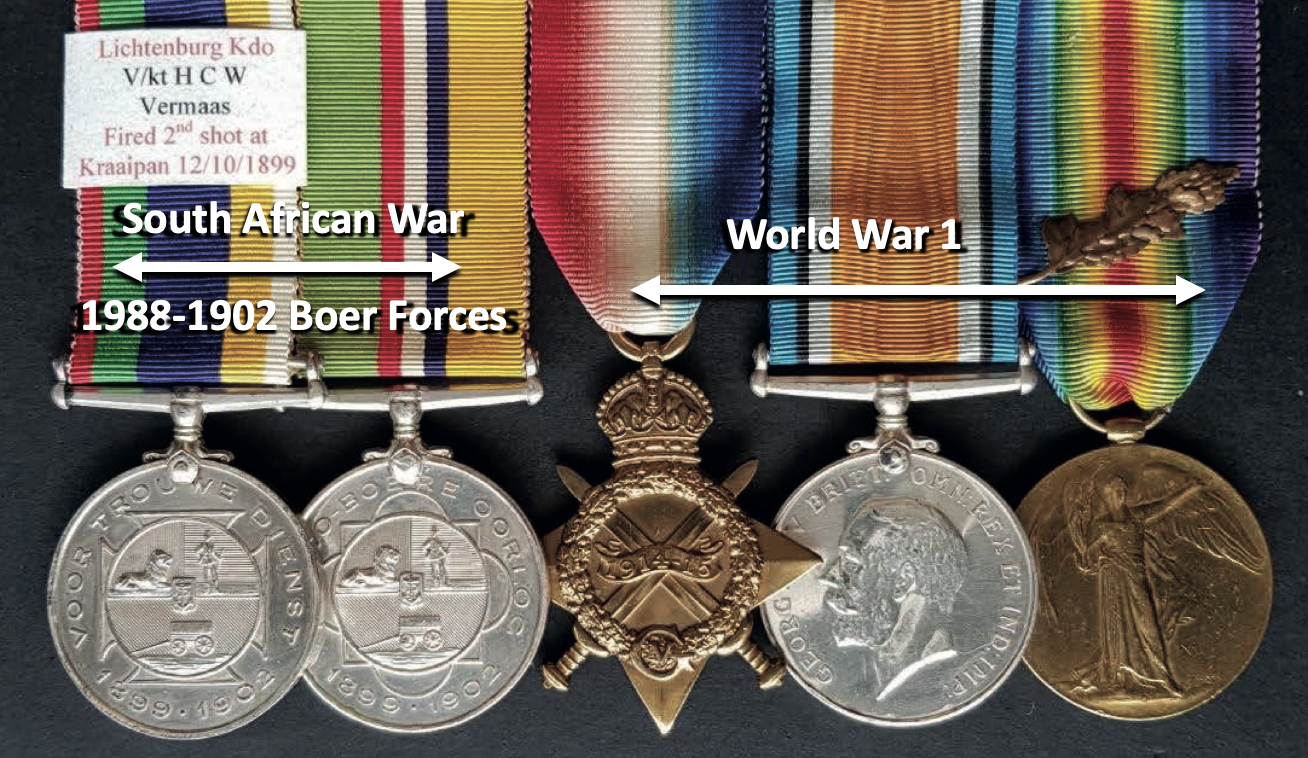
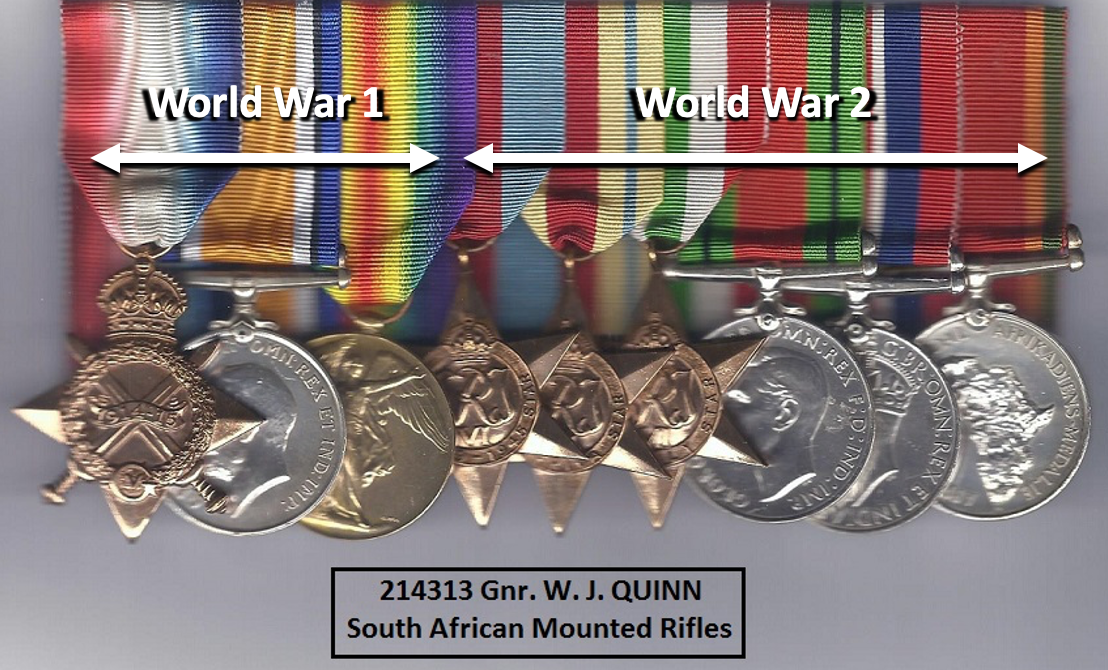
Here are two interesting examples of this – one showing a South African War (1899-1905) Veteran fighting on the Boer Side – his ‘Boer War’ medals precede his First World War Medals and the other shows a South African 1st World War Veteran who went on to fight in the 2nd World War.
A rare example of someone with all three campaign medal sets from the three different wars – The South African War 1899-1902 (on the Boer side), the 1st World War and the 2nd World War is Field Marshal Jan Smuts’ medals.
Note: This is a very complex field, and I’m no expert and the intension is to show the basic outline for WW1 medals commonly found, each of the medals has rather extensive qualifying criteria.
Have a look at your Great/Grandfather’s medals and see if they are in the right order and which of these three medals you now recognise.
Understanding your Grand-parents (or Great Grandfather’s/Grandmother’s or even Father’s/Mother’s) World War 2 medals. This is the standard set received by many South Africans who fought in both the North/East African theatre of operations and the Italian campaign. These are in the correct order of precedence and from left to right they are:
1. The 1939 – 1945 Star – campaign medal awarded to all British and Commonwealth personnel who fought in any theatre of operations during WW2. The ribbon shows arms of service – Navy (dark blue), Army (red) and Air Force (light blue).
2. The Africa Star – campaign medal awarded to all British and Commonwealth personnel who fought in African theatre of operations during World War 2 – either ‘east’ Africa or ‘north’ Africa’ or in both these campaigns. The ribbon is distinguished by the “Sahara” sand colour.
3. The Italy Star – campaign medal awarded to all British and Commonwealth combatants who fought in the Italy theatre of operations during World War 2. Distinguished by ribbon in the colours of the Italian flag.
4. The Defence Medal – campaign medal awarded for both Operational and non-Operational service during WW2 to British and Commonwealth service personnel (and civilians involved in Service to armed forces). The ribbon is symbolic of the air attacks on green land of UK and the ‘Black outs’ during the bombings are shown by the two thin black lines.
5. The War Medal 1939-1945 – campaign medal for British and Commonwealth personnel who had served full-time in the Armed Forces or the Merchant Navy for at least 28 days between 3 September 1939 and 2 September 1945. The medal ribbon is distinguished by the colours of the British Union Flag/Jack.
6. The Africa Service Medal – a South African campaign medal for service during the Second World War, which was awarded to members of the South African Union Defence Force (UDF), the South African Police and the South African Railways Police who served during World War 2. The ribbon represents the Two Oaths taken (red tab for Africa Service Oath and the later General Service Oath) and the green and gold colours of South Africa.
Have a look at your Grandfather’s or Dad’s medals (or your Mum/ Grandmother’s) and see if they are in the right order and which of these six medals you now recognise.
If there are any higher decorations to the ones shown here, the ones usually for bravery, these will be found before the ‘Stars’ in the ‘senior’ position an example of this is a DFC – Distinguished Flying Cross. The senior position is defined as the highest value medal/decoration positioned closest to the ‘heart’ i.e. the centre of the body when the rack of medals is worn on the left breast. Medals awarded by other countries, regardless if they are decorations for bravery, campaign or service medals will be found after The Africa Service Medal in the junior position i.e. furtherest from the ‘heart’.
It’s not common to the ‘average’ South African rack as expressed here, but If your old folks served in the France and Germany theatre of operations, or in the North Atlantic (if they were in the Royal Navy) or even in the Pacific theatre they would carry the ‘Stars’ for these theatres of operations. Commonly, South Africans attached to or serving in the Royal Navy, Royal Air Force or Royal Marines tend to have these campaign stars.
Note: This is a very complex field and I’m no expert, the intension here is to show the basic outline, each of the medals has rather extensive qualifying criteria and medal racks can vary substantially.
No dancing in the streets, kissing nurses, bonfires for masks, victory parades and presenting doctors with medals?
The war is won… but Cyril has ended it with a whimper not a bang. He should be gathering us for one final TV chat, stagger up the podium pissed wearing a party hat, pop champagne and have tinsel showers and fireworks go off behind him.
Instead we get someone called Joe Phaahla quietly posting in the gov gazette “No more musks” and, pfffffff, just like that, Covid fizzles out into history…
Why aren’t we having a party, Cyril?
What are we going to tell our grandchildren one day?
“Aye, it was quite something, lad. The world stopped for two years. No busses, trains, aeroplanes, nothing… They locked us up in our homes, withheld booze and smokes, patrolled the streets with guns and arrested the surfers.”
“You can’t be serious, Grandpa. How did you earn money to buy food?”
“We grew vegetables, me boy! It was the darkest of days, I tell you. People were dying left right and centre. Undertakers patrolled the streets everyday shouting, “Bring out your dead!” Me myself, I survived with a flesh wound, a rash on me testicles from the jabs they stabbed us with.”
“How did the war end, Grandpa?”
“Very quietly, son… the health minister stole all the money and got fired. Some guy called Joe replaced him and wrote in the newspaper that we’ve won… We’re still waiting to party.”
“We’re you a hero in the war, Grandpa?”
“We all were, son. Killed more germs with alcohol spray than you’ll ever know. Thank God for people like us…”
“Is it true that I’ve got 14 fingers because of the war?”
“Aye lad, it’s true… sorry ‘bout that. The jab wasn’t tested enough. But consider yerself lucky – you’ve got two penises!”
—————————
Editor’s comment
Steve de Witt, a friend and contributor to The Observation Post wrote on COVID, it resonated with me as a survivor, having been hospitalised with Covid for an extended period, it also plays right up to my ‘dark’ military sense of humour and put a smile on my dial, Cyril Ramaphosa where is our VE Day indeed. Thanks again Steve – Peter Dickens.
Thanks also to Frans Bedford-Visser for the VE Day colourised images







 The Observation Post