To answer a question recently posted on Boer War appreciation media as to whether Freemasonry and the Boer War are in some way linked. The origin of this bizarre statement lies in Manie Maritz, the 1914 Afrikaner Revolt leader, who became convinced of a Masonic and Jewish conspiracy to start the second Boer War. More on insane machinations of Maritz later, however to answer the question – no – Freemasonry as a fraternity and the two Boer Wars – the Transvaal Revolt (1880-1881) and The South African War (1899-1902) – have nothing to do with one another, as much as some deluded conspiracy theory driven arm-chair historians would like to to make a connection. In fact, as in many wars over centuries in many countries, Freemasons have landed up on opposing sides shooting one another – the most significant example of this is The American Civil War (1861-1865). For those ‘in the know’ Freemasonry plays no role whatsoever in starting (or preventing) wars, which is not surprising as Freemasonry is a charitable fraternity with principles relating to self actualisation and brotherhood.
It’s also not a ‘British’ thing. Freemasonry started in South Africa under the Dutch Grand Lodge, the Orient of the Netherlands in 1772 .. long before the British played any role in South Africa. The oldest Lodge is South Africa is a Dutch Constitution one – De Goede Hoop Loosie – its temple is located inside the Parliamentary buildings complex. It also does not mean the Dutch and English speaking South Africans are separated by English and Dutch constitutions, you’ll find English and Afrikaners in both. Case in point are the early Voortrekker leaders who were Freemasons – Andries Pretorius was a Freemason, he even opened up a Dutch constitution Lodge in Pretoria. Piet Retief was also a Freemason, but of the English Constitution whilst he was living in the Eastern Cape.
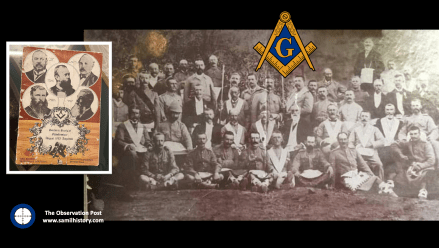
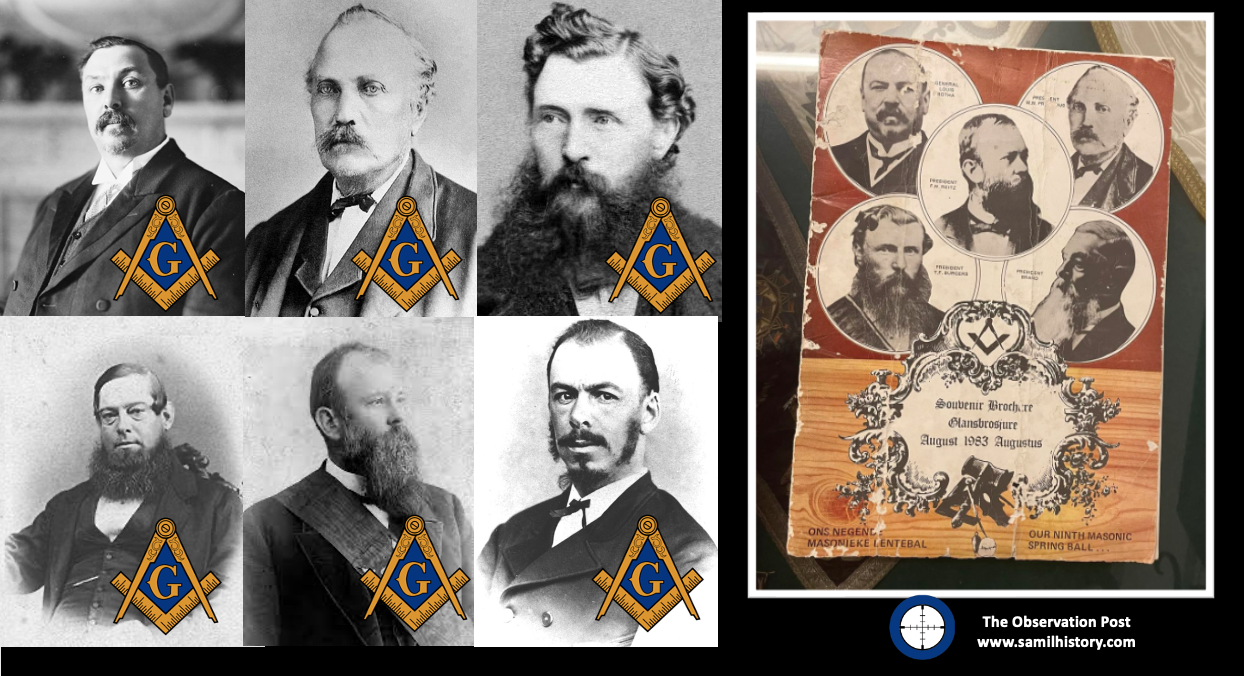
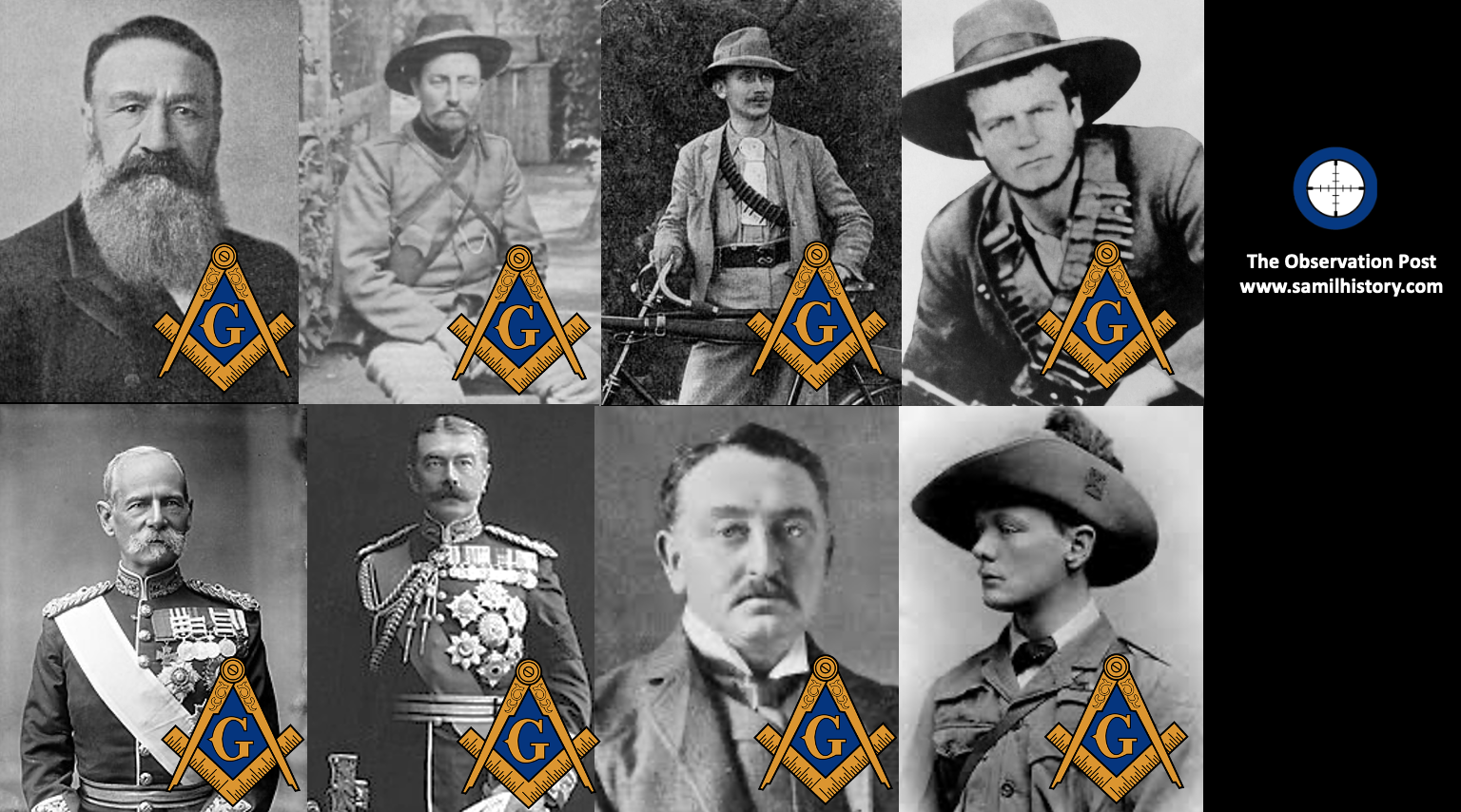
Here’s an interesting artefact, this one is located at the Pinelands Masonic complex’s historic display (my photo) – commemorating past South African state land Boer Republic leaders who were Freemasons. For interest, and it’s all in Public space – just ‘Google’it. As notable Boer Freemason Presidents and Prime Ministers go these include:
General Louis Botha – Boer War Bittereinder General. 1st South African Prime Minister of the Union of South Africa: 1 May 1910 – 27 August 1919, Prime Minister of the Transvaal: 4 March 1907 – 31 May 1910
President Johannes Brand – 4th President of the Orange Free State: 2 February 1864 – 14 July 1888. Awarded a British Knighthood.
President Marthinus Wessel Pretorius – 1st State President of the Zuid-Afrikaansche Republiek (Transvaal Republic): 22 October 1866 – 20 November 1871. Established the ZAR and its constitution.
President Thomas François Burgers – 4th State President of the Zuid-Afrikaansche Republiek (Transvaal Republic): 1 July 1872 – 12 April 1877. Introduced the ZAR’s currency.
President Francis William Rietz – 5th State President of the Orange Free State: 10 January 1889 – 11 December 1895 and State Secretary of the ZAR in the lead up to Boer War 2.
Acting President Pieter Blignaut – Acting State President of the Orange Free State: 14 July 1888 – 10 January 18891
Top Row left to right: Brothers Louis Botha, Marthinus Pretoruis and Thomas Burgers. Bottom Row left to right:: Brothers Johannes Brand, Francis Reitz and Pieter Blignaut
A very good barometer of the early development of the ZAR (Transvaal) and the very cosmopolitan nature of Pretoria with its Voortrekkers, NGK Churches, Jewish traders, British loyalists and Anglican Churches – before the discovery of significant gold deposits and the establishment of Johannesburg – is to look at Freemasonry in the ZAR. The first Freemasons Lodge was a Dutch constitution Lodge in 1862, the Aurora Lodge .
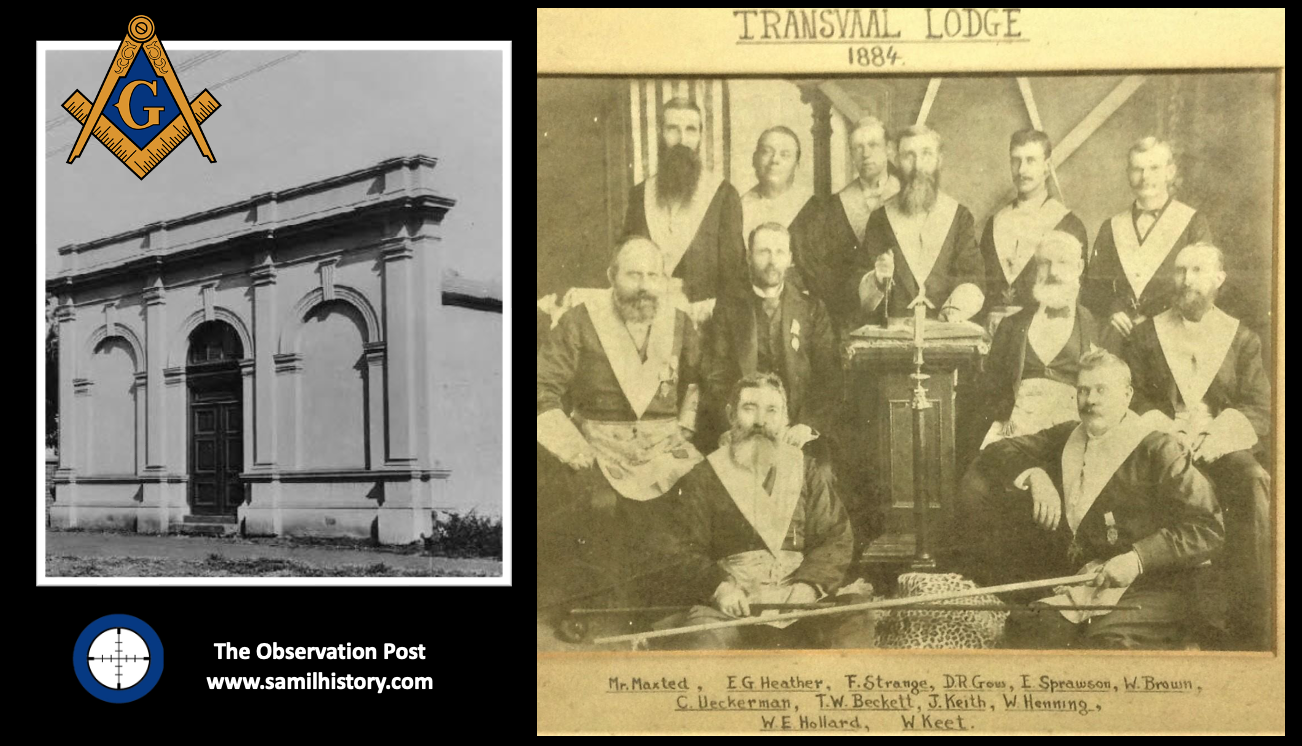
The corner stone of the new temple for this Lodge was laid by President Burgers, as noted, a freemason himself, on 27 May 1876. On the Freemason’s English constitution side, the ZAR voluntarily dissolved itself (led by President Burgers ironically) and it became The British Colony of the Transvaal in 1877 (the first version, there are two). The first English constitution lodge was established a year later on 15 January 1878, called the Transvaal Lodge – and its was established a mere 2 years after the Dutch’s Aurora temple was built. The Aurora temple was destroyed during a severe thunderstorm, disheartened and not keen to start all over again, the Dutch constitution freemasons joined the English constitution freemasons at the Transvaal Lodge (and here’s a rare photo of them).
The Masonic Hall in Pretoria and the Transvaal Lodge in 1884
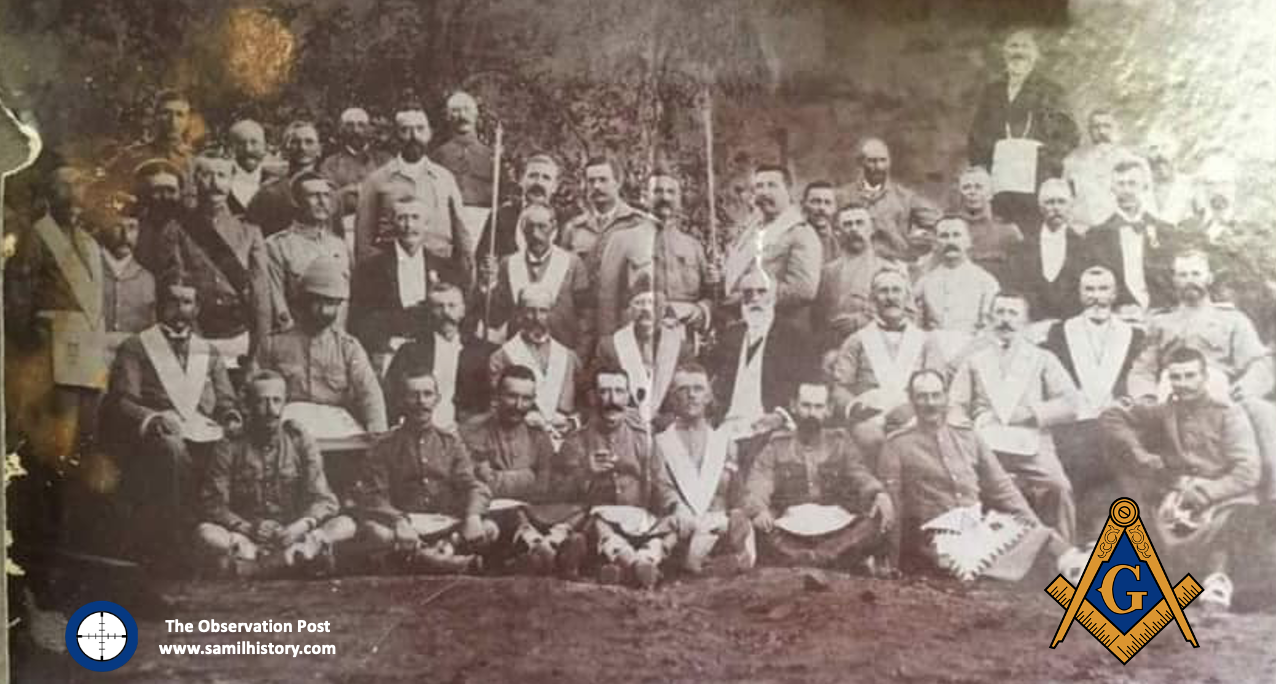
Here’s another interesting wartime photo – Dutch and English/Scottish/Irish constituted freemasons getting together in the middle of the South African War (1899-1902) a.k.a. Boer War 2 near Bloemfontein. On 12 December 1900, in the middle of the fighting a meeting was held in Jagersfontein, attended by both British (English constitution) and Boer Freemasons (some of which were Dutch constitution) – both on separate sides, but happy to meet one another under a banner of brotherhood. Here’s a fascinating picture of the occasion.
Freemason meeting – Jagersfontein, December 1900
Other famous ‘Boer War’ Freemasons on the ‘Republican’ side include:
Commandant General Petrus ‘Piet’ Jacobus Joubert, Commandant General of the ZAR Forces, Vice President to Kruger and Boer War 1 and Boer War 2 veteran. The overall commander of Boer Forces at the start of the war. and political opposition to Kruger.
General Benjamin Johannes “Ben” Viljoen, Bittereinder Boer War 2 veteran and American Boer colony pioneer.
Commandant Danie Theron, renowned Boer War 2 scout, bittereinder, commander and national Boer hero.
Deneys Reitz – veteran Boer War officer and the author of ‘Commando’, although it his noted that he only became a Freemason after the Boer War, as noted his father President FW Reitz was also a Freemason.2
Of the famous ‘Boer War’ Freemasons on the ‘British’ side, these include:
Field Marshal Lord Roberts Frederick Sleigh Roberts, 1st Earl Roberts and a Lodge in South Africa is named after him.
Field Marshal Herbert Kitchener, 1st Earl Kitchener
Sir Winston Churchill but only became a Freemason after he left South Africa after his service in the Boer War and returned to the UK.
Sir Charles Warren was a notable Freemason
Cecil John Rhodes was a very committed lifelong Freemason.3
Significant Freemasons of the South African War (1899-1902) Boer and Brit.
Of the famous authors associated with the Boer War, Joseph Rudyard Kipling, the famous author of the Jungle Book was a Freemason, so too was Arthur Conan Doyle. Leo Amery, who penned the first official history of the Boer War for the Times was also a Freemason.
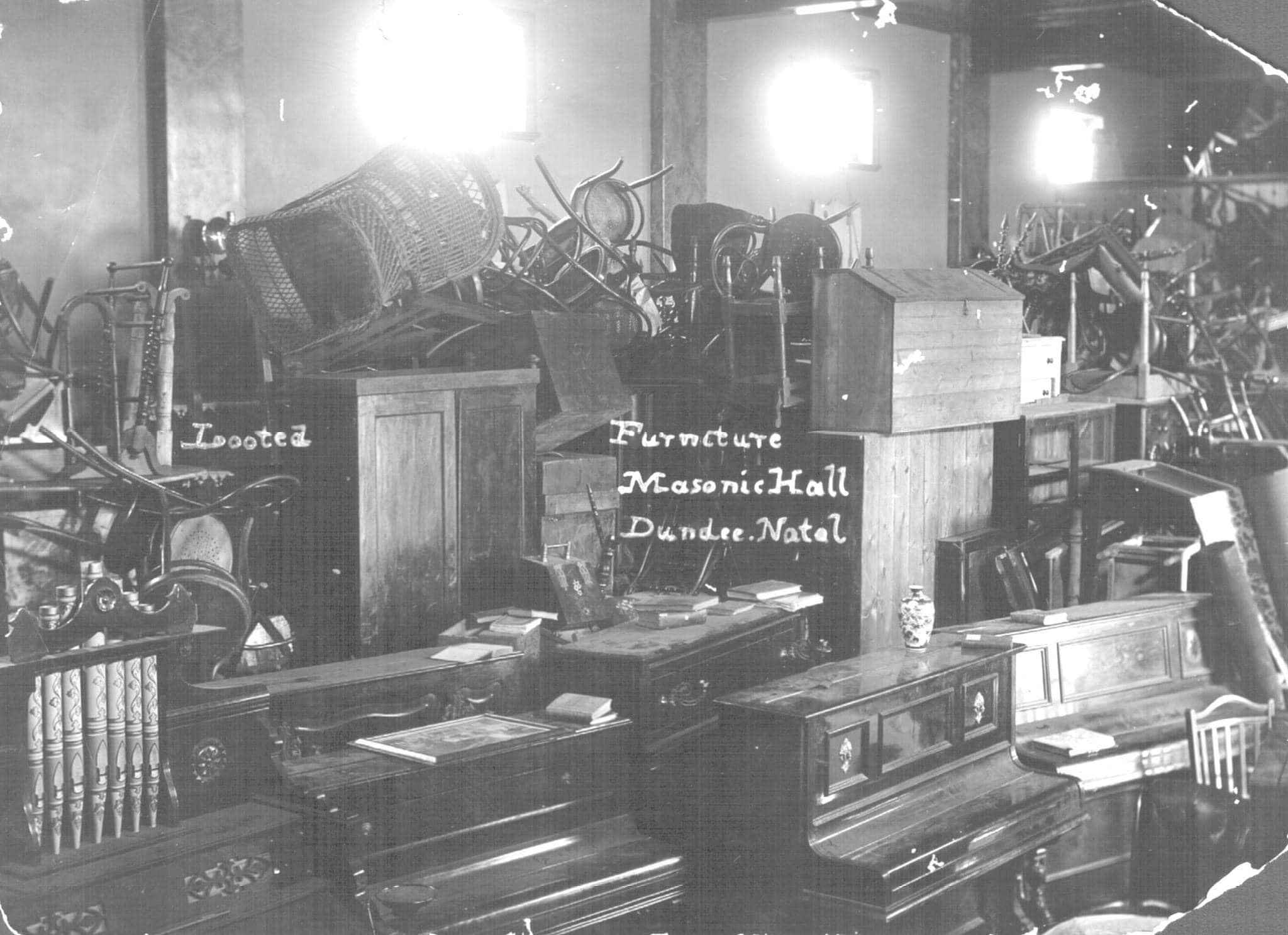
As to co-operation, during the Boer War, many lodges closed. Some of the buildings used by the Freemasons were used for hospitals such as the Masonic Lodge in Mafeking and the Masonic Temple in Johannesburg. During the Boer invasions of northern Natal at start of the war in October 1899, the Masonic Lodge in Dundee was plundered by the Boer Republican Forces, however the Lodge’s artefacts were found and respectfully returned to the Lodge by Boer Freemasons.
Loot taken from the Masonic Lodge in Dundee by Boer Republican Forces. Image courtesy of the Talana Museum Archive.
Noted here, is there is NO General Jan Smuts – there is no evidence whatsoever that he was a Freemason. Many historians have tried to confirm the ‘conspiracy theories’ and there is no evidence, zilch, nothing – not here in South Africa nor in Britain. Smuts is not a Freemason, no matter how much many people wish he was (conspiracists and Freemasons alike).
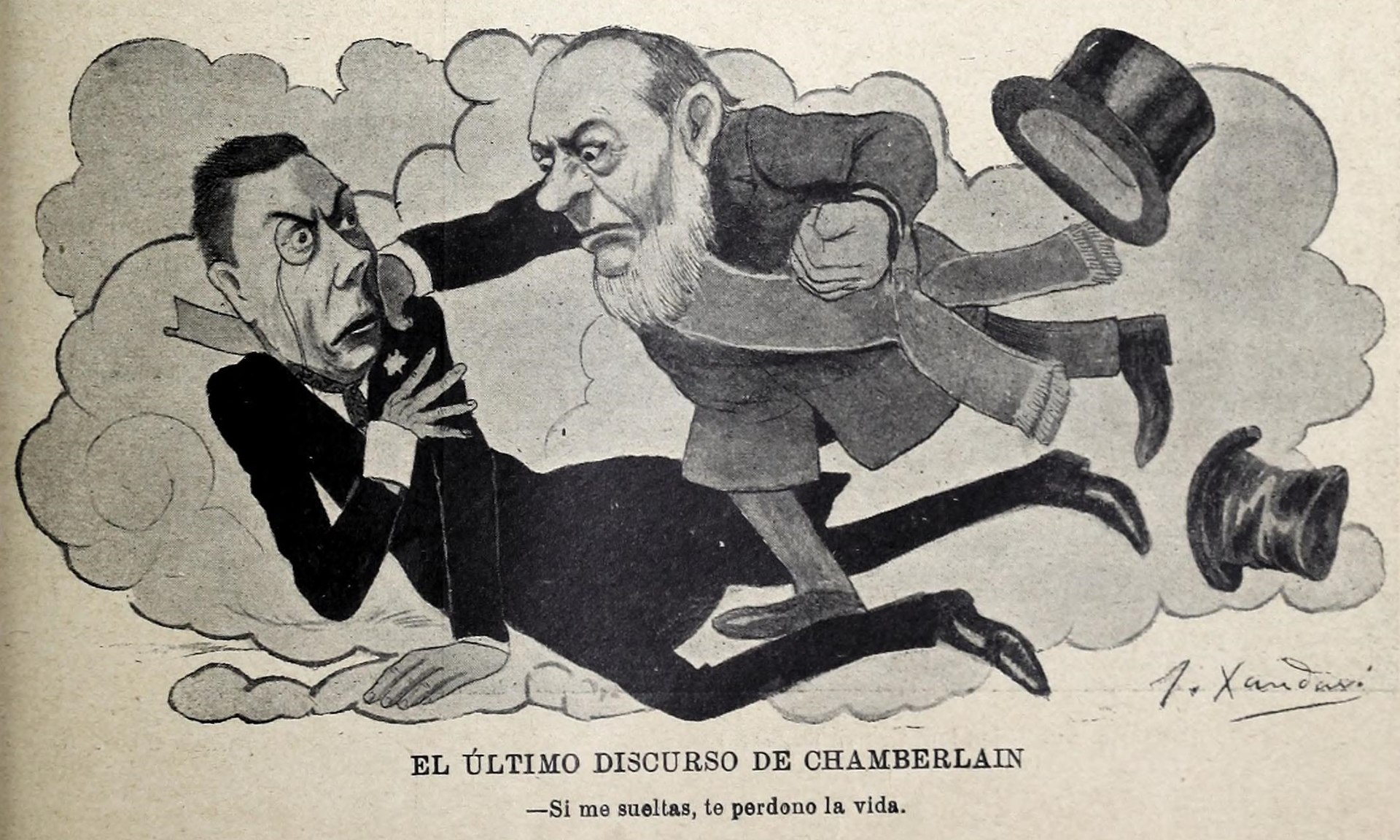
Of the other ye olde Boer Republic Freemasons in leadership roles the only other significant ones who were NOT Freemasons were President Paul Kruger (his Dopper approach would not have allowed him) and Prime Minister Barry Hertzog. Of the British ‘hawks’ in starting the Boer War, there is absolutely no conclusive evidence that either Alfred Milner or Joseph Chamberlain were Freemasons – sorry for all those conspiracy theorists again. Maybe the decision to go to war should have been left to the Freemasons to negotiate and there would not have been war in the first place … and look there – I’ve created a conspiracy with no grounding whatsoever.
Image: President Paul Kruger and the British Colonial Secretary, Joseph Chamberlain, having a dust-up both were NOT Freemasons and no brotherly love lost.
Another point in the respect of famous people associated to the Boer War by way of historic sweep who are NOT freemasons .. all the ‘Pure’ National Party’s Presidents and Prime Ministers were members of the Broederbond – from D.F. Malan all the way to their last one, F.W. de Klerk and as a result of their rather perverse public animosity to Freemasonry, none of them were Freemasons. Also, none of them were ‘significant’ Afrikaners in the formation of ZAR, OFS or Union of South Africa, nor did any of them play any significant role in the Boer War – Dr D.F. Malan sat out of the war in safety – for that matter all of them sat out WW1 and during WW2 they either tacitly or overtly supported Nazism while sitting out of that war too. The best they could come up with was a ‘keep South Africa white’ South African Republic in 1961 and Freemasonry must surely thank its lucky stars that it is spared from any association with it for a change, conspiracy or otherwise.
As noted in the beginning, one origin of this bizarre link of Freemasonry to the Boer Wars is ‘General’ Manie Maritz, the Boer War Commander, 1914 Afrikaner Revolt leader and leader of the National Socialist Boerenasie movement. In the mid 1930’s Maritz would become a convert to the racist and anti-Semitic mythical and completely discredited ‘the Protocols of the Elders of Zion’ and convinced of a Jewish and Freemason conspiracy to world domination. He would make the ‘Protocols of Zion’ his life’s meaning and his mission to educate the Afrikaner people (his ‘Volk’) to it – and in it he would blame the ‘hidden hand’ of the Jews as the true conspiracists behind starting the Boer War. He would then go into mortal combat with General Jan Smuts calling him the King of the Jews and therefore a traitor to the Afrikaner people.4 Yet, believe it or not there are still some people out there who would gobble this sort of crap up.
If you want to see how this conspiracy theory nut job rubbish Maritz promulgated in action, consider this, the Broederbond opposed Freemasonry – as a net result the post 1948, the National party’s Minister of Justice C.R. “Blackie” Swart (a Broederbonder himself) famously accused the Freemasons and the ‘Sons of England’ (another South African lodge based fraternity) in the media of infiltrating Sailor Malan’s ‘Torch Commando’ political protest movement in 1952 and in so plotting to militarily overthrow his Apartheid government.5 Pure unfounded gobbledygook and you just can’t make this stuff up!
In my book none of these ‘Pure’ Afrikaner Nationalists really qualified ‘great’ Afrikaners in any event – the simple truth is that they were a fringe party of far right-wing nutters .. nothing more. Also, point to note, no – by bringing up famous Boer leaders who either were or were not part of the Freemason fraternity, I’m not “Boer Bashing” and discrediting Afrikanerdom – because that would be equally daft.
Written and Researched by Peter Dickens
References:
250 Years of Freemasonry in South Africa – Commemorative Publication 2022, all Constitutions. Published by the Grand Lodge of South Africa
History is always a three-way prism. As with South African statute forces fighting communism on two fronts – the Angolan Border ‘Bush’ War and the internal ‘struggle’ movements in the 70’s and 80’s – so it was during the Second World War as well, this time the ‘struggle’ movement was a little different and South African statute forces were fighting Fascism and Nazism (National Socialism) on two fronts, both on the international stage and on the domestic front at home.
Little is known of the domestic conflict during World War 2 as it was effectively shielded and even erased from the state’s educational history curriculum – to the point that little is known about it by subsequent generations of South Africans even to this day. By far the biggest of all the domestic pro Nazi organizations in South Africa at this time was a movement called the “Ossewabrandwag” (abbreviated to OB).
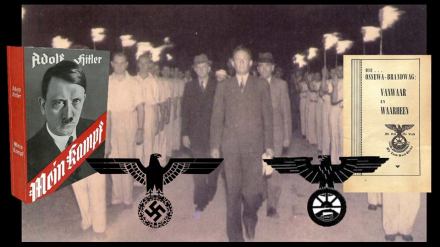
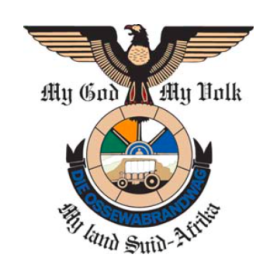
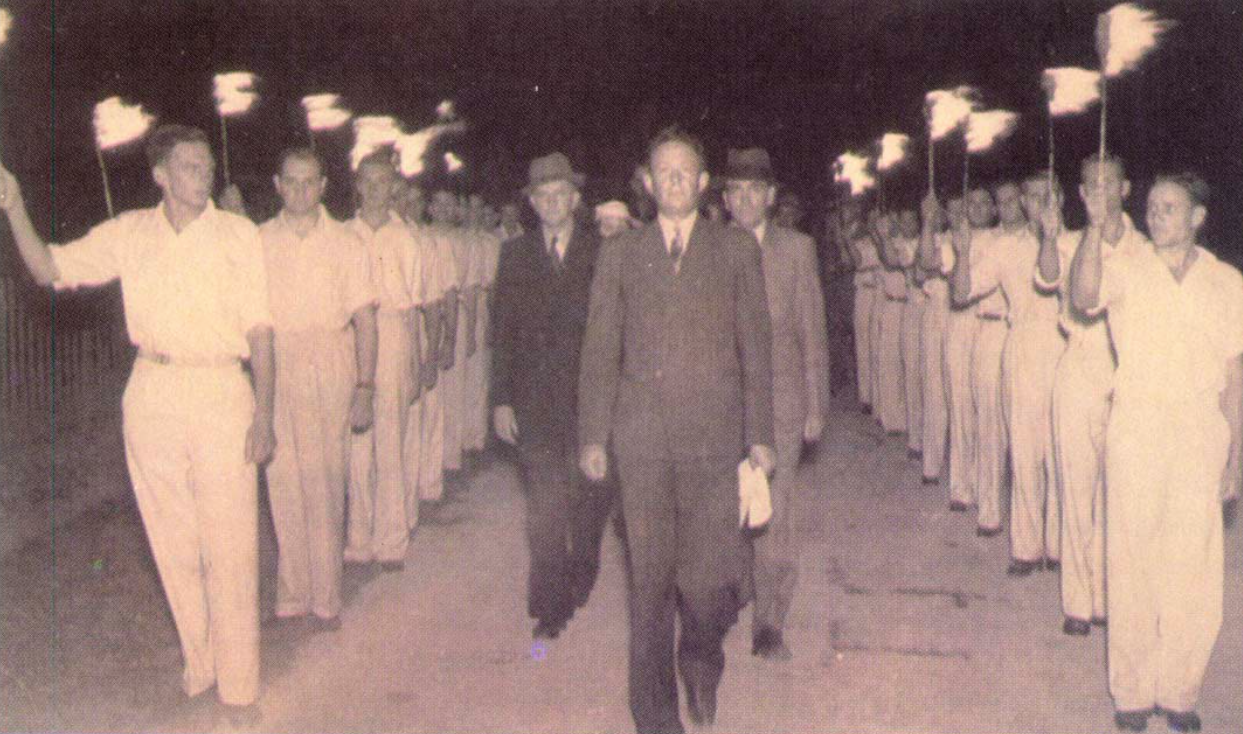
The feature image shows a Ossewabrandwag rally and its leadership along with an inserted emblem of the organization. Read on for a fascinating and relatively unknown part of South African military history.
Background and formation
The Ossewabrandwag (OB), meaning in English Ox-wagon Sentinel was an anti-British and pro-Nazi German organization in South Africa during World War II. It was officially formed in Bloemfontein on 4 February 1939.
As a background to it, in the South African War (1899–1902), Britain conquered the Boer Republics. Germany supported the Boer cause. After the war, there was a general reconciliation between Afrikaners and Britain, culminating in the formation of the Union of South Africa in 1910, under the leadership of former Boer fighters, Louis Botha and Jan Smuts. South African troops, including tens of thousands of Afrikaners, served in the British and South African Union forces during World War 1 and again in World War 2.
Nonetheless, many Boers from the ex Transvaal and Orange Free State Republics remembered the extremely brutal tactics used by Britain in the Boer War and remained resentful of British rule. They were especially resentful of the concentration camp and scorched earth policies engaged by the British to bring to bring an end to the guerilla tactics used by ‘Bitter einders’ at the close of the war.
In the 1930’s the chief vehicle of Afrikaner nationalism was the ‘Purified National Party’ of D. F. Malan, which later became the ‘National Party’. As in 1914, the Second World War appeared to a relatively small group of far right-wing Afrikaner nationalists as a golden opportunity to establish Afrikaner nationalist rule and move to make South Africa a republic independent of Britain.
‘We are now ceaselessly on the road to our goal: the Republic of South Africa – the only status under which we can truly exercise the right to self-determination as a country,’ said D.F. Malan on 6 September 1939 at the on-set of the Second World War.
Prior to this, 1938 was also the centennial anniversary of the Great Trek (the migration of Boers to the interior). The Ossewabrandwag was established in commemoration of this Great Trek. Most of the migrants traveled in ox-drawn wagons, hence the group’s name. The group’s leader was Dr Johannes Van Rensburg, a lawyer who had served previously as Secretary of Justice, in 1933 he had been to Germany in his capacity as Secretary and met both Hitler and Goering as well as other Nazi officials, he was deeply impressed with both the leadership and discipline offered by Nazism and became an admirer. The OB at the on-set of the centennial was loosely associated to Malan’s National Party.
The relationship with the National Party
There were however sharp differences between Dr van Rensburg and Dr D.F. Malan over the right course of action to be followed when South Africa declared war on Germany in 1939. Both believed that everything depended on the outcome of the war, both believed that Germany would win it, however Malan relied on negotiation with Germany to achieve his objectives, van Rensburg on the other hand believed that at some stage freedom would have to be fought for and began to formulate a militant opposition to the South African government to undermine South Africa’s war effort.
At first, relations between the National Party and the Ossewabrandwag were cordial, with most members of the Ossewabrandwag belonging to the party as well. At the higher levels, National Party leaders like P.O. Sauer and F. Erasmus (later to be made Cabinet Ministers when Malan came to power) were members of the OB.
CR SwartBJ VorsterPW Botha
Three future National Party South African Prime Ministers/State Presidents held key leadership positions in the Ossewabrandwag. ‘Generals’ like C.R. Swart (later South Africa’s first State President) was a member of the Groot Raad (Chief Council) of the Ossewabrandwag, B.J. Vorster (later to become Prime Minister of South Africa) was a keynote OB leader and formed the OB’s Cape Branch and even PW Botha (future South African State President) joined the Ossewabrandwag and worked with Vorster to establish the OB’s Cape branch.
Other National Party stalwarts where also prominent in the Ossewabrandwag organisation, Eric Louw, for example – who later to become the National Party’s Foreign Minister. That to say the National Party and the Ossewabrandwag were, to coin a phrase, “two peas in the same pod” is an absolute truism.
Combining the impact of the war and the very dynamic personality of Dr van Rensburg, the Ossewabrandwag soon grew into a significant force, a mass movement whose membership at its peak was estimated to be between 200,000 and 400,000 members.
The relationship between the Ossewabrandwag and National Party at first was very well-defined and D.F. Malan even met with OB leaders in Bloemfontein which resulted in declaration known as the ‘Cradock Agreement’. It specified the two operating spheres of the two respective organizations. They undertook not to meddle in each others affairs and the National Party endeavoured to focus on Afrikanerdom in the party political sphere, while the Ossewabrandwag was to operate on the other fronts of the ‘volk’ (white Afrikaans people’s).
‘Nazification’ of the far right
In 1940 the Ossewabrandwag created within in structures an elite organization known as the Stormjaers – the storm troopers of Afrikanerdom. The formation of the Stormjaers (English meaning: Assault troops) was in essence a paramilitary wing of the OB. The nature of the Stormjaers was drawn upon the lines of Nazi Germany’s army ‘Storm troopers’, as were the Nazi and fascist rituals and salutes, this is evidenced by the oath sworn in a by new recruits (in some instances a firearm was levelled at them whilst they read the oath): “If I retreat, kill me. If I die, avenge me. If I advance, follow me” (Afrikaans: As ek omdraai, skiet my. As ek val, wreek my. As ek storm, volg my).
Johannes van Rensburg been sworn into the Ossewabrandwag
The Stormjaers were deployed in variety of military operations ranging from the defence of Nationalist political platforms to pure sabotage, they dynamited post offices and railway lines and cut telephone wires. Van Rensburg even wrote “The Ossewabrandwag regards itself as the soldiery of the (South African) Republic . . . the Ossewabrandwag is the political action front of Afrikanerdom.”
The ideologies of the Nazis were penetrating deep into right-wing Afrikaner political identity. In 1940, directly after Nazi German decisive victories in Europe, Otto du Plessis (later to become Administrator of the Cape under the National Party) published a pamphlet – The Revolution of the Twentieth Century – in which he openly espoused the Ossewabrandwag’s policy of totalitarianism.
B.J. Vorster’s brother, Rev. Koot Vorster, who was a Dutch Reformed Church minister, was also a predominant Ossewabrandwag leader. He summed up the pro-Hitler and Pro-Nazi standpoint of the OB during an address to a student group on September 15, 1940:
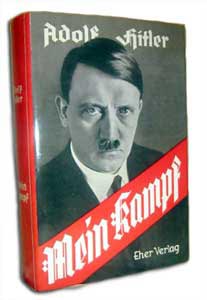
“Hitler’s ‘Mein Kampf’ shows the way to greatness – the path of South Africa. Hitler gave the Germans a calling. He gave them a fanaticism which causes them to stand back for no one. We must follow this example because only by such holy fanaticism can the Afrikaner nation achieve its calling.”
Kowie Marais, an OB member, years later recalled in an interview the admiration he and his friends held for Hitler: “We thought he (Hitler) might rejuvenate western civilization…against the communist-socialist trends that were creeping in from the east. We thought it was the dawn of a new era.”
Oswald Pirow also publicly identified himself with National-Socialist doctrines and Nazi Germany and established the Nazi expansionist ‘New Order’ movement inside the ranks of the former Hertzogites.
There even existed South Africa’s own Nazi party called the SANP and it’s militant wing the ‘Greyshirts’ led by Louis Theodor Weichardt (who later became the National Party Senator for Natal). This pure Nazi movement had 5000 odd loyal followers.
Dr Van Rensburg from the OB had always professed been a National Socialist, as an open admirer of Nazi Germany and Adolph Hitler, and the ideas and rituals of membership put forward by his organization had a distinctive Nazi leaning as a result.
According to OB political thinking, Afrikaans would be the only official language in a free, independent, Christian-National Republic. The English-speaking South Africans, regarded as an “un-national” element, would be condemned to an inferior status. Anti-Communism was an important backbone of OB policy in line with Nazi hatred of communism.
The emphasis of the OB was also on race and racial purity. Members were exhorted to ‘think with your blood’, and the Nazi creed of ‘Blut und Boden’ (Blood and Soil) was promoted as an OB value. ‘Family, blood, and native soil – that is, next to our religion and our love of freedom, our greatest and our most sacred national heritage’ (Die O.B. 28 October 1942).
The OB always displayed an exaggerated interest in physical culture and the need for dictatorial discipline. “Give us a master ! Give us bonds which tie us to a stable way of life” wrote van Rensburg.
On issues of family value, the leaders of the OB proclaimed that the duty of the man was to work and fight and the duty of the woman to create and tend the home and family.
In essence the Ossewabrandwag was based on the Führer principle, fighting against the British Empire, anti-capitalist in nature – they called for the removal and expropriation of “British-Jewish” controlled capital, the communists, the Jews and the system of parliamentarism. All based on the principles national socialism.
An irony is not lost here, in modern South Africa the African National Congress (ANC) now call this ‘British-Jewish controlled capital’ a new name – ‘white monopoly capital’ and call for the same capture of this elusive capital as a justification for their cause too.
Johannes van Rensburg at a Ossewabrandwag torch rally
Insurrection
From the outset of the war a series of violent incidents took place between statutory force South African soldiers and the Ossewabrandwag. This was to cumulate on Friday 31 January 1941, when van Rensburg was due to hold a meeting at the Johannesburg City Hall when a riot broke out between OB Stormjaers and South African Union Defence Force soldiers who were determined not to allow van Rensburg to have a platform for his support of Nazi Germany – with whom they were now at war with.
The Stormjaers were armed with sticks,pipes, batons, knives, sjamboks and even bicycle chains, while the soldiers were for the most part unarmed and the battle raged in downtown Johannesburg for two days. Armoured cars were brought in while enraged UDF soldiers set fire to Nationalist newspaper offices and set police vans alight. Tear-gas canisters were hurled in every direction between the two antagonists and the Police.
Before a commission of inquiry on the Johannesburg riot, Dr van Rensburg declared that it was only OB discipline and restraint which had prevented reinforcements in outlying areas from being brought into town and broadening the scope of the battle.
In support of OB activities the National Party even came out in direct support of the OB against Smuts’ government resolution to detain and ban members of the OB. Dr D.F. Malan defended the OB in a speech on 5 March 1941, saying:
“The Ossewabrandwag has been accused of lending itself to subversive activities and also of encouraging them. Now I say: Carry out your threat. Ban it. Prevent it and prevent its meetings. If the Ossewabrandwag decides to be passively disobedient and refuses to be dissolved . . . I shall share the consequences with the Ossewabrandwag. At this stage I am prepared to say to you that if the government decides upon that act and the Ossewabrandwag decides not to submit, I shall keep my pledge”.
It was a clear sign to Smuts’ government that unity in the ranks of the Afrikanerdom movements was as unified as ever since the outbreak of the Second World War.
To give an idea of sabotage and violent attacks, at the height of the Second World War – 1942, Ossewabrandwag Stormjaer activities included:
Explosions over a large area of mines at Klerksdorp, Vereeniging, Delmas and in Potchefstroom the OB blew up power lines – 29 January 1942. All telegraph and telephone communication between Bloemfontein and the rest of South Africa were dislocated in one attack in February 1942.
Railway, telegraph and telephone lines in various parts of the Free State were destroyed in February 1942. Fifty-eight Stormjaers were eventually charged with high treason, and a quantity of hand grenades were found. Stormjaers also blew up two telephone poles behind the Pretoria Central Jail, but were never captured.
Two other Stormjaers, Visser and van Blerk were convicted of a bombing at the Benoni Post Office, as a result of which an innocent bystander was killed, they were both sentenced to death. The sentence was commuted to life imprisonment.
A few members of the OB were shot while trying to escape from internment camps or jails, the most known was the dramatic pursuit OB General, Johannes van der Walt, who was shot while on the run near Krugersdorp.
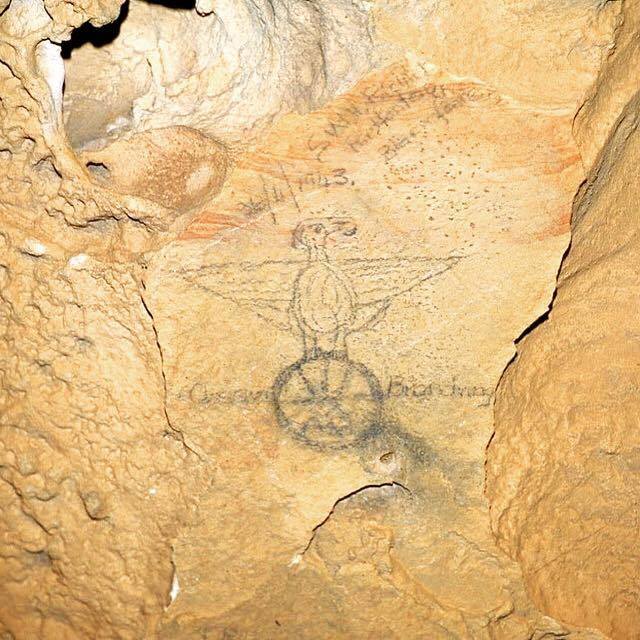
A number of arms cache’ and hiding places for the Stormjaers can still be found, the inserted picture shows Ossewabrandwag graffiti in a cave in the Excelsior area.
B.J. Vorster
One very predominant leader of the Ossewabrandwag was Balthazar Johannes (B.J.) Vorster, South Africa’s future Prime Minister. Along with like-minded OB colleagues he regarded the war as an opportunity to get rid of the hated domination of the United Kingdom of South Africa and welcomed the Nazis as allies in their fight.
The firebrand nature of the Ossewabrandwag appealed to Vorster more than the National Party, so while South African troops were helping to make the world safe from Hitler’s National Socialism, Vorster was appointed as a ‘General’ in the Ossewabrandwag for the Port Elizabeth district to promote the National Socialism doctrine back home. On his politics he famously announced the Ossewabrandwag’s position on Nazism and said in 1942:
‘We stand for Christian Nationalism which is an ally of National Socialism. You can call this anti-democratic principle dictatorship if you wish. In Italy it is called Fascism, in Germany National Socialism and in South Africa, Christian Nationalism”.
BJ Vorster addressing a OB meeting
Vorster was eventually arrested under the emergency regulations in September 1942, he immediately went on hunger strike and after two months was transferred to Koffiefontein internment camp as prisoner No. 2229/42 in Hut 48, Camp 1. B.J. Vorster was eventually released on parole in January 1944 and placed under house arrest.
Interned alongside BJ Vorster was another Ossewabrandwag member Hendrik Johan van den Bergh who eventually went on to found the Bureau of State Security (B.O.S.S.), an intelligence agency created under the National Party on 16 May 1969 to coordinate military and domestic intelligence. Van den Bergh was to become known as the “tall assassin” given his physical height.
Direct German intervention
The German Nazis themselves saw the activities of the Ossewabrandwag as very positive to their fight. Van Rensburg was even played up over Zeesen radio as the real leader of the Afrikaner people.
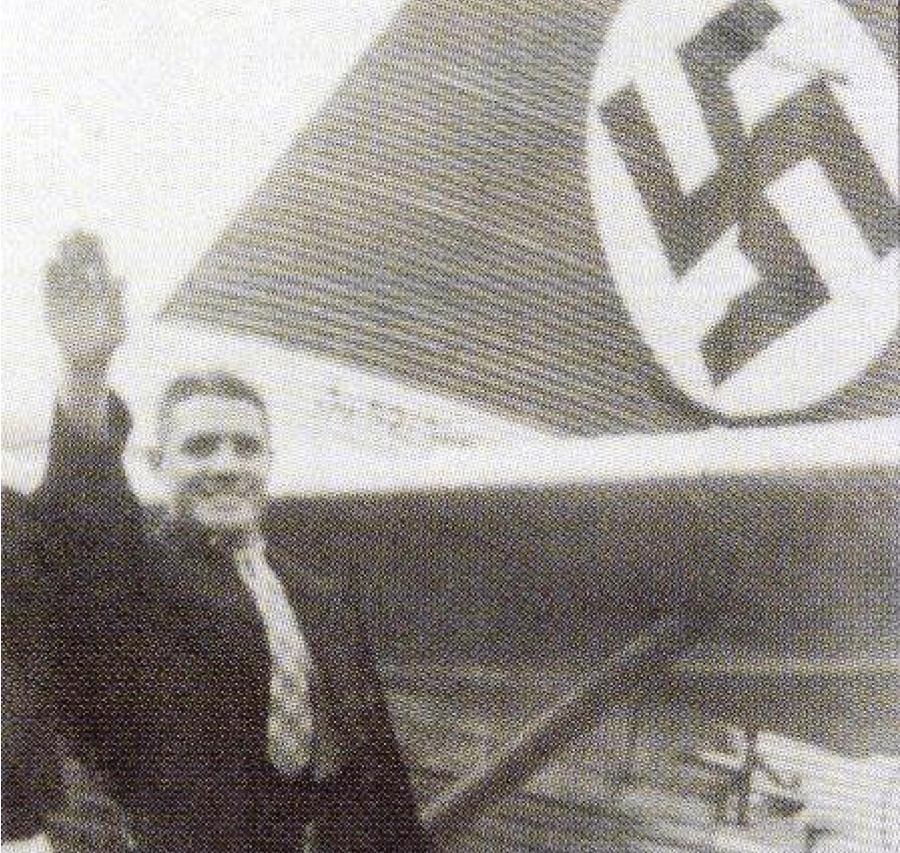
In June 1941 Robey Leibbrandt was landed from a German yacht on the Namaqualand coast with 10,000 dollars, a radio transmitter, and instructions to make contact with van Rensburg and investigate the possibilities of joint action with the Ossewabrandwag. His mission, overseen by German Admiral Wilhelm Canaris was Operation Weissdorn, a plan for a coup d’état to overthrow the government of General Jan Smuts.
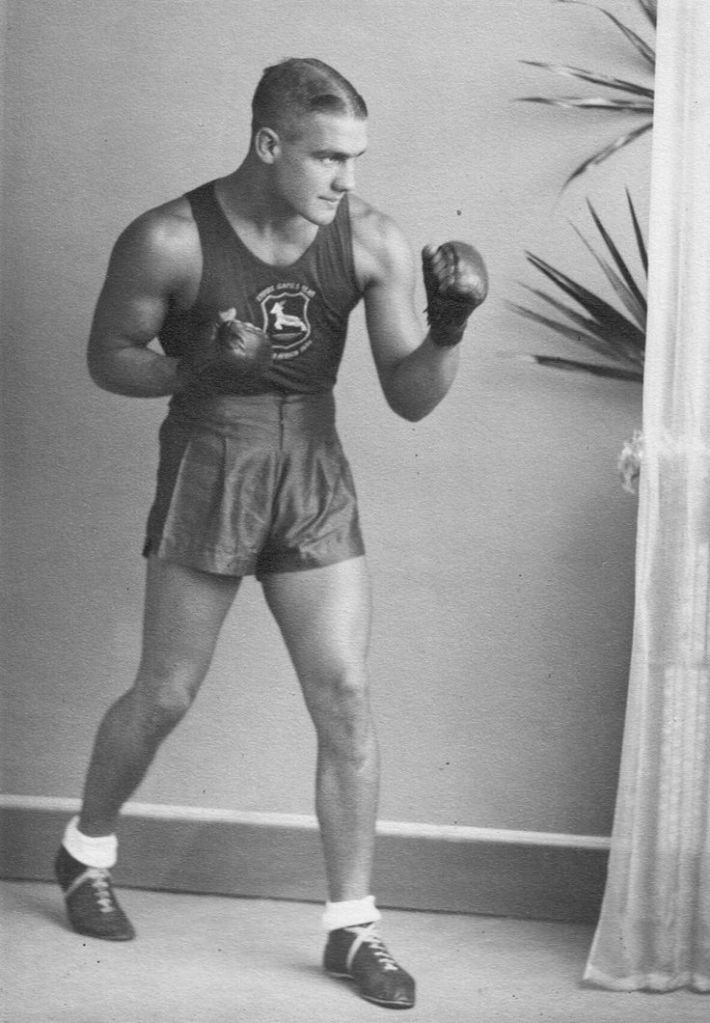
Leibbrandt was a South African Olympic boxer who later came a fervent Nazi follower. He joined the German Army, where he became the first South African to be trained as a Fallschirmjäger (paratrooper) and glider pilot. Leibbrandt was trained with comrades of the Brandenburgers at a sabotage training course of Abwehr II (Abwehrschool “Quenzgut”) near Brandenburg an der Havel, west of Berlin.
Once in South Africa he soon made contact with the Stormjaers and was brought to Pretoria to see van Rensburg.
Nothing, however, came of the negotiations. Leibbrandt’s megalomania was enough to deter anyone from cooperating with him, and van Rensburg refused to be drawn. At the same time Leibbrandt’s fanaticism attracted a number of members of the Ossewabrandwag over to his side, and within a short while Leibbrandt was leading his own group, calling themselves ‘The National Socialist Rebels’ whose members were bound to one another by a blood oath which partly read:
“All my fight and striving is for the freedom and independence of the Afrikaner people of South Africa and for the building up of a National Socialist State in accordance with the ideas of Adolf Hitler.”
The quite truce between Leibbrandt and van Rensburg quickly developed into open hostility. Leibbrandt, disappointed that the OB did not officially support his mission and its resultant failure began to openly attack van Rensburg as an ‘agent’ of Smuts. This sealed his fate. After a few months in South Africa he was ‘sold out’ by OB insiders, his location now known to the Smuts government, he was arrested, together with a number of leading Stormjaers.
Placed on trial Leibbrandt was sentenced to death for treason, but the sentence was commuted to life imprisonment after much lobbying from Afrikaner Nationalist organisations. Mindful of the deep-seated split in his own Afrikaans community, to quote Jan Smuts at the time his sentence was commuted to life “I did not want the blood of another Jopie Fourie on my hands”.
The Stormjaers sabotage activities were getting too violent for DF Malan’s National Party policy of negotiated settlement with Germany when (and if) they won the war. Many of these acts of violence were going too far for the majority of moderate Afrikaners, and Malan ordered the National Party to break all ties with the OB later in 1942.
The South African Union government then cracked down heavily on the OB and the Stormjaers, placing thousands of them in internment camps for the duration of the war.
Summing up the achievements of the Ossewabrandwag’s campaign of sabotage, van Rensburg wrote this in his autobiography which was published after the war:
“I fought (Smuts’) war effort and I fought it bitterly with all the means at my disposal – which were considerable…. There is no doubt that they (the Ossewabrandwag) seriously hampered the government’s war effort. Hampered it because the government was forced to draw off considerable manpower to guard many strategic points and essential services. A not inconsiderable military element also had to be retained in South Africa as a strategic reserve for possible emergency.”
At the end of the war, the Ossewabrandwag was absorbed back into the National Party and ceased to exist as a separate body, many of its members achieving political notoriety as members of the National Party government on their accent to power with the National Party electoral win over Smut’s United Party in 1948.
Returning war veterans react
Imagine the sheer frustration felt by the veterans after “The War for Freedom” (as WW2 was known) had been fought with the massive cost in South African lives (literally tens of thousands), to rid the world of Nazism and Fascism in the ‘good fight’ – only to come home in 1945 and within three short years find the ‘home grown’ pro Nazi Germany and pro Nazi philosophy politicians swept into government. The very men and their philosophy they had gone to war against in the first place.
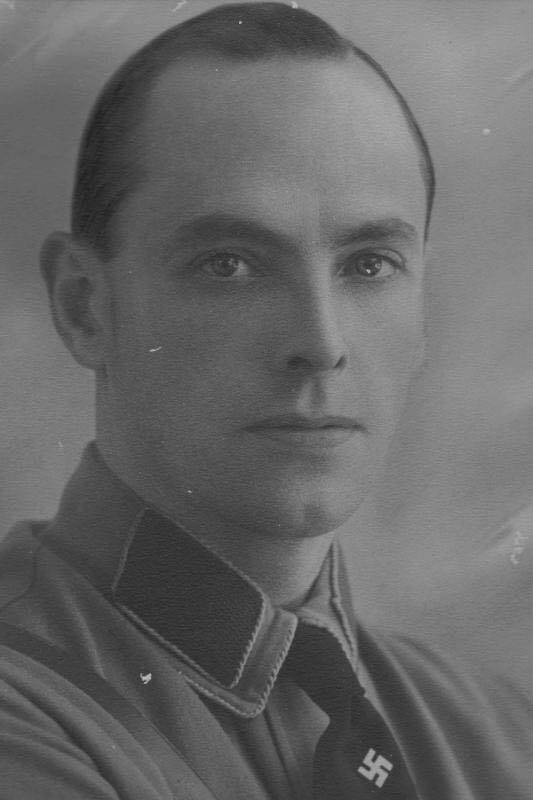
By the early 1950’s the South African nationalist government was littered with men, who, prior to the war where strongly sympathetic to the Nazi cause and had actually declared themselves as full-blown National Socialists: Oswald Pirow, B.J. Vorster, Hendrik van den Bergh, Johannes von Moltke, P.O. Sauer, F. Erasmus , C.R. Swart and Louis Weichardt to name a few, and there is no doubt that their brand of politics was influencing government policy.
Louis WeichardtOswald Pirow
Louis Weichardt was the South African Nazi ‘grey-shirts’ founder (he later became a National Party MP) in the left image and Oswald Pirow (Nazi ‘New Order’ founder in South Africa) inspecting German Luftwaffe troops on a ‘unofficial’ visit to Nazi Germany on behalf of the ‘old’ National Party – later he became a key Public Prosecutor under the ‘new’ National Party.
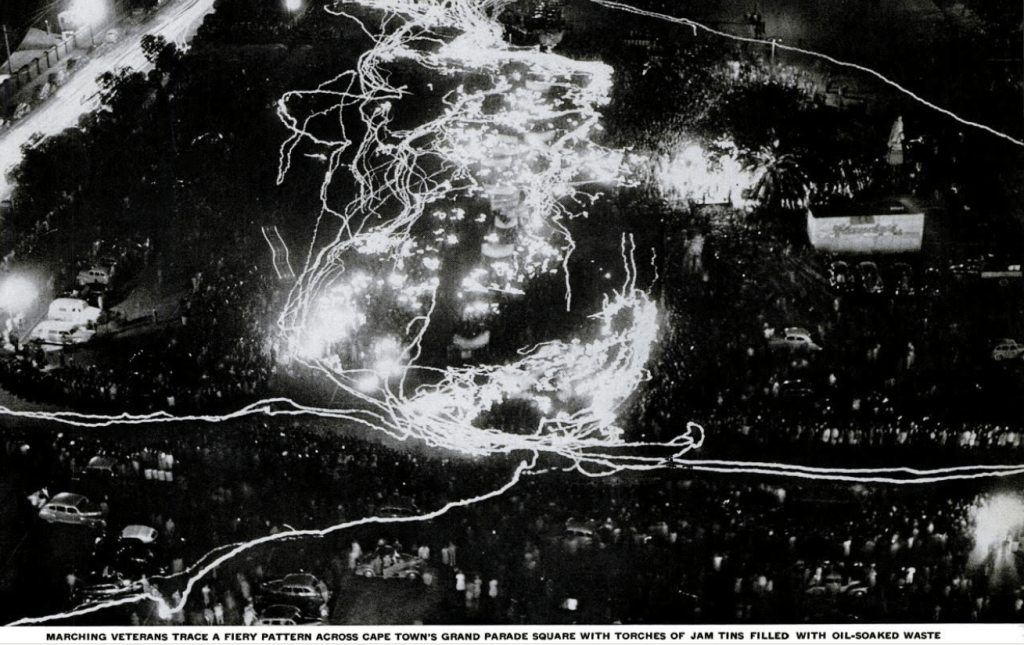
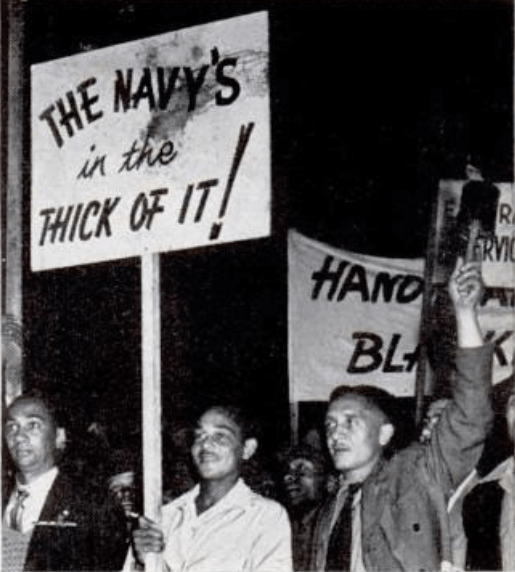
Also by the early 1950’s, this state of affairs in the make up and philosophy underpinning South Africa’s ‘new’ ruling party, led to open Anti-Apartheid protests from the South African military veterans community – in their tens of thousands, led by Adolph ‘Sailor’ Malan and other returning war heroes in Torch Commando rallies (The Torch) and it ultimately led to the marginalization of South African war veterans, their veteran associations and the ultimate suppression of anti-Apartheid movements like the Torch by the National Party.
Images of Sailor Malan at an anti-apartheid Torch Commando rally in Cape Town attended by over 10 000 returning South African World War 2 veterans.
Sailor Malan famously accused the national party government at this rally of “depriving us of our freedom, with a fascist arrogance that we have not experienced since Hitler and Mussolini met their fate”.
Covering Tracks
In the interests of consolidating themselves in power and in the interests of securing the ‘white’ vote from both English and Afrikaans voters (especially English-speaking white South Africans of British extraction) much of this legacy was a political hot potato for the National Party. Nazism, Fascism and National Socialism was purged from Europe with the loss of millions of lives, and exposed for what it is – a crime against humanity.
Political careers – especially those of future National Party State Presidents and Prime Ministers would not be helped if their associations to Nazi Germany, Nazi political philosophy and even anti-British ideals where openly promoted. Especially when National Service was instituted and the National Party called on Jewish and English-speaking white South Africans of British heritage and even moderate or leftist Afrikaners to rally behind their cause to ‘fight communism’ and serve in the statutory armed forces as conscripts.
So it was shielded – in formal secondary education it was not formally taught at all and it was never really widely reported on by the state media apparatus when referring the political legacies of the likes of B.J. Vorster or P.W. Botha. In 1948, two months after taking office the National Party even went so far as removing two truck loads of intelligence on the Broederbond and Ossewabrandwag accrued by the Smuts government from their archive, and it especially included Broederbond plans on how South Africans would be educated along Christian Nationalism lines, this intelligence was never to be seen again. This would give B.J. Vorster his favourite fall-back line of “prove it” whenever someone challenged him on his Nazi sympathising past. Except ‘banned’ overseas anti-apartheid movements, they went to town on the link of Apartheid to Nazism and broadly promoted it to anyone who would listen. This was of course gagged in South Africa under emergency regulations and banned organisation listings. The result is that little is left of it in the modern historical narrative on South Africa in the country itself.
At best, in South Africa, it was re-branded as a ‘fight against the British’ because of the atrocities committed by the British during the Boer War, a sort of retribution, cleverly phasing moral correctiveness to justify it. What this narrative also aimed to do was unbundle all the underlying Nazi ideology, philosophy, ritual and politics which had been coupled so openly during the war to the Ossewabrandwag’s ideals of Christian Nationalism by future National Party leaders. Covering it up with ‘moral outrage’ instead. Whilst retribution for the Boer War was a primary driver of the Ossewabrandwag, and there is good reason behind this objective, it was not the only driver, and ignoring the entire underpinning ideology of the group is only to look at half of the whole.
Many historians have asked if Nazism played a role in the creation of Apartheid as philosophy, and frankly the answer is yes it did, both directly and indirectly by the architects of Apartheid who so readily adopted Nazi ideals, rituals and philosophy during the war, in open and on the public record. It is this for this reason that National Party did not want any open or constant linkages made to this, their darker past, because when in power the ideals behind Nazism were so abhorrent to the majority of white South Africans that it would have certainly lost them their authority.
In Conclusion
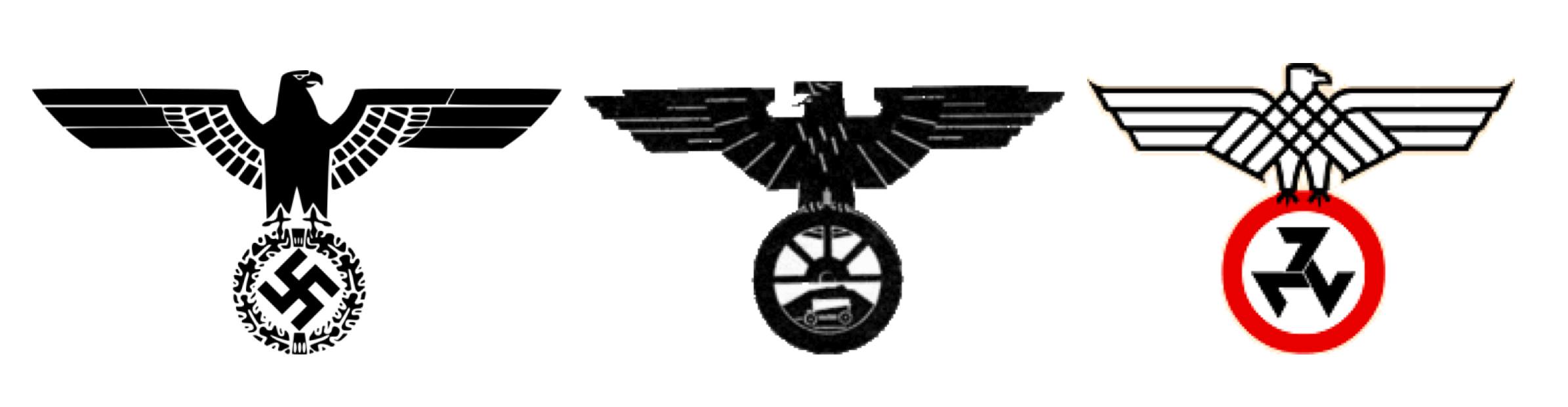
In the end it all disappeared into a politically generated one-sided nationalist narrative of South Africa’s history, and was lost or ‘re-presented’ as retribution for the Boer War to future generations. It even remains a very dark and relatively unknown topic even to this day, however, so strong is this legacy that it has continued to lurk in the Afrikaner far right for many years and resurfaced openly again in the ‘Afrikaner Weerstandsbeweging’ – Afrikaner Resistance Movement (abbreviated to ‘AWB’) in the early 1990’s. When German Nazi swastika flags made a regular appearance next to the AWB flags – which were also styled after the swastika. In addition to German National Socialism finding itself back into the AWB ideology itself, it also wound its way into AWB identity – including insignia and uniform.
AWB Rally in Pretoria
This legacy is far-reaching, and it also remains an irony that the Ossewabrandwag (and later the AWB) embarked on acts of armed insurrection which by any modern definition would be considered a ‘terrorist’ act, and the same people involved in them would readily brand the ANC for ‘terrorism’ with no hindsight to their own time spent as a ‘terrorist’, fighting to destabilise the government of the day with bullets and bombs in very much the same way.
Ironic that the future ‘struggle’ of South Africa’s Black people (and many White people too) against the political philosophy of these men would emulate the same ‘struggle’ these men initiated against ‘British rule’ – and in both instances it carried with it armed insurrection, detention of ‘heroes’, imprisonment of a future President and the promotion of a political “ism”, albeit that ‘Communism’ and ‘African Socialism’ were diametrically opposite to ‘Fascism’, ‘Nazism’ and ‘Christian Nationalism’ – far left and far right of the political sphere respectively.
The net result, the importance and legacy that the Ossewabrandwag has left us with, is that ‘race politics’ continues to haunt us and ‘centre’ balanced moderate politics in South Africa has been completely elusive since 1948.
Evolution of Symbology (L-R) Nazism, Ossewabrandwag, Afrikaner Weerstandsbeweging
References from South African History On-Line, Wikipedia and “The Rise of the South African Reich” 1964 written by Brian Bunting, “Echoes of David Irving – The Greyshirt Trial of 1934” by David M. Scher. “Not for ourselves” – a history of the SA Legion” by Arthur Blake. Lazerson, “Whites in the Struggle Against Apartheid”. Neil Roos. “Ordinary Springboks: White Servicemen and Social Justice in South Africa, 1939-1961″. David Harrison “The White Tribe of Africa, South Africa in Perspective” 1981.









 The Observation Post