South African sacrifice on the HMS Neptune

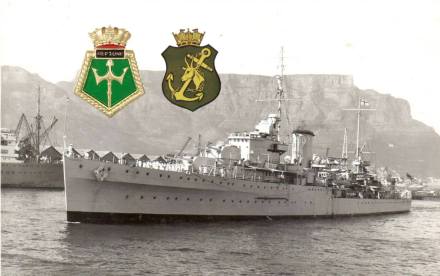
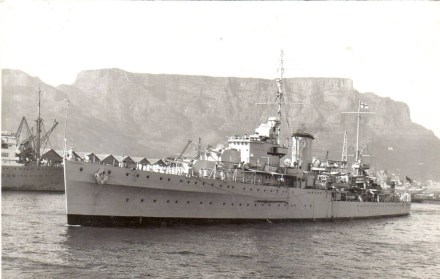
This image of HMS Neptune with Table Mountain in the background says a lot about the South African naval personnel seconded to serve on Royal Navy vessels and their supreme sacrifice.

As Simonstown was a British naval base during the Second World War thousands of naval ratings and officers who volunteered to serve in the South African Navy – known as the South African Navy Forces – landed up on British vessels. So when one was sunk, as HMS Neptune was, inevitably there is a very long honour roll of South Africans. Read on for their story.

HMS Neptune was a Leander-class light cruiser commissioned into the Royal Navy on 12 February 1934 with the pennant number “20”.
12565523_539251039577966_1096634432449409870_n

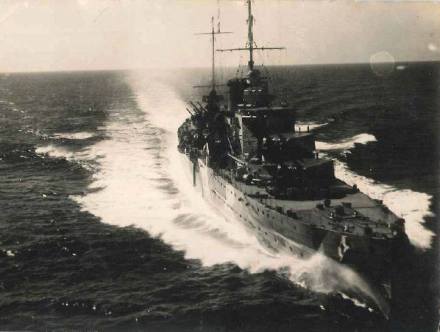
HMS Neptune at sea in her heyday.

Force K, operating in the Mediterranean, including HMS Neptune, was sent out on 18 December 1941, to intercept an Axis forces convoy (German and Italian) bound for Tripoli,
neptune1On the night of 19 – 20 December, HMS Neptune, leading the line, struck two mines, part of a newly laid Italian minefield. The first struck the anti-mine screen, causing no damage. The second struck the bow hull. The other cruisers present, HMS Aurora and HMS Penelope, also struck mines.

While reversing out of the minefield, Neptune struck a third mine, which took off her propellers and left her dead in the water. HMS Aurora was unable to render assistance as she was already down to 10 knots (19 km/h) and needed to turn back to Malta. HMS Penelope was also unable to assist.

The destroyers HMS Kandahar and HMS Lively were sent into the minefield to attempt a tow. The former struck a mine and began drifting. Neptune then signalled for Lively to keep clear. (Kandahar was later evacuated and torpedoed by the destroyer Jaguar, to prevent her capture.)

Neptune hit a fourth mine and quickly capsized, killing 737 crew members. The other 30 initially survived the sinking but they too died. As a result, only one was still alive when their carley float was picked up five days later by the Italian torpedo boat Achille Papa.

The loss of HMS Neptune was the second most substantial loss of life suffered by the Royal Navy in the whole of the Mediterranean campaign, and ranks among the heaviest crew losses experienced in any naval theatre of World War II.
12549098_539250899577980_5498989727764062490_n

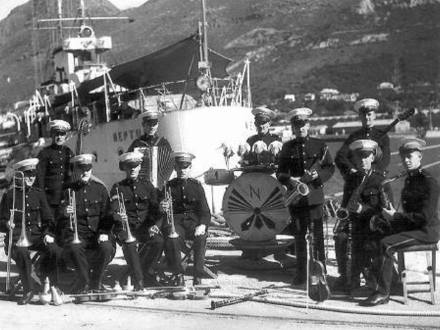
The Royal Marine band on the jetty by the stern of HMS Neptune at Simon’s Town in July 1940

This is the honour roll of South Africans lost that day lest we forget the heroism and sacrifice of these brave South African men.
22308811_10155537271456480_3745202244434378650_nADAMS, Thomas A, Able Seaman, 67953 (SANF), MPK
CALDER, Frank T, Ordinary Seaman, 67971 (SANF), MPK
CAMPBELL, Roy M, Able Seaman, 67318 (SANF), MPK
DIXON, Serfas, Able Seaman, 67743 (SANF), MPK
FEW, Jim, Able Seaman, 67744 (SANF), MPK
HAINES, Eric G, Able Seaman, 67697 (SANF), MPK
HOOK, Aubrey C, Able Seaman, 67862 (SANF), MPK
HOWARD, Harold D, Signalman, 67289 (SANF), MPK
HUBBARD, Wallace S, Able Seaman, 67960 (SANF), MPK
KEMACK, Brian N, Signalman, 67883 (SANF), MPK
MERRYWEATHER, John, Able Seaman, 67952 (SANF), MPK
MEYRICK, Walter, Ordinary Signalman, 68155 (SANF), MPK
MORRIS, Rodney, Ordinary Signalman, 68596 (SANF), MPK
RANKIN, Cecil R, Signalman, 67879 (SANF), MPK
THORP, Edward C, Signalman, 67852 (SANF), MPK
THORPE, Francis D, Able Seaman, 67462 (SANF), MPK
WILD, Ernest A, Able Seaman, 67929 (SANF), MPK

Other South Africans who had enlisted into the Royal Navy were also lost, these include (and by no means is this list definitive) the following:

OOSTERBERG, Leslie W, Stoker 1c, D/KX 96383, MPK
TOWNSEND, Henry C, Stoker 1c, D/KX 95146, MPK

May they Rest in Peace, these brave men whose duty is now done.
12593632_539245742911829_3970406589148419503_o

HMS Neptune in Cape Town harbour


Researched by Peter Dickens, Sources – Wikipedia.  Casualty Lists of the Royal Navy and Dominion Navies, World War 2 by Don Kindell
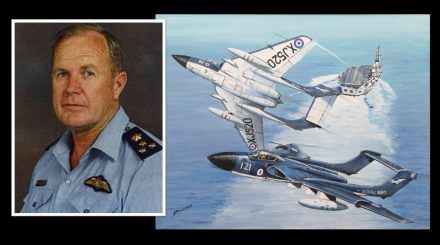


Dick Lord – the combat legend who took learnings from the Royal Navy’s Fleet Air Arm to the SAAF

Richard Stanley Lord (nickname “Dick”) was born on June 20 1936 in Johannesburg, and educated at Parktown Boys’ High School.  His fascination with flying took hold playing “Biggles” high up in Johannesburg’s famous jacaranda trees.

In the late 1950’s Dick Lord wanted to join the South African Air Force.  However at the time the governing National Party had targeted South Africa’s defence forces for “transformation”, effectively ridding the defence arms of all their “British” heritage and socially engineering the forces using job reservation, political appointment and nepotism to progress white Afrikaners.

In this changing political environment Dick Lord was despaired of a career in the SAAF, his Afrikaans was limited and his strong “English” heritage was against him in the now Afrikaner-dominated South African Services.

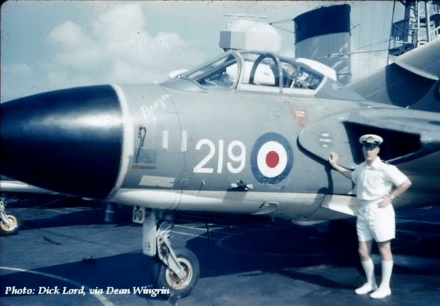
So instead he, joined the Royal Navy. His initial naval training was at the Royal Naval Engineering College, Manadon, and he gained his wings in the Fleet Air Arm in June 1959, flying Sea Venom and Sea Vixen fighters from the aircraft carriers HMS Centaur, HMS Victorious, HMS Hermes and HMS Ark Royal.

Screen Shot 2017-04-01 at 13.24.23

A very eventful FAA Legacy

In 1966 Dick Lord found himself in the Royal Navy’s Fleet Air Arm flying from Ark Royal off Beira, Mozambique, to enforce the oil blockade of Rhodesia following its Unilateral Declaration of Independence. After one mission to intercept a suspected blockade-runner, he returned to find that the carrier had been overtaken by a tropical storm and that her flight deck was pitching through 65ft: his aircraft caught the third arrester wire and damaged its undercarriage – reckoned a near perfect landing in the conditions.

An American “Top Gun”

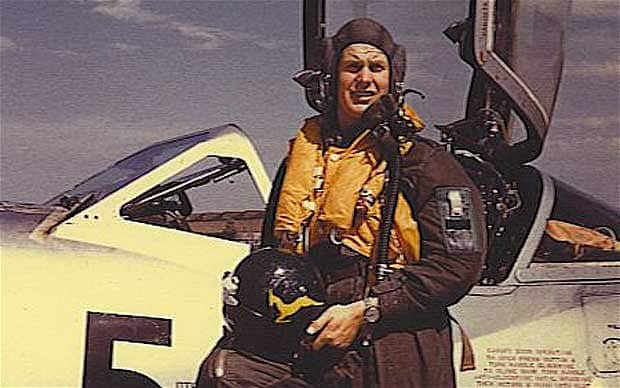
Dick Lord was instrumental in the development of America’s Top Gun fighter pilot academy, made famous by the film of the same name. He established his unusual role in 1968, when he was the foremost British instructor sent on exchange at Miramar, California, to train American pilots then suffering significant losses at the hands of MiG-21s flown by the North Vietnamese.

While some criticised the performance of America’s multi-million dollar Phantom jet, Lord concentrated on sharpening his pupils’ Air Combat Manoeuvring (ACM) skills to improve their odds in a dogfight.

He and a handful of other Fleet Air Arm graduates of the Royal Navy’s gruelling Air Warfare Instructors (AWI) school in Lossiemouth, Scotland, introduced rigorous new methods for recording and scrutinising the performance of trainees during exercises.

Lord, for example, scribbled notes on a pad on the knee of his flight suit during mock dogfights, which he then exhaustively analysed on a blackboard at post-flight debriefs.
Such was the trust placed in Lord that he was granted access to classified American military documents comparing the performance of US aircraft against that of enemy fighters. This access allowed him to write, with others, the US Navy’s Air Combat Manoeuvring manual.

A year after Lord’s arrival, the tuition and methods introduced by British pilots, all graduates of the AWI school at Lossiemouth, made their way into the US Navy Fighter Weapons School, which was set up in 1969. Better known as Top Gun, it remains the most famous programme in the history of naval aviation. Soon after it was established a Phantom flown by one of its first students shot down a MiG-21, the first time a US Navy aircraft had succeeded in aerial combat in two years.

Lord enjoyed the film Top Gun, but mused that it was “remarkable that any history book studiously avoids mention of any British involvement” and added that the film had not “given us due justice”. He remained proud of his involvement, however, and during his time at Miramar had insisted on using the call sign “Brit 1”. This meant that his wingman, though American, was forced to use the call sign “Brit 2”.

Dick Lord’s wife June Beckett, a BOAC air-hostess said of the movie “Top Gun” that while Dick complained about it, she contended that the film’s portrayal of big-talking fighter pilots was extremely true-to-life, and she should know.

lord_2047777b

On his return to the Royal Navy he was senior instructor with 764 Naval Air Squadron where he passed on the skills and confidence that had made such an impact in America.

Back to South Africa

Dick yearned to return to South Africa, he resigned from the Royal Navy and in 1970 returned to South Africa where he converted to commercial flying and became a civil aviation instructor pilot.

However the Royal Navy would intervene in his life again, this time after a visit to Cape Town by HMS Ark Royal where a “deep chord” was struck in Dick’s heart, rekindling his love of more adventurous military flying.

Joining the SAAF

Although Dick Lord was still unable to pass the Afrikaans language test, he was able to join the South African Air Force this time due to capability gaps in SAAF caused by all their social engineering and transformation policies, it was also now at war and in need of very skilled and experienced military pilots.  Conscription in the SADF had also been implemented by this time, and it involved both English and Afrikaans speaking white South Africans, so policies had to be softened somewhat.

During South Africa’s involvement in the South West Africa (Namibia)/Angola Border War and whilst in the SAAF Dick Lord flew Impalas, Sabres and Mirage Ills.

Dick Lord’s leadership skills were quickly apparent and he ultimately commanded No 1 Squadron SAAF from 1981 to 1983, later directing SAAF operations during the Border War from Oshakati and Windhoek as well as flying SAAF Mirage F1AZs.

He ended his career in charge of the Air Force Command Post in Pretoria, where he was given high accolade for his role in helping to organise the rescue operations that saved all 581 passengers and crew of the Greek cruise-liner Oceanos, which sank off South Africa’s eastern coast on August 4 1991.

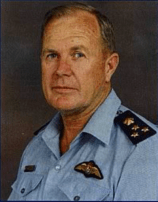
Another highlight of his career was to organise, in 1994, the fly-past at the inauguration of Nelson Mandela as President of South Africa. Lord then retired as a Brigadier General and began writing about his life as an aviator.

He also wrote a number of books including

9781920143367-us-300

Fire, Flood and Ice (1998) about SAAF Search and Rescue missions
From Tailhooker to Mudmover (2000) – a biography
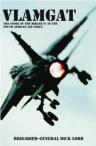
Vlamgat (2000) – a history of the Mirage fighter jet in South Africa
From Fledgling to Eagle: the South African Air Force during the Border War (2008)

Apart from flying, his passion was military music, his favourite piece being Sarie Marais, the march of the Royal Marines, which is based on an Afrikaner folk song.

Brigadier General Dick Lord died on the 26th October 2011 after a long illness.  He is still sorely missed to this day.

Screen Shot 2017-04-01 at 15.11.13


Researched by Peter Dickens.  References:  The Daily Telegraph, Article on Dick Lord by Rostislav Belyakov. Military History Journal Vol 15 No 4 – December 2011.  Feature photo via Dean Wingrin.  Painting of Royal Navy Fleet Air Arm Sea Vixens in the masthead by Derrick Dickens, copyright Peter Dickens.

The connection between HRH Prince Philip & the SAS Simon van der Stel

Now, you’re wondering – what has Prince Philip (husband to Queen Elizabeth II) possibly have to do with the South African Navy’s SAS Simon van der Stel. Well here it is.

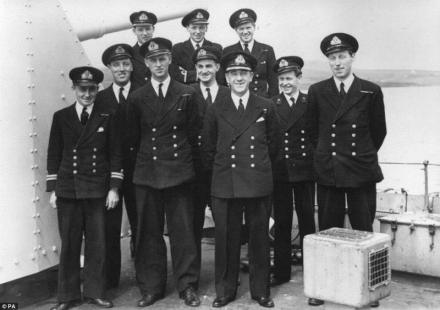
These are officers of the HMS Whelp – notice the tall and rather familiar HMS Whelp First Lieutenant – Prince Philip.

Philip joined the Navy as a cadet after leaving Gordonstoun School in 1939. In January 1941 he joined the battleship HMS Valiant in Alexandria and was in charge of its searchlight control during the night action off Cape Matapan, for which he was mentioned in dispatches. After serving aboard the HMS Wallace, he was appointed first lieutenant of HMS Whelp, which was present in Tokyo Bay when the Japanese signed the surrender.

In fact Prince Philip has quite a combat record, in a remarkable act of heroism Prince Philip saved scores of lives during the Second World War when he foiled a Luftwaffe bomber which looked certain to destroy their ship, the HMS Wallace during the Allied invasion of Sicily in July 1943.   During a night-time attack, Prince Philip conjured up a plan to throw overboard a wooden raft with smoke floats that would create the illusion of debris ablaze on the water, and as he hoped, the German plane was fooled into attacking the raft while the HMS Wallace sailed to safety under cover of darkness.

A young Prince Philip with Princess Elizabeth and HMS Welp in 1944 W Class Destroyer

The last wartime ship the Price served on was HMS Welp, and 1952 was sold to South Africa as the replacement for HMSAS Natal. HMS Whelp was renamed SAS Simon van der Stel, after the 17th century colonist reputed to be the founder of the South African wine industry. Much of SAS Simon van der Stel′s service was as a “grey ambassador”, on good-will visits to Europe and Europe’s African colonies, including a 147 day cruise to Europe in 1954. This role, however, declined as South Africa became increasingly isolated during the apartheid years.

SAS Simon van der Stel was placed in reserve from 1957, but was modernised as a Type 15 frigate (in common with other destroyers of her generation) in an anti-submarine role from 1962 to 1964, and re-commissioned in February 1964. She now had helicopter facilities, which were used by South Africa’s 22 Flight (later 22 Squadron).

10702201_358161731020232_3587078548727944204_n

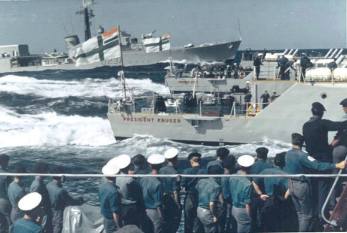
Photo of the South African Navy Frigates in their heyday. Here are the three President Class Frigates together, the SAS President Kruger, the SAS President Steyn and the SAS President Pretorius – neck to neck with the SAS Simon van der Stel in the background, now converted to a Type 15 Frigate (note additional helicopter hanger on the stern).

SAS Simon van der Stel was eventually scrapped in 1976 in Durban.

South African D-Day Hero: Tommy Thomas MC

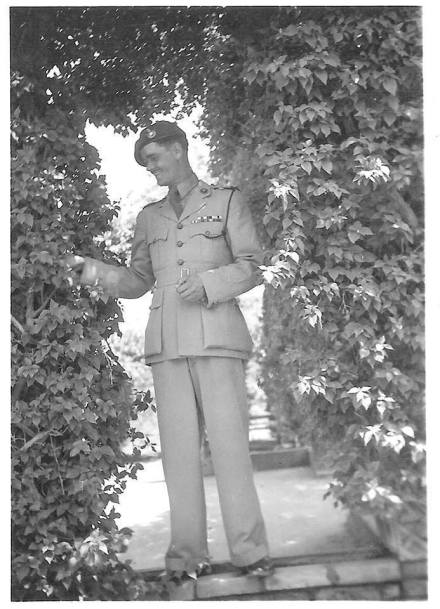
Today we profile another one of those South African heroes who served with the Royal Navy Commandos on D Day and who went on to win a Military Cross for Bravery – Lieutenant D.C. “Tommy” Thomas MC from Maclear in the Transkei.

12074843_501711933331877_2278790879846881223_nHis most painful recollection of D-Day was the stormy passage he and his contingent had to undergo in crossing the Channel in their landing craft.The seas were running high, and hardly a man escaped sea sickness. They landed in the second wave at first light, their boat receiving a direct hit as they approached the shore, half-a-dozen men being killed, and Thomas found himself up to his neck in water after having jumped form the landing craft as it struck the beach.
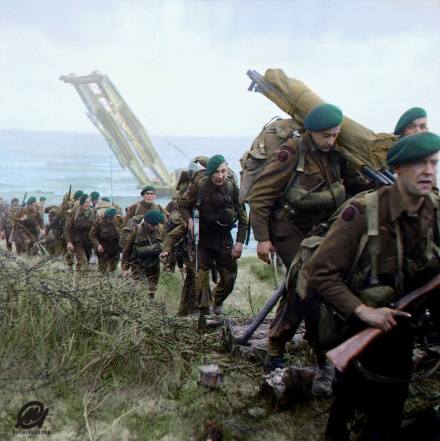
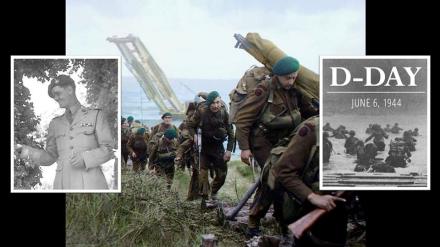
The Commandos, having “dumped” their steel helmets, promptly donned their green berets as they went ashore, it being “more comfortable”.  They had a specific job to do which was to connect up as soon as possible with the paratroops who had dropped further inland, and encountered fire, but “did not wait to deal with the resistance at the coast, pushing inland instead with all speed”.

28947594_1680931308655261_7193057698211176449_o

Royal Marine Commandos attached to 3rd Division move inland from Sword Beach on the Normandy coast, 6 June 1944.

It was “tough going through the minefields but they got there”. “And were the paratroops glad to see us!” remarked Lt. Thomas, who further remarked that for the next few days none of them knew much of what was happening, and could not be sure whether the invasion was a success or not.

All they knew was “that in their own sector on the left flank of the beach-head they were kept hard at it”, and the toughening they had had in advance was to prove more than useful.

According to plan, they kept on the move all the time -”frigging about” as it was called in Commando terminology, snatching some much-needed sleep in slit-trenches during the day, while at night they were patrols or raids to be carried out. It was while returning from one of these ”nocturnal excursions” that Lieutenant Thomas shared with his sergeant and another man “the benefit of a German hand-grenade”, and was to later return to England with several “little shrapnel souvenirs still in his leg”, but otherwise was “none the worse for wear”.

Commenting on how the Normandy landings compared to his time in North Africa, Lt. Thomas was to say that “it was worse”, elaborating that “for one thing, in the Desert, you could see whom you were fighting, but in Normandy most of the time you couldn’t.”

Lt. Thomas was also to add that he was wondering how he would “be able to settle down on the family farm in the Maclear district of the Transkei after all this excitement”.

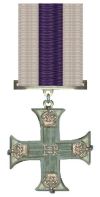
Military_CrossLt Thomas won the Military Cross (MC) for his actions in World War 2.  A significant decoration, it is awarded for gallantry in combat. The MC is granted in recognition of “an act or acts of exemplary gallantry during active operations against the enemy on land to all members, of any rank in Our Armed Forces”.
The unfortunate truth is that it was highly likely that his participation in D Day ultimately killed him years later. After the war but he developed an alcohol dependency problem whilst suffering with post traumatic stress disorder (PTSD), very sick he eventually shot himself when he was also diagnosed with cancer. A real tragedy and the end of a fine South African hero, close family and fiends described him as an AMAZING man, brave, humble and very caring.

People who knew him well said he was never the same after the war, and today we honour his extreme sacrifice and we will remember him.

Related Links and Work of South Africans during D Day:

Albie Gotze “This bastard is going to kill me”; Albie Götze’s Legion d’Honneur

Lyle Mckay South African bravery on D Day, Capt. Lyle McKay.

Cecil Bircher South African D Day Hero: Lt. Cecil Bircher MC

Anthony Large South African D Day hero: Anthony Large BEM

Royston Turnball Supreme South African heroism on Omaha Beach, Lt. Royston Turnbull DSC


Posted by Peter Dickens. Reference – Two South African “Royal Marine” Commandos and the D-Day Landings, June 1944 By Ross Dix-Peek.

Photo of Tommy courtesy and copyright of his old girlfriend – Mrs A Mason (from Mrs Mason’s personal album), with grateful thanks.

Able Seaman “Just Nuisance”

In 1939 the British Royal Navy did the unthinkable… Strange but true, they enlisted a South African dog who then went on to win the hearts and minds of sailors on two continents and become a legend.

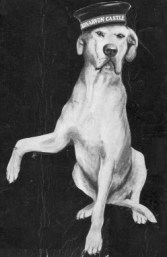
Able Seaman ‘Just Nuisance’ is one very famous South African, and as he was an enlisted rating he received rank, pay, rations and duties – the same privileges as any other rating with the rank of ‘Able Seaman’ (AB).  This is how he got there.

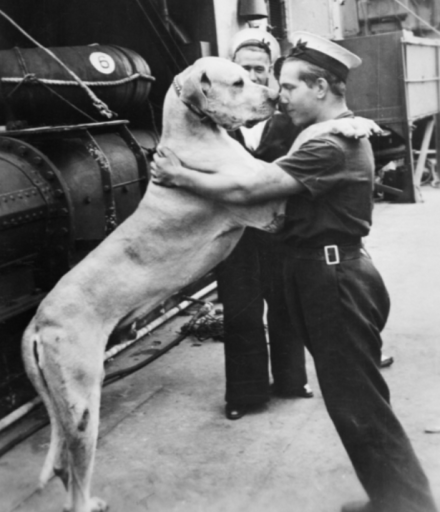
He was a Great Dane who between 1939 and 1944 served at HMS Afrikander, a Royal Navy shore establishment in Simon’s Town, South Africa. He died in 1944 at the age of seven years and was buried with full military honours.

4378021_f248

Although the exact date of Just Nuisance’s birth is not known, it is usually stated that he was born on 1 April 1937 in Rondebosch, a suburb of Cape Town. He was sold to Benjamin Chaney, who later moved to Simon’s Town to run the United Services Institute (USI). Just Nuisance quickly became popular with the patrons of the institute and in particular the ratings, who would feed him snacks and take him for walks. He began to follow them back to the naval base and dockyards, where he would lie on the decks of ships that were moored at the wharf. His preferred resting place was the top of the gangplank. Since he was a large dog even for a Great Dane (he was almost 2 metres (6.6 ft) tall when standing on his hind legs), he presented a sizeable obstacle for those trying to board or disembark and he became affectionately known as Nuisance.

Nuisance was allowed to roam freely and, following the sailors, he began to take day trips by train as far afield as Cape Town, 22 miles (35 km) away. Despite the seamen’s attempts to conceal him, the conductors would put him off the trains as soon as he was discovered. This did not cause the dog any difficulty, as he would wait for the next train, or walk to another station, where he would board the next train that came along. Amused travellers would occasionally offer to pay his fare but officials of the State-owned railway company (South African Railways and Harbours) eventually warned Chaney that Nuisance would have to be put down unless he was prevented from boarding the trains or had his fares paid.

The news that Nuisance was in danger of being put down spurred many of the sailors and locals to write to the Navy, pleading for something to be done. Although somebody offered to buy him a season ticket, naval command instead decided to enlist him by the book. As a member of the armed forces, he would be entitled to free rail travel, so the fare-dodging would no longer be a problem. It proved to be an excellent idea. For the next few years he would be a morale booster for the troops serving in World War II.

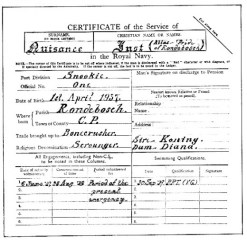
He was enlisted on 25 August 1939. His surname was entered as “Nuisance” and, rather than leaving the forename blank, he was given the moniker “Just”. His trade was listed as “Bonecrusher” and his religious affiliation as “Scrounger”, although this was later altered to the more charitable “Canine Divinity League (Anti-Vivisection)”. To allow him to receive rations and because of his longstanding unofficial service, he was promoted from Ordinary Seaman to Able Seaman.

Just Nuisance - Certificate of Service_02

He never went to sea but fulfilled a number of roles ashore. He continued to accompany sailors on train journeys and escorted them back to base when the pubs closed. While many of his functions were of his own choosing, he also appeared at many promotional events, including his own ‘wedding’ to another Great Dane, Adinda. Adinda produced five pups as a result, two of which, named Victor and Wilhelmina, were auctioned off in Cape Town to raise funds for the war effort.

Nuisance’s service record was not exemplary. Aside from the offences of travelling on the trains without his free pass, being absent without leave (AWOL), losing his collar and refusing to leave the pub at closing time, his record shows that he was sentenced to having all bones removed for seven days for sleeping in an improper place — in the bed of one of the Petty Officers. He also fought with the mascots of ships that put in at Simon’s Town, resulting in the in the deaths of at least two of them, one of them was the ship mascot of the HMS Shropshire, for which AB Nuisance was charged.

Nuisance was at some point involved in a car accident. This caused thrombosis, which gradually paralysed him, so on 1 January 1944 he was discharged from the Navy. His condition continued to deteriorate, on 1 April 1944 he was taken to Simon’s Town Naval Hospital where, on the advice of the naval veterinary surgeon, he was put to sleep. The next day he was taken to Klaver Camp, where his body was draped with a Royal Naval White Ensign and he was buried with full naval honours, including a gun salute and the playing of the Last Post. A simple granite headstone marks his grave, which is on the top of the hill at Klawer, at the former SA Navy Signal School. A statue was erected in Jubilee Square in Simon’s Town to commemorate his life.

The Simon’s Town Museum has an exhibition dedicated to his story and since 2000 there has been an annual parade of Great Danes from which a lookalike is selected.


Information – Wikipedia.

The sinking of the ‘City of Johannesburg’

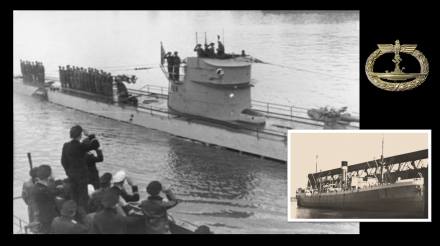
The submarine “U Boat” menace of the Second World War became commonly known as the “Battle of the Atlantic”, but it also extended to all oceans and the strategic point rounding the South African Cape became a focus point of the submarine war and German attention – and subsequently the attention of The South African Navy and her British Allies.

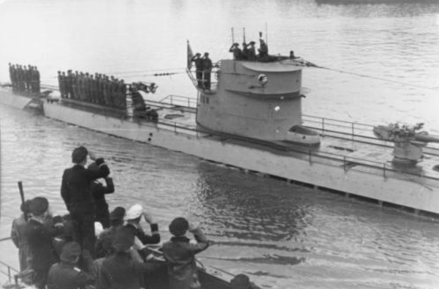
2000px-Pirate_FlagA typical example of the danger, survival and sacrifice in South African waters is the story of the sinking of the “City of Johannesburg” by German submarine U-504 (seen in the featured image above).  U-504 was a Type IXC U-boat of Nazi Germany’s Kriegsmarine during World War II, the SS City of Johannesburg was a merchant vessel carrying supplies off the coast of East London, South Africa.
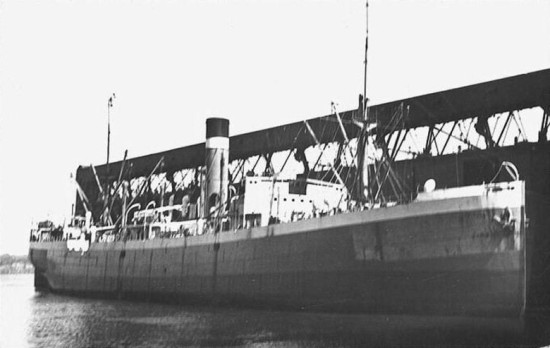
Of the merchantmen on board the SS City of Johannesburg, 90 in total, 4 perished and there where 86 survivors. Their survival in open water is remarkable considering the conditions in South African waters and typical to the dangers of operating at sea in WW2. This is one of many stories of the sinking of vessels and bravery of men off the coast of South Africa.

SS_City_of_Johannesburg

SS City of Johannesburg

At 23.12 hours on 23 Oct 1942 the unescorted City of Johannesburg (Master Walter Armour Owen) was hit by one of two torpedoes from U-504 while steaming on a zigzag course at 10.75 knots about 80 miles east-southeast of East London, South Africa. The torpedo struck between the deep tank and #4 hold on the port side, blowing the hatches off the deep tanks and opening a hole that flooded these compartments immediately. All electricity failed and the engines had to be stopped when the engine room was flooded a few minutes later, causing the ship to settle by the stern with a slight list to port. No distress signals could be sent as the main aerial was brought down and fouled the emergency aerial and it was later discovered that the portable wireless set had been damaged while lowering into a lifeboat and was useless.

Two lifeboats had been destroyed and the rafts aft were jammed in the rigging, so the 21 crew members, 60 Lascars (Indian sailors) and nine gunners (the ship was armed with one 4in, one 12pdr, two 20mm and four machine guns) abandoned ship in the four remaining lifeboats which were launched safely within five minutes despite rough sea and high swell.

Before leaving the gunners tried to train the 4in gun, but it was damaged and could no longer be turned. The master was the last to leave the ship after making sure that no one was left on board. At 23.40 hours, the U-boat surfaced after firing a coup de grâce at the ship which was hit at #2 hatch on the port side, but only settled further on an even keel.

The Germans then questioned the survivors in one of the lifeboats and left the area after the City of Johannesburg suddenly broke in two amidships and sank at 00.00 hours. Four Lascars were lost.

The boat in charge of the master had 11 persons on board and rescued two men swimming in the water. Quartermaster H. Birnie was picked up by a boat with 28 persons and later stated that he was alongside the U-boat after it had surfaced and even touched the plates when he was told to swim astern to the lifeboat. He was asked no questions and the engines of the U-boat remained stopped until the man was clear.

The other two boats held 19 respectively 25 persons, but owing to the rough sea the lifeboats could not approach each other to even up the survivors in them. The master told the other boats to remain in the vicinity while his boat set sail in order to get help and made 140 miles in 24 hours before he and twelve survivors were picked up by the Dutch steam merchant Zypenberg about 8 miles from the coast in 33°50S/26°50E on 25 October and landed at Durban two days later.

However, the boat with 19 occupants also set sail and only made half the distance before they were rescued by the British motor merchant King Edwin on 26 October and landed at Cape Town three days later. The 54 survivors in the two boats that waited near the sinking position were picked up by the British steam merchant Fort George after 12 hours in 33°24S/28°31E and landed at Port Elizabeth on 25 October.

U-504: South African Patrol

This submarine had caused a lot of damage off the coast of South Africa, here is a short history of her 4th Patrol in South African waters:

U-504

U-504

U-504 left Lorient on 19 August 1942 and sailed south to the waters off South Africa as part of Wolfpack Eisbär. There, on 17 October, about 450 nautical miles (830 km; 520 mi) south of Cape Town, she torpedoed and sank the unescorted British 5,970 ton Empire Chaucer. On the 23rd she sank the 5,669 ton SS City of Johannesburg, and on the 26th she attacked the unescorted American 7,176 ton Liberty ship Anne Hutchinson. The crew abandoned their vessel after she was hit by two torpedoes and fatally damaged. However the ship remained afloat, and on the 29th was taken in tow by the South African armed trawler HMSAS David Haigh (T13) and a harbour tug. Lacking sufficient power to tow the ship to port explosive charges were set, cutting the ship in two. The aft section sank, and the fore section was towed into Port Elizabeth. Part of the crew were picked up at sea, while the rest made it to land in their lifeboats.

U-504 sank two more British merchant ships on 31 October, about 200 nautical miles (370 km; 230 mi) east of Durban. First the unescorted 7,041 ton Empire Guidon, then the unescorted 5,113 ton Reynolds, which, hit amidships and in the stern, capsized and sank within seconds.

Finally on 3 November she sank the unescorted and unarmed Brazilian 5,187 ton cargo ship Porto Alegre en route from Rio de Janeiro to Durban, off Port Elizabeth. Hit by a single torpedo, the crew abandoned ship before the U-boat delivered the coup de grâce. Only one crew member was lost. The survivors were questioned by the Germans, and later made landfall about 50 nautical miles (93 km; 58 mi) from Port Elizabeth on 7 November.[22] U-504 arrived back at Lorient on 11 December 1942 after a patrol lasting 115 days.

The fate of U-504

U-504 also met a grisly fate.  Whilst on her 7th Patrol U504 was depth charged and sunk with all hands on board (53 in total) on 30 July 1943 in the North Atlantic north-west of Cape Ortegal, Spain, in position 45.33N, 10.56W, by depth charges from the British ships HMS Kite, HMS Woodpecker, HMS Wren and HMS Wild Goose.

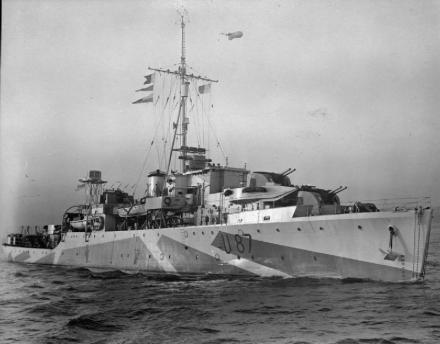
HMS_Kite_IWM_FL_22973

HMS Kite

HMS Kite’s Commanding Officer at the time of the sinking of U-504 was the famous U-boat hunter Captain “Johnnie” Walker, DSO and three bars.

The Commander from her one patrol off South Africa to when she was lost are two different men (and possibly even different crew as well).

12642880_10208446827553702_7537731843413712051_n

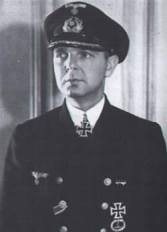
KrvKapt Hans-Georg Friedrich Poske

During the South African Patrol (4th patrol) the Commander was KrvKapt Hans-Georg Friedrich Poske (he command U-504 for the first four War Patrols). KrvKpt Wilhelm Luis did the next three patrols, his third being the fatal one.

This U Boat spent a total of 372 days a sea and sank 85,299 tons of shipping. All ships sunk were under her first commander KrvKapt Hans-Georg Friedrich Poske and on the second, third and fourth patrols.  U-504’s most successful patrol in terms of tonnage suck was on her South African patrol.

KrvKapt Hans-Georg Friedrich Poske survived the war, he also served post war as well and retired in 1963.  Note on the image provided  he was awarded a Knights Cross.


Researched by Peter Dickens

Reference and thanks to Sandy Evan Hanes for additional input.

Related Observation Post links:

The Leonardo da Vinci  The Leonardo da Vinci wreaks havoc off South Africa’s coastline

U-177 The worst maritime loss off Durban’s coast; The sinking of the SS Nova Scotia


Simonstown Agreement – a thorn in the UN’s position on South Africa

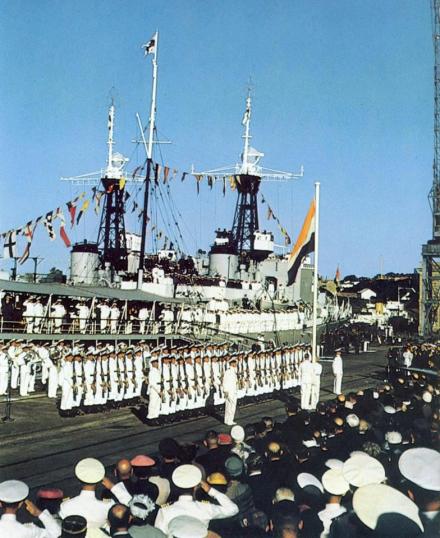
After the signing of The “Simonstown Agreement”, in this colourful ceremony, the Simon’s Town Naval base was handed over by the British to the Union of South Africa on the 2nd April 1957 – after being in British hands since 1813.

The Simonstown Agreement between the United Kingdom and South Africa had been signed less than two years before this ceremony on 30 June 1955. Under the agreement, the Royal Navy gave up its naval base at Simon’s Town, South Africa, and transferred command of the South African Navy to the government of South Africa.

In return, South Africa promised the use of the Simon’s Town base to Royal Navy ships. The agreement also permitted South Africa to buy six anti submarine frigates, ten coastal minesweepers and four seaward defence boats from the UK valued at £18 million over the next eight years. In effect, the agreement was a mutual defence arrangement aimed at protecting sea routes between the UK and the Middle East.

The agreement was controversial, especially with the United Nations, because of South Africa’s policy of Apartheid. The Agreement stood in stark contrast to United Nations resolutions against South Africa as the United Kingdom was still supporting the South African military by way of this quid pro quo agreement.

The United Kingdom terminated the agreement on 16 June 1975. However, ships of the Royal Navy still continued to call periodically at Simon’s Town and other South African ports, although the Royal Navy was not able to use any South African ports by the time the  Falklands War started in 1982.

South Africa was a member of the Commonwealth at the time the agreement was signed (South Africa left the Commonwealth in 1961), so the United Kingdom and South Africa took the position that the agreement was not an international treaty requiring registration with the United Nations under Article 102 of the United Nations Charter and continued regardless of the United Nations’ protests.

A personal perspective 

I often hear this old one from many people “we fought in the First and Second Wold Wars for Britain and in our hour of need they abandoned us” (referring to sanctions and fighting “terrorists”).  Well, that’s not strictly true, the Simonstown Agreement saw to it that South Africa was using British produced Buccaneer Fighter Bombers and Naval vessels at the onset of the Border War and the internal armed insurgency and well into it.  It’s obvious that after 1976 (the Soweto riots) that even this relationship would be strained let alone the implementation of Apartheid Legislation and the withdrawal by the National Party from the British Commonwealth of Nations – which would have made supporting South Africa exceptionally difficult for the United Kingdom in any event – and even then they continued military support well up to, and beyond the point where it became truely internationally impossible to continue to do so.

South Africans in the Royal Navy during WW2

Due to the fact that Britain was able to operate a naval base from Simon’s Town in South Africa, South Africans who volunteered to join the South African Navy usually landed up seconded in the service of the Royal Navy in WW2.

To the point where hardly a ship in the Royal Navy did not carry a South African contingent.  Also, any tragedy – involving high combat loss or a sinking of a Royal Navy ship during WW2 usually carries with it a South African (SANVR) honour roll.

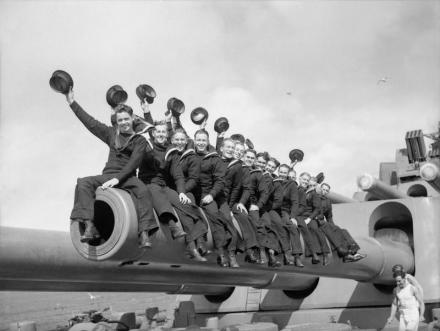
Here is a photo of the members of the South African Division of the Royal Naval Volunteers Reserve on board HMS NELSON posing for the camera sitting on one of the enormous 16 inch guns of A turret. July 1941.

Image – Imperial War Museum copyright.