Border Ops to Soap Opera

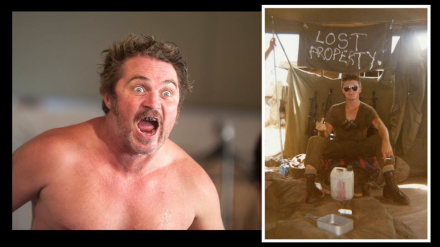
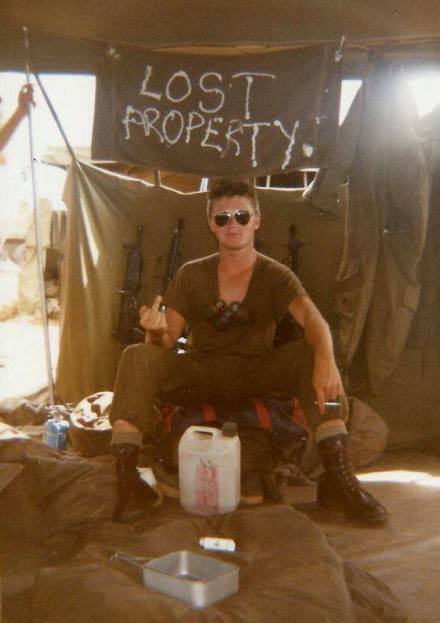
The Border War also saw some pretty famous future personalities and this is one for all the EastEnders fans (the famous on going British soap opera), this fun photo is Alex Ferns during his stint in the South African Army on the Angolan border – Alex is best known for his EastEnders role as Trevor Morgan, “Britain’s most-hated soap villain”.
993468_242624705907269_2012413417_n

Alex was a 2 Special Service Battalion (SSB) Gunner in 1989 and affectionately regarded by his fellow brothers in arms as “hell raiser of epic proportions” he was their units “go to guy” during heavy physical training exercises and he used to sing his heart out and always lifted the spirits of the men around him. They had many an ‘oppie’ (a ‘beasting’ or Punishment PT’) together and many a dust up with other units. Because Scotland is his country of birth they regarded him as the ” mad Scotsman” often rousing his buddies to the call. Highly likeable, inspirational and great bloke to all who knew him.

We wish him the best of luck in his television career that has vaulted him to the dizzy heights of a true ‘soap star’ and British cultural icon.

Alex Ferns’ Bio

Alex Ferns also made an appearance in The Ghost and the Darkness (1996) before various television roles, including Trevor Morgan in the BBC soap opera EastEnders from 2000 to 2002. In 2005, Ferns played Lieutenant Gordon in the highly acclaimed trilingual film Joyeux Noël, which was nominated for Best Foreign Language Film at the Oscars, Golden Globe Awards and the BAFTAs.
landscape-1501594800-trevor-and-mo-eastenders

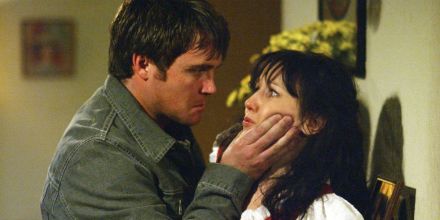
Trevor and Mo, in the domestic abuse storyline for EastEnders, Alex Ferns as hard-man and abuser with Kacey Ainsworth

In 2003 Ferns appeared as Draco Malfoy in a Harry Potter sketch for Comic Relief.

In 2004 he played Commander Martin Brooke, the lead role, in the short-lived ITV series Making Waves. In the same year he appeared in Man Dancin’, a Festival Film & TV production, which won a number of awards on the festival circuit, including Outstanding Original Screenplay at the Sacramento Film Festival. He has also appeared on Coronation Street.

He has also appeared in the 2006 movie Shadow Man, as Schmitt, also starring Steven Seagal.

His theatrical work includes the role of the “tapeworm” (a hallucination) in I.D., a play about Dimitri Tsafendas and his assassination of South African Prime Minister Hendrik Verwoerd, the 2008 national tour of Agatha Christie’s murder mystery And Then There Were None, and Little Shop of Horrors as the Dentist. In 2011 he took the role of Scottish gangster Jimmy Boyle in the play about his life, The Hardman, during a Scottish tour to positive reviews.
imgID141153557.jpg.gallery

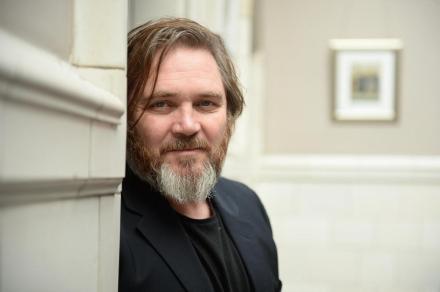
Recent photograph of Alex Ferns with a possible comeback to EastEnders

He also made a brief appearance in the Smirnoff Vodka advert in 2009. Ferns took part in TV series Celebrity Coach Trip, partnered with friend Ricky Groves. He starred as Luther in the 2011 London revival and subsequent UK tour of South Pacific. In 2013, he starred as Lee in True West at Glasgow’s Citizen’s Theatre. In 2014, he starred in 24: Live Another Day.

Born in Lennoxtown, Scotland, Alex lived in South Africa for 17 years and studied drama at the University of Cape Town before returning to the United Kingdom in 1991.  Whilst in South Africa the military conscription regulations were changed to include ‘white’ foreign nationals with South African residencies, and Alex was conscripted into the South African Defence Force as a ‘National Serviceman’ or he would certainly have faced deportation and even imprisonment.

Alex Ferns has been married to South African-born actress Jennifer Woodburne since 1996. They currently live in London with their two sons, Cameron and Mackenzie.

To see Alex’s skill transforming from ‘nice guy’ to ‘hard-man’ in EastEnders, have a cuppa tea (as EastEnders fans do) and take a look at this famous clip from the series;


Related work and link

Sid James from ‘Carry On’ series; ‘Carry On’ the South African Army – the story of Sid James


Researched by Peter Dickens.

Photo courtesy of BJ Taylor and story on Alex in the SADF courtesy of Gary Smith. Video clip BBC EastEnders.  Feature image Alex Ferns in True West Rehearsals Photo: Tim Morozzo
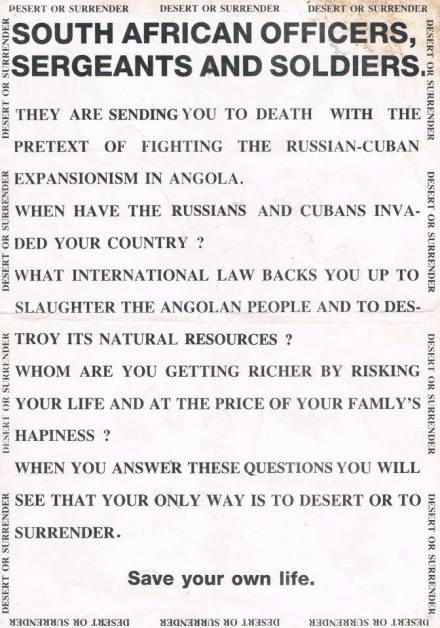
 

Ineffective Bush War propaganda reinforces the “Communist Plot”

Bush War era propaganda leaflet distributed by FAPLA – The People’s Armed Forces for the Liberation of Angola (FAPLA or Forças Armadas Populares de Libertação de Angola) and its communist backers – Cuba and the USSR.

The purpose of this type of propaganda was to sow dissent in the South African Defence Force ranks and urge desertion – however there is no evidence of this actually working – notwithstanding the high discipline and motivation of SADF troops – but also for the most part SADF troops treated such propaganda with amusement. In fact it served to reinforce the held ideal that they were involved in a true “cold” war conflict against communism.

To put it in context – at the time there was no diplomatic interface between the capitalist ‘West’ and the Soviet Union and Cuba – not even a telephone call between the Western superpowers and the Kremlin. So the threat of communist ideals in Africa and the socialist nationalisation of private property was a very real one. The western world in the mid 1980’s stood against a real threat of “World war 3”, and the campaign was been played out in regional conflicts all over Africa, South America and the Middle East.

FAPLA was originally the armed wing of the People’s Movement for the Liberation of Angola (MPLA), a  party with communist leanings which was backed financially and militarily by the Soviet Union and Cuba.  There was no way the average SADF trooper would see it as anything other than yet another Communist “plot”.

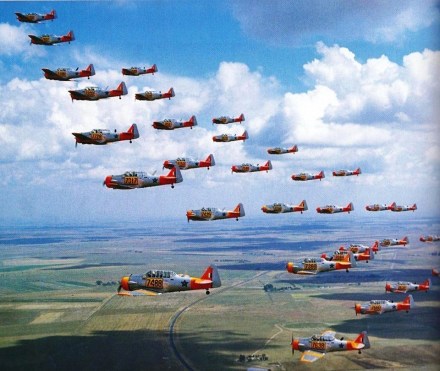
That old familiar drone – SAAF Harvards

An image (and sound) some of us remember very well, the sky full of droning SAAF Harvards training our pilots.

The first Harvards arrived in South Africa in October 1942 for use by the Joint Air Training Scheme schools. By July 1944, 633 Harvard Mk IIA and III aircraft had been shipped to South Africa, with 555 surviving in October 1945 (379 MkIIAs and 176 Mk IIIs).

As the Harvards had been supplied on lend-lease by the US, 300 were shipped back to the UK from 1946, with the remainder being purchased by South Africa.

65 AT-6Ds (7634 to 7698) and 30 T-6Gs (7699 to 7728) were purchased from the USA during 1952-1956.

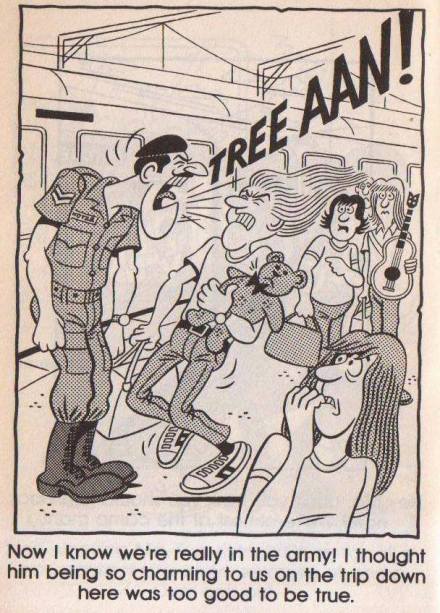
Welcome to the Army … TREE AAN!

The beginning of the new year in the 1960’s, 1970’s and 1980’s (even the early 1990’s) meant the dreaded “January Intake” and thousands of white South African men would be starting the new year in uniform.  This cartoon by Keith and Lorna Stevens in ‘Bytvas’ perfectly captures the surprise awaiting the new national servicemen  at their respective intake mustering points.

In reality the yelling Army corporals at the mustering points were usually “campers” (civilian force members who had completed the initial national service period) from Reception Depot units (RCD/OVD) attached to the various regional commands – the RCD/OVD units were responsible for the two annual “intakes” and the security of the convoys of recruits to all the respective training units, the largest such unit was 15 RCD/OVD which was attached to Witwatersrand Command (the largest catchment area).

Such was the radical changeover from “civvie street” that to every person who ever served as a conscript in the SADF – the first day in the SADF is emblazoned in their memories forever.

“Tree Aan” is the Afrikaans command to “form up” on parade.

Image copyright – Keith and Lorna Stevens

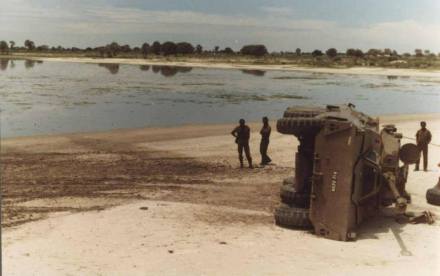
Drunk Ratel ….

South West Africa/Namibia border 1987, 61 Mechanised Infantry Battalion Group and Charlie Squadron is joyriding in a SADF “Ratel” (honey badger) Infantry Fighting Vehicle  (IFV) .. the picture says a thousand words.

Some say, the driver is still getting an oppie .. all we know is he’s called the Stig!

This example stands testament to many instances of highly valued military equipment wrecked by 19 year old odd National Servicemen taking full advantage of having a little fun.


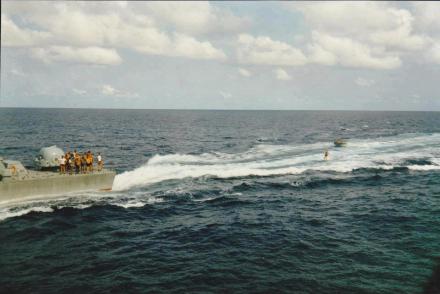
Epic Navy Style Water Skiing

South African Navy task Force returning from a flag showing cruise to Taiwan in mid 1990. This fun photo showing typical South African spirit was taken of a South African Navy Strike Craft – SAS Jan Smuts towing Richard Snook who is seen water skiing behind it.

The photo was taken from the deck of the SAS Drakensberg travelling at about 20 – 25 knots (40-45 km/h). Another strike craft – the SAS Hendrick Mentz was also in attendance when this fun stunt was performed.

According to Richard Snook, the skier, “the water was a bit choppy, but I managed to stay up until we had given Admiral Woodburne the salute”.

Salute to you Richard for demonstrating a typically South African can do attitude and sense of humour.

Photo courtesy Geoff Johnstone.

The SADF’s finest hour

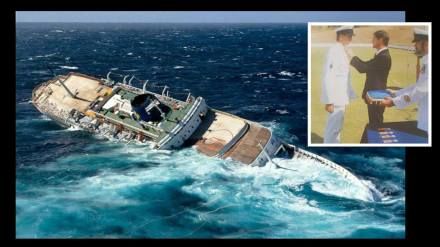
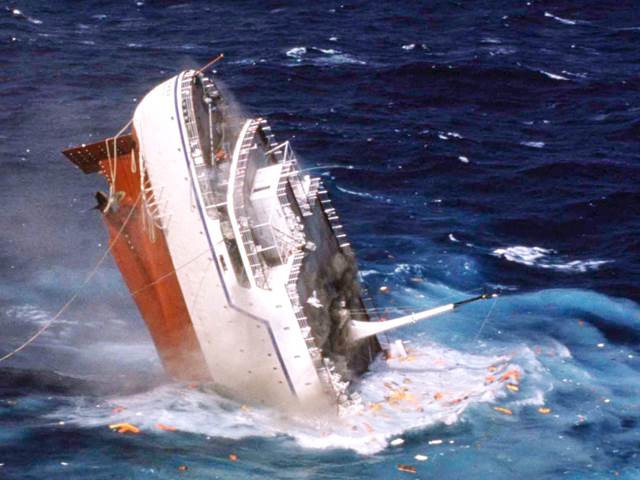
The tragedy of the MS Oceanos can be regarded as the finest hour for the SADF and more specifically one where both the South African Navy and South African Air Force proved their mantra as the best in Africa and more.  It is also regarded as one of the greatest and most successful maritime rescues ever undertaken – anywhere in the world.

ss-100520-oceanos-tease.1024;768;7;70;3

Not only was every soul saved, the SAN and SAAF personnel conducted themselves in great regard with a number of medals awarded for bravery, and even a Honoris Crux Gold awarded to Able Seaman Paul Burger Whiley (one of only six ever awarded).

On 3 August 1991, the Oceanos set out from East London heading to Durban. Unwittingly she headed into highly dangerous sea conditions with 40-knot winds and 9 m swells.

At approximately 21:30 while off the Wild Coast, a muffled explosion was heard and the Oceanos lost her power following a leak in the engine room’s sea chest , the ship was left adrift and then started to sink. The crew at this stage did not conduct themselves with great decorum and reports indicated that they were quite prepared to save themselves and abandon the passengers.

Nearby vessels responded to the ship’s SOS and were the first to provide assistance. The South African Navy along with the South African Air Force launched a seven-hour mission in which 16 helicopters were used to airlift the passengers and crew to a site south of Coffee Bay. Of the 16 rescue helicopters, 13 were South African Air Force Pumas, nine of which hoisted 225 passengers off the deck of the sinking ship. All 571 people on board were saved.

To see just how dramatic this sinking was, here’s the original footage – think, if the South African Navy and Air Force hadn’t acted as they did what the cost in lives would have been:

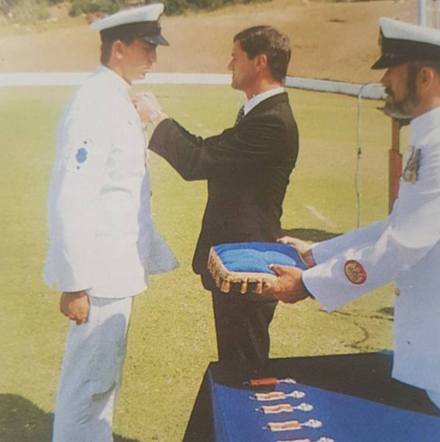
Of the many awards and citations of bravery, one stands out. Able Seaman (AB) Paul Wiley from the SAS Scorpion was presented with the Honoris Crux Gold Decoration by the then Minister of Defence, Mr R.P. Meyer on the 6 March 1992.

He was cited as the first diver to be lowered aboard the MV Oceanos, and although he was severely beaten against the ship’s superstructure, he reached the deck.
Under extremely trying conditions he then succeeded in creating order and stability among the passengers. He then started hoisting passengers, on the first lift he accompanied a survivor up to the helicopter, after which it took a further 10 minutes of nerve-racking hovering to get him back on the deck.

During this maneuver, after being severely battered against the railing of the ship he was flung out of the hoisting strap and fell to a deck lower than intended. Thereupon a male survivor also fell out of a hoisting strap and fell 40 meters into the mountainous swells. AB Whiley, disregarding his own life, dived into the treacherous seas and on reaching the semi-conscious passenger, revived him and assisted him into a rescue craft.

Not quite finished Paul Whiley then swam back to the sinking ship and was confronted with the further difficulty of climbing back on board. Whilst scaling a ladder draped over the ship’s side, he was repeatedly beaten against the ship’s hull. However, his perseverance paid off and he managed to return to the deck to continue his vital task. After six hours aboard the Oceanos Able Seaman Whiley was one of the last persons to be hoisted from the stricken vessel.

27907820_2089229767972677_3950317368211174028_o

Roelf Meyer, the Minister of Defence, presenting the Honours Crux (Gold) to AB Paul Whiley at Silvermine on the 6 March 1992

This rescue proves beyond any shadow of doubt the exemplary level South Africa’s statutory forces had become by the early 1990’s.  This rescue cannot be politicised –  there are no “struggle heroes” in it, it has nothing to do with any political mantra or policy –  it stands as a pure example of the heroism, skill and professionalism of the statute forces of the time.  It truly is the SADF’s finest hour.

Honours

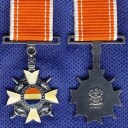
Consider this, the Honoris Crux is the highest SADF award for bravery and three levels of this award were issued, for accounts of bravery in the extreme, just on the MS Oceanos alone on the 4 August 1991, were the following:

Honoris Crux (Gold): AB. Paul Burger Whiley (as per the account above)

Honoris Crux (Silver): AB. Gary Ian Scoular.


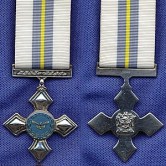
Honoris_Crux_(1975)Honoris Crux: Lt.-Cmdr. André Geldenhuys; PO. Frans Hugo Mostert; LS. Darren Malcolm Brown; LS. Luke James Dicks.  All from the South African Navy, all from the Divers School.
In addition to Honoris Crux, consider the following decorations for bravery and actions above the call of duty which were also won on that day by South African Air Force personnel:

Air_Force_Cross_(CA)The Air Force Cross decoration recipients: Kmdt. Eric Brennan Elphick; Kmdt. Anthony Charles Hunter; Maj. Phillip Fenwick; Maj. Anthony Wright Johnson; Maj. Martin Johannes Hugo Louw; Maj. Hermanus Frederik Steyn; Maj. André Stroebel; Capt Anton Botha, Capt. René Martin Coulon; Capt. Peter Evans Hanes; Capt. Charles Glen Goatly; Capt. Hendrik; Capt Jacques Hugo; Capt. Tarri Jooste; Capt. Johannes Meintjies; Capt.. Slade Christoper Thomas; Capt. Francois Johann Weyers; Lt. Mark Graig Fairley; WO2 William James Riley; F/Sgt  Norman Herbert Askew-Hull; Capt. Len Pienaar; F/Sgt Frans Campher; F/Sgt Daniël Francois Bezuidenhout; F/Sgt. Daniël Roedolf Jacobs; F/Sgt Christoffel Jacobus Pedlar;  F/Sgt. Philip Davey Joseph Scott; F/Sgt. Frans Schutte; F/Sgt. Willem Hendrik Steyn.
Mentioned in Dispatches.

South African Air Force: Brig. T.J.M. de Munnink, SD; Brig. R.S. Lord, SD; Col. G.A. Hallowes; Col. B.J. Kriegler; Col. L.E. Weyer; kmdt. D.B. Janse van Rensburg; Maj. W.H.W. van Wyk.  South African navy: Capt. (Naval). P.C. Potgieter; Capt. (Naval). R.D. Stephen; Cdr. A.G. Absolom; WO1 P. Hutchinson.

In conclusion

Quickly forgotten now as these fine men and woman are now painted as “Apartheid Forces” and great deeds such as this rescue are confined to a history nobody references or even considers anymore.

However this rescue is still regarded as the greatest and most successful sea rescue of its kind – to have ever been undertaken in modern maritime history. Under current cut-backs and capability restraints it is unlikely that the South African National Defence Force can ever replicate such a rescue if presented with it again.

It stands directly in the way of the current ANC’s political narrative and therefore it is another ‘inconvenient truth’ to be ‘passed over’ when referring the Permanent Force and National Service Conscript heroes of South Africa.


Written and researched by Peter Dickens

Quiet lads, two heroes are walking by …

Two men who stands head and shoulders above other men. Col Jan Breytenbach seen here after been blown clear from his vehicle when it hit a anti tank land mine whilst on operations in southern Angola on the 29th August 1981. Col Breytenbach immediately returned to rescue Dave Barr, his gunner, who was pinned under the vehicle – a special forces ‘Sabre’ – and pulled him free from exploding ammunition and burning fuel.

Dave Barr, an American serving with the SADF unfortunately lost both legs in the incident, however testament to Dave – as a double amputee, ex Vietnam War and Bush War veteran, he then went on to circumnavigate parts of the planet by motorcycle raising funds for the disabled, setting world records and inspiring people.

The man with the MGL

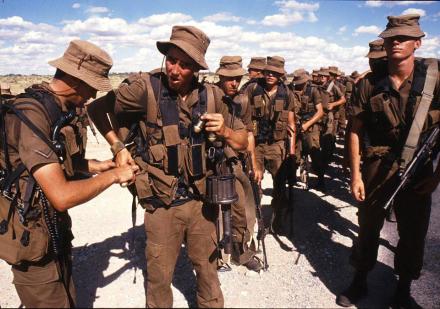
Infantry section seen here during South West Africa and Angola Border War. This is a SADF patrol final inspection (thought to be 5 SAI), this task was usually performed by the section leaders before the platoon moves out. His job was to check that every man’s kit is in full order. Here he checks the ammunition and kit of the man allocated the 40 mm multiple grenade launcher.

Infantry sections like this were made up of 10 men comprising a section leader – usually a corporal, two machine gun groups – LMG (Light machine gun) and one man on the multiple grenade launcher (MGL) in the rifle group.

Three Infantry sections made up a Platoon headed which report to a HQ group of 5 men, including a Platoon Commander (usually a Lt or 2Lt) and a Platoon Sergeant. Total platoon strength 35 men.

The MGL (Multiple Grenade Launcher) is a lightweight 40 mm six-shot revolver-type grenade launcher (variations also fire 37/38mm) developed and manufactured in South Africa by Milkor (Pty) Ltd. This MGL was the world’s first mass-produced multi-shot 40mm hand-held weapon.

The MGL was demonstrated as a concept to the South African Defence Force (SADF) in 1981. The operating principle was immediately accepted and subjected to a stringent qualification program. The MGL was then officially accepted into service with the SADF as the Y2. After its introduction in 1983, the MGL was gradually adopted by the armed forces and law enforcement organizations of over 50 countries. Total production since 1983 has been more than 50,000 units.

The MGL is a multiple-shot weapon, intended to significantly increase a small squad’s firepower when compared to traditional single-shot grenade launchers like the M203. The MGL is designed to be simple, rugged, and reliable. It uses the well-proven revolver principle to achieve a high rate of accurate fire which can be rapidly brought to bear on a target. A variety of rounds such as HE, HEAT, anti-riot baton, irritant, and pyrotechnic can be loaded and fired as fast as the trigger can be pulled; the cylinder can be loaded or unloaded rapidly to maintain a high rate of fire. Although intended primarily for offensive and defensive use with high-explosive rounds, with appropriate ammunition the launcher is suitable for anti-riot and other security operations. A newly patented modification allows the MGL to fire less lethal (very low pressure) rounds.

Photo copyright John Liebenberg, sources Wikipedia and Defence Network.

“Browns”

Great photo of South African infantry troops in the distinctive ‘brown’ nutria combat fatigues of the period. Here SADF troops return to their Ruacana base. March 26 1989. The nutria uniform was affectionally and officially known as ‘Browns’ and over time, sun and extensive washing and ironing exposure it became a ‘lighter’ brown with ‘houding’ (attitude) – browns with extensive exposure turned a milky brown eventually and this became the hallmark of a ‘ouman’ (old man) who had been serving for a while. The distinctive browns issue bush hats are also seen with a little ‘bush houding’ – a grenade ring pull and ‘toggle’ attaching it to the owner (and the stitch line was always worn at the back, never the front).

Camouflage fatigues – as part of the SADF’s “Soldier 2000” program began to replace “browns” in 1992/3

Photo copyright and courtesy: John Liebenberg