

So, here’s an interesting “first” for South Africa, we are the first nation who can hold up the very first aircraft hijacker as our own. Now, it’s not what you think, he’s not your deranged Islamic extremist or strait forward nut-job hijacking some or other commercial airliner … he’s a South African Air Force pilot and the aircraft he hijacked was a military aircraft belonging to the Axis forces during World War 2. His name was Lt. Colonel Edward Theodore Strever, South African Air Force (SAAF) No. 217 Squadron, or just plain “Ted” and both he, and his deeds are the stuff of legend, here’s his hijack story:
The Attack
During the war, Ted Strever, then a SAAF Lieutenant, found himself seconded to the Royal Air Force (RAF) flying a RAF 217 Squadron Bristol Beaufort twin-engined torpedo bomber L9820 and based at Luqa airfield in the isle of Malta. On 28th July 1942, 217 Squadron was engaged in attacking Italian Merchant shipping off Southern Greece. On that day Lt. Edward “Ted” Strever (SAAF) is captaining his Bristol Beaufort with a motley crew, his navigator is Pilot Officer William Dunsmore, Royal Air Force (RAF), from Liverpool. Sergeant John Wilkinson is his wireless operator, Royal New Zealand Air Force (RNZAF) from Auckland and Sergeant Alexander Brown is his Air gunner, also Royal New Zealand Air Force (RNZAF) from Timaru.
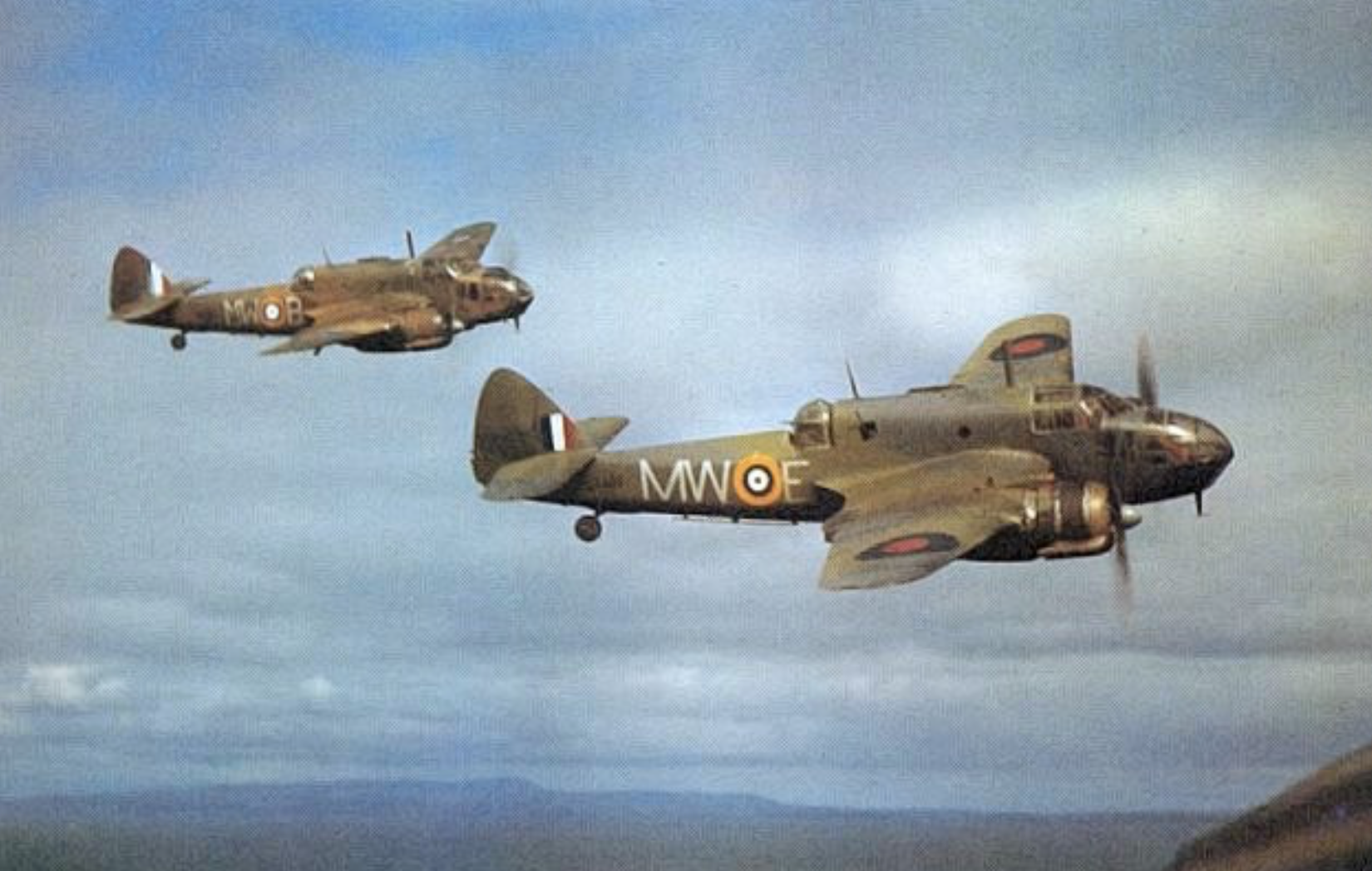
They spot a 12,000 ton Italian cargo ship escorted by two destroyers, targeting the cargo ship they go into a torpedo run, intense enemy defensive fire sees Ted Strever’s wingman go down, but Strever is able to get his torpedo away. His torpedo slams into the side of the target in a direct hit, eventually sinking the vessel. However in passing over the target Ted’s Bristol Beaufort is shot up, taking damage to both engines. The stricken bomber is forced into a water crash-landing, the crew all survive and in the 90 seconds it takes the Bristol Beaufort takes to sink, they all manage to scramble into an inflatable dingy.
Taken Prisoner
Not long after scrambling into their dingy after the crash Ted and his crew were picked up by an Axis sea plane – an Italian CANT Z506B ‘Airone’ (Heron), a maritime reconnaissance plane and bomber, it has 3 engines, a crew of 4 and floats – it puts down near the dingy and Ted and his crew are hauled aboard. The Italian crew make the Allied crew Prisoners of War – and kindly give them some brandy and cigarettes to smooth their ordeal of the attack and crash. They are then flown to a small harbour on the island of Corfu. Taken to a nearly camp, the Italians continue to treat them well and they are fed a meal of steak, tomatoes and wine – more cigarettes and given comfortable beds.
The next day after having eggs for breakfast the Italian’s informed the captured Allied crewmen they will be taken to Taranto in Italy, here they would spend the rest of the war as prisoners – they immediately begin to conspire as to escaping. A few hours later they are back at the small harbour, and back in the same aircraft that had rescued them the day before – the CANT Z506B ‘Airone’ – with the same 4 Italian aircrew, only this time there is an extra armed guard – a corporal.
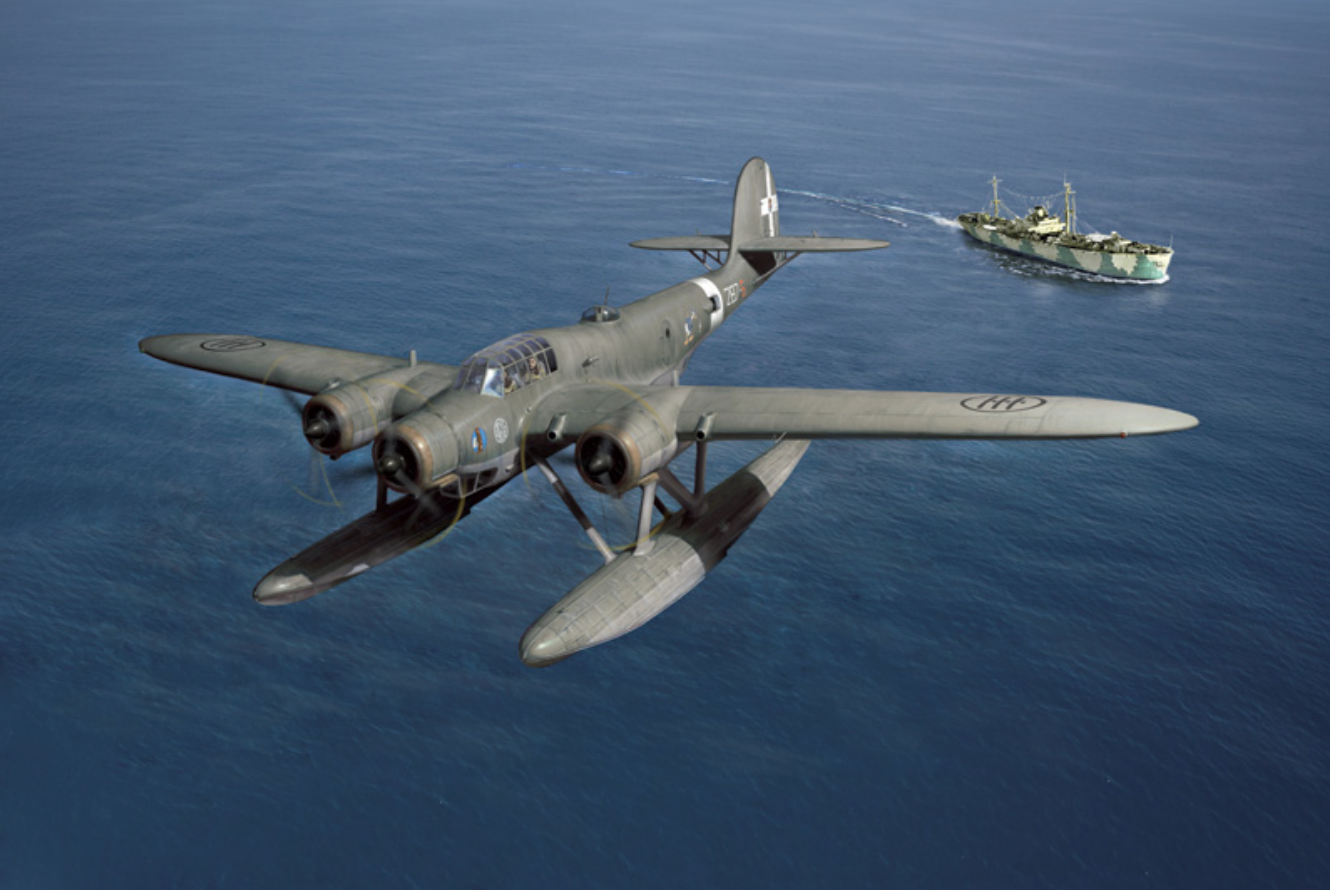
The seaplane took off and set a westwards course, after a short time, the Allied crew talking softly amongst themselves, hatched a hasty escape plan. They are about to make history with the very first “skyjacking”.
The Escape
Sergeant Wilkinson (RNZAF) leans forward and punches the Arione’s wireless operator hard in the face, he leaps over the failing body and over-powers the armed guard, taking his pistol and passing it to Lt. Ted Strever (SAAF). Pilot Officer Dunsmore (RAF) and Sergeant Brown (RNAF), tackle the aircraft’s engineer. The commotion alerts the two pilots, one draws his pistol and the other fumbles with a sub machine gun, however in trying to recover control of the aircraft the pistol is knocked from the pilot’s hand by his colleague. Ted Strever advances on the pilots using the corporal as a human shield and then disarms the pilots – the Italians are then tied up using their own belts. The aircraft is now in the hands of Ted and his crew and Ted takes over the controls – it’s all a little too much for the Italian corporal, not used to flying and in all the excitement he becomes violently air-sick.
More problems rear their heads, Ted Strever is unfamiliar with this aircraft type, cannot understand the fuel situation and had no maps. So, they untie the Italian co-pilot, put him in the pilot’s seat and at gun-point instruct him to fly the aircraft to Malta.
Next was the problem of flying an enemy Italian aircraft into Allied controlled airspace around Malta. On approaching Malta they are intercepted by 3 RAF Spitfires from No. 603 Squadron, the Spitfires immediately pounce on the Arione and start shooting it up. P/O Dunsmore frantically tries to wave the deadly attack off by leaning out and waving his white vest out a window – but to no avail. The Arione, now full of holes and badly shot up, makes an immediate sea landing. The Allied crew climb on top of the wings and start frantically waving the Spitfires off – the target neutralised the Spitfires break the attack. The British then dispatch a RAF ‘crash-boat’, a high speed Air Sea Rescue Launch HSL 107, from Kalafrana to pick the aircrew and tow the sea-plane in.
Astonished to see four Allied aircrew in the enemy plane a member of the RAF crash boat team tasked with towing them to St Paul’s Bay is reported to have said
“We thought it was old Mussolini coming to give himself up!”

Feeling a little guilty that the Italian’s had treated them so nicely when they were their POW’s, the Allied crew offered their apologies for not having any wine or brandy on them – but they promised them they would re-pay the compliment. One of the Italian crew, in rather good spirits realising that the war was finally over for him then produced a bottle of wine from his suitcase, which was promptly and very happily shared amongst both the air-crews.
Recognition
William Dunsmore was awarded the Distinguished Flying Cross (DFC), John Wilkinson and Alexander Brown as NCO’s eared the Distinguished Flying Medal (DFM). All survived the war.
Ted Strever also received a Distinguished Flying Cross (DFC) for this action. He died in Haenertsburg, South Africa in 1997 at the age of 77. This was only one instant in what was a very highly colourful and brave career in the Air Force. His daughter Gail Strever-Morkel published a book on his life, called ‘On Laughter-Silvered Wings: The Story of Lt. Col. E.T (Ted) Strever D.F.C’ and it well worth a read should anyone get their hands on a copy or order an electronic copy.
A short documentary was recently made by Mark Felton Productions and is on YouTube, here’s the link:
One thing is certain, they sure don’t make airmen like this anymore. A unique, brave and distinctively South African legacy.
Written and Researched by Peter Dickens
References
On Laughter-Silvered Wings: The Story of Lt. Col. E.T (Ted) Strever D.F.C By Gail Strever-Morkel. Published 2013.
PB Lucas (editor): Wings of War – Published 1983
The Reader’s Digest Illustrated Story of World War 2, vol.I.
The London Gazette dated Friday 4th September, 1942, regarding the award of the DFC.
Related Work:
The Great Escape The Great Escape … was led by a South African!
 The Observation Post
A great piece and such a wonderful story. Good to know no-one was killed in this hijacking. Thanks for the posting.
LikeLiked by 1 person