Winner of the Honoris Crux Gold – TWICE! One of a kind … Remembering Maj. Arthur Walker HCG & Bar SM

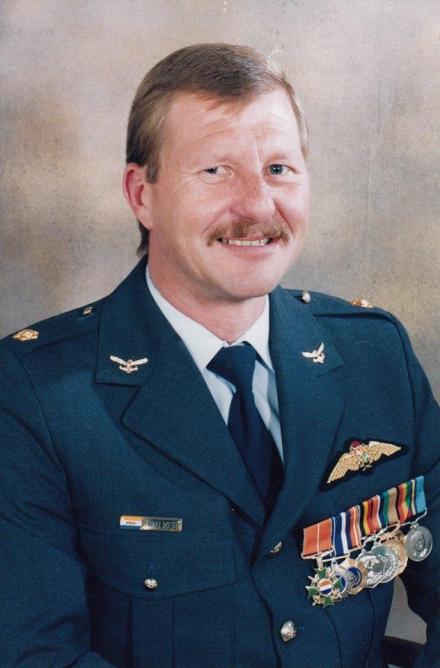
Remembering a true South African military hero – the highest decorated South African Defence Force member and the legend that was Major Arthur Walker HCG and bar SM. Sadly Arthur passed away in March 2016 after a long fight against cancer.

Major Arthur Walker HC and Bar SM was a South African military hero of which there will never be an equal, he was South African Air Force helicopter pilot who was awarded the, not once – but twice, during the South African Border War.

The Honoris Crux Gold was the highest military award for bravery awarded to members of the South African Defence Force at that time – so his feat of obtaining two of them can never be repeated again.

Born 10 February 1953 in Johannesburg he matriculated from King Edward VII School in Johannesburg and went to the Army in 1971.

He obtained his pilot’s wings in 1977 and flew for 7 Squadron, Rhodesian Air Force, before re-joining the South African Air Force in 1980.

While flying Alouette III helicopters based at AFB Ondangwa in 1981 he was awarded the Honoris Crux Gold for risking his life during a night operation in Angola, by turning on the lights of his helicopter to draw enemy fire away from another helicopter.

The citation for the Honoris Crux Gold reads:

“During January 1981, two Alouettes, with Lieutenant Walker as flight leader, carried out close air support operations resulting in the Alouettes coming under intense enemy artillery and anti-aircraft fire. He only withdrew when ordered to do so. Later Lieutenant Walker returned to the contact area to provide top cover for a Puma helicopter assigned to casualty evacuation. Again he was subject to heavy enemy anti-aircraft fire. During the withdrawal the second helicopter developed difficulties and called for assistance. Yet again Captain Walker returned to provide top cover, drawing virtually all the anti-aircraft fire to his Alouette. His courageous act prevented the loss of an Alouette and crew.

Lieutenant Walker’s actions were not only an outstanding display of professionalism, devotion to duty and courage, but also constitutes exceptional deeds of bravery under enemy fire and makes him a worthy recipient of the Honoris Crux Gold”

In December 1981 he was cited for landing in enemy territory to search for and rescue the crew of a helicopter that had been shot down.
An Alouette III of the SAAF

The citation for the Bar to his Honoris Crux Gold reads:

“During December 1981 Captain Walker was again requested to provide top cover for the evacuation of a seriously wounded soldier. On take-off with the evacuee his number two helicopter was hit and crash-landed. Without hesitation and with total disregard for his personal safety, Captain Walker landed near the wrecked helicopter and immediately searched for the crew. Eventually the situation became suicidal, compelling Captain Walker and his crew to withdraw. When he was airborne he spotted the missing crew and yet again, without hesitation and despite the fact that virtually all enemy fire was now [aimed] in his direction, he landed and lifted the crew to safety.

Through this courageous deed he prevented the loss of two men. His distinguished actions, devotion to duty and courage make him a credit to the South African Defence Force in general, the South African Air Force in particular and makes him a worthy recipient of the Bar to the Honoris Crux Gold”

With sincere thanks to Arthur for sending us a full colour image of himself in uniform – Rest in Peace Arthur.  At the going down of the sun …we will remember you.
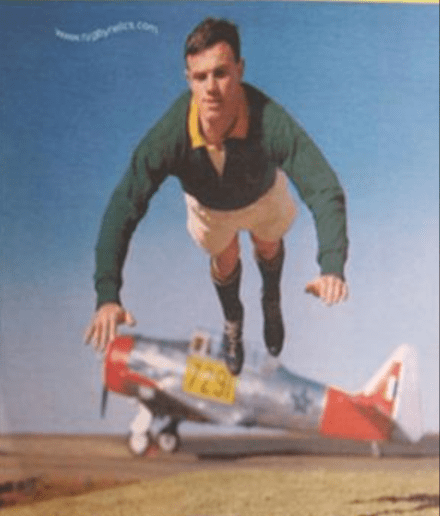
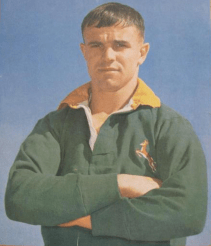
A flying Springbok in more ways than one – ‘Mannetjies’ Roux

There’s no need to introduce Francois Du Toit “Mannetjies” Roux , the legendary Springbok rugby “flyer”, but did you know he was also a “flyer” of a real kind and served his country as a South African Air Force pilot?

Born in Victoria West and educated at Paarl Boys High, he went to Stellenbosch University; an institution known for serving as a conveyor belt of future Springboks. Later on he joined the South African Air Force in Pretoria where he served as a flight instructor on the iconic North American ‘Harvard’ trainer (seen in the background of the featured image).

Screen Shot 2017-03-24 at 09.52.18

As a Springbok he was capped 27 times; 6 times at wing and 21 times at centre, scoring 6 tries.

Controversy  follow him though, with Roux achieving notoriety on the demo-ridden 1969/70 Springbok tour of the United Kingdom for kicking one protester in the backside and hurling the ball at another.

He’s retired now and he and his wife Charlotte run a shop and museum called Victoria Trading Post in his hometown of Victoria West.

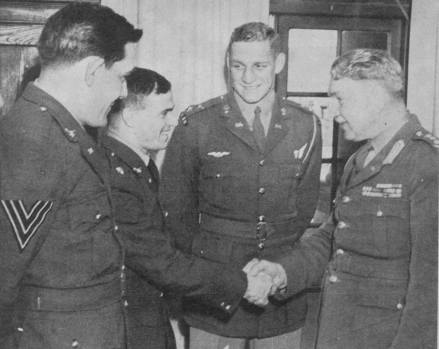
Here is Mannetjies in service. Far right, Gen P.H. Grobbelaar congratulates Sgt Frik du Preez from the SAAF, Lt Mannetjie Roux and FC Hannes Botha from 1 Parachute Battalion with their inclusion into the Springbok team against the British Lions in 1962.

10921618_890433350988087_4433400930417192196_o

“Source: Wikipedia and Paal Boys High

The ‘Dune’ that forged men!

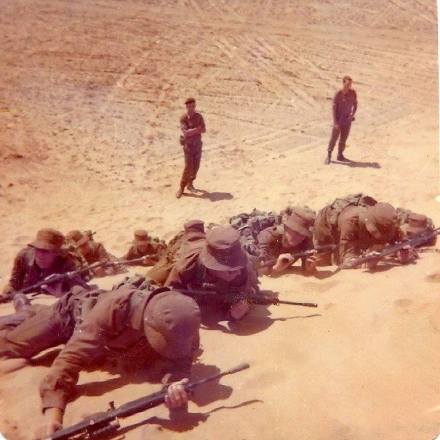
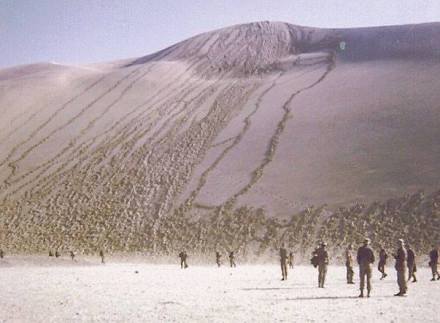
Starting out with a leopard crawl at the bottom and its a very very long way to crawl the top of this particular sand dune. Any “bokkop” (Infantry) who trained at 2 South African Infantry Battalion (2 SAI) will immediately recognise this infamous feature … Dune 7 … Walvis Bay … men where forged by this sand dune.

This giant 383m high dune was used by the South African Defence Force (SADF) time and again to train troops on and test their stamina, especially young conscripted National Servicemen.

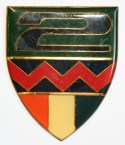
2sai2 SAI was established on January 1, 1962, at Walvis Bay, at the time an enclave of South African territory, surrounded by South West Africa (Namibia).  It was about the most furthest and remote training base to get a call-up from, a conscript here was truly a ‘long way from home’.
After Namibia’s first democratic elections and as part of the peace process, South Africa formally transferred sovereignty of Walvis Bay and the Penguin Islands to Namibia on 1 March 1994.  Prior to official transfer of the Walvis Bay territory to Namibia, 2 SAI re-deployed back to the Republic of South Africa in 1993 and since 1998 has been based at Zeerust.

2 SAI leaving its South African enclave in Namibia meant leaving three decades of training legacy and leaving this mighty Dune to adventure tour companies in Namibia.  Its memory as a training instrument now only emblazoned in all who spent time in the military at 2 SAI running up and down it.

17342628_737450589758009_8401080663277494242_n


Written by Peter Dickens

A little cheeky military humour

A little bit of “cheeky” military humour to see out the old year – please excuse the brashness but this is typical of military humour.

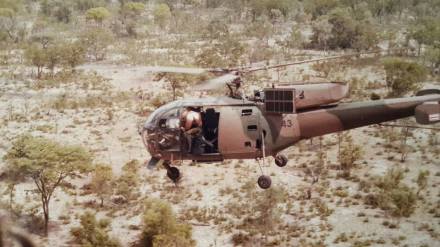
Here a South African Air Force Alouette III helicopter’s Flight Engineer/Gunner gives a typical response to fellow crew members flying alongside.

Not found in the Public Relations photographs in the SADF at the time. However in the light of combatants fighting  far away from home, and in need of some light banter to alleviate the seriousness of combat on the Angolan border, who can blame them  … “boys will be boys”.

Photo courtesy of the SAAF Alouette crew veterans fraternity.

SADF Propaganda and Psychological Warfare

No frills Propaganda

Propaganda was a means of Psychological Warfare was employed by all sides in the SWA/Angolan ‘Bush War’ Conflict – blunt and strait-forward in communication and tone so the message was clear.

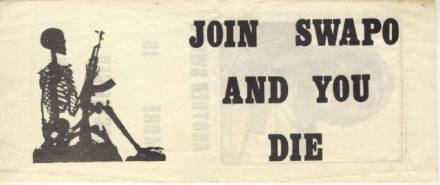
Usually symbols of death (or images of death) accompanied this type of printed propaganda and they served to underpin the threat and drive fear – this is an example of a SADF leaflet distributed to warn the local population in South West Africa/Namibia and neighbouring states not to join SWAPO (the South West African People’s Organisation) against whose armed wing – PLAN the SADF and SWATF forces were in combat with.

The message is crude and strait forward, the image used is easily assimilated and understood, it’s a “brutal” communication designed to get the point across to the lowest common denominator, no need for frills, pretty fonts and logos.

Propaganda is a “weapon”

Please note, this is of historic importance as to the propaganda used in the Bush War. It is not intended to glorify either the SADF or SWAPO – the intention is to capture and keep alive a little of South Africa’s military history so often forgotten.

Propaganda by its very nature preys on emotions – its intension and its goal is an emotive response – in military terms it’s classified as a weapon, as that response can influence the fight, either by spurring it on motivating the combatants or by stopping it and demotivating the combatants.  In many ways Propaganda can influence the outcome of a battle or war as much, if not more that the actual use of bullets.  Believe it or not – all this power – and it can simply be boiled down to a crude message like the one shown here.

When reviewing propaganda from a historical perspective (or even military perspective) it must be dealt with objectively without emotion. If it triggers an emotional response then it has simply done it job and wins, that’s how this particular weapon works…

Silver Flash – SAAF Mirage III’s in their original livery

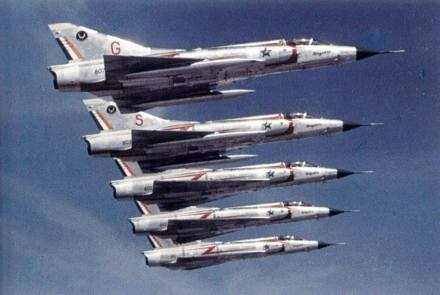
There is a saying in Afrikaans and it applies to this image ‘mooi bly mooi’ (beauty is eternal). Enjoy this stunning image of perfect formation flight by 2 squadron South African Air Force’ in their then ‘new’ Mirage III’s in 1968 – still in their colour scheme of silver metal and red lightning flash, before changing to their bush war camouflage scheme.

Photo copyright Edward Dickinson.

Joint South African/Rhodesian Ops & the loss of SAAF Puma 164

It’s not widely known now, but In the late 1970’s the South African Defence Force (SADF) provided covert assistance to the Rhodesian Security Forces for raids conducted against ZANLA and ZANU bases in Angola and Mozambique (Operation Uric and Operation Vanity).

This is the story of the loss of a South African Air Force Puma – 164 during Operation Uric.

Operation Uric (or Operation Bootlace for the South Africans) was a cross-border raid carried out in Mozambique by operatives of the Rhodesian Security Forces during the Rhodesian Bush War, with combat assistance from the South African Air Force. During the operation, which took place from 1 to 7 September 1979, up to 400 Rhodesian military personnel and a small number of South African military personnel (flying Pumas, Canberras, Dakotas and Super Frelons) attacked bridges and a major staging point for Zimbabwe African National Liberation Army (ZANLA) insurgents in Gaza Province. The battle eventually drew in elements of the Mozambican army (FRELIMO) and police, who sustained heavy casualties. Along with Operation Miracle, this was one of the largest Rhodesian external operations of the Rhodesian Bush war.

21317440_1810898118921159_8994351697693582498_n

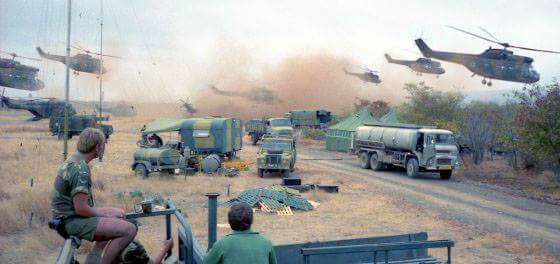
SAAF Pumas taking off during Ops Uric, Rhodesian troops and vehicles seen in the foreground

During the operation, on the 6th September 1979 one South African Air Force Puma helicopter – Puma 164 was hit by an RPG-7 rocket which entered through the open rear sliding door and exploded between the Pilot and Co-Pilot killing all 14 Rhodesian servicemen and the 3 South African Air Force personnel on board. The was the highest loss of life for the Rhodesian Security Forces in a single incident during the Rhodesian War. As the involvement of South Africans in this conflict was quite secretive and could politically backfire on South Africa, the crash site was later heavily bombed in an attempt to cover the South African markings on the Puma helicopter.

The battle resulted in over 300 dead ZANLA and FRELIMO soldiers and a number of damaged bridges, buildings and infrastructure. Politically the operation led to Samora Machel, the President of Mozambique at the time, putting pressure on Robert Mugabe to take part in the Lancaster House peace talks. He wanted to prevent Mozambique from being dragged further into the war with Rhodesia, which had already seriously damaged its economy.

The bodies from Puma 164 could not be recovered during the battle and were never repatriated. Their collective graves have been recently located in Mozambique and appropriate memorial stones have now been placed on all these graves.

The three 19 Squadron South African Air Force crewmen:

Captain Paul Velleman
Lieutenant Nigel Osborne
Sergeant Dick Retief

Five men from the Rhodesian Corps of Engineers:

Captain Charlie Small
2nd Lieutenant Bruce Burns
Sergeant Mick Jones
Corporal LeRoy Duberly
Lance Corporal Peter Fox

Nine men of the Rhodesian Light Infantry:

Captain Joe du Plooy
Corporal Gordon Fry
Trooper Kosie Briel
Trooper Aiden Colman
Trooper Jeremy Crow
Trooper Brian Enslin
Trooper Stephen King
Trooper Colin Neasham
Trooper Dave Prosser

Lest we forget.

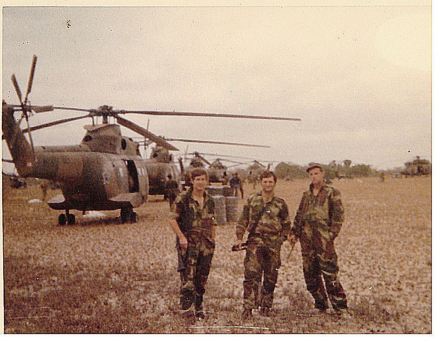
Photo courtesy of Frans Botha who is seen here with colleagues from the Rhodesian Security Forces during the Operation, the SAAF Pumas are clearly seen in the background.


Researched by Peter Dickens.  Reference, wikipedia and Colonel Graham du Toit’s daily SADF roll call.

Teddy the Recce

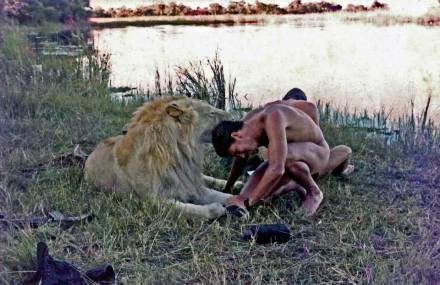
Some units roared like Lions and others literally where Lions and a lot can be said for members of South Africa’s Reconnaissance special forces (or commonly known as “Recce” units).  To celebrate the Recce veterans and their role in South Africa’s protection, here is this stunning image of “Teddy”, the Recce mascot at Fort Doppies.

Terrie was a Cuando lion who held a Recce Operators status and he is seen playing at Kwando River with Obie Oberholster, cira 1980.

To get a full story on Teddy – please visit the South African Special Forces website – here is the link:

Teddy the Lion on the official Recce website


Published by Peter Dickens.  Copyright and big thank you to Obie for the image.

The silent terror of the Angolan Border War

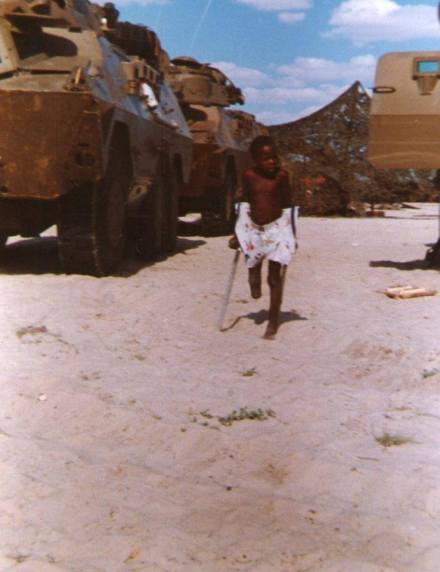
Forgotten to many as to why the Bush War was so closely felt to the South Africans conscripted to fight it, this image illustrates what many conscripts and volunteers felt they where there to do – protect innocent civilians from the ravages of the Angolan war and armed insurgency into South West Africa/Namibia.

A trademark of both the Angolan War and the Bush War was the silent terror of mines, the worst of which is the Anti Personnel Mine (APM). This type of mine is cheap to make can be easily concealed and extensively mined – it has a small charge designed to maim its victim, not kill, simply by blowing off a foot or leg – its design in essense is to demoralise and strike fear into every step.

This picture was taken by a medic whilst they where based temporarily next to the range at 101 Battalion’s Head Quarters in Oshakati during tte ‘9 Day War’ in April 89. This local Namibian child was moving amongst the Ratel Infantry Fighting Vehicles looking for food and entertainment. He remained under the wing of the medics for a couple of days.

Realistically summarised by BJ Taylor who took the photo in light of the frequent sight of such carnage of war on the civilian population as an ‘AP Mine victim, one of many … ‘

Image copyright and courtesy of BJ Taylor.

The Border War & the Lockerbie bombing connection!

You may be wondering, what the heck does the South African Border War on the SWA/Namibia and Angola border in the late 80’s have in common with Pan Am Flight 103 and the Lockerbie bombing?  Well, there is an interesting and uniquely South African connection.

Heralding the end of The Border War in 1988, as part of the pathway to peace, the United Nations pre-empted the process and appointed a Swedish UN Commissioner for Namibia, Bernt Carlsson. In the eventuality of South Africa’s relinquishing control of Namibia.

Commissioner Carlsson’s role would be to administer the country on behalf of the UN, formulate its framework constitution, and organise free and fair elections based upon a non-racial universal franchise.

On their way to sign the brokered peace accords to end the Bush War on the 22nd December 1988 in New York, the South African VIP contingent including Pik Botha (the then Foreign Minister) and the United Nations representative – Bert Carlsson all booked their passage to New York on Pan Am Flight 103.  Pan Am Flight 103 was a regularly scheduled Pan Am transatlantic flight from Frankfurt to Detroit via London and New York.

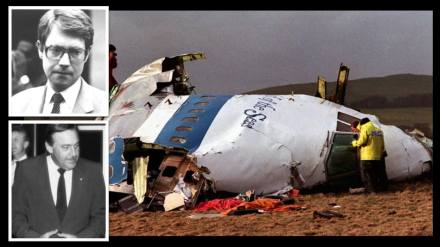
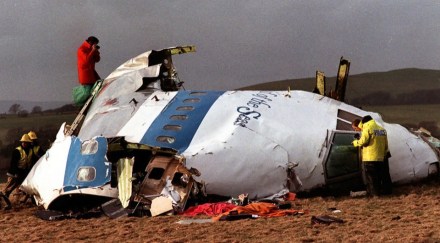
Sadly and very tragically, the UN Commissioner for Namibia, Bernt Carlsson, was not present at the signing ceremony. He was killed on Pan Am Flight 103 when it exploded and crashed on Lockerbie, Scotland on 21 December 1988 en route from London to New York City – killing all 243 passengers and 16 crew, in what became known as the Lockerbie bombing after large sections of the aircraft crashed onto residential areas of Lockerbie, United Kingdom, killing 11 more people on the ground.

bd4e1d5f0f5000d3

South African foreign minister Pik Botha, and the official South African delegation of 22 members had a very lucky escape. Their booking on Pan Am 103 was cancelled at the last minute and Botha, together with a smaller delegation, caught the earlier Pan Am 101 flight to New York.

Handed over by the Libyans and found guilty,  a Libyan terrorist, Abdelbaset al-Megrahi was jailed, the only person to be convicted for the attack. In 2003, Gaddafi, the Libyan despot, accepted responsibility for the Lockerbie bombing and paid compensation to the families of the victims.  However many questions still exist on the motive and responsibility of the bombing – with Abdelbaset al-Megrahi protesting his innocence all the way to his death bed.

With Gaddafi out of the picture now, I guess we will never know the full picture, and a tantalising titbit of a possible International terrorist conspiracy to derail the Namibian Peace Accords and/or deliver a killer blow to South Africa’s National Party elite and their policy of Apartheid will forever remain unanswered.

Pictured left is Bernt Carlsson and right is Pik Botha.


Written and researched by Peter Dickens