
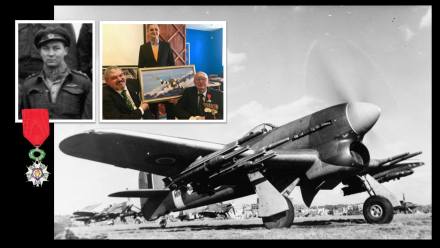
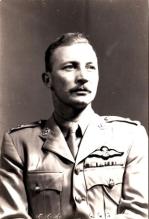
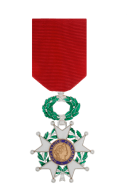
 At a ceremony held in Cape Town on the 13th February 2018, the Ambassador of France to South Africa, his excellency Christophe Farnaud, bestowed the signet of Chevalier de l’Ordre de la Legion d’Honneur (Knight in the Legion of Honour), France’s highest honour on one of the last surviving South African D Day veterans, General Albert (Albie) Götze.
So how is it that Albie Götze is awarded France’s highest honour and how did it come about? In a nutshell, the French government decided that all World War 2 ‘Allied’ veterans who took part in the D Day landings and liberation of France should be given their highest honour for military and civil merit, the Légion d’honneur, (LdH) and they announced this on the 70th anniversary of D-Day in June 2014 as a special thank you those who fought and risked their lives to secure France’s liberation during the Second World War.
Simply put, Albie ‘was there’ on D-Day. As a young South African Air Force pilot he was seconded to the Royal Air Force and he took part in D-Day operations flying a Spitfire doing beach sweeps and patrols.
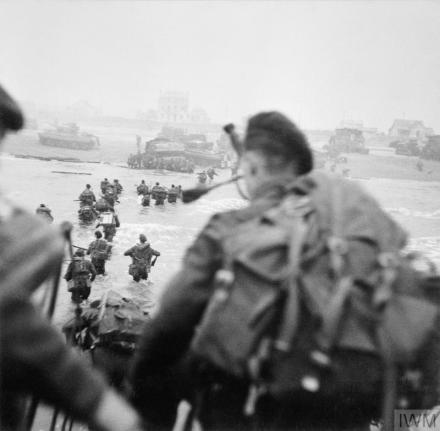
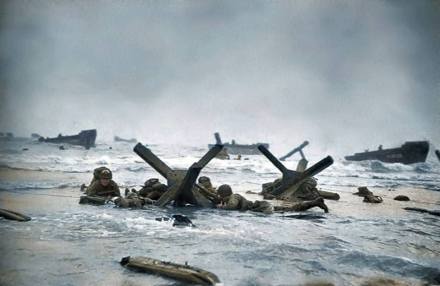
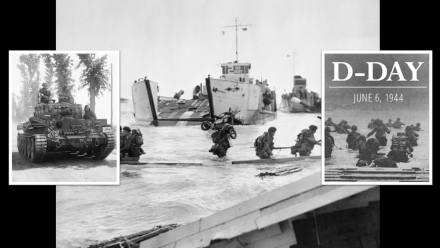
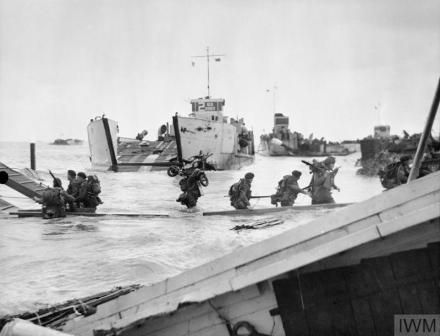
Iconic image which captures the moment, Commandos of 1st Special Service Brigade land on Queen Red beach, Sword area, c. 0840 hours, 6 June 1944 (D-Day)
Albie Götze’s story is something else, he was born in January 1923 in Prieska, a tiny town on the south bank of the Orange River, situated in South Africa’s Northern Cape. In mid 1942 he volunteered to take part in World War 2 and joined the South African Air Force and subsequently was selected for fighter pilot training.
After he finished flying training he was sent to the Middle East where he was seconded to the Royal Air Force and joined up with RAF No.127 Spitfire squadron in April 1944.
In April 1944, the squadron moved to England in preparation for Operation Overlord where it was assigned to 132 Wing (Norwegian) of the 2nd Tactical Air Force and operated as a UK defence unit. They flew patrols and bomber escorts to mainland Europe as well as some fighter-bomber work. During this time Götze was involved with shooting down four German V-1 flying bombs.
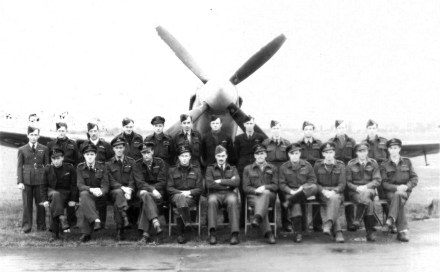
Albie with 127 squadron, seated 2nd from the right.
127 Squadron arrived at North Weald on 23 April 1944, where it was equipped with the Spitfire IX. Operations began flying fighter-bomber missions over France on 19th May 1944. The squadron played its part in the D Day landings and subsequent days, and Albie and his colleagues found themselves flying sweeps of the landing beaches, escorting bombers, armed recces and dive bombing specific targets.
On 21st August 1944 127 Squadron moved to the European continent where it flew fighter-bomber missions from various airfields in France, Belgium and Holland, eventually basing itself at B.60 Grimbergen, in Belgium. Albie flew his last Spitfire mission for 127 Squadron from B.60 on the 03 August 1944.
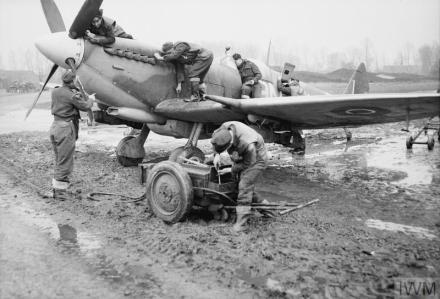
No 127 Squadron Spitfire XVIE (RR255/9N-Y) has its daily inspection in a sea of mud at Grimbergen (B-60).
Later in August 1944, owing to the high attrition and demand for pilots flying Hawker Typhoons, Albie was transferred to RAF No.137 squadron flying this notorious Typhoon ground attack aircraft. In Typhoons he participated in Operation Market Garden and other Rhine crossing operations.
Operation Market Garden (17–25 September 1944) was an unsuccessful Allied military operation, fought in the Netherlands and Germany, using mainly airborne and land forces with air support to liberate the Dutch cities of Eindhoven and Nijmegen but failed in keeping their further positions in and around the city of Arnhem with its strategically important bridge over the river Rhine, the action there resulted in high rates of attrition of Allied forces trying to hold one side of the bridge, forcing an eventual withdrawal.
RAF 137 Squadron almost always operated at low altitude (“on the deck”) and was mainly employed to attack targets such as armour, anti-aircraft installations, specific buildings, transports and enemy personnel. For this reason, flying in the Typhoon squadron was dangerous and high risk. According to Albie, flying the Typhoon at this time was regarded by Allied officers as the “most dangerous job that these buggers could ever have volunteered for”.
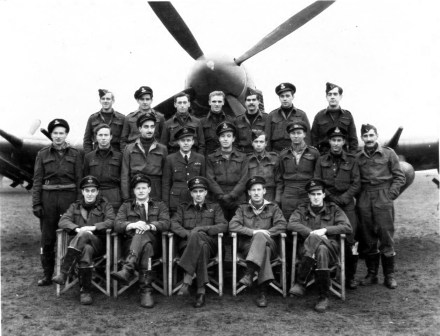
137 ‘Rocket’ Typhoon Squadron, 24 December 1944, Albie is in the middle row, third from the right.
The losses were extreme and hence replacement pilots were usually filled with volunteers. To illustrate just how dangerous this was, Albie goes on to say “we lost a 151 pilots flying this thing (Typhoons), on Operation Market Garden alone, in just one single day we lost 21 pilots on Typhoons”. Combat was brutal in its simplicity, according to Albie it was as simple as “That guys gotta be shot down (the enemy), not me!”
The Typhoon missions, although very dangerous were also very formidable. Albie describes that aside from the rocket firing capability it could also deliver a wall of lead, consider this own words “Can you imagine yourself flying over there, (Typhoons) have two 20mm guns, each one has 4 bloody spouts .. now, the 20mm shoots 600 shots a minute, can you imagine 600, 4 of them, that’s 2400, and there’s not just that one, there’s another Typhoon behind him (the wingman), that is 4800 bullets you have coming towards you (as the enemy)”
Albie’s aircraft was hit on occasions and he made a few crash landings with damaged aircraft. He recalls on such incident as if it was yesterday, it is a very brave account of combat flying, honest, harrowing and even a little funny (in the darkest manner of ‘military humour’). He picks up the story:
“I got shot one day, as a matter of fact I was watching this guy shooting at me, with a 88 mm, he shot at me and I looked and I said to myself ‘this bastard is going to kill me’ … he shot me at the back of the fuselage, but, the 88mm did not explode for some unknown reason, God must have said ‘I not gonna put this fuse on’, But it did cut my trim-wire to my rudder and all it does is that your aircraft just rolls over and you go strait in, but fortunately I was able to ‘catch it’ (arrest the aircraft roll with opposite ailerons);
… but I could only fly at an angle a friend radioed and said ‘Albie are you in trouble?’, I said to him ‘yes’, I can’t see out, at this time as I got down into the cockpit and grabbed hold of the rudder bar in order to keep on flying, otherwise I would go down. He said “I will fly on top of you”, been down there you can’t see out of the cockpit, all I could see was up, he brought me home like that, him flying on top (as a visual marker), me underneath. When I did the crash landing, that scoop on ‘the typhoon’ is full of oil and it sparked and catches fire quickly, I was so scared, before the plane came to a stop, I was out of the cockpit and I ran so fast that the ambulance could not catch me”.
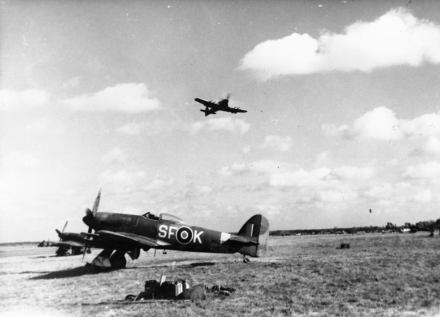
Hawker Typhoon Mk IBs of No. 137 Squadron RAF on the ground at B78/Eindhoven, Holland, as another Typhoon flys over.
After the war Albie participated as a navigator in the Berlin Airlift of 1949 where they flew around the clock supply flights from West Germany – for which he recently received a campaign medal from a grateful Royal Air Force and Her Majesty’s Armed Forces.
The Berlin Air Lift was an extraordinary event where Allied crewmen risked their lives to save the citizens of Berlin after World War 2. The new ‘Soviet’ states (East and Central European states drawn into the advancing Soviet/Russian army) in a bid to remove Allied presence from within what was known as the ‘Communist Iron Curtain’ initiated a blockage to Berlin, the Allied forces had half the control of Berlin, a city now situated far inside the newly defined ‘East Germany’.
The Soviet’s blocked the land-bridge to the city, literally starving the Allied part of the city of food, fuel and supplies, the only way to keep citizens in fuel and food was to fly it in and create a ‘air-bridge’. A number of SAAF pilots and South African pilots seconded to the RAF took part in this very humanitarian mission, in essence they saved the city.
In 1951 Albie completed a combat tour with SAAF No. 2 squadron to Korea as part of a US Air Force formation where he flew F-51D Mustangs, and he has again received recent honours and thanks from the South Korean government for his involvement in the Korean War. To many, the South African participation in the Korean War is relatively unknown, but as part of United Nation contributions to the war effort South Africa sent a squadron to South Korea to fight in the Korean War. 2 Squadron SAAF (known as the ‘Flying Cheetahs” was sent and they were initially based at K10, Chinhae Airbase in South Korea during the war.


At the beginning of the Korean War fully armed SAAF F51D Mustangs set off from this base (K10) in ground support roles, mainly in close support of American troops. Bombing enemy defensive positions in close support of ground troops is often sarcastically referred to as “mud moving” and highly dangerous as the aircraft has to get right into the battle at very low altitude and speed. The high attrition of South African pilots lost in this role during the war is again testimony to that (see. The SAAF’s Mustangs baptism of fire and the urgent need for jet powered fighters).
Albie had a long and successful career in the SAAF, serving in South West Africa (Namibia) during the Border War and ended with the rank of Brigadier General. He was responsible for the introduction and implementation of the South African air defence system with the underground head station at Devon. He was also responsible for the system to be fully computerised.
Albie was also the personal secretary of the State President of South Africa for 4 years and he retired from the Air Force in 1978.
Albie’s Legion d’Honneur
Getting Albie his due recognition and his Legion d’Honneur (LdH) from the French government for his participation in Operation Overlord was also a journey in its own right.
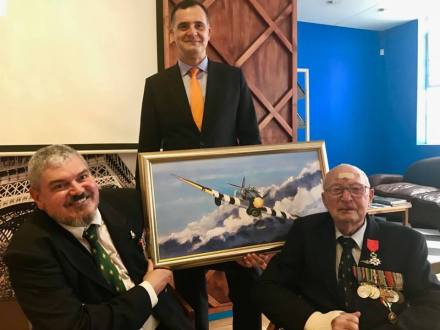
Peter Dickens (left), the French Ambassador to South Africa his excellency Christophe Farnaud (middle) and Albie Götze (right) – note his LdH pinned by the Ambassador above his medals
It started when Tinus Le Roux, a renowned SAAF historian and filmmaker, contacted the author of this article – Peter Dickens and asked if the South African Legion’s branch in England could follow-up on Albie’s LdH application, he had assisted Albie with it and there had been no response on the application for some months and they were concerned. Quick to the mark Cameron Kinnear, also from The South African Legion engaged Lorie Coffey at Project 71, a veteran’s charity in the United Kingdom, to look into the matter.
 Indeed there had been an administrative oversight and Albie’s LdH application was kick-started again by the South African Legion, and finally Project 71 was able to get a LdH issued by the French Ambassador to the United Kingdom, her excellency Sylvie Bermann.
 With an LdH finally in hand, and in South Africa, Philip Weyers from the South African Air Force Association (SAAFA) was contacted to arrange a suitable medal parade for a handover, Philip and SAAFA were also able to engage the French embassy in South Africa, who very keenly agreed to undertake the official presentation to General Götze.
After all the ceremonies and official presentations were done, the French invited all to attend a small lunch, it later turned out that the French Ambassador to South Africa, his excellency Christophe Farnaud, was a keen modeller of aircraft and had built Typhoon models as a child. The Ambassador stayed to the end of the lunch to see a print of a painting of a Typhoon by the late Derrick Dickens presented to Albie in appreciation by his son, Peter Dickens. Looking at the painting Albie opened up with all sorts of harrowing tales of fighting and flying in a Typhoon much to delight of the Ambassador and the remaining guests and journalists.
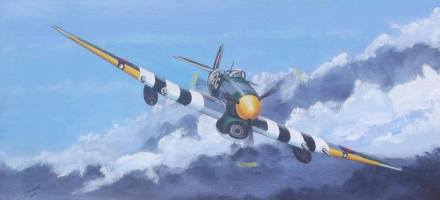
Typhoon ‘full frontal’ by Derrick Dickens
It was a journey, and highly rewarding, the right man received the right recognition and it was awarded in the right way. It is a journey that we as Legionnaires stand by our motto ‘not for ourselves, but for others’ and we are proud to have played a role.
Albie’s testimony
The Legion d’honneur
Albie’s tour of service is well worth a watch, and this short documentary produced by Tinus Le Roux on his tour is an outstanding capture of one of South Africa’s D Day heroes , a snippet of history that needs to be preserved and told and retold, take the time to watch it and feel free to share it.
There are very few of these South African’s left, lest of which our D-day veterans, national (and international) heroes of which there are only a precious three left in South Africa, and Albie is one of these men – the last of an outstanding legacy of South African men whose bravery and honour literally saved the world from a world of extreme evil empires and ideologies, Albie’s LdH and France’s greatest honour well-earned.
Written by Peter Dickens. Image copyright, Karen Dickens, references attributed to Dean Wingrin and Tinus Le Roux. Video interview with Albie copyright and sincere thanks to Tinus Le Roux. Painting ‘Typhoon Full Frontal” artist Derrick Dickens, copyright Peter Dickens. Images were referenced copyrighted to the Imperial War Museum. Albie’s personal images used with thanks to Albie Götze and Tinus Le Roux, copyright Albie Götze.
The featured image shows Typhoon Mark IB, MN234 ‘SF-T’, of No 137 Squadron RAF with a full load of 60-lb. rocket-projectiles beneath the wings, running up on an engine test at B78/Eindhoven, Holland – copyright Imperial War Museum.


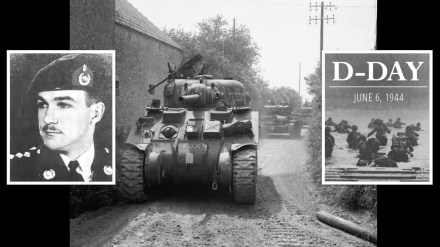
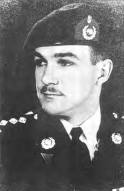 Capt. Lyle Louwrens Archibald McKay, was part of South African forces attached to the Royal Marines on D Day, 6 June 1944. He showed remarkable courage on this most significant day in history – as this insert attests.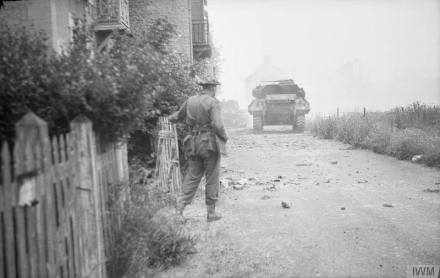
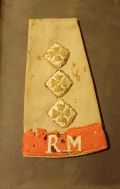 All South Africans in World War Two fighting overseas were volunteers, those in the Union Armed Forces who disagreed with Smuts’ decision to go to war on the side of Britain had the option of staying behind and not wearing the red band (not many did). Note the letters ‘RM’ this signifies ‘Royal Marines’ – a very unique and different World War 2 artefact. As a Captain, Lyle McKays’ insignia would have been similar.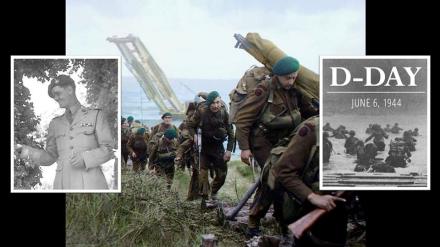
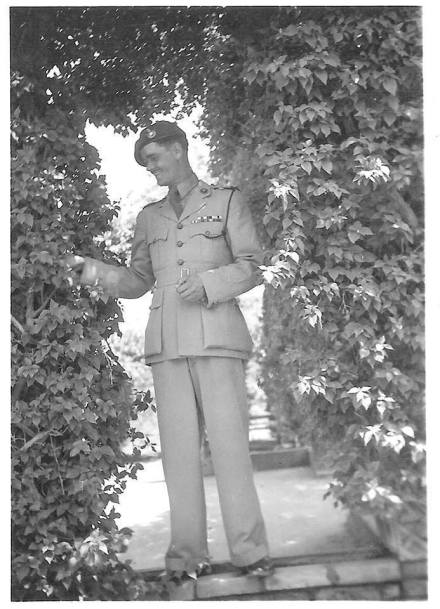 His most painful recollection of D-Day was the stormy passage he and his contingent had to undergo in crossing the Channel in their landing craft.The seas were running high, and hardly a man escaped sea sickness. They landed in the second wave at first light, their boat receiving a direct hit as they approached the shore, half-a-dozen men being killed, and Thomas found himself up to his neck in water after having jumped form the landing craft as it struck the beach.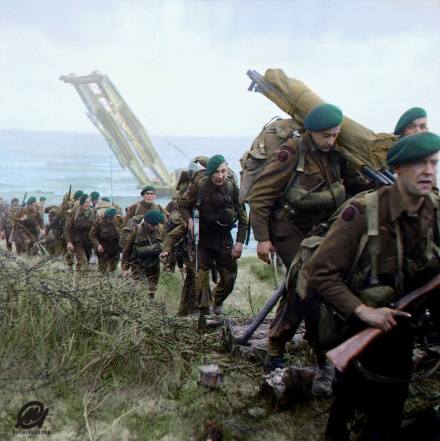
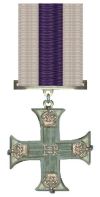 Lt Thomas won the Military Cross (MC) for his actions in World War 2. A significant decoration, it is awarded for gallantry in combat. The MC is granted in recognition of “an act or acts of exemplary gallantry during active operations against the enemy on land to all members, of any rank in Our Armed Forces”.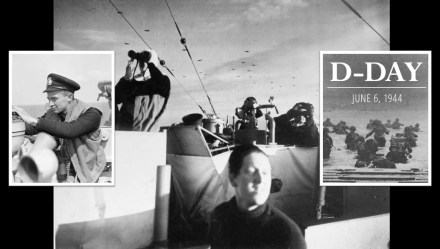
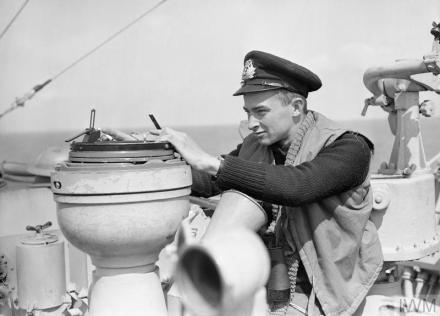
 The Observation Post