Intelligence and Counter Intelligence Operations against the South African Liberation Movements, 1960–1965.
By Garth Conan Benneyworth
Abstract
The road and rail pipelines operated by the liberation movements in Bechuanaland (Botswana) were known as the ‘road to freedom’. An aerial pipeline enabled high value South African political refugees and freedom fighters to move through the Protectorate as fast as possible. A mini-airline called Bechuanaland Air Safaris, it was financed by Bechuanaland’s government and a local millionaire businessman. Set up to support the needs of Britain’s Secret Intelligence Service (SIS), this air bridge enabled close surveillance of potential security issues within Bechuanaland by the SIS, whilst simultaneously assisting organisations that would one day gain political power. This made it a key intelligence target for South Africa’s security establishment, who penetrated this operation. Through surveillance and informants, notably Captain Herbert Bartaune, the company director and operator of Bechuanaland Air Safaris, they interdicted the activities of key personnel involved in liberation struggle operations. This paper examines this air bridge, some of its key personnel, surveillance operations by the South African Police, counter-intelligence actions by the British authorities connected to supporting this pipeline and its use by prominent leaders, including Joe Matthews, Nelson Mandela, Michael Dingake and Patrick Duncan.
Around the time of the start of the armed struggle in South Africa in 1961, an ‘aerial pipe-line’ was established in the then British Protectorate of Bechuanaland (Botswana). This pipe-line was used by important personalities of the liberation struggle from South Africa and Bechuanaland to access assistance outside those countries’ borders. The director and pilot of this aerial pipeline, Captain Herbert Bartaune, is fleetingly mentioned in the autobiographies of those who flew with him and in the literature on Botswana’s pipeline as a sympathiser of South Africa’s liberation struggle. Nelson Mandela and Michael Dingake mention only ‘a pilot’.1 Fish Keitseng, who played a key role in establishing various pipelines in Bechuanaland in the early 1960s, remembered Bartaune by name, describing him as a person who flew many people to safety.2 Ronald Watts knew the pilot and re-established contact in 1990, the pilot having stayed with Watts during September 1960.3 Neil Parsons refers to him by name and describes him as the resident director of the air charter company connected to Britain’s Secret Intelligence Service (SIS).4
However, this article demonstrates that embedded at the very core of this company were spies and informants who reported on the activities and whereabouts of the liberation struggle personnel, the very same people that this air bridge was meant to assist. It identifies Captain Bartaune, pilot and director of Bechuanaland Air Safaris, as a key operative. This paper uses resources such as Top Secret declassified British intelligence reports and a Department of Justice file in the South African National Archives.5 Both were unavailable at the time that many of the first struggle biographies and other works were produced in the early 1990s, and have not been consulted by other scholars who have written on the subject.
The file contents categorically prove this matter of spies in the aerial pipeline and has ramifications on our understanding of specific historic events – for example, those of the Pan Africanist Congress (PAC) in Basutoland, and the captures of Nelson Mandela and Michael Dingake, amongst others. These events and the broader geopolitical milieu in which they occurred consequently need to be reconsidered and refigured.
This paper will use the examples of three prominent persons who used the aerial pipeline, one of whom was seriously compromised as a result and two of whom were captured after exiting the pipeline. The first case is that of Patrick Duncan which demonstrates how Bartaune compromised Duncan and the PAC. The second is associated with Nelson Mandela’s flights as part of his tour of the continent in 1962 and his return to Bechuanaland later that year, when Britain tried to circumvent South Africa’s Security Branch. Within weeks of his return to South Africa, Mandela was captured. The third is that of Michael Dingake in 1965 and how South African agents linked to the pipeline enabled his kidnapping in Rhodesia and subsequent rendition by the SAP. The paper will also show that the shadowy figure of Bartaune is the common denominator for all three case studies. Before discussing these three cases, the article will outline the political context which led to the establishment of the pipeline, as well as provide previously unknown biographical information about Bartaune which is crucial to understanding his role in the pipeline.
With the banning of the African National Congress (ANC) and the PAC in 1960, numerous people from these organisations sought asylum and refuge in Britain’s High Commission Territories of Bechuanaland, Basutoland and Swaziland. After the start of the armed struggle in South Africa in 1961, Bechuanaland became the preferred option as it enabled direct transit into Northern Rhodesia and Tanganyika and beyond.
Fish Keitseng was a defendant in the 1956 Treason Trial and deported to Bechuanaland in 1959. He settled in Lobatse and was in charge of the ANC in Bechuanaland. In late 1960 Joe Modise linked up with Keitseng and recruited him into the ANC underground network.7
Fish Keitseng
Modise was one of MK’s founders and participated in its first operations. He helped establish MK infrastructure in various regions, in particular Natal and the Eastern and Western Cape, spending two years working underground. He played a key role in sending recruits out of South Africa for military training before going into exile in 1963. Together with Keitseng they played a key role with the pipeline.8
The aerial pipeline was no ordinary pipeline, such the road and rail networks where the rank and file were taken by Keitseng by train to Francistown from where they then drove to Livingstone in Northern Rhodesia.9 It was the niche operation that moved key South African leaders, political refugees and freedom fighters through Bechuanaland to Tanganyika and Northern Rhodesia (and vice versa). The aim was to transit them by air as fast as possible to protect them from being kidnapped by agents of the apartheid regime. This was a constant danger. For example during March and April 1960 Deputy President Oliver Tambo narrowly avoided being abducted by South Africa’s Security Branch.10
Fish Keitseng’s house in Botswana, now a memorial as the venue where he hosted South African struggle stalwarts
The air bridge ran from Lobatse via Kasane and, until Northern Rhodesia gained independence, then over-flew that territory to Mbeya, where refuelling took place before flying on to Dar es Salaam. The return trip followed the same route in reverse from Dar es Salaam. Called Bechuanaland Air Safaris, this mini-airline was established by Captain Herbert Bartaune as a charter company in 1961 and it linked Bechuanaland, Basutoland and Swaziland. Bartaune based himself as the company’s resident director in Lobatse, with his wife Elsie Bartaune as company secretary.11 Bartaune was the main pilot who flew refugees from Swaziland to Serowe, and in some cases from Serowe to Tanganyika.12 His financiers were the Bechuanaland Protectorate government and Lobatse-based meat millionaire, one Cyril Hurwitz.13 Parsons wrote that Britain’s Secret Intelligence Service (SIS) funded this enterprise and in essence the air bridge functioned as an SIS operation.14 The Resident Commissioner, Sir Peter Fawcus, who reported to the SIS, controlled the pipeline. Fawcus in turned used only his most trusted subordinates, that included the Lobatse based police Inspector John Sheppard, District Commissioner Brian Egner in Kasane and District Commissioner Philippus Steenkamp in Francistown. The designated point man for the aerial pipeline from MK’s side was Fish Keitseng.
Francistown airport – cira 1960
Overtly, the pipeline was a mini airline; yet, covertly, it informally linked agents of the SIS with elements of the ANC, including MK, and of the PAC. To circumvent the SAP, the SIS activated this aerial pipeline in 1961.15 Given the covert world of intelligence operations in Bechuanaland and the surrounding territories, it should be remembered that the security services of the Central African Federation and those of the Portuguese colonies also operated in the region.
For example, the Federal Intelligence and Security Bureau (FISB), the Central African Federation’s intelligence structure, was headed by Bob de Quehen, MI5’s former Central Africa Security Liaison Officer. In 1960 de Quehen described Colonel Prinsloo, the head of South Africa’s Security Branch, as ‘always a good friend of mine’. 16 This statement occurred in the context of an invitation to de Quehen in 1960 to visit Pretoria and assist in the interrogation of ‘hardcore Communists prominent in recent disturbances’.17 In August 1962 de Quehen learned that South Africa was going to establish a central intelligence and security organisation answerable directly to the Prime Minister. The FISB was promised access to long range South African intelligence and de Quehen arranged to hold monthly meetings with Brigadier Retief, who was responsible for creating this new organisation.18
Portuguese intelligence provided South Africa’s Security Branch with surveillance reports about the movements of prominent South African communists traversing Portuguese territories.19 In 1961 Portuguese Naval Intelligence advised the SIS that Ghana was recruiting South Africans for political, military and sabotage training and also supplying funds to South African anti-government groups.20 Consequently any person of interest to the FISB and Portuguese intelligence services would come in for attention and experience a hard time moving around undetected.
Given the profile of the pipeline passengers, who included the senior leadership of the ANC, the South African Communist Party (SACP), the PAC and possibly other liberation movements, this made it a key intelligence target for South Africa’s security establishment. If they could infiltrate or penetrate the pipeline and recruit its personnel, it would be possible to interdict the various organisations and the activities of their key political activists. This is confirmed in a Bechuanaland Central Intelligence Committee (CIC) report, dated September 1960, which reflects that a SAP officer from the Mafeking Security Branch questioned Captain Bartaune in Lobatse about his recent airlift of Patrick Duncan a member of the Liberal Party who joined the PAC in 1963) and Joe Matthews, a member of the ANC and SACP. 21 On 11 October 1961 a Security Branch officer from Mafeking visited Andrew Rybicki, one of Bartaune’s pilots. British records reflect that the consensus was that Rybicki was recruited as an informer. 22 Rybicki’s role was to forward information about refugee airlifts that he personally flew, some of which Joe Matthews organised.23
Joe Matthews
As for Joe Matthews, the SIS had him under close surveillance. In 1960 Matthews left South Africa for Basutoland with the view of qualifying for a British passport after residing there for a year. This would give him freedom of movement, making him the link between those outside of South Africa and those inside the country.24 As well as being a member of the ANC, Matthews had been active in the underground SACP since 1957 and was soon to become a member of its Central Committee in 1962.25. He was a direct person of interest to the various security services and his activities were being closely monitored by the SIS, the Bechuanaland CIC and the SAP, as it was believed that Matthews was in charge of the ANC’s pipeline.
The freedom of movement enabled by his British passport did not pass unnoticed. In 1962, British intelligence opened a file on Matthews. Classified Top Secret, its documents are marked UK Eyes Only, which means that Britain did not share this information with its strategic allies that made up the rest of the Five Eyes – the United States, Canada, Australia and New Zealand. Mandela’s 1962 file was classified Secret, a security grading one level lower than Matthews, suggesting that at this point in time British intelligence considered Matthews more of a threat than Mandela.26 None of Mandela’s file contents are marked UK Eyes Only, meaning information could have been shared with Britain’s strategic allies in the Five Eyes. In the case of Matthews, British intelligence tracked some of his overseas trips and attempted to identify his funding sources and payments made for air charter travel. In November 1960, they monitored him in Moscow, Prague, Tanganyika and the United Kingdom, amongst other destinations.27
Captain Herbert Bartaune, Director of Bechuanaland Air Safaris
Captain Herbert Bartaune runs as a central thread linking the life stories of Patrick Duncan, Nelson Mandela and Michael Dingake to the aerial pipeline. Bartaune was the Director of the air charter company from its inception in 1961 until it was acquired by Bechuanaland National Airways on 1 October 1965. Over a period of approximately four years he flew numerous key people in and out of Bechuanaland and played a pivotal role in the pipeline as its central operator. Yet who was he? A closer focus on the life of the Captain has direct bearing on the surveillance, repression and counterinsurgency operations undertaken by the SIS and South African Security Branch against the liberation movement and its key personnel. Herbert Bartaune was a German citizen who was born in German South West Africa in 1914 and died in Walvis Bay in 1993.28 His wife Elsie Bartaune died in Walvis Bay in 2002.29
Before the Second World War, Bartaune had been active in glider flying in South Africa and obtained his private and commercial pilot’s licence. His exact activities during the war are difficult to trace, yet before the war he was actively involved in aircraft and glider research and experiments in Germany. In 1937 he became a member of the German Research Institute for Soaring (gliders and sailplanes), where he did much research on aircraft air brakes. The institute was located in the Wasserkuppe, the highest peak in the Rhön Mountains in the German state of Hesse. Between the First and Second World Wars great advances in gliding and sailplane developments took place on this mountain.30 It is here that Bartaune specialised his flying skills which would later make him an aviator of choice for the pipeline.
A DFS SG 38 training glider, Wasserkuppe, Germany. Luftwaffe pilot training.
Students from the Darmastadt University of Technology started flying from the Wasserkuppe as early as 1911, yet gliding came into its own after 1918 when the Treaty of Versailles restricted the production or use of powered aircraft in Germany. From 1920 onwards annual gliding competitions were held and in the 1920s the world’s first glider pilot school was established at the Wasserkuppe. By 1930 the competition was an international event drawing pilots from all over Europe and the United States, and Bartaune from South West Africa.
Virtually every German aeronautical engineer and test pilot of note during the 1920s and 1930s spent time building, testing and flying aircraft at the Wasserkuppe, and this period saw advances in new technologies such as flying wings and rocket powered flights. During the Third Reich gliding activities were controlled by the state. As for the Hitler Youth pilots and their instructors, proficiency in gliding was used as the first step towards joining the Luftwaffe, something about which Bartaune later reminisced.31 During the war Bartaune served with the Luftwaffe as a pilot and reached the rank of hauptmann or captain.
Stuka dive bomber – benefiting from air brake technology
After the war Bartaune continued gliding, this time with the gliding club of the British Fourth Armoured Brigade in Germany.32 Here he was the Chief of Aviation before returning to South Africa in 1946, where he continued his career as an aviator. In 1953, Border Watch, an Australian newspaper, reported that he resided in South West Africa and owned two small aircraft. On 25 July 1953 the paper reported that he was flying in Australia, undertaking research into rain-making experiments for the Commonwealth Scientific and Industrial Research Organisation, an Australian federal government agency responsible for scientific research in Australia. His method was based on injecting silver iodide into the exhaust pipe of a light aircraft and then releasing this into cloud formations. According to the article, Bartaune met all of his expenses for this project.33
In September 1960 he resided in Bulawayo, worked for Air Carriers Bulawayo and regularly flew into Francistown and Maun. According to a telephonic interview by Watts with Bartaune in 1990, at the time aged 76 and retired in Walvis Bay, Bartaune said that in Bulawayo he ‘made enemies because people thought he was a liberal’.34 Bartaune flew all the Southern Rhodesian Prime Ministers including Lord Malvern, Garfield Todd and Ian Smith as well as Dag Hammarskjold, the Secretary General of the UnitedNations, before his fatal crash in September 1961. He considered himself a ‘taxi driver’ and said in 1990:
‘taxi drivers don’t ask the business of their clients.35
However, it was his activities and those of his wife during the Second World War that have a bearing on the pipeline. With the outbreak of the Second World War private pilots’ licences in South Africa were suspended and a registered letter was sent by the Office of the Director of Civil Aviation in Pretoria to Bartaune informing him of this. It was returned undelivered to Civil Aviation, which then referred the matter to the Commissioner of Police, prompting a police investigation into his whereabouts. According to a file in the South African National Archives, the SAP established that Herbert Bartaune left Walvis Bay on 22 July 1937 for Germany, before the outbreak of the war.36
Two documents in the file, dated 21 May 1946, refer to both Herbert Bartaune and his wife Elsie – then residing in Johannesburg – as being on the Official Card Index of Nazi Party members maintained by the German authorities and which was obtained by the Rein Commission during 1946. Other correspondence by the SAP in this file refers to them as ‘enemy aliens’.37
In other words, both the director (Herbert Bartaune) and the company secretary (Elsie Bartaune) of Bechuanaland Air Safaris were former Nazi Party members and the South African authorities knew this at the time the pipeline was being set up. Given that the British were part of the Rein Commission in post war Germany, they must have known this too. As former Nazi Party members, it is likely that the two central pipeline operators also harboured anti-communist sentiments with obvious bearings on the airlift passengers Herbert Bartaune transported.
Bartaune, Duncan and the PAC’s uprising plans
Declassified British Foreign Office documents provide another insight into Bartaune and his role in undermining the PAC’s plans for a general uprising in 1963 and again in 1964 staged from Basutoland. These documents also prove beyond doubt his role as a multiple intelligence services operative.
Following its banning in South Africa and the arrest of most of its leadership during the 1960 anti-pass campaign and the emergency, the PAC regrouped in Basutoland under the direction of a new Presidential Council. 38 They planned a national uprising in South Africa for 7–8 April 1963. This failed to materialise s a result of a series of raids on the PAC by the Basutoland police and the mass arrest of PAC activists by the SAP in South Africa.39
Bartaune was connected to these security operations and the failure of the 1963 uprising through his espionage activities. On 21 April 1963, Bartaune wrote a report in Lobatse for the Bechuanaland Protectorate Special Branch which was then classified Top Secret. This report was forwarded from the Resident Commissioner in Mafeking to the Deputy High Commissioner in Cape Town. Its Top Secret covering note (Savingram) reads: ‘I enclose report by Capt. H. Bartaune to [Bechuanaland’s] Special Branch. I have no reason to doubt the veracity of this statement. I have not informed the Central Intelligence Committee of its contents.’40 It was then forwarded together with a Top Secret dispatch on 3 May 1963 by the High Commission in Cape Town to the Colonial Office in London and also copied to the Foreign Office. Read together these documents provide clear evidence of just how penetrated the pipeline was and of Bartaune’s role in establishing it, running it and compromising its passengers and their political organisations.41
J.A. Steward of the High Commission wrote that:
The Special Branch of the South African Police are known to use Bartaune, but this does not necessarily mean that he is altogether to be disbelieved and we propose to act on the assumption that though the report may well be accurate, it may also have gone to the South Africans and perhaps to C.I.A. as well as to ourselves.42
The report details discussions that Bartaune had with Patrick Duncan, then a member of the PAC, during the evening of 12 April 1963 at Bartaune’s residence after Duncan was flown in from Maseru by one of Bartaune’s pilots. Duncan asked if Bartaune would transport arms and ammunition by air through Bechuanaland to Basutoland in return for attractive remuneration. Bartaune claimed that his first instinct was to decline, yet he decided to have the discussion as he may ‘get more information from him’.43 Duncan’s plan was for Bartaune’s aircraft to smuggle the weapons from lonely pans in the desert where Bartaune could arrange for aircraft refuelling depots. They would then at night overfly South Africa and either land or drop the cargo in Basutoland. Duncan suggested that should Bartaune not be prepared to do the flying, then he could at least aid foreign aircraft with secret refilling bases on these lonely pans. His thinking was to use the Dakota or similar aircraft for this purpose.
Patrick Duncan – Pan African Congress
Duncan also told Bartaune that he felt that Basutoland would be an ideal base for an uprising against the Republic. Its central positioning and rugged mountainous areas would provide ideal hiding places for armed activity. Such a centre would be safe as South Africa would not dare to invade any High Commission Territory as this would constitute an act of war against the United Kingdom. Bartaune was not the only person Duncan spoke to about his idea, for example he mentioned this to Peter Brown and other Liberal Party members who visited him in 1962.44
The weapons, Duncan told Bartaune, would come either from Egypt or Ghana, and not China or the Soviet Union. He was particularly seeking FN semi-automatic rifles. Funds would not come from behind the Iron Curtain and Duncan hinted to Bartaune that his backers might have been North American. This reference to the North America is interesting as two months later in June 1963 Duncan toured the USA with Nana Mahomo, a member of the national executive committee of the PAC and one of its chief representatives abroad after 1960. Duncan and Mahomo persuaded, on the basis of the PAC’s anti communist stance, the American Federation of Labour-Congress of Industrial Organizations to give money to the PAC.45
Duncan outlined the plan to start an uprising on South African soil from bases in Basutoland which would force the Republic to counter measures. He explained it thus:
Once the fighting starts and Africans were shot at a larger scale, it would create a tremendous outcry in the rest of the world against South Africa, and this would force the United Nations forces to step in for reasons of world security. The whole thing would then develop more or less in the line of a second Congo.
Duncan stated that the aim was to outflank the communist element in South Africa as it had happened in the Congo, where he viewed the events of 1961 as a victory for the West which prevented the communist bloc getting a hold in Africa.46 Shortly after this conversation, Bartaune reported the details of it to Mr Forrest, the Chief of Special Branch who, ‘begged me to cooperate with them and make Mr Duncan believe that I was agreeable to his suggestions. I was asked to do everything in my power to get information on further details’.47
On 14 April 1963 during a flight with Duncan from Kasane to Elizabethville, Bartaune suggested to Duncan how this gun-running operation could work. He said that the idea of night flying and secret refuelling should be abandoned. The weapons should be dismantled into the smallest possible parts and concealed in used suitcases and travelling bags of various sizes. The flights should leave from Mbeya via Bechuanaland to Basutoland in broad daylight and the baggage accompanied by one or two passengers to deceive the authorities. Even though Zambia was soon to become independent, the country was to be avoided as European airport personnel could not necessarily be trusted. Lobatse was to be used as a refuelling point before flying on to Maseru or an airfield close to the proposed hiding place in Basutoland. Duncan suggested as a first delivery approximately 40 rifles with ammunition probably as a sort of pilot scheme.
Air Charter companies operating in Francistown circa 1960. Bartaune operated three such Twin Engined Pipers.
Duncan offered 55 South African cents per mile against Bartaune’s normal quota of 35 cents plus a personal danger bonus of R2000 per flight, to be paid in advance in South African bank notes. Duncan advised that he was then on his way to Europe to collect sufficient funds to purchase and transport the arms and that he intended to return in about three or four months’ time. He would in all likelihood accompany Bartaune with the first consignment. The reason Bartaune suggested open flights was:
To gain the full confidence of Mr Duncan because he was expecting my advice and knowledge in these technical matters. Secondly, such flights carried out quite openly and in day time, create less suspicion to the authorities and to the general public of every Southern African country concerned. Thirdly, it gives an easy opportunity for the BP (Bechuanaland Protectorate) Police authorities to intercept such a shipment here in Bechuanaland or, better still, watch it safely going through Basutoland so that the Basutoland Police can take over there, and get more information on the hiding places and on the rest of the organisation.48
In his report for the Bechuanaland Protectorate Special Branch Bartaune claimed that he suggested to Duncan that:
The length of the supply line from Mbeya for instance, provides more opportunities to make certain whether the first shipment contains arms and ammunition. There is a possibility that on the first flight various kinds of hardware such as nails, bolts and stuff could be carried in order to test the reliability of this channel49.
Did Bartaune think up these ideas all on his own? Is there evidence as to why Duncan could trust Bartaune? On balance the hypothesis is that this method of gun-running was given to Bartaune during his initial discussions with Bechuanaland’s Special Branch so he could suggest it to Duncan. In effect Bartaune was working for the Special Branch and actively handling Duncan. As for Duncan trusting him, Bartaune reported the following:
In the past few years I have flown a number of political refugees and leaders of various factions. Although these flights were carried out completely legally with the international air navigation regulations, and with the full knowledge of, and consent of the appropriate authorities, these facts were hardly realised by those passengers, being hunted on one side of the border and assisted on the other side, which played a psychological part in their mental outlook. Over and above stands the fact that all passengers are treated and cared for to the best of my knowledge and ability, irrespective of race, social standing or political attitude, which instils confidence and trust. Mr. Duncan has flown with me since several years.50 Once, on a scheduled flight over Bechuanaland, I even possibly saved his life by swift action, when he by accident opened the door of the aircraft and was very nearly sucked out. My concern for him as for any other passenger must have given him the feeling of myself being a sympathiser with his political course.51
In other words, Bartaune not only had won the trust of the very same people who were being pursued by the South African authorities, he also broke it. From the documentary evidence it is clear that he was feeding information into at least three (Bechuanaland Special Branch, SIS and South African) and possibly four (CIA) intelligence systems about them. The possibility exists that he assisted the FISB as well.
The High Commissioner in Cape Town who forwarded Bartaune’s report to London stated that they had corroborated from other sources that his information was accurate.
In his last days in Maseru, Patrick Duncan was in a very overwrought state and the substance of this report seems to us likely to be genuine. You may have seen amongst the documents taken to London recently by Captain Willoughby a map of the mountainous area in the south of Basutoland and in the adjoining Eastern Cape. This map Patrick Duncan left behind in a drawer in a friend’s house in Southern Basutoland. Taken together with the location of Mr. Duncan’s trading stores; his theory of a ‘trigger’ war and of United Nations involvement (all of which was confirmed by Ntloedibe).52 These details tend to corroborate Bartaune’s report and are by no means out of keeping with Patrick Duncan’s present declared position and known political and psychological attitudes.53
This report by Britain’s High Commissioner in Cape Town is linked to the neutralisation of the PAC in Basutoland. The SIS were aware that PAC supporters were entering Basutoland to register as political refugees in order to receive military training before infiltrating South Africa. Duncan had purchased two trading stores in the Quthing district to be used as military training grounds for PAC recruits.54 These were the same stores referred to by the High Commissioner in Cape Town.55
On 12 May 1963 Duncan and his two sons met their pilot at Maseru airport and were flown to Bechuanaland by Bechuanaland Air Safaris. The pilot is described in Duncan’s biography as a white supremacist and former mercenary from the Congo. 56 On 4 June 1963, while Duncan was in the United Kingdom, the British authorities declared him a prohibited immigrant in the High Commission Territories.57 All Duncan’s plans hinged on him being based in Basutoland. The cause of this unexpected blow convinced Duncan that it resulted from pressure by the South African authorities who knew about his flight to Bechuanaland, yet allowed it on condition that he did not return.58 On balance they did know of this flight and Duncan’s discussions with Bartaune around weapons smuggling. Bartaune passed this information on to the South Africans, as suggested in his report to Bechuanaland Special Branch.59
On 21 August 1963, P.K. Leballo, the PAC’s Acting President and head of the Presidential Council, left Basutoland by chartered aircraft for Salisbury from where he then boarded a second aircraft to Accra. 60 The chartered flight was from Bartaune’s company. As British and South African intelligence driven operations closed down on the PAC network, its plans for a general uprising first in 1963 and then in 1964 were ultimately thwarted and its leadership forced out of Basutoland.
In 1962 Nelson Mandela travelled through Bechuanaland to Tanganyika as the first leg of his mission into Africa. Mandela linked up with Joe Matthews in Lobatse, before flying to Dar es Salaam. Bartaune’s aircraft was chartered, the payment monitored by the SIS in Dar es Salaam.62 On 11 January 1962, Mandela arrived in Lobatse to find that his flight was delayed. He stayed with Fish Keitseng in Peleng village.63 On 22 January 1963 Britain’s High Commissioner in Cape Town reported that on 19 January 1962, Bartaune air-lifted Mandela into the pipeline.64 The High Commissioner reported that while Mandela stayed in Lobatse South Africa’s Security Branch was unaware of Mandela’s presence in Peleng (the Lobatse location where Keitseng lived) yet an informant had advised them of Mandela’s flight details.65 This is worth noting, as this informant could have been Bartaune given the information regarded flight details.
Nelson Mandela in 1960 (Treason Trial)
Nelson Mandela’s return journey through Bechuanaland provides a glimpse into attempts by British intelligence to counter South African clandestine operations against Mandela once he was inside the protectorate. For part of Mandela’s return trip, starting from Dar es Salaam, then Prime Minister Julius Nyerere provided a private plane to Mbeya in southern Tanganyika66. Fish Keitseng then travelled to Mbeya and met with Mandela and Oliver Tambo, taking with him three other people who needed to travel onwards. Keitseng recalled:
I took them and rented a charter from Bartaune, who had earlier flown Mandela to Tanganyika. He was a big chap who used to fly a lot of our people to safety. Others were also dealing with him. Once, when I was at our headquarters in Lusaka I found him discussing payments with (Tennyson) Makiwane. On this trip another pilot who worked for Bartaune flew. So many people were flying that Bartaune had bought an extra plane.67
David Motsamayi travel document
Keitseng told Mandela and Tambo that aside from informants, South African Security Branch were all over Lobatse. He suggested that that it would be safer to land in Kanye rather than Lobatse. After spending the night in Mbeya, they flew to Kanye, where the District Commissioner of Gaborone and a Bechuanaland Special Branch officer intercepted Mandela. They brushed aside Mandela’s use of a false name and threatened his arrest if he incorrectly identified himself. The Special Branch officer stated that his instructions were to provide help and transportation.68 Mandela replied;
‘If you insist that I am Nelson Mandela and not David Motsamayi I will not challenge you’.69
The Special Branch officer accompanied by the District Commissioner then drove Mandela and Keitseng to Lobatse where they rendezvoused with Joe Modise and Jonas Matlou.70 Both were members of the MK team sent to collect Mandela.71 The Special Branch officer advised Mandela that the SAP were aware of his return and suggested that he leave the next day.72 Mandela decided otherwise and left that night for Liliesleaf farm in Rivonia, where he arrived the following day.
Mandela’s falsified David Motsamayi travel document
In just over a week after exiting the pipeline Mandela was captured. Were his movements reported by Bartaune and other informants embedded in the pipeline? Very likely given that they could recognise Mandela, having interacted with him before and having access to the passenger manifest and the timing and destination of his flight. The pilot whilst airborne would have radioed his route, position and timings to Bechuanaland air control. This signals traffic would have been monitored by the South African military and aviation authorities. Given that the SIS knew Bartaune was passing information to the SAP, this could explain the rerouting of his flight to Kanye. Within days the British were being challenged by the SAP about Mandela’s passage through Bechuanaland. It was decided that elements of the pipeline were in jeopardy so Inspector John Sheppard and District Commissioner Brian Egner, two key British intelligence operators involved with the pipeline, were quickly transferred out of the Protectorate to prevent their potential kidnapping by the SAP.73
Top Secret British colonial office documents tracking Nelson Mandela
Michael Dingake
Michael Dingake, a Bechuanaland national, joined the ANC in 1952 and served in various roles in the organisation’s structures. He took part in all the campaigns of this period from the Defiance Campaign to the anti-pass campaign and the burning of passes after the Sharpeville massacre in 1960. Dingake went into hiding after the Rivonia raid and captures to lead the ANC underground. In 1964 he left South Africa and became the external contact with the underground machinery in Johannesburg.74
Michael Dingake
His account of his 1965 capture in Rhodesia and subsequent rendition to South Africa in his new autobiography Better to Die on One’s Feet offers another insight into the pipeline. When his written account is combined with information he shared during an interview with the author about this in 2015, a picture emerges of the hidden hand of South African intelligence in his capture through access to informants embedded in the pipeline.75
Towards the close of 1965 Dingake visited the ANC office in Lusaka. For his return journey to Lobatse, the organisation chartered a plane to fly him and Duma Nokwe, the Secretary General of the ANC, who was scheduled to meet his wife who had just fled South Africa to Lobatse. For landing rights to be obtained, the Bechuanaland authorities required a passenger manifest together with all their passport details. It was presumed that there would be no difficulties given that Nokwe was not a prohibited person and Dingake’s passport was in order.76
However, a delay followed, which seemed unusual. The air charter company advised that they take off from Lusaka airport in anticipation of a positive response whilst they were airborne, as the company believed it would be impossible that a Bechuanaland citizen would be denied landing rights in their own country. Dingake recalled that;
‘it was a very small aircraft, could seat about four’ and that it was ‘the two of us (himself and Nokwe) and the pilot’.77
According to Dingake’s account, they took off and the pilot kept in radio contact with the company offices. Whilst airborne they kept checking with the pilot what the status was and he kept replying ‘no, not yet’.78 Later when they asked the pilot where they were he advised that, much to their consternation they were about to land in Salisbury, Rhodesia, for which the pilot had been cleared by the Rhodesian authorities. Dingake and Nokwe told him to return immediately to Livingstone as ‘Salisbury would not have been safe for either of us’.79 Dingake remembers that ‘He didn’t argue, he turned back to Livingstone’.80
On landing in Livingstone the company advised that their landing rights had been refused and Dingake could proceed to Bechuanaland by other means of transport. He was assured that he could take a train through Rhodesia without hindrance. Dingake wrote to the High Commissioner of Bechuanaland berating the authorities for not allowing a bona fide citizen to return to his home country. To his surprise, he received a prompt and very polite reply claiming misinformation about his identity. The politeness disarmed Dingake, and he set off by train.81
On 8 December 1965, he was captured inside the train at Figtree, Rhodesia, while carrying his Bechuanaland passport. Dingake’s wife through her lawyer wrote to Seretse Khama to intervene, yet this letter was not handed to Khama in time by his personal secretary. As Dingake recalls, ‘it seemed all the dice were inauspiciously stacked against me’.82
Lt. Dirker
Dingake was detained for just over a month before being driven to Beit Bridge where he was handed over to South African Special Branch. The Rhodesian BSAP officer went through the motions of returning Dingake’s passport. Lieutenant Dirker, a notorious Security Branch officer, snatched the passport from the Rhodesian officer’s hand. When they drove through the border post into South Africa Dingake was forced to lie down on the back seat of the car with a gun to his head. There were no witnesses to his entering South Africa.83 Detained and tortured, in 1966 Dingake was sentenced to 15 years imprisonment on Robben Island.
On 19 November 2015, during an interview with Michael Dingake in Gaborone, he was asked about the pilot who attempted to land him in Salisbury.
Author: May I ask you about the pilot? I know that this is a long time ago, can you recall what his nationality was?
Michael Dingake: I think he was British, I think he was British. Yet was he British? Anyway it was a funny sort of name. I’d better not commit myself to saying he was British.
Author: Was the surname Bartaune?
Michael Dingake: Ah! Yeah! That’s right. That’s right Yeah, that’s right. That’s the name. Yeah.84
Dingake was very clear about this point during this discussion. At the mention of Bartaune’s name he was decisive in his reply and in recognising the name. He literally clapped his hands together at the mention of the name. Bartaune was the pilot during this incident.
Conclusion
Bechuanaland Air Safaris was a key part of the various pipelines established in Bechuanaland to facilitate transport across that territory for the South African liberation movements. It connected Bechuanaland to Basutoland and Swaziland and was established by the SIS in partnership with Captain Herbert Bartaune. During its existence, many prominent leaders of the liberation movements flew with it and interacted with Bartaune. It appears that in certain instances, as that of Patrick Duncan, Bartaune won the trust of a number of people.
Yet his past suggests more about Bartaune. Aligning himself with the forces of Nazi-fascism, he served with the German armed forces in the Second World War and, along with his wife Elsie, he was a Nazi Party member. However, according to the British intelligence system he was, some time before the Rivonia raid, providing information to the SAP.
British documents state that they assumed that the information in his report to the Bechuanaland Special Branch was also passed on to the SAP and possibly the CIA. Whether this means Bartaune passed it on to the CIA directly, or that the SAP passed this onto the CIA through their channels remains unknown.
As for Patrick Duncan and PAC activities in Basutoland, Bartaune compromised them to the British, South African and possibly US intelligence systems. Duncan’s relationship with Bartaune reached back several years and, according to Bartaune, he had even saved Duncan’s life on one occasion. Duncan trusted Bartaune and shared his plans for smuggling weapons with the aviator. Yet, unbeknownst to Duncan, Bartaune had no hesitation in using this information against Duncan.
In the case of Nelson Mandela, Bartaune personally flew him from Lobatse to Tanganyika. Mandela’s return to Kanye in one of Bartaune’s aircraft resulted in diversions from the original route to Lobatse due to the risks involved as a result of increased South African surveillance around Lobatse. When landing at Kanye, Mandela was assisted by the District Commissioner of Gaborone and a British aligned security official to reach his rendezvous team for his journey back to South Africa. This in a way thwarted South African agents. However, very shortly thereafter Mandela was captured. It is known that the CIA assisted the South African Security Branch in his capture. If Bartaune at that stage was assisting the SAP, he may have played a role in the events leading up to his capture by reporting on his intended travels through Bechuanaland, prior to airlifting Mandela and Keitseng from Mbeya.
In the case of Michael Dingake, his capture in Rhodesia was part of an orchestrated plot between the South African and Rhodesian security services. According to Dingake, there was no apparent need to deny landing rights to a Botswana citizen with a valid passport, yet that is what happened. During this flight Bartaune attempted, for no apparent reason, to land his passengers in Salisbury, which would have resulted in Dingake’s and possibly even Duma Nokwe’s arrest. He would have literally delivered them to the Rhodesian security services. When they remonstrated, he returned to Zambia. Dingake was then forced to travel overland through Rhodesia, resulting in his capture by the BSAP, who then illegally handed him over to the SAP.
The penetration of the aerial pipeline by the apartheid regime has a bearing on our understanding of the events and personalities described in this paper. After Mandela’s capture, key persons connected to the pipeline were transferred out of Bechuanaland. However, the pipe-line continued functioning with Bartaune betraying Patrick Duncan and the PAC in 1963 and 1964 and up until Michael Dingake’s capture in 1965. As the company was taken over by Bechuanaland National Airways in October/November 1965, Bartaune’s role in Dingake’s capture may have been one of his final acts of betrayal at that time. Information supplied to the intelligence and security services of various countries by Bartaune (and other informants) impacted negatively on the liberation movements. This was part of the apartheid state’s surveillance, repression and counterinsurgency objectives, as the cases of Matthews, Duncan, Mandela and Dingake discussed in this article show.
Footnotes
N. Mandela, Long Walk to Freedom (London: Abacus, 1995), 344; M. Dingake, Better to Die On One’s Feet(Cape Town: South African History Online, 2015), 102. ↩︎
F. Keitseng, Comrade Fish: Memories of a Motswana in the ANC Underground (Gaborone: Pula Press, 1999), 55. ↩︎
R. Watts, ‘Memoirs of the Refugee “Pipeline”: The Serowe Route, 1960–1961’, Botswana Notes and Records, 29 (1997), 115. ↩︎
N. Parsons, ‘The Pipeline: Botswana’s Reception of Refugees, 1956–68’, Social Dynamics, 34, 1 (2008), 20–21. ↩︎
National Archives of the United Kingdom (hereafter NAUK), FO 371/167528, South Africa: Export of Arms to South Africa: Smuggling and Gun-running Activities, 1963 (hereafter NAUK, FO 371/167528 South Africa: Export of Arms); National Archives of South Africa (hereafter NASA), JIC, Vol 62, Elsie Bartaune, 1939–1946. ↩︎
This section on the setting up of the aerial pipeline and its monitoring by various intelligence agencies is partly drawn from G. Benneyworth, ‘Armed and Trained: Nelson Mandela’s 1962 Military Mission as Commander in Chief of Umkhonto we Sizwe and Provenance for His Buried Makarov Pistol’, South African Historical Journal, 63, 1 (2011), 81–84. ↩︎
Ibid. Sifiso Mxolisi Ndlovu describes a similar incident also in 1961 which Ndlovu cites from the Botswana archives. It records that ‘information from three different sources in Bechuanaland reported that between the 8 and 11 December 1961 two South African Police Special Branch agents were operating in the areas of Palapye and Serowe. When one of them was asked what the SAP special branch were doing in the protectorate, they replied that they “were going to arrest refugees”. They were traveling in a Johannesburg registered car’: Ndlovu, ‘Heritage Routes’, 502. ↩︎
SADET, The Road to Democracy in South Africa Volume 1 (1960–1970) (Zebra Press, Cape Town, 2004, 22. . ↩︎
NAUK, DO 119/1229, Vincent Joe Matthews (VJ), 4 July 1962–4 October 1962. ↩︎
According to two Walvis Bay residents who remembered Bartaune, his final employment was with the fish oil depot in the harbour. According to one of them, Bartaune had at one point been Haile Selassie’s personal pilot. A member of the local shooting club, Bartaune was an ardent gunsmith and built a few handguns for himself. He refused to speak Afrikaans. Conversation with two Walvis Bay residents, 7 May 2016. Both individuals asked to remain anonymous ↩︎
Bartaune was a member of the Swakopmund gliding club, where in 1968 he spoke of the Hitler Youth and of how glider flying prepared them for conversion as pilots in the Luftwaffe. He related that the Hitler Youth launched their gliders by a catapult system: Conversation with R. Swart, Kimberley, 8 March 2017. Mr Swart was also a member of the Swakopmund gliding club and remembered Bartaune and the discussions he had with him. ↩︎
P. Ariane, H. Kuckuk, K. Pophanken and K. Schalipp, Ein Jahrhundert Luft- und Raumfahrt in Bremen: Von den frühesten Flugversuchen zum Airbus und zur (Falkenberg, Rotenburg Edition, 2015), 343. ↩︎
‘More “Rain Makers” Here For Experiments’, Border Watch, 25 July 1953. ↩︎
NAUK, FO 371/167528, South Africa: Export of Arms. ↩︎
This distinction of several years is important in that this means that Bartaune flew Duncan before he established Bechuanaland Air Safari’s. This would presumably have been in the Central African Federation and Belgian Congo. ↩︎
NAUK, FO 371/167528, South Africa: Export of Arms. ↩︎
NAUK, FO 371/167528, South Africa: Export of Arms. ↩︎
NAUK, CO 1048/521 Basutoland Intelligence Report, October 1963 and July 1964. ↩︎
Mandela’s use of the pipeline and return to South Africa is also described in Benneyworth, ‘Armed and Trained’, 84, 94–95. ↩︎
NAUK, DO 119/1478, Nelson Mandela, 1962. Secret Telegram from High Commissioner to the Secretary of State for Colonies and the Resident Commissioner Bechuanaland, 22 January 1962. ↩︎
Joe Matthews arrived the day before and flew out with Mandela. ↩︎
NAUK, DO 119/1478, Nelson Mandela, 1962. Secret Telegram from High Commissioner to the Secretary of State for Colonies and the Resident Commissioner Bechuanaland, 22 January 1962. ↩︎
Matlou had opened the ANC Office in Bechuanaland in 1961 before moving to Tanzania and then Algeria, where he helped to bring in South African youth for military training. ↩︎
On the 80th anniversary of D-Day and witnessing the French President Macron awarding the Legion d’Honneur (LdH) to attending D-Day/Overlord veterans still with us. I am reminded of this very special South African. Albie Götze took part in D-Day as a Spitfire pilot seconded to the Royal Air Force, he later took part in Operation Market Garden as a Typhoon pilot. After World War 2 (1939-1945), he took part in the Berlin Air Lift as a Navigator (1948 to 1949), he later took part in the Korean War as a Mustang pilot (1950 to 1953) and finished his career as a General in South African Air Force and took part in the Border War (1966-1989). Albie was one of those very rare war veterans having survived all of that.
As South African Legion I was involved in the obtaining of Legion d’Honneur, the supreme award given by the French government to all surviving D-Day veterans and at the time South Africa’s only surviving D-Day veteran. Here I am (left) with Albie (on the right) and the French Ambassador, his excellency Christophe Farnaud (in the middle) on the occasion of his medal parade and receipt of his LdH on the 13th February 2018 in Cape Town. I also took he opportunity to also present Albie with a print of my Dad’s painting of a Typhoon.
Over time I came to know Albie well and heard many of his stories, I kept my promise to myself to buy any WW2 veteran I meet a beer, and Albie shared this story with me on one such occasion when he and I were hitting a pint of beer and oysters at the Quayside cabin in Hermanus (Albie loved oysters). It says a great deal about this wartime generation, the guts and courage of these young men, they truly are a generation apart.
During D-Day, Operation Overlord and Operation Market Garden Albie’s aircraft was hit on many occasions and he made a few crash landings with damaged aircraft. He recalled on such incident as if they were yesterday, this is a very brave account of combat flying, honest, harrowing and even a little funny – in the darkest manner of ‘military humour’.
“I got shot one day, as a matter of fact I was watching this guy shooting at me, with a 88 mm, he shot at me and I looked and I said to myself ‘this bastard is going to kill me’ … he shot me at the back of the fuselage, but, the 88mm did not explode for some unknown reason, God must have said ‘I not gonna put this fuse on’, But it did cut my trim-wire to my rudder and all it does is that your aircraft just rolls over and you go strait in, but fortunately I was able to ‘catch it’ (arrest the aircraft roll with opposite ailerons);
… but I could only fly at an angle a friend radioed and said ‘Albie are you in trouble?’, I said to him ‘yes’, I can’t see out, at this time as I got down into the cockpit and grabbed hold of the rudder bar in order to keep on flying, otherwise I would go down. He said “I will fly on top of you”, been down there you can’t see out of the cockpit, all I could see was up, he brought me home like that, him flying on top (as a visual marker), me underneath. When I did the crash landing, that scoop on ‘the typhoon’ is full of oil and it sparked and catches fire quickly, I was so scared, before the plane came to a stop, I was out of the cockpit and I ran so fast that the ambulance could not catch me”.
Wow, there’s everything in that story, drama, bravery, camaraderie, action and comedy … and this was one of many many similar stories Albie could relate, not just from WW2, but the Berlin Airlift, the Korean War and the Angolan Border War … this was a man who had truly seen life and death, he had endured some of the greatest blows in history and survived.
When Albie died in September 2018, I had the privilege of giving his eulogy and our local veteran associations, The South African Legion, The Memorable Order of Tin Hats and The South African Air Force Association all saw him off. A true warrior of the sky, and one of the very last of his kind. His humility as a combat pilot is best wrapped up in his own words to me:
‘I survived because of sheer luck alone … with God’s grace.”
Written by Peter Dickens, a privilege to share this story again – lest we forget.
To read a little more about Albie – follow this link:
I was having a banter with an old SADF army pal of mine, and we recalled the great divisions between the “English” okes in the platoon and the “Afrikaans” okes in the platoon. There was always banter, and general unity and respect, we all faced the same hardship and threats, and we needed one another to survive so we were closer than blood brothers. That of course did not stop ‘the great divide’ caused by a Afrikaner nationalist identity, the ingrained idea that the “English” were the source of all Afrikaner trauma, the fierce need to be free of Britain’s tyranny and the mass exodus of Afrikaners from the British colonies in protest – the Great Trek, this would be followed by later by the indignation of the British invading their free republics and the fierce fight for independence again, a fight to the bitter end to protect an Afrikaner rebel hegemony and the right to the country.
Time and again, two key themes would re-appear – the idea that they all belonged to a ‘pioneer’ class of hard fighting frontiersmen – Voortrekkers and the idea they also all belonged to an equally hard fighting bunch of ‘bittereinders’ – all the time seeking independence from their traditional foe – the ‘English’ and all the time desirous of an Afrikaner Republic. It’s a repeat theme – you still see it even today then the Springbok XV meet the England XV. In the army, us ‘English’ okes were constantly singled out as the physical manifestation of this ‘foe’ – sometimes in jest but also sometimes taking a lot of abuse and you had to tread very lightly when accusations like “you put my Grandmother in a concentration camp” started kicking about – not that your forebears had anything to do with it whosoever.
Problem is – not all Afrikaners share a “pioneer” and “bittereinder” identity, they were artificially jelled into this identity in the late 1930’s by an all-white, all-Afrikaans and Broederbond driven Centenary celebration of the Great Trek. Pulled under a singular banner of Christian Nationalism. So much so that even if you look up ‘Afrikanerdom’ today you find it defined as:
Noun. (in South Africa) Afrikaner nationalism based on pride in the Afrikaans language and culture, conservative Calvinism, and a sense of heritage as pioneers (Voortrekkers).
But what are the chances? What are the chances that Afrikaners all share this unified ‘Pioneer’ and ‘Bittereinder’ identity – the coming together of which Henning Klopper, the Chairman on the Broederbond famously declared in 1938 as “a sacred happening” – God, according to Klopper, had ordained it. What are the chances indeed?
This is where economic history, hard stats, the maths, starts to punch massive holes into ‘political’ history and ‘identity’ politics. So, let’s begin at the very beginning.
The “Great” Trek
Let’s start with the “Great Trek”. There’s a lot of false and inflated numbers as to The Great Trek, but most accredited historians refer these Cape Colony figures.
From the commencement of British rule in 1806 – the Cape Colony had about 27,000 white burghers, 35,000 registered ‘ex-slaves’ and 17,000 Khoi Khoi descendants – 79,000 total population. Of that total population only approximately 6,000 ‘Boers’ including an equal number of their ‘coloured’ servants and labourers on a 1:1 ratio (so 12,000 in total), left in the waves considered the Great Trek itself – and their jump points – Grahamstown, Uitenhage and Graaff-Reinet were hundreds of kilometres away from metropolitan Cape Town (in fact it was as far to travel to Bloemfontein from these jump points as it was to Cape Town).
We need to think of them as the American white ‘pioneers’ settling the wild west in trailblazing wagon convoys – trying to negotiate land in “Indian” territory. The interior of South Africa above the Cape Colony and Natal Colony was not “empty” or “undiscovered” – like the “Wild West” it was already partly mapped by frontiersmen, nomadic farmers (trek-boers), hunters and missionaries. They would provide the network of ‘supply’ support to our plucky pioneers (Voortrekkers).
The “exploratory” first wave is not very successful. Louis Tregardt’s group is all but wiped out by disease – 52 people make it to Portuguese East Africa and return to Port Natal. Hans van Rensburg’s group (51 people) is wiped out by the Zulu – 2 children survive. Hendrik Potgieter and Sarel Cilliers have a party of 200. Gerrit Maritz has a party of about 700 (including servants). Piet Retief’s party starts with about 100 people, it links up with the other Voortrekkers and over 100 (including black servants/labour) are initially wiped out by the Zulu – the Zulu then wipe out more of Retief’s combined trek 282 Voortrekkers and 250 of their servants (there’s that 1:1 ratio) were killed along the Bloukrans during the Zulu attacks of the 16th and 17th February 1838. Piet Uys has a party of 100, and both he and his son are wiped out by the Zulu.
As we can see, there is already a major issue in trying to account the size of these treks – some account ‘white’ families only (and we have no knowledge of the number of servants – they are referenced but that’s about it), whilst others account both. Much work on the “Black History” of the Great Trek has yet to be done – the guardians of its ‘white’ history resisted it for decades.
Either way, whichever way you cut it, the chances of anyone been related by a direct blood line to the exploratory wave of the great trek are extremely slim if the published numbers are anything to go by – in fact it’s about 1% considering about half didn’t make it. Also, the ‘Zulu’ pose more of a threat to the Voortrekkers as a traditional ‘foe’ than the British ever did – it seems counter-intuitive to believe they would rather face certain death than face a British tax administrator and a colour blind Cape Franchise. There is clearly a lot more motivating this initial expedition and its highly nuanced.
That aside, let’s we stick to all the parties of Voortrekkers, the figure expressed in The Afrikaners : biography of a people by the famous Afrikaner historian, Hermann Giliomee – he notes 6,000 white Afrikaners over the period of the trek 1835 – 1840 (5 years) leaving the colony (so that’s 12,000 including Black Labour/servants on a 1:1 ratio – which tallies up with other references). So, given the size of the Cape Colony population and demographic there is only a 22% chance of any modern day white Afrikaner been related directly by bloodline to a white Voortrekker (Gillomee uses a different base and puts this figure at 10% – but let’s go with the higher figure and the benefit of the doubt). 78% of white Afrikaners are bloodline related to those who stay put in the Cape Colony and have nothing to do with the great trek whatsoever.
But, but .. but, there are loads of us “Boere” – you talking “kak” man comes a great retort from a great many. Well, not really would be my answer, let’s look at the economic history and the numbers.
There is, of course a natural economic migration of people, from the British Colonies and other places into the hinterland and into the small Voortrekker republics as they grow from strength to strength – from about 1840 (when the initial trek ends) all the way to the start of the South African War (1899-1902) a.k.a Boer War 2 – 60 odd years. It’s an incredibly slow migration, but speeds up substantially only from 1886 with the discovery of minerals in the ZAR (the OFS remains very sparsely populated). The economic migrants over this 60 year period consist of many white Afrikaners seeking bigger farms, mineral wealth or they settle as urbanised people seeking a “tabula rasa” opportunity with a trade, skill or service – shop owners, doctors, lawyers, miners, teachers – you name it. It’s not just white Afrikaners, they are joined by thousands of “English” 1820 settlers, other Europeans and even many Jews also seeking bigger farms, mining, commerce, service or trading opportunities.
Here’s the primary difference though, all these people are economic migrants seeking better business, wealth and lifestyle opportunities – they are not migrating because of any deep ‘hatred’ for the British or because the British took away their slaves. On the “numbers”, you would think from all the propaganda spewed out by Afrikaner Nationalists that a mass exodus of “true” Afrikaners had taken place and by the beginning of Boer War 2 most of them are “free-men” living in a Boer Republic, BUT – there’s a problem with this idea, its still NOT the case – not even after 60 years of migration and not even after the discovery of mineral wealth in the ZAR – the majority of Afrikaners, believe it or not, are STILL in the Cape Colony. Here are the numbers at the start of Boer War 2:
Boer War 2
The population of South Africa in 1899 was approximately 4.7 million persons with 3.5 million Africans making up 74% of the total. Whites, numbering 830,000 made up only 18% of the entire population. Asians and Coloureds total 400,000 or 8%. So whichever way you cut it, the ‘whites’ – Boer and British together, are a ‘minority’.
But what of these two ‘white’ tribes? Where are they located after The Great Trek and economic migrations of the last 60 years. The white population are distributed among the two colonies and the two republics, In total 480,000 are Afrikaans-speaking, 58% of the total white population. Less than half of the Afrikaners lived in urban areas, most the ‘English-speaking’ population are urbanised and constitute 42% of the white population.
Also, most importantly, where are all these Afrikaners? Here’s the kicker, the majority of them are STILL in the Cape Colony – Great Trek aside. Afrikaners in the Cape Colony qualified as a bigger population of Afrikaners than the Orange Free State and Transvaal Afrikaners COMBINED. Data sources differ a little in the Transvaal I.e. ZAR, but it is generally understood that Afrikaners only really made up about half (50%) percent of the white population in the ZAR in any event, the other half are classified as ‘Uitlanders’ – mainly ‘British’ (it’s this imbalance that this is the principle Casus Belli advanced by the British as their reason for the 2nd Boer War).
The Transvaal’s Afrikaners made up only 31% of the total number of Afrikaners in South Africa, with the Orange Free State having mere 15%. This total of 46% (approximately 219,000 people) shows that when Boer War 2 broke out, less than half of the total Afrikaners in South Africa were in the two republics that declared war on Britain. The Cape Colony and Natal, containing 54% of the Afrikaners, or 260,000 persons, never rose up and declared war against the British.
Although some 10,000 odd Cape Afrikaners did join the Republics forces as ‘Cape Rebels’ – this force when viewed against that of the general Cape Afrikaner populace is insignificant. Cape Afrikaners, and for that matter Natal Afrikaners too, simply did not rise up in any significant number to join the ZAR and OFS invasions of the two British colonies. Add to this that just about as many Cape and Natal Afrikaners joined the British forces which also counter-balances the argument somewhat.
The bottom line – the majority of Afrikaners simply decided not to rise up against their lawfully elected governments in the Cape and Natal, many decided to remain neutral and as a majority grouping of Afrikaners in general they simply did not participate in the war at all – that’s a fact. View it this way, the Cape franchise is such, that if the Afrikaner – the majority of voters – did not want someone like Cecil Rhodes in government. they could easily have voted him out.
The underpinning reality is that the Boer Generals planning the war and the Boer politicians claiming “Africa for the Afrikaner” failed to appreciate that many of the Cape Afrikaners were pretty happy under British administration for the near 100 years they are subjected to it, contented with the Cape franchise, many of them urbanised middle class and well to do and of the landed class many were very wealthy – as a demographic they are fundamentally different to their isolated frontier farming (Boer) Afrikaner brethren ‘up north’ facing an extremely hostile environment.
Poverty, famine and hardship was not an overarching issues in the British Colonies for many whites’ (Boer and Brit) in 1899 – nor does it seem that there was any fundamental discontent with their governance, representation and political disposition – and many simply did not view the ZAR’s “Krugerism” as a viable ideology or system of governance for Southern Africa – in fact Prime Minister William Schreiner, John X. Merriman and Jacobus Sauer had moved many in the Cape Colony’s branch of the Afrikaner Bond and Afrikaners in the Cape Colony in general closer to the British way of thinking.
In a nutshell, half the available Afrikaners failed to take up arms against the British and the Boers fought the South African War 1899-1902 at half strength. So, in essence – they went off “half-cocked” against a world super-power to quote John L Scott’s conclusion on the numbers and the Boer Republics’ decision to invade British colonies.
So, here’s the statistical truth to a modern white Afrikaner – There is a 22% chance that their direct bloodline forebear was a Voortrekker, and a 54% chance that their direct bloodline forebear never took part in the Boer War, at all – the majority of Afrikaners simply did not take up arms, even when their northern brethren expected them to, even demanding they do it, still nothing happened.
The big question now, is of that minority – the 46% of Afrikaners who can claim a bloodline forebear who took part in the 2nd Boer War, how many of them joined the British and fought for them – the hated “joiners”, how many of them preferred neutrality “hensoppers” and how many qualify as the “true” patriotic Afrikaner irreconcilables – the “bittereinders”?
Bittereinders and Joiners
Let’s go with the most “conservative” Afrikaner chronology experts on this one, Pieter Cloete, and give some benefit of the doubt as numbers on the Boer War to the Boers as they vary considerably depending on whose recording them. Cloete in his chronology maintains there are 5,464 joiners (Republican Boers joining the British army to fight against their own countrymen) versus 20,779 recorded Bittereinders registered as still on Commando at the end of the war. So for every 5 Boers left in the field – 4 were fighting for the Republics and 1 was fighting for the British – a 4:1 ratio. Not a common or acknowledged bit of Boer War history – 26% of the Boers fighting at the end of the war were fighting FOR the British – a quarter of them, it’s a significant statistic.
This Figure becomes a little more skewered and complicated when you add the ‘Hensoppers’ and the ‘Prisoners of War’ – those that took the oath of neutrality and those that did not, those that went back on their oaths as well as the war dead and injured – but suffice to say that the stated majority of white Afrikaners are still not with the Boer Republic’s causes … at all. In fact many are even prepared to go to war with one another over it such is the extent of the disagreement.
This figure of white Afrikaner support for the Boer Republican ideal starts to really pale into insignificance after South Africa is made a Union in 1910. So let’s have a look at the Boer Revolt in 1914 as much Afrikaner legacy and Nationalist ‘volk’ heroes stem from it.
The Boer Revolt 1914
Upfront let’s look at the fighting numbers, in all during World War 1 (1914 to 1918) – no fewer than 146,000 South African whites volunteer to fight alongside Britain and France. A mere 7,100 South Africans volunteer to fight alongside Germany for the reinstatement of the Boer Republican paramountcy in South Africa – that’s only 5% of the entire white population volunteering to fight for one side or the other.
In the case of a proportion of these Boer Revolt fighters in relation to Afrikaners only – during WW1 every white in the census classifies themselves as ‘British’, and there are 1,400,000 of them. It’s hard to say who are English and who are Afrikaans, but if we apply the 40/60 ratio which exits most the way through our history – Afrikaners would account 840,000 – if we double the amount of Boer Rebels to include their wives in support – they would account 2% of the overall Afrikaner diaspora, even if we triple or quadruple the ‘Rebels’ number for sympathetic friends – they still remain a tiny minority – 3% to 4% odd.
And it’s not as if their leaders are in support of the Boer Republican cause and remaining neutral during the World War 1 either, this idea that the decision to go to war against Germany was rejected by the “majority” of Afrikaners is pure Hollywood – 92 members of the South African Parliament voted in favour of the war against Imperial Germany, and only 12 vote against. In the Afrikaner Party – the SAP, the vote is 82% in favour and only 18% against.
There is no doubt that Barry Hertzog’s break away from Botha and Smuts to form the National Party in 1914 re-kindled Afrikaner Nationalism in many white Afrikaners – primarily in the Orange Free State, a region hit by severe drought and an extensive share cropping farmer problem (bywoners) as a result of Boer War 2. Hertzog was a very popular Afrikaner Bittereinder General and held large sway. However, even this romanticising with nationalism the Afrikaner Nationalists are still a minority in the Afrikaner diaspora and even more so in the white diaspora at large. When the National Party first contend the General Elections in 1915 they win 29% of the votes (mainly in the OFS), whilst their brethren Afrikaners in the SAP get 37%. The ‘English’ parties alone match the National Party in size and have around 34% of the vote. This split down the middle in the Afrikaner diaspora is however beginning to rear its head again.
The 1938 Centenary Great Trek
What follows once the National Party get into power as a minority government, in a coalition with the Labour Party on the back of the Rand Rebellion in 1922 – is 15 years of unrelenting glorification of the 1914 Boer Revolt leaders, the execution of Jopie Fourie and the vilifying of General Smuts and General Botha. But even by 1938 the National Party still don’t have the stable majority they need, and there is still a massive split in the diaspora between the ‘Cape Afrikaner’ and the ‘Boere’ Afrikaner. That would all change with the 1938 Centenary of the Great Trek.
In 1938, the Broederbond under the directive of its Chairman, Henning Klopper sought to use the centenary of Great Trek to unite the ‘Cape Afrikaners’ and the ‘Boere Afrikaners’ under the symbology of the Great trek. In this endeavour artificially creating a shared heritage. He started a Great Trek re-enactment with two Ox-Wagons in Cape Town and addressed the large crowd of 20,000 spectators by saying;
“We ask the entire Afrikanerdom to take part in the festival celebration in this spirit. We long that nothing shall hinder the Afrikaner people as a whole from taking part. This movement is born from the People; may the People carry it in their hearts all the way to Pretoria and Blood River. Let us build up a monument for Afrikaner hearts. May this simple trek bind together in love those Afrikaner hearts which do not yet beat together. We dedicate these wagons to our People and to our God.”
By that he hoped to combine the ‘Cape white Afrikaners’ with the ‘Boer white Afrikaners’ in the symbology of the Great Trek under a fabricated Nationalist ideal of Christian Nationalism – and only meant ‘White’ Afrikaners in the Broederbond’s definition of what constituted ‘Afrikanerdom’ and not really the Afrikaans speaking peoples as a ‘whole’ – certainly not the Coloured and Black Afrikaners. The Trek celebration would be pitched as an assertion of Afrikaner white power in South Africa and the Trek as the true path to a overall South African nationhood and identity and ignore the histories of everyone else – black and white – in creating a future South African identity.
Images: The 1938 Centennial Great Trek
In any event the trek re-enactment was very successful in re-aligning white Afrikaner identity under the Christian Nationalist ideal. In the end eight wagons from all around the country threaded their way to Pretoria to lay the cornerstone of the Voortrekker monument – in front of a crowd of 200,000 people. Whilst at the same time, four ox-wagons went to the site of the battle at Blood River for a commemoration service on the 16th December. The wagons stopping in countless towns and villages all around the country along the way to re-name street after street after one or another Voortrekker hero, and laying imprints of the wagons wheels in freshly laid cement at many halts (there are still ‘imprints’ at my hometown in Hermanus – despite the fact that not one single Voortrekker came from this region).
The Centenary trek gave the Broederbond and the National Party symbology – the ox-wagon, gun-powder horns etc. on which to pin Afrikaner Nationalism that did not exist before. Gideon Roos would say of it:
“We (the Afrikaners) never had a symbol before; the ox-wagon became that symbol.”
The Broederbond had staggered onto the ideal way to ‘unify’ the Afrikaner – a round the country travelling carnival – from the cities to the platteland, on to far flung corners and everything in between. Henning Klopper himself amazed at the reaction and the success of it all – so much so he turned to divine intervention and said:
“Although I organised it and had everything to do with it, I felt it was taken completely out of my hands. The whole feeling of the (centenary) trek was the working not of man, not of any living being. It was the will and the work of the Almighty God. It was a pilgrimage, a sacred happening.
A “sacred happening” – a miracle indeed.
It’s a Miracle!
What is a real miracle however, is that the ‘majority’ of Afrikaners would adopt this Voortrekker hegemony even when it is proven that most of them had nothing to do with the Great Trek, and that the two ‘separate’ hearts from Boer War 2 would only find commonality in the Bittereinders 40 years after the war. It’s a sheer miracle that the Broederbond managed to pull this off – and it’s no wonder that Smuts during World War 2 had to appoint a “Truth Legion” to counteract all the propaganda stemming from the Broederbond, re-setting identity and changing Afrikaner minds. So much so Smuts would call the Broederbond:
“a dangerous, cunning, political fascist organization”
He was not wrong, but the 1948 elections sealed it for the Broederbond, and Smuts was dead by 1950. The next 40 years are dominated by unrelenting Afrikaner Nationalism ideals and the banning, violent repression and gagging of any voices of dissent – including many Afrikaners.
A careful construct was put together which found Afrikaner heroes who were either Bittereinder Generals or 1914 Boer Rebels elevated to national worship. The irony is only those who were enamoured with racial segregation in their central politics were highlighted – and as leaders, either Boer War or 1914 Rebel, they had represented a minority of Afrikaners.
Whereas Afrikaners which sought unification and reconciliation – and were largely the most popular and effective leaders were airbrushed out – Jan Smuts and Louis Botha specifically, and so too all the Afrikaner military heroes who followed them, the military and political likes of Kommandant Dolf de la Rey, Group Captain Adolph “Sailor” Malan, General Daniel Pienaar, Group Captain Petrus “Dutch” Hugo, Mattheus Uys Krige, General Kenneth Reid van der Spuy, General George Brink, Major Jacob Pretorius, Lieutenant (Dr) Jan Steytler, Captain (Sir) De-villiers Graaff, Major Pieter van der Byl, Jan Hendrik Hofmeyr … the list goes on.
By the time I found myself in the Army most my Afrikaner brothers in arms were pretty convinced their heritage and identity lay with Voortrekkers and the Boer War concentration camps – and such is the power of identity many still believe in that – an entire nation baptised into a identity the majority had no connection to in the first place. Dr D.F. Malan would try to cement his sentiment when he said of Afrikanerdom:
“To be a true patriot you have to embrace this Afrikaner Nationalism take on history – to do otherwise is not to be an Afrikaner.”
So – according to the National Party leader, as an Afrikaner, whether you are related to a Voortrekker, Bitteriender Republican or a 1914 Rebel or whether you are not, whether its your history or not (the irony, statistically speaking chances are you’re not). This is your heritage, history and identity, like it or not – or you’re not an Afrikaner – simple.
He went on to define this further, later Dr. Malan would say:
“An Afrikaner is one who, whether speaking the same language or attending the same church as myself or not, cherished the same Nationalist ideas. That is why I willingly fight against General Smuts. I do not consider him an Afrikaner.”
So, if your forebear joined Jan Smuts’ call to arms in World War 1, World War 2 or even voted for his “United Party” – and you’ve not adopted the Afrikaner Nationalist identity politics and their take on Afrikaner history – according to these Nationalists – you’re not considered an Afrikaner – you’ve somehow turned ‘English’. This attitude, believe it or not, still survives today. I took criticism from a local Freedom Front Plus councillor who authors Afrikaner history romanticism that my focus on was not on the true Afrikaners and I only praised selected Afrikaners who had sold out to the “crown” the ones with ‘English’ hearts – in that way he called me “anti-afrikaner” which is pretty odd considering the size of his bias and his total misconception of the Afrikaner diaspora.
Dr. Malan is not alone either, Adolf Hitler managed to do exactly the same to the German nation prior to Word War 2, using the same techniques, a similar ideology and the same brand of Nationalism. A miracle in every sense. It took a genocide and sheer destruction of their entire country and cultural construct to shake the German nation out of this malaise such is the power of it – its testament to what a determined minority government can do with the politics of pain and hatred if they really set their minds to it.
So, what are the chances – well the chances of the vast majority of Afrikaners been related to a Voortrekker is nil – maybe one in five are. The chances their bloodline forebear took part in the Boer War as a hard fighting Bittereinder Republican – maybe a one in three chance. Chances are that their forebear was a Boer Rebel is incredibly slim, there’s a far better probability that he fought against the rebels and joined up with Jan Smuts – chances of that happening are pretty good. Which makes it odd is that the Afrikaner leadership, when in the pound seats from 1948 to 1994, chose to force the traitorous 1914 Boer Rebels onto just about everyone as national heroes (Beyers, Fourie, de Wet, Kemp, Martiz etc.) in just about every medium, when in fact they are an anathema to the general public, black and white – including a great many Afrikaners.
The chances of anyone hitting the trifecta jackpot, a bloodline direct link between a Voortrekker, Bittereinder and a Rebel to make up a “Pure” Afrikaner at heart (as is the basis of the Afrikaner nationalist myth) – this is a very slim chance statistically speaking – its incredibly rare. However the Federasie van Afrikaanse Kidtuurverenigings (FAK) the old Broederbond front organ still co-ordinates events promoting this mythology and identity to the modern Afrikaner generation … and unless they too are exposed to the extent of the National Party’s nefarious ways and flawed ideologies chances of many of them putting any of this identity politics into proper perspective are equally slim.
Written and researched by Peter Dickens
References:
The Afrikaners : biography of a people (Reconsiderations in Southern African History) Published 2010 by Hermann Giliomee
British Concentration Camps of the second South African War (the Transvaal 1900 to 1902), Masters thesis – published 2007 by John L Scott
1899 Population data comes from state almanacs and is found in an essay by Andre Wessels ‘Afrikaners at War’, John Gooch (editor), The Boer War. Published 2000
The White Tribe of Africa – South Africa in Perspective: Published 1981 by David Harrison
The Union of South Africa censuses 1911-1960: an incomplete record: By A.J. Christopher
The Anglo-Boer war: A chronology. By Cloete, Pieter G
The Economic History of the Boer nation from 1880 to 1980. Rhodes University Economic History paper – 1988 by Peter Dickens
So, I’m reading a published Doctorate on the South Africa War (1899-1902) a.k.a Boer War 2 from the University of Pretoria by Anne-Marie Gray. It was quoted as a reference to my War is Cruelty article by a subscriber trying to prove I had a “bias”, so I’m reading it. Here’s the kicker, it just proved again to me the tremendous Afrikaner Nationalist bias Afrikaner academics have been putting through their work on the Boer War. It’s something that the University of Pretoria has been very guilty of in the past and it’s something they still continue to do – they just seem unable to shake it sometimes, even if the don’t intend to in 2024 it still comes through.
I’ve yet to see where my bias exists in a work like ‘war is cruelty’ as I strove for balance – someone has yet to empirically or even theoretically show it. However I will show empirically how a bias is applied in the link sent to the Observation Post, its Anne-Marie Gray’s work from the University of Pretoria, completed in 2004 for a Doctorate in Music, it covers the impact the Boer war has on Afrikaner music – here’s the link https://repository.up.ac.za/bitstream/handle/2263/28462/03chapter3.pdf.
This particular bias starts with the use of opposition Minister’s of Parliament (MP) quotes, writings and opinions as a “fait accompli” of the British attitude to the war, the way the way is persecuted and to the British government who they finger out as proven “warmongers”. These opposition MP’s “quotes” are even used to ground entire books and historical treatise as proof of genocide and barbarity, they become the backbone of the argument put forward by Afrikaner historians, academics and authors and by default openly demonstrating a extreme cultural and identity bias. Not only authors and academics, its even seen countless times by Boer War ‘Afrikaner’ enthusiasts on posting on social media pages in addition.
The worse case in point of this is even titling books using an opposition MP’s statement such as “Methods of Barbarism” as was done by Professor Burridge Spies (S.B.) for his book. Now this statement was made by the Liberal politician Sir Henry Campbell-Bannerman when openly condemned what he called “methods of barbarism” in the concentration camps. The problem lies with Campbell-Bannerman’s political affiliation, Henry Campbell-Bannerman is a “Whig” and a “Radical Reformer” – later a devout “Socialist” – he’s a Liberal Party leader who steered in the concepts of socialism and the welfare state. His eventual Prime Ministership is marred by failure after failure, as he – like the labourites and liberals who all come after him quickly find out – radical socialism and political pontificating on ’reforms’ – criticising operating sitting and elected governments left and right – seldom translate into sound social and economic reform.
Henry Campbell-Bannerman
Now, like any ‘hard left’ opposition MP, Henry Campbell-Bannerman is prone to the dramatic, and he’s highly critical of the government’s policies – from economics, to spend, to welfare, to war … he is the eternal opposition bencher, like Jeremy Corbyn or Michael Foot after him, bounding out inflammatory and politically charged statements to try and make the governing party look bad. That’s his job – no opposition MP ever intends to make a Tory (conservative) government policy look good, they are in disagreement even if they agree.
To use a statement in 1901 by Liberal opposition leader like Henry Campbell-Bannerman in a Boer War context – “methods of barbarism” to then “prove” British complicity in waging genocide is like using a statement by the Labour opposition leader Jeremy Corbyn in 2021 when he said “Britain had hostile intent” against ordinary Afghans – to then “prove” Britain complicity in murderous warmongering in Afghanistan on the back of the 9/11 attacks in 2001.
You can’t build entire proven’ academic argument on what opposition MP’s say, this is like using a statement by Julias Malema to prove undeniably that all Black people hate all White people. But unfortunately academics do it. Here’s an example from Anne-Marie Gray’s doctorate:
“This is confirmed by Thomas Pakenham (1982:495) when he says that Kitchener is not remembered in South Africa for his military victory but “his monument is the camp – ‘concentration camp’, … [which] has left a gigantic scar across the minds of the Afrikaners; a symbol of deliberate genocide.”
She goes on to another example:
“James Ramsay MacDonald, afterwards Prime Minister of Great Britain and a devout Scotsman, echoed Packenham’s sentiments. He (cited in Fisher 1969:204) stated: “It was the vrouw who kept the war going on so long. It was in her heart that patriotism flamed into an all-consuming heat … She it is who feels most keenly that all her sufferings, her weary waiting and her prayers have been naught. The camps have alienated her from us forever.”
OK, two things about these statements:
On the first statement, Thomas Pakenham is a devout Irish Republican, his book “Boer War” has been torn to shreds by latter day historians because of an inherent bias, he’s also a travel writer and not a qualified historian when he writes his “Boer War” and it shows – and this is another case in point on Pakenham’s bias (see my review: Un-Packing Pakenham).
Pakenham’s statement that Kitchener committed “deliberate genocide” in the white Boer camps is unproven – even today. No case of genocide has been proven when the victims all died of a measles epidemic, followed by a typhoid epidemic. Genocide by ‘virus” has yet to be challenged. Certainly not by the 1899 Hauge Conventions which governed warfare then. That Pakenham’s “opinion” is held up as a truth is sloppy academics at best. To see far better and far more balanced work on the white Boer concentration camps see Dr Elizabeth van Heyningen works – which come on the back of a full-blown investigation into the Concentration Camps by a combined University of Cape Town and University of Warwick team and they still could not hold up a criminal case of “genocide”.
The National Party in South Africa sat in the pound seats for over 60 years, with all the budgets and resources at hand, and not one case, not one commission, not one ‘think tank’ could “prove” a case of genocide against the British and Kitchener – think about that.
The statement that Kitchener is remembered only for the concentration camps’ is also speculation, it’s a ‘half truth’ at best – maybe in Afrikaans communities, but certainly not in English ones. Lord Kitchener goes onto to be the face for British recruitment during WW1, such is his positive association and regard during this period in his homeland. Not only then, even now, his statue stands at Horse Guards on hallowed ground reserved for Britain’s national military heroes. The truth is the British today could care not a jot what Kitchener did in South Africa, far bigger events in their history have subsequently taken place.
On the second statement, Pakenham’s opinions aside, Anne-Marie Gray then goes on try and justify Pakenham and gives academic substantiation to Pakenham’s statement by quoting James Ramsay MacDonald and giving him gravitas as a ‘Prime Minister’. But we have another problem here, and a big one at that.
Like Henry Campbell-Bannerman, James Ramsay MacDonald is an ‘opposition’ MP – and he’s even more radically left than Campbell-Bannerman, he’s the country’s first “Labour” Prime Minister, a socialist trade unionist at heart. He not only resisted Britain’s involvement in South Africa, he was, like his current protégé, Jeremy Corbyn, an avid anti-war campaigner and went to criticise Britain for its involvement in World War 1 in addition. He led minority governments and his active “pacifism” led Churchill to accuse him of not recognising the Nazi German threat. He openly supported Nazi Germany’s stance to teach the French “a severe lesson” for what they did to Germany after WW1. Heck, his golf club even expelled him because of his radical and “pacifist views” and bringing the club into disrepute.
James Ramsay MacDonald
Clement Attlee, his colleague and another very famous Labourite Prime Minister even accused James Ramsay MacDonald of being a turncoat to the Labour cause and one of the “guilty men” who failed to prepare Britain for war against Hitler.
Straw man arguments
And that’s the problem with just about any thesis or book coming from Afrikaans academics, authors or commentators. It’s not just these quotes, I could go into entire Doctorates from the University of Pretoria and easily start picking them apart – quote by quote. I’m not sure if they really understand the historical figures they quote and simply relying on the secondary sources to have the understanding in the first place and then quoting them – but whichever way we cut it the over-seeing Professors should have spotted these issues – so I do believe its a confirmation bias which just sees it slip away.
It just shows that many Pro-Boer Afrikaner commentators simply do not understand British parliamentary politics, British partisan press or even British political process and the concepts of a “robust” house – I guess it’s like trying to understand “British humour” – unless you’re ‘British’ you’re not going to get it. Some even turn to academic works completed in the 80’s and then provide ’straw-man’ arguments because they cannot find quotes from the actual key players of the time to justify their argument – instead they seek them out from partisan and highly flawed historical figures – easily discredited … “straw men” in effect.
This is not to say that Thomas Pakenham or Anne-Marie Gray or Professor Burridge Spies or even his understudy Professor Fransjohan Pretorius from the University of Pretoria are all completely hopeless and their doctorates and books are not worth the paper they are written on. That would be an entirely incorrect statement, there is much merit in their work and much argument – but there is also much political bias, confirmation bias and cultural misunderstanding.
There is also much misinterpretation of British politics and British press. P. J. O’Rourke referenced Westminster styled Parliaments as “a Parliament of whores” and its a good description of them – the Westminster Commons is a theatre, the politics dramatic, floral and verbose .. in fact its great entertainment and much is said in jest or dramatised for political one-upmanship – to then use this to ground academic work is fraught with issues.
A Partisan press
Fraught with significant issues is also using British press for academic argument, what most don’t understand in South Africa, is the concept of “free press” is different in the United Kingdom than it is in South Africa. In the UK it is traditional for newspapers to declare their political affiliations and put their efforts behind this or that political party – the idea being that readers go out and buy the Daily Telegraph (Tory), the Daily Mirror (Labour) and the Independent (Liberal) – read them all and then make their own minds up. So, in Britain journalists are openly partisan and politically motivated. Then there is the “tabloid” press – which is just sensationalist trash requiring no credible sources whatsoever – then and now – mere ‘entertainment’ only. Here again South African academics made an error quoting British “correspondents” during the Boer War and here’s a good example in Anne-Marie Gray’s doctorate where she says:
“According to Hanekom and Wessels (2000:17), “de Wet can truly be described as the father of mobile warfare in South Africa.” A British correspondent wrote that de Wet’s operations would in future be studied and copied and form the subject matter of studies at every military institution. He stated that “his [de Wet’s] name will be handed down to posterity as a great exponent of partisan warfare” (FAD A296).”
Now – there are a number of problems with this statement. A “British Correspondent’s” view on de Wet is a view to sell sensationalist news using romanticised copy. It’s politically partisan and commercially driven depending on which newspaper he’s writing for and selling … “romanticising” de Wet as the “Boer Pimpernel” in British media was common – in the same way British media romanticised Winston Churchill’s escape as he “forged the mighty Apies River”. That Christiaan de Wet would go down in history as the greatest guerrilla fighter is just pure sensationalist rubbish. That he is the subject of required study at military academies is also pure rubbish.
It’s all rubbish as there is a very big problem with General Christiaan de Wet, his legacy is somewhat compromised by the old National Party and their sponsored and related ‘cultural’ organs – as he’s built into a ‘Volksheld” (people’s hero) and given a divine and almost unassailable aura. From a military history and military doctrine perspective he is in fact the very last person anyone should study.
Militarily speaking, General Christiaan de Wet has a great grasp of tactical warfare, but he is highly compromised on the operational level and he’s completely hopeless on a strategic level. His campaigns are fraught with command and control errors – he is unable to link up with Cronje at Paadeburg – resulting in the first mass capitulation of Boer arms, he then leads the remaining Free State Boer Army into a poor defensive position at the Brandwater basin, abandons his command as the British close in on him and his forces and leaves a squabbling and misdirected bunch of his subordinates to surrender in the second mass capitulation of Boer arms – Surrender Hill marks the end of any hope the Boers can win the war. His insistence on laying siege to the strategically irrelevant town of Wepener is an irresponsible diversion of key resources to a worthless military target. His guerrilla invasion into the Cape Colony is an unmitigated disaster as he signals his intentions to the British, who shadow his column and chew it up – resulting in the loss of all his key logistics as he scarpers back over the Orange River with a smattering of his remaining forces and back into the Orange Free State and friendlier territory.
Even de Wet’s greatest “success” – Sanna’s Post is a Operational and Strategic failure as he is unable to effectively cut all the water supply to the British as was his stated operational objective, he does cause harm though, the resultant intermittent water supply causes significant issues as to waterborne diseases and British soldiers encamped in Bloemfontein suffer, many die, but it also leads to the unfortunate deaths of many Boer Woman and Children in the Bloemfontein concentration camp (one of the largest camps) to the same epidemics – a very tragic “own-goal”. In reality, the only effective thing de-Wet is really able to do very well is tactically evade his “hunt” and for that he is romanticised.
If you are in any doubt about the above statement, the next bit seals it. After the Boer War ends in 1902, General Christiaan de Wet joins the Boer Revolt in 1914, here he campaigns with inadequate resources and outdated doctrine – the revolt is poorly planned, poorly supported and poorly executed and he’s soundly beaten by South African Union Defence force under the command of General Jan Smuts and General Louis Botha in a matter of months, his “hunt” catches him in quick time – his old “bittereinder” guerrilla fighting colleagues showing him up as a completely inadequate guerrilla fighter. Refer my article on it Boer War 3 and beyond!
Using the secondary data source of Hanekom and Wessels to state that “de Wet can truly be described as the father of mobile warfare in South Africa” is completely unsubstantiated militarily speaking, sheer jibber-jabber and it’s completely untrue – all Anne-Marie Gray is doing is unwittingly perpetuating an Afrikaner Nationalist myth – now we can’t all together blame her as she’s not a military scientist, she’s after a degree in music, but her oversight should have pointed it out to her – problem is that her oversight is enamoured with the same bias.
In Conclusion
I am not saying that all Afrikaner academics are compromised by bias what I am saying is that holding up someones work which is clearly biased to try an dispel a “bias” in my work is very counter intuitive – it says more about the problems underpinning people’s perceptions of the Boer War – one were the entire narrative was re-written during the Apartheid period by the protagonists of white Afrikaner Nationalism, and it shows – as Afrikaner National Identity is fused into this history in such a way that it becomes a real challenge to dispel mistruths as it starts to bring people’s “identity” into question and they start to shift around uneasily and lash out at the person and not the subject. But if we are to be true to being good historians and tell an unbiased story, dispelling with these myths and ingrained “nationalism” becomes vital.
This is a famous speech, 30th January 1940 at the Sportspalast by Adolf Hitler and it had a significant impact on South Africa which very few people know about today. It’s Hitler’s take on the South African War (1899-1902) a.k.a. Boer War 2.
The speech is a lash out against Britain for declaring war against Nazi Germany for the invasion of Poland. Hitler in his speech seeks to paint Britain and the warmonger – and not Germany who we paints as Britain’s victim after the Treaty of Versailles – which he equates as Britain’s “Bible” as they have forsaken God and Christianity in favour of greed and materialism (unlike the God fearing Germans who keep a puritan faith).
To view Hitler’s speech on 30th January 1940 at the Sportspalast in full, here’s the YouTube link:
To ground his argument he uses the Boer War, and makes two significant points, he says:
“They (Britain) waged war for gold mines and mastery over diamond mines.”
Then later in the speech Hitler says:
“When has England ever stopped at women and children? After all, this entire blockade warfare is nothing other than a war against women and children just as once was the case in the Boer War, a war on women and children. It was there (South Africa) that the concentration camps were invented, in an English brain this idea was born. We only had to look up the term in the dictionary and later copy it .. with only one difference, England locked up women and children in their camps. Over 20,000 Boer women (and children) died wretchedly at the time. So why would England fight differently today?”
Now, I’ve seen people on social media immediately conclude that this is yet another rant of a mad-man, Hitler was a megalomaniac with more mental issues than you wave a stick at. As for Nazism – that’s pure evil, nothing to do with good Christians, Afrikaners and the Boer War thanks – no words from the madman here, linking Hitler and World War 2 to the Boer War is mischievous and contentious!
But here is a problem, this is 1940, Hitler is at the absolute pinnacle of his power. Nazism is at the absolute zenith of its popularity – millions, literally millions of Europeans are in favour of the “The Third Reich”. People today don’t really understand what the ‘The Third Reich’ was all about … in a modern construct its a early form of the European Union, only the EU head office is not in Brussels its in Berlin – the Third Reich is all about free trade, semi-open borders, freedom of movement and freedom to assimilate and commercially transact in Europe – its a wealth generator. It’s about respect for “cultural boundaries” according to Hitler – but in reality he’s hoodwinking again – behind the scenes it is in fact a “vampire economy” as Germany gears all its production from food to armaments to war and directs all economies to itself and its nefarious ends.
Adolf Hitler giving a speech at the Berlin Sportspalast
You can hear about all of this in the first 10 minutes of Adolf Hitler’s speech – its a utopian concept, and millions across Europe – in Germany, Austria, Fascist Italy, Hungary, Romania, Fascist Spain – even Belgium, Norway and the Netherlands and literally the whole of the south of France (Vichy France) are into this free trade union with Germany (in fact by definitions of the EU they still are – and immediately after the war ended they strove to get back to it only this time with a different leadership construct without the ‘vampire economy’ ideal).
The speech is also music to the ears of South African Neo-Nazi movements on the far right political spectrum in South Africa, the “cultural fronts” of Afrikaner Nationalism – The Ossewabrandwag, the Grey Shirts, the Black Shirts, The Boerenasie Party and the New Order. All have adopted National Socialism in one form or another and all have declared open admiration for Adolf Hitler – and he’s saying the right stuff, Britain is the warmonger, Britain is greedy for Boer gold and diamonds and Britain waged genocide against Boer women and children. A European world leader, an iconoclast in 1940, a national hero to millions said so. This speech streaming into Afrikaner homes across South Africa by Radio Zeesen (the Nazi Germany’s foreign radio service also broadcasting in Afrikaans).
Mein Kampf
And what’s not to like about Hitler in 1940, he’s a firm fan of the Afrikaner Nationalist cause and shares the ‘politics of pain’ of the Boer War with them. Hitler would write of the Boer War in his autobiography Mein Kampf in 1935:
“The Boer War came, like a glow of lightning on the far horizon. Day after day I used to gaze intently at the newspapers … overjoyed to think that I could witness that heroic struggle.”
Hitler would put his money where his mouth is and engage his propaganda ministry to drive his opinion on the Boer War, Joseph Goebbels on 19 April 1940, on Hitler’s birthday speech, would broadcast over Radio Zeesen (and others), and he said:
“Get rid of the Führer or so-called Hitlerism … British plutocracy had tried to persuade the Boers during the South African war of the same thing. Britain was only fighting Krugerism. As is well known, that did not stop them from allowing countless thousands of women and children to starve in English concentration camps”
Dr Erik Holm – the South African Afrikaans broadcaster for Radio Zeesen would recall Hitler’s open admiration for General Christiaan De Wet during the Boer War and his guerrilla tactics in flummoxing the British – from conversations he personally had with the Führer on the Boer War.
Ohm Krüger
Then there is Ohm Krüger (1941), a movie about the Boer War – Joseph Goebbels’ masterpiece. Winner of the Reich Propaganda Ministry’s “Film of the Nation” rating (one of only 4). A propaganda masterpiece which would reach millions all across Europe, complete with a massacre at the end of hundreds of Boer women as they are mowed down execution style by a skirmish line of British tommies (a scene repeated by Nazi Germany against Jews all over Europe).
Directed by Hans Steinhoff and starring Emil Jannings, Lucie Höflich and Werner Hinz. Although the plot has nothing to do with Germany, the story centres around a character which the Germans could admire, “Uncle” Paul Kruger – a man the Propaganda Minister wants to draw parallels to Adolf Hitler, who he deems is also a man with a common touch, from a simple background and one who is thrust into extraordinary circumstances due to international aggression and a conspiracy of greedy ‘foreigners’.
Waffen SS
The Boer War and Paul Kruger are even used by the Nazi propaganda ministry for recruitment into Dutch Corps of the Waffen SS. In fact the Dutch and Belgians in the Waffen SS Regiment Westland and other SS corps and Wehrmacht formations made up over 25,000 members – the backbone of the Waffen SS.
Press Junkets
During a press interview Hermann Göring (the spokesperson on behalf of Adolf Hitler), took a leaf out his Führer’s leader’s book on the Boer War when he deflected a challenge from Sir Nevile Henderson, the British ambassador to Berlin who protested about the German government’s use of concentration camps for the political ‘re-education’ of German’s dissonant non-believers in Nazism and opposition in 1935, and using a ‘press stunt’ Göring dramatically sprung up, walked over to a bookcase and like a thespian actor, grabbed a German encyclopaedia opening it at “Konzentratinslager” (concentration camp) he read out loud:
“First used by the British, in the South African War”.
Although factually incorrect, his action served as a skilful stroke of deflection of which Hermann Göring was a past master.
Nationalism – two separate peas, same pod!
That the Boer War is nuanced was not on Hitler’s agenda, the fact that the British did not “invent” the concentration camp, the fact that diamonds were already on British soil, the fact that the gold mines in the Transvaal were already owned by British and German private consortiums, the fact that the Boers also first brought ‘British’ women and children into the conflict by driving the ‘Uitlander’ population out of Johannesburg, including all the black mine labour, then declaring war and invading British sovereign territories and laying their towns to siege (with British citizens – black and white – in them). All this mattered not a jot to Adolf Hitler.
Hitler in his speech and radio broadcasts is also reinforcing Anglophobia and Republicanism, he is giving re-assurance to the Afrikaner nationalist cause from Berlin. To understand this better, Afrikaner Nationalism starts in earnest with the establishment of the National Party in 1914 – at this stage it has as its central ideology ‘Krugerism’ – Kruger’s political philosophy and the old ZAR’s (Transvaal) Republicanism constitution and race laws (Grondwet) at its centre. An Oligarchy bordering on a Theocracy with no political emancipation for Black Africans whatsoever (the majority), and racially based franchise and citizenship restrictions for white ‘foreigners’ (read “British” and Jews).
By 1940 this party has evolved its ‘Krugerism’ ideology to a ‘Christian Nationalism’ ideology – a political philosophy which B.J. Vorster (a future South African head of state) famously equated with National Socialism (Nazism) in 1942 when he said:
“We stand for Christian Nationalism which is an ally of National Socialism. You can call this anti-democratic principle dictatorship if you wish. In Italy it is called Fascism, in Germany National Socialism and in South Africa, Christian Nationalism”.
Two people in history play a significant role in generating myths around the Boer War, building into it Afrikaner nationalism constructs and identifying trigger areas for the “politics of pain” necessary for a Christian Nationalism or National Socialism ideology to surface and survive. Known as Hegemonic Nationalism this shared type of Nationalism needs an identified “internal” economic enemy and a “external” political enemy – all grounded on a specified nation’s ‘trauma’. In the case of German National Socialism, it’s World War 1, the Treatise of Versailles is the villainous instrument, the economic enemy is “Judaeo-Capital” profiteering off their misery. In the case of Afrikaner Christian Nationalism it’s Boer War 2, the British concentration camps the villainous instrument, the economic enemy is “British-Judaeo Capital” (“Hoggenheimer”) profiteering off their misery.
The first chap to build up all this nationalism is a fellow by the name of Henning Klopper – he is the Chairman of Afrikaner Broederbond in 1940, Klopper survives a Boer War concentration camp at the tender age of 6 and cannot understand why his older brother is isolated with measles, assuming that Britain murdered him and its all a campaign of genocide – Klopper would use this to principally guide Christian Nationalism as the Broederbond’s official ideology.
The other person is Adolf Hitler himself, one cannot under-estimate his influence, it still influences how the Boer War is seen and understood in Europe to this day – an example is the British “invention” of concentration camps – a myth which still holds right across Europe, the British used the concept of concentrating civilians in camps whilst they fought a guerrilla war (like the Spanish and the United States before them) no doubt there, but they certainly did not “invent” the concept (the Spanish did). To dismiss Hitler as irrelevant to the Boer War is to dismiss factual and relevant history and in fact to censor it for no good reason serves only to distort history.
In Conclusion
On linking Nazism, Kruger, Krugerism and Christian Nationalism, I’m afraid the hard truth is that linking Kruger to Hitler was done very effectively by the German propaganda ministry in Europe prior to and during World War 2. The Afrikaner Nationalist ‘right’ in their support of Nazi Germany during WW2 and infusing the ideology of Krugerism with Weimar Eugenics to create Afrikaner Christian Nationalism certainly creates a linear relationship and reinforces the argument on exactly who is culpable for the ideals of Apartheid.
So, here’s an interesting “first” for South Africa, we are the first nation who can hold up the very first aircraft hijacker as our own. Now, it’s not what you think, he’s not your deranged Islamic extremist or strait forward nut-job hijacking some or other commercial airliner … he’s a South African Air Force pilot and the aircraft he hijacked was a military aircraft belonging to the Axis forces during World War 2. His name was Lt. Colonel Edward Theodore Strever, South African Air Force (SAAF) No. 217 Squadron, or just plain “Ted” and both he, and his deeds are the stuff of legend, here’s his hijack story:
The Attack
During the war, Ted Strever, then a SAAF Lieutenant, found himself seconded to the Royal Air Force (RAF) flying a RAF 217 Squadron Bristol Beaufort twin-engined torpedo bomber L9820 and based at Luqa airfield in the isle of Malta. On 28th July 1942, 217 Squadron was engaged in attacking Italian Merchant shipping off Southern Greece. On that day Lt. Edward “Ted” Strever (SAAF) is captaining his Bristol Beaufort with a motley crew, his navigator is Pilot Officer William Dunsmore, Royal Air Force (RAF), from Liverpool. Sergeant John Wilkinson is his wireless operator, Royal New Zealand Air Force (RNZAF) from Auckland and Sergeant Alexander Brown is his Air gunner, also Royal New Zealand Air Force (RNZAF) from Timaru.
RAF 217 Squadron Bristol Beauforts
They spot a 12,000 ton Italian cargo ship escorted by two destroyers, targeting the cargo ship they go into a torpedo run, intense enemy defensive fire sees Ted Strever’s wingman go down, but Strever is able to get his torpedo away. His torpedo slams into the side of the target in a direct hit, eventually sinking the vessel. However in passing over the target Ted’s Bristol Beaufort is shot up, taking damage to both engines. The stricken bomber is forced into a water crash-landing, the crew all survive and in the 90 seconds it takes the Bristol Beaufort takes to sink, they all manage to scramble into an inflatable dingy.
Taken Prisoner
Not long after scrambling into their dingy after the crash Ted and his crew were picked up by an Axis sea plane – an Italian CANT Z506B ‘Airone’ (Heron), a maritime reconnaissance plane and bomber, it has 3 engines, a crew of 4 and floats – it puts down near the dingy and Ted and his crew are hauled aboard. The Italian crew make the Allied crew Prisoners of War – and kindly give them some brandy and cigarettes to smooth their ordeal of the attack and crash. They are then flown to a small harbour on the island of Corfu. Taken to a nearly camp, the Italians continue to treat them well and they are fed a meal of steak, tomatoes and wine – more cigarettes and given comfortable beds.
The next day after having eggs for breakfast the Italian’s informed the captured Allied crewmen they will be taken to Taranto in Italy, here they would spend the rest of the war as prisoners – they immediately begin to conspire as to escaping. A few hours later they are back at the small harbour, and back in the same aircraft that had rescued them the day before – the CANT Z506B ‘Airone’ – with the same 4 Italian aircrew, only this time there is an extra armed guard – a corporal.
CANT Z506B ‘Airone’
The seaplane took off and set a westwards course, after a short time, the Allied crew talking softly amongst themselves, hatched a hasty escape plan. They are about to make history with the very first “skyjacking”.
The Escape
Sergeant Wilkinson (RNZAF) leans forward and punches the Arione’s wireless operator hard in the face, he leaps over the failing body and over-powers the armed guard, taking his pistol and passing it to Lt. Ted Strever (SAAF). Pilot Officer Dunsmore (RAF) and Sergeant Brown (RNAF), tackle the aircraft’s engineer. The commotion alerts the two pilots, one draws his pistol and the other fumbles with a sub machine gun, however in trying to recover control of the aircraft the pistol is knocked from the pilot’s hand by his colleague. Ted Strever advances on the pilots using the corporal as a human shield and then disarms the pilots – the Italians are then tied up using their own belts. The aircraft is now in the hands of Ted and his crew and Ted takes over the controls – it’s all a little too much for the Italian corporal, not used to flying and in all the excitement he becomes violently air-sick.
More problems rear their heads, Ted Strever is unfamiliar with this aircraft type, cannot understand the fuel situation and had no maps. So, they untie the Italian co-pilot, put him in the pilot’s seat and at gun-point instruct him to fly the aircraft to Malta.
Next was the problem of flying an enemy Italian aircraft into Allied controlled airspace around Malta. On approaching Malta they are intercepted by 3 RAF Spitfires from No. 603 Squadron, the Spitfires immediately pounce on the Arione and start shooting it up. P/O Dunsmore frantically tries to wave the deadly attack off by leaning out and waving his white vest out a window – but to no avail. The Arione, now full of holes and badly shot up, makes an immediate sea landing. The Allied crew climb on top of the wings and start frantically waving the Spitfires off – the target neutralised the Spitfires break the attack. The British then dispatch a RAF ‘crash-boat’, a high speed Air Sea Rescue Launch HSL 107, from Kalafrana to pick the aircrew and tow the sea-plane in.
Astonished to see four Allied aircrew in the enemy plane a member of the RAF crash boat team tasked with towing them to St Paul’s Bay is reported to have said
“We thought it was old Mussolini coming to give himself up!”
RAF ‘Crash Boat’
Feeling a little guilty that the Italian’s had treated them so nicely when they were their POW’s, the Allied crew offered their apologies for not having any wine or brandy on them – but they promised them they would re-pay the compliment. One of the Italian crew, in rather good spirits realising that the war was finally over for him then produced a bottle of wine from his suitcase, which was promptly and very happily shared amongst both the air-crews.
Recognition
William Dunsmore was awarded the Distinguished Flying Cross (DFC), John Wilkinson and Alexander Brown as NCO’s eared the Distinguished Flying Medal (DFM). All survived the war.
Ted Strever also received a Distinguished Flying Cross (DFC) for this action. He died in Haenertsburg, South Africa in 1997 at the age of 77. This was only one instant in what was a very highly colourful and brave career in the Air Force. His daughter Gail Strever-Morkel published a book on his life, called ‘On Laughter-Silvered Wings: The Story of Lt. Col. E.T (Ted) Strever D.F.C’ and it well worth a read should anyone get their hands on a copy or order an electronic copy.
A short documentary was recently made by Mark Felton Productions and is on YouTube, here’s the link:
One thing is certain, they sure don’t make airmen like this anymore. A unique, brave and distinctively South African legacy.
Written and Researched by Peter Dickens
References
On Laughter-Silvered Wings: The Story of Lt. Col. E.T (Ted) Strever D.F.C By Gail Strever-Morkel. Published 2013.
PB Lucas (editor): Wings of War – Published 1983
The Reader’s Digest Illustrated Story of World War 2, vol.I.
The London Gazette dated Friday 4th September, 1942, regarding the award of the DFC.

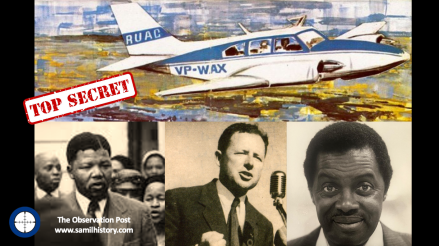
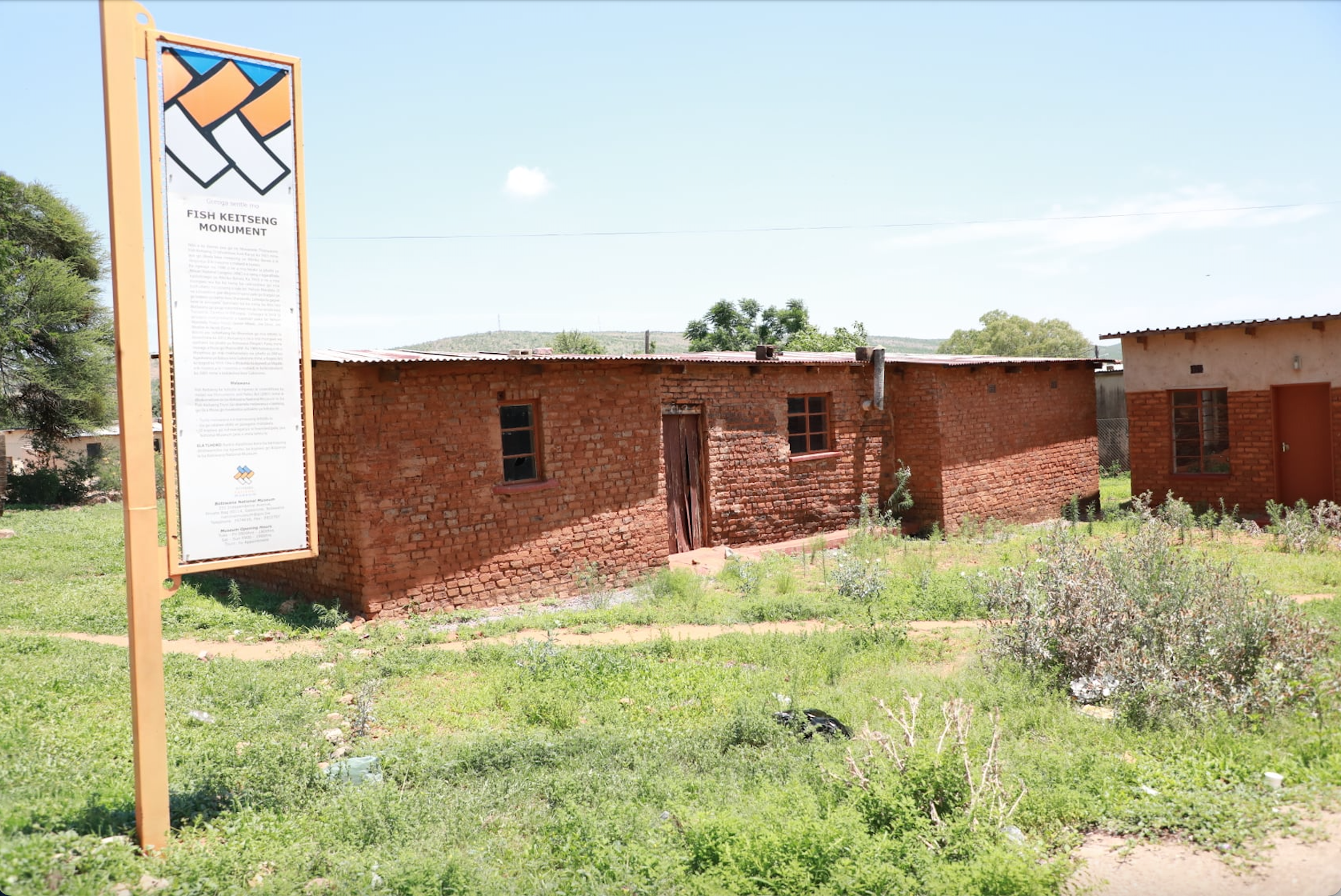
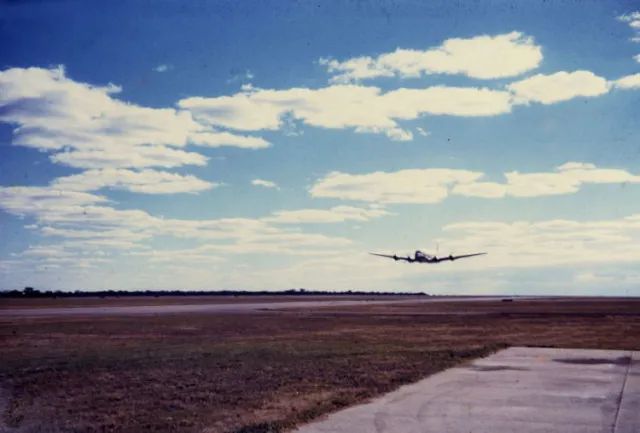
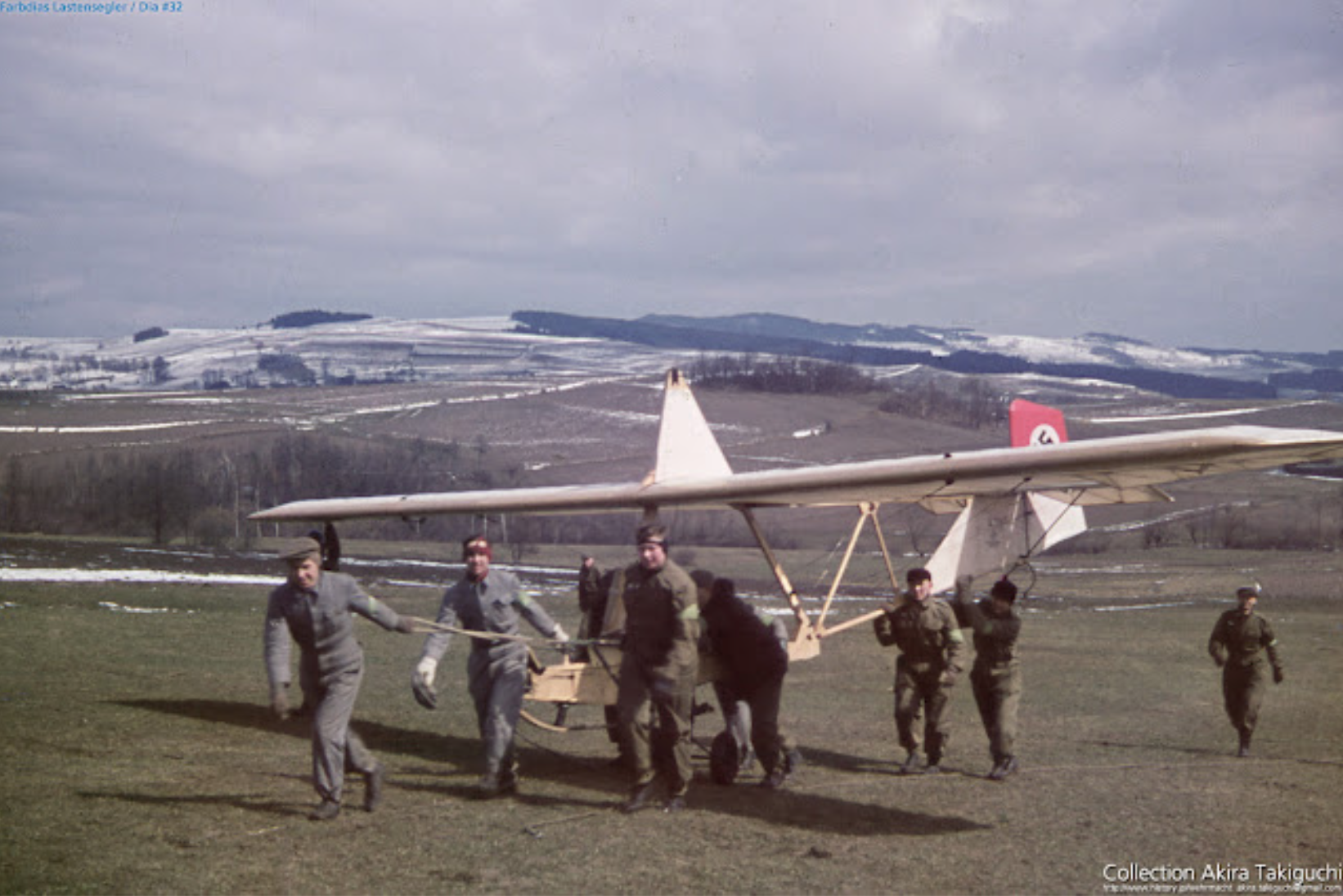
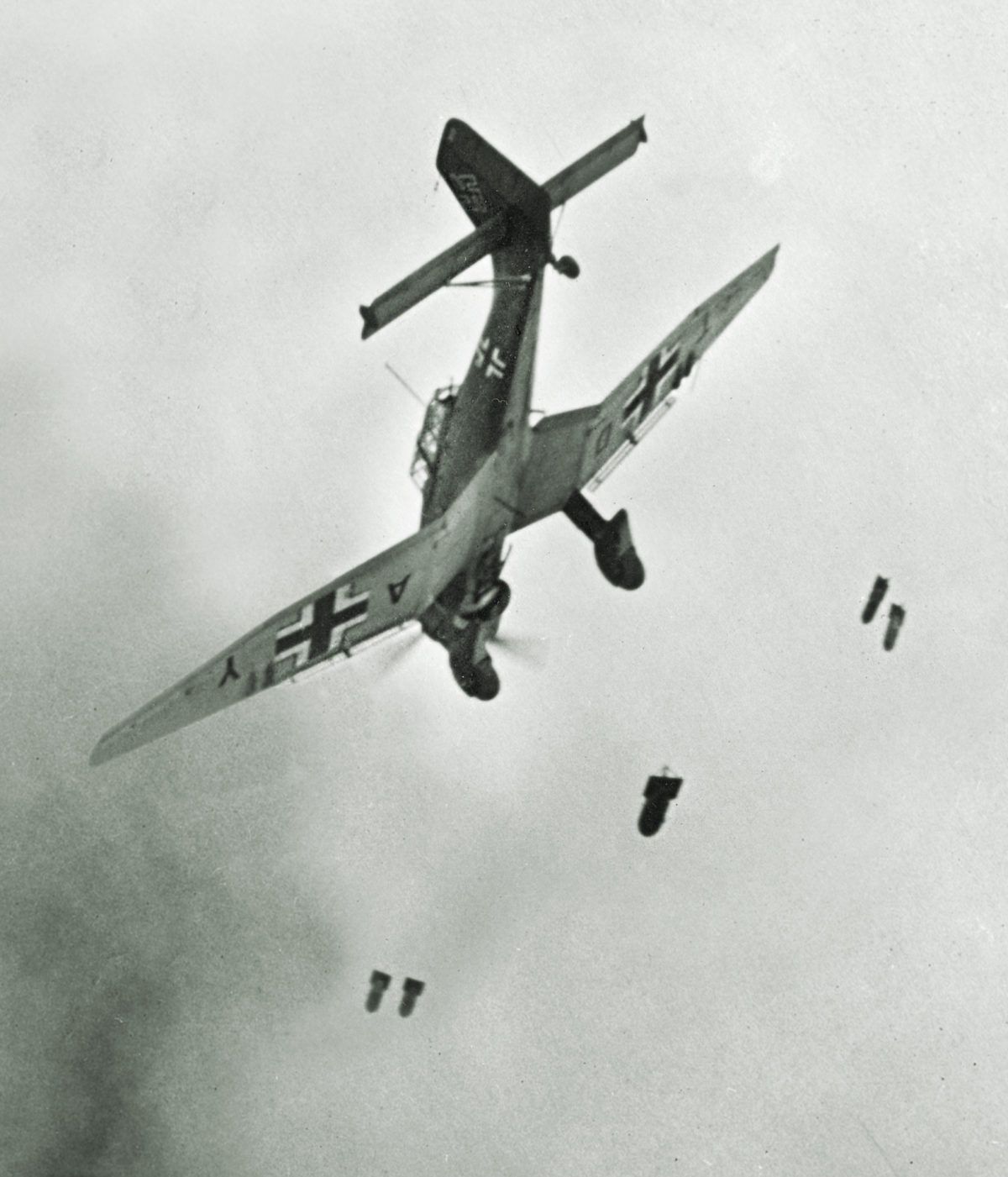
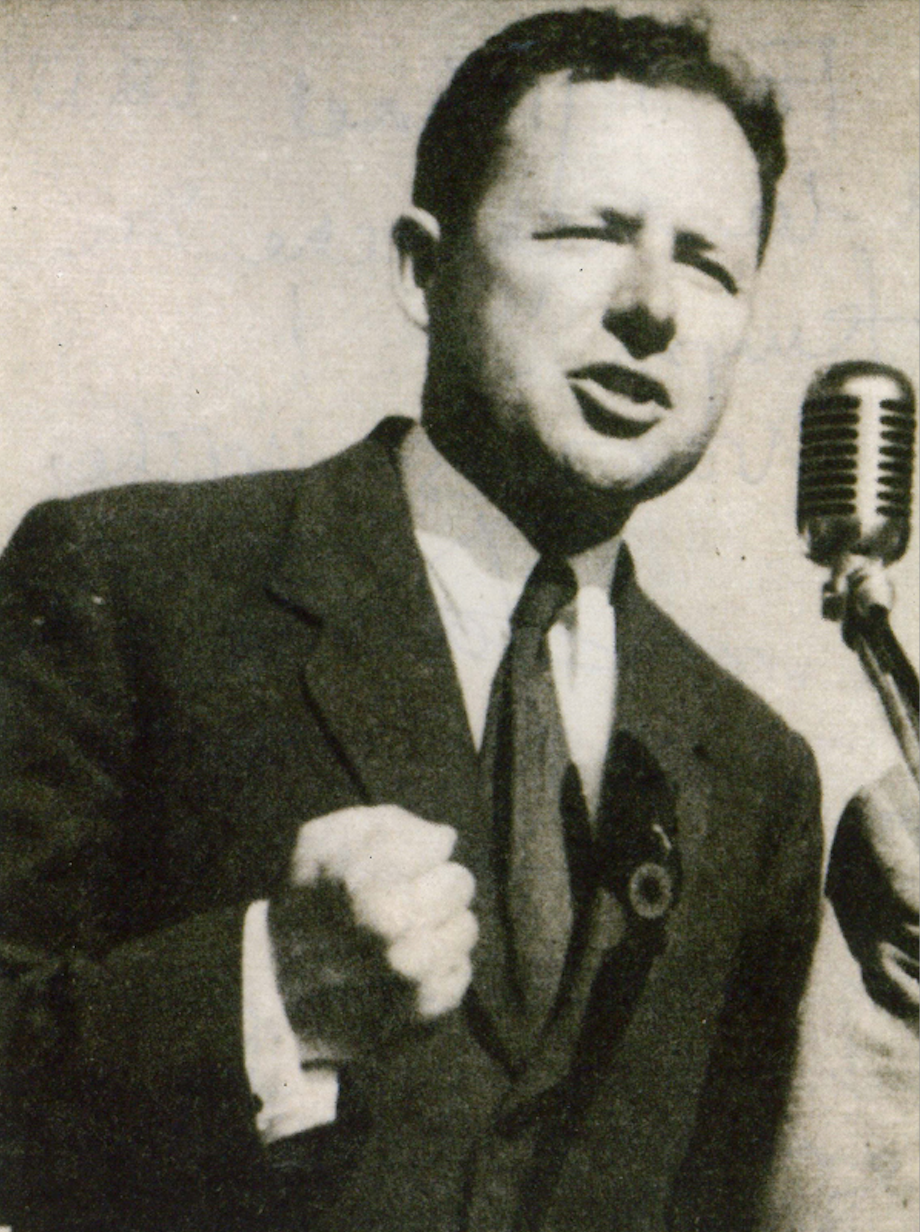
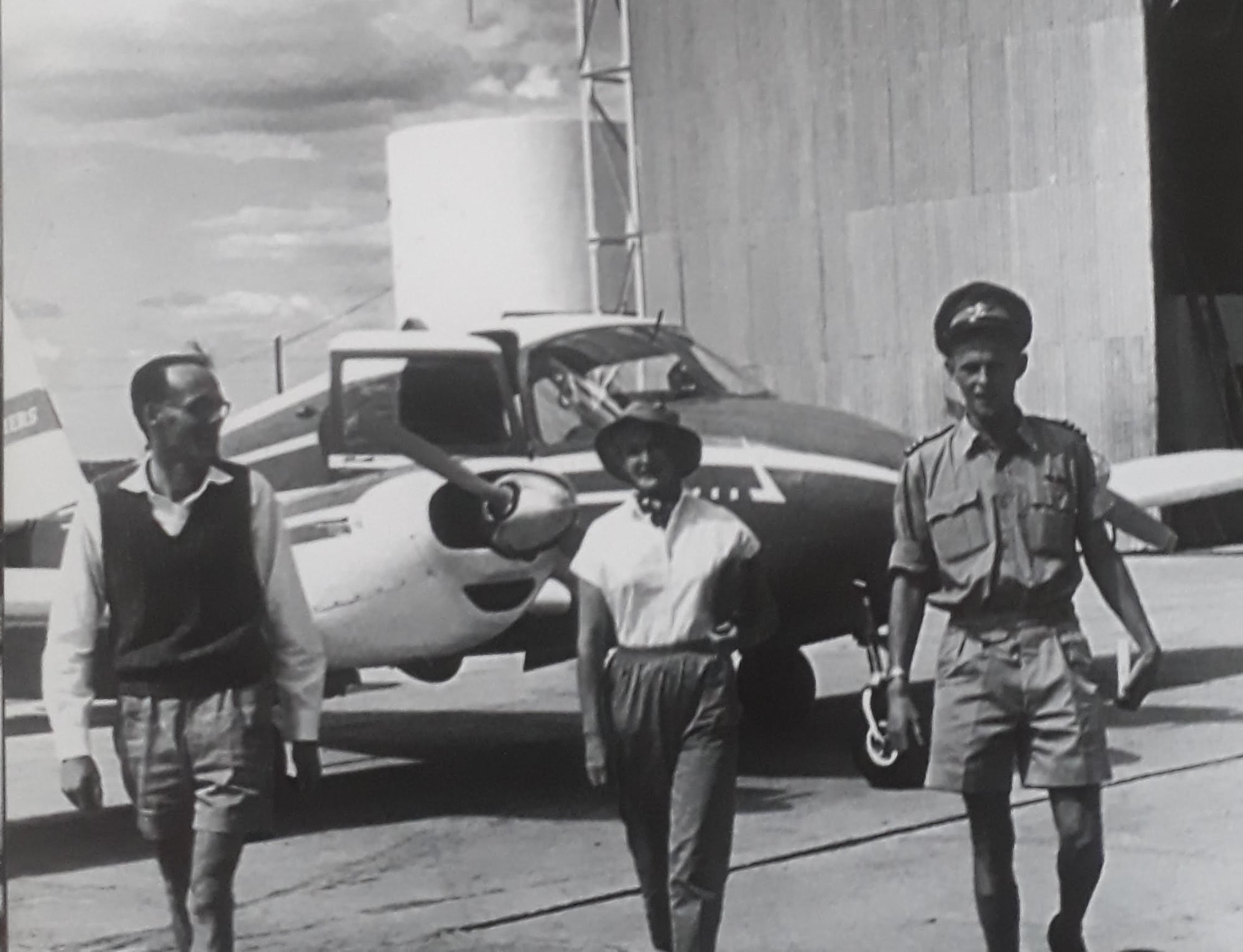
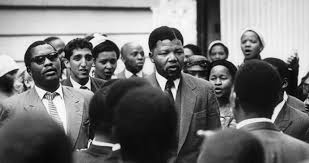
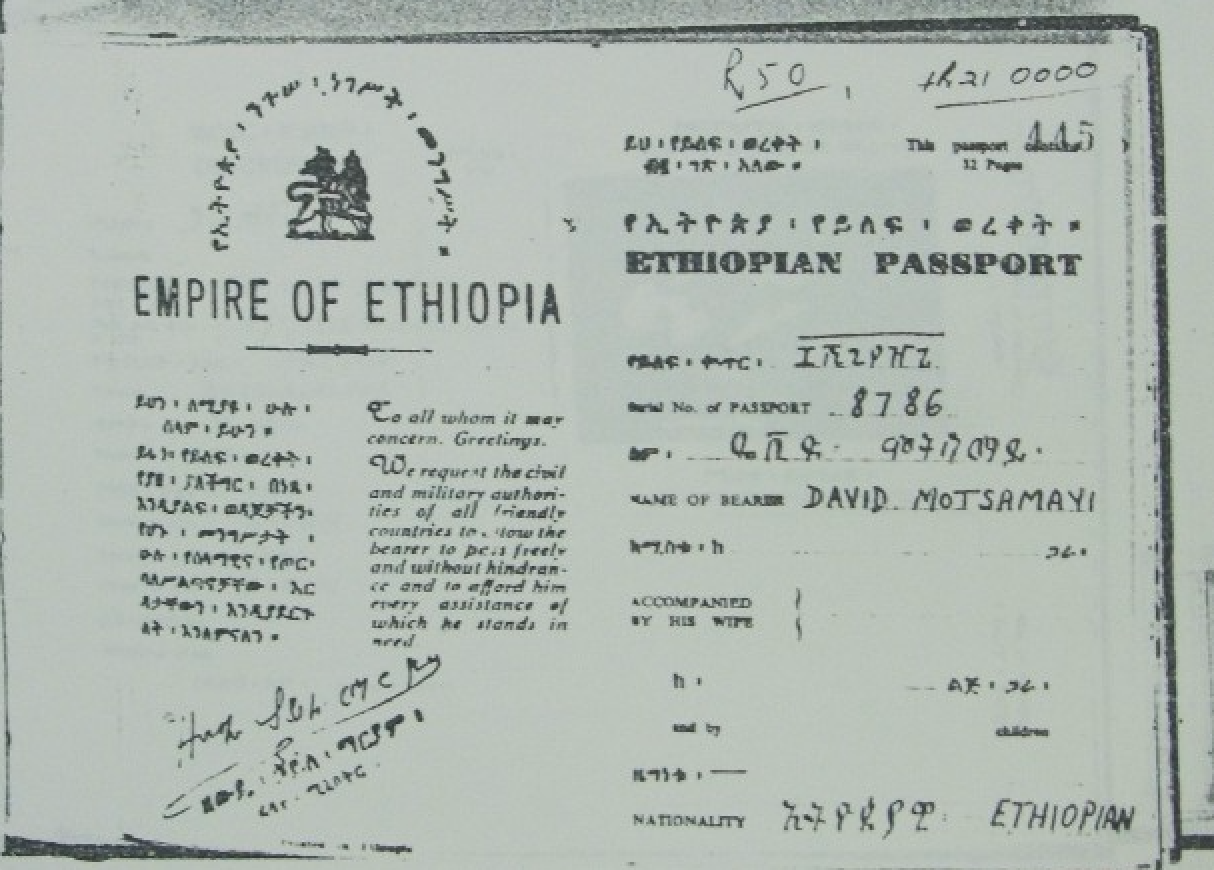
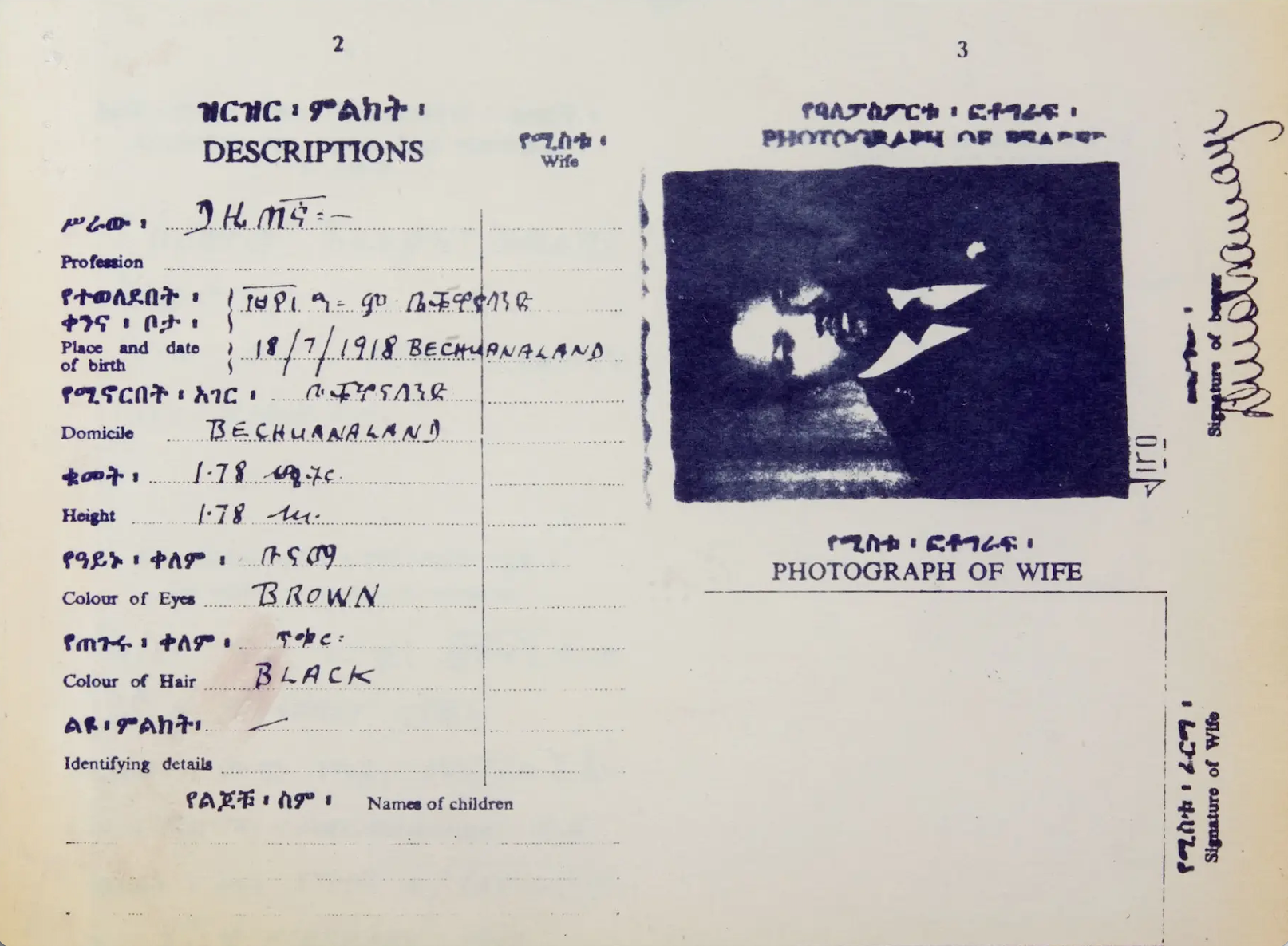
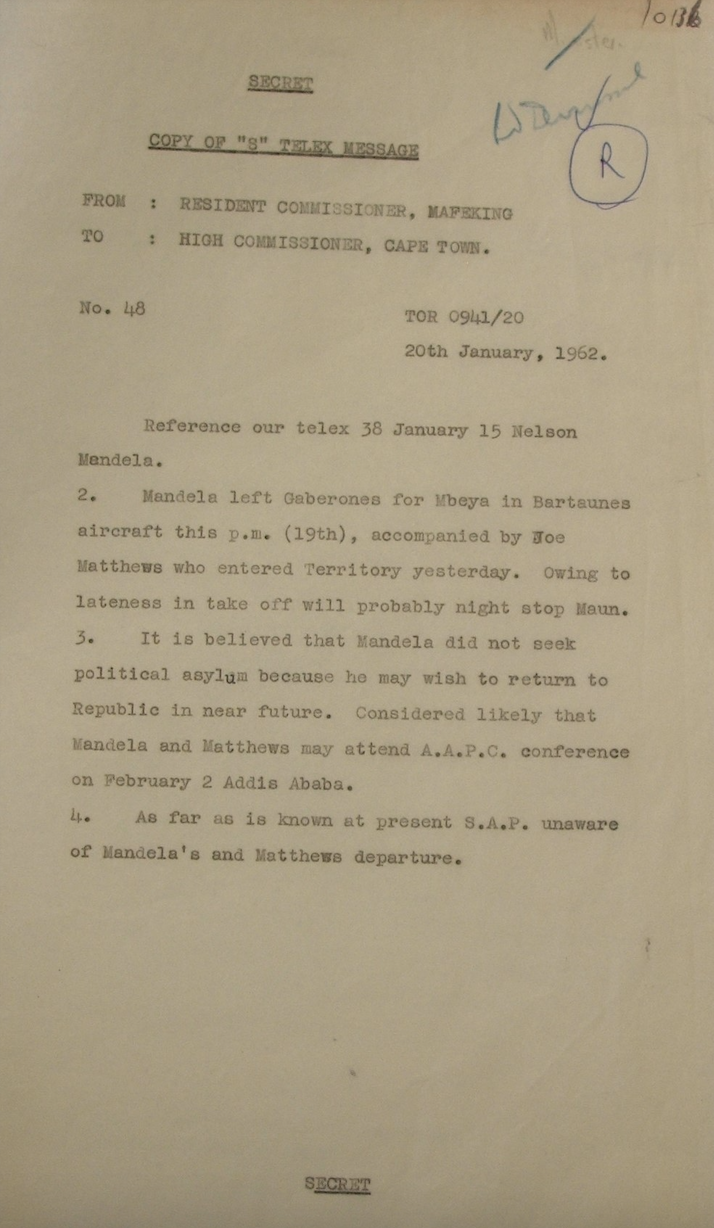
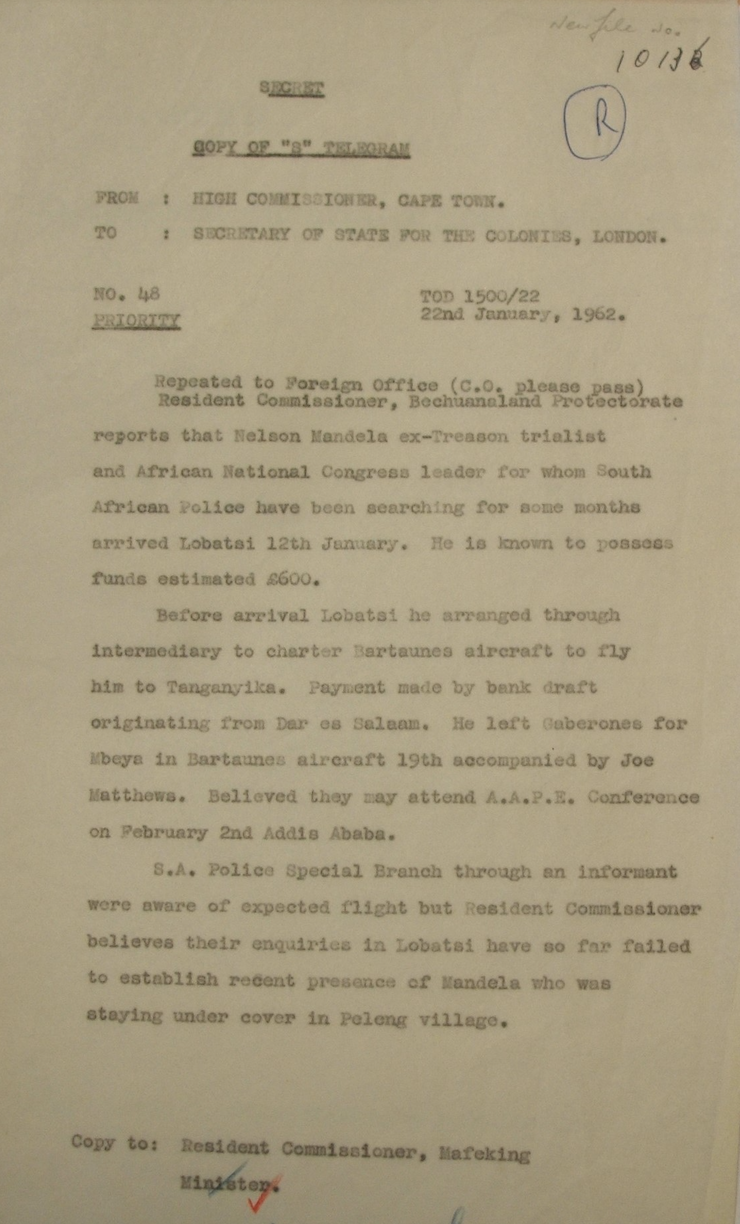
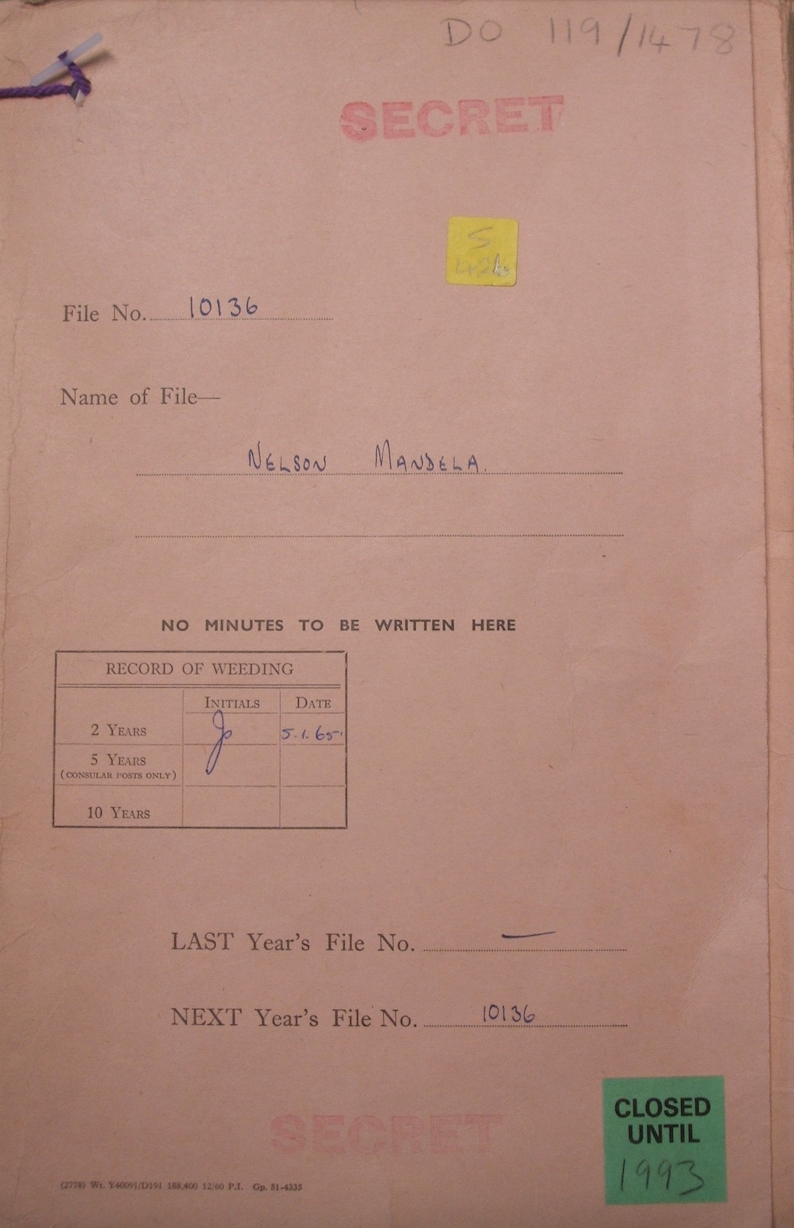
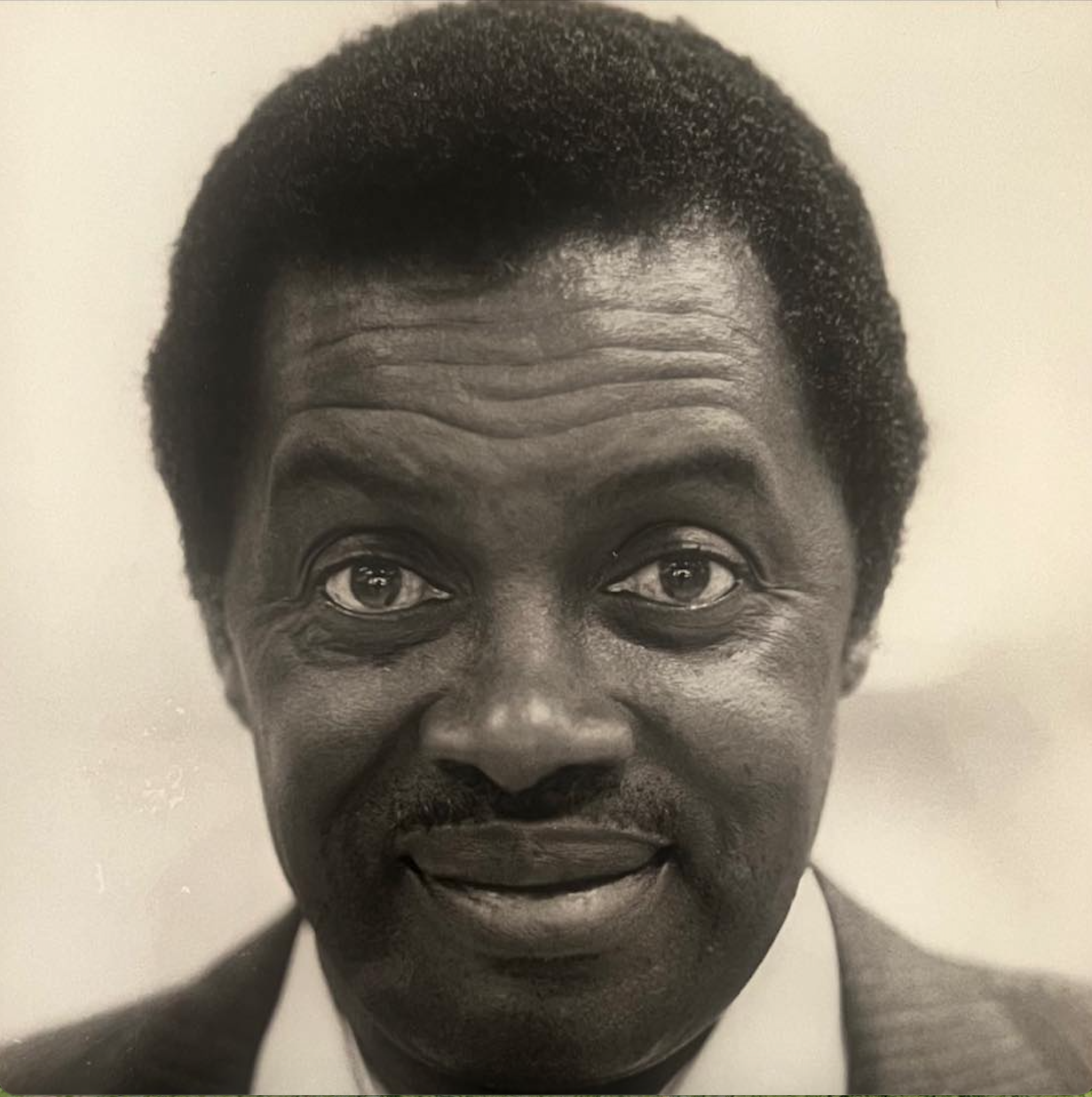
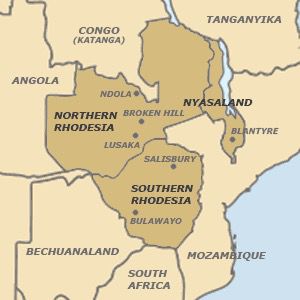
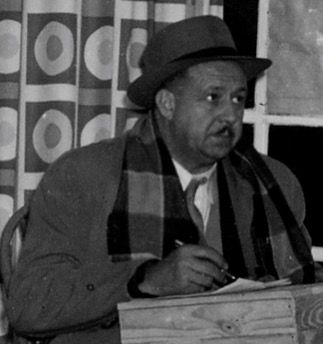
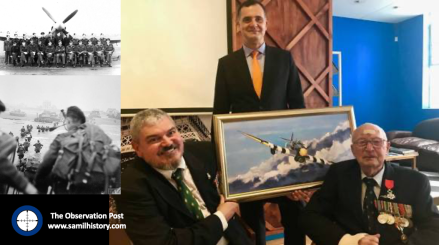
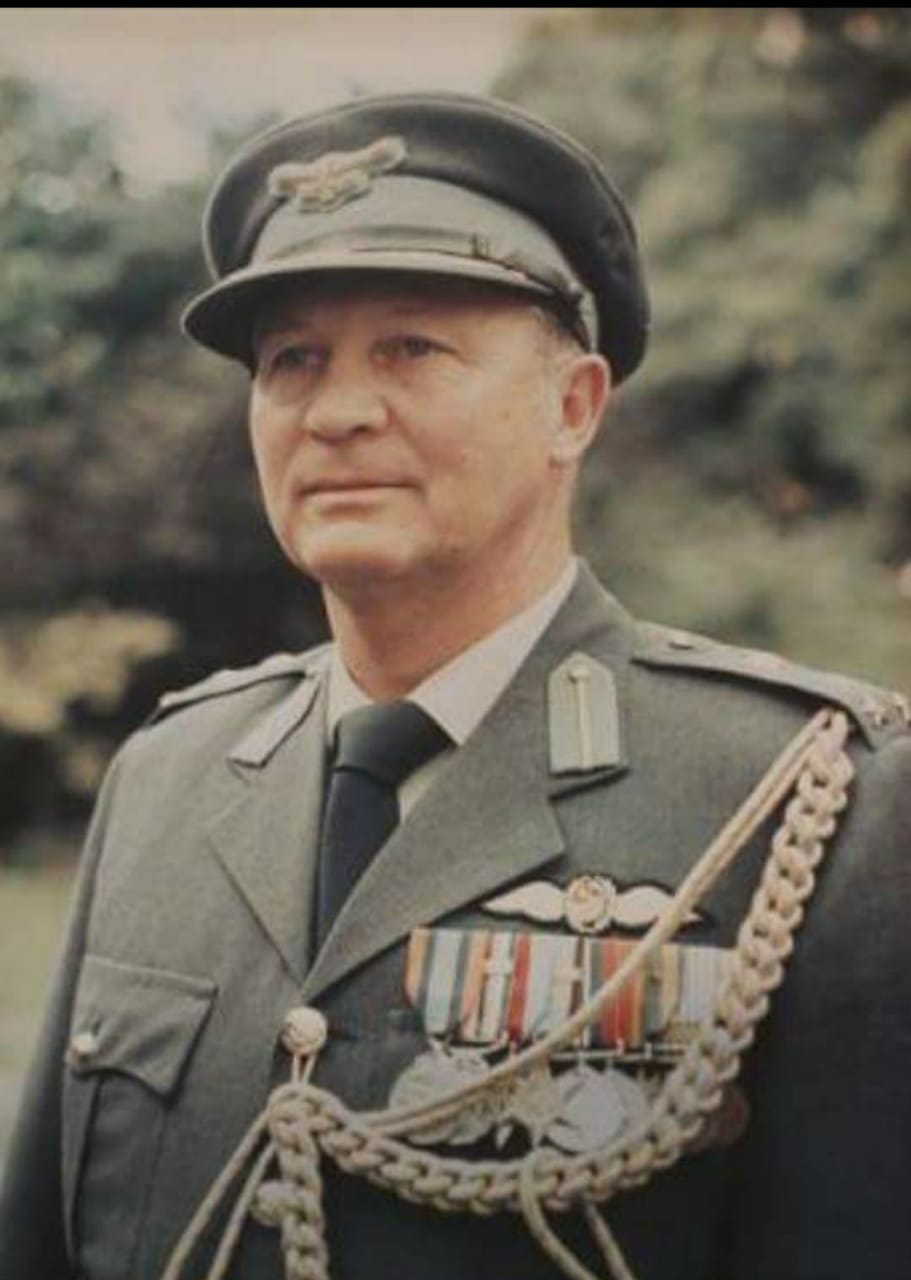


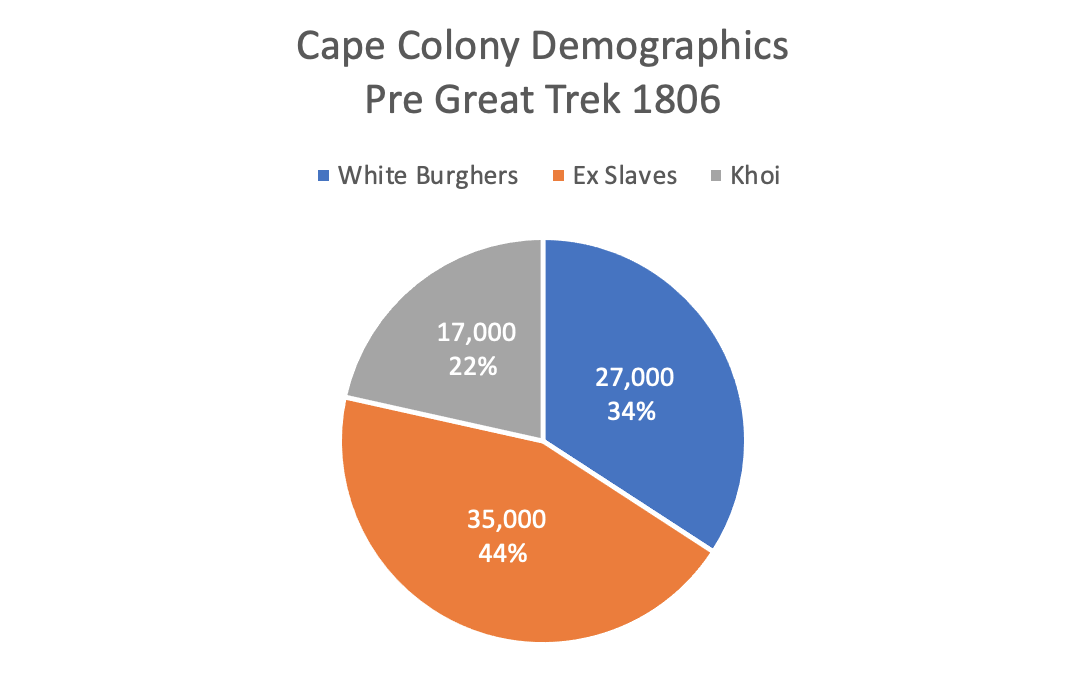


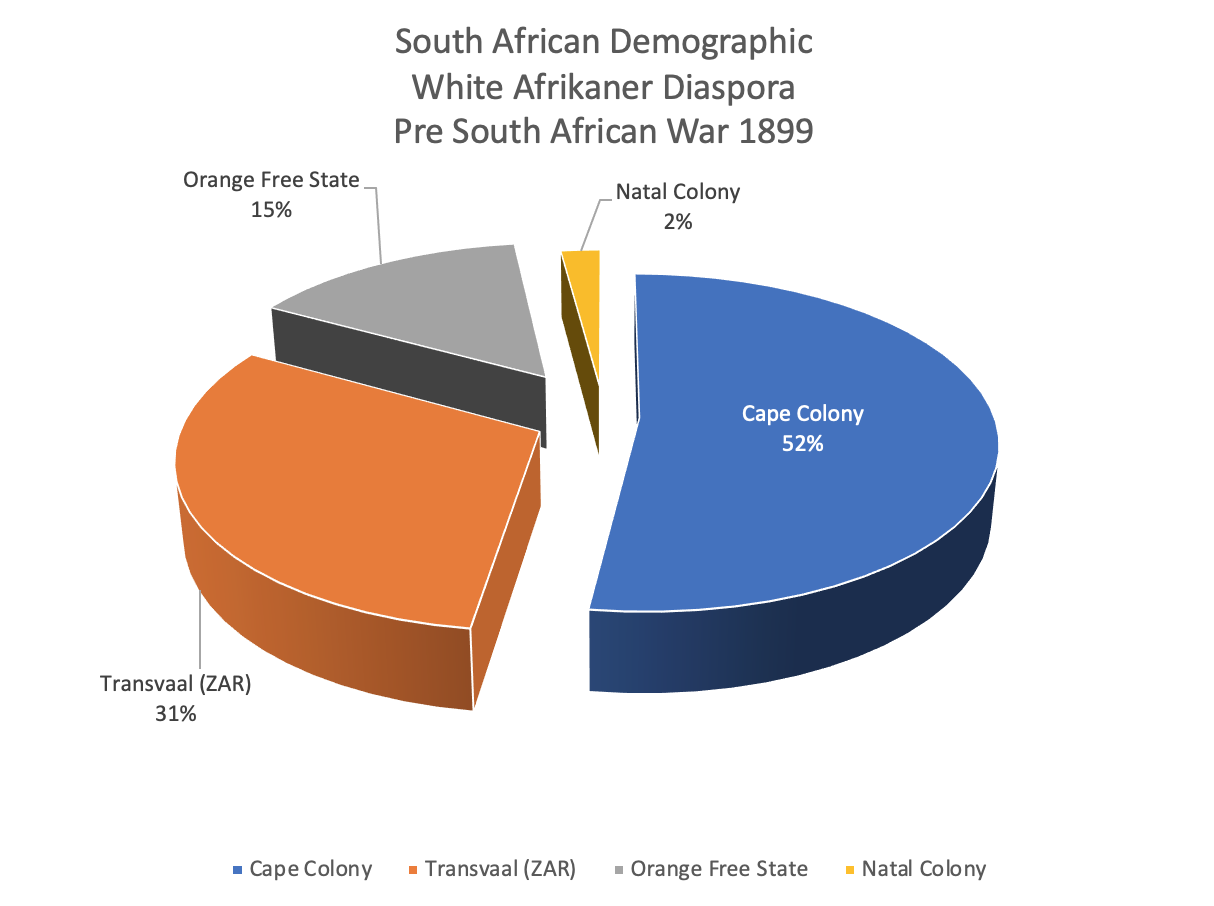
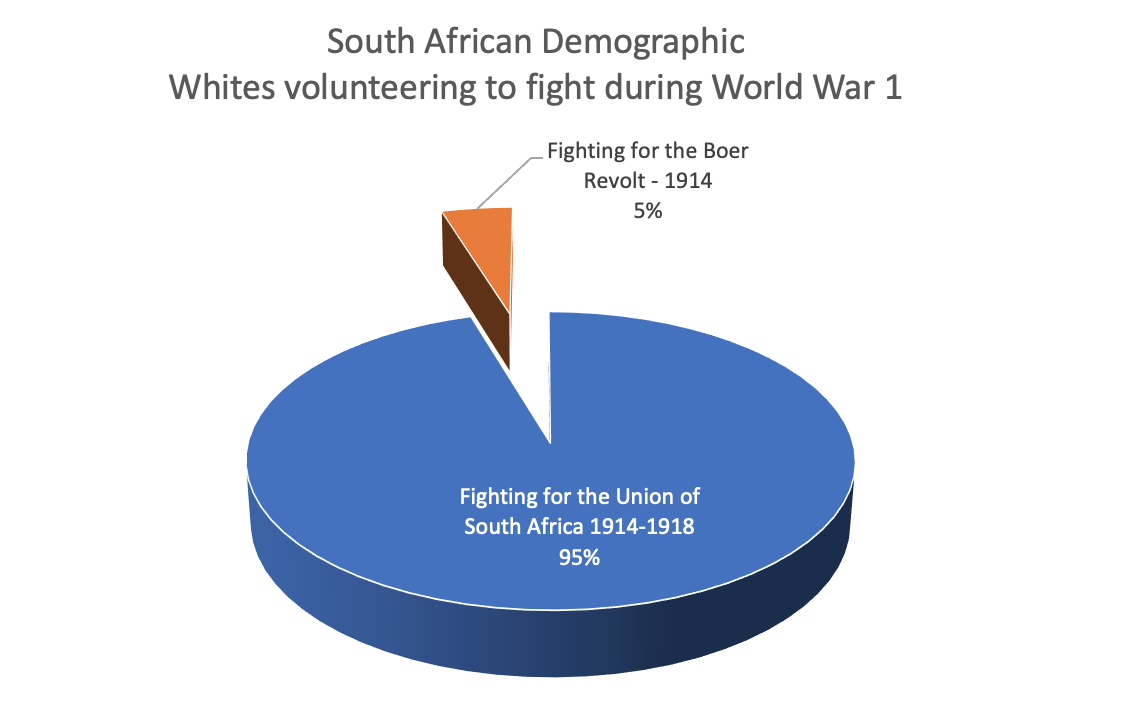
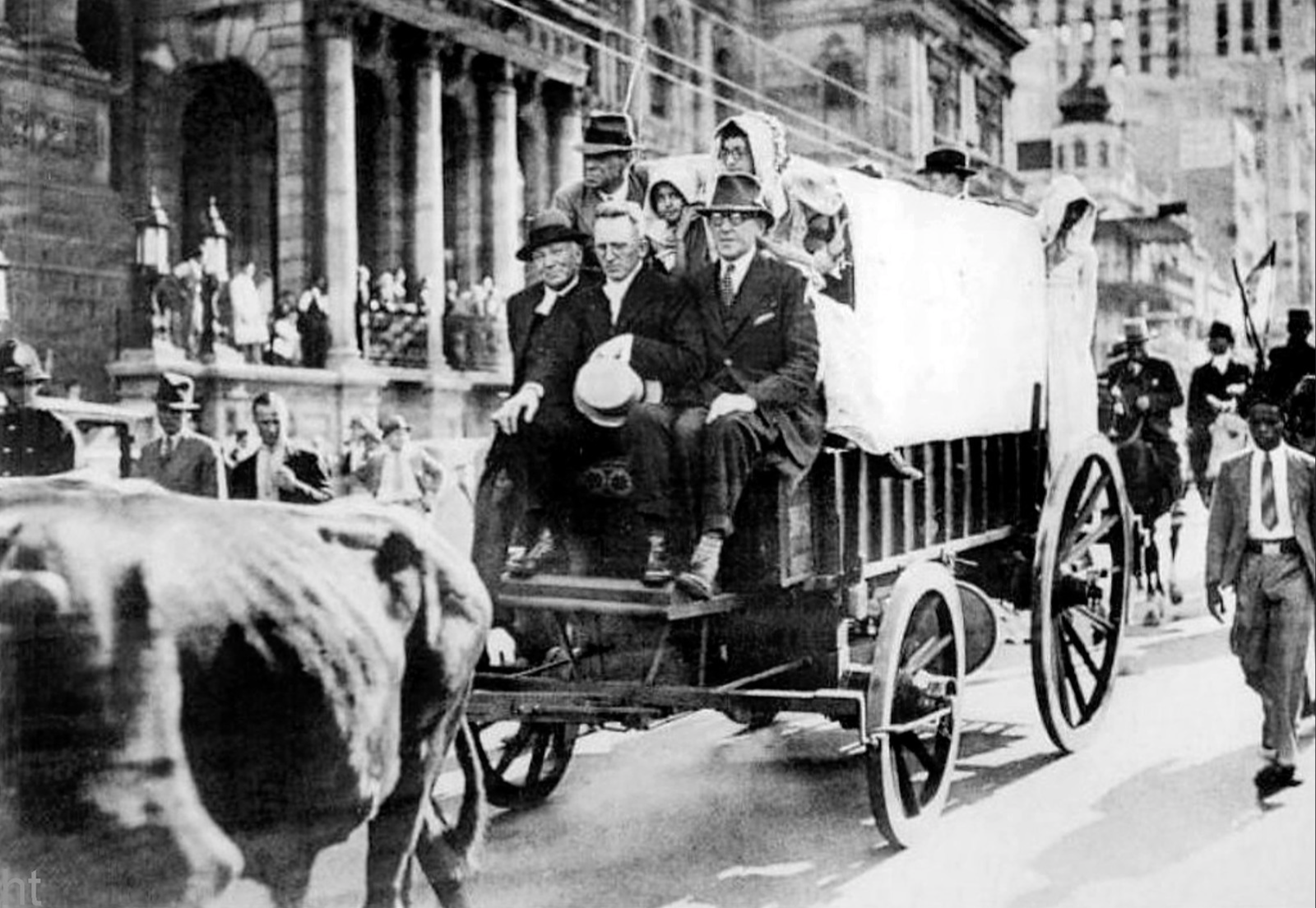

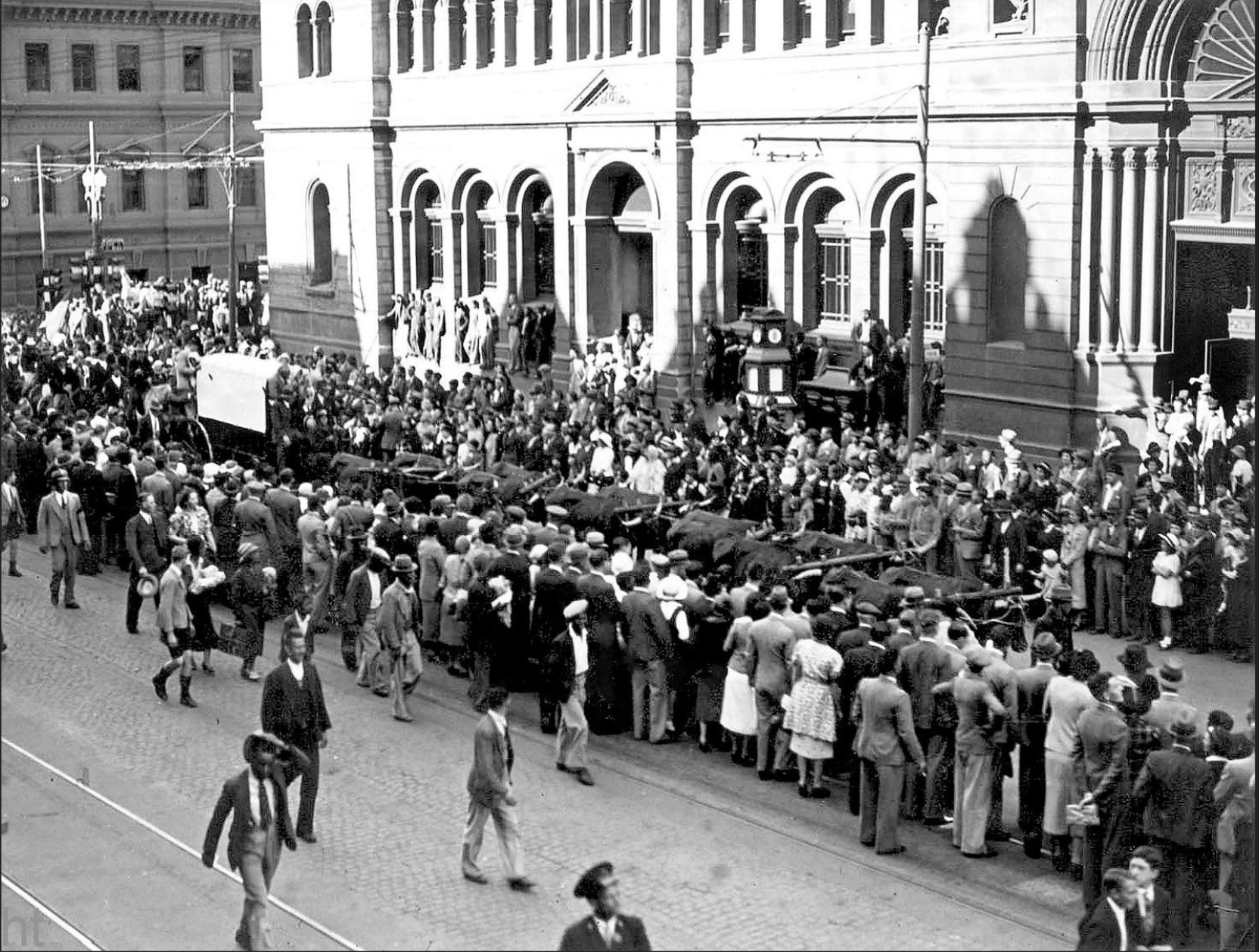
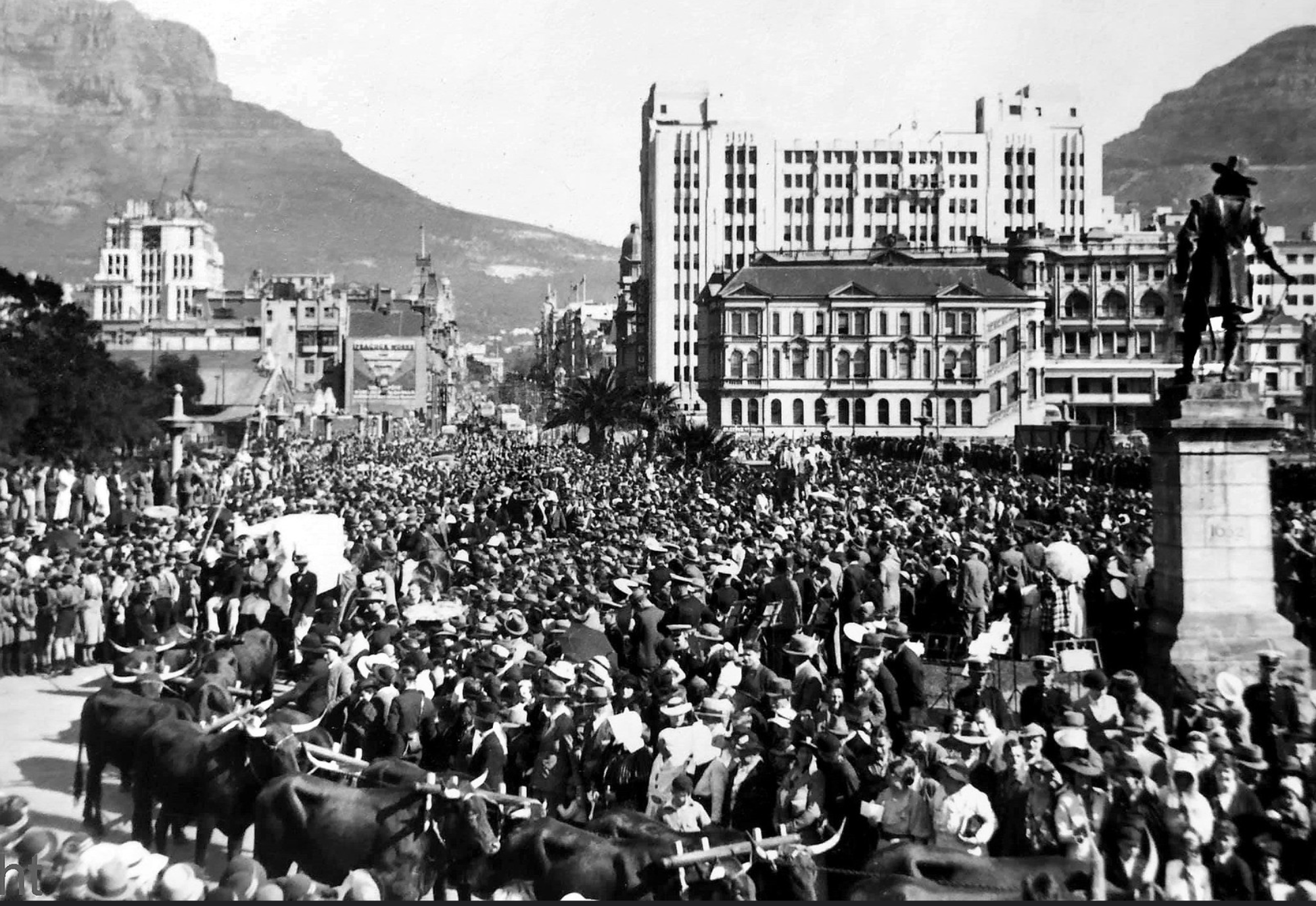

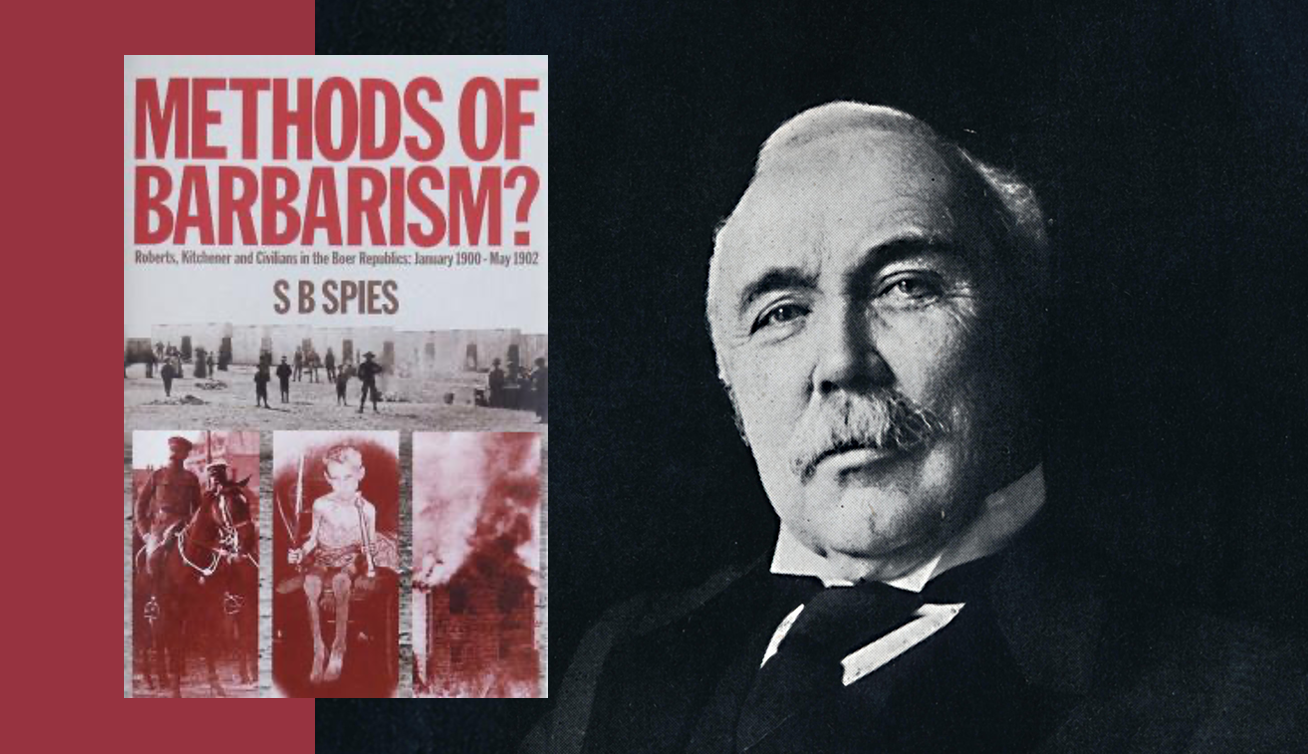
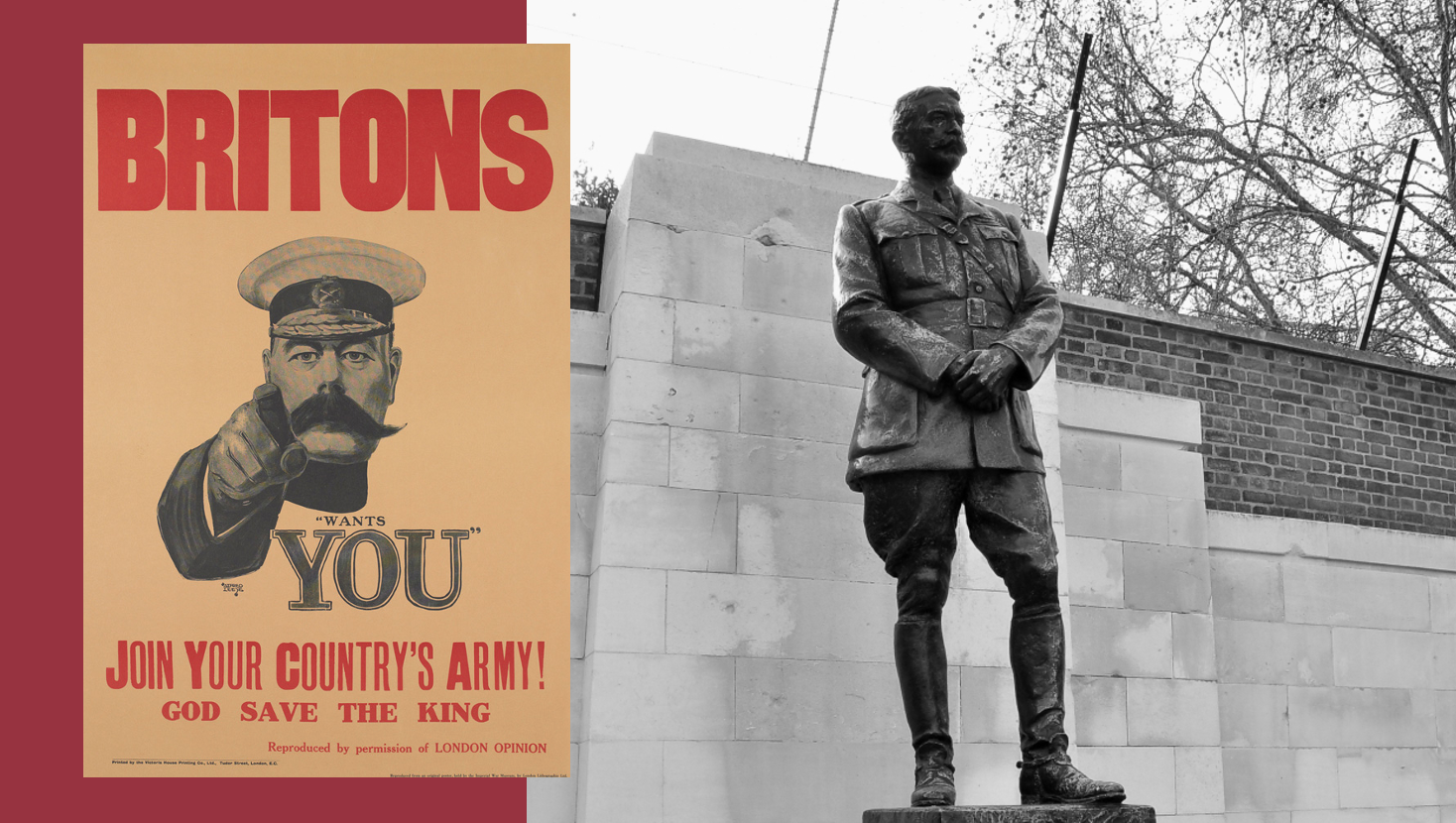
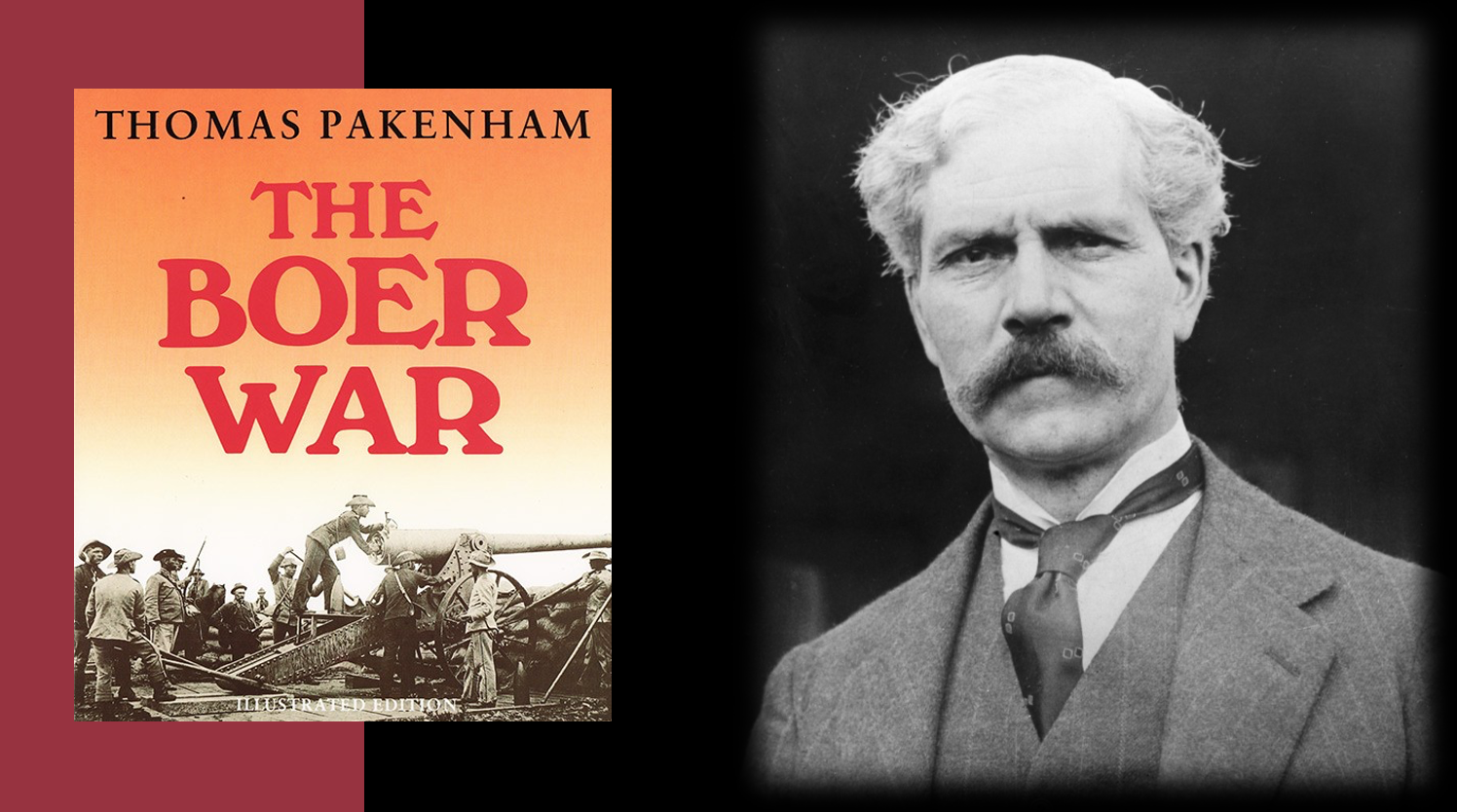
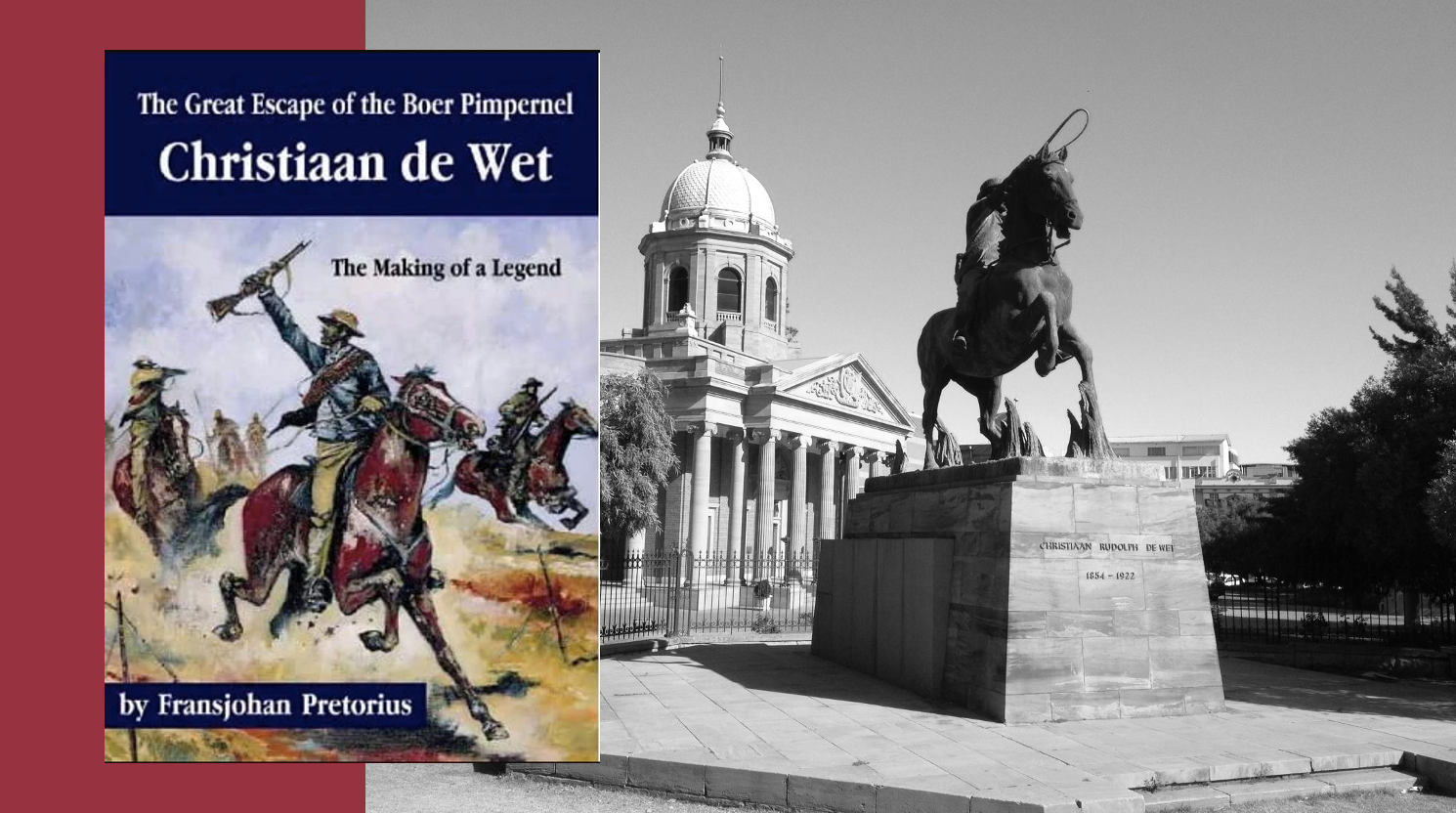




 The Observation Post