
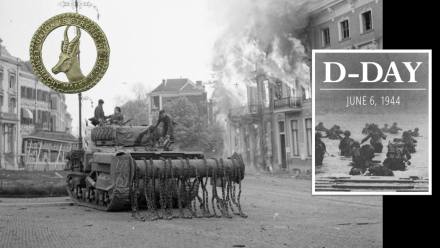
The mine-flail became a critical anti-land mine device during D-Day (Operation Overlord), it helped open the way for troops and armoured vehicles over the extensive minefields laid by Hitler’s forces to form ‘the western wall’ and prevent invasion. But did you know the mine flail was invented by a South African?
Inventing the Mine Flail
Technically a mine-flail is a vehicle-mounted device that makes a safe path through a mine-field by deliberately detonating land-mines in front of the vehicle that carries it. It was usually mounted in front of a tank hull to offer the operators the armoured protection they needed, use of its weaponry and the tracked system to deal with terrain.
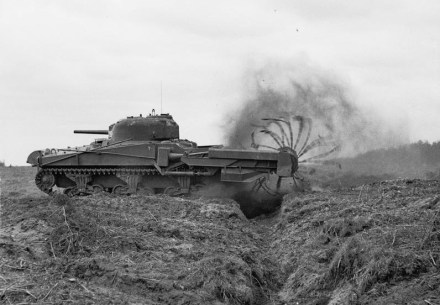
Sherman Crab Mark II minesweeping flail tank, one of Hobart’s ‘funnies’, used to clear already identified minefields.
The mine flail consists of a number of heavy chains ending in fist-sized steel balls (flails) that are attached to a horizontal, rapidly rotating rotor mounted on two arms in front of the vehicle. The rotor’s rotation makes the flails spin wildly and violently pound the ground. The force of a flail strike above a buried mine mimics the weight of a person or vehicle and causes the mine to detonate, but in a safe manner that does little damage to the flails or the vehicle.
 The idea is commonly attributed to a South African soldier – Captain Abraham du Toit. A test rig was constructed in South Africa and results were so encouraging that du Toit was promoted and sent to England to develop the idea.
Before Capt. du Toit left for England, he described his idea to Captain Norman Berry, a mechanical engineer who had been sent to South Africa in 1941 to evaluate the system.
North Africa
Captain Berry later served in the British Eight Army during the North African Campaign. He had become an enthusiast for the mine flail idea; he lobbied senior officers to commission the development of a flail and carried out his own experiments with mine flails in the spring of 1942 to deal with the extensive minefields laid by Rommel’s forces in the desert campaign.
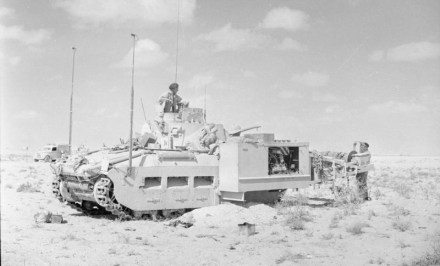
A Matilda Scorpion flail tank, 2 November 1942.
Later Major L. A. Girling was given the task of developing a similar device after it had been independently re-invented by another South African officer. When Berry heard of this, he handed over his work to Girling (who had no idea he was duplicating Captain du Toit’s current work in England, as that was still highly secret).
Meanwhile, back in Britain, Captain du Toit (as unaware of developments in North Africa as they were of his), working with AEC Limited developed the Matilda Baron mine flail, using a Matilda tank and a frail for demonstrations and training.
Hobart’s Funnies
Captain du Toit’s work fell under a program known as ‘Hobart’s Funnies’, which were a variety of unusually modified tanks operated during the by the 79th Armoured Division of the British Army or by specialists from the Royal Engineers.
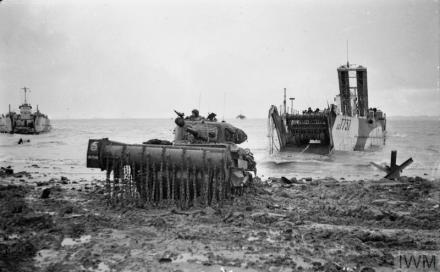
A Sherman Crab flail tank coming ashore from an LCT during the invasion of Walcheren Island, 1 November 1944.
They were designed to overcome the problems that more standard tanks experienced during the amphibious landings and focussed on the problems of the Normandy D-Day landings. These tanks played a major part on the British and Commonwealth beaches during the landings. They were forerunners of the modern combat engineering vehicle and were named after their commander, Major General Percy Hobart.
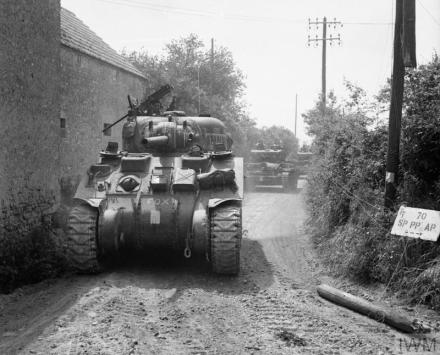
A number of experimental flail tanks were produced, including the Valentine Tank, the M4 Sherman – the Sherman Mark IV and Mark V Scorpions and the “Sherman Lobster”. Eventually one of these, the Sherman Crab, went into full production and saw active service.
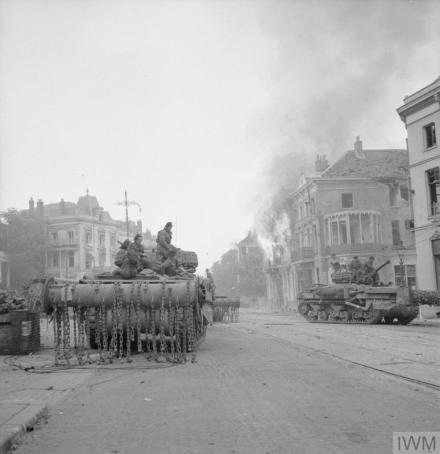
Sherman Crab flail tanks in front of burning buildings in Arnhem, 14 April 1945.
Captain du Toit himself had become a strong advocate of a concept called the parambulator mine flail – a self-contained device with its own engine, that could be pushed ahead of any tank that was available. However, the consensus of opinion favoured special-purpose tanks with a permanently mounted flail system and he returned to South Africa in 1943.
In Conclusion
After the war ended, so vital was this contribution to the Allied victory and the war effort, that in 1948, Capt. Abraham du Toit would receive an award of £13,000 from the Royal Commission on Awards to Inventors for his work on the mine flail (a sizeable award in its day). Nine others (including four South Africans) would share a further £7,000.
And there you have it in truth – South Africa led the way on this most critical device for D-Day, and an old adage stands – faced with a problem like a mine-field – a South African makes a plan!
South Africans continued to ‘make a plan’ in developing and leading anti-mine vehicles which continued well into the Angolan Border War.
Researched by Peter Dickens
Related Links and work on South Africans during D-Day
Donald Gray South African D-Day hero (and one-armed movie star): Donald Gray
Albie Gotze “This bastard is going to kill me”; Albie Götze’s Legion d’Honneur
Tommy Thomas South African D Day Hero: Lt. D.C. “Tommy” Thomas MC
Cecil Bircher South African D Day Hero: Lt. Cecil Bircher MC
Royston Turnball Supreme South African heroism on Omaha Beach, Lt. Royston Turnbull DSC
Anthony Large South African D Day hero: Anthony Large BEM
Jan Smuts South Africa’s role in giving D-Day the green light
Jan Smuts and Churchill Jan Smuts, Winston Churchill and D-Day
Reference
Imperial War Museum and Wikipedia. Images copyright Imperial War Museum

 A number of South African Air Force fighter pilots served during Operation Overlord flying RAF Typhoons and Spitfires and because of the highly treacherous nature of the operations a handful of about five South African Air Force pilots lost their lives.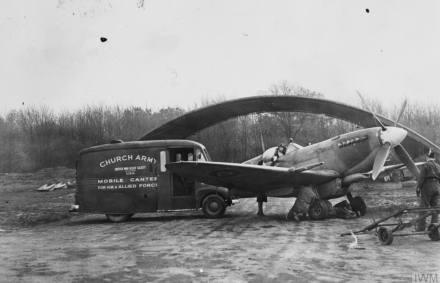
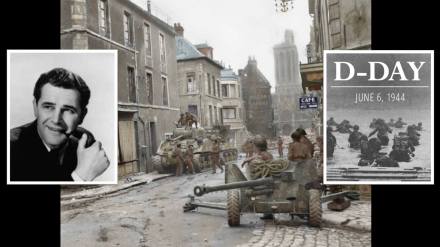
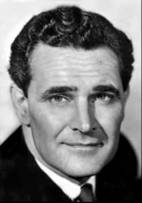 A one-armed South African war hero movie/television star, Donald Grey was in his lifetime very well-known internationally but less so in his county of birth, he was born Eldred Tidbury to a humble beginning in South Africa and later changed his name.
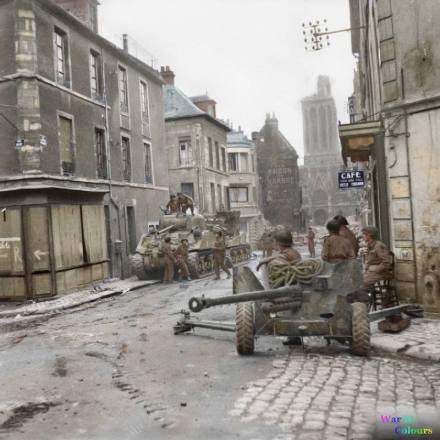
 After the war, a disability like only having one arm did not stop Donald, he chose to continue his career in film and stage acting and against the odds became even more successful at it. Donald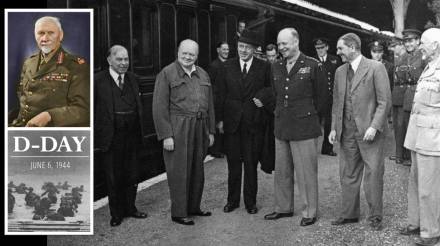
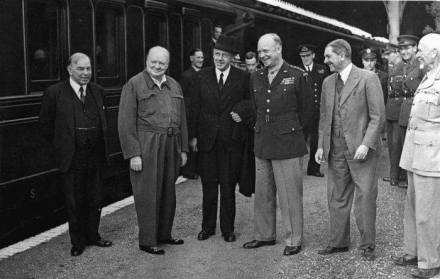
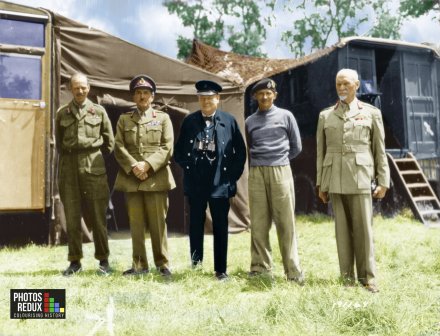
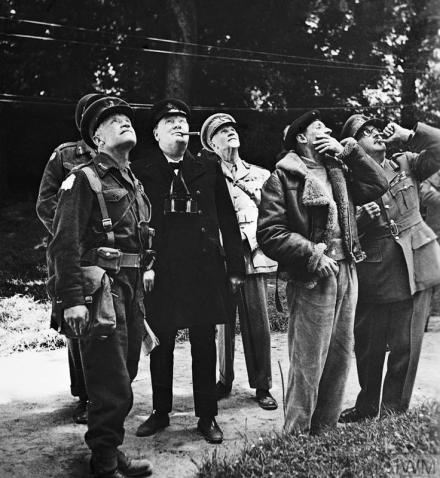
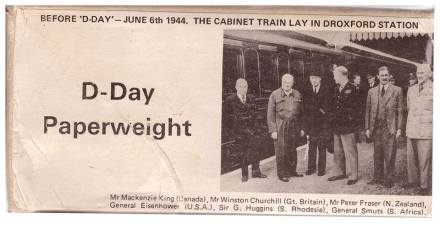 So there you have it, both South Africa and even Rhodesia played a key role in agreeing Operation Overlord plans and signing off on this most critical date – D-Day, 6th June 1944 – the date which changed the course of Western Europe’s modern history.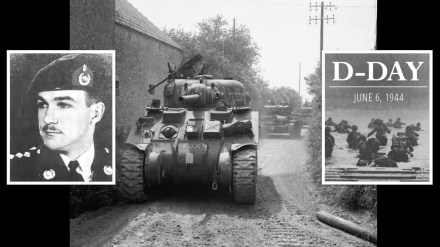
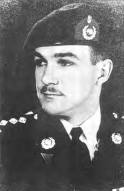 Capt. Lyle Louwrens Archibald McKay, was part of South African forces attached to the Royal Marines on D Day, 6 June 1944. He showed remarkable courage on this most significant day in history – as this insert attests.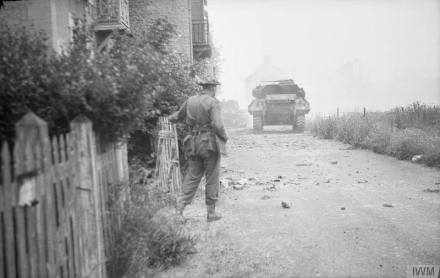
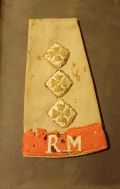 All South Africans in World War Two fighting overseas were volunteers, those in the Union Armed Forces who disagreed with Smuts’ decision to go to war on the side of Britain had the option of staying behind and not wearing the red band (not many did). Note the letters ‘RM’ this signifies ‘Royal Marines’ – a very unique and different World War 2 artefact. As a Captain, Lyle McKays’ insignia would have been similar.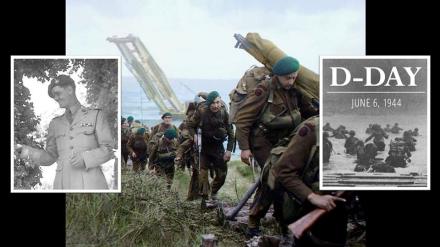
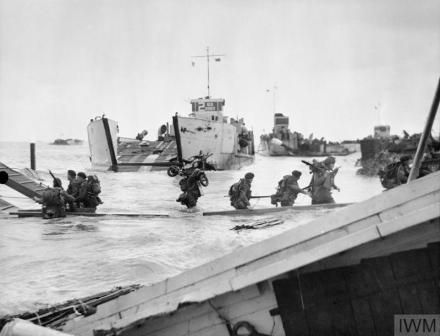
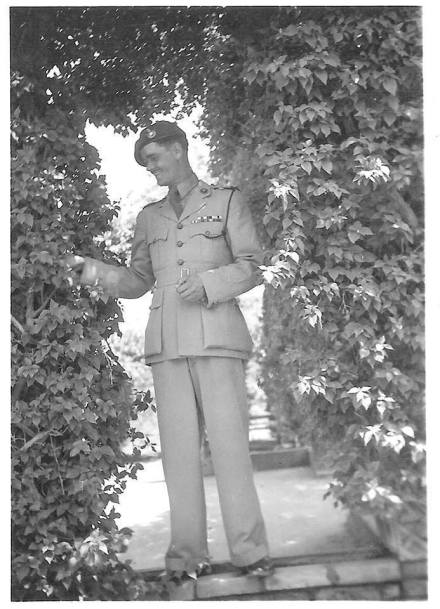 His most painful recollection of D-Day was the stormy passage he and his contingent had to undergo in crossing the Channel in their landing craft.The seas were running high, and hardly a man escaped sea sickness. They landed in the second wave at first light, their boat receiving a direct hit as they approached the shore, half-a-dozen men being killed, and Thomas found himself up to his neck in water after having jumped form the landing craft as it struck the beach.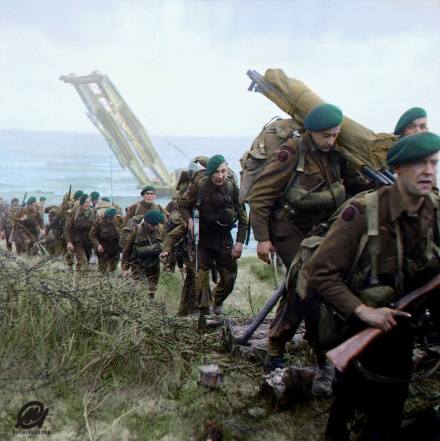
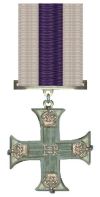 Lt Thomas won the Military Cross (MC) for his actions in World War 2. A significant decoration, it is awarded for gallantry in combat. The MC is granted in recognition of “an act or acts of exemplary gallantry during active operations against the enemy on land to all members, of any rank in Our Armed Forces”.
 The Observation Post