It’s a little known fact, one of Field Marshal Erwin Rommel’s key officers, a person in his ‘Inner Circle’ and his personal advisor and aide was in fact a South African. Very few South Africans joined the Nazi military forces during the Second World War, there are a number of South West Africans (now Namibia) who joined Nazi Germany’s armed forces whilst South West Africa was a South African Protectorate, which is understandable given South West Africa used to be a German colony prior to World War 1 and they were all of German heritage. A handful of South African Prisoners of War even joined or were coerced to join the Waffen SS during the war itself.
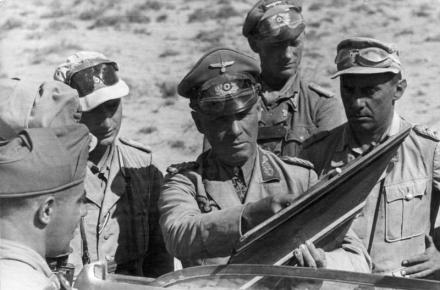
General Rommel (centre) briefing fellow officers
However there are two who served on General Rommel’s staff, the first is his driver, Lt. Hellmut von Liepzig who was a naturalised South West African and the second was Lt. Heinz Werner Schmidt, a naturalised South African. Let’s examine Schmidt:
Heinz Werner Schmidt
To be fair to Heinz Schmidt, he was born in South Africa to German parents, and at a very young age he moved around Africa with his family, classified as ‘volkdeutsche’ spending more of his formative years and completing his university education in Germany itself, becoming a dual national with a German citizenship in addition to his South African one. Leaving South Africa at the age of 4 he regarded himself as German above all and was swept up with the rest of the country in the euphoria of Nazism. When war broke out, he was in a unique position – he had a choice. He could choose to fighting for either South Africa and the Allied cause or Germany (as his dual citizenship allowed), he even had the choice of sitting the war out in South Africa (service was voluntary), he chose to his convictions to support the Nazi cause and became a German Army officer.
At one point in the war he found himself in command of Wehrmacht units directly engaging South African Army units and then, more ironically, with Europe and Germany devastated he engaged his South African birthright which gave him sanctuary in South Africa itself after the war. In fact he built two very successful South African companies and one is a well-known household brand.
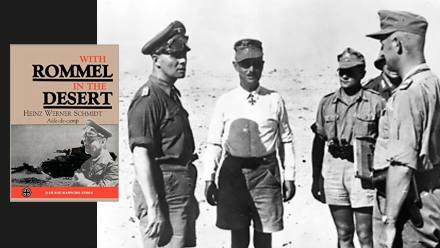
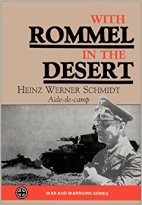
So lets examine who Heinz Schmidt was and what he did. Born in South Africa, Lieutenant Heinz Schmidt served in North Africa as Erwin Rommel’s (“The Desert Fox”) personal aid and advisor – an aide-de-camp in military speak. As he was “South African-born” he was therefore considered, in line with military logic, an expert on Africa. Already a veteran of the Polish Campaign, Schmidt joined Rommel’s staff in March 1941 from Eritrea and was subsequently present during a number of battles in Egypt and later Tunisia, and was later to write a bestseller depicting his years with Rommel, namely “With Rommel in the Desert”.
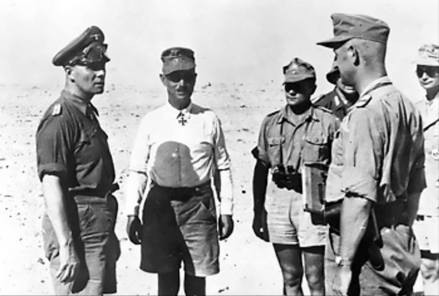
Heinz Schmidt with General Rommel – Schmidt is third from the left.
Werner Schmidt by his own admission was surprised that General Rommel took him on as his advisor as he really did not have a depth knowledge of Africa, however been the only officer in Rommel’s inner circle of officers with a smattering of African heritage he found himself the only man for the job, and he happily took it on.
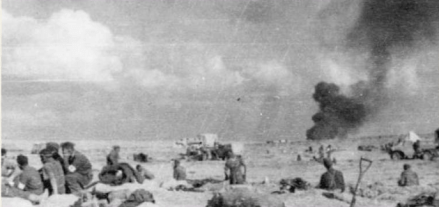
Lieutenant Heinz Werner Schmidt also had a sound combat record, just days before he was appointed as the aide-de-camp to General Erwin Rommel, he was commanding a heavy weapons company. In fact Schmidt played a key role in overrunning the South African positions on 23rd November 1941 during the Battle of Sidi Rezegh. He found himself in the thick of things with the German Wehrmacht’s 115 Rifle Regiment which lined up to attack the South African’s flank and over ran them.
Lieutenant Heinz Werner Schmidt described the scene as follows:
“We headed straight for the enemy tanks. I glanced back. Behind me was a fan of our vehicles—a curious assortment of all types—spread out as far as the eye could see. There were armoured troop carriers, cars of various kinds, caterpillars hauling mobile guns, heavy trucks with infantry, and motorized anti-aircraft units. Thus we roared on towards the enemy ‘barricade.’
“I stared at the front fascinated. Right ahead was the erect figure of the Colonel commanding the regiment. On the left close by and slightly to the rear of him was the Major’s car. Tank shells were whizzing through the air. The defenders (editors note: the South African Brigade) were firing from every muzzle of their 25-pounders and their little 2-pounder anti-tank guns. We raced on at a suicidal pace.”
Battle scene at Sidi Rezegh November 1941
So, here we have a very unique instance in South African military history a ‘South African’ commanding enemy troops in direct combat against his ‘countrymen’. In an action which devastated South African forces in defeat with the loss of many South African lives.
Lieutenant Heinz Werner Schmidt went on to have a very successful stint as Rommel’s advisor for the balance of the North African campaign, and his book on Rommel is regarded as one the most insightful works on Field Marshal Rommel.
Post War
What happened to Heinz Schmidt and in what actions he took part after the North African campaign is unclear, we know that he lived with Rommel and was even present at his 50th birthday on 15 November 1941. Heinz ended his book with the end of the African campaign – it was about Rommel after all, he did not elaborate on his movements and units in which he served, what his units did or on which front he served (Eastern, Western or Italian) after the Afrika Korps was defeated, and even after Rommel death.
What is clear is that Heinz Schmidt survived the war and like many Wehrmacht officers sought sanctuary outside wore torn Germany. Fortunately for Heinz the very Nazi sympathetic National Party came to power in South Africa in 1948, three short years after the end of World War 2. Heinz now chose to embrace his South African citizenship and return to his birthplace, South Africa to re-start his life.
He moved to a small German community in Natal called ‘New Germany’, located just inland from Durban. ‘New Germany’ was established well before World War 2 in 1848 by a party of 183 German immigrants. With the strong cultural ties to Germany, German social clubs and many German compatriots, this island of German heritage in South Africa proved ideal for Heinz Schmidt to start again, and he did so with great success.
He started two companies which are now household brands in South Africa, Pineware and Gedore tools, Pineware makes household appliances under its own brand, anyone who has bought a Pineware toaster, iron or electrical appliance will know it. Gedore tools makes the Wera line of tools. Pineware was sold to Lion Match.
By all accounts he was a friendly and charming man, he had many humorous stories of his time with Rommel and was regularly seen at Remembrance Parades in Durban. Heinz Schmidt died in Durban after a short illness, aged 90, in 2007. At the time his holding company business, H. W. Schmidt Industrials, was family owned.
In Conclusion
There you have it, another tale of a person highly sympathetic to the German cause who found success in post 1948 Nationalist South Africa. He unfortunately (rightly or wrongly) joins Robey Leibbrand and others who enjoyed political or business success in full sanctuary under the National Party government and as a result he was never held to account to his actions fighting against his own countrymen.
Treason is generally legally defined as citizen ‘taking up arms’ against the country of his of citizenship. In the case of dual citizenship (as was the case with Heinz Schmidt), if the person did not renounce his citizenship of the country he went to war against (which he did not) the usual practice during and after the war was to convict the person of treason, in the other Allied nations – especially the UK, USA and Australia many people like Heinz faced the same situation after the war, especially in the cases were their dual nationals and even nationals had joined the Waffen SS and German Wehrmacht, most received very light sentences and fines, in exceptional cases those found guilty of High Treason were executed or handed life sentences.
After the war, a commission called the Barrett Commission was assembled to look into all South Africans and South West African’s who had joined Nazi German forces during the war. The commissions findings and lists were completed in late 1947, and withheld pending outcome of the 1948 elections. When the National Party won the elections in 1948, two Nationalist MP’s – Frans Erasmus and Blackie Swart removed all copies of the Barrett report and intelligence files on German collaboration and embargoed them (some of these files have only recently been re-opened). They then issued a general amnesty for all South Africans tried for treason or awaiting sentence, and in 1948 they all walked free.
The North African campaign was regarded as the ‘gentlemen’s war’ by all forces fighting it, primarily because it was fought according to the conventions. Whether Heinz would have been simply regarded defeated Wehrmacht officer at the end of the war holding a dual nationality, had no recored of war crime and had not violated his South African citizenship rights. And then subsequently allowed to get on with his life in South Africa as a simple veteran is a matter of conjecture – we will never know as it was never challenged.
The issue of treason aside, his book is however a sentinel work on Field Marshal Erwin Rommel – the ‘Desert Fox’ and it gives a unique and valuable historic insight into someone who is arguably regarded as one of the best military commanders of the war. Heinz Schmidt lived with and went to war with Rommel, his story is both very interesting and very unique.
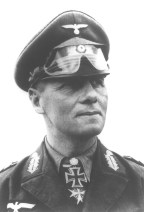
To give an idea of the value his book from an insight perspective, the famous Rommel quotable quote as to using captured ‘booty’ (enemy equipment) for personal use is thanks to Schmidt’s work. Rommel, whose signature British issue goggles often worn above his visor on his cap said “Booty is permissible I assume; even for a general“. A quote which now finds itself in use in military outfits the world over when reasoning over the use of ‘booty’.
With that, as South Africans we find ourselves contributing again to a rich military heritage with our own very unique history highlighting of our lessor known past of ‘Nazi’ collaborators and World War 2 Wehrmacht veterans.
History is always a three-way prism. As with South African statute forces fighting communism on two fronts – the Angolan Border ‘Bush’ War and the internal ‘struggle’ movements in the 70’s and 80’s – so it was during the Second World War as well, this time the ‘struggle’ movement was a little different and South African statute forces were fighting Fascism and Nazism (National Socialism) on two fronts, both on the international stage and on the domestic front at home.
Little is known of the domestic conflict during World War 2 as it was effectively shielded and even erased from the state’s educational history curriculum – to the point that little is known about it by subsequent generations of South Africans even to this day. By far the biggest of all the domestic pro Nazi organizations in South Africa at this time was a movement called the “Ossewabrandwag” (abbreviated to OB).
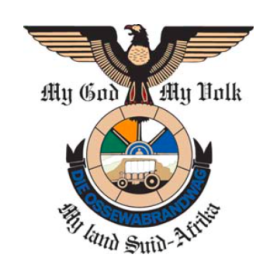
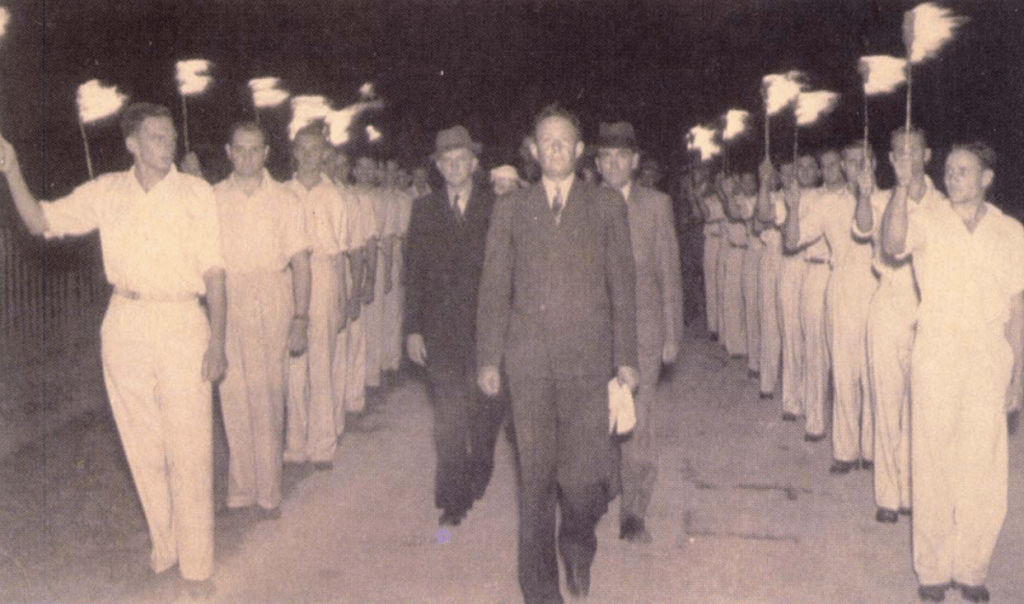
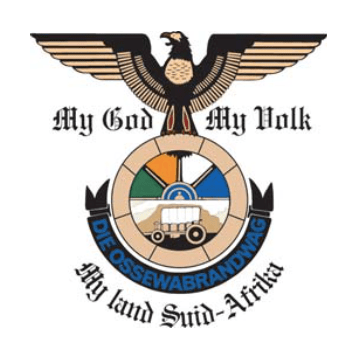
The feature image shows a Ossewabrandwag rally and its leadership along with an inserted emblem of the organization. Read on for a fascinating and relatively unknown part of South African military history.
Background and formation
The Ossewabrandwag (OB), meaning in English Ox-wagon Sentinel was an anti-British and pro-Nazi German organization in South Africa during World War II. It was officially formed in Bloemfontein on 4 February 1939.
As a background to it, in the South African War (1899–1902), Britain conquered the Boer Republics. Germany supported the Boer cause. After the war, there was a general reconciliation between Afrikaners and Britain, culminating in the formation of the Union of South Africa in 1910, under the leadership of former Boer fighters, Louis Botha and Jan Smuts. South African troops, including tens of thousands of Afrikaners, served in the British and South African Union forces during World War 1 and again in World War 2.
Nonetheless, many Boers from the ex Transvaal and Orange Free State Republics remembered the extremely brutal tactics used by Britain in the Boer War and remained resentful of British rule. They were especially resentful of the concentration camp and scorched earth policies engaged by the British to bring to bring an end to the guerilla tactics used by ‘Bitter einders’ at the close of the war.
In the 1930’s the chief vehicle of Afrikaner nationalism was the ‘Purified National Party’ of D. F. Malan, which later became the ‘National Party’. As in 1914, the Second World War appeared to a relatively small group of far right-wing Afrikaner nationalists as a golden opportunity to establish Afrikaner nationalist rule and move to make South Africa a republic independent of Britain.
‘We are now ceaselessly on the road to our goal: the Republic of South Africa – the only status under which we can truly exercise the right to self-determination as a country,’ said D.F. Malan on 6 September 1939 at the on-set of the Second World War.
Prior to this, 1938 was also the centennial anniversary of the Great Trek (the migration of Boers to the interior). The Ossewabrandwag was established in commemoration of this Great Trek. Most of the migrants traveled in ox-drawn wagons, hence the group’s name. The group’s leader was Dr Johannes Van Rensburg, a lawyer who had served previously as Secretary of Justice, in 1933 he had been to Germany in his capacity as Secretary and met both Hitler and Goering as well as other Nazi officials, he was deeply impressed with both the leadership and discipline offered by Nazism and became an admirer. The OB at the on-set of the centennial was loosely associated to Malan’s National Party.
The relationship with the National Party
There were however sharp differences between Dr van Rensburg and Dr D.F. Malan over the right course of action to be followed when South Africa declared war on Germany in 1939. Both believed that everything depended on the outcome of the war, both believed that Germany would win it, however Malan relied on negotiation with Germany to achieve his objectives, van Rensburg on the other hand believed that at some stage freedom would have to be fought for and began to formulate a militant opposition to the South African government to undermine South Africa’s war effort.
At first, relations between the National Party and the Ossewabrandwag were cordial, with most members of the Ossewabrandwag belonging to the party as well. At the higher levels, National Party leaders like P.O. Sauer and F. Erasmus (later to be made Cabinet Ministers when Malan came to power) were members of the OB.
CR SwartBJ VorsterPW Botha
Three future National Party South African Prime Ministers/State Presidents held key leadership positions in the Ossewabrandwag. ‘Generals’ like C.R. Swart (later South Africa’s first State President) was a member of the Groot Raad (Chief Council) of the Ossewabrandwag, B.J. Vorster (later to become Prime Minister of South Africa) was a keynote OB leader and formed the OB’s Cape Branch and even PW Botha (future South African State President) joined the Ossewabrandwag and worked with Vorster to establish the OB’s Cape branch.
Other National Party stalwarts where also prominent in the Ossewabrandwag organisation, Eric Louw, for example – who later to become the National Party’s Foreign Minister. That to say the National Party and the Ossewabrandwag were, to coin a phrase, “two peas in the same pod” is an absolute truism.
Combining the impact of the war and the very dynamic personality of Dr van Rensburg, the Ossewabrandwag soon grew into a significant force, a mass movement whose membership at its peak was estimated to be between 200,000 and 400,000 members.
The relationship between the Ossewabrandwag and National Party at first was very well-defined and D.F. Malan even met with OB leaders in Bloemfontein which resulted in declaration known as the ‘Cradock Agreement’. It specified the two operating spheres of the two respective organizations. They undertook not to meddle in each others affairs and the National Party endeavoured to focus on Afrikanerdom in the party political sphere, while the Ossewabrandwag was to operate on the other fronts of the ‘volk’ (white Afrikaans people’s).
‘Nazification’ of the far right
In 1940 the Ossewabrandwag created within in structures an elite organization known as the Stormjaers – the storm troopers of Afrikanerdom. The formation of the Stormjaers (English meaning: Assault troops) was in essence a paramilitary wing of the OB. The nature of the Stormjaers was drawn upon the lines of Nazi Germany’s army ‘Storm troopers’, as were the Nazi and fascist rituals and salutes, this is evidenced by the oath sworn in a by new recruits (in some instances a firearm was levelled at them whilst they read the oath): “If I retreat, kill me. If I die, avenge me. If I advance, follow me” (Afrikaans: As ek omdraai, skiet my. As ek val, wreek my. As ek storm, volg my).
Johannes van Rensburg been sworn into the Ossewabrandwag
The Stormjaers were deployed in variety of military operations ranging from the defence of Nationalist political platforms to pure sabotage, they dynamited post offices and railway lines and cut telephone wires. Van Rensburg even wrote “The Ossewabrandwag regards itself as the soldiery of the (South African) Republic . . . the Ossewabrandwag is the political action front of Afrikanerdom.”
The ideologies of the Nazis were penetrating deep into right-wing Afrikaner political identity. In 1940, directly after Nazi German decisive victories in Europe, Otto du Plessis (later to become Administrator of the Cape under the National Party) published a pamphlet – The Revolution of the Twentieth Century – in which he openly espoused the Ossewabrandwag’s policy of totalitarianism.
B.J. Vorster’s brother, Rev. Koot Vorster, who was a Dutch Reformed Church minister, was also a predominant Ossewabrandwag leader. He summed up the pro-Hitler and Pro-Nazi standpoint of the OB during an address to a student group on September 15, 1940:
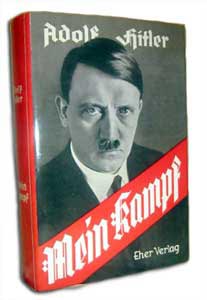
“Hitler’s ‘Mein Kampf’ shows the way to greatness – the path of South Africa. Hitler gave the Germans a calling. He gave them a fanaticism which causes them to stand back for no one. We must follow this example because only by such holy fanaticism can the Afrikaner nation achieve its calling.”
Kowie Marais, an OB member, years later recalled in an interview the admiration he and his friends held for Hitler: “We thought he (Hitler) might rejuvenate western civilization…against the communist-socialist trends that were creeping in from the east. We thought it was the dawn of a new era.”
Oswald Pirow also publicly identified himself with National-Socialist doctrines and Nazi Germany and established the Nazi expansionist ‘New Order’ movement inside the ranks of the former Hertzogites.
There even existed South Africa’s own Nazi party called the SANP and it’s militant wing the ‘Greyshirts’ led by Louis Theodor Weichardt (who later became the National Party Senator for Natal). This pure Nazi movement had 5000 odd loyal followers.
Dr Van Rensburg from the OB had always professed been a National Socialist, as an open admirer of Nazi Germany and Adolph Hitler, and the ideas and rituals of membership put forward by his organization had a distinctive Nazi leaning as a result.
According to OB political thinking, Afrikaans would be the only official language in a free, independent, Christian-National Republic. The English-speaking South Africans, regarded as an “un-national” element, would be condemned to an inferior status. Anti-Communism was an important backbone of OB policy in line with Nazi hatred of communism.
The emphasis of the OB was also on race and racial purity. Members were exhorted to ‘think with your blood’, and the Nazi creed of ‘Blut und Boden’ (Blood and Soil) was promoted as an OB value. ‘Family, blood, and native soil – that is, next to our religion and our love of freedom, our greatest and our most sacred national heritage’ (Die O.B. 28 October 1942).
The OB always displayed an exaggerated interest in physical culture and the need for dictatorial discipline. “Give us a master ! Give us bonds which tie us to a stable way of life” wrote van Rensburg.
On issues of family value, the leaders of the OB proclaimed that the duty of the man was to work and fight and the duty of the woman to create and tend the home and family.
In essence the Ossewabrandwag was based on the Führer principle, fighting against the British Empire, anti-capitalist in nature – they called for the removal and expropriation of “British-Jewish” controlled capital, the communists, the Jews and the system of parliamentarism. All based on the principles national socialism.
An irony is not lost here, in modern South Africa the African National Congress (ANC) now call this ‘British-Jewish controlled capital’ a new name – ‘white monopoly capital’ and call for the same capture of this elusive capital as a justification for their cause too.
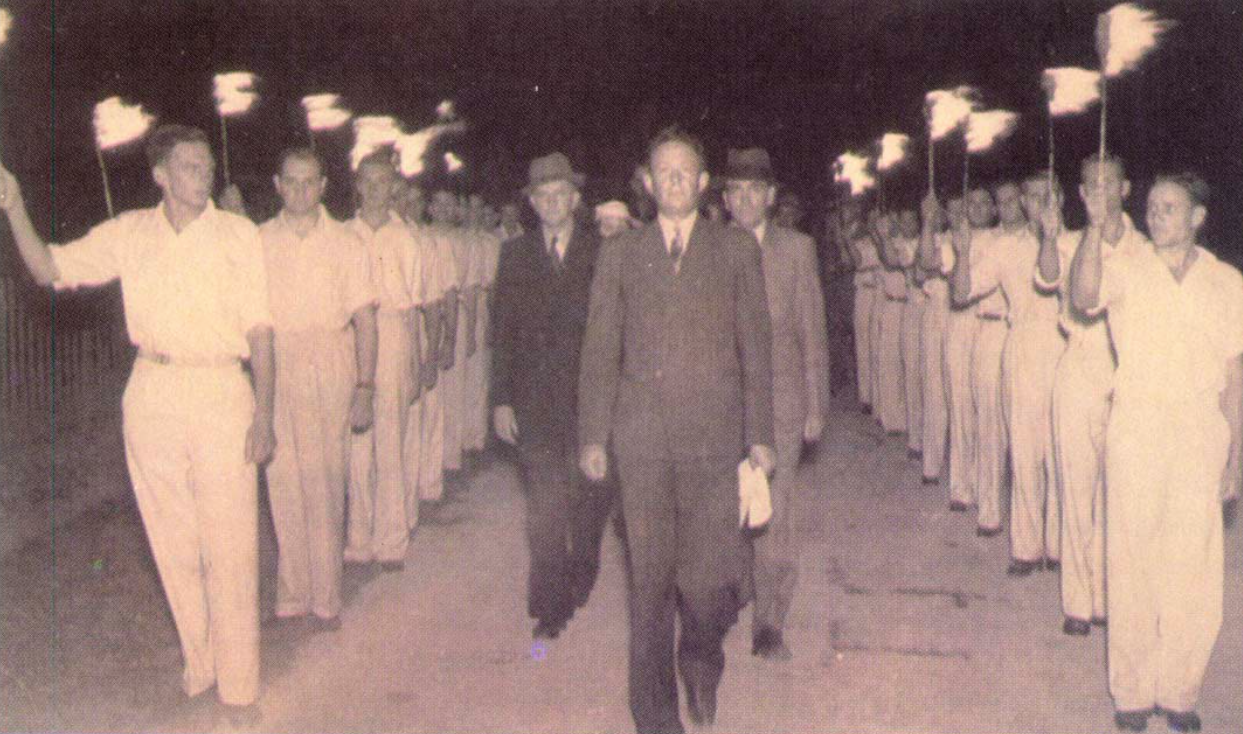
Johannes van Rensburg at a Ossewabrandwag torch rally
Insurrection
From the outset of the war a series of violent incidents took place between statutory force South African soldiers and the Ossewabrandwag. This was to cumulate on Friday 31 January 1941, when van Rensburg was due to hold a meeting at the Johannesburg City Hall when a riot broke out between OB Stormjaers and South African Union Defence Force soldiers who were determined not to allow van Rensburg to have a platform for his support of Nazi Germany – with whom they were now at war with.
The Stormjaers were armed with sticks,pipes, batons, knives, sjamboks and even bicycle chains, while the soldiers were for the most part unarmed and the battle raged in downtown Johannesburg for two days. Armoured cars were brought in while enraged UDF soldiers set fire to Nationalist newspaper offices and set police vans alight. Tear-gas canisters were hurled in every direction between the two antagonists and the Police.
Before a commission of inquiry on the Johannesburg riot, Dr van Rensburg declared that it was only OB discipline and restraint which had prevented reinforcements in outlying areas from being brought into town and broadening the scope of the battle.
In support of OB activities the National Party even came out in direct support of the OB against Smuts’ government resolution to detain and ban members of the OB. Dr D.F. Malan defended the OB in a speech on 5 March 1941, saying:
“The Ossewabrandwag has been accused of lending itself to subversive activities and also of encouraging them. Now I say: Carry out your threat. Ban it. Prevent it and prevent its meetings. If the Ossewabrandwag decides to be passively disobedient and refuses to be dissolved . . . I shall share the consequences with the Ossewabrandwag. At this stage I am prepared to say to you that if the government decides upon that act and the Ossewabrandwag decides not to submit, I shall keep my pledge”.
It was a clear sign to Smuts’ government that unity in the ranks of the Afrikanerdom movements was as unified as ever since the outbreak of the Second World War.
To give an idea of sabotage and violent attacks, at the height of the Second World War – 1942, Ossewabrandwag Stormjaer activities included:
Explosions over a large area of mines at Klerksdorp, Vereeniging, Delmas and in Potchefstroom the OB blew up power lines – 29 January 1942. All telegraph and telephone communication between Bloemfontein and the rest of South Africa were dislocated in one attack in February 1942.
Railway, telegraph and telephone lines in various parts of the Free State were destroyed in February 1942. Fifty-eight Stormjaers were eventually charged with high treason, and a quantity of hand grenades were found. Stormjaers also blew up two telephone poles behind the Pretoria Central Jail, but were never captured.
Two other Stormjaers, Visser and van Blerk were convicted of a bombing at the Benoni Post Office, as a result of which an innocent bystander was killed, they were both sentenced to death. The sentence was commuted to life imprisonment.
A few members of the OB were shot while trying to escape from internment camps or jails, the most known was the dramatic pursuit OB General, Johannes van der Walt, who was shot while on the run near Krugersdorp.
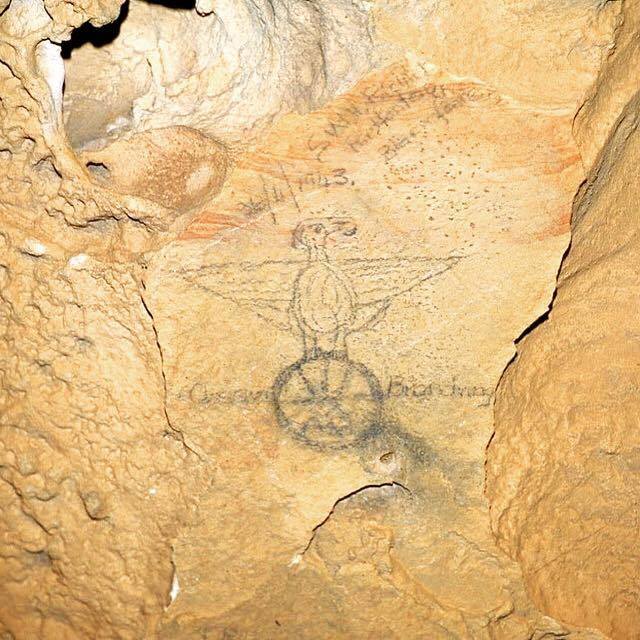
A number of arms cache’ and hiding places for the Stormjaers can still be found, the inserted picture shows Ossewabrandwag graffiti in a cave in the Excelsior area.
B.J. Vorster
One very predominant leader of the Ossewabrandwag was Balthazar Johannes (B.J.) Vorster, South Africa’s future Prime Minister. Along with like-minded OB colleagues he regarded the war as an opportunity to get rid of the hated domination of the United Kingdom of South Africa and welcomed the Nazis as allies in their fight.
The firebrand nature of the Ossewabrandwag appealed to Vorster more than the National Party, so while South African troops were helping to make the world safe from Hitler’s National Socialism, Vorster was appointed as a ‘General’ in the Ossewabrandwag for the Port Elizabeth district to promote the National Socialism doctrine back home. On his politics he famously announced the Ossewabrandwag’s position on Nazism and said in 1942:
‘We stand for Christian Nationalism which is an ally of National Socialism. You can call this anti-democratic principle dictatorship if you wish. In Italy it is called Fascism, in Germany National Socialism and in South Africa, Christian Nationalism”.
BJ Vorster addressing a OB meeting
Vorster was eventually arrested under the emergency regulations in September 1942, he immediately went on hunger strike and after two months was transferred to Koffiefontein internment camp as prisoner No. 2229/42 in Hut 48, Camp 1. B.J. Vorster was eventually released on parole in January 1944 and placed under house arrest.
Interned alongside BJ Vorster was another Ossewabrandwag member Hendrik Johan van den Bergh who eventually went on to found the Bureau of State Security (B.O.S.S.), an intelligence agency created under the National Party on 16 May 1969 to coordinate military and domestic intelligence. Van den Bergh was to become known as the “tall assassin” given his physical height.
Direct German intervention
The German Nazis themselves saw the activities of the Ossewabrandwag as very positive to their fight. Van Rensburg was even played up over Zeesen radio as the real leader of the Afrikaner people.
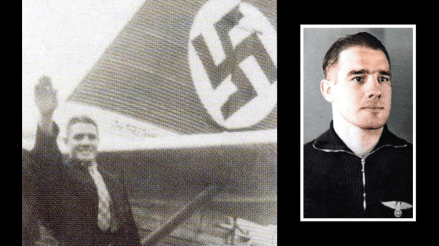
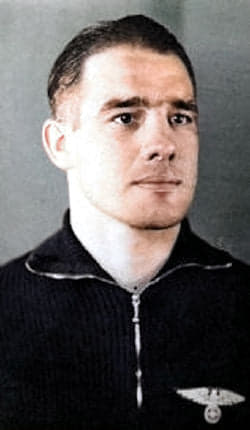
In June 1941 Robey Leibbrandt was landed from a German yacht on the Namaqualand coast with 10,000 dollars, a radio transmitter, and instructions to make contact with van Rensburg and investigate the possibilities of joint action with the Ossewabrandwag. His mission, overseen by German Admiral Wilhelm Canaris was Operation Weissdorn, a plan for a coup d’état to overthrow the government of General Jan Smuts.
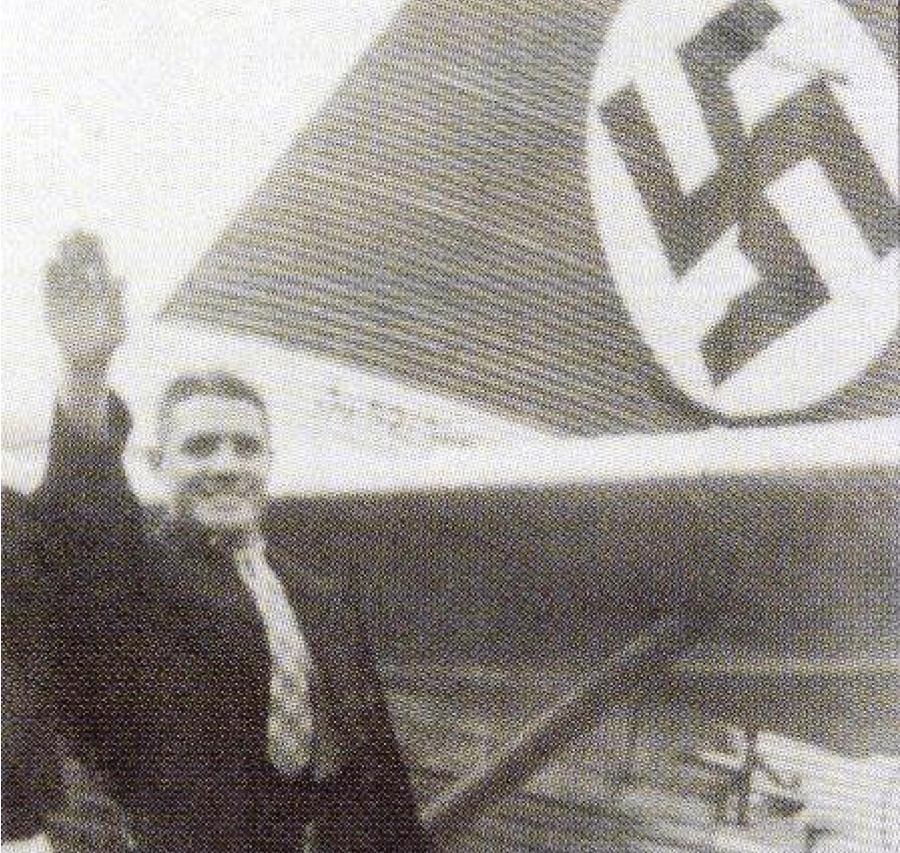
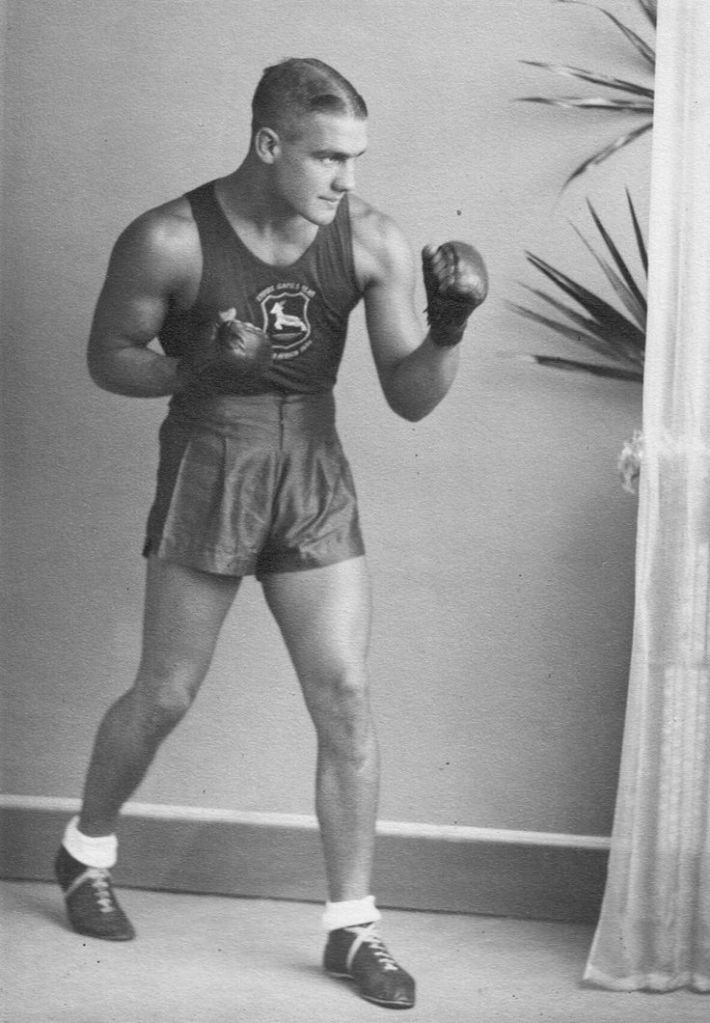
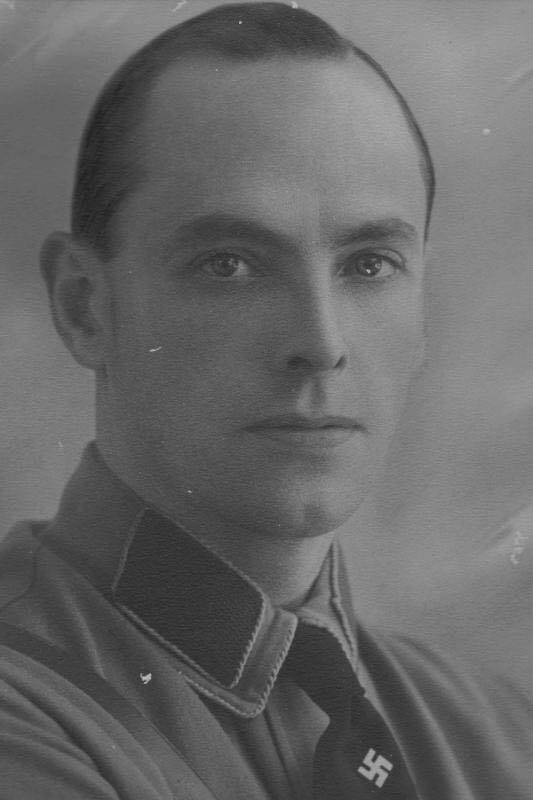
Leibbrandt was a South African Olympic boxer who later came a fervent Nazi follower. He joined the German Army, where he became the first South African to be trained as a Fallschirmjäger (paratrooper) and glider pilot. Leibbrandt was trained with comrades of the Brandenburgers at a sabotage training course of Abwehr II (Abwehrschool “Quenzgut”) near Brandenburg an der Havel, west of Berlin.
Once in South Africa he soon made contact with the Stormjaers and was brought to Pretoria to see van Rensburg.
Nothing, however, came of the negotiations. Leibbrandt’s megalomania was enough to deter anyone from cooperating with him, and van Rensburg refused to be drawn. At the same time Leibbrandt’s fanaticism attracted a number of members of the Ossewabrandwag over to his side, and within a short while Leibbrandt was leading his own group, calling themselves ‘The National Socialist Rebels’ whose members were bound to one another by a blood oath which partly read:
“All my fight and striving is for the freedom and independence of the Afrikaner people of South Africa and for the building up of a National Socialist State in accordance with the ideas of Adolf Hitler.”
The quite truce between Leibbrandt and van Rensburg quickly developed into open hostility. Leibbrandt, disappointed that the OB did not officially support his mission and its resultant failure began to openly attack van Rensburg as an ‘agent’ of Smuts. This sealed his fate. After a few months in South Africa he was ‘sold out’ by OB insiders, his location now known to the Smuts government, he was arrested, together with a number of leading Stormjaers.
Placed on trial Leibbrandt was sentenced to death for treason, but the sentence was commuted to life imprisonment after much lobbying from Afrikaner Nationalist organisations. Mindful of the deep-seated split in his own Afrikaans community, to quote Jan Smuts at the time his sentence was commuted to life “I did not want the blood of another Jopie Fourie on my hands”.
The Stormjaers sabotage activities were getting too violent for DF Malan’s National Party policy of negotiated settlement with Germany when (and if) they won the war. Many of these acts of violence were going too far for the majority of moderate Afrikaners, and Malan ordered the National Party to break all ties with the OB later in 1942.
The South African Union government then cracked down heavily on the OB and the Stormjaers, placing thousands of them in internment camps for the duration of the war.
Summing up the achievements of the Ossewabrandwag’s campaign of sabotage, van Rensburg wrote this in his autobiography which was published after the war:
“I fought (Smuts’) war effort and I fought it bitterly with all the means at my disposal – which were considerable…. There is no doubt that they (the Ossewabrandwag) seriously hampered the government’s war effort. Hampered it because the government was forced to draw off considerable manpower to guard many strategic points and essential services. A not inconsiderable military element also had to be retained in South Africa as a strategic reserve for possible emergency.”
At the end of the war, the Ossewabrandwag was absorbed back into the National Party and ceased to exist as a separate body, many of its members achieving political notoriety as members of the National Party government on their accent to power with the National Party electoral win over Smut’s United Party in 1948.
Returning war veterans react
Imagine the sheer frustration felt by the veterans after “The War for Freedom” (as WW2 was known) had been fought with the massive cost in South African lives (literally tens of thousands), to rid the world of Nazism and Fascism in the ‘good fight’ – only to come home in 1945 and within three short years find the ‘home grown’ pro Nazi Germany and pro Nazi philosophy politicians swept into government. The very men and their philosophy they had gone to war against in the first place.
By the early 1950’s the South African nationalist government was littered with men, who, prior to the war where strongly sympathetic to the Nazi cause and had actually declared themselves as full-blown National Socialists: Oswald Pirow, B.J. Vorster, Hendrik van den Bergh, Johannes von Moltke, P.O. Sauer, F. Erasmus , C.R. Swart and Louis Weichardt to name a few, and there is no doubt that their brand of politics was influencing government policy.
Louis WeichardtOswald Pirow
Louis Weichardt was the South African Nazi ‘grey-shirts’ founder (he later became a National Party MP) in the left image and Oswald Pirow (Nazi ‘New Order’ founder in South Africa) inspecting German Luftwaffe troops on a ‘unofficial’ visit to Nazi Germany on behalf of the ‘old’ National Party – later he became a key Public Prosecutor under the ‘new’ National Party.
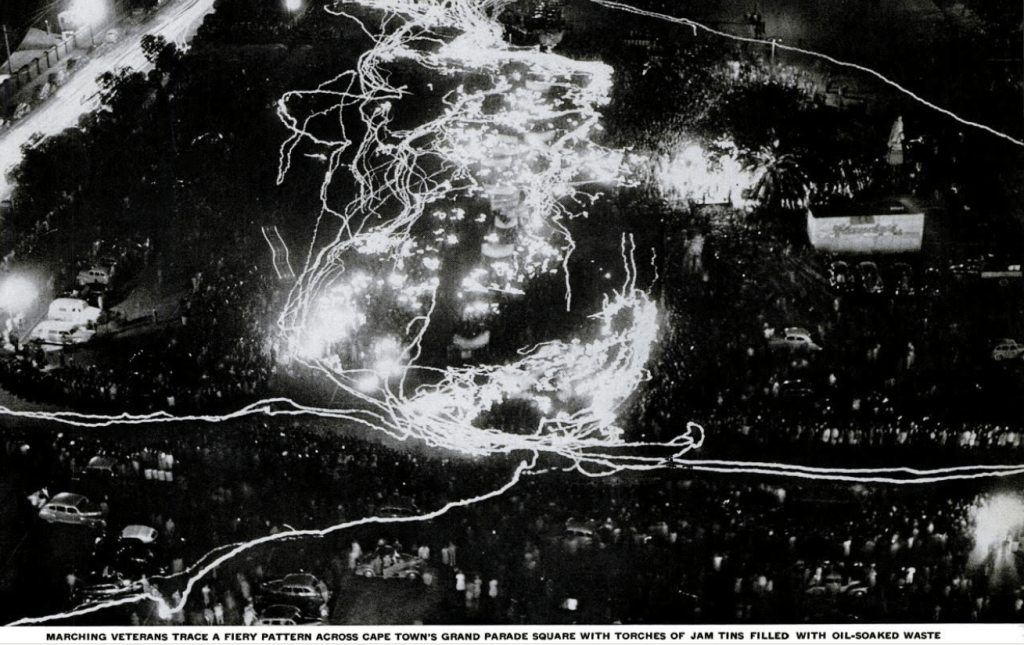
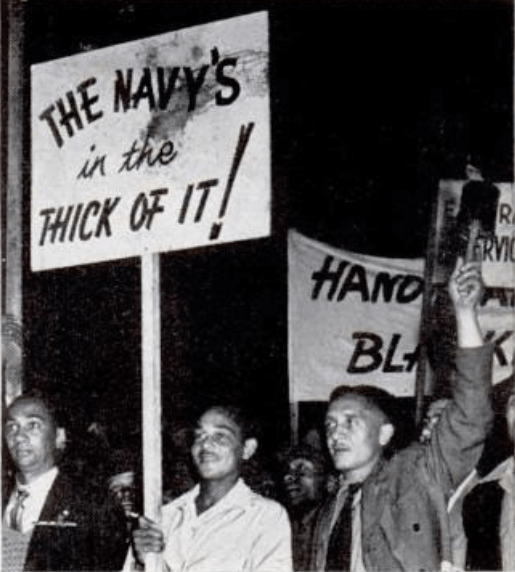
Also by the early 1950’s, this state of affairs in the make up and philosophy underpinning South Africa’s ‘new’ ruling party, led to open Anti-Apartheid protests from the South African military veterans community – in their tens of thousands, led by Adolph ‘Sailor’ Malan and other returning war heroes in Torch Commando rallies (The Torch) and it ultimately led to the marginalization of South African war veterans, their veteran associations and the ultimate suppression of anti-Apartheid movements like the Torch by the National Party.
Images of Sailor Malan at an anti-apartheid Torch Commando rally in Cape Town attended by over 10 000 returning South African World War 2 veterans.
Sailor Malan famously accused the national party government at this rally of “depriving us of our freedom, with a fascist arrogance that we have not experienced since Hitler and Mussolini met their fate”.
Covering Tracks
In the interests of consolidating themselves in power and in the interests of securing the ‘white’ vote from both English and Afrikaans voters (especially English-speaking white South Africans of British extraction) much of this legacy was a political hot potato for the National Party. Nazism, Fascism and National Socialism was purged from Europe with the loss of millions of lives, and exposed for what it is – a crime against humanity.
Political careers – especially those of future National Party State Presidents and Prime Ministers would not be helped if their associations to Nazi Germany, Nazi political philosophy and even anti-British ideals where openly promoted. Especially when National Service was instituted and the National Party called on Jewish and English-speaking white South Africans of British heritage and even moderate or leftist Afrikaners to rally behind their cause to ‘fight communism’ and serve in the statutory armed forces as conscripts.
So it was shielded – in formal secondary education it was not formally taught at all and it was never really widely reported on by the state media apparatus when referring the political legacies of the likes of B.J. Vorster or P.W. Botha. In 1948, two months after taking office the National Party even went so far as removing two truck loads of intelligence on the Broederbond and Ossewabrandwag accrued by the Smuts government from their archive, and it especially included Broederbond plans on how South Africans would be educated along Christian Nationalism lines, this intelligence was never to be seen again. This would give B.J. Vorster his favourite fall-back line of “prove it” whenever someone challenged him on his Nazi sympathising past. Except ‘banned’ overseas anti-apartheid movements, they went to town on the link of Apartheid to Nazism and broadly promoted it to anyone who would listen. This was of course gagged in South Africa under emergency regulations and banned organisation listings. The result is that little is left of it in the modern historical narrative on South Africa in the country itself.
At best, in South Africa, it was re-branded as a ‘fight against the British’ because of the atrocities committed by the British during the Boer War, a sort of retribution, cleverly phasing moral correctiveness to justify it. What this narrative also aimed to do was unbundle all the underlying Nazi ideology, philosophy, ritual and politics which had been coupled so openly during the war to the Ossewabrandwag’s ideals of Christian Nationalism by future National Party leaders. Covering it up with ‘moral outrage’ instead. Whilst retribution for the Boer War was a primary driver of the Ossewabrandwag, and there is good reason behind this objective, it was not the only driver, and ignoring the entire underpinning ideology of the group is only to look at half of the whole.
Many historians have asked if Nazism played a role in the creation of Apartheid as philosophy, and frankly the answer is yes it did, both directly and indirectly by the architects of Apartheid who so readily adopted Nazi ideals, rituals and philosophy during the war, in open and on the public record. It is this for this reason that National Party did not want any open or constant linkages made to this, their darker past, because when in power the ideals behind Nazism were so abhorrent to the majority of white South Africans that it would have certainly lost them their authority.
In Conclusion
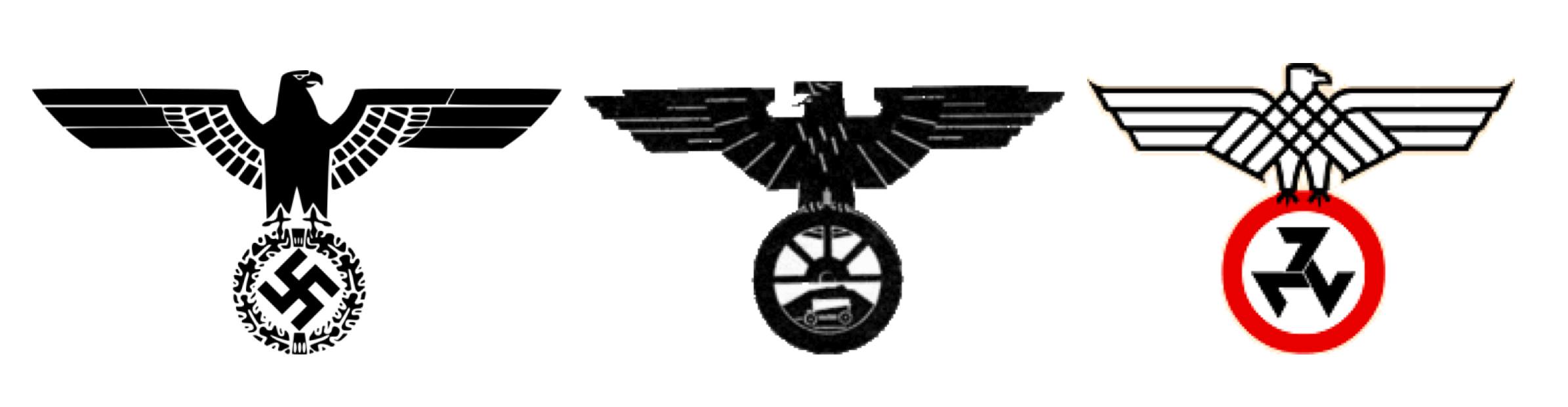
In the end it all disappeared into a politically generated one-sided nationalist narrative of South Africa’s history, and was lost or ‘re-presented’ as retribution for the Boer War to future generations. It even remains a very dark and relatively unknown topic even to this day, however, so strong is this legacy that it has continued to lurk in the Afrikaner far right for many years and resurfaced openly again in the ‘Afrikaner Weerstandsbeweging’ – Afrikaner Resistance Movement (abbreviated to ‘AWB’) in the early 1990’s. When German Nazi swastika flags made a regular appearance next to the AWB flags – which were also styled after the swastika. In addition to German National Socialism finding itself back into the AWB ideology itself, it also wound its way into AWB identity – including insignia and uniform.
AWB Rally in Pretoria
This legacy is far-reaching, and it also remains an irony that the Ossewabrandwag (and later the AWB) embarked on acts of armed insurrection which by any modern definition would be considered a ‘terrorist’ act, and the same people involved in them would readily brand the ANC for ‘terrorism’ with no hindsight to their own time spent as a ‘terrorist’, fighting to destabilise the government of the day with bullets and bombs in very much the same way.
Ironic that the future ‘struggle’ of South Africa’s Black people (and many White people too) against the political philosophy of these men would emulate the same ‘struggle’ these men initiated against ‘British rule’ – and in both instances it carried with it armed insurrection, detention of ‘heroes’, imprisonment of a future President and the promotion of a political “ism”, albeit that ‘Communism’ and ‘African Socialism’ were diametrically opposite to ‘Fascism’, ‘Nazism’ and ‘Christian Nationalism’ – far left and far right of the political sphere respectively.
The net result, the importance and legacy that the Ossewabrandwag has left us with, is that ‘race politics’ continues to haunt us and ‘centre’ balanced moderate politics in South Africa has been completely elusive since 1948.
Evolution of Symbology (L-R) Nazism, Ossewabrandwag, Afrikaner Weerstandsbeweging
References from South African History On-Line, Wikipedia and “The Rise of the South African Reich” 1964 written by Brian Bunting, “Echoes of David Irving – The Greyshirt Trial of 1934” by David M. Scher. “Not for ourselves” – a history of the SA Legion” by Arthur Blake. Lazerson, “Whites in the Struggle Against Apartheid”. Neil Roos. “Ordinary Springboks: White Servicemen and Social Justice in South Africa, 1939-1961″. David Harrison “The White Tribe of Africa, South Africa in Perspective” 1981.
Lisa Shearin in ‘Bewitched and Betrayed’ said “It’s not treason if you win” and this rings very true to South African traitors from the past and now the present. How history repeating itself in South Africa can be ironic at the best of times, the country’s ethnic diversity will always ensure that one community’s freedom fighter is another community’s terrorist.
This was as true of the Afrikaner Nationalists during the Second World War, as much as it was true to the African Nationalists during the political and armed “struggle” in the more recent past. Both produced ‘traitors’, both had leaders incarcerated, both went on to ultimately govern South Africa and both produced Presidents who were themselves imprisoned as “traitors to the state”. Ironically – both went on to pardon their fellow activists and make heroes of them. The issue of ‘treachery’ set aside by the ‘winner’.
Robey Leibbrandt
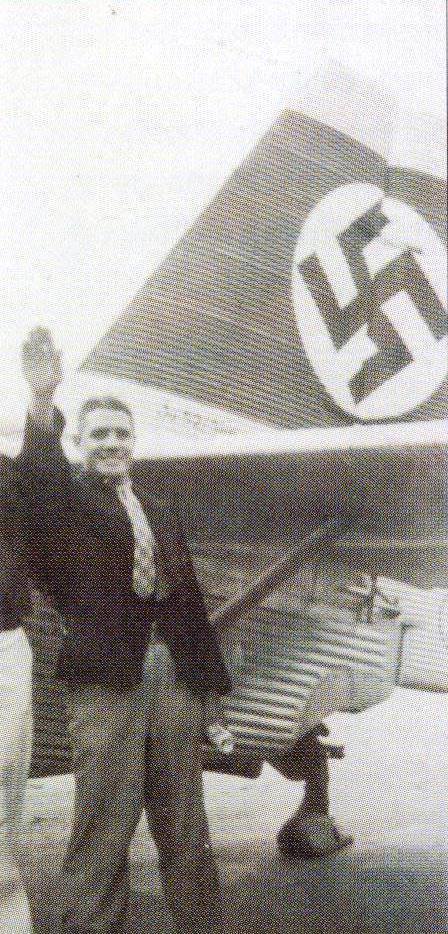
This is the story of one such South African national – Sidney Robey Leibbrandt, who was led by the German military intelligence (Abwehr) during the Second World War under the pseudonym ‘Robert Leibbrand’.
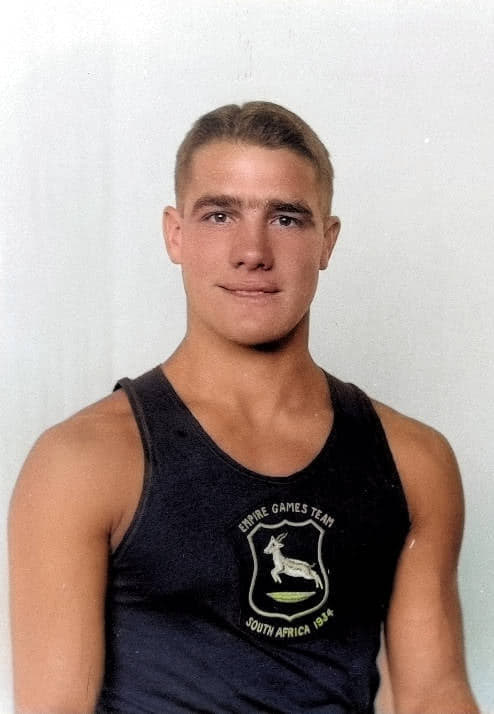
Born in Potchefstroom Leibbrandt was an Afrikaner Nationalist of both German and Irish decent. He was also a South African Olympic boxer, however his political ideology drove him to become a German secret agent and ‘freedom fighter’ – primarily against the British influence and political power within South Africa.
Leibbrandt went to Germany in 1938 to study at the Reich Academy for Gymnastics, and stayed on when war broke out. He joined the German Army, where he became the first South African to be trained as a Fallschirmjäger (paratrooper) and glider pilot. Leibbrandt was trained with the Comrades of the Brandenburgers at a sabotage training course of Abwehr II (Abwehrschool “Quenzgut”) near Brandenburg an der Havel, west of Berlin.
Operation Weissdorn
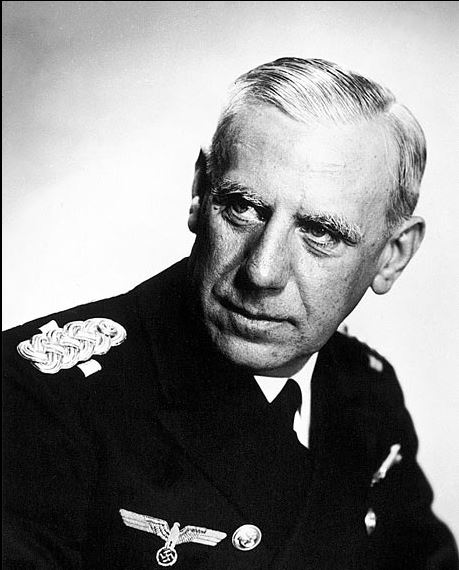
Admiral Wilhelm Canaris
The German Admiral Wilhelm Canaris ordered “Operation Weissdorn” a plan for a coup d’état to overthrow the South African government of General Jan Smuts and assassinate Smuts. Central to the plan was Leibbrandt, who left Germany on 5 April 1941 to lead and execute it.
In June 1941, under the code name Walter Kempf, Leibbrandt was dropped on the Namaqualand coast north of Cape Town (Mitchell’s Bay) by a confiscated French sailboat (the Kyloe). His mission was to make contact with the South African pro-Nazi movement, the Ossewabrandwag, and expand his ranks of ‘freedom fighters’.
In the 1930’s the chief vehicle of Afrikaner nationalism was the Purified National Party of Dr D.F. Malan, (which went on to become the National Party as we know it today) and in 1938 the National Party celebrated the centennial anniversary of the Great Trek – the Ossewabrandwag was established in commemoration of the Trek, it was led by Dr Johannes Van Rensburg who was a lawyer and also a dedicated admirer of Nazi Germany.
Afrikaner Nationalist Resistance
The role of the Ossewabrandwag (OB) evolved to become a militant one – the nationalist members were unsympathetic to Britain because of the Boer War and became increasingly hostile when South Africa declared war on Germany in 1939. As sympathizers with Nazi Germany they felt their only solution was armed struggle.
Within the ranks of the Ossewabrandwag was a formation of Stormjaers (Assault troops). The nature of the Stormjaers was evidenced by the oath sworn by new recruits: “If I retreat, kill me. If I die, avenge me. If I advance, follow me”
The Stormjaers engaged in sabotage against the South African government. They dynamited electrical power lines and railroads, and cut telegraph and telephone lines (These types of acts were going too far for most Afrikaners and Malan later ordered the National Party to break with the Ossewabranwag in 1942)
Robey Leibbrandt, on landing in Mitchell’s Bay hoped to tap into this large resource of Afrikaner ‘Stormjaers’ in his plan to assassinate Smuts and overthrow the government. He made his way to Cape Town to meet and make arrangements with Dr van Rensburg in Pretoria. However, rather disappointingly he found van Rensburg unsympathetic to his plan. Nothing came of the negotiations. Leibbrandt’s megalomania was enough to deter anyone from cooperating with him, and Dr van Rensburg refused to be drawn. Some sources even point to a physical alternation between van Rensburg and Leibbrandt in their final meeting.
Undeterred Leibbrandt continued in his attempts to drum up support from the Afrikaaner Nationalists winning converts from the Ossewabrandwag and the National Party to support his cause with fiery speeches at meetings held in the Orange Free State and in the Transvaal. These converts to Liebbrandt’s band of ‘Stormjaers’ called ‘The National Socialist Rebels’ took a specific Nazi Blood Oath, and trained in bomb making and sabotage. Their blood oath partly read:
“All my fight and striving is for the freedom and independence of the Afrikaner people of South Africa and for the building up of a National Socialist State in accordance with the ideas of Adolf Hitler.”
Leibbrandt was fully determined in his plot to overthrow the government by force of arms and assassinate Jan Smuts, he famously said the following before leaving for South Africa.
“The signal for the coup d’ etat will shake South Africa to its very foundations. The whole world will understand it. The gigantic leading figure of General Smuts will be felled like a heavy oak tree at the psychological moment. I will commit this deed on my own. It will happen without help or support.” Sydney Robey Leibbrandt (Berlin, March 20, 1941)
Capture
Leibbrandt’s small group of National Socialist Rebels kept the South African government on high alert by committing various sabotage acts. However, the quiet truce between Leibbrandt and van Rensburg quickly developed into open hostility. Leibbrandt, disappointed that the OB did not officially support his mission and its resultant failure began to openly attack Dr van Rensburg as an ‘agent’ of Smuts. This sealed his fate. The OB felt Leibbrandt a liability to their cause.
After Liebbrandt and his group of Stormjaers got into a confrontation and gunfight with UDF soldiers in the autumn of 1942, Leibbrandt went on the run and evaded the police. He was betrayed by fellow nationalists in the Ossewabrandwag who disclosed his location and he was eventually arrested in Pretoria in December 1942. Ironically the arresting officer was Claude Sterley, a fellow Springbok boxer and friend.
To get on top of all the wartime dissent and armed resistance from the nationalists, the South African government also cracked down very heavily on the Ossewabrandwag and the Stormjaers, placing thousands of them in internment camps for the duration of the war. Among the internees was future Prime Minister B. J. Vorster, who was a regional leader (General) of the Ossewabrandwag.
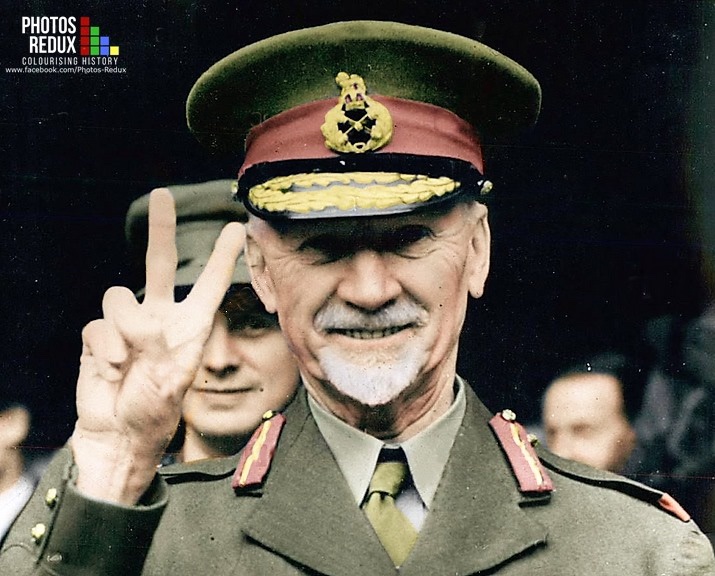
Field Marshal Jan Smuts
On 11 March 1943 Leibbrandt was sentenced to death for high treason. Although Leibbrandt refused to give evidence at any stage in the trial, he claimed that he had acted “for Volk and Führer” and gave the German Salute (Hitler Salute) when he first entered the court, to which several spectators responded and calling “Sieg Heil”. After being sentenced to death, Leibbrandt shouted loudly and clearly “I greet death”.
General Jan Smuts however later commuted his sentence to life imprisonment, confiding that he did not want the blood of another Jopie Fourie on his hands. In this respect Smuts, as an Afrikaner throughout his career usually bowed to a policy of appeasement politics when it came to Afrikaner issues and his ‘Volk’.
This can clearly be seen in the treatment of both ‘traitors’ and enemies of the state – Smuts took a heavy hand to executing the ring leaders of the Rand Revolt who were mainly ‘English’ Communists, but when it came to the Boer Revolt everyone involved was freed, except Jopie Fourie (who had not resigned from the Union Defence Force as an officer when becoming a rebel and therefore had a different case of treason and was court marshalled by the military instead – whereas all the other rebels had resigned). Smuts took the same relatively ‘light handed’ approach to the Ossewabrandwag and clear cases of sedition and treason as was the case with Leibbrandt and chose not to execute them.
It’s not treason if you win
When the National Party was elected to rule in South Africa in 1948, D. F. Malan issued an amnesty over all their fellow war offenders, including the likes of Liebbrandt and the future President BJ Vorster. The National Party then folded the Ossewabrandwag and absorbed their members and structures into the party.
Leibbrandt left the prison and was greeted by crowds of Afrikaner right-wingers and Nationalists as a “folk hero”. The returning servicemen from World War felt it a slap in the face, a blatant political statement as to how much the Afrikaner Nationalists disregarded those who had gone to war against Nazism. To them it was an affront to the sacrifice and loss of thousands of their compatriot South Africans in the war.
Leibbrandt remained politically active in his later life, founding the organisation Anti-Kommunistiese Beskermingsfront (Anti-Communist Protection Front) in 1962, and producing a series of pamphlets titled Ontwaak Suid-Afrika (Wake up South Africa). He was also a passionate sportsman and hunter. Robey Leibbrandt, “Der treue Gefolgsmann” (the loyal follower) died on 1 August 1966 from a heart attack.
The irony is that once in power the rise of African Nationalism (ANC) and their decision to embark on armed resistance mirrors that of the Afrikaner Nationalism. Like the armed wing of the Afrikaner Nationalists – the Ossewabrandwag ‘terrorists’ and ‘traitors’ were imprisoned as enemies of the state, so too were the armed wing of the ANC – Umkhonto we Sizwe. Once in power the Afrikaner Nationalists – the NP – behaved no different to the African Nationalists – the ANC – they built heroes and legacies around their military ‘heroes’, issued pardons and amnesties – and also renamed streets and institutions after them.
In Conclusion
But most ironic is that from the ranks of imprisoned ANC leaders emerged Nelson Mandela, and from the ranks of imprisoned National Party members emerged BJ Vorster – both of whom went on to become President. Strange how history turns and repeats itself.
Both entirely different now, history now looks favourably on Mandela and the African Nationalists (ANC) and its cabal and dismisses their acts of treason in light of a ‘honourable cause’ (liberation from oppression) and history now views Vorster, the Afrikaner Nationalists (NP) and their cabal, like Robey Liebrand and their various acts of treason very unfavourably and point to a ‘dishonourable cause’ (suppression of liberation by oppression).
This brings another famous quote on what qualifies and defines treason, it’s from T.S. Elliot and is very applicable and rings true to the above statement;
“The last temptation is the greatest treason: to do the right deed for the wrong reason”.
Written and Researched by Peter Dickens. Reference: Wikipedia and extracts from “Volk and Fuhrer” by Hans Strydom. Colourised images of Robey Leibbrandt with thanks to Frans Bedford-Visser. Colourised image of Jan Smuts thanks to Photo Redux.

 He moved to a small German community in Natal called ‘New Germany’, located just inland from Durban. ‘New Germany’ was established well before World War 2 in 1848 by a party of 183 German immigrants. With the strong cultural ties to Germany, German social clubs and many German compatriots, this island of German heritage in South Africa proved ideal for Heinz Schmidt to start again, and he did so with great success.
 To give an idea of the value his book from an insight perspective, the famous Rommel quotable quote as to using captured ‘booty’ (enemy equipment) for personal use is thanks to Schmidt’s work. Rommel, whose signature British issue goggles often worn above his visor on his cap said “Booty is permissible I assume; even for a general“. A quote which now finds itself in use in military outfits the world over when reasoning over the use of ‘booty’.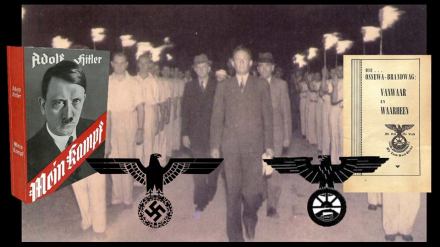








 The Observation Post