A “grievous error”; Recounting South African Sacrifice on the HMS Gloucester

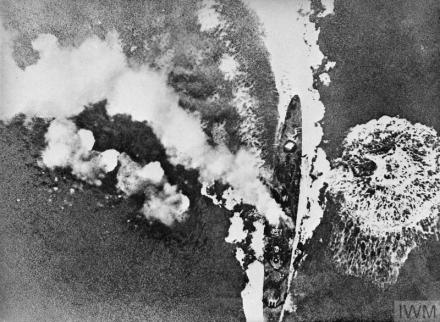
This is the HMS Gloucester under attack by Ju-87 Stukas. May, 1941.  As Simon’s Town in South Africa was a British Naval base thousands of South Africans in WW2 served in the Royal Navy. The loss of the HMS Gloucester is one of the most tragic losses of the war for the Royal Navy, and it unfortunately, as what is arguably the worst wartime loss for the Royal Navy it also has the highest South African naval casualty roll call of the war. Read on for their story.

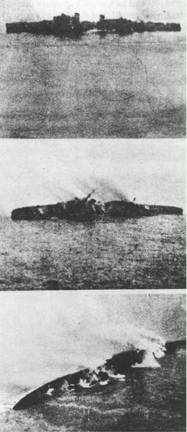
GLOS SINKING

German gun camera captures the HMS Gloucester under attack

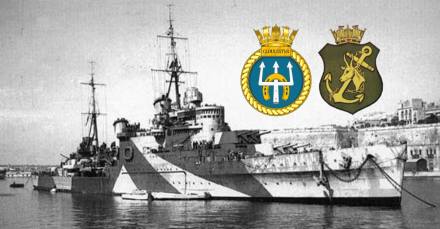
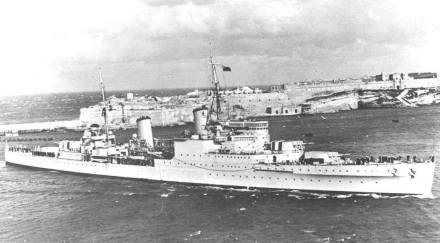
HMS Gloucester was one of the second group of three ships of the Town class of light cruisers. She was launched on 19 October 1937 prior to commissioning on 31 January 1939.

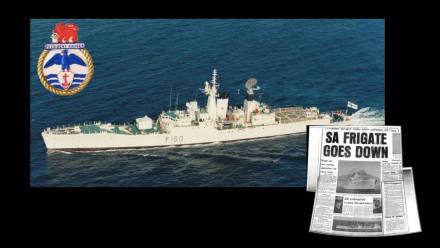
hms_gloucester_D96_emb_n12985Gloucester was nicknamed The Fighting G and saw heavy service in the early years of World War II. The ship was deployed initially to the Indian Ocean and later South Africa before joining Vice Admiral Cunningham’s Mediterranean fleet in 1940. She was sunk on 22 May 1941 during the Battle of Crete with the loss of 722 men out of a crew of 807.

Gloucester formed part of a naval force acting against German military transports to Crete, with some success. Prior to moving to the Mediterranean she spent much of her time patrolling the Indian Ocean off South Africa. In December 1939, she was moved to Simonstown, South Africa where she was used, unsuccessfully, against German raiders. Hence the high number of South Africans serving on her by the time she got to the Mediterranean theatre of operations.

22254780_10155537388346480_1703967884046440289_oAfter German paratroopers landed on Crete on 20 May, the cruiser HMS Gloucester was assigned to Force C that was tasked with interdicting any efforts to reinforce the German forces on the island. On 22 May, while in the Kythria Strait about 14 miles (12 nmi; 23 km) north of Crete, she was attacked by German “Stuka”s of StG 2 shortly before 14:00, together with the light cruiser HMS Fiji and the destroyer HMS Greyhound.  The Greyhound was sunk and the two cruisers were each hit by 250-kilogramme bombs, but not seriously damaged. Two other destroyers were ordered to recover the survivors while the two cruisers covered the rescue efforts. Gloucester was attacked almost immediately and sustained three more hits and three near-misses and sank. Of the 807 men aboard at the time of her sinking, only 85 survived. Her sinking is considered to be one of Britain’s worst wartime naval disasters.

The circumstances of the sinking has also recently pointed to blunders by Royal Navy, when dispatching the HMS Gloucester for the rescue effort, she was low on fuel and anti-aircraft ammunition (less than 20% remaining), and therefore sending her into danger was a “grievous error”.

Furthermore, the Royal Navy failed to attempt to rescue survivors of the HMS Gloucester after it turned dark, one of the reasons why the death toll from the HMS Gloucester is so high.  This lack of action was “contrary to usual Navy practice”. A survivor commented “The tradition in the Navy is that when a ship has sunk, a vessel is sent back to pick up survivors under cover of darkness. That did not happen and we do not know why. We were picked up by Germans.

On 30 May 1941, in a letter to the First Sea Lord, Sir Dudley Pound, Vice Admiral Cunningham wrote, “The sending back of Gloucester and Fiji to the Greyhound was another grave error and cost us those two ships. They were practically out of ammunition but even had they been full up I think they would have gone. The Commanding Officer of Fiji told me that the air over Gloucester was black with planes.”

Whether it was a blunder or whether it was an unavoidable course of action that led to her sinking, there is one thing for certain, a lot of good men died fighting very bravely that day.  Today, the wreck site is a protected place under the Protection of Military Remains Act. The honour roll of South Africans lost in action on the MHS Gloucester as follows (MPK means “Missing Presumed Killed”):

22308811_10155537271456480_3745202244434378650_nALLISON, Oswald H, Able Seaman RNVR, 67349 (SANF), killed
NOWLAN, Francis C, Able Seaman RNVR, 67409 (SANF), DOW

ANGEL, Walter J H, Able Seaman, 67351 (SANF), MPK
AUSTIN-SMITH, John R, Ordinary Seaman, 67336 (SANF), MPK
BAGSHAW-SMITH, Philip R, Ordinary Seaman, 67337 (SANF), MPK
BAGSHAWE-SMITH, Sydney Q, Able Seaman, 68454 (SANF), MPK
BARBER, Edgar F, Able Seaman, 67302 (SANF), MPK
BRUCE, John, Able Seaman, 67355 (SANF), MPK
CARTER, Frederick G, Able Seaman, 67345 (SANF), MPK
CHILTON, Ronald H D, Ordinary Seaman, 67335 (SANF), MPK
EDWARDS, Ronald E, Ordinary Seaman, 67384 (SANF), MPK
ELLIOT, Edward R, Leading Seaman, 66584 (SANF), MPK
GERAGHTY, Herbert C, Able Seaman, 67338 (SANF), MPK
GROGAN, Graham B, Able Seaman, 67343 (SANF), MPK
JAMES, Victor F, Ordinary Seaman, 67303 (SANF), MPK
JENSEN, Niels P, Able Seaman, 67347 (SANF), MPK
MCCARTHY, Henry F, Ordinary Seaman, 67223 (SANF), MPK
MOORE, Albert, Able Seaman, 67416 (SANF), MPK
SLATER, Bryan M, Able Seaman, 67358 (SANF), MPK
SMITH, Matthew S, Able Seaman, 67359 (SANF), MPK
SONDERUP, Arthur W, Able Seaman, 67356 (SANF), MPK
STADLANDER, Rowland C, Stoker 1c, 67400 (SANF), MPK
STOKOE, Cyril A M, Act/Leading Seaman, 67264 V (SANF), MPK
SYMONS, Maurice M, Able Seaman, 68245 (SANF), MPK
THOMPSON, Walter E H, Able Seaman, 67360 (SANF), MPK
VAN DYK, Cecil H, Able Seaman, 67404 (SANF), MPK
WEBBER, Reginald, Able Seaman, 67361 (SANF), MPK
WILLIAMS, Dastrey S, Leading Seaman, 67047 (SANF), MPK
WRIGHT, Gerald V, Act/Ordnance Artificer 4, 67375 (SANF), MPK

We will remember them

12819293_556731994496537_2796972653890093296_o

HMS Gloucester


Researched by Peter Dickens, primary reference Wikipedia


South Africa’s one-legged fighter pilot

14440783_645903558912713_8490363046564296900_n

Capt. Doug Rogan DFC

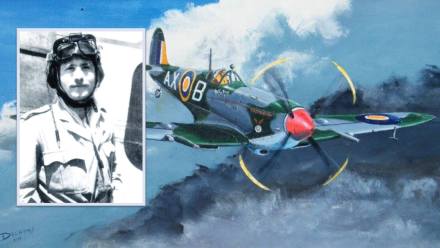
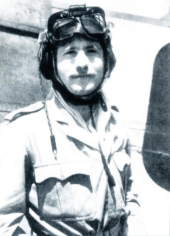
Did you know that during World War 2, South Africa had a one-legged fighter pilot?  This is the extraordinary story of Capt Douglas Smith “Doug”/”Shorty” Rogan DSO, DFC.

2 Squadron SAAF

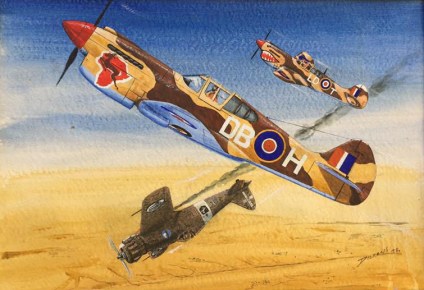
Doug Rogan Joined the South African Air Force as a Permanent Force pilot and he served with SAAF 2 Squadron from September 1941 in the North African theatre of operations.  2 Squadron were known as the ‘flying cheetahs’.

He almost immediately started seeing some success when on the 12th October 1941, he damaged a German Bf-109 flying a SAAF Tomahawk Mk.IIb, however in the engagement he took some damage.  He had another success later that month, when on the 22 October he logged his first confirmed kill of a German Bf-109F near Gasr el Arid, during the battle his SAAF Tomahawk Mk11b again took on some heavy damage, however he managed to get home and score his first combat victory.

By the next month on the 06 November he had further success in the Tomahawk and recorded his second confirmed kill, that of an Italian S.79 short down in the Matruh area.    The S.79 had taken some punishment from other SAAF pilots, but Doug finished it off, so was accredited with the kill.


22195338_10155531678576480_1621709234945740197_n

SAAF 2 Squadron Tomahawks in action by Derrick Dickens

Luck ran out for Doug late in November 1941.  By this time he logged  60 “operation” flying hours,  however during a routine operation on the 24th November he was Wounded In Action (WIA) when his Tomahawk received anti-aircraft ground fire, a  20mm AA shell struck Doug in his right leg.  Severely wounded and losing blood, Doug turned for home and against the odds managed get both himself and his stricken aircraft back to base.  So severe was the wound to Doug’s leg that his leg had to be amputated

4d21fe43d9bda76b0f1d492a8bf8c03c--douglas-bader-a-stick

Douglas Bader

Recovering in South Africa, Doug took inspiration from Group Captain Sir Douglas Bader CBE, DSO (Bar), DFC (Bar).  Douglas Bader was the famous Royal Air Force pilot who was a double leg amputee during the war, he was credited with 22 aerial victories. Bader had joined the RAF in 1928 and in 1931, while performing some aerobatics he crashed and lost both his legs. When war broke he insisted on flying, even as a double amputee. His determination saw him become a Battle of Britain icon using a “Big Wing” of fighters to attack enemy formations over England. He also became a Prisoner of War after he was shot down over France later in the war, and despite his disability he frustrated his German captors by embarking on a number of escape attempts.

With this proof positive account that pilots who had suffered leg amputations could still perform in combat, Doug focussed on getting back to flying, and back to combat flying.  Col. Laurie Wilmot promised Capt. Doug Rogan that if he could be passed the “fit for flying” test with only one leg, he would see to it that Rogan got a posting “up North” again (i.e. back to the theatre of Operations in North Africa and Italy).

1 Squadron SAAF

Fitted with an artificial leg Doug resumed flying fighters with 6 Sqdn on home defence in the following year. After a check ride he passed his fit for flying test and was returned “up north” as promised.  Back in combat flying he was posted to SAAF 1 Squadron in November 1942, known as the ‘Billy Boys’.

429968_306413649409038_717038371_n

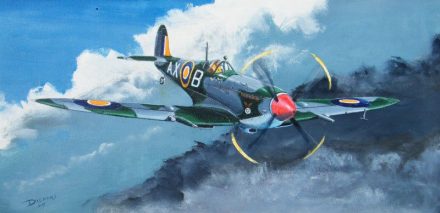
SAAF 1 Squadron Spitfire by Derrick Dickens

His return to operations was marred by a couple of errors up front, one occasion he took off with a mechanic still hanging on to his tailplane but managed to land without damage to either the mechanic or his Spitfire. Also, once landing in a dust storm his Spitfire hit that of another pilot’s already on the ground. He however began scoring again later that same month on 13th December 1942, he damaged a Bf-109G whilst flying a SAAF Spitfire Mk.V.   By 1943 his victories started to stack up flying in the famous Spitfire Mk. V,  12th Jan he shot down a Bf-109G (probable), 21st Jan he shot down a MC.202 (probable) in the Castel Benito-Tarhuna area.  By 27th March he attained a confirmed kill of a German Me 210 near Gabes. On the 08 May he is recorded as damaging an Italian Re.2001.

He was “Returned To Union” (RTU – meaning returned to the Union of South Africa) after his successful tour on Spitfires in August 1943, by this time he was with SAAF 1 Squadron in Sicily. In all is final score from the war: 3 Kills, 2 Probable, 3 Damaged.

On the 19th of March 1943, Doug was awarded a Distinguished Flying Cross (DFC) for his actions and bravery.   In later life he became an air fighting instructor at 11 O.T.U. When he retired from the Air Force he took up residency in the beautiful little coastal town of Knysna.

Another unassuming South Africa hero not known to many now, a true role model and inspiration to any South African, those who have disabilities and even those who do not.


Written by Peter Dickens.  Scorecard comes courtesy of Sandy Evan Hanes’ SAAF Data base. Story content and image provided by Tinus Le Roux on his SAAF Heritage site. Research provided by Sandy Evan Hanes and Warren Williamson.   Artworks of 1 Squadron and 2 Squadron by Derrick Dickens (artist), copyright Peter Dickens.


A documentary on the loss of the SAS President Kruger and 16 souls

This is a must see video on the sinking of the SAS President Kruger by Marc Bow, it outlines everything about the tragedy, and the impact the sinking of this vessel still has on the South African Naval Community – even to this day.

For the full story on The Observation Post, feel free to follow this link:

“Out of the Storm came Courage” … the tragedy of the PK

The honour roll of the South Africans lost that tragic day is as follows:

05507629 PE Chief Petty Officer Johannes Petrus Booysen
77060150PE Chief Petty Officer Hartmut Wilfried Smit
69443794PE Chief Petty Officer Willem Marthinus Gerhardus Van Tonder
07467392PE Chief Petty Officer Donald Webb
05208145PE Petty Officer Stephanus Petrus Bothma
70351226PE Petty Officer Graham Alexander Frank Brind
65718058PE Petty Officer Robin Centlivre Bulterman
73317695PE Petty Officer Granville Williams De Villiers
66510579PE Petty Officer Evert Koen
08302440PE Petty Officer Hjalmar Lotter
70343553PE Petty Officer Roy Anthony McMaster
72362379PE Petty Officer Roy Frederick Skeates
72265465PE Petty Officer William Russel Smith
75060863PN Petty Officer Michael Richard Bruce Whiteley
72249998PE Petty Officer Coenraad Johannes Wium
80100167PE Able Seaman Gilbert Timothy Benjamin

May they rest in peace, never forgotten.


Video Footage:  Marc Bow


Forget Tigers, The Royal Air Force’s 74 Squadron has a legacy of South African Lions!

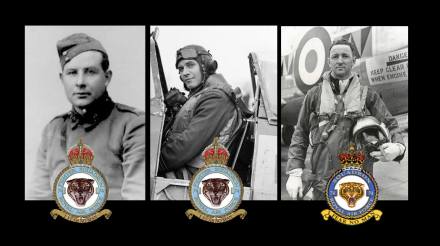
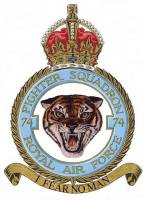
One of the most prestigious fighter Squadrons in the history of the Royal Air Force was 74 Squadron, known as the ‘Tigers’.  However, three South Africans played a key role in forging the great fighting legacy of the Tigers, two of them commanded the squadron, one during World War 2 and one took the squadron into the jet age.

So let’s look at these three remarkable South Africans and how they have come to influence not only 74 Squadron, but The Royal Air Force itself.

World War 1

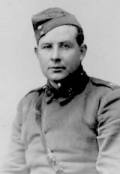
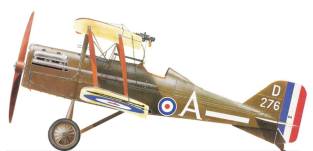
19424342_1982409011988087_4980834163001230819_n74 Squadron was formed during World War 1,Its first operational fighters were S.E. 5as in March 1918, and served in France until February 1919, during this time it gained a fearsome reputation and was credited with 140 enemy planes destroyed and 85 driven down out of control, for 225 victories. No fewer than Seventeen aces had served in the squadron, including one Victoria Cross Winner Major Edward Mannock.  In this line up of aces was one notable South African, and this man came from Kimberley, Capt. Andrew Cameron Kiddie DFC, and he came from unassuming beginnings – he was one of Kimberley’s local bakers.

Captain Kiddie became a flight commander of 74 Squadron in the summer of 1918 and scored fifteen aircraft shot down victories by the end of the war. For this he was awarded the Distinguished Flying Cross and  the Belgian Croix de Guerre.

19442146_1982409701988018_1273489368050288074_o
To read more in-depth about his remarkable South African follow this link to a previous Observation Post story Kimberley baker was a South African WW1 Flying Ace.

World War 2

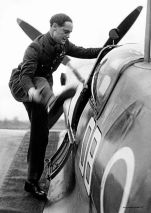
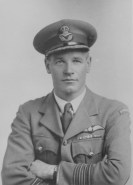
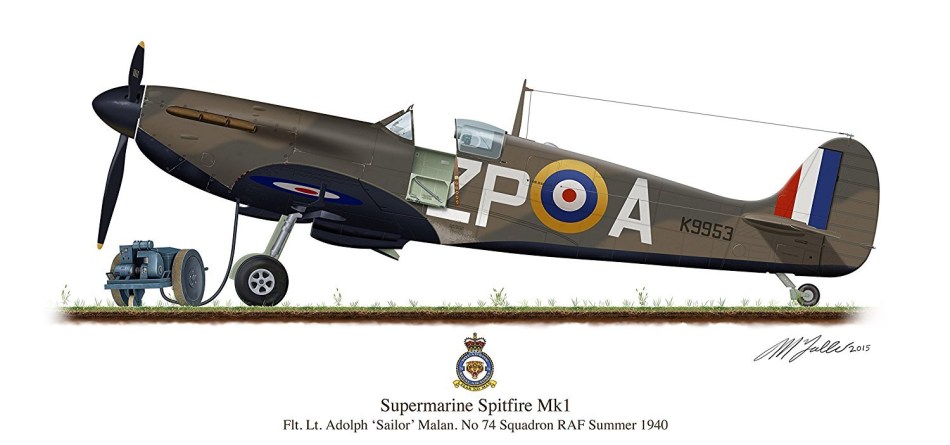
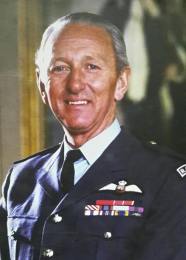
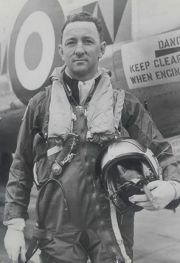
malan1World War 2 would shape 74 Squadron as one of the best in The Royal Air Force.  It became the front-line squadron which took the brunt of the attacks during The Battle of Britain, and this time the squadron was commanded by a formidable South African, Group Captain A G ‘Sailor’ Malan DSO & Bar DFC & Bar.

Arguably one of the best South African pilots of the Second World War and certainly one of the best Royal Air Force pilots during the Battle of Britain – now one of the much idolised ‘few’ who, along with his command of 74 Squadron, turned the tide of the war, and he did it based on a set of rules he drew up, now famously known as “Ten of my rules for air fighting”.

Sailor Malan’s rules of air combat were readily adopted by pilots in the Royal Air Force during the Battle of Britain, these rules saved many a pilot and brought down many enemy aircraft, they are directly attributed to the success of the Battle of Britain and in so keeping Britain in the war.

Sailor Malan was given command of 74 Squadron, which by this stage was flying the iconic Spitfire, Sailor, now with the rank of Acting Squadron Leader took command at the height of the Battle of Britain on 8th August 1940. Three days later on August the 11th, the Squadron was in battle, and it was a battle that help turn the tide of the Battle of Britain.  When Sailor finished the day’s combat The Royal Air Force had downed an astounding 38 enemy aircraft.  This day is forever marked now in the history of the Battle of Britain and the squadron history as “Sailor’s August the Eleventh”.

In all, by the end of the war Sailor Malan scored 27 enemy aircraft kills, seven shared destroyed, three probably destroyed and 16 damaged. He was to receive the Distinguished Service Order decoration – not once, but twice and well as the Distinguished Flying Cross decoration, again not once – but twice.

81dm3lsq8il-_sl1500_.jpg

Much has been written on Sailor Malan on this website, so for an in-depth profile on this most exceptional South African please follow this link: Sailor Malan; Fighter Ace & Freedom Fighter!

The Cold War

But that is not the end of 74 Squadrons remarkable commanding officers, one South African was to take the squadron into the jet age and himself achieve the dizzy heights of Air Vice-Marshal in the Royal Air Force.

21414618_10214639016195019_6362419216829534532_oAir Vice-Marshal John Howe was one of the RAF’s most experienced and capable Cold War fighter pilots, whose flying career spanned Korean war piston-engined aircraft to the supersonic Lightning and Phantom.

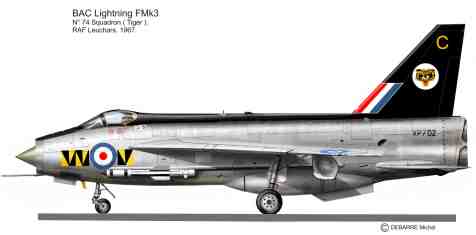
Howe was appointed to command the RAF’s No 74 Tiger Squadron in early 1960, the squadron had just been issued one of the fastest fighter aircraft ever built, the EE Lightning and Howe was going to put it through its paces. Once again, we find a South African Lion leading a squadron of Tigers. So how did a South African land up in such a position of Command in the Cold War?

22008399_10214639197439550_2877245947152207306_n

John Howe in the SAAF

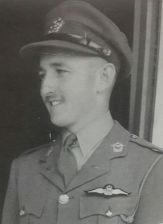
John Frederick George Howe was born in East London, South Africa, on March 26 1930 and educated at St Andrew’s College, Grahamstown. As soon as he left school, he joined the South African Air Force (SAAF) and trained as a pilot. In early 1951 he joined SAAF No 2 Squadron, known as the Flying Cheetahs. John along with 2 Squadron became part of the South African commitment to United Nations to take part in the Korean War.  Here his prowess as fighter pilot took root.

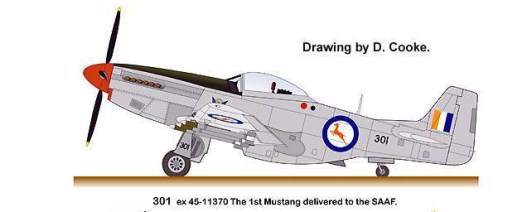
During his first tour of duty in Korea for the South African Air Force he flew the American made  Mustang F-51D fighter-bombers in front-line action.  One notable action took place on June 24, when Howe took off with three others. They responded to an emergency call for air support by a surrounded ground force. In the face of intense anti-aircraft fire, the four Mustangs attacked gun emplacements a number of times. Howe did not expect to survive, but the four aircraft returned to base. All four South African pilots received US gallantry awards. A month later, Howe was forced to crash-land and was rescued by a helicopter.

16864859_1347058448698226_4569233145128520065_n
In September, as a 21-year-old second lieutenant, he was the leader of four aircraft instructed to attack enemy troops that were threatening friendly forces. Fierce enemy fire damaged Howe’s aircraft but he continued to lead his formation against the target. The US authorities awarded him an immediate DFC, the citation recording:

“He displayed a standard of leadership above and beyond that normally expected.”

After completing his flying tour, Howe remained in Korea on a second tour as a ground based Forward Air Controller for the SAAF, serving with US Infantry and operating in the thick of the fighting. He was awarded the Distinguished Flying Cross and the Air Medal from the United States for his service during these actions.

Returning to South Africa after the war, Howe found himself in a changed political landscape.  The National Party had come to power in 1948 with its policies of Apartheid and entrenched hatred of anything British (a legacy given them from the Boer War), by 1954 the political situation in South Africa became more difficult and extreme, especially for senior officers of English origin in the South African defence forces, who were by-passed for Afrikaans officers instead. As was also the case with Dick Lord, John Howe would now find his future in The Royal Air Force (RAF) instead, so in 1954 he decided to resign from the SAAF and moved to England where he transferred to the RAF with the rank of Flying Officer (Service No. 503984) to fly early types of jet fighters.

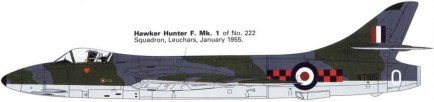
In April 1956 he joined Royal Air Force No 222 (Natal) Squadron flying the Hunter. When a volunteer was required for forward air controller duties with No 3 Commando Brigade in late 1956, Howe’s experience in Korea helped to land him the job. He sailed with the Brigade for the ill-fated Suez campaign and, at dawn on November 6, landed on the beaches at Port Said with No 40 Commando, to direct aircraft on to targets in the area. In the event, the campaign was short-lived.

9_76
Howe returned to his squadron before joining No 43 Squadron as a flight commander, still flying the Hunter. He was awarded a Queen’s Commendation for Valuable Service in the Air, receiving a second two years later. In June 1959 he started training to take command of his Lightning squadron – No. 74.

Based in Norfolk. The aircraft represented a great advance in technology and performance, with a remarkable rate of climb to heights in excess of 60,000 ft and capable of flying at twice the speed of sound.

With no simulator or two-seat training version of the aircraft, Howe made his, and the squadron’s, first flight on June 14 1960. A few weeks later he was instructed to provide a four-aircraft formation for the annual Farnborough Air Show.

lightning-f3-74
Despite the inevitable early teething troubles with the complex aircraft, Howe and his pilots flew on all but one day of the show. The squadron was made the RAF’s official aerobatics team for 1961 and was in demand for appearances at British and European shows. For the Farnborough event that year, Howe trained and led a “diamond nine” formation.

Howe realised that air shows were good for publicity and potential international sales of aircraft, but the time devoted to them hindered the development of full operational capability. He drove himself, and others, hard, but he was a highly respected leader. The squadron’s high morale helped it to reach operational status within the first 10 months despite the many problems that had to be overcome. At the end of his tour, Howe was awarded the AFC.

He said of the Lightning: “It was one of the most exhilarating aeroplanes, even by today’s standards.”

22104347_2028319454063709_4665878180584906328_o

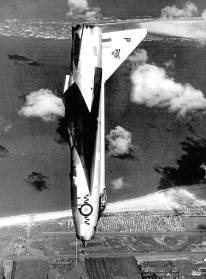
John Howe in a vertical dive flying a RAF EE Lightning

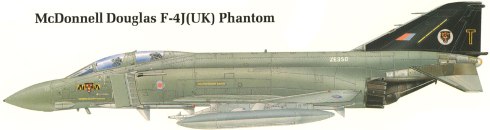
Howe remained in the fighter business, including a tour of duty with the USAF which gave him an opportunity to fly the latest American fighters, including the Phantom. In 1968 he was appointed to command the RAF’s operational conversion unit that saw the introduction of the Phantom into RAF service, his unit being responsible for the conversion of the first squadron crews.

After a staff tour he became the station commander of RAF Gutersloh, the home of two Lightning squadrons and a support helicopter squadron. His fighter squadrons, based a few minutes’ flying time from the border with Warsaw Pact forces, mounted a continuous quick-reaction capability. He rarely missed an opportunity to maintain his fighter pilot proficiency.

After attending the Royal College of Defence Studies he served at HQ 11 (Fighter) Group, and on promotion to air commodore was appointed the commandant of the Royal Observer Corps (ROC). The organisation had a fine record, but Howe justifiably believed that it was in need of modernisation and a more robust attitude. He set about applying the same exacting standards to the ROC that he did to his flying. By the time he left in 1980, the efficiency of the Corps had risen sharply.

9_72
In May 1980 he was appointed the air officer commanding the Southern Maritime Region, a departure from his previous fighter experience and where his usual forceful approach was much in evidence.

His final appointment in the RAF was the dual role of Commandant General RAF Regiment and Provost Marshal of the RAF. He retired in November 1985. He was appointed CB (1985) and CBE (1978).

In his younger days, Howe was a high-spirited officer who knew how to enjoy life – his South African roots never left him and his “Zulu war dance” at social functions was a speciality. But on duty he was utterly professional and he set himself and those around him difficult goals.

22046893_10214639202959688_8200957218336099859_nIn retirement he was a sheep farmer in Norfolk, where he was known as the “supersonic shepherd”; he retired in 2004. He was a capable skier and a devoted chairman of the Combined Services Skiing Association. A biography of him, Upward and Onward, by Bob Cossey, was published in 2008. John Howe married Annabelle Gowing in March 1961; she and their three daughters survive him.

Air Vice-Marshal John Howe, was born March 26th 1930, he died 27th January 2016 aged 85. He remains another one of South Africa’s finest military exports, another South African who truly carries the 74 Squadron motto:

I fear no man

19437652_1982409038654751_1420497074088337846_n

For some video footage of Air Vice-Marshal John Howe in action and the equipping of 74 Squadron with Lightnings, have a look at this rare footage:


Researched by Peter Dickens.  Primary reference and extract on Air Vice-Marshal John Rowe taken from his Obituary in The Telegraph and Wikipedia.  Images of Air Vice Marshal Howe thanks to Alan Mark Taylor

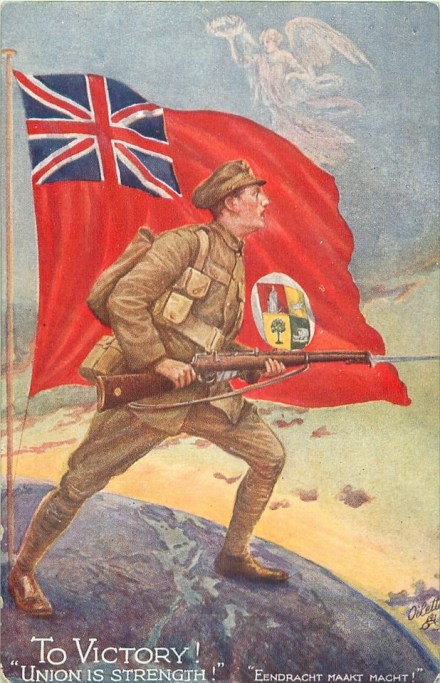
Do you recognise this flag?

If you’re a South African you should know exactly what flag this is – but we’re guessing most South Africans won’t have a clue.

What if we told you it is the South African national flag as it was during World War 1.  Read a previous Observation Post which outlines the inconvenient and hidden history of South African National Flags – just click on this link:

The inconvenient and unknown history of South Africa’s national flags


Posted by Peter Dickens. The image is – TO VICTORY! “UNION IS STRENGTH!”, “EENDRACHT MAAKT MACHT!”. Part of a set of 6 Postcards promoting the Commonwealth countries commitment to partaking in World War 1. The series focussed primarily on the dominions, including South Africa – this one carries the then National Flag of South Africa.

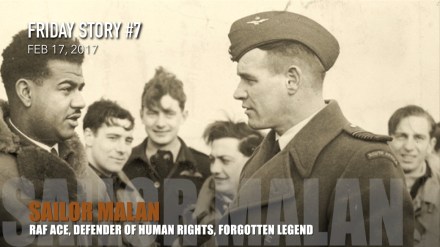
FRIDAY STORY #7: Sailor Malan: Fighter Pilot. Defender of human rights. Legend.

We’re glad to see this highly unsung South African hero finally profiled by other historians. Sailor Malan’s legacy is coming to life through video and other mediums like this and in so back into the general consciousness, and it can only be a good thing. Once watching this you’ll want to hit that share button, and please feel free to do so.

14322420_1091043234297657_3731584281145428934_nThis time Sailor’s legacy has been carried forward by “Inherit South Africa” in this excellent short biography narrated and produced by Michael Charton as one of his Friday Stories – this one titled FRIDAY STORY #7: Sailor Malan: Fighter Pilot. Defender of human rights. Legend.

Many people may know of the South African “Battle of Britain” Ace – Adolph “Sailor” Malan DSO & Bar, DFC & Bar – he is one of the most highly regarded fighter pilots of the Second World War, one of the best fighter pilots South Africa has ever produced and he stands as one of the “few” which turned back Nazi Germany from complete European dominance in the Battle of Britain – his rules of air combat helped keep Britain in the war, and as a result he, and a handful of others, changed the course of history. But not many people are aware of Sailor Malan as a political fighter, anti-apartheid campaigner and champion for racial equality.

Sailor Malan remains an inconvenient truth to the current political narrative of the “struggle” in South Africa, as the first mass anti-Apartheid and pro-Democracy protests were led by this highly decorated Afrikaner war hero and the mass protesters were not the ANC and its supporters, this very first mass mobilisation was made up of returning war veterans from the 2nd World War, in their hundreds of thousands – and this video footage and story captures some more fascinating “hidden” South African history.

The purposeful “scrubbing” by the National Party of South Africa’s “Torch Commando” and its President – Sailor Malan is in itself a travesty, and its made more tragic by the current government conveniently glancing over this glaring mass anti-apartheid and pro democracy movement starting in 1951 involving over 250 000 mainly “white” South Africans. Years before the ANC Defiance Campaign started in earnest and the mass “black” mobilisation against Apartheid stemming from the Sharpeville massacre in 1960. Inconvenient as it does not fit the current political narrative of South African history and thus still remains relatively unknown to the majority of South Africans.

Inherit South Africa is the brainchild of Michael Charton and his short videos are platformed on youtube, packaged as great South African Stories, usually released on a Friday.  Feel free to visit his websites and social media platforms via the following links:

Inherit South Africa website

Inherit South Africa YouTube

Inherit South Africa Facebook

For more information on Sailor Malan, feel free to follow this link to The Observation Post’s story on him:

Sailor Malan; Fighter Ace & Freedom Fighter!


Written by Peter Dickens. Many thanks to Micheal for permission to post this video of his, Inherit South Africa copyright.

Braaivleis, Rugby, Sunny Skies and Submarine!!

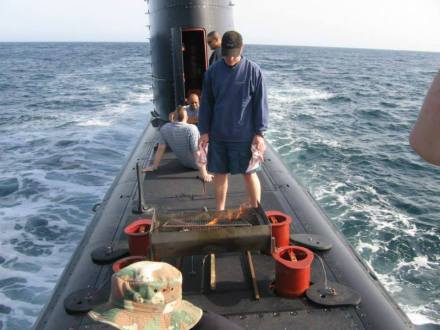
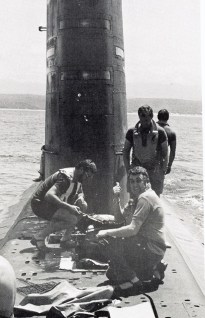
There is a South African Naval tradition in the ‘silent service’ of having a “braai” (South African BBQ using a wood and coal fire) on a 10659328_347729672063438_449914227600569864_nsubmarine when it has surfaced.  It is a true statement of South African heritage, and what better way to wish all South Africans a ‘Happy Braai Day’ (Heritage Day) than to show them how these South African naval servicemen over the years have enjoyed this particular heritage in their own rather unique way.

The featured image up top shows this bit of South African cultural epic-ness as it is today in the SANDF, here is the SA Navy crew braaing on the Casing of S-102 the SAS Charlotte Maxeke the middle of the ocean, with photo thanks to Colin Cloete.

The inserted image shows  the SAS Emily Hobhouse in 1983 off Beacon Isle after a lengthy trip up the east coast. Proof positive that Saffa’s will ‘make a plan’ and braai anywhere. Giving the big thumbs up in front of the braai is Mike Jensen, a popular man sorely missed by the South African submariners and the SA Naval community.

At times even large braai’s have made it onto Navy submarines stored securely and rattle free between the casing and the pressure hull.

Reminds us of another antic in the South African Navy which has “South Africaness” written all over it, this time the Strike Craft personnel – follow this link, Epic Navy Style Water Skiing.

Have a happy ‘Braai Day’


Written by Peter Dickens.  Thank you to Cameron Kirk Kinnear, Peter Marais, Colin Cloete and the South African Naval Fraternity for the information and images.

The Blitz and The Tube

Londoners sheltering from the ‘Blitz’ bombings in the ‘Tube’ owe their saving grace to a South African engineer.

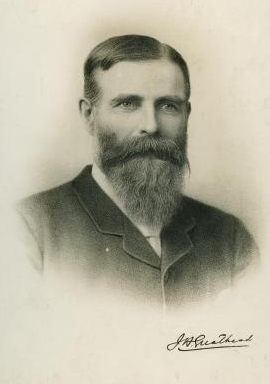
During the Second World War, Londoners used the “Tube” underground rail system for air raid shelters, highly effective the tube system saved thousands of lives, but did you know that Londoner’s owe their saving grace to a South African – James Henry Greathead (6 August 1844 – 21 October 1896)?

James_Henry_Greathead
James Henry Greathead

Greathead was born in Grahamstown, South Africa; of English descent, Greathead’s grandfather had emigrated to South Africa in 1820. He was educated at St. Andrew’s College, Grahamstown and the Diocesan College private school in Cape Town. After migrating to England in 1859, he completed his education from 1859 to 1863 at the Westbourne Collegiate School, Westbourne Grove.

He returned briefly to South Africa before finally moving to London in 1864 to serve a three-year pupilage under the civil engineer Peter W. Barlow, from whom he became acquainted with the shield system of tunnelling.

He spent some time (around 1867) as assistant engineer on the Midland Railway between Bedford and London (working with Barlow’s brother, William Henry Barlow).

images
Barlow-Greathead Shield

Soon after, in 1869, he rejoined Barlow and they began work on designs for the Tower Subway, only the second tunnel to be driven under the river Thames in central London. Barlow was the engineer for the tunnel and Greathead was in charge of the actual drive.

The tunnelling shield for driving the Tower Subway, while designed by Greathead, was inspired by Barlow’s ideas for a circular tunnelling shield which he had patented in 1864 and 1868.

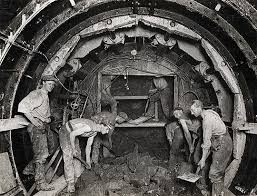
The Barlow-Greathead shield consisted of an iron cylinder 7 ft 3 in (2.21 m) in diameter fitted with screw jacks which enabled it to be jacked forward. In use, the shield was inched forward as the working face was excavated, while behind it a permanent tunnel lining of cast iron segments was fitted into place, itself an important innovation.

Greathead patented many of his improvements including the use of compressed air and forward propulsion by hydraulic jacks, both of which are now standard features of tunnel construction.  Without Greathead and his patents, London would simply not have the underground tube system it has, and it was this very system that ironically also provided ideal shelter from German bombing raids on London.

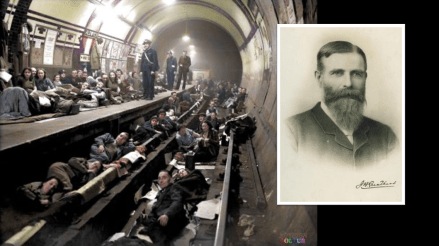
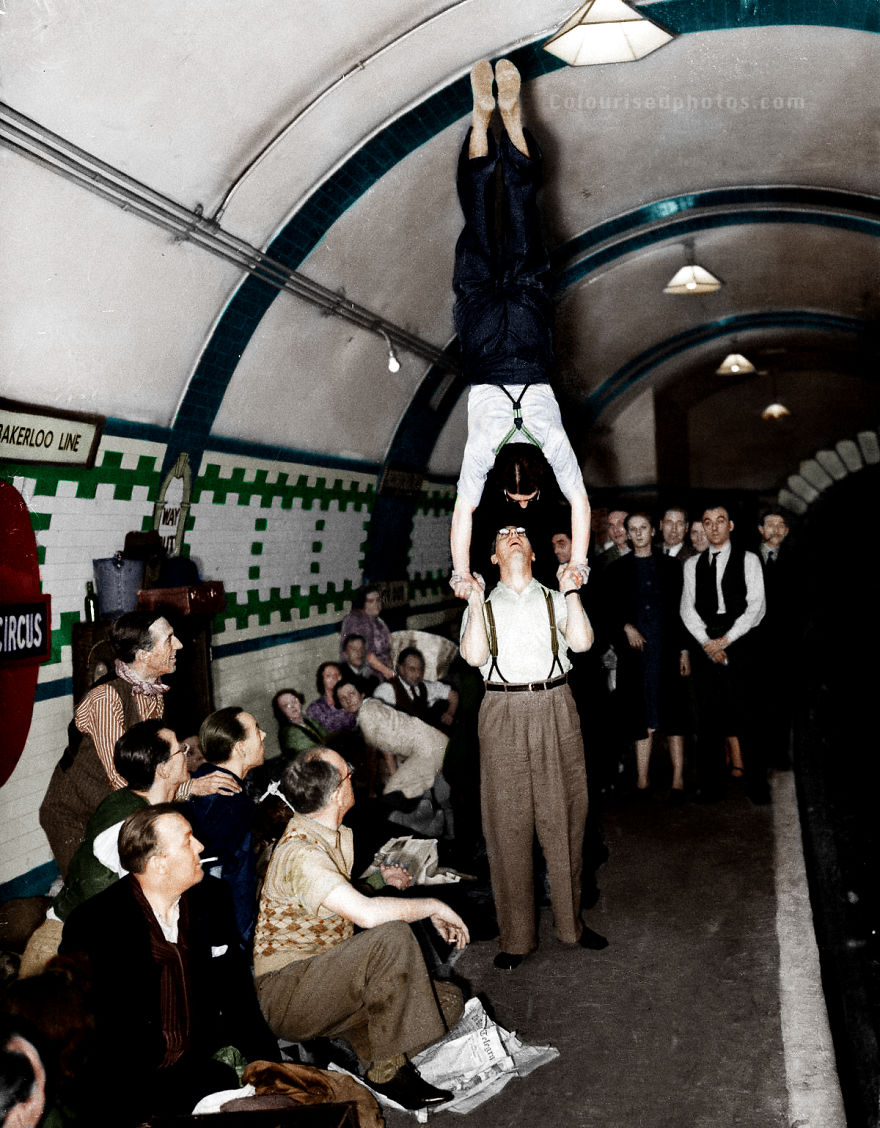
The tube tunnel system was accessible from just about anywhere in central London, the stations were well-known to just about every Londoner and it was deep enough so as to provide ideal cover from bombing. In all, during the frequent highly bombings the ‘tube’ bomb shelter became mini expressions of London community life and spirit itself, with large dollops of pluck and humour as Londoner’s ‘made the best of it’.

Pictures: Various colourisation pictures

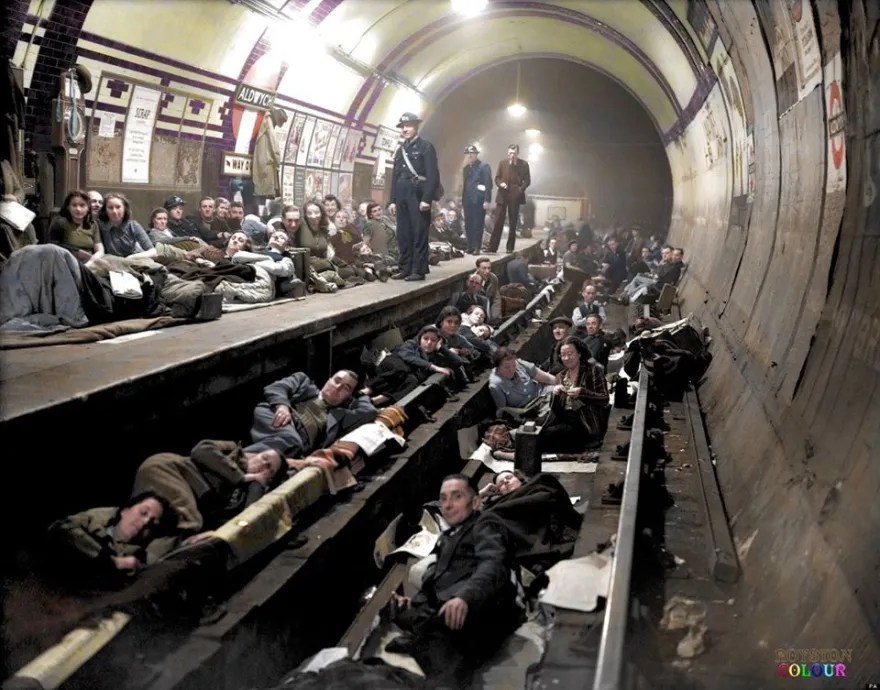
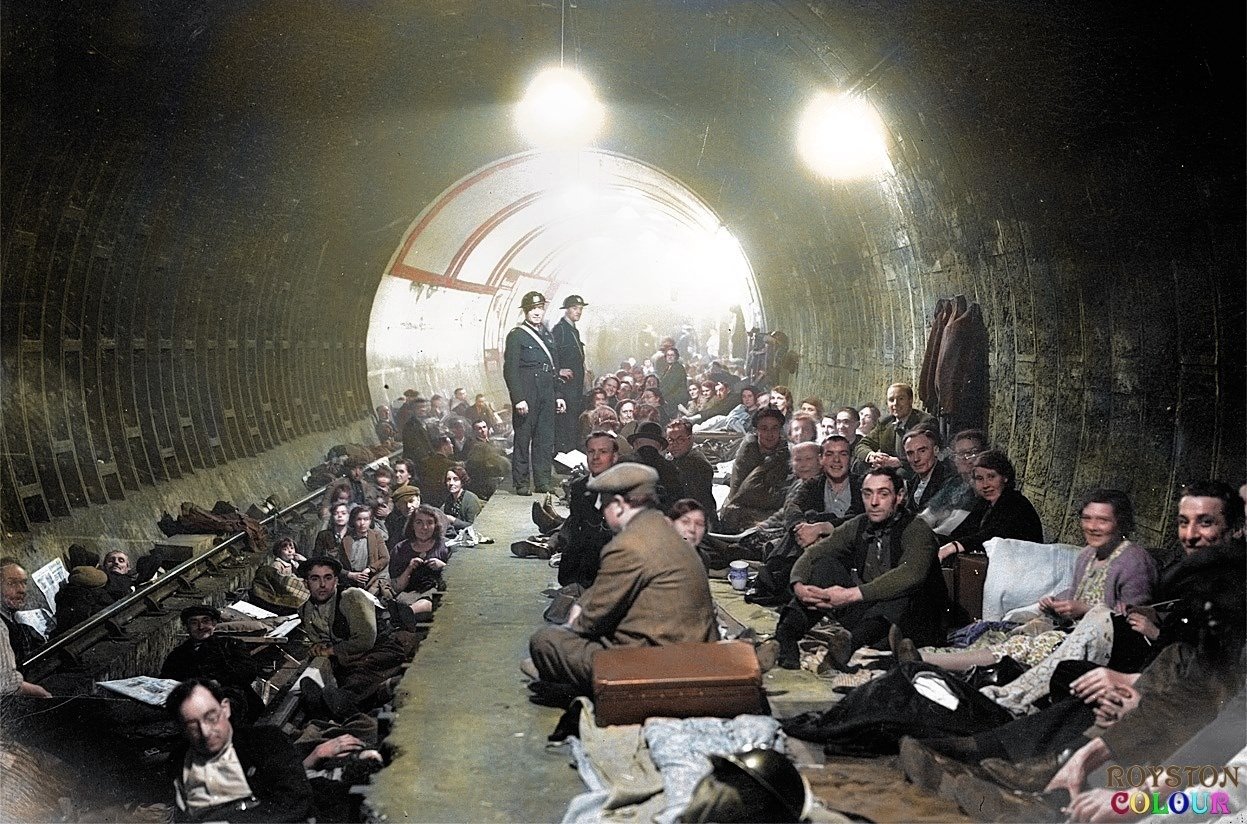
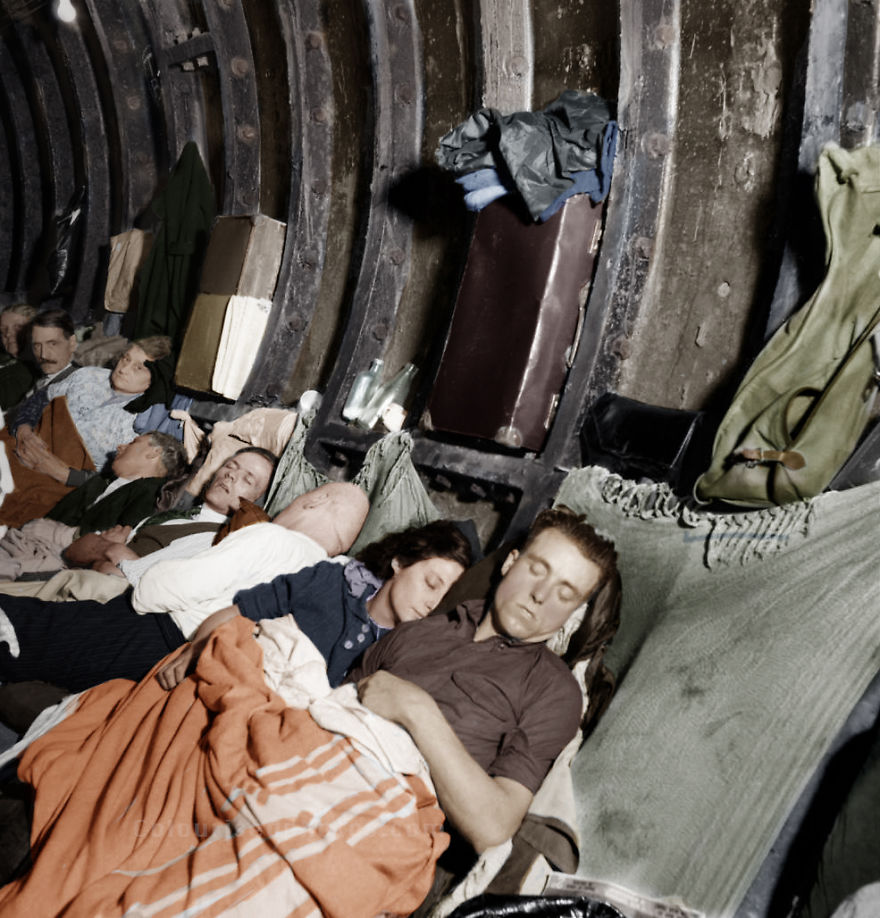
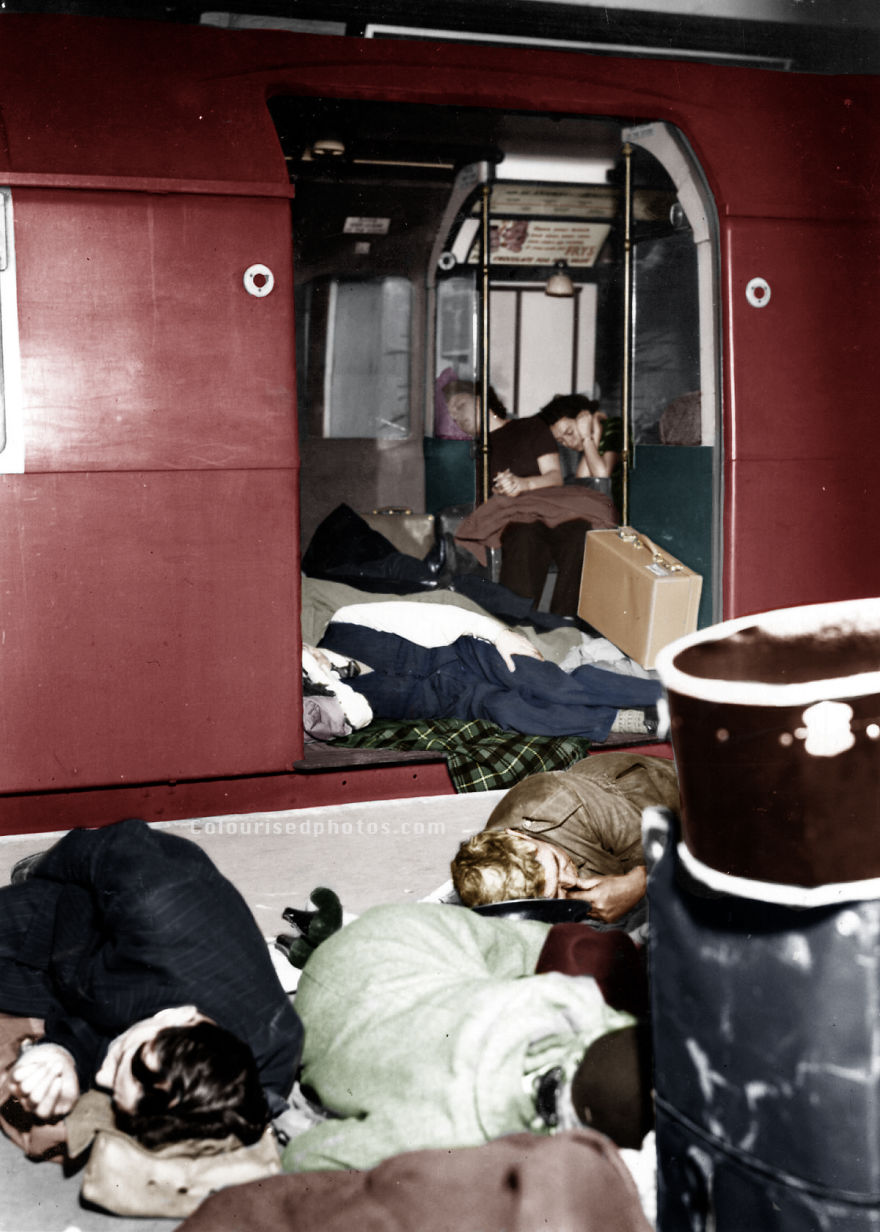
The images show London Underground Stations during the “Blitz”. These were London’s most popular shelters. The advertisements remain pasted on the wall. Hats and coats are hung on nails which have been driven in between the bricks on the wall. People sleep on the platform and on the space which was formerly the track, some of these billets on the track could stretch for a quarter of a mile. At other stations, the stationary trains themselves would provide places to billet.

Some of the featured images show London’s Aldwych underground tube station being used as a bomb shelter in December 1940. The images illustrates just how basic and uncomfortable the facilities were, but considerably safer than being above ground during the London Blitz.

During the war, Aldwych station was a major air raid shelter which could accommodate up to 1500 people and was equipped with first aid facilities and a canteen. The train service to Holborn was suspended on the 22nd September 1940 from when the station was used as a shelter.

In all 79 tube stations were used as air raid shelters by Londoners.


Researched by Peter Dickens. Photo – Imperial War Museum copyright, reference Wikipedia. Colourised featured IWM Photo – Colourised by Royston Leonard, copyright

The not so ‘spectacular’ MK attack on Voortrekkerhoogte

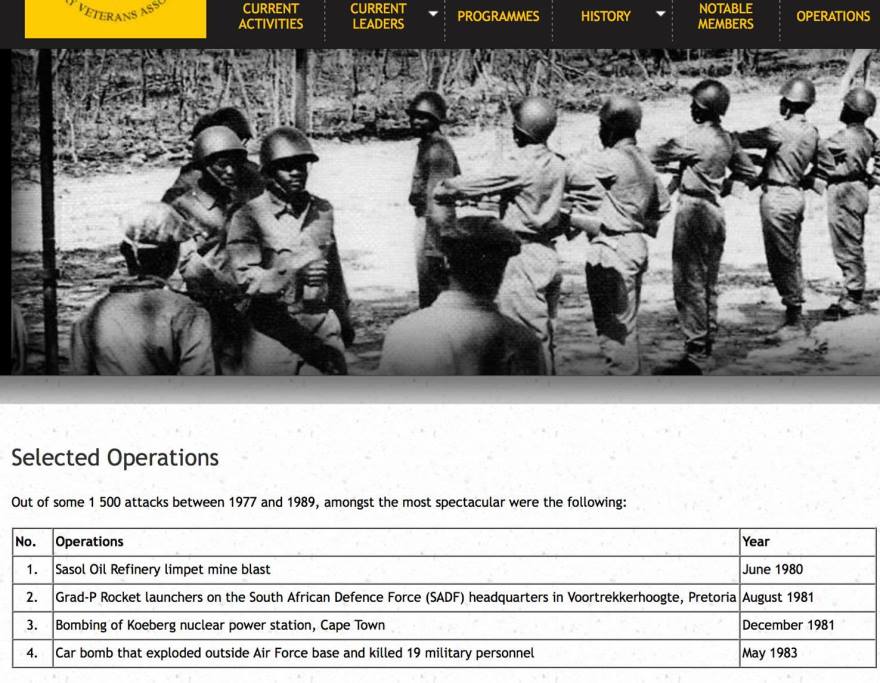
Whilst researching Umkhonto we sizwe (MK) actions against the SADF, I took to the MK Veterans association webpage.  Their ‘operations list’ section pulls up a section on attacks they (MK) wish to highlight as significant military achievements .

It states; “Out of some 1500 attacks between 1977 and 1989, amongst the most spectacular were the following:
1. June 1980 – Sasol Oil Refinery limpet mine blast

2. December 1981 – Bombing of Koeberg Nuclear Power station
3. May 1983 – Car bomb outside Air Force base and killed 19
4. August 1981 – Grad-P Rocket launchers on the South African Defence Force (SADF) headquarters in Voortrekkerhoogte, Pretoria”
21687864_2025417764353878_4358311215552063155_n

Stop the PRESS!

I am all for credit were credit is due for great or significant military deeds and actions (this blog is dedicated to them). But I also like to put things into context, the Sasol limped mine attack was pretty “spectacular,” 8 fuel tanks were blown up causing damage estimated at R66 million – I’ll give them that one.

Koeberg Nuclear Station attack. Yes, “Spectacular” enough, 4 bombs went off, nobody was killed, one of the buildings bombed was for radioactive nuclear waste and was not yet on-line and under construction.  A very effective message sent to the SADF’s nuclear weapons program, so “spectacular” – I’ll give them that one too.

As to the bombing of the SAAF ‘Air Force Base’, lets put this one into context as the statement is misleading. The SAAF administrative offices targeted were inside the Nedbank Plaza Building in Pretoria (shared with Nedbank and the Dutch embassy) and not a stand-alone heavily guarded “Air Force base” (those bases were in Voortrekkerhoogste). The bomb was set off in a public road ‘Church Street’ outside Nedbank Plaza. As a result I would not put the tag “spectacular” on it – ‘tragic’ and ‘deadly’ yes, because of the aftermath, of the 19 killed: 2 of them were MK operators themselves (‘blue on blue), 7 SAAF members and 10 civilians. 217 people were wounded, most of them civilians.  It’s the biggest ‘feather’ in the MK military achievement cap by far – but it remains a very ‘innocent’ blood soaked and controversial one no matter how you try and spin it.

Now, this last “spectacular” attack caught my eye “Grad-P Rocket launchers on the South African Defence Force (SADF) headquarters in Voortrekkerhoogte, Pretoria”. Because during my National Service training as a candidate officer at Personnel Services army base situated in Voortrekkerhoogte there was a base story about an attack which left unexploded mortars bouncing off the base’s barracks roofs. So I took to investigating it.

Here’s the report from the Truth and Reconciliation Hearing – and I would ask readers to focus their minds on how ‘spectacular’ it is.

The Attack on Voortrekkerhoogste military installations: August 1981

This attack took place on 12 August 1981.
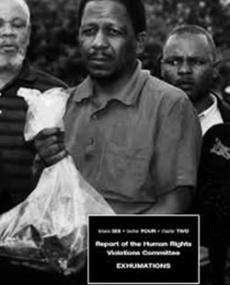
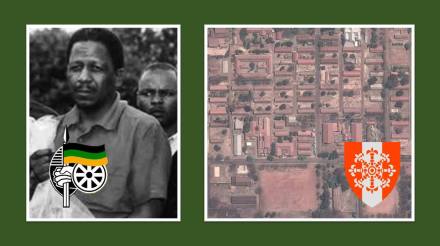
molokwane_r

Barney Molokoane

Voortrekkerhoogte was the main command base of the South African Army. The initial reconnaissance was carried out by two ANC supporters from Europe, namely Klaas de Jonge and Helene Pastoors. A smallholding which was to be used as the base for the operation was rented at Broederstroom. Thereafter the commander of the unit which was to carry out the operation, Barney Molokoane, was infiltrated into the country.

He selected the site from which the rockets used in the attack would be launched. The material to be used in the attack was then brought into the country from Swaziland and cached on the smallholding. The remaining members of the unit were then infiltrated into the country. They were Sidney Sibepe, Vuyisile Matroos, Johannes Mnisi, Vicks and Philemon Malefo.

The unit proceeded to the operational site, which was approximately four kilometres away from Voortrekkerhoogte and fired their rockets at the target. A GRAD-P rocket launcher was used to fire the rockets. However, as they were doing this a crowd gathered to watch them. Philemon Malefo, who was in the getaway vehicle, drove off in order not to be exposed. The unit leader, Barney Molokoane and others then attempted to get an alternative vehicle in nearby Laudium and in so doing a man was shot and injured. The unit members then successfully withdrew from the scene.

The rockets struck in Voortrekkerhoogte and the attack resulted in minor injuries to one woman.

Truth and Reconciliation Amnesty Hearing – January 2000

In reality

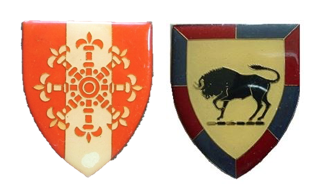
The attack was launched from a nearby koppie, the rockets (or bombs) launched were ineffectual, no substantial damage whatsoever.  If the base story is to be believed most of them were launched towards the SADF’s Personnel Services School (known as PSC or PDK in Afrikaans), located in the centre of the Voortrekkerhoogte complex. It has the Army College opposite it and Technical Services School, Military Hospital, Maintenance Services School and the Provost School nearby it as well as a civilian managed supermarket and petrol station next to it.  As ‘schools’ almost all of them are training bases.

The “main command base for the SADF’ they were not.  That command base was located in an underground ‘nuclear proof’ building behind the Pretoria Jail called ‘Blenny’ and it housed “D Ops” – Directive Operations (and its located quite a distance from central Voortrekkerhoogte).
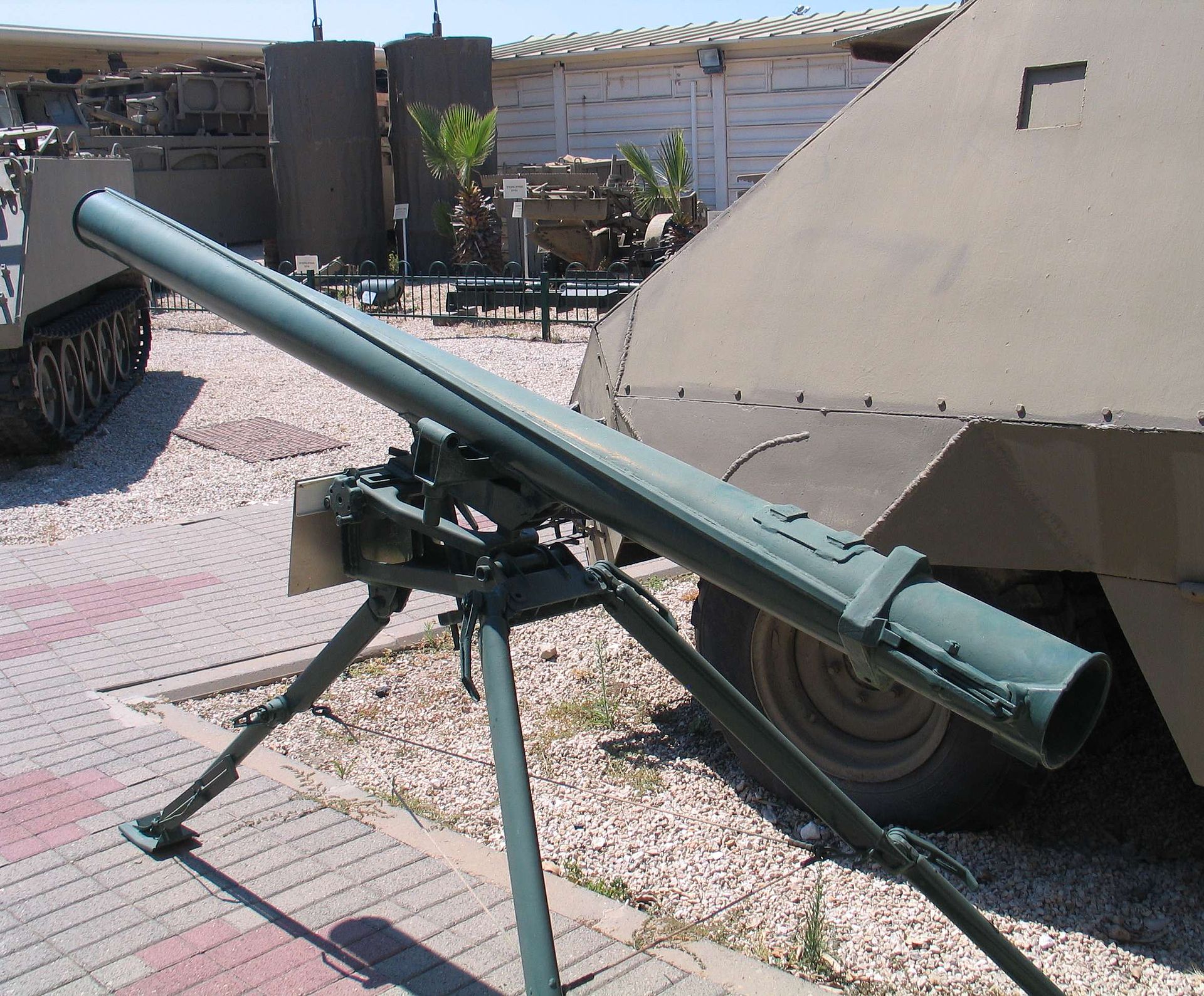
Grad-P-batey-haosef-2The Soviet era GRAD-P portable rocket system uses a monotube and fires 122 mm high-explosive fragmentation rockets (which arm themselves in flight). This system is highly effective, accurate enough and delivers on some very devastating results (with a very good impact radius) – deadly to both buildings and people.  In essence it’s ‘one’ tube of the GRAD multiple rocket launch platform. For this reason it is loved by terrorist, paramilitary and guerrilla forces the world over – usually mounted on small trucks or large pick-up vehicles (known as ‘technicals’).  It’s robust, simple and highly effective.  It also makes a very big ‘bang’.

So I can’t possibly understand why this attack did not deliver on the ‘Big Bang’ this weapon is famed for, nor is there much recollection of the type of ‘loud’ and ‘devastating’ effects this system has – all launch variants of the GRAD scare the living wits out of anyone anywhere near it – from the firing position to the target, and it was reported as fired into a very populated area bustling with thousands of troops undergoing training and civilians.

Also, where is this weapon system now?  It is certainly not on display at any military or ‘Apartheid Struggle’ museum that I am aware of, there are very few significant military ‘artefacts’ of the MK ‘struggle’ as it is, and as this attack is regarded as one of their key successes, so it carries with it some historical value.  All Soviet weapons captured at the time by the SADF are now at the disposal of the ANC government, or they are still in possession of some ANC members not willing to give them up – very little of the total arms cache’ of weapons smuggled into the Republic by MK have ever been declared (in fact in the early 90’s much of it fell into the ‘black market’ and into criminal’s hands when many MK Cadres demanded and did not receive remuneration and the free houses they were promised when joining and fighting for MK).

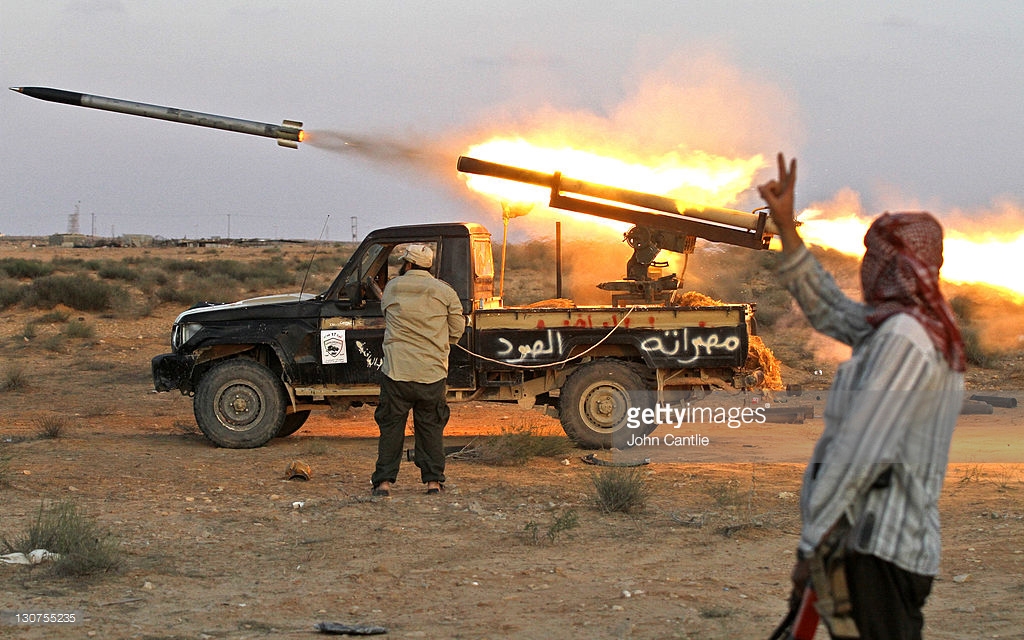
Maybe the fuses were set to the wrong distances maybe its an issue of operator capability and training, maybe it was badly aimed?  Don’t know, maybe MK are confusing the GRAD-P with a small portable mortar system instead – the GRAD-P tube is a very big section of kit and does not ‘break down’ to fit into an average civilian vehicle, nor do the rockets themselves – especially in one already full of men trying to be inconspicuous in a populated area – have a look at the image below of a IS terrorist cell launching a GRAD-P and you’ll see what I mean.   Who knows, far too many unanswered questions.
130755235

In any event, there was an MK attack of some sort using either rockets or mortars on bases in Voortrekkerhoogte – that part is true (the Apartheid ‘state’ secret apparatus even retaliated the attack by covertly bombing the ANC offices in London – because of the ‘British connection’ in the assault on Voortrekkerhoogte).

However, the results speak for themselves. No significant military buildings were damaged, some accounts recall one of the bombs/rockets falling on the parade ground of the Army College, other accounts report one bomb/rocket hitting an empty bungalow at PD School (this building was destroyed), whilst another account states one more bomb/rocket bounced off another PD School bungalow roof and did not explode.  Some recall that another bomb/rocket hit a toilet block at the PTI section of Army College and another landed on Northern Transvaal Command’s lawn.
Screen Shot 2017-09-24 at 15.33.03

PSC (L) and Army College (R)

There are no accounts of wide-spread panic around Voortrekkerhoogte (military or public) from a GRAD-P rocketing, no large media flurry (It was reported in local papers, but there was no large scale media pursuit), there were no SADF casualties (injuries or deaths) and the casualties were in fact two civilians.  One female civilian domestic employee who was down-range of the launch, she was living in a room adjacent to an SADF officers house, her living quarters were hit, however she received only a minor injury,  The second civilian injured was up-range of the launch, who (lets face facts) was shot and injured in a car hijacking caused by a botched getaway plan, when their MK driver got scared and ‘scarpered’ off with their vehicle.

‘Spectacular’ it is was not.

How much is fact and how much is hype?

Because the record on the MK vets website seemed a little inflated, misleading and incomplete to me, I took to checking the 1500 other claimed attacks to see how many of them were against the SADF itself – force to force so to speak (apples to apples).  The only effective attack against the ‘SADF’ on the list other than the attack on the Nedbank Plaza in Church Street housing the SAAF offices was the Wit Command bombing, which resulted in 25 injuries and structural damage to a military base building (the drill hall), but luckily nobody died  – it was also a ‘one man op’ carried out by a ‘white Afrikaner’ ironically (see The truth behind the bombing of Witwatersrand Command).

There is probably good reason that the MK list only 4 highlights (followed by a sweeping claim of thousands of attacks), as simply put, there are not many more ‘spectacular’ highlights at all.  The rest of the attacks on the SADF by MK were simply not effectual and did not meet any significant objective.  There was a bomb attack on a Citizen Force Regiment’s car park – The Kafferian Rifles (but no information to back it), two bomb blasts in SADF Recruitment offices open to the public (no injuries and minor building damage), an attack on an outlying SADF Radio communications post, with no damage or injuries, a foiled  bomb attack on a Wit Command medic post (no damage or injuries) and a bomb which went off in a dustbin outside Natal Command (no damage or injuries).  That’s it.

The only other related attack was more ‘soft’ civilian than ‘hard’ military target, this was the bombing of The Southern Cross Fund offices.  Luckily no injuries or deaths, just building damage – as many may recall The Southern Cross Fund was a civilian driven charity which collected Christmas presents and the like to support troop morale in the SADF, a very ‘soft’ target indeed.

There were also some MK claims to the TRC as to numerous SADF personnel killed in armed MK skirmishes with SADF patrols on the Botswana border. However I checked the dates against the Honour Roll and the military record of SADF deaths and operation reports and I came up with nothing – no SADF bodies in evidence to the claims on the dates specified to the TRC by MK.  I also checked the SADF veterans social forums on-line and nobody had any recollection of these attacks (nor do many of them even recall this ‘spectacular’ attack on Voortrekkerhoogte).  It stands as an odd testimony that there is literally not one proper ‘war story’ of the SADF engaging MK combatants by literally thousands of SADF veterans now recounting their time in the SADF and freely publishing papers, on-line stories (across a variety of portals), their diaries and even books on their experience.  Maybe the MK is confusing the South African Defence Force (SADF) with The South African Police (SAP), who knows.

On platforms such as Wiki, MK is listed as one of the belligerents in the Battle of Cuito Cuanavale, however if you ask any old SADF veteran if they saw any MK combatant and engaged them during the entire duration of the Border war from 1966 to 1989 (or even at the Battles on the Lomba and at Cuito Cuanavale specifically), they will say no, not one  – SWAPO, MPLA, Cubans and even Russian combatants – yes, they saw a great many of these.

In line with the old SADF veterans testimony, there is some truth to it, there is not one recorded attack by MK of an MK unit, section/platoon strength and above, on any SADF personnel, armour or installation during the entire Border war.

All the other quoted attacks were stated as been on the South African Police and Police stations, not the SADF, and access to this record is not easy and not of concern as I was looking into the SADF only so as to record actions against the actual military by another military outfit.

In conclusion

What it does say, is that for the most part the SADF were unmoved by any actions by the MK, it certainly did not change their mode of operation in the Republic itself, nor were they overly fearful of MK attacks.  The bases remained relatively lightly guarded in terms of ‘operational readiness,’ usually by National Servicemen bored out of their minds with only 5 rounds in one magazine (not inserted) – as was the regulation on many bases (the SADF bases in South West Africa/Namibia – different story – there was a proper war on in Namibia against SWAPO, the MPLA and Cuba, in response SADF personnel on base were armed to the teeth).  Unarmed and uniformed SADF National Servicemen were to be found in their thousands roaming relatively safely all over the Republic on weekend passes.  The SADF was even confident enough that any internal violence generated by MK (and other liberation movements) could be curtailed by the South African Police (primarily) that they even reduced military conscription to just one year when the Border War with SWA/Angola concluded in 1989 – reducing SADF manpower and ‘operational readiness’ in the Republic even more.

What this record and new hype around MK also shows is a gradual ‘inflation’ of ‘combat prowess’ and the heroic deeds of men in MK, now so revered as national heroes and positioned as ‘war heroes’ with a combat record to be reckoned with.  Whilst the SADF and its very solid combat record has been demonized and vanquished.  There is some truth, to many in South Africa now (especially the youth) that MK played a role in standing up against Apartheid, and we can’t take that from them – they did, so they are idolised by many, that’s a fact. But we need to scrutinise the historical record (the hard facts) in all this hyper-admiration of MK.

Where the ANC were successful, lies less in any great military mission by MK and more in making the old ‘black’ townships of South Africa ungovernable by the use of simple ‘civil dissonance’ – here they were ‘spectacularly’ successful. It was this deepened civil unrest and broader political violence on a grassroots level that brought all the significant pressure on Apartheid South Africa.

Militarily speaking it’s an ‘inconvenient’ fact that South Africa did not have an armed insurrection anything like those initiated by other ‘liberation armies’ in Rhodesia (Zimbabwe), Mozambique, Angola and South West Africa (Namibia).  Unlike these countries, South Africa is a little different, as at no point were armed MK cadres tested in a conventional military battle scenario against armed SADF soldiers – that never happened.  So as time moves on and memories fade we need to keep perspective, no matter how inconvenient.

Written and Researched by Peter Dickens


References: South African History On Line. ANC Umkhonto we sizwe Veteran Association website.  Truth and Reconciliation Commission.  Wikipedia.


200 Jewish orphans saved, the story of Jan Smuts and Issac Ochberg

You might remember heroic figures like Oskar Schindler (the famous “Schindler’s List”) who rescued groups of Jews from certain annihilation during World War 2. But did you know Jan Smuts also played a significant role in rescuing 200 Jewish orphans from the “Pogroms” in the Ukraine in 1921? Here’s a little bit of little known history involving an unlikely South African hero, Isaac Ochberg, and it’s one we can all stand proud of.

21753347_2024418131120508_3529886432406051483_o

In the early 1920s, reports trickled through to South Africa of tragic forces occurring in the Ukraine. Following the collapse of the old Czarist Empire in 1917, rival Red and White armies were fighting for control. Although the battles did not start out as particularly anti-Semitic, the Jews’ condition deteriorated.

Famine was followed by typhoid epidemics for the entire population, but it was made worse for the Jews by pogroms. Ukrainian and Polish peasants joined forces with reactionary military forces to massacre Jews wherever they found them inside the Pale of Settlement.

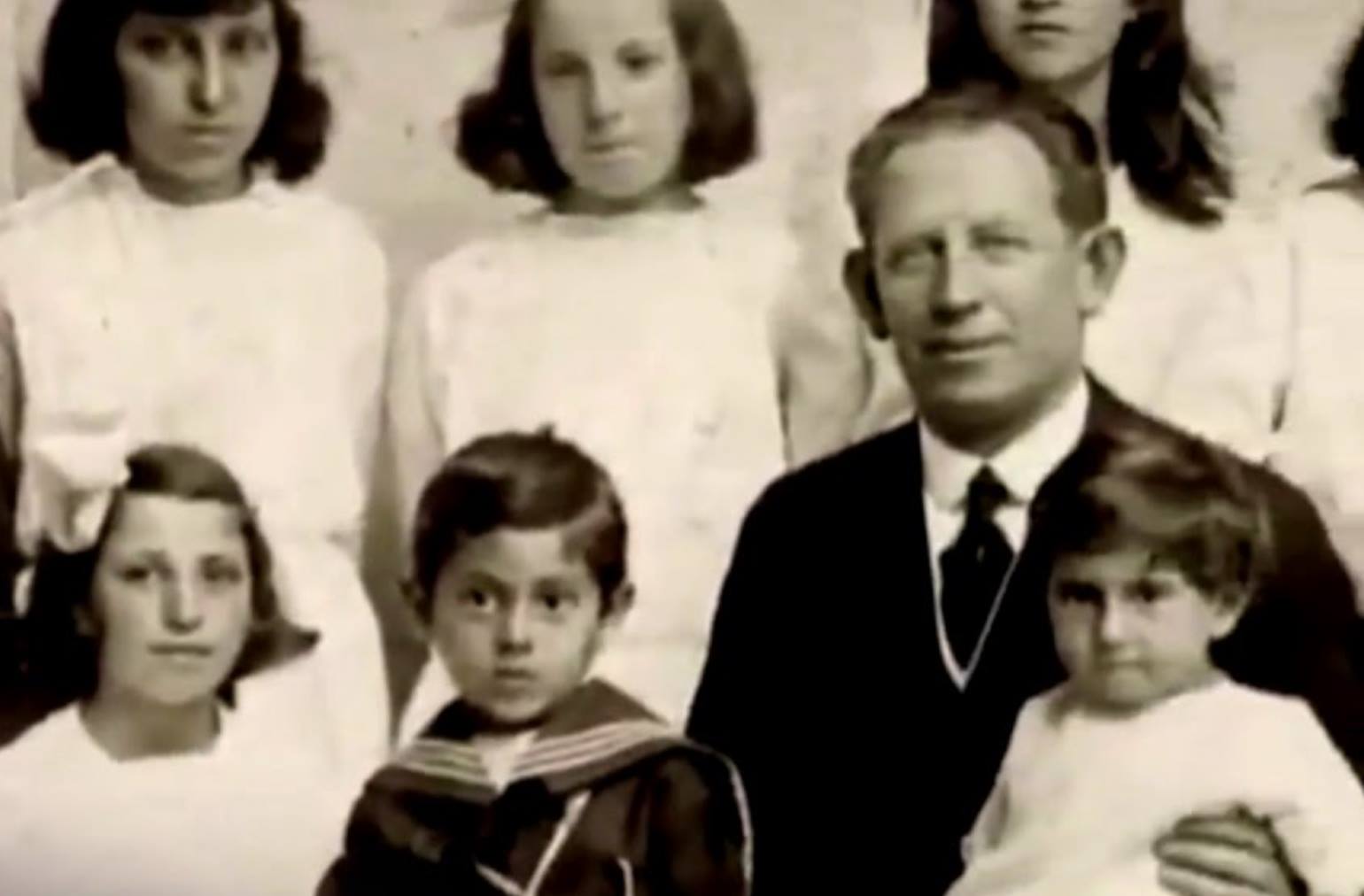
In despairing letters smuggled through enemy lines, Jews begged their cousins in South Africa for help. These pleas immediately stirred South Africa’s Jewish communities. People asked at meetings across the country if at least the children could be rescued from the Ukraine. Before any organisation could step in, generous offers of financial and other assistance were made by Russian-born Cape Town businessman Isaac Ochberg.

Two questions became critical to Issac Ochberg: How could the orphans be rescued from a war-torn region, and would the South African government create any difficulties in admitting them?

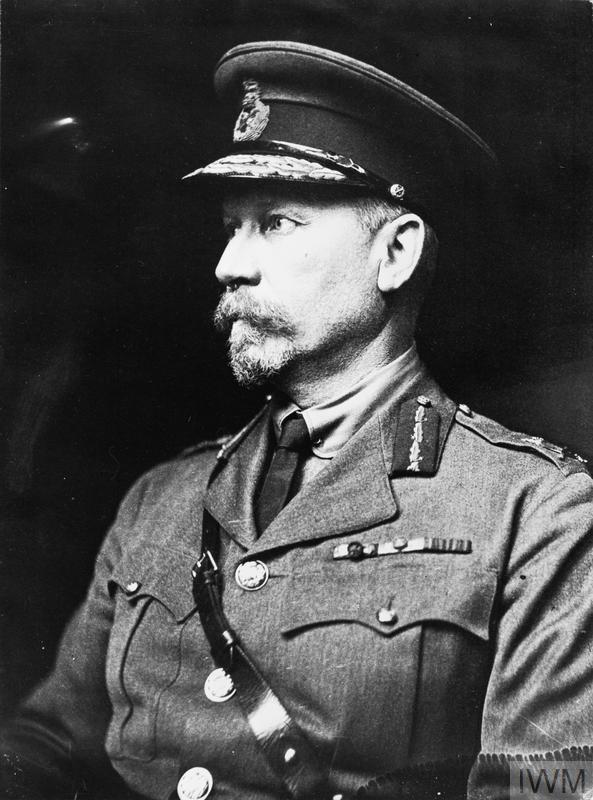
smuts ww1

Jan Smuts

Ochberg immediately contacted the Prime Minister, General Jan Smuts, and Mr. Patrick Duncan, the Minister of the Interior.  Smuts granted permission to land, without restriction, as many youngsters as could be saved.

A South African Relief Fund for Jewish War Victims had already come into operation, when, at a special meeting called in his office on August 19, 1920, Ochberg proposed that the Cape Jewish Orphanage “take all the responsibilities of bringing the children out, and taking care of them.” In addition it should act as a clearing-house, whence they could be distributed among charitable people for adoption.

By January 1921, the South African Relief Fund for Jewish War Victims had persuaded Smuts and his government to give on a pound for pound principle to the Pogrom Orphan Fund, and it was felt that not 200 but 250 children could be brought to South Africa.

As reports of the Jews’ plight continued to arrive in South Africa, the size of the tragedy became clearer. 100,000-150,000 Jewish men, women and children were slaughtered by Ukrainian nationalists and another 400,000 Jewish orphans were starving.

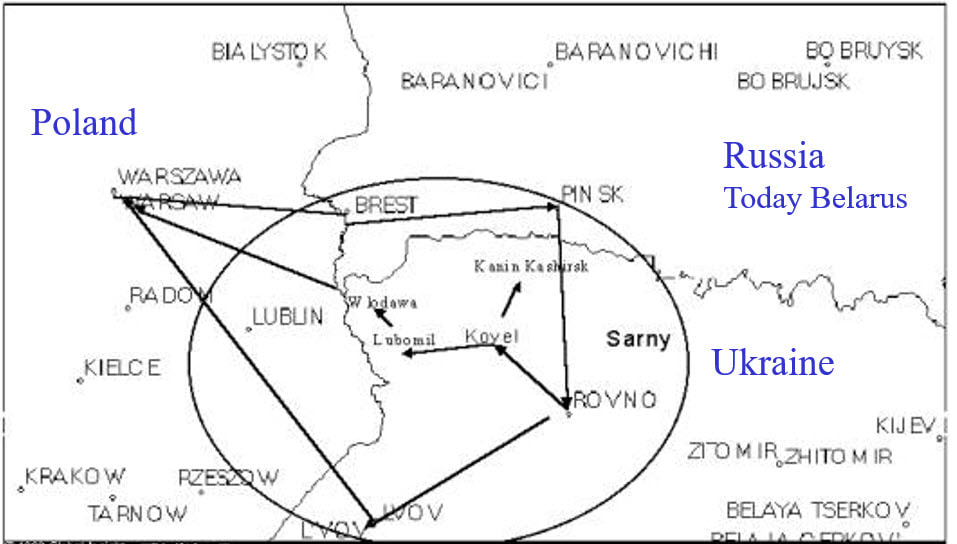
The next step was for someone to travel to Eastern Europe and make arrangements on the spot. Ochberg agreed to go. For two months Ochberg travelled by train, wagon and on horseback around the Pale, looking for orphaned children. The Ukrainian children knew only that “The Man From Africa” was coming and he was going to take some of them away to a new home, on the other side of the world.

Ochberg’s worst problem was how to select which children to take and which he had to leave in Eastern Europe. So he decided to choose eight children from each institution, until he reached a total of exactly 200. Since the South African government required that the children had to be in good physical and mental health, careful selection was essential. In addition, only those who had lost BOTH parents were accepted.

map_orig

In Pinsk alone, so many children had been orphaned that 3 new orphanages had to be opened. At first, Pinsk was so isolated by the fighting that the children were dependent solely on their own resources. There were no blankets, beds or clothes. Typhus broke out in one of the orphanages and the pogroms raged for a week at a time. As order was restored, food supplies began to trickle in, first from Berlin and then from the Joint Distribution Committee.

Ochberg moved from town to town, visiting Minsk, Pinsk, Stanislav, Lodz, Lemberg and Wlodowa, collecting orphans. How did he get the children out – on wagons.

Three months later, with the 200 children in London, he wrote to Jan Smuts’ government in South Africa

“I have been through almost every village in the Polish Ukraine and Galicia and am now well acquainted with the places where there is at present extreme suffering. I have succeeded in collecting the necessary number of children, and I can safely say that the generosity displayed by South African Jewry in making this mission possible means nothing less than saving their lives. They would surely have died of starvation, disease, or been lost to our nation for other reasons. I am now in London with the object of arranging transport and I hope to be able to advise soon of my departure for South Africa with the children.”.

The story of getting to South Africa and horror is remembered by one of the orphans in an interview years later, Fanny Shie (Lockitch).  She became orphaned after her father, who was in the Russian Army, had died in a gas attack and her mother passed away during the 1918 Influenza.

In a Orphanage in Brest-Litovsk, she recalled “Although the war was over, we were suffering from lack of coal, from lack of clothes, from lack of food and from lack of care. To give an idea of conditions, I can remember how we had the Russians in the city at one moment, and a few days later the Poles. Looking out of the Orphanage windows, one could see some of the hand-to-hand battles with bayonets, and the corpses lying in the street that led up to the fortress.”

“One day we heard that a ‘Man from Africa’ was coming. He was going to take some of us away with him and give us a new home on the other side of the world. Nearly all the orphans had lost both parents, many of them in pogroms, on the Ukrainian border, at Minsk, Pinsk and other places. One poor little boy, who afterwards came to South Africa and is now a successful man in Johannesburg, had his hand hacked off by some ruffian.”

“Among us children the news aroused mixed feelings. We all liked the idea of going to a beautiful new country, but we also heard stories of robbers and wild animals, and that we might be eaten by lions. However, when Mr. Ochberg appeared, with his reddish hair and cheery smile, we all took a great liking to him and soon called him ‘Daddy’.”

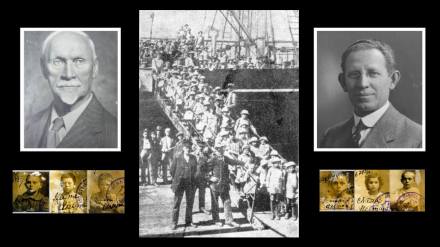
passports-1a

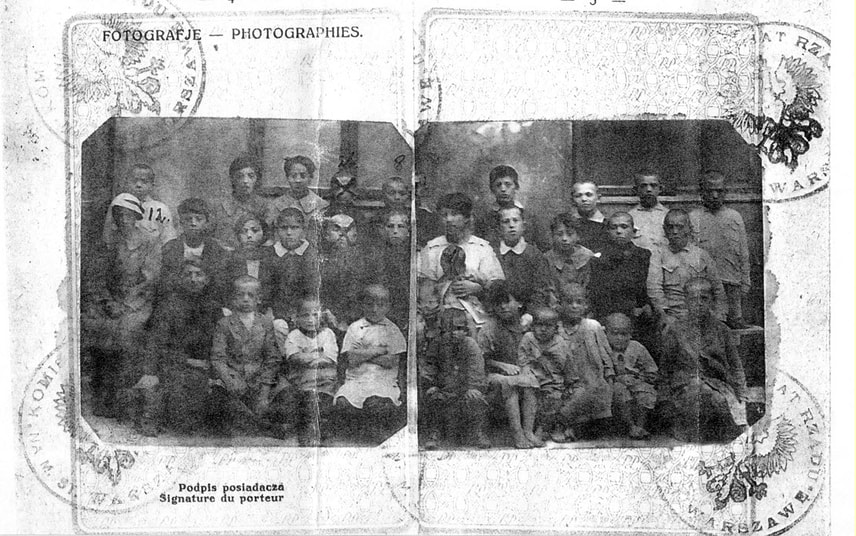
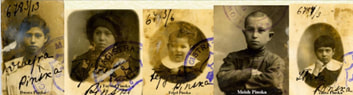
The Children were issued very unique passports, they were “In quantity”, a multiple named passport with a group photograph with as many as 30 children sitting in rows.

“We set off for Africa,” recalled Mrs. Fanny Lockitch, “each with a tiny package of the clothing that had already been sent to us from overseas, and a few pitiful trifles like photographs or dolls”

Travelling from Warsaw to London, the Orphans and carers then boarded the Edinburgh Castle to Cape Town.

“Never until my dying day,” said Mrs. Fanny Lockitch, “shall I forget our first sight of the lights of Cape Town”.

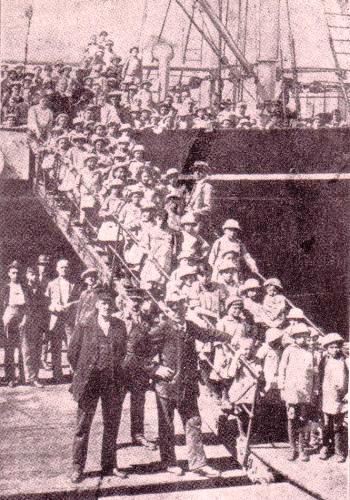
OchbergOrphansArriveCapetownA tremendous reception awaited the orphans when they came ashore in Cape Town. So large was the group of children that the Cape Jewish Orphanage was unable to house them all, so 78 went on to Johannesburg.
Special English speaking classes were organised for the children, and the warmth, friendship and the hospitality of South Africa showed itself when number­less orphans found new homes.

Ochberg died in 1937 while on an ocean voyage, 59 years old. He was buried in Cape Town at one of the largest funerals ever seen there. Ochberg left what was then the largest single bequest to the Jewish National Fund. The JNF used it to redeem a piece of land in Israel called Nahalat Yitzhak Ochberg – which included the kibbutzim of Dalia and Ein Hashofet.

An Ochberg dedication ceremony took place at Kibbutz Dalia on 19th of July 2011. For the thousands of descendants of his orphans, he is the reason they are alive.

Over the years various projects and films have been compiled, many of the original orphans’ children and grandchildren have been traced and have honoured Ochberg’s memory, South Africa’s very own “Oskar Schindler”.

2017-08-08-12-16-45


Content and article sourced from The Jerusalem Post from an article by Lionel Slier 07/18/201 and The Issac Ochberg Story on-line website. Researched by Peter Dickens.