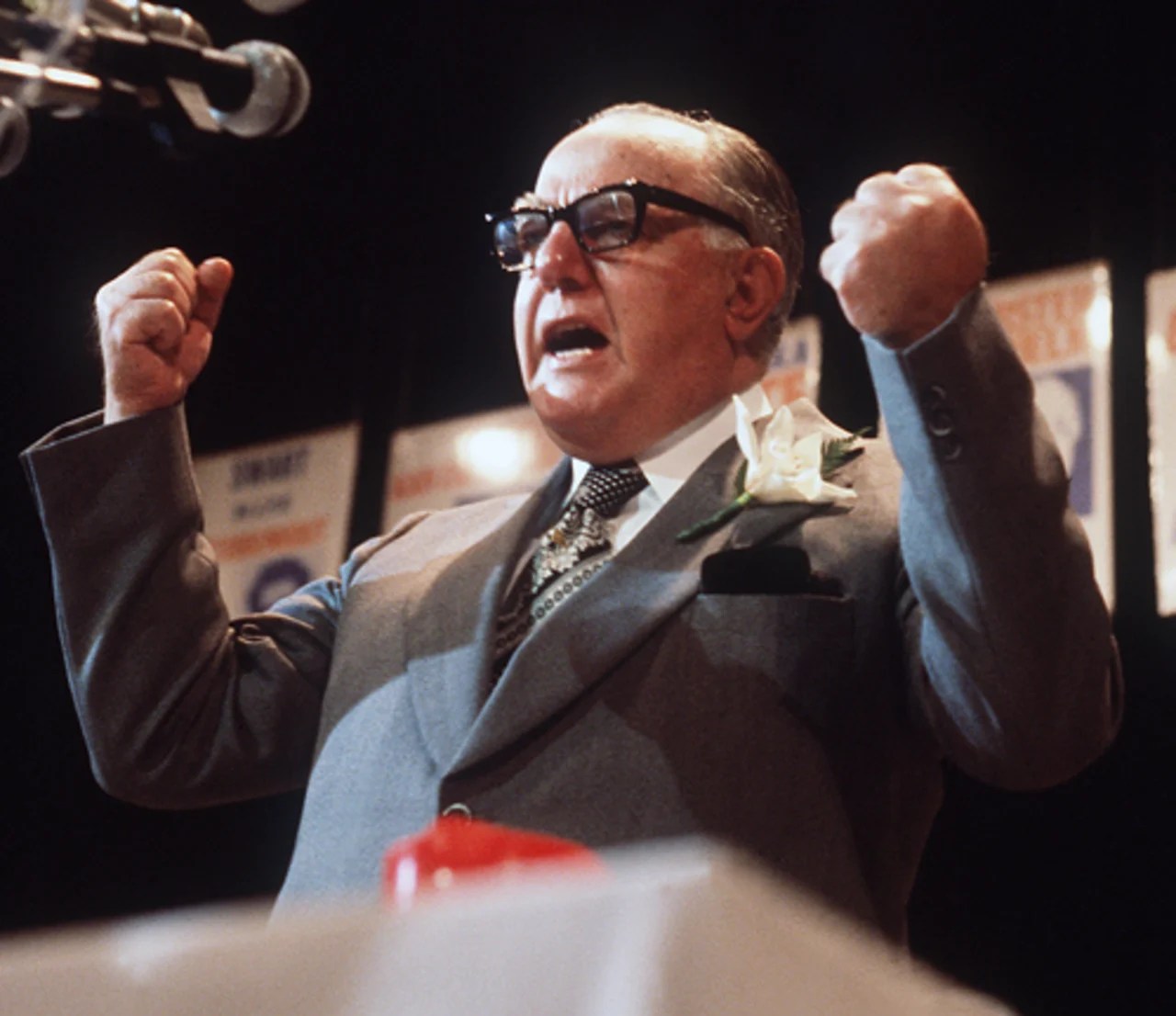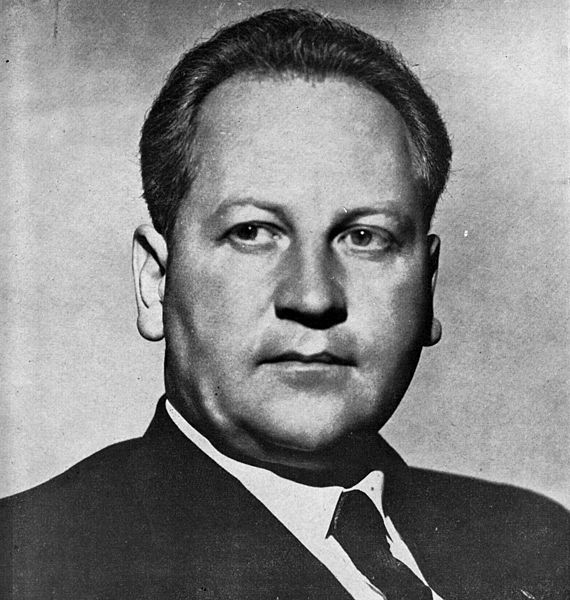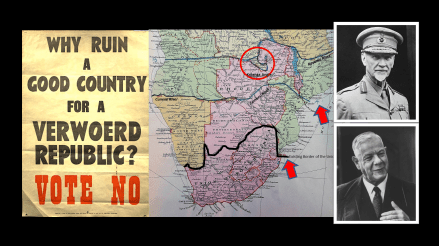
From Union to Banana Republic!

Sitting here in 2023 listening to yet another Nationalist, this time an African Nationalist President urging a Constitutional workshop to forward Nationalistic aims of land appropriation and ‘economic transformation’ in the guise of building a national ‘rainbow’ identity to redress the past, to pass off his own parties political inadequacies and flaws as been a ‘constitutional’ right to fight the wrongs committed “on the many” by what he termed “the state that came before us”

Typical, comes the universal cry, the ANC playing the ‘Apartheid’ card yet again, corrupt as ever now even trying to manipulate the constitution for their own duplicitous aims. Our beloved and hard fought South African Republic becoming like the Republic of Zimbabwe, another ‘Banana Republic’. 
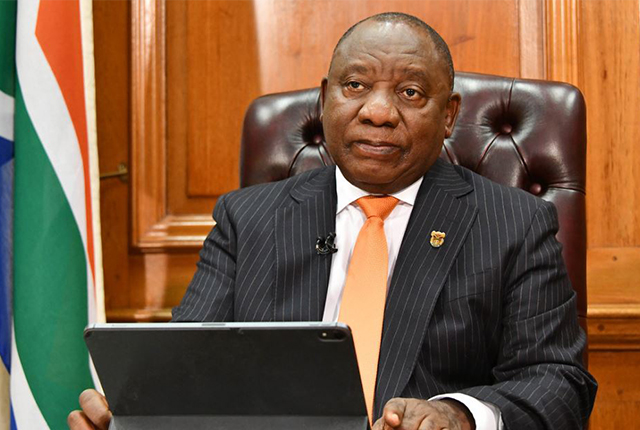
The ‘politics of pain’ rearing its political head, the ‘race card’ played again and again – however playing the race card is nothing new to Nationalists, it has been played for many decades by any ‘nation’ seeking freedom and ‘identity’– and herein lies a deep irony when it comes to creating Republics out of the ideology of  singular ‘nationhood’ – there is always another ‘race’ to blame for it – a license to target another national group as the origins of all their economic, social and political woes.

Even President Ramaposha did not shy away from it one bit – the ‘state before’ his (i.e., the Old National Party ‘Apartheid’ Republic) excelled in it, the idea that a ‘wounded’ nation, dealt a terrible misdeed, must for the survival of its identity and ‘nationhood’ oppress other nationalities/cultures/languages and even entire nation states. 

Republic to Union and back again!

As military veterans we stand by our hard-fought freedoms, from those who fought the ‘cold’ war of communism versus capitalism, and those of us who served to see the country through transition to an all embracing democracy. We all covet the ideals of freedoms so protected in our Republic’s constitution – it came with a lot of blood and toil. 

To see clearly how these ideals of a ‘Democratically Free Republic’ are transitioning to a ‘Banana Republic’ as all the government owned and run utilities and the SANDF, slowly collapses around us is distressing. The fear of another ‘Zimbabwe’ looming large as Eskom turns the country’s economy on and off. 

So, how did South Africa go from its lofty ideals of a Union, a ‘federation of states and nations’ in 1910, to a Banana Republic? Intriguing question and it has to do with the old argument between British Imperialists and Boer Imperialists as to under whose ‘influence’ Southern Africa should be managed (only if it was ‘European’ civilisation leading it mind) – an argument with started long before The South African War (1899-1902) and one that leads directly to the Union of South Africa and it is one which eventually leads to the formation of the Republic of South Africa – as the likes of two Afrikaners, Jan Smuts and D.F. Malan would go hammer and tongs at each other over the issue for decades. 

The white Afrikaner Nationalist right wing and their continued obsession with creating a Afrikaner led Republic from the “Limpopo to the Cape”, and the white English and many moderate white Afrikaners happy with a ‘Union’ along Federal lines of all states in Southern Africa (Colonial, Protectorate and Republic) with British Dominion oversight – like Australia and Canada. The net outcome of it all today – the fully democratic Republic of South Africa – or ‘Banana Republic’ as it is sarcastically referred to, ironically by these same white Republicans and Unionists, who either inadvertently or even directly created it for themselves.

Written as far back as 1900 by Leo Amery, in the middle of the South African War (1899-1902) in his History of the Boer War, was this completely differing outlook, those of the Unionists and those of the Republicans and it is clearly mapped out. It’s very insightful for the time. Here it is:

“Those who believe in progress, in honest government, in political liberty and equality, must upon true statement of the facts, be on the side of England. Those to whom nationalism is all in all, who hold the creation of a nation state, with racial and linguistic characteristics of its own, is the one supreme object of political development – an object justifying every means for its attainment – will naturally be on the side of the Afrikaner Republics.”

Please note: By 1900, Britain regarded itself as a Constitutional Monarchy (where Parliament and Royalty for all intents and purposes of actual governance – are separate) and Parliament considered a ‘Liberal Democracy’ – a tussle between ‘Whigs’ (Liberals) and ‘Tories’ (Conservatives) with a ‘human rights’ agenda (equality and suffrage), secular in nature and with an acculturation focus i.e., getting various cultural groupings to adopt British values and governing principles as their own, whilst at the same time keeping their cultural identity and individual liberties – even in the context of Empire, that was (and remains) the basis of Britain’s Parliamentary system and it needs to read into the context of its time in history and the franchise – which believe it or not was ‘multi-cultural’ and ‘qualified’ – even for 1900. Funnily, the same philosophy even exists to this day, in essence it has not changed. 

Also please note: The Boer Republics at the time were regarded Nationalist Republics run entirely opposite to the British, they were seen as ‘oligarchies’ or even as devolved ‘theocracies’ (not secular at all – State and Church are linked) whose focus was on cultural prejudice (not acculturation in any real respect) i.e., ‘them and us’ and a complete separation of Boer values from all others, almost a cultural assimilation of imposition – and in so combining their ‘Nationalism’ and ‘identity’ into a unilateral ‘nation state’. This manifested itself in the Boer Republic’s Parliamentary systems and needs to be read into the context of its time in history and the franchise as well (which at the time was exclusively ‘Boer’ and ‘white’). Funnily, the same philosophy resurfaced in 1961 when the whole of the Union of South Africa declared itself a Republic.

Obsessing over Republics

So, what’s with the ‘Boer’ obsession with the ideals of Republics and the idea of Boers tacking their identity to them – sheer nationalism?

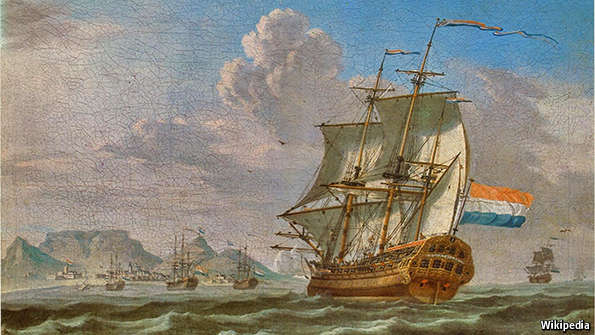
As far back as South Africa’s initial colonisation goes, Republican ideology has accompanied it. It starts with the Dutch East India Company (VOC) in the Cape Colony with the establishment of ‘Free Burghers’ – these ‘Free Burgers’ held their freedom as paramount, many of them escaping religious and nationality persecution in Europe. The Cape Colony fell under a Dutch Republic government with the VOC as an administrator and the ‘Free Burgher’ colonies fell under it, this Dutch Republic was later replaced by a French Republic vassal state called the Batavian Republic.

Contrary to a mainstream belief, these ‘Free Burghers’ and their fierce need for independence from a meddling state would not start with the British, it would start with the Dutch! .. Huh, how so? Well, here’s some little known history not usually found in a school history book ..

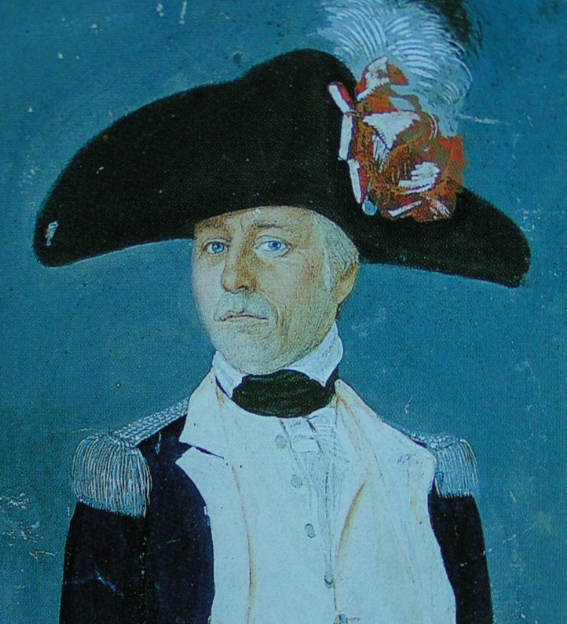
By 1795, dissatisfaction with the Dutch East India Company caused the Free Burghers of Swellendam to declare their own Republic, and Hermanus Steyn its President of the ‘Republic of Swellendam’. It lasted until the 1st British occupation of the Cape. Not just The Republic of Swellendam, the Free Burghers of Graaf-Reinet, also in 1795, had issues with the Dutch East India Company on policies regarding the frontier and tax, and they too declared the Republic of Graaf-Reinet, it also lasted until the 1st British occupation of the Cape in its war against the French. 
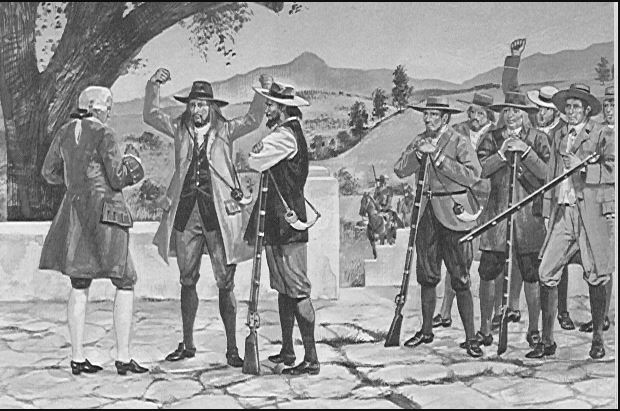
Images: The declaration of the Republic of Swellendam, and Southern Africa’s first real President, President Hermanus Steyn of the Republic of Swellendam 1795.

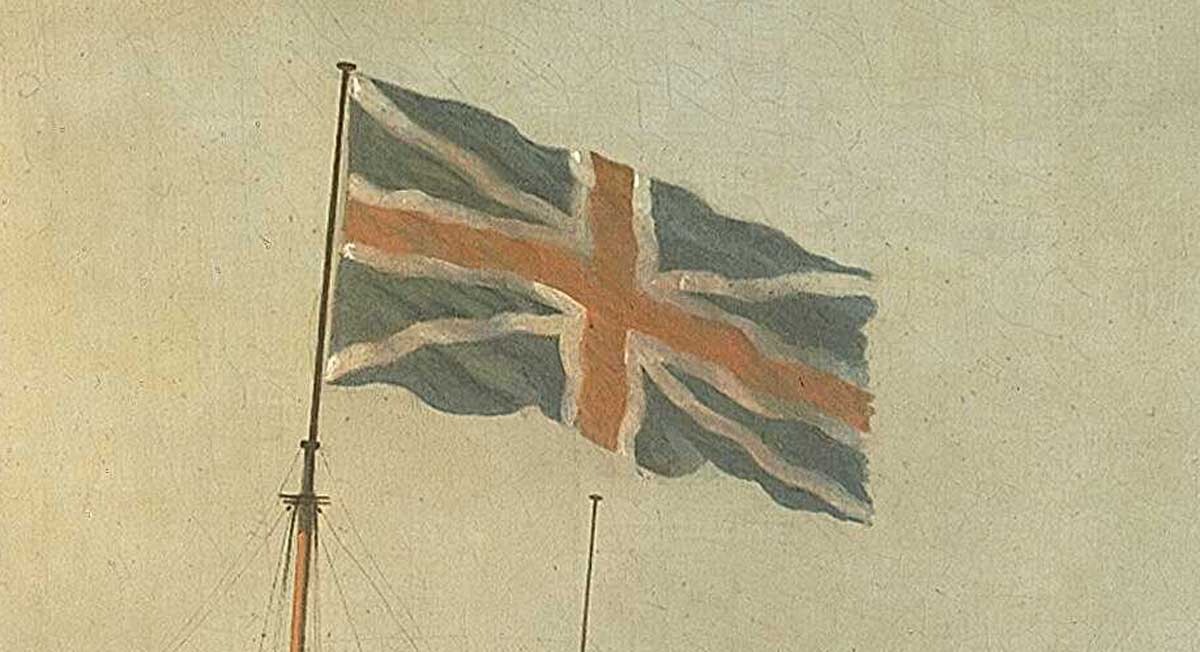
The 2nd British occupation of the Cape after the defeat of the Batavian Republic and the French Republic brought with it policies some of the Dutch speaking Burghers could not abide by. The British had been protecting the Dutch aristocracy during their Napoleonic and Batavian exile – after the Battle of Waterloo in 1815 finally settled the matter, the Dutch sold their Cape Colony to the British to aid in the re-establishment of their country (£6,000,000 then, now worth £150,000,000 or ZAR 3,380,000,000 – more or less). So here’s another inconvenient truth, the British did not ‘steal’ the Cape Colony from the Dutch, the Dutch sold it fair and square to the British to help them re-build the Netherlands after the Napoleonic wars.

The British outlook on suffrage as opposed to the Dutch one would clash in their new colony from the get go. Dissatisfaction started when the British banned Dutch slave traders from entering any Cape port from 15th June 1814, squeezing labour supply, then the British announced the abolition of slavery completely in 1834, they also announced a universal qualified franchise vote putting some ex-slaves and black citizens on the same footing as some white ones. 

To top this indignity to the Burghers, the British announced English as the only official language in the Cape Colony and issued terms for the compensation of slaves which were viewed as unacceptable. Burghers had to go to Britain to get their compensation, an impossibility for many slave owners on the frontiers especially – and the amount been compensated was deemed as way under-valued in any event. With this indignity, and with their fierce need for independence – language, identity and religion, some Cape Burghers on the far-flung Colony’s frontiers (estimated at only 7.8% of the total population) upped sticks a year later in 1835 in a “Great” Trek to form a whole bunch of new Republics north of the Cape Colony’s border. 

Consider why a Republic, Republics by now are based on their lofty French Republic ideals of Liberty, Equality and Fraternity are highly appealing to anyone seeking ‘Freedom’, they also should be free of domination and oversight (theoretically) by other states, and for a people seeking a separate national identity and nation state this is very appealing. But and it’s a BIG BUT, the types of Republics these Burghers were seeking to establish would manifest a version of racial servitude taken with them, strict in Calvinism and steeped in the Old Testament  these ‘Burghers’ saw themselves as God’s ‘Chosen People’ in Africa – a superior race, certainly to their slaves and local African inhabitants, which they simply dismissed as “Kafir” (an Arabic term adopted from Muslim slaves and banished exiles from the Dutch East Indies) meaning “heathens” and therefore unworthy under God – the idea the hated British came up with – that slaves and heathens could hold the same rights as them in future – was an abhorrent one – and herein would lie a future problem (and future derogatory term).

A heady concoction of the ideals Liberty, Equality and Fraternity – but only for the white ‘Free-Burgher’ Nation – within their strong confines of identity, and one in which the ‘servitude’ of other racial groups played a key role – they would have to either barter or shoot their way in to gain land to establish Republics, and they did both. They would also need a disenfranchised labour class to work the vast tracks of arid farmland or in household servitude, they would source this labour either locally when they got there, primarily through a old Dutch/VOC indentured slavery system called the “inboekstelsel” system or take labour and servants with them – and they did both.

It is estimated in some historical sources that the ratio of Voortrekker/Trek Boer to Servant/Labour taken with them from the Cape Colony commencing in 1835 was as much as 1:1. This ratio is easily seen in this sad statistic, of the recorded 282 white Voortrekkers killed along the Bloukrans during the Zulu attacks of the 16th and 17th February 1838, there are 250 ‘black’ servants also recorded as killed by the Zulu’s in addition to their white benefactors. A homogeneous trek of white trekkers the Great Trek was not.

The inboekselings system was widely used by the Boers in the region that would ultimately comprise the Transvaal, the system had its origins in driving Khoi-Khoi to labour in the Cape by the Dutch/VOC, and was still in use by the Batavian Republic (French) when they controlled the Cape. It was a system of ‘indentured slavery’ (indentured or contracted labour with limited or no rights) – primarily of Black women and children captured by force and indentured to their Boer masters till 25 years of age for the men and 21 years of age for women, it also formed a lucrative trade for struggling farmers on the frontiers of the Transvaal known as ‘Black Gold’. It is also not a ‘tiny’ or isolated affair, as numbers go, Keith Breckenridge in ‘his work ‘power without knowledge’ estimates the ratio between inboekstelsel labour and white Voortrekker by 1866 as 1:10 (10% of the population).
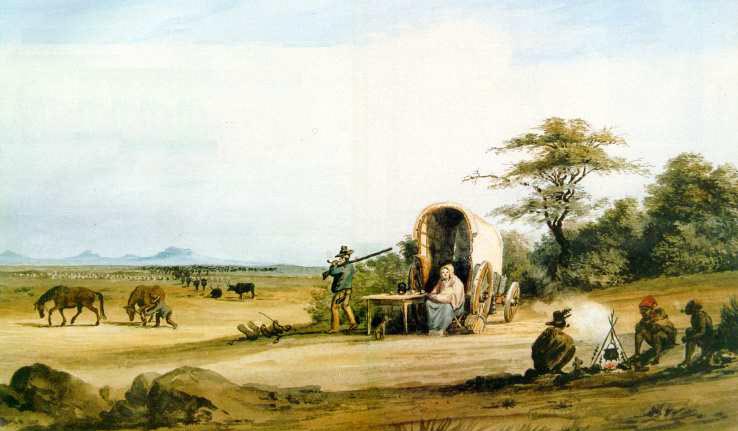
Trekboers crossing the Karoo by Charles Davidson Bell, unusual, but do note the Black servants and labour in foreground – an omission from many (if not most) contemporary Nationalist inspired Voortrekker and Trekboer paintings, sculptures and illustrations of the trekkers.

In either event – and another inconvenient truth, between the labour taken with them by the Boer trekkers and the labour acquired when they got to their destinations, within all the future Republics declared by the trekking Boers, there would exist from the very beginning a very large class of displaced black servants and indentured black labourers who were given no rights whatsoever – no right to own land, no right to political representation and no suffrage whatsoever. Most inboekselings remained with the farmers after their indenture period terminated as employed farm labour and servants and in this way the Boer Republican governments also sought to create a ‘black’ buffer class between themselves and the tribal Africans. They would exist on Boer farms in separated conditions in their ‘kraal’ – a very large separated sub-class and disenfranchised social construct which would remain with the Afrikaner communities for nearly two centuries and one that can still be seen in rural areas to this day.

The British, as a world Super-power at this time also found itself playing ‘Global Policeman’ with the abolition of slavery, world over and engaging its Navy to stop the trade, especially along the west and east coasts of Africa. But it did not stop at just its Navy, it uses every means at its disposal, military and legal. On indentured labour/slavery, British policy would remain a little hazy as they practiced the system in Natal bringing indentured labour to work primarily on the sugar cane farms – both servitude and highly exploitative in nature Indian indentured labourers started arriving in Natal from 16 November 1860, albeit a less forceful version that the old Dutch inboekstelsel system, the ‘Coolie’ system (now a derogatory term) focussed on adult labourers free willing to enter into a contract for five years in ‘bonded’ labour with no rights and thereafter as ‘free-men’ they were able to buy or rent land, houses and open businesses – and even form political groups – albeit these concessions (clipped by harsh ‘immigration laws’) were highly limited in terms of both opportunities and human rights (all of which however was certainly not the case in the inboekstelsel system where there were literally no real concessions at all).

The Orange Free State Republic
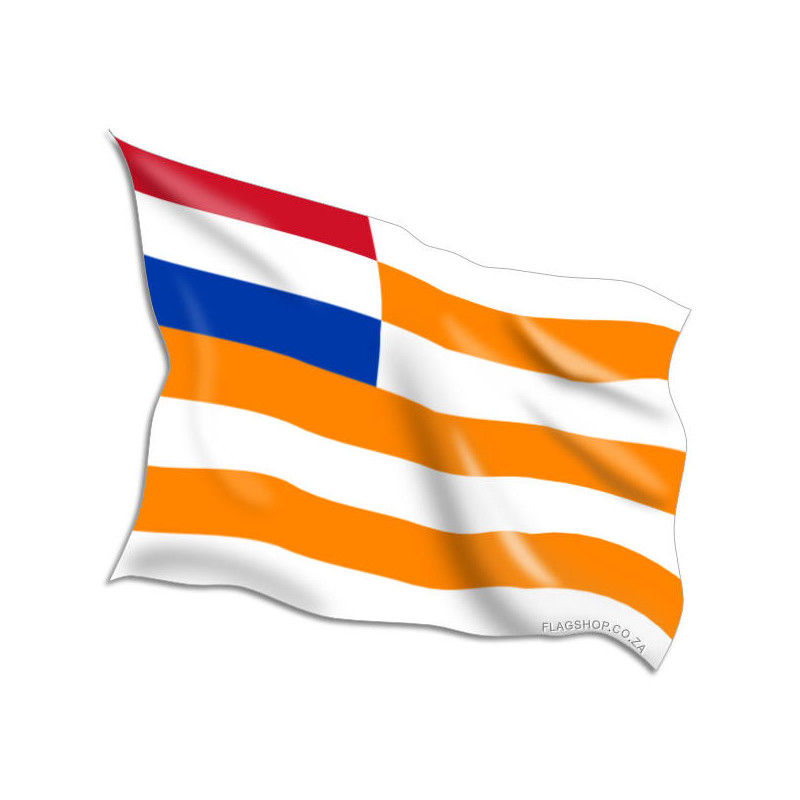
The Orange Free State Republic was established by a combination of ‘trek Boers’ and ‘Voortrekkers’ having settled there (there is a slight difference between these Boers depending on when these Boers left the Cape, one set are natural migrants, the other set protested the British. But here’s the confusing part and the rather inconvenient truth when it comes to the general narrative, it was a British territory BEFORE it became a Boer Republic. 

So, when these ‘Voortrekkers’ and ‘Trek Boers’ entered the Transorangia territory, re-named the British Orange River Sovereignty in 1848, they were subject to anti-slavery laws – these laws remained in place when it was later mutually agreed at the Orange River Convention in 1854 that Britain’s Sovereignty be administrated by Boers and they could declare a Republic of their own, but only as a proviso that the Orange Free State Republic established 23 February 1854, remain a British Suzerainty state (vassal state) under British oversight – so no slavery allowed in the Republic of Orange Free State from the get go. Also, the Orange Free State would never attain full independence since its inception to its end, it would at all times be a British Suzerainty, even up to and including the South African War (1899-1902) i.e. The Boer War.

The Orange Free State, chose to ally itself with its sister state, the Zuid-Afrikaanse Republiek (ZAR), in their dispute with the British leading to the South African War (1899 – 1902) and joined with the ZAR to invade the surrounding British Colonies and Protectorates in Oct 1899. The result to their declaration of war against Britain is a counter-attack which would see the Orange Free State Republic annexed by the British in March 1900 when they took their capital Bloemfontein, a mere 6 months after the Orange Free State declared war against Britain and it was officially renamed and ratified as the ‘Orange River Colony’ by the British a the end of hostilities in 1902.

A conglomeration of Boer Republics
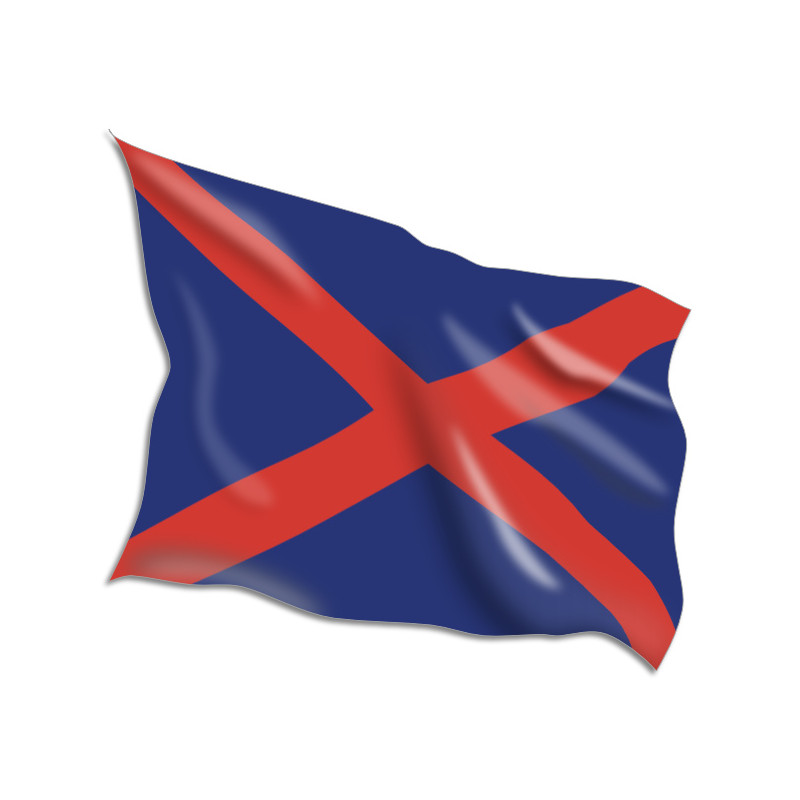
The British at the Sand River Convention in January 1852 would allow the establishment and amalgamation of Boer Republics north of the Vaal River as fully autonomous, only on the proviso that they were not to practice slavery (indentured slavery was a different matter). Unable to practice slavery proper, they enjoyed their autonomy and they would come up with legal and social compacts which defined class structures and franchise along racial and ‘national’ lines, as at 1852 most would become part of the ZAR, however due to the very isolated nature of these Boer groupings the ZAR did not really start to take shape until 1860. So let’s look at all these Republics and consider the number of Republics formed by trekking Boers (Voortrekkers and Trek Boers) and what happened to them; 

The Republic of Zoutpansberg (1835-1864), incorporated into the Zuid-Afrikaanse Republiek (ZAR) as a result of the 1st Boer War against the British (Transvaal War).

The Republic of Winburg (1836 -1844) and The Republic of Potchefstroom (1837-1844) amalgamated after 1844 to form the Winburg-Potchefstroom Republic till 1848. Eventually incorporated into the Zuid-Afrikaanse Republiek (ZAR).

Natalia Republic (1839 -1843), established after the Voortrekker victory over the Zulu nation at the Battle of Blood River, named Natália after the Portuguese term for Christmas (the day they discovered Natal). The Republic came to an end in 1843 when British forces annexed it to form the Natal Colony, most of the local Voortrekkers then trekked northwest into the the Zuid-Afrikaanse Republiek (ZAR) – which held massive swathes of Northern Natal.

The Republic of Klip River (1847-1848), established by Voortrekkers and is now modern-day Ladysmith, the British annexed it as part of the Natal Colony, naming the township ‘Windsor’ and then later re-naming it ‘Lady Smith’ after Sir Harry Smith’s Spanish wife.

Lydenberg Republic (1849 – 1860), established by Voortrekkers, it merged with a second Voortrekker Republic, the Utrecht Republic (1852-1858) and then both merged with the Zuid-Afrikaanse Republiek (ZAR).

Klien Vrystaat Republic (1876 – 1891), established by Voortrekkers on land bought from the Swazi King Mbandzini around a township they established called Piet Retief, now controversially renamed eMkhondo. The Republic was incorporated into the Zuid-Afrikaanse Republiek (ZAR).

The Republic of Stellaland (1882 – 1883) and the State of Goshen (1882 – 1883), both Republics established by Boer mercenaries awarded the land by the Twana Chief Moshoette for their assistance in his battles against the Mankurwane and Montshiwa Tswana factions. The two Republics merged to become the United States of Stellaland until 1885. In a land grab the Zuid-Afrikaanse Republiek (ZAR) annexed it, in response to the Tswana chiefs requesting protection from Boer expansion and aggression, in 1885 the British annexed Bechuanaland in two parts, the Bechuanaland Protectorate (modern Botswana) and British Bechuanaland (later part of the Cape Colony), the United States of Stellaland was annexed as part of British Bechuanaland. 

New Republic (1884 – 1888), also established by Boer mercenaries brought in by the Zulu King Dinuzulu to defeat his Zulu rivals, their compensation was land along the Mfolozi River. The Boers declared it a Republic and ‘Vryheid’ its capital. Long and short after a lot of conformation between the British and the Boers and the British and the Zulu, it was incorporated into Zuid-Afrikaanse Republiek (ZAR) and after the South African War (1899-1902) it was incorporated into the Natal Colony by the British.

Republic of Upingtonia/Lijdensrust (1885 – 1887). Declared on 20 October 1885 as a Boer Republic, it was originally named Upingtonia, but changed its name soon after. In 1887, it was merged into German South West Africa (Namibia).

The British did it too!
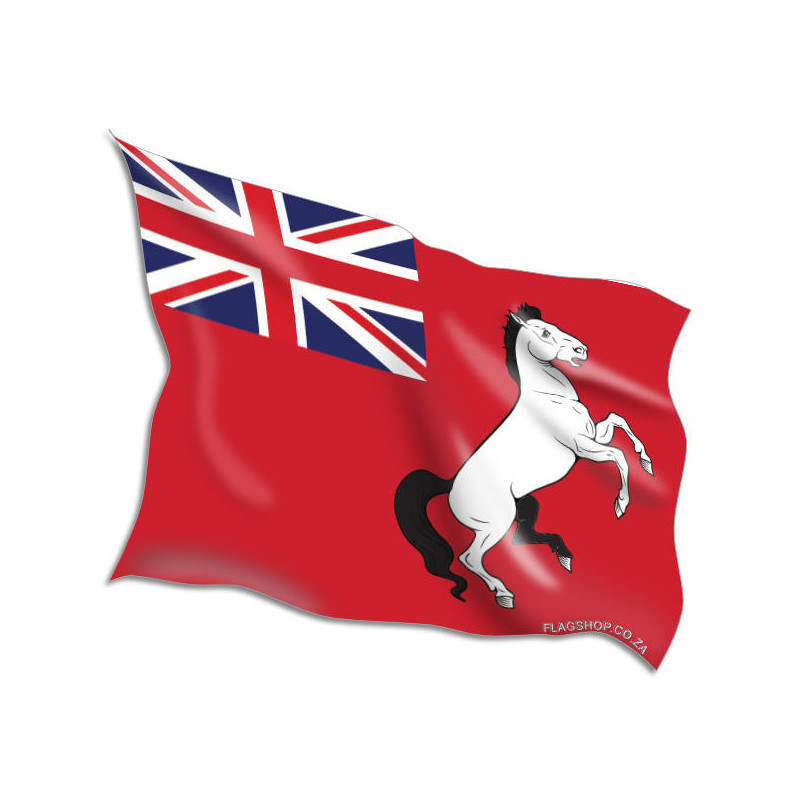
So, here’s an inconvenient truth – one your school text book would have gleaned over, its not just a Boer disposition to declaring mini Republics everywhere in South Africa, British settlers in South Africa did it too. When diamonds were discovered in South Africa in 1866 a flood of treasure hunters, especially from England, streamed to the diamond Fields around Kimberley.

Ownership of the diamond fields was contested by the Boer Republics of the Orange Free State and the ZAR, as well as various other groups, including the Cape Colony, the Griquas under the leadership of Andries Waterboer, and the Batlhaping, who were ruled by Chief Mankuroane. Before the issue could be arbitrated, the ZAR President Andries Pretorius decided to act unilaterally and declare the Diamond Fields as theirs in 1870. The Immigrant miners were so enraged, a former British sailor called Stafford Parker organised his fellow countrymen and drove all the ZAR officials out of the area and on the 30th July 1870, the Klipdrift Republic was declared and by December of the same year about 10,000 British settlers had made their home in the new republic.

Parker was elected as the President of the new republic, which was also called the Digger’s Republic and the Republic of Griqualand West. The Republic existed for an extremely short time, on 27 October, 1871 the British took possession of it after the matter of the diamond fields was arbitrated, and declared as belonging to the Griquas and it subsequently became a British protectorate (the Griquas fearing future Boer aggression, and unable to effectively administrate diamond claims and foreign miners – called in the British).

Zuid-Afrikaanse Republiek (1852-1877, 1881-1902)
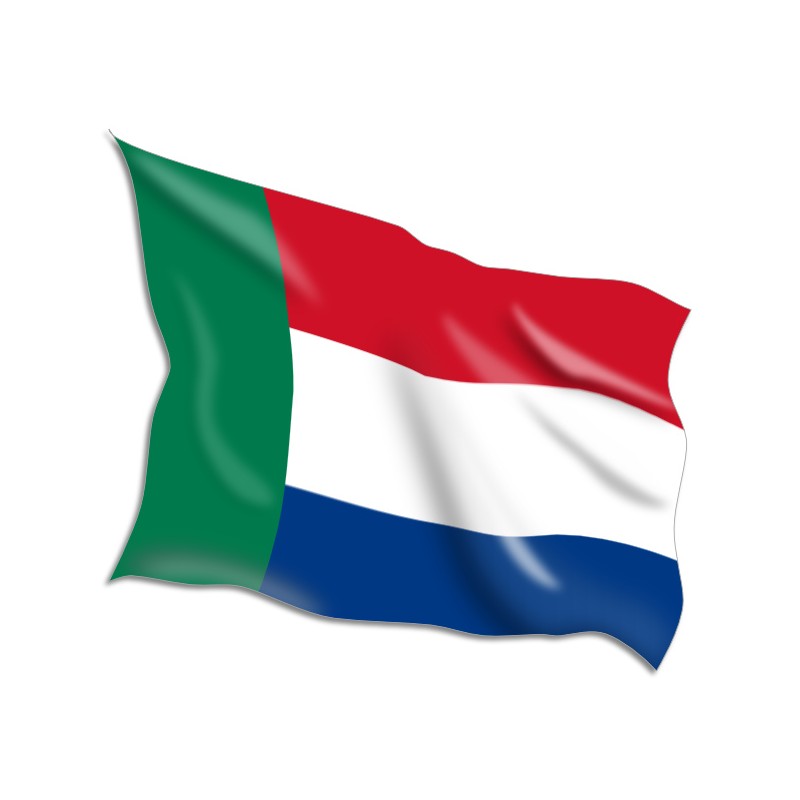
The Zuid-Afrikaanse Republiek – sometimes outlined as the Zuid-Afrikaansche Republiek (South African Republic) or Transvaal Republic or ZAR has two lives, the ZAR (1852-1877) was initially established by Voortrekkers, whereupon its Parliament (Raad) voluntarily dissolved its status as a Republic and requested the British to convert it to a British Colony called the British Colony of the Transvaal (1877-1881) instead. Dispute, mainly over taxes, land concessions to African tribes made by the British and issues surrounding Boer sovereignty, eventually kicked off  the ‘Transvaal War 1880-1881’ (or 1st Anglo Boer War) and the Republic was re-established as a Boer Republic after their victory over the British at the Battle of Majuba in 1881 – but only on PROVISO it too became a British Suzerainty state (vassal state) under British oversight – much the same status as the Orange Free State Republic.

The re-established ZAR (1881-1902) was again the main protagonist in the dispute with the British (over many reasons to be discussed another day) leading to the ‘South African War’ (1899-1902) hence the official name of the name of the war (not the “Boer War”). The ZAR’s invasion of British Colonies and Protectorates in Oct 1899 (not just the Cape and Natal Colonies, the ZAR and OFS Republican forces also invaded the Bechuanaland protectorate i.e. Botswana and Southern Rhodesia) and it would signal the official declaration of war, the British counter-attack would see the ZAR conventionally capitulate its capital 9 months later. The ZAR would cease to be a Republic and became a British colony again when it was re-proclaimed as the ‘British Colony of the Transvaal’ again on 1st September 1900 (after Pretoria fell to the British in the June of that year) and ratified it as a British colony at the end of hostilities in 1902. It remained The British Colony of the Transvaal (1902-1910) again until Union.

As a ‘fully independent’ Boer Republic, free of another Nation states’ oversight (Britain), the ZAR only really existed for a mere 15 years – but this did not deter the desire for ‘freedom’ from Britain by many of its white Boer population, and this was reinforced by the devastation to their society and economy caused by the South African War (1899-1902) or 2nd Anglo Boer War.

The idea of a ‘Union’

The ‘British’ i.e., the United Kingdom is essentially a union of four separate nation states with varying degrees of devolved authority. It is not a leap in logic to see how the idea of a union has resonance with them. As early as 1875 The Earl of Carnarvon, Henry Herbert – the British Colonial Secretary, approached the Orange Free State and the Transvaal Republics and tried to organise a federation of the British and Boer territories modelled on the 1867 federation of the French and English provinces of Canada. 

The liberal Cape government also objected to the plan for ideological concerns; Its formal response, conveyed to London via Sir Henry Barkly had been that any federation with what were regarded as “illiberal” Boer republics would compromise the rights and franchise of the Cape’s Black citizens, and was therefore unacceptable.
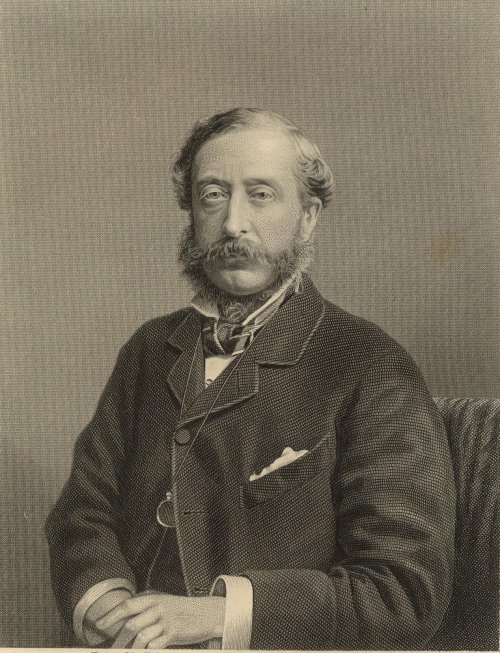
The 4th Earl of Carnarvon, Henry Herbert

Although this initial attempt of Federation by Henry Herbert failed, the concept remained. By 1902 the landscape of Southern Africa had changed with many more British territories bordering the old Boer ones, not just the Cape Colony and the Natal Colony, it included Rhodesia South (now Zimbabwe) and North (now Zambia) and the British Protectorates of Bechuanaland (now Botswana), Lesotho and Swaziland in addition. Some sort of peace and balance between these two antagonists was needed to allow for a stable governance of the region, the Boer Republics lay in tatters after the war, but the desire and fight to re-establish them remained. 

The British were only able to secure a Peace treaty with the Boers at the end of the South African War (1899-1902) – on the CONDITION that Boer self-governance would be re-examined again in the near future. The British had also insisted that The Cape Franchise (a vote for Blacks based on a qualified franchise) be extended to include the old Boer Republics as a Peace Term to end the Boer War, bringing the issue of political emancipation for the region’s Black population sharply into focus. 

General Jan Smuts attending the Peace negotiations with the British, was not only a skilful ‘Bitter-einder’ Boer General but also a skilful lawyer. Smuts was able to convince the British to put this issue of ‘black franchise’ on a back burner to be dealt with by a ‘future’ and ‘independent’ government in South Africa making its laws suitable to the region and not Britain insisting on applying its Westminster laws on the unwilling Boers. This would allow the old conservative Boer Republic’s laws on race division and exclusion to be upheld in their regions and the more liberal Cape Colony and British Protectorate laws on race inclusion to exist in their regions, at least for a little longer until the well-meaning British Colonial and Boer Republic ‘white’ politicians living in South Africa could resolve it.  

The British would leave the amalgamation of their interests in Southern Africa with those of the Boer Republics interests to a future government in which the Boer Generals would have a significant say. So, long and short, something had to be done.

So, here’s some inconvenient truths, very often on Boer War forums, a grouping of Boer Romantics still hung up on Pakenham’s idea that the war was all about gold and diamonds, flat ignore the British historians who repeatedly point out it was about suffrage and human rights (both ‘miners’ in the ZAR and the black population groups inside or adjacent to the two Boer Republics). The Boer Romantics dismiss this as Britain paying “lip service” to African rights and not really that serious about it. However, look at this way – to end the Boer War, the first proper round of peace negotiations where held at Middleburg in February 1901, and the British demanded a “colour blind” qualified franchise, as existed in the Cape and other British territories be extended to the Boer Republics in addition as a peace term. The British also insisted on ‘representative’ governance of the Boer Republics after the war (mainly dealing with the quick inclusion for disenfranchised ‘foreign’ white miners in the ZAR in their political process and the establishment of their political ambitions).
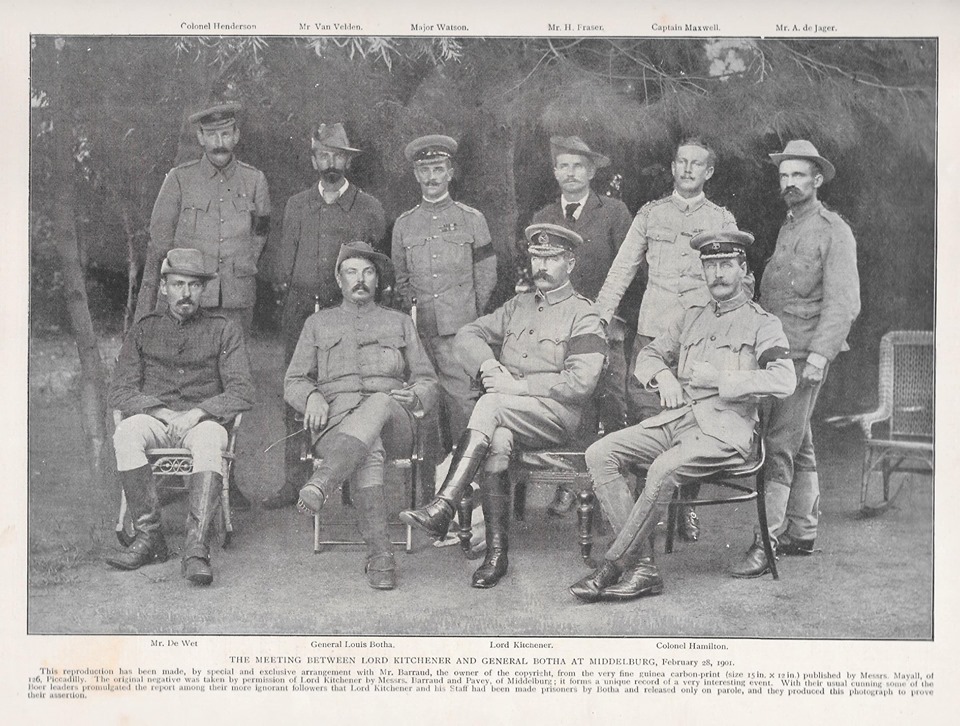
The First attempt at Peace during the 2nd Boer War – Middleburg 28th Feb 1901

So important to the Boers that their racial laws and franchise constructs remain in place, that they rejected these terms outright and walked away from the peace table. The uneasy truth is they were prepared to continue the ‘Guerrilla Phase’ i.e. Bittereinder campaign and endure the scorched earth farm burning policies and the displacement and death of their women and children in concentration camps for 13 more months of really savage war, rather than concede to a more representational system of government – and the British on the other hand were well prepared to continue such was their resolve.

The issue of a ‘black’ franchise would remain on the cards and even laid down again in May 1902 at the Treaty of Vereeniging (literally there were little real changes from the Middleburg Feb 1901 conference’s terms of surrender other than some British concessions on the Cape Rebels and an increase in war compensation funds to fix damaged farms), and here the issue of black enfranchisement was kicked into the long grass with the assurances and promises from ALL the Boer Generals (not just Botha and Smuts) that it would be dealt with in a future self-governance construct (the future ‘Union’). This is NOT just “lip service” as to human rights on behalf of the British, or for that matter the Boers – the issue was costing lives and of course this was not the only issue the Boers walked away from the negotiation table over in 1901, but it certainly is a major and on-going ideological dispute between Boer and Brit.

A well-meaning congress of ‘Closer Union’ 

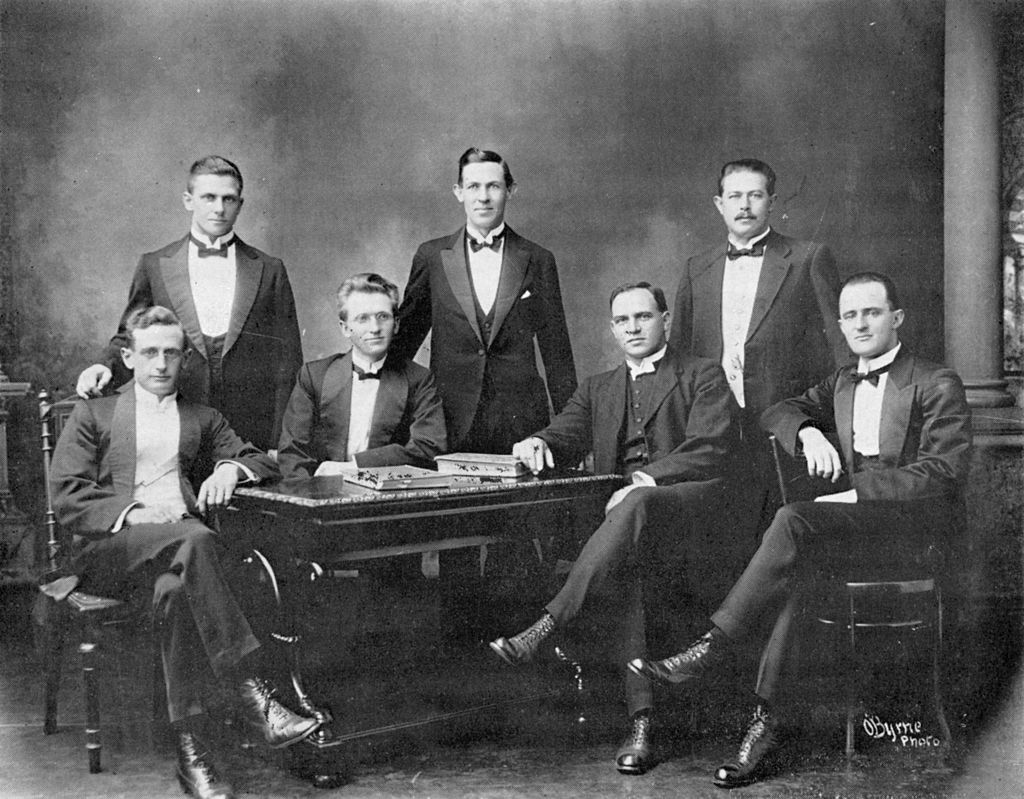
So, all the protagonists put aside their vast differences aside after the end of the South African (Boer) war in 1902 and got together to nut out a solution in 1908 and 1909, known as ‘The Closer Union Convention’ it was the CODESA of its day, a ‘whose who’ of modern Southern African history .., the old ‘Boer’ Generals – de la Rey, Hertzog, Smuts, Botha, de Wet and Burger even sucked it up long enough to sit opposite the likes of Starr Jameson and be nice. Notably, it also includes Southern Rhodesia (more on this later). Have a look at this photo of it, it’s a stella cast of the heads and ministers of every British colony and ex-Republic (now a British colony) in Southern Africa.  
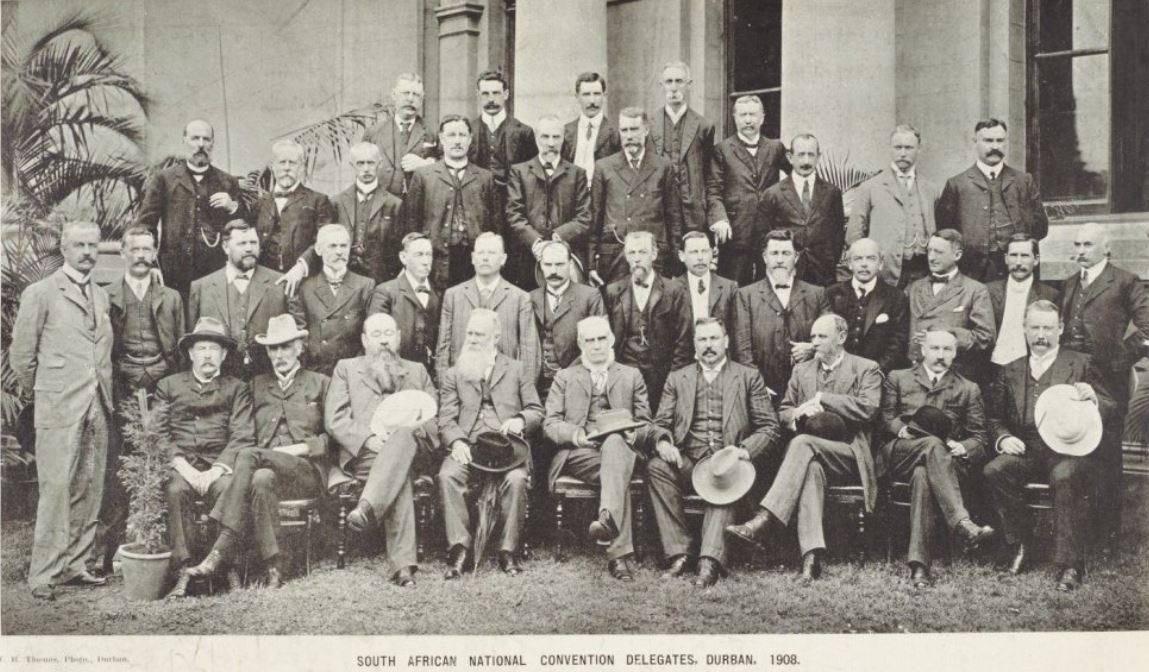
Front row (left to right): Hon. J.W. Saner, (Commissioner for Public Works); Hon. J.X. Merriman, (Prime Minister, Cape Colony): Hon. M.T. Steyn (Vice-President of Convention); Hon. A. Fischer, (Prime Minister, Orange River Colony), Lord J.H. de Villiers (President of the Convention), Right Hon. General Louis Botha, (Prime Minister, Transvaal); Right Hon. F.R. Moor, (Prime Minister, Natal), Sir W.H. Milton (Administrator of Southern Rhodesia), Sir J.P. Fitzpatrick. 

Second row: Hon. E.H. Walton; Hon. Colonel E.M. Greene (Minister of Railways and Harbours); Mr H.C. van de Heerden; Dr J.H.M. Beck, Mr G.H. Maasdorp, Mr H.L. Lindsay; Hon. F.S. Malan (Secretary for Agriculture); General S.W. Burger; Hon. Dr T.W. Smartt; Hon. General C.R. de Wet (Minister of Agriculture); Right Hon Dr L.S. Jameson; Hon. H.C. Hall (Treasurer); Hon. General J.B.M. Hertzog (Attorney General); Mr C.F. Kilpin (Clerk of House of Assembly and Chief Secretary of Convention). 

Third row: General J. H. de la Rey; Mr W.R. Morcom; Hon A. Brown; Mr T. Hyslop; Mr J.W. Jagger; Hon. C.J. Smythe; Sir G.H. Farrar; Hon. General J.C. Smuts (Colonial Secretary); Mr A.M.N. de Villiers (Clerk to House of Assembly, ORC and Secretary of Convention). 

Fourth row: Mr G.T. Plowman (Secretary to the Prime Minister of Natal and Secretary to Convention); Mr W.E. Bok (Private Secretary to Prime Minister of Transvaal); Mr G.F. Hofmeyr (Clerk of House of Assembly Transvaal and Secretary to Convention); Colonel W.E.M. Stanford; Hon. C.P.J Coghlan.

Mahatma Gandhi would even speak at the Conversion and bring up the issues surrounding Indian indentured labour immigration, Indian ‘free passengers’ and all of their rights. The solution they all came up with, a ‘Union’ was needed, a grouping of federated states, much the same as had been proposed in 1875 by Henry Herbert along his ‘Canadian model’. It would publish ‘The Framework of Union’ explaining the ‘Union’s’ constitutional frameworks as following the likes of the United States of America and Canada. It would then go on to lay down the constitutional framework for the future South African Union.

However, key to this ‘balance’ of British and Boer interests and unity would be the eventual inclusion of Rhodesia in the South African Union, also key would be the eventual inclusion in the South African Union of the British Protectorates of Bechuanaland (Botswana), Lesotho and Swaziland.

What’s missing from this well-meaning congress? Clearly it was the Black African political representatives, this idea of Union was to be progressed without their input. Clearly, they needed a political voice as a homogenous group of ‘Africans’, and it’s a large reason why The African National Congress was formed just 4 years later in 1912, originally as the South African Native National Congress (SANNC) and made up of a ‘conservative’ African intellectual class – ‘Christian’ in its central ideology.

Also, from the outset, the degree of ‘devolved authority’ to the ‘federated states’ was an issue. The Union of South Africa would carry a highly ‘centralised’ government and the likes of Olive Schreiner who was vehemently opposed to a centralised system of government for the new Union and advocated a highly devolved confederation instead, and berated the negotiators as being “men selling their souls and the future.” She, was not wrong, and as we will see in the future, the ‘centralisation’ of government would undermine the future ideals of ‘greater union’ after 1910 and also find a happy matrimonial bed for the South African ‘Banana’ Republic to thrive after 1994.

The South African Union … and it’s not what you think!

This is an expansive subject, bear with me, I’ll make it as brisk as possible. Let’s look at the ‘Union’ argument for South Africa, and upfront this is going to shock many – The South African Union as we know it, is not the South African Union that Smuts and his cronies envisioned, not by a long shot.

The central mechanism to attain ‘Union’ from the Boer perspective starts is a little known political party called ‘Het Volk’ – a party essentially led by a Louis Botha and Jan Smuts in partnership, and a party that would eventually pull together all the old Boer war Generals (including Hertzog) and the leading British Colonial parties into a unified entity – ‘The South African Party’ (the SAP or ‘Sappe’). Its mantra was ‘Union’, its chief philosophy was ‘reconcilliation’ and its chief visionary – Smuts.

For all the ballyhoo of Nelson Mandela being the ‘father of South Africa’ that’s not true, the ‘father of South Africa’ was Jan Smuts – period, and Smuts did not envisage South Africa on its current borders – it was much much bigger. Even before The South African War (Boer War) 1899-1906, the Afrikaner Bond, established in 1881 had as its stated aim a unitary Afrikaner Republic from “the Cape to the Zambezi”, even Smuts had already started articulating his views a greater ZAR incorporating the British colonies from 1895, Kruger and his cabal had always been expansionists – bear in mind ‘Swaziland’ was not a British protectorate at the start of the Boer War, it was annexed by the  Zuid-Afrikaanse Republic (ZAR) in an expansionist grab, along with more bits of Zululand in a bid to extend the borders to include a eastern sea port, plans and threats were even afoot for a Boer invasion of southern Rhodesia – the Adendorff trek. In fact ‘Botswana’ as we know it now was established to protect the Tswana from Kruger’s ever westward expansionism – now, not many people know that!

Cecil Rhodes thought the same way with his British South Africa Company, only his idea specified ‘British influence’ – hence the clash of under ‘whose influence’ and whose ‘laws’ all this expansionism and regional control would take place (British Unionist or Boer Republican) – its an ideological clash between Boer and Brit.

To conclude the Boer War, the Peace Treaty at Vereeniging settled the issue under whose influence all this imperialism, expansionism and unionism would take place – either Boer or Brit. The British demanding a settlement as long as South Africa remained part of the British family of nations, and with the goal of ‘self government’ for the entire region – to be shared by both ex-Boer Republic and ex-British Colony leadership.

By the conclusion of the Union Congress in 1909, the declaration of Union in 1910, and the conclusion of World War 1 in 1918, Smuts’ vision for a Greater South African Union bordered on a ‘United States of Africa’ on a federalism ideology. A proper Union, a system of inter-dependent states pivoted around Smuts’ central philosophy of ‘union is strength’ a philosophy which would all eventually evolve into his philosophy of ‘holism’.

Smuts’ expansionist thinking took South Africa’s borders over the Zambezi River – literally all the way to the equator. Here’s Smuts’ map of it, and note his personal marks of A and B, the map is in three phases:

Image: Jan Smuts’ map marking the phases of Union

Phase 1, the initial South African ‘Union’, which would incorporate Lesotho and Swaziland.

Phase 2, this would be followed by the incorporation of Bechuanaland (Botswana), German South West Africa (Namibia), the southern half of Portuguese East Africa (Mozambique – Delagoa bay) and Southern Rhodesia (Zimbabwe). 

Phase 3,’Greater South Africa’ does not stop at Phase 2, the next phase would see half of modern Angola, the rest of modern Mozambique (the north part of Portuguese East Africa), the whole of modern Zambia (Northern Rhodesia) and the whole of modern Malawi joining the South African ‘Union’.

So, what went wrong with a Federation?
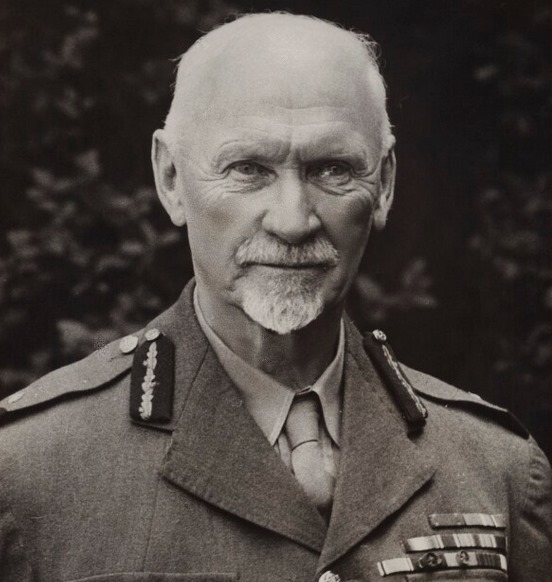
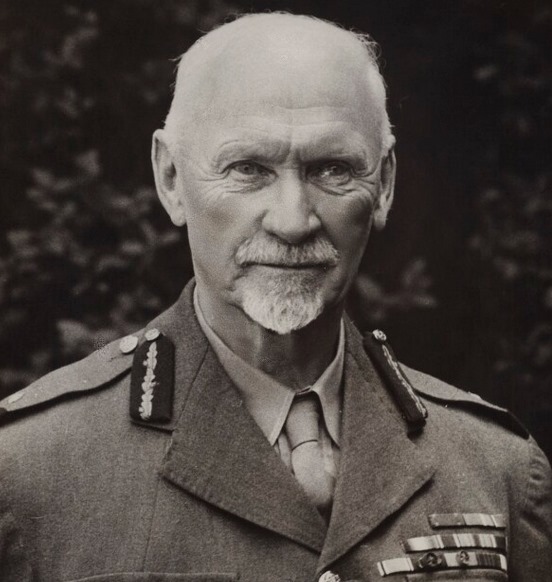
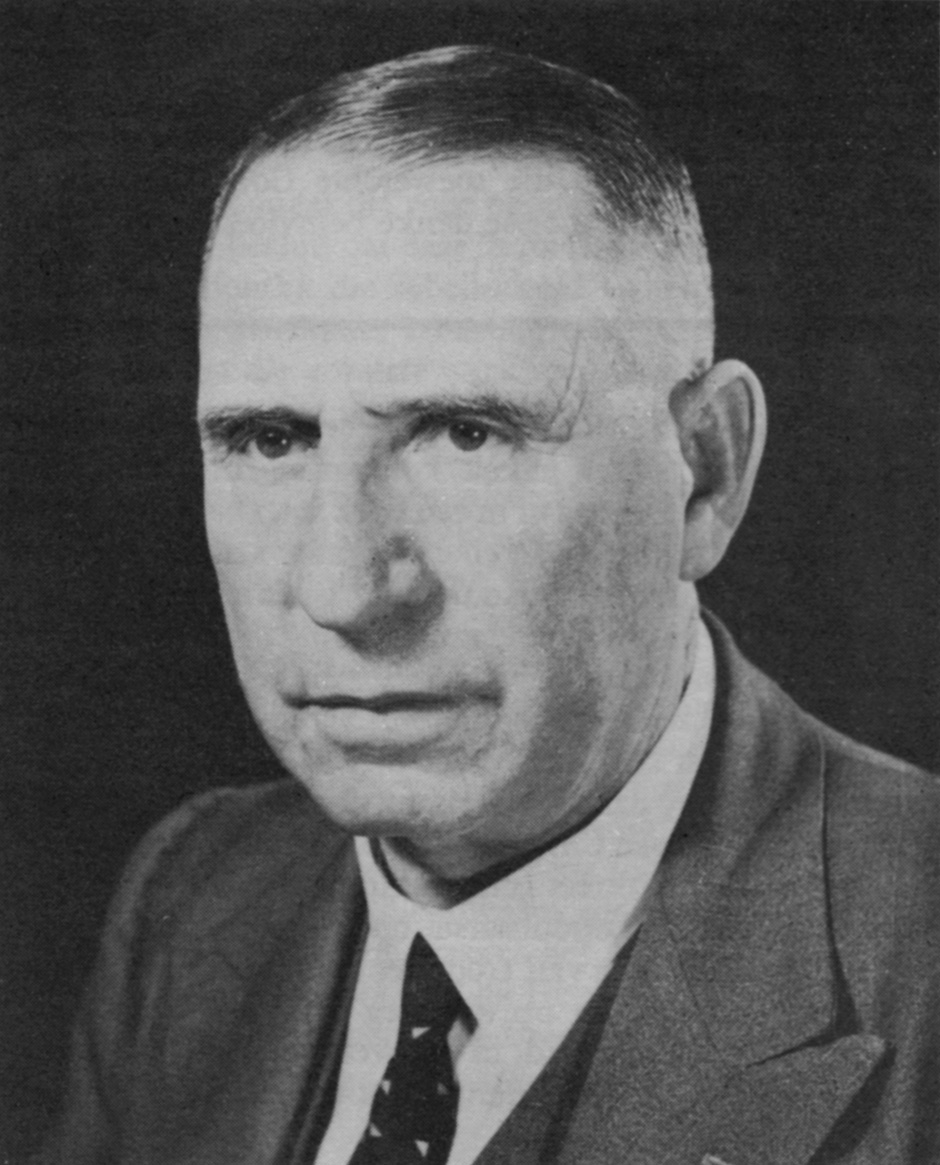
Field Marshal Jan Smuts

So, we nearly had a ‘United States of Africa’ a Federation of individual states like Australia, the USA, United Kingdom and Canada – bet you didn’t learn that in your history books. Life may have seen substantially different – Apartheid would probably not have happened, Rhodesian UDI would probably not have happened, even the Angolan Border War would probably not have happened (Southern Angola and SWA would have been part of the Union). So, what was right with the thinking and what was wrong?

On the right side was Smuts’ ideals of globalism and holism – the inter-dependency of peoples, nations and cultures on one another (politically and economically) – this thinking would see Smuts steer in the ideals of the Commonwealth of Nations (instead of ‘Empire’), the United Nations (instead of the League of Nations), and the same philosophy has been implemented after Smuts’ death in 1950 – we’ve seen European Economic Union and closer to home ‘BRIX’ and the Southern African Development Community (SADC) zone.

On the down-side was this persistent problem of Afrikaner Nationalists demanding Republicanism in their likeness, and the on-going issues of segregation and ‘white’ Imperialism in the territories concerned. Even Smuts saw this ‘United States of Africa’ under some sort of white patronage with a qualification franchise to gradually bring Black indigenous tribes into the edicts of western democracy – a gradual transformation to full political emancipation within institutions of western governance – and who can blame Smuts here, even as liberal globalist and a man ‘ahead’ of his time, he was also a pragmatist and a man ‘of’ his time. Smuts understood and often said “a politician cannot move faster than his electorate” (or lose his ticket) – and in his case his electorate was mainly ‘white’ and intensively racially divided and very fearful of a ‘Black’ future.

However, the two big de-railers of this ‘United States of Africa’ were the white voters, suitably enfranchised in South Africa and Rhodesia – oddly, both diametrically apposed and in fear of one another.

At Union in 1910, it was hoped that British Protectorates of Bechuanaland (Botswana), Lesotho and Swaziland would be incorporated. The difficulty in Smuts’ dream was the word British ‘Protectorate’ – they were not British ‘Colonies’. They could not be legally forced into Federation; they were tribal Kingdoms (and still are) and had all requested British protection in response to Boer expansionism and to avoid being swallowed up by the Boer republics.

These Protectorates opted on a ‘wait and see’ strategy – wait to see what ‘Rhodesia’ would do, as this would ‘balance’ Afrikaner nationalism and its race laws which were still apparent in the old Transvaal and Orange Free State legal constructs, Botha and Smuts had still not been able to institute the black qualification franchise vote as required by the British at the end of Boer War in 1902.

Thomas Pakenham (a travel writer and Irish Republican) would make one very good conclusion in his first authoritative work considered history ‘The Boer War’ – and its one which we can agree on, he said the Boer nation would never concede a vote franchise to the Blacks, regardless of promises given and would conclude that the nation which truly came off the worse in Boer War 2 was not the Afrikaner one – despite the white concentration camps and scorched earth policies, but it was the Tribal Blacks and their nationhood who would be the greatest losers. Try as they might Botha and Smuts would never be able to shift this needle. If anyone is wondering why South Africa has great big holes in the middle of it comprising the Kingdoms of Lesotho and Swaziland – this is why.  Botha and Smuts however went ahead with Union in the hope that this burning question of black franchise qualification would be settled by Southern Rhodesia (Zimbabwe). 

With Southern Rhodesia on board, as was planned at the ‘The Closer Union Convention’ a year before in 1909, and even with the South African Act passed in 1909 which outlined ‘Union’ as it made way for the inclusion of Rhodesia as the 5th province in the Union. It would now be up to Rhodesia who would provide the balance between the main British territories of Rhodesia, Natal and Cape Colony – with their more liberated approaches to enfranchisement than those of the two old Boer Republics – and in the end the ‘majority’ of progressively minded whites in the region would win out and the small but burgeoning desire for ‘white’ Afrikaner Republics would be kept at bay by sheer democracy and a willingness for greater Union.

So, up to the Rhodesians to decide the future South African Union and political balance then. Winston Churchill once said, “The best argument against democracy is a five-minute conversation with the average voter” (incidentally Churchill was also then the Colonial Secretary to Southern Africa) and in the case of Union this became a truism as the Rhodesians took the matter to a referendum, they called a vote on the matter on the 27th October 1922.  Option 1: ‘Responsible Government’ (own independence) or Option 2: ‘Union with South Africa’.

In Rhodesia, the prevailing government opinion was that Union with South Africa was inevitable, it was supported by the United Kingdom’s government, the South African government, and the British South Africa Company – all of whom favoured the Union option. But (like BREXIT recently), the government was out of touch. The Rhodesian enfranchised voters (mainly white, some black) were afraid of ‘Boer’ policy interfering in Rhodesian politics and fearing the extreme segregationist and race law issues latent in South Africa’s old Boer Republic provinces opted out of Union voting 59% in favour of ‘Responsible Government’ instead. 

Thus ‘nearly’ ended any dreams Smuts had of a ‘Greater South Africa’ or ‘United States of Africa’. It was only 1922, and there was still time and the whole of German South West Africa to consider, which after it was annexed by the Union of South Africa during World War 1 was a South African ‘mandate’ with League of Nations oversight. Jan Smuts have even proposed it be re-named after his friend, fellow Boer General and now the Union’s first Prime Minister – Louis Botha as “Bothaland” (bet you did not see that in your school books either). Bothaland did not go ahead, but Smuts, determined that Union through ‘annexation’ go ahead and ignoring the League of Nations mandates he even tried (again) to name South West Africa as a 5th Province of the Union of South Africa as late as the 17th October 1946. The new United Nation’s defeating Smuts claims in 1946, reducing the Union’s powers over the territory and placing it under ‘Trusteeship’ instead (primarily concerned over black rights) – that was really the end of Smuts’ expansionist Greater South African Union as South Africa never really had ‘full’ legal authority over South West Africa in the past and now going into future, as hard Smuts tried, it never would have full authority and its mandate over the territory was later set by the United Nations to expire in 1966.

Many ex-Rhodesians today lament their decision, as without the power of a large Southern African Federation behind them, they would be left alone to deal with mounting political pressure, especially over the issues of franchise and political emancipation. It laid the bed-rock conflict and for ‘right wing’ Rhodesians trying to hold onto segregation and the qualified franchise system within a white parliamentary construct as long as possible to come to power and declare a “Unilateral Declaration of Independence” in 1965, led by a very conservative Ian Smith and form … you guessed it, a Republic! The Republic of Rhodesia 1970-79.

So, let’s look again to the other problematic part of the Union’s mandate – South West Africa (Namibia) for which act of full Union was (and remained) elusive, the voting population by way of white settlers was small, an all-white affair made up of conservative German settlers who were almost equalled in numbers by Afrikaner settlers venturing into the territory. They would eventually deliver the final blow and bring about the ultimate collapse of the ‘Union of South Africa’ and the forwarding of a ‘expansionist’ white Afrikaner Republic instead.

What! South West Africa (SWA) ended the South African Union – no way! Well, it did, and its also the reason the Nats hung onto it as tightly and as long as they did, even occupying it with sheer military and police force when the South African mandate over the territory expired in 1966 – kicking off the Border War 1966-1989, so here’s why SWA was so important to the National Party and how they did it:

The Nats and their South African Republic.
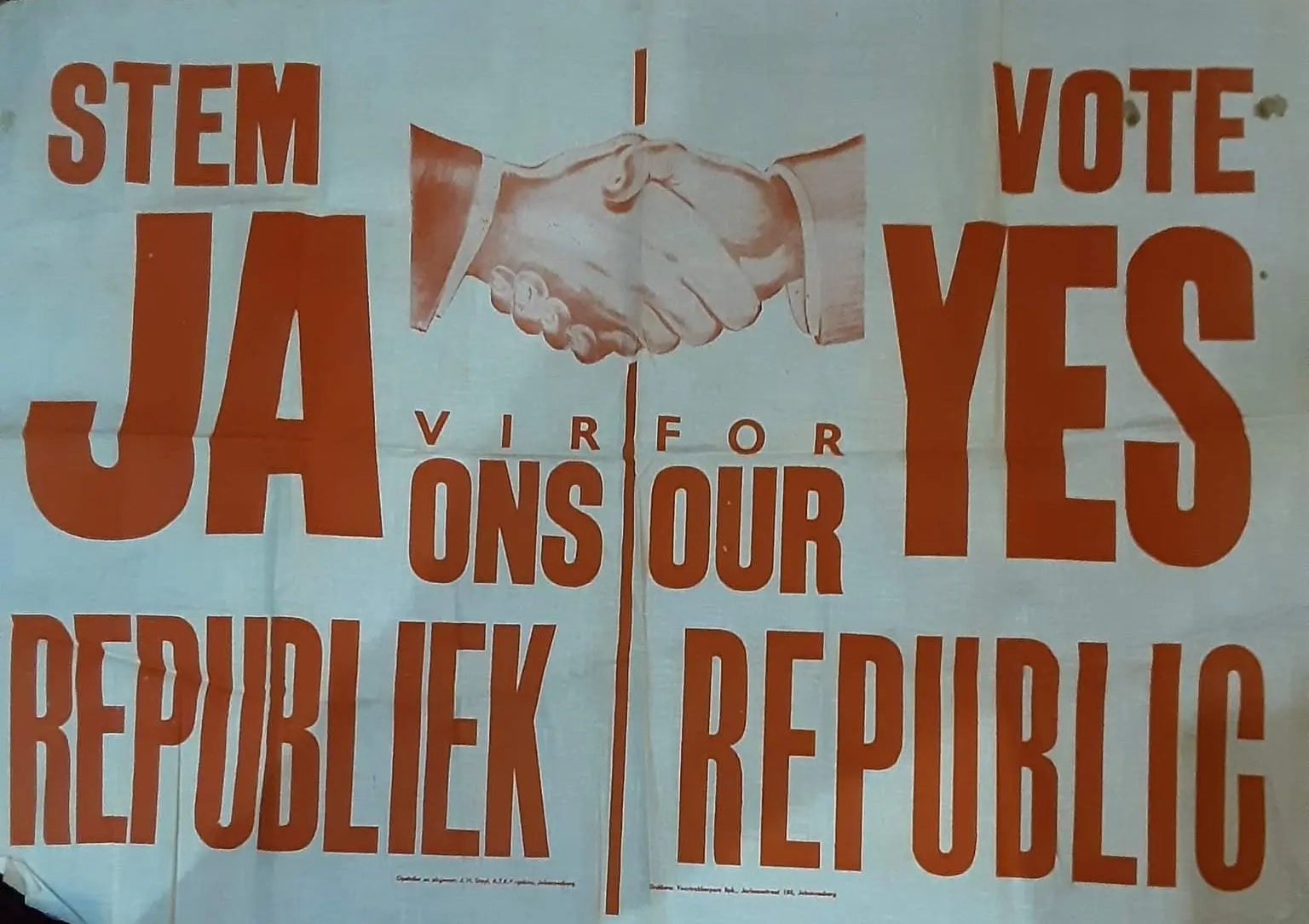
The return of the idea of a Republic starts with the formation of the National Party in 1914 by Afrikaner Nationalists soon after the establishment of the Union of South Africa. Its founding was rooted in disagreements of ‘Union’ among South African Party politicians (remember ‘Het Volk’ and the formation of the SAP), particularly Prime Minister Louis Botha who sought a ‘unitary’ Unionist state with singular purpose called ‘one-stream’ and his first Minister of Justice, General J.B.M. Hertzog who sought a ‘two-stream’ state which separated English and Afrikaners. 

Incorporated into the ‘Two-Stream’ ideology was the fierce adherence to ‘Krugerism’ – the racial separation and ideological purpose of the old Zuid-Afrikaanse Republic (ZAR) separating not just Afrikaner and English but also all the ‘Bantu’ in addition. With a oligarchy philosophy underpinning it, and the sense of ‘Boer’ Nationalism ahead of all other races in servitude to the Boer cause, the religious reincorporation of the ‘Chosen Race’ – white supremacy in effect. The ‘Politics of Pain’ also factored into the Nationalist ideology – i.e. the need to preserve Afrikaner identity by what was defined as a century long British tyranny, which ultimately manifested itself in the destruction of Boer farms and families during the 2nd Boer War. In essence it generated a victim mentality, and this preservation of Boer Nationalism and identity was paramount to the survival of the ‘Boer’ race – and if that required the subjugation by force of the ‘British’ and all other races and cultures threatening its ‘survival’ for that matter, then so be it.

The formation of the National Party was directly at odds with the aims and objectives of the Closer Union Convention of 1909 – the convention designed to end the Boer and British antagonism for once and for all.

Apartheid as an ideology had not really fully and clearly taken shape at this stage, the Nationalists were pretty loose in defining exactly how they intended to implement ‘Krugerism’, they sat in the pound seats running South Africa in coalition with the Labour Party (the ‘Communists’ in effect) after the Miners’ Strike in 1922  and in ‘Fusion’ with Smuts’ United Party in 1934 generally supporting British Dominion and ‘Union’ – this caused a breakaway called the ‘Purified National Party’ on the 5th July 1935 which stood to the far right politically, under the leadership of Dr D.F. Malan – and it stood in abject rejection of Union and demanding the return to Afrikaner Republicanism along with clearer ideology on racial segregation called Apartheid – this was all ultimately resolved by two events really – the Great Trek Centenary Trek in 1938 and the Second World War (1939-1945).

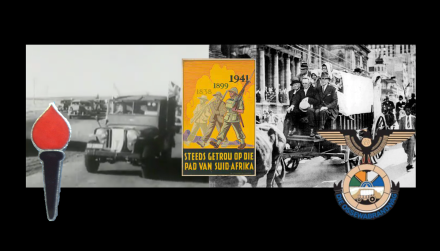
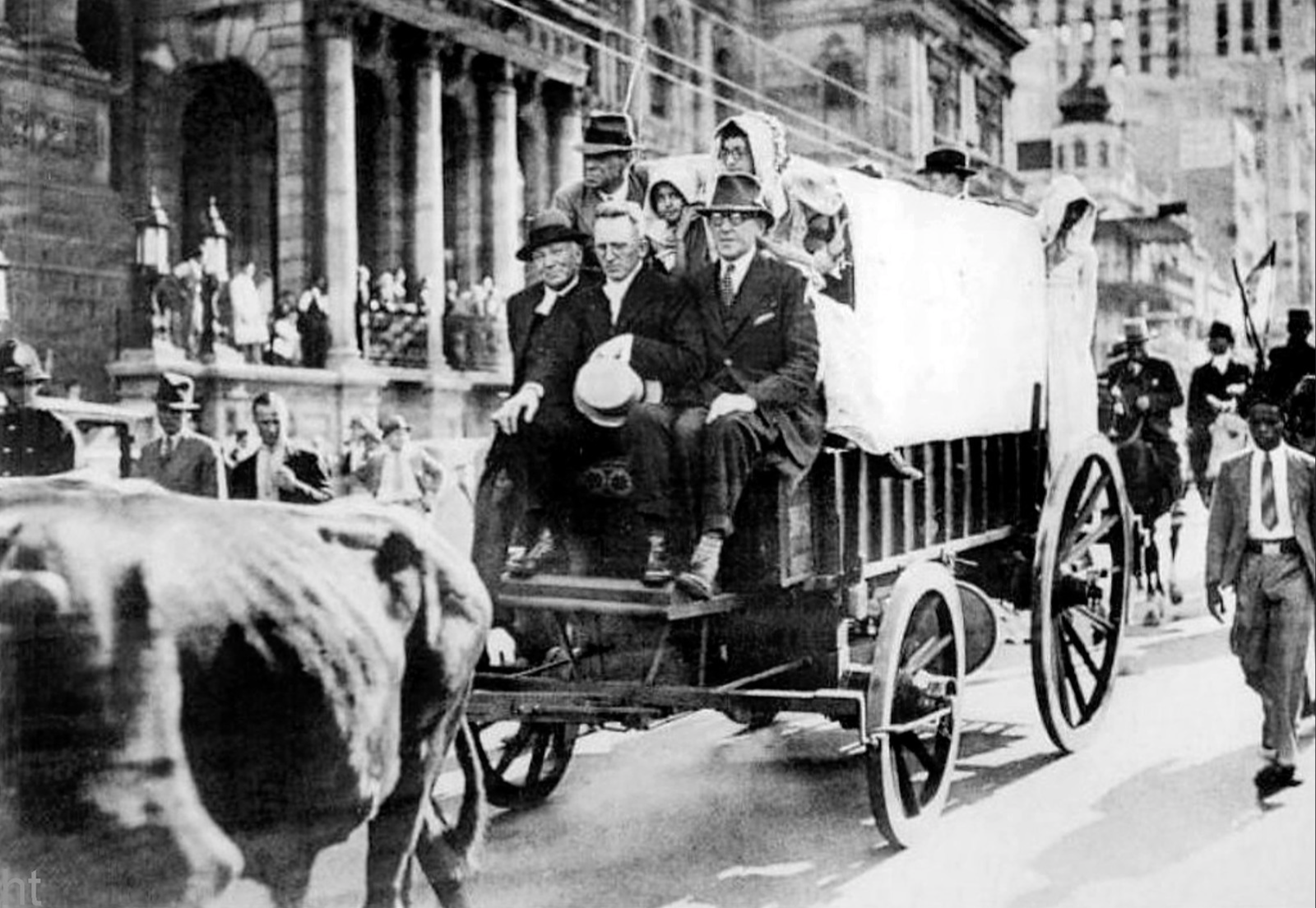
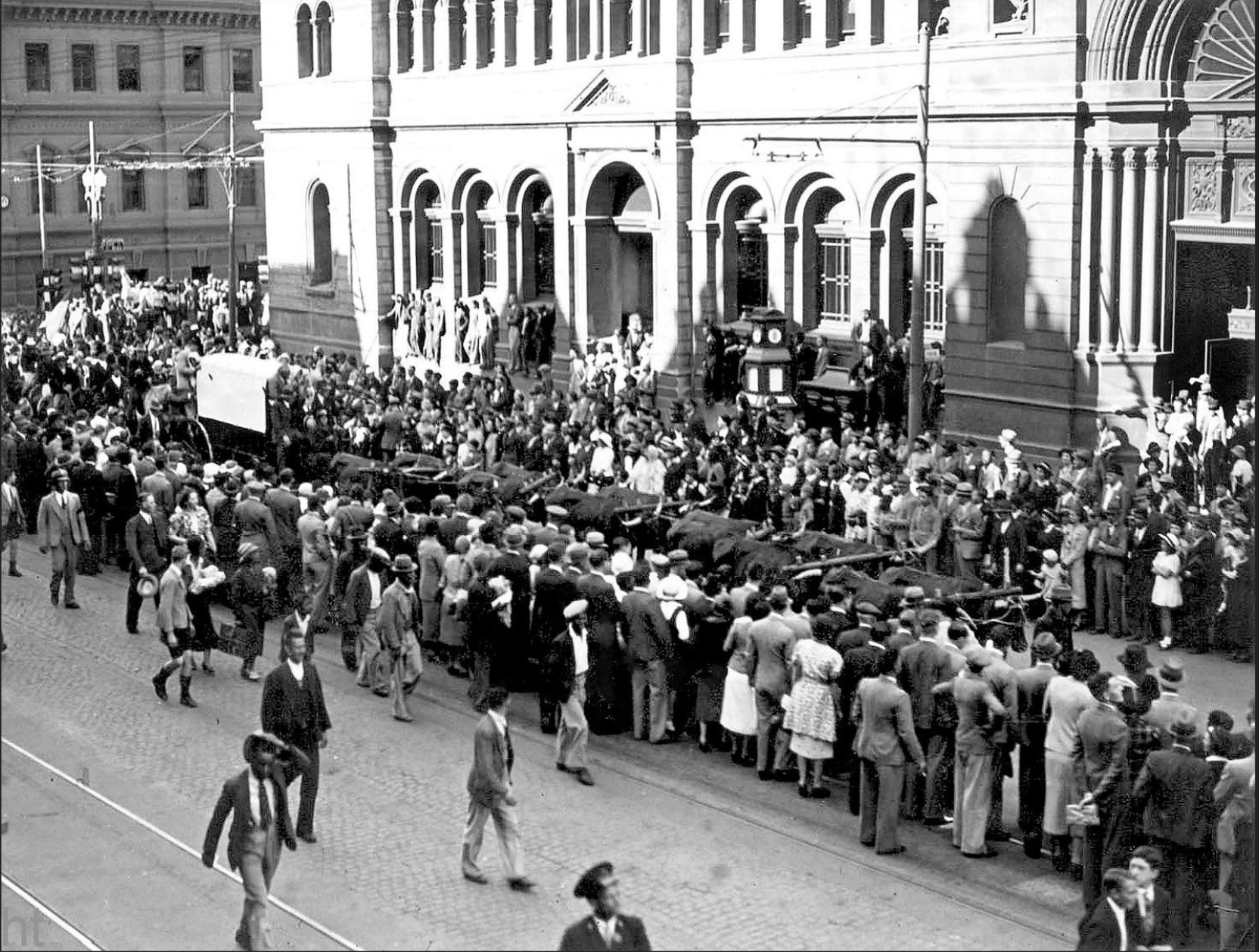
Henning Klopper, the Chairman of a young and up and coming ‘Broederbond’ initiated the 1938 Great Trek Centenary Trek to artificially bind and brand ‘all’ Afrikaners as decedents of the pioneers (Voortrekkers), symbolic of a ‘white’ Afrikaner hegemony paving the path of future unitary South Africa under white Afrikaner patronage. Long and short, although very fantastical and completely historically incorrect – it worked. 

Afrikaner Christian Nationalism as an ideology outlined by the Broederbond as their official ideology, using the ‘Voortrekkers’ as a binding source of National pride and identity, would ultimately come to define ‘Afrikanerdom’. Even today, if you search ‘Afrikanerdom’ on-line you get a ‘whites-only’ Nationalistic hegemony of what qualifies an Afrikaner.
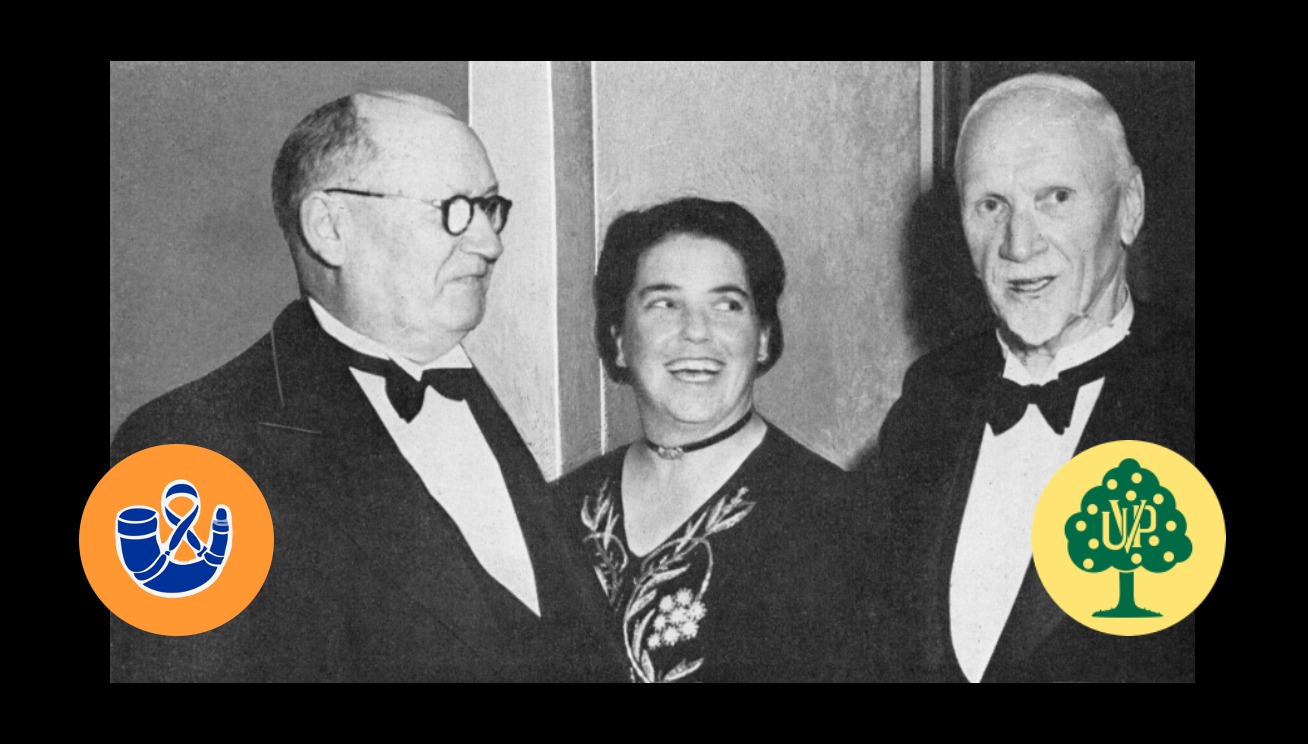

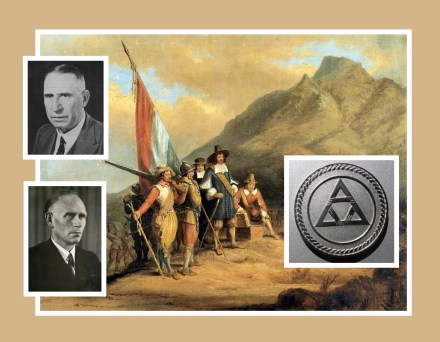
Smuts (right) and D.F. Malan (left)

Dr D.F. Malan would define the National Party’s ideology of Afrikanerdom when he said in November 1939. “An Afrikaner is one who, whether speaking the same language or attending the same church as myself or not, cherished the same Nationalist ideas. That is why I willingly fight against General Smuts. I do not consider him an Afrikaner.” An Afrikaner, in other words, was one who was prepared to accept the hegemony of the National Party and not those Afrikaners inclined to Unionism, Libertarianism or Liberal Democracy in the United Party and certainly not those like Bram Fischer in the Communist Party. This idea of ‘Afrikanerdom’ also did not extend to Black and Coloured Afrikaners or even Jewish Afrikaners who identified themselves as such.

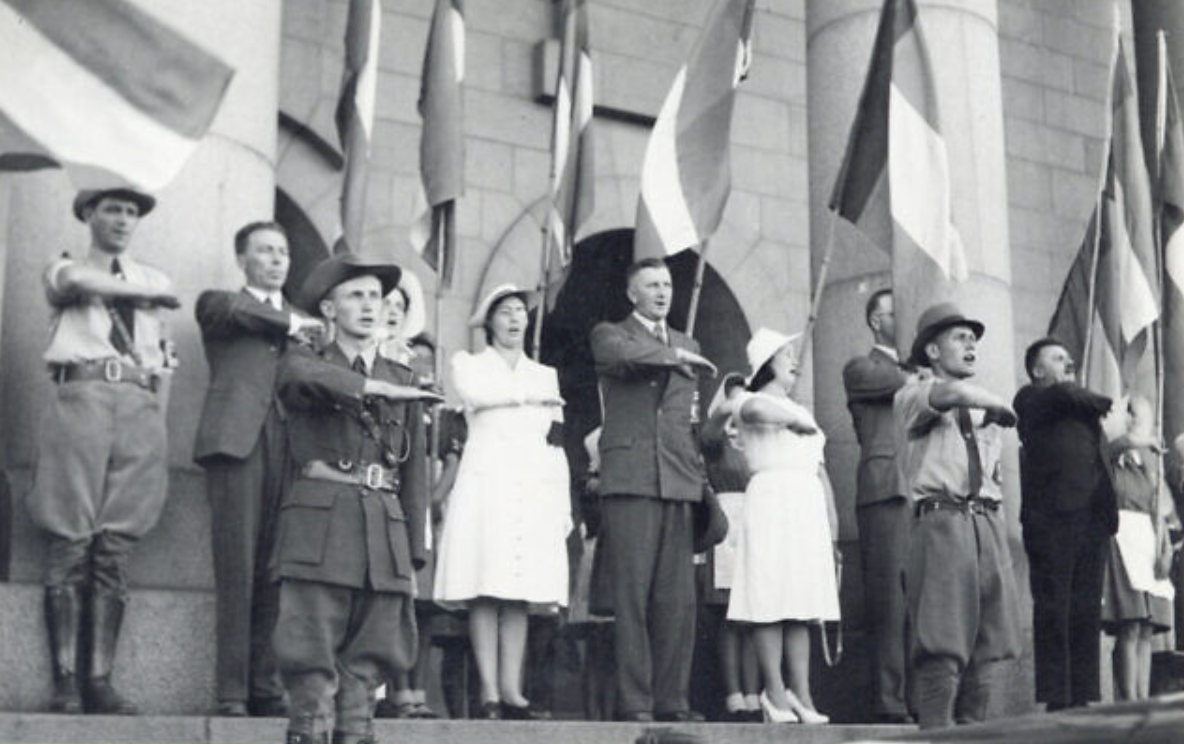
Christian Nationalism would also be adopted by the Ossewabrandwag – the Ox-Wagon Fire Watch or OB which originated because of 1938 Centenary Great Trek (named because the Centenary trek spread Christian Nationalism and Afrikaner Nationalism like ‘wildfire’), an organisation which drew over 250,000 plus Afrikaner members under the auspices of a ‘cultural society’ on a ‘anti-British’ ticket – and was ultimately infiltrated and coupled to the ideologies of National Socialism (Nazism) through its leadership and their love affair with Nazi Germany and Adolf Hitler. 

The Ossewabrandwag along with other Pro-Nazi Germany organisations like the ‘South African Gentile National Socialist Movement’ or Greyshirts, the ‘National Socialist Rebels’, the ‘Blackshirts’ and Oswald Pirows’ ‘New Order’ ensured that the ideology of National Socialism and Christian Nationalism was fused when all these movements were folded into the ‘Purified National Party’ – now re-named just the ‘Herenigde’ (Re-united) National Party’ after Hertzog resigned over Smuts’ decision to go to war against Nazi Germany. Only this time the Re-United National Party and its Afrikaner nationalists are now powered by a white supremacist nationalist cocktail of Nazism, Christian Nationalism and Apartheid – focussed solely on doing away with Union and implementing a ‘White’ Afrikaner Republic instead, they would undo all the work done by progressive Afrikaners like Smuts and Botha and well-meaning English South Africans of British origin  – D.F. Malan and his cabal went on the political path with this sole objective in mind and time and again declared their aim for a Afrikaner Republic – where ‘English’ citizenship would take a de-facto secondary status along with all other ‘Non-Afrikaners’ like Jews, Indians, Coloureds and Blacks.

We all know about Jan Smuts’ shock defeat in 1948, where an Afrikaner Party coalition comprising The Re-United National Party and the Afrikaner Party squeezed out the United Party on the back of substantive gerrymandering and a fear campaign driving discontent over future black enfranchisement, after winning the two Afrikaner Parties merged to re-establish their original name – the National Party – however, a significant problem existed for the National Party’s dreams and promises of a Republic – their win was not a popular (majority) vote win at all – the majority of whites (English and great many Afrikaners) and the Cape Coloureds did not vote for Apartheid (in 1948 more or less as numbers go – 550,000 voted against Apartheid as opposed to 450,000 who voted in favour), and therefore the National Party still did not have the majority necessary in Parliament to change the South African constitution from a Union to a Republic (another inconvenient truth to the current ANC narratives – the majority of whites, regardless of privilege – did not vote for ‘Apartheid’).

So, what did the National Party do to get their Republican dream, well they cheated really, to gain their majority of 2/3 for a constitutional change they needed to pack the senate with more National Party friendly seats, and they needed to get rid of the Coloured Franchise (remember – in the Western Cape ‘Coloureds’ and Whites were on the same voters roll since the abolishment of slavery and ‘apprenticeships’ from 1853).

The National Party proposed legislation called ‘the Separate Representation Act’ in 1951 to remove ‘Coloureds’ from the Common Voters Roll. Amongst other measures to negate and by-pass the judiciary, they turned to ‘South West Africa’ to push their majority.
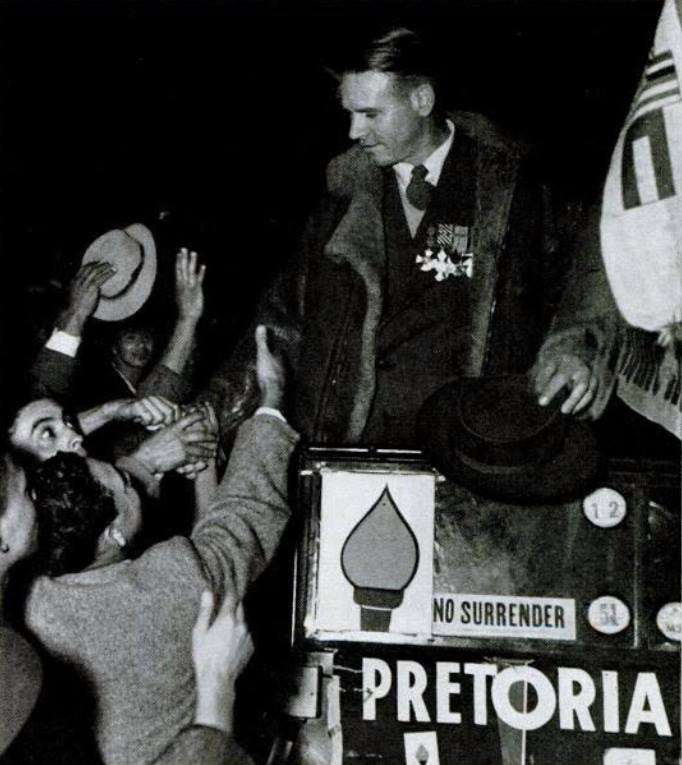
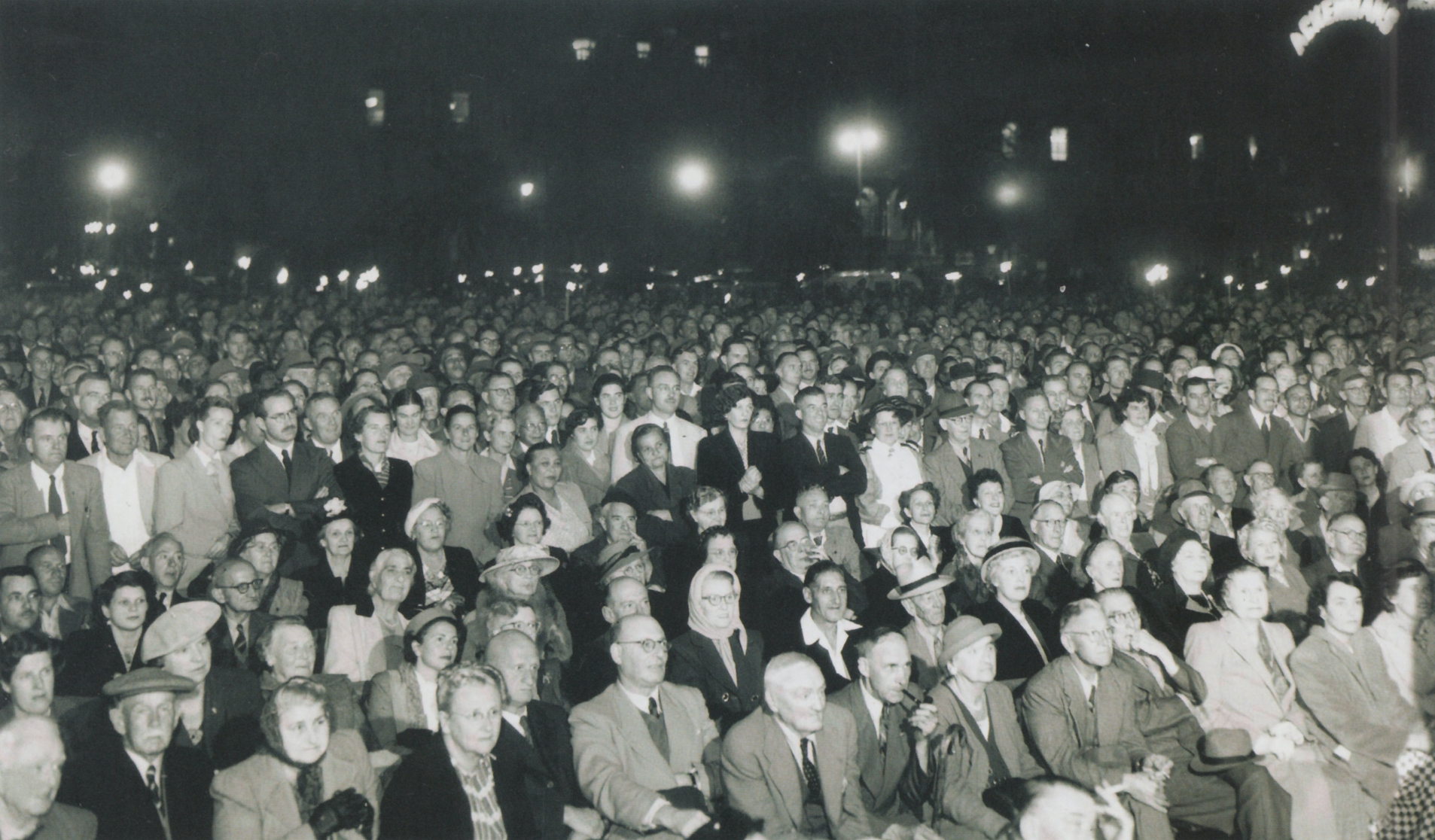
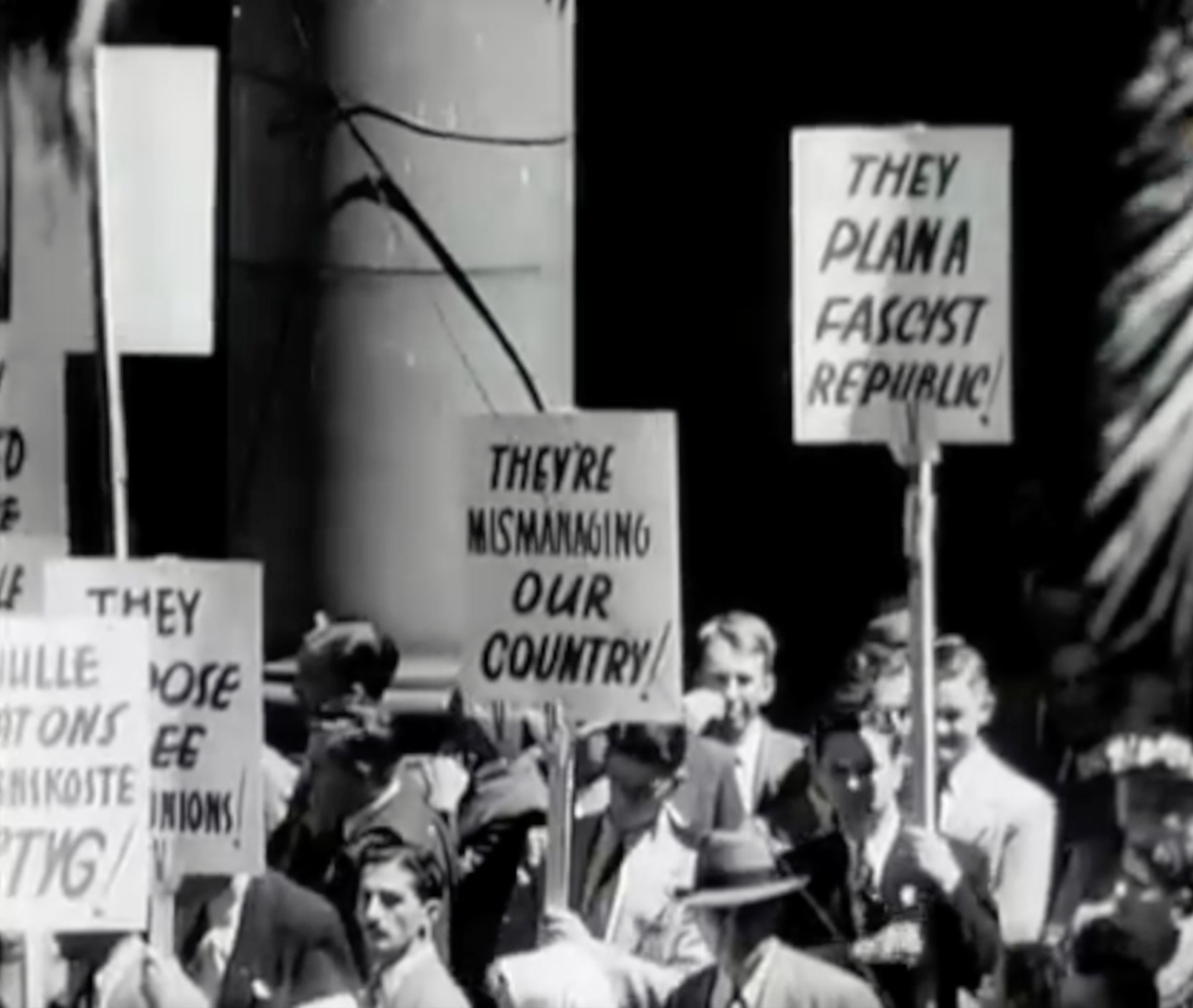
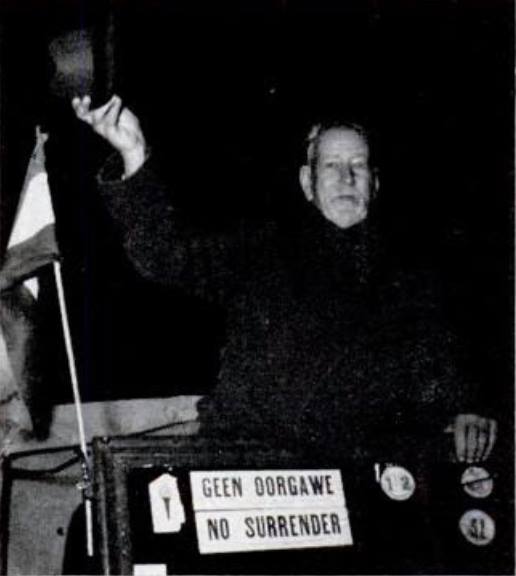
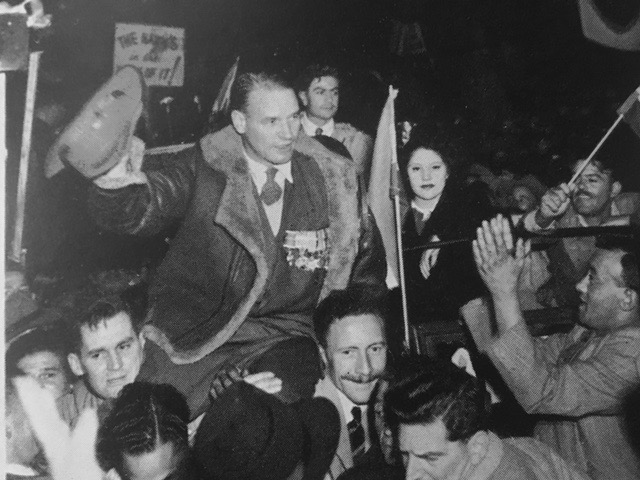
Images : The Torch Commando, 250,000 white people alone in open protest countrywide against the removal of Coloureds from the common voters roll and the advent of a ‘Facist Republic’ (see rally placard) – a quarter of the white vote bloc on the streets protesting and demanding the resignation of the National Party government.

As discussed earlier, convenient for the National Party was Smuts’ old Unionist expansion plan, where Smuts had looked to Rhodesia to ‘balance’ Republican politics in South Africa, now with Rhodesia out of the equation, the nationalists looked to South West Africa to reinforce their Republican politics (and if you are an old SADF vet who still thinks you were only in SWA to fight communists – this next bit is going to sting a little manne).
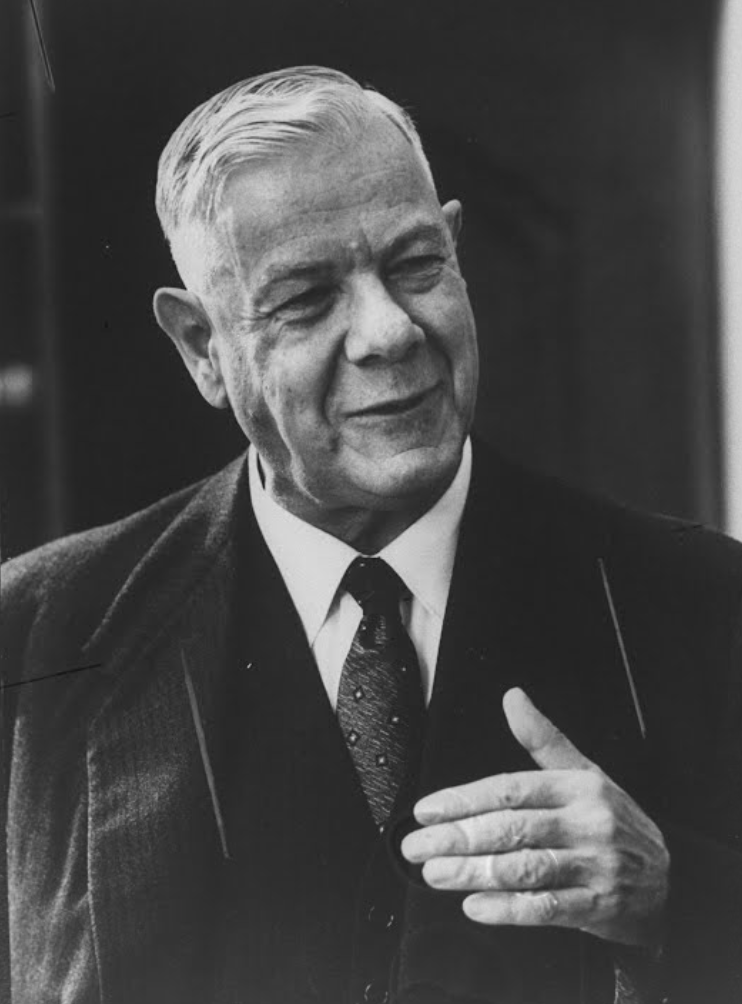
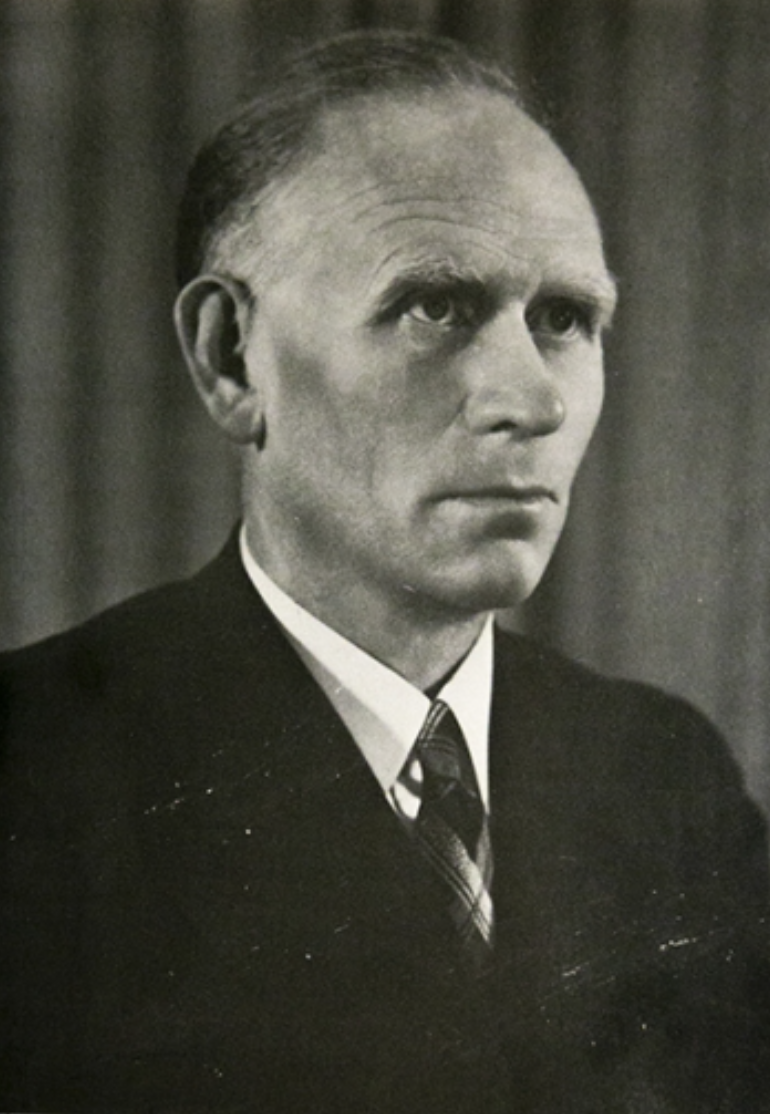
Dr H.F. Verwoerd

One of the first acts passed when the National Party came to power in 1948, was the South West Africa Affairs Act of 1949 Amendment, which went against the wishes of South West Africa’s Trusteeship in the United Nations – it ‘illegally’ gave representation in the South African Parliament to whites only in South West Africa, it gave them 6 seats in the South African House of Assembly and 4 seats in the Senate and it also illegally gave all whites in South West Africa a vote in South African affairs and elections.

This was to the advantage of the National Party who enjoyed strong support by the ethnic Germans as the National Party had through many of its organs expressed support for Imperial Germany and subsequently Nazi Germany during the two war world wars. Such was the support that from 1950 to 1977 all of South West Africa’s parliamentary seats in South Africa’s Parliament were held by the National Party.

On the Cape Coloured Franchise, The Separate Representation Act as put forward by the National Party in 1951 went ahead after the National Party overcame the powers of the judiciary through packing it to by-pass the constitution. The ultimate removal of the Cape Coloureds (some 50,000 voters) from the Common Voters roll in 1956 would pave the way for future and more sinister racially based Apartheid legislation, the complete marginalisation of ‘black’ political representation and it would open the way to the National Party’s dream of a Referendum to take South Africa out of its British Dominion and ‘Union’ status completely to become a White Afrikaner Republic.

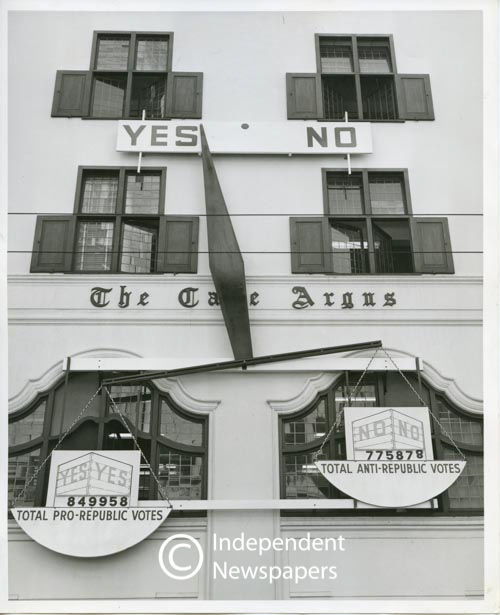
By 1960 the National Party was ready, Dr H.F. Verwoerd was now at the helm and a referendum on the matter of Union vs. Republic was held. Single question “In Favour of a Union or Republic” – yes or no. The heavy media campaign to propose the Republic was a “Unite and Keep South Africa White” proposition and the promise of white’s only enclave in South Africa (and SWA). The entire campaign and proposal rejected outright by the majority of South Africans. It went ahead on 5th Oct 1960 and the National Party won it, but by a sliver – 1%, only 70,000 votes – and here’s how the maths worked to do it. 
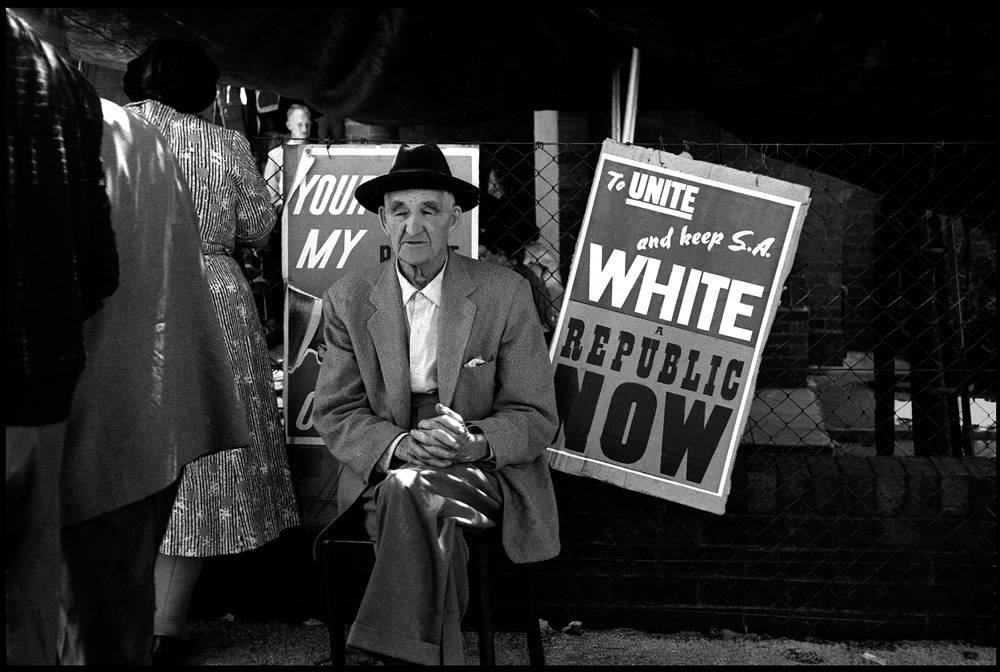
Image: National Party Campaigner 1960

The illegal ‘white only’ sympathetic South West African (Namibian) voters gave Verwoerd 20,000 Pro-Republic votes and by unconstitutionally removing the Cape Coloureds from the Common Voters Roll he was able to minus 50,000 Anti-Republic votes. Then by ‘banning’ or ‘gagging’ almost all strong opposing ‘white’ voices in the Liberal Party, Congress of Democrats, United Party and Labour Party using the Anti-Communist Act and the ‘Treason Trial’ (which lasted from 1956 to 1961) – basically, silencing many white Unionist opposition almost completely. The Net result was the sliver of 1% – the 70,000 votes he needed for a ‘Republic’. 

The result was a White’s Only Apartheid Republic, declared on the 31st May 1961 in which a foreign country’s white voters played a significant role in establishing the Republic, a Republic rejected by the British Commonwealth of Nations (from which South Africa almost immediately resigned – also read ‘kicked out’) and the near majority of voters in South Africa itself (whites), the Coloured community now disenfranchised and the Black Community when the ANC and Nelson Mandela personally formally rejected the referendum, his letter on the matter of Unions and Republics is most insightful when he said, rather prophetically:

“The adoption of this part of the resolution did not mean that (the ANC) conference preferred a monarchy to a republican form of government. Such considerations were unimportant and irrelevant. The point at issue, and which was emphasised over and over again by (ANC) delegates, was that a minority Government had decided to proclaim a White Republic under which the living conditions of the African people would continue to deteriorate.”
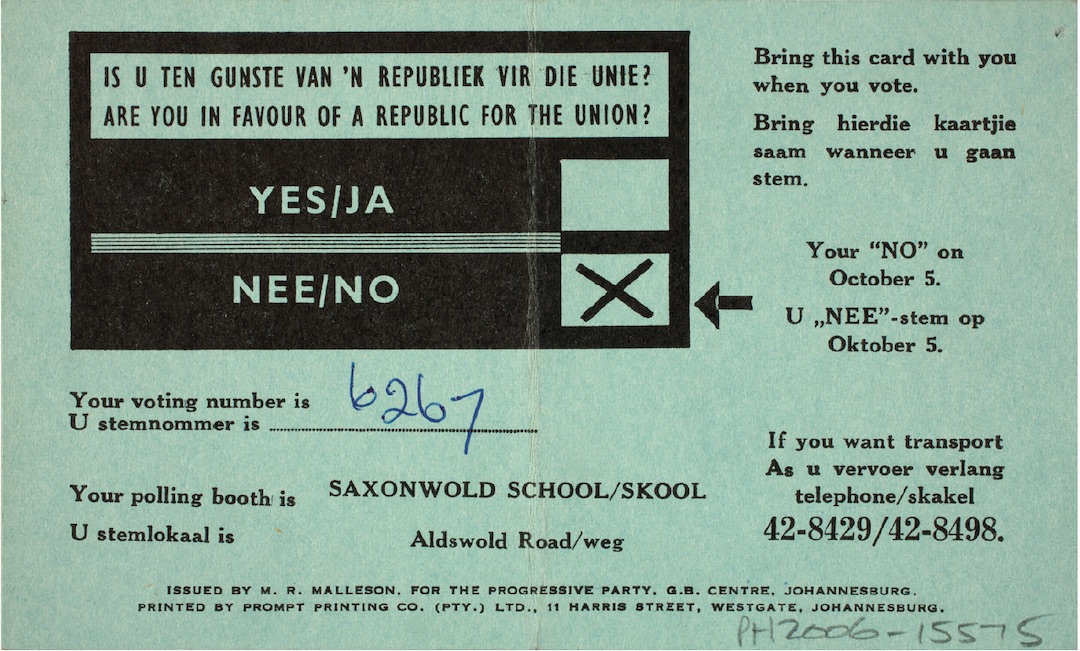
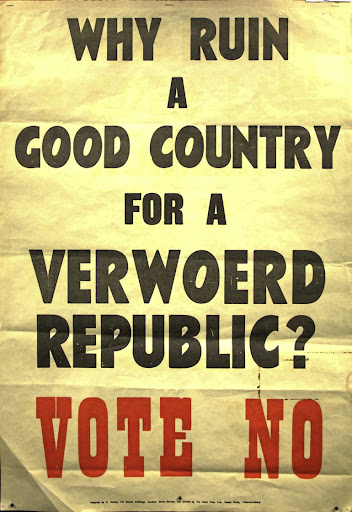
Images: 1960 Union vs Republic campaign.

On track to a Banana Republic

We all know the history of Apartheid, 1960 was the turning point, the massacre at Sharpeville took place on the 21 March 1960 and a white Liberal Party activist attempted to assassinate Verwoerd on the 9th April 1960 at the Rand Show by shooting him in the head. The immediate jackbooted swoop down on the progressive whites (English and Afrikaans) in the United Party, the Liberal Party, the Labour Party and all ‘Black’, ‘Coloured’ and ‘Indian’ political movements and parties by the South African police in 1960/61 was unprecedented, as they literally imprisoned, banned, gagged and deported many of the country’s leadership deemed ‘unpatriotic’ to the Afrikaner Nationalist cause. That action was to change the course of South Africa as it was to change the course of the African National Congress.

So what does the Apartheid Republic of H.F. Verwoerd possibly have to do with the mess we are in now, the ANC are responsible for the mess were in – not the Nats right? It’s an ANC Republic now. Well, wrong – the Afrikaner Nationalists and their desire for a Republic are as much responsible for African Nationalists and their desire for a Republic and the main reason … the “Politics of Pain”. Let me explain.

Remember the ‘Closer Union Convention’ of 1909 to remedy the antagonisms which under-pinned the South African War (1899-1902). The National Party came about in 1914 as they simply could not “bury the hatchet” and focus on Unionism – as a small fringe party at that stage (and they have always been ‘fringe’ in the greater sense of the population of South Africa), they were still determined in their focus of reinstating ‘Krugerism’ and the ultimate dream of a White Afrikaner Republic spanning from Cape Point to the Zambezi, sans British interference. The British had caused them substantial harm, starting with the indignation kicking off the Great Trek and ending with Boer War 2 as the British used scorched earth and concentration camp policies to ultimately win the Guerrilla Phase of the war – which had a massive impact on ‘Boer’ society and psyche.

Added to this in 1914 was the decision to go to war against German Imperial Axis forces in World War 1, by an independent Union of South Africa. By a vast majority vote in the South African Union Parliament comprising a majority Boer (SAP) government – a staggering 92 MP’s voted in favour of invading South West Africa and siding with Great Britain and only 4, yup – only 4 MP’s voted against (an inconvenient truth that’s often conveniently ignored by contemporary Boer Romantics today who repeatedly state the ‘majority’ were against “Smuts’ war”), this kicked off the Maritz Revolt in the same year 1914 – which again sought in its stated objectives to create a Afrikaner Republic, from the Cape to the Zambezi – and with the aid of the Imperial Germany via South West Africa they hoped see the British out (of South Africa and all its surrounding British protectorates) – aid which was never really forthcoming and a revolt doomed from the get go because of lack of any significant support and resolve, from either the Afrikaans or English communities. 

At the same time, and forming in parallel to the National Party in 1914 is the South African Native National Congress (the original ANC), formed in 1914 also in response to Closer Union Convention’ of 1909 and the announcement of The South African Union in 1910, only this time they are on a mission of ‘inclusion’ – as they had been ‘excluded’ from the convention and their political aspirations and desires had not been properly accounted – sending their delegation to the United Kingdom in 1914 and again in 1919.  Small beginnings, like their Afrikaner Nationalist counterparts they are also just burgeoning. 
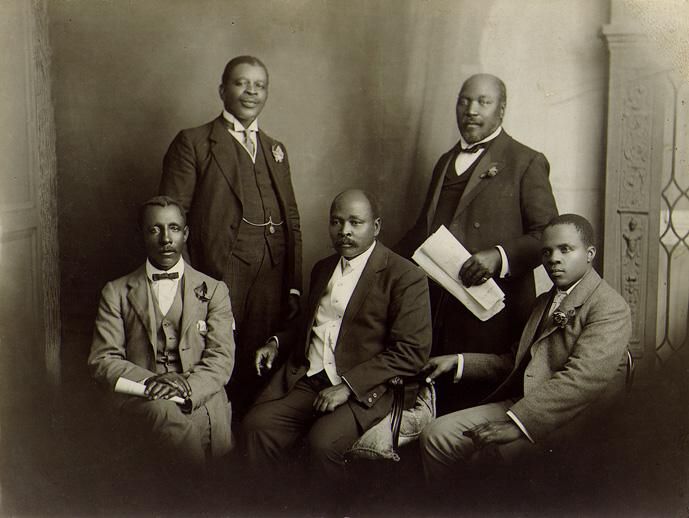
The 1914 South African Native National Congress delegation to Britain (Left to Right: Walter Rubusana, Thomas Mapikela, Saul Msane, John Dube and Sol Plaatjie.

The ANC sought inclusion, representation and political emancipation throughout South Africa’s tenure as a ‘Union’ and calling on the United Kingdom to assist in this quest became their mission. At this stage the ANC is no means ‘radicalised’ – its central tenants are for the recognition of an African national identity. In fact, like the Afrikaner Nationalists, they were ‘Conservatives’ on the political spectrum – focused on protecting a moral and social order they correctly perceived to be under attack. They are also nationalists in the pure sense of it, aspiring to a unified National identity for all Black South Africans (regardless of tribe).

At this stage the ANC is also relatively happy with the idea of Union’s independence with British dominion oversight and protection as it is far more disposed to working with them to gain political emancipation than any Afrikaner Republic would. The ‘Politics of Pain’ although beginning to germinate had not yet fully entered their ideology and rhetoric as a full blown foundation stone, the advent of Apartheid in 1948 would see to that.

The Politics of Pain
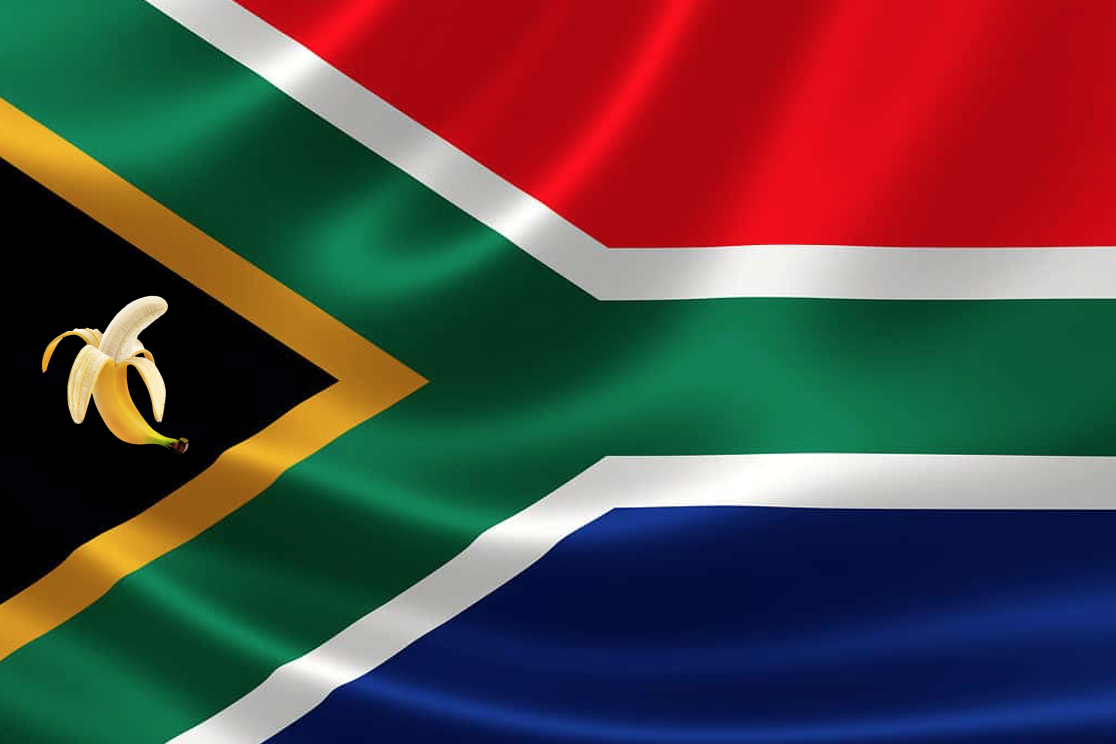
This ‘Republicanism’ and ‘anti-British’ desire the Afrikaner Nationalists had was underpinned by the belief that the British had done the Boer nation an injustice, not just in 1899, this started with the abolition of their slaves in 1834 when small groups decided to leave the Cape Colony and start forming their own Boer Republics along racist lines, with their basis solidly rooted in Afrikaner “Nationalism”.  This ‘injustice’ to their ‘freedoms’ begins the ‘politics of pain’ central to the concept of Nationalism – an injustice caused by the tyranny of another ‘nation’ on it, such that the survival of the repressed nation depends on it usurping its power over anything that would threaten it again and controlling its own destiny.

This led directly to the desire, and the eventual realisation of the Apartheid Republic. But in realising this Apartheid state in 1961, the ANC and all other opposition to it (including white) would need to be banned, murdered, imprisoned, gagged or exiled.

By 1960/1961 the ANC, a previous ‘conservative’ congress, was also forced into armed resistance and into coalition with the Pan African Congress (far left radicalised African Nationalists) and a tripartite alliance with ‘Labour’ – The Congress of South African Trade Unions (COSATU) and the Communist Party of South Africa (CPSA). With that came the journey of ANC from a ‘Conservative and Christian’ African Nationalist platform to ‘Sankarism’ and ‘African Socialism’ a heady concoction that at times even borders on National Socialism (similar to the old edicts of Afrikaner Christian Nationalism). This African Nationalist love affair with out-dated Communist and Socialist ideologies is something the ANC carries proudly on its sleeve and even through the world has moved on they continue to try and resurrect this socio-economic system – that it has been historically proven unworkable time and time gain and even seen by many ex-Communist countries as a crime against humanity is simply ignored. Yet on we go.

The politics of pain again, and it rears itself throughout the ‘Struggle’ years – injustice, pain and trauma caused to the Black population by the Apartheid state – and by the ‘white settlers’ not part of nation’s soil – foreigners, seeking to exploit their minerals and labour. To overcome this was the need to for a unified black consciousness who when it comes to power will seek to usurp its power over anything that would threaten the ‘Mzanzi’ Nation – a term now firmly entrenched in the South African national identity and lexicon. The penalty for ‘Apartheid’ – land and capital appropriation without compensation from the ‘white’ owners of it (in much the same way Nazi Germans appropriated through the same legislation – land and capital belonging to Jews). 

Nationalism in a nutshell

Let’s examine ‘Nationalism’ for a minute – and this is Nationalism in the context of Hegemonic Nationalism, as said – to be this sort of Nationalist you need an extreme sense of ‘identity’ formed by a ‘trauma’ and a political and economic ‘enemy’.  In the case of the Weimar Republic or German Reich (realm) 1871-1945 … before World War 2, the Nationalist Socialists (Nazi party) believing in a ‘Aryan’ (white) supremacy as to be a ‘proper German’ or sense of national identity, forms on the back of great injustice dealt to it by the ‘Allies’ (mainly France) during World War 1 – the war, its death and destruction and the indignation of the Treaty of Versailles leaves an enduring scar on the psyche on the German nation. So that’s the ‘Political’ enemy sorted, now for the economic -‘Jewish Monopoly Capital’ – the Jews profiteering from the misery of World War 1 and exploiting ordinary white Germans. The result – a German Reich run on extreme Nationalist lines with a very high incidence of state involvement and an Aryan nation’s survival guaranteed by drawing compensation from the state and its captured Jewish Capital, a race of peoples they were very happy to wipe off the face of the planet for their own ‘Aryan’ survival.

Afrikaner Nationalism – similar belief to National Socialism in Christian Nationalism i.e., a belief in an all-White Afrikaner hegemony to be a ‘proper Afrikaner’. Dealt a great injustice by the ‘British’ during Boer War 2 – the war, its death and destruction and indignation of the peace treaty leaves an enduring scar on the psyche on the Afrikaner nation. So that’s the ‘Political’ enemy sorted, now for the economic -‘British (and Jewish) Monopoly Capital’ the British profiteering from the misery of war stealing the Boer’s rightful claim to gold and diamonds and exploiting ordinary white Afrikaners. The result – a Afrikaner Republic run on extreme Nationalist lines with a very high incidence of state involvement to ensure the survival of the Afrikaner nation whilst drawing compensation from the state – and they went about it with all manner of cronyism setting up mineral and farm produce price fixing boards and creating monopolies and duopolies and state owned companies – even legislating ‘job reservation barriers’ and ‘colour bars’ ostensibly for White Afrikaner economic advancement only (the ‘poor white’ problem argued as a result of, you guessed it – the British and their Boer War 2 scorched earth policy).

African Nationalism, and here we look at African Nationalism as practiced under the principles of Sankarism and Pan-Africanism, which is central to the philosophy put forward by the African National Congress, its ‘RET’ Radical Economic Transformation faction and their related cousins – the Economic Freedom Fighters (the EFF). Again, a ‘Black’ Pan-African hegemony or identification with it. Dealt a great injustice by ‘Apartheid and Colonisation’ (the Europeans – read ‘whites’) and ‘the struggle’ – i.e. the war, its death and socio-economic destruction and indignation leaves an enduring scar on the psyche on the Black African nation. So that’s the ‘Political’ enemy, now for the economic -‘White Monopoly Capital’ the ‘whites’ profiteering from the capital and minerals rightfully belonging to the Africans and exploiting ‘Black’ labour to do it. The result – a ‘Banana’ Republic run on extreme Nationalist lines to ensure the liberty of the ‘Black’ nation with a very high incidence toward state involvement and control (nationalisation) whilst also drawing compensation from both the state and private concerns for the past economic “hobbling” of a enslaved and exploited black nation (pitched as ‘the previously disenfranchised’).
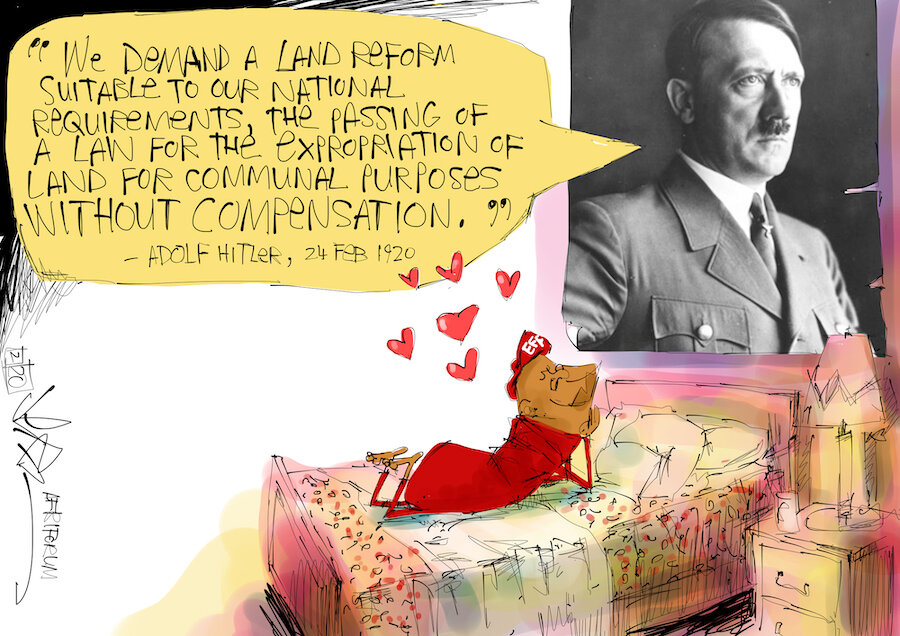
Jerm just nails this historic twist in his political cartoon.

In Conclusion

Nationalism, whether practiced by African Nationalists or Afrikaner Nationalists are two different peas in the same pod. The current ‘Banana’ Republic is a direct consequence of the Apartheid Republic which came before it. The Apartheid Republic was a consequence of Union, the Union was a consequence of the conflict between Boer Republicanism and British Imperialism.

The ‘Keep South Africa White” Republic pipe-dream of Dr. H.F. Verwoerd and his cabal in 1960 was an abhorrent and short lived testament to Boer independence with disastrous consequences for just about everyone – and Boer Generals like Smuts and Botha recognised the danger of hanging onto this idea from the get-go, General Jan Smuts even going so far as to say of National Party’s concept of Apartheid –

“The idea that the natives must all be removed and confined in their own kraals is in my opinion the greatest nonsense I have ever heard.”

This love affair with Nationalism is ultimately reflected in one of the greatest ironies, but not surprising if we understand Nationalism, when the Afrikaner National Party (NP – repositioned as the ‘New’ NP after 1997) folded up shop on the 5th August 2005 and all their members “walked the floor” to join their African nationalist cousins in the African National Congress (ANC) in coalition and membership. Proof positive of the ideological conjugal bed.

The cyclical nature of history has always shown that minorities cannot hold control over majorities indefinitely – and the two always roll over on one another, and where consensus elects a fiercely Nationalistic government, there is a tendency for that government to gravitate to Kleptocracy – and the Afrikaner Nationalists did it, so too now the African Nationalists – a rule by a elitist grouping (a real minority), consolidating absolute power (which corrupts absolutely) and helping itself to the state’s wealth. History fortunately shows us the majority will eventually see them out again (and the sooner the better for the ‘democratic’ South African Republic really).
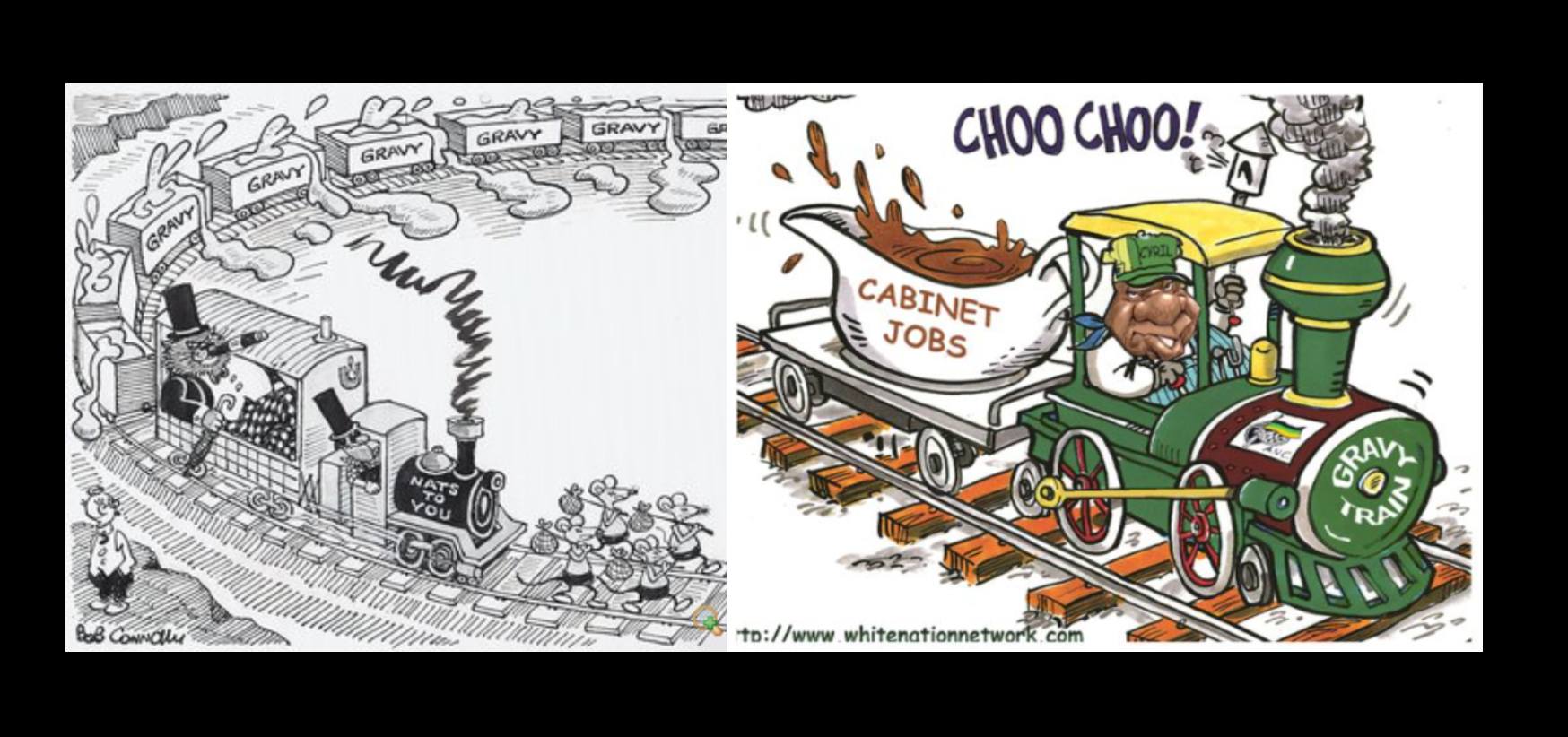
On the left is a political cartoon from the 1950’s by Bob Connolly – it’s part of a series called “Fat Nat” and targets the National Party’s appetite for Kleptocracy – as does the political cartoon on the right lampooning President Ramaphosa and the ANC.

This also an historic truism, in the great fight of ‘right’ against ‘wrong’ world over – history has always sided with those who fight for human suffrage and emancipation as been on the side of the morally ‘good’ fight. The defenders of regimes which oppress and deny human suffrage and emancipation are always deemed as been on the side of the morally ‘bad’ fight. The net result has seen regimes like Verwoerd’s Afrikaner Republic come and go, often discarded to the scrapheap of history and irreconcilable within decades, whereas Unions which have individual liberties enshrined in their constitutions tend to last (as bumpy as the road gets at times) – the USA’s Bill of Rights, the Swiss Federal Charter and Bills of Rights and the British Magna Carta and all its subsequent Charters and legal interpretations have generally ensured the survival of these Unions over centuries.

Now, what about ‘Unionism’ were Smuts, Botha, Merriman and their ilk on the right track? Well, consider this, the Southern African Development Community (SADC) comprises all of Smuts’ 3rd Phase ‘Greater South Africa’ countries: Angola, Botswana, Eswatini, Lesotho, Malawi, Mozambique, Namibia, South Africa, Zambia and Zimbabwe. And it’s even bigger now as this political, security and economic alliance now also includes the Comoros, Democratic Republic of Congo, Madagascar, Mauritius, Seychelles and Tanzania. Also, strangely enough the ideals of Pan-Africanism as aspired to by the ANC and EFF (and obviously the Pan Africanist Congress) speaks very strongly to a unified African construct.

The mission of SADC is similar to that of the Greater South African Union, that is to promote sustainable and co-dependent and equitable economic growth and socio-economic development throughout the region. The obvious difference, Smuts saw ‘Pretoria’ as the capital and the regional economic driver as Johannesburg, with Federated control from Pretoria (like Washington D.C. controls the USA’s ‘Union’ and New York its business hub) … and, here’s the problem child – only with ‘white civilisation’ guiding progress.

This ‘white stewardship’ of the Victorian period clearly would not work out after World War 2 and with historic hindsight would never have been sustainable going forward, however Jan Smuts played ‘the long game’ – by January 1942, even Jan Smuts had seen the end of ‘white Imperialism’ when he admitted at an Institution of Race Relations conference that “segregation has fallen on evil days” and by the time Smuts drafted and ratified the preamble of another “Union” the United Nations (UN) in October 1945 he was all about human rights and suffrage, subscribing to reaffirming “faith in fundamental human rights, in the dignity and worth of the human person, in the equal rights of men and women and of nations large and small.” (preamble to the UN as drafted by Smuts).

One has to wonder, had Jan Smuts and the Greater South African Union been given time and space, and had the Afrikaner nationalist ideals of a White’s Only Republic not resurfaced as a reality, Apartheid not implemented with such Nationalist vigour, and a less radicalised view of Pan-Africanism in Southern Africa not come around because of Apartheid and Colonial whites clutching onto power once their mandates were well past their ‘sell-by’ dates – whether we would have been on a substantively different trajectory than what we have today … I wonder.


Written and Researched by Peter Dickens
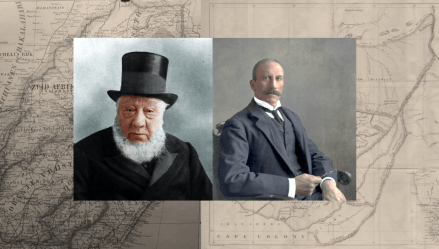
Stealing Republics, gold, diamonds and other myths!

So here’s an old chestnut that keeps coming up on South African history social forums and it’s this:

“The British, using war (The South African war 1899-1902 aka The Boer War), stole two independent Boer Republics – the ZAR and the OFS – from the Boers.” 

Then they stole the gold and the diamonds from the Boers – Britain the bully, the Boers the victims. It’s wonderfully simple – see?   

Small problem with this statement – its utter bunk, compete rubbish, a historic mistruth and this is where understanding history in South Africa gets wonderfully fascinating.

Not surprising really, many in South Africa are still the product of a ‘Christian Nationalism’ inspired education. It’s not their fault, it’s just that propaganda has been drilled into them, so much so they believe it’s a fact .. and that’s why ‘debunking’ these myths and popping up with ‘inconvenient truths’ is both fun and educational – you learn something new.

So, lets understand why this statement is utter rubbish – complete bunk, and I’m going to start with my statement;

“The British could not steal what was already legally theirs to take!” 

WHAT! … you’re smoking your socks right?

Afraid not, .. here’s a truism and it’s a fact – at the start of the South African War (1899-1902) aka The Boer War – the Boer Republics of the ZAR and the OFS were NOT ‘Independent’ Republics at all, in fact they were both British vassal states, each known as a British ‘Suzerainty’ – and by law (the two Republic’s laws themselves and those of Britain), Britain had every right to meddle in the affairs of these two Republics. The hard truth is that these two Republics only existed at the behest of the British and were both accountable to mutually agreed British oversight.  If you think I’m talking bunk – google it now, type in (Republic name) and the word ‘Suzerainty’.

What – NOT “independent” Republics at all! What the hell is a Suzerainty anyway, and how did that come about – those devilish British stealing again, well, erm – no, they did not.  So, here’s what actually happened (and if you’re a romantic fan of fierce independent, pioneering Boere forging their own independence – now is the time to pour yourself a stiff Klippies and Coke).

The Orange Free State 

Let’s start with the Orange Free state. Now, this Republic had never in its entire history seen ‘full independence’ not even from the get go, it was and remained a British vassal state from beginning to end. In fact as a governed territory it was established as British colony first, even the capital city – Bloemfontein, was established by the British. It only became a Boer Republic when the British peaceably handed the territory to the Boers to administrate as a Republic for practical reasons – on the PROVISO that it remained a British Tributary State or British Suzerainty.

Huh .. WTF .. etc. Let me explain. Prior to the ‘Great Trek’ in September 1835, ‘Trek Boers’ from the Cape Colony (nomadic farmers) had already started to venture across the Orange River border. In the territory between Orange and Vaal rivers, these early Trek Boers were then joined by small groups of Voortrekkers in 1835/6 and they had two ways of settling down to farm land – negotiate it with the local inhabitants (and there were many inhabitants – the idea that the land was ‘empty’ is bunk) or, as was sometimes the case, take the land by gunpoint.  

So, very understandably these early trekkers almost immediately came into conflict with the local inhabitants – notably the Basuto and Griquas. This almost immediately came back to the British to resolve, as these people were after all coming from their colony. So, as a first measure to resolve any marauding on behalf of their “subjects” now Trekking outside their border – the British in 1836 issued the ‘Cape of Good Hope Punishment Act’, which ensured that any ‘Trek Boer’ or ‘Voortrekker’ or any other Cape Colony subject now outside the Cape Colony’s border for that matter was liable for all crimes committed south of the 25-degree latitude (which falls just below the old Warmbaths in the old Northern Transvaal). 

So, inconvenient truth – number 1, the ‘Trekkers’ (Voortrekker and Trek Boers) were never really ‘independent’ of British law at any time in any event. Bet you didn’t learn that in your school history book.

Conflict however persisted with Trekkers and local black inhabitants in ‘Transorangia’ as the territory was known then, and not just between white and black – the black tribes in the area were also in conflict with one another – and all this conflict was over land/territory. So, the British on the 8th December 1845 appointed Captain William Sutton as “British Resident” among the tribes living beyond the Cape Colony Frontier (black and white) to resolve all the conflicts. He was succeeded in 1846 Captain Henry Douglas Warden who bought the farm ‘Bloemfontein’ from a Griqua farmer and established– you guessed it – the capital. 

On the 3rd February 1848, to bring governance to the region, Sir Harry Smith declared the area of ‘Transorangia’ i.e. the area between the Orange and Vaal Rivers a ‘British Sovereignty’ (a colony) calling it the Orange River Sovereignty est. 1848 and went out dividing it up into districts for the Boere and the Griqua and land reservations for the Mantatee tribe, the Coranna (Koranna) tribe, the Bataung Tribe, Barolong Tribe, a tribe referred to as the Bastards tribe and a rather big swathe of territory to the Bassutos tribe. This was all overseen by a British High Court and British Governor based in Bloemfontein. The ‘Free State’ as we know it now was first a British colony and not a Boer Republic- inconvenient truth – number 2.

If you look at the map of the Orange River Sovereignty in 1850, you’ll see how these tribal lands and districts were divided – note, about a third of the landmass of what would become The Orange Free State is tribal territory – so much for the old Broederbond inspired education who said it was ‘empty’ for the Boere taking it, that’s the inconvenient truth – number 3.

Image: Map of the Orange River Sovereignty

However, all was not well as a small grouping of Voortrekkers under the leadership of Andries Pretorius became aggrieved at land concessions made by the British to the Griqua leaders and Basotho leaders. He raised a Commando, declared a Republic around Winburg and a skirmish was fought on Boomplaats farm between a British column raised to deal with the insurrection and Pretorius’ commando on the 29th August 1848. The Boer Commando lost the battle and Pretorius fled across the Vaal river into safety. The “battle” would be celebrated as a significant encounter, proof positive of the bad blood between Brit and Boer by Boer romantics in future years, to the British it was nothing but a small insurrection and an isolated footnote of history.

As to the claim of land north of the Vaal River for the Voortrekkers (what was to become the Transvaal), a convention was held called the Sand River Convention on the 17th January 1852 between Boer and Brit – and the British basically agreed that they had no interest in this territory and the Boere could declare it a independent country of their own, on the proviso (written into the agreement) that the Boere were not to practice slavery. Another inconvenient truth to those who say the Voortrekkers voluntarily left the idea of slavery behind them and did not intend to practice it – they did not practice it as they were warned by Britain not to, and then they agreed not to – inconvenient truth number 4.

Later in the year of 1852, with slavery already outlawed by the British in their Orange River Sovereignty. The British found that the remoteness, resources needed and distance of their Orange River Sovereignty difficult to manage and would have to abandon it – which would have happened had it not been for an erstwhile meeting to resolve the matter in Bloemfontein in June 1852 when all enfranchised voters in the territory – mainly the Boere and some Brits – all had a vote and declared in favour of the retention of British rule of the territory (so much for Andries Pretorius and his commando).

However, this did not really deter the British government’s resolve in the UK to finding a solution on the management of their colony in such a remote and difficult place and as a ‘minority’ people there – something had to give. So, they held another convention with the Boers called the Orange River Convention, at the Convention it was mutually agreed that the Boers take over the Colony, declare the Orange Free State as a Republic and be recognised as a self-governing state – But, and this is a BIG but – only on the PROVISO that it became a British Suzerainty – a tributary state with British oversight.

The Republic of the Orange Free State was declared (without a shot been fired mind) on the 23 February 1854, however it remained a British Suzerainty from that day forward, up to and including the South African War (1899-1902) a tad less than half a decade later – and never in that time was it ‘fully’ independent, inconvenient truth – number 5.

As to the ‘stealing of diamonds’ – the Diamond Rush in Kimberley took place in 1871 – the ‘rush’ proper – 23 years AFTER the British had already declared the region under their control and then under their Suzerainty, Kimberley did not even exist as town when the British first took control of the territory – not a single diamond had yet to be found. In any event – in 1871 a diamond rush happened and  EVERYONE – the Cape Colony, the ZAR, Griqualand and the OFS all claimed the diamond fields as theirs – the matter was put to arbitration and the Griquas won it (not the Boere and not the Brits), the Griquas in turn declared their territory a British Protectorate (fearing Boer aggression) and they later resolved that their territory be absorbed into the Cape Colony – and, no – the British did not ‘invade’ an ‘independent’ Boer republic to steal diamonds, inconvenient truth – number 6.

The Zuid Afrikaansche Republiek (ZAR)

Now, let’s turn to the Transvaal, as here the British conceded, the Voortrekkers could form a full, self-governing and whole-fully independent Republic – a Republic proper – free of British meddling. Preceding the Sand River convention – all the voortekker groupings who had settled the area of the Transvaal had established no fewer than 6 separate ‘Republics’ – so at the Sand River convention the Zuid Afrikaansche Republiek (South African Republic) or ZAR came into existence – officially on 17 January 1852 as an agreement to merge all these small republican declarations and make a proper state of them.

If you’re the Boer romantic still holding onto the idea that the Boers were an independent nation with a long history of self-governance – now is the time to refill that branders and coke.

Because, and this is the BIG kicker, the ZAR as a fully independent Republic didn’t last very long, a mere 25 years only. What the heck – the Boers only really enjoyed 25 years of full freedom in one Boer Republic only – that’s it? What the flip, what happened? 

The British up to their devilish ways again? Well, here’s a great Afrikaans term “Ja/Nee” – yes and no, but to be fair to the British, this one is a Boer ‘own goal’.

The ZAR had a rocky start from the get go – the Voortrekkers were in conflict with just about every tribe initially occupying large parts of the ZAR territory (again, the territory was not ‘empty’ as the Broederbond would have you believe) – conflicts with indigenous tribes starting with all their small isolated republics and building up to their big singular republic. 

The ZAR, far from being a pastoral little settlement just wanting to ‘farm’ in peace was a highly aggressive and expansionist state – a ‘coloniser’ in effect, to exist in a hostile environment they also had to either negotiate land or shoot their way in, and they did both – on conflict there is a reason Botswana exists as a state today (the Tswana asking Britain for ‘Protection’ against Boer expansion and aggression). Also, the ZAR was much bigger than you might imagine, its borders extended well into ‘Zululand’ as we know it now (massive swaths of ‘Kwa-Zulu Natal’ were part of the ZAR)– and herein lay a major problem for the ZAR .. the Zulu.

Map of the ZAR in 1899 after the Republic annexed Swaziland – note the borders, especially in ‘Natal’ – achingly close to St Lucia and access to the ocean.

Aggressive expansion by the ZAR had also stirred up the Pedi, led by Sekhukune I and resulted in a war in 1876 which is recorded as a Boer defeat.  Bolstered and confident, the very powerful Zulu kingdom was now also making some very threatening claims on ZAR territory. Added to this, the ZAR government was also struggling financially (remember that gold had not yet been discovered in any significant way), and it is recorded that the ZAR government faced bankruptcy – so they could not afford any more wars or defensive actions – literally. Feeling their small and vulnerable communities were about to be wiped out by the Zulu and unable to raise enough taxes – the ZAR government did the unthinkable and elected to dissolve their Republic – voluntarily and then they turned to the British for protection against the aggrieved and increasingly violent African tribes – yup, the British.

The various indigenous tribes inside and bordering the ZAR felt they had a case too, and they too called on the British to help them from what they saw as ZAR aggression, land grabbing and subjection. They too also invited the British to protect them. 

All good then, invited by EVERYONE the British peaceably moved into the ZAR on the 12th April 1877 to settle the conflicts and with no resistance from the Boers whatsoever, not a shot being fired, took down the ZAR ‘Vier-Kleur’ and hoisted the Union Flag (Jack) over Pretoria and erected a British government there.  In doing so the ex-Boer Republic also handed over their finances, tax from now out, of both Africans and Boers alike would now be collected by the British. With that the British now declared the Transvaal officially a British Colony – The British Colony of the Transvaal, established 1877.

So, here’s another staggering inconvenient truth – number 7, the ZAR became ‘British’ as early as 1877 – having existed for only 25 years. The British didn’t ‘steal’ it, nor did they ‘invade’ it – no they marched peacefully into the ZAR at the invitation of the Boers and strange as it may seem – they were welcomed as saviours by some Boers – fact. 

Now, some modern day Boer Romantics point to being ‘duped’ by deceitful and greedy British officials or state that President Thomas Burgers was nothing but a madman, senile or drunk – when he agreed to the British taking over his Republic – but that’s all debatable, I like to look at the facts and what people at the time said  – Burgers in fact blamed the ZAR ‘Raad’- Kruger and his cabal – and it really cuts to the point and the issues of the day – he said;

“I would rather be a policeman under a strong government (the British) than a President of such a State (the ZAR). It is you—you members of the Raad and the Boers—who have ruined the country, who have sold your independence for a drink. You have ill-treated the natives, you have shot them down, you have sold them into slavery, and now you have to pay the penalty.”

Incidentally (not to get too wide into this subject now as nobody comes out smelling of roses) – but the “slavery” bit Burgers refers to is the inboekselings system widely used by the Boers in the ZAR at the time – an old VOC/Dutch system of ‘indentured slavery’ – primarily of Black women and children captured and indentured to their Boer masters till 25 years of age, it also formed a lucrative trade for struggling farmers on the frontiers of the ZAR known as ‘Black Gold’ hence Burgers’ term “sold them” (and if you think I’m speaking rubbish – look it up).

Now, was everyone happy? Well, no, as you can imagine there was a bun fight amongst the Boers – some not happy with becoming British and others quite happy to crack on with the British – after all the Zulu threat had now abated – in fact the British had gone one step further and literally crushed the Zulu threat in the 1879 Anglo-Zulu War (ironically the Zulu thought the British column moving up was intended to deal with issues in their Transvaal colony, and were pretty surprised when they came under attack).

With the British crushing the Zulu threat, some Boers were pretty happy and felt they could now get on and farm safely. However, on the other hand, with Zulu threat now gone completely, it did not take long before the British policies, taxes and concessions for Black African land rights and their policies of taxation of Boer land to become an issue to some other sectors of the resident Boer population. 

It all came to a head with the Boers when the British confiscated one Boer’s wagon in lieu of his backdated tax, which he refused to pay. This brought the British into direct conflict with a Boer Commando drafted to help the farmer .. the incident exploded, 10,000 Boers led by Paul Kruger demanding the return of their old Republic and removal of the British – then they attacked the British Garrisons around Pretoria, starting on the 20 December 1880 at Bronkhorstspruit (there were no British garrisons at Johannesburg – it didn’t exist).  

This then kicked off the ‘Transvaal War’ in November 1880 (to Afrikaner historians it’s the 1st Anglo-Boer War and to the rest its simply known as ‘The Transvaal War’ – I’ll call it Boer War 1).

The long and short of the Transvaal War – it ended rather disingenuously. The British sighted a poor battlefield on top of Majuba mountain on which to hold their ‘waterloo’ and got their arses kicked (there is literally no other way to put it) on the 27 February 1881 and routed from the ZAR.

Image: Painting of Lance Corporal Joseph John Farmer, awarded the Victoria Cross for running the first aid station on the top of Majuba Hill during the battle.  Farmer raised a white cloth over the wounded to indicate their presence to the Boers.  His arm was shot through.  He raised another cloth with his other arm which was also hit.  

The Boers walked away victorious having seen the back of the ‘Rooinekke’ (red-necks) – done and dusted with British rule – back to an Independent Republic and Koeksusters and coffee (at least that’s how it was pitched). But, the truth of the matter, it was far from ‘done and dusted’ – and an ‘independent’ Republic did not materialise, as much as some would like to believe that it did.

The British, deeply aggrieved, decided against sending in a massive expeditionary force and flattening the insurrection in their colony, they sued for peace instead – they understood (as they had in the Orange River Sovereignty) that this was a difficult region, tough customers and they were at the end of the day the minority in it. So, they agreed to give the administration of it back to the Boers, to re-declare their Republic – and here’s the kicker bit – on the PROVISO that it be a British (and here’s the word again) – ‘Suzerainty’. In other words, a British tributary state or British vassal state, with no real ‘recognition’ internationally and one in which they were legally free to ‘meddle’ in at any point in time.

The Boers, over a barrel really, and happy to get back a semblance of a Republic – agreed. Two Conventions – the Pretoria convention, held on 3 August 1881 established the ZAR as a British Suzerainty and at a later convention, the London Convention, signed on 27 February 1884, in which some concessions were given to Kruger and his party as to borders, the word Suzerainty was also dropped from the pre-amble, but the the SAR still had to get permission from the British government for any treaty entered into with any other country other than the Orange Free State – Britain reserved the right to oversight and could still ‘meddle’ in the state’s affairs – a British “client” state if you will – in either event, the ZAR remained a state with mutually agreed British oversight – all the way from 1881 to ‘The South African War (1899-1902)’ a.k.a Boer War 2. It was theirs to legally intervene, a truly ‘free’ and ‘fully independent’ Republic it was not, inconvenient truth – number 8.

As to gold, the Johannesburg gold rush took place in earnest on the reef from July 1886  – 9 years AFTER the British had established interests and control of the ZAR in 1877, in fact when the ZAR became a British colony for the first time, Johannesburg had not even been established – it didn’t exist. So, no – the British did not ‘invade’ the ZAR to steal the gold, their interests were there long before significant deposits of gold were found on the Witwatersrand  – inconvenient truth – number 9.

Understanding the true causes of the South African War 1899-1902

There’s usually lively debate on Boer war forums as to the casus belli (the case for war) of the ‘South African War’ (1899-1902) – incorrectly called ‘The Boer War’.- but for clarity I’ll call it Boer War 2. They look to the greed of British Imperialism or the fact that the Boers declared war on the British in the official declaration – not the other way round .. but that would be to COMPLETELY ignore the three casus belli that Paul Kruger upfront put on the table as Boer ZAR demands at Bloemfontein when ‘negotiations’ kicked off with Alfred Milner in 1899 .. the ZAR’s status as to British oversights specified by the London Convention (which Kruger wanted removed completely) and the qualification time for ZAR citizenship of the miners on the reef (a human rights issue – nothing to do with gold per se) – which Kruger wanted extended. Then there was also the issue of a seaport, and Kruger wanted the British to concede parts of ‘Zululand’ to allow an ‘Independent’ ZAR to expand its borders and secure a vital seaport (key to maintaining future ‘independence’).

Images – President Paul Kruger (left) and Alfred Milner (right) – colourised by Jennifer Bosch.

The British would agree to none of the above, Milner was dogmatic and unmoving – their sticking point, the Franchise – they wanted 5 years qualification – and things simply went south from there – war was on the cards – again! So, let’s understand the ‘belligerence’ of the British – what’s driving it – and it boils down to this niggly issue of both the ZAR and the OFS being British client states. If you understand that, the minds of Rhodes, Milner, Kruger and even Smuts become increasingly clear – so to the casus belli, and here’s how:

Jan Smuts would very famously state that the Jameson Raid 1895 was the ‘real’ start of the Boer War in 1899 (not the Boer invasions of the British colonies), the British had betrayed the Boers and an uneasy peace existed after it – this was the Boer interpretation of events and even Smuts was sticking to it. 

The British on the other hand, viewed the start of the Boer War in 1899 somewhat differently, they viewed the Battle of Majuba back in 1881 as the ‘real’ start of the Boer War in 1899, the ‘peace’ struck with the ZAR was a ‘dishonourable’ one – the Boers had betrayed the British and retribution was coming – this was the British interpretation of events, and commentators at the time like Winston Churchill were sticking to it. 

In truth, Boer War 2 is to Boer War 1, what World War 2 is to World War 1 – a progressive extension of the preceding issues which remained unresolved (and, as inconvenient as this is – these issues were not about stealing gold or diamonds). It would be interesting to see this debate in 1941 when Churchill and Smuts became friends, but I’m sure neither changed their minds – and as to the British position and what started the war, one can clearly see it in their wartime rally call in 1899 – which was “Avenge Majuba” not “let’s go get their gold”- inconvenient truth – number 11.

Image – Postcard of the time calling for the avenge of Majuba during Boer War 2 (1899-1902) note the phrase “wiping something off the slate” – old score.

So back to Cecil Rhodes and his pals, in their minds their actions in implementing the Jameson Raid in 1895 were perfectly justified – sorting out a British Suzerainty’s governance of British citizens on the reef – so confident was Rhodes and Starr Jameson in their right to meddle in the ZAR that they did not bother to get official British government backing in Westminster for the raid (in fact in their minds it was not a raid at all – but a ‘rescue mission’). 

That the raid failed so dismally was an embarrassment to Rhodes, so much so it forced his resignation. But it did not stop Britain from sending their next ‘man’ in to replace Rhodes and ‘sort out’ their troublesome vassal state which was the ZAR – and that was Alfred Milner. Milner, very aware of the legal status of both the OFS and the ZAR as British Suzerainty States was a blunt, unabashed British Imperialist. Kruger, a Boer Imperialist (there is no hiding that fact either) was never going to get Britain to renege on its rights to the ZAR (or the OFS for that matter).

In Milner’s mind the OFS and ZAR as British vassal states had no sway whatsoever, nor did they have the right to claim ‘full’ independence – in his rather dogmatic and arrogant Victorian mind they were merely being ‘troublesome’ children of the bigger British family. Milner made it clear that he wanted ‘independent’ and ‘good civil governance’ of a ‘federated’ composition of states stretching from from the Cape to the Zambezi – all good – but here’s the kicker – ONLY under the ‘British Flag’ – he held that singular view (read agenda) from the day he landed in South Africa in 1897 to the day he left in 1905, and he made it clear it was not for changing – Kruger stood no chance in his demands to drop the ZAR’s Suzerainty status completely or for that matter his demand to gain more territory from the British for a fully ‘independent’ ZAR with a seaport.

Milner was confident enough, the British had to intervene directly with Paul Kruger on his dealings with both Jameson raiders and the round-up and prosecution of the ‘trouble-makers’ in Johannesburg (as Kruger referred them) – to this end the Jameson raiders would not be tried in South Africa but in England. Due to on-going disagreements like the ‘Drifts Crisis’ on ports of entry into the ZAR in 1895 – which kicked off the Jameson Raid, Joseph Chamberlain eventually had to remind President Kruger directly that the ZAR was still a British Suzerainty State in 1897 (incidentally the same year Milner arrived in the Cape Colony).

Image: The officers of the Jameson Raid heading to England for trail in 1896, Starr Jameson is standing in the centre – he got 15 months in prison without hard labour for contravening the Foreign Enlistment Act – of which he served 4 months only in Holloway Gaol for first-class misdemeanants.

This ‘independent’ and ‘self-governing’ unitary state from the Cape to the Zambezi – part of the British family of Nations – was so important to the British to resolve its ‘Southern Africa’ problems that it is the foundation of the Peace Treaty of Vereeniging in May 1902 to end the 1899-1902 Boer War – the guarantee of future ‘independence’ and ‘self-governance’ for the Boers, but as a more robust and formal ‘Union’ of states under the British flag rather than going back to a combination of two British colonies and two British Suzerainty states – which was the case at the start of the war. Here’s the kicker – and the inconvenient truth – number 10, ALL the Boer Generals signed up for it – not just Smuts and Botha. 

It was the ONLY way forward for peace and regional development. Fully ‘Independent’ Boer Republics were an impossibility, a pipe dream – they had never really materialised in the past and were not going to materialise in the future. The ‘Keep South Africa White” Republic pipe-dream of Dr. H.F. Verwoerd and his cabal in 1960 was an abhorrent and short lived testament to Boer independence with disastrous consequences for just about everyone – and Boer Generals like Smuts and Botha recognised the danger of hanging onto this idea from the get-go.

Huh – smoking socks again – of course the Boers could have their Republics back comes the chorus from the Boer romantics even to this day – fully independent and feasible, they would last a thousand years, the Boers just wanted to farm and be left alone, see? Well, no – a future ‘independent’ ZAR was a complete pipe-dream, even in 1899 – even if the war did NOT take place the ZAR – ‘independent’ or otherwise – would not have lasted, nor was it all about farming, it would have possibly have made it till about 1910 MAX and no further, and here’s why.

Franchise

So, we to come to the BIG sticking point between Boer and Brit – the issue of ‘Franchise’ – the vote. An issue of legality and morality for British Imperialists, an issue of power for the Boer Imperialists.  The ‘official’ and most significant casus belli of the Boer War in 1899 (not ‘Ouma’s se stories about stealing gold). The long and short here – the British – Chamberlain, Rhodes, Milner etc. felt legally obligated, politically empowered and morally compelled to ‘meddle’ in their Suzerainty and sort this issue out.

As to ‘peaceful’ pastoral farming – Paul Kruger in his memoirs would rue the discovery of Gold as the downfall of the Boers, but in reality, the discovery of gold would aid the ZAR substantially. For starters, the ‘poor’ pastoral backwater was no more – the bankruptcy prior to 1877 would be well and truly resolved by 1886 – a mere 9 years later. The ZAR was rich, tax on gold had filled the state coffers to bursting – it enabled them to finance and build security forces with state-of-the-art German (and British) weaponry. The ‘poor white’ problem of failed farmers living as bywooners had been resolved as they became urbanised and prosperous along with struggling famers who opted to become miners, manufactures, entrepreneurs etc. and a more prosperous and burgeoning urban Afrikaner middle class took shape in the ZAR. The strengthened and emboldened ‘Commandos’ were able to annex more territory – mainly Swaziland and bits of Natal and marginalise the ‘native’ threat completely. The state started to take emboldened steps on imports, ports of entry and monopolising the supply of things like dynamite. Its role on the international stage changed with its influence on the gold standard and currencies. The ZAR was ‘on the up’ and expanding, it had become a ‘Playa’ and Kruger wanted it recognised as such.

Big problem though – the majority of the miners and entrepreneurs entering the ZAR were of British extraction. They had now built a complete city for themselves in the middle of the ZAR – bigger than the Capital, Pretoria, heavily invested in manufacturing facilities, mining, housing, infrastructure and railways stretching right across the ZAR from east to west – a tented group of migrant pan miners to be over-looked they were not – they were not going anywhere, their lives and livelihood was now firmly in the ZAR and they wanted a say. The attitude of the ZAR was to treat them as ‘uitlanders’ and suppress their political aspirations as long as possible – secondary citizens with a separate ‘raad’ whilst the Boers remained in full control. This kicked off ‘revolts’, violent protests, flag burning incidents and the violent suppression of miners including maiming and murder by the notorious and hated ZAR police known as the ZARP.

These ‘uitlanders’ were also highly political and had started to unionise and form political interest groups – and fast becoming a pain in the arse for both the British establishment and the Boers. By the 28 March 1899, a petition to Queen Victoria contained 21,684 ‘uitlander’s’ signatures demanding Britain intervene in the ZAR as Kruger’s governance had become “well-nigh intolerable.”

Image: Political Cartoon of the time – note the caption.

Now think about that – 21,500 people not happy with Kruger, not just ‘uitlanders’ to be ignored – to a man, these people qualified a future voting bloc in the ZAR, and those sorts of numbers are only the ‘very angry’ ones prepared to make a mark. Really think about it, that’s twice the number of Boers they managed to muster for Boer War 1. If given a full franchise Kruger’s controlling party would be out of power – and Kruger knew it. The miners would rule the ZAR, demographically, economically, and politically the landscape of the ZAR had changed – forever. So, what did he do, he forestalled the inevitable change, clung onto power and tied to kick the franchise question into the long grass – giving his regime 14 more years (before they could all qualify to vote).

The British, and the miners would have none of it, they wanted political rights as an unflinching human right. So, they set the qualification period at 5 years. This would mean that by 1904 – in all likelihood the ZAR with Kruger and his party at the helm would cease to exist. Kruger was however pragmatic enough to know that his position was unsustainable and was prepared to, and did substantially compromise on this point, dropping the qualification to 7 years with a raft of “provisions” and eventually even prepared to meet the British demand of 5 to avoid war – but only on the proviso that Britain relinquish all its claims to the ZAR’s Suzerainty. Whichever way it goes, it would mean – that by 1907 he would be out of power, the ZAR as he knew it would be no more – sheer ‘democracy’ would have seen to that.

The Imperialists

So why Boer War 2 – democracy would have won a painless victory? Why the massive death and destruction brought onto the Boers by the British. Now that’s a good question – why? In a modern context it’s kind of like asking why it was necessary to nuke Japan in 1945, the war was won, Japan was already on its knees – why bring in the wrath of annihilation? 

It boils down to the Imperial mind – Boer and Brit.

To Milner the risk of a prolonged conflict in the ZAR would have just gone on too long with too much drawn out anguish, he feared Boer Imperialists and the possibility of Boer Afrikaners to reconcile with the Cape Afrikaners and take over the whole shooting match for themselves – merely extending the issues of the day – franchise, native rights, territorial conflicts etc. into eternity, so he wanted the whole region in unity under British oversight sooner rather than later. The result is destruction on an epic scale, sheer carnage. Hence the reason Jan Smuts wrote to him on his departure from South Africa in 1905 and said he was hated, and unless he took a reconciliatory approach in future he was not welcome back.

Now, at this point there is bound to be someone whose going to venture out and say “Kak! Man!” the Boers were not ‘Imperialists’ and ‘aggressive’ territory hunters – that’s the British! The Boers just want to Boer and be left alone. Manne – it’s time for that branders re-fill I’m afraid – if you want to understand Boer Imperialism and British Imperialism – know this, both sides were into territorial expansion and control, both sides wanted control of the whole of Southern Africa – the point of departure, the British wanted it under their influence, and the Boers wanted it under theirs. To see just how ‘Big thinking’ Boer Imperialists and British Imperialists were, one only has to look at what they decide to do after Boer War 2 aided with a little ‘helpmekaar’.

All the protagonists put aside their vast differences aside and got together to nut out a solution in 1908 and 1909, known as ‘The Closer Union Convention’ it was the CODESA of its day, a ‘whose who’ of modern Southern African history .., the old ‘Boer’ Generals – de la Rey, Hertzog, Smuts, Botha, de Wet and Burger even sucked it up long enough to sit opposite the likes of Starr Jameson and be nice. Have a look at this photo of it, it’s a stella cast of Imperialists – the heads and ministers of every British colony and ex-Republic in Southern Africa.  

Front row (left to right): Hon. J.W. Saner, (Commissioner for Public Works); Hon. J.X. Merriman, (Prime Minister, Cape Colony): Hon. M.T. Steyn (Vice-President of Convention); Hon. A. Fischer, (Prime Minister, Orange River Colony), Lord J.H. de Villiers (President of the Convention), Right Hon. General Louis Botha, (Prime Minister, Transvaal); Right Hon. F.R. Moor, (Prime Minister, Natal), Sir W.H. Milton (Administrator of Southern Rhodesia), Sir J.P. Fitzpatrick. 

Second row: Hon. E.H. Walton; Hon. Colonel E.M. Greene (Minister of Railways and Harbours); Mr H.C. van de Heerden; Dr J.H.M. Beck, Mr G.H. Maasdorp, Mr H.L. Lindsay; Hon. F.S. Malan (Secretary for Agriculture); General S.W. Burger; Hon. Dr T.W. Smartt; Hon. General C.R. de Wet (Minister of Agriculture); Right Hon Dr L.S. Jameson; Hon. H.C. Hall (Treasurer); Hon. General J.B.M. Hertzog (Attorney General); Mr C.F. Kilpin (Clerk of House of Assembly and Chief Secretary of Convention). 

Third row: General J. H. de la Rey; Mr W.R. Morcom; Hon A. Brown; Mr T. Hyslop; Mr J.W. Jagger; Hon. C.J. Smythe; Sir G.H. Farrar; Hon. General J.C. Smuts (Colonial Secretary); Mr A.M.N. de Villiers (Clerk to House of Assembly, ORC and Secretary of Convention). 

Fourth row: Mr G.T. Plowman (Secretary to the Prime Minister of Natal and Secretary to Convention); Mr W.E. Bok (Private Secretary to Prime Minister of Transvaal); Mr G.F. Hofmeyr (Clerk of House of Assembly Transvaal and Secretary to Convention); Colonel W.E.M. Stanford; Hon. C.P.J Coghlan.

And what do they come up with? The South African Union as was foretold in the Peace of Vereeniging – yes, but oh so much bigger, not just a couple of isolated Republics acting as British vassal states combined with a couple of British colonies – oh no, this is BIG thinking – they agree to a ‘Greater South Africa’ – an here’s a map of it – its in three phases – Phase 1 the initial South African ‘Union’, would incorporate Lesotho and Swaziland.

Phase 2 – this would be followed by the incorporation of Bechuanaland (Botswana), German South West Africa (Namibia), the southern half of Portuguese East Africa (Mozambique – Delagoa bay) and Southern Rhodesia (Zimbabwe).

And then Phase 3,’Greater South Africa’ does not stop at Phase 2, the next phase would see half of modern Angola, the rest of modern Mozambique (the north part of Portuguese East Africa), the whole of modern Zambia (Northern Rhodesia) and the whole of modern Malawi joining the South African ‘union’. Here’s a map of it (note Jan Smuts’ notations of ‘A’ – phase 2 and ‘B’ – phase 3).

Image: Phase settings for ‘Greater South Africa’

This sort of expansionist Imperial thinking took the idea of the ‘white race’ as the great driver of conquest and civilisation in Southern Africa (Boer and Brit, either together or separate)- starting from South Africa’s borders, then over the Zambezi River and literally all the way to the equator. This thinking also did not just materialise in 1908, oh-no … it started well before that in 1895, BEFORE Boer War 2, when Jan Smuts as the State Attorney to the ZAR started to articulate the thinking of a ‘Greater South Africa’ under ‘Boer influence’ and he was not alone, the likes of Louis Botha and many others agreed with him, not only in the ZAR, but even people like Jan Hendrik Hofmeyr in the Cape, even Kruger was an expansionist had no problem annexing territory for Boer control either – Swaziland and bits of Zululand are just two cases in point. Cecil Rhodes thought the same way, only his idea specified ‘British influence’ – hence the clash of under ‘whose influence’ – its an ideological clash – and its not the .. we just want to be left alone to Boer .. thinking at all!

Just to think, had the issue not been pushed to war, there would not have been the deep mistrust and hatred between Boer and Brit, the Boer Imperialists like Smuts and Botha in conjunction with ‘British’ like Merriman, FitzPatrick and Jameson would have established the grand ideas of ‘union’ and ‘Greater South Africa’ – no problem.

The reason ‘Greater South Africa’ did not materialise – the African tribal leaders and Kings in places like Bechuanaland, Swaziland and Lesotho were a bit jittery over the old Boer Republic’s race laws, they saw the British qualified franchise laws as hopeful but feared the Boere, so they chose a wait and see approach – see how the union’s segregation laws in the old Boer Republics and simmering Afrikaner nationalism and discontent panned out – and we all know how that panned out.

More money than you can shake a stick at!

As to the question of gold and Johannesburg – a government’s income from minerals comes in the form of tax. The plain truth is that the Boers extracted high taxation on gold for ZAR coffers until 1900, thereafter the tax went to an interim Transvaal government pending union and self governance and by 1910 – a mere decade later the money went to an independent South African Union government’s tax coffer – run by the Boers. It is impossible for Britain to even have made money from South African gold to pay for its war in South Africa and the agreed reparations to the Boers guaranteed in the Vereeniging Peace treaty after the war – the war cost Britain £210 million (a staggering £25 billion in today’s money – R 547 billion in South African Rands – that’s more money than it will take to fix our current ‘Energy Crisis’). Britain’s sojourn in South Africa in 1899 was a significant financial loss to them (and political – the ‘Khaki elections’ after the war saw the back of the Tory warmongers and regime change) – proof positive, it was not about ‘stealing gold’.

As to Johannesburg, it would remain a destabiliser – to the ZAR, then the British, then the Union of South Africa – and it’s still a destabiliser in the modern South African Democratic Republic. A true den of thieves and an economic powerhouse controlling the outcome of the entire region – from beyond Zimbabwe all the way to Cape Town, it has never changed, it’s an unflinching reality and we have to accommodate and recognise it, now and then. The idea that it could exist in the middle of some sort of pastoral Boer Republic with Boers in charge of it is just sheer deniability and wishful – pure romanticism.

In reality, in 1899 – the seat of power in the ZAR had shifted, true power – economic power – no longer sat in the ‘Boer’ Republic’s Raad in Pretoria, it sat in The Rand Club in Johannesburg – and everyone knew it, Johannesburg would dictate the future of the region, not Pretoria, or even Cape Town, not even London – and here’s the inevitable truth, it still dictates the future of the region – it’s still the power-hub – the heart of South Africa (nearly 60% of South Africa’s population now live in the Megalopolis it has created).

I mention the Rand Club in Johannesburg, as this really was the real seat of power for the ZAR, the Jameson Raid was conceived and planned in its billiards room as a privateering mission and not in the corridors of Westminster with the endorsement of the British Parliament as some Boer romantics wishfully believe.

In conclusion

At the beginning the statement was made that Britain could not steal what was already theirs – I hope this has shown that true ‘fully’ independent Boer states never really existed with any degree of longevity or sustainability. Britain, from the get-go as an International Superpower, was always going to dictate the outcome – it had an entire planet to run – a vast network of countries the world over in what it regarded as the “British’ sphere, the largest ’empire’ ever built – the Romans didn’t even come close. Just one of the two Boer Republics existed without British oversight for a mere 25 years only and by the start of Boer War 2 they were both British Suzerainty States in any event. Britain peacefully ‘gave’ its colony of the Orange Sovereignty – est. 1848 to the Boers to manage, the Boers peacefully dissolved and gave their Republic of South Africa (ZAR) to the British to manage as their colony in 1887, long before diamonds and gold respectively became an issue in these regions. That’s the uneasy and inconvenient truth of the matter.  

I also hope I’ve shown that Imperialism and colonisation – whether practiced by Boer or Brit is a bloody and violent matter and idea of free and independent Boer republics was a pipe dream – then and now. That things eventually went pear shaped between Boer and Brit and there were lots of shots fired at one another in anger is also a truism – and not just Boer and Brit, but the violence extended to everyone else in-between. I also hope I’ve highlighted the idea of ‘Boer’ victimhood as a population group seeking nothing more than a pastoral farming existence in a peaceful setting is a complete fallacy.

I’m sure someone will point out that this is ‘too simplistic’ and the issue is far more nuanced, the history far more complex and this is way too much ‘factor analysis’ – but these are the truths, they are facts – you can debate and argue them – sure – there are many other compelling facts and historical figures and you can point to them too, however, at best this missive is designed to present different perspectives to get you thinking, engage some brain cells and question political narrative on history and a piss-poor nationalistic education (the Nats then and the ANC now).

In the end, and this is a truism – it all could have been avoided had it not been for the personalities at play and their Imperial aspirations (both Boer and Brit) – the Boer War was a failure of the human condition – enfranchisement, political and economic emancipation and human rights would have marched on regardless. Looking at the complete destruction, death and tragedy that was Boer War 2 with the hindsight of some really inconvenient history – all I can say is I’ll now join those Boer romantics and pour myself a very strong Klippies and Coke.


Written and Researched by Peter Dickens

Winning Afrikaner Hearts and Minds

Ox Wagons to Steel Commandos

So what does the 1938 Great Trek Centenary have in common with Sailor Malan’s returning war veterans anti-apartheid movement – The Torch Commando?

Well, it’s all in the name – ‘Steel Commando’ – so what is a Steel Commando and what the heck does it have to do with the famous 1938 Great Trek Centenary defining Afrikanerdom and Sailor Malan’s later ’Torch Commando’ in 1951.

So here’s the backdrop:

The 1938 Great Trek Centenary 

In 1938, the Broederbond under the directive of its Chairman, Henning Klopper sought to use the centenary of Great Trek to unite the ‘Cape Afrikaners’ and the ‘Boere Afrikaners’ under the symbology of the Great trek. In this endeavour artificially creating a shared heritage. He started a Great Trek re-enactment with two Ox-Wagons in Cape Town and addressed the large crowd of 20,000 spectators by saying;

“We ask the entire Afrikanerdom to take part in the festival celebration in this spirit. We long that nothing shall hinder the Afrikaner people as a whole from taking part. This movement is born from the People; may the People carry it in their hearts all the way to Pretoria and Blood River. Let us build up a monument for Afrikaner hearts. May this simple trek bind together in love those Afrikaner hearts which do not yet beat together. We dedicate these wagons to our People and to our God.”

By that he hoped to combine the ‘Cape white Afrikaners’ with the ‘Boer white Afrikaners’ in the symbology of the Great Trek under a fabricated Nationalist ideal of Christian Nationalism – and only meant ‘White’ Afrikaners in the Broederbond’s definition of what constituted ‘Afrikanerdom’ and not really the Afrikaans speaking peoples as a ‘whole’ – certainly not the Coloured and Black Afrikaners. The Trek celebration would be pitched as an assertion of Afrikaner white power in South Africa and the Trek as the true path to a overall South African nationhood and identity and ignore the histories of everyone else – black and white – in creating a future South African identity. 

In any event the trek re-enactment was very successful in re-aligning white Afrikaner identity under the Christian Nationalist ideal.  In the end eight wagons from all around the country threaded their way to Pretoria to lay the cornerstone of the Voortrekker monument – in front of a crowd of 200,000 people. Whilst at the same time, four ox-wagons went to the site of the battle at Blood River for a commemoration service on the 16th December. The wagons stopping in countless towns and villages all around the country along the way to re-name street after street after one or another Voortrekker hero, and laying imprints of the wagons wheels in freshly laid cement at many halts (there are still ‘imprints’ at my hometown in Hermanus).

Images: Henning Klopper’s Ox-Wagons named – The ‘Piet Retief’ and the ‘Andries Pretorius, leave Cape Town from the foot of Jan van Riebeeck’s statue to commence the 1938 Centenary of The Great Trek.

The Broederbond had staggered onto the ideal way to ‘unify’ the Afrikaner – a round the country travelling carnival  – from the cities to the platteland, on to far flung corners and everything in between. Henning Klopper himself amazed at the reaction and the success of it all – so much so he turned to divine intervention and called it a “sacred happening”

The Ossewabrandwag

A mere two short years after the Centenary Trek, South Africa was at war with Nazi Germany. Leading up to the war, the South African government was a ‘Fusion’ coalition party between the National Party under Prime Minister Barry Hertzog and General Jan Smuts’ South African Party as his deputy – in an entity called The United Party. The decision to go to war was won by Smuts and a majority vote. Hertzog, whose National Party was already splitting along more radical right lines with the advent of the ‘Pure’ National Party resigned and Smuts became the wartime Prime Minister.

Another one of the primary reasons for the National Party gravitating to radical right-wing lines was the Ox-wagon Great Trek Centennial of 1938.  One of the wagon group’s leaders during the trek was Dr Johannes Van Rensburg, a lawyer who had served previously as National Party ‘Secretary of Justice’ in 1933 and was a part-time Union Defence Force officer – he had been to Germany in his capacity as Secretary and met both Hitler and Göring as well as other Nazi officials, he was deeply impressed with both the leadership and discipline offered by Nazism and became an admirer.  

So, from the Centenary event in celebration of this coming together of Afrikaner identity under a white-only Afrikaner Nationalism came a cultural movement called the Ossewabrandwag (meaning Ox Wagon Sentinel or ‘Fire Watch’) – abbreviated OB – eventually led by Dr Johannes van Rensberg. Formed in 1938, the ‘Fire’ part of the OB name referred to the rapidly spreading “wildfire” of Christian Nationalism and ‘white’ Afrikanerdom set off by the 1938 Ox-Wagon Centenary Trek, eventually gaining about 250,000 – 300,000 members in total.

The Ossewabrandwag at the on-set was loosely associated to Dr D.F. Malan’s ‘Pure’ National Party. However so as not to tread on one another’s feet, the relationship between the Ossewabrandwag and National Party needed to be formalised. So Dr D.F. Malan met with OB leaders on the 29th October 1940 which resulted in declaration known as the ‘Cradock Protocol’. It specified the two operating spheres of the two respective organisations. They undertook not to meddle in each others affairs and the National Party endeavoured to work for white Afrikanerdom and Christian Nationalism in the “political” sphere while the OB would operate on the “cultural” front. 

Images: Ossewabrandwag members on parade and taking a Nazi styled salute

Resigning from the Union Defence Force, when war was declared, Dr Johannes Van Rensburg moved to promote the edicts of Nazism in the OB and even directly support the Nazi Germany war effort-ordinating espionage activities for German submarines, the OB under his leadership also evolved away from being a mere ‘cultural movement’ forwarding Nationalist Afrikaner identity, to an active domestic para-military movement with strong Nazi convictions.

Dr Van Rensburg, having resigned as an officer in the Union Defence Force at the start of the war, had always professed been a National Socialist, and as an open admirer of Nazi Germany and Adolph Hitler, the ideas and rituals of membership of the OB had a distinctive Nazi leaning as a result.

Officially, the National Party – when under Hertzog and then under Dr D.F. Malan took the position of ‘neutrality’ as to South Africa’s wartime involvement, but in reality hundreds of thousands of Afrikaner Nationalists were joining openly pro-Nazi Germany movements like the Ossewabrandwag (OB) and its ‘Stormjaers’ (Storm Troopers) military wing, the Nazi Party of South Africa – the South African Christian National Socialist Movement (SANP), the National Socialist Rebels under Robey Leibbrandt, a Nazi Germany insurgent and the Nazi world expansionist order in South Africa – The New Order (NO) under Oswald Pirow who had served as a National Party Defence Minister under Hertzog.

The Steel Commando

The recruitment of white Afrikaners to volunteer for war service became paramount to Union’s Defence Force wartime objectives. On the other side of the Afrikaner coin stood Afrikaners like General Jan Smuts and Dr Ernest Malherbe, who had also been swept up in the enthusiasm of 1938 Great Trek Centenary and the establishment of a unified Afrikaner identity, but not buying into its underpinning Christian Nationalism ideology. 

The Malherbe family, for example, being descendants of a French Huguenot and Afrikaners to their core had nothing in common with the Broederbond but had been caught up with all the Afrikanerdom of the 1938 Centenary Trek. At Blood River on 15 December, in the shade of one of the Centenary trek wagons, Dr Ernie Malherbe’s father-in-law, Dominee Paul Nel, baptised their daughter Betty-Jane with water from the Blood River. 

When South Africa declared war, Dr Ernie Malherbe and a group of academics, notably Alfred Hoernle and Leo Marquard, persuaded General Smuts to set up, under Malherbe, a corps of information officers to counter subversion in the armed forces generated by the likes of the Ossewabrandwag and the Broederbond and to stimulate the Afrikaner troops and potential white Afrikaner recruits to consider what they were fighting for. Smuts then made Malherbe Director of Military Intelligence with the rank of Colonel. Henceforward South African propaganda which had just been focused on countering Nazi propaganda became much more positive and more South African in its orientation.

Images; World War 2 recruitment posters targeted at white Afrikaners – note the poster drawing on the ‘the road to South Africa’ commencing from The Battle of Blood River to the Boer War Commandos to the South African Union Army – the title “Still loyal to the path of South Africa” is a direct play on the 1938 Centennial Trek which the Broederbond pitched as “Die Pad van Suid-Afrika,” a symbolic ‘path’ to South Africa’s nationhood taken by the Voortrekkers. This poster attests that joining the Smuts appeal to war is the true path to nationhood.

Critical to Smuts’ call for volunteers to serve in combat regiments was the white Afrikaner nation (as ‘whites’ and ‘coloureds’ were only deemed eligible to carry firearms in the military per segregationist policies and not ‘blacks’). The Union’s Defence Force at the beginning of the war was woefully under strength. Simply put, without the white Afrikaners volunteering for war-time service, South Africa’s wartime commitments for combatants would be ineffectual.

Colonel Malherbe would take a leaf out of the Broederbond’s 1938 Centenary Trek used to ‘unify’ the Afrikaner – a round the country travelling carnival covering just about every town and village in the remotest areas. Only this time Colonel Malherbe intended that the travelling carnival ‘unify’ the Afrikaner behind Smuts’ call to arms to fight with Britain and France on the side of the Allies. He would use armoured cars instead of ox-wagons and his message was almost diametrically opposite to that of the Broederbonds’.

Colonel Malherbe would call his countrywide travelling carnival – The Steel Commando, added to this would be a propaganda and recruitment pamphlet dropping campaign from SAAF aircraft called the Air Commando.  The Steel Commando would consist of vehicle to carry a full military band, various armoured cars and a truck converted into a mobile recruitment station. Critical to the Steel Commando would be a contingent of old Republican Boer War veterans (South African War 1899-1902) to give it a sense of ‘Afrikanerdom’ and ‘duty’ to South Africa. The term ‘Commando’ would be given to the convoy – solely because it resonated with old Republics ‘Kommandos’ of the Boer war and as a result had Afrikaner appeal. Isie Smuts (called ‘Ouma’), Jan Smuts’ wife and very popular amongst Afrikaners, young and old, was also positioned as a volksmoeder (people’s mother) a term originated in the Boer War and was initially drawn upon by Afrikaner nationalists to represent ‘the mother of the nation’ connected to the concentration camps – Isie Smuts would become a volksmoeder for the Union’s wartime cause comforting the Afrikaner men and women in uniform and the country’s ‘First Lady.’

This convoy would enter small rural and farming towns with the fanfare of the marching band ahead of it, flanked by the Boer War Republican veterans and the recruiting station behind.

Was it effective in capturing the Afrikaner hearts and minds as the Centenary Trek had been?  The truthful answer is – yes. In all the South African standing forces in WW2 comprised 334,000 full-time and voluntary service personnel, 211,000 were White, 77,000 were Blacks and 46,000 were Coloureds and Indians. Of the 211,000 whites, 60% were estimated by Malherbe as being white ‘Afrikaners’ – 126,600 – the majority ethnic group in the South African Union’s Defence Force during World War 2. 

To see the effect of a Steel Commando parade, this video outlines one addressed by Smuts as a demonstration of the achievements of recruitment is very telling – note the extensive use of Boer Commando veterans.

What the Steel Commando and Colonel Malherbe’s recruitment drive also did was literally spit the Afrikaner ‘hearts and minds’ in two, one half supporting the National Party’s call to neutrality or the Ossewabrandwag’s call to directly support Nazi Germany – and the other half of white ‘Afrikanerdom’ – supporting the ideals of Union between English and Afrikaans, General Smuts’ policies and the Allied war against Nazi Germany. 

Post 1948

The dynamics behind the National Party’s accent to power without a majority vote in 1948 have been vastly researched but suffice it to say that for returning War Veterans from WW2, fighting against Nazism, the advent of a political party with numerous leaders who had been directly and/or indirectly flirting with Nazism during the war as a net result of organisations like the Ox Wagon Sentinel (Ossewabrandwag) and other Neo Nazi factions merging with The National Party was an abhorrent idea and an insult to the sacrifice of their comrades in arms.

The War Veteran’s Action Committee

The outrage to this and the implementation of the first Acts and Bills that would become ‘Apartheid’ would result in a merger of war veteran members of the Springbok Legion veteran’s association and war veterans predominant in the United Party’s political structures in April 1951 – the ‘War Veteran’s Action Committee WVAC (the WVAC was to eventually evolve into The Torch Commando) under the leadership of the charismatic war-time fighter ace – Sailor Malan, a veteran with Afrikaans heritage. Pains were taken to ensure the make-up of the WVAC was 50/50 English/Afrikaans.  

The WVAC kicked off their mission with a protest at the Johannesburg Cenotaph on 21st April 1951 during a commemoration service – laying a coffin draped in the national flag as a symbol to depict the death of the Constitution. They ramped their protests up with three torchlight protests in Port Elizabeth, Johannesburg and Durban. At these protests, comprising over 30,000 people in total, a set of resolutions were ratified to take to Cape Town and present to Parliament. The resolutions basically were a warning to the government that the military veteran community would embark on a political struggle unless the National Party government resigns.

Steel Commando (version 2)

But how to whip up support for their cause, and how to whip up the planned mega-torchlight rally in Cape Town to hand over the demands? Here the WVAC took a leaf out of Colonel Malherbe’s Union Defence Force ‘Steel Commando’ recruitment drive. They would not even change the name, the WVAC’s ‘Steel Commando’ would be run along the same lines with military precision. All around the country from far flung places vehicles would converge with the Steel Commando and the Commando itself would drive through multiple towns and villages whipping up publicity and support. 

The Steel Commando of the WVAC (Torch Commando) would, as a primary objective also look to recruit, all the Afrikaans war veterans who in their minds may have erroneously voted for the National Party in 1948 and call them back to Smuts’ more moderate politics. To this end, as Colonel Malherbe had done using Republican Boer War veterans, the WVAC would do exactly the same with their version of the Steel Commando and use the old Boer War Veterans. Kommandant Dolf de la Rey, a Boer War veteran whose Commando had been involved in capturing Winston Churchill and national hero was appointed to lead The Steel Commando with Sailor Malan as his 2nd in Command – two Afrikaner war heroes leading the convoy. They would also keep the term Commando when the WVAC formed ‘The Torch Commando’ later as a nod to Afrikaner heritage. Kommandant de la Rey was also affectionally given the term ‘Oom’ by the publicity machine to conjure up respect from the Afrikaner community.  This sentiment can be seen in the newspaper reporting outlined as follows:

Of the Steel Commando trip to Cape Town, wrote one newspaper correspondent: “Cape Town staged a fantastic welcome” for Kmdt de la Rey and Group Captain Malan, he related the enthusiasm of the crowd to the same that liberation armies received in Europe. The Johannesburg Star said: “The Commando formed the most democratic contingent ever to march together in the Union. Civil servants found themselves alongside the colored men who swept the streets they were marching so proudly upon.”

“In the front jeep rode Oom Dolf de la Rey, a white-haired old Boer of seventy-four, who looked so startlingly like the late General Jan Smuts that people looked twice at him and then cheered wildly. Oom (Uncle Dolf) was the man who, as a young burgher on commando fifty years before, had captured Winston Churchill, then a war correspondent with the Imperial forces in South Africa.In the second jeep stood a younger man with tousled brown hair, his hazel eyes cold and angry, the man who had been the most famed fighter pilot in all the RAF — Adolph Gysbert Malan, known all over the world as Sailor. He was the real hero of the hour. The people tried to mob him. Men and women, white as well as brown, crowded round his jeep and stretched out their hands to touch him.”

Video: The Steel Commando on-route to Cape Town – note the use of Boer War Kommando veterans.

The ‘Steel Commando’ convoy gathered media attention and grew in size as it converged on Cape Town on the 28th May, a crowd of 4,000 greeted it as it converged in Somerset West before heading to Cape Town that evening. In Cape Town, the Steel Commando arrived to a packed crowd of protesters on The Grand Parade outside the City Hall of between 55,000 to 65,000 people – consisting of whites and coloureds, supporters and veterans alike (veterans were estimated at 10,000). Many holding burning torches as had now become the trademark of the movement. Spooked by it all the National Party were convinced that a military coup was on and as a precautionary measure placed manned machine gun positions around the rooftop of the nearby Houses of Parliament.

Sailor Malan was literally carried on shoulders by cheering crowds to give his speech. Joined by Dolf de la Rey and even future Afrikaner anti-apartheid activist and fellow war veteran Mattheus Uys Krige as well as the English speaking South African war-time soprano and heroine who led them in song – Perla Gibson. In Sailor Malan’s speech to the crowd famously accused the national party government at this rally of;

 “Depriving us of our freedom, with a fascist arrogance that we have not experienced since Hitler and Mussolini met their fate”.

Images: Kommandant Dolf de la Rey and Group Captain Sailor Malan addressing crowds at the Steel Commando in Cape Town

Buoyed by the success of The Steel Commando, The Torch Commando would officially form and would in the course of time rise to 250,000 plus members – so if one asks – was The Steel Commando as successful as its original concept – the pre-war 1938 Ox-Wagon centennial staged by the Broederbond, and whose idea was drawn on by Colonel Malherbe for the Defence Forces’ Steel Commando’ wartime recruitment drive, the answer is yes, and here’s why;

In Conclusion

The white population voting base in 1951 was estimated about 1,000,000 whites. 250,000 whites had polarised to Ossewabrandwag radically politically right on the back of the 1938 Great Trek ‘Ox Wagon’ Centennial .. and 250,000 whites had gravitated radically politically left on the back of The Torch Commando. Literally driving a dividing line between the white voting base (English and Afrikaans) – half in support of Apartheid and half against Apartheid.

It would also splinter the white Afrikaner voter base and the Broederbond’s attempt at a shared Afrikaner National identity, the majority would be swayed by Christian Nationalism as an ideology and keep the National Party in government on a slim margin, becoming more entrenched as the National Party engaged gerrymandering and jack-boot totalitarian politics going into the future – however a significant portion of white Afrikaners would remain ‘Smuts-men’ and resist Christian Nationalism for many years to come – they simply would not buy into the Broederbond’s initial tenants of bringing ‘Afrikanerdom’ under the singular banner of ‘white’ Afrikaner Nationalism and saw it for what it was – a corruption of Afrikaner history, exclusive, hateful and divisive.

The irony, all this fracturing would be caused by the same vehicle to ‘unify’ the white Afrikaner – a travelling carnival appealing directly to the hearts and minds of far flung rural white Afrikaners, initially conceived by the Broederbond to drive an Apartheid agenda starting in Cape Town and picked up in the end, a tad over a decade later, by the Torch Commando to drive an anti-Apartheid agenda – to the same far flung rural white Afrikaners and in a twist of fate ending up back where it all started – Cape Town.


Written and Researched by Peter Dickens
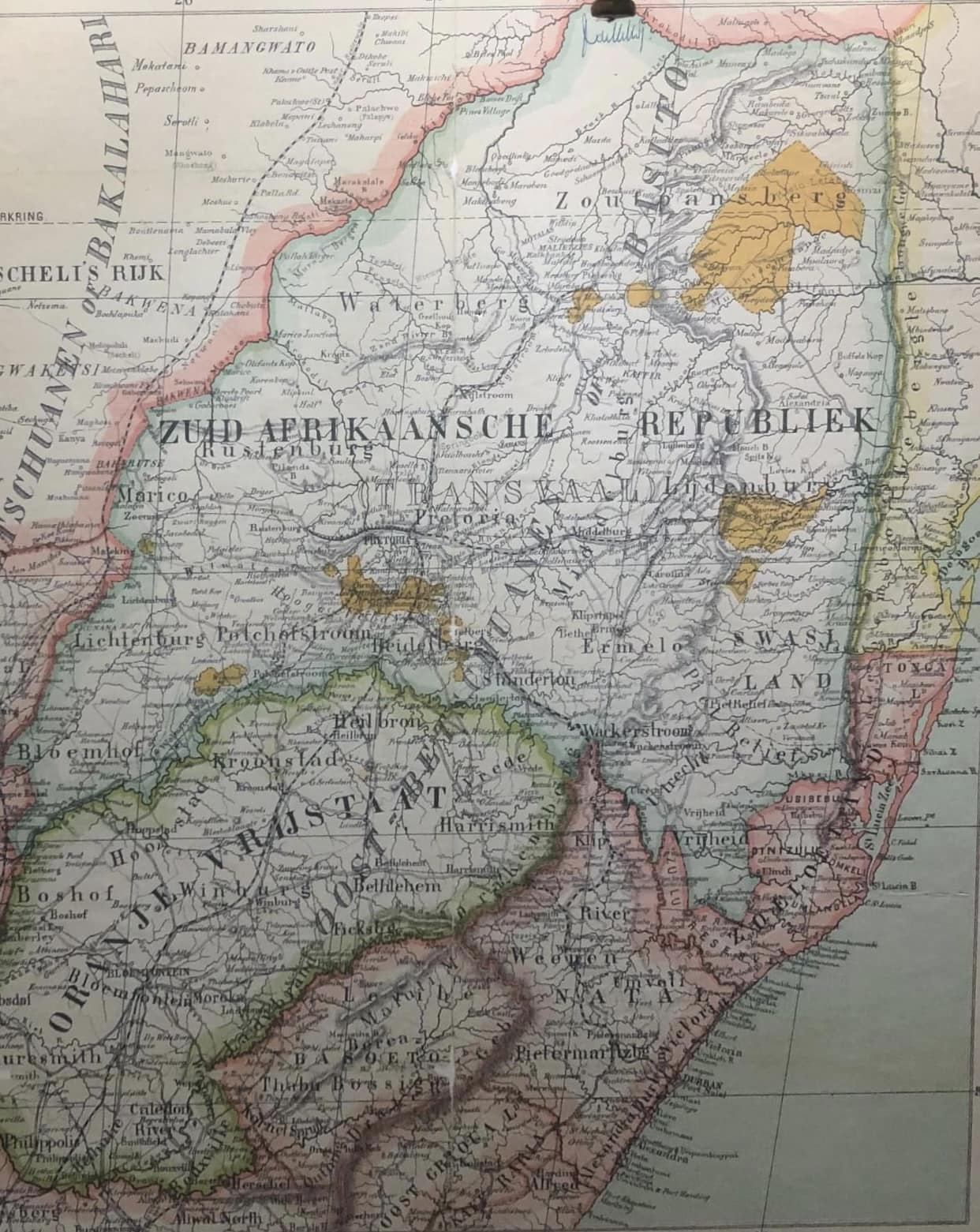
3.2.1….You’re IN! MOTH Jan Smuts

The ritual to add a new Memorable Order of Tin Hats (MOTH) member to the Order is a countdown by all MOTH present with an unanimous “You’re In”. And with that you’re a MOTH and it’s something special. So, what’s this Order all about and why Jan Smuts?

In essence it’s a British, South African, Namibian (South West African) and Zimbabwean (Rhodesian) veteran’s association, however it’s more than just a Veteran’s Association because it carries ‘ritual’ found only in Orders, and that makes the MOTH special. It’s also a special association as it’s only for ‘combat veterans’ – it was formed after World War 1, it continued through World War 2 and it continues to the present day.

The MOTH is not the oldest military veteran association, that honour belongs to The South African Legion, but it is the second oldest and pretty old at that – it was established on the 7th May 1927, as at 2022 (at the time of writing this) it celebrated its 95th birthday (and I’m honoured to have this commemoration on my blazer too). The Legion on the other hand is now over 100 years old (and I’m again a proud Legionnaire). That makes the MOTH and S.A. Legion two of a handful of surviving institutions and brands in South Africa which such longevity. Both organisations originated almost hand in glove, and they still thrive together and you can fully expect the MOTH to still be around when it turns 100. For more on the South African Legion and the roots of Remembrance in South Africa follow this link Legions and Poppies … and their South African root

So, how did the MOTH come about? It was established by returning veterans of the 1st World War 1914-18. Charles Evenden was the driving force, and sought to create an Order of combat veterans only, men who had been in the trenches and had the shared bond of combat and the harsh conditions which come with it. Of it he said the MOTH sought to sustain that “personal intimate comradeship that the front line had generated and venerated” and core ideal was to be a ‘flame of remembrance’ for those comrades killed in action – a “light” in effect which would govern three principles – True Comradeship, Sound Memory and Mutual Help.

Field Marshal Jan Smuts attending a MOTH meeting, note the Brodie Helmet ‘Tin Hat’ with the candle of remembrance on top of it. Also note, MOTH Jan Smuts’ Old Tin Hat lapel pin on his left lapel just to the right of his ribbons.

By way of ritual, a candle is placed on a 1st (and 2nd) World War Brodie Helmet as a symbol of the ‘light of remembrance’, it is lit at the opening of meetings and snuffed out by hand at the closing. The Brodie Helmet is significant to the Order, during both World Wars is was often called a ‘battle bowler’ by the British, a ‘doughboy helmet’ by the Americans and a ‘salad bowl’ by the Germans – but the name which stuck to it the most, used by both British, British Empire (WW1) and Commonwealth (WW2) troops was .. “Tin Hat”. Hence, the name of the Order – Memorable Order of Tin Hats. A small token of this helmet is worn on the left lapel by MOTH members and identifies them as such to others.

As the originator of the Order, Charles Evenden was designated the – MOTH O. Each MOTH has a designated number stemming from the beginning. Mine is 23774, there’s been a lot of MOTH influencing South African society over many years.

Now, to Jan Smuts, it would not be long before the Oubaas would find himself a MOTH, and here he is as Prime Minister receiving his countdown and Old Tin Hat label pin from none other than MOTH O. Smuts qualified as a MOTH on multiple levels, he had participated in multiple wars (3 in total) and been in multiple operational circumstances qualifying as a combat veteran on a number of levels. Not only was Smuts a MOTH, he also founded the South African Legion – and along with Winston Churchill received a gold membership status – for more on this click here Two fellow members of The South African Legion – Churchill and Smuts

MOTH O inducts MOTH Jan Smuts

By 1928, ‘Shellholes’ (MOTH Branches) named for regiments, battles, personalities and other memories of wartime service, had sprung up in Natal and the Rand, such as Majube (at Volksrust), Somme (Jeppe, Johannesburg), ‘Wizz Bangs’ (Bellvue, Johannesburg), Nurse Cavell Shell Hole in Pietermaritzburg.

Post World War 2, MOTH expanded dramatically with new ‘shellholes’, such as Winston Churchill (Cape), ‘Hellfire Corner’ (Durban), Up North (Pietermaritzburg), Tobruk (Danneshauser), Desert Rats (Johannesburg), Dan Pienaar (Johannesburg), Sidi Rezegh (Johannesburg), Steel Helmet (Johannesburg) – and many more.

Whilst some Shellholes have closed down over time, post the Angolan Border War, new Shellholes have arisen, such as Cuca (Western Cape), Pro Patria (Western Cape), Savanna (Gauteng) and many others started to spring up as old SADF Conscripts and Permanent Force members stated joining the Order.

Each Shellhole has a ‘Old Bill’ as chairman – Old Bill was a cartoon character created by Bruce Bairnfather; the archetypal British private soldier in the trenches, bemoaning his fate, with the sly and dry humour linked with the common-sense of the ‘Old Sweat Tommy.’ There is a Deputy Old Bill (sometimes known as a ‘Wee Bill’), a Paybill (the Treasurer), an Adjutant (the Secretary) and a Sergeant Major (responsible for ceremonies and bearing). Bigger Shellholes also have a Quarter Master (responsible for kit and MOTH items), some have their own Padres in addition.

Images: The Old Bill by Bruce Bairnfather – an image of him is found in nearly all MOTH Shellholes and a modern MOTH take on him.

All ‘shellholes’ were intended to be self sufficient, and expected to choose an objective or cause ‘in the interests of the wider community’. One such fine example is the Mills Bomb Shellhole, in Durban, always full of English speaking South Africans, ex-British servicemen, and Germans, from both World Wars and other conflicts.

Warriors’ Gate MOTH Shellhole, within the Old Fort in Durban, was completed in 1937, a superb building in the Cape Dutch style on a design of a Norman Keep modelled from a photograph given to Evenden by Admiral E.R.G.R.Evans “Evans of the Broke”, built by its Shellhole members, the Gate is both the spiritual HQ, and executive HQ of the MOTH movement. It also has a high quality museum and in it inner circle you will find a prized bronze bust of none other than Field Marshal Jan Smuts.

Whilst purely a South African institution, over the years ‘Shellholes’ sprung up in Southern Rhodesia (Zimbabwe) and Northern Rhodesia (Zambia), Nyasaland (Malawi), South West Africa (Namibia), Swaziland and England, the scattering of the modern South African military veteran diaspora since 1994 now sees Shellholes in Ireland and New Zealand. A Cyber Shellhole (keeping with modern-times) sees MOTH members in places as far flung as  Australia, Canada, Belgium, Dubai, Indonesia, Portugal, remote areas of South Africa and the United Kingdom.

For a full list of Shelllholes to find one near you, here’s a link to the MOTH website: https://www.moth.org.za/shellholes/

Back to MOTH Jan Smuts, its important to note that the MOTH has always stressed the lack of ‘rank and swank’ within the ‘Shellholes’, to consolidate its membership across classes, ranks, generations and language. So, in the Order, Jan Smuts would not have been addressed as ‘Field Marshal’ or ‘General’, he would simply have been a MOTH, and having researched Smuts I would say he probably have enjoyed the anonymousness and plain equality – he certainly cracked a wide smile receiving his tin hat lapel pin.

Jan Smuts is important to the MOTH Order, a Shellhole, the ‘Field Marshal’ exists at his home, Smuts House in Irene (now a museum), the ‘Ouma’ Shellhole existed in honour Jan Smuts’ wife Isie who played a key role in running the wartime comforts fund for serving personnel during WW2 and even visited the combat zones. The ‘Marshal Smuts’ Shellhole exists in Somerset West (Western Cape) and annually his birthday is hosted by the ‘Majozi’ Shellhole at his birthplace in Riebeek Kasteel (Western Cape). MOTH members and veterans attending this parade drink a toast to the General from a special vat of brandy and smash the glass as a token of devotion to his memory.

Myself (representing the Legion) and fellow MOTH at the Riebeek Kasteel parade.

A further parade is hosted at the Smuts House Museum in Irene (near Pretoria) by the MOTH Shellhole there to commemorate his birthday, and the ‘Savanna’ Shellhole also hosts a Jannie Smuts parade in Johannesburg. If you visit many Shellholes there will be this or that portrait, cornerstone, plaque, statue or artefact devoted to MOTH Jan Smuts.

So important is Smuts to the MOTH, that Smuts’ letter to Charles Evenden MOTH 0 appears on the back of the dust cover of his book ‘Old Soldiers Never Die – The Story of MOTH 0’ and the quote “you built better than you knew..” General J.C.Smuts appears on the front cover.

MOTH O’s book and the Jan Smuts reference in his almost illegible handwriting on the dust cover – courtesy Stef Coetzee, whose father was a MOTH having served in WW2 and this was his.

A big contribution of the MOTH Order and Smuts’ policy of integration in the armed of forces is the bringing together of English and Afrikaans speakers. The veterans of WW2 were unique in that of the combatant veterans the ratio of English and Afrikaans speakers was almost equal. These men displayed a need for ‘respectability, and to this end the original ideal ‘Mutual Help’ was of great relevance, the post-1946 ‘Home Front’ (MOTH long standing journal) stressed constantly the need to support ex-servicemen before looking at other charities. The financial support, material contributions (food and clothing), funding for schooling and university, and the networking to find unemployed Returned Men employment were of the greatest import. The 1950’s-60’s were the great hey-day’s of the MOTH.

I just love this picture from Steyn Fourie of a MOTH Shellhole in its heyday, it just smacks of a time gone past, when everything in the ‘white culture’ in South Africa was so much more balanced and revered – the old Hertzog inspired OBB in its correct senior position (left) making the old Transvaal and Free State Afrikaans boys happy, the Union Jack making the Natal and Cape English boys happy in its correct position (right) … flags of all the Allied Nations of WW2 (USA, France, Canada, Australia, New Zealand and even the old Russian Federation the USSR) with whom these veterans fought alongside left and right .. and presiding over it all .. the Oubaas – Jan Smuts.

By the ‘white culture’ of this old photograph, please note that this was the majority demographic of the construct of combat veterans at the time, the MOTH is open to all races, culture and sexual orientations, it does not discriminate and will accept any operationally qualified veteran regardless.

MOTH Smuts with MOTH O

However, with the dying off of the 1st World War (1914-1918) and almost all of the 2nd World War (1939-45) populace, the MOTH are a shadow of its former glory, however with the Border War (1966-1989), Operations 1990-1994 and subsequent Peacekeeping Operations, the ranks are slowly growing. Auxiliary components of the MOTH, such as the MOTHWA (MOTH Woman’s Association) are now been joined by the MOTH Motorcycle Association and the recently formed ‘Friends of the MOTH’, the strict regulations for joining are also slowly been loosened to invite more veterans to join.

Comradeship remains central to the MOTH, and long may it remain, with Shellholes regularly ‘raiding’ one another and the mirth, friendship, mischief and comradeship that comes with them – and long may raiding continue.

To the songs that are sung in MOTH Shellholes, there are two, one British from the 1st World War “Pack up your Troubles” and one American from the 2nd World War “Old Soldiers Never Die”.

To listen to Pack Up Your Troubles – click this link:

To listen to Old Soldiers Never Die – click this link:

In conclusion

I remain proud to be a MOTH and am currently the Wee Bill (Deputy Old Bill) of the Seagull Shellhole in Hermanus, I also own a brewery and it was not long before I registered ‘Old Tin Hat’ in the Beer and Spirits categories as a trademark with each one celebrating a South Africa World War 2 hero in the ‘Commando Comic’ style – Sailor Malan, Quentin Smythe VC, Lucas Majozi, Perla Gibson, Roger Bushell, Zulu Lewis and Job Maseko all get a beer expression and a nod to their wartime valour and contributions. I also remain a devout Legionnaire – something Smuts was in addition to been a MOTH, and I’m equally proud of that. The order is healthy and if you served in the old SADF or the new SANDF (or both) – as a National Serviceman, Volunteer or Permanent Force member and have a General Service Medal or Pro Patria we’d love to hear from you.

To find out about (and order on-line – shameless plug I know) Old Tin Hat Brewery beer, follow this link: https://thespiritofhermanus.com/collections/old-tin-hat


Written and Researched by Peter Dickens, with large extracts from Gordon Mackinlay’s account of the MOTH, and my deep gratitude and thanks to him for allowing me to use it.

Ouma’s Curtains

Isie Smuts and the Boer War

There is a lot to be said about South Africa’s most remarkable First Lady – Sybella (Isabelle – shortened to Isie or ‘Issie’) Margaretha Smuts, or as she was affectionally known by all – simply as .. “Ouma.” However to get a really good understanding of this petite but powerhouse of a woman, one only needs to know what she endured and did during and directly after the Boer War i.e. The South African War 1899-1902, and here one only has to look at her curtain rails – yup, simple curtain rails.

Not many know this, and its not in the official tour guide, but if you ever have the privilege to visit the humble correlated iron house that Jan and Isie Smuts lived in from 1910 in Irene, near Pretoria, now a museum – you may notice the family’s bamboo curtain rails, and they tell a story, so here goes;

Image: Bamboo curtain rails, Smuts House Museum, Irene – Picture: Peter Dickens

From the beginning of 1899 Jan Smuts was a leading legal and political figure in Kruger’s government of the Zuid Afrikaanse Republiek (South African Republic, ZAR or Transvaal Republic). Smuts at the time lived with his wife Isie in a house on the corner of Troye and Walker streets in Sunnyside, Pretoria.

When the Boers declared war against the British on the 11th October 1899, it was with Smuts’ invasion plans that the Boer’s invaded the British Colonies of the Cape and Natal. War proved a highly trying time for Isie Smuts, but the worst was to come when Pretoria fell a mere 9 months into the war, and Isie bid farewell to her husband the evening of 4th June 1900 as he and General Botha rode away to take the ZAR government into the field with the other Boer commanders and commence the guerrilla warfare phase of the war, leaving Pretoria open for the British to occupy.

On occupying Pretoria the British took no time to gather whatever intelligence on the Boer army that they could, and Jan Smuts’ residence came into their sights. Using her initiative, Isie Smuts tore up all Jan’s letters written to her, except his first, and stuffed the scraps of paper into a cushion. She also rolled up Jan Smuts’ key documents and plans, deemed too important to destroy and hid them inside her ‘hollow’ bamboo curtain rails.

She also took the precaution of sewing gold sovereigns Jan Smuts had left her for a emergency, into a money belt. When she saw the enemy British soldiers approaching, “she dropped the belt into the boiling water of the kitchen copper” (Women South Africa Remembers” by Fay Jaff 1975), in spite of her protests the British soldiers entered her home, but still, she gave them freshly baked bread, still warm, from her oven.

During her separation from Jan Smuts, in August 1900 their baby son ‘Koosie’ died. Isie had to bear the burden alone, she wrote to Jan so he could learn of the loss by telegram, but the message never reached him. Jan Smuts also wrote to her, but she never received any of his letters in the first year of their separation.

By the beginning of 1901, Lord Kitchener, the British Chief of Staff, ordered that Isie Smuts be moved from Pretoria to a concentration camp in Pietermaritzburg. As a special concession, because of her status as Jan Smuts’ wife, Isie Smuts was afforded a small house near the camp. Isie packed up all their belongings and household items and effectively moved under ‘house arrest’ to Pietermaritzburg. She would pass her time making ‘comforts’ such as scarves for the women interned in the nearby camp.

Purposefully cut off from the outside world by the British, under house arrest, she was tormented with constant rumour that her husband had been killed, and likewise her husband was tormented whilst fighting in the field as he had no contact with his wife.

Eventually, a year after he departed Pretoria, in June 1901 she received her first letter from her husband, her response reveals the deep levels of trauma, she wrote, “I have read it and reread it so often that I know almost the whole by heart, and now I shall be able to live on those loving words for the many weary weeks to come . . .”

By special arrangement, Isie and Jan were allowed to see each other for a mere 24 hours in Standerton during a pause in the fighting. Isie was very ill at the time, war had taken a toll on her, she was prone to severe bouts of fatique and she weighed about 45kg. Her physical state distressed her husband, so he wrote to Lord Kitchener asking for permission to send her to Stellenbosch where her family could care for her, but his request was refused.

The couple were re-united some time after the Peace Treaty of Vereeniging was signed on 31st May 1902. Smuts urgently needed to go to the Cape Colony after the Peace was concluded to convince the acting Prime Minister, Thomas Graham to treat returning Cape Rebels fairly. On his return from Cape Town, Jan stopped in Pieter­maritzburg to see his wife and reassure himself that her health was improving. Their minds were put to rest by Doctors who said she would be well enough in 6 weeks to travel back to Pretoria. Smuts went ahead to re-claim his home which had been occupied by British Imperial Yeomanry during the war.

Between May 1902 and 1910, before Jan Smuts finally re-settled the family at Irene, the Smuts’ went about re-building their lives and having children. Isie Smuts was very understandably anti-British, given her treatment by them and her witness to the camps. She insisted on a Zuid Afrikaanse Republiek ‘ZAR’ Vierkleur (Four Colour) National Flag be present at each child’s birth, so they would be born under it and not under the occupier’s British Union Jack. In all, her first children were born when the ZAR existed as an independent Republic and she ensured all her remaining children when born, would be born under the Vierkleur (not a lot of people know this either – it’s not in mainstream accounts of the Smuts’ history). Not many people know this too, but according to the family, Jan Smuts, not surprisingly considering his experience of the war, also personally harboured a similar deep disregard for the British at this time.

Picture: The Smuts family at this time, superbly colourised by Jennifer Bosch

Isie’s Anglophobia did not stop there, she was totally anti-British, and openly hostile toward them. She even went so far as to stick stamps deliberately upside down on her letters, so as to make the King stand on his head. It was much later when Lord Paul Methuen, the Officer Commanding-in-Chief in South Africa, convinced her that the British were not all bad, he helped her overcome her prejudices to eventually support her husband in his efforts to reconcile the English and Afrikaner “races” to achieve peace, stability and ‘Union’ in South Africa.

Jan Smuts would also tease her and say she would be “punished” if any of her children married a Brit in the future, which ironically several of the Smuts children did, either marrying into wholly British or half English descendants. Isie’s future would see her rise to one of the most loved people in South Africa – English and Afrikaner alike – and she hit her stride during World War 2, during Jan Smuts’ second Prime Ministership, when she headed up the wartime ‘The Gifts and Comforts Fund’ in support of the men and women from South Africa fighting in the war, even visiting them in the combat zone, but that’s a remarkable story for another day.

In South Africa, one can still find people who swallowed Smuts’ political detractors rhetoric and will say that by reconciling with the British, he did not suffer or fully understand the indignity of the concentration camps. Utter poppycock, one only has to look at the fact that he not only lost family, he nearly lost his wife, such was his conviction to get a better peace for his countrymen by engaging guerrilla war tactics and becoming a ‘Bitter-einder’ in war already hopelessly lost. Of his reasoning for enduring the ‘Bitter-einder’ campaign Jan Smuts said “… two years more of war, the utter destruction of both Republics, losses in life and treasure … Aye, but it meant that every Boer, every child to be born in South Africa, was to have a prouder self-respect and a more erect carriage before the nations of the world.”

The journey for both Jan and Isie to overcome their hatred for the British and reconcile with them in 1910 for the good of all South Africans is one of the most generous and forgiving acts ever seen in South Africa, it was only seen again in 1994 when Nelson Mandela did the same (although the same could not be said of his wife).

Jan Smuts famously said “history writes the word ‘reconciliation’ over all her quarrels” and to anyone visiting the Smuts museum in future, look up at the simple curtain rails, and remember the courage of an ‘Ystervrou’ (iron woman) who endured during a highly destructive war, literally crippling her people and her remarkable journey to reconciliation with the enemy to the benefit of all.


Written and Researched by Peter Dickens.

With grateful assistance from Philip Weyers (Jan Smuts’ Grandson) and the Jan Smuts Foundation and family. Large reference and thanks to “Women South Africa Remembers” by Fay Jaff (1975). Also, with much thanks and gratitude to Jenny B Colourisation. Photos below – Smuts House Museum in Irene, the author and his wife with Philip Weyers.

“God’s will”

I’ve recently looked at the ideology of Afrikanerdom, after taking some criticism for ‘bashing’ a small but very vocal sect of anti-Smuts Afrikaners (some even in my own family). I’ve contested that they do not epitomise Afrikanerdom but seem to think they do. It’s a complex subject, as ‘Afrikanerdom’ is as white as it is black, but bear with me.

When it comes to the ‘Boer War’ (The South African War 1899-1902), there are two very hotly debated areas, both ‘shape’ Afrikanerdom – certainly in the white sense of it. The first is the idea of the “Bitter-Einder” (the Bitter Enders), the group of Afrikaners who painfully decided to continue the war on ‘guerrilla principles’ after the ‘conventional phase’ ended and Pretoria fell. Some historians point to these guerrillas as having brought the catastrophe of the concentration camps and the scorched earth farm buring policy on themselves – they’re to blame as the British had little choice. Little is really understood as to ‘why’ they continued the fight, as the fight was clearly lost – sheer madness the only conclusion. But, it’s in the ‘why’ that we find Afrikanerdom.

The second hotly debated subject is Jan Smuts, his impact to South African politics and ‘Afrikaner’ identity spans 6 decades, no other ‘Afrikaner’ can hold a flame to it. His detractors fall on old National Party propaganda and political smearing and old family folklore to paint him as ‘turning British’ for reconciling the warring British and Boer races (and by some strange leap in logic some also point to him as responsible for the concentration camps). Little time is given to actually reading what Smuts said or wrote and a strange almost belligerent hatred overrides all reason.

Sir Winston Churchill said of Smuts that “He fought for his own country; he thought for the whole world.” by that he meant Smuts remained an Afrikaner patriot for one but also philosophised for all mankind. Churchill’s long time admiration for Smuts also lay in his abilities as one of the few successful Bitter-Einder Boer Generals, not in a need for him to identify as somehow British. Smuts’ context of Afrikanerdom is found in his justification for being a Bitter-Einder’ and there is nothing better to understand his mind and to understand the ground zero of 20th century ‘Afrikanerdom’ and the modern white Afrikaner psyche than to read what Smuts himself puts down.

What follows are some extracts .. they are well worth the read, and anyone who walks away from reading this still thinks that Jan Smuts is somehow ‘English’ needs their brain replaced – for they have never taken the time to read what the man actually wrote. Here’s an Afrikaner at heart – simple.

Image: General Jan Smuts (seated centre) with his Commando, colourised by Tinus Le Roux

This is a letter, written to W.T. Stead by Jan by Smuts whilst in the field with his commando at Vanrhynsdorp on 4 January 1902 (Source: Published from his private papers by Hancock and van der Poel) – it covers some excerpts as the full content is too long to publish here, but they more than adequately make the point.

“I know the difficulty of the modern man of action and intelligence, accustomed as he is to ideas of natural laws and physical or economical explanations of all phenomena, to understand or appreciate the tremendous force of faith in the affairs of the world, but unless he overcomes this difficulty the present war will, in all essential respects, remain for him an insoluble mystery. A mustard seed of real faith avails more in the affairs of the world than mountains of might or brute force – and only he who thoroughly understands this will be able to appreciate the true inwardness of the present struggle.

The condition of the two South African Republics in very truth baffles description. Not William the Conquerer himself created a more complete desert between the Tyne and the Humber in the eleventh century than Lord Kitchener has created in the twentieth. All living animals – horses, cattle, sheep, pigs, fowls, even dogs, have been killed, and generally in a manner too shocking to relate. More than once I set my commandos to kill the poor brutes which had been maimed by the British soldiery and then left by them to slow death and starvation; even four or five days after atrocities had been committed one would find these poor dumb brutes writhing in pain, and struggling and bleating for water and food among the dead. I have seen strong and brave men with tears in their eyes – totally overcome by the sight of this horrible suffering.

To me the saddest sight in this war has been the sufferings which women and children have endured to escape capture by the British columns. Like wild beasts they have been everywhere hunted out with Lee-Metford and Maxim and consigned to the death-in-life of the camps. For these reasons the brave Boer women have endured hardships and undergone privations such as one only reads of in the ancient records of Christian martyrdom. ‘They were tempted, were slain with the sword; they wandered about in sheepskins and goatskins; being destitute, afflicted, tormented (of whom the world was not worthy:) they wandered in deserts, and in mountains, and in dens and caves of the earth’. (Hebrews XI: 37,38).

I do not ask what rules of international law sanction this rapine and ruin. I only state it as a fact – as a fact which I have seen with my own eyes and which is beyond all manner or doubt or dispute: quaeque ipse vidi et quorum pars magna fui. No wonder that for many burghers the state of their desolate country has become a sight too painful to bear; no wonder they prefer to continue the war beyond its borders.

The British military authorities adopted a policy of devastation and of treating non-combatant women and children as prisoners of war. They expected the Boers to quail before the absolute destruction of their property and the sufferings of their women and children. The said military authorities , however, made one fatal error in their calculations-an error which they will continue to make to the very end of the war. They had learnt in the case of all the tribes that with which they had come in contact during recent generations that one big defeat, followed by the burning of their chief town or kraal and the raiding of their cattle , was sufficient to utterly cow and prostrate them. And so they expected from the despised Boer. But the policy of spoliation and the infliction of suffering on non-combatants – so far from producing the expected result – had exactly the opposite effect. It raised the spirit of the Boers; it sent the iron deeper into the soul; that the God of Battles might not be with them yet the Spirit that dies not quench the smoking flax nor bruise the broken reed was with them to strengthen and sustain.

A second important consequence of this policy of spoliation has been the elimination from the Boer ranks of all those elements which are useless from a military point of view. The ordeal has been too terrible for the weak and the faint. First of all went the irresponsible braggarts who had clamoured for war and had called the peacemakers cowards and traitors. The man who expected to gain something from continuing in the field; the man who preferred to protect his property; the man who had lost all hope of a successful issue followed. There remain the stout-hearted and able-bodied – the men of physical courage, the men of moral endurance, whom self-respect and honour keep true to their country’s cause; the men of invincible hope in the future and child-like faith in God – truly a select band, the like of whom, I fondly think, is not to be found in the wide world today.

And these are the men whom Mr. Chamberlain, standing in the House of Commons, does not shrink from classifying as brigands and ruffians. These are the men against whom the High Commissioner (Milner) has the infantile audacity to hurl his proclamation of permanent banishment and universal confiscation.

‘How long is this war still going to last’ is the question asked by almost every Englishman who meets a Boer. The English are evidently weary and tired to death of the whole business. And no wonder, for their feeling of racial revenge must be pretty well satiated after the ruin and sorrows in which the Boers have been involved. For every thinking Briton, even the most hostile to the Boers, must feel in his heart of hearts, that this sorry business has added no glory and never will add any glory to the Empire – no military glory, for the odds were too uneven; the methods resorted to by the British too shocking to the humaner feelings of mankind, and the unique tenacity of the Boers has finally come to overshadow every other feature of war; no political glory, because the issue had become one of their freedom or subjugation. And mankind reserves its lasting honour for, and award its crown of glory only to, those who have striven for the highest ideals of humanity; who have made deathless sacrifices for liberty or justice or religion; and who by heroic self-sacrifice for the highest ends have raised and ennobled the ethical consciousness of mankind. But this much is certain, that the issue of glory is against the British Empire, and that the world has only seen another proof of universal moral law that they who deliberately seek glory shall not find it.

What are the principal moral forces operative within the area of the war today? I ask the question here because only he who thoroughly appreciates their character will be able to understand the factors on which the continuance and issue of the present war depend. The flower of the Boer army …. and who to a large extent still continue in the field today, were actuated by a vaguer but profounder aspiration …. purified and deepened a hundredfold by loss and suffering and sorrow during the course of the war, remains today the most vital and vitalizing force in the Boer mind, and must be carefully studied by all who wish to understand the true conditions of the continuance and issue of the present war.

The Boers, as a people, have an extraordinary faith in God. Theirs is not a God of the mechanical type …. Theirs is a God …. rather of the type of the Hebrew prophets – …; who from and with the passions and aspirations, the good and evil deeds of men, shapes the divine policy, moulding sin and sorrow, deeds of honour and of shame, like some potter at the wheel, into the divine ends of His world-government. The barbarous measures of the enemy, which bring a blush of shame to the fair face of Christian civilization, were expected by them, for had not Scripture to be fulfilled? All these things, and even worse, were foretold by the prophets, and with patience and resignation they are prepared to bear the yoke which not so much the enemy as God has laid on them; the inhuman proclamations of Lords Kitchener and Milner were read and pondered by them in the sacred writings before they were issued in SA, and the remarkable resemblance in the procedure of the Nebuchadnezzar of prophecy and the Kitchener of our day is to them only another confirmation of their belief that this is God’s work and that the final issue will also be His. …. this remarkable faith in God and in their destiny has only become stronger; broken and bleeding they have clung all the more passionately to the great hope, praying indeed that the cup of agony might be taken away from them, but never dashing it down in impatience or despair. For the Boers feel that they are not enduring themselves, and inflicting on their loved ones, mere useless suffering, as Lord Kitchener is so fond of reminding them, but that victory will yet be theirs, and the seed now sown in sorrow and tears will be reaped by posterity as a glorious harvest in the land that is far away…

This view, which will seem strange and intelligible to matter-of-fact politicians, is today held by the bulk of the Boers in the field. The Boers fight now in a spirit akin to that of the early Christian martyrs; they listen to reports of defeat and rapine, of the suffering of their wives and children in the prison camps, with that calm resignation which springs from the assurance that such is God’s will”.

Images: Lord Kitchener’s policy of Scotched Earth, Boer farmsteads been destroyed by British and Imperial Troops.

Images: British Boer War period concentration camps, colourised by Jenny B


Researched by Peter Dickens

With much thanks to ‘Boer War Crank’ on-line. Master images of a young Jan Smuts and concentration camp children – colourised thanks to Tinus Le Roux.

Finding Smuts’ essence!

Book Review: Jan Smuts and his First World War (1914-1917) by David Brock Katz

Finally, a refreshing new look at Jan Smuts, and not a popularist novel, a proper historical treatise, so well researched it stands up to strong academic scrutiny and it will stand for some time to come.

Jan Smuts and his First World War 1914-1917 by Dr David Bock Katz is a revelation, it seeks out and finds Smuts’ essence in his military campaigning, not previously achieved by earlier historians.

It can often be said of Jan Smuts, that a Canadian student will have a better understanding of the man than a South African one. That is because Smuts has been vilified in his own country by an endless tirade of politically driven one-upmanship whether it be from far right or the far left of the political spectrum, an unabated tirade, especially from a very small but very vocal white Afrikaner right fuelled with propaganda and unhinged over the Apartheid epoch. Whereas internationally he is seen as a champion of global peace post both World Wars and a founder of the United Nations, he still stands on Parliament Square in London and in Canada even a mountain is named after him. 

The political quagmire surrounding Smuts makes a new study of Smuts very difficult, the historian must ‘peel the onion’ and discard all the politically inspirated bias. Bill Nasson, one of South Africa’s most respected historians said the only way for us to understand Jan Smuts is to understand what he amounted to and to define Smuts’ essence, i.e., get to what he is all about, what made him tick and identify what he was always striving toward. Happy to report that Dr David Katz in his new book on Jan Smuts and his First World War 1914–1917 does exactly that.

Smuts was born and lived in an era of colonial expansionism, an era where Imperialism was normative and in fact a value for which European’s fought over in great life and death struggles, in Europe and across the Globe. David Katz examines Smuts in his context and removes the urge to suddenly apply a modern critical race theory bias. In doing this Katz gets to the essence of the man. He does this by drawing attention to Smuts’ plans for a ‘Greater South Africa’ one in which South Africa’s borders are drawn as high as the equator including south Angola, bits of modern day Central African Republic and the entire states of Namibia, Botswana, Zambia, Zimbabwe, Malawi, Lesotho, Swaziland and Mozambique. This idea of ‘sphere of influence’ whether under the control of an Afrikaner or a British ideal on the back of conquest and expansion, is central to ‘white’ politics of Southern Africa, pre and post The South African War (1899-1902).  

A ‘man of his time’, Smuts’ philosophy of holism, basically the sum (union) of parts is greater than the whole, drives Smuts’ ideal for the union of nation states, not only South Africa as we know it, but also Southern Africa with his plans of a ‘Greater South Africa’, his concept of ‘union’ eventually extends globally with the establishment of the British Commonwealth, the League of Nations and its modern-day manifestation, the United Nations. Here, as David Katz shows extensively and rather refreshingly in his work, we see the true ‘essence’ of Field Marshal Jan Christiaan Smuts, South Africa’s most decorated General.

It also gives us the context for the Union of South Africa’s eagerness to move its borders northwards, the First World War provided both Louis Botha and Jan Smuts with the ideal vehicle, starting with the German South West African campaign (GSWA) and then the German East Africa campaign (GEA).

In these campaigns David Katz starts to shake up some preconceived beliefs about Smuts’ abilities as a General, detailing and outlining his abilities to strategise outcomes and also his ability to tactically apply them. Many commentators and historians chose to highly criticise Smuts, but usually in the context of political expediency, both in the United Kingdom and in South Africa, but here Katz exposes their ‘bias’ and even at times exposes some blatant mistruths previously held up as fact, he does this by examining the ‘primary documentation’, the boring, dusty, daunting, and rather vital extensive archives – here in South Africa and in the United Kingdom. In this primary documentation, without a political agenda, he finds the real Smuts, a true reflection of the military strategist and field commander. David’s work in this respect is extensive, it was the backbone of his Doctorate in Military History (cum laude), and it shows. 

It is almost impossible to write a ‘complete’ history on Smuts in a single book, he was a man who dominated South African politics from 1890 to 1950, seven decades which see a man and his outlook change over time along with changing world orders and philosophies of governance and even warfare. This can make the subject of Smuts extremely daunting, and even impossible – where do you start, Smuts the academic, the philosopher, the botanist, the lawyer, the author, the politician, the stateman, the peacemaker, the privy councillor and finally Smuts the miliary General? 

It is with some relief that David Katz hones in on only one aspect, Smuts’ First World War, it gives him the opportunity to really challenge Smuts in one sector of his life, the outcome of which is a detailed account of this one facet which reaches completely new conclusions and views.

Rightly in establishing a view on Smuts’ Generalship in World War 1, Katz also looks at the root of Smuts’ abilities as a General, forged in the South African War (1899-1902) under General Koos de la Rey and General Louis Botha.  Katz then examines the complexities and challenges facing Smuts in amalgamating Colonial British and Boer Forces into a unified fighting entity and the development of a distinctively South African ‘style’ of combat fighting, a manoeuvrability ‘style’ which even our modern-day defence force still holds as a central doctrine. 

Katz also reviews the Maritz Rebellion of 1914 in its correct context, as an opening act of internal aggression in South Africa’s First World War and how it strategically and even morally affected the GSWA campaign. Also, refreshingly he focusses on the cause and effect of the revolt militarily speaking and is not guided by the political fallout and resultant bias in examining Smuts’ ability as a wartime General.

Smuts’ GEA campaign often comes in for a lot of criticism, and here Katz again applies a military mind and scours the primary source material in evaluating Smuts’ effectiveness as a General, reasoning that Smuts effectively attained his objectives, reduced casualties and delivered an Allied victory and didn’t chase General Paul von Lettow-Vorbeck around aimlessly as has been suggested by past historians.

It’s a very long overdue re-assessment of Jan Smuts and his ability as a General. David Katz also wrote a book called ‘South Africans versus Rommel’ which covers Smuts in World War 2 to a degree, but we look forward to the next historical account which looks at Smuts and his Second World War 1939-1945 in its complete entity, as the next ‘bite sized’ chunk of this most extraordinary man. 

In the end, the Afrikaner National Party and their opposition rhetoric aside, we may find that when it is all added together, Smuts’ 2nd Anglo-Boer War command, his First World War command, his Second World War Command, and Smuts’ net success in all three of these wars, his structure of South Africa’s defence force and doctrine, his pioneering work on structuring air-arms, air combat and air defences, his contribution as part of the British War Cabinet and the Imperial War Cabinet during World War 1 and then again in the King’s Privy Council and as Winston Churchill’s confidant and councillor during World War 2, and even his extensive role in Operation Overlord, all concluding with his role in the establishment of the United Nations, we may very well be looking at a Afrikaner farm boy with one of the greatest military minds of the 20th Century and beyond. 

No small statement, you’ll find Jan Smuts’ fingerprints in just about every theatre of operations in the South African War (1899-1902), in the GSWA, GEA and Western Front theatres of World War 1 (1914-1918), and again in the East African, North African, Italy, Atlantic and European campaigns to conclude World War 2 (1939-1945) and in just about every major modern military development in between. Dr David Brock Katz’ book on Jan Smuts First World War (1914-1918) goes a long way to establishing a solid foundation on which to begin to challenge this conclusion or at the very least he gives Smuts a well-earned balanced perspective and insight.

By: Peter Dickens

Jan Smuts .. .. a talk with Dr. David Katz and Peter Dickens

Join me for the launch of Dr. David Brock Katz’s new book, ‘General Jan Smuts and his First World War in Africa 1914 -1917′. David will be spending a little time in my hometown, Hermanus to launch this new look at Jan Smuts’ military campaign and leadership during WW1.

We will do the launch at Romantiques in Hermanus, in their cosy little theatre. David and I have agreed to do a joint talk on Jan Smuts, David will focus on Smuts in the context of his book and I will focus on Smuts – the man and his flawed genius. In all it should be a great evening for anyone who is either a student of history or has a fascination for one of Africa’s greatest sons.

We will follow up the talk with a book signing ceremony with complimentary Beer, Wine and Canapés. As a brewery owner my Company ‘The Spirit of Hermanus’ and our beer brand ‘Old Tin Hat’ will be sponsoring, along with Jonathan Ball Publishes and the venue – Romantiques. Book Mark, the appointed retailer of the book in Hermnaus will also be on hand.

For a small fee of R40 you can also stay on for a screening of Peter Jackson’s world renowned documentary on World War 1, ‘They Shall Not Grow Old’.

For those in area who wish to attend here are the details:

Date: Friday 16th September 2022

Timings:

Arrive from 17:00 for 17:30

Talk and  Q&A from 17:30 to 18:30

Book Signing,  Beer and Wine Evening  from 18:30 to 19:30

Movie Screening ‘They Shall Not Grow Old’ from 19:30 to 21:00

Venue:

Romantiques, 18A Aberdeen Street, Hermanus, South Africa

RSVP

Please call Karen Dickens, South African mobile: 067 360 9020. Alternatively e-mail: karen@thespiritofhermanus.com

Please note spaces are very limited, so be sure to book early.

Outline of the book

As to this new book and exciting look at Smuts’ Generalship during WW1 it has been described a ‘an engaging, well-written and meticulously researched military biography …’ – Tim Stapleton, Professor, Department of History, University of Calgary.

Jan Smuts grabbed the opportunity to realise his ambition of a Greater South Africa when the First World War ushered in a final scramble for Africa. He set his sights firmly northward upon the German colonies of South West Africa and East Africa. Smuts’s abilities as a general have been much denigrated by his contemporaries and later historians, but he was no armchair soldier. He first learned his soldier’s craft under General Koos de la Rey and General Louis Botha during the South African War (1899−1902). He emerged from that conflict immersed in Boer manoeuvre doctrine.

Jan Smuts grabbed the opportunity to realise his ambition of a Greater South Africa when the First World War ushered in a final scramble for Africa. He set his sights firmly northward upon the German colonies of South West Africa and East Africa. Smuts’s abilities as a general have been much denigrated by his contemporaries and later historians, but he was no armchair soldier. He first learned his soldier’s craft under General Koos de la Rey and General Louis Botha during the South African War (1899−1902). He emerged from that conflict immersed in Boer manoeuvre doctrine.

After forming the Union Defence Force in 1912, Smuts played an integral part in the German South West African campaign in 1915. Placed in command of the Allied forces in East Africa in 1916, he led a mixed bag of South Africans and imperial troops against the legendary Paul von Lettow-Vorbeck and his Schutztruppen. His penchant for manoeuvre warfare and mounted infantry freed most of the vast German territory from Lettow-Vorbeck’s grip.

General Jan Smuts and his First World War in Africa provides a long-overdue reassessment of Smuts’s generalship and his role in furthering the strategic aims of South Africa and the British Empire during this era.

A little on the Author

DAVID BROCK KATZ is an author and historian, who lectures at the Army and Defence Colleges of the South African National Defence Force.

He completed his MMil in Military History (cum laude) and a PhD in Military Science in the Department of Military History at the Faculty of Military Science of Stellenbosch University. He is also research fellow at the Faculty of Military Science and an active member of the Andrew Mlangeni Regiment (formerly the South African Irish Regiment). Katz is the author of South Africans vs Rommel (2019).

On-Line Orders

If you are unable to attend the launch and want this book you can obtain it on-line from amazon, takealot, Loot to Exclusive Books and more. Shop and just click on the appropriate book seller than can provide it to you.

To order Old Tin Hat beer or Spirit of Hermanus product follow this link: www.thespiritofhermanus.com

Looking forward to seeing some of you at the event and the chat with David and the audience on Jan Smuts:

Peter Dickens

A Rebellious Family Streak

A friend of mine, Dennis Morton is a prolific researcher and he brought up this rather interesting history which highlights the rebellious nature and political dichotomy in white South African families perfectly. So, here’s how a Boer war rebel’s history massively impacted South Africa’s liberal political landscape.

The Irish Brigade

During the South African War 1899-1902 (the Boer War), a number of British, especially Irish found themselves in alignment with the Boer Republic cause. Many of them were working on mines in the Transvaal or had otherwise settled and repatriated in the two Boer Republics prior to hostilities. Not just Irish, these ‘burgers’ also constituted many other Britons – Scots and even the odd Englishman. At the onset of the war they volunteered to join a Boer ‘Kommando’, and this one was special, it was created by John MacBride and initially commanded by an American West Point officer – Colonel John Blake. The Commando was called ‘The Irish Brigade’ mainly because of its very Irish/Irish American slant. After Colonel Blake was wounded in action at the Battle of Modderspruit, shot in the arm, command of the Irish Brigade was handed to John MacBride. The Brigade then saw action in the siege of Ladysmith, however this was not a happy time for Irish Brigade as its members were not enthusiastic about siege tactics. After the Boer forces were beaten back from the Ladysmith by the British the Irish Brigade began to fall apart. It was resurrected again as a second Commando in Johannesburg under an Australian named Arthur Lynch and disbanded after the Battle of Bergendal.

To say the Irish Brigade was controversial is an understatement, the whole of Ireland was still part of the United Kingdom in 1899 (the Irish Republic split came much later) and members of this Brigade ran the risk of high treason if caught, especially if their ‘citizenships’ to the Boer Republics were not in order when the war began, or if they joined and swore allegiance to the Boers during the war itself.

So, at the end of the war there are a couple of Irish Brigade Prisoners of War who were captured and sent to St. Helena (which was the main camp for Boer POW) and they needed to be repatriated, in their case – the United Kingdom. The issue of treason hangs heavily on both of them.

Firstly, Prisoner 3783, Thomas Enright, an Irishman, who at one time was in the British army during the Matabele War and had changed allegiance to the Boer Republics, joining the Irish Brigade. The issue been the date of his burger citizenship which exceeded the amnesty for who was and who was not considered a ‘Burger’. The cut off for amnesty on oaths of allegiance by ‘foreigners’ to the Boer Republics was given as 29th September 1899.

The second is Prisoner 15910, John Hodgson, a Scotsman born at Paisley in the United Kingdom, he emigrated to Southern Africa in 1891. He lived in Rhodesia and moved to the Orange River Colony until 1896. He took the oath of allegiance to the South African Republic – ZAR (Transvaal) on the 28th or 29th December 1899, which was after the amnesty date. He served in the Irish Brigade under Blake and was captured by the British on 19th November 1900.

Luckily for both these men, they are not prosecuted for treason (which carried the death sentence) and repatriated to the United Kingdom after some heady politicking. Here’s where we stop with Thomas Enright and follow the Scotsman, John Hodgson.

On John Hodgson’s repatriation he is immediately ostracised by the British community because of his role on the side of the Boer Republics and six months after his return to the United Kingdom, he illegally boarded a ship bound for Port Elizabeth, South Africa. Here he set up shop working as a book-keeper and by 1904 John Hodgson’s family reunited with him in the Cape. Now, here’s the interesting bit that so often plagues ‘white’ South African families, although John Hodgson joined the Boer forces as a rebel, he, like many other Boer veterans, also harboured liberal political beliefs. He supported legal equality and the extension of a non-racial franchise (vote to all – Black emancipation) in Southern Africa.

Liberalism in South Africa

John Hodgson’s daughter, did not fall far from the tree, John’s rebellious and highly liberal nature rubbed off on her, she was Violet Margaret Livingstone Hodgson, who later married another liberal, William Ballinger. Margarat Ballinger would go down as a powerhouse in liberal politics in South Africa.

Margarat Ballinger would become the first President of The South African Liberal Party when it formed in 1953 and she would serve from 1937 as a Member of Parliament alongside Jan Smuts and his heir apparent Jan Hofmeyr. Highly vocal, she represented the Eastern Cape on the ‘Native Representatives Council’.

By 1947 her plans included new training and municipal representation for South African blacks and improved consultation with the Native Representatives Council. Time Magazine called her the ‘Queen of the Blacks’. Time Magazine went on to say Ballinger was the “white hope” leading 24,000,000 blacks as part of an expanded British influence in Southern Africa. Her Parliamentary career would take a dramatic turn when the National Party came to power in 1948.

By 1953, the ‘liberal’ side of the United Party lay in tatters, both Jan Smuts and Jan Hofmeyr had passed away in the short years of the ‘Pure’ National Party’s first tenure in power between 1948 and 1953. The Progressive Party and Liberal Party of South Africa would take shape to fill the void left by Smuts and Hofmeyr. The Liberal Party of South Africa was founded by Alan Paton and other ‘liberal’ United Party dissidents. Alan Paton came in as a Vice President and Margarat Ballinger the party’s first President. Unlike the United Party, the Liberal Party did not mince its position on the ‘black question’ and stood for full ‘Black, Coloured and Indian’ political emancipation and opened its doors to all races, they stood on the complete opposite extreme to the National Government and Apartheid and to the ‘left’ of the United Party.

Margarat Ballinger strongly voiced her anti-Apartheid views, opened up three ‘Black’ schools in Soweto without ‘permission’ and was one of a vocal few white voices openly defying H.F. Verwoerd. In 1960 she left Parliament when the South African government abolished the Parliamentary seats representing Black South Africans.

The Apartheid government’s heavy clampdown on ‘white liberals’ after the Sharpeville Massacre in 1960 forced many Liberal Party members into exile and many others were subject to various ‘banning’ actions locally. By 1968 the Apartheid government made it illegal for members of different races to join a singular political party, and instead of abiding the legislation (which the Progressive Party and others did), the Liberal Party stood it’s ground and chose to disband rather than reject its black members.

Not without a passing shot, in 1960 Margarat Ballinger published a scathing critique of Apartheid in a book she wrote called “From Union to Apartheid – A Trek to Isolation”. Ironic considering her family’s journey as a supporter of the ‘Boer’ cause. Regarded today as a ‘must read’ for anyone studying this period of South African history and Liberalism. She also wrote a trilogy on Britain in South Africa, Bechuanaland and Basutoland. Margarat passed away in 1980, before she could see the end of Apartheid.

In Conclusion

So, there you have it, an unusual and very South African family story, a strong minded Brit turned Boer rebel and his equally strong minded daughter, one who would become a pioneer of woman and liberalism in South Africa. It also reminds us as to the complexities and paradoxes of The South African War 1899-1902 and the different political sentiments at play within the Boer Forces, some of which can still surprise many today.


Written by Peter Dickens with great thanks to Dennis Morton for his research and writings.

Education Whiteout! The Broederbond

So often, when posting anything on Jan Smuts we get a tirade of slander, often masked as some sort of ‘truth’, certainly to the belligerent group who find themselves in a vortex of anger whenever Smuts is mentioned, or for that matter the same belligerence occurs whenever there is a move to strike at the old National Party and call them out for what they where .. Nazis.

So where does this all stem from? I’ve interviewed people who recall the onset of all this Afrikaner Nationalist inspired history in the past decades under Apartheid. The general opinion .. whose making this stuff up? .. what the heck! Ideas like an empty hinterland rich for the Boer nations taking a legitimate claim to it, migrating black tribes from the north meeting a white tribe migrating from the south in the middle having never met before, small clans of brave Voortrekkers beating back entire armies of treasonous blacks with a holy bible and powder shot, a British inspired Nazi styled extermination camp system in South Africa, an evil traitorous Jan Smuts arranging the British firing squad for Jopie Fourie – where did all this rubbish come from?

In case someone thinks I’m being insensitive at this stage, I’m not, I’m not saying the concentration camp system as was outlined in the South African War 1899 to 1902 did not exist, nor am I saying that it was not painful and tragic – it did exist and its a very painful past, what I am saying is that the education that lies behind it has been shrouded in a very false and flawed package of Nationalist thinking. Here’s why – here’s ‘the smoking gun’:

The Broederbond

The 1st executive council of the Afrikaner Broederbond in 1918.

The culprit for all of this is the Broederbond. There I said it, and I’m not trying to be some conspiracy theory nut job pointing towards a secret society for the world’s problems. No, this is a truth, based on a fact and a real life secret organisation with sinister goals. Here’s how the Broederbond ‘pulled the wool’ over everyones eyes in South Africa and manipulated the entire South African education system to their vicarious objectives, and in the long run successfully implemented ‘National Christian Education’ as the go-to framework for millions of South Africans, of all colours, then and to come in the future.

During Jan Smuts’ time as Prime Minister and the United Party in the pound seats, Smuts proposed the ‘dual medium’ education system – simple really in its idea, he wanted to bring Afrikaans speaking and English speaking coming together, sharing a common humanity and understanding each others cultures. The idea would be that certain subjects for English kids would be taught and written in Afrikaans and certain subjects for Afrikaans kids would be taught in English and examined in English. The classes and education would remain ‘separate’ but the playground would be a common area. The idea was that a natural cultural assimilation would eventually take root. The idea found favour in the thousands of Afrikaner and English service personnel during the war years with a 80% plus approval rating. At that stage in South Africa even in the old British ‘Regiments’ of the Union Defence Force it was becoming ‘good form’ for officers to be commanding and conversing in Afrikaans. Things were generally on the ‘up’.

Then, all of a sudden, the South African Military Intelligence Services started to pick up chatter, kids were returning home from school with concocted slander on Jan Smuts and the ruling party, false senses of national identity and incorrect historical interpretations, sheer hatred of all things British and extreme pro views on Nazism and the nobility of the German war effort, added to this were worrying views on Jewish capital and the Jewish exploitation in South Africa of ‘poor white Afrikaners’. It started up almost everywhere at once and it was ‘taught to them’.

Military intelligence swung into action in an attempt to find the root of all of this, this potentially posed a danger to South Africa’s war efforts. Early in the morning on the 13th December 1943 a small group of military intelligence officers infiltrated the Afrikaner Teachers Training College in Bloemfontein. They placed microphones and eavesdropped on an Afrikaner educationalists congress taking place in Bloemfontein – intelligence revealed it was a front for a Broederbond meeting intent on mapping South Africa’s future in the world of education. They traced vehicle registrations of many in attendance to known Broederbond members and highlighted Albert Hertzog, Nico Diederichs, Hendrick Verwoerd and Henning Klopper as the ringleaders (a line up of some significant heavy-weight National Party leaders).

Field Marshal Jan Smuts

What they took down whilst surveilling the meeting was nothing short of mind blowing, there was an intensive focus by the Broederbond on the country’s educators to dispel with Smuts’ policy and build both educators and the education system along Nationalist lines, to hit Smuts’ policy at the very basic and very weakest link – the children .. anti-Smuts and nationalist ideals would begin at a early developmental stage, such that the ‘education’ in National Christian dogma was ingrained by adulthood, an undeniable ‘fact’ would be fostered – people would simply know no better.

The investigation, led by the head of intelligence Colonel E.G. Malherbe, opened up more evidence over the years, a massive reservoir of intelligence, papers, transcripts, photographs began to grow – showing especially the Broederbond’s grip on the education systems and the reformed dutch churches. Netted in all this intelligence was also all the secret discussions, transcripts and alliances with Nazi Germany and the use of Nazi dogma in National Christian ideology.

Colonel Ernst G. Malherbe

They intercepted Broederbond correspondence calling for the infiltration on the Union Defence Force with aligned brothers from the Dutch Reformed Church to bolster the number of chaplains and start to undermine the war effort at the vulnerable point of dealing with soldiers religious frameworks

It was all presented to General Smuts by Colonel Malherbe with the recommendation to stamp out the Broederbond with immediate effect, cut it away before it really took root. Smuts , as was his nature, took a cautionary route when dealing with this Afrikaner faction. Malherbe asked Smuts to ‘name and shame’ publicly all the members of the Broederbond, warn the public on the influenced education their kids were receiving – issue a public notice in the press. Smuts decided instead to try and round up the ring-leaders and ring-fence them in Koffiefontein, he did not want all the reputable Dominees of the Afrikaans churches named and shamed as well as honourable men in the education and school board systems unduly battered in the media. He felt, much to Maherbe’s disillusionment with him, that a negotiated and moral influence on the matter would be best. He would however ‘ban’ any Brother working in a government job if he did not resign from the Broederbond – many did, and a handful stood firm. He had after all, what Malherbe would later say was “a soft spot for the church”.

The Broederbond in an unprecedented first came out in public and immediately started with the smoke and mirrors, the then Chair of the Bond Professor J.C. van Rooy declared in selected media that Smuts’ attack on the Broederbond as an unjust, unsubstantiated, unGodly attack on honest people in a simple ‘cultural society’ – nothing more. We now all know the aims of this ‘cultural society’ and it was State Capture .. on an epic level, it made the ANC’s attempt in recent years look like a child’s play .. why, the Nats got away with it, the ANC is yet to.

Broederbond Chairman – Prof J.C van Rooy

And if you think this program of Nationalist influence on our education small, think again. From the on-set of the historical discourse of the Afrikaner in Africa is a bias – at the very root of the Nationalist mythology, the simple fact that on the curriculum was the ‘discovery’ of a largely empty land and settlement of the Cape by the Dutch, a kind of ‘first rights’ to the country with Jan van Riebeeck nobly leading it. It begins with the famous painting of a benevolent bunch of Dutch settles carrying a Dutch Prinsenvlag (Prince Flag) coming in peace and trade – with a stoic religion and a civilising mind. Now, the fact is the British colonised the Cape BEFORE the Dutch, in fact 30 odd years before – huh! You Lie! Comes the chorus. So here’s some rather inconvenient truth.

The first flag to fly over the Cape was NOT the Prinsenvlag, the first flag was King James the 1st of England and Scotland – the Union Jack (known then as the British Flag without the Ireland inclusion). The flag was planted on Signal Hill in 1620 – long before the Dutch did it in 1652. That’s how insanely biased the National party narrative has become. If you think I’m telling ‘Porkies’, look it up for yourself, 27 March 1620 – The Unitie one of three British ships arrives in Table Bay from England, a small settlement had already existed there to furnish passing Spanish, British, Portuguese and Dutch traders. Two of the Commanders of these ships, Captain Humphrey Fitzherbert and Captain Andrew Shilling hoist the Union Jack on the slopes of Signal Hill calling it King James Mount and take possession of the entire countryside in the name of the British Monarch. Here they planned a plantation similar to that established by the Virginia Company at Jamestown. The settlement would have provided a revitalising stop on the way to the East but nothing came of the plan .. so what happens next? As historians we don’t really know, there is a conflicting account, we do however know it’s been ‘written out’ of the narrative – I can assure you there are now some serious historians ‘on the case’ now.

But the long and short is that the Cape was obviously left to the Dutch to also settle on the 6th April 1652, and even that is nothing but a footnote, it was neither the Dutch or the British that settled the Cape, it was the Khoi and San and as inconvenience goes there is proof of their farming and permanent settlements here which date back 2000 years … to the time of Christ – the Colonial period is but a ‘blip’ in the original peoples account of things. Bottom line, our understanding of our conjoint history of South Africa – white, black, Afrikaans, Coloured, Indian etc etc was off to a very bad start – the absolute beginning chapter 1 is so flawed you can drive a truck through it – the funny bit, this nationalist folklore made it onto our banknotes, into monuments, into textbooks and net net into our shared psyche as South Africans .. and its all not worth the paper its written on.

Left to their devises with their hatreds, bias and convoluted history, the Broerderbond carried on with influencing key institutions moving ‘brothers’ into key positions and pivots and pockets of power. Their activities given a massive boost in 1948 when the Nationalists unexpectedly won a General Election. Snapping up the opportunity to cover all their tracks, and distance the new government and many of its elected officials from their nazi ideologies and alignments during the war – they sprung into immediate action.

In July 1948, mere months after the National Party won the election, Colonel Malherbe’s successor Colonel Charles Powell (Colonel Malherbe was by the time the Vice Chancellor of the University of Natal), was sitting in the National Intelligence archive and in came none other than the National Party’s new head of Defence – F.C. Erasmus – who promptly dismissed Colonel Powell on the spot with a 24 hours notice. He then proceeded to remove “two lorries” worth of Broederbond documentation from the archive – never to be seen again. Formal complaints to the new Minister of Justice to reinstate the military intelligence archive were just ignored. Luckily and I mean luckily for us much of this was recorded in Malherbe’s book ‘Education in South Africa’.

Later, to the continued amazement of all, whenever there was a press conference and B.J Vorster taken to task on any of his Nazi or Broederbond past he would often smugly turn around to any young whippersnapper trying to set a record straight and simply say “prove it”.

Conclusion

Nothing like the art of deniability and the art of deception, the tragedy now is a ever growing and ever more deceived Afrikaner sub-culture, forever set to grind an imaginary sword against an imaginary injustice, and to forever come out and yell ‘veraaier’ and ‘Kings puppet’ at arguably the best of the Afrikaner nation – from Jan Smuts to Sailor Malan. Tragic, because its in these men, Smuts et al that the salvation of modern white Afrikaners lie, in the pro-democratic forward thinking Afrikaner ‘liberals’, the ones that fought Apartheid with every bone in their bodies – not their detractors, this little band of radical right wing nationalists and their ‘point of view’ on history needs to be left in the dust – or there is no moving on and all that white Afrikaners hold dear to their culture, language and heritage will ultimately be decimated in the march of time and the symbolism of Apartheid becomes intrinsically transfixed to Afrikaaners and Afrikanerdom as a whole.

Written and researched by Peter Dickens
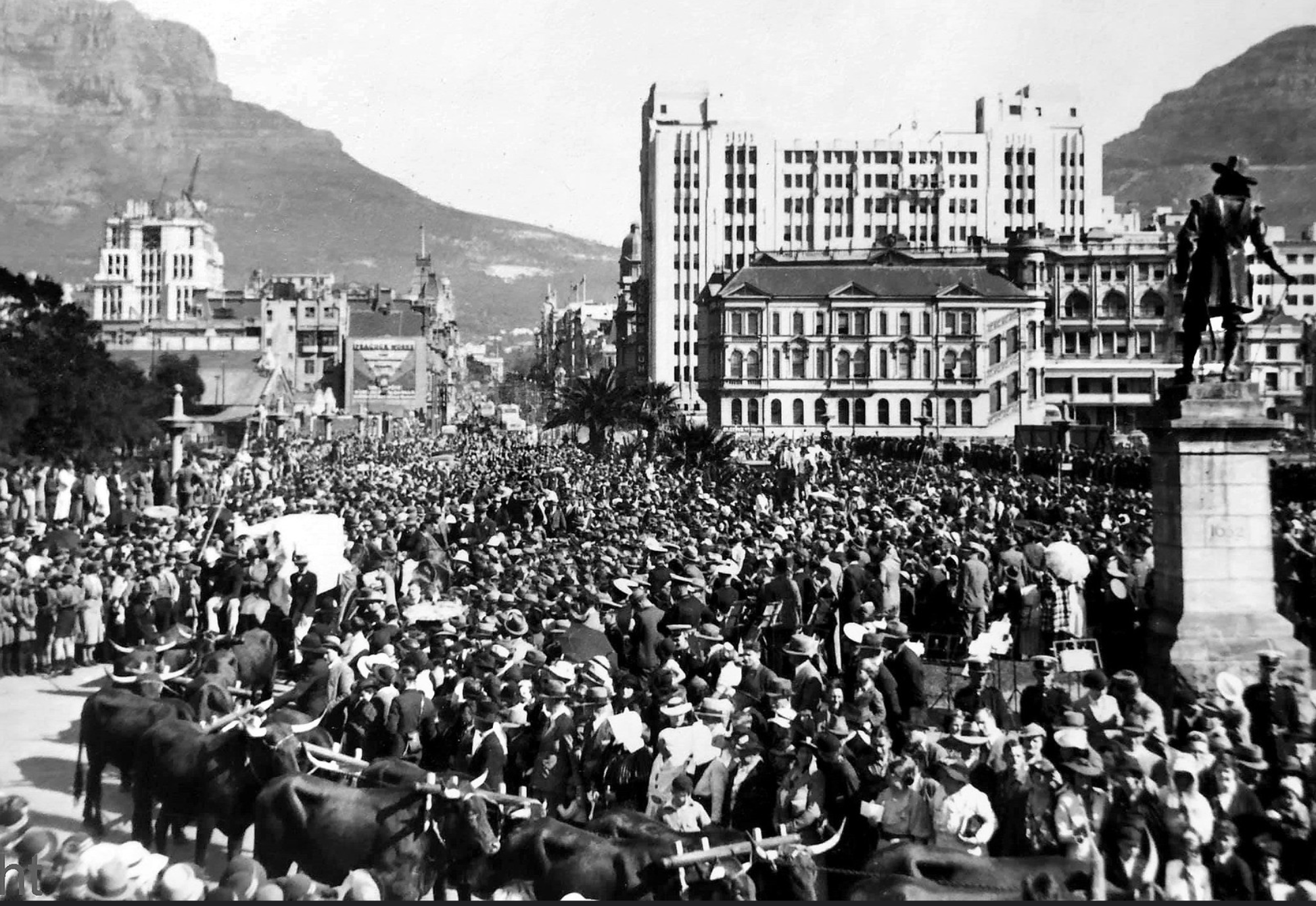
—————————————–

References
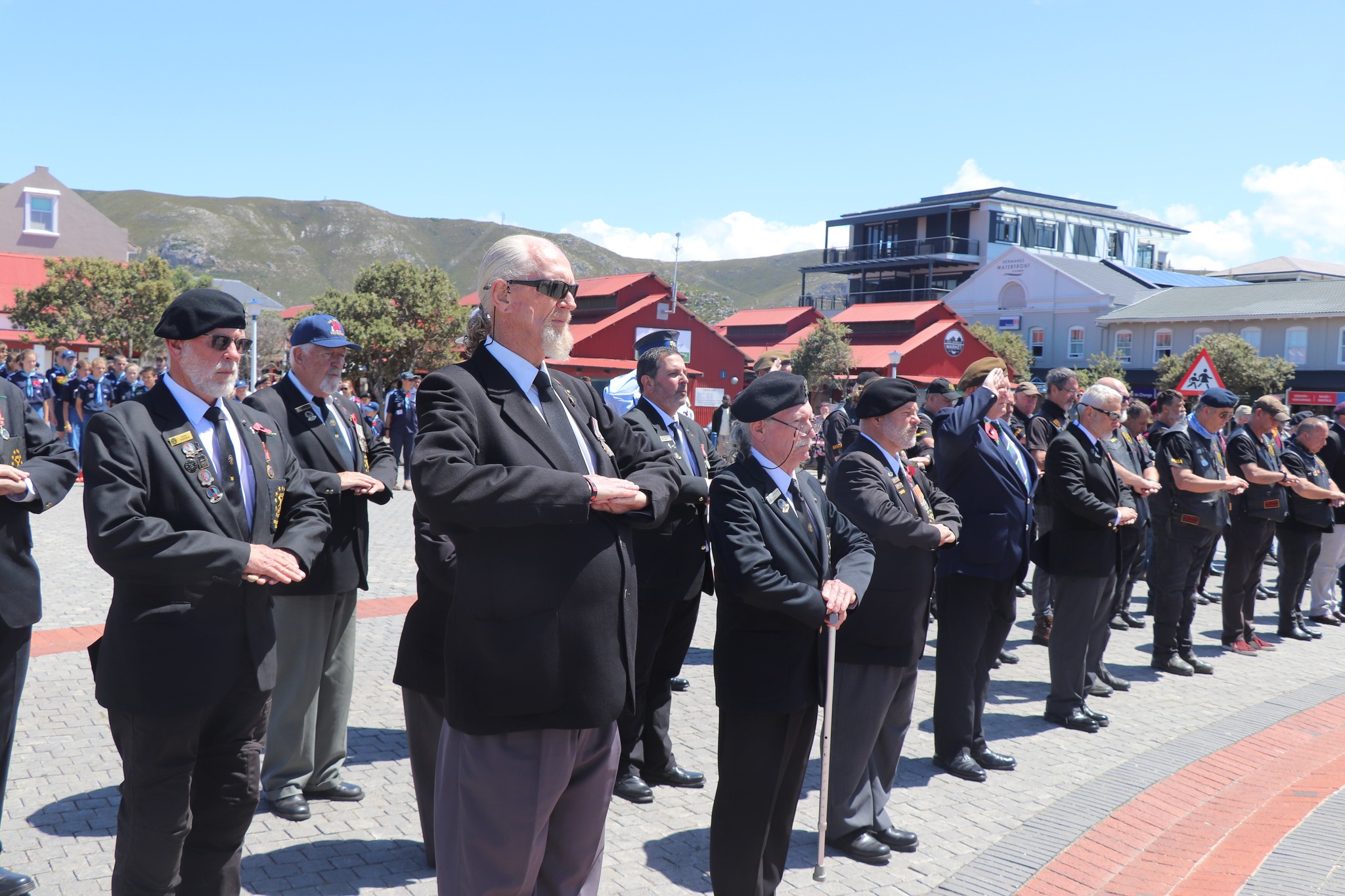
Malherbe, Earnest G ‘Education in South Africa’ 1977 and ‘The Bilingual School’ 1945. The ‘White tribe of Africa’ David Harrison 1987. Day to Day history of the South African Navy – Chris Bennett.