

Little known historic fact but it was a South African Air Force reconnaissance aircraft which first discovered and then photographed the Auschwitz-Birkenau extermination camp. This is one of the aerial photos.

Painting by Derrick Dickens of two SAAF Mosquito PR Mk XVI s of 60 Squadron.
Mosquito XVI aircraft of No. 60 Squadron South African Air Force operating from Foggia Airfield Complex, Southern Italy in 1944, carried out detailed large-scale photographic surveys of German held areas, eventually ranging over the Alps and deep into Germany and German occupied territory.
During one of these missions in Spring 1944, a SAAF 60 Squadron plane piloted by Lt. C.H.H Barry and his navigator Lt. I McIntyre photographed Auschwitz when they went to photograph the rubber refinery plant next to the camp. They were reconnoitring the plant which was earmarked for bombing by the USAAF (USA Air Force).
When the photos of the complex next to the plant were analyzed, they found rows of people lining up in the camp. The photos also showed chimneys and all the other characteristics of a camp for prisoners. This, with other intelligence, brought them to the conclusions that extermination camps existed.
This image is an enlargement of part of a photo of Auschwitz-Birkenau taken by the SAAF on Sortie no. 60PR/694.
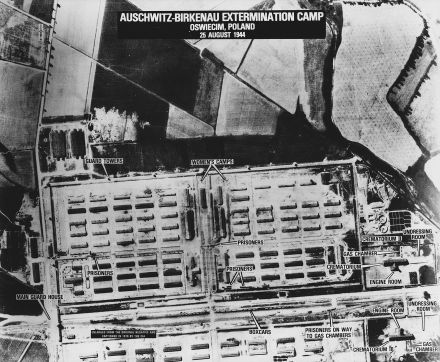
Clearly seen on this image is the selection process of a recently arrived transport visible on the ramp has been completed, and those selected to die are being to taken to Crematorium II. Also visible is a cultivated garden in the courtyard of Crematorium II, the open gate into it, and Crematorium III. The basement undressing rooms and gas chambers of both complexes can also be seen.
When these photo’s were taken by 60 Squadron SAAF, the Squadron was working for the USAAF heavy bomber Squadrons in Italy, so the South Africans handed the film to the Americans to analyse and strategise. Kept secret for a long time, these annotated images of the film were only finally released by the Central Intelligence Agency in 1979.
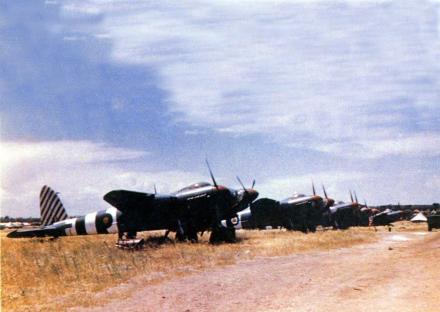
Mosquitos mark XVI of No 60 Squadron South African Air Force, at San Severo Airfield, part of the Foggia Airfield Complex, Southern Italy, 1944. The red and white stripes on the tail fin (known as Barber Shop stripes) served as identification to Allied fighter pilots (especially American pilots) who mistook them for enemy aircraft, incorrectly thinking they where German Me 410’s.
Auschwitz was operational as an extermination camp from May 1940 to January 1945, it held mainly Jews as well as Poles, Romani and Soviet Prisoners of War. In all it is estimated that 1.1 million people were murdered there.
Extermination of human beings deemed undesirable to Nazi German doctrine began on an industrial level at Birkenau in March 1942 when the first gas chamber was established called the “red house” (called Bunker 1 by SS staff). A second brick cottage, the “white house” or Bunker 2, was converted some weeks later. These structures were in use for mass killings until early 1943. Himmler visited the camp in person on 17 and 18 July 1942. He was given a demonstration of a mass killing using the gas chamber in Bunker 2.


In early 1943, the Nazis decided to increase the gassing capacity of Birkenau to an elevated industrial level. Crematorium II, which had been designed as a mortuary with morgues in the basement and ground-level incinerators, was converted into a killing factory by installing gas-tight doors, vents for the Zyklon B (a highly lethal cyanide based pesticide) to be dropped into the chamber, and ventilation equipment to remove the gas thereafter. It went into operation in March. Crematorium III was built using the same design. Crematoria IV and V, designed from the start as gassing centers, were also constructed that spring. By June 1943, all four crematoria were operational. Most of the victims were killed using these four structures.
Towards the end of the war, Himmler, fearing the discovery of this most dark Nazi program of extermination and in need of labour for the German war machine ahead of the Soviet and Allied advances, ordered the evacuation of all concentration camps, charging camp commanders with making sure that “not a single prisoner from the concentration camps falls alive into the hands of the enemy.”
On 17 January 1945, 56,000–58,000 Auschwitz detainees, of whom two-thirds were Jews, were evacuated under guard, most on foot, in severe winter conditions. Thousands of them died in the subsequent death march west.
Auschwitz was eventually liberated on 26 and 27 January by the Red Army (Soviet Russian), the soldiers found 7,500 prisoners alive and over 600 corpses. Among items found by the Soviet soldiers were 370,000 men’s suits, 837,000 women’s garments, and 7.7 tonnes (8.5 short tons) of human hair.
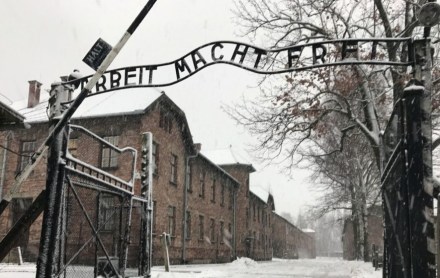
The Auschwitz complex with its false Nazi message “arbeit macht frei” (work sets you free) stands today as a sinister reminder of the cruelty of man, it is a very dark stain on the human race.
Written by Peter Dickens, additional research from Sandy Evan Hanes. Painting by the late Derrick Dickens of SAAF Mosquito copyright Peter Dickens. Photo references and sources include Wikipedia.
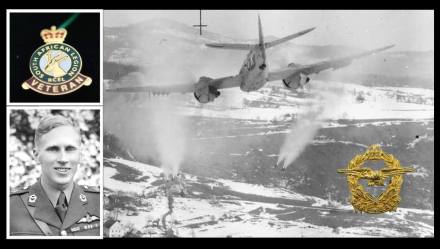
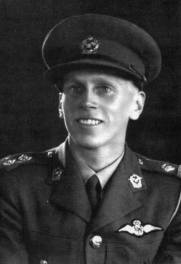 Having known Lt. Steve Stevens DFC, I remain in total awe of his generation. I met him in Wothing in England and Steve was 96 years young bed-ridden, in pain and weak – but he was no less the man, and this famous featured image of him firing rockets from his South African Air Force (SAAF) Beaufighter during WW2 says everything about him as a fighter pilot, but he was also a devout Christian who pioneered missionary aviation, leading a rich and interesting life. This is a little of his very remarkable story.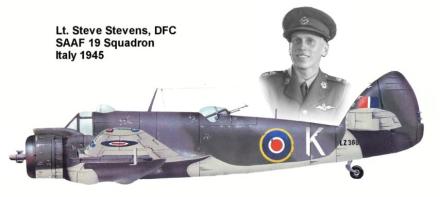
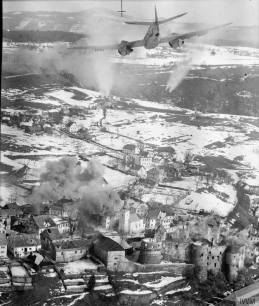 And this is the photograph, the SAAF Bristol Beaufighter TF Mark X of No. 16 Squadron South African Air Force seen in the image is been flown by Lt Steve Stevens as he releases its rocket projectiles at an enemy target in the town of Zuzemberk.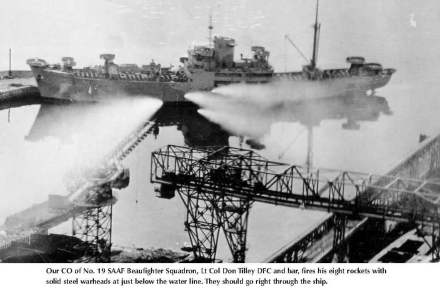
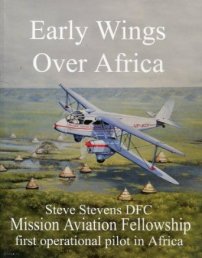 In Sudan, Steve flew a de Havilland Rapide – an eight-seater twin-engine wood and fabric covered biplane – not best suited for flying in Africa, but the best MAF could find and afford at that juncture. Over time, more and more airstrips were hacked out of jungle, bush, desert and grasslands, and Steve began to fly to other places where no planes had ever been before.
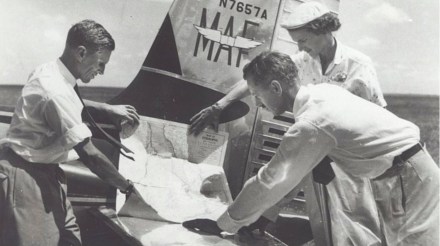 In 1970, after more than twenty years of service to the MAF cause, Steve and his wife Kay moved on to become early members of the National Festival of Light, forerunner of today’s CARE organisation. Steve later became Executive Director of Australian Festival of Light.
 I met Steve Stevens, when the South African Legion of Military Veterans initiated an outreach to him to see if there was anything we could do to help him as a frail care WW2 veteran in his 90’s, I was astounded when he replied that he was at peace with himself and how could he help the Legion instead. Steve then kindly donated signed copies of his books to the Legion so that we could fundraise for other initiatives. Cameron Kinnear and I visited him at his home in England and awarded him a lifetime honoury membership of the South African Legion, and we pinned his SA Legion ‘veterans badge’ on his lapel.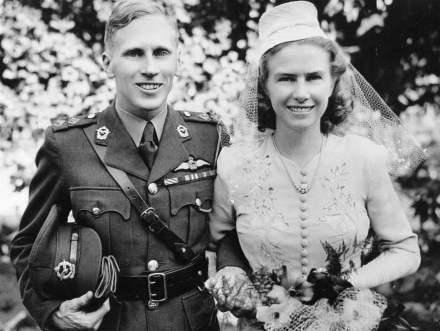


 The Observation Post