‘A sole survivor and a ship’s crest’; the South African Navy’s first loss – HMSAS Southern Floe

The month of February is also remembered as the “three ships” month in some small South African military veteran circles.  That’s because three of South Africa’s worst military disasters at sea – the SS Mendi (WW1), the SAS President Kruger, and this one the HMSAS Southern Floe (WW2) – all occurred in February.

Much effort by various associations in South Africa is put to remembering the Mendi and the President Kruger, however little regard is given to the SA Navy’s losses in World War 2.  Odd considering that during WW2  the most significant number of South Africans were lost at sea, yet scant regard is put to this epoch of the South African Naval sacrifice by way of remembrance and parades.

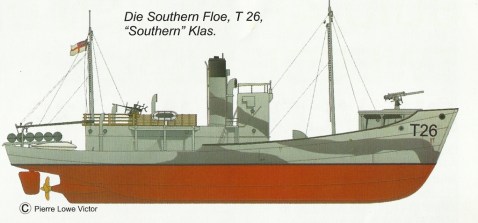
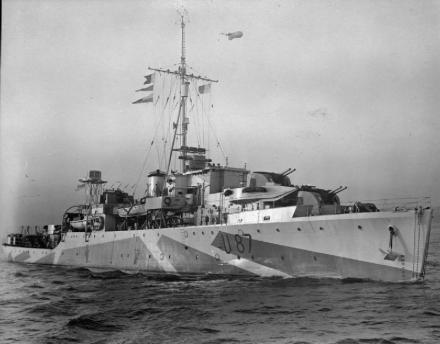
In all South Africa lost four ships in World War 2, all of them minesweepers, so lets look at the flotilla of South African Navy minesweepers (converted whalers) during World War 2, and the loss of the HMSAS Southern Floe, the first of these four minesweepers to be lost.
HMSASSouthernFloe_001_zps0bc9e903

A number of whalers were converted to anti submarine roles and commissioned into the South African Navy for service, they were part of the South African Seaward Defence Force anti-submarine flotilla.

Some of them were sent to the Mediterranean and based at Alexandria, Egypt – the HMSAS Southern Floe, the HMSAS Southern Sea and their sister ship the HMSAS Southern Maid – which is seen in this rare featured photograph in Alexandria Harbour in Egypt (In the foreground is the South African Navy’s HMSAS Protea, a Flower-class corvette).10372567_405970339572704_7046310110446388801_n

In 1941 – the HMSAS Southern Floe (Lt J E Lewis) and HMSAS Southern Sea arrived at Tobruk on 31 January 1941 to take over patrol duties from two of their two sister ships.

Although submarines were not a threat in the first six months of the Western Desert campaign, numerous floating mines pointed to the existence of extensive moored mine fields. Except for the sweeping of the narrow coastal traffic route and harbour entrances at this stage there had not yet been time to locate these fields with any accuracy, much less to clear them. The main duty of the two Southerns was alternately to patrol the nearest section of the swept channel and to escort shipping along it. The port at that time was subject to air raids, littered with sunken wrecks and possibly active ground-mines. On patrol, the duties were complicated by sandstorms that strong off-shore winds extended for many miles out to sea, resulting in low visibility, heavy cross-seas, and much discomfort to personnel. To these conditions were added the menace of the mine fields on one side and an ill-defined and unlighted coast on the other.
17546669_10154957768326480_68053892438750609_o

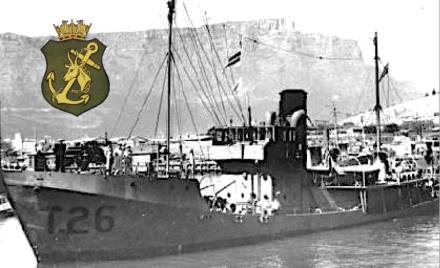
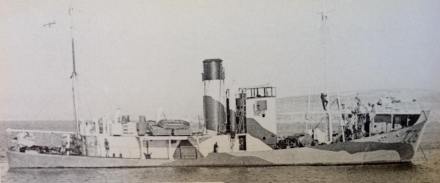
HMSAS Southern Floe T26

On the morning of 11 February Southern Sea arrived at the patrol rendezvous, two miles east of Tobruk, but found no sign of Southern Floe. This was reported but caused no concern at first; it had blown hard enough all night for the ship to find herself far from her station at dawn. However that evening, a passing destroyer picked up one man clinging to some wreckage – all that remained of Southern Floe and her company.

This sole survivor was Leading Stoker C J Jones, RNVR (SA), lent from HMS Gloucester to fill a vacancy just before Southern Floe sailed from Alexandria. The HMS Gloucester had a large contingent of South African Naval Force on it and was to be lost later in the war (see Observation Post A “grievous error”; Recounting South African Sacrifice on the HMS Gloucester).

Jones was almost insensible after 14 hours in the water, but afterwards stated that he had been in the stokehold when, at about 04:00 there had been a heavy explosion and the ship had filled rapidly. In the darkness, he had found his way into the flooded engine-room and struggled out through the skylight as the ship sank. He had seen a few other persons in the water at that time and later had done his best to support a wounded man. In the absence of other evidence there is little doubt that a mine, either floating or moored, was the cause.

The loss of the ship, although but a trivial incident in a world war, came as a sudden and grievous blow to the flotilla and to the SDF. The ships had spent a barely one month on the station and at home few were aware that they had arrived and had been in action. The casualties were the first naval losses suffered by the South African Seaward Defence Force and the sense of loss in the service was profound.

A relic of Southern Floe was brought to South Africa long after, in the form of a small brass ship’s badge, found amidst the other debris of battle 70 miles inland from Benghazi. Supposedly it had floated ashore, attached to a wooden fragment of the ship’s bridge, and been carried thence by an Italian souvenir-hunter.


After the war Stoker Jones, the sole survivor placed a memorial notice in the Cape Town newspapers. He continued to do this for many years until he also passed away.
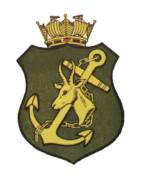
22308811_10155537271456480_3745202244434378650_nWe salute these brave South Africans – here is the honour roll for the HMSAS Southern Floe (MPK means “Missing Presumed Killed”).

ANDERS, John, Steward, 69637 (SANF), MPK
BOWER, Robert, Stoker 1c, 69935 (SANF), MPK
BRAND, Leslie A, Able Seaman, 69828 (SANF), MPK
CAULFIELD, Patrick, Steward, 69802 (SANF), MPK
CHANDLER, Charles R D, Cook (S), 69613 (SANF), MPK
CHENOWETH, Richard, Stoker 1c, 67420 (SANF), MPK
FAIRLEY, Alexander E, Sub Lieutenant SANF, MPK
FRIEDLANDER, Cecil A, Able Seaman, 114703 (SANF), MPK
GARDINER, Elliott, Able Seaman, 67260 (SANF), MPK
GREENACRE, John H, Leading Seaman, 69677 (SANF), MPK
HEASMAN, Gratwicke E E, Engine Room Artificer 4c, 69784 (SANF), MPK
HOGG, Roy S, Sub Lieutenant, SANF, MPK
INNES, Ian Mck, Sub Lieutenant, SANF, MPK
LEWIS, John Edward Joseph, :Lieutenant, 70019 (SANF), MPK
MARSH, Reginald H Y, Able Seaman, 69911 (SANF), MPK
MITCHELL, William N, Able Seaman, 69787 (SANF), MPK
NEL, Eloff R, Able Seaman, 69635 (SANF), MPK
NICHOLSON, Douglas O, Able Seaman, 66833 (SANF), MPK
PUGH, John R, Able Seaman, 66877 (SANF), MPK
RYALL, David R, Able Seaman, 69999 (SANF), MPK
SHIMMIN, William, Leading Stoker, 69661 (SANF), MPK
SIENI, Joseph F, Able Seaman, 69788 (SANF), MPK
SNELL, Harold W, Leading Telegraphist, 69827 (SANF), MPK
STANLEY, Gordon J, Able Seaman, 66963 (SANF), MPK
WALTON, Dudley N, Sub Lieutenant, SANF, MPK
60eac9_b5b492be3f049f004e96e728a4a7b8cc.jpg_256

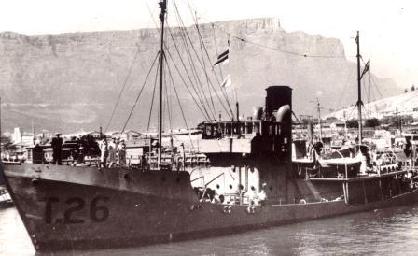
HMSAS Southern Floe in Cape Town

For more stories on other South African minesweepers lost during World War 2, please follow these Observation Post Links:

The feisty South African minesweeper that went down fighting – HMSAS Parktown

“Under a hail of shells”; Recounting the bravery and loss of HMSAS Bever

The last South African Navy ship to be lost in action; HMSAS Treern


Written and Researched by Peter Dickens. Many thanks to Glen Knox from the South African Naval Museum for the story content and his tireless work keeping this history alive. Casualty Lists of the Royal Navy and Dominion Navies, World War 2 by Don Kindell. Images of South African vessels courtesy Allan du Toit and reference from his book ‘South African Fighting Ships’.
The sinking of the ‘City of Johannesburg’

The submarine “U Boat” menace of the Second World War became commonly known as the “Battle of the Atlantic”, but it also extended to all oceans and the strategic point rounding the South African Cape became a focus point of the submarine war and German attention – and subsequently the attention of The South African Navy and her British Allies.

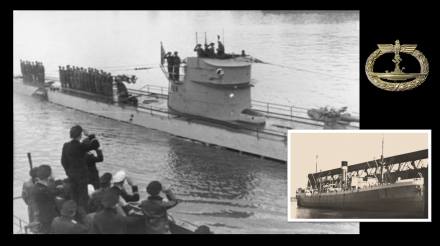
2000px-Pirate_FlagA typical example of the danger, survival and sacrifice in South African waters is the story of the sinking of the “City of Johannesburg” by German submarine U-504 (seen in the featured image above).  U-504 was a Type IXC U-boat of Nazi Germany’s Kriegsmarine during World War II, the SS City of Johannesburg was a merchant vessel carrying supplies off the coast of East London, South Africa.
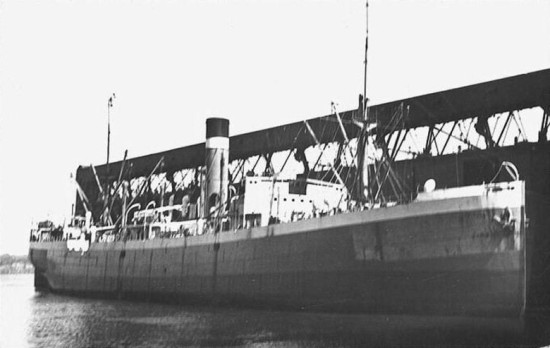
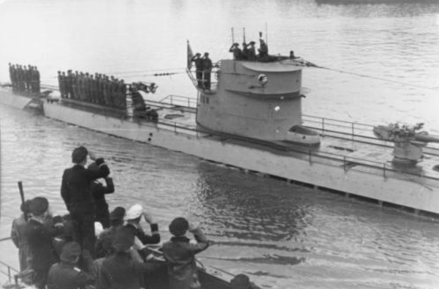
Of the merchantmen on board the SS City of Johannesburg, 90 in total, 4 perished and there where 86 survivors. Their survival in open water is remarkable considering the conditions in South African waters and typical to the dangers of operating at sea in WW2. This is one of many stories of the sinking of vessels and bravery of men off the coast of South Africa.

SS_City_of_Johannesburg

SS City of Johannesburg

At 23.12 hours on 23 Oct 1942 the unescorted City of Johannesburg (Master Walter Armour Owen) was hit by one of two torpedoes from U-504 while steaming on a zigzag course at 10.75 knots about 80 miles east-southeast of East London, South Africa. The torpedo struck between the deep tank and #4 hold on the port side, blowing the hatches off the deep tanks and opening a hole that flooded these compartments immediately. All electricity failed and the engines had to be stopped when the engine room was flooded a few minutes later, causing the ship to settle by the stern with a slight list to port. No distress signals could be sent as the main aerial was brought down and fouled the emergency aerial and it was later discovered that the portable wireless set had been damaged while lowering into a lifeboat and was useless.
Two lifeboats had been destroyed and the rafts aft were jammed in the rigging, so the 21 crew members, 60 Lascars (Indian sailors) and nine gunners (the ship was armed with one 4in, one 12pdr, two 20mm and four machine guns) abandoned ship in the four remaining lifeboats which were launched safely within five minutes despite rough sea and high swell.

Before leaving the gunners tried to train the 4in gun, but it was damaged and could no longer be turned. The master was the last to leave the ship after making sure that no one was left on board. At 23.40 hours, the U-boat surfaced after firing a coup de grâce at the ship which was hit at #2 hatch on the port side, but only settled further on an even keel.

The Germans then questioned the survivors in one of the lifeboats and left the area after the City of Johannesburg suddenly broke in two amidships and sank at 00.00 hours. Four Lascars were lost.

The boat in charge of the master had 11 persons on board and rescued two men swimming in the water. Quartermaster H. Birnie was picked up by a boat with 28 persons and later stated that he was alongside the U-boat after it had surfaced and even touched the plates when he was told to swim astern to the lifeboat. He was asked no questions and the engines of the U-boat remained stopped until the man was clear.

The other two boats held 19 respectively 25 persons, but owing to the rough sea the lifeboats could not approach each other to even up the survivors in them. The master told the other boats to remain in the vicinity while his boat set sail in order to get help and made 140 miles in 24 hours before he and twelve survivors were picked up by the Dutch steam merchant Zypenberg about 8 miles from the coast in 33°50S/26°50E on 25 October and landed at Durban two days later.

However, the boat with 19 occupants also set sail and only made half the distance before they were rescued by the British motor merchant King Edwin on 26 October and landed at Cape Town three days later. The 54 survivors in the two boats that waited near the sinking position were picked up by the British steam merchant Fort George after 12 hours in 33°24S/28°31E and landed at Port Elizabeth on 25 October.

U-504: South African Patrol

This submarine had caused a lot of damage off the coast of South Africa, here is a short history of her 4th Patrol in South African waters:

U-504

U-504

U-504 left Lorient on 19 August 1942 and sailed south to the waters off South Africa as part of Wolfpack Eisbär. There, on 17 October, about 450 nautical miles (830 km; 520 mi) south of Cape Town, she torpedoed and sank the unescorted British 5,970 ton Empire Chaucer. On the 23rd she sank the 5,669 ton SS City of Johannesburg, and on the 26th she attacked the unescorted American 7,176 ton Liberty ship Anne Hutchinson. The crew abandoned their vessel after she was hit by two torpedoes and fatally damaged. However the ship remained afloat, and on the 29th was taken in tow by the South African armed trawler HMSAS David Haigh (T13) and a harbour tug. Lacking sufficient power to tow the ship to port explosive charges were set, cutting the ship in two. The aft section sank, and the fore section was towed into Port Elizabeth. Part of the crew were picked up at sea, while the rest made it to land in their lifeboats.

U-504 sank two more British merchant ships on 31 October, about 200 nautical miles (370 km; 230 mi) east of Durban. First the unescorted 7,041 ton Empire Guidon, then the unescorted 5,113 ton Reynolds, which, hit amidships and in the stern, capsized and sank within seconds.

Finally on 3 November she sank the unescorted and unarmed Brazilian 5,187 ton cargo ship Porto Alegre en route from Rio de Janeiro to Durban, off Port Elizabeth. Hit by a single torpedo, the crew abandoned ship before the U-boat delivered the coup de grâce. Only one crew member was lost. The survivors were questioned by the Germans, and later made landfall about 50 nautical miles (93 km; 58 mi) from Port Elizabeth on 7 November.[22] U-504 arrived back at Lorient on 11 December 1942 after a patrol lasting 115 days.

The fate of U-504

U-504 also met a grisly fate.  Whilst on her 7th Patrol U504 was depth charged and sunk with all hands on board (53 in total) on 30 July 1943 in the North Atlantic north-west of Cape Ortegal, Spain, in position 45.33N, 10.56W, by depth charges from the British ships HMS Kite, HMS Woodpecker, HMS Wren and HMS Wild Goose.

HMS_Kite_IWM_FL_22973

HMS Kite

HMS Kite’s Commanding Officer at the time of the sinking of U-504 was the famous U-boat hunter Captain “Johnnie” Walker, DSO and three bars.

The Commander from her one patrol off South Africa to when she was lost are two different men (and possibly even different crew as well).

12642880_10208446827553702_7537731843413712051_n

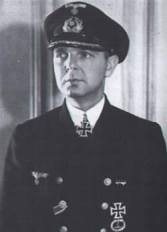
KrvKapt Hans-Georg Friedrich Poske

During the South African Patrol (4th patrol) the Commander was KrvKapt Hans-Georg Friedrich Poske (he command U-504 for the first four War Patrols). KrvKpt Wilhelm Luis did the next three patrols, his third being the fatal one.

This U Boat spent a total of 372 days a sea and sank 85,299 tons of shipping. All ships sunk were under her first commander KrvKapt Hans-Georg Friedrich Poske and on the second, third and fourth patrols.  U-504’s most successful patrol in terms of tonnage suck was on her South African patrol.

KrvKapt Hans-Georg Friedrich Poske survived the war, he also served post war as well and retired in 1963.  Note on the image provided  he was awarded a Knights Cross.


Researched by Peter Dickens

Reference and thanks to Sandy Evan Hanes for additional input.

Related Observation Post links:

The Leonardo da Vinci  The Leonardo da Vinci wreaks havoc off South Africa’s coastline

U-177 The worst maritime loss off Durban’s coast; The sinking of the SS Nova Scotia


Simonstown Agreement – a thorn in the UN’s position on South Africa

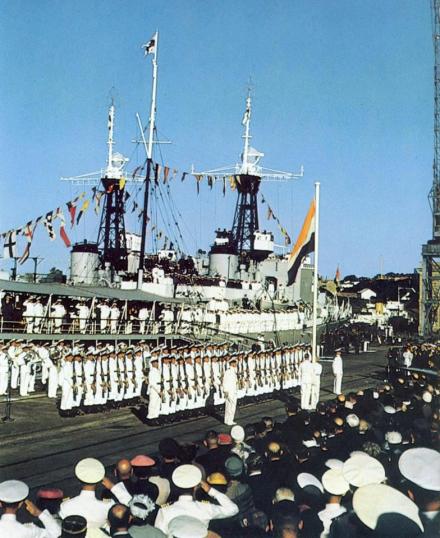
After the signing of The “Simonstown Agreement”, in this colourful ceremony, the Simon’s Town Naval base was handed over by the British to the Union of South Africa on the 2nd April 1957 – after being in British hands since 1813.

The Simonstown Agreement between the United Kingdom and South Africa had been signed less than two years before this ceremony on 30 June 1955. Under the agreement, the Royal Navy gave up its naval base at Simon’s Town, South Africa, and transferred command of the South African Navy to the government of South Africa.

In return, South Africa promised the use of the Simon’s Town base to Royal Navy ships. The agreement also permitted South Africa to buy six anti submarine frigates, ten coastal minesweepers and four seaward defence boats from the UK valued at £18 million over the next eight years. In effect, the agreement was a mutual defence arrangement aimed at protecting sea routes between the UK and the Middle East.

The agreement was controversial, especially with the United Nations, because of South Africa’s policy of Apartheid. The Agreement stood in stark contrast to United Nations resolutions against South Africa as the United Kingdom was still supporting the South African military by way of this quid pro quo agreement.

The United Kingdom terminated the agreement on 16 June 1975. However, ships of the Royal Navy still continued to call periodically at Simon’s Town and other South African ports, although the Royal Navy was not able to use any South African ports by the time the  Falklands War started in 1982.

South Africa was a member of the Commonwealth at the time the agreement was signed (South Africa left the Commonwealth in 1961), so the United Kingdom and South Africa took the position that the agreement was not an international treaty requiring registration with the United Nations under Article 102 of the United Nations Charter and continued regardless of the United Nations’ protests.

A personal perspective 

I often hear this old one from many people “we fought in the First and Second Wold Wars for Britain and in our hour of need they abandoned us” (referring to sanctions and fighting “terrorists”).  Well, that’s not strictly true, the Simonstown Agreement saw to it that South Africa was using British produced Buccaneer Fighter Bombers and Naval vessels at the onset of the Border War and the internal armed insurgency and well into it.  It’s obvious that after 1976 (the Soweto riots) that even this relationship would be strained let alone the implementation of Apartheid Legislation and the withdrawal by the National Party from the British Commonwealth of Nations – which would have made supporting South Africa exceptionally difficult for the United Kingdom in any event – and even then they continued military support well up to, and beyond the point where it became truely internationally impossible to continue to do so.

The past pride of the SA Navy

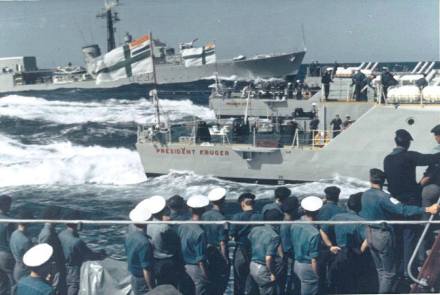
Stunning image of the South African Navy Frigates in their heyday. Here are the three President Class Frigates together, the SAS President Kruger, the SAS President Steyn and the SAS President Pretorius – neck to neck with the SAS Simon van der Stel – an old World War 2 era W Class Destroyer in the background, she was the oldest and the fastest of all these ships. Look at the bit between her teeth as she races forward.

Interestingly, the SAS Simon van der Stel started her illustrious life as HMS Whelp, saw WW2 service in the Far East and was even present at the formal Japanese surrender in Tokyo Bay.

Photo courtesy of the SAS President Steyn Old Boys and thanks to Norman Sander for the caption.

Epic Navy Style Water Skiing

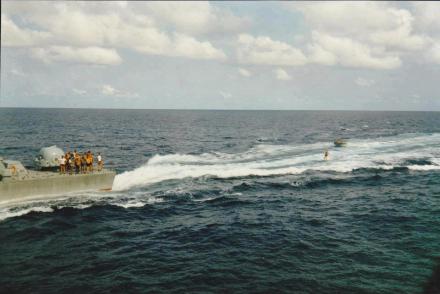
South African Navy task Force returning from a flag showing cruise to Taiwan in mid 1990. This fun photo showing typical South African spirit was taken of a South African Navy Strike Craft – SAS Jan Smuts towing Richard Snook who is seen water skiing behind it.

The photo was taken from the deck of the SAS Drakensberg travelling at about 20 – 25 knots (40-45 km/h). Another strike craft – the SAS Hendrick Mentz was also in attendance when this fun stunt was performed.

According to Richard Snook, the skier, “the water was a bit choppy, but I managed to stay up until we had given Admiral Woodburne the salute”.

Salute to you Richard for demonstrating a typically South African can do attitude and sense of humour.

Photo courtesy Geoff Johnstone.

The SADF’s finest hour

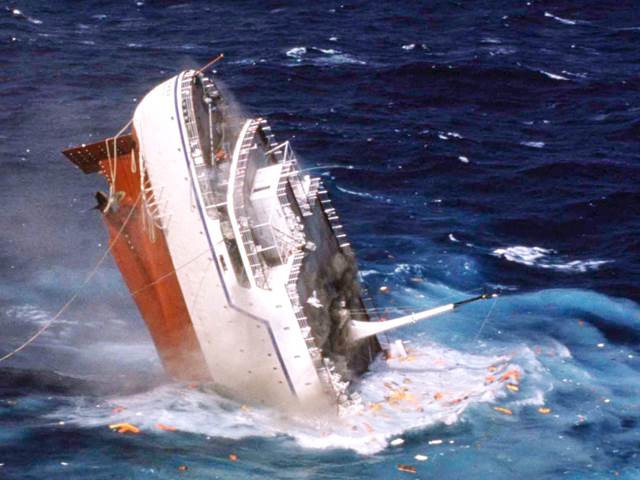
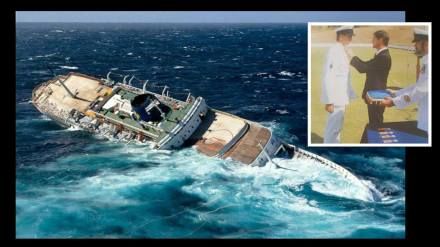
The tragedy of the MS Oceanos can be regarded as the finest hour for the SADF and more specifically one where both the South African Navy and South African Air Force proved their mantra as the best in Africa and more.  It is also regarded as one of the greatest and most successful maritime rescues ever undertaken – anywhere in the world.

ss-100520-oceanos-tease.1024;768;7;70;3

Not only was every soul saved, the SAN and SAAF personnel conducted themselves in great regard with a number of medals awarded for bravery, and even a Honoris Crux Gold awarded to Able Seaman Paul Burger Whiley (one of only six ever awarded).

On 3 August 1991, the Oceanos set out from East London heading to Durban. Unwittingly she headed into highly dangerous sea conditions with 40-knot winds and 9 m swells.

At approximately 21:30 while off the Wild Coast, a muffled explosion was heard and the Oceanos lost her power following a leak in the engine room’s sea chest , the ship was left adrift and then started to sink. The crew at this stage did not conduct themselves with great decorum and reports indicated that they were quite prepared to save themselves and abandon the passengers.

Nearby vessels responded to the ship’s SOS and were the first to provide assistance. The South African Navy along with the South African Air Force launched a seven-hour mission in which 16 helicopters were used to airlift the passengers and crew to a site south of Coffee Bay. Of the 16 rescue helicopters, 13 were South African Air Force Pumas, nine of which hoisted 225 passengers off the deck of the sinking ship. All 571 people on board were saved.

To see just how dramatic this sinking was, here’s the original footage – think, if the South African Navy and Air Force hadn’t acted as they did what the cost in lives would have been:

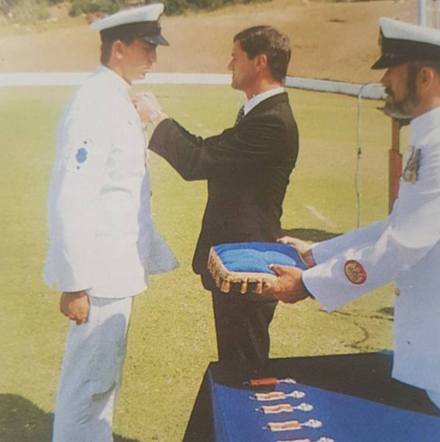
Of the many awards and citations of bravery, one stands out. Able Seaman (AB) Paul Wiley from the SAS Scorpion was presented with the Honoris Crux Gold Decoration by the then Minister of Defence, Mr R.P. Meyer on the 6 March 1992.

He was cited as the first diver to be lowered aboard the MV Oceanos, and although he was severely beaten against the ship’s superstructure, he reached the deck.
Under extremely trying conditions he then succeeded in creating order and stability among the passengers. He then started hoisting passengers, on the first lift he accompanied a survivor up to the helicopter, after which it took a further 10 minutes of nerve-racking hovering to get him back on the deck.

During this maneuver, after being severely battered against the railing of the ship he was flung out of the hoisting strap and fell to a deck lower than intended. Thereupon a male survivor also fell out of a hoisting strap and fell 40 meters into the mountainous swells. AB Whiley, disregarding his own life, dived into the treacherous seas and on reaching the semi-conscious passenger, revived him and assisted him into a rescue craft.

Not quite finished Paul Whiley then swam back to the sinking ship and was confronted with the further difficulty of climbing back on board. Whilst scaling a ladder draped over the ship’s side, he was repeatedly beaten against the ship’s hull. However, his perseverance paid off and he managed to return to the deck to continue his vital task. After six hours aboard the Oceanos Able Seaman Whiley was one of the last persons to be hoisted from the stricken vessel.

27907820_2089229767972677_3950317368211174028_o

Roelf Meyer, the Minister of Defence, presenting the Honours Crux (Gold) to AB Paul Whiley at Silvermine on the 6 March 1992

This rescue proves beyond any shadow of doubt the exemplary level South Africa’s statutory forces had become by the early 1990’s.  This rescue cannot be politicised –  there are no “struggle heroes” in it, it has nothing to do with any political mantra or policy –  it stands as a pure example of the heroism, skill and professionalism of the statute forces of the time.  It truly is the SADF’s finest hour.

Honours

Consider this, the Honoris Crux is the highest SADF award for bravery and three levels of this award were issued, for accounts of bravery in the extreme, just on the MS Oceanos alone on the 4 August 1991, were the following:

Honoris Crux (Gold): AB. Paul Burger Whiley (as per the account above)

Honoris Crux (Silver): AB. Gary Ian Scoular.


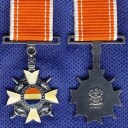
Honoris_Crux_(1975)Honoris Crux: Lt.-Cmdr. André Geldenhuys; PO. Frans Hugo Mostert; LS. Darren Malcolm Brown; LS. Luke James Dicks.  All from the South African Navy, all from the Divers School.
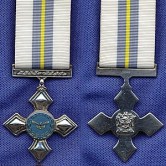
In addition to Honoris Crux, consider the following decorations for bravery and actions above the call of duty which were also won on that day by South African Air Force personnel:

Air_Force_Cross_(CA)The Air Force Cross decoration recipients: Kmdt. Eric Brennan Elphick; Kmdt. Anthony Charles Hunter; Maj. Phillip Fenwick; Maj. Anthony Wright Johnson; Maj. Martin Johannes Hugo Louw; Maj. Hermanus Frederik Steyn; Maj. André Stroebel; Capt Anton Botha, Capt. René Martin Coulon; Capt. Peter Evans Hanes; Capt. Charles Glen Goatly; Capt. Hendrik; Capt Jacques Hugo; Capt. Tarri Jooste; Capt. Johannes Meintjies; Capt.. Slade Christoper Thomas; Capt. Francois Johann Weyers; Lt. Mark Graig Fairley; WO2 William James Riley; F/Sgt  Norman Herbert Askew-Hull; Capt. Len Pienaar; F/Sgt Frans Campher; F/Sgt Daniël Francois Bezuidenhout; F/Sgt. Daniël Roedolf Jacobs; F/Sgt Christoffel Jacobus Pedlar;  F/Sgt. Philip Davey Joseph Scott; F/Sgt. Frans Schutte; F/Sgt. Willem Hendrik Steyn.
Mentioned in Dispatches.

South African Air Force: Brig. T.J.M. de Munnink, SD; Brig. R.S. Lord, SD; Col. G.A. Hallowes; Col. B.J. Kriegler; Col. L.E. Weyer; kmdt. D.B. Janse van Rensburg; Maj. W.H.W. van Wyk.  South African navy: Capt. (Naval). P.C. Potgieter; Capt. (Naval). R.D. Stephen; Cdr. A.G. Absolom; WO1 P. Hutchinson.

In conclusion

Quickly forgotten now as these fine men and woman are now painted as “Apartheid Forces” and great deeds such as this rescue are confined to a history nobody references or even considers anymore.

However this rescue is still regarded as the greatest and most successful sea rescue of its kind – to have ever been undertaken in modern maritime history. Under current cut-backs and capability restraints it is unlikely that the South African National Defence Force can ever replicate such a rescue if presented with it again.

It stands directly in the way of the current ANC’s political narrative and therefore it is another ‘inconvenient truth’ to be ‘passed over’ when referring the Permanent Force and National Service Conscript heroes of South Africa.


Written and researched by Peter Dickens

When “nuggets” of history make a BIG difference

Sometimes you get a surprise that leaves you speechless. This is when you realise that your dedication to military veterans actually makes a difference.  This is a mail I received and I’ve added the original post below.

Letter from Chris Crossley

Hi Peter,
Just another story for you! This post you put up on the Legions page has some amazing history which you wouldn’t know about but I am happy to share with you to show my gratitude for these “nuggets” of info you share with us.

My wife, Tracy, was an adopted child who after 35 years found her birth parents. Wonderful people they turned out to be and we are building a relationship with them that is priceless. As things go, curiosity led us to find out about family history and Tracy’s birth Dad told us about an uncle of his that was lost during the war. He was in the SAN and went down with “some” ship somewhere. He was married at the time and his wife, on hearing the news that her husband was lost at sea (MIA) never gave up on the hope of his return to Durban because he was never seen and not confirmed deceased. Because of this, she never remarried and passed away many years later, remaining faithful to her husband. Her husband was Roland Redman who served with the SA Navy volunteers on the HMS Dorchester that your story includes. His name is included in the Role of Honour for the Dorchester.

None of the wider family have ever known what happened to him and the facts and details of his service were not known by the surviving family members either. This last Saturday evening, I was talking to my wife’s birth Dad when he recounted the scant details he had of his uncle. I went on line and found your article and shared it with him on fb. Well he was overcome by this information as well as other members of his family and now for the first time in seventy odd years the facts of Uncle Roland, his service and his sacrifice are now known and cherished by his family left behind.

As an historian, I am sure this story will be something that you can cherish as your post has made a huge difference to some wonderful people! Thank you.

Chris Crossley

This is the original post Chris is referring to which I placed on The South African Legion’s Facebook page:

The Article – The sinking of the HMS Cornwall and HMS Dorsetshire.

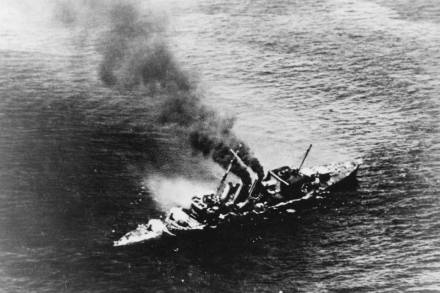
This is a image of the HMS Cornwall under attack just prior to her sinking, it was taken by the Japanese attack aircraft. A number of South African Navy personnel were lost with this ship whilst seconded to the Royal Navy during World War 2, as well as on the HMS Dorsetshire in the same attack.

As Simon’s Town was a Royal Navy base, men volunteering for the “South African Naval Forces” (SANF) to fight in World War 2 where either allocated to Royal Navy ships (titled HMS – His Majesty’s Ship) or on South African Navy ships (tilted HMSAS – His Majesty’s South African Ship), therefore whenever a large Royal Navy ship was lost during the war it is almost guaranteed that a number of South African Naval Personnel (SANF) were lost with it.

On 4 April, the Japanese carrier fleet was spotted and the two cruisers HMS Cornwall and HMS Dorsetshire set out for Addu Atoll in pursuit of the Japanese. On 5 April 1942, the two cruisers were sighted by a spotter plane from the Japanese cruiser Tone about 200 miles (370 km) southwest of Ceylon (now Sri Lanka).

As part of the engagement known as the Easter Sunday Raid, a wave of dive bombers led by Lieutenant Commander Egusa took off from Japanese carriers to attack Cornwall and Dorsetshire, 320 km (170 nmi; 200 mi) southwest of Ceylon, and sank the two ships.

British and Allied losses were 424 men killed; 1,122 survivors spent thirty hours in the water before being rescued by HMS Enterprise and two destroyers.

Total South African (SANF) losses on the HMS Cornwall and HMS Dorsetshire were as follows (MPK means “missing presumed killed”):

HMS Cornwall

BATES, John S, Stoker 2c, 68924 (SANF), MPK
BESWETHERICK, Hedley C, Ordinary Seaman RNVR, 86671 (SANF), MPK
BOTES, John S, Stoker 2c RNVR, 68924 (SANF), MPK
COMMERFORD, Noel P, Able Seaman RNVR, 66493 (SANF), MPK
CRAWFORD, Cecil E, Act/Engine Room Artificer 4c RNVR, 67922 (SANF), MPK
DU PREEZ, Charles P H, Able Seaman, 68175 (SANF), MPK
DUTTON, Charles C, Stoker 2c RNVR, 68949 (SANF), MPK
HANSLO, Raymond F, Able Seaman RNVR, 68295 (SANF), MPK
KEITH, Kenneth I B, Able Seaman RNVR, 66742 (SANF), MPK
KENYON, Graeme A B, Able Seaman RNVR, 68002 (SANF), MPK
KIRSTEN, Monty G W, Able Seaman RNVR, 68917 (SANF), MPK
LAW, Edward, Act/Engine Room Artificer 4c RNVR, 66760 (SANF), MPK
MCDAVID, William K, Stoker 2c RNVR, 69138 (SANF), MPK
MITCHELL, William A, Stoker 1c RNVR, 68796 (SANF), MPK
SPENCE, Noel W, Ordinary Seaman RNVR, 68732 (SANF), MPK
SQUIRES, John E, Ordinary Seaman RNVR, 68728 (SANF), MPK
STEPHEN, Eric B, Ordinary Seaman RNVR, 68861 (SANF), MPK
SWANN, Lawrence T, Stoker 1c RNVR, 68710 (SANF), MPK
THORPE, Maurice, Stoker 2c RNVR, 69140 (SANF), MPK
VERSFELD, Peter H S, Able Seaman RNVR, 68859 (SANF), MPK
VINK, Benjamin F, Ordinary Seaman RNVR, 68860 (SANF), MPK
WILLSON, Gerald F, Stoker 2c RNVR, 69006 (SANF), MPK
WRIGHT, Thomas H, Able Seaman RNVR, 68039 (SANF), MPK

HMS Dorsetshire

BELL, Douglas S, Ty/Act/Leading Stoker, 67243 (SANF), MPK
BRUCE, Alexander M, Stoker 2c, 67907 (SANF), MPK
EVENPOEL, Albert, Stoker 2c, 67909 (SANF), MPK
GEFFEN, Sender, Stoker 1c, 68035 (SANF), MPK
HOWE, Horace G, Ordinary Seaman RNVR, 68680 (SANF), MPK
KENDRICK, George, Stoker 2c, 67910 (SANF), MPK
MCINTYRE, Norman G, Able Seaman, 67446 (SANF), MPK
MCLELLAN, Robert, Ordinary Telegraphist, 67897 (SANF), MPK
MORROW, Douglas E, Able Seaman, 67989 (SANF), MPK
ORTON, Charles P, Able Seaman, 68009 (SANF), MPK
REDMAN, Roland A, Leading Stoker, 67406 (SANF), MPK
SCOTT, William J, Able Seaman, 68007 (SANF), MPK
SEVEL, Harry, Stoker 1c, 68100 (SANF), MPK
WILLETT, Amos A S, Stoker 1c, 67240 (SANF), MPK
WILLIAMSON, Walter N, Able Seaman, 67803 (SANF), MPK

Lest we forget the trememdous sacrifice of our countrymen in this world war for liberation.

Article by Peter Dickens

South Africans in the Royal Navy during WW2

Due to the fact that Britain was able to operate a naval base from Simon’s Town in South Africa, South Africans who volunteered to join the South African Navy usually landed up seconded in the service of the Royal Navy in WW2.

To the point where hardly a ship in the Royal Navy did not carry a South African contingent.  Also, any tragedy – involving high combat loss or a sinking of a Royal Navy ship during WW2 usually carries with it a South African (SANVR) honour roll.

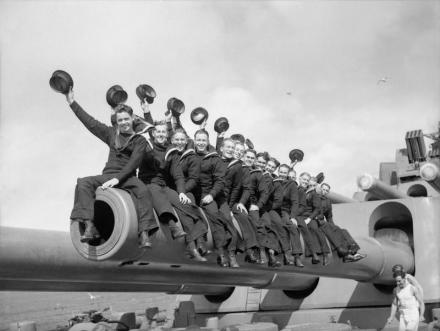
Here is a photo of the members of the South African Division of the Royal Naval Volunteers Reserve on board HMS NELSON posing for the camera sitting on one of the enormous 16 inch guns of A turret. July 1941.

Image – Imperial War Museum copyright.