That old familiar drone – SAAF Harvards

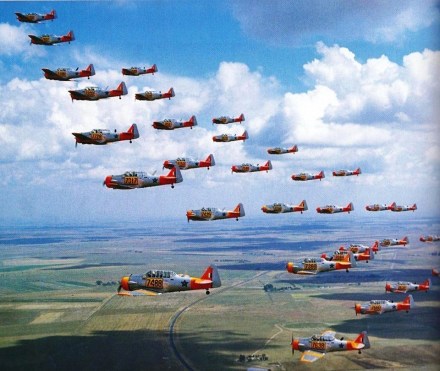
An image (and sound) some of us remember very well, the sky full of droning SAAF Harvards training our pilots.

The first Harvards arrived in South Africa in October 1942 for use by the Joint Air Training Scheme schools. By July 1944, 633 Harvard Mk IIA and III aircraft had been shipped to South Africa, with 555 surviving in October 1945 (379 MkIIAs and 176 Mk IIIs).

As the Harvards had been supplied on lend-lease by the US, 300 were shipped back to the UK from 1946, with the remainder being purchased by South Africa.

65 AT-6Ds (7634 to 7698) and 30 T-6Gs (7699 to 7728) were purchased from the USA during 1952-1956.

The worst maritime loss off Durban’s coast; The sinking of the SS Nova Scotia

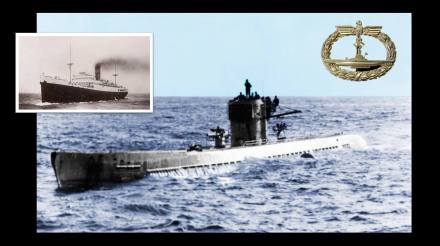
This rare colour image of U Boat 177 is at the heart of one of the worst maritime losses off South Africa’s coast during WW2 – this is the story of the sinking of the troopship SS Nova Scotia just off Durban by U177.  An “own goal” really as the SS Nova Scotia was returning with fellow Axis Force “Prisoner of War” Italian servicemen.

crew uboat watchout guard tropical binocular2

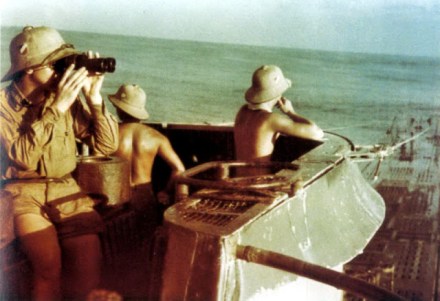
Rare original colour image of German submariners on the coning tower of U-177 conducting a watch.

During the Second World War, Durban was the embarkation and disembarkation port, first for the East African and Abyssinian campaigns and later for those in the Middle East and Italy. A large military hospital operated at Springfield and hospital ships plied between the port and the theatres of war in the north.

One such ship was the 6 796 ton SS Nova Scotia, belonging to the Furness Withy Group which had been converted into a troop carrier, operating mainly between Durban and ports along the African east Coast all the way up to the Suez. She carried troops from Durban to the “North” and on the return passage carrier Italian Prisoners of War (POW) to South Africa.

Nova-Scotia

SS Nova Scotia

SS Nova Scotia sailed from Massawa, in Italian East Africa (modern day Eritrea), on 15 November 1942 carrying 765 Italian POW’s, 134 British and South African guards and 118 crew.

Just after 06:00 on 28 November 1942 the Commander of U-boat 177, Kapitanleutnant Gysae, apparently sighted smoke from the SS Nova Scotia off the Zululand coast of Natal. Just after 09:00 U177 fired three torpedoes which struck the SS Nova Scotia who sank within 7 minutes. It appears that only 1 lifeboat was successfully launched leaving the rest of the survivors clinging to bits of the wreck.

U177 surfaced to establish the identity of the ship that they sank, but was unable to do so due to the chaotic situation. Two survivors were taken aboard for intelligence. German U-boat Command did inform the Portuguese authorities of the sinking of the SS Nova Scotia. As a result of this, the Alfonso de Albuquerque out of Lourenco Marques reached the scene of the sinking on 29 November 1942 and managed to rescue 190 survivors. Another survivor was picked up by a Destroyer three days later while a fortunate Italian POW floated ashore at Mtunzini two weeks after the incident.

Many of the casualties were washed ashore on the Natal (Kwazulu-Natal) beaches. 118 of the Italian POW’s were buried in a common grave in the Hilary Cemetery, Durban. Three crosses initially marked the grave, but in 1982, using a donation from the survivors of the SS Nova Scotia still living in Mozambique a new memorial was erected. This comprised a circular tomb topped by a broken stele rising from the waves inscribed with the words “To the memory of the Sons of Italy who were overcome by the ocean in the sinking of the S/S ‘Nova Scotia’ XXVIII-XI-MCMXLII The survivors sheltered in Mozambique”.

Since then the 118 casualties from the “SS Nova Scotia” have been exhumed from the Hilary Cemetery and along with the remains of the 35 Italian POW’s who died in the Natal Province are now buried in the grounds of the “Master Divinae Gratiae” Church, Epworth Road, Mkondeni, Pietermaritzburg. The church was built by Italian POW’s in 1944 and is today a South African National Monument.

The only woman to survive the ordeal was Alda Ignisti (later Lady Taylor) who, along with her daughter Valcheria, was on her way to Durban having been stranded in in Italian East Africa (modern day Eritrea) following the death of her husband.

U-177 also met with a watery grave – on 6 February 1944, she was sunk in the Atlantic west of Ascension Island, in position 10°35′S 23°15′W Coordinates: 10°35′S 23°15′W, by depth charges dropped by a PB4Y aircraft from US Navy Squadron VB-107. 50 men were lost; 15 survived, they were picked up by USS Omaha.

Similar to the sinking of the SS NOVA SCOTIA, here is U 177 again – however this time the ship shown sinking in the photo is the American ship MS ALICE F. PALMER – sunk by U-177 south of Madagasgar off the east coast of Africa on the 10th of July 1943.

supporting-poppy-appeal


Information source –  Charles Ross, additional research by Peter Dickens. The colour photo of U-177 is from the personal album of Burkhard Heusinger Von Waldegg who was the first watch officer of U-177 – Lt. Robert Gysae the commander of U-177 stands on the right hand side – note the Knights Cross.

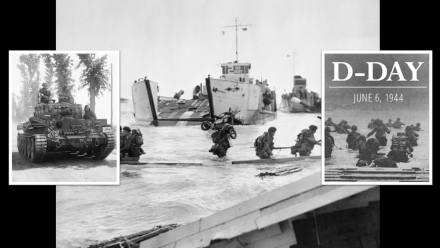
South African D-Day Hero: Cecil Bircher MC

Two South Africans seconded to the Royal Marines were awarded the Military Cross for gallantry on D-Day. This is the citation for one of them Lieutenant Cecil Arthur Douglas Bircher, South African Forces (attached to the Royal Marines).

“Lieutenant Bircher was Officer Commanding Troops in a Landing Craft Tank known as a LCT(A) carrying part of his troop. The craft engines broke down and it was towed from a position off the Isle of Wight to the assault area by a LCT and a LCI. On 6th June 1944 when approaching the beach at Bernieres-sur-Mer these craft had to cast off the LCT(A) which was left drifting sideways in a strong tide about 150 yards from the beach.

Although there was a heavy sea running and the beach was still under close range fire, Lieutenant Bircher, without hesitation plunged into the water and swam about 100 yards to the shore with the beach lines. On arrival on the beach he secured the lines to some stakes, enabling his craft to beach, and disembarked his section of Centaur tanks.

He subsequently led his section from the Canadian Sector in which he had landed into the sector of the 50th (N) Division to which he was attached although enemy opposition still persisted between the two sectors . Throughout the operation Lieutenant Bircher showed personal courage of the highest order and unflinching determination in the most adverse conditions to get his guns into action at the right time and place.”

large_000000

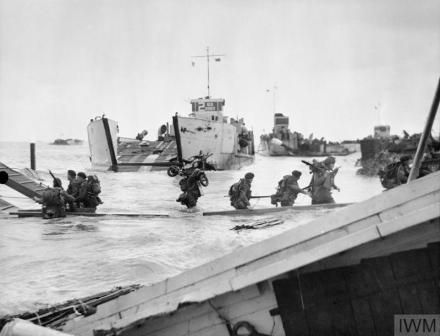
The chosen image shows Commandos of HQ 4th Special Service Brigade, coming ashore from landing craft on Nan Red beach, Juno area, at St Aubin-sur-Mer, 6 June 1944. An LCT (Landing Craft Tank) of the type that Lt Bircher was commanding troops in can be seen in the background.

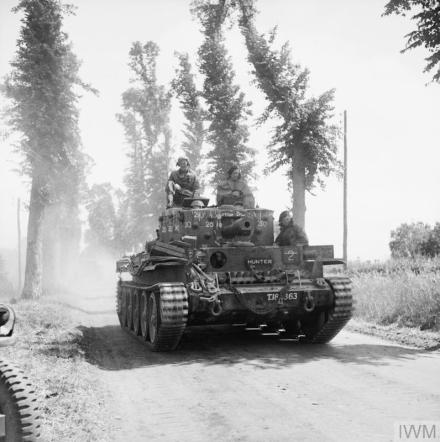
The type of tanks Lieutenant Bircher was off-loading from the LCT were Centaur IV tank of the Royal Marines Armoured Support Group, here is an image of one during Operation Overlord at Tilly-sur-Seulles, 13 June 1944.

RM tanks

Related Links and work on South Africans during D-Day

Albie Gotze “This bastard is going to kill me”; Albie Götze’s Legion d’Honneur

Tommy Thomas South African D-Day Hero: Tommy Thomas MC

Lyle McKay South African D-Day Hero: Lyle McKay

Royston Turnball Supreme South African heroism on Omaha Beach, Lt. Royston Turnbull DSC

Anthony Large South African D Day hero: Anthony Large BEM

Jan Smuts South Africa’s role in giving D-Day the green light


Posted by Peter Dickens. Image copyright – Imperial War Museum. Caption and citation reference ‘South Africa’s D Day Veterans’ by Cdr W.M. Bisset – SA Naval Museum.

Shackleton over Table Mountain

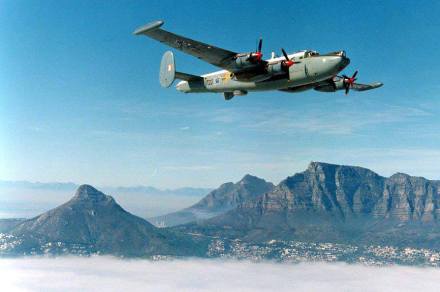
Stunning image of a South African Air Force Avro Shackleton flying over table mountain. The Avro Shackleton MR 3 was operated by 35 Squadron SAAF. Missions were mostly patrols of the sea lanes around the Cape of Good Hope, but some occasionally ranged as far as Antarctica.

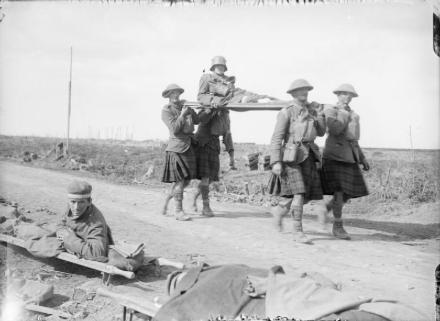
South African troops carry a wounded German during the Battle of Menin Road Ridge

Rare photo of frontline South Africans in World War 1, and also one which shows compassion. This photo was taken from the Battle of Menin Road Ridge on the 21st September 1917. Here four South African “Scottish” from the 4th South African Infantry Regiment are carrying a wounded German on a stretcher to a medical station. Other wounded German prisoners are seen in the foreground.

The Battle of the Menin Road Ridge 20th to 25th September 1917 was an offensive operation, part of the Third Battle of Ypres on the Western Front, it was undertaken by the British 2nd and 5th Armies in an attempt to take sections of the curving ridge, east of Ypres, which the Menin Road crossed. This action saw the involvement of the South African Brigade – along with British, Newfoundland and Australian formations.

The attack was successful along its entire front, though the advancing troops had to overcome formidable entrenched German defensive positions which included mutually supporting concrete pill-box strongpoints and also resist fierce German counter-attacks. A feature of this battle was the intensity of the opening British artillery support and “leap frog” tactic used by the British to consolidate taken ground.

The South African Brigade saw most of its action at Borry Farm, easily overrunning the German strong points, except for four pill-boxes around Potsdam House, which were eventually attacked on three sides and captured, after inflicting heavy casualties on the attackers.  The South African Brigade was also badly hit by German machine-gun fire from Hill 37, however in the end the South Africans managed to capture Bremen Redoubt and Waterend House in the Zonnebeek valley and extend a defensive flank.

Do note that the South Africans are wearing the “Murray of Atholl” (modern) kilts which was the dominant tartan worn by the South African Scottish in the 4th South African Infantry Regiment – Company A was made up of Cape Town Highlanders, Company B Transvaal Scottish and Company C was also Tvl Scottish in the main whereas Company D was made up of various caledonian regiments from the Orange Free State and Natal.

The tradition of the Murray of Atholl was carried over to The Transvaal Scottish Regiment and is still worn to this day, hopefully the SANDF will see its way clear to keeping the traditions of its fighting men and their sacrifice.

Image copyright and reference: Imperial War Museum


The past pride of the SA Navy

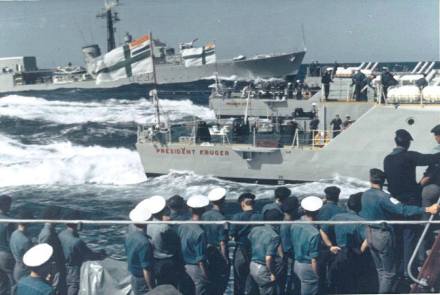
Stunning image of the South African Navy Frigates in their heyday. Here are the three President Class Frigates together, the SAS President Kruger, the SAS President Steyn and the SAS President Pretorius – neck to neck with the SAS Simon van der Stel – an old World War 2 era W Class Destroyer in the background, she was the oldest and the fastest of all these ships. Look at the bit between her teeth as she races forward.

Interestingly, the SAS Simon van der Stel started her illustrious life as HMS Whelp, saw WW2 service in the Far East and was even present at the formal Japanese surrender in Tokyo Bay.

Photo courtesy of the SAS President Steyn Old Boys and thanks to Norman Sander for the caption.

John Nettleton VC – an unknown South African Victoria Cross recipient

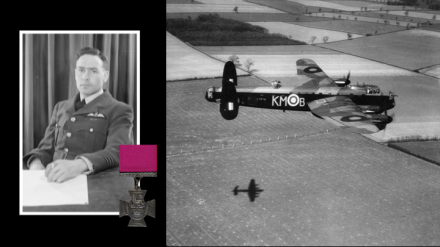
Rare that we see an image of a South African Victoria Cross recipient in action, but this is one such image. Flying this exact Avro Lancaster bomber is a Natal lad – Squadron Leader John Dering Nettleton VC.  Now, not many South Africans have heard of him – and why is that?
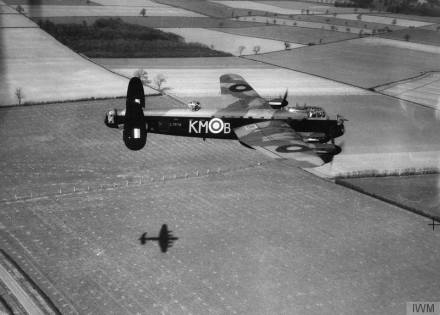
Featured Image -- 6463

Lancaster B Mark I, L7578 ‘KM-B’, of No.97 Squadron RAF, piloted by Squadron Leader J D Nettleton of No. 44 Squadron RAF, flying at low-level over the Lincolnshire countryside during a Squadron practice for the low-level attack on the M.A.N. diesel engineering works at Augsburg. 97 Squadron lent L7578 temporarily to 44 Squadron, who repainted the aircraft with Nettleton’s unit code-letters. Nettleton actually flew R5508 on the operation.

Nettleton is another true South African hero and recipient of the Victoria Cross (VC), the highest and most prestigious award for gallantry in the face of the enemy that can be awarded to British and Commonwealth forces. His VC was one of five awarded to South Africans in World War 2 – however very little is known of their stories in South Africa.

Of South Africa’s VC winners during World War 2 only two are commonly referred to, they are Quentin Smythe VC – see Profiling a true South African Hero – Sgt. Quentin Smythe VC  and Edwin Swales VC – see  Edwin Swales VC DFC, a South African Hero whose legacy has been eroded! The reason these two are more commonly known is largely because Quentin Smythe VC served in The South African Army and Edwin Swales VC – although a SAAF member attached to the Royal Air Force, had strong ties to his Alma Mater – Durban High School (DHS) who have largely driven his legacy in Durban.  But what of the other three; George Gristock VC, Gerard Norton VC and our hero today, John Nettleton VC?

Simply put, after the war, the National Party came to power in 1948 they almost immediately dismissed all South Africans who had served in the war as ‘traitors’ to the country for supporting what they saw as ‘Britain’s war’.  During the war the Nationalists had vocally supported Nazi Germany (as Germany had supported the Boer cause during the 2nd Anglo Boer War and Afrikaner nationalism was grounded on punitive British measures taken out on the Boers during this war), many Nationalists had even adopted national socialism and embarked on sedition during the war (see “Mein Kampf shows the way to greatness for South Africa” – The Ossewabrandwag).

For the Nationalists, on the top of the list of ‘traitors’ were the South Africans who distinguished themselves winning Victoria Crosses whilst serving in ‘British’ Regiments or Arms of Service.  These were men, who in the eyes of the Nationalists, served the hated British and were not to heralded as heroes, lest their deeds specifically influence young South Africans.  For this reason very little in South Africa is named or honoured in the names of Gristock, Norton or Nettleton.

So lets pull away this veil and reveal some true South African heroes whose very noble exploits and deeds in ridding the world of Nazism all of us as can stand very proud of.  What better way to start with John Nettleton VC – this is his story.
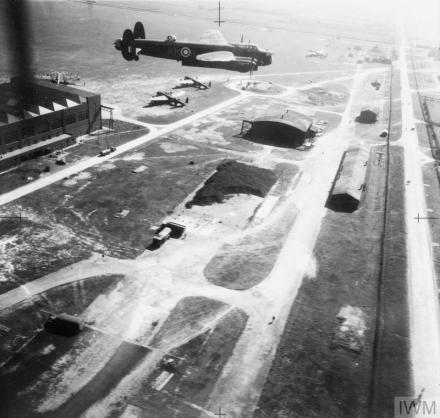
John Nettleton

Avro Lancaster flown by Squadron Leader J D Nettleton, about to cross the western perimeter of RAF Waddington, Lincolnshire with bomb doors open during a practice run.

John Dering Nettleton was born on 28 June 1917 in Nongoma, Natal Province, South Africa, the grandson of Admiral A T D. Nettleton, he was educated at Western Province Preparatory School (WPPS) in Cape Town from 1928-30, Nettleton served as a Naval cadet on the General Botha training ship and then for 18 months in the South African Merchant Marine. He took up civil engineering, working in various parts of South Africa.

Commissioned in the Royal Air Force in December 1938, he then served with Nos. 207, 98 and 185 Squadrons before joining 44 (Rhodesia) Squadron flying the Handley Page Hampden. He took part in a daylight attack on Brest on 24 July 1941 and in a series of other bombing raids and was mentioned in dispatches in September 1940.
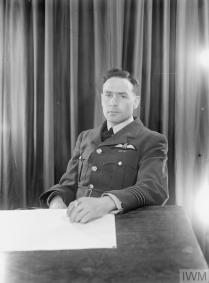
John

John Dering Nettleton VC

Nettleton was promoted Flying Officer in July 1940, Flight Lieutenant in February 1941 and was a Squadron Leader by July 1941. No. 44 Squadron was based at RAF Waddington, Lincolnshire at this time and had taken delivery of Lancasters in late 1941

.In 1942 a daylight bombing mission was planned by RAF Bomber Command against the MAN diesel engine factory at Augsburg in Bavaria, responsible for the production of half of Germany’s U‑boat engines. It was to be the longest low‑level penetration so far made during World War II, and it was the first daylight mission flown by the Command’s new Avro Lancaster.

Nettleton’s citation for his Victoria Cross is quite explanatory of the attack and the rest of the story picks up from here:

Citation:
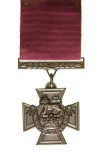
medalSquadron Leader Nettleton was the leader of one of two formations of six Lancaster heavy bombers detailed to deliver a low-level attack in daylight on the diesel engine factory at Augsburg in Southern Germany on April 17th, 1942. The enterprise was daring, the target of high military importance. To reach it and get back, some 1,000 miles had to be flown over hostile territory.

Soon after crossing into enemy territory his formation was engaged by 25 to 30 fighters. A running fight ensued. His rear guns went out of action. One by one the aircraft of his formation were shot down until in the end only his and one other remained. The fighters were shaken off but the target was still far distant. There was formidable resistance to be faced.

With great spirit and almost defenceless, he held his two remaining aircraft on their perilous course and after a long and arduous flight, mostly at only 50 feet above the ground, he brought them to Augsburg.

Here anti-aircraft fire of great intensity and accuracy was encountered. The two aircraft came low over the roof tops. Though fired at from point blank range, they stayed the course to drop their bombs true on the target. The second aircraft, hit by flak, burst into flames and crash-landed. The leading aircraft, though riddled with holes, flew safely back to base, the only one of the six to return.

Squadron Leader Nettleton, who has successfully undertaken many other hazardous operations, displayed unflinching determination as well as leadership and valour of the highest order

Citation ends.

Nettleton survived the incident, his damaged Lancaster limping back to the UK, finally landing near Blackpool. His VC was gazetted on 24 April 1942.
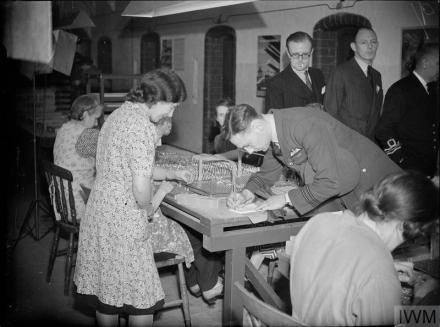
Nettleton

Squadron Leader J D Nettleton VC signing his autograph for a factory worker on a visit to open a munitions factory, North Wales.

Nettleton died on 13 July 1943, returning from a raid on Turin in Italy by 295 Lancasters. His Lancaster took off from Dunholme Lodge and was believed to have been shot down by a fighter off the Brest peninsular. FW 190s of 1./SAGr.128 and 8./JG 2 scrambled from bases near Brest in the early hours of 13 July, and at 06:30am intercepted the bomber stream.

A total of eight bombers were claimed, and at least three Lancasters were almost certainly shot down by the German fighters, one of whom was Nettleton. His body and those of his crew were never recovered. All are commemorated on the Runnymede Memorial.
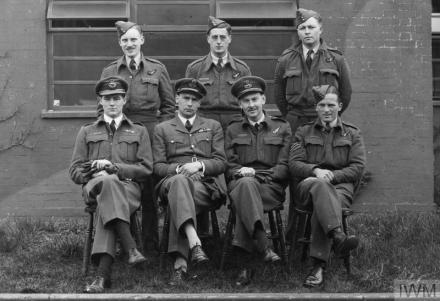
ROYAL AIR FORCE BOMBER COMMAND, 1942-1945. (HU 92988) The Acting Commanding Officer of No. 44 Squadron RAF, Squadron Leader J D Nettleton (sitting, second from left) and his crew, photographed on their return to Waddington, Lincolnshire, after leading the low-level daylight attack on the M.A.N. diesel engineering works at Augsburg on 17 April 1942. For his courage and leadership during the raid Nettleton was gazetted for the award of the Victoria Cro... Copyright: © IWM. Original Source: http://www.iwm.org.uk/collections/item/object/205127125

Group photograph of Squadron Leader J D Nettleton (sitting, second from left) and his crew, photographed on their return to Waddington, Lincolnshire, after leading the low-level daylight attack on the M.A.N. diesel engineering works. 17 April 1942.

The truly unfortunate thing about these heroes is that due to political prejudice – starting with the National Party from their election to power in 1948 (post WW2) and now the current political dispensation in South Africa, the African National Congress (ANC) – these VC recipients are almost unclaimed and unknown.   The result is that very little is commemorated to their memories in South Africa today.

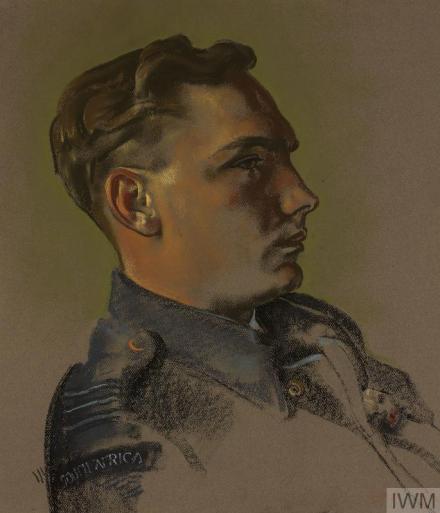
With no known grave there are very few memorials to John Nettleton VC in South Africa, no roads or state institutions are named after him, nothing really significant in his own country acknowledges him (other than the General Botha training ship which have a acknowledgement to this one of the two ‘sailor’ airmen to serve in the RAF).  Like his fellow General Botha training ship compatriot ‘Sailor Malan’, this ‘sailor’ – John Nettleton was also proud to wear the ‘South Africa’ shoulder title on his Royal Airforce uniform (as with all the South African pilots who served in the RAF – see The RAF ‘South Africa’ title worn during The Battle of Britain) and by that simple gesture there is no doubt to where his heart and loyalty lay.

His link to South Africa is so lost to memory that it has even been lost to the British, his name was not even included in the South Africans listed on the Victoria Cross Winners dome at the Commonwealth Gates memorial in central London.  It’s not just John Nettleton’s name that is missing from this memorial, there is a very long list of other South African VC recipients unaccounted for on this memorial, such has been the complete disregard.

As South Africans (in South Africa and in the United Kingdom) this has to be addressed, we should hang our collective heads in shame in the way we have treated our national heroes, and if this website goes a way to helping increase awareness of these unsung South African heroes then so much the better.
Nettleton 3

Head and shoulders War Commission portrait of Squadron Leader John Nettleton. He wears his RAF tunic, bearing the medal ribbon of his Victoria Cross, as well as his South Africa shoulder badge. At this time Nettleton commanded 44 Rhodesia Squadron.


Researched and written by Peter Dickens, references and extracts wikipedia and Imperial War Museum.

Image copyrights – Imperial War Museum