The ‘Dune’ that forged men!

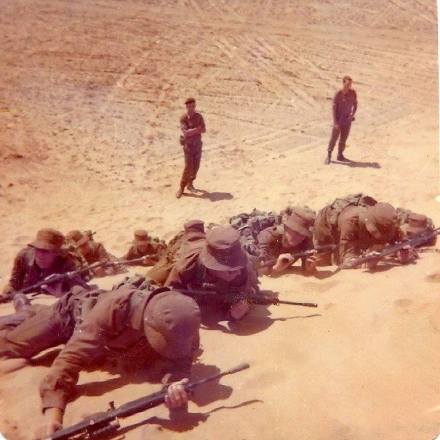
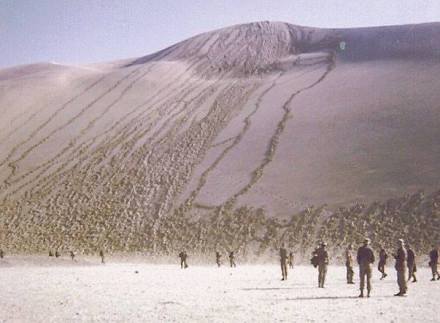
Starting out with a leopard crawl at the bottom and its a very very long way to crawl the top of this particular sand dune. Any “bokkop” (Infantry) who trained at 2 South African Infantry Battalion (2 SAI) will immediately recognise this infamous feature … Dune 7 … Walvis Bay … men where forged by this sand dune.

This giant 383m high dune was used by the South African Defence Force (SADF) time and again to train troops on and test their stamina, especially young conscripted National Servicemen.

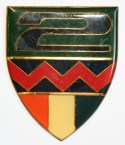
2sai2 SAI was established on January 1, 1962, at Walvis Bay, at the time an enclave of South African territory, surrounded by South West Africa (Namibia).  It was about the most furthest and remote training base to get a call-up from, a conscript here was truly a ‘long way from home’.

After Namibia’s first democratic elections and as part of the peace process, South Africa formally transferred sovereignty of Walvis Bay and the Penguin Islands to Namibia on 1 March 1994.  Prior to official transfer of the Walvis Bay territory to Namibia, 2 SAI re-deployed back to the Republic of South Africa in 1993 and since 1998 has been based at Zeerust.

2 SAI leaving its South African enclave in Namibia meant leaving three decades of training legacy and leaving this mighty Dune to adventure tour companies in Namibia.  Its memory as a training instrument now only emblazoned in all who spent time in the military at 2 SAI running up and down it.

17342628_737450589758009_8401080663277494242_n


Written by Peter Dickens

The Forces Sweetheart & The Lady in White, two iconic women of WW2

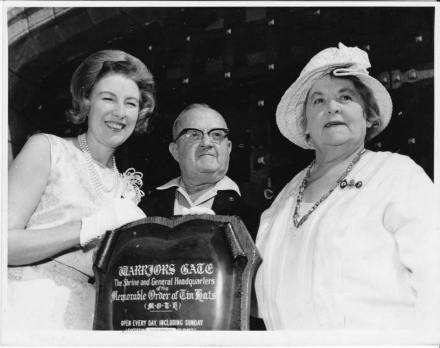
Dame Vera Lynn recently turned 100 years old and we look at two iconic women from the Second World War, one British and one South African. Both friends and both famed for singing to troops on quaysides. Here is Dame Vera Lynn (known to the troops as “The Forces Sweetheart”) on the left and Perla Siedle Gibson (Known to the troops as “The Lady In White”) on the right whilst Vera Lynn was on tour in South Africa in the 1950’s.

This photo was taken at the M.O.T.H. Headquarters in Durban (Warrior’s Gate), in the centre between these two iconic women is South African military veteran Harold William (Nobby) Clarke who was a Custodian of Warrior’s Gate.

Dame Vera Lynn, DBE (born Vera Margaret Welch on 20 March 1917), widely known as “The Forces’ Sweetheart”, she is an English singer, songwriter and actress whose musical recordings and performances were enormously popular during the Second World War. During the war she toured Egypt, India and Burma, giving outdoor concerts for the troops. The songs most associated with her are “We’ll Meet Again”, “The White Cliffs of Dover”, “A Nightingale Sang in Berkeley Square” and “There’ll Always Be an England”.

She remained popular after the war, appearing on radio and television in the UK and the US and recording such hits as “Auf Wiederseh’n Sweetheart” and her UK Number one single “My Son, My Son”. Her last single, “I Love This Land”, was released to mark the end of the Falklands War. In 2009, at age 92, she became the oldest living artist to top the UK Albums Chart.

She has devoted much time and energy to charity work connected with ex-servicemen, disabled children, and breast cancer. She is held in great affection by veterans of the Second World War to this day and in 2000 was named the Briton who best exemplified the spirit of the 20th century.

On 20th March 2017, Dame Vera celebrated her 100th birthday.


Perla Siedle Gibson was a South African soprano and artist who became internationally celebrated during the Second World War as the Lady in White, when she sang troopships in and out of Durban harbour.

Gibson was born in Durban in 1888. In the early twentieth century she studied music and art in Europe and the US and gave recitals in London and New York. Her youngest brother was Jack Siedle, the South African Test cricketer.

During World War 2 Durban was an extremely busy way station for convoys of ships en route to the fronts in North Africa and the Far East. Gibson became famous among thousands of Allied troops when she serenaded them as their ships passed in and out.

She went on to sing to more than 5,000 ships and a total of about a quarter of a million Allied servicemen. Clad in white with a red hat, she would stand at a spot at the mouth of Durban Bay where ships entering and leaving the harbour pass quite close, and sing patriotic and sentimental songs through a megaphone from a torpedoed ship, which grateful British soldiers had given her.

She died in 1971, shortly before her 83rd birthday. The year later a bronze plaque donated by men of the Royal Navy was erected to her memory on Durban’s North Pier on the spot where she used to sing. In 1995 Queen Elizabeth II unveiled a statue of Perla Gibson near the Ocean Terminal in Durban harbour.


The debt of gratitude owed by a collective world free of Nazi Germany, Imperial Japan and Fascist Italy to both these women is massive – it cannot be accounted such is the value.


Related link

Perla Gibson – The lady in White: An ‘unsung’ icon of Liberty … the ‘Lady in White’

Researched and written by Peter Dickens. Travers Barret Photographer copyright and grateful thanks to Kevin Lamprecht for sharing his Grandfather’s photograph and memories.  Vera Lynn video clipped from Youtube.  ‘We’ll meet again’ sung by Vera Lynn.

The inconvenient and unknown history of South Africa’s national flags

Here’s another interesting back of the chappie gum wrapper fact – Guess which is the correct South African flag South Africans fought under during World War 1?  Bet most people will think of the old “Orange White and Blue” South African flag, but that would be wrong.

As a serving officer in the South African Army I had to be familiar with flag protocol and etiquette, it’s a key part of soldiering when national flags go on parade. However the funny thing in South Africa is just how poor our collective knowledge is of our own national flags.

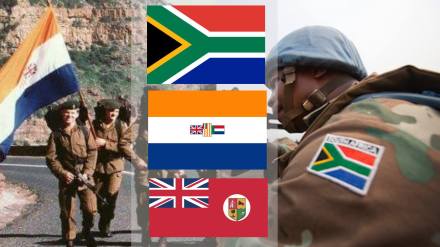
These are in fact all of South Africa’s national flags:17309179_1539170599434728_8929150928988660165_nMany times in military veteran circles there is steaming debate on when to use the “old” national flag and in what context – however few people in South Africa know what flag to use, what they really mean and even less know what the first South African flag actually looked like.

Here is a classic case of the misunderstandings surrounding South African national flags – This is the painting the “Birth of the Union” James E McConnell.  The painting was so poorly researched he used the wrong flag.

Birth of the Union of South Africa

This is a modern day photo-shop version of McConnell’s painting and it shows his original on the left and a more correct South African Union flag at union on the right.

one

The flag he used for his painting was the oranje-blanje-blou (known more commonly as the “OBB”) which all South Africans will recognise. However the flag of South Africa at the time of Union in 1910 was the South African “ensign flag” (British Union Jack top left and the South African National Coat of Arms inserted bottom right). Known as a “Red Duster” – now not too many South Africans today have ever seen that flag.

To show what the first South African national flag, the “Red Duster,” actually looked like here it is:

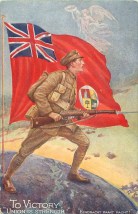
threeIt is very doubtful that there would have been huge public elation of Boers and Brits embracing one another under this National Flag as depicted in the painting, although this was the National Flag that South Africa fought under during the First World War (there where two versions of this ensign flag which they used – one Red and one Blue).

13686500_616785705157832_3286773017917395641_nIronically, the Boer Commandos that joined the South African Union’s Defence Force at Union in 1910, used and fought under this “South African Ensign” in the South West African and the East African campaigns of World War 1 from 1914 to 1918.

As noted, there was another variant of the “Red Duster” which is an ensign with the respective nation’s emblem against a Blue Background and a British Union flag in the left hand corner (you’ll still see this variant used in New Zealand and Australia for their National flag).

Both South Africa’s “Ensign” flags – Red and Blue qualify as the de facto South African national flags from 1910 to 1928, however the Red one was more common.

The Red Duster variant was the primary flag adopted by South Africa and Canada (Canada used their ensign version during WW1 and WW2 – it was only changed to the Maple Leaf in 1965)

Slide4Given the Ensigns were the flags usually adopted for British “Colonies” and “Dominions”, the South African Union government (which was in fact an independent Parliament to Westminster and made its own laws) felt differently. To the South African Union the national flag of 1910 was “still born” and not reflective of the history of the Boer Republics which made up the other half of the “Union” nor did it adequately reflect on South Africa’s Dutch colony origins.

The oranje-blanje-blou (“OBB”) was adopted by the South African Union Parliament as the “new” national flag in 1928. It was proudly flown as the flag of “Union” representing the old British Colonies of the Cape and Natal and the old Boer Republics of the Transvaal (South African Republic) and the Orange Free State. The use of the British Union flag inserted in the OBB, placed closest to the flag mast/pole (the most honoured and senior position for any “inserted” national flag on any flag format) ahead of the two Boer Republic flags, which take a lessor position, calmed down and appeased the “English” detractors who objected to such a dramatic flag change away from the standard Dominion Red Duster.

Slide5

However, confusion as to South Africa’s national flag to use even reigned at this time.  Here Jan Smuts makes the front cover of a late 1940’s edition of “Time” magazine with the National Flag in the background and this time they are incorrectly using the “old” blue ensign flag and should have been using the”new” OBB.

Slide3

So here’s another fun fact, the OBB is not the “Apartheid” flag, the National party when they came to power in 1948 put forward a proposal to have it amended and remove what they called the “Bloed Vlek” (Blood Stain) which was the British Union Flag inserted in the OBB. This was a National party pet hate as it reminded many Afrikaner nationalists of British decimation of Boer families and farms during the Boer war – the campaign to change the OBB flag was stepped up by the National Party under Hendrik Verwoerd when South Africa became a Republic and when he withdrew South Africa from the British Commonwealth of Nations in 1961.

However broader public pressure at the time prevented the initial National Party proposals for a flag change from been passed by the South African Republic’s Parliament and the idea was eventually shelved. In effect the initial campaign to change the OBB died with Verwoerd in 1966, but the National Party attempts to change the OBB to a “new” Republic flag did not stop there.  In 1968, the National Party Prime Minister, John Vorster, again proposed the adoption of a new flag to replace the OBB from 1971, the rational was to commemorate the tenth anniversary of the declaration of South Africa as a Republic.  Even though a National newspaper campaign was run asking the public for suggested flag designs, Vorster’s proposal did not get momentum in Parliament and the flag change never materialised.

Historically speaking, although the hardline National Party members hated the “OBB” and its inserted British “Union Jack”, but they disliked the original South African ensign “Red Duster” national flag with its massive “Union Jack” even more, they hated this flag so much it was literally erased from the South African collective consciousness and very few examples of it survive to this day. It certainly was not top of mind when McConnell painted his “Birth of the Union” painting in 1976.

That the flag of South African Union was kept during the implementation of Apartheid by the National Party from 1948 to 1994 is unfortunate as it detracts from it’s rich heritage as the flag of the South African “Union” and as such it is not the flag of the South African “Republic” nor was it ever intended to be a Republic’s flag – it especially detracts from all the kudos that South Africa received during World War 2 fighting alongside British and American forces under the South African Union’s OBB.

Slide6

The “new” (new) South African flag adopted in 1994 was actually  intended as a “five year interim” flag, however, it proved so highly popular it became the national flag almost instantly and was officially adopted by the government of South Africa on the election day, 27th April 1994.

According to its designer Fred Bromnell – It is actually a combination of the two “Colonial era” flags – The national flag of the Netherlands (Dutch flag) – Red, White, Blue and the the British Union flag – Blue, White, Red.  Then the two former Boer Republic flags – the South African Republic (Transvaal) “Vier Kleur” – Green, Red, White and Blue and the Orange Free State Republic Flag (using the Dutch insert flag and the white) and then finally the African National Congress (ANC) Flag – Black, Green and Gold (colours also present in the Inkatha Freedom Party and Pan African Congress flags).

The V symbolises inclusion and unification. In essence it is another flag of “Union” (unity) only this time acknowledging the county’s Black population and its historical heritage.  Symbols considered in the design of the “new” flag included Catholic and Anglican Priest’s Classic Chasubles, the universal symbol of Peace and the married Zulu female traditional head-dress.

There are some claims that the “New” South African flag is just a “design” with no meaning or symbolism – but that’s not the opinion of the man who actually designed it – Frederick Gordon Brownell.  Also, I find that whenever that when this argument is used  it’s usually to deny meaning to the new South Africa flag and to degrade the country, describing it as “jockey Y front underpants,” when in fact the truth is the opposite and the flag is stuffed full of meaning and symbolism.

In fact the “New” South African flag reflects all the old flags of South Africa, these exist right there for all to see, plain as day to the trained eye (and even the untrained eye) – symbolically placed in the new flag – and that’s an inconvenient truth to both the “new” flag’s detractors and the detractors of the “old” OBB.

Slide2

The funny thing is the “New” (new) flag was only meant to be an interim one, hence the mash of historical South African flags.  The irony kills me whenever I see the “new” South African youth and current South African political class with the flag they are now saluting, flying and even wearing – and it consists of their much despised “Colonial” Dutch, British and Boer Republic flags, and most of the “Apartheid” flag – irony lost on them but not on me.

Here’s the another irony – the “old” South African flag i.e. the “OBB” Union flag was born out of the ideals of Union led by Jan Smuts and Louis Botha. Not under the Apartheid ideals of  DF Malan and HF Verwoed. I personally see a lot of irony when hard-line right wing Afrikaners slam Jan Smuts and brand his values of consolidation and union with the British as an act of treason to the Afrikaner people – when at the same time they fully support, and at times even fly, the very flag created in honour of his very Unionist ideal – with its British “Blood Stain” symbolising Smuts’ reconciliation in full and proud senior position.

Furthermore it is ironic that after many years of trying to change the National flag after South Africa was declared a Republic in 1961, it was the National Party that finally achieved its goal in February 1994 when they, as the National Party government, briefed Frederick Gordon Brownell at the government’s own heraldry department to design a new flag (funnily in some sort of déjà vu – they had to involve the country’s National Herald this time after another newspaper campaign for designs from the public had failed, albeit 20 years later).  The result is the current flag we see today.  It was designed literally in a week and the only change in the decades long National Party narrative on changing the OBB this time was that both FW de Klerk and Nelson Mandela had to approve the new design.

So, lump it or leave it – there is nothing in “Union” flags that appeal to “all” people and everything in “Union” flags that appeal to “all” people.

All I can say is that the “new” South African flag has been the most cross cultural flag ever composed in South African history and it has been the least controversial i.e. it has been the most universally accepted by all South Africans (the very vast majority) with the least amount of disgruntled political posturing to change it.

In summary, to the “old” South Africa OBB supporters I would say:

  1.  The OBB was not the only South African national flag both Afrikaner and English South Africans fought under prior to 1994.
  2. The OBB pays a very high homage to The British Union National Flag in terms of the Vexillology of Flags and Flag Etiquette, especially in terms of the superior/senior position it takes relative to the two Boer Republic flags.
  3. The OBB symbolises the union of Afrikaner and English races – a central philosophy of Jan Christiaan Smuts and that of  “Union” Political Coalition partners and Governments.  Not those ideals of nationalist Afrikaners like Malan, Verwoed and Vorster, whose central political premise was that of an independent “Republic” and “Apartheid”.
  4. The OBB, although a flag of Union with the British, is now very dated.  Times and history changed since South Africa declared itself a Republic, so too the demographic and even social landscape of South Arica.  It cannot work as a current national flag in modern South Africa, change was inevitable – even Smuts would have seen that, and knowing his way of governance he would have welcomed a new flag to reflect it had he been around (in his time he served and lived under four different national flags).
  5. Many key Commonwealth countries have traded in their “Colonial” ensigns and Union flags – Canada, Jamaica, Kenya, Singapore, Hong Kong to name a few, and those still holding onto theirs – Australia and New Zealand, are under strong popular pressure to change them ahead of changing times.

To the “new” South Africa, current National flag supporters I say:

  1. The OBB is the flag of “Union” and it is one of the two Union flags used to bring   South Africa into existence as a country on the central principles of “reconciliation” and “tolerance” between two previously warring races (Boers and Brits), it is not the flag of “Apartheid”- in fact it was developed long before Apartheid was instituted as an ideology (in 1948) and symbolically it’s the complete opposite of Apartheid.
  2. Even the hard-line Apartheid Nationalists hated the old South African OBB, so much they wanted to change it – and eventually they did, and ironically it is the flag you now support, salute, fly and even wear – it was designed by a brief from the outgoing Apartheid Nationalist government in its final throws of office.
  3. The “new” flag very strongly and powerfully associates the flags of South Africa’s “Colonisers” and “Boers” in its design and in fact it celebrates this history – in addition to celebrating the history of the Black peoples of South Africa.
  4. The “new” South African flag does an excellent job balancing South Africa’s history and is very relevant to the current time.  I can’t possibly think of a better solution, and if the ANC and EFF one day decide to change it because of all its “colonial” and “white” legacy, I would hate to see what some Gupta owned design agency in India comes up with, because that really would round off a ‘state capture’.

This is why I allow myself a wry ironic smirk every-time South African flags are so hotly debated.

16905042_239550126507219_5077322311342536422_o


Researched and written by Peter Dickens.

Featured image by James E McConnell, Watercolour on Board 1973, photo-shopped version and background information courtesy Nicholas Pnematicatos.

Edwin Swales VC DFC, a South African Hero whose legacy has been eroded!

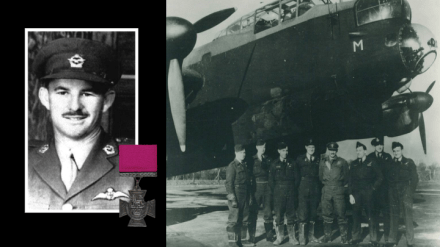
Edwin (Ted) Swales VC DFC is one of South Africa’s greatest sons,  yet the South African politicians  of today,  have removed his name from the well known “Edwin Swales Drive” named in honour of him in Durban and re-named it after a contemporary “struggle” cadre.  The legacy of Maj. Swales VC DFC is under threat, and there is very good and noble reason not to forget him, this is his story, kindly contributed to by David Bennett.

A very short biography :    Major Edwin Swales, VC, DFC, SAAF (1915 – 1945)  by David Bennett

Edwin Essery Swales : Born in Inanda, Natal, 3 July 1915. Attended Durban High School, Jan. 1930 to Dec.1934. Worked for Barclay’s Bank, DC&O, in Durban 1935 to 1939. He joined the Natal Mounted Rifles, 1935 and left 31 May 1939 as a W.O.II. Rejoined N.M.R. on 4 September 1939.

He served in Kenya; Abyssinia; Italian Somalia; British Somalia and Eritrea. Then (1941) in North Africa. In 1942, he left the army to join the S.A. Air Force. Swales received his wings at Kimberley in 1943. Then seconded to the Royal Air Force in 1943, he attended Flying Training School at  R.A.F. Little Rissington, 1944. Later sent to the elite R.A.F. Pathfinder Force, 582 Squadron, Royal Air Force, at Little Staughton in July 1944.

Swales was awarded an immediate D.F.C. on 23 December 1944 following a bombing raid on Cologne. After a raid on Pforzheim on 23 February 1945, Swales was killed in action, crashing near Valenciennes, France and he was awarded a posthumous Victoria Cross.

Swales is now buried in the War Cemetery at Leopoldsburg, near Limburg, Belgium, Plot No.8, Row C, Grave No.5. (Although he had originally been buried at Fosse’s USA Cemetery). The headstone of Swales’ grave shows the Springbok head, common to the graves of all South Africans, as well as the Victoria Cross engraved on it. The legend on the headstone states:

Edwin Swales was awarded the Distinguished Flying Cross, on 23 December, 1944.  The citation reads:

The KING has been graciously pleased to approve the following award in recognition of gallantry and devotion to duty in the execution of air operations:-

Captain Edwin Swales, (6101V) S.A.A.F. 582 Sqn. :-

The Distinguished Flying Cross:

“This Officer was pilot and Captain of an aircraft detailed to attack Cologne in December, 1944. When approaching the target, intense anti-aircraft fire was encountered. Despite this, a good bombing attack was executed. Soon afterwards the aircraft was attacked by five enemy aircraft. In the ensuing fights, Capt. Swales manoeuvred with great skill. As a result his gunners were able to bring effective fire to bear upon the attackers, one of which is believed to have been shot down. Throughout this spirited action Captain Swales displayed exceptional coolness and captaincy, setting a very fine example. This Officer has completed very many sorties during which he has attacked a variety of enemy targets.”           (Official D.F.C. Citation)    

Edwin Swales was killed on 23 February, 1945, and he was posthumously awarded the Victoria Cross – the 3rd and last Pathfinder pilot to be so honoured (all alas, posthumous). It had been Swales’ 43rd operational flight for 582 Squadron, R.A.F. Here is the citation:

The KING has been graciously pleased to confer the VICTORIA CROSS on

the under-mentioned officer in recognition of the most conspicuous bravery:-

Captain Edwin Swales, DFC (6101V) S.A.A.F. 582 Sqn. (deceased):

 “Captain Swales was ‘Master Bomber’ of a force of aircraft which attacked Pforzheim on the night of February 23, 1945. As Master Bomber he had the task of locating the target area with precision and of giving aiming instructions to the main force of bombers in his wake.

Soon after he reached the target area he was engaged by an enemy aircraft and one of his engines was put out of action. His rear guns failed. His crippled aircraft was an easy prey for further attacks. Unperturbed, he carried on with his allotted task; clearly and precisely he issued aiming instructions to the main force. Meanwhile the enemy fighter closed the range and fired again. A second engine of Captain Swales’ aircraft was put out of action. Almost defenceless, he stayed over the target area issuing his aiming instructions until he was satisfied that the attack had achieved its purpose. It is now known that the attack was one of the most concentrated and successful of the war.

Captain Swales did not, however, regard his mission as completed. His aircraft was damaged. Its speed had been so much reduced that it could only with difficulty be kept in the air. The blind-flying instruments were no longer working. Determined at all costs to prevent his aircraft and crew from falling into enemy hands, he set course for home. After an hour he flew into thin-layered cloud. He kept his course by skilful flying between the layers, but later heavy cloud and turbulent air conditions were met. The aircraft, by now over friendly territory, became more and more difficult to control; it was losing height steadily. Realising that the situation was desperate Captain Swales ordered his crew to bale out. Time was very short and it required all his exertions to keep the aircraft steady while each of his crew moved in turn to the escape hatch and parachuted to safety. Hardly had the last crew-member jumped when the aircraft plunged to earth. Captain Swales was found dead at the controls.

Intrepid in the attack, courageous in the face of danger, he did his duty to the last, giving his life that his comrades might live”

(Official V.C. Citation)

Air Chief Marshal Sir Arthur ‘Bomber’ Harris, KCB, OBE, AFC, Chief of Bomber Command, Royal Air Force, following the loss of Edwin Swales, wrote a letter to Swales’ mother, Mrs. Olive Essery Swales, saying, inter-alia:

…… On every occasion your son proved himself to be a determined fighter and resolute captain of his crew. His devotion to duty and complete disregard for his own safety will remain an example and inspiration to us all …..

Memorial to Edwin Swales at the secondary school he attended as a student, Durban High School (DHS)

In conclusion 

It is our humble opinion, that whilst it is important to segments of South Africa’s population to remember their heroes it should not come at the expense of other national heroes.

Solomon Kalushi Mahlangu, after whom Edwin Swales VC Drive is now named,  was a operative of the African National Congress militant wing, Umkhonto we Sizwe, and whilst it is important to the current ANC ruling party to highlight the sacrifice of its heroes, it should not come at the sacrifice of Maj. Swales’ legacy – one of a handful of South African World War 2 Victoria Cross winners, and one whose extremely brave deeds were awarded in a war which was to liberate the entire western world of tyrannical and rather deadly racial political philosophy as well as dictatorial megalomaniacs supporting such ideology.

In fact to rectify the situation, the Durban City Council should actually consider a monument or statue in the centre of Durban to Edwin Swales and allow him to take his rightful place as a true son of South Africa and one of our all time greatest military heroes, as is the case for many Victoria Cross winners the world over.  That his actions and deeds are taught to South African youth, pride in our WW2 history established and his sacrifice not forgotten.  Lets hope they see their way clear to do this.

Note:    The papers from the South African Air Force, promoting Edwin Swales from Captain to Major, only reached the British authorities after his death, and after the award of the Victoria Cross was gazetted, hence the rank of “Captain” being used in the VC citation. However, he is referred to as a Major.

Thank you to David Bennett for both photograph and content contribution.

The bloody South African connection with Liverpool FC’s famous “Kop” stand!

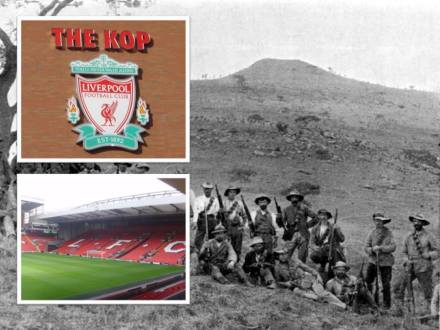
One for the football fans! Another back of the “chappie gum wrapper” did you know fact. South African military history and the 2nd Anglo Boer War specifically are forever bound in a number of terraces and stands at sports stadiums attended by hardcore fans in the United Kingdom – the most notable is “The Kop” stand at Liverpool FC’s Anfield Stadium.

Spion Kop (or Kop for short) is a colloquial name or term used for a number of sports stadium terraces and stands. Their steep nature resembles a hill near Ladysmith, South Africa, that was the scene of the Battle of Spion Kop in January 1900 during the Second Boer War.

The Battle of Spion Kop was fought about 38 km west-south-west of Ladysmith on the hilltop of Spioenkop along the Tugela River, Natal in South Africa from 23–24 January 1900. It was fought between the Boer Forces of the South African Republic and the Orange Free State on the one hand and British forces during the campaign to relieve Ladysmith. It was a British defeat.

After a tense standoff between Milner and Kruger over political and citizenship rights for the mainly British immigrant gold miners living in the Transvaal (South African) Republic. In a pre-emptive move to gain an upper hand in the negotiations, put the arrogant Milner and other British Imperial expansionist warmongers in Cape Town in their place and obtain a swift victory whilst British garrison forces were relatively weak and unsupported in Southern Africa (and whilst the Boer forces had superior fire-power, weapons technology and troop numbers) with what was hoped to be a minimum loss of life – war was declared by the Boers against the British.

President Paul Kruger and Sir Alfred Milner departing after the failed Bloemfontein conference in June 1899.

So with war officially declared on 11 October 1899 by Kruger, the Boer forces immediately went on a surprise offensive (literally the same day as declaring war) invading the two British colonies of Natal and the Cape Colony.  However the British garrison towns at Ladysmith, Mafeking and Kimberley held up the invasion and the Boer forces took to the tactic to besiege these towns, bombard them (using their famous “Long Tom” cannons and other artillery pieces) and in so literally starve them of fighting capability and pound them into a surrender.

The Victorian British political class, press (media) and public, somewhat surprised by this bold move by two small “farming” Republics invading British territory, and aghast at the starvation and bombardment of both British soldiers and British civilians alike in their  towns, then mustered the largest expeditionary force ever seen date to relieve these towns – literally to go and get them back.  However, the then world’s only real “superpower” was in for a big surprise in this first phase of the Anglo Boer War as the Boer forces initially took the upper hand and gave them a bloody nose they would never forget.

The first full attempt to relieve Ladysmith by this expeditionary force to South Africa was met with absolute disaster at Spion Kop (or Spionkop) for the British. Spion Kop (Afrikaans: Spioenkop meaning “spy hill”) is a mountain located near the town of Ladysmith, 27 km to the South West.

On the 23rd January 1900, the British climbed up the Spion kop hill at night and in dense mist. They surprised the small Boer piquet there and drove them off the kop at bayonet point. The Boer piquet retreated down the hill to their camp waking up their fellow Boers by screaming “Die Engelse is op die kop.” (The English are on the hill.). At that time a half-company of British sappers began to entrench their position on the hill with a mere 20 picks and 20 shovels (oddly – while almost 1,000 soldiers stood around idle).

As dawn broke, the British discovered that they held only the smaller and lower part of the hilltop of Spion Kop, while the Boers occupied higher ground on three sides of the British position. The British had no direct knowledge of the topography of the summit and the darkness and fog had compounded the problem. Furthermore, the British trenches were inadequate for all defensive purposes. Because the summit of the kop was mostly hard rock, the trenches were at most 40 centimetres (16 in) deep and provided an exceptionally poor defensive position – the British infantry in the trenches could not see over the crest of the plateau and the Boers were able to fire down the length of the crescent-shaped trench from the adjacent peaks.

By the end of the battle, the British suffered 243 fatalities; many were buried in the trenches where they fell. Approximately 1,250 British were either wounded or captured. The Boers suffered 335 casualties of which 68 were dead.

The British, unable to hold the Spion Kop hill under withering and accurate fire from the Boer forces retreated back over the Tugela, but the Boers were too exhausted from the fight to pursue and follow up their success. Once across the river the British rallied their troops and Ladysmith would be relieved four weeks later.

This first significant loss by the British in The Anglo Boer War was to be forever emblazoned on the collective British memory, and the first recorded reference to a sports terrace as “Kop” related to Woolwich Arsenal’s Manor Ground in 1904.

However, it was in Liverpool that the tradition really took hold when a local newsman likened the silhouette of fans standing on a newly raised bank of earth to soldiers standing atop the hill at the Battle of Spion Kop.

In 1906 Liverpool Echo sports editor Ernest Edwards noted of a new open-air embankment at Anfield: “This huge wall of earth has been termed ‘Spion Kop’, and no doubt this apt name will always be used in future in referring to this spot”. The use of the name was given formal recognition in 1928 upon construction of a roof. It is thought to be the first terrace officially named Spion Kop.

The Kop became the Liverpool FC home supporters’ end of Anfield Stadium and is widely dedicated to the many Liverpool-born soldiers who died at The Battle of Spion Kop. This stand became legendary in football for the atmosphere, and is still regarded as creating the most intense atmosphere in English football, with the many songs and massive volume that LFC fans create wherever they go. The capacity is 12,409.

Even the nickname sometimes given to Liverpool supporters “Kopites” derives from this home supporters end “The Kop”.

Many other English football clubs and some Rugby league clubs (such as Wigan’s former home Central Park) applied the same name to stands in later years.

Villa Park’s old Holte End was historically the largest of all Kop ends, closely followed by the old South Bank at Molineux, both once regularly holding crowds in excess of 30,000. However in the mid-1980s work was completed on Hillsborough’s Kop which, with a capacity of around 22,000, became the largest roofed terrace in Europe.

The “Kop” stands at St Andrews (left) and Meadow Lane (right).

Even one for the golfers, The Wrekin Golf Club in Shropshire, founded in 1905, named its 13th hole Spion Kop in honour of the men from the region who fell in the battle.

The Battle of Spion Kop was actually to shape the minds and politics of three key individuals, and in so shape the future of the world.  Involved in the Battle of Spion Kop as an Ambulance man (medic) was none other than Mahatma Ghandi, the famous Indian political reformer and spiritual leader.  Alongside him in the Battle were two other future heads of government – Winston Churchill and Louis Botha.  But that’s another story.

In part, the retribution for besieging and shelling British towns and civilians was going to come in the dehumanising approach in the way the war was conducted by the British, especially against Boer civilians in the closing phases, leading not only to atrocity but also Boer cultural annihilation. However that is also a story for another day.

Amazing how South African military history can yet deliver on some surprises, and how some very bloody and tragic events can be linked as a living memorial to the joys of watching football and singing in the stands.

Reference Wikipedia and “The Boer War” by Thomas Pakenham. Image shows the signboard and terraces at Anfield of “The Kop” and a Boer Commando with Spionkop in the background.

SAAF Ventura down

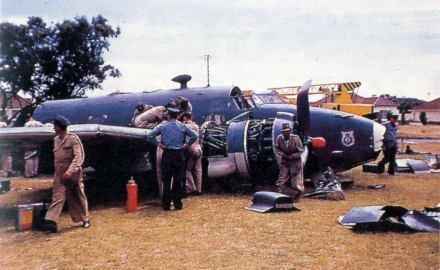
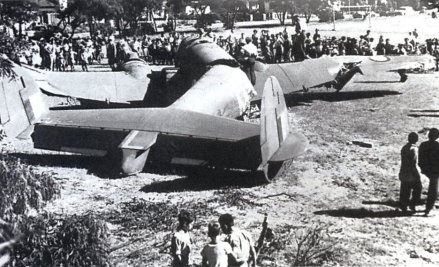
A little bit of Cape Town’s rich history.  Here is a South African Air Force Ventura 6515 from 17 squadron went down in an open field following a engine failure shortly after take-off from Ysterplaat on 26 November 1956.

The crew members – 2Lt R.C. Pelk and 2Lt J.H. Nel survived the crash landing.  Naturally it became a bit of a public spectacle as this image shows.

3936484617_658e907d8b_o

The Ventura PV-1 was an American aircraft made by lockheed and they were extensively used during World War 2 by the Americans, British and Commonwealth forces. The SAAF also operated the aircraft during the war and continued to do so after the war in a coastal patrol role for many years.

Let us die like brothers … the silent voices of the SS Mendi finally heard

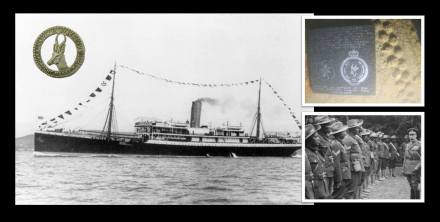
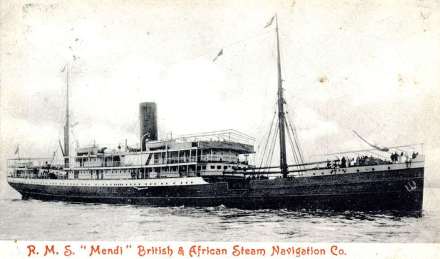
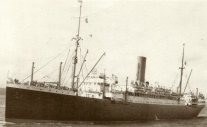
On 21 February 1917, during World War I, this chartered troopship – the SS Mendi – containing a full battalion of South African Native Labour Corps men and officers on its way to the western front was rammed in fog conditions in the English Channel. The SS Mendi sank in 25 minutes with the loss of 616 South Africans and 30 British.

mendi-image-courtesy-of-john-gribble-collection

The greatest tragedy was yet to come as due to racial prejudice this event was somewhat down-played through the years and not enough recognition given to these men, something the South African Legion and the South African National Defence Force is now working very hard at redressing.

The accidental ramming of SS Mendi Troopship by SS Darro on a cold foggy morning eleven miles off Isle of Wight, on 21st February 1917, became an almost unparalleled wartime tragedy for South African forces.

ss_darro

SS Daro

Darro, at almost three times Mendi’s weight, travelling ‘full ahead’ in fog conditions – not using her fog horn to warn shipping in the area or the appropriate lights – she rammed the troop ship with such force the SS Mendi sunk and was resting on the sea-bed within 25 minutes. The violent impact, nearly at right angles, left a gaping 20ft tear amidships instantly trapping more than 100 soldiers below decks who were unable to escape the rapidly rising water as the ship quickly listed to starboard.

Her crew, consisting 29 sailors, failed to launch sufficient life rafts for the 811 strong contingent of 5th Battalion South African Native Labour Corps (SANLC). In the dense fog and inadequate rescue effort that followed, many remained aboard the ship, unwilling to commit to an icy plunge.

They were reportedly exhorted by the Chaplain Rev Isaac Dyobha who called them together to die like warriors and brothers – what he said is now legendary.

He said “Be quiet and calm, my countrymen, for what is taking place now is exactly what you came to do. You are going to die, but that is what you came to do. Brothers, we are drilling the drill of death. I, a Xhosa, say you are all my brothers, Zulus, Swazis, Pondos, Basutos, we die like brothers. We are the sons of Africa. Raise your cries, brothers, for though they made us leave our weapons at our home, our voices are left with our bodies.”

They took off their boots, picked up imaginary spears and shields and performed an African war dance, a dance of death.

Thus, together, as brothers they chanted and danced on the tilting deck, facing death with unparalleled bravery until finally being sucked into the vortex created by the sinking ship.

The reference to weapons was to the fact that the South African Government had agreed to send black men to assist the Allied forces as labourers, but, due to policies of the time, they insisted they could not be given weapons.

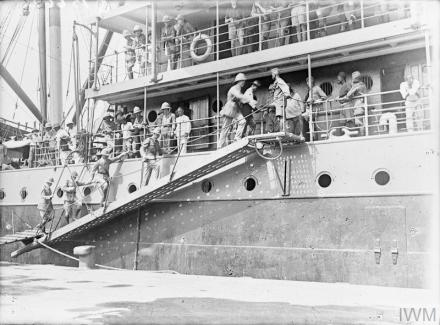
Mendi

British officers going aboard the Mendi in Calabar, November 1916.

There were many more individual acts of bravery and selflessness in those terrifying early morning hours in the freezing water. A catalogue of failures exacerbated the final outcome, the Darro for example made no effort at all to rescue the men in the water, and ultimately it was that many of these brave men had no experience of the sea combined with extended exposure to the frigid February waters, off St Catherine’s Light, that accounted for the unusually high death toll.

Fewer than 200 of the 840 souls aboard the SS Mendi survived. The total toll on human lives lost that day reached a staggering 646.

The sinking was described first hand by Captain Lewes Hertslet of the Royal Army Medical Corps who survived the sinking when he was pulled out of the water by black South African troops and gave his account of the incident in 1940.

“I remember the jump into the bitter cold sea, the sinking below the surface, and the coming up again, the swimming to the boat that had been let down from our ship, and then cut adrift,  I felt my hands gripping the side as the rowers drew alongside us.” Hertslet remembers himself saying “Goodbye, my strength has gone” and then feeling the strong hands of a black trooper gripping his wrists and holding him up. “Then several others caught me around the chest and shoulders and dragged me, nearly dead, into the boat and so I am saved. Nearly 200 others were also saved, and all of us who are still alive remember the Bantu and Europeans who went bravely to their deaths on that black day of the last war.”

Although the then Prime Minister Louis Botha brought the South African Parliament to attention in remembrance of the tragedy and the impact to the community, convention and prejudice meant this dreadful tragedy was not afforded appropriate recognition by respective Governments in South Africa and the United Kingdom. South African officials during these years demonstrated their unwillingness to highlight black people’s wartime contributions by withholding medals and reasonable post-war recompense to ‘non-combatant men’ deemed somehow less valuable.

Particularly poignant was that South African Labour Corps men, drawn from a broad spectrum of backgrounds, had readily volunteered their services to support the British Crown’s war effort on the Western Front in the hope it would win them greater political concessions at home. The reality was that remarkably little changed for 7 decades.

After World War 1, none of the black servicemen on the Mendi, neither the survivors nor the dead, or any other members of the South African Native Labour Corps, received a British War Medal or a ribbon. Their white officers did (i.e. commissioned and non commissioned South African Labour Corps officers – whites only).

The War Medal was issued by the British to all who participated in World War 1 fighting for Britain and her Empire. The decision not to award it to Black South African servicemen was a South African government decision and South African government alone. Black members of the South African Labour Corps from the neighbouring British Protectorates of Basutoland (modern Lesotho), Bechuanaland (Botswana) and Swaziland did receive medals, as the government in these territories approved the issue.

Initial approaches are now been made to the British government by the SANDF Attache in London to see if this issue can be redressed and medals struck (this initiative and continuous drive must come from the South African government, time will tell whether they will achieve this), a memorial “commemorative” medal have also been struck for surviving family members and will make up part of the Centenary commemoration of the sinking of the SS Mendi.


The British War Medal with King George V bust, the medal in question and King George V who is seen here inspecting N.C.O.’s of the South African Native Labour Corps at Abbeville, 10 July 1917.

The shipwreck has recently been awarded World Heritage and War Grave status and an increasing number of Memorials are testament to contemporary recognition for, and acknowledgement of the sacrifices made by not only the 607 South African Labour Corps men lost that day on His Majesty’s service but also many thousand silent black South African citizens who risked everything to join Europe, ‘like brothers’.

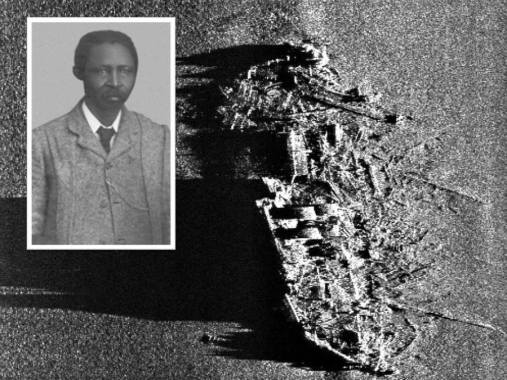
12728864_547649455404791_260877941339324195_n

Rev. Isaac Williams Wauchope Dyobha (1852-1917) – see insert picture, our hero who called all to the death dance on the SS Mendi was a rather remarkable man – he was a prominent member of the Eastern Cape African elite in the late 19th and early 20th centuries, a Congregational minister, political activist, historian, poet and ultimately the legendary hero in the Mendi disaster.

As a Lovedale student he joined a missionary party to Malawi, he was instrumental in founding one of the first political organisations for Africans, a staunch ally of John Tengo Jabavu and an enthusiastic campaigner for the establishment of the University of Fort Hare. For over 40 years, from 1874 to 1916, he was a prodigious contributor to newspapers, submitting news, comments, announcements, poetry, hymns, history and biography, travelogues, sermons, translations, explications of proverbs and royal praise poems. He used nom de plume Silwangangubo, Dyoba wo Daka and Ngingi and published The Natives and their Missionaries in 1908.

1947484_257837754385964_1327099841_n

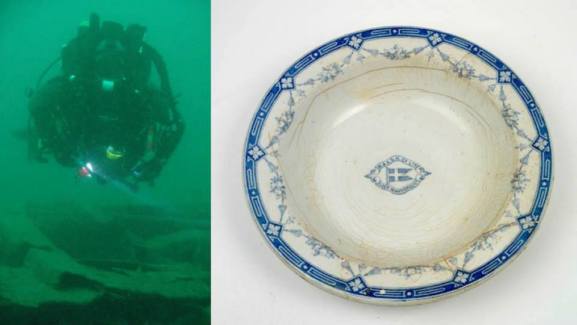
This is a recent picture of a diver on the wreck of he SS Mendi and an artefact recovered from the wreck.

The Mendi sinking is considered one of the greatest tragedies in the history of the South African military, and was one of the worst maritime disasters of the 20th century in British waters.

For South Africans this is especially important as there are very few physical reminders of this tragedy, such as this photograph BASNC plate courtesy of David Wendes.

Some small things can be seen on the wreck, such as some of the plates that the men would have eaten off. It was the crest of the British and African Steam Navigation Company on some of these plates that allowed divers to identify the wreck as the Mendi.

For many years in South Africa the only memorial to these men was a life ring with the words “SS Mendi” on it on a railing in Simonstown, South Africa and the Hollybrook Cemetery Memorial which listed all the names of the SS Mendi missing in Southampton, England.

Happily this suppression of Black South African contribution to WW1 is no-longer the case, after 1994 memorial statues to the SS Mendi memorials now exist in Pretoria, Cape Town and Johannesburg.  Memorial services are held countrywide and form part of the SANDF’s Armed Forces Day (Mendi Day).  Awards and decorations for Bravery in the name of the Mendi have been issued, and the South African Navy has named two ships – the SAS Mendi (a Valour class Frigate) and the SAS Isaac Dyobha (a Warrior class Strike-craft).  Memorial services are also regularly held overseas in Southampton England and Noordwijk Netherlands.  A dedicated exhibit now also takes up place at Delville Wood in France.

The image to the left of the Atteridgeville memorial is Her Majesty Queen Elizabeth II and President Nelson Mandela unveiling the memorial to the SS Mendi in Soweto, South Africa.

The immediate recognition of this event by the British government in 1995 was one of the first acts by the Queen on her return to South Africa – she had last been in South Africa in 1947 and was prevented from visiting again as South Africa had “resigned” from the Commonwealth in the intervening years of Apartheid.

Once South Africa rejoined the Commonwealth in 1994, such was the importance and urgent need to recognise this tragic event as a fundamental building block to nation building it took centre stage of Royal visit not seen in South Africa for 47 years.

The Centenary of the sinking of the SS Mendi passed in February 2017, and after all was said and done by way of ceremonies aboard the SAS Amatola and at Hollybrook in England and all the speeches and praises by visiting politicians to the United Kingdom completed, it was the military veterans (who were largely left out of the fanfare), who continue to carry this flame of remembrance for their ‘brothers’.

This point was most poignantly expressed by The South African Legion of Military Veterans in deed, after the SANDF and fanfare returned home, the SA Legion performed a most subtle but very striking dedication when the wreck was dived in an official dedication ceremony held in August 2017 by the SA Legion; England Branch Chairman – Claudio Chistè (a ex SA Navy Diver) doing the honours.  They then placed a plaque on the wreck itself in dedication and in permanent memory of their ‘brothers’.

Continue reading

Wartime beach defences and legendary hospitality

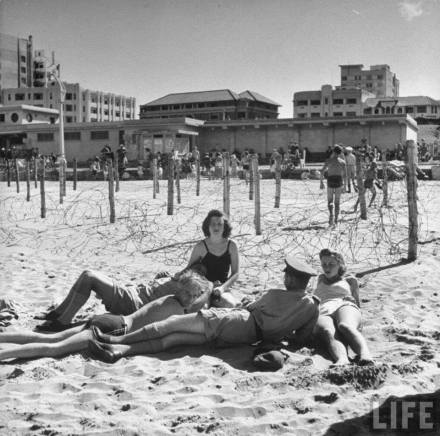
During the Second World War South Africa became a central destination for British, South African as well as other Commonwealth nurses, soldiers, sailors and airmen for a little ‘R&R” (Rest and Recuperation) – especially Durban and Cape Town. Seen here in this famous LIFE magazine image are servicemen on South Africa’s beaches enjoying some of the prettier sights and sun that South Africa has to offer.

In fact many veterans fondly remember South Africa’s hospitality during the war years as the country really opened their arms and welcomed them.

Note during wartime even both the strategic ports of Cape Town and Durban’s beaches were heavily guarded against invasion with barbed wire beach obstacles.

Image copyright – LIFE Magazine


The ‘Casus Belli’ for war

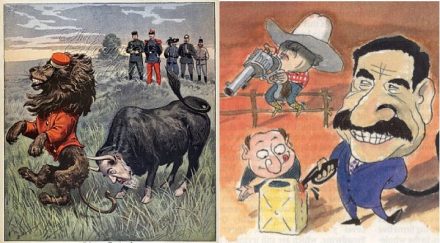
Comparing the ‘Gulf’ wars & the ‘Boer’ wars

History repeats itself, that’s the ironic part. For starters let’s compare the Anglo-Boer Wars (both of them the 1st and 2nd Anglo-Boer War – one leads to the other) to the last two Gulf Wars (both of them – one leads to the other). Let’s also take the seldom used ‘Economic History’ model rather than the ‘Political’ History model for a change.

The South African War (1899 to 1902) started due to a mix of British expansionist ‘influence’ in Africa, ZAR expansionism in Africa and the wealth in the ground – gold – and attached to it was the need to stabilise the global Gold market and linked currency. There was also unfinished business surrounding previous regional destabilisation which caused the 1st Anglo-Boer War (1880-1881) and this resulted in an ‘Old Score’ Britain had to settle with the South African Republic (ZAR) – and finally the suppression and threat as to civil rights by the South African Republic (ZAR) as to the mainly British citizens working in their Republic on the mines as well as as other indigenous African population’s rights. The last two parts – white miner’s franchise and rights and black African rights and protection from ZAR aggression was the British ‘Casus Belli’ – the justified case for going to war – that, and the fact the Boer Republics declared war on Britain by invading its neighbours on the 11th October 1899 and not the other way round .. was a Casus Belli all on its own.

The Gulf War 2 (or Iraq War 2003 – 2011) started due to a mix of USA expansionist ‘influence’ in the Gulf, Iraqi expansionism in the Gulf and the wealth in the ground – Oil, and attached to it was the need to stabalise the global Oil market and linked currency. There was also unfinished business surrounding previous regional destabilisation which caused Gulf War 1 (1990-1991) and this resulted in a ‘Old Score’ the USA had to settle with Iraq – and finally the perceived threat to Americans and Israelis (or ‘the world’) from Iraqi weapons of mass destruction (entirely fabricated) and threat to civilians in various religious sects, indigenous populations and minorities in Iraq. This last part was the American ‘Casus Belli’ – the justified case for going to war. The fact that Iraq invaded Kuwait on the 2nd August 1990 and had on-going border disputes with Iran and Turkey and had previously declared war on its neighbours … was a Casus Belli all on its own.

World War 2 was a socio-political and economic consequence of World War 1, in effect it is World War 1 – Part 2 (unfinished business), so too the underpinning causes of these wars, Boer War 2, was Boer War 1 – Part 2 (unfinished business), and Gulf War 2, was Gulf War 1 – Part 2 (unfinished business).

All war has an ‘economic’ factor underpinning it, and the Boer and Gulf wars were no different. The  reasons given for the war – mainly that of ‘threat, oppression and persecution’ to minority groups in each case is no different. Like the USA in the modern-day Iraq context (citing oppression of Kurds, Christians, Kuwaitis), Great Britain also put it’s case forward to the ‘world’ (citing oppression by the Boers of British miners) and in both instances the war was passed off as entirely legitimate once it ended for these same reasons … the ‘Casus Belli’ had been made. The fact is the ‘economic’ factor underpinning both these wars was the stability of trading markets – the removal (by force if necessary) of governments, who are holding the pursestrings to these markets, and whose actions and policies around these vital commodities are perceived by global traders to be unstable. If you want to see a recent case of this – look no further Prime Minister Liz Truss, whose government was ousted in record time by the market (not by the populace), simply because the markets found her government’s policies – ‘unstable’.

In 2nd Gulf war, and in the 2nd Boer War, the governments of these vital commodities – deemed unstable by the traders/markets – receive an endless demonisation and bad press. Paul Kruger was painted as an aggressive, dictatorial, backward, ignoramus and incompetent leader of a corrupt government – and Saddam Hussein and his government received exactly the same press. In turn the ZAR painted Britain as having warmongering entrepreneurs coveting their gold – and so too did Iraq – painting the American entrepreneurs coveting their oil as warmongering.

In Iraq, America remained as an occupier after their last war – Great Britain did the same in South Africa after their last war– and in both instances the rational given to the ‘world’ was the reconstruction of the state both economically and politically until it’s perceived ‘threat’ to international mineral market stability was removed and the country was moulded into a more palatable ‘less aggressive’ version to the ‘world’. In both instances they attempted coalition political parties to govern the country as a means to gradually withdraw from direct governance, but retain influence – and in both instances injecting huge economic aid into both to ‘reconstruct’ them.

In both instances, a tiny state took on a superpower and in both instances resorted to guerrilla warfare as the only real means to fight a superpower (in Iraq’s case the ‘guerilla’ warfare phase was labelled as the ‘surge’ in 2007). In both cases civilians were oppressed and randomly imprisoned as a means of removing support to guerrilla cells. In the case of South Africa it was to curtail supply to ‘guerilla cells’  and in Iraq it was to curtail supply to ‘terrorist cells’ (both these guerrilla groupings where locally based). In both instances civilians were exploited to achieve these military objectives.

Oil in 1990 is to Gold in 1900. On the economic front the ‘world’ was presented a case that ‘aggressive’ states where not allowed to be in charge of the world economy as they hold the ‘key’ to it, and these states needed to be removed to ensure worldwide economic stability – this was argued by the USA in 1990 and by Great Britain in 1900 with a similar outcome and some support to both.

The ‘Gulf’ wars – lets face it the whole Weapons of Mass Destruction (WMD) as a ‘Casus Belli’ was a complete farce, human rights, aggression and expansionist reasons lie behind the war and millions of people were affected and will be for years to come, and whose kidding whom it was also about the MONEY i.e. market access, price stability and supply of Oil – same thing with the ‘Boer’ Wars, human rights, aggressive and expansionist reasons lie behind the war, millions of people affected for years to come, and whose kidding whom it was also about the MONEY i.e. market access, price stability and supply of Gold.

Notably, is that in establishing ‘Casus Belli’ – the USA, as a world Super-power embarked on a mission for global assurance by announcing a “coalition of the willing”- countries around the world where the USA held influence who fight side by side with USA and ‘stabilise the situation’ – Iraq could conjurer up no such significant ‘coalition’. The same is true of Britain and the South African War, it had to find a ‘coalition of the willing’ from its sphere of influence – Canada, Australia, New Zealand and India to fight side by side with them as a sort of global assurance to ‘stabilise the situation’. The Boer Republics could conjurer up no such significant ‘coalition’.

In summary, the cruel thing about history is that it repeats as it is often only one basic human condition that guides it, wealth generation (expressed by all sides in the conflict, never just one). The reasons for war are always about economic gain but they are also guided by emotional and political convictions (religion, political dogma, ethnic oppression, human persecution etc).

The even crueller thing about both Iraq and South Africa is that ‘world’ opinion will always justify the war because of the strong cases put forward before and after the war by the victor (albeit very flawed cases in both instances). For this reason it is very unlikely that the USA will be compensating Iraqi families 120 years after the war and apologising, the same is also true of Great Britain and South Africa.


Written by Peter Dickens

The Inconvenient ‘Struggle Heroes’ of Freedom Day

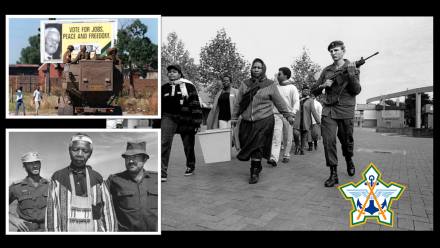
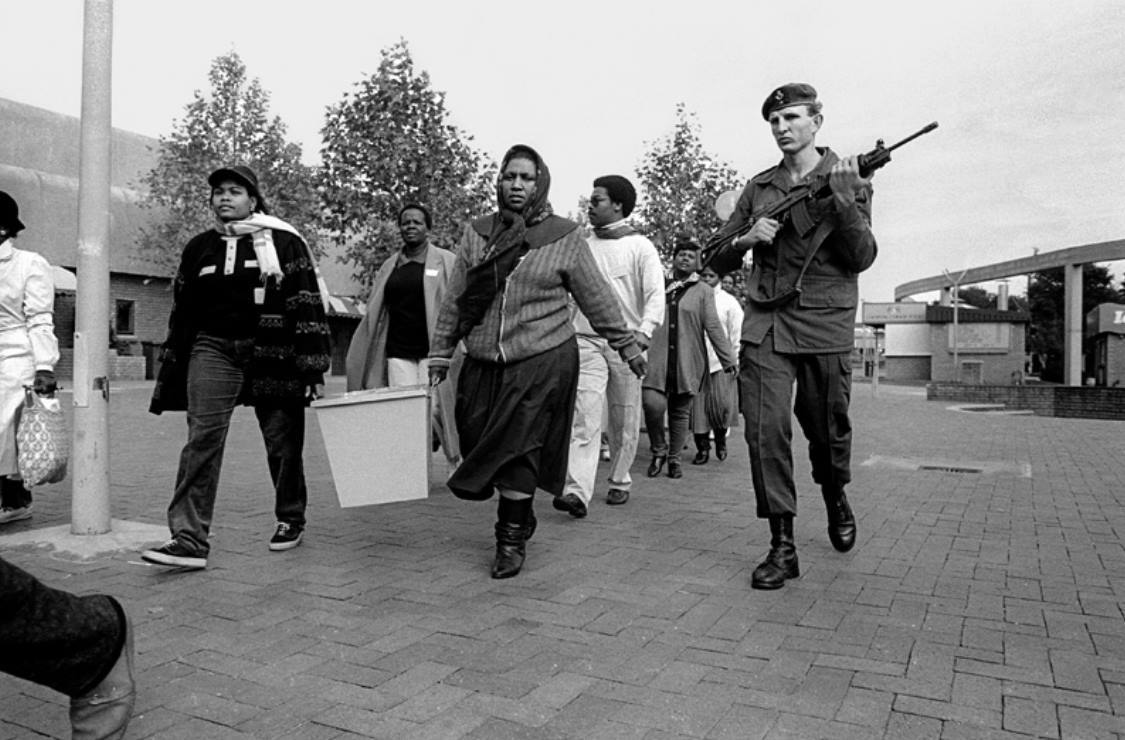
Here is an unusual ‘hero of the struggle for democracy in South Africa’.  This is a South African Defence Force (SADF) former ‘whites only’ National Service conscript turned ‘volunteer’ holding a R4 assault rifle as he safely escorts the ballot boxes to a counting station during South Africa’s landmark 1994 election.

He, like thousands of other old SADF white National Servicemen literally volunteered over the transition between 1990 and 1994 to bring democracy to all South Africans and make the elections a reality.  For good reason to, even on the election day itself bomb attacks where still going on and lives were still under threat. Yet now these military ‘heroes’ are conveniently forgotten or vanquished and rather inappropriately branded as “racists” by a brainwashed South African public that has lost perspective.
14196083_10154301049386480_5318023740986514293_o

This is their story and it needs to be told. 1990 was a significant year – Apartheid in all its legal forms was removed from the law books, the system that had generated ‘the struggle’ was dead. The African National Congress (ANC) was also officially unbanned in February 1990, unhindered to practice its politics. All that remained was a period of peaceful negotiation and reconciliation … the future looked bright.  But did that happen?

Unfortunately not, all hell broke out and the organisations that ultimately kept the peace were the statute armed forces of South Africa (SADF and SAP), who by default steered the country safely on the path to democracy in its final course up to and through the 1994 elections, and not the ‘struggle heroes’ of the ANC, who it can really be said to have stumbled at the last hurdle.

It’s a pity as without this stumble the ANC could truly claim the mantle of  the “liberators” who brought democracy to all South Africans but now, rather inconveniently for them, they have to share it with the SADF – and in addition to SADF professional soldiers a huge debt gratitude is owed by the country to the old white SADF National Servicemen – the ‘conscripts’.

The violence of the ‘Peace’ Negotiations 

In 1990, once unbanned the ANC immediately went into armed conflict with all the other South Africans who did not favourably agree with them – especially the Zulu ’s political representation at the time – the Inkata Freedom Party (IFP), but also other ‘Black’ liberation movements such as AZAPO (Azanian Peoples Organisation) and the old ‘homeland’ governments and their supporters.  Instead of taking up a role of actively peacekeeping to keep the country on the peace negotiation track, they nearly drew South Africa into full-blown war.

From 1990 to 1994 South Africa saw more violence than the entire preceding period of actual “Apartheid”. There was extensive violence and thousands of deaths in the run-up to the first non-racial elections in South Africa in April 1994 – and to be fair it was not just the ANC , the violence was driven by a number of political parties left and right of the political spectrum as they jostled for political power in the power vacuum created by CODESA negotiations.

To deal with this escalation of all out political violence, the SADF called out for an urgent boost in resources, however conscription was unravelling and numbers dropping off rapidly from the national service pool.  Luckily however, tens of thousands of ‘white’ ex National servicemen were now serving out ‘camp’ commitments in various Citizen Force units, SADF Regiments and in the Regional Commando structures who heeded the call and volunteered to stay on – fully dedicated to serving the country above all else, and fully committed to keep the country on the peace process track and stop the country sliding into civil war.

In an odd sense, if you really think about it, these white conscripts are the real ‘heroes’ that paved the way for peace. For four full years of political vacuum they literally risked their lives by getting into harms way between the various warring protagonists, left/right white/black – ANC, IFP, PAC and even the AWB – and it cannot be underestimated the degree to which they prevented an all out war from 1991 to 1994 whilst keeping the peace negotiations on track to a fully democratic settlement.

That South Africa enjoys the fruits of the CODESA democratic process, without plunging itself into civil war whilst democracy was negotiated is very much directly attributed to the men and women in the SADF.

The white supremacist uprising

In 1991, the armed insurrection in South Africa became more complex when far right-wing ‘white supremacist’ break-away groups such as the Afrikaner Weerstandsbeweging (AWB) began to increasing turn to armed violence to further their cause. South Africa’s Defence Force and Police structures and personnel now also had to deal with this added, rather violent, dynamic to an already feuding and violent ethnic and political landscape.

‘White’ loyalties where quickly cleared up between white right wingers and white members of the statute forces when the issue came to a head at ‘The battle of Ventersdorp’ on 9 August 1991.  The statute force maintained the upper hand and in all, 3 AWB members and 1 passer-by were killed. 6 policemen, 13 AWB members and 29 civilians were injured in the clash.

In addition to Pretoria and surrounds, this right wing ‘revolution’ also focused  on Bophuthatswana in 1994,  The AWB attempted an armed Coup d’état (takeover by force of arms) after Bophuthatswana homeland’s President Mangope was overthrown by a popular revolt.  In addition to the SADF, this uprising was also foiled by what remained of the statute forces of Bophuthatswana, and was to cumulate in the infamous shooting of 3 surrendered AWB members in front of the world’s media by a policeman.

Luckily not part of this particular controversy, the SADF ‘national service’ soldiers were deployed into the region to quell the uprising and arrested looters in the chaos of the revolt stabilising the situation – as the below famous image taken in Mmabatho by Greg Marinovich shows.

The net result of all this is recorded as a “SADF victory, removal and abolition of Lucas Mangope’s regime, disestablishment of Bantustan”.  In all, Volksfront: 1 killed, AWB: 4 killed, 3 wounded and Bophuthatswana’s mutineers suffered 50 dead, 285 wounded.

The war between the ANC and IFP

To get an idea of this low-level war between the ANC and IFP for political control in Kwa-Zulu Natal alone, The Human Rights Committee (HRC) estimated that, between July 1990 and June 1993, an average of 101 people died per month in politically related incidents – a total of 3 653 deaths. In the period July 1993 to April 1994, conflict steadily intensified, so that by election month it was 2.5 times its previous levels.

Here SADF soldiers conduct a search through bush veld in KwaZulu Natal 1994 and keep a close eye on protesters with ‘traditional weapons’  – Section A KwaMashu Hostel, an Inkatha stronghold.

Moreover, political violence in this period extended to the PWV (Pretoria– Witwatersrand-Vereeniging) region in the Transvaal. The HRC estimated that between July 1990 and June 1993, some 4 756 people were killed in politically related violence in the PWV area. In the period immediately following the announcement of an election date, the death toll in the PWV region rose to four times its previous levels.

Here are SADF National Service soldiers on patrol in Soweto, South Africa, 1991/2 and keeping the peace in Bekkersdal in 1994.

Much of this climaxed into famous incident when the IFP chose to march in Johannesburg brandishing ‘traditional weapons’ in 1994.  Outside the African National Congress (ANC) headquarters at ‘Shell House’  a shootout in downtown Johannesburg between the ANC and IFP supporters erupted.

Here in a famous photo taken by Greg Marinovich is a member of the Inkatha Freedom Party (IFP) who lies dead, his shoes are taken off for the journey to the next life. These three SADF soldiers have come forward into the line of fire – strait between the two warring factions and are keeping the ANC gunmen at Shell House at bay preventing further loss of life, the another image shows a SADF medic coming to the assistance of a wounded IFP member at Shell House – the degree of the life changing injury of a bullet shattering his leg quite graphically evident.

Another good example is also seen here at Bekkersdal township, Transvaal, South Africa 1994. AZAPO supporters fire at ANC supporters in armed clashes between these two groups of the ‘liberation struggle’.  The SADF again suppressed the clash, the next image shows heavy armed SADF National Servicemen in support by driving into the middle of the fray and keeping the belligerents apart – in effect saving lives.

Bigger clashes took place in KaZulu Natal – an example is seen here at KwaMashu in 1994. ANC militants with a home-made gun or ‘kwash’ do battle with Inkatha Freedom party supporters across the valley at Richmond Farm.  Again SADF personnel were moved in to separate the protagonists, here 61 Mech National Servicemen in a SADF “Ratel” IFV patrol Section A, KwaMashu Hostel, an Inkatha stronghold.

In an even stranger twist, a blame game ensured with the ANC not blaming itself and instead accusing a ‘third force’ of guiding the violence and laid the blame on FW de Klerk.  Funnily no evidence of a ‘third force’ has ever been found and the TRC hearings rejected the idea after a long investigation.

The 1994 Election ‘Call-Up’

In the lead-up to the elections in April 1994, on 24 August 1993 Minister of Defence Kobie Coetsee announced the end of ‘whites only’ conscription. In 1994 there would be no more call-ups for the one-year initial training. Although conscription was suspended it was not entirely abandoned, as the SADF Citizen Force and SADF Commando ‘camps’ system for fully trained conscripts remained place. Due to priorities facing the country, especially in stabilising the country ahead of the 1994 General Elections and the Peace Progress negotiations, the SADF still needed more strength to guard election booths and secure key installations.
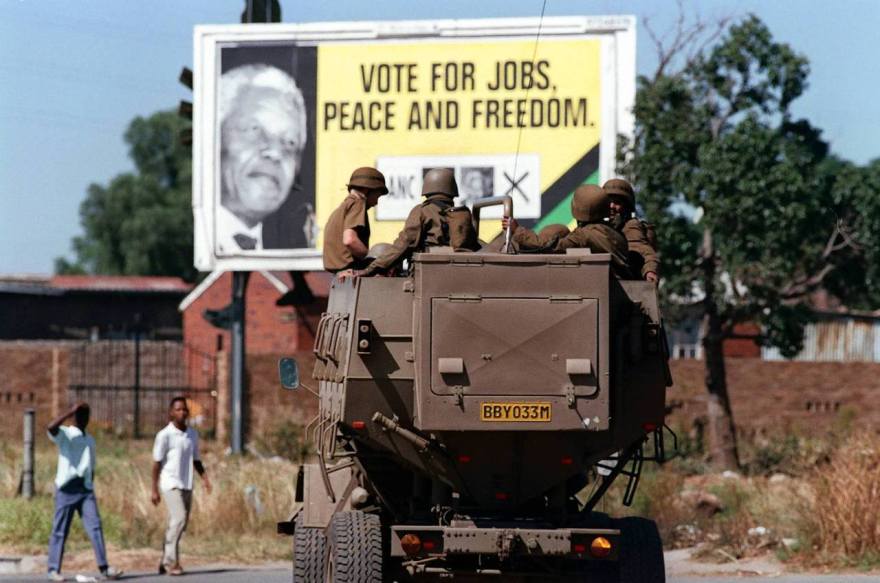
10333503_10152318503441480_4004036503611530562_o

So in 1994, the SADF called-up even more ‘white’ SADF Civilian force members, SADF Commando and SADF National Reservists to serve again, and despite the unravelling of conscription laws the response was highly positive with thousands of more national servicemen ‘voluntarily’ returning to service in order to safeguard the country into it’s new epoch.

National Reserve members were mustered at Group 18 outside Soweto in January 1994, some even arriving without uniform.  As part of this mustering I even have the personal experience of asking one of them what happened to his equipment and uniform to which the reply was “burnt it after my camps, but for this I am prepared to serve my country again.”  This comment says a lot as to devotion and commitment of someone making a difference at a turning point of history.

‘Camp’ call-ups and the call-up of ex-conscript SADF members on the National Reserve reached record proportions over the period of the April 1994 elections, and for the first time in history, in a strange twist of fate, the End Conscription Campaign( ECC) called these conscripts to consider these “election call-ups” to be different from previous call-ups and attend to their military duties.

It is highly ironic that even the ECC could see the necessity of security to deliver South Africa to democracy in this period – it was not going to come from the ‘liberation’ movements or any ‘cadres’ as they were part of the problem perpetuating the violent cycle in the power vacuum – it had to come from these SADF conscripts and statutory force members committed to their primary role of serving the country (and not a political ideology or party).

The threats on election day where very real – here South African Defence Force personnel cordon off a bomb blast area and South African police personnel inspect the bombing near the air terminals at Jan Smuts International Airport (now OR Tambo International).  This was the final Afrikaner Weerstandsbeweging (AWB) cell attack on April 27, 1994 in response to the landmark election day held the same day.
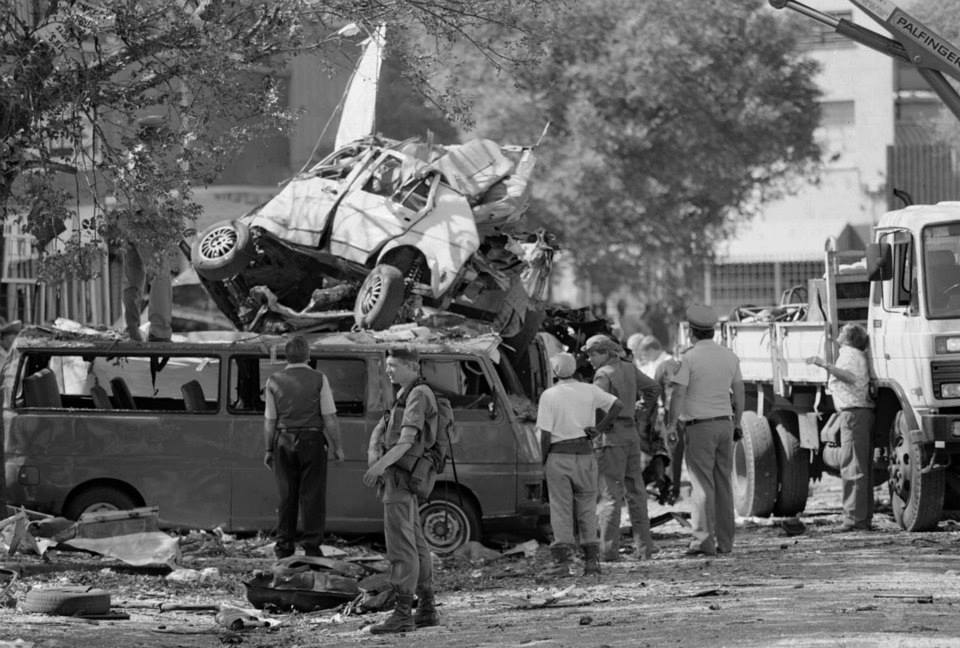
1012019_188775031292237_1060298211_n

While campaigning for the Presidency, even Nelson Mandela, seen here in traditional dress, made sure to stop and thank citizen force members of the SADF for their support and duty during South Africa’s first fully democratic election in 1994.

These ordinary South African servicemen showed what they are really made of by putting themselves in harm’s way to bring about the democracy that South Africans share today – they where literally the unsung heroes, and all respect to Nelson Mandela, he knew that and took  time in his campaigning to recognise it – these men did not ask for much in return and this small recognition would have been enough.
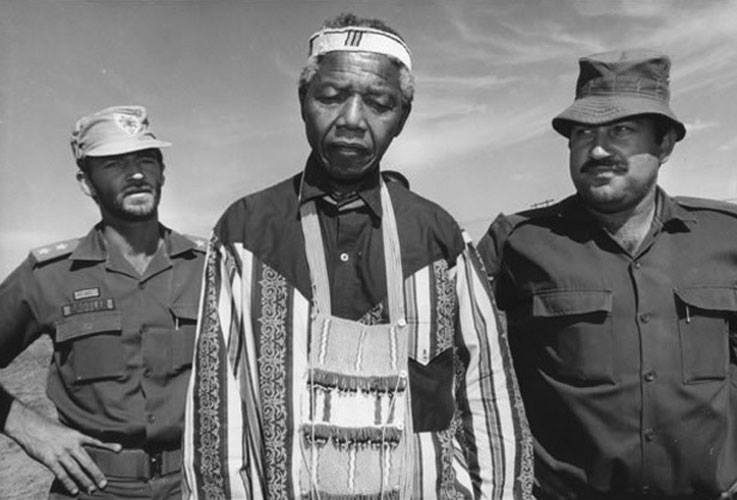
1424299_233794253456981_124886967_n

Here a SADF member keeps a guarding and secure eye whilst fellow South Africans are queuing to vote in the historic first democratic election on April 27, 1994. This election poll was in Lindelani, Kwa Zulu Natal. Nelson Mandela voted here at 6am and his car passed by as these youngsters sang to honour him.

31047127_2129630577265929_8718812037483055217_o

Another image shows a SADF National Serviceman guarding the election booths in Johannesburg, whilst a newly enfranchised South African eagerly points the way to the voting polls.
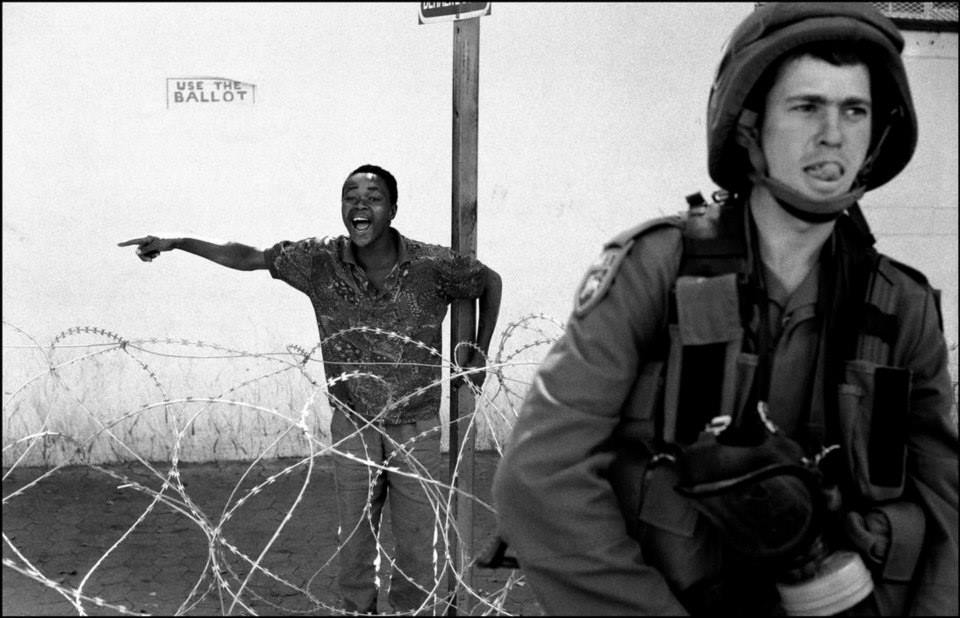
1002208_205501559619584_386269910_n

It was not just National Servicemen, all the uniformed men and women of the SADF and the SAP, of all ethnic groups in South Africa, paved the way for real peace when the country really stood at the edge and about to fall into the abyss of violence and destruction from 1990 to 1994.

This is an inconvenient truth – something kept away from the contemporary narrative of South Africa’s ‘Liberation’ and ‘Struggle’ – as it does not play to the current ANC political narrative. These men and women are now openly branded by lessor Politicians in sweeping statements as “Apartheid Forces” – demonised and vanquished – whereas, in reality nothing can be further from the truth. South Africans today – whether they realise it or not, owe these SADF Professionals and especially the former ‘whites only’ national service conscripts a deep debt of gratitude for their current democracy, civil rights and freedom.

In conclusion

If you had to summarise the military involvement in the transition period, it was the SADF – not the ‘Liberation’ armies of the ANC and PAC, who brought down civil revolts in all the ex-‘Bantustans’, it was the SADF that suppressed an armed right-wing revolutionary takeover in South Africa , it was the SADF that put itself into harms way between all the warring political parties in the townships all over the country and literally saved thousands of lives for 4 long years and it was the SADF who stood guard and secured the 1994 election itself – in this sense it was the SADF (and especially the ‘ex’ white conscripts) who practically delivered the instrument of full democracy and freedom safely to all the citizens of South Africans so they could in fact vote in the first place (without fear of being blown up or shot to pieces in the voting booths) – and that’s a fact and there’s no changing it.

The SADF veterans by far make up the majority of South Africa’s military veteran community, they also fought for liberation and peace, and as they say whenever current South African politicians idealise the MK veterans and demonise the old pre 94 SADF veterans all I can say is – “please don’t let the facts get in the way of a good story” and the inconvenient fact is the ‘old’ SADF delivered the ‘Instrument’ of democracy, not MK.

Related Work and Links

Real Heroes; Tainted “Military Heroes” vs. Real Military Heroes

Conscription; Conscription in the SADF and the ‘End Conscription Campaign’


Article researched and written by Peter Dickens.

Photo copyrights to Greg Marinovich and Ian Berry.  Feature image photograph copyright Paul Weinberg