I noticed a blog post today from a fellow historian who took a swipe at a Boer War photograph colourising Facebook page for allowing a user to compare a black armband being worn by Lord Kitchener and his staff at the Veereniging Peace Conference to end the South African War (1899-1902) aka Boer War 2, to that of the Nazi armband worn by Adolf Hitler and his cabal during World War 2 (1939- 1945). The armband in question was a common funeral black band, in this case it marked the death of Queen Victoria on 22 Jan 1901.
Whilst all highly amusing and clearly all either ignorant and (more likely) a blatant and very cheap attempt to brand Lord Kitchener a Nazi, it does bring up a real comparison – which is the armband used by the Commandant General of the Ossewabrandwag and that of the armband used by the National Socialists (Nazi) – Adolf Hitler and his cabal.
The Ossewabrandwag (Ox Wagon Sentinel) was the largest and most successful Afrikaner Nationalist organisation with pro-Nazi sympathies prior and during World War 2. The Ossewabrangwag was formed on the back of the 1938 Great Trek Centennial celebration – the centennial under the directive of the Afrikaner Broederbond (Afrikaner Brotherhood) and its Chairman, Henning Klopper, sought to use the centenary anniversary of the Great Trek to unite the ‘Cape Afrikaners’ and the ‘Boere Afrikaners’ who were deemed by Klopper as been separated by Boer War 2. He strove to unite “the two separate hearts” of white Afrikanerdom into a singular ‘Boer’ archetype under the pioneering symbology of the Great trek and to literally map a ‘path to a South African Republic’ under a white Afrikaner hegemony. The trek re-enactment was very successful, and Henning managed to realign white Afrikaner identity under the Broederbond’s Christian Nationalist ideology and its archetypal outline calling it a “sacred happening”.1
The Ossewabrandwag (OB) was tasked with spreading the Broederbond’s (and the Purified National Party) ideology of Christian Nationalism like ‘wildfire’ across the country (hence the name). The OB’s national socialist leanings can be seen in correlation with other world ideologies of the time, and specifically to that of Nazi Germany.2
Christian Nationalism, although grounded in ‘Krugerism’ as a ideology, can be regarded as a derivative of German National Socialism and Italian Fascism and was identified as such by OB leaders like Balthazar Johannes “B. J.” Vorster (a future National Party Prime Minister/President) who in 1942 said:
“We stand for Christian Nationalism which is an ally of National Socialism. You can call this anti-democratic principle dictatorship if you wish. In Italy it is called Fascism, in Germany National Socialism (Nazism) and in South Africa, Christian Nationalism.”3
The leader of the Ossewabrandwag (OB), Dr. Johannes Van Rensburg as a Union Defence Force officer had met with Adolf Hitler and became an admirer, he then infused the OB with National Socialist ideology and the organisation took on distinctive fascist and Nazi ritual, insignia, structure, oaths and salutes.
Merely ‘anti-British’ they were not. Ideologically speaking the Ossewabrandwag (OB) took on anti-communism, antisemitism, the Nazi creed of ‘Blut und Boden’ (Blood and Soil) in terms of both racial purity and historic bond and rights to the land, the ‘Führer Principle‘, a derivative of the Nazi creed of ‘Kinder, Küche, Kirche‘ (Children, Kitchen, Church) as to the role of women and the role of the church in relation to state. In term of economic policy the OB adopted a derivative of the Nazi economic policy of expropriation of Jewish monopoly capital without compensation by adding “British monopoly capital’ to the mix .4
This image shows the militarisation and fascist leanings of the Ossewabrandwag – here’s a rare image not often seen – a Ossewabrandwag “Kommandant” in full para-military uniform with lapel badges, ‘crested eagle’ epaulettes and ‘lightning bolt’ cap badge insignia. In addition he is wearing a sam-browne belt and lanyard. His ‘green’ arm band signifies his rank – using the ‘crested eagle’ again and horizontal lines for scale of seniority.5
In adopting distinctive national socialist ideology and concepts as well as iconography and culture, Chief Commandant Hans van Rensburg went about ‘nazifying’ this ‘Cultural Front’ of Afrikaner Nationalism. The Broederbond had arbitrated a meeting between the National Party and the Ossewabrandwag agreeing to two clear lines of delineation between the two organisations – the National Party would look after the ‘political’ front of Afrikanerdom and the Ossewabrandwag the ‘cultural’ front – known as the Cradock Agreement it was ratified on 29 October 1940.6
Here is Hans van Rensburg complete with his high command Ossewabrandwag armband … note the Eagle iconography – the Ossewabrandwag adopted the Nazi Reichsadler – “Reich Eagle” – which replaced the German “Imperial Eagle” the Reichswappen.
As to Nazi German eagles, the Eagle and holder are the same, however symbology is given to the direction in which the eagle looks – the Reichsadler (Reich Eagle) looks left and the Parteiadler (Party Eagle) looks right.
Also, note the jodhpurs (horse riding pants), a firm militaristic and often fascist fashion statement – you can easily see his admiration for Hitler’s dress sense and iconography. However for all the Nazi iconography and ideology adopted by van Rensburg, after Nazi Germany lost the war, van Rensburg would quickly try and cover his tracks and the genocide committed by his heroes and say of them.
“It was the greatest disaster in my spiritual life to realise suddenly that the people I had thought to be the heroes of a new era in western civilisation should in fact turn out to be just a band of murderers and nothing else.”
In addition to the Ossewabrandwag other leading and influential Afrikaner Nationalists were forming German National Socialist movements with distinctive antisemitic and anti-communist leanings in South Africa. As a committed antisemite Louis Weichardt broke with the National Party on the 26 October 1933 and founded South Africa’s Nazi party equivalent – The South African Christian National Socialist Movement with a paramilitary ‘security’ or ‘body-guard’ section (modelled on Nazi Germany’s brown-shirted Sturmabteilung) called the ‘Gryshemde’ or Grey-shirts. In May 1934, the ‘Grey-shirts’ merged with the South African Christian National Socialist Movement and form a new enterprise called ‘The South African National Party’ (SANP). The SANP would all keep with the ‘grey-shirts’ as their dress and keep this identification and other Nazi iconography including extensive use of the swastika.7 Overall, Weichardt saw democracy as an outdated system and an invention of British imperialism and Jews.8
The SANP Grey-shirts loved armbands too, and their took two forms, one using the Hitler Youth Red and Black band and swastika and one which used the South African Flag’s colours at the time – Orange, White and Blue, and here they are:
Left to Right – standing outside the courthouse in Grahamstown in full SANP dress is Johannes von Strauss Moltke, Harry Inch and David Olivier. The alternate (OBB) Orange, White and Blue SANP armband is to the right.
Talking Boer War, not shy of nailing their colours to the mast and also linking their ideology to Boer War 2, ‘Die Waarheid/The truth’ – the SANP’s own newspaper, would claim a Jewish conspiracy as the cause of the war and Louis Weichardt would write:
“the disastrous Anglo-Boer War 1899-1902 was deliberately brought about by the Jewish mine magnets who circumvented Rhodes and Kruger alike”.9
Luckily for the Afrikaner Nationals and the likes of Hans van Rensburg and Louis Weichardt, the National Party came into power in 1948 and in the same year issued a general amnesty to all Afrikaner Nationalists who had flirted with Nazism, joined the Nazi Party or directed supported Nazi Germany, either through local political organs like the Ossewabrandwag, the New Order and the SANP Grey-shirts (and many other splinter groups) or even directly collaborating with the Nazi Propaganda Ministry (Radio Zeesen), or the Nazi German Wehrmacht (military), or the Nazi Schutzstaffel (SS and Waffen SS) or the Nazi German Abwehr (intelligence) service. 10
Written and Researched by Peter Dickens
Footnotes
Harrison, David. 1981. The White Tribe of Africa – South Africa in Perspective. University of California Press. Pages 103 – 106. ↩︎
D.P. Olivier, May 2021, “A special kind of colonist” : An analytical and historical study of the Ossewa-Brandwag as an anti-colonial resistance movement, thesis University of the North West ↩︎
Bunting, Brian. 1964. The Rise of the Afrikaner Reich. Penguin Books. Page 88 ↩︎
Bunting, Brian. 1964. The Rise of the Afrikaner Reich. Penguin Books, Nelson Mandela Foundation O’Malley Web Digital Library, Chapter 6 ↩︎
Ditsong Museum of Military History. Saxonwald, Johannesburg – Ossewabrandwag Display ↩︎
Fokkens, A. M. Afrikaner unrest within South Africa during the Second World War and the measures taken to suppress it. Journal for Contemporary History. 2012. Page 130 ↩︎
A Perfect Storm – Antisemitism in South Africa 1930-1948 By Milton Shain pages 55 – 58 ↩︎
Werner Bouwer, National Socialism and Nazism in South Africa: The case of L.T. Weichardt and his Greyshirt movements, 1933-1946. Page 18 ↩︎
A Perfect Storm – Antisemitism in South Africa 1930-1940 By Milton Shain page 58 ↩︎
Kleynhans, Evert. Hitler’s Spies: Secret Agents and the Intelligence War in South Africa 1939-1945. Jonathan Ball Publishers 2021 ↩︎
I am currently doing some research into Radio Zeesen, the Nazi German foreign service radio station broadcasting worldwide (much the way BBC world service still broadcasts today), and this image cropped up, now imagine – its 20 August 1987, 40 years after the end of World War 2 and in full view of the Nazi holocaust, and here’s Dr. Erich Holm and his supporters happily giving Nazi salutes and draping Nazi flags over a German war memorial, located rather surprisingly, in a cemetery in central Pretoria, South Africa.
Naturally it kicked up a fuss at the time – after all, it’s 1987 – the formal honouring of Nazi Flags and Nazi leaders in a country scarred by the war against Nazism is simply outrageous and insulting to the majority of modern South Africans – especially those whose forebears were lost or who took part in World War 2 or those military veterans who are still alive, most aged around 60 years old then. Not to mention the vast majority of South Africans who see this symbology in light of racial subjugation – rather unsurprisingly in the middle of all of this furore is the leader of the Afrikaner Resistance Movement (Afrikaner Weerstandsbeweging) – the AWB .. now what’s going on?
So, here’s a little background to this scandal. During World War 2 (1939-1945), Hitler’s propaganda Minister engaged Radio Zeesen for all outbound broadcasting of Nazi propaganda, a specific market for this was identified in South Africa in the form of far right Afrikaner radicals – a variety of political parties and cultural organs – mainly the ‘Reformed’ or ‘Pure’ National Party, the Ossewabrandwag, the New Order, the Grey Shirts, the Black Shirts, the Boerenasie Party – the list goes on.
Three South African nationals were in Germany at the time World War 2 kicked off – Dr. Sidney Erich Holm, Dr. Jan Adriaan Strauss and Johannes Jacobus Snoek were recruited by the German Propaganda Ministry to run their ‘Afrikaans’ service on Radio Zeesen – which broadcasted worldwide in a variety of languages on short-wave transmissions. The positioning taken by Radio Zeesen with regard South Africa was a suggested National Socialism (Nazi) alliance with Afrikaner Nationalism, it also focussed on subverting the Smuts government and disseminated general anti-British sentiment in South Africa – it used talk, news and cultural programs to forward these aims – using these three Afrikaner broadcasters – all using the alias “Neef” meaning “cousin”, the main Afrikaner broadcaster was Erich Holm – his alias was Neef Holm.1
After the war ended in 1945, Holm, Straus, Pienaar and Snoek were all arrested for high treason on the basis of conducting subversive activities against the Union of South Africa during war-time, voluntarily working with Nazi Germany in forwarding their objectives and endangering South African lives. They were all prosecuted in South Africa, to ‘beat the rope’ or avoid lengthy jail terms their defence revolved around being mere employees of the German state radio service – they did not commit any “hostile intent” against South Africa – the argument used was a common one used in cases like this in South Africa at the time – that there is a difference between a ‘Land Veraaier’ (traitor to your country) and a ‘Volk Veraaier’ (traitor to your people) – they were merely warning South Africans and in their estimation they were still South African patriots – only they had a different view, that’s all.
Regardless of this rather convoluted sense of what constitutes treason, they were all however found guilty of high treason on the legal precedents thereof. Dr. Erich Holm is given a ten year sentence. Fortuitously for all of them, when the National Party walked into power in 1948, one of their first acts was to grant full amnesty to all South Africans convicted of war-time treason – so they all walked out their prosecutions free men, Dr. Holm having served three years of his sentence.2
Farewell Herr Hess
Now, spool on 40 years or so, Rudolf Hess, the only surviving member of Hitler’s inner circle has been sitting in Spandau prison in Germany on a life sentence for crimes against humanity – for all this time on a sentence that really meant ‘Life’. He’s now 93 years old and despite years of campaigning by a small group for release on compassionate grounds of old age, Hess continued to be an unapologetic Nazi and a devout antisemite. On 17 August 1987 he is found dead hanging in the prison grounds from a chord, having committed suicide (some contested that on the basis of his frailty in age).
Saddened by the loss of his old Nazi hero, enter stage left our old South African Radio Zeesen broadcaster, Dr. Erich Holm, emboldened by his National Party amnesty he truly nails his Swastika to the mast – literally. In conduction with some like-minded Nazi German friends who had found South Africa a welcoming home under the Afrikaner Nationalists and some members of Eugène Terre’Blanche’s Afrikaner Resistance Movement (AWB), Holm decided to arrange a suitable ‘auf Wiedersehen’ (farewell) for Rudolph Hess.
Their Memorial Service for Rudolf Hess is held at a German War Memorial in Pretoria, its a cenotaph to the German Fallen of both war – World War 1: 1914-1918 (written on one side) and World War 2: 1939-1945 (written on the other side), complete with metal wreath and eternal flame with accompanying dish. The cenotaph is strangely enough located in the middle the Pretoria West Cemetery – also known as New Cemetery, Newclare Cemetery, Pretoria West Cemetery – address: 322 Rebecca St, Philip Nel Park, Pretoria. It’s still there.3
German War Cenotaph Pretoria West Cemetery – eGGSA Library, open file.
How a German War Cenotaph finds its way into a Pretoria cemetery is anyone’s guess – it is unusual to find German war cenotaphs in countries who fought against Germany in both the wars commemorated. In any event, on 20 August 1987 (three days after Rudolf Hess passes), in full public view, Dr Eric Holm and his pals light the flame of remembrance, drape the cenotaph in gigantic red, white and black Nazi Swastika flag, hold a service to Rudolf Hess, salute the Cenotaph (and by that way Rudolf Hess) using the Nazi styled strait armed ‘Heil Hitler’ salute and play Nazi German period music over a Public Address system.
The media get wind of this Memorial Service to Rudolf Hess but are uninvited and in fact warned to stay away, a reporter from The Citizen and photo journalist – Neville Petersen are sent out to the memorial service, Petersen climbs over the fence while the reporter stays in the car. He hides behind a large headstone far enough away so as not be seen but close enough to take a photograph. Which he does of one the elderly Nazi attendees saluting Rudolf Hess, the memorial and the Nazi flag – once taken he’s back over the fence and into his awaiting get away car.4
Photo courtesy (and copyright) Neville Petersen with his kind permission.
Unrepentant
The published photo resulted in a media frenzy, driven by investigative journalists of the Sunday Times with the matter later landing up in Parliament, opposition MP’s demanding heads. The journalists, De Wet Potgieter and Jannie Lazarus identified Dr. Erich Holm at the centre of the controversy and interviewed him. What he said to them says just about everything:
Rudolf Hess
Dr. Holm put forward that Rudolf Hess was a man of “peace” (somewhat mentally unhinged Hess parachuted into Britain on 10 May 1941 in the hopes of negotiating surrender terms for a Germany) and “never touched a hair on the head of any Jew (as) it would have been beneath him” .. Holm then accuses the Jews and says “its the jews who have refused to declare peace since the end of the war”.5
So for Erich Holm, the entire Holocaust should just be something the Jews should get over and move on, notwithstanding the fact it’s still in living memory of many Nazi Holocaust survivors in 1987, including many in South Africa
Holm bitterly recalled that the imprisonment of Hess was because “the Jews and the British were afraid of him” and that he “was locked up in an inhuman way” because of it.
On a personal level he once again suggested complete innocence for his role in Radio Zeesen’s Nazi propaganda stating he was never a member of the Nazi Party and merely as “a South African (who) broadcasted news, music and entertainment to South Africa”.6
As a sort of fun throwaway, interest fact, Dr. Erich Holm said that Hitler was in favour of the white Afrikaner nation and a keen admirer of the Guerrilla tactics used by the Boer Republican forces during the South African War (1899-1902) and said:
“In fact Hitler told me personally of his admiration for the way the Boer Generals had fought the British, and singled out General Christiaan de Wet for special mention.” 7
Once again reinforcing his old Radio Zeesen propaganda brief without even giving it a thought, inadvertently and unwittingly linking Afrikaner Nationalism and Boer War “folks-helde” (people’s heroes) to National Socialism and Nazi Germany’s admiration for the white Afrikaner people. Something his defence team in his treason trial tried very hard to prove he did not do. The hard reality – the Leopard never really changed his spots. For more on Hitler and the Boer War follow this link: Hitler’s Boer War
What becomes increasingly clear from Dr. Holm’s comments is there is a fundamental disconnect in how he views Nazism and what Nazism was proven to ultimately be, an almost sociopathic distancing from really understanding and emotionally assimilating the genocide, trauma, death and hurt caused by National Socialism – something in which he was an active and willing participant, and something in hindsight he should have regretted.
Legacy
On celebrating Nazism and here’s the critical difference to how hero worship of Nazi elite was treated in Europe and the Soviet Union/Russia in the 1980’s and 1990’s – as opposed to how it was treated in South Africa.
In Germany, and even in death Rudolph Hess continued to be controversial, unlike his Hitler inner circle colleagues who shot themselves, were shot or hung and were buried in unmarked and unallocated graves or whose mortal remains are untraced to his day, Hess had asked that he be buried with his parents in the Wunsiedel cemetery and his wishes were complied with – making his grave the only real physical connection to formative Nazi leader.
Problem was – as the only real grave marker to a Nazi leader from the inner circle, each year on the anniversary of his death, neo-Nazis far right extremists from all over the world attempted to stage a march to the cemetery and salute the grave and gravestone epitaph “Ich hab’s gewagt” (“I have dared”). This despite court rulings banning it, causing the town to be shut-down with heavy police presence. It became such a menace, that when the graves lease expired 2001, the Hess’ remains were removed and cremated, the headstone removed and destroyed, and Hess’ ashes were scattered at sea by his surviving family.8 A move which was welcomed by the good people of Wunsiedel and just about every civic association and the Jewish German community. Even Spandau prison was demolished entirely to prevent it becoming a Neo-Nazi shrine.
In Afrikaner Nationalist South Africa however, no such police action was afforded to prevent such commemorations and open admiration of Nazism. The Afrikaner Resistance Movements (AWB) continued well into the 1990’s to openly fly Nazi Swastika flags alongside their very similar flags with impunity. Other organisations as well, investigative journalists found their way into commemorations of Hitler’s birthday at the time held by organisations like Koos Vermeulen’s World Apartheid Movement (WAB) and World Preservatist Movement (WPB).
AWB rally at Paul Krugers’ statue in Pretoria – note German Swastika Flag.
Unlike in Germany, Russia and all over Europe, up until 1994, there is something that can most certainly be derived from the tacit approval and lack of real action by the Apartheid state to readily stamp out the use of Nazi symbology, emblems and hero worship. Also, unlike in Germany and Europe, where active steps were taken by the state to educate and expose the entire population to the evils of Nazism by way of sensitivity training, there is also something that can be said of no such steps having ever been really taken place in South Africa by the Apartheid state – and that is evidenced by the sheer arrogance and lack of understanding demonstrated by likes of the Dr Erich Holm.
Here is a rare and very unique display of South Africa’s very own Nazi Party’s shirts, flags and bunting. Of interest, is the use of Orange, Blue and White in the Nazi swastika configuration – this was intentionally done to reflect the national colours of the South African flag at the time, the ‘Oranje-blanje-blou’ (Orange, White and Blue).
These items belong to South Africa’s ‘Greyshirts’, read on for an in-depth chapter in South Africa’s hidden history, here we focus on the SANP – The South African Christian National Socialist Movement also referenced as the South African Gentile National Socialist Movement. More commonly they were also known at the time as the SANP – The South African National Party – ‘Gryshemde’ in Afrikaans and ‘Grey-shirts’ in English.
SANP bunting, flags, armbands and shirts, image courtesy Ulrich Duebe, the current owner of the collection.
South African statute forces had fought a hard war against Italian Fascism and German Nazism, and the same war had been fought on the ‘home-front’ in South Africa itself, as with the USA and the United Kingdom, South Africa also had its own National Socialist (Nazism) parties prior to the war (it had actually been a quite popular doctrine across many “Western” European states prior to the war). During the war the Smuts’ government took severe action against pro-Nazi South African movements on the Afrikaner right-wing political fringe – the SANP (the Grey-shirts), the South African Democratic National Movement – the ‘Black-shirts’, the National Workers Bond – the ‘Brown-shirts’, The ‘New Order’ and the Ossewabrandwag amongst others and jailed some of their leaders for the duration of the war.
Imagine the sheer frustration felt by the South African war veterans returning after winning ‘The War for Freedom’ (as Smuts had called WW2 at the time). This war had been fought with a massive cost in South African lives to rid the world of Nazism and Fascism in the “good fight” – only to come home in 1945 and within three short years in 1948 find South African ‘home grown’ pre-war Nazi and Neo Nazi politicians swept into government. The very men and their philosophy they had gone to war against in the first place. Many of these movement’s leaders and members were folded into National party after the war to one day become South Africa’s political elite (including a Ossawabrandwag General – BJ Vorster who became a future Prime Minister and State President of South Africa).
Louis Theodor Weichardt
One such South African politician was Louis Theodor Weichardt (21 May 1894 – 26 October 1985) and this is his relatively unknown story of South Africa’s very own Nazi Party, the largest and most significant of the Pro-Nazi South African ‘Shirt movements’ – the Grey-shirts .
Louis Theodor Weichardt
Louis Theodor Weichardt was born in Paarl of German extraction on the 23 May 1894, he attended German school in Pretoria and in New Hanover Natal. At the outbreak of World War 1 (1914-1918), Weichardt found himself in Germany. His military service to the German state is shrouded in a little mystery, some accounts point towards three years service in the German Army, others point to non-combatant service in a Labour Corps. As a South African national there is an account that he was arrested after the war for High Treason, however the charges were never brought.
In Germany Louis Weichardt became a rabid antisemite, in travelling Europe he recalled that in the Ottoman Empire that the Turks were being “bled to death by Jewish extortioners and money lenders” and in Germany he said he:
“had the privilege of witnessing the first beginnings of the national German uprising against Jewish domination”. 1
Returning to South Africa in 1923, Louis Weichardt joined Hertzog’s National Party, however he became increasingly disillusioned in the National Party as he was unable to bring fellow members to his vision of National Socialism – he blamed been “checkmated” in his endeavours by external influences he called “powerful financial interests, predominantly Jewish”. When Hertzog merged the National Party with Smuts’ United Party, which was seen as by the ‘pure’ nationalists as underpinned by ‘Anglo-Jewish Capital’ (Oppenheimer) – Weichardt took the opportunity to break away from the National Party altogether and start his own party.
In Cape Town, on 26 October 1933, he founded South Africa’s Nazi party equivalent – The South African Christian National Socialist Movement with a paramilitary ‘security’ or ‘body-guard’ section (modelled on Nazi Germany’s brown-shirted Sturmabteilung) called the ‘Gryshemde’ (Afrikaans) or Grey-shirts (English). In May 1934, it was agreed to combine the ‘Grey-shirts’ with the South African Christian National Socialist Movement and form a new enterprise called ‘The South African National Party’ (SANP) – not to be confused with the National Party. The SANP would all keep with the ‘grey-shirts’ as their dress.
Johannes Von Moltke at this time was Louis Weichardt’s right hand man, the leader of the SANP’s stronghold in the Eastern Cape (his SANP office in Port Elizabeth proudly flying a swastika flag outside it every day). Johannes Von Moltke was of 1820 settler and German heritage, born in Senekal in the OFS he became a firm Republican and Afrikaner Nationalist, working for the Afrikaner Pers Group and the ‘Die Burger’, he met Weichardt in October 1933 and the two decided to collaborate.
Louis Weichardt was very proficient in English and he intended the SANP to appeal to both ‘English’ and ‘Afrikaner’ whites – citing that they were both of “Nordic” races. Some English joined the organisation, but the backbone found itself in rural and ‘poor white’ Afrikaner communities. It must be noted here that Nazism appealed to many Afrikaners as Hitler took an “anti-British” stance and the legacy of the South African War (1899-1902) was still strong within Afrikaner communities by the 1930’s, many within living memory of it. However Nazism was no means the exclusive pursuit of Afrikaners in South Africa, the handful of ‘English’ that supported the SANP were vicious in their anti-Semitic leanings – as were the British fascists at the time, Oswald Mosley a case in point in England. This sentiment can be be seen in the University of Cape Town Law and SANP supporter – Professor Kerr Wylie, who said of Jews in a letter to University of Cape Town Principal Sir Carruthers Beattie:
“Everything point to the fact that the Jews’ game in South Africa is up, and, if they have any sense, they will realise the fact and try to effect compromise. But history shows that the greed for gold and lust for power is so engrained in the Jewish race that they will cling to their gold and power until it is too late”.2
As a movement the SANP also saw themselves as a ‘popular’ movement for National Socialism and initially did not contend by-elections and municipal elections as a political party – choosing instead to put forward their members as “independents” in elections. A future Grey-shirt breakaway called the ‘Black-shirts’ would however put party candidates forward which ironically caused issues for the ‘Pure’ National Party as the support or the Black-shirts split their vote.. Overall, Weichardt saw democracy as an outdated system and an invention of British imperialism and Jews.3
The SANP would eventually contest elections and Louis Weichardt would stand as a MP candidate in Port Elizabeth, he was not very successful and would later try another safer seat without success either – predictably he blamed his election losses on a Jewish conspiracy.
The SANP grew to about 4,000 members in South Africa (with their largest support base in the Eastern Cape – spurred by ‘poor white’ rural and urban issues in the area), central to their cause in the 1930’s where Jewish immigrants escaping Nazi Germany to South Africa, and their numbers were growing significantly over the decade – in response the SANP launched a campaign calling for an end to Jewish migration and even arranged mass protests in Cape Town. Their primary communication mouthpiece was a newspaper called ‘Die Waarheid/The truth’ which was nothing more than a vehicle to spread Nazi doctrine in South Africa – the Nazi emblem emblazoned on the masthead.
Louis Weichardt would spell out his ‘Nordic’ argument and vision in the ‘Die Waarheid/The truth’ and trace South Africa’s problems to one source – the Jews. He claimed Jewish ‘domination’ of the legal, medical, dental, commerce, trading, liquor trade etc. as between 60% to 100%, and he would write:
“We are determined to put the Jew in his place. We are not going to tolerate bootlicking, Gentile South Africans – English or Dutch speaking – are no longer prepared to play second fiddle to these aliens”.4
The main target of the SANP was Hertzog’s old National Party’s inspired Quota Act of 1930 which sought to curtail Jewish immigration. As far as the SANP was concerned the National Party had not gone far enough in their endeavours to clip Jewish immigration specifically. They proposed revoking South African citizenships granted to all Jews entering South Africa after 1918, the prevention of Jews gaining government jobs and the prevention of Jews from owning immovable property and dominating any particular industrial or trade sector. They would however support an immigration policy that brought in whites of ‘nordic’ (aryan) races that would assimilate with a white culture in South Africa sans the “insoluble” element of Jews.
The Protocols of the Elders of Zion
The nature of the movement was clearly seen in March 1934 when the SANP held a rally in Aberdeen in the Eastern Cape, Harry Victor Inch – one of the Greyshirt leaders – announced that he had in his possession a ‘stolen’ document from a Port Elizabeth synagogue – signed by its Rabbi – which outlined a secret plot by the Jews to destroy the Christian religion and civilisation.
SANP propaganda leaflet accusing Jews of inciting Native (Black) violence against whites.
The Rabbi in question was not in fact a Rabbi, he was a Jewish Reverent, Reverent Abraham Levy, and he took the SANP Grey-shirt leadership in the Eastern Cape to court in Grahamstown in a landmark case. The SANP accused; Johannes von Strauss Moltke who was the Regional SANP leader, Harry Inch, who allegedly ‘stole’ the document and David Olivier, who had printed the document for circulation as the owner and publisher of “Rapport”, another media organ of the ‘shirt’ movements. All now have to account for themselves – the case billed as a mighty ‘Gentile vs. Jew’ showdown and a legal test of the ‘Great Jewish Conspiracy.’ `
The document in question followed the “Protocols of the Elders of Zion, a pamphlet of some 70 pages purporting to be the actual minutes of 24 speeches made by Jewish leaders during the First Zionist Congress in 1897. The pamphlet detailed a satanic plot by Jewish/Zionist conspirators to conquer the world. Alleging that Jews controlled much of the world’s finance, the media, the educational institutions, the court systems and many of the world’s governments, the Protocols claimed that the Jews indulged in all forms of trickery and deceit to tighten their hold. They deliberately spread diseases and immorality to weaken Gentiles, and did not hesitate to use murder and terrorism to destroy all religions except their own. Jews were striving to establish their own autocracy based on a false Messiah, the “Son of David”, and posed a fiendishly devious omnipresent peril to the rest of mankind.”5
‘Die Waarheid/The truth’ would pick up this ‘Protocols of the Elders of Zion’ and really twist it for a South African audience claiming:
“the disastrous Anglo-Boer War 1899-1902 was deliberately brought about by the Jewish mine magnets who circumvented Rhodes and Kruger alike”.6
In addition, Jews were accused of inciting blacks against whites and controlling the economy, exploiting ordinary Afrikaners as part of an international Jewish conspiracy. The ‘Die Waarheid/The truth’ statements were accompanied by a propaganda leaflet printed by the SANP and distributed in Port Elizabeth.
Left to Right – standing outside the courthouse in Grahamstown in full SANP dress is Johannes von Strauss Moltke, Harry Inch and David Olivier.
The ‘stolen’ document was scrutinised legally, it was found to be based on an entirely discredited antisemitic ‘international Jewish conspiracy’ document called ‘the Protocols of the Elders of Zion’ and given a South African twist by the SANP. The ‘Protocols of the Elders of Zion’ was a composition based on a 1860’s anti-Napoleon III pamphlet and a German antisemitic novel by Herman Gödshe ‘Biarritz’ – used by the Nazi Party in Germany.
In a carefully considered 30,000 word judgement, the court concluded inter alia;
“the protocols are an impudent forgery, obviously published for the purposes of anti-Jewish propaganda”.7
As a result three Greyshirt leaders all were fined, Harry Victor Inch was found guilty of perjury and forging documents defaming the Jewish race and swearing under oath that those documents were genuine – and fined £1,000, later also receiving a short prison sentence.8 David Hermanus Olivier was fined £25 for acting improperly and printing the document and Johannes von Moltke was fined £750 for “playing a leading role in the plot”.
The result has been widely hailed here as a complete vindication of the Jewish people and of Rev. Abraham Levy who brought the lawsuit against the Grey-shirt leaders.
Splits in the Shirts
Later that year, the SANP Grey-shirts would hold their first National Congress in Observatory, Cape Town. Louis Weichardt in his keynote address would dismiss Johannes von Moltke as a “traitor” to the SANP and no longer a member having “misbehaved” in releasing Harry Inch’s anti-Jewish protocols. In fact Johannes von Moltke had broken away from the SANP along with most of his the Eastern Cape SANP supporters and leaders and formed a new organisation called ‘The South African Fascists’ who wore blue trousers and grey shirts.
Other Nazi splinter parties and ‘shirt’ organisations also began to form – ‘The South African National Democratic Movement’ (Nasionale Demokratiese Beweging) which became known as ‘the Black-shirts’ was formed in Johannesburg by Manie Wessels and operated in the Orange Free State and the Transvaal – the Black-shirts themselves would splinter into another Black-shirt movement as an off-shoot called the South African National People’s Movement (Suid Afrikaanse Nasionale Volksbeweging) – based in Johannesburg, started by Chris Havemann and advanced a closer idea of National Socialism – this Blackshirt splinter group by 1937 boasted 265 branches (mainly in the Transvaal), their official mouthpiece was called “The Swastika”9.
The black-shirts by July 1939 were formally incorporated into the Ossewabrandwag focussing on the recruiting of ‘Christian minded National Aryans’ into the Ossewabrandwag infusing it with a “volkisch” Nationalism and took it beyond just being a cultural organ of Afrikanerdom and the National Party. 10
Another ‘Volksbeveging’ (People’s movement) also known as ‘African Gentile Organisation’ was also formed in Cape Town by H.S. Terblanche. The National Workers Union (Bond van Nasionale Werkers) – known as the Brown-shirts was established by Dr. A.J. Bruwer in Pretoria in September 1934. Finally a group called the ‘Orange-shirts’ under Frans Erasmus, who at that stage was the Secretary to the Federal Council of the National Party and the Minister of Parliament for Moorreesburg, Erasmus would go onto become the National Party’s Minister of Defence after 1948.11
In addition, the SANP leader J.H.H. de Waal resigned from the SANP over leadership issues with Weichardt and formed the The ‘Gentile Protection League’ whose sole aim was to:
De Waal’s organisation would focus on the Western Cape, he would also advance a Jewish store boycott in the southern Orange Free State where antisemitism was rife, he was a popular lawyer of political stock and he would eventually claim his organisation as 5,000 members strong. De Waal would comment in his memoir “My Ontwaking” (my awakening) and blame Jan Smuts for promoting the Jewish agenda in South Africa and call him “The King of the Jews”.13
An ‘insoluble’ element
So, where does the ‘purified or reunified’ National Party under Dr. D.F. Malan sit on the ‘Jewish’ question in the mid 1930’s and what influence do these Nazi ‘shirt’ organisations have on it?
Prior to the war and sitting in the wings of the Broederbond was Dr. Hendrik Verwoerd (the Architect of Apartheid), he was a predominant Broederbond member, National Party leader and would become a future Prime Minister of South Africa. Dutch by birth, he honed his studies in sociology and psychology in Germany and there is no doubt he was exposed to German politics and the rise of Nazism at the time. Verwoerd showed his colours early on when, the ‘Black shirts’ held a large rally and protested the arrival of the S.S. Stuttgart in Cape Town on the 27th October 1936 with 600 Jewish refugees on board.
S.S. Stuttgart in Cape Town
The Nationalists joined hands with the Black-shirts in support of their protest and a few days later on 4 November, Dr Theophilus E. Dönges (future NP Acting Prime Minister) and admirer of Nazism would nail the Nationalists colours to the mast and said:
“The Jew is an insoluble element in every national life.”
The Black-shirts were joined by Dr Verwoerd and five fellow professors from Stellenbosch University who all went in deputation to the government to protest against the immigration of Jews from Nazi Germany. Frans Erasmus (the future National Party Minister of Defence) would go further on the matter and even officially thank the Black-shirts on behalf of The National Party for bringing the attention of the;
“Jewish problem to the Afrikaner ‘volk’.”
Dr Verwoerd would forward the National Party’s views on Jews in the Transvaaler where he wrote that there was a “botsing van belange” (clash of interests) between Jew and Afrikaner because the Jew had risen to wealth in key economic sectors whilst protecting themselves as a community, and as guests in the country they had purposefully excluded the Afrikaner (he referenced as the ‘majority’) from taking their rightful place in accessing the country’s wealth. He would outline the Jew as an enemy of Afrikanerdom, he would write:
“This population group (the Jews), which still keeps itself separate and apart within the population, and which is indifferent or even hostile to the national aspirations of Afrikanerdom, is thus regarded as the group which also stands in the way of the Afrikaner’s economic prosperity”.14
Dr. D.F. Malan, the National Party leader would go further and refer to the Jews as a:
“undigested and unabsorbed and unabsorbable minority … that leads to all sorts of difficulties”15
D.F. Malan would however try and sanitise the The National Party to the Jewish Community, but as they were a firmly “Christian” movement in terms of constitution his words carried little weight to the South African Jewish Council who saw the National Party for what it was. The National Party would openly lock-step with the “shirt” movements when it came to demonising Jews and Jewish Capital in the form of “Hoggenheimer” in their mouthpieces “The Transvaaler” (of which Verwoerd was the editor) and “Die Burger” (of which Dr. Malan was a founding editor).
‘Hoggenheimer’ would become a cartoon in the same vein as “the banker” – a Nazi demonisation of Capitalist Jews and ‘the Jewish Conspiracy’ – depicted as fat, cigar smoking, balding and greedy – either pulling the strings or holding onto the money bag . The work of D.C. Boonzaier his caricature was developed specifically for Die Burger – a derogatory figure designed to depict a fat and bloated Jewish capitalist with a play on ‘hog” or pig, the character made a number of appearances and also served to lampoon Ernest Oppenheimer, the German Jewish Mining Industrialist who made South Africa his home. The Nationalists would even go as far as referring to Oppenheimer and Jewish Capital openly in Parliament and in speeches as “Hoggenheimer”.
Hoggenheimer by D.C. Boonzaier – Die Burger
It is undeniable that these “shirt” and antisemite fringe effectively “succeeded in shifting the ‘Jewish Question’ from the political margins of South African public life to its centre” … “Malan, under pressure from the ultra-right Greyshirts, focussed increasingly on the Jew as an explanation for the Afrikaners political misfortunes. It was Hendrik Verwoerd, however, who stood at the vanguard of anti-Jewish agitation”16
This sentiment would be taken up broadly across the Afrikaner Nationalist front – an example is the Nationalist MP for Bethlehem – Roelof van der Merwe, who on a call to boycott Nazi German goods, would warn the Jews:
“They (the Jews) are exploiting our people (the Afrikaners) and are nothing more than parasites.”17
World War 2 Nazi collaboration
During the Second World War, Louis Weichardt would even work in conjunction with the Ossewabrandwag to aid Nazi Germany’s war effort. He would take two Nazi spies under his wing, spies been smuggled by the Ossewabrandwag – the German spies Lothar Sitting and Nils Pashe would present themselves at a house in Stellenbosch and meet Weichardt – he would ensure they be driven and hidden by SANP men on a farm near Barrydale for two days after which one SANP man took them to Pretoria and back into the Ossewabrandwag’s network on 13 June 1940.18
Weichardt was arrested and imprisoned for the remainder of World War II at Koffiefontein detention barracks by the Smuts’ government as an ‘enemy of the state’ – along with all the other far right pro Nazi Germany, anti-British militants.
Merging of interests
With the end of the Nazi regime in Germany in 1945, Nazism became an anathema worldwide, Weichardt subsequently disbanded his SANP Nazi party in 1948. Moving on, Weichardt then gave his full attention and allegiance to D.F. Malan and the ‘Reunited’ National Party (NP) itself. He had a very successful political career with the National Party and went on to become the National Party’s senator from Natal Province from 1956 to 1970. Remaining elements of the Greyshirts distanced themselves from open Nazism and renamed themselves the White Workers Party in 1949. However, by this time most of the membership had been lost to the National Party and so the ‘Greyshirts’ and their reconstituted party faded .
By the early 1950’s the South African National Party government was littered with men, who, prior to the war where strongly sympathetic to the Nazi cause and had actually declared themselves full-blown National Socialists along Nazi political doctrine lines: Men like, B.J. Vorster – Broederdond, Ossewabrandwag – OB – ‘General’ and future NP Prime Minister and President of South Africa, Oswald Pirow – Founder of the New Order – NP Cabinet Minister and future National Prosecutor, Hendrik van den Bergh – Ossewabrandwag – future NP head of State Security, P.O. Sauer – Ossewabrandwag ‘General’ – now NP Cabinet Minister, Frans Erasmus – Ossewabrandwag ‘General’, founder of the ‘Orange Shirts’ – now NP Cabinet Minister, Dr Hendrik Verwoerd – Broederbond and future Prime Minister, C.R. Swart – Ossewabranwag member – future NP State President, P.W. Botha – Broederbond, Ossewabrandwag member – and future President of South Africa, Eric Louw Ossewabrandwag – future NP Cabinet Minister, Dr Nico Diedericks – Broederbond and future NP State President, Jaap Marais – Ossewabrandwag – now NP Cabinet Minister and future co-founder of the ultra-right Herstigte Nasionale Party, Dr Albert Hertzog – now a NP minister and future co-founder of the ultra-right Herstigte Nasionale Party, Piet Meyer – Broederbond, Ossewabrandwag and future head of SABC … to name just a few, and there is no doubt that their brand of far right politics, known collectively as Christian Nationalism (a form of Nazism) was influencing the National Party’s government policy.
By the early to mid 1950’s, this state of affairs led to open Anti-Apartheid protests from the South African military veterans community returning from WW2 – in their hundreds of thousands – in all The Torch Commando would rise to 250,000 members openly protesting the on-set of Nazism in the guise of the National Party, and it also ultimately led to the marginalisation of South African World War 2 veterans and their veteran associations by the ruling party when it was crushed under anti-communist legislation put forward in 1950 by the National Party.
The folding in of key National Socialist organisations, including Louis Weichardt and his SANP, Johannes von Moltke and his South African Fascists into the National Party’s political sphere would have a resounding impact on the future of not only the majority of ‘Black’ South Africans (who were viewed as ‘Inferior’ peoples by these hard liners), but also minority white ethnic groups like South Africa’s very large Jewish community.
The arrogance of this underpinning politics is seen with Louis Weichardt himself, who, on becoming an elected National Party Parliamentarian quickly covered up his dubious history as a full blown card carrying Nazi, and rather infamously declared that he had never been against the ‘Jewish race’ but only against the actions of certain ‘Jewish communists’. Not a single Jew, in his ‘opinion’ had suffered through his actions.19
Johannes Von Moltke the ex SANP and ex SA Fascist leader also later became a National Party Member of Parliament and the National Party’s leader in South West Africa and exhibited the same arrogance, gaslighting and covering up of his antisemitic tracks and blame his old grey-shirt colleague instead. “The (UP) Jewish Minister of Parliament, Morris Kentridge, once recalled with some amusement that Von Moltke frequently buttonholed him in the lobby of the House of Assembly to explain that he had been misled by Inch (his fellow Grey-shirt collaborator) and was a great friend of the State of Israel!”20
Researched and written by Peter Dickens.
My thanks and acknowledgements to Ulrich Duebe, the current owner of the collection as illustrated.
References:
“Echoes of David Irving – The Greyshirt Trial of 1934” by Dr. David M. Scher – December 2004.
A Perfect Storm – Antisemitism in South Africa 1930-1940, Jonathan Ball Publishers, 2015 – By Milton Shain.
National Socialism and Nazism in South Africa: The case of L.T. Weichardt and his Greyshirt movements, 1933-1946: By Werner Bouwer.
Hendrik Verwoerd’s ‘possible solution’ to the Jewish Question in South Africa, 1937 – Die Transvaler, 1 October 1937.
“Hitler’s Spies: Secret Agents and the Intelligence War in South Africa 1939-1945” by Every Kleynhans – Jonathan Ball Publishers 2021
The Rise of the South African Reich by Brian Bunting.
I’m currently researching the Torch Commando for an academic seminar I’m involved in on Sailor Malan to be held in Kimberley in September 2023, part of this is researching the ‘Nazification of the Afrikaner Right’ which triggered the returning South African WW2 veterans into mass protest when the National Party came to power in 1948. In doing this we uncover more “inconvenient history” and nothing more inconvenient to our general understanding is the sudden conversion of the much loved (in white South African circles at least) Prime Minister, General J.B.M. Hertzog … to Nazism.
What! No way, we’ve heard about all the ‘Pure’ Afrikaner Nationalists flirting with Nazim, how now General James Barry Munnik Hertzog? He was all about the South African ‘Union’ with Jan Smuts! This was no ‘Nazi ‘surely!
But I’m afraid here’s some more history that your Apartheid period schoolteacher either glossed over or had no clue about. But let’s cover a little of Hertzog’s background to this infamous U-turn first.
Hertzog’s political career in a nutshell
Much is written about General Barry Hertzog. A complex character, his popularity amongst Afrikaners was cemented when as a ‘Bittereinder’ Boer War General, he played a pivot role alongside Generals Louis Botha, Koos de la Rey and Jan Smuts in the Peace agreement that ended the Boer War. He joined Botha, and Smuts to form the South African Party (SAP) and was key to the establishment of ‘Union’ which saw a South African Union formed out of the two old Boer Republics and two primary British Colonies under the British family of nations, established in 1910, with Louis Botha as the country’s first Prime Minister.
Issues within the SAP would however start to come to head between Hertzog and Botha when Hertzog chose neutrality when the First World War broke out with Imperial Germany in 1914, Hertzog then joined a small minority of Ministers who voted against invading German South West Africa (the vote was 92: In Favour and 12: Against – going to war against Imperial Germany).
He would ultimately break away from the SAP later in 1914, found and head up the National Party after a disagreement with Prime Minister Botha, who favoured a ‘one-stream’ policy (English and Afrikaners together policy) as opposed to Hertzog’s ‘Two-Stream’ which sought a separate development of English and Afrikaans to protect Afrikaans culture (an early form of Apartheid). He would state of British Imperialism at this time, that he would remain committed to it, on the proviso that it benefited the white Afrikaner, the minute it did not, he would happily break with it.
After the Miner’s Strike (Rebellion) in 1922, Jan Smuts’ Prime Ministership and the reign of the SAP was lost, and Hertzog was able to come into power under the National Party banner by climbing into bed with the Labour Party (‘English’ white ‘Bolsheviks’ in effect) in a very uneasy coalition. Although clipped somewhat by the Labour Party as to the maintenance of Union under the British flag (Hertzog leaned to Republicanism) the ‘majority’ National Party was now able to pass extensive ‘segregation’ based legislation, and even change the national flag from the ‘Red Duster’ to the OBB (Orange, White and Blue) incorporating the old Boer Republic flags.
With respect to the South African Union, despite at times harbouring deep wishes for the re-establishment of Boer Republicanism and the possible unbundling of the Union. After the Belfour Declaration of 1926, of which Hertzog was the South African representative and signatory, he remained committed to Union, and to South Africa’s status as a British Dominion. Having played a key role in the agreement he believed that the Balfour Declaration of 1926 had granted sufficient autonomy to British dominions and negated any idea of any overt British Imperialism or influence playing any sort of significant role in South Africa’s future. South Africa (like Canada and Australia) had ‘figurehead’ British monarchist representation, but could crack on with its own laws and independence, completely free of Westminster.
The Balfour Declaration 1924: King George V (front, centre) with his prime ministers at the 1926 Imperial Conference – Monroe (Newfoundland), Coates (New Zealand), Bruce (Australia), Hertzog (South Africa), Cosgrave (Irish Free State), Mackenzie King (Canada) and Baldwin (United Kingdom).
The Balfour Declaration of 1926 would be Hertzog’s crowning achievement and personal pride. However dynamics within the electorate in by 1934, would see the Hertzog’s National Party out of its coalition with Labour and into “Fusion” with Jan Smuts’ opposition South African Party to maintain its authority and Hertzog’s Premiership over South Africa. The decision in this “Fusion” would see Hertzog and Smuts shelve their respective parties and form a new entity called The United Party (UP) – essentially to consolidate a white hegemony in South Africa with a better balance between white English and Afrikaans speakers.
By this stage Hertzog would become the longest serving South Africa Premier in history, presiding over no less than 4 governments. Hertzog’s mantra as Prime Minister revolved around the reconciliation of white Afrikaans and English speakers as the only viable path for South Africa, in this respect he became an intense supporter of “English Rights” and he continued his commitment to South Africa remaining a British Dominion. Hertzog and his Nationalist cabal within the UP are however still able to continue to with segregationist and race-based policies, albeit these were ‘softened’ significantly by the more liberal Smuts and his cabal.
Hertzog’s United Party cabinet, a curious mix of hard conservatives like Jan Kemp and democratic progressives like Jan Smuts and Patrick Duncan.
A small group of disgruntled nationalists ‘on the rump’ of the party would however break away from Hertzog’s nationalists and form the ‘Pure’ National Party or Herenigde Nasionale Party (Reunited National Party) – under the leadership of Dr. D.F. Malan. They would turn their vitriol against Hertzog, who they now regarded as traitorous as Smuts and a British puppet.
On the other hand, within The United Party, by the late 1930’s things had started to come to a head between Hertzog and Smuts. One issue was South West Africa (Namibia), now under South African Union mandate, and part of Smuts’ and the Union’s vision for ‘Greater South Africa’.
Hertzog’s right hand-man, Oswald Pirow – the National Party’s Minister of Defence and a devout Nazi supporter and admirer of Adolf Hitler had been sent by Hertzog to the Nazi German state on a number of ‘unofficial’ state visits – in doing so Pirow would meet Hitler and assure him of Afrikaner support of the Reich and that should there be war against the British – South Africa would remain neutral and should Germany win they could re-claim their old colony of South West Africa as German (something Hitler re-iterated to Pirow as a fait accompli).
Oswald Pirow in Nazi Germany, November 1938 in Berlin inspecting a honour guard from the German Luftwaffe (Air Force), to his left is Wilhelm Canaris, to his right Ernst Seifert.
Things would really come to a full head when Britain and France declared war against Nazi Germany in 1939. A Parliamentary three-way debate would take place at the beginning of September 1939 primarily between the two factions in the United Party and the Pure Nationalists now in opposition, as to whether South Africa should go to war against Germany or remain neutral. As the United Party was loaded with Hertzog’s Nationalists and there was also Malan’s Nationalists in opposition, Hertzog was very confident he had the majority to carry his motion of neutrality.
Prime Minister Hertzog would argue in his speech that Hitler’s invasion of Poland and annexations of Austria and Czechoslovakia was not an indication that Hitler aspired to world conquest, and Afrikaners well understood the Germans right to struggle for their own self-determination against the hostility of the outside world. Germany’s actions constituted no threat to South African security whatsoever and a policy of neutrality under these circumstances was the only logical policy to adopt.
General Smuts would reply in his speech that since the fate of South West Africa would depend on the outcome of the war, South Africa’s interests were virtually involved. Furthermore, South Africa was part of the Commonwealth whose fate now hung in the balance, to stand aside from the conflict would be to expose the whole civilised world to danger.
Smuts’ amendment to Hertzog’s Motion of Neutrality was carried by 80 votes to 67 votes on the 4th September 1939 and South Africa found itself at war against Nazi Germany. Surprised at the outcome, Hertzog promptly resigned, leaving the South African Premiership and the leadership of the United Party to General Jan Smuts and both he and some of his supporters left the United Party.
Field Marshal Smuts with a ‘V’ for Victory and the pin commemorating his win over Hertzog’s motion of neutrality on the 4-9-1939
On the 23rd November 1939 the National Party’s “Malanites” and “Hertzognites” met and tried to reconcile their differences, they could not, the stumbling block was Republicanism – the ‘Pure’ Malanite Nationalists wanted a Republic regardless, Hertzog felt that a break from Union and the declaration of Republic could only take place if both Afrikaner and English whites were in agreement with the idea.
To the ‘Malanite’ Nationalists, the UP’s decision to go to war had vindicated their intensive segregationist policies which they had been following since 1934, and that Hertzog’s flirtation with English speakers ‘rights’ was delusional (the Malanites classified English speakers as secondary citizens, albeit they made up around 40% of the white population). Unable to reconcile, Dr. D.F. Malan seized the opportunity to take over leadership of all ‘Afrikanerdom’ and cast Hertzog out into the political wilderness. Hertzog tried again on 5th November 1940 at the National Party’s Convention to reaffirm his position on English-speakers rights, falling on deaf ears, he grabbed his hat and walked out of the National Party – forever.
In his retirement from politics, and in his private life, no longer walking ‘coalition’ and ‘fusion’ political tightropes and toeing UP party-political lines, Hertzog felt confident to reveal his true colours. He performed an especially remarkable volte-face (U-Turn) when, just after leaving the National Party over his defence of English-speakers’ rights, he suddenly became a champion of full-blown National Socialism (Nazism).
Angered by his treatment by Dr D.F. Malan and the endless machinations of National party politicians, General Hertzog issued a press statement in October 1941 in which he excoriated “liberal capitalism” and the democratic party system, while praising National Socialism, as in keeping with the traditions of the Afrikaner, and as a system National Socialism simply had to be adapted to South African needs under the oversight of a one-party state dictatorship.
General Hertzog’s press release led to frenzied activity as the various Afrikaner pro-Nazi and anti-war factions tried to reunite. In the months following Hertzog’s pro-Nazi declaration Germany was joined by Japan, and the Axis forces won victory after victory. This was the point where Smuts was at his most perilous and the Smuts Government really feared that all could easily be lost. The National Party at this point even gave Dr. D.F. Malan dictatorial powers over his party to meet the Hertzog induced “crisis.”
The United Party’s Secretary Louis Esselen even wrote to Sidney Waterson, the wartime Minister of Transport that General Hertzog was ready to be proclaimed saviour of the Afrikaner volk once the war was lost.
According to Hertzog’s officially appointed biographer C.M. van den Heever, in his ‘General J.B.M Hertzog’ published in 1944; the following on Hertzog’s volte-face towards Nazism over this period is noted:
“Hertzog became “bitterly disappointed in the democratic system, with its capitalist foundations and press influence, for he had cause to know that the voice of the majority is not only the voice of wisdom … he was convinced that a new world order was on its way … after his retirement … he became more inclined towards National Socialism, by which he meant the adaption of the old Free State model republic to modern conditions, using the best from recent European experiments. … He regarded National Socialism as suited to the moral and religious outlook of the Afrikaner; indeed, he considered that the constitution of the old Free State Republic was based on it.”
As it happened the Malan’s Nationalists were not able to reconcile with all the pro-Nazi Afrikaner factions – the Ossewabrandwag, the Greyshirts (and the other ‘shirt’ movements), the New Order and the Boerenasie. The ‘Greyshirts’ – The South African Christian National Socialist Movement (SANP) themselves were unable to convince anyone to accept their rather opportunistic leader Louis Weichardt to be appointed as Führer under Hertzog’s ceremonial patronage. Dr. D.F. Malan was certainly unwilling to be usurped by anybody as the leader of “Afrikanerdom” – he had fought very hard to get to this position and rid the party of Hertzog, and even the Ossewabrandwag leader Dr Hans van Rensberg, a man who also converted the idea of Führer for himself, would ultimately find himself on the wrong side of Malan.
Also, according to C.M. van den Heever, Hertzog became increasingly private and isolated. Also noted is that Hertzog started to become seriously ill a year later in 1942 passing away on the 21st November 1942 aged 74. Some apologists to Hertzog’s volte-face and sojourn with Nazism point to his illness and him becoming ‘senile’ – however he was also considered by many to have been well within his faculties a year before in 1941 when he published his pro-National Socialist press release.
That said, his turn to Nazism, given his entire political career and his strong position on ‘Fusion’ and equality between English and Afrikaans speakers along with ‘Union’ – his turn to Nazism seems a little out of character – his illness and realisation that he was closing in on his twilight years may have played a role in that he may have wanted ‘to get it off his chest’, or he may have genuinely become completely mentally discombobulated.
Like father like son?
Barry and Albert Hertzog
However, it’s in his private life and not in his public life that we find a more compelling clue, and in retirement especially he was very much focussed on his family. They say ‘the apple does not fall far from the tree’ and here we find General Hertzog’s son, Dr. Albert Hertzog who followed his fathers’ footsteps into politics.
Dr. Albert Hertzog was a key figure in the Afrikaner Broederbond, in 1948 he stood as a National Party candidate, becoming a Minister of Parliament. Dr. Albert Hertzog’s views were extreme, he wanted to nationalise the gold mines and as devout National Socialist he looked to reforming Afrikaner and white labour unions – especially the Afrikaner Bond of Mineworkers. He even advocated state control of the entire economy.
So extremely right wing in his views, Dr. Albert Hertzog eventually found the National Party too ‘liberal’ for his liking and came to loggerheads with them – he was removed from the party, and he moved to establish the Herstigte Nasionale Party (Reconstituted National Party) or HNP in 1969 and head it up as a breakaway to the extreme right of the NP. Joining him as his deputy was Jaap Marais, an ex-Ossewabrandwag stalwart and National Party Minister, who along with Dr Albert Hertzog harboured such extreme National Socialist views that he too was removed from the NP.
The HNP bordered on a Neo-Nazi party in its mandate, advocating complete racial segregation with ‘Pure’ white Afrikaners in full control, dictatorial government, ‘Blood and Land’ ideals and the only official language in South Africa was to be Afrikaans. The party would see the likes of Eugène Terre’Blanche emerge from it (forming the neo-Nazi – afrikaner weerstandsbeweging – AWB) and believe it or not the HNP still exists in modern South Africa today with a mandate to revert to Verwoerdian Apartheid – such is our free democracy, but how they realistically intend to do this is anyone’s guess.
Legacy
General Hertzog was a much-loved leader, and that’s attested by his oversight over 4 governments, he carefully balanced Smuts’ ‘liberals’ against the more conservative Nationalists and as a result had a tenure over South Africa that even exceeded Smuts’ – and this has not been matched by a South African premier since – even in the modern democratic era. His disposition to ‘reconciliation’ of Afrikaners and English with Smuts alongside him was his downfall in the face of the extreme Afrikaner Nationalists advocating a return to ‘Krugerism’, and an all-encompassing Afrikaner ‘white’ Republic, with the emerging Broederbond advocating a Weimar Eugenics and National Socialist infused definition of Afrikaner ‘Christian Nationalism’ in addition.
Had it remained there, history would have been kinder to General Barry Hertzog. Unfortunately, his volte-face to accept National Socialism (Nazism) at the very end of his career will forever tarnish his legacy, as there is literally no way it can be shaken off. In this respect he joins the likes of all the other National Party members who embraced National Socialism as an ideology prior to and during the war (some even after the war) – B.J. Vorster, Oswald Pirow, Hendrik van den Bergh, Johannes von Moltke, P.O. Sauer, Frans Erasmus, C.R. Swart, P.W. Botha, Eric Louw, General Manie Maritz, Jaap Marais, Louis Weichardt, The Rev. Koot Vorster, Dr. Hendrik Verwoerd, Henning Klopper, Dr. Nico Diedericks, Piet Meyer, General Rudolph Hiemstra, Dr. Eben Dönges, Dr. Hans van Rensberg and even his own son … Dr. Albert Hertzog.
The Springbok Legion and the Torch Commando, consisting of returning World War 2 veterans repeatedly warned that the under the thin veneer of Afrikaner Nationalism dwelt full blown National Socialism (Nazism), and they pointed repeatedly at the likes of Pirow, Vorster, Erasmus, Verwoerd and Swart. At the helm of the National Party during the 1950’s was Dr. D.F. Malan, and he was just about the only Afrikaner Nationalist in the NP’s leader element who had not either partly or fully embraced Nazism as a political ideology prior to and during World War 2.
The ‘Malanazi’ as published in ‘Blikfakkel’ the Torch Commando’s mouthpiece in June 1952 – political cartoon by Berry – served to ridicule Dr. D.F. Malan, the Prime Minister and leader of The National Party, humorously depicted as a poor cousin of Nazism.
The National Party spent years covering up its National Socialist affiliations, declaring they were just “anti-British” during WW2 and promoted “neutrality” and not war with Nazi Germany – a “no, Nazi to be seen here .. move on!” approach. But this argument starts to really fall about when you look at General Hertzog’s conversion to Nazism in addition to the rest, the National Party’s founder, its most successful premier and cornerstone for the party for over three decades.
Written and Researched by Peter Dickens
References:
Pro-Nazi Subversion in South Africa, 1939-1941: By Patrick J. Furlong.
General J.B.M Hertzog: Official biography published 1944: By C.M. van den Heever.
The Rise of the South African Reich: 1964: By Brian Bunting
The White Tribe of Africa: 1981: By David Harrison
National Socialism and Nazism in South Africa: The case of L.T. Weichardt and his Greyshirt movements, 1933-1946: By Werner Bouwer
The Final Prize: The Broederbond by Norman Levy: South African History On-line (SAHO) War and the formation of Afrikaner nationalism: By Anne Samson: Great War in Africa Association
So, I saw a lapel pin with a Torch on it been promoted as a “Torch Commando” pin on a collectors site, I have one like it in my collection, and I sincerely thought that although not Torch Commando it was a related civic association concerned with the Constitutional Crisis of the 1950’s. Turns out I was wrong! At times I’m very happy to be proved wrong, and the investigation into this simple “torch” pin led me down a rabbit hole to uncover some history that really is “lost” to most South Africans (certainly to the collectors of war-time memorabilia). For in this search for the truth .. we find .. “The Truth Legion”.
Image: Truth Legion pin and propaganda (left) and Torch Commando pin and propaganda (right).
The Truth Legion … what the heck was that all about? Well, it’s origins all point to Nazi Germany.
Nazification of the Afrikaner Right
It turns out that at the beginning of World War 2, Jan Smuts and his government needed a vehicle to promote the “truth” about why South Africa went to war and to counter-act far right Nationalist and Nazi propaganda streaming into South Africa via radio stations like Radio Zeesen (a Nazi German propaganda service radio station broadcasting in short wave in eighteen different foreign languages including Afrikaans) and via the German intelligence service of the Ober Kommando Wehrmacht (German High Command) called the “Abwehr”, which had been engaged in coordinating direct operational intelligence and the spread of propaganda in the Union of South Africa and South West Africa (Namibia).
If foreign influence was not enough, domestically political organs like the South African Nazi ‘shirt’ movements – Louis Weichardt’s South African Christian Nationalist Socialist Party or “Greyshirts” and Manie Wessels’ and Chris Havemann’s ‘Democratic Movement’ or “Blackshirts”. Other Nazi ‘shirt’ organisations included the Volksbeweging (People’s Movement) or ‘African Gentile Organisation’ which was established by H.S. Terblanche. Johannes Bruwer also founded ‘The Bond van Nasionale Werkers’ (National Workers Union) which became known as the “Brownshirts”.
The Greyshirts’ organ of communication, a newspaper called oddly enough “Die Waarheid” (the ‘truth’), “Ons Reg” (Our Right) was published by the “Blackshirts” and the “Terre Blanche” (White Land) published by the People’s Movement. They nailed their colours literally to the mast – Die Waarheid and Terre blanche both used a swastika on their mastheads indicating their pro-Nazi and National Socialistic sympathy.
Image: Die Waarheid – note masthead
Added to this was the Ossewabrandwag led by a Nazi devotee – Dr J.F.J. van Rensburg who transformed the Ossewabrandwag from a predominately Afrikaner cultural movement surrounding the 1938 Great Trek Centenary into a militarised, totalitarian, anti-Semitic and pro-Nazi movement operating under the guise of an Afrikaner cultural movement. Dr Johannes van Rensburg would even go as far using the Ossewabrandwag and its structures to directly assist Nazi Germany in espionage and intelligence operations in South Africa. During the war a secret wireless transmitter was installed in on Dr van Rensburg’s farm near Vryburg. The wireless service was run by Nazi spy, Lothar Sittig (codename Felix), a South African with German roots, and assisted by Dutch journalist, Henri Jacques (Hans) Rooseboom, who was inserted into the Union by the Nazis in October 1939.
In addition, the National Party’s Defence Minister, another Nazi devotee, Oswald Pirow inspired his organisation – the Nazi ‘New Order’ and its leaflets and even the National Party itself, with its communication organs – the ‘Transvaaler ‘and the ‘Burger’ towing Nazi German sympathises and ideologies – all this added to the heady mix of Nazi propaganda and Nazi German sympathies streaming into South Africa. All targeting white Afrikaners primarily with the purpose of de-stabilising South Africa’s war effort and even trying to effect regime change to a Nazi German friendly South African ally.
So, to counter act all of this, Jan Smuts, now very concerned about the unchecked growth of Nazism in South Africa and South West Africa, and particularly the spread of “propaganda, falsehood, delusion and fomenting of strive carried on by foreign agents” – in response Smuts promoted Dr Ernst Gideon Malherbe, one of South Africa’s foremost academic minds, to the head of Intelligence and gave him the rank of Colonel. He then went about structuring the intelligence and counter-intelligence services to meet war-time objectives. In the main, three propaganda agencies were conceived, the Bureau of Information (BOI), the Directorate of Military Intelligence (DMI) and the Union Unity Truth Service (UUTS).
Now, that badge and symbology sending us down the rabbit hole is the “Union Unity Truth Service (UUTS)” or “Truth Legion” – so who and what then are the UUTS?
Union Unity Truth Service (UUTS)
The Union Unity Truth Service was a “Non-state” propaganda service, in other words it operated “outside” state institutions like the Intelligence Services and Union Defence Force. The purpose was to develop an institution in which ‘loyal’ civilians, concerned with the rise of Nazi propaganda and extremism in South Africa would establish a “Truth” Service to counter-act it.
The Union Unity Truth Service (UUTS) was established in September 1939, literally in the same month that Smuts rose to Prime Ministership and declared war against Nazi Germany. It was inspired by Sir James Rose Innes, Brigadier General HNW Botha, Colonel Sir W Dalrymple and Sir Charles Smith.
They appealed to the public for a “publicity fund to finance a nation-wide campaign to support Smuts’ Government … to deal with propaganda from abroad and misrepresentations at home … to promote mutual understanding between all sections of people”. The fund, known as the Union Unity Fund underpinned the objectives of the UUTS movement, which were defined as “providing intellectual, moral and political support for Smuts and the national government in the prosecution of the war”.
The South African public was called upon to both support and contribute financially to the Unity Fund and the UUTS. It’s Head Quarters were based in Johannesburg, Thomas Robertson – a Rand Daily Mail journalist was appointed as the Director of the UUTS and he positioned it as “The New Crusade” with General Jan Smuts as its Commander in Chief. In line with Union policy (and objectives) all UUTS communications, emblems, merchandising, books, leaflets etc would be bi-lingual in English and Afrikaans. An advisory Committee sat behind the Director, and it was headed up by a United Party Senator – Mr G. Hartog.
As it operated “outside the state” fundraising would take place via a ‘Field Unit’ called “The Truth Legion” which consisted of a literal ‘army’ of Smuts loyalists who called themselves “Truth Legionnaires” – they would go about canvassing and raising funds through the sale of Jan Smuts’ books, badges and speeches. Here are two examples of books sold by the “Truth Legion” – “Why the Union is at war with Nazi Germany” – speech by General Smuts, Nov 1939 and “Greater South Africa – Plans for a better world” – the speeches by General Smuts , Nov 1940. Note the ‘Publisher’ details in both books comprises the Truth Legion’s torch emblem and their details.
Other Truth Legion activities consisted of the production of Afrikaans-language film “Noordwaarts” (Northwards), the publication of an illustrated magazine called “Libertas”, they also got behind the ‘Peace through victory’ campaign (essentially to counter campaigns advocating peace with Nazi Germany).
The Truth Legion also operated an underground radio station called “Mystery Radio Freedom” to counter-act the Afrikaans broadcasts of Nazi German’s “Radio Zeesen”. In addition, they also compiled an released a patriotic song, selling the records to raise funds, and here’s an example of the record and song-sheet, note again the “Truth Legion” Torch emblem.
Images: Free South Africa recording and song sheet
By 1940 the UUTS/Truth Legion established a School of Propaganda and Political Education at the Kero Hotel in Johannesburg. It marketed a ten day course on propaganda and politics – primarily aimed at university students – the lecturers of the course were all powerhouse academics and government officials – Advocate G Saron lectured on ‘Nazism and the Fifth Column’, Professor Leo Fouché lectured on ‘propaganda history’, Dr Malherbe – the head of the Intelligence Service lectured on ‘film propaganda’ – they were accompanied by the likes of Professor Hoernlé, Professor T Haarhoff, Professor ID MacCrone and Dr S Biesheuvel – all of who formed part of the military’s education programme, the AES.
In addition to all of this, according to Fankie L Monama’s publication ‘South African Propaganda Agencies and the Battle for Public Opinion during the Second World War, 1939–1945’. “The UUTS also brought in the head of the Bantu Press, BFG Paver, whose company was tasked to produce propaganda newspapers for blacks. In some instances, the UUTS liaised with OWI (United States) and MOI (Britain) for supplying propaganda material from those countries for distribution in South Africa. The activities of the Truth Legion were also extended to other parts of Africa to generate “sympathisers” to the Allied cause, particularly in Portuguese East Africa”.
In Conclusion
It’s amazing what a simple ‘lapel’ pin find can unravel, because this is all a very “hidden” history and there is preciously little for the ‘armchair’ amateur historians, commentators, journalists and collectors to find – and its hoped that any future confusion between ‘The Torch Commando’s’ Torch emblem and the Truth Legion’s Torch emblem, which is a war-time emblem and pre-dates the Torch Commando and its post war Anti-Apartheid protests by 12 years is now cleared up. The war-time contribution of South Africa remains a highly unknown area, as these structures and even intelligence files were all but collapsed and even destroyed by the incoming Afrikaner Nationalist government in 1948.
Consider this, in July 1948, mere months after the National Party won the election, Colonel Malherbe’s successor Colonel Charles Powell (Colonel Malherbe was by the time the Vice Chancellor of the University of Natal), was sitting in the National Intelligence archive and in came none other than the National Party’s new head of Defence – Frans C. Erasmus – who promptly dismissed Colonel Powell on the spot with a 24 hours notice. He then proceeded to remove “two lorries” worth of documentation outlining the National Party’s affiliations with Nazi Germany and flirtation with Nazism from the Intelligence archive – not to be seen in ‘public’ again – well – not for a very long time.
Fortunately in recent years, historians now unshackled by old Apartheid restrictions have started challenging these old archives and intelligence files (in South Africa, Germany and the United Kingdom), and it’s a treasure trove of information, so organisations like “The Truth Legion” have started to re-surface, and we are all now richer for it.
Written and Researched by Peter Dickens
Main consultation sources include:
Wartime Propaganda in the Union of South Africa, 1939 – 1945 by Fankie Lucas Monama 2014
South African Propaganda Agencies and the Battle for Public Opinion during the Second World War, 1939–1945 – Fankie L Monama
National Socialism and Nazism in South Africa: The case of L.T. Weichardt and his Greyshirt movements, 1933-1946 By Werner Bouwer
The National Socialist Rebels and the Ossewabrandwag
Not frequently referred to in the Nazification of the Afrikaner right is Robey Leibbrandt’s own organisation for even more radicalised Afrikaners seeking more militant action than that offered by the Ossewabrandwag – the National Socialist Rebels.
Robey Leibbrandt
So how did that come about? Simply put, when Robey Leibbrandt was put ashore in South Africa by the Nazi German state for ‘Operation Weissdorn’ he was under the impression that he was to meet with the Ossewabrandwag leadership and inform them that he was now the only legitimate leader of the Afrikaner nation and take over control of the Ossewabrandwag.
Such was his megalomania, thuggery and aggression that even the radio operator who was earmarked to come ashore with him refused to do so, citing fear for his life and remained on-board the yacht instead (the Captain and crew were also relieved to get rid of Leibbrandt such an annoyance he had become). Naturally when Leibbrandt was finally able to get to the leader of the Ossewabrandwag to inform him of the leadership change as specified by his German handlers, Dr Johannes (Hans) van Rensburg, the leader and Kommandant General of the Ossewabrandwag would have none of it and refused to recognise Robey Leibbrandt outright, a row broke out and the two became irreconcilable.
So, no matter, Robey Leibbrandt would find within the Ossewabrandwag supporters who staunchly followed National Socialism, start his own organisation and he would overcome the leadership crisis by getting them to swear alliance to him in person – in blood. Taking a leaf out of his hero’s book, Adolf Hitler who used a similar oath to get the German military establishment to swear sole allegiance to him as the sole and legitimate leader of the German Volk by name, so too did Robey Leibbrandt get his followers to swear allegiance to him as the only legitimate Afrikaner leader, by name.
The blood signature oath read as follows:
“I stand before God and swear this sacred oath that I, as an Afrikaner, will faithfully serve my Volk and Vaderland with my whole heart, body, soul and mind, along the lines indicated to me by the leader of the National Socialist Rebels in the person of Robey Leibbrandt and no one else, from now until death. The deep seriousness with which I recognise myself as a National Socialist Rebel finds expression in the blood with which I forever bind my person through the medium of my signature. I am nothing. My Volk is all. God be with us. The Vierkleur on High.”
Ossewabrandwag on parade holding old ZAR Republic VierKleur flags
Not to miss out on the legitimacy of Adolf Hitler as the supreme leader (can’t usurp the Führer), the blood oath also partly read as follows:
“All my fight and striving is for the freedom and independence of the Afrikaner people of South Africa and for the building up of a National Socialist State in accordance with the ideas of Adolf Hitler.”
Hans van Rensberg
The enemy of my enemy is my friend
Posing a significant threat to the Ossewabrandwag – both in terms of drawing members, ideology and in leadership and overall control of the Afrikaner right-wing, the Ossewabrandwag would engage the tried old philosophy of the ‘enemy of my enemy is my friend’ and sell out the National Socialist Rebels and Robey Leibbrandt to the British. Yup, they used the British, their stated enemy, to get rid of them, and given the oath they only need to get rid of the leader.
According to Dr Garth Benneyworth, British Intelligence documents he uncovered in the British National Archives, whilst in the UK in 2005, revealed that Hans van Rensburg sold out Robey Leibbrandt’s base of operations to the British SIS (Secret Intelligence Service) who in turn tipped off General Jan Smuts, which in turn led to Leibbrandt’s capture by the Union of South Africa’s security forces on Christmas Eve, 1941.
Charged and found guilty of High Treason, Robey Leibbrandt was sentenced to death. His sentence was commuted to life in prison by General Jan Smuts, the South African premier, some sources say it was because Smuts and Leibbrandt’s father served together during the South African War (1899-1902) and Smuts had a high regard for Leibbrand’s Dad, other sources point to Smuts not wanting the blood of yet another Jopie Fourie martyr on his hands. In any event, when the National Party government came to power in 1948, Leibbrandt was officially pardoned and walked out a free man – much to the disgust of the hundreds of thousands of South African’s who had fought against Nazism during the war.
In conclusion
Now, for those out there who still believe the Ossewabrandwag was just a ‘cultural’ organisation, anti-British only, think of it this way – what if Johannes van Rensburg had abided the Nazi German requirement that Robey Leibbrandt, a pure Nazi thug, take control of the Ossewabrandwag and ultimately leadership of the Afrikaner right. What if he stepped aside? Could have happened, only it did not – but why?
The answer simply is both Robey Leibbrandt and Johannes van Rensburg where equally megalomanic – both admired Adolf Hitler, both admired National Socialism and both abided the ‘Blut und Boden’ principle and the ‘Führer’ principle, both had Stormjaers (Stormtroopers) as followers, both were Afrikaner Christian Nationalists, both were anti-Semitic, both were fierce anti-Communists, both were anti-British/Judaeo Capital, both had secret oaths and ceremonies and both were wired into the Nazi spy network directly supporting the Nazi war effort. The only difference; Leibbrandt was a thug and Dr Hans van Rensburg was a skilled politician.
It was always going to be bloody power struggle for sole dictatorship such is the nature of the National Socialist ideology (like Adolf Hitler – the ‘skilled politician’ exterminated Ernst Röhm – the ‘thug’) – and that’s exactly what happened – the Ossewabrandwag wanted Robey Leibbrandt dead (the inner circle of the Ossewabrandwag even issued the instruction for his ‘liquidation’) and no doubt Leibbrandt and the National Socialist Rebels wanted Dr Hans van Rensburg dead.
Written and researched by Peter Dickens
For more on the South African organisations flirting with Nazism, here are some easy links to previous Observation Posts;
When researching wartime memories of British and Commonwealth servicemen and women during World War 2, a couple of significant memories will stick out for them, the first time in combat, the loss of a friend or comrade, even where they were the day the war ended.
But more often than not only one iconic South African makes it into the distinctive personal memories of tens of thousands of British, South African and other commonwealth soldiers and sailors taking part in the war – and it’s not Jan Smuts, it’s a relatively little known soprano known only as the ‘Lady in White’.
The ‘lady in white’ in her day was a living legend, she had ‘sung’ her way into the hearts of thousands, but there is a very ‘unsung’ part of Perla Siedle Gibson’s legacy, and it includes her legacy as an anti-apartheid campaigner for democracy and political freedom in South Africa alongside Sailor Malan and his ‘Torch Commando’ – now not many people know that.
So who is this South African who is emblazoned on the narrative of World War 2 in a more memorable manner than just about any politician or military leader could ever hope for, who is this prima Anti-Apartheid campaigner and why is she not appropriately recognised as one of South Africa’s most significant women in our modern history?
Perla Gibson
Perla Gibson was a wartime national South African treasure – the famous ‘Lady in White’, Perla Gibson would sing to convoys of troopships, merchant ships and fighting vessels visiting Durban harbour during the Second World War – and her memory would sink into the hearts of servicemen and women the world over.
Perla Siedle Gibson was a South African soprano and artist, she was born in Durban in 1888 at the height of the Victorian era, the daughter of Otto Siedle, a prominent local shipping agent, businessman and musician of German extraction. Her two brothers Karl and Jack were well-known cricketers in South Africa. Karl was killed in the First World War and Jack went on to international fame as one of South Africa’s greatest test cricketers.
As a young woman in the early twentieth century she studied music and art in Europe and the United States and gave recitals in London for Granville Bantock (a British composer) and Henry Wood (a conductor) and gave a rectitude in New York before returning to Durban and raising a family.
By the start of the Second World War, she was 50 years old, with her performance life well behind her and considerable worry ahead of her, for she had reared a military family. Her husband, Air Sergeant Jack Gibson was in the South African Air Force; her two sons, and only daughter, were in the army.
A really ‘Big’ audience and a ‘Big’ heart
During World War 2 Durban was an extremely busy station for convoys of ships en route to the fronts in North Africa and the Far East. Of the tens of thousands of Allied men and women convoyed over vast distances at sea to these battlefronts most would often round the Cape of Good Hope and then work northeast along the coast to Durban as a final refreshing stop-over before finally reaching the ports servicing battle-fronts.
Durban would quickly become the busiest seaport on the South African coast and a way station on the ocean highway to the war. Through Durban came Commonwealth soldiers and airmen en route from New Zealand, Australia and training bases throughout South Africa and Rhodesia bound for Europe and points far to the east; American servicemen bound for the jungles of Papua New Guinea, Buna and Gona; wounded soldiers on hospital ships; British and American naval ships by the hundreds and thousands of battered merchantmen and not to mention tens of thousands of South African military service men and women off to and returning from war.
These were the stories of hundreds of thousands of men and women converging at some point on Durban and many would remember Durban as a place of not just bustling energy, but warmth and welcome. But one person in their Durban experience really shines above all else – a short, stout woman all dressed in white, standing on the edge of the pier holding a megaphone and singing her heart out.
As each convoy of Allied ships passed through the narrow Durban harbour entrance, there she was, standing alone on North Pier, singing a welcome to them in her rich soprano voice. From April 1940 to August 1945, whether in the early dawn, wind, rain or the blazing sun, she never missed one convoy. Not even the one that sailed out on the day when she learned that her eldest son had been killed in action.
So how did this type of conviction and devotion to duty come about?
When Irish Eyes are Smiling
Gibson’s custom arose in April 1940 when she was seeing off a young Irish merchant seaman her family had entertained the day before. As his ship was departing he was said to have called across the water asking her to sing something Irish, and Gibson responded with a rendition of “When Irish Eyes are Smiling” a song made popular around the time Perla was studying in Europe.
After this she decided to sing to every ship connected with the war which entered or left the harbour. In effect she became South Africa’s own ‘Vera Lyn’ – and in a twist she was even to meet and befriend Vera Lynn after the war.
Two famed women for singing to troops on quaysides. Dame Vera Lynn (known to the troops as “The Forces Sweetheart”) on the left and Perla Siedle Gibson (Known to the troops as “The Lady In White”) on the right whilst Vera Lynn was on tour in South Africa in the 1950’s.
Perla realised she could make a meaningful personal contrition to the war effort by boosting troop morale and it was the start of a ritual which she would continue doing as long as there were troopships to sing to.
From her small home on a hillside overlooking the harbour, she could see the daily comings and goings in the harbour—ships rounding the point, working up steam at the dock, or preparing to cast off. She would immediately get into her big Buick sedan and drive down the dockside. While security would not allow her to know in advance of ship movements, she was given a special entertainer pass that allowed her access to the secure docks. She took to wearing a sort of uniform—a plain white dress, a wide brimmed red hat and a red necklace. Whether this was a deliberate choice to allow sailors and servicemen to see her from far away as she sang them off, or was simply a wise choice to stay comfortable in hot African weather, we will never know. Soon however, her singing, her joyous personality and her great white and red presence earned her the admiration of everyone, worldwide fame and the title “The Lady in White.”
Never missing a beat
Perla Gibson would go on to sing to every ship that sailed into or out of Durban from April 1940 to August 1945. She went on to sing to more than 5,000 ships and a total of about a quarter of a million Allied servicemen. Clad in her distinctive white with a red hat and necklace, standng on a spot where ships entering and leaving the harbour pass quite close, and singing patriotic and sentimental songs through a megaphone – which came from a torpedoed ship, and which grateful British soldiers had given her so she could be heard with more ease.
As the crowded ships passed into the harbour, men lining the landward rails saw ‘the lady in white’ singing powerfully through the gifted megaphone such popular songs as “There’ll Always be an England!”,”Land of Hope and Glory”,“It’s a long way to Tippereray”, “Home, Sweet Home”, “When the Lights Go On Again” and “The White Cliffs of Dover”.
Soldiers’ talk led to the fame of the Lady in White spreading around the world. A British army newspaper called Parade, dated 3 March 1945, described Gibson as a highlight of troops’ visits to Durban.
Life Magazine in 1944 recorded a “52-year-old Perla Siedle is South Africa’s No. 1 dockside morale-builder. Yanks call her “Kate Smith” and “Ma”; Poles have named her the “South African Nightingale”; and to Britishers she is the “Soldier’s Sweetheart” and the “Lady in White.” The ship’s Captain “usually stands on the bridge and salute her as the ship glides by. Czechs and Poles aboard ship click their heels and stand at rigid attention”. When welcoming American troops Perla “would sing The Star Spangled Banner”.
Life Magazine goes further to record:
The Yanks never ask for hymns although the British sometimes do. Australians always want Waltzing Matilda. South Africans like their own Afrikaans folksongs like Sarie Marais. Czechs, Poles, Greeks and other Continentals prefer opera, so for them she does arias from Wagner, Verdi, Puccini. For hospital ships, Perla gives extra long performances.
It was not uncommon for troops on board a troop ship to goad Perla to sing more. “Hey Ma, sing us a song… Ma, come on, be a sport. Ma, give us Land of Hope and Glory Ma…” Perla was not perturbed, singing came easily and she would break into song. There would be a silence and then the troops joined in, their voices being heard above the hustle and bustle of wartime Durban.
For South Africans off to war she sang popular South African and Afrikaner songs, – like Bokkie and Sarie Marais. But her all time favourites were singing to the British servicemen the ‘Tommies’ Perla said of them “I adore British Tommies. They make you sing and sing and never let you stop. I once sang six hours at a stretch for them.”
Consider her impact from this memoir by a Merchant Seaman Gordon Sollors:
“The next thing I observed was one of those enduring memories, which we all have. As we sailed (majestically I thought) into the harbour, I had a vague idea that “something was happening” on the quayside. When I finally looked down and took notice of what was going on, I could see a person standing there, holding what appeared to be a megaphone (no such thing as loud hailers then!) The person was a “large” lady, dressed in a long, flowing white dress, and wearing an ENORMOUS wide brimmed red hat. Although she looked quite out of place among all the cranes, railway trucks, and all the other things that generally litter a quayside, she looked absolutely stunning.
She stood on the dock side calling “Hello there” through the megaphone to the soldiers as the ship came nearer to the quay. Once the soldiers heard her, and called back, she started singing the “patriotic” music hall type songs popular in those days such as Tipperary, Roll Out The Barrel, Pack Up Your Troubles and Bless ’em All.
She did all this in a superb voice through her megaphone. Had there been a roof, I’m sure she would have brought it down as the soldiers enthusiastically joined in. Not only was it a diversion from the very boring day to day life of the last four or five weeks on board the ship, it was somebody going out of her way to entertain them. There was also a nostalgic touch of “Old England” in the content of the songs. Such a performance would never have taken place in England, not only because of the secrecy, which necessarily shrouded troop movements there, but also because in general, the public was absolutely barred from dockside areas. It was a very moving occasion indeed”.
Two wonderful photos by an unknown photographer show Perla standing next to a bollard and singing
R.H. Nicklin recounts in his book ‘Civilian to Sailor’ the importance of ‘The Lady in White’:
The thing that makes Durban stand out above all other places, and the thing that will always be remembered by me and every sailor that enters this harbour is “The Lady in White” and why? As Dorsetshire sailed into the harbour for the first time though the entrance I could see people standing on the jetty, but what stood out from all these people is a figure standing on something higher than the rest and dressed all in white. As we closed into our berth on the jetty I could see distinctly that the figure is that of a woman and she could be plainly heard singing through a microphone [sic] loud and clear “Land of Hope and Glory.” I can tell you that there wasn’t many sailors who didn’t have a tear in their eyes or a lump in their throat” … “I know one thing she certainly gave my moral a boost and I only hope that I hear her a lot more times…”
Perla would never miss a beat she would even sing her husband, two sons and daughter off to the war from the harbour. When she got a telegram that her 26-year-old son Second Lieutenant Clement Roy Gibson was killed on 14 March 1944 while serving with the Black Watch, she put away the telegram and drove to the harbour and sang to the departing ships, such was her devotion to duty and emotional strength.
An unsung icon of Liberty
Perla’s strength, her sense of ‘duty’ and ‘conviction’ did not stop after the war either. A little known part of Perla Gibson history is that she even took an active stand against the National Party’s plans to implement their policies of Apartheid after 1948.
In the early 1950’s she backed the returning war veterans’ mass protests against Apartheid. As a high profile and recognisable personality of the war, Perla Gibson was standing shoulder to shoulder with Sailor Malan and participating and singing in Torch Commando rallies in defiance of the National Party and Apartheid.
Torch Commando rally in Caps Town. Protestors carrying thousands of oil soaked ‘torches’ of Liberty in defiance of Apartheid
She was present next to Sailor Malan during the Torch Commando anti-apartheid rally in Cape Town during March 1952 in front of 10,000 South African World War 2 veterans and 50,000 civilians on protest, it was at this rally when Sailor Malan famously accused the national party government of;
“Depriving us of our freedom, with a fascist arrogance that we have not experienced since Hitler and Mussolini met their fate”.
Rare photograph of Perla Gibson accompanying Sailor Malan and speaking out at a Torch Commando rally in March 1952, Cape Town – Image LIFE magazine
Not afraid of the dangers which came with her political convictions, during the Cape Town “Torch” veterans carrying oil lit ‘torches’ of ‘liberty’ moved to hand over a petition at the Parliament buildings in Cape Town. The police barred the way and a scuffle broke out. 160 Protesters where injured along with 15 Policemen. As tensions grew over the protest the National Party MP Johannes Streydom finally warned them that he would use the South African security forces against “those who are playing with fire and speaking of civil war and rebellion”.
DF Malan’s Apartheid government was so alarmed by the activities and broad-based support of The Torch Commando they acted as was their custom – decisively and crushed the movement with both legislation and direct threats to veterans livelihoods, whilst at the same time painting people like Sailor Malan and his supporters like Perla Gibson as ‘traitors’ because of their wartime support for Great Britain and their ‘unpatriotic’ stance to Apartheid.
The Torch Commando, South Africa’s first mass mobilisation protest movement against Apartheid (not the ANC) was eventually very effectively buried in an unrelenting smear campaign. It was written completely out of South Africa’s school history books and national consciousness by a Nationalist government fearful of heroes been made out iconic military veterans in countenance to their grand plans of Apartheid. As a result ‘The Torch’ remains obscure and even inconvenient to the current narrative of the ‘Apartheid Struggle’ as it was primarily a ‘white’ movement and not a ‘black’ one.
Sailor Malan greets supporters at a Torch Commando Rally in Cape Town
A legacy to be remembered
The National Party’s opinion aside, Perla Gibson’s value was sincerely felt by Allied and South African servicemen and women both in South Africa and the world over. Perla Gibson sang at the quayside at Maydon Wharf for the very last time to a departing ship in February 1971. Very fittingly that ship was a British frigate with a South African legacy – the HMS Zulu. Her very last song, ‘wish me luck as you wave me goodbye’. She passed away just a week later on 6 March 1971, shortly before her 83rd birthday.
A year later a bronze plaque donated by men of the Royal Navy was erected to her memory on Durban’s North Pier on the spot where she used to sing. It read:
To the Memory of Perla Gibson “The Lady in White” who sang to countless thousands of British Commonwealth and Allied Servicemen as they passed through Durban over the years 1940 to 1971. This tablet was presented by the Officers and Men of the Royal Navy.
When the North Pier was redeveloped the plaque and plinth was moved. In 1995 a statue to Perla was unveiled by Queen Elizabeth II, it was commissioned in 1995 by Sam Morley who wrote the book “Durban’s Lady in White“. The statue was created by local artist Barbara Siedle, who is the niece of the ‘Perla Siedle Gbson, and it was originally placed in a prominent place next to the Emtateni Centre (which was part of the Ocean Terminal Building on the T-Jetty). In June 2016 it was announced that the statue would be relocated to the Port Natal Maritime Museum as it was no longer accessible due to changes in the Ocean Terminal. The statue was relocated next to the Britannia Room, but still within the harbour area.
The Perla Siedle Gibson Mobile Library was also founded to serve British seamen on all ship and a 5 room unit at the Highway Hospice was created with funds raised in her memory. The boarding establishment at Glenwood High School was named Gibson House after Roy and its colour is white in her honour.
In Conclusion
The memory of Perla Siedle Gibson left an indelible mark on those servicemen who experienced her performance, and her dedication to her task was legendary, However her legacy is largely fading into memory in South Africa as greater socio-political events have gripped the country since the implementation of Apartheid, and the Nobel deeds of South African’s who went to war during World War 2 fall to the wayside and out of the national consciousness.
A real pity, considering Perla Gibson is one of South Africa’s most predominant women from our history, arguably one of the most well-known artists we have ever produced, and she is both a ‘wartime’ icon and even a ‘struggle’ icon. She is at the moment a very ‘unsung’ heroine of liberty.
However, the nature of modern media as to what it is, the truth will eventually ‘out’ – especially when it comes to our WW2 heroes and heroines like Sailor Malan and Perla Gibson, sons and daughters of South Africa who not only stood against tyranny of Nazism but also stood against the injustices of Apartheid.
Information sources – Wikipedia Durban’s Lady in White: Perla Siedle Gibson by Durban Local History Museums, 30 January 2017 By Dave O’Malley. Gibson, P.S., The Lady in White, Purnell & Sons, 1964. Durban’s Lady in White. An autobiography. Perla Siedle Gibson. Aedificamus Press, 1991. Photos Richard Mallory Allnutt Collection and Wikipedia. Dockside Diva by John Barkham — First published in LIFE magazine in 1944. Sailor Malan’s Revolt’ in Cape Town a war hero speaks up for freedom – LIFE magazine 25 June 1951.
Not many South African’s know this, but during the Second World War – Jan Smuts opened South Africa to care for Polish orphans and children traumatised and displaced by the war. Ouma Smuts also played a leading role in ensuring they were correctly tutored and continued to have high appreciation of their rich Polish cultural heritage.
Many in the Polish community in South Africa to this day can trace their roots to event and this very orphanage. It is part of South Africa’s history on which we can all stand very proud.
This remarkable British Pathé newsreel film accounts the children’s home in Oudtshoorn and the “new life” afforded to these Polish children, it brings to light the character of South Africa at the time – especially the care and benevolence shown by South Africa and the “Oubaas and Ouma” to displaced war refugees in Europe at the time of their greatest need.
Take the time to watch the film and know why, as South Africans, we can stand with pride in our country and the great deeds it has done.
Military assistance to Poland was not the only contribution, the government of Jan Smuts also provided a home in Oudtshoorn to 500 Polish children who had been deported to Siberia in the early 1940s by the Soviets when their country was divided between Germany and the Union of Soviet Socialist Republics (USSR).
On 17 September 1939, two weeks after the German invasion of Poland, Soviet troops swiftly occupied the eastern half of Poland and, after a plebiscite, annexed the area to Ukraine and Belorussia. Beginning in the winter of 1939-40 Soviet authorities deported over a million Poles, many of them children, to the various provinces in the Soviet Union. Almost one-third of the deportees were Jewish.
In the summer of 1941 the Polish government in exile in London received permission from the Soviet Union to release several hundred thousand former Polish citizens from labor camps, prisons and forcible resettlement in the Soviet Union, to organize military units among the Polish deportees, and later to transfer Polish civilians to camps in the British-controlled Middle East and Africa. There the Polish children were able to attend Polish schools.
In 1942, the London government, acting through their Consul General Dr. Mi. Stanislaw Lepkowski, secured permission from General Jan Smuts to transport 500 children to the Union of South Africa In 1943, After they had been evacuated through the southern Soviet republics to Iran, the children were then brought to South Africa.
The Polish Children’s Home (Dom Polskich Dzieci) was organized in Oudtshoorn for their temporary accommodation, care and education (located on what is now South Africa’s ‘Infantry School’ Army base(. It was run under the supervision of the South African Department of Social Welfare, as well as Polish consular and ministry representatives, it remained in operation until 1947.
This story can be seen at Ditsong Museum of Military History in an exhibit. The story is outlined in this document Kindly provided by Stefan Szewczuk who is the President of the Polish Association of Siberian Deportees in South Africa. Follow this link Oudtshoorn Polish Children poster 17 September 2012
The Polish connection and story displayed at the Ditsong Museum of Military History in Johannesburg
It’s widely reported now that Britain “stood alone” at the beginning World War 2, especially after the Battle at Dunkirk. However this is not strictly true (for a short while after the fall of Dunkirk, it may have felt like it, but it was not the case) very quickly coming to aid Britain “in her hour of need” and reinforce her troops, airman and seamen were the armed forces of the British Commonwealth – and not only the armed forces but also the raw materials and industry of the likes of Australia, India, South Africa and Canada – an all in effort to aid the United Kingdom, push back the advances of Fascist and Nazi thinking and change the course of European history.
It’s generally misunderstood – but within a day of the United Kingdom and France declaring war on Germany on 3 September 1939, New Zealand, Rhodesia and Australia had declared war on Germany as well. It was just 3 short days later that an independent parliament in South Africa declared war on Germany on the 6th September 1939 (very early on if you think about it – the sixth country to declare war on Nazism). Quickly followed by Canada’s independent parliament who just four days after South Africa’s declaration also declared war on Germany – 10th September 1939.
On the eve of World War II the Union of South Africa found itself in a unique political and military quandary. Though closely allied with Great Britain as a co-equal Dominion under the 1931 Statute of Westminster with the British king as its head of state, South Africa had as its Prime Minister on 1 September 1939 Barry Hertzog, the leader of the pro-Afrikaner anti-British National party that had joined in a unity government as the United Party.
Herzog faced a problem: South Africa had a constitutional obligation to support Great Britain against Nazi Germany. The Polish-British Common Defence Pact obligated Britain, and in turn its dominions, to help Poland if attacked by the Nazis.
After Hitler’s forces attacked Poland on the night of 31 August 1939, Britain declared war on Germany (3 September). A short but furious debate unfolded in South Africa, especially in the halls of power in the Parliament of South Africa, that pitted those who sought to enter the war on Britain’s side led by the pro-Allied, Afrikaner, ex-Boer War General, and former Prime Minister Jan Smuts, against then-current Prime Minister Barry Hertzog, who wished to keep South Africa “neutral”, if not even pro Nazi Germany in the hopes Germany would win (as Germany had sided with the Boer Republics during the Boer war there was a groundswell in the Afrikaner right politics in support of Nazi Germany).
On 4 September 1939, Hertzog’s motion to remain out of the war was defeated in Parliament by a vote of 80 to 67, he resigned, and Smuts became Prime Minister of South Africa and declared South Africa officially at war with Nazi Germany and the Axis.
To celebrate Smut’s victory in Parliament that day a special button/lapel badge was made inscribed with 4-9-1939 for the party faithful.
Smuts immediately set about fortifying South Africa against any possible German sea invasion because of South Africa’s global strategic importance controlling the long sea route around the Cape of Good Hope.
A very interesting part of the sequences of declarations of war against Germany, was that of Southern Rhodesia (now Zimbabwe), and it stands out as a unique one. The Southern Rhodesian government almost immediately followed the British declaration of war with their own. They can even be said to hold the mantle as the very first of the British Dominions and Colonies to stand by Britain in their hour of need. Steadfast and swift in support of their ‘motherland’ – The United Kingdom, no quibble about it either, as there was no long parliamentary debate over the issue – it came without even a second thought on the matter. In all 26 000 Rhodesians volunteered to fight during World War 2.
The irony is that when Rhodesia ‘stood alone’ in an armed onslaught in the 60’s the country to abandon them was in fact the United Kingdom, forcing them to declare unilateral independence of Britain. A fact not missed on the rather cynical ‘old Rhodesians’ today who remember their WW2 sacrifices with a very real sense of treachery, and it’s a fact missed on the British public today.
Today, some South Africans often point to Britain ‘abandoning’ South Africa when its armed insurrection started in the mid 1960’s as well. However they are quick to forget that the very ‘anti-British’ National Party took South Africa out of the British Commonwealth of Nations in 1961 and strained all ties. South Africa ‘stood alone’ on the Nationalists policy of Apartheid and there was nothing the British could really do about it. However to the Rhodesians there is deep cause for unhappiness as they never wanted to abandon any of their British ties whatsoever.
In terms of the semantics of the ‘term ‘standing alone’ after Dunkirk, in many cases the Commonwealth countries did not have immediate operational readiness to come alongside the UK in the summer of 1940. However we must remember that the Battle of Britain (when Britain really ‘stood alone’) was an air battle, where a ‘few’ pilots held off the German assault – and alongside the 2353 British pilots stood 574 pilots from other countries – 24%, – a quarter of the combat force. Most of them came from the Commonwealth countries (342 pilots in total including Rhodesians and South Africans). So Britain never really ‘stood alone’ in that context either.
So, in conclusion, the idea that following Dunkirk, Britain stood alone against a tidal Nazi onslaught is quite incorrect. However due to changing geo-politics, what is dissapointing now is that memory of the sacrifice of men and women from countries like India, Kenya, South Africa and Rhodesia are fading fast in the general populations – in their own countries and in the United Kingdom.
History is always a three-way prism. As with South African statute forces fighting communism on two fronts – the Angolan Border ‘Bush’ War and the internal ‘struggle’ movements in the 70’s and 80’s – so it was during the Second World War as well, this time the ‘struggle’ movement was a little different and South African statute forces were fighting Fascism and Nazism (National Socialism) on two fronts, both on the international stage and on the domestic front at home.
Little is known of the domestic conflict during World War 2 as it was effectively shielded and even erased from the state’s educational history curriculum – to the point that little is known about it by subsequent generations of South Africans even to this day. By far the biggest of all the domestic pro Nazi organizations in South Africa at this time was a movement called the “Ossewabrandwag” (abbreviated to OB).
The feature image shows a Ossewabrandwag rally and its leadership along with an inserted emblem of the organization. Read on for a fascinating and relatively unknown part of South African military history.
Background and formation
The Ossewabrandwag (OB), meaning in English Ox-wagon Sentinel was an anti-British and pro-Nazi German organization in South Africa during World War II. It was officially formed in Bloemfontein on 4 February 1939.
As a background to it, in the South African War (1899–1902), Britain conquered the Boer Republics. Germany supported the Boer cause. After the war, there was a general reconciliation between Afrikaners and Britain, culminating in the formation of the Union of South Africa in 1910, under the leadership of former Boer fighters, Louis Botha and Jan Smuts. South African troops, including tens of thousands of Afrikaners, served in the British and South African Union forces during World War 1 and again in World War 2.
Nonetheless, many Boers from the ex Transvaal and Orange Free State Republics remembered the extremely brutal tactics used by Britain in the Boer War and remained resentful of British rule. They were especially resentful of the concentration camp and scorched earth policies engaged by the British to bring to bring an end to the guerilla tactics used by ‘Bitter einders’ at the close of the war.
In the 1930’s the chief vehicle of Afrikaner nationalism was the ‘Purified National Party’ of D. F. Malan, which later became the ‘National Party’. As in 1914, the Second World War appeared to a relatively small group of far right-wing Afrikaner nationalists as a golden opportunity to establish Afrikaner nationalist rule and move to make South Africa a republic independent of Britain.
‘We are now ceaselessly on the road to our goal: the Republic of South Africa – the only status under which we can truly exercise the right to self-determination as a country,’ said D.F. Malan on 6 September 1939 at the on-set of the Second World War.
Prior to this, 1938 was also the centennial anniversary of the Great Trek (the migration of Boers to the interior). The Ossewabrandwag was established in commemoration of this Great Trek. Most of the migrants traveled in ox-drawn wagons, hence the group’s name. The group’s leader was Dr Johannes Van Rensburg, a lawyer who had served previously as Secretary of Justice, in 1933 he had been to Germany in his capacity as Secretary and met both Hitler and Goering as well as other Nazi officials, he was deeply impressed with both the leadership and discipline offered by Nazism and became an admirer. The OB at the on-set of the centennial was loosely associated to Malan’s National Party.
The relationship with the National Party
There were however sharp differences between Dr van Rensburg and Dr D.F. Malan over the right course of action to be followed when South Africa declared war on Germany in 1939. Both believed that everything depended on the outcome of the war, both believed that Germany would win it, however Malan relied on negotiation with Germany to achieve his objectives, van Rensburg on the other hand believed that at some stage freedom would have to be fought for and began to formulate a militant opposition to the South African government to undermine South Africa’s war effort.
At first, relations between the National Party and the Ossewabrandwag were cordial, with most members of the Ossewabrandwag belonging to the party as well. At the higher levels, National Party leaders like P.O. Sauer and F. Erasmus (later to be made Cabinet Ministers when Malan came to power) were members of the OB.
CR SwartBJ VorsterPW Botha
Three future National Party South African Prime Ministers/State Presidents held key leadership positions in the Ossewabrandwag. ‘Generals’ like C.R. Swart (later South Africa’s first State President) was a member of the Groot Raad (Chief Council) of the Ossewabrandwag, B.J. Vorster (later to become Prime Minister of South Africa) was a keynote OB leader and formed the OB’s Cape Branch and even PW Botha (future South African State President) joined the Ossewabrandwag and worked with Vorster to establish the OB’s Cape branch.
Other National Party stalwarts where also prominent in the Ossewabrandwag organisation, Eric Louw, for example – who later to become the National Party’s Foreign Minister. That to say the National Party and the Ossewabrandwag were, to coin a phrase, “two peas in the same pod” is an absolute truism.
Combining the impact of the war and the very dynamic personality of Dr van Rensburg, the Ossewabrandwag soon grew into a significant force, a mass movement whose membership at its peak was estimated to be between 200,000 and 400,000 members.
The relationship between the Ossewabrandwag and National Party at first was very well-defined and D.F. Malan even met with OB leaders in Bloemfontein which resulted in declaration known as the ‘Cradock Agreement’. It specified the two operating spheres of the two respective organizations. They undertook not to meddle in each others affairs and the National Party endeavoured to focus on Afrikanerdom in the party political sphere, while the Ossewabrandwag was to operate on the other fronts of the ‘volk’ (white Afrikaans people’s).
‘Nazification’ of the far right
In 1940 the Ossewabrandwag created within in structures an elite organization known as the Stormjaers – the storm troopers of Afrikanerdom. The formation of the Stormjaers (English meaning: Assault troops) was in essence a paramilitary wing of the OB. The nature of the Stormjaers was drawn upon the lines of Nazi Germany’s army ‘Storm troopers’, as were the Nazi and fascist rituals and salutes, this is evidenced by the oath sworn in a by new recruits (in some instances a firearm was levelled at them whilst they read the oath): “If I retreat, kill me. If I die, avenge me. If I advance, follow me” (Afrikaans: As ek omdraai, skiet my. As ek val, wreek my. As ek storm, volg my).
Johannes van Rensburg been sworn into the Ossewabrandwag
The Stormjaers were deployed in variety of military operations ranging from the defence of Nationalist political platforms to pure sabotage, they dynamited post offices and railway lines and cut telephone wires. Van Rensburg even wrote “The Ossewabrandwag regards itself as the soldiery of the (South African) Republic . . . the Ossewabrandwag is the political action front of Afrikanerdom.”
The ideologies of the Nazis were penetrating deep into right-wing Afrikaner political identity. In 1940, directly after Nazi German decisive victories in Europe, Otto du Plessis (later to become Administrator of the Cape under the National Party) published a pamphlet – The Revolution of the Twentieth Century – in which he openly espoused the Ossewabrandwag’s policy of totalitarianism.
B.J. Vorster’s brother, Rev. Koot Vorster, who was a Dutch Reformed Church minister, was also a predominant Ossewabrandwag leader. He summed up the pro-Hitler and Pro-Nazi standpoint of the OB during an address to a student group on September 15, 1940:
“Hitler’s ‘Mein Kampf’ shows the way to greatness – the path of South Africa. Hitler gave the Germans a calling. He gave them a fanaticism which causes them to stand back for no one. We must follow this example because only by such holy fanaticism can the Afrikaner nation achieve its calling.”
Kowie Marais, an OB member, years later recalled in an interview the admiration he and his friends held for Hitler: “We thought he (Hitler) might rejuvenate western civilization…against the communist-socialist trends that were creeping in from the east. We thought it was the dawn of a new era.”
Oswald Pirow also publicly identified himself with National-Socialist doctrines and Nazi Germany and established the Nazi expansionist ‘New Order’ movement inside the ranks of the former Hertzogites.
There even existed South Africa’s own Nazi party called the SANP and it’s militant wing the ‘Greyshirts’ led by Louis Theodor Weichardt (who later became the National Party Senator for Natal). This pure Nazi movement had 5000 odd loyal followers.
Dr Van Rensburg from the OB had always professed been a National Socialist, as an open admirer of Nazi Germany and Adolph Hitler, and the ideas and rituals of membership put forward by his organization had a distinctive Nazi leaning as a result.
According to OB political thinking, Afrikaans would be the only official language in a free, independent, Christian-National Republic. The English-speaking South Africans, regarded as an “un-national” element, would be condemned to an inferior status. Anti-Communism was an important backbone of OB policy in line with Nazi hatred of communism.
The emphasis of the OB was also on race and racial purity. Members were exhorted to ‘think with your blood’, and the Nazi creed of ‘Blut und Boden’ (Blood and Soil) was promoted as an OB value. ‘Family, blood, and native soil – that is, next to our religion and our love of freedom, our greatest and our most sacred national heritage’ (Die O.B. 28 October 1942).
The OB always displayed an exaggerated interest in physical culture and the need for dictatorial discipline. “Give us a master ! Give us bonds which tie us to a stable way of life” wrote van Rensburg.
On issues of family value, the leaders of the OB proclaimed that the duty of the man was to work and fight and the duty of the woman to create and tend the home and family.
In essence the Ossewabrandwag was based on the Führer principle, fighting against the British Empire, anti-capitalist in nature – they called for the removal and expropriation of “British-Jewish” controlled capital, the communists, the Jews and the system of parliamentarism. All based on the principles national socialism.
An irony is not lost here, in modern South Africa the African National Congress (ANC) now call this ‘British-Jewish controlled capital’ a new name – ‘white monopoly capital’ and call for the same capture of this elusive capital as a justification for their cause too.
Johannes van Rensburg at a Ossewabrandwag torch rally
Insurrection
From the outset of the war a series of violent incidents took place between statutory force South African soldiers and the Ossewabrandwag. This was to cumulate on Friday 31 January 1941, when van Rensburg was due to hold a meeting at the Johannesburg City Hall when a riot broke out between OB Stormjaers and South African Union Defence Force soldiers who were determined not to allow van Rensburg to have a platform for his support of Nazi Germany – with whom they were now at war with.
The Stormjaers were armed with sticks,pipes, batons, knives, sjamboks and even bicycle chains, while the soldiers were for the most part unarmed and the battle raged in downtown Johannesburg for two days. Armoured cars were brought in while enraged UDF soldiers set fire to Nationalist newspaper offices and set police vans alight. Tear-gas canisters were hurled in every direction between the two antagonists and the Police.
Before a commission of inquiry on the Johannesburg riot, Dr van Rensburg declared that it was only OB discipline and restraint which had prevented reinforcements in outlying areas from being brought into town and broadening the scope of the battle.
In support of OB activities the National Party even came out in direct support of the OB against Smuts’ government resolution to detain and ban members of the OB. Dr D.F. Malan defended the OB in a speech on 5 March 1941, saying:
“The Ossewabrandwag has been accused of lending itself to subversive activities and also of encouraging them. Now I say: Carry out your threat. Ban it. Prevent it and prevent its meetings. If the Ossewabrandwag decides to be passively disobedient and refuses to be dissolved . . . I shall share the consequences with the Ossewabrandwag. At this stage I am prepared to say to you that if the government decides upon that act and the Ossewabrandwag decides not to submit, I shall keep my pledge”.
It was a clear sign to Smuts’ government that unity in the ranks of the Afrikanerdom movements was as unified as ever since the outbreak of the Second World War.
To give an idea of sabotage and violent attacks, at the height of the Second World War – 1942, Ossewabrandwag Stormjaer activities included:
Explosions over a large area of mines at Klerksdorp, Vereeniging, Delmas and in Potchefstroom the OB blew up power lines – 29 January 1942. All telegraph and telephone communication between Bloemfontein and the rest of South Africa were dislocated in one attack in February 1942.
Railway, telegraph and telephone lines in various parts of the Free State were destroyed in February 1942. Fifty-eight Stormjaers were eventually charged with high treason, and a quantity of hand grenades were found. Stormjaers also blew up two telephone poles behind the Pretoria Central Jail, but were never captured.
Two other Stormjaers, Visser and van Blerk were convicted of a bombing at the Benoni Post Office, as a result of which an innocent bystander was killed, they were both sentenced to death. The sentence was commuted to life imprisonment.
A few members of the OB were shot while trying to escape from internment camps or jails, the most known was the dramatic pursuit OB General, Johannes van der Walt, who was shot while on the run near Krugersdorp.
A number of arms cache’ and hiding places for the Stormjaers can still be found, the inserted picture shows Ossewabrandwag graffiti in a cave in the Excelsior area.
B.J. Vorster
One very predominant leader of the Ossewabrandwag was Balthazar Johannes (B.J.) Vorster, South Africa’s future Prime Minister. Along with like-minded OB colleagues he regarded the war as an opportunity to get rid of the hated domination of the United Kingdom of South Africa and welcomed the Nazis as allies in their fight.
The firebrand nature of the Ossewabrandwag appealed to Vorster more than the National Party, so while South African troops were helping to make the world safe from Hitler’s National Socialism, Vorster was appointed as a ‘General’ in the Ossewabrandwag for the Port Elizabeth district to promote the National Socialism doctrine back home. On his politics he famously announced the Ossewabrandwag’s position on Nazism and said in 1942:
‘We stand for Christian Nationalism which is an ally of National Socialism. You can call this anti-democratic principle dictatorship if you wish. In Italy it is called Fascism, in Germany National Socialism and in South Africa, Christian Nationalism”.
BJ Vorster addressing a OB meeting
Vorster was eventually arrested under the emergency regulations in September 1942, he immediately went on hunger strike and after two months was transferred to Koffiefontein internment camp as prisoner No. 2229/42 in Hut 48, Camp 1. B.J. Vorster was eventually released on parole in January 1944 and placed under house arrest.
Interned alongside BJ Vorster was another Ossewabrandwag member Hendrik Johan van den Bergh who eventually went on to found the Bureau of State Security (B.O.S.S.), an intelligence agency created under the National Party on 16 May 1969 to coordinate military and domestic intelligence. Van den Bergh was to become known as the “tall assassin” given his physical height.
Direct German intervention
The German Nazis themselves saw the activities of the Ossewabrandwag as very positive to their fight. Van Rensburg was even played up over Zeesen radio as the real leader of the Afrikaner people.
In June 1941 Robey Leibbrandt was landed from a German yacht on the Namaqualand coast with 10,000 dollars, a radio transmitter, and instructions to make contact with van Rensburg and investigate the possibilities of joint action with the Ossewabrandwag. His mission, overseen by German Admiral Wilhelm Canaris was Operation Weissdorn, a plan for a coup d’état to overthrow the government of General Jan Smuts.
Leibbrandt was a South African Olympic boxer who later came a fervent Nazi follower. He joined the German Army, where he became the first South African to be trained as a Fallschirmjäger (paratrooper) and glider pilot. Leibbrandt was trained with comrades of the Brandenburgers at a sabotage training course of Abwehr II (Abwehrschool “Quenzgut”) near Brandenburg an der Havel, west of Berlin.
Once in South Africa he soon made contact with the Stormjaers and was brought to Pretoria to see van Rensburg.
Nothing, however, came of the negotiations. Leibbrandt’s megalomania was enough to deter anyone from cooperating with him, and van Rensburg refused to be drawn. At the same time Leibbrandt’s fanaticism attracted a number of members of the Ossewabrandwag over to his side, and within a short while Leibbrandt was leading his own group, calling themselves ‘The National Socialist Rebels’ whose members were bound to one another by a blood oath which partly read:
“All my fight and striving is for the freedom and independence of the Afrikaner people of South Africa and for the building up of a National Socialist State in accordance with the ideas of Adolf Hitler.”
The quite truce between Leibbrandt and van Rensburg quickly developed into open hostility. Leibbrandt, disappointed that the OB did not officially support his mission and its resultant failure began to openly attack van Rensburg as an ‘agent’ of Smuts. This sealed his fate. After a few months in South Africa he was ‘sold out’ by OB insiders, his location now known to the Smuts government, he was arrested, together with a number of leading Stormjaers.
Placed on trial Leibbrandt was sentenced to death for treason, but the sentence was commuted to life imprisonment after much lobbying from Afrikaner Nationalist organisations. Mindful of the deep-seated split in his own Afrikaans community, to quote Jan Smuts at the time his sentence was commuted to life “I did not want the blood of another Jopie Fourie on my hands”.
The Stormjaers sabotage activities were getting too violent for DF Malan’s National Party policy of negotiated settlement with Germany when (and if) they won the war. Many of these acts of violence were going too far for the majority of moderate Afrikaners, and Malan ordered the National Party to break all ties with the OB later in 1942.
The South African Union government then cracked down heavily on the OB and the Stormjaers, placing thousands of them in internment camps for the duration of the war.
Summing up the achievements of the Ossewabrandwag’s campaign of sabotage, van Rensburg wrote this in his autobiography which was published after the war:
“I fought (Smuts’) war effort and I fought it bitterly with all the means at my disposal – which were considerable…. There is no doubt that they (the Ossewabrandwag) seriously hampered the government’s war effort. Hampered it because the government was forced to draw off considerable manpower to guard many strategic points and essential services. A not inconsiderable military element also had to be retained in South Africa as a strategic reserve for possible emergency.”
At the end of the war, the Ossewabrandwag was absorbed back into the National Party and ceased to exist as a separate body, many of its members achieving political notoriety as members of the National Party government on their accent to power with the National Party electoral win over Smut’s United Party in 1948.
Returning war veterans react
Imagine the sheer frustration felt by the veterans after “The War for Freedom” (as WW2 was known) had been fought with the massive cost in South African lives (literally tens of thousands), to rid the world of Nazism and Fascism in the ‘good fight’ – only to come home in 1945 and within three short years find the ‘home grown’ pro Nazi Germany and pro Nazi philosophy politicians swept into government. The very men and their philosophy they had gone to war against in the first place.
By the early 1950’s the South African nationalist government was littered with men, who, prior to the war where strongly sympathetic to the Nazi cause and had actually declared themselves as full-blown National Socialists: Oswald Pirow, B.J. Vorster, Hendrik van den Bergh, Johannes von Moltke, P.O. Sauer, F. Erasmus , C.R. Swart and Louis Weichardt to name a few, and there is no doubt that their brand of politics was influencing government policy.
Louis WeichardtOswald Pirow
Louis Weichardt was the South African Nazi ‘grey-shirts’ founder (he later became a National Party MP) in the left image and Oswald Pirow (Nazi ‘New Order’ founder in South Africa) inspecting German Luftwaffe troops on a ‘unofficial’ visit to Nazi Germany on behalf of the ‘old’ National Party – later he became a key Public Prosecutor under the ‘new’ National Party.
Also by the early 1950’s, this state of affairs in the make up and philosophy underpinning South Africa’s ‘new’ ruling party, led to open Anti-Apartheid protests from the South African military veterans community – in their tens of thousands, led by Adolph ‘Sailor’ Malan and other returning war heroes in Torch Commando rallies (The Torch) and it ultimately led to the marginalization of South African war veterans, their veteran associations and the ultimate suppression of anti-Apartheid movements like the Torch by the National Party.
Images of Sailor Malan at an anti-apartheid Torch Commando rally in Cape Town attended by over 10 000 returning South African World War 2 veterans.
Sailor Malan famously accused the national party government at this rally of “depriving us of our freedom, with a fascist arrogance that we have not experienced since Hitler and Mussolini met their fate”.
Covering Tracks
In the interests of consolidating themselves in power and in the interests of securing the ‘white’ vote from both English and Afrikaans voters (especially English-speaking white South Africans of British extraction) much of this legacy was a political hot potato for the National Party. Nazism, Fascism and National Socialism was purged from Europe with the loss of millions of lives, and exposed for what it is – a crime against humanity.
Political careers – especially those of future National Party State Presidents and Prime Ministers would not be helped if their associations to Nazi Germany, Nazi political philosophy and even anti-British ideals where openly promoted. Especially when National Service was instituted and the National Party called on Jewish and English-speaking white South Africans of British heritage and even moderate or leftist Afrikaners to rally behind their cause to ‘fight communism’ and serve in the statutory armed forces as conscripts.
So it was shielded – in formal secondary education it was not formally taught at all and it was never really widely reported on by the state media apparatus when referring the political legacies of the likes of B.J. Vorster or P.W. Botha. In 1948, two months after taking office the National Party even went so far as removing two truck loads of intelligence on the Broederbond and Ossewabrandwag accrued by the Smuts government from their archive, and it especially included Broederbond plans on how South Africans would be educated along Christian Nationalism lines, this intelligence was never to be seen again. This would give B.J. Vorster his favourite fall-back line of “prove it” whenever someone challenged him on his Nazi sympathising past. Except ‘banned’ overseas anti-apartheid movements, they went to town on the link of Apartheid to Nazism and broadly promoted it to anyone who would listen. This was of course gagged in South Africa under emergency regulations and banned organisation listings. The result is that little is left of it in the modern historical narrative on South Africa in the country itself.
At best, in South Africa, it was re-branded as a ‘fight against the British’ because of the atrocities committed by the British during the Boer War, a sort of retribution, cleverly phasing moral correctiveness to justify it. What this narrative also aimed to do was unbundle all the underlying Nazi ideology, philosophy, ritual and politics which had been coupled so openly during the war to the Ossewabrandwag’s ideals of Christian Nationalism by future National Party leaders. Covering it up with ‘moral outrage’ instead. Whilst retribution for the Boer War was a primary driver of the Ossewabrandwag, and there is good reason behind this objective, it was not the only driver, and ignoring the entire underpinning ideology of the group is only to look at half of the whole.
Many historians have asked if Nazism played a role in the creation of Apartheid as philosophy, and frankly the answer is yes it did, both directly and indirectly by the architects of Apartheid who so readily adopted Nazi ideals, rituals and philosophy during the war, in open and on the public record. It is this for this reason that National Party did not want any open or constant linkages made to this, their darker past, because when in power the ideals behind Nazism were so abhorrent to the majority of white South Africans that it would have certainly lost them their authority.
In Conclusion
In the end it all disappeared into a politically generated one-sided nationalist narrative of South Africa’s history, and was lost or ‘re-presented’ as retribution for the Boer War to future generations. It even remains a very dark and relatively unknown topic even to this day, however, so strong is this legacy that it has continued to lurk in the Afrikaner far right for many years and resurfaced openly again in the ‘Afrikaner Weerstandsbeweging’ – Afrikaner Resistance Movement (abbreviated to ‘AWB’) in the early 1990’s. When German Nazi swastika flags made a regular appearance next to the AWB flags – which were also styled after the swastika. In addition to German National Socialism finding itself back into the AWB ideology itself, it also wound its way into AWB identity – including insignia and uniform.
AWB Rally in Pretoria
This legacy is far-reaching, and it also remains an irony that the Ossewabrandwag (and later the AWB) embarked on acts of armed insurrection which by any modern definition would be considered a ‘terrorist’ act, and the same people involved in them would readily brand the ANC for ‘terrorism’ with no hindsight to their own time spent as a ‘terrorist’, fighting to destabilise the government of the day with bullets and bombs in very much the same way.
Ironic that the future ‘struggle’ of South Africa’s Black people (and many White people too) against the political philosophy of these men would emulate the same ‘struggle’ these men initiated against ‘British rule’ – and in both instances it carried with it armed insurrection, detention of ‘heroes’, imprisonment of a future President and the promotion of a political “ism”, albeit that ‘Communism’ and ‘African Socialism’ were diametrically opposite to ‘Fascism’, ‘Nazism’ and ‘Christian Nationalism’ – far left and far right of the political sphere respectively.
The net result, the importance and legacy that the Ossewabrandwag has left us with, is that ‘race politics’ continues to haunt us and ‘centre’ balanced moderate politics in South Africa has been completely elusive since 1948.
Evolution of Symbology (L-R) Nazism, Ossewabrandwag, Afrikaner Weerstandsbeweging
References from South African History On-Line, Wikipedia and “The Rise of the South African Reich” 1964 written by Brian Bunting, “Echoes of David Irving – The Greyshirt Trial of 1934” by David M. Scher. “Not for ourselves” – a history of the SA Legion” by Arthur Blake. Lazerson, “Whites in the Struggle Against Apartheid”. Neil Roos. “Ordinary Springboks: White Servicemen and Social Justice in South Africa, 1939-1961″. David Harrison “The White Tribe of Africa, South Africa in Perspective” 1981.


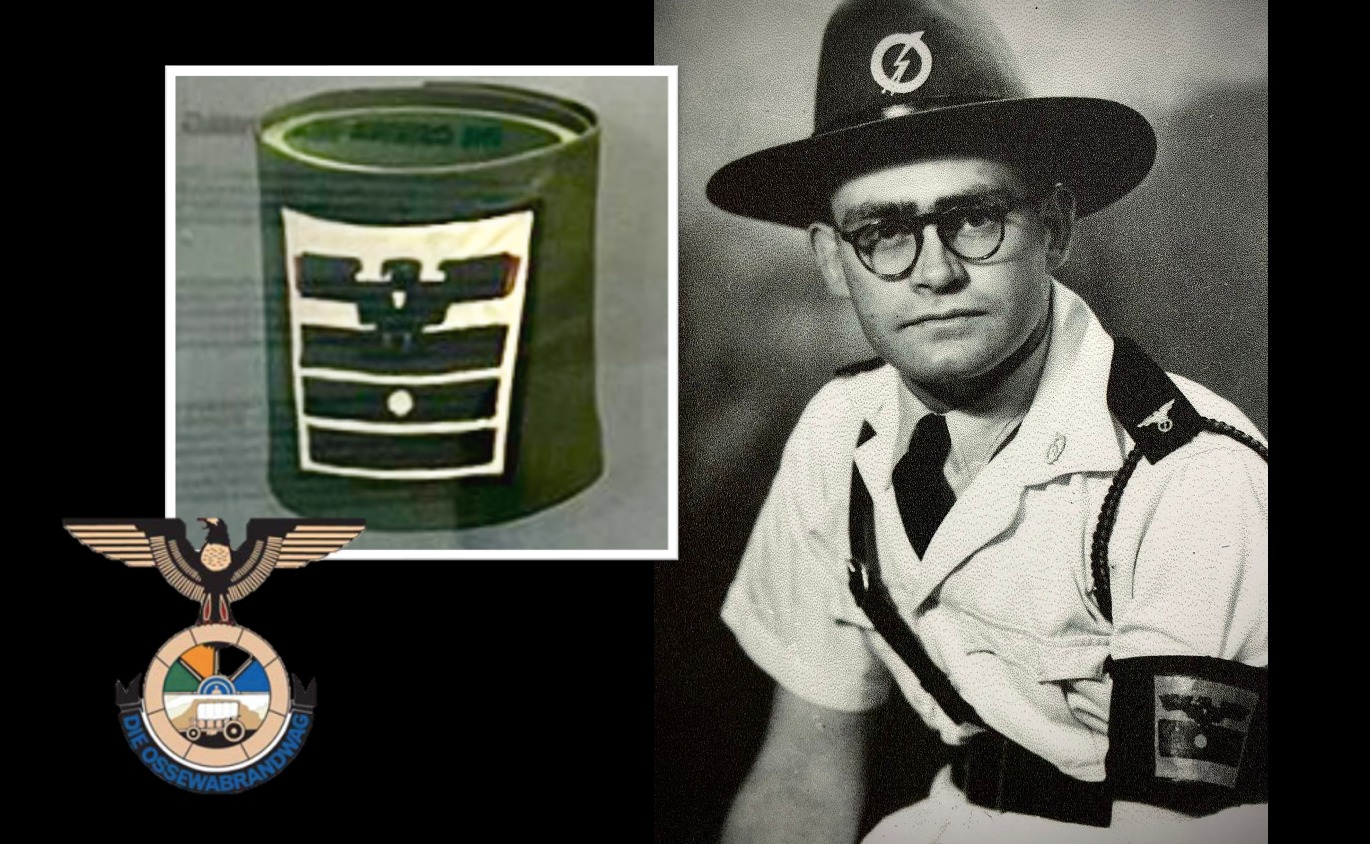
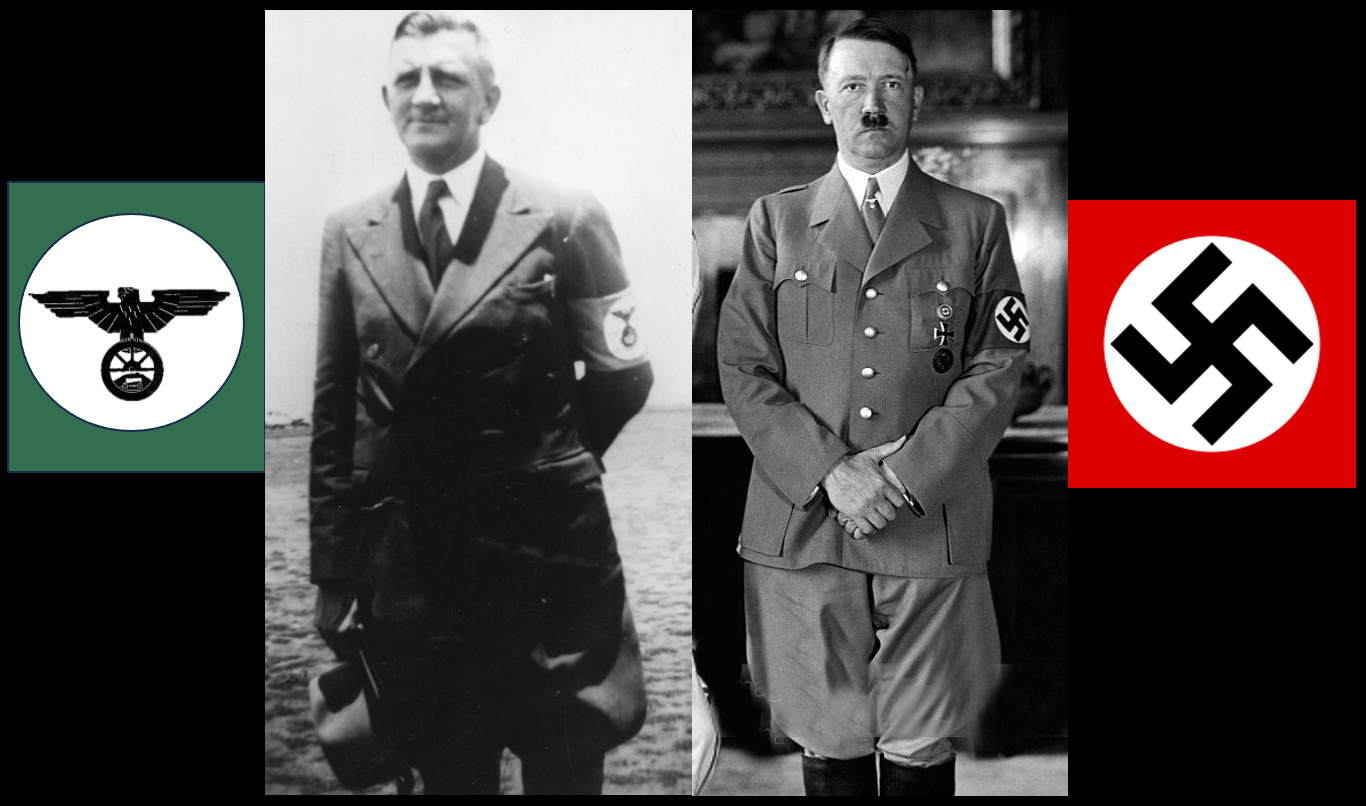

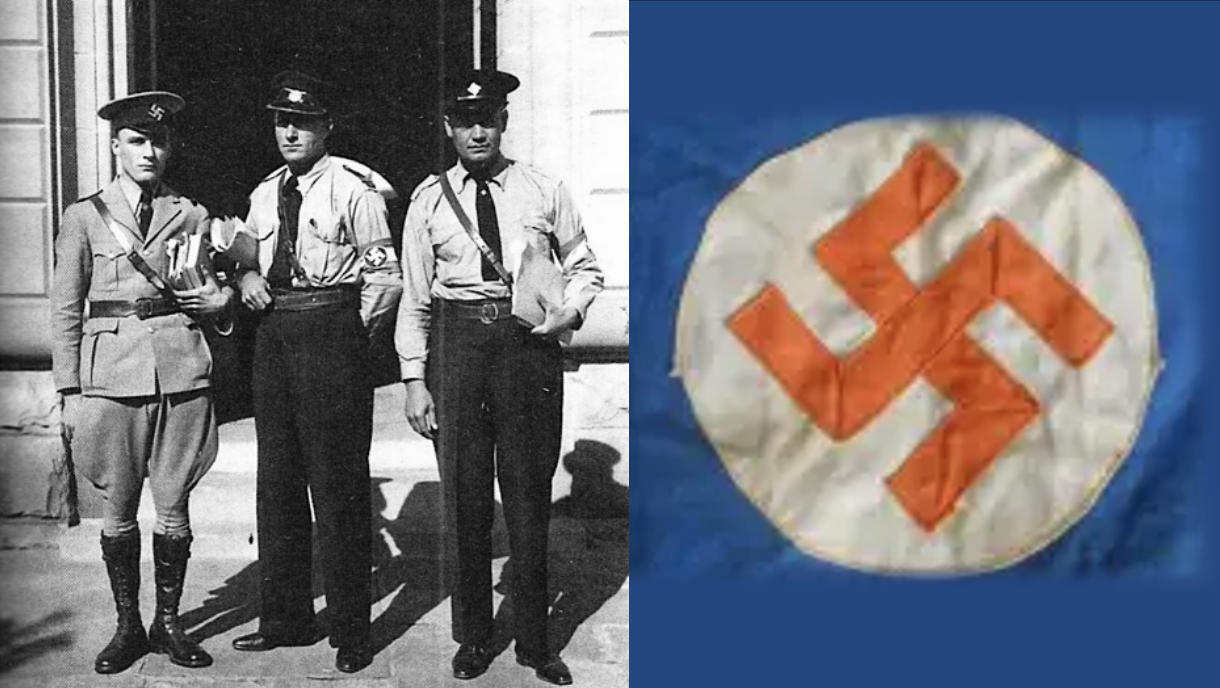
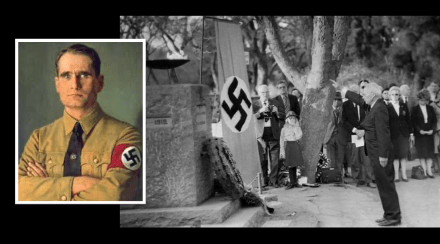
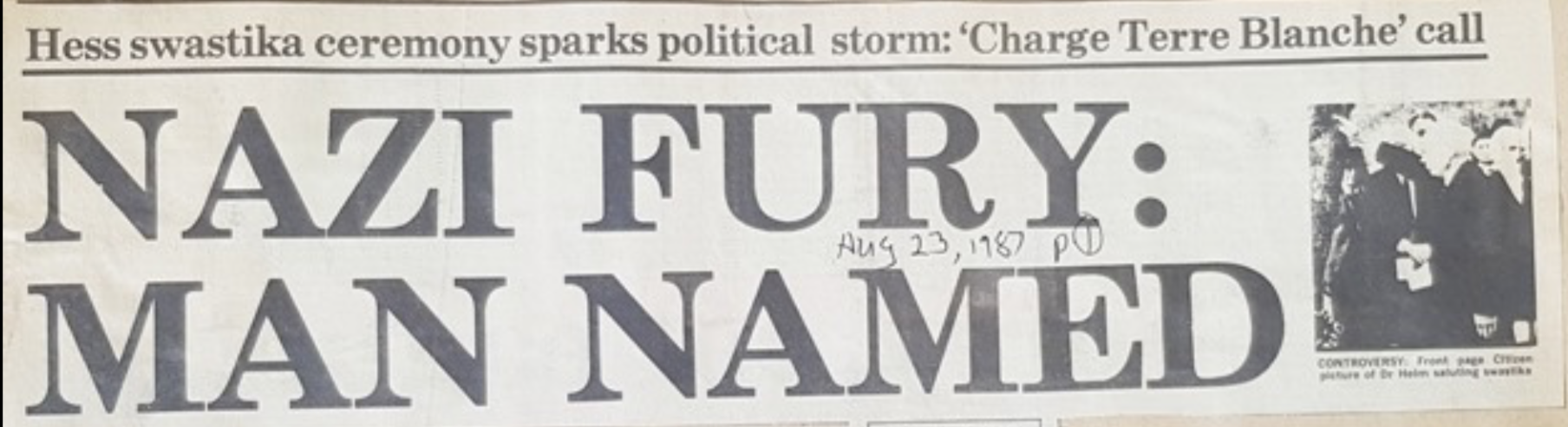
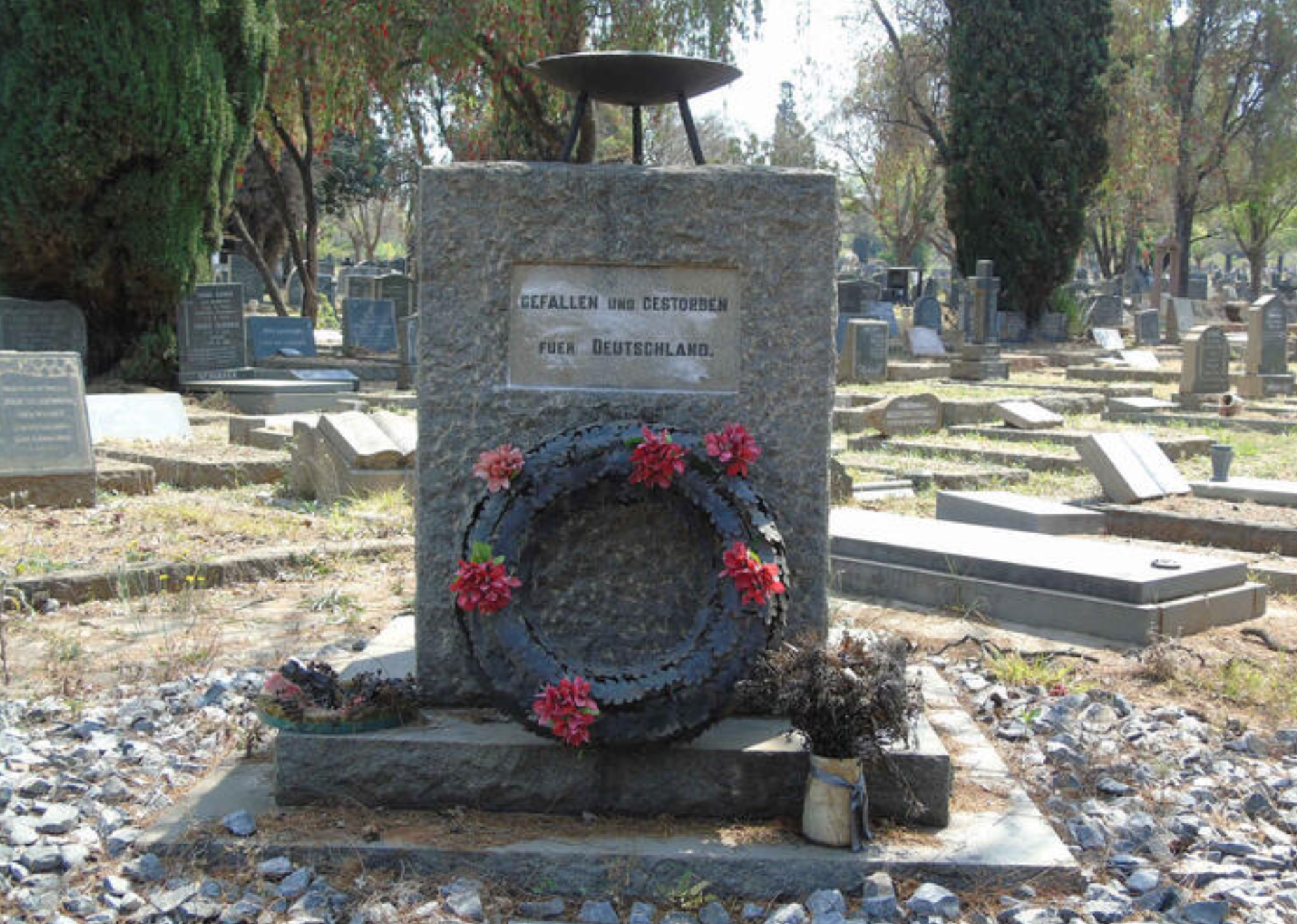
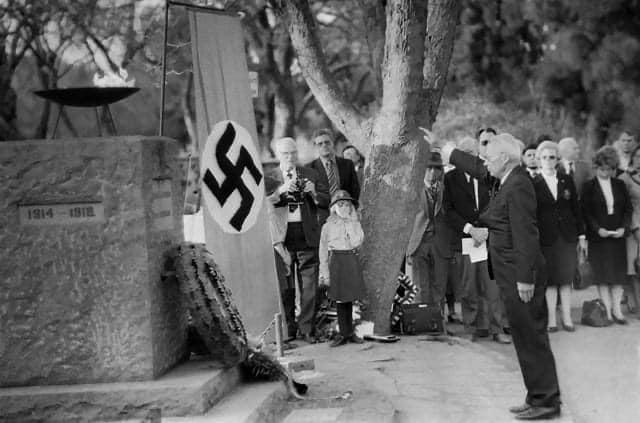
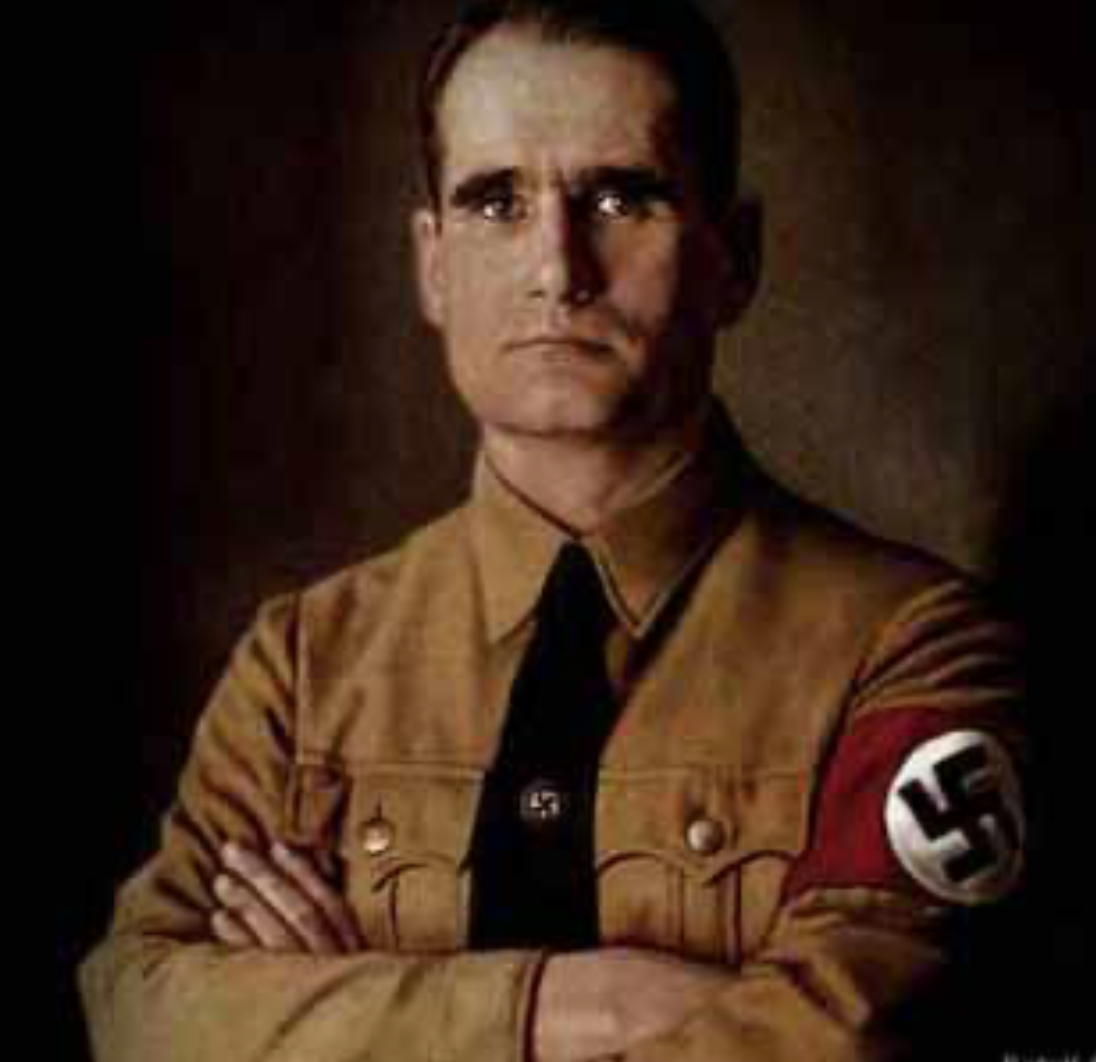

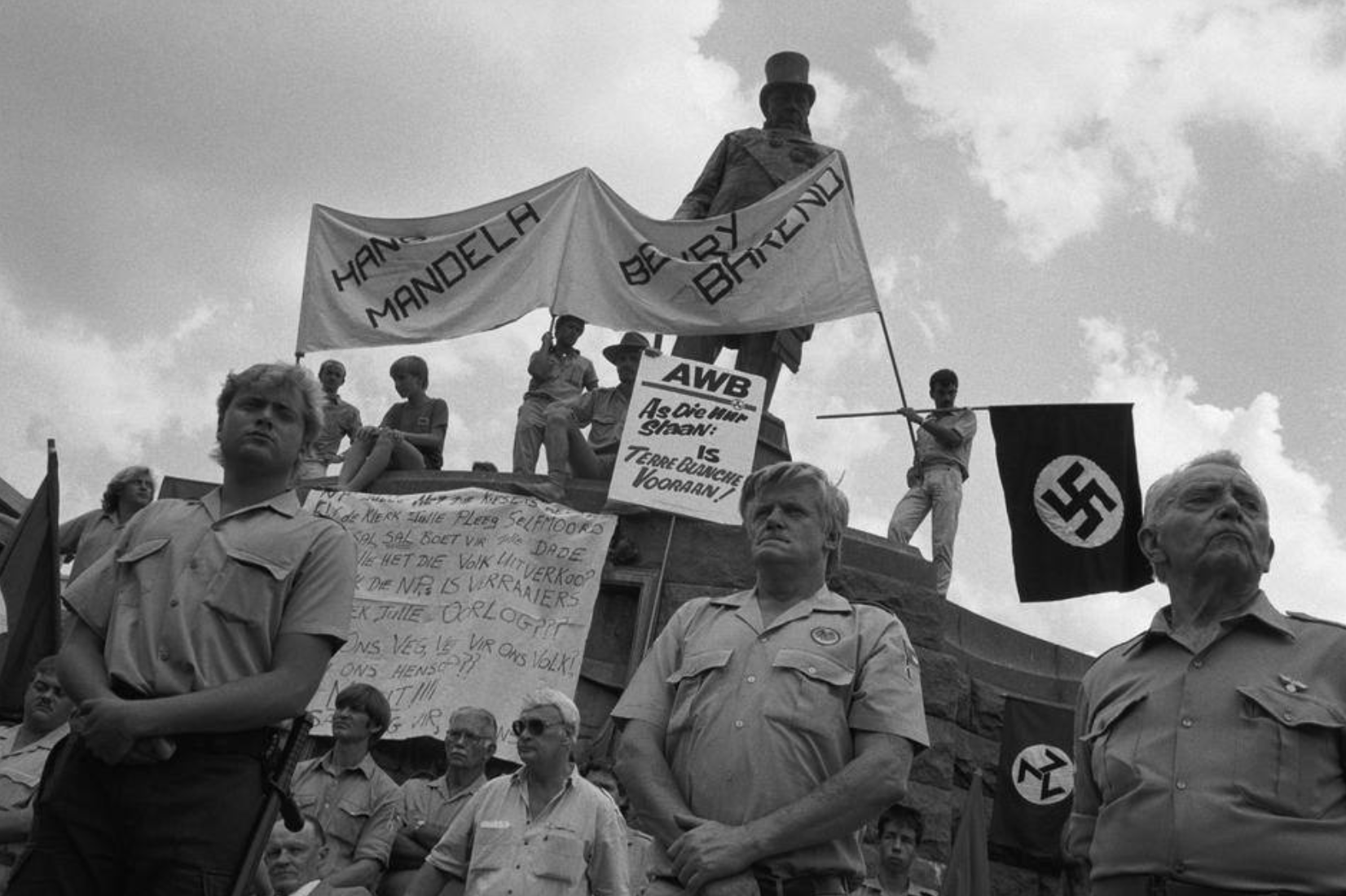
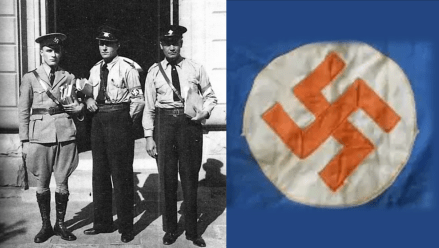

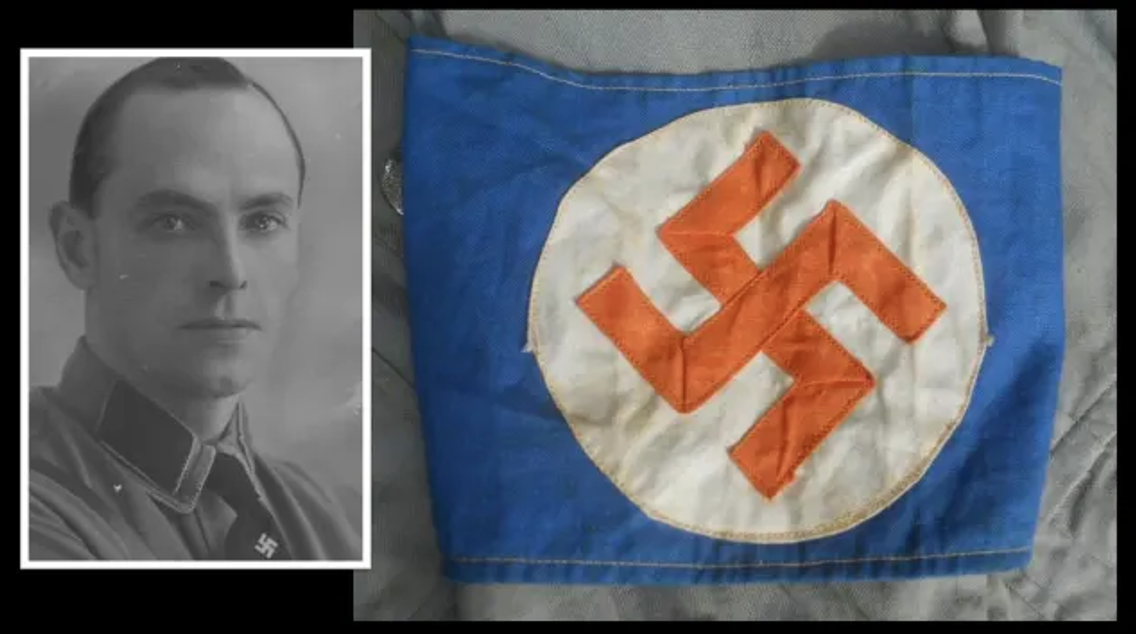

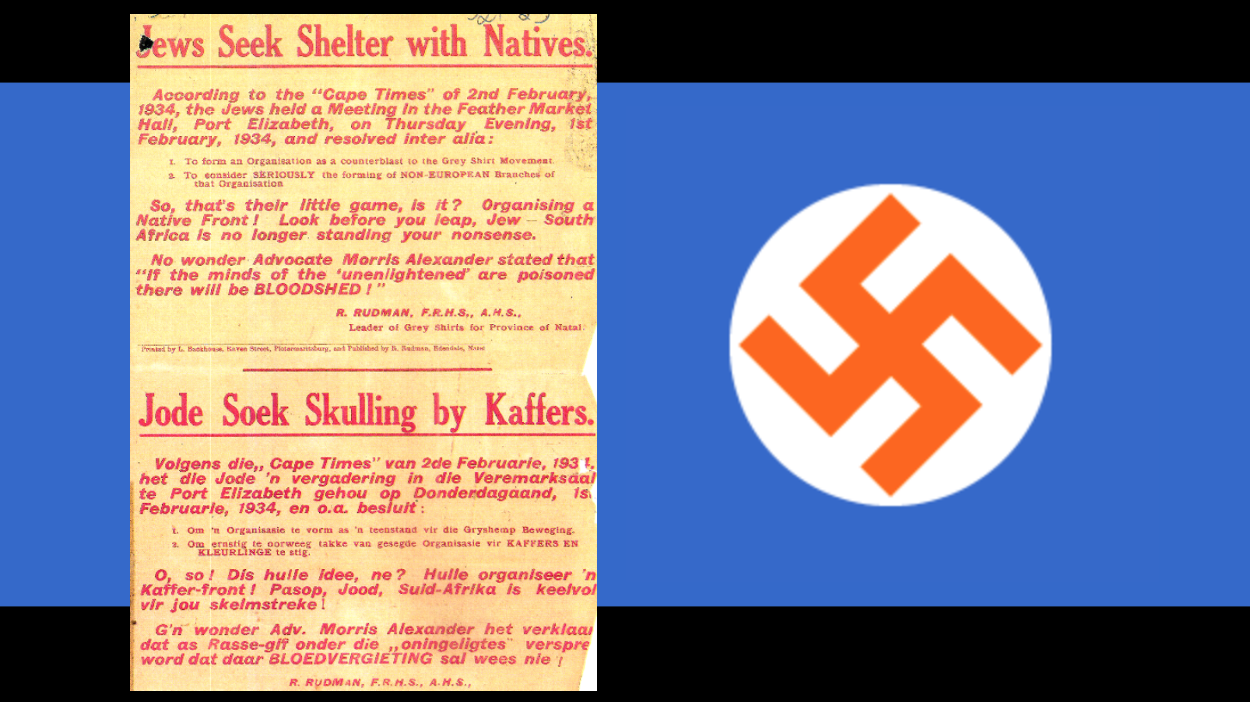
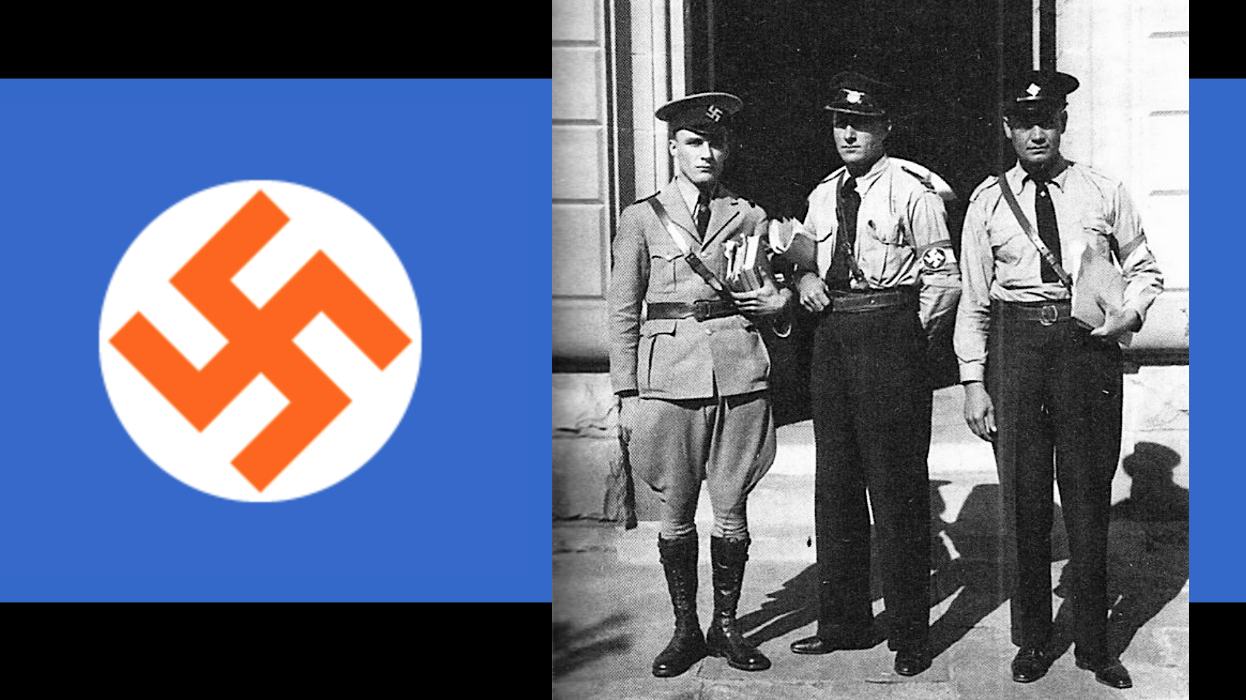
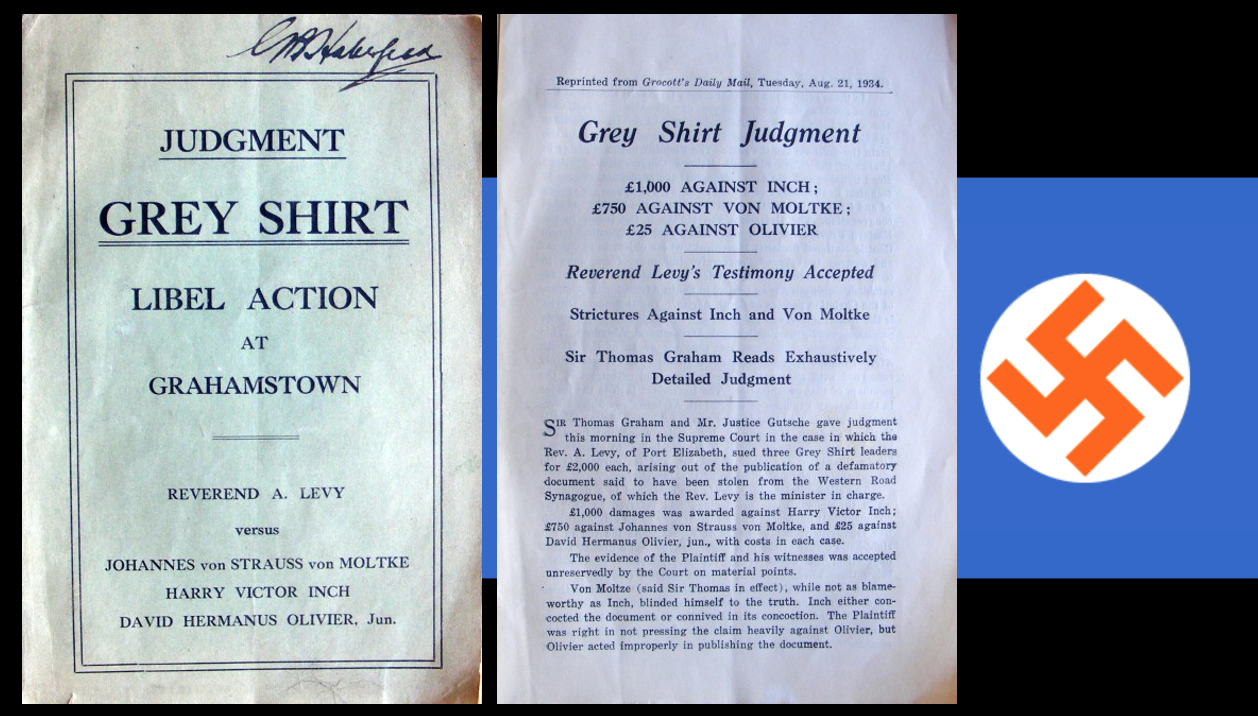
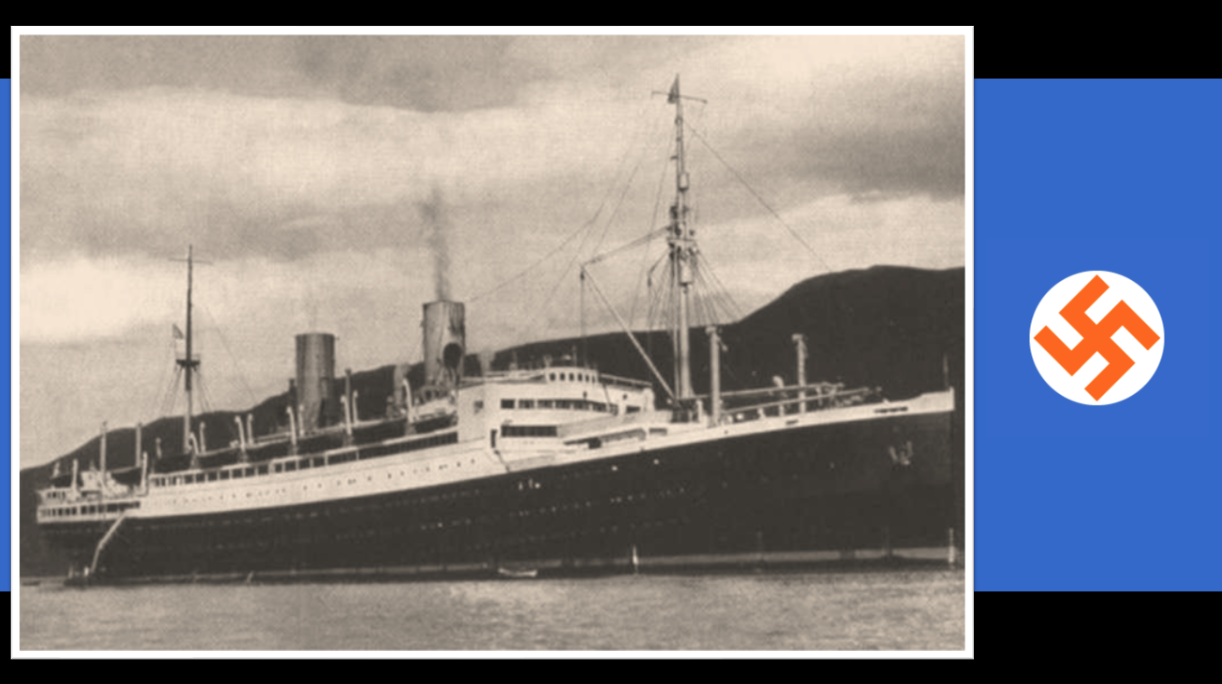
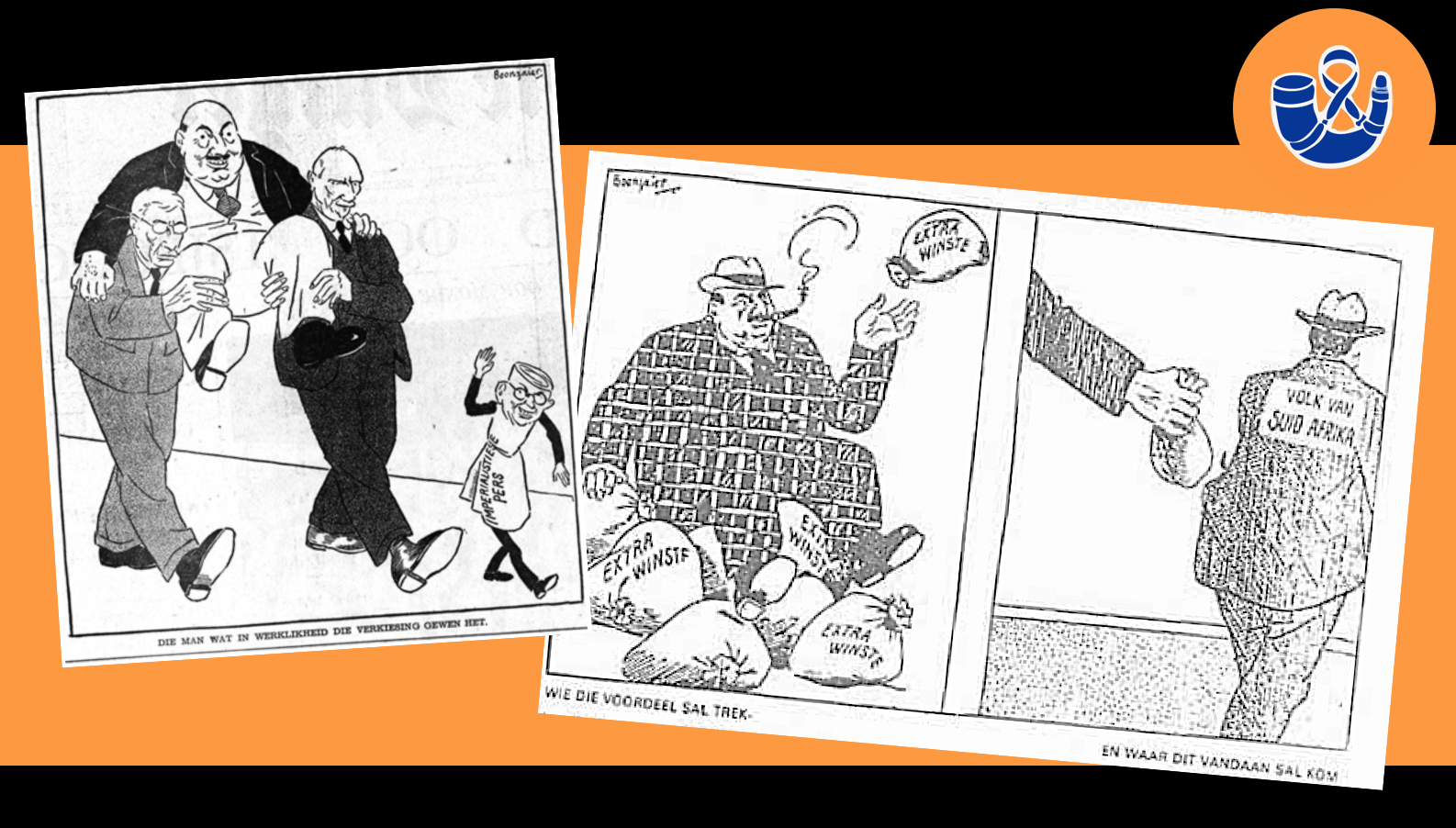
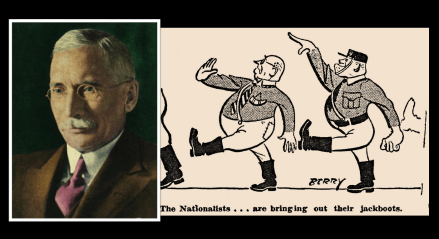
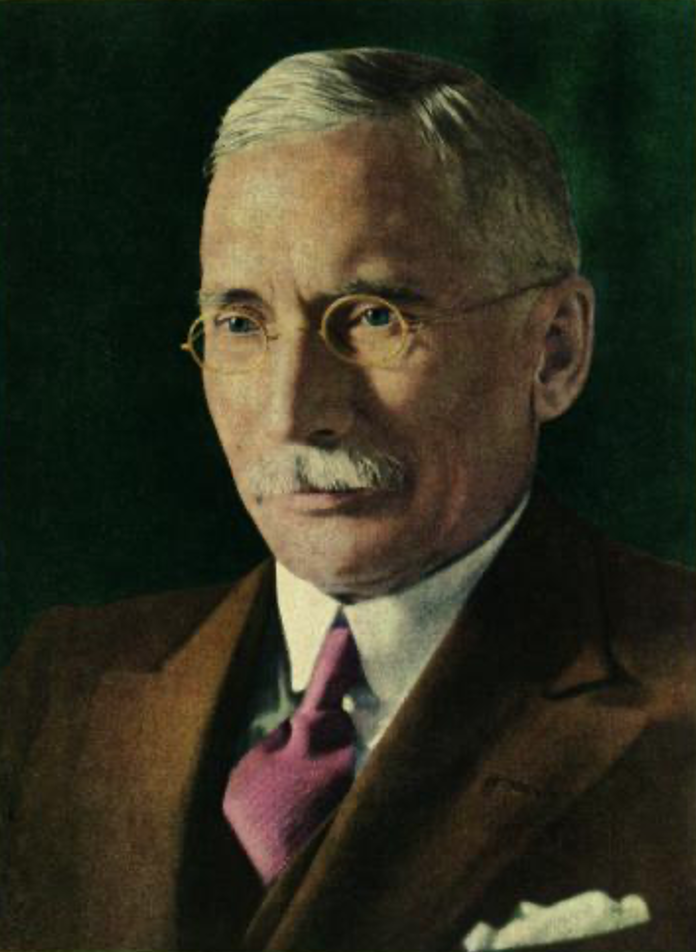
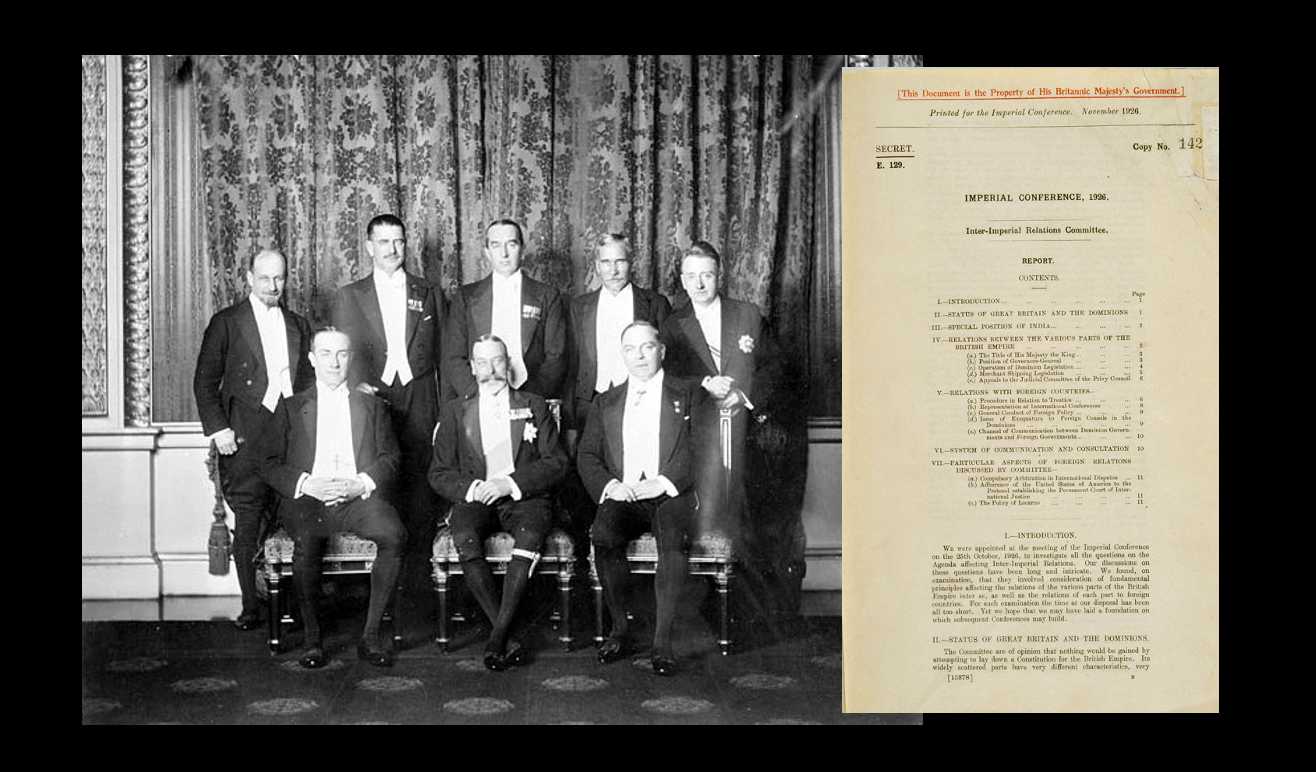
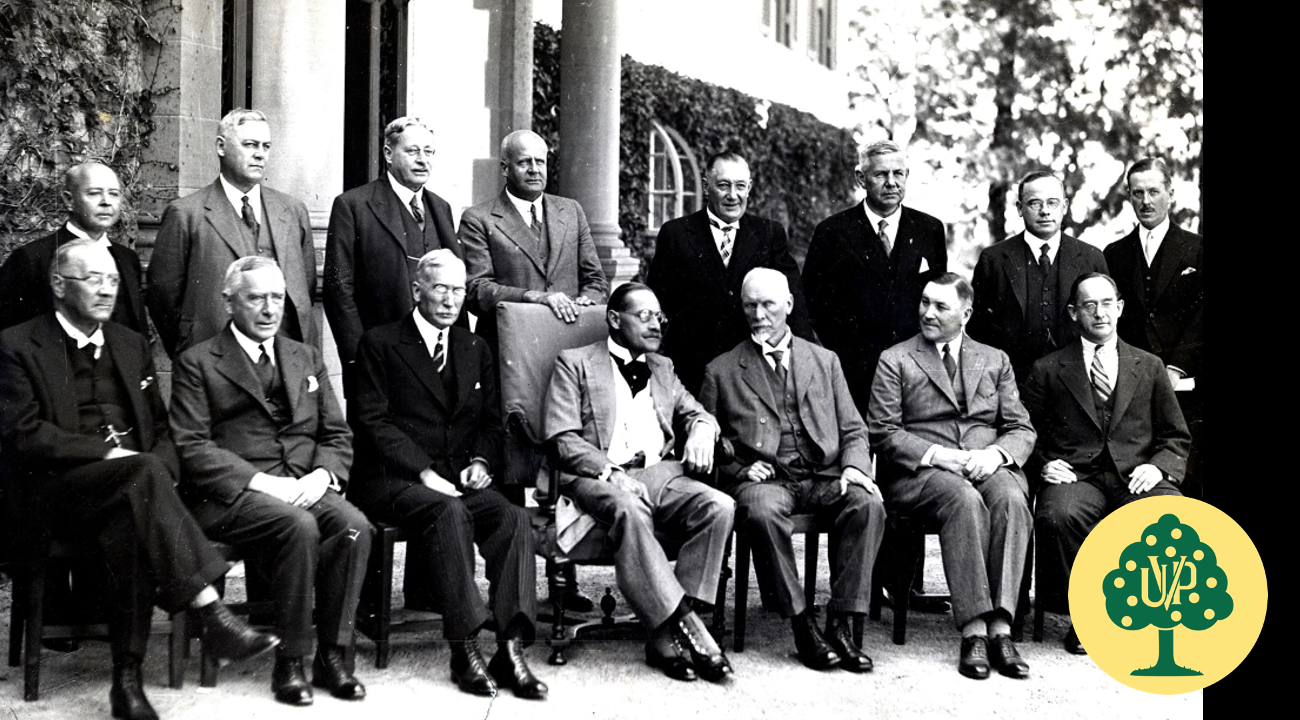
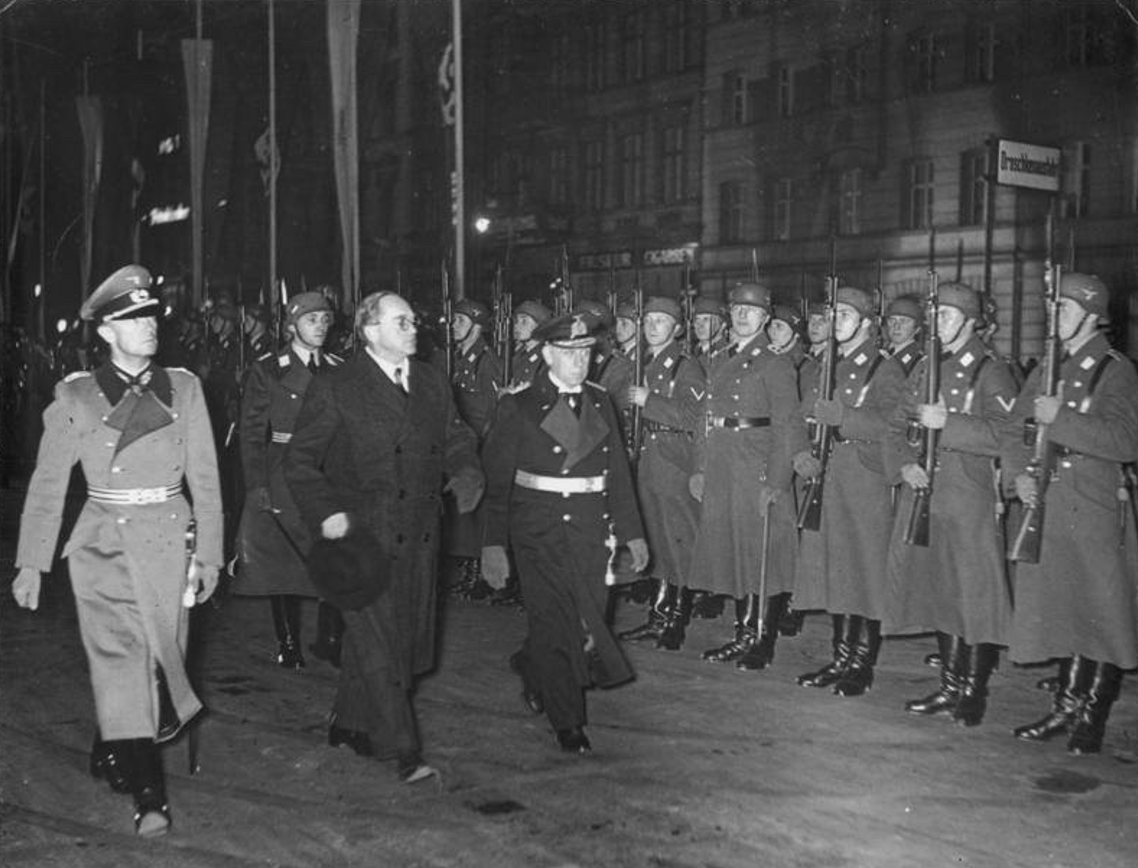
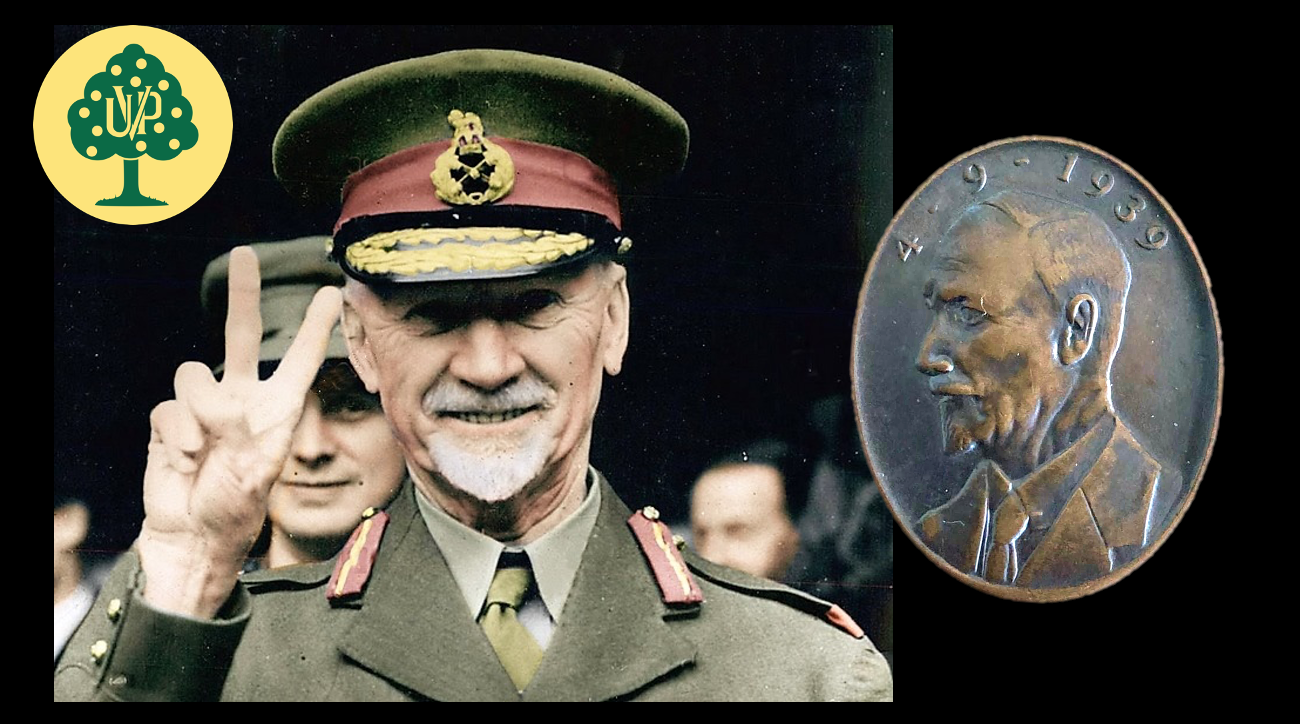
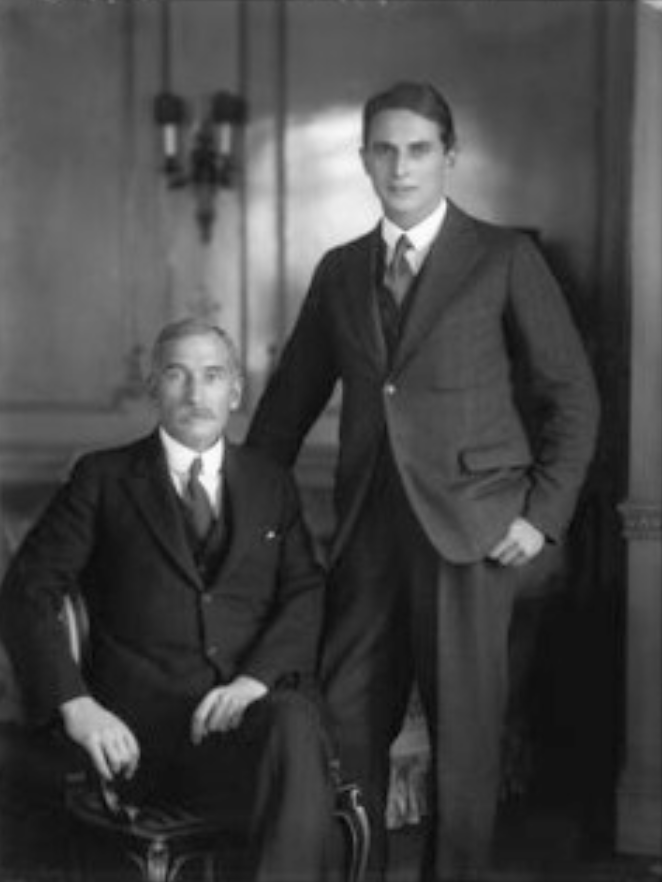
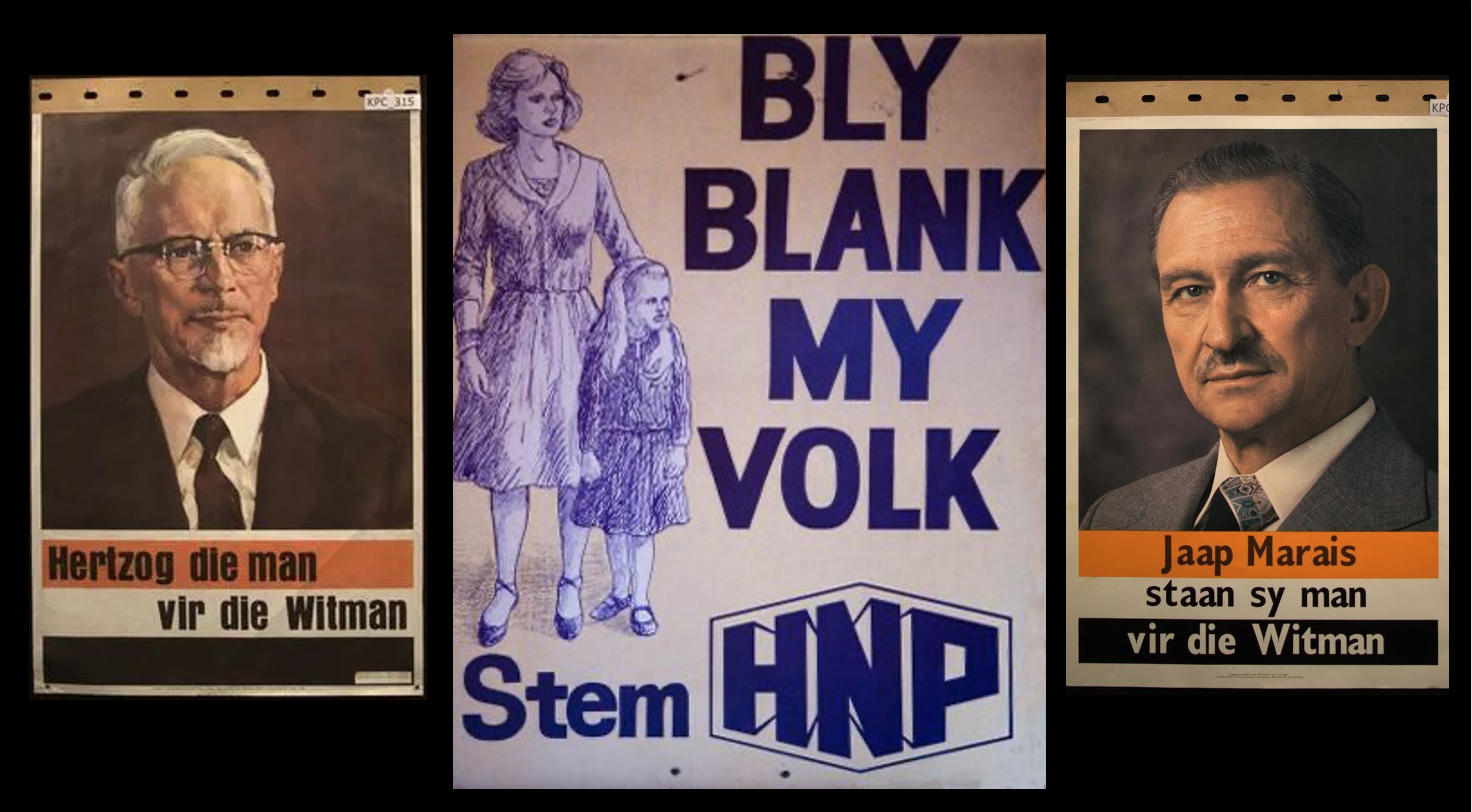
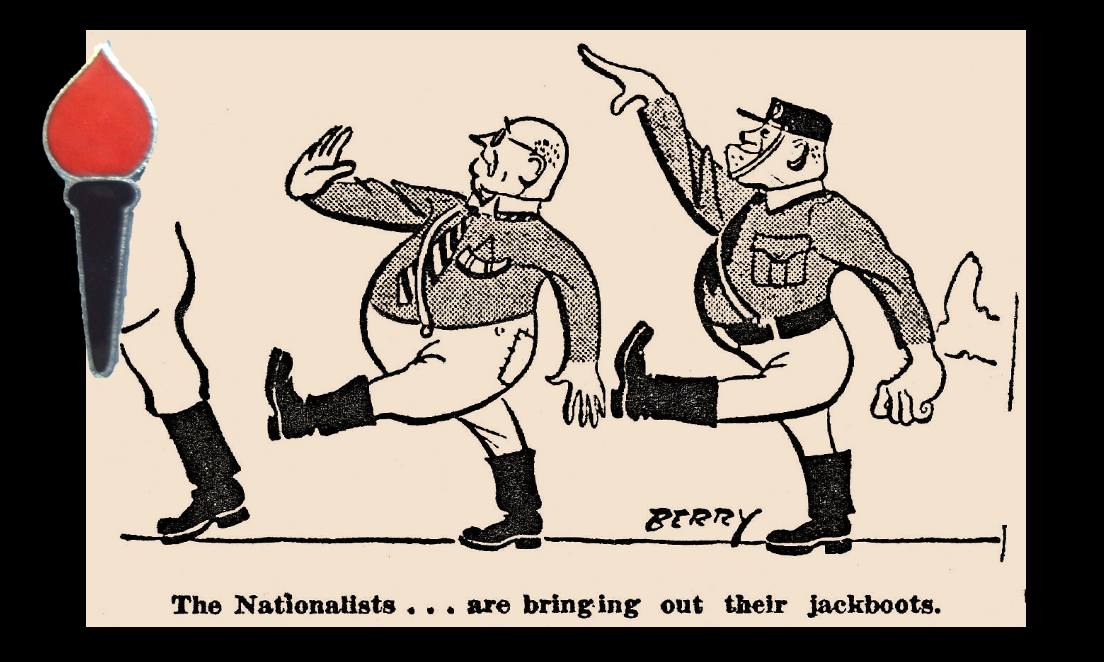
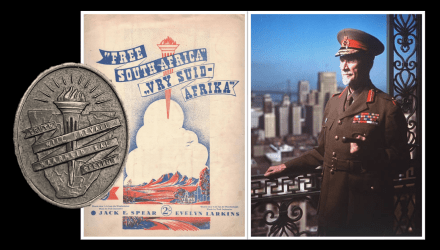
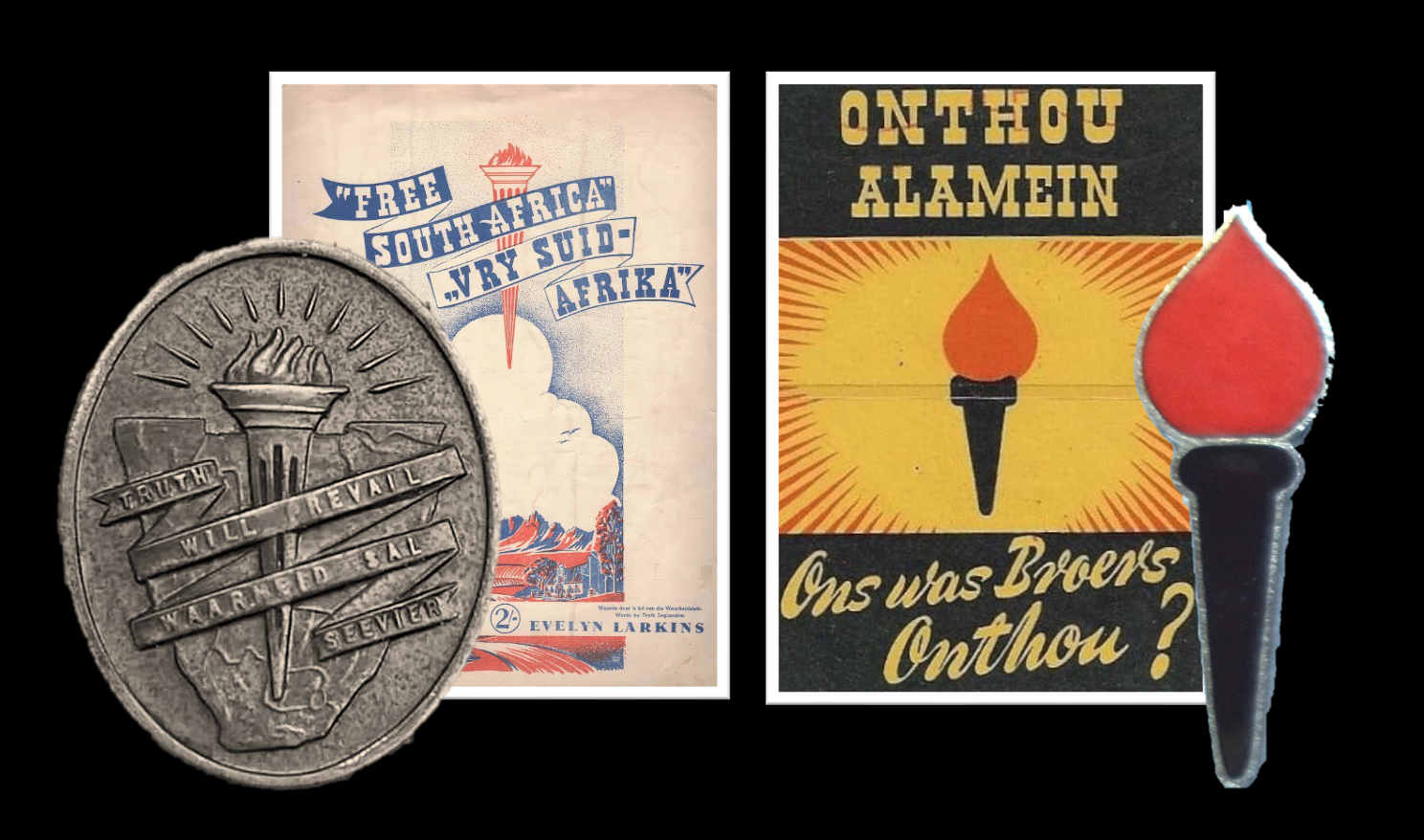
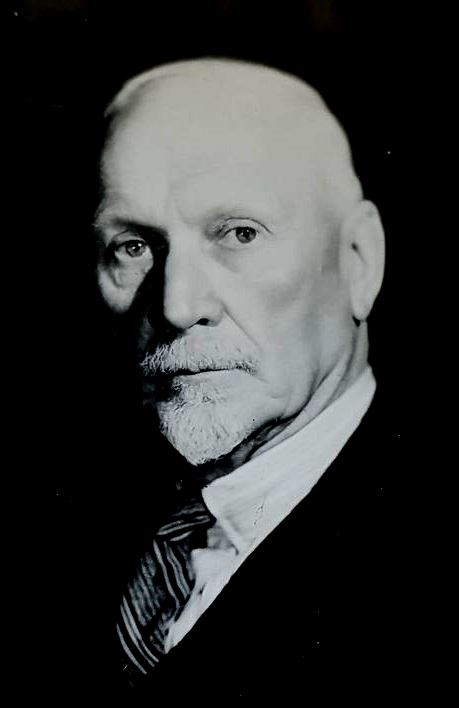
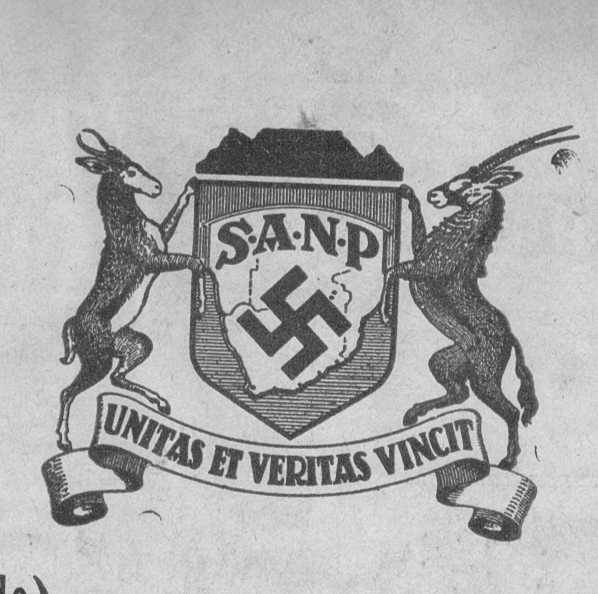
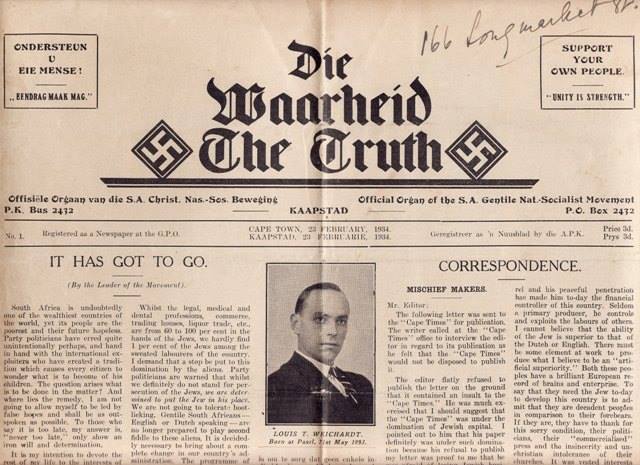
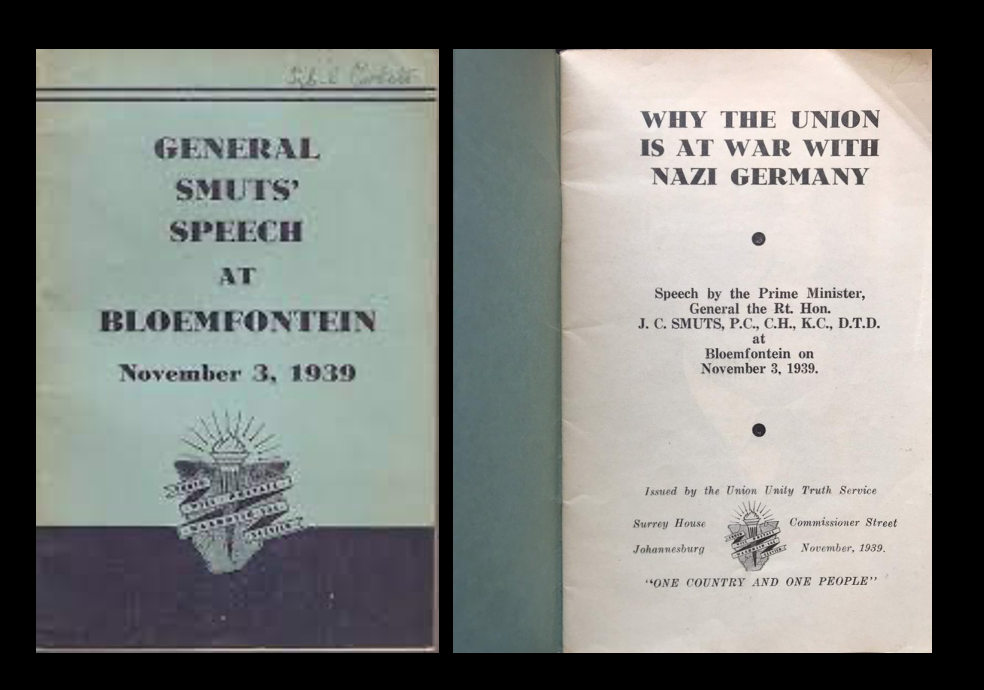


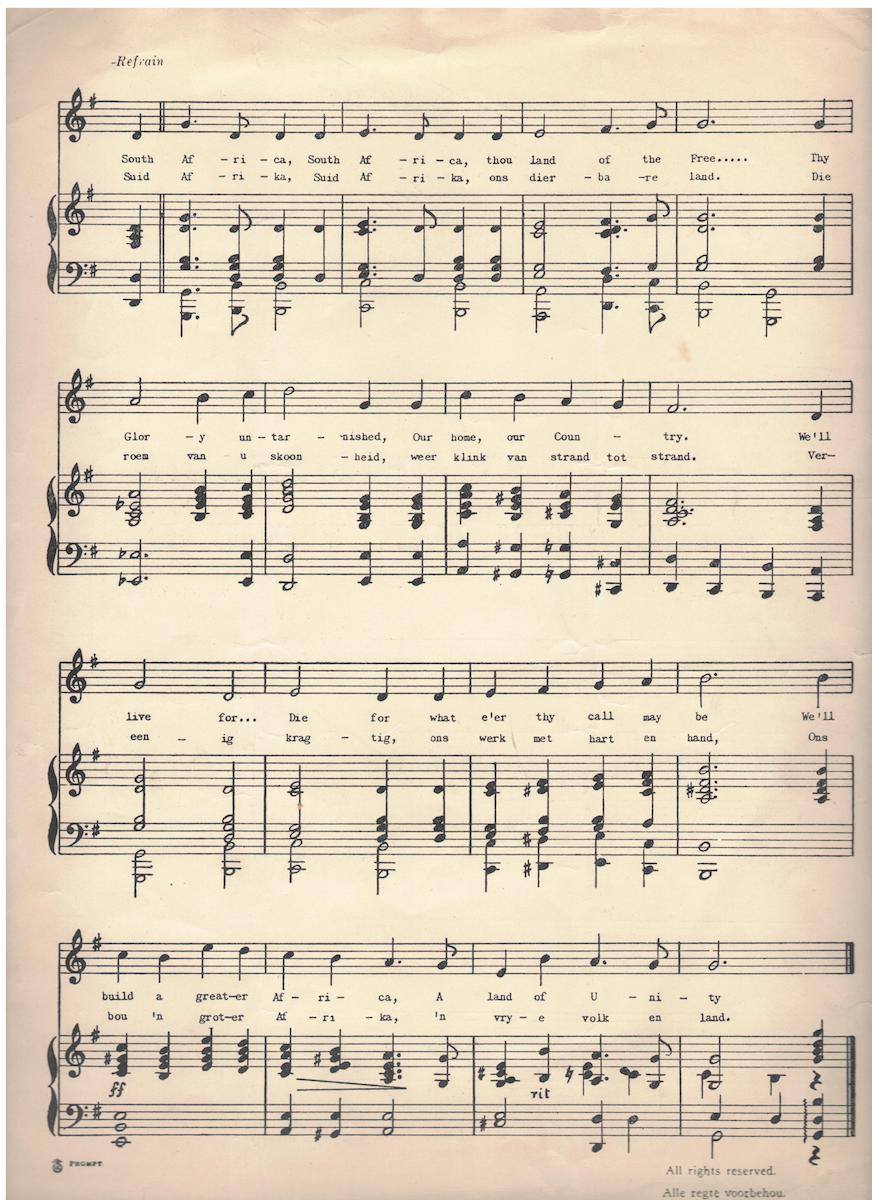
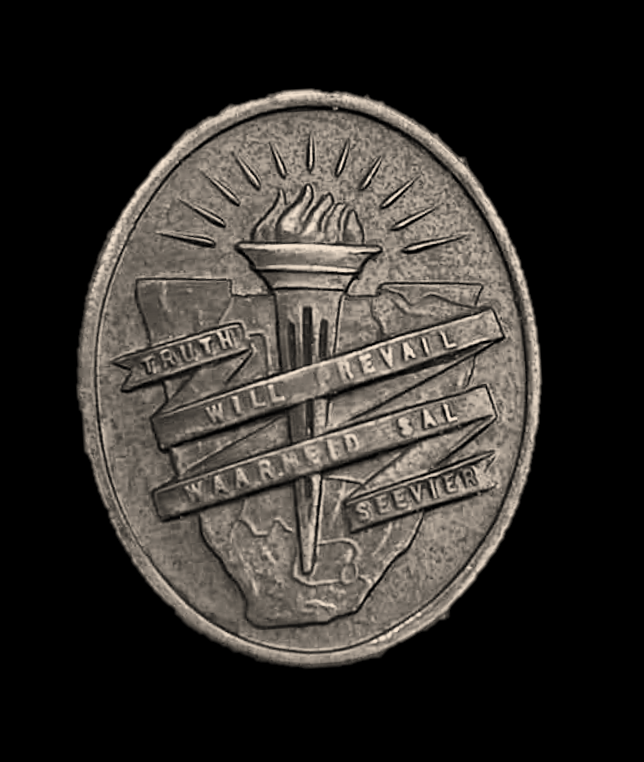
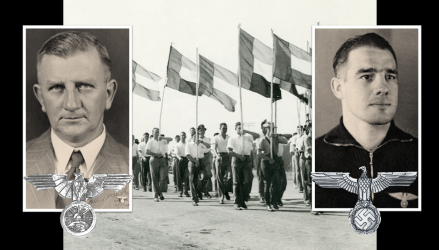
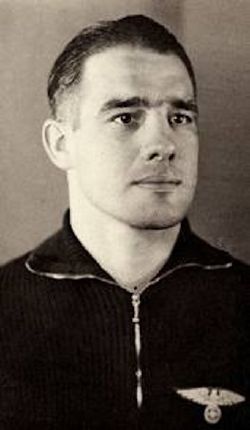
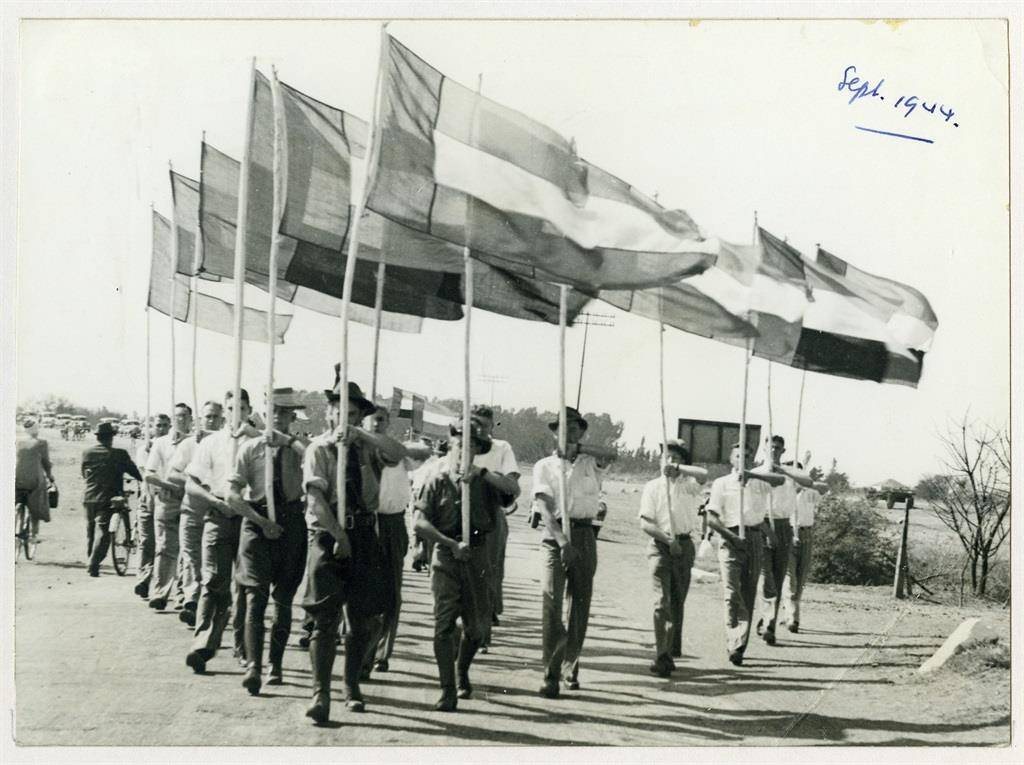

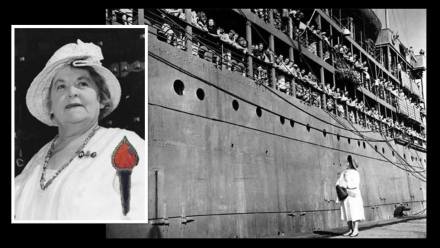
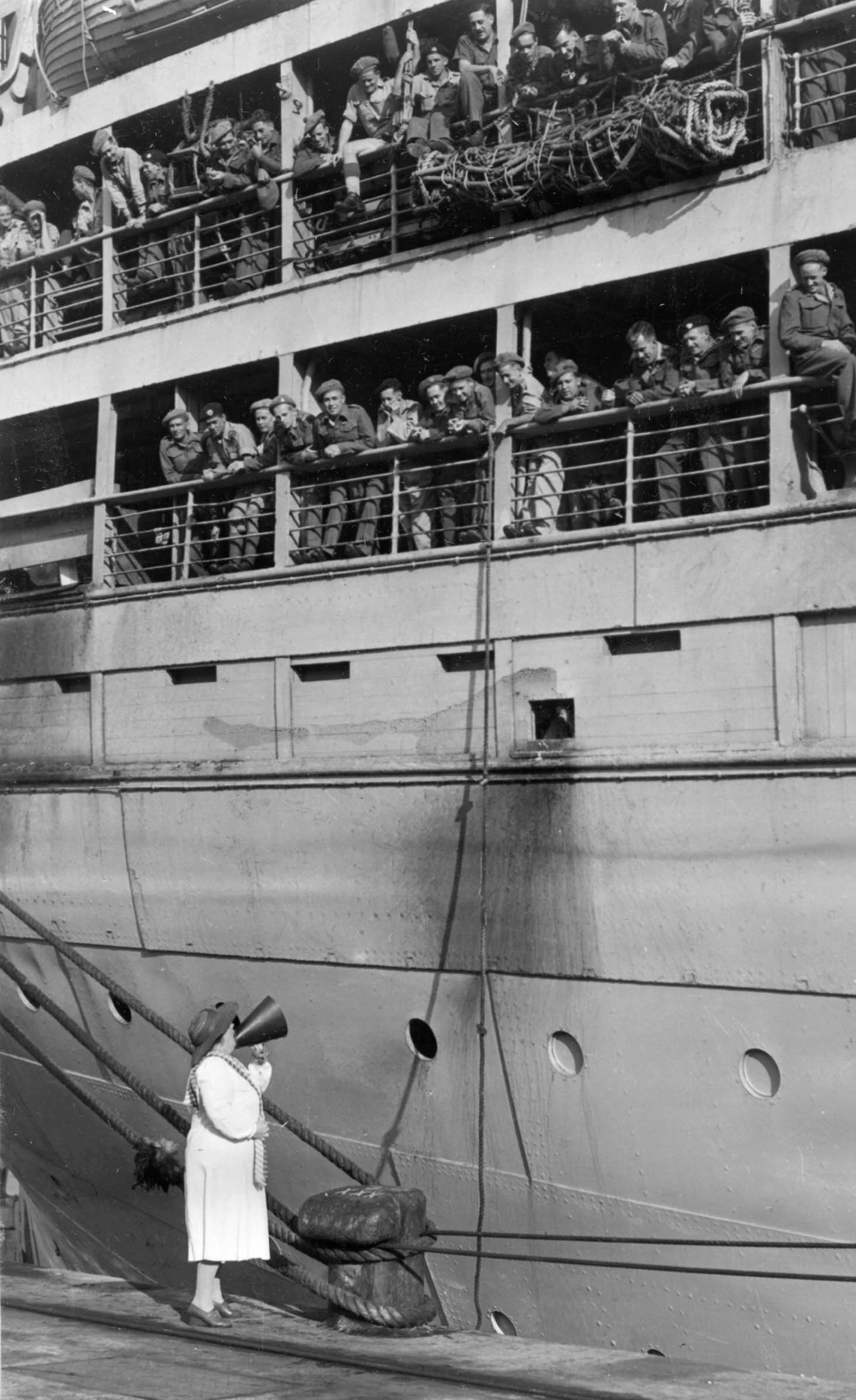 But more often than not only one iconic South African makes it into the distinctive personal memories of tens of thousands of British, South African and other commonwealth soldiers and sailors taking part in the war – and it’s not Jan Smuts, it’s a relatively little known soprano known only as the ‘Lady in White’.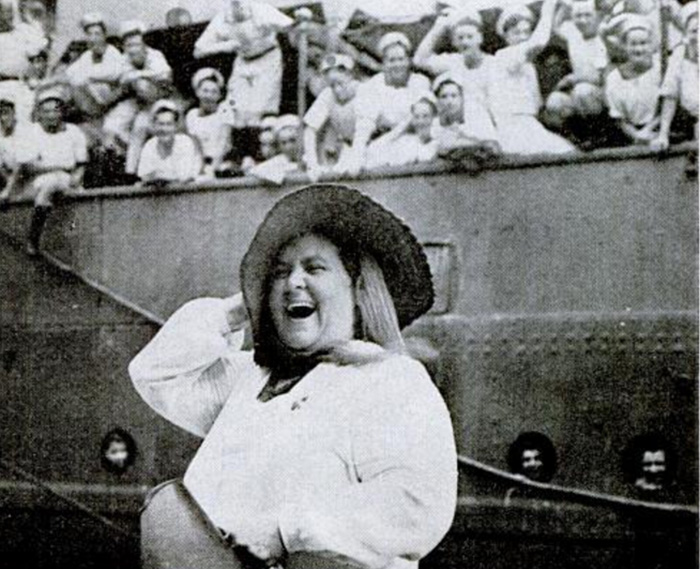
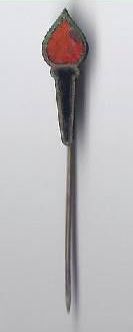 An unsung icon of Liberty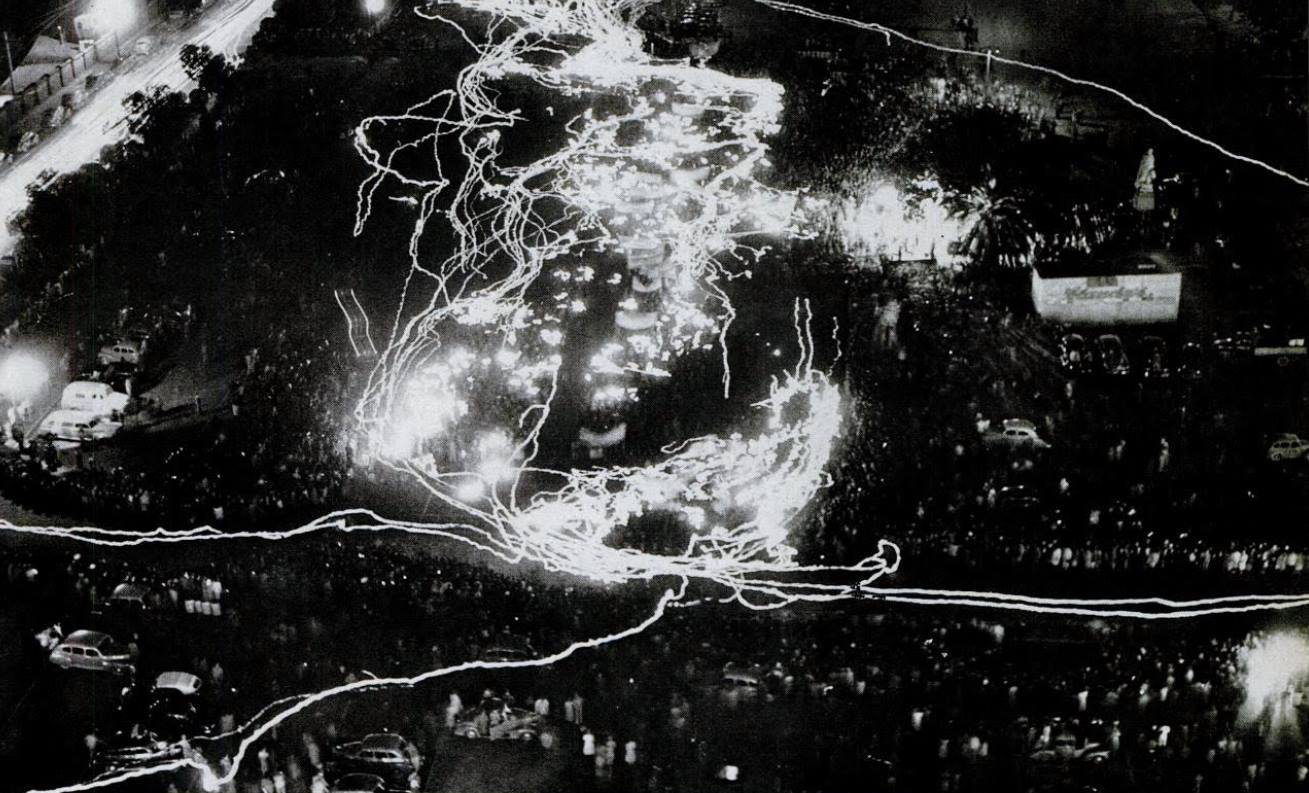
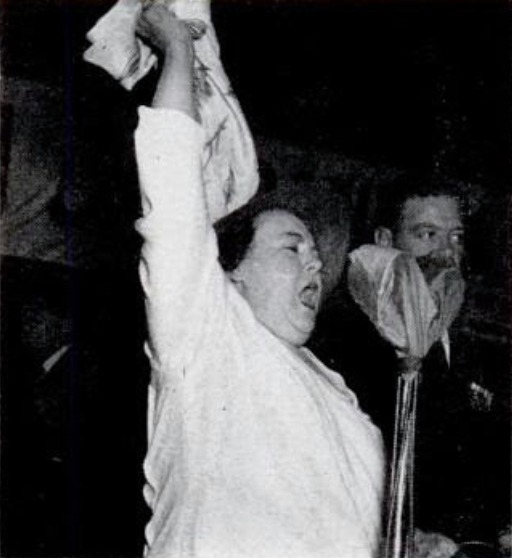


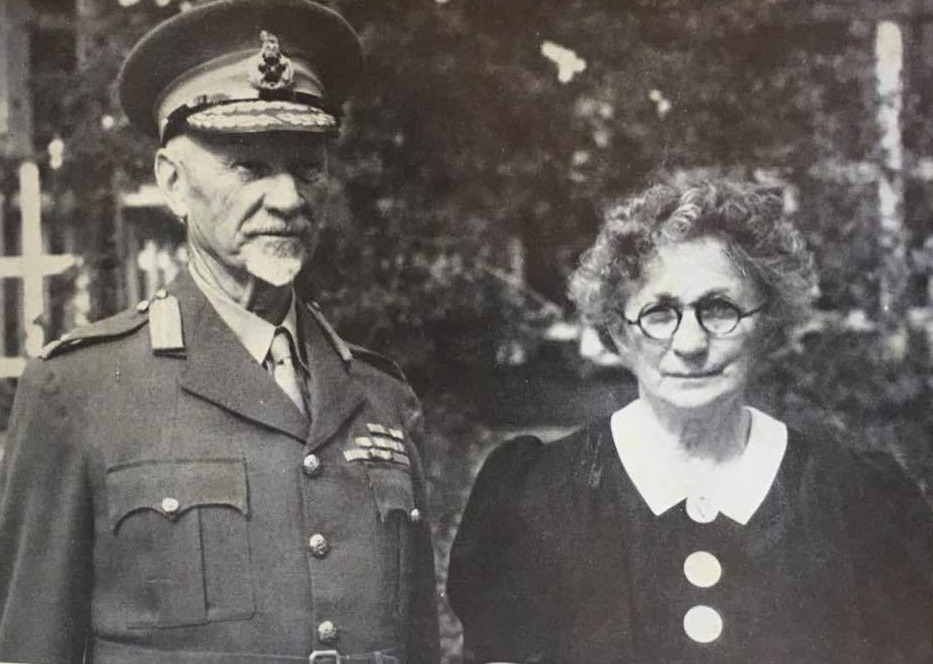
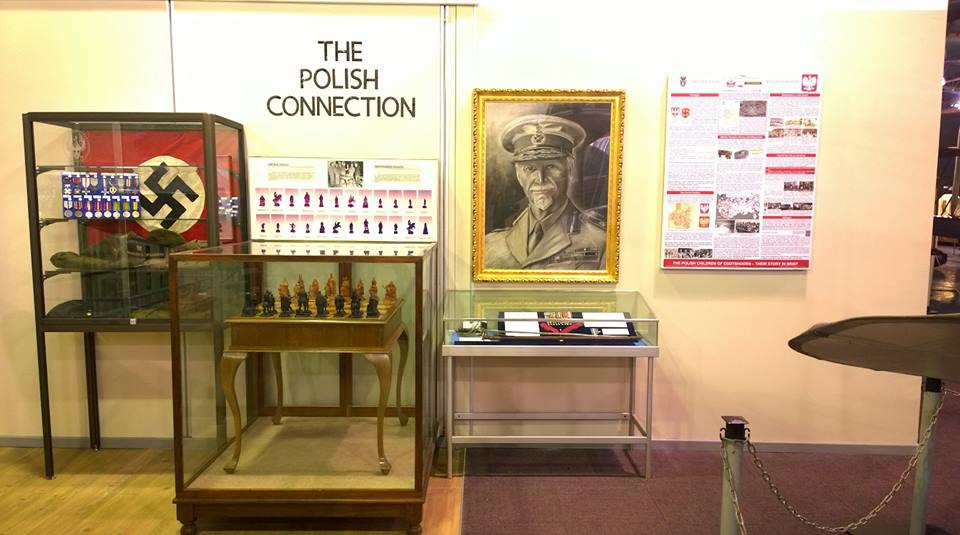
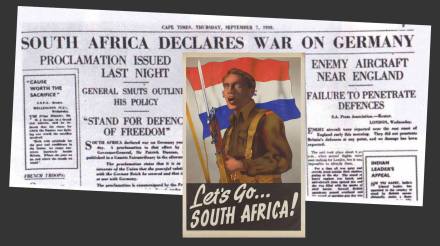


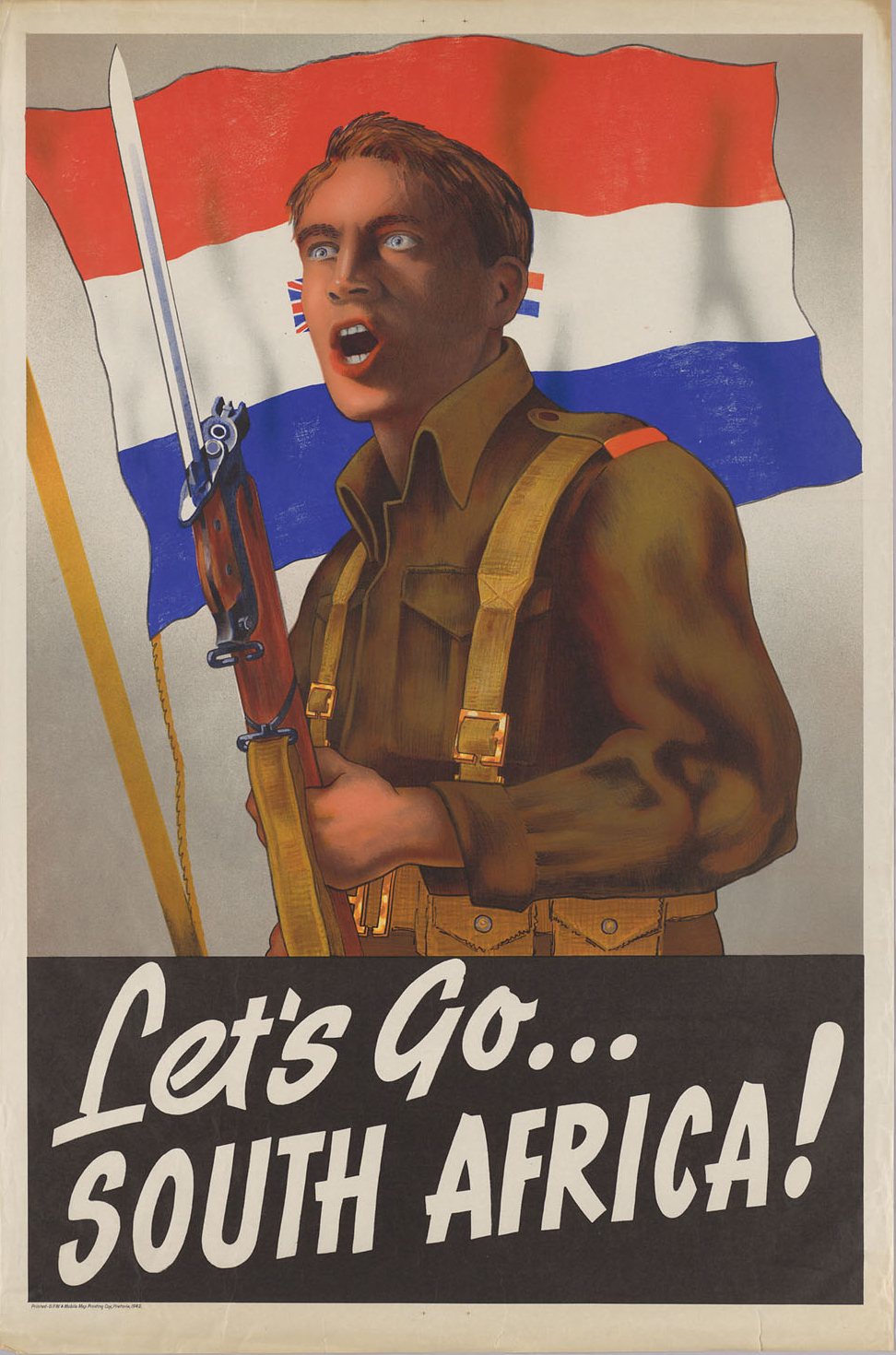 On the eve of World War II the Union of South Africa found itself in a unique political and military quandary. Though closely allied with Great Britain as a co-equal Dominion under the 1931 Statute of Westminster with the British king as its head of state, South Africa had as its Prime Minister on 1 September 1939 Barry Hertzog, the leader of the pro-Afrikaner anti-British National party that had joined in a unity government as the United Party.
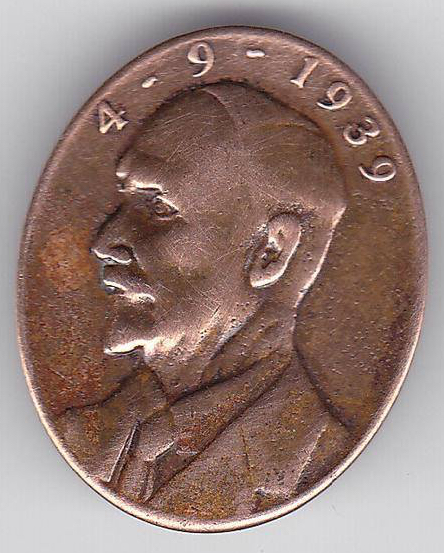 To celebrate Smut’s victory in Parliament that day a special button/lapel badge was made inscribed with 4-9-1939 for the party faithful.
 A very interesting part of the sequences of declarations of war against Germany, was that of Southern Rhodesia (now Zimbabwe), and it stands out as a unique one. The Southern Rhodesian government almost immediately followed the British declaration of war with their own. They can even be said to hold the mantle as the very first of the British Dominions and Colonies to stand by Britain in their hour of need. Steadfast and swift in support of their ‘motherland’ – The United Kingdom, no quibble about it either, as there was no long parliamentary debate over the issue – it came without even a second thought on the matter. In all 26 000 Rhodesians volunteered to fight during World War 2.
 In terms of the semantics of the ‘term ‘standing alone’ after Dunkirk, in many cases the Commonwealth countries did not have immediate operational readiness to come alongside the UK in the summer of 1940. However we must remember that the Battle of Britain (when Britain really ‘stood alone’) was an air battle, where a ‘few’ pilots held off the German assault – and alongside the 2353 British pilots stood 574 pilots from other countries – 24%, – a quarter of the combat force. Most of them came from the Commonwealth countries (342 pilots in total including Rhodesians and South Africans). So Britain never really ‘stood alone’ in that context either.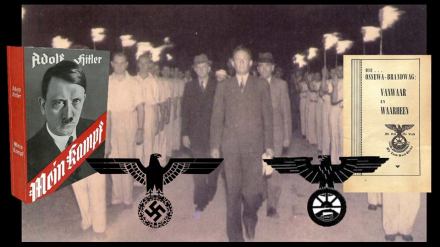
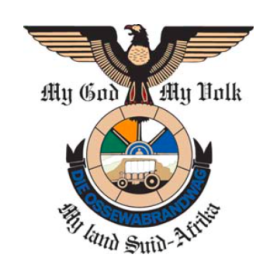
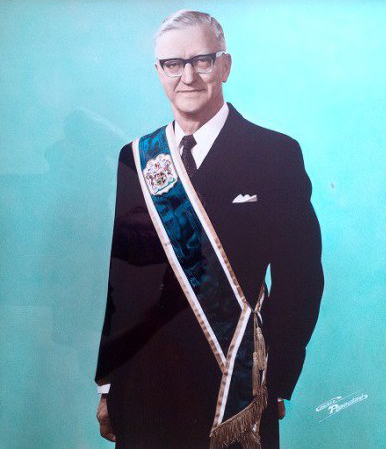
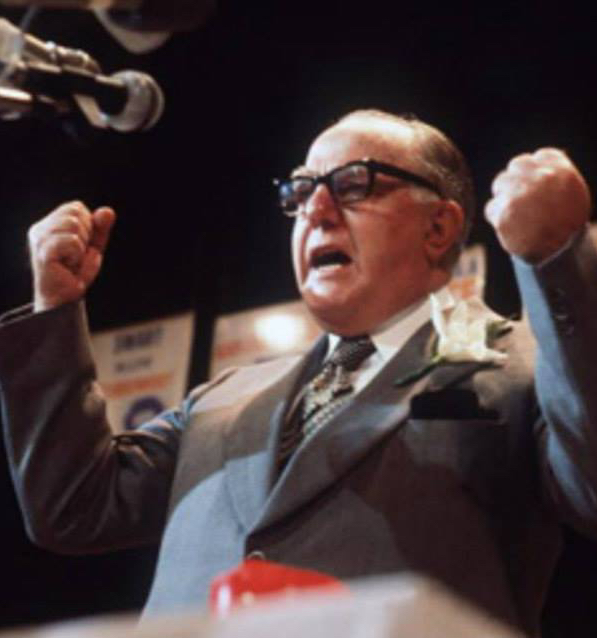


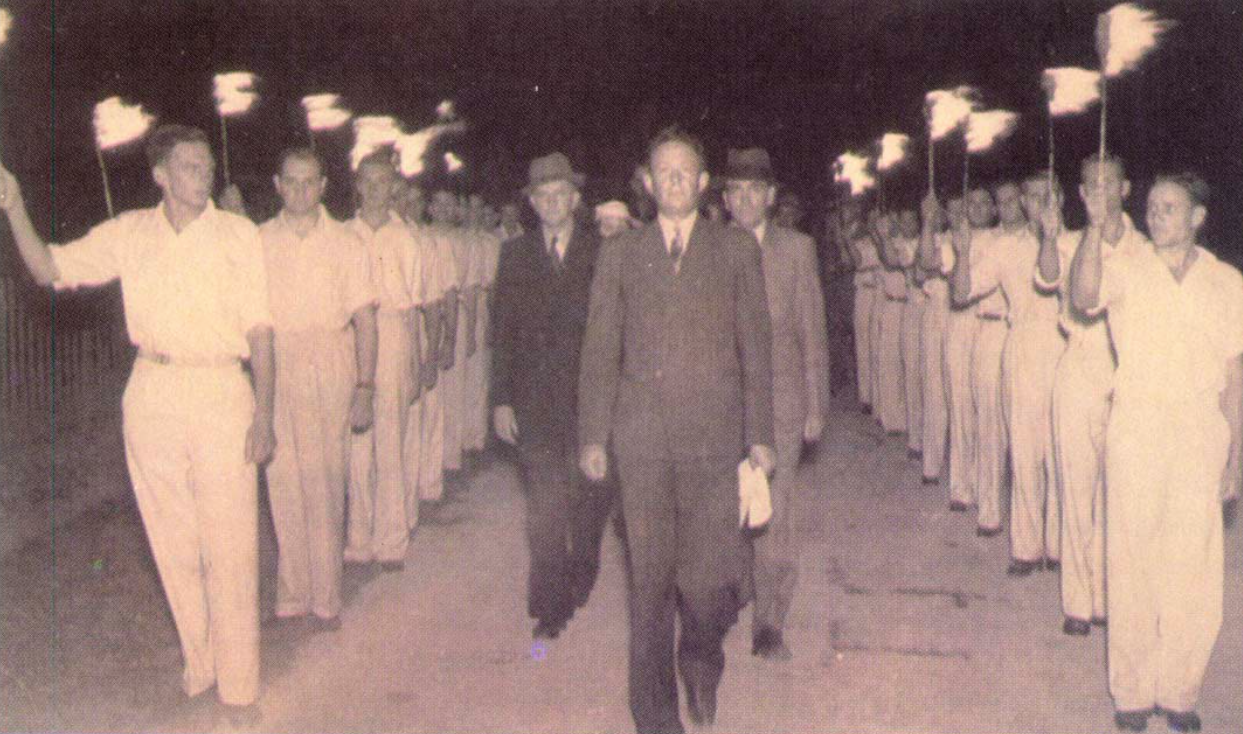
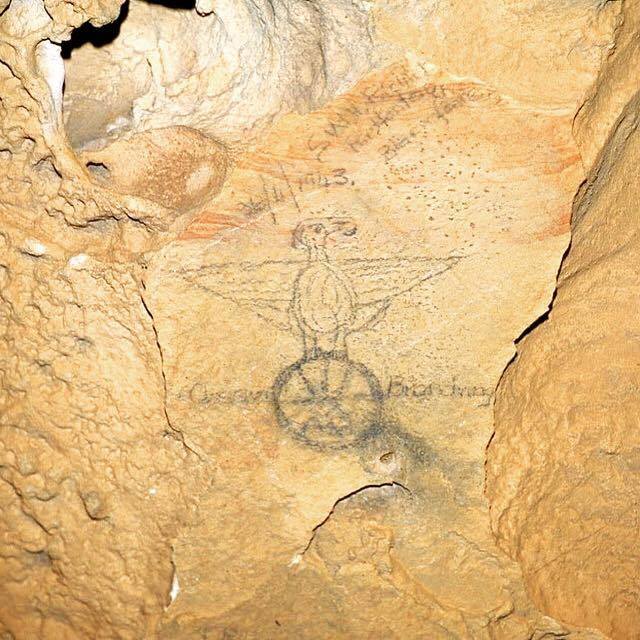

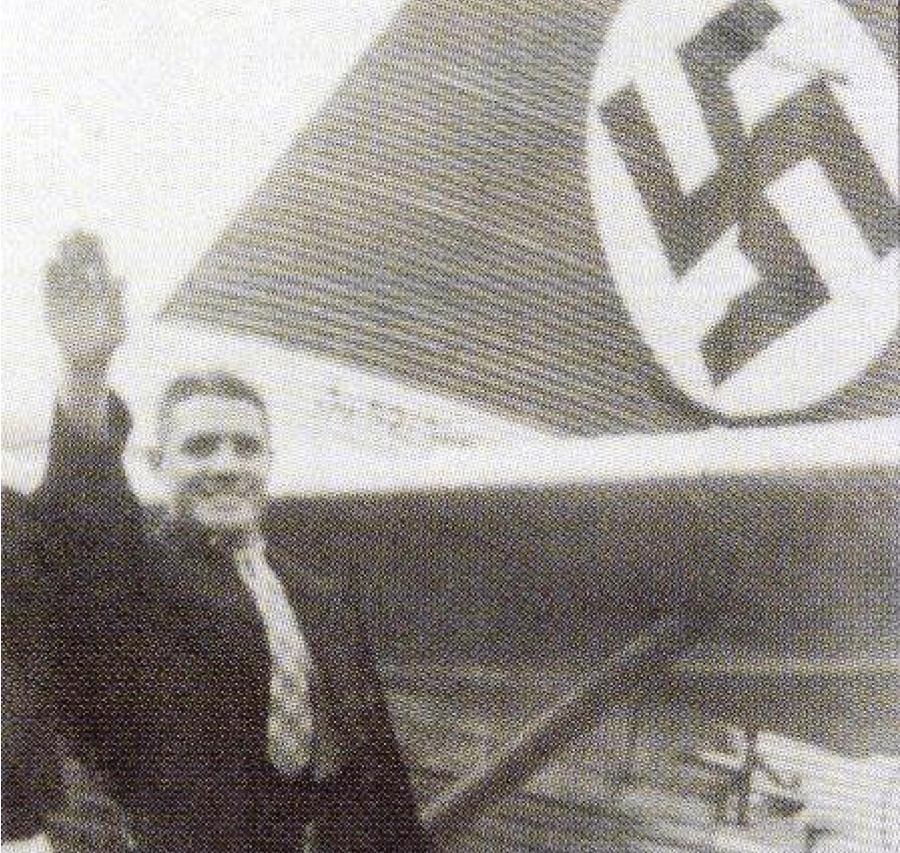
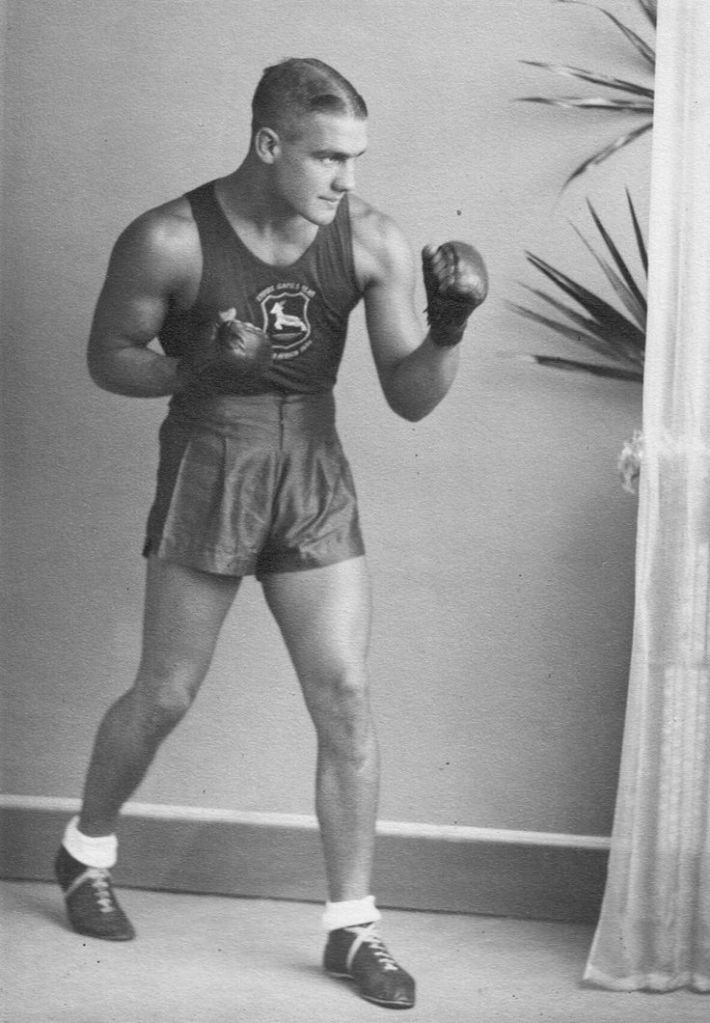

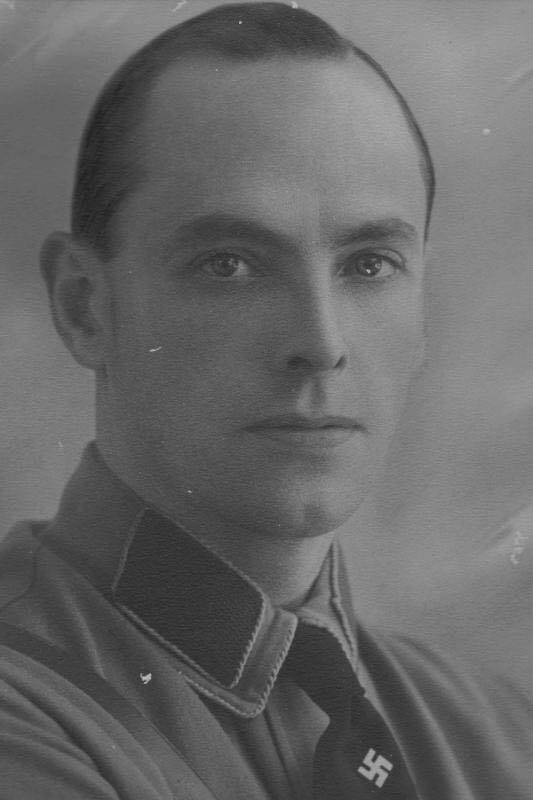


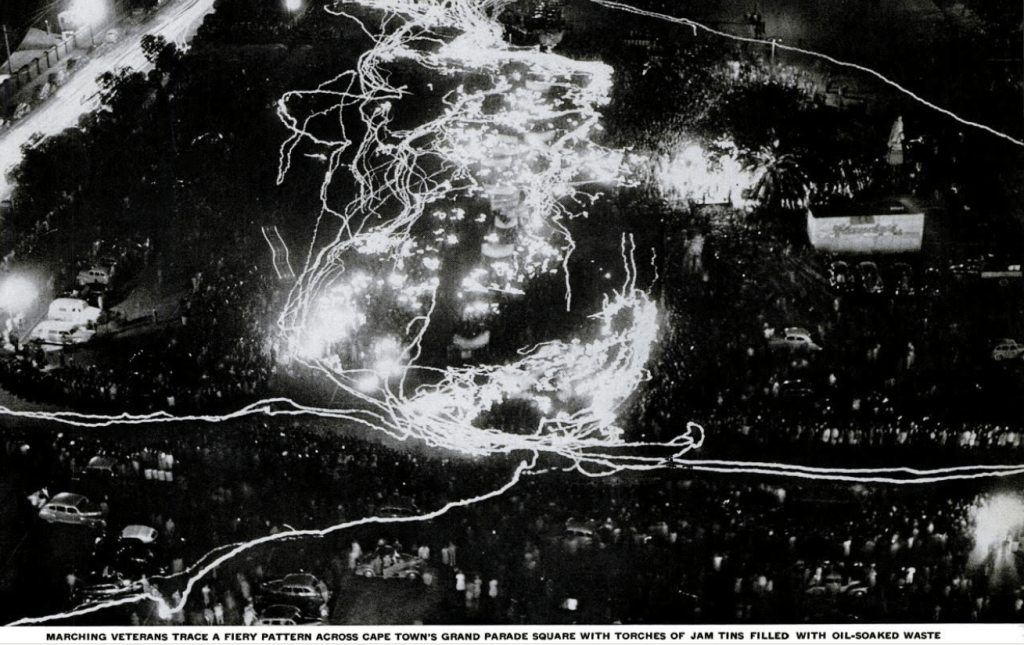
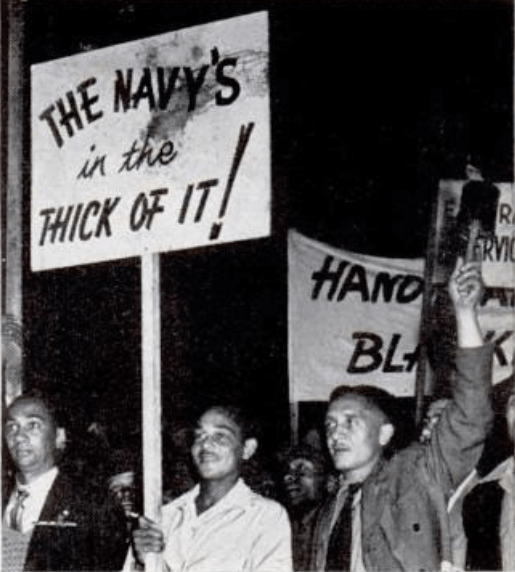


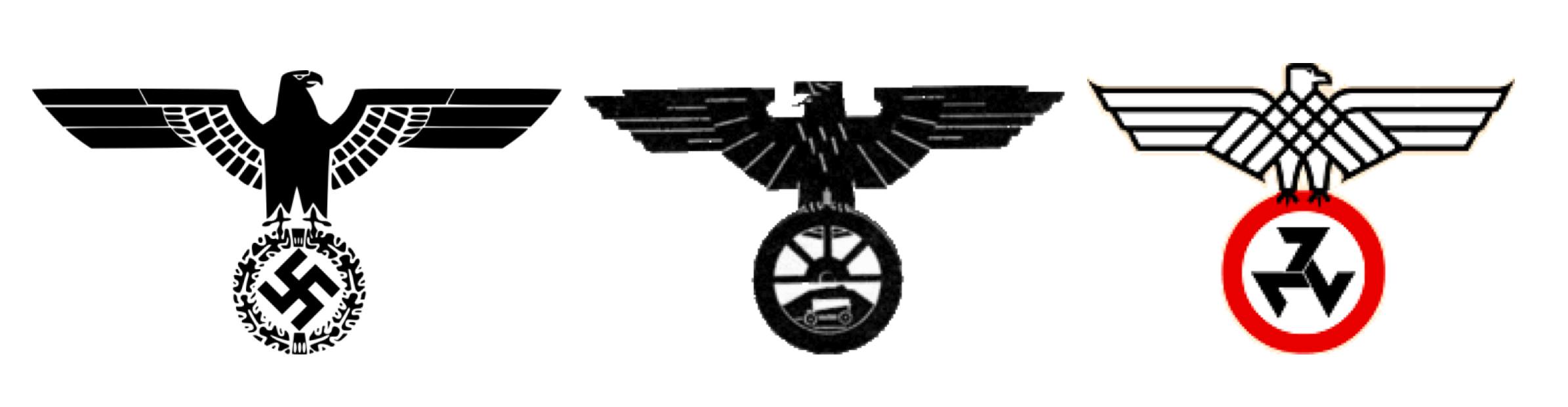
 The Observation Post