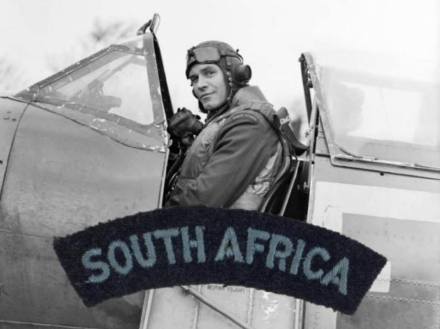
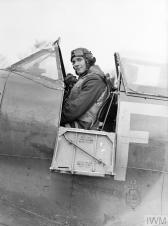
This is a famous ‘Battle of Britian” photograph of Squadron Leader Adolph “Sailor” Malan from South Africa sitting in a Royal Air Force Spitfire, have a close look at his shoulder tab.
It’s a shoulder title issued to Royal Air Force (RAF) officers from South Africa, being ‘SOUTH AFRICA’ embroidered in light blue onto a RAF blue/grey arc of fabric.
During the Second World War many from Empire and Dominion countries joined the Royal Air Force, as did men from occupied countries such as Poland
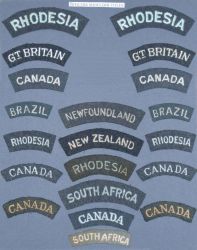
Shoulder titles were worn to signify the wearer’s country of origin. The titles were usually embroidered in pale blue capitals on a black background, or red on khaki drill for tropical kit.
Titles for officers were usually curved, and rectangular for other ranks. Excluding those worn by personnel from occupied countries, there were 42 titles issued officially, plus a number of unofficial ones.
The wearing of such titles was abolished in the RAF April 1948. A title for South Africa was authorised in March 1941.
Researched by Peter Dickens. Images – Imperial War Museum copyright, collection of titles as shown in the collection shown courtesy Alex Bateman
Arguably one of the best South African pilots of the Second World War and certainly one of the best Royal Air Force pilots during the Battle of Britain – now one of the much idolised ‘few’ who turned the tide of the war – South African flying ace Group Captain A G ‘Sailor’ Malan DSO & Bar DFC & Bar, and he did it based on a set of rules he drew up, now famously known as “Ten of my rules for air fighting”.
In the featured image is Sailor Malan as the Station Commander at Biggin Hill, Kent seen second from the left, talking to Squadron Leader E J Charles, Officer Commanding No. 611 Squadron RAF (middle), and Wing Commander A C Deere, leader of the Biggin Hill Wing (right) during the Battle of Britain. No doubt his ten rules would have been a point of discussion between these men at some point.
Sailor Malan’s rules of air combat were readily adopted by pilots in the Royal Air Force during the Battle of Britain, these rules saved many a pilot and brought down many enemy aircraft, they are directly attributed to the success of the Battle of Britain and in so keeping Britain in the war. They are still considered valuable to this day as part of the RAF’s teaching curriculum – they are:
“TEN OF MY RULES FOR AIR FIGHTING” – Sailor Malan
1. Wait until you see the whites of his eyes. Fire short bursts of 1 to 2 seconds and only when your sights are definitely ‘ON’.
2. Whilst shooting think of nothing else, brace the whole of the body, have both hands on the stick, concentrate on your ring sight.
3. Always keep a sharp lookout. “Keep your finger out!”
4. Height gives You the initiative.
5. Always turn and face the attack.
6. Make your decisions promptly. It is better to act quickly even though your tactics are not the best.
7. Never fly straight and level for more than 30 seconds in the combat area.
8. When diving to attack always leave a proportion of your formation above to act as top guard.
9. INITIATIVE, AGGRESSION, AIR DISCIPLINE, and TEAM WORK are the words that MEAN something in Air Fighting.
10. Go in quickly – Punch hard – Get out!
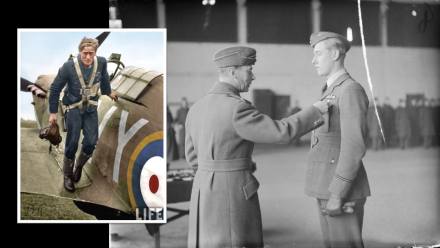
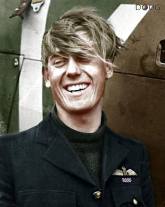
Second to Sailor Malan, Albert Gerald Lewis was the next best performing South African pilot flying for the Royal Air Force during the Battle of Britain. To earn the title “Ace in a Day” a pilot had to shoot down 5 or more aircraft in a single day. Only a handful of Allied pilots achieved this during World War 2, and “Zulu” Lewis is one of them. Here’s the astounding bit, he achieved this ‘Ace in a Day’ status, not just once – but twice! He is also on the top ten Royal Air Force Ace list, having shot down 6 aircraft in 6 hours.
Albert Gerald Lewis ended the war with the rank of Squadron Leader and for his bravery earned the Distinguished Flying Cross (DFC). He was born in Kimberley South Africa on 10 April 1918 and the attended Kimberley Boys’ High School, he had an interest in flying and took private lessons in South Africa before taking his pilot licence to Britain to join the RAF.
He was gazetted as a Acting Pilot Officer with effect from 29th of October 1938 and posted to No. 616 South Yorkshire Squadron Auxiliary Air Force, which had been formed on 1st of November 1938 as a Bombing Squadron.
When he arrived, the Squadron flew Gauntlets, Tutors and Battles. After some time he was transferred to an even duller job as a ferry pilot in No 12 Group Ferry Pool. On 16th of December 1939 Lewis was transferred again. This time to No 504 Squadron, Debden. The Squadron flew Hurricanes, which was a great leap upwards for Lewis.
30th of January he flew the first of many single “Trawler Patrols”. This day marked his first meeting with the enemy, when he spotted and chased a German Blohm & Voss Seaplane.
France – 85 Squadron RAF
“The Phoney war” in France had changed to real war and Lewis was transferred to No 87 Squadron the 26th of April 1939 – only to be transferred the day after to No 85 Squadron under Squadron Leader “Doggie” Oliver.
Under intense stain of combat flying during “The Battle for France” on the 12th of May flying VY-E, Lewis shot down – not only his first enemy aircraft – but also his second:
A Messerschmidt 109 and a Heinkel He111.
First: Ace in a Day
18th or 19th of May – due to all the Squadrons reports got lost in the evacuation of the Squadron a few days later, there is some differences here – flying AK-A (an aircraft borrowed from 213 Squadron) he got 5 confirmed kills in a day:
Two Messerschmidt 109s on the first patrol in the morning and three more on the evening patrol. This fight had been witnessed by his CO and the squadron. This action resulted in his first DFC (Distinguished Flying Cross) for bravery:
Awarded on: June 25th, 1940, the Citation reads:
“Pilot Officer Lewis has, by a combination of great personal courage, determination and skill in flying, shot down five enemy aircraft, single-handed, in one day. He has destroyed in all a total of seven enemy aircraft, and by his example has been an inspiration to his squadron.”
On the 21st of May Lewis flew back to England in one of the only 3 Hurricanes still usable from 85th Squadron.
Lewis in the Battle of Britain
28th of June the Squadron moved to Castle Camp – a satellite airfield to Debden, which were to be their base for the early part of the Battle of Britain. Lewis is now flying VY-Z.
Peter Townsend became CO of the squadron and soon gave Lewis his nickname: Zulu, as he had also christened his great chum, South African Caesar Hull in No. 43 Squadron, the squadron from which Townsend originally came.
Lewis and his fellow 85 Squadron friend Richard “Dikie” Lee DSO (Lee was sadly lost on the 18th August 1940).
From the 1st of July operations started in earnest, and three or four sorties a day were flown, usually convoy patrols from Martelsham Heath. On 18th of August – flying VY-D on a solo patrol, Lewis destroyed a Me110 and on 31st of August –-flying VY-N – he got a Me 109 after being scrambled in a hurry.
By 5th of September, 1940 the 85 Squadron was exhausted and rotated out of the battle line, but not Zulu Lewis who still had still some fighting ahead of him. Squadrons in the south of England were in desperate need of veteran pilots and Lewis went south again, joining 249 Squadron.
England – 249 Squadron RAF
14th of September Lewis was posted to the top scoring 249 Squadron at North Weald.
It was all out action at North Weald – sorties three, four or five times a day when Lewis arrived – and the very first day in the new Squadron, he shot down a Heinkel He111 and shared a probable destruction of another.
The day was one of the hardest days in the long hot summer, and were by many regarded as the turning point of The Battle of Britain. By the 18th of September Lewis got his twelfth confirmed enemy aircraft.
Ace in a Day – Second time: 6 confirmed kills and two probables
27th of September – flying GN-R – Zulu Lewis DFC shot down eight enemy aircrafts in one day!
Lewis combat report from the morning:
“Sighted circle of Me110’s over area near Redhill. Attacked out of the sun and fired two short bursts into e/a following a Hurricane down. He billowed smoke and went down steeply.
Again attacked circle and put a burst into another Me110 – starboard engine out of action and on fire. Climbed into the sun again delivered attack on remains of circle. Hit one who dropped out of fight, heading towards coast and, with starboard engine out of action, tried to get home. Forced him down in vicinity of some hills near Crowhurst. He burst into flames on landing at farmyard”
Once rearmed and refueled, seven Hurricanes lead by Lewis, (The Squadron Leader was reported Missing in Action) were ordered to patrol Maidstone before carrying a sweep of Hawking to Canterbury along with 46th Squadron.
Lewis combat report:
“As 249 Leader, sighted formation of Me109’s to north-east of Estuary. Climbed to 15.000 feet to 20.000 feet but were attacked by second 109 formation from above.
In ensuing dogfight was attacked by two 109’s, one of which I hit in belly as he passed overhead. He crashed into wood near Canterbury. Put burst into second 109, which attacked soon after the one I shot down, also in belly.
I did not observe this one hit the ground but went down smoking, where after smoking fires near the wood in vicinity of Canterbury could have been other aircraft destroyed, as there were no bombers.”
Later the same day.
Lewis combat report:
As green Leader, attacked formation of Ju88’s with Blue Section, and one just dropped out with starboard engine damaged. Closed in and carried out two beam attacks from slightly above and put engine on fire. kept after it as it went down steeply toward coast near Selsey Bill. Crashed into sea just near coast.
Shot down one Me109 which crossed my sights after engagement with Ju88. Went down in flames, then followed a second Me109 down which I attacked from above and it crashed in woods near Petworth. This is confirmed by Sgt. Hampshire of Green Section.
Fired short bursts of approx two to three second bursts at Me109’s and a faily long burst at another Ju88.”
Lewis was awarded his second DFC for this day. Awarded on October 22nd, 1940, the Citation reads:
“One day in September, 1940, this officer destroyed six enemy aircraft; this makes a total of eighteen destroyed by him. His courage and keenness are outstanding.”
Awarded as a bar for on the ribbon of the first DFC.
He thus got 11 confirmed victories in two days – 19th of May and 27th of September.
Which is believed to be a record for single-engine British fighters.
Shot down – England
28th of September – only the very next day – the Squadron was flying patrol over Maidstone, and Lewis was shot down in flames while flying the same aircraft GN-R.
The Squadron was in a gentle dive, with Lewis weaving above them, when he was hit from behind by cannon shells and set on fire. Lewis baled out of his burning Hurricane. Jimmy Crossey following him down, circling the parachute to prevent him being shot at.
Lewis landed safely, but was severely burned and was taken to Faversham Cottage Hospital. Blind for two weeks, with a piece of shrapnel in his leg and severe burns on the face, throat, hands and legs.
He received his little golden caterpillar with his name engraved on the back while in hospital, this little ‘silk worm ‘caterpillar’ confirmed his membership of the selected band of pilots who had their lives saved by a parachute (hence the ‘silk).
He returned to the Squadron in December, 1940, having been promoted Flight Lieutenant on 29 November. He was flying by 17 January 1941, and became “A” Flight Commander, and was awarded a bar to the DFC.
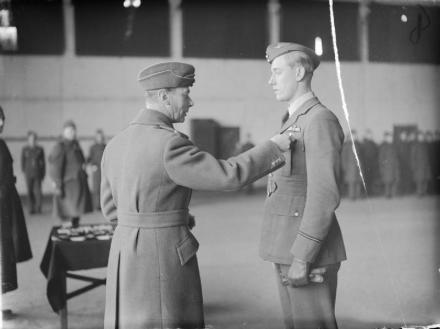
King George VI conferring a Bar to Flying Officer A G Lewis’s DFC in an awards ceremony at Duxford, Cambridgeshire.
Overseas Service
Lewis volunteered for overseas service and was posted to 261 Squadron in January 1942.
Via Sierra Leone he went to Tricomalee in China bay, Ceylon to take command of 261 Squadron – a Squadron famous for it’s defence of Malta earlier in the war.
Lewis recalls that the force consisted of himself as CO, 6 Flt Lts, 3 FOs, 8 Pos, 1 WO pilot and 34 Sgt. Pilots. Most of the force were Australians and New Zealand pilots with a few Canadians and an American.
China Bay was a grass airfield – or rather – a clearing in the jungle. Everything was “under construction” and very primitive. Malaria was bad. Typhoid was caused by foul water supplies and after a Japanese bombing, all waterborne sanitation was smashed and cholera added to their troubles.
Shot down – China Bay
On the 9th of April – the day before his 24th birthday, Lewis led his Squadron to intercept a Japanese raid and as he was taking off, his aircraft was hit by fire from one of the Japanese Zeros. He was wounded in the left shoulder and can not use his arm.
On fire – once again – he bales out at only 200 feet, with his parachute opening just in time. He could see his base was under heavy attack and for six hours he lay suffering from shock until he was found by some natives, who revived him with coconut milk, and helped him back to the base.
In June 1942 he returns to Britain via South Africa.
After the war
Lewis left Royal Air Force on 16th of February 1946, having been an Acting Squadron leader since 22nd of April 1943. After the war Lewis started farming. First in Britain – but in 1947 he went back home to South Africa and continued to farm in his homeland. He also became deeply religious, joining The Church of Jesus Christ of Latter-day Saints (The Mormons).
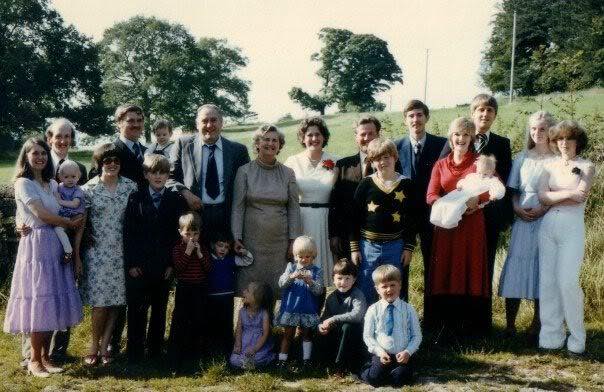
Albert G Lewis, with his wife, children (+ wives/husbands) and grandchildren. The picture is from the seventies.
To quote his religious convictions at the end of his life:
“As my mind reflects on The Battle of Britain and on the many wonderful characters who formed a part of that scene and died a quarter of a century ago in order that the world might be a better place to live in – as did those in The First World War – and indeed all righteous people from the beginning of time – I wonder, have we achieved lasting peace?
If we are not to disappoint ourselves and all of those who have come before, we need a plan – one that is practical and embraces all mankind. I sincerely believe that the Gospel of Jesus Christ is the only plan which can embrace the world so that all who desire to – may live in peace.”
Albert Gerald Lewis died on the 14th of December 1982 – 64 years old.
These dramatic images outline Zulu Lewis in action at the peak of the Battle of Britain, taken by LIFE magazine who did an interview and profile story on him at the time.
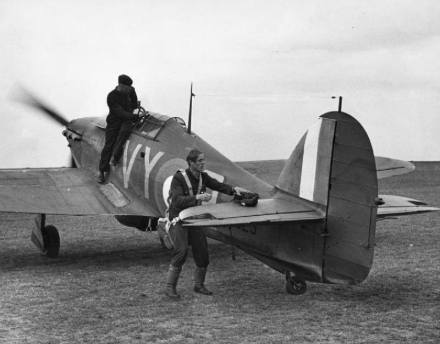
Peak of battle in the ‘Battle of Britain’, South African Pilot Officer Albert G Lewis of No. 85 Squadron grabs his flying helmet from the tailplane of his Hurricane, P2923 VQ-R, as a member of the ground crew warms up the engine prior to a sortie, Castle Camps, July 1940. Photo Copyright IWM Collection.
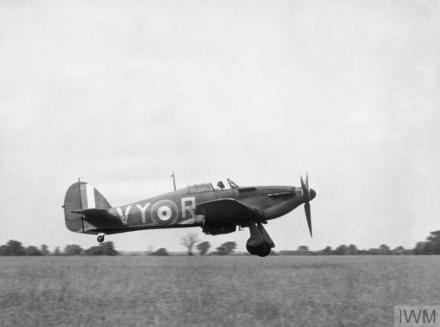
Hawker Hurricane Mk I, P2923, VY-R, flown by Pilot Officer A G Lewis landing at Castle Camps, RAF Debden’s satellite airfield, July 1940.
Researched by Peter Dickens
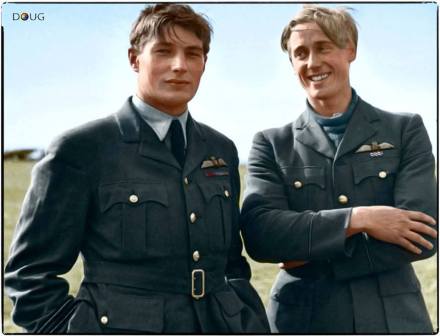
Sources: Wikipedia, www.thefedoralounge.com, Hurricane 501 (website), Brian Cull: “249 at War.”Short history. Colourised images by ‘Doug’, Imperial War Museum Copyright
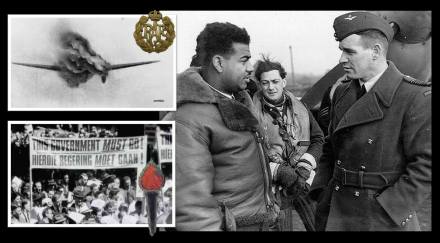
The featured image shows Group Captain Adolph Gysbert “Sailor” Malan DSO & Bar, DFC & Bar (24 March 1910 – 17 September 1963), the South African World War 2 flying ace in conversation here with Flight Sergeant Vincent Bunting at Biggin Hill in 1943 on the left, and it says a lot about Sailor Malan.
Vincent Bunting was one of a small group of ‘black’ British and Commonwealth pilots in full combat roles during the Second World War – he was born in Panama in June 1918 and raised in Kingston, Jamaica. He joined the RAF at No 1 Recruitment Centre, Uxbridge, on 26 July 1940. Selected for flying training he went on to become a fighter pilot mainly with RAF 611 Squadron.
An integrated Air Force
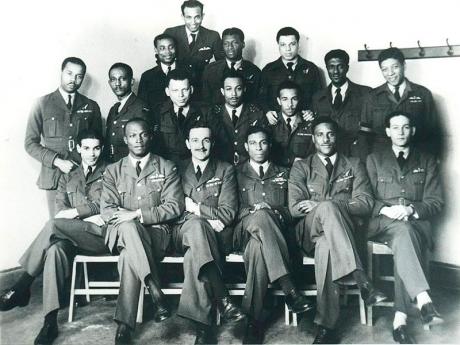
During the Battle of Britain, the British relied on pilots from the Commonwealth to make up a critical pilot shortage, Sailor Malan was one of these pilots and with him came pilots from all over the world, of all colours and of all cultures (there was no such thing as a ‘colour bar’ in the Royal Air Force) – from commonwealth countries like India, Burma, Rhodesia, Jamaica, Australia, New Zealand, South Africa and Canada, as well as pilots from Poland, France, Czechoslovakia and the USA. They made up almost one-third of the RAF pilots involved in the Battle of Britain (to believe the image so often created of these men as a bunch of tea drinking ‘tally-ho’ young white English gentlemen is to completely misunderstand the Battle of Britain).
Jamaican Pilots during the Battle of Britain
The featured image of early racial recognition is testament to Sailor Malan as not only one of the most highly regarded fighter pilots of the war, but the future signs of Sailor Malan as a political fighter and champion for racial equality.
Fighter Ace
Much has been written on Sailor Malan as a Fighter Ace, his rules for combat and his command of 74 Squadron during the Battle of Britain which played such a pivot role in winning the Battle (see ‘Ten of my rules for air fighting’ – Sailor Malan) . His combat record, promotions and decorations alone are simply astonishing.
He first took part in evacuation of Dunkirk. During this battle he first exhibited his fearless and implacable fighting spirit. To demonstrate his nature, in one incident he was able to coolly change the light bulb in his gunsight while in combat and then quickly return to the fray.
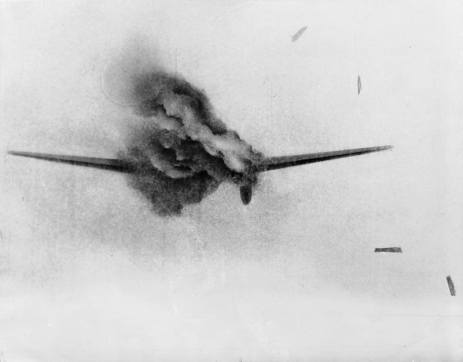
Sailor Malan’s gun camera showing the destruction of German Heinkel He 111 over Dunkirk
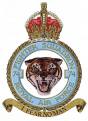
When the Battle of Britain begun, 74 Squadron (known as ‘The Tigers’) was to take the full heat of the battle in what was known as ‘hell’s corner’ over Kent, the squadron was eventually based at the now famous ‘Biggin Hill’ aerodrome in the thick of the battle.
Sailor Malan was given command of 74 Squadron, with the rank of Acting Squadron Leader at the height of the Battle of Britain on 8th August, 1940. Three days later the Squadron was in battle. The day became, for ever, “Sailor’s August the Eleventh”. The order was received at twenty minutes past seven to intercept a hostile raid approaching Dover. Little did the squadron know that they would participate in four seperate air battles that day. When the Squadron, weary, sweaty and oily, finally returned to base after the fourth sortie, they had downed an astounding 38 enemy aircraft.
Sailor Malan said later, in one of his masterly understatements: “Thus ended a very successful morning of combat”. For the first day of action under his command it was successful even by 74 Squadron standards.
Sailor Malan also worked on public relations to keep the British morale high. Here is a rare radio interview (follow Observation post link Sailor Malan – “in his own words”)
By D Day (i.e. Operation Overlord, the liberation of France and subsequently Western Europe), Sailor Malan was in command of 145 (Free French) Fighter Wing and was himself leading a section of the wing over the beaches during the landings in Normandy.
In all Sailor Malan scored 27 enemy aircraft kills, seven shared destroyed, three probably destroyed and 16 damaged. He was to receive the Distinguished Service Order decoration – not once, but twice and well as the Distinguished Flying Cross decoration, again not once – but twice. The Citations for the DSO’s and DFC’s say everything about his combat prowess:
The London Gazette of the 11th June, 1940, read:
DISTINGUISHED FLYING CROSS
Flight Lieutenant Adolph Gysbert Malan. (37604), Royal Air Force.
“During May 1940, this officer has led his flight, and on certain occasions his squadron, on ten offensive patrols in Northern France. He has personally shot down two enemy aircraft and, probably, three others. Flight Lieutenant Malan has displayed great skill, courage and relentless determination in his attacks upon the enemy.”
On Christmas Eve, 1940, the London Gazette had recorded:
DISTINGUISHED SERVICE ORDER
Acting Squadron Leader Adolph Gysbert Malan, DFC (37604), Royal Air Force, No.74 Squadron.
“This officer has commanded his squadron with outstanding success over an intensive period of air operations and, by his brilliant leadership, skill and determination has contributed to the success obtained. Since early in August 1940, the squadron has destroyed at least 84 enemy aircraft and damaged many more. Squadron Leader Malan has himself destroyed at least eighteen hostile aircraft and possibly another six.”
And on 22nd July, 1941:
BAR TO DISTINGUISHED SERVICE ORDER
Acting Wing Commander Adolph Gysbert Malan, DSO, DFC (37604) Royal Air Force.
“This officer has displayed the greatest courage and disdain of the enemy whilst leading his Wing on numerous recent operations over Northern France. His cool judgement, exceptional determination and ability have enabled him to increase his confirmed victories over enemy aircraft from 19 to 28, in addition to a further 20 damaged and probably destroyed. His record and behaviour have earned for him the greatest admiration and devotion of his comrades in the Wing. During the past fortnight the Wing has scored heavily against the enemy with 42 hostile aircraft destroyed, a further 15 probably destroyed and 11 damaged.”
Also awarded a Bar to the Distinguished Flying Cross.
In addition, “Sailor” was awarded the following decorations by Allied Governments:
The Belgian Croix de Guerre with bronze Palm, The Czecho-Slovakian Military Cross, The French Legion of Honour, in the degree of Officer and The French Croix de Guerre.
Bill Skinner DFC, with whom Sailor often flew, summed up Sailor Malan very well as to his leadership:
“He was a born leader and natural pilot of the first order. Complete absence of balderdash. As far as he was concerned, you either did your job properly, or you were on your way. He inspired his air crews by his dynamic and forceful personality, and by the fact that he set such a high standard in his flying.”
Sailor Malan (centre) with pilots of 72 Squadron
He was the outstanding British Fighter Command fighter pilot of the 1939-45 war, and by the end of 1941 was the top scorer – a record which he held for three years. But he was much more than an individual performer. He had assimilated the fierce and fanatical “tiger spirit”, and this spirit he inspired in others so that he carried the Squadron to great deeds with him.
Freedom Fighter
The Battle of Britain and D Day moulded Sailor Malan as a champion for freedom, he simply held the view that shooting down Nazi aircraft was good for humanity, and this translated into his personal politics. Not much is known of Sailor’s political career post war, and it’s an equally fascinating to see him in the context of a ‘Freedom Fighter’ in addition to his fighter ace accolade.
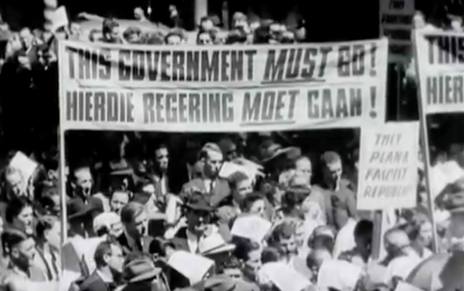
Sailor Malan left the Royal Air Force and returned to South Africa in 1946. In the 1950’s he formed a mass protest group of ex-servicemen called the ” Torch Commando” to fight the National Party’s plans to implement Apartheid and call for an early election to remove what they regarded as ‘fascist’ government from power.
In Sailor Malan’s own words, The Torch Commando was: “established to oppose the police state, abuse of state power, censorship, racism, the removal of the coloured vote and other oppressive manifestations of the creeping fascism of the National Party regime”.
To understand why the returning war veterans felt this way about the National Party, consider that during the war the National Party had aligned itself with pro Nazi movements inside South Africa as well as taking a neutral stance on the Smuts’ declaration of war. To understand the men now in power and the prevailing political mood of war veterans in 1950 follow these links to related Observation Posts:
The Torch Commando can best be described as a ‘pro-democracy’ movement and in its manifesto it called for Liberty, Freedom of Speech, Liberty from Tyranny and Freedom of Religion. Sailor Malan’s personal politics (which he brought into the Torch) revolved around universal franchise and addressing poverty in the black community and economic empowerment as a priority to political reform. Ironically, Sailor Malan was years ahead of his time in this regard, as it is only now that politics in South Africa is focusing on economic emancipation ahead of political emancipation.
The key objective underpinning the Torch was to remove the National Party from power by calling for an early election, the 1948 ‘win’ by The National Party was not a ‘majority’ win, but a constitutional one, and the Torch wanted a groundswell to swing the ‘service’ vote (200,000 in a voting population of a 1,000,000). The Torch at its core was absolutely against The National Party’s Apartheid ideology and viewed their government as ‘unconstitutional’ when they started implementing policy.
Torch Commando protest – note the slogans ‘this government must go’ and ‘they plan a fascist republic’.
Other issues also sat at the core of the Torch, one issue was the Nationalist’s headstrong policy to make South Africa a Republic, whereas the ‘servicemen’ had fought alongside the British commonwealth and the ‘Allies’ (mainly Britain, United States and Russia) in the Second World War – and they wanted South Africa to retain its Dominion status, remain a ‘Union’ and remain part of the Commonwealth of Nations.
As a pro-democracy’ movement it regarded the National Party’s policies as ‘anti-democratic’. The Cape Coloured franchise removal was the first action of the National Party to implement the edicts of Apartheid, so it stood to reason that this was the first issue to protest against.
The Cape Coloured franchise was protected in the Union Act of 1910 by an entrenched clause stating there could be no change without a two-thirds majority of both houses of Parliament sitting together. The Nationalist government, with unparalleled cynicism, passed the High Court of Parliament Act, effectively removing the autonomy of the judiciary, packing the Senate with NP sympathisers and thus disenfranchising the Cape Coloureds.
Inserted is a picture of a rare manifesto artefact of Torch Commando manifesto (freedom been the central theme) and Sailor Malan at a Torch Commando Rally in Cape Town with 10,000 South African WW2 veterans on protest.
Sailor Malan famously accused the national party government at this rally of:
“depriving us of our freedom, with a fascist arrogance that we have not experienced since Hitler and Mussolini met their fate”.
Wartime singing icon Perla Gibson also attended the Torch Commando anti apartheid rally in Cape Town and sang to the protesters in support. Perla was known as the ‘Lady in white” and sang to incoming and outgoing troops in Durban harbour during WW2 to beef up morale.
Insert – Kmdt Dolf de la Rey (left) and Perla Gibson (right) at the Cape Town Torch Rally
Of extreme interest was co-leader of the Torch Commando rally in Cape Town – Kmdt. Dolf de la Rey – he famously captured Winston Churchill during the Boer War fighting for the Boers and became an anti-apartheid activist after WW2, another one of the rich tapestry of Afrikaner war heroes in conflict with National Party politics and philosophy.
Follow the below two links to view film footage of The Torch Commando in action:
During the Cape Town “Torch” 50,000 civilians joined the 10,000 veterans when the protest moved to hand over a petition at the Parliament buildings in Cape Town. The police barred the way and a scuffle broke out. 160 Protesters where injured along with 15 Policemen.
In a speech at a massive Johannesburg Torch rally involving over 75,000 war veterans and civilians (try and envisage that – 75,000 people on an anti-apartheid protest in downtown Johannesburg – a protest that size had never been seen before), standing outside City Hall in Johannesburg, Sailor Malan made reference to the ideals for which the Second World War was fought:
“The strength of this gathering is evidence that the men and women who fought in the war for freedom still cherish what they fought for. We are determined not to be denied the fruits of that victory.”
The Torch Commando fought the anti-apartheid legislation battle for more than five years. At its height the commando had 250 000 members, making it one of the largest protest movements in South African history.
DF Malan’s nationalist government was so alarmed by the number of judges, public servants and military officers joining the organisation that those within the public service or military were prohibited from enlisting, lest they lose their jobs – in the long-term this pressure led to the gradual erosion of the organisation.
Also the National Party government, being extremely concerned about the influence this movement might have, especially under the leadership of the war hero tried to discredit the Torch Commando and its leaders through means of negative propaganda. For the rest of his life, Sailor would be completely ignored by the government. The National Party press caricatured him as “a flying poodle”, dressed in his leathers and flying goggles, in the service of Jan Smuts and the Jewish mine-bosses, who were referred to as the “Hochenheimers”.
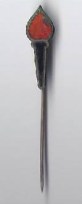
Torch Pin
Despite this, Sailor continued to fight against the violation of human rights in South Africa with the same passion and moral fibre that allowed him to fight so vigorously against fascism and racism during the Battle of Britain. His dream of a better, democratic life for all in South Africa not only urged and carried him forward, but also caused him to be shunned by and isolated from his white National Afrikaner countrymen who were blinded by the short-sighted racial discrimination of their government.
He would become known to them as a traitor and an outsider of “another kind”. DF Malan, during his term as Prime Minister, would refer to him as “an imported British officer” and it was due to his own integrity that he would, towards the end of his life, turn his back on the oppression and immorality of the country he loved so much. His individual brilliance as the Spitfire fighter pilot during the heroic battle in the skies above London and the British Channel were not enough to bring victory in this struggle.
In 1963, Sailor Malan, one of the most famous fighter pilots in the history of the Royal Air Force, lost his fight against Parkinson’s Disease and died at the young age of 52. The funeral service was held at St. Cyprians Cathedral and he was laid to rest in his beloved Kimberley.
An inconvenient truth
It is to the embarrassment now as to his treatment as a South African military hero that all enlisted South African military personnel who attended his funeral were instructed not to wear their uniforms by the newly formatted SADF (the government did not want a Afrikaaner, as Malan was, idealised in death in the fear that he would become a role model to future Afrikaaner youth).
All requests to give him a full military funeral were turned down and even the South African Air Force were instructed not to give him any tribute. Ironically this action now stands as testimony to just how fearful the government had become of him as a political fighter.
In the national obituary issued to all newspapers by the government, no mention was made of his role as President of the Torch Commando and his very strong anti apartheid views.
This systematic removal of Sailor Malan’s legacy by the National Party and the education curriculum is also tragic in that Sailor’s role in the anti-apartheid movement is now lost to the current South African government.
It would be an inconvenient truth to know that the first really large mass action against Apartheid did not come from the ANC and the Black population of South Africa – it came from a ‘white’ Afrikaner and a mainly ‘white’ war veterans movement, which drew it members from the primary veterans organisations in South Africa – The Springbok Legion, the South African Legion and Memorable Order of Tin Hats (for its impact on these veteran organisations to this day see The Torch’s impact on the South African military veteran diaspora!).
The simple truth – the Torch Commando preceded the first ANC “Defiance Campaign” by a couple of years, an inconvenient truth for many now and very conveniently forgotten.
The Spitfire Club sums up Sailor Malan nicely. To those who served with the Royal Air Force’s 74 Squadron anytime between 1936 and 1945 Sailor Malan was the greatest leader of them all. As a small token of their esteem, 28 of those remaining presented a ceremonial sword to the Squadron in July, 1966, at Headquarters Fighter Command, in proud memory of Sailor and in honour of his exceptional service to the Squadron.
It was intended that this Sword should serve as an inspiration to those coming after, so that his high standards of courage, determination and leadership shall live on.
To remember Sailor’s calm and heroic line going into battle “Let’s cut some cake. Let ’em have it!” is to remember a man of remarkable courage. A man who in all honestly lived by his beloved squadrons motto, and can say in all truth;
“I Fear No man”
A motto that holds true to him as one of the greatest ‘fighter pilots’ of the war, but equally so as a ‘freedom fighter’ standing up against a morally corrupt government for human rights.
Concluding video
To conclude Sailor Malan, visuals often better reflect words, and this is a landmark video on Sailor Malan which balances his fighting and political deeds. This time Sailor’s legacy has been carried forward by “Inherit South Africa” in this excellent short biography narrated and produced by Michael Charton as one of his Friday Stories – this one titled FRIDAY STORY #7: Sailor Malan: Fighter Pilot. Defender of human rights. Legend.
Story for The Observation Post, written and researched by Peter Dickens
References Wikipedia. South African History On-Line (SAHO), South African History Association, Wikipedia ,Neil Roos: Ordinary Springboks: White Servicemen and Social Justice in South Africa, 1939-1961. Kimberley Calls and Recalls. Life Magazine, 25 June 1951. Video footage, Associated Press – source Youtube. Images – Imperial War Museum copyright and Associated Press copyright. Friday Story video copyright Inherit South Africa – Michael Charton.
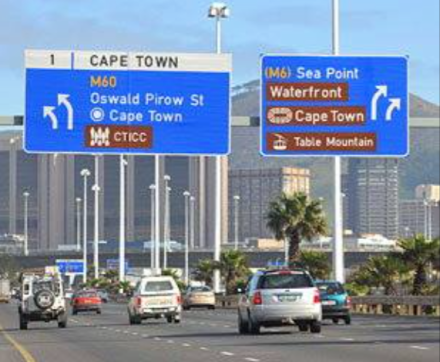
So when is it right to re-name a national landmark road? We’re all up in arms that Edwin Swales VC Drive, named after our famous Victoria Cross winner for gallantry in World War 2 was re-named as Solomon Kalushi Mahlangu Drive after a controversial Umkhonto we Sizwe operative. But what of Oswald Pirow Street in Cape Town, is there a case to justify this street name change?
Read on for a little more on who Oswald Pirow really was, learn some more on South African “hidden” military history; the Pro Nazi paramilitary organisations who sought to destabilise South Africa and the Union during the Second World War and bring South Africa into a one party ‘Fuhrer’ state run along ‘national socialism’ lines.
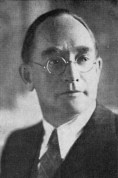
In all there were three movements which supported Nazi Germany and embraced its ideology in South Africa, the Ossewabrandwag, the shirts including the ‘Blackshirts’ and the SANP Greyshirts (see Pro Nazi movements in wartime South Africa – the SANP “Greyshirts”) and the ‘global’ Nazi movement – The ‘New Order’ – led by our subject for the day, the well-known South African Nationalist Politician and Public Prosecutor – Oswald Pirow.
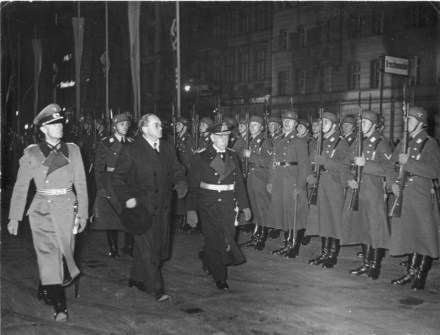
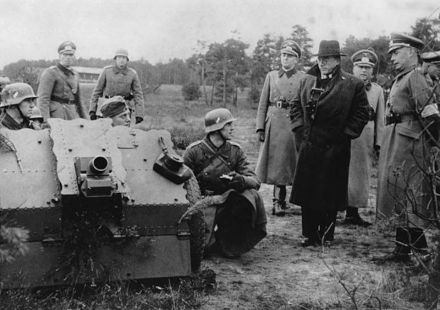
Oswald Pirow in Nazi Germany, November 1938 in Berlin inspecting a honour guard from the German Luftwaffe (Air Force), to his left is Wilhelm Canaris, to his right Ernst Seifert.
In a relatively little known part of South African history, Oswald Pirow was sent on ‘quasi-official’ visits on behalf of the Hertzog government to Nazi Germany and Fascist Italy. His mission was one of appeasement, to meet with Hitler, Ribbentrop and Goering and try to establish Anglo-German rapprochement as well as assure them of South Africa’s neutrality under the Hertzog government.
Pirow’s solution to easing British and German tension prior to the war, which he proposed to Hitler, was for the British to agree with the Nazi policy of “Drang nach Osten” (meaning yearning or ‘thrust’ towards the East for ‘living space’ as Hitler put it in his book ‘Mein Kamph’) and in return Hitler should allow all the Jewish people living in Germany to leave. In reality this offer would never have happened as it would have required Britain, by way of a parliamentary agreement, to renege on its commitment to Poland as an ally. However, Pirow also had another mission, that of building a South African partnership for a post war Nazi world.
So how is it that these lessor known South African missions and special envoy on ‘quasi official’ visits come about, what was he doing and what made Oswald Pirow tick?
Background
Oswald Pirow was born in Aberdeen (Cape Province, South Africa) on 14th August 1890, and was the grandson of a German missionary and son of a Doctor. Pirow studied law in Potchefstroom, Germany and London, and then practised as an advocate in Pretoria. Oswald spoke perfect German and was insistent that only German was spoken by his family at home in South Africa (it was said by those who knew them that the Pirow family was more German in identity than South African).
He came to fame as a lawyer defending the Communist ring-leaders and instigators of The Rand Revolt in 1922 (see South Africa’s very own Communist Revolution – The Rand Revolt of 1922), an odd start for him as he became an ardent hater of anything Communist and would later come up with plans to ‘eradicate’ communism from the planet in its entirety (not just South Africa).
He made several unsuccessful attempts to enter parliament and finally in 1924 he was elected for Zoutpansberg. Smuts defeated him in 1929 in Standerton but he returned to Parliament and in the same year and he was appointed Minister of Justice in General Hertzog’s cabinet. The Hertzog government was in coalition, so it could not fully unleash Nationalist proposals for a Republic (of which Pirow was a keen supporter).
As Justice Minister, typical to form as a fierce anti-communist he passed the first anti-communist legislation in South Africa. In 1933 he was appointed Minister of Railways and Harbours, and from 1933 to 1939 he was Minister of Defence.
Oswald Pirow (in civilian dress) on tour inspecting German military capability in 1938
Unofficial Envoy
In 1936 Pirow attended the Olympic Games in National Socialist (Nazi) Germany and in 1938 again visited Europe, including Spain, Portugal and Germany. These visits confirmed his admiration for this new style of government in Europe and, in particular, for National Socialism (Nazism). A vehement anti-communist – Pirow vowed to legislate communism out of existence, he also became an admirer of Adolf Hitler – especially after meeting him in 1933.
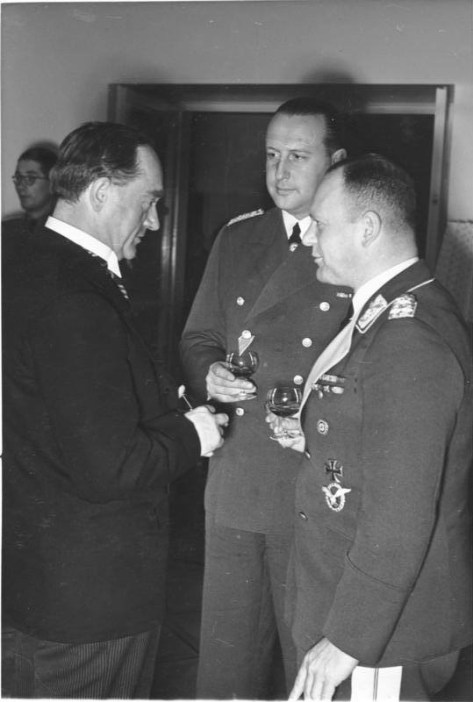
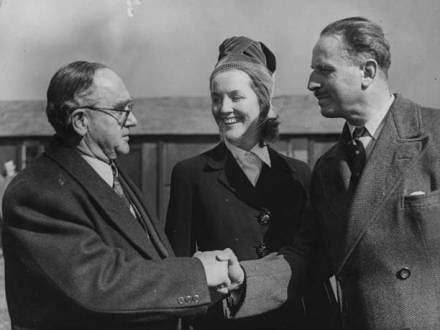
Oswald Pirow ( left) at a reception of the Nazi Foreign Minister Joachim von Ribbentrop in conversation with Erhard Milch (right) and Walter Hevel on November 19, 1938
During this tours he also met Benito Mussolini, António de Oliveira Salazar and Francisco Franco and became convinced that a European war was imminent, with a resounding Nazi victory assured. The future Pirow predicted was one of global nazism and it was a future he liked.
The Nationalists were strongly in favour of Nazi Germany, primarily as the antagonists for war in their eyes were the British, and they simply hated the British. This hatred stemmed from the punitive deportation and containment measures used by The British against Boer families along with the destruction of their farmsteads during The 2nd Anglo-Boer War.
Publicly the Nationalists declared neutrality as to Nazi Germany and to the impending war with Germany, whilst covertly their members (and even leaders) in the tens of thousands joined pro Nazi organisations like the Ossawabrandwag and the SANP Grey Shirts, which very publicly nailed their colours to mast strongly in support of Nazi Germany.
When General Jan Smuts committed South Africa to war against Nazi Germany, Pirow found his position in government as a Minister of Parliament and especially as Minister of Defence untenable. He had given his support in 1939 to Hertzog’s neutrality policy and had been on appeasement missions to Nazi Germany in support of them. He then resigned along with Hertzog and took no part in Smuts’ reformatted war-time government.
South Africa’s ‘New Order’
By September 1940, with Nazi Germany on the ascendancy having invaded most of Western Europe, Pirow launched the South African version of the “New Order” within the breakaway National Party – the Herenigde Nasionale Party (HNP), backing a Nazi style dictatorship.
His new political grouping took its name from his 1940 ‘New Order in South Africa’ pamphlet in which Pirow embraced the ideology of Nazi globalisation.
To understand what the concept of the “New Order” was – the New Order (German: Neuordnung) was the political order which Nazi Germany wanted to impose on the conquered areas under its dominion.
The establishment of the New Order was publicly proclaimed by Adolf Hitler and entailed the creation of a pan-German racial state structured according to Nazi ideology to ensure the supremacy of an Aryan-Nordic master race, massive territorial expansion into Eastern Europe through its colonization with German settlers, the physical annihilation of the Jews and others considered to be “unworthy of life”, and the extermination, expulsion, or enslavement of most of the Slavic peoples and others regarded as “racially inferior”.
Hitler’s New Order for Africa
Hitler’s ‘New Order’ plan involved global expansion, it focussed primarily on Eastern Europe (‘living space’) however it also extend to Asia, India, South America and North America in ‘post war’ fascist dominated world. Like any plan for globalisation, Africa also played a role in the New Order.
Hitler’s overall intentions for the future organisation of Africa was based on a plan which divided the continent into three big parts. The northern third of Africa was to be assigned to Germany’s Axis partner – Italy. The central part of Africa would fall under German rule. The remaining southern sector would be controlled by a pro-Nazi Afrikaner state built along racial grounds.
Foreign Minister Ribbentrop had communicated this plan with South African leaders sympathetic to Nazism, and a key channel for this communication were his meetings with Oswald Pirow whilst he was on his ‘quasi official’ South African State visits to Nazi Germany on behalf of the Hertzog government.
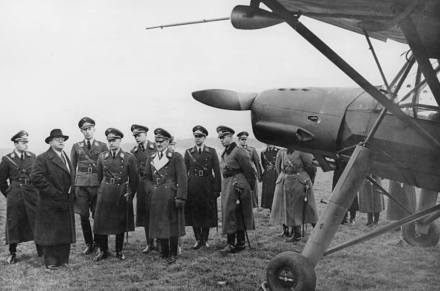
Oswald Pirow as a special South African envoy inspecting German Infantry and military capability in 1938
Ribbentrop informed the Afrikaner Nationalist leaders that once Germany had won the war, Germany was to reclaim its former colony of German South-West Africa (now Namibia), then a mandate would be given to an Afrikaner Nationalist led South Africa as a sort of ‘war compensation’ which would include the territorial acquisitions of the British protectorates of Swaziland, Basutoland (Lesotho), Bechuanaland (Botswana) and the colony of Southern Rhodesia (Zimbabwe).
On the division of French African colonies between the Spanish and Italian governments Hitler refused to provide any official promises during the war, fearful of losing the support of Vichy France
Decline of Pirow’s New Order
Dr. DF Malan
Dr D.F. Malan, leader of the National Party initially tolerated the actions of Oswald Pirow’s South African adaption of the 3rd Reich’s ‘New Order’ however very soon Malan came to realise what the extreme ideology of The New Order was about and he immediately saw it as a divisive influence on the Afrikaner nationalist movement.
Fearful of a split in Afrikaner nationalism over support for extreme Nazism and for Hitler’s plans for the African ‘new order’, at the Nationalists Transvaal party congress of August 1941, Malan forced through a motion ending the New Order’s propaganda activities, particularly their insistence on a one-party state on a ‘Führer’ principle.
Although restricted by DF Malan, the New Order continued to exist and Pirow and 17 of his New Order supporters continued to be associated with the HNP and continued to attend their caucus meetings.
The New Order finally broke from the HNP altogether in 1942 after both D.F. Malan and J.G. Strijdom publicly rejected the Nazis.
Partnership with Sir Oswald Mosley
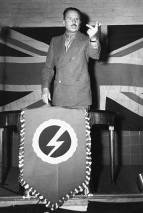
Oswald Mosley
With the outcome of the war firmly against Nazi Germany, Oswald Pirow’s political career within the Afrikaner Nationalists was effectively over, he returned to legal practice, and during this time became a friend of Sir Oswald Mosley.
Mosley was ex-British MP and an infamous British Nazi, he led the British Union of Fascists (BUF), a Neo-nazi British organisation following the edicts of the ‘New Order’ in the United Kingdom.
Mosley was imprisoned at the outbreak of World War 2 in 1940 for his extreme views in support of the enemy (Nazi Germany) and the BUF was outlawed. He was released in 1943.
Oswald Pirow and Mosley, having similar political views decided to collaborate together and they developed an idea for the division of Africa into exclusively black and white areas.
Oswald Pirow and Oswald Mosley
The two met after Pirow read a copy of Mosley’s book ‘The Alternative’ and by 1947 they were in discussion over founding an anti-communist group to be known as the “enemies of the Soviet Union” (although this plan never reached fruition).
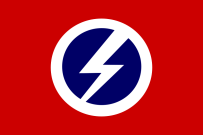
Mosley’s British Union of Fascists (BUF) Flag
The two Oswalds co-operation started in earnest when Pirow visited Mosley in London in April 1948 and spent the weekend at his house. In collaboration with Mosley, Oswald Pirow started writing articles for the Union Movement journals and The European, some of which were reprinted in German magazine Nation Europa.
In addition to writing for far right wing publications, the two Oswalds came up with what were known as the Mosley-Pirow Proposals, which advocated the extension of the South African National Party’s Apartheid ideology and concept to include the entire continent of Africa. The idea they came up with was that two-thirds of sub saharan Africa would be advocated for ‘Black States’ and one-third would be for ‘White states’. Where the two of them differed on their concept of ‘Eurafrica’ (which they coined) is that Pirow felt that ‘sweated labour’ would need to be forced whereas Mosley felt that unskilled Labour, needed in the ‘white states,’ was to be traded for from the ‘black states’ in return for technical assistance at some ‘later stage’.
The relationship with Pirow and Mosley started to break down after their ‘Eurafrica proposals’ were launched. Pirow came to realise that virtually nobody took Mosley seriously, people generally dismissed both him and his economic and political treatise out of hand as an extreme oddity.
The Treason Trial
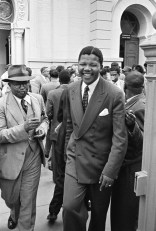
Nelson Mandela at The Treason Trial 1956
Very famously Pirow, now back in South Africa and back in his legal guise, acted as the public prosecutor on behalf of the Nationalist State during the Treason Trial of 1956. The Treason Trial was a trial in which 156 people, including Nelson Mandela, were arrested in a raid and accused of treason in South Africa in 1956. The main trial lasted until 1961, when all of the defendants were found not guilty. During the trials, Oliver Tambo left the country and was exiled. Some of the defendants, including Nelson Mandela were later convicted in the Rivonia Trial in 1964.
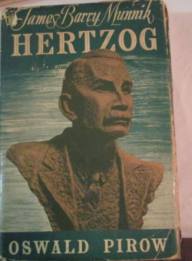
Following the Treason Trial Pirow largely lived in retirement, publishing several books, especially on JB Hertzog of who he was an admirer, he also wrote books on wildlife and adventure books for boys. He died of heart failure. He was cremated and his ashes are kept at his Valhalla Farm residence near Pilgrim’s Rest.
Influence on Apartheid
Oswald Pirow’s influence in South African politics and Apartheid is far-reaching. The Tomlinson Commission – which investigated the validity of the idea Apartheid was not a new creation, and its findings were based in part on findings made by the Native Economic Commission in 1932 and on preparatory work done by Oswald Pirow.
Very little is known in South Africa today of the frustration and disillusionment returning South African combatants from World War 2 felt and the motivation behind their eventual mass protests against Apartheid policies in the 1950’s (known as the ‘Torch’ Commando rallies – attracting tens of thousands of war veterans – see The Torch Commando led South Africa’s first mass anti-apartheid protests, NOT the ANC!).
Effectively the returning South African statute force veterans had gone to war to rid the world of Nazism, only to come home and in a few short years find significant “home grown” Nazi’s in government or playing a key role in public prosecution (as was the case with Pirow) when the National Party narrowly beat Smuts’ United Party into power in 1948.
The likes of famous World War 2 heroes like Adolph “Sailor” Malan would have none of it and they took to the streets in the first mass protests against Apartheid and the Nationalist government who had only come into power a couple of years before hand and where already removing the cape coloured vote from the register – see Sailor Malan; Fighter Ace & Freedom Fighter!.
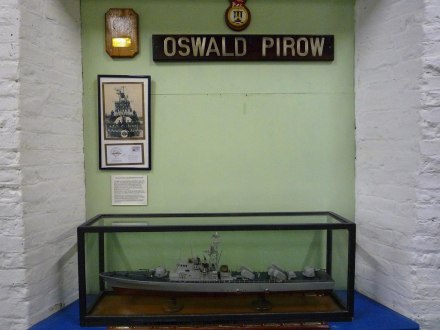
The Torch Commando and veteran protests where ultimately suppressed by The National Party (including Sailor Malan) and the Nationalists where free to promote their heroes – Oswald Pirow had the foreshore road in Cape Town named after him as well as a South African navy strike craft – the SAS Oswald Pirow – much to the disillusionment of many of South Africa’s war veterans, the disenfranchised voters and the South African Jewish community.
Re-naming
Since 1994, proposals were to put forward to re-name the strike craft and Cape Town’s foreshore road.
The SAS Oswald Pirow was re-named the SAS Rene Sethren after a famous Navy stocker Rene Sethren who was on board a South African minesweeper in World War 2. In June 1941 his ship was escorting a convoy to Tobruk when they came under heavy attack from enemy planes. He took over an anti-aircraft gun and did not stop firing until the attack was over. He was wounded 27 times during the attack and fortunately survived, he received his gallantry decoration from King George V.
It was also discovered that although Dr Christiaan Barnard had performed the world’s first heart transplant nothing in the way of Cape Town’s streets honoured this, since 2011 most Captonians now know this landmark road which was ‘Oswald Pirow Street’ as ‘Christiaan Barnard Street’.
There is an argument that says we should not be re-naming things in the interests of preserving history, with all its spots, however world over institutions named after Nazis have been re-named and/or scrubbed of anything glorifying this history. Munich – the birthplace of Nazism is virtually clean of any old references, such is its blight to the entire human race caused by this ideology, and in this respect South Africa has acted no differently.
What is surprising is that even during the 70’s and the 80’s, the National Party were unapologetic in the glorification of individuals so closely associated to National Socialist ideology and Nazism, no matter how hurtful to the vast majority of South Africans, well after the horrors of this ideology had been exposed and universally condemned (even in South Africa).
Pirow was allowed to continue as the State Prosecutor and advise Apartheid policy, his controversial plans for the Nazification of Southern Africa were just glazed over and conveniently swept under the rug – the modern South African generation would grow up fairly oblivious of Oswald Pirow’s really dark past.
Display of the SAS Oswald Pirow at the SA Naval Museum, it was renamed the renamed SAS Rene Sethren on April 1, 1997
Written and Researched by Peter Dickens.
Feature photo copyright the German Federal Archives copyright. ‘Very Deeply Dyed in Black’ Sir Oswald Mosley and the Resurrection of British Fascism After 1945 by Graham Macklin. NSDAP Office of Colonial Policy Brian Bunting’s 1964 book, The Rise of the South African Reich. Ribbontrop’s proposals to South Africa, The Rise and Fall of the Third Reich, by William Shirer, 1974 edition.
Published by New York: Crest, 1962, New York (1962
Sailor Malan – a true South African WW2 flying ace and national hero “in his own words” – and here is a very rare recorded interview with him.
This is a fantastic historical record of a personal interview with the great WW2 South African fighter ace Adolph “Sailor” Malan, DSO & Bar, DFC & Bar.
Note in this recording, clearly taken as a public relations exercise to install confidence in the British public in the Royal Air Force and it’s pilots by the public broadcaster (there were a series of these interviews involving other pilots). Because of this, Sailor Malan comes across as a little over-confident and quite flippant. Its intentional and designed to make killing Germans sterile and combat adventurous.
He also adopts a very plummy British ‘officers’ accent so common to the tone and manner of speaking of this particular officer class during the war, both in Britain and in the Commonwealth. His ‘flat vowel’ South African accent sneaks in here and there, but in all Malan was a very well-educated and travelled man and his command of the English language was exemplary (as was his command of Afrikaans).
Also noteworthy is Sailor Malan’s WW2 era cultural expressions, delivery and sayings which were so typical to Allied Air Force officers at the time – terms like:
“Hun” – meaning Germans – a derogatory term insinuating barbarism dating to the First World War. “Squirt” – meaning a short burst of gun or cannon fire. “Jerry” – meaning Germans – a derogatory term pertinent to the Second World War. “Pumping Lead” – meaning a high rate of machine gun or cannon fire ‘pumped’ into the enemy to kill him “Tally Ho” – a British fox-hunting term meaning to spot a target and call to action. “Cut yourself a slice of cake” – a favourite term used by Sailor Malan (and other pilots) meaning to get into the fight and have a piece of the action.

 Titles for officers were usually curved, and rectangular for other ranks. Excluding those worn by personnel from occupied countries, there were 42 titles issued officially, plus a number of unofficial ones.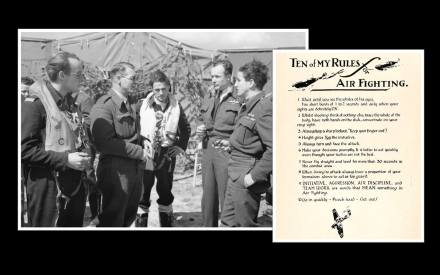
 Arguably one of the best South African pilots of the Second World War and certainly one of the best Royal Air Force pilots during the Battle of Britain – now one of the much idolised ‘few’ who turned the tide of the war – South African flying ace Group Captain A G ‘Sailor’ Malan DSO & Bar DFC & Bar, and he did it based on a set of rules he drew up, now famously known as “Ten of my rules for air fighting”.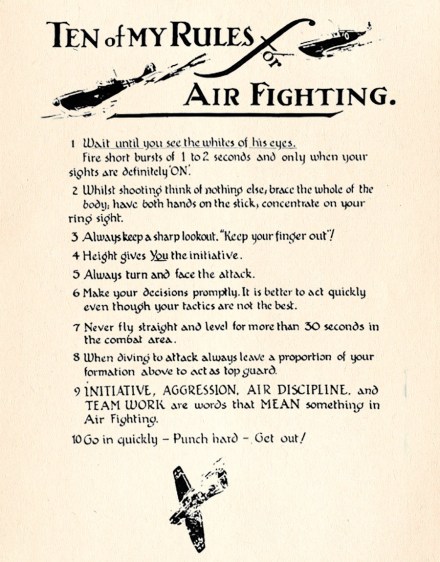
 Second to Sailor Malan, Albert Gerald Lewis was the next best performing South African pilot flying for the Royal Air Force during the Battle of Britain. To earn the title “Ace in a Day” a pilot had to shoot down 5 or more aircraft in a single day. Only a handful of Allied pilots achieved this during World War 2, and “Zulu” Lewis is one of them. Here’s the astounding bit, he achieved this ‘Ace in a Day’ status, not just once – but twice! He is also on the top ten Royal Air Force Ace list, having shot down 6 aircraft in 6 hours.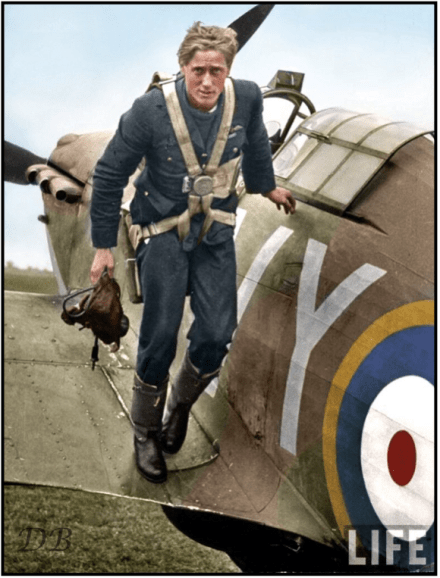
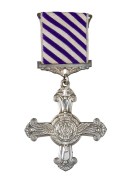 Flight Lieutenant Adolph Gysbert Malan. (37604), Royal Air Force.
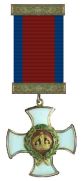 Acting Squadron Leader Adolph Gysbert Malan, DFC (37604), Royal Air Force, No.74 Squadron.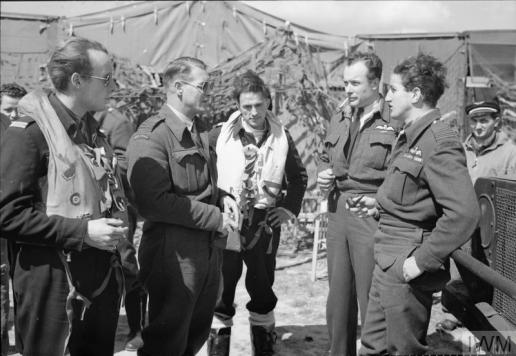






 “I Fear No man”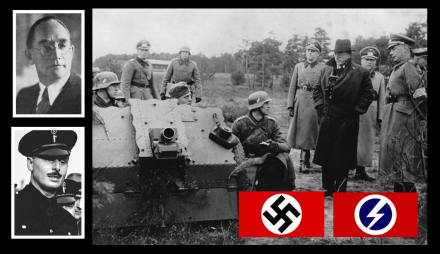
 The Observation Post