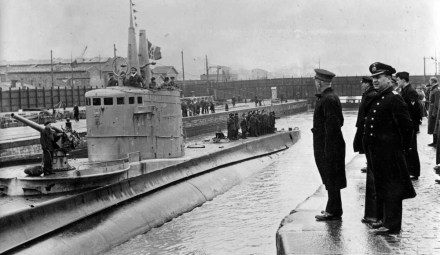
The Leonardo da Vinci wreaks havoc off South Africa’s coastline

There is good reason why South Africa’s coastline was so heavily defended by the Royal Navy and South African Navy during World War 2, especially protecting shipping rounding the Cape, and none more so than protection from the submarine menace. One such submarine was the RM Leonardo da Vinci, an Italian submarine fighting alongside Nazi Germany as part of the Axis Pact.

The RM Leonardo da Vinci carried out 11 war patrols, sinking 17 ships, a total of 120,243 Gross Register Tonnage, which included the 21,500-ton Ocean Liner RMS Empress of Canada.  The da Vinci was Italy’s most successful submarine in World War II, and her captain, Lt. Gianfranco Gazzana-Priaroggia, Italy’s leading submarine ace.

The Leonardo da Vinci was one of six Marconi-class submarines built at Monfalcone in 1938 and 1939. The Marconi-class were fairly large boats, 251ft long with 1,510 tons submerged displacement and a crew of 57 men. Armed with four bow and four stern torpedo tubes, one 3.9in deck gun and four 13.2mm machine guns (mainly for anti-aircraft defense) they had a range of nearly 3,000 miles, a top surface speed of just over 17 knots and so were formidable weapons capable of operating far from home.
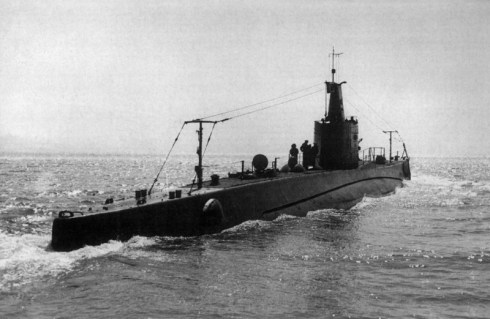
sommergibile_da_vinci_in_navigazione.d5fzpgo31bkssc4wws4s84cw0.ejcuplo1l0oo0sk8c40s8osc4.th

The Last Patrol

In February 1943, the submarine began a long mission to hunt in South Africa’s waters – the South Atlantic and the Indian Ocean, it is the final patrol for the Leonardo da Vinci.

This patrol was conducted in collaboration with another Italian submarine, RM Finzi. On March 14th 1943, the da Vinci sunk her most notable target, the troopship SS Empress of Canada.
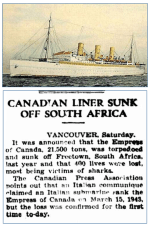
Screen Shot 2017-04-26 at 12.18.39The 21,516-ton RMS Empress of Canada, was a liner of the Canadian Pacific Steam Ship Company, which had been converted to a troop transport. To the German U-boat captains she managed to elude for three and a half years, she was known as “The Phantom”.

She was sailing from Durban, South Africa to the United Kingdom via Takoradi on the Gold Coast, West Africa. On board were 1,346 persons including 499 Italian prisoners of war and Greek and Polish refugees.

Just after midnight the first torpedo struck. The commander of the Leonardo Da Vinci then gave Captain Goold, the commander of the Empress of Canada half an hour to abandon ship.  She sank in about 20 minutes after a second torpedo was launched.

A total of 392 people were lost due to exposure, drowning and sharks, including, 90 women and 44 crew.  In the “fog of war”, the sinking of the Empress of Canada can be ironically seen as a “own goal” as nearly half of the fatalities reported were the Italian Prisoners of War.

The survivors were picked up by the destroyers and corvettes HMS Boreas, HMS Petunia and HMS Crocus and the Ellerman Line vessel Corinthian.

Following this on the 19th March 1943 – The British merchant vessel SS Lulworth Hill – 7,628 tons – was da Vinci’s next victim northwest of South West Africa (now Namibia, but then a South African protectorate). 14 survivors made it onto a life raft. The Leonardo da Vinci captured and took on board one survivor of the sinking, James Leslie Hull.
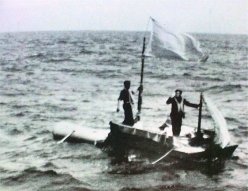
LulworthHillSurvivorsAfter 29 days the UK authorities assumed that the Lulworth Hill had been lost with all hands and duly informed their families.On 7 May the HMS Rapid picked up the Lulworth Hill’s liferafts. Of the 14 men that had survived the sinking, after 50 days adrift only two, Seaman Shipwright (i.e. carpenter) Kenneth Cooke and Able Seaman Colin Armitage, remained alive.

By mid April 1943, the Leonardo da Vinci had rounded the Cape and was in the Indian Ocean, just off Durban, South Africa and here the tally of destruction was to escalate:

17 April 1943 – The Dutch merchant vessel SS Sembilan – 6,566 tons – is torpedoed and sunk by the Italian submarine Leonardo da Vinci east of Durban.  The attack also totally destroys two American Landing Crafts, LCP-780  and LCP-782 which were being carried aboard as freight.

The next day, 18 April 1943 – The British merchant vessel Manaar – 8,007 tons – the second victim of the Italian submarine Leonardo da Vinci within two days, is sunk east of Port Elizabeth.

21 April 1943 – The American vessel (Liberty Ship) John Drayton – 7,177 tons – is sunk by the da Vinci east of Durban, after being Torpedoed twice and shelled while en route to Cape Town. 4 died when Lifeboat #1 capsized during launching. The men in Lifeboat #4 were rescued on 23 April by the Swedish vessel MV Oscar Gorthon; a raft was picked up on 27 April by HMS Relentless.  The men in Lifeboat #2 picked up by the Greek freighter SS Mount Rhodope a month after the sinking on the 21st May. By that time only 8 of the original 24 men were still alive and of them, a further 3 died in hospital in Durban. In all, 21 of the 41 merchant crew members and 5 of the 15 Naval Armed Guards aboard John Drayton lost their lives.
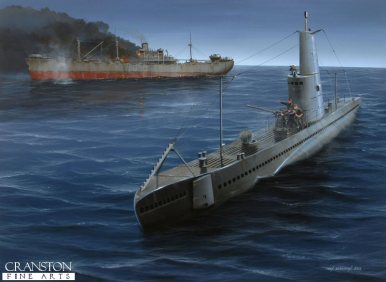
dhm6224

Painting by Ivan Berryman depicting the final hours of the John Drayton

The last vessel to be sunk by da Vinci was on 25 April 1943, British vessel operated by Shell as a petroleum tanker called the Doryssa – 8,078 tons – is was sunk south of Port Elizabeth.

As a result of all the successes the Commander of the da  Vinci, T.V. Gazzana-Priaroggia was promoted Capitano di Corvetta with immediate effect from 6th May 1943.

A Fatal Decision

With a string of victories and promotions after its very successful patrol to South Africa’s waters, on 22 May 1943 Leonardo da Vinci unwisely signalled its intention to head home for Bordeaux, France.

The decision to radio home its intentions proved fatal.  Its position having been fixed by Allied direction-finding equipment, on 23 May the destroyer HMS Active  and the frigate HMS Ness subjected the submarine to an intense depth charge attack and sank it 300 miles (480 km) west of Vigo (off the West African coastline).  There were no survivors.

HMS Ness (Left) and HMS Active (Right)

Today
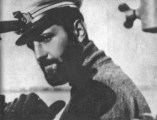
Gazzana_2Gianfranco Gazzana-Priaroggia was a massive loss to the Italian war effort and the Italian Navy, he was posthumously awarded the Knight’s Iron Cross from Germany and the Gold Medal for Military Valor by King Vittorio Emanuele III.  Rather unusually given the outcome of the war, as testament of this legacy, two modern Italian Sauro-class submarines are named:

  • S520 Leonardo da Vinci, completed in 1981 and named after the original RM Leonardo da Vinci
  • S525 the Gianfranco Gazzana Priaroggia completed in 1993 (the last of its class) and named in honour of Gianfranco Gazzana-Priaroggia

Source: Wikipedia, the Italian Monachist – Saga of the Submarine Leonardo da Vinci.  Merchant ships – attacks by Italian submarines.
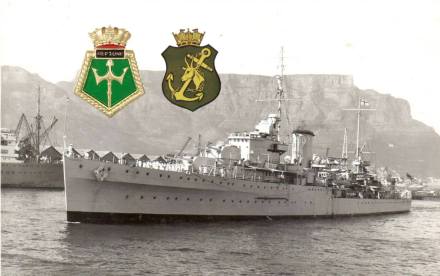
South African sacrifice on the HMS Neptune

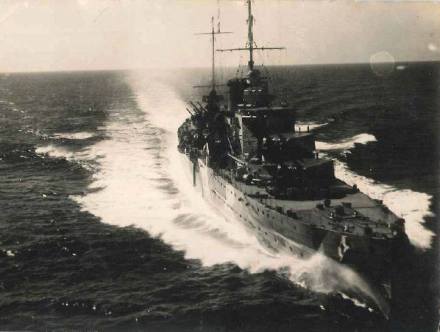
This image of HMS Neptune with Table Mountain in the background says a lot about the South African naval personnel seconded to serve on Royal Navy vessels and their supreme sacrifice.

As Simonstown was a British naval base during the Second World War thousands of naval ratings and officers who volunteered to serve in the South African Navy – known as the South African Navy Forces – landed up on British vessels. So when one was sunk, as HMS Neptune was, inevitably there is a very long honour roll of South Africans. Read on for their story.

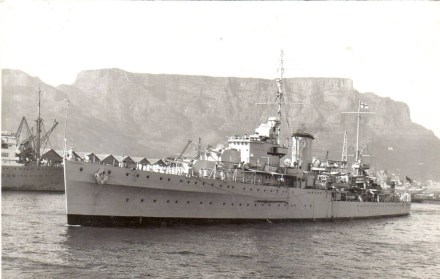
HMS Neptune was a Leander-class light cruiser commissioned into the Royal Navy on 12 February 1934 with the pennant number “20”.

12565523_539251039577966_1096634432449409870_n

HMS Neptune at sea in her heyday.

Force K, operating in the Mediterranean, including HMS Neptune, was sent out on 18 December 1941, to intercept an Axis forces convoy (German and Italian) bound for Tripoli,

neptune1On the night of 19 – 20 December, HMS Neptune, leading the line, struck two mines, part of a newly laid Italian minefield. The first struck the anti-mine screen, causing no damage. The second struck the bow hull. The other cruisers present, HMS Aurora and HMS Penelope, also struck mines.
While reversing out of the minefield, Neptune struck a third mine, which took off her propellers and left her dead in the water. HMS Aurora was unable to render assistance as she was already down to 10 knots (19 km/h) and needed to turn back to Malta. HMS Penelope was also unable to assist.

The destroyers HMS Kandahar and HMS Lively were sent into the minefield to attempt a tow. The former struck a mine and began drifting. Neptune then signalled for Lively to keep clear. (Kandahar was later evacuated and torpedoed by the destroyer Jaguar, to prevent her capture.)

Neptune hit a fourth mine and quickly capsized, killing 737 crew members. The other 30 initially survived the sinking but they too died. As a result, only one was still alive when their carley float was picked up five days later by the Italian torpedo boat Achille Papa.

The loss of HMS Neptune was the second most substantial loss of life suffered by the Royal Navy in the whole of the Mediterranean campaign, and ranks among the heaviest crew losses experienced in any naval theatre of World War II.

12549098_539250899577980_5498989727764062490_n

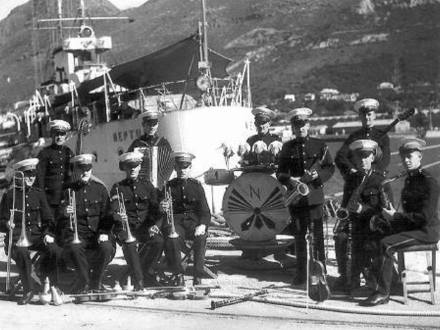
The Royal Marine band on the jetty by the stern of HMS Neptune at Simon’s Town in July 1940

This is the honour roll of South Africans lost that day lest we forget the heroism and sacrifice of these brave South African men.

22308811_10155537271456480_3745202244434378650_nADAMS, Thomas A, Able Seaman, 67953 (SANF), MPK
CALDER, Frank T, Ordinary Seaman, 67971 (SANF), MPK
CAMPBELL, Roy M, Able Seaman, 67318 (SANF), MPK
DIXON, Serfas, Able Seaman, 67743 (SANF), MPK
FEW, Jim, Able Seaman, 67744 (SANF), MPK
HAINES, Eric G, Able Seaman, 67697 (SANF), MPK
HOOK, Aubrey C, Able Seaman, 67862 (SANF), MPK
HOWARD, Harold D, Signalman, 67289 (SANF), MPK
HUBBARD, Wallace S, Able Seaman, 67960 (SANF), MPK
KEMACK, Brian N, Signalman, 67883 (SANF), MPK
MERRYWEATHER, John, Able Seaman, 67952 (SANF), MPK
MEYRICK, Walter, Ordinary Signalman, 68155 (SANF), MPK
MORRIS, Rodney, Ordinary Signalman, 68596 (SANF), MPK
RANKIN, Cecil R, Signalman, 67879 (SANF), MPK
THORP, Edward C, Signalman, 67852 (SANF), MPK
THORPE, Francis D, Able Seaman, 67462 (SANF), MPK
WILD, Ernest A, Able Seaman, 67929 (SANF), MPK

Other South Africans who had enlisted into the Royal Navy were also lost, these include (and by no means is this list definitive) the following:

OOSTERBERG, Leslie W, Stoker 1c, D/KX 96383, MPK
TOWNSEND, Henry C, Stoker 1c, D/KX 95146, MPK

May they Rest in Peace, these brave men whose duty is now done.

12593632_539245742911829_3970406589148419503_o

HMS Neptune in Cape Town harbour


Researched by Peter Dickens, Sources – Wikipedia.  Casualty Lists of the Royal Navy and Dominion Navies, World War 2 by Don Kindell


The feisty South African minesweeper that went down fighting – HMSAS Parktown

22308811_10155537271456480_3745202244434378650_nSouth Africa lost four ships during WW2, all of them minesweepers.  The second one to be lost was the HMSAS Parktown and it has a truly extraordinary fighting legacy.
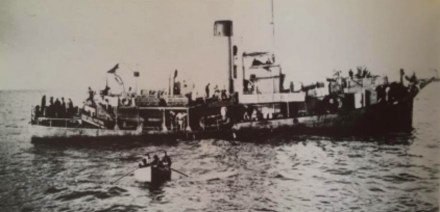
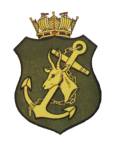
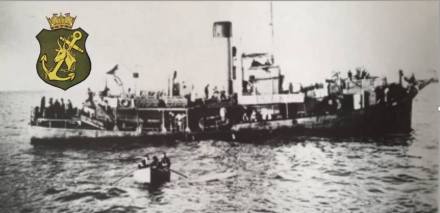
A small whaler converted to a minesweeper, the “tiny boat” HMSAS Parktown sailed into action in April 1942 in company of another “tiny boat” – the HMSAS Langlaagte, sailing  from Cape Town to the Mediterranean and joining the 167th Minesweeping Group working from Alexandria, Egypt.

Service in the Mediterranean

Parktown had arrived in the Mediterranean from South Africa during May and had sailed from Alexandria on 9 June as part of the escort for a convoy bound for Tobruk. During the passage the convoy is attacked and Parktown is involved in the gallant rescue of 28 survivors from a ship that had been sunk, many of whom are badly burnt. After their arrival in Tobruk on 12 June Parktown and her consort, a fellow South African ship the HMSAS Bever under the command of Lt P A North, are tasked to keep the approaches to Tobruk clear of mines.

parktown

HMSAS Parktown

Fall of Tobruk 

At that time Tobruk was under siege and by 20 June it is clear that a crisis of some kind is imminent. Late that same afternoon Parktown and Bever are ordered to enter harbour to embark evacuation parties. At 20:00 that evening they watch the Axis forces entering the western end of town and then reach the harbour shortly afterwards.

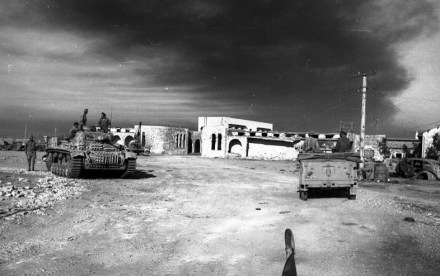
These two South African minesweepers were to distinguish themselves during the Allied evacuation from Tobruk fighting their way out of the harbour.  The Bever and Parktown fought side by side as they were loading up with as many Allied and South African troops and equipment as they could take, all the time whilst Rommel’s German forces closed in around them. The rapidity of the attack caused great confusion, however, the ships still manage to embark most of the men allocated to them before they sail.

On 20 June 1942 General Rommel’s “Deutsch-Italienische Panzerarmee” (German and Italian Tank Army) attacked the Tobruk garrison from the south and south east. By 18:00, the German and Italian forces had overrun the main defence lines and were closing on the harbour and all Allied ships were ordered to embark personnel for evacuation.

The escape 

By 19:00 German tanks and armoured cars were within the town and started shelling the ships in the harbour. HMSAS Bever received a direct hit as she cast off.  Next is The Parktown and her escape is also quite remarkable.

Using her machine guns she checks the advance of the enemy land forces whilst embarking a further 60 men, even though hit by shell fire. As she is casting off, more men keep arriving and several try to swim to the ship. A few are hauled on board, some assisted by one of the ship’s company, Able Seaman P J Smithers, who swims to their assistance. However in the confusion of sailing A/B Smithers is left behind to be captured and placed in an Italian POW camp.

As the last Allied ship to leave Tobruk, Parktown attracts a tremendous concentration of fire as she steams out at full speed. Although she is hit several times, no hit causes fatal damage to the ship and only one man, an army NCO, is killed.

Tobruk, Rommel, Bayerlein, Panzer III

Rommel and his Panzers enter Tobruk

The Fall of Tobruk

Under cover of a smoke screen laid by a motor torpedo boat, but still receiving shell-fire from the town, the two ships left the harbour for the open sea. During the night off Tobruk port the Parktown and Bever became separated and the Parktown goes to the assistance of a disabled tug, also crowded with men.

The sinking of the HMSAS Parktown

After taking it in tow Parktown is only able to make five knots (9.3 Km/h) and thus gets left behind by the rest of the fleet. At daybreak on the 21 June they are still only 50 miles from Tobruk and can see the coast 14 miles away with a heavy fog bank to seaward.  At 06:45 Parktown’s crew sighted what they described as an Italian “MAS” torpedo boat (E-Boat), which had been directed to the slow moving vessel by a German reconnaissance aircraft.  The Parktown then turns north towards the fog bank, only to be confronted by four more E-boats at close range. Fire is immediately opened by both sides.

The E-boats using their higher speed and longer range guns open the range and attack from different directions. Even though Parktown, having only one 20mm Oerlikon, was heavily out matched, one or two of the E-boats appear to be hit by her fire and end up temporarily out of control.

However, within 30 minutes, completely outnumbered and outgunned the Parktown suffers sufficient damage to put her completely out of action.  The Captain, Lieutenant Leslie James Jagger and the coxswain are killed by a direct hit to the Bridge as well as a Royal Navy officer on passage.  Within 15 minutes Parktown was stationary with a hole in the boiler, half of the crew and evacuated soldiers as casualties, out of ammunition and with the upper deck on fire. The only surviving officer, Sub-Lieutenant E R Francis, although himself severely wounded, takes charge and orders the ship to be abandoned as a fire is spreading rapidly and no guns remain in action.

In the aftermath it is noticed that the E-boats appear to be firing at the men in the water, however a plane, which was thought to be German, appears and heads towards the E-boats where it then circles over them and opens fire on them, after which they make off at high speed.

The remaining crew and soldiers abandoned ship and clung to carley floats. At this time, an aircraft drove off the hostile ships. The tug which had been in tow had not been engaged by the E-boats and managed to rescue some of the survivors and some of the remaining survivors were rescued by an Allied Motor Torpedo Boat (MTB) which found them close to the burning minesweeper. The Allied MTB then sank the burning wreck of the Parktown with depth charges before returning to Mersa Matruh that evening.

Accounts on the final hour of the Parktown differ:

Orpen states that the Italian ships were driven off by a South African aircraft. He also records there being four Italian torpedo boats involved in the action.

Du Toit states that there were six Italian torpedo boats involved and that the aircraft was in fact a German aircraft which erroneously attacked the Italian ships.

Harris supports the fact that there were four torpedo boats and states that the German aircraft deliberately attacked the Italian vessels as they were firing on survivors in the water.

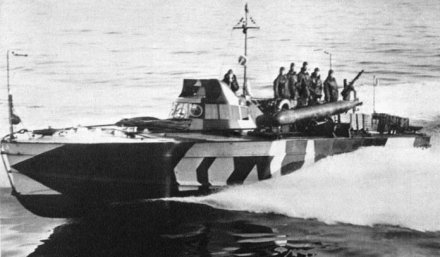
MAScamo

Camouflaged Italian World War II MAS that sunk the HMSAS Parktown (Motoscafo Armato Silurante – Italian: “Torpedo Armed Motorboat”)

Out of her complement of 21, Parktown suffered 13 casualties; five killed and eight seriously wounded.

Decorations and awards won

In this action alone the HMSAS Parktown’s crew would amass the following decorations and awards (we will leave the account of the HMSAS Bever to another post on her and her loss in November 1944 specifically):

Distinguished Service Order, D.S.O 
Sub-Lieutenant Ernest Rowland Frances (H.M.S.A.S. Parktown).
Comes from Krugersdorp. Age 34. Was in Training Ship General
Botha, 1923-23. Badly wounded during Tobruk withdrawal.

Distinguished Service Medal, D.S.M.
No 66921. Leading-Stoker John Charles Rohlandt (H.M.S.A.S. Parktown).
Home. address, 12, Hillyard-street. Woodstock.
No 71431. Leading-Stoker Leslie Ronald Mitchell (H.M.S.A.S. Parktown).
Home address. 16, Wesley-street. Observatory. Before war was
employed by Customs Department, Cape Town
No. 71048. Able-Seaman George Kirkwood (H.M.SA.S. Parktown).
Comes from Maraisburg. Transvaal. Was a miner in peace time.

Mentioned in Dispatches (Posthumous)
Lieutenant Leslie James Jagger (H.M.S.A.S. Parktown) Came from Johannesburg, was killed during this operation.

No. 71464. Stoker Andrew Henry Jooste (H.M.S.A.S. Parktown). Comes from Vrededorp Johannesburg. Age 21. A gold miner before joining Seaward Defence.

The honour roll  – HMSAS Parktown (SANF),

The following South African men were lost with the sinking of the Parktown (MPK means “missing presumed killed”)

BROCKLEHURST, Peter S, Able Seaman, 70457 (SANF), MPK
COOK, John A, Stoker 1c, 70256 (SANF), MPK
JAGGER, Leslie J, Lieutenant SANF, 70016 (SANF), MPK
MCEWAN, William A, Steward, 69686 (SANF), MPK
TREAMER, Arthur P, Petty Officer, 71109 (SANF), MPK

May these brave South Africans Rest in Peace, their duty done.

supporting-poppy-appeal

For more Observation Post stories on South African minesweepers lost in World War 2, please visit the following links:

HMSAS Southern Floe: The HMSAS Southern Floe was the SA Navy’s first ship loss & it carries with it a remarkable tale of survival.

The HMSAS Bever: “Under a hail of shells”; Recounting the bravery and loss of HMSAS Bever

The HMSAS Treern: The last South African Navy ship to be lost in action; HMSAS Treern


Researched by Peter Dickens. References: Article essence copied from Wikipedia, Military History Journal Vol 9 No 1 – June 1992. THE STORY OF A WARSHIP’S CREST by F V Demartinis and Day-to-Day in the SA Navy by Chris Bennett (social media). SOUTH AFRICAN NAVAL FORCE
Ship Histories, Convoy Escort Movements, Casualty Lists 1939-1947


The connection between HRH Prince Philip & the SAS Simon van der Stel

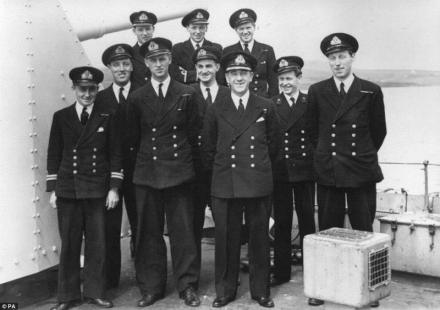
Now, you’re wondering – what has Prince Philip (husband to Queen Elizabeth II) possibly have to do with the South African Navy’s SAS Simon van der Stel. Well here it is.

These are officers of the HMS Whelp – notice the tall and rather familiar HMS Whelp First Lieutenant – Prince Philip.

Philip joined the Navy as a cadet after leaving Gordonstoun School in 1939. In January 1941 he joined the battleship HMS Valiant in Alexandria and was in charge of its searchlight control during the night action off Cape Matapan, for which he was mentioned in dispatches. After serving aboard the HMS Wallace, he was appointed first lieutenant of HMS Whelp, which was present in Tokyo Bay when the Japanese signed the surrender.

In fact Prince Philip has quite a combat record, in a remarkable act of heroism Prince Philip saved scores of lives during the Second World War when he foiled a Luftwaffe bomber which looked certain to destroy their ship, the HMS Wallace during the Allied invasion of Sicily in July 1943.   During a night-time attack, Prince Philip conjured up a plan to throw overboard a wooden raft with smoke floats that would create the illusion of debris ablaze on the water, and as he hoped, the German plane was fooled into attacking the raft while the HMS Wallace sailed to safety under cover of darkness.

A young Prince Philip with Princess Elizabeth and HMS Welp in 1944 W Class Destroyer

The last wartime ship the Price served on was HMS Welp, and 1952 was sold to South Africa as the replacement for HMSAS Natal. HMS Whelp was renamed SAS Simon van der Stel, after the 17th century colonist reputed to be the founder of the South African wine industry. Much of SAS Simon van der Stel′s service was as a “grey ambassador”, on good-will visits to Europe and Europe’s African colonies, including a 147 day cruise to Europe in 1954. This role, however, declined as South Africa became increasingly isolated during the apartheid years.

SAS Simon van der Stel was placed in reserve from 1957, but was modernised as a Type 15 frigate (in common with other destroyers of her generation) in an anti-submarine role from 1962 to 1964, and re-commissioned in February 1964. She now had helicopter facilities, which were used by South Africa’s 22 Flight (later 22 Squadron).

10702201_358161731020232_3587078548727944204_n

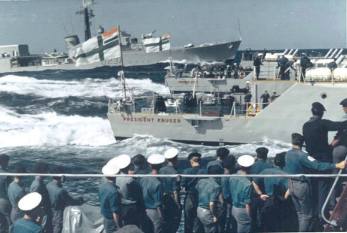
Photo of the South African Navy Frigates in their heyday. Here are the three President Class Frigates together, the SAS President Kruger, the SAS President Steyn and the SAS President Pretorius – neck to neck with the SAS Simon van der Stel in the background, now converted to a Type 15 Frigate (note additional helicopter hanger on the stern).

SAS Simon van der Stel was eventually scrapped in 1976 in Durban.

Glossary of South African Military Terms

This is for the benefit of those not always understanding the language of a South African military veteran.  This is a glossary of South African military terms compiled by Peter Dickens, David Kiley, Norman Sander and other veterans in The South African Legion, it is by no means definitive of all the terms used, quite a lot can be happily added and please feel free to notify me of any omissions.

Please note this list contains words that can be judged as offensive and objectionable – however as a historic document to capture the slang and terminology it needs to be as objective as possible.

SOUTH AFRICAN DEFENCE FORCE TERMINOLOGY AND SLANG

A)
Aapjas – A long, hooded coat usually with a fake fur lining ( post 1983 issue version ).
Aapkas (1) – metal platform / cage , sited on a radio mast in SWA / Angola ops bases; used as a lookout post / fire director station for base defence mortars.
Aap Kas (2) – also know as the jump simulation cable rig at 44 Para
Aangekla/kla-ed aan – Put on a charge.
AB – Navy.Able Seaman (Lance Corporal)
Adjudant – ( 1 ) commissioned officer appointed as executive officer to unit OC / 2IC .
Adjudant – ( 2 ) abridged Afrikaans form of address for rank of Warrant Officer ( SA Police).

Continue reading

South African D-Day hero: Anthony Large BEM

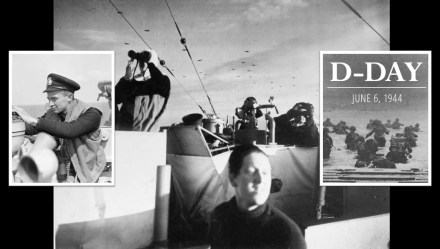
6th June 1944. D Day, a very significant day in the history of mankind, and albeit on a smaller scale quite a number of South Africans did actually participate in it. The South African Naval Force (assisting the Royal Navy) is one such entity that did and this is one of these South African heroes to come from the D-day landings.

A Large

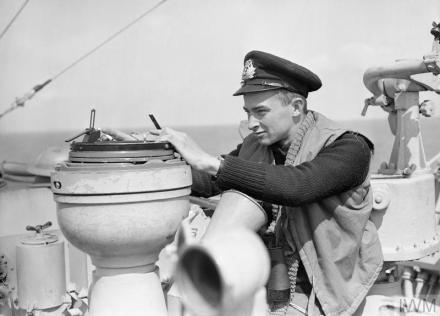
Here Sub Lieutenant Anthony Large BEM, South African Naval Force (Volunteers), of Durban, South Africa, is seen taking a bearing on the ship’s compass on board HMS HOLMES whilst she was helping to guard the Allied supply lines to and from the Normandy beachhead. He won his British Empire Medal BEM whilst he was a rating.

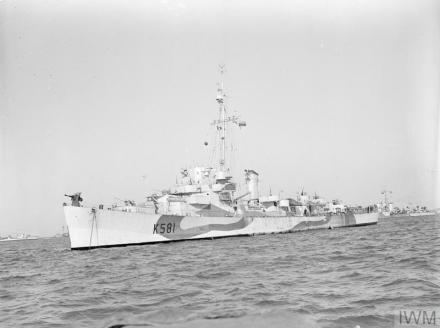
The HMS Holmes (K581) was a Captain Class frigate, originally intended for the United States Navy she was transferred to the Royal Navy before she was finished.  The HMS Holmes found itself in the thick of battle during D-Day on the 6th June 1944 as an escort.  She was alongside escorting large battleships like the HMS Rodney as they fired at shore targets in Normandy. Operating off the Caen beachhead and Le Havre, this Royal Navy flotilla known as Bombarding Force D, including the HMS Holmes, opened the channel for invading forces.

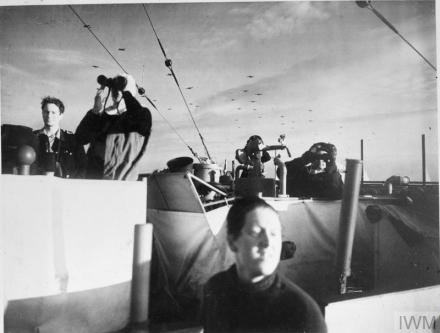
In this dramatic photograph the crew on the bridge of the frigate HMS Homes keep watch as gliders carrying 6th Airborne Division reinforcements to Normandy pass overhead on the evening of 6 June 1944.

Holmes 2

Naval operations for the invasion were described by historian Correlli Barnett  as a “never surpassed masterpiece of planning”. In overall command was British Admiral Sir Bertram Ramsay who had served as the Flag Officer at Dover during the Dunkirk evacuation four years earlier.

Operation Neptune, as the ‘D-Day’ operation was codenamed was quite something.  Consider these staggering statistics. The invasion fleet was drawn from eight different navies, comprising 6,939 vessels: 1,213 warships, 4,126 landing craft of various types, 736 ancillary craft, and 864 merchant vessels. The majority of the fleet was supplied by the UK, which provided 892 warships and 3,261 landing craft. There were 195,700 naval personnel involved.

HMS Holmes

HMS Holmes (K581) during Operation Overlord

Available to the British and Canadian sectors were five battleships, 20 cruisers, 65 destroyers, and two monitors. German ships in the area on D-Day included three torpedo boats, 29 fast attack craft, 36 ‘R’ Boats and  36 minesweepers and patrol boats. The Germans also had several U-Boats available, and all the approaches had been heavily mined.

At 05:10, four German torpedo boats reached the Bombarding Force D Task Force and launched fifteen torpedoes, sinking the Norwegian destroyer HNoMS Svenner off Sword beach but missing the battleships HMS Warspite and HMS Ramillies.  Not far from this action was our South African hero and the HMS Holmes.

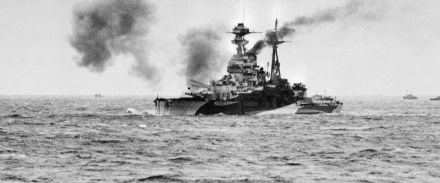
Here the battleship HMS Ramillies shelling German gun batteries in support of the landings on Sword area, 6 June 1944. The photo was taken from the frigate HMS Holmes.

Ram

HMS Ramillies Sword area, 6 June 1944.

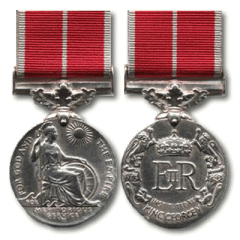
The British Empire Medal (BEM) awarded to Anthony Large is a significant British decoration, the medal is issued both for gallantry or meticulous service medal, however during the war it was generally awarded for gallantry to uniformed personnel, usually non-commissioned ranks below Warrant Officer.

BEM_400

British Empire Medal (BEM)

Related Links and work on South Africans during D-Day

Albie Gotze “This bastard is going to kill me”; Albie Götze’s Legion d’Honneur

Tommy Thomas South African D Day Hero: Lt. D.C. “Tommy” Thomas MC

Lyle Mckay South African bravery on D Day, Capt. Lyle McKay.

Cecil Bircher South African D Day Hero: Lt. Cecil Bircher MC

Royston Turnball Supreme South African heroism on Omaha Beach, Lt. Royston Turnbull DSC


Written and Researched by Peter Dickens Photograph copyrights and caption references – Imperial War Museum

South African Navy at war against …. Imperial Japan!!

Many people don’t know it – but a small historic fact, the South African Navy was involved in direct engagements with Imperial Japan during the Second World War.

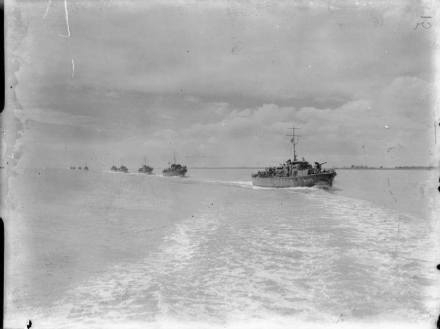
Here ML 475 leads motor launches of the Arakan Coastal Forces in line ahead up the Naaf River on their way to bombard Japanese shore defences and cut cross river communications.

These Coastal Forces were made up of the Royal Indian Navy, the Royal Navy, South African Naval Forces and Burma RNVR and they had covered nearly 30,000 miles in over 40 operations.

Harrassment of Japanese lines of communication and bombardment of shore defences were carried out between the Naaf River and Ramree Islands. Briefed in a Basha hut in their well hidden base, commanding officers return to their ships hidden in the up-river creeks for the nights operations.

Image and caption copyright: Imperial War Museum

Smuts inspects the South African Navy in Egypt

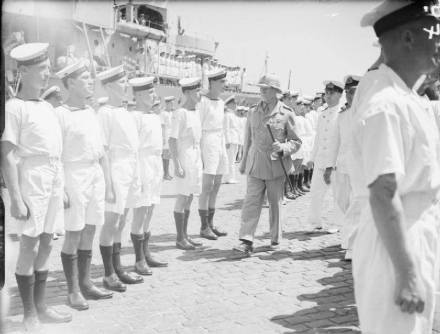
Field Marshal Smuts Visits South African Naval Forces in the Middle East, 16 May 1942
Field Marshal Smuts, in khaki army uniform, inspects massed ranks of South African sailors on the quay side in Alexandria, Egypt, 16 May 1942.

Imperial War Museum

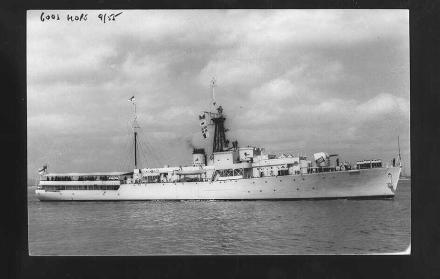
South Africa’s first Navy Frigate – HMSAS Good Hope

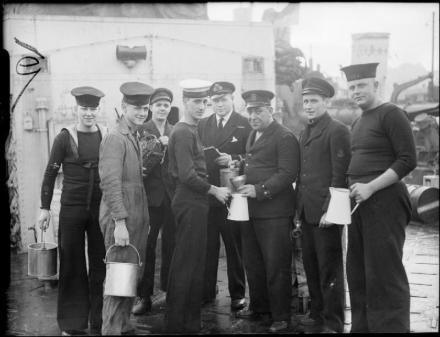
South Africa’s first Frigate, 6 January 1945, picture taken on the Clyde. Officers and men of the Frigate HMSAS Good Hope, the first of three presented to the South African government by the British government. The Coxswain, Chief Petty Officer A W Lincoln, from Robinson Deep, Johannesburg, serving out the rum.

Photo15frLochGoodHope1PS

Feature image and caption copyright: Imperial War Museum collection.

Able Seaman “Just Nuisance”

In 1939 the British Royal Navy did the unthinkable… Strange but true, they enlisted a South African dog who then went on to win the hearts and minds of sailors on two continents and become a legend.

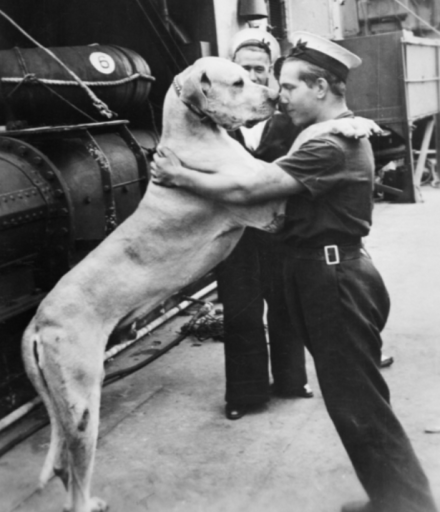
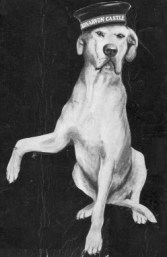
Able Seaman ‘Just Nuisance’ is one very famous South African, and as he was an enlisted rating he received rank, pay, rations and duties – the same privileges as any other rating with the rank of ‘Able Seaman’ (AB).  This is how he got there.

He was a Great Dane who between 1939 and 1944 served at HMS Afrikander, a Royal Navy shore establishment in Simon’s Town, South Africa. He died in 1944 at the age of seven years and was buried with full military honours.

4378021_f248

Although the exact date of Just Nuisance’s birth is not known, it is usually stated that he was born on 1 April 1937 in Rondebosch, a suburb of Cape Town. He was sold to Benjamin Chaney, who later moved to Simon’s Town to run the United Services Institute (USI). Just Nuisance quickly became popular with the patrons of the institute and in particular the ratings, who would feed him snacks and take him for walks. He began to follow them back to the naval base and dockyards, where he would lie on the decks of ships that were moored at the wharf. His preferred resting place was the top of the gangplank. Since he was a large dog even for a Great Dane (he was almost 2 metres (6.6 ft) tall when standing on his hind legs), he presented a sizeable obstacle for those trying to board or disembark and he became affectionately known as Nuisance.

Nuisance was allowed to roam freely and, following the sailors, he began to take day trips by train as far afield as Cape Town, 22 miles (35 km) away. Despite the seamen’s attempts to conceal him, the conductors would put him off the trains as soon as he was discovered. This did not cause the dog any difficulty, as he would wait for the next train, or walk to another station, where he would board the next train that came along. Amused travellers would occasionally offer to pay his fare but officials of the State-owned railway company (South African Railways and Harbours) eventually warned Chaney that Nuisance would have to be put down unless he was prevented from boarding the trains or had his fares paid.

The news that Nuisance was in danger of being put down spurred many of the sailors and locals to write to the Navy, pleading for something to be done. Although somebody offered to buy him a season ticket, naval command instead decided to enlist him by the book. As a member of the armed forces, he would be entitled to free rail travel, so the fare-dodging would no longer be a problem. It proved to be an excellent idea. For the next few years he would be a morale booster for the troops serving in World War II.

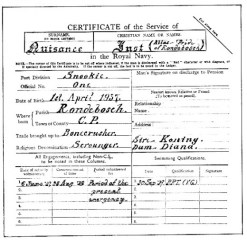
He was enlisted on 25 August 1939. His surname was entered as “Nuisance” and, rather than leaving the forename blank, he was given the moniker “Just”. His trade was listed as “Bonecrusher” and his religious affiliation as “Scrounger”, although this was later altered to the more charitable “Canine Divinity League (Anti-Vivisection)”. To allow him to receive rations and because of his longstanding unofficial service, he was promoted from Ordinary Seaman to Able Seaman.

Just Nuisance - Certificate of Service_02

He never went to sea but fulfilled a number of roles ashore. He continued to accompany sailors on train journeys and escorted them back to base when the pubs closed. While many of his functions were of his own choosing, he also appeared at many promotional events, including his own ‘wedding’ to another Great Dane, Adinda. Adinda produced five pups as a result, two of which, named Victor and Wilhelmina, were auctioned off in Cape Town to raise funds for the war effort.

Nuisance’s service record was not exemplary. Aside from the offences of travelling on the trains without his free pass, being absent without leave (AWOL), losing his collar and refusing to leave the pub at closing time, his record shows that he was sentenced to having all bones removed for seven days for sleeping in an improper place — in the bed of one of the Petty Officers. He also fought with the mascots of ships that put in at Simon’s Town, resulting in the in the deaths of at least two of them, one of them was the ship mascot of the HMS Shropshire, for which AB Nuisance was charged.

Nuisance was at some point involved in a car accident. This caused thrombosis, which gradually paralysed him, so on 1 January 1944 he was discharged from the Navy. His condition continued to deteriorate, on 1 April 1944 he was taken to Simon’s Town Naval Hospital where, on the advice of the naval veterinary surgeon, he was put to sleep. The next day he was taken to Klaver Camp, where his body was draped with a Royal Naval White Ensign and he was buried with full naval honours, including a gun salute and the playing of the Last Post. A simple granite headstone marks his grave, which is on the top of the hill at Klawer, at the former SA Navy Signal School. A statue was erected in Jubilee Square in Simon’s Town to commemorate his life.

The Simon’s Town Museum has an exhibition dedicated to his story and since 2000 there has been an annual parade of Great Danes from which a lookalike is selected.


Information – Wikipedia.