I was a discussant at a book launch of Jan Smuts’ First World War by Dr. David Brock Katz, and the minute questions were opened to the audience, the very first question was “What about Jopie?”, to which there was a universal sigh and “here we go again”.
Turns out you just cannot discuss Jan Smuts’ career as military strategist and Field Marshal, his career as lawyer, botanist, academic, philosopher, conservationist or statesman – without covering the “Jopie” base. The interesting bit about covering the Jopie base is just how little people understand about him, the nature of events that led to his execution, or even fully understand Smuts’ role in it.
So, to ask the question … “What about Jopie?” To truthfully answer that question – we also have to ask another question, and that is … “What about William?”.
What about William?
William! Who is then heck is William and what is he in the life of Jopie? – Never heard of him! Comes the retort – ah, but here we uncover a part of the Jopie Fourie story which is often glossed over and even never mentioned in all the Nationalistic inspired dogma that surrounds Jopie Fourie, and you have to ask yourself why? So, here goes.
Our story begins with three men who had taken officer commissions in the newly fledged Union Defence Force of South Africa (the UDF) army (the South African Union was declared in 1910). They served together in the ACF (Active Citizen Force) and knew one another well, they are Captain William Allan King, Major Harry Trew and finally Captain Jopie Fourie.
When South Africa declared war on Germany in 1914, by a landslide Parliamentary vote, those UDF officers who held a ‘Conscientious Objection’ to war against Germany were invited to resign. The Union government was well aware of the sympathies the Boer forces had to Germany during the South African War 1899-1902 and would accommodate them, in other words individual UDF members were not forced to go war against Germany, Botha (then the Prime Minister) and Smuts (then the Minister of Defence) expected a ‘handful’ of resignations from those that refused to fight Germany – and they got exactly that – ‘a handful’ (less than 1% of the UDF construct).
Key resignations from the UDF came from Major Jan Kemp, Lt. Col Manie Maritz and General Christiaan Beyers. All of whom took the precaution of resigning their UDF commissions and oaths before going into armed revolt against the lawfully elected Union government over the issue of the invasion of German South West Africa. Failure to do so in 1914 would amount to a charge of High Treason which carried with it the death sentence.
Images: Jan Kemp, Christiaan Beyers and Manie Maritz
Captain Jopie Fourie decided to join Kemp, Maritz and Beyers in open armed revolt, however for reasons known only to him, he chose not to resign his commission and oath to serve the Union of South Africa. In other words, as an active serving UDF officer (not just a rebel) he chose to make war against the UDF and his colleagues with the intention of killing them. This in 1914 constituted treason in the highest order.
According to Major Harry Trew, Fourie was a close friend of his and was a likeable chap with a wicked sense of humour, and Fourie had a somewhat cavalier approach to things, this can be seen during the revolt when Trew recalled a commandeering note that Fourie had given to the hotelkeeper at Pienaar’s River. In the note he stated he had taken goods to the value of £10 for the use of the Republican Forces; if his side won it would be honoured by the Republican Government, if he lost: The amount was to be debited against Generals Botha and Smuts.
In another rather cavalier approach to the rebellion, and a very ill-advised one, Jopie Fourie had rather foolishly decided to fight for the rebels whist wearing his Union Defence Force Uniform (refer Military History Journal Vol 16, No.4). The wearing of your ‘enemies’ uniform in 1914 also immediately guaranteed a place in front of firing squad, its treason of the highest order.
During the South African War 1899-1902 (or Boer War 2) there is an extensive list of Boers executed for “wearing khaki” i.e., wearing a British uniform, by 1914 and the 1st World War this sort of offence earned you a ‘drumhead’ court martial in the field and immediate execution on the spot.
Even by World War 2, who can forget the harrowing images of the execution of German soldiers – Pernass, Billing, and Schmidt by firing squad of American GI’s for wearing American uniforms, they were condemned to death under the Hague convention concerning land warfare, article 23: “It’s especially forbidden .. to make improper use of a flag of truce, of the national flag or of the military insignia and uniform of the enemy”.
Unteroffizier Manfred Pernass, Oberfähnrich Günther Billing, and Gefreiter Wilhelm Schmidt were given a military trial at Henri Chapelle, sentenced to death, and executed by a firing squad on 23rd Dec 1944 for wearing American uniforms to infiltrate their lines.
Jopie Fourie took a tremendous risk choosing to continue to wear his UDF uniform whilst joining a revolt against the UDF, and there is absolutely no doubt that he knew the consequences of his actions, as a Boer War veteran and subsequently a UDF officer he knew exactly the consequence.
Captain Jopie Fourie and Captain William Allan King where also colleagues and friends. Captain William Allan King was a part-time ACF officer in the UDF, full-time he was the Sub-Commissioner of Pretoria, he was Pretoria’s ‘Native Commissioner’ responsible for the affairs of Blacks and Coloureds in the Transvaal. His duties and responsibilities included arbitrating between the employers of labour in the Pretoria Labour District with the Black African Natives performing the labour.
According to Sol Plaatje, the first General Secretary of the African National Congress (ANC) in his book ‘Native Life in South Africa, Before and Since the European War and the Boer Rebellion’, William King is described as;
“Without doubt the ablest native administrator in the Transvaal Civil Service … an expert on Native matters, and no commission ever sat without his being summoned to give evidence before it”.
Sol Plaatje went on to say of William King:
“The Natives called him ‘Khoshi-ke-Nna’, which means ‘I am the Chief’. A firm but just Englishman, with a striking military gait, he would have been an ideal leader of the native contingents had the offer of native help been accepted by the Union Government.”
That William Allan King was a very popular and well-liked man in South African politics and amongst the majority communities and their representatives in South Africa would be an understatement.
Captain William Allan King, was sent to arrest Captain Jopie Fourie, presumably as they had a personal connection to talk him and his Commando into surrender as a first prize. King was also to warn Fourie that he needed to resign his commission. King’s small UDF force came into contact with Jopie Fourie and his Commando on the 23rd November 1914, just north of Pretoria near Hamaanskraal and a skirmish ensued. During the firefight Captain William Allan King attended to a wounded man. Whilst attending to the man he was shot dead by one of Fourie’s men. Again, military doctrine viewed these sorts of incidents in 1914 as outside accepted rules of engagement.
“What made it so tragic was that Jopie and King, who was Native Commissioner of Pretoria, had been good friends prior to the rebellion” recorded Major Harry Trew, Jopie Fourie’s other friend. It would now be left to Major Harry Trew to capture and arrest Fourie, which he and detachments of South African Police (SAP) and Union Defence Force (UDF) troops eventually managed to do on the 16th December 1914 at Nooitgedacht in the Rustenburg district.
It needs to be noted at the “Battle of Nooitgedacht” to arrest Fourie, Jopie Fourie and his men killed one policeman and many other policemen were injured – Dr C Louis Leipoldt was the ‘police doctor’ that day and was mentioned in dispatches for attending to all the wounded.
Images: Captain William Allan King’s headstone and newspaper notice, note the population group who erects the headstone (the Waterberg Chiefs) and his honouring as an African Chief in a native language.
It was also not the first time Fourie and his men would flout rules of engagement. In a earlier engagement, from under a white flag of truce they opened up on a UDF detachment, this time killing another popular UDF officer, who happened to be unarmed. Captain John (Koos) Nolte, an Afrikaner, was treacherously shot. The epitaph on Nolte’s grave, who was a well-known rugby player and attorney on the East Rand, states; “Gesneuveld 29 October 1914 te Treurfontein onder Witvlag met Rapport. Geboren 11de Juli 1881.”
Retribution
Captain William Allan King’s funeral was a national outpouring of grief, newspapers across the county lamented at his passing, his funeral was the largest funeral since the Union was declared in 1910. Plaatje would read his obituary and would record that he was “one loss which the Natives, judging by articles in their newspapers, will not easily forget”.
Retribution for Fourie was coming – not only from the large swaths of English’, ‘Coloured’ and ‘Black’ communities grieving for William Kings death, of all the Rebel’s Commandos – it was Fourie’s Commando which exacted the greatest number of Union Defence Force deaths. Of those most of them were Afrikaners – Prime Minister Botha insisted the ‘English’ regiments who made up the Active citizen Force (ACF) part of the UDF ‘stay out of it’ for the most part and the Afrikaner ‘Rifle Associations’ – the old Boer Republic Commandos the RA part of UDF to deal with the brunt of the revolt – so, brother against brother, this was to be the Afrikaners sorting out their seditious brethren amongst themselves. Retribution was coming for Fourie from many in the Afrikaans community and the UDF families affected by the loss of their husbands, brothers and sons – men like Captain Koos Nolte.
Unlike many of the other rebel leaders who faced a single count of treason, Captain Jopie Fourie had committed High Treason on three counts, not resigning his Army commission in the UDF, caught wearing his UDF uniform and undertaking a seditious armed revolt against his lawfully elected government and his own armed forces – the UDF.
Also, unlike the other rebel leaders who faced a trial in a civilian court, having resigned from the UDF, that would not be the case for Jopie Fourie, as he had not resigned from the UDF he was considered as still in service in the UDF, so he faced a military court. A military court martial is fundamentally different to a civilian one as there are a whole set of laws that apply to military personnel that don’t apply to civilians. Military tribunals are almost a ‘law unto themselves’ – sentences tend to be carried out quickly and punishments harsh – very little latitude is given to appealing convictions, and military courts do not really tolerate interventions from civilian authorities and government structures.
This is compounded further when the military is ‘in a state of war’ with a foreign power or if a state of ‘martial law’ is declared against an internal enemy, and South Africa and the UDF specifically was in both states. During these respective states of war military law becomes even more intolerant and convictions even more punitive. Retribution from the UDF was most certainly coming for Fourie and there was very little anyone could do about it.
Retribution was also quick, South Africa was in a state of martial Law and there was no dilly-dally, from the time Jopie Fourie was captured on the 16th December 1914, he was tried by this fellow military officers, from all accounts he was given a proper military trial, he was found guilty of high treason and sentenced to death by firing squad (a military ‘death’ afforded only to military personnel – civilians are hanged).
The firing squad was comprised equally of members of the South African Police (as they were involved in his capture and he took a toll on them), members of Jopie Fourie’s own regiment – the “Botha Ruiters”, and members of the South African Mounted Rifles. The execution took place with Fourie refusing a blindfold on the 20th December 1914 …. from capture to execution, it took a mere 4 days.
Images: Authorisation Letter: Jopie Fourie Execution: 20th December 1914 and colourised image of Jopie Fourie (courtesy Jenny B Colourised Photos)
Why Smuts?
Usually in a legal and parliamentary construct like the Union of South Africa, the only person who can stay an execution or offer an amnesty is the Prime Minister and usually that is done with a consensus of cabinet ministers, so the Prime Minister is not seen to act unilaterally. The Prime Minister of South Africa in 1914 was Louis Botha, not Jan Smuts – Smuts was one of 66 South African Party Ministers of Parliament and he is one of Louis Botha’s Cabinet Ministers – holding two portfolios reporting to Botha. Jopie Fourie’s execution is on Botha’s watch – it’s his responsibility, not Smuts’.
General Jan Smuts during WW1
So why not Botha, why the focus on Smuts?
As Dr David Katz in his work ‘General Jan Smuts and his First World War in Africa 1914 -1917) points out. Jan Smuts had been the key Minister keeping a level head and seeking reconciliation and understanding all the way through the rebellion, and when it was clear the rebellion had failed, Smuts called for a ‘Blanket Amnesty’ across the board for the Boer Rebel leaders and their troops if they laid down their arms.
General Louis Botha, the Commander in Chief, on the other hand took a much harder and less reconciliatory line than his colleague – he was livid at the sheer betrayal, the sheer waste of lives, resources and time it took and the complete stupidity of it all – an unsupported revolt against a lawfully elected government with absolutely no chance of success.
It was reported that Louis Botha once joking said to Jan Smuts “Let’s face it Jannie, you’re no General!” By that he meant Smuts was far too reconciliatory and soft-hearted – as far as Louis Botha was concerned, under the edicts of martial law, all rebels, officers and men alike should be tried, the most treasonous of which, the leaders, put up against a wall and shot – even if they were all his old friends.
Smuts however persevered – Botha eventually agreed to an Amnesty, but for the rank and file only, the Boer Rebel leaders would have to be prosecuted. The amnesty, excluding the Rebel leadership, was in put place from 12th to 21st November 1914, and with it the 1914 Boer Rebellion was effectively over, by the end of November General de Wet’s force alone was down to only 40 men. Rear actions and isolated and desperate battles continued to be fought for a couple of months by woefully under-strength hard liners like Jopie Fourie refusing surrender and amnesty, but by the end of January 1915 the rebellion was over.
Even by standards of the day, at the end of the revolt Smuts would seek clemency and compassion with Botha for the rebel leaders, consider their sentences. In private correspondence with his confidant and friend, Emily Hobhouse, Hobhouse would urge both Smuts’ and Botha’s compassion in dealing with the rebel leaders, to which Smuts agreed.
Of the main rebel leaders, General Christiaan Beyers tragically drowned in the Vaal River whilst attempting to desperately evade capture on 8th December 1914. General Christiaan de Wet was captured during the amnesty and sentenced to six years imprisonment, with a fine of £2000, he was released by Botha and Smuts after one year’s imprisonment, after giving a written promise to take no further part in politics.
Major Jan Kemp was captured on the 2nd of February 1915 and sentenced to 7 years imprisonment, with a fine of £1000. However, a mere 10 months into his sentence Botha and Smuts agreed to release him – also on the condition that he may not participate in any politics – a promise Kemp almost immediately broke entering politics as a National Party MP under Hertzog in 1920.
Lt. Colonel Manie Maritz would evade capture and escape into self-imposed exile, he would re-enter South Africa in 1923 and spent a couple of months in jail for treason, when General Barry Hertzog came to power later in 1924 he was given amnesty. He would enter into politics as the leader of an antisemitic, one-party state, National Socialist (Nazi) inspired ‘Boerenasie’ party prior to World War 2.
Of all the other rebel officers, men like Kmdt Daniel Flemming, who were also captured or returned from exile in GSWA. All were sentenced to short imprisonments and fines, almost all of them walking free within a year … except for just one man … Captain Jopie Fourie.
The Visit
The delegation in December 1914, headed up by Dr D.F. Malan, which decided on a last minute ‘drop in’ visit at Jan Smuts’ house and deliver a petition Malan had drafted, with the remote hope of getting clemency for Fourie, did so because they saw Smuts as the ‘weakest link’ – they knew he had a soft spot for the rebels and they would have no such luck with a no-nonsense General like Louis Botha, and how do we know this?
Simply because General Botha, as Prime Minister made no effort to stay the execution of Jopie Fourie, he did not lift a finger, he didn’t even offer an opinion on the matter or make a statement, and one can only deduce that given his very hard stance he initially held against giving the rebels any sort of amnesty, that he wanted an example made of Fourie. Botha was livid, this revolt in no way received the support of the broad Afrikaner community, it was poorly planned and poorly led and an utter waste of life – to read more on this position read Observation Post – Boer War 3 and Beyond, here’s the link Boer War 3 and beyond!
Now consider what the delegation is asking of Jan Smuts, they are asking him to make a decision he is not really mandated to do, they are asking him to override his boss’ intentions and act unilaterally of the Prime Minister. They are asking him to act unilaterally of all this fellow cabinet ministers and as a UDF General, they are also asking him to act unilaterally of the military, its laws and its tribunals. They are also asking Smuts to perform a communications miracle, considering the speed at which the Fourie trial takes place – a mere 4 days, it’s 1914 – the country is at war and Smuts has to contact a wide variety of MP’s and his Boss the PM who is on a military campaign to get any sort of consensus before the execution – and he only has about a single day to do it in.
Future nationalists would blow this delegation and incident out the water and pay far too much attention to Smuts than he deserves, they would try and turn Smuts into a coward for not meeting the drop in delegation, stating he was ‘hiding’ in the house – in fact Smuts was visiting on the next door farm when the delegation turned up, and unlike President Paul Kruger who entertained the general public dropping in unannounced, Smuts did not.
What if?
Even if Smuts had entertained the visit, there is literally nothing he could do about Jopie Fourie – as noted, Fourie’s case was far too complicated, his crimes were far too serious and there were far too many incriminating circumstances of high treason. Smuts in even trying to get Fourie off the hook would have incurred the wrath of the Prime Minister, the Cabinet, the majority of the government, the Union Defence Force and all its commanders, many in the Afrikaans community, the families of the UDF slain, and finally the broader English, Coloured and Black communities, the vast majority, thanks to the death of William King at the hands of Fourie.
This was World War 1, this was Martial Law after all, soldiers and officers were executed in front of firing squads for ‘cowardice’ or ‘leaving posts without permission’ or ‘refusing orders’ – let alone High Treason, Sedition and White Flag incidents. There was just no way anyone was going to get Fourie any form of amnesty or clemency, not in a month of Sundays.
It is very naive and a very arrogant assumption on behalf of Dr. Malan to think that Smuts could stay the execution and its smacks more of a political assassination exercise than it does of a philanthropic one, and that’s exactly what happened – Prime Minister Louis Botha, the man who was in fact responsible – the bittereinder’ hero of the Boer War – would remain relatively unscathed and still heralded as Boer hero in the Boerevolk community, whereas Smuts would unfairly take the full brunt of Afrikaner Nationalist vitriol in Botha’s place – unrelenting and for decades – he still does.
Images: Hate mail sent to Jan Smuts – Jan Smuts collection
Uneasy is the head that wears a crown
Smuts would go on to be regarded as one of the greatest Statesmen South Africa has ever produced, Jopie Fourie was a junior officer and simply not on the same playing field as Smuts (or Botha for that matter). To quote Shakespeare “uneasy is the head that wears a crown” – no ‘coward’ when it came to his convictions – in Smuts’ career, as a Boer War General during the South African War 1899 – 1902 (Boer War 2) he would personally oversee the court martial and execution by firing squad of Lambert Colyn, a Boer traitor who betrayed his Commando’s position to the British.
After the 1922 Miners’ Strike, when Smuts was Prime Minister in his first term and had powers of amnesty, the English ‘Communist’ rebels – Samual ‘Taffy’ Long, Herbert Hull and David Lewis were all hanged singing the Red Flag song, Smuts remained unmoved.
As Prime Minister on two separate occasions many South Africans were executed for a variety of crimes under his watch for clemency, mainly murder, none received it. The UDF in its only recorded execution during World War 2, executed one of their own during the Italy campaign – Johan Mgema (a Native Military Corps man) attached to 12 Squadron SAAF, executed by firing squad when he was found guilty of murdering an Italian woman. Again, as Prime Minister at the time Smuts granted no amnesty.
Smuts however went one step further, and only for one man, when he was Prime Minister during World War 2, and mandated to grant amnesty and clemency, stay executions and intervene in judicial process – he stayed the execution of Robey Leibbrandt – the South African Nazi zealot inserted into South Africa by Nazi Germany to overthrow the government and assassinate Smuts. Captured and found guilty of High Treason Leibbrandt was sentenced to death – he claimed that he had acted “for Volk and Führer” (Adolph Hitler and the Afrikaner people) and gave the Hitler Salute in court, declaring “I greet death”.
Robey Leibbrandt
Smuts commuted his sentence to life in prison instead. Smuts had served with Leibbrandt’s father, Meyder Leibbrandt during Boer War 2 and admired him as a “courageous Boer warrior”. In the case of Robey Leibbrandt only did Smuts intervene as Prime Minister and exercise his powers, nobody else, again demonstrating his ‘soft spot’ for his most beloved Boere community, one in which he consistency sought reconciliation and understanding. However, even this act would not deter his most obstinate detractors. Robey Leibbrandt was subsequently released on amnesty granted by the incoming nationalists led by Dr. D.F. Malan in 1948.
The point been, for all the executions and all the variety of people of communities involved, it was only with the Boerevolk that Smuts exhibited extraordinary measures of compassion. The execution of Fourie was an extraordinary one, and considering the William Allan King incident, the white flag incident, his commission and his uniform, far too large a segment of the population sought retribution.
This is one of the key reasons why the Jopie Fourie mythology and narrative put forward by Afrikaner Nationalists never really includes William Allan King – Fourie was pitched as been of ‘pure’ Afrikaans heart, unfairly executed for it by traitorous Afrikaners, it’s all about Afrikanerdom – the English, Black and Coloured Communities’ in South Africa who Fourie also went to war against don’t count – that would make him universally unpopular and a genuine traitor – nor do all the other communities affected by government policies in dealing with treason and those executed for it count – it just doesn’t fit their insular and myopic Afrikaner Nationalist narrative.
In Conclusion
In relating the story of Jopie Fourie, it’s clear that the story of William King a.k.a. The Chief is lost. In weighing up the two, the man who died for his country, the man who is the true patriot, the member of the statutory forces representing a legal government and the broad communities of South Africa as a whole – the majority of South Africans, the man who is functioning as a legitimate commissioned officer and upholding his oath to serve his country and men, the man ‘unfairly’ killed, the man whose loss is felt across the entire nation – is Captain William King, as a South African Army officer doing his duty his sacrifice is fully deserving of the nation’s recognition. The true national hero is Captain King, and when we ask ourselves “what about Jopie?” We must also ask of ourselves … “what about William?”
We will never know what Jopie Fourie’s true reasons were for not taking the precaution of resigning his UDF commission, despite been warned to do so. Nobody knows what was going through his head when he donned on his UDF uniform to rebel against the UDF. Given the extremely grave consequences of these actions – one can only assume that the person who wanted Jopie dead, was Jopie himself and he foresaw himself as some sort of martyr.
It remains perplexing, no matter what Smuts did right, no matter all his achievements, no matter that he arbitrated the peace deal to end the Boer War, no matter that he twice put South Africa on the right side of history when Germany acted as polecat, no matter that he consolidated Afrikaners and English and established Union and a whole new country – the true father of South Africa, no matter that he established the UDF and its military doctrine, identified new botanicals, established both the Royal Air Force and the South African Air Force, wrote an accredited work of philosophy, established South Africa as an economic powerhouse, no matter that he commanded British troops in East Africa and was Churchill’s personal advisor during Operation Overlord (D-Day) and the liberation of Europe, no matter that he established the concept of the Commonwealth of Nations and wrote the pre-amble to establish United Nations – all that matters not a jot to the chap in the back of the room at any modern day Smuts related seminar who sticks up his hand and inevitably asks “what about Jopie?”.
Military History Journal, Vol 16 No 4 – December 2014 – Forgotten casualties of the 1914 Rebellion. By Richard Wadley
‘Native Life in South Africa, Before and Since the European War and the Boer Rebellion’. By Sol. T. Plaatje
Nongqai Vol 10, No 4 A (1) by Brigadier Hennie Heymans
‘General Jan Smuts and his First World War in Africa’ 1914 -1917. By Dr David Broc Katz
A large thank you to Stef Coetzee for his inputs on Captain William Allan King and further thanks to Admiral Arne Söderlund for his assistance, along with Brigadier Hennie Heymans
In researching The Torch Commando, quite often the word ‘Steel Commando’ comes in. Now, what exactly was The Steel Commando – some have incorrectly ventured that it was an equivalent to the ‘Greyshirts’ i.e. the strongmen enforcers within a political party – this is not the case, in fact the Steel Commando has an interesting origin, both in history and name. Central to the Steel Commando is the idea of winning hearts and minds – in the Steel Commando’s case it’s very much the Afrikaner ‘heart and mind’ they are after.
So, quick re-cap to my favourite area of research – The Torch Commando, a post-World War 2 mass-movement of ‘white’ ex-military servicemen, a political pressure group against the accent of the National Party into power in 1948 and their first submissions of Grand Apartheid legislation from 1950. It was not an insignificant movement, at its zenith The Torch Commando boasted 250,000 paid up members and as inconvenient truth goes, when it was formed it becomes the first mass anti-Apartheid protest movement, starting in April 1951, its origin pre-dates the African National Congress’ (ANC) ‘Defiance Campaign’ – which is their first mass mobilised protest against Apartheid and started in June 1952. The part that also does not sit with the current ‘struggle’ ANC rhetoric, the Torch Commando was almost exclusively ‘white’.
The dynamics behind the National Party’s ascent to power without a majority vote in 1948 have been vastly researched but suffice it to say that for returning War Veterans from WW2, fighting against Nazism, the advent of a political party with numerous leaders who had been directly and/or indirectly flirting with Nazism during the war as a net result of organisations like the Ox Wagon Sentinel (Ossewabrandwag) and other Neo Nazi factions merging with The National Party was an abhorrent idea and an insult to the sacrifice of their comrades in arms.
The outrage to this and the implementation of the first Acts and Bills that would become ‘Apartheid’ would result in a merger of war veteran members of the Springbok Legion veteran’s association and war veterans predominant in the United Party’s political structures in April 1951 – the ‘War Veteran’s Action Committee WVAC (the WVAC was to eventually evolve into The Torch Commando) under the leadership of the charismatic war-time fighter ace – Adolph Gysbert Malan, DSO & Bar, DFC & Bar, better known as Sailor Malan, a veteran with Afrikaans heritage. The WVAC is careful to balance its demography to reflect the views of both Afrikaners and English-speaking whites who had participated in all South Africa’s Wars and it is balanced 50/50 Afrikaans/English in its make-up. Now, the question is why did they have to do that – why the focus?
Sailor Malan during The Battle of Britain – note his ‘South Africa’ shoulder flash on his RAF uniform
The answer to this question has its origins in the way the South African Union Defence Force has been constructed and the way the South African public voting bloc – those eligible to vote is constructed and its dynamics. So, let’s look at the Defence Force.
The Union Defence Force
The South African Union Defence Force (UDF) from its origins in 1914 was carefully constructed by Jan Smuts to have an Afrikaner and English ratio of 60% Afrikaners and 40% English speaking whites, a proportional representation of the actual demographic of South Africa – at first – for World War 1 starting in 1914, the Afrikaners primarily exist in the ‘Rifle Associations’ which are effectively the old Boer Republic’s Commandos and the English speaking South Africans exist in the ACF ‘Active Citizen Force’ Regiments – like the Royal Natal Carbineers, South African Light Horse and Durban Light Infantry, most of whom have origin in the old Natal and Cape Colony ‘Colonial Forces’ during the Boer War.
By the time the Second World War swings around in 1939 the UDF is a slightly different beast, but it still has its 60/40 ratio of Afrikaans to English, with Afrikaners in the majority, Jan Smuts calls out for volunteers, joining the Union Defence Force from the adult ‘white’ base of approximately 1,000,000 people in 1940 is 211,000 whites (with 120,000 Black, Coloured and Indian service personnel in addition).
It’s an extraordinary response to a call-up to military service on voluntary lines, South Africa is one of the few participating countries in the Allied war effort not to implement conscription and as a population ratio – nearly a quarter of all white South African adults actively seeking service.
Contrary to the myth asserted by the old National Party. The idea that 2nd World War was primarily fought by the ‘English’ white South Africans who had an affinity to Britain, Smuts had somehow turned ‘British’ and true ‘Afrikaners’ sat out the war as members of organisations like the Ossewabrandwag and the National Party either desiring neutrality due to a universal disgust with all things British (a hang-over from the Boer War) or in active support of Germany. However, this is a myth – it’s simply untrue.
The truth is that Smuts’ call had as much resonance with white Afrikaners as it did with white ‘English’ – of the white population volunteering for service, the pool reflects the national demographic split of the 60/40. So, approximately 127,000 Afrikaners and 84,000 ‘English’ – the Afrikaners are still the majority. Smuts’ call is simply broadly accepted by both white communities and extremely popular – fact, this is again where Economic History starts to tear gaping holes into ‘Political’ history narratives.
The voting bloc
Now let’s look at the white and coloured voting bloc and its dynamics. After the war ends in 1945, the National Party rather surprisingly wins the General Election in 1948, NOT by a majority, it’s a minority government winning on ‘constitutional’ grounds (number of seats) and NOT a popular one.
Of the 1,000,000-adult voters in 1948 (the full actual vote count is 1,065,971 voters) – more or less as numbers go – 550,000 voted against Apartheid (for Jan Smuts’ United Party and their more liberal parties – The Labour Party etc.) as opposed to 450,000 who voted in favour of Apartheid (for the Afrikaner Nationalists – the re-united National Party and Afrikaner Party coalition). The ‘coloured’ vote – the Cape Franchise has within it approximately 50,000 voters and these have almost exclusively gone with the United Party and its partners (one of the National Party’s intended aims is to remove their franchise), so we can deduce that about 500,000 whites and 50,000 coloureds have voted against Apartheid.
Dr D.F. Malan (left) leader of the National Party and General Jan Smuts (right) leader of the United Party
This alone qualifies an inconvenient truth. So much for the rather incorrect modern argument put forward by the ANC and other Black Nationalists that ‘white’ people in South Africa as a coherent whole voted to maintain their ‘privilege’ and are therefore responsible for Apartheid and the renumeration of black society hobbled by it. That agreement is simply not true – the majority of whites did not vote for Apartheid – the proof is in the statistics.
Albeit not a majority, clearly some Afrikaner ex-servicemen in the military veteran ‘service’ voting bloc have been moved to support Afrikaner Nationalism – prior to the election the National Party did a large degree of “swart gevaar” (Black Danger) fear mongering around Jan Smuts’ declaration that “segregation had fallen on evil days” and this has resonated with some Afrikaner servicemen, disillusioned in their discharge from the UDF, feeling vulnerable and seeking fundamental reforms within an Afrikaner hegemony.
What the War Veterans Action Committee (WVAC) aims to do is woo these white Afrikaans ex-servicemen voters back to either the United Party or the Labour Party. They also want to encourage ex-Afrikaner servicemen from Boer War 2 and World War 1 to join hands with the World War 2 veterans as a show of unified strength that many in Afrikaans community are simply not in favour of Apartheid – even some of the old highly regarded and much-loved Republican Boer War veterans who are still around.
The opening shots
The War Veterans Action Committee (WVAC) kicked off their mission with a protest at the Johannesburg Cenotaph on 21st April 1951 during a commemoration service – laying a coffin draped in the national flag as a symbol to depict the death of the Constitution.
The first protest action of the WVAC
So, after the Cenotaph parade, the War Veterans Action Committee (WVAC) elected to ‘ramp-up’ their resistance and hold bigger protests using military precision and planning to activate the significant ‘ex-services’ vote and its supporters, so as to bring about regime change through the ballot box.
On the 4th May 1951, two political rallies were held, one Durban attracted 6,000 people and a second larger one 25,000 people strong, attended by Sailor Malan was held in Johannesburg. The protest marches were held at night and flaming torches were carried for effect – the Torches became symbols of ‘hope’, ‘freedom’ and ‘light’ – and would ultimately be the trademark of the movement with carriers known as “Torch-men”. The proposed idea to the audience was to initiate a ‘crusade’ against the Afrikaner Nationalists in the same spirit as their ‘crusade’ against Hitler and for the same reasons.
The Johannesburg rally saw more than 5,000 veterans ‘on-parade’ carrying Torches march from Noord Street near the railway station to the Johannesburg City Hall. They we joined by approximately 15,000 civilians as they gathered outside the City Hall. Sailor Malan was to outline this intention to crusade when he referred to the ideals for which the Second World War was fought:
“The strength of this gathering is evidence that the men and women who fought in the war for freedom still cherish what they fought for. We are determined not to be denied the fruits of that victory.”
Sailor Malan
At these meetings on 4th May the following resolutions were taken and unanimously agreed:
We ex-servicemen and women and other citizens assembled here protest in the strongest possible terms against the action of the present government in proposing to violate the spirit of the Constitution.
We solemnly pledge ourselves to take every constitutional step in the interests of our country to enforce an immediate General Election.
We call on other ex-servicemen and women, ex-service organisations and democratic South Africans to pledge themselves to this cause.
We resolve that the foregoing resolutions be forwarded to the Prime Minister and the leaders of the other political parties.
A further meeting was held in Port Elizabeth, attended by 5,000 people, at this meeting the following resolution was outlined;
“This meeting condemns the present government for violating the liberties for which the wars of 1914 – 1918 and 1939 – 1945 were fought and for disregarding the moral undertakings enshrined in our Constitution. We pledge ourselves to continue the struggle to ensure we and our children live in true democracy.”
A manifesto would be released on the 13th May and the war veterans resolved to form a ‘Steel Commando’ to send these four resolutions of protest directly to Parliament in Cape Town. A jeep convoy was put together with precision from all major metropoles to convene in Cape Town on the 28th May 1951. But why the term “Steel Commando” – what resonance would that have and what were the objects of using this concept? Here again – this has a distinctive Afrikaner heritage and appeal. So, here’s some background.
The Steel Commando – an Afrikaner root
Just prior to World War 2, the Broederbond under the directive of its Chairman, Henning Klopper conceived a travelling carnival to celebrate the 100-year anniversary of the Great Trek – it was known as the 1938 Great Trek Centenary its purpose was the establishment of a unified Afrikaner identity under a white ‘Voortrekker’ hegemony – the underpinning of Afrikanerdom with a Christian Nationalism ideology. The long and short, this travelling caravan of Voortrekker wagons traversing to the most rural parts of South Africa on their way to the Blood River battle-ground and the future site of the Voortrekker monument outside Pretoria to lay its cornerstone … it was a massive success, resonating with Afrikaners country-wide and bringing together the impossible – the Boer Afrikaner and the Cape Afrikaner under a ‘white’ Voortrekker’s “path for South Africa” banner.
Henning Klopper’s Ox-Wagons named – The ‘Piet Retief’ and the ‘Andries Pretorius, leave Cape Town from the foot of Jan van Riebeeck’s statue to commence the 1938 Centenary of The Great Trek.
Two years later, during World War 2, the recruitment of white Afrikaners to volunteer for war service became paramount to Union’s Defence Force wartime objectives. Dr Ernie Malherbe and a group of academics, notably Alfred Hoernle and Leo Marquard, persuaded General Smuts to set up, under Malherbe, a corps of information officers to counter subversion in the armed forces generated by the likes of the Ossewabrandwag and the Broederbond and to stimulate the Afrikaner troops and potential white Afrikaner recruits to consider what they were actually fighting for.
Colonel Malherbe would take a leaf out of the Broederbond’s 1938 Centenary Trek used to ‘unify’ the Afrikaner – a round the country travelling carnival covering just about every town and village in the remotest areas. Only this time Colonel Malherbe intended that the travelling carnival ‘unify’ the Afrikaner behind Smuts’ call to arms to fight with Britain and France on the side of the Allies. He would use armoured cars instead of ox-wagons and his message was almost diametrically opposite to that of the Broederbonds’.
Colonel Malherbe would call his countrywide travelling carnival – The Steel Commando, added to this would be a propaganda and recruitment pamphlet dropping campaign from SAAF aircraft called the Air Commando. The Steel Commando would consist of vehicle to carry a full military band, various armoured cars and a truck converted into a mobile recruitment station.
Critical to the Steel Commando would be a contingent of old Republican Boer War veterans (South African War 1899-1902) to give it a sense of ‘Afrikanerdom’ and ‘duty’ to South Africa. The term ‘Commando’ would be given to the convoy – solely because it resonated with old Republics ‘Kommandos’ of the Boer war and as a result had Afrikaner appeal.
This convoy would enter small rural and farming towns with the fanfare of the marching band ahead of it, flanked by the Boer War Republican veterans and the recruiting station behind. Was it effective in capturing the Afrikaner hearts and minds as the Centenary Trek had been? The truthful answer is – yes. In all the South African standing forces in WW2, Malherbe was satisfied in the objects of The Steel Commando – the single majority ethnic group in the South African Union’s Defence Force during World War 2 were white Afrikaners (126,600 of them).
Images: World War 2 recruitment posters targeted at white Afrikaners – note the poster drawing on the ‘the road to South Africa’ commencing from The Battle of Blood River to the Boer War Commandos to the South African Union Army – the title “Still loyal to the path of South Africa” is a direct play on the 1938 Centennial Trek which the Broederbond pitched as “Die Pad van Suid-Afrika,” a symbolic ‘path’ to South Africa’s nationhood taken by the Voortrekkers. This poster attests that joining the Smuts appeal to war is the true path to nationhood.
To see the effect of a Steel Commando parade, this video outlines one addressed by Smuts as a demonstration of the achievements of recruitment is very telling – note the extensive use of Boer Commando veterans.
What the Steel Commando and Colonel Malherbe’s recruitment drive also did was literally split the Afrikaner ‘hearts and minds’ in two, one half supporting the National Party’s call to neutrality or the Ossewabrandwag’s call to directly support Nazi Germany – and the other half of white ‘Afrikanerdom’ – supporting the ideals of Union between English and Afrikaans, General Smuts’ policies and the Allied war against Nazi Germany.
The Steel Commando … repurposed
So, to whip up support for their Anti-Apartheid cause, and how to whip up the planned mega-torchlight rally in Cape Town to hand over the demands? The War Veterans Action Committee took a leaf out of Colonel Malherbe’s Union Defence Force ‘Steel Commando’ recruitment drive. They would not even change the name, the WVAC’s ‘Steel Commando’ would be run along the same lines with military precision. All around the country from far flung places vehicles would converge with the Steel Commando and the Commando itself would drive through multiple towns and villages whipping up publicity and support.
To balance the authority of the Steel Commando been both for ‘English’ and ‘Afrikaners’ alike and give it a high appeal, leading the ‘Steel Commando’ convoy to Cape Town a big hitting Afrikaner war hero – Kommandant Dolf de la Rey, a South African War (1899-1902) i.e. Boer War 2 veteran of high standing in the old Republican Forces of the Boer War. Part of Commandant Dolf de la Rey’s legacy was that he was reputed to have been involved in the actions around Ladysmith which resulted in the capture of Winston Churchill. Kommandant de la Rey was also affectionally given the term ‘Oom’ by the publicity machine to conjure up respect from the Afrikaner community.
The ‘Steel Commando’ convoy gathered media attention and grew in size as it converged on Cape Town on the 28th May, a crowd of 4,000 greeted it as it converged in Somerset West before heading to Cape Town that evening.
This is a rare News reel of The Steel Commando drive – Note Kmdt Dolf de la Rey and the Republican Boer War veterans with him.
One newspaper correspondent wrote of it:
“Cape Town staged a fantastic welcome for Kmdt de la Rey and Group Captain Malan, he related the enthusiasm of the crowd to the same that liberation armies received in Europe.”
The Johannesburg Star said:
“The Commando formed the most democratic contingent ever to march together in the Union. Civil servants found themselves alongside the coloured men who swept the streets they were marching so proudly upon. In the front jeep rode Oom Dolf de la Rey, a white-haired old Boer of seventy-four, who looked so startlingly like the late General Jan Smuts that people looked twice at him and then cheered wildly. Oom (Uncle Dolf) was the man who, as a young burgher on commando fifty years before, had captured Winston Churchill, then a war correspondent with the Imperial forces in South Africa. In the second jeep stood a younger man with tousled brown hair, his hazel eyes cold and angry, the man who had been the most famed fighter pilot in all the RAF — Adolph Gysbert Malan, known all over the world as Sailor. He was the real hero of the hour. The people tried to mob him. Men and women, white as well as brown, crowded round his jeep and stretched out their hands to touch him”.
In Cape Town, the Steel Commando arrived to a packed crowd of protesters on The Grand Parade outside the City Hall of between 55,000 to 65,000 people – consisting of whites and coloureds, supporters and veterans alike (veterans were estimated at 10,000). Many holding burning torches as had now become the trademark of the movement. Spooked by it all the National Party were convinced that a military coup was on and as a precautionary measure placed manned machine gun positions around the rooftop of the nearby Houses of Parliament.
Sailor Malan was literally carried on shoulders by cheering crowds to give his speech. Joined by Dolf de la Rey and even future Afrikaner anti-apartheid activist and fellow war veteran Mattheus Uys Krige as well as the English speaking South African war-time soprano and heroine who led them in song – Perla Gibson. In Sailor Malan’s speech to the crowd famously accused the national party government at this rally of;
“Depriving us of our freedom, with a fascist arrogance that we have not experienced since Hitler and Mussolini met their fate”.
Sailor Malan
During the rally in Cape Town, Dolf de la Rey took the microphone and laid into the National Party, as a respected Boer War vet he pulled no punches. Also, this is an inconvenient truth, Dolf de la Rey headed up an entire contingent of Boer War, Boer Republican Afrikaner veterans, on the Steel Commando – all of whom did not feel that Apartheid as outlined by the National Party was reflective of them as Afrikaners.
After the speeches formalities of the protest were closed, a group of mainly ‘coloured’ protestors and some ‘torch-men’ veterans rose-up in violent resistance and surged up the hill to the Houses of Parliament and clashed with the Police, the resultant violence left about 160 people injured and damaged the windows and railings of the ‘Groote Kerk.’
Now that there had been a clash with Police, the Afrikaner changed their tune and stance towards the War Veterans accusing them of starting violent riots and insurrection – threating a military coup. Johannes ‘Hans’ Strydom (National Party Minister and future NP Prime Minister) finally warned the war veterans that he would use the South African security forces against;
“Those who are playing with fire and speaking of civil war and rebellion”.
Hans Strydom
Although the violence was dismissed by the War Veterans as not being of their making and unplanned, the Nationalists fear of violent military insurrection was not unfounded, both John Lang and Jock Isacowitz would later admit that the intention of many of the ‘torch-men’ on protest that day was always to surge on to Parliament and “throw out the Nationalists.”
The Nationalists continued to position the Torch as a national threat attempting a violent overthrow. This statement was equally quickly rebutted as nothing but shameful rhetoric by the National Party’s official opposition – the United Party. So, the Nationalists went further and targeted the personalities of Malan and de la Rey, bottom line is they did not want young Afrikaners influenced by these two national war heroes.
Sailor Malan was an easy target, he was the product of a Afrikaans father and English mother – he quickly became “the King’s poodle” and “an Afrikaner of a different kind” – not welcome in the Afrikaner laager. But, problem with ‘Oom Dolf’, here was a Afrikaner Boer War hero pure and applied, beyond the National Party’s criticism and reproach, so what did they do? They quietly dismissed him on his ‘Oom’ status, a senile old man, positioning him as somehow irrelevant, a patronising .. Ja Oom!
Formation of the Torch Commando
On the back of the successful widespread support of ‘The Steel Commando’ and determined to continue the fight to effect regime change, the ‘The Torch Commando’ took shape and it took to a more formalized structure of a central command with devolved authorities in the various regions of South Africa, using military discipline, military styled planning and lines of communication to activate.
Officially launching as the Torch Commando, Group Captain Sailor Malan was elected National President of the Torch, Major Louis Kane-Berman was elected National Chairman. To keep with the Afrikaner appeal and skew, the appointed Patron-in-Chief for the Torch Commando was Nicolaas Jacobus de Wet, the former Chief Justice of South Africa. Finally, the National Director was Major Ralph Parrott, a ‘hero’ of the Battle of Tobruk from the Transvaal Scottish who received the Military Cross for bravery.
The Torch Commando is yet another demonstration of the rich tapestry of Afrikaner war veterans not in support of Apartheid – Afrikaners either joining or supporting the likes of Dolf de la Rey and Adolph ‘Sailor’ Malan in The Torch Commando would include many heavy-weight Afrikaner hitters, people like Mattheus Uys Krige – 2nd World War, correspondent and POW, poet and novelist, Torch Commando member and life-long anti-Apartheid campaigner. General Kenneth Reid van der Spuy – 1st World War and 2nd World War veteran and regional leader in the Torch Commando. General George Brink – 1st World War and 2nd World War veteran and a regional leader in the Torch Commando. Major Jacob Pretorius – 2nd World War and leader in the Torch Commando. Pvt Pieter Beyleveld – 2nd World War veteran, Labour Party and Springbok Legion, Torch Commando activist and life-long anti-apartheid campaigner.
Other Afrikaners would support the Torch, people like Lieutenant (Dr) Jan Steytler – 2nd World War veteran founder of the Progressive Party and Liberal politician. Captain (Sir) De-villiers Graaff – 2nd World War veteran, opposition United Party leader and New Republic Party founder, life-long anti-apartheid campaigner and supporter of the Torch Commando (in fact he hosted Sailor Malan on his ‘Steel Commando’ protest drive). Lt Harold Strachan – 2nd World War veteran, member of the Liberal Party, Congress of Democrats and Communist Party (he also became a founding member of MK). Major Pieter van der Byl – 1st World War veteran, South African Party, United Party and anti-Apartheid opposition stalwart and finally Colonel Ernst Gideon Malherbe – 2nd World War veteran, educator and famous South African academic.
The Commando would grow from strength to strength over the next couple of years, reaching a zenith of 250,000 members – nearly a quarter of the voting bloc and a significant threat to the National Party – do look out for the next Observation Post on The Torch Commando which will cover its rise.
In Conclusion
It is a very incorrect assumption to go with the old National Party rhetoric that they represented the interests of the majority of whites in South Africa, and to be a true Afrikaner you had to be an Afrikaner Nationalist. It is also very incorrect to connect Afrikaner identity to the white Voortrekker hegemony as devised by the Broederbond in their ‘Christian Nationalism’ construct in 1938, and most importantly – it is very incorrect to believe that Afrikaners are a homogeneous group with a homogeneous identity and as a group are all collectively responsible for Apartheid from 1948. The Torch Commando and the nature of Afrikanerdom prior to the National Party coming into power in 1948 is proof positive, that the majority of whites and a significant part of the Afrikaner nation were simply not on board with the idea of Apartheid.
Editors Note:
As this research field includes the ‘racial constructs’ of Krugerism leading up and including Boer War 2 (1899-1902) and as an ideology and its role in establishing The National Party (and the onset of ‘Apartheid’) from 1914. In addition it also includes the ‘Nazification of the Afrikaner Right’ from 1936 and the political awakening of returning Afrikaner World War 2 veterans from 1950 because of it – the Observation Post often gets comments on both the blog and social media that it is somehow biased to the ‘British’ and ‘Afrikaner bashing’ or ‘Boer bashing’ – it is neither.
What the Observation Post elects to highlight are the actual demographics, the economic history and not the political history peddled for political gain. It elects to highlight the progressive political deeds of Afrikaner military heroes like Dolf de la Rey and Sailor Malan, and all the Afrikaner military men in the Torch Commando whose legacies were buried by the Afrikaner Nationalists for decades and men whose truth must now ‘out’.
Given the current political assault on Afrikanerdom in modern South Africa this is key to understanding Afrikanerdom in its proper historical context – sans the National Party and now the African National Congress’ interpretation of it.
The Torch Commando – next instalment
What follows next is called ‘The Rise and Fall of the Torch Commando’ – please click through to this Observation Post link which covers in this phase depth.
The Torch Commando & The Politics of White Opposition. South Africa 1951-1953, a Seminar Paper submission to Wits University – 1976 by Michael Fridjhon.
The South African Parliamentary Opposition 1948 – 1953, a Doctorate submission to Natal University – 1989 by William Barry White.
The influence of Second World War military service on prominent White South African veterans in opposition politics 1939 – 1961. A Masters submission to Stellenbosch University – 2021 by Graeme Wesley Plint
The Rise and Fall of The Torch Commando – Politicsweb 2018 by John Kane-Berman
The White Armed Struggle against Apartheid – a Seminar Paper submission to The South African Military History Society – 10th Oct 2019 by Peter Dickens
Sailor Malan fights his greatest Battle: Albert Flick 1952.
Sailor Malan – Oliver Walker 1953.
You-tube AP video footage of The Torch Commando.
Lazerson, Whites in the Struggle Against Apartheid.
Neil Roos. Ordinary Springboks: White Servicemen and Social Justice in South Africa, 1939-1961.
“Not for ourselves” – a history of the South African Legion by Arthur Blake.
Pro-Nazi Subversion in South Africa, 1939-1941: By Patrick J. Furlong.
The Rise of the South African Reich: 1964: By Brian Bunting
The White Tribe of Africa: 1981: By David Harrison
National Socialism and Nazism in South Africa: The case of L.T. Weichardt and his Greyshirt movements, 1933-1946: By Werner Bouwer
The Final Prize: The Broederbond by Norman Levy: South African History On-line (SAHO) War and the formation of Afrikaner nationalism: By Anne Samson: Great War in Africa Association
Colourised photo of Sailor Malan – thanks to Photos Redux
Related Work
This work falls part of preparation work for a seminar on Sailor Malan called ‘I fear no man’ by Dr Yvonne Malan, scheduled for 16th September 2023 in Kimberley, here’s the link “I Fear No Man” – Sailor Malan Memorial Lecture
The Torch Commando Series
The Smoking Gun of the White Struggle against Apartheid!
The Observation Post published 5 articles on the The Torch Commando outlining the history of the movement, this was done ahead of the 60th anniversary of the death of Sailor Malan and Yvonne Malan’ commemorative lecture on him “I fear no man”. To easily access all the key links and the respective content here they are in sequence.
In part 1, we outlined the Nazification of the Afrikaner right prior to and during World War 2 and their ascent to power in a shock election win in 1948 as the Afrikaner National Party – creating the groundswell of indignation and protest from the returning war veterans, whose entire raison d’etre for going to war was to get rid of Nazism.
In part 2, in response to National Party’s plans to amend the constitution to make way for Apartheid legislation, we outlined the political nature of the military veterans’ associations and parties and the formation of the War Veterans Action Committee (WVAC) under the leadership of Battle of Britain hero – Group Captain Sailor Malan in opposition to it. Essentially bringing together firebrand Springbok Legionnaires and the United Party’s military veteran leaders into a moderate and centre-line steering committee with broad popular appeal across the entire veteran voting bloc.
In Part 3, we cover the opening salvo of WVAC in a protest in April 1951 at the War Cenotaph in Johannesburg followed by the ratification of four demands at two mass rallies in May 1951. They take these demands to Nationalists in Parliament in a ‘Steel Commando’ convoy converging on Cape Town. Led by Group Captain Sailor Malan and another Afrikaner – Commandant Dolf de la Rey, a South African War (1899-1902) veteran of high standing their purpose is to raise support from Afrikaner and English veterans alike and they converge with a ‘Torchlight’ rally of 60,000 protestors and hand their demands to parliament.
In Part 4, in response to the success of The Steel Commando Cape Town protest, we then look at the rise of the Torch Commando as South Africa’s largest and most significant mass protest movement in the early 1950’s pre-dating the ANC’s defiance campaign. Political dynamics within the Torch see its loyalties stretched across the South African opposition politics landscape, the Torch eventually aiding the United Party’s (UP) grassroots campaigning whilst at the same time caught up in Federal breakaway parties and the Natal issue. The introduction of the ‘Swart Bills’ in addition to ‘coloured vote constitutional crisis’ going ahead despite ineffectual protests causes a crisis within the Torch. This and the UP’s losses in by-elections in the lead up to and the 1953 General Election itself spurs the eventual demise of The Torch Commando.
In Part 5, we conclude the Series on The Torch Commando with ‘The Smoking Gun’. The Smoking Gun traces what the Torch Commando members do after the movement collapses, significantly two political parties spin out the Torch Commando – the Liberal Party of South Africa and the Union Federal Party. The Torch also significantly impacts the United Party and the formation of the breakaway Progressive Party who embark on formal party political resistance to Apartheid and are the precursor of the modern day Democratic Alliance. The Torch’s Communists party members take a leading role in the ANC’s armed wing MK, and the Torch’s liberals spin off the NCL and ARM armed resistance movements from the Liberal Party. We conclude with CODESA.
Very often when I read website or social media military history commentary on the 1914 Boer Revolt – I often come across the phasing that Louis Botha (usually incorrectly referenced as Jan Smuts) went against the will of the ‘majority’ of Afrikaners and therefore the general will of the white voting population in South Africa, when he declared war against Imperial Germany in 1914 and invaded German South West Africa (GSWA) – now on the side of Britain and its main ally – France. The result is a general upsurgence of Republicanism and a desire to re-engage the Boer War (a sort of Boer War 3) in an outpouring of widespread support by the Boer nation for Germany and against Britain (a legacy hangover from the Boer War). South Africa was forced into an unwanted war to do the British Empire’s bidding and the Boere would have none of it!
The problem with the above assertion is that it is pure bunk, its unfounded, as once again Military History (doctrine, strategy and tactics) and Economic History (stats and demographics) tell a different tale entirely and once again the ‘cold facts’ rip the ‘Political’ interpretation of the history apart (this is why I just love both economic and military history). So, let’s examine these ‘cold facts’ – the hard statistics – the numbers and see how they hold up, let’s also examine military doctrine and see how that holds against the numbers. Let’s challenge the history and establish why this above assertion is purely politically inspired fantasy.
The Vote
Upfront is the vote to go to war. The arrival of World War 1 in 1914 is both a blessing and a curse for the Boer led government of the newly formed Union of South Africa. Both Botha as Prime Minister and Smuts as his ‘right hand man’ were walking a tight rope – as Boer commanders they represented a faction of the new “Union”, balancing the two small old Boer Republic’s politics and laws with those of all the British colonies and protectorates surrounding them (six large British territories and their interests in them in effect) – so they are obliged to support Britain as the major player in the region, and honour their word to them, the oath that brought about peace – that’s the ‘curse’.
The ‘blessing’ to the Union government is that the war presents them with an ideal opportunity to realise the expansive border of ‘Greater South Africa’ as envisioned and concluded in the Union conference in 1909 – as this border also specifies the eventual inclusion of German South West Africa into South Africa in the first phase of the ‘Greater’ South Arica Union and eventually even bits of German East Africa would be included in the second phase of South Africa’s territorial advancement.
So it’s really no surprise, that when the decision to go to war is put to the vote in the Boer led and very independent Union of South Africa Parliament (at Union, Britain takes a figurehead role, the South African Union’s Parliament and legal construct is not governed by Westminster, its fee to make its own laws) – and the result is not what your Apartheid era school history teacher plugged – it’s a staggering vote of confidence by nearly all the Boer MP’s favouring going to war alongside Britain (and France) against Germany, by a landslide – literally. Consider the result.
92 = For invasion of German South West Africa (GSWA) by the Union of South Africa
12 = Against
So, as to the ‘majority’ of Afrikaners NOT wanting war with Germany, that is simply untrue, the Afrikaner community’s representatives in Parliament were overwhelmingly in favour of war against Germany. This is also where some ‘Boer Romantic’ commentators on the 1914 Revolt make a fundamental mistake, the Union of South Africa’s decision to conquer German South West Africa (Namibia) was NOT just a service to the ‘British Empire’ – it was largely in service to the objects of The Union of South Africa and its own territorial expansion ambitions and the prescribed ‘sphere of influence’ over the Southern African region as a whole (as agreed by all Boer and British leaders involved in the Union conference in 1909).
Put another way, that’s 88% in favour of going to war alongside Britain and 12% against. In so far as the politics goes, the South African Party (SAP) headed up by Louis Botha, and comprising all the old Boer War Generals and the old Afrikaner Bond is by far the majority party, it’s the Afrikaner’s representative party in government (the National Party came later) … statistically speaking the breakdown of Parliament is as follows:
South African Party, Louis Botha leader – 66 seats
Unionist Party, Starr Jameson leader – 36 seats
Labour Party, Frederic Creswell leader – 3 seats
Simply put, to see who the “Afrikaner” representatives are and who are the “English” i.e. British affiliated parties, the SAP is the ‘Afrikaner’ party – the ‘British’ party is most certainly Starr Jameson’s Imperial Party (you may remember Starr Jameson as the leader of the infamous Jameson Raid). The Labour Party is a British (English) unionist construct, its voters are the miners on the Johannesburg gold reef mainly.
From that it can be deduced that he majority of the ‘Afrikaner’ SAP have voted FOR going to war alongside Britain against Germany – of the SAP – 54 votes, or 82% of the SAP’s ministers are pro-war alongside Britain and her allies. It is only on the very rump of this party that we find the AGAINST voters, and of these 12 individuals (or 18% of the SAP), only 3 of them are notable and become highly vocal anti-war campaigners – Barry Hertzog, Koos de la Rey and Christiaan de Wet.
In this respect, between the three of them, although vocal they are really a small voice at odds with the legitimate elected government construct, the vast majority of South Africa’s representatives, and even most of their own peers. In truth, they are also not just “pro-German’ – at this stage they are intrinsically at odds with the idea of ‘Union’ and it’s agreed objects – seeking minority rule under a ‘Boer Republican’ hegemony instead.
Political cartoon of the day captures the Union’s territorial ambitions
The UDF Construct and its ’Afrikaner’ nature
Jan Smuts, as the Minister of Defence at this time had also been busy amalgamating the armed forces of the republics with those of the colonial citizen force regiments to form the Union Defence Force i.e. the UDF (in much the same way as the SADF was amalgamated with other forces in 1994 to form the SANDF – with the same challenges).
The UDF had taken shape to consist of a small contingent of Permanent Force, the Permanent Force basically comprises some 4,000 odd members and consists of a HQ, some admin and training staff and a mounted military constabulary of 5 regiments called the South African Mounted Rifles (SAMR) – these are a combination of members of the old British colonial mounted regiments like the Cape Mounted Rifles and old Boer Kommando members making the military their profession. They make up only 5% of the total UDF strength.
But the backbone would remain essentially voluntarily forces in a two-stream approach, the old ‘English’ colonial citizen force regiments – Transvaal Scottish, Royal Natal Carbineers, Royal Durban Light Infantry etc comprise what is collectively known as ‘Active Citizen Force’ (ACF) and to begin with they tend be ‘English’ speaking and led. There are 23,000 ACF members (29% of the total UDF mustering).
The greater part of the UDF backbone however is the ‘Afrikaans’ citizen force “skiet” Commandos known as the ‘Rifle Association Mounted Infantry’ working in parallel to the ACF. This is the old Transvaal and Orange Free State Boer Republic’s Boer Kommando system in effect. They are collectively called the “Rifle Associations” or RA and comprise 42,000 members (or 52% of the complete UDF strength) and they are the majority in the new UDF construct.
It was a careful construct to keep everyone happy, but the point is this, it was NOT “British” – Imperial British troops present in South Africa after the Boer War had all returned to the United Kingdom, any engagement the Union of South Africa was going to fight in World War 1 in Africa, whether foreign or domestic, was going to be made up of ‘South Africans’ and led by ‘South Africans’ – and in truth it was commanded by the old Republic’s ‘Bittereinder’ Boer Generals – primarily Botha (as Prime Minister was Commander in Chief) and Smuts (as Botha’s Minister of Defence) – and by way of construction the vast majority of the force is of ‘Afrikaans’ origin (not English) and part of a mounted infantry construct (RA and SAMR).
General Jan Smuts during WW1
Smuts is beginning to outline military doctrine for the UDF and he has a greater disposition to the Boer ‘way of fighting’ i.e. mobility which is heavily reliant on mounted infantry. The UDF is fortunate, at the end of the Boer War in 1902, the British (and Colonial forces) emerge as the singular worldwide authority on Counter Insurgency warfare (we know this today as COIN) and the old Boer Republican forces emerge as the worldwide authority on Insurgency warfare. Thus the UDF is now being built along the lines of using effective combined arms with high degrees of mobility to deal with both conventional warfare (as is the requirement of any statutory force) in the event a Colonial Power in Africa (e.g. Portugal or Germany) invades the Union and any domestic insurgencies (initially ‘internal’ threats are defined as potential Black African uprisings and the UDF doctrine is been developed to counter-act it).
Intrinsic in the UDF’s DNA at this point is the use of COIN in the rural warfare context (they have not been tested in the urban context, that would only really happen with the Miners’ strike in 1922). Also, a key learning for the UDF is that towards the end of Boer War 2, the British turn to highly mobile ‘Seek and Destroy’ columns known as “Commando Hunts” to put an end to the final ‘Bittereinder Kommandos’ – essentially matching mobility with mobility but with greater firepower and ‘combined arms’. This institutional knowledge will play a major role in the upcoming 1914 Boer Revolt.
Smuts is happy to cherry pick, basically he’s happy to bring all that’s great and good about the British culture of warfare – their discipline and drill (sorely lacking in the Boer army), their uniforms and rank structures (sorely lacking in the Boer army) and their very effective use of combined arms warfare and joint arms warfare (also sorely lacking in the Boer army) and combine it with the Boer culture of warfare – the use of mobility, and applying high rates of survivability thinking to tactics of assault and defence (both of which are sorely lacking in the British army).
WW1 UDF Recruitment poster targeted at Afrikaners
Smuts will build into the UDF the doctrine of highly mobile ‘combined arms’ – mainly the effective use of mounted infantry, armour and artillery (and other ‘arms’) all acting in unison and speed. It’s a doctrine of “manoeuvre” using the Clausewitzian concept – using superior and simultaneous advances along “exterior” lines (a concentration in space) on an enemy using “interior” lines (known as a concentration of time) of communication and supply. Under General Jan Smuts the UDF is shaping into a very effective fighting force, one that is far ahead of the old Boer Republics strategic and tactical constructs and doctrine which focused mainly on “interior lines”. This will have far reaching consequences for the Boer Revolt and the rebels.
The Afrikaner disposition to Germany
Smuts was also sensitive to the fact that many Afrikaners shared German heritage and they (falsely) believed that Germany extensively supported the Boer cause during Boer War 2 – ‘falsely’ because in fact, Germany was happy to ‘sell’ them arms (as did the British arms manufacturers) at a premium and send some medical assistance later on, however Germany withdrew their support officially – they provided no troops and no substantial funding to the Republican Boer War effort whatsoever.
Kaiser Wilhelm II
Kaiser Wilhelm II, although sending a letter to Kruger congratulating him on the Jameson Raid victory (given the Boer nation their false sense of ‘support’), in fact refused point blank to receive any Boer representations and after the ‘Black Week’ Boer victories during Boer War 2 in late 1899, he and his Generals compiled a military strategy, not to help the Boers, but to help the British win the war (he was after all related to the British monarchy – part of the family so to speak) and shared it with them instead – Kaiser Wilhelm II even proudly proclaiming at the end of the Boer War that the British had followed his plan precisely as he had outlined it to them and it was the German plan that won the war for the British – not Field Marshal Frederick Robert’s plan and as inconvenient truths go the Kaiser’s plan involved scorched earth policies and concentration camps. (see: John C.G. Röhl: The Kaiser and England during the Boer War).
Ethnic Germans (local and foreign) volunteering to join Boer Commandos also qualified very few (550 odd) – far more Anglo-Irish, Dutch and Flemish joined the Boers (5,500 odd). A Boer leader delegation, including Botha and de Wet visited Germany after the war in 1902, and although they received a grand welcome and ovations, they were never officially received, Kaiser Wilhelm II flatly refused to entertain any Boer delegation sent to Germany.
Boer delegations did raise a little money from private donators and a Boer help fund, but that’s it – there was never any official public contribution by the German government to the Boer cause – ever. Germany wanted to avoid conflict with Britain – who by convention and legal treatise at the time held suzerainty limitations over the two Boer Republics preventing them from engaging in foreign policies and entering into treaties. However, all this still did not resonate with many in the Boer community who almost illogically saw Germany as an Ally. Now, I bet none of this was in your Nationalistic inspired history teachings.
Left: Boer delegation to Europe and the USA in 1900 to try and solicit help for the Republics – with very limited success. Right: Kaiser Wilhelm II in a British Field Marshal uniform – he was made a Field Marshal in the British Army in 1909 by his relative – King Edward VII just after Queen Victoria’s death.
Smuts would argue the case for war, not on the basis of warring against Germany on the side of ‘Britain’, but for supporting the other old Boer Republic’s supporters – France, Belgium and the Netherlands in their war against a hostile and aggressive Germany busy de-stabilising western and eastern Europe, and Smuts was very aware of the vast majority of Boers had Dutch, Belgian and French roots, as opposed to the ones with German roots. He would use the same argument again for his declaration of war against Germany in World War 2.
Smuts however anticipated that the decision to go to war, although largely supported by the Afrikaner political elite and leadership, would have with it a handful of resignations from the Union’s Defence Force from those strongly in favour of Germany and whose sheer hatred of the British superseded everything, and the Union government received exactly that – a “handful” – nothing that would fundamentally compromise the UDF’s fighting ability or construct, the UDF remained at its 80,000 men strong capability and it remained with its primarily strong ‘Afrikaans’ demographic skew, contrary to the thinking of wishful Boer Romantic modern-day arm-chair Generals, there was no large gravitation of Afrikaners from the ‘Rifle Associations’ (Kommandos) and other arms of the UDF over to the German cause, nor was there a large wave of resignations from the UDF, in fact there was very little, verging on none – less than 1%.
General Christiaan Frederik Beyers
Of the handful of resignations which were received, a rather long-winded one came from General Christiaan Beyers, the UDF’s Commandant General in charge of the Active Citizen Force (ACF) and his was the most important resignation. As previously noted, prior to the decision to go to war against Germany, Smuts and Botha’s old friend and highly respected comrade, General Koos de la Rey had been one of the handful of Parliamentary Ministers vocally against the decision to invade GSWA and advocated neutrality, and because of his popularity his opinion held massive sway over the old Boer Republic’s Afrikaner electorate – nevertheless he was persuaded by Louis Botha and Jan Smuts not to take actions which may arouse the Boers, he then held a political rally for only 800 Boers who felt strongly over the matter and took a reconciliatory approach – contrary to what the attendees expected of him.
Major Jan Kemp in UDF uniform
General De la Rey seemed torn over his decision, and he was then targeted by General Beyers to join him for meeting with Major Jan Kemp, a mid-line UDF officer who had also resigned – the purpose of the meeting; Beyers and Kemp wanted to persuade de la Rey to take a stronger stand and initiate more Union Defence Force resignations to try and compromise its fighting capability. Joining the conspiracy was another heavyweight – the significant Boer General and Parliamentary Minister, Christiaan de Wet.
What follows next is well documented, however the generally accepted and investigated history concludes; General De la Rey and General Beyers were travelling in a soft top sedan car to their meeting with Major Kemp and did not stop at a Police blockade set up to capture a notorious gang of robbers and murderers called The Foster Gang. One of the Policeman fired a warning shot into the road to get them to stop, the bullet ricocheted and hit De la Rey, killing him.
It was tragedy – plain and simple, and both Botha and Smuts were devasted at the loss of their friend, as a signal to the inevitable accusations of ‘political assassination’ both Botha and Smuts attended De la Rey’s funeral in front of thousands of mourning Boers, they appeared without any bodyguard at the mercy of the assembly – a token of no malice intended, and there were no protests or accusations from the mourners.
Jacobus Hercules de la Rey
Regardless, despite sound and tested enquiries and court cases, and the Nationalists having full scope and the resources at hand for 40 years to uncover a ‘plot’ – no concrete proof has emerged of a plot by Smuts to kill De la Rey whatsoever – ‘conspiracy theory’ nevertheless grew out of the incident which would plague Smuts in future years, and it still does.
It is also generally understood that with the death of De La Rey, that would probably have been the extent of Boer resistance to the war, and it would have devolved into simple political protest and peaceful demonstrations, had it not been for one single man … Lt. Colonel Manie Maritz, who had an especially strong disposition towards Germany having served in German South West Africa and he commanded a small UDF force at Upington, on the border with German South West Africa (GSWA).
A treacherous soup
The day after de la Rey’s funeral, Kemp, Beyers and de Wet addressed a large crowd at Lichtenberg, calling on protest meetings against the decision to invade GSWA. Manie Maritz however took a far more robust position than Kemp, Beyers and de Wet, he instead went into open sedition and started ignoring Smuts’ and his other Commander’s orders been sent to him. Intel told Smuts that Maritz had joined the Germans, however contradictory to Smuts’ usual manner of decisiveness, he vacillated instead hoping to persuade Maritz not to revolt and get him to see reason.
Lt Col Manie Maritz, front and centre in his South African Union uniform and his staff behind him – his ‘Agter-ryer’ (man-servant) is at his heels (It’s the man-servant’s expression and position that is most interesting as in many ways it gives away Maritz who is a very outspoken racist and has no regard for people of colour).
Not dissuaded by Smuts and bent on a sedition, Maritz resigned his commission from the Union Defence Force and openly rebelled on 9 October, taking just 300 odd of his UDF soldiers with him when he went over to the Germans. Maritz arrested all the UDF officers and men under his command who were unwilling to join the Germans, and then sent them forward as prisoners into German South West Africa (GSWA).
Smuts sent Major Barend ‘Ben’ Bouwer over to deal with Maritz’ sedition and insubordination (both Bouwer and Maritz had served under Smuts in his Commando during Boer War 2 and he hoped Bouwer could reason with Maritz). Maritz however also promptly took Bouwer prisoner along with his fellow officers, he was subsequently released and sent back with the ultimatum from Maritz to the Union Government:
The ultimatum read that unless the Union Government guaranteed safe passage of his fellow plotting Generals (De Wet, Beyers, Kemp et al), to his position on the GSWA border by the 11th October he would immediately attack General Brits’ UDF forces preparing to invade GSWA and then he would invade the Union of South Africa.
Major Ben Bouwer reported that Maritz was in possession of some guns belonging to the Germans, and that he held the rank of General commanding the German troops. He also had a force of Germans under him in addition to his own rebel commando.
To drive Maritz’ point home, Major Bouwer was shown an agreement between Maritz and the Governor of German South West Africa guaranteeing the independence of the Union as a Republic, ceding Walfish Bay and certain other portions of the Union to the Germans, and undertaking that the Germans would only invade the Union on the invitation of Maritz.
Major Bouwer was shown numerous telegrams and helio messages dating back to the beginning of September. Maritz boasted that he had ample guns, rifles, ammunition, and money from the Germans, and that he would overrun the whole of South Africa.
In response to Maritz’ action and ultimatum, on 12 October, the Union government imposed martial law across the whole of South Africa. On proclaiming martial law, Smuts, the eternal reconciler, immediately called again for “reason” and urged the rebels not to be swayed by “foreign agents influencing them”.
The ‘Boer Revolt’ or ‘Maritz Revolt’ or ‘Five Shilling Rebellion’ as it would also become known was underway, and with their sedition hand now played by Maritz in the Cape Colony, his fellow conspirators – Beyers, Kemp and de Wet had no choice, now ‘in for a penny and in for a pound’ they all broke their ties with the Union and went into open armed rebellion against their lawfully elected government – raising Commando’s primarily from the Transvaal and Orange Free State to come to Maritz’ aid.
The ‘Five Shillings Rebellion’ reference came about when de Wet, entered the town of Reitz on a recruitment drive, called together the inhabitants and said:
“I was charged before for beating a native boy. I only did it with a small shepherd’s whip, and for that I was fined 5/–”.
Hearing about the speech later, Jan Smuts referred to the rising as “the Five Shilling Rebellion” as a means of belittling the rebels, the baseless promises of wealth to the desperate and the aims of the revolt.
The stated objective: Maritz issued a proclamation by way of an objective:
“The former South African Republic and Orange Free State as well as the Cape Province and Natal are proclaimed free from British control and independent, and every White inhabitant of the mentioned areas, of whatever nationality, are hereby called upon to take their weapons in their hands and realize the long-cherished ideal of a Free and Independent South Africa.”
In other words, to take by force, the former British Colonies and re-start the Boer War, resistance to the declaration by any “white” in the entire Union of South Africa would be treated by Maritz’ Provisional Government as treasonous.
Sabre Waving
Generally in social media and web based articles on the Boer Revolt you get the impression that this was a significant military threat and social movement, but that’s not the case – in fact all these threats by Maritz as to invading South Africa, crushing the UDF’s intensions on invading GSWA, declaring a Afrikaner Republic under a white Boer hegemony with the aid of Germany are nothing more than ‘sabre waving’ – from a military doctrine perspective they are nothing more than unsubstantiated and baseless threats.
So, let’s look at the military doctrine and establish what sort of threat from the rebels and Germany the South African Union defence force is facing, what’s the magnitude of the problem with regard the Boer Revolt that they have to deal with, what is the rebel forces calibre, construct and fighting capability? – Let’s look at the numbers.
To attain their objective, the Rebels raised 11,476 Boers. The South African Union Defence Force strength to ready itself for World War 1, all in, including all its reserves is 80,500 troops (without even considering the Rhodesian troops mustered for the GSWA campaign under South African command). That means the Boer Rebels are outnumbered on a ratio of 8 to 1.
Military doctrine will always dictate that a force needs to be twice the size of the opposing force (2:1) if an effective ‘invasion’ is feasible and victory within grasp, more so (and more troops than a 2:1 advantage) if the intention is the occupation and annexation of a country. For the Boer Rebels to be successful in their object to defeat an 80,000 strong UDF they require a force of 160,000 men (that’s 3x more than the entire Boer Republican forces had in Boer War 2 which at their zenith numbered 40,000).
Obviously, their hope and intention, albeit somewhat fanciful and arrogant, was that the UDF would capitulate with a mass walk out of all its Afrikaner demographic – estimated at some 50,000 odd people – but that simply did not happen. On an 8:1 ratio disadvantage the Boer Revolt stood absolutely no chance of success, even if this UDF number reduced sizeably there would still be at a disadvantage with almost no chance of success.
But the intention was that Germany would combine with the Boere, the Germans in GSWA would join forces with the Boers right? We need to augment the numbers with German troops. Total German strength in GSWA is 3,000 odd well trained German Schutztruppe and 2,000 odd trained German militaria – about 5,000 in total. At best another 2,000 can be mustered from local Boere and German settlers in GSWA. If we add 7,000 German troops to the Boer Rebels’ 11,500 troops we get 18,500 troops MAX. Against the UDF’s 80,500 that still is nowhere near enough to affect a victorious outcome, they are still heavily outnumbered by 4 to 1.
German ‘Camel Corps’ in German South West Africa
There is also no German expeditionary force from elsewhere making its way to GSWA, they are heavily committed to the European theatres of operations. Also, unlike in their East Africa colony, the German military in GSWA is unable to raise many local Askari black troops to augment their numbers, a hang-over from the Herero and Namaqua genocide which gives them no real traction with the black inhabitants of GSWA.
The idea that the Germans in GSWA could link up with a Boer Revolt (unless substantially supported) and invade South Africa is fanciful at best.
Now, let’s look at the Rebel Forces capability and make-up. It is important to note, the Rebel force was not made up entirely of first rate ex-UDF soldiers going against their counterparts, the rebel force was primarily made up of destitute Orange Free State Boers having come through a drought and agricultural reforms on the back of the devastation of their farms during Boer War 2.
Many of these Free State Boers as has been pointed out by historians like Sandra Swart (Desperate Men: The 1914 Rebellion and the Polities of Poverty’ in South African Historical Journal, Vol 42) and John Bottomly (The Orange Free State and the Rebellion of 1914: the influence of industrialisation, poverty and poor whitism: pages 29-73), were simply desperate ‘Bywoners’ (landless farmers or share-croppers) promised a better life if the rebellion was successful.
Consider the statistics of the Boer rebels and from where they came, and you’ll see how the above statement holds true. 7,123 (62%) of the Boer Rebels came from the Orange Free State – the least populace, most rural and economically worse off province in the Union. As an aside, to gauge the extent of success of Maritz’ proclamation and its resonance across the broader Afrikaner community across the whole of South Africa, the rebel leaders were only able to motivate 1,215 (12%) of the Boer Rebels from the Cape province – the biggest province in the Union with the largest Afrikaans population. The balance coming from the Transvaal – which considering its very urbanised and significant population is negligible in the bigger scheme of the Transvaal’s demographic make-up, and no real support from Natal whatsoever.
The Potchefstroom Herald at the time best tried to explain why there was no traction behind the revolt from Cape Afrikaners and the black/brown African communities in this quote – and not surprisingly it boils down to the lack of suffrage and plain racism in the old Republics;
“When these high officers of the Defence Force in Transvaal and Orange “Free” State rebelled and joined the Germans with their commandos, the Dutchmen of the Cape (presumably because “they vote side by side with the Kafirs”) denounced the treachery in unmistakable terms. The South African party at the Cape beat up its followers to the support of the Government, and the voice of the Cape section of the Dutch Reformed Church rang from pulpit and platform in denunciation of disloyalty and treason. But in the Northern Provinces, where white men are pampered and guarded by the Government against the so-called humiliation of allowing native taxpayers to vote, there the rebellion, having been regarded with seeming approval, gained a marvellous impetus.”
Plaatjie: The Boer Rebellion – snippet from the Potchefstroom Herald
As a unified, coherent, trained and fully armed force, the Rebel Boers were not.
They were desperate and landless farmers in the main up against fully trained, motivated, even mechanised in some instances, and properly armed UDF soldiers who had an 8:1 numerical advantage. As noted earlier, in terms of doctrine the UDF under Jan Smuts’ design, command and control was focussed on effective deployment of combined arms in an enveloping role – all based on high manoeuvrability – up against this very modern military construct was a rebel force which only really consisted of ‘old school’ mounted infantry Commandos with ‘old school’ Boer command and control doctrine leading it – they had no light artillery support, no supply logistics to speak of, no armoured cars, no heavy guns, no machine guns and no motorised support – whereas the UDF had all of these.
UDF armoured cars during GSWA campaign – 1914
In essence the Boer Rebels were using an outdated military doctrine originally intended to quell poorly armed Black African uprisings – a Commando, and it was simply complete folly to pitch such doctrine against a modern military using a doctrine of both combined arms and joint arms. The Rebels were simply no match and it quickly showed.
Whilst still focussing much of the UDF’s resources on the invasion plans and logistics for the GSWA campaign, General Louis Botha would primarily use just the Rifle Associations to counteract the rebellion, insistent that the British ‘stay out of it’, this was going to be the Boer leaders sorting their differences out between themselves – so ‘Brother against Brother’ and in effect the UDF’s Afrikaners outnumbered the rebel Afrikaners 4 to 1. As also noted earlier, intrinsic in the UDF’s institutional memory and doctrine was the British idea of “hunting” Commandos using what was termed as a “flying column” of combined arms – a spill over of the British tactic from Boer War 2.
The long and short the rebellion was almost immediately repelled and then very quickly crushed as Botha’s UDF Rifle Associations with some Active Citizen Force elements in support used these ‘Flying Columns’ and effectively hunted the Rebel Commandos down as they tried to make their way to assist Maritz on the GSWA border. The revolt would last a couple of months only.
Image: The last pursuit of Major Kemp. A South African Union ‘Flying column’ crossing the Orange River after him.
Reconciliation
As Dr David Katz in his work ‘General Jan Smuts and his First World War in Africa 1914 -1917) points out. Jan Smuts, eternally the one Boer General keeping a level head and seeking reconciliation and understanding, and when it was clear the rebellion had failed, Smuts called for a ‘Blanket Amnesty’ across the board for the Boer Rebel leaders and their troops if they laid down their arms. General Louis Botha, the Commander in Chief, on the other hand took a much harder and less reconciliatory line than his colleague – he was livid at the sheer betrayal, the sheer waste of lives, resources and time it took and the complete stupidity of it all – an unsupported revolt against a lawfully elected government with absolutely no chance of success. It was reported that he once joking said to Jan Smuts “Let’s face it Jannie, you’re no General!” By that he meant Smuts was far too reconciliatory and soft-hearted – as far as Louis Botha was concerned, under the edicts of martial law, all rebels, officers and men alike should be tried, the most treasonous of which, the leaders, put up against a wall and shot – even if they were all his old friends.
Smuts however persevered – Botha eventually agreed to an Amnesty, but for the rank and file only, the Boer Rebel leaders would have to be prosecuted. The amnesty, excluding the Rebel leadership, was in put place from 12th to 21st November 1914, and with it the 1914 Boer Rebellion was effectively over, by the end of November General de Wet’s force alone was down to only 40 men. Rear actions and isolated and desperate battles continued to be fought for a couple of months by woefully under-strength hard liners refusing surrender and amnesty, but by the end of January 1915 the rebellion was over.
Of the Rebel leadership now having surrendered, Botha and Smuts would again be especially magnanimous, considering the Union was in a state of war externally and in a state of martial law internally – and this was 1914 ‘World War 1’ – people were put in front of firing squads for ‘cowardice’ and being AWOL (absent without leave) – let alone ‘sedition’ and ‘treason’. Smuts would treat the Rebels in general very kindly, literally with kid gloves, all the time urging reason, understanding and reconciliation.
General Christiaan Rudolf de Wet
Of the main rebel leaders, General Christiaan Beyers tragically drowned in the Vaal River whilst attempting to desperately evade capture on 8th December 1914. General Christiaan de Wet was captured during the amnesty and sentenced to six years imprisonment, with a fine of £2000, he was released by Botha and Smuts after one year’s imprisonment, after giving a written promise to take no further part in politics.
Major Jan Kemp was captured on the 2nd of February 1915 and sentenced to 7 years imprisonment, with a fine of £1000. However, a mere 10 months into his sentence Botha and Smuts agreed to release him – also on the condition that he may not participate in any politics – a promise Kemp almost immediately broke entering politics as a National Party MP under Hertzog in 1920. Ironically he accompanied Hertzog and joined with Jan Smuts in the Fusion government, however by 1940, in opposition to South Africa entering WW2 against Nazi Germany, he joined the Reunited National Party until his death in 1946.
Lt. Colonel Manie Maritz would evade capture and escape into German South West Africa, at the conclusion of the GSWA campaign and the Union Defence Force’s victory and annexation of the territory (the first real victory for the Allies against Imperial Germany in WW1), Maritz would again evade capture, going into self-imposed exile in Angola, Spain, Portugal and then Mozambique. He would re-enter South Africa in 1923 and spend a couple of months in jail for treason, thereafter he would enter into politics as the leader of an antisemitic, one-party state, National Socialist (Nazi) inspired ‘Boerenasie’ party prior to World War 2.
Jopie Fourie
Of all the other leaders – junior and mid-level rebel officers who were also captured. All were sentenced to short imprisonments and fines, almost all of them walking free within a year … except for just one man … Captain Jopie Fourie was executed for ‘High Treason’ having not resigned his UDF officers commission, captured still wearing his UDF officer’s uniform and opening fire on his fellow UDF troops whilst under a ‘white flag’ of truce – in one skirmish Jopie Fourie’s men shot dead Captain William Allan-King, the much loved and popular Native Affairs administrator, whilst he was attending to a wounded man.
Retribution for William Allan-King was coming, many in the English, Native and Coloured communities wanted Jopie Fourie dead, the South African Union Defence Force wanted him dead, many Afrikaners related to or who had affiliation to the Afrikaner UDF men he killed wanted him dead … and this was WW1 and Martial Law after all – there was no way anyone could get him out of this one with a no-nonsense leader like General Louis Botha as Prime Minister and in charge of stays of execution – not just one but on three distinctive charges of high treason, not in a month of Sundays was this possible – a story on Jopie needs a little more space – so follow this Observation Post link to Jopie’s story: What about Jopie?
To pay for all their fines the Bloemfontein newspaper ‘Het Volksblad’ established the ‘Halfkroonfonds’ (Half-a-Crown Fund). Shop owners and other people whose property had been damaged during the rebellion were able to claim compensation, leading to the establishment of the Helpmekaar Beweging (the Help-One-Another Movement). By the end of 1917, all the debts were paid.
Of the handling of the 1914 Boer Revolt, Louis Botha would summarise Smuts role and leadership, when he said of him;
“Nobody can appreciate sufficiently the great work General Smuts has done – greater than any man throughout this unhappy period. At his post day and night, his brilliant intellect, his calm judgement, his amazing energy and his undaunted courage have been assets of inestimable value to the Union in her hour of trial.”
As a rebellion with any chance of success consider just what a small minority they represented – no Cape Province or Natal Afrikaner would really come near it (and the majority of Afrikaners lived in the Cape), of the Afrikaners in the Transvaal and OFS they were unable to raise an effective fighting force, the vast majority of Afrikaners in the armed forces remained in the UDF, the vast majority of Afrikaner political leaders remained behind Botha and Smuts and they gained no traction whatsoever to raise anything from the Black and Coloured communities (the real ‘vast’ majority) – no “Askari” troops whatsoever, and they got no support whatsoever from the white South Africans of British decent – who by way of ‘white’ population were not insignificant in size (about 40% of the white population total), the ‘English’ whites commanding massive swathes of white population groups in the Transvaal (most of Johannesburg and the reef), Natal (most of Durban) and the Cape Colony (especially in Cape Town and the Eastern Cape).
What if?
Now we can ask the question “what if the Rebellion took traction?” What next? Assuming the UDF internally imploded and a 10,000 strong Boer army with a 7,000 strong German army in support could annex the whole of South Africa, however implausible – consider the scale of white, coloured and black population groups that would resist it.
Also consider the British reaction to it, the probability that a couple of thousand mounted infantrymen, lightly armed, could take British held ports like Cape Town, Port Elizabeth and Durban or their Naval Base in Simonstown. As a modern military construct, the UDF at this stage ops out of developing a Navy of its own because the Royal Navy provides this service to the UDF on the back of operating their Simonstown Base as sovereign British territory. As a ‘joint arm’ to the UDF construct the Royal Navy is an incredibly powerful instrument.
HMS Goliath – pre-dreadnaught class, extensive use during the East Africa Campaign.
The Royal Navy is Britain’s true military might, and it’s the world’s undisputed naval power – a very big hitter, in 1914 it’s bigger than the French and American navies combined. For the British in 1914 the ‘Army’ is very secondary to the control of its trading empire worldwide – the primary tool is the Navy. Defending (and even assaulting) ports is what the Royal Navy does, it’s their speciality and just one British battleship has more firepower on it than the entire Boer Rebel army combined – think about that.
Also, to consider with the hindsight of history, what would Britain do to re-establish its influence in Southern Africa with a rebel Boer Republic (with German backing) now declared – incorporating hundreds of thousands of people who consider themselves British subjects or under British protectorate, citizens and subjects who want nothing to do with the racist constructs of Boer Republicanism. Indeed, what would Britain do … it would, when the opportunity arose, return its Expeditionary Force to South Africa and simply take the country back – only this time it would have the benefit of all the technological advances of World War 1 – tanks, chemical warfare, fighter aircraft, bomber aircraft etc.
Also, as Germany was defeated in WW1, an unsupported Boer Republican government would not hold out and Britain would have to intervene by 1918. The question then is how would the Boer nation hold out? As a population the Boer nation was devastated by the South African War (1899-1902) and they had no armaments industry, with a renewed British military intervention and all the new technology of warfare available to them, the Boer nation would simply not survive the onslaught.
But – you may ask, the Boere did manage to get a ‘white’ Republic for themselves in 1948 without the support of Germany, and Britain didn’t invade – so it’s possible right? Again, this is after WW1 – not WW2, Britain is still an Imperial Empire and a colonial power, at the heart of which are its ‘Dominions’ – of which South Africa is one, and a key one at that (the other ‘Dominions’ are Ireland, Canada, Australia, and New Zealand). In any event, look at how Dr. H.F. Verwoerd’s ‘Keep South Africa White’ Republic worked out in the end.
To Jan Smuts (and Louis Botha), the idea that a Boer Republic could be resurrected ended with the Boer War, South Africa was now intertwined as a British and Boer construct – Union had seen to that, and all the Boer war leaders had sworn an oath to uphold it, they had given their word (Smuts would remark that a nation who goes back on its word is not a nation at all).
Smuts would also take an almost paternal approach to his much loved nation and try and gently try to steer the Boer nation away from inflicting more harm on itself, he would however consistently be thwarted by a minority of Afrikaners on the rump of Afrikanerdom, who against all odds are blindly bent on re-instating a Boer Republic with its intensive racially driven constructs (based on Krugerism) over the whole of South Africa and they are also wholeheartedly bent on supporting Germany – through both its Imperial and subsequent Nazi manifestations.
Conclusion
In the end the Boer Revolt did little in terms of its military objectives, it managed to delay the invasion plans of GSWA for a couple of months only whilst the UDF dealt with it, however in the end the GSWA campaign was a decisive victory for the Union and the territory successfully annexed under ‘Greater South Africa’ in a trusteeship – as was the Union’s expressed casus belli for entering the war.
As has been statistically proven – the Boer Revolt did NOT evoke a widespread desire from the Afrikaner community in the greater South Africa for a Boer Republic with Germany as its supporter. The Boer Revolt did NOT reflect the sentiment of the majority of the Afrikaans community nor that of the majority of its leaders. The Boer Revolt did NOT inspire the old Boer War Commando system and the majority of Afrikaner fighting men to join with it, in fact they did the opposite. The Boer Revolt also did NOT compromise the Union Defence Force in any way, shape or form whatsoever.
From a military doctrine perspective, The Boer Revolt was poorly planned and poorly executed. The rebels were always going to be woefully outnumbered with completely insufficient firepower to do the task expected of them – in truth they had no chance of success – zero. The use of outdated mounted infantry doctrine against a modern military construct using combined and joint arms with a mobility ethos was also only ever going to end in a disaster for the rebels. In truth, not one single critical military objective of the Boer Revolt was met.
What the 1914 Boer Revolt did however do was plant the seeds for political division and is one of the key propaganda tools used by the Nationalists to create the deep split in Afrikaner outlooks. Louis Botha would look at the Rebellion as complete folly, a waste of time and an utter waste of life – a sort of Boer equivalent of the Charge of the Light Brigade, with the same disastrous consequence. Botha’s political opponents would look at it rather romantically instead – a sort of ‘Boer Last Stand’. It stands today in some Afrikaner communities, precisely because of its ‘Romanticism’ and ‘political currency’ and not because of its military prowess or even its unattainable objectives.
Written and Researched by Peter Dickens
References:
Statistics, data and references sourced from the following:
Eben Nel; ‘Kaapse rebelle van die Hantam-karoo’
Dr David Brock Katz; ‘General Jan Smuts and his First World War in Africa 1914 -1917’
Dr Evert Kleynhans and Dr David Brock Katz; ’20 Battles – searching for a South African Way of War 1913 – 2013’
Sandra Swart; ‘Desperate Men: The 1914 Rebellion and the Polities of Poverty’
John Bottomly; ‘The Orange Free State and the Rebellion of 1914: the influence of industrialisation, poverty and poor whitism’
André Wessels; Afrikaner (Boer) Rebellion (Union of South Africa) 2018.
Brian Bunting; ‘The Rise of the Afrikaner Reich’
John C.G. Röhl: ‘The Kaiser and England during the Boer War’
As we all experienced in the recent covid pandemic, during World War 2, all significant international sporting activities like the Olympics and Test matches came to a grinding halt for the duration of the war. Luckily, we’ve ‘rekindled’ our sporting trophies post Covid, however this wartime rugby trophy ‘The Book’ has been lost to future generations – and judging by all the new and evolving rules of rugby and the fierce contest that is any All Black and Springbok test match – if there is one trophy that needs a resurgence – it’s this one.
The fun bit, this is a trophy which was only ever intended to be awarded in a ‘test’ rugby match between South African ‘Springboks’ and New Zealand ‘All Blacks’ and the loser … NOT the winner … the loser gets to “win” this particular trophy.
A ‘winning’ trophy to the loser in a Springbok vs. All Black rugby humdinger – huh! So, what happened – how is it we’ve lost this, one of our most significant rugby trophies?
Let’s start at the beginning, to rugby mad nations like South Africa and New Zealand the on-set of World War 2 posed a problem for the sport and it was made worse by the fact that nearly all the young men playing in top division rugby leagues and top flight rugby clubs in all the ‘Allied’ countries like England, Ireland, Scotland, Wales, France, Australia, Canada, South Africa and New Zealand had joined their respective armed forces and were off to war as ‘brothers in arms’ – all these Allied countries also happened to constitute the lead nations in the rugby playing world (then and now).
So, our wartime generation “made a plan” and the default “National” rugby squads fell to the various expeditionary forces finding themselves in the same theatre of operations. Initially informal rugby matches started in the North Africa Theatre of Operations where South African units (mainly Army and Air Force) found themselves alongside British, Australian and New Zealand counterparts. Soldiers been soldiers started niggling and ragging one another over national pride. It all started whenever there was a lull in fighting or whenever on rest and recuperation leave touring the hot spots of Cairo.
In particular, South African soldiers (also known as Springboks then) would seek out New Zealand soldiers (known as Kiwis) and before each contest would rib one another for not knowing the ‘rules’ of scrummaging and rugby as a whole (we still do).
Heads and bodies clashed immediately to form a scrum, with all the ‘dark arts’, grunting, groaning and shoving. With the scrummaging done all would rise up from the resultant ruck smiling and laughing, shake hands and arm-in-arm then proceed to the bar or mess to drink a beer or three.
It would not take long for the leader elements of the British, Australian, South African and New Zealand military formations to realise the benefits of all this camaraderie, teamwork, goodwill and national identity rugby offered and to settle this entire issue with more formalised rugby games.
In the South African Union Defence Force ‘sports officers’ in North Africa and the Middle East, started to organise multiple matches with sports officers in other allied formations, playing on whatever surface they could find with whatever ‘rugby’ poles and whitewash markers they could find. In all the various rugby games, the great rivalry was the same as it was in peace time – and this was the great South Africa and New Zealand ‘test’ match.
The Legend of ‘The Book’ – Part 1
The legend that was to become ‘The book’ starts to take shape amidst all this informal scrummaging competitions and rugby games between the Springbok soldiers and their Kiwi rivals.
As many may have guessed by now – The Book – is The Book of Rugby Union Rules. The South Africans claiming the Kiwis were hopeless and needed to learn the rules, and the Kiwis claiming they wrote the rules – so no need to learn them (or vice versa). The idea of each respective side “learning the rules” first became a general jibe and joke between Kiwi and Springbok service personnel.
The 6th Armoured Division “Springboks” – Egypt
By May 1943, South Africa’s 6th Armoured Division was formed as South Africa’s contribution to the invasion forces of Italy – and they took part in training exercises in Egypt before heading to Italian front. In identifying a need for stronger and more formal sports representation, and especially rugby – within the 6th Armoured Division there would also form South Africa’s default “Springbok” rugby side to take on the planned ‘internationals’ with ‘select’ sides from British, Australian and New Zealand military formations now in Italy – notably the 2nd New Zealand Division in Italy.
This 6th Armoured Division rugby team, playing in the Springbok ‘Green and Gold’ is no shrinking violet, it’s a rugby powerhouse on the level of an actual Springbok Rugby team – consider the players and the pedigree:
Initially the 6th Armoured Division team includes both current Springbok and future Springbok rugby players – George Daneel, Bennie Osler, Jimmy White, Jack Gage, Frank Waring, Howard Watt, Louis Babrow, Ebbo Bastard, George van Reenen, John Apsey, Pat Lyster, Henry Martin, Dendy Lawton, Tony Harris, Richard Luyt, Bill Payn, Hermanus de Jongh, Bert Kipling, John Dold, Joe Nijkamp, Bert Reid and notably – Boy Louw, who had played for South Africa from 1928 to 1938.
Then there was the talent still on its way to Egypt to join the team, the likes of Felix du Plessis, Basil Kenyon and Stephen Fry, all three of whom would Captain the actual Springboks after the war. There were other future Springboks – Okey Geffin, Dennis Fry, Franz van der Ryst and Cecil Moss. Then there were also many highly talented provincial players joining the team, Billy Anderson and Hannes Morkel to name just two.
Even the coach was Springbok pedigree, now with the rank of Bombardier, Boy Louw, the Currie Cup 1939 referee would coach the 6th Armoured Division team, after the war Louw would go on to famously coach the 1960-61 Springboks Grand Slam tour to the UK and Ireland.
Before heading to Italy, practice, trials and selections would take place in Egypt at the Gezira Sporting Club on an island in the Nile River and at Polygon Ground in Abbassia, a suburb of Cairo.
Their first proper game in Egypt is significant, it’s played against the ‘old rivals’ the New Zealand Base, and it’s played at the El Alamein club on 7 November 1943. The second billed “Springbok” and “Kiwi” clash in Egypt with the New Zealand Base is a narrow and hard game, it takes place at the same club on New Years Day 1944. The South Africans win both games.
Action shot from the SA 6th Division vs New Zealand Base on 1st Jan 1944.
Games against other military formations in Egypt are also played at the El Alamein Club, and in all the results speak for themselves – they played 6 and won 6:
Egypt Matches
1. SA 6th Armoured Division vs New Zealand Base, 22-5 on 7 November 1943 at the Alamein Club
2. SA 6th Armoured Division vs 10th Armoured Division, 49-0 on 14 November 1943 at the Alamein Club
3. SA 6th Armoured Division vs Cairo United Services, 28-3 on Christmas Day 1943 at the Alamein Club
4. SA 6th Armoured Division vs New Zealand Base, 12-11 on New Year’s Day 1944 at the Alamein Club
5. SA 6th Armoured Division vs Rest of Egypt, 12-9 on 23 January 1944 at the Alamein Club. The Rest were a Barbarian side made up of New Zealanders, South Africans and British players.
6. SA 6th Armoured Division vs Rest of Egypt, 27-3 on 4 March 1944 at Alamein Club.
Then onto Italy. The 6th Armoured Division are deployed to Italy along with their ‘Springbok’ rugby team, they depart Alexandria, Egypt by ship from the 14th to the 16th April 1944, arriving in Taranto Italy on the 20th and 21st April 1944.
The 6th Armoured Division “Springboks” – Italy
Into the thick of it, the immediate priority for the South African 6th Armoured Division is winning the war and not playing sport, from May 1944 to May 1945 the South Africans found themselves in a series of brutal engagements, starting with the Battle of Monte Cassino which ended on the 18th May 1944 as South African 6th Division engineers cleared the access roads to close off the fighting.
In the race to liberate Italian cities from German troops, the fighting South African ‘Springboks’ found themselves in action over the ‘Albert Line’ and then commanding the Arno Valley, and once again they found themselves in rivalry with their counterpart New Zealand 2nd Division ‘Kiwi’ and ‘Māori’ troops.
This time their respective national pride and ‘rivalry’ was not rugby, it was on a very serious military level as they both raced “shoulder to shoulder” to take the honours of liberating the regional capital city of Florence on the 4th July 1944. The South Africans beating the New Zealanders just hours ahead of them as South African 6th Armoured Division units consisting of the South African Imperial Light Horse and the Kimberley Regiment managed to get across the landmark Ponte Vecchio – the only remaining bridge into central Florence not blown up by the retreating German forces – and raced into central square whilst the New Zealanders entered the city from other points. Funnily as rivalry’s go (if you can be funny about war) – to this day New Zealand still claims the honours of liberating Florence, whereas the historical record and ‘honour’ was given to South Africa, the satirist would say, as birds go they are being Magpies and not Kiwis.
South African 6th Division tank entering Florence’s central square (Left) on 4th July 1944 and New Zealand 2nd Division tank entering Florence (Right) on the same day – enthusiastic Italian crowds greeting both.
Crossing the Arno River, the South African 6th Armoured Division found itself fighting along the ‘Gothic line’, advancing into Bologna and in action around the peaks of Monte Sole and Caprara di Marzabotto. Advancing through the Po Valley, they end their war in near the northern city of Treviso, thereafter they are ordered west to garrison the city of Milan on 29th April 1945.
A year of heavy fighting later, the South Africans suddenly found themselves at rest, idol and a little bored in Milan. They managed to famously conclude their Victory Parade on the 14th May 1945 on Milan’s neighbouring world-famous Monza racing track, but very soon their attention also turned to sport on the orders of Major-General Frank Theron, and very specifically – rugby.
Original colour image of the South African 6th Armoured Division Victory Parade on the famous Monza raceway – 14th May 1945.
The Legend of ‘The Book’ – Part 2
Whilst the 6th Armoured Division was in Milan in July 1945, a detachment of it, a South African Artillery Regiment – the 7-23 Medium Regiment found itself in liaison with the local Italian Amatori Rugby Club – which was playing a rugby game after an athletics meet at the local stadium, war had thinned their numbers somewhat and they only had 8 players, so they thought to ask some South African Gunners to make up their numbers.
Rugby in Italy in 1945 was still at its infancy, and weary that they were playing in front of an Italian audience who did not really understand the rules of rugby, the South Africans produced a small pamphlet simplifying Rugby Union rules for easy understanding and had it translated into Italian. Copies of pamphlet was then distributed to all interested watching the game.
Among the spectators at the rugby game were a handful of Kiwis who received this Italian pamphlet. The ‘old rivalry’ kicked in, the New Zealanders were immediately amused and started to taunt the South Africans taking part in the game. At last, South Africans can learn how to play rugby they declared loudly, but what a pity they’ve got to learn it from the Italians!
That night in the pub at Corner House, the South African rest camp in Milan, usually referred to as “Kiwi Corner” – copies of the pamphlet were predominantly displayed. The banter continued with the flow of more beer and the pamphlet became one of the treasured souvenirs of the Italian campaign – no lucky Springbok or Kiwi who managed to get hold of a copy was ever persuaded to part with it.
The banter, jesting and ribbing did not stop there, almost immediately afterwards cartoons were pinned up in the South African Springbok and New Zealand Kiwi messes respectively.
The South African cartoon depicted a triumphant Springbok standing over three battered little Kiwis studying ‘The Book’, opened on the first page which read, “The Game of Rugby How it is Played.”
The Kiwis cartoon comeback was equally good and taunting to the South Africans, it showed their Kiwi man as a schoolteacher of massive physique standing in front of 15 little Springboks with a rugby ball in his hand and asking sternly. “Come, come now, surely there is one among you who knows what this is?”
The idea of a ‘book of rugby union rules’ as a prize to the ‘losing’ team to “go away and learn the rules” started to take root, and there was only one way to solve this – a match to who might win this “least” converted and most undesirable “book” had to be played – New Zealand or South Africa.
The South African 6th Armoured Division Rugby Football Team was quickly re-established. Bombardier Boy Louw, the coach was re-engaged and he went about pulling a top-notch team together. He famously roped in real talent like Cpl Cecil Moss, then a Medical Corporal in the Special Service Battalion stationed at Monza, near Milan who arrived for ‘rugby’ duty in an ambulance (Dr. Cecil Moss was the Springboks’ vice-captain in the first post-war series against the touring All Blacks in 1949).
Before squaring up against the New Zealand 2nd Division’s default “all blacks” and to teach them a rugby lesson and hand them a copy of the rule “book” so they can learn to play the game, the “springboks” held trials on 22 October 1945 in Rapallo and then arranged a practice game against a ‘barbarian’ squad of rugby players of all nations station in the “59 Area”. The Sixth Division Rugby squad thumped the ensemble ‘59 Area’ Rugby squad 45-3. With that under their belt they were ready for the big showdown with New Zealand and the decisive ‘winner’ of the Book.
The Showdown for ‘The Book’
The South African 6th Armoured Division Rugby XV and the 2nd Division New Zealand Expeditionary Force Rugby XV clash was scheduled to take place in the small town of Rapallo on the Italian Riviera on the 10th November 1945. Billed as the ‘Grande Combattimento’ the game began to hype up to a spectacle of the old Springbok vs All Black rivalry.
Image: Advertisement hyping the game ‘Grand Combattimento’ and the contest for ‘The Book’
Although an “un-official” test match whose score would not count, in the minds of the men from both countries of the wartime generation this game was considered the most important or symbolic game they had ever watched. Both sides fielded XVs filled with current capped internationals or men who would go on to represent their countries at the highest level and receive caps in future.
Two South Africans, Lt. Keith Oxlee and Capt. J.G. Louden, are credited with the idea, of actually producing “The Book” before the game, with the intent of handing it out to those present and the losing side being given a copy so that they could go away and study the game! The idea was to make it like the Ashes, however unlike the Ashes, the losing team would be given the “trophy”. In the event a small, folded booklet consisting of only 8 pages with illustrations and rules was handed out at the game to the truckloads of troops, New Zealanders and South Africans who packed out the stadium.
The cartoon illustrations of the rules in ‘the book’ where drawn by cartoonist Richard “Ginger” Townley Johnson who drew draw sports caricatures for the Cape Town Times before and then after the war. It also contained the team lists (this booklet is now a highly collectable and sought after rugby piece of rugby lore and memorabilia).
Image: ‘The Book’ as outlined in pamphlet form produced by the South Africans
A “curtain raiser” was played before the main game, between the two respective “dirt-track” B team players – the Division Equipment Park versus the Artillery/ Armoured Group.
After the curtain raiser the two main contesting teams entered the stadium, the main attraction was on, history records the run-out sides as:
For the South African 6th Armoured Division: Oscar Swanson, Ian Frylinck, Cecil Moss (future Springbok), Jimmy Hearne, Frank Kingwill, Peter Stewart, John Youngelson, Dick Holton, Dr. Piet Duvenhage (Capt), Apie Greeff, Hannes Morkel, John Clother-Morkel, Cas Botha, Stephen Fry (future Springbok) and Hendrik Swartz.
Note: Aside from the two Springboks, all the other players would go on to play Provincial or 1st Division rugby.
For the 2nd New Zealand Division Expeditionary Force (NZEF) the names recorded on the pamphlet are: Greig, Evans, O’Byrne, Murphy, Marshall, Robinson, Finnerty (Capt), Figher, Hoffman, Honana, McNab, Haimona, Gibson, Cameron and Green.
The referee was Captain Robin Prescott – Prescott was a front row forward for England prior to the war (capped from 1937 – 1939), later from 1962 – 1963 he served as Vice- President of the Rugby Football Union.
The two teams were lined up and introduced to the much loved and highly respected Commander of the South African 6th Armoured Division – Major General Evered Poole by the respective Team Captains.
Image: Major General Evered Poole greeting the South African 6th Division (left) and Brigadier Pleasants (New Zealand 2nd Division) alongside Maj General Poole exiting the playing field after introductions (right).
So, what happens? Who gets the book?
Long and short the South Africans obliterate the New Zealand side, it’s a thumping, made worse considering the rugby old points scoring in 1945 (only 3 points for a try and 2 points for a conversion if successful called ‘a goal’– a penalty was worth 3 points and a drop goal 4 points), the South Africans score no less than 7 tries, the New Zealanders replied with only 1 try. The final score 30-5 with the South African 6th Armoured Division the clear victors.
Image: Line-out action during the SA 6th Div and NZ 2nd Div match at Rapallo on the 10th November 1945.
Eastern Province’s Frank Kingwill scored “the try of the match” a 50-yard run that split the field and sealed the victory. The headline in La Stella d’Oro, an army newspaper loudly declared: “Springboks Smash Kiwis in Game of the Century!”
The introduction to the story says everything and read:
“The SA Sixth Division ‘Springbok fifteen’ trounced the New Zealand Kiwi’ team 30 (three goals, four tries and a penalty) to 5 (one goal) to establish very definitely that the New Zealanders are the ones that need to study The Book.”
So, what next? Obviously, the New Zealanders want a re-match, so the South Africans give them one.
The re-match for ‘The Book’
The re-match is set for the19 November 1945, once again it’s the South African 6th Armoured Division versus the New Zealand 2nd Division Expeditionary Force, but this time its scheduled to be played at the Florence Stadium in the city Florence (the same city the South Africans and New Zealanders dispute over ‘liberating’).
The second game was played in a strong wind, and again its played to a packed stadium of South African and New Zealand supporters. Not to be outdone, this time it’s the New Zealanders turn to produce their official version of The Book for this match, and it is titled:”This is The Book” – it’s also a pamphlet form and consisting of 8 pages with the two teams listed and cartoon caricatures illustrating respective rugby union ‘rules’. The kiwi artist illustrating the cartoons was Captain Peter McIntyre. McIntyre, OBE, New Zealand’s official war artist (again, this booklet is a highly sought after rugby artefact now).
Image: ‘The Book’ pamphlet produced by the New Zealanders
The South Africans are confident going into this game, Boy Louw makes no changes to the team which thumped the New Zealand 2nd Division just 9 days earlier in Rapallo. The Kiwi’s go in with a much-changed side, the South Africans record that the Kiwis backline’s defence was improved and that they boosted their forwards with a few tough Māori’s. The referee is again the English prop – Captain Robin Prescott.
The teams are listed as:
South African 6th Armoured Division XV – Swanson, Frylinck, Moss, Hearn, Kingwill, Stewart, Youngelson, Holton, Duvenage (capt), Greeff, Morkel J, Morkel J C, Botha, Fry S and Swartz.
New Zealand 2nd Division XV: Hill, McKay, Birchfield, O’Byrne, Evans, Clay, Finnerty, Gardner, McNab, Murray, Haimona, Waaka, Honana, Mathews and Poki.
The game is noted as scrappy one in windy conditions with many infringements and rough play, given the conditions and the improved Kiwi backline, the South Africans keep the ball ‘tight’ in the forwards as a tactic and the two packs pounded each other into submission.
So, who won and who walks away with ‘The Book’ to learn the rules of rugby? Well, again it’s a thumping, a proper drubbing – the South Africans convincingly clock up 25 points, the Kiwis managed only 3 points to become he undisputed winner of ‘the book’ (again).
In true comradeship, after the match a complimentary dinner is hosted by the Kiwis for the two teams at the New Zealand Forces Club at the Hotel Baglioni.
Touring
With the matter of who keeps ‘the book’ settled for once and for all. The balance of the South African 6th Armoured Division XV campaign in Italy is nothing more than one outstanding victory after victory. They emerge from Italy, as they did in Egypt with a complete winning streak having played 6 and won 6.
In all the Italian tour records:
1. SA 6th Division vs 59 Area, 45-3 on 27 October 1945 in Rapallo.
2. SA 6th Division vs 2nd New Zealand Expeditionary Force, 30-5 on 10 November 1945 in Rapallo.
3. SA 6th Division vs 2nd New Zealand Expeditionary Force, 23-3 on 19 November 1945 in Florence.
4. SA 6th Division vs 2 Military District, 19-3 on 27 November 1945 in Rapallo.
5. SA 6th Division vs British Army XV, 17-10 on 1 December 1945 in Milan.
Italy done, the issue of ‘the book’ settled – the 6th Division team then goes on to tour the United Kingdom, France, Germany and back to Egypt before been shipped back to South Africa, arriving to a hero’s welcome in February 1946.
In all they Played 22 matches, won 19, drew 1, lost 2, and one match was cancelled. Now that is some track record, by any rugby teams standards.
Image: Team photo of the South African 6th Armoured Division touring squad 1945-1946
In Conclusion
Nobody knows where the ceremonial ‘book’ which acted as the trophy is. In 1949 Pat Swanepoel and others got together and recreated “The Book”, embellishing and expanding it and published it to celebrate the arrival of the 1949 All Blacks in South Africa on the first post-war tour. This version of ‘The Book’ was edited by Pat Swanepoel and illustrated by John Jackson. It is thought to have been whisked away by this losing All Black XV side when the Springbok XV made a clean sweep of them in the 1949 Test series. It has never been seen by the South African public since.
Would it not be nice to resurrect this fine tradition again and remember our wartime generation who secured liberty for Europe and the world over and who made such a significant sacrifice?
I would imagine it’s about time. I’m glad the All Blacks have held onto ‘The Book’ of rules to learn them since 1949 and feel it necessary to hang onto it to overcome whatever inadequacy they may have; some would however say it’s also rightful that South Africa should have walked away with ‘The Book’ after some woeful Springbok tours to New Zealand since. Either way, it’ll be great to have this quirky tradition back – rather than tin cups and shields, this particular trophy has substance, quirkiness, history and pride just oozing from it.
Written and Researched by Peter Dickens
References:
War stories: Rugby games ‘Up North’. By Paul Dobson. Rugby 365 June 2020.
The Book – article in the Eastern Province Herald on October 27th, 1994, by Norman Canale
Khaki-clad Springboks: Rugby played by the 6th South African Armoured Division 1943-1946 by Gideon Nieman – Jstor public domain.
A lot has been written on the extreme sacrifice at the Battle of Delville Wood during the Somme offensive of 1916, and lets also remember the extreme courage of these South Africans, a young country, the Union of South Africa formed just 6 years prior in 1910 after the devastation of the South African War (1899-1902) i.e. Boer War 2 … and here Afrikaner and English heritage South Africans were fighting shoulder to shoulder in one of the most most desperate engagements in the history of World War 1, and the most heroic and desperate battle in South African’s entire military history – then and even now, and that’s saying something as there have been quite a few notable actions in between.
If there was courage to be rewarded from this desperate South African action on the Somme, the Battle of Delville Wood saw one South African individual rise above to an unprecedented level of gallantry and was awarded The Victoria Cross (VC) – the highest award for valour in the British and Imperial Forces (later Commonwealth) – that was Cpl William Faulds serving in the 1st South African Infantry Brigade. For his full story follow the link to this Observation Post Delville Wood’s Victoria Cross – William Faulds
Cpl William Faulds and an artists impression of his heroic deed at Delville Wood 18th July 1916
However, there is a missing South African Victoria Cross from the Somme Offensive and Battle of Delville Wood, one not usually recognised or known about in South Africa, and one that is not often referenced in the narrative of Delville Wood, his name is Lt. Alexander Young VC of the 4th South African Infantry Brigade (South African Scottish).
The ‘missing’ story of Lt. Alexander Young VC – 4th South African Infantry
Lieutenant Alexander Young VC is ‘missing’ in more ways than one, not only from our general conciseness as South Africans, but he is also literally missing too – his body has never been found.
You can however find him today on the ‘Thiepval Memorial to the Missing in the Somme’ in France – his name is on Pier 4, Face C, alongside all the other missing South Africans from the Somme Offensive and Battle of Delville Wood who have no known grave.
Thiepval Memorial – Pier 4, Face C – South African section names – my photo, Peter Dickens copyright
So, why don’t we as South Africans know much about this missing South African Victoria Cross? Well, the first reason is that the Irish regard it as their Victoria Cross as Alexander Young was born in Ireland, the second reason is his Victoria Cross was awarded to him for actions, as a Cape Colony colonialist serving in the Cape Colony Police, during The South African War (1899-1902) i.e. Boer War 2 – and not World War 1 (1914-1918) which took place after the Union of South Africa was formed in 1910.
All that aside, Alexander Young VC was a South African to his bones and an incredibly brave one at that – not only fighting for the British Army, but also fighting as Cape Colony Mounted Policeman as their Regimental Sergeant Major and then ultimately fighting as a Commissioned Officer in the Union of South Africa’s forces during World War 1. He saw action and served in India, Egypt, Sudan, Zululand, South Africa, German South West Africa, East Africa and France – his impressive array of decorations and medals include: The Victoria Cross, The Queen’s South Africa medal, The King’s South Africa medal, The Zulu Rebellion medal and then his three WW1 medals – The 1914-1915 Star, British War Medal, and the Victory Medal.
That he was a very remarkable South African is beyond doubt, and this is his story and the story of his Victoria Cross (large extracts courtesy The South African War Graves Project):
Ireland and British Army (early years)
Alexander Young was the son of William and Annie Young, of Ballinamana, Co. Galway. He was born in Ballinona, Galway, Ireland on the 27th January 1873. Educated at the Model School in Galway, Young showed great prowess as a horse rider in his youth and when he was only seventeen, he joined the Queen’s Bays at Renmore. He soon gained the attention of his superiors, was sent to India as a riding instructor, and then served as a sergeant major with Lord Kitchener during the 2nd Sudan War (1896-1898).
South African War (1899-1902)
Sgt Maj Alexander Young became recognised as one of the best horseman in the British Army and as a rough rider was unexcelled. It was after he had been injured by a horse that he retired from the British Army and came to the Cape Colony in August 1899 when The South African War (1899-1902) i.e. Boer War 2 broke out, here he joined colonial forces, attesting in the Cape Mounted Police, and as a skilled horseman he was soon picked to form one of a mounted bodyguard for Lord Milner on an official visit to the Transkei.
Now this is an interesting photograph of these Cape Mounted Policeman escorting Lord Milner from Grahamstown to King Williamstown in 1899 – in just this single tiny detachment of Policemen there are three future recipients of the Victoria Cross. It says a lot for the calibre of soldier South Africa has bred (The three men are: Colonel J. Sherwood-Kelly VC, CMG DSO, received his VC during the First World War, Lieutenant W. Bloomfield VC, also First World War and finally our man, Sergeant Major Alexander Young VC, who received his during the South African War).
Now stationed at King William’s Town, Sgt Maj. Young saw action whilst serving with General W. F. Gatacre at Stormberg Junction (December 1899) which was routed by Boers, he escaped and was mentioned in dispatches for his coolness in saving Bethulie bridge in March 1900.
Alexander Young’s day in the military history annuals for the highest valour would come on the 31st August 1901 when he took part in the engagement at Ruiterskraal and led a small body of men against a hill held by Republican forces under Commandant J.L.P. Erasmus.
When the Boers tried to escape, he closed in on them, succeeded in taking prisoner Erasmus (who had fired at him point-blank three times) and was awarded the Victoria Cross for his heroic deed. His Citation in the London Gazette on 8thNovember 1901 reads:
“Towards the close of the action at Ruiter’s Kraal on the 13th August, 1901, Sergeant-Major Young, with a handful of men, rushed some kopjes which were being; held by Commandant Erasmus and about 20 Boers. On reaching these kopjes the enemy were seen galloping back to another kopje held by the Boers. Sergeant-Major Young then galloped on some 50 yards ahead of his party and closing with the enemy shot one of them and captured Commandant Erasmus, the latter firing at him three times at point blank range before being taken prisoner.”
German South West Africa and Bambatha Rebellion
Young remained with the Cape Mounted Police until 1906, when he joined the German forces in German South-West Africa and saw service during the Herero uprising (January 1904 to March 1907). For this he was decorated by Kaiser Wilhelm II. During the last phase of the Bambatha Rebellion (February-June 1906) he served in Natal and Zululand, after which he turned to farming.
1st World War
When the First World War (1914-1918) broke out he took up his old position of Regimental Sergeant-Major in the Cape Mounted Police, and served under General Louis Botha in German South-West Africa campaign, thereafter he was promoted to the rank of Lieutenant and was subsequently active again during the East Africa campaign under General Jan Smuts, joining the Natal Light Horse.
He was amongst the first to respond to the call for South African troops to head to Europe and he transferred his commission to the 4th South African Infantry (the South African Scottish), he would however first see action against the Senussi in Egypt, he was again in the thick of it with the 4th South African Infantry in France during the Somme Offensive of 1916 and was later wounded in the crucible which was the Battle of Deville Wood in July 1916.
On recovering, he returned to take part in the later stages of the Somme Offensive under Captain T. H. Ross, he was tragically Killed in Action just before the battle of Warlencourt by German bombs and flame-throwers during an attack on his ‘Snag Trench’ on the 19th October 1916.
His body has never been identified and his mortal remains are known only to his God. Thiepval Memorial is unique in that it is both a British and South African monument, recorded on its walls are all the ‘missing’ during all the battles of the Somme offensive – a staggering: United Kingdom 71,341, South Africa 832. Total 72,173.
The Thiepval Memorial is one of the most visited Commonwealth War Graves Commission sites in the world. On the first day of the Battle of the Somme (1 July 1916) almost 20,000 men under British command died. By the time the battle was over, 141 days later, more than a million people on all sides were killed, wounded, or went missing.
For the British and South Africans with no known grave, the Thiepval Memorial stands in their honour.
In Conclusion
I had the privilege of officiating and commanding the remembrance parade at Thiepval Memorial to mark the centenary of the Battle of Delville Wood. During my speech I referenced Lt. Alexander Young VC and pointed out the panel on which his name is recorded.
It is with deep appreciation and honour, that on the 10th July 2016, South African military veterans of The South African Legion, Memorable Order of Tin Hats, The Royal British Legion – South African Branch and just about every single CMVO Registered South African Veterans Association, with Rhodesian veterans in addition could ‘stand-to’ on top of Thiepval Memorial 100 years later – with banners flying and heads bowed – whilst we remembered the sheer sacrifice and the many brave South African men, men like Alexander Young VC.
References and extracts from The South African War Graves Project
Commonwealth War Graves Commission
Thank you to Brigadier Hennie Heymans for this remarkable photograph artefact of the Cape Mounted Police.
The artist`s impression of the action at Deville Wood for which William Faulds was awarded the Victoria Cross. From the book “Deeds that thrill the Empire” Vol 5
An opposing view, a massacre, a revolt, and a Nazi.
There is an old joke in Afrikaner politics, put two Afrikaners in a room and they will come up with three political parties!
It’s funny because throughout history it has always proven to be very true, As a nation from the get go, literally from the Great Trek serious schisms have occurred within the Afrikaner culture – from the Great Trek’s “Vlugkommando” where two trekking parties could NOT agree a overall Commando Commander for an assault on the Zulu on the 6th April 1838 and decided instead to have two equal Commanders in equal positions of authority – the result (if you’re a military vet – you guessed it) .. a Zulu victory and the death of 10 Voortrekkers including Piet and Dirkie Uys – the surviving “Vlug” Kommando (meaning “Flee” or ‘run-away’ commando) splitting ways after the battle, both accusing each other of been “Veraaiers” (traitors) and heading off on their respective treks.
So, as humorous as it is seriously tragic, nothing represents this dichotomy of views more so than this image of Jan Smut’s Commando during the South African War (1899-1902) a.k.a. The 2nd Boer War. In it are two leaders who have – right upfront – two massively differing opinions, two completely differing views of life and vastly differing outlooks on the objects of the war and the country as a whole going forward. So much so that it is a surprise that Smuts was even able to command this Commando, that his is arguably one of the most successful ‘Bittereinder’ Commanders of the war is even more surprising, and testament to Smuts’ abilities.
Image: General Jan Smuts’ Commando during the South African War 1899-1902. Smuts and Maritz are seated in the centre – photo colourised by Jennifer Bosch
So, what’s with this leadership battle – what’s with these vastly differing views? The two people in this famous photograph are Manie Maritz and Jan Smuts, and the composition of the shot by the photographer ironically betrays their future feelings towards one another as an intense dislike of one another would emerge – and even here, almost by purpose, Smuts is seated opposite Maritz for a group portrait and both of them have their backs to one another looking the other way.
This differing view and outlook of these two men would forever taint Smuts’ commando with a mass murder of civilians – something your school history book would have conveniently glanced over – this differing outlook on Afrikanerdom would result in a serious schism in Afrikaner cultural fabric after World War 1, a schism that still exists to this day believe it or not and it would it would even add to the “Nazification” of the Afrikaner far right-wing prior to World War 2 and as a result create a diametrically opposing view of Afrikaner identity itself.
What, Maritz, Smuts … mass murder and Nazism – you smoking your socks again right Mr. Dickens? Well, no – let me explain … and if you are a fan of the 1914 Boer Revolt and a Boer Romantic looking to this revolt as the bedrock of Boer stoicism and independence – now is the time to look away, as this next bit is going to sting a little.
Let’s get this out upfront. General Manie Maritz, as the leader of the 1914 Boer revolt does not end up a very redeemable figure in history bathed in glory, instead he ends up as a murderer, an antisemite, a racist and a devout Nazi … the bit your Nationalist inspired school history book did not want you to know about him … the inconvenient truth.
An opposing view
Let’s start with Boer War 2, and upfront Maritz and Smuts are already at different points of view in Smuts’ Commando. It starts with Maritz’ rank, role and appointment in the Commando. Maritz would maintain Smuts gave him the rank of ‘General’ as a field commission – in the Republican Armies this was known as a “veggeneraal” or ‘fighting-general’. Deneys Reitz, Smuts’ long-time right-hand man, confidant, and friend, has a different view and claimed Maritz was only a “leader of various rebel bands” and never given a Generalship – as Reitz was also on Smuts’ staff, Reitz would have known if Martiz was made a ‘veggeneraal’or not.
The two leaders upfront also differ on leadership style, experience and philosophy. Smuts is a skilled lawyer and academic, he is a ‘Philosopher General’ and takes a very holistic view to the fighting seeking a consolidation of ‘white civilisation’ in Southern Africa between Boer and Brit as its final object. Smuts also has an outward look, seeking through the ‘consolidation of the white races’ good neighbourliness with all South Africa’s peoples, including South Africa’s ‘coloureds’ and ‘blacks’. Maritz on the other hand is a ‘Soldier’s General’, he starts his military career as a guard at the Johannesburg Fort after the Jameson Raid and subsequently becomes a ZARP Policeman. Maritz has a reputation as a “thug” he’s a devout Boer Republican, he wants nothing to do with reconciliation with the ‘hated’ British, he is inwardly focussed and views ‘coloureds’ and ‘blacks’ very suspiciously.
So, Smuts and Maritz are fundamentally different in their leadership styles, outlooks and personalities and it would come to a head towards the end of Boer War 2 in what was to become known as the ‘Leliefontein massacre’. For those who have an abiding admiration for Smuts, now is also the time to also look away, as some historians have tarnished Smuts with the title of “mass murderer” as it took place ‘under his watch’ so to speak, but the culprit is really Maritz – so what happened?
A Massacre
Over two days, starting on the 31st January 1902, the ‘noble’ Boer bittereinder effort of the Boer War, and even Jan Smuts, would emerge forever tarnished by what is considered by some as the first massacre of innocents of the 20th Century.
A rather dishonourable title and achievement not often emphasised by Boer War ‘Republican’ historians, journalists and commentators – rather conveniently ignored by them is the nature of this phase of the war really – the repeated targeting, pillaging and ransacking of mission stations, ‘hensopper’ farms (farms belonging to Boers who surrendered prematurely during the amnesty), ‘Joiner’ farms (farms belonging to Boers who joined the British) and even tribal villages by marauding Bittereinder groupings. This period also sees many Black and Coloureds executed by Bittereinder Boer firing squads and hangman nooses, mainly charged with “spying” for or “working” with the British. It is not such a ‘glorious’ end to a noble fight to the end, as romantic Boer war novelists would have you believe – its harsh war – bloody and revengeful, and nobody in the ‘Guerrilla’ phase of the Boer War comes out smelling of roses – not the British with their tactic of Scorched Earth and certainly not the Boers with their tactic of Marauding.
Manie Maritz
Many of these actions were of little real tangible military value in the war against the British and have more to do with retribution than anything else, and front and centre in this controversial phase is Manie Maritz, who whilst he is under Jan Smuts’ command, rides into the ‘Nama’ missionary town of Leliefontein in the far north west Cape – deep inside the British Cape Colony. Here Maritz immediately detains the Methodist missionary – Barnabas Links – who was acting in place of the absent Rev J.G. Locke. Maritz subsequently reads out a proclamation threatening death to both residents and the town’s missionaries alike if they are found guilty of aiding or abetting the British.
The Nama people (the local people made up of a mix of KhoiKhoi, Namibian and Tswana) and their missionaries are British subjects living in a British colony and fearing for their lives don’t take lightly to the proclamation threat and become steadily agitated. From here out there is a lot of conflicting account, in detaining Barnabas Links a rather strong verbal exchange over jurisdiction and authority takes place and some say Links strikes Maritz with his stick, others say Maritz strikes Links with his sjambok. Either way, a ‘fists and knives” scuffle breaks between a group of citizens and Maritz’ men, one Republican is injured, Links is also injured, and Maritz and his men manage to disentangle themselves from the melee, leaving 8 Leliefonteiners dead, and ride back to their rendezvous camp.
That night, Maritz and his men become indignant at their treatment at the hands of the Leliefonteiners and elect to exact revenge by wiping the missionary off the face of the earth. So, the next morning the Commando detachment numbering about 100 mounted Boers attacks the missionary in full force. The Nama and their missionaries are no match for a fully armed Boer commando, having some antiquated muskets they try and hold off the assault and most take refuge in the mission building. A further 27 Leliefonteiners are killed (some accounts say a total of 43) and approximately 100 are injured.
Image: Modern day image of the Methodist Mission Church, Leliefontein (erected in 1855, it was the third church built at the mission station).
Maritz then directs all the surviving women and children, male survivors, and the wounded (including Links) be taken away in chains to the Boer positions surrounding Okiep, one account points to the local blacksmith been instructed to fashion iron shackles for this purpose. Some accounts also point to general violence been meted out by the Boers against surviving Leliefonteiners after the skirmish and ‘refugees’ been hunted down and killed.
Maritz instructs that the mission station be pillaged and then burned down – all the captured sheep and grain are to be forwarded to a Boer supply depot. The mission station is completely destroyed and the dead Leliefonteiners are left where they died – and here they remained unburied for months.
So, how does Smuts and his General Staff react to the news that a detachment of his Commando had ransacked a mission station and killed over 30 poorly armed or unarmed British civilians in a revenge attack? Deneys Reitz on arriving at the destroyed mission station described the scene as follows:
“We found the place sacked and gutted and among the rocks beyond the buried houses lay 20 or 30 dead Hottentots, still clutching their antiquated muzzleloaders. This was Maritz’s handiwork. He had ridden into the station with a few men to interview the European missionaries, when he was set upon by armed Hottentots, he and his escorts narrowly escaping with their lives. To avenge the insult, he returned the next morning with a stronger force and wiped out the settlement, which seemed to many of us a ruthless and unjustifiable act. General Smuts said nothing but I saw him walk past the boulders where the dead lay, and on his return he was moody and curt… we lived in an atmosphere of rotting corpses for some days.”
Deneys Reitz
Smuts, although clearly unimpressed with Maritz, actually comes through for Maritz in accounting the massacre in his letter to General de la Rey, he down-plays the instance as a “close shave” for Maritz and somewhat covers up the incident, citing that Maritz was attacked by a knobkerrie whilst acting as a peace envoy, it was taken as a sign of attack and only “8 hottentots” were killed due “to misunderstanding and ignorance” (Nel, Eben: Kaapse rebelle van die Hantam-karoo, p 461).
Some commentators point to this as collusion, as Maritz is completely exonerated and never held to account for the massacre – whereas similar instances of ‘murdering’ civilians in the cases of the Australian officer Lt. Harry ‘Breaker’ Morant and the Boer Commandant Gideon Scheepers landed them both in front of their respective firing squads.
To further demonstrate just how off the hinge Maritz was, the last real Boer action of the Boer War was when Jan Smuts’ Commando laid siege to the mining town of Okiep in the British Cape Colony in April, 1902. On hearing the news of the Peace Conference, Reitz writes “General Smuts set to work at once. Next morning a messenger was sent into O’Okiep, to advise the garrison that both sides were to refrain front active military operations while the Congress lasted”.
Jan Smuts then left the siege of O’okiep to take part in the final Peace talks at Vereeniging at the end of April 1902. With Smuts away Manie Maritz decided to attack Okiep with the idea of literally wiping the entire town off the map, using the commandeered Namaqua United Copper Company locomotive ‘Pioneer’ – which was used to propel a mobile bomb in the form of a wagonload of dynamite into the besieged town. The attack failed when the train derailed, snagged upon a barbed wire fence which wrapped around the points, spilling the dynamite upon the ground which burnt out harmlessly.
The exercise could have resulted in killing large numbers of women and children (mainly coloured) who sheltered behind the defences, the failure of the operation was a blessing at a time when deliberations at the Vereeniging peace talks potentially heralded the end of the conflict. Smuts would again gloss over the incident and cover for Maritz when he stated that the railway was still intact after the incident anyway, and since there were women and children in Okiep town, all the commando was allowed to do was to give the good citizens of Okiep a “tremendous fright with a harmless explosion.”
Images: General Jan Smuts and General Christiaan Beyers at the Vereeniging Peace negotiations (left), and the locomotive ‘Pioneer’ used by Maritz to try and blow up the town of Okiep in Smuts’ absence (right).
Smuts’ disposition to treating treasonous, rebellious and insubordinate Boer commanders with ‘kid gloves’ in the hopes of placating and consolidating their views to see his way on things would be Smuts’ greatest ‘Achilles heel’ – as there would be no such quarter given in the way they would view or treat him in future. Which brings us to the next instance – The Boer revolt of 1914.
A Revolt
Much has been written on the Boer Revolt of 1914, but let’s understand the ‘differing’ view between Smuts and Maritz in the lead up and then the instigation of the revolt itself. Where Smuts was involved in negotiating the Peace at Vereeniging to end the Boer War in 1902, Maritz as part of his leader element would have none of it. When peace was made, the burghers of the erstwhile Republics were obliged to lay down their arms and sign an oath of allegiance to the British monarch – Maritz refused and instead he slipped over the border into German South West Africa (modern Namibia).
In German South West Africa (GSWA), Maritz would become embroiled in another massacre, this time the Hereto and Namaqua genocide – which as irony goes it is the first recorded case of Germans using the concentration camp system along with the resultant mass death (something ignored by both Hermann Göring and Adolf Hitler when they solely laid the blame on the British for “inventing” concentration camps and the “Genocide” of the Boers – in their book white deaths count, black deaths don’t seem to count – and these two criminals were are also happy to try and deflect Germany’s real crimes of genocide).
Returning to South Africa by sneaking back over the border, Maritz is briefly arrested in the British Colony of the Transvaal for not signing the oath of allegiance (and therefore still a combatant) – it’s a forewarning of a general dislike of his deep-seated dislike of the British. He is ultimately released and joins up again as a Transvaal Policeman.
Smuts on the other hand at this time in 1909 is concerning himself with Union, the Union conference on the back of the Peace of Vereeniging specifies an expanded Union border to incorporate Britain’s Southern Rhodesia colony as a 5th Province along with the incorporation of the British protectorates of Bechuanaland (Botswana), Lesotho and Swaziland. By doing this the Boer and the Brits agreed ‘Union’ negotiations are hoping to gain balance and reconciliation between Boer and Brit interests in the region, although now all under the “British family of nations” as specified in the Vereeniging Peace Treaty – Jan Smuts, Louis Botha and all the other significant Boer Generals – De la Rey, Hertzog etc are all consolidating to ensure this new ‘Union’ is managed by the Boers and not the Brits, which is in fact the subsequent outcome when The Union of South Africa is formed in 1910 – the South African Party, consisting of Botha, Smuts, De la Rey, Hertzog etc. win the majority seats.
Image: The borders of ‘Greater South Africa’ as outlined in the Union conference in 1909 – phase one – the Limpopo River marks the border of South Africa, phase two – Zambezi River marks the border and phase three – the Ruvuma River marks the border, this is Smuts’ map, note his personal notations ‘A’ and ‘B’.
The arrival of World War 1 in 1914 is both a blessing and a curse for the Boer led government of the newly formed Union of South Africa. Both Botha as Prime Minister and Smuts as his ‘right hand man’ were walking a tight rope – as Boer commanders they represented a faction of the new “Union”, balancing the two small old Boer Republic’s politics and laws with those of all the British colonies and protectorates surrounding them (six large British territories and their interests in them in effect) – so they are obliged to support Britain as the major player in the region, and honour their word to them, the oath that brought about peace – that’s the ‘curse’.
The ‘blessing’ to the Union government is that the war presents them with an ideal opportunity to realise the expansive border of ‘Greater South Africa’ as envisioned and concluded in the Union conference in 1909 – as this border also specifies the eventual inclusion of German South West Africa into South Africa in the first phase of the ‘Greater’ South Arica Union and eventually even German East Africa would be included in the second phase of South Africa’s territorial advancement.
So it’s really no surprise, that when the decision to go to war is put to the vote in the Boer led and very independent Union of South Africa parliament (at Union, Britain takes a figurehead role, the South African Union’s Parliament and legal construct is not governed by Westminster, its fee to make its own laws) – and the result is not what your school history teacher plugged – it’s a staggering vote of confidence by nearly all the Boer MP’s favouring going to war alongside Britain (and France) against Germany, by a landslide – literally. Consider the result.
92 = For invasion of German South West Africa by the Union of South Africa
12 = Against
So, as to the ‘majority’ of Afrikaners NOT wanting war with Germany, that is simply untrue, the Afrikaner community’s representatives in Parliament were overwhelmingly in favour of war against Germany. This is also where some ‘Boer Romantic’ commentators on the 1914 Revolt make a fundamental mistake, the Union of South Africa’s decision to conquer German South West Africa (Namibia) was NOT just a service to the ‘British Empire’ – it was largely in service to the objects of The Union of South Africa and its own territorial expansion ambitions and the prescribed ‘sphere of influence’ over the Southern African region as a whole (as agreed by all Boer and British leaders involved in the Union conference in 1909).
Image: Political cartoon of the day captures the Union’s territorial ambitions
Smuts, as the Minister of Defence at this time had also been busy amalgamating the armed forces of the republics with those of the colonial citizen force regiments to form the Union Defence Force i.e. the UDF (in much the same way as the SADF was amalgamated with other forces in 1994 to form the SANDF – with the same challenges).
The UDF had taken shape to consist of a small contingent of permanent force, but the backbone would remain voluntarily forces in a two-stream approach, the voluntary ‘English’ colonial citizen force regiments – Transvaal Scottish, Royal Natal Carbineers, Royal Durban Light Infantry etc and the voluntary ‘Afrikaans’ citizen force “skiet” Commandos known as the ‘Rifle Association Mounted Infantry’ in parallel to them (the old Republic’s commando system in effect). It was a careful construct to keep everyone happy, but the point is this, it was NOT “British” – Imperial British troops had returned to the United Kingdom, any engagement the Union of South Africa was going to fight in World War 1 in Africa, whether foreign or domestic, was going to be made up of ‘South Africans’ and led by ‘South Africans’ – and commanded by the old Republic’s ‘Bittereinder’ Boer Generals – primarily Botha (as Prime Minister was Commander in Chief) and Smuts (as Botha’s Minister of Defence).
Smuts was sensitive to the fact that many Afrikaners shared German heritage and they (falsely) believed that Germany extensively supported the Boer cause during Boer War 2 – ‘falsely’ because in fact, Germany was happy to ‘sell’ them arms (as did the British arms manufacturers) at a premium and send some medical assistance later on, however Germany withdrew their support officially – they provided no troops and no substantial funding to the Republican Boer War effort whatsoever.
Kaiser Wilhelm II
Kaiser Wilhelm II, although sending a letter to Kruger congratulating him on the Jameson Raid victory (given the Boer nation their false sense of ‘support’), in fact refused point blank to receive any Boer representations and after the ‘Black Week’ British defeats to the Boers in late 1899, he and his Generals compiled a military strategy, not to help the Boers, but to help the British win the war (he was after all related to the British monarchy – part of the family so to speak) and shared it with them instead – Kaiser Wilhelm II even proudly proclaiming at the end of the Boer War that the British had followed his plan precisely as he had outlined it to them and it was the German plan that won the war for the British – not Field Marshal Frederick Robert’s plan and as inconvenient truths go the Kaiser’s plan involved scorched earth policies and concentration camps. (see: John C.G. Röhl: The Kaiser and England during the Boer War). Now, I bet none of this was in your Nationalistic inspired history teachings.
Ethnic Germans (local and foreign) volunteering to join Boer Commandos also qualified very few (550 odd) – far more Anglo-Irish, Dutch and Flemish joined the Boers (5,500 odd). A Boer leader delegation, including Botha and de Wet visited Germany after the war in 1902, and although they received a royal welcome and ovations, they were not officially received – they did raise a little money from private donators and a Boer help fund, but that’s it. However, all this still did not resonate with many in the Boer community who almost illogically saw Germany as an Ally.
Smuts would argue the case for war, not on the basis of warring against Germany on the side of ‘Britain’, but for supporting the other old Boer Republic’s supporters – France, Belgium and the Netherlands in their war against a hostile and aggressive Germany busy de-stabilising western and eastern Europe, and Smuts was very aware of the vast majority of Boers had Dutch, Belgian and French roots, as opposed to the ones with German roots. He would use the same argument again for his declaration of war against Germany in World War 2.
Smuts however anticipated that the decision to go to war, although largely supported by the Afrikaner political elite and leadership, would have with it a handful of resignations from the Union’s Defence Force from those strongly in favour of Germany and whose sheer hatred of the British superseded everything, and the Union government received exactly that – a “handful” – nothing that would fundamentally compromise the UDF’s fighting ability or construct.
Of the handful of resignations which were received, a rather long-winded one came from General Christiaan Beyers, the UDF’s Commandant General in charge of the Active Citizen Force and his was the most important resignation. Prior to the decision to go to war, Smuts and Botha’s old friend and highly respected comrade, General Koos de la Rey had been one of the handful of Parliamentary Ministers vocally against the decision to invade GSWA and advocated neutrality, and because of his popularity his opinion held massive sway over the old Boer Republic’s Afrikaner electorate – nevertheless he was persuaded by Louis Botha and Jan Smuts not to take actions which may arouse the Boers, he then held a political rally for 800 Boers and took a reconciliatory approach – contrary to what the attendees expected of him.
Images: General Christiaan Frederik Beyers (left) and General Jacobus Herculaas de la Rey (right)
De la Rey seemed torn over his decision, and he was then targeted by General Beyers to join him for meeting with Major Jan Kemp, a mid-line UDF officer who had also resigned – the purpose of the meeting; Beyers and Kemp wanted to persuade de la Rey to take a stronger stand and initiate more Union Defence Force resignations to compromise its fighting capability. Joining the conspiracy was another heavyweight – the significant Boer General and Parliamentary Minister, Christiaan de Wet.
What follows next is well documented, however the generally accepted and investigated history concludes; General De la Rey and General Beyers were travelling in a soft top sedan car to their meeting with Major Kemp and did not stop at a Police blockade set up to capture a notorious gang of robbers and murderers called The Foster Gang. One of the Policeman fired a warning shot into the road to get them to stop, the bullet ricocheted and hit De la Rey, killing him.
It was tragedy – plain and simple, and both Botha and Smuts were devasted at the loss of their friend, as a signal to the inevitable accusations of ‘political assassination’ both Botha and Smuts attended De la Rey’s funeral in front of thousands of mourning Boers, they appeared without any bodyguard at the mercy of the assembly – a token of no malice intended, and there were no protests or accusations from the mourners.
Regardless, despite sound and tested enquiries and court cases, and the Nationalists having full scope and the resources at hand for 40 years to uncover a ‘plot’ – no concrete proof has emerged of a plot by Smuts to kill De la Rey whatsoever – ‘conspiracy theory’ nevertheless grew out of the incident which would plague Smuts in future years, and it still does.
It is also generally understood that with the death of De La Rey, that would probably have been the extent of Boer resistance to the war, and it would have devolved into simple political protest and peaceful demonstrations, had it not been for one man … the subject of the differing view – none other than Lt. Colonel Manie Maritz, who by now had joined the UDF and commanded a small UDF force at Upington, near the border with German South West Africa (GSWA).
The day after de la Rey’s funeral, Kemp, Beyers and de Wet addressed a large crowd at Lichtenberg, calling on protest meetings against the decision to invade GSWA. Manie Maritz however took a more robust position than Kemp, Beyers and de Wet, he instead went into open sedition and started ignoring Smuts’ and his other Commander’s orders been sent to him. Intel told Smuts that Maritz had joined the Germans, however contradictory to Smuts’ usual manner of decisiveness, he vacillated instead hoping to persuade Maritz not to revolt and get him to see reason.
Images: General Christiaan Rudolf de Wet (left) and Major Jan Christoffel Greyling Kemp (right) in his UDF dress uniform.
Not dissuaded by Smuts and bent on a sedition, Maritz resigned his commission from the Union Defence Force and openly rebelled on 9 October, taking 300 odd of his UDF soldiers with him when he went over to the Germans.
Major Barend ‘Ben’ Bouwer was sent to deal with Maritz’ sedition and insubordination (Bouwer had also been a ‘Veggeneraal’ in Smuts’ commando during the Boer War and as irony goes was alongside Maritz when he sent the dynamite train into O’okiep). Maritz took Bouwer prisoner along with his fellow officers, he was subsequently released and sent back with the ultimatum from Maritz to the Union Government to the effect that:
That unless the Union Government guaranteed safe passage of his fellow plotting Generals (De Wet, Beyers, Kemp et al), to his position on the GSWA border by the 11th October he would immediately attack General Brits’s UDF forces preparing to invade GSWA and then he would invade the Union of South Africa.
Major Ben Bouwer reported that Maritz was in possession of some guns belonging to the Germans, and that he held the rank of General commanding the German troops. He also had a force of Germans under him in addition to his own rebel commando. Maritz arrested all the UDF officers and men under his command who were unwilling to join the Germans, and then sent them forward as prisoners into German South West Africa.
To drive Maritz’ point home, Major Bouwer was shown an agreement between Maritz and the Governor of German South West Africa guaranteeing the independence of the Union as a Republic, ceding Walfish Bay and certain other portions of the Union to the Germans, and undertaking that the Germans would only invade the Union on the invitation of Maritz.
Major Bouwer was shown numerous telegrams and helio messages dating back to the beginning of September. Maritz boasted that he had ample guns, rifles, ammunition, and money from the Germans, and that he would overrun the whole of South Africa.
Image: Rare image of Lt. Col Maritz, front and centre in his South African Union uniform and his staff behind him – his ‘Agterryer’ (man-servant) is at his heels (It’s the man-servant’s expression and position that is most interesting as in many ways it gives away the complete disregard Maritz felt for people of colour).
In response to Maritz’ action and ultimatum, on 12 October, the Union government imposed martial law across the whole of South Africa. On proclaiming martial law, Smuts, the eternal reconciler, immediately called again for “reason” and urged the rebels not to be swayed by “foreign agents influencing them”.
The ‘Maritz Revolt’ as it would now become known was underway, and with their sedition hand now played by Maritz in the Cape Colony, his fellow conspirators – Beyers, Kemp and de Wet had no choice, now ‘in for a penny and in for a pound’ they all broke their ties with the Union Defence Force, resigned their commissions and went into open revolt against their lawfully elected government – raising Commando’s in the Transvaal and Orange Free State to come to Maritz’ aid
The revolt is well documented and carries with it a number of consequences for Jan Smuts, and we will cover these in future Observation Post articles called “Boer War 3 and Beyond” and “What about Jopie?” (look out for them). However, the long and short of it from a military historian’s perspective let’s look briefly look at the objective, the capability and strategy to achieve the objective and the outcome.
The stated objective: Maritz issued a proclamation by way of objective – “the former South African Republic and Orange Free State as well as the Cape Province and Natal are proclaimed free from British control and independent, and every White inhabitant of the mentioned areas, of whatever nationality, are hereby called upon to take their weapons in their hands and realize the long-cherished ideal of a Free and Independent South Africa.”
In other words, to take by force, the former British Colonies and re-start the Boer War, resistance to the declaration by any “white” in the entire Union of South Africa would be treated by Maritz’ Provisional Government as treasonous.
Capability: To attain this objective, the Rebels raised 11,476 Boers. Union Defence Force strength was around 32,000 troops (so in essence the Rebels were outnumbered 3 to 1). Important to note here that of the 32,000 UDF troops, 20,000 were Afrikaners – mainly ex-Commando and most of them in the UDF’s mounted infantry ‘Rifle Associations’ (the old Commandos). General Louis Botha would primarily use the Rifle Associations to counteract the rebellion, insistent that the British ‘stay out of it’, this was going to be the Boer leaders sorting their differences out between themselves – so ‘Brother against Brother’ and in effect the UDF’s Afrikaners outnumbered the rebel Afrikaners 2 to 1.
Images: General Smuts (left) and General Botha (right) as depicted on cigarette cards during WW1.
Important also to note here as to capability, the Rebel force was not made up entirely of first rate ex-UDF soldiers going against their counterparts, the rebel force was made up primarily of destitute Orange Free State Boers having come through a drought and agricultural reforms on the back of the devastation of their farms during Boer War 2.
Many of these Free State Boers as has been pointed out by historians like Sandra Swart (Desperate Men: The 1914 Rebellion and the Polities of Poverty’ in South African Historical Journal, Vol 42) and John Bottomly (The Orange Free State and the Rebellion of 1914: the influence of industrialisation, poverty and poor whitism: pages 29-73), were simply desperate ‘Bywoners’ (landless farmers or share-croppers) promised a better life if the rebellion was successful.
Consider the statistics of the Boer rebels and from where they came, and you’ll see how the above statement holds true. 7,123 (62%) of the Boer Rebels came from the Orange Free State – the least populace, most rural and economically worse off province in the Union. As an aside, to gauge the extent of success of Maritz’ proclamation and its resonance across the broader Afrikaner community across the whole of South Africa, he was only able to motivate 1,215 (12%) of the Boer Rebels from the Cape province – the biggest province in the Union. The balance coming from the Transvaal, and no real support from Natal.
The Potchefstroom Herald at the time best tried to explain why there was no traction behind the revolt from Cape Afrikaners and the black/brown African communities in this quote – and not surprisingly it boils down to the lack of suffrage and plain racism in the old Republics;
“When these high officers of the Defence Force in Transvaal and Orange “Free” State rebelled and joined the Germans with their commandos, the Dutchmen of the Cape (presumably because “they vote side by side with the Kafirs”) denounced the treachery in unmistakable terms. The South African party at the Cape beat up its followers to the support of the Government, and the voice of the Cape section of the Dutch Reformed Church rang from pulpit and platform in denunciation of disloyalty and treason. But in the Northern Provinces, where white men are pampered and guarded by the Government against the so-called humiliation of allowing native taxpayers to vote, there the rebellion, having been regarded with seeming approval, gained a marvellous impetus.
Plaatjie: The Boer Rebellion – snippet from the Potchefstroom Herald
As a unified, coherent, trained and fully armed force, the Rebel Boers were not. Desperate and landless farmers in the main up against fully trained, motivated, even mechanised in some instances, and properly armed UDF soldiers on a 3:1 numerical advantage – the Rebels were no match and it quickly showed. The long and short the rebellion was almost immediately repelled and then very quickly crushed as Botha’s UDF Rifle Associations with some Regiment elements in support hunted the Rebel Commandos down as they tried to make their way to assist Maritz on the GSWA border.
Image: The last pursuit of Major Kemp. A South African Union ‘Flying column’ crossing the Orange River after him.
As Dr David Katz in his work ‘General Jan Smuts and his First World War in Africa 1914 -1917) points out. Jan Smuts, eternally the one Boer General keeping a level head and seeking reconciliation and understanding, and when it was clear the rebellion had failed, Smuts called for a ‘Blanket Amnesty’ across the board for the Boer Rebel leaders and their troops if they laid down their arms. General Louis Botha, the Commander in Chief, on the other hand took a much harder and less reconciliatory line than his colleague Smuts – Botha agreed to an Amnesty, but for the rank and file only, the Boer Rebel leaders would have to be prosecuted. The amnesty, excluding the Rebel leadership, was in put place from 12th to 21st November 1914, and with it the 1914 Boer Rebellion was effectively over, by the end of November General de Wet’s force alone was down to only 40 men. Rear actions and isolated and desperate battles continued to be fought for a couple of months by woefully under-strength hard liners refusing surrender and amnesty, but by the end of January 1915 the rebellion was over.
Of the Rebel leadership now having surrendered, Botha and Smuts would again be especially magnanimous, considering the Union was in a state of war externally and in a state of martial law internally – and this was 1914 ‘World War 1’ – people were put in front of firing squads for ‘cowardice’ and being AWOL (absent without leave) – let alone ‘sedition’ and ‘treason’. Smuts would treat the Rebels in general very kindly, literally with kid gloves, all the time urging reason, understanding and reconciliation.
Of the main rebel leaders, General Christiaan Beyers tragically drowned in the Vaal River whilst attempting to desperately evade capture on 8th December 1914.
General Christiaan de Wet was captured during the amnesty and sentenced to six years imprisonment, with a fine of £2000, he was released by Botha and Smuts after one year’s imprisonment, after giving a written promise to take no further part in politics.
Major Jan Kemp was captured on the 2nd of February 1915 and sentenced to 7 years imprisonment, with a fine of £1000. However, a mere 10 months into his sentence Botha and Smuts agreed to release him – also on the condition that he may not participate in any politics (a promise Kemp almost immediately broke entering politics as a National Party MP under Hertzog in 1920 and again under Malan’s ‘Reformed’ National Party after 1948).
Lt. Colonel Manie Maritz would evade capture and escape into German South West Africa, at the conclusion of the GSWA campaign and the Union Defence Force’s victory and annexation of the territory (the first real victory for the Allies against Imperial Germany in WW1), Maritz would again evade capture, going into self-imposed exile in Angola, Spain, Portugal and then Mozambique.
Of all the other leaders – junior and mid-level rebel officers who were also captured. All were sentenced to short imprisonments and fines, almost all of them walking free within a year … except for just one man … Captain Jopie Fourie was executed for ‘High Treason’ having not resigned his UDF officers commission, captured still wearing his UDF officer’s uniform and opening fire on his fellow UDF troops whilst under a ‘white flag’ of truce (this was WW1 after all and there was no way anyone could get him out of this one with a no-nonsense leader like Botha as Prime Minister, not in a month of Sundays – more on him in a later article “What about Jopie?”).
To pay for all their fines the Bloemfontein newspaper ‘Het Volksblad’ established the ‘Halfkroonfonds’ (Half-a-Crown Fund). Shop owners and other people whose property had been damaged during the rebellion were able to claim compensation, leading to the establishment of the Helpmekaar Beweging (the Help-One-Another Movement). By the end of 1917, all the debts were paid.
Of the handling of the 1914 Maritz Revolt, Louis Botha would summarise Smuts role and leadership, when he said of him;
“Nobody can appreciate sufficiently the great work General Smuts has done – greater than any man throughout this unhappy period. At his post day and night, his brilliant intellect, his calm judgement, his amazing energy and his undaunted courage have been assets of inestimable value to the Union in her hour of trial.”
Prime Minister Louis Botha
As a rebellion with any chance of success consider just what a small minority they represented – no Cape Province or Natal Afrikaner would really come near it, of the Afrikaners in the Transvaal and OFS they were unable to raise an effective fighting force, the vast majority of Afrikaners in the armed forces remained in the UDF, the vast majority of Afrikaner political leaders remained behind Botha and Smuts and they gained no traction whatsoever to raise anything from the Black and Coloured communities (the real ‘vast’ majority) – no “Askari” troops whatsoever, and they got no support whatsoever from the white South Africans of British decent – who by way of ‘white’ population were not insignificant in size, commanding massive swathes of white population groups in the Transvaal (most of Johannesburg and the reef), Natal (most of Durban) and the Cape Colony (especially in Cape Town and the Eastern Cape) .
In the end the Maritz revolt did little in terms of its military objectives, it managed to delay the invasion plans of GSWA for a couple of months only whilst the UDF dealt with it, however in the end the GSWA campaign was a decisive victory for the Union and the territory successfully annexed under ‘Greater South Africa’ in a trusteeship – as was the Union’s expressed casus belli.
Image: General Botha (right) accepts the surrender of German South-West Africa from Lt Col Francke, (left) at Kilo, 9 July 1915.
What the Rebellion did however do was plant the seeds for political division and is one of the key propaganda tools used by the Nationalists to create the deep split in Afrikaner outlooks. Louis Botha would look at the Rebellion as complete folly, a waste of time and an utter waste of life, his opponents would look at it rather romantically instead – a sort of – ‘Boer Last Stand’. It stands today in some Afrikaner communities, precisely because of its ‘Romanticism’ and ‘political currency’ and not because of its military prowess or even its unattainable objectives.
Now, back to Maritz and Smuts, the subjects of this vastly differing outlook on Afrikanerdom, because it would manifest itself again just prior to the Second World War.
A Nazi
Manie Maritz decided to end his self-imposed exile after the 1st World War ended and returned to the Union of South Africa in 1923. The Smuts government treating him very kindly by way of reconciliation, and all things considered for a crime as serious as treason he received a short imprisonment of three years. Luckily for Maritz, Hertzog’s National party won the 1924 election and Maritz was granted full amnesty and walked free having only served three months.
Maritz took to farming, but came under the influence of National Socialism (Nazism) in 1936 and founded a ‘anti-parliamentary’(dictatorship led) party called the Volksparty (People’s Party) in 1940. Maritz also took control of another ultra-right, national socialist, pro-Nazi movement initially set up by Colonel J.C. Laas (the first Commandant-General of the Ossewabrandwag) called “Die Boerenasie” (The Boer Nation), he then merged the Volksparty with Die Boerenasie and continued under the “Die Boerenasie” banner. He became known as a very outspoken proponent of The Third Reich and admirer of Adolf Hitler. During this time, he had also developed a theory about the alleged Jewish conspiracy and interference in South African and world politics and became a fanatical Antisemite. He would detail his Antisemitic and National Socialist views in his autobiography ‘My Lewe en Strewe’ (My life and Aspiration) which he published in 1939, a book regarded as lacking in objectivity, inciting racial hatred and like his hero Adolf Hitler’s book ‘Mein Kampf’ (My Struggle) Maritz’ book was full of emotional and racially driven rhetoric. He was even taken to court over all the anti-Semitic statements he made in his book, found guilty of fomenting racial hatred and he was fined £75.
Images: Maritz’ book ‘My Lewe an Sterwe’, later political portrait and the ‘Die Dappere Bloodskapper’ second world war mouthpiece for The Ossewabrandwag and Maritz’ Boerenasie.
Die Boerenasie rose to prominence under Manie Maritz, in September 1939 Jan Smuts declared war against Nazi Germany and once again you could not find a more vastly differing view than that of Smuts and Maritz. Smuts was extremely wary of the dangers of Nazism and Adolf Hitler, who he accused of being a “false messiah” and whose Nazi symbology of the Swastika Smuts called “the crooked cross” in reference to it being a corruption of true Christianity. Smuts was so anti-Nazism that he would take the Union of South Africa to war again to fight it, and once again at ‘war’ with Maritz.
On antisemitism, here again Smuts held a polarising opposite view to Maritz. Smuts was a devout Zionist, he believed in the establishment of Israel as nation state, supported Jewish immigration and refugees (even controversially as Prime Minister he was involved in rescuing 200 Jewish orphans from the ‘Pogroms’ in the Ukraine in 1921, bringing them to safety in South Africa). Smuts supported the ‘Balfour Agreement’ which gave rise to Israel, he was also a personal friend of Chaim Weizmann, the President of the Zionist Organization. Weizmann went on to become the first President of Israel. Smuts is so loved and honoured in Israel that even today a kibbutz in Ramat Yohanan is named in his honour.
It is however difficult to say if Smuts would have interned Maritz again for his Nazi sympathies along with the other strong proponents of Nazism during the 2nd World War as Maritz’ life ended tragically and very early on in the war, he died in a car accident in Pretoria on the 20th December 1940. Probably, had he lived, Smuts and Maritz would have been at extreme loggerheads and Maritz back on the warpath with the Union – and very possibly back in jail.
A completely differing outlook
So, back to the image of Smuts and Maritz on Commando during the South African War (1899-1902) a.k.a. The 2nd Boer War on the masthead. It is hard to think how Smuts and Maritz could find anything in common, and to think they are fighting side by side in common cause against the British, living hard in the bush on horseback and up to their necks in the blood and gore of war – brothers in arms in effect.
Both saw South Africa – from the “Limpopo to the Cape” – even incorporating all the surrounding British protectorates and German South West Africa in addition. Both saw ‘white civilization’ as the steward to develop the region – this was the era of ‘Empire’ after all. Both put their ‘Afrikanerdom’ front and centre and both believe sincerely that only an Afrikaner hegemony in Southern Africa would successfully unlock the region’s potential, and both were prepared to fight for it.
That’s where the similarity ends. Smuts believed the ‘Afrikaner’ led hegemony would only work with an outward, embracing and reconciliatory disposition – and with all the British protectorates, British colonies and British subjects living in ‘Greater South Africa’ in partnership … so, he saw that the future lay only with the co-operation of the British super-power as a steward protecting the region as part of Britain’s family of nations. Progress for Smuts would only lie in establishing peace and co-operation with Britain.
Maritz on the other hand believed in a similar hegemony, only he believed that South Africa would fall under the stewardship of white Afrikaners with Germany as the super-power providing the glue to keep the region stable and prosperous. He believed that the only way the troublesome ‘British’ subjects in the colonies and protectorates would be brought into line was with jack-boot authority – and Germany would provide the Afrikaners with the protection, money, military backing and arms to do so.
Maritz’s political disposition had its roots in “Krugerism” – a philosophy whereby White Afrikaners were ‘pure’ with an orthodox Calvinist ‘dopper’s’ approach to religion, through God and a theocracy styled republic they had an ordained right to rule over non-Afrikaners and Africans alike – they would have limited or no basic suffrage rights whatsoever in Kruger’s Republic. Maritz’ view so inwardly directed that he demonstrated a deep seated racist and violent response to anything “non-Aryan” (non pure). By 1939 Maritz’ Afrikaner cabal consisted of far-right wing Afrikaner nationalists with Nazi leanings – all of whom adopted or supported Nazism prior to, including and some even after the war – the likes of H.F Verwoerd, F.C Erasmus, Jaap Marais, B.J. Vorster, F.C. Erasmus, Oswald Pirow, Hendrik van den Bergh, Johannes von Moltke, P.O. Sauer, C.R. Swart, P.W. Botha, Eric Louw, Louis Weichardt, Rev. Koot Vorster, Henning Klopper, Albert Hertzog, Dr Nico Diedericks, Piet Meyer, Dr Eben Dönges, Dr Hans van Rensberg etc., etc. All of whom were infusing Afrikanerdom with a heady mix of Christian Nationalism, Oligarchy Republicanism and National Socialism (Nazism).
Smuts’ political disposition on the on the other hand had it roots in “Holism” – a philosophy whereby White Afrikaners lived in an interdependent state with all the cultures and societies surrounding it, he cherished the Cape Franchise, acknowledged Black South African medieval history and although a segregationist for much of his early life, his political philosophy would focus on consolidation, reconciliation and mutual recognition. By 1939 Smuts had abandoned segregationist thinking altogether famously stating that “segregation had fallen on evil days” in 1941 – his thinking had turned to universal suffrage and human rights and his Afrikaner cabal consisted of ‘left’-leaning Afrikaners with liberal suffrage and democratic leanings in the main – they were known as “Smuts-men” and they consisted of people like Deneys Reitz , Kmdt Dolf ‘Oom’ de la Rey, Group Captain ‘Sailor’ Malan, General Dan Pienaar, Group Captain ‘Dutch’ Hugo, Uys Krige, General Kenneth van der Spuy, General George Brink, Jacob Pretorius, Jan Steytler, Captain De Villiers-Graaff, Pieter van der Byl, Dr Ernst Malherbe, Jan Hendrik Hofmeyr etc., etc.
A more vastly different and polarising view of Afrikanerdom you could not find – one inward and one outward.
In conclusion
So how does it all work out for these two vastly different views of Afrikanerdom? Well, unfortunately we all know the history, and after Smuts’ shock electoral defeat of the Nationalist Afrikaners in 1948, these Afrikaners had a free-reign with complete control of education channels and media channels coupled with ‘gagging’ powers over opposition voices – for 40 long years – in which they also took the opportunity to resurrect Manie Maritz and the ‘Boer Rebels of 1914’ as the true Afrikaner ‘heroes’ of Afrikanerdom and paint Smuts and his Smuts-men as the ‘traitors’.
The net result, sad to say, is Maritz’ view won out, Maritz would be directly responsible in his rebellion in creating a schism that would break the Afrikaner camp into two distinctive groups and continue to drive a schism through it all the way to the on-set of World War 2 and then Apartheid and beyond.
Thanks largely to leaders like Maritz and advent of the Broederbond’s ‘Centenary Trek’ in 1938 the modern Afrikaner is still seen in South Africa by most other societies in the context of a whites-only ‘Voortrekker’ (pioneer), ‘Boer’ (farmer) hegemony, sometimes with conservative and ‘racist’ leanings – which, as it happened in Maritz’ beloved Nazi Germany put the Afrikaner on the same footing as Nazi Germans in many people’s eyes after the Afrikaner nationalists formally gazetted their eugenically driven ideology of Apartheid in 1948.
The small difference, modern Germany goes to great extent to re-dress, re-educate, reconcile and consolidate their military history and political ideologies from both the 1st World War and the 2nd World War … so as to overcome the tremendous impact of propaganda and conditioning initiated by the National Socialists and ‘open’ minds to the truth. Whereas in South Africa no real deep-seated action of reconciliation, re-education and understanding has taken place to counteract the old Christian Nationalism conditioning and propaganda initiated by the Nationalists, and in many circles the likes of General Christiaan de Wet, General Christian Beyers, Major Jan Kemp, Captain Jopie Fourie, Lt. Col Manie Maritz in active sedition with Germany and eventually the likes of the other Afrikaners flirting with Germany and its ideologies, D.F. Malan, H.F. Verwoerd, B.J. Vorster and P.W. Botha are still held up fervently and sometimes illogically by some as the ‘true’ heroes of Afrikanerdom – as certainly is the case with Maritz.
In all honesty, the challenge for ‘white’ South Africans especially in reviewing, redressing, and balancing their history – and this massively different outlook initiated by the likes of Maritz and Smuts – is to better resurrect the ‘redeemable’ Afrikaners – the iconoclasts, the ones who held the opposing view to Apartheid, the ones who went to war against Imperial Germany and then again against Nazi Germany – Smuts and his ‘Smuts-men’ – NOT the ones who joined hands with Germany and its ideologies. Hold up the true ‘heroes’ to account Afrikanerdom, the ones who demanded suffrage and fought against racist oppression – and believe it or not, there is a very big pool to choose from. Their histories and ‘differing’ views where savagely repressed by the Nationalists and literally scrubbed from our national consciousness – and they need to come to light in order to affect a more balanced outlook on Afrikanerdom – as in truth when we look at it with the hindsight of history, they are really the true ‘ysters’ (heroes) and not the ‘veraaiers’ (traitors). Krugerism, National Socialism, Christian Nationalism, Apartheid and a ‘keep South Africa white’ Verwoerd Republicanism are an abhorrent testament to Afrikaner nationalism as an ideology and an anathema to Afrikanerdom itself.
Written and researched by Peter Dickens
References:
Eben Nel; ‘Kaapse rebelle van die Hantam-karoo’
Dr David Katz; ‘General Jan Smuts and his First World War in Africa 1914 -1917’
Sandra Swart; ‘Desperate Men: The 1914 Rebellion and the Polities of Poverty’
John Bottomly; ‘The Orange Free State and the Rebellion of 1914: the influence of industrialisation, poverty and poor whitism’
André Wessels; Afrikaner (Boer) Rebellion (Union of South Africa) 2018.
Brian Bunting; ‘The Rise of the Afrikaner Reich’
John C.G. Röhl: ‘The Kaiser and England during the Boer War’
Plaatje: Chapter XXIII The Boer Rebellion
Colourised images with greatest thanks and appreciation to Jennifer Bosch – Jenny B Colourised on line:
Sitting here in 2023 listening to yet another Nationalist, this time an African Nationalist President urging a Constitutional workshop to forward Nationalistic aims of land appropriation and ‘economic transformation’ in the guise of building a national ‘rainbow’ identity to redress the past, to pass off his own parties political inadequacies and flaws as been a ‘constitutional’ right to fight the wrongs committed “on the many” by what he termed “the state that came before us”.
Typical, comes the universal cry, the ANC playing the ‘Apartheid’ card yet again, corrupt as ever now even trying to manipulate the constitution for their own duplicitous aims. Our beloved and hard fought South African Republic becoming like the Republic of Zimbabwe, another ‘Banana Republic’.
The ‘politics of pain’ rearing its political head, the ‘race card’ played again and again – however playing the race card is nothing new to Nationalists, it has been played for many decades by any ‘nation’ seeking freedom and ‘identity’– and herein lies a deep irony when it comes to creating Republics out of the ideology of singular ‘nationhood’ – there is always another ‘race’ to blame for it – a license to target another national group as the origins of all their economic, social and political woes.
Even President Ramaposha did not shy away from it one bit – the ‘state before’ his (i.e., the Old National Party ‘Apartheid’ Republic) excelled in it, the idea that a ‘wounded’ nation, dealt a terrible misdeed, must for the survival of its identity and ‘nationhood’ oppress other nationalities/cultures/languages and even entire nation states.
Republic to Union and back again!
As military veterans we stand by our hard-fought freedoms, from those who fought the ‘cold’ war of communism versus capitalism, and those of us who served to see the country through transition to an all embracing democracy. We all covet the ideals of freedoms so protected in our Republic’s constitution – it came with a lot of blood and toil.
To see clearly how these ideals of a ‘Democratically Free Republic’ are transitioning to a ‘Banana Republic’ as all the government owned and run utilities and the SANDF, slowly collapses around us is distressing. The fear of another ‘Zimbabwe’ looming large as Eskom turns the country’s economy on and off.
So, how did South Africa go from its lofty ideals of a Union, a ‘federation of states and nations’ in 1910, to a Banana Republic? Intriguing question and it has to do with the old argument between British Imperialists and Boer Imperialists as to under whose ‘influence’ Southern Africa should be managed (only if it was ‘European’ civilisation leading it mind) – an argument with started long before The South African War (1899-1902) and one that leads directly to the Union of South Africa and it is one which eventually leads to the formation of the Republic of South Africa – as the likes of two Afrikaners, Jan Smuts and D.F. Malan would go hammer and tongs at each other over the issue for decades.
The white Afrikaner Nationalist right wing and their continued obsession with creating a Afrikaner led Republic from the “Limpopo to the Cape”, and the white English and many moderate white Afrikaners happy with a ‘Union’ along Federal lines of all states in Southern Africa (Colonial, Protectorate and Republic) with British Dominion oversight – like Australia and Canada. The net outcome of it all today – the fully democratic Republic of South Africa – or ‘Banana Republic’ as it is sarcastically referred to, ironically by these same white Republicans and Unionists, who either inadvertently or even directly created it for themselves.
Written as far back as 1900 by Leo Amery, in the middle of the South African War (1899-1902) in his History of the Boer War, was this completely differing outlook, those of the Unionists and those of the Republicans and it is clearly mapped out. It’s very insightful for the time. Here it is:
“Those who believe in progress, in honest government, in political liberty and equality, must upon true statement of the facts, be on the side of England. Those to whom nationalism is all in all, who hold the creation of a nation state, with racial and linguistic characteristics of its own, is the one supreme object of political development – an object justifying every means for its attainment – will naturally be on the side of the Afrikaner Republics.”
Please note: By 1900, Britain regarded itself as a Constitutional Monarchy (where Parliament and Royalty for all intents and purposes of actual governance – are separate) and Parliament considered a ‘Liberal Democracy’ – a tussle between ‘Whigs’ (Liberals) and ‘Tories’ (Conservatives) with a ‘human rights’ agenda (equality and suffrage), secular in nature and with an acculturation focus i.e., getting various cultural groupings to adopt British values and governing principles as their own, whilst at the same time keeping their cultural identity and individual liberties – even in the context of Empire, that was (and remains) the basis of Britain’s Parliamentary system and it needs to read into the context of its time in history and the franchise – which believe it or not was ‘multi-cultural’ and ‘qualified’ – even for 1900. Funnily, the same philosophy even exists to this day, in essence it has not changed.
Also please note: The Boer Republics at the time were regarded Nationalist Republics run entirely opposite to the British, they were seen as ‘oligarchies’ or even as devolved ‘theocracies’ (not secular at all – State and Church are linked) whose focus was on cultural prejudice (not acculturation in any real respect) i.e., ‘them and us’ and a complete separation of Boer values from all others, almost a cultural assimilation of imposition – and in so combining their ‘Nationalism’ and ‘identity’ into a unilateral ‘nation state’. This manifested itself in the Boer Republic’s Parliamentary systems and needs to be read into the context of its time in history and the franchise as well (which at the time was exclusively ‘Boer’ and ‘white’). Funnily, the same philosophy resurfaced in 1961 when the whole of the Union of South Africa declared itself a Republic.
Obsessing over Republics
So, what’s with the ‘Boer’ obsession with the ideals of Republics and the idea of Boers tacking their identity to them – sheer nationalism?
As far back as South Africa’s initial colonisation goes, Republican ideology has accompanied it. It starts with the Dutch East India Company (VOC) in the Cape Colony with the establishment of ‘Free Burghers’ – these ‘Free Burgers’ held their freedom as paramount, many of them escaping religious and nationality persecution in Europe. The Cape Colony fell under a Dutch Republic government with the VOC as an administrator and the ‘Free Burgher’ colonies fell under it, this Dutch Republic was later replaced by a French Republic vassal state called the Batavian Republic.
Contrary to a mainstream belief, these ‘Free Burghers’ and their fierce need for independence from a meddling state would not start with the British, it would start with the Dutch! .. Huh, how so? Well, here’s some little known history not usually found in a school history book ..
By 1795, dissatisfaction with the Dutch East India Company caused the Free Burghers of Swellendam to declare their own Republic, and Hermanus Steyn its President of the‘Republic of Swellendam’. It lasted until the 1st British occupation of the Cape. Not just The Republic of Swellendam, the Free Burghers of Graaf-Reinet, also in 1795, had issues with the Dutch East India Company on policies regarding the frontier and tax, and they too declared the Republic of Graaf-Reinet, it also lasted until the 1st British occupation of the Cape in its war against the French.
Images: The declaration of the Republic of Swellendam, and Southern Africa’s first real President, President Hermanus Steyn of the Republic of Swellendam 1795.
The 2nd British occupation of the Cape after the defeat of the Batavian Republic and the French Republic brought with it policies some of the Dutch speaking Burghers could not abide by. The British had been protecting the Dutch aristocracy during their Napoleonic and Batavian exile – after the Battle of Waterloo in 1815 finally settled the matter, the Dutch sold their Cape Colony to the British to aid in the re-establishment of their country (£6,000,000 then, now worth £150,000,000 or ZAR 3,380,000,000 – more or less). So here’s another inconvenient truth, the British did not ‘steal’ the Cape Colony from the Dutch, the Dutch sold it fair and square to the British to help them re-build the Netherlands after the Napoleonic wars.
The British outlook on suffrage as opposed to the Dutch one would clash in their new colony from the get go. Dissatisfaction started when the British banned Dutch slave traders from entering any Cape port from 15th June 1814, squeezing labour supply, then the British announced the abolition of slavery completely in 1834, they also announced a universal qualified franchise vote putting some ex-slaves and black citizens on the same footing as some white ones.
To top this indignity to the Burghers, the British announced English as the only official language in the Cape Colony and issued terms for the compensation of slaves which were viewed as unacceptable. Burghers had to go to Britain to get their compensation, an impossibility for many slave owners on the frontiers especially – and the amount been compensated was deemed as way under-valued in any event. With this indignity, and with their fierce need for independence – language, identity and religion, some Cape Burghers on the far-flung Colony’s frontiers (estimated at only 7.8% of the total population) upped sticks a year later in 1835 in a “Great” Trek to form a whole bunch of new Republics north of the Cape Colony’s border.
Consider why a Republic, Republics by now are based on their lofty French Republic ideals of Liberty, Equality and Fraternity are highly appealing to anyone seeking ‘Freedom’, they also should be free of domination and oversight (theoretically) by other states, and for a people seeking a separate national identity and nation state this is very appealing. But and it’s a BIG BUT, the types of Republics these Burghers were seeking to establish would manifest a version of racial servitude taken with them, strict in Calvinism and steeped in the Old Testament these ‘Burghers’ saw themselves as God’s ‘Chosen People’ in Africa – a superior race, certainly to their slaves and local African inhabitants, which they simply dismissed as “Kafir” (an Arabic term adopted from Muslim slaves and banished exiles from the Dutch East Indies) meaning “heathens” and therefore unworthy under God – the idea the hated British came up with – that slaves and heathens could hold the same rights as them in future – was an abhorrent one – and herein would lie a future problem (and future derogatory term).
A heady concoction of the ideals Liberty, Equality and Fraternity – but only for the white ‘Free-Burgher’ Nation – within their strong confines of identity, and one in which the ‘servitude’ of other racial groups played a key role – they would have to either barter or shoot their way in to gain land to establish Republics, and they did both. They would also need a disenfranchised labour class to work the vast tracks of arid farmland or in household servitude, they would source this labour either locally when they got there, primarily through a old Dutch/VOC indentured slavery system called the “inboekstelsel” system or take labour and servants with them – and they did both.
It is estimated in some historical sources that the ratio of Voortrekker/Trek Boer to Servant/Labour taken with them from the Cape Colony commencing in 1835 was as much as 1:1. This ratio is easily seen in this sad statistic, of the recorded 282 white Voortrekkers killed along the Bloukrans during the Zulu attacks of the 16th and 17th February 1838, there are 250 ‘black’ servants also recorded as killed by the Zulu’s in addition to their white benefactors. A homogeneous trek of white trekkers the Great Trek was not.
The inboekselings system was widely used by the Boers in the region that would ultimately comprise the Transvaal, the system had its origins in driving Khoi-Khoi to labour in the Cape by the Dutch/VOC, and was still in use by the Batavian Republic (French) when they controlled the Cape. It was a system of ‘indentured slavery’ (indentured or contracted labour with limited or no rights) – primarily of Black women and children captured by force and indentured to their Boer masters till 25 years of age for the men and 21 years of age for women, it also formed a lucrative trade for struggling farmers on the frontiers of the Transvaal known as ‘Black Gold’. It is also not a ‘tiny’ or isolated affair, as numbers go, Keith Breckenridge in ‘his work ‘power without knowledge’ estimates the ratio between inboekstelsel labour and white Voortrekker by 1866 as 1:10 (10% of the population).
Trekboers crossing the Karoo by Charles Davidson Bell, unusual, but do note the Black servants and labour in foreground – an omission from many (if not most) contemporary Nationalist inspired Voortrekker and Trekboer paintings, sculptures and illustrations of the trekkers.
In either event – and another inconvenient truth, between the labour taken with them by the Boer trekkers and the labour acquired when they got to their destinations, within all the future Republics declared by the trekking Boers, there would exist from the very beginning a very large class of displaced black servants and indentured black labourers who were given no rights whatsoever – no right to own land, no right to political representation and no suffrage whatsoever. Most inboekselings remained with the farmers after their indenture period terminated as employed farm labour and servants and in this way the Boer Republican governments also sought to create a ‘black’ buffer class between themselves and the tribal Africans. They would exist on Boer farms in separated conditions in their ‘kraal’ – a very large separated sub-class and disenfranchised social construct which would remain with the Afrikaner communities for nearly two centuries and one that can still be seen in rural areas to this day.
The British, as a world Super-power at this time also found itself playing ‘Global Policeman’ with the abolition of slavery, world over and engaging its Navy to stop the trade, especially along the west and east coasts of Africa. But it did not stop at just its Navy, it uses every means at its disposal, military and legal. On indentured labour/slavery, British policy would remain a little hazy as they practiced the system in Natal bringing indentured labour to work primarily on the sugar cane farms – both servitude and highly exploitative in nature Indian indentured labourers started arriving in Natal from 16 November 1860, albeit a less forceful version that the old Dutch inboekstelsel system, the ‘Coolie’ system (now a derogatory term) focussed on adult labourers free willing to enter into a contract for five years in ‘bonded’ labour with no rights and thereafter as ‘free-men’ they were able to buy or rent land, houses and open businesses – and even form political groups – albeit these concessions (clipped by harsh ‘immigration laws’) were highly limited in terms of both opportunities and human rights (all of which however was certainly not the case in the inboekstelsel system where there were literally no real concessions at all).
The Orange Free State Republic
The Orange Free State Republic was established by a combination of ‘trek Boers’ and ‘Voortrekkers’ having settled there (there is a slight difference between these Boers depending on when these Boers left the Cape, one set are natural migrants, the other set protested the British. But here’s the confusing part and the rather inconvenient truth when it comes to the general narrative, it was a British territory BEFORE it became a Boer Republic.
So, when these ‘Voortrekkers’ and ‘Trek Boers’ entered the Transorangia territory, re-named the British Orange River Sovereignty in 1848, they were subject to anti-slavery laws – these laws remained in place when it was later mutually agreed at the Orange River Convention in 1854 that Britain’s Sovereignty be administrated by Boers and they could declare a Republic of their own, but only as a proviso that the Orange Free State Republic established 23 February 1854, remain a British Suzerainty state (vassal state) under British oversight – so no slavery allowed in the Republic of Orange Free State from the get go. Also, the Orange Free State would never attain full independence since its inception to its end, it would at all times be a British Suzerainty, even up to and including the South African War (1899-1902) i.e. The Boer War.
The Orange Free State, chose to ally itself with its sister state, the Zuid-Afrikaanse Republiek (ZAR), in their dispute with the British leading to the South African War (1899 – 1902) and joined with the ZAR to invade the surrounding British Colonies and Protectorates in Oct 1899. The result to their declaration of war against Britain is a counter-attack which would see the Orange Free State Republic annexed by the British in March 1900 when they took their capital Bloemfontein, a mere 6 months after the Orange Free State declared war against Britain and it was officially renamed and ratified as the ‘Orange River Colony’ by the British a the end of hostilities in 1902.
A conglomeration of Boer Republics
The British at the Sand River Convention in January 1852 would allow the establishment and amalgamation of Boer Republics north of the Vaal River as fully autonomous, only on the proviso that they were not to practice slavery (indentured slavery was a different matter). Unable to practice slavery proper, they enjoyed their autonomy and they would come up with legal and social compacts which defined class structures and franchise along racial and ‘national’ lines, as at 1852 most would become part of the ZAR, however due to the very isolated nature of these Boer groupings the ZAR did not really start to take shape until 1860. So let’s look at all these Republics and consider the number of Republics formed by trekking Boers (Voortrekkers and Trek Boers) and what happened to them;
The Republic of Zoutpansberg (1835-1864), incorporated into the Zuid-Afrikaanse Republiek (ZAR) as a result of the 1st Boer War against the British (Transvaal War).
The Republic of Winburg (1836 -1844)and The Republic of Potchefstroom (1837-1844) amalgamated after 1844 to form the Winburg-Potchefstroom Republic till 1848. Eventually incorporated into the Zuid-Afrikaanse Republiek (ZAR).
Natalia Republic (1839 -1843), established after the Voortrekker victory over the Zulu nation at the Battle of Blood River, named Natália after the Portuguese term for Christmas (the day they discovered Natal). The Republic came to an end in 1843 when British forces annexed it to form the Natal Colony, most of the local Voortrekkers then trekked northwest into the the Zuid-Afrikaanse Republiek (ZAR) – which held massive swathes of Northern Natal.
The Republic of Klip River (1847-1848), established by Voortrekkers and is now modern-day Ladysmith, the British annexed it as part of the Natal Colony, naming the township ‘Windsor’ and then later re-naming it ‘Lady Smith’ after Sir Harry Smith’s Spanish wife.
Lydenberg Republic (1849 – 1860), established by Voortrekkers, it merged with a second Voortrekker Republic, the Utrecht Republic (1852-1858) and then both merged with the Zuid-Afrikaanse Republiek (ZAR).
Klien Vrystaat Republic (1876 – 1891), established by Voortrekkers on land bought from the Swazi King Mbandzini around a township they established called Piet Retief, now controversially renamed eMkhondo. The Republic was incorporated into the Zuid-Afrikaanse Republiek (ZAR).
The Republic of Stellaland (1882 – 1883) and the State of Goshen (1882 – 1883), both Republics established by Boer mercenaries awarded the land by the Twana Chief Moshoette for their assistance in his battles against the Mankurwane and Montshiwa Tswana factions. The two Republics merged to become the United States of Stellaland until 1885. In a land grab the Zuid-Afrikaanse Republiek (ZAR) annexed it, in response to the Tswana chiefs requesting protection from Boer expansion and aggression, in 1885 the British annexed Bechuanaland in two parts, the Bechuanaland Protectorate (modern Botswana) and British Bechuanaland (later part of the Cape Colony), the United States of Stellaland was annexed as part of British Bechuanaland.
New Republic (1884 – 1888), also established by Boer mercenaries brought in by the Zulu King Dinuzulu to defeat his Zulu rivals, their compensation was land along the Mfolozi River. The Boers declared it a Republic and ‘Vryheid’ its capital. Long and short after a lot of conformation between the British and the Boers and the British and the Zulu, it was incorporated into Zuid-Afrikaanse Republiek (ZAR) and after the South African War (1899-1902) it was incorporated into the Natal Colony by the British.
Republic of Upingtonia/Lijdensrust (1885 – 1887). Declared on 20 October 1885 as a Boer Republic, it was originally named Upingtonia, but changed its name soon after. In 1887, it was merged into German South West Africa (Namibia).
The British did it too!
So, here’s an inconvenient truth – one your school text book would have gleaned over, its not just a Boer disposition to declaring mini Republics everywhere in South Africa, British settlers in South Africa did it too. When diamonds were discovered in South Africa in 1866 a flood of treasure hunters, especially from England, streamed to the diamond Fields around Kimberley.
Ownership of the diamond fields was contested by the Boer Republics of the Orange Free State and the ZAR, as well as various other groups, including the Cape Colony, the Griquas under the leadership of Andries Waterboer, and the Batlhaping, who were ruled by Chief Mankuroane. Before the issue could be arbitrated, the ZAR President Andries Pretorius decided to act unilaterally and declare the Diamond Fields as theirs in 1870. The Immigrant miners were so enraged, a former British sailor called Stafford Parker organised his fellow countrymen and drove all the ZAR officials out of the area and on the 30th July 1870, the Klipdrift Republic was declared and by December of the same year about 10,000 British settlers had made their home in the new republic.
Parker was elected as the President of the new republic, which was also called the Digger’s Republic and the Republic of Griqualand West. The Republic existed for an extremely short time, on 27 October, 1871 the British took possession of it after the matter of the diamond fields was arbitrated, and declared as belonging to the Griquas and it subsequently became a British protectorate (the Griquas fearing future Boer aggression, and unable to effectively administrate diamond claims and foreign miners – called in the British).
Zuid-Afrikaanse Republiek (1852-1877, 1881-1902)
The Zuid-Afrikaanse Republiek – sometimes outlined as the Zuid-Afrikaansche Republiek (South African Republic) or Transvaal Republic or ZAR has two lives, the ZAR (1852-1877) was initially established by Voortrekkers, whereupon its Parliament (Raad) voluntarily dissolved its status as a Republic and requested the British to convert it to a British Colony called the British Colony of the Transvaal (1877-1881) instead. Dispute, mainly over taxes, land concessions to African tribes made by the British and issues surrounding Boer sovereignty, eventually kicked off the ‘Transvaal War 1880-1881’ (or 1st Anglo Boer War) and the Republic was re-established as a Boer Republic after their victory over the British at the Battle of Majuba in 1881 – but only on PROVISO it too became a British Suzerainty state (vassal state) under British oversight – much the same status as the Orange Free State Republic.
The re-established ZAR (1881-1902) was again the main protagonist in the dispute with the British (over many reasons to be discussed another day) leading to the ‘South African War’ (1899-1902) hence the official name of the name of the war (not the “Boer War”). The ZAR’s invasion of British Colonies and Protectorates in Oct 1899 (not just the Cape and Natal Colonies, the ZAR and OFS Republican forces also invaded the Bechuanaland protectorate i.e. Botswana and Southern Rhodesia) and it would signal the official declaration of war, the British counter-attack would see the ZAR conventionally capitulate its capital 9 months later. The ZAR would cease to be a Republic and became a British colony again when it was re-proclaimed as the ‘British Colony of the Transvaal’ again on 1st September 1900 (after Pretoria fell to the British in the June of that year) and ratified it as a British colony at the end of hostilities in 1902. It remained The British Colony of the Transvaal (1902-1910) again until Union.
As a ‘fully independent’ Boer Republic, free of another Nation states’ oversight (Britain), the ZAR only really existed for a mere 15 years – but this did not deter the desire for ‘freedom’ from Britain by many of its white Boer population, and this was reinforced by the devastation to their society and economy caused by the South African War (1899-1902) or 2nd Anglo Boer War.
The idea of a ‘Union’
The ‘British’ i.e., the United Kingdom is essentially a union of four separate nation states with varying degrees of devolved authority. It is not a leap in logic to see how the idea of a union has resonance with them. As early as 1875 The Earl of Carnarvon, Henry Herbert – the British Colonial Secretary, approached the Orange Free State and the Transvaal Republics and tried to organise a federation of the British and Boer territories modelled on the 1867 federation of the French and English provinces of Canada.
The liberal Cape government also objected to the plan for ideological concerns; Its formal response, conveyed to London via Sir Henry Barkly had been that any federation with what were regarded as “illiberal” Boer republics would compromise the rights and franchise of the Cape’s Black citizens, and was therefore unacceptable.
The 4th Earl of Carnarvon, Henry Herbert
Although this initial attempt of Federation by Henry Herbert failed, the concept remained. By 1902 the landscape of Southern Africa had changed with many more British territories bordering the old Boer ones, not just the Cape Colony and the Natal Colony, it included Rhodesia South (now Zimbabwe) and North (now Zambia) and the British Protectorates of Bechuanaland (now Botswana), Lesotho and Swaziland in addition. Some sort of peace and balance between these two antagonists was needed to allow for a stable governance of the region, the Boer Republics lay in tatters after the war, but the desire and fight to re-establish them remained.
The British were only able to secure a Peace treaty with the Boers at the end of the South African War (1899-1902) – on the CONDITION that Boer self-governance would be re-examined again in the near future. The British had also insisted that The Cape Franchise (a vote for Blacks based on a qualified franchise) be extended to include the old Boer Republics as a Peace Term to end the Boer War, bringing the issue of political emancipation for the region’s Black population sharply into focus.
General Jan Smuts attending the Peace negotiations with the British, was not only a skilful ‘Bitter-einder’ Boer General but also a skilful lawyer. Smuts was able to convince the British to put this issue of ‘black franchise’ on a back burner to be dealt with by a ‘future’ and ‘independent’ government in South Africa making its laws suitable to the region and not Britain insisting on applying its Westminster laws on the unwilling Boers. This would allow the old conservative Boer Republic’s laws on race division and exclusion to be upheld in their regions and the more liberal Cape Colony and British Protectorate laws on race inclusion to exist in their regions, at least for a little longer until the well-meaning British Colonial and Boer Republic ‘white’ politicians living in South Africa could resolve it.
The British would leave the amalgamation of their interests in Southern Africa with those of the Boer Republics interests to a future government in which the Boer Generals would have a significant say. So, long and short, something had to be done.
So, here’s some inconvenient truths, very often on Boer War forums, a grouping of Boer Romantics still hung up on Pakenham’s idea that the war was all about gold and diamonds, flat ignore the British historians who repeatedly point out it was about suffrage and human rights (both ‘miners’ in the ZAR and the black population groups inside or adjacent to the two Boer Republics). The Boer Romantics dismiss this as Britain paying “lip service” to African rights and not really that serious about it. However, look at this way – to end the Boer War, the first proper round of peace negotiations where held at Middleburg in February 1901, and the British demanded a “colour blind” qualified franchise, as existed in the Cape and other British territories be extended to the Boer Republics in addition as a peace term. The British also insisted on ‘representative’ governance of the Boer Republics after the war (mainly dealing with the quick inclusion for disenfranchised ‘foreign’ white miners in the ZAR in their political process and the establishment of their political ambitions).
The First attempt at Peace during the 2nd Boer War – Middleburg 28th Feb 1901
So important to the Boers that their racial laws and franchise constructs remain in place, that they rejected these terms outright and walked away from the peace table. The uneasy truth is they were prepared to continue the ‘Guerrilla Phase’ i.e. Bittereinder campaign and endure the scorched earth farm burning policies and the displacement and death of their women and children in concentration camps for 13 more months of really savage war, rather than concede to a more representational system of government – and the British on the other hand were well prepared to continue such was their resolve.
The issue of a ‘black’ franchise would remain on the cards and even laid down again in May 1902 at the Treaty of Vereeniging (literally there were little real changes from the Middleburg Feb 1901 conference’s terms of surrender other than some British concessions on the Cape Rebels and an increase in war compensation funds to fix damaged farms), and here the issue of black enfranchisement was kicked into the long grass with the assurances and promises from ALL the Boer Generals (not just Botha and Smuts) that it would be dealt with in a future self-governance construct (the future ‘Union’). This is NOT just “lip service” as to human rights on behalf of the British, or for that matter the Boers – the issue was costing lives and of course this was not the only issue the Boers walked away from the negotiation table over in 1901, but it certainly is a major and on-going ideological dispute between Boer and Brit.
A well-meaning congress of ‘Closer Union’
So, all the protagonists put aside their vast differences aside after the end of the South African (Boer) war in 1902 and got together to nut out a solution in 1908 and 1909, known as ‘The Closer Union Convention’ it was the CODESA of its day, a ‘whose who’ of modern Southern African history .., the old ‘Boer’ Generals – de la Rey, Hertzog, Smuts, Botha, de Wet and Burger even sucked it up long enough to sit opposite the likes of Starr Jameson and be nice. Notably, it also includes Southern Rhodesia (more on this later). Have a look at this photo of it, it’s a stella cast of the heads and ministers of every British colony and ex-Republic (now a British colony) in Southern Africa.
Front row (left to right): Hon. J.W. Saner, (Commissioner for Public Works); Hon. J.X. Merriman, (Prime Minister, Cape Colony): Hon. M.T. Steyn (Vice-President of Convention); Hon. A. Fischer, (Prime Minister, Orange River Colony), Lord J.H. de Villiers (President of the Convention), Right Hon. General Louis Botha, (Prime Minister, Transvaal); Right Hon. F.R. Moor, (Prime Minister, Natal), Sir W.H. Milton (Administrator of Southern Rhodesia), Sir J.P. Fitzpatrick.
Second row: Hon. E.H. Walton; Hon. Colonel E.M. Greene (Minister of Railways and Harbours); Mr H.C. van de Heerden; Dr J.H.M. Beck, Mr G.H. Maasdorp, Mr H.L. Lindsay; Hon. F.S. Malan (Secretary for Agriculture); General S.W. Burger; Hon. Dr T.W. Smartt; Hon. General C.R. de Wet (Minister of Agriculture); Right Hon Dr L.S. Jameson; Hon. H.C. Hall (Treasurer); Hon. General J.B.M. Hertzog (Attorney General); Mr C.F. Kilpin (Clerk of House of Assembly and Chief Secretary of Convention).
Third row: General J. H. de la Rey; Mr W.R. Morcom; Hon A. Brown; Mr T. Hyslop; Mr J.W. Jagger; Hon. C.J. Smythe; Sir G.H. Farrar; Hon. General J.C. Smuts (Colonial Secretary); Mr A.M.N. de Villiers (Clerk to House of Assembly, ORC and Secretary of Convention).
Fourth row: Mr G.T. Plowman (Secretary to the Prime Minister of Natal and Secretary to Convention); Mr W.E. Bok (Private Secretary to Prime Minister of Transvaal); Mr G.F. Hofmeyr (Clerk of House of Assembly Transvaal and Secretary to Convention); Colonel W.E.M. Stanford; Hon. C.P.J Coghlan.
Mahatma Gandhi would even speak at the Conversion and bring up the issues surrounding Indian indentured labour immigration, Indian ‘free passengers’ and all of their rights. The solution they all came up with, a ‘Union’ was needed, a grouping of federated states, much the same as had been proposed in 1875 by Henry Herbert along his ‘Canadian model’. It would publish ‘The Framework of Union’ explaining the ‘Union’s’ constitutional frameworks as following the likes of the United States of America and Canada. It would then go on to lay down the constitutional framework for the future South African Union.
However, key to this ‘balance’ of British and Boer interests and unity would be the eventual inclusion of Rhodesia in the South African Union, also key would be the eventual inclusion in the South African Union of the British Protectorates of Bechuanaland (Botswana), Lesotho and Swaziland.
What’s missing from this well-meaning congress? Clearly it was the Black African political representatives, this idea of Union was to be progressed without their input. Clearly, they needed a political voice as a homogenous group of ‘Africans’, and it’s a large reason why The African National Congress was formed just 4 years later in 1912, originally as the South African Native National Congress (SANNC) and made up of a ‘conservative’ African intellectual class – ‘Christian’ in its central ideology.
Also, from the outset, the degree of ‘devolved authority’ to the ‘federated states’ was an issue. The Union of South Africa would carry a highly ‘centralised’ government and the likes of Olive Schreiner who was vehemently opposed to a centralised system of government for the new Union and advocated a highly devolved confederation instead, and berated the negotiators as being “men selling their souls and the future.” She, was not wrong, and as we will see in the future, the ‘centralisation’ of government would undermine the future ideals of ‘greater union’ after 1910 and also find a happy matrimonial bed for the South African ‘Banana’ Republic to thrive after 1994.
The South African Union … and it’s not what you think!
This is an expansive subject, bear with me, I’ll make it as brisk as possible. Let’s look at the ‘Union’ argument for South Africa, and upfront this is going to shock many – The South African Union as we know it, is not the South African Union that Smuts and his cronies envisioned, not by a long shot.
The central mechanism to attain ‘Union’ from the Boer perspective starts is a little known political party called ‘Het Volk’ – a party essentially led by a Louis Botha and Jan Smuts in partnership, and a party that would eventually pull together all the old Boer war Generals (including Hertzog) and the leading British Colonial parties into a unified entity – ‘The South African Party’ (the SAP or ‘Sappe’). Its mantra was ‘Union’, its chief philosophy was ‘reconcilliation’ and its chief visionary – Smuts.
For all the ballyhoo of Nelson Mandela being the ‘father of South Africa’ that’s not true, the ‘father of South Africa’ was Jan Smuts – period, and Smuts did not envisage South Africa on its current borders – it was much much bigger. Even before The South African War (Boer War) 1899-1906, the Afrikaner Bond, established in 1881 had as its stated aim a unitary Afrikaner Republic from “the Cape to the Zambezi”, even Smuts had already started articulating his views a greater ZAR incorporating the British colonies from 1895, Kruger and his cabal had always been expansionists – bear in mind ‘Swaziland’ was not a British protectorate at the start of the Boer War, it was annexed by the Zuid-Afrikaanse Republic (ZAR) in an expansionist grab, along with more bits of Zululand in a bid to extend the borders to include a eastern sea port, plans and threats were even afoot for a Boer invasion of southern Rhodesia – the Adendorff trek. In fact ‘Botswana’ as we know it now was established to protect the Tswana from Kruger’s ever westward expansionism – now, not many people know that!
Cecil Rhodes thought the same way with his British South Africa Company, only his idea specified ‘British influence’ – hence the clash of under ‘whose influence’ and whose ‘laws’ all this expansionism and regional control would take place (British Unionist or Boer Republican) – its an ideological clash between Boer and Brit.
To conclude the Boer War, the Peace Treaty at Vereeniging settled the issue under whose influence all this imperialism, expansionism and unionism would take place – either Boer or Brit. The British demanding a settlement as long as South Africa remained part of the British family of nations, and with the goal of ‘self government’ for the entire region – to be shared by both ex-Boer Republic and ex-British Colony leadership.
By the conclusion of the Union Congress in 1909, the declaration of Union in 1910, and the conclusion of World War 1 in 1918, Smuts’ vision for a Greater South African Union bordered on a ‘United States of Africa’ on a federalism ideology. A proper Union, a system of inter-dependent states pivoted around Smuts’ central philosophy of ‘union is strength’ a philosophy which would all eventually evolve into his philosophy of ‘holism’.
Smuts’ expansionist thinking took South Africa’s borders over the Zambezi River – literally all the way to the equator. Here’s Smuts’ map of it, and note his personal marks of A and B, the map is in three phases:
Image: Jan Smuts’ map marking the phases of Union
Phase 1, the initial South African ‘Union’, which would incorporate Lesotho and Swaziland.
Phase 2, this would be followed by the incorporation of Bechuanaland (Botswana), German South West Africa (Namibia), the southern half of Portuguese East Africa (Mozambique – Delagoa bay) and Southern Rhodesia (Zimbabwe).
Phase 3,’Greater South Africa’ does not stop at Phase 2, the next phase would see half of modern Angola, the rest of modern Mozambique (the north part of Portuguese East Africa), the whole of modern Zambia (Northern Rhodesia) and the whole of modern Malawi joining the South African ‘Union’.
So, what went wrong with a Federation?
Field Marshal Jan Smuts
So, we nearly had a ‘United States of Africa’ a Federation of individual states like Australia, the USA, United Kingdom and Canada – bet you didn’t learn that in your history books. Life may have seen substantially different – Apartheid would probably not have happened, Rhodesian UDI would probably not have happened, even the Angolan Border War would probably not have happened (Southern Angola and SWA would have been part of the Union). So, what was right with the thinking and what was wrong?
On the right side was Smuts’ ideals of globalism and holism – the inter-dependency of peoples, nations and cultures on one another (politically and economically) – this thinking would see Smuts steer in the ideals of the Commonwealth of Nations (instead of ‘Empire’), the United Nations (instead of the League of Nations), and the same philosophy has been implemented after Smuts’ death in 1950 – we’ve seen European Economic Union and closer to home ‘BRIX’ and the Southern African Development Community (SADC) zone.
On the down-side was this persistent problem of Afrikaner Nationalists demanding Republicanism in their likeness, and the on-going issues of segregation and ‘white’ Imperialism in the territories concerned. Even Smuts saw this ‘United States of Africa’ under some sort of white patronage with a qualification franchise to gradually bring Black indigenous tribes into the edicts of western democracy – a gradual transformation to full political emancipation within institutions of western governance – and who can blame Smuts here, even as liberal globalist and a man ‘ahead’ of his time, he was also a pragmatist and a man ‘of’ his time. Smuts understood and often said “a politician cannot move faster than his electorate” (or lose his ticket) – and in his case his electorate was mainly ‘white’ and intensively racially divided and very fearful of a ‘Black’ future.
However, the two big de-railers of this ‘United States of Africa’ were the white voters, suitably enfranchised in South Africa and Rhodesia – oddly, both diametrically apposed and in fear of one another.
At Union in 1910, it was hoped that British Protectorates of Bechuanaland (Botswana), Lesotho and Swaziland would be incorporated. The difficulty in Smuts’ dream was the word British ‘Protectorate’ – they were not British ‘Colonies’. They could not be legally forced into Federation; they were tribal Kingdoms (and still are) and had all requested British protection in response to Boer expansionism and to avoid being swallowed up by the Boer republics.
These Protectorates opted on a ‘wait and see’ strategy – wait to see what ‘Rhodesia’ would do, as this would ‘balance’ Afrikaner nationalism and its race laws which were still apparent in the old Transvaal and Orange Free State legal constructs, Botha and Smuts had still not been able to institute the black qualification franchise vote as required by the British at the end of Boer War in 1902.
Thomas Pakenham (a travel writer and Irish Republican) would make one very good conclusion in his first authoritative work considered history ‘The Boer War’ – and its one which we can agree on, he said the Boer nation would never concede a vote franchise to the Blacks, regardless of promises given and would conclude that the nation which truly came off the worse in Boer War 2 was not the Afrikaner one – despite the white concentration camps and scorched earth policies, but it was the Tribal Blacks and their nationhood who would be the greatest losers. Try as they might Botha and Smuts would never be able to shift this needle. If anyone is wondering why South Africa has great big holes in the middle of it comprising the Kingdoms of Lesotho and Swaziland – this is why. Botha and Smuts however went ahead with Union in the hope that this burning question of black franchise qualification would be settled by Southern Rhodesia (Zimbabwe).
With Southern Rhodesia on board, as was planned at the ‘The Closer Union Convention’ a year before in 1909, and even with the South African Act passed in 1909 which outlined ‘Union’ as it made way for the inclusion of Rhodesia as the 5th province in the Union. It would now be up to Rhodesia who would provide the balance between the main British territories of Rhodesia, Natal and Cape Colony – with their more liberated approaches to enfranchisement than those of the two old Boer Republics – and in the end the ‘majority’ of progressively minded whites in the region would win out and the small but burgeoning desire for ‘white’ Afrikaner Republics would be kept at bay by sheer democracy and a willingness for greater Union.
So, up to the Rhodesians to decide the future South African Union and political balance then. Winston Churchill once said, “The best argument against democracy is a five-minute conversation with the average voter” (incidentally Churchill was also then the Colonial Secretary to Southern Africa) and in the case of Union this became a truism as the Rhodesians took the matter to a referendum, they called a vote on the matter on the 27th October 1922. Option 1: ‘Responsible Government’ (own independence) or Option 2: ‘Union with South Africa’.
In Rhodesia, the prevailing government opinion was that Union with South Africa was inevitable, it was supported by the United Kingdom’s government, the South African government, and the British South Africa Company – all of whom favoured the Union option. But (like BREXIT recently), the government was out of touch. The Rhodesian enfranchised voters (mainly white, some black) were afraid of ‘Boer’ policy interfering in Rhodesian politics and fearing the extreme segregationist and race law issues latent in South Africa’s old Boer Republic provinces opted out of Union voting 59% in favour of ‘Responsible Government’ instead.
Thus ‘nearly’ ended any dreams Smuts had of a ‘Greater South Africa’ or ‘United States of Africa’. It was only 1922, and there was still time and the whole of German South West Africa to consider, which after it was annexed by the Union of South Africa during World War 1 was a South African ‘mandate’ with League of Nations oversight. Jan Smuts have even proposed it be re-named after his friend, fellow Boer General and now the Union’s first Prime Minister – Louis Botha as “Bothaland” (bet you did not see that in your school books either). Bothaland did not go ahead, but Smuts, determined that Union through ‘annexation’ go ahead and ignoring the League of Nations mandates he even tried (again) to name South West Africa as a 5th Province of the Union of South Africa as late as the 17th October 1946. The new United Nation’s defeating Smuts claims in 1946, reducing the Union’s powers over the territory and placing it under ‘Trusteeship’ instead (primarily concerned over black rights) – that was really the end of Smuts’ expansionist Greater South African Union as South Africa never really had ‘full’ legal authority over South West Africa in the past and now going into future, as hard Smuts tried, it never would have full authority and its mandate over the territory was later set by the United Nations to expire in 1966.
Many ex-Rhodesians today lament their decision, as without the power of a large Southern African Federation behind them, they would be left alone to deal with mounting political pressure, especially over the issues of franchise and political emancipation. It laid the bed-rock conflict and for ‘right wing’ Rhodesians trying to hold onto segregation and the qualified franchise system within a white parliamentary construct as long as possible to come to power and declare a “Unilateral Declaration of Independence” in 1965, led by a very conservative Ian Smith and form … you guessed it, a Republic! The Republic of Rhodesia 1970-79.
So, let’s look again to the other problematic part of the Union’s mandate – South West Africa (Namibia) for which act of full Union was (and remained) elusive, the voting population by way of white settlers was small, an all-white affair made up of conservative German settlers who were almost equalled in numbers by Afrikaner settlers venturing into the territory. They would eventually deliver the final blow and bring about the ultimate collapse of the ‘Union of South Africa’ and the forwarding of a ‘expansionist’ white Afrikaner Republic instead.
What! South West Africa (SWA) ended the South African Union – no way! Well, it did, and its also the reason the Nats hung onto it as tightly and as long as they did, even occupying it with sheer military and police force when the South African mandate over the territory expired in 1966 – kicking off the Border War 1966-1989, so here’s why SWA was so important to the National Party and how they did it:
The Nats and their South African Republic.
The return of the idea of a Republic starts with the formation of the National Party in 1914 by Afrikaner Nationalists soon after the establishment of the Union of South Africa. Its founding was rooted in disagreements of ‘Union’ among South African Party politicians (remember ‘Het Volk’ and the formation of the SAP), particularly Prime Minister Louis Botha who sought a ‘unitary’ Unionist state with singular purpose called ‘one-stream’ and his first Minister of Justice, General J.B.M. Hertzog who sought a ‘two-stream’ state which separated English and Afrikaners.
Incorporated into the ‘Two-Stream’ ideology was the fierce adherence to ‘Krugerism’ – the racial separation and ideological purpose of the old Zuid-Afrikaanse Republic (ZAR) separating not just Afrikaner and English but also all the ‘Bantu’ in addition. With a oligarchy philosophy underpinning it, and the sense of ‘Boer’ Nationalism ahead of all other races in servitude to the Boer cause, the religious reincorporation of the ‘Chosen Race’ – white supremacy in effect. The ‘Politics of Pain’ also factored into the Nationalist ideology – i.e. the need to preserve Afrikaner identity by what was defined as a century long British tyranny, which ultimately manifested itself in the destruction of Boer farms and families during the 2nd Boer War. In essence it generated a victim mentality, and this preservation of Boer Nationalism and identity was paramount to the survival of the ‘Boer’ race – and if that required the subjugation by force of the ‘British’ and all other races and cultures threatening its ‘survival’ for that matter, then so be it.
The formation of the National Party was directly at odds with the aims and objectives of the Closer Union Convention of 1909 – the convention designed to end the Boer and British antagonism for once and for all.
Apartheid as an ideology had not really fully and clearly taken shape at this stage, the Nationalists were pretty loose in defining exactly how they intended to implement ‘Krugerism’, they sat in the pound seats running South Africa in coalition with the Labour Party (the ‘Communists’ in effect) after the Miners’ Strike in 1922 and in ‘Fusion’ with Smuts’ United Party in 1934 generally supporting British Dominion and ‘Union’ – this caused a breakaway called the ‘Purified National Party’ on the 5th July 1935 which stood to the far right politically, under the leadership of Dr D.F. Malan – and it stood in abject rejection of Union and demanding the return to Afrikaner Republicanism along with clearer ideology on racial segregation called Apartheid – this was all ultimately resolved by two events really – the Great Trek Centenary Trek in 1938 and the Second World War (1939-1945).
Henning Klopper, the Chairman of a young and up and coming ‘Broederbond’ initiated the 1938 Great Trek Centenary Trek to artificially bind and brand ‘all’ Afrikaners as decedents of the pioneers (Voortrekkers), symbolic of a ‘white’ Afrikaner hegemony paving the path of future unitary South Africa under white Afrikaner patronage. Long and short, although very fantastical and completely historically incorrect – it worked.
Afrikaner Christian Nationalism as an ideology outlined by the Broederbond as their official ideology, using the ‘Voortrekkers’ as a binding source of National pride and identity, would ultimately come to define ‘Afrikanerdom’. Even today, if you search ‘Afrikanerdom’ on-line you get a ‘whites-only’ Nationalistic hegemony of what qualifies an Afrikaner.
Smuts (right) and D.F. Malan (left)
Dr D.F. Malan would define the National Party’s ideology of Afrikanerdom when he said in November 1939. “An Afrikaner is one who, whether speaking the same language or attending the same church as myself or not, cherished the same Nationalist ideas. That is why I willingly fight against General Smuts. I do not consider him an Afrikaner.” An Afrikaner, in other words, was one who was prepared to accept the hegemony of the National Party and not those Afrikaners inclined to Unionism, Libertarianism or Liberal Democracy in the United Party and certainly not those like Bram Fischer in the Communist Party. This idea of ‘Afrikanerdom’ also did not extend to Black and Coloured Afrikaners or even Jewish Afrikaners who identified themselves as such.
Christian Nationalism would also be adopted by the Ossewabrandwag – the Ox-Wagon Fire Watch or OB which originated because of 1938 Centenary Great Trek (named because the Centenary trek spread Christian Nationalism and Afrikaner Nationalism like ‘wildfire’), an organisation which drew over 250,000 plus Afrikaner members under the auspices of a ‘cultural society’ on a ‘anti-British’ ticket – and was ultimately infiltrated and coupled to the ideologies of National Socialism (Nazism) through its leadership and their love affair with Nazi Germany and Adolf Hitler.
The Ossewabrandwag along with other Pro-Nazi Germany organisations like the ‘South African Gentile National Socialist Movement’ or Greyshirts, the ‘National Socialist Rebels’, the ‘Blackshirts’ and Oswald Pirows’ ‘New Order’ ensured that the ideology of National Socialism and Christian Nationalism was fused when all these movements were folded into the ‘Purified National Party’ – now re-named just the ‘Herenigde’ (Re-united) National Party’ after Hertzog resigned over Smuts’ decision to go to war against Nazi Germany. Only this time the Re-United National Party and its Afrikaner nationalists are now powered by a white supremacist nationalist cocktail of Nazism, Christian Nationalism and Apartheid – focussed solely on doing away with Union and implementing a ‘White’ Afrikaner Republic instead, they would undo all the work done by progressive Afrikaners like Smuts and Botha and well-meaning English South Africans of British origin – D.F. Malan and his cabal went on the political path with this sole objective in mind and time and again declared their aim for a Afrikaner Republic – where ‘English’ citizenship would take a de-facto secondary status along with all other ‘Non-Afrikaners’ like Jews, Indians, Coloureds and Blacks.
We all know about Jan Smuts’ shock defeat in 1948, where an Afrikaner Party coalition comprising The Re-United National Party and the Afrikaner Party squeezed out the United Party on the back of substantive gerrymandering and a fear campaign driving discontent over future black enfranchisement, after winning the two Afrikaner Parties merged to re-establish their original name – the National Party – however, a significant problem existed for the National Party’s dreams and promises of a Republic – their win was not a popular (majority) vote win at all – the majority of whites (English and great many Afrikaners) and the Cape Coloureds did not vote for Apartheid (in 1948 more or less as numbers go – 550,000 voted against Apartheid as opposed to 450,000 who voted in favour), and therefore the National Party still did not have the majority necessary in Parliament to change the South African constitution from a Union to a Republic (another inconvenient truth to the current ANC narratives – the majority of whites, regardless of privilege – did not vote for ‘Apartheid’).
So, what did the National Party do to get their Republican dream, well they cheated really, to gain their majority of 2/3 for a constitutional change they needed to pack the senate with more National Party friendly seats, and they needed to get rid of the Coloured Franchise (remember – in the Western Cape ‘Coloureds’ and Whites were on the same voters roll since the abolishment of slavery and ‘apprenticeships’ from 1853).
The National Party proposed legislation called ‘the Separate Representation Act’ in 1951 to remove ‘Coloureds’ from the Common Voters Roll. Amongst other measures to negate and by-pass the judiciary, they turned to ‘South West Africa’ to push their majority.
Images : The Torch Commando, 250,000 white people alone in open protest countrywide against the removal of Coloureds from the common voters roll and the advent of a ‘Facist Republic’ (see rally placard) – a quarter of the white vote bloc on the streets protesting and demanding the resignation of the National Party government.
As discussed earlier, convenient for the National Party was Smuts’ old Unionist expansion plan, where Smuts had looked to Rhodesia to ‘balance’ Republican politics in South Africa, now with Rhodesia out of the equation, the nationalists looked to South West Africa to reinforce their Republican politics (and if you are an old SADF vet who still thinks you were only in SWA to fight communists – this next bit is going to sting a little manne).
Dr H.F. Verwoerd
One of the first acts passed when the National Party came to power in 1948, was the South West Africa Affairs Act of 1949 Amendment, which went against the wishes of South West Africa’s Trusteeship in the United Nations – it ‘illegally’ gave representation in the South African Parliament to whites only in South West Africa, it gave them 6 seats in the South African House of Assembly and 4 seats in the Senate and it also illegally gave all whites in South West Africa a vote in South African affairs and elections.
This was to the advantage of the National Party who enjoyed strong support by the ethnic Germans as the National Party had through many of its organs expressed support for Imperial Germany and subsequently Nazi Germany during the two war world wars. Such was the support that from 1950 to 1977 all of South West Africa’s parliamentary seats in South Africa’s Parliament were held by the National Party.
On the Cape Coloured Franchise, The Separate Representation Act as put forward by the National Party in 1951 went ahead after the National Party overcame the powers of the judiciary through packing it to by-pass the constitution. The ultimate removal of the Cape Coloureds (some 50,000 voters) from the Common Voters roll in 1956 would pave the way for future and more sinister racially based Apartheid legislation, the complete marginalisation of ‘black’ political representation and it would open the way to the National Party’s dream of a Referendum to take South Africa out of its British Dominion and ‘Union’ status completely to become a White Afrikaner Republic.
By 1960 the National Party was ready, Dr H.F. Verwoerd was now at the helm and a referendum on the matter of Union vs. Republic was held. Single question “In Favour of a Union or Republic” – yes or no. The heavy media campaign to propose the Republic was a “Unite and Keep South Africa White” proposition and the promise of white’s only enclave in South Africa (and SWA). The entire campaign and proposal rejected outright by the majority of South Africans. It went ahead on 5th Oct 1960 and the National Party won it, but by a sliver – 1%, only 70,000 votes – and here’s how the maths worked to do it.
Image: National Party Campaigner 1960
The illegal ‘white only’ sympathetic South West African (Namibian) voters gave Verwoerd 20,000 Pro-Republic votes and by unconstitutionally removing the Cape Coloureds from the Common Voters Roll he was able to minus 50,000 Anti-Republic votes. Then by ‘banning’ or ‘gagging’ almost all strong opposing ‘white’ voices in the Liberal Party, Congress of Democrats, United Party and Labour Party using the Anti-Communist Act and the ‘Treason Trial’ (which lasted from 1956 to 1961) – basically, silencing many white Unionist opposition almost completely. The Net result was the sliver of 1% – the 70,000 votes he needed for a ‘Republic’.
The result was a White’s Only Apartheid Republic, declared on the 31st May 1961 in which a foreign country’s white voters played a significant role in establishing the Republic, a Republic rejected by the British Commonwealth of Nations (from which South Africa almost immediately resigned – also read ‘kicked out’) and the near majority of voters in South Africa itself (whites), the Coloured community now disenfranchised and the Black Community when the ANC and Nelson Mandela personally formally rejected the referendum, his letter on the matter of Unions and Republics is most insightful when he said, rather prophetically:
“The adoption of this part of the resolution did not mean that (the ANC) conference preferred a monarchy to a republican form of government. Such considerations were unimportant and irrelevant. The point at issue, and which was emphasised over and over again by (ANC) delegates, was that a minority Government had decided to proclaim a White Republic under which the living conditions of the African people would continue to deteriorate.”
Images: 1960 Union vs Republic campaign.
On track to a Banana Republic
We all know the history of Apartheid, 1960 was the turning point, the massacre at Sharpeville took place on the 21 March 1960 and a white Liberal Party activist attempted to assassinate Verwoerd on the 9th April 1960 at the Rand Show by shooting him in the head. The immediate jackbooted swoop down on the progressive whites (English and Afrikaans) in the United Party, the Liberal Party, the Labour Party and all ‘Black’, ‘Coloured’ and ‘Indian’ political movements and parties by the South African police in 1960/61 was unprecedented, as they literally imprisoned, banned, gagged and deported many of the country’s leadership deemed ‘unpatriotic’ to the Afrikaner Nationalist cause. That action was to change the course of South Africa as it was to change the course of the African National Congress.
So what does the Apartheid Republic of H.F. Verwoerd possibly have to do with the mess we are in now, the ANC are responsible for the mess were in – not the Nats right? It’s an ANC Republic now. Well, wrong – the Afrikaner Nationalists and their desire for a Republic are as much responsible for African Nationalists and their desire for a Republic and the main reason … the “Politics of Pain”. Let me explain.
Remember the ‘Closer Union Convention’ of 1909 to remedy the antagonisms which under-pinned the South African War (1899-1902). The National Party came about in 1914 as they simply could not “bury the hatchet” and focus on Unionism – as a small fringe party at that stage (and they have always been ‘fringe’ in the greater sense of the population of South Africa), they were still determined in their focus of reinstating ‘Krugerism’ and the ultimate dream of a White Afrikaner Republic spanning from Cape Point to the Zambezi, sans British interference. The British had caused them substantial harm, starting with the indignation kicking off the Great Trek and ending with Boer War 2 as the British used scorched earth and concentration camp policies to ultimately win the Guerrilla Phase of the war – which had a massive impact on ‘Boer’ society and psyche.
Added to this in 1914 was the decision to go to war against German Imperial Axis forces in World War 1, by an independent Union of South Africa. By a vast majority vote in the South African Union Parliament comprising a majority Boer (SAP) government – a staggering 92 MP’s voted in favour of invading South West Africa and siding with Great Britain and only 4, yup – only 4 MP’s voted against (an inconvenient truth that’s often conveniently ignored by contemporary Boer Romantics today who repeatedly state the ‘majority’ were against “Smuts’ war”), this kicked off the Maritz Revolt in the same year 1914 – which again sought in its stated objectives to create a Afrikaner Republic, from the Cape to the Zambezi – and with the aid of the Imperial Germany via South West Africa they hoped see the British out (of South Africa and all its surrounding British protectorates) – aid which was never really forthcoming and a revolt doomed from the get go because of lack of any significant support and resolve, from either the Afrikaans or English communities.
At the same time, and forming in parallel to the National Party in 1914 is the South African Native National Congress (the original ANC), formed in 1914 also in response to Closer Union Convention’ of 1909 and the announcement of The South African Union in 1910, only this time they are on a mission of ‘inclusion’ – as they had been ‘excluded’ from the convention and their political aspirations and desires had not been properly accounted – sending their delegation to the United Kingdom in 1914 and again in 1919. Small beginnings, like their Afrikaner Nationalist counterparts they are also just burgeoning.
The 1914 South African Native National Congress delegation to Britain (Left to Right: Walter Rubusana, Thomas Mapikela, Saul Msane, John Dube and Sol Plaatjie.
The ANC sought inclusion, representation and political emancipation throughout South Africa’s tenure as a ‘Union’ and calling on the United Kingdom to assist in this quest became their mission. At this stage the ANC is no means ‘radicalised’ – its central tenants are for the recognition of an African national identity. In fact, like the Afrikaner Nationalists, they were ‘Conservatives’ on the political spectrum – focused on protecting a moral and social order they correctly perceived to be under attack. They are also nationalists in the pure sense of it, aspiring to a unified National identity for all Black South Africans (regardless of tribe).
At this stage the ANC is also relatively happy with the idea of Union’s independence with British dominion oversight and protection as it is far more disposed to working with them to gain political emancipation than any Afrikaner Republic would. The ‘Politics of Pain’ although beginning to germinate had not yet fully entered their ideology and rhetoric as a full blown foundation stone, the advent of Apartheid in 1948 would see to that.
The Politics of Pain
This ‘Republicanism’ and ‘anti-British’ desire the Afrikaner Nationalists had was underpinned by the belief that the British had done the Boer nation an injustice, not just in 1899, this started with the abolition of their slaves in 1834 when small groups decided to leave the Cape Colony and start forming their own Boer Republics along racist lines, with their basis solidly rooted in Afrikaner “Nationalism”. This ‘injustice’ to their ‘freedoms’ begins the ‘politics of pain’ central to the concept of Nationalism – an injustice caused by the tyranny of another ‘nation’ on it, such that the survival of the repressed nation depends on it usurping its power over anything that would threaten it again and controlling its own destiny.
This led directly to the desire, and the eventual realisation of the Apartheid Republic. But in realising this Apartheid state in 1961, the ANC and all other opposition to it (including white) would need to be banned, murdered, imprisoned, gagged or exiled.
By 1960/1961 the ANC, a previous ‘conservative’ congress, was also forced into armed resistance and into coalition with the Pan African Congress (far left radicalised African Nationalists) and a tripartite alliance with ‘Labour’ – The Congress of South African Trade Unions (COSATU) and the Communist Party of South Africa (CPSA). With that came the journey of ANC from a ‘Conservative and Christian’ African Nationalist platform to ‘Sankarism’ and ‘African Socialism’ a heady concoction that at times even borders on National Socialism (similar to the old edicts of Afrikaner Christian Nationalism). This African Nationalist love affair with out-dated Communist and Socialist ideologies is something the ANC carries proudly on its sleeve and even through the world has moved on they continue to try and resurrect this socio-economic system – that it has been historically proven unworkable time and time gain and even seen by many ex-Communist countries as a crime against humanity is simply ignored. Yet on we go.
The politics of pain again, and it rears itself throughout the ‘Struggle’ years – injustice, pain and trauma caused to the Black population by the Apartheid state – and by the ‘white settlers’ not part of nation’s soil – foreigners, seeking to exploit their minerals and labour. To overcome this was the need to for a unified black consciousness who when it comes to power will seek to usurp its power over anything that would threaten the ‘Mzanzi’ Nation – a term now firmly entrenched in the South African national identity and lexicon. The penalty for ‘Apartheid’ – land and capital appropriation without compensation from the ‘white’ owners of it (in much the same way Nazi Germans appropriated through the same legislation – land and capital belonging to Jews).
Nationalism in a nutshell
Let’s examine ‘Nationalism’ for a minute – and this is Nationalism in the context of Hegemonic Nationalism, as said – to be this sort of Nationalist you need an extreme sense of ‘identity’ formed by a ‘trauma’ and a political and economic ‘enemy’. In the case of the Weimar Republic or German Reich (realm) 1871-1945 … before World War 2, the Nationalist Socialists (Nazi party) believing in a ‘Aryan’ (white) supremacy as to be a ‘proper German’ or sense of national identity, forms on the back of great injustice dealt to it by the ‘Allies’ (mainly France) during World War 1 – the war, its death and destruction and the indignation of the Treaty of Versailles leaves an enduring scar on the psyche on the German nation. So that’s the ‘Political’ enemy sorted, now for the economic -‘Jewish Monopoly Capital’ – the Jews profiteering from the misery of World War 1 and exploiting ordinary white Germans. The result – a German Reich run on extreme Nationalist lines with a very high incidence of state involvement and an Aryan nation’s survival guaranteed by drawing compensation from the state and its captured Jewish Capital, a race of peoples they were very happy to wipe off the face of the planet for their own ‘Aryan’ survival.
Afrikaner Nationalism – similar belief to National Socialism in Christian Nationalism i.e., a belief in an all-White Afrikaner hegemony to be a ‘proper Afrikaner’. Dealt a great injustice by the ‘British’ during Boer War 2 – the war, its death and destruction and indignation of the peace treaty leaves an enduring scar on the psyche on the Afrikaner nation. So that’s the ‘Political’ enemy sorted, now for the economic -‘British (and Jewish) Monopoly Capital’ the British profiteering from the misery of war stealing the Boer’s rightful claim to gold and diamonds and exploiting ordinary white Afrikaners. The result – a Afrikaner Republic run on extreme Nationalist lines with a very high incidence of state involvement to ensure the survival of the Afrikaner nation whilst drawing compensation from the state – and they went about it with all manner of cronyism setting up mineral and farm produce price fixing boards and creating monopolies and duopolies and state owned companies – even legislating ‘job reservation barriers’ and ‘colour bars’ ostensibly for White Afrikaner economic advancement only (the ‘poor white’ problem argued as a result of, you guessed it – the British and their Boer War 2 scorched earth policy).
African Nationalism, and here we look at African Nationalism as practiced under the principles of Sankarism and Pan-Africanism, which is central to the philosophy put forward by the African National Congress, its ‘RET’ Radical Economic Transformation faction and their related cousins – the Economic Freedom Fighters (the EFF). Again, a ‘Black’ Pan-African hegemony or identification with it. Dealt a great injustice by ‘Apartheid and Colonisation’ (the Europeans – read ‘whites’) and ‘the struggle’ – i.e. the war, its death and socio-economic destruction and indignation leaves an enduring scar on the psyche on the Black African nation. So that’s the ‘Political’ enemy, now for the economic -‘White Monopoly Capital’ the ‘whites’ profiteering from the capital and minerals rightfully belonging to the Africans and exploiting ‘Black’ labour to do it. The result – a ‘Banana’ Republic run on extreme Nationalist lines to ensure the liberty of the ‘Black’ nation with a very high incidence toward state involvement and control (nationalisation) whilst also drawing compensation from both the state and private concerns for the past economic “hobbling” of a enslaved and exploited black nation (pitched as ‘the previously disenfranchised’).
Jerm just nails this historic twist in his political cartoon.
In Conclusion
Nationalism, whether practiced by African Nationalists or Afrikaner Nationalists are two different peas in the same pod. The current ‘Banana’ Republic is a direct consequence of the Apartheid Republic which came before it. The Apartheid Republic was a consequence of Union, the Union was a consequence of the conflict between Boer Republicanism and British Imperialism.
The ‘Keep South Africa White” Republic pipe-dream of Dr. H.F. Verwoerd and his cabal in 1960 was an abhorrent and short lived testament to Boer independence with disastrous consequences for just about everyone – and Boer Generals like Smuts and Botha recognised the danger of hanging onto this idea from the get-go, General Jan Smuts even going so far as to say of National Party’s concept of Apartheid –
“The idea that the natives must all be removed and confined in their own kraals is in my opinion the greatest nonsense I have ever heard.”
This love affair with Nationalism is ultimately reflected in one of the greatest ironies, but not surprising if we understand Nationalism, when the Afrikaner National Party (NP – repositioned as the ‘New’ NP after 1997) folded up shop on the 5th August 2005 and all their members “walked the floor” to join their African nationalist cousins in the African National Congress (ANC) in coalition and membership. Proof positive of the ideological conjugal bed.
The cyclical nature of history has always shown that minorities cannot hold control over majorities indefinitely – and the two always roll over on one another, and where consensus elects a fiercely Nationalistic government, there is a tendency for that government to gravitate to Kleptocracy – and the Afrikaner Nationalists did it, so too now the African Nationalists – a rule by a elitist grouping (a real minority), consolidating absolute power (which corrupts absolutely) and helping itself to the state’s wealth. History fortunately shows us the majority will eventually see them out again (and the sooner the better for the ‘democratic’ South African Republic really).
On the left is a political cartoon from the 1950’s by Bob Connolly – it’s part of a series called “Fat Nat” and targets the National Party’s appetite for Kleptocracy – as does the political cartoon on the right lampooning President Ramaphosa and the ANC.
This also an historic truism, in the great fight of ‘right’ against ‘wrong’ world over – history has always sided with those who fight for human suffrage and emancipation as been on the side of the morally ‘good’ fight. The defenders of regimes which oppress and deny human suffrage and emancipation are always deemed as been on the side of the morally ‘bad’ fight. The net result has seen regimes like Verwoerd’s Afrikaner Republic come and go, often discarded to the scrapheap of history and irreconcilable within decades, whereas Unions which have individual liberties enshrined in their constitutions tend to last (as bumpy as the road gets at times) – the USA’s Bill of Rights, the Swiss Federal Charter and Bills of Rights and the British Magna Carta and all its subsequent Charters and legal interpretations have generally ensured the survival of these Unions over centuries.
Now, what about ‘Unionism’ were Smuts, Botha, Merriman and their ilk on the right track? Well, consider this, the Southern African Development Community (SADC) comprises all of Smuts’ 3rd Phase ‘Greater South Africa’ countries: Angola, Botswana, Eswatini, Lesotho, Malawi, Mozambique, Namibia, South Africa, Zambia and Zimbabwe. And it’s even bigger now as this political, security and economic alliance now also includes the Comoros, Democratic Republic of Congo, Madagascar, Mauritius, Seychelles and Tanzania. Also, strangely enough the ideals of Pan-Africanism as aspired to by the ANC and EFF (and obviously the Pan Africanist Congress) speaks very strongly to a unified African construct.
The mission of SADC is similar to that of the Greater South African Union, that is to promote sustainable and co-dependent and equitable economic growth and socio-economic development throughout the region. The obvious difference, Smuts saw ‘Pretoria’ as the capital and the regional economic driver as Johannesburg, with Federated control from Pretoria (like Washington D.C. controls the USA’s ‘Union’ and New York its business hub) … and, here’s the problem child – only with ‘white civilisation’ guiding progress.
This ‘white stewardship’ of the Victorian period clearly would not work out after World War 2 and with historic hindsight would never have been sustainable going forward, however Jan Smuts played ‘the long game’ – by January 1942, even Jan Smuts had seen the end of ‘white Imperialism’ when he admitted at an Institution of Race Relations conference that “segregation has fallen on evil days” and by the time Smuts drafted and ratified the preamble of another “Union” the United Nations (UN) in October 1945 he was all about human rights and suffrage, subscribing to reaffirming “faith in fundamental human rights, in the dignity and worth of the human person, in the equal rights of men and women and of nations large and small.” (preamble to the UN as drafted by Smuts).
One has to wonder, had Jan Smuts and the Greater South African Union been given time and space, and had the Afrikaner nationalist ideals of a White’s Only Republic not resurfaced as a reality, Apartheid not implemented with such Nationalist vigour, and a less radicalised view of Pan-Africanism in Southern Africa not come around because of Apartheid and Colonial whites clutching onto power once their mandates were well past their ‘sell-by’ dates – whether we would have been on a substantively different trajectory than what we have today … I wonder.
Some hidden history – ‘Did you know?’- back of the Chappie gum wrapper facts. Did you know Sir Arthur ‘Bomber’ Harris – the famous Commander of RAF Bomber Command during WW2 was in fact a Rhodesian and he also had a very strong South African connection, here’s an interesting story and it involves a bugle, a bombing and a baronet.
At the commencement of World War 1, a unit called the 1st Rhodesia Regiment was formed in August 1914. In October it consisted of 500 volunteers. In November the Unit went to Bloemfontein and on to Cape Town by train. On Christmas Day 1914 the Regiment landed in Walvis Bay to join the 4th South African Brigade. After that there were marches and skirmishes against the German troops. One young man in this Regiment was the bugler.
After one skirmish, he got fed up and buried his bugle. They had marched and marched in blazing desert sun in German South West Africa (modern day Namibia), from January to June 1915, when the campaign finally ended. He swore he would never march another step into battle. The young man was Arthur Travers (Bomber) Harris and with this act he gave up foot soldiering into battle and took up flying into battle instead.
We have all heard about his exploits and management of RAF Bomber Command during World War 2, but few know of his lifelong connection with South Africa. In fact, he was even a founder member and General Manager of SAFMARINE.
First World War
1st Rhodesia Regiment in Cape Town on their way to German South West Africa (Namibia) December 1914
Born in the Gloucestershire, England, Harris emigrated to Southern Rhodesia (modern day Zimbabwe) in 1910 when he was 17. When the First World War broke out in August 1914, Harris did not learn of it for nearly a month, being out in the bush at the time. Despite his previous reluctance to follow the path his father had in mind for him in the army, and his desire to set up his own ranch in Rhodesia, Harris felt patriotically compelled to join the war effort.
He quickly attempted to join the 1st Rhodesia Regiment, which had been raised by the British South Africa Company administration to help put down the Maritz Rebellion in South Africa, but he found that only two places were available; that of a machine-gunner or that of a bugler. Having learnt to bugle at Allhallows School in Devon, he successfully applied for the bugler slot and was sworn in on the 20th October 1914.
The 1st Rhodesia Regiment briefly garrisoned Bloemfontein, then served alongside the South African forces in South-West Africa under South African command during the first half of 1915. The campaign made a strong impression on Harris, particularly the long desert marches—some three decades later, he wrote that “to this day I never walk a step if I can get any sort of vehicle to carry me”. South-West Africa also provided Harris with his first experience of aerial bombing: the sole German aircraft in South-West Africa attempted to drop artillery shells on his unit, but failed to do any damage. How prophetic that his next idea of a “vehicle” to carry him into battle would be an aeroplane.
When the South-West African Campaign ended in July 1915, the 1st Rhodesia Regiment was withdrawn to Cape Town, where it was disbanded; Harris was formally discharged on 31 July.
He felt initially that he had done his part for the Empire, and went back to Rhodesia to resume work at Lowdale, but he and many of his former comrades soon reconsidered when it became clear that the war in Europe was going to last much longer than they had expected. They were reluctant to join the 2nd Rhodesia Regiment, which was being raised to serve in East Africa, perceiving the “bush whacking” of the war’s African theatre as inferior to the “real war” in Europe. Harris sailed for England from Beira at the Company administration’s expense in August, a member of a 300-man party of white Southern Rhodesian war volunteers.
He arrived in October 1915, moved in with his parents in London and, after unsuccessfully attempting to find spaces in first the cavalry, then the Royal Artillery, he finally joined the Royal Flying Corps as a Second Lieutenant in November 1915.
He served with distinction on the home front and in France during 1917 as a Flight Commander and ultimately CO of No. 45 Squadron, before he returned to Britain to command No. 44 Squadron on Home Defence duties, Harris claimed five enemy aircraft destroyed and was awarded the Air Force Cross (AFC) on 2 November 1918.
He finished the 1st World War a Major and remained in the RAF as a career choice. Although born British, he identified himself as a Rhodesian Intending to return to Rhodesia one day, to this sentiment Harris wore a “Rhodesia” shoulder flash on his RAF uniform.
Second World War
Much is written about ‘Bomber’ Harris in the Second World War and a lot of it very controversial. At the outbreak of the Second World War in 1939, Harris took command of No. 5 Group RAF in England, and in February 1942 was appointed head of Bomber Command. He retained that position for the rest of the war.
In 1942, a seminal paper was put to the British Cabinet advocating the idea of area bombing of German cities in a strategic bombing campaign. It was accepted by Cabinet and Harris was directed to carry out the task. It became an important part of the ‘Total War’ strategy waged against Nazi Germany.
At the start of the bombing campaign, ‘Bomber’ Harris famously justified the idea of area bombing by quoting the Old Testament:
“The Nazis entered this war under the rather childish delusion that they were going to bomb everyone else, and nobody was going to bomb them. At Rotterdam, London, Warsaw and half a hundred other places, they put their rather naive theory into operation. They sowed the wind, and now they are going to reap the whirlwind.”
Images: Colourised images by DB Colour and RJM of Bomber Command Lancaster and crew.
Winston Churchill regarded the idea of area bombing strategy with distaste, official public statements maintained that Bomber Command was attacking only specific industrial targets, any civilian casualties were unavoidable and were unintentional. By 1943, Harris urged the government to be honest with the public regarding the purpose of area bombing and said:
“The aim of the Combined Bomber Offensive … should be unambiguously stated [as] the destruction of German cities, the killing of German workers, and the disruption of civilised life throughout Germany … the destruction of houses, public utilities, transport and lives, the creation of a refugee problem on an unprecedented scale, and the breakdown of morale both at home and at the battle fronts by fear of extended and intensified bombing, are accepted and intended aims of our bombing policy. They are not by-products of attempts to hit factories.”
Harris pressed for raids on a much larger scale and launched the first RAF “thousand bomber raid” against Cologne in May 1942, his successes using this method of aerial warfare saw him promoted to Air Marshal and even acting Air Chief Marshal by March 1943.
The Butcher’s Bill
Leading up to and after D-Day, 6 June 1944, the bombing campaign continued to attract controversy, but the most controversial was the bombing of Dresden on the night of 13 February 1945. More than 1,200 heavy bombers dropped nearly 4,000 tons of high-explosive and incendiary bombs on the city in four successive raids. An estimated 25,000 people were killed in the bombings and the firestorm that raged afterward. More than 75,000 dwellings were destroyed, along with unique monuments of Baroque architecture in the historic city centre. The scale of the death and destruction, coming so late in the war, along with significant questions about the legitimacy of the targets destroyed have led to years of debate about whether the attack was justified.
Image: Colourised Royston Colour image of Dresden post bombing.
This issue on whether Dresden qualified a military target or not and in fact may have been an unnecessary bombing continues to this day, with evidence even pointing to targeting the ‘old city’ for a firestorm rather than the industrial sector as was the officially stated objective. In either event, what is known is that area bombing by nature was very inaccurate and indiscriminate and the death toll extreme, and the RAF and Bomber Command would admit that the entire area bombing campaign including Dresden was ‘somewhat overdone,’ but this sentiment was wrapped in secrecy for many years after the war.
To see this Butcher’s bill in total, consider these estimates. Civilian deaths in Germany from Allied bombing was more recently estimated at 380,000. Bomber Command dropped 53 per cent of all the ordnance sent to Germany. Firestorms caused by Bomber Command’s incendiaries killed over 34,000 civilians in Hamburg in July 1943, 5,600 in Kassel in October 1943, at least 7,500 in Darmstadt in September 1944, 25,000 in Dresden and 17,600 in Pforzheim in February 1945 and 4,000-5,000 in Würzburg in March 1945: nearly 100,000 dead for the half-dozen deadliest raids.
The attitudes to this style bombing of Nazi Germany populace at the time were becoming very ‘hard’, an attitude exhibited by nearly all the Allied combatants involved in it, as the war had rung out an alarming butchers bill on civilians in all the countries of Western and Eastern Europe. Notwithstanding the Nazi Blitz campaign of British cities at the start of the war and Nazi ‘wonder weapons’ indiscriminately bombing London’s civilians towards the end of the war. This hard attitude was best surmised by a British Bomber Command air-crewman when he said this during a World at War interview:
“If you couldn’t get the Kraut in his factory, it was just as easy to knock him off in his bed, and (if) Granny Schicklgruber in the seat next door got the chop that’s hard luck!” (The sarcastic reference to Schicklgruber was Maria Schicklgruber, Adolph Hitler’s paternal Grandmother).
Image: Avro Lancaster Bomber ‘B’ MkI ‘Victorious Virgin’ crew showing the attitude of the day, this 4000 pound ‘cookie’ bomb was dropped on an Oil Refinery in Hemmingstedt in March 1945, near Heide in Germany. Colourised by Tom Thounaojam.
The culmination of Bomber Command’s offensive occurred in March 1945 when the RAF dropped the highest monthly weight of ordnance in the entire war, mainly on Berlin to support the Russian offensive to take the city. In all Harris was asked if strategic area bombing would work in winning the war at the beginning of the campaign and his reaction was “we shall see”. In hindsight, the campaign went a very long to way to ultimately break resolve and bring Germany to its knees economically, but it happened at a tremendous cost in human lives, not only civilian, lets examine the butcher’s bill on Bomber Command:
Of every 100 airmen who joined Bomber Command, 45 were killed, 6 were seriously wounded, 8 became Prisoners of War, and only 41 escaped unscathed (at least physically). Of the 120,000 who served, 55,573 were killed. Of those who were flying at the beginning of the war, only ten percent survived. It is a loss rate comparable only to the worst slaughter of the First World War trenches. Only the Nazi U-Boat force suffered a higher casualty rate. On a single night, Bomber Command suffered more losses than did Fighter Command during the entire Battle of Britain.
One must also caution here, whilst the figures on both sides of the Butcher’s Bill are high for British and American combined Bomber Command Ops, Germany by no means comes through smelling of roses – their campaigns and targeting of civilians is staggering – in all about 90,500 British civilians were killed and that’s nothing compared to the estimated civilian deaths in Yugoslavia of 1.2 million, Poland 5.7 million and USSR 7.0 million. To say that attitudes had hardened when it came to the combatants would be an understatement.
In Conclusion
It would be unfair with a modern day sense of sensibility to look at Bomber Harris and the men of Bomber Command as a war criminals, one has to look them him in the context of their time and the great struggle surrounding them, especially the extreme choices taken to bring about an end to a war of this nature.
However, in his ‘Butcher’s Bill,’ one cannot help but note there is a ‘World War 1’ mind in Bomber Harris, but it’s not an uncommon one for a Commander in his time, Field Marshal Bernard Law Montgomery can also be accused of the same. It is one whereby ‘attrition’ is used to gradually overwhelm using overwhelming odds, it rings true to the WW1 Battle of Verdun, a meat grinding approach to who runs out of resources, especially human resources first. It eventually wins wars, no doubt, but at a tremendous cost in human lives.
After the war Harris moved to South Africa where he founded and managed SAFMARINE, short for the South African Marine Corporation. Safmarine, is a South African business success story involved in international container shipping and break-bulk shipping services worldwide. It is now owned by its parent company, the Maersk Line.
In 1953 he returned to the United Kingdom to accept a Baronetcy, which strangely, Winston Churchill insisted he receive, and here he lived out the rest of his long life in Goring-on-Thames passing away at 91 years old in 1984. He even managed to see the creation of his much loved Rhodesia into Zimbabwe as a nation state.
In all, it’s a fact that Southern Africa in its harshest form would fashion the man into what Arthur Harris was to become, it’s also clear that the German South West African Campaign in World War 1 would fashion a steel willed and uncompromising attitude of endurance and perseverance in a world of hardships, and one in which he would look to aviation instead of marching into battle to ultimately win wars. With all the modern day accusations of Harris been a ‘war criminal’ for his actions against civilians I wonder sometimes if someone may eventually dig up his buried bugle in Namibia and what that would come to symbolise.
Images: Sir Arthur Harris GCB, OBE, AFC and the Green Park Bomber Command Memorial
To the opening statement, I hear some colleagues say “everyone knows he was a Rhodesian”, well nope- the reason I say his South African and Rhodesian (Zimbabwean) heritage and history is relatively unknown, and for that matter this includes a great many other Rhodesians and South Africans (including two Victoria Cross recipients – Wing Commander John Nettleton VC and Captain Edwin Swales VC) who were sacrificed whilst taking part in Bomber Command operations, is that when the Bomber Command War Memorial was finally unveiled in Green Park in London in 2012, not one South African or Rhodesian military veteran association member and not one dignitary from South Africa or Zimbabwe took part in it. From the Commonwealth, Canadians, Australians, New Zealanders, even West Indians – all got a nod, I watched the entire unveiling ceremony on BBC and not even a mention of a South African, not even the Victoria Crosses and numerous other decorations for valour won by them whist in Bomber Command.
Some may even say, given all the controversy, better not to have been there anyway. But that would be to dishonour a generation that sacrificed so much, physically and mentally, for our modern freedoms. Especially our countrymen in Bomber Command who found themselves in this most extraordinary and very tragic period of our wartime history, these are men who had to face hard and very fateful decisions, the world at times has forgotten our WW2 contributions, lest we forget them too.
Researched by Peter Dickens.
Large content and additional research with much thanks to Buskruit Burger.
Large extracts from wikipedia and Bomber Command Museum on line. Statistics referenced from Andrew Knapp: The Horror and the Glory: Bomber Command in British Memories since 1945 and the Encyclopaedia Brittanica.
Colin Eglin, the long-time anti-apartheid campaigner and long-time leader of the opposition Democrats in South Africa has recently had a road named after him … but so what! Many streets and roads are named after various politicians in South Africa, especially the anti-apartheid campaigners in recent times … however, this one is different, very different.
Why? Because Colin Eglin Road is not in South Africa, it’s in Italy.
Most modern South Africans who can even recall him, just know him as part of the last vestige of ‘white liberals’ in a ‘whites only’ Parliament trying to hold the juggernaut of the National Party and its Apartheid policy to account. A tiny voice calling for full democracy in a sea of National Party (NP) rural ‘afrikaner-bloc’ gerrymandering which overtook him and pushed the ‘official opposition’ i.e. the PFP (now the DA) and the more liberal ‘english-bloc’ urban voters calling for an end to Apartheid into complete political irrelevance.
Note – this gerrymandering (the weighting and re-drawing of constituency boundaries to create a favourable political bias) which the NP used to destroy Colin Eglin and the PFP using the ‘rural bias’ is now happily used by the ANC and this last significant footprint of Apartheid has been put to good effect keeping the DA’s ‘urban’ vote ineffectual.
So, gerrymandering has resulted in well-regarded South African politicians been side-lined – what it did to the ‘democrat’ opposition bench then, it also does to them now. You may now even have to ask ‘Who is Colin Eglin anyway?’ and how is it that Colin Eglin became so revered that the Italians have named one of their roads after him?
That bit has a lot to do with Colin Eglin’s status as a military veteran and his tireless campaigning for South African military veteran recognition and the causes they fought so hard for in the mountains of Italy.
Now, who even knew Colin Eglin was a 2nd World War veteran? Let’s examine what drove this most complex war veteran turned political campaigner.
Background
Colin Wells Eglin was born on 14th April 1925 in Sea Point, Cape Town, at a young age he moved to live with his aunt, outside Hobhouse, Eastern Free State when his father died after a long illness. Colin attended the Hobhouse School where he was the only English–speaking pupil – “I found myself the only rooinek (red neck, or English-speaker) in the village school.” he later lamented and he very quickly came to learn of the ‘Afrikaner politics’ and tension between the National Party supporters of DF Malan and those of Barry Hertzog – politics which began to deeply affect him. It also him the rare advantage of being fully fluent in both English and Afrikaans.
Colin was a bright and highly intelligent pupil and he left the Orange Free State and attended the De Villiers Graaf High School in Villiersdorp where he matriculated in 1939 at the very young age for a matriculant – only 14 years old.
Colin Eglin during WW2
South Africa had gone to war when Colin matriculated, at 14 years old he was too young to join the army, so in 1940 (now aged just 15) Colin Eglin registered for a Bachelor of Science degree in quantity surveying at the University of Cape Town (UCT). In 1943, now finally at the recruitment age of 18 he interrupted his studies at UCT to fulfil Jan Smuts’ call to go to war, and he voluntarily joined the army.
World War 2
Colin initially became a full-time instructor in the anti-aircraft unit in Cape Town. He was then sent to a similar unit in Egypt and transferred to Italy in 1944 joining the 6th South African Armoured Division fighting in the Italian Apennines around Florence. Now a 19-year-old ‘rookie’ soldier, he was to be baptised in the last significant combat operations of the war and was front and forward in the South African assault on Monte Sole.
Colin Eglin had joined ‘D Company’ of an amalgamated Cape Town Highlanders (CTH) and First City (FC) from Grahamstown unit which had formed a combined regiment for service in the 6th South African Armoured Division.
The Cape Town Highlanders (CTH) and First City (FC), known collectively as ‘FC/CTH’ had just previously acquitted themselves very well under the command of Lt Col. Angus Duncan in the taking of Monte Stanco from strong German positions and at this stage the war had entered a static winter period before the next big push onto Monte Sole.
As Colin had completed four years university study at UCT in quantity surveying it was felt that he had sufficient qualification for ‘Battlefield Intelligence’ and he was put on a course to become ‘D’ Company’s intelligence corporal (the military – then and now – often displays this odd logic for placing individuals civilian qualifications for military needs).
Colin was taken to the ‘Pink House’ near Grizzana, a farm building that was also the operational HQ of ‘C’ Company for a crash course of two weeks training in ‘Battlefield Intelligence’ and then back to D Company.
‘D’ Company had its headquarters in a cluster of farmhouses, named the ‘Foxhole’, on the slopes of the mountain overlooking Grizzana. As it was in the line of fire of enemy positions, ‘Foxhole’ was a tough, cold and miserable posting. Colin found himself in a forward observation post (OP) located at the cemetery at Campiaro. The OP overlooked the town of Vergato which was the centre of the German defences in the area.
In the freezing weather, snow and mud guard duty and patrols by D company in the area were a miserable affair. Patrols were sent out at night, and they almost always hit fierce and lethal contacts with the German defenders. In these patrols and observations Cpl Colin Elgin became adept at map reading and at recognising, and noting, the sounds and sights of warfare.
Much needed ‘Rest and Recuperation’ (R&R) came around every two weeks when ‘D Company’ members would go to nearby Castiglione dei Pepoli, the South African 6th Division HQ was located there and they could shower, get fresh supplies and spend some time relaxing. Known to the South African soldiers as ‘Castig’ the town of Castiglione dei Pepoli was to become a central feature in Colin Eglin’s life for years to come.
The South African 6th Division in the town square of Castiglione dei Pepoli – 1945.
In the valleys around Monte Sole, between the 29th September and 5 October 1944 the Italian resistance kicked into action, this then spurred the defending German forces into an extreme action to control the area. They embarked on massacre, and proceeded to try to wipe out all Italian civilians around Monte Sole – resistance, men, women and children (all of them – it mattered not a jot). The town of Marzabotto alone commemorates the massacre of 770 individuals, mostly the elderly, women and children.
With the static winter period over, by the spring of 1945 the South African 6th Division could advance on Monte Sole. In April 1945 Colin Eglin joined a CTH/FC forward party for a briefing on the assault on Monte Sole by Colonel Angus Duncan.
Colin noted “In a few weeks’ time the Allied spring offensive would commence. The Sixth Armoured Division had been given the task of opening the road to Bologna. To do this, the Twelfth Brigade would have to capture the mountain massif formed by Monte Sole, Caprara and Abelle. The Highlanders had been assigned to capture Monte Sole. Suddenly that mountain we had gazed at all winter from a safe distance was in front of us. Forbidding, frightening, challenging. Casualties were likely to be heavy. Yet there was a sense of pride that our regiment had been chosen for this pivotal battle task, and quiet determination to show we could do it”.
The South African 6th Division attack in Spring 1945 was a two-pronged affair, the Cape Town Highlanders and First City (FC/CTH) were to take Monte Sole – regarded as the most formidable of the German Army defences, and Witwatersrand Rifles/Regiment de la Rey (another amalgamated unit) i.e. WR/DLR were to take Monte Caprara. The idea was to eventually push through and capture the crossings of the River Po and break out into the vallies and plains beyond the mountains.
Looking more like partisans than regulars, a First City/Cape Town Highlanders patrol sets out in the italian Apennines – 1945. SANDF Archive
To prepare for the attack on 15th April 1945, the German defensive positions were bombed from the air and shelled by artillery. In taking Caprara, the WR/DLR suffered heavy casualties right from the start and in desperate fighting which at time even involved hand-to-hand combat, they took the mountain. Counter-attacks by German forces were effectively fought off by the South African tenaciously holding on to their win.
Colin Eglin was assembled at the start-line for FC/CTH attack on Monte Sole at Casa Belvedere (two kilometers from the peak of Monte Sole). He had just celebrated his 20th birthday the day before.
Both ‘C’ and ‘D’ companies of FC/CTH advanced along two farm tracks leading up to the summit on Monte Sole. They re-assembled 800 meters from the crest of Monte Sole. The area was heavily mined by Germans, but despite this the South Africans of C and D company advanced under the command a 20-year-old rookie officer with only 12 days front line combat exposure. 2nd Lt. Gordon Mollett led the charge up the approach with only five men and ‘with total disregard for his life’ wiped out the machine gun posts on the crest of Monte Sole with the loss of one of his men.
So swift was the assault on the German’s position that they were completely unprepared for proper defence or the bayonet charge, and with that 2nd Lt Mollett walked into South African history with a DSO (Distinguished Service Order) for his actions and the rest of C and D companies of the FC/CTH took the crest and won the day.
Preceding the final attack on Monte Sole, Colin Eglin had been tasked to install telephone lines as far up the route as possible. Highly dangerous work, on his way up to Monte Sole the soldier walking just behind him stood on a German anti-personnel Schützenmine 42 mine. Also known as a Schuh mine (shoe mine) it is a simple wooden box with a hinged lid containing a 200-gram block of cast TNT and a ZZ-42 type detonator, and it blew off part of the South African soldiers foot.
Colin applied an emergency field dressing to his wounded comrades foot, administered first aid and called for a stretcher-bearer. Even with the threat of mines now highly apparent Colin and couple of ‘D’ Company platoons continued to press forward to the summit. Colin was able to get to the top and rigged up his field radio under fire, only to have its aerial cut in two by all the shrapnel and bullets flying around, thus rendering it useless. So he scrambled down the mountain to the HQ, it was here that he took in the news of the tragic death of his Commander – Lt Col Angus Duncan. He was killed the foot of Monte Sole when his jeep was blown up.
It is thought that the jeep carrying Lt. Col Duncan hit a mine, while other witness accounts suggest an artillery round fired from a German 88 mm anti-aircraft and anti-tank artillery gun across the valley hit the vehicle.
Officer Commanding First City/Cape Town Highlanders, Lt Col Angus Duncan, addressing his men before the assault on Monte Sole. He was killed shortly after this photograph was taken, while driving to his brigade’s position. SANDF Archive
Many years later in Peter Elliott’s interview with Colin Eglin (then Colin was 88 years old and this was his last visit to Italy), whilst the two of them re-traced the steps of FC/CTH at Monte Sole, Colin recalled how the strain of war impacted two completely different soldiers and comrades, Jan and Peter. Jan was a tough outdoors man, an extrovert and he relished army life prior to the battle. Peter was a indoors man, an introvert who just endured army life out of a sense of duty. During the battle for Monte Sole it was Jan, the extrovert whose nerves snapped, and he had to be withdrawn from battlefield. Colin found Peter, the introvert some time later still in his slit trench. He had been under intense mortar fire during a number of German counter-attacks, but remained resolute. He was exhausted but even cheerful and shouted across at Colin triumphantly, ‘Corporal, we made it!’
Even though the taking of the crest had been swift, the Battle for Monte Sole was heavy and hard going, in all FC/CTH suffered heavy losses – a total of 31 men killed and 78 men wounded. The extent of contribution of the two Regiments to the battle and victory can be seen in the bravery – in all twelve gallantry medals and awards were won.
The capture of Monte Sole by FC/CTH opened up the road to Bologna and beyond the Po Valley, within two short weeks on 2 May 1945, the Germans formally surrendered in Italy. For the South Africans it was effectively war over!
‘D’ Company FC/CTH HQ Melzo, Italy, a week after war ended in May 1945. Colin Eglin is fourth from right, back row.
But a new struggle was emerging for these newly minted war veterans, certainly for Colin Eglin. After the War Colin remained in Italy for nine months, he was stationed at Castiglione dei Pepoli, the town located near Monte Sole remained the South African 6th Armoured Division’s headquarters and it now became a depot and clearing station for the entire division (in fact the main South African military burial ground in Italy is located there). During this period, whilst waiting to be demobilised he undertook extra-mural courses in Archaeology and Town Planning.
The entire event had made an indelible impression on Colin’s soul, it was the Italian Campaign that was to deepen his commitment to democracy and liberty. Monte Sole was a shrine for him as he returned there on many occasions during the next sixty-eight years to stand gazing at the mountain where, as a young man, he quickly became an adult. During these trips he was also to build a lasting relationship with the towns-people of Castiglione dei Pepoli.
A military veteran’s legacy
In his autobiography, “Crossing the Borders of Power – The Memoirs of Colin Eglin,” Colin mentions the discussions that took place among the South African soldiers in 1945, whilst in Italy waiting to be repatriated to South Africa. Colin noted:
“The dominant view was that there should be a memorial, but that this should be a ‘living’ one that served the community, not merely a monumental structure. The servicemen, in overwhelming numbers, volunteered to donate two days’ pay towards what was to become the Red Cross War Memorial Children’s Hospital.”
The children’s hospital was to be built as a memorial to those who had contributed by sacrifice, suffering and service in the Second World War, the soldiers felt that children had been the innocent victims of the war and the Red Cross War Memorial Children’s Hospital was devoted to the relief of the suffering of children.
The building of the Children’s Hospital in Cape Town commenced in 1953 under the guidance of the South African Red Cross Society and remains a ‘living war memorial’ helping the most vulnerable of the community – our children – and Colin Eglin was to play a leading role in making it happen.
Colin Eglin speaking at the Red Cross Children’s Hospital in Cape Town on Remembrance Day
During his life-time Colin returned to the Italian Apennines and Castiglione dei Pepoli over ten times. For his work on Remembrance and maintaining the links of this part of Italy with their liberators – South Africa – he was even made an honorary citizen of the town of Grizzana Morandi.
But why was an opposition party leader elevated to such a significant position in Italy and not a government one? We all know the answer to that, as the Nationalist Party had no really sincere intentions on commemorating South Africa’s war against Nazism and Fascism in Italy, before and during the war they had supported the ideals of Nazism and Fascism. They were not going to change their stance on Britain, British Allies, Smuts, World War 2 or even Fascism. So this key task on building on the South African sacrifice in Europe, lest it all be in vain, was left to that part of the South African mainstream party political spectrum which supported Smuts and all the ‘liberals’ who went to war against Nazi Germany – and that part of the party political spectrum in 60’s, 70’s and 80’s was Colin Eglin’s turf.
The political path for Post War veterans
In 1946 Colin returned from the Italian theatre of Military Operations to South Africa, here he picked up where he left off and continued with his studies, graduating the same year with a B.Sc in Quantity Surveying from UCT.
He became involved in civic affairs and started the Pinelands Young People’s Club which helped set up a sister organization in the neighbouring Coloured village of Maitland. In 1951 he became chairman of the Pinelands Civic Association and was elected to the Pinelands town council.
The electoral loss of the Jan Smuts’ United Party in 1948 to the National Party and their Apartheid proposals sent shock waves into South Africa’s war veteran community. The war for liberty and democracy they had conducted overseas in places like Italy, against the same forces of fascism which had now come home to roost in South Africa. This spurred The Torch Commando in the early 1950’s led by Sailor Malan and Colin Eglin as a returning war veteran joined The Torch Commando and started to become very politicised.
The Torch Commando was the first anti-Apartheid mass protest movement, and it was made up of returning war veterans. It was primarily a ‘pro-democracy’ movement and was crushed by the National Party because of the military threat it posed – and it was done by using ‘anti-communist’ legislation designed to curtail any ideology in opposition to Apartheid.
The Torch Commando was linked to the United Party, who tried to leverage it for the ‘service vote’ and wrestle power back from the National Party. In 1953 Colin decided to enter in formal political party opposition to Apartheid in addition to protesting with The Torch Commando – and he joined Smuts’ United Party (Smuts had just passed away in 1950). Almost immediately he became the political campaign manager for his friend Zach de Beer who was the United Party (UP) candidate for the parliamentary seat of Maitland. Colin Eglin and Zach de Beer were to form a friendship and political bond which would transform itself into what is now the modern “Democratic Alliance’, of the two Helen Suzman would say “Zach was clever, but Colin was sounder”.
In 1954 Colin himself was elected unopposed as the UP provincial councillor for Pinelands. In addition to that, he became chairman of the UP’s Cape Peninsula Council and then in 1958 Eglin became the Peninsula MP.
By August 1959, following the United Party’s congress in Bloemfontein, Colin broke from the UP ranks, the new guard in the UP instead of following Smuts’ vision of universal suffrage and holistic reconciliation in South Africa, still humoured the more conservative elements of the party who wanted a limited franchise and some restrictive movements for South Africa’s black migrant working population – a sort of ‘Apartheid Lite’ if you will.
In 1959 this was clearly no longer the direction needed or in any way relevant for liberal and democratic opposition parties in South Africa. Colin was one of UP rebels who issued a declaration of dissent (the others included Zach de Beer and Helen Suzman).
Helen Suzman at a Progressive Party meeting
In November that year he was one of the 11 members of parliament who formed the nucleus of the new Progressive Party (PP). It was a bold move, it would ultimately spell the end of the United Party and the conservative element within it, also by fractionating the official opposition (the UP) it certainly bolstered the National Party. What it did however also do was draw the line in the sand of ‘white politics’ – on the one side, the whites who supported Apartheid and a whites only vote and on the other side whites who did not support Apartheid and wanted a democratic vote for all.
All through this Colin Eglin never wavered from his adherence to liberal, democratic values, he aimed to reform the system from the inside; and by balancing criticism of race discrimination with political pragmatism he sometimes found himself the subject of attack from both black and white communities.
The ANC would argue that by participating in the apartheid political system, no matter what his stance, Eglin helped perpetuate it. Yet by participating Eglin was also able to work against the Apartheid government machine and make important political gestures – such as his visit to the black activist Steve Biko, or sending ‘official government opposition’ delegations to promote the dismantling of Apartheid in the so-called ‘independent’ Bantustan ‘homelands’ and promoted dialogue with urbanised black leadership.
By 1966 Colin Eglin became chairman on the National Executive of the Progressive Party (PP) and in 1971 he became the party leader succeeding Jan Steytler. In an attempt to attract Afrikaners to the PP, he initiated ‘Deurbraak’, the first journal of verligte (enlightened) opinion in South Africa. Colin Eglin also initiated a dialogue between the PP and Black homeland and urban leaders. He was also instrumental in establishing Synthesis, a non-party political study and discussion group, which became an important tool for information and contact across the colour bar. He also held a symposium of 50 Afrikaner academics in 1971, from which a non-party-political movement, Verligte Aksie, was formed.
In 1974 the PP won six seats in the general election with the seventh coming from a by-election a few months later. In 1975 Eglin negotiated the merger with members of the Reform Party, which led to the formation of the Progressive Reform Party (PRP). In 1976 he called an Extraordinary Parliamentary session to discuss the Soweto Uprising and call for the resignation of the Minister of Bantu Affairs, M.C. Botha.
A combination of gerrymandering by the National Party and totalitarian crack-down by the Apartheid State of South Africa’s liberal ‘democratic’ politicians, gagging many of them by way of banning and sending many into exile after the Sharpeville massacre in 1960, saw liberal politics in a racially segregated and conservative Afrikaner biased voting sphere become absolutely irrelevant – and the PP would eventually lose all its seats, except one – Helen Suzman – who remained a lone voice of official opposition to Apartheid in Parliament for many years.
Also for many years, while she was the Progressive’s sole MP, Colin Eglin acted as Helen Suzman’s link with extra-parliamentary activities. He travelled extensively in Africa, Europe, America and even China. During visits to 15 African countries, as official government ‘opposition’ to the National Party he met many heads of state to drive international opposition to Apartheid – and he did this using official and politically legal channels – without having to resort his party to violent opposition.
Criticism of the PRP by the National Party as they tried to brand then as a “Tool of Communist agitators.” was swiftly put in place by Suzman who said .. “it’s really a joke, isn’t it? Because, quite clearly, we are a party of real moderates. It just shows how little they understand.”
In 1977, following a merger with the Committee for United Opposition that had also broken away from the United Party the PRP became the Progressive Federal Party (PFP). By 1979 Colin stepped down as leader in favour of Dr F van Zyl Slabbert and became Shadow Foreign Minister, a post he would hold until 1986.
In 1986 Colin Eglin found himself at the reigns of his party again following the shock resignation of Van Zyl Slabbert from the PFP. Ironically van Zyl Slabbert had one crucial deficiency, which Eglin had in spades – staying power. Eglin, on one occasion described the pursuit of the liberal cause on the stony soil of South Africa as “the politics of the long haul”. And when Slabbert, despairing of making any change to the Apartheid machine quit the leadership in a fiery act of self-implosion it was again to Eglin that his shell-shocked colleagues turned to give the lead.
He remained party leader until 1988, however he didn’t have the best people skills to sustain this type of leadership. Affectionately known as ‘the Egg’, Colin Eglin had a sharp tongue and bit off many heads. His long-time colleague Helen Suzman admitted that his manner “put off a lot of people. Yet we all came back to “the Egg”, not only because he was a role model for progressives, or because of his intelligence and measured political judgment, but because he was a decent, very warm-hearted man, whom we held in great affection.
In 1988 his old UP friend, a veteran of democratic politics – Zach de Beer, took over from Colin as the newly elected party leader of the PFP. With seismic political changes on the horizon, in 1989 Colin Eglin focused on preparing his party enter into a meaningful role in South Africa’s democratic evolution, to do this he knew he needed other democratic bodies in coalition with the PFP – so he negotiated with the Independent Party and National Democratic Movement to bring together a new opposition to the National Party in parliament.
This resulted in the formation of the Democratic Party (DP) in 1989 and the dissolution of PFP. Colin was subsequently elected chairperson of the DP’s parliamentary caucus, and Zac de Beer took control of the reigns of the DP as leader.
Building Democratic opposition in a new epoch
In 1991, as the Democratic Party (DP) stalwart, Colin participated in the Convention for a Democratic South Africa (CODESA) and served in its working group. Described by Nelson Mandela as “one of the architects of (South Africa’s) democracy”, Colin Eglin played a leading role in the drafting of the country’s post-apartheid constitution.
It was in CODESA at Kempton Park that Colin came into his own. It has been said that it was as though his life to then had been preparation for just this moment. Much of South Africa’s much praised liberal constitution is due to Colin’s clear grasp of the principles of liberal democracy and the constraints and provisions of those institutions charged with protecting and advancing these.
Colin’s negotiating prowess was recognised by Joe Slovo in particular and, when an impasse was reached, the two would get together and generally find a way forward and eventually, a worthy constitution was to emerge. His intellect, presence and engaging manner were recognised and respected by all in those crafting the new democratic Constitution and Bill of Rights in the tumultuous years of 1990 to April 1994.
Colin Eglin continued to serve in the segregated House of Assembly until it was abolished in 1994 after the historic democratic transition and vote in South Africa, and Colin then served in the multi-racial National Assembly as a DP Parliamentarian.
In November 1994, at the end of the first session of South Africa’s first democratic Parliament, a small group of Democratic Party MPs had lunch in Pretoria with President Nelson Mandela to discuss some challenges affecting the new legislature.
On arrival, in the dining room at the official residence, Mandela arranged the seating with this instruction: “Colin, you sit at the head of the table – you are the senior man here in terms of service.”
Mandela was giving recognition to a veteran anti-Apartheid stalwart, a person who had first been elected to Parliament fighting Apartheid tooth and nail some 36 years before this luncheon and a person whose Parliamentarian career would even outlive Nelson Mandela’s own after the luncheon was over. It was some acknowledgement to ‘the Egg’ and South Africa’s democrats and Mandela knew it.
In 2000, the DP merged with other groups to become the Democratic Alliance (DA), which survives as the current official ‘democratic’ opposition to an African National Congress (ANC) government.
Whilst in the DA, Colin turned his attention on the new ‘Nationalists’ in Parliament, where the Afrikaner Nationalists (NP) were his previous foe, the African Nationalists (ANC) were his next. To Eglin – nationalism almost always meant one-upmanship of one nation over that of another, he had learned a bitter lesson in nationalism and all its inherent evils in the freezing hills of Italy in WW2.
His foresight to NP politics then were as applicable to his foresight on ANC politics now. Colin felt that the ANC government should focus almost entirely on decreasing the poverty gap in South Africa – and in so do two things – unleash the forces of enterprise to reduce unemployment and focus government spending on housing and education … and not on self-enrichment – here he felt the flawed ANC driven BEE ‘transformation’ programs only served to transform a ANC political elite to a ‘super-class’ and the ‘under-class’ and poverty-stricken would simply be left behind. He also fought the ANC’s bills and amendments to press freedoms believing them to be “a cover up of corruption, incompetence and nepotism”.
In one his final speeches, Colin Eglin is nothing short of pure prophesy – consider this when he said “Ironically the (ANC) government’s Black Economic Empowerment policy has contributed to the widening of the (poverty) gap, by creating a new rich elite, often of persons with strong political connections, and by leaving the millions of impoverished out of the empowerment process. These factors are having an impact, turning people away from the values that underpin our constitutional system, and eroding confidence in our democratic institutions. They are driving people towards populism as a cure for their problems. In short, they are undermining our new democracy.”
Colin Eglin retired from the DA and opposition democratic politics in 2004 and in the same year was made an Officer of the Order of the Disa, conferred on him by the Western Cape Provincial Government.
In April 2013, the South African Government conferred the Order of the Baobab, Category II (Silver) on Eglin for serving the country with excellence and for his dedication and courage in standing up for the principles of equality for all South Africans against the unjust laws of the past.
Colin died at 88 years old on the 30 November 2013, his long time wife Joyce had died some years before of cancer in 1997 and he left his new partner Raili, three daughters and five grandsons.
As a leading politician and WW2 veteran of The Cape Town Highlanders (CTH), he was afforded a military funeral with draped coffin and the Guard of Honour was provided by the CTH. This short video captures his life and death and the respect he gained in opposition to the National Party and the ANC alike.
The peaceful road to democracy
Today, there seems to exist an opinion in the new political class in South Africa, that if you did not take up arms to fight ‘the crime of humanity’ that was Apartheid you were somehow derelict in your duty as a South African and somehow complicit in upholding Apartheid instead. This rhetoric is aimed at blaming white people for all of South Africa’s ills and demanding financial reparations from them. It’s an ANC and ECC narrative devised to whip up Populism and cover up their own inadequacies, crime and corruption – and its a narrative which is entirely misplaced.
The truth is that many ‘struggle’ organisations other than the ANC alliance fought against Apartheid, and not all of them had to resort to armed conflict to do so, Desmond Tutu and the Council of Churches, The Black Sash, the Progressive Federal Party, The Torch Commando, The Liberal Party, The National Union of South African Students (NUSAS), the United Democratic Front (UDF), the End Conscription Campaign (ECC), the Council of South African Students (COSAS), Jews for Social Justice, The South African Congress of Democrats, The Federation of South African Women. Temple Israel, The Boycott Movement, The Natal Indian Congress and many many more all worked within the confines of the Republic’s constitution and the law to bring Apartheid to an end.
This included South Africa’s white progressives and democrats – starting with the United Party in 1948 and ending with the Democratic Party in 1994 who felt that the system in the long run could be changed from within if they stuck to it and fought it tooth and nail. Here’s the inconvenient truth – they were correct, in the long haul their work was as effective in removing Apartheid as any armed struggle, if not more so. Bold statement but its the real truth.
The truth of the matter is that an armed struggle did not really end Apartheid, the ballot did. There was no MK led ‘military victory parade’ over defeated SADF/SAP forces – and that’s because there was no military victory. The victory in the end was a moral one, and it was one in which democracy loving white South African’s played a key role – the first time white people were given a proper representative vote since 1948 (without National Party gerrymandering of proportional representation playing any factor whatsoever) occurred in 1992. The ‘white’ electorate calmly, with no overt pressure whatsoever voted Apartheid OUT and voted a full and representative democracy for all South Africans IN – and the did that in the Yes/No referendum of 1992 – two years before the so-called ’94 miracle’ – and they voted for Colin Eglin’s ‘democrats’ and enlightened National Party ‘progressives’ who backed the ‘Yes’ vote by a majority of 70% – that is a truth.
Without this ‘YES’ vote the CODESA negotiations would have been scrapped and South Africa would have continued on its ‘Apartheid’ trajectory – fact. It was white people using the peaceful means of the ballot which ended Apartheid and not the ‘armed struggle’, and they used it within the Apartheid ‘whites only’ parliamentary process – fact. Colin Eglin, Zach de Beer, Helen Suzman and the DP played a key role in this referendum and their life’s work ultimately ended Apartheid – without firing a shot – fact.
Who do you think you are!
If you had to play a game of heritage along the lines of the BBC’s ‘who do you think you are’, the DA’s political pedigree starts with Smuts’ United Party and the war veterans like Colin Eglin who fought for liberty and freedom and returned to South Africa only to become politicised when the National Party came to power in 1948. This is the epicentre of the DA’s beginning, a proud cocktail of the ‘democratic’ fight against Nazism, Fascism Apartheid and Nationalism. Colin Eglin is the ‘golden thread’ that links the DA to its wartime beginning and its modern values.
In July 2018, the townspeople of four villages in the mountains Italian Apennines acknowledged Colin Eglin, for his work in keeping the sacrifice of South African in Italy alive and relevant in South Africa. For his work in creating a living war memorial to the children in South Africa, for his ties and diplomacy with the Italy authorities looking after the South African war dead and keeping their legacy alive in the years of Apartheid’s isolation and for his tireless political work to bring peace and democracy to South Africa.
The unveiling ceremony was attended by Mayors of the surrounding Italian towns in the Apennines where the South Africans fought, Italian Military and Police officials, the South African Ambassador to Italy, and the South African National Defence Force Military Attaché to Italy all attended. In addition, 73 years on, the extreme gratitude of the Italian people (including their modern-day children) to the South Africans is still palatable – and it is all in honour of South African sacrifice and the values of the men who brought liberty to this far-flung part of Italy.
In addition to the named road, the town of Castiglione dei Pepoli has a war museum dedicated to the South African 6th Armoured Division, and a special display is in the museum to Colin Eglin and his long-time association with the town’s remembrance and historical preservation of South Africa’s fight against Nazism and Fascism – in his capacity of a long time South African MP and as a veteran of the Battle of Monte Sole himself.
Display dedicated to Colin Eglin at the war museum in Castiglione dei Pepoli, Italy.
In conclusion
The ‘Egg’ literally epitomised the road to democracy in South Africa. A road is anything that connects two points and Colin Eglin Road in Italy connects South Africa with Castiglione dei Pepoli in Italy, and under the title ‘Colin Eglin’ is a description in Italian ‘uomo di pace’ meaning ‘a man of peace’ – and nothing could be more descriptive of Colin Eglin and his politics.
He was a man who had seen war and chose to use peaceful means to fight Afrikaner Nationalism and Apartheid and won, eventually becoming a founding father of South Africa’s democratic constitution – a true democrat in every sense. South Africa now has a strong set of multi-racial democrats in the form of the DA still holding African Nationalism (now in a state of racial reverse) in South Africa to account, and it’s all a result of the road Colin took.
It’s highly appropriate that a road is now named after him where his political journey started, in the midst of the mud, death and misery of Smuts’ war against despot nationalism and the South African sacrifice to rid the world of it – and it really is a very long road which begins in the mountains of Italy and continues to South Africa, even to this very day.
Large reference and thanks to Peter Elliott and his article and photographs in the Military History Journal, Vol 16 No 2 – December 2013 ‘FOREVER A PIECE OF SOUTH AFRICA’ A return to the area of Monte Sole in the Italian Apennines By Peter Elliott.
References also include ‘Tony Leon remembers great soldier Colin Eglin’ by Tony Leon Colin Eglin’s speech Presented to the Cape Town Press Club A TRIBUTE TO COLIN EGLIN – HELEN SUZMAN FOUNDATION – Peter Soal , December 2013
My sincere thanks to the curators of the South African Military Museum at Castiglione dei Pepoli for the personal tour, insights and assistance, especially to Mauro Fogacci.
Today we highlight an act of bravery by a South African during the Battle of Britain which could have earned him the Victoria Cross but unfortunately did not – heralded and remembered in the United Kingdom, his act is hardly known of in South Africa.
Flight Officer Percival Ross-Frames Burton
So let’s have a look at this remarkable South African and his action, and lets remember what ‘sacrifice’ actually meant to the small group of South African airmen defending the last bastion European modern democracy and liberty against the invasion of a Nazi totalitarian tyranny.
There is truth in the words of Sir Winston Churchill when he said “never in the field of human conflict has so much been owed by so many to so few” – and in truth Percy Burton’s death epitomises exactly the type of sacrifice made by these ‘few’. His action is astounding and it’s one which reflects the desperate nature of the fight between young men on both sides and in so it is as deeply tragic as it is liberating – this is the true ‘Price’ paid.
Background
Percival (Percy) Ross-Frames Burton was born in 1917 in Cape Province, South Africa. A military man from the outset, during peacetime he initially joined the South African Coast Garrison and Citizen Force in 1935.
Before the start of the Second World War, Percy decided to read Jurisprudence at Oxford University attending Christ Church College in 1938. An active sportsman’ he took part in the University’s rowing team and boat races and was the reserve cox for the Oxford crew.
Whilst at Oxford, Percy Burton also learned to fly with the University’s Air Squadron. At the onset of war in October 1939 he volunteered and took up a commission in Royal Air Force Reserve (Service Number 74348), and after completing his training at Flight Training School Cranwell he arrived at 6 OTU, Sutton Bridge on the 22nd June 1940 to convert to Hawker Hurricanes.
After one month of training on hurricanes Flight Officer (F/O) Percival Ross-Frames Burton found himelf in RAF No. 249 Squadron. Just in time to walk straight into The Battle of Britain which kicked off in earnest from the 10th July 1940, and he was to fly alongside another great South African hero in the Battle of Britain – Albert ‘Zulu’ Lewis DFC and Bar.
249 Squadron – Left to Right P/O Percival Ross-Frames Burton; Flt/Lt Robert ‘Butch’ Barton; Flt/Lt Albert Gerald ‘Zulu’ Lewis; P/O Terry ‘Ossie’ Crossey; P/O Tom ‘Ginger’ Neil; P/O Hugh John Sherard ‘Beazel’ Beazley; Sqn/Ldr John Grandy C/O; P/O George Barclay Flt/Lt Keith Lofts. (Colourised by Doug)
A ‘successful’ days’ action
On the morning of 27th September 1940, No.249 Squadron was scrambled into action. Burton took off from North Weald in Hurricane V6683 at about 08:50am with eleven other No.249 Squadron Hurricanes.
RAF 249 Squadron’s Hurricanes rendezvoused with Hurricanes RAF 46 Squadron and they began to patrol Wickford before being vectored to the Maidstone area where enemy activity had been reported.
When they got to Maidstone they encountered German aircraft in two defensive formations heading south at low-level. A defensive circle of German Luftwaffe Bf 110s were spotted over Redhill and above them German Luftwaffe Bf 109 fighters were sighted higher up. Flight/Lt Butch Barton rallied No.249 Squadron into a diving attack the Bf 110 formation from out of the sun and individual combats (dogfights) then ensued. The German Bf 109 fighters flying top cover for some reason did not get into the ensuing dogfight – it was later assumed they had not seen the attacking RAF Hurricanes.
It was a successful day for 249 Squadron, when the Squadron’s Hurricanes returned to North Weald they claimed an impressive eight enemy aircraft destroyed and a further five probables, but it came with a price and Flying Officer Percy Burton had paid the ultimate price. However he had done so in a manner which simply breathtaking.
Cutting a Bf 110 in two
Hauptmann Horst Liensberger
During the action Percy Burton locked onto and vigorously pursued a Bf 110 flown by Hauptmann Horst Liensberger in a desperate engagement which covered a distance of about forty miles (64 kilometres), weaving around at an extremely low altitude, often little more than treetop height.
Percy Burton chased the Bf 110 at this low-level, until they arrived over Hailsham, Sussex when Burton’s ammunition had all been fully expended, with silent guns Percy Burton continued the chase and the two aircraft skimmed over the rooftops. The Bf 110 simply could not shake Burton off.
At this point Percy Burton was flying slightly above and behind the twin-engined BF 110 light bomber aircraft when suddenly, and in an unprecedented manoeuvre, he banked his Hurricane, dived down and collided with the Bf 110 in mid-air, literally chopping the Bf 100 into two.
The Bf 100’s Empennage (the tail assembly including the flying surfaces – rudder and elevator) dropped out of the sky and fell into a field, it was followed by the remainder of the severed enemy aircraft’ (the wings, dual engines and cockpit) falling uncontrolled out of the sky into the field – along with Burton’s wingtip.
The Bf 110 pilot Hauptmann Horst Liensberger his rear-gunner, Uffz Albert Kopge, were killed outright. Flying Officer Percy Burton’s Hurricane, now missing its wingtip was also out of control and he crashed into a huge oak tree on New Barn Farm. The impact of hitting such a large oak tree was so excessive it threw Burton out and clear of his Hurricane.
A powerful artists impression showing the ultimate sacrifice by Percy Burton of 249 Squadron as he rams the Stab-V LG1 Bf110C of Horst Liensberger/Albert Koepge.
Burton was killed and his Hurricane burned out. Eye-witness reports indicated that Percy Burton had deliberately rammed the Bf 110 in a final act of valour. Percy’s body was found riddled with bullets, which led to speculation that Percy Burton was severely wounded in the attack and had consciously pursued and rammed the Bf 100 knowing he was not coming back.
As to a conscious decision to ram the Bf 100, fellow RAF pilot Tich Palliser who had also witnessed the collision from the air reported:
“I saw his contortions, then I saw him straighten out and fly straight into the German aircraft. I was close enough to see his letters (squadron code-markings), as other pilots must have been who also confirmed the incident, which in itself caused me to realise that my young life and its future, if any, had jumped into another dimension.”
The German witness also tells a tale young lives sacrificed, A colleague and friend of the Bf 110 pilot, wrote at the time of the incident:
“I regarded Horst Liensberger highly as my commander and as a human being… Over the radio we heard his last message: ‘Both engines are hit … am trying to turn … it’s impossible … I will try to land.’ Then nothing more.”
Recommendation for a VC
As all the eye-witness reports indicate strongly that Percy Burton deliberately rammed the Bf 110 in an act of sacrifice. In a letter from Fighter Command to the Hailsham ARP Chief, Percy Burton was recommended that for this action, bravery and sacrifice at Hailsham that he receive a posthumous Victoria Cross.
However, because of the speculated issues surrounding his action, and much to the outrage, displeasure and disappointment of his fellow pilots in No. 249 Squadron, Percy Burton did not receive the VC or any gallantry award for that metter and he was only ‘Mentioned in Dispatches’.
Remembrance
If you wish to visit another brave South African in a foreign field, Percy Burton is buried in St Andrew’s churchyard, Tangmere, England (Plot E, Row 1, Grave 480). In 1980 a road in a housing estate near the crash site was named ‘Burton Walk’ in his memory. There is also a humble memorial plaque dedicated to Burton’s memory at Hailsham near the oak tree that he hit.
The two German crew were initially buried in Hailsham Cemetery but were exhumed after the war and buried elsewhere.
Looking at this recently colourised image of Percy Burton by Doug, we are reminded of just how young these brave men were, Percy Burton was just 23 years old when he boldly sacrificed his life. In perspective he was the ‘millennial’ of his time, however it is very difficult to imagine a modern millenial facing the hardship, morality, bravery and sacrifice that this – the ‘greatest generation’ – faced.
No similar such acknowledgements or symbols of remembrance to Percy Burton exist in South Africa today, it’s also very possible that almost no South Africans even know of his existence or the brave action that nearly earned him the Victoria Cross – and he is not alone, the South Africans who took part in the Battle of Britain remain obscured and his story is one of many. Their stories left to the wayside after 1948 as seismic political forces over-shadowed these brave South Africans fighting to preserve a liberated world in the sky over England during the Battle of Britain in the summer of 1940.
In our small way, The Observation Post hopes to keep this history alive, knowing in the full grace of time that these South African men and their very brave deeds are captured and not forgotten. The Observation Post salutes and remembers you Flight Officer Percival Ross-Frames Burton.

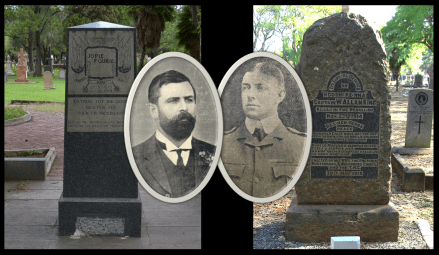
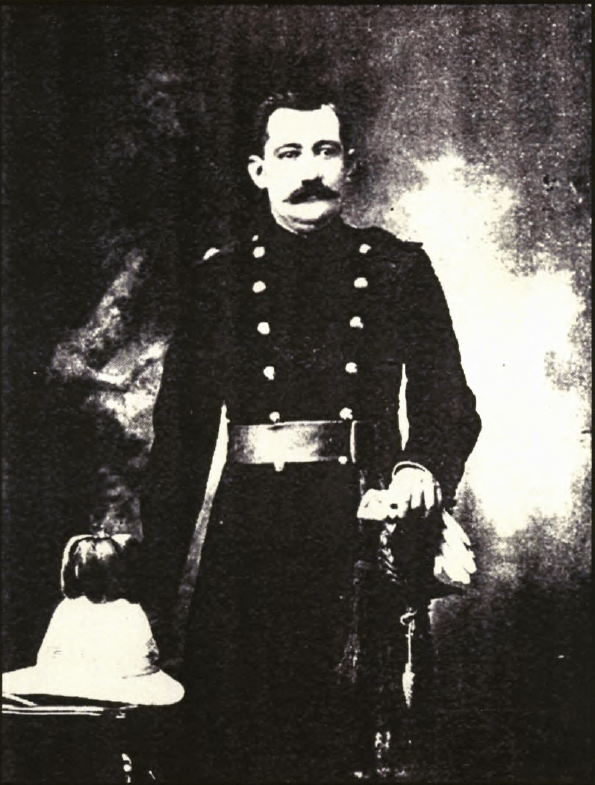
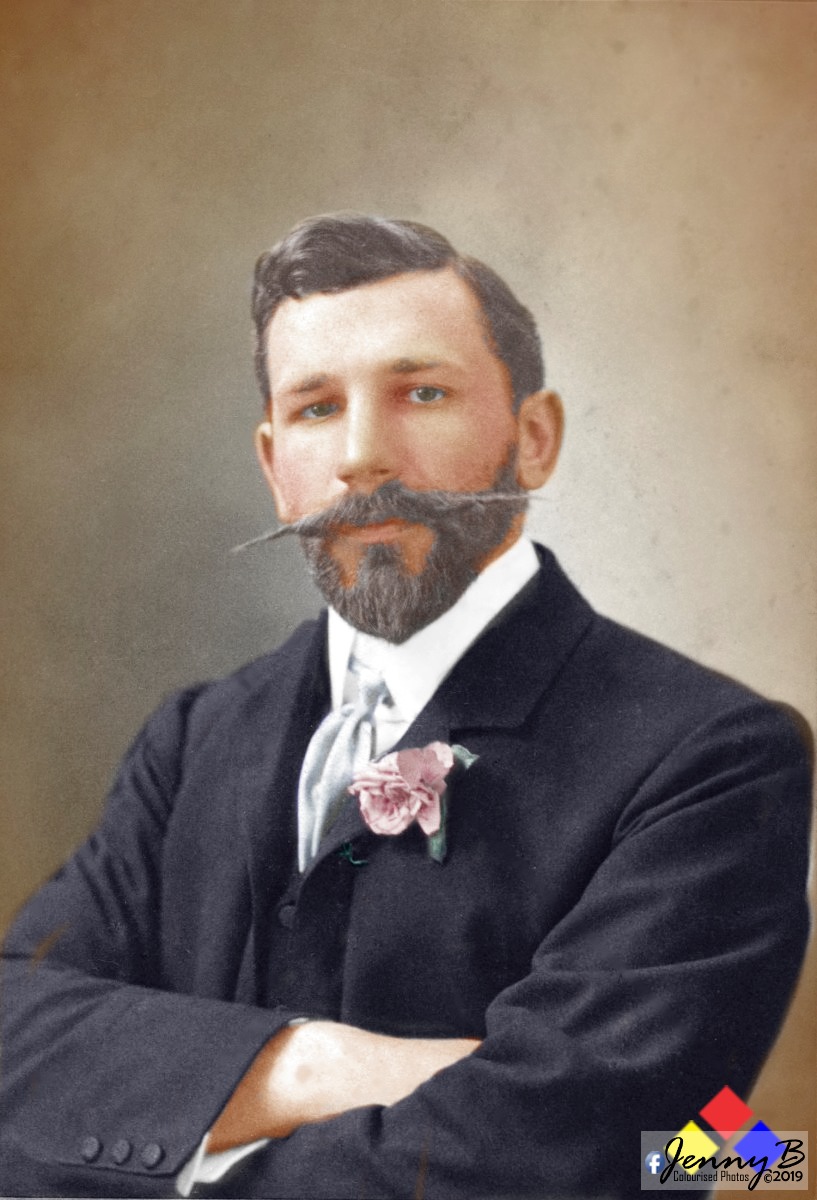
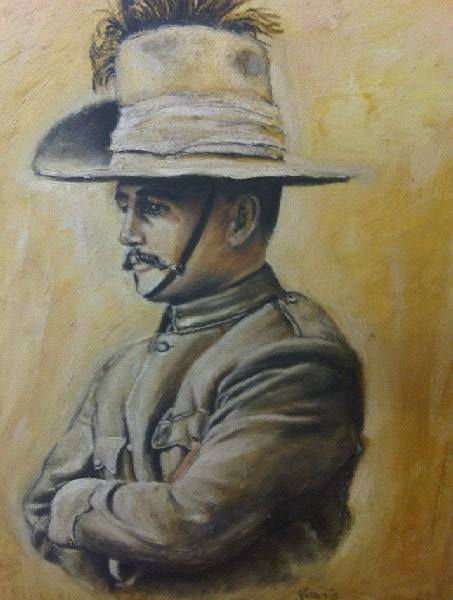
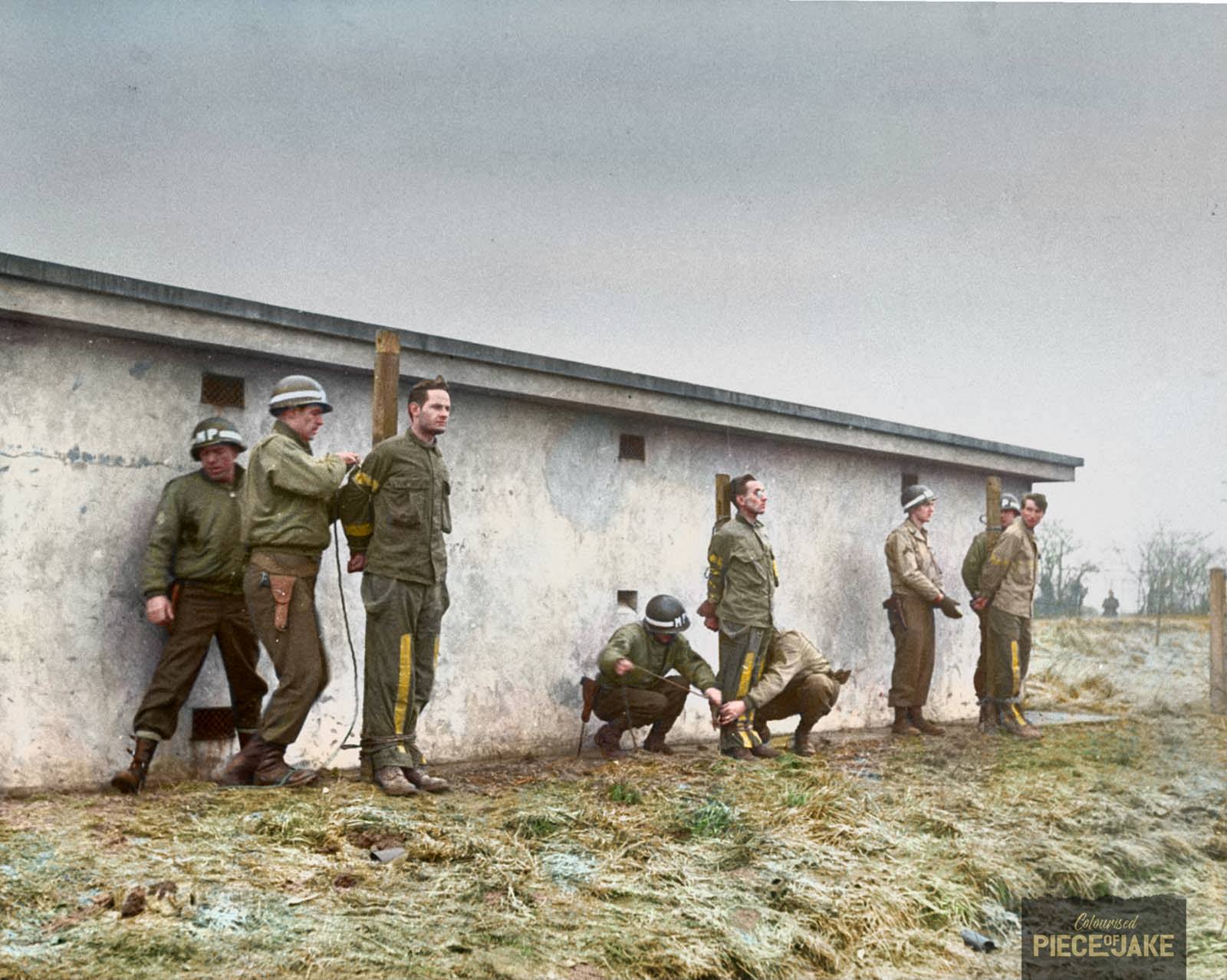
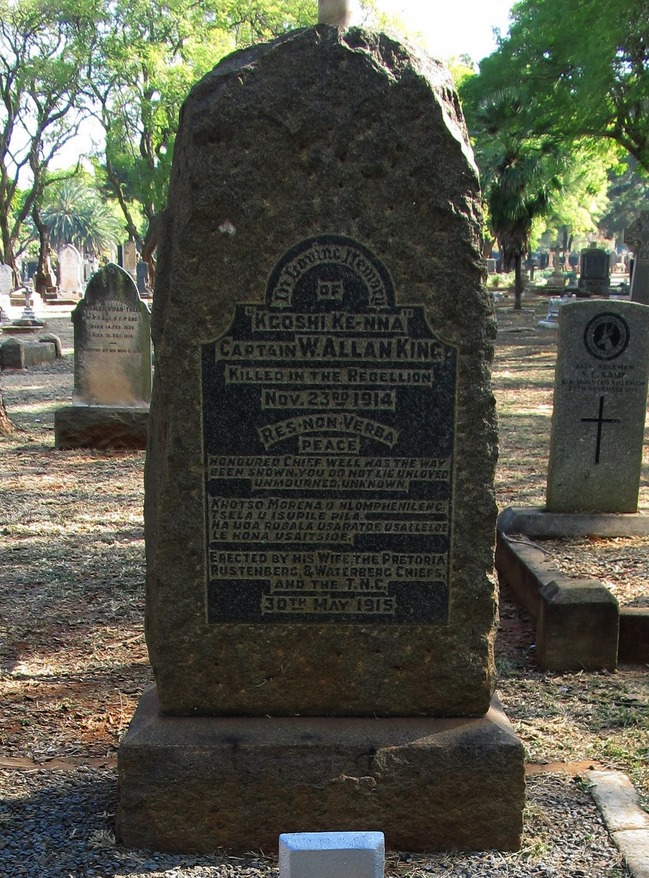
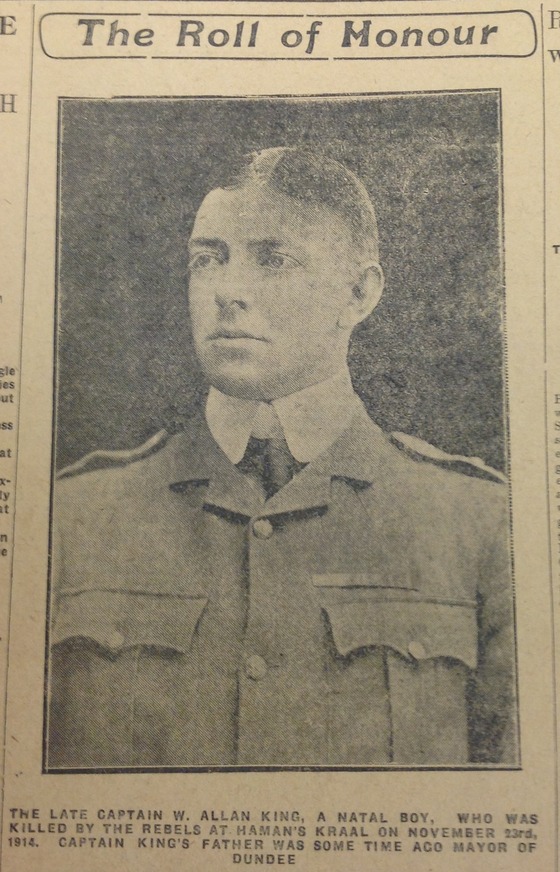
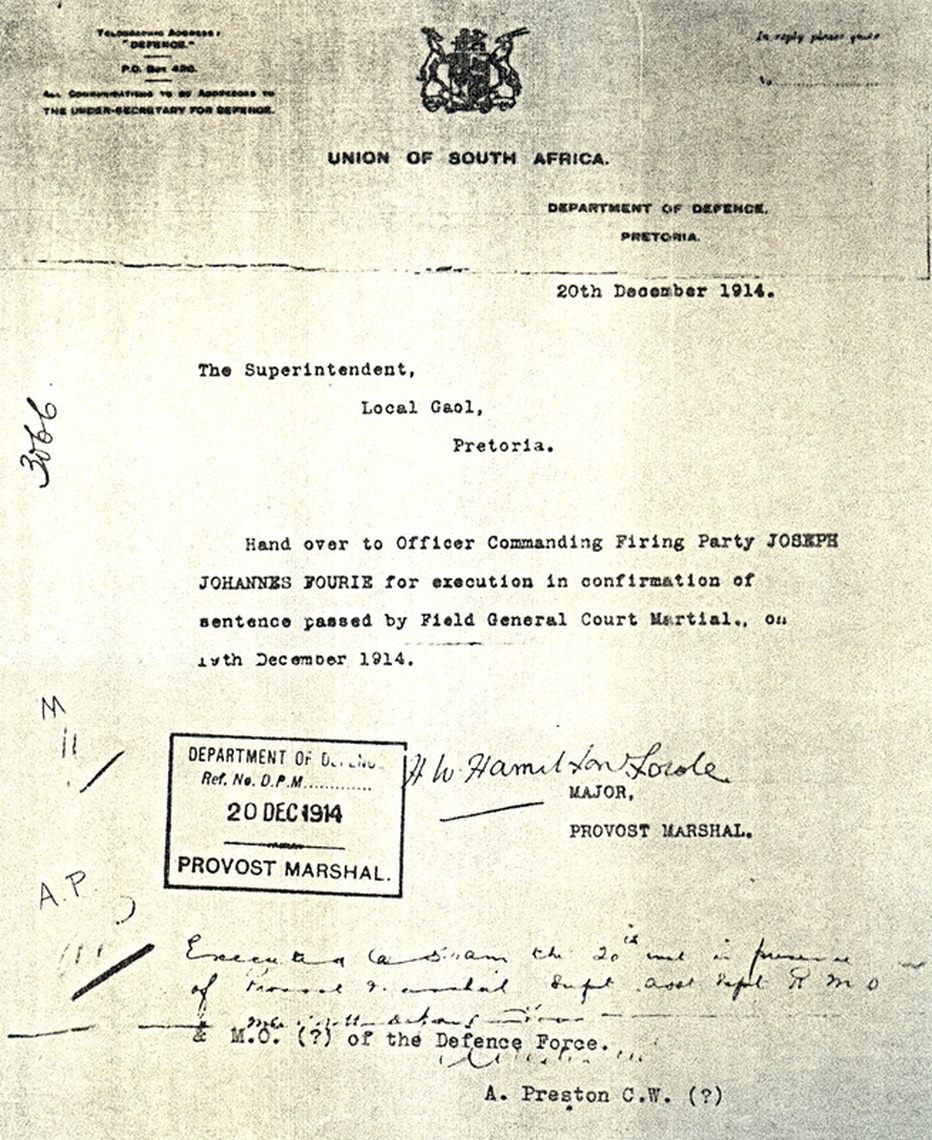
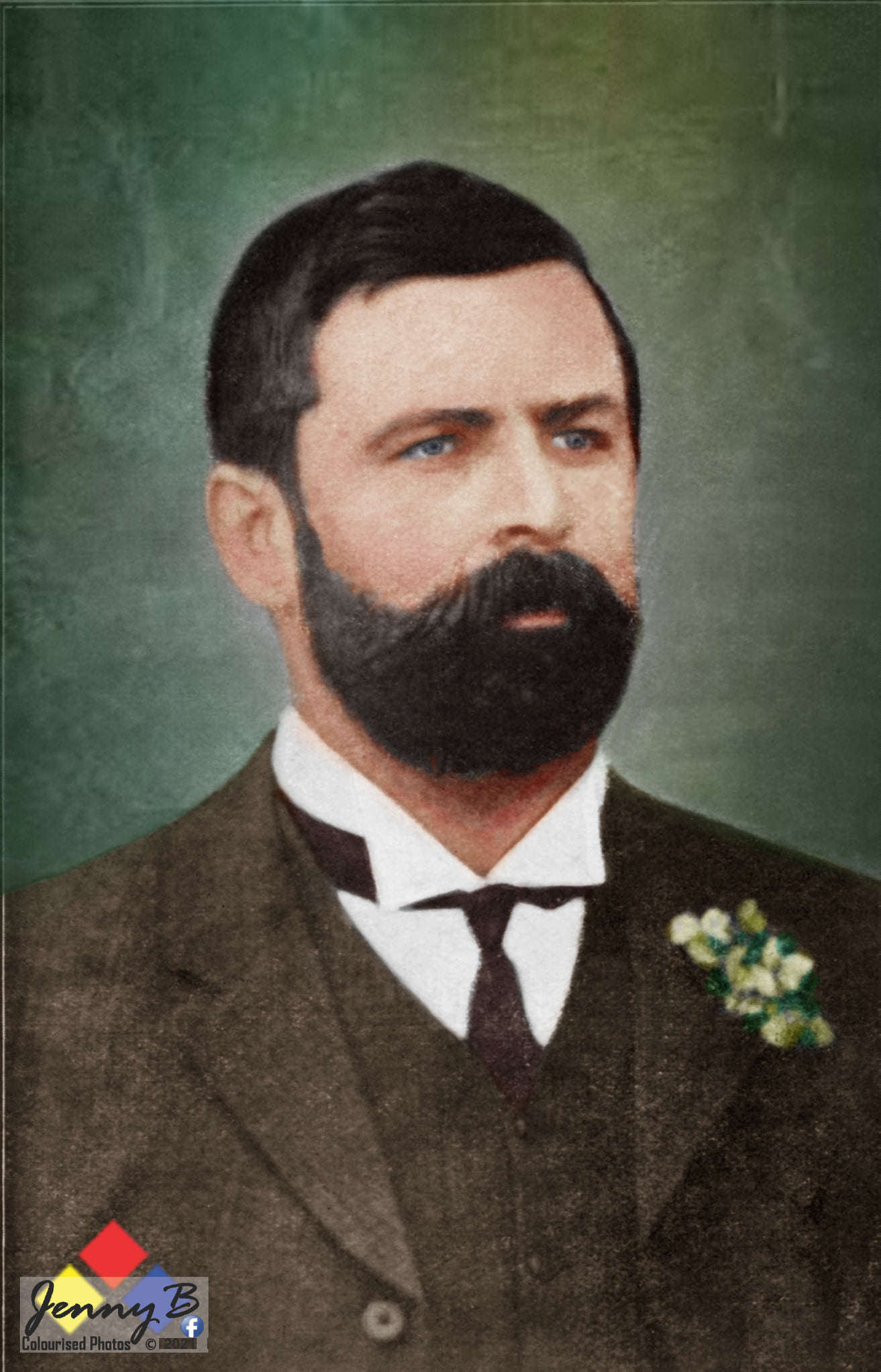
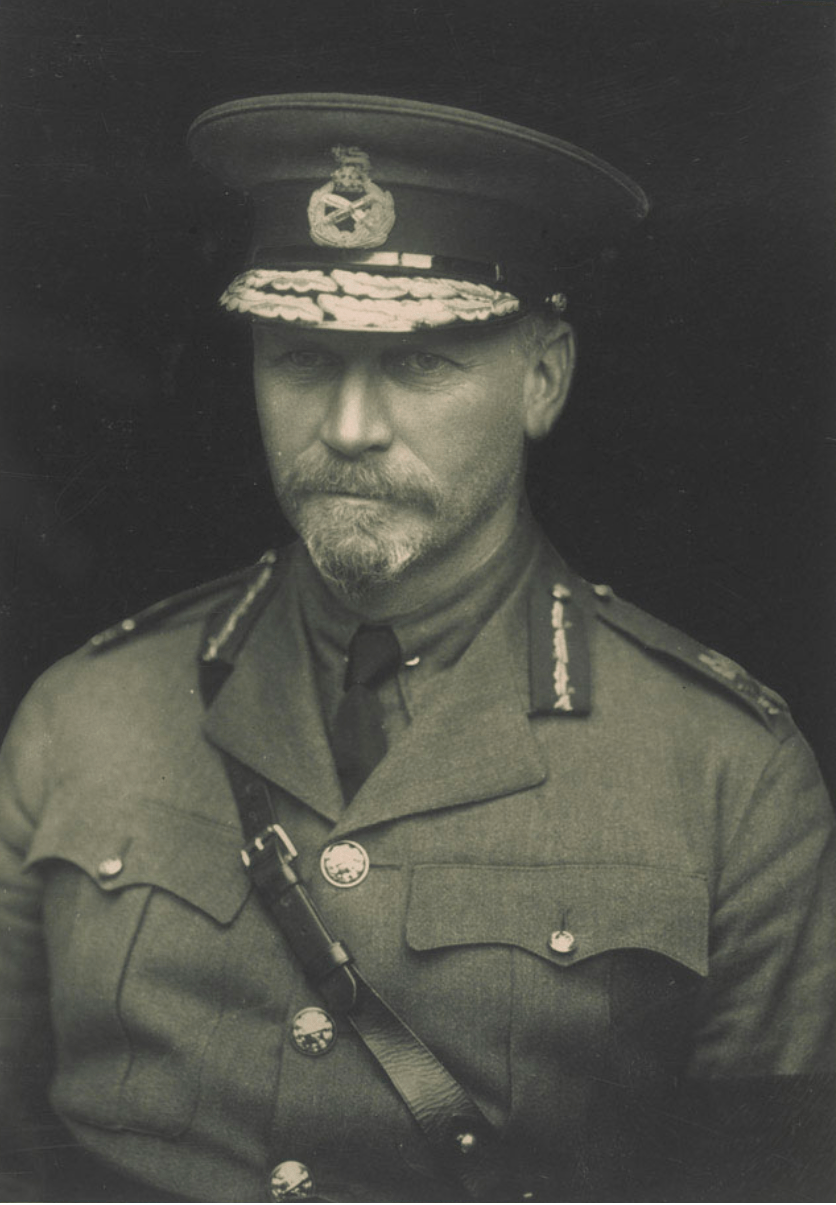

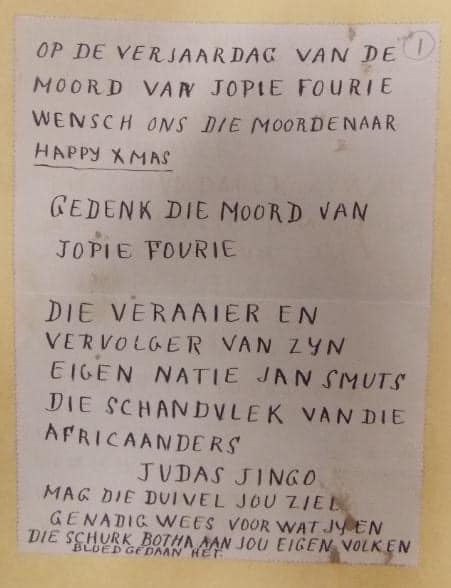
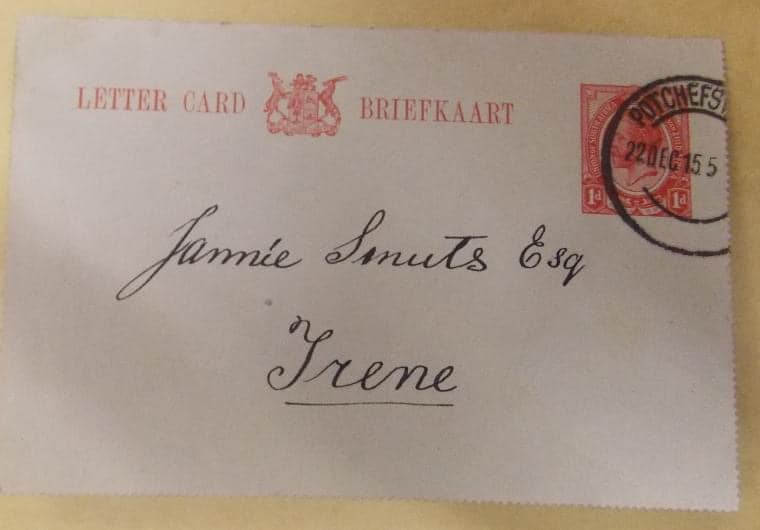
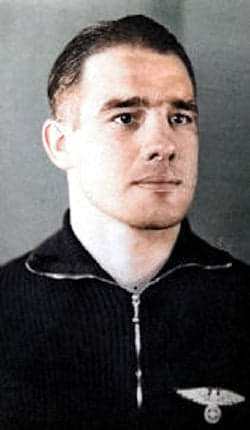
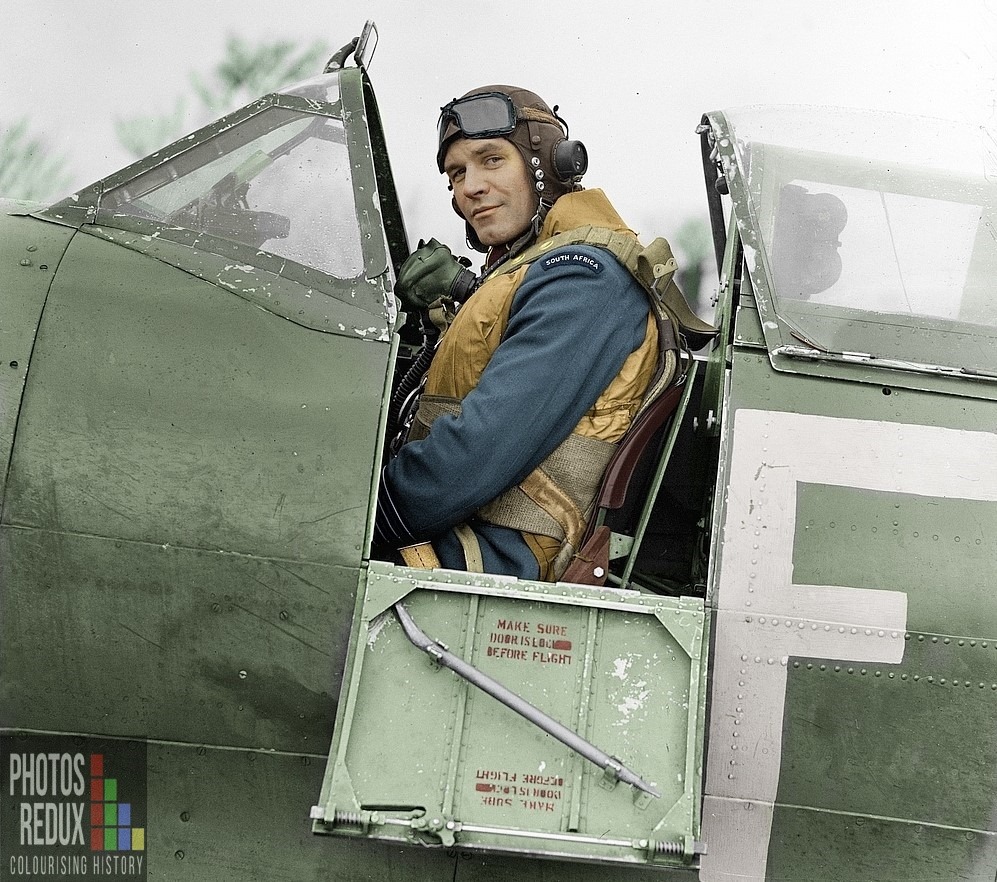
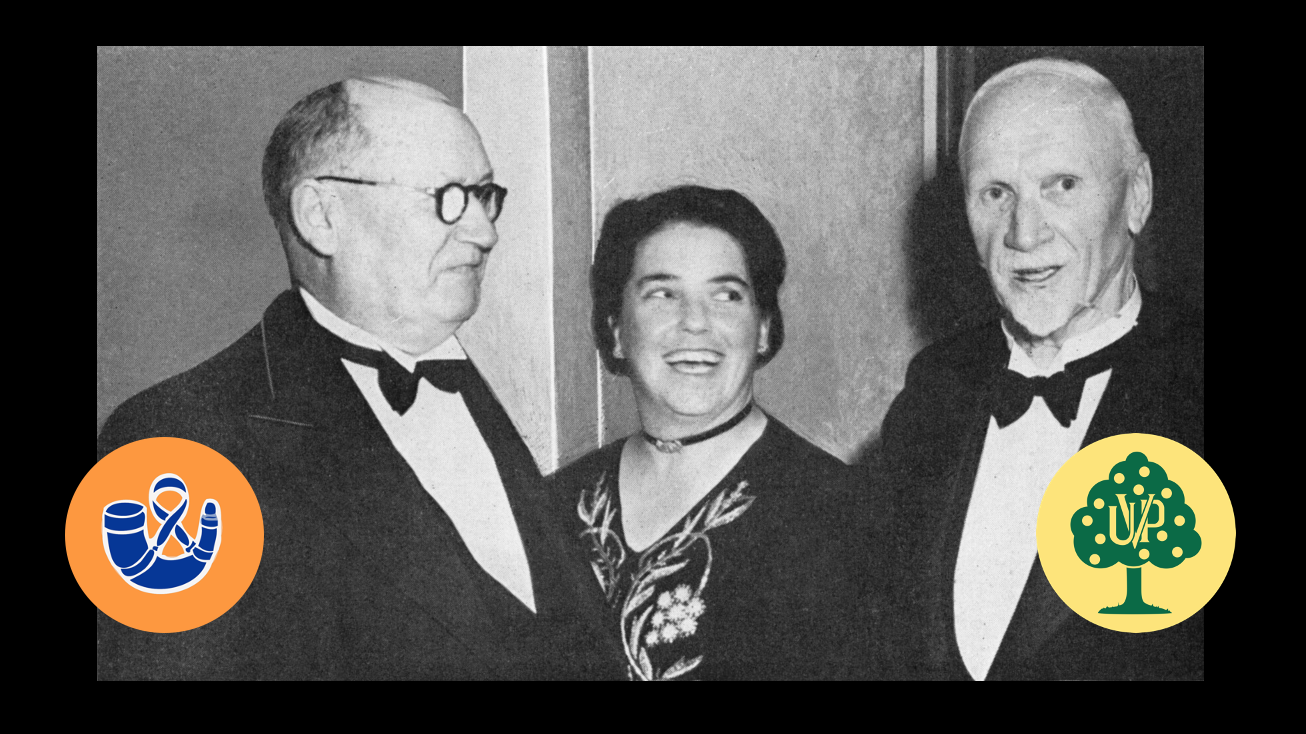
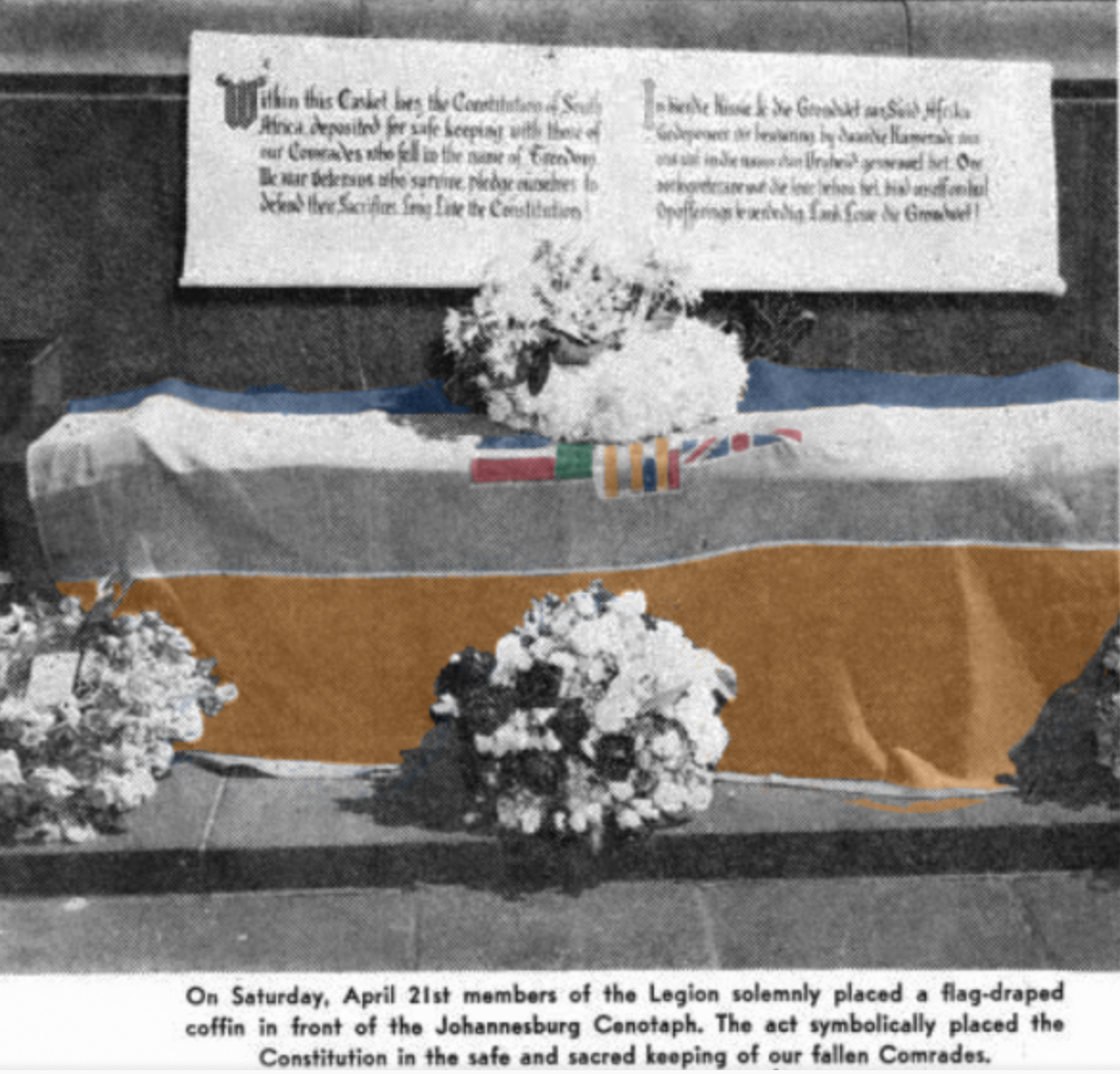
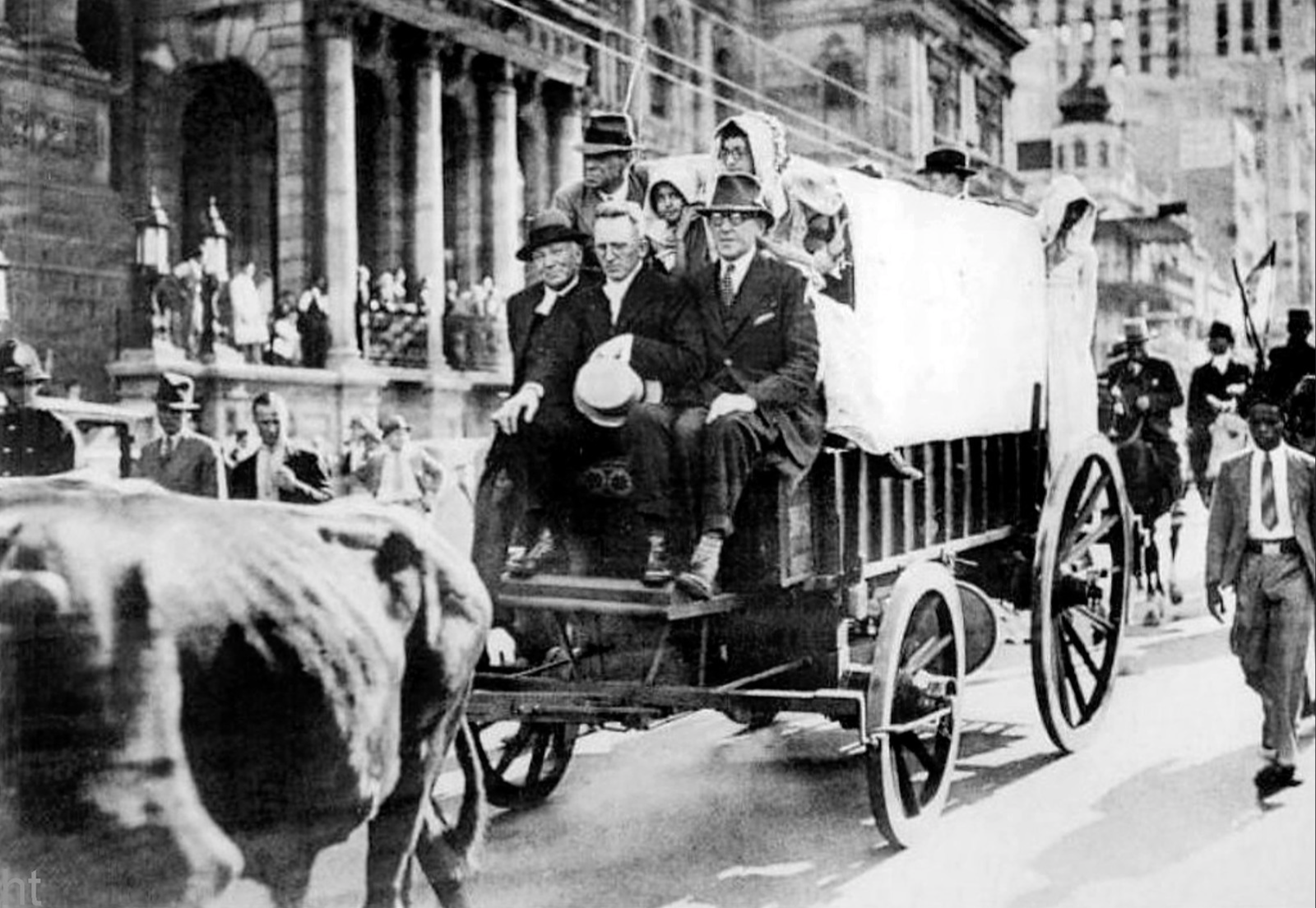
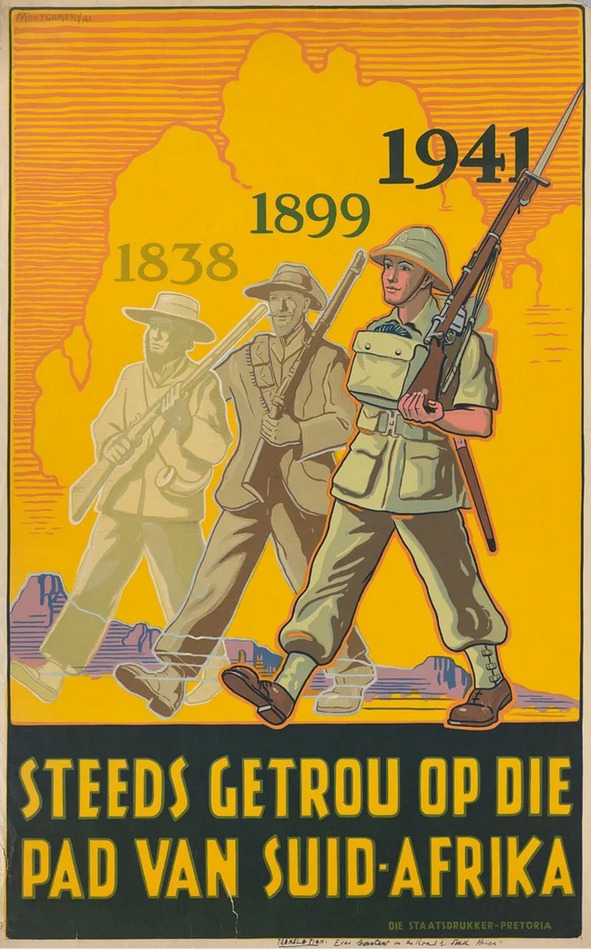
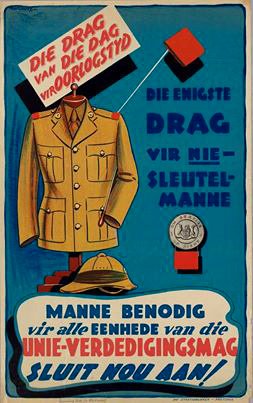
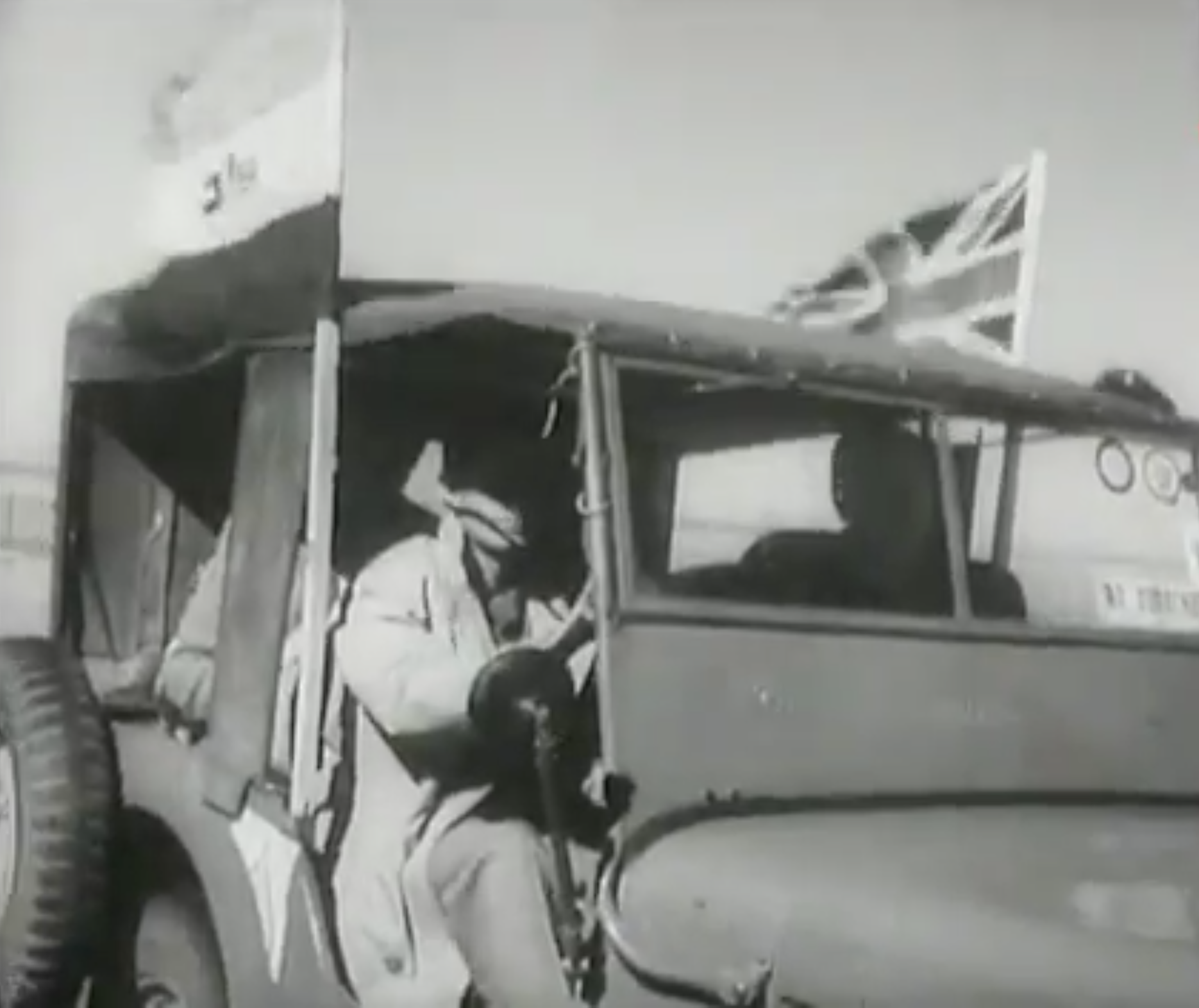
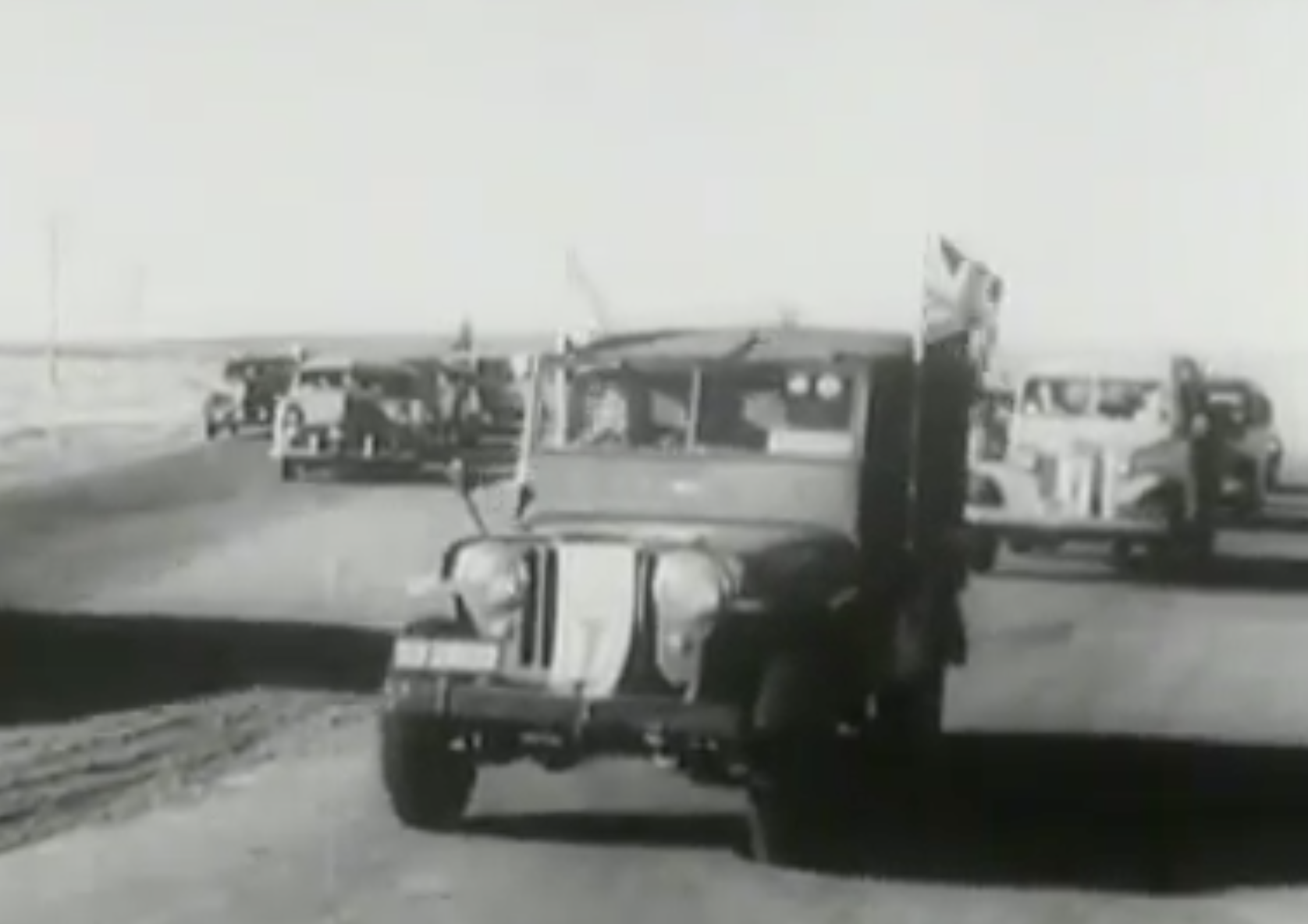
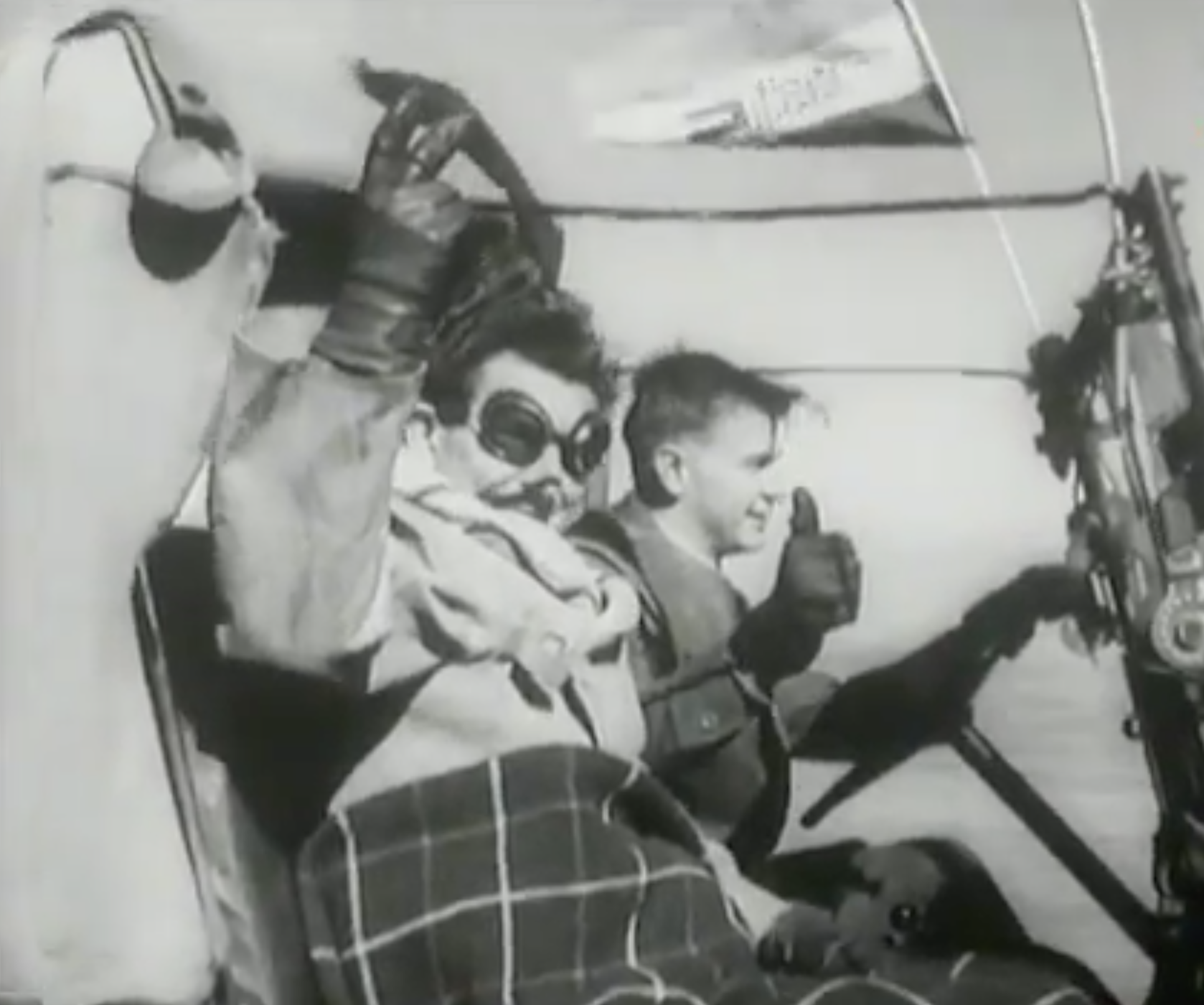
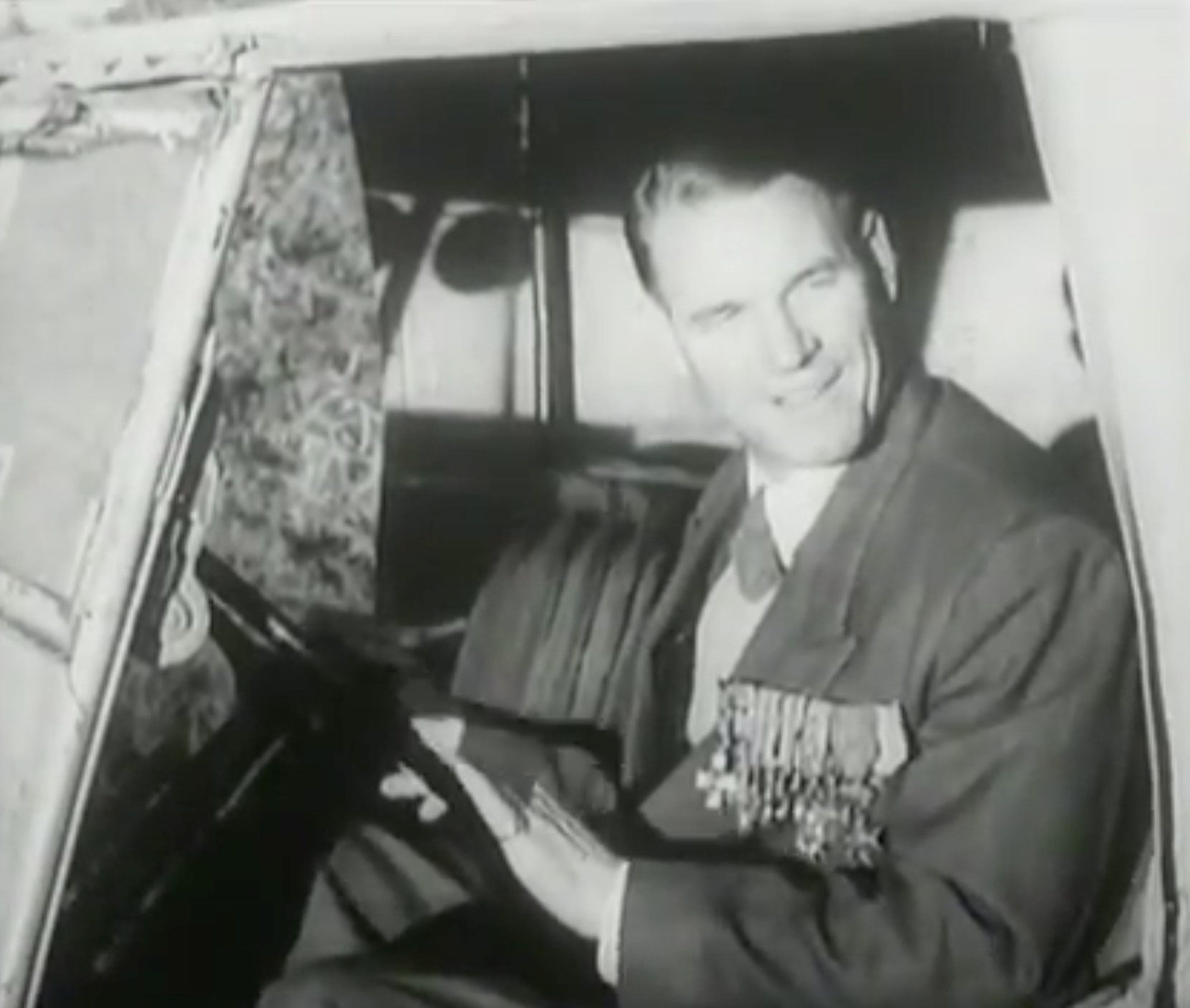
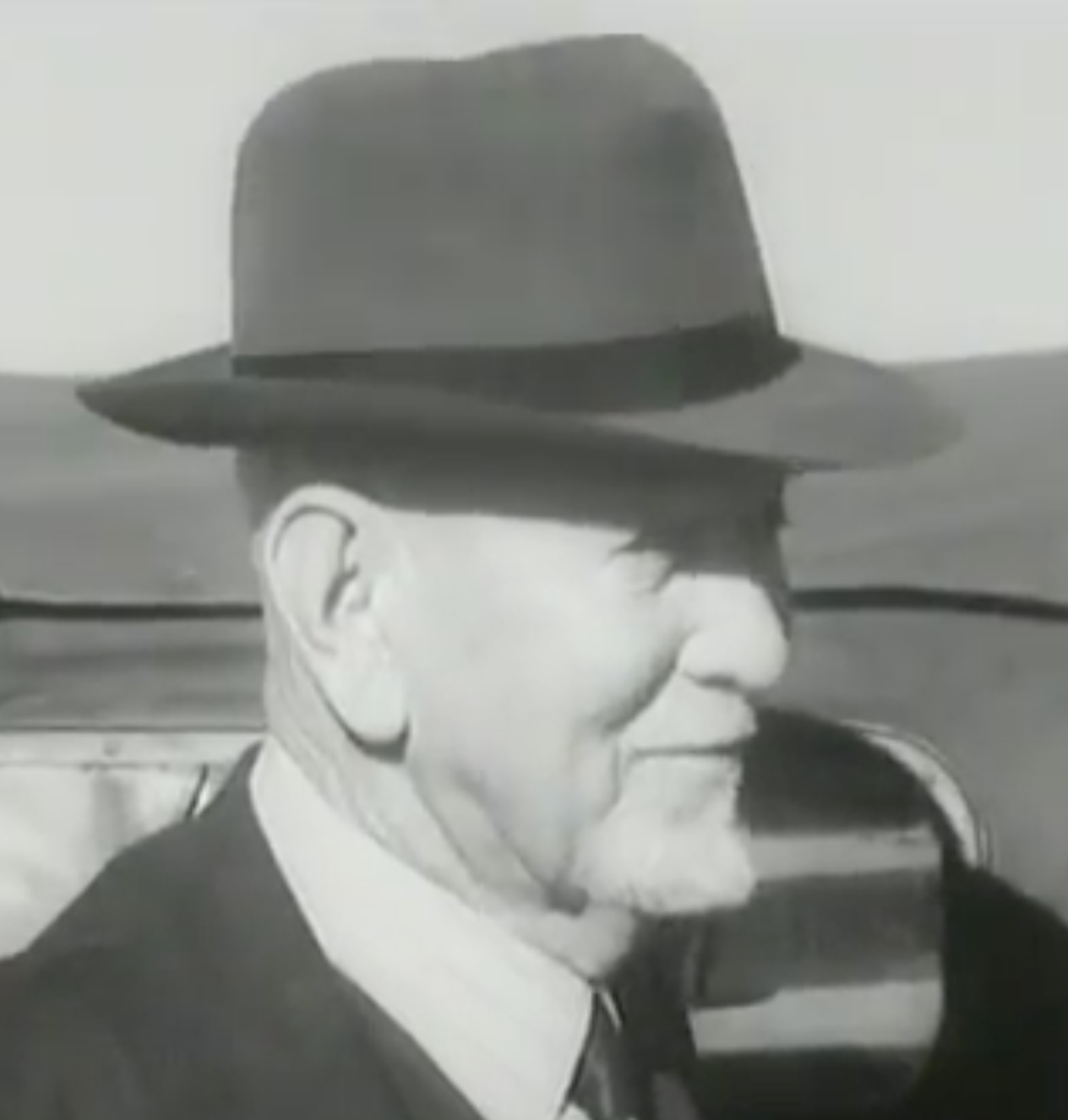
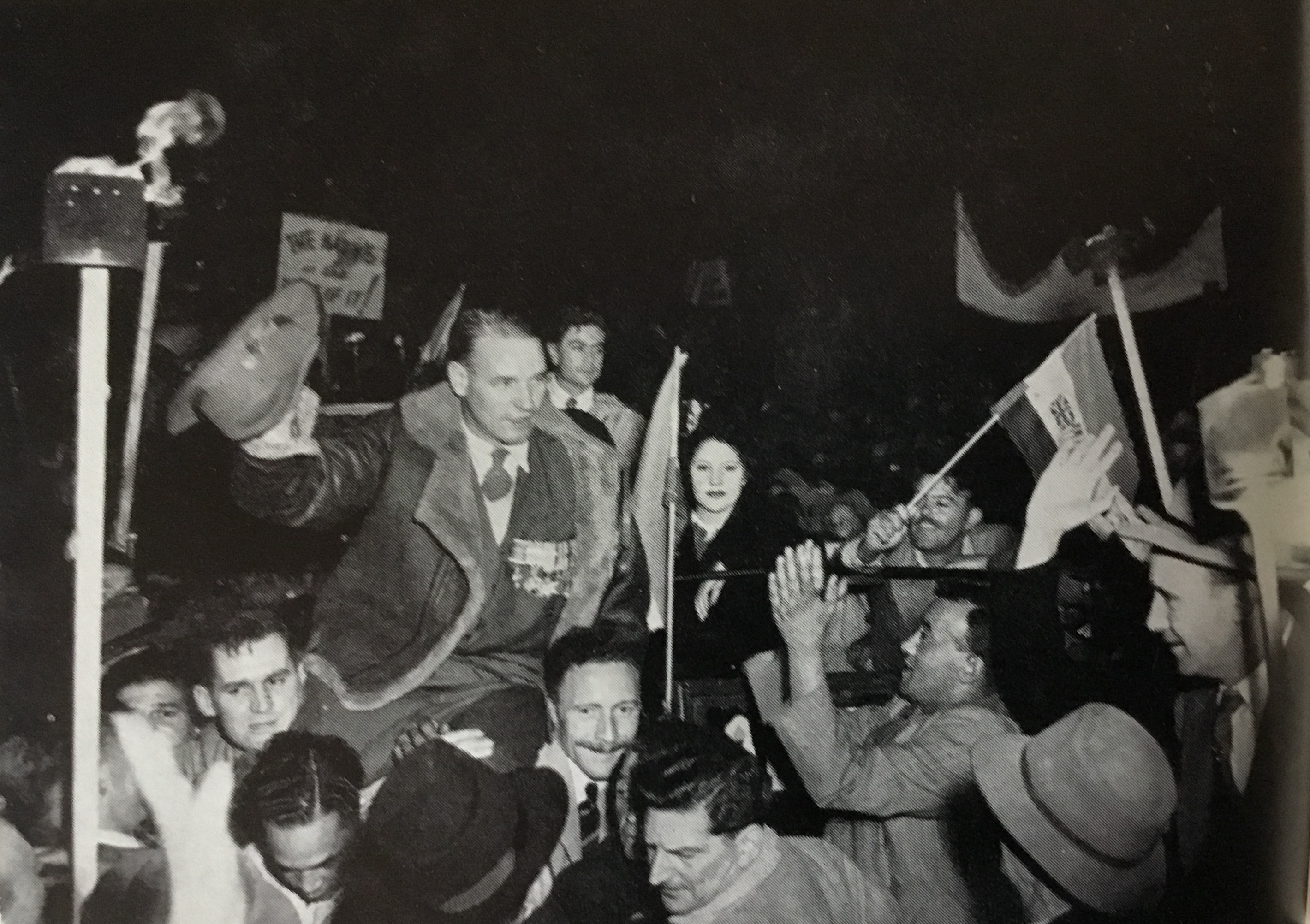
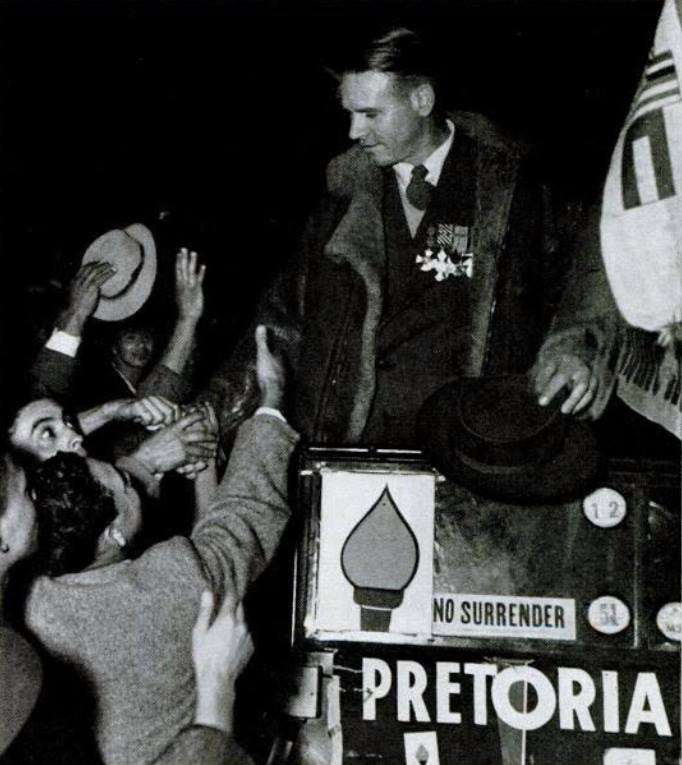
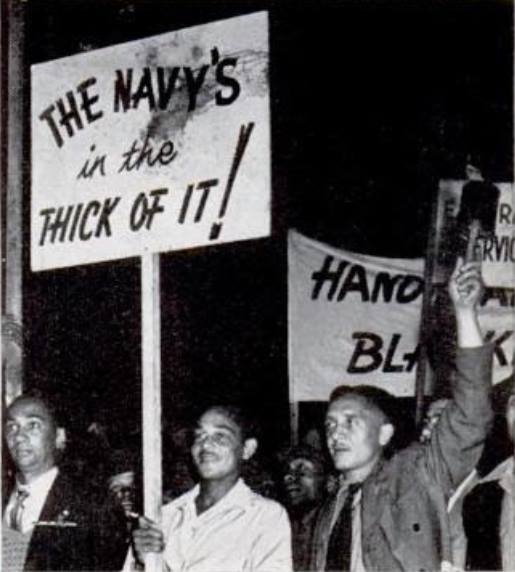
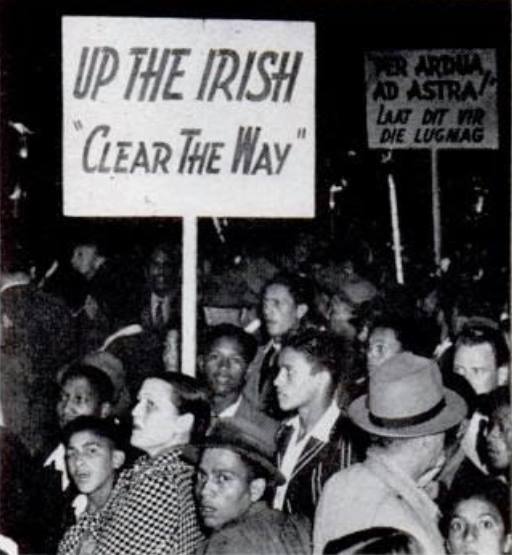
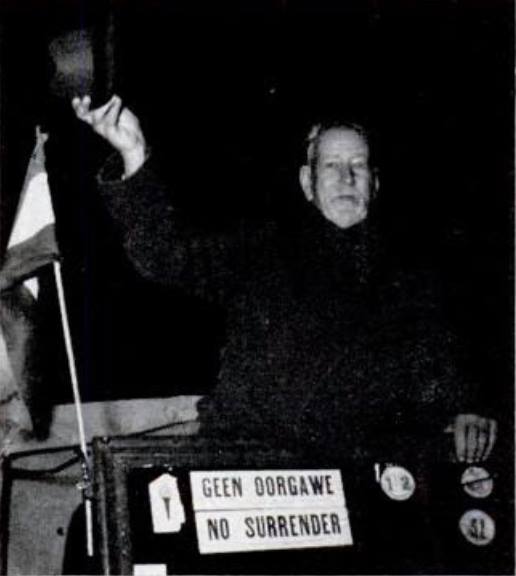
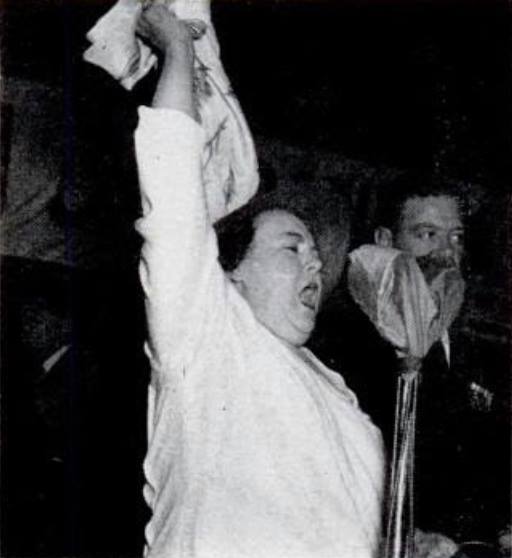
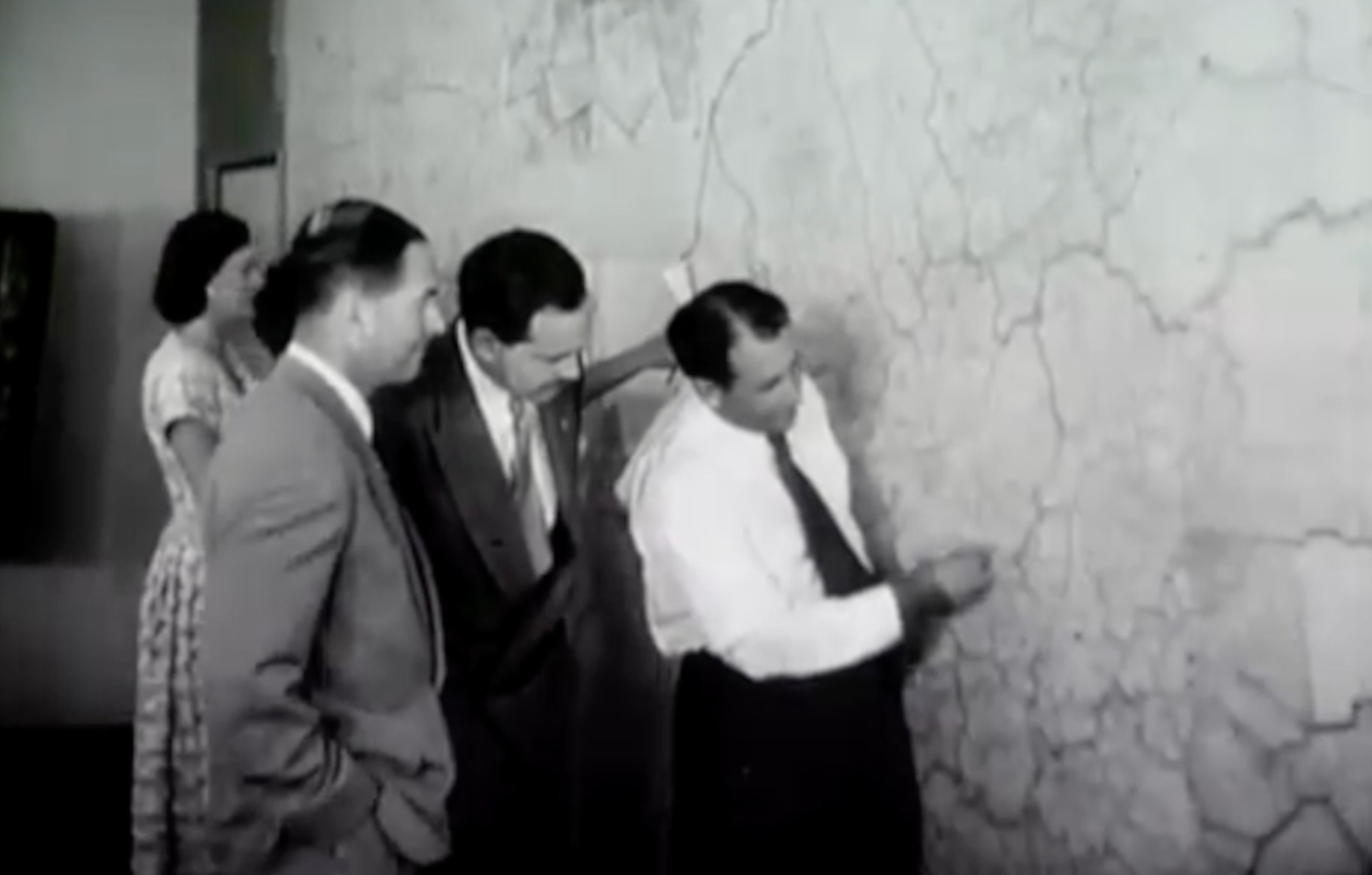
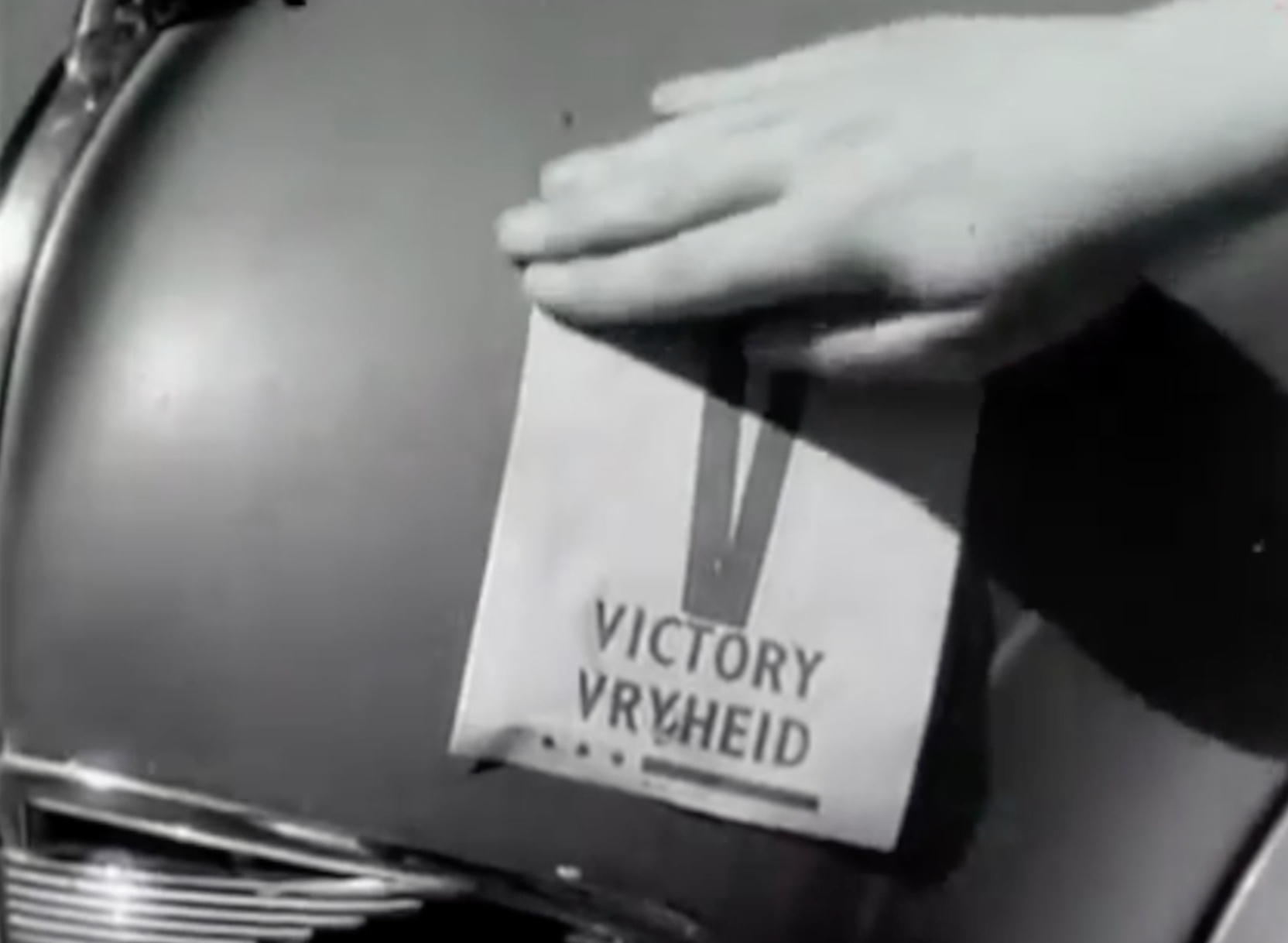
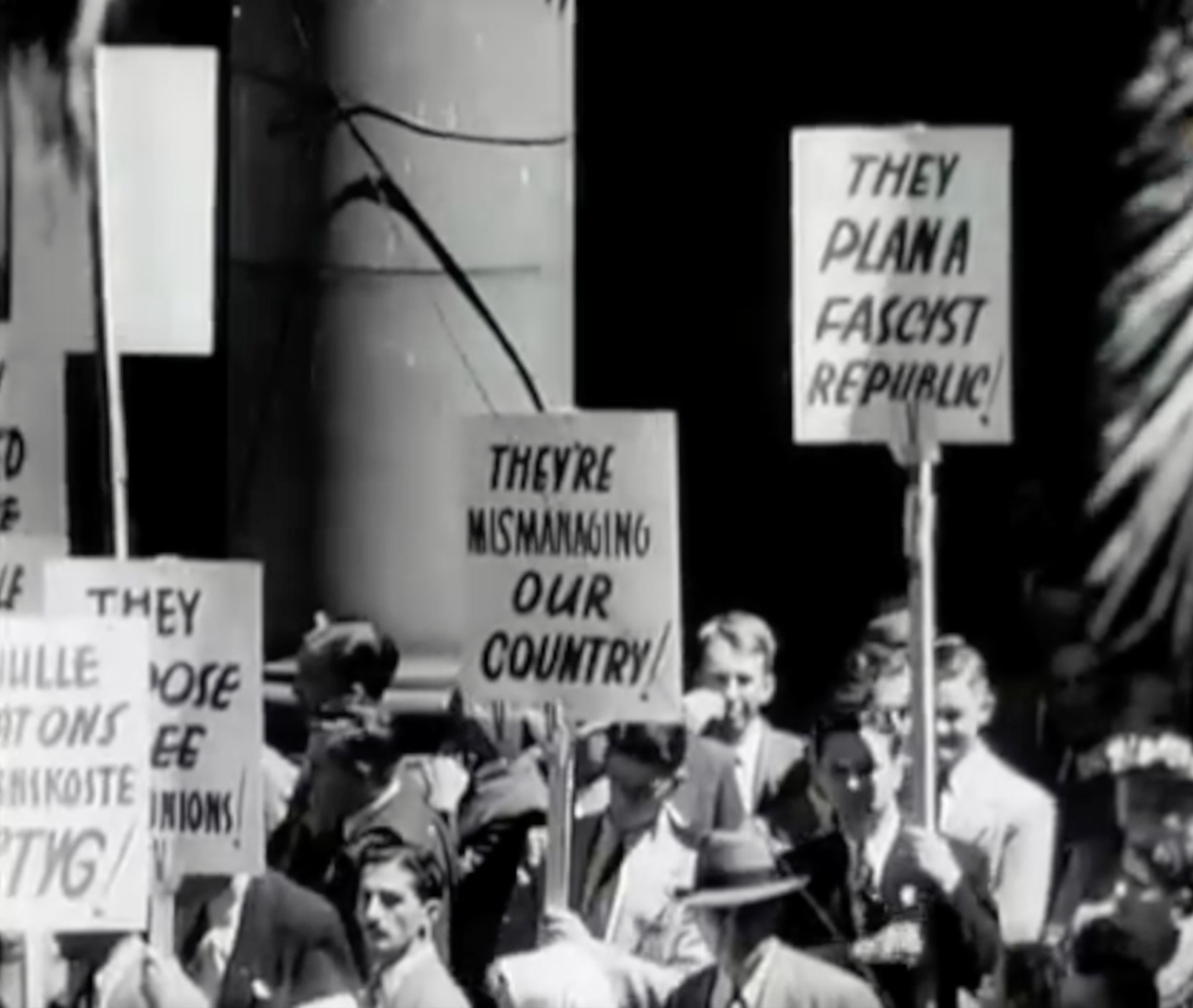
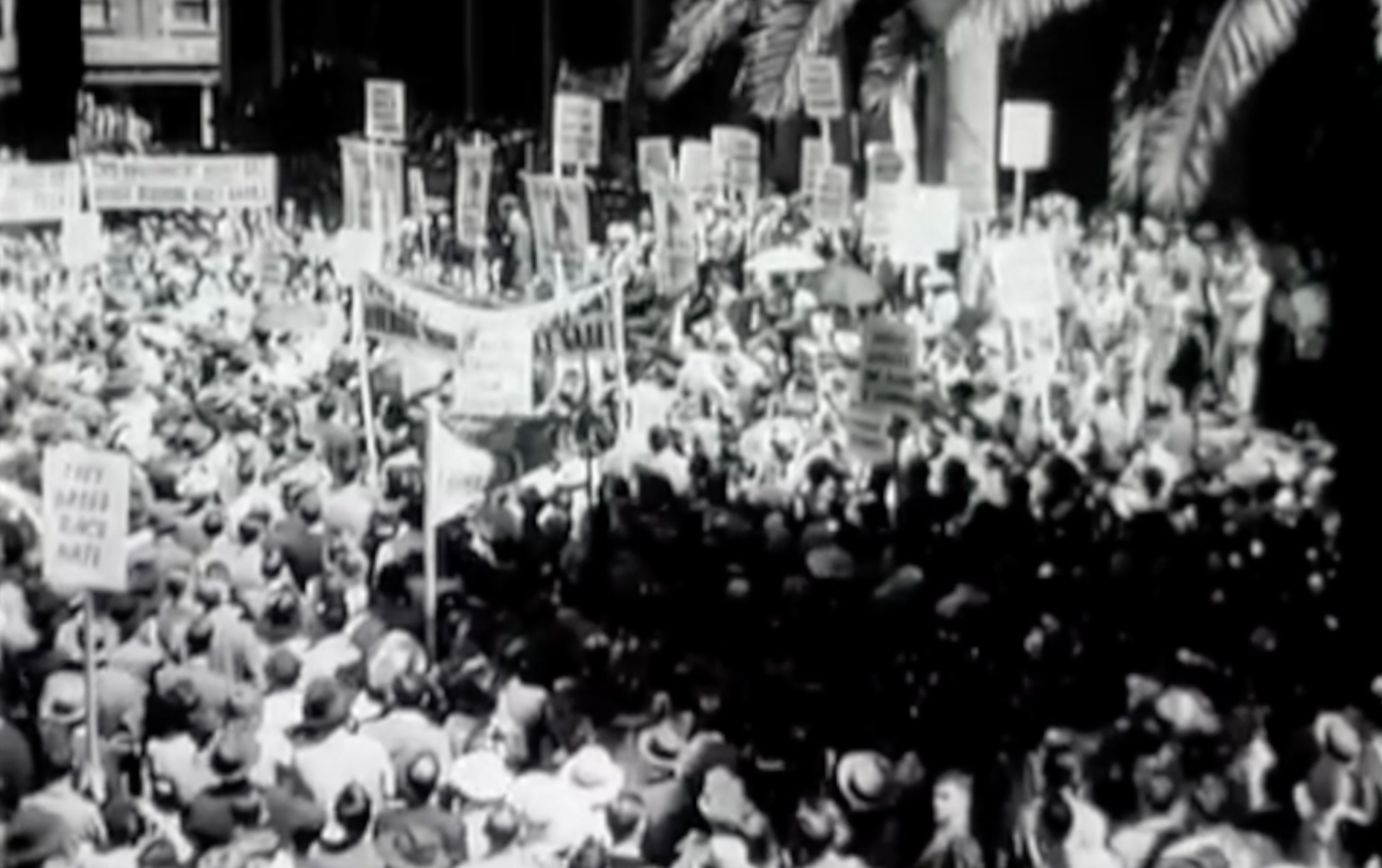
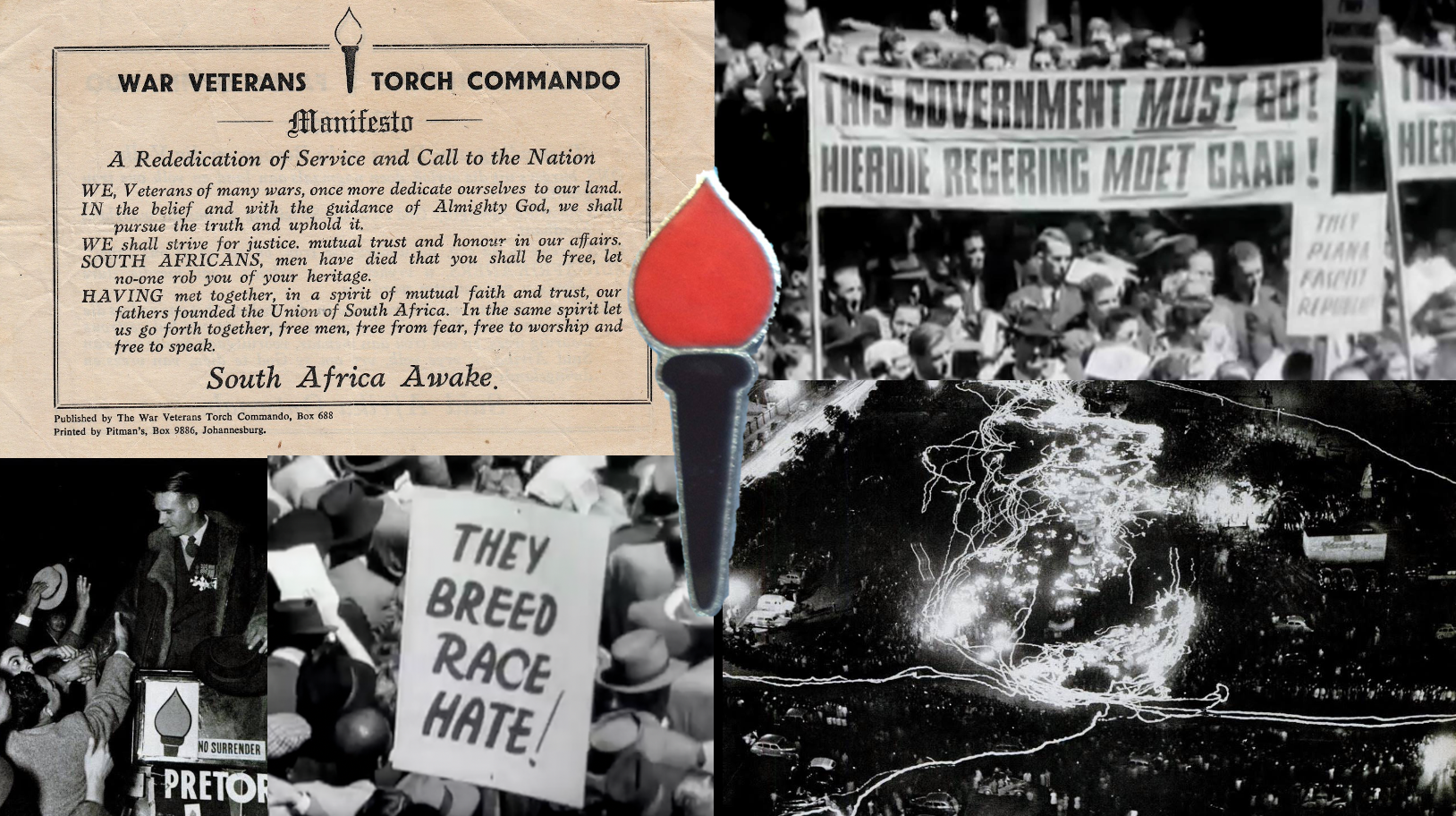
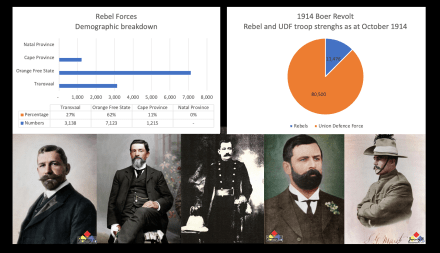

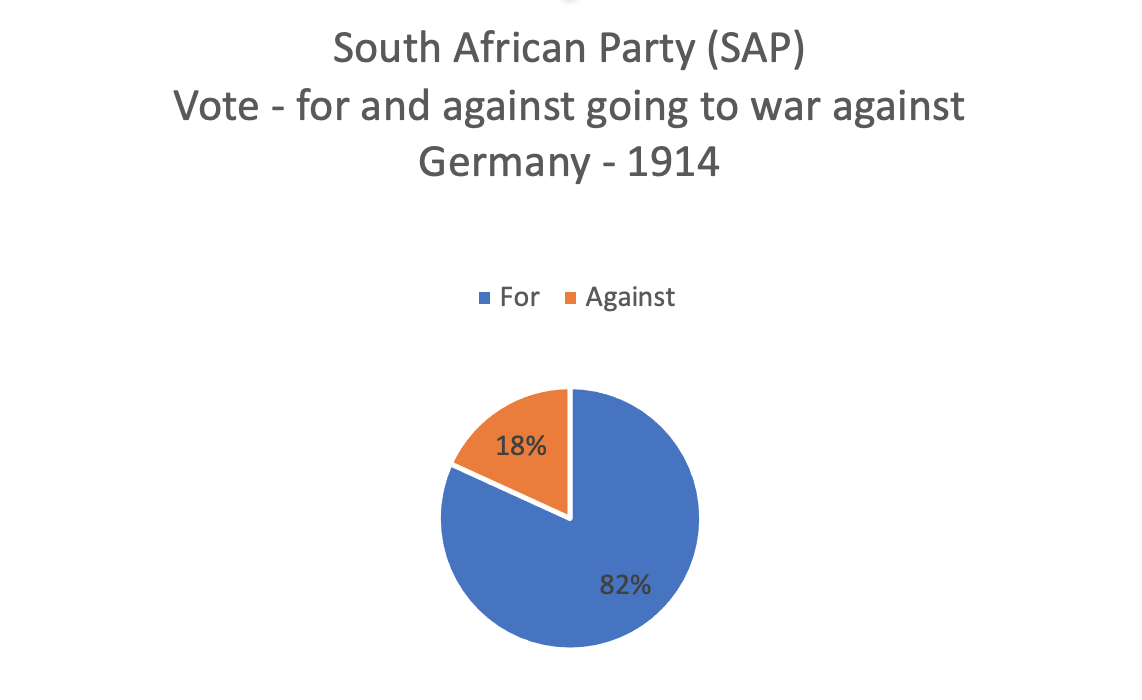
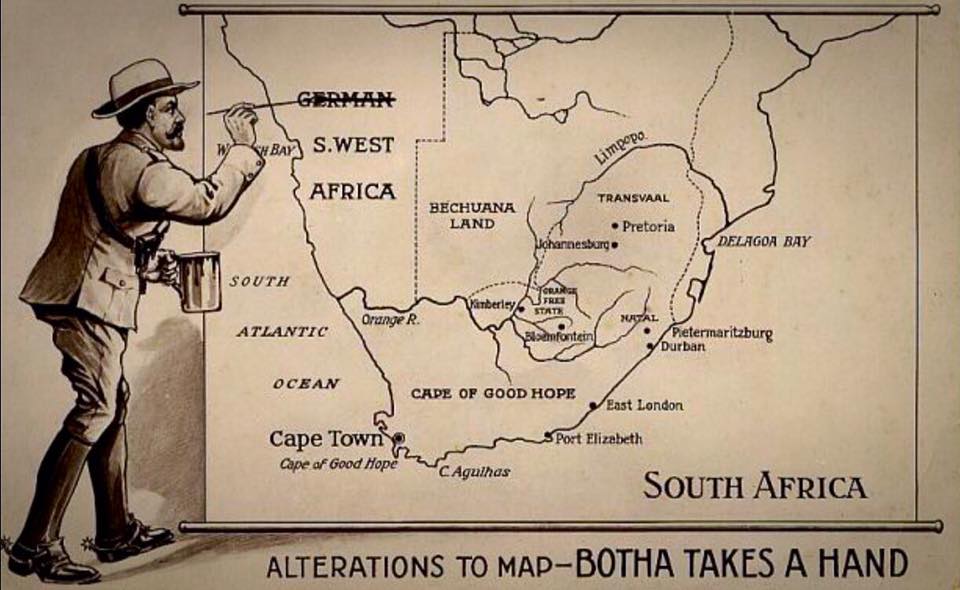
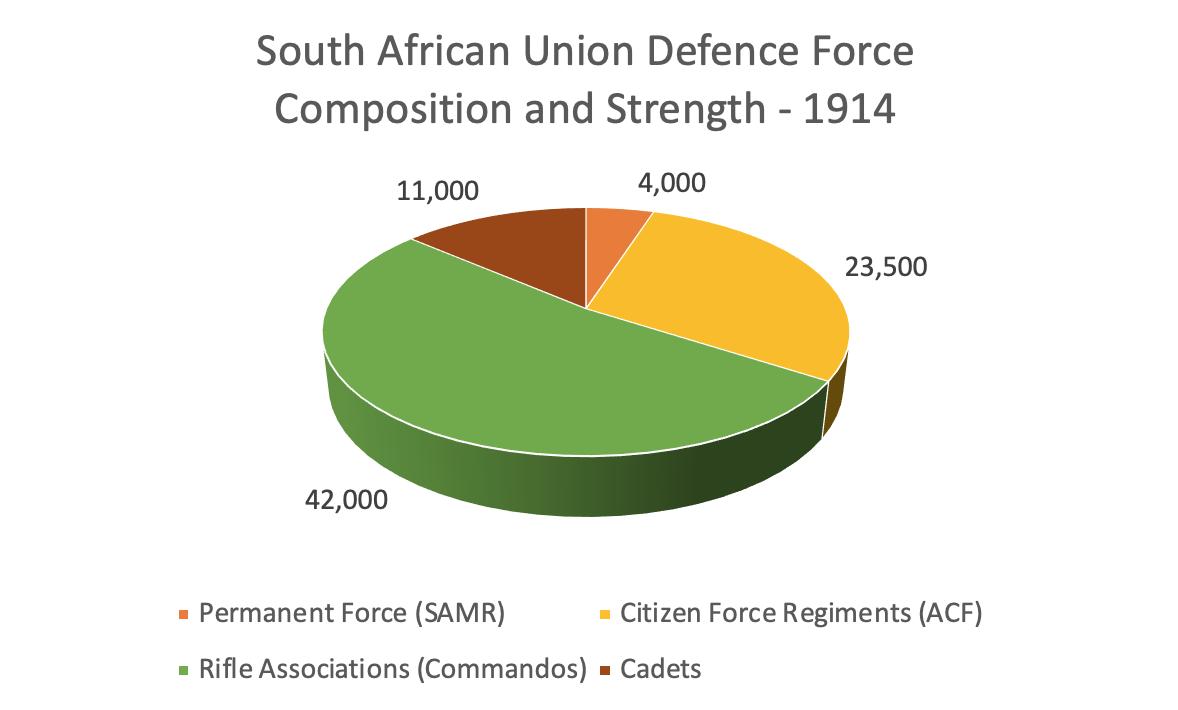
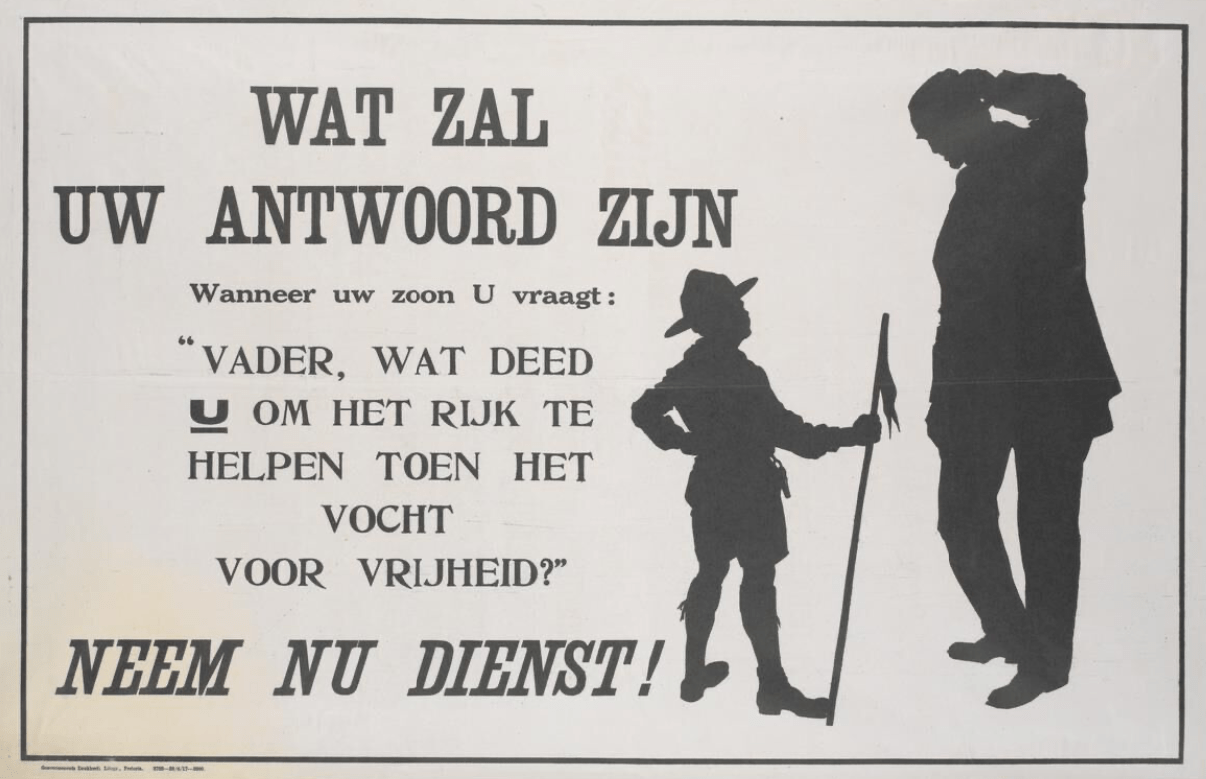
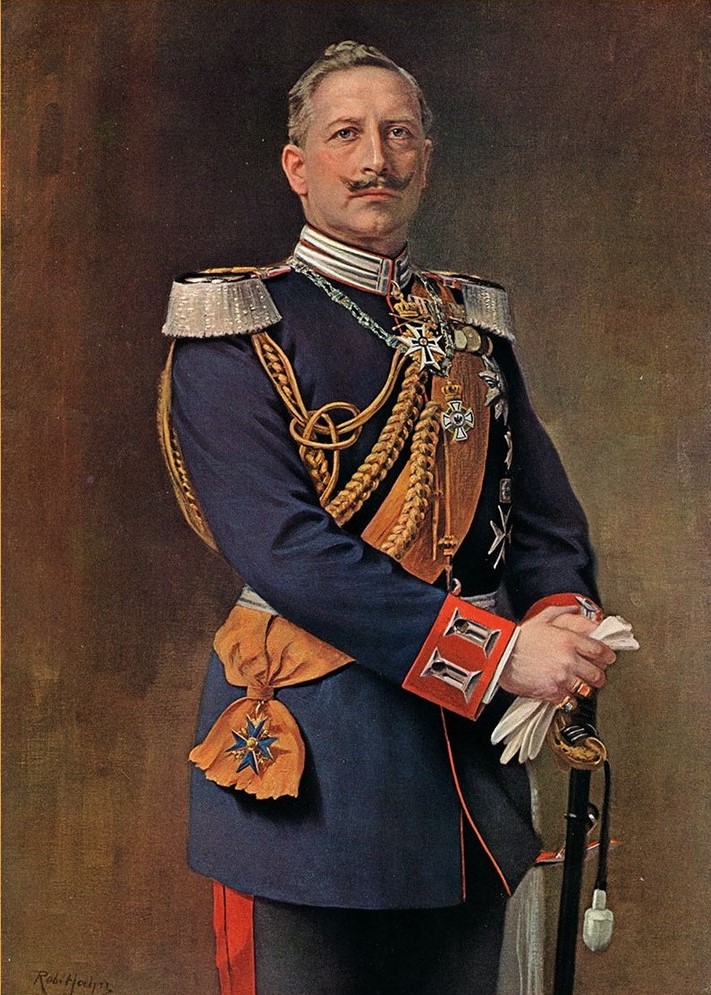
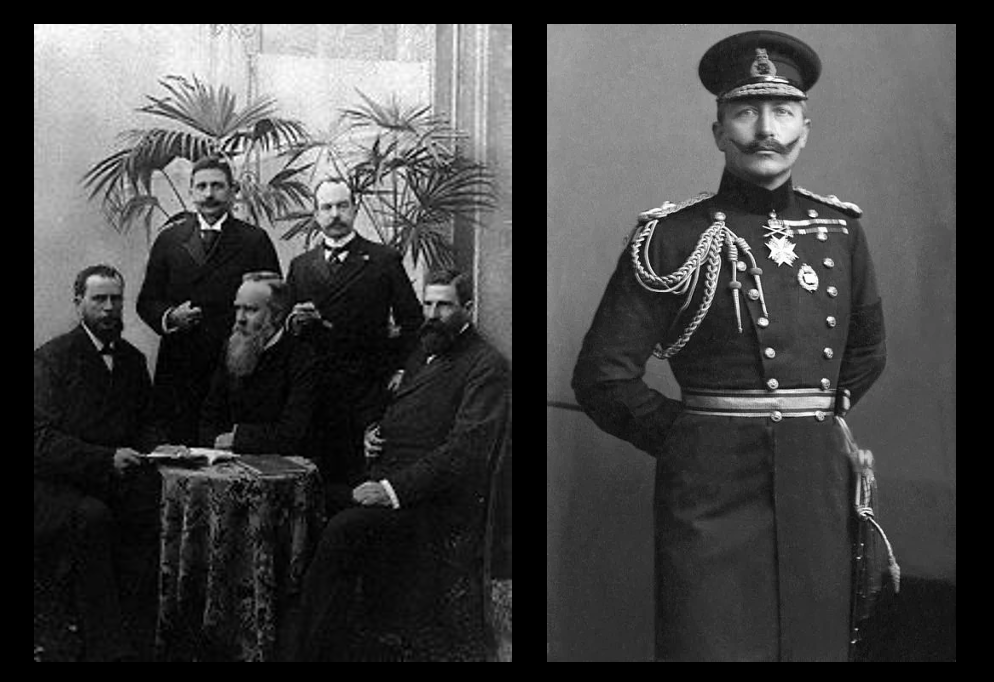

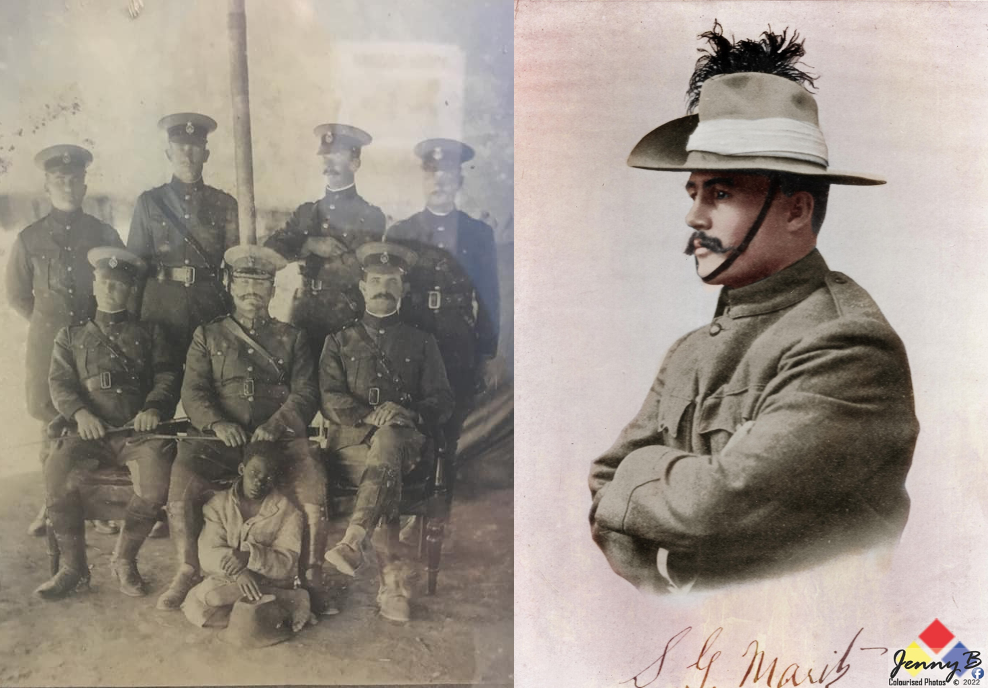

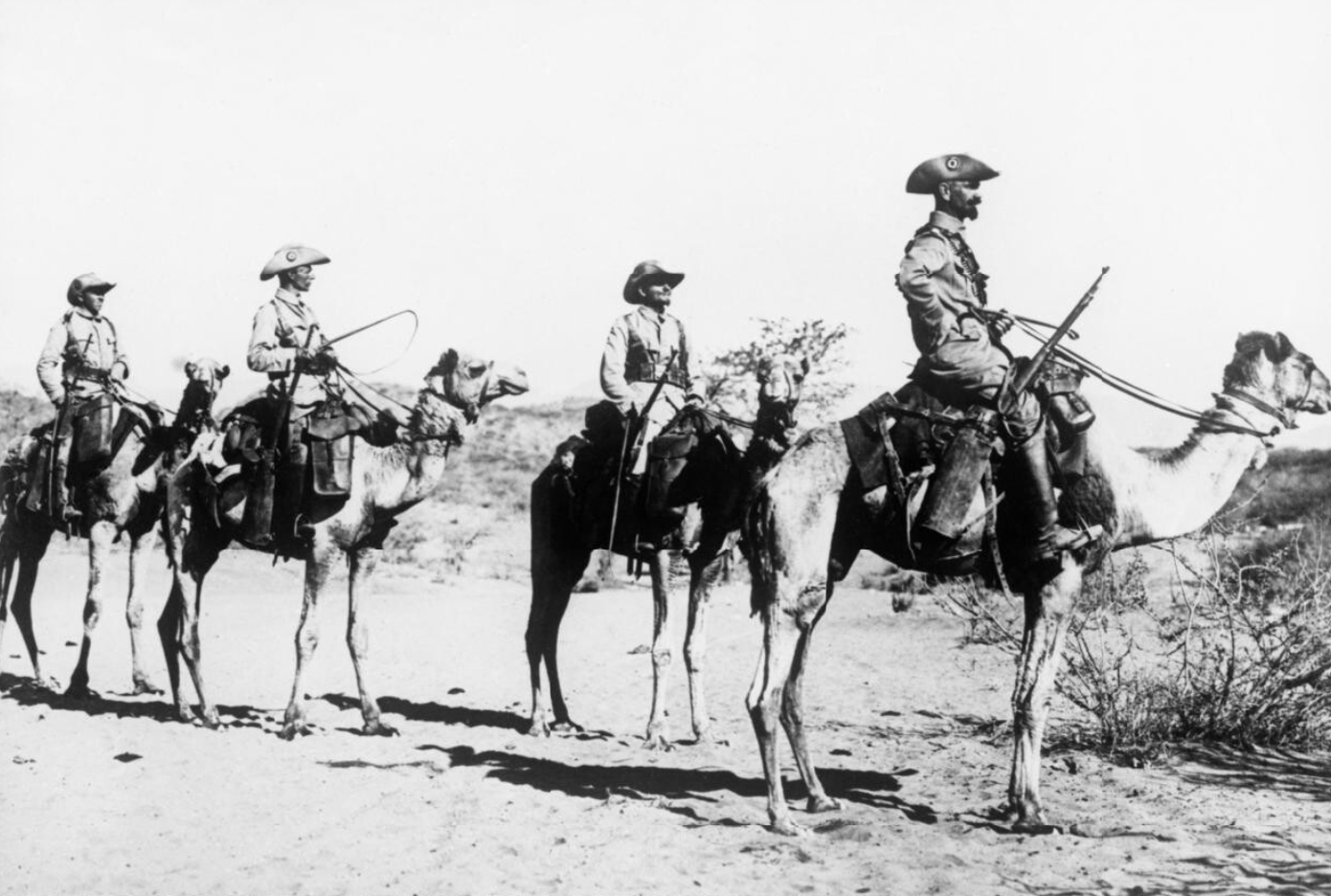

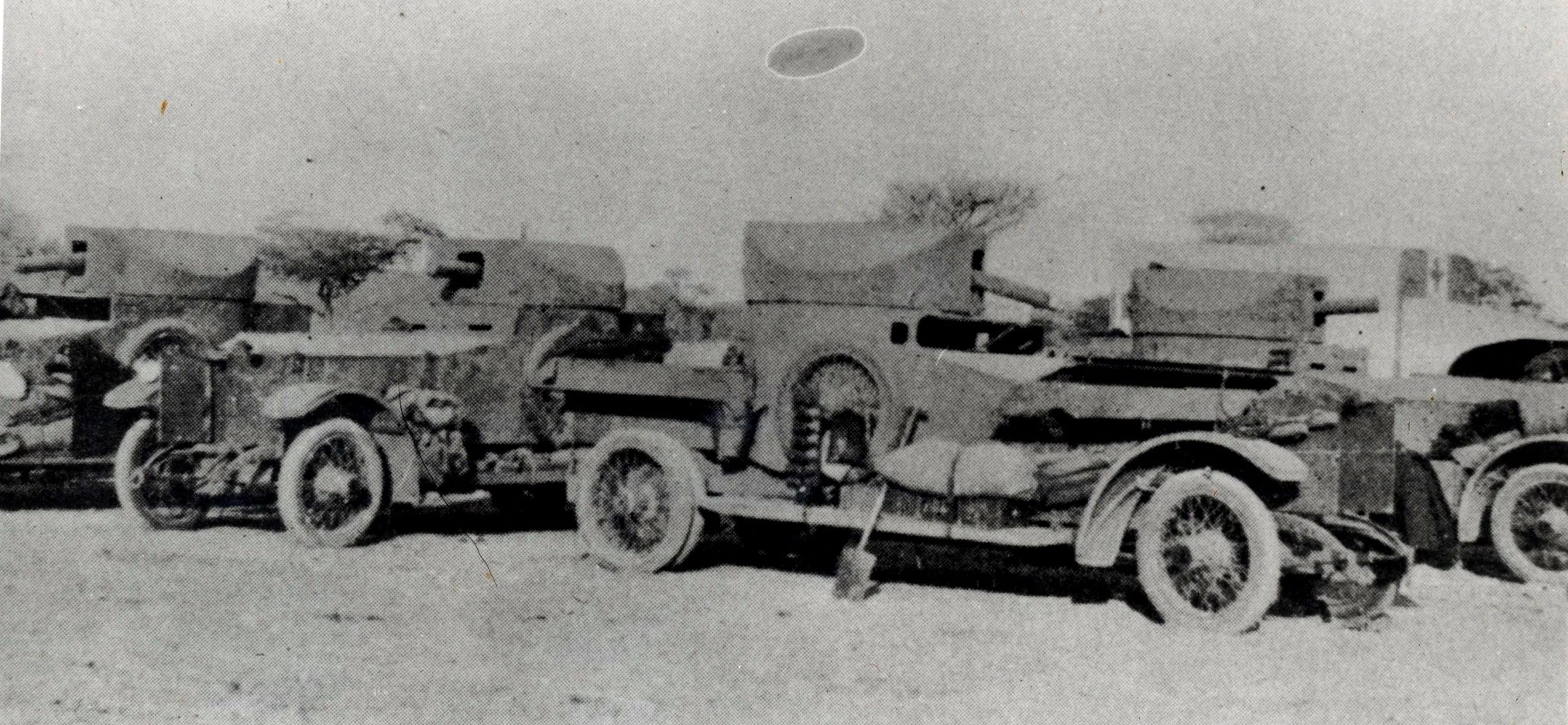
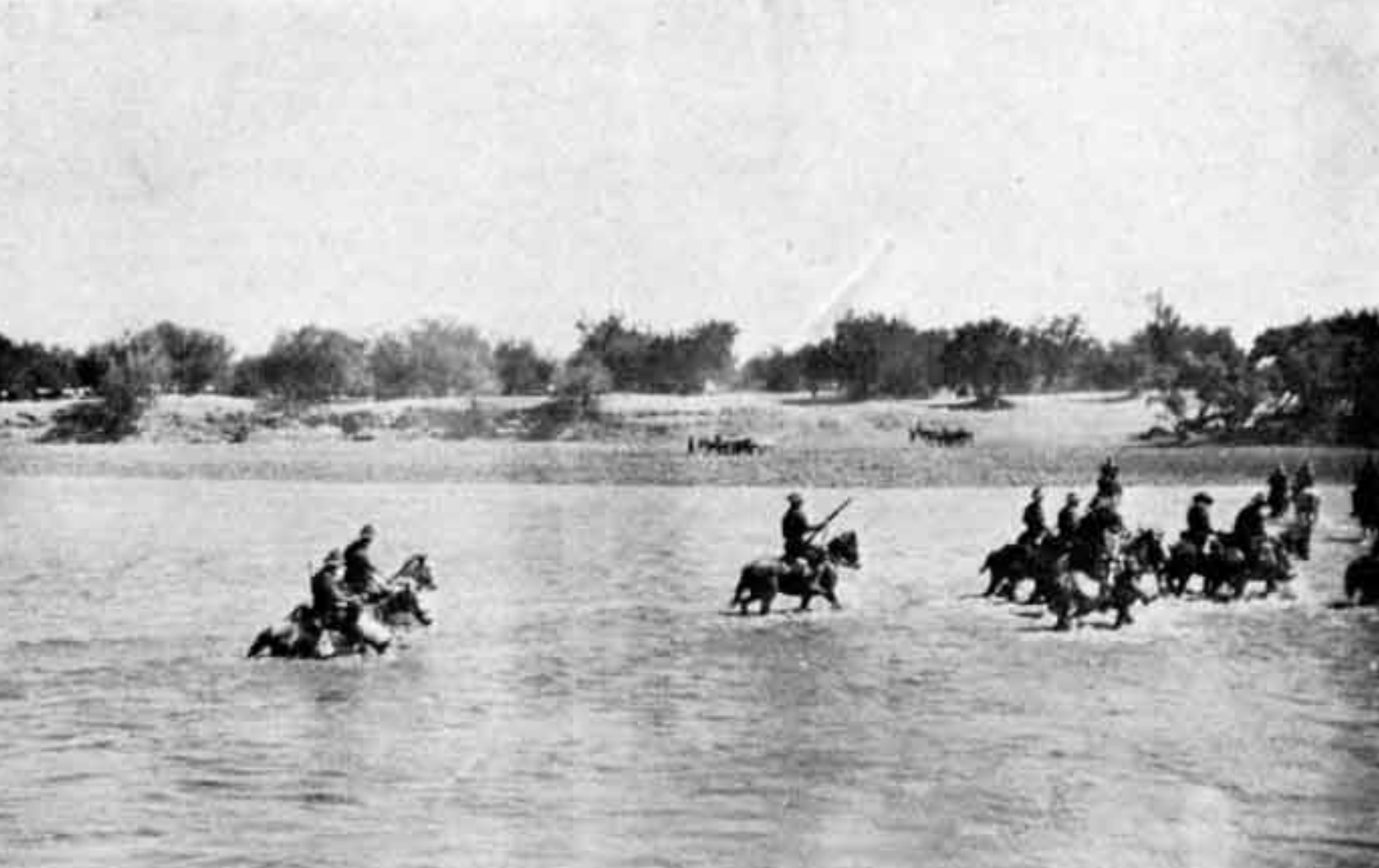
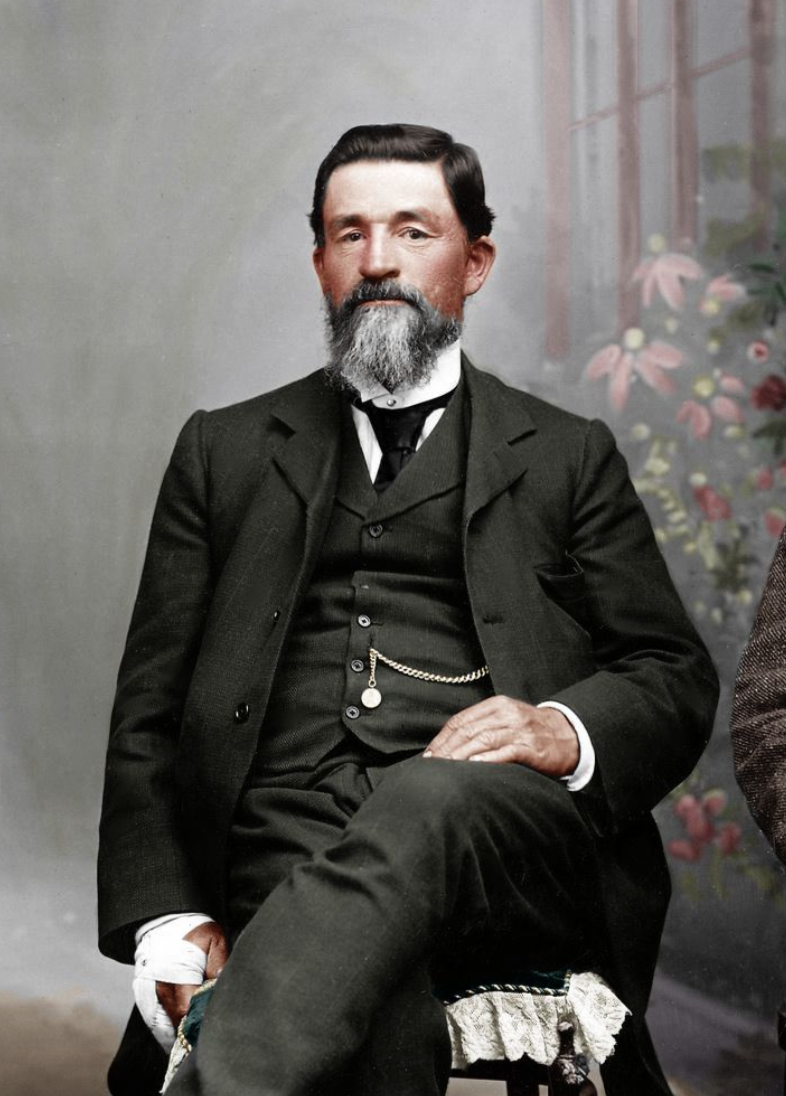
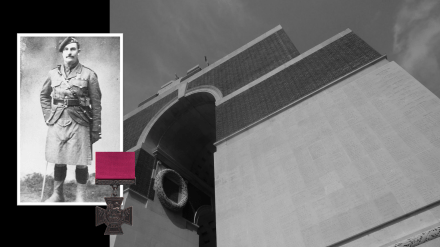
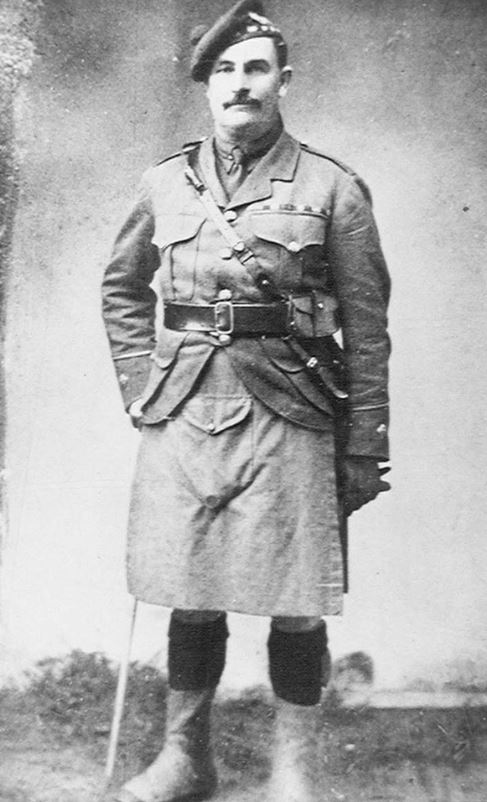
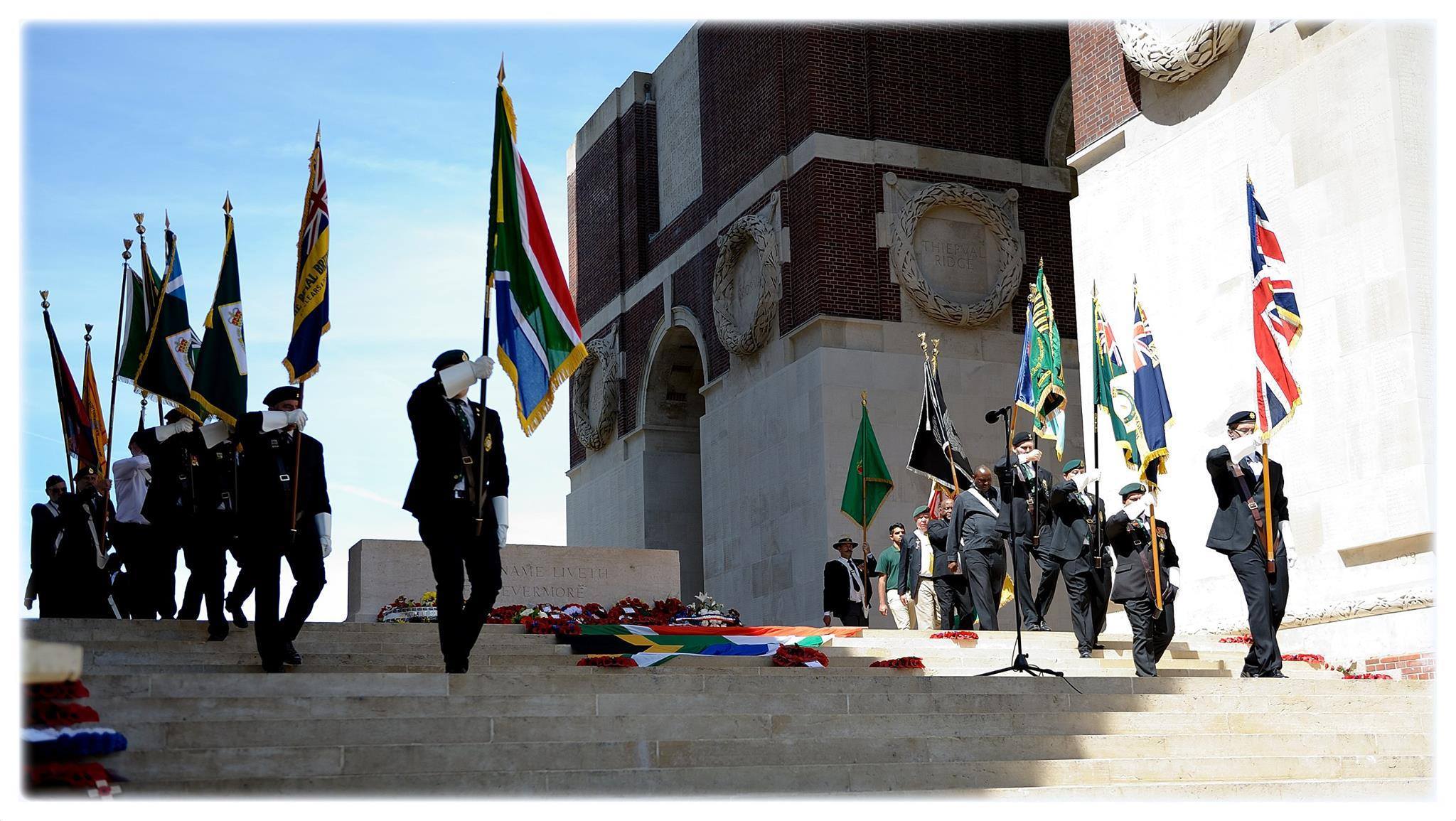
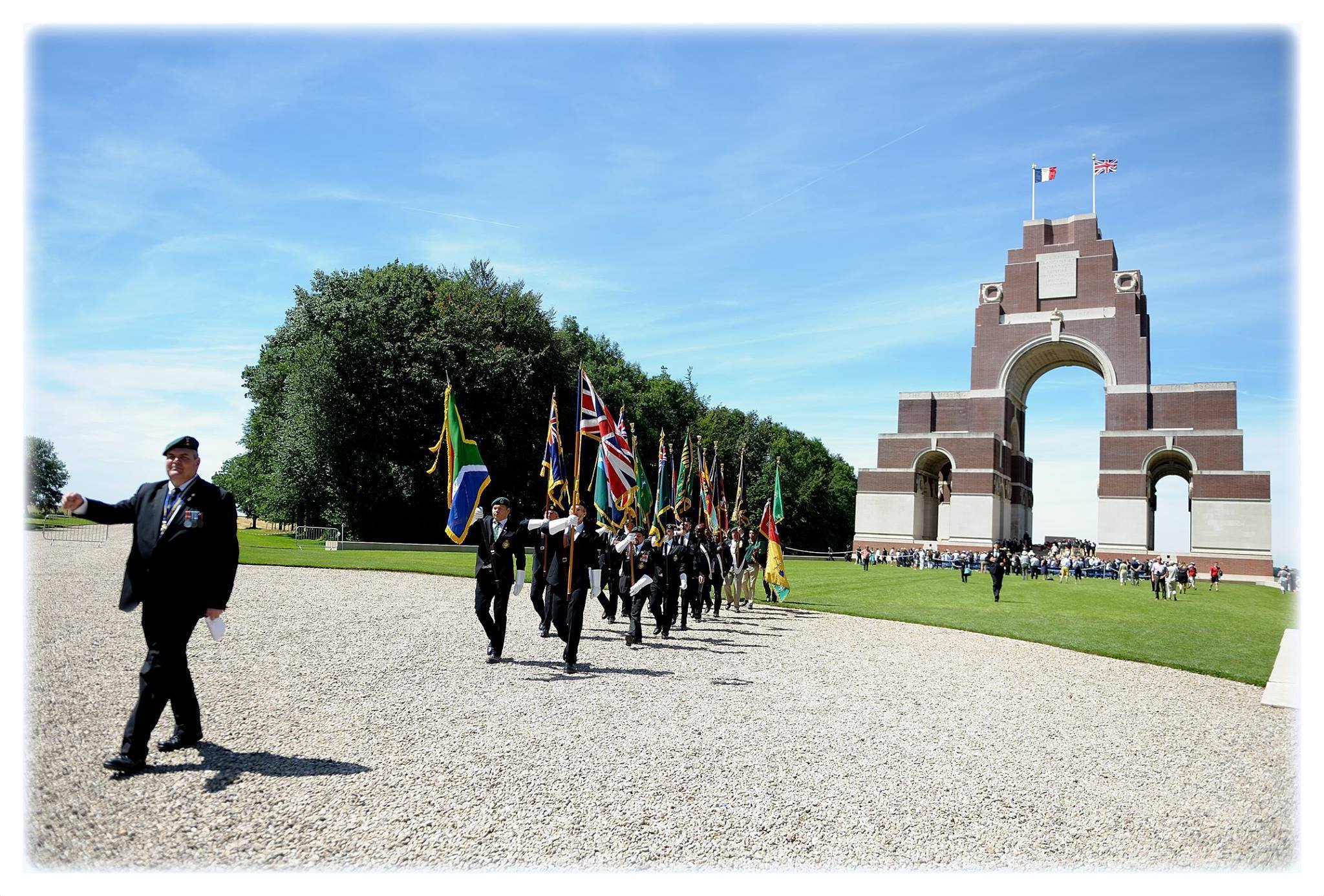
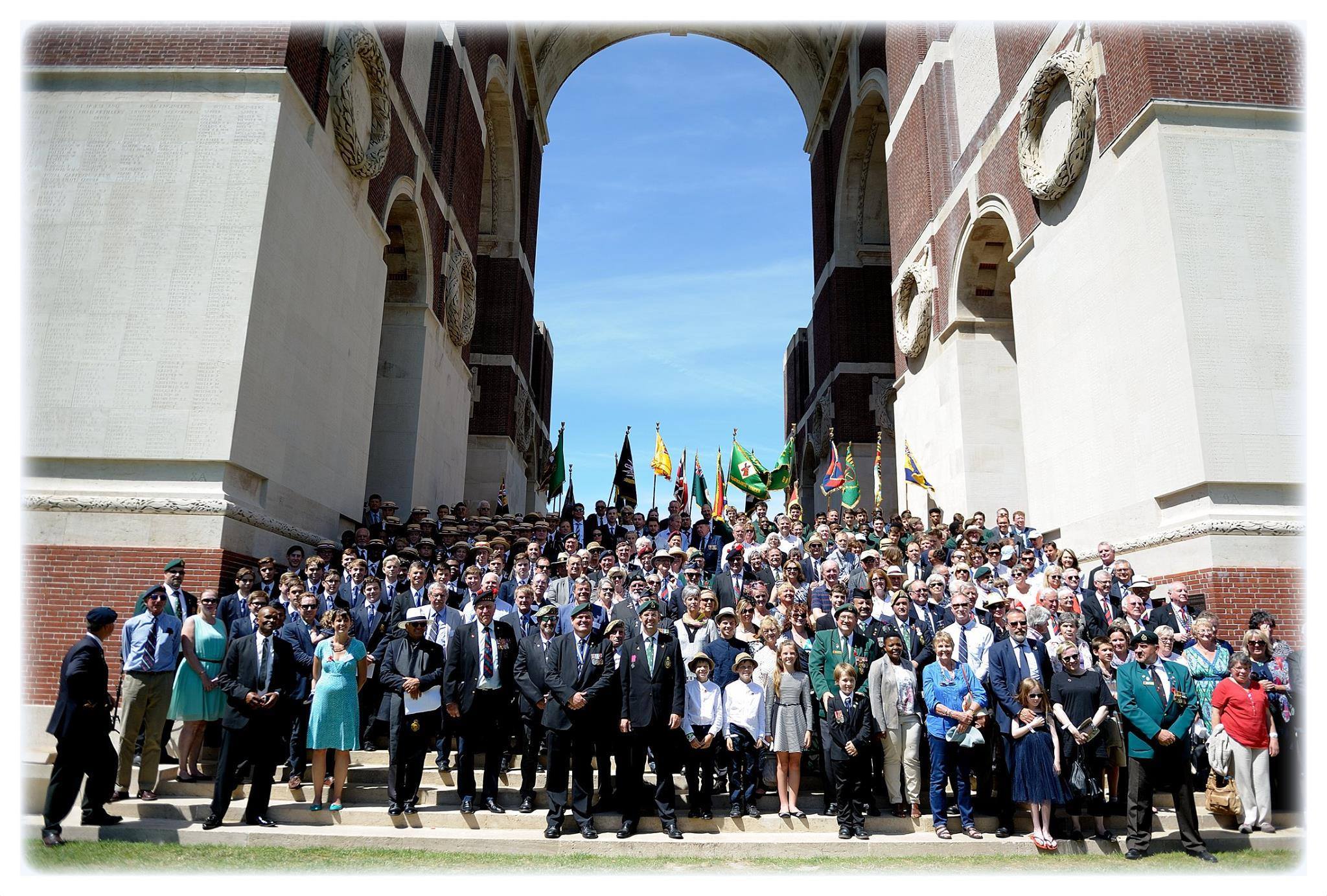
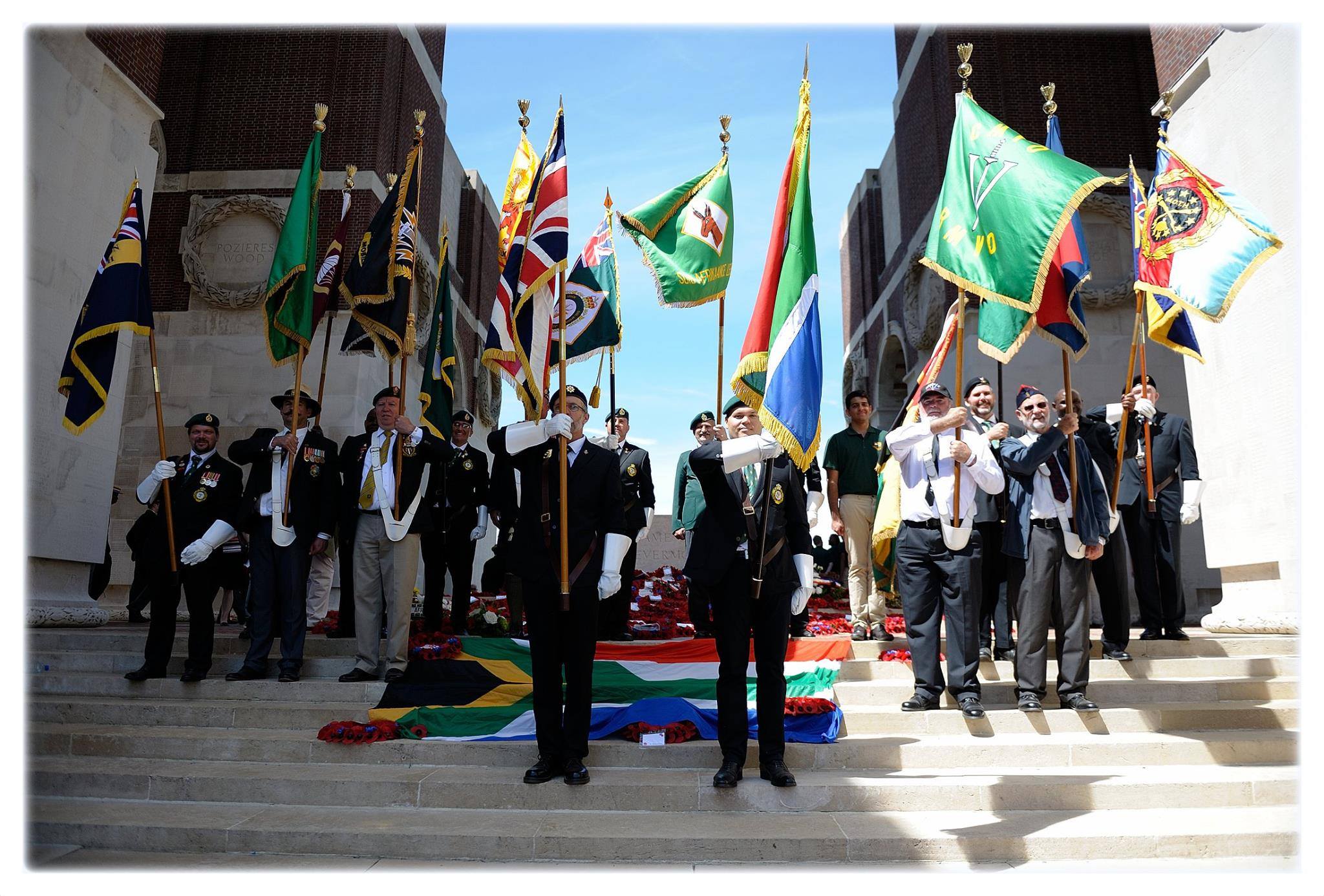
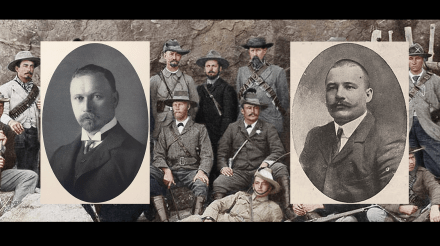
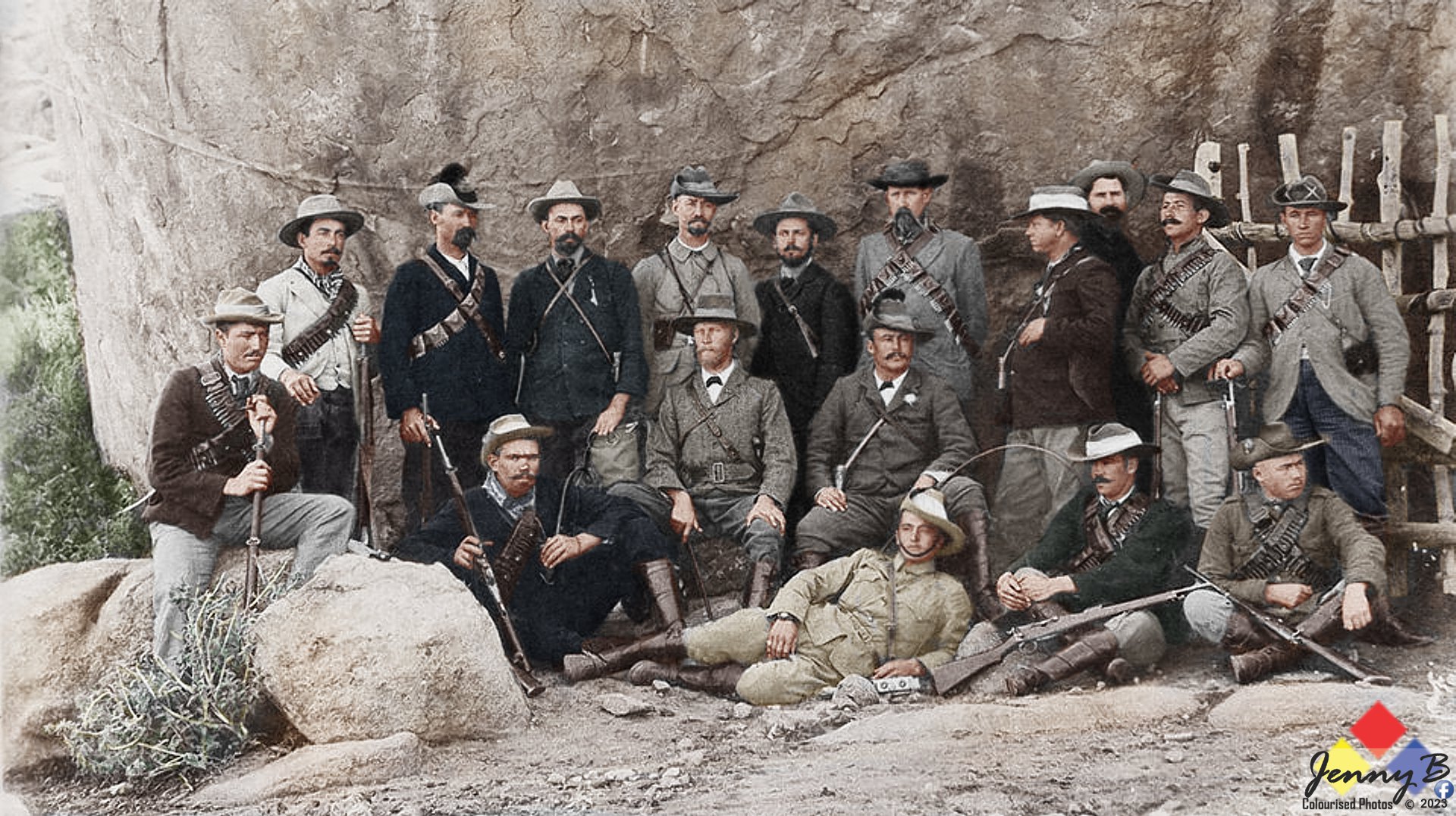
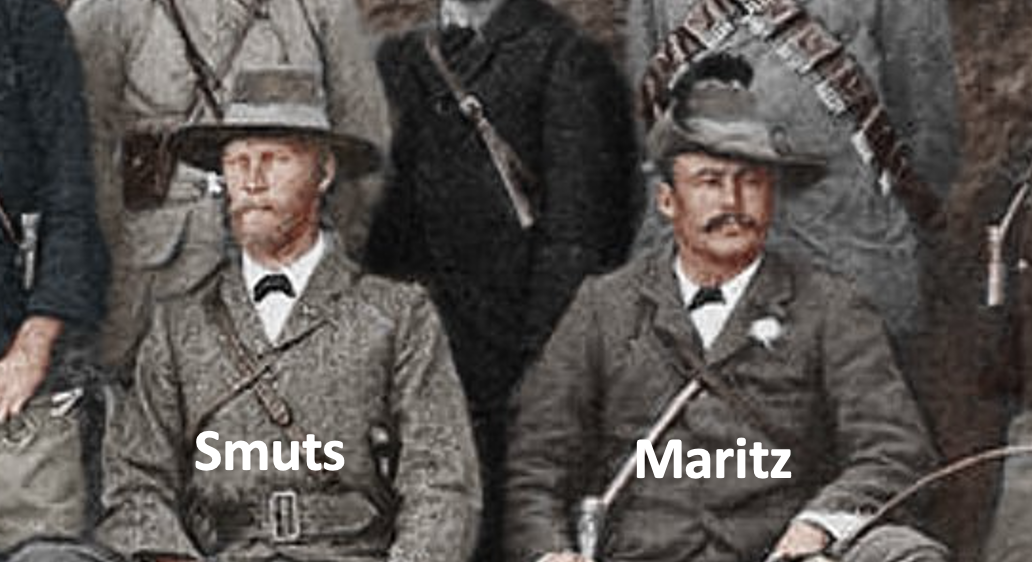




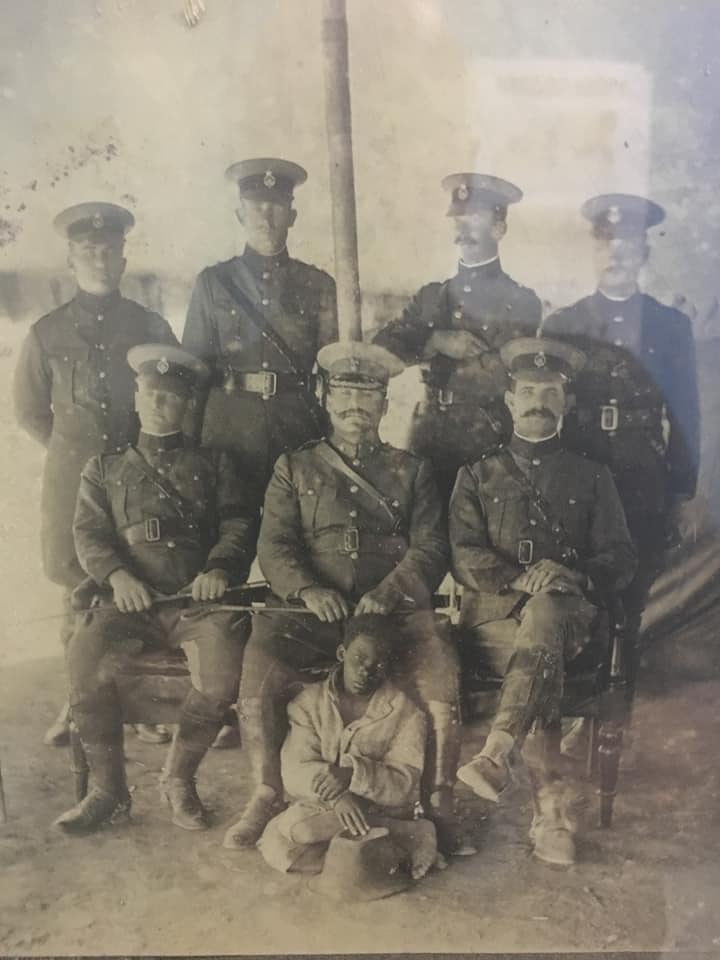
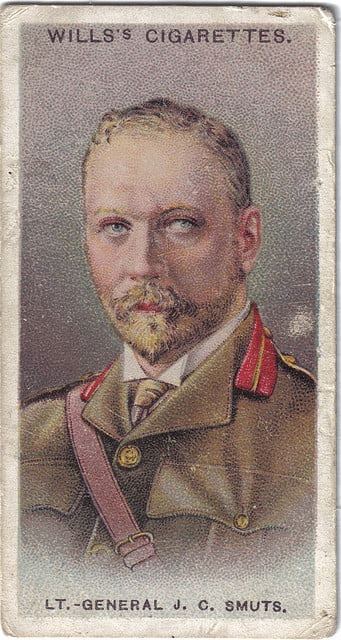
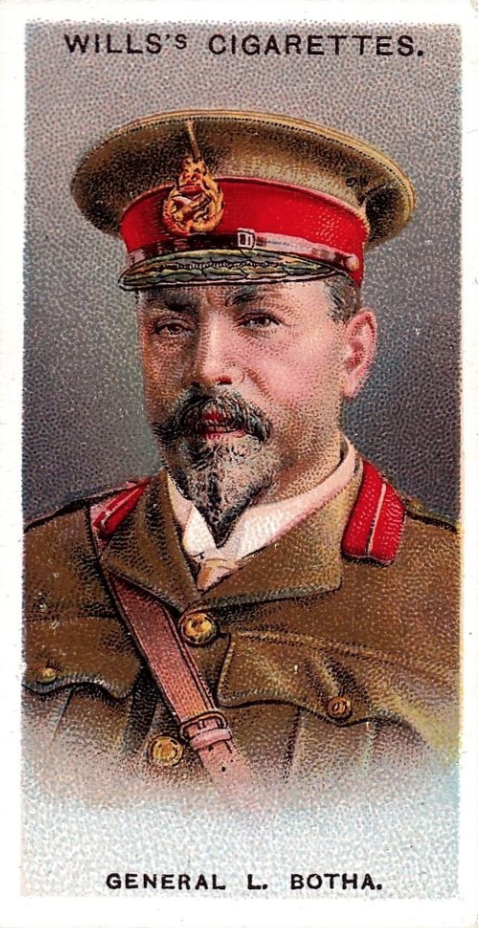

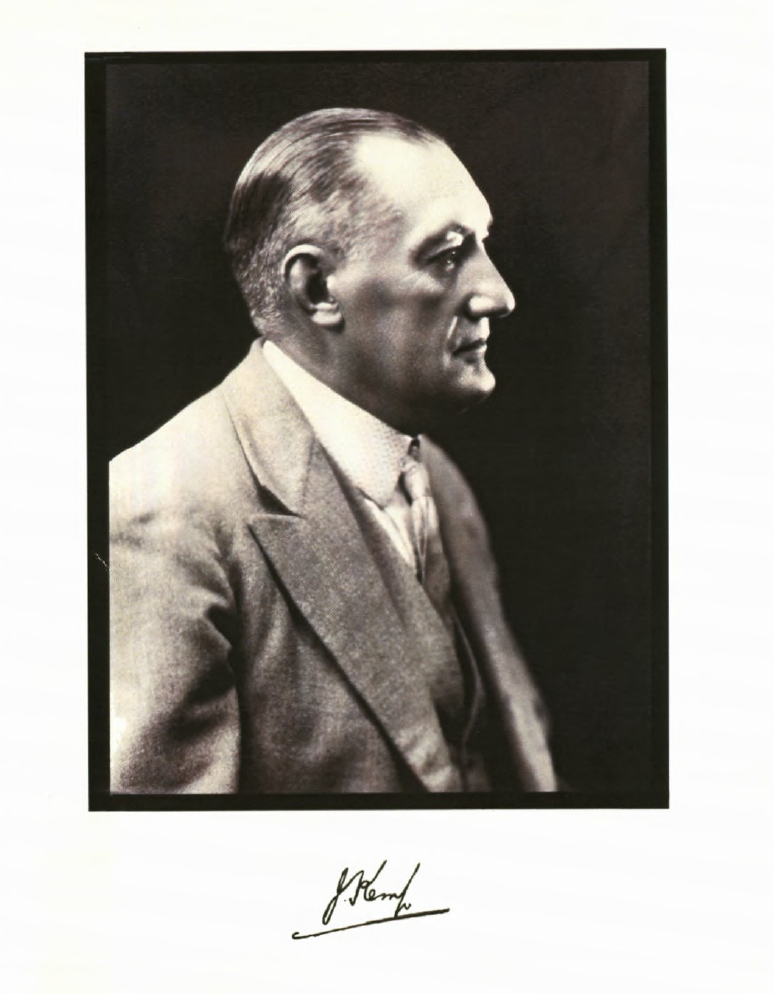
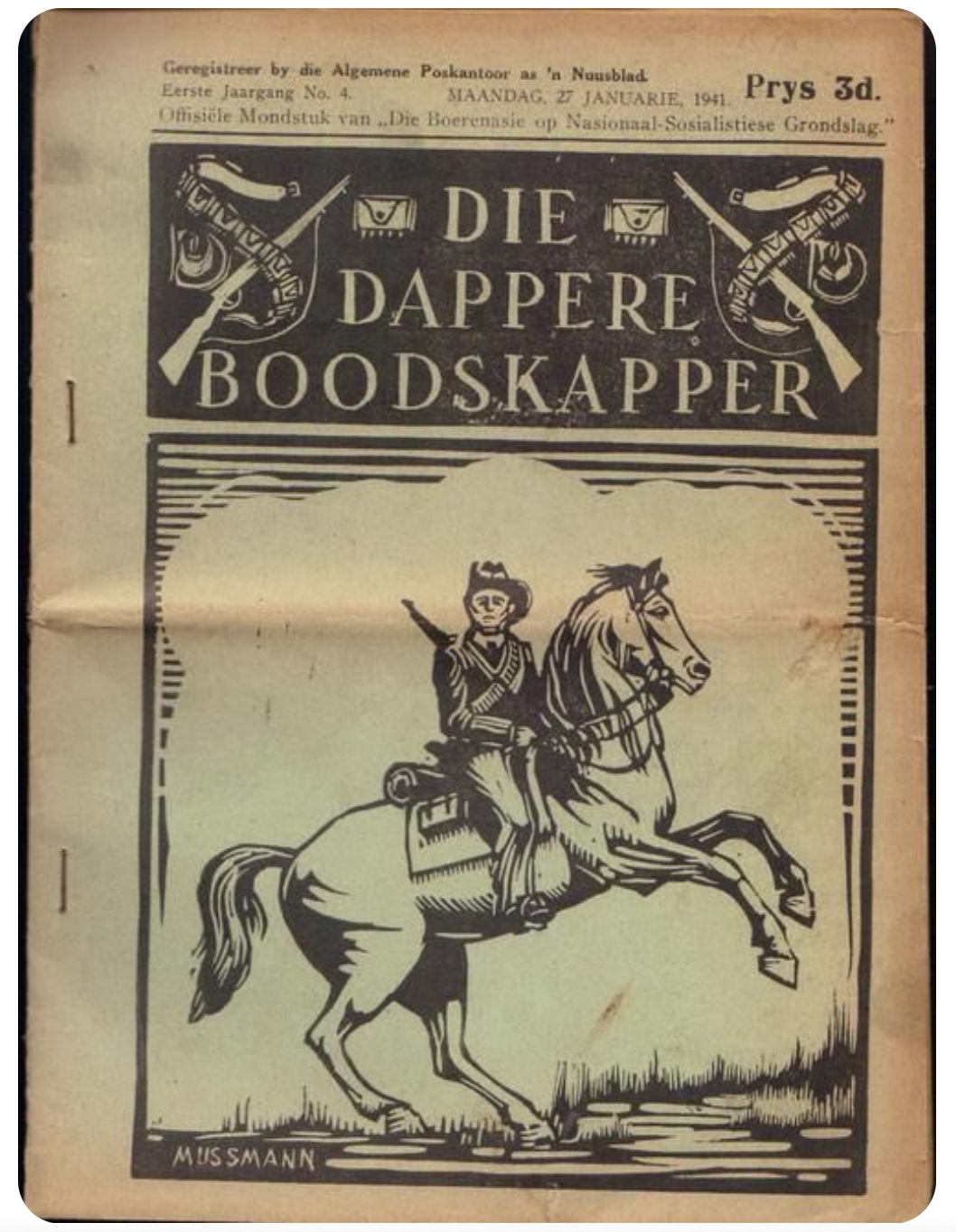
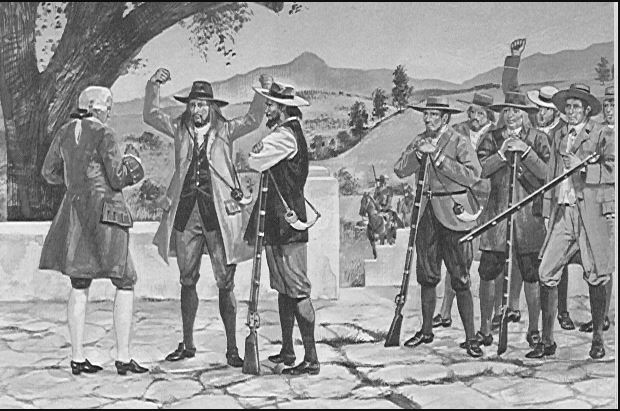
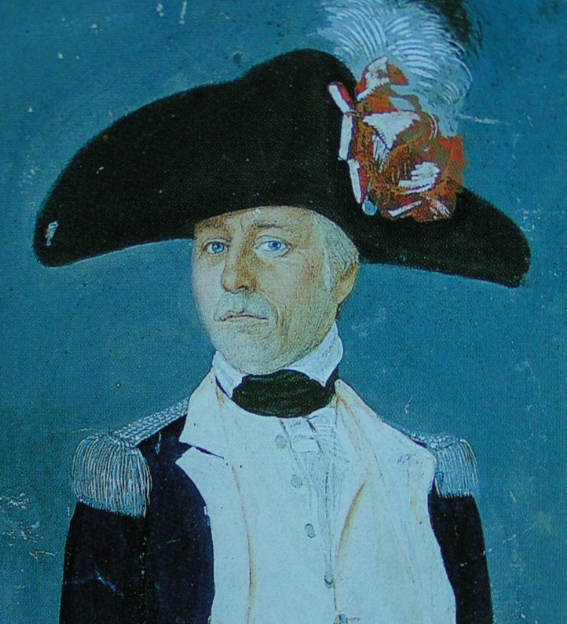
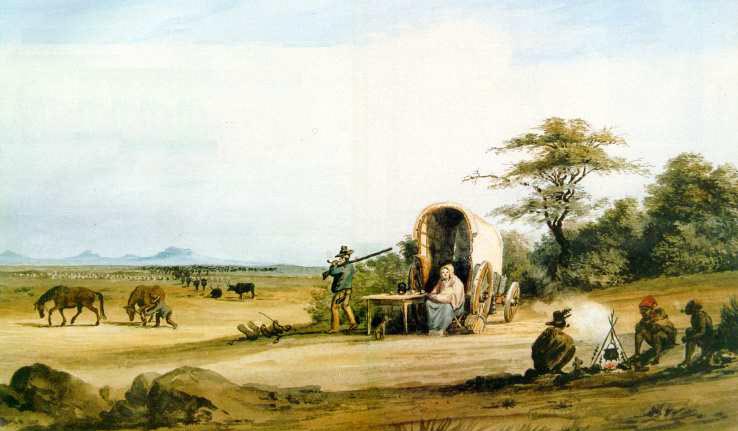
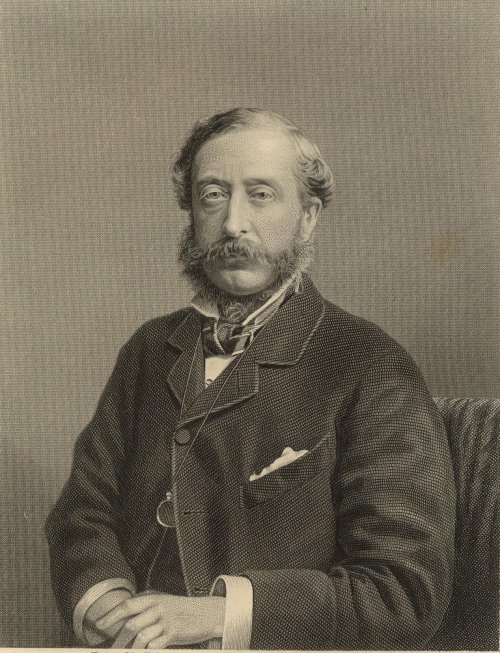
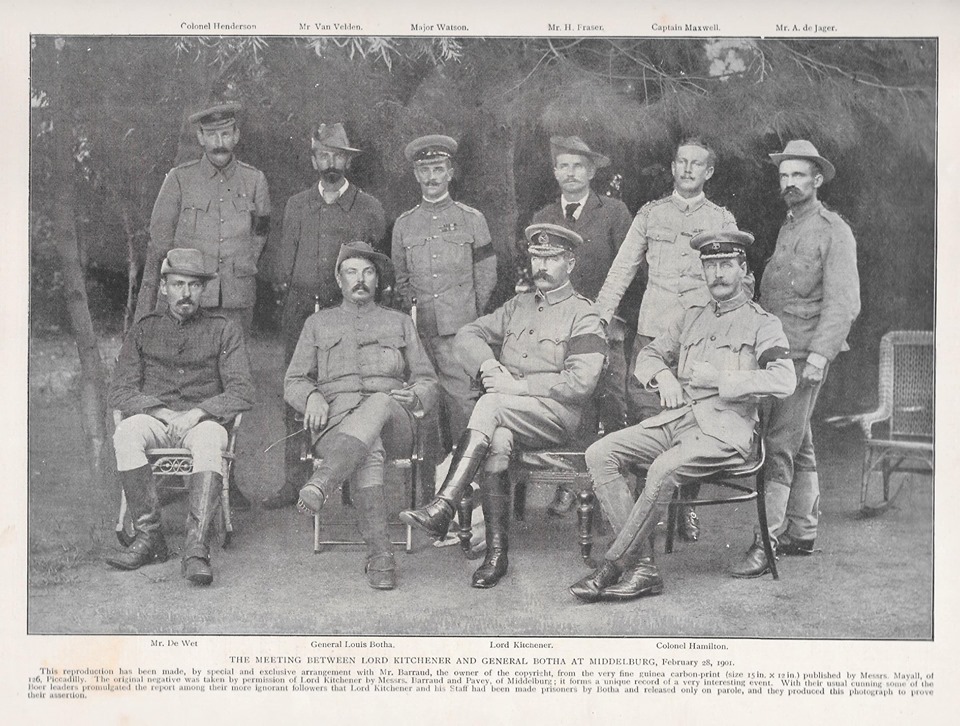
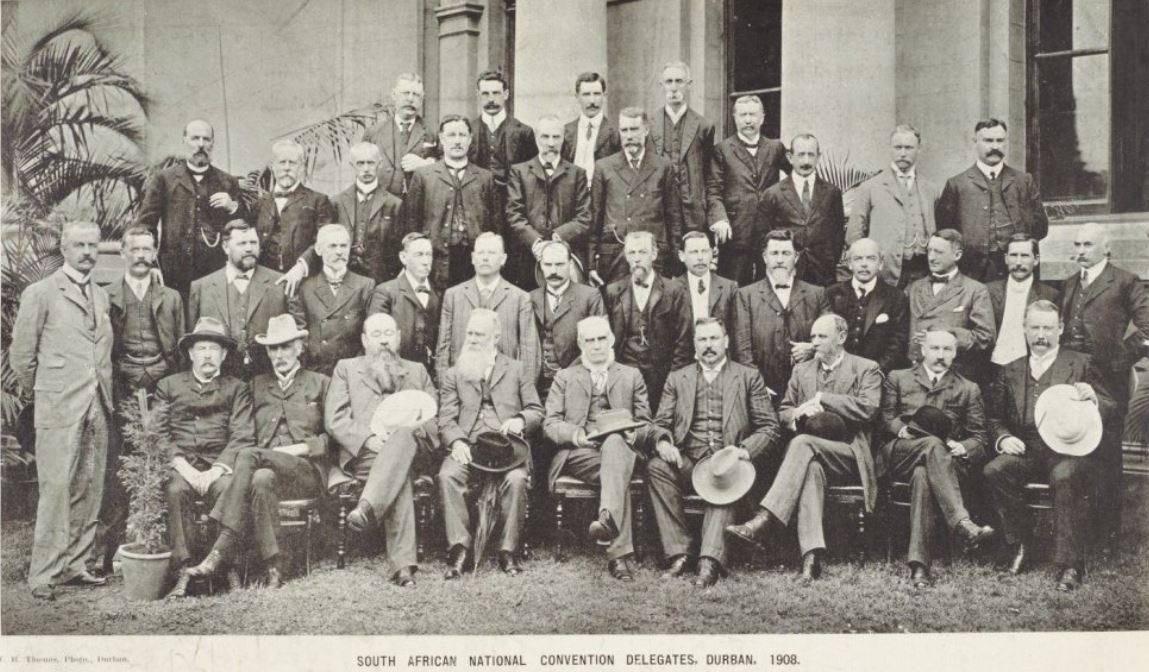

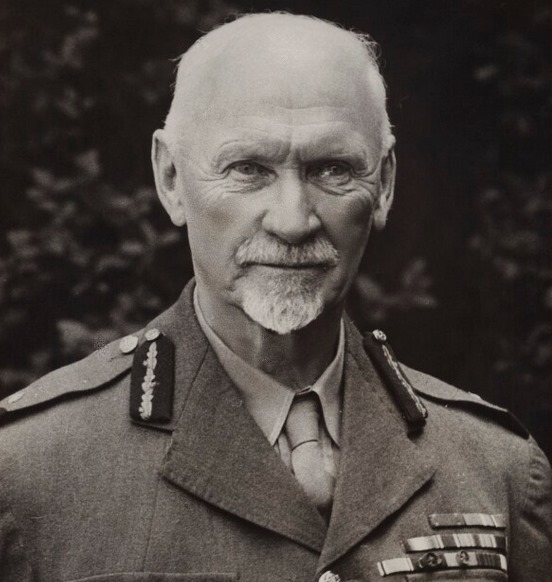
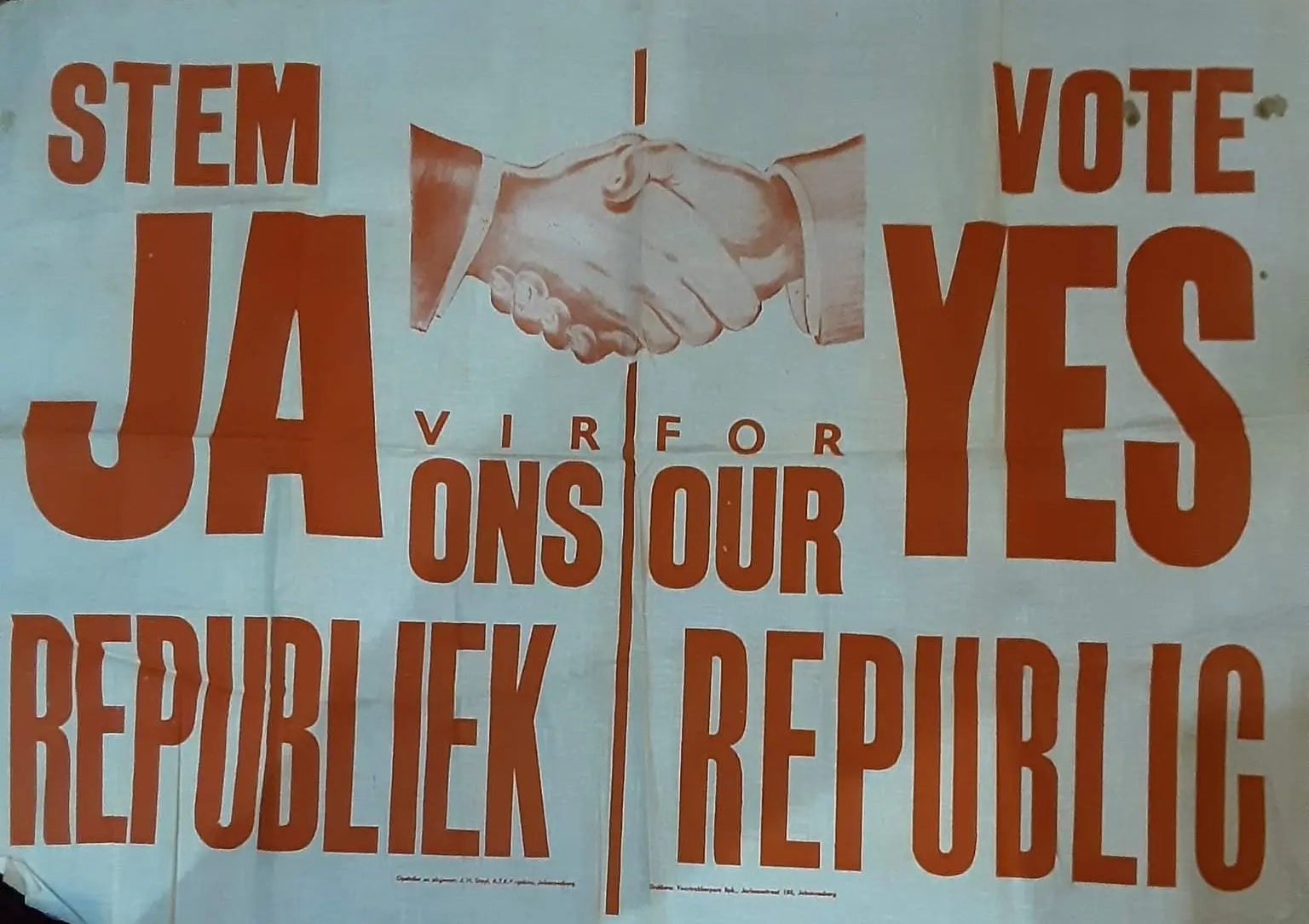
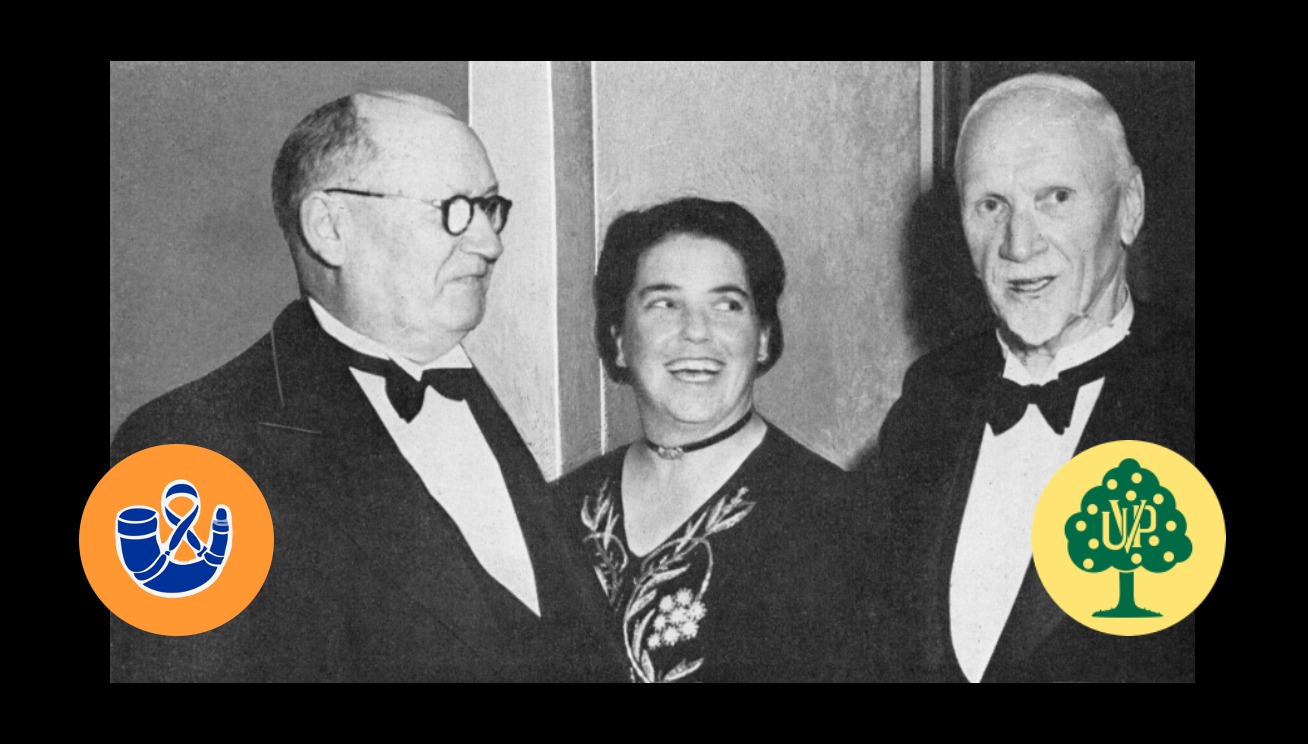
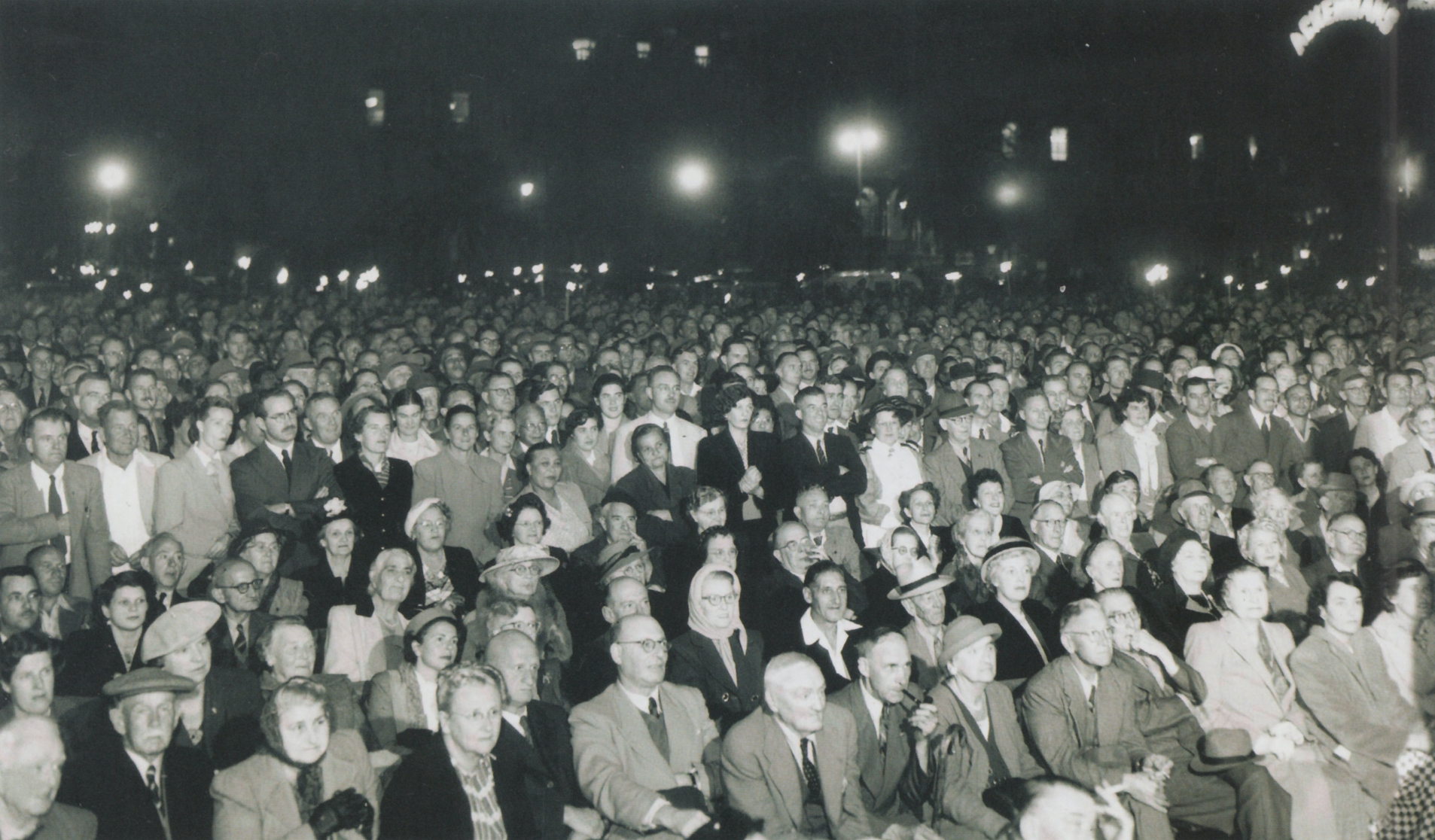
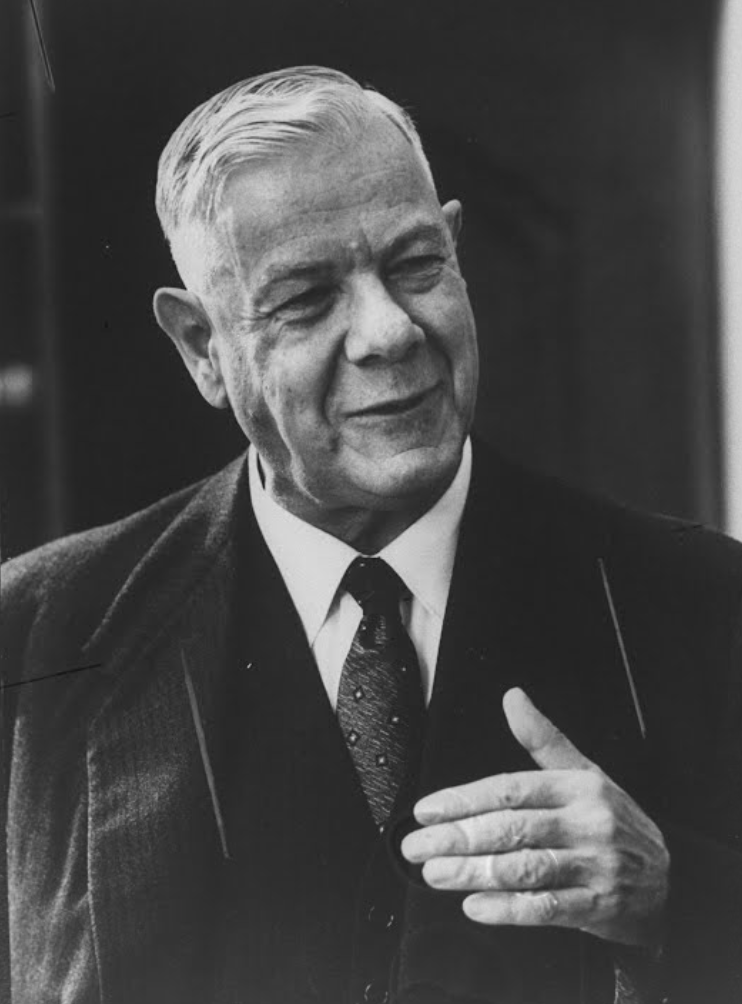
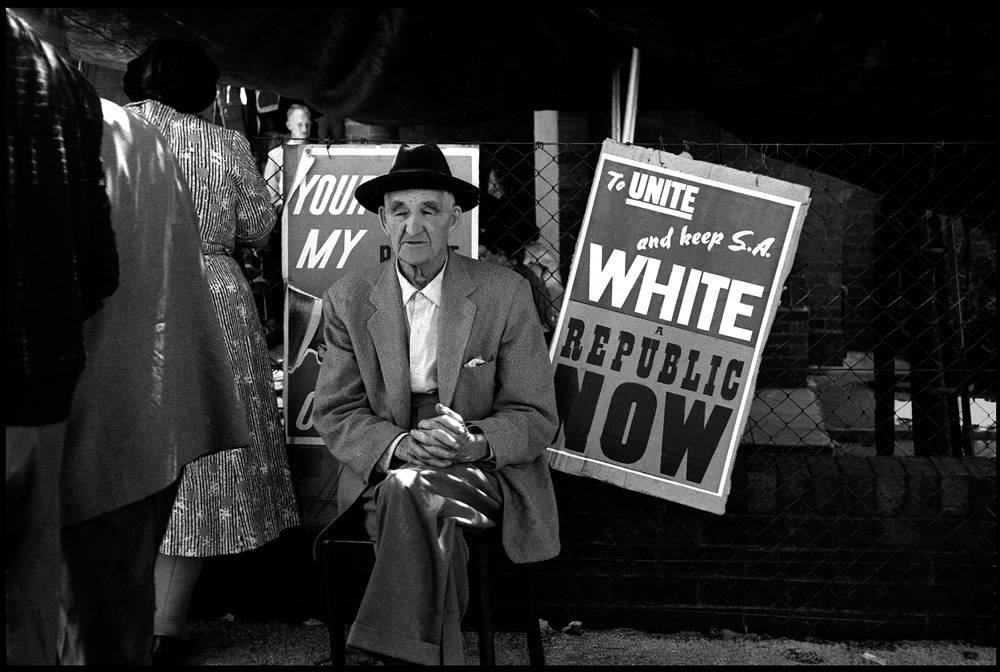
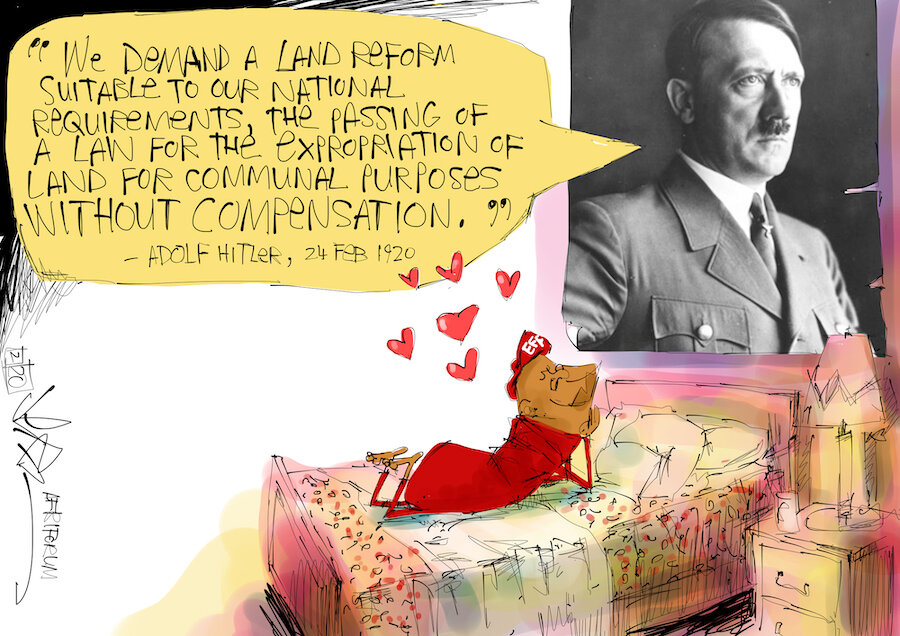
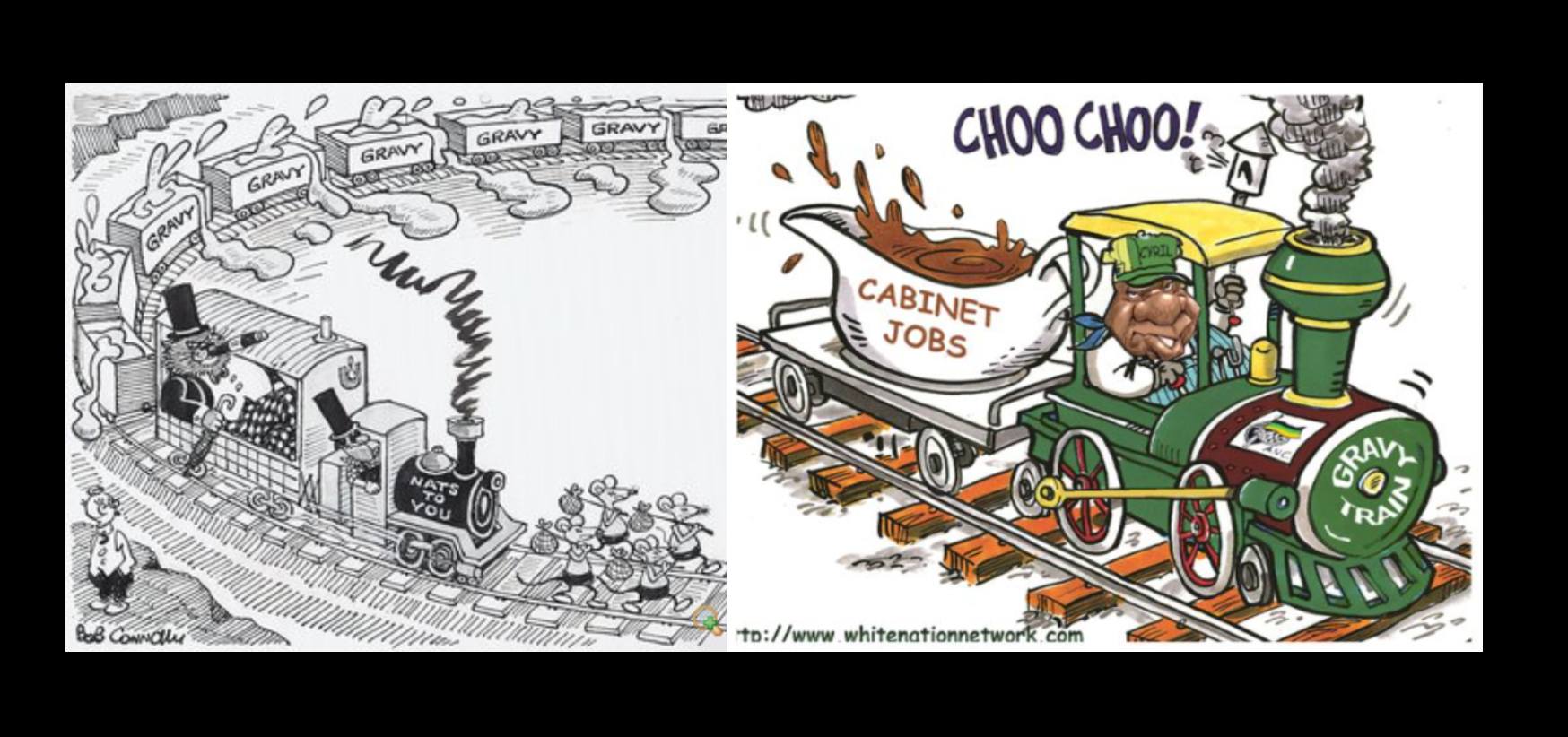






 Colin Eglin, the long-time anti-apartheid campaigner and long-time leader of the opposition Democrats in South Africa has recently had a road named after him … but so what! Many streets and roads are named after various politicians in South Africa, especially the anti-apartheid campaigners in recent times … however, this one is different, very different.
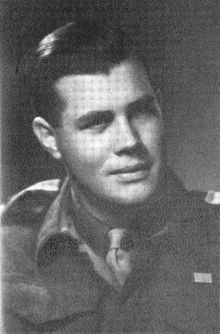
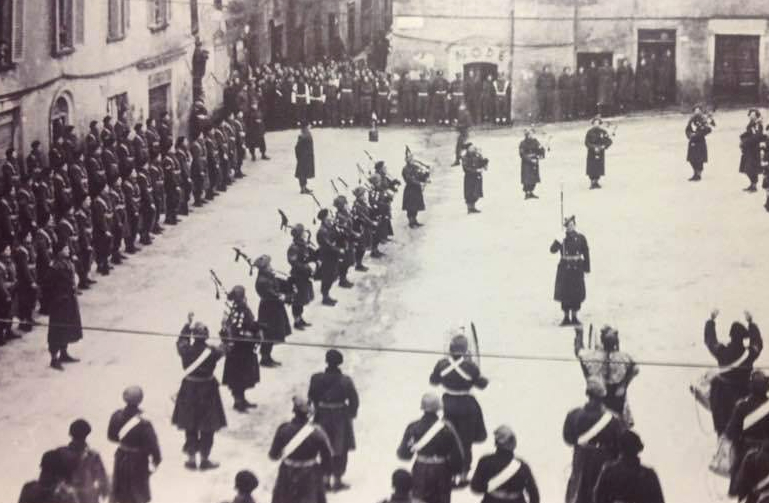
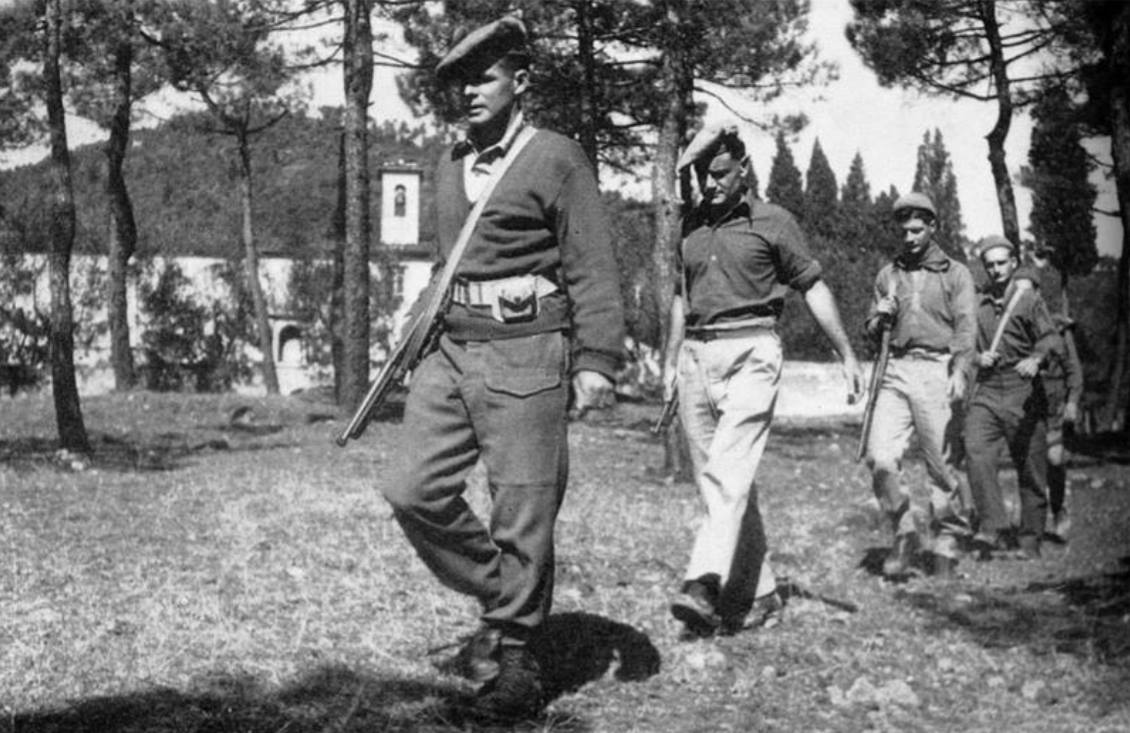
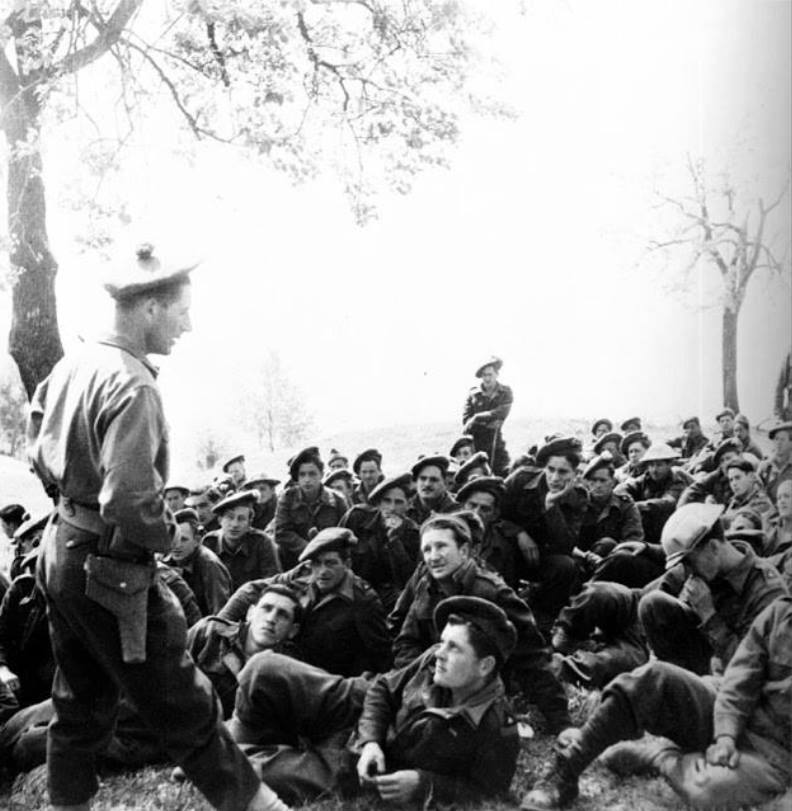
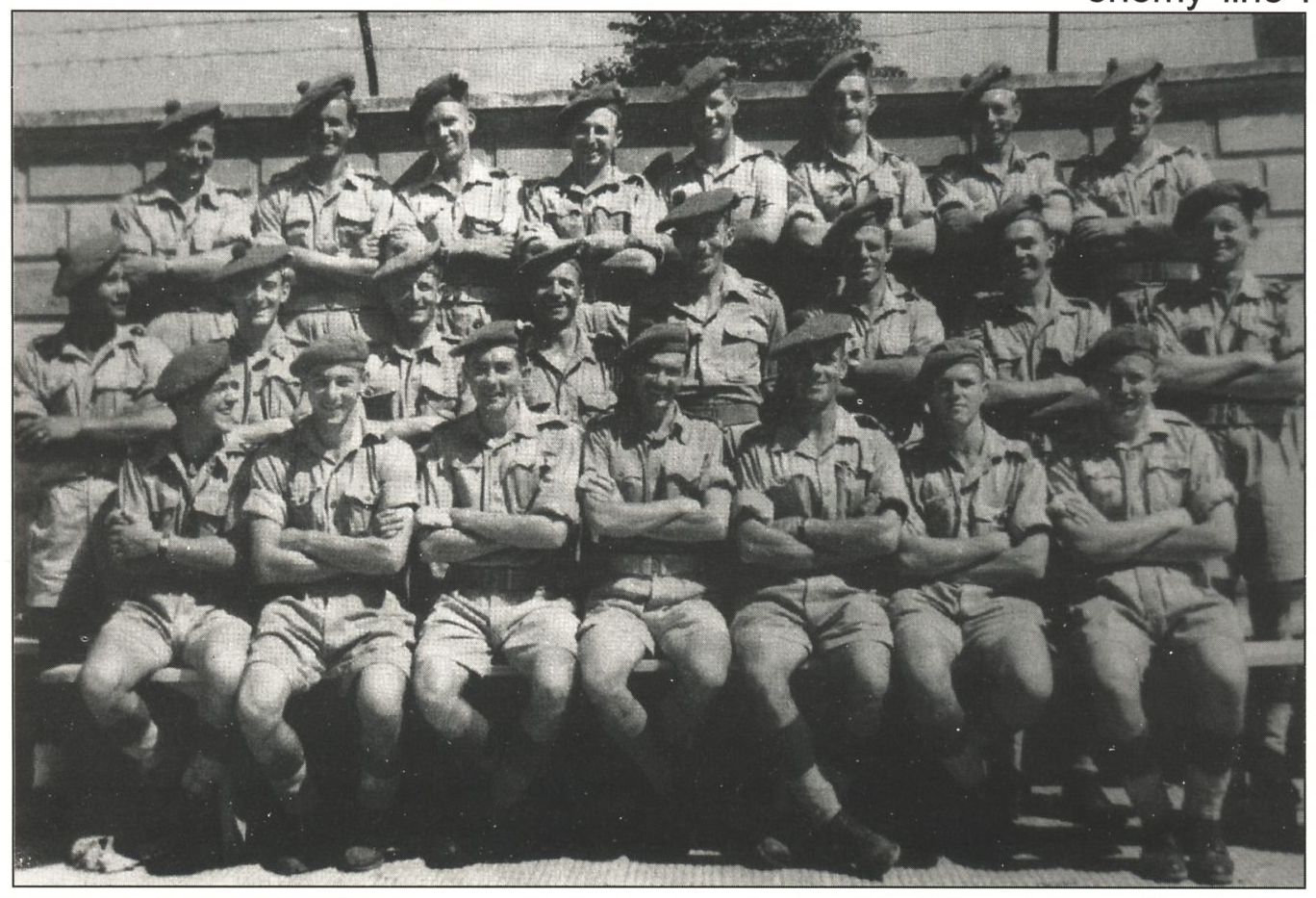
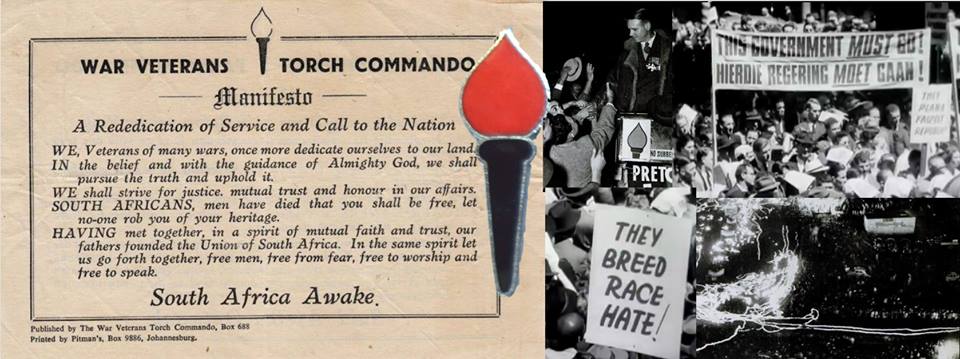
 In 1954 Colin himself was elected unopposed as the UP provincial councillor for Pinelands. In addition to that, he became chairman of the UP’s Cape Peninsula Council and then in 1958 Eglin became the Peninsula MP.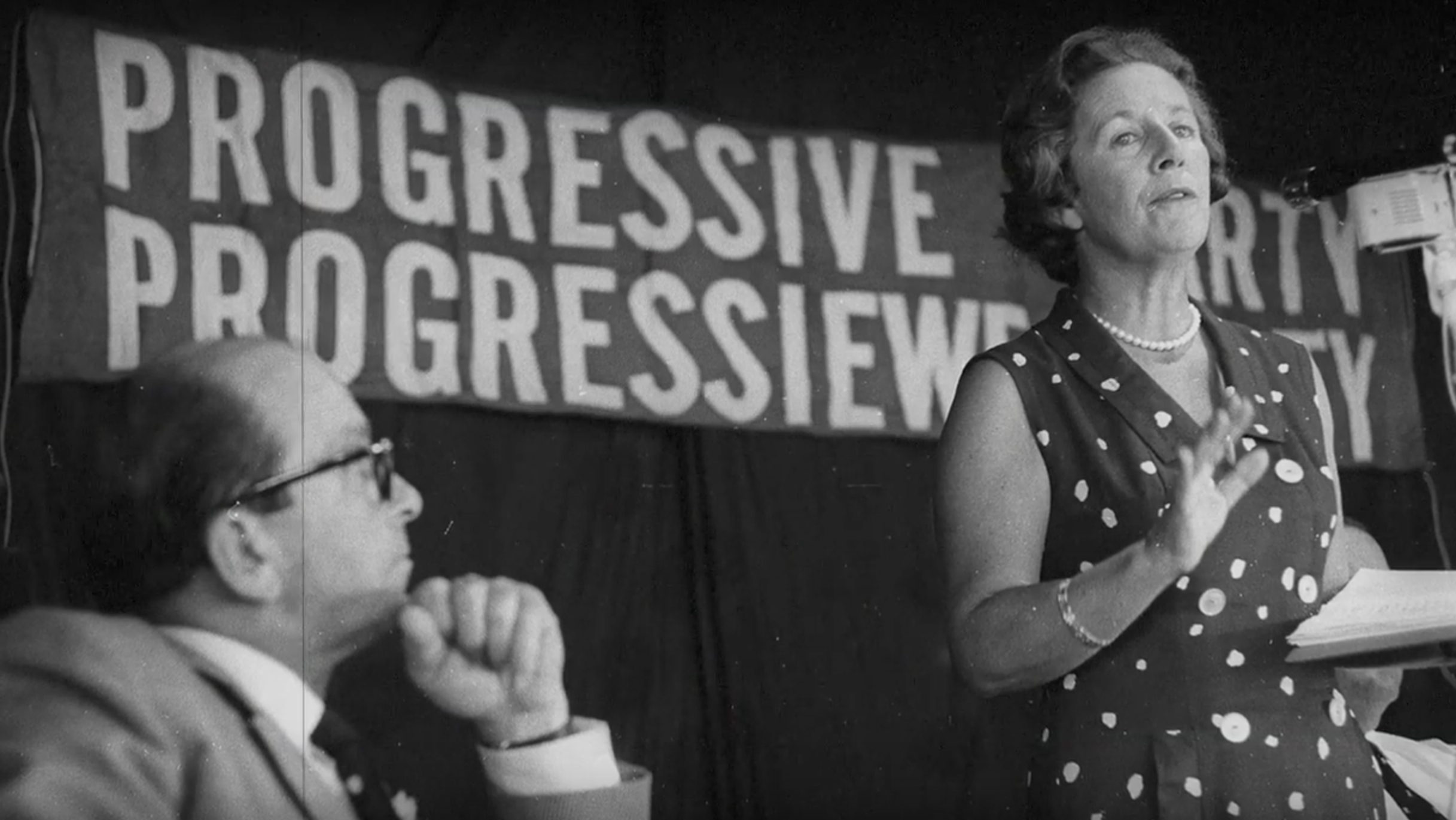
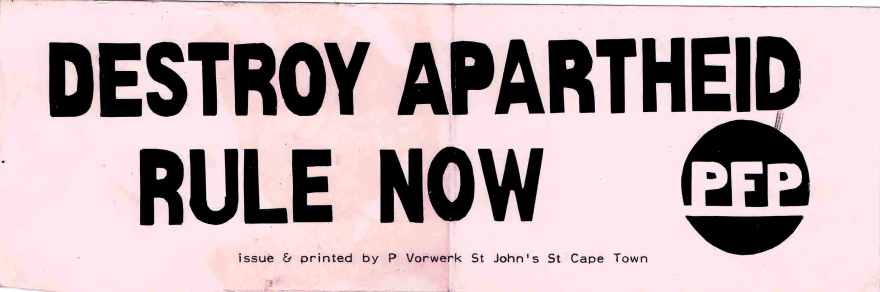
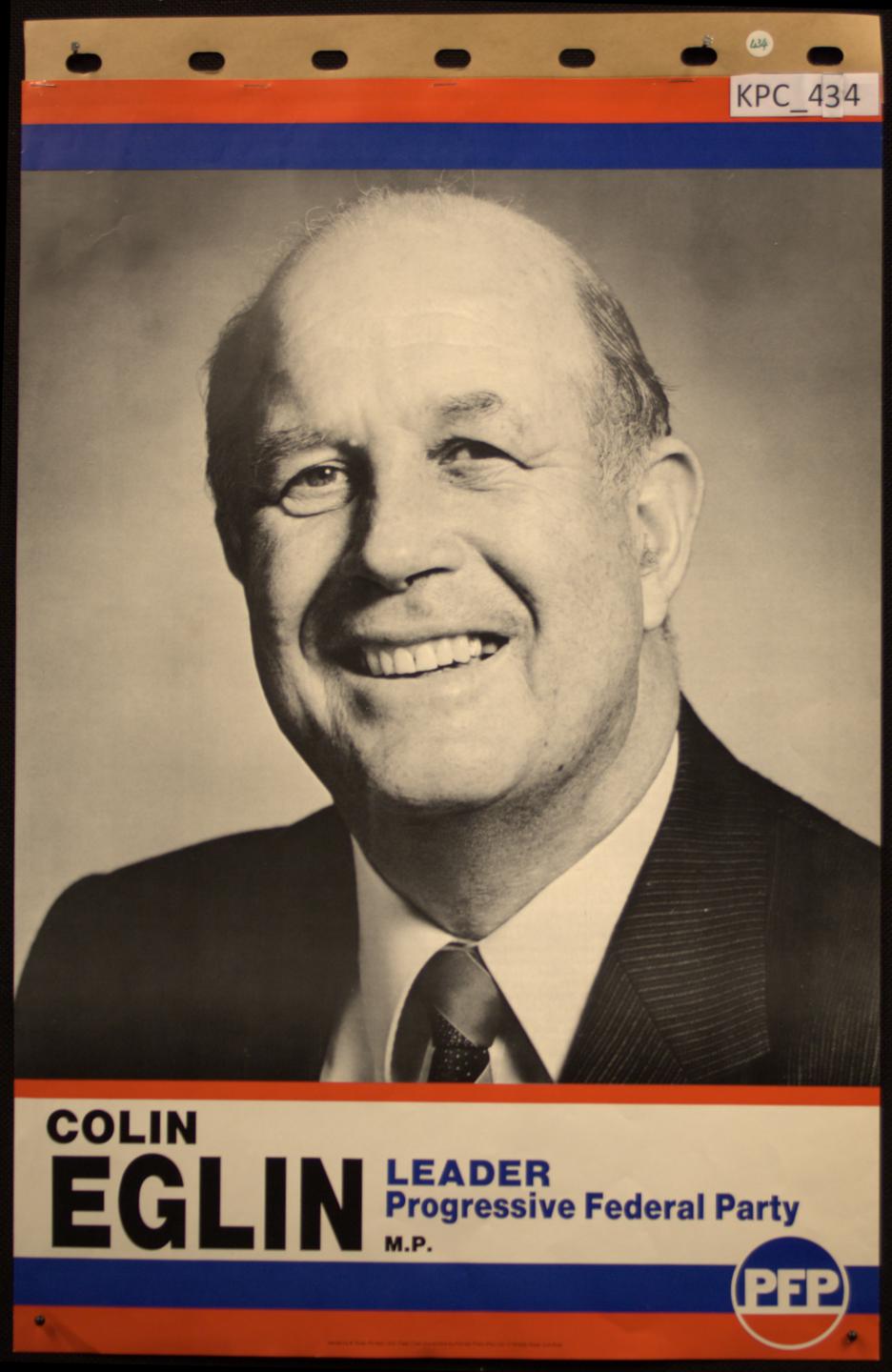
 He remained party leader until 1988, however he didn’t have the best people skills to sustain this type of leadership. Affectionately known as ‘the Egg’, Colin Eglin had a sharp tongue and bit off many heads. His long-time colleague Helen Suzman admitted that his manner “put off a lot of people. Yet we all came back to “the Egg”, not only because he was a role model for progressives, or because of his intelligence and measured political judgment, but because he was a decent, very warm-hearted man, whom we held in great affection.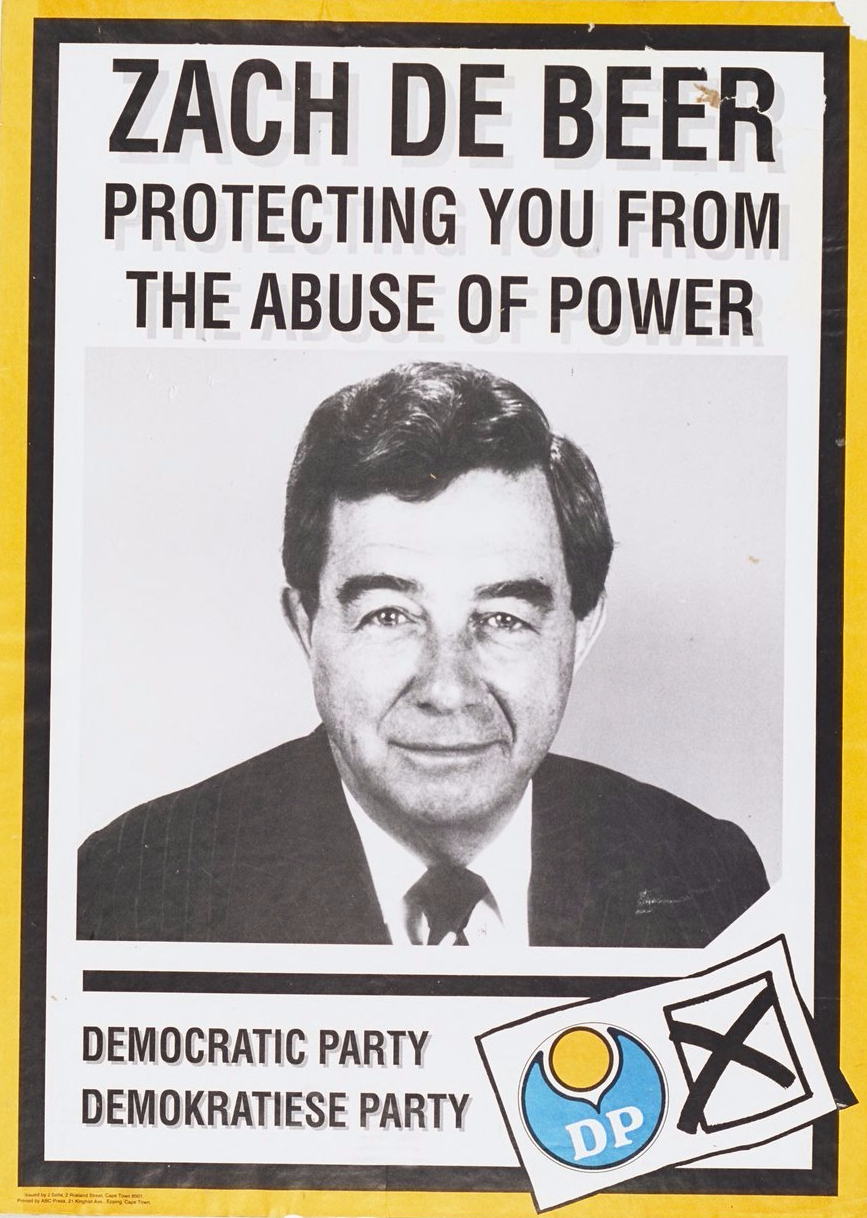
 In 1991, as the Democratic Party (DP) stalwart, Colin participated in the Convention for a Democratic South Africa (CODESA) and served in its working group. Described by Nelson Mandela as “one of the architects of (South Africa’s) democracy”, Colin Eglin played a leading role in the drafting of the country’s post-apartheid constitution.
 Colin’s negotiating prowess was recognised by Joe Slovo in particular and, when an impasse was reached, the two would get together and generally find a way forward and eventually, a worthy constitution was to emerge. His intellect, presence and engaging manner were recognised and respected by all in those crafting the new democratic Constitution and Bill of Rights in the tumultuous years of 1990 to April 1994.
 In 2000, the DP merged with other groups to become the Democratic Alliance (DA), which survives as the current official ‘democratic’ opposition to an African National Congress (ANC) government.
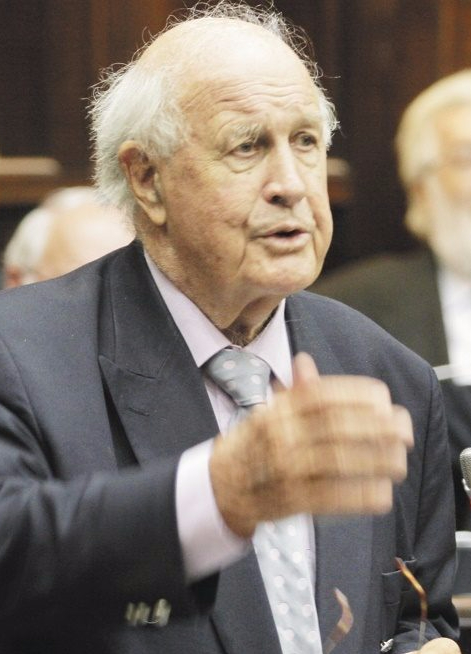 In one his final speeches, Colin Eglin is nothing short of pure prophesy – consider this when he said “Ironically the (ANC) government’s Black Economic Empowerment policy has contributed to the widening of the (poverty) gap, by creating a new rich elite, often of persons with strong political connections, and by leaving the millions of impoverished out of the empowerment process. These factors are having an impact, turning people away from the values that underpin our constitutional system, and eroding confidence in our democratic institutions. They are driving people towards populism as a cure for their problems. In short, they are undermining our new democracy.”

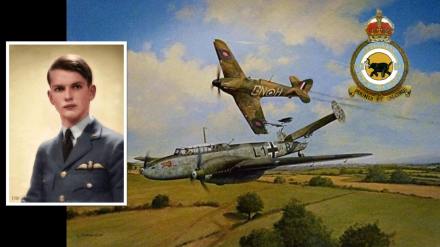
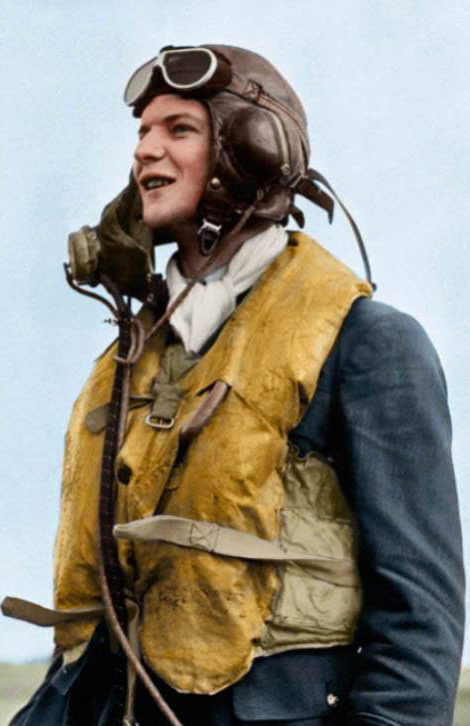
 As all the eye-witness reports indicate strongly that Percy Burton deliberately rammed the Bf 110 in an act of sacrifice. In a letter from Fighter Command to the Hailsham ARP Chief, Percy Burton was recommended that for this action, bravery and sacrifice at Hailsham that he receive a posthumous Victoria Cross.
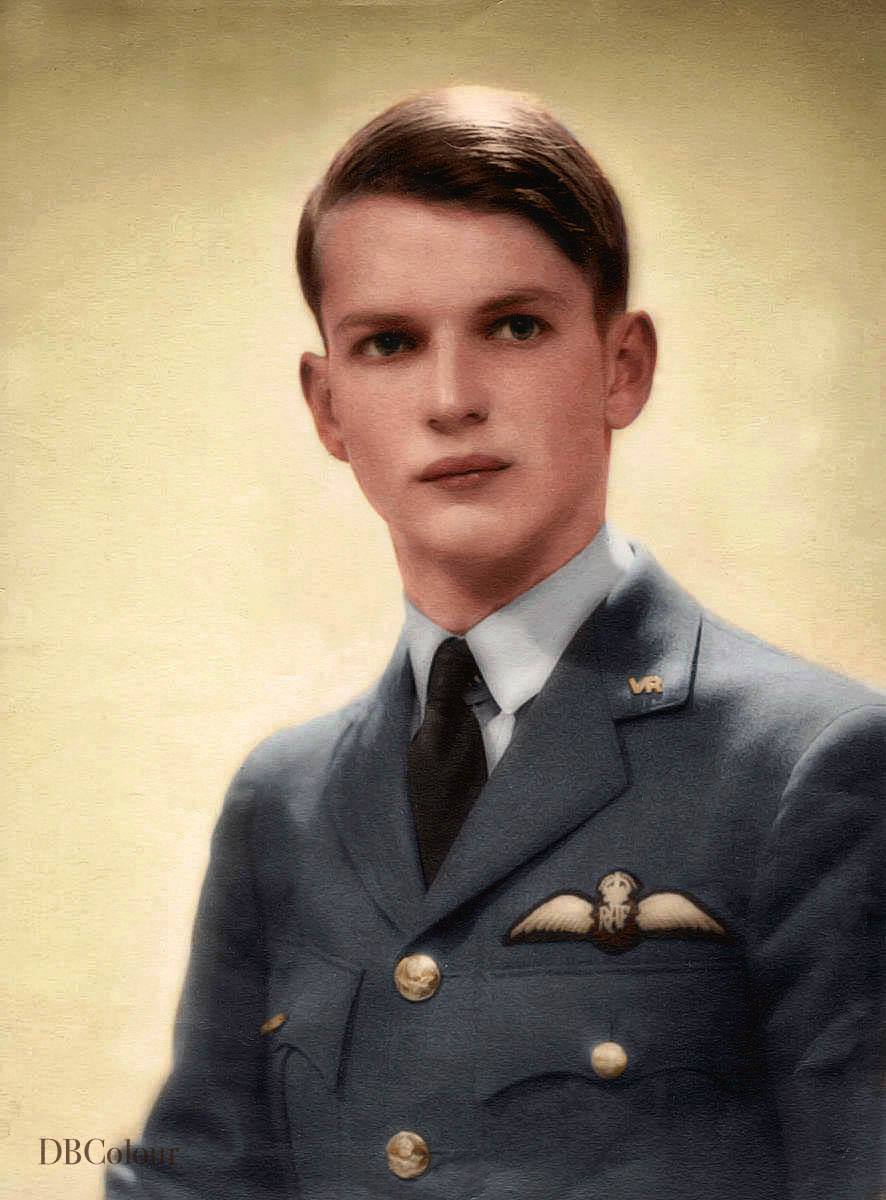 Looking at this recently colourised image of Percy Burton by Doug, we are reminded of just how young these brave men were, Percy Burton was just 23 years old when he boldly sacrificed his life. In perspective he was the ‘millennial’ of his time, however it is very difficult to imagine a modern millenial facing the hardship, morality, bravery and sacrifice that this – the ‘greatest generation’ – faced.
 The Observation Post