The ‘BLACK’ Concentration Camps of the Boer War

To fully reconcile The Boer War is to fully understand the Black Concentration Camps.

Two Different Narratives
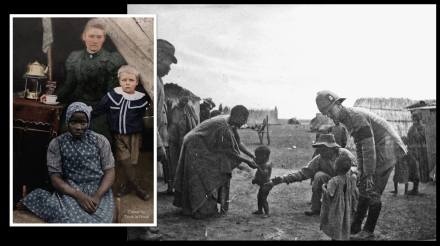
refugees

To many Afrikaans speaking white people in South Africa the narrative of what many in South Africa call; The Anglo-Boer War (1899-1902) or just shortened to The Boer War, is one of a struggle of the Boer nations for independence, the backdrop set against one of British greed for gold in The South African Republic (Transvaal) and colonial expansion by the subjugation of independent nations. The Boer’s boldly fighting against the odds against a British Imperialist invasion and then having to endure the indignity of a systematic eradication of the Boer nation and culture by means of a punitive genocide initiated by what some now regard as a Nazi styled system of British ‘concentration camps’ which murdered their women and children in their tens of thousands.  An indignity and outrage which now calls for an apology and war repatriation from the British.

18056649_10155221467369476_6950152090307411838_n

To many of the British, the story is somewhat different. The British call the war; The South African War (1899-1902) and it is one of a struggle of British migrant miners fighting against oppression and for citizen rights in The South African Republic (The ZAR or Transvaal). Followed by brave pockets of British garrison troops in border towns in the Cape Colony and Natal fighting off an invasion by the Boers of their colonies, the siege of their towns initiated by the Boer’s declaration of war on the British, and by besieging their towns subjecting British civilian men, women and children to starvation and indiscriminate shelling by surrounding Boer guns – calling for a national outrage in the UK and a ‘call to arms’ of the biggest expeditionary force seen to date to ‘get their cities back’ and save the civilians. Then after winning the conventional in a lightning war of only 9 months the British felt forced to depopulate large swathes of land bordering their supply routes to Pretoria. This was done to prevent constant attack on their supplies by Boer commandos (now with governments ‘in the field’ instead of their capital cities).  Their reaction, wherever there was an attack, just put all the surrounding farmstead folk into ‘refugee camps’ (their term for the camps) and burn the farmsteads supplying the Boer forces to the ground. All because some renegade Boer commandos didn’t ‘play by the rules’ of a conventional surrender and embarked on an unconventional phase of the war instead (guerrilla war) which threw the generally accepted rules of engagement out the window.

Nasty, very nasty history this war was, and these two different views on the subject are to a degree both ‘politically’ motivated, both conveniently serving to underpin ‘Nationalist’ ideologies and in so supporting political agendas – whether it is a Boer or British one.

A third dimension

So, somewhere between the two vastly different narratives lies the truth, but there’s a third part of the war neither of the above two narratives even begins to properly consider, and it’s a part of the Boer/South African War which fundamentally shifts all previous narratives on the war, moving it away from a war between two white tribes to a more holistic one involving all South Africans.  Ground breaking research is now been done on the ‘Black’ involvement in the war and the impact to the Black community. New understanding is coming about and it is shaking the traditional British and Boer narratives and historical accounts to the core.

african_a-b_war_prisoners_of_war_on_st_helena_parliament
Black African South African War (1899-1902) prisoners of war who were fighting on the Boer side on St Helena

At the very centre of understanding this previously overlooked aspect of the war is the unveiling of the history of the ‘Black’ concentration camps of the Boer War.  Their impact to the Black community, almost no different to the impact to the Boer community.  The only difference is the politically driven race politics post the Boer War, and especially during the Apartheid period, which simply brushed it aside as something less relevant with a brutal degree of apathy, leaving us all now with a ‘perception’ of the war rather than a truth.

In an odd sense, it is only by understanding this aspect of the war that full account and truths are established, that anything by way of ‘apologies’ or ‘reparations’ in our modern context can even be possible.

The Black History of the Boer War

So, if you are unfamiliar with the ‘Black’ part of the Boer War here it is.  South Africa’s ‘Black’ tribal population also took part in the war, on a scale most people are unaware of.

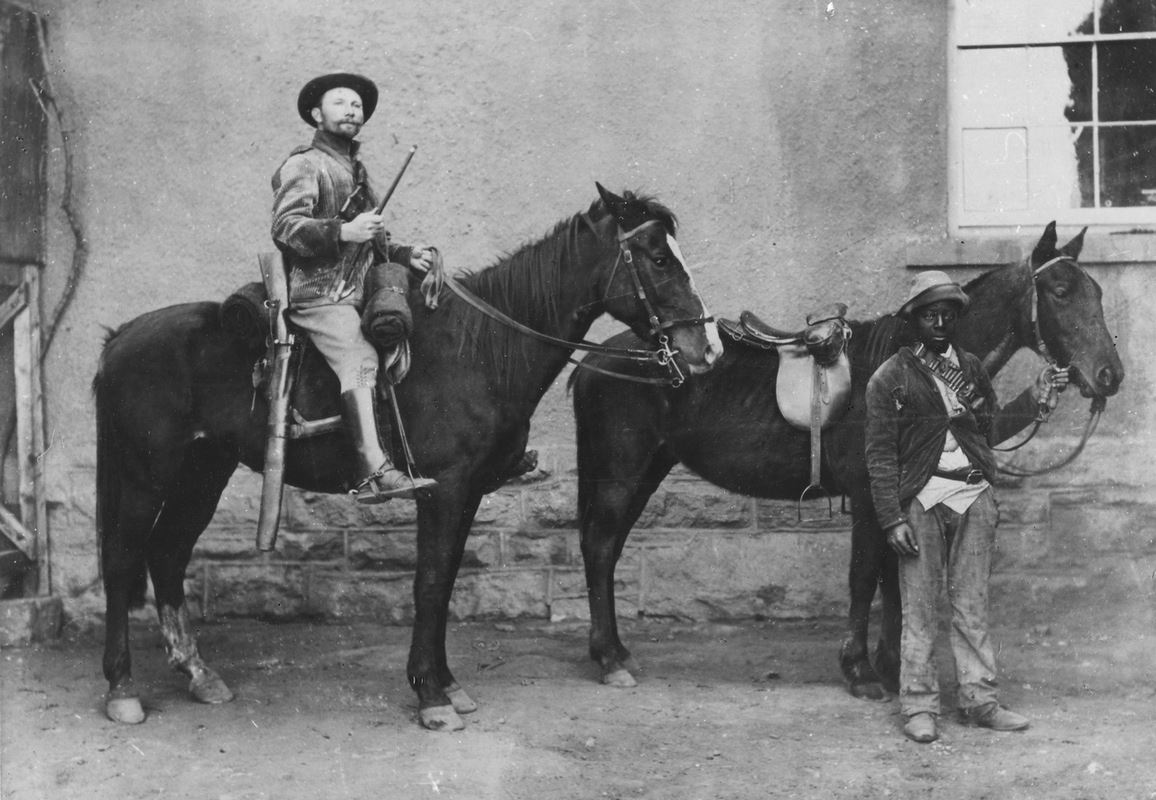
In the case of the Boer forces, very often Black farm workers took on the role of ‘agterryers’ (rear rider) in fighting Commandos, their job was a combination of military ‘supply’ and one of a military ‘aide-de-camp’ (assistant) to one or more of the Boer fighters.  These ‘agterryers’ ferried ammunition, weapons, supplies and food to the Boer combatants, they arranged feed for horses and in some cases, they were even armed.
10848845_10203197575321417_1902673332588762700_o
Boer officer and his agterryer

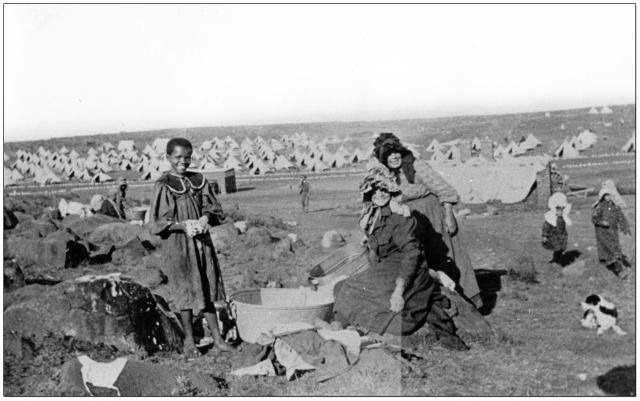
It was not only Black men in support, but Black women too, they supported the Boer women in providing food and feed to frontline commandos and when the concentration camp systems started they (with their children) were also swept up and in many cases also accompanied and lived in the tents with the Boer families interned in the ‘white’ concentration camps themselves, primarily looking after the children (black and white), sourcing food and water as well as cooking and washing.  They too were exposed to the same ravages of war in the camps as the white folk, mainly the water-borne diseases which so decimated the women and children in these camps.
20375883_1942095356068953_3486044989180576012_n
A Black women in a Boer Concentration Camp

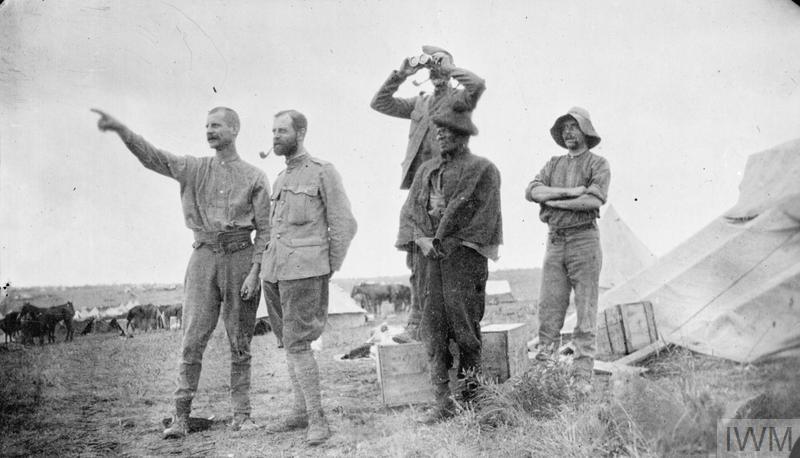
The British were no different, they quickly employed the local Black population as ‘scouts’ and numerous examples exist of these ‘scouts’ conducting surveillance of Boer positions and intelligence on Boer movements as well as guiding the British through the unforgiving South African terrain.
scout
British officers with a Black African ‘Scout’ observing terrain – Imperial War Museum

The British also sought manpower from the local Black population in cargo loading and supply haulage. These people were as much a part of moving British military columns as any military person involved in logistics and supply and to a degree they were also exposed to hazards of war.

brass arm
Black Africans in British Service, the brass armband signifies military service – Imperial War Museum

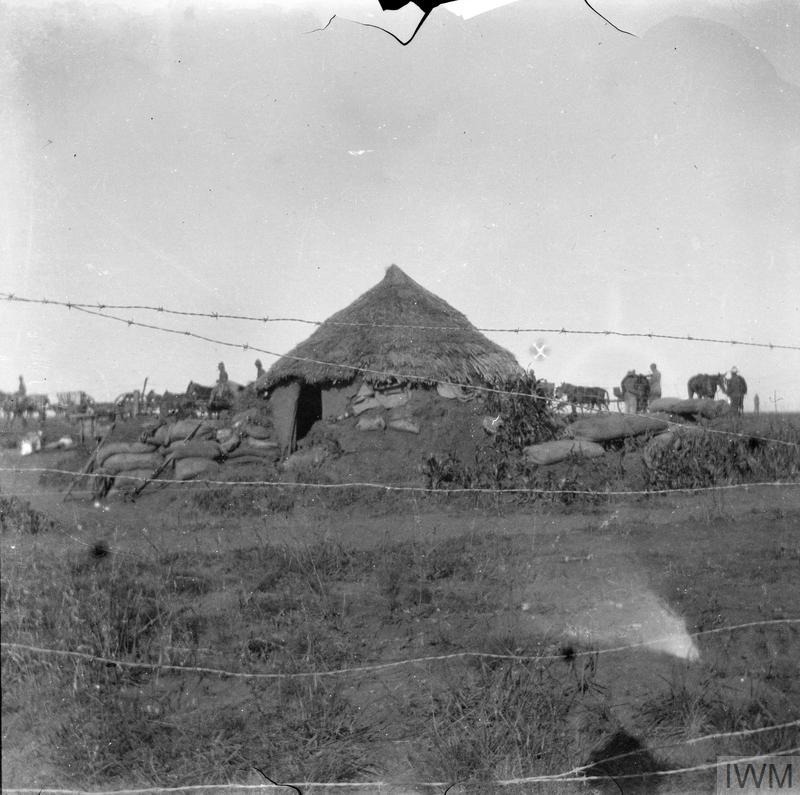
The British would also ‘commandeer’ entire Black tribal villages for the use of setting up forward bases, strong points and defences – putting entire village populations at risk and literally bringing them into their ‘war effort’.
native stronghold
Black African village taken over by the British for a strong-hold position – Imperial War Museum

There is even a recorded event when Black South Africans took a more direct role in the war. On 16 May 1902, Chief Sikobobo waBaqulusi, and a Zulu impi marched on Vryheid and attacked a Boer commando at dawn with losses on both sides.

Context behind the Concentration Camp policy

However, the biggest and most deadly impact to the Black African nations in the Boer War, came in their own earmarked British concentration camps.  So how did that come about?  To understand why the concentration camps initially came about and their purpose we need to put both the white and black concentration camps into context.

To the British, the war should have ended when they marched into Pretoria in June 1900, having now relieved the Boer sieges of their towns of Ladysmith in their Natal Colony, Mafeking and Kimberley in their Cape Colony, and having already taken The Orange Free State’s capital, and Johannesburg – the Transvaal’s economic hub.  The war was over, ‘officially’ they had annexed both republics and they even called for a post war ‘khaki election’ back in the UK to reshuffle Westminster to post war governance.
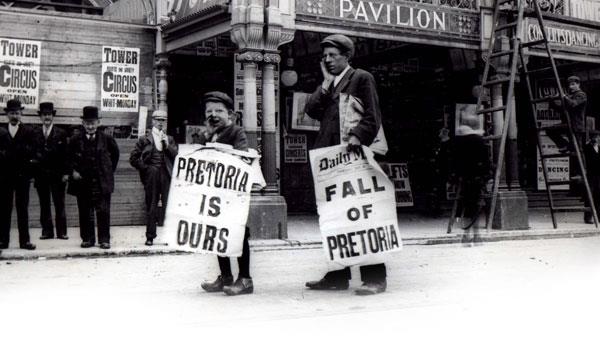
14516334_10154528497944476_6692268421857196301_n

Not for the Boer forces it wasn’t over – not by a long shot. The British in marching into Pretoria found themselves stretched deep into ‘hostile’ territory with extended and vulnerable supply lines stretching over hundreds of kilometres. Boer strategy was to move their government ‘into the field’, abandon the edicts of Conventional Warfare and embark on ‘Guerrilla Warfare’ tactics instead, to disrupt supply and isolate the British into pockets. To do this they would need food, ammunition and feed supplied directly from their own farmsteads surrounding their chosen targets. Isolated British garrisons came under attack with some initial Boer successes, their forces then melting away into the country. Easy targets were also trains and train lines, and after many a locomotive steamed into Pretoria riddled with bullet holes or didn’t make it all, Lord Kitchener got fed up at the arrogance of it all and acted decisively.

blockhouse

Kitchener concentrated on restricting the freedom of movement of the Boer commandos and depriving them of local support. The railway lines and supply routes were critical, so he established 8000 fortified blockhouses along them and subdivided the land surrounding each of them into a protective radius. Short of troops to man all these strong points (he needed 50 000 troops) and control the protective areas, Kitchener also turned to the local Black African population and used over 16 000 of them as armed guards and to patrol the adjacent areas.

Wherever and whenever an attack took place, or where sufficient threat existed to this system, Kitchener took to the policy of depopulating the radius area, burning down the farmsteads, killing the livestock and moving all the people – both Black and White (it mattered not to the British what colour they were) into what was termed a ‘refugee camp’ by the British, these camps however were in reality a concentration camp of civilian deportees forcibly removed from their homes.
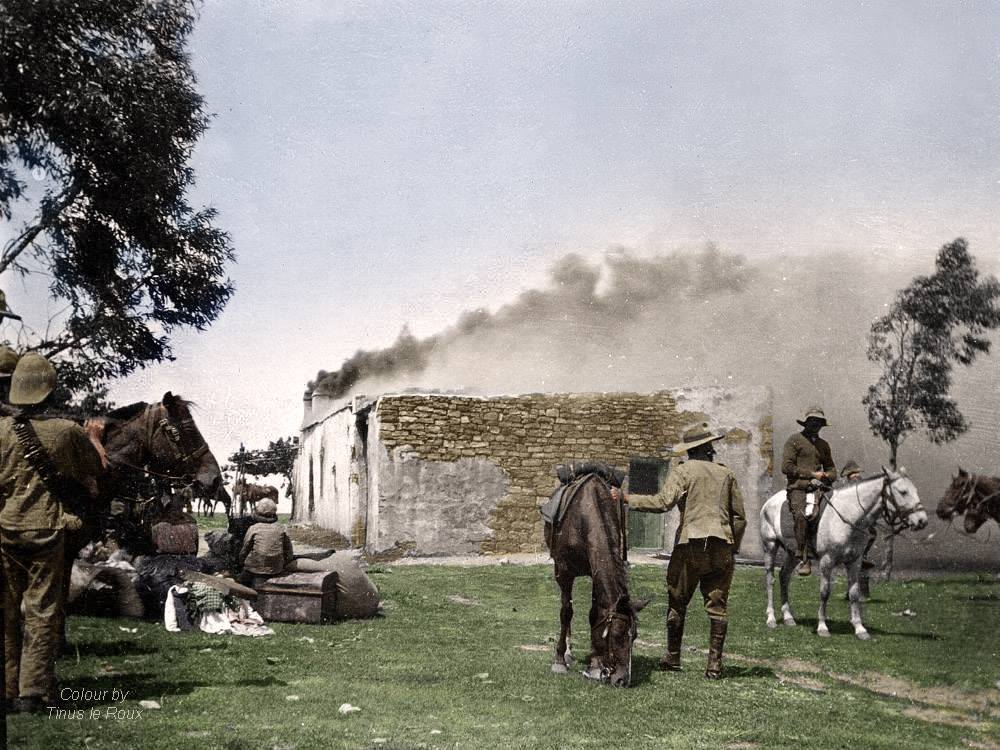
52966827_2062656877104244_6953808788189085696_o
Image: British soldiers burning a Boer farmstead. Note displaced Boer family sitting with whatever possessions they could salvage in time.  Colour by Tinus Le Roux

Two systems of concentration camps existed, one for Blacks and one for Whites.  Both were run very differently.  Victorian sentiment at the time was very racially guided.

The Boer Concentration Camps

The ‘White’ camps were tented and the ‘refugees’ (more accurately forced removed and displaced civilians) were given rations of food and water.  The British could also not afford the resources to ‘guard’ and administrate these camps, and herein lies the problem.  It was due to the lack of ability to manage the camps that some camps were managed well and others simply were not, some fell under British military command others were ‘outsourced’ to local contractors manage, and both British and quite often Afrikaner entrepreneurs were brought in to administrate the camps.  In most instances these camps were very isolated, and by isolation it simply meant the people in them had nowhere else to go (there were no Nazi styled ‘wire’ fences with prisoners shot trying to escape), the camps were in fact relatively porous with regard the movement of people in and out of them.

Image: Children fetching water, Bloemfontein concentration camp. Note general conditions and bell tents. Colourised by Tinus Le Roux

Some camps were well run, orderly with demarcated tent lines and health policies implemented based on running a normal military camp (tents and bedding were regularly aired out) and ablutions correctly located with drainage.  Other camps were not well run at all, the administrators allowing the Boer families to ‘clump’ their tents together with no proper ablution planning or health policy.  Policies on food rationing also differed from camp to camp.  In some camps, sadistic camp administrators took to punitive measures to ‘punish’ the Boer families whose menfolk were still fighting in the field to get them to surrender, literally starving these people to the point that just enough food was given to keep them alive.

47687166_1942108895825710_8580116721963106304_n
Boer family in a concentration camp with their Black domestic helper.  Colourised by Tinus Le Roux

It follows that in these camps, especially the poorly administrated ones, that disease would take root, and it came in all sorts forms ranging from poor nutrition to exposure, but it mainly came in the form of waterborne diseases from poor sanitation.  Here again, some camps were medically geared to deal with it, others not. The net result of all of this is a tragedy on an epic level.

The official figure of the death toll to white Boer women and children in the camps is 26 370, a staggering figure when you consider that only an estimated 6,000 Boer combatants in the field died in the war. Another tragedy (lesser so than life) was the loss of family heirlooms and family records to the relocation and scorched earth policies, this served to erase the inherent culture and history of the Boer peoples. The combination of both the systematic erosion of Boer culture and the astronomical rise in death rates of the ‘fountain’ of Boer race – their women and children, has left a deep scar of hatred and loss which still openly exists to this day, and for good reason.

The Black Concentration Camps

The ‘Black’ concentration camps were a different matter entirely. On the 21st December 1900, Lord Kitchener made no bones about his new concentration camp policy at the inaugural meeting of the Burgher Peace Committee held in Pretoria, where he remarked that in addition to the Boer families, both ‘stock’ and ‘Blacks’ would also be brought in.

As said, Victorian sentiment was very racially guided, and where the ‘white’ concentration camps were at least given some semblance of tents for shelter, food, aid workers, water rationing and some medical aid albeit entirely inadequate, the ‘Black’ concentration camps had very little of that.

Black concentration camps, were also earmarked to isolated areas bordering railway lines so they could be supplied – with both deportees and supplies.  The isolation also became the means of containment.  However no ‘tented’ constructs were provided in most instances and these Black civilians were simply left on arid land to build whatever shelters they could scourge for.  They were also not given food rations on a system resembling anything near the system provided ‘white’ camps, in the white camps the food rations were basically free of charge, in the black camps they had to pay for it.
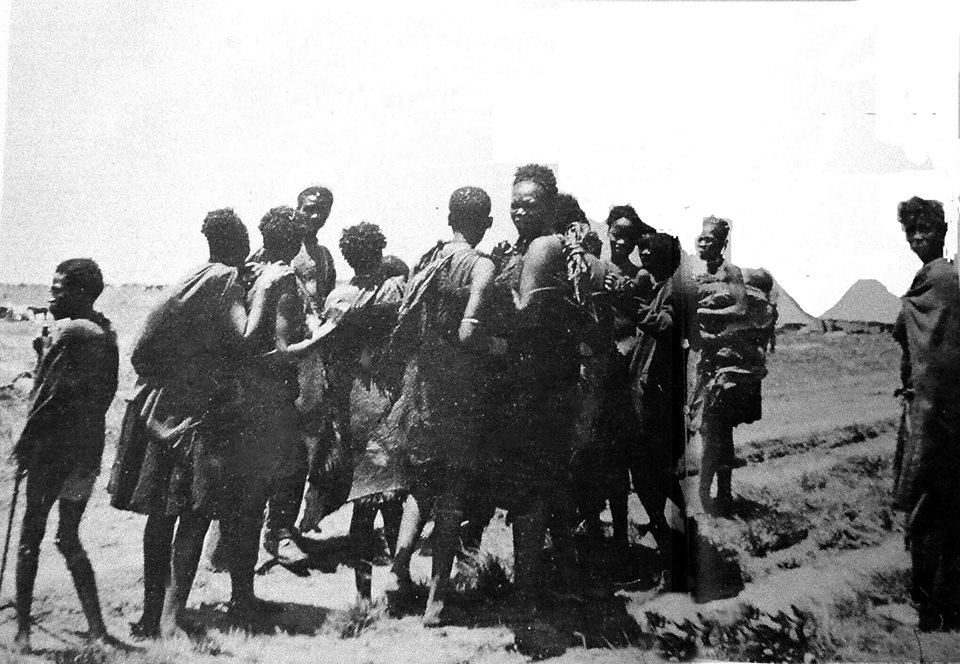
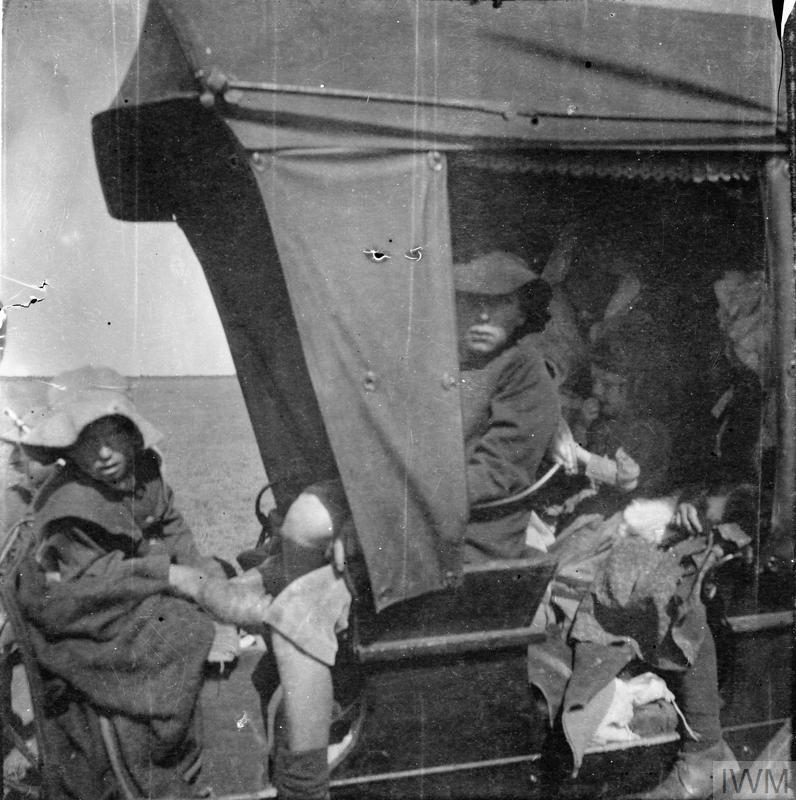
black women on way to concentration camp
Black women on their way to a concentration camp in the Transvaal – Imperial War Museum image

In all an estimated 130 000 black civilians (mainly farm labourers on Boer farms) were displaced and put into this type of concentration camp, 66 camps in total (with more still been identified, some sources say as many as 80 camps), all based primarily on the British fear that these Black people would assist the Boers during the war.

During early 1901, the black concentration camps were initially set up to accommodate white refugees. However, by June 1901, the British government established a Native Refugee Department in the Transvaal under the command of Major G.F. de Lotbinier, a Canadian officer serving with the Royal Engineers. He took over the black deportees in the Orange Free State in August that year and a separate department for blacks was created.

20448955_10155633958753980_1228035049095603465_o
Medical inspection inside a Black concentration camp as administered by the Native Refugee Department. Orange Free State, 1901. Note the black mourning band worn by the RAMC Doctor and the armed African wearing a British army tunic top. Children with distended stomachs inspected, including the toddler with a ruptured umbilical – starvation. In the background to right of the Doctor a child bites its fingers while witnessing this inspection. Note the shelters. No tents – caption and research by Dr. Garth Benneyworth.

Entire townships and even mission stations were transferred into concentration camps. The Black camps differed from the Boers in that they contained large a number of males. This meant the camps were located by railway lines where the men could provide a ready supply of local labour. Work was however paid, and it was via this economy that the Black deportees could properly sustain themselves in the camps.  In this respect to better understand what these camps were, the concept of a ‘forced labour camp’ would be a better definition.

Of the Black concentration camps, 24 were in the old Orange Free State Republic, 4 in the Cape Colony and 36 in the old South African (Transvaal) Republic. There was a single concentration camp in Natal at Witzieshoek, and more camps are identified to this very day . Some of the camps were for permanent habitation and others were of a temporary nature intended for transit.  Their stories speak volumes for the way they were treated.

On the 22 of January 1902, At the Boschhoek Black concentration camp the deportees held a protest meeting. Stating that when they have been brought into the camps they have been promised that they will be paid for all their stock taken by the British, for all grain destroyed and that they will be fed and looked after, none of which had not been forthcoming. They were also unhappy because “… they receive no rations while the Boers who are the cause of the war are fed in the refugee camps free of charge … they who are the ‘Children of the Government’ are made to pay’.

23 January 1902 records that two Black deportees of the Heuningspruit concentration camp for Blacks, Daniel Marome and G.J. Oliphant, complained to Goold-Adams: “We have to work hard all day long but the only food we can get is mealies and mealie meal, and this is not supplied to us free, but we have to purchase same with our own money. “We humbly request Your Honour to do something for us otherwise we will all perish of hunger for we have no money to keep on buying food.”

The ‘official’ rations were meagre at best and had to be purchased, for ‘Natives’ over 12 years of age: Daily: 1½ lbs either mealies, K/corn, unsifted meal or mealie meal; ¼ oz salt; Weekly: 1 lb fresh or tinned meat; ½ coffee; 2 oz sugar – all but the corn was to cost the Black deportee receiving it 4½d per ration.

21273552_10155443040061480_3614205256566352145_o
Black women in a Black concentration camp in Klerksdorp, note the lack of infrastructure and shelter

By 1902 18 January, Major De Lorbiniere, writes that supplying workers to the army ‘formed the basis on which our system was founded’. The department’s mobilisation of Black labour was very successful – however really this is not surprising at all considering the incentives offered. Those in service of the British and their families could buy mealies at a halfpence per lb, or 7/6 a bag, while those who do not accept employment had to pay double, or 1d per lb and 18/- or more per bag.

The camps, usually situated in an open veld, they were overcrowded, the tents and huts were placed too close together and did not provide adequate protection from the harsh African weather. They were extremely hot in summer and ice cold in winter. Materials for roofing were scarce, also no coal was provided for warmth.  In addition to this misery there was a severe shortage of both food and water (mainly fresh vegetables, milk and meat) .

Water supplies were often contaminated by disease and any form of medical attention was rare to non-existent. Abhorrent sub-human conditions meant that water-borne diseases like dysentery, typhoid and diarrhoea spread with ease and the death rate climbed drastically.
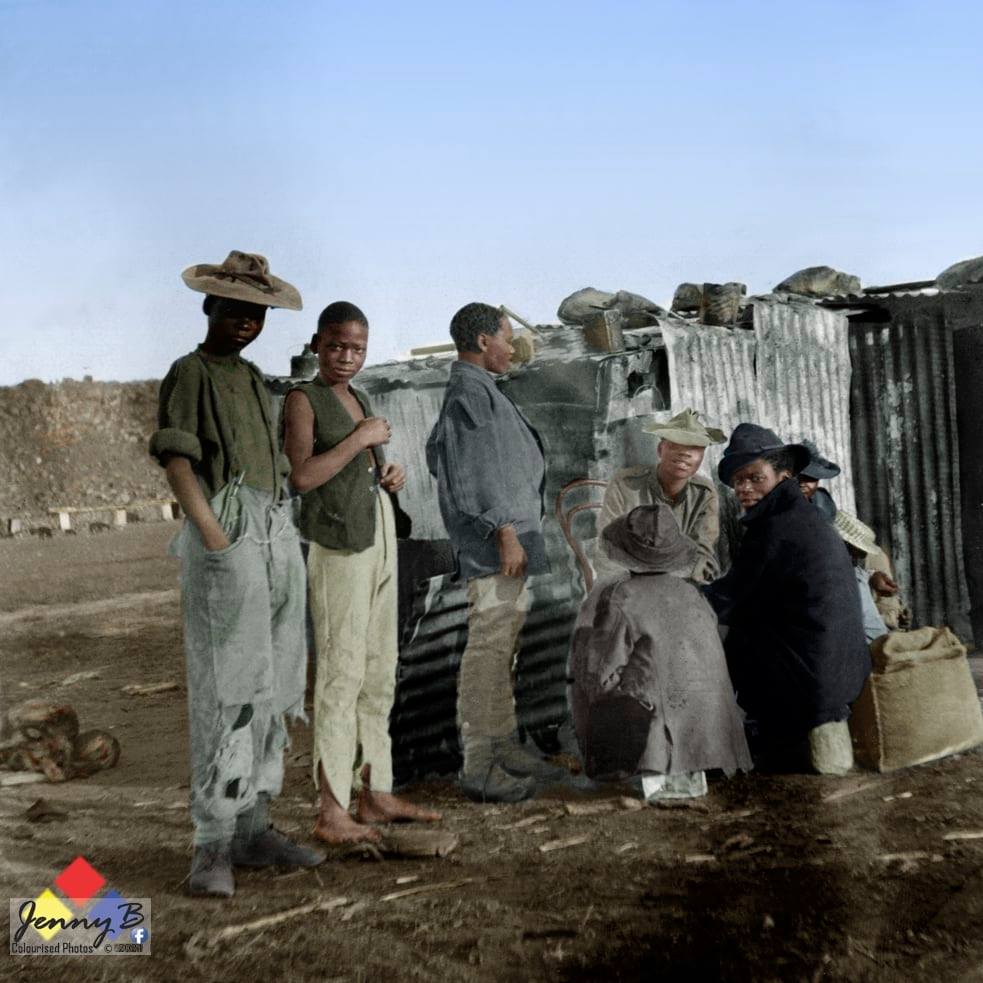
Image: Probably Bronkhorstspruit Concentration Camp. Photo source: LSE library, colourised by Jenny Bosch. Note the lack of bell-tents and use of corrugated iron sheets for shelter.

The horrific conditions these deportees subjected to were superseded only by even more abhorrent treatment, the same social diseases, exposure and nutrition problems sprung up in these camps as they did in the ‘White’ Boer camps, with the same horrific result.

Most of the deaths in the concentration camps were caused by disease, and it took root with the most vulnerable, mainly children. By this stage in the war, the death rates in the Black concentration were climbing to unacceptable levels. An aid worker, Mr H.R. Fox, the Secretary of the Aborigines Protection Society, was made aware by Emily Hobhouse that the Ladies Commission (the Fawcett Commission – looking into the problems and death rates in the concentration camps) had focussed solely on the ‘White” concentration camps and completely ignored the plight of Blacks in their concentration camps.  So, he promptly wrote to Joseph Chamberlain, the Colonial Secretary, requesting an inquiry be instituted by the British government “as should secure for the natives who are detained no less care and humanity than are now prescribed for the Boer refugees”.

On this request Sir Montagu Ommaney, the permanent under-secretary at the Colonial Office, responded that it seems undesirable “to trouble Lord Milner … merely to satisfy this busybody”.  With that swift apathy to the plight of the Black deportees came another tragedy on an epic level.

By the beginning of 1902, conditions in black camps were however improved somewhat in order to reduce the death rate. More nutrients were introduced (tinned milk, Bovril and corn flour) and shops were opened that allowed black people to buy some produce and equipment, mainly items like flour, sugar, coffee, tea, syrup, candles, tobacco, clothes and blankets.

The total Black deaths in camps are officially calculated at a minimum of 14 154 (about 1 in 10).  However recent work by Dr. Garth Benneyworth estimates it as at least 20 000, this after examining actual graveyards and factoring that burials had also taken place away from the camps themselves. Dr. Benneyworth notes that the British records are incomplete and in many cases non-existent and the fact that many civilians died outside of the camps in labour or transit or were buried in shared graves, this caused the final death toll to be much higher.  The high rate of child death in the Victorian period aside, a staggering 81% of the fatalities in the Black concentration camps were children.
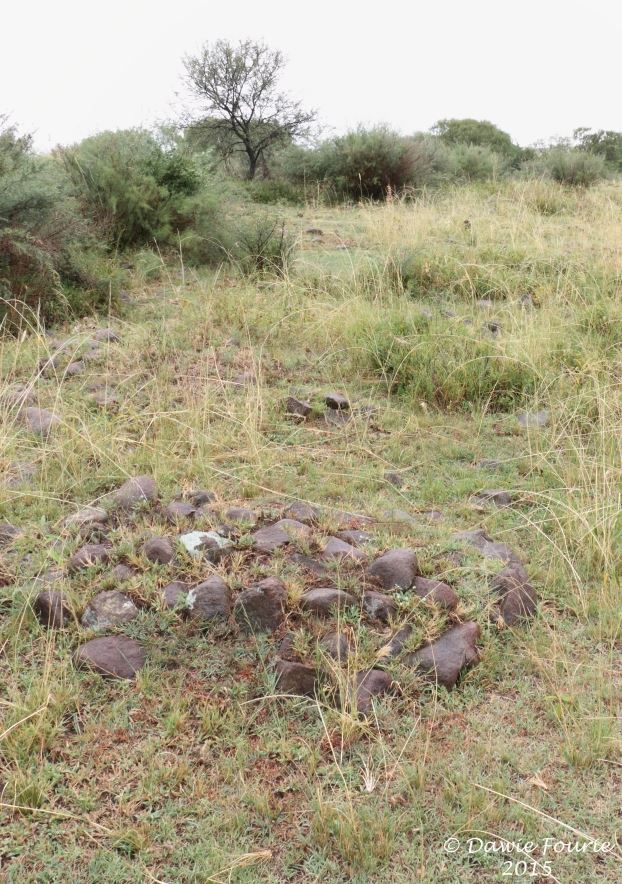
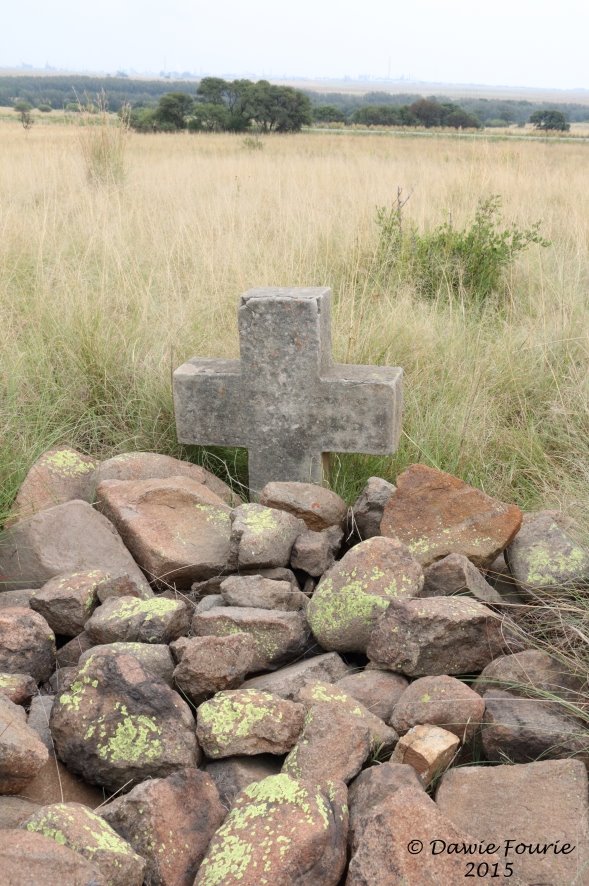
Images courtesy of Dawie Fourie

In Conclusion

Compare that to the Boer concentration camps, where the deaths are recorded are around the 26 000 mark and it becomes clear that the Black population of South Africa suffered the same as the White population during the Boer war.  However, the fact is that historical research into the Black involvement in the war is sorely missing from the general narrative.  Post the Boer war and during Apartheid a lot of research around the Boer concentration camps was done, even monuments and museums were erected to them. It served Nationalist political agenda at the time in establishing Afrikaner identity along a separate race line, so almost nothing by way of research was done on the Black concentration camps, no monuments, museums or even a solid historical account exist of them at all. The Black history of the Boer war most certainly did not make it into mainstream ‘National Christian’ government education curriculum at the time.  As a result the Boer war is simply just not properly understood to this day.

If you add to this the glossed over South African Black History behind their contributions and sacrifices in WW1 and WW2, you can see that Race Politics in South Africa has simply not taken the Black history and their sacrifice along with the mainstream historical account, especially the history prior to the implementation of Apartheid in 1948. What this alienation of critical parts of our history from the overall historical record has done, has reinforced the narrative that black lives were somehow of a lesser consequence to white lives. So, there is no surprise that most modern South Africans (mainly youth) simply can’t be bothered with properly understanding South African history prior to 1994.

There is still a very long way to go to fully understanding the war – but the future in reconciling the true effect of this war and redressing it as a nation – is to understand that the Boer War was not only a ‘white’ man’s war, nor the concentration camps strictly about Afrikaner women and children, a much bigger story exists and its one which needs to be reconciled with – and that is the suffering of South Africa’s black population and the extraordinary losses they experienced in these concentration camps too.

The redress for white Afrikaners in South Africa as to any form of global awareness and world condemnation of this tragedy to their nation lies in the reconciliation of the history with the previously unwritten and misunderstood black history behind The Boer War.  Only if his tragedy is seen as a national issue, with a common cause and reconciliatory national healing process behind it to deal properly with it, only then can amends and long awaited apologies from the British be found.


Written and Researched by Peter Dickens with references and extracts from the Military History Journal Vol 11 No 3/4 – October 1999 Black involvement in the Anglo-Boer War, 1899-1902 by Nosipho Nkuna, also references from Dr Garth Benneyworth and ‘Erasure of black suffering in Anglo-Boer War’ By Ntando PZ Mbatha.  Photo copyrights – The Imperial War Museum and Dawie Fourie.
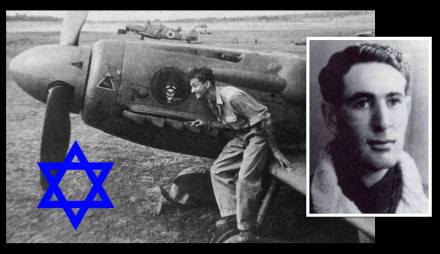
Four Israeli pilots stopped the Egyptian invasion of Tel Aviv. One was a South African.

When Israel became an independent nation on May 14, 1948, the armies of four Arab neighbours — Egypt, Syria, Lebanon and Iraq — immediately invaded the new country to prevent its creation. Desperate to defend themselves the Israelis lacked many modern weapons and aircraft.

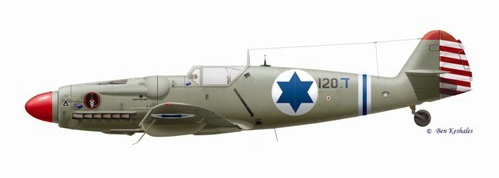
The Israelis did however have a small fleet of Avia S-199 fighters, made in Czechoslovakia with parts left over from the WW2 German Lufwaffe. The aircraft was poorly constructed and it was extremely unpopular with pilots who called it a Mezek (mule), another name for it was the ‘Messer’ (meaning ‘Knife’ and because the frame was that of the WW2 German Bf109G Messer-schmitt) the engine came from a Luftwaffe Heinkel He-111H bomber, and the Israeli pilots sarcastically also called it a ‘Messer-shit’.

messer01.jpg
Avia S-199

Within this tiny newly formatted Israeli Air Force were a number of very brave Jewish pilots, from the world over, some with WW2 combat experience.  One such pilot was a South African, Eddie Cohen.  This is his story.

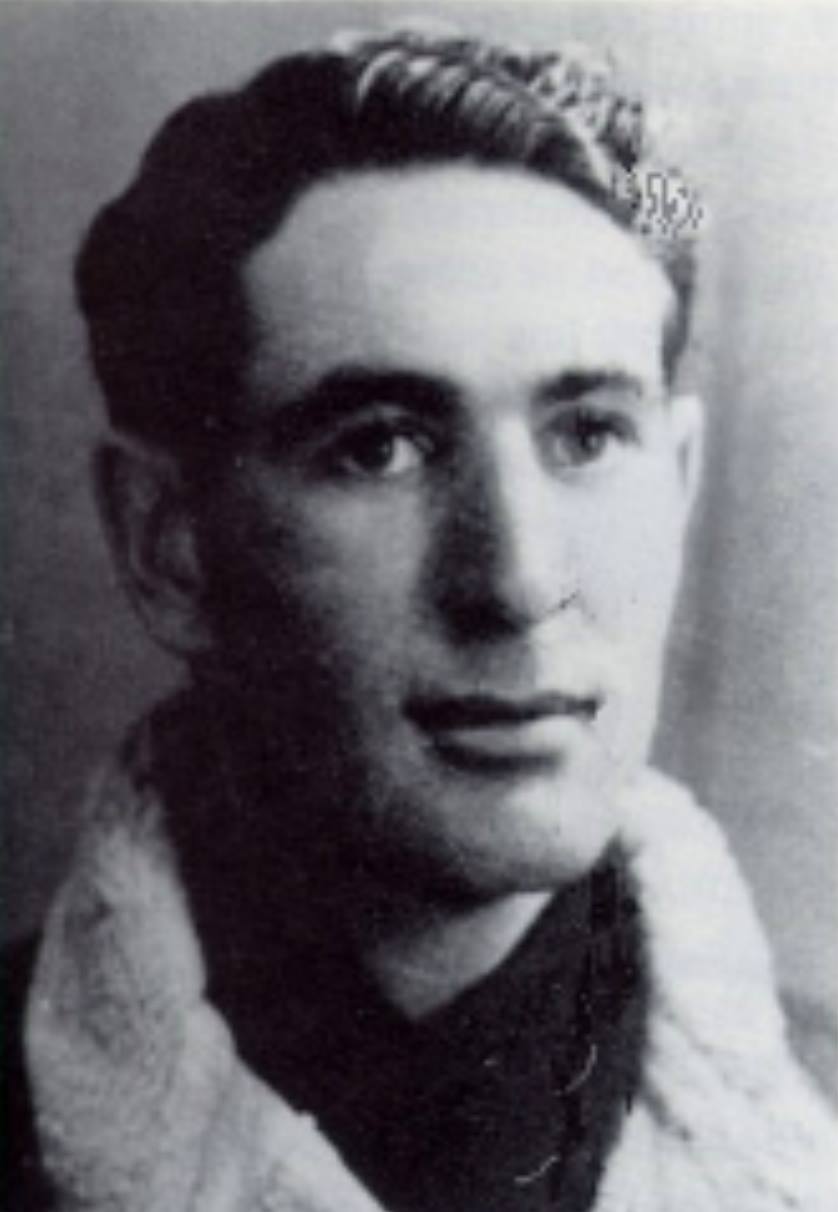
Edward (Eddie) (Shlomo) Cohen came from South Africa.  He was the only child of Victor, Edward Cohen was born in Johannesburg on 2nd July 1922 into a well-to-do family. He grew up in an assimilated background, completed high school and began his studies at the University of the Witwatersrand.

21167942_10155437209216480_169900570387994980_o
Eddie Cohen

World War II changed his plans, and he joined the South African Air Force (SAAF), qualifying as a fighter pilot with the rank of Lieutenant.  He flew with 2 Squadron, SAAF and subsequently 4 Squadron SAAF in Italy during the war.

Upon his discharge from the SAAF at the end of the war, he did not return to his university studies, and took an office job in his father’s business in Johannesburg. He loved playing sports with his friends: rugby, tennis and golf. He was also very fond of music and excelled at that, too.

His meetings with Zionist friends aroused his interest in his religious roots, and their beliefs awoke something in him which led him to follow in their footsteps to Palestine.

He arrived in Palestine in 1947 and joined his friends at Kibbutz Ma’ayan Baruch. On a trip to Tel Aviv, he bought a number of books on archaeology and the history of Palestine, and in these scholarly works he found a new life, and began to take an interest in Judaism and his historical homeland.  He wrote to his mother:

“Today, Shabbat, I spent the whole day studying the history of the Jews and surrounding nations, using the Bible and other books. It is the most interesting study I have ever undertaken, as the area around this part of the world was the cradle of western civilization. My greatest regret is that I did not think of studying this branch of history earlier in my life, as so much can be learnt from it…”

Later, in 1947, the survival of the Zionist settlers called Eddie back into military service, he joined ‘Sherut Avir’, the forerunner of the Israeli Air Force, which formed on the 27th of December 1947.  Eddie Cohen, Boris Senior, Ezer Weizman, Modi Alon, and six others made up the new Tel Aviv Squadron.

On January. 15, 1948, Eddie Cohen took part in the Sherut Avir’s first co-ordinated multiple-plane mission: a pre-dawn aerial resupply of the besieged Gush Etzion settlements, using outdated Tiger Moths and Cargo planes.

Eddie Cohen was then trained at Ceske Budejovice in Czechoslovakia as one of ten pilots earmarked for the initial S-199 training course. He flew back to Israel on May 20 with the other graduates and the first batch of Avia S-199 fighters.

On 29 May 1948, Cohen flew in the first S-199 mission, regarded as the first mission of the newly formatted Israeli Air Force (IAF). The Egyptian advance on Tel Aviv had been stalled by a blown bridge 32 km south Tel Aviv by the lightly armed remnants of the Israeli Givati Brigade.

The Israeli Defence Force issued Operation Order No. 26 to the IAF Command that very same day and ordered an attack (even though the first Avia S-199 fighters were theoretically air-worthy they were not yet properly tested).  Four pilots, Eddie Cohen (South African), Modi Alon (Israeli), Ezer Weizman (Israeli) and Lou Lenart (American) took off from Ekron at 19:45 in their Avia’s bombed up with two 70-kg bombs each, and armed with ‘untested’ cannons and machines guns, they set off bound for the Egyptian army column near Ashdod.

Lou Lenart Israeli Air Force
Lou Lenart

Of the mission, Lou Lenart said, “There is no making light of this moment. Behind us is Israel, the Jewish people hanging on by a thread. Ahead of us is the enemy, advancing to destroy everything we love.”

The four pilots alone faced 6,000 Egyptian troops — consisting of seven infantry battalions, six hundred vehicles (including tanks), and formidable anti-aircraft weapons.

Lenart and Modi Alon shared unofficial command of the new fighter squadron and Lenart led the first mission. The wingman pair of Lenart and Alon took off first, followed by Weizman and Cohen. Lenart, however, was unfamiliar with the country and once in the air realized he didn’t know the way to Ashdod. The first two S-199s had no radios so he used hand signals to indicate direction requirements to Alon, who in turn pointed in the proper direction.  In order to avoid any enemy fighters the formation flew over the sea (west of the column) and turned east when it reached Ashdod.


Israeli Air Force Ezer Weizman
Ezer Weizman with his S-199

They spotted the Egyptian column between Ashdod and Gas’ser Ishdod, which had just stopped on the southern side of the destroyed bridge.  At this point all four pilots using machine guns and cannons strafed the concentrations of Egyptian armed forces and bombed them.

Once ammunition and bombs had been exhausted they all headed back to Ekron, Eddie Cohen had a radio and was in radio contact with base. On his way back he reported that all was OK, that he saw the base and that he was about to land. From Ekron, he was not observed and he did not land there. At another nearby air base at Chatzor an aircraft was observed engulfed in flames trying to crash-land about two and a half kilometers away from Chatzor.

The Israeli army at Chatzor dispatched two infantry platoons immediately to rescue the pilot but the Egyptian forces were the first to reach the location. Eddie Cohen had mistaken Chatzor for Ekron and tried to land there with his damaged airplane.

Tragically Eddie Cohen was killed in the crash. Eddie’s S-199 had taken an anti-aircraft gun hit which started a fire that he apparently hadn’t initially noticed.

The bold strike left the Egyptian forces dumbfounded and vulnerable. That night, Jewish ground troops took advantage of the situation by attacking the Egyptians’ flank. The Egyptians were thrown into disorder. Israeli intelligence intercepted this dispatch from their brigade commander to Cairo: “We were heavily attacked by enemy aircraft and we are scattering.”

Despite the loss of Eddie and one aircraft, the mission was a success, it seems that the attack had a profound psychological effect on the Egyptian forces, and they halted their advance completely. The bridge where they stopped was later named ”Ad Halom” bridge, meaning ”no further”.

The Egyptian Army later deflected to the east, in order to link with other Arab forces besieging Jerusalem. Tel Aviv was saved, and so was too was the new nation of Israel.

Israeli Air Force, David Ben-Gurion, Modi Alon
Modi Alon (centre with sunglasses) and David Ben-Gurion (right)

After the Israeli War of Independence finished, in prisoner exchanges with the Egyptians for the remains of the Fallen, Eddie’s body was identified by the then Chief Army Chaplain, Rabbi Shlomo Goren, and in 1949 Israel recovered Eddie Cohen’s remains near the small airfield, at the time of his death in Egyptian hands. Edward Cohen’s mother came from Johannesburg for the re-interment at the Mount Herzl military cemetery on the 8th of November 1951.

Eddie Cohen Is regarded as the first combat casualty of the first fighter squadron (101 Squadron) of the new Jewish State of Israel, and is a national hero in Israel (in South Africa he is hardly remembered at all).  On 29th September 1949, on the orders of the Israeli Chief of Staff, Edward Cohen was posthumously promoted to the rank of Flight Commander in the IAF.


Researched by Peter Dickens. Source: The Jerusalem Post, the history of 101 squadron and wikipedia

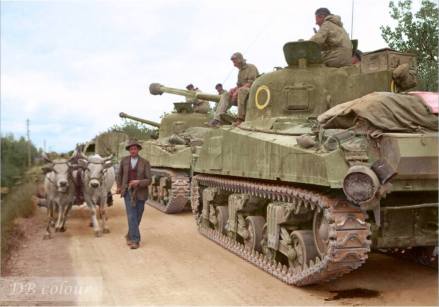
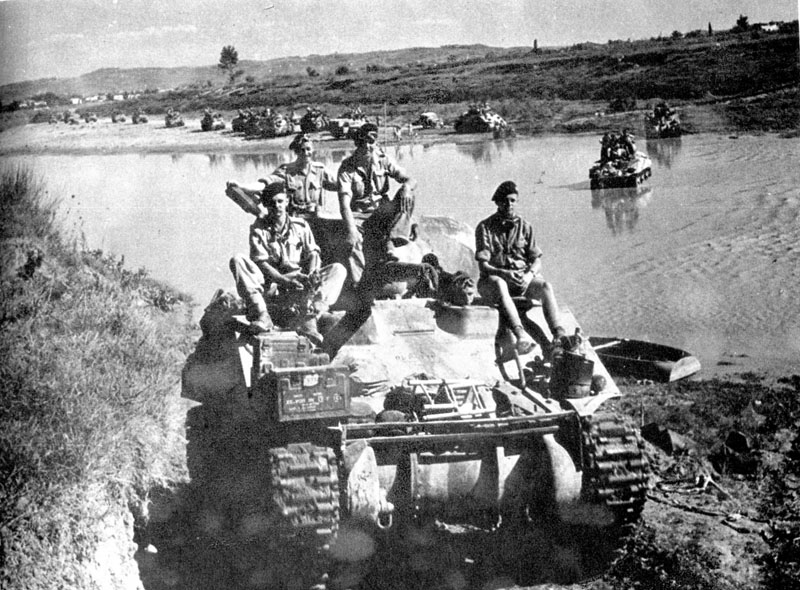
Pretoria Regiment Sherman tanks in Italy – Operation Olive

Great ‘colourised’ image of Sherman Firefly tanks of ‘C’ Squadron, Pretoria Regiment somewhere in Italy in 1944 during Operation Olive. The Pretoria Regiment fought as part of 11th South African Armoured Brigade, 6th South African Armoured Division.

Operation Olive has been described as the biggest battle of materials ever fought in Italy. Over 1,200,000 men participated in the battle. The battle took the form of a pincer manoeuvre carried out by the British Eighth Army and the U.S Fifth Army against the German 10th Army (10. Armee) and German 14th Army (14. Armee).

In mid 1944 two Allied brigades took the Chianti highlands, Radda, Maione. The Guards took it by night, supported by the tanks of the Pretoria Regiment. By 20 July, General Kirkman insisted that the 6th South African Armoured Division lead the crossing of the Arno river but lost some tanks on the gravel due to heavy mining when supporting the 4th Infantry Division. Its flanks were guarded by the 8th Indian Infantry Division. Eventually, it crossed the river and captured Mercatale, defended by the German 356th Infantry Division who were supported by Tiger tanks.

IMG010small

South African 6th Armoured Division crossing the River Arno

Despite delaying actions by the German Parachute Division, the South Africans reached the Paula line on 28 July. Eventually, by Alexander’s decision, Florence was to be bypassed by the spearhead which constituted the South African and New Zealand Divisions. The Imperial Light Horse/Kimberley Regiment was the first to enter the city. Afterwards, the 6th South African Armoured Division was withdrawn into Eighth Army reserve near Siena. There it was resupplied, completed, and waited for a possible reinforcement of the U.S. Seventh Army for the assault of southern France in August, but was replaced at the last minute by the British 6th Armoured Division and resumed its operations in Italy.

The war was certainly not over for the South African 6th Armoured Division. It took part in the consolidation of the Arno bridgehead in September and prepared to assault the Gothic line. In the process, the Division was ordered to advance along Route 64 leading to Vertago and Bologna and to capture the twin peaks of Sole and Capara. Meanwhile, the Guard brigade met heavy resistance from the well dug-in German Lehr Brigade and two battalions of the German 362nd Infantry Division.

The 11th Armored Brigade was forced to fight dismounted due to the terrain. Finally, the German forces retreated to the Green line, and Operation Olive officially ended on 21 September 1944.


Caption courtesy WW2 Colourised Images and Wikipedia. Colourised Image copyright “Color by Doug”

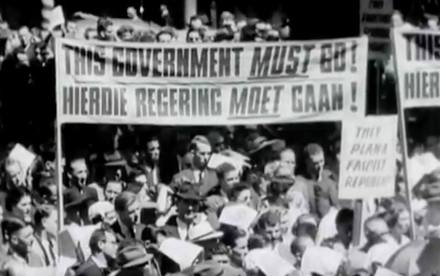
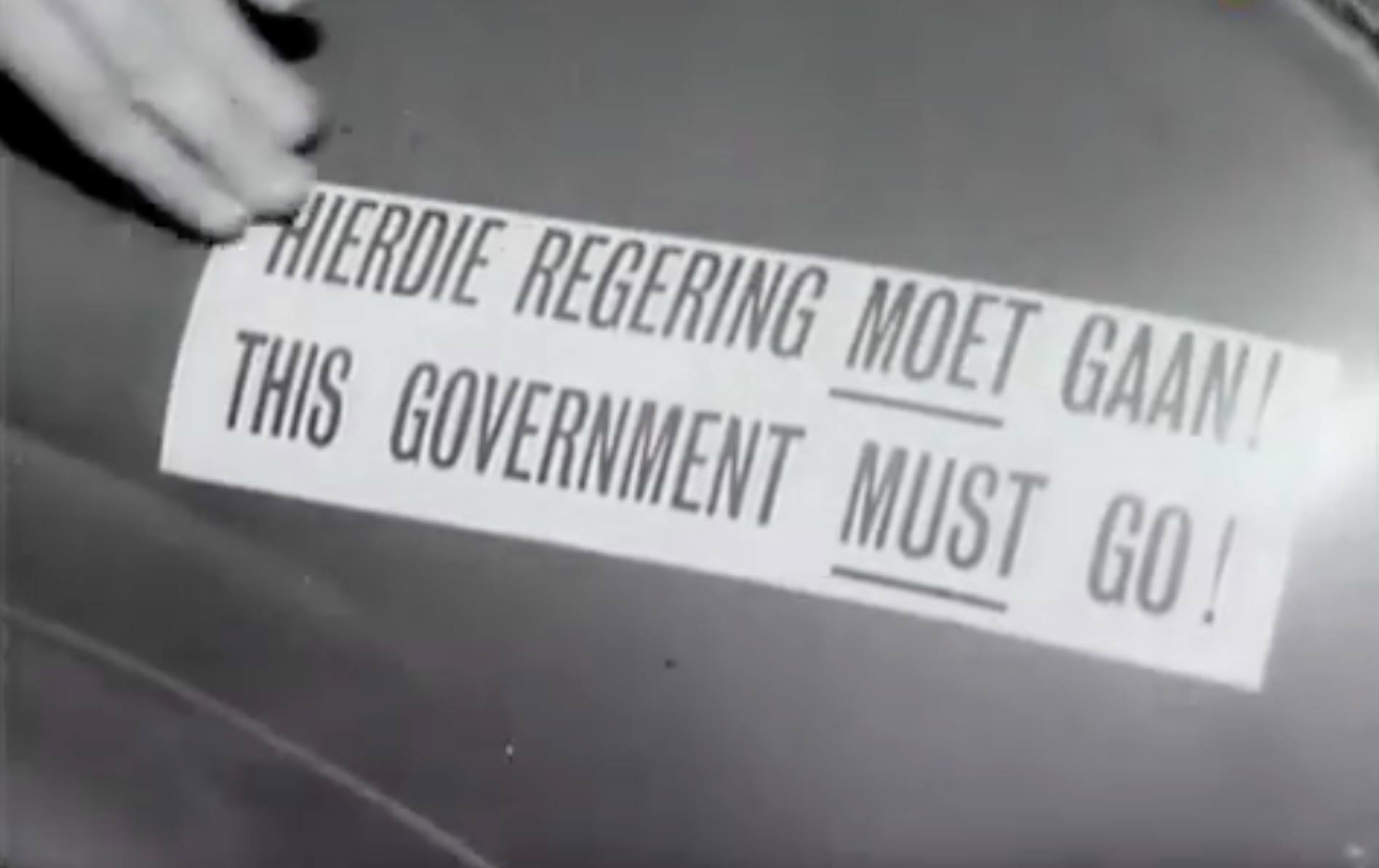
‘New’ rare footage of The Torch Commando in action, the first mass protests against Apartheid by WW2 veterans.


Sometimes you come across gems, and occasionally more information on The Torch Commando surfaces.  This is more very rare footage showing South Africa’s first mass protests against Apartheid, led by Sailor Malan, a World War 2 fighter Ace and Battle of Britain hero.

The inconvenient truth to the modern African National Congress driven narrative of what and who qualify ‘struggle heroes’ is that this movement was the first really significant ‘mass’ protest movement against Apartheid, and it was made up of mainly of white war veterans, led by a white Afrikaner – that’s a fact.  By no means was The Torch Commando small either, at its peak it boasted 250 000 members and their protests attracted between 30 000 to 75 000 people.

Since publishing the first video and articles on The Torch Commando, a number of people have fed back to The Observation Post to dispute this above basic fact.  To see a fuller article on The Torch Commando and other footage, follow this link:

The Torch Commando led South Africa’s first mass anti-apartheid protests, NOT the ANC!

They highlight the following:

The Torch Commando concerned itself only with the Coloured Franchise – This is incorrect.

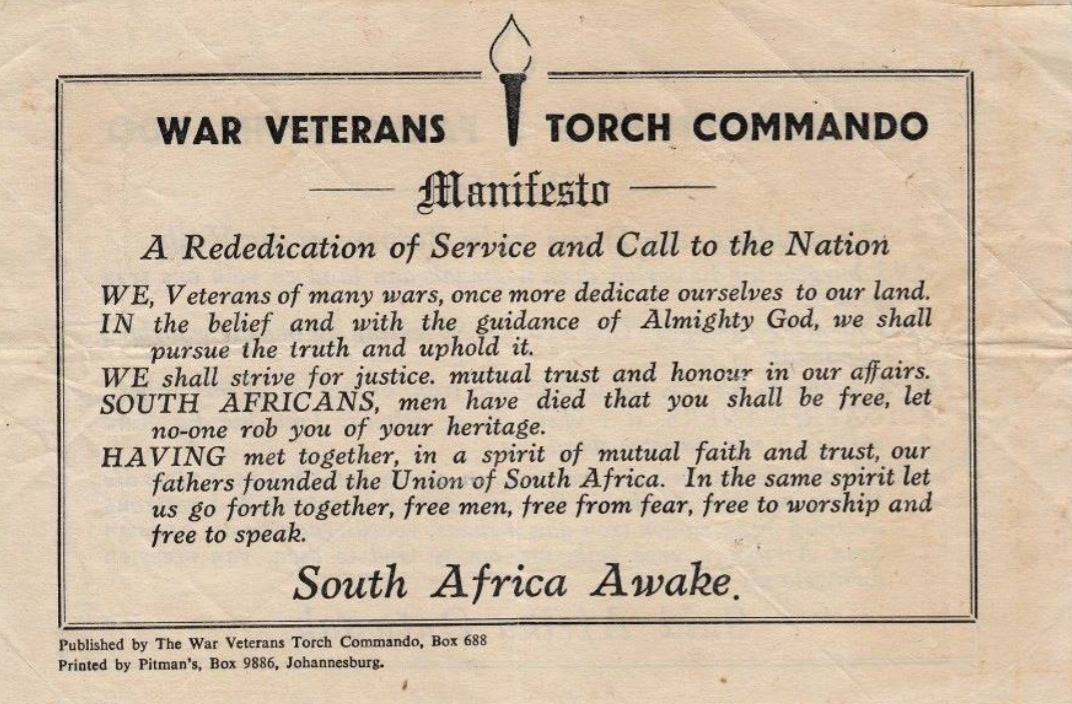
The Torch Commando Manifesto called for Liberty, Freedom of Speech, Liberty from Tyranny and Freedom of Religion. Sailor Malan’s personal politics which he brought into the Torch revolved around addressing poverty in the black community and economic empowerment. Franchise and political reform is actually something Sailor Malan saw as secondary.  Funnily, Sailor Malan was years ahead of time in this regard, as it is only now that politics in South Africa is focusing on freedom from economic emancipation ahead of political emancipation.

14715460_689736611196074_2236990259246984822_o

Torch Commando Manifesto

The Torch Commando focussed on protesting against DF Malan’s National Party’s 1948 election win with its proposals of Apartheid.  It saw itself as a ‘pro-democracy’ movement and regarded the National Party’s policies as ‘anti-democratic’.  The Cape Coloured franchise removal was the first action of the National Party to implement the edicts of Apartheid, so it stood to reason that this was the first issue to protest against.

The Torch Commando in Natal was particularly focussed on the cessation of Natal from the Union of South Africa in 1950, now that Afrikaner nationalists were in absolute power in controlling the Union.  Natal had a predominately English speaking voting public who were very loyal to their British origins.  This issue of cessation in Natal brought The Torch Commando into direct conflict with the United Party (Smuts’ old party and by then it was now the official party in opposition) and The National Party in that province.

A key objective underpinning the Torch was to remove the National Party from power by calling for an early election, the 1948 ‘win’ by The National Party was not a ‘majority’ win, but a constitutional one, and the Torch wanted a groundswell to swing the ‘service’ vote (200 000 in a voting population of a 1 000 000).  The Torch at its core was absolutely against The National Party’s Apartheid ideology and viewed their government as  ‘unconstitutional’ when they started implementing policy.  This is why the Torch Commando found itself in bed with Smuts’ old United Party in opposition in the first place.

Other issues also sat at the core of the Torch, one issue was the Nationalist’s headstrong policy to make South Africa a Republic, whereas the ‘servicemen’ had fought alongside the British commonwealth – and they wanted South Africa to retain its Dominion status, remain a ‘Union’ and remain part of the Commonwealth of Nations.

21743765_2021324431429878_9049818004730303472_o

It is also incorrect to assume that The Torch Commando did not feel the sting of repressive and violent government counter actions.  There is a recorded case of a clash of Torch Commando protestors in Cape Town and the Police, who were sent to break up a secondary march onto Parliament, it was also met with further threats of violent repression by the Nationalist government after that incident.

The 1780 Xhosa Rebellions and other tribal uprisings precede The Torch Commando as the first mass uprisings against Apartheid – This is incorrect.

With regard the Xhosa wars, South Africa was not a country in 1780.  The South African Union was established in 1910.  Preceding that the various British Colonies and Boer Republics that would ultimately become a Union had different policies on race relations and the conflicts against these policies need to be viewed in relation to the Colony or Republic concerned, as they all differ very much from one another in both policy and historical context (even between the two British colonies of the Cape and Natal).

Movements like the 1913 Women’s Anti-Pass movement, the founding of the ANC in 1912, the 1946 African Miners Strike, Mahatma Ghandi’s civil dissonance campaign – all precede the Torch Commando as the first Anti Apartheid mass movements.  This is incorrect.

13450028_10154250644792329_4746410985414422490_nThe is a very big separation between race politics in the Smuts epoch and the Apartheid epoch. Race politics existed in South Africa during the Smuts era, of that there is no doubt.  However Smuts was addressing it and political resistance on a really ‘mass’ basis from from these communities did not really exist at the time.  Smuts and his politics are complex, he initiated violent counter action to any dissonance by striking miners or Afrikaner rebellions (whether Black or White, it mattered not a jot to him) but more often than not used dialogue, and a lot can be said to the fact that the ANC in fact supported Smuts’ decision to take the country to war in 1939/40.
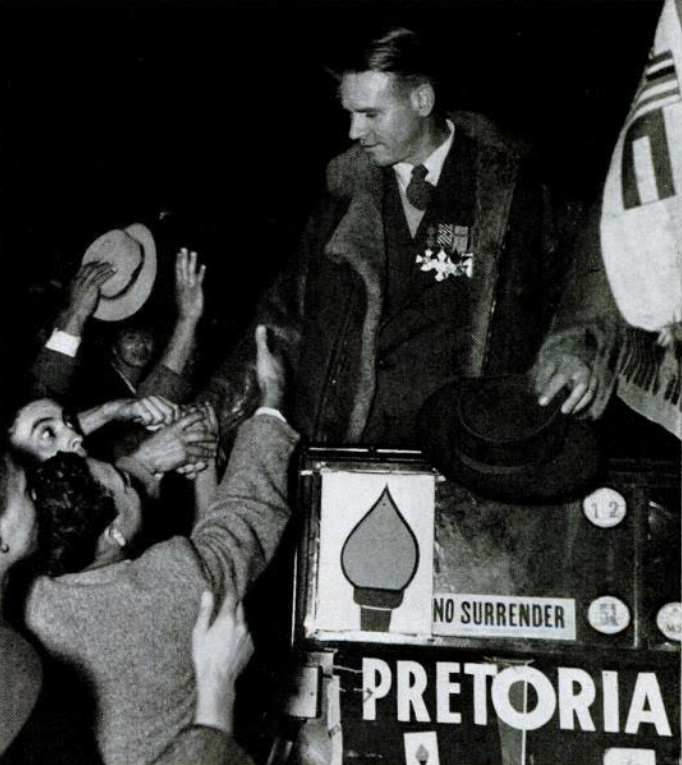
The fact is that prior to 1948 ‘resistance’ on a mass level to Smuts’ policies came from the white sector, and it came from fierce Afrikaner nationalists who had joined organisations like the Ossewabrandwag and Nazi grey shirts, whose objective was to topple the Smuts’ government by force of arms.  The Ossewabrandwag had about 200 000 supporters, these were the true resistance and mass movements facing the Smuts epoch.  They were the biggest threat to the Union of South Africa and Smuts’ biggest political headache.

The 1946 miners strike, was a one week mass strike action which ended in violence with government forces, the underpinning problem was a wage dispute, it was settled with a 10 shilling per day minimum wage (an increase from 2 shillings), and improved working conditions as the basis of the strikers demands.  This action needs to be viewed as dispute on wages and conditions of miners with the mine companies primarily.  It was not really a political protest against an entire system of government.

The 1912 Anti Pass Women’s movement needs to be viewed in context with the British Suffrage Movement which they chose to follow, and revolved around a worldwide problem of female political representation (in Europe as in Africa). Gandhi’s Satyagraha campaign against pass laws eventually succeeded in 1914.  Smuts’ and Gandhi actually became friends over the process and admired each other greatly till the day they died.

Post World War 2, Smut’s approached the 1948 elections with the idea of giving franchise to South Africa’s Black population on a phased and qualification basis.  He had promised Black Community leaders to give more political representation to the Black community if they supported the war effort – which they did.  It was these proposals and policies which went up against the National Party’s Apartheid policies in the 1948 elections.  It was Smuts’ willingness to address the African franchise issue that led to his failure in the elections, with the Nationalists playing into ‘white fears’ of Black African political empowerment which swung the vote to them.

Apartheid as an institutionalised policy started in 1948.  The first mass protests against this institution started in 1951.  The people who led this mass protest action were The Torch Commando, and not the ANC, their ‘Defiance Campaign’ came later.  Prior to this the proper ‘mass action’ against the Smuts’ government came primarily from disaffected and militant Afrikaner nationalists in their hundreds of thousands wanting an Apartheid state. That’s a fact.

The Observation Post is re-writing history.  This is incorrect

The intention of highlighting The Torch Commando is that it was ‘written out of history’ by The National Party and remains ‘written out’ for political expedience by the current government.  It is a ‘inconvenient truth’ as it highlights a mass movement of pro-democratic white people not in alignment with Apartheid.  It challenges the prevailing malaise of thinking in South Africa – that everything prior to 1994 was ‘evil’ and white South Africans must therefore share a collective ‘guilt’.  The purpose is to highlight great men like Sailor Malan and movements like the Torch Commando, uncover their hidden history and enter their contributions into the annuals of progressive South Africans who sought change and universal franchise and honour them as such.

15541961_689668087869593_6848483991317263370_n

Sailor Malan at a Torch Commando Rally in Cape Town


Written by Peter Dickens.  Video footage Associated Press copyright.

South African Navy Commodore turned Soviet SPY … codename Felix

21032516_10155419539911480_1865253573045236791_n

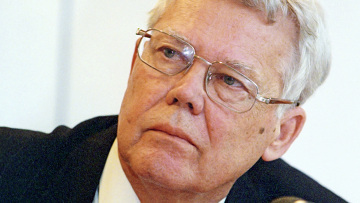
Dieter Gerhardt

School is still out in veteran circles as to reconciliation on Dieter Gerhardt, his actions selling British and South African Naval intelligence to the Soviet Union during the Cold War – many still grappling with the enormity of what he did and the damage it caused both the United Kingdom and, more specifically, South Africa.

What is still a little unclear to many is the motive, was it pure money, or as he claimed in his defence, was it his father’s strong pro Nazi standpoint and membership of the Ossewabrandwag during WW2 along with a fierce socialisation and upbringing in highly conservative Afrikaner Nationalist values that drove him at a young age to embrace Communism and the Anti-Apartheid struggle?

For those not familiar with South Africa’s biggest and most damaging military leak, Dieter Gerhardt reads like a John Le Carre novel – you just can’t make this stuff up.

Dieter Gerhardt is a former Commodore in the South African Navy and commander of the strategic Simon’s Town naval dockyard. He was arrested by the FBI in New York City in 1983 following information obtained from a Soviet defector. He was convicted of high treason as a Soviet spy in South Africa together with his second wife, Ruth, who had acted as his courier. Both were released prior to the change of government following the 1994 general election.

Born November 1, 1935, Gerhardt joined the South African Navy after his father successfully persuaded naval chief Hugo Biermann to take the troubled teenager under his wing to try to instill discipline in him, he graduated from the Naval Academy in Saldanha Bay in 1956, winning the Sword of Honour.

In 1962 he attended a Royal Navy mine school in Portsmouth and completed the parachute training course at RAF Abingdon. After his training in Britain, he was seconded to the Royal Navy.

He started his spying career in his late twenties, while still a junior naval officer, by offering his services to the South African Communist Party. Bram Fischer referred him to the Soviet embassy in London, where the “walk-in” was recruited into the GRU, the Soviet military intelligence branch, and instructed to continue his career in the South African military.

As part of his service in the Royal Navy, he trained at HMS Collingwood and served on HMS Tenby (F65), and passed classified information about the weapon systems there to the Soviets. Among the systems he compromised through these activities were the SeaCat and Sea Sparrow missiles. He was also responsible for passing the first intelligence information about the French Exocet missile to the Soviets.

British journalist and security services specialist Chapman Pincher maintained that, while in London in the late 1960s, he was able to interview Royal Navy Polaris submarine crews for potential candidates that the Soviets could approach. It was also during this time that he met his first wife, British-born Janet Coggin whom he married in 1958.

Coggin says she became aware of her husband’s Cold War spying activities eight years later in 1966 but chose not to turn him in, fearing that he would be executed, leaving her children fatherless. She says Gerhardt eventually gave her an ultimatum to become a spy too, which she declined, forcing the couple’s separation. She divorced him in 1966 and moved to Ireland with her children, claiming that she lived in constant fear of the Soviet security services. She subsequently published a book in 1999 about her experiences called ‘The Spy’s Wife’.

In 1973 Gerhardt married his second wife, Ruth Johr, a Swiss citizen who author Chapman Pincher claims was already a spy for the German Democratic Republic. According to Gerhardt, he recruited her shortly after they were married. She travelled to Moscow to undergo training.

Gerhardt rose through the ranks of the naval establishment as his career progressed. Upon his return from training in the United Kingdom in the early 1970s, he served as the naval liaison officer with the defence company that subsequently become Armscor.

13466462_598456476990755_7030778882950676833_n
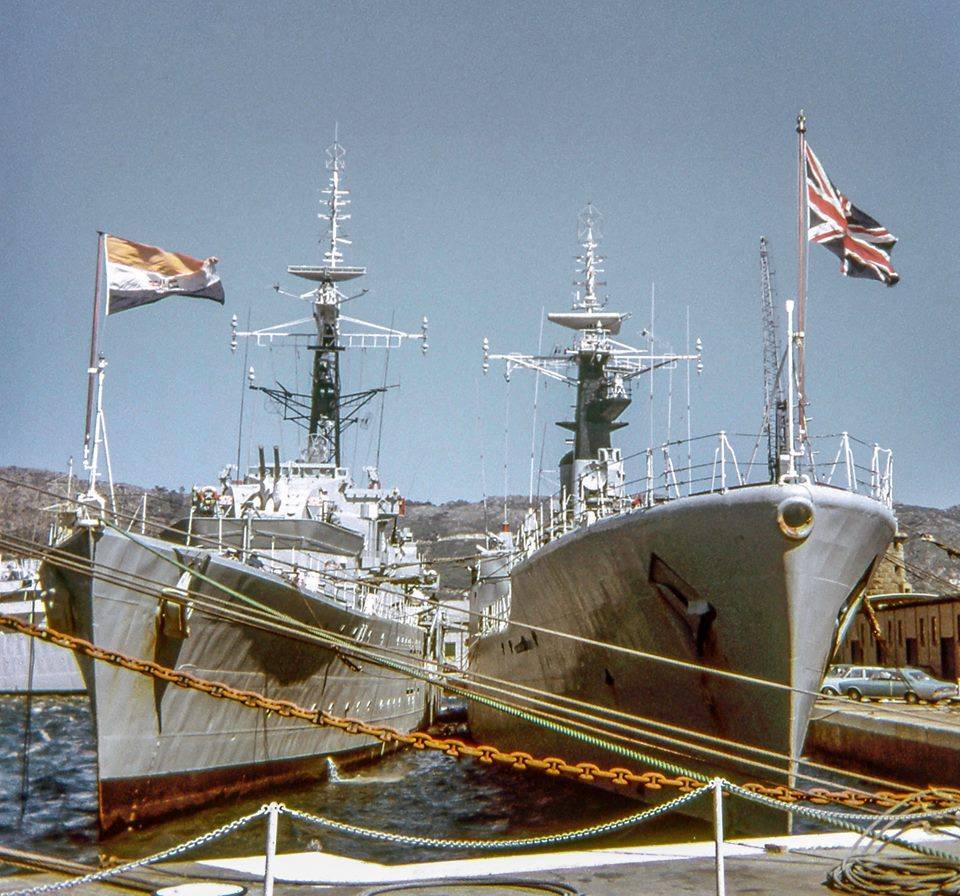
SAS Simon van der Stel and HMS Rhyl – Simonstown 1972

From 1972 to 1978, he was appointed as a senior Naval staff officer to the Chief of the SADF in Pretoria. In this position he was able to access South African Army and Air Force’s secrets and plans regarding the South African Border War. He claims direct involvement in aspects of Israeli and South Africa’s military cooperation, using this position in 1975 to pass Israeli secrets to the Soviets, including details of the purchase of Jericho missiles from Israel.

Gerhardt worked at Chief of Defence Staff, Director of Projects, in Pretoria in the Armaments Board building in 1973-75. During this time as the Director of Projects was heavily involved with the development of the Ratel IFV, the Cactus Missile System and also the deal with France for the Mirage F1 fighter planes and associated weapons systems which was at a critical stage of development.

Later, he was appointed commander of the strategically important Simonstown naval dockyard. In this position, he had access to all the South African Naval intelligence reports from the Silvermine listening post near Cape Town, as well as technical details of weapons systems. He reportedly revealed to the Soviets most of the Western naval surveillance techniques for the South Atlantic.

During the 1982 Falklands War, Gerhardt was allegedly able to use his position to supply the Soviets with detailed information about the locations of Royal Navy ships in the south Atlantic that the South African Navy intercepted at Silvermine.

Gerhardt visited the USSR five times during his career, while his wife travelled with him twice in 1972 and 1976. He was reportedly paid 800,000 Swiss Francs by the GRU for his spying activities; his contact in the GRU said that money was not the motive for Gerhardt.

Gerhardt’s cover was finally blown by Soviet double agent Vladimir Vetrov (given the codename “Farewell” by France’s DST intelligence service. He was arrested at his hotel in New York in January 1983 in a sting operation by the Federal Bureau of Investigation (FBI) while he was taking a degree in mathematics at Syracuse University.

shlykov
Vitaly Shlykov Soviet Skymaster

The CIA interrogated him for 11 days, during which time he gave up one of his Soviet handlers, Vitaly Shlykov (codename “Bob”). Shlykov, who did not know that the Gerhardts had been arrested, was also arrested on 25 January when he travelled to Zurich under the alias “Mikhail Nikolayev” for a pre-arranged meeting with Ruth Gerhardt. He had in his possession $100,000 in cash that he intended to pay her, he did not disclose his real identity to Swiss authorities, and was sentenced to three years imprisonment for spying.

P.W. Botha announced Gerhardt’s arrest to the world in a special press conference on 26 January 1983. Following his deportation to South Africa, Gerhardt and his wife were tried in camera in the Cape Town Supreme Court, with the prospect of a death sentence being handed down for high treason.

In his trial, Gerhardt stated that the repulsion he felt towards his father’s right-wing political beliefs drove him to fight apartheid in serving the USSR. According to Gerhardt, he deliberately attempted to sow confusion in the trial by stating in his defence that he had spied for an unnamed third country that was not hostile to South Africa.

His first wife described him as a “traditional apartheid-accepting South African”; he had told her that he wanted revenge against the South African government for interning his father, a Nazi sympathizer, during World War II.

Ruth Gerhardt claimed in her defence that she thought he was a double agent working for South Africa. Judge George Munnik sentenced him to life imprisonment in December 1983, while his wife Ruth received a 10-year sentence for acting as a courier. The judge said that he would have passed the death sentence on Gerhardt that the prosecution sought if the information he had passed to the Soviet Union had led to the death of a South African soldier.

Ruth Gerhardt served her sentence together with Barbara Hogan and other anti-apartheid dissidents. In 1988, she attempted to gain her freedom by renouncing violence, and thereby take advantage of an offer made by PW Botha to political prisoners like Nelson Mandela, however the request was turned down by Justice Goldstone.

Dieter Gerhardt was one of the imprisoned spies who was mooted for inclusion in a 1989 East-West prisoner exchange amongst a number of countries that did not materialise. In 1990 when FW de Klerk unbanned organisations such as the ANC and released political prisoners like Nelson Mandela, Gerhardt was not one of those who was freed. He was visited in prison on 22 January 1992 by a delegation from the ANC, who were seeking information regarding the SADF that might have assisted them in CODESA negotiations with the National Party government.

Gerhardt was released in August 1992 following his application for release, political pressure in South Africa and an appeal by Russian premier Boris Yeltsin to South African President FW de Klerk when the latter visited Moscow after the dissolution of the Soviet Union.

Former Minister of Defence, Magnus Malan said that the former spy’s release was a precondition to the restoration of diplomatic ties and the signing of a trade agreement between South Africa and the Russian Federation.

Gerhardt moved to Basel, Switzerland, following in the footsteps of his Swiss wife Ruth Gerhardt, who was released in 1990 following a request from the Swiss government.

He stated upon his release that:

“I did not feel like a traitor or someone who was betraying his colleagues. I was a political activist fighting the evil regime of apartheid. It was nothing personal.”

Gerhardt was subsequently granted amnesty in 1999 by the Truth and Reconciliation Commission, and his rank of Rear Admiral restored.


Researched by Peter Dickens, primary reference Wikipedia and the Imperial War Museum

‘The enemy of my enemy is my friend’

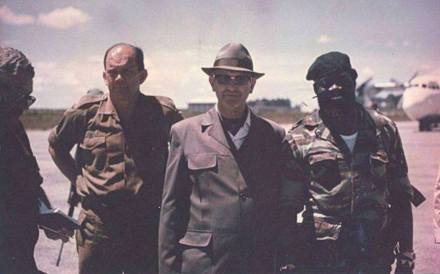
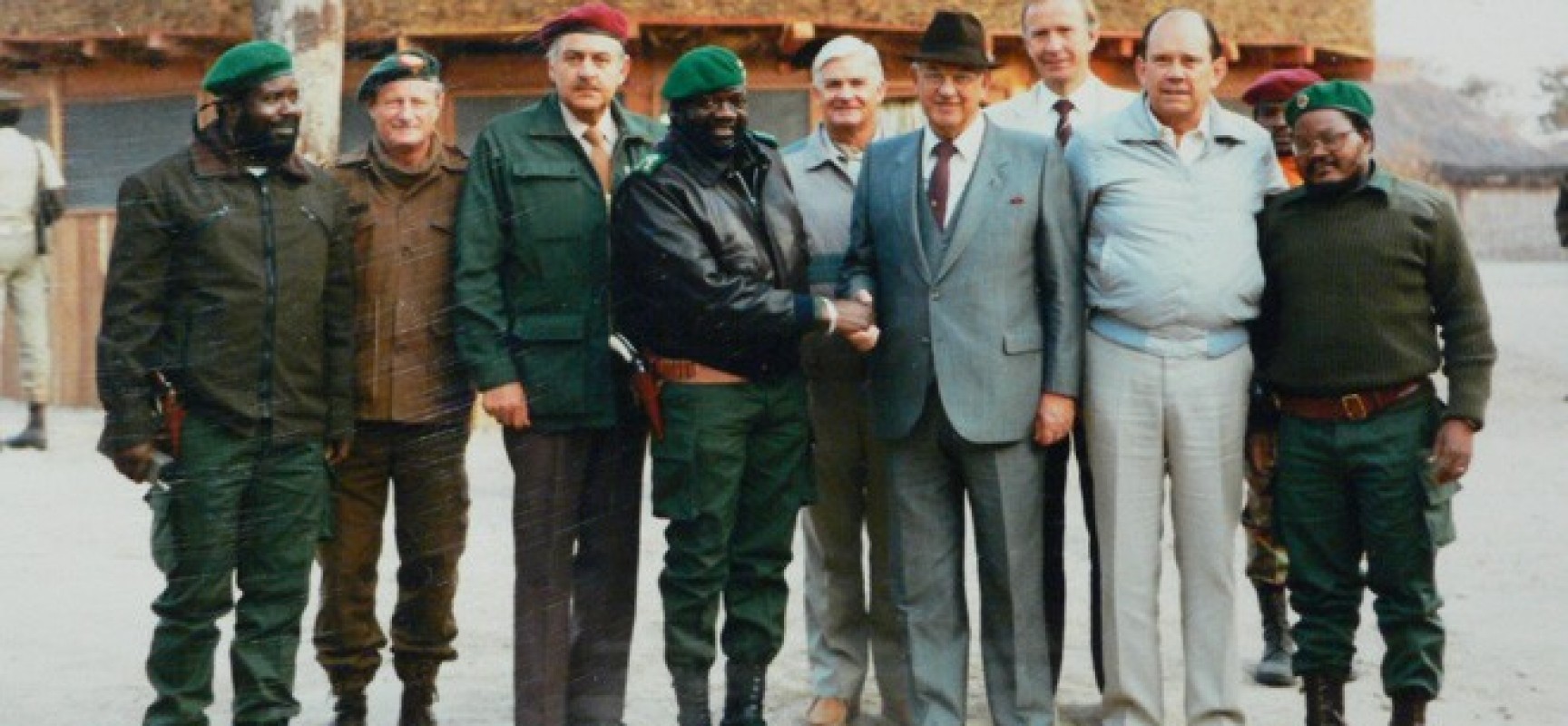
This featured informal ‘happy snap’ of Magnus Malan, PW Botha and Jonas Savimbi on the Angolan border speaks volumes – it most certainly highlights the political edict “the enemy of enemy is my friend” and carries with it the typical sort of politics which involves ‘odd bedfellows’; the kind of story which involves intrigue, betrayal and political assassination.

South Africa’s relationship with Savimbi and UNITA the ‘National Union for the Total Independence of Angola’ was indeed an odd pairing, it started with UNITA as an ‘enemy’ of the South African Defence Force in their commitments to help Portugal in the Angolan War.  Once Portugal left Angola, an ‘ally’ was made of UNITA when it was in South Africa’s interests in destabilising Angola to stop SWAPO (PLAN) armed insurgencies entering into South West Africa (now Namibia) from Angola.  The ‘alliance’ was made stronger when ramped up Cuban military presence entered the frame in the Angolan conflict, and UNITA was made a pawn in South Africa’s ‘total war’ against communist expansionism in Southern Africa.  In the ultimate betrayal South Africa then hung UNITA out to dry when Cuban troops left Angola.

It really is a case of South Africa ‘shooting at UNITA’ which changed to a case of ‘shooting alongside UNITA’ and then became a case of ‘shooting UNITA dead’.

To be fair, the United States of America was also as compliant in the betrayal.  So how did it all begin?

Shooting at UNITA

In the 1960s, during the armed struggle against Portuguese colonial rule, Savimbi founded UNITA, and along with the two other ‘anti-colonial liberation movements’ – the National Liberation Front of Angola (FNLA) and the ‘Popular Movement for the Liberation of Angola’ (MPLA) – they all started to fight Portugal for an independent Angola.  UNITA and the FNLA were also against MPLA rule but that inconvenient difference was put aside to fight Portugal. Aggression between the MPLA and UNITA started in earnest again when the Portuguese ultimately left and a power vacuum ensued.

UNITA carried out its first attack against Portuguese forces on 25 December 1966 by derailing railways.  At that time, beleaguered by three anti-colonial movements Portugal turned to South Africa and Rhodesia for military help.  Both South African and Rhodesia governments were concerned about their own future in the case of a Portuguese defeat in neighbouring Angola and Mozambique.

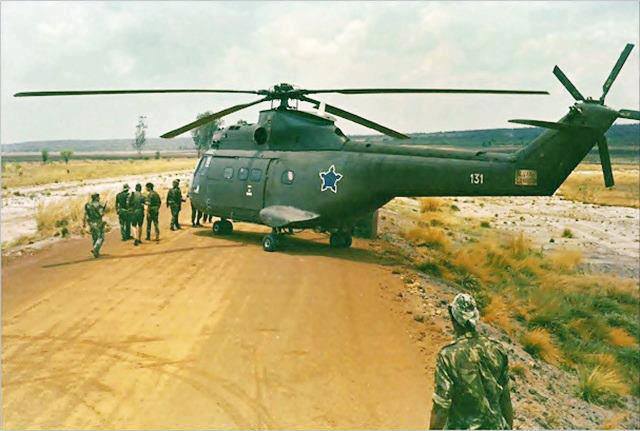
Rhodesia and South Africa initially limited their participation to shipments of arms and supplies. However, by 1968 the South Africans began providing Alouette III helicopters with crews to the Portuguese Air Force (FAP), and finally there were reports of several companies of South African Defence Force (SADF) infantry who were deployed in southern and central Angola (primarily to defend iron mines in Cassinga).

1185359_195709377265469_1936079429_n

SAAF Puma in support of Portuguese troops in Angola

When the first Portuguese unit was equipped with South African Air Force Puma helicopters in 1969, the crews were almost exclusively South African.  In all the SADF had pilots and helicopters operating out of the Centro Conjunto de Apoio Aéreo (CCAA – Joint Air Support Centre) in support of Portuguese military actions against the MPLA and UNITA alike.  The SADF set up its joint operations in Cuito Cuanavale during 1968.  In an iconic sense the small town of Cuito Cuanavale in the South East of Angola was to be the beginning the South African military involvement in Angola and almost exactly two decades later this small town would signal the end of South African involvement in Angola – having now come full circle.

So far in the war, none of the three nationalist groups (UNITA, MPLA and FNLA) had posed a serious threat to Portuguese rule in Angola. But in 1974, a Left-wing coup in Portugal brought to power a regime which pledged to end all wars in the country’s African colonies – Angola, Mozambique and Guinea-Bissau – and to introduce democracy at home.  This seismic change in Portuguese politics and foreign rule became known as the ‘Carnation Revolution’.

Shooting alongside UNITA

By the time the Portuguese military (and its South African help) left Angola in 1975, the country was in political chaos. Savimbi was soon leading the fight against the future government of President Jose Eduardo dos Santos, leader of the Popular Movement for the Liberation of Angola (MPLA).

In July 1975, the Soviet Union and Cuban Communist backed MPLA forces attacked and swept UNITA and FNLA forces out of the capital, Luanda. This resulted in a international refugee crisis, made worse by thousands of Portuguese nationals streaming into South African territories in fear of their lives.  The United States of America (USA) then entered the fray by supplying arms to both UNITA and the FNLA to hold back this onslaught of Communist backed guerrillas in the MPLA.  The USA saw UNITA as an ally in the fight against Communist domination in Africa, the Americans also turned to South Africa for help, South Africa also held a fierce anti-Communist stance and was taking the brunt of Portuguese refugees fleeing Angola.

South Africa’s fight by this time had also turned to the South West African Peoples Organisation (SWAPO), who had commenced an armed insurrection campaign for South West African (Namibian) independence – at the time a South African protectorate bordering Angola, SWAPO began using bases in Angola and was been supported by the MPLA.

With both the Soviet Union and the USA arming major factions in the Angolan Civil War, the conflict escalated into a major Cold War battleground.  Coming the assistance of the Americans was South Africa, in many ways positioning itself as a ‘Ally’ of the NATO western states in their Cold War with Communism, as it had been in WW2.  Conversely it also aided the South African government’s need to soften the ‘West’s’ stance on the National Party’s policies of Apartheid.

By August 1975 BJ Vorster, the South African Prime Minister, along with his Defence Minister PW Botha, struck an extraordinary deal. Vorster authorised the provision of limited military training, advice and logistical assistance to UNITA and the FNLA. In turn FNLA and UNITA would help the South Africans fight SWAPO.  The ‘enemy of his enemy – became his friend’.

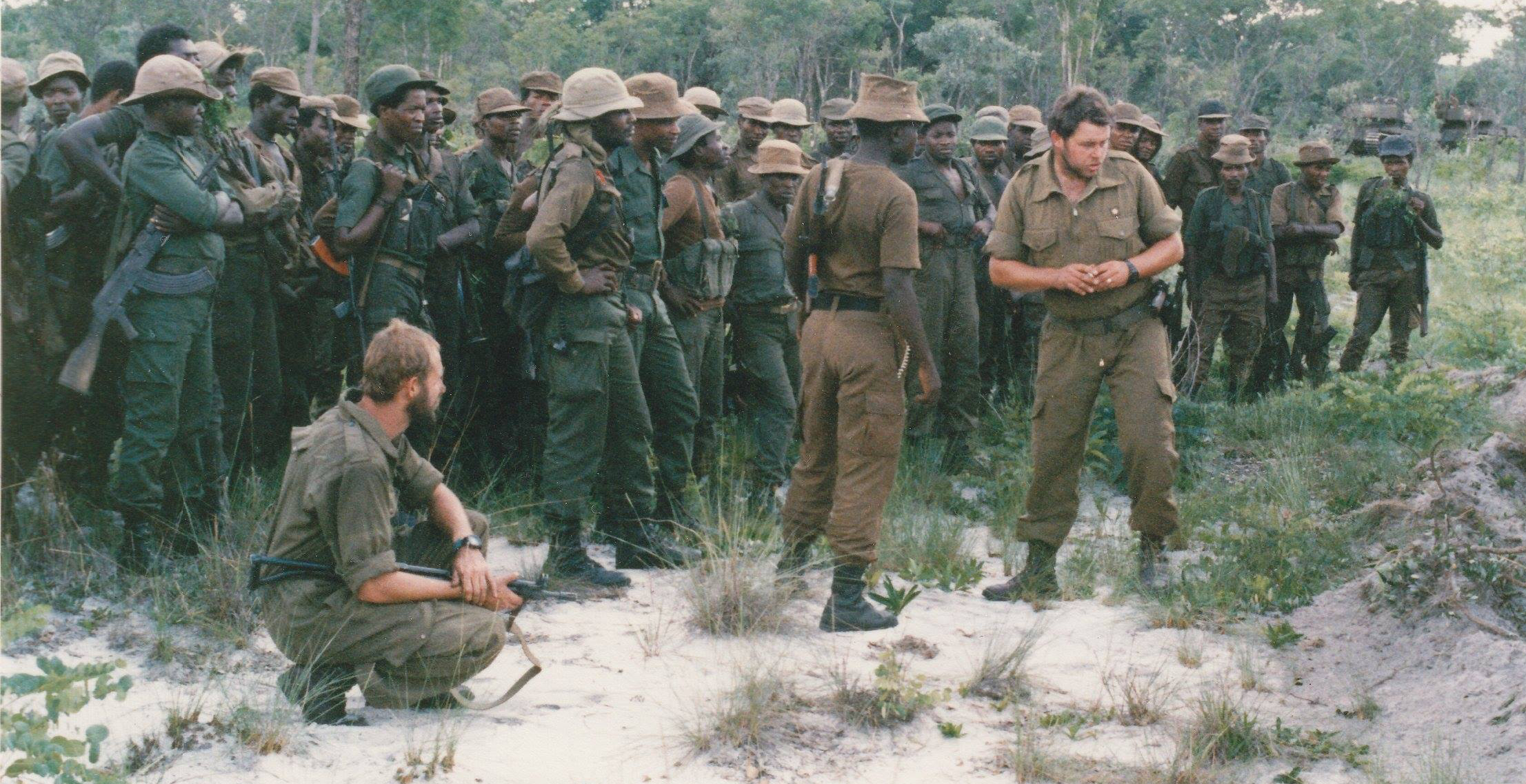
This kicked off Operation “Sausage II”, a major raid against SWAPO in southern Angola and on 4 September 1975.  This was immediately followed by Operation Savannah and then by many more large scale armed incursions and small scale raids into Angola in support of UNITA and against SWAPO bases in Angola – from 1975 all the way to 1989.  SADF South African soldiers literally found themselves fighting ‘shoulder to shoulder’ with UNITA Angolan soldiers for the next 14 years.  Jonus Savimbi himself was even given the code-name ‘Spyker’ (Spike) by the SADF members working with UNITA.

13475099_1788272211401769_6240474511538624427_o

SADF Troops and UNITA troops in Angola

The ‘Odd Couple’ Alliance 

Thus began a two decade long Alliance with UNITA in a proxy Cold War fight against International Communism, and strange bedfellow alliance between an anti-colonial freedom movement and ‘Apartheid’ South Africa.

With continuing aid from South Africa, Savimbi was able to fight on. By 1977, UNITA was becoming a powerful threat to the Luanda government, carrying out operations without apparent difficulty.

In the early 1980s, Savimbi further increased his power. South African “hot pursuit” attacks against SWAPO rebels in southern Angola forced the Luanda government to concentrate its forces in that part of the country, leaving Unita a free hand to consolidate bases throughout the rest of Angola.

Yet, although strengthened by heavy Soviet weapons captured by South African troops and American weapons, Savimbi was well aware that he could never take Luanda against the combined Cuban and MPLA government armies with Soviet support.  He based his hopes on forcing the MPLA to agree to a coalition government and to free elections.

jonas-savimbi

UNITA, SADF and National Party members

However, by 1986 he was under intense pressure from Luanda’s combined forces, which had seized large areas of his territory. Pretoria had informed Washington that UNITA would need more arms to meet continued attacks, and Savimbi decided to go to America to appeal for help in person.

In Washington, he succeeded in putting his case to President Reagan; and Congress proposed a programme of covert aid which enabled the first American Stinger anti-aircraft missiles to reach UNITA within a few months.

Savimbi continued to enjoy military successes, however by the late 80’s the Soviet Union had commenced political reform, Cuban involvement in Angola had met with repeated defeats, limited success, high loss of life and an economic and military drain, and domestically South Africa was preparing for domestic political reform against growing international pressure and sanctions against Apartheid.

It all came to a head with a military stalemate at Cuito Cuanavale in 1988 (where it had all oddly started in the mid 1960’s).  South Africa intervened to block a large-scale MPLA attack with Soviet and Cuban assistance against UNITA’s primary operating bases at Jamba and Mavinga. The campaign culminated in the largest battle on African soil since World War 2 and the second largest clash of African armed forces in history. The MPLA offensive was halted and a stalemate ensued.

The Battle of Cuito Cuanavale is credited with ushering in the first round of trilateral negotiations mediated by the USA.  The Tripartite Accord involved Angola’s MPLA government, South Africa and Cuba (without UNITA).  While the hostilities in Angola continued at Cuito Cuanavale, negotiations initially reached a deadlock.

It was broken by the South African negotiator, Pik Botha, who convinced the delegates that “…We can both be losers and we can both be winners…” Pik Botha offered a compromise that would appear to be palatable to both sides while emphasising that the alternative would be detrimental to both sides.

His proposal, South Africa could claim ‘Victory’ with the removal of Communist military aggression from Southern Africa (including Angola), and Cuba could claim ‘Victory’ with the withdrawal of South Africa from Namibia (South West Africa) in accordance with United Nations Resolution 435 (tabled 10 years earlier in Sep. 1978).

The middle-ground was struck on that simple premise and was to be known as the Tripartite Accord, Three Powers Accord or New York Accords, South Africa, Angola (MPLA government) and Cuba all signed the bottom line on 22 December 1988.

Shooting UNITA dead

Savimbi refused to accept the Tripartite Accord, which also forbade further military aid being supplied to any rebel groups – which included UNITA in the definition of ‘rebel group’; then, in January 1989, President Bush (Snr) reassured Savimbi that American arms would continue to be sent to UNITA for as long as Cuban forces remained in Angola.

With a phased timetable for the withdrawal of Cuban forces to be completed by June 1991, Savimbi was ready to fight on. Almost immediately in the beginning of 1989 Angola accused South Africa of breaking the agreement by supplying arms to Savimbi.

Pretoria denied aiding UNITA. Savimbi then approached the South African government to size up the situation with an ailing and politically beleaguered President P.W. Botha, who told him very bluntly that all South African aid to UNITA was to be cut off.

In plain language, UNITA was no longer South Africa’s ‘friend’. Jonas Savimbi was for 20 years, a figure as important in Southern African politics as Nelson Mandela, and he was now officially out in the cold, UNITA had become an embarrassment and hindrance to the seismic global geo-politics between the Soviet Union, Cuba, Namibia, Angola, South Africa and the United States of America in 1989.

The ceasefire between South Africa and Cuba/MPLA Angola and the path to independence for Namibia had been the last acts of PW Botha’s legacy as President, later in 1989 (August 14th), F.W. De Klerk took control of Presidency due primarily to P.W. Botha’s failing health.

Betrayal

If the American betrayal of Savimbi was not bad enough, this last dismissal by PW Botha was the final betrayal of UNITA, it was the ‘nail in the coffin’; with the loss of South Africa as an ally (in addition to the USA), UNITA literally stood no hope at all. Jonus Savimbi’s fate was sealed, along with that of UNITA.

17103592_10154636267172862_2137630330946939084_nSavimbi’s international isolation was further increased when, after a peace deal had been struck and elections held in 1992 in Angola, he refused to accept either his defeat at the polls or a role in a power-sharing government. He withdrew to Huambo in his country’s central highlands, and from there he fought on.
UNITA continued to fight on unsupplied and rather vainly on their own till 2002, until Jonus Savimbi was finally shot dead on the 22nd February by advancing MPLA troops.

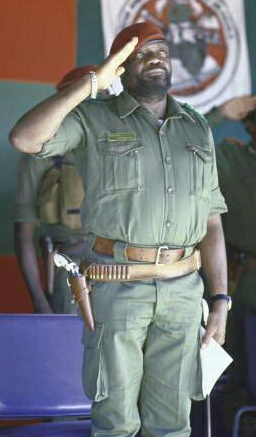
Jonus Savimbi was a highly educated and charismatic leader. A burly man, 6ft tall and with a bearded face that could as easily convey an expression of menace as break into a dazzling smile, Jonas Savimbi was usually photographed wearing well-pressed camouflage fatigues and a jaunty beret. At his hip there was often a pearl-handled revolver; and he had a favourite ivory-topped cane.

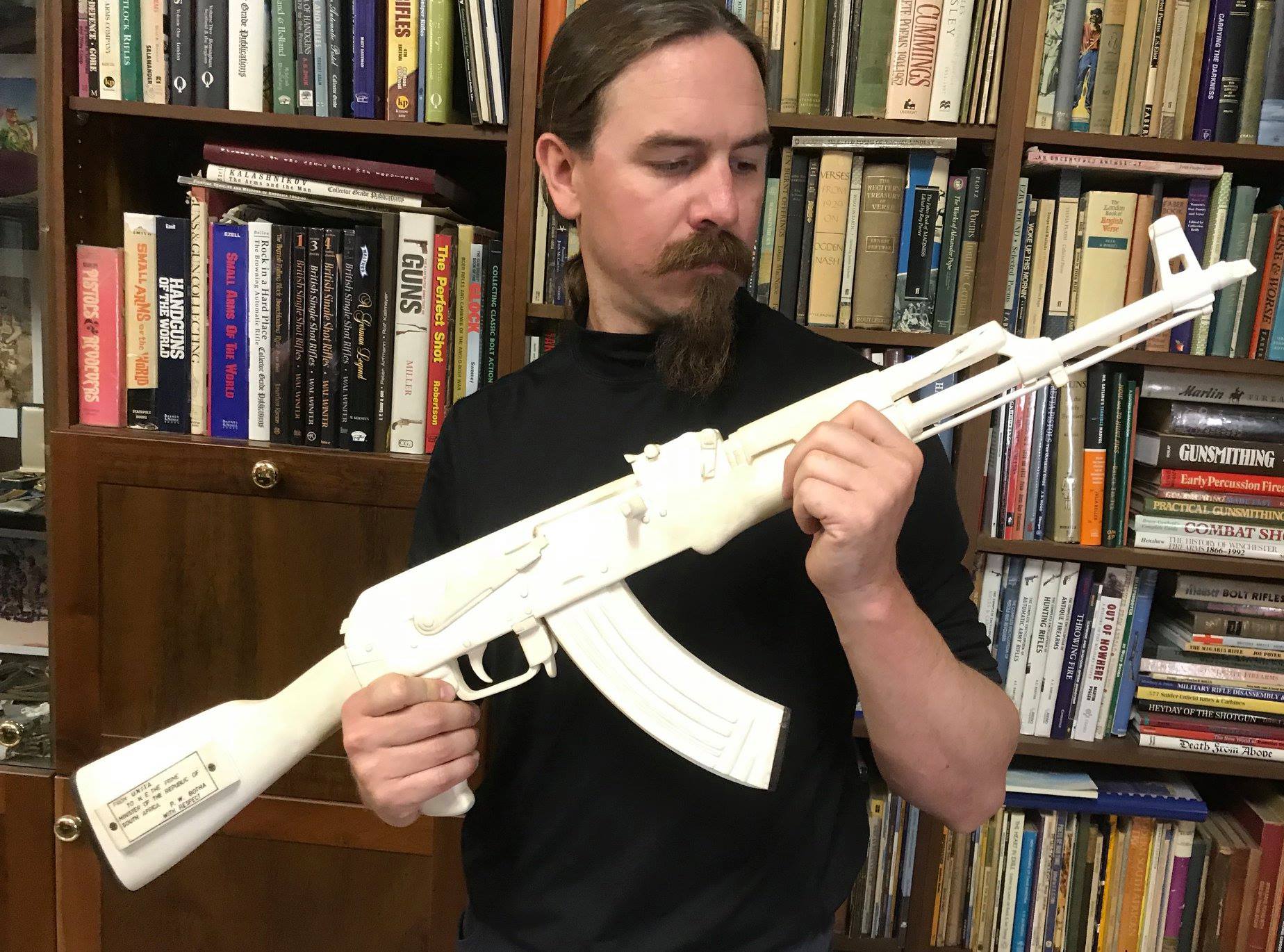
Jonus Savimbi once gave PW Botha an AK47 assault rifle made out of ivory as a gift of friendship, a gift that remained on display at the George Museum in South Africa for some years until 1998 (when all of PW Botha’s gifted artefacts were removed).

The ivory AK-47 now stands as an unusual reminder of how history can be unkind and the absurdity of getting into bed with ‘strange political bedfellows’.  It really is a symbol of the type of betrayal which so often comes with the political edict; “the enemy of my enemy is my friend”.

31408226_1730066333722469_9171037740093931520_o


Researched by Peter Dickens.  Source – various obituaries, including the Daily Telegraph of Jonus Savimbi and Wikipedia

Centenary of the ‘Smuts Report’, the instrument which gave birth to the Royal Air Force

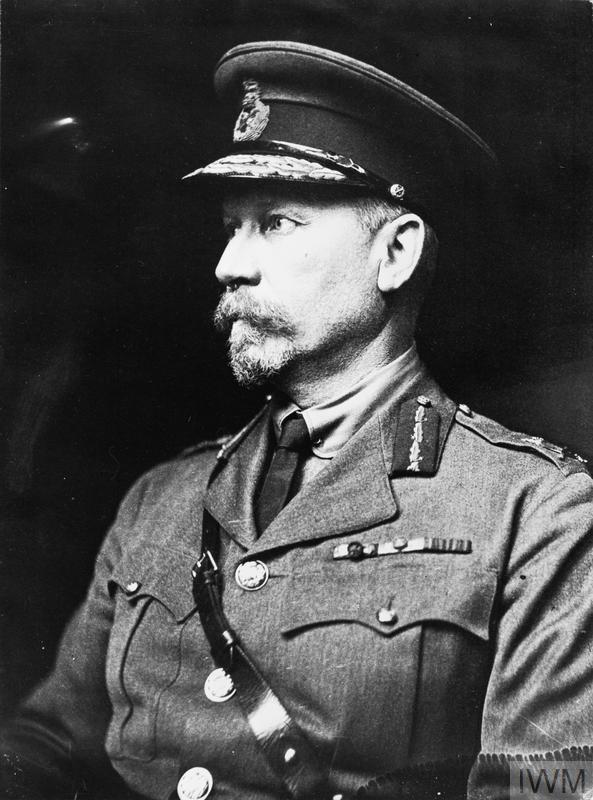
August 2017 marks the centenary of the report to form the Royal Air Force (RAF), the idea of an independent Air Force from Navy or Army control is now officially 100 years old, and one key South African statesman, General Jan Smuts, gave birth to it.

smuts ww1

Smuts in WW1

Today, if you walk into the Royal Air Force Private Club in Mayfair, London you are greeted by a bust of Jan Smuts in the foyer, it stands there as an acknowledgement to the man who founded what is now one of the most prestigious and powerful air forces in the world – The RAF.

So how did it come to be that a South African started The Royal Air Force and why the need to have a separate and independent arm of service?

Simply put, during World War 1, the British Army and the Navy developed their own air-forces in support of their own respective ground and naval operations. The Royal Flying Corps had been born out of the Air Battalion of the Royal Engineers and was under the control of the British Army. The Royal Naval Air Service was its naval equivalent and was controlled by the Admiralty.

However, the use of air power in World War 1 was developing beyond the immediate tactical use of aircraft by the Navy and the Army. In Great Britain the civilian population had been on the receiving end of extensive German bombing raids dropped from flying Zeppelin airships, the public outrage and the psychological effects of this bombing was having a significant impact on British politicians.

In reaction to this, the politicians proposed the creation of a long-range bombing force both as a retaliation and also as a means of disrupting enemy war production. There were also continuing concerns about aircraft supply and priorities between the services.

The British Prime Minister, Lloyd George asked General Jan Smuts to join his War Cabinet (the supreme authority governing Great Britain and her Empire’s forces in World War 1). Lloyd George then commissioned General Jan Smuts to report on two issues:

Firstly to look into arrangements for Home Defence against bombing and secondly, air organisation generally and the direction of aerial operations.  Smuts is generally accredited with improving British air defence and answering the first priority.

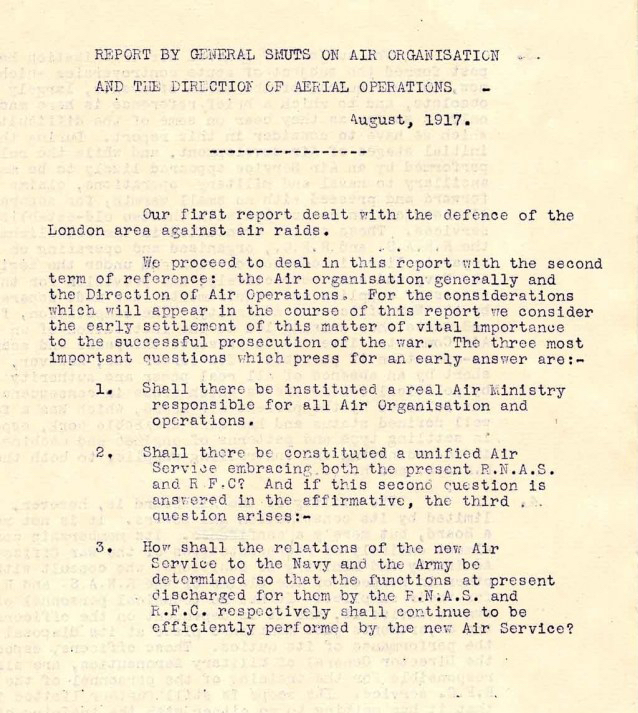
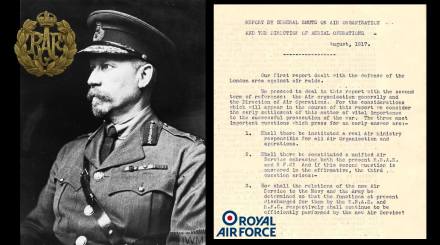
7960001505000118_fillHowever it was ‘Smuts report’ of August 1917 in response to the second of these questions that led to the recommendation to establish a separate Air Service. In making his recommendations Smuts commented that
“the day may not be far off when aerial operations with their devastation of enemy lands and destruction of industrial and populous centres on a vast scale may become the principal operations of war, to which the older forms of military and naval operations may become secondary and subordinate”.

Given this new dimension he commented that it was important that the design of aircraft and engines for such operations should be settled in accordance with the policy which would direct their future strategic employment. On these grounds he argued there was an urgent need to create an Air Ministry and that this Ministry should sort out the amalgamation of the two air services.

The War Cabinet accepted this recommendation to amalgamate the two separate air forces under one single and independent Air Force.  Smuts was then asked to lead an Air Organisation Committee to put it into effect. The Air Force Bill received Royal assent from the King on the 29 November 1917, which gave the newly formatted Air Force the prefix of ‘Royal’ (up to that point the idea was to call it the ‘Imperial Air Force’).

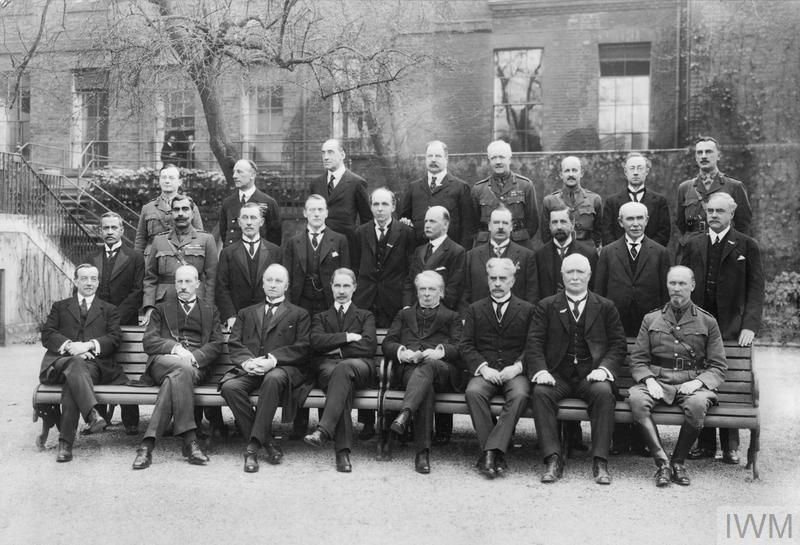
Imp Cabinet WW1

The War Cabinet during WW1, Smuts seated bottom, far right

The RAF was officially formed on the 1 April 1918 with the amalgamation of the Royal Naval Air Service and  the Royal Flying Corps. Following which Lord Rothermere was appointed on 3 January 1918 as the first Secretary of State for Air and an Air Council established.

To emphasise the merger of both army and naval aviation in the new service, to appease the ‘senior service’ i.e. the Navy, many of the titles of officers were deliberately chosen to be of a naval character, such as Flight Lieutenant, Wing Commodore, Group Captain and Air Commodore.

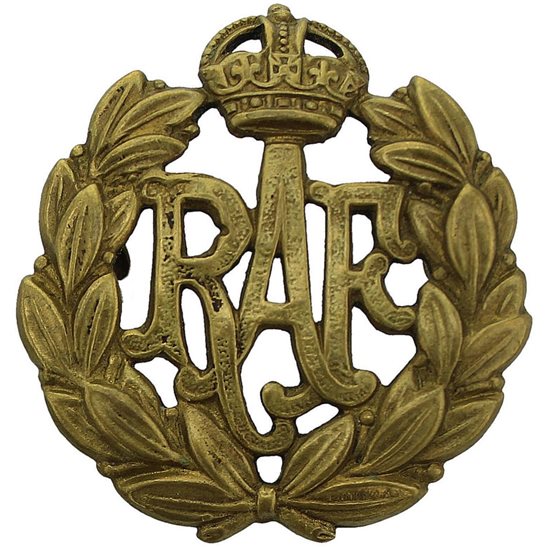
Royal Air Force WW1

Royal Air Force

The newly created Royal Air Force was the most powerful air force in the world on its creation, with over 20,000 aircraft and over 300,000 personnel (including the Women’s Royal Air Force). It now qualifies as the oldest independent Air Force in the World.

General Smuts was to take his recommendations and findings across to form an independent South African Air Force (SAAF).  Smuts appointed Colonel Pierre van Ryneveld as the Director Air Services (DAS) with effect from 1 February 1920 with instructions to establish an air force for the South African Union. This date is acknowledged as marking the official birth of the SAAF.  The SAAF now qualifies as the second oldest independent Air Force in the world.

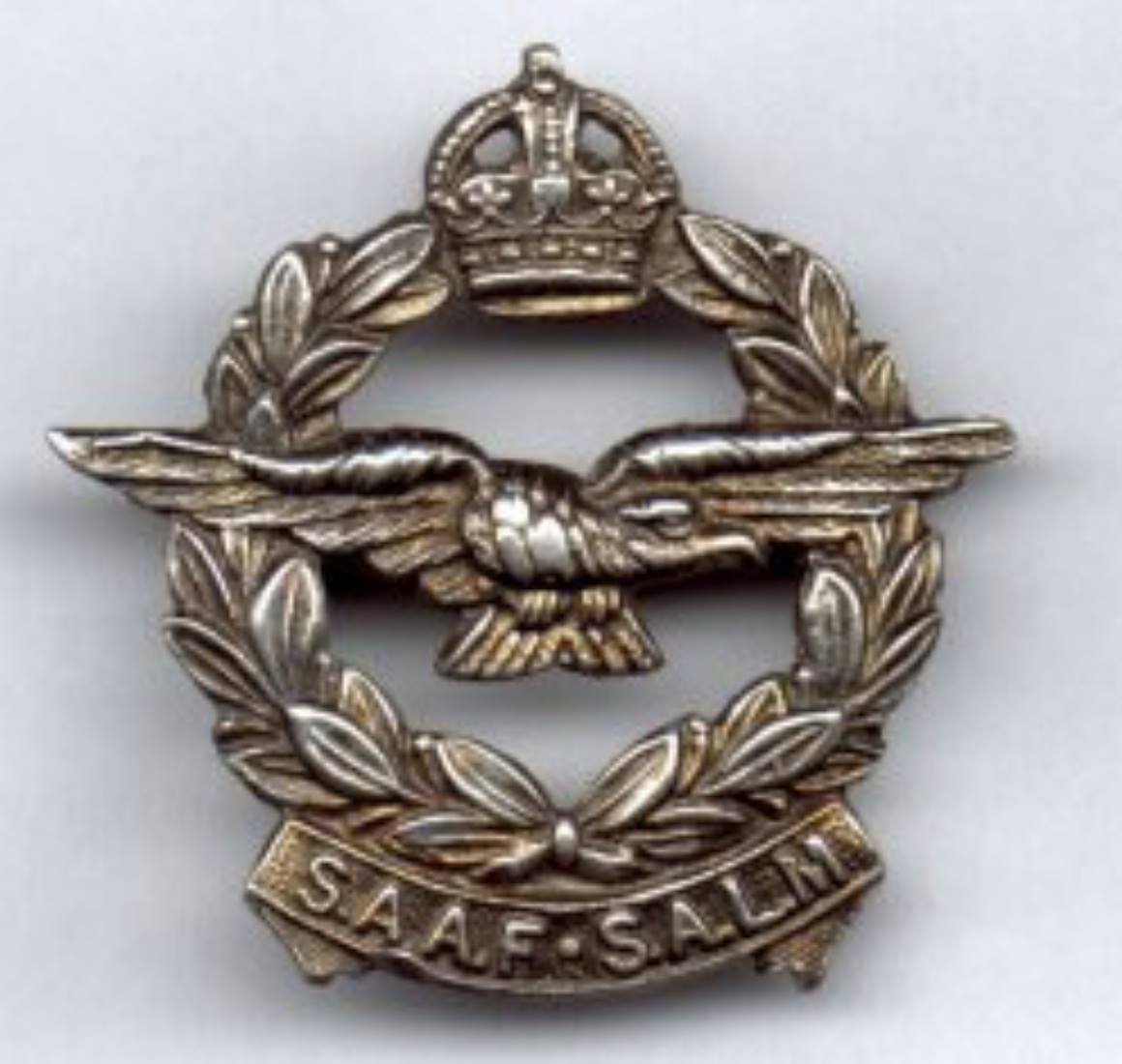
20934838_2008825072679814_8165602951617956277_o

South African Air Force

In a nutshell, both the RAF and SAAF as we know them today, were given to us by Jan Smuts as a founding father.  Funnily, Smuts was often criticised domestically as ‘Slim’ Jannie (clever little Jan), a term Smuts hated as it was coined by the Hertzog Nationalists to mean that Jan Smuts was too clever for his ‘volk’ (peoples) and therefore out of touch, it was done for political expediency at Smuts’ personal expense.  Smuts disliked the term as it as it ironically belittled the Afrikaner and positioned his people as ‘simpletons’, something Smuts fundamentally disagreed with, and something they most certainly are not.

That said, domestically Smuts’ political adversaries in the opposition National Party carried on with this belittling ‘Slim Jannie’ nickname to further criticise his ability to command at a strategic level, stating that his approach was too ‘intellectual’ for effective command.

All modern military strategy is formulated on joint arms of service with an independent air arm. You only have to look to any modern military construct of any military superpower today to see just what a visionary and strategist Jan Smuts was. The proof of his ability to command strategically is in the pudding.  Smuts’ ground-breaking report in August 1917 now guides all modern strategic military planning by simple way of how the arms of service are now constructed (Army, Navy, Air Force i.e. ground, sea, air), how they co-ordinate with one another and how they are commanded.


Written and researched by Peter Dickens.  References – Birth of the Royal Air Force (Royal Air Force Museum), Imperial War Museum and Wikipedia.  Images copyright, Imperial War Museum.

Ops Savannah fashion statement; East German Helmets

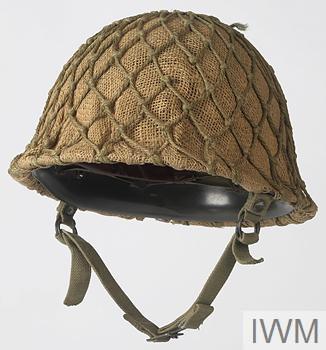
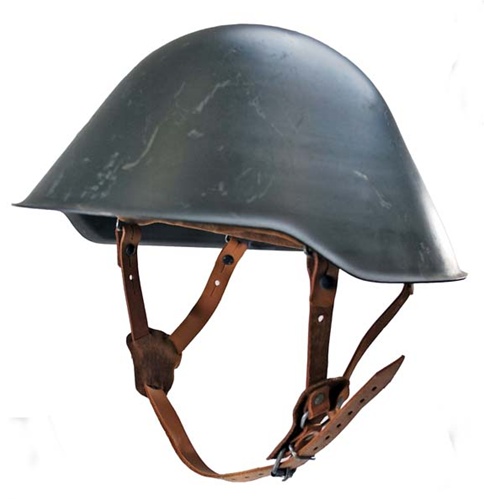
One distinctive thing about the Angola/South West Africa Border war was the vast array of ‘Soviet’ and Communist ‘East Bloc’ military equipment, materials and canned food.  Much of which became ‘war booty’ and prized by South African Defence Force personnel fighting in the conflict as a memento. To them, it all represented the very distinctive difference between ‘Western’ styled materials and those produced in Communist bloc countries at the time, in a sense it very much brought home just what the war in Angola was to them – part of the ‘Cold’ War of the ‘West’ against Communism.

SADF Helmet

During Ops Savannah in 1975, whilst in Angola some South African Defence Force (SADF) personnel came across a huge stash of East German Steel Helmets.  For some reason the SADF Artillery Gunners took an instant liking to these helmets and it became an instant ‘bush’ fashion. A prized possession, many Gunners sought out this helmet and whilst on Operation Savannah replaced their SADF issue ‘Staaldak’ M1963 helmets with it – it’s was a ‘gunners thing’ to look a little different and develop a distinctive combat zone ‘esprit de cour’. The feature image shows a SADF 140mm Medium Gun Crew somewhere in Central

The East German M-56 helmet was originally designed in 1942 as a replacement for the M1935/M1940 model WW2 German ‘Stahlhelm’.  The helmet had seen trials since 1943, but was not adopted during World War II.

East German Helmet

The design was never progressed and was unused until the requirement for a distinct German helmet for the Volkspolizie (East German Police) and the National People’s Army (East German Army) arose after Germany was split down the middle into the ‘Democratic’ West Germany and ‘Soviet Communist’ East Germany after WW2 ended.

The East German leadership adopted the M-56 helmet so as not to cause offence to their new Soviet masters by using their iconic WW2 German ‘Stahlhelm’ so they switched to this new design as it also closely resembled another iconic WW2 helmet – the Soviet SSh-40.

The M-56 helmet came in three basic versions, Mod 1 or I/56, Mod 2 or I/57 and Mod 3 or I/71, and was widely sold, or in most cases given free of charge, to Third World armies.  As Angola was deemed a 3rd World conflict by the East Germans it proved a fruitful country to off-load stocks of this helmet to the MPLA’s FAPLA and other Communist aligned military support groups in Angola.

Although there is not much on East German involvement in the Angolan/South West African Border War. Most military advisors and support troops to the Angolan MPLA Forces were either Russian or Cuban. East Germany as it was a Soviet ‘ally’ did play a role in support, and these helmets would point to this fact.


Image and reflection thanks to Colonel Graham Du Toit.  Source Wikipedia – Researched by Peter Dickens

The ‘Fog of War’

The term ‘Fog of War’ is defined as ‘uncertainty in situational awareness experienced by participants in a military operation’.  It can manifest itself at the time or even many years after the action has taken place.  This deeply tragic account of the loss of a SADF Ratel Infantry Fighting Vehicle, containing two members of the same family’ illustrates this ‘fog’.

The incident

14 Feb 1988: Four Members from B Company, 1 SAI including two Cousins who acted as the MAG Machine Gunner team, were Killed in Action in South Eastern Angola during a contact with elements of the 59th FAPLA Brigade during Operation Hooper. The B Company, 1 SAI troops had not klaared out (demobilised) prior to deployment for Ops Hooper so they became 61 Mech Battalion Bravo Company Element. These troops swopped over with B Company 4 SAI and were operating as part of 4 SAI during this attack as part of 61 Mechanised Battalion.

Their Ratel (Honeybadger) Infantry Fighting Vehicle (IFV), Callsign 22C was hit on the left hand side and knocked out by a ZU-23-2 Soviet 23mm Anti-aircraft gun deployed in the ground role. On the right hand side where the Groenewald Cousins had been sitting, a large hole was ripped out of the vehicle. It appeared that the Ratel had also been struck at some point by a South African 105mm discarding sabot anti-tank round, thought to be fired from an SADF Olifant tank.

The 105mm discarding sabot round’s entry can be seen on the top below the second rifle port with the distinctive “star” penetration.

The ‘blue on blue’ debate

There is much debate which surrounds this image and the ballistics in the veteran community, some thoughts are that the 105mm discarding Sabot round made the big hole on top left (the fins made the star pattern) and the three discarding pieces from the Sabot could have made the other three holes to the below right. Others maintain the additional holes came from the enemy 23mm AA gun. Whilst others have proposed that it was all enemy fire and possibly the distinctive ‘fin’ penetration came from a Soviet 100mm T55 6 wing sabot based on the ballistics.

SADF 105mm Discarding  Sabot (left) and ZU-23-2 Soviet 23mm Anti-aircraft Gun in a ground role (right)

At the time the SADF published this as enemy fire and did not make reference to a  “blue on blue” incident – a blue on blue is a term used for ‘friendly fire’ when forces mistakenly shoot, target or bomb their own forces (this may possibly have been in the interests of moral of both Olifant tank and Ratel IFV crews) and reported it as enemy 23mm fire only. Accounts from the 22C Ratel driver and members on site after the incident point to a SADF “blue on blue” from a SADF Olifant (Elephant) Tank involved in the formation attack on enemy armour and positions, a ‘V” formation in which Ratel 22C took part.

Such is the “Fog of War” and incidents like this leave a very big lump in veterans throats. In any event, whether enemy fire, friendly fire – or both, the brave men who fell in this  Ratel are honoured on the roll:

In Remembrance 

84269315BG Corporal Jan Hendrik Kleynhans. He was 19
85263262BG Rifleman Andre Schalk Groenewald. He was 18.
84358266BG Rifleman Pieter Henrich Groenewald. He was 19.
84477751BG Rifleman Vincent Vernon Nieuwenhuizen. He was 19.

May they rest in peace and never be forgotten.


Researched by Peter Dickens with references from a number of Border war forums and Graham Du Toit.

South African Battle of Britain Heroine -Jackie Moggridge

This is a very special South African military heroine. Jackie Moggridge (born Dolores Theresa “Jackie” Sorour), during the Second World War she left South Africa for England and joined the ATA Hatfield Ferry Pool on 29 July 1940, being the youngest of the female pilots to take part in the Battle of Britain, aged just 18.

16864178_732808936888841_6672653319992353975_n

The ATA “The Air Transport Auxiliary” was charged with delivering new and repaired aircraft to front-line Royal Air Force squadrons and were flown by civilian commercial pilots and female pilots excluded from flying roles deemed as “combative” service at the time.

The initial plan was that the ATA would carry personnel, mail and medical supplies, but the pilots were immediately needed to work with the Royal Air Force (RAF) ferry pools transporting aircraft. By 1 May 1940 the ATA had taken over transporting all military aircraft from factories to Maintenance Units to have guns and accessories installed. On 1 August 1941 the ATA took over all ferrying jobs. This freed the much-needed combat pilots for combat duty. At one time there were 14 ATA ferry pools as far apart as Hamble,  Southampton, Portsmouth, and Lossiemouth near Inverness in Scotland.

The ATA recruited pilots who were considered to be unsuitable for either the Royal Air Force or the Royal Navy Fleet Air Arm by reason of age, fitness or gender. A unique feature of the ATA was that physical handicaps were ignored if the pilot could do the job, thus there were one-armed, one-legged, short-sighted and one-eyed pilots, humorously referred to as “Ancient and Tattered Airmen”. However, most notably, the ATA allowed women.

Initially, to comply with the Geneva Convention, as many of the ferry pilots were nominally civilians and/or women, aircraft were ferried with guns or other armament unloaded, however I due course after encounters with German aircraft in which the ferried aircraft were unable to fight back, RAF aircraft were ferried with guns fully armed.

As part of unique and very brave bunch of pilots, mainly women, Our South African hero, Jackie safely handed over 1,500 aircraft during the war, 83 different types and 200 more than any other ATA pilot.

She had a very lucky escape on 5 January 1941 when ferrying an Oxford Mk I to RAF Kidlington, Oxfordshire, with no R/T to meet up with 1st O Amy Johnson who was bringing one in from Blackpool. Both went off course in adverse weather conditions, with Johnson following the rules, bailing out and drowning in the Thames Estuary. Sorour went down to a few hundred feet and found herself over the Bristol channel with 20 minutes fuel remaining. She claimed that she did not want to take to the chute because she had broken her leg during a parachute jump in 1938.

16195937_1899005106995145_1188220574573390828_nJackie also encountered a V-1 flying bomb in the air over Surrey while flying a Tempest. She altered course, fully intending to attempt to topple it with her wing tip but failed to catch up to it.  The standard practice in dealing with a ‘doodlebug’ (as the V1 was nicknamed) was a wingtip topple, it threw the flying bomb’s gyro off its intended target and sent it into open countryside instead of a city.  However the trick was to fly faster than the rocket to do it.  The picture featured shows this remarkable manoeuvre between a Spitfire and an unmanned V1 flying bomb.
Jackie was also the first woman in South Africa to make a parachute jump. (4,000 feet). She was South Africa’s youngest pilot of her time age 17 years. November 1959 was awarded Jean Bird trophy as Woman of the Year . She flew Lancasters, Spitfires and a variety of other planes as a RAF pilot during World War 2. She logged over 4,000 hours flying over Europe, North Africa and the Middle East.

She is best described by her Daughters “Jackie was like two women in one: artistic, romantic, forgetful and disorganised, but when she climbed into an aeroplane she became focused, calm and very capable – not our mother at all! She loved many things: singing, dancing, sewing and painting, but her main passion in life was flying. Up in the sky is where she belonged.”

“She really was two women in one. She was a real battler for women to get on in life and just could not imagine that there was anything she could not try to achieve. But she knew, and said, that as a woman she had to have the best results to be taken seriously.”

21265949._UY630_SR1200,630_She was a member of one very elite group and one of only five women to be awarded full RAF wings during the war, Jackie even campaigned to become the first woman to break the sound barrier but was prevented from doing so by the powers that be.

The actions of the ATA are best summed by Lord Beaverbrook in 1945 who said;

“Without the ATA the days and nights of the Battle of Britain would have been conducted under conditions quite different from the actual events. They carried out the delivery of aircraft from the factories to the RAF, thus relieving countless numbers of RAF pilots for duty in the battle. Just as the Battle of Britain is the accomplishment and achievement of the RAF, likewise it can be declared that the ATA sustained and supported them in the battle. They were soldiers fighting in the struggle just as completely as if they had been engaged on the battlefront.”

After she died, aged 81, in 2004, Jackie took to the skies one last time, for her ashes were scattered from the ‘Grace’ Spitfire ML407.

She is now proudly acclaimed as one of ‘The Female Few’ whose actions in The Battle of Britain and for the duration of the war brought us the freedoms we know today.


Reference Jackie Moggridge’s obituary and Wikipedia.   Researched by Peter Dickens. The stunning colouried photograph of Jackie Moggridge by Paul Kerestes