Now, you’re wondering – what has Prince Philip (husband to Queen Elizabeth II) possibly have to do with the South African Navy’s SAS Simon van der Stel. Well here it is.
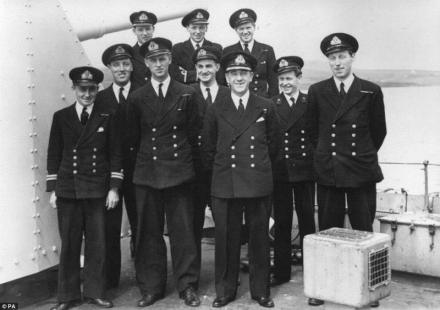
These are officers of the HMS Whelp – notice the tall and rather familiar HMS Whelp First Lieutenant – Prince Philip.
Philip joined the Navy as a cadet after leaving Gordonstoun School in 1939. In January 1941 he joined the battleship HMS Valiant in Alexandria and was in charge of its searchlight control during the night action off Cape Matapan, for which he was mentioned in dispatches. After serving aboard the HMS Wallace, he was appointed first lieutenant of HMS Whelp, which was present in Tokyo Bay when the Japanese signed the surrender.
In fact Prince Philip has quite a combat record, in a remarkable act of heroism Prince Philip saved scores of lives during the Second World War when he foiled a Luftwaffe bomber which looked certain to destroy their ship, the HMS Wallace during the Allied invasion of Sicily in July 1943. During a night-time attack, Prince Philip conjured up a plan to throw overboard a wooden raft with smoke floats that would create the illusion of debris ablaze on the water, and as he hoped, the German plane was fooled into attacking the raft while the HMS Wallace sailed to safety under cover of darkness.
A young Prince Philip with Princess Elizabeth and HMS Welp in 1944 W Class Destroyer
The last wartime ship the Price served on was HMS Welp, and 1952 was sold to South Africa as the replacement for HMSAS Natal. HMS Whelp was renamed SAS Simon van der Stel, after the 17th century colonist reputed to be the founder of the South African wine industry. Much of SAS Simon van der Stel′s service was as a “grey ambassador”, on good-will visits to Europe and Europe’s African colonies, including a 147 day cruise to Europe in 1954. This role, however, declined as South Africa became increasingly isolated during the apartheid years.
SAS Simon van der Stel was placed in reserve from 1957, but was modernised as a Type 15 frigate (in common with other destroyers of her generation) in an anti-submarine role from 1962 to 1964, and re-commissioned in February 1964. She now had helicopter facilities, which were used by South Africa’s 22 Flight (later 22 Squadron).
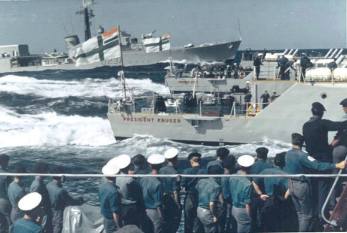
Photo of the South African Navy Frigates in their heyday. Here are the three President Class Frigates together, the SAS President Kruger, the SAS President Steyn and the SAS President Pretorius – neck to neck with the SAS Simon van der Stel in the background, now converted to a Type 15 Frigate (note additional helicopter hanger on the stern).
SAS Simon van der Stel was eventually scrapped in 1976 in Durban.
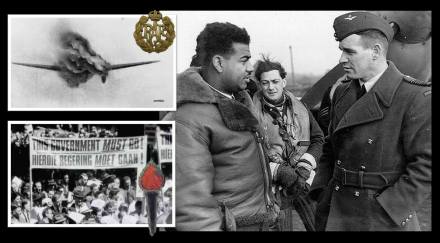
The featured image shows Group Captain Adolph Gysbert “Sailor” Malan DSO & Bar, DFC & Bar (24 March 1910 – 17 September 1963), the South African World War 2 flying ace in conversation here with Flight Sergeant Vincent Bunting at Biggin Hill in 1943 on the left, and it says a lot about Sailor Malan.
Vincent Bunting was one of a small group of ‘black’ British and Commonwealth pilots in full combat roles during the Second World War – he was born in Panama in June 1918 and raised in Kingston, Jamaica. He joined the RAF at No 1 Recruitment Centre, Uxbridge, on 26 July 1940. Selected for flying training he went on to become a fighter pilot mainly with RAF 611 Squadron.
An integrated Air Force
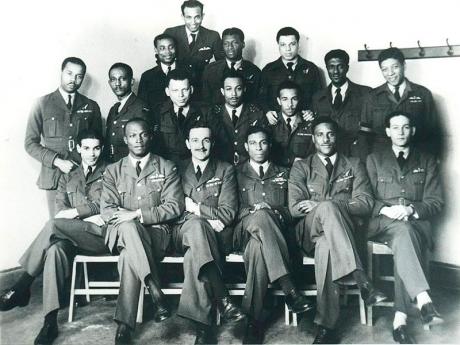
During the Battle of Britain, the British relied on pilots from the Commonwealth to make up a critical pilot shortage, Sailor Malan was one of these pilots and with him came pilots from all over the world, of all colours and of all cultures (there was no such thing as a ‘colour bar’ in the Royal Air Force) – from commonwealth countries like India, Burma, Rhodesia, Jamaica, Australia, New Zealand, South Africa and Canada, as well as pilots from Poland, France, Czechoslovakia and the USA. They made up almost one-third of the RAF pilots involved in the Battle of Britain (to believe the image so often created of these men as a bunch of tea drinking ‘tally-ho’ young white English gentlemen is to completely misunderstand the Battle of Britain).
Jamaican Pilots during the Battle of Britain
The featured image of early racial recognition is testament to Sailor Malan as not only one of the most highly regarded fighter pilots of the war, but the future signs of Sailor Malan as a political fighter and champion for racial equality.
Fighter Ace
Much has been written on Sailor Malan as a Fighter Ace, his rules for combat and his command of 74 Squadron during the Battle of Britain which played such a pivot role in winning the Battle (see ‘Ten of my rules for air fighting’ – Sailor Malan) . His combat record, promotions and decorations alone are simply astonishing.
He first took part in evacuation of Dunkirk. During this battle he first exhibited his fearless and implacable fighting spirit. To demonstrate his nature, in one incident he was able to coolly change the light bulb in his gunsight while in combat and then quickly return to the fray.
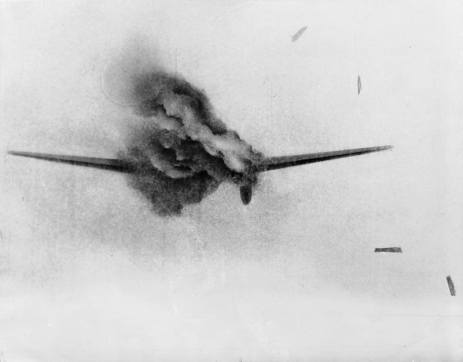
Sailor Malan’s gun camera showing the destruction of German Heinkel He 111 over Dunkirk
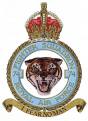
When the Battle of Britain begun, 74 Squadron (known as ‘The Tigers’) was to take the full heat of the battle in what was known as ‘hell’s corner’ over Kent, the squadron was eventually based at the now famous ‘Biggin Hill’ aerodrome in the thick of the battle.
Sailor Malan was given command of 74 Squadron, with the rank of Acting Squadron Leader at the height of the Battle of Britain on 8th August, 1940. Three days later the Squadron was in battle. The day became, for ever, “Sailor’s August the Eleventh”. The order was received at twenty minutes past seven to intercept a hostile raid approaching Dover. Little did the squadron know that they would participate in four seperate air battles that day. When the Squadron, weary, sweaty and oily, finally returned to base after the fourth sortie, they had downed an astounding 38 enemy aircraft.
Sailor Malan said later, in one of his masterly understatements: “Thus ended a very successful morning of combat”. For the first day of action under his command it was successful even by 74 Squadron standards.
Sailor Malan also worked on public relations to keep the British morale high. Here is a rare radio interview (follow Observation post link Sailor Malan – “in his own words”)
By D Day (i.e. Operation Overlord, the liberation of France and subsequently Western Europe), Sailor Malan was in command of 145 (Free French) Fighter Wing and was himself leading a section of the wing over the beaches during the landings in Normandy.
In all Sailor Malan scored 27 enemy aircraft kills, seven shared destroyed, three probably destroyed and 16 damaged. He was to receive the Distinguished Service Order decoration – not once, but twice and well as the Distinguished Flying Cross decoration, again not once – but twice. The Citations for the DSO’s and DFC’s say everything about his combat prowess:
The London Gazette of the 11th June, 1940, read:
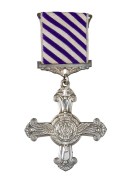
DISTINGUISHED FLYING CROSS
Flight Lieutenant Adolph Gysbert Malan. (37604), Royal Air Force.
“During May 1940, this officer has led his flight, and on certain occasions his squadron, on ten offensive patrols in Northern France. He has personally shot down two enemy aircraft and, probably, three others. Flight Lieutenant Malan has displayed great skill, courage and relentless determination in his attacks upon the enemy.”
On Christmas Eve, 1940, the London Gazette had recorded:
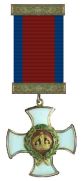
DISTINGUISHED SERVICE ORDER
Acting Squadron Leader Adolph Gysbert Malan, DFC (37604), Royal Air Force, No.74 Squadron.
“This officer has commanded his squadron with outstanding success over an intensive period of air operations and, by his brilliant leadership, skill and determination has contributed to the success obtained. Since early in August 1940, the squadron has destroyed at least 84 enemy aircraft and damaged many more. Squadron Leader Malan has himself destroyed at least eighteen hostile aircraft and possibly another six.”
And on 22nd July, 1941:
BAR TO DISTINGUISHED SERVICE ORDER
Acting Wing Commander Adolph Gysbert Malan, DSO, DFC (37604) Royal Air Force.
“This officer has displayed the greatest courage and disdain of the enemy whilst leading his Wing on numerous recent operations over Northern France. His cool judgement, exceptional determination and ability have enabled him to increase his confirmed victories over enemy aircraft from 19 to 28, in addition to a further 20 damaged and probably destroyed. His record and behaviour have earned for him the greatest admiration and devotion of his comrades in the Wing. During the past fortnight the Wing has scored heavily against the enemy with 42 hostile aircraft destroyed, a further 15 probably destroyed and 11 damaged.”
Also awarded a Bar to the Distinguished Flying Cross.
In addition, “Sailor” was awarded the following decorations by Allied Governments:
The Belgian Croix de Guerre with bronze Palm, The Czecho-Slovakian Military Cross, The French Legion of Honour, in the degree of Officer and The French Croix de Guerre.
Bill Skinner DFC, with whom Sailor often flew, summed up Sailor Malan very well as to his leadership:
“He was a born leader and natural pilot of the first order. Complete absence of balderdash. As far as he was concerned, you either did your job properly, or you were on your way. He inspired his air crews by his dynamic and forceful personality, and by the fact that he set such a high standard in his flying.”
Sailor Malan (centre) with pilots of 72 Squadron
He was the outstanding British Fighter Command fighter pilot of the 1939-45 war, and by the end of 1941 was the top scorer – a record which he held for three years. But he was much more than an individual performer. He had assimilated the fierce and fanatical “tiger spirit”, and this spirit he inspired in others so that he carried the Squadron to great deeds with him.
Freedom Fighter
The Battle of Britain and D Day moulded Sailor Malan as a champion for freedom, he simply held the view that shooting down Nazi aircraft was good for humanity, and this translated into his personal politics. Not much is known of Sailor’s political career post war, and it’s an equally fascinating to see him in the context of a ‘Freedom Fighter’ in addition to his fighter ace accolade.
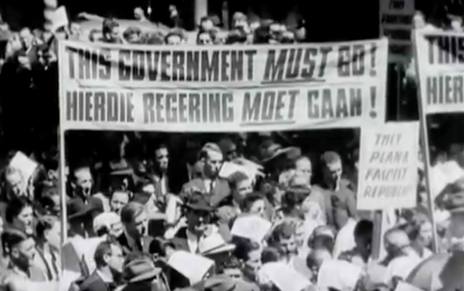
Sailor Malan left the Royal Air Force and returned to South Africa in 1946. In the 1950’s he formed a mass protest group of ex-servicemen called the ” Torch Commando” to fight the National Party’s plans to implement Apartheid and call for an early election to remove what they regarded as ‘fascist’ government from power.
In Sailor Malan’s own words, The Torch Commando was: “established to oppose the police state, abuse of state power, censorship, racism, the removal of the coloured vote and other oppressive manifestations of the creeping fascism of the National Party regime”.
To understand why the returning war veterans felt this way about the National Party, consider that during the war the National Party had aligned itself with pro Nazi movements inside South Africa as well as taking a neutral stance on the Smuts’ declaration of war. To understand the men now in power and the prevailing political mood of war veterans in 1950 follow these links to related Observation Posts:
The Torch Commando can best be described as a ‘pro-democracy’ movement and in its manifesto it called for Liberty, Freedom of Speech, Liberty from Tyranny and Freedom of Religion. Sailor Malan’s personal politics (which he brought into the Torch) revolved around universal franchise and addressing poverty in the black community and economic empowerment as a priority to political reform. Ironically, Sailor Malan was years ahead of his time in this regard, as it is only now that politics in South Africa is focusing on economic emancipation ahead of political emancipation.
The key objective underpinning the Torch was to remove the National Party from power by calling for an early election, the 1948 ‘win’ by The National Party was not a ‘majority’ win, but a constitutional one, and the Torch wanted a groundswell to swing the ‘service’ vote (200,000 in a voting population of a 1,000,000). The Torch at its core was absolutely against The National Party’s Apartheid ideology and viewed their government as ‘unconstitutional’ when they started implementing policy.
Torch Commando protest – note the slogans ‘this government must go’ and ‘they plan a fascist republic’.
Other issues also sat at the core of the Torch, one issue was the Nationalist’s headstrong policy to make South Africa a Republic, whereas the ‘servicemen’ had fought alongside the British commonwealth and the ‘Allies’ (mainly Britain, United States and Russia) in the Second World War – and they wanted South Africa to retain its Dominion status, remain a ‘Union’ and remain part of the Commonwealth of Nations.
As a pro-democracy’ movement it regarded the National Party’s policies as ‘anti-democratic’. The Cape Coloured franchise removal was the first action of the National Party to implement the edicts of Apartheid, so it stood to reason that this was the first issue to protest against.
The Cape Coloured franchise was protected in the Union Act of 1910 by an entrenched clause stating there could be no change without a two-thirds majority of both houses of Parliament sitting together. The Nationalist government, with unparalleled cynicism, passed the High Court of Parliament Act, effectively removing the autonomy of the judiciary, packing the Senate with NP sympathisers and thus disenfranchising the Cape Coloureds.
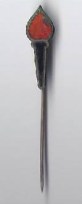
Inserted is a picture of a rare manifesto artefact of Torch Commando manifesto (freedom been the central theme) and Sailor Malan at a Torch Commando Rally in Cape Town with 10,000 South African WW2 veterans on protest.
Sailor Malan famously accused the national party government at this rally of:
“depriving us of our freedom, with a fascist arrogance that we have not experienced since Hitler and Mussolini met their fate”.
Wartime singing icon Perla Gibson also attended the Torch Commando anti apartheid rally in Cape Town and sang to the protesters in support. Perla was known as the ‘Lady in white” and sang to incoming and outgoing troops in Durban harbour during WW2 to beef up morale.
Insert – Kmdt Dolf de la Rey (left) and Perla Gibson (right) at the Cape Town Torch Rally
Of extreme interest was co-leader of the Torch Commando rally in Cape Town – Kmdt. Dolf de la Rey – he famously captured Winston Churchill during the Boer War fighting for the Boers and became an anti-apartheid activist after WW2, another one of the rich tapestry of Afrikaner war heroes in conflict with National Party politics and philosophy.
Follow the below two links to view film footage of The Torch Commando in action:
During the Cape Town “Torch” 50,000 civilians joined the 10,000 veterans when the protest moved to hand over a petition at the Parliament buildings in Cape Town. The police barred the way and a scuffle broke out. 160 Protesters where injured along with 15 Policemen.
In a speech at a massive Johannesburg Torch rally involving over 75,000 war veterans and civilians (try and envisage that – 75,000 people on an anti-apartheid protest in downtown Johannesburg – a protest that size had never been seen before), standing outside City Hall in Johannesburg, Sailor Malan made reference to the ideals for which the Second World War was fought:
“The strength of this gathering is evidence that the men and women who fought in the war for freedom still cherish what they fought for. We are determined not to be denied the fruits of that victory.”
The Torch Commando fought the anti-apartheid legislation battle for more than five years. At its height the commando had 250 000 members, making it one of the largest protest movements in South African history.
DF Malan’s nationalist government was so alarmed by the number of judges, public servants and military officers joining the organisation that those within the public service or military were prohibited from enlisting, lest they lose their jobs – in the long-term this pressure led to the gradual erosion of the organisation.
Also the National Party government, being extremely concerned about the influence this movement might have, especially under the leadership of the war hero tried to discredit the Torch Commando and its leaders through means of negative propaganda. For the rest of his life, Sailor would be completely ignored by the government. The National Party press caricatured him as “a flying poodle”, dressed in his leathers and flying goggles, in the service of Jan Smuts and the Jewish mine-bosses, who were referred to as the “Hochenheimers”.
Torch Pin
Despite this, Sailor continued to fight against the violation of human rights in South Africa with the same passion and moral fibre that allowed him to fight so vigorously against fascism and racism during the Battle of Britain. His dream of a better, democratic life for all in South Africa not only urged and carried him forward, but also caused him to be shunned by and isolated from his white National Afrikaner countrymen who were blinded by the short-sighted racial discrimination of their government.
He would become known to them as a traitor and an outsider of “another kind”. DF Malan, during his term as Prime Minister, would refer to him as “an imported British officer” and it was due to his own integrity that he would, towards the end of his life, turn his back on the oppression and immorality of the country he loved so much. His individual brilliance as the Spitfire fighter pilot during the heroic battle in the skies above London and the British Channel were not enough to bring victory in this struggle.
In 1963, Sailor Malan, one of the most famous fighter pilots in the history of the Royal Air Force, lost his fight against Parkinson’s Disease and died at the young age of 52. The funeral service was held at St. Cyprians Cathedral and he was laid to rest in his beloved Kimberley.
An inconvenient truth
It is to the embarrassment now as to his treatment as a South African military hero that all enlisted South African military personnel who attended his funeral were instructed not to wear their uniforms by the newly formatted SADF (the government did not want a Afrikaaner, as Malan was, idealised in death in the fear that he would become a role model to future Afrikaaner youth).
All requests to give him a full military funeral were turned down and even the South African Air Force were instructed not to give him any tribute. Ironically this action now stands as testimony to just how fearful the government had become of him as a political fighter.
In the national obituary issued to all newspapers by the government, no mention was made of his role as President of the Torch Commando and his very strong anti apartheid views.
This systematic removal of Sailor Malan’s legacy by the National Party and the education curriculum is also tragic in that Sailor’s role in the anti-apartheid movement is now lost to the current South African government.
It would be an inconvenient truth to know that the first really large mass action against Apartheid did not come from the ANC and the Black population of South Africa – it came from a ‘white’ Afrikaner and a mainly ‘white’ war veterans movement, which drew it members from the primary veterans organisations in South Africa – The Springbok Legion, the South African Legion and Memorable Order of Tin Hats (for its impact on these veteran organisations to this day see The Torch’s impact on the South African military veteran diaspora!).
The simple truth – the Torch Commando preceded the first ANC “Defiance Campaign” by a couple of years, an inconvenient truth for many now and very conveniently forgotten.
The Spitfire Club sums up Sailor Malan nicely. To those who served with the Royal Air Force’s 74 Squadron anytime between 1936 and 1945 Sailor Malan was the greatest leader of them all. As a small token of their esteem, 28 of those remaining presented a ceremonial sword to the Squadron in July, 1966, at Headquarters Fighter Command, in proud memory of Sailor and in honour of his exceptional service to the Squadron.
It was intended that this Sword should serve as an inspiration to those coming after, so that his high standards of courage, determination and leadership shall live on.
To remember Sailor’s calm and heroic line going into battle “Let’s cut some cake. Let ’em have it!” is to remember a man of remarkable courage. A man who in all honestly lived by his beloved squadrons motto, and can say in all truth;
“I Fear No man”
A motto that holds true to him as one of the greatest ‘fighter pilots’ of the war, but equally so as a ‘freedom fighter’ standing up against a morally corrupt government for human rights.
Concluding video
To conclude Sailor Malan, visuals often better reflect words, and this is a landmark video on Sailor Malan which balances his fighting and political deeds. This time Sailor’s legacy has been carried forward by “Inherit South Africa” in this excellent short biography narrated and produced by Michael Charton as one of his Friday Stories – this one titled FRIDAY STORY #7: Sailor Malan: Fighter Pilot. Defender of human rights. Legend.
Story for The Observation Post, written and researched by Peter Dickens
References Wikipedia. South African History On-Line (SAHO), South African History Association, Wikipedia ,Neil Roos: Ordinary Springboks: White Servicemen and Social Justice in South Africa, 1939-1961. Kimberley Calls and Recalls. Life Magazine, 25 June 1951. Video footage, Associated Press – source Youtube. Images – Imperial War Museum copyright and Associated Press copyright. Friday Story video copyright Inherit South Africa – Michael Charton.
After the signing of The “Simonstown Agreement”, in this colourful ceremony, the Simon’s Town Naval base was handed over by the British to the Union of South Africa on the 2nd April 1957 – after being in British hands since 1813.
The Simonstown Agreement between the United Kingdom and South Africa had been signed less than two years before this ceremony on 30 June 1955. Under the agreement, the Royal Navy gave up its naval base at Simon’s Town, South Africa, and transferred command of the South African Navy to the government of South Africa.
In return, South Africa promised the use of the Simon’s Town base to Royal Navy ships. The agreement also permitted South Africa to buy six anti submarine frigates, ten coastal minesweepers and four seaward defence boats from the UK valued at £18 million over the next eight years. In effect, the agreement was a mutual defence arrangement aimed at protecting sea routes between the UK and the Middle East.
The agreement was controversial, especially with the United Nations, because of South Africa’s policy of Apartheid. The Agreement stood in stark contrast to United Nations resolutions against South Africa as the United Kingdom was still supporting the South African military by way of this quid pro quo agreement.
The United Kingdom terminated the agreement on 16 June 1975. However, ships of the Royal Navy still continued to call periodically at Simon’s Town and other South African ports, although the Royal Navy was not able to use any South African ports by the time the Falklands War started in 1982.
South Africa was a member of the Commonwealth at the time the agreement was signed (South Africa left the Commonwealth in 1961), so the United Kingdom and South Africa took the position that the agreement was not an international treaty requiring registration with the United Nations under Article 102 of the United Nations Charter and continued regardless of the United Nations’ protests.
A personal perspective
I often hear this old one from many people “we fought in the First and Second Wold Wars for Britain and in our hour of need they abandoned us” (referring to sanctions and fighting “terrorists”). Well, that’s not strictly true, the Simonstown Agreement saw to it that South Africa was using British produced Buccaneer Fighter Bombers and Naval vessels at the onset of the Border War and the internal armed insurgency and well into it. It’s obvious that after 1976 (the Soweto riots) that even this relationship would be strained let alone the implementation of Apartheid Legislation and the withdrawal by the National Party from the British Commonwealth of Nations – which would have made supporting South Africa exceptionally difficult for the United Kingdom in any event – and even then they continued military support well up to, and beyond the point where it became truely internationally impossible to continue to do so.
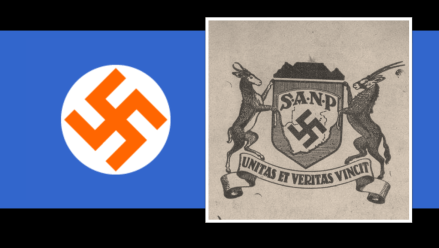
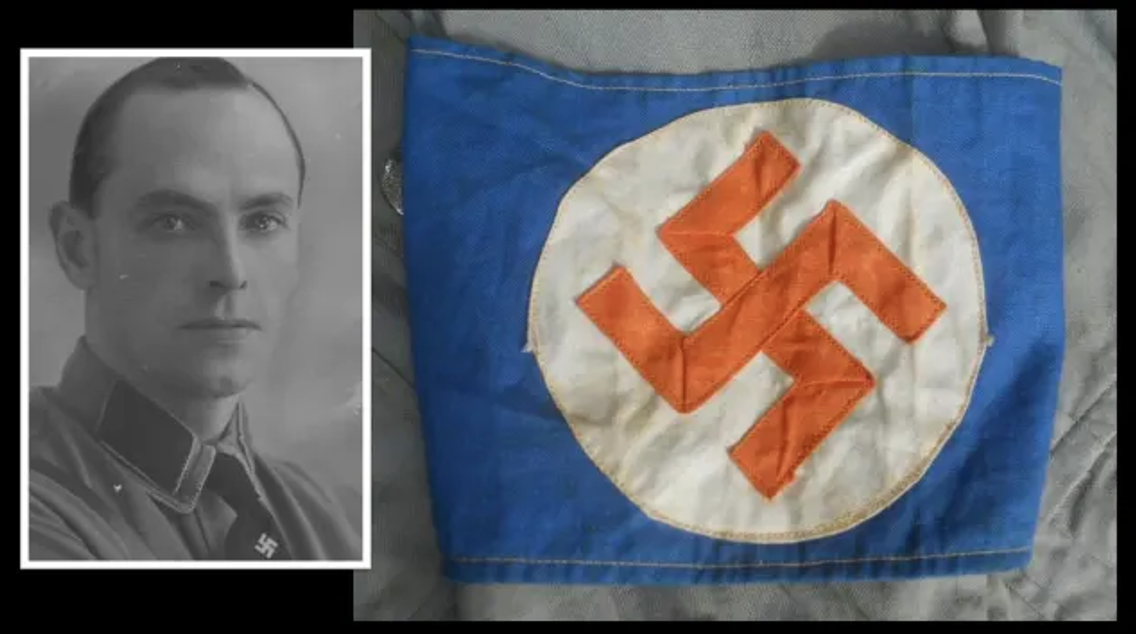
Here is a rare and very unique display of South Africa’s very own Nazi Party’s shirts, flags and bunting. Of interest, is the use of Orange, Blue and White in the Nazi swastika configuration – this was intentionally done to reflect the national colours of the South African flag at the time, the ‘Oranje-blanje-blou’ (Orange, White and Blue).
These items belong to South Africa’s ‘Greyshirts’, read on for an in-depth chapter in South Africa’s hidden history, here we focus on the SANP – The South African Christian National Socialist Movement (SANP) also referenced as the South African Gentile National Socialist Movement. More commonly they were also known at the time as the ‘Gryshemde’ in Afrikaans and ‘Grey-shirts’ in English.
SANP bunting, flags, armbands and shirts, image courtesy Ulrich Duebe, the current owner of the collection.
South African statute forces had fought a hard war against Italian Fascism and German Nazism, and the same war had been fought on the ‘home-front’ in South Africa itself, as with the USA and the United Kingdom, South Africa also had its own National Socialist (Nazism) parties prior to the war (it had actually been a quite popular doctrine across many “Western” European states prior to the war). During the war the Smuts’ government took severe action against pro-Nazi South African movements on the Afrikaner right-wing political fringe – the SANP (the Grey-shirts), the South African Democratic National Movement – the ‘Black-shirts’, the National Workers Bond – the ‘Brown-shits’, The ‘New Order’ and the Ossewabrandwag amongst others and jailed some of their leaders for the duration of the war.
Imagine the sheer frustration felt by the South African war veterans returning after winning ‘The War for Freedom’ (as Smuts had called WW2 at the time). This war had been fought with a massive cost in South African lives to rid the world of Nazism and Fascism in the “good fight” – only to come home in 1945 and within three short years in 1948 find South African ‘home grown’ pre-war Nazi and Neo Nazi politicians swept into government. The very men and their philosophy they had gone to war against in the first place. Many of these movement’s leaders and members were folded into National party after the war to one day become South Africa’s political elite (including a Ossawabrandwag General – BJ Vorster who became a future Prime Minister and State President of South Africa).
Louis Theodor Weichardt
One such South African politician was Louis Theodor Weichardt (21 May 1894 – 26 October 1985) and this is his relatively unknown story of South Africa’s very own Nazi Party, the largest and most significant of the Pro-Nazi South African ‘Shirt movements’ – the Grey-shirts .
Louis Theodor Weichardt
Louis Theodor Weichardt was born in Paarl of German extraction on the 23 May 1894, he attended German school in Pretoria and in New Hanover Natal. At the outbreak of World War 1, Weichardt found himself in Germany. His military service to the German state is shrouded in a little mystery, some accounts point towards three years service in the German Army, others point to non-combatant service in a Labour Corps. As a South African national there is an account that he was arrested after the war for High Treason, however the charges were never brought.
In Germany Louis Weichardt became a rabid antisemite, in travelling Europe he recalled that in the Ottoman Empire that the Turks were being “bled to death by Jewish extortioners and money lenders” and in Germany he said he:
“had the privilege of witnessing the first beginnings of the national German uprising against Jewish domination”. 1
Returning to South Africa in 1923, Louis Weichardt joined Hertzog’s National Party, however he became increasingly disillusioned in the National Party as he was unable to bring fellow members to his vision of National Socialism – he blamed been “checkmated” in his endeavours by external influences he called “powerful financial interests, predominantly Jewish”. When Hertzog merged the National Party with Smuts’ United Party, which was seen as by the ‘pure’ nationalists as underpinned by ‘Anglo-Jewish Capital’ (Oppenheimer) – Weichardt took the opportunity to break away from the National Party altogether and start his own party.
In Cape Town, on 26 October 1933, he founded South Africa’s Nazi party equivalent – The South African Christian National Socialist Movement with a paramilitary ‘security’ or ‘body-guard’ section (modelled on Nazi Germany’s brown-shirted Sturmabteilung) called the ‘Gryshemde’ (Afrikaans) or Grey-shirts (English). In May 1934, it was agreed to combine the ‘Grey-shirts’ with the South African Christian National Socialist Movement and form a new enterprise called ‘The South African National Party’ (SANP) – not to be confused with the National Party. The SANP would all keep with the ‘grey-shirts’ as their dress.
Johannes Von Moltke at this time was Louis Weichardt’s right hand man, the leader of the SANP’s stronghold in the Eastern Cape (his SANP office in Port Elizabeth proudly flying a swastika flag outside it every day). Johannes Von Moltke was of 1820 settler and German heritage, born in Senekal in the OFS he became a firm Republican and Afrikaner Nationalist, working for the Afrikaner Pers Group and the ‘Die Burger’, he met Weichardt in October 1933 and the two decided to collaborate.
Louis Weichardt was very proficient in English and he intended the SANP to appeal to both ‘English’ and ‘Afrikaner’ whites – citing that they were both of “Nordic” races. Some English joined the organisation, but the backbone found itself in rural and ‘poor white’ Afrikaner communities. It must be noted here that Nazism appealed to many Afrikaners as Hitler took an “anti-British” stance and the legacy of the South African War (1899-1902) was still strong within Afrikaner communities by the 1930’s, many within living memory of it. However Nazism was no means the exclusive pursuit of Afrikaners in South Africa, the handful of ‘English’ that supported the SANP were vicious in their anti-Semitic leanings – as were the British fascists at the time Oswald Mosley a case in point in England. This sentiment can be be seen in the University of Cape Town Law and SANP supporter – Professor Kerr Wylie, who said of Jews in a letter to University of Cape Town Principal Sir Carruthers Beattie:
“Everything point to the fact that the Jews’ game in South Africa is up, and, if they have any sense, they will realise the fact and try to effect compromise. But history shows that the greed for gold and lust for power is so engrained in the Jewish race that they will cling to their gold and power until it is too late”.2
As a movement the SANP also saw themselves as a ‘popular’ movement for National Socialism and initially did not contend by-elections and municipal elections as a political party – choosing instead to put forward their members as “independents” in elections. A future Grey-shirt breakaway called the ‘Black-shirts’ would however put party candidates forward which ironically caused issues for the ‘Pure’ National Party as the support or the Black-shirts split their vote.. Overall, Weichardt saw democracy as an outdated system and an invention of British imperialism and Jews.3
The SANP would eventually contest elections and Louis Weichardt would stand as a MP candidate in Port Elizabeth, he was not very successful and would later try another safer seat without success either – predictably he blamed his election losses on a Jewish conspiracy.
The SANP grew to about 4,000 members in South Africa (with their largest support base in the Eastern Cape – spurred by ‘poor white’ rural and urban issues in the area), central to their cause in the 1930’s where Jewish immigrants escaping Nazi Germany to South Africa, and their numbers were growing significantly over the decade – in response the SANP launched a campaign calling for an end to Jewish migration and even arranged mass protests in Cape Town. Their primary communication mouthpiece was a newspaper called ‘Die Waarheid/The truth’ which was nothing more than a vehicle to spread Nazi doctrine in South Africa – the Nazi emblem emblazoned on the masthead.
Louis Weichardt would spell out his ‘Nordic’ argument and vision in the ‘Die Waarheid/The truth’ and trace South Africa’s problems to one source – the Jews. He claimed Jewish ‘domination’ of the legal, medical, dental, commerce, trading, liquor trade etc. as between 60% to 100%, and he would write:
“We are determined to put the Jew in his place. We are not going to tolerate bootlicking, Gentile South Africans – English or Dutch speaking – are no longer prepared to play second fiddle to these aliens”.4
The main target of the SANP was Hertzog’s old National Party’s inspired Quota Act of 1930 which sought to curtail Jewish immigration. As far as the SANP was concerned the National Party had not gone far enough in their endeavours to clip Jewish immigration specifically. They proposed revoking South African citizenships granted to all Jews entering South Africa after 1918, the prevention of Jews gaining government jobs and the prevention of Jews from owning immovable property and dominating any particular industrial or trade sector. They would however support an immigration policy that brought in whites of ‘nordic’ (aryan) races that would assimilate with a white culture in South Africa sans the “insoluble” element of Jews.
The Protocols of the Elders of Zion
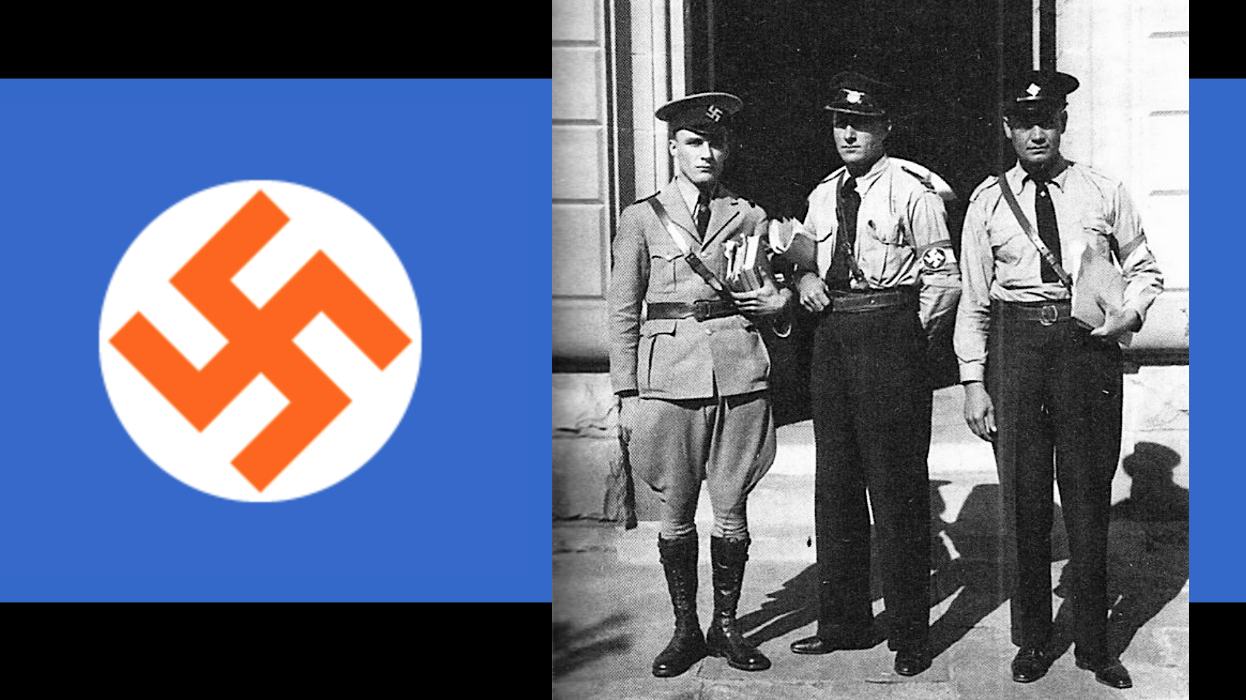
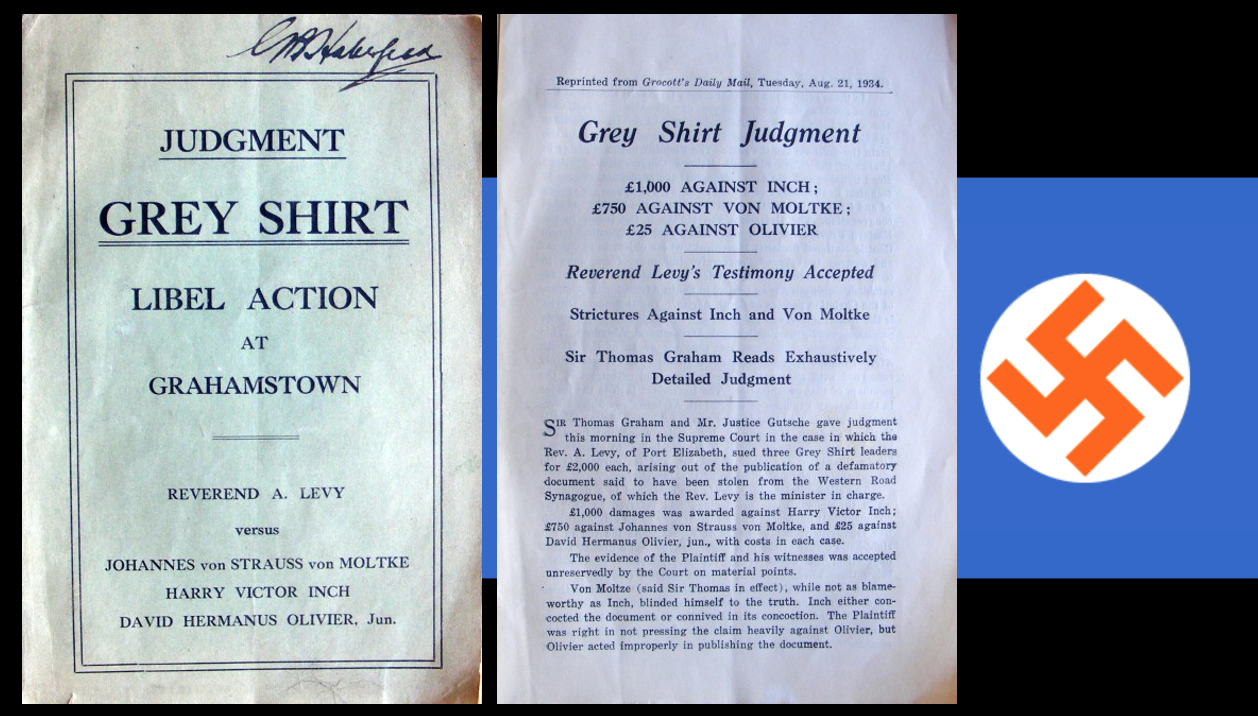
The nature of the movement was clearly seen in March 1934 when the SANP held a rally in Aberdeen in the Eastern Cape, Harry Victor Inch – one of the Greyshirt leaders – announced that he had in his possession a ‘stolen’ document from a Port Elizabeth synagogue – signed by its Rabbi – which outlined a secret plot by the Jews to destroy the Christian religion and civilisation.
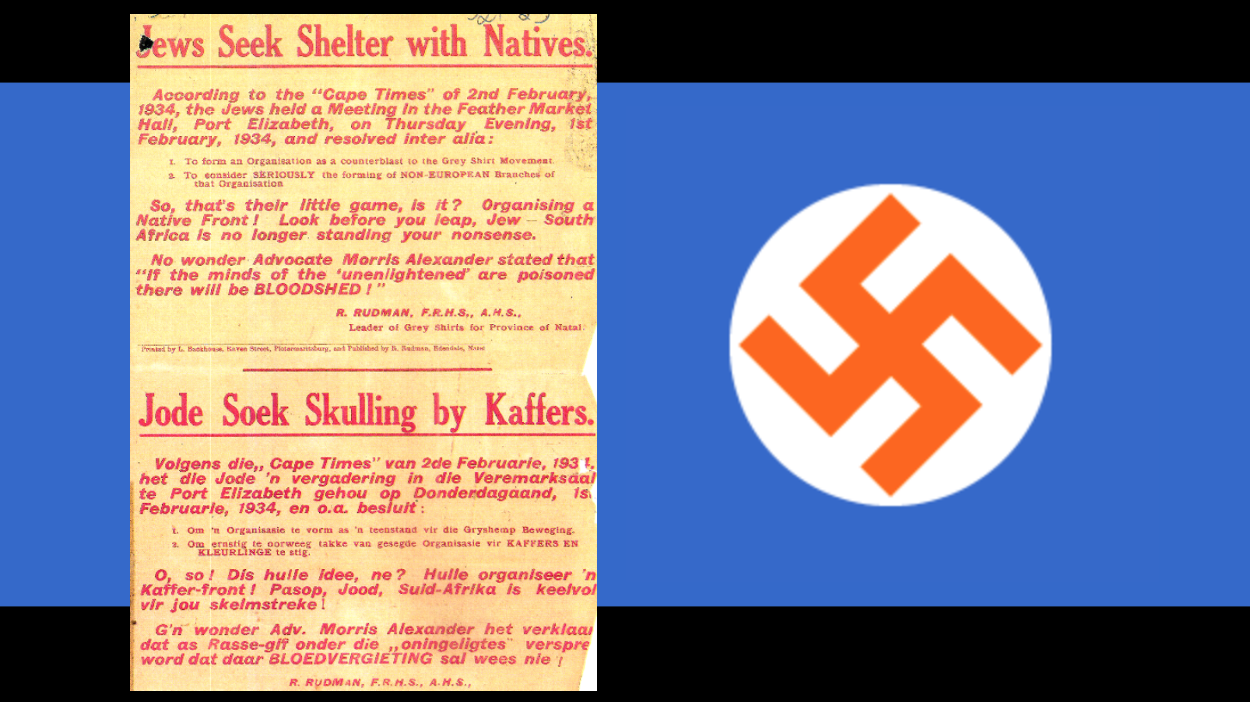
SANP propaganda leaflet accusing Jews of inciting Native (Black) violence against whites.
The Rabbi in question was not in fact a Rabbi, he was a Jewish Reverent, Reverent Abraham Levy, and he took the SANP Grey-shirt leadership in the Eastern Cape to court in Grahamstown in a landmark case. The SANP accused; Johannes von Strauss Moltke who was the Regional SANP leader, Harry Inch, who allegedly ‘stole’ the document and David Olivier, who had printed the document for circulation as the owner and publisher of “Rapport”, another media organ of the ‘shirt’ movements. All now have to account for themselves – the case billed as a mighty ‘Gentile vs. Jew’ showdown and a legal test of the ‘Great Jewish Conspiracy.’ `
The document in question followed the “Protocols of the Elders of Zion, a pamphlet of some 70 pages purporting to be the actual minutes of 24 speeches made by Jewish leaders during the First Zionist Congress in 1897. The pamphlet detailed a satanic plot by Jewish/Zionist conspirators to conquer the world. Alleging that Jews controlled much of the world’s finance, the media, the educational institutions, the court systems and many of the world’s governments, the Protocols claimed that the Jews indulged in all forms of trickery and deceit to tighten their hold. They deliberately spread diseases and immorality to weaken Gentiles, and did not hesitate to use murder and terrorism to destroy all religions except their own. Jews were striving to establish their own autocracy based on a false Messiah, the “Son of David”, and posed a fiendishly devious omnipresent peril to the rest of mankind.”5
‘Die Waarheid/The truth’ would pick up this ‘Protocols of the Elders of Zion’ and really twist it for a South African audience claiming:
“the disastrous Anglo-Boer War 1899-1902 was deliberately brought about by the Jewish mine magnets who circumvented Rhodes and Kruger alike”.6
In addition, Jews were accused of inciting blacks against whites and controlling the economy, exploiting ordinary Afrikaners as part of an international Jewish conspiracy. The ‘Die Waarheid/The truth’ statements were accompanied by a propaganda leaflet printed by the SANP and distributed in Port Elizabeth.
Left to Right – standing outside the courthouse in Grahamstown in full SANP dress is Johannes von Strauss Moltke, Harry Inch and David Olivier.
The ‘stolen’ document was scrutinised legally, it was found to be based on an entirely discredited antisemitic ‘international Jewish conspiracy’ document called ‘the Protocols of the Elders of Zion’ and given a South African twist by the SANP. The ‘Protocols of the Elders of Zion’ was a composition based on a 1860’s anti-Napoleon III pamphlet and a German antisemitic novel by Herman Gödshe ‘Biarritz’ – used by the Nazi Party in Germany.
In a carefully considered 30,000 word judgement, the court concluded inter alia;
“the protocols are an impudent forgery, obviously published for the purposes of anti-Jewish propaganda”.7
As a result three Greyshirt leaders all were fined, Harry Victor Inch was found guilty of perjury and forging documents defaming the Jewish race and swearing under oath that those documents were genuine – and fined £1,000 and later handed a short prison sentence. David Hermanus Olivier was fined £25 for acting improperly and printing the document and Johannes von Moltke was fined £750 for “playing a leading role in the plot”.
The result has been widely hailed here as a complete vindication of the Jewish people and of Rev. Abraham Levy who brought the lawsuit against the Grey-shirt leaders.
Splits in the Shirts
Later that year, the SANP Grey-shirts would hold their first National Congress in Observatory, Cape Town. Louis Weichardt in his keynote address would dismiss Johannes von Moltke as a “traitor” to the SANP and no longer a member having “misbehaved” in releasing Harry Inch’s anti-Jewish protocols. In fact Johannes von Moltke had broken away from the SANP along with most of his the Eastern Cape SANP supporters and leaders and formed a new organisation called ‘The South African Fascists’ who wore blue trousers and grey shirts.
Other Nazi splinter parties and ‘shirt’ organisations also began to form – ‘The South African National Democratic Movement’ (Nasionale Demokratiese Beweging) which became known as ‘the Black-shirts’ was formed in Johannesburg by Manie Wessels and operated in the Orange Free State and the Transvaal – the Black-shirts themselves would splinter into another Black-shirt movement as an off-shoot called the South African National People’s Movement (Suid Afrikaanse Nasionale Volksbeweging) – based in Johannesburg, started by Chris Havemann and advanced a closer idea of National Socialism – this Blackshirt splinter group by 1937 boasted 265 branches (mainly in the Transvaal), their official mouthpiece was called “The Swastika”8.
The black-shirts by July 1939 were formally incorporated into the Ossewabrandwag focussing on the recruiting of ‘Christian minded National Aryans’ into the Ossewabrandwag infusing it with a “volkisch” Nationalism and took it beyond just being a cultural organ of Afrikanerdom and the National Party. 9
Another ‘Volksbeveging’ (People’s movement) also known as ‘African Gentile Organisation’ was also formed in Cape Town by H.S. Terblanche. The National Workers Union (Bond van Nasionale Werkers) – known as the Brown-shirts was established by Dr. A.J. Bruwer in Pretoria in September 1934. Finally a group called the ‘Orange-shirts’ under Frans Erasmus, who at that stage was the Secretary to the Federal Council of the National Party and the Minister of Parliament for Moorreesburg, Erasmus would go onto become the National Party’s Minister of Defence after 1948.10
In addition, the SANP leader J.H.H. de Waal resigned from the SANP over leadership issues with Weichardt and formed the The ‘Gentile Protection League’ whose sole aim was to:
De Waal’s organisation would focus on the Western Cape, he would also advance a Jewish store boycott in the southern Orange Free State where antisemitism was rife, he was a popular lawyer of political stock and he would eventually claim his organisation as 5,000 members strong. De Waal would comment in his memoir “My Ontwaking” (my awakening) and blame Jan Smuts for promoting the Jewish agenda in South Africa and call him “The King of the Jews”.12
An ‘insoluble’ element
So, where does the ‘purified’ National Party under Dr. D.F. Malan sit on the ‘Jewish’ question in the mid 1930’s and what influence do these Nazi ‘shirt’ organisations have on it?
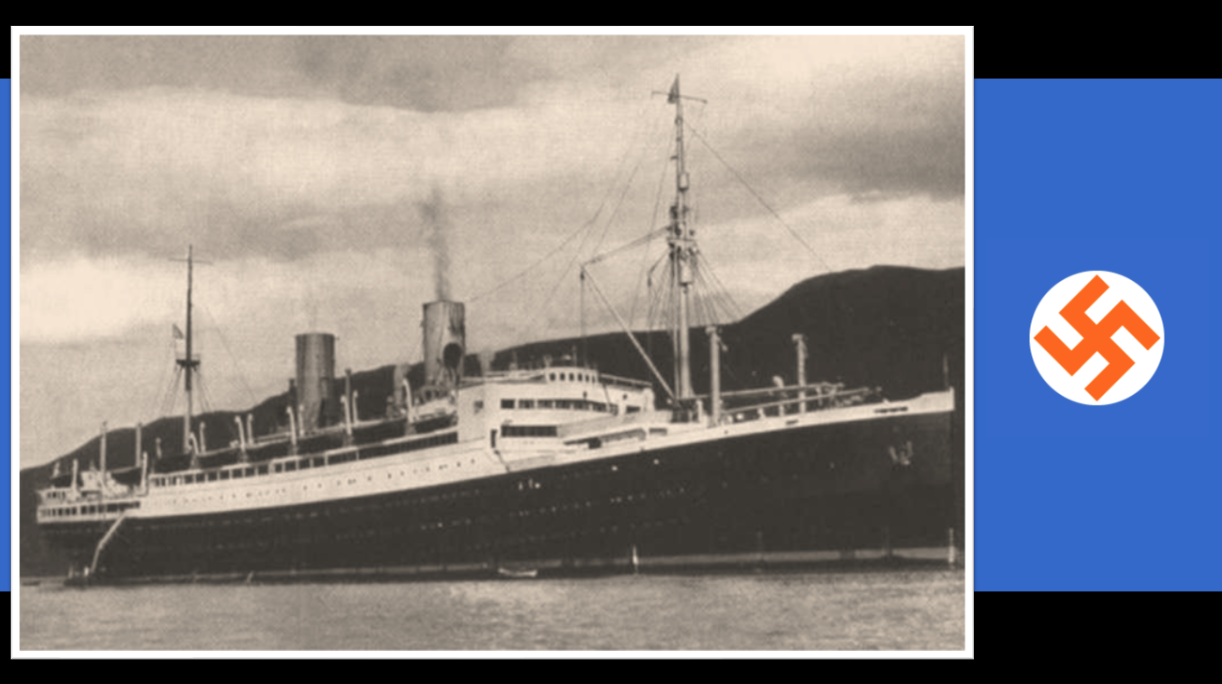
Prior to the war and sitting in the wings of the Broederbond was Dr. Hendrik Verwoerd (the Architect of Apartheid), he was a predominant Broederbond member, National Party leader and would become a future Prime Minister of South Africa. Dutch by birth, he honed his studies in sociology and psychology in Germany and there is no doubt he was exposed to German politics and the rise of Nazism at the time. Verwoerd showed his colours early on when, the ‘Black shirts’ held a large rally and protested the arrival of the S.S. Stuttgart in Cape Town on the 27th October 1936 with 600 Jewish refugees on board.
S.S. Stuttgart in Cape Town
The Nationalists joined hands with the Black-shirts in support of their protest and a few days later on 4 November, Dr Theophilus E. Dönges (future NP Acting Prime Minister) and admirer of Nazism would nail the Nationalists colours to the mast and said:
“The Jew is an insoluble element in every national life.”
The Black-shirts were joined by Dr Verwoerd and five fellow professors from Stellenbosch University who all went in deputation to the government to protest against the immigration of Jews from Nazi Germany. Frans Erasmus (the future National Party Minister of Defence) would go further on the matter and even officially thank the Black-shirts on behalf of The National Party for bringing the attention of the;
“Jewish problem to the Afrikaner ‘volk’.”
Dr Verwoerd would forward the National Party’s views on Jews in the Transvaaler where he wrote that there was a “botsing van belange” (clash of interests) between Jew and Afrikaner because the Jew had risen to wealth in key economic sectors whilst protecting themselves as a community, and as guests in the country they had purposefully excluded the Afrikaner (he referenced as the ‘majority’) from taking their rightful place in accessing the country’s wealth. He would outline the Jew as an enemy of Afrikanerdom, he would write:
“This population group (the Jews), which still keeps itself separate and apart within the population, and which is indifferent or even hostile to the national aspirations of Afrikanerdom, is thus regarded as the group which also stands in the way of the Afrikaner’s economic prosperity”.13
Dr. D.F. Malan, the National Party leader would go further and refer to the Jews as a:
“undigested and unabsorbed and unabsorbable minority … that leads to all sorts of difficulties”14
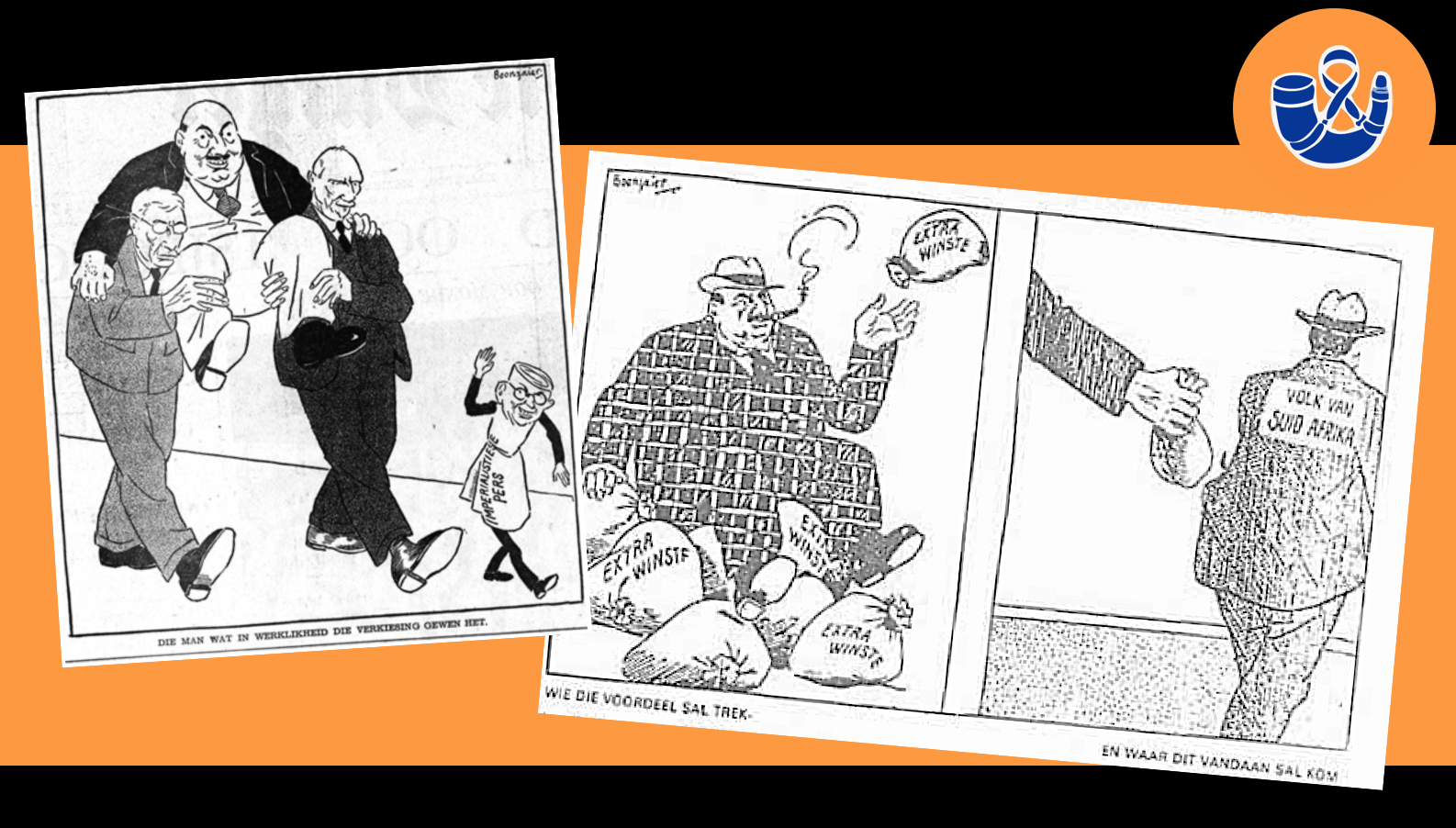
D.F. Malan would however try and sanitise the The National Party to the Jewish Community, but as they were a firmly “Christian” movement in terms of constitution his words carried little weight to the South African Jewish Council who saw the National Party for what it was. The National Party would openly lock-step with the “shirt” movements when it came to demonising Jews and Jewish Capital in the form of “Hoggenheimer” in their mouthpieces “The Transvaaler” (of which Verwoerd was the editor) and “Die Burger” (of which Dr. Malan was a founding editor).
‘Hoggenheimer’ would become a cartoon in the same vein as “the banker” – a Nazi demonisation of Capitalist Jews and ‘the Jewish Conspiracy’ – depicted as fat, cigar smoking, balding and greedy – either pulling the strings or holding onto the money bag . The work of D.C. Boonzaier his caricature was developed specifically for Die Burger – a derogatory figure designed to depict a fat and bloated Jewish capitalist with a play on ‘hog” or pig, the character made a number of appearances and also served to lampoon Ernest Oppenheimer, the German Jewish Mining Industrialist who made South Africa his home. The Nationalists would even go as far as referring to Oppenheimer and Jewish Capital openly in Parliament and in speeches as “Hoggenheimer”.
Hoggenheimer by D.C. Boonzaier – Die Burger
It is undeniable that these “shirt” and antisemite fringe effectively “succeeded in shifting the ‘Jewish Question’ from the political margins of South African public life to its centre” … “Malan, under pressure from the ultra-right Greyshirts, focussed increasingly on the Jew as an explanation for the Afrikaners political misfortunes. It was Hendrik Verwoerd, however, who stood at the vanguard of anti-Jewish agitation”15
This sentiment would be taken up broadly across the Afrikaner Nationalist front – an example is the Nationalist MP for Bethlehem – Roelof van der Merwe, who on a call to boycott Nazi German goods, would warn the Jews:
“They (the Jews) are exploiting our people (the Afrikaners) and are nothing more than parasites.”16
World War 2 Nazi collaboration
During the Second World War, Louis Weichardt would even work in conjunction with the Ossewabrandwag to aid Nazi Germany’s war effort. He would take two Nazi spies under his wing, spies been smuggled by the Ossewabrandwag – the German spies Lothar Sitting and Nils Pashe would present themselves at a house in Stellenbosch and meet Weichardt – he would ensure they be driven and hidden by SANP men on a farm near Barrydale for two days after which one SANP man took them to Pretoria and back into the Ossewabrandwag’s network on 13 June 1940.17
Weichardt was arrested and imprisoned for the remainder of World War II at Koffiefontein detention barracks by the Smuts’ government as an ‘enemy of the state’ – along with all the other far right pro Nazi Germany, anti-British militants.
Merging of interests
With the end of the Nazi regime in Germany in 1945, Nazism became an anathema worldwide, Weichardt subsequently disbanded his SANP Nazi party in 1948. Moving on, Weichardt then gave his full attention and allegiance to D.F. Malan and the ‘Reunited’ National Party (NP) itself. He had a very successful political career with the National Party and went on to become the National Party’s senator from Natal Province from 1956 to 1970. Remaining elements of the Greyshirts distanced themselves from open Nazism and renamed themselves the White Workers Party in 1949. However, by this time most of the membership had been lost to the National Party and so the ‘Greyshirts’ and their reconstituted party faded .
By the early 1950’s the South African National Party government was littered with men, who, prior to the war where strongly sympathetic to the Nazi cause and had actually declared themselves full-blown National Socialists along Nazi political doctrine lines: Oswald Pirow, B.J. Vorster (a future President of South Africa), Hendrik van den Bergh, Piet Meyer, Johannes von Moltke and Louis Weichardt to name a few, and there is no doubt that their brand of far right politics, known collectively as Christian Nationalism (a form of Nazism) was influencing the National Party’s government policy.
By the early to mid 1950’s, this state of affairs led to open Anti-Apartheid protests from the South African military veterans community returning from WW2 – in their hundreds of thousands – in all The Torch Commando would rise to 250,000 members openly protesting the on-set of Nazism in the guise of the National Party, and it also ultimately led to the marginalisation of South African World War 2 veterans and their veteran associations by the ruling party when it was crushed under anti-communist legislation put forward in 1950 by the National Party.
The folding in of key National Socialist organisations, including Louis Weichardt and his SANP, Johannes von Moltke and his South African Fascists into the National Party’s political sphere would have a resounding impact on the future of not only the majority of ‘Black’ South Africans (who were viewed as ‘Inferior’ peoples by these hard liners), but also minority white ethnic groups like South Africa’s very large Jewish community.
The arrogance of this underpinning politics is seen with Louis Weichardt himself, who, on becoming an elected National Party Parliamentarian quickly covered up his dubious history as a full blown card carrying Nazi, and rather infamously declared that he had never been against the ‘Jewish race’ but only against the actions of certain ‘Jewish communists’. Not a single Jew, in his ‘opinion’ had suffered through his actions.18
Johannes Von Moltke the ex SANP and ex SA Fascist leader also later became a National Party Member of Parliament and exhibited the same arrogance, gaslighting and covering up of his antisemitic tracks as his old grey-shirt colleague. “The (UP)Jewish Minister of Parliament, Morris Kentridge, once recalled with some amusement that Von Moltke frequently buttonholed him in the lobby of the House of Assembly to explain that he had been misled by Inch (his fellow Grey-shirt collaborator) and was a great friend of the State of Israel!”19
Researched and written by Peter Dickens.
My thanks and acknowledgements to Ulrich Duebe, the current owner of the collection as illustrated.
References:
“Echoes of David Irving – The Greyshirt Trial of 1934” by Dr. David M. Scher – December 2004.
A Perfect Storm – Antisemitism in South Africa 1930-1940, Jonathan Ball Publishers, 2015 – By Milton Shain.
National Socialism and Nazism in South Africa: The case of L.T. Weichardt and his Greyshirt movements, 1933-1946: By Werner Bouwer.
Hendrik Verwoerd’s ‘possible solution’ to the Jewish Question in South Africa, 1937 – Die Transvaler, 1 October 1937.
“Hitler’s Spies: Secret Agents and the Intelligence War in South Africa 1939-1945” by Every Kleynhans – Jonathan Ball Publishers 2021
The Rise of the South African Reich by Brian Bunting.
Footnotes
A Perfect Storm – Antisemitism in South Africa 1930-1940 By Milton Shain page 55 ↩︎
The South African Jewish Board of Deputies – Jewish Matters – newsletter ↩︎
National Socialism and Nazism in South Africa: The case of L.T. Weichardt and his Greyshirt movements, 1933-1946: By Werner Bouwer – Page 18 ↩︎
A Perfect Storm – Antisemitism in South Africa 1930-1940 By Milton Shain page 58 ↩︎
Echoes of David Irving – The Greyshirt Trial of 1934 by David M. Scher – Dec 2004 ↩︎
A Perfect Storm – Antisemitism in South Africa 1930-1940 By Milton Shain page 58 ↩︎
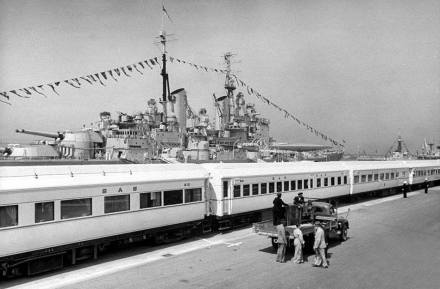
A different time in South Africa. Flagship, pomp and white carriages.
This is the first British Royal Tour of South Africa in 1947 by King George VI the then 21 year old Princess Elizabeth (the current Queen).
Here is HMS Vanguard that brought the Royals to Cape Town and it forms a majestic backdrop to the immaculate White train that was used for the tour through the Union of South Africa.
The Royal visit was intended to boost the relationship with South Africa after the Second World War, certainly in celebration of the British and South African successes supporting the crown in the fight against a Nazi Europe during WW2, which ended just two years earlier. It was also intended to consolidate the Union government of Jan Smuts ahead of the 1948 elections the following year and support his campaign.
Although the Royal tour was an unprecedented success, with large scale public displays of loyalty to the crown wherever they went it did not prevent the National Party narrowly beating Jan Smut’s United Party in the 1948 elections.
The National Party were no fans of British royalty (a legacy carried over by the Boer War) and South Africa’s relationship with the British Crown and the Commonwealth of Nations was to be severed in the future years, only to be re-established again in 1994.
Queen Elizabeth was not to visit South Africa again until 1995 after the country’s re-admittance to the Commonwealth of Nations.
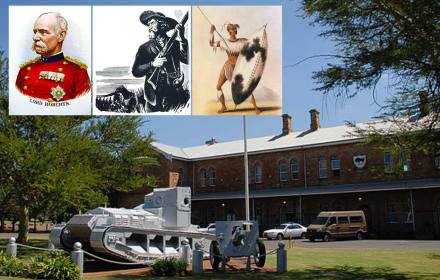
The featured photo of the South African Army College in Thaba Tshwane has a lot of hidden history. South Africans just love re-naming things in pursuit of one political party’s agenda over that of another one, all in the interests of political narrative – all of them serving to either change or hide South Africa’s strong military and cultural heritage to suite this or that political likeness.
Take the military compound in Pretoria as an example – First it was called Roberts Heights – then Voortrekkerhoogte – now Thaba Tshwane – even the changes in language used in the name and subsequent name changes speaks volumes.
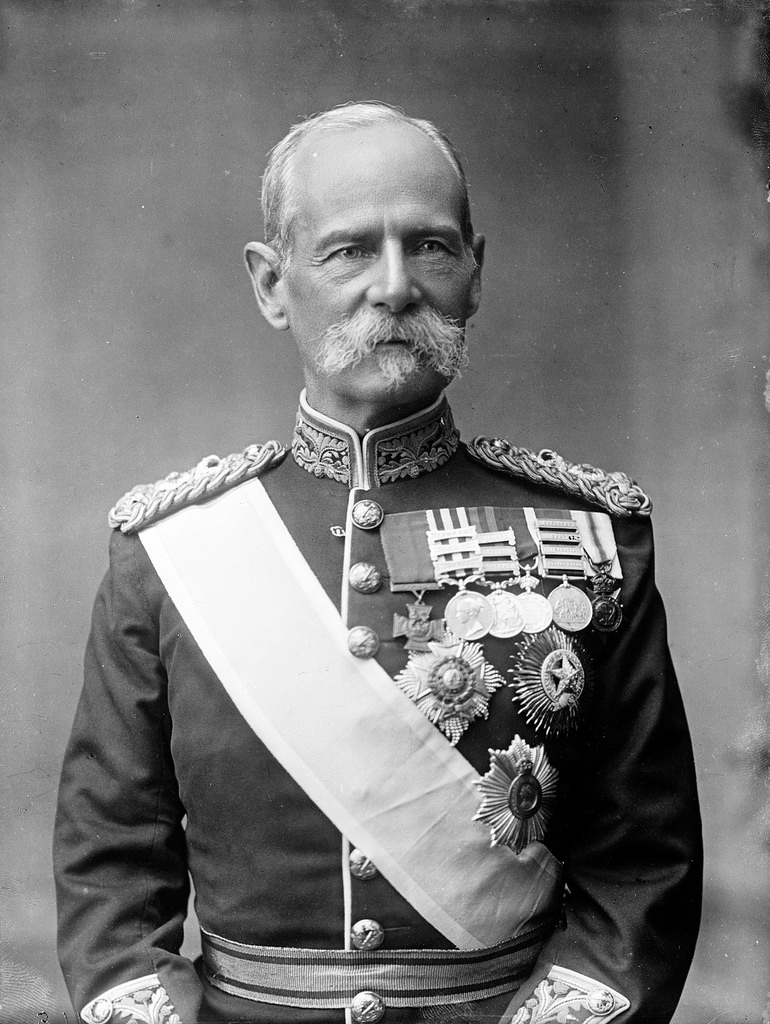
Lord Roberts
The complex was founded around 1905, just after the 2nd Anglo Boer War by the British Army to garrison the city of Pretoria, and they called their new garrison area Roberts Heights after Lord Roberts.
Field Marshal Frederick Roberts (Lord Roberts) VC, KP, GCB, OM, GCSI, GCIE, KStJ, VD, Pc was one the most successful British commanders of the 19th century and the overall commander of British Forces during the 2nd Anglo Boer War.
It was however. renamed Voortrekkerhoogte (“Voortrekker Heights”) to commemorate The Great Trek in a flurry of Afrikaner nationalism which accompanied the Great Trek centenary – and what better than re-naming the hated “English occupiers” military base and removing the name of Lord Roberts – a man loathed by Afrikaners – and for good reason for many Afrikaners – the Boer war left this community deeply scarred, how the British and English South Africans felt about it at the time – different matter, to many of them Lord Roberts is a hero. So, a controversial move that deepened social differences.
Following the end of the National Party and their influence of Afrikaner Nationalism as an ideology to govern South Africa, it was renamed again on the 19 May 1998 by the incoming ANC regime, this time called Thaba Tshwane instead. This was done by the ANC to rid the area’s heritage of both its much hated ‘Colonial’ heritage and ‘Apartheid’ heritage with something more ‘universally shared’.
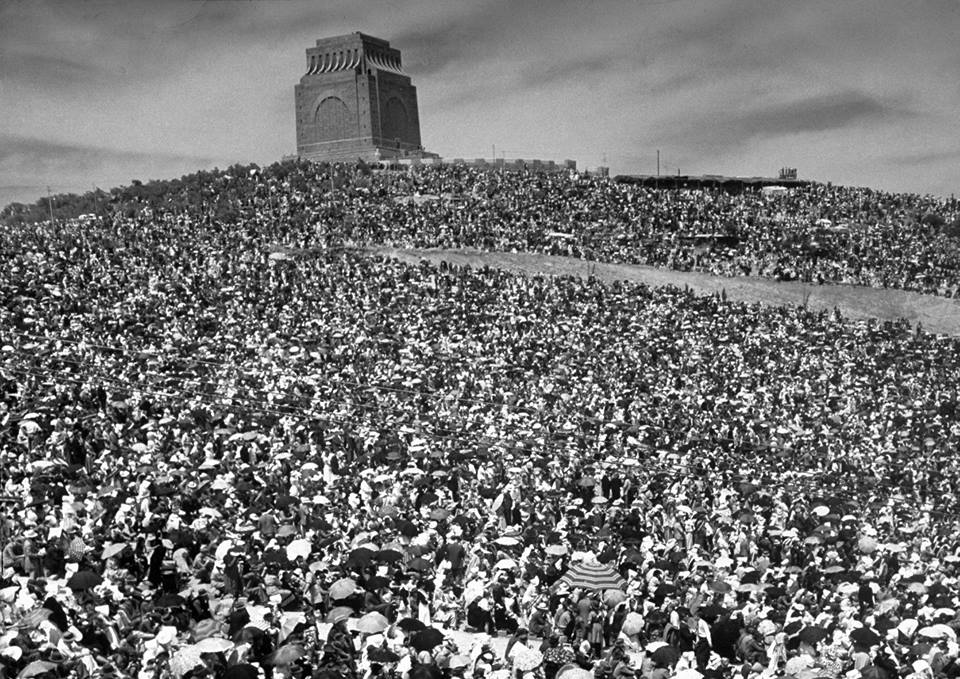
The inaugural ceremony of the Voortrekker monument at Voortrekkerhoogte, held on 16 December1949
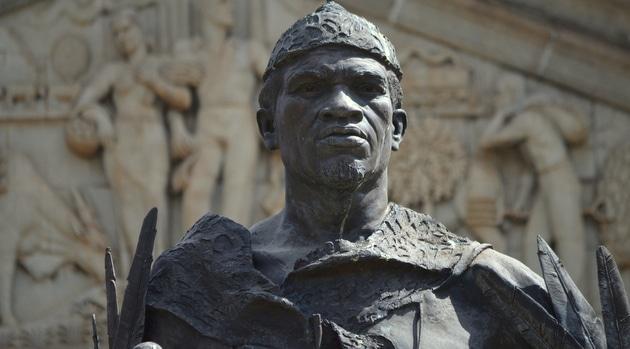
So, Thaba Tshwane it is then, meaning of which is a little lost in translation, but some say its named after Tshwane, son of Chief Mushi, an Ndebele leader who settled near the Apies River, although there is some debate to whether he actually even existed as a historical figure (there’s a problem – there is no written or historic record – its all deeply back in a mystical oral tradition).
Chief Tshwane statue
In any event, the name was changed again, and once again it was done to suit the next incoming regimes’ political narrative – the replacement of Black African culture and history over that of White African culture and history and scrubbing out anything the National Party or United Party or even the British did in the name of Afrikaner or English identity and heritage in South Africa.
The casualty in all this re-naming and one-upmanship is the actual history, the actual legacy, the golden thread that links our combined journey together – that it was British military compound established and named after Lord Roberts – was sadly even lost on the thousands of South Africans who served there in the 70’s and 80’s who simply knew it as Voortrekkerhoogte and now even that will be sadly lost to the next generation of South Africans who serve there – who will in time just know it as Thaba Tshwane. The actual “History and Heritage” lost forever.
To give an idea of just how much of this rich tapestry is lost in ‘Thaba Tshwane’ can be found in one simple little cornerstone. The oldest building in the military complex is the one pictured – the “South African Garrison Institute” what is now re-named as the “South African Army College”. But here’s the really interesting bit – Lord Kitchener laid the cornerstone of this College on the 12th June 1902.
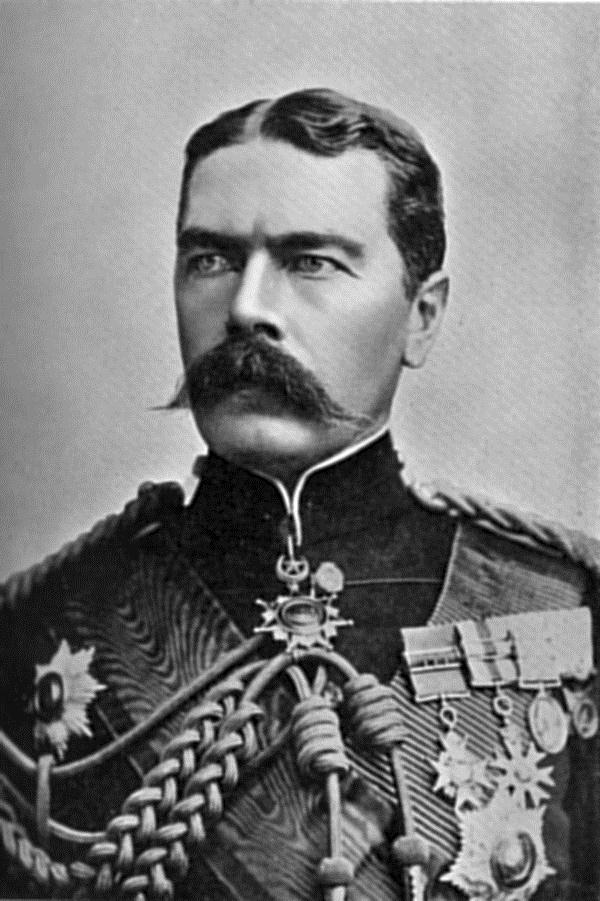
Lord Kitchener
During the Second Boer War, both Lord Kitchener and Lord Roberts (the chap they originally named Thaba Tshwane after) arrived in South Africa together on the RMS Dunottar Castle – along with massive British reinforcements in December 1899.
Following the defeat of the conventional Boer forces, Kitchener succeeded Roberts as overall commander of British Forces in November 1900. He subsequently inherited and expanded the successful strategies devised by Roberts to force the “Bittereinder” (Bitter End) unconventional Boer forces to submit.
The “Bittereinder” Boer Commandos had changed their tactics and were now using highly controversial and relatively new “hit and run” guerrilla tactics. The British in turn – in order to figure out how to stop “guerrilla war” – came up with the idea of containing the Boer’s supply line (their horse feed, shelter and food which where been provided by their families/homesteads) and placing all involved in supply (families and farm workers /servants alike) into both “White” and “Black” concentration camps respectively – and then burning the farms (a policy known as “scorched earth”).
Conditions in the concentration camps, which had been conceived by Roberts as a form of control of the families whose farms his forces had destroyed, began to degenerate rapidly as the large influx of Boers outstripped the ability of the minuscule British force to cope. The camps lacked space, food, sanitation, medicine, and medical care, leading to rampant disease and a very high death rate – especially among women and children (children particularly).
You’ll recognise Lord Kitchener anywhere – he became the poster model for the “Your Country Needs You” campaign to spur British and Commonwealth men to sign up and fight in the trenches of World War 1. The poster is funnily seeing a little contemporary resurgence in celebration of the centenary of WW1.
It’s a “Horrible” history – but it’s history none the less – and for this very reason – that it is “horrible” that this history really needs to be told – lest we forget the sacrifice that it took.
Covering over it by re-naming everything, for the sake of a political one-upmanship merely washes out the country’s history, heritage and cultural understanding – it cleanses the rich tapestry that makes us unique as a nation.
In effect it takes us ‘off’ our combined journey as South Africans and does exactly the opposite of all the ‘good’ intentions for getting us to the best and most ‘shared’ option – it separates us again, it deepens racial and cultural divide and perpetuates South Africa’s deepest problem, its on-going race politics.
Hawker Siddeley Buccaneer S Mark 50 1970. South Africa was the only country other than the UK to operate the Buccaneer, where it was in service with the South African Air Force from 1965 to 1991. In January 1963, even before the H.S. Buccaneer S had entered squadron service, South Africa had purchased 16 Spey-powered Buccaneers. The aircraft order was part of the “Simonstown Agreement”, in which the UK obtained use of the Simonstown naval base in South Africa in exchange for maritime weapons.



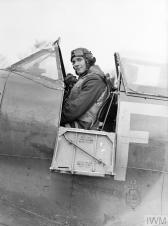
 Flight Lieutenant Adolph Gysbert Malan. (37604), Royal Air Force.
 Acting Squadron Leader Adolph Gysbert Malan, DFC (37604), Royal Air Force, No.74 Squadron.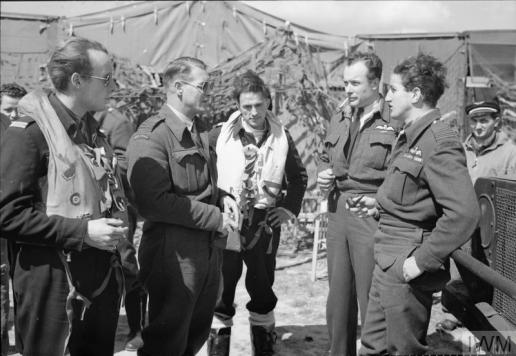






 “I Fear No man”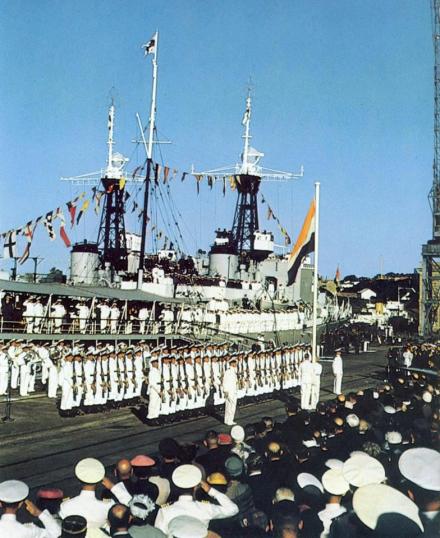


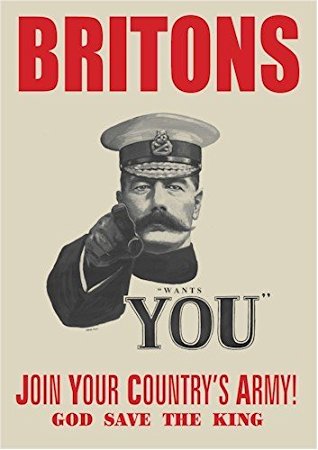 You’ll recognise Lord Kitchener anywhere – he became the poster model for the “Your Country Needs You” campaign to spur British and Commonwealth men to sign up and fight in the trenches of World War 1. The poster is funnily seeing a little contemporary resurgence in celebration of the centenary of WW1.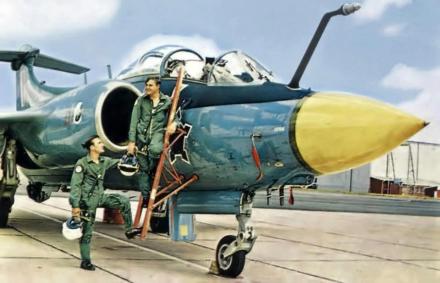
 The Observation Post