A current overview of changing Israeli fighting doctrine in Gaza
20 April 2024
By: David Brock Katz
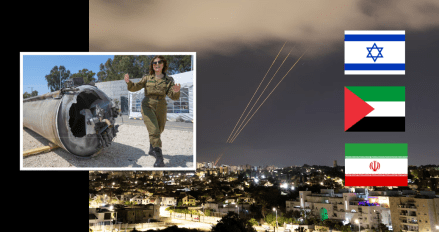
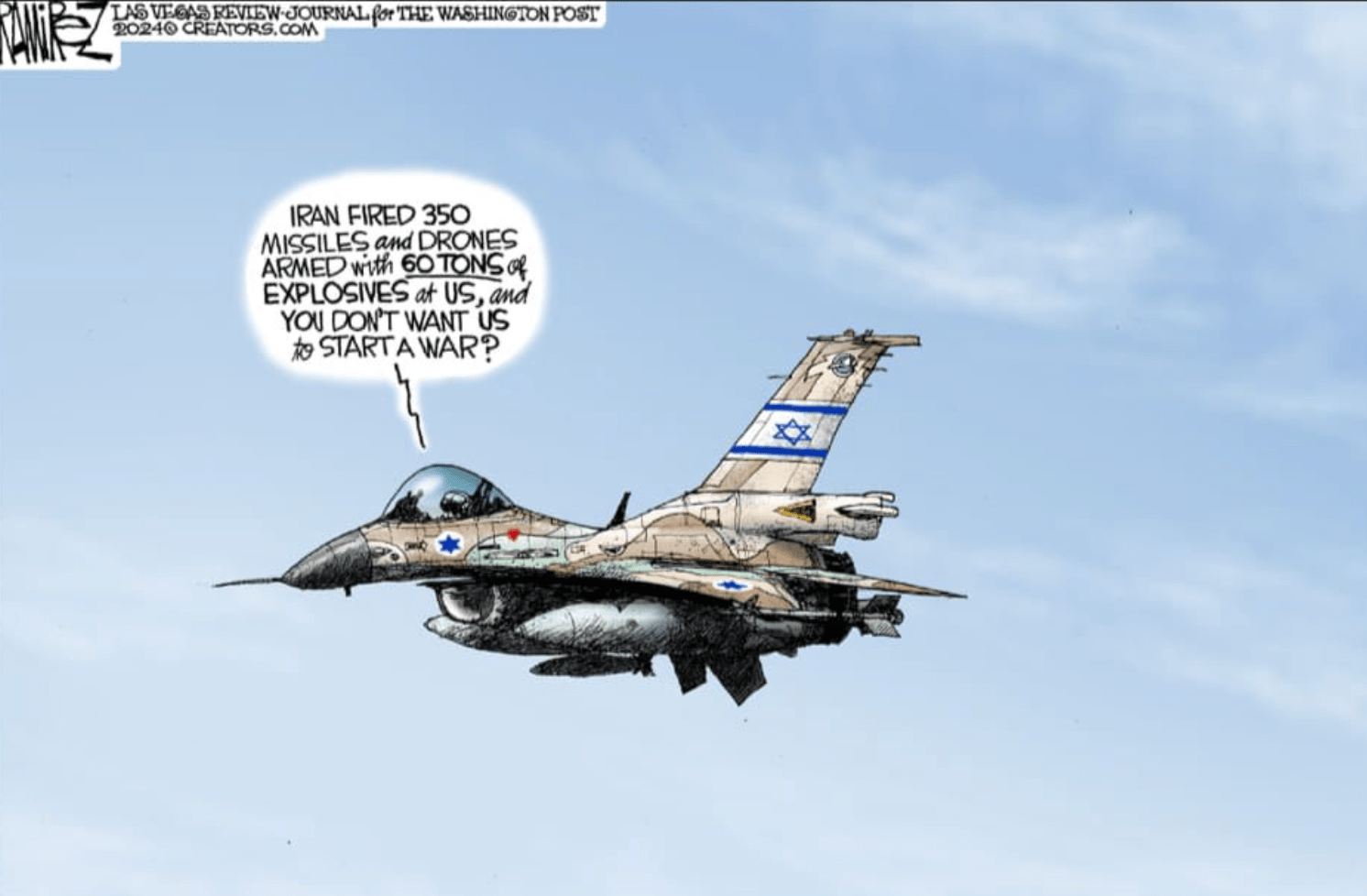
Overtaking the headlines on 8 April, which stated that Israel had pulled all its ground troops out of southern Gaza for “tactical reasons”, was the report of a massive Iranian strike of over 300 drones and missiles directed at Israel from Iranian territory. Iran’s “retaliatory” bombardment signified a significant strategic departure for the Islamic Republic of Iran. Instead of using its proxies, Hamas, Hezbollah or the Houthis, Iran attacked Israel directly for the first time in its history. In a similar fashion to the world’s initial reaction to 8 October, the attack garnered immediate condemnation from many quarters, thereby buying Israel a short respite from the constant media attacks surrounding the conduct of its war in Gaza. Despite Iran’s deadly intent, the missile attack leaves a massive credibility gap in the Iranian capability to inflict harm on Israel via the air. All but a few of the 300 missiles were either shot down or crashed on their own accord, inflicting minimal damage. Israel can claim a massive victory for its Iron Dome system and celebrate the fact that the Jordanians and Saudi Arabians accounted for several of the Iranian missile losses. However, it seems that the USA has again restricted any Israeli counterattack, which squanders a rare opportunity to neutralise some Iranian military assets.
Quite simply, Biden and his administration have put the brakes on Israeli military actions. Israel has lost the ability to deploy its military at the operational and strategic level of war without the USA’s permission. Losing this independence of action poses a significant problem for Israel’s successful execution of the war in Gaza. The Israeli Defence Force (IDF) in Gaza deployed 18 brigades in December 2023 (about 90,000 troops) and then trimmed down to 5 brigades at the end of March. The IDF now fields a single brigade in Gaza, leaving Khan Younis and Gaza City unoccupied. Undoubtedly, the decision behind the IDF’s hasty withdrawal is not for any sound military reason. Instead, the IDF has succumbed to European and belated pressure from the USA to drastically change its tactics as world opinion has turned decidedly against the Israelis. The original IDF plan of occupying Gaza in its entirety and eliminating Hamas as a military and political force lies in tatters.
Initially, Israel adopted a persisting strategy, placing a large number of boots on the ground, deliberately advancing at a slow, careful pace into the heart of Gaza. The IDF skilfully concentrated its forces using combined arms teams down to the lowest tactical level. They carefully accumulated overwhelming firepower at the focal points, sometimes only advancing mere meters in a given day. With great tactical skill and impeccable doctrine, the IDF produced innovative tactics to overcome most of the attacker’s disadvantages in dense urban areas. The Urban environment overwhelmingly favours Hamas. New IDF tactics are under tight wraps, but Israel’s allies are watching closely and will undoubtedly incorporate these combat innovations into their urban warfare doctrine. At least up to December, the Israelis made slow but significant progress in defeating Hamas in the field as well as destroying vast tracts of the tunnel system. The IDF badly mauled Hamas at a relatively low casualty cost, inflicting an estimated 30-50% loss on its fighting power before forcing them to withdraw to Rafah to conduct what would have been their last stand before destruction.
Despite registering significant gains at the tactical and operational levels, Israel IS steadily losing the propaganda war. The world’s outrage at the atrocities committed by Hamas on 7 October began to recede almost immediately. If Israel ever had a chance to strike using a persisting strategy (occupy territory and boots on the ground), it would have had to execute with lightning speed. A cautious approach led to it being caught offside by the capricious support it had initially garnered on 7 October. Israel chose to minimise IDF and civilian casualties, and the sands of time have run out. The media’s constant barrage of civilian casualty figures, as reported by Hamas, has alienated many of Israel’s USA and European backers. The breathtaking hypocrisy of mainstream media has drowned out lone voices of reason, such as Douglas Murray. A discredited Norman Finkelstein, sidelined even by the Palestinians and now comparing Gaza to a concentration camp, has found new vigour and appreciative audiences. Rochdale in the United Kingdom has elected George Galloway, long consigned to the looney left fringes, as Member of Parliament on a pro-Hamas and virulently anti-Israel ticket. Friends, it would seem, are few.
Israel has to contend with an increasingly frayed relationship with the USA. Support among younger Americans for Israel is rapidly fading. President Biden has insinuated that if the Israelis do not curtail operations in Gaza, then the supply of American arms will come under threat. There are lessons to be learned by those desirous of conducting an independent foreign policy free from American influence. A homegrown defence industry that supplies the lion’s share of one’s military needs is a fundamental prerequisite. Surely, Israel regrets abandoning the Israeli Airforce Industries Lavi Jet Fighter program in favour of the USA’s F-16? The USA no doubt had a significant role in eliminating the Lavi as a possible competitor in the lucrative arms trade industry. Israel cannot independently conduct its operations in Gaza without the USA’s implicit or explicit approval. That is the price of dependence on the USA for the supply of essential arms and munitions. Ukraine faces a similar dilemma of relying on the West to supply essential military equipment for survival. When the time comes, Ukraine will have little choice but to comply with the West’s version of a peace settlement. Israel has withdrawn from the south of Gaza and significantly reduced its troop numbers there, not of its own choice, but on instruction from the USA.
So where to from here? The IDF has abandoned a highly successful persisting strategy, where it placed boots on the ground, occupied territory, and advanced methodically and innovatively by using combined arms warfare to eliminate Hamas’s fighting power in the north of Gaza. The military endgame was in sight. All that remained was to capture Rafah and remove Hamas in its entirety. Israel, succumbing to American pressure, now has no option but to resort to a raiding strategy. The IDF will attempt to remove Hamas targets through precision ground and air strikes surgically. The danger of this strategy can already be seen, with close to 2,000 Hamas fighters infiltrating their way back into Gaza City in the absence of Israeli ground forces. History has shown that wars cannot be won using a raiding strategy exclusively. Targeting Iranian, Hezbollah and Hamas operatives outside of Gaza to weaken the terrorist superstructure is also not a strategy which will eliminate Hamas. The hope of a more friendly future US government is uncertain and, at best, many months away. The release of hostages, if any are alive, seems remote. An emboldened Hamas continued to hold out for the best terms for a ceasefire. The Israeli retaliation for the Iranian attack was a very measured and even-handed response and an extensive counter-attack currently remains off the cards. Israel faces tough months ahead.
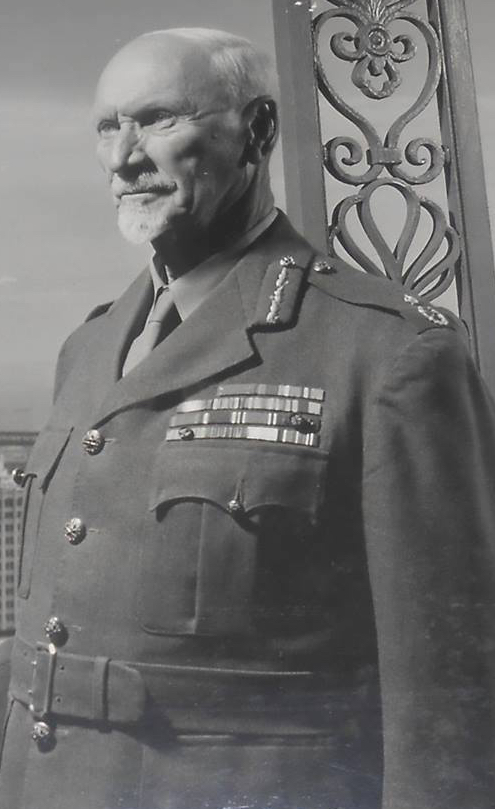
There are still a handful of conservative ‘Afrikaner nationalist’ white people in South Africa who would still toe the old Nationalist line on Smuts, that he was a ‘verraaier’ – a traitor to his people, his death welcomed. However, little do they know that many of the old Nationalist architects of Apartheid held Smuts in very high regard.
DF Malan, on the day of Smuts’ death, 11th September 1950, was the Prime Minister of South Africa, his Nationalist party had defeated Smuts’ United party two years earlier in 1948 whilst pushing the Nationalist proposals to further entrench racial segregation with a concept they called Apartheid. Smuts on the other hand, foresaw the need to extend the ideas of ‘Union’ which had brought Afrikaner and Briton together to include Black South Africans. On voting rights, he had made his views clear to Hertzog as early as 1920 when in a private meeting he proposed a Qualification Franchise (not a Universal one though) for black South Africans (Hertzog was an ardent Nationalist and rejected the idea outright).
Smuts was born into a system of ‘Empire’ and that was the socio-political sphere everyone understood, including Smuts. Over time Smuts’ views on racial segregation gradually evolved from the generally understood divided evolution edicts of his day (based on where nations stood on the ‘civilisation’ continuum). On the international stage by the mid 1940’s, when Smuts was outside of the pressures of South Africa’s race politics (even from inside of his own political party) and not toeing his party’s line, here his views started to really shape up.
By the middle of World War 2 he had taken on a deep sense of individual liberty for all mankind, emancipation and freedom from any sort of oppression (including State). These views, based on what he termed man’s universal “spirit” for freedom forged by two world wars, they were consolidated in his work on the United Nations and exposed on an international stage in a number of speeches.
Back in South Africa after the war, as a precursor to these views on universal liberty, Smuts had already changed from his old positions on segregation and proposed ‘integration’ instead of ‘separation’ and he had also already promised black community leaders greater political representation if they supported his war effort, voting rights under Smuts were already secure for South Africans of Indian origin and the Cape Coloured community. On the Nationalists proposals of Apartheid he once said:
“The idea that the Natives must all be removed and confined in their own Kraals is in my opinion the greatest nonsense I have ever heard”.
The nationalists touted a fear of ‘black danger’ under this more democratically minded Smuts if he won, and it struck a cautionary chord with many white voters and the Nationalists won the day, surprisingly and against the odds, and not by a majority mind – but on a constitutional seat basis.
On losing the election Smuts made one of his greatest speeches in 1949 at the inauguration of the Voortrekker Monument to a largely Afrikaner crowd, it says everything of where he stood on integration and the future of South Africa, he said:
“Only on the basis of taking from the past what was beautiful could ‘fruitful co-operation and brotherhood’ between the two white communities be built. And only on this basis could a solution be found for the greatest problem which we have inherited from our ancestors, the problem of our native relations”. He went on to say, that this was “the most difficult and the final test of our civilization.’
Simply put, the country’s white community at Smuts’ death was very split down the middle on the issue of ‘Apartheid’ and what it would bring, the majority of South Africans did not favour it and they had heeded Smuts’ warnings of what entrenched race politics would bring to South Africa’s future.
The death of Jan Smuts
DF Malan
DF Malan was attending a National Party political rally to the party faithful and whipping up support for the edicts of Apartheid when Smuts’ died. An aide walked up to him and handed him a note with the news of Smuts’ death, what he does next would surprise even the hardest right-wing Afrikaner Nationalist.
Instead of gleeful celebration of the demise of this most hated enemy of the Apartheid cause, the man repeatedly called a ‘traitor’ by the Nationalists, a man who had the ‘blood’ of Jopie Fourie on his hands, the ‘hansopper’ and ‘joiner’ turncoat who favoured the union of the Afrikaner with the hated British to heal South Africa over and above separationist Afrikaner rule, the King’s ‘hanskakie’ puppet, old ‘slim Jannie’ who put global interests and governance ahead of his ‘volk’ (white Afrikaner peoples) – no Dr. Malan’s reaction to the news was somewhat different to what most people now would even think.
DF Malan immediately turned pale, he slowly sat down, slumped over and cupped his hands to his face. He had lost a lifelong and very close friend. Their political positions aside, Malan had a deep sense of admiration for his old friend.
He had to be helped up to stand at the microphone, where he announced that “a great figure of our time” has just died, he called the Nationalists to silence and then cancelled the rally. His colleagues reporting that they had never seen Malan so distressed.
DF Malan’s reaction says a lot about Smuts, the importance he had in the formation of South Africa, he was the original ‘reconciler’ of the warring nations in South Africa, his idea of union based his philosophy of holism – all parts of the sphere make the whole, made the state of South Africa as we know it, he was quite literally the ‘father’ of the South African nation, and now he was lost.
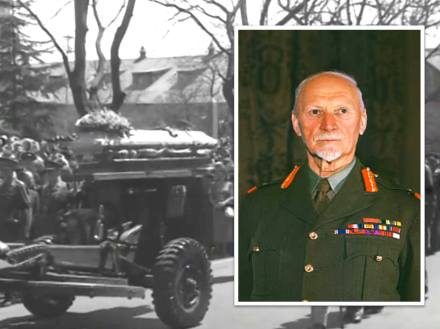
The universal appreciation of Smuts at the time, both by his supporters and his detractors, would see a nationwide and even worldwide outpouring of grief, Smuts’ funeral was something else, a funeral not seen since in South Africa and only seen again when Nelson Mandela died.
To even begin to contemplate Smuts’ importance to not only South Africa, but to the free world consider what Winston Churchill wrote to Isie (Ouma Smuts), his wife, expressing his condolences, and what he wrote sums up the loss perfectly.
“There must be comfort in the proofs of admiration and gratitude that have been evoked all over the world for a warrior-statesman and philosopher who was probably more fitted to guide struggling and blundering humanity through its suffering and perils than anyone who ever lived in any country during his epoch.”
In his lifetime, Smuts had advanced to a level of greatness that is more substantive and more far-reaching to the modern human race than any South African before and even after him (with all respect to Nelson Mandela and his legacy).
Add to this what King George VI wrote Ouma Smuts and you start to see a pattern. He wrote:
“the force of his intellect has enriched the wisdom of the whole human race”.
To understand his impact to humankind by way of an obituary to his milestone accolades, consider the following:
The birth of South Africa
The establishment of the state of South Africa in 1910. His proposal of ‘Union’ with the British colonies of the Cape and Natal brought South Africa out of the devastation of the Boer War and the resultant decimation of the Boer nation. Despite winning the war, in just four years of Colonising everything, Britain had handed all control of her colonies in South Africa to an independent parliament to Westminster, able to make its own laws to forge its own destiny, headed up by two Boer Generals of which Smuts was one.
The Boers had lost their two small Republics to war and now, thanks to Smuts’ skill and British confidence in his vision and him, the Boer commanders were very quickly back in governance of both their ‘old’ Republics and in addition, both the British Colonies as well – without a shot been fired. To quote Smuts ‘they gave our country back’. He reflected that at no time in Britain’s long history had such a ‘miracle of trust and magnanimity’ ever happened.
British ‘meddling’ and ‘warmongering’ in South Africa would never happen on the same scale again, and in fact they were making reparations for the damage they had caused by way of economic support.
The League of Nations and United Nations
He played a key role in the establishment of the League of Nations, the exact design and implementation of which relied upon Smuts, he even drafted the outlines for the The Treaty of Versailles. His outline was not fully followed and he warned the League of a future calamity with Germany – how prophetic he was.
With the demise of the League of Nations (the USA left it), Smuts still held the view that a more robust world peace body was required involving all nations holding each other to account. He later urged the formation of a new international organisation for peace: The United Nations (UN).
Smuts wrote the first draft of the preamble to the United Nations Charter, and was the only person in history to sign the charters of both the League of Nations and the United Nations (see earlier Observation Post link Jan Smuts drafted the Preamble to the United Nations Charter).
Smuts signing the United Nations Charter
The British Commonwealth of Nations
He sought to redefine the relationship between the United Kingdom and her colonies, he helped establish the concept of a ‘British Commonwealth of Nations’ based on devolved British authority instead of a ‘British Empire’ and by doing so he served to end Britain’s ‘Empire. He in fact came up with the term ‘Commonwealth’ and it was to his recommendations that the King listened.
The birth of Israel
In 1932, the kibbutz Ramat Yohanan in Israel was named after him. Smuts was a vocal proponent of the creation of a Jewish state, and spoke out against the rising anti-Semitism of the 1930s. His relationship with the Jews and Israel did not stop there, he was one of the driving forces behind the Balfour Declaration which established the state of Israel (see earlier Observation Post A Kibbutz called Jan Smuts.)
World Wars and Military Milestones
He became South Africa’s only Field Marshal, having taken South Africa to both World Wars on the side of democracy and freedom. The Second World War alone launched the manufacturing might of South Africa largely due to the support of the war effort. By the end of WW2, South Africa, a muddle of small colonies and republics just 40 years earlier, now stood as a key contributing world player.
He was the only person with in-depth military experience to join The British War Cabinet, at the insistence of the King, during World War 1 (the rest were Politicians) and in so played a key role in guiding the outcome of World War 1.
He gave birth to the idea of an independent Air Force free from Navy or Army control in 1917, that saw the formation of the Royal Air Force (RAF), the oldest independent air arm in the world and in addition carried this over to form The South African Air Force, the second oldest. Modern military construct now still follows The Smuts Report on the use of air power (see earlier Observation Post links Centenary of the ‘Smuts Report’, the instrument which gave birth to the Royal Air Force,).
Smuts had a long string of successful military command, notwithstanding his Command of a Boer Commando during the Anglo-Boer war, evading defeat for the entire duration of the war. He founded the South African Defence Force after Union, commanded UDF forces alongside Botha in taking German South West Africa during WW1, the first ‘Allied’ victory of the war. He went on to command all the British and Commonwealth Forces in the East African campaign during WW1, chasing General Paul Von Lettow-Vorbeck’s forces all over East Africa, and in so doing he captured Dar-es-Salaam, the German East Africa capital. However, to really put Smuts in perspective, when he heard that his old enemy, General Paul von Lettow-Vorbeck had fallen into destitution after WW2, it was Smuts who personally extended aid and food to him (to Smuts war was not a personal thing amongst soldiers).
During the Second World War he was appointed to the British King’s Privy Council. The King was even warm to an idea proposed by Jock Colville (Churchill’s Private Secretary) that should Prime Minister Winston Churchill die during the war, Smuts would replace him, however this idea was never tested as Smuts would have need to have been made a peer and constitutional issues would have prevented it. Whether possible or not it does give an idea of just how close Smuts was to Churchill and how indispensable he had become (see related Observation Post: Churchill’s idols; Napoleon, Nelson &…Smuts!).
Again, as a member of the British War Council, he played a key role in the outcome of World War 2 and the Allied Victory. He even accompanied Winston Churchill shoulder to shoulder to oversee Operation Overlord (D Day) and the liberation of France and subsequently Western Europe.
Smuts and Churchill in France overseeing Operation Overlord (D Day)
The deep-seated pain of the Boer War concentration camps and how it affected Afrikaner identity was also something that Smuts actively addressed (Ouma Smuts was herself interned in a concentration camp, and Smuts had also tragically lost family to the system). He became a friend and confidant of Emily Hobhouse in addressing the issue with the British over many years. The Magnolia seeds she gave him in friendship now stand as a full botanical statement to this outside his house in Irene.
He brought the government to take measures to bring the treatment of Indians in South Africa into line with the provisions of the United Nations, putting them to the same equality and status of the ‘Cape Colourds’ who already enjoyed an equal universal franchise in South Africa at the time. In doing so he became a life-long admirer of Mahatma Ghandi, who in turn also regarded Smuts as one of the greatest statesmen of his time.
To illustrate this admiration, Before Gandhi returned to India in 1914, he presented General Smuts with a pair of sandals made by Gandhi himself. In 1939, on Gandhi’s 70th birthday, Smuts returned the sandals with the following message:
“I have worn these sandals for many a summer, even though I may feel that I am not worthy to stand in the shoes of so great a man.”
In domestic policy, Smuts instituted a number of social security reforms. Old-age pensions and disability grants were extended to ‘Indians’ and ‘Africans’ respectively (although there were still differences in the level of grants paid out). He also instituted the Workmen’s Compensation Act of 1941 and the Unemployment Insurance Act of 1946.
International acclaim
Smuts was honoured by many countries and on many occasions, as a standout Smuts was the first Prime Minister of a Commonwealth country (any country for that matter) to address both sitting Houses of the British Parliament – the Commons and the Lords during World War 2. To which he received a standing ovation from both houses.
Such was the admiration of Smuts that his statue stands outside Westminster on Parliament Square in London for his contribution to world politics and as a great reformer.
Now he stands alongside the likes of Ghandi, Mandela and Abraham Lincoln as the only other ‘foreign’ statesmen honoured in the square. Whilst, ironically, in South Africa his legacy has taken an absolute battering and his statues removed.
Take the time to listen to Smuts’ speech to both houses of Parliament, note his views on all mankind’s basic freedoms and what he envisions as the future by way of fundamental reforms. Also note the short praise by Winston Churchill when Smuts concludes his speech and the reaction of the British Parliament, a reaction that has not been seen in British politics since, it is very unique.
Charity
In 1921 Smuts, along with Field Marshal Haig, established The Royal Commonwealth Ex-Services League (RCEL) in Cape Town. The RCEL sought to consolidate war veteran’s charities all over the world to care for the returning military service personnel in the Commonwealth. It saw the establishment or re-purposed institutions which now play a significant role in care for servicemen worldwide, The Royal British Legion, The Royal Canadian Legion, The Returned Services League Australia and The South African Legion to name a few.
He also made South Africa available to Jewish orphans escaping the Pogroms of Eastern Europe (despite resistance from South African nationalists). For a full story on this remarkable chapter, see an earlier Observation Post 200 Jewish orphans saved, the story of Jan Smuts and Issac Ochberg
He again made South Africa available to Polish orphan children escaping the Nazi German and Soviet invasion of Poland in 1939, establishing a grateful and thriving small Polish community in South Africa (see earlier Observation Post South Africa provides sanctuary for Polish refugee children during WW2 ).
Academia
Smuts was also an accredited philosopher, his work on Holism brought him high acclaim from his Philosopher peers. Holism can be defined as “the fundamental factor operative towards the creation of wholes in the universe” and was published in 1926. For Smuts it formed the grounding behind his concepts of the League of Nations and United Nations.
Smuts was also an accredited Botanist, his books and illustrations on South African grasses (veld) are still regarded as the definitive work.
Whilst studying law at Christ’s College at Cambridge University, he was rated as one of the top three students they have ever had (Christ’s College is nearly 600-year-old). The other two were John Milton and Charles Darwin.
His intellect was unsurpassed, to pass an exam at Cambridge he learnt Greek (fluently) in just 6 days. His wife was no intellectual slouch either, later in life Jan Smuts and Ouma Smuts used to tease one another when one would recite a Bible verse and the other would be expected to recite the following one, from memory, in Greek!
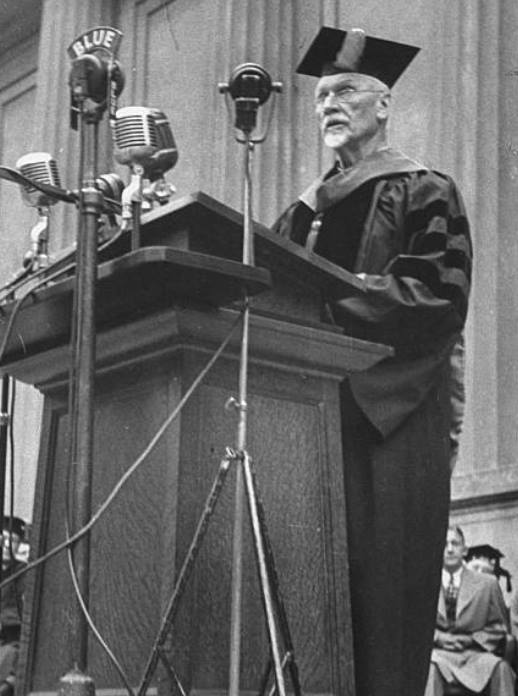
In 1948, Smuts was elected Chancellor of the University of Cambridge, the first real non-Briton outside of British Royalty to be elected to the position in the 800 year-old history of Cambridge University.
Vision
Smuts’ idea of ‘Union’ and vision for South Africa was that of a ‘United States of South Africa’ including countries like Namibia, Botswana and Zimbabwe in the Union. It was to be a significant player on the world stage drawing on Africa’s vast resources to see it as a leading political and economic power block (much like the USA is now). Can you imagine if Botswana and Rhodesia voted to join the Union (they chose not to at the time), what a different history we would have seen in Southern Africa – ‘Apartheid’ may never have happened just for starters.
A humble man
Personally, Smuts was a God-fearing, frugal and humble man. He chose as his house an old rickety, uninsulated, fully corrugated iron, transportable military head office. He preferred to sleep outside on the ‘stoup’ (veranda) on a small single hard wood bed, his garden was the natural veld. There were no stately mansions or ‘Nkandla’ with ‘fire pools’ for Smuts and he would not have had it anyway.
Legacy
The National Party in a sinister move, gradually and over the long period of Apartheid insidiously smeared Smuts and his legacy, erasing from the general consciousness of just what a great South African Smuts had become. Modern South Africans grew up with almost no regard for Smuts, and if you had to ask a young Black South African today who Smuts was he’ll probably say he was one of the white Apartheid monsters, the white English children will have no idea and the White Afrikaans ones may remember something about him been traitor to Afrikaners. A student in Canada studying world politics would have a better grip on Smuts than a South African student.
Luckily this is beginning to change, and landmark Biographies are being written now which start to fully explore who and what Jan Smuts was, and it is both fascinating and eye-opening. It is very hard to sum up all the greatness Smuts was to attain, and certainly for his time his deeds set him well apart from any of the other Statesmen South Africa has produced, certainly if you consider all the subsequent South African Premiers other than Mandela. We have a wonderful story in Smuts, and what we have a character of force – a polyglot, philosopher, botanist, intellectual, lawyer, politician, statesmen, reformer and warrior – a story and a man who is best summed up by Alan Paton who said:
“Even the great thought he was great.”
Written and Researched by Peter Dickens. References: Jan Smuts reconsidered Hermann Giliomee 26 January 2016, Richard Steyn’s Smuts: Unafraid of Greatness 2015. Video footage copyright Associated Press. My deep thanks to Philip Weyers for the Smuts family insight and access.
This article serves to highlights Smuts’ achievements by way of an Obituary. There are other issues any national leader faces that highlight decisive but ‘unpopular’ action depending on the affected party’s point of view. For more related articles in The Observation Post on Jan Smuts please have a look at this link:
When Israel became an independent nation on May 14, 1948, the armies of four Arab neighbours — Egypt, Syria, Lebanon and Iraq — immediately invaded the new country to prevent its creation. Desperate to defend themselves the Israelis lacked many modern weapons and aircraft.
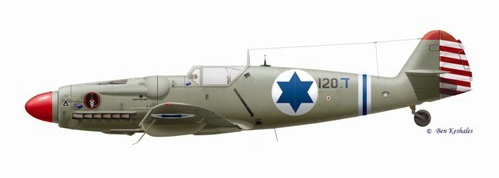
The Israelis did however have a small fleet of Avia S-199 fighters, made in Czechoslovakia with parts left over from the WW2 German Lufwaffe. The aircraft was poorly constructed and it was extremely unpopular with pilots who called it a Mezek (mule), another name for it was the ‘Messer’ (meaning ‘Knife’ and because the frame was that of the WW2 German Bf109G Messer-schmitt) the engine came from a Luftwaffe Heinkel He-111H bomber, and the Israeli pilots sarcastically also called it a ‘Messer-shit’.
Avia S-199
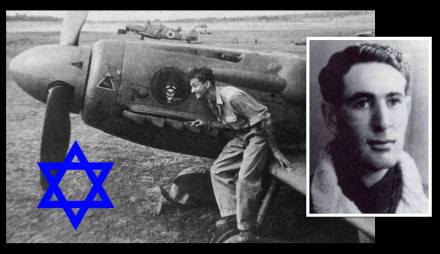
Within this tiny newly formatted Israeli Air Force were a number of very brave Jewish pilots, from the world over, some with WW2 combat experience. One such pilot was a South African, Eddie Cohen. This is his story.
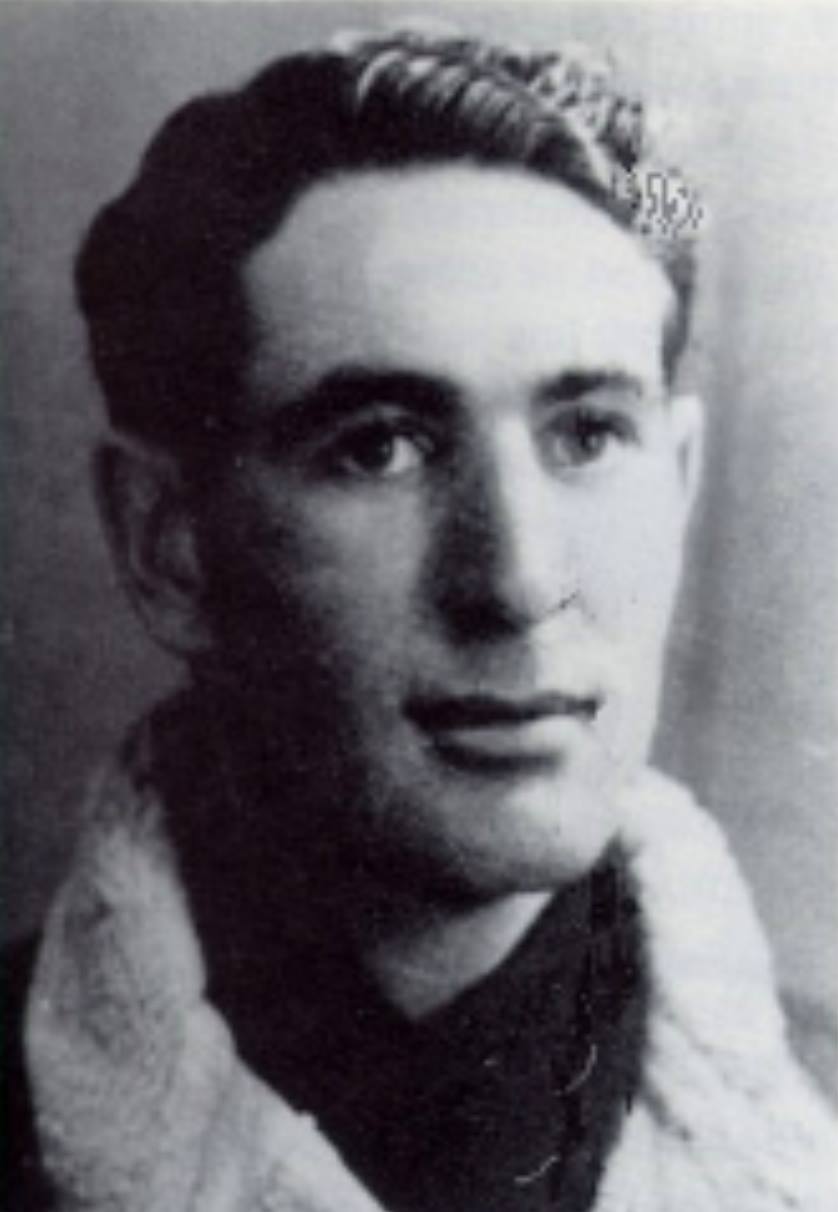
Edward (Eddie) (Shlomo) Cohen came from South Africa. He was the only child of Victor, Edward Cohen was born in Johannesburg on 2nd July 1922 into a well-to-do family. He grew up in an assimilated background, completed high school and began his studies at the University of the Witwatersrand.
Eddie Cohen
World War II changed his plans, and he joined the South African Air Force (SAAF), qualifying as a fighter pilot with the rank of Lieutenant. He flew with 2 Squadron, SAAF and subsequently 4 Squadron SAAF in Italy during the war.
Upon his discharge from the SAAF at the end of the war, he did not return to his university studies, and took an office job in his father’s business in Johannesburg. He loved playing sports with his friends: rugby, tennis and golf. He was also very fond of music and excelled at that, too.
His meetings with Zionist friends aroused his interest in his religious roots, and their beliefs awoke something in him which led him to follow in their footsteps to Palestine.
He arrived in Palestine in 1947 and joined his friends at Kibbutz Ma’ayan Baruch. On a trip to Tel Aviv, he bought a number of books on archaeology and the history of Palestine, and in these scholarly works he found a new life, and began to take an interest in Judaism and his historical homeland. He wrote to his mother:
“Today, Shabbat, I spent the whole day studying the history of the Jews and surrounding nations, using the Bible and other books. It is the most interesting study I have ever undertaken, as the area around this part of the world was the cradle of western civilization. My greatest regret is that I did not think of studying this branch of history earlier in my life, as so much can be learnt from it…”
Later, in 1947, the survival of the Zionist settlers called Eddie back into military service, he joined ‘Sherut Avir’, the forerunner of the Israeli Air Force, which formed on the 27th of December 1947. Eddie Cohen, Boris Senior, Ezer Weizman, Modi Alon, and six others made up the new Tel Aviv Squadron.
On January. 15, 1948, Eddie Cohen took part in the Sherut Avir’s first co-ordinated multiple-plane mission: a pre-dawn aerial resupply of the besieged Gush Etzion settlements, using outdated Tiger Moths and Cargo planes.
Eddie Cohen was then trained at Ceske Budejovice in Czechoslovakia as one of ten pilots earmarked for the initial S-199 training course. He flew back to Israel on May 20 with the other graduates and the first batch of Avia S-199 fighters.
On 29 May 1948, Cohen flew in the first S-199 mission, regarded as the first mission of the newly formatted Israeli Air Force (IAF). The Egyptian advance on Tel Aviv had been stalled by a blown bridge 32 km south Tel Aviv by the lightly armed remnants of the Israeli Givati Brigade.
The Israeli Defence Force issued Operation Order No. 26 to the IAF Command that very same day and ordered an attack (even though the first Avia S-199 fighters were theoretically air-worthy they were not yet properly tested). Four pilots, Eddie Cohen (South African), Modi Alon (Israeli), Ezer Weizman (Israeli) and Lou Lenart (American) took off from Ekron at 19:45 in their Avia’s bombed up with two 70-kg bombs each, and armed with ‘untested’ cannons and machines guns, they set off bound for the Egyptian army column near Ashdod.
Lou Lenart
Of the mission, Lou Lenart said, “There is no making light of this moment. Behind us is Israel, the Jewish people hanging on by a thread. Ahead of us is the enemy, advancing to destroy everything we love.”
The four pilots alone faced 6,000 Egyptian troops — consisting of seven infantry battalions, six hundred vehicles (including tanks), and formidable anti-aircraft weapons.
Lenart and Modi Alon shared unofficial command of the new fighter squadron and Lenart led the first mission. The wingman pair of Lenart and Alon took off first, followed by Weizman and Cohen. Lenart, however, was unfamiliar with the country and once in the air realized he didn’t know the way to Ashdod. The first two S-199s had no radios so he used hand signals to indicate direction requirements to Alon, who in turn pointed in the proper direction. In order to avoid any enemy fighters the formation flew over the sea (west of the column) and turned east when it reached Ashdod.
Ezer Weizman with his S-199
They spotted the Egyptian column between Ashdod and Gas’ser Ishdod, which had just stopped on the southern side of the destroyed bridge. At this point all four pilots using machine guns and cannons strafed the concentrations of Egyptian armed forces and bombed them.
Once ammunition and bombs had been exhausted they all headed back to Ekron, Eddie Cohen had a radio and was in radio contact with base. On his way back he reported that all was OK, that he saw the base and that he was about to land. From Ekron, he was not observed and he did not land there. At another nearby air base at Chatzor an aircraft was observed engulfed in flames trying to crash-land about two and a half kilometers away from Chatzor.
The Israeli army at Chatzor dispatched two infantry platoons immediately to rescue the pilot but the Egyptian forces were the first to reach the location. Eddie Cohen had mistaken Chatzor for Ekron and tried to land there with his damaged airplane.
Tragically Eddie Cohen was killed in the crash. Eddie’s S-199 had taken an anti-aircraft gun hit which started a fire that he apparently hadn’t initially noticed.
The bold strike left the Egyptian forces dumbfounded and vulnerable. That night, Jewish ground troops took advantage of the situation by attacking the Egyptians’ flank. The Egyptians were thrown into disorder. Israeli intelligence intercepted this dispatch from their brigade commander to Cairo: “We were heavily attacked by enemy aircraft and we are scattering.”
Despite the loss of Eddie and one aircraft, the mission was a success, it seems that the attack had a profound psychological effect on the Egyptian forces, and they halted their advance completely. The bridge where they stopped was later named ”Ad Halom” bridge, meaning ”no further”.
The Egyptian Army later deflected to the east, in order to link with other Arab forces besieging Jerusalem. Tel Aviv was saved, and so was too was the new nation of Israel.
Modi Alon (centre with sunglasses) and David Ben-Gurion (right)
After the Israeli War of Independence finished, in prisoner exchanges with the Egyptians for the remains of the Fallen, Eddie’s body was identified by the then Chief Army Chaplain, Rabbi Shlomo Goren, and in 1949 Israel recovered Eddie Cohen’s remains near the small airfield, at the time of his death in Egyptian hands. Edward Cohen’s mother came from Johannesburg for the re-interment at the Mount Herzl military cemetery on the 8th of November 1951.
Eddie Cohen Is regarded as the first combat casualty of the first fighter squadron (101 Squadron) of the new Jewish State of Israel, and is a national hero in Israel (in South Africa he is hardly remembered at all). On 29th September 1949, on the orders of the Israeli Chief of Staff, Edward Cohen was posthumously promoted to the rank of Flight Commander in the IAF.
Researched by Peter Dickens. Source: The Jerusalem Post, the history of 101 squadron and wikipedia

 There are still a handful of conservative ‘Afrikaner nationalist’ white people in South Africa who would still toe the old Nationalist line on Smuts, that he was a ‘verraaier’ – a traitor to his people, his death welcomed. However, little do they know that many of the old Nationalist architects of Apartheid held Smuts in very high regard.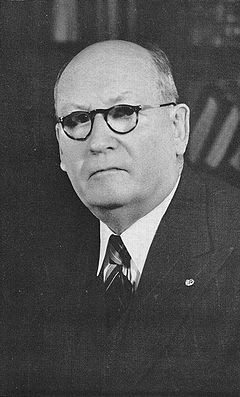


 Smuts was honoured by many countries and on many occasions, as a standout Smuts was the first Prime Minister of a Commonwealth country (any country for that matter) to address both sitting Houses of the British Parliament – the Commons and the Lords during World War 2. To which he received a standing ovation from both houses.
 Whilst studying law at Christ’s College at Cambridge University, he was rated as one of the top three students they have ever had (Christ’s College is nearly 600-year-old). The other two were John Milton and Charles Darwin.



 The Observation Post