“Tomorrow I am going to die”

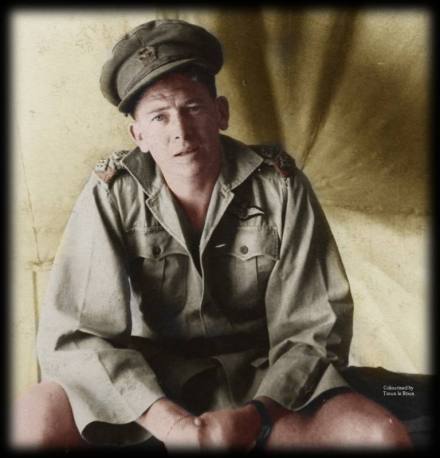
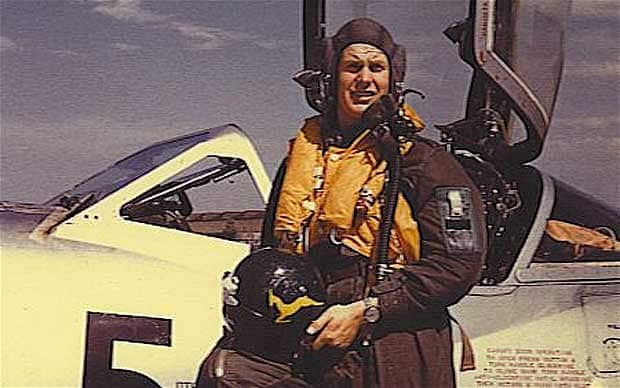
This is what Captain Walter ‘Jack’ Webb told his fellow 40 Squadron pilot, Lt. Michael Welchman, on the day that Mike snapped this photograph.

“Tomorrow I am going to die”

The very next day, 4/11/1942, Jack was shot down over the Alamein front whilst doing a tactical recce sortie on enemy positions. He forced landed on friendly territory but unfortunately landed in a mine field with tragic consequence that ended his short life.

19105707_10154760075403269_1391824141783588154_nJack was a survivor of three times being shot down but returned to the squadron unscathed every time . When he did not return after this particular sortie no one in the squadron were too much worried as they were confident he will pitch up on foot soon, but it never happened.

Jack was promoted to the rank of captain just days before his death and was recommended for an immediate DFC (Distinguished Flying Cross) award.

What a poignant and sad image of someone clearly philosophical of his fate, and resigned to it.

May South African heroes like Capt. Walter John Stanley Alexander Jack’ Webb forever Rest in Peace. In the full knowledge that they are not forgotten and their sacrifice is a direct reason for all our modern-day liberties and freedoms.

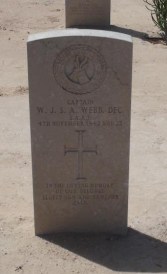
He is buried in Egypt at the El Alamein War Cemetery. Grave Reference: Plot XXIII. Row A. Grave 8


Image colourised and caption researched by Tinus Le Roux – with kind thanks

Photo credit to Michael Welchman (left) who is still around and lives in Hermanus, this is the original shot he took (right) of Captain Jack Webb.  Headstone image courtesy Brett Fennell.

A lost SAAF legacy

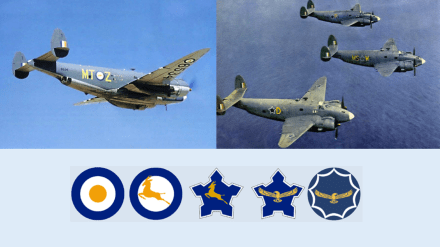
Rare colour image of South African Air Force 22 Squadron Venturas on the right in a formation flight over Table Bay in 1959.  Of interest, if you look closely is that their markings have just been changed, compare it to the SAAF Ventura on the left.

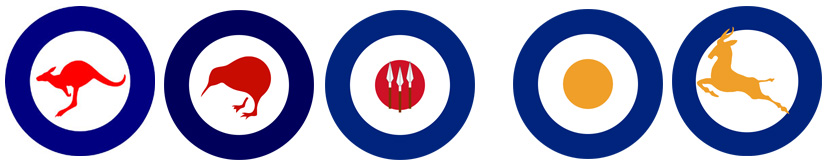
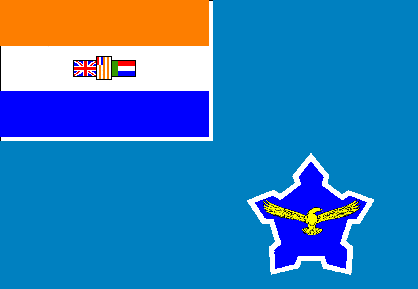
These three on the right are seen flying in the revised SADF livery which had just been introduced at the time i.e the Springbok inside an image of the Castle of Good Hope – introduced a year earlier in 1958 – which replaced the traditional Commonwealth aircraft identifier roundel – which had an orange Springbok in the centre of it.

commonwealthrounds

Commonwealth aircraft rondel markings, left to right – Australia, New Zealand, Rhodesia and South Africa.  Note, Australia and New Zealand still use this rondel marking to this day as a nod to maintaining their Commonwealth heritage.

These Ventura are Ventura PV-1 an American aircraft made by lockheed and were extensively used during World War 2 by the Allies. The SAAF also operated the aircraft during the war and continued to do so after the war for many years.

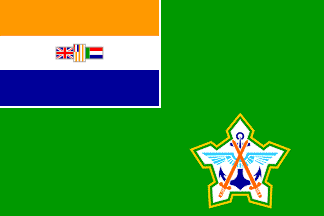
The changes formed part of the Nationalist government’s wish to break the SADF’s military identity and association from its British Commonwealth historical legacy. The changes where far reaching and included insignia, rank terminology, uniform changes, disbandment and reformulation of infantry regiments, renaming of institutions and bases, military hardware deals, new medal orders etc. etc.

Note: these changes to the defence force livery occurred before South Africa ‘resigned’ from the Commonwealth of Nations, so the plans to make this change were entirely domestically driven by the government of the day.

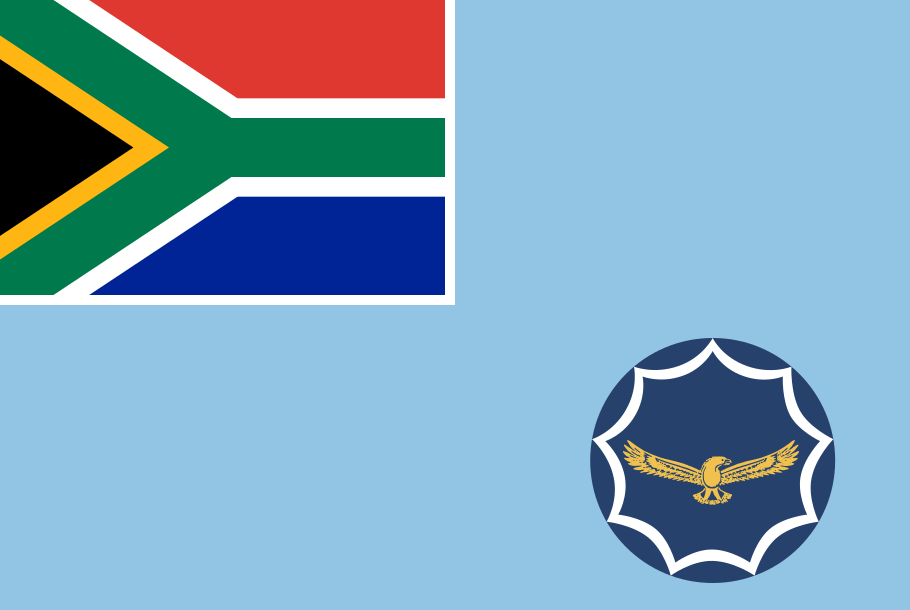
Note, the Springbok in the centre was further changed again to an eagle in line with the new SADF composite mark.

Funnily, and rather tragically to many parts of our military heritage and legacy – this is a process which seems to repeat itself historically whenever South Africa changes political dynasties.  The SAAF livery was changed again in response to the new SANDF re-branding the armed forces – literally everything connecting the past has to go (rank, uniform, medals etc), the military structures changes again (the Commandos went), the ruling edict is to break its connection and legacy with National Party’s “Apartheid” South Africa.  These changes were initiated in 2003.

I can’t but think that military tradition is been lost through the political epochs and this initial fundamental re-vamp of the SAAF emblems by the National Party and their resignation from the Commonwealth means that the new revamp, done when South Africa had re-joined the Commonwealth, has lost sight with its very rich military tradition and legacy.

When the emblems came under review in 2003 no consideration to the proud legacy of South African involvement in WW2 (and especially our Air Force) was given at all, so far had it receded from collective consciousness by this stage.  Again, I can’t but think that the loss of general public awareness and the military of this very proud moment in South African history is nothing short of tragic – especially considering the sacrifice of Black and White South Africans alike to it.

‘Tradition’ and maintaining ‘memory’ of those who have served is a fundamental cornerstone of soldiering, but unfortunately this was not a political priority – to either National Party or to the African National Congress.

Researched by Peter Dickens

An iconic shot

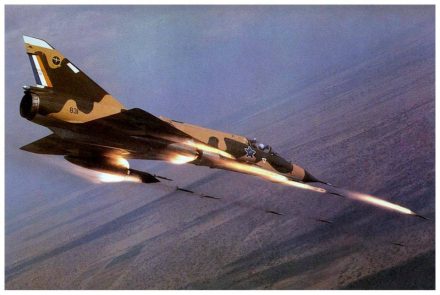
Just because it’s just such an iconic photograph – taken by the late and much loved Herman “the German” Potgieter and it adorned the room of many a small boy as a poster in the 80’s.

SAAF Mirage IIIEZ 831 firing a ripple of 68mm SNEB High Explosive Unguided Rockets.

Taken in 1978 at Roodewal. Derek Kirkland flying the Mirage and Herman Potgieter took the photo in a D2Z chase piloted by the late Chris Britz.

Photo copyright Herman Potgieter.

War in Eritrea heats up with the SAAF in the front!

The Allied invasion of Eritrea began on 17 January 1941. No.1 Squadron (SAAF) was used to escort RAF Wellesley bombers, and became one of the first Allied units to move into Eritrea, moving to Tessebei airfield during January.

No. 1 Squadron SAAF The squadron took part in the fighting around the key Italian fortress at Keren, which fell on 27 March, and then in the advance on Asmara, which surrendered on 1 April.

Within days of the surrender of Asmara the squadron moved from the “East African” theatre of conflict to the “North African” theatre in Egypt, arriving just in time to take part in Operation Brevity (15 May 1941), the first attempt to lift the siege of Tobruk.

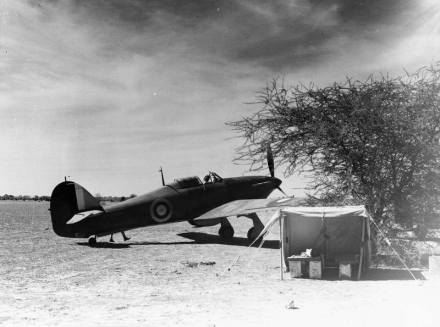
Typical of the East African campaign during World War 2 was the unrelenting heat.  Clearly seen in the featured image is a South African Air Force pilot of No. 1 Squadron SAAF is doing a pre-flight check as he prepares for a sortie in his SAAF Hawker Hurricane Mark I. The picture was taken at a forward landing ground close to the front line in Eritrea, circa 1941.

Note the crew shelter in the foreground, taking some prime shade on offer under the stark thorn tree, it is situated there so the crew can stay out of the relenting heat and its complete with all the comforts and “mod cons” you would expect on a front line – furniture made from petrol cans and duckboards.

Image copyright: Imperial War Museum

WW2 SAAF Pilot drives for show and putts for dough – Lt. Bobby Locke

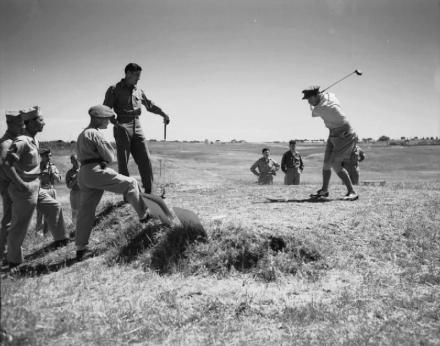
With a very special Masters finishing this weekend and Sergio Garcia achieving what has become one of golf’s truly special wins (especially on fellow Spaniard Seve Ballesteros’  birthday)  .. I am now reminded of a very famous South African golfer and war veteran – Bobby Locke, seen here taking some time off at a Services Golf Tournament held in Rome.

When World War 2 interrupted Locke’s burgeoning career as a golfer, he joined the South African Air Force as a bomber pilot, serving in both the Mediterranean and the Western Desert theatres of combat.

At the end of the war Locke returned to golf, famously playing in a series of matches in the USA against Sam Snead.  Bobby Locke’s legacy is remarkable, triumphant and tragic. He was a four-time Open Champion Champion and winner of 72 professional tournaments, but a car accident in 1960 damaged him physically and mentally and had an ultimately devastating affect on his wife and daughter.

In terms of the game of golf Locke quickly realised: “No matter how well I might play the long shots, if I couldn’t putt, I would never win”.  He therefore became a magnificent putter, in many people’s opinion (including Gary Player’s) the best there has ever been.

His unorthodox playing style translated to his putting, trapping the ball and imparting a hooking, top spin to it.  He later coined the often used golfing maxim: “You drive for show but putt for dough”.

It was on the greens that this remarkable South African truly excelled. He used an old rusty putter with a hickory shaft and employed his unorthodox technique, echoing his wider approach to life. He was an extrovert who sported baggy plus fours with shirt and tie on course. He liked singing music-hall numbers and played the ukulele.

Bobby – or “old muffin face” as he was known (because he never changed expression) was inducted into the World Golf Hall of Fame in 1977.  He was only the second non-USA or United Kingdom entrant after his fellow South African Gary Player (1974) to be inducted.

Featured photograph above shows: Lieutenant Bobby Locke whilst serving in the South African Air Force, playing a shot while Private Tommy Bolt, the American golfer looks on – note: on this occasion as he is in the Air Force he is not playing in his legendary baggy plus fours.

Feature image – Imperial War Museum Collection copyright.  Reference Bobby Locke: From Triumph to Tragedy by Fergus Bisset.

Article researched by Peter Dickens

Dick Lord – the combat legend who took learnings from the Royal Navy’s Fleet Air Arm to the SAAF

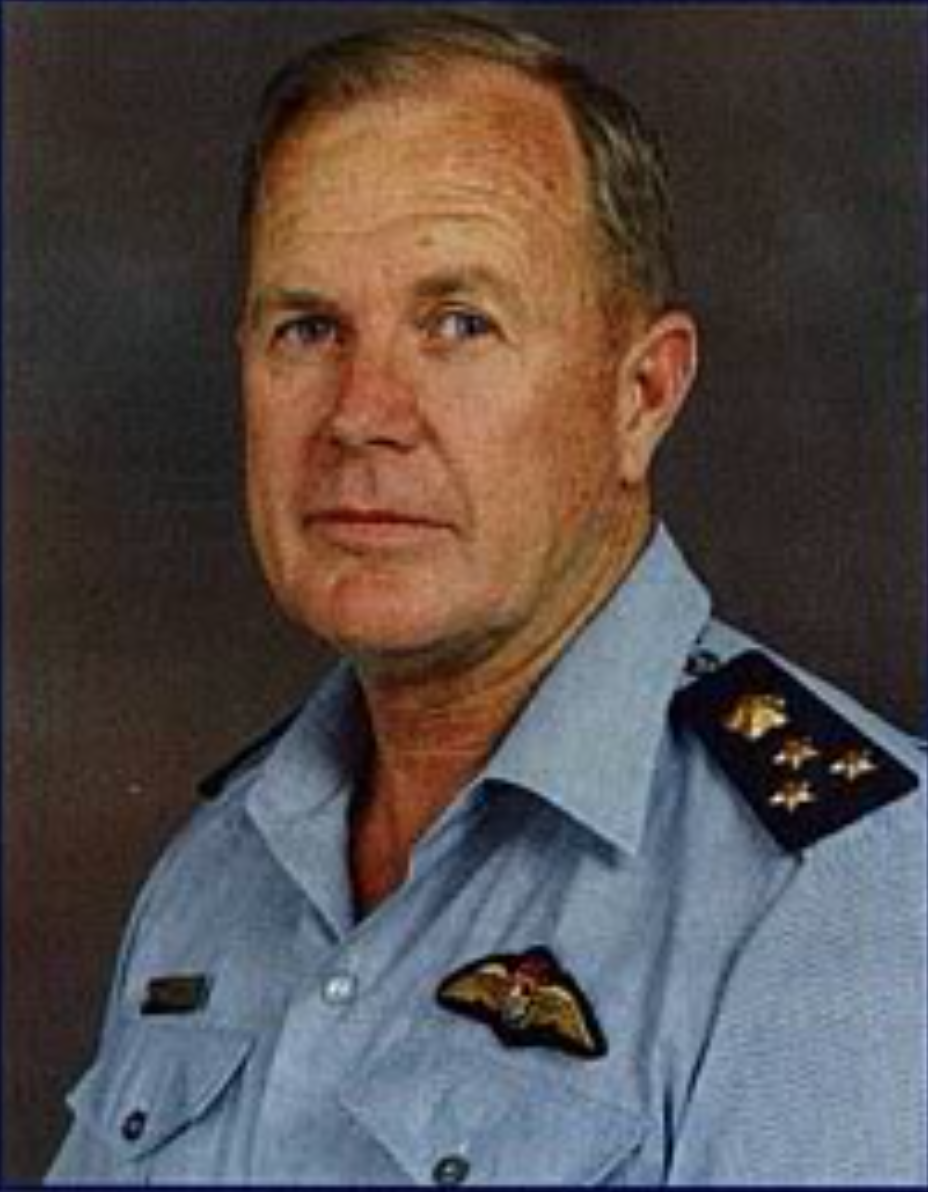
Richard Stanley Lord (nickname “Dick”) was born on June 20 1936 in Johannesburg, and educated at Parktown Boys’ High School.  His fascination with flying took hold playing “Biggles” high up in Johannesburg’s famous jacaranda trees.

In the late 1950’s Dick Lord wanted to join the South African Air Force.  However at the time the governing National Party had targeted South Africa’s defence forces for “transformation”, effectively ridding the defence arms of all their “British” heritage and socially engineering the forces using job reservation, political appointment and nepotism to progress white Afrikaners.

In this changing political environment Dick Lord was despaired of a career in the SAAF, his Afrikaans was limited and his strong “English” heritage was against him in the now Afrikaner-dominated South African Services.

So instead he, joined the Royal Navy. His initial naval training was at the Royal Naval Engineering College, Manadon, and he gained his wings in the Fleet Air Arm in June 1959, flying Sea Venom and Sea Vixen fighters from the aircraft carriers HMS Centaur, HMS Victorious, HMS Hermes and HMS Ark Royal.

Screen Shot 2017-04-01 at 13.24.23

A very eventful FAA Legacy

In 1966 Dick Lord found himself in the Royal Navy’s Fleet Air Arm flying from Ark Royal off Beira, Mozambique, to enforce the oil blockade of Rhodesia following its Unilateral Declaration of Independence. After one mission to intercept a suspected blockade-runner, he returned to find that the carrier had been overtaken by a tropical storm and that her flight deck was pitching through 65ft: his aircraft caught the third arrester wire and damaged its undercarriage – reckoned a near perfect landing in the conditions.

An American “Top Gun”

Dick Lord was instrumental in the development of America’s Top Gun fighter pilot academy, made famous by the film of the same name. He established his unusual role in 1968, when he was the foremost British instructor sent on exchange at Miramar, California, to train American pilots then suffering significant losses at the hands of MiG-21s flown by the North Vietnamese.

While some criticised the performance of America’s multi-million dollar Phantom jet, Lord concentrated on sharpening his pupils’ Air Combat Manoeuvring (ACM) skills to improve their odds in a dogfight.

He and a handful of other Fleet Air Arm graduates of the Royal Navy’s gruelling Air Warfare Instructors (AWI) school in Lossiemouth, Scotland, introduced rigorous new methods for recording and scrutinising the performance of trainees during exercises.

Lord, for example, scribbled notes on a pad on the knee of his flight suit during mock dogfights, which he then exhaustively analysed on a blackboard at post-flight debriefs.
Such was the trust placed in Lord that he was granted access to classified American military documents comparing the performance of US aircraft against that of enemy fighters. This access allowed him to write, with others, the US Navy’s Air Combat Manoeuvring manual.

A year after Lord’s arrival, the tuition and methods introduced by British pilots, all graduates of the AWI school at Lossiemouth, made their way into the US Navy Fighter Weapons School, which was set up in 1969. Better known as Top Gun, it remains the most famous programme in the history of naval aviation. Soon after it was established a Phantom flown by one of its first students shot down a MiG-21, the first time a US Navy aircraft had succeeded in aerial combat in two years.

Lord enjoyed the film Top Gun, but mused that it was “remarkable that any history book studiously avoids mention of any British involvement” and added that the film had not “given us due justice”. He remained proud of his involvement, however, and during his time at Miramar had insisted on using the call sign “Brit 1”. This meant that his wingman, though American, was forced to use the call sign “Brit 2”.

Dick Lord’s wife June Beckett, a BOAC air-hostess said of the movie “Top Gun” that while Dick complained about it, she contended that the film’s portrayal of big-talking fighter pilots was extremely true-to-life, and she should know.

lord_2047777b

On his return to the Royal Navy he was senior instructor with 764 Naval Air Squadron where he passed on the skills and confidence that had made such an impact in America.

Back to South Africa

Dick yearned to return to South Africa, he resigned from the Royal Navy and in 1970 returned to South Africa where he converted to commercial flying and became a civil aviation instructor pilot.

However the Royal Navy would intervene in his life again, this time after a visit to Cape Town by HMS Ark Royal where a “deep chord” was struck in Dick’s heart, rekindling his love of more adventurous military flying.

Joining the SAAF

Although Dick Lord was still unable to pass the Afrikaans language test, he was able to join the South African Air Force this time due to capability gaps in SAAF caused by all their social engineering and transformation policies, it was also now at war and in need of very skilled and experienced military pilots.  Conscription in the SADF had also been implemented by this time, and it involved both English and Afrikaans speaking white South Africans, so policies had to be softened somewhat.

During South Africa’s involvement in the South West Africa (Namibia)/Angola Border War and whilst in the SAAF Dick Lord flew Impalas, Sabres and Mirage Ills.

Dick Lord’s leadership skills were quickly apparent and he ultimately commanded No 1 Squadron SAAF from 1981 to 1983, later directing SAAF operations during the Border War from Oshakati and Windhoek as well as flying SAAF Mirage F1AZs.

He ended his career in charge of the Air Force Command Post in Pretoria, where he was given high accolade for his role in helping to organise the rescue operations that saved all 581 passengers and crew of the Greek cruise-liner Oceanos, which sank off South Africa’s eastern coast on August 4 1991.

Another highlight of his career was to organise, in 1994, the fly-past at the inauguration of Nelson Mandela as President of South Africa. Lord then retired as a Brigadier General and began writing about his life as an aviator.

He also wrote a number of books including

9781920143367-us-300

Fire, Flood and Ice (1998) about SAAF Search and Rescue missions
From Tailhooker to Mudmover (2000) – a biography
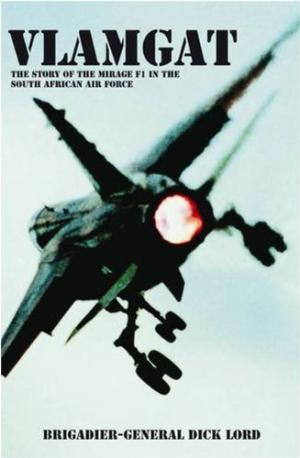
Vlamgat (2000) – a history of the Mirage fighter jet in South Africa
From Fledgling to Eagle: the South African Air Force during the Border War (2008)

Apart from flying, his passion was military music, his favourite piece being Sarie Marais, the march of the Royal Marines, which is based on an Afrikaner folk song.

Brigadier General Dick Lord died on the 26th October 2011 after a long illness.  He is still sorely missed to this day.

Screen Shot 2017-04-01 at 15.11.13


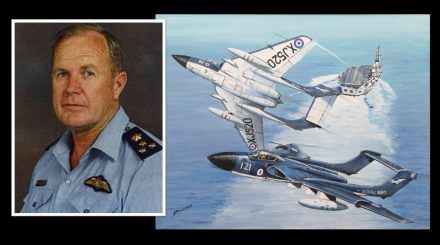
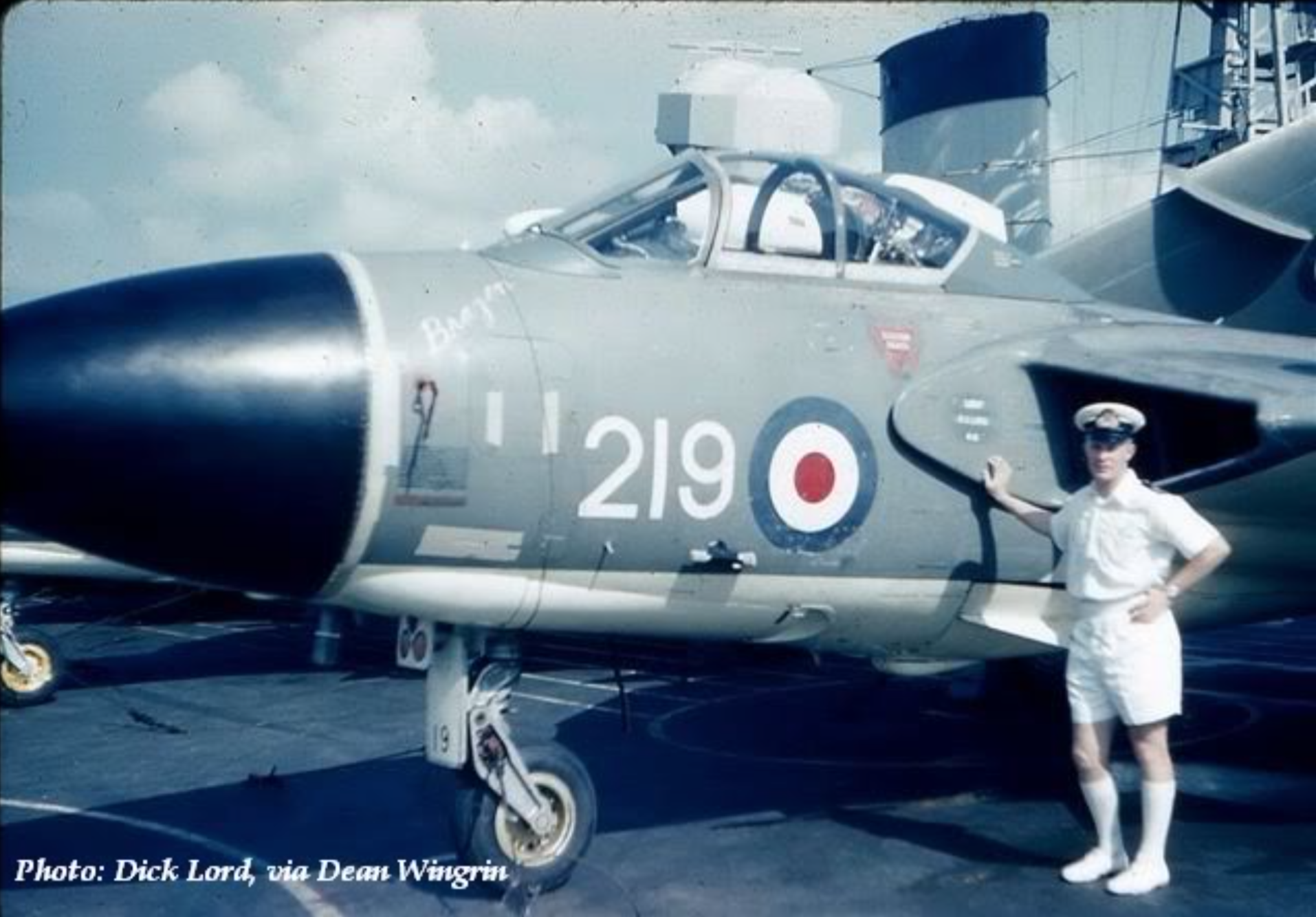
Researched by Peter Dickens.  References:  The Daily Telegraph, Article on Dick Lord by Rostislav Belyakov. Military History Journal Vol 15 No 4 – December 2011.  Feature photo via Dean Wingrin.  Painting of Royal Navy Fleet Air Arm Sea Vixens in the masthead by Derrick Dickens, copyright Peter Dickens.

One Major accomplishment!

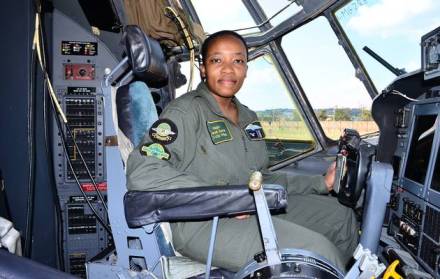
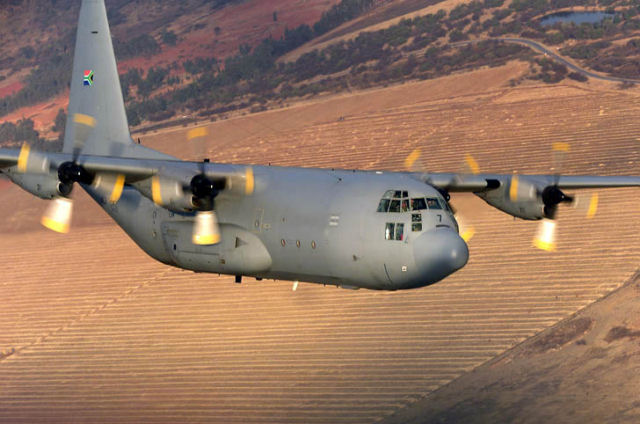
On Friday 23rd March 2017, this 31 year old Major not only touched down flying a C-130  military cargo plane at Waterkloof Air Force base‚ as part of her evaluation, she also went in the record books as the first black woman to qualify to fly this particular aircraft in the South African Air Force.

Her task was to fly the C-130 and be responsible for the safe arrival of both the aircraft and crew members on board from the Democratic Republic of Congo.

Congratulations Major Nandi Zama on breaking new ground for black female pilots and female pilots the world over.  You exemplify the fine values and traditions of your Squadron – 28 Squadron SAAF.

04

South African Air Force Lockheed Hercules C-130BZ from 28 Squadron with grey paint scheme

Related Link

Suzanne Dempsey; Another Major Accomplishment


Posted by Peter Dickens. Article and image reference Times Live

Proper South African Gladiators

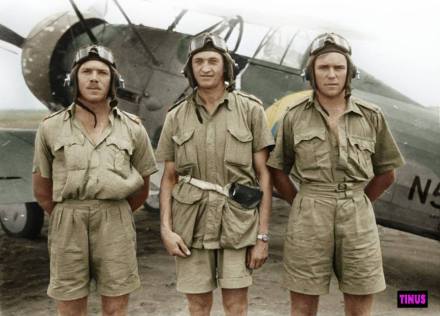
Wonderful colourised image by Tinus Le Roux of South African Air Force pilots during the East Africa campaign in WW2.

Here are No. 2 Squadron pilots in East Africa 1940-’41 (Gladiator aircraft in the background). From left to right: Lt. Pieter Fritz, Lt. Adrian “Coley” Colenbrander, Lt. Basil Guest. Only Lt. Guest will survive the war.

Lt. Colenbrander was a popular member of the squadron and was shot down and killed in 1942 just after the El Alamein break-through as 2 squadron’s Officer Commanding.

The Gloster Gladiator’s combat record  in East Africa

In Eastern Africa, it was determined that Italian forces based on Ethiopia posed a threat to the British Aden Protectorate, thus it was decided that an offensive would be necessary, under which the Gladiator would face off against the Italian biplane fighters: Fiat CR.32s and CR.42s. On 6 November 1940, in the first hour of the British offensive against Ethiopia, the Fiat CR.42 fighters of the 412a Squadriglia led by Capt. Antonio Raffi shot down five Gloster Gladiators of 1 SAAF Sqn; among the Italian pilots was the ace Mario Visintini. Tactically, the SAAF aircraft erred by engaging the CR.42’s in a piecemeal fashion and not en masse, and were anyway heavily outnumbered.

Early on in the action, Gladiators of No. 94 Squadron performed various offensive actions against the Italian forces; typical targets included airfields, supply depots, and aircraft. They were also assigned the mission of defending Aden airspace at day and night, as well as to protect Allied shipping operating in the vicinity. It was in the latter role that saw a single No. 94 Gladiator, piloted by Gordon Haywood, be responsible for the surrender and capture of the Italian Archimede-class submarine Galilei Galileo

On 6 June 1941, the Regia Aeronautica had only two serviceable aircraft remaining: a CR.32 and a CR.42, therefore air superiority was finally achieved by Gladiators and the Hurricanes. The Gladiator’s last air combat with an Italian fighter was on 24 October 1941, with the CR.42 of Tenente Malavolti (or, according to historian Håkan Gustavsson, sottotenente Malavolta). The Italian pilot took off to strafe British airfields at Dabat and Adi Arcai. According to the Italian historian Nico Sgarlato, the CR.42 was intercepted by three Gladiators and managed to shoot down two of them, but was then itself shot down and the pilot killed.  Other authors state that Malavolti managed to fire only on the two Gladiators before being shot down.

According to Gustavsson, SAAF pilot (no. 47484V) Lieutenant Lancelot Charles Henry “Paddy” Hope, at Dabat airfield, scrambled to intercept the CR.42 (MM7117). Diving on it, he opened fire at 300 yards. Although the CR.42 pilot took violent evasive action, Hope pursued, closing to 20 yards and firing as it tried to dive away. There was a brief flicker of flame and the last Italian aircraft to be shot down over East Africa spun into the ground and burst into flames near Ambazzo. The next day the wreckage was found, the dead pilot still in the cockpit. Hope dropped a message on Italian positions at Ambazzo:

“Tribute to the pilot of the Fiat. He was a brave man. South African Air Force.”

But operational record books of the Commonwealth units in the area state that they did not suffer any losses on this date. The dedication of the posthumous Medaglia d’oro al valor militare states that Malavolti shot down a Gladiator and forced another to crash land, but was himself shot down by a third Gladiator. This was the last air-to-air victory in the East African campaign.

Original black and white Photograph from the SAAF museum Colourised photo copyright and courtesy of Tinus Le Roux, and my thanks to Tinus for the caption reference.  Reference – wikipedia

A flying Springbok in more ways than one – ‘Mannetjies’ Roux

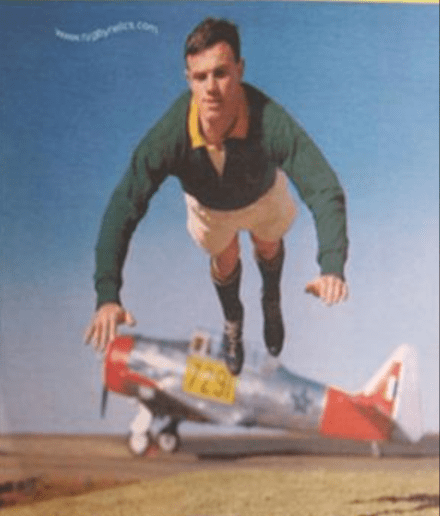
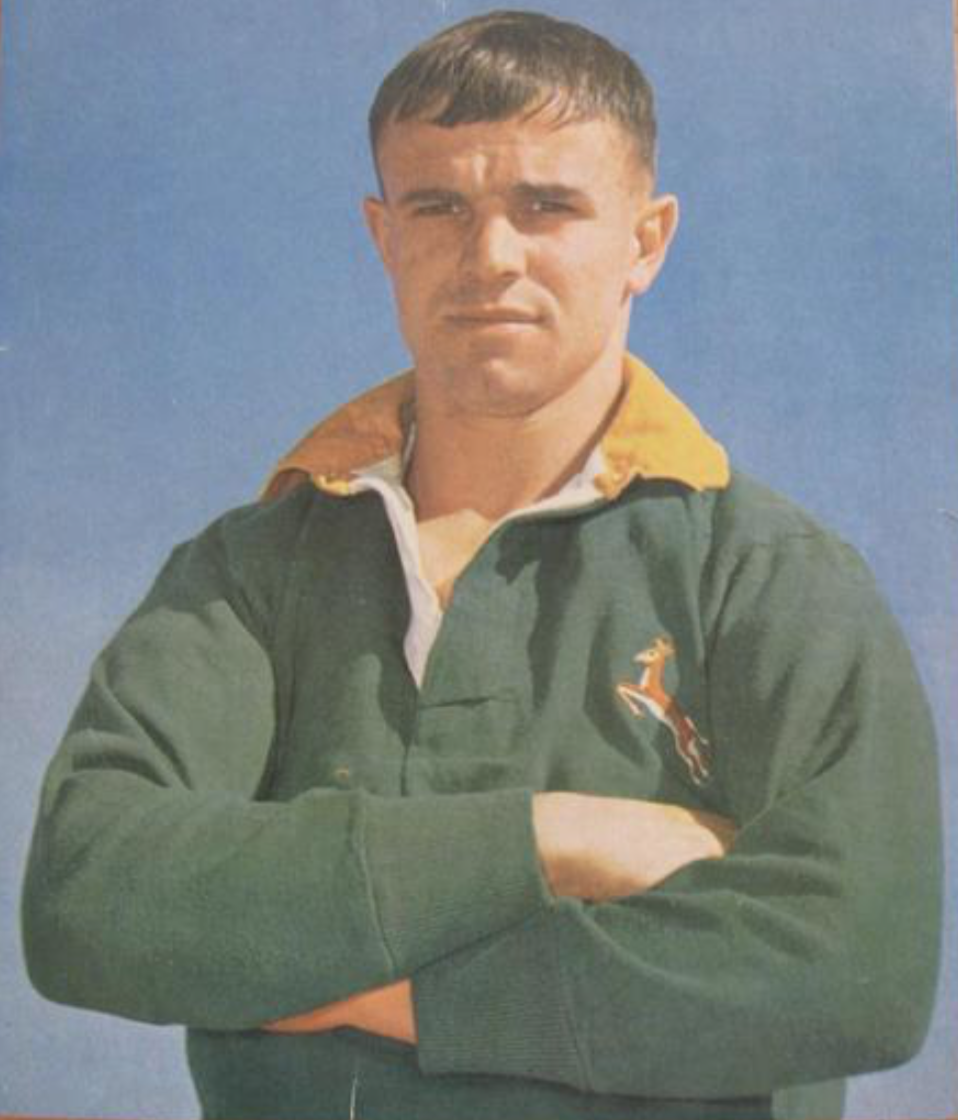
There’s no need to introduce Francois Du Toit “Mannetjies” Roux , the legendary Springbok rugby “flyer”, but did you know he was also a “flyer” of a real kind and served his country as a South African Air Force pilot?

Born in Victoria West and educated at Paarl Boys High, he went to Stellenbosch University; an institution known for serving as a conveyor belt of future Springboks. Later on he joined the South African Air Force in Pretoria where he served as a flight instructor on the iconic North American ‘Harvard’ trainer (seen in the background of the featured image).

Screen Shot 2017-03-24 at 09.52.18

As a Springbok he was capped 27 times; 6 times at wing and 21 times at centre, scoring 6 tries.

Controversy  follow him though, with Roux achieving notoriety on the demo-ridden 1969/70 Springbok tour of the United Kingdom for kicking one protester in the backside and hurling the ball at another.

He’s retired now and he and his wife Charlotte run a shop and museum called Victoria Trading Post in his hometown of Victoria West.

Here is Mannetjies in service. Far right, Gen P.H. Grobbelaar congratulates Sgt Frik du Preez from the SAAF, Lt Mannetjie Roux and FC Hannes Botha from 1 Parachute Battalion with their inclusion into the Springbok team against the British Lions in 1962.

10921618_890433350988087_4433400930417192196_o

“Source: Wikipedia and Paal Boys High

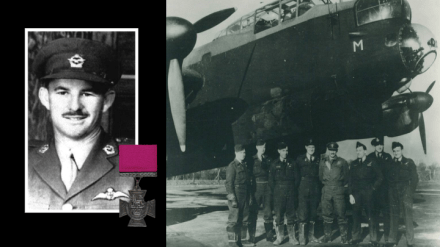
Edwin Swales VC DFC, a South African Hero whose legacy has been eroded!

Edwin (Ted) Swales VC DFC is one of South Africa’s greatest sons,  yet the South African politicians  of today,  have removed his name from the well known “Edwin Swales Drive” named in honour of him in Durban and re-named it after a contemporary “struggle” cadre.  The legacy of Maj. Swales VC DFC is under threat, and there is very good and noble reason not to forget him, this is his story, kindly contributed to by David Bennett.

A very short biography :    Major Edwin Swales, VC, DFC, SAAF (1915 – 1945)  by David Bennett

Edwin Essery Swales : Born in Inanda, Natal, 3 July 1915. Attended Durban High School, Jan. 1930 to Dec.1934. Worked for Barclay’s Bank, DC&O, in Durban 1935 to 1939. He joined the Natal Mounted Rifles, 1935 and left 31 May 1939 as a W.O.II. Rejoined N.M.R. on 4 September 1939.

He served in Kenya; Abyssinia; Italian Somalia; British Somalia and Eritrea. Then (1941) in North Africa. In 1942, he left the army to join the S.A. Air Force. Swales received his wings at Kimberley in 1943. Then seconded to the Royal Air Force in 1943, he attended Flying Training School at  R.A.F. Little Rissington, 1944. Later sent to the elite R.A.F. Pathfinder Force, 582 Squadron, Royal Air Force, at Little Staughton in July 1944.

Swales was awarded an immediate D.F.C. on 23 December 1944 following a bombing raid on Cologne. After a raid on Pforzheim on 23 February 1945, Swales was killed in action, crashing near Valenciennes, France and he was awarded a posthumous Victoria Cross.

Swales is now buried in the War Cemetery at Leopoldsburg, near Limburg, Belgium, Plot No.8, Row C, Grave No.5. (Although he had originally been buried at Fosse’s USA Cemetery). The headstone of Swales’ grave shows the Springbok head, common to the graves of all South Africans, as well as the Victoria Cross engraved on it. The legend on the headstone states:

Edwin Swales was awarded the Distinguished Flying Cross, on 23 December, 1944.  The citation reads:

The KING has been graciously pleased to approve the following award in recognition of gallantry and devotion to duty in the execution of air operations:-

Captain Edwin Swales, (6101V) S.A.A.F. 582 Sqn. :-

The Distinguished Flying Cross:

“This Officer was pilot and Captain of an aircraft detailed to attack Cologne in December, 1944. When approaching the target, intense anti-aircraft fire was encountered. Despite this, a good bombing attack was executed. Soon afterwards the aircraft was attacked by five enemy aircraft. In the ensuing fights, Capt. Swales manoeuvred with great skill. As a result his gunners were able to bring effective fire to bear upon the attackers, one of which is believed to have been shot down. Throughout this spirited action Captain Swales displayed exceptional coolness and captaincy, setting a very fine example. This Officer has completed very many sorties during which he has attacked a variety of enemy targets.”           (Official D.F.C. Citation)    

Edwin Swales was killed on 23 February, 1945, and he was posthumously awarded the Victoria Cross – the 3rd and last Pathfinder pilot to be so honoured (all alas, posthumous). It had been Swales’ 43rd operational flight for 582 Squadron, R.A.F. Here is the citation:

The KING has been graciously pleased to confer the VICTORIA CROSS on

the under-mentioned officer in recognition of the most conspicuous bravery:-

Captain Edwin Swales, DFC (6101V) S.A.A.F. 582 Sqn. (deceased):

 “Captain Swales was ‘Master Bomber’ of a force of aircraft which attacked Pforzheim on the night of February 23, 1945. As Master Bomber he had the task of locating the target area with precision and of giving aiming instructions to the main force of bombers in his wake.

Soon after he reached the target area he was engaged by an enemy aircraft and one of his engines was put out of action. His rear guns failed. His crippled aircraft was an easy prey for further attacks. Unperturbed, he carried on with his allotted task; clearly and precisely he issued aiming instructions to the main force. Meanwhile the enemy fighter closed the range and fired again. A second engine of Captain Swales’ aircraft was put out of action. Almost defenceless, he stayed over the target area issuing his aiming instructions until he was satisfied that the attack had achieved its purpose. It is now known that the attack was one of the most concentrated and successful of the war.

Captain Swales did not, however, regard his mission as completed. His aircraft was damaged. Its speed had been so much reduced that it could only with difficulty be kept in the air. The blind-flying instruments were no longer working. Determined at all costs to prevent his aircraft and crew from falling into enemy hands, he set course for home. After an hour he flew into thin-layered cloud. He kept his course by skilful flying between the layers, but later heavy cloud and turbulent air conditions were met. The aircraft, by now over friendly territory, became more and more difficult to control; it was losing height steadily. Realising that the situation was desperate Captain Swales ordered his crew to bale out. Time was very short and it required all his exertions to keep the aircraft steady while each of his crew moved in turn to the escape hatch and parachuted to safety. Hardly had the last crew-member jumped when the aircraft plunged to earth. Captain Swales was found dead at the controls.

Intrepid in the attack, courageous in the face of danger, he did his duty to the last, giving his life that his comrades might live”

(Official V.C. Citation)

Air Chief Marshal Sir Arthur ‘Bomber’ Harris, KCB, OBE, AFC, Chief of Bomber Command, Royal Air Force, following the loss of Edwin Swales, wrote a letter to Swales’ mother, Mrs. Olive Essery Swales, saying, inter-alia:

…… On every occasion your son proved himself to be a determined fighter and resolute captain of his crew. His devotion to duty and complete disregard for his own safety will remain an example and inspiration to us all …..

Memorial to Edwin Swales at the secondary school he attended as a student, Durban High School (DHS)

In conclusion 

It is our humble opinion, that whilst it is important to segments of South Africa’s population to remember their heroes it should not come at the expense of other national heroes.

Solomon Kalushi Mahlangu, after whom Edwin Swales VC Drive is now named,  was a operative of the African National Congress militant wing, Umkhonto we Sizwe, and whilst it is important to the current ANC ruling party to highlight the sacrifice of its heroes, it should not come at the sacrifice of Maj. Swales’ legacy – one of a handful of South African World War 2 Victoria Cross winners, and one whose extremely brave deeds were awarded in a war which was to liberate the entire western world of tyrannical and rather deadly racial political philosophy as well as dictatorial megalomaniacs supporting such ideology.

In fact to rectify the situation, the Durban City Council should actually consider a monument or statue in the centre of Durban to Edwin Swales and allow him to take his rightful place as a true son of South Africa and one of our all time greatest military heroes, as is the case for many Victoria Cross winners the world over.  That his actions and deeds are taught to South African youth, pride in our WW2 history established and his sacrifice not forgotten.  Lets hope they see their way clear to do this.

Note:    The papers from the South African Air Force, promoting Edwin Swales from Captain to Major, only reached the British authorities after his death, and after the award of the Victoria Cross was gazetted, hence the rank of “Captain” being used in the VC citation. However, he is referred to as a Major.

Thank you to David Bennett for both photograph and content contribution.