
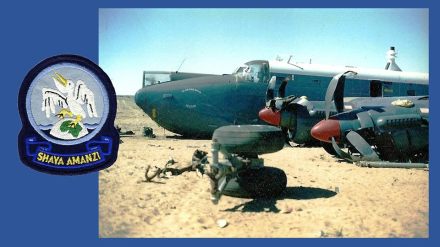
South African Air Force Shackleton 1716 – Pelican 16. This iconic image by photographer Dietmar Eckell for his photo book ‘Happy End’ – stories about miracles in aviation history, says it all. The fate of Pelican 16 carries with it a tale of heroism and sadness.
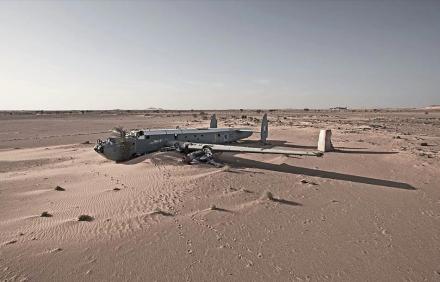
Restored to flying condition by volunteers in 1994, Pelican 16 was offered to take part in the Fairford Military Air Tattoo in the United Kingdom and departed South Africa for England on July 12th, 1994.
The departure from Cape Town (CT) was scheduled for a midnight take-off, on Friday 08 July 1994. The entire flight from CT to the UK, entailed four legs, with stops in between and the routes were planned for as follow:
a. CT to Libreville, Gabon
b. Libreville to Abidjan, Ivory Coast
c. Abidjan to Lisbon, Portugal
d. Lisbon to Duxford, England
(The return flight to SA, one month later, would have been just the reverse of the above route.)
Flown by a group of active SAAF pilots, Pelican 16 was operating over the Sahara desert on the night of July 13th. They were alerted to a warning on #4 engine, indicating signs of overheating, the engine was shutdown, as a precautionary measure and power was increased on the other three engines, in order to maintain the safety altitude.
The propellers on #4 feathered properly. The reason for the indication of overheating, can be contributed to a suspicion of a possible leak within the coolant system. However, within approximately 15 minutes after shutting down #4, sparks were seen emitting from #3, which ensued into flames around the contra-rotating propeller spinners.
The #3 engine was also shutdown, after the flames were successfully extinguished by the activation of the engine fire extinguishing system. However, after shutting down #3, the propellers would not feather completely and remained windmilling at +- 150 RPM.
The aircraft was now rapidly losing height and it was elected to restart #4 to gain height again. Within +- 10 minutes after restarting #4, the engine became so hot, that the exhaust stacks reflected a white magnesium glow. #4 was then shutdown for the second time, but this time round the propellers would not feather completely and they kept windmilling, much faster than those of #3, at +- 650 RPM.
With two sets of windmilling propellers, both on the same wing, a crash landing became inevitable, as asymmetric forces began to gain the upper hand.
The terrain where the crash landing was eventually executed, (approximately 14 km from the Eastern border of West Sahara with Mauritania), was indeed flat sands, but with multiple rocky outcrops in the area. In fact, the impact was, very fortunately, right on top of a slightly raised rocky outcrop and from there the aircraft skidded along the sandy surface, until she suddenly slewed by 90° to the left and thereafter skidded sideways to the right, before coming to a standstill.
The distance from point of impact and coming to a standstill, was paced off later that morning, after it became daylight, to be 243 metres – a very short landing for a Shackleton!
The failure of #3, was determined to be a probable Translation Unit (TU) failure. The TU is situated between the two contra-rotating propellers, inside the engine cowlings. It is attached to the front propeller by three rack bolts and it governs the rear propeller. After removing the front spinner from #3 engine later that morning, quite a few ball-bearings were found to be strewn inside the spinner. That confirmed the suspicion of a TU failure, which resulted on account of the rack bolts that pulled the TU apart. The latter can only be surmised that the cause was on account of the increased RPM on the three remaining engines, after #4 was initially shutdown. Why it happened, is still unknown.
Though none of the crew were seriously injured by the landing, all 19 men were miles from any assistance and in the middle of an active warzone. The crew of Pelican 16 were quickly located and returned safely to South Africa.
Time of the crash landing was at 01h40 GMT.
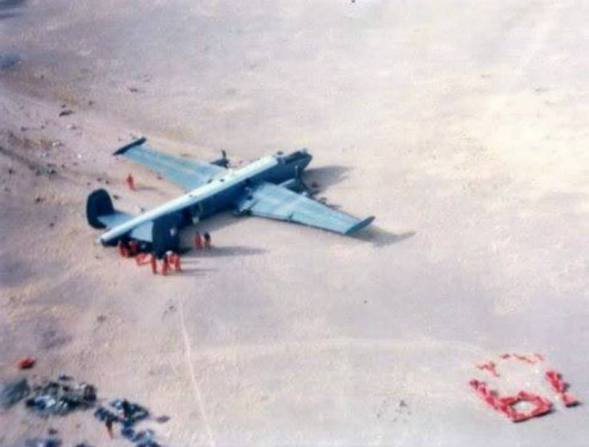
This is the photo taken from the French rescue aircraft “Pelican 16” taken after the belly landing in the Sahara desert – the ’19 OK’ written on the ground is to inform any rescue aircraft of the number of surviving souls from the crash.
The original sign on the ground was structured by the laying out of a combination of the spare orange flying suits and the single-man dinghies.
The word “OK” is no longer clearly visible when this photo was taken from the Atlantique ll Maritime aircraft, belonging to the French Navy’s 22 Squadron, that was on detached duty at Dakar, Senegal, from where it was scrambled at 04h00 GMT that morning, to conduct the search of the 19 souls of “Pelican 16”.
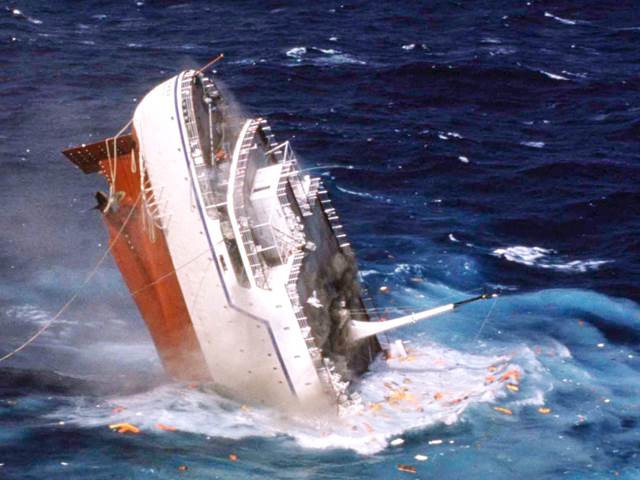
She is still where she landed – located about 2 hours drive from Zouérat in northern Mauritania in contested territory – lying open to the desert elements and subject to decay as there is no means of retrieving this beautiful aircraft.
Researched by Peter Dickens. Image Copyright Dietmar Eckell. Information on the route and sequence of events written by Lionel Ashbury with his kind permission and assistance.
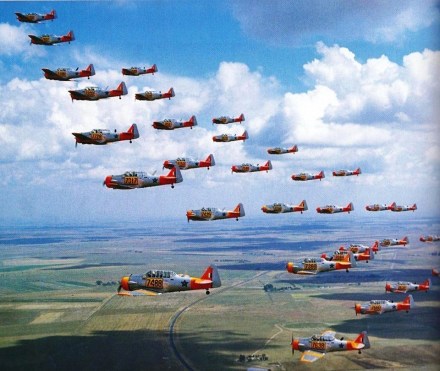




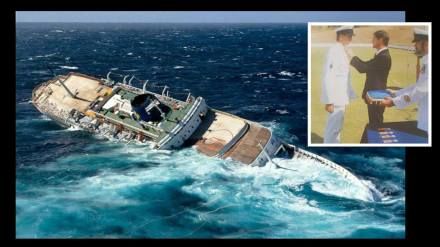
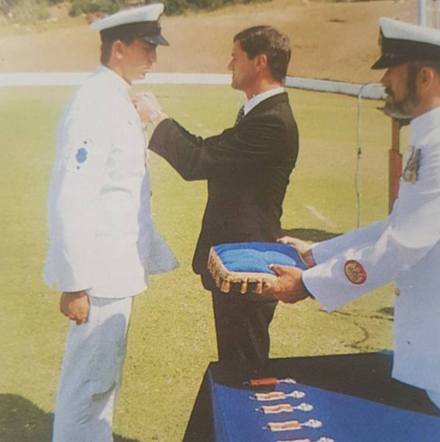


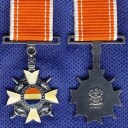 Honoris Crux: Lt.-Cmdr. André Geldenhuys; PO. Frans Hugo Mostert; LS. Darren Malcolm Brown; LS. Luke James Dicks. All from the South African Navy, all from the Divers School.
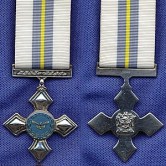 The Air Force Cross decoration recipients: Kmdt. Eric Brennan Elphick; Kmdt. Anthony Charles Hunter; Maj. Phillip Fenwick; Maj. Anthony Wright Johnson; Maj. Martin Johannes Hugo Louw; Maj. Hermanus Frederik Steyn; Maj. André Stroebel; Capt Anton Botha, Capt. René Martin Coulon; Capt. Peter Evans Hanes; Capt. Charles Glen Goatly; Capt. Hendrik; Capt Jacques Hugo; Capt. Tarri Jooste; Capt. Johannes Meintjies; Capt.. Slade Christoper Thomas; Capt. Francois Johann Weyers; Lt. Mark Graig Fairley; WO2 William James Riley; F/Sgt Norman Herbert Askew-Hull; Capt. Len Pienaar; F/Sgt Frans Campher; F/Sgt Daniël Francois Bezuidenhout; F/Sgt. Daniël Roedolf Jacobs; F/Sgt Christoffel Jacobus Pedlar; F/Sgt. Philip Davey Joseph Scott; F/Sgt. Frans Schutte; F/Sgt. Willem Hendrik Steyn.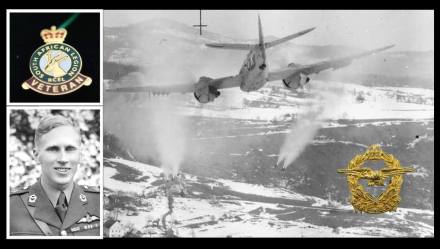
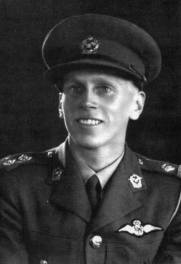 Having known Lt. Steve Stevens DFC, I remain in total awe of his generation. I met him in Wothing in England and Steve was 96 years young bed-ridden, in pain and weak – but he was no less the man, and this famous featured image of him firing rockets from his South African Air Force (SAAF) Beaufighter during WW2 says everything about him as a fighter pilot, but he was also a devout Christian who pioneered missionary aviation, leading a rich and interesting life. This is a little of his very remarkable story.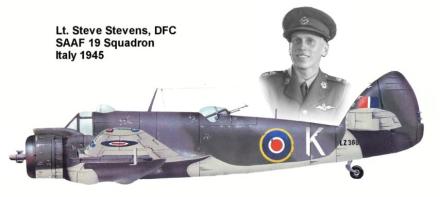
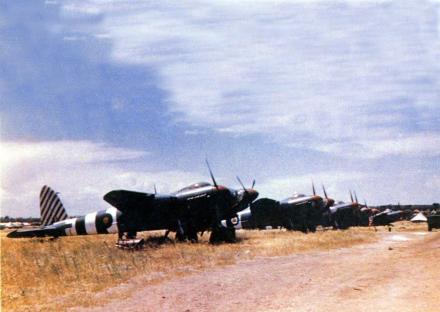
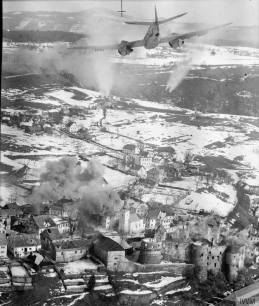 And this is the photograph, the SAAF Bristol Beaufighter TF Mark X of No. 16 Squadron South African Air Force seen in the image is been flown by Lt Steve Stevens as he releases its rocket projectiles at an enemy target in the town of Zuzemberk.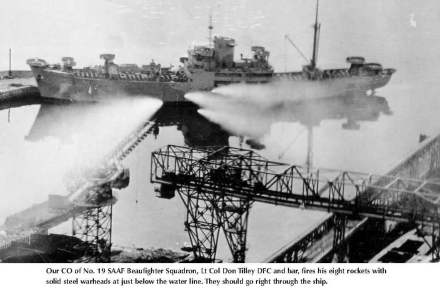
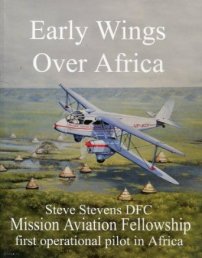 In Sudan, Steve flew a de Havilland Rapide – an eight-seater twin-engine wood and fabric covered biplane – not best suited for flying in Africa, but the best MAF could find and afford at that juncture. Over time, more and more airstrips were hacked out of jungle, bush, desert and grasslands, and Steve began to fly to other places where no planes had ever been before.
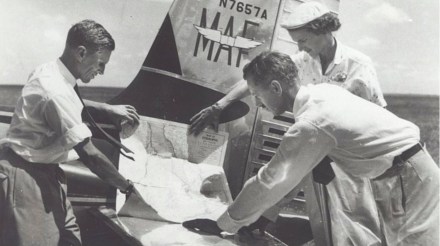 In 1970, after more than twenty years of service to the MAF cause, Steve and his wife Kay moved on to become early members of the National Festival of Light, forerunner of today’s CARE organisation. Steve later became Executive Director of Australian Festival of Light.
 I met Steve Stevens, when the South African Legion of Military Veterans initiated an outreach to him to see if there was anything we could do to help him as a frail care WW2 veteran in his 90’s, I was astounded when he replied that he was at peace with himself and how could he help the Legion instead. Steve then kindly donated signed copies of his books to the Legion so that we could fundraise for other initiatives. Cameron Kinnear and I visited him at his home in England and awarded him a lifetime honoury membership of the South African Legion, and we pinned his SA Legion ‘veterans badge’ on his lapel.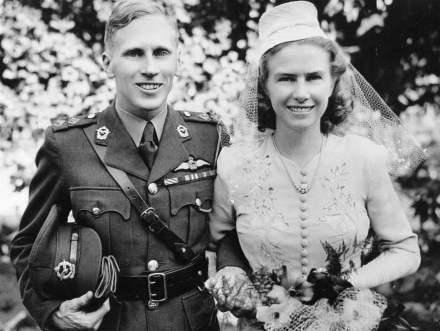


 The Observation Post