The Observation Post will be taking the circuit lecture and talk on the history of the Torch Commando to Simonstown next. It will be hosted by the Naval Officers’ Association of Southern Africa at the Seven Seas Club in Simonstown. It is a closed session for members of the Seven Seas and Naval Officers’ fraternity, their partners and invited guests.
Peter Dickens – B Soc.Sc. (Rhodes) PG Dip (UNISA) – will be presenting the lecture on the Rise and Fall of the Torch Commando, he will be joined by fellow discussant Capt (SAN) Graeme Plint – MMM MMil. (Stell). Graeme’s 2021 Masters thesis “The influence of Second World War military service on prominent White South African veterans in opposition politics 1939 – 1961” will add significant gravitas to the discussion on The Torch Commando and Sailor Malan, the South African war-time Battle of Britain ace.
Titled ‘An inconvenient truth’ it is an in-depth look at The Torch Commando, South Africa’s first mass Anti-Apartheid protest movement and the politics of returning South African WW2 veterans.
Topics to be covered include:
The Nazification of the Afrikaner Right
TheReturning War Veterans Action Committee
SailorMalan
The Steel Commando
The rise and fall of The Torch Commando
The smoking gun to the ‘white’ struggle against Apartheid
Date: 14th May 2024
Venue: Seven Seas Club, Simonstown.
Time: 11:30 am start.
Who: Naval Officers’ Association members, their partners and invited guests.
Lately, and especially in my little town of Hermanus is a complete storm in a teacup over a very likeable young man by the name of Benjamin Rattle – Ben to his mates. I’m in the beer brewing game, so too is the Rattle family so we interact with them often as part of the three main ‘local’ beer suppliers to Hermanus.
Now, Ben finished high school not long ago and was pretty much part of the young millennial crowd in Hermanus, well liked in the surfer circles, working briefly for his Dad’s brewing company, he – like many of his age set out to discover the world and being Jewish figured a good start would be to resolve his Israeli citizenship and do his national service in the Israeli Defence Force (IDF). An option open to Jews the world over and perfectly legal and perfectly legitimate in a recognised statutory defence force abiding by all the international conventions – which whether some believe it or not the IDF falls part.
Whist performing his national service, he – like other dual national Jewish South Africans in a similar situation with commitments in the IDF, suddenly found his country under attack and he was deployed to Gaza for counter offensive operations. All good so far, he’s not some religious nut-job whose bolted to the Middle East to exterminate Arabs in some fanatical sense of wiping them off the planet … he’s a simple national serviceman performing his duties, and whilst in service his circumstances changed and have led him to war.
Like any national servicemen, and many of us in South Africa who have military experience as being National Servicemen will know – pride in service is central, so too family in support, and Ben’s Dad served in the South African Army as a conscript, and like all military vets he knows the importance of this – so like thousands of national servicemen before him, Ben took to a couple of photos of himself on duty and some with his folks whilst he’s in uniform (his parents obviously proud and concerned for their son at the same time) and put these images up on his social media accounts.1
Now, back in his ‘Old Country’ in South Africa a small muslim action group named the Palestine Solidarity Campaign (PSC) enamoured with the South African government’s open sympathy with Palestine and armed movements like Hamas whose stated intention is the annihilation of jews, took to pressing charges of genocide and illegally serving in a foreign army against Ben Rattle at a local Cape Town Police station … using his Instagram and social media pictures in the public space as ‘proof’ positive of his “crime”. 2
This in turn pricked journalists to get hold of Ben, who allegedly told them to hop it, as a Jew in defence of his country he’s doing nothing wrong and that the South African government should focus on its own problem of millions of its own destitute Africans living in shacks in similar if not worse conditions than Palestinians, and should stop meddling in affairs that don’t really concern them 3 Ben’s alleged position no different from that of the Israeli government – so nothing new here.
All this, and a silly petition calling for South African soldiers in the IDF to be prosecuted with only 1,200 signatures – spun our very partisan African National Congress government into action, and Nadeli Pandor, our Minister of International Relations and Cooperation for South Africa, who was in the USA urgently trying to convince them not to sanction South Africa for its “covert” but very overt sympathies and support of Russia and other rogue and terrorist states and organisations – and for the Americans this also includes Hamas and Iran.4
Pandor’s line with the Americans is that South Africa is just a leader in human rights and supports arbitration and negotiation for conflict resolution, our Mandela magic ethos and we are ‘neutral’ that’s all – and the Americans aren’t buying it, and she can’t figure out why. However a few weeks earlier in March, she declares all South Africans who are on dual national status serving in the Israeli Defence Force (and that includes Ben) will be arrested the minute they re-enter South Africa – on the basis that there is legislation outlawing South Africans from serving in “foreign” armies without “permission”. 5
Nadeli Pandor, our Minister of International Relations and Cooperation for South Africa nailing her colours to the mast.
Somehow the ANC thinks that’s the morally good thing to do, leaving their senses again as they fail to recognise that by our shared history and perfectly legitimately, there are literally hundreds of thousands of South Africans who have held dual British and South African citizenships and have served in the British Armed Forces and many of her Allied forces from 1910 – through two world wars and continue to do so to this day. There are thousands of South Africans of Jewish decent who have served in the Israeli Defence Force from its inception, over 500 WW2 military veteran South Africans were recruited to fight in the Israel War of Independence in 1948 alone 6 and Jewish South Africans continued to serve in the IDF and still do so to this day.
Not even by birthright mind, there are even thousands of South Africans who have obtained dual citizen status after serving in the British Armed Forces (BAF) under the Commonwealth agreement after 1994 and South Africa’s re-admittance to the Commonwealth, many recently serving in the Afghanistan and Iraq wars – and many still in service in His Majesty’s Armed Forces. Most of them serving in the BAF because it simply offered better career growth opportunities for someone seeking a military career than the South African National Defence Force (SANDF) could ever offer, and I can almost guarantee none of them got permission from the ANC government to serve in the BAF.
There are entire groupings of South African’s in the current British Armed Forces, they even have a honour roll of South Africans who died in action in British uniform in Iraq and Afghanistan and there are current South Africans who have received high accolades and British bravery decorations – their families very proud of them.
As the President of the South African Legion of Military Veterans in the UK, I personally know of five close friends of mine who served in both the South African and British militaries, and not just Britain, I’ve a close friend who served in the South African Navy and is now an Admiral in the Royal Australian Navy and as to the diaspora of South Africans the world over – one of my Australian nephews is currently in the Australian Navy serving as a Ensign with the very Aussie surname of “van der Merwe”.
Over and above that the French Foreign Legion which has seen South Africans join it over the years to obtain French and EU citizenship and even in the USA, there are many dual National South Africans currently serving in their armed forces.
So, somehow the ANC and the hapless Nadeli Pandor have just managed to put thousands of South Africans world over in statute and legitimate forces under threat of arrest if they visit or emigrate back to South Africa based on some obscure and previously ignored legislation – and knowing military veterans and their families – to a man they will in all likelihood stand behind a fellow statutory force military brother like Ben Rattle and tell the ANC and Nadeli Pandor to ‘hop it’ (its a military thing – a value we all share).
What the ANC, and Nadeli Pandor did by bringing genocide accusations against a legitimate and mandated statute military is they “took a side” and stepped away from the ANC’s only real legitimacy as the worlds even handed “reconciler” and peacemaker – a reputation reached by Nelson Mandela in 1994 when he stood up and accused F.W. De Klerk and the National Party of been in an “illegitimate and internationally discredited government”, and this reputation of Mandela is now utterly in tatters in 2024, with an ANC heading up a corrupt kleptocracy and becoming more “discredited” in the international community by the day – certainly in all the “western” European democracies and NATO countries.
So what happened next, to demonstrate just what thin ice Nadeli Pandor is on, the United States of America’s government turned around to her and her cronies and warned South Africa that if they so much as arrested one South African serving in a legitimate foreign statute force and specifically in the Isreali Defence Force, South Africa would face sanctions and severe “consequences”. 7 This coming from one of South Africa’s largest trading partners, it’s as if the ANC just have no conception on how an economy works and besides electricity we can afford yet another significant assault on it – so much for addressing poverty, unemployment and wealth gap issues which beset the economy and are critical issues crippling the country.
On a personal level, the ANC and their Muslim cabal are acting like a bullies, taking on simple soldier like Ben Rattle, a man who does not even hold a commission or non-comm warrant and plays no part whatsoever in the IDF’s military planning – strategic or operational, he’s merely doing his duty on a tactical level and what is commanded of him – and he has no moral quandary with that, it’s his ‘religion’, his ‘people’ and his ‘country’. In addition he plays no part in Isreali politics and yet finds himself thrust into the limelight. Unhinged individuals living in his hometown of Hermanus have even taken to targeting his Dad’s brewery business calling for boycotting it and its product.
Unhinged, because many years ago Germany’s elected government decided to blame Jews for the world’s woes, and the result was that their ‘mass’ population took to targeting Jews and Jewish business – because the government tacitly agreed with their actions and supported them – suitably empowered this eventually led to a proper genocide, millions of Jews murdered by ordinary Germans who had completely lost touch with their perfectly reasonable religious values and adopted state sponsored socialist ones instead. Our ANC government does not seem to understand the sweep of history very well – and as socialists themselves they are empowering our ‘masses’ to so the same – same as the Nazis did, no different – and its starts with accusing normal law abiding Jews of committing crimes against ‘society’ as they define it – which is exactly what has just happened.
As to the sweep of history – the ANC seems to have lost its senses completely, Jews in South Africa, as a persecuted peoples under Afrikaner Nationalism, played a key role in ridding the country of Apartheid – from within the ANC and external to the ANC, and their involvement is much bigger than you think.
As South African Jewish World War 2 military veterans – Joe Slovo, Wolfie Kodesh and Rusty Bernstein even founded umkhonto we sizwe (MK) – Joe Slovo becoming MK’s Commander in Chief, other South African WW2 Jewish veterans became Zionists and actively resisted Apartheid, Leo Kowarsky (a founder of the Torch Commando and then the Progressive Party – the modern day Democratic Alliance), Cecil Margo (Margo a WW2 SAAF bomber pilot goes on to become a founder of the Israeli Air Force and returns to South Africa eventually to become a Supreme Court Justice), Gerald Gordon, Leo Lovell, Jock Isacowitz – who becomes a founder of the Torch Commando and then the Liberal Party of South Africa along with fellow Jew, military veteran and liberal – Leslie Rubin.8
Not just military veterans, as a result of the Police raid on Liliesleaf farm in Rivonia in 1963, alongside Walter Sisulu, Govan Mbeki and Ahmed Kathrada – also arrested are two predominate Jewish MK members Dennis Goldberg (a “mensch” to his people) and Arthur Goldreich – Goldreich a devout Zionist in addition. They both land up in the dock and eventually in prison alongside Nelson Mandela charged with High Treason.9
Other Jews are also key anti-apartheid activists, Jews like Ronnie Kasrils, Hymie and Esther Barsel, Eli Weinberg, Yetta Barenblatt, Ray Alexander Simons, Hilda Bernstein, Ruth First, Ronald Segal, Norma Kitson, Baruch Hirson, Brian Bunting, Harry Schwarz, Sam Kahn, Isie Maisels, Arthur Chaskalson, Sidney Kentridge, Joel Joffe, Shulamith Muller, Denis Kuny, Jules Browde, Ray Alexander, Benny Weinbren, Solly Sachs, Leon Levy, Harold Wolpe, Ben Turok, Paul Trewhela, David Bruce, Pauline Podbrey, Raymond Suttner and even the die hard life long anti-apartheid democrat and campaigner that was Helen Suzman.10
SAJBD President Gerald Leissner and Chairman Mervyn Smith (pictured here with ANC President Nelson Mandela, SAJBD National Congress, 1993) were instrumental in the Board’s taking a decisive stance against apartheid during the 1980’s. Reference SA Jews under Apartheid – A very old debate resisted by David Saks.
According to the South African Jewish Board of Deputies (SAJBD) – Jews made up just 2 percent of the white population of apartheid-era South Africa, but they constituted at least half of the country’s white anti-apartheid activists. Given this extraordinary history, the ANC have really not only lost a sense of their own history but also a sense of who has traditionally supported them and the South African history of the “struggle” completely.
It is absolutely disgraceful that South African Jews and their children, who have a long and proud ‘struggle’ history in South Africa, now find themselves a marginalised and targeted group in South Africa again – even by our own ‘democratic’ government.
Regardless what we think of the current Palestinian and Isreali war and our individual politics – regardless whether we support Muslims or Jews in our personal lives, we must stand by our values as the world’s miracle nation – the reconcilers and peacemakers, and to do that we need to lead by example and we cannot “take a side”. With that in mind we as South Africans, and even as military veterans, can do a lot better than the current ANC, its cabal and especially its hapless, conceited, ignorant and frankly dangerous foreign minister.
Written by Peter Dickens
Footnotes
Middle East Eye: South African activists file criminal complaint against citizen accused of fighting for Israel – PSC submitted 13 images from what they claim to be Benjamin Rattle’s Instagram accounts (MEE/Instagram) ↩︎
Naledi Pandor: “South Africans fighting for Israel will be arrested” Africa News – on-line reader 14 March 2024↩︎
The influence of Second World War military service on prominent White South African veterans in opposition politics 1939 – 1961. A Masters submission to Stellenbosch University – 2021 by Graeme Wesley Plint ↩︎
Daily Maverick: US legislators threaten ‘consequences’ if SA arrests citizens for serving in Israeli army – By Peter Fabricius 17 April 2024 ↩︎
The influence of Second World War military service on prominent White South African veterans in opposition politics 1939 – 1961. A Masters submission to Stellenbosch University – 2021 by Graeme Wesley Plint ↩︎
The police raid on Liliesleaf on 11 July 1963 is understood to be the result of informants within the liberation movements either breaking down in detention or “selling out” and providing information about the farm with its safe house and its people. This paper, while acknowledging that there were informants inside the liberation movements, maintains that this was only a fragment of a kaleidoscope of events culminating in the raid and subsequent Rivonia Trial. Rather it was a covert investigation undertaken since 1962 that resulted in the blow delivered by the combined security agencies, that shattered the underground networks opposing the apartheid state. It was an investigation which relied extensively on the principles of the mythological Greek Trojan horse; it used persons and technology that aimed to undermine and overthrow their opponent, to subvert and defeat it from within, while appearing non threatening. This paper identifies three Trojan horses. A human spy concealed behind the innocent look of a child who fronted for sinister forces. Electronic warfare deployed by the military and linked to an innocuous caravan park; and finally a laundry van to deliver the surgical knockout strike. Yet all this subterfuge has eluded the narrative for 53 years.
The build-up, 1963
By June 1963 the state crackdown was relentless. Political organisations, such as the African National Congress (ANC), the South African Communist Party (SACP) and Pan Africanist Congress (PAC), together with their activists were under banning orders, restricted from almost all social and political contact with others, rendered incommunicado, detained, driven into exile, or serving prison sentences. The PAC’s resistance had been neutralised, numerous political trials were underway and of the various methods exhibited by a growing security police state, one was increasing brutality.
It became increasingly difficult for the members of the underground to operate. Informants were rumoured to be everywhere and the pressure of living beneath the radar became unbearable. At some point a fatal mistake might be made or the sheer weight of the security apparatus might find a leak in the dyke, bursting through to flood into the underground networks.
Dennis Goldberg recalled that there were two sides to operating in the underground.
“It really was as exciting as I imagined it would be. I was a fulltime revolutionary. I felt invincible: on the brink of something great. There was a constant rush of adrenaline”.1
However this came with a price. Goldberg recalled living under this terrible strain:
“What happens when you are working underground is that you’re constantly working under the pressure of discovery; you’re constantly having to think about it. It becomes a terrible anxiety. The pressure of being underground, it was wearing and wearing … and you’re forced into making mistakes. This is what the pressure does, it forces you into mistakes. I am talking about the way the security forces pressure you.2
And this is the lesson to be learnt from it, there is always too much to do, you’re always in a hurry, the revolution must happen today, if not tonight, and so you make mistakes. What it plays on is that eventually you become so lonely, you give yourself away … It’s like a boil. That is part of the psychology. That might not necessarily be the whole thing. But we don’t train our people for this, you only learn it when it’s too damn late.3
Lionel ‘Rusty’ Bernstein – mugshot
There was a nuance of change taking place; one that the movement was slow to detect. Some members had become complacent, lulled by a false sense of security, which appeared to be presented by the façade of the safe house. After all, once inside the perceived guerrilla zone, the hostile world lay beyond its boundaries. Rusty Bernstein saw it as “evident that the ‘safe house’ syndrome was at work. Liliesleaf farm seemed to be the easy option for every hard choice. It was after all safe.”4
Kathrada recalled his emotions when he arrived at Liliesleaf:
“I’m living in another world. The comrades here were completely divorced, Soweto was just a few miles from here, they were completely divorced from reality. And drawing up very fancy documents. They had even forgotten that when MK was formed, no one had the idea that MK was going to overthrow the government. At the very most MK was going to be a pressure group. The goal remained that MK would be one of the pressure groups together with the political struggle, together with the international pressures, to force the enemy to the negotiation table.”5
In 2006, according to Vivien Ezra who owned the front company, Navian Ltd, established by the SACP to purchase Liliesleaf, there were no internal security arrangements within the cells to resist infiltration. 6 Structures just did not exist whereby suspicions could be reported. In short, there was no structured counter intelligence mechanism in use by the underground. 7 Naïve is a persistent word that crept through all the interviews conducted by the author in the period from 2004 to 2006.
Nothing illustrates this better than the fact that although Mandela was captured in August 1962, Liliesleaf continued to be used by the allied organisations, including the SACP, the ANC, MK, members of the Congress Alliance, South African Congress of Trade Unions (SACTU) and members of the Indian political organisations, right up until the raid, eleven months later.
Liliesleaf farm – aerial photo taken after the raid, note the thatch roof room top left connected to rear farm quarters and buildings – this room was used by Nelson Mandela. Brenthurst Library.
One would have thought that once South Africa’s most wanted fugitive was captured, these organisations would have tried to put as much distance as possible between themselves and Liliesleaf, given that Mandela had used the farm as his base of operations. He had travelled throughout Africa and the United Kingdom, yet it would appear that no one considered the possibility that his movements might be tracked back to Liliesleaf, or that had he been under surveillance, which he was, thus compromising the farm around August 1962 when captured. Mandela claimed that he concealed a revolver and notebook within the upholstery of the front seat of Cecil Williams’s car before being arrested and taken into custody.8 The hypothesis is that the police found this notebook, which enabled them to investigate his activities in South Africa after his return from Ethiopia. The impending danger was that by using this information the security branch could hone in on Liliesleaf. In fact, it appears that that the underground activities and the use of Liliesleaf by the liberation movement actually increased after August 1962 and continued to do so until the 1963 raid. It is possible that more leaders of the underground and operatives sought shelter at Liliesleaf after August 1962, than at any other time in its history before this date. Walter Sisulu, Raymond Mhlaba, Wilton Mkwai, Andrew Mlangeni, Govan Mbeki and Ahmed Kathrada certainly did, to name but a few. Meetings of MK’s high command, the Secretariat and the SACP’s central committee were held there, and quite possibly also the ANC’s NEC and various MK committees such as those dealing with intelligence, logistics, transport and housing.
Police searching the living room at Liliesleaf farm – main house, police photograph.
It is widely understood that the meeting of the Secretariat on the day of the raid was the last meeting held at Liliesleaf and that thereafter other venues would be used. Some had serious reservations about returning there believing the farm to be compromised. Bernstein was vehemently opposed to returning to Liliesleaf. 9 Other senior leaders, such as Walter Sisulu, Govan Mbeki, Raymond Mhlaba and Wilton Mkwai no longer stayed there, having moved to Trevallyn, a smallholding near Krugersdorp, purchased shortly before by Denis Goldberg under a fictitious name. Meanwhile, Liliesleaf was to be used solely for accommodating the MK high command and those immediately involved in its functioning.10 However this was not the case for that one fateful meeting. The Logistics Committee was due to meet the night of 11 July 1963. So in fact two meetings were intended at Liliesleaf on the day of the raid. All of those captured during the raid concur that because an alternative venue couldn’t be found, it was agreed to meet at Liliesleaf one last time.
Yet other parallel activities were occurring, such as a scheduled Logistics Committee meeting, planned to take place inside the main house after the Secretariat concluded its business in the thatched cottage. One of its members, Denis Goldberg was already seated in the lounge reading a book when the veranda door swung open to initiate his capture. Another member, Arthur Goldreich, drove home into the raid with a copy of Operation Mayibuye concealed behind his vehicle’s hubcap. A third, Hilliard Festenstein, walked into the house punctually that night to attend the meeting which never happened – straight into the arms of the police. The chairman of the Logistics Committee, Wilton Mkwai, narrowly avoided capture when approaching the farm as scheduled and saw the raid already in progress. A fifth member, Ian David Kitson, escaped due to a bout of flu which had kept him in bed; while the reasons for Lionel Gay’s non-show remain unknown.
All those at Liliesleaf that day were arrested. The exceptions were six children, three black and three white. Together with other members of the liberation movement who were serving jail sentences or who were arrested elsewhere, those arrested stood trial in what became a watershed moment in South African history. Rivonia.
Leakage
Liliesleaf was leaking. A few weeks before the raid some MK members had visited the farm and were arrested. It was a matter of time before the security branch broke them. By July 1963, there were numerous security lapses so it was inevitable that if the police hadn’t already done so, they would soon find the farm. Apart from which, “we were total amateurs. You cannot cross both worlds, indefinitely”.11
The concept of security had broken down. Too many people were using Liliesleaf. Its numerous visitors included people who were known to the security branch and foreign intelligence agencies, such as Joe Slovo, Ruth First, Jack Hodgson, Bram Fischer, Lionel Bernstein, Harold Wolpe and many others. Lionel (Rusty) Bernstein described this osmosis from the safe house:
“Later people who had been overseas for military training would arrive back in Bechuanaland without any proper planning. The first thing we would know was that they were in Bechuanaland and wanted come back. So we’d bring them back and they would stay for a few nights … Rivonia came into sudden use in a way that had not been foreseen.
So this place became a sort of centre, if you like because Sisulu and Mbeki were the two senior ANC people at large at that time. [Since] both of them were [also]participating on the high command, they began to use it for MK high command activities, both for keeping documents and holding meetings, and they were bringing people to their meetings who were not in the high command, not living underground and so on. So the place really changed from being a really closely kept secret to being something of a centre.”12
Even Thomas Mashifane, the foreman, could sense the inherent danger building up. “What are you folks doing? The way motor cars are coming in and out, the next thing the police are going to come.”13 No one was prepared to listen. The question is, where others listening with a more sinister intent? Had those with a little more intellect than ascribed to them, applied themselves as opposed to the thuggery displayed by the police? Had the proverbial Mr Plod finally caught up?
Rear view aerial image of Liliesleaf farm – Police photograph post raid, Brenthurst Library.
The central thread that runs through the literature is that the security branch experienced a lucky break when they raided Liliesleaf farm. Starting in 1965, Strydom has it that an informant offered to tell what he knew about activities at the farm, yet had only a vague idea where it was. Accompanied by a detective and after driving about the area for some time, he eventually recognised the property.14 Frankel has it that Lt. Van Wyk who led the raid was advised by a colleague that he had an informant with information to sell. Apparently he knew where to find Walter Sisulu and half a dozen other important leaders of the Umkhonto high command. For a large payment he would take the lieutenant there.15 According to Frankel the informant took Van Wyk to Liliesleaf, enabling him to plan the raid which he sprung the following day. After the raid the informant received R6 000.16 More recent works, for example that by Smith, have the security branch depicted as a proverbial Mr Plod staffed with bumbling policemen who eventually caught up with the activists.17 If so, who was listening in besides the SAP and its security branch?
This paper will show that at least three parallel lines of investigation by three separate security agencies took place between 1962 and the day of the raid. There could have been other agencies but these remain unidentified. The three agencies were the SAP’s security branch, using its methods of informer recruitment and information collected; Republican Intelligence (RI), using informants and information trading with foreign intelligence organisations (later better known as the National Intelligence Service or NIS); and the South African Communications Security Agency which was linked to the South African Defence Force (SADF).
Investigating Liliesleaf, 1962-1963
There is no doubt that captured operatives gave the police information. Examples include Bruno Mtolo, Patrick Mthembu and Bartholomew Hlapane.18 However, this paper will identify one informer whose role the author uncovered in 2005 by locating this informant’s 1963 statement to the SAP. A copy was provided by the author to the Liliesleaf Trust in 2005 and is included in an unpublished research report to the Trust in 2007.19 All subsequent references to this informant are drawn from the author’s prior work. Within weeks of Nelson Mandela’s capture on 5 August 1962, the security branch had a ten-year-old informant who had access to the farm. His name is George Mellis. His parents owned the Rivonia Caravan Park directly across the road from Liliesleaf. He was the perfect Trojan horse. He could literally breach the sanctity of the safe house undetected, much like the mythical Trojan horse parked outside the gates of Troy. No one gave the boy so much as a second glance when he arrived to play with his friends Nicholas and Paul Goldreich, or wandered around near the outbuildings while covert meetings were underway.
On 5 August 1963, George Mellis made a sworn statement to Sergeant Fourie who commanded the Rivonia police station.
“About a year ago, one day when I was playing in the yard of the Goldreichs’ place, I saw a number of white and Bantu males together in the thatch-roof building next to the main house. These people were talking and I saw some shaking hands with each other. This seemed strange to me and I told my parents about it. On some occasions that I went there I saw a lot of cars parked in the yard and one occasion, I took the registration numbers of all the cars parked in the Goldreich yard and handed the numbers I had written down, to the police at Rivonia.” 20
Sergeant Fourie forwarded Mellis’s number plate list and his information to the security branch. Mellis tried to elicit further information from his Goldreich playmates whom he joined inside the main house for lunch. On one occasion, he said, “I asked Nicholas about the persons on the premises but Nicholas said that he was not allowed to tell me anything”. 21
In his 1963 statement Mellis identified Walter Sisulu Raymond Mhlaba, Denis Goldberg and Ahmed Kathrada from police photographs. His Goldberg reference is pertinent in that Goldberg first visited Liliesleaf in May 1963. This means that Mellis was spying on Liliesleaf from the time of his first report (about a year before the raidand soon after Mandela’s capture), through to when Goldberg visited Liliesleaf between May and July 1963. Mellis spied right up until the raid.
Photo of Nicholas and Paul Goldreich who befriended George Mellis, this photograph was taken at Liliesleaf farm and is in the private collection of Arthur Goldreich and shared with the author.
Sergeant Fourie assisted the security branch too. In December 1962, Fourie received a summons for a parking offence from the Alberton magistrate’s court which he had to serve on Arthur Goldreich. Fourie held back.
“Aangesien ek bang was dat dit met die ondersoek mag inmeng het ek die lasbrief nie laat uitvoer nie maar het die agterwee gehou [Because I was afraid that it might interfere with the investigation, I did not serve the summons but held it back.]”.22
Fourie instructed his policemen that any action against anyone at Liliesleaf, for example serving a summons, should first be cleared with him. No policeman was to go onto Liliesleaf for any reason without prior authorisation, because an investigation was underway. The farm was sanitised from any official physical interruption.
On 14 January 1963, Colonel Hendrik van den Bergh was appointed head of the security branch of the South African Police. His orders were to reorganise the South African security establishment and it was he who created the first national intelligence service, originally known as Republican Intelligence (RI). The government needed an intelligence organisation that could function along the lines of America’s Central Intelligence Agency (CIA) and Britain’s Secret Intelligence Service (SIS). The RI, together with the security branch, were instructed to smash all organised resistance to the minority regime.
According to Gerhard Ludi the RI’s primary focus was the South African Communist Party (SACP). Ludi, one of RI’s first agents, has suggested that the RI identified the SACP as the primary problem confronting the apartheid regime. Ludi has said that the CIA assisted RI and provided intelligence about financial assistance that Russia provided to the liberation movements. The CIA also indicated who the KGB operatives in South Africa might be and pointed out some of the local communists to the RI.23 RI fed intelligence to both the CIA and the SIS on a weekly basis and these agencies reciprocated. This foreign intelligence feed also included information about Operation Mayibuye and Radio Freedom, both implicitly connected to Liliesleaf.24
Ludi related that RI took the approach that, “if one learned about the cores of the Communist Party, one would learn about the why and where and the role the Soviets were playing in this”.25 Persons of interest who formed their intelligence target were Govan Mbeki, Raymond Mhlaba, Michael Harmel, Lionel Bernstein, Hilda Watts, Harold Wolpe and Ahmed Kathrada. Ludi said that Mhlaba, Bernstein and Harmel would be of particular focus for RI.
Liaison between the apartheid regime and other regimes in Southern Rhodesia and the Portuguese colonies was improved and intelligence sharing became the established modus operandi. Cooperation with the Portuguese extended into their Angola and Mozambique colonies and surveillance reports were provided to government about the movements of known South African communists such as Ruth First, Hillary Plegg, Ben Turok, V.W. Mkwai, Moses Mabida, Julius Baker and P. Beyleveldt who were travelling through Portuguese controlled territories.26 The Portuguese assisted the SIS in monitoring MK activities. In 1961 Portuguese Naval Intelligence transmitted an intelligence report to SIS that Ghana was recruiting South Africans for political, military and sabotage training and supplying funds to SouthAfrican anti-government groups.27
Documents photographed at Liliesleaf in one of the out buildings – Police photograph
Ludi claimed that RI was, “instrumental in pin pointing Rivonia through the radio”. 28 This was the radio transmitter linked to Walter Sisulu’s Freedom Day, Radio Freedom broadcast on 26 June 1963. It is important to note that this broadcast did not occur at Liliesleaf although the radio equipment was tested there. Ludi claims that one of his agents was an electrical engineer; he was connected to the SACP transport manager who knew someone who ran a dry cleaning operation and whose vans were used to transport underground operatives around the country. This link to a dry cleaning van is another Trojan horse. Someone connected to the underground structures used a vehicle like this one, and inside the van lurked an RI agent. This also shows that the routines at the farm were already under surveillance. They were understood, mapped and logged; a Trojan horse disguised as an innocuous laundry van was the modus operandi when the knockout blow was delivered.
The agent met the go between at a bus terminus where he was tied up and blindfolded inside the van. Driven to Liliesleaf he was shown the radio and commented, “This is the most antiquated piece of rubbish I’ve seen in my life.” He couldn’t do anything with it, but the information assisted RI who now knew that somewhere in that area:
“There was a place where things were happening and I believe that after we fed that information to the police that they then started driving … patterns in that area looking for something they thought must be happening there and that’s how they actually found Rivonia, plus of course somebody also gave them information.”29
Who gave the police information is a moot point – informants or another process? While the role of the security branch and RI is known, what is not known is the role of the SADF and its electronic warfare capabilities in locating Liliesleaf. Research and development into electronic warfare began in the early 1950s in response to SACP underground radio broadcasts. By the early 1960s their direction finding technology was on par with the British and Americans.
In about 1955/56, the Radio Section of the engineers’ section of the general post office (GPO) was tasked to assist the SAP to locate the source of Radio Freedom broadcasts that transmitted on short-wave wavelengths. The SACP transmitted on Sunday evenings at 20h00 for 15 minutes. The Radio Act No. 3 of 1952 stipulated that a conviction could only result if the police caught the perpetrators in the act of broadcasting. 30 As the SAP and the Union Defence Force (later the SADF) had no direction-finding capability to comply with this stipulation of the Act they turned to the GPO. The Derdepoort Radio Station based at Hartebeesfontein farm near Pretoria was given the task. Having no direction finding equipment they then developed their own.31
Transmissions were identified as coming from Natal. They then built a mobile direction finding facility and installed it in GPO vans and undertook the search. After nine months the operation halted without success. During early 1956 the transmissions resurfaced in the Johannesburg/Pretoria area. Each transmission came from a different location thus requiring greater mobility. Derdepoort’s technicians developed man-pack equipment which could be carried while walking. The SAP flying squad drove these operators (known then as chase teams). Three vehicle mounted direction finding units and five man-pack units were deployed. Included in the chase teams were technicians from Derdepoort station. The security branch supported the operation. 32 On Sunday 12 August 1956, they identified 363 Berea Street Muckleneuk, Pretoria and raided the house, seizing the transmitter and other equipment along with a pre-recorded taped broadcast. The four accused were convicted of violating the Radio Act No.3of 1952, a relatively minor offence, and sentenced to a fine of ₤50 or six months in jail. 33
Following this the engineers’ section acquired more sophisticated equipment to facilitate their direction finding methods. In 1958, they imported the Adcock System from the USA, the most advanced of its kind at the time. Located at Derdepoort, this static system included an all-round direction finding capability. 34 Cooperation on direction finding operations between the GPO and SAP was not unusual for this era. Britain’s Security Service MI5, used British post office technology in its counter intelligence operations, both in the United Kingdom against Soviet agents and operations, and also during military operations against independence movements in its colonies, such as in Cyprus.35
The role of the SADF and South African Communications Security Agency
In 1960/1961 the SADF established an overarching telecommunication function, the South African Communications Security Agency (SACSA). SACSA fell under the directorate of telecommunications, and its director was accountable to the prime minister at the time, H.F. Verwoerd. SACSA’s duties were enabling secure and un-compromised communications between all government departments. This included all arms of the SADF, the Department of Foreign Affairs, military attaches abroad, and between the SAP and its agents. 36
During 1963, SACSA played a key role in locating and spying on Liliesleaf. On 1 April 1963, Captain Martiens Botha was transferred to defence headquarters Pretoria to work for the chief telecommunications officer. Included in this small team was Captain Mike Venter of the South African Air Force (SAAF) who was proficient in Morse code. One of his duties was monitoring radio transmissions that the authorities deemed as subversive. Venter detected suspicious Morse code messages inside the country and showed them to Botha. Venter’s information was reported to the security branch and to RI. 37
SACSA borrowed a direction finding vehicle from the post office telecommunications section and pinpointed the location to within a few blocks of where the transmitter was located. This was enabled because, according to Captain Venter, the Morse code transmitter burst its signals more than once from Liliesleaf. SACSA then searched for visibly suspicious equipment such as antennas on properties in the area. Liliesleaf had two lightning conductors next to the main house. 38
SACSA observed and noted all these activities. Mary Russell and her husband lived in the Rivonia Caravan Park directly opposite the Rietfontein Road entrance into Liliesleaf. After the 1963 raid, Russell later shared her observations with her family, saying that, she “knew something was going on across the road”.39 In 2005, Russell’s nephew, Gavin Olivier, shared this account with the author. According to Olivier, Russell was an avid birdwatcher and used binoculars to observe the birdlife from her veranda. Prior to the raid, she saw postal workers standing on ladders erected against telephone poles along Rietfontein Road, working on the telephone lines. For Russell, it was odd that they stood atop for long periods of time and used binoculars. Russell recalled what she described as “mysterious bread delivery vans” parked inside the caravan park several times a week for the entire day. Strange, she said, “we don’t have a shop that sells bread in the caravan park.”40 Yet there they were opposite the driveway into Liliesleaf. Paul Goldreich also recollected men working on telephone cables outside the farm.41
The view of Liliesleaf farm in the valley to the left taken from the caravan park by Mary Russel (photographing a shrike) and the road and telephone lines on which the bakery van operated.
July 1963 was a cold winter, yet shortly before the raid, from at least May 1963, Denis Goldberg recalled there being a single caravan inside the park. Its presence made him feel uneasy.
“There was only one caravan there most of the time, and this area was so far out of Jo’burg, it was deep countryside … And there was this caravan park, which was bare red earth with what I remember as one caravan. A very sleepy police station around the corner. I believe they said they watched the place, this is what I am basing it on … it would have been the obvious thing.” 42
The Trojan horse was literally across the road, parked inside a caravan park owned by the Mellis family, who were actively assisting this investigation. There is other evidence of electronic surveillance activity, all intersecting towards July 1963. In 2005 the author interviewed an individual who wished to remain anonymous. This person claimed that in 1963 he had supplied the security branch with RM 401 hearing aid microphones together with long life batteries which lasted about a month. The microphones and their batteries fitted into a human ear, making them ideal for covert listening. These bugs could be disguised and planted anywhere and were small enough to be inserted into a pen and worn by an informant during a conversation; three or four such devices fitted into a matchbox. The microphone and transmitter worked at low frequencies, and the range was as much as 1⁄2 km to a listening station located within a line of sight.
The receiver for these devices was very powerful. The signal did not need to be very strong and the microphone did not require a large opening, a pin hole would suffice, as in a standard hearing aid. The listening station required a sizable aerial, about one metre in length. It could be erected in a tree; run along telephone wires; concealed inside a roof; or tucked out of sight inside a caravan. It could even masquerade as a car aerial if parked nearby.
If inserted inside a building then transmission distanced would be reduced and to compensate for this, some type of aerial would have to be attached to boost the transmission. An option was a shortwave radio, working at 10 MHz, providing there was a good receiver on the receiving end. If the transmitter was outdoors the range would increase and the only limitations would be caused by background noise. These transmitters picked up sound in an entire room, and the next room as well. The bug could be concealed in a light switch and fitted by an electrician or plumber. It could be hidden beneath a car or anywhere else and camouflaged to resemble any type of contextual object. Lightning or electrical activity did not affect its performance.
Police purchases began with a phone call to check for available stock; followed by a visit from two plainclothes policemen. Payment with was cash and no receipt was required. Prior to the raid, as many as 1 000 units may have been supplied. When news of the Liliesleaf raid broke, the salesperson thought, “So that’s where all our microphones were going! Damn sure in my own mind – bloody hell, so that’s where our microphones went!” 43
Surveyor General map of Rivonia
In 2004 the author uncovered additional tangible evidence of a surveillance operation. In 1961 the surveyor general updated the cadastral maps and the Rivonia area was aerially re-photographed to produce maps in 1962. Each photographic contact sheet covers a vast area and nothing distinguishes a particular property from the next unless the sheets are significantly enlarged. The next photographic series dates to 1964. The author scanned the sheets depicting Liliesleaf in the 1961 and 1964 mapping process in high resolution. One of these sheets revealed a trace of the SACSA direction finding andelectronic warfare operation. (None of the 1964 photographs reflect any tampering). Three microscopic red dots and a pencil cross (x) emerged when a high resolution electronic scanner was used. Two red dots are on a neighbouring property. One red dot marks the approximate centre of Liliesleaf farm and the pencil cross on the sheet marks the dirt driveway leading into Liliesleaf, directly across the road from the caravan park. 44
Tampering on the surveyor general cadastral map of the Rivonia area to show sophisticated electronic triangulation intelligence and X marks the spot on the Liliesleaf driveway.
Someone involved in this investigation examined this contact sheet and made the markings before returning the sheet assuming that the microscopic tampering would remain invisible. Not only was the SADF proficient in electronic warfare. The technical skills of the SAAF, the second oldest air force in the world, were on par with its international counterparts. In combat operations in Africa, Madagascar and Europe during the Second World War, the SAAF made extensive use of aerial photo reconnaissance. Nor were their skills of electronic warfare neglected in the post-war years.
In 1957, the SAAF acquired the Avro Shackleton MR Mk3 which it used for long range maritime patrolling and naval surveillance operations. 45 Between 1962 and 1964 the SAAF acquired 16 Mirage IIIC fighter aircraft from France, followed by four Mirage RZ fighter reconnaissance aircraft. 46 In late 1963, SAAF took delivery of the Canberra B (I) Mk 12 heavy bomber and photo reconnaissance aircraft from Britain. It was adding to and upgrading its technological capacity. Consequently, in 1962 to 1963 the only agency with the technical skills capable of identifying targets from aerial photographs of Liliesleaf was the SAAF.47
Thursday 11 July 1963
A meeting on Saturday 6 July 1963 to discuss Operation Mayibuye at Liliesleaf deadlocked. The plan was not approved and it created deep divisions within the Secretariat and amongst members of the SACP’s Central Committee. The plan had to be either approved by the political structures, which did not happen, or be sent back for further work. However, the next part of the problem was a practical one: where could the Secretariat meet and when? The matter had to be speedily resolved, yet the issue of a venue was becoming contentious and downright dangerous.
Denis Goldberg’s mugshot after his arrest and one his drawings on the working of a grenade recovered from Liliesleaf farm, evidence used in his trial.
There were a number of people who did not want to return to Liliesleaf. According to Goldberg:
“They had earlier taken the decision not to bring people who were not living underground to the place where others were living in hiding. Too many people had been to Liliesleaf farm. The security risks were great. We urgently needed a different place and the task of buying somewhere new was given to me because I could legally buy property.” 48
A number of the senior leaders, such as Sisulu, Govan Mbeki, Raymond Mhlaba and Wilton Mkwai no longer stayed at the farm, having moved to Trevallyn, a smallholding near Krugersdorp, recently purchased by Goldberg under a fictitious name and which was to be used solely for accommodating members of the MK high command and those immediately involved in its functioning. 49 Goldberg later wrote that “the last meeting of the High Command at Liliesleaf was one too many”.50 Goldberg remembered:
“They didn’t have time to arrange a new venue, so we had to come back here, knowing that it was dangerous to come here. The decision had been taken, no more meetings at Rivonia. Yet we had one more, because of the pressure of Rusty’s house arrest.”51
Kathrada recalled:
Ahmed Kathrada after his arrest – JHB Fort.
“A number of us started feeling uneasy about the continued use of the Rivonia farm. We were well aware that the need-to-know principle had not applied to Liliesleaf for some time, and that far too many people – one of whom was Bruno Mtolo, a saboteur from Durban and leader of the Natal branch, had visited the farm. But there was no avoiding one final meeting in Rivonia. In the days leading up to this crucial gathering, I became more agitated and afraid. The only person who I could share my views with was Walter Sisulu, whose views coincided with my own.”52
As for Bernstein, he was not in favour of holding the meeting there. He had lost faith in Liliesleaf as an uncompromised venue:
“I don’t even remember who convened the meeting. I know I didn’t want to go to it. I was afraid of the place. It was Hepple who persuaded me. [He said] “Okay, you don’t want to go to this place, just this one last time”. Famous last words.53
The next issue was the timing of the meeting. Which day might be appropriate? Thursdays were delivery days. Produce from the butcher and grocer were delivered; dry cleaning collected and dropped off; cars came and went – these goings-on were an established routine. Because these activities had doubled up as a screen for meetings before, Thursday it would be. However, these routines were known and identified, all watched and listened to inside the Trojan horse parked innocently in the caravan park.
Nothing untoward happened during the day except for Bob Hepple’s encounter with an unidentified individual which alludes to a covert investigation.
“On the morning of the 11th July, a man came to my chambers. He was an Indian. I had never met him before. And he said to me, “I have got a message for Cedric from Natalie.” Now I knew that I regularly received letters addressed to me at my chambers. Inside was an envelope sealed from Natalie for Cedric. And I knew these were for the leadership and I would deliver them personally to Liliesleaf Farm. And I wondered what was going on because Cedric was the codename for the centre and Natalie was the code name for the Natal district. And I knew these names on letters would come to my chambers addressed me. I would open them …and would take them over. Who was this guy? I had no knowledge of him. I fobbed him off. I said I don’t know what this is about but I’ll look into it and see. So I realised he was bringing some message. But I didn’t know if he was genuine, he could have been a police spy. And I was deeply suspicious. I feigned ignorance and said I have to go out now and sent him away and said come back to me tomorrow morning. My idea being to make enquiries if anyone knew what this was about. So the result, I was very worried and it was one of the things when I did go there that afternoon that I was worried about. So on my route there I was extremely nervous, I kept thinking maybe I am going to be followed.” 54
This encounter unnerved Hepple. According to him there were already suspicions that the CIA had had a hand in Mandela’s capture. For what reason and by whom was this visitor sent? 55 Hepple told Kathrada about his suspicious visitor and Kathrada confirmed that he too had received a garbled message from someone who mentioned Cedric. After ten minutes of exchanging pleasantries, the six took their seats inside the thatched cottage, Govan Mbeki, Raymond Mhlaba, Walter Sisulu, Lionel Bernstein, Bob Hepple and Ahmed Kathrada. Their agenda was to discuss the impact of the 90 days arrests and to continue the discussion on Operation Mayibuye.
Walter Sisulu after his arrest – JHB Fort
Bernstein held the Operation Mayibuye document on his lap so that he might refer to it and started his critique. No sooner had he commenced when they observed a dry cleaning van, bearing the logo Trade Steam Pressers through a rear window driving down the driveway. It drove up and parked next to the house. Bernstein looked out the window and exclaimed. “Oh my God, I saw that van opposite the police station this afternoon!”56 The Trojan horse was in position. Perfectly timed and synchronised to the exact moment that the meeting started. Certainly no coincidence. Coordinated by another Trojan horse parked inside the caravan park and listening in. Suddenly the rear doors of the dry cleaning van opened, disgorging the security branch police with their attack dog. While the raiders encircled the main house, Govan Mbeki snatched the Mayibuye plan from Bernstein and tried to burn it but without matches it was useless. Mbeki then shoved the plan into the stovepipe chimney.
Mbeki, Sisulu and Kathrada leapt through a rear window but were immediately caught. The remaining three hoped to bluff their way out. Detective Kennedy opened the door and rushed inside. “Stay where you are. You’re all under arrest!”57
Arthur Goldreich after his arrest – JHB Fort
The three were then escorted outside. Hepple recalled that by this stage the place was piling up with police and dogs. This suggests that the dry cleaner’s van was the initial probe – the Trojan horse. Once it had breached the gates and parked inside, its occupants would disgorge to secure the buildings while the main body, already in position on Rietfontein Road would then swoop in and overwhelm the farm, while securing the perimeter.
Earlier, in the lounge, Goldberg looked up to see Lt Van Wyk swing open the veranda door and step inside, only metres away from where he sat. Goldberg leapt from his chair, grabbed his coat which contained his notes about weapons manufacture and manufacturing quotations which he had received – and made a desperate dash to reach a toilet to flush them away. Intercepted by another policeman entering through the kitchen he was overpowered in the entrance hallway and arrested. “It was a disconcerting moment. Actually what I thought was, oh shit, we’ve been caught.” 58
Govan Mbeki after his arrest – JHB Fort
The suspects and farm labourers were handcuffed inside the dry cleaner’s van. At about 17h50 Arthur Goldreich drove down Rietfontein Road in his Citroen. 59 When he drew level with the entrance gate he noticed two men wearing the hallmark raincoats of plain clothes policemen, standing beneath a tree in the caravan park, talking to each other. It wasn’t raining and they weren’t relieving themselves.
“And my first thought was special branch, and my second thought was I am late. I can’t just drive by. Then the third thought of mine was how come the guy who’s supposed to be guarding the gate is not there … and I came down the driveway, there were trees on either side and from behind the trees came some police and some dogs. And they jumped on the motor car, and the guy with a pistol in his hand put the pistol to my head, and I heard someone shout, “moenie skiet nie!” So I switched off the engine and rolled down and came in towards the garage.” 60
Arthur’s car ground to a halt. He got out, hands raised above his head. 61 At around 18h00 after each captive had been shown the contents of the outbuildings, Bernstein and Hepple joined Mbeki inside the laundry van. Goldberg was then brought out of the house, four policemen climbed into the van and the Trojan horse drove them off. Having breached the gates of the safe house the Trojan horse left with its captives handcuffed inside, facing the horrors ahead, fearing the worst, potentially a death sentence. Passing the solitary caravan parked in the red dirt of the park. Into the dark. The Rivonia Trial followed.
Arthur Goldreich, looking very worried and Detective Warrant Officer Carel Dirker. By law Goldreich had to be made witness to the search.
Conclusion
Colonels Van den Bergh and Klindt arrived after sunset. Arthur Goldreich was taken into the main bedroom for a one-on-one monologue delivered by Van den Bergh. Among other things Van den Bergh said:
“The trouble with you, Goldreich, and the trouble with all of you, is you’re amateurs. You always have and you always will underestimate your enemy. And that’s why you’re in the shit.” 62
Colonel H.J. Van den Bergh
Liliesleaf and all that was linked to it was captured. The Rivonia Trial followed and after that more arrests and trials until the internal networks were neutralised. A blow most certainly, yet not one which was terminal to the forces of liberation. In the 53 years since the raid the focus on what led to the raid has always been on the security branch. These accounts claim that the SAP, assisted by informants from within the movement, were able to raid Liliesleaf and were lucky to have achieved the success that they did. Kathrada later wrote that the police had the farm under surveillance for some hours before the raid. However, according to him the no one had ever found out the truth:
“ … every version that has been bandied about over the years is based on nothing more that speculation.” 63
The author concurs with Kathrada’s statement. Starting with Strydom in 1965 and weaving through into the recent past with Frankel, popular notion has it that an informant or informants “gave up” the farm to the security branch and fed their information to Lt. Van Wyk who, on receiving it, literally sprung the raid the following day. In a massive twist of fate and coincidence, good luck for some and horrific luck for others, in a single swoop the raid netted prominent leaders connected with MK, the ANC and SACP, together with a haul of documentary and other evidence. This smashed the leaders of organised resistance to the apartheid regime in one massive lucky break, all a result of informants. The security branch pulled it off all on their own. So the story goes. This article demonstrates that to be a fallacy.
By means of an inter-agency investigation into Liliesleaf, this paper outlines some of the complex ways in which the combined security services used a range of techniques and tactics in an attempt to destroy armed opposition to apartheid. One agency was the security branch; its investigations commenced weeks after Nelson Mandela was captured, and later in 1963, the RI and the SADF joined the probe, which led eventually to an operation culminating in the raid. The hypothesis is that information in Nelson Mandela’s notebook and other sources enabled the security branch to identify Liliesleaf. Evidence of the investigation by the security branch soon after Mandela’s arrest is seen in the actions of the first Trojan horse, a young boy, George Mellis, who was able to observe events from within. He was the perfect spy; he passed on information to the Rivonia police station; no one gave him so much as a second glance. However, he would have been carefully handled both by his parents and the security branch, given that he was a minor. Additional evidence of a security branch investigation in 1962, assisted by the Rivonia police station, was the matter of holding back a summons to be served on Goldreich. By December 1962 a determined investigation was underway, so much so that the police sanitised the farm and there were instructions that no policemen were to enter the property.
Mellis’s parents owned the caravan park which offered an ideal position from which to conduct surveillance. A caravan was the second Trojan horse, innocuous on the outside yet filled with electronic equipment, it listened into conversations held at Liliesleaf via hearing devices and telephone line interceptions. Operated by SACSA the timing of the raid could be carefully calculated, which indeed it was. In position during the weeks leading up to the raid, they also detected the Radio Freedom transmitter being tested when it was switched on. The predictably of activities on a Thursday were all observed and calculated. This Trojan horse in turn linked to other SADF technologies of direction finding, electronic warfare and aerial reconnaissance. Evidence of this was provided by those who saw the “postal workers” equipped with binoculars working on the telephone lines. Postal vans and bread delivery vans were seen parked in the caravan park. They were being covertly used by the SACSA. The contact sheets in the surveyor general’s office bear evidence of aerial target identification and the only organisation with the requisite skills to undertake this task, was the SAAF.
The final deception was the third Trojan horse, a laundry and dry cleaning van. Prior to the raid at least one RI spy had accessed the premises in a similar van, so the tactic of using a laundry van to breach the safe house was the ideal choice. Like the mythological Trojan horse which breached the gates of Troy, it was driven inside the farm to disgorge the policemen and their dogs.
In conclusion this paper demonstrates that there was far more to the raid than what has been written about it since that fateful day. It was not merely a police strike. Key roles were played by the SAAF and electronic surveillance was carried out by the SACSA in the state’s offensive against MK. This challenges the commonly held view that the military was not involved in the counter-insurgency operations of 1962 1964. In conventional accounts of the period, the South African military only became involved in counter insurgency when P.W. Botha gained political ascendancy and together with General Magnus Malan, made the notion of Total Onslaught the apartheid government’s strategic doctrine. This paper shows just how heavily involved the military and the security agencies were against MK soon after its formation in 1961.
Written and Researched by Dr. Garth Conan Benneyworth
References
Bernstein, L., Memory against Forgetting (Penguin, London, 1999).Dingake, M., Better to Die on One’s Feet (South African History Online, Cape Town, 2015). Ellis, S., External Mission: The ANC in Exile (Johnathan Ball, Johannesburg, 2012). Frankel, G., Rivonia’s Children (Farrar, Straus & Giroux, New York, 1999). Goldberg, D., The Mission: A Life for Freedom in South Africa (STE Publishers, Johannesburg, 2010), Hepple, B., Young Man with the Red Tie: A Memoir of Mandela and the Failed Revolution: 1960-1963 Jacana Media, Johannesburg, 2013). Kathrada, A., Memoirs (Zebra Press, Paarl, 2004). Mandela, N.R., Long Walk to Freedom (Abacus, London, 1994). SADET, The Road to Democracy in South Africa Volume 1 (1960-1970) (Zebra Press, Cape Town, 2004). Smith, D.J., Young Mandela (Weidenfeld & Nicolson, London, 2010). Strydom, L., Rivonia Unmasked (Voortrekkerpers, Johannesburg, 1965). Volker, W., Army Signals in South Africa: The Story of the South African Corps of Signals and its Antecedents (Veritas Books, Pretoria, 2010). Volker, W., Signal Units of the South African Corps of Signals and related Services (Veritas Books, Pretoria, 2010). Wright, P., Spy Catcher: The Candid Autobiography of a Senior Intelligence Officer (Heinemann, Melbourne, 1987).
Footnotes
D. Goldberg, The Mission: A Life for Freedom in South Africa (STE Publishers, Johannesburg, 2010), p 99. ↩︎
Liliesleaf Archives, Rivonia (hereafter LL), INT 2, Interview with Denis Goldberg, conducted by G. Benneyworth, Liliesleaf, 2004. ↩︎
LL, INT 2, Interview with Denis Goldberg, Liliesleaf, 2004. ↩︎
L. Bernstein, Memory against Forgetting (Penguin, London, 1999), p 249. ↩︎
LL, INT 4, Interview with Ahmed Kathrada, conducted by G. Benneyworth, Liliesleaf, 2005. ↩︎
LL, INT 6, LOT 2 (a-k), Interview with Vivien Ezra, conducted by G. Benneyworth, Liliesleaf, 2006; LL, G. Benneyworth, “Research Report: Rivonia Uncovered”, p 137. ↩︎
N.R. Mandela, Long Walk to Freedom (Abacus, London, 1994), pp 372–373 ↩︎
National Archives of the United Kingdom (hereafter NAUK), DO 195, 2, SECRET, “Ghana’s Relations with the Union of SA”, 29 July 1960–1962. ↩︎
LL, Benneyworth, “Research Report: Rivonia Uncovered”, Appendix C, Interview with Gerhard Ludi. ↩︎
LL, Benneyworth, “Research Report: Rivonia Uncovered”, Appendix C, Interview with Gerhard Ludi. ↩︎
W. Volker, Army Signals in South Africa: The Story of the South African Corps of Signals and its Antecedents (Veritas Books, Pretoria, 2010), pp 226–227. ↩︎
This website article focuses on Dassault Mirage jet aircraft for Microsoft Flight Simulator and Combat Flight Simulator. At http://www.mirage4fs.com/slides15.html. Accessed 12 December 2016. ↩︎
The Observation Post will be ON at Swellendam on Thursday 18th January 2024 in conjunction with the Swellendam Heritage Association, Peter Dickens (B Soc.Sc. Rhodes PG Dip UNISA) will be presenting a lecture and discussion on The Torch Commando and Sailor Malan, the South African war-time Battle of Britain ace. Titled ‘An inconvenient truth’ it is an in-depth look at The Torch Commando, South Africa’s first mass Anti-Apartheid protest movement and the politics of returning South African WW2 veterans.
Topics to be covered include:
The Nazification of the Afrikaner Right
TheReturning War Veterans Action Committee
SailorMalan
The Steel Commando
The rise and fall of The Torch Commando
The smoking gun to the ‘white’ struggle against Apartheid
Places are filling up fast so please R.S.V.P. – details as follows:
Date: Thursday 18th January 2024
Venue: Swellendam Heritage Association, The Drostdy Schuur, Swellendam.
Time: 18:00
RSVP: p.bromley05@gmail.com by Monday 15 Jan 2024.
Here we like to keep those little inconvenient truths alive and put out a little perspective, this time on the fury around death penalty ‘executions’ during the Apartheid epoch. However this time we look at the ‘other side’ of the general narrative surrounding this subject, this looks at the ANC and their use of the death penalty.
On the 22nd August in 1996, seeking amnesty for its human rights abuses, the African National Congress (ANC) dropped a bombshell when it presents the Truth and Reconciliation Commission (TRC) with a 300-page analysis documenting the ANC’s uMkhonto we Sizwe (MK) armed wing’s abuses during ‘the struggle’ period.
The document named thirty-four (34) ANC members who were executed by ANC military tribunals at their external MK bases in Angola. That’s more ANC cadre’s officially executed by their own hand than the Apartheid state managed to officially execute – almost three times as many … think about that!
What where these executions for? Most of them where cited as mutiny, murder and rape in Angola between 1980 and 1989.
ANC MK cadres in exile
As to ‘Mutiny’ Thabo Mbeki told the TRC that a serious mutiny broke out in Pango in 1984 with the MK mutineers using machine-guns and other heavy weapons to kill the camp commanders and other MK soldiers. A military tribunal was set up by the ANC’s national executive committee and 7 MK cadres who shot other cadres were given the death penalty and executed.
There were also isolated cases in which MK recruits were executed by MK after they were tried and convicted of crimes such as raping and murdering local villagers. Examples of this;
Thabo Makhubethe was found guilty of raping an Angolan woman. A MK military tribunal ordered that he be executed by firing squad. The sentence was carried out in 1984 in Luanda. In another case, Josiah Malhobane and Jeremiah Maleka indulged in heavy drinking in Milange randomly shot at shoppers at a local market, killing two Angolan women and seriously injuring another woman and child. They were executed by a MK firing squad in 1989 at Milange.
As to South African law and the ‘Apartheid’ state, no capital punishment was executed by any SADF military tribunal under ‘military law’ during the ‘struggle’ years. In terms of the Apartheid state and civilian law, a case of ‘murder’ had to be proven before a death sentence given – it’s why so many ANC cadres were given life sentences for high treason and not death sentences, it’s also the reason why relatively few MK cadres were executed by the state’s judiciary. In all the state officially executed 14 ANC and MK cadres, they were:
In 1964 and 1965, 6 MK men were executed – Vuvisile Mini, Wilson Khayinga, Zinkile Mkhaba, Daniel Ndongeni, Nolani Mpentse and Samual Jonas for the murder of a civilian who they alleged was a police informer and other killings.
In 1977, MK cadre, Solomon Mahlangu was executed for the murder of two innocent John Orr store employees during a shoot out with Police.
In 1983, MK cadres, Marcus Motaung, Jerry Mosololi and Simon Mogoerane (also known as the Moroka Three)– were executed by the state for attacks on Police stations and the murder of 4 Policemen.
In 1985, Benjamin Moloise, a poet and ANC activist (not MK) was executed for allegedly murdering a Policeman.
In 1986 MK cadre, Andrew Zondo was executed for placing a bomb at a shopping centre in Amanzimtoti which killed two adults and three children and injuring 161 other civilians. Alongside him two other ANC members were executed, Sipho Xulu and Clarence Payi – for murdering a famous ANC underground operative Ben Langa who they accused of being a government informer.
The last MK person to be hanged by the state was Jeffrey Boesman Mangena in 1989 for murdering a school teacher he accused of being a sellout.
There is also a thick irony in that the international community – including the United Nations, numerous civic organisations and even the ANC themselves called on the Apartheid State to remove the death penalty as unjust and save their comrades, at the same time the ANC was implementing the death penalty with impunity, free of any legal oversight to make their own rules and with no international or civic backlash whatsoever.
This is not a tit for tat saying – look at ANC they’re bad and the old Afrikaner nationalist government is ‘good’ – its not to say the Apartheid government didn’t kill, certainly by way of ‘execution’ many more MK cadres were killed. However these murderous ‘executions’ were done by clandestine organs of state operating outside the law in many instances – the military’s CCB ‘Civil Co-operation Bureau’ and the Vlakplaas C1 unit of the ‘Police Security Branch’ to name just two. The ANC in turn executed many civilians using necklacing and other methods under the guise of the MK’s ‘self defence units’ and their ‘peoples courts’ in the townships – unhinged from any legitimate legal oversight or international condemnation again. The net result, under the ruse of ‘Total War’ – both sides in this conflict were equally guilty of many, many transgressions of human rights.
The point, is that the ANC in modern-day South Africa like to see themselves as ‘roses’ in this struggle, they’ve positioned themselves as the ‘darlings’ in the fight for democracy in South Africa, some of these cited MK members executed by the Apartheid state are eternally celebrated in the media almost unrelentingly as national heroes .. and … nothing .. absolute crickets is said of all the MK members executed by their own hand, let alone the execution by MK (outside and inside South Africa) of innocent civilians – no visits to their families by well meaning ANC officials with apologies galore.
The truth is the ANC’s hands are as blood soaked as the old National Party when it comes to human rights abuses, and here’s the inconvenient bit – the old Nats are long gone, and the ANC continue to trample on our civilian rights to this very day as the country’s political elite and governing party; pillaging the state coffers, murdering one another over political appointments and government contracts and the likes of Dlamini-Zuma and Bheki Cele running the country like a Police State.
As to The Truth and Reconciliation Commission, whether the ‘truth’ ultimately set everyone free, including the ANC and its dire record of capital punishment executions, that can still be debated. However what is certain, as to Zaprio’s cartoon with Desmond Tutu, is that the gap between the ‘truth’ and that of ‘reconciliation’ is growing ever wider in South Africa today.
The big question remains for us as a nation as to who we should highlight as a war hero and who should we not – if not the ANC for helping ‘end’ Apartheid (an ironic case of an organisation steeped in human rights abuses ending a human rights abuser) – then who? To read an article on who and what qualifies war heroes for which we can all celebrate go to the following link; Tainted “Military Heroes” vs. Real Military Heroes
The bomb that went off in downtown Johannesburg on 24th April 1994 was (and still is) regarded as the largest act of bombing terrorism in Johannesburg’s history’. It was part of a bombing spree focussed mainly around Johannesburg which left 21 people dead and over 100 people with injuries between April 24 and April 27, 1994. The worst and most deadly campaign of terrorist bombings in the history of the city. But few would recognise it as such – why?
Bree Street bomb aftermath Johannesburg – 1994
Earlier in the ‘Struggle’ for democracy in South Africa, the African National Congress (ANC)’ bombed a SAAF office target located in the Nedbank Plaza on 20th May 1983 in Pretoria, which was prematurely triggered on Church Street killing 19 and injuring 217 – mostly civilians. This bomb is regarded as ‘the largest act of bombing terrorism in Pretoria’s history’, it’s annually remembered in stoic disgrace by the SADF veterans and victims and celebrated unabashed in public by the ANC and their MK veterans organisation.
So why does this bomb in Bree Street and its related bombing spree in Johannesburg not receive the same nation-wide annual recognition, social reaction and all the indignation that comes with it? By all accounts the bombs in Johannesburg were placed with as much animosity and intent as the Pretoria bomb, the Bree Street bomb in downtown Johannesburg alone caused massive devastation and carried with it the same conviction and hatred to kill both the targets and innocent civilians alike on an epic and indiscriminate scale. This act of terrorism remains the single biggest event of its kind that Johannesburg has ever experienced, before or since – yet there is a general public conviction to just forget about it – and generally speaking that’s exactly what has happened over time. Why?
Simply put, because it was not the ANC who did it, it’s not really part of the ‘Black’ freedom struggle and the attacks had nothing to do with the ‘Apartheid’ state trying to remain in power – in fact it had more to with the Apartheid State trying to vote itself out of power. It also did not involve MK and the ‘struggle heroes’ fighting against these acts of terrorism and insurgents to secure the path to democracy in any way whatsoever, instead it involved the statutory forces of the SAP and the SADF fighting against this insurgency. This particular ‘terrorist’ organisation was on its own ‘struggle’ mission for recognition and liberty of its people – it was the Afrikaner Weerstandsbeweging (AWB), part of the ‘Boere’ (white farmer) community – and who really cares for them in today’s South Africa? Well, … we should.
This insurgent bombing campaign, the in’s and out’s of it is not even fully understood today, and it can safely be said that most of South Africa’s new generation (Born Free) are generally oblivious of this armed insurgency campaign and just how close the country came to all out war on this particular front. The inconvenient truth in this campaign is that this particular percipient to ‘all out war’ in South Africa did not come from the ‘Black’ liberation movements, it came from a ‘White’ supremacy movement. In the lead up to the elections, the period from 1990 to 1994, this particular organisation, the AWB – was more of a threat to the old ‘white’ government and its statutory forces (SADF and SAP) than any of the black ‘Liberation Movements’ could ever aspire to, and that’s a fact.
Downtown Johannesburg after the AWB Bree Street blast
So, with the ‘neo-Nazi’ AWB show-boating and its old leader Eugène Terre’Blanche now all but gone from the public eye and with the illusion of a ‘rainbow nation’ now starting to unbundle in South Africa with the ‘land debate’ we can now remove the rose-tinted glasses – and let’s have a proper look at this AWB led pre-1994 election campaign and really understand it. When reviewing it let’s really understand just how violent it was, and let’s also especially look at the ‘resolve’ of this movement’s ability to resort to deadly armed resistance for their ‘freedom,’ protection of their culture and their sense of ‘volk’.
Prelude
In the lead up to the 1994 elections and over the period of the CODESA and other peace negotiations starting in 1990, the far right-wing was involved in various forms of political protest, much of it violent. In 1990, following FW de Klerk’s speech unbanning the ANC and other political organisations, members of the Conservative Party (CP) threatened mass demonstrations and strike action led mainly by Afrikaner whites.
Starting from February 1990, some 2,000 odd AWB and Boerestaat Party members marched to protest the unbanning of the ANC, 5,000 AWB supporters marched in Klerksdorp. The largest demonstration was held on 26 May 1990 when approximately 50,000 protesters gathered at the Voortrekker Monument in Pretoria and were urged to fight to restore what the government had ‘unjustly given away’. In 1991 farmers blockaded the city of Pretoria.
Realising these peaceful actions were side-lined in the greater scheme of the advance to a negotiated South African settlement, and that the demand for a ‘Boere-staat’ – a free state or ‘homeland’ of Afrikaner autonomy for the ‘Boere’ (white farmers) within South Africa was not going to materialise in any meaningful way – the protest actions became far more sinister and deadly as factions within the right-wing took on a much more organised and orchestrated form of armed and very violent struggle. ‘Land’ and the securing of the future of white owned farm land became the central concern and rally point for armed resistance.
The AWB formalised para-military units and weapons training bases and programs, they even began stockpiling weapons and explosives.
The turning point
On the 9th August 1991 things came to a head in what would become known as ‘The Battle of Ventersdorp’. The National Party’s meeting in Ventersdorp was violently disrupted by the AWB, and this event brought the South African Police and AWB into head-long conflict. South Africa’s Defence and Police structures and personnel now had to deal with this added, rather violent, dynamic to an already feuding and violent ethnic and political landscape.
Of concern to the ANC and the National Party was where ‘loyalty’ lay in the SAP and SADF and whether white members of the statuary forces would side with the far right-wing and enact a coup d’etat (armed overthrow of the government) and derail the peace negotiations.
This ‘loyalty’ issue was quickly cleared up as is shown in this iconic image by Ian Berry, as white South African Policemen clashed with white AWB members. It proved a deadly clash, in all thee AWB members and one passer-by were killed. In addition 6 policemen, 13 AWB members and 29 by-standing civilians were injured.
It was also clear to many in the AWB that this was now going to become an armed struggle against the country’s statutory forces, the AWB now had its first ‘martyrs’ to their struggle and even issued ‘Battle of Ventersdorp’ pins as a sort of medal to be worn with pride by members who participated in the ‘battle’.
Attacks leading up to the AWB Election Bombings
In the lead up to the Battle of Ventersdorp and the pre-election Johannesburg bombings the Human Rights Commission reported that various far right-wing clashes and attacks around the country had resulted in the deaths of twenty-six people and the injury of 138. More than 33% of these attacks took place in the PWV (Gauteng) area, although the largest number of fatalities occurred in the Orange Free State and Natal.
The Human Rights Commission also noted a number attacks in the 1990’s carried out by the right-wing in ‘Western Transvaal’ area (which began as an epicentre of their armed operations). These started as random assaults motivated primarily by racism but gradually became more coordinated attacks – especially around issues of land ownership.
One such coordinated attack in the Western Transvaal was a prelude to using planted bombs as method of attack, when a non-racial private school in Klerksdorp was bombed with no fatalities and only building damage. The AWB member responsible – Johan de Wet Strydom later applied and received amnesty for it from the Truth and Reconciliation Commission (TRC).
Later, the World Trade Centre in Kempton Park where the CODESA negotiations were taking place was violently occupied by armed members of the right-wing Afrikaner Freedom Front (AVF) and AWB on the 23rd June 1993, fortunately with no fatalities and injuries. The invasion started with a AVF peaceful protest outside – even festive, with families in attendance and braai’s set up. However, the mood changed for the worse when members of Eugene Terre’Blanche’s personal bodyguard wing, the Ystergarde (Iron Guard) began rocking cars; and many were carrying firearms and other weapons.
Eugene Terre’Blanche and his personal bodyguard at the World Trade Centre CODESA protest
A ‘Viper’ armoured vehicle was then used to crash through the glass windows of the World Trade Centre allowing supporters, carrying firearms and chanting “AWB”, to invade the premises. The AWB and other Right Wing political groupings occupied the building listing demands and courting media interviews and then peacefully left it. However this action was foreboding of more violent things to come.
On the 12th December 1993, 9 AWB members murdered 6 black people and assaulted more when they set up a ‘false’ road block – allegedly to search vehicles at Radora Crossing on the Krugersdorp – Ventersdorp Road. The people murdered admitted they were ANC members when questioned under duress and then they were shot and left in a ditch.
Then, on the 11th March 1994 the Bophuthatswana crisis erupted and the AWB saw an opportunity for a coalition with Lucas Mangope in his quest to keep the region independent of South Africa and to boycott the 1994 elections. Violent protests immediately broke out following President Mangope’s announcement on March 7 that Bophuthatswana would boycott the South African general elections. These escalated into a civil service strike and a mutiny in the local armed forces – the Bophuthatswana Defence Force (BDF) which was led and reinforced by 4,500 Volksfront members, a mutiny which was further complicated by the arrival of armed columns of 600 AWB members, arriving in Bophuthatswana ostensibly seeking to preserve the Mangope government and support the Volksfront Commando members in leading the Bophuthatswana Defence Force’s coup d’etat.
The Bophuthatswana Defence Force mutineers where not happy with arrival of AWB and Eugene Terre’Blanche specifically as it was going to complicate their cause and insisted that the AWB leave. Whilst negotiating their departure several civilians were injured by AWB forces, who fired upon looters taking advantage of the chaos and passerby alike. The predominantly black Bophuthatswana Defence Force, agitated by their superiors’ inability to control the white gunmen, threatened to attack both of the Afrikaner militias.
In a filthy mood, the AWB pulled out of Bophuthatswana, and driving recklessly through Mafikeng and downtown Mmabatho, some AWB fighters continued to shoot black citizens in the street, killing at least two. Crowds of angry Bophuthatswana residents, eventually moved to block the convoy’s way. An AWB member with an automatic weapon fired several rounds over their heads to disperse the human roadblock.
The single most memorable and publicised event of the conflict was the killing of three wounded AWB members who were shot dead at point-blank range in front of journalists by a Bophuthatswana Police Constable named Ontlametse Menyatsoe.
Three wounded AWB members surrender before they were executed in front of the world’s media by Ontlametse Menyatsoe
AWB Colonel Alwyn Wolfaardt, AWB General Nicolaas Fourie and AWB Veldkornet Jacobus Stephanus Uys were driving a blue Mercedes at the end of convoy of AWB vehicles that had been firing into roadside houses. Members of the Bophuthatswana Defence Force returned fire injuring all the occupants. They surrended and pleaded for their lives in front of the world’s media and cameramen, when suddenly Menyatsoe, in a bitter rage, shot the three wounded men dead at point blank range with a R4 assault rifle.
The chaos lasted for about four days and the South African Defence Force (SADF) responded by deposing of President Mangope and restoring order in Mafikeng on the 12th March 1994. In all the Volksfront lost one man killed, the AWB suffered 4 killed and 3 wounded and the BDF lost 50 killed and 285 wounded (reference TRC hearings).
SADF members round up looters in Mafikeng during the attempted BDF uprising in 1994 and bring peace to the streets
The killing of the three AWB men execution style in front of the media and the violent attempted mutiny was significant. In the AWB case it drove home to members just what a hard road resisting the 1994 elections was going to be, and in the case of Bophuthatswana, which now makes up most of the ‘North West Province’ this mutiny and power struggle in 1994 is very much still the underpinning reason behind all the current violence South Africa is experiencing in this province in 2018.
The AWB 1994 Election Bombing Campaign
The 1994 elections were scheduled to start on the 27th April 1994 and would last till the 29th April 1994. The AWB 1994 election bombing campaign began in earnest on the 14th April 1994 explosions at Sannieshof in the Western Transvaal involving ‘brother’ members of the Boere Weerstandsbeweging (BWB), this was followed by an explosion at the offices of the International Electoral Commission’s (IEC) at Bloemfontein, a fire bombing at the Nylstroom telephone exchange on 22nd April 1994 and a further explosion at the Natref oil pipeline between Denysville and Viljoensdrif in the Northern Free State.
Then, as the election campaigning was ending, on Sunday the 24 April 1994 a AWB insurgent cell placed a very large car bomb which was planted in the Johannesburg city centre. The Bree Street bomb was built into an Audi driven into place with the intention of targeting ‘Shell House’, the building which then housed the ANC’s head office. The car had been borrowed from a friend, an innocent Ventersdorp resident (who had in fact attempted to get his car back from the bombers on the day it was used for the bombing).
The thunderous blast of a 150 pounds of explosives set off at 09:50 am left a waist-deep crater in the street about midway between the national and regional headquarters of the African National Congress, shattered glass and building structures for blocks and lacerated scores of passers-by on the quiet Sunday streets and residents in the surrounding high-rise buildings. It was the deadliest blast of its kind in South Africa since 1983.
SADF Lance Corporal stands guard at the site of the Bree Street bombing as workers clean up
A total of 7 people were dead in Bree Street, mostly by-standers and civilians from all racial and ethnic groups, including Susan Keane, an ANC candidate for the provincial legislature in the Johannesburg region, who bled to death after the bomb concussion hit her car, which was stopped nearby. In addition to Susan Keane, the dead included the following; Jostine Makho Buthelezi; Makomene Alfred Matsepane, Goodman Dumisani Ludidi, Gloria Thoko Fani, Peter Lester Malcolm Ryland and one unidentified man.
92 people in total were injured. The only reason behind the low death toll is that the bomb went off (and was planned) for a Sunday when the streets were relatively empty. Even though it was a Sunday, members of the Army, SAP and especially SADF Medics quickly moved in to secure the bomb blast area and treat the wounded.
Note: the witness account in this CNN news insert of the car being searched by the Police before the blast was later found to be inaccurate by the TRC – another car had been searched.
The AWB bombing campaign continued at pace, the very next day on April 25 a bomb was placed in a trailer allegedly belonging to Eugene Terre’Blanche (the AWB later claimed it had lost the trailer during its disastrous Bophuthatswana campaign). The Trailer was towed to Germiston where it was left and then detonated in Odendaal Street near the taxi rank at about 8.45am. Again civilian by-standers took the toll, 10 people were killed and over 100 injured.
The dead were identified as Piet Mashinini, Phillip Nelaphi Nkosi, Mbulawa Jonathan Skosana, Lucas Shemane Bokaba, Gloria Khoza, Fickson Mlala, Mbereyeni Maracus Siminza, Paul Etere Ontory, Thulani Buthelezi and Thoko Rose Sithole.
Again, members of the SADF, SAP and Medical Services quickly moved in to secure the bomb blast area and treat the wounded.
Later in the day on April 25 at 11.45am, a pipe bomb detonated at a taxi rank on the Westonaria-Carletonville road, injuring 5 people. Earlier, at about 7.45am, a pipe bomb went off at a taxi rank on the corner of Third and Park streets in Randfontein, injuring 6 people.
At 8.30pm on the same day, a pipe bomb attack at a restaurant on the corner of Bloed Street and 7th Avenue in Pretoria killed 3 and injured 4. The dead were identified as Joyce Baloyi, Samuel Masemola and one man remains unidentified.
One bomb attack was foiled when AWB member Johannes Olivier, received his instructions and attempted to discharge a bomb in the district of Benoni and Boksburg. However, he was arrested before the bomb could be discharged after he was stopped and his car searched at a formal SAP/SADF roadblock.
The AWB bombing campaign was so impactful it prompted Nelson Mandela to placate the fears of a ‘white voters ahead of the elections by pleading to whites not to listen to the “prophets of doom” who predict a post-election orgy of black reprisal and property confiscation. He said “Nothing is going to happen to the property of any family, black or white,” he vowed this before 100,000 of his supporters at an election rally dismissing the far right-wing’s claims that blacks were preparing to invade the homes of the white privileged.
Armed SADF guards a election booth behind razor wire in downtown Johannesburg, a newly enfranchised South African points the way to the booth
To prevent more bomb-blasts in Johannesburg’s city centre on the election day and the lead up to it, Johannesburg’s city centre was locked down by the SADF using reams of razor wire and armed guards. The election booths themselves in the high density parts of the city became small fortresses with a heavy armed SADF presence, all done so people in the city centre could vote in the full knowlege they were safe to do so.
Then, just two short days later, on the Election Day itself, 27th April 1994 the final AWB election campaign attack came in the form of a car bomb at the then Jan Smuts International Airport (now OR Tambo International). The bomb was placed at this high-profile target so as to create fear on the Election Day itself. The blast left the concourse outside the airport’s International Departures terminal damaged along with a number of parked vehicles on the concourse. Ten people were injured in this blast. If the AWB was going to make an international statement on their objection to the 1994 Election Day itself, this was it.
Aftermath of the car bomb at Jan Smuts Airport – 27 April 1994
The Jan Smuts airport attack also shows that the AWB attacks over the election lead up and on the day itself were not strictly racially motivated as the injured ranged from across just about every race group in South Africa – completely indiscriminate, as bombs generally are, consider the ethnic names of the people injured – Mark Craig Mirion, Jo-Anne Des Fountain, Zacharia Monani, Walter Martin Peter, Frans Mlatlhela; Hendrik Lambert Pieterse, Percy Mosalakae Moshwetsi, Petrus Albertus Venter, Louis Stevens and Mathys Johannes van der Walt.
Oddly, the AWB did not take advantage and build on the public fear factor generated by the lead up bombing campaign or the Jan Smuts Airport bombing on the Election Day itself – they did not leverage the ‘terrorism’ aspect and in so failed to undermine the legitimacy of the election by forcing people to stay away from the polling stations for fear of being blown up. During the entire election bombing campaign AWB leader Eugene Terre’Blanche denied all involvement in the campaign, for both himself and the AWB. So the bombings were instead presented to the public by the media as some faceless unknown entity with a mild suspicion that it was the right-wing – just another chapter in the general violence people had become very accustomed to in South Africa.
SADF members treat the injured after the Bree Street bombing in Johannesburg – April 1994
Without monopolising on the fear factor and without mobilising the AWB in full with all its para-military units and cells to create maximum social dissonance, the AWB instead allowed the ‘good news’ to dominate the election campaign and for the most part people were either totally unaware of the extent of danger they faced or it was just simply ignored.
Aftermath
One key underpinning reason for the failure of the entire AWB anti-democracy campaign was the failure of the AWB to connect with the majority of white people in South Africa, both English and Afrikaans speakers. Their Neo-Nazi symbology and pro-Afrikaner Boer Republic rhetoric alienated the vast majority of English-speaking whites and alienated the Jewish community completely.
As to Afrikaners, the Neo-nazism appealed to a very small sect and whilst many may have quietly agreed with some of their antics in recognising Afrikaners in the transition to democracy, they did not fully support them when the cards were down. No doubt the image of the three AWB men gunned down on live TV with such detached brutality in Bophuthatswana played a key role, as it honed in what dying for your country actually means.
Prior to the 94 election, at a Right Wing AWB training camp near Wesselsbrom in the Orange Free State.1994. Copyright Ian Berry
Politically speaking the Afrikaner community fell into the plague of disunity which so dominates their history and did not stand as one. Instead the road to democracy drove multiple fissions and fractions into the white Afrikaans community, and even the Afrikaner Armed Resistance movement with a singular and shared objective was fractious at best. The vast majority of white Afrikaners were buoyed by the idea of the end of Apartheid, and followed FW de Klerk and Nelson Mandela’s promises of a bright and healed future, one in which Nelson Mandela repeatedly guaranteed that their future, history, property and culture would be safe-guarded.
It followed that after the euphoria of the elections and with all the buoyed enthusiasm for a ‘Rainbow Nation’ the AWB election bombers were quickly fingered by their own and in a police swoop at the end of April, thirty-four right-wingers were arrested in connection with the wave of bomb blasts.
All of them were members of the AWB’s elite Ystergarde (Iron Guard). A ‘turned’ star witness for the state, was also a former Ystergarde (Iron Guard) lieutenant Jacob Koekemoer (a dynamite specialist), who revealed in court that he had manufactured three of the bombs used in the terror campaign—those used in the Jan Smuts, Bree Street and Germiston taxi rank attacks.
Later the Truth and Reconciliation Commission received amnesty applications from several people convicted for the explosions including the bombers themselves and other AWB members supporting their operations.
The AWB election bombers consisted of small cells made up of ten AWB men in all – Jan de Wet, Etienne Le Roux, Johannes Vlok, Johan Du Plessis, Abraham Fourie, Johannes Venter, Johannes Nel, Petrus Steyn, Gerhartus Fourie and Johannes Olivier. All were given amnesty in December 1999 in the interests of national healing and on the basis that these bombings were part of a politically motivated campaign and part of a defined and structured non-statute para-military force in opposition to the government of the day (essentially putting them on the same footing as the MK applicants).
10 May 1999 Afrikaner Resistance Movement (AWB) leader Eugene Terre’ Blanche speaking to the judge at a truth and reconciliation commission in Klerksdorp.
With growing evidence to the contrary during the TRC hearings, Eugene Terre’Blanche initially still denied any involvement in the bombing campaign, this prompted one of Terre’Blanche’s former bodyguards and convicted bomber Jan Adriaan Venter to describe his former leader as a coward who knew about the bomb campaign but got cold feet when the explosions started. Eugene Terre’Blanche eventually responded in a fax letter to the TRC that his speeches at the time could have been interpreted by his followers as a call to war, later he changed tack again and took full responsibly and in another letter to the TRC he stated “As political head of the AWB, I accept political and moral responsibility for the acts that have been committed.”
An inconvenient truth
The 1994 Afrikaner Weerstandsbeweging (AWB) election campaign bombing spree was basically swept aside in the bigger democratic and social events and news stories gripping South Africa, but this ‘white’ armed insurgency – although decades ago now – remains a foreboding warning to the path South Africa is currently on.
In April 1994, the vast majority of South Africans and all the media were generally swept into the euphoria of creating a ‘rainbow nation’ and the drive to the first fully democratic election evolving into a ‘miracle’ to give the odd bomb blast too much attention, It was ‘faceless’ bad news in a barrage of good news scoops so it did not make the mark it intended to do, the country in the vast majority was steaming to a new epoch, with or without the ‘far-right’ and their related ideological parties and movements.
Different story entirely for the SADF members tasked with defending this ‘miracle’ surge towards democracy in April 1994 and who were deployed to protect the election booths, strategic installations and even the election process itself. For the mainly ‘white’ SADF conscripts who, with conscription all but ended, had now volunteered in their tens of thousands to usher in South Africa’s new democracy safely – and for them this AWB campaign, targeting the exact installations they were protecting – this particular armed insurgency was very big threat and a very big deal.
SADF member escorts a 1994 general election ballot box under armed guard
These SADF ‘conscripts’ now turned volunteers stood at the sharp end of ushering the ‘New South Africa’ in extreme danger of their lives (not MK or any other Black liberation movement), and they did so willingly, proudly standing on the edge of creating significant historical change and were strong in the belief and convictions of securing an end to Apartheid and a lasting peace (at least that was what they felt then).
You would think in the country’s New Democratic epoch and majority of Black South Africans would be proud of the men and women of the SADF who put their lives on the line for their liberty and freedom, and honour them for the dangers they faced safely delivering the very instrument of democracy to them – the vote itself. Sadly that is not the case, they care less – these are now the ‘Apartheid’ forces, to be vanquished and shamed.
Yet it still stands as an inconvenient truth that it was not the MK or the ‘Struggle heroes’ who in the end stood against the AWB campaign of armed violence and delivered the 1994 elections safely to the people, there was not a ‘cadre’ in sight – instead the undisputed fact is that it was the SADF and SAP who delivered the country safely into its new epoch.
Therein lies one of the key reasons this pre-election AWB/far-right bombing campaign is seldom (if ever) referenced by the current government when honouring people who brought democracy to South Africa – because it would mean honouring the likes of ‘white’ SADF conscripts, and that just doesn’t hold well in their misconstrued historical rhetoric of ‘the struggle’ for an open democracy and the path taken to achieve it.
Thanks for Nothing!
So how do the SADF (and SAP) veterans feel about it now? Broadly there are two groups of SADF veterans who were conscripted under the ‘whites only’ National Service program. The first group is the group who fought in the South West African/Angolan Border War and did ‘township duty’ under the State of Emergency declarations – they completed their military obligations whilst legally obliged to do so and no more.
Then there is a second group, these are the SADF veterans who continued with obligatory military service or as volunteers after 1990. The year 1990 is pivotal because in that year the National Party officially scrapped the legal pillars of Apartheid, thus ending ‘Grand Apartheid,’ unbanned the ANC and released Nelson Mandela. With ‘Grand Apartheid’ gone, this group of SADF conscripts continued their military service whilst ‘white’ conscription was constitutionally unbundling and they volunteered to continue with military commitments to steer the country to the 1994 elections. This group also literally put their lives on the line in a period which is singularly regarded as the most violent period in South Africa’s history.
SADF member guards the bomb site at Jan Smuts Airport – 27 April 1994
The group of post 1990 SADF conscripts and volunteers were so important that the CODESA negotiators – including Nelson Mandela and Cyril Rampaposa – engaged them to accompany the SADF Permanent Force members in quelling the right-wing up-rising and BDF mutiny in the future North West Province. They were again called in to replace the failed ‘Peace Force’ to stop the spiralling violence between IFP and ANC members – a rampage of Black on Black killing and a type of ‘terrorism’ on such a level it even makes the AWB bombing campaign pale into insignificance in terms of the numbers left dead. They were again engaged by IEC and the CODESA steering group to actually guard the 1994 election process itself against all those bent on violently disrupting it – which turned out to be the AWB.
Do they want to be thanked for it? The answer is NO. They saw it as their duty to their country. Do they want recognition for it? The answer – not necessarily, they are soldiers first and foremost – but it would be NICE if someone did. Nelson Mandela was extremely thankful to these ‘white’ SADF volunteers, he knew what their voluntary contribution to defend the country from the likes of the AWB meant. He made it a point to stop and thank these men personally whenever he could on the Election Day.
Nelson Mandela taking time out to thank SADF members on his Election Day campaign – 27 April 1994
Does the modern-day ANC follow the example of Mandela in the treatment of these veterans now? The answer is – NO. In fact they are marginalised, vanquished, shamed and disgraced by the ANC and media, repeateldy and unrepentently. The current President Cyril Ramaposa is very aware of this contribution to democracy by these SADF veterans (in fact he called on them in their most urgent time of need) and he conveniently overlooks them now for the sake of his own political expediency.
Instead Cyril Ramaposa has capitulated to calls for the expropriation of white owned farmland and capital without compensation – a notion that has been put forward by black Far Left radicals touting a revolutionist history trying to re-write the truth, and it’s a notion that may bring the ANC and Cyril Ramaposa into full confrontation with the majority of South Africa’s white population. It’s also a notion that has released spiralling and complete social dissonance amongst millions of landless and poverty ridden Black South Africans. Poverty brought on by the ANC themselves as they took the country’s unemployment from 10 million in 1994 to 30 million in 2018, and failed to address the land issue as it was outlined in the constitution, instead they illegally enriched their own political class in the process and left the poor behind, allowing poverty levels to rise.
From 1990 to 1994, these SADF veterans were convinced by the country’s leadership, the CODESA team and by Nelson Mandela that the future was bright for white South Africans – it drove them to put their lives on the line for it.
During the CODESA negotiations the ANC undertook to preserve white Afrikaans and English culture, they vowed that statues and historical landmarks would not be changed unnecessarily, and when it was to be done it would be ‘neutral’ – a case in point was the AWB bombed Jan Smuts airport which was initially changed to ‘Johannesburg International’ – everybody happy. They vowed that white owned Capital and Land would be protected and where historical redress was sought the land-owners would be properly and fairly compensated. They enshrined the ‘willing seller willing buyer’ clause into the constitution and they enshrined the basic Human Right of all South Africans to own private property anywhere in the Republic. This part on land, is literally the ‘Price of Peace’ – if it is removed the very basis on which peace was struck in South Africa will be moot.
SADF member stands guard at an election booth 27 April 1994, a group of newly enfranchised South Africans wait to vote.
The sad truth is these veterans have seen all these promises gradually been broken over time and their very culture, history and land come under violent threat. So will they lend their considerable military experience to the state again if it finds itself in trouble when the likes of the AWB armed uprising experienced in 1994 occurs once again? The sad answer is properly not. In fact a large number would proberbly side with the right-wingers this time around and lend their military experience to them instead.
A lesson from history
There is a lesson in this to the growing social dissonance in South Africa in 2018 as unemployed and landless people target ‘white’ capital and ‘white’ farms for expropriation without compensation. The new and up surging need for current Black radical South Africans to re-start the ‘Struggle’ and ‘finish what Mandela could not’ should take a lesson from history, and this particular AWB ‘white liberation’ movement is it, and it has not ‘gone away,’ it lurks dangerously below the surface – even to this day.
There is an uneasy truth, due to cuts and skills drainage the SANDF is a mere shadow of its former self, both in terms of operating strength and military intelligence. It will never be in the same position the SADF was in to quell a committed militant terrorist campaign, such was the type of insurgent campaign engaged by the AWB from 1990 to 1994.
The inconvenient truth is that the AWB were a threat in 1994 that was quickly quelled because of good Military and Police Intelligence, a strong and highly disciplined battle order by SADF troops and the SAP and the lack of public resolve of the majority of white Afrikaners (and English) to support the AWB.
Finally, there is an another uneasy truth lurking, either the AWB and/or a more palatable group comprising a more modern manifestation of the ‘struggle’ for Afrikaner recognition, can easily become a threat again. Only this time, because ‘white owned’ Land and Capital is now under open threat in terms of ‘appropriation without compensation’ and due to the growing sense of desperation ahead of mounting animosity towards the country’s white farmers and Afrikaners as a racial minority in general – things can (and will) become even more dangerous and far more deadly than they were in 1994.
Bomb blast image at Jan Smuts Airport copyright Ozier Muhammad/The New York Times. Videos obtained from YouTube in the public domain. Battle of Ventersdorp and training camp image copyright Ian Berry. Mafikeng photo of SADF troops rounding looters up copyright to Greg Marinovich Image photograph of SADF member escorting ballot copyright Paul Weinberg
References include Truth and Reconciliation Commission transcripts and published public notices. the Mail and Guardian and BBC articles.
Not too many people are fully aware of the story behind the bombing of the Koeberg nuclear plant in 1982, it made the news alright, big news, but who really knows the real story behind it? Now, if you’re not familiar, you are going to need a stiff drink and sit down, this story is guaranteed to make you laugh and cry all at the same time.
It’s actually a very comical and random sequence of events which led to the Umkhonto we Sizwe (MK) getting this one right, and it’s one that will leave you simply astounded. It’s also an inconvenient story to the general narrative, as the bomber is in the same category as Hein Grosskopf, who bombed Witwatersrand Command – he was also ‘white’.
It gets better, not only was he ‘white’ he was also a serving Citizen Force Non-Commissioned Officer (NCO) in the South African Defence Force (now that’s very inconvenient news to many SADF veterans). However, it gets even better than that, unlike Grosskopf he was a ‘English South African’ in origin, a South African national sporting champion and a free-thinking liberal soul, a little like the archetypal ‘hippy’.
He’s was not your typical MK cadre at all, in fact nowhere close. MK didn’t even need to train him (the SADF did) and he randomly arrived on their doorstep in Zimbabwe with Koeberg blue-prints under his arm, his proposition was so ‘out there’ MK thought he was a spy and initially laughed him off.
Koeberg Nuclear Plant
The bombing of Koeberg is now posted by MK as one of their ‘Top Achievements’ on their website, but the inconvenient truth is that it was not really theirs to start off with, it was more about the bombers own politics in resistance to Apartheid than the African National Congress’ (ANC) politics and the ‘operator’ was pretty much in his own ‘cell’ with his equally free-spirited girlfriend who in reality was a speech therapist. MK just provided some very ‘unstable’ limpet mines and helped pin-point the placement targets.
So audacious was the attack that the South African security forces at the time suspected the operation was the work of a ‘group’ of highly trained saboteurs. But in fact, and here’s a military truism, never under-estimate the ability of a ‘single’ corporal in the South African Defence Force (SADF) to wreak havoc.
The bombing of Koeberg Nuclear Plant reads like the ‘Incidental Tourist’, stuff just randomly falls in place with loads of luck and even though it is a very serious matter it even comes across as comical at times, you just could not make it up – so let’s have a look at a pair of ‘hippies’ Rodney Wilkinson, South Africa’s fencing sword fighting national champion and his side-kick, his girlfriend, Heather Gray, the speech therapist.
‘Planning’ the Koeberg bombing
Rodney Wilkinson taken in 1995
The Koeberg operation was born of sheer chance in 1978. Rodney Wilkinson was living in a ‘hippy’ commune near Koeberg. The commune ran out of money and Rodney, a student of building science and UCT drop-out, rather reluctantly mind, had to take a job at the nearby nuclear plant which was under construction.
Whist working at the plant for nearly two years he was privy to the building plans and blue-prints. With a strong anti-Apartheid sentiment and liberal conviction he was encouraged by his girlfriend Heather to steal a set of them. But what to do with them?
They came up with an idea, give them to the African National Congress (ANC) so they might find them handy and conduct an attack on the nuclear station. Buoyed up with this idea they both trekked off to the newly independent Zimbabwe to hand over the plans to the ANC in exile there, job done.
Not really. Rodney pitched up randomly on the doorstep of the ANC office and told them he was in possession of plans to one of the most secure and secret facilities in South Africa. The ANC took one look at the hapless hippy in front of them and dismissed him out of hand as a government spy.
The ANC were very circumspect of him, but Rodney was persistent so they agreed to take the plans from him and have them authenticated first. After many delays with Rodney hanging about, during which time the stolen plans were shown to Soviet nuclear scientists and an investigation into Rodney Wilkinson himself was done. Eventually the ANC reverted. Great news – all vetted, job done, they’ll take the plans, Rodney and Heather figured they now could head off home.
Not so fast snowflakes! The ANC then threw a curveball at Rodney and told him that the only way the job could really be done is if he carried out the attack himself. By his own admission he was initially taken aback by all this, as becoming a MK operative really wasn’t in his plans, however he pondered their proposal and eventually agreed. The operation was code-named Operation Mac (named after Mac Maharaj).
SADF Koeberg Commando flash
No military training required, luckily the South African Defence Force (SADF) had already provided all that when he was called up as National Servicemen conscript, completed his two years of training and deployment and he was now serving out his Citizen Force commitments with the rank of Corporal.
In fact he had even served duty on the Angolan border and at one stage wrecked a truck going AWOL and landed up in hospital, he was not prosecuted by the SADF and not demoted.
Therein lies the hazard of conscription, not everyone agreed with the government of the day and moreover many didn’t buy into the ‘whites only’ Afrikaner Nationalist government’s program of conscription at all, especially many of the ‘English’ conscripts and certainly not Rodney, but it did produce very proficient soldiers in any event.
‘Dirty weekends’ in Swaziland
To Rodney’s own surprise, more luck, Koeberg Nuclear station wanted him back at work on mapping emergency pipes and valves at the plant.
The ANC appointed a ‘Dolphin’ MK commander in Swaziland as Wilkinson’s ‘handler’, he was Aboobaker Ismail. So once a month Rodney and his girlfriend trekked off to Swaziland, the small independent kingdom which allowed gambling (banned under Apartheid South Africa), before Sun City was built, this was the premier destination for thousands of white South Africans to go gambling on weekend getaways and not unusual ‘movement’ of white people over a border at all.
Whilst in Swaziland, Rodney and his handler thrashed out the strategy, it was designed to maximise embarrassment to the South African government while minimising the risk to human life – this after all was a nuclear facility and required ‘careful’ thinking.
Aboobaker and Rodney then drilled down the targets onto which limpid mines would be placed. It was suspected at the time that Koeberg Nuclear plant would be used to produce plutonium for the construction of atomic bombs, so to avoid a radioactive fall-out, the attack had to happen before the plant went on-line.
Soviet era SPM Limpet mine commonly used by MK
Limpet mines were to be placed on the two reactor heads, yup – read that again, the reactor heads – they figured as these were made of 110 tones of steel the limpet mines were not really going to really harm them, also they figured there would be fantastic PR and media value in it for the ANC. Other mines were planned for the control room and a containment building, designed to do as much damage as possible.
The date for the attack was deliberate and designed to humiliate the government – it was set for 16th December, the National Party’s ‘Day of the Covenant’ – ‘Dingaan Day’ to others and ‘MK Day’ to members of the ANC. That the attack happened on the 17th December is another event of haplessness and chance.
The arms ‘cache’
To anyone with a military background, the arms ‘cache’ is where the story gets comically scary, as if blowing up a plutonium nuclear plant is not scary enough. Rodney and Heather were directed to the arms cache, and it was not where you would expect, nope this cache consisted of four very old and unstable limpet mines left next to a road side in the middle of the remote Karoo. Makes you think what else is still ‘out there’ in this quirky part of South Africa.
SADF Corporal holding a Soviet era SPM limpet mine
So, how to smuggle them unnoticed?, No problem to Rodney and Heather, they dug them up and simply hid them in decanted wine boxes – the good old box wine ‘doos’ now makes another unusual entry into South African history folklore. They jump into their little Renault 5 and head to their home in the tranquil up-market, very ‘white’ suburb of Claremont in Cape Town. If you have not yet reached for your stiff drink now is a good time.
Now enter the worst co-conspirator ever! Their puppy dog, Gaby. Gaby had been pretty efficient digging holes all over their garden, so thanks to her labours they buried these old and unstable limpet mines in the holes.
From there Rodney smuggled the mines one by one in a hidden compartment of the Renault through the perimeter security fence at the nuclear installation. But were to hide them in order that nobody would dare to look? No problem Rodney simply put them in his desk drawer in his prefabricated office. Now, to get them into the main building and past all the heavy security, no problem again he simply walked in carrying one at a time hidden in his overalls – so much for the ‘heavy’ impenetrable security on South Africa’s most vital, most prized and most secretive Nuclear Plant.
A series of mishaps
So on to the attack itself and it’s marred by a series of mishaps. It started with an unrelated accidental short-circuit which started a cable fire. The incident was reported in the local press. Now enter the ANC’s President-in-exile, Oliver Tambo, who had been made aware of the operation but not really the details of it, like timing. So he released a statement immediately claiming the fire as an ANC victory. All this did was prompt a security scare and clamp down at the plant and gave the National Party some ammo to ridicule the ANC for unsubstantiated claims.
Then, in November the firm hiring Rodney informed him that they were laying him off at the end of the month, so much for timing. Luckily for Rodney they changed their minds and asked him to stay on for another month. As fortune would also have it, he turned the security scare to his advantage and told them he would stay on, but only till the 17th December, thereby obtaining an official alibi and cover for his planned disappearance.
Here is where he missed the deadline of the 16th December, as previously stated the limpet mines were old and unstable. Rodney placed the mines in the pre-determined targets setting 24 hour fuses on the 15th December (a Friday) so they would blow on the public holiday (a Saturday), thereby assuring minimal casualties to his fellow contractors as nobody would be there.
Here’s the kicker, as his contract was ending, his fellow contractors and engineers liked this young man and decided to throw Rodney a farewell party at the plant on the Friday evening just after he had been busy planting the bombs. Rodney had to sit through his impromptu ‘going-away’ party stressing endlessly that the bombs would not go off prematurely.
He had no real need to worry, as said these limpet mines were old and they would not go off on the Saturday either in fact they eventually went off a day after the target date on the Sunday. The springs on the firing mechanism proved to have been brittle and the devices also exploded over a period of several hours instead of simultaneously.
Rodney’s ‘Great Escape’
Reach for that stiff drink again, you’ll need it for this next part of the story. Instead of bolting it out the country with a keen sense of urgency, as the other ‘white’ lone wolf MK cadre did – Hein Grosskopf who high-tailed it directly into Botswana after bombing of Wit Command on his motorbike, not even looking back for a nano-second. No, not our ‘hippy’ would casually, get this, ‘cycle’ out of South Africa on a bicycle, yup you heard right … a bicycle.
He took a domestic flight to Johannesburg and was driven with a borrowed bicycle to a point near the Swaziland border where he jumped on the bicycle and then casually cycled through the border post into exile.
Aftermath
Oliver Tambo at a news conference in exile (left) Gallo Image
A few days beforehand South African special forces had attacked ANC targets in the kingdom of Lesotho, Oliver Tambo claimed the Koeberg attack was an act of retaliation carried out by a MK ‘unit’ (one chap in reality and as propaganda goes his efforts had nothing to do with the Lesotho raid at all).
How close to nuclear fall-out did we come? Take a big sip that stiff drink again. Not part of Rodney’s plan but unbeknown to him enriched uranium fuel had been moved into to the plant when the attack took place and was due to come on-line in the reactors. Luckily for all of us (and here we include the entire planet) it was in dormant storage.
The attack delayed the commissioning of the plant by about 18 months and cost the Apartheid government millions of rand. This is why this attack sits as No. 2 on their all time greatest achievements (No. 1 is the Sasol bombing and No.3 is the rather controversial and bloody Church Street Bombing). Although there were no deaths attributed to the bombing, that it nearly cost thousands of lives in the entire city of Cape Town is lost on this particular MK ‘highlight’.
Rodney flew on to Maputo where he met Oliver Tambo, the two exchanged a warm and tearful embrace. Rodney’s girlfriend Heather was already in Maputo having flown out a week beforehand. The two jumped on a flight to the United Kingdom and further into exile.
They married one another in Woodbridge, Suffolk, before returning home to South Africa following the general amnesty and unbanning of all ‘liberation’ movements. The TRC rewarded the Wilkinsons and Aboobaker Ismail full amnesty in April 1999. Given the nature of this MK ‘cell’ it seemed a little unlikely that the ANC and its brand of politics is quite Rodney and Heathers bag, anti-apartheid, yes but unlike Carl Niehaus we don’t find him regularly wheeled out in a PEP store set of camos with the other ‘struggle heroes’ and he lives a life in relative obscurity.
A happy ending to our ‘Incidental terrorist’ and an equally and far more happy ending to just about every Cape Town and Western Cape resident, South Africa as a whole, the entire South African tourist trade, the local bio-sphere and the green planet in general. We can now all universally breathe a sigh of relief that the entire Cape Peninsula is not a radioactive ‘Chernobyl’ no-go zone thanks to the African National Congress.
If you chose not to have a stiff drink reading this article, nows a good time to really start.
Written and Researched by Peter Dickens. Primary source, an interview with Rodney Wilkinson by a daily mail staff reporter in December 1995 and photograph. Published news snippets, MK official web-page. TRC references. Image references – general net search. Nuclear terrorism in Africa: The ANC’s Operation Mac and the attack on the Koeberg Nuclear Power Station in South Africa. Jo-Ansie van Wyk
Once again the media is alive on the anniversary of Solomon Mahlangu’s hanging, no mention of course as to why he was hanged, other than the ‘Apartheid Regime’ did it and he’s a struggle hero, and so much attention is given his hanging anniversary that it is attended by the Vice President with a message to remind every-one again as to the brutality of Apartheid and white oppression.
So what sets him apart from other ‘struggle heroes’ that his day is specifically remembered with such hype? What else other than a quotable quote which has some good political mileage and makes for great media?
He said; “My blood will nourish the tree that will bear the fruits of freedom. Tell my people that I love them. They must continue the fight”. Powerful stuff as quotes go, great propaganda value.
Forget what he in fact did, forget the reason behind his hanging, forget even the tenets of law, the man’s a ‘hero’ to his ‘people’. But let’s take a step back and examine what he did, why he was executed instead of getting a life sentence as was the case with many ‘political’ MK cadres also charged with terrorism. Also, let’s question if he in fact should be the ‘prima’ anti-apartheid activist to be recognised because he was hanged, and finally let’s ask if we are in fact recognising the right role models.
Solomon Mahlangu
In 1976 Mahlangu joined an African National Congress (ANC) MK military training camp called “Engineering” in Angola – one of the thousands of disenchanted youth from the Soweto uprising known in MK as the 76’s which fundamentally swelled MK numbers (up to then MK was a very small group).
Solomon Mahlangu, George ‘Lucky’ Mahlangu and Mondy Motloung were then taken to Swaziland, where they were given large suitcases filled with pamphlets, rifles and hand grenades. On 11 June 1977 they crossed the border into South Africa and started making their way to Johannesburg.
The three, each carrying a large suitcase, were climbing into a taxi in Diagonal Street in the centre of Johannesburg. An ordinary policeman became suspicious and grabbed one of the suitcases. An AK-47 assault rifle and a hand grenade fell out. All three of them fled, Lucky Mahlangu in one direction and the other two in the direction of Fordsburg. There, in Goch Street, the two sought refuge in the storage facilities of the retailer John Orr’s. One of them opened fire on the employees of the company (essentially targeting and shooting innocent civilians in a retail store), killing two and wounding another two of them. Mahlangu and Motaung were eventually arrested.
Mahlangu’s trial started in the Supreme Court on 7 November 1977. The three faced two counts of murder, two counts of attempted murder and various counts under the Terrorism Act. In its judgment the court found that Mahlangu and Motaung had acted with a common purpose and that it consequently did not matter which of the two did the shooting and killing. Mahlangu had attested that he had not physically pulled the trigger himself but Motaung had. However to understand ‘common purpose’ in a military context – if you have a machine gun team of a gunner and ammunition feeder and spotter, it matters not who actually pulls the tigger – they as a team are acting in common purpose.
Mahlangu was convicted on all counts. In terms of the South African law at the time, the court was obliged to sentence any accused to death for murder, unless the accused proved mitigating circumstances. The court found that Mahlangu had failed to prove a mitigating circumstance and consequently handed down the death sentence.
In South African law at the time murder was murder and the standard sentence was death, politics did not really enter into it if the case proved murder and the state hung loads of people for murder, not just resistance movement cadres.
To test whether Solomon Mahlangu’s court case and sentence by the Apartheid Regime was in any way politically driven his case was re-opened by the Truth and Reconciliation Commission (TRC) after 1994. Their findings are not what most people would expect. The commission examined the cases of Solomon Mahlangu and Monty Motaung and found that both of them were responsible for the deaths of Mr Rupert Kessner and Mr Kenneth Wolfendale (the John Orr employees). It also found both Mahlangu and Motaung guilty of gross human rights violations. Lastly it found both the African National Congress and the commanding officer of Umkhonto we Sizwe guilty of gross human rights violations.
So, there’s the reason the media hype and news don’t want to really get into the facts and would rather generate propaganda spin, a very unsuccessful MK insurgency gone very wrong (nothing noble in the action), and one that really is a case of terrorism and murder, the shooting of innocent store employees – a very ‘tainted’ “hero” by any stretch of reason. But why the focus on Solomon Mahlangu other than his quote?
Consider this, usually trailblazers are honoured with martyrdom, but there is a very inconvenient problem here. One of the first South African’s hanged for killing civilians in an anti-apartheid armed insurgency was not Black, nope – he was White. He also was not a member of the ANC, he had his own anti-apartheid political movement. His name was Frederick John Harris.
That should surprise many, a White man (not a Black man) was one of the prima anti-apartheid campaigners sent to the gallows, let that sink in for a second. It reveals another inconvenient truth, that the first mass anti-apartheid protestors – like the ‘Torch Commando’ and the ‘Black Sash’ were made up of White people in the majority. It was also no different in the case of John Harris’ own movement, the ‘African Resistance Movement’ (ARM).
John Harris
So let’s examine John Harris and why he went to the gallows and not into political confinement.
Frederick John Harris (known as John Harris) was born in 1937. He was a teacher, a member of the executive committee of the Liberal Party in the Transvaal, as well as a Chairman of the South African Non-Racial Olympic Committee. He was also one of the members of the nearly all-white African Resistance Movement (ARM) and the first and only white man to be hanged for a politically inspired offence in the years after the 1960 Sharpeville emergency.
The African Resistance Movement (ARM) is not known to many in South Africa, in fact it started in parallel to the ANC’s Umkhonto we Sizwe (MK), and it declared an armed struggle against Apartheid in 1961, and here’s the problem to current political narrative in South Africa – it was made up of white people primarily, some with experience from World War 2.
ARM was founded by members of South Africa’s Liberal Party. The Liberal Party was a mainly white party founded on 9 May 1953 out of a belief that Jan Smuts’ United Party was unable to achieve any real liberal progress in South Africa, they initially called for a franchise based vote for Black South Africans and later this evolved to a call for ‘one man one vote’. The Liberal Party was established during the coloured vote constitutional crisis of the 1950s, and they drew membership from the Torch Commando, run by Sailor Malan.
One of the defining moments in the struggle against apartheid in South Africa was the Sharpeville Massacre and its aftermath. The heavy-handed response of the state saw thousands of activists detained and imprisoned soon after the massacre of protesters on 21 March 1960. Political movements such as the ANC and PAC were banned and forced underground, and although the Liberal Party was not banned by the government, its members were not spared the wrath of the state. The crackdown forced the ANC and PAC to re-evaluate their approach to the liberation struggle and consider whether to abandon the principle of non-violence in favour of a campaign of sabotage. The Liberal Party of South Africa was in the same boat, and they too re-evaluated thier approach to the ‘struggle’ and embarked on armed resistance.
Despite the Liberal Party’s initial non-violent stance, the party was not spared the suppression of political activity after the declaration of the state of emergency in March 1960. The government launched a vicious attack on the Liberal Party, arresting 35 of its leading members and detaining them at the Fort in Johannesburg. Furthermore, the government issued banning orders under the Suppression of Communism Act, severely restricting the political activities of 41 leading members of the party between March 1961 and April 1966.
The detention and banning of leading Liberal Party members forced them to form their own resistance movement and cells, out of this came The National Committee of Liberation (NCL) and a declaration for armed resistance, the NCL changed its name later to African Resistance Movement (ARM).
ARM launched its first operation in September 1963. From then, until July 1964, the NLC/ARM bombed power lines, railroad tracks and rolling stock, roads, bridges and other vulnerable infrastructure, without any civilian casualties. It aimed to turn the white population against the government by creating a situation that would result in capital flight and collapse of confidence in the country and its economy. It launched four attacks in 1961, three in 1962, eight in 1963, and ten in 1964.
So, here we have a mainly ‘white’ militant ‘terrorist’ group operating in the 1960’s blowing stuff up in resistance to Apartheid South Africa – now how many South Africans today know about that little inconvenient truth.
John Harris was banned in February 1964, a few months before police moved to smash the underground ARM. While maintaining his Liberal Party connection, he had joined ARM, but he was not arrested in the police swoops.
On July 24, 1964, John Harris walked into the whites-only section of Johannesburg railway station and left a suitcase there that contained a bomb. It exploded just 13 minutes later, injuring several people seriously, in particular Glynnis Burleigh, 12, and her grandmother, Ethel Rhys, 77. Mrs Rhys died three weeks later from her injuries. Glynnis, who had 70% and third degree burns, was left with life-changing injuries.
A telephone warning had been planned so the station could be evacuated of civilians, but the warning was too late to prevent the explosion, and the result off this ARM action produced a horrified reaction amongst the white population – ARM had finally killed an innocent civilian.
The state crushed the ARM and the Liberal Party, eradicating it from history. Harris was caught, tried for murder of a civilian (see the trend) and by the tenets of South African law for murder received an automatic death sentence. On April 1, 1965 went to the gallows, reportedly singing.
An inconvenient truth
So, there you have the reason why we don’t recognise this anti-apartheid campaigner sent to the gallows, he wasn’t part of the ANC and he’s the wrong colour. It would just throw out the entire whites vs. blacks political baloney banded about with such regularity, especially when the ANC, the government and the national media settle down to praise Solomon Mahlangu as the ‘Black’ South African hanged in resistance by the nasty ‘White’ South Africans.
The inconvenient truth in all of this is that Apartheid did not just divide black and white, it divided EVERYONE, including whites. In fact the white community was split right down the middle. Try and explain this ‘truth’ to the average South African today, the first mass action movement and protests against Apartheid were a ‘white’ affair (200,000 Torch Commando members), an anti-apartheid ‘white’ martyr was also hanged and the ‘white’ Liberal Party had its very own ‘MK’ anti-apartheid armed resistance movement.
Wow, that’ll blow their minds, it just does not FIT into the current narrative, skin-colour didn’t matter to the Apartheid State when it came to executing anti-apartheid insurgents and crushing pro-democracy movements – it literally throws out the window the whole rhetoric and twaddle banded about the EFF and ANC as to ‘white privilege’ gained from Apartheid.
However, Black and White issues aside, as it really is distressing that South Africans are always ‘forced’ to think in racial silos whenever this political expedient baloney gets banded about by the ANC and EFF, so here’s the question – should we really be enshrining people like Solomon Mahlangu – and even John Harris as ‘heroes’?
The answer is no we should not, these ‘heroes’ are very tainted, not by the act of rising against injustice and racial oppression, there is honour in that – but because they both killed innocent civilians and in both cases they were found wanting. That makes them terrorists by the purest definition of the term.
The worshiping of tainted heroes is also a divisive issue, it simply does not bring people together, they murdered people and this is simply never to going to sit well with the community and families affected by them. These tainted ‘heroes’ are trouble, they deepen the issue of race divide and resentment, they do not lend themselves to community healing and nation building.
Now, why South Africans would choose theses ‘tainted’ heroes, when the country has a very long list of heroes who fought just causes, have broad appeal and can easily be adopted by nearly every community in South Africa is just beyond belief.
Nearly all of South Africa’s surviving World War 2 veterans fall into this category (Black and White). Aside from this, most World War 2 veterans took part in the Torch Commando’s anti-apartheid protests in their tens of thousands. These were men of conviction, men who fought the oppression of racist ideologies and fought it properly – real heroes.
It’s really difficult to fault these ‘real’ military heroes, here we choose just two, one Black and one White South African – read a little on them and keep in mind the two ‘tainted heroes’ (Solomon Mahlangu and John Harris) when comparing them. So here we have two ‘real heroes’ in a raft of many – Sailor Malan and Lucas Majozi.
Sailor Malan
Much has been written on Sailor Malan as a Fighter Ace, his rules for combat and his command of 74 Squadron during the Battle of Britain which played such a pivot role in winning the Battle. His combat record, promotions and decorations alone are simply astonishing.
He first took part in evacuation of Dunkirk. During this battle he first exhibited his fearless and implacable fighting spirit. When the Battle of Britain begun, 74 Squadron (known as ‘The Tigers’) was to take the full heat of the battle in what was known as ‘hell’s corner’ over Kent, the squadron was eventually based at the now famous ‘Biggin Hill’ aerodrome in the thick of the battle. Sailor Malan was given command of 74 Squadron at the height of the Battle of Britain and on the 11th August 1940 the scored so many kills that they day became for ever known as “Sailor’s August the Eleventh” in Battle of Britain folklore.
By D Day (i.e. Operation Overlord, the liberation of France and subsequently Western Europe), Sailor Malan was in command of 145 (Free French) Fighter Wing and was himself leading a section of the wing over the beaches during the landings in Normandy.
In all Sailor Malan scored 27 enemy aircraft kills, seven shared destroyed, three probably destroyed and 16 damaged. He was to receive the Distinguished Service Order decoration – not once, but twice and well as the Distinguished Flying Cross decoration, again not once – but twice.
When Sailor Malan returned to South Africa after the war, he could not believe a the Nazi sympathising National Party had been brought to power in 1948, implementing the very ideology that took him to war in the first place. In the 1950’s he formed a mass protest group of ex-servicemen called the ” Torch Commando” to fight the National Party’s plans to implement Apartheid and call for an early election to remove what they regarded as ‘fascist’ government from power.
In Sailor Malan’s own words, The Torch Commando was: “established to oppose the police state, abuse of state power, censorship, racism, the removal of the coloured vote and other oppressive manifestations of the creeping fascism of the National Party regime”.
The Torch Commando fought the anti-apartheid legislation battle for more than five years. At its height the commando had 250,000 members, making it one of the largest protest movements ever seen in South Africa’s history. The movement, mainly ‘white’ in its demographic can also count itself as the first mass anti-apartheid protest movement with protest rallies reaching up to 75,000 people. This mass ‘pro-democracy and anti-apartheid’ protest movement occurred before the ANC’s first mass protests against Apartheid, which manifested themselves in the form of the defiance campaign.
DF Malan’s nationalist government was so alarmed by the movement that it acted its usual way – ‘decisively’ – and crushed the organisation by legislation and painting Sailor Malan as ‘Afrikaner of a different kind’, a traitor to his ‘Volk’.
Despite this, Sailor continued to fight against the violation of human rights in South Africa with the same passion and moral fibre that allowed him to fight so vigorously against fascism and racism during the Battle of Britain. His dream of a better, democratic life for all in South Africa not only urged and carried him forward, but also caused him to be shunned by and isolated from his white National Afrikaner countrymen who were blinded by the short-sighted racial discrimination of their government.
In 1963, Sailor Malan, one of the most famous fighter pilots in the history of World War 2, one of the ‘few’ who Winston Churchill hailed as a saviour of European democracy (Churchill was also Sailor Malan’s son’s Godfather), lost his fight against Parkinson’s Disease and died at the young age of 52.
Lucas Majozi.
Now consider this real military hero, Lucas Majozi. Here’s a very notable South African military hero. The highest decoration awarded to a Black South African soldier during the Second World War was the DCM (Distinguished Conduct Medal) and it was awarded to Lucas Majozi.
Lucas Majozi volunteered to fight in the 2nd World War, however as he was a black man, race politics in South Africa dictated that he could only join the Native Military Corps (NMC) in a non-combat role, which meant he and all other South African ‘Bantu’ fighting in World War 2 could not carry a firearm – unlike the Cape Coloured Corps, which could carry firearms and take a combat role. This did not however keep the Native Military Corps away from the perils of fighting and NMC were often placed right in the middle of the fighting. Also, in instances of high peril reason prevailed and there were issued rifles, as many accounts show during the fall of Tobruk.
So how does an unarmed NMC soldier get to win one of the highest accolades for bravery in World War 2?
The answer lies in Lucas Majozi’s personality and character, he was a proper South African warrior and although he would be unarmed he volunteered to become a medic working as a stretcher bearer in the thick of fighting to bring wounded men back from harm to aid stations, an extremely dangerous job. Like another Native Military Corps hero – Job Maseko, Lucas Majozi by his actions was also to become one of South Africa’s fighting legends.
So let’s have a look at Lucas Majozi, his account is a truly inspirational one, a very remarkable act of bravery and courage.
During the Battle of El Alamein the South African 1st and 2nd Field Force Brigades (FFB), as soon after the battle began, became pinned down in the German Axis forces minefield by intense German machine gun and artillery fire. The South African infantrymen suffered very severe casualties.
Throughout the night of 23 October, the stretcher-bearers worked under heavy enemy fire, tending to the wounded and evacuating them from the battlefield. Amongst these Black NMC non-combatant medics rescuing their White combatant counterparts was Lucas Majozi.
As the action wore on, Lucas Majozi was within 100 meters of the enemy under heavy machine gun fire. Thinking nothing of his personal safety he continued to evacuate the wounded, returning time and again in the ‘veritable hell’ of the machine gun fire to rescue more of his wounded colleagues.
In the process he was himself wounded by fire, but continued to evacuate other wounded, when told to get to an aid station for his wounds, he refused going back into the hail of machine gun fire to rescue more wounded instead.
After his co-stretcher bearer also became a casualty himself, Lucas Majozi went on alone, again going back into the hell fire and carrying out the wounded on his back, never wavering.
He continued to rescue men under continuous fire all night and by the next morning he had lost so much blood from his own wounds he collapsed from both sheer exhaustion and blood loss.
Lucas survived the war and returned to South Africa to work as Policeman, He died in 1961.
A similar story was captured in a recent Hollywood Blockbuster called ‘Hacksaw Ridge’ involving an ‘unarmed’ American medic whose actions were not dissimilar to Lucas Majozi’s, but do you think South Africans have remembered our own hero and idolised him – no, most South Africans don’t even know who Lucas Majozi is.
Victims of Apartheid
Now, these men are ‘real military heroes’ by any definition of the term. In many other countries the men and women who fought in World War 2 against the Nazi and Fascism scourge are hailed as the nation’s heroes – from Russia to America to France to the UK to Canada and to Australia – world over. The living ones fawned over and idolised by just about everyone, including their respective Presidents and Prime Ministers.
But not in South Africa … why?
Simply put these Word War 2 heroes are also ‘victims of Apartheid’, their legacy devastated by the National Party whose narrow politics isolated them as ‘traitors’ for what they saw as a British cause (and not a world-wide war against Nazism and Fascism – in fact they had supported the Nazi cause prior to and during the war).
As ‘victims of Apartheid’ in an odd sense they are in the same boat as Solomon Mahlangu and John Harris. The difference is that in addressing who in this big pool of Apartheid’s ‘victims’ we choose to hail as National Heroes, the current government has chosen the most tainted and divisive ‘heroes’ they can muster and simply ignored anything that does not suit the ANC’s own history and their own political narrative.
In Conclusion
It’s a disgrace that the governing party still allows this ‘Apartheid’ legacy to continue to keep these ‘real military’ national heroes from the country for political expediency. One thing is for sure, the likes of Sailor Malan and Lucas Majozi are far better ‘heroes’ and role models and miles ahead of the likes of Solomon Mahlangu and even an obscure person like John Harris, who should rightly take the mantle as one of the prima anti-apartheid ‘heroes’ executed by the state, but is ignored because of the thing he was hanged for in the first place – Apartheid, only this time in reverse – his fault, he was not black and not a member of the ANC, his story simply just doesn’t fit the narrative.
It really is time we start to seriously address our values and priorities and start considering and highlighting the deeds of our real heroes, people whose deeds and stories build on reconciliation and don’t deepen the race divides in South Africa.
Written and Researched by Peter Dickens. Reference and extracts from Wikipedia, South African History On-Line SAHO, the Guardian (International edition)
To really understand who and what ‘The Torch Commando’ military veterans movement was and its anti-apartheid stance, we need to profile the military veteran organisations in South Africa as they stood in 1950, and how they contributed to The Torch Commando and what the ramifications were for each them in the future.
In the South African Legion’s official history ‘not for ourselves’, there is a period described as the “fateful 50’s”, that is because it is in this period South Africa’s World War 1 and World War 2 veterans and their respective veteran associations were drawn into a headlong confrontation with the then newly elected National Party government and it’s policies of Apartheid.
This period, the early 1950’s saw the first mass protests and the first open resistance against Apartheid – and ironically, it did not come from Black, Indian and Cape Coloured communities – it came from the mainly “White” military veterans community.
In a sense it was the South African veterans who spearheaded the protesting to come, and it made the government sit up and take notice as it came from a sector that the government really feared and wanted reformed – the military and its associated veteran associations.
This part of South Africa’s community in 1950 was strong with tens of thousands of freshly demobilised trained combatants. Men and women, who in the main, where ardent supporters of General Jan Smuts and who had just been victorious in the “war for freedom” (as World War 2 was known) – fighting against the very policies and ideologies the new Nationalist government was now proposing for South Africa.
Their actions in the 1950’s against the National Party win of 1948 still shapes the politics of the veterans associations in South Africa even to this day, as the net result was not only the first radical changes in the make-up of the military, it also resulted in the marginalisation of South Africa’s Veteran Associations and community to a large degree and a strained relationship with the Nationalist government down the years.
The Veterans Community in South Africa post WW2
Central to this story were the three primary War Veterans associations in South Africa at the end of World War 2 – The Memorable Order of Tin Hats (MOTH), The South African Legion of the British Empire Services League BESL (The South African Legion as we know it today) and The Springbok Legion.
Politically speaking the MOTH and South African Legion were “apolitical”, the MOTH taking the position of a “order” (along masonic styled rituals) outlining a ‘brotherhood’ for veterans who had seen combat only. The South African Legion was the “primo” (first) veterans association of South Africa which worked very closely with government as a charity – The South African Legion was open to all veterans whether they had seen combat or not and was by far the largest veterans association in South Africa with 52000 veterans and 224 branches.
The South African Legion, Springbok Legion and General van der Spuy
The South African Legion (BESL), founded by Jan Smuts in 1921 as part of the Royal Commonwealth Ex-Services League (RCEL) was the ‘official’ national body for all South African veterans, and it took a formal approach when dealing with the now ‘new’ Nationalist government and its policies as they impacted Black, Indian and Cape Coloured veterans – choosing to try and negotiate with the government via the formal and non-confrontational channels made available to it as the national body for veterans.
Gen. van der Spuy
However it was the smallest veterans association of the three – The “Springbok Legion” which took a direct “political” role against the Nationalists – this body was founded in part by a very senior South African Legion national executive member – General van der Spuy (a pioneer of the SAAF), and he used The Springbok Legion to go where the South African Legion could not – into direct confrontational politics.
General van der Spuy, a South African Legion national executive member, became increasingly frustrated with The South African Legion position of ‘quietly’ supporting the anti-apartheid causes in the veterans community simply by opening their branches up to them, and of trying to ‘negotiate’ with the Nationalists as to South Africa’s Black, Indian and Cape Coloured veterans rights via formal channels.
So, in addition to his position in The South African Legion he also took over The Springbok Legion. He then took the Springbok Legion from what he referred to as the South African Legion’s “painfully correct whisper of polite protest” to become a “shout” of protest instead.
The Springbok Legion
The history of the Springbok Legion as a political entity is fascinating – initially formed in 1941 by members of the 9th Recce Battalion of the South African Tank Corps, along with the Soldiers Interests Committee formed by members of the First South African Brigade in Addis Ababa, and the Union of Soldiers formed by the same brigade in Egypt.
The aims and objectives of the Springbok Legion were enunciated in its ‘Soldiers Manifesto’. The Springbok Legion was open to all servicemen regardless of race or gender and was avowedly anti-fascist and anti-racist.
The Springbok Legion was mainly led by a group of both white and black war veterans, many of whom embraced Communism and it was already very actively campaigning against Apartheid legislation and highly politically motivated.
The Springbok Legion decided to very vocally take the fight against Apartheid legislation into the mainstream media and then into the streets in mass protests, and it became the main driving force behind a new and more strident organisation called “The Torch Commando”, headed up by the famous war hero “Sailor” Malan.
Sailor Malan addressing a Springbok Legion Rally
The Torch Commando
In reality, the Torch Commando constituted the first real mass “anti-Apartheid” protests and Adolph ‘Sailor’ Malan can be counted as one of the very first anti-apartheid ‘struggle’ heroes. Sailor Malan, a Battle of Britain hero and flying ace (one of the best pilots the Royal Air Force had during the war) returned to his homeland – South Africa in 1946.
Sailor Malan was surprised by the unexpected win of the National Party over Smuts’ United Party in the General Election of 1948 on their proposal of ‘Apartheid’ as this was in direct opposition to the freedom values he and nearly all the South African veterans in World War 2 had been fighting for. This new political disposition in South Africa was also rammed full of Afrikaner Nationalists who had declared themselves as either in support of Nazi Germany during the war or even having joined robust pro-Nazi organisations during the war years and declaring themselves as full-blown Nazi styled National Socialists. This was simply unacceptable to just about every returning war veteran.
To get a full sense of Sailor Malan and his motivations behind the Torch please follow this link to a previous Observation. Post Article Sailor Malan; Fighter Ace & Freedom Fighter!
The Torch Commando can best be described as a ‘pro-democracy’ movement and in its manifesto it called for Liberty, Freedom of Speech, Liberty from Tyranny and Freedom of Religion. Sailor Malan’s personal politics (which he brought into the Torch) revolved around universal franchise and addressing poverty in the black community and economic empowerment as a priority to political reform. Ironically, Sailor Malan was years ahead of time in this regard, as it is only now that politics in South Africa is focusing on economic emancipation ahead of political emancipation.
The Torch Commando strategy was to bring the considerable mass of “moderate’ South African war veterans from apolitical organisations such as the Memorable Order of Tin Hats (MOTH) and South African Legion (BESL) into allegiance with the more ‘leftist’ politicised veterans of The Springbok Legion.
The Torch Commando held out that it was NOT a radical leftist organisation but rather a centre line ‘Pro Democracy” movement. This moderate ‘democratic’ centre had high appeal across the entire veteran’s community, as a result the members of the MOTH, The South African Legion (BESL) and the Springbok Legion joined them in their tens of thousands.
Nearly one in four South African white males took up Smuts’ call to volunteer to fight for Britain and her Commonwealth in World War 2 against Nazi German ideology and aggression. As a result after the war this veterans community made up 200,000 votes of the white voting community in a voting base of about 1,000,000 white voters.
This portion of voters could significantly impact the next General Elections if spurred into stronger political representation, and the Torch Commando targeted it with a pledge to remove the nationalists by demanding an early election due to unconstitutional and illegal breaches by the National Party of South Africa’s constitution.
To further position itself as ‘pro-democracy’ movement and appeal to the ‘ex-service’ vote The Torch Commando aligned itself with the United Party (Smuts’ party which was now in opposition) which in 1948 had still commanded a majority support (the Nationalist win had been a constitutional one and not a popular one) and after Smuts’ death the United Party was headed up by Koos Strauss (who was eventually replaced by the more popular war veteran – Sir David Pieter de Villiers Graaf). The United Party was hoping that the Torch would be the catalyst for them to take back the narrow margins that brought the National Party into power earlier in 1948.
Kmdt. de la Rey at the Cape Town Torch
The Torch Commando, armed with broader appeal to the majority of moderate veterans and under the leadership of very dynamic duo consisting of both Sailor Malan and Kmdt. Dolf de la Rey, now reached out to the wider veteran diaspora.
Kmdt. de la Rey is also interesting – he was himself an Anglo-Boer War Burger Commando veteran and he famously captured Winston Churchill during the Boer War – another one of the rich tapestry of Afrikaner war heroes in conflict with National Party politics and philosophy.
The Torch Commando almost immediately drew massive support – and it saw anti-Apartheid and anti-government protests on a scale previously unseen in South Africa (with all due respect to the African Miners Strike in 1946) . It all began with torchlight protest marches at night. In all The Torch Commando boasted 250,000 members. Its torch-light rallies and protests in Durban and Cape Town attracted tens of thousands of veterans – mainly white, and mainly from the middle class and professional strata of white South African society.
In a speech at a massive Torch Commando rally outside City Hall in Johannesburg – to 75,000 people on protest, “Sailor” Malan made reference to the ideals for which the Second World War was fought:
“The strength of this gathering is evidence that the men and women who fought in the war for freedom still cherish what they fought for. We are determined not to be denied the fruits of that victory.”
During the Cape Town “Torch” 50,000 civilians joined the 10,000 veterans when the protest moved to hand over a petition at the Parliament buildings in Cape Town. The police barred the way and a scuffle broke out. 160 Protesters where injured along with 15 Policemen. At this Torch demonstration Sailor Malan famously accused the national party government of:
“depriving us of our freedom, with a fascist arrogance that we have not experienced since Hitler and Mussolini met their fate”.
As tensions grew over the protest the National Party MP Johannes Streydom finally warned The Torch Commando that he would use the South African security forces against “those who are playing with fire and speaking of civil war and rebellion”.
The Decline of The Torch Commando
DF Malan’s government was so alarmed by the number of judges, public servants and military officers joining The Torch Commando that those within the public service or military were prohibited from enlisting, lest they lose their jobs – this pressure quickly led to the erosion of the organisation’s “moderate” members, many of whom still had association to the armed forces, with reputations and livelihoods to keep.
The newly governing National Party at that time also could not afford to have the white voter base split over its narrow hold on power and the idea that the country’s armed forces community was standing in direct opposition to their policies of Apartheid posed a real and significant problem – not only as a significant ‘block’ of ‘white’ voters, but also because many of these anti-government veterans were battle hardened with extensive military training, and as such posed a real threat should they decide to overthrow the government by force of arms.
Also the National Party government was extremely concerned about the influence this movement might generate over Afrikaner youth, especially under the leadership of the war heroes, and they acted ‘decisively’ (as was its usual modus operandi) and went about discrediting the Torch Commando and its leaders through means of constant negative propaganda.
For the rest of his life, Sailor Malan would be completely ridiculed by the Nationalist government. The National Party press caricatured him ‘a flying poodle’, dressed in his leathers and flying goggles, in the service of Jan Smuts and the Jewish mine-bosses, who were referred to as the “Hochenheimers”. The National Party openly branded him as an Afrikaner of a ‘different’ and ‘unpatriotic’ kind, a traitor to his country and ‘Volk’ (people).
In addition to the National Party’s efforts, the Torch Commando also ultimately failed because it could not distance itself as a political arm of the United Party and establish itself as independent mass action movement. It found itself severely curtailed by mainstream party politics of the United Party (especially on issues such as Natal’s possible cessation from the Union, manifesto freedoms, positions on franchise and addressing Black poverty, actions of the ‘steel commando’ (which was a more militant sect within the Torch Commando) etc. One political cartoon of the time lampoons The Torch Commando as a hindrance to the United Party.
There was also the issue of the Torch Commando’s “Achilles Heel” – The Springbok Legion and its firebrand, highly political and militant anti-apartheid veterans. The National government took to destroying this veterans association completely and here’s how that happened.
The Springbok Legion’s Rise and Decline
The Springbok Legion, buoyed by the political actions of The Torch Commando gradually became a fully blown political entity in its own right, and the inevitable happened, as with any political party, The Springbok Legion gradually became politically radicalised. This was spearheaded by veterans who were also members of the Communist Party of South Africa (CPSA) and who joined The Springbok Legion and served in its upper and lower structures.
The targeting of the Springbok Legion by the Communist Party was the result of the South African Communist Party believing that it could use the veterans to re-order “white” political thinking in South Africa along communist lines.
This eventually resulted in the fracturing of the Springbok Legion as a whole as moderate “white” members, who made up the majority of its supporters became disenchanted with its increasingly militant leftist rhetoric.
Notable South African Communist Party (SACP) veterans to join the Springbok Legion in a leading capacity where none other than ex-servicemen such as Joe Slovo, Lionel Bernstein, Wolfie Kodesh, Jock Isacowitz, Jack Hodgson and Fred Carneso.
Joe Slovo (right of picture) in WW2
Aside from the Communists, Key members included future political and anti-apartheid leaders, such as Peter Kaya Selepe, an organiser of the African National Congress (ANC) in Orlando (he also served in WW2). Harry Heinz Schwarz, also a WW2 veteran eventually became a statesman and long-time political opposition leader against apartheid in South Africa and served as the South African ambassador to the United States during South Africa’s “transition” in the 90’s.
The National Party – which even as part of it’s pre-war make up had a fierce anti-communist stance was becoming increasingly alarmed by the rise of veterans against their policies and began seeking was of suppressing it. One of the mechanisms was to pass the Suppression of Communism Act.
The combined effect of the ‘Suppression of Communism Act’, and the broadening and deepening of the Communist rhetoric and politics was alienating the majority of Springbok Legion members rang a death knell for the Springbok Legion and the inevitable happened, the organisation folded as thousands of its “moderate” members left, returning to the either the apolitical MOTH movement or the South African Legion (or both).
Rica and Jack Hodgson wearing Springbok Legion badges in the 1940s
The Communist Party members of The Springbok Legion who had played a pivot in its rise and its demise i.e. Joe Slovo, Lionel Bernstein, Wolfie Kodesh, Jack Hodgson and Fred Carneso all then joined the African National Congress and, given their experience as combat veterans, they also all joined its military wing Umkhonto we Sizwe under the command of Nelson Mandela.
Once clear that Springbok Legion was at an end as an organisation – part of its branch infrastructure and a great many of their “moderate” members where then absorbed into the South African Legion (BESL).
It was however very clear that the veterans community had shown their colours – and the relationship between the Nationalist government and the ‘apolitical’ national body i.e. South African Legion was to remain strained for some time come.
Sailor Malan returns to his ‘shell-hole’
Sailor Malan’s political career was effectively ended and the “Torch” effectively suppressed by the National Party, so he returned to his hometown of Kimberley. Sailor then joined his local Memorable Order of Tin Hats (MOTH) shell-hole (branch) in Kimberley and withdrew from politics, choosing instead the social and camaraderie of his like-minded colleagues in his ‘shell-hole’ and the ‘good life’ (he had a reputation as the ‘life of a party’).
Sadly, Sailor Malan succumbed on 17 September 1963 aged 53 to Parkinson’s Disease about which little was known at the time. Some research now supports the notion that Post Traumatic Stress Disorder (PTSD) can bring on an early onset of Parkinson’s Disease, and it is now thought that Sailor Malan’s high exposure to combat stress may have played a part in his death at such a relatively young age.
It is to the embarrassment now as to his treatment as a South African WW2 military hero that all enlisted South African military personnel who attended his funeral where instructed not to wear their uniforms by the newly formatted SADF. The government did not want a Afrikaner, as Malan was, idealised as a military hero in death in the fear that he would become a role model to future Afrikaner youth.
The “official” obituary issued for Sailor Malan published in all national newspapers made no mention of his role as National President of The Torch Commando or referenced his political career. The idea was that The Torch Commando would die with Sailor Malan.
All requests to give him a full military funeral were turned down and even the South African Air Force were instructed not to give him any tribute. Ironically this action now stands as testimony to just how fearful the government had become of him as a political fighter.
The campaign to purge the national consciousness of The Torch Commando, The Springbok Legion and Sailor Malan was highly effective as by the 1970’s and 1980’s the emergent generation of South Africans have little to no knowledge of The Torch or The Springbok Legion, it is highly unlikely that anyone today remembers Sailor Malan’s speech to 75,000 Torch Commando protesters in the centre of Johannesburg. The veterans community today, albeit very small, have kept his memory alive, Sailor’s MOTH shell-hole in Kimberley still remember this outstanding war hero very fondly to this day,
The marginalising of The South African Legion
Many older people will remember a time in the 50’s, 60’s and early 70’s, when on “Poppy Day” thousands of South African Legion members with their supporters would ‘sell’ paper red poppies raising funds for veterans in need in just about every major shopping centre all over South Africa. Some may even remember the South African Legion visiting their schools and explaining the meaning of the Poppy.
However, by the 1980’s the South African Legion and its Poppy legacy was all but gone from the national consciousness – so what happened?
Simply put, even though the South African Legion (BESL) had taken an apolitical stance and chosen a cordial approach in dealing with the Nationalists, it still found itself coming into headlong confrontation with the National Party government, both in terms of its individual members’ politics but also in terms of the mandate given to it as the national body to look after Cape Coloured, Indian and Black South African veterans in need.
To a degree the MOTH were spared this confrontation as their joining criteria in the 1950’s and 1960’s specified the MOTH order for “combat veterans only” – and as ‘combat’ veterans were defined by race politics in South Africa as ‘whites and cape coloureds only’ during World War 2 the MOTH by default did not attract many Black members of The Native Military Corps who were deemed ‘non-combative’ by the definitions of the time. The South African Legion on the other hand was a viable veterans association for Black veterans during these years – and to this very day The South African Legion still has many of these old veterans on its books.
From the beginning of 1948 the South African Legion’s relations with the Nationalists were starting to strain via the actions of The Torch Commando and South African Legion (BESL) members joining it, but a major clash was to come when the South African Legion reacted strongly in 1956 to the Government’s move to ban Black and Coloured veterans from Remembrance Day Services.
Another confrontation occurred when the South African Legion requested the Nationalist government to waive pass laws for Black military veterans who had served South Africa (not some ‘Bantustan’) and therefore should be treated differently, however this request unfortunately worked for a limited time and the juggernaut of Apartheid law and policy implementation eventually simply over-ran it.
The South African Legion was again at loggerheads with the National Party government over the lack of parity with regard to pensions paid out to Black and Coloured veterans. The fight to obtain parity of pensions for all – white, coloured and black veterans was finally won in 1986/87. It had been a very long battle for the South African Legion.
The old World War 2 veterans sitting in their MOTH Shell-Holes and South African Legion branches (and even those still serving) were again at serious loggerheads with the newly formatted SADF and the Nationalists – when in a very sinister move the government decreed that all their highest bravery decorations (military cross, DSO etc) along with campaign medals and Stars – all won in the Second World War were for a ‘foreign’ country in their estimation (Britain – and not South Africa) and therefore these decorations and medals had to take the junior position after even the most lowly SADF service medal on their medal racks.
WW2 South African veterans rack – note the very senior WW2 campaign stars and campaign medals in secondary position (left to right) to more junior SADF Service medals
To add insult to injury, amongst many other changes to remove ‘British’ and ‘English’ heritage, they also went about introducing German styled NCO rank insignia and reformatting many of their infantry and regiment formations which resulted in new insignia and hard-earned Battle honours laid up and new colours initiated instead.
The net result of all of this was a ‘them and us’ mentality, where the old veterans in the South African Legion branches and MOTH shell-holes looked at the SADF in disdain – some refusing to alter their medal orders and The Nationalists (and many Afrikaners in the SADF officer class) also began to brand The South African Legion (BESL) and The Memorable Order of Tin Hats (MOTH), as ‘British’ and ‘unpatriotic ‘ whilst they maintained their ‘British’ links, insignia and heritage.
The government also started to gradually turn off the taps of the supply of veterans to the South African Legion and the MOTH from the newly formatted ‘South African Defence Force’ (SADF), when SADF personnel completed their service. Whereas under the old South African Union’ Defence Force (UDF) such a transition when demobilising was the norm.
Certificate granting Life Membership of the SA Legion given to Union Defence Force members demobilising after WW2
By the mid 1980’s the SADF simply would not actively promote the South African Legion (or the MOTH) to the thousands of SADF permanent force members and conscripts as a veterans association option and ‘home’ available to them post service.
The National Party also took South Africa out of the British Commonwealth of Nations in 1961, and along with sanctions and International isolation, the South African Legion – as a Commonwealth inspired and linked association, found itself floundering in a country whose government had no time for the British and the Commonwealth and its affiliations at all.
Faced with an ageing membership, a divergent view to that of the Apartheid government of the day, and no ‘new blood’ from the Alma Mater – the South African Defence Force (SADF) – for nearly four decades on end, the South African Legion (and the MOTH) gradually started to slip into long-term decline.
A major casualty of all of this was the gradual removal of the ‘Poppy’ as an icon of Remembrance from the general population’s mass consciousness. Embroiled in race politics where black servicemen were marginalised and events as to Apartheid took greater national precedence, the Poppy took a back seat to the seismic events of the day – and where the movement flourished in other countries, it declined in South Africa.
1994
1994 was a significant year in many respects, South Africa re-joined the Commonwealth of Nations and was invited back into the International world. Almost instantly Queen Elizabeth II visited South Africa to re-kindle the links and in a landmark move, The Royal Commonwealth Ex-Service League (RCEL) decreed that its 75th international convention would again take place in Cape Town (the city where it was founded). Nelson Mandela even opened the RCEL’s Cape Town convention on the 26th February 1996 with an upbeat message to re-kindle the purpose of South Africa’s primo veterans association – The South African Legion (a founding member of the RCEL) and re-establish South Africa’s place in the international veterans community (for more of this history see Observation Post Legions and Poppies … and their South African root).
Nelson Mandela opening the 75th Convention of The Royal Commonwealth Ex-Services League in Cape Town – 1996
Not so fast!
So, in the mid 90’s – the surviving veteran’s bodies reconciling and extending olive branches, the SADF now reformatted into the SANDF and the legacy of the Torch Commando and its political influence to split the surviving veterans associations (The South African Legion and MOTH) away from their ‘Alma Mater‘ – the South African Defence Force, long-buried and a thing of past … right?
Wrong! Typical to a South Africa personality – put two of us in the same the room and we’ll come up with three political parties.
Where are we now?
The fracturing nature of South African politics which played such a significant role in forming The Torch Commando in the first place, still plays out in South Africa. Still not unified in a singular mission the veterans community remains as fractious as ever. Race politics, party politics and political one-upmanship has dictated that the ‘non statutory forces’ veterans associations (APLA, MK etc) have a separate umbrella association to the ‘statutory forces’ veterans associations.
The ‘statutory’ associations i.e. the Infantry Association, Armour Association, Naval Officers Association, Gunners Association, Caledonian Regiments Association etc. etc. are combined and lumped with more newly sprung ‘broader’ veterans associations – the SADF Veterans Association, the South African Military Veterans Organisation ‘International’ (a spin-off from a Australia based SA veterans association) and more, each targeting the same veteran – all of whom exist under their own umbrella organisation – The Council of Military Veterans Organisations (CMVO).
If you’re confused now – there’s more! They all fall under another reformatted umbrella body – The South African National Military Veterans Association (SANMVA), which is designed to bring about reconciliation and common value.
This all in turn falls under the ‘Department of Military Veterans’ (DMV) a government department under the Minister of Defence which toes a very African National Congress (ANC) party political line in its media either shaming or ignoring the statutory veterans (especially the old ‘SADF’ members who make up the majority of the Department’s mandate and membership) and highlighting the deeds of the non statutory political party veterans, primarily ANC Umkhonto we Sizwe (MK) veterans as noble ones instead (and these veterans are contentious at best).
So, there are no surprises here then – the government of the day, behaving exactly like the old Apartheid nationalists, now dictate who they regard as military heroes whilst ignoring or vanquishing others for political expediency – same, same approach, new epoch – the nobility of Nelson Mandela’s reconciliations, honour, respect, remembrance and understanding of all of South Africa’s veterans from all the ethnic groupings of South Africa … now a long lost and conveniently ignored memory.
Add to this the advent of social media which has seen a raft of pseudo South African veteran organisations, clubs, orders, charities etc spring up on various on-line social media platforms (Facebook, Whats-app etc.) over the past ten years. All purposefully not aligned to any official veterans body or department (citing the political climate and separation from having to deal with ‘ex-terrorists’).
These digital groupings and their spin-offs are not recognised by the law of the land or their peers in the properly constituted veterans associations – but they are promising the world to some disillusioned South African military veterans, and in many instances these veterans are preyed upon by opportunists trying to make a fast buck and false Messiah’s promising things that can never be delivered on, as they are simply not ‘recognised’ as legitimate associations. They cannot draw benefits for their members and have no formal representation of their members needs or ‘voice’ when dealing with government, non-government organisations, the public at large and international veterans federations – like the Royal Commonwealth Ex-Services League (RCEL) and UN’s World Veterans Federation (WVF).
What this shows up is the continued divisiveness of South African race politics and instead of consolidating as veterans many of these digital gatherings have headed off to ‘do their own thing’ (usually by way of their political convictions) and create more division (more often than not). Generally they are ignored by the DMV and the CMVO and without official recognition they really are on a highway to nowhere. What they do manage to do however is divert much-needed Human Resources from South Africa’s long-standing veterans bodies like The South African Legion and MOTH, and that’s not helpful to anyone.
So where do surviving organisations like The Memorable Order of Tin Hats (MOTH) and especially – The South African Legion – as the country’s primo veterans organisation sit now?
Safe to say they are just cracking on and hoping everyone will come round to their senses, stop re-imaging themselves after this or that dying political epoch, stop politicising what is essentially a charitable cause and join their infrastructures – which for decades have been in place to serve South African veterans only (In the case of the South African Legion – for nearly 100 years), not only in terms of physical buildings but also in terms of Camaraderie and Remembrance – and infrastructures which are now badly in need of new blood (and money) to see them into the future.
In some respects they wait until the usual political course becomes its calamitous self and the inevitable implosions start to happen (as they have been doing in South Africa for decades now, starting with veterans groups like the Springbok Legion and the Torch Commando politicising themselves) – and they just bide their time and focus on the real life issues at hand and championing the one relevant person in all of this – the person who signed up to serve his or her country in uniform – the veteran!
Written and Researched by Peter Dickens.
References Lazerson, Whites in the Struggle Against Apartheid. Neil Roos. Ordinary Springboks: White Servicemen and Social Justice in South Africa, 1939-1961. Wikipedia and “Not for ourselves” – a history of the South African Legion by Arthur Blake. South African History On-Line – a History of the Springbok Legion. Image copyrights – Imperial War Museum and Associated Press.
Whilst researching Umkhonto we sizwe (MK) actions against the SADF, I took to the MK Veterans association webpage. Their ‘operations list’ section pulls up a section on attacks they (MK) wish to highlight as significant military achievements .
It states; “Out of some 1500 attacks between 1977 and 1989, amongst the most spectacular were the following:
1. June 1980 – Sasol Oil Refinery limpet mine blast 2. December 1981 – Bombing of Koeberg Nuclear Power station 3. May 1983 – Car bomb outside Air Force base and killed 19 4. August 1981 – Grad-P Rocket launchers on the South African Defence Force (SADF) headquarters in Voortrekkerhoogte, Pretoria”
Stop the PRESS!
I am all for credit were credit is due for great or significant military deeds and actions (this blog is dedicated to them). But I also like to put things into context, the Sasol limped mine attack was pretty “spectacular,” 8 fuel tanks were blown up causing damage estimated at R66 million – I’ll give them that one.
Koeberg Nuclear Station attack. Yes, “Spectacular” enough, 4 bombs went off, nobody was killed, one of the buildings bombed was for radioactive nuclear waste and was not yet on-line and under construction. A very effective message sent to the SADF’s nuclear weapons program, so “spectacular” – I’ll give them that one too.
As to the bombing of the SAAF ‘Air Force Base’, lets put this one into context as the statement is misleading. The SAAF administrative offices targeted were inside the Nedbank Plaza Building in Pretoria (shared with Nedbank and the Dutch embassy) and not a stand-alone heavily guarded “Air Force base” (those bases were in Voortrekkerhoogste). The bomb was set off in a public road ‘Church Street’ outside Nedbank Plaza. As a result I would not put the tag “spectacular” on it – ‘tragic’ and ‘deadly’ yes, because of the aftermath, of the 19 killed: 2 of them were MK operators themselves (‘blue on blue), 7 SAAF members and 10 civilians. 217 people were wounded, most of them civilians. It’s the biggest ‘feather’ in the MK military achievement cap by far – but it remains a very ‘innocent’ blood soaked and controversial one no matter how you try and spin it.
Now, this last “spectacular” attack caught my eye “Grad-P Rocket launchers on the South African Defence Force (SADF) headquarters in Voortrekkerhoogte, Pretoria”. Because during my National Service training as a candidate officer at Personnel Services army base situated in Voortrekkerhoogte there was a base story about an attack which left unexploded mortars bouncing off the base’s barracks roofs. So I took to investigating it.
Here’s the report from the Truth and Reconciliation Hearing – and I would ask readers to focus their minds on how ‘spectacular’ it is.
The Attack on Voortrekkerhoogste military installations: August 1981
This attack took place on 12 August 1981.
Barney Molokoane
Voortrekkerhoogte was the main command base of the South African Army. The initial reconnaissance was carried out by two ANC supporters from Europe, namely Klaas de Jonge and Helene Pastoors. A smallholding which was to be used as the base for the operation was rented at Broederstroom. Thereafter the commander of the unit which was to carry out the operation, Barney Molokoane, was infiltrated into the country.
He selected the site from which the rockets used in the attack would be launched. The material to be used in the attack was then brought into the country from Swaziland and cached on the smallholding. The remaining members of the unit were then infiltrated into the country. They were Sidney Sibepe, Vuyisile Matroos, Johannes Mnisi, Vicks and Philemon Malefo.
The unit proceeded to the operational site, which was approximately four kilometres away from Voortrekkerhoogte and fired their rockets at the target. A GRAD-P rocket launcher was used to fire the rockets. However, as they were doing this a crowd gathered to watch them. Philemon Malefo, who was in the getaway vehicle, drove off in order not to be exposed. The unit leader, Barney Molokoane and others then attempted to get an alternative vehicle in nearby Laudium and in so doing a man was shot and injured. The unit members then successfully withdrew from the scene.
The rockets struck in Voortrekkerhoogte and the attack resulted in minor injuries to one woman.
Truth and Reconciliation Amnesty Hearing – January 2000
In reality
The attack was launched from a nearby koppie, the rockets (or bombs) launched were ineffectual, no substantial damage whatsoever. If the base story is to be believed most of them were launched towards the SADF’s Personnel Services School (known as PSC or PDK in Afrikaans), located in the centre of the Voortrekkerhoogte complex. It has the Army College opposite it and Technical Services School, Military Hospital, Maintenance Services School and the Provost School nearby it as well as a civilian managed supermarket and petrol station next to it. As ‘schools’ almost all of them are training bases.
The “main command base for the SADF’ they were not. That command base was located in an underground ‘nuclear proof’ building behind the Pretoria Jail called ‘Blenny’ and it housed “D Ops” – Directive Operations (and its located quite a distance from central Voortrekkerhoogte).
The Soviet era GRAD-P portable rocket system uses a monotube and fires 122 mm high-explosive fragmentation rockets (which arm themselves in flight). This system is highly effective, accurate enough and delivers on some very devastating results (with a very good impact radius) – deadly to both buildings and people. In essence it’s ‘one’ tube of the GRAD multiple rocket launch platform. For this reason it is loved by terrorist, paramilitary and guerrilla forces the world over – usually mounted on small trucks or large pick-up vehicles (known as ‘technicals’). It’s robust, simple and highly effective. It also makes a very big ‘bang’.
So I can’t possibly understand why this attack did not deliver on the ‘Big Bang’ this weapon is famed for, nor is there much recollection of the type of ‘loud’ and ‘devastating’ effects this system has – all launch variants of the GRAD scare the living wits out of anyone anywhere near it – from the firing position to the target, and it was reported as fired into a very populated area bustling with thousands of troops undergoing training and civilians.
Also, where is this weapon system now? It is certainly not on display at any military or ‘Apartheid Struggle’ museum that I am aware of, there are very few significant military ‘artefacts’ of the MK ‘struggle’ as it is, and as this attack is regarded as one of their key successes, so it carries with it some historical value. All Soviet weapons captured at the time by the SADF are now at the disposal of the ANC government, or they are still in possession of some ANC members not willing to give them up – very little of the total arms cache’ of weapons smuggled into the Republic by MK have ever been declared (in fact in the early 90’s much of it fell into the ‘black market’ and into criminal’s hands when many MK Cadres demanded and did not receive remuneration and the free houses they were promised when joining and fighting for MK).
Maybe the fuses were set to the wrong distances maybe its an issue of operator capability and training, maybe it was badly aimed? Don’t know, maybe MK are confusing the GRAD-P with a small portable mortar system instead – the GRAD-P tube is a very big section of kit and does not ‘break down’ to fit into an average civilian vehicle, nor do the rockets themselves – especially in one already full of men trying to be inconspicuous in a populated area – have a look at the image below of a IS terrorist cell launching a GRAD-P and you’ll see what I mean. Who knows, far too many unanswered questions.
In any event, there was an MK attack of some sort using either rockets or mortars on bases in Voortrekkerhoogte – that part is true (the Apartheid ‘state’ secret apparatus even retaliated the attack by covertly bombing the ANC offices in London – because of the ‘British connection’ in the assault on Voortrekkerhoogte).
However, the results speak for themselves. No significant military buildings were damaged, some accounts recall one of the bombs/rockets falling on the parade ground of the Army College, other accounts report one bomb/rocket hitting an empty bungalow at PD School (this building was destroyed), whilst another account states one more bomb/rocket bounced off another PD School bungalow roof and did not explode. Some recall that another bomb/rocket hit a toilet block at the PTI section of Army College and another landed on Northern Transvaal Command’s lawn.
PSC (L) and Army College (R)
There are no accounts of wide-spread panic around Voortrekkerhoogte (military or public) from a GRAD-P rocketing, no large media flurry (It was reported in local papers, but there was no large scale media pursuit), there were no SADF casualties (injuries or deaths) and the casualties were in fact two civilians. One female civilian domestic employee who was down-range of the launch, she was living in a room adjacent to an SADF officers house, her living quarters were hit, however she received only a minor injury, The second civilian injured was up-range of the launch, who (lets face facts) was shot and injured in a car hijacking caused by a botched getaway plan, when their MK driver got scared and ‘scarpered’ off with their vehicle.
‘Spectacular’ it is was not.
How much is fact and how much is hype?
Because the record on the MK vets website seemed a little inflated, misleading and incomplete to me, I took to checking the 1500 other claimed attacks to see how many of them were against the SADF itself – force to force so to speak (apples to apples). The only effective attack against the ‘SADF’ on the list other than the attack on the Nedbank Plaza in Church Street housing the SAAF offices was the Wit Command bombing, which resulted in 25 injuries and structural damage to a military base building (the drill hall), but luckily nobody died – it was also a ‘one man op’ carried out by a ‘white Afrikaner’ ironically (see The truth behind the bombing of Witwatersrand Command).
There is probably good reason that the MK list only 4 highlights (followed by a sweeping claim of thousands of attacks), as simply put, there are not many more ‘spectacular’ highlights at all. The rest of the attacks on the SADF by MK were simply not effectual and did not meet any significant objective. There was a bomb attack on a Citizen Force Regiment’s car park – The Kafferian Rifles (but no information to back it), two bomb blasts in SADF Recruitment offices open to the public (no injuries and minor building damage), an attack on an outlying SADF Radio communications post, with no damage or injuries, a foiled bomb attack on a Wit Command medic post (no damage or injuries) and a bomb which went off in a dustbin outside Natal Command (no damage or injuries). That’s it.
The only other related attack was more ‘soft’ civilian than ‘hard’ military target, this was the bombing of The Southern Cross Fund offices. Luckily no injuries or deaths, just building damage – as many may recall The Southern Cross Fund was a civilian driven charity which collected Christmas presents and the like to support troop morale in the SADF, a very ‘soft’ target indeed.
There were also some MK claims to the TRC as to numerous SADF personnel killed in armed MK skirmishes with SADF patrols on the Botswana border. However I checked the dates against the Honour Roll and the military record of SADF deaths and operation reports and I came up with nothing – no SADF bodies in evidence to the claims on the dates specified to the TRC by MK. I also checked the SADF veterans social forums on-line and nobody had any recollection of these attacks (nor do many of them even recall this ‘spectacular’ attack on Voortrekkerhoogte). It stands as an odd testimony that there is literally not one proper ‘war story’ of the SADF engaging MK combatants by literally thousands of SADF veterans now recounting their time in the SADF and freely publishing papers, on-line stories (across a variety of portals), their diaries and even books on their experience. Maybe the MK is confusing the South African Defence Force (SADF) with The South African Police (SAP), who knows.
On platforms such as Wiki, MK is listed as one of the belligerents in the Battle of Cuito Cuanavale, however if you ask any old SADF veteran if they saw any MK combatant and engaged them during the entire duration of the Border war from 1966 to 1989 (or even at the Battles on the Lomba and at Cuito Cuanavale specifically), they will say no, not one – SWAPO, MPLA, Cubans and even Russian combatants – yes, they saw a great many of these.
In line with the old SADF veterans testimony, there is some truth to it, there is not one recorded attack by MK of an MK unit, section/platoon strength and above, on any SADF personnel, armour or installation during the entire Border war.
All the other quoted attacks were stated as been on the South African Police and Police stations, not the SADF, and access to this record is not easy and not of concern as I was looking into the SADF only so as to record actions against the actual military by another military outfit.
In conclusion
What it does say, is that for the most part the SADF were unmoved by any actions by the MK, it certainly did not change their mode of operation in the Republic itself, nor were they overly fearful of MK attacks. The bases remained relatively lightly guarded in terms of ‘operational readiness,’ usually by National Servicemen bored out of their minds with only 5 rounds in one magazine (not inserted) – as was the regulation on many bases (the SADF bases in South West Africa/Namibia – different story – there was a proper war on in Namibia against SWAPO, the MPLA and Cuba, in response SADF personnel on base were armed to the teeth). Unarmed and uniformed SADF National Servicemen were to be found in their thousands roaming relatively safely all over the Republic on weekend passes. The SADF was even confident enough that any internal violence generated by MK (and other liberation movements) could be curtailed by the South African Police (primarily) that they even reduced military conscription to just one year when the Border War with SWA/Angola concluded in 1989 – reducing SADF manpower and ‘operational readiness’ in the Republic even more.
What this record and new hype around MK also shows is a gradual ‘inflation’ of ‘combat prowess’ and the heroic deeds of men in MK, now so revered as national heroes and positioned as ‘war heroes’ with a combat record to be reckoned with. Whilst the SADF and its very solid combat record has been demonized and vanquished. There is some truth, to many in South Africa now (especially the youth) that MK played a role in standing up against Apartheid, and we can’t take that from them – they did, so they are idolised by many, that’s a fact. But we need to scrutinise the historical record (the hard facts) in all this hyper-admiration of MK.
Where the ANC were successful, lies less in any great military mission by MK and more in making the old ‘black’ townships of South Africa ungovernable by the use of simple ‘civil dissonance’ – here they were ‘spectacularly’ successful. It was this deepened civil unrest and broader political violence on a grassroots level that brought all the significant pressure on Apartheid South Africa.
Militarily speaking it’s an ‘inconvenient’ fact that South Africa did not have an armed insurrection anything like those initiated by other ‘liberation armies’ in Rhodesia (Zimbabwe), Mozambique, Angola and South West Africa (Namibia). Unlike these countries, South Africa is a little different, as at no point were armed MK cadres tested in a conventional military battle scenario against armed SADF soldiers – that never happened. So as time moves on and memories fade we need to keep perspective, no matter how inconvenient.
Written and Researched by Peter Dickens
References: South African History On Line. ANC Umkhonto we sizwe Veteran Association website. Truth and Reconciliation Commission. Wikipedia.

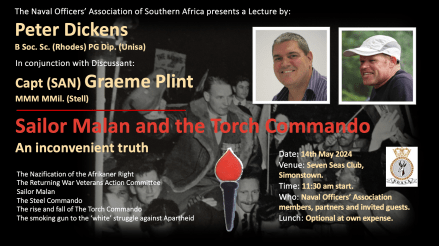
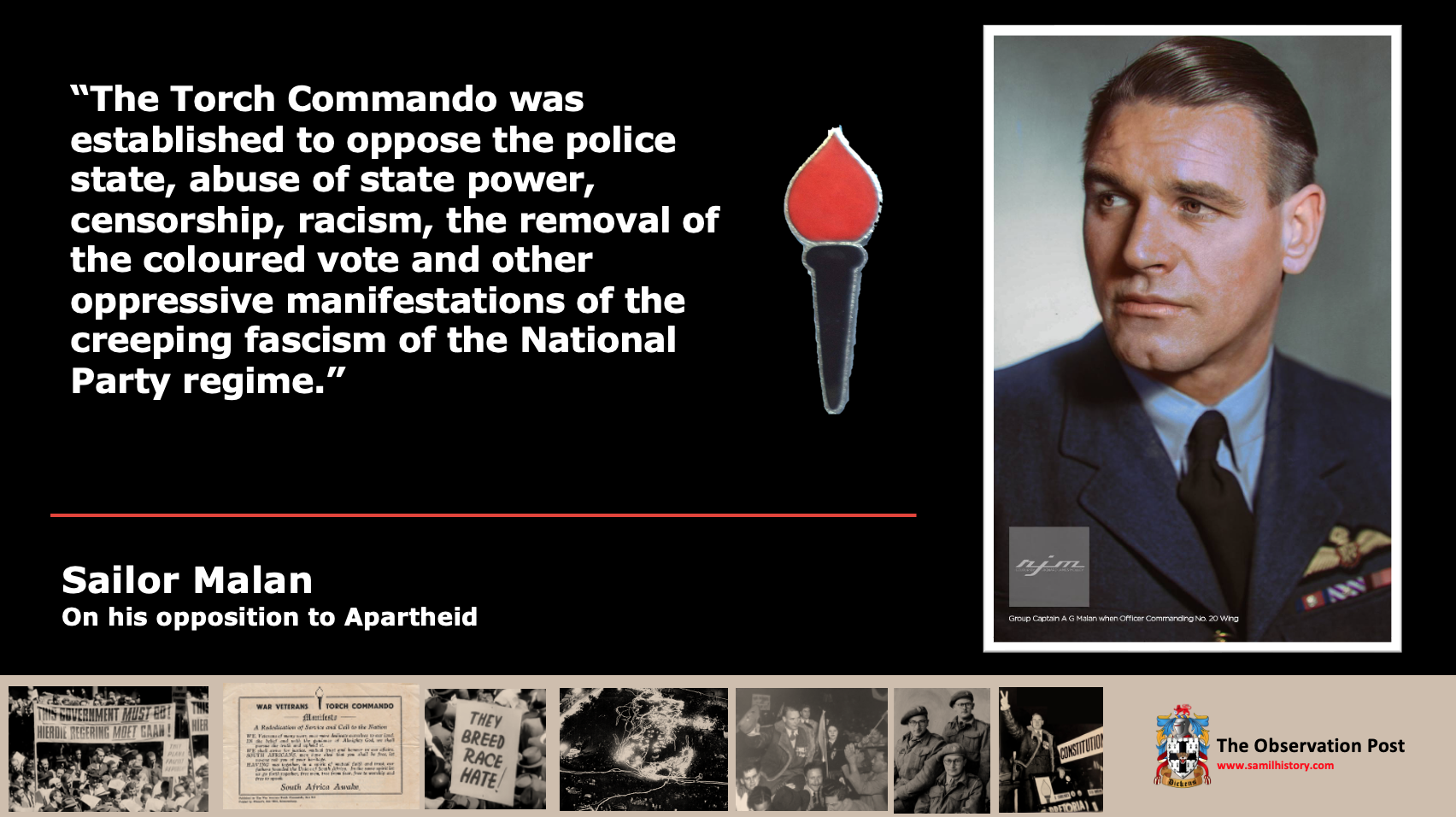


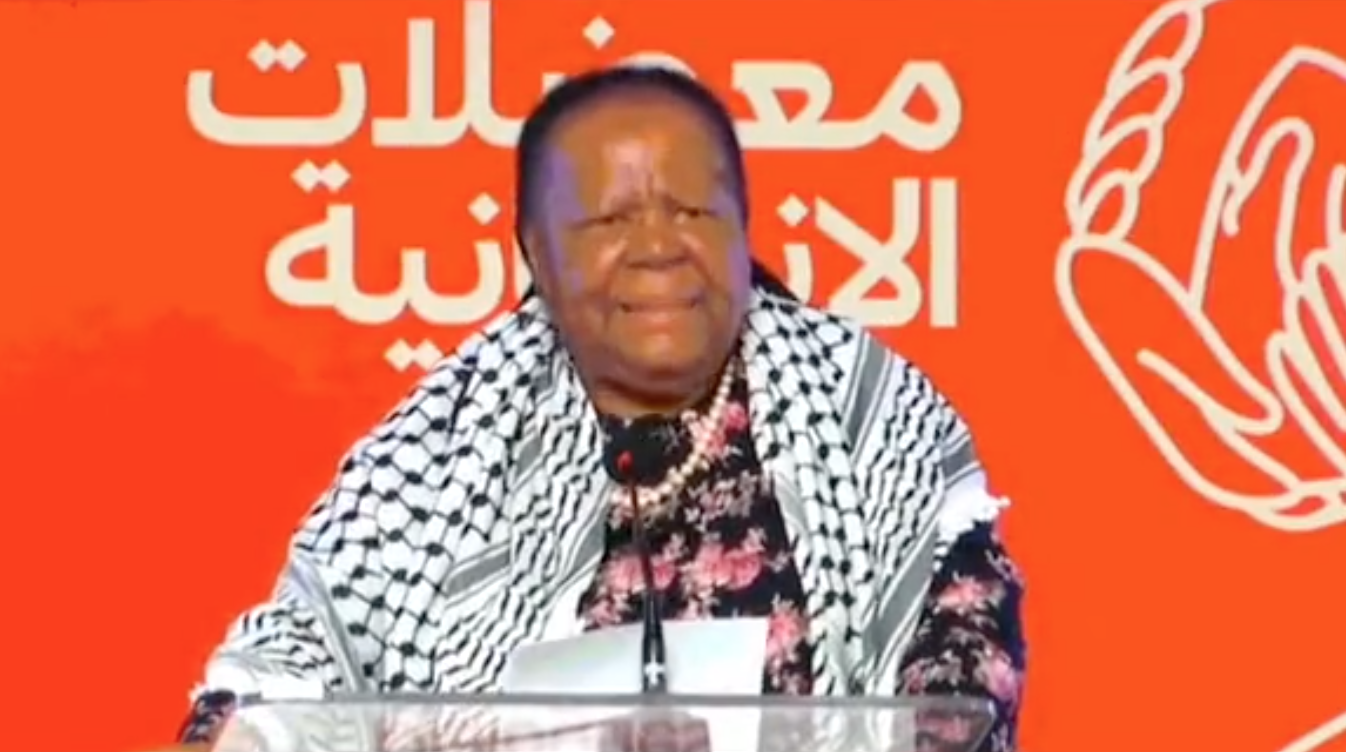
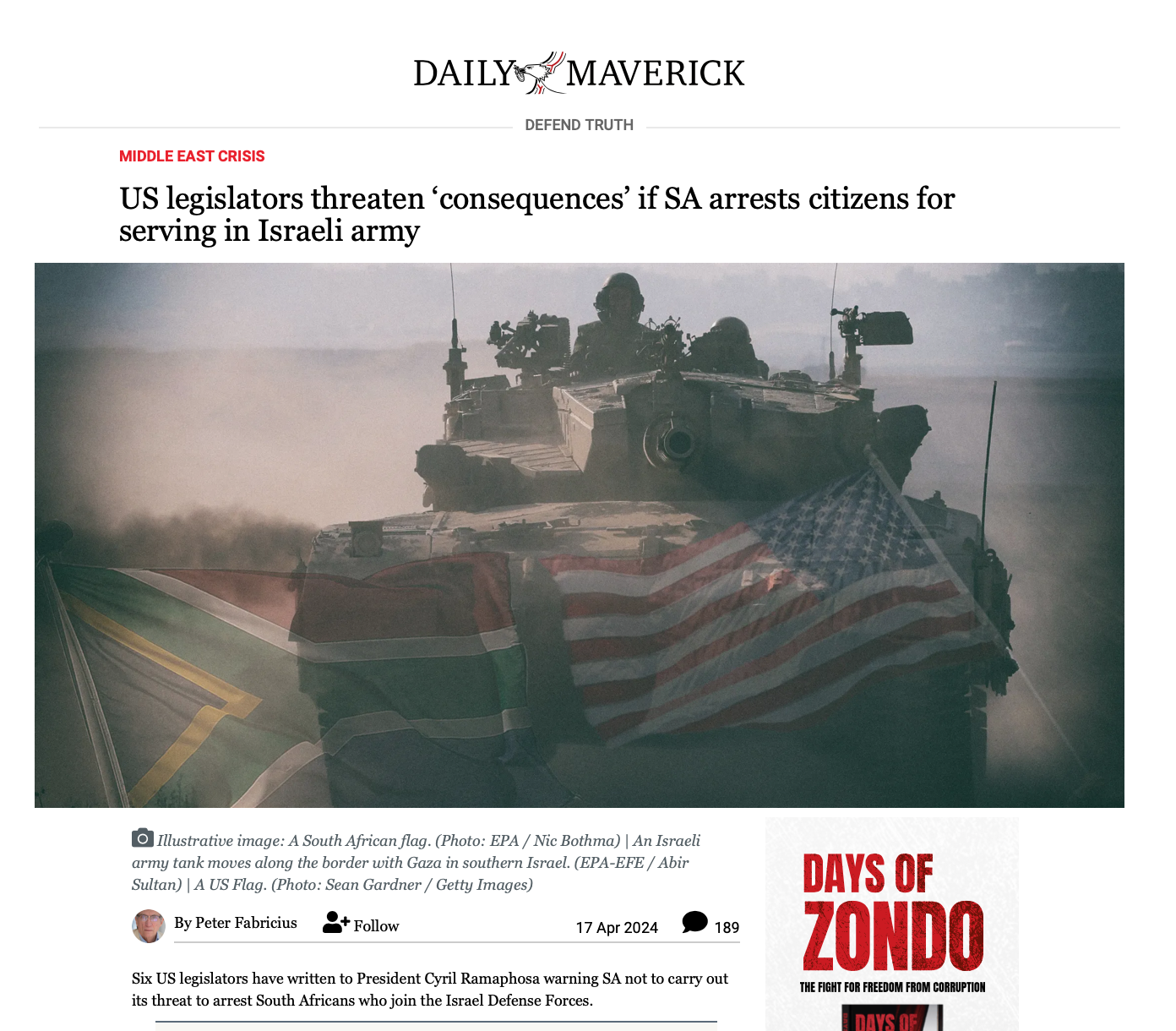


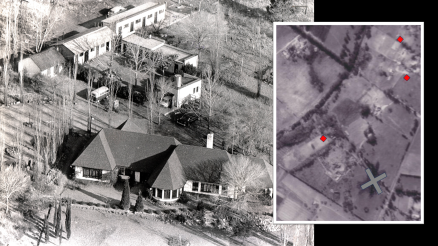
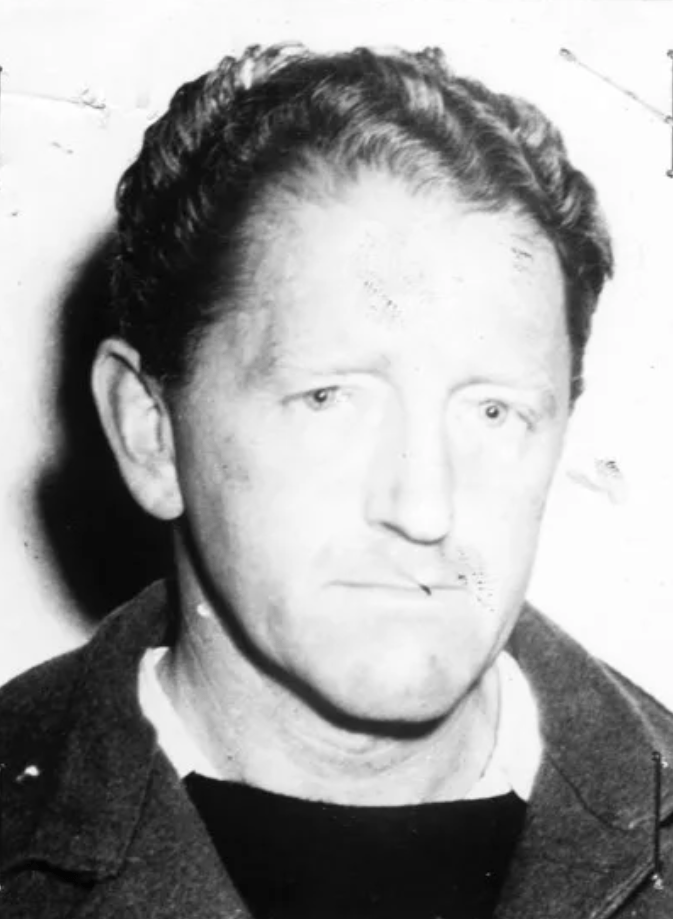
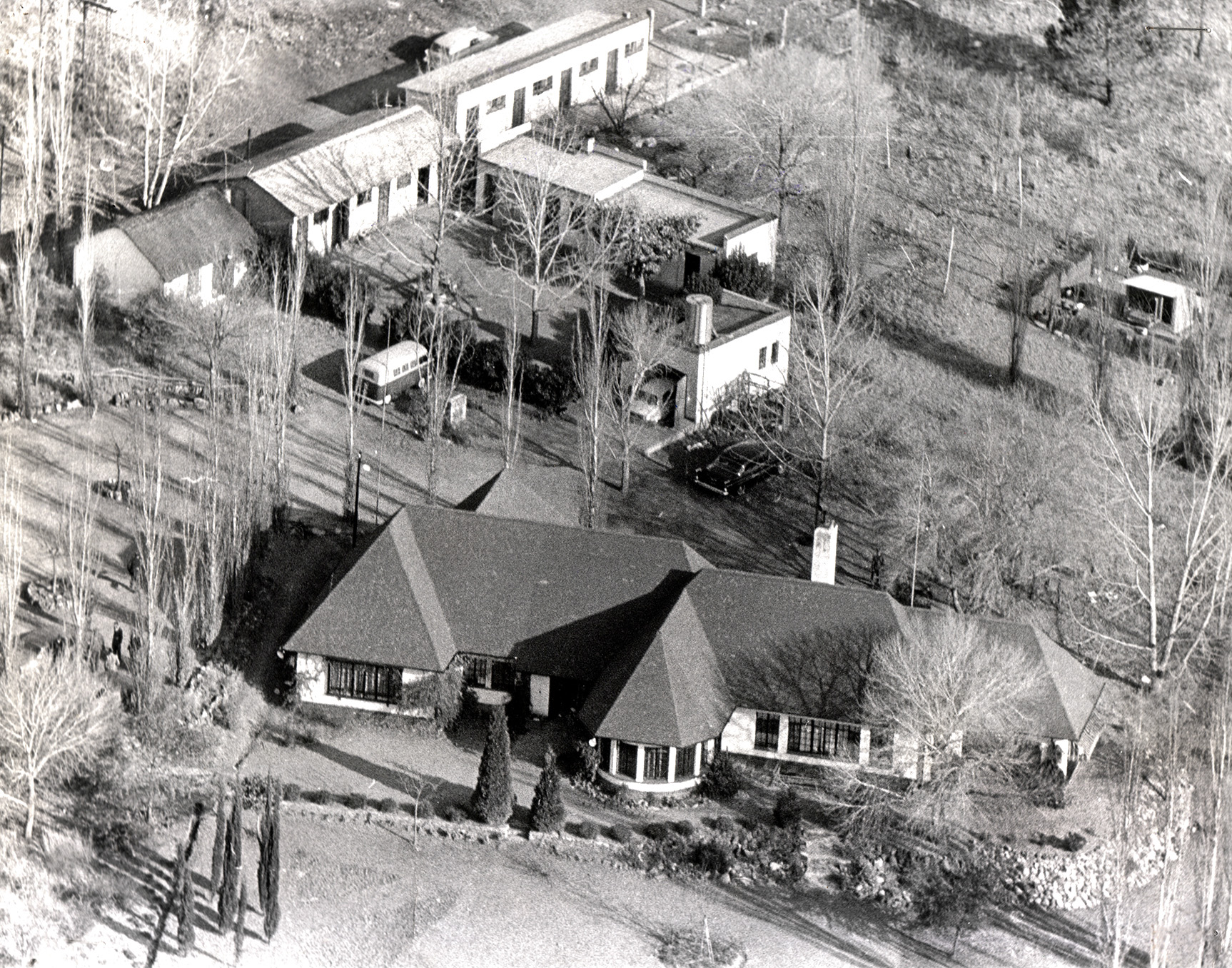
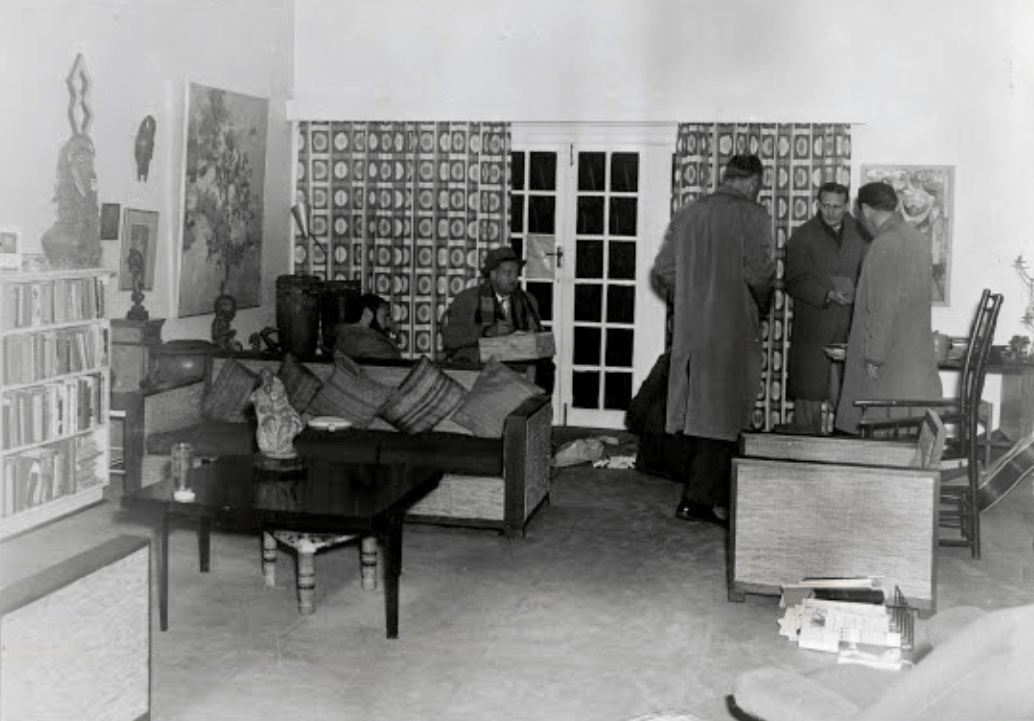
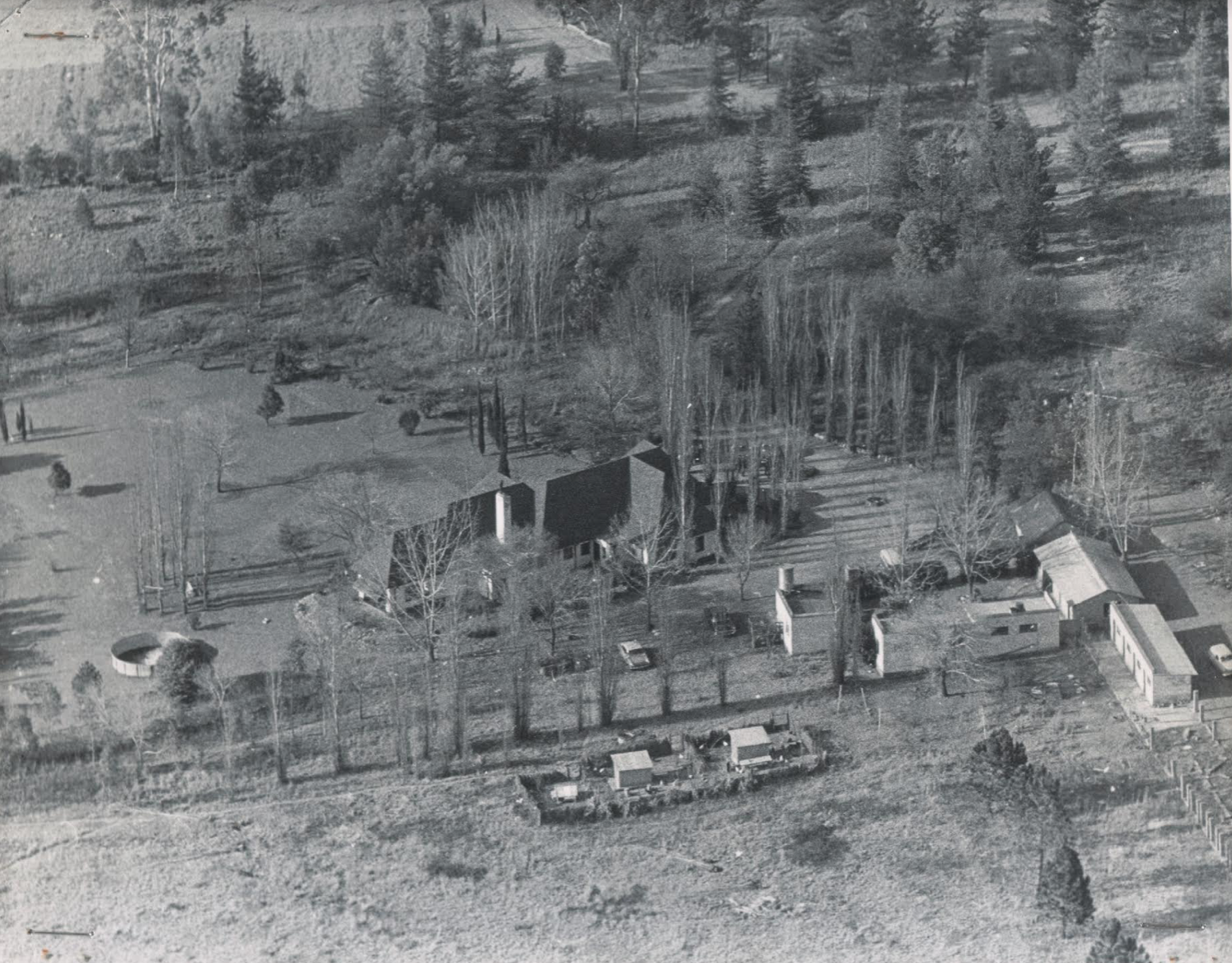
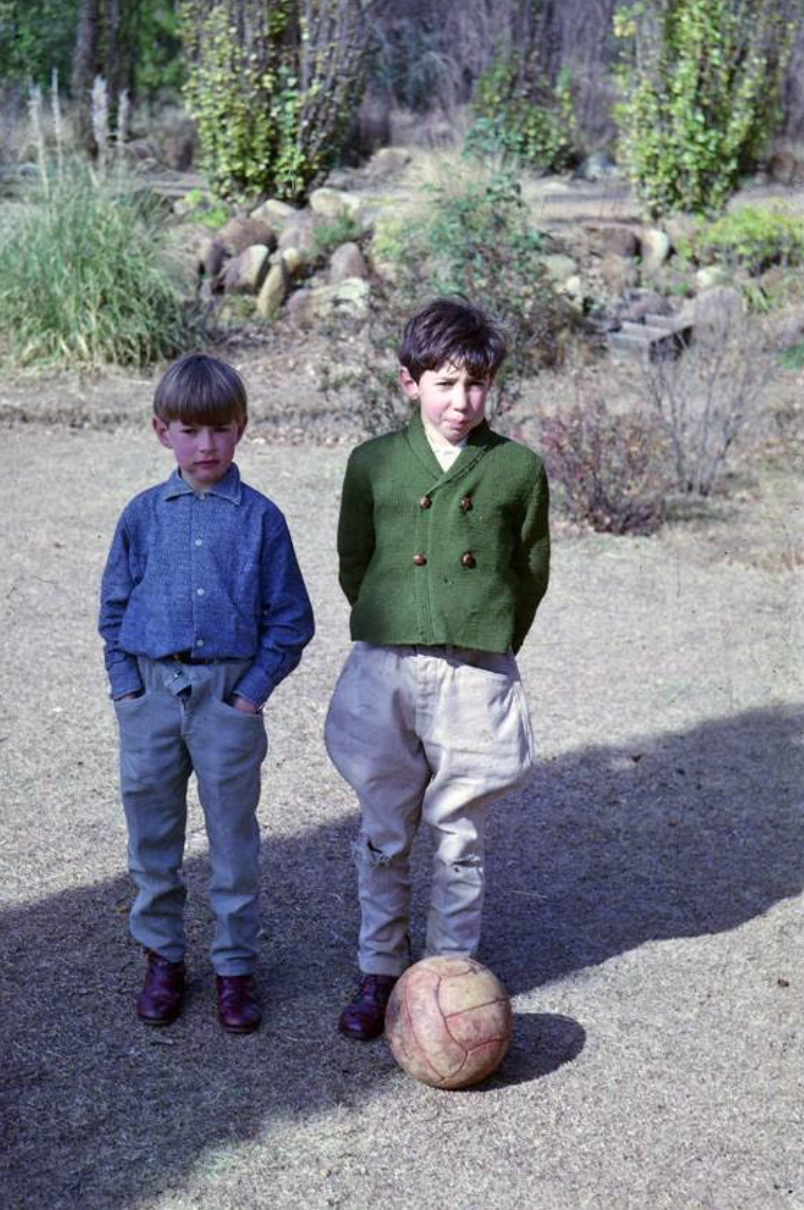
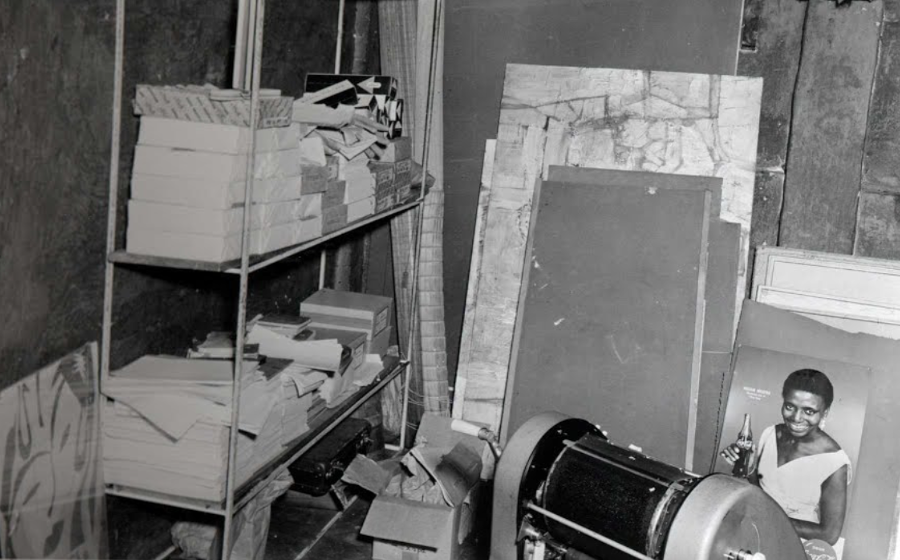
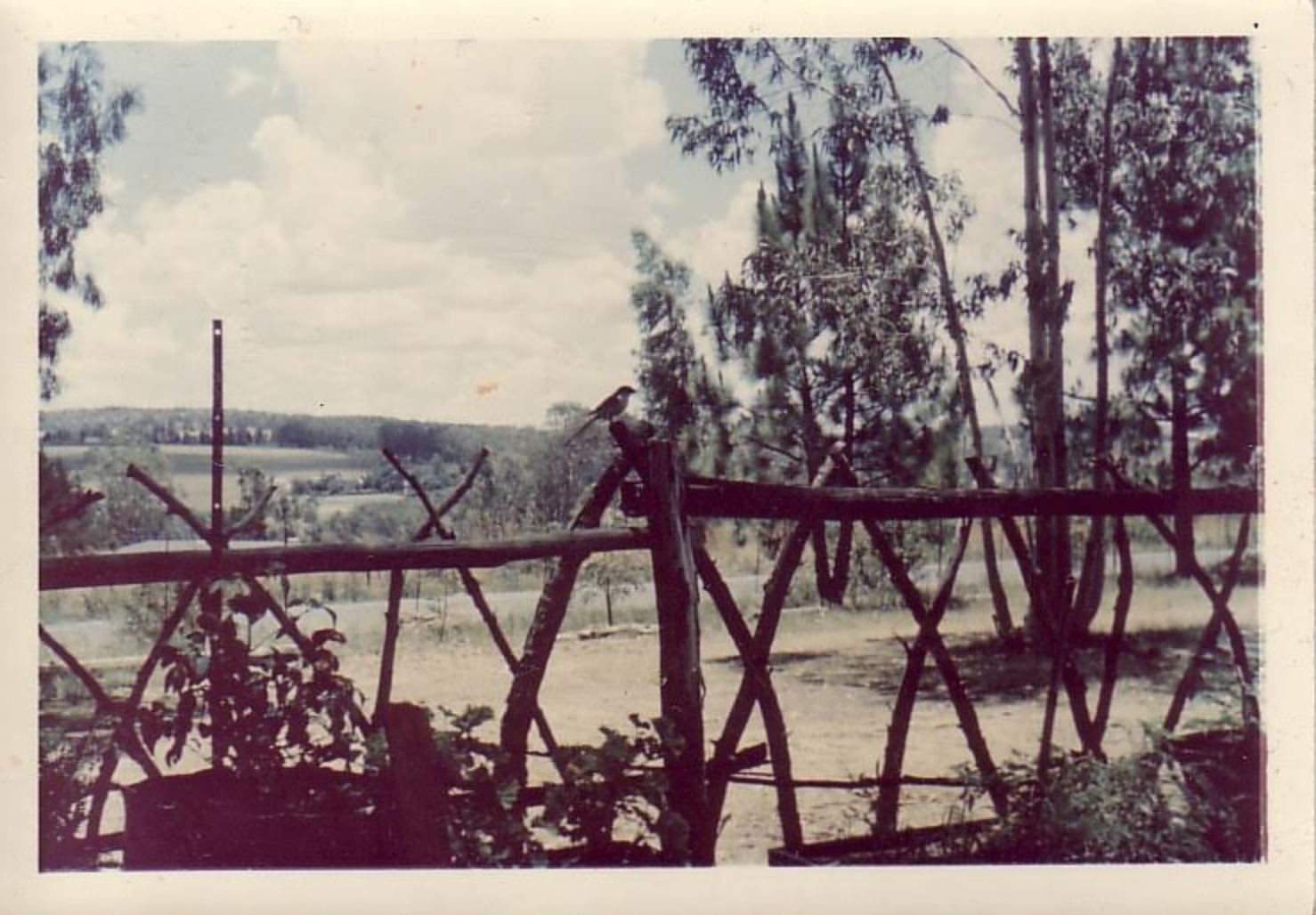
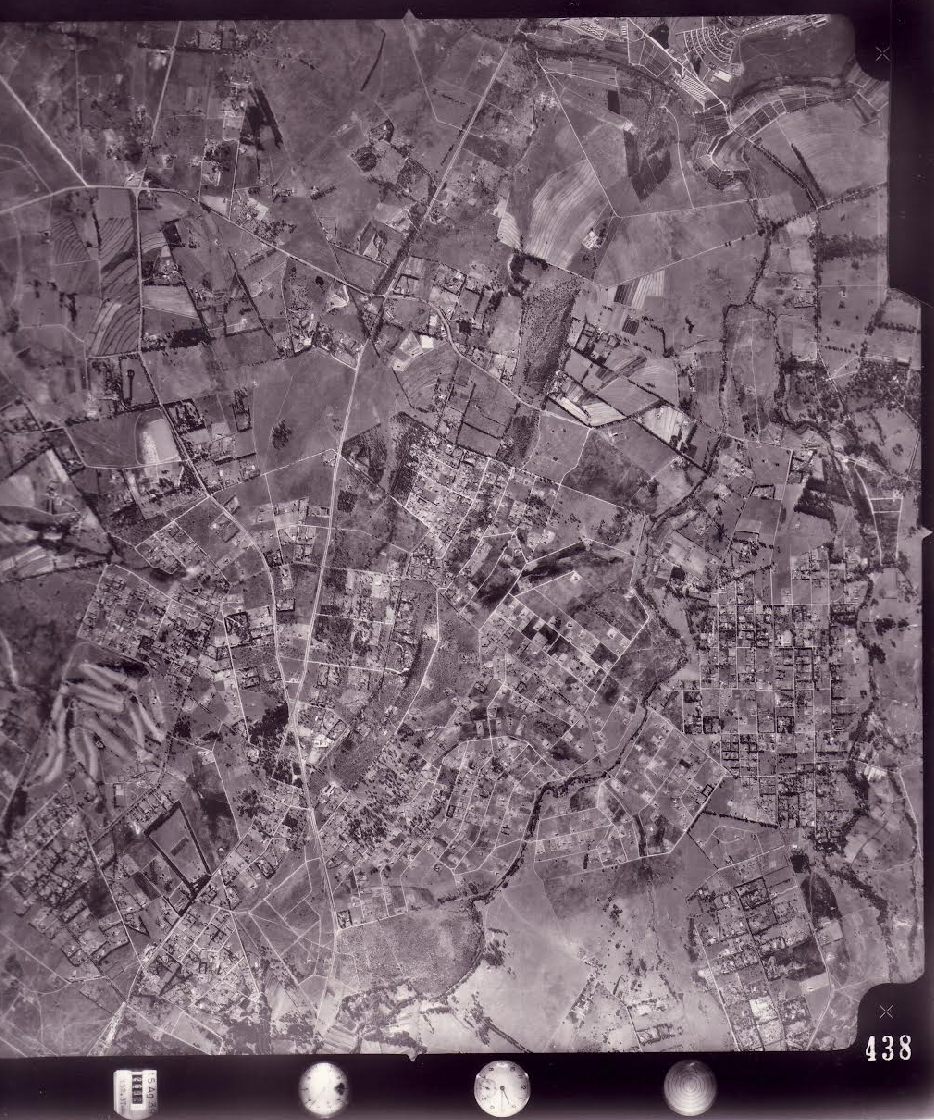
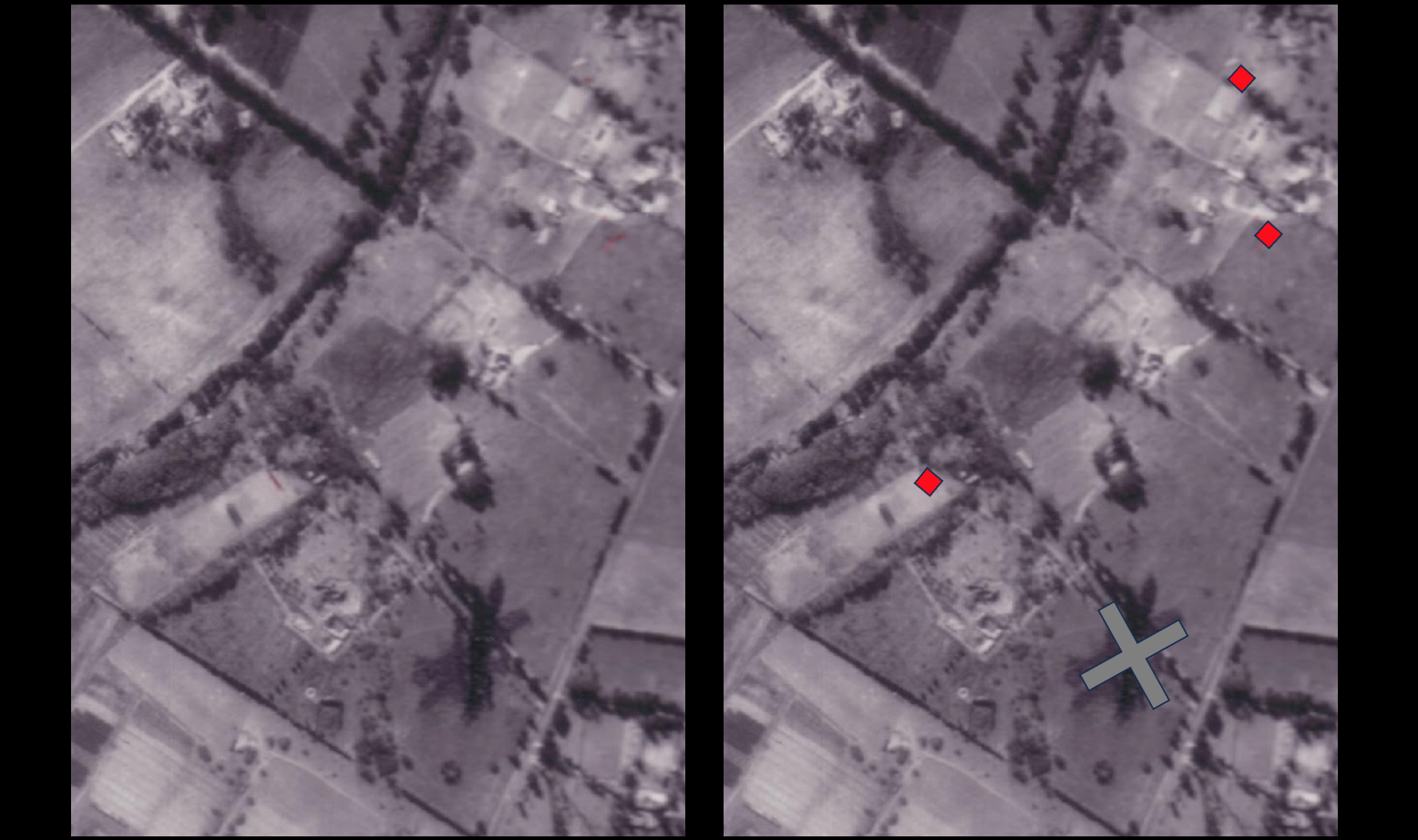
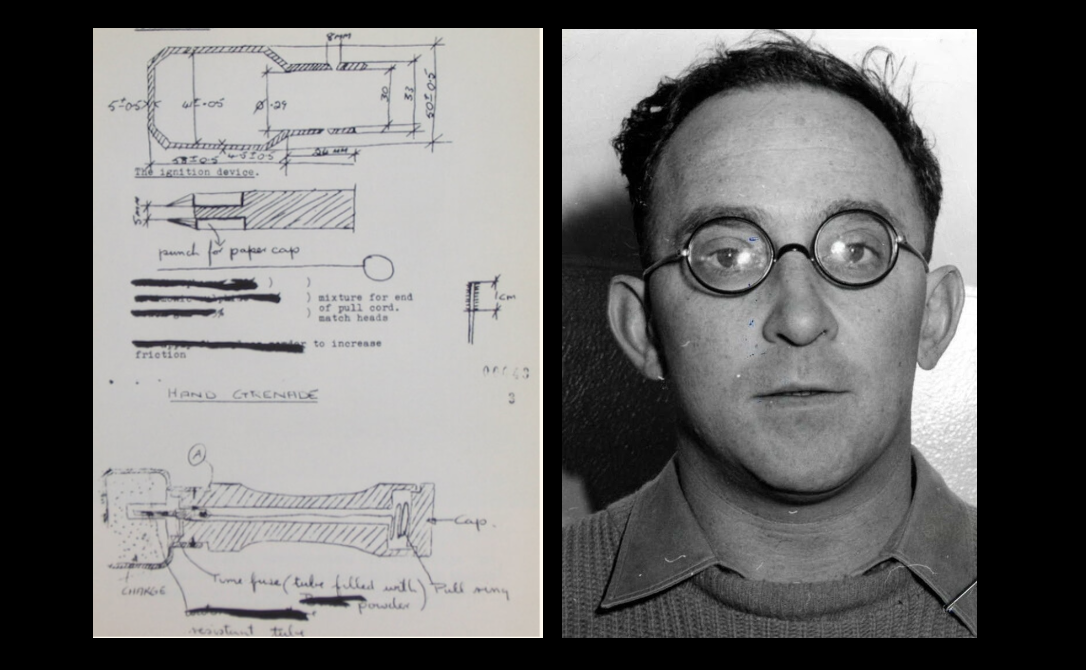
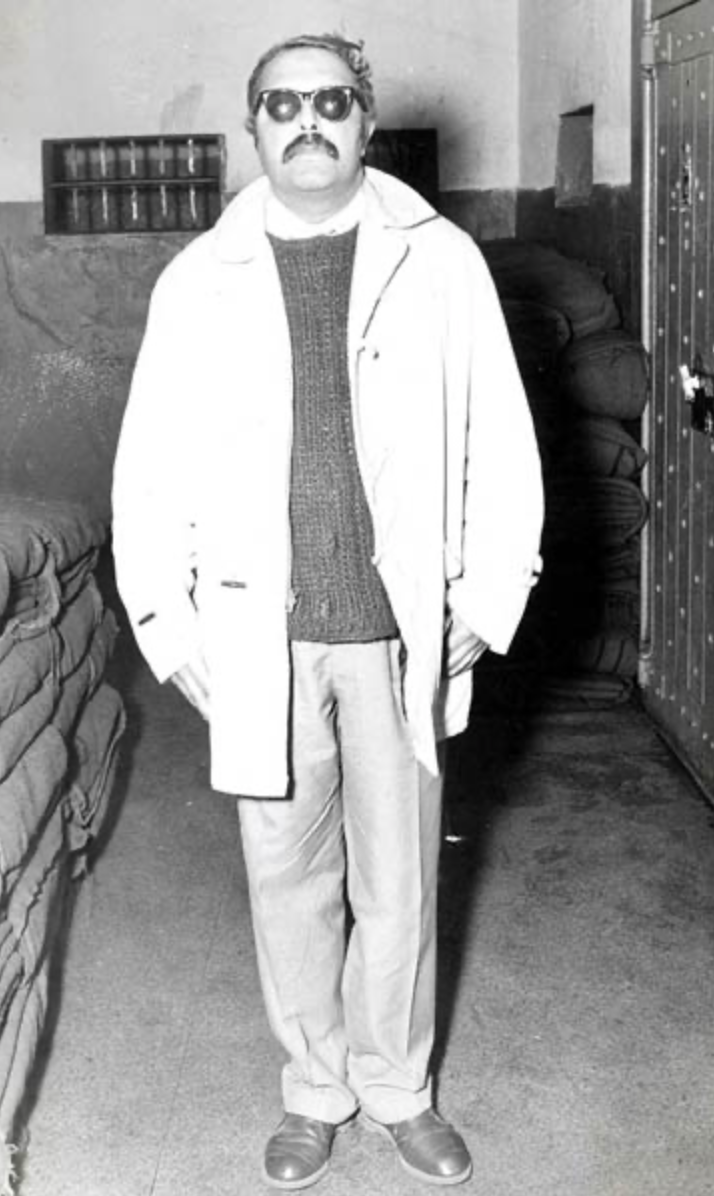
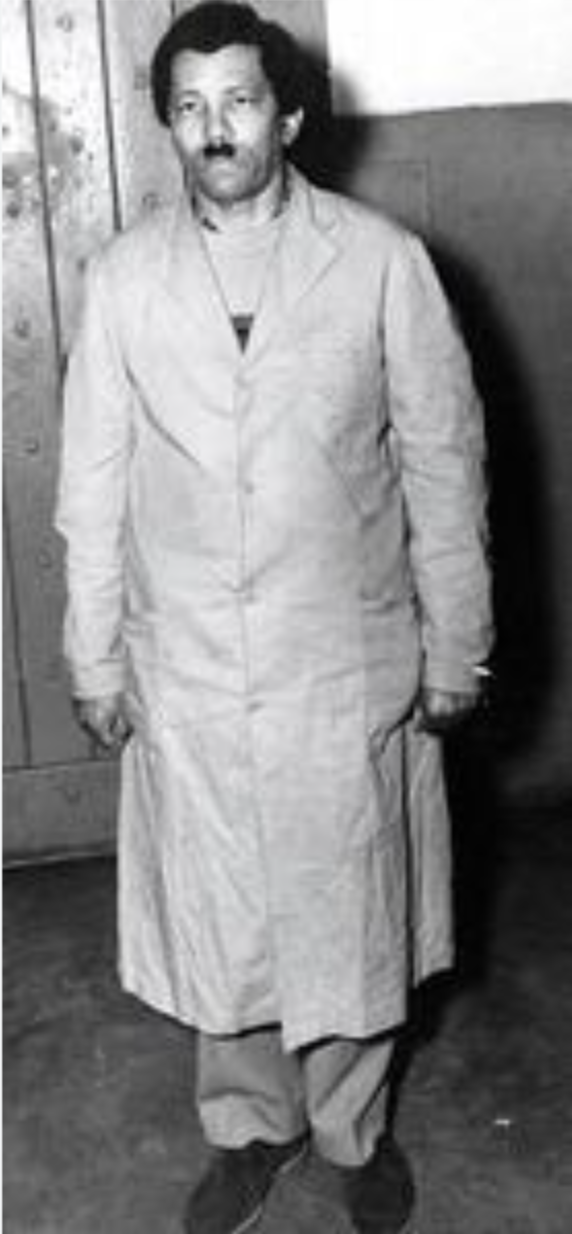
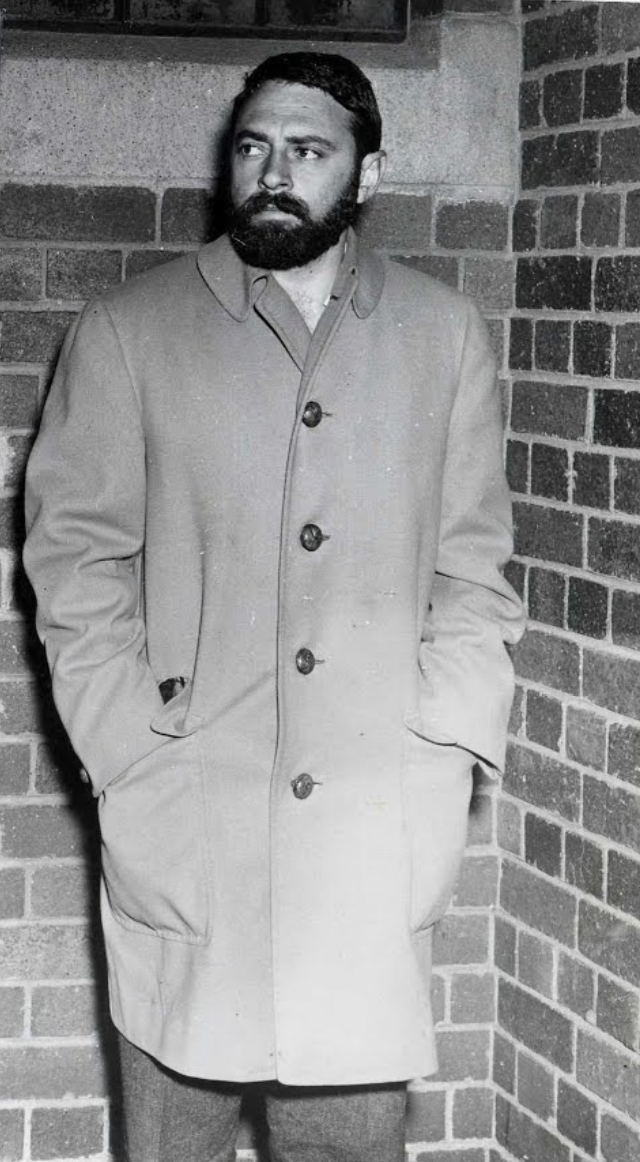
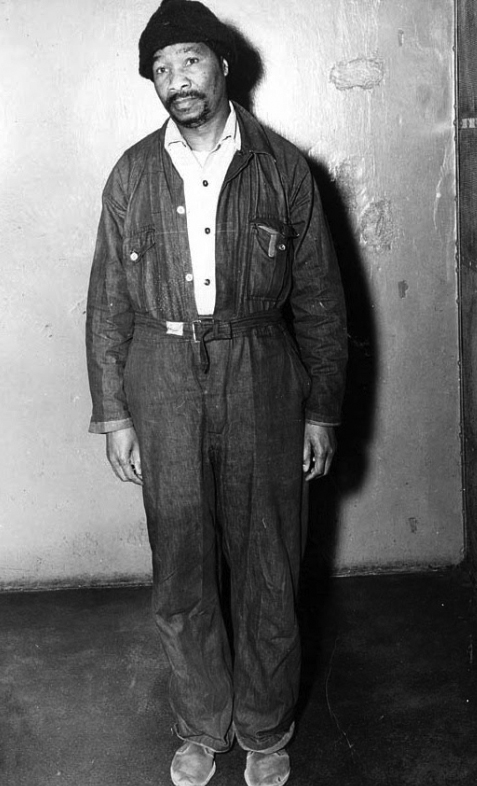
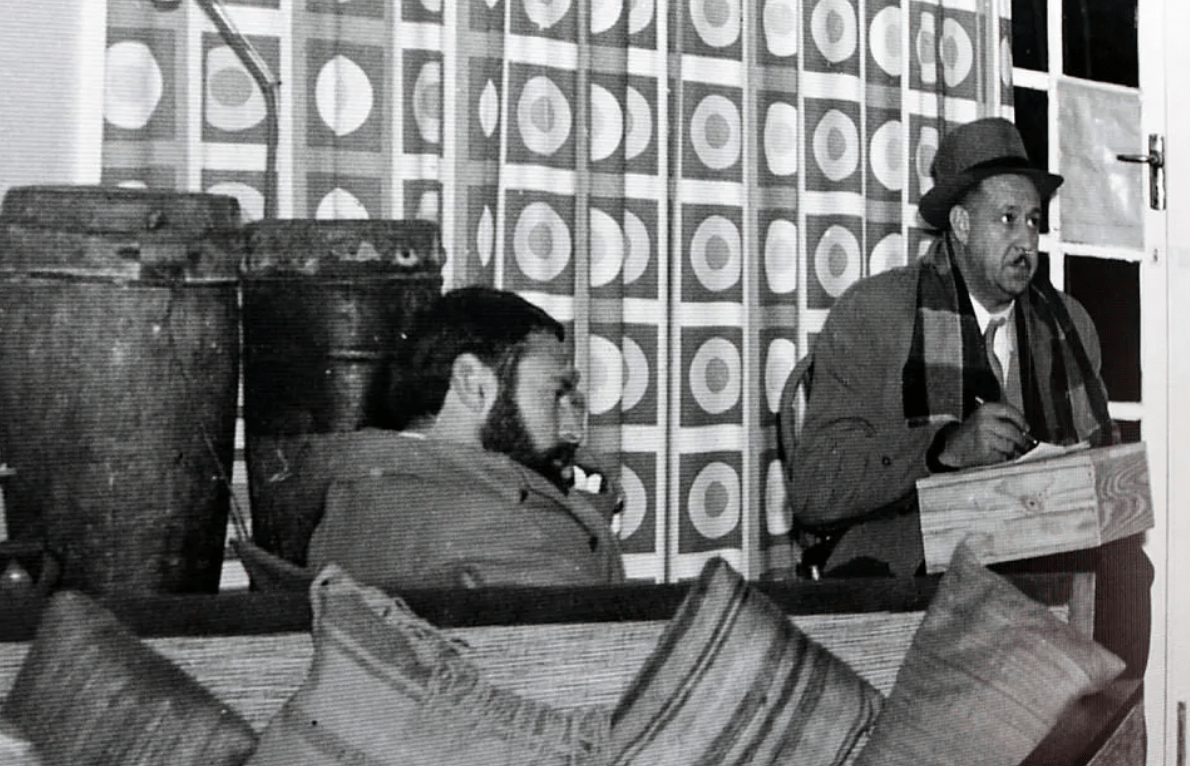
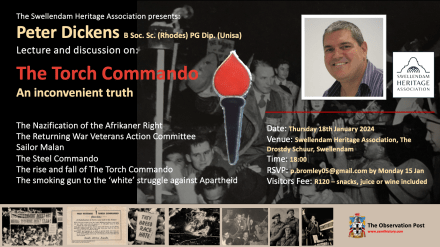
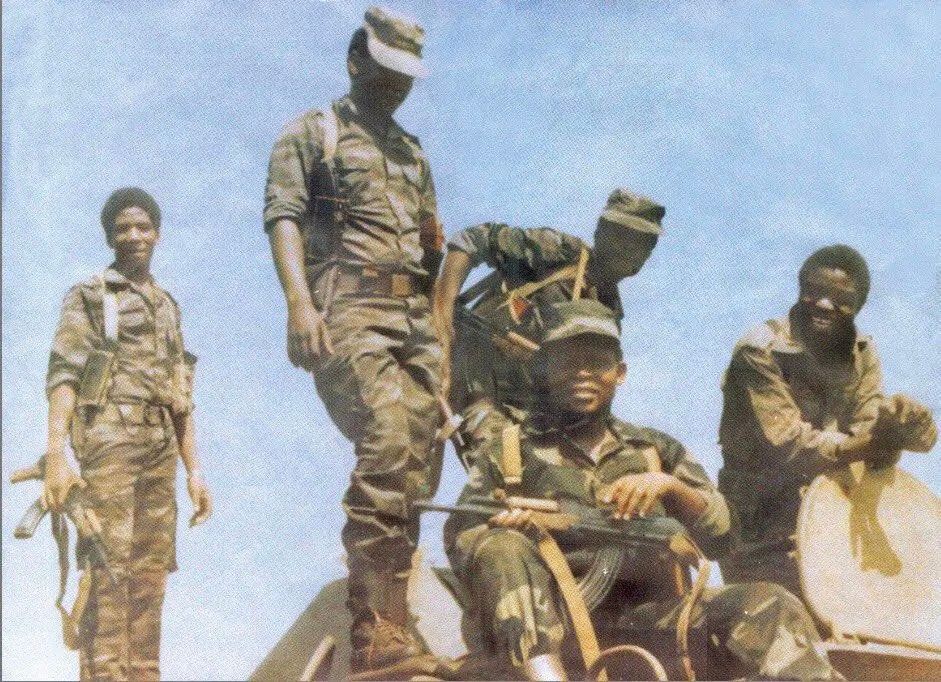
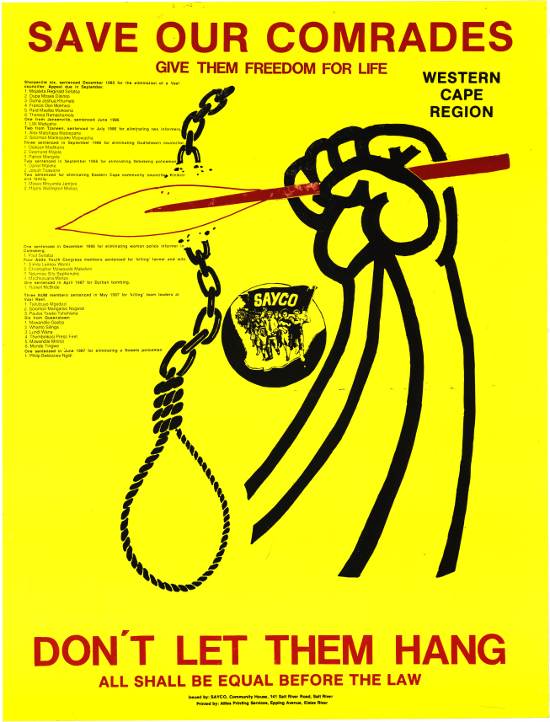
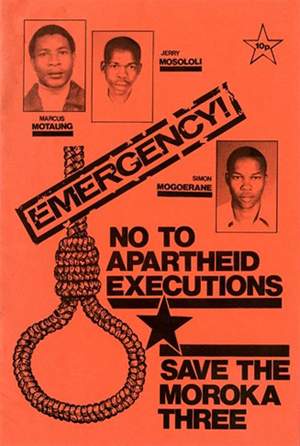
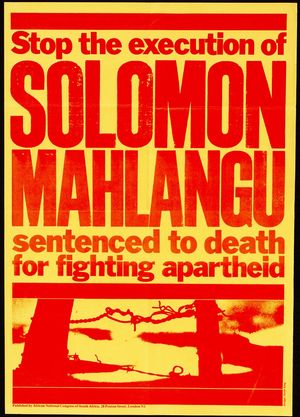
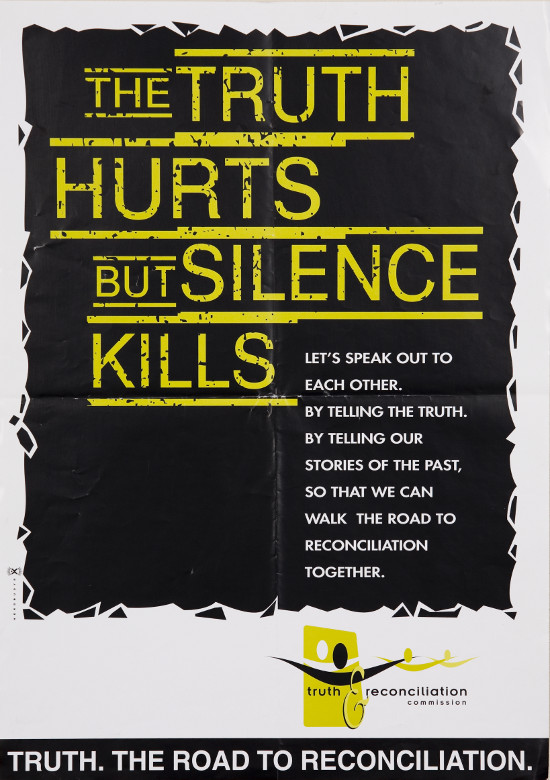
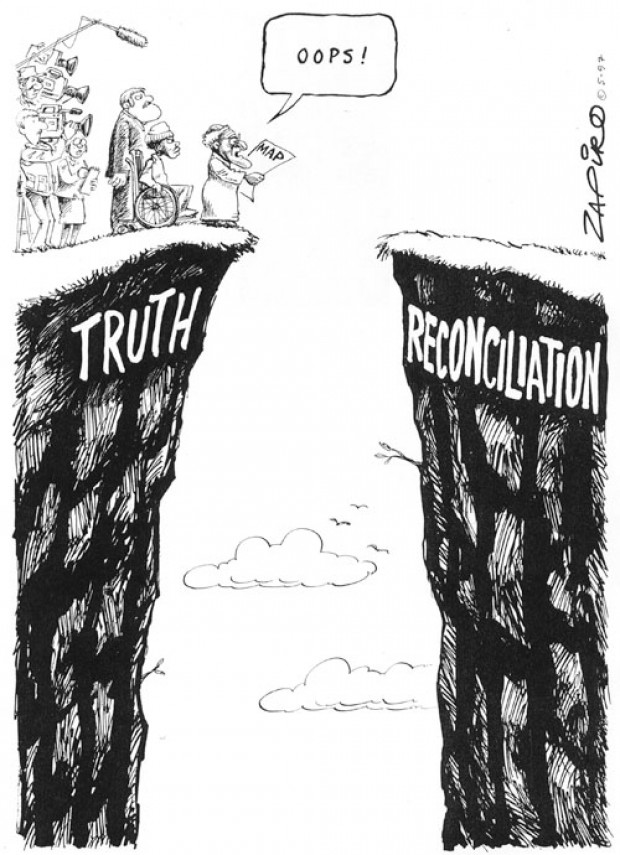
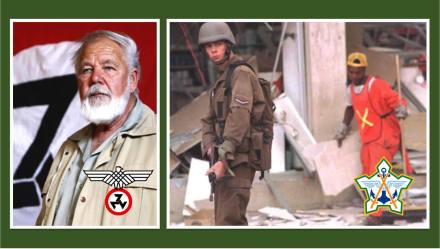
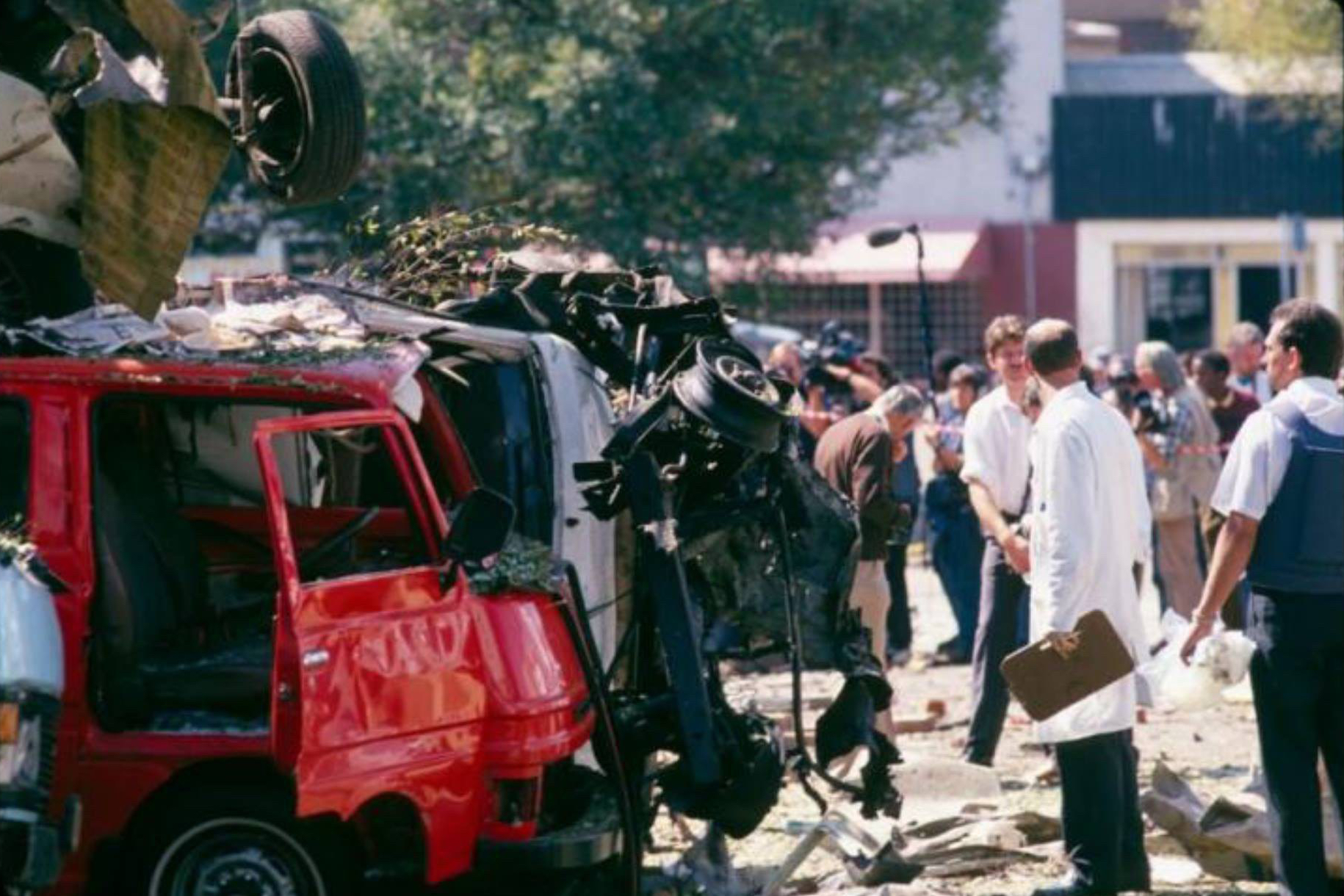
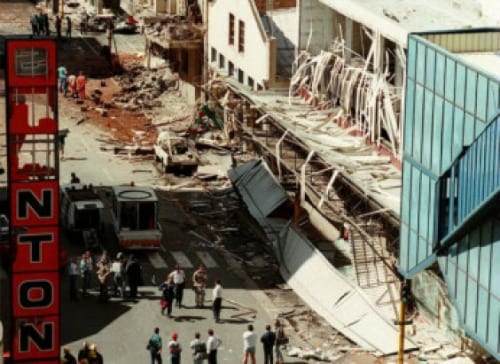

 On the 9th August 1991 things came to a head in what would become known as ‘The Battle of Ventersdorp’. The National Party’s meeting in Ventersdorp was violently disrupted by the AWB, and this event brought the South African Police and AWB into head-long conflict. South Africa’s Defence and Police structures and personnel now had to deal with this added, rather violent, dynamic to an already feuding and violent ethnic and political landscape.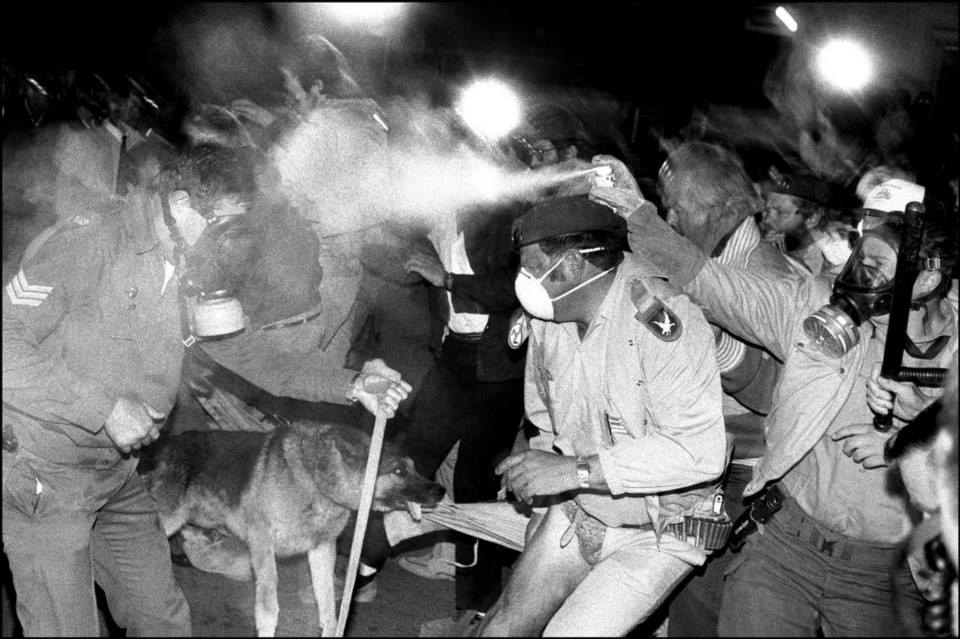
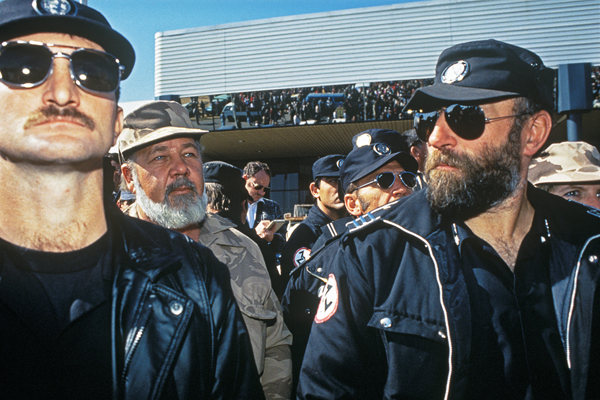
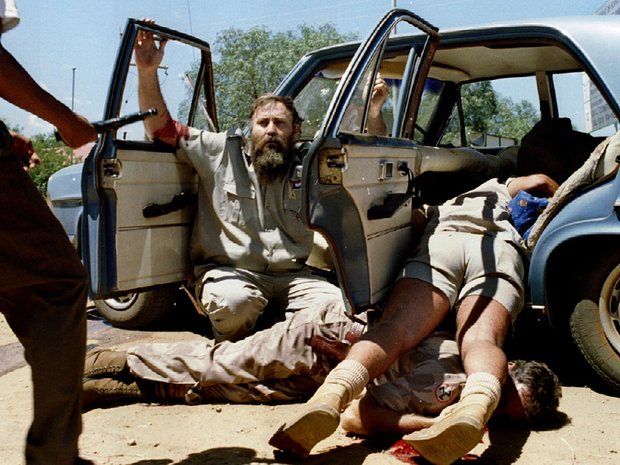
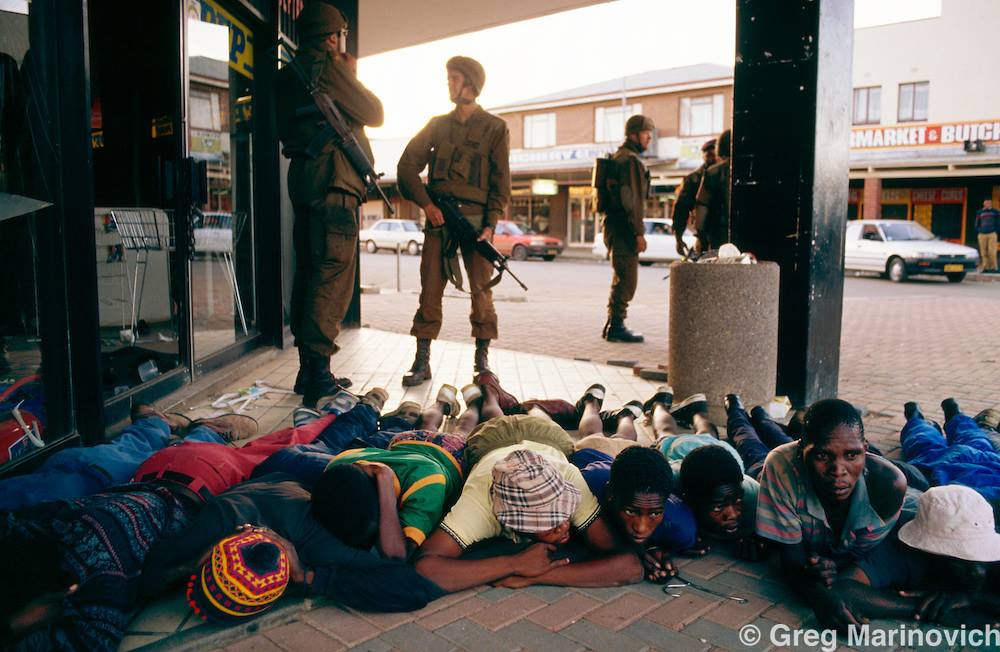
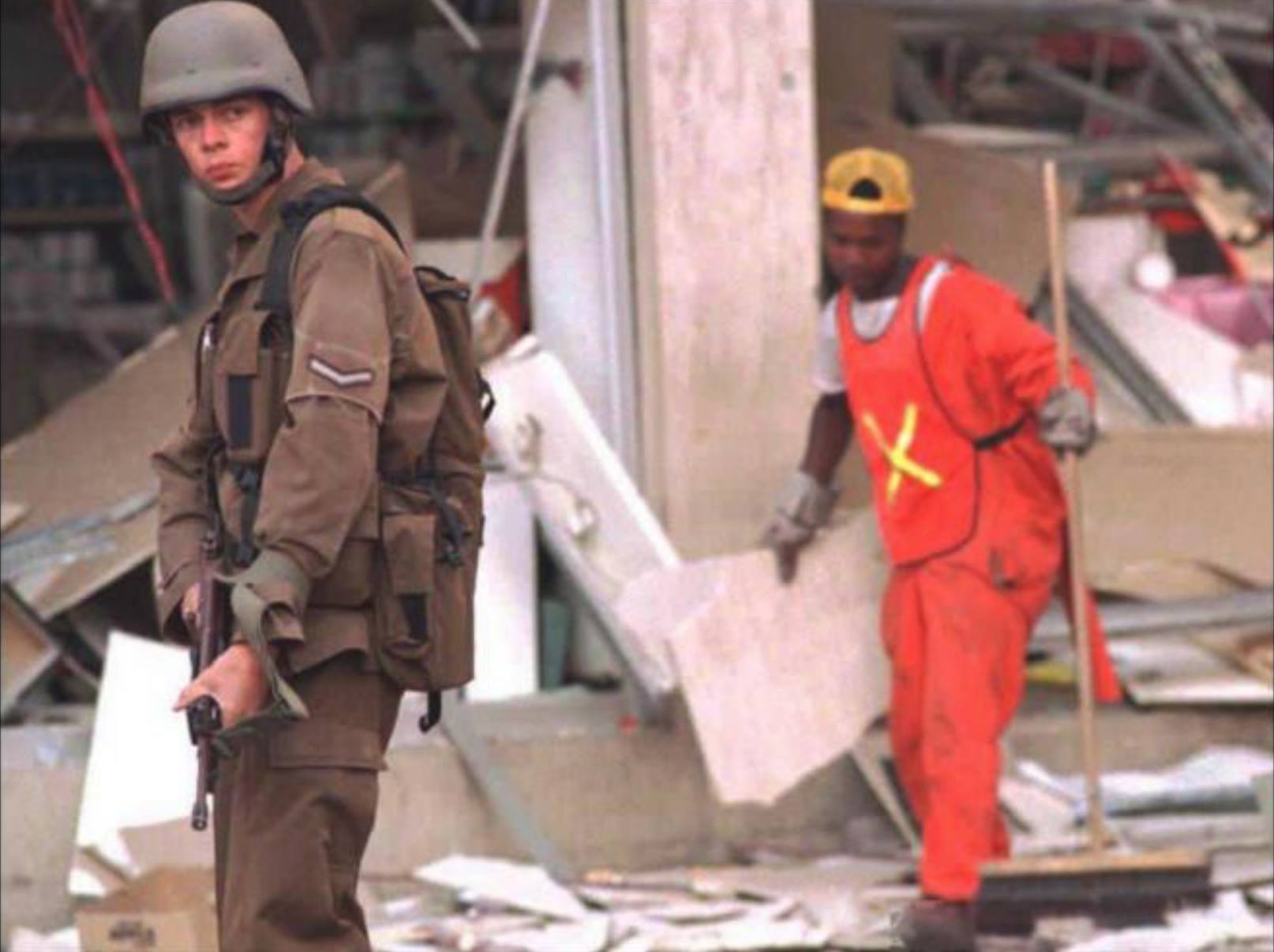
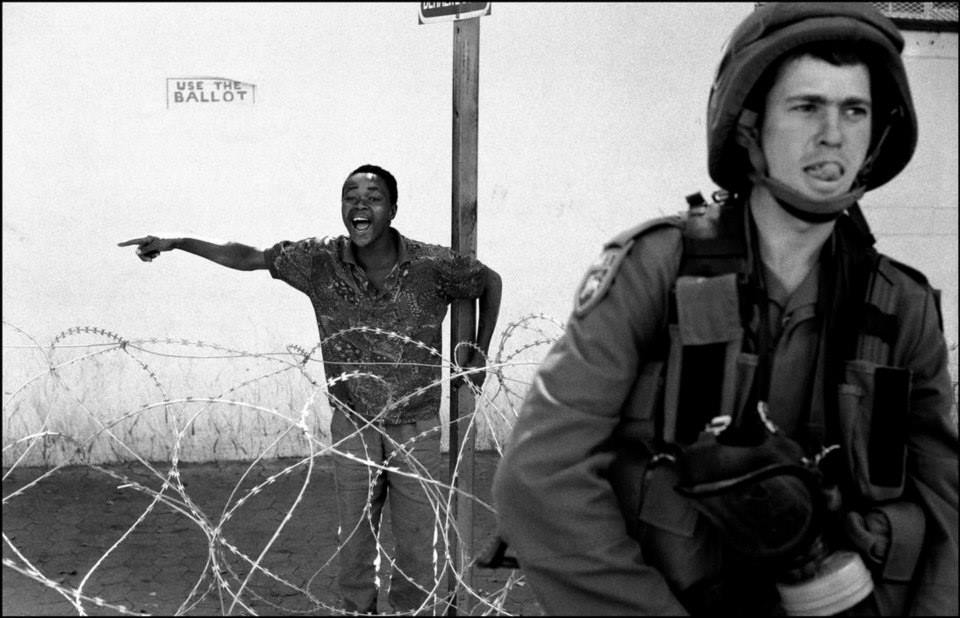
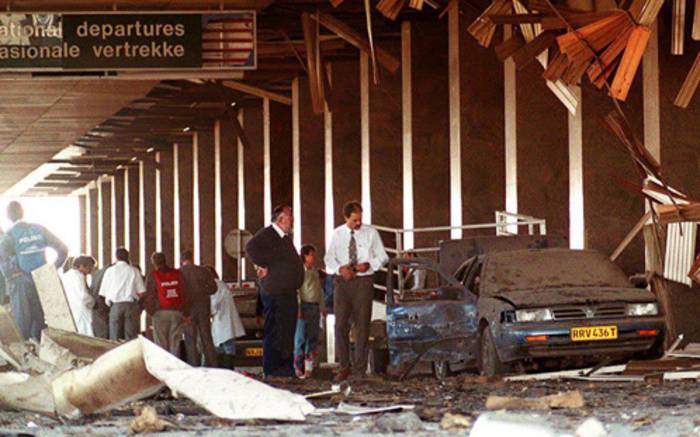
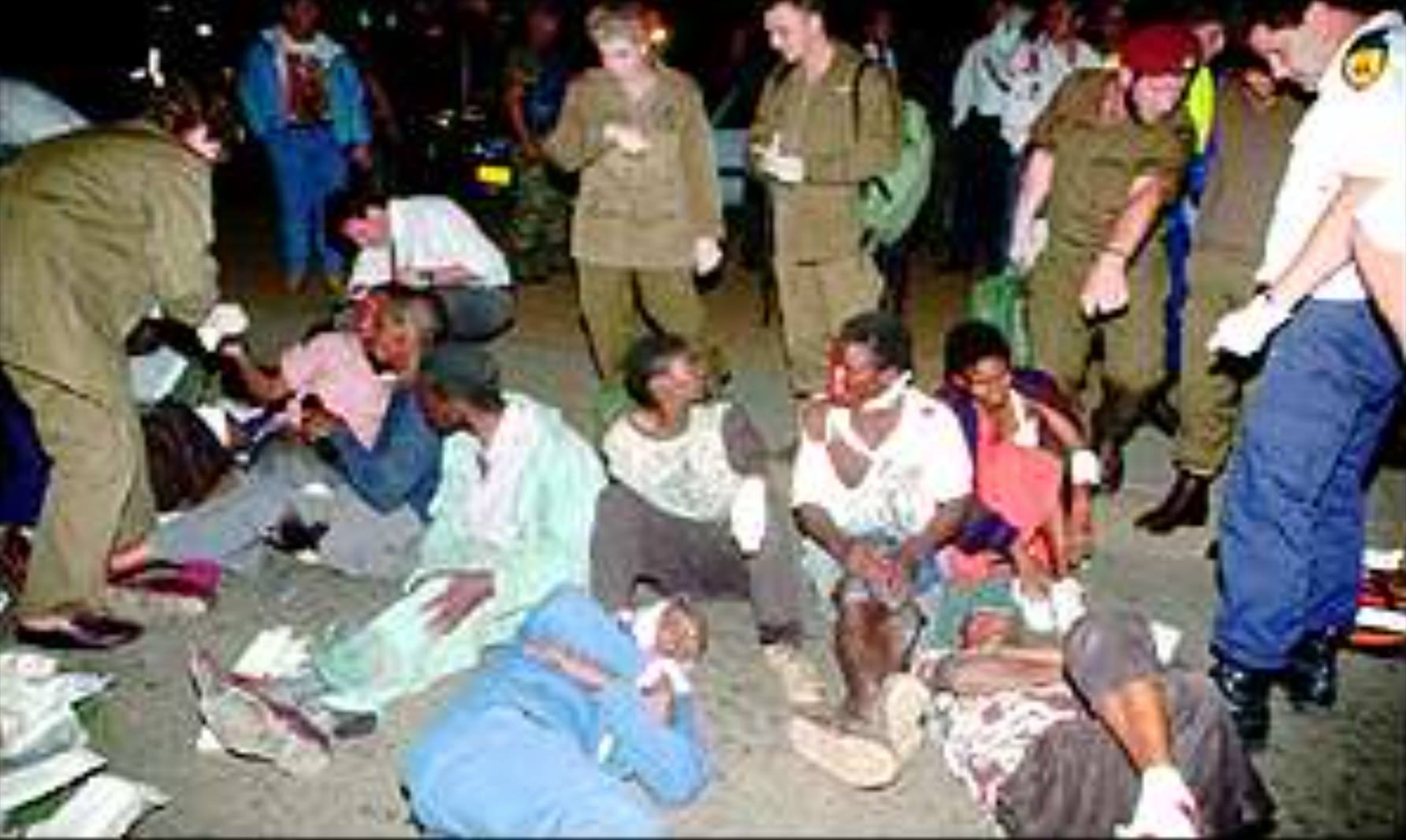
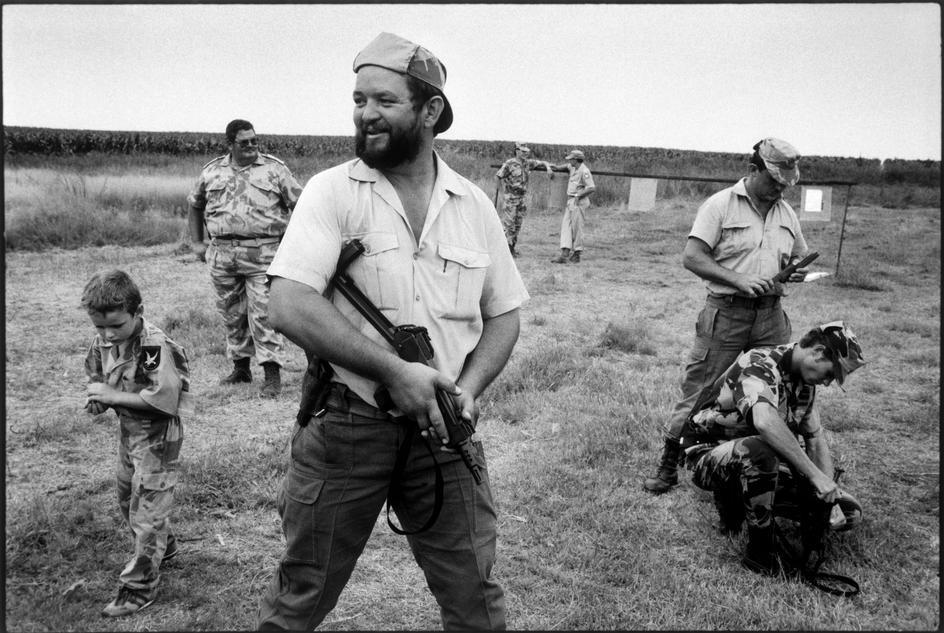
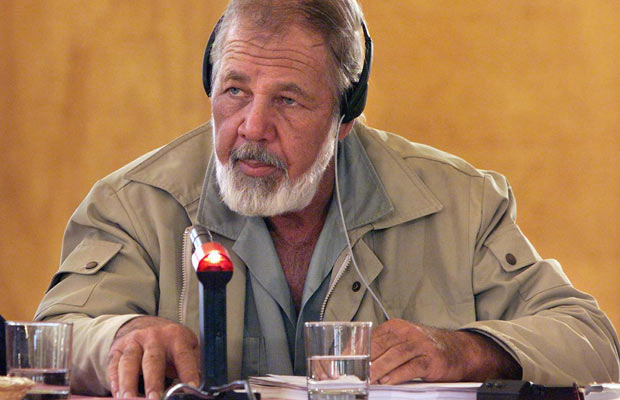
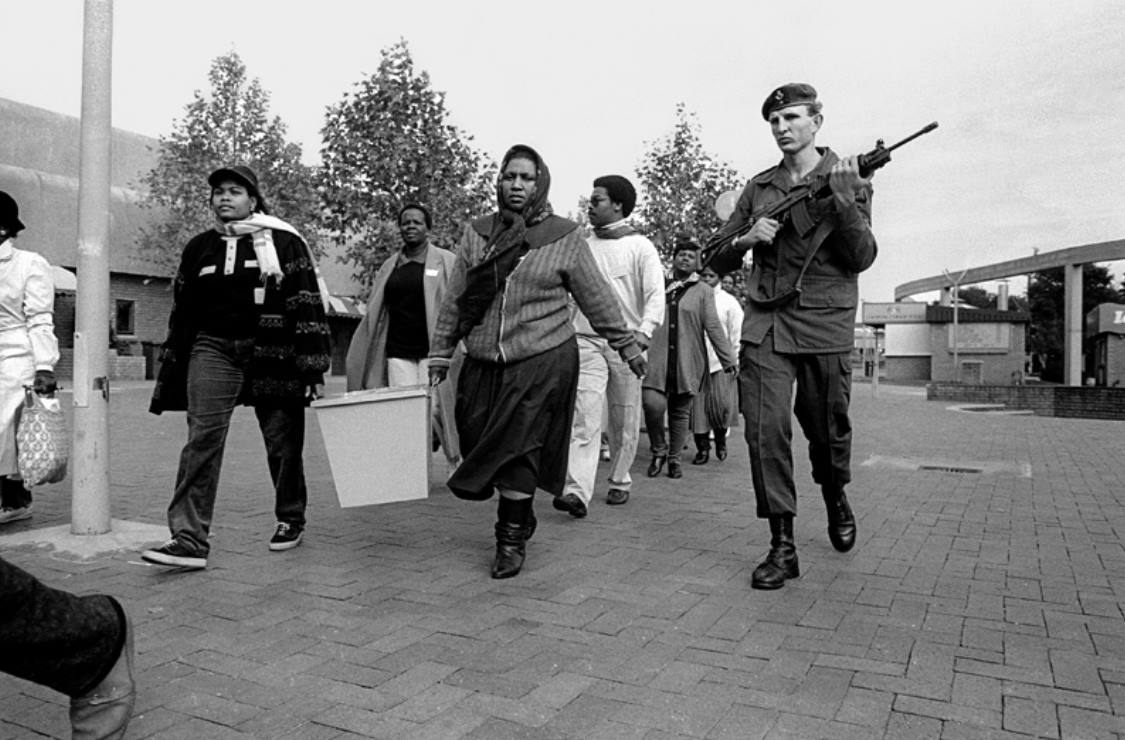
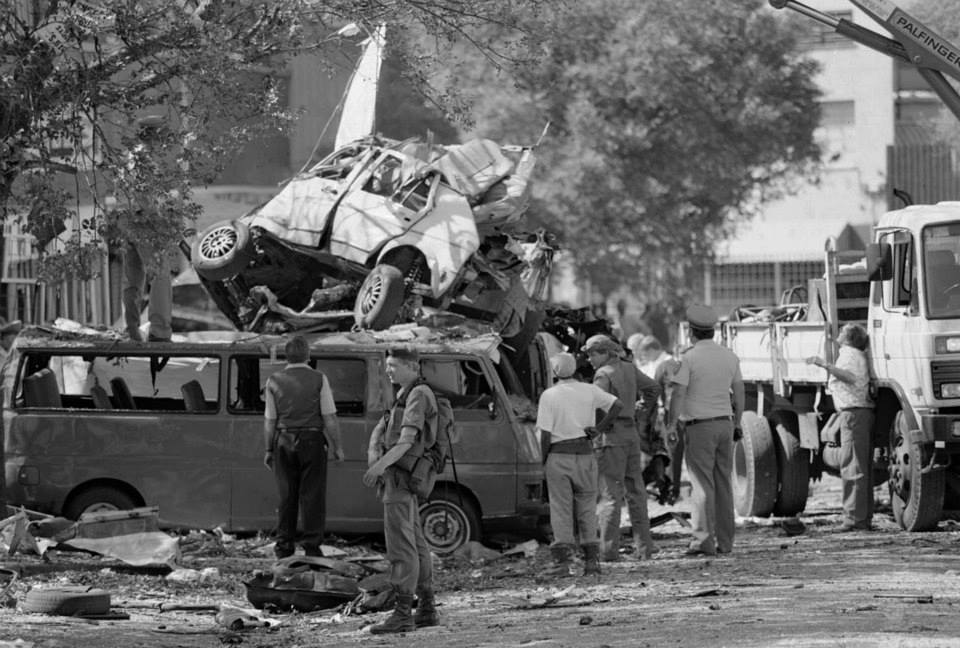


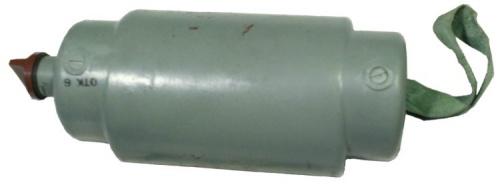
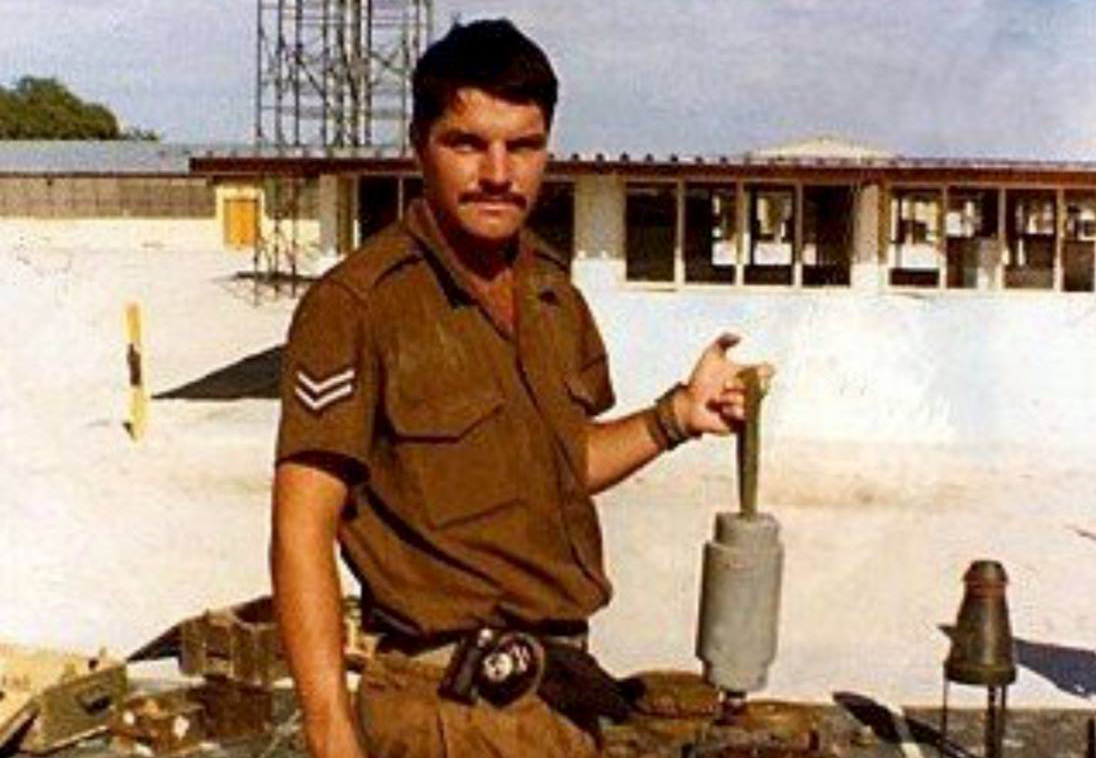
 So on to the attack itself and it’s marred by a series of mishaps. It started with an unrelated accidental short-circuit which started a cable fire. The incident was reported in the local press. Now enter the ANC’s President-in-exile, Oliver Tambo, who had been made aware of the operation but not really the details of it, like timing. So he released a statement immediately claiming the fire as an ANC victory. All this did was prompt a security scare and clamp down at the plant and gave the National Party some ammo to ridicule the ANC for unsubstantiated claims.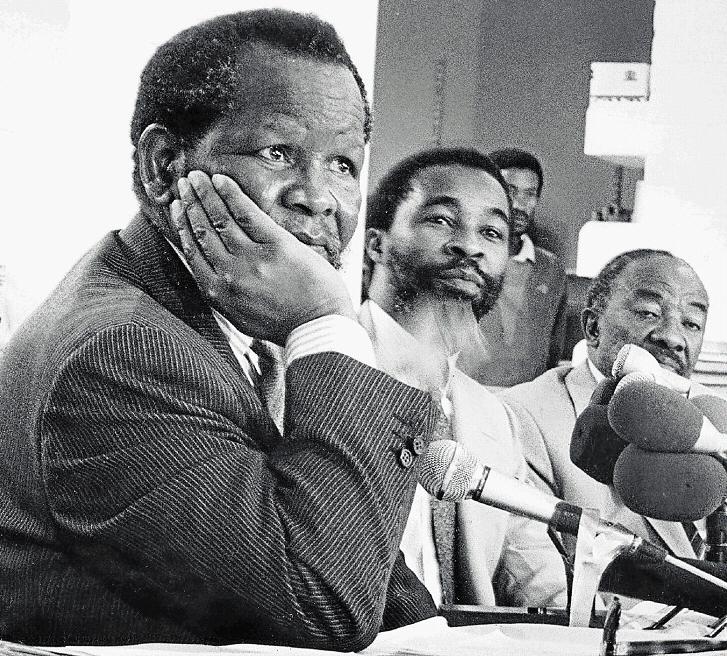
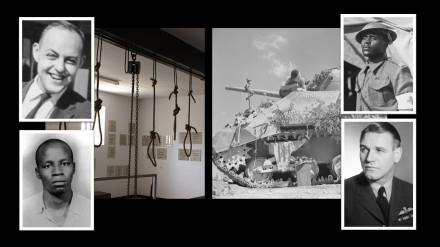
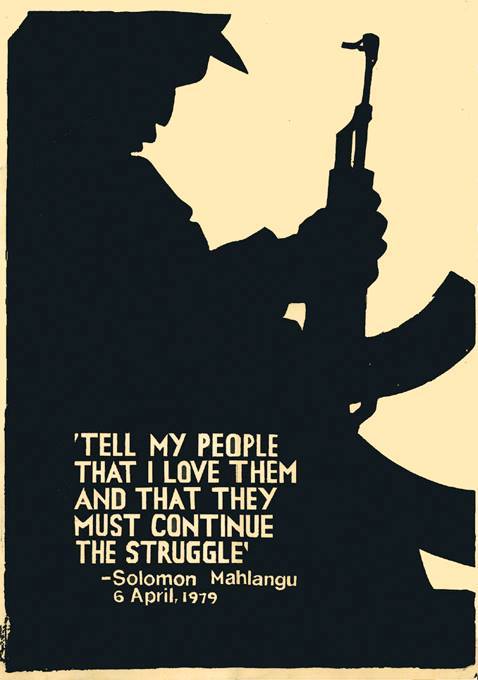 Once again the media is alive on the anniversary of Solomon Mahlangu’s hanging, no mention of course as to why he was hanged, other than the ‘Apartheid Regime’ did it and he’s a struggle hero, and so much attention is given his hanging anniversary that it is attended by the Vice President with a message to remind every-one again as to the brutality of Apartheid and white oppression.
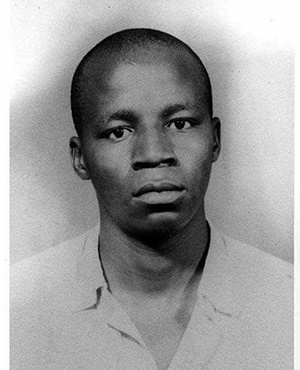 In 1976 Mahlangu joined an African National Congress (ANC) MK military training camp called “Engineering” in Angola – one of the thousands of disenchanted youth from the Soweto uprising known in MK as the 76’s which fundamentally swelled MK numbers (up to then MK was a very small group).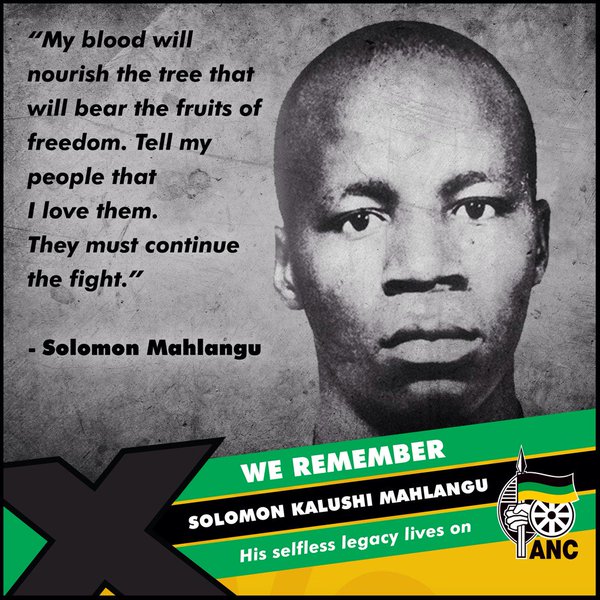
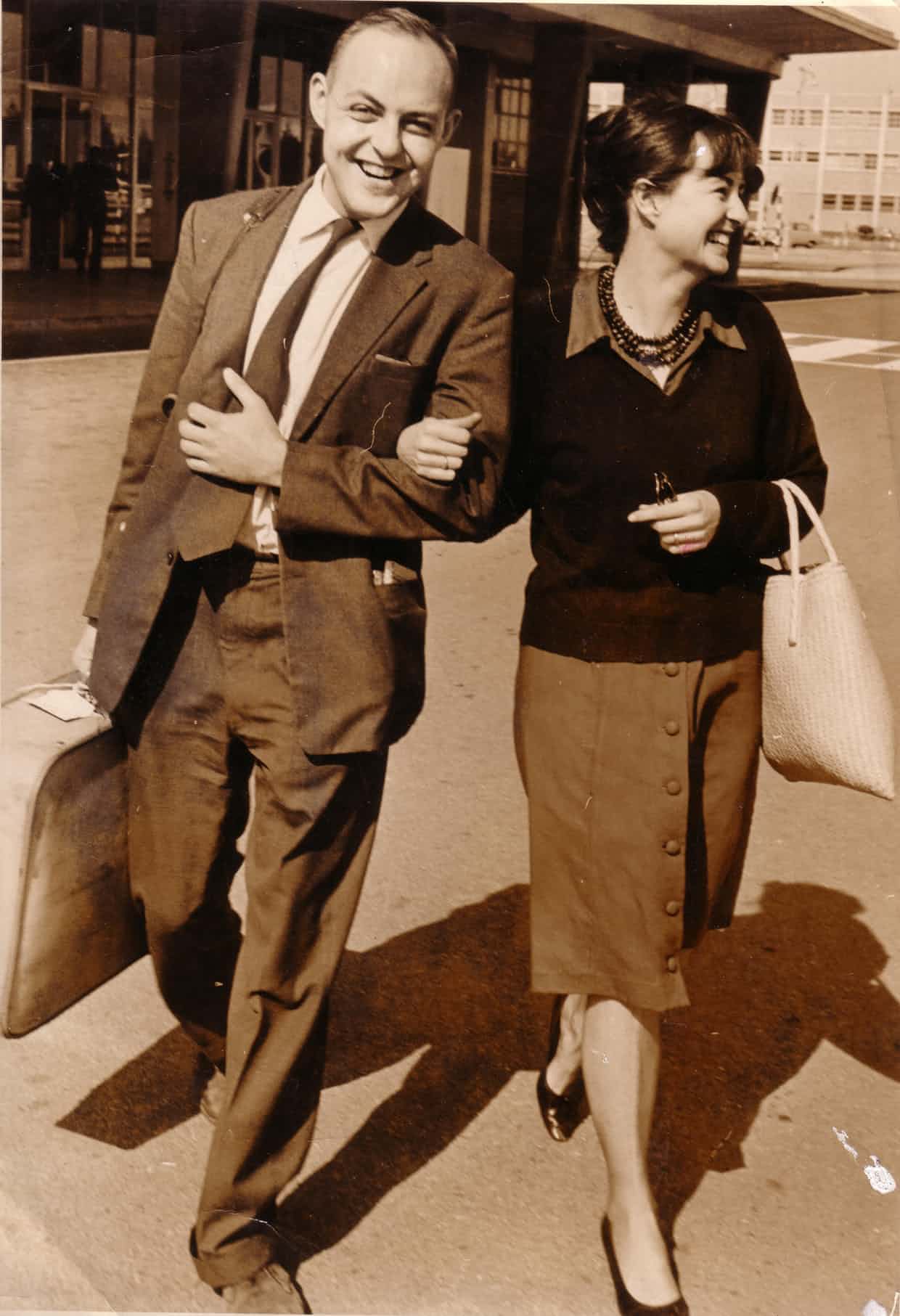 So let’s examine John Harris and why he went to the gallows and not into political confinement.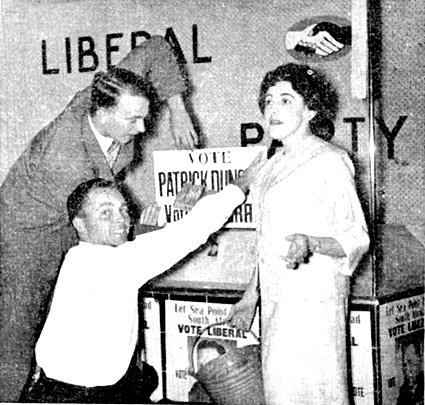
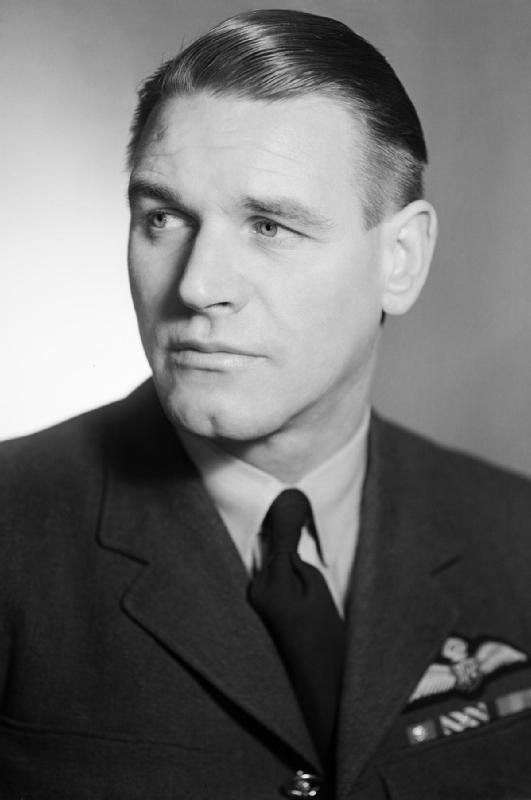 Much has been written on Sailor Malan as a Fighter Ace, his rules for combat and his command of 74 Squadron during the Battle of Britain which played such a pivot role in winning the Battle. His combat record, promotions and decorations alone are simply astonishing.
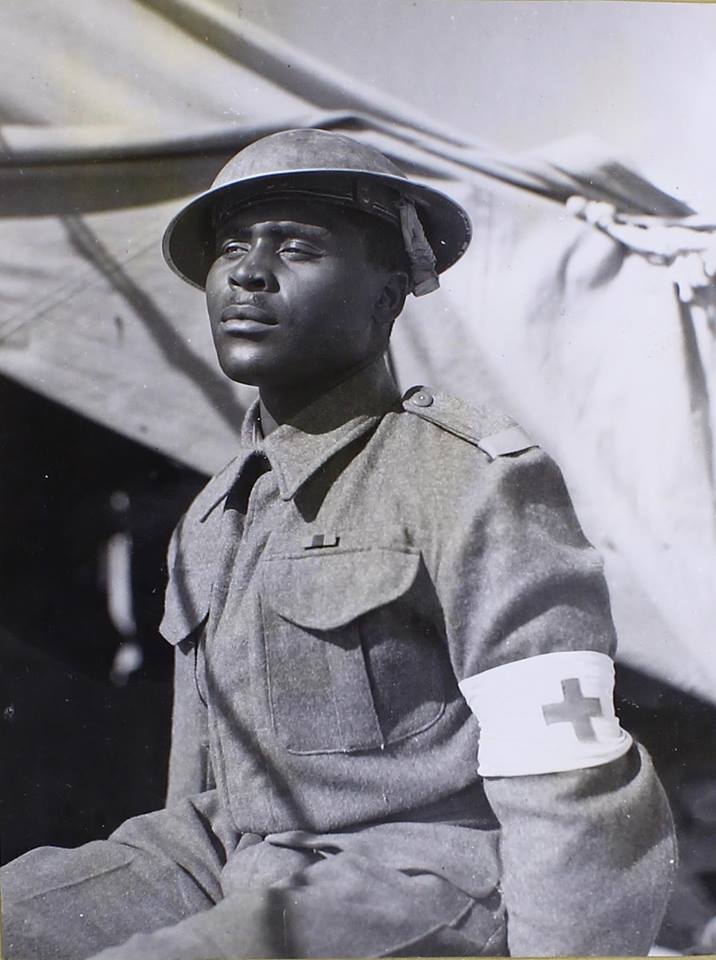 Now consider this real military hero, Lucas Majozi. Here’s a very notable South African military hero. The highest decoration awarded to a Black South African soldier during the Second World War was the DCM (Distinguished Conduct Medal) and it was awarded to Lucas Majozi.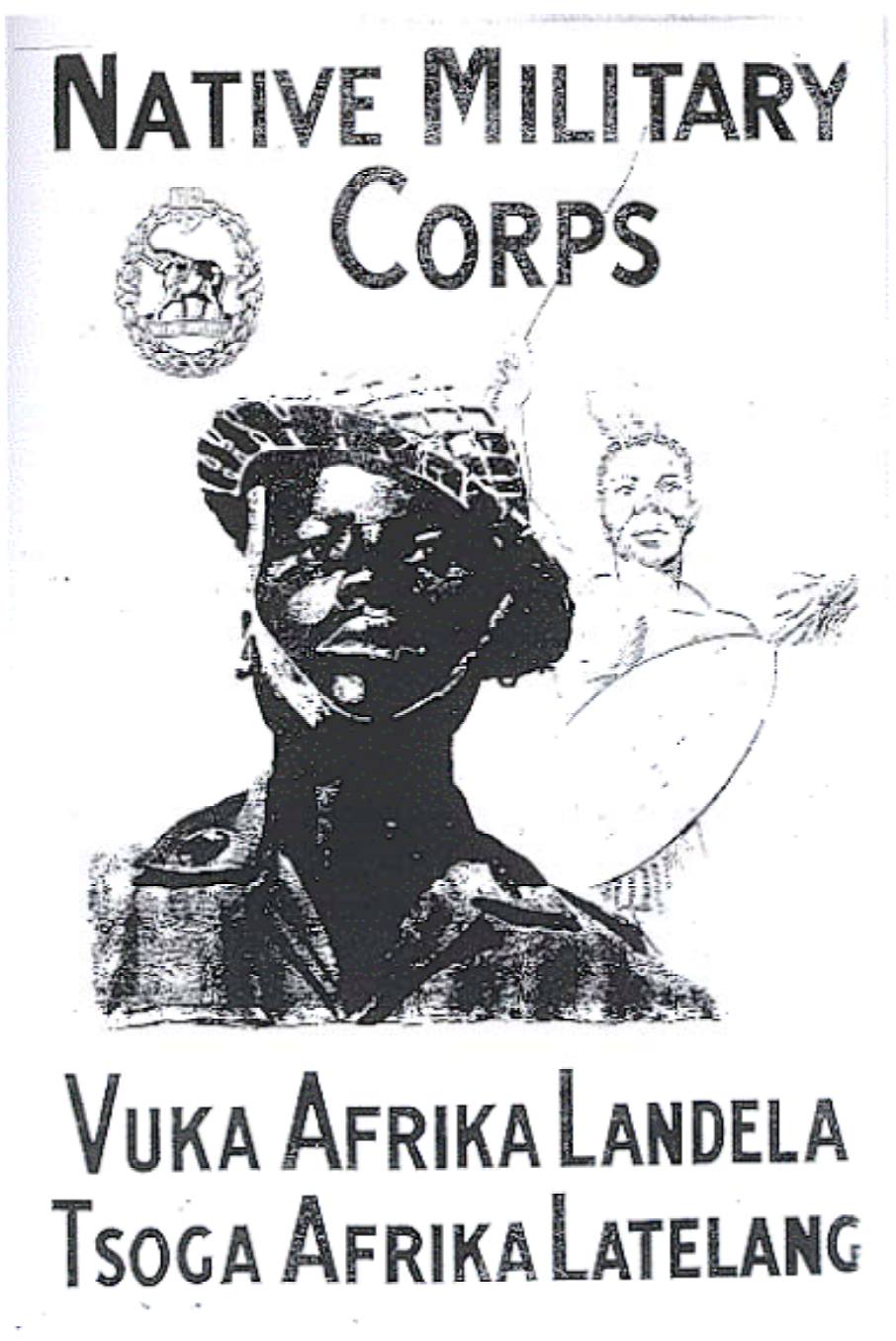
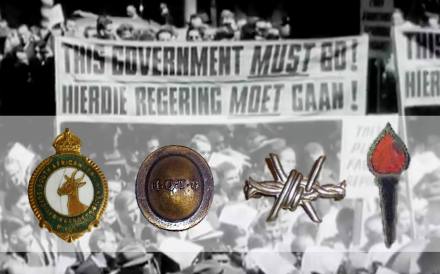


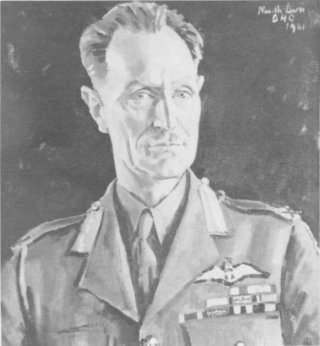
 The history of the Springbok Legion as a political entity is fascinating – initially formed in 1941 by members of the 9th Recce Battalion of the South African Tank Corps, along with the Soldiers Interests Committee formed by members of the First South African Brigade in Addis Ababa, and the Union of Soldiers formed by the same brigade in Egypt.

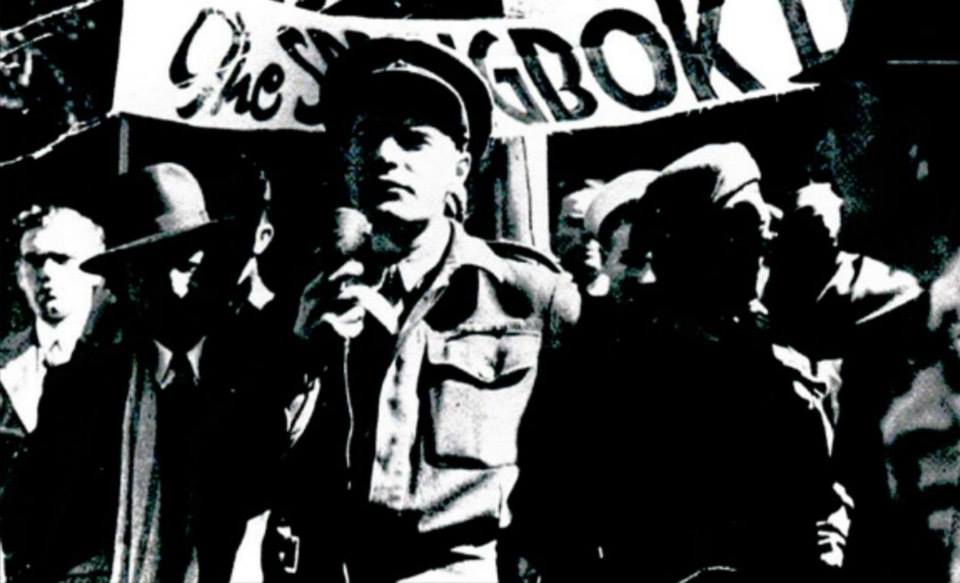
 In reality, the Torch Commando constituted the first real mass “anti-Apartheid” protests and Adolph ‘Sailor’ Malan can be counted as one of the very first anti-apartheid ‘struggle’ heroes. Sailor Malan, a Battle of Britain hero and flying ace (one of the best pilots the Royal Air Force had during the war) returned to his homeland – South Africa in 1946.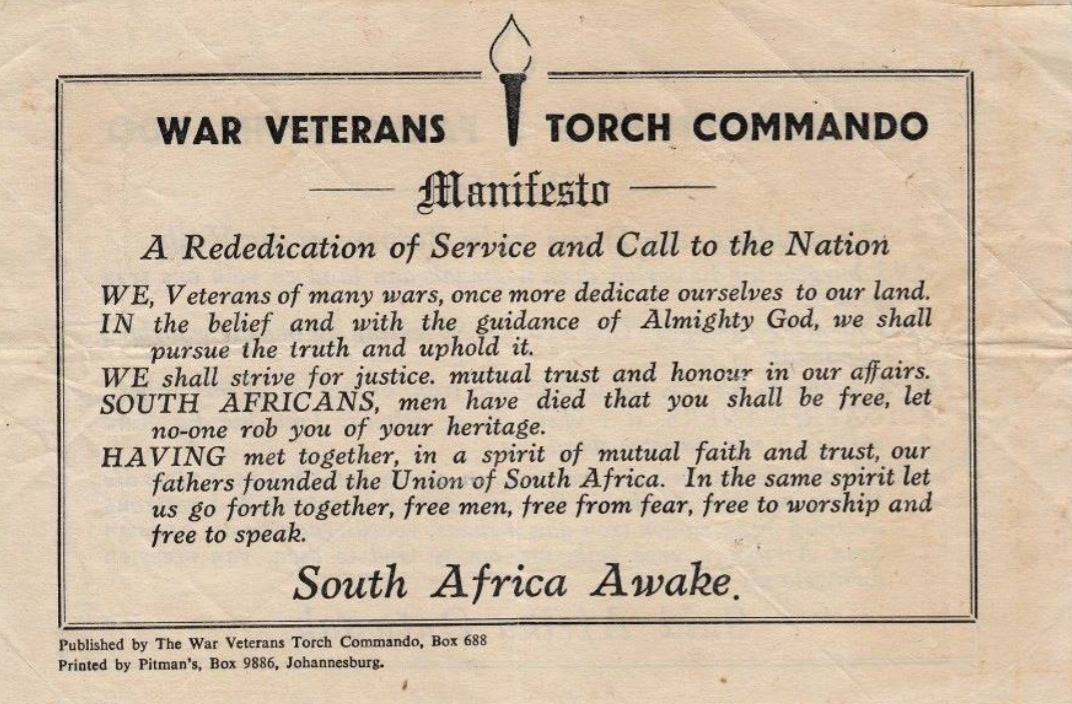


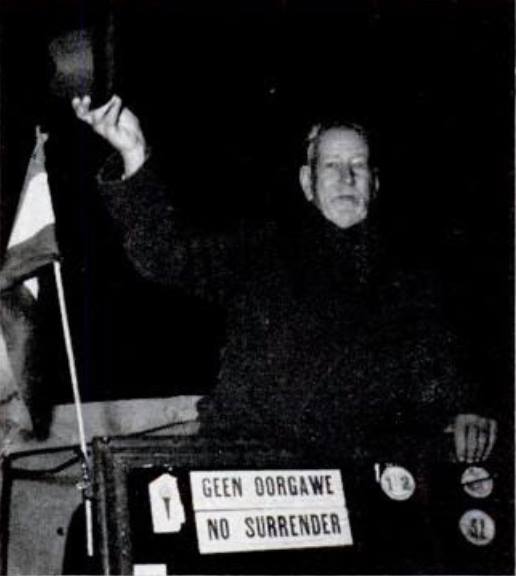


 This eventually resulted in the fracturing of the Springbok Legion as a whole as moderate “white” members, who made up the majority of its supporters became disenchanted with its increasingly militant leftist rhetoric.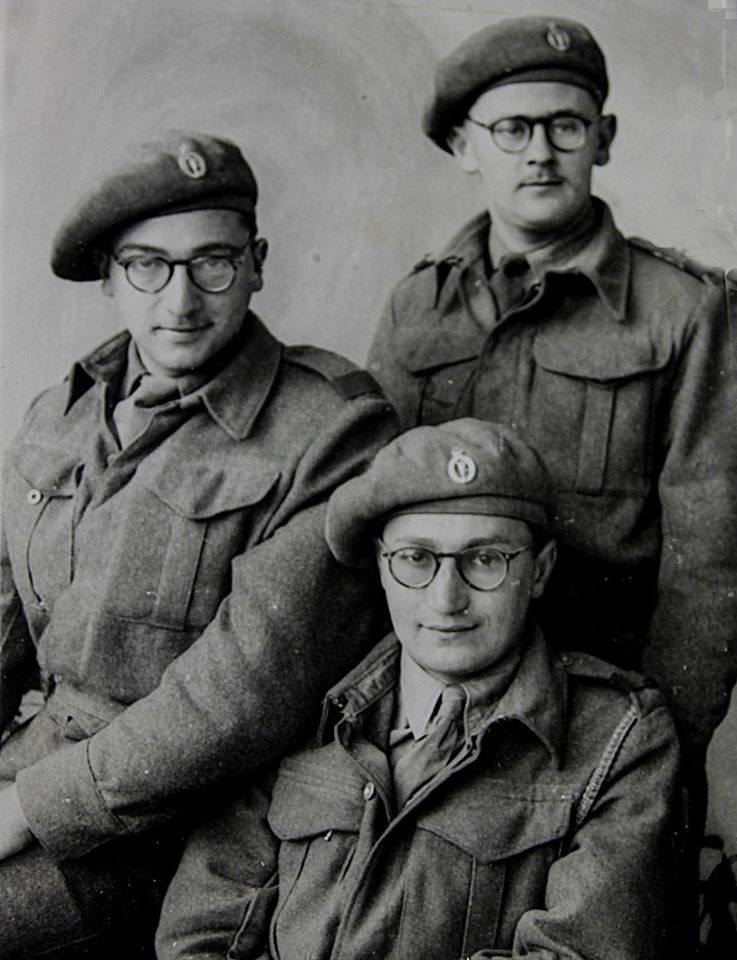

 Sailor Malan’s political career was effectively ended and the “Torch” effectively suppressed by the National Party, so he returned to his hometown of Kimberley. Sailor then joined his local Memorable Order of Tin Hats (MOTH) shell-hole (branch) in Kimberley and withdrew from politics, choosing instead the social and camaraderie of his like-minded colleagues in his ‘shell-hole’ and the ‘good life’ (he had a reputation as the ‘life of a party’).

 The campaign to purge the national consciousness of The Torch Commando, The Springbok Legion and Sailor Malan was highly effective as by the 1970’s and 1980’s the emergent generation of South Africans have little to no knowledge of The Torch or The Springbok Legion, it is highly unlikely that anyone today remembers Sailor Malan’s speech to 75,000 Torch Commando protesters in the centre of Johannesburg. The veterans community today, albeit very small, have kept his memory alive, Sailor’s MOTH shell-hole in Kimberley still remember this outstanding war hero very fondly to this day,
 Many older people will remember a time in the 50’s, 60’s and early 70’s, when on “Poppy Day” thousands of South African Legion members with their supporters would ‘sell’ paper red poppies raising funds for veterans in need in just about every major shopping centre all over South Africa. Some may even remember the South African Legion visiting their schools and explaining the meaning of the Poppy.
 Simply put, even though the South African Legion (BESL) had taken an apolitical stance and chosen a cordial approach in dealing with the Nationalists, it still found itself coming into headlong confrontation with the National Party government, both in terms of its individual members’ politics but also in terms of the mandate given to it as the national body to look after Cape Coloured, Indian and Black South African veterans in need.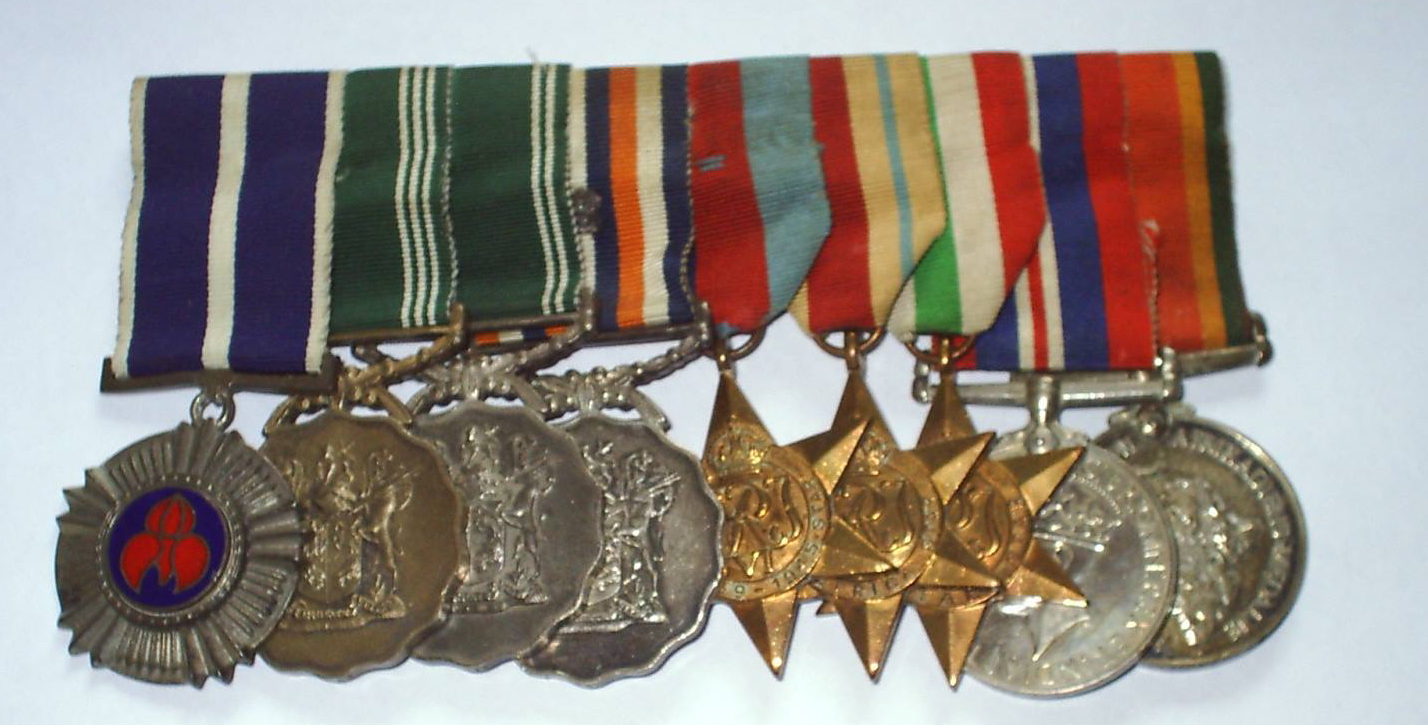
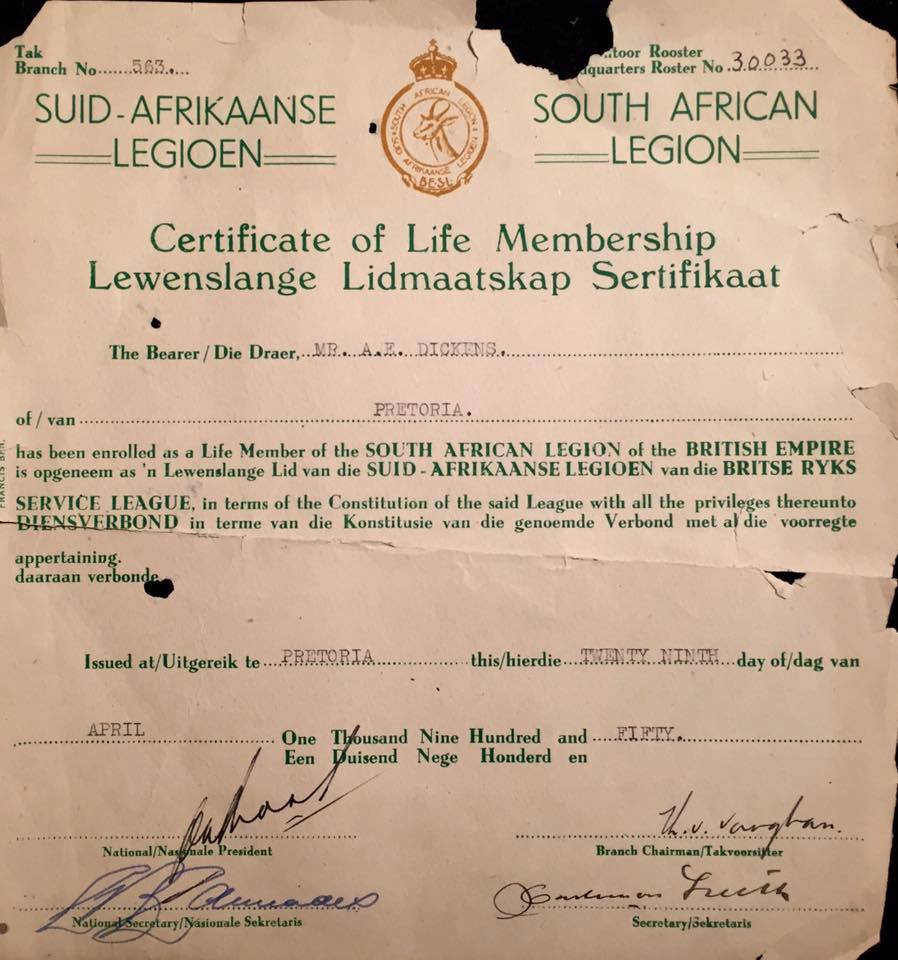
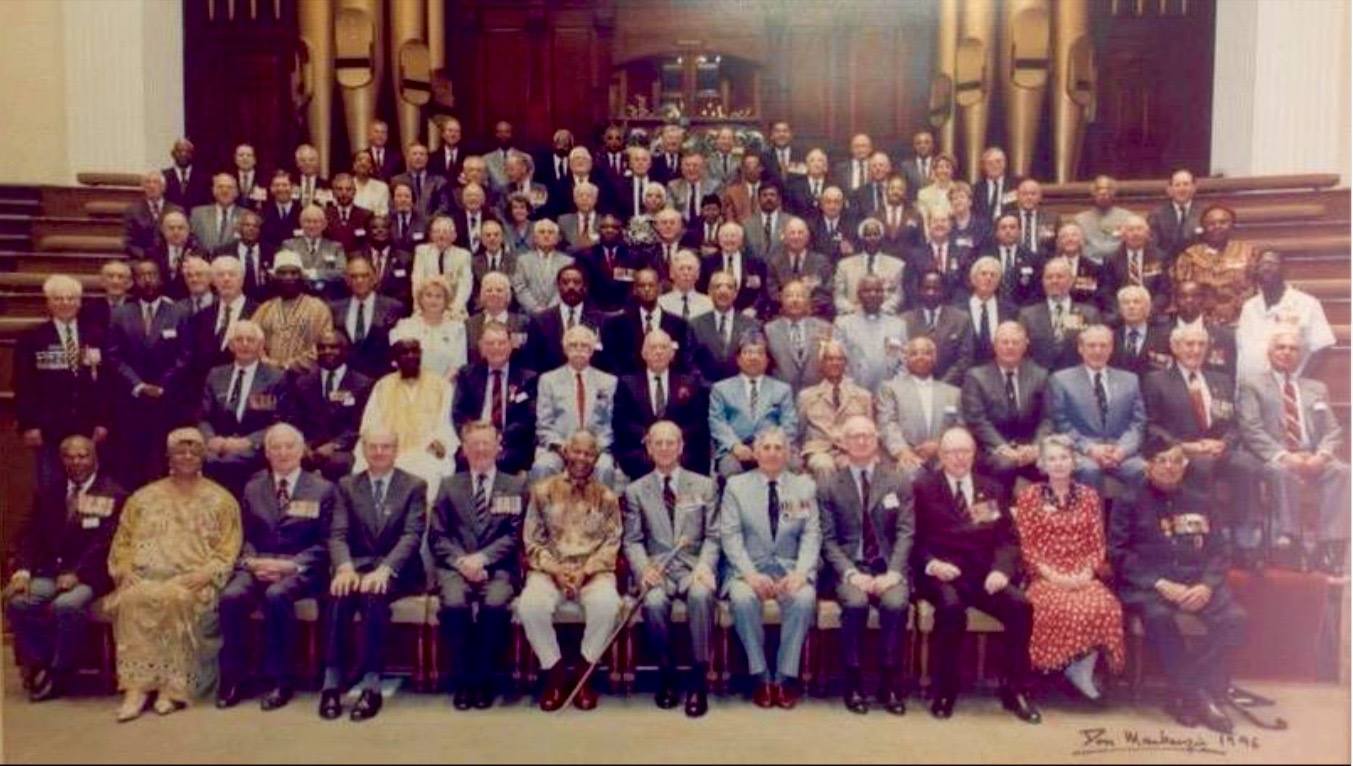
 The ‘statutory’ associations i.e. the Infantry Association, Armour Association, Naval Officers Association, Gunners Association, Caledonian Regiments Association etc. etc. are combined and lumped with more newly sprung ‘broader’ veterans associations – the SADF Veterans Association, the South African Military Veterans Organisation ‘International’ (a spin-off from a Australia based SA veterans association) and more, each targeting the same veteran – all of whom exist under their own umbrella organisation – The Council of Military Veterans Organisations (CMVO).
 This all in turn falls under the ‘Department of Military Veterans’ (DMV) a government department under the Minister of Defence which toes a very African National Congress (ANC) party political line in its media either shaming or ignoring the statutory veterans (especially the old ‘SADF’ members who make up the majority of the Department’s mandate and membership) and highlighting the deeds of the non statutory political party veterans, primarily ANC Umkhonto we Sizwe (MK) veterans as noble ones instead (and these veterans are contentious at best).
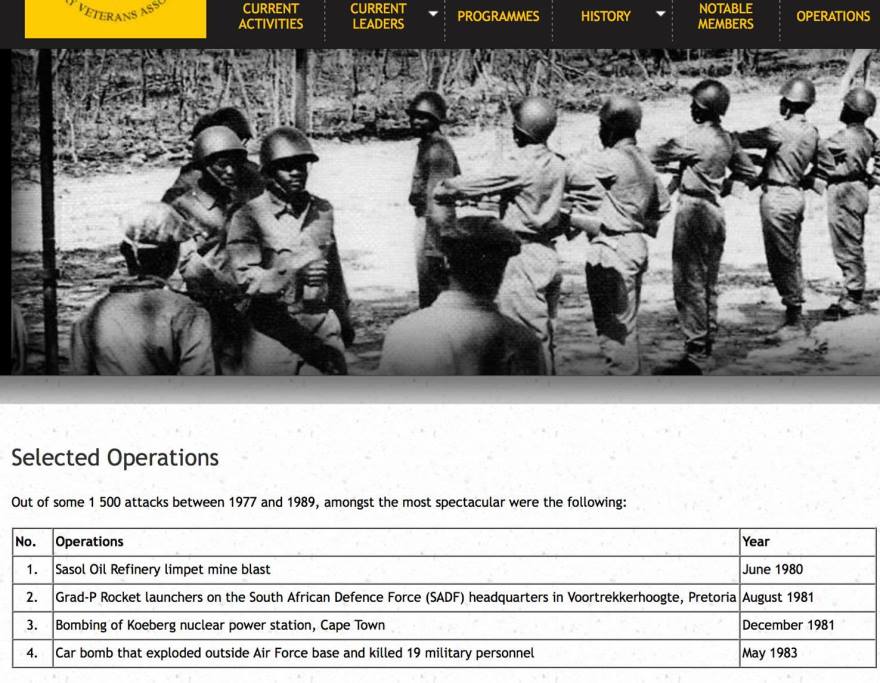
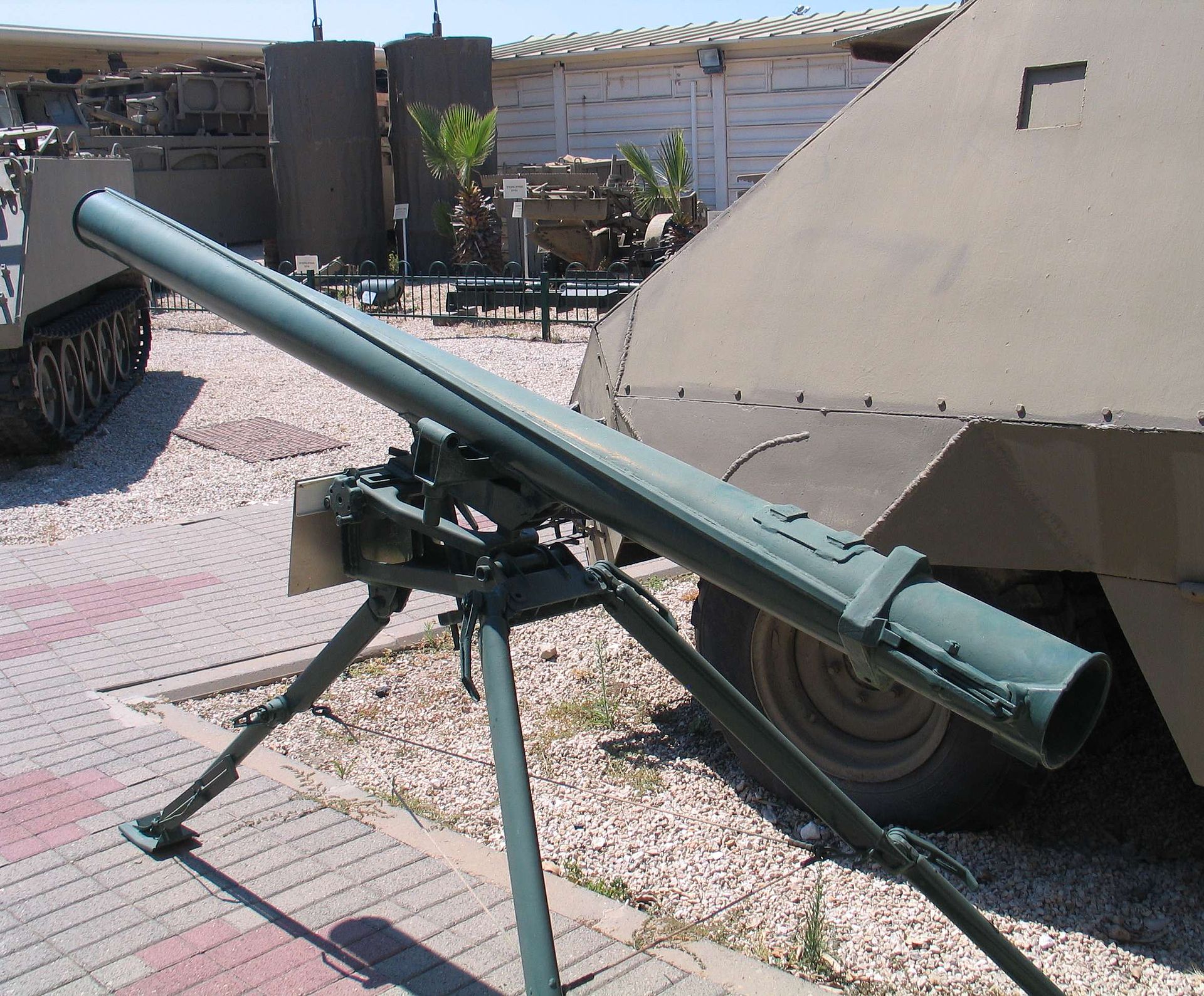 The Soviet era GRAD-P portable rocket system uses a monotube and fires 122 mm high-explosive fragmentation rockets (which arm themselves in flight). This system is highly effective, accurate enough and delivers on some very devastating results (with a very good impact radius) – deadly to both buildings and people. In essence it’s ‘one’ tube of the GRAD multiple rocket launch platform. For this reason it is loved by terrorist, paramilitary and guerrilla forces the world over – usually mounted on small trucks or large pick-up vehicles (known as ‘technicals’). It’s robust, simple and highly effective. It also makes a very big ‘bang’.
 The Observation Post