On this day, at 17h00 the guns fell silent in Southern Angola, when on the 8 August 1988 a ceasefire came into effect effectively ending hostilities between South African statute forces and Angolan/Cuban Forces.
The Tripartite Accord was to follow, an agreement between the People’s Republic of Angola, the Republic of Cuba and the Republic of South Africa. It in essence granted independence to Namibia on the proviso that Cuban forces left Angola and South African Forces would leave Namibia.
The offer made by Pik Botha, who convinced Jorge Riquet, to quote Botha “…We can both be losers and we can both be winners…”. Cuban Forces could return to Cuba victorious with the idea that they had ended South African rule in Namibia and South African Forces could return victorious with the idea that they had turned back the greatest Communist threat of arms in Southern Africa and stabilised the region for democracy by the ballot and not the gun.
There is some truth to H.G. Wells’ quote “If we don’t end war, war will end us” and without this accord South Africa (Africa’s Super-power) and Cuba would have been set for a protracted war between two foreign powers in a foreign country, and it would most certainly have left a devastating impact on all humanity in the region for many more years to come.
Let us remove our headgear, bow our heads, and observe a minute of silence to remember all those that paid the supreme sacrifice in this war.
Photo copyright Stephan Bothma, from 101 Battalion Romeo Mikes. Written by Peter Dickens
In any military campaign there are always setbacks, and Ops Firewood qualifies one of the very few real setbacks that the SADF experienced during the Border War. To view it as a resounding victory of PLAN (SWAPO) over the SADF would however be an overstatement.
Currently in Namibia and South Africa there are overqualified claims that this operation points to PLAN superiority over the SADF, but that would also be a myth, these claims coming mainly from modern Namibians being fed a long stream of political propaganda.
However, to face up to a ‘truth’, Ops Firewood was a tactical ‘loss’ for the SADF, it was not widely circulated, and thus relatively unknown to many SADF servicemen (now veterans). So let’s look at it and face the truths and debunk the myths.
On the 31 Oct 1987, a 101 Battalion Battle Group, supported by members of 5 Reconnaissance Regiment together with D Company, 1 Parachute Battalion, 2 Reconnaissance Regiment and other SADF support elements, attacked SWAPO/PLAN positions at Nindango in Southern Angola, They used Infantry Fighting Vehicles and Armoured Personnel Carriers (Ratels, Casspirs and Buffels).
The Operation was known as Ops Firewood. The key objective was to destroy the Northern Front PLAN Head Quarter (HQ) base.
This PLAN base was set in a densely wooded area, and was attacked from the west by the Reconnaissance Regiment (recce) and Paratroopers (parabats) of the SADF (South African Forces), while 101 Battalion of the SWATF (South West African Forces) covered the base from north, east and south, the direction PLAN forces were expected to flee.
From the on-set of the Operation it became clear from the start that SWAPO/PLAN had been expecting such an attack as they were in well prepared defensive positions and supported by a Cuban Tank and Artillery element with a FAPLA Motorised Infantry Unit in support.
During the extremely heavy fighting that continued throughout the day, about 7 hours in total, a 101 Battalion Casspir was knocked out by a RPG-7 anti-tank rocket and burnt out. The Battle Group suffered 15 casualties with approximately 67 wounded before contact was finally broken off at nightfall.
The base was not successfully taken by the SADF forces, who withdrew when PLAN reinforcements were understood to be on their way.
The South African forces are said to have incurred 12 killed and 47 wounded (while other sources say it was as high as 19 killed and 64 wounded, but this is yet to be substantiated). On the SWAPO side, the casualties were said to be very high, with at least 150 PLAN soldiers killed (however, again there is controversy here as a source within PLAN command maintains that this figure posted on Wikipedia is inflated somewhat, however an actual figure from PLAN is still not forthcoming).
All the SADF dead and wounded were casevaced to AFB Ondangwa during the night of October 31/1 Nov 1987. The last Puma helicopter departed at about 03h30 the following morning and ferried the remaining dead and lightly wounded. The 101 Battalion casualties were taken directly to their Unit and not to AFB Ondangwa.
The featured image is a SADF Buffel Armoured Personnel Carrier (APC) captured by SWAPO/PLAN combatants during Ops Firewood. To put this ‘capture’ into perspective only four Buffel APC’s were captured fully intact in different battles during the entire period of the Border War. Before we stand up and claim a great military prize, lets take perspective, the Buffel was a personnel carrier, nothing more, there were over a thousand of them deployed during the entire period of the war.
The picture was taken between September 1987 and March 1988 by Col K.A. Satenov, the Soviet military advisor to the 1st and 20th PLAN Brigade commanders (seen in the picture on the left). The Buffel APC captured belonged to 2 Reconnaissance, it was lost fully intact in that battle, three 101 Battalion Casspirs were also lost.
In the aftermath, Honoris Crux (South Africa’s highest bravery decoration) decorations were awarded to five 101 Battalion members for gallantry in action.
So, was it a demonstration of superior PLAN fighting prowess over that of the SADF? Judging by the death toll to PLAN versus that of the SADF/SWATF the simple answer is – no. Was it a PLAN victory, the answer is yes (by many accounts one of only a handful). Was it a ‘tactical’ defeat for the SADF in not meeting its objective? The answer is – ‘yes’. Did it affect the overall military dominance of the SADF on the South West African (Namibian) Border and change any thinking or modus operandi behind the large scale (and small scale) operations into Angola? The answer is ‘no’ – not really, learnings were however taken on over-confidence in using special and elite forces for full front armour assaults, a role not specific to their brand of battle order. Was it a ‘great decisive battle’ on African soil? The answer is ‘no’. It was part of a broader campaign, to the SADF commanders it qualified a tactical set-back, nothing more – part and parcel of waging war.
As such the SADF sought no reason to highlight it as a ‘devastating loss’, it remains relatively unknown to many ex-SADF personnel (especially those not involved in Operations into Angola and those not in elite forces circles) as it would have affected morale, and for the wrong reasons entirely.
It is however remembered by veterans of the SADF special forces and elite forces, so too the PLAN combatants, and if you asked either of them for the ‘truth’ of the battle, they would both agree that the real ‘truth’ is to be found in their dead, for only they who have seen the end of war.
The Battle Group casualties who we remember as South Africans were:
“D” COMPANY, 1 PARACHUTE BATTALION
82513110BG Rifleman Hughes Norbert De Rose. He was 21.
82437369BG Rifleman Wayne Valentine Ewels. He was 21.
81033292BG Lance Corporal Raymond Mark Light. He was 21.
83219139BG Corporal Nico Smith Olivier. He was 19.
83247502BG Rifleman Dirk Willem van Rooyen. He was 20.
83271031BG Rifleman Jean Marc Schuurman. Critically wounded and evacuated from the battlefield to AFB Ondangwa where he underwent emergency surgery. He was evacuated back to the RSA the following day on 1 November 1987 but he succumbed to his wounds before the aircraft landed in Pretoria. He was 20.
5 RECONNAISSANCE REGIMENT
83561928BG 2/Lieutenant Dylan Chevalier Cobbold He was 20.
101 BATTALION ROMEO MIKE
76330893PE Captain Andries Hercules Du Bruyn Rademeyer. He was 27.
83587345BG 2/Lieutenant Deon Botes. He was 20.
84533793BG Sapper Erasmus Albertus Steyn. He was 19.
Rifleman W. Abraham
Rifleman P. Epafu
Rifleman V.Petrus
Rifleman T. Sheepo
Rifleman M. Uusshona
NOTE from the custodians recording SADF losses during the Border War. “The Roll of Honour for this engagement has been debated at length. To date, not one individual has supplied any official proof to substantiate their claims or come forward with the names of the four individuals that are supposedly missing from this Roll. Until such time as this happens, we continue to pay homage to these 15 Brothers and accept this list as the official Ops Firewood Roll of Honour”. Their names and Sacrifice have not been forgotten.
Sources that point to the ’19’ dead maintain that 4 members of 101 Battalion are unaccounted for.
Colonel Satenov wrote a book called “Army is my Destiny” and currently lives in Kazakhstan (the former Soviet Republic) – this picture is also in his book.
Written and Researched by Peter Dickens
Photo, thanks and caption courtesy and copyright to Igor Ignatovich who was also a Soviet military advisor to SWAPO. Reference wikipedia, Igor Igantovich, Maj. Du Toit’s daily honour roll, SADF veteran on-line forums.
Not many people today are aware that Umkhonto we Sizwe (MK) insurgents actually attacked some bone-fide South African Defence Force (SADF) military installations, but only a handful of occasions and this story covers one of them – the bombing of the Witwatersrand Command’s building – the Drill Hall (known as Wit Command).
Other than the very effective bombing of Wit Command and the Nedbank Plaza in Church Street, Pretoria (which also housed the target – a SAAF command office), the only other standout ANC MK attacks on actual SADF installations were low key and completely ineffectual.
These included the rocketing of the Personnel Services army base in Voortrekker Hoogte (with minor injuries to one civilian and no substantive building damage). The faulted attempt at bombing a Wits Command medic centre in Hillbrow (no injuries). The speculative bombing of some cars in the car-park of the Kaffarian Rifles (no injuries, and no information either), the bombing of a dustbin outside Natal Command (no injuries or building damage). Finally, the bombing of two SADF recruitment offices and an SADF radio installation – some building damage and no injuries or deaths.
Information on the bombing at Wit Command itself is really difficult to come by, at best it is presented as a resounding victory by MK claiming 58 injuries and 1 death of SADF personnel and at worst there is little to almost no information, video or photographs in both the military and media records of showing any deaths. There is certainly no death of a SADF serviceman recorded on the honour roll. So where does the truth lie?
There are two key reasons why ‘in-depth’ knowledge of this incident remains obscured. Firstly, although a bomb had gone off in down-town Johannesburg (no hiding that), the grip of the National Party over South African media limited it and ensured the incident would be carefully managed (attacks on SADF military installations would affect morale) and, more importantly, it was very carefully managed because of the profile of the Umkhonto we Sizwe (MK) attacker who committed it. The outcry, profile and ‘hunt’ for him was somewhat muted, angry announcements identifying him for the purposes of the ‘hunt’ were made, yes – but in-depth media analysis on the attack or investigative journalists seeking an exposé on the attacker’s profile and motivation – no – there’s nothing of this sort.
Simply put, this ‘managed’ outcry was because this particular MK operative was from an upper class, ‘white’ Afrikaner, well to do and influential family. He grew up in an up market ‘white’s only’ conservative suburb in Johannesburg and attended a prestigious Afrikaans High School – he didn’t fit the National Party’s ‘swart-gevaar’ (Black danger)/’rooi-gevaar’ (Communist danger) terrorist narrative of the time, he was in fact embarrassing enough ‘one of their own’.
So, lets get to the ‘truth’ of matter in all of this, what was the actual damage caused, what actually happened?
Background
On 30 July 1987, a bomb exploded at the Witwatersrand Command’s Drill Hall injuring 26 people (no deaths), the injured were made up of a mix of both military personnel and by-standing civilians. The Drill Hall was targeted because not only was it a military installation, it was also the same historic Hall in which the 1956 Treason Trial took place and significant to ‘struggle’ politics.
The ‘Treason Trial’ had lasted from 1956 to 1961 (not to be confused with the ‘Rivonia Trial in 1964) and revolved around 156 people arrested on charges of treason – it was overseen by Oswald Pirow and it included a mix racial bag of South African political party leaders from across the spectrum, notably Nelson Mandela, Ahmed Kathrada, Walter Sisulu, Stanely Lollan, Helen Joseph, Joe and Ruth Slovo and Leon Levy to name a few. They were all found ‘not guilty’ but the trial did force Oliver Tambo into exile.
Treason Trial in the Drill Hall
So, like the mixed racial bag of the Treason Trial itself, the actual attack on the Drill Hall (by then a SADF command centre and military building) did not come from an angry disenfranchised ‘Black’ ANC MK operative, rather, this attack came from very “blue blooded” ‘White’ Afrikaner – Heinrick (Hein) Grosskopf.
The Bombing
As part of the Amnesty Truth and Reconciliation Commission hearings Hein Grosskopf, by that stage a former MK operative, revealed how he detonated a car bomb at the Witwatersrand Command military base.
Grosskopf, a graduate of Linden Hoërskool (High School) and the son of Johannes Grosskopf, a former editor of the Beeld newspaper, said he joined the African National Congress in exile in 1986 after concluding that apartheid was reprehensible.
Johannes Grosskopf
He linked up with the ANC in Lusaka, where he volunteered for MK military service and after undergoing training in Angola, he returned to Lusaka at the end of 1986.
Six months of planning then went into the attack, which was to be a “one-man” operation. An attack on the Braamfontein gas works in Johannesburg had also been considered, but it was rejected as too dangerous for civilians in the area. Witwatersrand (“Wit”) Command was chosen after much deliberation and according to Grosskopf;
“Because the state had so clearly politicised the role of the SA Defence Force by deploying troops in townships, SADF personnel and installations were by definition justifiable targets.”
The explosion was planned to go off by 9.45am, when the morning rush-hour was over, children would be in school and restaurants around the site were still closed. A car with an automatic gearbox would be used and by lashing the steering wheel in a fixed position, the car could be made to move without a driver towards the target.
In June 1987, Grosskopf entered South Africa on a motorcycle from Botswana, along the way he bought an old Valiant pickup ‘bakkie’ in De Deur and travelled to Johannesburg with the motorcycle in the back of the ‘bakkie’.
After booking in at the Holiday Inn in Pretoria, under the name if JR Evans, Grosskopf rented a small flat in Linden, Johannesburg (a suburb he was highly familiar with and near his old High School).
Between the 5th and 10th of July 1987, Grosskolf carried out reconnaissance at Wits Command and found it would be possible to park in Quartz Street, opposite the target. He also measured the height of the pavement the attack vehicle would have to mount before reaching the wall of Wit Command.
After concluding that the operation was feasible, Grosskopf returned to Botswana and requested 120kg of explosives from his support group. The load was hidden behind the seats of the bakkie, and steel plate was welded over it.
On July 17, Grosskopf rented a house in Ventersdorp, intending to use it as an operational base, believing that a single Afrikaner would be under less scrutiny in a small town than in Johannesburg’s suburbs, but as he was moving in, two policemen arrived and asked why his bakkie was registered in a name different from the one he used when renting the house. Thinking his cover might be blown Grosskopf spent only one night in the house before returning to Johannesburg.
Early on the day of the attack, he rode into Johannesburg on his motorbike and left it two street blocks from the target. He returned to the Linden flat by taxi. Around 9am he left for Johannesburg after loading the explosives into the bakkie. The vehicle was parked in Quartz Street. With the car idling, he lashed the steering wheel in the required position and threw three switches to arm the vehicle and bomb, got out the vehicle, locked it and walked towards Sterland (a cinema complex) next to Wit Command.
Just before reaching the inside of the Sterland complex proper, the Valiant’s engine revved very fast and loudly, with the explosion that followed. He jumped on the motorcycle and rode back to Linden, collected some belongings and then headed for Botswana on the motorcycle.
Aletta Klaasen was 17 years old when she lost her left eye in the explosion. Minutes before the blast she had been talking to two SADF soldiers in front of the building, Cpl. Paul Duncan and his army chum Stoffel, when Grosskopf parked his vehicle close by to where they where standing.
She noted Grosskopf looking in her direction and called out to him “What are you looking at – I’m not for sale” (the area around Wit Command was a notorious ‘red light’ district known for prostitution). He turned around and walked off and shortly after that the bomb went off.
When she recovered from the blast she noted that one of the SADF troops, Cpl. Paul Duncan, who she was chatting to, was blown off his feet and found in the guardhouse, bleeding from the head and unconscious – he later fully recovered from his injuries.
An unassuming, quiet and reserved person, Grosskopf built up his resentment of the status quo whilst a student at Linden Hoērskool, were he had been bullied and teased by the vastly conservative white Afrikaans students for his “liberal” views. On matriculating from Linden Hoërskool, Hein Grosskolf, although openly stating he would never join the South African Defence Force (SADF), did in fact attend to his national service military call up and was discharged from his SADF conscription commitment on medical grounds. Highly politicised, he then went on to join the ANC and its military wing MK.
Aftermath
The Drill Hall after the bombing was deemed by the SADF to be an ‘unsafe’ building due to structural damage caused it and the Command moved into a high-rise building adjacent to the Drill Hall. On occasion the Drill Hall would be used by Citizen Force units and Regiments for mustering (in the very famous hall in which the Treason Trial took place) but more often than not it remained empty but guarded during the early 1990’s.
Once the command relocated from the high-rise building to Doornkop military base in the mid 1990’s, the drill hall building was taken over by vagrants and became an informal settlement – it eventually became derelict, caught fire and burned down. Today, the façade and some perimeter buildings is all that remains of the complex. The façade has been restored as a monument to Johannesburg’s history and the significant historical events which took place in the building – including it’s bombing.
Truth and Reconciliation
Aletta Klaasen and Hein Grosskopf were both at the TRC Hearing in November 2000, Grosskopf apologised to Aletta in person and regretted the injuries caused to civilians. Grosskopf concluded the meeting by saying that he was proud of the small role he had played in the struggle for freedom. He said,
“Taking a life is never easy. I believe all life, even that of my enemies is sacrosanct. Violence can never be good; it can only be necessary. I am truly sorry for the injuries and suffering I caused”
At her request Klaasen and Grosskopf met for a few minutes in private after the hearing and then they both posed briefly and rather awkwardly for this photograph (note the body language). Neither of them elaborated on their meeting, Klaasen was only prepared to say that it had been good.
Heinrich Grosskopf, was granted amnesty by the Truth and Reconciliation Commission on 13th December 2000 whilst he was resident in the United Kingdom, it is thought he may still be there, and there is an irony here. One of the SADF victims of the bombing – Paul Duncan, also lives in the United Kingdom now. Paul was kind enough to recount his eye-witness account (both as a casualty and the fact that he was very near the epicentre of the blast). ‘Reconciliation’ and ‘apologies’ aside, I have it on good authority that it’s very unlikely Hein will be attending one of Paul’s famous ‘braai’s’ (a South African barbecue) in England anytime soon.
Now, this rare short movie clip exposes an inconvenient truth to the current political narrative of the “struggle”, the first mass anti-Apartheid protests were led by this highly decorated Afrikaner war hero – Adolph “Sailor” Malan – and the mass protesters were not led by the ANC and its supporters, this very first mass mobilisation was made up of returning WW2 veterans – this rare video footage captures some of this fascinating and largely ‘hidden’ South African history.
Many people may know of the South African “Battle of Britain” Ace – Adolph ‘Sailor’ Malan DSO & Bar, DFC & Bar – he is one of the most highly regarded fighter pilots of the war, one of the best fighter pilots South Africa has ever produced and he stands as one of the “few” which turned back Nazi Germany from complete European dominance in the Battle of Britain – his rules of aerial combat helped keep Britain in the war, and as a result he, and a handful of others, changed the course of history. But not many people are aware of Sailor Malan as a political fighter, anti-apartheid campaigner and champion for racial equality.
‘Sailor’ Malan can be counted as one of the very first anti-apartheid ‘struggle’ heroes. The organisation he formed “The Torch Commando” was the first real anti-apartheid mass protest movement – and it was made up of South African ex-servicemen, not disenfranchised civilians. Yet today that is conveniently forgotten in South Africa as it does not fit the current political rhetoric or agenda.
After the Second World War, Sailor Malan left the Royal Air Force and returned to South Africa in 1946. He was surprised by the unexpected win of the National Party over the United Party in the General Election of 1948 on their proposal of ‘Apartheid’ as this was in direct opposition to the freedom values he and all the South African veterans in World War 2 had been fighting for.
What he and other returning World War 2 servicemen saw instead was far right pro Nazi Germany South African reactionaries elected into office. By the early 1950’s the South African National Party government was littered with men, who, prior to the war where strongly sympathetic to the Nazi cause and had actually declared themselves as full-blown National Socialists during the war as members of organisations like the Ossewabrandwag, the SANP Greyshirts and the Nazi expansionist “New Order”: Oswald Pirow, B.J. Vorster, Hendrik van den Bergh, Johannes von Moltke, P.O. Sauer, F. Erasmus , C.R. Swart, P.W. Botha and Louis Weichardt to name a few, and there is no doubt that their brand of politics was influencing government policy.
This was the very philosophy the returning South African servicemen and women had been fighting against, the “war for freedom” against the anti-Judea/Christian “crooked cross” (swastika) philosophy and its false messiah as Smuts had called Germany’s National Socialism doctrine and Adolph Hitler.
In the 1951 in reaction to this paradigm shift in South African politics to the very men and political philosophy the servicemen went to war against, a mass mobilisation protest movement was formed by group of ex-servicemen. They called it the “ Torch Commando” (The Torch), as their protests were held at night with each member carrying a ‘fire’ torch – a symbol of light, freedom and hope. In effect it became an anti-apartheid mass movement and Sailor Malan took the position of National President.
The Torch’s first activity was to fight the National Party’s plans to remove ‘Cape Coloured’ voters from the common roll which were been rolled out by the National Party two years into office in 1950.
The ‘Cape Coloured’ franchise was protected in the Union Act of 1910 by an entrenched clause stating there could be no change without a two-thirds majority of both houses of Parliament sitting together. The Nationalist government, with unparalleled cynicism, passed the High Court of Parliament Act, effectively removing the autonomy of the judiciary, packing the Senate with National Party sympathisers and thus disenfranchising the ‘coloured’ voters. This was the first move by the National Party to secure a “whites only” voting franchise for South Africa (reinforcing and in fact embedding them in power for years to come).
The plight of the Cape Coloured community was close to most White ex-servicemen as during WW1 and WW2, the Cape Coloureds had fought alongside their White counterparts as fully armed combatants. In effect forging that strong bond of brothers in arms which so often transcends racial barriers.
The Torch Commando strategy was to bring the considerable mass of “moderate’ South African war veterans from apolitical organisations such as the Memorable Order of Tin Hats (MOTH) and South African Legion (BESL) into allegiance with more ‘leftist’ veterans from an organisation called the Springbok Legion – of which Joe Slovo, who himself was also a South African Army World War 2 veteran and was a key leader, his organisation – The Springbok Legion, led by a group of white war veterans who embraced Communism was already very actively campaigning against Apartheid legislation and highly politically motivated.
The commando’s main activities were the torchlight marches. The largest march attracted 75 000 protesters. This ground swell of mass support attracted the United Party to form a loose allegiance with The Torch Commando in the hope of attracting voters to its campaign to oust the National Party in the 1953 General Election (The United Party was now run by J.G.N. Strauss after Jan Smut’s death and was seeking to take back the narrow margins that brought the National Party into power in 1948).
In a speech at a massive Torch Commando rally outside City Hall in Johannesburg – 75000 people on protest, “Sailor” Malan made reference to the ideals for which the Second World War was fought:
“The strength of this gathering is evidence that the men and women who fought in the war for freedom still cherish what they fought for. We are determined not to be denied the fruits of that victory.”
During the Torch Commando anti-apartheid rally in Cape Town (The movie clip shows the leader of the Torch heading to this exact rally) – 10 000 South African WW2 veterans went on protest. Sailor Malan famously accused the national party government at this rally of;
“Depriving us of our freedom, with a fascist arrogance that we have not experienced since Hitler and Mussolini met their fate”.
Wartime singing icon Perla Gibson also attended the Torch Commando anti apartheid rally in Cape Town and sang to the protesters in support. Perla was known as the ‘Lady in white” and sang to incoming and outgoing troops in Durban harbour during WW2 to beef up morale.
Also of extreme interest was co-leader of the Torch Commando rally in Cape Town – Kmdt. Dolf de la Rey (seen here in the video) – he famously captured Winston Churchill during the Boer War fighting for the Boers and became a Torch Commando activist, another one of the rich tapestry of Afrikaner war heroes in conflict with National Party politics and philosophy.
During the Cape Town “Torch” 50 000 civilians joined the 10 000 veterans when the protest moved to hand over a petition at the Parliament buildings in Cape Town. The police barred the way and a scuffle broke out. 160 Protesters where injured along with 15 Policemen. As tensions grew over the protest the National Party MP Johannes Streydom finally warned them that he would use the South African security forces against “those who are playing with fire and speaking of civil war and rebellion”.
DF Malan’s government was so alarmed by the number of judges, public servants and military officers joining The Torch that those within the public service or military were prohibited from enlisting, lest they lose their jobs – this pressure quickly led to the erosion of the organisation’s “moderate” members, many of whom still had association to the armed forces, with reputations and livelihoods to keep.
The “leftist” members of The Torch where eroded by anti-communist legislation implemented by the National Party, which effectively ended the Springbok Legion forcing its members underground (many of it’s firebrand communist leaders, including Joe Slovo, went on to join the ANC’s MK armed wing and lend it their military expertise instead).
In essence, the newly governing National Party at that time could not afford to have the white voter base split over its narrow hold on power and the idea that the country’s armed forces community was standing in direct opposition to their policies of Apartheid posed a real and significant threat – bearing in mind one in four white males in South Africa (English and Afrikaans) had volunteered to go to war and support Smuts – this made up a very significant portion of the voting public, notwithstanding the fact that there all now very battle hardened with extensive military training, should they decide to overthrow the government by force of arms.
Also the National Party government, being extremely concerned about the influence this movement might have, especially under the leadership of the war hero, acted ‘decisively’ (as was its usual modus operandi) and went about discrediting the Torch Commando and its leaders through means of negative propaganda.
For the rest of his life, Sailor would be completely ridiculed by the Nationalist government. The National Party press caricatured him ‘a flying poodle’, dressed in his leathers and flying goggles, in the service of Jan Smuts and the Jewish mine-bosses, who were referred to as the “Hochenheimers”. The National Party openly branded him as an Afrikaner of a ‘different’ and ‘unpatriotic’ kind, a traitor to his country and ‘Volk’ (people).
In addition to the National Party’s efforts, the Torch Commando also ultimately failed because it could not un-couple itself as a political arm of the United Party and establish itself as independent mass action movement, it found itself curtailed by moderate party politics. One political cartoon of the time lampoons The Torch Commando as a hindrance to the United Party.
Sailor Malan’s political career was effectively ended and the “Torch” effectively suppressed by the National Party, so he returned to his hometown of Kimberly. Sadly, Sailor Malan succumbed on 17th September 1963 aged 53 to Parkinson’s Disease about which little was known at the time. Some research now supports the notion that Post Traumatic Stress Disorder (PTSD) can bring on an early onset of Parkinson’s Disease, and it is now thought that Sailor Malan’s high exposure to combat stress may have played a part in his death at such a relatively young age.
Although he fought in the blue sky over England in the most epic aerial battle to change the course of history, one of the “few” to which Churchill recorded that the free world owes a massive debt of gratitude to, he lies today under an African sun in Kimberley – a true hero and son of South Africa.
It is to the embarrassment now as to his treatment as a South African WW2 military hero that all enlisted South African military personnel who attended his funeral where instructed not to wear their uniforms by the newly formatted SADF. The government did not want a Afrikaner, as Malan was, idealised as a military hero in death in the fear that he would become a role model to future Afrikaner youth.
The “official” obituary issued for Sailor Malan published in all national newspapers made no mention of his role as National President of The Torch Commando or referenced his political career. The idea was that The Torch Commando would die with Sailor Malan.
All requests to give him a full military funeral were turned down and even the South African Air Force were instructed not to give him any tribute. Ironically this action now stands as testimony to just how fearful the government had become of him as a political fighter.
A lot can be said of Sailor Malan as a brilliant fighter pilot, even more can be said of political affiliation to what was right and what was wrong. He had no problem taking on the German Luftwaffe in the greatest air battle in history, and he certainly had no problem taking on the entire Nationalist regime of Apartheid South Africa – he was a man who, more than any other, could quote the motto of the Royal Air Force’s 74 Squadron which he eventually commanded, and say in all truth:
“I fear no man”
The campaign to purge the national consciousness of The Torch Commando, The Springbok Legion and Sailor Malan was highly effective as by the 1970’s and 1980’s the emergent generation of South Africans have little to no knowledge of The Torch, it is highly unlikely that anyone today remembers Sailor Malan’s speech to 75000 Torch Commando protesters in the centre of Johannesburg.
This “scrubbing” of history by the National Party in aid of their political narrative strangely also aids the ANC’s current political narrative that it is the organisation which started mass protests against Apartheid with the onset of the “Defiance Campaign” on the 6th of April 1952, led mainly by ‘black’ South Africans. The truth of that matter is that the first formalised mass protests in their tens of thousands against Apartheid where in fact mainly led by ‘white’ South African military veterans, starting a year earlier in 1951.
Another inconvenient truth – luckily history has a way of re-emerging with some facts, and the historical record (like this rare footage) shows in plain day an overlooked mass movement against Apartheid, a movement no longer referenced or even properly documented in South Africa today.
Indeed, Sailor Malan is also not publicly accredited as a significant ‘struggle hero’ in countless current-day dedications, let alone his value as a Battle of Britain hero, and here he is widely praised in Britain, but not in his homeland. It is also currently unlikely that any streets, institutions or buildings will be named after him or any of the other leaders of The Torch Commando for that matter (other than Joe Slovo). The ‘race politics’ that Sailor Malan fought against, which sadly still exist in South Africa today, dictate that – so he and his organisation remain anonymous but to a few.
References: South African History On-Line (SAHO), South African History Association, Wikipedia ,Neil Roos: Ordinary Springboks: White Servicemen and Social Justice in South Africa, 1939-1961. Life Magazine, 25 June 1951. Video footage, Associated Press – source Youtube.
It’s widely reported now that Britain “stood alone” at the beginning World War 2, especially after the Battle at Dunkirk. However this is not strictly true (for a short while after the fall of Dunkirk, it may have felt like it, but it was not the case) very quickly coming to aid Britain “in her hour of need” and reinforce her troops, airman and seamen were the armed forces of the British Commonwealth – and not only the armed forces but also the raw materials and industry of the likes of Australia, India, South Africa and Canada – an all in effort to aid the United Kingdom, push back the advances of Fascist and Nazi thinking and change the course of European history.
It’s generally misunderstood – but within a day of the United Kingdom and France declaring war on Germany on 3 September 1939, New Zealand, Rhodesia and Australia had declared war on Germany as well. It was just 3 short days later that an independent parliament in South Africa declared war on Germany on the 6th September 1939 (very early on if you think about it – the sixth country to declare war on Nazism). Quickly followed by Canada’s independent parliament who just four days after South Africa’s declaration also declared war on Germany – 10th September 1939.
On the eve of World War II the Union of South Africa found itself in a unique political and military quandary. Though closely allied with Great Britain as a co-equal Dominion under the 1931 Statute of Westminster with the British king as its head of state, South Africa had as its Prime Minister on 1 September 1939 Barry Hertzog, the leader of the pro-Afrikaner anti-British National party that had joined in a unity government as the United Party.
Herzog faced a problem: South Africa had a constitutional obligation to support Great Britain against Nazi Germany. The Polish-British Common Defence Pact obligated Britain, and in turn its dominions, to help Poland if attacked by the Nazis.
After Hitler’s forces attacked Poland on the night of 31 August 1939, Britain declared war on Germany (3 September). A short but furious debate unfolded in South Africa, especially in the halls of power in the Parliament of South Africa, that pitted those who sought to enter the war on Britain’s side led by the pro-Allied, Afrikaner, ex-Boer War General, and former Prime Minister Jan Smuts, against then-current Prime Minister Barry Hertzog, who wished to keep South Africa “neutral”, if not even pro Nazi Germany in the hopes Germany would win (as Germany had sided with the Boer Republics during the Boer war there was a groundswell in the Afrikaner right politics in support of Nazi Germany).
On 4 September 1939, Hertzog’s motion to remain out of the war was defeated in Parliament by a vote of 80 to 67, he resigned, and Smuts became Prime Minister of South Africa and declared South Africa officially at war with Nazi Germany and the Axis.
To celebrate Smut’s victory in Parliament that day a special button/lapel badge was made inscribed with 4-9-1939 for the party faithful.
Smuts immediately set about fortifying South Africa against any possible German sea invasion because of South Africa’s global strategic importance controlling the long sea route around the Cape of Good Hope.
A very interesting part of the sequences of declarations of war against Germany, was that of Southern Rhodesia (now Zimbabwe), and it stands out as a unique one. The Southern Rhodesian government almost immediately followed the British declaration of war with their own. They can even be said to hold the mantle as the very first of the British Dominions and Colonies to stand by Britain in their hour of need. Steadfast and swift in support of their ‘motherland’ – The United Kingdom, no quibble about it either, as there was no long parliamentary debate over the issue – it came without even a second thought on the matter. In all 26 000 Rhodesians volunteered to fight during World War 2.
The irony is that when Rhodesia ‘stood alone’ in an armed onslaught in the 60’s the country to abandon them was in fact the United Kingdom, forcing them to declare unilateral independence of Britain. A fact not missed on the rather cynical ‘old Rhodesians’ today who remember their WW2 sacrifices with a very real sense of treachery, and it’s a fact missed on the British public today.
Today, some South Africans often point to Britain ‘abandoning’ South Africa when its armed insurrection started in the mid 1960’s as well. However they are quick to forget that the very ‘anti-British’ National Party took South Africa out of the British Commonwealth of Nations in 1961 and strained all ties. South Africa ‘stood alone’ on the Nationalists policy of Apartheid and there was nothing the British could really do about it. However to the Rhodesians there is deep cause for unhappiness as they never wanted to abandon any of their British ties whatsoever.
In terms of the semantics of the ‘term ‘standing alone’ after Dunkirk, in many cases the Commonwealth countries did not have immediate operational readiness to come alongside the UK in the summer of 1940. However we must remember that the Battle of Britain (when Britain really ‘stood alone’) was an air battle, where a ‘few’ pilots held off the German assault – and alongside the 2353 British pilots stood 574 pilots from other countries – 24%, – a quarter of the combat force. Most of them came from the Commonwealth countries (342 pilots in total including Rhodesians and South Africans). So Britain never really ‘stood alone’ in that context either.
So, in conclusion, the idea that following Dunkirk, Britain stood alone against a tidal Nazi onslaught is quite incorrect. However due to changing geo-politics, what is dissapointing now is that memory of the sacrifice of men and women from countries like India, Kenya, South Africa and Rhodesia are fading fast in the general populations – in their own countries and in the United Kingdom.
Grab your packet of Romany Creams from the pantry, bite into South Africa’s top-selling chocolate biscuit then settle down and to read some very rich South African World War 1 history. History is often connected by remarkable ‘golden threads’ and this one takes you on a wonderful journey – all the way from shooting down Zeppelin’s bombing England to your favourite tea time ‘choccy biccy’.
Our story starts with a young South African, Ian Vernon Pyott. Ian was the son of a Scotsman named John Pyott. John, was born in Dundee, Scotland and was a baker’s apprentice at aged 10. Due to ill-health, John was advised to move to a better climate – so he packed off to Cape Town, South Africa and in 1880 he moved to Port Elizabeth where he manufactured sweets, cakes and jams before later moving into bread and biscuits. On 1 December 1900, Pyott converted his business into a limited liability company and named it “Pyott Limited”. Highly successful, between 1898 and 1924, the Company was to receive no fewer than 70 medals at various exhibitions across the country
Captain Ian Vernon Pyott DSO
Capt. Ian Pyott DSO
Ian Pyott was born in Port Elizabeth, South Africa, on August 31, 1895. He grew up in Port Elizabeth. He was educated at Grey High School, South Africa and Watson’s College in Edinburgh, Scotland, returning to South Africa after completing his education here he trained as a miller in the family owned ‘Pyott Limited’ business.
At the outbreak of hostilities which was to become World War 1, Ian Pyott returned to England in February 1916, enlisting in the Machine Gun Corps ‘MGC (Tanks)’. He transferred into the Royal Flying Corps (RFC) three months later in June, after attending flying school, he was posted to 36 Squadron’s ‘A’ Flight, based at Seaton Carew and assigned to fly a two-seater Royal Aircraft Factory BE 2c, No 2738 biplane.
Little did he know that in a couple of months he was about to become one of the heroes of the war. He was about to meet a German Zeppelin airship on a high altitude night bombing raid, November 27, 1916, designated number L-34.
Two groups of Zeppelin airships set out from Germany to bomb England that fateful night, with the first group of five ships crossed into England near Scarborough while the second group of four flew toward the Tyne River mouth.
Zeppelin L-34 was massive, 148 metres long and a diameter of about 15 meters (on average).
Lt. Ian Pyott was flying out of Seaton Carew aerodrome, he was on his second patrol of the night. Tasked with looking for Zeppelin airships and destroying them, he took off at 10.30pm and although his BE 2C normally carried an observer he flew solo this time, this weight saving allowed him more fuel and therefore more flying time.
L34 Caught in Search-Lights
L-34 crossed the coastline into England in the neighbourhood of Blackhalls, a handful of miles north of Hartlepool. Turning Southwards towards Tees it was spotted and searchlights brought to bear on it. Once spotted L-34 immediately started dropping bombs in an attempt to neutralise the search-lights. In all it dropped 13 bombs near Elwick – a little village just west from West Hartlepool. The bombing proved ineffectual with minimum damage on the ground (two cows were injured).
Now under attack from anti-aircraft fire L-34 turned seawards passing over the thickly populated area of West Hartlepool. At this stage Lt. Pyott had been in the air for 1 hour when he saw the Zeppelin heading in his direction.
He reported that he was at 9800 feet and the Zeppelin was a couple of hundred feet below him, he attacked the Zeppelin at right angles to the middle of the airship, firing all the way and then flying underneath it. The airship turned east and Pyott and the Zepplin’s machine gunners dueled for about 5 more miles. Eventually Pyott got some tracer rounds into left side of the Zepplin’s envelope and the Zepplin was rapidly engulfed in frames. On fire, it continued east over Hartlepool, broke in half and plunged nose first into the Trees river mouth.
The virtually instantaneous combustion of 45,000 cubic metres of hydrogen on board used to inflate the airship ensured there were no survivors, only two bodies were found, the rest sadly incinerated or lost.
Death of L 34
Shooting down a Zeppelin was a very big deal in World War 1, they were heavily armed, flew at incredibly high altitudes for the day and very formidable. When Pyott landed, all the members of his base ran out to cheer him, he promptly collapsed, not due to injury, but because he was frozen stiff from fighting at such a high altitude. They took him from the cockpit and carried him aloft on their shoulders in victory, taking him off to warm up no doubt.
Following the victory Ian Pyott was to become a national hero, wined and dined by the British elite.
Lt. Ian Pyott besides the BE 2c he was piloting when he shot down Zeppelin L34
Just over a week later, 15th December 1916, it was announced in the press that Pyott had been awarded a ‘Companion of the Distinguished Service Order’ (DSO), in part his citation read “in recognition of conspicuous gallantry and devotion to duty connection with the destruction of an Enemy Airship”.
Pyott was also promptly promoted to Captain. His proud father, the Bakery owner of Pyotts Limited in Port Elizabeth, sailed from South Africa to be present when King George V presented Capt. I.V. Pyott his DSO at Buckingham Palace.
Such a big deal was made of this victory, that a special commemorative coin was even stamped to celebrate Capt. Pyott’s actions and resultant DSO. Zeppelins were so feared by the British public they were branded ‘Baby Killers’ as the bombing of civilians carried with it such a public outrage. The commemorative medal carried Capt Ian Pyott’s profile, the year and the letters DSO, it was presented to him at Hendon Aerodrome in England by none other than General Jan Smuts.
But there was more to come from this very brave South African. He was again Mentioned in Despatches (London Gazette 25 January 1917), whilst subsequently serving with No 55 Squadron on the Western Front. He also claimed another air victory on 23 April 1917 while returning from a bombing raid, a formation from No 55 Squadron was attacked by nine hostile aircraft that dived upon them. Pyott and his observer, 2nd Lt A D Taylor, in DH4 A2147, claimed an German Albatros scout plane over Boue.
Marlene Dietrich
Marlene Dietrich
So where does the Hollywood Superstar actress and singer, Marlene Dietrich, fit into all of this? Simply put the Commander of Zeppelin L-34 on that fateful night in September 1916, was Marlene’s uncle.
Kapitanleutnant Max Dietrich commanded Zeppelins in his short career, and was regarded as a particularly experienced commander, in all he had a total of 41 sorties in Zeppelins. Because only two bodies were recovered from L-34, Marlene and her family lived for a little time in the hope that Max Dietrich could somehow have survived.
She said of the incident,
“We knew the Zeppelins had gone out on an errand of war, but we did not know their destination. My uncle never came back. My aunt was broken-hearted, but she would not believe her husband had really gone. She insisted that he would come back. But the years passed, and there was no news. At last she lost hope and bowed to the hand of fate. It is very sad but of course, in Germany my Uncle Max was mourned as a hero. He gave his life for his country”.
Max Dietrich
Marlene Dietrich, was born in Berlin and came from a strong military family. She was a Hollywood superstar actress and singer who held both German and American citizenship. Her performance as Lola-Lola in The Blue Angel (1930) brought her international fame. Marlene Dietrich starred in many Hollywood films, significantly Morocco (1930), Shanghai Express (1932), and Desire (1936).
During World War 2, she became the ‘darling’ for both British and German troops, whilst holding this rather unique position she recorded a popular German love song by Lale Andersen called ‘Lili Marleen’ in English, it was done as a morale boost for American, British and Commonwealth troops and it became an instant hit.
Especially for the South Africans, The song was published in South Africa in a wartime leaflet, with an anonymous English translation, as ‘Lili Marleen: The Theme Song of the Eighth Army and the South African 6th Armoured Division’ (quite ironically).
In a wonderful turn of fate, it was not unusual in the Second World War for British, American and South African troops to be heard singing along to the English version of Lili Marleen on a record player and for German troops to be singing along to her German version on the opposite lines within hearing distance of one another.
Romany Creams
So how do Romany creams fit into this story? Well, after the war our hero Capt. Ian Pyott returned to South Africa and took up a position in his Dad’s bakery business.
John Pyott died in 1947. His other son, Robert, became Chairman and held this position until his death in 1964. During this period, the decision was made to concentrate solely on biscuits and from October 1949, Pyott Limited thus specialised, enabling it to increase its biscuit range even further. Following Robert Pyott’s death, his brother, our Zeppelin shooting hero, Ian Pyott, was appointed to the position of Chairman and Managing Director.
The early 50s saw the beginning of the fight for market share between the three major competitors in the biscuit industry – Bakers, Baumanns and Pyotts.
Under Ian Pyott, in mid 1965, Pyott Limited collaborated with Cadbury’s Chocolates in Port Elizabeth to produce a chocolate variation of a traditional English treat known as “Gypsy creams”, which consisted of two round-topped biscuits sandwiched together with a creamy white filling. Gypsy Creams were not a very big seller for any of the British manufacturers.
Innovative as ever, the biscuit part was shaped the same as for “Gypsy Creams”, but the biscuit part (referred to as the shell) was improved and it was sandwiched with a chocolate filling instead, no doubt provided by Cadbury’s Chocolates.
The line immediately proved a winner. They chose the name “Romany” to carry the ‘Gypsy’ connotation across from Gypsy Creams (named after the Romany travelling community).
Bakers Ltd then made a competitive product and called it Tuscany Creams, but it was Pyott’s Romany Creams that really held the market.
In 1969, Ian Pyott, was now getting old and he resigned from the position of Managing Director of Pyott Limited. He died shortly afterward in 1972 whilst the company was been sold to Nabisco Inc. Many buy-outs and takeovers later, what was Pyott Limited found itself part of the Anglovaal Industries Group.
In 1994 Bakers, Pyotts and Baumanns were regrouped under the collective title of “Associated Biscuits”. In 1996, the member companies of National Brands Ltd. (NBL) were combined into a single company. This transformation included combining Willards with Associated Biscuits to form the Biscuit and Snack Division of National Brands.
Today, the familiar Pyott’s logo on Romany Creams has been replaced with their old competitor’s logo – the Baker’s logo. The range of flavours has expanded and the packaging design has changed, but the ‘original’ flavour chocolate Romany Creams developed by one dapper, Zeppelin shooting South African fighter pilot and war hero, Capt. Ian Pyott DSO, are still the best seller.
In Conclusion
I’ll bet the modern Marketing Managers at National Brands have little to no idea of the heritage this product has. Wouldn’t it be nice, if in the centenary of the end of WW1, that a special commemorative packaging be designed to Capt. Ian Pyott DSO and his legacy re-presented to a South African public largely unaware of the WW1 heroes this country has, and what they have given to the country.
I hope you have munched your way through the entire packet of Romany Creams by now and richer in chocolate and sugar no doubt, but you also are much richer in the knowledge now that you bitten into the type of fantastic journey South African military history has to offer. History that often lies so hidden away because seismic political events in South Africa have over-taken it. Think of it as a ‘secret filling’ that will make for an interesting titbit to impress your friends with, next time the Romany Creams appear on a coffee table.
Written and researched by Peter Dickens
Enjoyed this, have a look at another famous South African military history treat, the Hertzoggie vs. the Smutsie.
My sincere thanks to Sandy Evan Hanes for pointing out this interesting golden thread to me. References: Wikipedia, Shooting Down of Zeppelin L-34 by Ivor Markman. On-line discussion forums. South African Legion Facebook group forum.
An interesting Nazi propaganda poster from the Second World War, with a South African spin.
Waffen SS Propaganda and the Netherlands
At the beginning of the war, the idea of the 3rd Reich and Nazism was not central to Germany, furthermore the idea of a united Europe under the discipline and economic policies of Fascist ideologies and concepts like the 3rd Reich was widely accepted by large communities in countries like France (mainly in the South), Belgium, Austria, the Netherlands (including ‘Holland’), Hungary, Croatia, Italy, Romania and Bulgaria.
This poster, with the clever use of propaganda and imagery is a recruitment poster for the Waffen SS, aimed at Dutch Nationals (Netherlands Legion). It forms part of a propaganda poster campaign which asks Dutch nationals to question themselves on who exactly is a true Dutch patriot, implying the ones that join Germany in the fight against Bolshevism (“Communism” and Russia) are the true Dutchmen.
Paul Kruger
Kruger’s likeness
It pulls at a strong emotional trigger amongst the Dutch which was still very prevalent at the beginning of World War 2, which was the 2nd Anglo-Boer War (1899 – 1902). Dutch sentiment during the Boer War sided with the Boer Republics (driven by historical, language and cultural bonds) and many in the Netherlands where quite appalled by the way the British had conducted the war and the atrocities committed against Boer women and children.
Thus the clever use of Paul Kruger, “speaking” a well-known phrase in Afrikaans (and Dutch) ‘Everything Will Be All Right” and this leads into a call to action in Dutch “Fight Bolshevism with the Waffen-SS”. At the time Paul Kruger (the last State President of the ‘Transvaal Republic’ i.e South African Republic) was internationally known as the face of Boer resistance against British occupation during the 2nd Anglo-Boer War.
Johannes Brand
The phrase “alles sal reg kom” (everything will be all right) is also clever as it was coined by another Boer Republic State President – this time the Orange Free State, Johannes Brand who said in “Cape” Dutch – “alles zal recht komen als elkeen zijn plicht doet” (all will be well if everyone does his duty) and this entered popular culture as “ALLES SAL REG KOM” – both in the Netherlands and South Africa.
Subtle, but implied in the Poster by the use of Paul Kruger is the call to action to fight not only Bolshevism (Russia) but also their “allies” in the war which was the United Kingdom – so hated by many Dutch for their treatment of their “brother nation” – the Boer nation.
To really understand the Waffen-SS, it needs to be known that it was not really part of the German Army, instead it was a “political” armed wing of the German Nazi Party’s Schutzstaffel (SS, “Protective Squadron”). The ‘SS’ and ‘Waffen SS’ are two separate entities joined at the hip. The Waffen SS comprised military formations which were formed to include men from Nazi Germany and volunteers (and later conscripts in some cases) from both occupied and un-occupied lands.
Waffen SS Foreign Divisions
The Waffen-SS targeted occupied countries for man-power. Reason being the SS itself was limited in Germany to a very small percentage of the yearly German call up and outside of Germany they had no such restrictions on them if recruiting for the ‘Waffen’ SS.
To this end the Waffen SS initiated very strong propaganda campaigns calling members of the occupied countries to fight with them, essentially against the ‘Communist or Bolshevist Onslaught’ of Soviet Communism. The Dutch proved the most fertile ground for this campaign, in total 25 000 Dutchmen volunteered to serve in the Waffen SS.
The Dutch by percentage of population made up the biggest number of volunteers in Europe to join the Waffen-SS. Many volunteering within six weeks of the occupation of their country by Nazi Germany.
Adolf Hitler resisted integrating the Waffen-SS into the army, as it was intended to remain the armed wing of the Nazi Party and his plan was for it to become an elite police force once the war was won.
Dutch and French Waffen SS
Initially, in keeping with the racial policy of Nazi Germany, membership was only open to people of Germanic origin (so-called Aryan ancestry). The rules were partially relaxed in 1940, although groups considered by Nazis to be “sub-human” like ethnic Poles or Jews remained excluded.
Hitler authorised the formation of units within The Waffen-SS largely or solely compiled of foreign volunteers and conscripts. Foreign SS units were made up of men from Albania, Armenia, Azerbaijan, Belarus, Belgium (both Wallonia and Flanders), Bulgaria, Croatia, Denmark, Estonia, Finland, France, Galicia, Georgia, Hungary, India, Ireland, Italy, Latvia, Luxembourg, the Netherlands, Norway, Romania, Russia (including Cossack and Tatar, Turkic SSR Republics), Slovakia, Slovenia, Spain, Sweden, Ukraine, Asian Regiment, Arab Regiment, the United States (15–20 volunteers) and British (27 volunteers – which included Commonwealth members and even included 5 South Africans).
Waffen SS foreign unit badges
The Waffen SS grew from initially 3 Regiments to over 38 Divisions in World War 2, serving alongside the ‘Heer’ (regular German Army) and the Ordnungspolizie (uniformed Police) and other security units.
Images show French and Flanders (Belgium) Waffen SS
Although having a fierce reputation in conventional fighting alongside the German army all over Europe – East and West fronts, at the post-war Nuremberg trials the Waffen-SS was condemned as a criminal organisation due to its connection to the Nazi Party and involvement in numerous war crimes.
Waffen-SS veterans were denied many of the rights afforded to veterans who had served in the Heer (army), Luftwaffe (air force) or Kriegsmarine (navy). An exception was made for the Waffen SS conscripts sworn in after 1943, who were exempted because they were not volunteers.
To read up a little more on South Africans involved in the Waffen SS, please feel free to follow this link to a previous Observation Post article.
Researched by Peter Dickens with added research from Sandy Evan Hanes – reference Wikipedia. Images – colourised Waffen SS, ‘Colour by Doug’ copyright.
Honouring another true South African hero – this is SAAF pilot Arthur Douglas Piercy’s crashed Mirage, here is his story:
This is my recollection of events leading up to the accident.
“It was approximately 1500B (local) on 27 September 1987 when all hell broke loose. There had been numerous call-outs previously which proved to be nothing at all, so when the hot line started ringing there was very little reaction. However this time the call wasn’t to go on cockpit standby like before, but rather to scramble immediately.
The letter home I was writing went flying as I scrambled to get into the cockpit. In a matter of minutes we were screaming down the runway. I was lucky I was number two in the formation as it was about 45 deg C outside and the take-off was hair raising. How numbers three, four, five and six got airborne I don’t know.
After take-off we remained low level and set heading for the combat zone. It was our intentions to remain low level for as long as possible to avoid being detected by the Angolan radar’s.
The order came to pitch about 10 minutes after take-off and up we soared like homesick angels. We leveled of at about 30 000′ and the mission controller sounded like a horse racing commentator with all the instructions he was giving us to intercept the targets. Next came the order to jettison the drop tanks. This command is a little strange for me, because one never throws the tanks away in training so only when I saw a 1 200 liter tank falling away from the lead aircraft did I know this was no training sortie. It was serious. The adrenaline was flowing.
The next thing I saw was a Mig 23 flying through the formation about 300′ below us. My first reaction was WOW what a great looking aircraft. This was the first time I had seen one in the flesh so to speak. When he started turning only then did I see the second Mig. I called the engagement and started turning. I was doing Mach 1.3 (about 1600 km per hour) and he was going like hell so the turn was so wide I almost lost sight of him.
This where I get a little frustrated. For 10 years I have trained for this day and the majority of the fight I cannot recall. WHY! Anyway the next thing I remember is this Mig coming head on at me from about my one, two o’clock position. Still turning towards him I remember flicking the trigger safety over to the cannon position. If he was going to fly through my sights I was going to squeeze off a few rounds. Unfortunately for me he got off the first shot.
There was a bright orange flash from his left wing and then this incredibly fast telephone pole came hurtling towards me trailing a solid white smoke trail. What more is that it was cork screwing so I was never sure where it was going.
In all our training we were taught to break towards the missile. This could or should create a tracking problem for the missile and cause it to possibly overshoot.
But faced with reality I found it took a lot of willpower to fly towards something I knew was trying to kill me. However, I kept breaking towards it and I watched it corkscrew over my right wing and disappear behind me. I thought it had missed until I I heard a dull thud and felt a light bump on the aircraft. I immediately scanned all the gauges but there was not indication of any damage. When I looked up again the Mig flew over the canopy and disappeared behind me as well.
I immediate informed the leader that I thought I might have been hit and his reaction was: “OK let’s go home.” I did not need a second invitation and I rolled the aircraft onto its back and headed for the ground.
With hindsight it appeared that the whole fight whole fight lasted no more than 60 seconds from the time we pitched until I got the ‘go home’ command.
This is perhaps where I got a fright for the first time. I had not retarded the throttle any and I was rushing at the ground in a vertical dive. When I pulled the stick into my stomach to recover from the dive all that initially happen was the aircraft changed attitude but not direction. The momentum was so great the aircraft carried on descending. Just when I thought that is the end of me, the aircraft bottomed out just above the trees.
With all this rolling and diving I was separated from my leader and had no idea where he could be. Just then I started getting a radar warning audio in my helmet from my 6 o’clock (from behind). Some radar was looking at me. Was it the anti aircraft batteries or was it the Mig? I radioed to the boss that I thought someone was behind me. His reaction was to tell me get as low as I can, as fast as I can and not to turn to look behind me.
My first reaction was – I was so low I was raising a dust cloud like those crazy American Road Runner cartoons. The leader said he could set any dust trails so I eased the aircraft lower. The radio alt read 50′ and the speed approximate 730-740 knots.
At this stage I was beginning to think that I’d over-reacted and that I might not have been hit. Had I got out of the fight too early? The aircraft was performing as if there was nothing wrong with it. No vibrations and no handling difficulties. Oh well tomorrow I’ll be back I thought.
It was now about five minutes later and half-way home when the first warning light flashed on. EP pump failure. Instinct must have taken over because I thought my first reaction was to call the boss and tell him I have a failure. He pulled out his emergency check list, and started reading the failure procedures for me. All the necessary switches had be set. I don’t remember doing them.
While he was reading the EP pump failure I got the second failure, a right hand fuel pump failure. This is not too serious under normal operating conditions as the engine can gravity feed. While the boss was reading the fuel pump failure procedure and I was confirming that they were done the following light on the warning panel appeared. A HYD 2 system failure.
This caused a little concern initially as the aircraft’s main systems use hydraulic fluid. Undercarriage, flaps, controls, airbrakes and of course wheel brakes. After a quick and careful analysis of the situation I relaxed a little. The HYD 2 system is basically a standby system for the main HYD 1 system. All I had really lost with the HYD 2 failure was the nose-wheel steering. It could have been worse.
Artwork of the incident by Ryno Cilliers
By now we were far enough away from the combat zone and the dangers associated with it, so I started to climb to try and conserve fuel.
The next thing that happened is that I was getting an audio warning but no visual warning when I looked at the panel. The hours of simulator training came into action – a pending OIL failure. This concerned me a little more than the rest of them. There are two critical components that use oil. The throttle and the nozzle flaps on the engine.
Flying the aircraft on the emergency throttle (electrically operated) is not easy. The throttle is very slow and unresponsive.
At this time the leader pulled in next to me to inspect for any damage. He reported fuel leaking out the aircraft and the drag chute was missing. As he said that the 500 liter warning light came on. The fuel gauges still read 1700 liters so now which one is right. A little more pressure was applied to little old me.
Landing a perfectly serviceable aircraft on a 7500′ runway requires some work. I was going to have to do it on emergency throttle and without a drag chute – a task I felt I could handle.
I planned to land the aircraft short on a new stretch of runway that was being constructed. This would give me an additional 500′ to play with on the landing roll. I got her down at the threshold but when I applied the brakes the only thing that happened was the expression on my face changed. I pulled the nose higher so that there would be some form of aerodynamic braking but this did not help. About a 1500′ from the end of the runway I applied the emergency hand brake with little effect. The arrester bed or sand pit at the end of the runway was my next hope of stopping this machine.
The aircraft went through the arrester bed like a hot knife through butter. No braking effect whatsoever. The next ‘obstacle’ was the security fence.
Where does ones sense of humor come from in at a time like this? I was about to go AWOL (absent without leave) with a multimillion rand aircraft. The board of enquiry are probably going to ask me who authorized this illegal departure from the security area. At the same time I was scared I was going to drown in the river just beyond the fence. My seat has a land survival pack in it and not an inflatable dingy!!
When I went through the fence I remember putting my hands in front of my face. It was at this precise moment that there was a loud bang. I remember smelling cordite or gunpowder and then everything went black. I felt the rush of wind over my face and the feeling of silk on my cheek. With hindsight I realized that when the ejection seat went off, my helmet must have come off as well and the silk I felt on the cheek was the ejection seat’s stabilizing parachute and not my personal parachute.
When I regained my senses I was lying in the sand on my right hand side. The first thing I attempted to do was to roll onto my back and when I pushed on the sand with my left arm there was this incredible piercing pain in my arm. The left arm was broken just above the elbow. I then looked down at my legs to see why they had not moved and I could not feel them at all. I realized that the ejection seat was still strapped to my back and thought that this might have something to do with the lack of movement in my legs. I had no idea that the neck was dislocated.
I then started looking around and the first thing I saw was that I was lying directly in front of my aircraft. Here was a F1 Mirage pointing straight at me. The problem wasn’t that the aircraft was pointing at me but rather that there was a fire just behind the left air intake. I know there is a fuel tank there but even worse was the fact that the ammo bins (with over a hundred rounds of 30mm ammunition) was just under the fire. If those rounds started going off I was in the line of fire.
When the fire brigade arrived on the scene they naturally came to my aid first. My immediate advice to them was that no one touches me until a doctor pitches up and that they immediately tend to the fire on the aircraft. There is no way that I want to be shot at by my own aircraft.
When the doctors arrived with the ambulance my first concern was they treat my arm for pain, then they can worry about the rest. Even after 2 morphine injections there was still not relief from the pain. I was later told that the adrenaline in the body was so high that the morphine had no effect.
Just before they pushed me into the back of the ambulance I passed out only to wake up in 1 Military Hospital in Pretoria 10 days later.
It was another seven months before I left the hospital with a C6, C7 fracture of the neck and permanently confined to using a wheelchair”.
Posted on behalf of Arthur Douglas Piercy, image copyrights – Arthur Douglas Piercy. Artwork image copyright Ryno Cilliers
History is always a three-way prism. As with South African statute forces fighting communism on two fronts – the Angolan Border ‘Bush’ War and the internal ‘struggle’ movements in the 70’s and 80’s – so it was during the Second World War as well, this time the ‘struggle’ movement was a little different and South African statute forces were fighting Fascism and Nazism (National Socialism) on two fronts, both on the international stage and on the domestic front at home.
Little is known of the domestic conflict during World War 2 as it was effectively shielded and even erased from the state’s educational history curriculum – to the point that little is known about it by subsequent generations of South Africans even to this day. By far the biggest of all the domestic pro Nazi organizations in South Africa at this time was a movement called the “Ossewabrandwag” (abbreviated to OB).
The feature image shows a Ossewabrandwag rally and its leadership along with an inserted emblem of the organization. Read on for a fascinating and relatively unknown part of South African military history.
Background and formation
The Ossewabrandwag (OB), meaning in English Ox-wagon Sentinel was an anti-British and pro-Nazi German organization in South Africa during World War II. It was officially formed in Bloemfontein on 4 February 1939.
As a background to it, in the South African War (1899–1902), Britain conquered the Boer Republics. Germany supported the Boer cause. After the war, there was a general reconciliation between Afrikaners and Britain, culminating in the formation of the Union of South Africa in 1910, under the leadership of former Boer fighters, Louis Botha and Jan Smuts. South African troops, including tens of thousands of Afrikaners, served in the British and South African Union forces during World War 1 and again in World War 2.
Nonetheless, many Boers from the ex Transvaal and Orange Free State Republics remembered the extremely brutal tactics used by Britain in the Boer War and remained resentful of British rule. They were especially resentful of the concentration camp and scorched earth policies engaged by the British to bring to bring an end to the guerilla tactics used by ‘Bitter einders’ at the close of the war.
In the 1930’s the chief vehicle of Afrikaner nationalism was the ‘Purified National Party’ of D. F. Malan, which later became the ‘National Party’. As in 1914, the Second World War appeared to a relatively small group of far right-wing Afrikaner nationalists as a golden opportunity to establish Afrikaner nationalist rule and move to make South Africa a republic independent of Britain.
‘We are now ceaselessly on the road to our goal: the Republic of South Africa – the only status under which we can truly exercise the right to self-determination as a country,’ said D.F. Malan on 6 September 1939 at the on-set of the Second World War.
Prior to this, 1938 was also the centennial anniversary of the Great Trek (the migration of Boers to the interior). The Ossewabrandwag was established in commemoration of this Great Trek. Most of the migrants traveled in ox-drawn wagons, hence the group’s name. The group’s leader was Dr Johannes Van Rensburg, a lawyer who had served previously as Secretary of Justice, in 1933 he had been to Germany in his capacity as Secretary and met both Hitler and Goering as well as other Nazi officials, he was deeply impressed with both the leadership and discipline offered by Nazism and became an admirer. The OB at the on-set of the centennial was loosely associated to Malan’s National Party.
The relationship with the National Party
There were however sharp differences between Dr van Rensburg and Dr D.F. Malan over the right course of action to be followed when South Africa declared war on Germany in 1939. Both believed that everything depended on the outcome of the war, both believed that Germany would win it, however Malan relied on negotiation with Germany to achieve his objectives, van Rensburg on the other hand believed that at some stage freedom would have to be fought for and began to formulate a militant opposition to the South African government to undermine South Africa’s war effort.
At first, relations between the National Party and the Ossewabrandwag were cordial, with most members of the Ossewabrandwag belonging to the party as well. At the higher levels, National Party leaders like P.O. Sauer and F. Erasmus (later to be made Cabinet Ministers when Malan came to power) were members of the OB.
CR SwartBJ VorsterPW Botha
Three future National Party South African Prime Ministers/State Presidents held key leadership positions in the Ossewabrandwag. ‘Generals’ like C.R. Swart (later South Africa’s first State President) was a member of the Groot Raad (Chief Council) of the Ossewabrandwag, B.J. Vorster (later to become Prime Minister of South Africa) was a keynote OB leader and formed the OB’s Cape Branch and even PW Botha (future South African State President) joined the Ossewabrandwag and worked with Vorster to establish the OB’s Cape branch.
Other National Party stalwarts where also prominent in the Ossewabrandwag organisation, Eric Louw, for example – who later to become the National Party’s Foreign Minister. That to say the National Party and the Ossewabrandwag were, to coin a phrase, “two peas in the same pod” is an absolute truism.
Combining the impact of the war and the very dynamic personality of Dr van Rensburg, the Ossewabrandwag soon grew into a significant force, a mass movement whose membership at its peak was estimated to be between 200,000 and 400,000 members.
The relationship between the Ossewabrandwag and National Party at first was very well-defined and D.F. Malan even met with OB leaders in Bloemfontein which resulted in declaration known as the ‘Cradock Agreement’. It specified the two operating spheres of the two respective organizations. They undertook not to meddle in each others affairs and the National Party endeavoured to focus on Afrikanerdom in the party political sphere, while the Ossewabrandwag was to operate on the other fronts of the ‘volk’ (white Afrikaans people’s).
‘Nazification’ of the far right
In 1940 the Ossewabrandwag created within in structures an elite organization known as the Stormjaers – the storm troopers of Afrikanerdom. The formation of the Stormjaers (English meaning: Assault troops) was in essence a paramilitary wing of the OB. The nature of the Stormjaers was drawn upon the lines of Nazi Germany’s army ‘Storm troopers’, as were the Nazi and fascist rituals and salutes, this is evidenced by the oath sworn in a by new recruits (in some instances a firearm was levelled at them whilst they read the oath): “If I retreat, kill me. If I die, avenge me. If I advance, follow me” (Afrikaans: As ek omdraai, skiet my. As ek val, wreek my. As ek storm, volg my).
Johannes van Rensburg been sworn into the Ossewabrandwag
The Stormjaers were deployed in variety of military operations ranging from the defence of Nationalist political platforms to pure sabotage, they dynamited post offices and railway lines and cut telephone wires. Van Rensburg even wrote “The Ossewabrandwag regards itself as the soldiery of the (South African) Republic . . . the Ossewabrandwag is the political action front of Afrikanerdom.”
The ideologies of the Nazis were penetrating deep into right-wing Afrikaner political identity. In 1940, directly after Nazi German decisive victories in Europe, Otto du Plessis (later to become Administrator of the Cape under the National Party) published a pamphlet – The Revolution of the Twentieth Century – in which he openly espoused the Ossewabrandwag’s policy of totalitarianism.
B.J. Vorster’s brother, Rev. Koot Vorster, who was a Dutch Reformed Church minister, was also a predominant Ossewabrandwag leader. He summed up the pro-Hitler and Pro-Nazi standpoint of the OB during an address to a student group on September 15, 1940:
“Hitler’s ‘Mein Kampf’ shows the way to greatness – the path of South Africa. Hitler gave the Germans a calling. He gave them a fanaticism which causes them to stand back for no one. We must follow this example because only by such holy fanaticism can the Afrikaner nation achieve its calling.”
Kowie Marais, an OB member, years later recalled in an interview the admiration he and his friends held for Hitler: “We thought he (Hitler) might rejuvenate western civilization…against the communist-socialist trends that were creeping in from the east. We thought it was the dawn of a new era.”
Oswald Pirow also publicly identified himself with National-Socialist doctrines and Nazi Germany and established the Nazi expansionist ‘New Order’ movement inside the ranks of the former Hertzogites.
There even existed South Africa’s own Nazi party called the SANP and it’s militant wing the ‘Greyshirts’ led by Louis Theodor Weichardt (who later became the National Party Senator for Natal). This pure Nazi movement had 5000 odd loyal followers.
Dr Van Rensburg from the OB had always professed been a National Socialist, as an open admirer of Nazi Germany and Adolph Hitler, and the ideas and rituals of membership put forward by his organization had a distinctive Nazi leaning as a result.
According to OB political thinking, Afrikaans would be the only official language in a free, independent, Christian-National Republic. The English-speaking South Africans, regarded as an “un-national” element, would be condemned to an inferior status. Anti-Communism was an important backbone of OB policy in line with Nazi hatred of communism.
The emphasis of the OB was also on race and racial purity. Members were exhorted to ‘think with your blood’, and the Nazi creed of ‘Blut und Boden’ (Blood and Soil) was promoted as an OB value. ‘Family, blood, and native soil – that is, next to our religion and our love of freedom, our greatest and our most sacred national heritage’ (Die O.B. 28 October 1942).
The OB always displayed an exaggerated interest in physical culture and the need for dictatorial discipline. “Give us a master ! Give us bonds which tie us to a stable way of life” wrote van Rensburg.
On issues of family value, the leaders of the OB proclaimed that the duty of the man was to work and fight and the duty of the woman to create and tend the home and family.
In essence the Ossewabrandwag was based on the Führer principle, fighting against the British Empire, anti-capitalist in nature – they called for the removal and expropriation of “British-Jewish” controlled capital, the communists, the Jews and the system of parliamentarism. All based on the principles national socialism.
An irony is not lost here, in modern South Africa the African National Congress (ANC) now call this ‘British-Jewish controlled capital’ a new name – ‘white monopoly capital’ and call for the same capture of this elusive capital as a justification for their cause too.
Johannes van Rensburg at a Ossewabrandwag torch rally
Insurrection
From the outset of the war a series of violent incidents took place between statutory force South African soldiers and the Ossewabrandwag. This was to cumulate on Friday 31 January 1941, when van Rensburg was due to hold a meeting at the Johannesburg City Hall when a riot broke out between OB Stormjaers and South African Union Defence Force soldiers who were determined not to allow van Rensburg to have a platform for his support of Nazi Germany – with whom they were now at war with.
The Stormjaers were armed with sticks,pipes, batons, knives, sjamboks and even bicycle chains, while the soldiers were for the most part unarmed and the battle raged in downtown Johannesburg for two days. Armoured cars were brought in while enraged UDF soldiers set fire to Nationalist newspaper offices and set police vans alight. Tear-gas canisters were hurled in every direction between the two antagonists and the Police.
Before a commission of inquiry on the Johannesburg riot, Dr van Rensburg declared that it was only OB discipline and restraint which had prevented reinforcements in outlying areas from being brought into town and broadening the scope of the battle.
In support of OB activities the National Party even came out in direct support of the OB against Smuts’ government resolution to detain and ban members of the OB. Dr D.F. Malan defended the OB in a speech on 5 March 1941, saying:
“The Ossewabrandwag has been accused of lending itself to subversive activities and also of encouraging them. Now I say: Carry out your threat. Ban it. Prevent it and prevent its meetings. If the Ossewabrandwag decides to be passively disobedient and refuses to be dissolved . . . I shall share the consequences with the Ossewabrandwag. At this stage I am prepared to say to you that if the government decides upon that act and the Ossewabrandwag decides not to submit, I shall keep my pledge”.
It was a clear sign to Smuts’ government that unity in the ranks of the Afrikanerdom movements was as unified as ever since the outbreak of the Second World War.
To give an idea of sabotage and violent attacks, at the height of the Second World War – 1942, Ossewabrandwag Stormjaer activities included:
Explosions over a large area of mines at Klerksdorp, Vereeniging, Delmas and in Potchefstroom the OB blew up power lines – 29 January 1942. All telegraph and telephone communication between Bloemfontein and the rest of South Africa were dislocated in one attack in February 1942.
Railway, telegraph and telephone lines in various parts of the Free State were destroyed in February 1942. Fifty-eight Stormjaers were eventually charged with high treason, and a quantity of hand grenades were found. Stormjaers also blew up two telephone poles behind the Pretoria Central Jail, but were never captured.
Two other Stormjaers, Visser and van Blerk were convicted of a bombing at the Benoni Post Office, as a result of which an innocent bystander was killed, they were both sentenced to death. The sentence was commuted to life imprisonment.
A few members of the OB were shot while trying to escape from internment camps or jails, the most known was the dramatic pursuit OB General, Johannes van der Walt, who was shot while on the run near Krugersdorp.
A number of arms cache’ and hiding places for the Stormjaers can still be found, the inserted picture shows Ossewabrandwag graffiti in a cave in the Excelsior area.
B.J. Vorster
One very predominant leader of the Ossewabrandwag was Balthazar Johannes (B.J.) Vorster, South Africa’s future Prime Minister. Along with like-minded OB colleagues he regarded the war as an opportunity to get rid of the hated domination of the United Kingdom of South Africa and welcomed the Nazis as allies in their fight.
The firebrand nature of the Ossewabrandwag appealed to Vorster more than the National Party, so while South African troops were helping to make the world safe from Hitler’s National Socialism, Vorster was appointed as a ‘General’ in the Ossewabrandwag for the Port Elizabeth district to promote the National Socialism doctrine back home. On his politics he famously announced the Ossewabrandwag’s position on Nazism and said in 1942:
‘We stand for Christian Nationalism which is an ally of National Socialism. You can call this anti-democratic principle dictatorship if you wish. In Italy it is called Fascism, in Germany National Socialism and in South Africa, Christian Nationalism”.
BJ Vorster addressing a OB meeting
Vorster was eventually arrested under the emergency regulations in September 1942, he immediately went on hunger strike and after two months was transferred to Koffiefontein internment camp as prisoner No. 2229/42 in Hut 48, Camp 1. B.J. Vorster was eventually released on parole in January 1944 and placed under house arrest.
Interned alongside BJ Vorster was another Ossewabrandwag member Hendrik Johan van den Bergh who eventually went on to found the Bureau of State Security (B.O.S.S.), an intelligence agency created under the National Party on 16 May 1969 to coordinate military and domestic intelligence. Van den Bergh was to become known as the “tall assassin” given his physical height.
Direct German intervention
The German Nazis themselves saw the activities of the Ossewabrandwag as very positive to their fight. Van Rensburg was even played up over Zeesen radio as the real leader of the Afrikaner people.
In June 1941 Robey Leibbrandt was landed from a German yacht on the Namaqualand coast with 10,000 dollars, a radio transmitter, and instructions to make contact with van Rensburg and investigate the possibilities of joint action with the Ossewabrandwag. His mission, overseen by German Admiral Wilhelm Canaris was Operation Weissdorn, a plan for a coup d’état to overthrow the government of General Jan Smuts.
Leibbrandt was a South African Olympic boxer who later came a fervent Nazi follower. He joined the German Army, where he became the first South African to be trained as a Fallschirmjäger (paratrooper) and glider pilot. Leibbrandt was trained with comrades of the Brandenburgers at a sabotage training course of Abwehr II (Abwehrschool “Quenzgut”) near Brandenburg an der Havel, west of Berlin.
Once in South Africa he soon made contact with the Stormjaers and was brought to Pretoria to see van Rensburg.
Nothing, however, came of the negotiations. Leibbrandt’s megalomania was enough to deter anyone from cooperating with him, and van Rensburg refused to be drawn. At the same time Leibbrandt’s fanaticism attracted a number of members of the Ossewabrandwag over to his side, and within a short while Leibbrandt was leading his own group, calling themselves ‘The National Socialist Rebels’ whose members were bound to one another by a blood oath which partly read:
“All my fight and striving is for the freedom and independence of the Afrikaner people of South Africa and for the building up of a National Socialist State in accordance with the ideas of Adolf Hitler.”
The quite truce between Leibbrandt and van Rensburg quickly developed into open hostility. Leibbrandt, disappointed that the OB did not officially support his mission and its resultant failure began to openly attack van Rensburg as an ‘agent’ of Smuts. This sealed his fate. After a few months in South Africa he was ‘sold out’ by OB insiders, his location now known to the Smuts government, he was arrested, together with a number of leading Stormjaers.
Placed on trial Leibbrandt was sentenced to death for treason, but the sentence was commuted to life imprisonment after much lobbying from Afrikaner Nationalist organisations. Mindful of the deep-seated split in his own Afrikaans community, to quote Jan Smuts at the time his sentence was commuted to life “I did not want the blood of another Jopie Fourie on my hands”.
The Stormjaers sabotage activities were getting too violent for DF Malan’s National Party policy of negotiated settlement with Germany when (and if) they won the war. Many of these acts of violence were going too far for the majority of moderate Afrikaners, and Malan ordered the National Party to break all ties with the OB later in 1942.
The South African Union government then cracked down heavily on the OB and the Stormjaers, placing thousands of them in internment camps for the duration of the war.
Summing up the achievements of the Ossewabrandwag’s campaign of sabotage, van Rensburg wrote this in his autobiography which was published after the war:
“I fought (Smuts’) war effort and I fought it bitterly with all the means at my disposal – which were considerable…. There is no doubt that they (the Ossewabrandwag) seriously hampered the government’s war effort. Hampered it because the government was forced to draw off considerable manpower to guard many strategic points and essential services. A not inconsiderable military element also had to be retained in South Africa as a strategic reserve for possible emergency.”
At the end of the war, the Ossewabrandwag was absorbed back into the National Party and ceased to exist as a separate body, many of its members achieving political notoriety as members of the National Party government on their accent to power with the National Party electoral win over Smut’s United Party in 1948.
Returning war veterans react
Imagine the sheer frustration felt by the veterans after “The War for Freedom” (as WW2 was known) had been fought with the massive cost in South African lives (literally tens of thousands), to rid the world of Nazism and Fascism in the ‘good fight’ – only to come home in 1945 and within three short years find the ‘home grown’ pro Nazi Germany and pro Nazi philosophy politicians swept into government. The very men and their philosophy they had gone to war against in the first place.
By the early 1950’s the South African nationalist government was littered with men, who, prior to the war where strongly sympathetic to the Nazi cause and had actually declared themselves as full-blown National Socialists: Oswald Pirow, B.J. Vorster, Hendrik van den Bergh, Johannes von Moltke, P.O. Sauer, F. Erasmus , C.R. Swart and Louis Weichardt to name a few, and there is no doubt that their brand of politics was influencing government policy.
Louis WeichardtOswald Pirow
Louis Weichardt was the South African Nazi ‘grey-shirts’ founder (he later became a National Party MP) in the left image and Oswald Pirow (Nazi ‘New Order’ founder in South Africa) inspecting German Luftwaffe troops on a ‘unofficial’ visit to Nazi Germany on behalf of the ‘old’ National Party – later he became a key Public Prosecutor under the ‘new’ National Party.
Also by the early 1950’s, this state of affairs in the make up and philosophy underpinning South Africa’s ‘new’ ruling party, led to open Anti-Apartheid protests from the South African military veterans community – in their tens of thousands, led by Adolph ‘Sailor’ Malan and other returning war heroes in Torch Commando rallies (The Torch) and it ultimately led to the marginalization of South African war veterans, their veteran associations and the ultimate suppression of anti-Apartheid movements like the Torch by the National Party.
Images of Sailor Malan at an anti-apartheid Torch Commando rally in Cape Town attended by over 10 000 returning South African World War 2 veterans.
Sailor Malan famously accused the national party government at this rally of “depriving us of our freedom, with a fascist arrogance that we have not experienced since Hitler and Mussolini met their fate”.
Covering Tracks
In the interests of consolidating themselves in power and in the interests of securing the ‘white’ vote from both English and Afrikaans voters (especially English-speaking white South Africans of British extraction) much of this legacy was a political hot potato for the National Party. Nazism, Fascism and National Socialism was purged from Europe with the loss of millions of lives, and exposed for what it is – a crime against humanity.
Political careers – especially those of future National Party State Presidents and Prime Ministers would not be helped if their associations to Nazi Germany, Nazi political philosophy and even anti-British ideals where openly promoted. Especially when National Service was instituted and the National Party called on Jewish and English-speaking white South Africans of British heritage and even moderate or leftist Afrikaners to rally behind their cause to ‘fight communism’ and serve in the statutory armed forces as conscripts.
So it was shielded – in formal secondary education it was not formally taught at all and it was never really widely reported on by the state media apparatus when referring the political legacies of the likes of B.J. Vorster or P.W. Botha. In 1948, two months after taking office the National Party even went so far as removing two truck loads of intelligence on the Broederbond and Ossewabrandwag accrued by the Smuts government from their archive, and it especially included Broederbond plans on how South Africans would be educated along Christian Nationalism lines, this intelligence was never to be seen again. This would give B.J. Vorster his favourite fall-back line of “prove it” whenever someone challenged him on his Nazi sympathising past. Except ‘banned’ overseas anti-apartheid movements, they went to town on the link of Apartheid to Nazism and broadly promoted it to anyone who would listen. This was of course gagged in South Africa under emergency regulations and banned organisation listings. The result is that little is left of it in the modern historical narrative on South Africa in the country itself.
At best, in South Africa, it was re-branded as a ‘fight against the British’ because of the atrocities committed by the British during the Boer War, a sort of retribution, cleverly phasing moral correctiveness to justify it. What this narrative also aimed to do was unbundle all the underlying Nazi ideology, philosophy, ritual and politics which had been coupled so openly during the war to the Ossewabrandwag’s ideals of Christian Nationalism by future National Party leaders. Covering it up with ‘moral outrage’ instead. Whilst retribution for the Boer War was a primary driver of the Ossewabrandwag, and there is good reason behind this objective, it was not the only driver, and ignoring the entire underpinning ideology of the group is only to look at half of the whole.
Many historians have asked if Nazism played a role in the creation of Apartheid as philosophy, and frankly the answer is yes it did, both directly and indirectly by the architects of Apartheid who so readily adopted Nazi ideals, rituals and philosophy during the war, in open and on the public record. It is this for this reason that National Party did not want any open or constant linkages made to this, their darker past, because when in power the ideals behind Nazism were so abhorrent to the majority of white South Africans that it would have certainly lost them their authority.
In Conclusion
In the end it all disappeared into a politically generated one-sided nationalist narrative of South Africa’s history, and was lost or ‘re-presented’ as retribution for the Boer War to future generations. It even remains a very dark and relatively unknown topic even to this day, however, so strong is this legacy that it has continued to lurk in the Afrikaner far right for many years and resurfaced openly again in the ‘Afrikaner Weerstandsbeweging’ – Afrikaner Resistance Movement (abbreviated to ‘AWB’) in the early 1990’s. When German Nazi swastika flags made a regular appearance next to the AWB flags – which were also styled after the swastika. In addition to German National Socialism finding itself back into the AWB ideology itself, it also wound its way into AWB identity – including insignia and uniform.
AWB Rally in Pretoria
This legacy is far-reaching, and it also remains an irony that the Ossewabrandwag (and later the AWB) embarked on acts of armed insurrection which by any modern definition would be considered a ‘terrorist’ act, and the same people involved in them would readily brand the ANC for ‘terrorism’ with no hindsight to their own time spent as a ‘terrorist’, fighting to destabilise the government of the day with bullets and bombs in very much the same way.
Ironic that the future ‘struggle’ of South Africa’s Black people (and many White people too) against the political philosophy of these men would emulate the same ‘struggle’ these men initiated against ‘British rule’ – and in both instances it carried with it armed insurrection, detention of ‘heroes’, imprisonment of a future President and the promotion of a political “ism”, albeit that ‘Communism’ and ‘African Socialism’ were diametrically opposite to ‘Fascism’, ‘Nazism’ and ‘Christian Nationalism’ – far left and far right of the political sphere respectively.
The net result, the importance and legacy that the Ossewabrandwag has left us with, is that ‘race politics’ continues to haunt us and ‘centre’ balanced moderate politics in South Africa has been completely elusive since 1948.
Evolution of Symbology (L-R) Nazism, Ossewabrandwag, Afrikaner Weerstandsbeweging
References from South African History On-Line, Wikipedia and “The Rise of the South African Reich” 1964 written by Brian Bunting, “Echoes of David Irving – The Greyshirt Trial of 1934” by David M. Scher. “Not for ourselves” – a history of the SA Legion” by Arthur Blake. Lazerson, “Whites in the Struggle Against Apartheid”. Neil Roos. “Ordinary Springboks: White Servicemen and Social Justice in South Africa, 1939-1961″. David Harrison “The White Tribe of Africa, South Africa in Perspective” 1981.
In the company of extremely brave men of the 1st South African Infantry Brigade, tasked with holding a wood against all odds, in what was the ‘fire hell battle on the Somme’ – the Battle of Delville Wood, it is quite something to stand out as the “bravest of the brave”.
William Faulds, a young man who won a Victoria Cross, the highest award for gallantry, at Delville Wood is quite literally a case of a normal young South African placed in an extraordinary circumstance, only to emerge with that “X” factor which sets him apart, and that’s quite something considering everyone around him can in their own right can take the mantle of the ‘bravest of the brave’, such was the nature of the battle.
To put his action into context, the South Africans holding Delville Wood on the Somme in 1916 were shelled by the Germans at a rate of 500 rounds per minute, into their positions which occupied a small wood only a square kilometer in size. In inadequate trenches (the wood’s roots prevented digging them deeply enough), when shelling stopped long enough they were faced with German Imperial troop attacks of such ferocity that the bayonet and hand to hand fighting became the only means to survive.
When the South Africans were relieved on 20th July 1916, just 5 days after entering the wood, of the 1,500 South African infantry men initially sent in, there were only 142 survivors still holding the wood.
So what does this young man do, a man who had worked at Midland Motor Garage in Craddock and who had only just turned 21, what makes him react differently and stand out in the midst of all the universal gallantry and carnage on an epic level? Here is his story:
Young William ‘Mannie” Faulds from Craddock, together with his brother, Paisley and some school chums joined up with the South African forces to fight during World War One. Arthur Schooling (his best friend), and William both enlisted together and went everywhere together. Together they even fought under the command of General Louis Botha during the South West African Campaign and then again in Egypt, before the two of them shipped out to fight in the Battle of the Somme in France.
During the Battle of Delville Wood (part of the Somme Campaign), on 16th July 1916, Arthur Schooling was shot dead in no-man’s land (the ‘killing zone’ between the South African and German lines), leaving a very distraught and shocked William Faulds feeling utterly helpless. On the same day, 16th July, Lt. Arthur Craig (1st Battalion Bravo Company) was also shot and lay wounded close to the body of Arthur Schooling in the killing zone (no-man’s land).
Pte. William Faulds dug deep to find the bravery for this, and along with Pte. Clifford Baker and Pte. Alexander Estment, all three took matters into their own hands to rescue their officer. In broad daylight at 10:30am, they climbed out from behind the relative safety of the defences and crawled to their severely wounded Lieutenant, then they ‘piggy-backed’ him back to safety. Pte. Baker was badly wounded in the attempt. Lt. Craig survived thanks to these three brave ‘Springboks’ and recovered his wounds later in the Richmond Hospital, London.
William Faulds and Alexander Estment returned to their positions in the wood and continued fighting in what can only be described as combat in the extreme. The initial act of gallantry alone was quite something, but there was still more in young Faulds, and it’s here that we start to see ‘X’ factor that makes a Victoria Cross recipient different from the rest.
Because just two short days later, he was faced with exactly the same situation again – a critically wounded comrade in no-man’s land, but this time William Faulds was alone, and once again he put his life on the line, exposed himself by leaving the relative safety of the trenches (such as it was) and entered no-man’s land (the ‘killing zone’) under intense incoming artillery fire, to rescue another yet another of his comrades and alone carried him from certain death, for nearly half a mile, to a medical station.
Victoria Cross
His citation for his Victoria Cross says everything:
“For most conspicuous bravery and devotion to duty. A bombing party under Lieut. Craig attempted to rush across 40 yards of ground which lay between the British and enemy trenches. Coming under very heavy rifle and machine gun fire the officer and the majority of the party were killed or wounded. Unable to move, Lieut. Craig lay midway between the two lines of trench, the ground being quite open. In full daylight Pte. Faulds, accompanied by two other men, climbed over the parapet, ran out, and picked up the officer, and carried him back, one man being severely wounded in so doing.
Two days later, Private Faulds again showed most conspicuous bravery in going out alone to bring in a wounded man, and carrying him nearly half a mile to a dressing station, subsequently rejoining his platoon. The artillery fire was at the time so intense that stretcher-bearers and others considered that any attempt to bring in the wounded man meant certain death. This risk Private Faulds faced unflinchingly, and his bravery was crowned with success (London Gazette 9 September 1916)”.
With that, William Faulds became the first South African born recipient of the Victoria Cross (VC) during World War 1. It was this extra rescue, the repetition of bravery in the extreme which set him apart from his two comrades involved in the first rescue of Lt. Craig, no doubt equally extraordinary – both Clifford Baker and Alexander Estment were awarded the Military Medal (MM) for bravery.
William Faulds continued to fight, and again showed bravery and leadership in the extreme, and was later awarded the Military Cross (MC), a lessor award to the Victoria Cross, but no less important. He received it for leading men during German attacks at Heudecourt, enabling rest of Battalion to withdraw with only slight losses.
Military Cross
His second citation for the Military Cross says everything and reads:
“In the retirement from the line east of Hendicourt, 22 March 1918, he was commanding one of the platoons which formed the rear-guard. He handled his men most ably, and exposed himself freely. Though the enemy pressed hard, he, by his fearless and able leadership, checked them, and enabled the remainder of the battalion to withdraw with slight loss”.
He was eventually wounded and captured by the German Forces on 24th March 1918 at the Battle of Marrieres Wood. He was released as a prisoner-of-war after the Armistice on 11 November 1918 and returned to South Africa.
Post War
On his return he was promoted to a Lieutenant and took up a civilian job as a mechanic with De Beers Diamond Mine. In 1922 he re-enlisted with the Kimberley Regiment and was made a Captain. Later he moved to Rhodesia (now Zimbabwe) and in 1937 he was member of Southern Rhodesia contingent at the King’s Coronation.
Not without a sense of humour, when his daughter was born he expressed the wish of having her named Victoria Faulds (falls). His wife objected strongly to what would have stacked up to become potential ridicule for the young girl and she was christened “Joy” instead.
William Faulds died on the 16th August 1950 in Salisbury (now Harare) and is buried in the Salisbury Pioneer Cemetery. His Victoria Cross was held by the Museum of Military History in Saxonwold, South Africa, and such is the nature of our disregard for national heroes and treasures, it was stolen from the museum in October 1994.
Researched by Peter Dickens
References: The VC and the GC, The Complete History, published by Methuen and The VC and GC Association in 2013. Three of South Africa’s WW1 Delville Wood heroes – by Miss Joan Abrahams.
The painting is an artist`s impression of the action at Deville Wood for which William Faulds was awarded the Victoria Cross. From the book “Deeds that thrill the Empire” Vol 5. Insert Artwork: Men in the Trenches, near Hendicourt by Adrian Hill, Imperial War Museum copyright

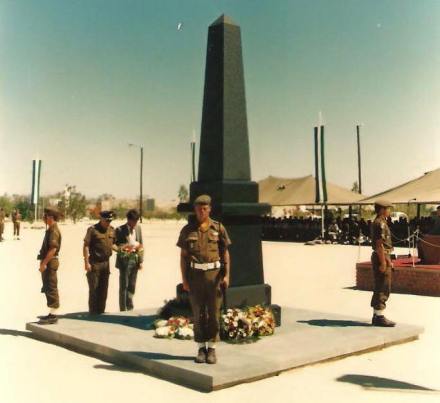
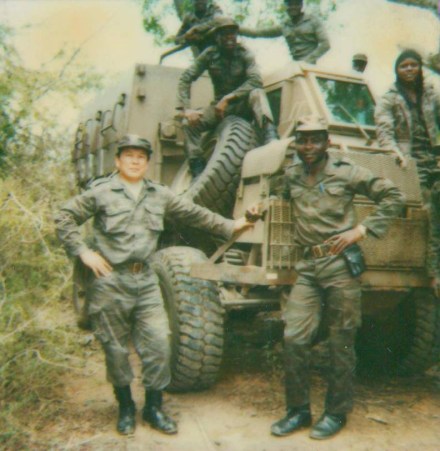


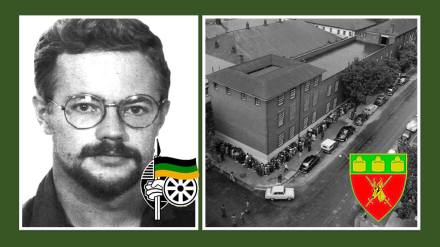
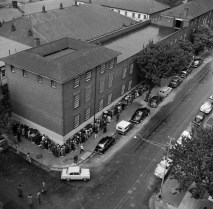 On 30 July 1987, a bomb exploded at the Witwatersrand Command’s Drill Hall injuring 26 people (no deaths), the injured were made up of a mix of both military personnel and by-standing civilians. The Drill Hall was targeted because not only was it a military installation, it was also the same historic Hall in which the 1956 Treason Trial took place and significant to ‘struggle’ politics.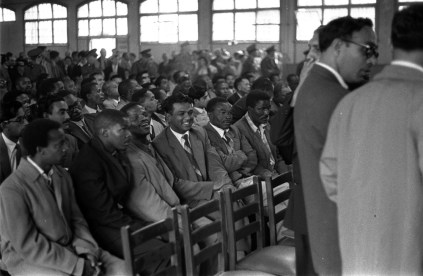
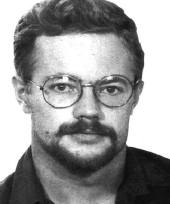


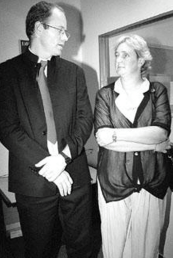 At her request Klaasen and Grosskopf met for a few minutes in private after the hearing and then they both posed briefly and rather awkwardly for this photograph (note the body language). Neither of them elaborated on their meeting, Klaasen was only prepared to say that it had been good.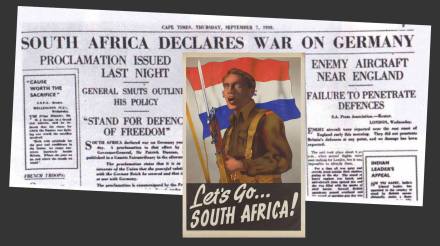


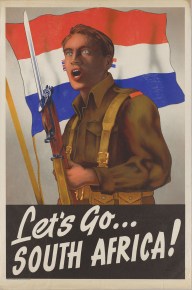 On the eve of World War II the Union of South Africa found itself in a unique political and military quandary. Though closely allied with Great Britain as a co-equal Dominion under the 1931 Statute of Westminster with the British king as its head of state, South Africa had as its Prime Minister on 1 September 1939 Barry Hertzog, the leader of the pro-Afrikaner anti-British National party that had joined in a unity government as the United Party.
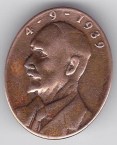 To celebrate Smut’s victory in Parliament that day a special button/lapel badge was made inscribed with 4-9-1939 for the party faithful.
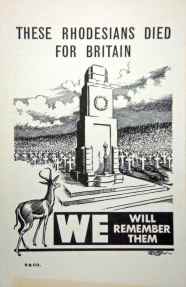 A very interesting part of the sequences of declarations of war against Germany, was that of Southern Rhodesia (now Zimbabwe), and it stands out as a unique one. The Southern Rhodesian government almost immediately followed the British declaration of war with their own. They can even be said to hold the mantle as the very first of the British Dominions and Colonies to stand by Britain in their hour of need. Steadfast and swift in support of their ‘motherland’ – The United Kingdom, no quibble about it either, as there was no long parliamentary debate over the issue – it came without even a second thought on the matter. In all 26 000 Rhodesians volunteered to fight during World War 2.
 In terms of the semantics of the ‘term ‘standing alone’ after Dunkirk, in many cases the Commonwealth countries did not have immediate operational readiness to come alongside the UK in the summer of 1940. However we must remember that the Battle of Britain (when Britain really ‘stood alone’) was an air battle, where a ‘few’ pilots held off the German assault – and alongside the 2353 British pilots stood 574 pilots from other countries – 24%, – a quarter of the combat force. Most of them came from the Commonwealth countries (342 pilots in total including Rhodesians and South Africans). So Britain never really ‘stood alone’ in that context either.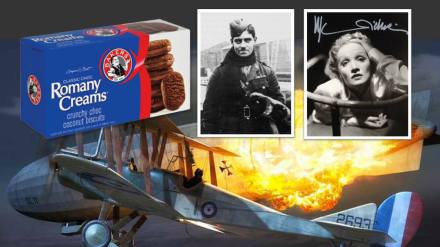
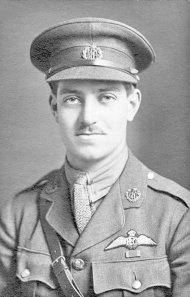
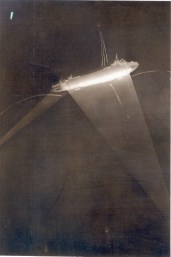
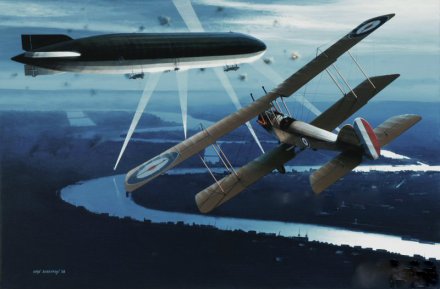
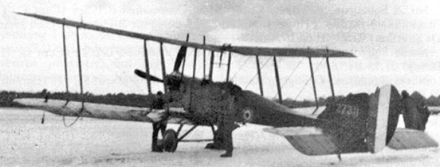
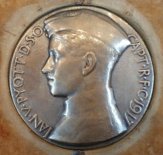 Such a big deal was made of this victory, that a special commemorative coin was even stamped to celebrate Capt. Pyott’s actions and resultant DSO. Zeppelins were so feared by the British public they were branded ‘Baby Killers’ as the bombing of civilians carried with it such a public outrage. The commemorative medal carried Capt Ian Pyott’s profile, the year and the letters DSO, it was presented to him at Hendon Aerodrome in England by none other than General Jan Smuts.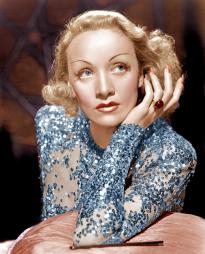
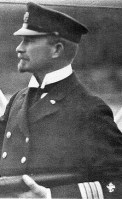
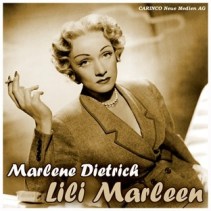 Especially for the South Africans, The song was published in South Africa in a wartime leaflet, with an anonymous English translation, as ‘Lili Marleen: The Theme Song of the Eighth Army and the South African 6th Armoured Division’ (quite ironically).
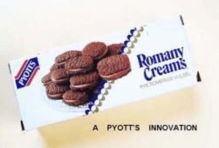 Innovative as ever, the biscuit part was shaped the same as for “Gypsy Creams”, but the biscuit part (referred to as the shell) was improved and it was sandwiched with a chocolate filling instead, no doubt provided by Cadbury’s Chocolates.
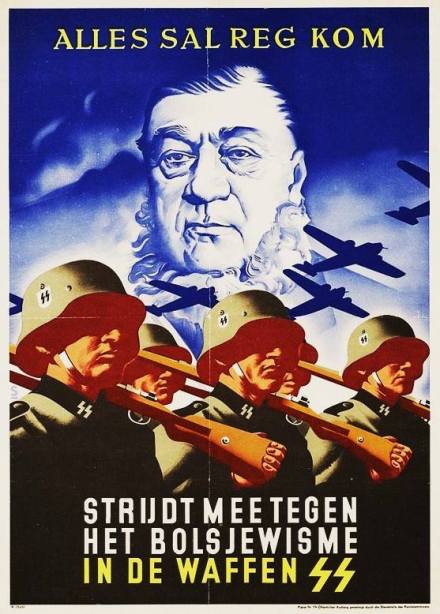


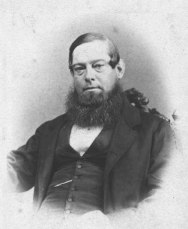


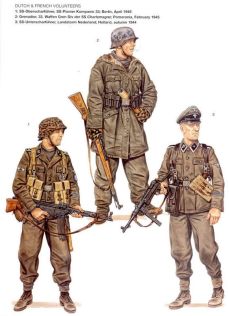
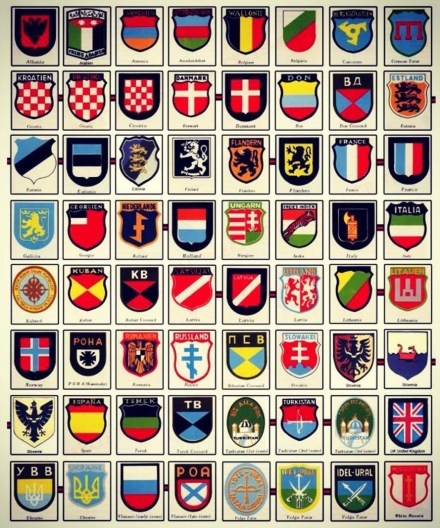


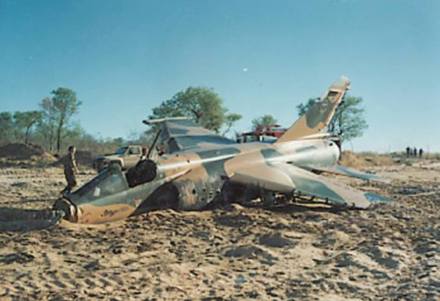
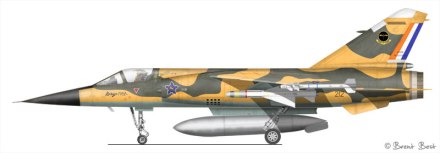
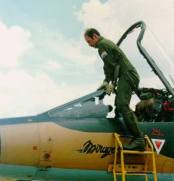 After take-off we remained low level and set heading for the combat zone. It was our intentions to remain low level for as long as possible to avoid being detected by the Angolan radar’s.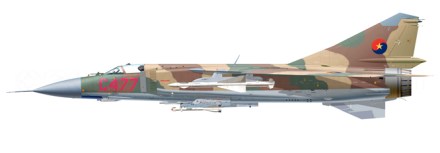
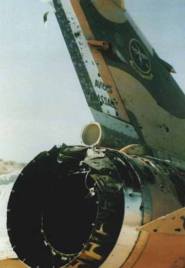 It was now about five minutes later and half-way home when the first warning light flashed on. EP pump failure. Instinct must have taken over because I thought my first reaction was to call the boss and tell him I have a failure. He pulled out his emergency check list, and started reading the failure procedures for me. All the necessary switches had be set. I don’t remember doing them.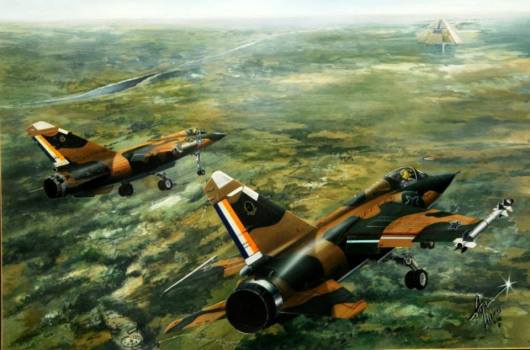
 Landing a perfectly serviceable aircraft on a 7500′ runway requires some work. I was going to have to do it on emergency throttle and without a drag chute – a task I felt I could handle.
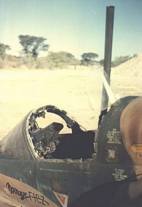 When I regained my senses I was lying in the sand on my right hand side. The first thing I attempted to do was to roll onto my back and when I pushed on the sand with my left arm there was this incredible piercing pain in my arm. The left arm was broken just above the elbow. I then looked down at my legs to see why they had not moved and I could not feel them at all. I realized that the ejection seat was still strapped to my back and thought that this might have something to do with the lack of movement in my legs. I had no idea that the neck was dislocated.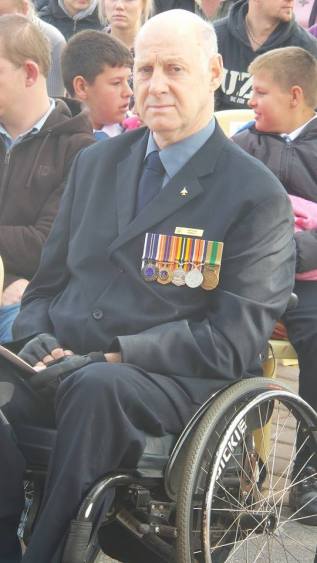
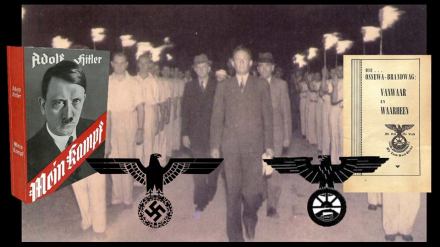
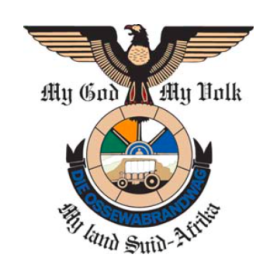
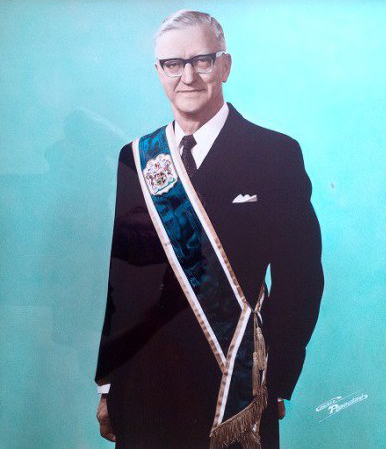
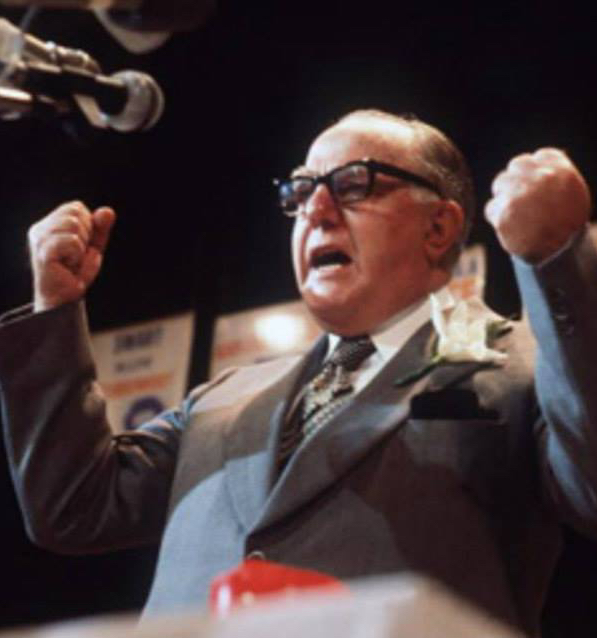


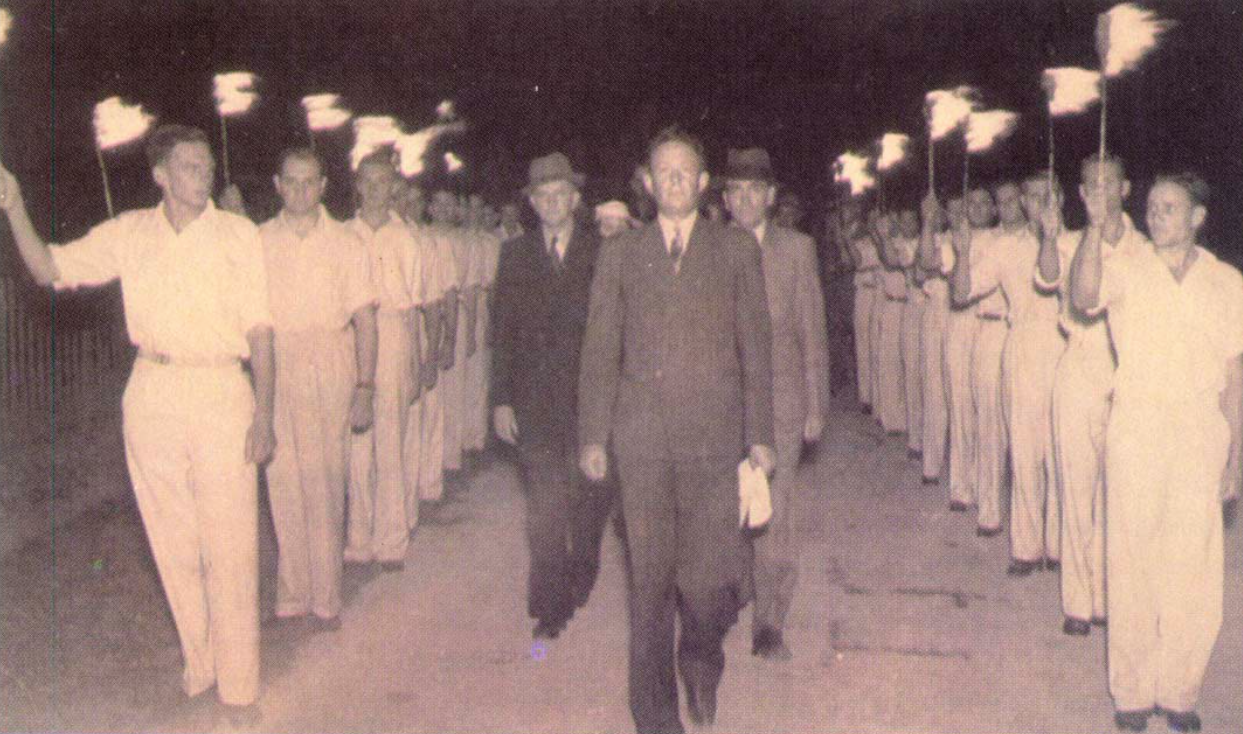
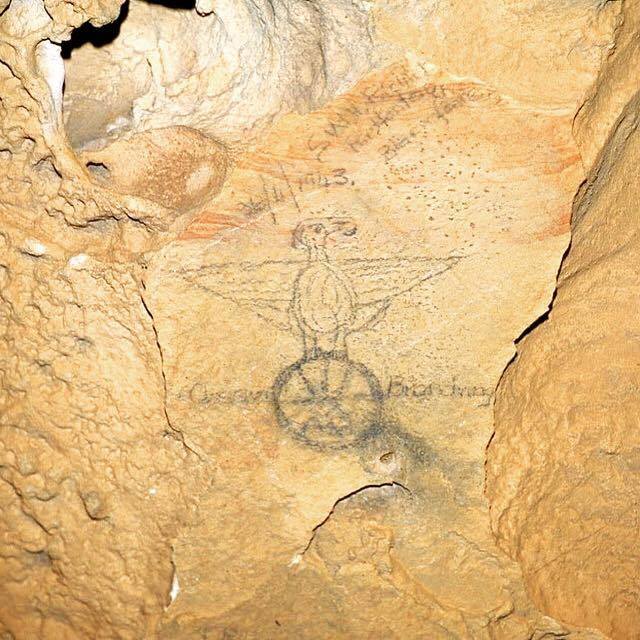

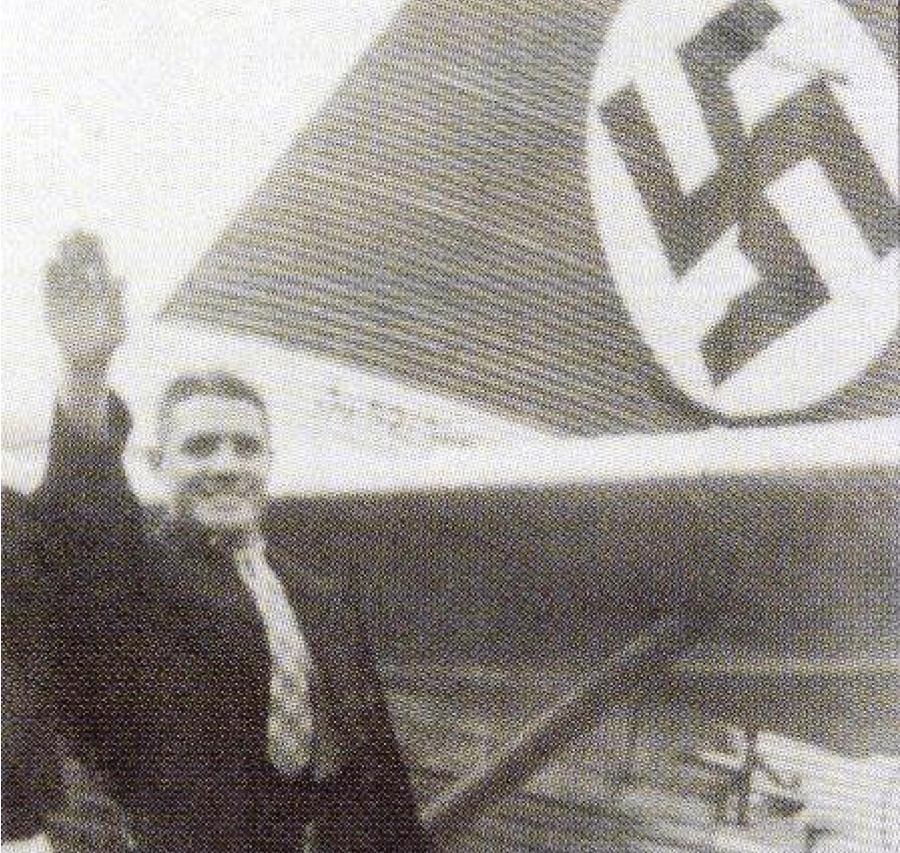
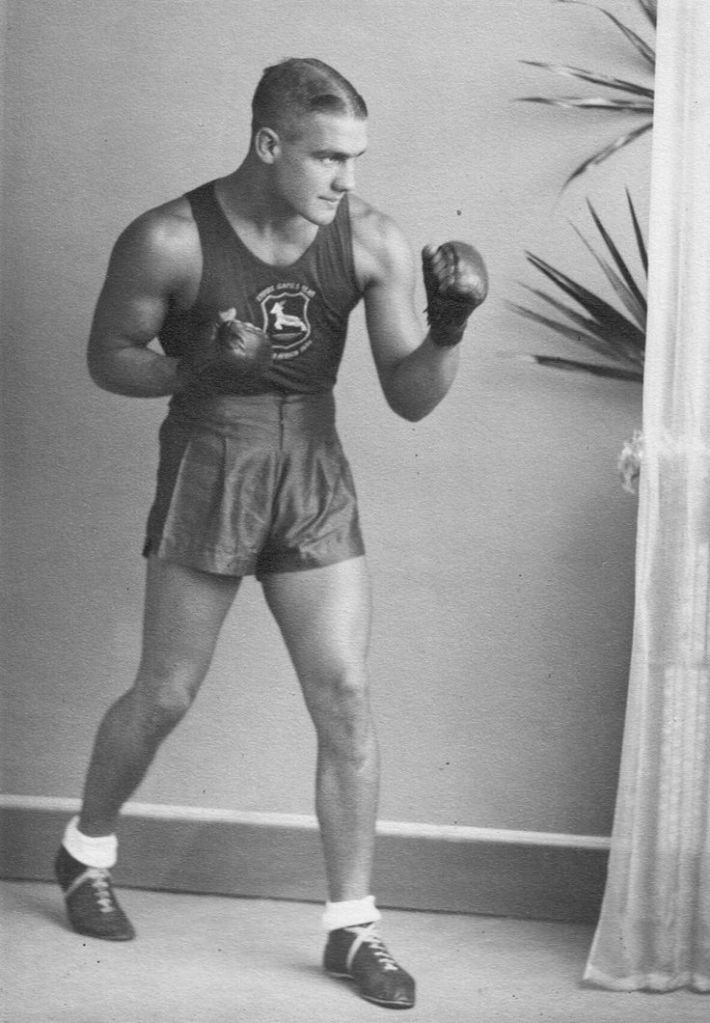

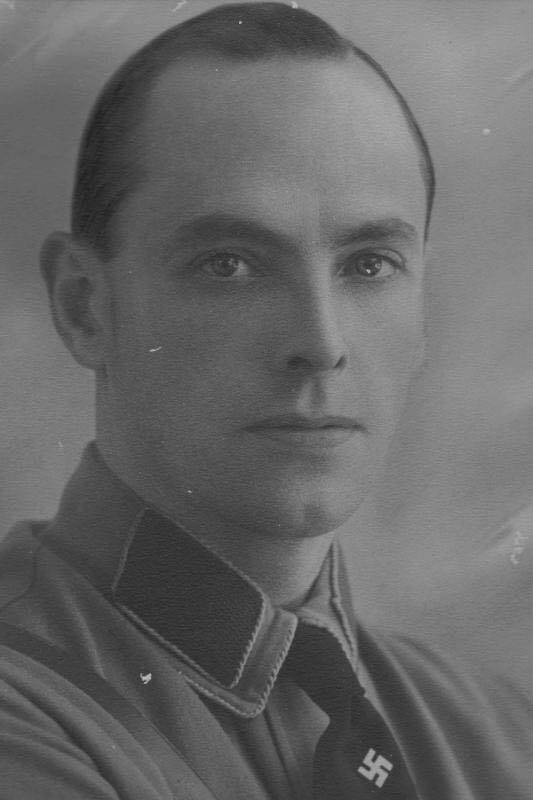


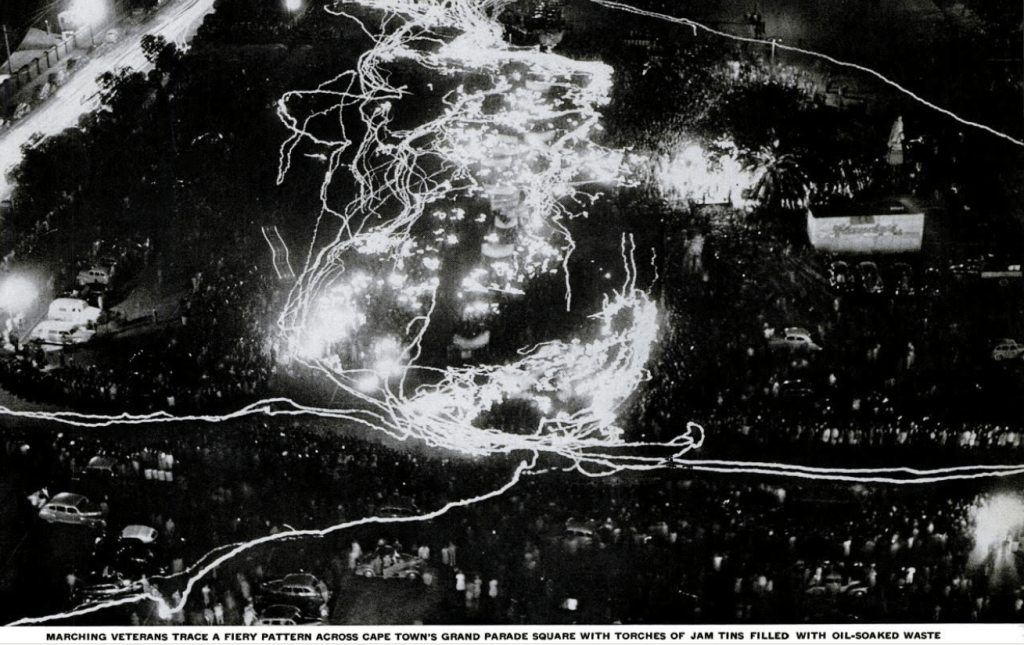
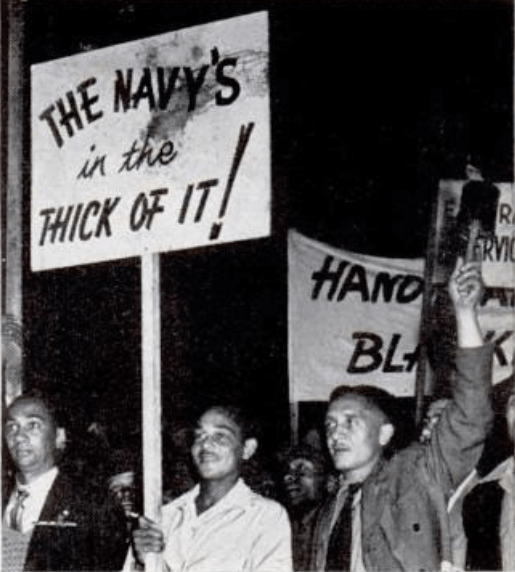


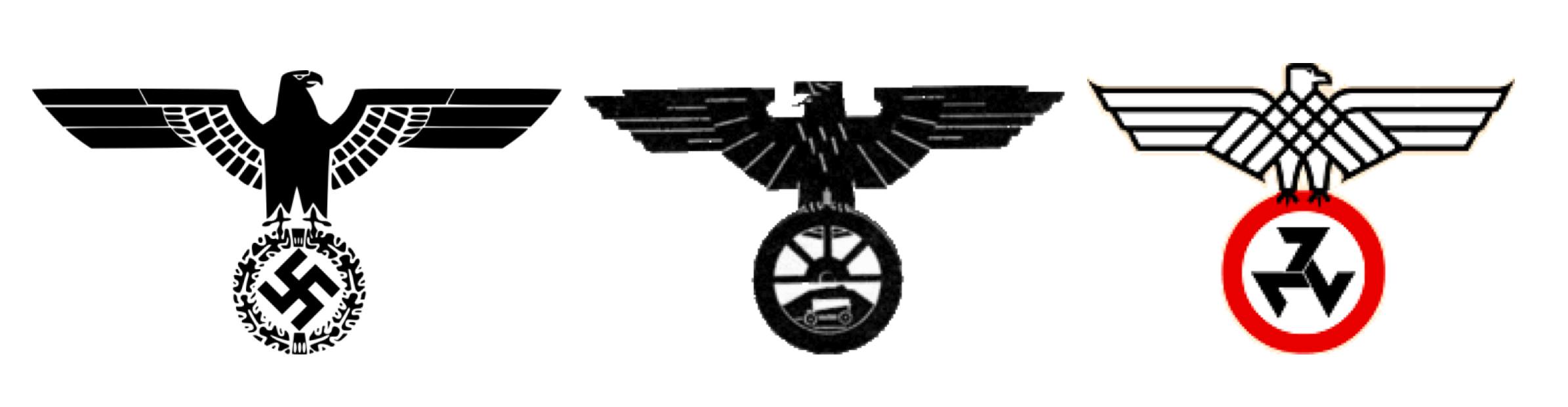
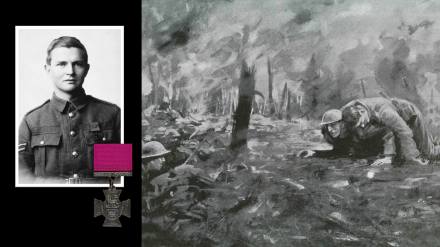
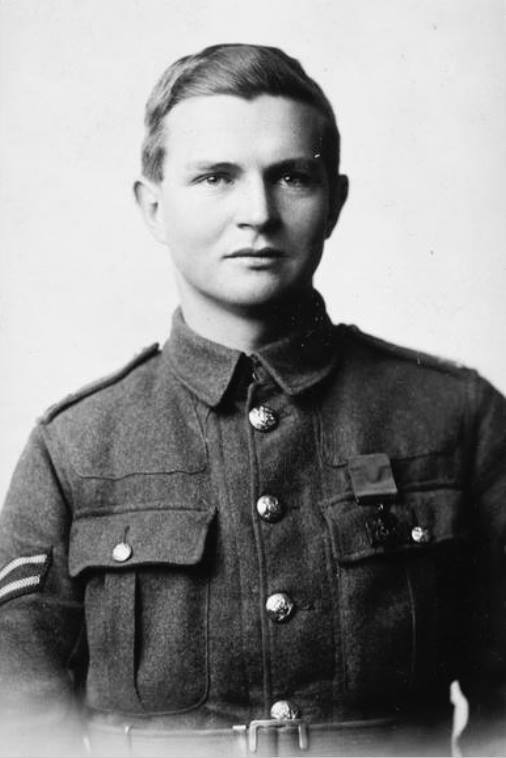 William Faulds, a young man who won a Victoria Cross, the highest award for gallantry, at Delville Wood is quite literally a case of a normal young South African placed in an extraordinary circumstance, only to emerge with that “X” factor which sets him apart, and that’s quite something considering everyone around him can in their own right can take the mantle of the ‘bravest of the brave’, such was the nature of the battle.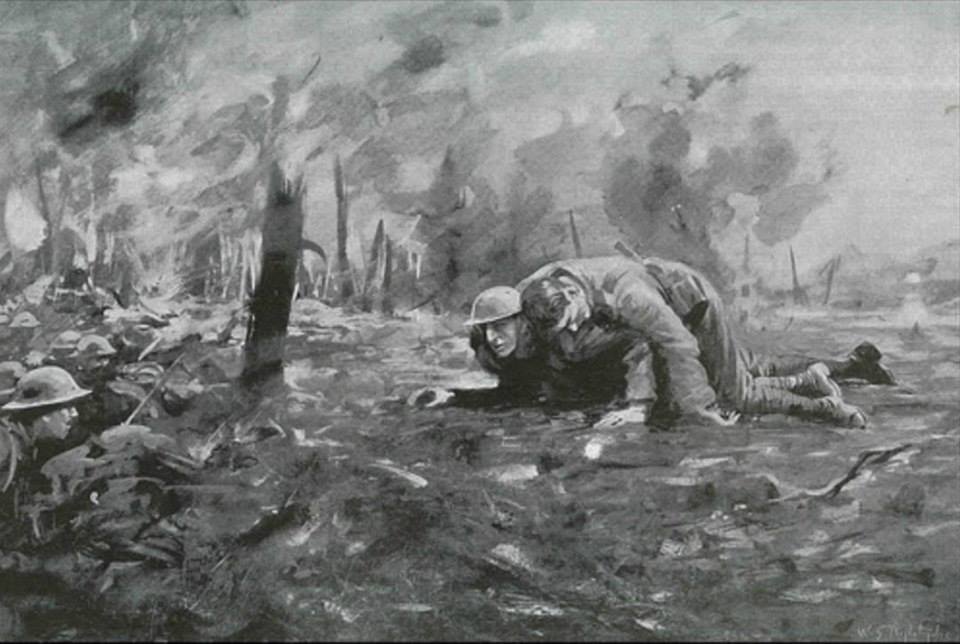


 The Observation Post