3.2.1….You’re IN! MOTH Jan Smuts

The ritual to add a new Memorable Order of Tin Hats (MOTH) member to the Order is a countdown by all MOTH present with an unanimous “You’re In”. And with that you’re a MOTH and it’s something special. So, what’s this Order all about and why Jan Smuts?

In essence it’s a British, South African, Namibian (South West African) and Zimbabwean (Rhodesian) veteran’s association, however it’s more than just a Veteran’s Association because it carries ‘ritual’ found only in Orders, and that makes the MOTH special. It’s also a special association as it’s only for ‘combat veterans’ – it was formed after World War 1, it continued through World War 2 and it continues to the present day.
The MOTH is not the oldest military veteran association, that honour belongs to The South African Legion, but it is the second oldest and pretty old at that – it was established on the 7th May 1927, as at 2022 (at the time of writing this) it celebrated its 95th birthday (and I’m honoured to have this commemoration on my blazer too). The Legion on the other hand is now over 100 years old (and I’m again a proud Legionnaire). That makes the MOTH and S.A. Legion two of a handful of surviving institutions and brands in South Africa which such longevity. Both organisations originated almost hand in glove, and they still thrive together and you can fully expect the MOTH to still be around when it turns 100. For more on the South African Legion and the roots of Remembrance in South Africa follow this link Legions and Poppies … and their South African root

So, how did the MOTH come about? It was established by returning veterans of the 1st World War 1914-18. Charles Evenden was the driving force, and sought to create an Order of combat veterans only, men who had been in the trenches and had the shared bond of combat and the harsh conditions which come with it. Of it he said the MOTH sought to sustain that “personal intimate comradeship that the front line had generated and venerated” and core ideal was to be a ‘flame of remembrance’ for those comrades killed in action – a “light” in effect which would govern three principles – True Comradeship, Sound Memory and Mutual Help.
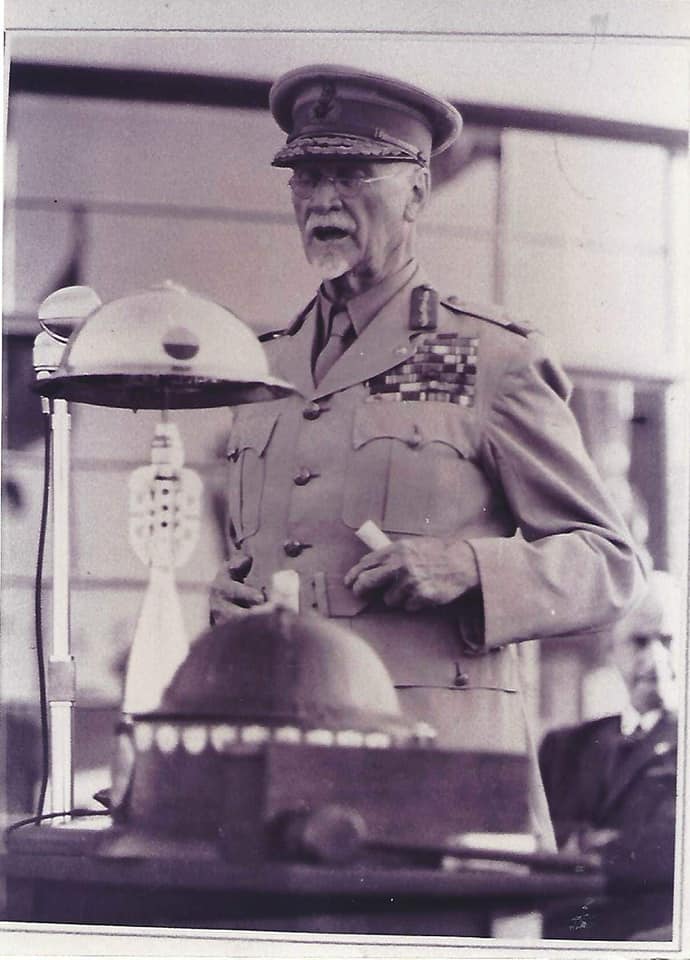
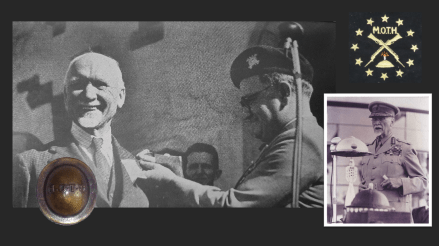
Field Marshal Jan Smuts attending a MOTH meeting, note the Brodie Helmet ‘Tin Hat’ with the candle of remembrance on top of it. Also note, MOTH Jan Smuts’ Old Tin Hat lapel pin on his left lapel just to the right of his ribbons.

By way of ritual, a candle is placed on a 1st (and 2nd) World War Brodie Helmet as a symbol of the ‘light of remembrance’, it is lit at the opening of meetings and snuffed out by hand at the closing. The Brodie Helmet is significant to the Order, during both World Wars is was often called a ‘battle bowler’ by the British, a ‘doughboy helmet’ by the Americans and a ‘salad bowl’ by the Germans – but the name which stuck to it the most, used by both British, British Empire (WW1) and Commonwealth (WW2) troops was .. “Tin Hat”. Hence, the name of the Order – Memorable Order of Tin Hats. A small token of this helmet is worn on the left lapel by MOTH members and identifies them as such to others.

As the originator of the Order, Charles Evenden was designated the – MOTH O. Each MOTH has a designated number stemming from the beginning. Mine is 23774, there’s been a lot of MOTH influencing South African society over many years.

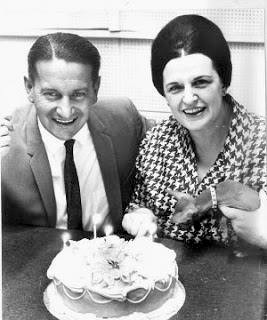
Now, to Jan Smuts, it would not be long before the Oubaas would find himself a MOTH, and here he is as Prime Minister receiving his countdown and Old Tin Hat label pin from none other than MOTH O. Smuts qualified as a MOTH on multiple levels, he had participated in multiple wars (3 in total) and been in multiple operational circumstances qualifying as a combat veteran on a number of levels. Not only was Smuts a MOTH, he also founded the South African Legion – and along with Winston Churchill received a gold membership status – for more on this click here Two fellow members of The South African Legion – Churchill and Smuts
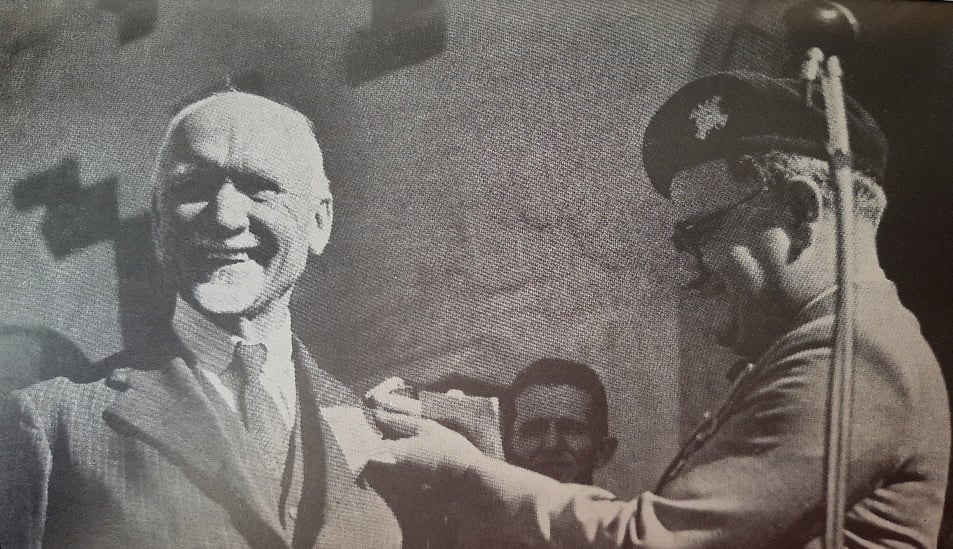
MOTH O inducts MOTH Jan Smuts

By 1928, ‘Shellholes’ (MOTH Branches) named for regiments, battles, personalities and other memories of wartime service, had sprung up in Natal and the Rand, such as Majube (at Volksrust), Somme (Jeppe, Johannesburg), ‘Wizz Bangs’ (Bellvue, Johannesburg), Nurse Cavell Shell Hole in Pietermaritzburg.

Post World War 2, MOTH expanded dramatically with new ‘shellholes’, such as Winston Churchill (Cape), ‘Hellfire Corner’ (Durban), Up North (Pietermaritzburg), Tobruk (Danneshauser), Desert Rats (Johannesburg), Dan Pienaar (Johannesburg), Sidi Rezegh (Johannesburg), Steel Helmet (Johannesburg) – and many more.

Whilst some Shellholes have closed down over time, post the Angolan Border War, new Shellholes have arisen, such as Cuca (Western Cape), Pro Patria (Western Cape), Savanna (Gauteng) and many others started to spring up as old SADF Conscripts and Permanent Force members stated joining the Order.

Each Shellhole has a ‘Old Bill’ as chairman – Old Bill was a cartoon character created by Bruce Bairnfather; the archetypal British private soldier in the trenches, bemoaning his fate, with the sly and dry humour linked with the common-sense of the ‘Old Sweat Tommy.’ There is a Deputy Old Bill (sometimes known as a ‘Wee Bill’), a Paybill (the Treasurer), an Adjutant (the Secretary) and a Sergeant Major (responsible for ceremonies and bearing). Bigger Shellholes also have a Quarter Master (responsible for kit and MOTH items), some have their own Padres in addition.
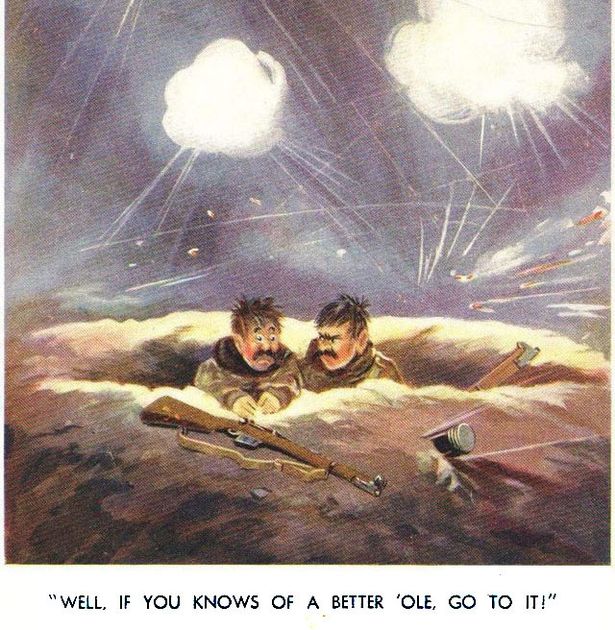
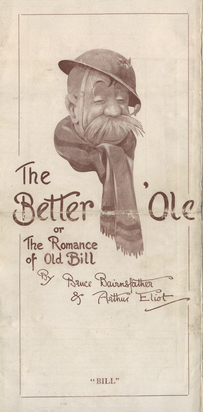
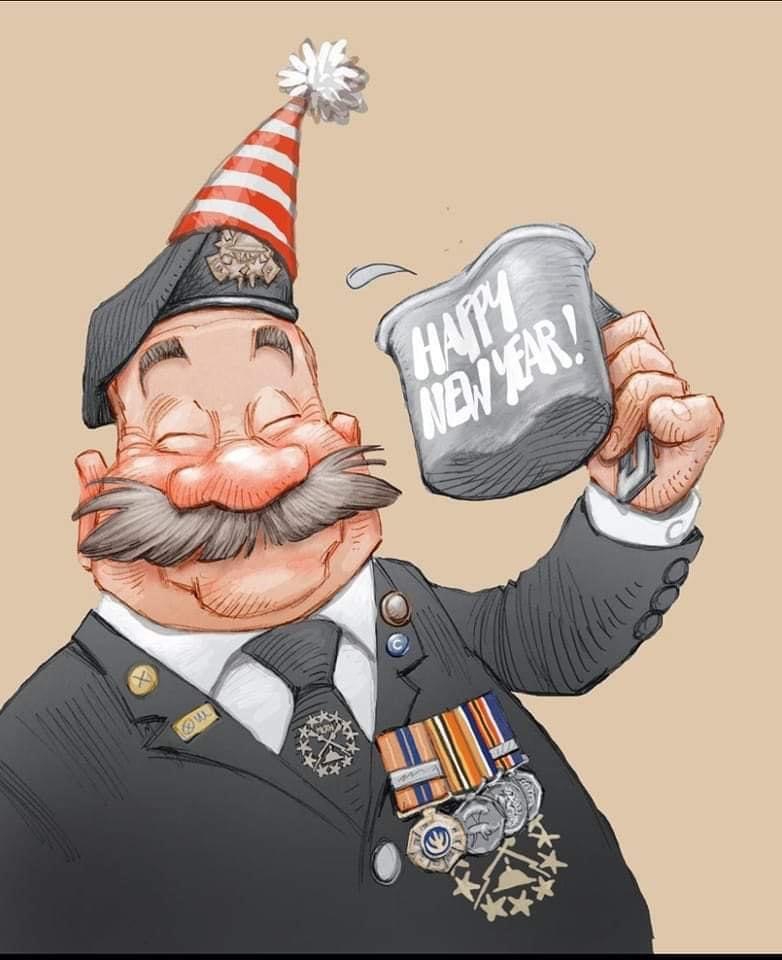
Images: The Old Bill by Bruce Bairnfather – an image of him is found in nearly all MOTH Shellholes and a modern MOTH take on him.

All ‘shellholes’ were intended to be self sufficient, and expected to choose an objective or cause ‘in the interests of the wider community’. One such fine example is the Mills Bomb Shellhole, in Durban, always full of English speaking South Africans, ex-British servicemen, and Germans, from both World Wars and other conflicts.

Warriors’ Gate MOTH Shellhole, within the Old Fort in Durban, was completed in 1937, a superb building in the Cape Dutch style on a design of a Norman Keep modelled from a photograph given to Evenden by Admiral E.R.G.R.Evans “Evans of the Broke”, built by its Shellhole members, the Gate is both the spiritual HQ, and executive HQ of the MOTH movement. It also has a high quality museum and in it inner circle you will find a prized bronze bust of none other than Field Marshal Jan Smuts.

Whilst purely a South African institution, over the years ‘Shellholes’ sprung up in Southern Rhodesia (Zimbabwe) and Northern Rhodesia (Zambia), Nyasaland (Malawi), South West Africa (Namibia), Swaziland and England, the scattering of the modern South African military veteran diaspora since 1994 now sees Shellholes in Ireland and New Zealand. A Cyber Shellhole (keeping with modern-times) sees MOTH members in places as far flung as  Australia, Canada, Belgium, Dubai, Indonesia, Portugal, remote areas of South Africa and the United Kingdom.

For a full list of Shelllholes to find one near you, here’s a link to the MOTH website: https://www.moth.org.za/shellholes/

Back to MOTH Jan Smuts, its important to note that the MOTH has always stressed the lack of ‘rank and swank’ within the ‘Shellholes’, to consolidate its membership across classes, ranks, generations and language. So, in the Order, Jan Smuts would not have been addressed as ‘Field Marshal’ or ‘General’, he would simply have been a MOTH, and having researched Smuts I would say he probably have enjoyed the anonymousness and plain equality – he certainly cracked a wide smile receiving his tin hat lapel pin.

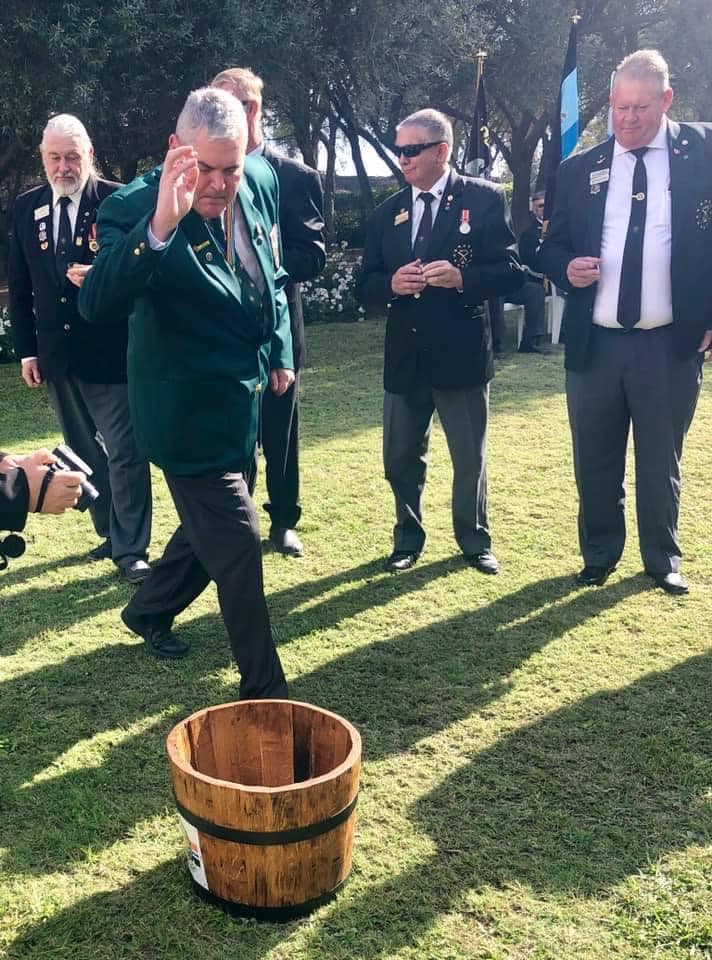
Jan Smuts is important to the MOTH Order, a Shellhole, the ‘Field Marshal’ exists at his home, Smuts House in Irene (now a museum), the ‘Ouma’ Shellhole existed in honour Jan Smuts’ wife Isie who played a key role in running the wartime comforts fund for serving personnel during WW2 and even visited the combat zones. The ‘Marshal Smuts’ Shellhole exists in Somerset West (Western Cape) and annually his birthday is hosted by the ‘Majozi’ Shellhole at his birthplace in Riebeek Kasteel (Western Cape). MOTH members and veterans attending this parade drink a toast to the General from a special vat of brandy and smash the glass as a token of devotion to his memory.
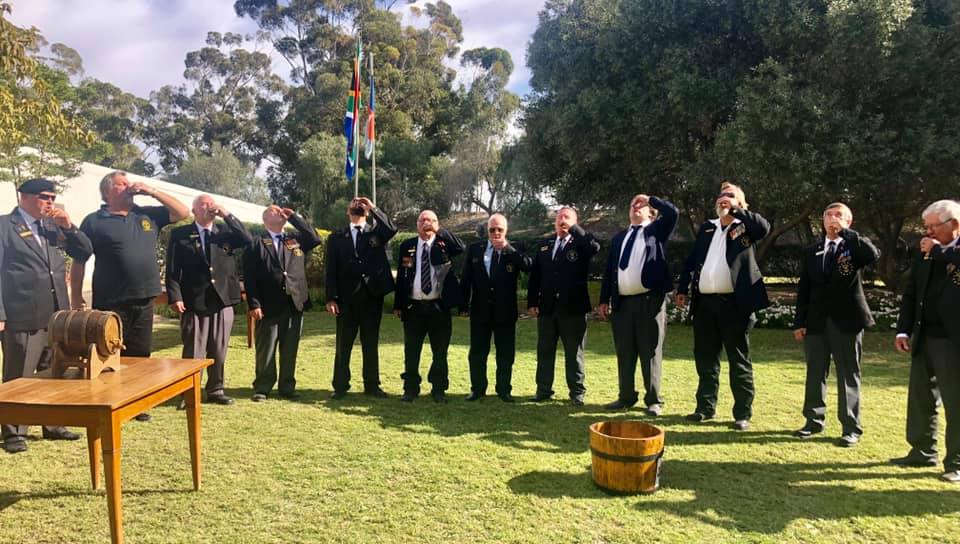
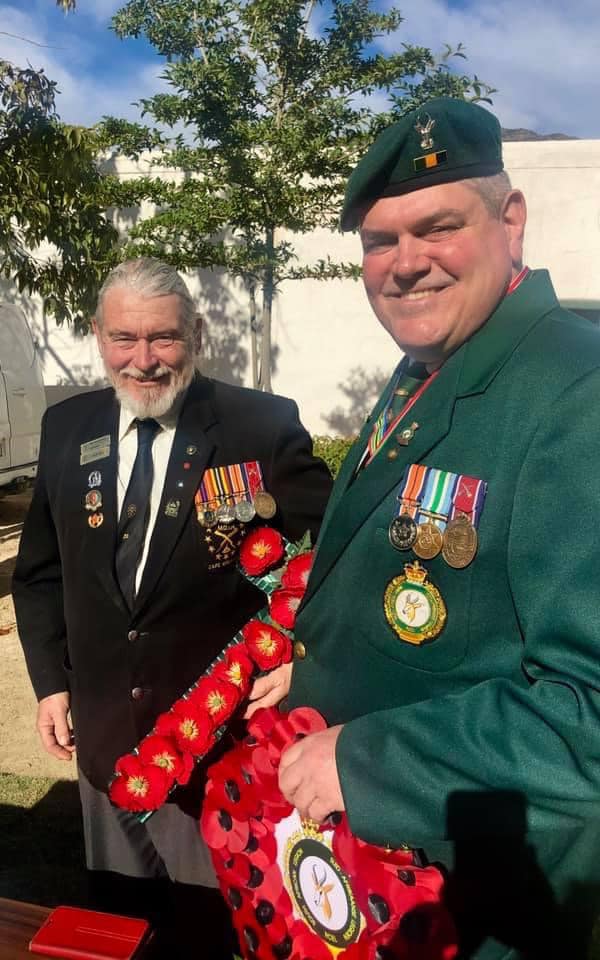
Myself (representing the Legion) and fellow MOTH at the Riebeek Kasteel parade.

A further parade is hosted at the Smuts House Museum in Irene (near Pretoria) by the MOTH Shellhole there to commemorate his birthday, and the ‘Savanna’ Shellhole also hosts a Jannie Smuts parade in Johannesburg. If you visit many Shellholes there will be this or that portrait, cornerstone, plaque, statue or artefact devoted to MOTH Jan Smuts.

So important is Smuts to the MOTH, that Smuts’ letter to Charles Evenden MOTH 0 appears on the back of the dust cover of his book ‘Old Soldiers Never Die – The Story of MOTH 0’ and the quote “you built better than you knew..” General J.C.Smuts appears on the front cover.
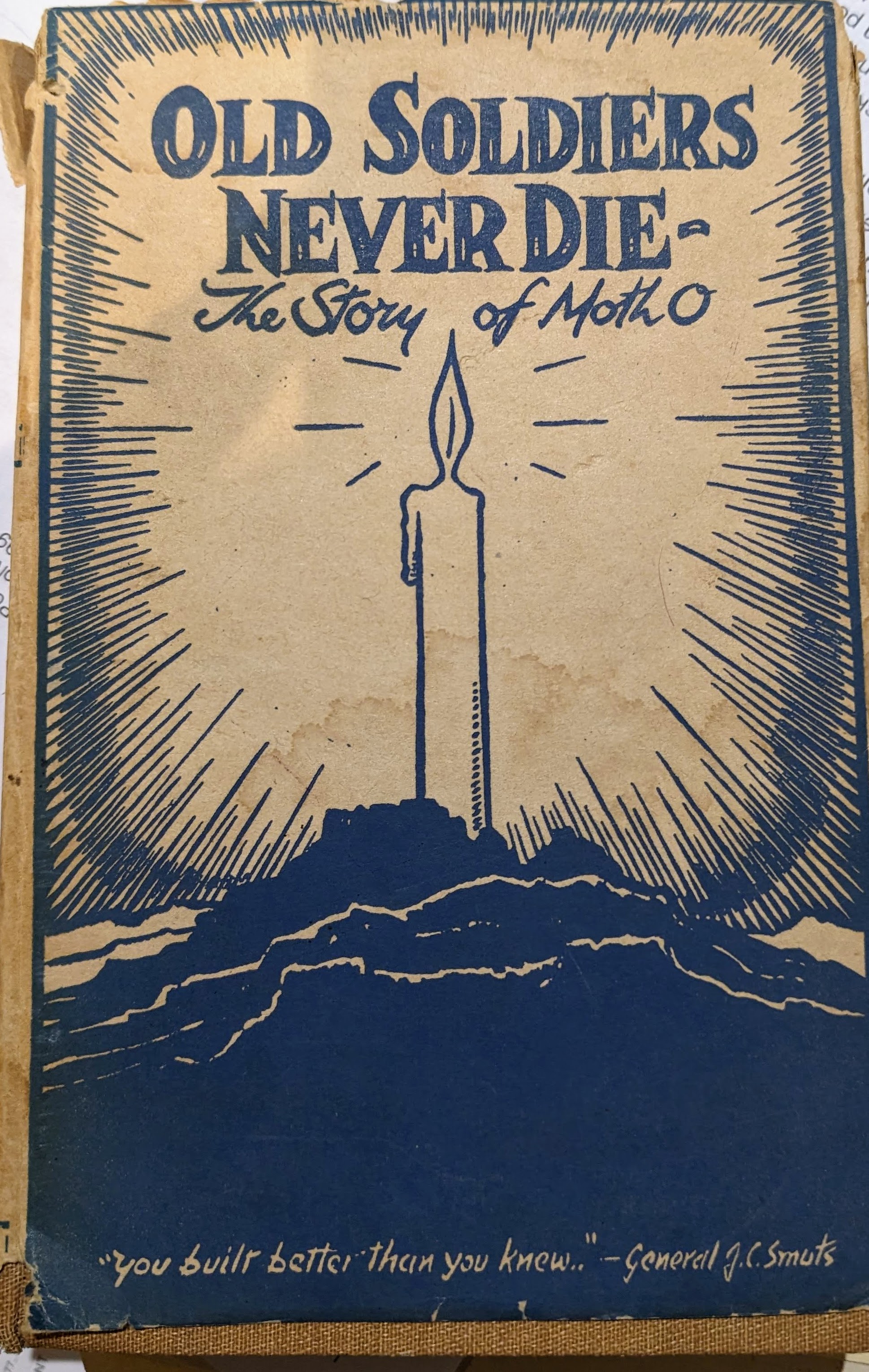
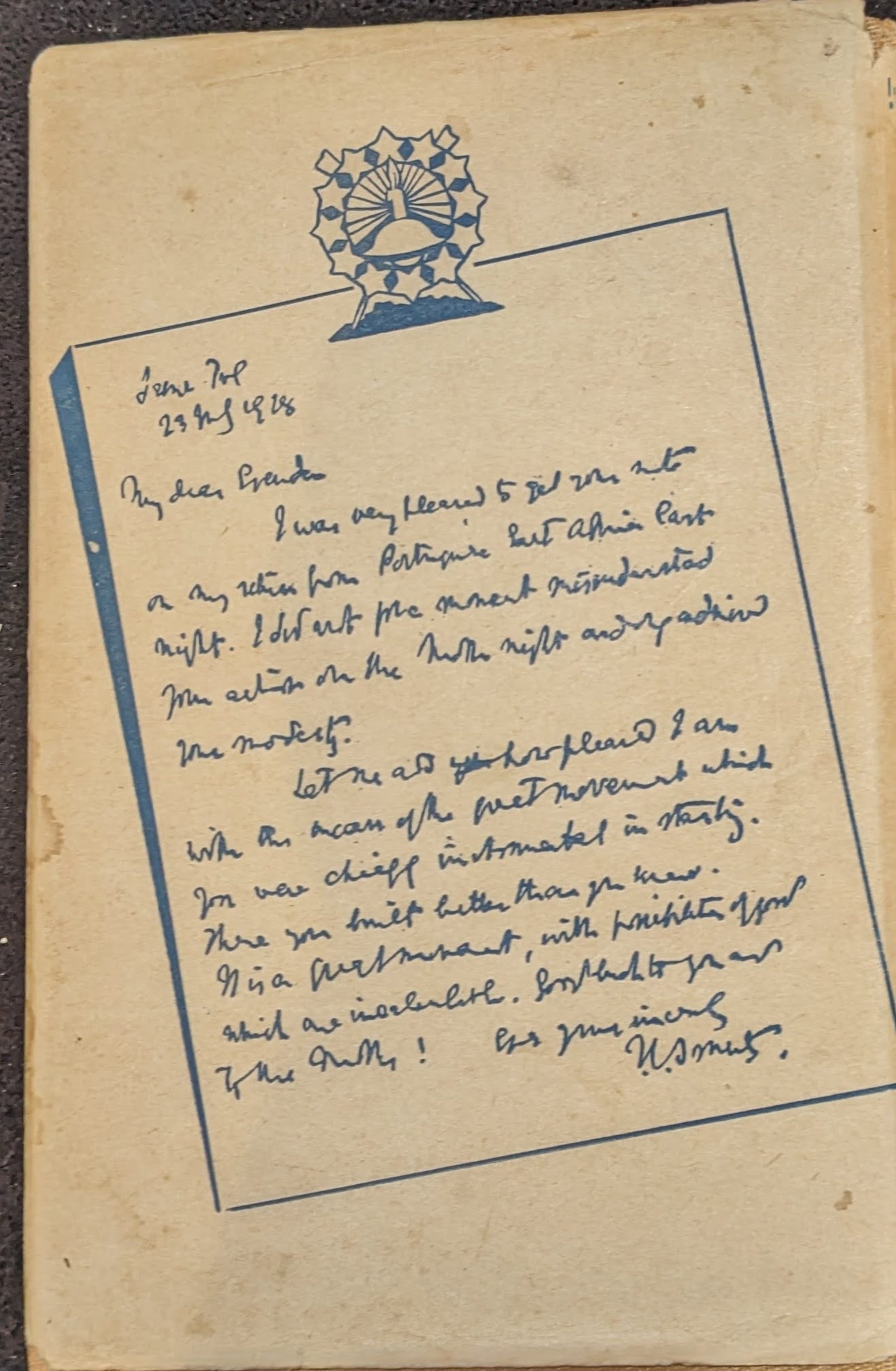
MOTH O’s book and the Jan Smuts reference in his almost illegible handwriting on the dust cover – courtesy Stef Coetzee, whose father was a MOTH having served in WW2 and this was his.

A big contribution of the MOTH Order and Smuts’ policy of integration in the armed of forces is the bringing together of English and Afrikaans speakers. The veterans of WW2 were unique in that of the combatant veterans the ratio of English and Afrikaans speakers was almost equal. These men displayed a need for ‘respectability, and to this end the original ideal ‘Mutual Help’ was of great relevance, the post-1946 ‘Home Front’ (MOTH long standing journal) stressed constantly the need to support ex-servicemen before looking at other charities. The financial support, material contributions (food and clothing), funding for schooling and university, and the networking to find unemployed Returned Men employment were of the greatest import. The 1950’s-60’s were the great hey-day’s of the MOTH.
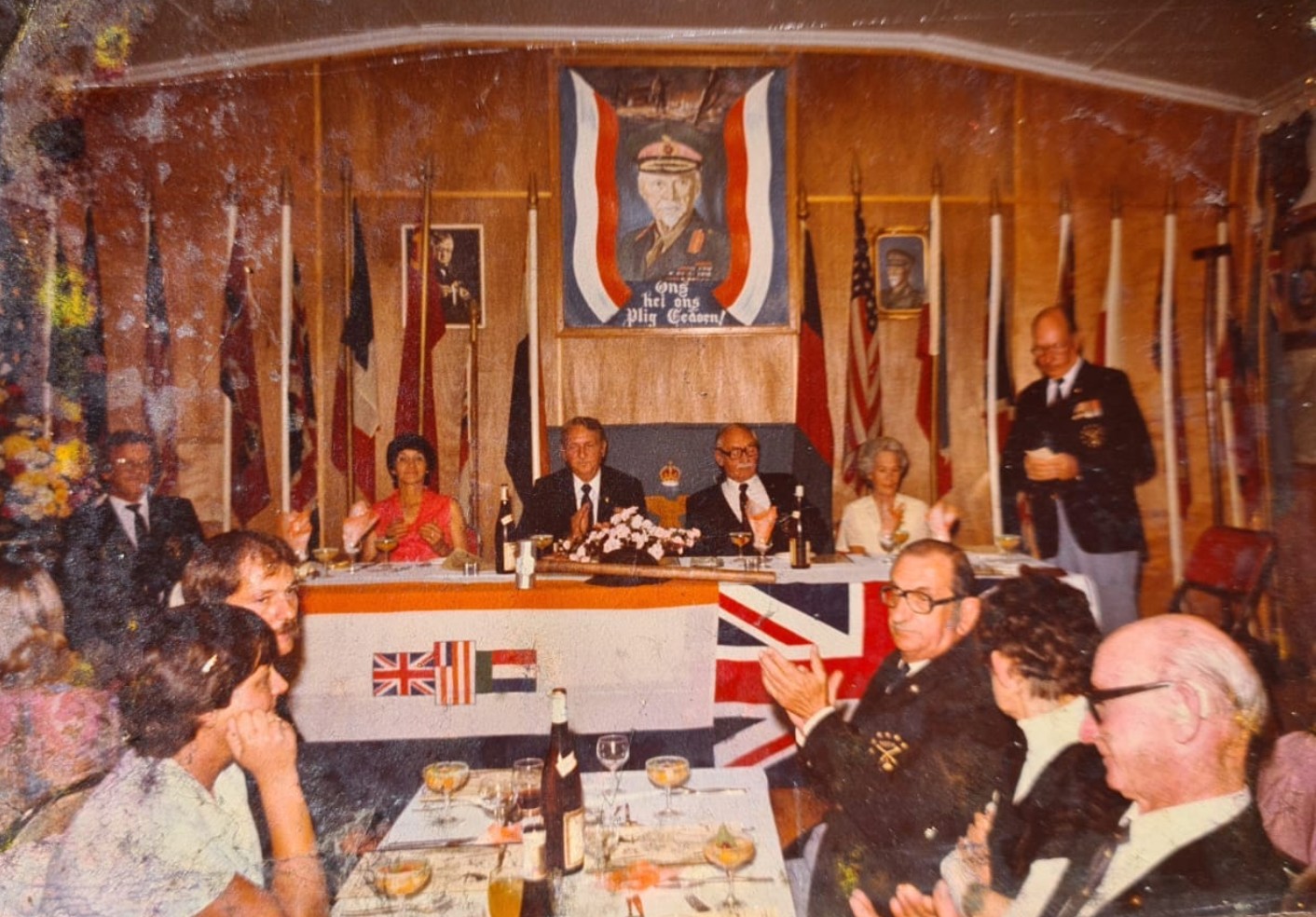
I just love this picture from Steyn Fourie of a MOTH Shellhole in its heyday, it just smacks of a time gone past, when everything in the ‘white culture’ in South Africa was so much more balanced and revered – the old Hertzog inspired OBB in its correct senior position (left) making the old Transvaal and Free State Afrikaans boys happy, the Union Jack making the Natal and Cape English boys happy in its correct position (right) … flags of all the Allied Nations of WW2 (USA, France, Canada, Australia, New Zealand and even the old Russian Federation the USSR) with whom these veterans fought alongside left and right .. and presiding over it all .. the Oubaas – Jan Smuts.

By the ‘white culture’ of this old photograph, please note that this was the majority demographic of the construct of combat veterans at the time, the MOTH is open to all races, culture and sexual orientations, it does not discriminate and will accept any operationally qualified veteran regardless.
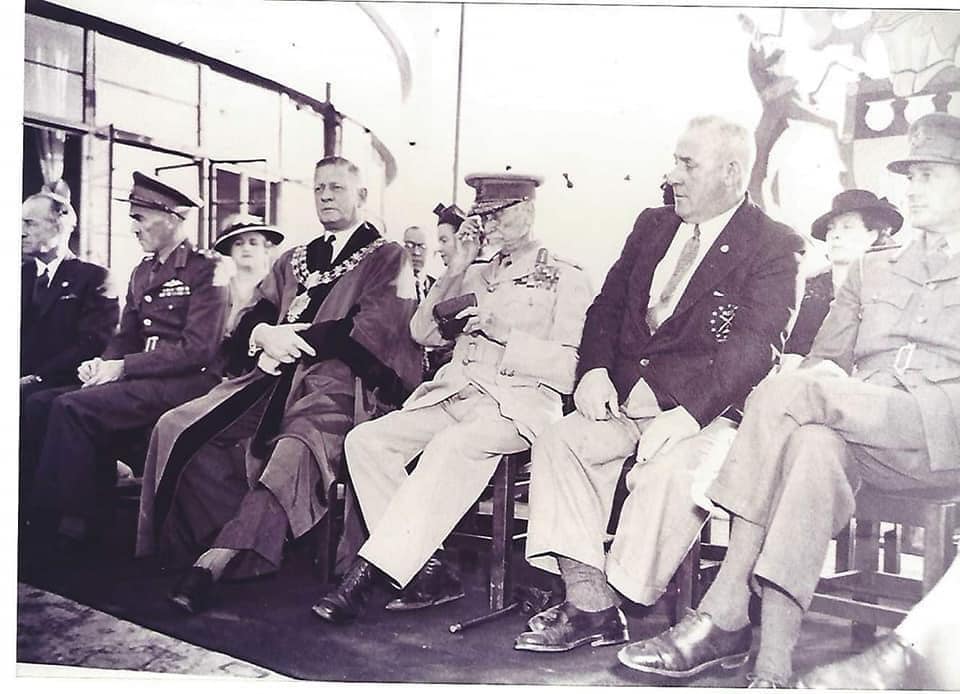
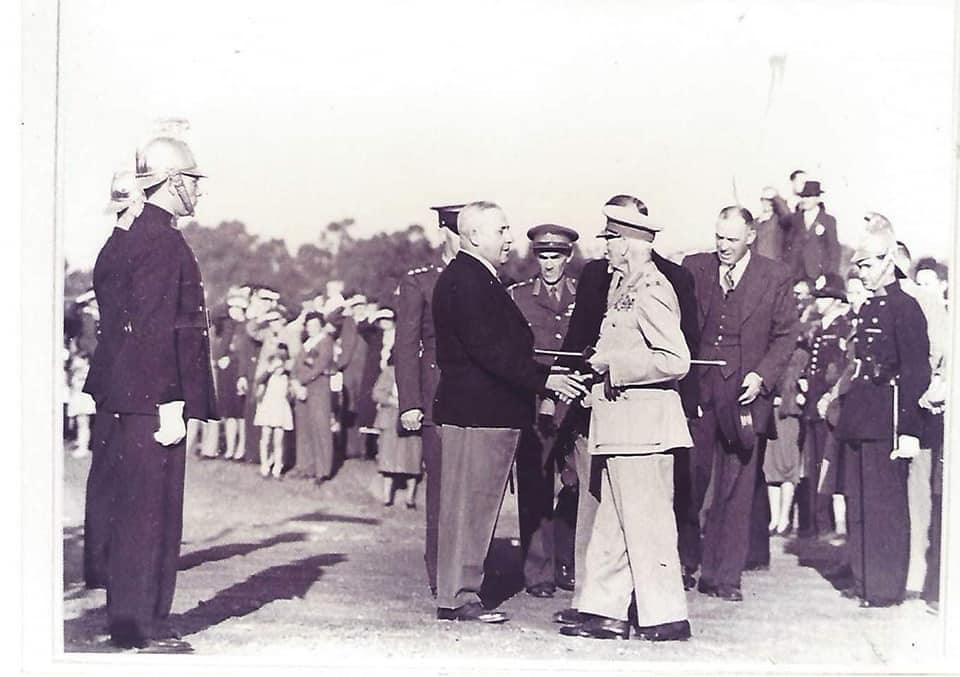
MOTH Smuts with MOTH O

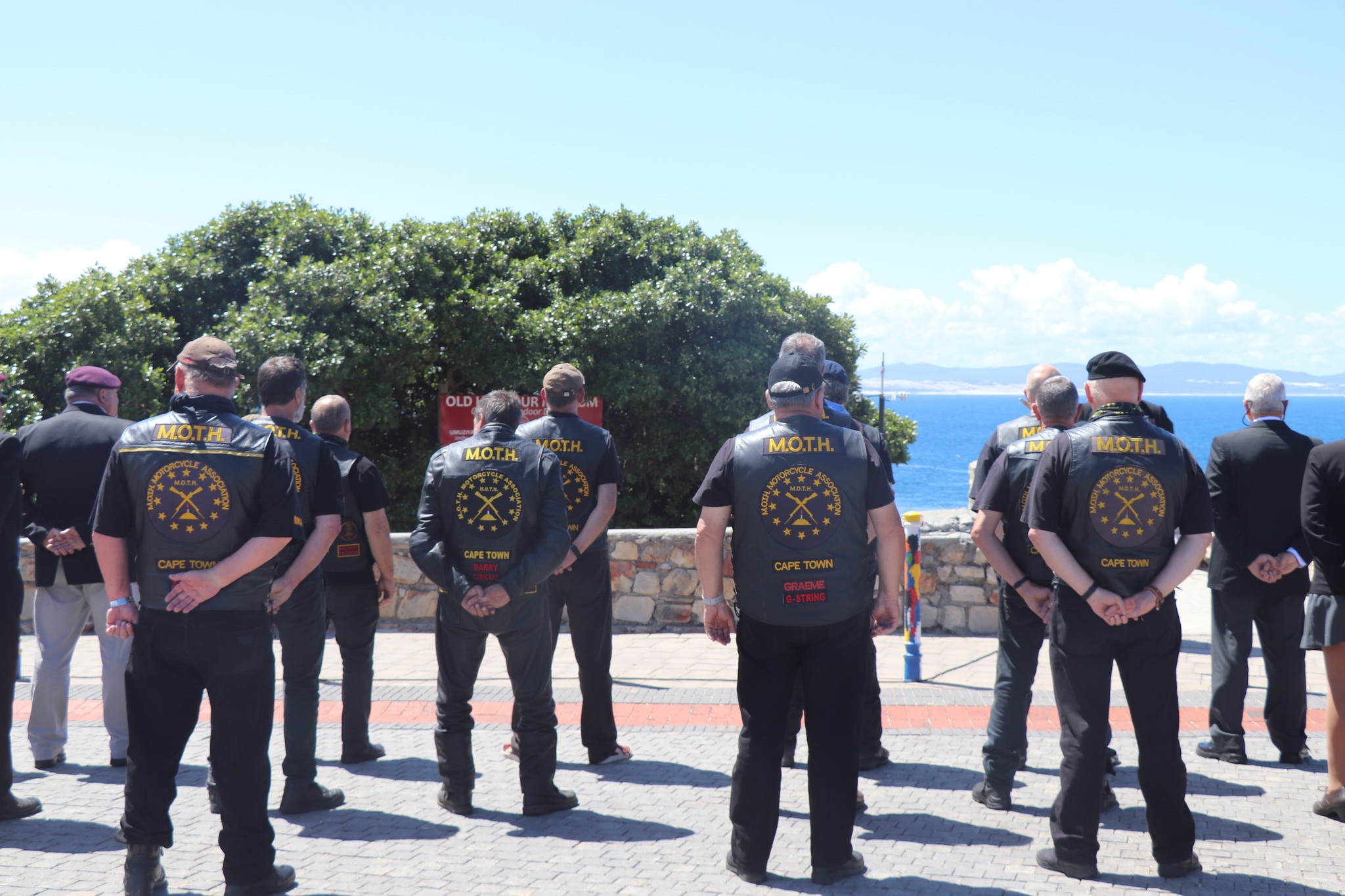
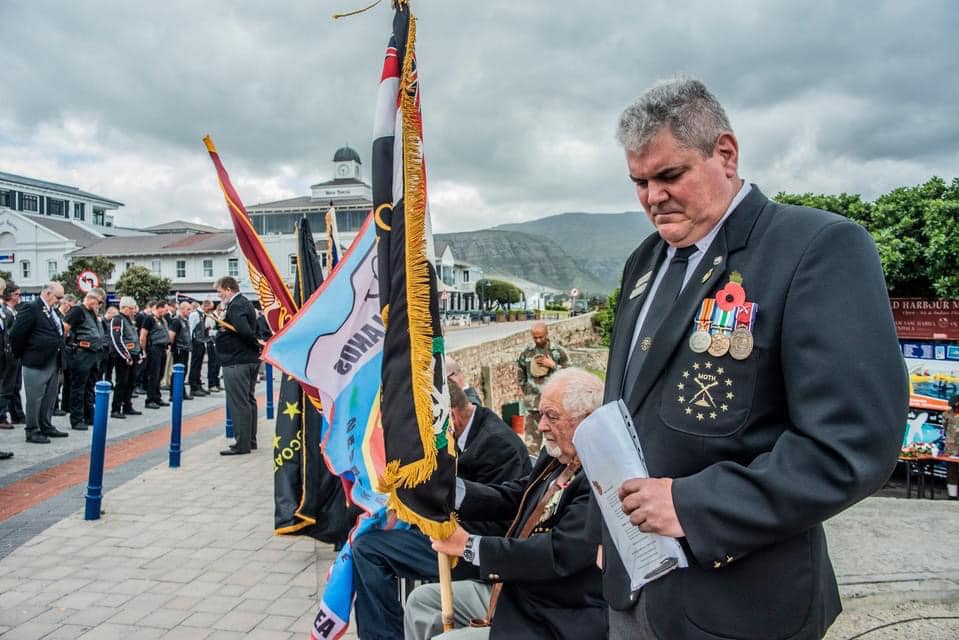
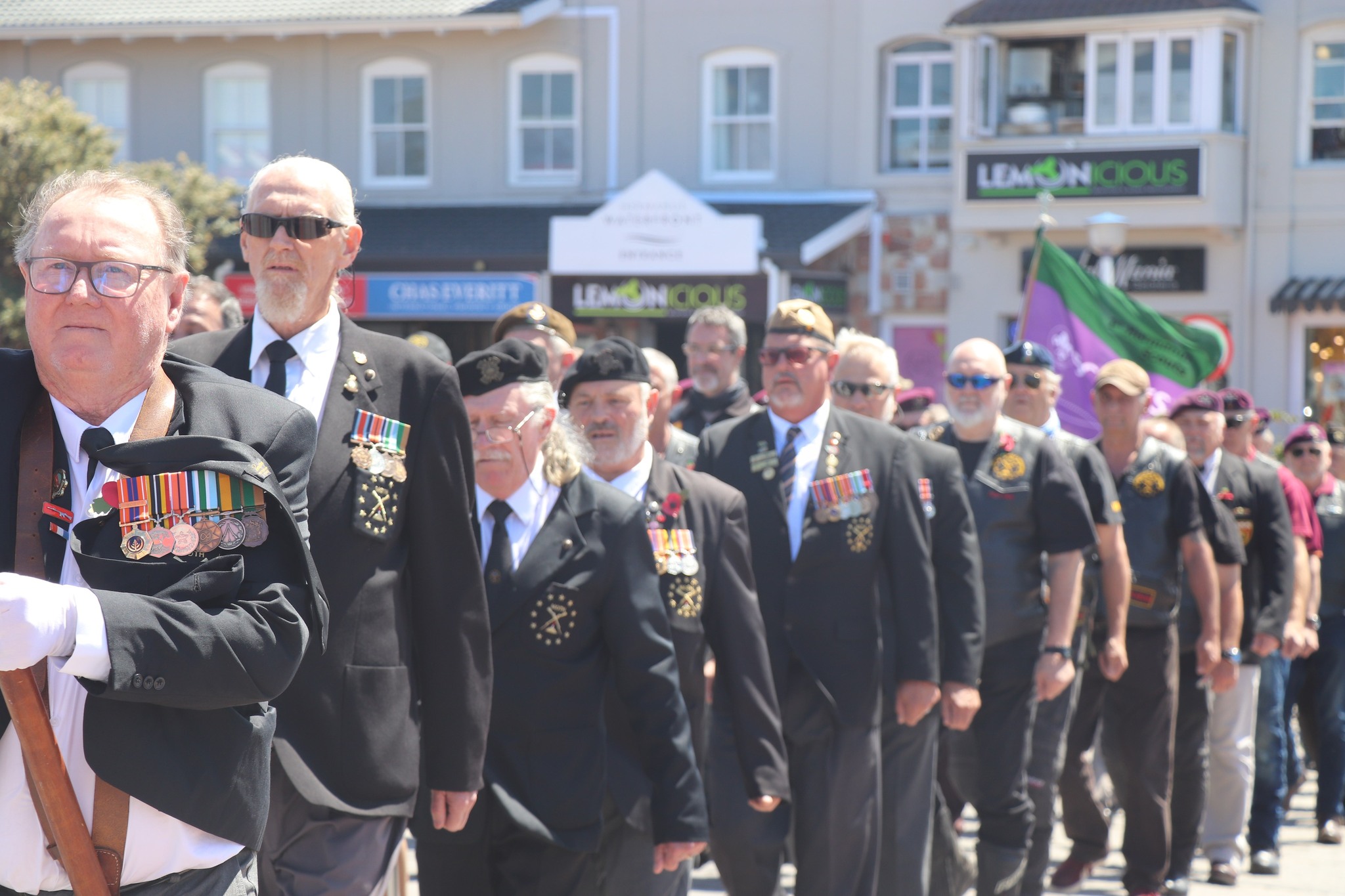
However, with the dying off of the 1st World War (1914-1918) and almost all of the 2nd World War (1939-45) populace, the MOTH are a shadow of its former glory, however with the Border War (1966-1989), Operations 1990-1994 and subsequent Peacekeeping Operations, the ranks are slowly growing. Auxiliary components of the MOTH, such as the MOTHWA (MOTH Woman’s Association) are now been joined by the MOTH Motorcycle Association and the recently formed ‘Friends of the MOTH’, the strict regulations for joining are also slowly been loosened to invite more veterans to join.

Comradeship remains central to the MOTH, and long may it remain, with Shellholes regularly ‘raiding’ one another and the mirth, friendship, mischief and comradeship that comes with them – and long may raiding continue.

To the songs that are sung in MOTH Shellholes, there are two, one British from the 1st World War “Pack up your Troubles” and one American from the 2nd World War “Old Soldiers Never Die”.

To listen to Pack Up Your Troubles – click this link:

To listen to Old Soldiers Never Die – click this link:

In conclusion

I remain proud to be a MOTH and am currently the Wee Bill (Deputy Old Bill) of the Seagull Shellhole in Hermanus, I also own a brewery and it was not long before I registered ‘Old Tin Hat’ in the Beer and Spirits categories as a trademark with each one celebrating a South Africa World War 2 hero in the ‘Commando Comic’ style – Sailor Malan, Quentin Smythe VC, Lucas Majozi, Perla Gibson, Roger Bushell, Zulu Lewis and Job Maseko all get a beer expression and a nod to their wartime valour and contributions. I also remain a devout Legionnaire – something Smuts was in addition to been a MOTH, and I’m equally proud of that. The order is healthy and if you served in the old SADF or the new SANDF (or both) – as a National Serviceman, Volunteer or Permanent Force member and have a General Service Medal or Pro Patria we’d love to hear from you.

To find out about (and order on-line – shameless plug I know) Old Tin Hat Brewery beer, follow this link: https://thespiritofhermanus.com/collections/old-tin-hat


Written and Researched by Peter Dickens, with large extracts from Gordon Mackinlay’s account of the MOTH, and my deep gratitude and thanks to him for allowing me to use it.
A rare spot!

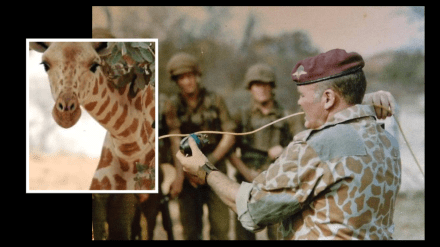
The rarely spotted … giraffe camouflage.

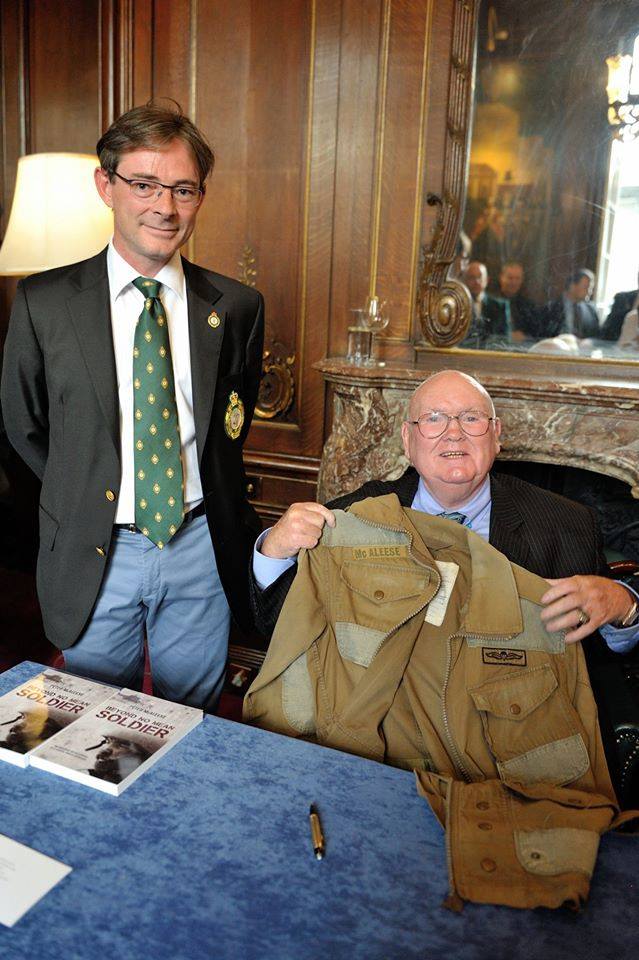
A while back, as the Chairman of the South African Legion in the United Kingdom, I was involved in the return of Peter McAleese’s South African Defence Force nutria ‘Slangvel’ (parabat smock) to him. For jump qualified ‘Parabats’ (Airborne Infantry) this smock is a prize item, and the South African one, the ‘slangvel’ (snake-skin) as it is fondly known, is a little unique because of reinforced sections sewn onto it – elbows and shoulders mainly to deal with all the chute and other strappings, keeping them tight and to prevent wear. The ‘brown’ nutria slangvel is a collectors favourite and very sought after.

Nutria was the preferred uniform of the SADF, basically just ‘brown’ – the developers of nutria argued that in the harsh African sun after 50 meters you are an un-definable blob to the naked eye anyway, ‘nutria’ brown as a single colour was versatile enough in the African surrounds to provide sufficient camouflage when needed – so no need for camouflage stripes or dots – and so the SADF was just about everything ‘brown’, including vehicle camouflage – one colour, and that made economic sense.

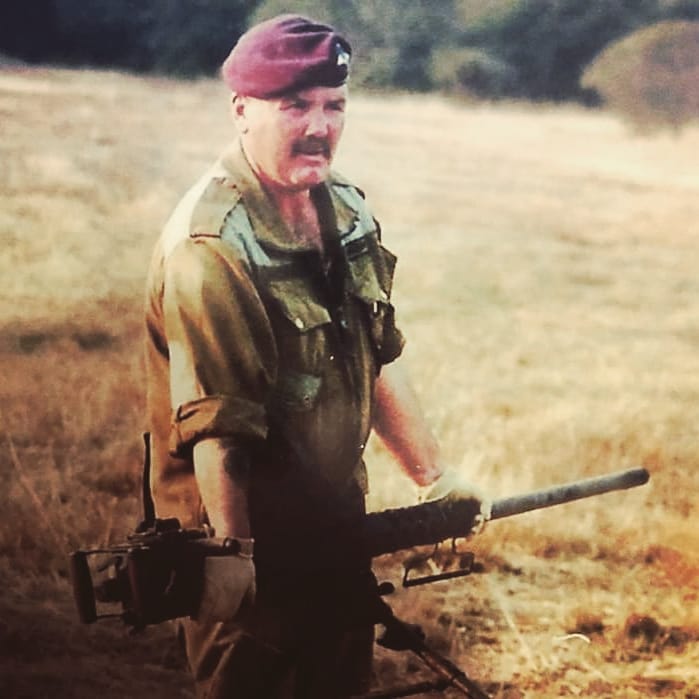
Images: Peter McAleese in his SADF nutria ‘slangvel’ and Sean Renard returning it to him.

Somehow Peter’s ‘nutria’ ‘slangvel’ smock found itself in the wild and and fellow South African Legion – Legionnaire, Sean Renard found it in Europe on auction, bought it and on the 16th July 2015 decided to give it back to Peter at his book launch at the Oriental Club in London with the aid of Cameron Kinnear – another Legionnaire. Sean proudly and selflessly handing it over to him – the epitome of the Legion in action and its members.

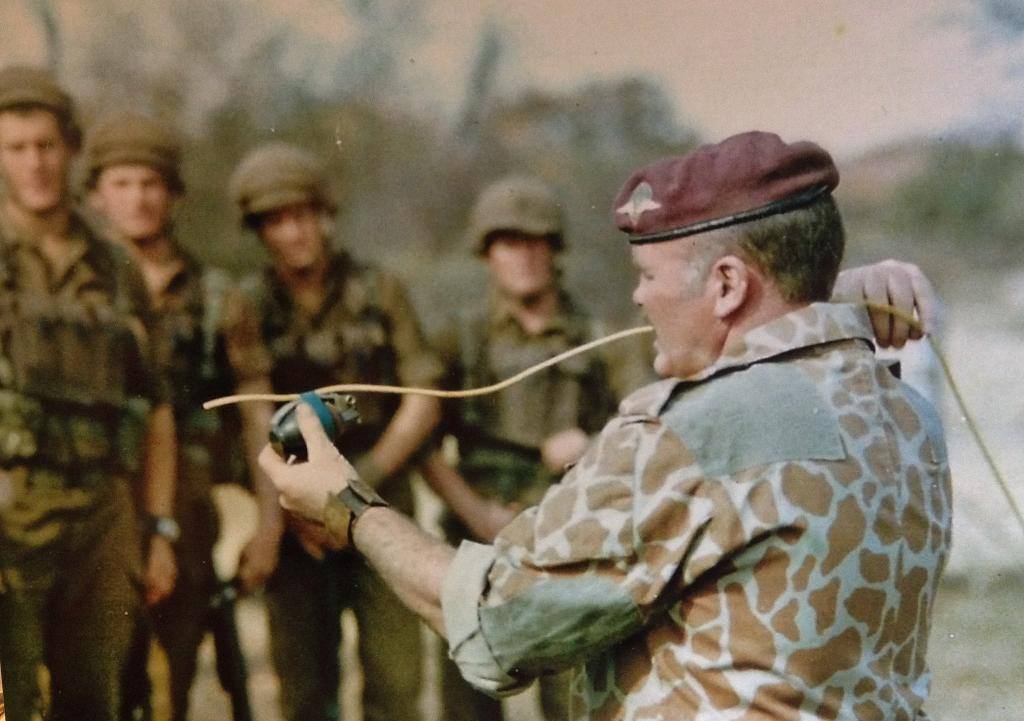
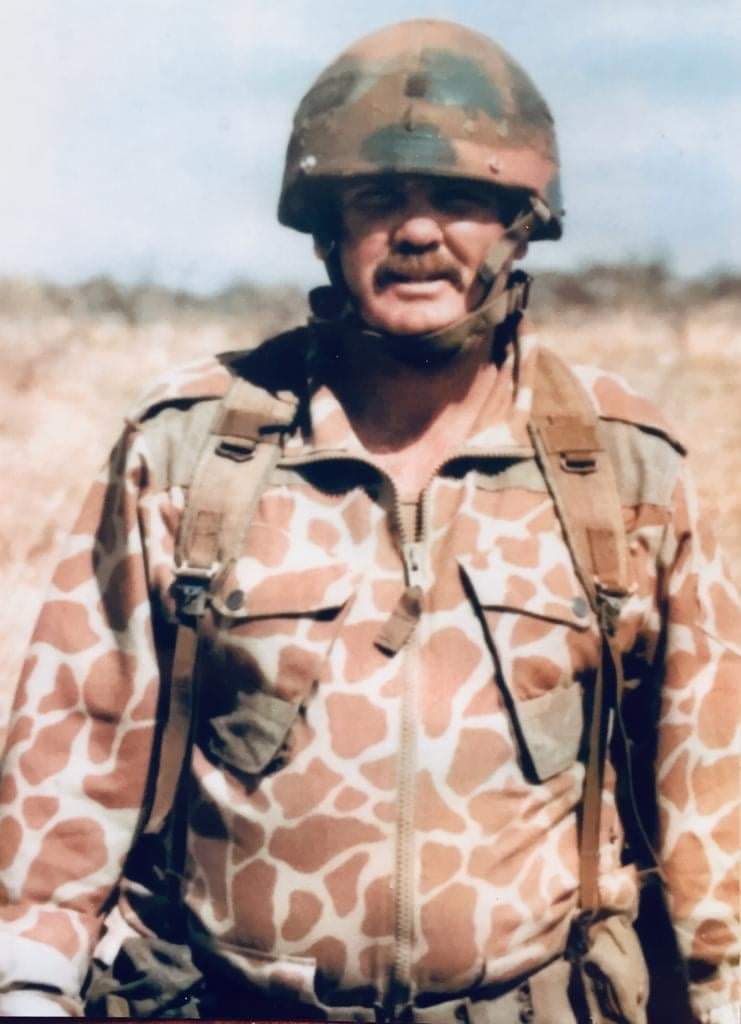
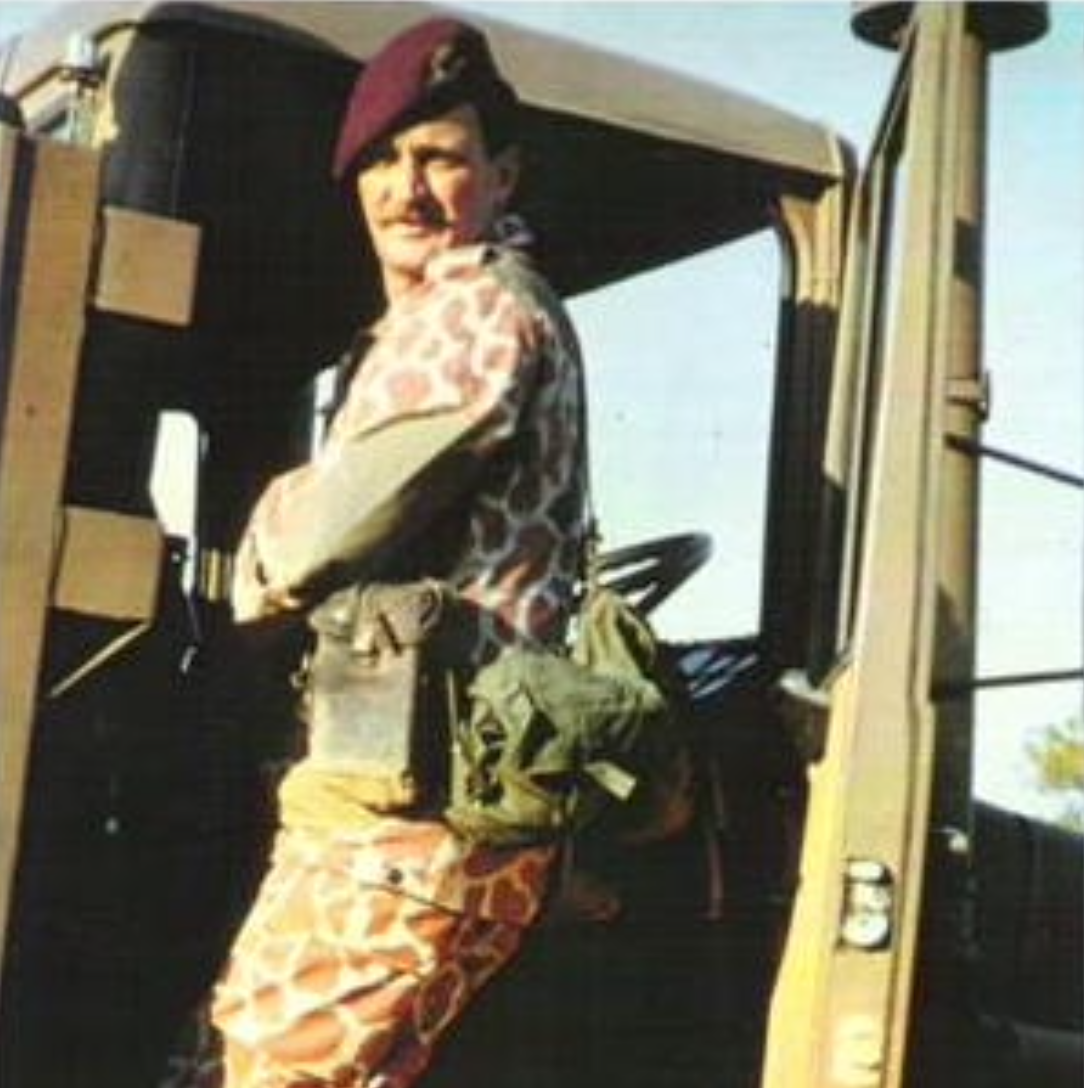
Now, not only is that a rare spot, but Peter McAleese is also a rare spot for collectors of militia – and that’s because he’s also seen wearing a very rare ‘Giraffe Patten’ Camouflage uniform in some of his SADF period photos whilst with the SA Army’s 44 Parachute Brigade and Pathfinder Reconnaissance Unit. The ‘Giraffe’ slangvel smock he is seen wearing (as opposed to his nutria one) is incredibly rare.

Images: Peter McAleese in the rare experimental ‘Giraffe Patten’ camo

In fact it’s a holy grail for people collecting military items like uniform pieces, badges, headgear, rank and insignia .. it’s even considered one of the rarest examples of a camouflage used by any military force in the world .. it’s that rare.

So, what’s the fuss all about?

When and why the SADF come up with this ‘holy grail’ camouflage uniform. Not everything here is confirmed, this uniform was developed in a shroud of secrecy for special forces units alone. The South Africa special forces units tended to have a little more latitude in their choice of weapons, equipment and uniform (and even bearing) and many of their operations are still clouded in secrecy – so not surprisingly folklore and unsubstantiated stories have come to surround them. I may be wrong but here’s what we know about this uniform.

About 80 or so ‘Giraffe Patten’ camouflage uniforms were issued between 1980 and 1982 to the Pathfinders of the 1 Parachute Battalion of the 44 Parachute Brigade. The camouflage is a two-tone colour – one brown, one off white and draws inspiration from the Reticulated Giraffe. In testing the patten proved unremarkable and not effective enough and therefore did not enter broad service. It was however used by special forces and some rare photos exist of it being used in the field. Rumour has it that Colonel Jan Breytenbach, then the Officer Commander of the 44 Parachute Brigade, ordered that all the uniforms be destroyed .. except one. This one uniform ultimately landed up with a Private collector in the USA (via a Private collector in France).

However, at some stage, a limited array of uniform items – about 12 uniforms consisting of bush-hats, slangvels, shirts and pants were re-printed using the Giraffe Patten, in the correct SADF style, and these made it into ‘collectors’ circulation – although not original, the person who manufactured and sold the items decided to keep them limited to keep collectors value – so they are pretty rare and sought after too.

Images: Rare use of the giraffe camo and the Reticulated Giraffe

No mean soldier

Now to someone very rare and who is very genuine – the subject of the camouflage – Peter McAleese, Peter is a legend in South African military circles.

Born 7 September 1942, he served in the British Army’s Parachute Regiment and Special Air Service (SAS), the Rhodesian Special Air Service and British South Africa Police, and then subsequently as a Sergeant Major in South Africa’s 44 Parachute Brigade during the Border War. As a mercenary or contractor, he worked in countries including South Africa, Angola, Colombia, Russia, Algeria and Iraq.

He’s written two books ‘No Mean Soldier’ and ‘Beyond No Mean Soldier’ (both available on-line) – there are precious few like him around today, a real soldier’s soldier and it was a privilege for me to meet him, and for the South African Legion to recover his nutria smock for him.


Written and Researched by Peter Dickens

Where did all the statues go?

So, if you like me and love your beer, and as a brewery owner I can’t help myself – Munich (or München in German) is THE place to go. Bavaria’s capital and it’s the venue of the Octoberfest and there is much ‘Ein Prosit der Gemütlichkeit’ (cheers to the sociability), Zigge, Zagge, Hoi, Hoi, Hoi and clunking of large vessels of beer called Steinzeugkrug full of cold, hoppy, golden nectar. It’s a fun place, I certainly love it, it’s a beer lover’s Mecca – no doubt.

But as a purveyor of fine history snippets too, my love of history also kicks in, and in Munich, there is a very sinister and dark past, and there’s tonnes of, literally tonnes of inconvenient history. You would not notice it today as an average tourist “in it for the beer,” Munich has been ‘scrubbed clean’. There is almost no evidence of its history as the epicentre and cultural pilgrimage of Nazism. In fact they go a long way in Munich not to celebrate World War 2 historic tourism, but that has not stopped a couple of freelance ‘independent and opportunist’ tour guides pulling an informal crowd for the unofficial Nazi tour of beer-houses and locations attended by the likes of Hitler and his cronies.

The sterility of Munich got me thinking, at what point is the removal of statues and memorials deemed ‘offensive’ perfectly acceptable and what point is it not? At what point do we, like the city of Munich .. ‘scrub’ out our past completely, disregard the idea of preserving it for the purposes of a history teaching (even a lesson on the evilness it incurred) and hide it for fear of offending victims of it.

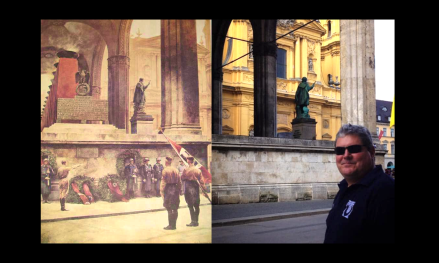
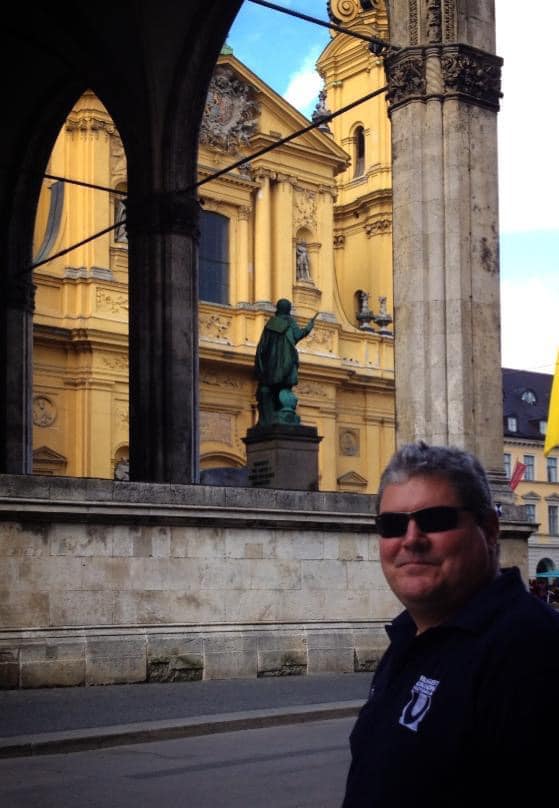
So what’s the big deal of this totally bland corner of the Feldherrnhalle monument (Field Marshal’s Hall – built in 1841 by King Ludwig I to celebrate the Bavarian Army), located on the Odeonsplatz – Munich’s town square. Here I am with my usual ironic grin celebrating the complete nothingness of what was a ‘holy’ site to Nazism – that exact nondescript corner – the site of huge pilgrimages and parades. The only evidence left, some plug holes in the original monument that held up the gigantic Nazi add-ons. Heck, this corner was so important that as an average Munich citizen you saluted the corner of this building – ‘Nazi style’ – whenever you walked passed it. Now there is nothing, not even an information plaque.

The importance of beer halls in establishing Nazism

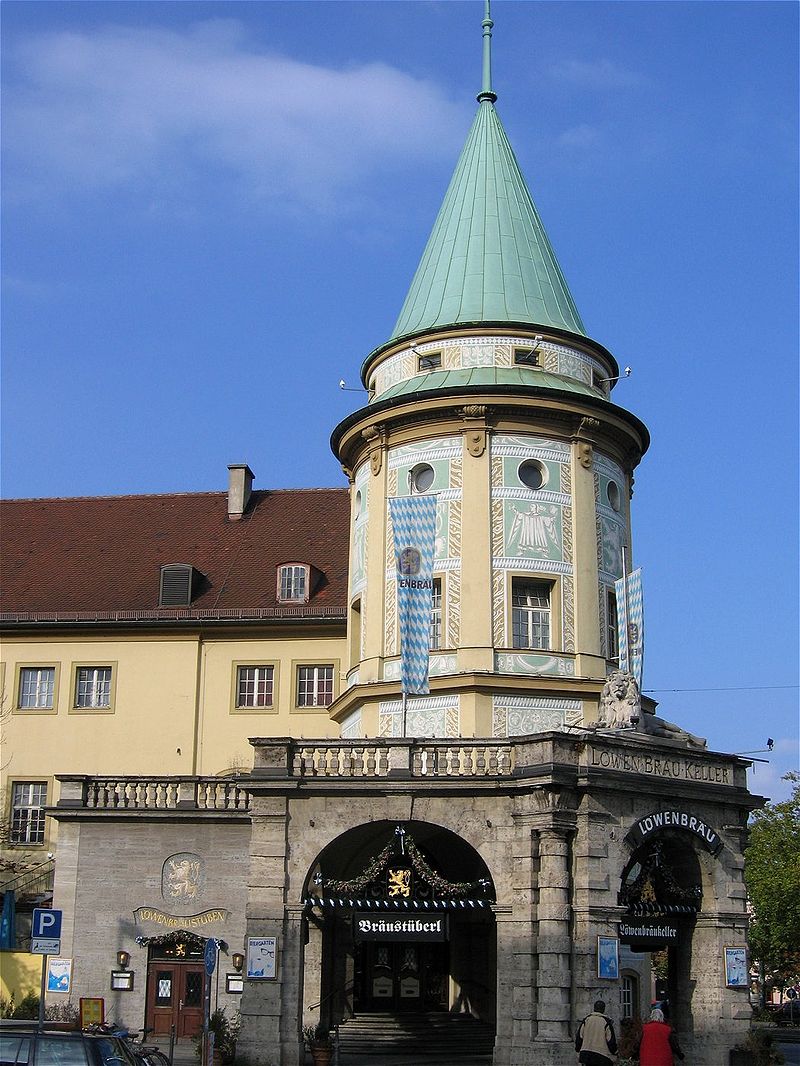
Well, apart from being a historic monument to Bavaria, the Feldherrnhalle is also central to all the traditional beer halls and beer gardens located around is, and it’s in two of these nearby beer halls that this story begins. The famous Bürgerbräukeller beer hall – completely demolished now and replaced with a modern culture, music and arts centre, and the Löwenbräukeller beer hall. You can still visit the Löwenbräukeller (I have) and give a complimentary Ein Prosit and Zigge Zagga to the resident Oompa band, and again – nothing, zilch, nada on its Nazi history – not even on their website.

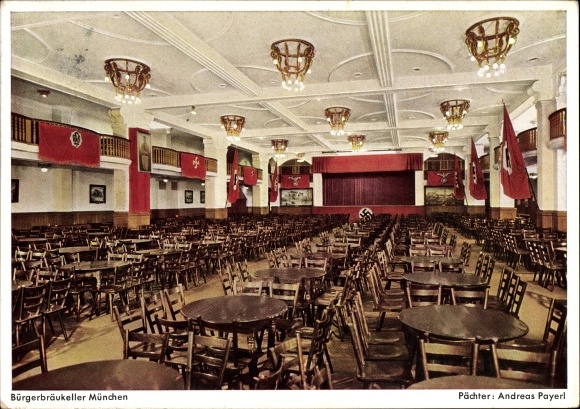
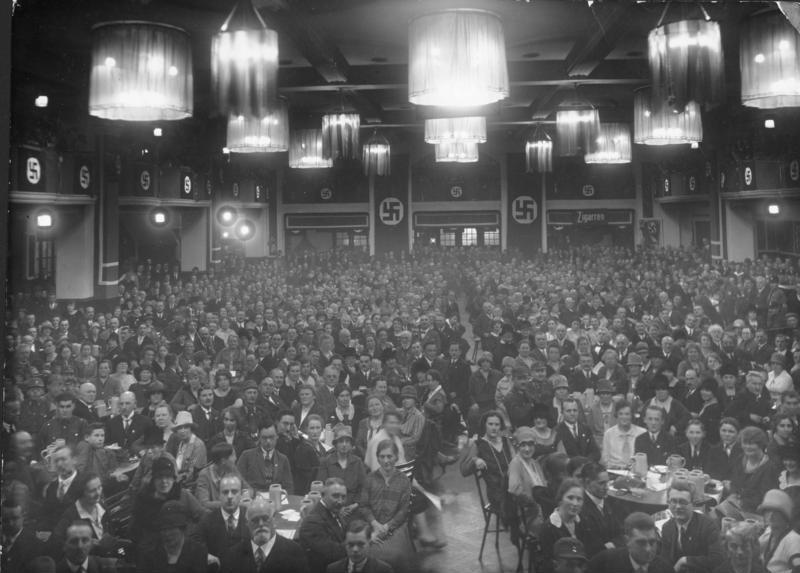
So, in the Bürgerbräukeller beer hall, Nazism as an ideology was effectively born and took hold. Central to the beer hall was a rectangular grand hall which could accommodate up to 3,000 people and a large cellar, ideal for political meetings and rallies. From 1920 to 1923, the Bürgerbräukeller was one of the main gathering places of the Nazi Party, it was effectively established there, and it was from there that Adolf Hitler launched the infamous Beer Hall Putsch (revolt) on the 8th November 1923. Also known as the Munich Putsch, in essence Hitler and his fellow Nazi cronies attempted to pull off a military coup and overthrow the Weimar Republic.

Images: Bürgerbräukeller’s Great Hall left as it was then, Löwenbräu keller, as it is now.

Throughout 1923, the economic and political crisis struck. The Nazi Party and other nationalists believed that an armed takeover of Bavaria was possible and could even overthrow the Republic in Berlin. Hitler and the Nazi Party collaborated with others such as General Erich Ludendorff  and Gustav von Kahr (a founding right wing Nationalist leader) to put a plan together to attempt a military coup. By August 1923, the plan was set and weapons and transport were gathered. However by November 1923, some of the Nazi conspirators got cold feet as news came in that the German Army in Berlin would support the government and not the conspirators.

Hitler, realising that von Kahr sought only to control him and did not have it in him to initiate a coup, utterly frustrated by it all Hitler was determined that the plan would go ahead. On the 8 November 1923, he and a contingent of the party’s SA (Storm Detachment/Troopers) marched into the Bürgerbräukeller beer hall whilst von Kahr was giving a speech to 3,000 people there. The SA surrounded the hall and set up a machine gun. Hitler, surrounded by his associates including Hermann Goring, Rudolf Hess, Alfred Rosenberg, Adolf Lenk, Max Erwin von Scheubner-Richter, Wilhelm Adam, Robert Wagner and others (20 in total) then jumped up a chair, fired a gun-shot and shouted “The national revolution has broken out! The hall is surrounded by six hundred men. Nobody is allowed to leave.”

He went on to state that the Bavarian government was deposed and declared the formation of a new government with General Ludendorff as the head. At gun-point Von Kahr gave his support to Hitler. Dispatches were sent to trigger Ernst Röhm and his paramilitary group the Bund Reichskriegsflagge (Imperial War Flag Society) waiting at the Löwenbräukeller Beer Hall and Gerhard Rossbach who had a detachment right wing students at a nearby infantry officers school.

The Putsch was on. After his speeches Hitler received resounding applause from the crowd at the Bürgerbräukeller beer hall and Von Kahr and other members of the Bavarian government were taken into custody, Hitler departed the hall later in the evening to deal with another crisis, and mistakenly Von Kahr and his associates were released (they later took the opportunity to denounce the Nazi Party as illegal and join the government).

The night was marked by confusion and unrest among government officials, armed forces, police units, and individuals deciding where their loyalties lay. Early in the morning on the 9th November 1923 (around 3am), the first shots fired in the Putsch occurred when a local Reichswehr Army detachment loyal to the government spotted Röhm’s men coming out of the Löwenbräukeller Beer Hall. Encountering heavy fire Röhm and his men were forced to fall back. In the meantime, the Reichswehr officers put the garrison on alert and called for reinforcements.

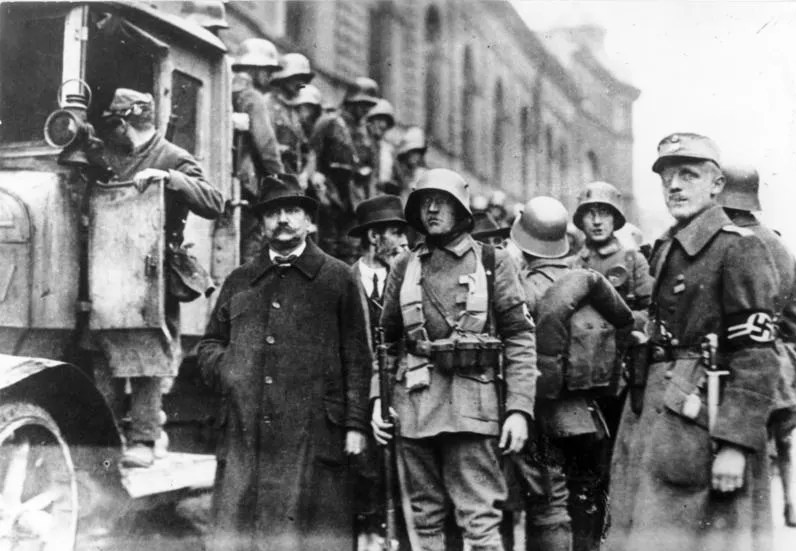
Later that morning on 9 November, Hitler realised the Putsch had stalled, about to give up, and not sure what to do, the Putschists were rallied again by General Ludendorff who shouted “We will March” and with that Röhm’s force together with Hitler’s force (approximately 2000 men) marched out – but with no specific destination in mind. On the spur of the moment, General Ludendorff decided to lead them to the Bavarian Defence Ministry – which would take them past the ….. Feldherrnhalle and the Odeonsplatz … and here is where the corner of the Feldherrnhalle becomes important, because as they rounded this unremarkable corner of the monument they were met with 130 government soldiers and police blocking their way – and they found themselves in what is a fairly narrow road aside the monument in a sort of ‘Mexican Stand-off.’

Image: Nazi Putsch members – 9 November 1923

The two groups exchanged fire with one another, in all 4 were killed in the government’s forces and 16 Nazi Putschists were killed. In the firefight a couple of key things happened – most importantly the equivalent of a rather crooked ‘Sacred Cross’ legend was born .. the ‘Blutfahne’ (‘blood flag’). The Flag Bearer of the Nazi Flag was a SA member, Heinrich Trambauer, and he was badly wounded dropping the flag splattered with his blood, a second SA man, Andreas Bauriedl, was shot dead and fell dead onto the fallen flag, covering it in more blood. Secondly. Hermann Göring was badly wounded – and this wound would haunt him his entire life, leading to his violent morphine drug addiction which resulted in irrational decision making during the Second World War. The game was up, the Nazis scattered or were arrested. Göring escaped and was smuggled to Innsbruck. Finally, Hitler now on the run was arrested two days later on the 11th November 1923.

Hitler was sent to Landsberg Prison and put on trial for treason. Hitler’s trial took place from the 26 February to the 1 April 1924, he was ultimately found guilty of treason, but, with a sympathetic judge, he was sentenced to just five years in prison. Of this five years, Hitler only served nine months. But most importantly for the Nazi movement and to the detriment of the rest of world, Hitler was imprisoned alongside Rudolf Hess, Hess was a Hitler groupie – and held a fanatical admiration of him. He was also very articulate and ‘balanced’ Hitler enough to assist in writing Mein Kampf by Adolf Hitler (My Struggle) which honed Nazi ideology and philosophy.

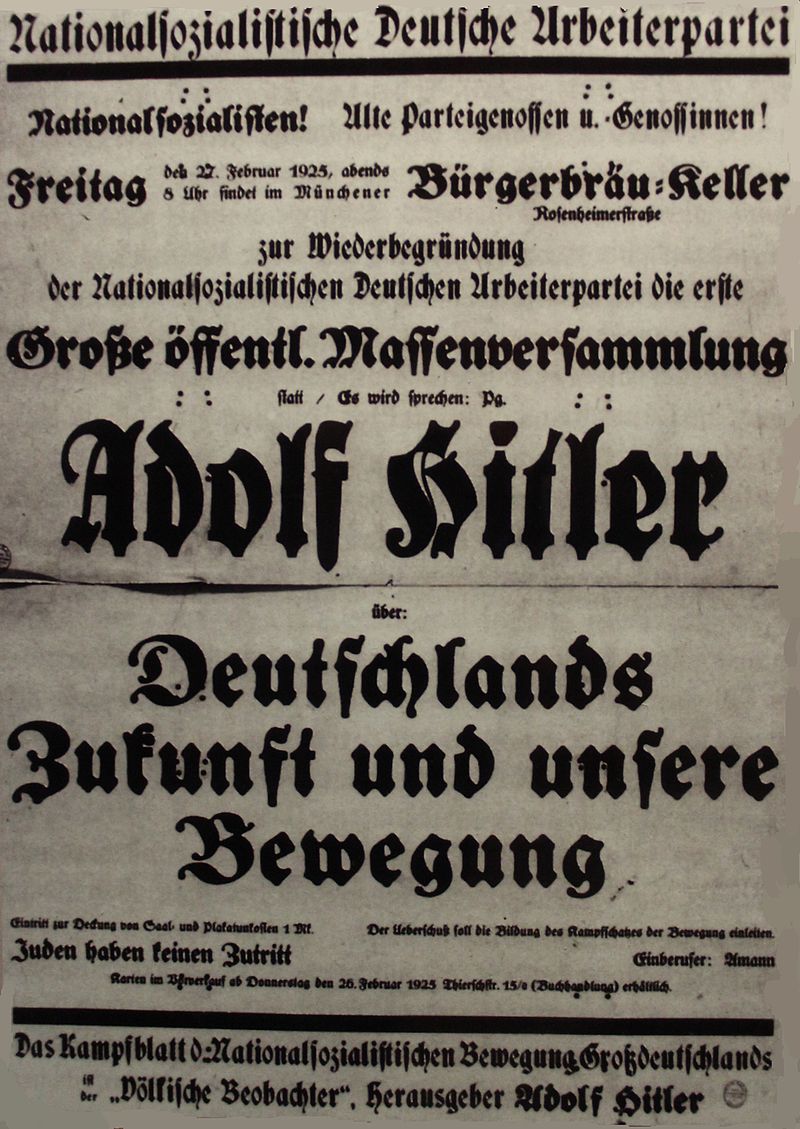
Back to the beer halls of Munich, not long after been released, Hitler was back in his old haunt – the Bürgerbräukeller Beer Hall, where he promptly officially ‘re-established’ the Nazi party on 27 February 1925. Not to be left out, during the war, Adolf Hitler delivered his infamous 8 Nov 1942, Stalingrad speech from Löwenbräukeller Beer Hall.

Images: Left – the notice to reestablish the Nazi Party at a ceremony at the Bürgerbräukeller and the Bürgerbräukeller Great Hall hosting a Nazi rally.

The Nazification of the Feldherrnhalle

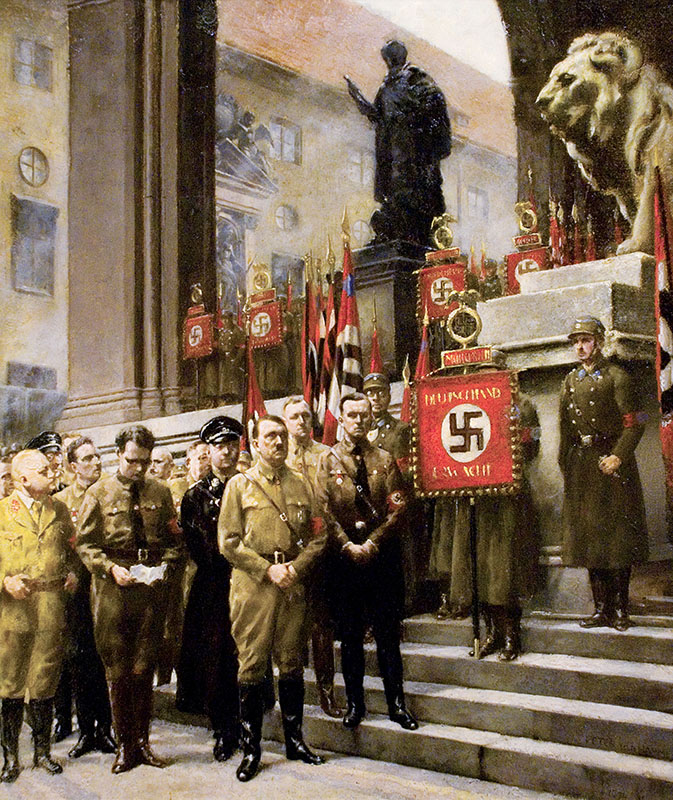
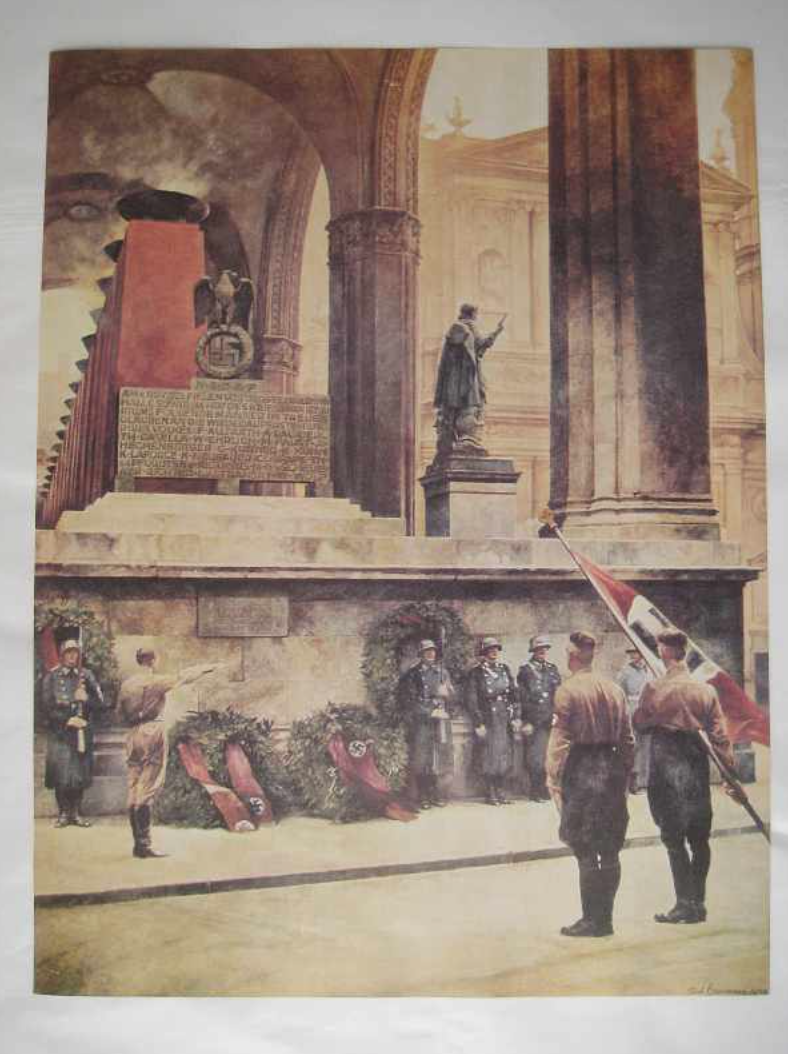
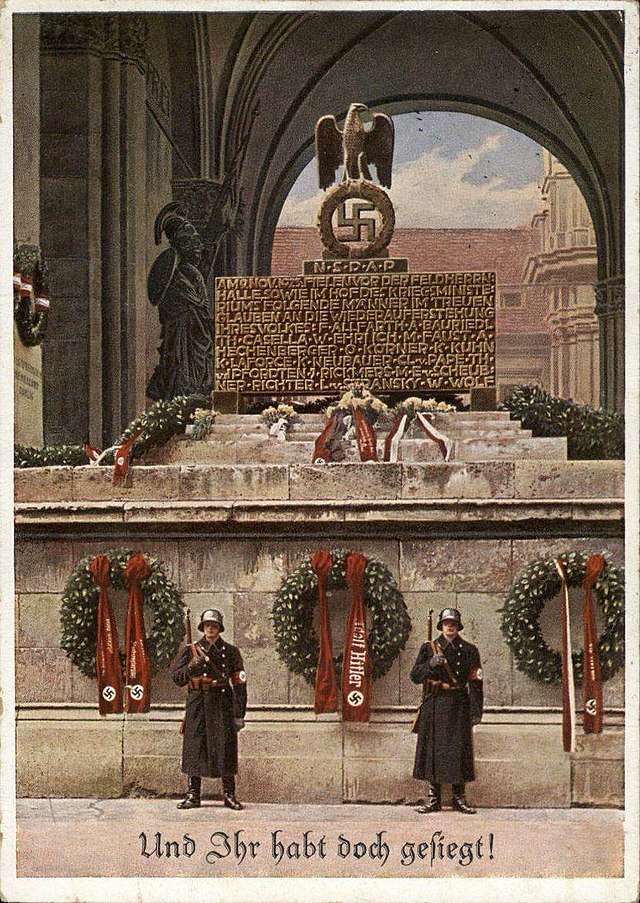
After the Nazis took power in 1933, Hitler turned the Feldherrnhalle into a memorial to the Nazis killed during the failed putsch. A memorial to the fallen SA men was put up on its east side, opposite the location of the shootings – crowning it with a Swastika. A Nazi add-on monument was mounted, the Mahnmal der Bewegung (Memorial to the Movement), basically a rectangular structure listing the names of the Nazi martyrs faced anyone standing at the corner of Feldherrnhalle monument. The back of the memorial read Und ihr habt doch gesiegt! (‘And you triumphed nevertheless!’). Around it flowers and wreaths were laid.

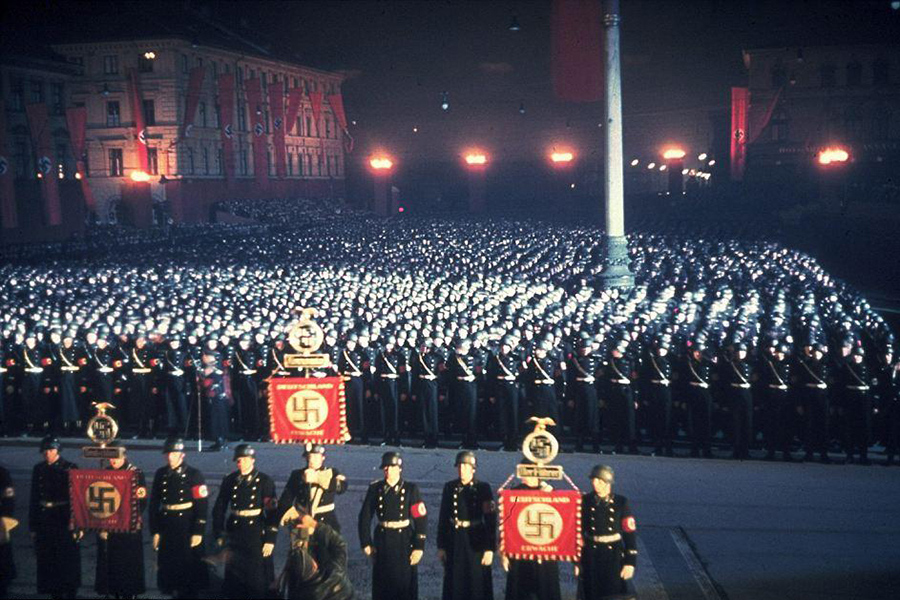
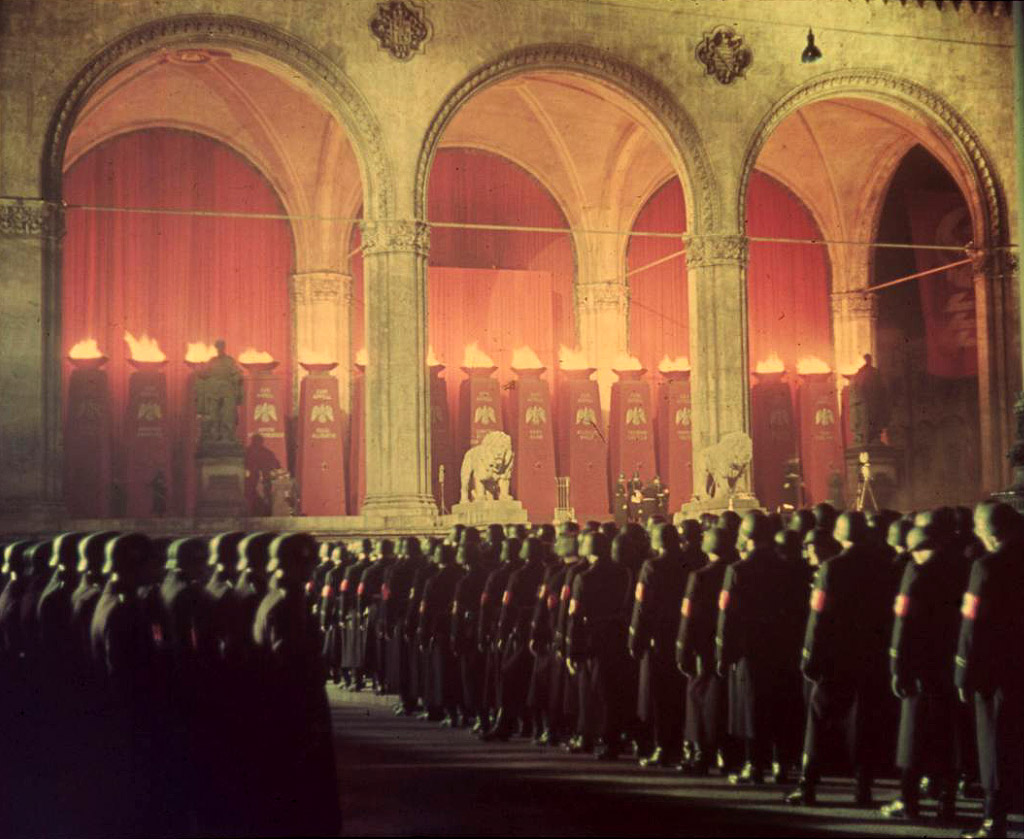
This memorial was under perpetual ceremonial guard by the SS. The Odeonsplatz square in front of the Feldherrnhalle was used for both SS parades and commemorative rallies. During some of these events the 16 Nazi dead were each commemorated by a temporary pillar placed in the Feldherrnhalle topped by a flame. Many new SS recruits took their oath of loyalty to Hitler in front of the memorial.

Passers-by were expected to hail the site with the Nazi salute. Those not wishing to salute, used a detour lane to by-pass the memorial and honour guard, sarcastically earning its nickname “Drückebergergasse” (meaning the ‘shirker’s lane’).

On 9 November 1935, the 16 Beer Hall Putsch Nazi dead were taken from their graves and to the Feldherrnhalle. The SA and SS carried them down to the Königsplatz, where two Ehrentempel (‘honour temples’) had been constructed. In each of the structures eight of the dead Nazis were interred in a sarcophagus bearing their name.

The 16 Beer Hall Putsch Nazi dead were regarded as the first ‘blood martyrs’ of the Nazi Party, and here’s where the Blutfahne – the ‘Blood Flag’ would make its appearance.  It was brought out for the swearing-in of new recruits in front of the Feldherrnhalle and the taking of their oath of allegiance to Adolf Hitler specifically. It was also brought out for Der neunte Elfte – 9 November, literally ‘the ninth of the eleventh’ or 9/11 (not to be confused with the current 9/11 Twin Towers commemoration) and it became one of the most important dates on the Nazi calendar.

Notably, the chosen day to celebrate the Putsch is not the 9th November, when the 16 Nazi martyrs were killed, it was the 11th November – the day Hitler was arrested – so to his megalomaniac mind the more important date as his personal arrest signalled the end of the Putsch (never-mind Göring and others who were still at large).

Every year the Putsch would be commemorated nationwide, with the major wreath laying event taking place at the Feldherrnhalle. On the night of 8 November, Hitler would open the ceremonies and address the Alte Kämpfer (‘Old Fighters’ – veterans of the Putsch) in the Bürgerbräukeller Beer Hall.

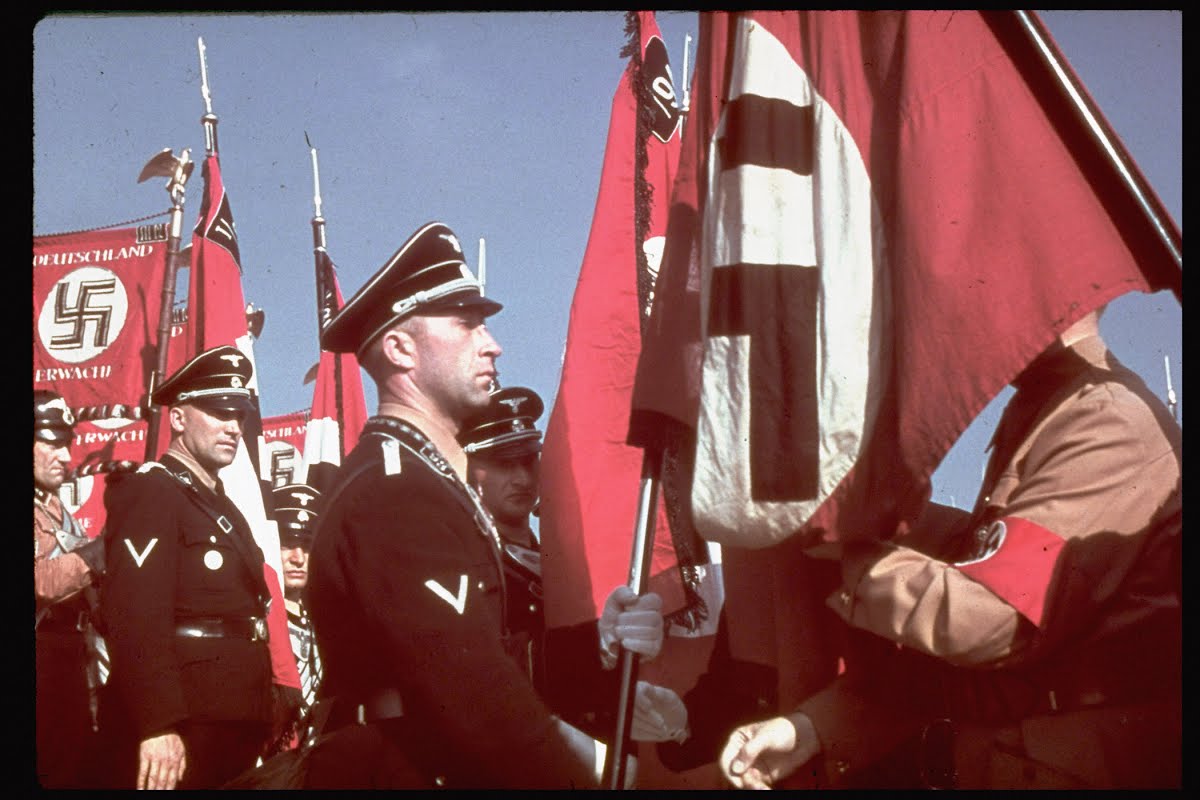
The Blutfahne – the ‘Blood Flag’ was treated as a sacred object by the Nazi Party and carried by SS-Sturmbannführer Jakob Grimminger at various other Nazi Party ceremonies. One of the most visible uses of the flag was when Hitler, at the Party’s annual Nuremberg rallies, touched other Nazi banners with the Blutfahne, thereby “sanctifying” them. This was done in a special ceremony called the “flag consecration” (Fahnenweihe).

Image: Hitler behind the ‘Blood Flag’ performs a ‘flag consecration’ on a SS Banner.

Rather mysteriously, and its akin to any good ‘who done it’ mystery – the Blutfahne was last seen in public at the Volksstrum induction ceremony on 18 October 1944, thereafter it vanished, which for such a significant artefact and ‘national treasure’ remains a puzzle. Its current whereabouts are still unknown.

Throughout the Second World War, the 9/11 anniversary ceremony continued, propagandists pitched the 16 fallen as the first losses and the ceremony was an occasion to commemorate everyone who had died for Nazi Germany – the ceremony now akin in Nazi Germany to what is 11/11 today and the Whitehall Cenotaph parade. As the war went on, residents of Munich came increasingly to dread the approach of the anniversary, concerned that the presence of the top Nazi leaders in their city would act as a magnet for Allied bombers.

Images: Original colour images of the German 9/11 anniversary parade in front of the Feldherrnhalle monument on the Odeonsplatz town-square.

The End

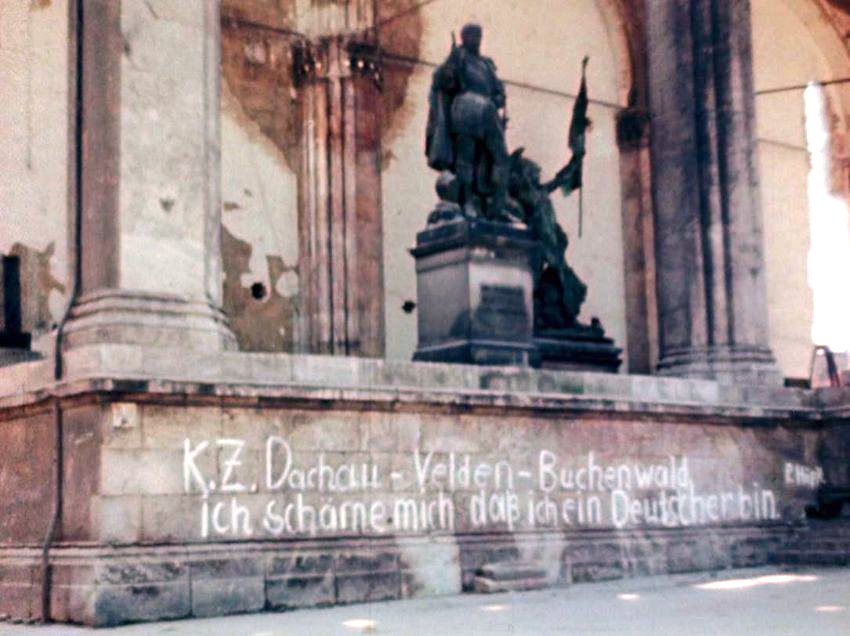
Understandably the memorial was going to cause considerable controversy at the end of the war, and it did. Local Munich residents angrily and spontaneously smashed the Mahnmal der Bewegung to pieces on the 3rd June 1945. It was also famously defaced when a guilt ridden German painted graffiti on the memorial with the words “Concentration camps Dachau – Velden – Buchenwald, I am ashamed that I am a German.”

However it remains a site for Nazi pilgrimage, and even as late as April 1995, a World War 2 Veteran named Reinhold Elstner, took the opportunity to commit self-immolation suicide in front of Feldhernhalle to protest against “the ongoing official slander and demonization of the German people and German soldiers”. Each year neo-Fascist/neo-Nazi groups from various European countries and Germany itself try to hold a commemorative ceremony for him, which Bavarian authorities constantly try to prevent through state and federal courts.

So, very understandable the need to sanitise this memorial and discourage neo-Nazi and neo-Fascist groupings from using it to honour an ideology that provided such significant misery to millions of people. But I can’t but think there is no point sanitising it completely as has been done, use it to educate rather – at least an information board or story board which explains the tyranny the site once fostered, a lesson to humanity not to do it again, maybe even Holocaust Memorial sanctioned tour guides to balance and educate and do away with the freelance cowboys (maybe they’ve done it, but that was not the case when I was last in Munich) – lest we completely forget, lest the ‘blood flag’ suddenly re-appear from its secret stash and we open up more ‘clean’ space in which Neo-nazism and holocaust denial/conspiracy theory can thrive (there’s no ‘proof’ to see now, moving on – its been removed, so prove it).

The same can be said of South Africa, at what point do we decide to allow WOKE thinking to remove all ‘white’ history and scrub that culture on the basis of the evils of Apartheid and Colonialism – too offensive to the majority. Take down ALL the statues, another … “where have all the statues gone”.. rather initiate the Communist and Revolutionist zeal for the ‘Year One’ calendar, and let’s all start our history from 1994 shall we comrades. No, history is history, warts and all, we need to ‘have the conversation’ at least, it’s the lesson to mankind to know where it comes from and therefore to know where it’s going to, it gives us our moral north .. sanitising it moves the compass south.


Written and Researched by Peter Dickens

Ouma’s Curtains

Isie Smuts and the Boer War

There is a lot to be said about South Africa’s most remarkable First Lady – Sybella (Isabelle – shortened to Isie or ‘Issie’) Margaretha Smuts, or as she was affectionally known by all – simply as .. “Ouma.” However to get a really good understanding of this petite but powerhouse of a woman, one only needs to know what she endured and did during and directly after the Boer War i.e. The South African War 1899-1902, and here one only has to look at her curtain rails – yup, simple curtain rails.

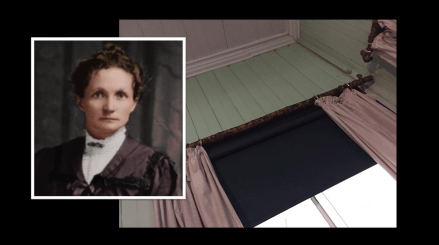
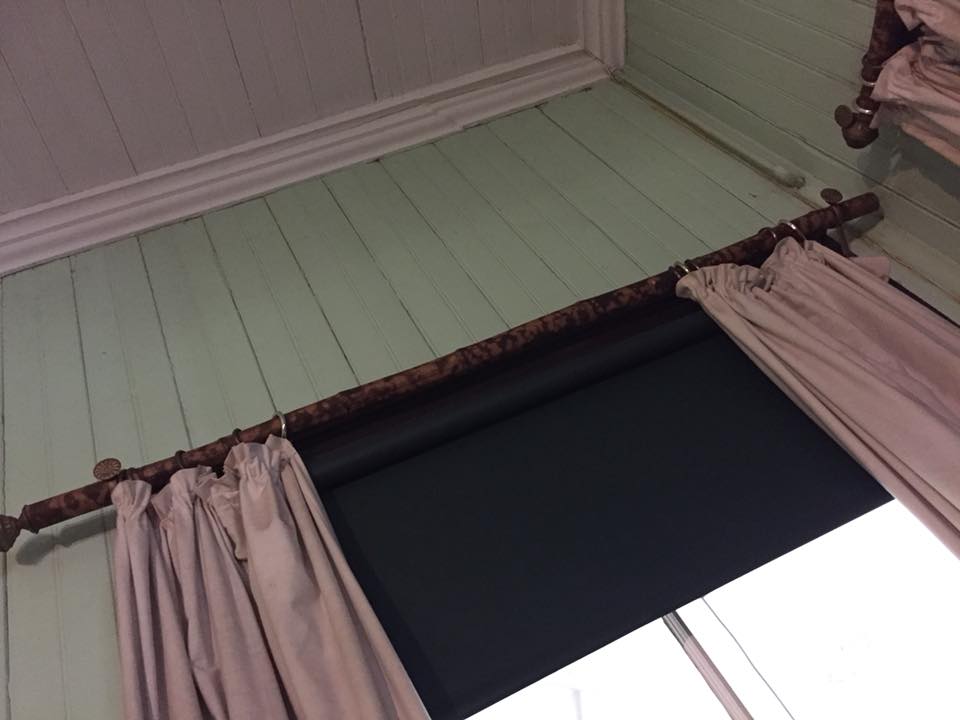
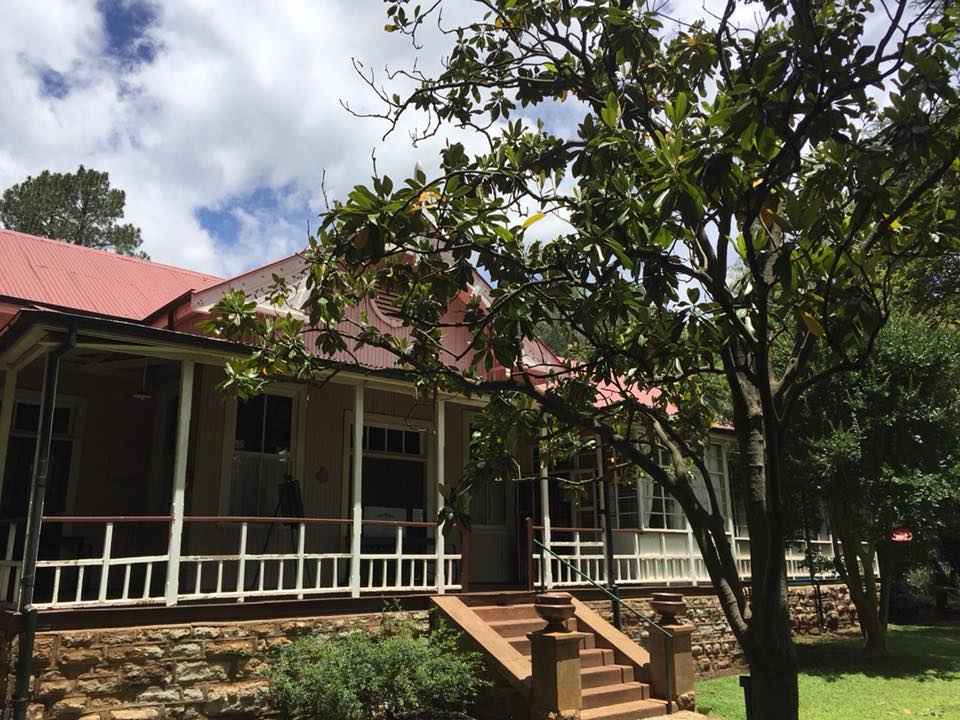
Not many know this, and its not in the official tour guide, but if you ever have the privilege to visit the humble correlated iron house that Jan and Isie Smuts lived in from 1910 in Irene, near Pretoria, now a museum – you may notice the family’s bamboo curtain rails, and they tell a story, so here goes;

Image: Bamboo curtain rails, Smuts House Museum, Irene – Picture: Peter Dickens

From the beginning of 1899 Jan Smuts was a leading legal and political figure in Kruger’s government of the Zuid Afrikaanse Republiek (South African Republic, ZAR or Transvaal Republic). Smuts at the time lived with his wife Isie in a house on the corner of Troye and Walker streets in Sunnyside, Pretoria.

When the Boers declared war against the British on the 11th October 1899, it was with Smuts’ invasion plans that the Boer’s invaded the British Colonies of the Cape and Natal. War proved a highly trying time for Isie Smuts, but the worst was to come when Pretoria fell a mere 9 months into the war, and Isie bid farewell to her husband the evening of 4th June 1900 as he and General Botha rode away to take the ZAR government into the field with the other Boer commanders and commence the guerrilla warfare phase of the war, leaving Pretoria open for the British to occupy.

On occupying Pretoria the British took no time to gather whatever intelligence on the Boer army that they could, and Jan Smuts’ residence came into their sights. Using her initiative, Isie Smuts tore up all Jan’s letters written to her, except his first, and stuffed the scraps of paper into a cushion. She also rolled up Jan Smuts’ key documents and plans, deemed too important to destroy and hid them inside her ‘hollow’ bamboo curtain rails.

She also took the precaution of sewing gold sovereigns Jan Smuts had left her for a emergency, into a money belt. When she saw the enemy British soldiers approaching, “she dropped the belt into the boiling water of the kitchen copper” (Women South Africa Remembers” by Fay Jaff 1975), in spite of her protests the British soldiers entered her home, but still, she gave them freshly baked bread, still warm, from her oven.

During her separation from Jan Smuts, in August 1900 their baby son ‘Koosie’ died. Isie had to bear the burden alone, she wrote to Jan so he could learn of the loss by telegram, but the message never reached him. Jan Smuts also wrote to her, but she never received any of his letters in the first year of their separation.

By the beginning of 1901, Lord Kitchener, the British Chief of Staff, ordered that Isie Smuts be moved from Pretoria to a concentration camp in Pietermaritzburg. As a special concession, because of her status as Jan Smuts’ wife, Isie Smuts was afforded a small house near the camp. Isie packed up all their belongings and household items and effectively moved under ‘house arrest’ to Pietermaritzburg. She would pass her time making ‘comforts’ such as scarves for the women interned in the nearby camp.

Purposefully cut off from the outside world by the British, under house arrest, she was tormented with constant rumour that her husband had been killed, and likewise her husband was tormented whilst fighting in the field as he had no contact with his wife.

Eventually, a year after he departed Pretoria, in June 1901 she received her first letter from her husband, her response reveals the deep levels of trauma, she wrote, “I have read it and reread it so often that I know almost the whole by heart, and now I shall be able to live on those loving words for the many weary weeks to come . . .”

By special arrangement, Isie and Jan were allowed to see each other for a mere 24 hours in Standerton during a pause in the fighting. Isie was very ill at the time, war had taken a toll on her, she was prone to severe bouts of fatique and she weighed about 45kg. Her physical state distressed her husband, so he wrote to Lord Kitchener asking for permission to send her to Stellenbosch where her family could care for her, but his request was refused.

The couple were re-united some time after the Peace Treaty of Vereeniging was signed on 31st May 1902. Smuts urgently needed to go to the Cape Colony after the Peace was concluded to convince the acting Prime Minister, Thomas Graham to treat returning Cape Rebels fairly. On his return from Cape Town, Jan stopped in Pieter­maritzburg to see his wife and reassure himself that her health was improving. Their minds were put to rest by Doctors who said she would be well enough in 6 weeks to travel back to Pretoria. Smuts went ahead to re-claim his home which had been occupied by British Imperial Yeomanry during the war.

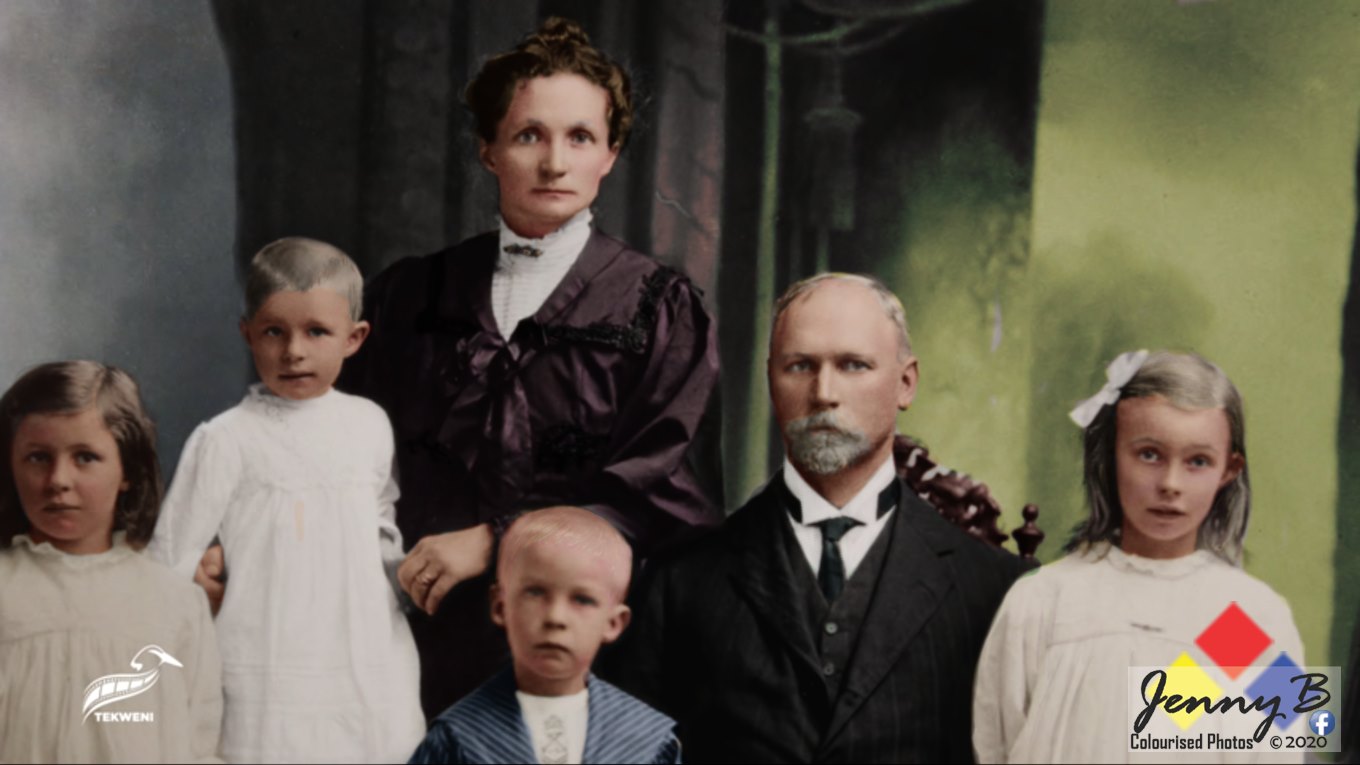
Between May 1902 and 1910, before Jan Smuts finally re-settled the family at Irene, the Smuts’ went about re-building their lives and having children. Isie Smuts was very understandably anti-British, given her treatment by them and her witness to the camps. She insisted on a Zuid Afrikaanse Republiek ‘ZAR’ Vierkleur (Four Colour) National Flag be present at each child’s birth, so they would be born under it and not under the occupier’s British Union Jack. In all, her first children were born when the ZAR existed as an independent Republic and she ensured all her remaining children when born, would be born under the Vierkleur (not a lot of people know this either – it’s not in mainstream accounts of the Smuts’ history). Not many people know this too, but according to the family, Jan Smuts, not surprisingly considering his experience of the war, also personally harboured a similar deep disregard for the British at this time.

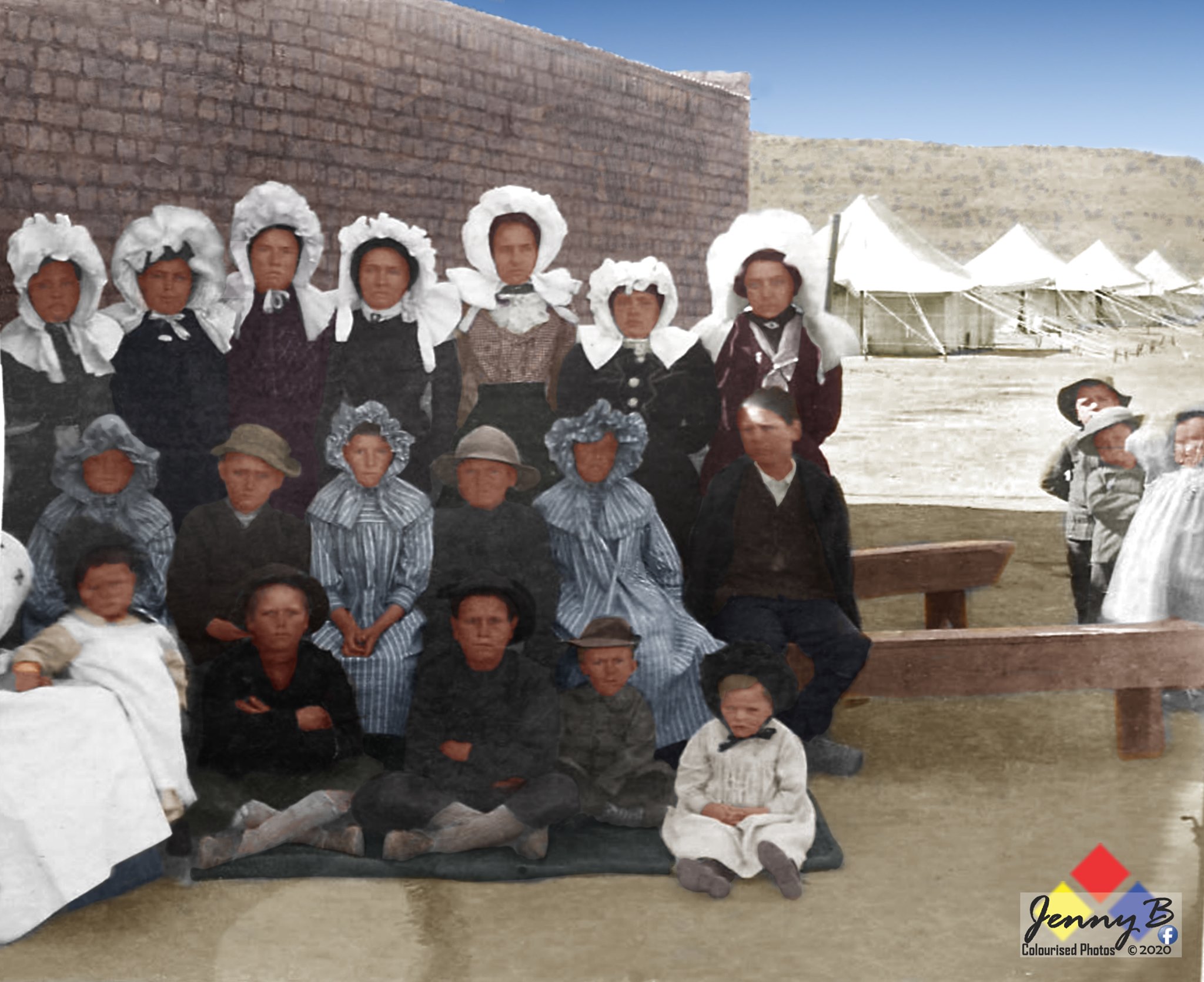
Picture: The Smuts family at this time, superbly colourised by Jennifer Bosch

Isie’s Anglophobia did not stop there, she was totally anti-British, and openly hostile toward them. She even went so far as to stick stamps deliberately upside down on her letters, so as to make the King stand on his head. It was much later when Lord Paul Methuen, the Officer Commanding-in-Chief in South Africa, convinced her that the British were not all bad, he helped her overcome her prejudices to eventually support her husband in his efforts to reconcile the English and Afrikaner “races” to achieve peace, stability and ‘Union’ in South Africa.

Jan Smuts would also tease her and say she would be “punished” if any of her children married a Brit in the future, which ironically several of the Smuts children did, either marrying into wholly British or half English descendants. Isie’s future would see her rise to one of the most loved people in South Africa – English and Afrikaner alike – and she hit her stride during World War 2, during Jan Smuts’ second Prime Ministership, when she headed up the wartime ‘The Gifts and Comforts Fund’ in support of the men and women from South Africa fighting in the war, even visiting them in the combat zone, but that’s a remarkable story for another day.

In South Africa, one can still find people who swallowed Smuts’ political detractors rhetoric and will say that by reconciling with the British, he did not suffer or fully understand the indignity of the concentration camps. Utter poppycock, one only has to look at the fact that he not only lost family, he nearly lost his wife, such was his conviction to get a better peace for his countrymen by engaging guerrilla war tactics and becoming a ‘Bitter-einder’ in war already hopelessly lost. Of his reasoning for enduring the ‘Bitter-einder’ campaign Jan Smuts said “… two years more of war, the utter destruction of both Republics, losses in life and treasure … Aye, but it meant that every Boer, every child to be born in South Africa, was to have a prouder self-respect and a more erect carriage before the nations of the world.”

The journey for both Jan and Isie to overcome their hatred for the British and reconcile with them in 1910 for the good of all South Africans is one of the most generous and forgiving acts ever seen in South Africa, it was only seen again in 1994 when Nelson Mandela did the same (although the same could not be said of his wife).

Jan Smuts famously said “history writes the word ‘reconciliation’ over all her quarrels” and to anyone visiting the Smuts museum in future, look up at the simple curtain rails, and remember the courage of an ‘Ystervrou’ (iron woman) who endured during a highly destructive war, literally crippling her people and her remarkable journey to reconciliation with the enemy to the benefit of all.


Written and Researched by Peter Dickens.

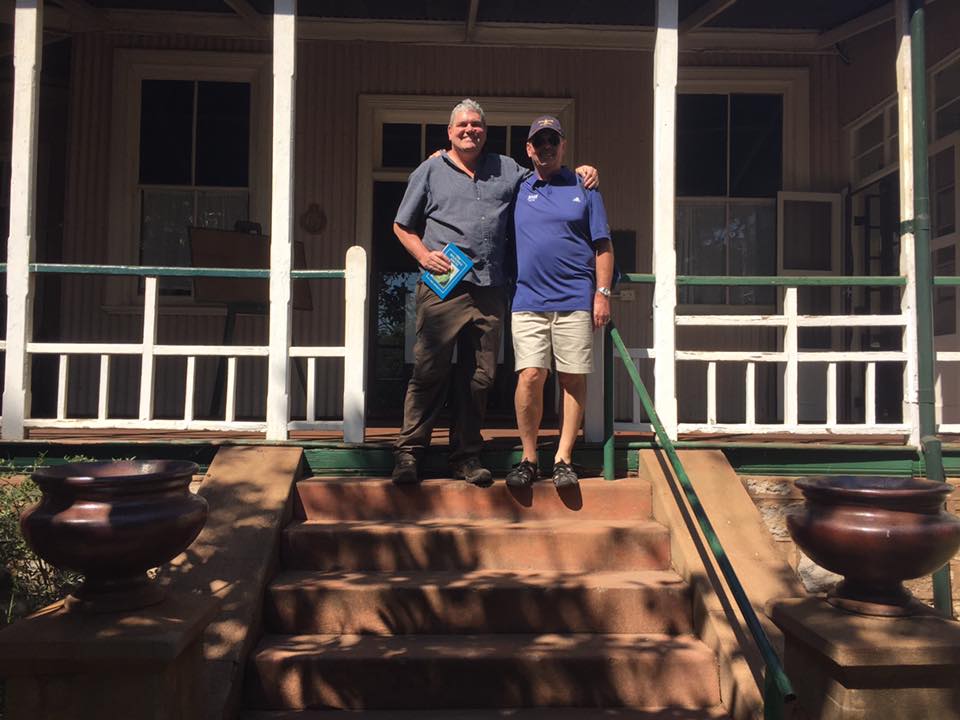
With grateful assistance from Philip Weyers (Jan Smuts’ Grandson) and the Jan Smuts Foundation and family. Large reference and thanks to “Women South Africa Remembers” by Fay Jaff (1975). Also, with much thanks and gratitude to Jenny B Colourisation. Photos below – Smuts House Museum in Irene, the author and his wife with Philip Weyers.

Beer, Bawd and Boers

The Great Beer Flood and the Boer War

So what does the Great London Beer Flood of 1814 have to do with the Boer War of 1899 decades later? A lot really, and it involves a banjo-playing prostitute (a ‘bawd’ in case you’re wondering about the old Middle English used in the headline), so – here’s the tale of how an artillery battery was financed during the South African War (1899-1902) a.k.a The Boer War by a very eccentric and colourful Lady.

The Beer

Let’s start at the beginning with the London Beer Flood of 1814, basically the flood was caused when a 6.7m heigh wooden fermentation vessel containing ‘Porter’ beer at Meux&Co’s Horse Shoe Brewery in London burst open. It dislodged and burst open another fermenter and storage barrels releasing around a million litres of beer. The resultant wave of beer swept into a slum, tragically killing 8 people as it flooded basements and knocked over walls. Although one person died of alcohol poisoning a couple of days later after hundreds of people collected the beer and mass drunkenness ensued.

Images: The Meux & Co’s Horse Shoe Brewery and Sir Henry Meux, 1st Baronet

The brewery was nearly bankrupted as a result, but was saved by the government after a rebate was given on the excise of the lost beer. Gradually the Meux&Co Brewery found it way back on its feet and became highly profitable. The Meux family (Meux is pronounced ‘Mews’) had a long association with beer and breweries, the owner of the Horse Shoe Brewery was Sir Henry Meux, 1st Baronet (1770-1841), the son of a brewer named Richard Meux (1734 – 1813). Sir Henry Meux would bequeath the brewing empire to his son, also named Henry, Sir Henry Meux, the 2nd Baronet (1817-1883), he headed up Meux&Co Brewery and also became a Member of Parliament. He in turn bequeathed the brewery and family fortune to his son, also Henry, Sir Henry Bruce Meux, the 3rd Baronet, who started managing the brewery from 1878.

Now, it is in Sir Henry Bruce Meux, the 3nd Baronet that we find a most remarkable figure. His wife. Lady Valerie Susan Meux.

The Bawd

Born in Devon in 1847, Valerie Langdon married Sir Henry Bruce Meux in 1878 and moved to his Hertfordshire estate. Langdon claimed to have been an actress, but was apparently on the stage for only a single season. By all accounts, she worked as a banjo-playing prostitute and barmaid under the name of Val Reece (or Val Langdon – her stage name) at the Casino de Venise in Holborn, central London, and it is here that she is believed to have met Sir Henry Bruce Meux.

Images; Sir Henry Meux with Lady Meux playing the Banjo and their Zebra drawn carriage in London.

She certainly struck the big time. Meux had a considerable estate, including 9,200 acres on the Marlborough Downs. He even commissioned James Whistler to paint three portraits of his wife, Valerie, Lady Meux. At Lady Meux’s request, Henry purchased from the City of London the Temple Bar Gate, which they preserved at their Theobalds Park estate. They re-opened and greatly extended the house, including installing a roller-skating rink (roller-skating is older than you think, invented in 1863 – it was initially dubbed ‘rinkomania’ in the 1870s).

Lady Meux took up the mantle of a London socialite, and a very eccentric one at that, she reportedly travelled around London in a carriage drawn by zebras.

Images: Portraits by James Whistler of Lady Meux

The Boers

During the South African War (1899-1902), early British reverses to the Boer invasions of the British Colonies and sieges of their towns leading to ‘Black Week’ in December 1899 made headline news and the defence of Ladysmith made a particular impression on Lady Meux.

When the Boers declared war against the British on 11th October 1899, Captain Hedworth Lambton was in command of HMS Powerful, which was posted in the China seas, HMS Powerful was a state-of-the-art Cruiser for its time and at the onset of hostilities it was immediately ordered to Durban. Knowing that the British forces at Ladysmith urgently needed more powerful guns, Captain Percy Scott from HMS Powerful’s sister ship, HMS Terrible, devised carriages to transport naval cannon, and Lambton led a Naval brigade to the rescue at Ladysmith with four twelve-pounders and two 4.7″ guns. The enthusiastic response in Britain to these Naval “heroes of Ladysmith” was enormous and made Captain Hedworth Lambton a well-known public figure. Queen Victoria even sent a telegram to him saying, “Pray express to the Naval Brigade my deep appreciation of the valuable services they have rendered with their guns.”

So impressed by their actions around the Ladysmith siege, Lady Meux, in her own patriotic way decided to do her bit for England and sprang into action. She ordered, six naval 12-pounders on special field carriages made by Armstrong of Elswick. The guns were sent directly to Lord Roberts in South Africa, because they had been refused by the War Office. The unit which manned these guns were known as the “Elswick Battery”. The battery was in action several times, including the Second Battle of Silkaatsnek near Rustenberg on the 2nd August 1900.

Images: The Elswick Battery Naval Guns donated by Lady Meux in South Africa during the Boer War.

Sir Henry Bruce Meux died on the 11th September 1900 at his Theobalds estate, the couple were childless and he was still a very wealthy man, thus leaving Lady Valerie Meux, now aged 48, one of the richest women in Britain with no heirs to the family fortune. She owned a string of race horses, entering them under the assumed name of ‘Mr Theobalds’, and won the Derby in 1901. She also collected a vast array ancient Egyptian artefacts.

When Captain Hedworth Lambton, the commander of the Naval Brigade at Ladysmith, returned to England, he called on Lady Meux at Theobalds to recount his adventures in South Africa and to praise the patriotic spirit of her gift. Lady Meux was “touched by this tribute” and wrote out a new will and testament making Lambton the chief heir to the large fortune left by her husband, including her house at Theobalds Park in Hertfordshire and a substantial interest in the Meux&Co Brewery. The only condition was that Lambton should change his name to Meux.

So, when Lady Meux died on 20 December 1910, Captain Hedworth Lambton without hesitation, promptly changed his name by royal licence to Meux, thereby enabling him to inherit her substantial fortune. By the end of the 1st World War, Sir Hedworth Meux GCB, KCVO (née Lambton) was a Full Admiral in the Royal Navy and the Naval aide-de-camp to King Edward VII.

Images: A Tea Cloth in the Ladysmith Siege museum celebrating the ‘Heroes of Ladysmith’ – Captain Hedworth Lambton top right and Admiral Sir Hedworth Meux (née Lambton) during WW1.

Back to the Beer

So what became of Meux&Co Brewery – can we still buy the beer? Well, sort of, you’re possibly drinking it now. When the Admiral of the Fleet, the Honourable Sir Hedworth Meux retired from the Royal Navy in 1921, in the same year Meux&Co Brewery was directed to move their production to the ‘Nine Elms’ brewery in Wandsworth which the Company had already purchased in 1914. The original ‘Horse Shoe’ brewery was demolished and today is the site of the Dominion Theatre, a Grade II listed art deco theatre in the heart of London.

In 1961 Meux&Co Brewery was sold to Friary, Holroyd and Healy’s Brewery of Guildford in Surrey. The company was renamed Friary Meux but only existed as an independent brewery until 1964, when it became part of the new national group, Allied Breweries. Through a series of more brewery mergers, the breweries ultimately merge with Carlsberg in 1992 and become Carlsberg-Tetley, which it is now part of the Carlsberg Group.

One for the road

In addition to my love of military history, I am also the owner of a Craft Beer Brewery in South Africa, and I love a good historic yarn like this, so I can only hoist one of our ice cold ‘Old Tin Hat’ beers to a Carlsberg Pilsner and say thank you once again to my good friend, Dennis Morton, who researched and directed me to this fantastic bit of history. Another toast to The Anglo Boer War and Related History Group (Facebook) and Iain Hayter.

Cheers!


Written and Researched by Peter Dickens with thanks to Dennis Morton.

A glass of brandy in the morning …

The last Boer War survivor

In 1992, the last Boer War survivor appeared at The Royal British Legion’s Festival of Remembrance at the Royal Albert Hall in London and later laid a remembrance wreath at the base of the Cenotaph in Whitehall. He was 111 years old, his name – George Frederick Ives, born in Brighton, England on 17th November 1881 and he served in the British Army for 18 months and served in South Africa during The South African War (1899-1902). He was the last combatant survivor from either side and it was his last known public appearance.

It remains amazing that in living memory of many today, right up into the 90’s, stood a veteran of the Boer War, think about his longevity, he was still alive when Gulf War 1 broke out between 1990 and 1991 – he saw war from a horse drawn age, before the invention of the airplane – right up to jet-aircraft ‘shock and awe’ warfare and the nuclear age, we can only wonder now what he thought of it. This is his story.

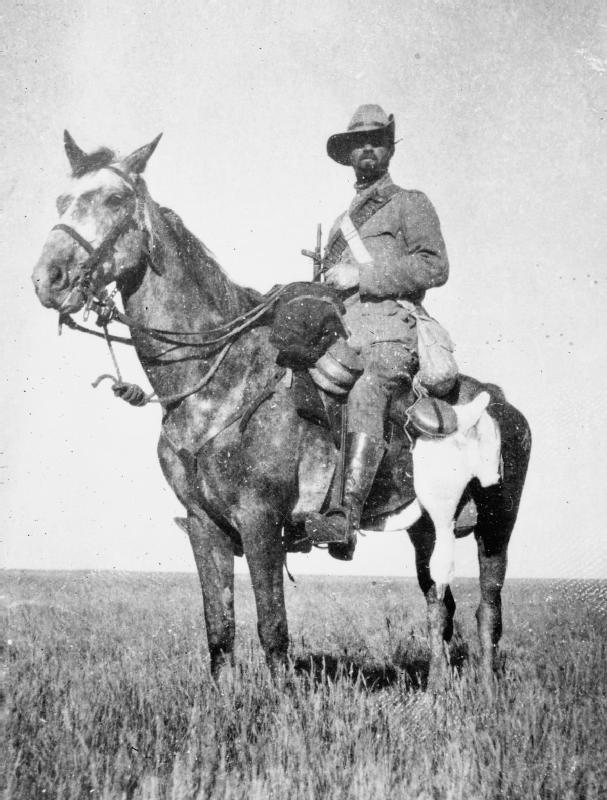
At the on-set of the war from 11th October 1899, the British suffered tremendous set-backs when the Boer’s declared war and invaded the two British Colonies, the Boer sieges and shelling of British garrisons and civilians alike in Ladysmith, Mafeking and Kimberley, incensed and immediately spurred many in the United Kingdom to join up and fight – including George Ives, citing “Black Week’ – the British losses to the Boers whilst attempting to relieve the sieges at the battles of Stormberg, Colenso and Magersfontein from the 10th to 17th December 1899 as his reason. George initially enlisted as Private in 2nd Volunteer Battalion, Bristol Engineers.

Clearly the British had a fight on their hands and by January 1901, George really wanted to get to South Africa, before the war he had experience training horses and considered himself a good jockey, so he attested to join the Imperial Yeomanry (voluntary mounted infantry) as a Trooper, number 21198. His height was 5’6, his eyes dark blue, hair black, and trade listed as a grocer. He trained in England until the end of February, when he proceeded to South Africa with the 1st (Wiltshire) Company, 1st Battalion, Imperial Yeomanry.

With the Yeomanry in support of Scottish troops, and thanks to his training on horses, George became a Cavalry Scout. He would spend days in the saddle as a messager often riding far into ‘enemy’ territory to connect between British detachments, he would regularly cover distances upwards of 80 km through enemy territory which he managed to do by taking two horses and hiding in the hills during daylight hours.

Horses were an important part of the military campaign in South Africa. Many, many years later in television interview George would chuckle and wryly observe that “There were lots of veterinaries but not many doctors. A horse cost £40 while a man was only worth a dollar.”

March 1st, 1901 to August 27, 1902, George fought on patrols in the Transvaal, Orange Free State and the Cape Colony. work in the hot South African sun riding on the open veldt, ‘water’ almost became an obsession for George. In the same interview many years later, George described what these patrols were like:

“We started out in the morning early, had a good camp breakfast, filled our water cans up with coffee, and we went. Before the sun was up any strength at all, nearly all the drink had gone. We was all day and we’d chew stones in our mouth and try and agitate a little saliva. Finally we got to the end of the trip and fell off the horse, the horse was thirsty too, and we’d throw some water in our mouths and on the back of our neck, and when we looked up [we] discovered there was two dead mules in the same pond, but it didn’t matter about mules rotting, you had to satisfy your thirst.” 

In the same interview Ives recalled his proudest moment during the war: 

“The most important [moment] was when the Captain had us fall in, get in line, it was after supper, at night, and when they were all there he said ‘Ives take ten paces forward’ and I stepped forward ten paces, and he says to the company: ‘here is the man who was scouting through 70 miles of enemy territory several times’. The captain then said give him a cheer, and they said ‘hoorah, hoorah’ and I went back in line.”

Trooper George Ives was discharged in England on September 3, 1902 and for his service in South Africa, he was awarded the Queen’s South Africa Medal with clasps for Cape Colony, Orange Free State, Transvaal, South Africa 1901, and South Africa 1902.

Later Life

In 1902 George immigrated to Canada, in 1990, he told the Vancouver Sun that he flipped a coin – heads Canada, tails New Zealand. The coin came up heads, and George Ives became a farmer in British Columbia. When World War 1 broke out he volunteered again, but was rejected when they identified a heart murmur.

He would raise six children with his wife of 76 years, Kate (Kitty). He worked as a farmer, logger and then a boat builder, his wife died 1987 when she was 98.

Living in Aldergrove, he would regularly attend Remembrance Day celebrations, well into the 1980s in Aldergrove, George Frederick Ives would get onto his feet and stand attention for the moment of silence, and his identity as a Boer War veteran announced to the crowd, as well as his age – well over 100 at this stage.

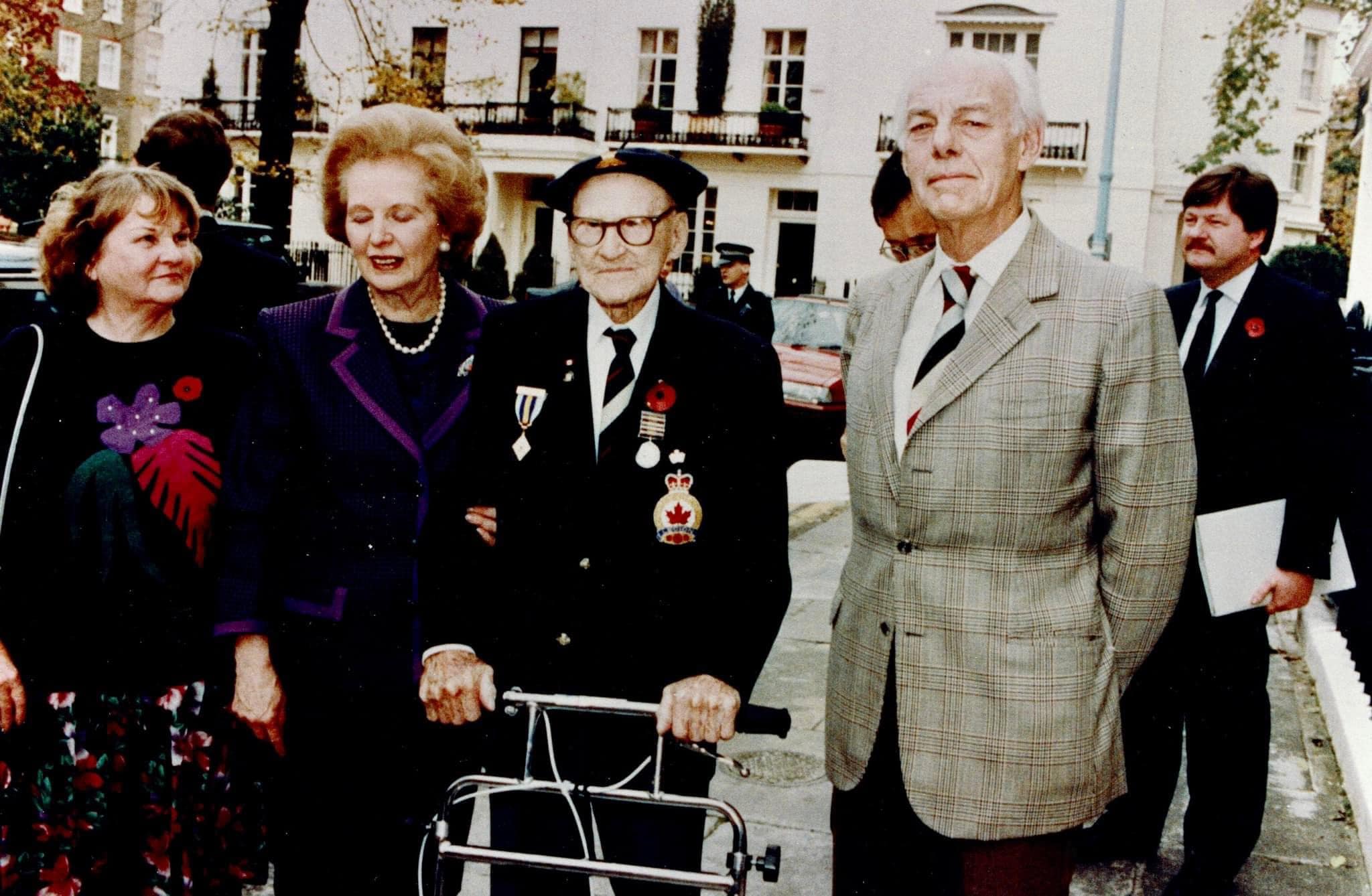
When George Ives returned to the United Kingdom for the last time in November in 1992, he was deemed to be the oldest man to have flown the Atlantic. He was also accompanied by his youngest daughter (76) and his nurse. During his visit he had tea with the Queen Mother, Princess Diana, Lady Thatcher and had a tour of Downing Street.

Images: George Ives with Princess Diana (Left) and Margarat Thatcher (Right)

As far as the last surviving veterans of the Boer War goes, George outlived the last ‘Boer’ veteran, believed to be Pieter Arnoldus Krueler (1885–1986) – the famous ‘4’ war Boer, who served on the ZAR side during the Boer War, then in both World Wars, the Spanish Civil War and was a mercenary in the Congo Crisis – another very interesting figure from the Boer War (another contender for ‘oldest’ Boer fighter was Herman Carel Lubbe who died on 11 August 1985).

George Frederick Ives eventually died five months after his famous UK visit, back in Canada, in Aldergrove’s Jackman Manor at the age of 111 on April 12, 1993, the last surviving Boer War veteran and the oldest man in Canada at the time.

Secrets of Longevity

Take a learning on longevity here, George Ives, was married for 77 years, smoked for 89 years and his secret for longevity was a glass of brandy and water which he took at 3am every morning! George is officially the second oldest British military veteran ever, at 111 years, 146 days, his record was only broken on 1 November 2007 by World War 1’s last combatant British survivor Henry Allingham (who also funnily credited “cigarettes, whisky and wild, wild women – and a good sense of humour” for his longevity). They just don’t make em like this anymore.

To see George Ives’ last interview follow this link


Written and Researched by Peter Dickens

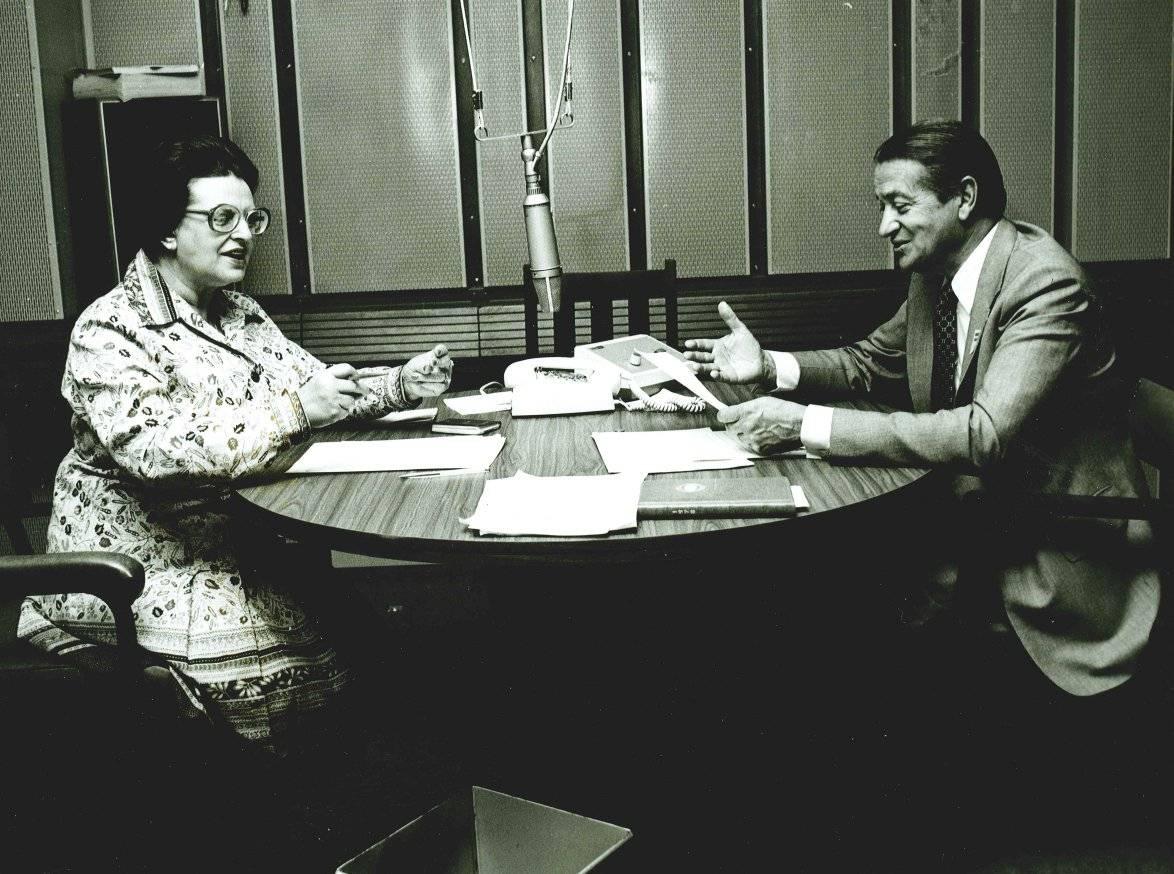
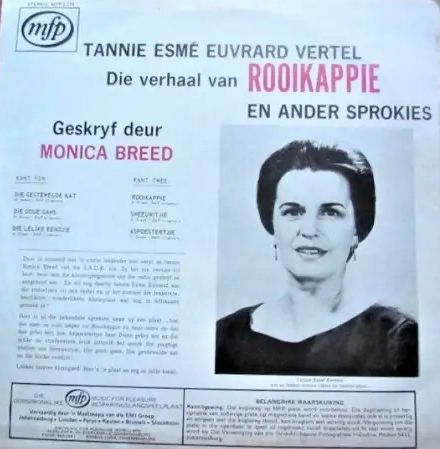
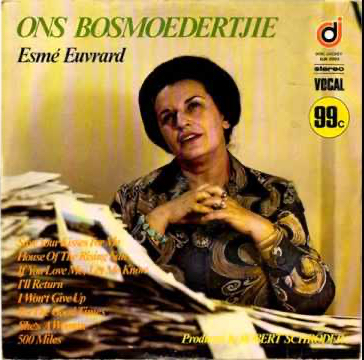
Bosmoedertjie … Tannie Esme’

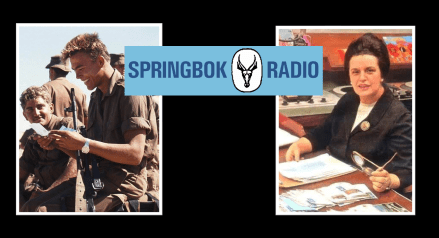
Remembering another South African national treasure and forces darling from the Bush War generation….. the late Esme’ Euvrard, affectionately adopted as their very own “Bosmoedertjie” (Bush Mum), the closest to a maternal link to home that they could find. 

Weekends on military bases during the 70’s and 80’s would focus around her “Springbok Radio Rendezvous” programme, with troops across South Africa and South West Africa (Namibia) waiting eagerly to hear a message from loved ones at home. Troopies would chuckle at all the soppy/funny/cheesy messages sent to others, make fun of those receiving them and feeling a bit disappointed (without showing it, of course) if they did not receive a special mention.

A great morale booster, the SABC ran a number of programs dedicated to the conscripts (and permanent force) members. Patt Kerr did ‘Forces Favourites’ on the SABC English Service (became Radio South Africa) and Marie van Zyl did ‘Stand at Ease’ on Radio 5. For more on Patt Kerr, follow this link: A soldier’s dedication to Pat Kerr

However it was “Tannie Esme’s” military marching music theme which brought in the start of her Springbok Radio Rendezvous program which resounded for many years, with her ‘golden voice’ announcing it was for ‘die manne en vrouens in uniform” (the men and women in uniform) and with her supreme grasp of Afrikaans, she made an impression on many, especially the Afrikaans speaking troops, her ‘warm’ voice which held a everlasting motherly comfort. 

Esmé Euvrard was a very popular media personality, in radio, she and Jan Conjé co-presented the long running Afrikaans serial ‘Liefdeslied’ (love song) and also presented the very popular, ‘Só Maak Mens’ (This is how you do it) a programme of household tips, recipes and interviews that ran from 1957 to 1985. She presented ‘Springbok Rendezvous’ for ‘the boys on the border’ with Paul Desmond. On Sunday nights she presented Esmé’s se Musiekalbum (Esmé’s Music Album). She also did children’s stories.

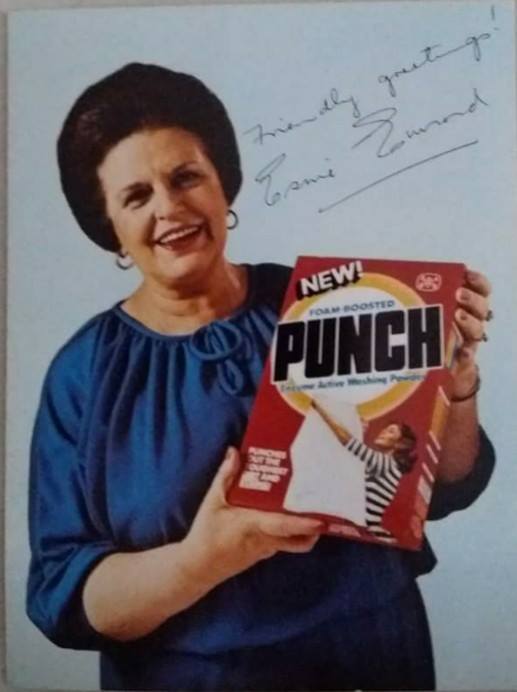
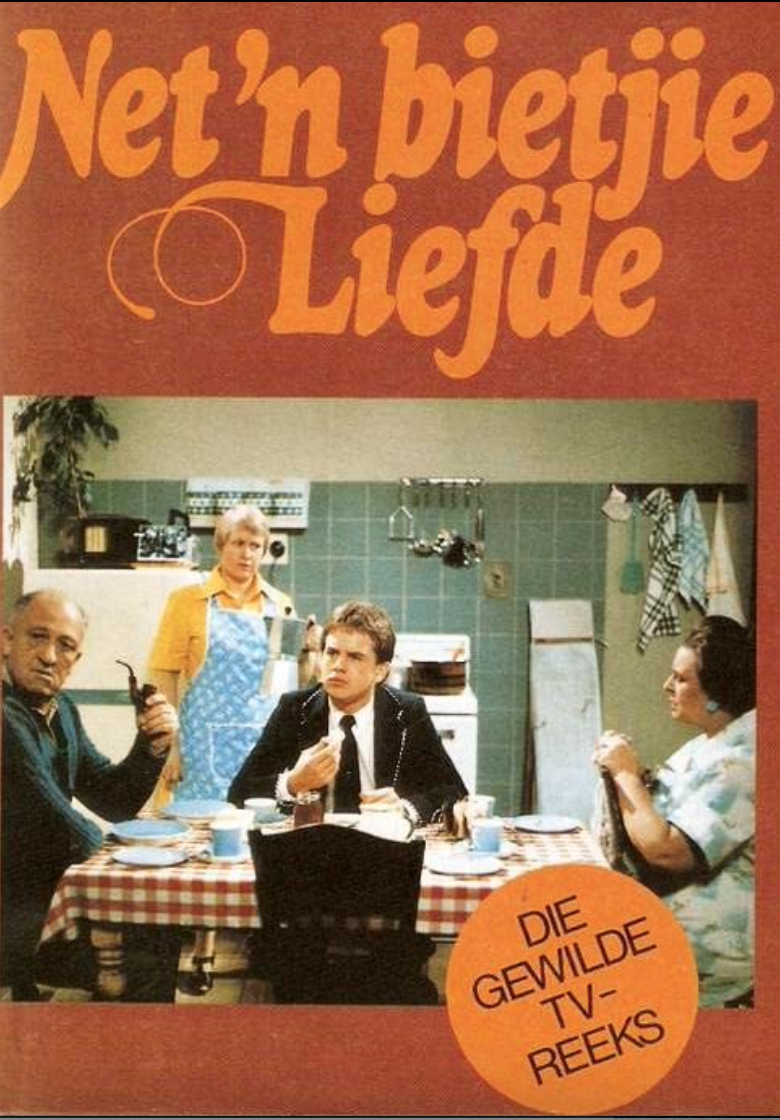
In film, she starred in minor parts in five films ‘Man in die Donker (1962), Majuba: Heuwel van Duiwe (1968), Vrolike Vrydag 13de (1969), Staadig for die Klippe (1969) and Wolhaarstories (1983). For TV, she acted in Net ń Bietjie Liefde (1977) and did some dubbing work. In advertising she was a notable brand spokesperson for Punch washing powder.

In music, she married the Portuguese-born flamenco guitarist Gilberto Bonegio and they both joined the Mercedes Molina Spanish Dance Company in 1958. She was, also a talented singer and she and her husband produced at least one fado record. In 1988 she produced a record of children’s stories entitled Diereverhaaltjies.

Gilberto died in 1964 after spending 20 months in a coma following a car accident and all of her devoted fans identified with her loss. Their two sons, Raúl and Fernando, followed in their father’s footsteps and became talented flamenco artists in their own right.

Tannie Esme’ passed away on the 11th September 1993. As recently as the 26th January 2020, Esmé Euvrard was inducted into the South African Legends Museum in Pretoria and her sons donated a painting of Esmé and her ‘Star of Africa’ State President’s award to the museum.

———————————————

Written and researched by Peter Dickens

Flying Cheetahs over Korea

By Derrick Dickens

Memories are at best times short and for most South Africans knowledge of the part played by pilots of No. 2 Squadron SAAF in the Korean conflict which started many years ago, are at best sketchy.

But the bottom line is these magnificent, unsung heroes in their flying machines carved a distinguished record in the history of the country’s armed forces.

In the closing stages of WWII and once the Soviet Union had agreed to declare war on Japan early in 1945, it was decided that the Soviets could occupy North Korea and the Americans the South. The dividing line ws the 38th parallel.

In 1947, the UN resolved to create an independent Korea. This resolution led to the planting of the seeds of discontent which would lead to the Korean conflict starting on June 25, 1950, and ending on July 27, 1953. Thus Korea became the first theatre of combat between the Western and Communist worlds, and signalled a major upsurge of the “Cold War.”

In response to a UN resolution, both US and Russian forces were withdrawn from Korea in 1949. With the advent of the Cold War, Korea suddenly assumed vital strategic importance, positioned as it was bordering on the Soviet Union, China and Japan.

Korea became the flashpoint of the Cold War when North Korea, with the backing of China and the Soviets, invaded the South. Within four days, the North Korean army had overrun the southern capital of Seoul and was moving rapidly southward. US troops were committed to the Puscan perimeter, where they were joined by reinforcements from the US, Britian and the Commonwealth in July and August.

After bitter fighting, the thrust south was halted and the final offensive of North Korea was repulsed in September, after which the UN forces started their offensive which pushed the Communist forces back over the 38th parallel.

An amphibious landing of UN troops at Inchon leap-frogged the North Koreans and cut off their supply routes, causing a disorderly retreat. By October, the UN forces had passed the 38th parallel and were heading for the Yalu River, the frontier with Red China. The Chinese then entered the war quite unexpectedly and drove the UN forces back over the 38th parallel.

By the end of January, the Chinese had overextended their supply lines and were forced to a halt. They were then once again driven back norht by a massive concentration of UN firepower to the 38th parallel, where fighting settled down to a vicious stalemate.

Armistice talks were launched and continued intermittently for the next two years, while the war of attrition continued unabated. The war in the air resulted in UN air supremacy ove the battlefields bringing it to conclusion, with the armistice signed at Panmunjom on July 27, 1953.

The SAAF goes to war.

The SA Government announced on August 4, 1950, that a fighter squadron had been offered to the UN for deployment in Korea, and three weeks later it was confirmed that the offer had been accepted, and No. 2 Squadron was been chosen for this formidable task.

Just over 200 officers and men were needed to supplement the existing nucleus of the squadron, and when volunteers were called for 332 officers and 1 094 other ranks came forward. On August 27, key posts were allocated to 18 officers plus 32 additional pilots and 157 other ranks. The officers, under Commanding Officer Commandant Van Breda Theron, DSO, DFC, AFC and Deputy Commanding Officer Major Blaauw, DFC, were experienced in their own special fields, and the combat leaders were all pilots who had distinguished themselves during WWII. Flying operations were to be controlled by the 18th USAF fighter-bomber wing.

Pilots of 2 SAAF Squadron, the ‘Flying Cheetahs’ underwent concentrated training on Spitfire Mk IXs

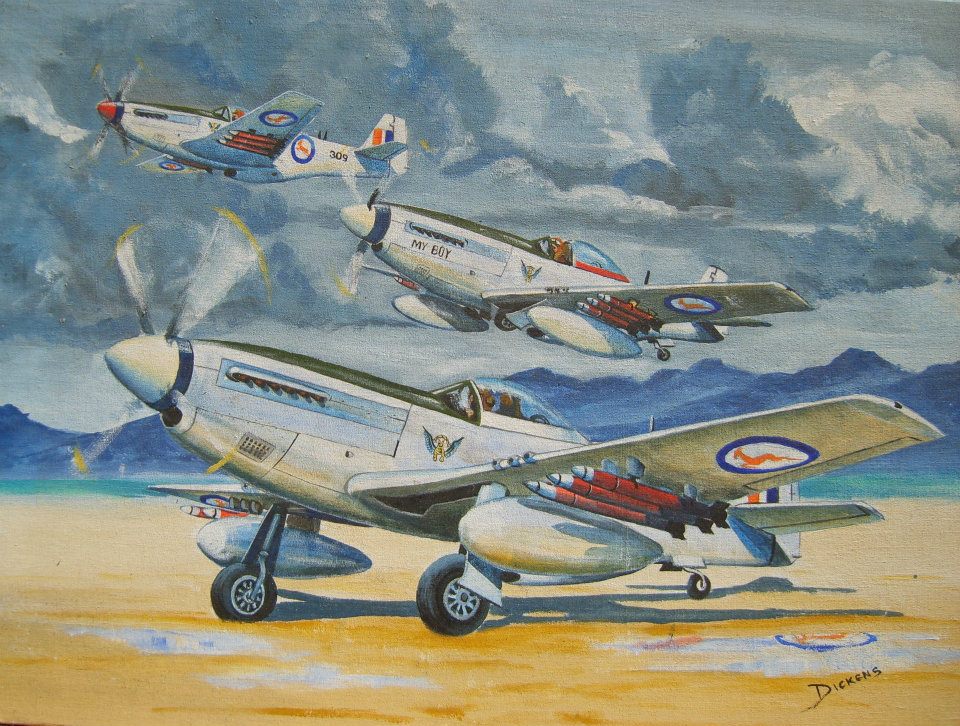
Before they were placed at the disposal of the UN. They converted to the F-51D Mustang at Johnson Air Force Base, Tokyo, and were attached to the USAF 18th fighter bomber wing at K-9, Pusan and K-24 Pyongyang.

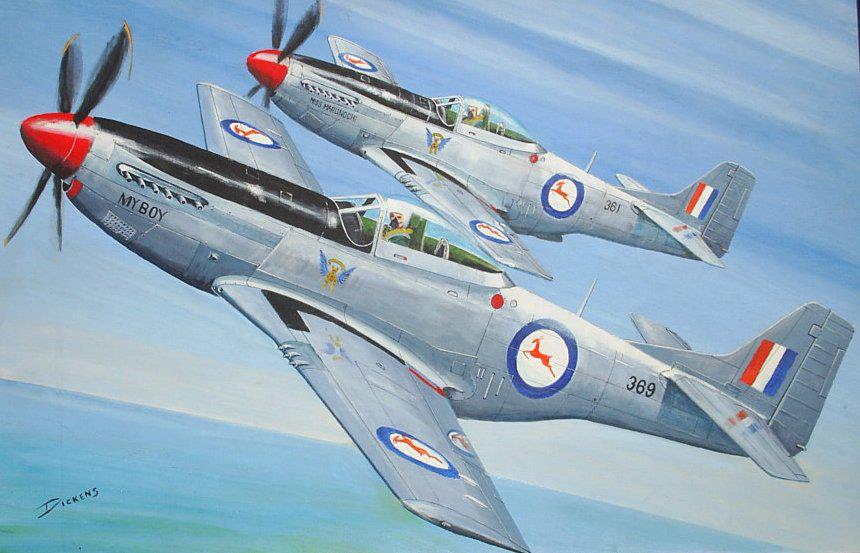
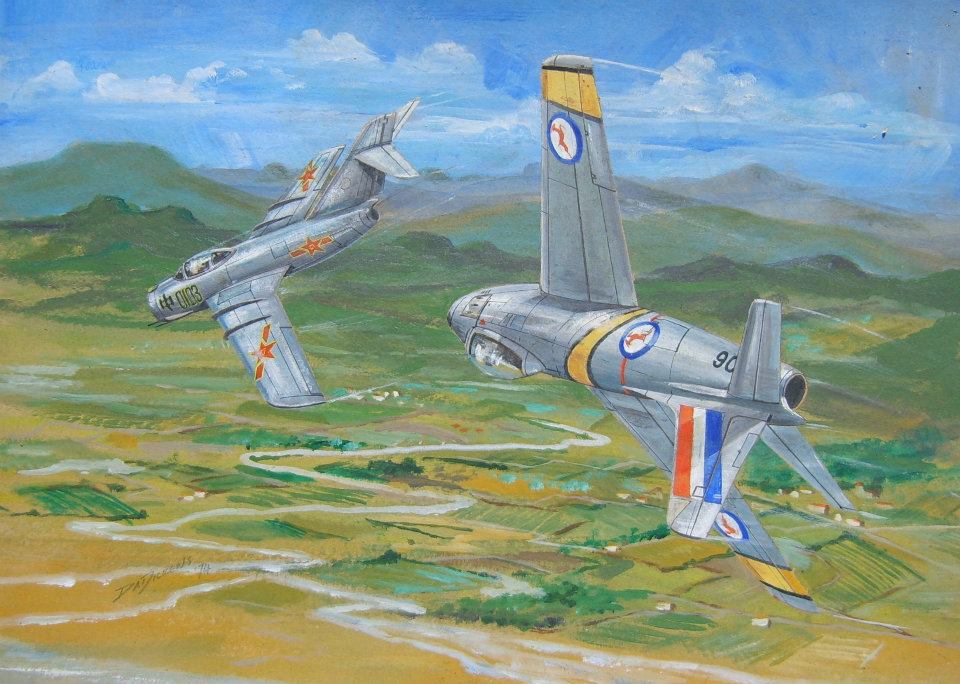
Images: 2 SAAF Korea Paintings – by Derrick Dickens (copyright Peter Dickens)

The squadron flew into action to stem the Communist hordes swarming from the North, the head-long advance forcing it to fall back to K-10 near Chinhae, which remained its permanent base for the next two years.

In this war the SAAF received its baptism of fire from Russian MiG jets and moved from a piston-engined air force into the jet age from flying P-51 Mustangs to F-86 Sabres. In operations using the Mustangs, the SAAF carried out 10 373 sorties, and lost 74 of its 95 aircraft.

During the three years of conflict, The SAAF fielded 243 officers, 545 ground personnel and 38 army officers and men. The ‘Flying Cheetahs’ lost 34 pilots in action, almost a hundred percent attrition rate, which attested to the viciousness of the fighting.

The squadron mainly carried out interdiction and close air support missions, sealing off supplies from the Communist troops and disrupting communications. These tasks were invariably performed in the face of heavy anti-aircraft fire and counter attacks by MiG 15s.

Early 1953, the ‘Flying Cheetahs’ converted from their F-51 Mustangs to the jet-powered F-86 Sabre operating from K-55 at Osan, south of Seoul. They did conversion training in T-33 Shooting Stars and a week later their first Sabres arrived. Cmdt. Gerneke flew the first operational sortie on February 22. The same day they sighted numerous MiG, but no combat resulted.

By March 12, they were fully operational and flew four counter-air patrolsalong the Yalu River in an attempt to lure MiGs across the border to engage in combat. It was during one of these air alerts when, on March 18, Col. ‘Kalfie’ Martin and Eddie Pinaar intercepted two MiGs. Both pilots attacked and one MiG was seen to explode when it entered some cloud. The kill was credited to Col. Martin.

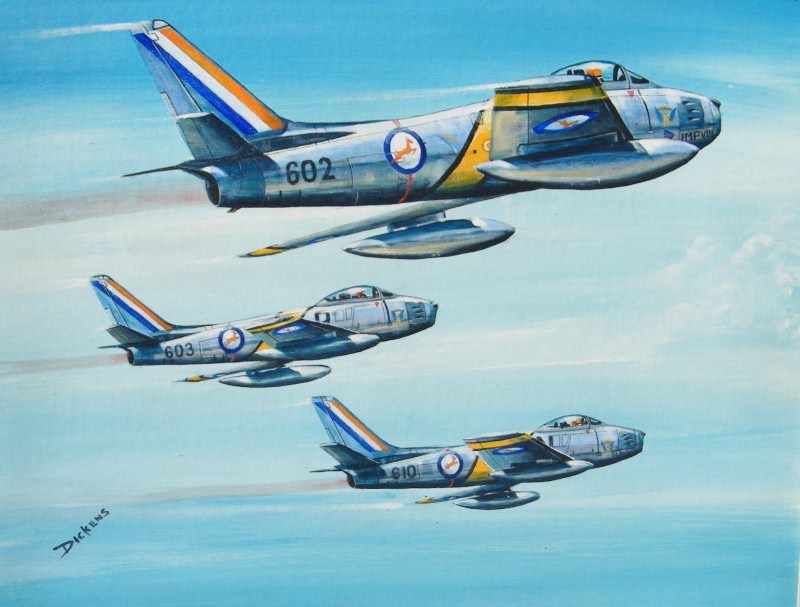
Images: 2 SAAF Korea Paintings – by Derrick Dickens (copyright Peter Dickens)

During the last months of the war, missions were equally distributed between interdiction, close support and counter-air, with an occasional rescue patrol.

The Sabres were returned to the USAF and the last SAAF officers left Korea on October 29, 1953, thus ending South Africa’s involvement in the Korean conflict.

By the time the armistice was signed, July 27,1953, the squadron had flown 11 843 sorties carrying out fighter sweeps along the Yalu and Chong Chong Rivers, and concentrating mainly on ground attack operations against enemy airfields.

Decorations earned included three Legions of Merit, two Silver Stars, 50 Distinguished Flying Crosses, 40 Bronze Stars and 176 Air Medals. 152 clusters to the Air Medal, one Soldier’s medal and 797 Korean War Medals.

The USA presented No. 2 Squadron with a Presidential Unit Citation, awarded for extra ordinary heroism in action against the armed enemy of the UN.

Korea presented the SAAF with the order of Military Merit Taeguk with Gold Star, to the unknown dead of the armed forces of the Union of South Africa, as well as a Presidential Unit Citation for exceptional meritorious service and heroism.

By the time the ‘Flying Cheetahs’ left Korea, they had established a record which compared favourably with the best of the UN Forces. They lost 34 pilots in flying nearly 3,5% of all fighter bomber sorties, destroying rolling stock, railway lines, tunnels, bridges and locomotives, military equipment, trucks, artillery pieces, and tanks, and accounting for hundreds of enemy troops.

The 826 South Africans who served in Korea all contributed to a combat record unequalled by a force of similar size in previous conflicts.

In honour of the ‘Flying Cheetahs’, 18th USAF Fighter-Bomber Wing issued this policy order:

“In memory of our gallant South African comrades, at all retreat ceremonies,the playing of the American National Anthem shall be preceded by playing the introductory bars of the South African National Anthem and that all personnel of the Wing will render the same honours to this Anthem as to our own.”

Editors Note:

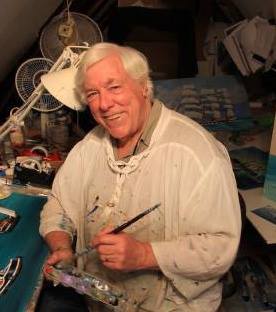
This history on 2 Squadron, SAAF in Korea was written by father, who grew up in the 1950’s watching these magnificent Spitfires, Mustangs and Sabre Jets coming in and out of Pretoria, it formed the basis for his love of military aircraft and his lifelong passion as a fine artist painting them. It is with great honour and privilege that I can post images of his Korean War paintings and his written account of the history.

Note, over the years and changes and amalgamations, the 18th USAF Fighter-Bomber Wing is now the 18th Wing – a Composite Wing – at Kadena Air Force base in Japan, it is no longer believed that their band plays the opening bars of ‘Die Stem’ before the American National Anthem. I’m happy to be proved otherwise as its a great pity.

Peter Dickens

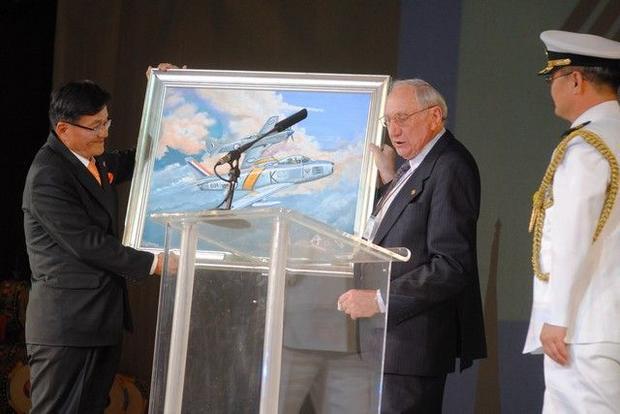
This was a presentation to the President of South Korea on the 60th Annivesary of the Korean war by the South African Veterans Association of the Koeran War at the celebratory banquet in Johannesburg. The painting by Derrick Dickens (and used on this story’s masthead) is being presented by Piet Visser Chairman of the Veterans Association, who flew Sabres in Korea, the painting depicts the two types of aircraft flown by the SAAF “Flying Cheetahs” in Korea. Sabre and Mustang.

“God’s will”

I’ve recently looked at the ideology of Afrikanerdom, after taking some criticism for ‘bashing’ a small but very vocal sect of anti-Smuts Afrikaners (some even in my own family). I’ve contested that they do not epitomise Afrikanerdom but seem to think they do. It’s a complex subject, as ‘Afrikanerdom’ is as white as it is black, but bear with me.

When it comes to the ‘Boer War’ (The South African War 1899-1902), there are two very hotly debated areas, both ‘shape’ Afrikanerdom – certainly in the white sense of it. The first is the idea of the “Bitter-Einder” (the Bitter Enders), the group of Afrikaners who painfully decided to continue the war on ‘guerrilla principles’ after the ‘conventional phase’ ended and Pretoria fell. Some historians point to these guerrillas as having brought the catastrophe of the concentration camps and the scorched earth farm buring policy on themselves – they’re to blame as the British had little choice. Little is really understood as to ‘why’ they continued the fight, as the fight was clearly lost – sheer madness the only conclusion. But, it’s in the ‘why’ that we find Afrikanerdom.

The second hotly debated subject is Jan Smuts, his impact to South African politics and ‘Afrikaner’ identity spans 6 decades, no other ‘Afrikaner’ can hold a flame to it. His detractors fall on old National Party propaganda and political smearing and old family folklore to paint him as ‘turning British’ for reconciling the warring British and Boer races (and by some strange leap in logic some also point to him as responsible for the concentration camps). Little time is given to actually reading what Smuts said or wrote and a strange almost belligerent hatred overrides all reason.

Sir Winston Churchill said of Smuts that “He fought for his own country; he thought for the whole world.” by that he meant Smuts remained an Afrikaner patriot for one but also philosophised for all mankind. Churchill’s long time admiration for Smuts also lay in his abilities as one of the few successful Bitter-Einder Boer Generals, not in a need for him to identify as somehow British. Smuts’ context of Afrikanerdom is found in his justification for being a Bitter-Einder’ and there is nothing better to understand his mind and to understand the ground zero of 20th century ‘Afrikanerdom’ and the modern white Afrikaner psyche than to read what Smuts himself puts down.

What follows are some extracts .. they are well worth the read, and anyone who walks away from reading this still thinks that Jan Smuts is somehow ‘English’ needs their brain replaced – for they have never taken the time to read what the man actually wrote. Here’s an Afrikaner at heart – simple.

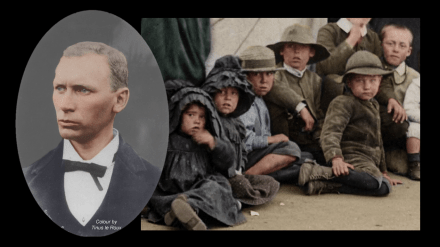
Image: General Jan Smuts (seated centre) with his Commando, colourised by Tinus Le Roux

This is a letter, written to W.T. Stead by Jan by Smuts whilst in the field with his commando at Vanrhynsdorp on 4 January 1902 (Source: Published from his private papers by Hancock and van der Poel) – it covers some excerpts as the full content is too long to publish here, but they more than adequately make the point.

“I know the difficulty of the modern man of action and intelligence, accustomed as he is to ideas of natural laws and physical or economical explanations of all phenomena, to understand or appreciate the tremendous force of faith in the affairs of the world, but unless he overcomes this difficulty the present war will, in all essential respects, remain for him an insoluble mystery. A mustard seed of real faith avails more in the affairs of the world than mountains of might or brute force – and only he who thoroughly understands this will be able to appreciate the true inwardness of the present struggle.

The condition of the two South African Republics in very truth baffles description. Not William the Conquerer himself created a more complete desert between the Tyne and the Humber in the eleventh century than Lord Kitchener has created in the twentieth. All living animals – horses, cattle, sheep, pigs, fowls, even dogs, have been killed, and generally in a manner too shocking to relate. More than once I set my commandos to kill the poor brutes which had been maimed by the British soldiery and then left by them to slow death and starvation; even four or five days after atrocities had been committed one would find these poor dumb brutes writhing in pain, and struggling and bleating for water and food among the dead. I have seen strong and brave men with tears in their eyes – totally overcome by the sight of this horrible suffering.

To me the saddest sight in this war has been the sufferings which women and children have endured to escape capture by the British columns. Like wild beasts they have been everywhere hunted out with Lee-Metford and Maxim and consigned to the death-in-life of the camps. For these reasons the brave Boer women have endured hardships and undergone privations such as one only reads of in the ancient records of Christian martyrdom. ‘They were tempted, were slain with the sword; they wandered about in sheepskins and goatskins; being destitute, afflicted, tormented (of whom the world was not worthy:) they wandered in deserts, and in mountains, and in dens and caves of the earth’. (Hebrews XI: 37,38).

I do not ask what rules of international law sanction this rapine and ruin. I only state it as a fact – as a fact which I have seen with my own eyes and which is beyond all manner or doubt or dispute: quaeque ipse vidi et quorum pars magna fui. No wonder that for many burghers the state of their desolate country has become a sight too painful to bear; no wonder they prefer to continue the war beyond its borders.

The British military authorities adopted a policy of devastation and of treating non-combatant women and children as prisoners of war. They expected the Boers to quail before the absolute destruction of their property and the sufferings of their women and children. The said military authorities , however, made one fatal error in their calculations-an error which they will continue to make to the very end of the war. They had learnt in the case of all the tribes that with which they had come in contact during recent generations that one big defeat, followed by the burning of their chief town or kraal and the raiding of their cattle , was sufficient to utterly cow and prostrate them. And so they expected from the despised Boer. But the policy of spoliation and the infliction of suffering on non-combatants – so far from producing the expected result – had exactly the opposite effect. It raised the spirit of the Boers; it sent the iron deeper into the soul; that the God of Battles might not be with them yet the Spirit that dies not quench the smoking flax nor bruise the broken reed was with them to strengthen and sustain.

A second important consequence of this policy of spoliation has been the elimination from the Boer ranks of all those elements which are useless from a military point of view. The ordeal has been too terrible for the weak and the faint. First of all went the irresponsible braggarts who had clamoured for war and had called the peacemakers cowards and traitors. The man who expected to gain something from continuing in the field; the man who preferred to protect his property; the man who had lost all hope of a successful issue followed. There remain the stout-hearted and able-bodied – the men of physical courage, the men of moral endurance, whom self-respect and honour keep true to their country’s cause; the men of invincible hope in the future and child-like faith in God – truly a select band, the like of whom, I fondly think, is not to be found in the wide world today.

And these are the men whom Mr. Chamberlain, standing in the House of Commons, does not shrink from classifying as brigands and ruffians. These are the men against whom the High Commissioner (Milner) has the infantile audacity to hurl his proclamation of permanent banishment and universal confiscation.

‘How long is this war still going to last’ is the question asked by almost every Englishman who meets a Boer. The English are evidently weary and tired to death of the whole business. And no wonder, for their feeling of racial revenge must be pretty well satiated after the ruin and sorrows in which the Boers have been involved. For every thinking Briton, even the most hostile to the Boers, must feel in his heart of hearts, that this sorry business has added no glory and never will add any glory to the Empire – no military glory, for the odds were too uneven; the methods resorted to by the British too shocking to the humaner feelings of mankind, and the unique tenacity of the Boers has finally come to overshadow every other feature of war; no political glory, because the issue had become one of their freedom or subjugation. And mankind reserves its lasting honour for, and award its crown of glory only to, those who have striven for the highest ideals of humanity; who have made deathless sacrifices for liberty or justice or religion; and who by heroic self-sacrifice for the highest ends have raised and ennobled the ethical consciousness of mankind. But this much is certain, that the issue of glory is against the British Empire, and that the world has only seen another proof of universal moral law that they who deliberately seek glory shall not find it.

What are the principal moral forces operative within the area of the war today? I ask the question here because only he who thoroughly appreciates their character will be able to understand the factors on which the continuance and issue of the present war depend. The flower of the Boer army …. and who to a large extent still continue in the field today, were actuated by a vaguer but profounder aspiration …. purified and deepened a hundredfold by loss and suffering and sorrow during the course of the war, remains today the most vital and vitalizing force in the Boer mind, and must be carefully studied by all who wish to understand the true conditions of the continuance and issue of the present war.

The Boers, as a people, have an extraordinary faith in God. Theirs is not a God of the mechanical type …. Theirs is a God …. rather of the type of the Hebrew prophets – …; who from and with the passions and aspirations, the good and evil deeds of men, shapes the divine policy, moulding sin and sorrow, deeds of honour and of shame, like some potter at the wheel, into the divine ends of His world-government. The barbarous measures of the enemy, which bring a blush of shame to the fair face of Christian civilization, were expected by them, for had not Scripture to be fulfilled? All these things, and even worse, were foretold by the prophets, and with patience and resignation they are prepared to bear the yoke which not so much the enemy as God has laid on them; the inhuman proclamations of Lords Kitchener and Milner were read and pondered by them in the sacred writings before they were issued in SA, and the remarkable resemblance in the procedure of the Nebuchadnezzar of prophecy and the Kitchener of our day is to them only another confirmation of their belief that this is God’s work and that the final issue will also be His. …. this remarkable faith in God and in their destiny has only become stronger; broken and bleeding they have clung all the more passionately to the great hope, praying indeed that the cup of agony might be taken away from them, but never dashing it down in impatience or despair. For the Boers feel that they are not enduring themselves, and inflicting on their loved ones, mere useless suffering, as Lord Kitchener is so fond of reminding them, but that victory will yet be theirs, and the seed now sown in sorrow and tears will be reaped by posterity as a glorious harvest in the land that is far away…

This view, which will seem strange and intelligible to matter-of-fact politicians, is today held by the bulk of the Boers in the field. The Boers fight now in a spirit akin to that of the early Christian martyrs; they listen to reports of defeat and rapine, of the suffering of their wives and children in the prison camps, with that calm resignation which springs from the assurance that such is God’s will”.

Images: Lord Kitchener’s policy of Scotched Earth, Boer farmsteads been destroyed by British and Imperial Troops.

Images: British Boer War period concentration camps, colourised by Jenny B


Researched by Peter Dickens

With much thanks to ‘Boer War Crank’ on-line. Master images of a young Jan Smuts and concentration camp children – colourised thanks to Tinus Le Roux.

“I doubt Mugabe knowns what a VC is!” .. Captain Gerard Norton VC MM

Gerard Norton is a South African many in his native land should know, and don’t. During the Second World War, he demonstrated what sort of calibre of man he was, not once, but twice! For gallantry he was awarded a Military Medal and in a separate engagement was awarded the highest honour for valour – The Victoria Cross. After the war he took up tobacco farming in Rhodesia, and in 2002 his family was evicted by the Mugabe regime. Another example of one of Southern Africa’s finest, left out of our collective consciousness as we pursue an African revolutionist interpretation of history and honour flawed men, and … so we don’t forget the deeds of much greater men, this the story of Gerard Ross ‘Toys’ Norton.

From Banker to Soldier

‘Toys’ Norton was the descendent of 1820 Settler stock, he was was born in Herschel, Cape Province on the 7th September 1913 – his father, Charles Norton, was an assistant magistrate in Herschel. Educated at Selborne college, East London he was a keen sportsman excelling at cricket, rugby and tennis. He also picked up his nickname ‘Toys’ whilst at Selborne. A hostel at Selborne College is still named in his honour.

When he left school he went into banking, joining Barclays Bank branch in Umtata. A fanatical sportsman he took up badminton, squash, golf and hockey to add to his cricket, rugby and tennis. He even went on to represent the Transkei at cricket and captaining the Transkei rugby team.

He also took an interest in soldiering and joined the Middellandse Regiment as a Citizen Force volunteer. He spent a short time working in the Johannesburg branch of Barclays bank, but he returned to his much loved Eastern Cape, and whilst in East London again he transferred to the Kaffrarian Rifles, a South African Infantry unit formed 1876 originally as the Buffalo Corps of Rifle Volunteers for service in the 9th Frontier War, and then reformed in 1879 into the Kaffrarian Rifles for the South African War (1899-1902) on the side of the British and then took part in the 1st World War.

The Military Medal

When the second world war broke out the Kaffrarian Rifles found itself “up north” and Toys Norton, now holding the rank of Sergeant found himself in the North African sphere of combat operations, first entering the combat zone in 1941 when his regiment proceeded to El Alamein, where they dug the defences which proved so vital the next year. Norton saw his first real action during the attack on Bardia. When Bardia fell his regiment went over to the defence of Tobruk with rest of the 2nd South African Infantry Division under Major General Hendrik Balzazar Klopper who was in command of the defence. After Tobruk was encircled by Rommel and his Axis Forces, rather than “go into the bag” (to be captured) with the rest of South African defenders on the 21st June 1942, Norton and his platoon leader were determined to break out.

Sgt. Gerard Norton, his platoon leader and along with four others where all subsequently posted as missing in action, but the truth was they had taken to the expansive desert in an acquired truck and 160 kilometres later they ran out of petrol. Still determined to evade capture they decided to carry on foot in what can only be described as an epic tale of survival – trekking for 38 days in the desert and covering 750 kilometres until they found a route through the enemy lines and managed to rejoin the 8th Army’s lines at El Alamein. To treat their raw feet, they used axle grease (a tip Norton remembered being given by his mother) from a wrecked truck.

For this remarkable feat ‘Toys’ was awarded the Military Medal.

Recuperation and transfer

A journey of survival like that necessitated some serious rest and recuperation, and after period of rest in Cairo, Norton returned to South Africa. As the military goes, ‘Toys’ was very happy to remain in the non-commissioned officer ranks and although encouraged twice to become a commissioned officer, he refused on both occasions, believing it was his place to be in the field with his men. However on his return to South Africa he relented and decided to do his commissioned officers course.

In finding placement as a commissioned officer, Lieutenant Norton was keen to get back in the action and at the point of his commission he was attached to the 6th South African Armoured Division Pool. Here there was a usually oversubscribed amount of officers and the quickest path to getting back in action lay in a transfer. An ideal opportunity arose and Norton transferred to the British Army now fighting in Italy, and here he was joined to the 1st/4th battalion of the Hampshire Regiment (Later the Royal Hampshire Regiment).

The Victoria Cross

It was in Italy that Lt. Gerard Norton MM would earn the highest accolade for Valour. On the 31st August 1944 he found himself as a platoon commander during an attack on the German’s ‘Gothic line’ at Monte Gridolfo in Italy during Operation Olive (the British Eighth Army attacked on the Adriatic coast along a 50 kilometre front aiming to break through to the Po Vally). The Gothic line was a series of strategic defence points the German army had set up to stop the Allied advance in Italy, and it was proving very formidable, stretching 320 kilometres across Italy from Massa in the West to Pisaro in the East. 

Images: Hampshire Regiment in action on the Gothic Line – Imperial War Museum copyright

Three battalions of the Hampshire Regiment advanced on Monte Gridolfo, a formidable strong point in the Gothic line. Around the strong point all undefended houses had been burned to the ground, all trees chopped down and all vegetation burned so as not to provide any attacking force with cover or protection. Monte Gridolfo looked impregnable. Minefields, barbed wire, enemy machine gun positions and well sighted concrete gun emplacements made an attack up the bare slopes around it almost suicidal.

D Company spearheaded the final attack, taking one enemy position after another with Norton in the forefront of the fighting. Norton’s platoon was now caught in a vicious cross-fire from machine-guns zeroing in on his position from both his flanks. Then, whilst his platoon was pinned down by heavy fire, Lieutenant Norton got to his feet and, alone, charged the German concrete gun emplacements. He attacked the first of the strongholds with his sub-machine-gun and grenades, killing three of its crew.

Still alone, and now under direct fire from a self-propelled gun, Norton worked his way forward to a second position containing two machine-guns and 15 riflemen. After a fight lasting 10 minutes he wiped out both machine-gun nests with his tommy gun and took the remainder of the enemy prisoner.

Despite being wounded while trying to rescue a colleague, he went on to clear a cellar and upper rooms of a nearby house of enemy, taking several more prisoners and putting others to flight. Although weak from loss of blood, Norton continued to lead his platoon calmly and resolutely up the valley, where they succeeded in taking the remaining enemy positions, and by the evening the Hampshires had taken Monte Gridolfo.

The citation for his VC says a lot about the man when it stated: “Throughout the attack on Monte Gridolfo, Lieutenant Norton displayed matchless courage, outstanding initiative and inspiring leadership. By his supreme gallantry, fearless example and determined aggression, he assured the successful breach of the Gothic Line at this point.”

In a strange twist of fate with some more South African flavour. Following his actions at Monte Gridolfo, two days later Norton was wounded in the head and thigh in another engagement. Norton recovered from his wounds at the South African base hospital at Bari where he was even fortunate to met up with his twin sister, Olga, who was serving on the hospital staff.

Norton received his Victoria Cross on the 1st December 1944 from King George VI at an investiture at Holyroodhouse in Scotland. Gerard Norton VC MM was also promoted to Captain on the 1st December 1944 and continued to serve with the Hampshires for the remainder of the Italy Campaign. He then spent four months with the occupation forces in Greece before being transferred to Austria.

Picture: Lt Gerard Norton in Italy flanked my media on hearing of his successful nomination for a Victoria Cross – Imperial War Museum copyright

Rhodesian Bush War

At the conclusion of the war, Toys Norton decided to move to Southern Rhodesia (now modern day Zimbabwe). He bought a 4,000-acre tobacco plantation some 160 kilometres from the capital Salisbury (now Harare) and became a Rhodesian citizen. When surrounding farmsteads in his area were being mortared and machine-gunned by guerrillas during the Rhodesian Bush War starting in 1964, Norton became chairman of the local defence committee co-ordinating anti-terrorist tactics. One of his neighbours said of him at the time: “He is one of nature’s gentlemen. He doesn’t like talking politics or war. He just gets on with the job of farming and protecting his family and friends.”

Zimbabwe and eviction

The Bush war lasted until 1979, and Rhodesia formally re-named Zimbabwe on the 18th April 1982. Gerard Norton stayed on and continued to successfully farm tobacco until 1985, when he sold up. He then went to live with a daughter Jenny and son-in-law on their 3,000 acre farm at Trelawney about 100 kilometres from Harare.

Southern African politics was to rear it ugly head in November 2002, when the Norton family was evicted from their farm under President Mugabe’s policy of seizing white-owned farms. Gerard Norton VC MM, now forced off the family farm went on to live in a flat in the suburbs of Harare. Typically to nearly every recipient of a Victoria Cross, Gerard Norton was not very public about his Victoria Cross or his wartime exploits, he remained a very private individual, and although highly revered in Rhodesian society he did not want to be singled out for special treatment, and he was even more realistic when it came to the new Zimbabwean disposition when it came to Britain and its World Wars.

On the eviction Norton, ever the modest man, said “I could go back to South Africa, or England, or anywhere, but why should I? I have lived here for 56 years and I like it.” When asked to comment on his mistreatment by the Zimbabwean regime by the British press he replied, “I certainly don’t expect preferential treatment. I doubt Mugabe even knows what a VC is.”

Life and times

Times have moved, of the life of Captain Gerard Norton VC MM – his Royal Hampshire Regiment is now the Princess of Wales Royal Regiment and for politically correct reasons in South Africa the Kaffrarian Rifles reverted its historical roots and is now re-named the Buffalo Volunteer Rifles.

Image: Lt Gerard Norton in Italy in 1944 – Imperial War Museum copyright.

In South Africa, little regard was given to South African Victoria Cross winners by the Nationalist government during the years of Apartheid after WW2 from 1948 to 1994, they officially took a neutral stance during the war but un-officially and via other organs they openly supported Nazi Germany during the war. The Afrikaner Nationalists gave a slight and reluctant nod to two South African World War 2 Victoria Cross recipients because they remained in South African rank or in a South African unit, Edwin Swales VC and Quentin Smythe VC respectively. The other four South African born WW2 VC recipients (of which Norton is one) barely got a nod by the Nationalist government (as they were in their eyes in a much hated ‘British’ rank or unit) and therefore are now found outside South African’s general consciousness – these been Gerard Norton VC, John Nettleton VC, George Gristock VC and Charles Anderson VC.

Despite the obvious mistreatment by changing political circumstances of one of Southern Africa’s bravest, modest and honourable of men, by arguably Southern Africa’s most cowardly, divisive and dishonourable of men, Captain Gerard Norton VC MM, died in Harare the 29th October 2004 at the elderly age of 89. He was cremated, his ashes distributed in Harare. His VC and medal set are displayed at The Royal Hampshire Regiment museum in the UK, ever the victim of political correctness, whether by design or not, neither his homeland of South Africa or his adopted homeland of Rhodesia is mentioned on the display.


Written and Researched by Peter Dickens

References include: Wikipedia, The Comprehensive Guide to the Victoria Cross and George Cross on-line, The Imperial War Museum on-line and The Guardian Newspaper – Captain Gerard Norton VC by Diana Condell, Nov 2004

For more on other South African WW2 Victoria Cross recipients follow these links:

Quentin Smythe VC ‘Severely wounded, he single-handedly attacked a machine gun nest and an anti-tank gun’; Quentin Smythe VC

Edwin Swales VC Edwin Swales VC DFC, a South African Hero whose legacy has been eroded!

John Nettleton VC John Nettleton VC – an unknown South African Victoria Cross recipient

Chales Anderson VC The South African who won a Victoria Cross fighting for Australia against the Japanese