On the 80th anniversary of D-Day and witnessing the French President Macron awarding the Legion d’Honneur (LdH) to attending D-Day/Overlord veterans still with us. I am reminded of this very special South African. Albie Götze took part in D-Day as a Spitfire pilot seconded to the Royal Air Force, he later took part in Operation Market Garden as a Typhoon pilot. After World War 2 (1939-1945), he took part in the Berlin Air Lift as a Navigator (1948 to 1949), he later took part in the Korean War as a Mustang pilot (1950 to 1953) and finished his career as a General in South African Air Force and took part in the Border War (1966-1989). Albie was one of those very rare war veterans having survived all of that.
As South African Legion I was involved in the obtaining of Legion d’Honneur, the supreme award given by the French government to all surviving D-Day veterans and at the time South Africa’s only surviving D-Day veteran. Here I am (left) with Albie (on the right) and the French Ambassador, his excellency Christophe Farnaud (in the middle) on the occasion of his medal parade and receipt of his LdH on the 13th February 2018 in Cape Town. I also took he opportunity to also present Albie with a print of my Dad’s painting of a Typhoon.
Over time I came to know Albie well and heard many of his stories, I kept my promise to myself to buy any WW2 veteran I meet a beer, and Albie shared this story with me on one such occasion when he and I were hitting a pint of beer and oysters at the Quayside cabin in Hermanus (Albie loved oysters). It says a great deal about this wartime generation, the guts and courage of these young men, they truly are a generation apart.
During D-Day, Operation Overlord and Operation Market Garden Albie’s aircraft was hit on many occasions and he made a few crash landings with damaged aircraft. He recalled on such incident as if they were yesterday, this is a very brave account of combat flying, honest, harrowing and even a little funny – in the darkest manner of ‘military humour’.
“I got shot one day, as a matter of fact I was watching this guy shooting at me, with a 88 mm, he shot at me and I looked and I said to myself ‘this bastard is going to kill me’ … he shot me at the back of the fuselage, but, the 88mm did not explode for some unknown reason, God must have said ‘I not gonna put this fuse on’, But it did cut my trim-wire to my rudder and all it does is that your aircraft just rolls over and you go strait in, but fortunately I was able to ‘catch it’ (arrest the aircraft roll with opposite ailerons);
… but I could only fly at an angle a friend radioed and said ‘Albie are you in trouble?’, I said to him ‘yes’, I can’t see out, at this time as I got down into the cockpit and grabbed hold of the rudder bar in order to keep on flying, otherwise I would go down. He said “I will fly on top of you”, been down there you can’t see out of the cockpit, all I could see was up, he brought me home like that, him flying on top (as a visual marker), me underneath. When I did the crash landing, that scoop on ‘the typhoon’ is full of oil and it sparked and catches fire quickly, I was so scared, before the plane came to a stop, I was out of the cockpit and I ran so fast that the ambulance could not catch me”.
Wow, there’s everything in that story, drama, bravery, camaraderie, action and comedy … and this was one of many many similar stories Albie could relate, not just from WW2, but the Berlin Airlift, the Korean War and the Angolan Border War … this was a man who had truly seen life and death, he had endured some of the greatest blows in history and survived.
When Albie died in September 2018, I had the privilege of giving his eulogy and our local veteran associations, The South African Legion, The Memorable Order of Tin Hats and The South African Air Force Association all saw him off. A true warrior of the sky, and one of the very last of his kind. His humility as a combat pilot is best wrapped up in his own words to me:
‘I survived because of sheer luck alone … with God’s grace.”
Written by Peter Dickens, a privilege to share this story again – lest we forget.
To read a little more about Albie – follow this link:
It’s the 80th anniversary of D-Day and I’ve always upheld a small promise to myself, whenever I meet a WW2 veteran still with us, I buy him a beer.
A couple of years ago I was living in Bicester in the United Kingdom, and as South African Legion I was asked by the local Royal British Legion branch to attend a medal parade for this chap, he was been honoured by the French government with the Légion d’honneur for his involvement in D-Day.
From left to right. Peter Dickens, Patrick Churchill and Karin Churchill (nee Busch)
Meeting him was indeed an honour, and I bought him the beer – but equally remarkable was his wife, and it truly is eye-opening when you sit down and literally ‘touch’ history and hear it first hand. It is a tale which will take us from Operation Overlord to Operation Thunderclap and it has a very human ending.
Operation Overlord
Shortly after 6am on 6 June 1944, Patrick Churchill (the chap been honoured sitting next to me), was a young Royal Marine commando. He described how he waded past the floating corpses of his comrades on Sword beach in the grey dawn of D-Day.
Thinking he would be in trouble for discarding his Mae West jacket as a bullet had just gone through it rendering it useless he eventually made it to shore and took cover.
Film still from the D-Day landings showing Royal Marine commandos aboard a landing craft on their approach to Sword, 6 June 1944.
Patrick was a signaller attached to a Free French Marine Commando unit coming ashore in the first wave of the landings – he later earned the Croix de Gurre for bravery from the French, his unit was cut off by intensive enemy fire entering a French village. Patrick ran into German sniper fire to hoist a radio antenna on top of a statue in the open village square and let accompanying forces know his unit’s position.
Operation Thunderclap
A mere eight months later, in another part of Europe, a 14-year-old German girl, Karin Busch (Patrick’s wife sitting next to him), ran into a sea of flames on the streets of Dresden. She led her screaming twin brother, blinded by the British fire bombing of the city during Operation Thunderclap. Their mother had just been swallowed into the burning wreckage of their home and she witnessed her burn alive. Her story was especially touching and no less brave.
The destruction of Dresden after Operation Thunderclap, the British bombing caused an uncontrollable fire vortex (firestorm) which destroyed more than 1,600 acres (6.5 km2) of the city centre on the night of 13/14 February 1945.
And Back
Patrick and Karin met whilst Patrick formed part of the occupation British forces in West Germany a couple of years after the war, they fell in love and married, eventually moving to England. Proof positive that the human condition of love will always prevail over animosity and hatred.
Truly a generation apart, both believed the Dresden bombing was unnecessary and incredibly tragic, but both believed in the necessity for the liberation of Europe and the sacrifice it took.
A privilege to share their story, written by Peter Dickens
On the back of the successful widespread support of ‘The Steel Commando’ and determined to continue the fight to effect regime change, the ‘The Torch Commando’ took shape and it took to a more formalized structure of a central command with devolved authorities in the various regions of South Africa, using military discipline, military styled planning and lines of communication to activate.
Officially launching as the Torch Commando, Group Captain Sailor Malan, the hero of The Battle of Britain was elected National President of the Torch, Major Louis Kane-Berman, a highly respected North Africa and Italy campaign officer, was elected National Chairman. To keep a very even keel, the appointed Patron-in-Chief for the Torch Commando was Nicolaas Jacobus de Wet, the former Chief Justice of South Africa. The National Director was Major Ralph Parrott, a ‘hero’ of the Battle of Tobruk from the Transvaal Scottish who received the Military Cross for bravery.
Group Captain Sailor Malan (left) and Major Louis Kane-Berman (right), the top two Torch leaders.
The Torch went to pains to put two English speakers and two Afrikaans speakers at the top of the organisation to reflect balance – critical where white Afrikaners, who made up 60% of the 334,000 South Africans who had volunteered to fight in the war against Nazim. Some, disillusioned with the military’s demobilization and re-integration process and been ‘politically disenfranchised’ had voted for the National Party in 1948 in protest and expecting change to their circumstances, and the Torch sought to ‘bring them back’ to centre-line politics on the ‘camaraderie’ ticket (however, this group was small and fleeting, in the main a ‘Service block’ vote emerged in the United Party’s ambit and it did not really materialize in the National Party’s ambit).
The manifesto of the Torch Commando was released, it was a ‘rededication of service and a call to the nation,’ it read:
We, veterans of many wars, once more dedicate ourselves to our land. In the belief and with the guidance of Almighty God, we shall pursue the truth and uphold it.
We shall strive for justice, mutual trust and honour in all our affairs.
South Africans, men have died that you shall be free, let no-one rob you of your heritage.
Having met together in a spirit of mutual faith and trust, our father’s founded the Union of South Africa. In the same spirit let us go forth together, free men, free from fear, free to worship and free to speak.
South Africa Awake.
Rise of The Torch
All over the country people started to flock into devolved Torch Commando structures and almost immediately ‘joined up’. Hundreds at a time joined new branches springing up outside the major metropole branches/commands in small places like Pinetown, Paarl, Umtata, Amanzimtoti, Eshowe, Dundee, Colenso, Eliot, Strand, Fish Hoek, Sunday’s River Valley, Bedford and Ficksburg. By the end of September 1951 there was a branch in every Reef town and on most of the mines.
The enthusiasm for ‘The Torch’ (as it became to be known) was almost sporadic and widespread, as if an immediate need of the returned war veterans to express frustration at the National Party’s policy of Apartheid and re-kindle their camaraderie had been answered in a legitimate political pressure group. Such was the support that it took Louis Kane-Berman and Sailor Malan by surprise.
The Torch Commando Executive, Louis Kane-Berman is 4th from the left, Sailor Malan is seated next to him – 5th from the left – photo courtesy the Kane-Berman family.
Within three months of the official launch of the Torch, it had almost 100 000 members enrolled in 206 branches. By the end of January 1952, there were 120 000 members in 350 branches. By mid 1952 the Torch had 250 000 members.
Membership of The Torch was not exclusive to military service, it was open to all who supported the Torch’s cause. A significant non-veteran joining The Torch was Alan Paton (the famous author and future leader of the Liberal Party). Of its zenith membership of 250,000 members one quarter were white ex-servicemen – about 63,000. Membership was relatively cheap and accessible – half a crown (about R 100 or £ 5 today’s money), and ‘Torch’ lapel pins and various other ‘Torch’ symbology was adopted by members to signify to others their political convictions and support of ‘The Torch’ and its ideals by way of a ‘badge’ (lapel pin).
Torch Membership – half a crown
Of major concern to the National Party was the profile of people joining The Torch Commando, members soon included five former Judges, and ten Generals, including the Lieutenant-General George Brink CB, CBE, DSO, who had a very distinguished military career, he was the Commander of the 1st South African Division during the Second World War. In 1942, Brink turned over command of the division to Dan Pienaar and Commanded the Inland Area Command in South Africa from 1942 to 1944. Other Generals joining the Torch were the highly regarded Major General R.C. Wilson and Brigadier A.H. Coy.
Another very notable General joining The Torch Commando was General Kenneth van der Spuy CBE MC, the man who pioneered the formation of South African Air Force (SAAF) under General Smuts’ directives. General Van der Spuy is regarded as the modern father and founder of the SAAF (Smuts would be the ‘Grandfather). After the war he was a key role-player in the establishment of The Springbok Legion and on the executive of the South African Legion of Military Veterans (The South African Legion), South Africa’s prima and largest veterans’ association with 52,000 registered veterans.
Alarmed by this rapid rise in protesting whites and the profile of members joining The Torch, the National Party did what it did best, and acted ‘decisively’. It looked to the most important ‘feeder’ for the Torch Commando, the military – the Union Defence Force, and immediately instituted a ban on all permanent force members still serving as well as any public servant from joining the Torch, amending The Public Service Act.
General van der Spuy (left) and Lt. General Brink (right)
However, they had difficulty instituting this ban on the Citizen Force units and Regiments – whose members continued to join. The ban in many ways did affect membership as many still in the active employment of the government – either in the military or in the systems like the judiciary were discouraged from joining The Torch, lest they lose their livelihood.
El Alamein Commemoration Campaign – October 1951
The Torch Commando targeted the anniversary celebrations of the Battle of El Alamein pivoting around the 26th October 1951 to draw countrywide protest and support. In all the El Alamein Commemoration Campaign drew a staggering 150,000 people into active protest against the National Party government. A coordinated protest this size had never been seen in South Africa before.
Ten Days before a mega-rally planned for Johannesburg, Sailor Malan lit a flaming torch outside the Langham Hotel in Johannesburg, the Torch was placed on a ‘Torch Truck’ which then travelled around the country driving up awareness and support and creating media hype (in all it travelled over 6,500 km drumming up support). A huge crowd greeted the Torch Truck when it finally arrived in Johannesburg just in time for the El Alamein commemoration protest. The Johannesburg torch protest started when veterans carrying flaming Torches gathered at the square next to the City Hall, converging on them four separate mustering points elsewhere in the city came thousands of ex-servicemen and women, twelve abreast, singing the old stirring war songs of their day.
A massive crowd, tens of thousands, gathered around a dais erected among the palm trees on the square to hear speeches from Sailor Malan and Kane-Berman, who told them that the flaming torches were symbolic of the searchlights used at Alamein to guide troops to their objectives and remove the possibility of any man being lost. He said;
“These are the lights of democracy – let them be a source of comfort to the people of this country whatever their language, race, or colour. They convey a message to the people of South Africa in the name of those who fought and lived and in the name of those who fought and died.”
As to the large protests like this one, according to the Star Newspaper on 27th October 1951, the Torch Rallies for EL Alamein Commemoration brought the following numbers, Johannesburg 40,000 protestors, in Cape Town 20,000, in Durban 10,000 and in Pretoria 6,000. But the protests did not stop at these large events, large bonfires symbolising Torches were lit across the country, some of them on the mountains above Barberton, six in Pretoria, and one at a peak high in the Drakensberg. People gathered also in Benoni, Krugersdorp, Vereeniging, Port Shepstone, Empangeni, and elsewhere. Hundreds of bonfires were lit around Kimberley in a massive ‘fire chain’. These smaller protests were often linked to a bugler playing the Last Post followed by a period of silence for the fallen.
El Alamein Torch Commando protest poster targeted at Afrikaner ex-servicemen to bring them to the Torch’s cause – poster reads ‘Remember Alamein, we were Brothers remember?’
In all, it is estimated that a staggering 150,000 people would ultimately participate in the Torch’s El Alamein Commemoration protests. The government sat up and noticed, the Torch posed a potential military threat. Dr D.F. Malan, South Africa’s Prime Minister announced:
“People content that the Torch will go a little way and then vanish. That is not my view. The Torch Commando is to be taken seriously because it had a military or semi-military character. Private Armies of that nature cannot be tolerated …“
Officially, the government tried to gag the entire protest by way of instructing the SABC not to broadcast on any of the dates or activities, an instruction the broadcaster followed. The Torch tried to initiate the same campaign the following year in October 1952, but their permissions for gatherings were ‘banned’ – declined by Ben Schoeman (an NP Cabinet Minister).
After the El Alamein activations five guiding principles were penned crystallising the objectives of the movement by way of principals:
To uphold the spirit and solemn compacts entered into at Union as moral obligations of trust and honour binding upon the people
To secure the repeal of any legislation enacted in violation of such obligations
To protect the freedom of the individual in worship, language, and speech, and to ensure his right of free access to the courts
To eliminate all forms of totalitarianism, whether communist or fascist
To promote racial harmony in the Union
Rejection of Communism
Noteworthy at this point is the Torch Commando in their objectives rejects Communism – they do this primarily because the National Party’s anti-communist legislation is so open ended. It is the legislative tool the National Party would use the Communist Party of South Africa and the Springbok Legion, it would also fundamentally undermine the activities of Torch Commando, and would even be used to curtail, arrest and even gag mainstream politicians in the Liberal Party and the Labour Party.
This was the infamous ‘The Suppression of Communism Act 44 July 1950’. The act was a sweeping act and not really targeted to Communists per se, it was intended for anyone in opposition to Apartheid regardless of political affiliation.
The Act defined communism as any scheme aimed at achieving change–whether economic, social, political, or industrial – “by the promotion of disturbance or disorder” or any act encouraging “feelings of hostility between the European and the non-European races … calculated to further (disorder)”
Thus, the Nationalist government could deem any person (liberal, humanitarian or Communist) to be a ‘communist ‘if it found that person’s aims to be aligned with these aims. After a nominal two-week appeal period, the person’s status as a communist became an un-reviewable matter of fact and subjected the person to being barred from public participation, restricted in movement or even imprisoned. In effect, it could be, and was applied to anyone from both the White community and Black community not buying into Apartheid.
Within the formation of the Torch Commando and paid-up members, were members of The Springbok Legion, and many of them had been members of the Communist Party of South Africa before and after the war. Influential and highly vocal Torchmen like Cecil Williams, Wolfie Kodesh, Jack Hodgson, Rusty Bernstein, Fred Carneson and Joe Slovo were all card carrying and outspoken members of the Communist Party.
Under the edicts of the Suppression of Communism Act 44 July 1950 the Nationalist government could have immediately such down The Torch Commando and arrested its members if it could prove it was a ‘Communist threat’ or carried with it Communist philosophy and ideology. This would force the communist members in the Torch to seek other more robust avenues to political protest like ‘The Congress of Democrats’ – some like Rusty Bernstein, Joe Slovo and Jack Hodgson are even arrested and charged with treason, alongside the likes of Oliver Tambo and Nelson Mandela in 1956.
This rejection of Communism not only kept The Torch Commando clear of repressive government legislation, it also opened the Torch Commando to the great many war veterans and their supporters who feared the advent of Bolshevism and Communism and other forms of socialism like National Socialism (Nazism). By rejecting Communism, The Torch would open itself up to far greater appeal and take a far safer trajectory than toeing the line of its communist members. This would cause a schism between the more robust ‘Springbok Legionnaires’ with Communist leanings would eventually even take aim at The Torch Commando and issue much critique of The Torch in the ex-servicemen’s newspapers like ‘Advance’ whose contributors included the wives of Jack Hodgson – Rica Hodgson and Joe Slovo’s wife – Ruth First, amongst others.
As irony and own goals go, even ‘Advance’ which evolved from ‘The Guardian’ and ‘the Clarion’ from November 1952 to October 1954, becoming the “New Age” in 1962 was eventually banned and closed by the National Party. Such is the nature of ‘white’ politics in South Africa, it’s never held a unitary view.
Smear Campaign
Also the National Party government, being extremely concerned about the influence this movement might have, especially under the leadership of the war hero, acted ‘decisively’ (as was its usual modus operandi) and went about discrediting the Torch Commando and its leaders through means of negative propaganda.
For the rest of his life, Sailor would be completely ridiculed by the Nationalist government. The National Party press caricatured him ‘a flying poodle’, dressed in his leathers and flying goggles, in the service of Jan Smuts and the Jewish mine-bosses, who they referred to as the “Hochenheimers”. The National Party openly branded Sailor Malan as an Afrikaner of a ‘different’ and ‘unpatriotic’ kind, a traitor to his country and ‘Volk’ (people).
The ‘Crisis’ Continues – 1952
Dr D.F. Malan also publicly warned Torch Commando members, that as he viewed them as being paramilitary in nature, Torch Commando members who picketed National Party rallies would be met with a violent response, and this would set a nasty tone at grass-root levels.
In the National Party heartland town – Lydenberg, the new year started badly on 11th Jan 1952, emboldened by the governments position on the Torch Commando, a Torch meeting in Lydenberg was violently broken up by Nationalists (in the clash, Charles Bekker, the Torch’s National Organiser’s arm was broken).
The Torch announced that they would be back before the end of January in a show of strength and force. Commandant Dolf de la Rey, the old Boer War, ZAR veteran headed up the steel commando styed convoy again as hundreds of vehicles descended on Lydenberg. This time the Nationalists thought better of violence and there was no trouble, to drive the point home as to the freedom to assemble and protest a new Torch Commando branch was promptly constituted in Lydenberg.
Video: AP footage of the Torch Commando in action, note the military styled operations room the use of leaflet drops from the air, also note the marketing materials the ‘V’ for Victory slogan which was a wartime rally call.
Whilst the Torch was focussed on small town grass-root recruitment and expanding demonstrations and branches, things started to go their way as to the ‘Constitutional Crisis’ – in a landmark decision in March 1952, the Appellate Division of the Supreme Court declared the Separate Representation of Voters Act as
“invalid, null, and void and of no legal force and effect.”
The Torch Commando’s jubilation at the ‘win’ did not last long. Dr D.F Malan declared that courts were not entitled to pass judgement on the will of Parliament. Kane-Berman would warn that
“the fecundity of a mind like that of Dr Dönges cannot be ignored”. He and his colleagues in the Broederbond would find a way “of circumventing this judgement”.
And that is exactly what happened next.
The Nationalists acting very un-constitutionally and with unparalleled cynicism over time, would pass the High Court of Parliament Act, effectively removing the autonomy of the Judiciary in matters regarding the Constitution and loaded the Appellate Court with additional NP sympathetic representatives.
So, the ’Constitutional Crisis’ continued. Sailor Malan was quick to react, of the Nationalists by-passing of the highest court in the land he said:
“The mask of respectability is there for all but the blind to see. The sheepskin has fallen off and the fascist wolf is snarling at the courts. We accuse the government of preferring jungle law to the rule of law. We accuse them of preferring unfettered dictatorship to a constitution which binds them to certain standards of procedure.”
In a co-ordinated and with military precision, Mass Torch protests in major metropoles immediately convened in Umtata – 3,500 people. Pietermaritzburg – 15,000 people, Johannesburg – 20,000 people. In Pretoria 20,000 people gathered despite being teargassed. The Torch leader in Pretoria, John Wilson, said;
“Dr Malan was putting himself above the courts in the best tradition of Adolf Hitler and Benito Mussolini”.
Torch Light protest meetings also immediately sprang up in minor metropoles – many in National Party heartland towns – from Groblersdal to Louis Trichardt, further attesting to the gradual conversion of Afrikaner voters and the pulling power of The Torch.
As to the Constitutional Crisis, regardless of the Torch’s mass protest efforts, the Nationalists pressed ahead, they continued to load the Parliamentary system to get their majority by gerrymandering constituencies, they appointed National Party MP’s as ‘Native Representatives’ in the Senate and illegally incorporated South West African (Namibian) MP’s into the Senate (South West Africa as an ex-German colony was a National Party sympathetic block, given their right wing German sympathies during the war, and although a ‘Protectorate’ was still a separate country).
Sailor Malan at a Torch Commando rally in Pretoria, note the ‘V for Victory’ salute and his trademark flying jacket and medals.
Kane-Berman would say of it;
“a vast section of the people of South Africa are no longer prepared to stomach the totalitarian tendencies of the present government with its piecemeal invasion of their civil liberties and its tinkering with the Constitution.”
Simply put, if the rights of the coloured people could be removed then nobody’s rights were safe. More action was needed, simple protesting by Torchlight was not working, real and meaningful change needed to occur for the Torch to remain relevant. A coalition of all opposition parties who had members who could vote needed to come together in a concerted effort using all forms of politicking to oust the Nationalists constitutionally – by the ballot box.
This would take shape in an organisation called ‘The United Democratic Front’.
The United Democratic Front
The Torch’s mixed bag of moderate ‘pro-democracy’ and firebrand ‘Liberal’ and ‘Communist’ members would also ultimately swing it from an independent ex-serviceman’s popular movement to a political alliance with stated affiliations.
However, the Torch gradually came to realise that mass protesting would not lead to effective regime change and ‘door to door’ politicking would be required to build ground-swell voter’s block and beat the National Party at the next General election.
Sailor Malan would nail the Torch’s colour’s to the United Party’s mast and say of this move to becoming more of political movement rather than a popular protest movement.
“We have no intention of affiliating with the United Party, but since the National Party was elected to power in a constitutional way, we must fight them constitutionally, and we can only do this by helping the United Party.” (the largest and most viable opposition party).
However, the ‘mixed bag’ of vastly different political views of the Torch’s members would not enable it to rally behind any single political party, Sailor Malan would also say that it would be fatal for the Torch to form a separate party in its own right – so a better vehicle was to needed to enable the Torch to politic at grass-roots across the political spectrum.
Political Cartoon in Advance shows the opposition to the National Party pulling in different directions. The Torch sitting in the back.
This came in the form of the United Democratic Front (the ‘first’ UDF – the UDF of later years was an entirely different body with the same name) – announced by Koos Strauss on 16th April 1952, the leader of the United Party (UP) as essentially an alliance between the Torch and the UP. The full-makeup of the United Front would be partnership between the Labour Party (LP), the Torch Commando, an organization called ‘The Defenders of the Constitution’ and the United Party (UP). In essence The Torch would remain independent, but it was now free to canvass votes for the UP and the LP in the upcoming 1953 General Election.
To many, the joining of the UDF and opening the Torch to the party politics of the UP and the LP would signal the point where the Torch would ‘jump tracks’ from its singular grass-roots vision of demanding the removal and/or resignation of the National Party as a political pressure group and become a vehicle on which the UP especially could rely on for its party-political aims, its messaging becoming defused as it entered mainstream politics. This would be the first signal of the end of the Torch.
A veiled threat
One area where this political dilution of the Torch occurred in mid April 1952. As an ‘ex-military’ movement it could realistically threaten the government with force, and this made the government very jittery and careful in the way it dealt with the Torch. At a Torch meeting in Greenside, Kane-Berman proposed a ‘National Day of Protest’ and said;
“We will fight constitutionally as long as we are permitted to fight constitutionally, but if this government are foolish enough to attempt unconstitutional action, then I say the Torch Commando will consider very seriously its next step.”
In his mind the next step would be a national strike and countrywide shutdown, however he also went to give a veiled military threat and said:
“As good soldiers we must have something in reserve!”
The National Party took this statement literally to be a final threat of military force and the idea of National Strike or ‘National Shutdown’ by ‘whites’ would embolden the ‘blacks’ to join in a national revolt – in their eyes a powder-keg. The Afrikaans media jumped on it declaring the Torch as provoking national chaos and drawing ‘blacks’ into ‘white’ politics. C.R. Swart, the NP Minister of Justice falsely declared that the government had evidence that The Torch was plotting an armed uprising. Then Die Transvaler, falsely reported that the Torch had plans for a coup d’état.
Laughable as this all was Kane-Berman responded:
“I do not doubt that there is a plot afoot, but it is not the one mentioned in the Transvaler report. The real plot is a Nationalist one and it consists of trumping up an excuse to do precisely what Hitler did in Germany – ban opposition movements.”
Foreign newspapers now started picking up on the Afrikaner newspaper news-feed that the Torch was planning a coup d’état. National Party Ministers were so spooked many of them started surrounding themselves with bodyguards – by June, 250 new plainclothes policemen had been appointed to protect National Party Ministers. The whole issue, now blown completely out of proportion was demonstrable of just how fearful of the Torch the National Party had become.
The newly formed United Democratic Front had to jump in to diffuse the situation on behalf of their now aligned Torch Commando. Koos Strauss, the UP leader almost immediately re-iterated that the United Front (the UP and the Torch) intended to fight the battle constitutionally, there would be no national shutdown and there would be no threat of arms. In this way the UP ‘blunted’ the fighting edge and military threat of The Torch and forced its leaders like Kane-Berman to toe the UP’s party-political line and agenda.
Political Cartoon by Victor Ivanoff over the United Party endeavours to use the Torch Commando to win the 1953 elections, it shows the Torch as the UP’s hinderance.
D-Day commemorations – June 1952
On 6th June 1952, a Torch Commando procession was planned around D-Day anniversary – the invasion of Europe which would see the end of Nazi Germany – a mere 8 years into its celebrations.
A staggering 45,000 people gathered in Durban for a “hands-off-our-constitution” Torch Commando meeting. The meeting was preceded by a pipe band and march into the city of 5,000 Torch members.
In addition, 2,500 women met in the Durban city hall to dedicate themselves to unseating the Nationalist the government, so impressed by the convictions of the women, and aging Ouma Smuts, Jan Smuts’ widow and darling of ex-servicemen and women even sent them a goodwill message.
Wakkerstroom by-election – June 1952
Also, in June 1952 the National Party incumbent for Wakkerstroom died, forcing a by-election. Wakkerstroom was Jan Smuts old seat when he was ousted in 1924 and had become a National Party strong-hold. It became important because the UP wanted to show it had not lost touch with the rural vote and to the NP it became important as the African National Congress (ANC) had announced it’s ‘Defiance Campaign’ at the same time as the by-election and the NP wanted to show it still held the confidence and will of the voting people (albeit they were only white).
Torch Commando protest – note the size and the support
Although the seat was a ‘sure win’ for the Nationalists in any event, the Torch decided that a show of unity would be necessary to assert their freedom to assemble and meet anywhere they choose. The Torch also felt it would be an ideal opportunity to present a friendly face to the rural Afrikaners as militarily non-threatening – a moral opportunity to present themselves as ordinary decent citizens, contrary to the lies that were being told about them in the Afrikaans media. They proposed to set up a nearby ‘camp’ – have a meeting and then have a social gathering and ‘braai’ with the local farmers.
To protect their stronghold and assure themselves of the win the Nationalists announced that the United Front (the Torch in effect) would not be allowed to hold a meeting in the Wakkerstroom constituency. Local officials refused permission for the Torch to road transport equipment to the town – so the Torch charted a Dakota aircraft to fly in with all the necessary. The Police were then ordered to block any Torch Commando convoy, so the convoy simply drove around them on the open veld and entered Wakkerstroom to set up camp.
They held their meeting with no problems from the locals, asserted their right to meet anywhere and then had a braai with the locals who brought meat and vegetables with them, a nice friendly social.
By did all this goodwill and positive spin swing a vote? Nope, the United Party was soundly beaten at the poll, embarrassingly they had lost ground to the previous vote – on aggregate they had lost more voters to the National Party, in retaining the seat, the NP received 4.9% more votes than it had attracted in the 1948 election. This was taken as a barometer of the general state of the United Party’s appeal to the rural Afrikaner vote.
Summing up the reasons for the magnitude of the defeat, a United Party memorandum stated:
“the National Party candidates and election agents ascribe their success to the existence of the Torch Commando, the Kane-Berman ‘Day of Protest’ statement and the obvious tie up to the non-European protest movement. They were able to lump us (the UP) into a ‘bonte opposisie’ the Torch Commando, the Labour Party, Kahn, Sachs, Carneson (and) the African National Congress.”
By Carneson, they referenced Fred Carneson, a military veteran, leader of the Springbok Legion and a devout Communist. Based on this, the UP executive concluded at a meeting on the 17th July 1952, that in order to re-gain the confidence of their lost rural Afrikaner voters they had little choice but to move the United Party’s platform even closer to that of the National Party.
This would mean tapering back on the UP’s ‘liberal’ faction and their demand for a universal franchise for both black and white voters and a move towards the UP’s conservative faction who were happy the Cape Franchise for Colourds and who wanted to see an ‘eventual’ qualified franchise for black South Africans. This would spell, not only the death of the United Front, but the Torch Commando and the eventual death of the United Party itself.
On the up, in 1952, the Torch Commando continued to rise at the grass-roots level. Torch meetings attracted 3 000 in Witbank, 500 in Vryheid, 300 in Bathurst, 60 farmers in Salem, 400 at Montagu, 2,000 at Adelaide, 2 000 at Bredasdorp, and thousands again in the main metropoles of Pretoria, Johannesburg, Durban and Cape Town. Torch branches were formed in Oranjemund and Port St Johns. As to rising popularity Danie Craven, the South Africa Springbok rugby stalwart even joined the Torch.
However, in line with the fear that ‘The Torch’ was planning a military overthrow and National Party hype surrounding this, along with down-right under-handed politics – on the downside Torch rallies and meetings in the latter part of 1952 increasingly came under attack by Afrikaner Nationalists, so much so ‘Torchmen’ started to wear their ‘old tin hat’ brodie steel helmets to meetings. A Torch meeting in Queenstown was violently broken up, in Brakpan Nationalists lined the streets and spat at a passing Torch rally. A Torch/United Front meeting in Vrededorp was so violently attacked by Nationalists banishing iron bars and nailed sticks that 100 people had to be treated by doctors on site whilst others were taken to hospital. A Torch meeting at Milner Park was attacked and stoned.
The Torch and Race
One aspect of the Torch Commando that comes under scrutiny of modern ANC political commentators is the ‘whiteness’ of the organization. They are quick to dismiss it as an irrelevant movement because it was not inclusive of ‘blacks’ … but that would be to completely mis-understand what the Torch was. So, what’s with the ‘whiteness’?
Torch Commando rally – note the placard expressing fear of the National Party’s intentions to implement a ‘white only’ fascist Republic
The Torch had been formed to oppose the violation of the Constitution. Although the violations directly affected the voting rights of coloured people, this violation intended to create a “whites-only” vote – so it was a ‘Constitutional’ fight at the ballot to prevent the on-set of Apartheid in its more sinister forms. Only whites and Coloureds had the franchise, so only they could fight a constitutional fight at the polls and in the greater scheme of ‘white parliamentary constituencies’ the handful of parliamentary constituencies where coloured people were registered on the common voters roll was relatively small – however to this effect The Torch did have a few coloured branches in these constituencies – in the but it remained an almost entirely white organization.
Outside of The Cape, the vast majority in the rest of country of ‘Black’ people did not have ‘the ballot’ so they could not participate at all. Kane-Berman summed it up in October 1952 when he said that because the Torch’s fight was through the ballot box, there was no point in enrolling people who could not vote.
Coloured representation at a Torch Commando protest
Since the Torch did not want to become a political party, the best way of throwing out the NP government in 1953 was to encourage Torch supporters to vote for its two parliamentary partners in the United Front, the United Party and the Labour Party. By late 1953 this had become the key objective of The Torch Commando, and it only really involved ‘whites’ and their ballot.
To illustrate the point, even the Coloured Servicemen felt the Torch was the ‘white man’s fight’ and not theirs. In July 1952, a letter to Sailor Malan the Kimberley Coloured War Veterans’ Association said;
“No good purpose will be served by us becoming members of your vast organisation, notwithstanding the fact that the Torch came into being on one of the most vital issues affecting the coloured people”. Our “sincerest wishes that (the Torch) shall grow in strength to face the crisis affecting South Africa …. Coloured people made great sacrifices and paid dearly for their loyalty in assisting to uphold democracy”.
Later in 1952 a group of coloured ex-servicemen declared that they had no desire to become members of the Torch’s fight as;
“(This) constitutional fight is the white man’s fight to re-establish the integrity of his word”.
The Torch’s mixed bag broad church of Communists, Liberals, Moderates and Democrats found common cause and ‘unity’ in their horror at the NP’s plans to violate the Constitution, but in reality true ‘unity’ did not go very much further than that. Any attempt to develop hard-line, defined and detailed policies on race in a country so racially obsessed with vastly different views on it might have split the organisation, so the Torch leadership chose to avoided it as much as possible and focus on what ‘unified’. In any event, the priority was to defeat the NP party in the general election due to be held in March 1953 and they would just focus on that.
Torch Commando protest placard warning ‘they (the National Party) breed race hate’.
Dr. Maurice McGregor is a regular member of the Torch, but very active and he gives a perspective on the issue as to race and The Torch and its mission, he said;
“I was in the Torch Commando for about two years and took part in several marches. As I remember it the commando was primarily created to protect democracy, meaning the democratic process, the right to hold political meetings, and this in effect meant protecting the United Party which was the principal opposition to a Nationalist party.”
He goes on to say on the issue of protesting against ‘Apartheid’ his position is one of a typical white United Party voter in the 1940’s and 1950’s many of whom maintained that it was important that Black South Africans be taken out of poverty first, the poverty cycle and lack of education needed to be addressed before any form of franchise is afforded to them. Maurice recalls:
“To say that they held mass protests against apartheid is correct so long as you don’t start defining too precisely what apartheid was about. For example, the torch commando would never have endorsed a vote for Africans, even a very limited vote for those with education and property. But they did oppose the specific steps involved in the application of apartheid such as the bulldozing of Sophia town and the creation of rural ghettos.”
On the racial make-up of The Torch Commando (that been an organisation for ‘white voters’ only) he points out that although predominantly ‘white’ it was not exclusively white, he says;
“(The Torch) was not only white. There were Blacks as well as coloureds in the Torch Commando. But then there were very few Blacks in the Army.”
The ANC’s Defiance Campaign and the Swart Bills
Black resistance to Apartheid was also starting to lean towards violent civilian defiance as the ANC’s Defiance Campaign, officially launched from 26th June 1952, started to descend into full blown rioting in every major metropole around the country by October 1952, this was also not a stated aim of the Torch Commando (Kane-Berman’s National Shutdown statement aside).
C.R. ‘Blakkie’ Swart as portrayed in Advance – the ‘gagger’ of free speech in front of a Nazi swastika.
It was clear from the nature of the Defiance Campaign that the ANC and The Torch were on different political trajectories. However, the Torch did take a strong position when Kane-Berman in September 1952 and now re-elected as the Chairman of The Torch Commando called on the Nationalist government “to cease its suicidal policy of fanning the flame of race hatred and to meet the non-European leaders in conference.”
The ANC’s Defiance ironically would also trigger the demise of both The Torch and The UP and spit them apart, and it’s not what you think – it would come from the National Party in the form of new statutes and because of polarising views within the United Party to them. So how is that?
In response to ANC’s Defiance Campaign, the National Party behaved ‘typically’ in January 1953, C.R Swart introduced the “Whipping Bill” (giving powers to Police to give lashes to people inciting political violence) and the “Public Safety Bill” (to prevent highly defiant political gatherings in the interests of safety and call a ‘State of Emergency’ when needed).
ANC Defiance Campaign – commences on the 26 June 1952
Known as the ‘Swart Bills’ the Torch was bitterly opposed to these bills – and not without good reason, the ‘Swart Bills’, which gave the Minister of Justice immense powers in the event of civil unrest. Had these Bills been in place when the Steel Commando rioted in Cape Town in May 1951 the State would have had the powers to imprison and whip the Torch Commando’s executive. However, the United Party dithered over these Bills as the conservative element within the UP felt they were decisive in resolving spin off violence from the ANC’s Defiance Campaign and therefore necessary.
On the other side of the fence, the United Party would support the National Party in passing Swart Bills on the grounds of national security, concerned with the unrest the ANC’s Defiance Campaign was creating whereas the Torch insisted that the bills conflicted with their principles and were the re-curser to fascist dictatorship.
Louis Kane-Berman argued;
“… unless the Torch Commando take the lead and the initiative in rousing public feeling against these Bills, the lead will be taken by other less responsible organisations (both European and non-European)”
Kane-Berman also, after rioting broke out, stated that;
“we (in the Torch) are not surprised, nor should be the Nationalist leaders be, that extreme elements among the natives have gone berserk.”
Torch Commando artefact, telegram to Sailor Malan from the League of Women Voters (Black Sash) urging The Torch’s vigorous opposition to the Swart Bills.
The infamous “lunch“
The issue over the Swart Bills came to a head when Louis Kane-Berman attended a luncheon hosted by the Torch’s primary benefactor and UP stalwart – Harry Oppenheimer. Harry Oppenheimer pressed Kane-Berman to elaborate on the Torch’s position with regard The Swart Bills, and was highly offended, when a United Party Minister of Parliament with whom Kane-Berman had served alongside in the North African campaign during the war, rebutted Kane-Berman’s argument on the evils of the Bills and detention without trial when and he flippantly stated:
“Louis you are talking nonsense. During the war Smuts threw many Afrikaners into prison without trial and now because the government wants to imprison some …(African)… trouble-makers, you now wish to raise all manner of objections.”
Alarmed that the United Party (UP) would support the bills, Louis Kane-Berman summoned The Torch Commandos National and Provincial executives and members of provincial executives of the Torch to Cape Town for an emergency meeting, also attended by leaders of the UP and of the Labour Party (LP). The LP was bitterly opposed to the bills. The UP representative, Pilkington-Jordan failed to convince the meeting of the UP position in support of the Swart Bills, so to conclude the meeting the Torch executives “decided unanimously there and then that if these bills went ahead, we would now call a National Day of Protest”.
Louis Kane-Berman issued a press release reaffirming the Torch’s stance against the Swart Bills on the 8 February 1953 – the invited press gave it a standing ovation so well was it received, “to my surprise” said Kane-Berman later. The press release drew a line in the sand as to The Torch’s political intentions and it immediately put The Torch at loggerheads with the UP and with the likes of Harry Oppenheimer, the Torch’s primary financial benefactor and sponsor.
The Torch had reverted to their original threat of shutting down the country and aligning with the objects of the ANC’s defiance campaign, and almost immediately there was dissent over the call for a ‘National Day of Protest’ within the Torch at a grass-roots level from the Torch’s rank and file who supported the UP. Torch members declaring the ‘day of protest’ as not properly approved by the Torch’s structures – the organisation now fighting internally with its leadership started the slippery slope towards an implosion.
Political cartoon, shows the UP leader Koos Strauss concerned that the Torch Commando, depicted as children getting a little too close to his thatch house for comfort. Courtesy the Kane-Berman family.
The General Election – April 1953
Although Louis Kane-Berman would describe these two bills and the loss of financial support from Oppenheimer and support from the UP as the death-knoll for the Torch, its broader than just that. The real death-knoll would come in the 1953 General Election. The NP went into the election campaigning taking advantage of the unclear UP policies on black emancipation and weak leadership, promoting the ‘red danger – communist – rooi gevaar’ threat of ‘the Torch’ and ‘Springbok Legion’ and the ‘black danger – swart gevaar’ of the ANC and its defiance campaign. The ‘fear factor’ resonated with white voters fearing an uncertain future and seeking strong leadership and structure.
Again, as in the 1948 election, the National Party did not win a majority vote – it won 45% of the vote, but more importantly it won more constitutional seats, increasing its number of seats from 86 before the election to 94 – bringing it 61% of the ‘Constituency’ vote – well up on its performance in 1948. The UP’s seats dropped from 64 to 57. Labour dropped from 6 to 5.
Ideological Conflict – Natal
The Torch Commando dithered between two conflicting Constitutional issues, the first surrounding the Cape Coloured Franchise – which in essence called for the maintenance of the South African Union on moral grounds and the second issue, Natal’s sovereignty – which called for a break-up of the South African Union on legal grounds. Diametrically opposing views indeed.
The ‘Apartheid-Lite’ politics of the UP to attract back the vital marginal ‘white’ voters drawn to the National Party in the 1948 election and the ‘Liberal’ UP Torch members at odds with their party’s politics would ultimately lead to downfall of the Torch (and eventually to the downfall of the UP itself).
To illustrate the effect of this political feud in which The Torch now found itself in, after the 1953 elections the leader group of the Natal Torch Commando who were in the United Party, split from the United Party to form their own ‘Union Federal Party.’ The Party stood for full enfranchisement of Indian and Coloured voters and a qualified franchise for Black voters. As much as Sailor Malan tried to assure all that their choice was not that of The Torch and the Torch had nothing to do with it or its stated aims, key members of the Torch resigned over the matter – including The Patron in Chief.
Critical to The Torch’s strategy was that it attempted to avoid been party political and simply be a ‘mixed bag’ of political views, with the idea of re-igniting the old war time camaraderie to swing the ‘service vote’ so as to oust the National Party at the ballot box through a united front of political opposition.
It made it clear that although a ‘militant’ movement it was not a ‘military’ one. It liked to hint at its potential to become a military threat but made it very clear that it was not an armed resistance movement or military wing of any political party, it also made it clear that it was not a ‘political party’ – it left its members to campaign and politic for any party in opposition to the National Party. This wishy-washy standpoint would lead some of its members into military resistance and others into political resistance and would count as one of the reasons for the movement’s ultimate downfall.
A heady combination of the 1953 UP Election loss, the firebrand anti-Apartheid Liberals and Communists in the Torch and the state’s legislature actions banning or politically restricting members of The Torch – would all result in the final nail in the Torch’s coffin.
Demise
In June 1953, the Torch met in Johannesburg for its second national congress and decided by a narrow majority to continue, but in reality – without meeting its first raison d’etre – the removal of the NP in 1953 General Elections – the Torch was done and it ceased to really exist.
As to the Torch’s second raison d’etre – the Removal of Coloureds from the Common Voters roll to stop the slide to more sinister Apartheid legislation and a Republic – after the 1953 elections the National Party was able to complete its strategy of loading the senate and by-passing the Judiciary and by 1956 the Colourds were removed from the voters roll. That opened the way forward for Apartheid proper and by 1960, the ‘Union’ Constitution would fall apart when a South African Republic was declared with a ‘whites only’ vote with the aid of ‘whites only’ voters in SWA (Namibia) to swing a tiny referendum majority (just 1%) to a National Party ‘Keep South Africa White’ referendum promise.
As to the United Democratic Front. After the 1953 elections, the UP’s demise was also set. It’s firebrand Torch Commando members in it would split the party and form the Liberal Party and the Progressive Party. The UP would attempt re-direct Koos Strauss’ conservative approach to include a more palatable ‘ex-services’ appeal by appointing the very popular ex-services choice – Sir De Villiers Graaf to lead it. But, it was done, the Progressive Party split, led by ‘Torchmen’ like Colin Eglin would eventually take over as official opposition and the UP would cease to exist. The Labour Party in turn would also lose relevance in the battery of ‘Anti-Communist’ legislation, ‘whites only’ participation legislation and ‘banning’ of its members and would also cease to exist.
Dr Maurice McGregor, our eyewitness Torchman to the demise of the Torch offers a slightly different view on The Torch Commando, he did not see the collapse as been caused by suppressive actions of the National Party and he differs from the view that the Torch collapsed because the United Party tried to pull the Torch to ‘toe the line’ on with its policies creating disunity and ultimately become directionless.
What Dr Maurice McGregor recalls is a ‘implosion’ – not because of the United Party, but because of an anathema towards Nazism – an internal moral dilemma. This is what he said;
“The torch commando eliminated itself at the peak of its power through fear of creating a paramilitary organization like the Greyshirts in Germany. I was in was actually the last March that the organization took part in. We marched in the dark to ‘protect’ a United party meeting and had to survive a shower of stones coming in over our heads. As the discussion went afterwards, we had the personnel and could very easily have put together a group to deal with such thugs, but the leadership, as indeed many of us, we’re extremely nervous of creating a private army which would take paramilitary action and considered that such an act would be an antidemocratic thing. So, the organization dissolved itself.”
He summarises the Torch very accurately, per the Torch’s initial role – that of a ‘Political Pressure Group’ and not that of a political party whose mandate is the machinery of political reform, nor that of a political movement seeking reform through social dissonance and revolution. A Political Pressure Group is defined as a special interest group which seeks to influence Government policy in a particular direction. Such groups do not seek Government control or responsibility for policy. Maurice summarised The Torch Commando as;
“It was … a history rewrite with a very definite slant … to try to define the slant … the Torch Commando was there primarily to check erosion of the democratic process, and it did try to protect the very limited coloured vote in the Cape. It also opposed various applications and extensions of Apartheid. But it kept away from advocating any real reform, saying that that such decisions should be made by a functioning democratic system.”
The Torch’s demise as a comprehensive and organised ‘whole’ of ‘whites in opposition to Apartheid would see future white political resistance terminally fractured, isolated and largely ineffective. This is the first significant mass of ‘pro-democracy’ whites against Apartheid as a ‘whole’ – it would not be given a political voice again as a ‘whole’ again until F.W. de Klerk’s Yes/No referendum in 1992.
To wrap it up Louis Kane-Berman and some colleagues would use some of the remaining funds in the Torch Commando’s financial accounts for donations – which they gave to the Memorable Order of Tin Hats (MOTH), the Black Sash and St Nicolas Home for Boys. Donations were also made to Chief Albert Luthuli, the President of the ANC and to Professor Z.K. Matthews at Fort Hare University.
Michael Fridjhon concluded his paper on The Torch Commando in 1976 stated:
“The Torch became nothing. It was a bubble which burst over the South African political scene. It vanished almost as suddenly as it emerged”.
In Conclusion
However, nothing is further from the truth, with respect to Michael Fridjhon he would have been barred from accessing information on Torch Commando and its members because of Apartheid policies banning such information an access in 1976 – he would have been unable to see ‘the golden thread’ – who from The Torch Commando did what after it folded – what happened next? We can research this now – so, let’s pick up where he would have been unable to and ask ourselves what happens next – what legacy does the Torch Commando leave, where do the ‘dots’ connecting its thread to the armed and political struggle go?
The Torch Commando for the most part was ‘written out of history’ by The National Party and remains ‘written out’ for political expedience by the current government. It is a ‘inconvenient truth’ as it highlights a mass movement of pro-democratic white people not in alignment with Apartheid. It challenges the prevailing malaise of thinking in South Africa – that everything prior to 1994 was ‘evil’ and white South Africans must therefore share a collective ‘guilt’.
Torch Commando rally – note the demographic profile is almost exclusively middle class ‘white’.
The Torch Commando stands testament to the fact that the majority of white people in South Africa did not vote for Apartheid and as much a quarter of the entire voting bloc – 250,000 white people actively hit the streets in protest against Apartheid. It’s a prevailing and undisputed fact that the Torch Commando protests are the first mass actions against Apartheid, they pre-date the African National Congress’ Defiance Campaign – so as to a inconvenient truth to the current ANC narrative, the first significant mass actions where led by white South Africans and not black South Africans – a testament to the fact that the struggle against Apartheid was an ideological and moral struggle and not one of race.
The Torch Commando – next instalment
What follows next is called ‘The Smoking Gun’ – please click through to this Observation Post link which covers in this phase depth.
Written testimony of Dr Maurice McGregor submitted to Peter Dickens: 20th December 2016.
The Torch Commando & The Politics of White Opposition. South Africa 1951-1953, a Seminar Paper submission to Wits University – 1976 by Michael Fridjhon.
The South African Parliamentary Opposition 1948 – 1953, a Doctorate submission to Natal University – 1989 by William Barry White.
The influence of Second World War military service on prominent White South African veterans in opposition politics 1939 – 1961. A Masters submission to Stellenbosch University – 2021 by Graeme Wesley Plint
The Rise and Fall of The Torch Commando – Politicsweb 2018 by John Kane-Berman. Large extracts taken from the late John Kane-Berman memoirs of his father Louis Kane-Berman with the kind permission of the Kane-Berman family.
Raising Kane – The Story of the Kane-Bermans by John Kane-Berman, Private Circulation, May 2018
The White Armed Struggle against Apartheid – a Seminar Paper submission to The South African Military History Society – 10th Oct 2019 by Peter Dickens
Sailor Malan fights his greatest Battle: Albert Flick 1952.
Sailor Malan – By Oliver Walker 1953.
Lazerson, Whites in the Struggle Against Apartheid.
The White Tribe of Africa: 1981: By David Harrison
Ordinary Springboks: White Servicemen and Social Justice in South Africa, 1939-1961. By Neil Roos.
The Smoking Gun of the White Struggle against Apartheid!
The Observation Post published 5 articles on the The Torch Commando outlining the history of the movement, this was done ahead of the 60th anniversary of the death of Sailor Malan and Yvonne Malan’ commemorative lecture on him “I fear no man”. To easily access all the key links and the respective content here they are in sequence.
In part 1, we outlined the Nazification of the Afrikaner right prior to and during World War 2 and their ascent to power in a shock election win in 1948 as the Afrikaner National Party – creating the groundswell of indignation and protest from the returning war veterans, whose entire raison d’etre for going to war was to get rid of Nazism.
In part 2, in response to National Party’s plans to amend the constitution to make way for Apartheid legislation, we outlined the political nature of the military veterans’ associations and parties and the formation of the War Veterans Action Committee (WVAC) under the leadership of Battle of Britain hero – Group Captain Sailor Malan in opposition to it. Essentially bringing together firebrand Springbok Legionnaires and the United Party’s military veteran leaders into a moderate and centre-line steering committee with broad popular appeal across the entire veteran voting bloc.
In Part 3, we cover the opening salvo of WVAC in a protest in April 1951 at the War Cenotaph in Johannesburg followed by the ratification of four demands at two mass rallies in May 1951. They take these demands to Nationalists in Parliament in a ‘Steel Commando’ convoy converging on Cape Town. Led by Group Captain Sailor Malan and another Afrikaner – Commandant Dolf de la Rey, a South African War (1899-1902) veteran of high standing their purpose is to raise support from Afrikaner and English veterans alike and they converge with a ‘Torchlight’ rally of 60,000 protestors and hand their demands to parliament.
In Part 4, in response to the success of The Steel Commando Cape Town protest, we then look at the rise of the Torch Commando as South Africa’s largest and most significant mass protest movement in the early 1950’s pre-dating the ANC’s defiance campaign. Political dynamics within the Torch see its loyalties stretched across the South African opposition politics landscape, the Torch eventually aiding the United Party’s (UP) grassroots campaigning whilst at the same time caught up in Federal breakaway parties and the Natal issue. The introduction of the ‘Swart Bills’ in addition to ‘coloured vote constitutional crisis’ going ahead despite ineffectual protests causes a crisis within the Torch. This and the UP’s losses in by-elections in the lead up to and the 1953 General Election itself spurs the eventual demise of The Torch Commando.
In Part 5, we conclude the Series on The Torch Commando with ‘The Smoking Gun’. The Smoking Gun traces what the Torch Commando members do after the movement collapses, significantly two political parties spin out the Torch Commando – the Liberal Party of South Africa and the Union Federal Party. The Torch also significantly impacts the United Party and the formation of the breakaway Progressive Party who embark on formal party political resistance to Apartheid and are the precursor of the modern day Democratic Alliance. The Torch’s Communists party members take a leading role in the ANC’s armed wing MK, and the Torch’s liberals spin off the NCL and ARM armed resistance movements from the Liberal Party. We conclude with CODESA.
Very broadly, at the end of The Second World War (1939-1945), returning white South African soldiers found themselves in three broad veteran association camps, either in an returned serviceman organisation called The Springbok Legion – which was highly politicised, steeped in ‘liberal’ and ‘labour’ politics and trade unionist in its manifesto, or as ‘Smuts-men’, they found themselves in the more sedate and larger South African Legion and Memorable Order of Tin Hats (MOTH) veteran associations with their remembrance manifestos, and they returned to the ‘centre-line’ and ‘democratic’ politics of the United Party (UP), their decision to go to war reinforced their conviction to Smuts’ brand of politics and call to arms.
In the chapter on the ‘Nazification of the Afrikaner Right’ we looked at the rise of Nazism and Fascism during the war in South Africa and the amalgamation of Pro-Nazi and Neo-Nazi movements into the Afrikaner Nationalist Party after their shock election win in 1948. The advent of ‘Apartheid’ into South African policy and moves to amend the South African constitution caused widespread angst amongst the ex-servicemen, how had just returned from eradicating the world of Nazism and fascism in WW2 and now they found a home-grown version of it had come into power.
As the National Party consolidated its power after its election win in 1948, sporadic small protests and picketing of ex-servicemen broke out around the country at by-elections and the like protesting the gradual implementation of racially divisive policies around the country. The National Party using plain thuggery drawn from the old Ossewabrandwag structures continued to violently disrupt opposition United Party (UP) and Labour Party (LP) political meetings well beyond the 1948 elections. During various by-elections, UP and LP politicians depended on ex-servicemen to aid them with canvassing and for physical protection from the National Party’s thugs disrupting their political rallies.
On one side of these picketing and ‘protection’ activities around by-elections and political meetings were members of the Springbok Legion (SL), at the time dominated by firebrand Legionnaires, with a significantly strong ‘Jewish’ veteran demographic and with equally strong Liberal and Communist leanings, and they were bent on more aggressive outcomes and military solution to advent of the National Party – whose National Socialist philosophy and whose strong anti-sematic and anti-communism politicking before and during the war posed a significant threat to many of them who had Jewish heritage and/or Communist leanings.
The Springbok Legion
The Springbok Legion (SL) was born along labour manifesto principles during World War 2 seeking (amongst others) equity for Black and White servicemen. The Springbok Legion is initially formed in 1941 within a debating society comprised of members of the 9th Recce Battalion of the South African Tank Corps, at the Kafferskraal training camp near Klerksdorp. By mid 1941, two similar soldiers’ groups formed. One called the ‘Soldiers’ Interests Committee’ formed by members of the 1 South African Brigade (1 SA Bde) in Addis Ababa. The other was the Union of Soldiers, which was also created in Egypt by soldiers of t1 SA Bde. Over time, they agreed to merge these three debating societies/committees together to form ‘The Springbok Legion’.
The aims and objectives of the Springbok Legion were enunciated in its ‘Soldiers Manifesto’. The Springbok Legion was open to all servicemen regardless of race or gender and was avowedly anti-fascist and anti-racist.
Initially led by Jock Isacowitz as the National Chairman – a previously ‘Liberal’ student at Witwatersrand University before joining the South African Army, Isacowitz would be the guiding force behind the establishment of The Torch Commando and later he also became a founding member of the Liberal Party of South Africa.
‘Liberals’ like Isacowitz and Leslie Rubin, as well as future United Party stalwarts like Vic Clapham and anti-Apartheid activists like Brian Bunting made up a significant part of the Springbok Legion, however the Springbok Legion’s membership and leadership also contains Communist Party of South Africa stalwarts who had served in the UDF during the war – key amongst them were Wolfie Kodesh, Rusty Bernstein, Joe Slovo, Cecil Williams, Fred Carneson and Jack Hodgson (all of whom would become founders of the African National Congress’ MK military wing). Cecil Williams for example had served in the Royal Navy during the war, he would become the administrative officer of the Torch Commando’s “Steel Commando”, later he would famously be arrested whilst being ‘chauffeured’ by Nelson Mandela post Sharpeville to get Mandela around to his political meetings.
Cecil Williams
Although politically very ‘firebrand’ the Springbok Legion often sought out the sage advice of General Jan Smuts, and Smuts had a soft-spot for them calling them “my boys”).
Motivations for joining The Springbok Legion as a veteran’s association differ, Fred Carneson had served as signaller and saw action in East Africa and North Africa, he was badly injured at the Battle of El Alamein. He would highlight the divide in the Afrikaner diaspora caused by the Nazi leaning Ossewabrandwag and the National Party – and would say of the formation of The Springbok Legion:
“(the Springbok Legion) became a vehicle in the South African Army for a lot of progressive thinking, on the race issue as well, amongst white South African soldiers … We took up all sorts of issues there – not only the question of increasing family allowances and things that were hitting their pockets and their families, but on political issues calling for sterner measures against the Broederbond and against the Ossewadrandwag.”
Rare photograph of Jan Smuts addressing a Springbok Legion meeting.
Fred Carneson went on to say:
“the bulk of the South African Army were Afrikaners, not English-speaking, and they were also bloody fed up with this lot (the Ossewabrandwag et al). Some of them were being beaten up when they went to their hometowns and their dorps (villages) by these anti-war elements. The Springbok Legion organized a huge demonstration in Johannesburg which smashed up a Nationalist Party conference, again with whites turning out in force, and a hell of a lot of Afrikaners ex-servicemen. I remember one huge Afrikaner coming along there carrying a rope, and he says, ‘If I put my hands on Malan (referencing Dr. D.F. Malan, the National Party leader) I’m going to hang the bastard!’ … that was the strength of feeling that arose then against those they regarded as traitors, who tried to stab them in the back when they were fighting.”
On the returning white servicemen and women, Afrikaner and English, Carelson would offer an interesting insight on their disposition to race, an insight fundamentally at odds with the National Party and its doctrine, he said:
“… you seldom heard any anti-black sentiment amongst the white soldiers. If you’re in an army and a man’s on your side, you respect him, you see. They saw people of different races fighting together on the same side against the common enemy. This couldn’t but have an effect on their general thinking”.
Wolfie Kodesh offers a differing perspective on why he joined The Springbok Legion, Kodesh is also a combat veteran seeing action in both North Africa and Italy. He becomes politicised during the Italy campaign when he realises that it’s the poor lower class most affected by the bombing campaigns who see their houses bombed flat – whilst the rich upper class and their houses remain relatively unaffected – he identifies in a ‘class’ war and equates it with the Black and Coloured communities in South Africa. He finally decides to join the Springbok Legion and says …
I got involved in the SL to “overcome this racialism, which was like poison. After all, Hitler had been a racist against the Jews – he said he was going to do the same thing to the blacks. Here were the South African whites doing the same thing as Hitler said he would do … this is wrong … and I have to do my bit towards getting rid of it.”
Branches of the SL were established in Johannesburg, Cape Town and Durban. Membership to the SL was open to all races and to women (although few women joined). Black Africans, Indians and Coloureds also joined the SL, men like Peter Kay Selepe, a WW2 veteran and an organiser of the African National Congress (ANC) in Orlando (although few Black members joined – only 98).
Joe Slovo (left) is seen in his South African Army uniform (and Signaler insignia) in the feature image with fellow South African soldiers Mike Feldman and Barney Fehler.
The Springbok Legion acted as political pressure group on issues relating to housing, equality, pensions etc and not a political party, members were encouraged to become active in their mainstream political parties – like the United Party and the Labour Party.
The South African Legion
The South African Legion – then known as ‘The South African Legion of the British Empire Services League’, it was founded by Jan Smuts in 1921 was the ‘official’ national body for all South African veterans, and it took a formal approach when dealing with the Nationalist government and its policies as they impacted Black, Indian and Cape Coloured veterans – choosing to try and negotiate with the government via the formal and non-confrontational channels made available to it as the national body for veterans. The South African Legion is South Africa’s prima and largest veterans’ association with 52,000 registered military veterans.
Involved in both The Springbok Legion and the South African Legion is the very influential General Kenneth van der Spuy CBE MC, he is the man who pioneered the formation of South African Air Force (SAAF) under General Smuts’ directives. General Van der Spuy is regarded as the modern father and founder of the SAAF (Smuts would be the Grandfather). After the war he was a key role-player in the establishment of The Springbok Legion and on the National Executive of The South African Legion.
General van der Spuy – South African Legion
General van der Spuy became increasingly frustrated with The South African Legion position of remaining ‘apolitical’ but quietly’ supporting the anti-apartheid causes in the veteran’s community simply by opening their branches up to them, so he looked to the politically charged Springbok Legion to do what he referred to as the South African Legion’s “painfully correct whisper of polite protest” at the National Party’s policies to become a “shout” of protest instead, thereby encouraging members of the South African Legion to join hands with these concerned veterans in the SL and eventually join the Torch Commando along with General van der Spuy when it is formed.
The United Party
On the other side of the veteran’s diaspora is the largest political Party – the United Party (UP) led by Jan Smuts during wartime, although in the 1943 General Election they come out victorious, Jan Smuts receives an unprecedented level of support, and they command 75% of the house. However, after the end of the war in 1945 the United Party becomes complacent and directionless, even more so after their shock election loss in 1948 to the National Party.
Smuts (right) consults Hofmeyr (left) during WW2
Jan Smuts had intended that his deputy and protégé Jan H Hofmeyr, a ‘Liberal’ in every sense of the word (the nephew of the Afrikaner Bondsman “Onze Jan”), Hofmeyr was the effective PM of South Africa through most of WW2 and like Smuts was farsighted in matters on race – far more than his peers in the United Party. Tragically, he died young at 53 years in 1948. At his funeral Smuts said of him:
“Here was the wonder child of South Africa, with a record with which South Africa shows no parallel, who from his youngest years beat all records, whose achievement in a comparatively brief life shows no parallel in this land, and whose star at the end was still rising ..He has passed on, but his service and the high spirit in which he sought to serve his country and his fellow-men of all races remain our abiding possessions. This is a better and richer country for his service, and his message will not be forgotten.”
It was the first significant setback for the United Party and a more liberal outlook on race, and within two short years of Jan Hofmeyr’s death, Smuts too would pass on – this been the UP’s second and most significant setback. In essence the party had lost both of its key visionaries, and Smuts had been the ‘glue’ holding the party together and giving it direction.
The UP was sorely in need of an injection of young blood and firebrand politics – and it found this in the returning servicemen who were highly politicised influences and equally angered with the National Party’s flirtation with Nazism prior to and during the war. In all they would form a ‘ex-services’ caucus with the United Party and Parliamentary politics.
Captain Sir de Villiers Graaf
Notably amongst this UP faction was Captain Harry Oppenheimer, who, aside from being a significant economic and political powerhouse, served as an intelligence officer in the 4th South African armoured brigade during the war. Son of the industrialist Earnest Oppenheimer, Harry became the UP Minister of Parliament for Kimberley, as a prominent South African businessman, industrialist and philanthropist. Oppenheimer was ranked as one of the wealthiest people in the world and was considered South Africa’s foremost industrialist for four decades. He would become the key financial benefactor behind the Torch Commando.
The second notable UP member was Captain Sir de Villiers Graaf, a veteran of North Africa and been taken Prisoner of War (POW) during the fall of Tobruk, given an MBE for his relief efforts amongst prisoners, he would eventually lead the UP, and although not a Torch Commando member, he would become the official liaison officer between the Torch and the UP in 1952.
Also within the UP fold was Major Louis Kane-Berman, a veteran of both the North African and Italy campaigns and Democratic politics pioneers – Louis Kane-Berman would become the National Chairman of the Torch Commando.
Also of significance in this group of UP members was L/Cpl. Colin Eglin who had joined the 6th South African Armoured Division fighting in the Italian Apennines around Florence as part of the Cape Town Highlanders – Colin Eglin “the egg” would become a future Progressive Party powerhouse politician, cutting his political teeth in the UP and Torch Commando. Eglin could already see the malaise and disarray the UP had landed in when he said of the UP:
“morale was low; organisation pathetic; policy and ideology were confused and ambivalent. In this situation, the old- guard leadership looked for someone other than themselves to blame.”
L/Cpl Colin Eglin
Finally in the UP, Lt. Vic Clapham Jr., who had served in the SA Tank Corps in WW2 as a Lieutenant, and who was the son of the famous World War 1 veteran who started the Comrades Marathon, also Vic Clapham – Vic Clapham Jr. was an ex-Springbok Legionnaire, he had resigned from the SL National Executive in 1945 and he was now United Party stalwart. Vic Clapham would act as the conduit between his old chums in the SL with his new chums in the UP, and the two groups of concerned veterans from the Springbok Legion and the United Party decided to join hands and consolidated in April 1951 to form the ‘War Veteran’s Action Committee – WVAC’ (the WVAC was to evolve into The Torch Commando).
The leadership team of the WVAC was made up of veterans perceived as ‘moderate’ (as opposed to the more firebrand ‘Communists’ in the Springbok Legion) to present a broader appeal across the political spectrum. It’s also a balanced committee between ‘English’ and ‘Afrikaners’ – designed to address the polarisation in Afrikaner politics and bring Afrikaner voters who had served in the military during WW2 back to mainstream and moderate politics.
Lt Vic Clapham jnr.
The leaders appointed were Group Captain Adolph ‘Sailor’ Malan, Major Louis Kane-Berman, Major Ralph Parrott (a UP man who had served in the Transvaal Scottish in the South African Army and was awarded the Military Cross for bravery in the Battle of Tobruk), Major Jacob Pretorius (ex-SAAF and also a UP man) and Lt. Colonel Doreen Dunning – who during the war was the Officer Commanding the South African Women’s Auxiliary Air Force (SAWAAF). Harry Oppenheimer, not wanting to take a forward role pushed for Sailor Malan (Oppenheimer’s former Private Secretary) to take the role as the leader of the WVAC.
In the company of greats, Lt Col. Doreen Dunning (also remembered as Doreen Hooper) is an interesting appointment, she was one of the founders of the South African Women’s Auxiliary Air Force (WAAF) during the Second World War (1939-1945), she was highly respected SAAF officer, wartime heroine and a pioneering female aviator. At the outbreak of war, she had more than 2 000 flying hours to her credit. At the incredibly early age of 24 she was the youngest officer in the British Commonwealth to attain the rank she held.
Lt Col. Doreen Dunning portrait by Neville Lewis (1941)
Fair haired and blue eyed, she had a quiet, forceful personality combined with outstanding ability and tact which made her eminently suitable for the responsible administrative post that she held both in the South African Air Force and now as secretary to The Torch Commando.
Major Louis Kane- Berman is also a significant appointment as he would go on to be the Chairman of The Torch Commando, next to Sailor Malan his history and activities would shape white service-men resistance to Apartheid. He in fact is the powerhouse behind the Torch running its daily and hands-on activities. Louis Kane- Berman was highly popular, the son of Edith Kane-Berman, Chief Commandant of the Red Cross. He attested as a signaller in the Signal’s corps of the South African Army, he would see combat in both North Africa and Italy as a company commander. Post war he gets very involved in rallying ex-servicemen to protect the UP speakers and presents himself as an ideal candidate for WVAC.
Louis Kane-Berman in his later life was also extensively involved in the National War Memorial Fund and he would remain in ‘liberal’ and ‘federal’ politics most of his life and play a key role in the Union Federal Party.
Major Louis Kane-Berman, image courtesy the Kane-Berman family
It is important at this stage to cover Sailor Malan’s appointment, and why he is regarded as such a significant war hero and why he is forever linked to The Torch Commando as part of its public façade. Here’s some background on Sailor’s ‘metal’.
Group Captain Sailor Malan
Sailor Malan agreed to join the WVAC only on the proviso that his internal principles were adhered to. These been the political injustices suffered by people of colour in South Africa and resisting the government’s anti-constitutionalism and their drift towards a local brand of Nazism. Sailor is to be the ‘face’ of WVAC as he is highly recognisable and intensely popular across the board – he is the son of an Afrikaner father and a ‘English’ mother and sees himself as a South African first and foremost with strong Afrikaner ties and heritage.
Group Captain Adolph ‘Sailor’ Malan DSO (Bar) DFC (Bar)
Adolph Gysbert “Sailor” Malan stemmed from Wellington in the Western Cape, an Afrikaans speaking ‘plaas japie’ he learned to shoot and hunt from a very young age. He was the younger brother to “Bull” Malan and as a result had secondary opportunities prevalent to the times when the first born received academic and career preference.
He was also bullied at school, and in this he would forever forge a deep hatred for ‘bullies’ – he would always stand up for the ‘little guy’ and this would manifest itself in his convictions to battle against a ‘bully’ Nazi state as part of the Royal Air Force’s “Few”, a ‘no fear’ approach and he saw killing Nazi pilots and aircrew as necessary for the good of humankind. Later in life he also held no fear whatsoever of the National Party politician ‘bullies’ who had flirted with Nazism and saw them in the same light.
Named ‘Sailor’ after a stint in the Navy on the SATS General Botha and as a merchantman. He experienced the rise of authoritarianism in Germany in his frequent visits to Hamburg and Keil as a merchant sailor before 1939. Identifying Nazism as the enemy, he joined the Royal Air Force (RAF) in 1940 in preparation for the war. His British loyalism and revulsion of fascism were also shared by his brother “Bull” Malan, who participated in the invasion of Madagascar in 1942 and later killed in action.
In his career as a naval merchantman, Sailor also becomes increasing exposed to various cultures and nationalities and takes on an embracing and tolerant view. During the Battle of Britain, the British relied on pilots from the Commonwealth to make up a critical pilot shortage and Sailor Malan was one of these pilots and with him came pilots from all over the world, of all colours and of all cultures (there was no such thing as a ‘colour bar’ in the Royal Air Force) – from commonwealth countries like India, Burma, Rhodesia, Jamaica, Australia, New Zealand, South Africa and Canada, as well as pilots from Poland, France, Czechoslovakia and the USA. They made up almost one-third of the RAF pilots involved in the Battle of Britain – a demographic fundamentally different to the image so often created of these men as a bunch of tea drinking ‘tally-ho’ young white English.
Sailor Malan with fellow fighter pilot Vincent Bunting of 611 Sq. speaking with Biggin Hill’s – January 1943
Funnily, ‘Sailor’ would however develop a rather plummy English accent, and fellow pilots thought they were dealing with a English officer until they saw his ‘South Africa’ shoulder titles on his RAF uniform, his close fellow pilots would also nickname him ‘Hitler’ as a humorous take on his real first name, Adolph, however ‘Sailor’ as a nickname generally wins out and the name by which everyone gets to know him. However, it’s his combat record, coolness under fire, promotions and decorations alone are simply astonishing. To hear Sailor in his own words during the Battle of Britain, follow this link Sailor Malan; in his own words!
He first took part in evacuation of Dunkirk. During this battle he first exhibited his fearless and implacable fighting spirit. To demonstrate his nature, in one incident he was able to coolly change the light bulb in his gunsight while in combat and then quickly return to the fray.
When the Battle of Britain begun, 74 Squadron (known as ‘The Tigers’) was to take the full heat of the battle in what was known as ‘hell’s corner’ over Kent, the squadron was eventually based at the now famous ‘Biggin Hill’ aerodrome in the thick of the battle. Malan would famously develop “my ten rules of air fighting” which would change the RAF’s doctrine and contribute to Britains victory in the Battle of Britain – to read more on these rules, follow this link: ‘Ten of my rules for air fighting’ – Sailor Malan
Sailor Malan was given command of 74 Squadron, with the rank of Acting Squadron Leader at the height of the Battle of Britain on 8th August 1940. Three days later the Squadron was in battle. The day became forever known, “Sailor’s August the Eleventh”. The order was received at twenty minutes past seven to intercept a hostile raid approaching Dover. Little did the squadron know that they would participate in four separate air battles that day. When the Squadron returned to base after the fourth sortie, they had downed an astounding 38 enemy aircraft. Sailor Malan said later, in one of his masterly understatements:
“Thus ended a very successful morning of combat.”
Sailor Malan also worked on public relations to keep the British morale high. Here is a rare radio interview (follow Observation post link Sailor Malan – “in his own words”.
By D Day (i.e. Operation Overlord, the liberation of France and subsequently Western Europe), Sailor Malan was in command of 145 (Free French) Fighter Wing and was himself leading a section of the wing over the beaches during the landings in Normandy.
Sailor was a ruthless, skilful, and deadly hunter and killer, in all Sailor Malan scored 27 enemy aircraft kills, seven shared destroyed, three probably destroyed and 16 damaged. He was to receive the Distinguished Service Order decoration – not once, but twice and well as the Distinguished Flying Cross decoration, again not once – but twice. The Citations for the DSO’s and DFC’s say everything about his combat prowess and are worth a mention and a listing given their status:
Sailor Malan’s decorations and medals
Distinguished Service Order & Bar (DSO). In Sailor’s case the two DSO are awarded for bravery. Here are the citations;
Distinguished Service Order. Acting Squadron Leader Adolph Gysbert Malan, DFC (37604), Royal Air Force, No.74 Squadron. December 24th, 1940.
“This officer has commanded his squadron with outstanding success over an intensive period of air operations and, by his brilliant leadership, skill and determination has contributed to the success obtained. Since early in August 1940, the squadron has destroyed at least 84 enemy aircraft and damaged many more. Squadron Leader Malan has himself destroyed at least eighteen hostile aircraft and possibly another six.”
And on 22nd July, 1941:
Bar to the DSO. Acting Wing Commander Adolph Gysbert Malan, DSO, DFC (37604) Royal Air Force.
“This officer has displayed the greatest courage and disdain of the enemy whilst leading his Wing on numerous recent operations over Northern France. His cool judgement, exceptional determination and ability have enabled him to increase his confirmed victories over enemy aircraft from 19 to 28, in addition to a further 20 damaged and probably destroyed. His record and behaviour have earned for him the greatest admiration and devotion of his comrades in the Wing. During the past fortnight the Wing has scored heavily against the enemy with 42 hostile aircraft destroyed, a further 15 probably destroyed and 11 damaged.”
Distinguished Flying Cross & Bar. This this is still a ‘decoration’ and not a ‘medal’ so it’s very high on the senior level, and in Sailor’s case both times it is awarded for exceptional flying and bravery. Here are the citations for his Distinguished Flying Crosses;
Flight Lieutenant Adolph Gysbert Malan. (37604), Royal Air Force. June 11th, 1940.
“During May 1940, this officer has led his flight, and on certain occasions his squadron, on ten offensive patrols in Northern France. He has personally shot down two enemy aircraft and, probably, three others. Flight Lieutenant Malan has displayed great skill, courage and relentless determination in his attacks upon the enemy.”
Bar to the DFC. August 13th, 1940:
Flight Lieutenant Adolph Gysbert Malan. (37604), Royal Air Force.
“Since the end of May, 1940, this officer has continued to lead his flight and, on many occasions the squadron, in numerous successful engagements against the enemy. During the Dunkirk operations he shot down three enemy aircraft and assisted in destroying a further three. In June, 1940, during a night attack by enemy aircraft, he shot down two Heinkel 111’s. His magnificent leadership, skill and courage have been largely responsible for the many successes obtained by his squadron.”
British and Commonwealth Medals include:
1939-45 Star with Battle of Britain clasp
The Air Crew Europe Star with France and Germany clasp
The Defence Medal
The War Medal (1939-1945) – with a mid Oak Leaf or MiD (Mentioned in Dispatches). The Oak Leaf on Sailor’s ribbon of this medal indicates the award of the King’s Commendation for Brave Conduct.
Foreign Decorations include:
Legion of Honour (France) Officer Grade
Croix de Guerre (France)
Croix de guerre (Belgium) with bronze palm. The Bronze Palm means Sailor Malan was ‘Mentioned in Dispatches’ by the War Office specifically for a performing heroic or significant deed.
Czecho-Slovakian Military Cross
To read more on Sailor Malan’s medals follow this link; Sailor’s medals
To understand Sailor Malan as a military leader, Bill Skinner DFC, with whom Sailor often flew, summed up Sailor Malan very well when he said of him:
“He was a born leader and natural pilot of the first order. Complete absence of balderdash. As far as he was concerned, you either did your job properly, or you were on your way. He inspired his air crews by his dynamic and forceful personality, and by the fact that he set such a high standard in his flying.”
Sailor Malan was one of the most outstanding British Fighter Command’s fighter pilots of the 1939-45 war, by the end of 1941 was the top scorer – a record which he held for three years. But he was much more than an individual performer. He remains one of the highest scoring fighter aces to have served with Fighter Command and one of The Few as described by Sir Winston Churchill, who also incidentally became Godfather to Sailor’s new-born son – Jonathan Malan. He had assimilated the fierce and fanatical “tiger spirit” of his squadron, and this ‘Sky Tiger’ spirit he inspired in others and in so carried the Squadron to its great deeds. He literally lived and breathed the squadron’s motto – I fear no man.
The Battle of Britain and D Day moulded Sailor Malan as a champion for freedom, he simply held the view that shooting down Nazi aircraft was good for humanity, and this fearlessness translated into his personal politics. Sailor Malan left the Royal Air Force and returned to South Africa in 1946. He joined Anglo American as Harry Oppenheimer’s personal secretary, and later it was Oppenheimer who would turn to Sailor Malan as the best candidate, given his exemplary war record, his liberal disposition, leadership and likeable personality – to lead The War Veterans Action Committee as its President.
In Sailor Malan’s own words, he would sum up his intentions and what the WVAC and The Torch Commando was all about – of its primary mission, he said:
“The Torch Commando was established to oppose the police state, abuse of state power, censorship, racism, the removal of the coloured vote and other oppressive manifestations of the creeping fascism of the National Party regime”.
Opening Shots
The opening protest by the WVAC started on a relatively small scale, on the 21st April 1951 at the cenotaph near the Johannesburg City Hall commemorating soldiers who had died in World War 1 and World War 2. The WVAC ex-servicemen present, in protest against the advent of National Party’s Apartheid policies pledged themselves to defend the values for which their comrades had died, and to demonstrate their intention they draped a coffin in the National Flag to symbolize the death of the South African constitution and placed a placard to that effect.
The ’constitutional crisis’ they referred to on the plagued is the opening shot of the National Party to implement their barrage of ‘Grand Apartheid’ laws, the crisis began earlier in 1951 when the National Party announced proposed legislation called the ‘Separate Representation Act’ to remove so-called ‘Coloureds’ from the Common Voters Roll – correctly this incorporated all franchise qualified ‘Black’ and ‘Coloured’ voters in the Western Cape – known as the Cape Franchise, in essence ‘Coloureds’ and Whites were on the same voters roll since the abolishment of slavery and ‘apprenticeships’ from 1853. To change the constitution required a 2/3 majority of MP’s at a joint sitting of both Houses of Parliament (National Assembly and the Senate).
The constitution of the Union of South Africa was rock solid to prevent right wing racial politics of the old Boer Republics of the Transvaal and Orange Free State from interfering with it. To many white South Africans this part of the Union’s Constitution was a “solemn compact” at the very core of the Union – legally and morally binding and for the time being the Cape Franchise kept an uneasy peace on issues relating ‘black’ political emancipation.
The National Party did not have the required majority by way of popular vote. However, they had a plan, they were to gerrymander, load the Senate with new National Party seats and pass legislation to get their majority and push their legislation through.
The Separate Representation Act caused significant outrage – the war veteran’s concern was that removing Coloureds from the voters roll, as they constituted a significant voting bloc, would pave the way for future and more sinister racially based Apartheid legislation, the complete marginalisation of ‘black’ political representation and a break-up of the Union’s constitution to form a ‘white Afrikaner’ Republic and breaking the ‘Union’ and British Dominion status on a ‘whites-only’ voting ticket.
The Torch Commando – next instalment
What follows next is called ‘The Steel Commando’ – please click through to this Observation Post link which covers this phase in depth.
South African History Association (on-line) ‘Tracing the unbreakable thread’
Military History Journal , Vol 5 No 5 – June 1982, Flying High: The Story of the Women’s Auxiliary Air Force 1939-1945. By Major Marjorie Egerton Bird and Molly Botes
The Torch Commando & The Politics of White Opposition. South Africa 1951-1953, a Seminar Paper submission to Wits University – 1976 by Michael Fridjhon.
The South African Parliamentary Opposition 1948 – 1953, a Doctorate submission to Natal University – 1989 by William Barry White.
The influence of Second World War military service on prominent White South African veterans in opposition politics 1939 – 1961. A Masters submission to Stellenbosch University – 2021 by Graeme Wesley Plint
The Rise and Fall of The Torch Commando – Politicsweb 2018 by John Kane-Berman
The White Armed Struggle against Apartheid – a Seminar Paper submission to The South African Military History Society – 10th Oct 2019 by Peter Dickens
Not for ourselves – a history of the South African Legion by Arthur Blake
Sailor Malan fights his greatest Battle: Albert Flick 1952.
Sailor Malan – By Oliver Walker 1953.
Lazerson, Whites in the Struggle Against Apartheid.
The White Tribe of Africa: 1981: By David Harrison
Ordinary Springboks: White Servicemen and Social Justice in South Africa, 1939-1961. By Neil Roos.
Sailor Malan fights his greatest Battle: By Albert Flick 1952.
Kimberley Calls and Recalls. Life Magazine, 25 June 1951.
The Smoking Gun of the White Struggle against Apartheid!
The Observation Post published 5 articles on the The Torch Commando outlining the history of the movement, this was done ahead of the 60th anniversary of the death of Sailor Malan and Yvonne Malan’ commemorative lecture on him “I fear no man”. To easily access all the key links and the respective content here they are in sequence.
In part 1, we outlined the Nazification of the Afrikaner right prior to and during World War 2 and their ascent to power in a shock election win in 1948 as the Afrikaner National Party – creating the groundswell of indignation and protest from the returning war veterans, whose entire raison d’etre for going to war was to get rid of Nazism.
In part 2, in response to National Party’s plans to amend the constitution to make way for Apartheid legislation, we outlined the political nature of the military veterans’ associations and parties and the formation of the War Veterans Action Committee (WVAC) under the leadership of Battle of Britain hero – Group Captain Sailor Malan in opposition to it. Essentially bringing together firebrand Springbok Legionnaires and the United Party’s military veteran leaders into a moderate and centre-line steering committee with broad popular appeal across the entire veteran voting bloc.
In Part 3, we cover the opening salvo of WVAC in a protest in April 1951 at the War Cenotaph in Johannesburg followed by the ratification of four demands at two mass rallies in May 1951. They take these demands to Nationalists in Parliament in a ‘Steel Commando’ convoy converging on Cape Town. Led by Group Captain Sailor Malan and another Afrikaner – Commandant Dolf de la Rey, a South African War (1899-1902) veteran of high standing their purpose is to raise support from Afrikaner and English veterans alike and they converge with a ‘Torchlight’ rally of 60,000 protestors and hand their demands to parliament.
In Part 4, in response to the success of The Steel Commando Cape Town protest, we then look at the rise of the Torch Commando as South Africa’s largest and most significant mass protest movement in the early 1950’s pre-dating the ANC’s defiance campaign. Political dynamics within the Torch see its loyalties stretched across the South African opposition politics landscape, the Torch eventually aiding the United Party’s (UP) grassroots campaigning whilst at the same time caught up in Federal breakaway parties and the Natal issue. The introduction of the ‘Swart Bills’ in addition to ‘coloured vote constitutional crisis’ going ahead despite ineffectual protests causes a crisis within the Torch. This and the UP’s losses in by-elections in the lead up to and the 1953 General Election itself spurs the eventual demise of The Torch Commando.
In Part 5, we conclude the Series on The Torch Commando with ‘The Smoking Gun’. The Smoking Gun traces what the Torch Commando members do after the movement collapses, significantly two political parties spin out the Torch Commando – the Liberal Party of South Africa and the Union Federal Party. The Torch also significantly impacts the United Party and the formation of the breakaway Progressive Party who embark on formal party political resistance to Apartheid and are the precursor of the modern day Democratic Alliance. The Torch’s Communists party members take a leading role in the ANC’s armed wing MK, and the Torch’s liberals spin off the NCL and ARM armed resistance movements from the Liberal Party. We conclude with CODESA.
On the 8th September 2018 in Hermanus, South Africa, the South African Legion, Memorable Order of Tin Hats and South African Air Force Association said farewell to General Albie Gotze LdH in a fitting way,
For those who wish to read my tribute at his service, and learn a little more about him, here it is:
Farewell to General Gotze
I first met Albie in my role of Chairman of the South African Legion of Military Veterans in the United Kingdom. Along with Tinus Le Roux we obtained a mobi-chair for him from the Royal Air Force Benevolent Fund – it was the start of a friendship and a bond that is central and very specific to all military veterans.
I have a personal pledge to any veteran I meet who fought in World War 2 – I buy them a beer – it’s a simple gesture and a fellow warrior’s thanks to another who has sacrificed so much in what was the greatest bloodletting war mankind has ever seen – before or since.
Like Albie, I am also a pilot and we connected with our joint love of flying. I had borrowed a very powerful 745 BMW from my buddy ‘Aussie Matt’ – you guessed, he’s Australian, I figured I would take Albie to the Gecko Bar for his beer on me in Matt’s beamer. Driving there I realised Albie, as a pilot would still harbour in him that basic truth to all pilots – THE NEED – THE NEED FOR SPEED.
On the backroads, with Albie’s permission and a very tempting massive engine we decided to give the BMW a full whellie and put the boot to it – I opened up the BMW’s 4.5 Lt engine to full throttle, maximum torque, pushed back in the seats I noticed Albie’s right hand push an imaginary aircraft throttle to full tilt, and instead of scaring the heck out him all I saw was a massive smile on his face and sheer joy – in Albie’s mind he was back in one of the most powerful single engine war-birds ever built.
There’s a lot to be said for a person like Albie, but in his heart was an extremely courageous man, completely unafraid of danger – a fighter pilot – the bravest of the brave, and even in his twilight years a man still built of stronger stuff than most mortals would ever aspire to.
We got talking over that beer, and one story stands out – it’s one which demonstrates just what a man he was and his wry sense of ‘dark humour’ – a humour military veterans share as it comes from extreme adversary.
During the Second World War, Alibe had transferred from flying Spitfires during D-Day – the liberation of France, to flying the extremely fearful all rocket firing fire breathing Typhoon – in his quest to liberate Belgium and Holland as part of Operation Market Garden.
Both the Typhoon and Operation Market Garden were BEASTS in the extreme, the Typhoon was unforgiving on pilots, its massive engine, body frame and incredible amounts of power and torque took special pilots, and the Typhoon on its own claimed some of them. But the biggest claim on Typhoon pilots was Operation Market Garden, it was one of the most bloodiest encounters of the war, the toll on Typhoon pilots was extreme. Albie would later say that the fact he did not die he put down to a basic human dichotomy experienced by all men who have seen war;
… I survived because of sheer luck alone … with God’s grace.
During Operation Market Garden Albie served with RAF 137 Squadron and almost always operated at low altitude (“on the deck”) mainly employed to attack targets such as armour, anti-aircraft installations, specific buildings, transports and enemy personnel. For this reason alone, flying in the Typhoon squadron was dangerous and high risk.
Please excuse the language in the house of God, but this comes from a warrior fighting a war in the extreme speaking to military truisms. According to Albie, flying the Typhoon at this time was regarded by Allied officers as – and I quote;
“the most dangerous job that these buggers could ever have volunteered for”.
The losses and dangers were extreme. To illustrate just how dangerous this was, Albie said
“we lost a 151 pilots flying this thing (Typhoons), on Operation Market Garden alone, in just one single day we lost 21 pilots on Typhoons”.
Combat was brutal in its simplicity, according to Albie it was as simple as;
“That guys gotta be shot down (the enemy), not me!”
The Typhoon missions, although very dangerous were also very formidable. Albie describes that aside from the rocket firing capability it could also deliver a wall of lead, consider his own words
“Can you imagine yourself flying over there, in Typhoons you have two 20mm guns, each one has 4 bloody spouts .. now, the 20mm shoots 600 shots a minute, can you imagine 600, 4 of them, that’s 2400, and there’s not just that one, there’s another Typhoon behind him (the wingman), that is 4800 bullets you have coming at the enemy”
Albie’s aircraft was hit on many occasions and he made a few crash landings with damaged aircraft. He recalled on such incident as if they were yesterday, this is a very brave account of combat flying, honest, harrowing and even a little funny (in the darkest manner of ‘military humour’).
“I got shot one day, as a matter of fact I was watching this guy shooting at me, with a 88 mm, he shot at me and I looked and I said to myself ‘this bastard is going to kill me’ … he shot me at the back of the fuselage, but, the 88mm did not explode for some unknown reason, God must have said ‘I not gonna put this fuse on’, But it did cut my trim-wire to my rudder and all it does is that your aircraft just rolls over and you go strait in, but fortunately I was able to ‘catch it’ (arrest the aircraft roll with opposite ailerons);
… but I could only fly at an angle a friend radioed and said ‘Albie are you in trouble?’, I said to him ‘yes’, I can’t see out, at this time as I got down into the cockpit and grabbed hold of the rudder bar in order to keep on flying, otherwise I would go down. He said “I will fly on top of you”, been down there you can’t see out of the cockpit, all I could see was up, he brought me home like that, him flying on top (as a visual marker), me underneath. When I did the crash landing, that scoop on ‘the typhoon’ is full of oil and it sparked and catches fire quickly, I was so scared, before the plane came to a stop, I was out of the cockpit and I ran so fast that the ambulance could not catch me”.
Wow, there’s everything in that story, drama, bravery, camaraderie, action and comedy … and this was one of many many simiar stories Albie could relate, not just from WW2, but the Berlin Airlift, the Korean War and the Angolan Border War … this was a man who had truly seen life and death, he had endured some of the greatest blows in history and survived. His testimony is the testimony of true Christian soldier, one of God’s most fearsome and most benevolent of men.
Albie was one of the last of the ‘few’ as Winston Churchill called the brave pilots who saved Britain and liberated Europe and the world of Nazi tyranny, he was also one of a small number of South Africans to take part in D-Day and he’s one of only three South Africans to receive France’s highest award – the Legion de Honour in recognition and grateful thanks from the entire country of France for the freedom they enjoy today. This was a very special man and as a Legionnaire I was extremely proud to be involved in the granting of the Legion de Honour to him.
It is always appropriate when a pilot passes on, for a fellow pilot to recite a poem written by a Royal Air Force pilot – John Gillespie during World War 2 It’s called High Flight and he penned just before he was tragically killed in combat over France in his Spitfire … and I am honoured to read it for Albie today;
“Oh! I have slipped the surly bonds of Earth And danced the skies on laughter-silvered wings; Sunward I’ve climbed, and joined the tumbling mirth of sun-split clouds, — and done a hundred things You have not dreamed of — wheeled and soared and swung High in the sunlit silence. Hov’ring there, I’ve chased the shouting wind along, and flung My eager craft through footless halls of air….
Up, up the long, delirious, burning blue I’ve topped the wind-swept heights with easy grace. Where never lark, or even eagle flew — And, while with silent, lifting mind I’ve trod The high untrespassed sanctity of space, – Put out my hand, and touched the face of God.”
You would have witnessed today military people saluting Albie – but what is the salute? The British style of salute – long way up and short way down with open palm has an ancient medieval root – it was used to signify to another warrior that you do not have your sword in your right hand, its empty – you honour a fellow warrior by recognising him, you mean no harm to him and you come in peace. You are a friend.
Brigadier General Albie Gotze Legion de Honour . May you Rest In Peace, your memory will not be forgotten as long as the bond of brotherhood and friendship exists between military personnel. It is in this peace – and with this honour mind, that I as a fellow officer wish you well in your final flight to touch the face of God …. And I salute you.
The mine-flail became a critical anti-land mine device during D-Day (Operation Overlord), it helped open the way for troops and armoured vehicles over the extensive minefields laid by Hitler’s forces to form ‘the western wall’ and prevent invasion. But did you know the mine flail was invented by a South African?
Inventing the Mine Flail
Technically a mine-flail is a vehicle-mounted device that makes a safe path through a mine-field by deliberately detonating land-mines in front of the vehicle that carries it. It was usually mounted in front of a tank hull to offer the operators the armoured protection they needed, use of its weaponry and the tracked system to deal with terrain.
Sherman Crab Mark II minesweeping flail tank, one of Hobart’s ‘funnies’, used to clear already identified minefields.
The mine flail consists of a number of heavy chains ending in fist-sized steel balls (flails) that are attached to a horizontal, rapidly rotating rotor mounted on two arms in front of the vehicle. The rotor’s rotation makes the flails spin wildly and violently pound the ground. The force of a flail strike above a buried mine mimics the weight of a person or vehicle and causes the mine to detonate, but in a safe manner that does little damage to the flails or the vehicle.
The idea is commonly attributed to a South African soldier – Captain Abraham du Toit. A test rig was constructed in South Africa and results were so encouraging that du Toit was promoted and sent to England to develop the idea.
Before Capt. du Toit left for England, he described his idea to Captain Norman Berry, a mechanical engineer who had been sent to South Africa in 1941 to evaluate the system.
North Africa
Captain Berry later served in the British Eight Army during the North African Campaign. He had become an enthusiast for the mine flail idea; he lobbied senior officers to commission the development of a flail and carried out his own experiments with mine flails in the spring of 1942 to deal with the extensive minefields laid by Rommel’s forces in the desert campaign.
A Matilda Scorpion flail tank, 2 November 1942.
Later Major L. A. Girling was given the task of developing a similar device after it had been independently re-invented by another South African officer. When Berry heard of this, he handed over his work to Girling (who had no idea he was duplicating Captain du Toit’s current work in England, as that was still highly secret).
Meanwhile, back in Britain, Captain du Toit (as unaware of developments in North Africa as they were of his), working with AEC Limited developed the Matilda Baron mine flail, using a Matilda tank and a frail for demonstrations and training.
Hobart’s Funnies
Captain du Toit’s work fell under a program known as ‘Hobart’s Funnies’, which were a variety of unusually modified tanks operated during the by the 79th Armoured Division of the British Army or by specialists from the Royal Engineers.
A Sherman Crab flail tank coming ashore from an LCT during the invasion of Walcheren Island, 1 November 1944.
They were designed to overcome the problems that more standard tanks experienced during the amphibious landings and focussed on the problems of the Normandy D-Day landings. These tanks played a major part on the British and Commonwealth beaches during the landings. They were forerunners of the modern combat engineering vehicle and were named after their commander, Major General Percy Hobart.
A number of experimental flail tanks were produced, including the Valentine Tank, the M4 Sherman – the Sherman Mark IV and Mark V Scorpions and the “Sherman Lobster”. Eventually one of these, the Sherman Crab, went into full production and saw active service.
Sherman Crab flail tanks in front of burning buildings in Arnhem, 14 April 1945.
Captain du Toit himself had become a strong advocate of a concept called the parambulator mine flail – a self-contained device with its own engine, that could be pushed ahead of any tank that was available. However, the consensus of opinion favoured special-purpose tanks with a permanently mounted flail system and he returned to South Africa in 1943.
In Conclusion
After the war ended, so vital was this contribution to the Allied victory and the war effort, that in 1948, Capt. Abraham du Toit would receive an award of £13,000 from the Royal Commission on Awards to Inventors for his work on the mine flail (a sizeable award in its day). Nine others (including four South Africans) would share a further £7,000.
And there you have it in truth – South Africa led the way on this most critical device for D-Day, and an old adage stands – faced with a problem like a mine-field – a South African makes a plan!
South Africans continued to ‘make a plan’ in developing and leading anti-mine vehicles which continued well into the Angolan Border War.
Researched by Peter Dickens
Related Links and work on South Africans during D-Day
It was D-Day+6 when South African statesman, Field Marshal Jan Smuts, was also to cross over to Normandy, accompanying the British Prime Minister Winston Churchill by his side. To this point Smuts had played a pivot role in not only the planning and strategy behind Operation Overlord and the Normandy campaign, he also played a central role as Winston Churchill’s personal advisor and using his considerable political skill, Jan Smuts was to keep Churchill in line with the wishes and objects of not only Overlord’s military commanders (mainly British and American), but also those of the King of Great Britain – George VI.
Churchill in the lead up to the Normandy campaign was not in favour of the entire operation, he felt that the focus should remain on the Italian campaign and maintained that any available resources should be concentrated to winning it by entering Germany and Austria via what he termed ‘the soft under-belly of Europe’ and not France. The truth of the matter was that the ‘soft-underbelly’ had turned into a slow and costly grind through mountainous terrain, and instead had become a ‘tough old gut’. Allied military planners now looked to open a third front to stretch the Axis the forces across an Eastern, Western and Southern front.
Operation Overlord
Smuts was to bring considerable expertise to win Churchill over to backing Operation Overlord and opening the third front via France, but he had another challenge, once won over Churchill insisted on meddling in just about everything to do with the invasion plans, bringing him into direct conflict with General Montgomery specifically. General Montgomery was assigned to command the 21st Army Group which consisted of all Allied ground forces that would take part in Operation Overlord, under the overall direction of the Supreme Commander, American General Dwight D. Eisenhower.
Smuts was to stick to Churchill like glue, never leaving his side, not for a moment – he was to arbitrate and advise not only Churchill, but the entire supreme command, lending a guiding and experienced hand – before and during the campaign itself. In doing so Smuts was to cement a formidable international reputation as not only a sought after military strategist but also a very skilful politician in forming the vision for a post D-Day invasion Europe and the world at large post war.
Typically Churchill had insisted on personally hitting the beach-heads on D-Day itself (undoubtably Smuts, who was no stranger to danger, would have had no option but to be at his side). Churchill felt it important that as Prime Minister that he should be ashore with the assault forces leading from the front. His peers, the commanders and the King thought him quite mad and it eventually took an intervention from the King George VI to Churchill to insist he was too valuable to be risking his life on what would have amounted to a Public Relations antic. Ignoring this, as D-Day approached it took a further letter from King George to literally order Churchill to stand down at the last-minute.
Not to be outdone, Churchill did the next best thing, and with Jan Smuts at his side the two of them on D-Day itself – 6th June 1944 went to the port with journalists in toe to wish Godspeed to British and Canadian troops embarking for the liberation of Europe. The troops waiting on the quayside gave the two Prime Ministers (Smuts and Churchill) a hearty cheer as they went up the gangway.
This Pathé newsreel called ‘over there’ captures D-Day and the beach-head breakout (if you watch to the end you’ll see Churchill and Smuts).
In addition, prior to the departing troops on June 6th, the newspapers of the time noted the following as to Smuts and his involvement in the planning;
“General Smuts also accompanied King George V, the Prime Minister Winston Churchill, and Air Chief Marshal Sir Trafford Leigh-Mallory on a visit to General Eisenhower at Supreme Headquarters on ‘D-Day’ and went to the operations room to follow the progress of the battle. Throughout the day General Smuts received independent reports from the highest quarters, of the progress of the invasion operations.”
It was at Eisenhower’s headquarters that, a few days earlier, that Smuts had met the French soldier and statesman General De Gaulle at “a quiet, tree-shaded spot” and that “General Eisenhower, Mr. Churchill and Mr. Eden were there as well.” The group had spent “nearly two hours together, largely in the war room tent of the Allied Supreme Commander, where the walls are hung with detailed maps and the planned liberation of France.”
Not able to keep Churchill and Smuts away from the action for too long, it was a short 6 days into the landing operations (D-Day +6) on 12 June 1944, that the two of them bordered a destroyer, the HMS Kelvin crossing over to France and into the teeth of the fighting.
12 June 1944, The boarding party with Field Marshal Jan Smuts (right), Prime Minister Winston Churchill (centre) and Field Marshal Sir Alan Brooke and Rear Admiral W E Parry (bottom right).” Crossing to France D-Day +6
The K-Class destroyer is the HMS Kelvin which reached the French coast at 9.30 a.m. and had steamed through the battle fleet during a bombardment and later joined in the shelling of the German north-east flank. Churchill and Smuts were then conveyed to the beach via a “DUKW” amphibious vehicle where they then met Field Marshal Montgomery, where-after they departed in a jeep for Montgomery’s headquarters for a de-briefing of the progress and offer him advise on the next phases.
Whilst at Montgomery’s head quarters, General Smuts took up the role of photographer (the reason he’s not in the picture) and he was to take this world-famous photograph. From left to right: The Chief of the Imperial General Staff, Field Marshal Sir Alan Brooke; Mr Winston Churchill; and the Commander of the 21st Army Group, General Sir Bernard Montgomery, at Montgomery’s mobile headquarters in Normandy.
Smuts was rather lucky to survive his visit to Normandy, as both he and Churchill could very well have been killed while visiting Monty’s headquarters at Cruelly.
While visiting the headquarters and as senior officers stood outside with the Prime Minister (Churchill), Field Marshal Smuts sniffed the air and said, “There are some Germans near us now…I can always tell!”
And lo and behold, just two days later, two fully armed German paratroopers emerged from a nearby Rhododendron bush, where they had been hiding all along (they had become isolated from their unit, seeing that they were unable to rejoin they chose to surrender). Had they used their guns and grenades on Churchill (and Monty as well as Smuts), everything would have changed.
There you have it, Smuts’ keen sense of smell and intuition is another attribute you can add to the very long list of honours attributed to this great South African.
The below mage shows Winston Churchill and Field Marshal Jan Smuts with General Sir Bernard Montgomery at his headquarters, 12 June 1944 looking at aircraft activity overhead.
It is also really amazing when one considers that Smuts, an erstwhile enemy of the British empire during the South African War (1899-1906), was not only to reconcile himself to his former enemy over the succeeding years, but was also to be greatly respected by two British prime ministers: Lloyd George and Winston Churchill during the First and Second World Wars respectively and served on the appointed war councils in both. During the Second World War he was even appointed to the British King’s Privy Council – finding himself at the epicentre on how the war was to be conducted and fought.
Notwithstanding the fact that South Africa, with Smuts as head of state, played a very key role in the liberation of Europe, Smuts also represented the large contingent of South African Union Defence Force personnel taking part in Operation Overlord seconded to the Royal Air Force, flying all manner of fighters, transports and gliders and the South Africans seconded to the Royal Navy and Royal Marines and serving on the many vessels used in the landings and in the ground invasion forces.
In conclusion
The King was even warm to an idea proposed by Jock Colville (Churchill’s Private Secretary) that should Prime Minister Winston Churchill die during the war (which very nearly happened in Normandy), Smuts would replace him, however this idea was never tested as Smuts would have to be a peer and British Parliamentary process would have prevented it. Smuts had also already refused a peerage and South Africa’s constitution would not have allowed him to do it anyway as he was already the Prime Minister of South Africa – and politics was such with his National Party opposition accusing him of being a ‘traitor’ at every turn, that Smuts in all likelihood would have refused outright lest he alienate his own very split Afrikaner community completely.
Whether possible or not it does give an idea of just how close Smuts was to Churchill and how indispensable he had become to the war effort – strategically, tactically and politically, he was South Africa’s greatest military export – without any doubt – his council sought by Kings, Presidents, Prime Ministers, Field Marshals and Generals. His role in Overlord would rid the world of Nazism and pave the way to the ‘new’ western democratic order and United Nations order that we know today. Simply put Smuts can easily take up the same mantle as Churchill and can stand at the very epicentre of our modern values of liberty and western democratic freedoms.
Photo copyright Imperial War Museum – caption thanks to The Southern African History Musings of Ross Dix-Peek. Nicholas Rankin,“Churchill’s Wizards, British Genius for Deception 1914-1945”. Colourised photo by Redux: https://www.facebook.com/Photos-Redux-2505400816200782/
Now, not too many South Africans will know that they can count one of their movie star exports as a D-day hero as well. This one is a special one, a highly successful actor who would land up disabled in the combat fighting in what was Operation Overlord (D-Day), losing an arm he would come back and re-ignite his acting career – becoming very famous in landmark Movies and Television (which unfortunately South Africa did not have until 1976).
A one-armed South African war hero movie/television star, Donald Grey was in his lifetime very well-known internationally but less so in his county of birth, he was born Eldred Tidbury to a humble beginning in South Africa and later changed his name.
Eldred Tidbury (Donald Gray) was born on 3rd March 1914 on an ostrich farm at Tidbury’s Toll near Fort Beaufort, in the Eastern Cape, South Africa. A simple kid on a well to do African farm, but it was a talent contest would lead his life and career to some very extraordinary places with life changing twists and turns.
Acting Career
In 1933, Paramount Pictures to rejuvenate and diversify its contract players, launched a competition known as the “Search for Beauty”; heats took place in nations across the English-speaking world. Elred Tidbury entered in his native South Africa and was selected with Lucille du Toit, a dental nurse from Pretoria as one of the winners.
In total, there were 30 finalists worldwide who were screen-tested and of the 30, contracts were awarded to only 10, Tidbury was selected as the overall male winner with a bonus of USD 1,000 with which he bought a car. The overall female winner was Scottish actress Gwenllian Gill who later followed Tidbury to the United Kingdom and became engaged to him; however, their engagement was broken off during the Second World War.
By late 1935, Tibury wanted out of his ‘locked-in’ contract with Paramount Pictures in America and moved Britain and in 1936 changed his name to Donald Gray. He became an engineering salesman selling a boiler preparation, acted in repertory theatre and appeared in several films In 1936, he took leading role in ‘Strange Experiment’ and by the outbreak of WW2 in 1938, he was the young lead in famous Korda film ‘The Four Feathers’.
World War 2 and Operation Overlord (D-Day)
When war broke out in 1939, our movie hero decided to join the Army and volunteer, but he was initially turned down for military service due to a duodenal ulcer. Still determined to join up Donald Gray later managed to enlist in the Gordon Highlanders who had their barracks in Aberdeen, and succeeded in becoming what he called an “ordinary Jock” (having claimed some sort of Scottish ancestry).
In 1941, he was commissioned as an officer in the King‘s Own Scottish Borderers (KOSB), eventually becoming the battalion’s education officer. Donald Gray (Elred Tidbury) was even given brief leave to appear with Dame Vera Lynn as “Bruce MacIntosh” in the famous film ‘We’ll Meet Again’ (1943). Not to miss the ‘Big show’ that was D-Day, Donald Gray was back with his Battalion by July 1944 and ready to go to France.
He was with the Kings Own Scottish Borderers when they entered the strategic city of Caen and here he was severely wounded during the intense street to street, house to house fighting that was Caen in July 1944. His left arm was shattered by an anti-tank shell, the limb having to be amputated a few days later at an emergency hospital near the front line.
Here is his unit in action in Caen during July 1944, we see troops of 1 Kings Own Scottish Borderers (KOSB), 9th Brigade, 3rd Infantry Division, firing a captured Hotchkiss machine gun during street fighting in Caen, 10 July 1944.
To give an idea of the fighting which led to the loss of Donald Gray’s arm and casualty evacuation here is an extract from 1st Battalion King’s Own Scottish Borderers war diary, for the 9th July 1944;
“The attack on Caen. The plan. The Canadians were to attack from the West. The RUR’s in the centre from the North and 1 KOSB from the East. The Bn moved off at about 0930 hrs over ring contour “60”, which was under shell fire, to FUP on the Eastern outskirts of CAEN. The ghostlike houses slowly came to life as civilians began to realize we were entering the town. They came running out with glasses and bottles of wine. As the Bn was forming up on the start line and trying to re-establish wireless contact with companies and Bde, four Boche were seen to withdraw towards the centre of the town. Soon afterwards out [our] HQ was mortared leaving 1 killed and 1 wounded. The Bn then proceeded to clear the town. Little opposition was met.
Progress was slowed down by snipers and an occasional MG. Much assistance and information was offered by eager civilians. Debris and cratered streets also made progress extremely difficult. We eventually reached the RV in the Old Town and established contact with the RUR and pushed forward patrols to the river. Patrols met quite heavy fire from across the river and a number of casualties were sustained.”
Here a colourised image witnesses the fighting of his unit in Caen as seen by Donald Gray and brings the fighting to vivid life. Here is a 6-pounder anti-tank gun of the 1st Battalion, King’s Own Scottish Borderers, part of the 9th Brigade of the British 3rd Division, along with two Sherman tanks in Rue Montoir Poissonnerie near St-Pierre Church, Caen. 10 July 1944.
Acting Career continued …
After the war, a disability like only having one arm did not stop Donald, he chose to continue his career in film and stage acting and against the odds became even more successful at it. Donald toured South Africa with his own repertory company, appeared in other films, and was contracted by the BBC’s radio repertory company.
He left South Africa again to appear in Saturday Island (1952) and then returned to the BBC as an announcer. Then came his very big break. Donald Gray then starred as the one-armed detective Mark Saber in the British TV series of the same name which ran for 156 episodes from 1955 to 1961. It was originally titled Mark Saber, or The Vise in the United States, but was later known as Saber of London and Detective’s Diary. In 1957, The Vise was renamed, redeveloped, and transferred from ABC to NBC under the new title Saber of London.
Donald Gray would later provide the voices of Colonel White, Captain Black and the Mysterons in the 1960s TV series, Captain Scarlet and the Mysterons.
He later returned to South Africa, where he passed away in 7th April 1978. A truly extraordinary son of South Africa, we unfortunately just missed his whole rise to stardom on Television, because unlike in the USA and Britain, the government in South Africa in the 50’s, 60’s and right up to the mid 70s figured it was the ‘devils box’ and banned it (see and click link The ‘Devil’s Box’)
The bottom line most South Africans now have no idea who Donald Gray was and nor do they know why we should proud of this very remarkable D-Day hero – luckily for all of us media has moved on and his story can now be easily shared.
Related Links and work on South Africans during D-Day
Written and Researched by Peter Dickens. Images Imperial War Museum Copyright. Colourised image ‘War in Colour’ – Sergeant Christie No 5 Army Film & Photographic Unit
(Source – Imperial War Museum) Trevor Jordan’s biography of Gray, Colonel White Meets Mark Saber, 2012.
What would be a surprise to many is that aside from the key-note planners of Operation Overlord (D-Day), three key Commonwealth Prime Ministers were included in the final planning sessions for D-Day – Canada, New Zealand, Rhodesia and South Africa, and it all took place in a secret railway siding in the middle of the quaint English countryside.
On the 2 June 1944, a quiet little railway siding in Hampshire – Doxford, became the location for a highly secret meeting in a specially converted train carriage. The special train was Sir Winston Churchill’s train and temporary Operational HQ called ‘rugged’, the meeting was to agree this next most critical stage of the war.
On this day, in this unassuming train station the “Council of War” convened to decide the outcome of the war for the Western Allies. The Allied Supreme Commander General D. Eisenhower, Winston Churchill, the Allied High Command General Staff and the Prime Ministers of South Africa – Field Marshal Jan Smuts, Canada – William Lyon Mackenzie King, New Zealand – Peter Fraser, Southern Rhodesia – Sir Godfrey Huggins and the Free French Army – General De Gualle – all assembled for the only time during the war to make their most momentous decision, and “D day was on”.
The occasion was commemorated by paperweights cut from the line (called ‘the Churchill line’ after the war) and issued by the Sadler Rail Coach Limited for Droxford Station.
So there you have it, both South Africa and even Rhodesia played a key role in agreeing Operation Overlord plans and signing off on this most critical date – D-Day, 6th June 1944 – the date which changed the course of Western Europe’s modern history.
Written and Researched by Peter Dickens. A big thanks you to Colin Ashby whose grandfather made the commemorative paperweights and provided the images.
Here’s an extraordinary tale of someone who started out as a Johannesburg ‘boytjie’ and attained the heady heights of not only a very senior Commander of forces during World War 2 and the Cold War but also became a Knight of the realm.
In South Africa many of our military heroes are lost to time or politics, especially those who found their way into the British Armed Forces during World War 2. In fact to our Grandparent’s or even parent’s generation taking part in the war there were a number of significant and highly decorated men from South Africa who eventually went to very senior positions of command of His Majesty’s Armed Forces (British) during WW2, let alone South African forces – and this is one of them – Air Chief Marshal Sir H.W.L. “Dingbat” Saunders GCB, KBE, MC, DFC & Bar, MM
Now, a ‘Air Chief Marshal’ and a ‘Knight’ of the British Realm – a ‘Marshal’ and a ‘Sir’, that’s something significant for some kid from Johannesburg with the nickname of ‘Dingbat’, not withstanding the gallantry decorations of a Military Cross, two Distinguished Flying Cross’ and a Military Medal. So who the heck is ‘Dingbat’ and how did he get there?
A true blue South African
Hugh “Dingbat” Saunders was born in Johannesburg South Africa on the 24th August 1894 – the son of Fred Saunders, in fact he came from Germiston (now not too many people in Germiston today know that their humble city has spawned a Knight), Dingbat was educated at the Marist Brothers college in Johannesburg. How he got the nickname ‘Dingbat’ is lost to time, by English definition a ‘Dingbat’ is someone who is a little ‘odd’ a little out of the ordinary. As an odd or off-set kind of person Dingbat was destined to live up to the nickname certainly for a kid from Germiston.
Like many South Africans graduating he was just in time to answer the call when World War 1 broke out, joining up in August 1914.
Initially he joined the South African Army starting off as a simple private, serving with the Witwatersrand rifles and then found his way to the South African Horse, he took part in ground action even winning the Military Medal (MM) for bravery whilst a soldier in the Union of South Africa’s Armed Forces.
However his love and passion was the whole new world of flying, as South Africa did not have an Air Force in World War 1 (it was very early days for idea of flying let alone using it for combat), Dingbat had no choice but to transfer to the Royal Flying Corps in 1917, (as did a number of other South Africans choosing this new field of combat). The Royal Flying Corps was the ‘Army’s’ air-force and it was the beginning of what was to become The Royal Air Force towards the end of World War 1.
Starting at the bottom rung commissioned officer rank of an Officer Cadet, Dingbat Saunders was promoted to temporary 2nd Lieutenant (on probation) on 2 August 1917 and posted to 84 Squadron in November 1917. Here’s his military career started to really ‘take flight’. He was posted to fly SE5a’s with No 84 Squadron during the German offensive of March 1918 when their aircraft were fitted with bombs as well as machine guns. They operated throughout the day in pairs harrying the Germans at any and every opportunity – incidentally 84 Squadron was also the home of a South African Victoria Cross recipient – and South Africa’s most highest decorated person, Andrew Beauchamp-Proctor VC, DSO, MC & Bar, DFC.
By the time he left 84 Squadron in August 1918 he had been credited with 15 victories and was the senior flight commander on the squadron.
RAF SE5a of 84 Squadron
During his time he picked up the Military Cross in 1918, a gallantry decoration and his citation cementing his reputation as an ‘Ace’ says just about everything:
T./2nd Lt. Hugh William Lumsden Saunders, M.M., Gen. List, attd. R.A.F.
For conspicuous gallantry and devotion to duty. During recent operations he destroyed five enemy machines and shot down four out of control. He showed great courage and skill in engaging enemy aircraft, and did splendid service.
Now promoted to Captain, he was at it again towards the end of World War 1 displaying an unbelievable degree of boldness and bravery, picking up the Distinguished Flying Cross along the way, again his citation for his DFC says everything:
Lieut. (T./Capt.) Hugh William Lumsden Saunders, M,C., M.M.
An officer of exceptional courage, who, since he was awarded the M.C., has destroyed five enemy aircraft and shot down two balloons in flames. While on patrol he observed a formation of seven hostile scouts below him. Diving to attack he engaged the leader and firing shoot bursts at close range shot him down nose foremost; the remainder of the formation scattered in all directions.
Group photograph of No. 84 Squadron RAF, Germany. British Army of the Rhine
Inter-War period
During the period between World War 1 and World War 2, Hugh Saunders decided to remain with the fledgling Royal Air Force and make a career of it. He had attained a formidable reputation as a combat aviator, so he begun more formal training at the RAF Staff College in 1928 attaining his first command of RAF 45 Squadron in 1932. After more staff officer training at the Imperial Defence College in 1938, Dingbat found his way to New Zealand as the Chief of Staff of the Royal New Zealand Air Force, and was holding this post at the on-set of World War 2.
World War 2
When the Second World War had moved into full swing, Hugh Saunders made his way back to the United Kingdom and into the thick of commanding RAF operations in Europe. In February 1942 he joined Fighter Command HQ as a AOA (Air Officer Administration), but was soon in a leading post during the war in Europe as the Air Officer Commanding No. 11 Group, Fighter Command.
No small task for Dingbat, No. 11 Group Fighter Command had been the epicentre of fighter operations during the Battle of Britain in 1940 and was responsible for the defence of London and the English South East, and operated from famous ‘Battle of Britain Bunker’.
Senor Montero de Bustamante, Uruguayan Charge d’Affaires, speaking at the ceremony to name a Spitfire (“Uruguay XVI”) sponsored by the people of Uruguay. Air Vice Marshal H W L Saunders, Air Officer Commanding No 11 Group of Fighter Command, is on the extreme left.
By the time Dingbat Saunders joined No. 11 Group Fighter Command as AOC on the 28th November 1942 the Battle of Britain was over, but Britain was no means out of the woods. Prior to 1942, Air Vice Marshal Sir Trafford Leigh-Mallory, had overseen a thorough overhaul of the Operations Room within the Battle of Britain Bunker.
The old ‘Battle of Britain’ plotting system of wooden markers and wooden croupier-style pushing sticks were replaced with metal plotting markers and magnetic sticks, and the old tote system of light-indicators was replaced with a slat-board system with hanging information.
No.11 Group was by now largely occupied with air operations over occupied Europe (although defensive operations over British airspace continued also). It conducted fighter sweeps over enemy territory and these would continue throughout the war along with bomber escort missions. In August 1942 fighter operations during the Dieppe Raid were controlled from the Battle of Britain Bunker. Dingbat Saunders was still holding the position of Air Officer Commanding No.11 Group Fighter Command in June 1944, and oversaw RAF fighter operations during Operation Overlord (the D-Day landings), which were also controlled from the Battle of Britain Bunker.
Air Vice Marshal Hugh Saunders, the Air Officer Commanding No. 11 Group RAF, decorating Squadron Leader Wacław Król, the CO of No. 302 Polish Fighter Squadron, with the Distinguished Flying Cross.
By late 1944 Hugh Saunders had advanced to the position of Director-General of Personnel in the Air Ministry, but with the war in Europe nearing an end a new appointment back in the thick of things in Burma fighting the Japanese awaited him. On the 1 August 1945 he attained the rank of Air Marshal Commanding the Royal Air Force in Burma.
Burma was relatively straightforward to deal with, much of the colony had been re-conquered several months before the end of the war in the big British offensive against the Japanese in the summer of 1945. That gave ACSEA crucial breathing space to start getting the colony back on its feet before the massive increase in occupation duties postwar occurred.
Air Marshal Sir Hugh Saunders (right), stands with Air Chief Marshal Sir Keith Park, the Allied Air Commander-in-Chief, South East Asia, shortly after arriving in Rangoon to take up his appointment as Air Marshal Commanding RAF Burma.
RAF Burma was well established under Air Marshal Sir Hugh ‘Dingbat’ Saunders. At the end of the war, it had 28 squadrons under its control. This quickly reduced as the demobilisation of all fighting forces in Asia really kicked in. The transport squadrons saw the largest amount of work, evacuating POWs and internees and supplying garrisons and the civilian population. Second to the transport squadrons in workload were the photo reconnaissance aircraft. The opportunity was taken to complete the process of surveying South East Asia from the air, and using the survey to bring maps up to date.
Post War
After the war and his South East Asia appointment, Hugh Saunders was sent back to the United Kingdom when in January 1947 he became the Air Officer Commanding-in-Chief for Bomber Command.
Air Chief Marshal Sir Hugh Saunders – Signed Operations map used during August 1994 RAF European Operations.
He went on to become Inspector-General of the Royal Air Force (1949-1950), being promoted Air Chief Marshal in 1950. In February 1951, Saunders was again in the thick of it during the Cold War, and here he played a significant role in NATO, he assumed the mantle of Commander-in-Chief of the Air Forces in Western Europe (all of them, not just the RAF). By April 1951 he was the Air Deputy to the Supreme Allied Commander for Europe (SACEUR), none other than the famous Dwight David “Ike” Eisenhower.
Air Chief Marshal Sir Hugh ‘Dingbat’ Saunders bid farewell to his astounding military career on the 27th July 1953, having attained what is arguably one of the highest ranking positions in world military aviation, and he is certainly the only South African to reach such a high level of aviation command.
Post Retirement
Following a series of fatal accidents in the newly established Royal Danish Air Force (RDAF), Hugh Saunders was invited to serve as a special advisor to the Minister of Defence of Denmark in 1954, in order to reorganise and, it was envisioned, bring the number of accidents in RDAF down. Saunders indeed reorganised the RDAF and, realising that most of the equipment/planes were of a tactical nature, established Tactical Air Command Denmark as the supreme HQ of RDAF. In addition, a number of specialist commands were established, training improved and gradually the accident rate fell. He served in Denmark until 1956 and received the Grand Cross of the Order of the Dannebrog for his service
Knighthoods
The Grand Cross of the Order of the Dannebrog aside – in the ‘Order of Bath’, our Johannesburg lad racked up a Knight Grand Cross (GCB) on 1 June 1953 (having already attained his Knight Commander KCB on 2 Jan 1950, and Companion to the order CB obtained in June 1943).
Order of the Bath, G.C.B. (Military) Knight Grand Cross set of insignia
Also knighthoods go, under the Order of the British Empire ‘Dingbat’ was appointed a Knight Commander of the British Empire (KBE) on 14 June 1945 (having already obtained his Most Excellent Order of the British Empire officer CBE in July 1941).
In addition he also received Commander’s Cross with Star from Poland, a Commander of the Legion of Merit from the United States and an Officer of the Legion of Honour in France.
In Conclusion
Not bad for a Boytjie called ‘Dingbat’ from with a humble beginning in Johannesburg South Africa, you have to admit to that. Dingbat died in the United Kingdom after a very long life aged 92.
Yet, in South Africa today he is an enigma, not known and unappreciated, the victim of political one-upmanship to bury all our World War 1 and World War 2 heroes in a Nationalistic fervour to rid our military identity and history of its British heritage starting in 1948 by Afrikaner Nationalists and continuing from 1994 by African Nationalists – even at the expense of South Africans who have risen to some of the most commanding positions in military history and who have played such pivot roles in the outcome of not only World War 1, but World War 2 and even in the case of ‘Dingbat’ here – in moulding the modern Western European defence landscape.

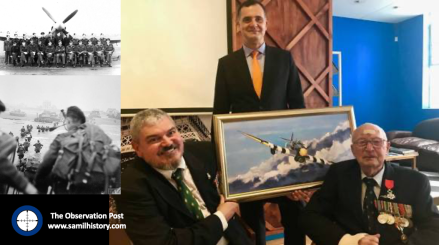
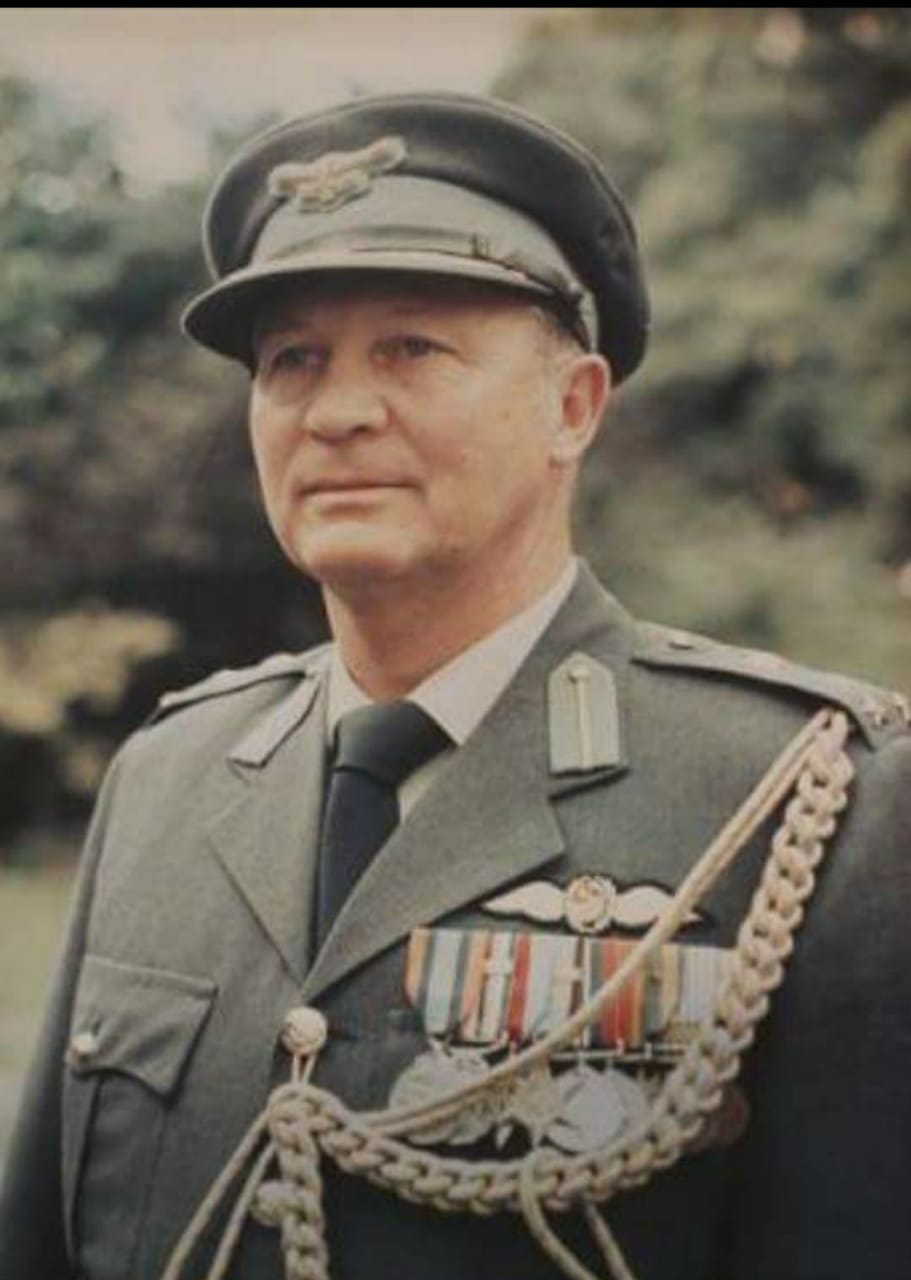

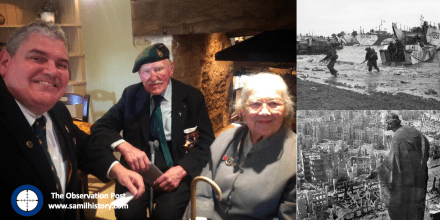
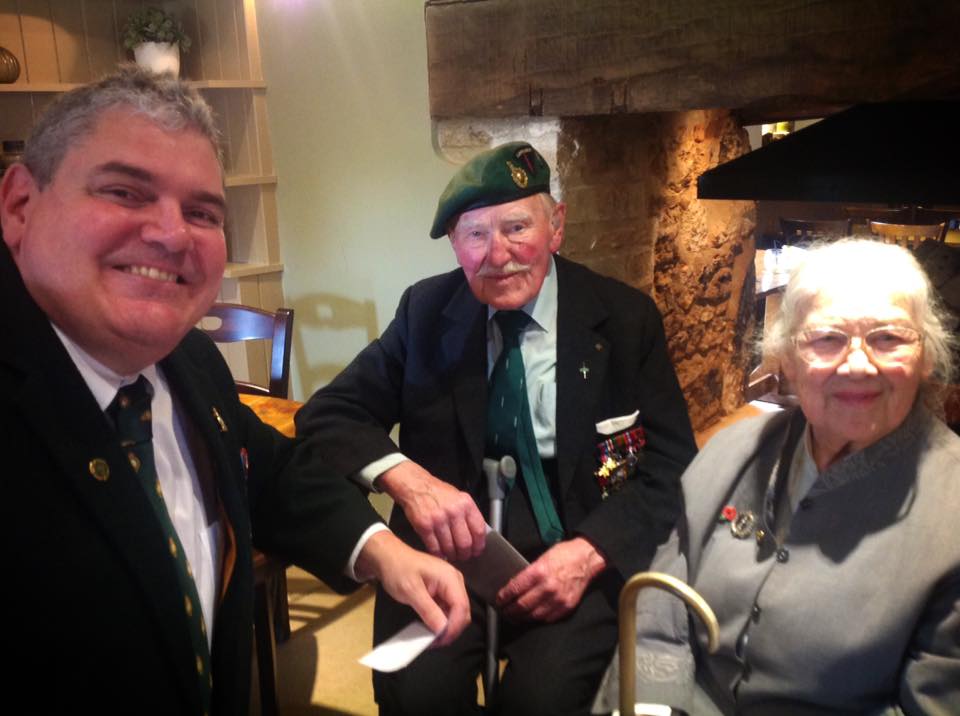
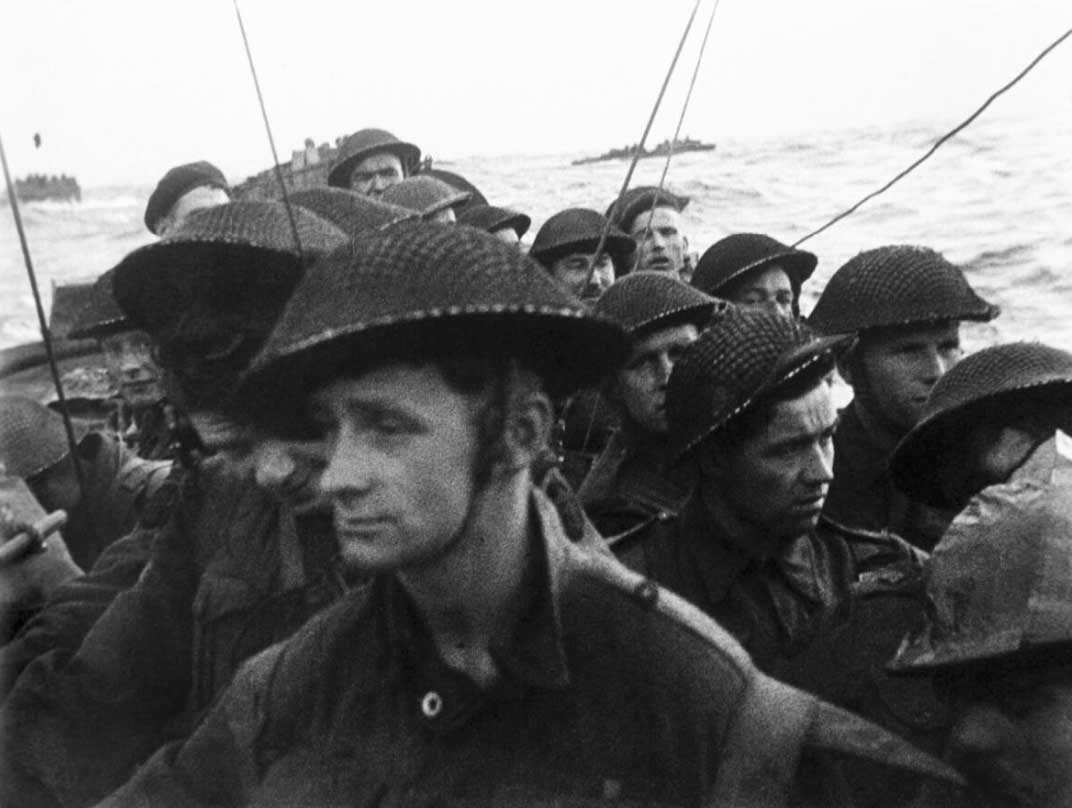

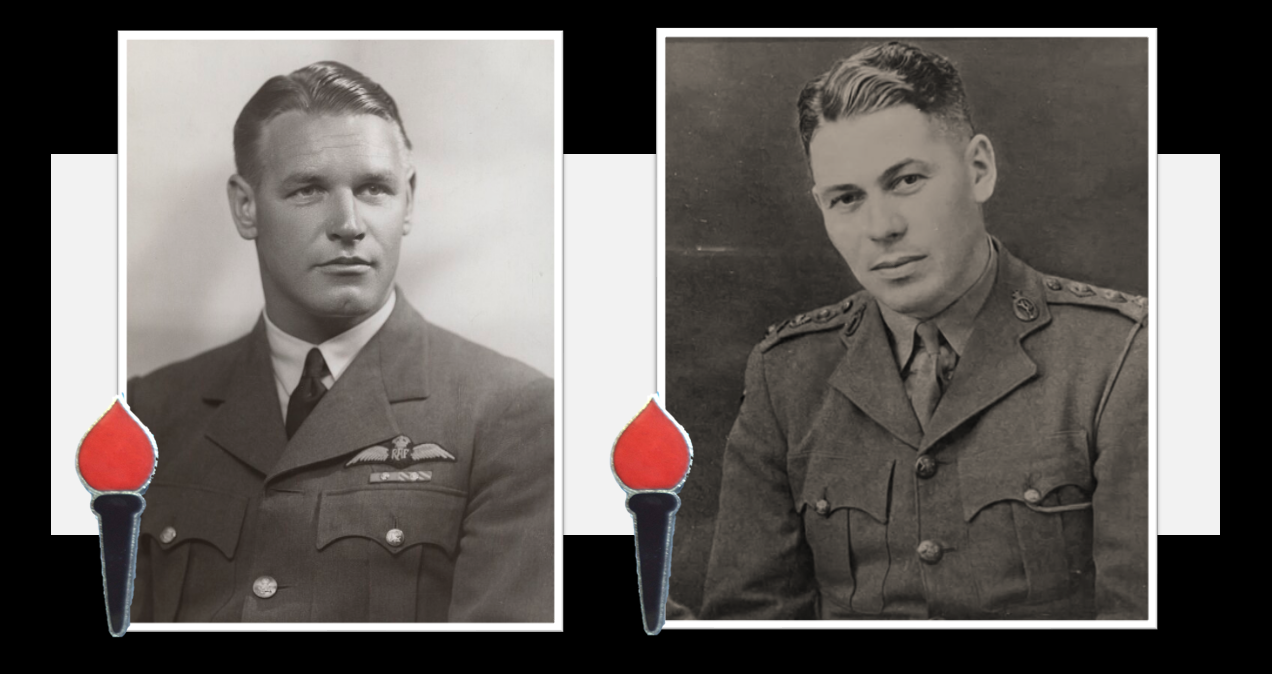
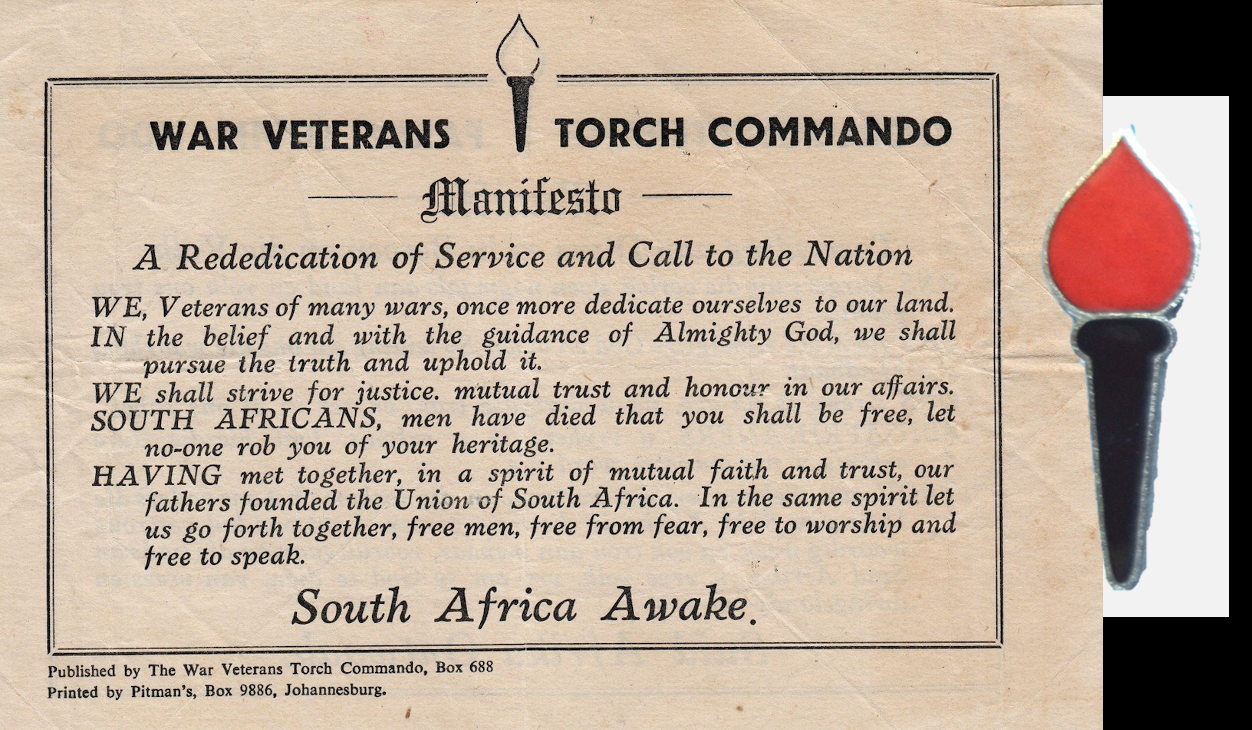
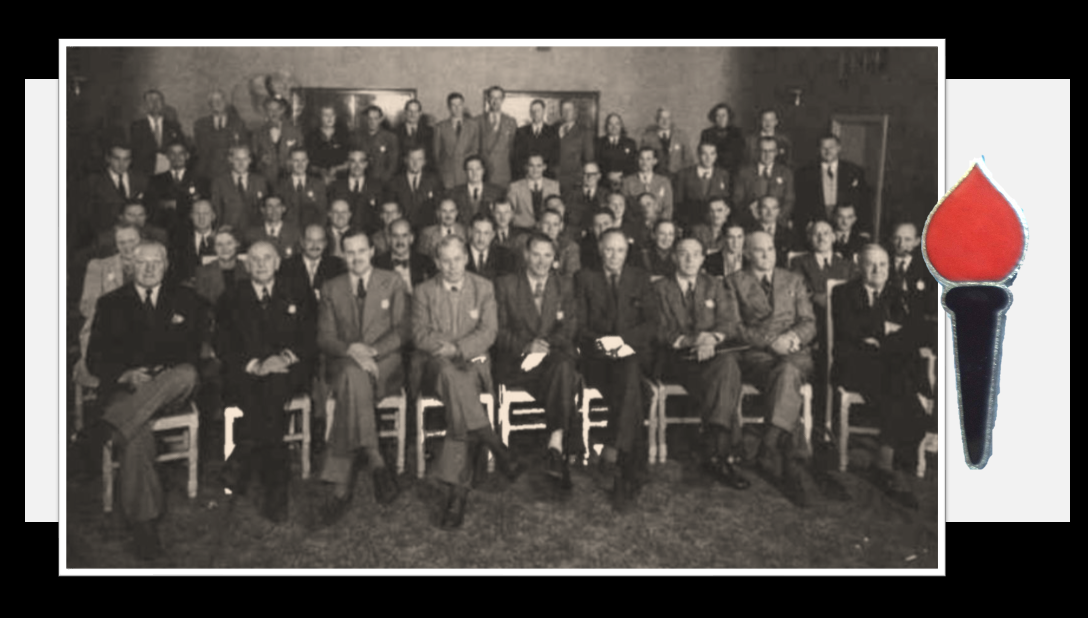


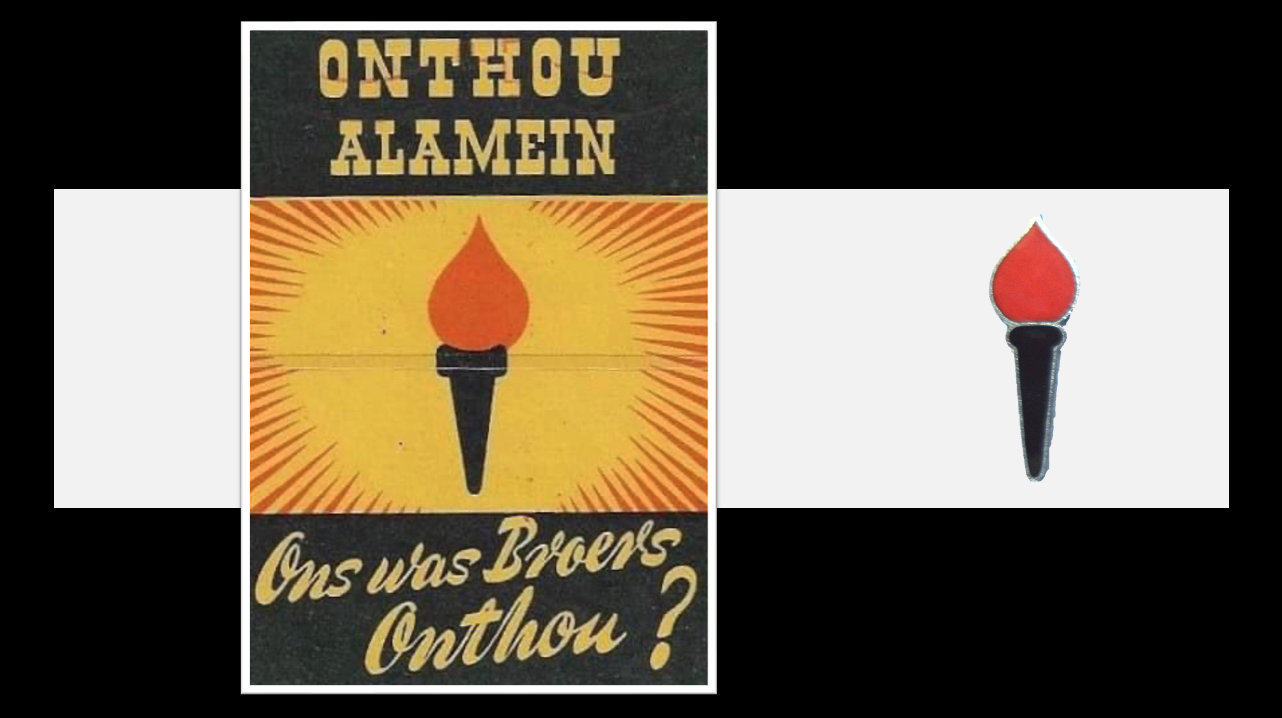
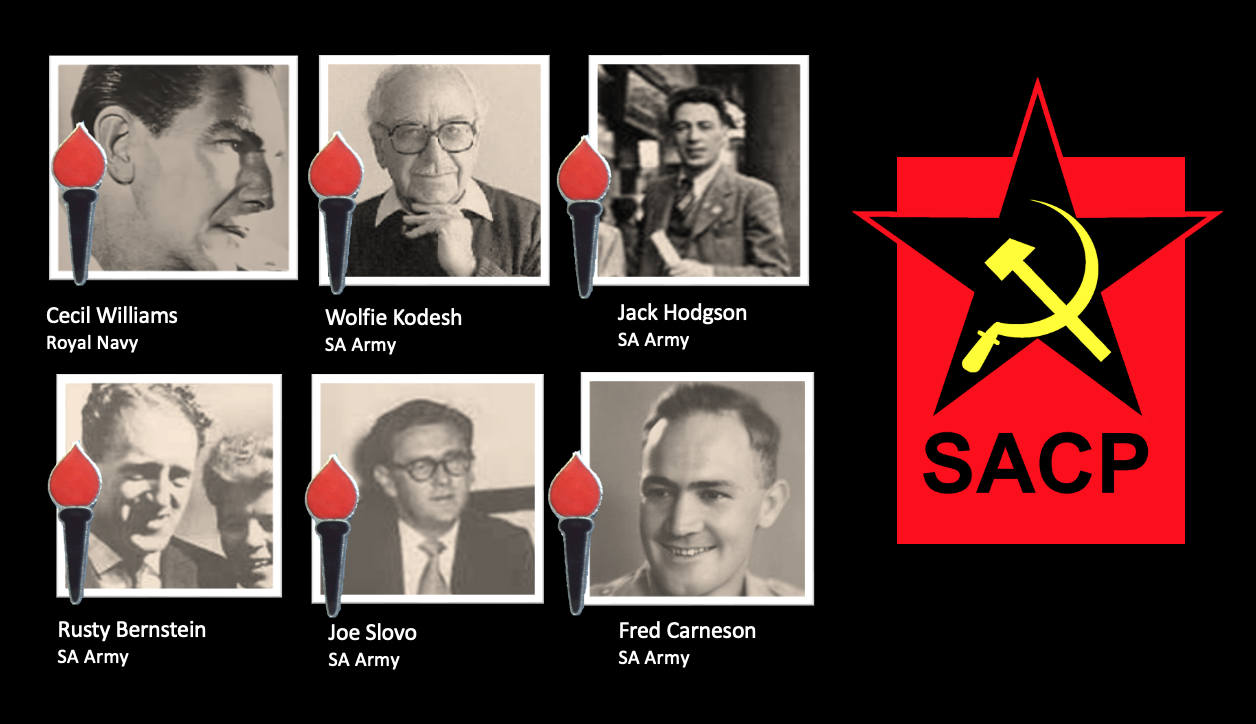
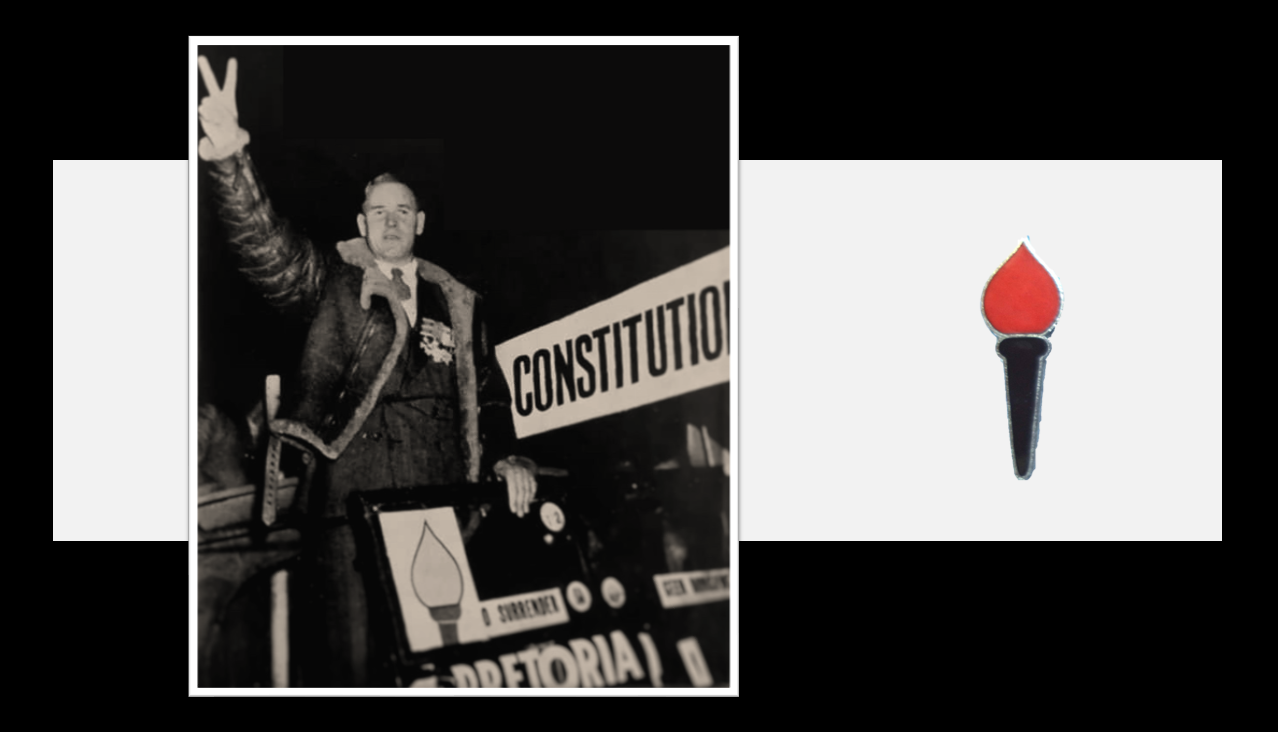
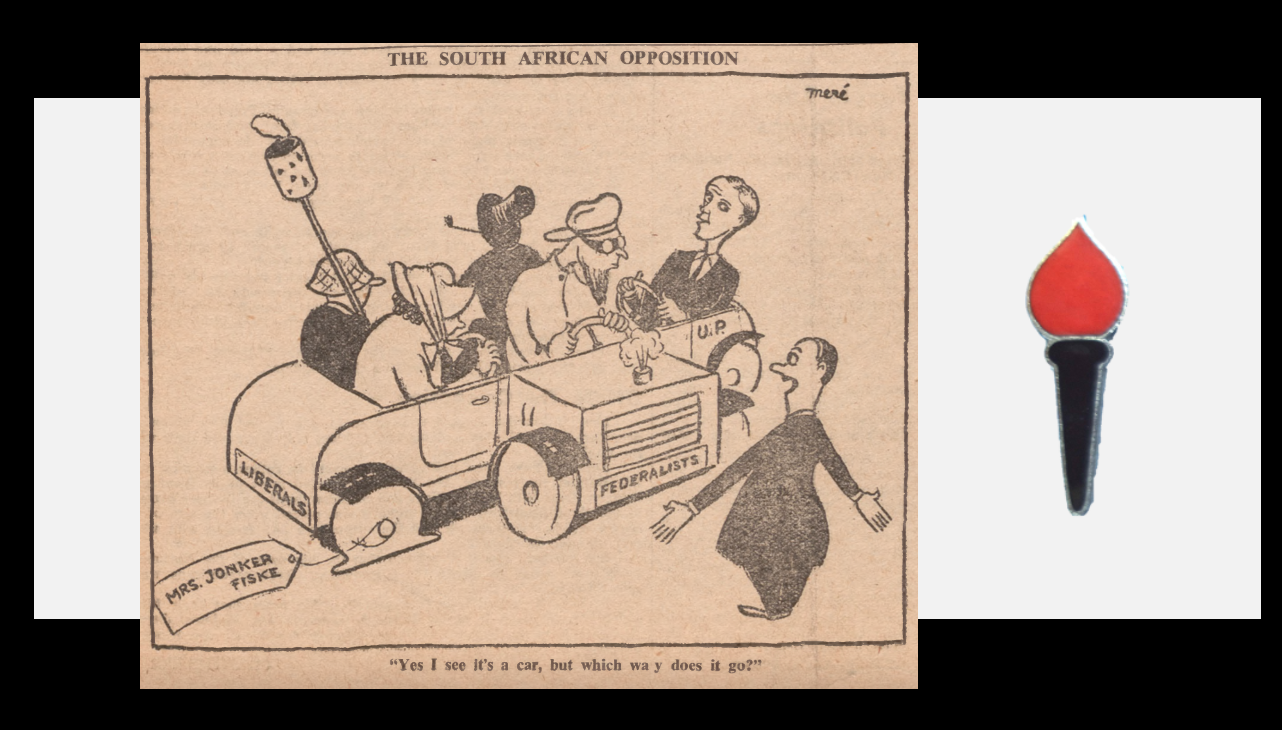
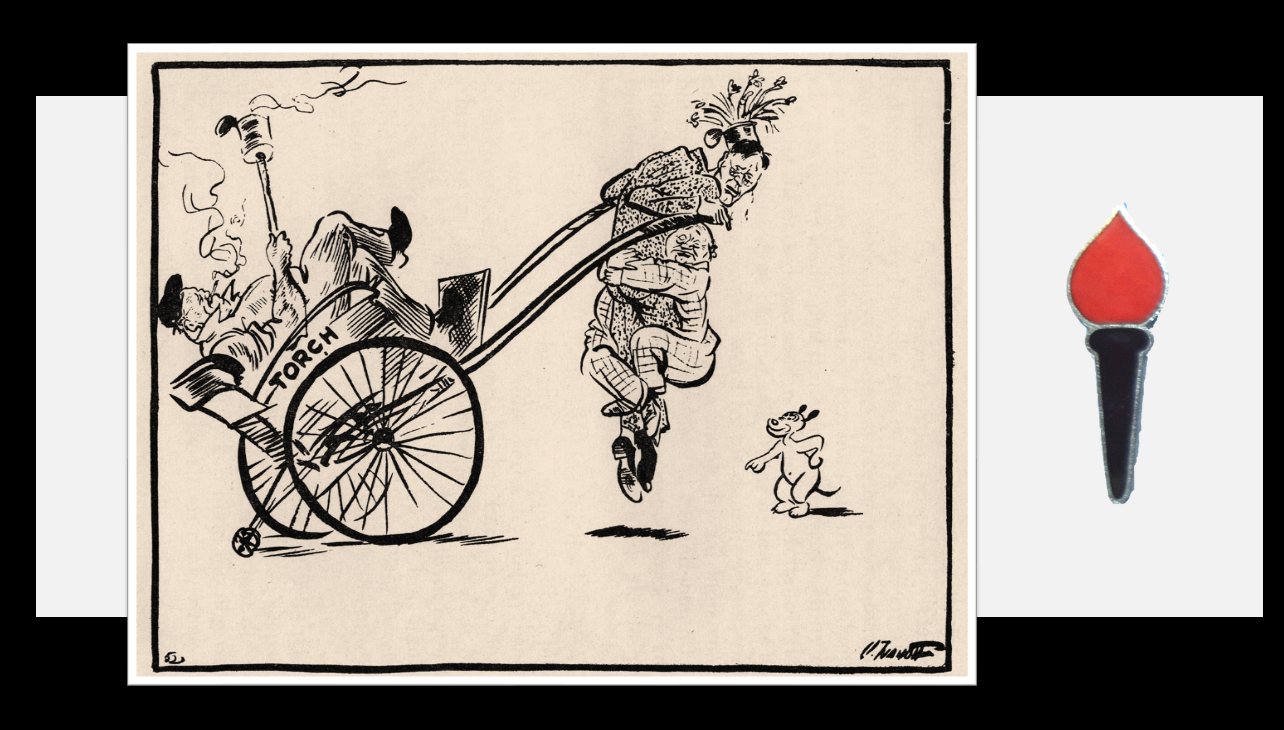

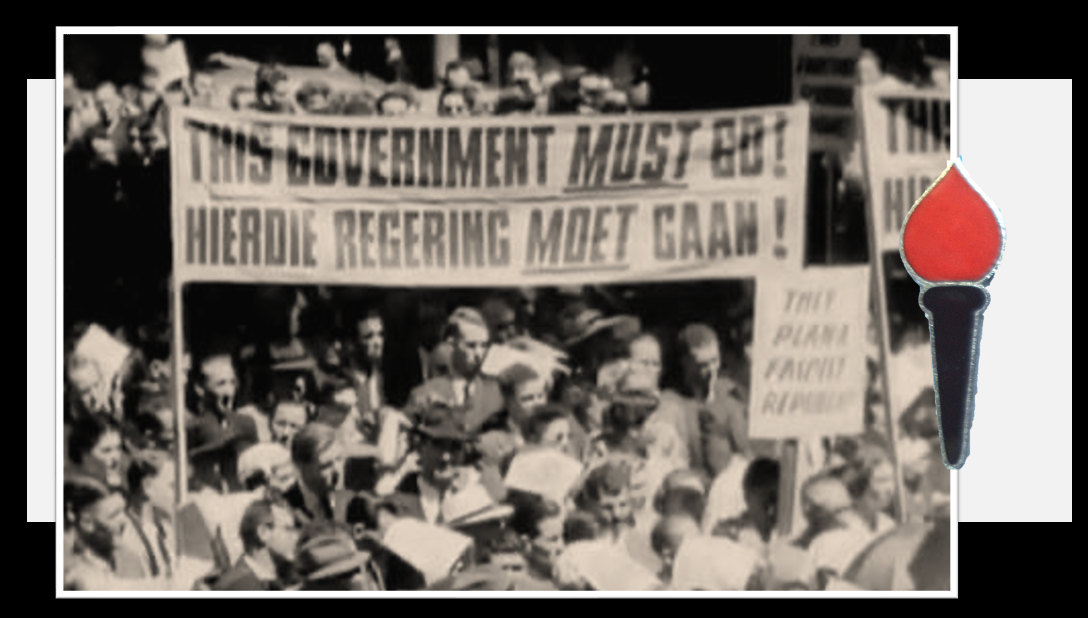

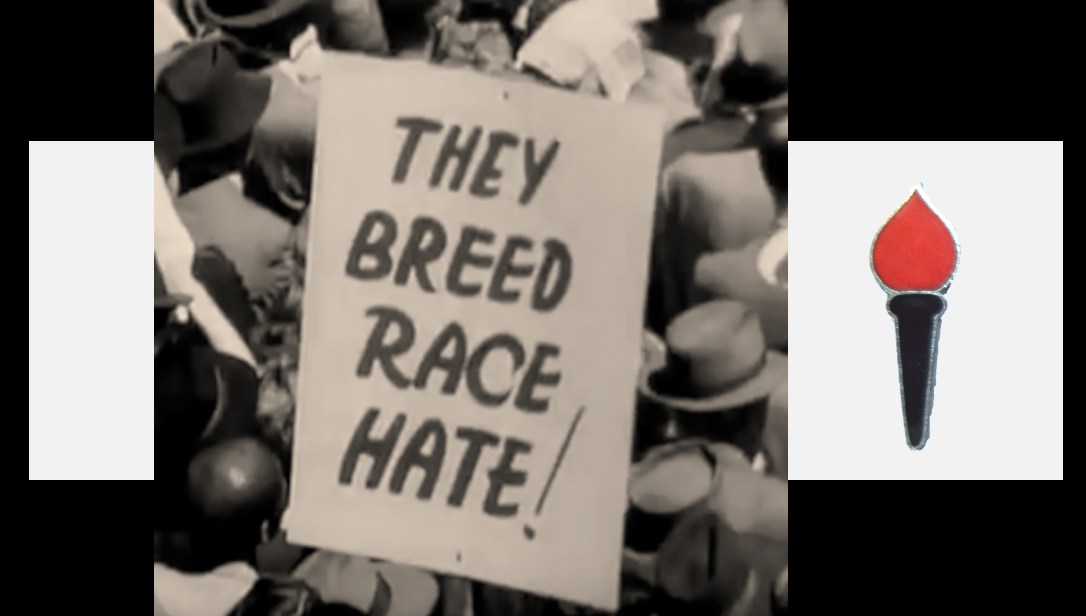
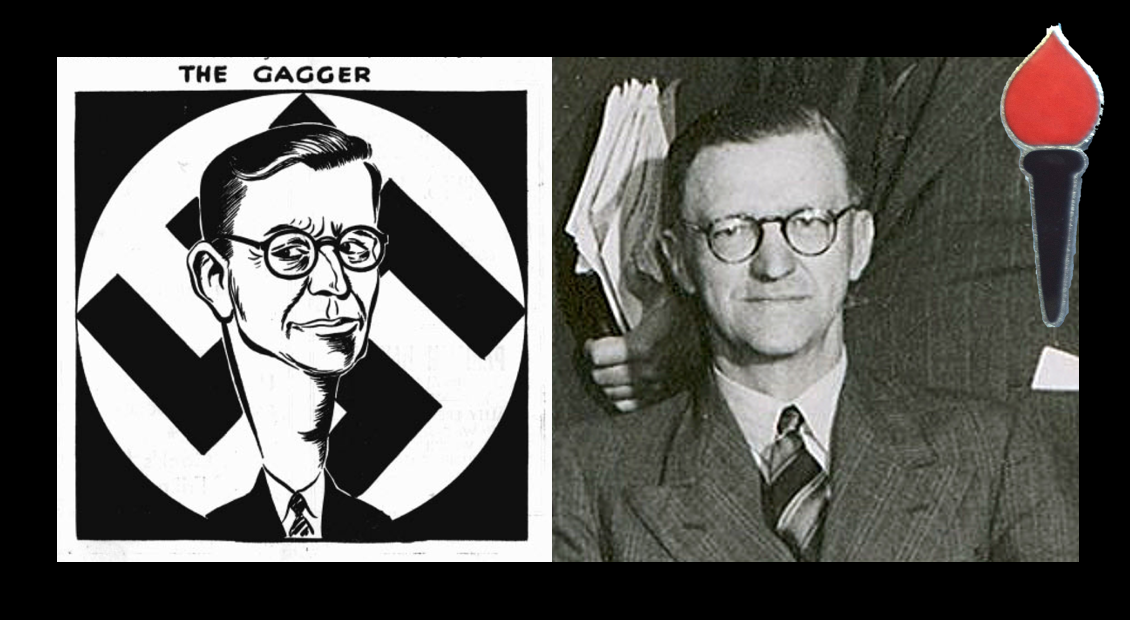

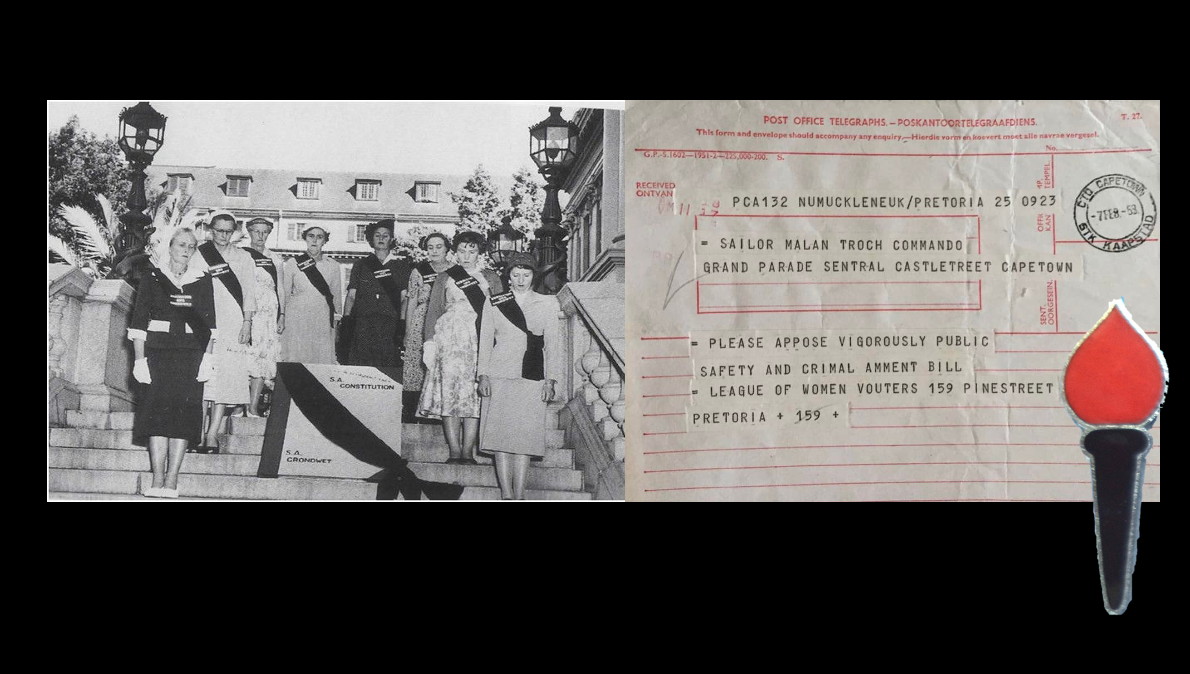


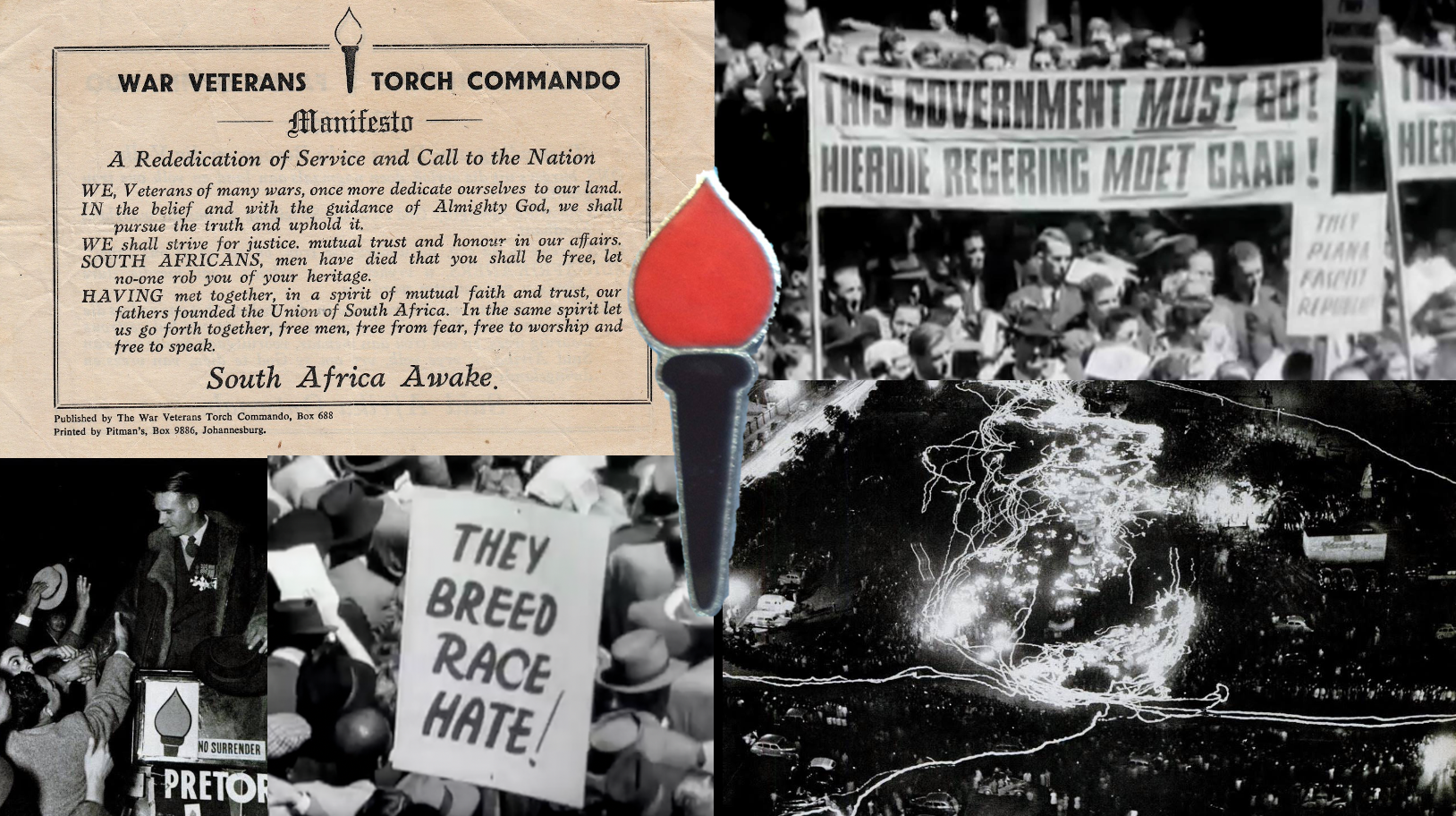


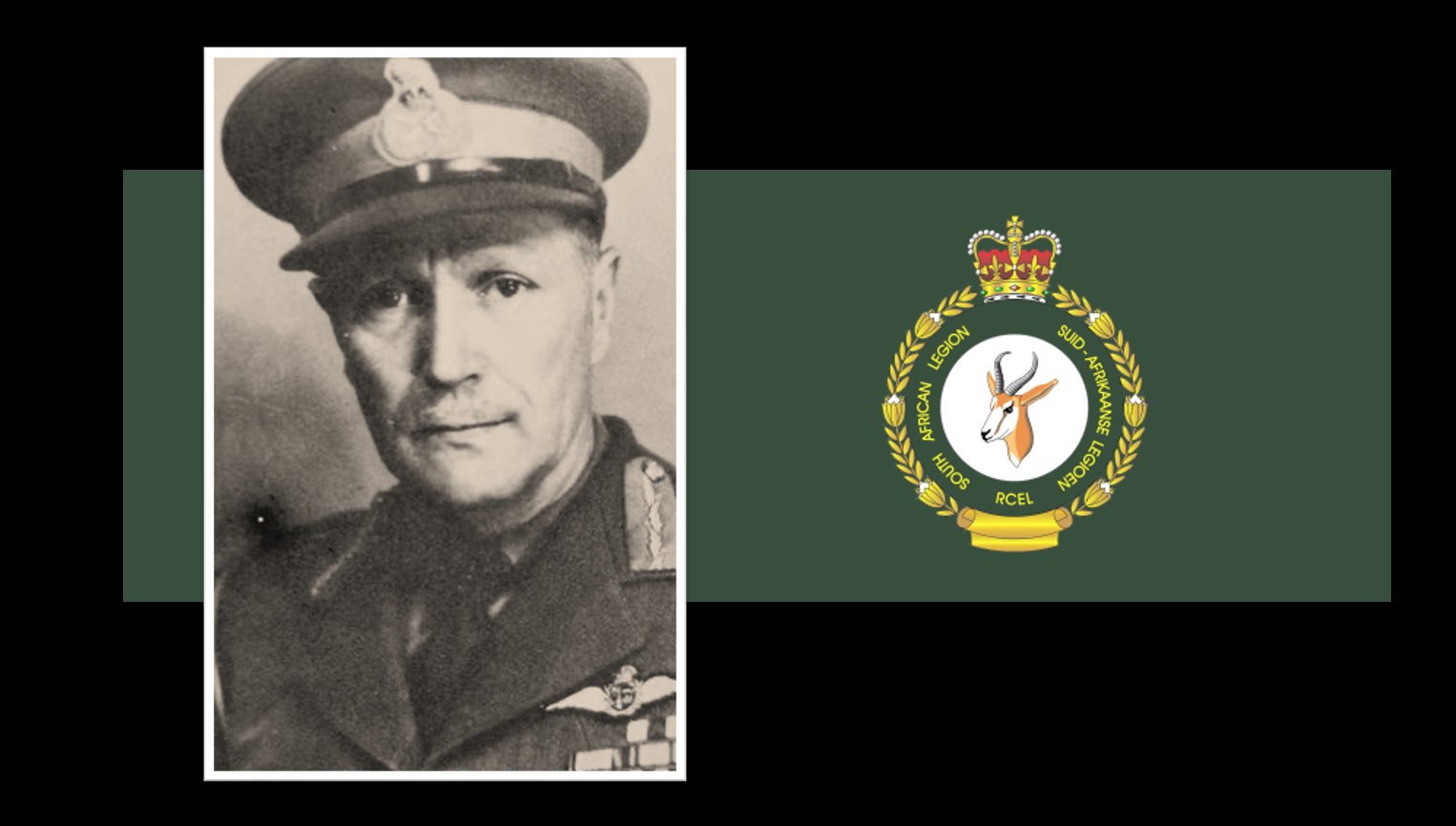
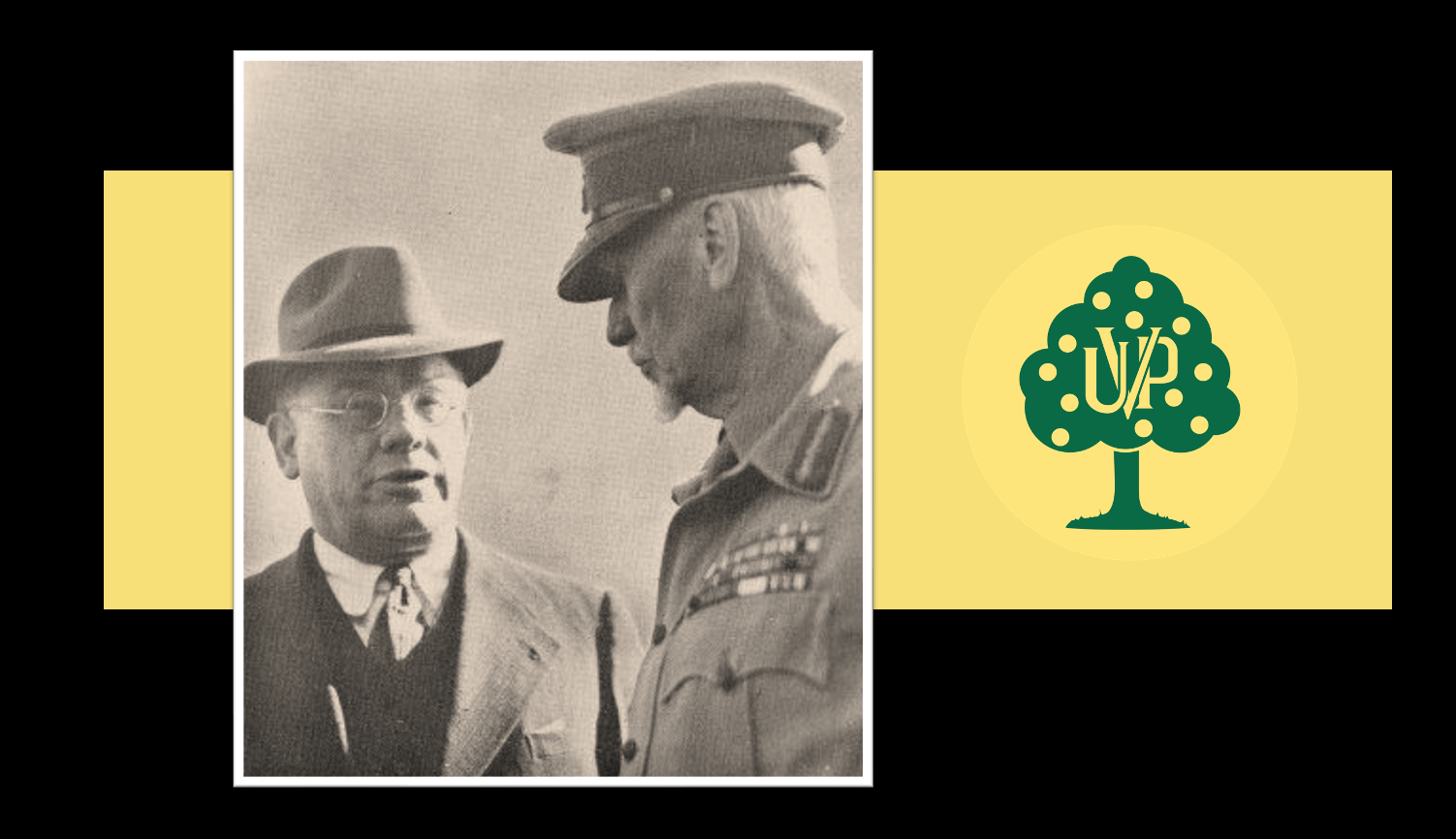


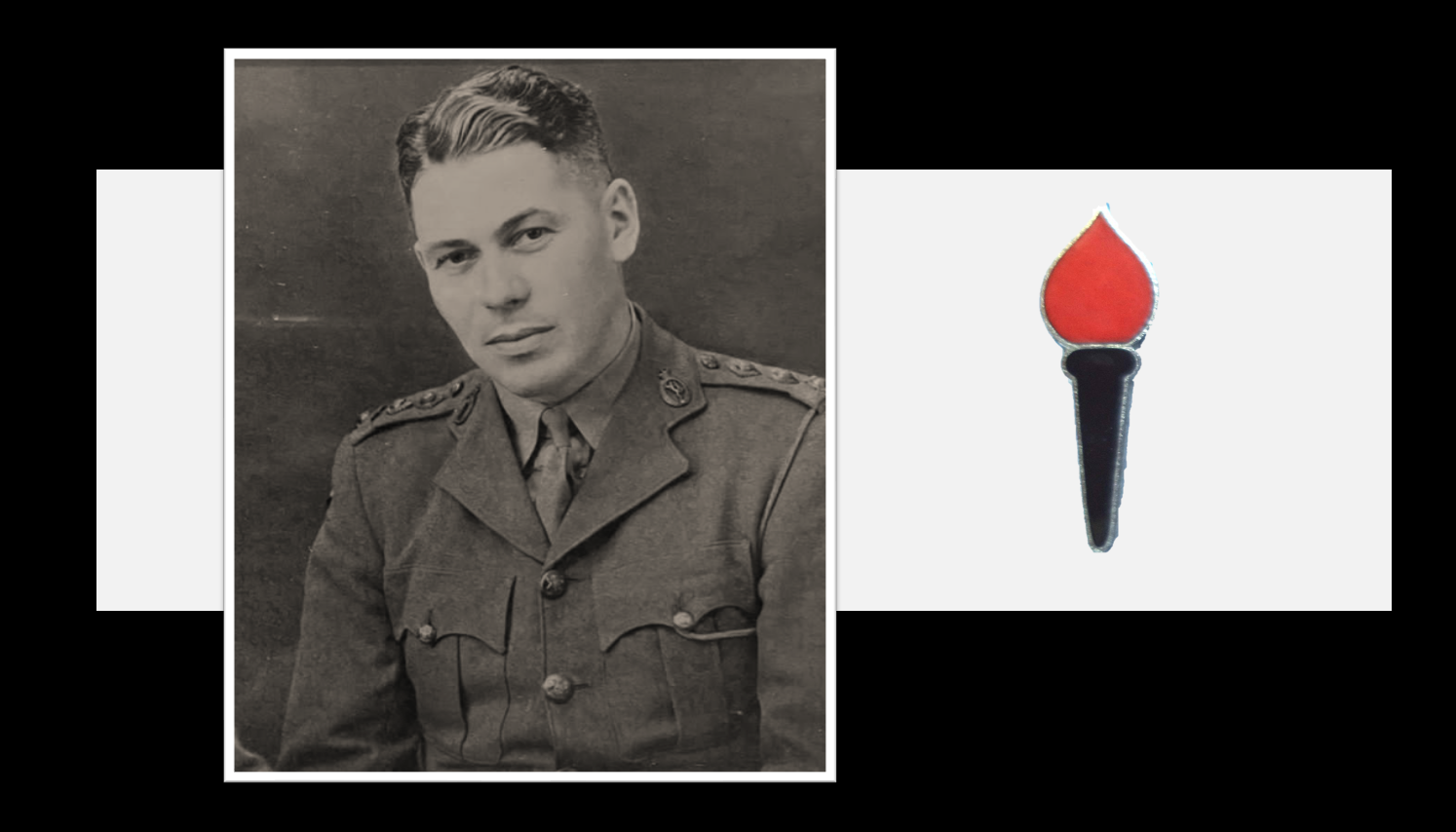


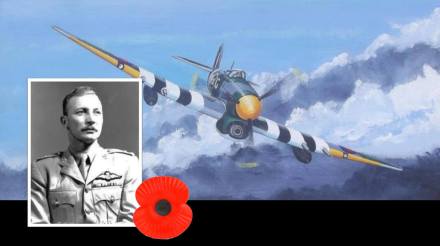
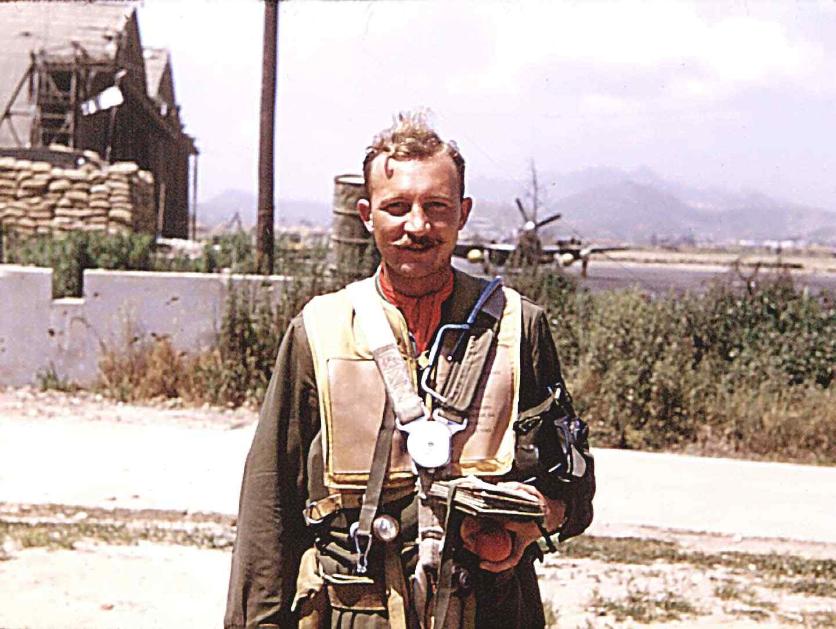
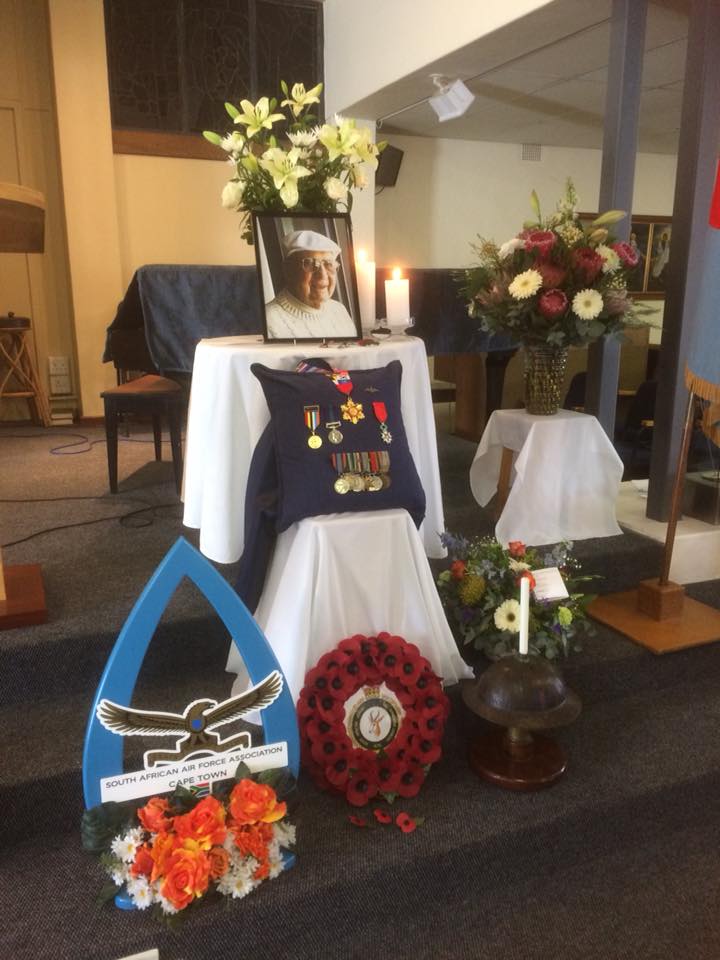
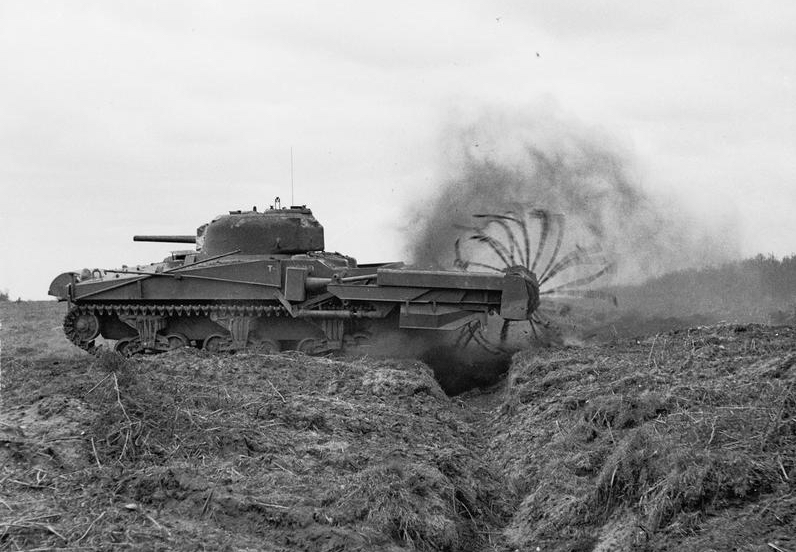
 The idea is commonly attributed to a South African soldier – Captain Abraham du Toit. A test rig was constructed in South Africa and results were so encouraging that du Toit was promoted and sent to England to develop the idea.
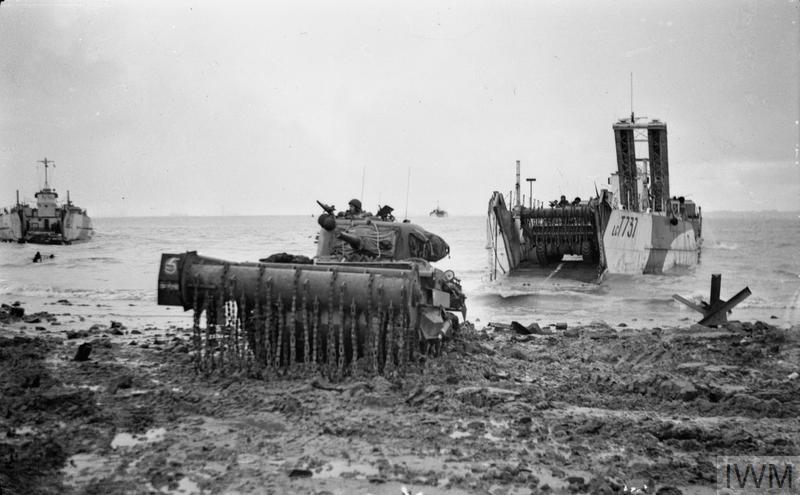


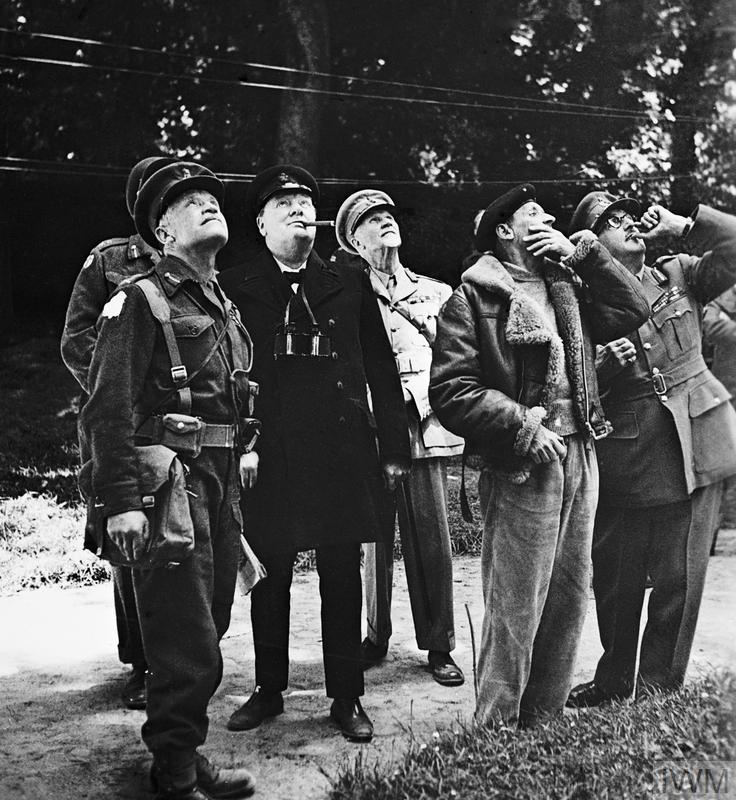
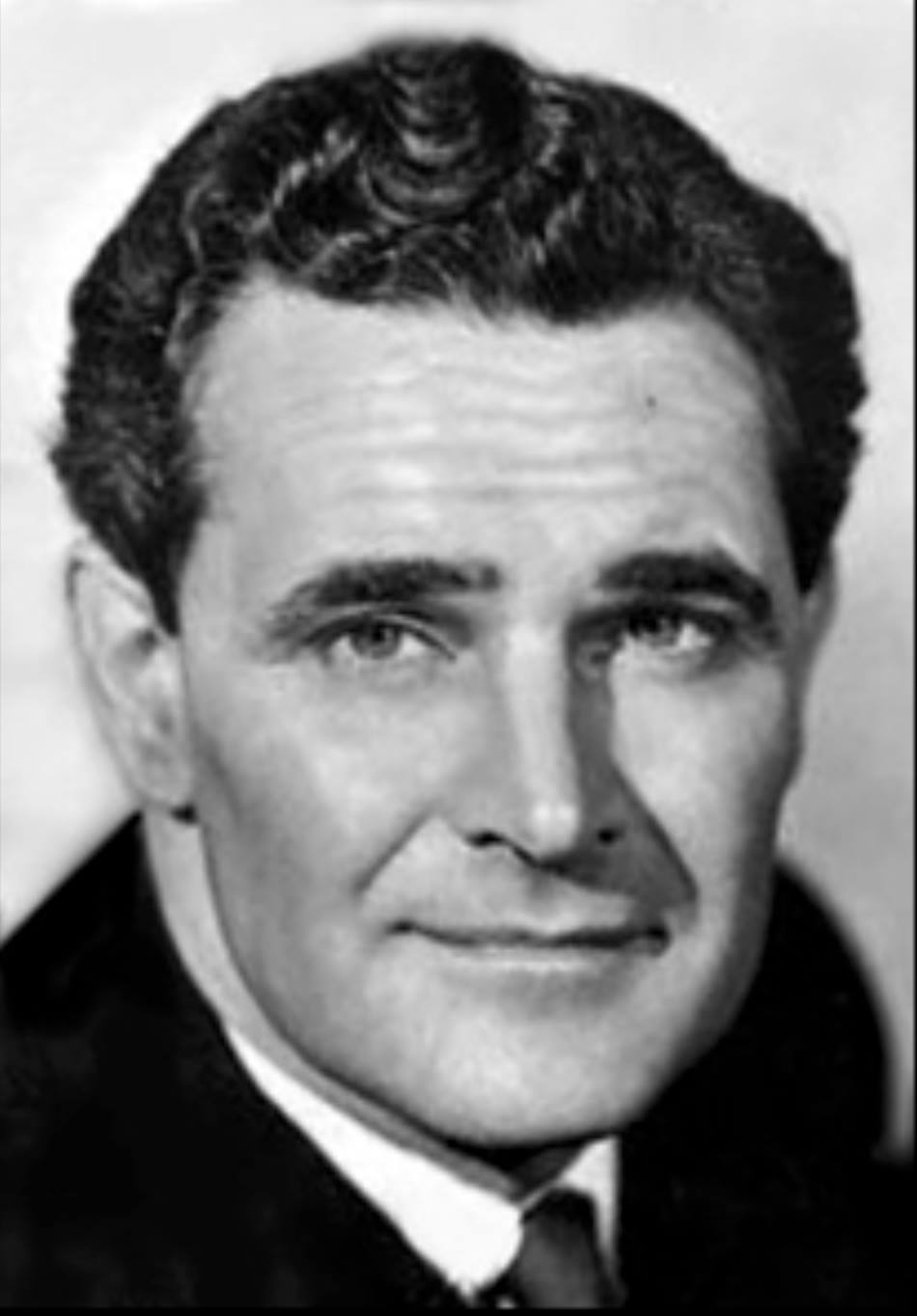 A one-armed South African war hero movie/television star, Donald Grey was in his lifetime very well-known internationally but less so in his county of birth, he was born Eldred Tidbury to a humble beginning in South Africa and later changed his name.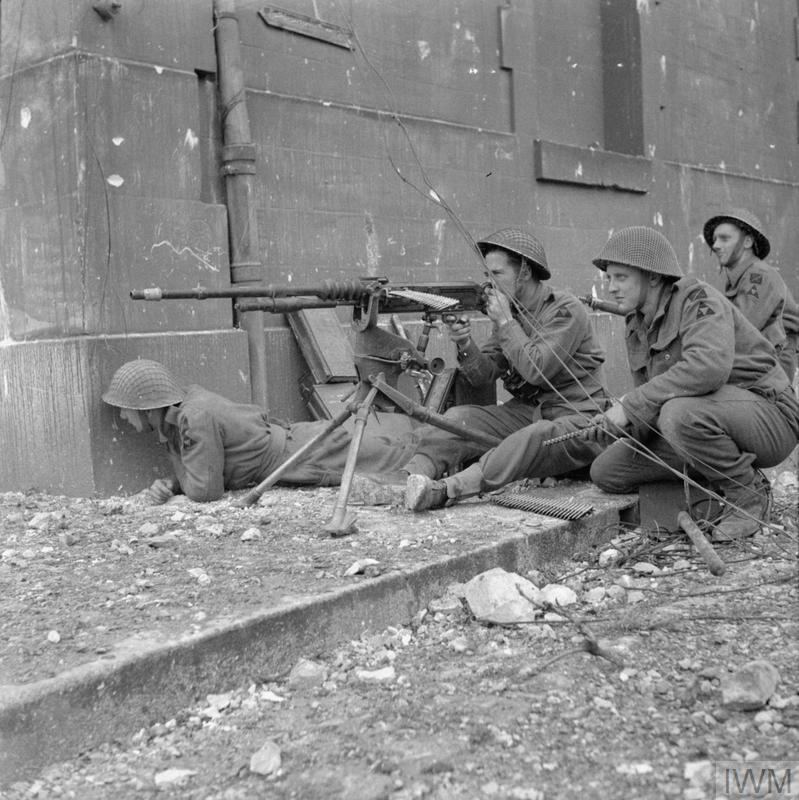
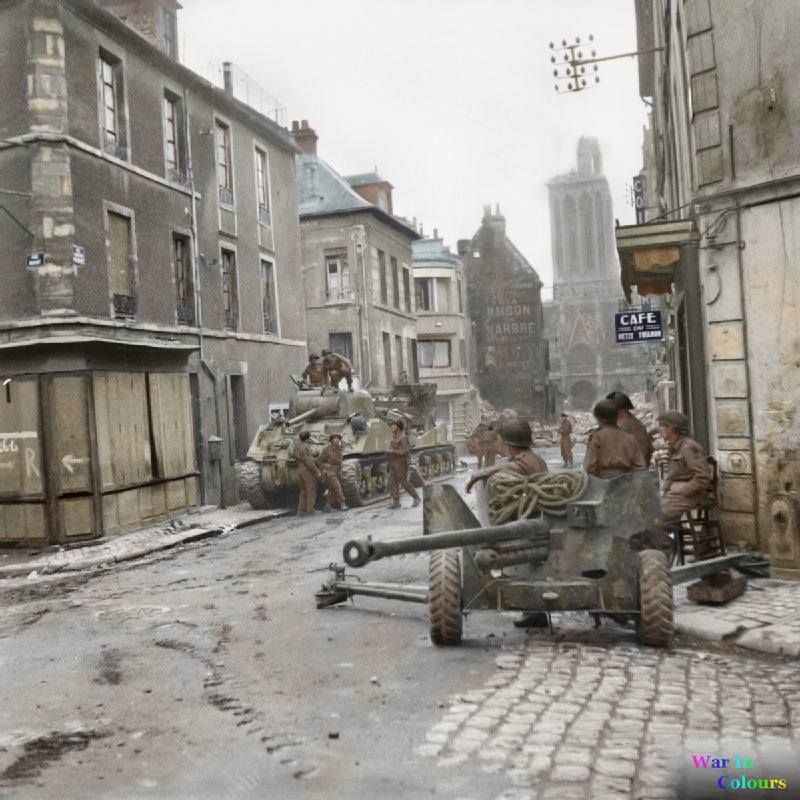
 After the war, a disability like only having one arm did not stop Donald, he chose to continue his career in film and stage acting and against the odds became even more successful at it. Donald
 So there you have it, both South Africa and even Rhodesia played a key role in agreeing Operation Overlord plans and signing off on this most critical date – D-Day, 6th June 1944 – the date which changed the course of Western Europe’s modern history.
 In South Africa many of our military heroes are lost to time or politics, especially those who found their way into the British Armed Forces during World War 2. In fact to our Grandparent’s or even parent’s generation taking part in the war there were a number of significant and highly decorated men from South Africa who eventually went to very senior positions of command of His Majesty’s Armed Forces (British) during WW2, let alone South African forces – and this is one of them – Air Chief Marshal Sir H.W.L. “Dingbat” Saunders GCB, KBE, MC, DFC & Bar, MM
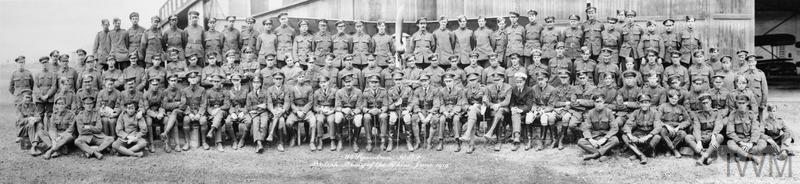
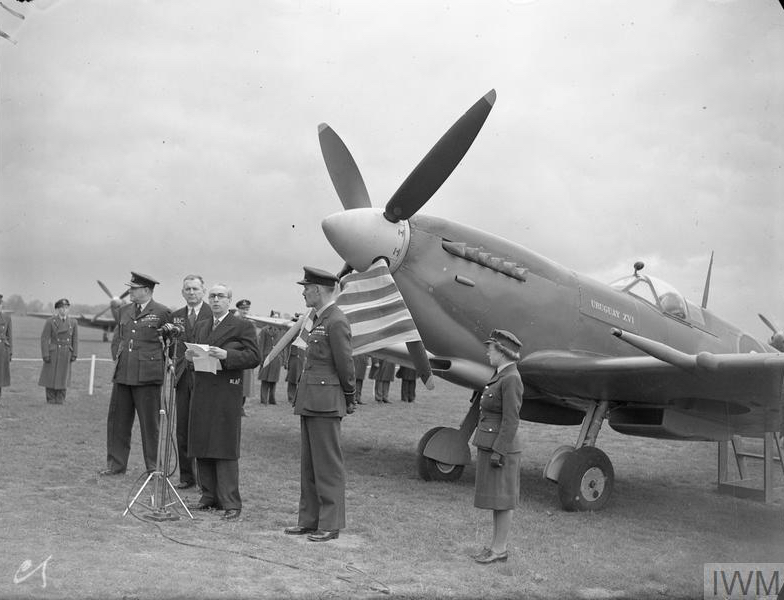
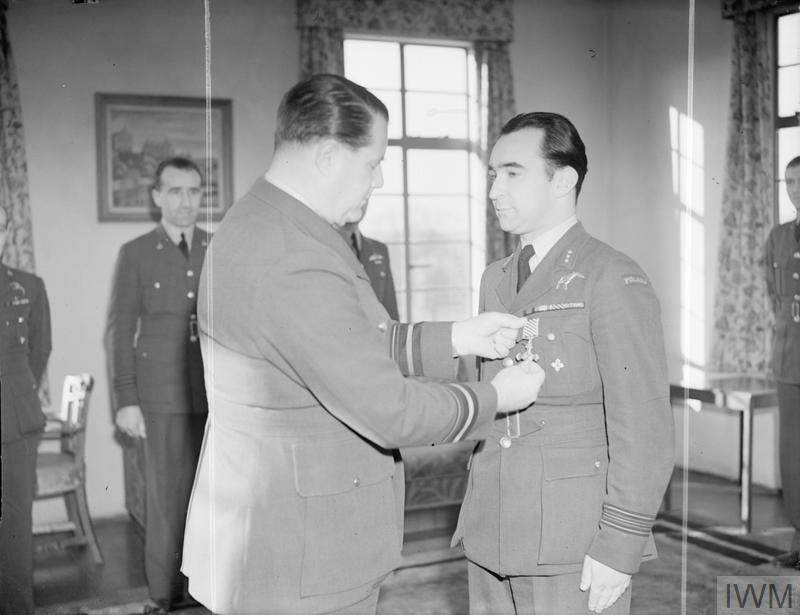
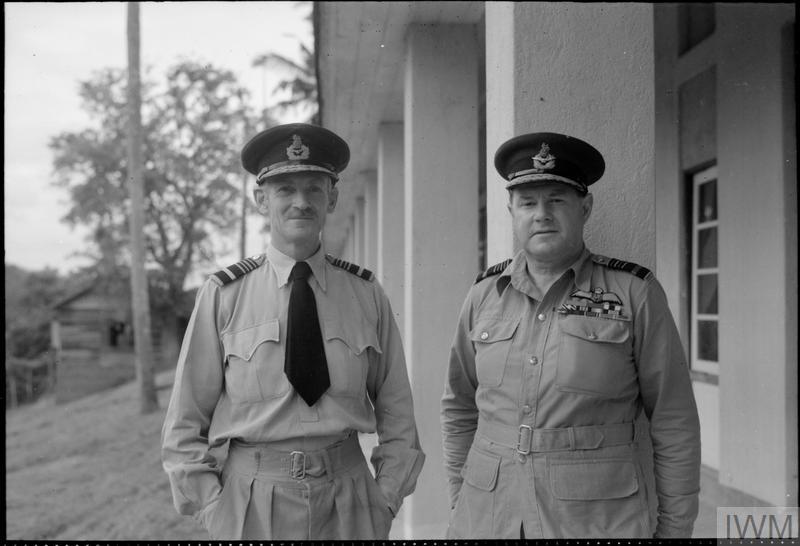
 The Observation Post