The Holocaust, the reason Freemasonry became a ‘secret’ order – World War 2 (1939-1945).
By Peter Albert Dickens
Incorrectly understood by many is the idea that Freemasonry is a “secret organisation” – however understood by only a few is why it is regarded as secretive in the first place. Upfront there’s noting secretive about it, Masonic temples and halls can be found the world over – hundreds of them, clear as a bell they stand openly in towns and suburbs all over the place, anyone is free to enquire. Of the organisation itself – many of its members are very public, and as an organisation with charity as its primary purpose they operate perfectly happily and openly in their communities and they do essential and good charity work. You can even jump onto ‘google’ and find everything you need to know from the freemasons themselves just using a simple search bar – or just buy a credible book or read a proper thesis on it – its all there, secrets included. So what’s with the big ‘Secret’ when clearly there is nothing really secretive about it?
Here’s the thing, anyone researching Freemason history will find a time before the Second World War (1939-1945) when Freemasons and masonic lodges were overtly in the public space. They participated in parades and fetes wearing all their regalia, took part in community events, photographs of all the lodge members and their names are easily found in countless local newspaper and magazine articles, the ‘worshipful masters’ quoted on many community affairs and even speaking publicly, keynote people in their society – just about everyone knew who belonged to their local lodge and they made no secret about it.
So what happened?
The answer lies in World War 2 (1939-1945), it lies in the relationship between the Holocaust and Freemasonry and how this impacted Freemasons in South Africa and in the rest of the world during and even after the war. The war is the primary reason Freemasonry “went dark” and “secret” – it is not because of any sinister illuminati’s plan to take over the world or a strange Hollywood inspired desire to protect Jesus’ bloodline by ‘rose’ hall.
Adolf Hitler and Nazi anti-Judaism, anti-Freemasonry and anti-Bolshevik propaganda
The balance Freemasons enjoyed between themselves and the societies in which they function was fundamentally changed by Adolf Hitler and his cabal. Hitler began by associating a Freemason’s conspiracy with that of a Jewish conspiracy in his political testament Mein Kampf. He said:
“To strengthen (the Jew’s) political position, he tries to tear down the racial and civil barriers which for a time continue to restrain him at every step … in Freemasonry, which has succumbed to (the Jew) completely, he has an excellent instrument with which to fight for his aims and put them across. The governing circles and the higher strata of the political and economic bourgeoisie are brought into his nets by the strings of Freemasonry, and never need to suspect what is happening.”1
Hitler would even declare that the League of Nations, the source of Germany’s dishonour, was controlled by Freemasonry. He said in a speech to Nazi faithfull in Munich in 1928:
“All of Germany is being delivered to the Freemasons through the League of Nations.”2
As early as the 5 August 1934, in a speech delivered at Essen, Dr. Wilhelm Frick, the Reich Minister of the Interior, declared:
‘It is inappropriate that a secret society with obscure aims should continue to exist in the Third Reich. It is high time that the Freemasons’ Lodges should disappear in Germany just as they have disappeared in Italy. If this is not realised in Masonic circles, I will soon help them in this direction”.3
By 28 October 1934, Frick issued a decree defining the Masonic lodges as “hostile to the state” and hence subject to closure and having their assets confiscated.4
Anti Masonic propaganda poster no. 64 and portrait of Dr. Wilhelm Frick.
Nazi propaganda stated on political poster no. 64 in a series of issued posters entitled “Erblehre und Rassenkunde” (Theory of Inheritance and Racial Hygiene), published by the Verlag fuer nationale Literatur (Publisher for National Literature), Stuttgart in 1935:
‘Freemasonry is an international organisation beholden to Jewry with the political goal of establishing Jewish domination through world-wide revolution.’5
Chief of Security Police and SD, Reinhard Heydrich regarded the Masons, along with the Jews as the
“most implacable enemies of the German race.”
In 1935 Heydrich argued for the need to eliminate and root out these “enemies” from the German world. Heydrich then created a special section of the SS Security Service (Sicherheitsdienst; SD), Section II/111, to deal specifically with Freemasonry.6
Nazi anti-Masonic propaganda and portrait of Reinhard Heydrich.
The SD argued that Freemasonry, through control of the media and exercising political influence was now in a position to provoke war, subversion, and revolution. In 1939, the SD amalgamated with another SS security department – Section VII B 1 of the Reich Security Main Office (Reichssicherheitshauptamt; RSHA), and it continued to devote itself to investigating Freemasonry.
The Exhibitions
From 1938 as Nazi Germany conquered Europe, the Germans forcibly dissolved Masonic organisations, ransacked lodges and confiscated their assets, monies and documents. Cultural artefacts and Masonic items were seized and sent to Berlin for a special rather sinister and ghoulish exhibition at the Berlin Museum. This in turn was sent to other capital cities in occupied Europe. Paris, France hosted an anti-Masonic exhibition in October 1940, as did Brussels in February 1941, so too did Nuremberg. Other anti-masonic exhibitions took place in Hannover, Düsseldorf and Erlangen all of which were aimed to ridicule and direct hatred towards Freemasons and to heighten fears of a Jewish-Masonic conspiracy.
In fact one complete lodges’ interior was removed from the Isle of Jersey for a “British” Freemasonry exhibition in Germany, this occurred after a night of heavy bombing on 29th June 1940, and the Island was invaded by Nazi Germany. Despite promises given by German commanders that Freemasons and Masonic property were not at risk, the Masonic Temple was completely ransacked and shipped off to Germany.7
The role of seizing all this wealth for the Reich was given to Heinrich Himmler, the Reichführer of the Schutzstaffel (the SS), Himmler had special dislike for Freemasons, and happily ransacked Masonic lodges out of both greed and his personal ideology.8
Nazi anti-Masonic exhibition and portrait of Heinrich Himmler
In all this Himmler and the SS established an interest in non-negotiable lodge property in order to further their study of Freemasonry. In 1935, guidelines were published as to the categorising of Lodge items, photos taken of them “in situation” and then removed for the anti-masonic (and anti-Jew) “exhibitions” and “museums”.
It is also worth noting that the ransacking of Masonic lodges did not just include the taking of items for exhibition, it also included the raiding of Lodge bank accounts, the taking of valuable jewels and artworks and the seizing of bank accounts of predominant Freemasons. Most lodge contents went to private homes, auction blocks or the smelter, documents and archive materials went to the Geheimenreichsarchiv (The Nazi Top Secret Government archive).9
Himmler acted as a broker for valuable acquisitions, but “he also had a special interest in lodge rituals. He was convinced high-degree Masonry involved a “blood ritual” in which:
‘the candidate cuts his thumbs and lets a little blood drop into a cup. Wine is then mixed in the bowl. Next a bottle containing the blood of the other brothers (from when they first performed this ritual) is added to the cup. The candidate then drinks the liquid, thus imbibing the blood of all Freemasons, including Jews. Thus the triumph of the Jews is complete.’10
Himmler pointed to this ritual as the means whereby Jews use Freemasonry to literally taint the blood of Aryans and to him this wildly unhinged idea of a Freemason ritual was proof positive of this. ‘The truth of the matter is that some do indeed have rituals that involve drinking wine, but references to blood are symbolic, much like the rituals performed in Christian churches.’11 This of course did not deter Himmler whose obscure view of Freemasonry was used to “study freemasonry” by ransacking lodges and looting their bank accounts for wealth.
Anti-Masonic exhibitions, note the placement of skeletons in chairs and sculls and crossbones on alters to bring up the macabre and sinister – setting a scene for the occult. Note also the extensive combination of the Jewish Magen David and the Torah, Menorah etc. with Masonic items and symbology – the compasses and square etc.
One of the most infamous foreign exhibitions was the The Grand Anti-Masonic Exhibition, opened in Belgrade, in occupied Serbia on 22 October 1941. Financed by the Germans and opened with the support of collaborationist leader Milan Nedić it featured an estimated 200,000 brochures, 108,000 copies of nine different types of envelopes, 100,000 flyers, 60,000 copies of twenty different posters, and 176 different propaganda films that had previously been seen during ‘The Eternal Jew’ exhibitions in Munich and Vienna in 1937. Although being anti-Masonic in its title, the primary purpose was to promote antisemitic ideology using the Protocols of the Elders of Zion to rationalise and intensify hatred of Jews.
Artefacts from the Grand Anti-Masonic Exhibition. Insert pictures show Heinrich Himmler and Milan Nedić respectively.
Depicted in the image are three key artefacts from the Grand Anti-Masonic Exhibition, the Serbian anti-Semitic propaganda poster “His Weapons: Democracy, Masonry, Communism, Capitalism” issued for the Grand Anti-Masonic Exhibition opening. It has a caricature of an evil looking Jewish elderly man with a long beard that turns into snakes with symbols for Capitalism, Communism and Freemasonry.
The second poster shows the Jews and Masons controlling the Soviet Union and the United Kingdom, with marionettes of Stalin and Churchill, also depicted as a Freemason (it’s unrelated but in fact he was a mason for a short time). The caption reads: “The Jew is holding the strings. Whose strings and how? He’ll answer you. The anti-masonic exhibit”.
The final artefact is a stamp of a triumphal Serbian pushing over the two Pillars of King David’s temple, a symbol pertinent to Freemasonry and lodges, four stamps were issued by Serbian authorities and put into circulation to promote the ‘Grand Anti Masonic Exhibition’ – all depicting Judaism as being the source of all evil in the world and portraying a “strong and victorious Serbia triumphing over the plot of world domination.”
An estimated 80,000 people, including Milan Nedić and some of his ministers, visited the exhibition prior to its closure on January 19, 1942.
European anti-Masonic and anti-Jewish exhibition in Europe and related French League propaganda.
The central idea of all these museums and exhibitions was to promote an antisemitic work called ‘the protocols of Zion’ in which a Masonic and Jewish world order was exposed and these morbid displays brought it to life.
The Protocols of the Elders of Zion
The Protocols of the Elders of Zion, also known as ‘The Protocols’ are a fictional work, it’s a combination of a number of documents targeting Jews primarily, but also Freemasonry. It purports to be the minutes of meetings of 24 speeches made by Jewish leaders during the First Zionist Congress in 1897. It actually had its roots as early as the 1860’s in a anti-Napoleon III pamphlet and became a forged rational for the Russian pogroms against Jews. By 1903 the Protocols appeared as an appendix in an anonymous Russian antisemitic pamphlet called The Great Within the Minuscule and Antichrist. The ‘Protocols’ eventually found their way into a German antisemitic book called TheSecrets of the Wise Men of Zion – the first documented version of ‘The Protocols’ published outside of Russia and published in Charlottenburg, Germany in 1920 – which was subsequently read and used widely by Hitler and the Nazi Party in Germany.
Protocols of the Elders of Zion German booklet and anti-Masonic and anti-Jewish conspiracy propaganda poster.
The Protocols of the Elders of Zion often found itself in a pamphlet format of some 70 pages. The pamphlet detailed a Satanic plot by Jewish/Zionist/Freemason conspirators to conquer the world. Alleging that Jews controlled much of the world’s finance, the media, the educational institutions, the court systems and many of the world’s governments, the Protocols claimed that the Jews indulged in all forms of trickery and deceit to tighten their hold. The Jews deliberately spread diseases and immorality to weaken Gentiles, and did not hesitate to use murder and terrorism to destroy all religions except their own. Jews were striving to establish their own autocracy based on a false Messiah, the “Son of David”, and posed a fiendishly devious omnipresent peril to the rest of mankind.12
Although exposed many times as a forgery, by the 1930’s it found its way into Nazi philosophy, and Adolf Hitler upfront supported its validity – now as a ‘truism’ in both Nazi Germany and occupied Europe – the ‘Protocols’ formed the groundwork to the Jewish ‘final solution’ and the holocaust.
The protocols also found their way into all sorts of propaganda, and not just Germany before and during the war, but it also found favour in antisemitic circles all over Europe and Russia – here are two French examples of it:
European anti-Masonic and anti-Jewish propaganda
On the left is a poster which shows an international Freemason and Jewish conspiracy (involving only 200,000 Jews and Masons) leading innocent and God fearing Catholics (the majority 34,000,000) to their nefarious ends. On the right is a French poster, very much in Nazi lore, which shows the pure ‘Aryan’ warrior striking the chain bonds of the Jew being held captive by the Freemason.
The Protocols of Zion in South Africa
In South Africa, the three main protagonists behind promoting the validity of the Protocols of the Elders of Zion are General Manie Maritz – the 1914-15 Afrikaner Revolt leader and leader of the Boerenasie Party, Louis Theodor Weichardt, a National Party stalwart who breaks away believing the party should focus all its attention on National Socialism and forms the ‘Greyshirts’ and finally the Afrikaner Nationalist ‘Broederbond’ under the Germanophile Dr. Nico Diederichs.
The Boerenasie Party
General Manie Maritz, a veteran of the South African War and influential leader of the failed 1914-15 Afrikaner Rebellion, also admired German National Socialism. A converted antisemite, he even blamed the South African War (1899-1902), commonly called The Boer War on a Jewish conspiracy. Defeated after the Afrikaner Rebellion, Maritz would become a hardened admirer of National Socialism (Nazism) and Adolf Hitler – initially joining Theodor Weichardt and his SANP Grey-shirts, and after falling out with Weichardt over a Führerprinzip (leadership principle) conflict he joins a more hardline Nazi ‘Shirt’ movement called the ‘Black-shirts’ – the ‘South African National People’s Movement’ (Suid Afrikaanse Nasionale Volksbeweging), started by Chris Havemann in Johannesburg.
By July 1940 Maritz founded the anti-parliamentary, pro National Socialist, antisemitic ‘Volksparty’, in Pietersburg. 13This evolved and merged into ‘Die Boerenasie’ (The Boer Nation), a party with National Socialist leanings originally led by J.C.C. Lass (the first Commandant General of the Ossewabrandwag) but briefly taken over by Maritz until his accidental death in December 1940. Thereafter it was headed up by S.K. Rudman. 14 Maritz would also detail his Antisemitic and National Socialist views in his autobiography ‘My Lewe en Strewe’ (My life and Aspiration/Purpose) published in 1939 and modelled on Hitler’s own ‘Mein Kampf’.15
In 1924, Maritz would become a convert to the racist and anti-Semitic myth ‘the Protocols of the Elders of Zion’ and convinced of a Jewish and Freemason conspiracy to world domination, when he was shown the Protocols by the Kristelike-bond (Christian Bond) in Pretoria.16 He would make the ‘Protocols of Zion’ as his life’s meaning and make it his mission to educate the Afrikaner people (his ‘Volk’) to it – in it he would blame the ‘hidden hand’ of the Jews as the true conspiracists behind starting the Boer War. In ‘my Lewe en Strewe’ Maritz frames up the entire rational as to why the Jews are responsible for all the ills that have befallen the Afrikaner ‘Volk’ – and the ‘Protocols of the Elders of Zion’ are the way forward to understanding the Jewish, Freemasonry, and Communist conspiracy against Afrikaners. It starts with Maritz using a quote from President Kruger’s speech at the Johannesburg market square in February 1899, where he declared:
‘If it was possible to throw the Jewish monopolists out the country with everything they own (Sak en Pak), without getting into a war with England, then the problem of perpetual peace in South Africa be resolved’.17
Maritz then grounds his entire argument on the simple premise that even President Kruger foresaw the Jewish Problem and forewarned his people. His own warning then follows, and in the machinations of Maritz’ mind he declares:
‘Socialists, anarchists, communists, Bolsheviks, Marxists, Freemasons and super-capitalists are the key antagonists and they are none other than all Jews.’
Then Maritz concludes by way of a warning that by helping and entertaining the Jews and their requests Smuts and Botha and other Boer Generals are committing Christian fratricide :
‘… thus carry out the Jewish prescriptions and policies, perhaps unknowingly. They are the “Slavishly obedient politicians” of which the Jew speaks in his “Protocols”. One Christian must exterminate the other.’18
Part 1 of ‘My Lewe en Strewe’ covers Maritz’ autobiography – pages 1 to 96, but Part 2, the bulk of his book from pages 97 to 270 covers Maritz’ politics and ‘purpose’ and it begins with a chapter titled ‘The hidden hand of the Jew’ … and this particular theme does not stop, Part 2 covers the ‘Protocols of the Elders of Zion’ – literally translated and edited into Afrikaans with some South African references here and there to give them local flair. Abridged Protocols number 1 to number 23 and the alleged global Jewish/Freemasonry conspiracy are mapped out for simpleton consumption. Maritz also used large extracts lifted from ‘The Key to the Mystery’ 19 another discredited work on a Jewish, Communist, Freemason conspiracy and worldwide domination written by a leading Canadian antisemite – Adrian Archand.
Manie Maritz and extract of his on the evils of Communism, Judaism and Freemasonry from his autobiography.
The South African Jewish Board of Deputies attempted unsuccessfully to have ‘My Lewe en Strewe’ banned for inciting race hate in South Africa. In South West Africa they were a little more successful, when taken to court Maritz was found guilty in August 1939 in Windhoek of ‘promoting a strong feeling of hostility against the Jewish race.’ and fined.20 Although Judge Hoexter described ‘My Lewe en Strewe’ as ‘filthy, contemptable and venomous racial propaganda’ according to Die Volksblad demand in South Africa for the book was off the charts, and its selling spree was only curtailed during World War 2 when it was finally banned under Smuts’ emergency regulations.21
The Grey-shirts
As a committed antisemite, Louis Theodor Weichardt founded the South African Christian National Socialist Movement when he broke with the National Party on the 26 October 1933. This included a paramilitary ‘security’ or ‘body-guard’ section (modelled on Nazi Germany’s brown-shirted Sturmabteilung) called the “Gryshemde” or “Grey-shirts”. In May 1934, the paramilitary Grey-shirts officially merged with the South African Christian National Socialist Movement and formed a new enterprise called ‘The South African National Party’ (SANP). The SANP would continue wearing Grey-shirts as their identifying dress and would also make use of other Nazi iconography, including extensive use of the swastika.22 Overall, Weichardt saw democracy as an outdated system and an invention of British imperialism and Jews.23
Louis Theodor Weichardt and the Nazi anti-Semitic propaganda movie poster ‘Jew Suss”
Weichardt also pitched the SANP as a fully bilingual organisation appealing to both English and Afrikaans speakers, he found favour in some English speaking corners with hardened antisemites, however for the most part his organisation and its ideology appealed to Afrikaners. Their primary communication mouthpiece was a newspaper called ‘Die Waarheid/The truth’ which was nothing more than a vehicle to spread Nazi doctrine in South Africa – the Nazi emblem emblazoned on the masthead.
Louis Weichardt would spell out his National Socialist vision in the ‘Die Waarheid/The truth’ and trace South Africa’s problems to one source – the Jews. He claimed Jewish ‘domination’ of the legal, medical, dental, commerce, trading, liquor trade etc. as between 60% to 100%, and he would write:
“We are determined to put the Jew in his place. We are not going to tolerate bootlicking, Gentile South Africans – English or Dutch speaking – are no longer prepared to play second fiddle to these aliens”.24
As to the The Protocols of the Elders of Zion, in March 1934 when the SANP held a rally in Aberdeen in the Eastern Cape, Harry Victor Inch – one of the Greyshirt leaders – announced that he had in his possession a ‘stolen’ document from a Port Elizabeth synagogue – signed by its Rabbi – which outlined a secret plot by the Jews to destroy the Christian religion and civilisation.
The Rabbi in question was not in fact a Rabbi, he was a Jewish Reverent, Reverent Abraham Levy, and he took the SANP Grey-shirt leadership in the Eastern Cape to court in Grahamstown in a landmark case. The SANP accused; Johannes von Strauss Moltke who was the Regional SANP leader, Harry Inch, who allegedly ‘stole’ the document and David Olivier, who had printed the document for circulation as the owner and publisher of “Rapport”, another media organ of the ‘shirt’ movements. All now have to account for themselves – the case billed as a mighty ‘Gentile vs. Jew’ showdown and a legal test of the ‘Great Jewish Conspiracy.’ `
‘Die Waarheid/The truth’ would pick up this ‘Protocols of the Elders of Zion’ and really twist it for a South African audience claiming:
“the disastrous Anglo-Boer War 1899-1902 was deliberately brought about by the Jewish mine magnets who circumvented Rhodes and Kruger alike”.25
In addition, Jews were accused of inciting blacks against whites and controlling the economy, exploiting ordinary Afrikaners as part of an international Jewish conspiracy. The ‘Die Waarheid/The truth’ statements were accompanied by a propaganda leaflet printed by the SANP and distributed in Port Elizabeth.
The ‘stolen’ document was scrutinised legally, it was found to be based on the entirely discredited antisemitic ‘international Jewish conspiracy’ document – ‘the Protocols of the Elders of Zion’ and given a South African twist by the SANP. In a carefully considered 30,000 word judgement, the court concluded inter alia;
“the protocols are an impudent forgery, obviously published for the purposes of anti-Jewish propaganda”.26
As a result the three Grey-shirt leaders were all fined, Harry Victor Inch was found guilty of perjury and forging documents defaming the Jewish race and swearing under oath that those documents were genuine – and fined £1,000, later also receiving a short prison sentence. 27 David Hermanus Olivier was fined £25 for acting improperly and printing the document and Johannes von Moltke was fined £750 for “playing a leading role in the plot”.
The SANP Grey-shirts on trial in Grahamstown and the Nazi anti-Semitic propaganda poster ‘the eternal Jew’.
The result was widely hailed in South Africa as a complete vindication of the Jewish people of a global plot and of Rev. Abraham Levy who brought the lawsuit against the Grey-shirt leaders.
The Afrikaner Broederbond
The Afrikaner Broederbond (AB) would also find itself immersed into this fabricated Jewish and Freemason worldwide conspiracy and it too would act. Dr. Nico Diederichs would become the Chairman of the Broederbond in 1938, in that same year he would visit Nazi Germany and became an admirer of Adolf Hitler and National Socialism. He would later meet the Nazi German ministerial delegate in South Africa – on 19 May 1939, Herr. H. Kirchner – in that meeting he confided that the Broederbond had been compromised in the past by Freemasons in the Broederbond (presumably by all the Dutch Constitution Freemasons in it, Jews were banned from the Broederbond upfront).
He declared the bond as having now been purged of its Freemasons, he had personally seen to it – and the Bond was ready to do its work on promoting anti-semitism and the National Socialist anti-democracy principle in the Afrikaner Nationalist sphere.
In fact he reassures the German delegate that the National Party had hung its hat completely on the anti-Semitic principle, and he even squashes concerns that Dr D.F. Malan was not strongly antisemite enough, confirming that he in fact is one. He goes on state that it is the Broederbond’s mission as a secret society is to both infiltrate and undermine the goals of the Smuts government and the state.28
Not to lose sight of Dr Nico Diederichs, he became a National Party MP stalwart, served as the first chancellor of the Rand Afrikaans University and became ceremonial State President of South Africa from 1975 to 1978.
The male fraternity war between the various fraternal societies in South Africa is interesting – especially the disposition of the Afrikaner Broederbond (AB) to the Freemasons – an uneasy relationship caused by the more “verlighte” (liberal) Afrikaners being members of the Dutch Freemason Constitution – and these included powerful and highly politically regarded figures over the course of the history of the OFS, ZAR and then Union, including Presidents and Prime Ministers – none of whom really favoured “Afrikaner Nationalism” as it was defined by the more “verkrampt” (conservative) Broederbonders.
That all aside, the real opponent of the AB was not the Freemasons, the real ‘cultural’ opponent is a little understood and rarely discussed “English” fraternity called “The Sons of England” – the SOE. The full name – the Sons of England Patriotic and Benevolent Society – was a fraternal society for English Protestants residing in Commonwealth countries. It was originally founded in Toronto, Canada in 1874 but it especially took root in South Africa, starting in 1881 in Uitenhage and eventually establishing a Head Office in Durban and lodges in ever major metropole. Their goal was to bring Englishmen together for mutual support, networking, and to provide financial relief to them and their families if they fell on hard times. The society acted as a cultural organisation and was run along Masonic Lodge principles, regalia and rites – it aspired to preserve and celebrate the Anglo-Protestant cultural heritage of its members – which was diametrically opposite to the Broederbond who sought to do exactly the same thing, but for the promotion and preservation of Afrikaner-Protestant cultural heritage for its members. The key difference, the SOE was not ‘secret’, it was very openly public, whereas the AB was indeed ‘secret’.
Insert picture – the original Broederbond Commitee members (right) and a SOE Lodge (left) – both marked with some of their respective symbols
Historically, the AB had three objects: to unite all Afrikaners who have the welfare of their people at heart; to foster national awareness; to implant a love of language, religion, tradition and fatherland; and to promote all of Afrikanerdom’s interests. Within the purely domestic Afrikaner arena, it acted as a secret coordinating council to weld Afrikaners into a single integrated insulated laager and as the guardian of the Nationalist spirit.29
The AB would however also lock itself in mortal combat with Freemasonry, which as a fraternity was open to men of any religion, race or creed including a great many Afrikaners in the English, Scottish, Irish and Dutch constitutions. Freemasons were specifically denied membership of the AB by the bond’s recruitment policy which was restricted to upstanding white Afrikaner adult males, protestants only, anti-Communist and specifically not a Freemason. The result of this, is that although many Afrikaner Freemasons enjoyed membership of the National Party, they did not really find themselves in key leadership roles of it – no National Party Prime Minister or President post 1948 was ever a Freemason, yet they were all Broederbonders to a man.
Dr. H.F. Verwoerd and fellow Broeders planning. Insert picture. Dr. Nico Diederichs and a symbol used by the Broederbond in later years as to its ‘secret’ iconography
The AB eventually even took to aggressively targeting Freemasons when it put out a circular warning its members of Freemason conspiracies and to take action via the Dutch Reformed Church, it reads:
‘Freemasons are pouncing on school committees and city councils and are not slow to seek control of cultural organisations. These fronts must be watched carefully therefore against Freemasons! Freemasonry, however innocent it might appear, is fundamentally anti-Christian and action must be taken with that in mind … action against Freemasonry must start at (Dutch Reformed) church level.’30
Inside the AB, a task force, headed by Professor F.J. van Zyl, was even set up ‘to combat communism, liberalism and other enemies such as Freemasonry.‘31
The campaign becomes murderous
By August 1940, the Vichy France regime also issued a decree declaring Masons to be enemies of the state. Later in Germany during 1942, Hitler authorised Alfred Rosenberg to wage an “intellectual war” against all Jews and Freemasons. This transitioned in a police response under the authority the German Armed Forces (Oberkommando der Wehrmacht – OKW) to fulfil the objectives of this war by way of a ‘final solution’.
Thousands of Freemasons were arrested as ‘enemies of the state’ all over Germany and occupied Europe and sent to concentration camps. They were made to wear a red triangle on their prison uniforms to signify them as ‘political prisoners’. Jewish Freemasons were made to wear a red and yellow triangle in the shape of a Star of David – in all it is estimated that 150,000 Freemasons were murdered by the Nazi regime in their death camps by their death squads alongside 6,000,000 Jews.
Political prisoners in a Nazi concentration ‘death’ camp wearing red ‘political’ triangles and the inverted triangles to show a Jewish Freemason with kind permission of Bro. Andrew Bergman.
After World War II, Soviet forces found much of the Masonic material that had been stolen by the Nazis. ‘They transported it to archives in Russia and Poland where the material remained unseen for more than 40 years. The Soviets, like the Nazis before them, wanted to learn about the Fraternity because, in a strange twist, they too, found Freemasonry threatening to their totalitarian government.’32
For this reason, European freemasonry including British Freemasonry, which anticipated an invasion of the British Isles by Nazi Germany decided to “go dark” in order to protect its members and its artefacts. To identify themselves Freemasons took to wearing small ‘forget-me-not’ flowers as lapel pins.
Forget me not
As Freemasonry across Europe (and in the UK and its Commonwealth) went “dark” and “secret” to protect itself from Nazi persecution – Freemasons in Europe (and in Commonwealth countries including South Africa) started to use the ‘Forget-me-Not’ flower as a lapel pin so they could recognise one another. Some lodges even became known as ‘Forget me Not’ Lodges (even in South Africa).
But why the ‘Forget-me-Not’ flower? The origins have a sinister and Nazi beginning. During the war, three Lodges were actually secretly formed inside German Nazi concentration/POW camps – to classify and identify inmates as Freemasons the Nazis used the inverted red triangle, which was reserved for ‘political prisoners’.
Masonic Holocaust remembrance at Esterwegen Cemetery.
The first and more famous lodge was the Liberté Chérie or Beloved/Cherished Liberty Lodge one of very few lodges founded inside a Nazi concentration camp. It was established inside Hut 6 at Esterwegen (a political prisoner concentration camp). Founded November 1943 by 7 Belgian Freemasons and resistance fighters. During its existence it ‘Entered’, ‘Passed’, and ‘Raised’ at least 2 additional members. A memorial and sculpture is now part of the memorial site of the Esterwegen Cemetery.33
The Obstinate Lodge, L’Obstinée was another Masonic Lodge founded inside the walls of a Nazi prisoner-of-war (POW) camp. Oflag X-D POW camp near Hamburg. Founded by members of the Grand Orient of Belgium. L’Obstinée was a the second Masonic Lodge and was founded in the Oflag XD camp by members of the Grand Orient of Belgium which recognised the Lodge on14 July 1946.34
The third Lodge was “Les Frères captifs d’Allach” and who’s register is now located at the Grand Orient of France museum.35
The small forget me not flower had been used obscurely in masonic symbology in Germany from 1926. However, by a stroke of luck and irony the National Socialist (Nazi) German government decided to use a ‘Forget-me-Not’ flower as the symbol for its annual Winterhilfswerk (Winter Relief) campaign. A charitable, food, coal and clothing campaign with the slogan “None shall starve nor freeze”. Set for the harsh winter months (see insert pic of the forget-me-not used by the Winterhilfswerk charity from 1938).
The forget-me-not worn for the Winterhilfswerk campaign and the one worn by Freemasons in remembrance of brothers in concentration camps.
As the flower pin was common to anyone supporting the winter relief campaign in Germany, this enabled some Freemasons to openly wear the Forget-me-Not as a secret sign of Freemasonry membership during the holocaust and avoid persecution or identification. The use of the Forget-me-Not lapel pin did not only occur in Germany, but Freemasons picked it as a symbol the world over during the war.36
The Forget-me-Not even appeared after the war at the first Annual Convention of the United Grand Lodges of Germany. It has continued to be worn by Freemasons world over to remember those that suffered in the name of Freemasonry.
In South Africa the Freemason fraternity would endure their remembrance duties and lament the situation in Europe, here is interesting piece of Masonic lore at Kensington Masonic Hall. It comes from Munster Lodge Irish Constitution and essentially it is a letter between a Brother and the Treasurer regarding the non-payment of his dues, it is written on the 21st April 1942 mid way though the war. It gives a grave picture of Masonry world-wide and in the occupied countries and urges the need to retain membership against difficult times. A second letter, also held at the Kensington Masonic Hall, is a set of minutes and funds raised for the family of a Freemason killed in action.37
Kensington Masonic Hall artefact – with permission from Bro. Eric Cleaver
Numerous South African Freemasons served in the South African Union’s Defence Force during World War 2, and seconded to British Armed Forces, many attaining high accolade and Masons can also count many fallen amongst themselves. A notable World War 2 Freemason was the very popular Maj. General Dan Hermanus Pienaar, his role in the Battle of Al Alamein would contribute to the turning point of the war and the ultimate Allied victory. Dan Pienaar was a member of Lodge Rising Star (English Constitution) in Bloemfontein, initiated on 1 October 1935 and raised 14 April 1936. He was tragically killed during the war in an aircraft accident. 38
In Conclusion
It took some time after the war for the “all clear” to be given and for Freemasons to return to their normative position in society and open up their lodges and memberships, even as late as 2018 the United Grand Lodge of England was still calling officially for the end of discrimination of Freemasonry.
Freemasonry operates as a charity – not unlike a Lions Club or Rotary, it operates in public and as Freemasons put it – Freemasonry is organisation with secrets, but not a secret society. Freemason’s secrets are gestures, words and handshakes so they can recognise where each fellow mason is on their respective masonic journey and for the delight and surprise of the candidate passing his degrees. Freemasons have exposed their rituals, temples and gestures multiple times, and although not encouraged, the public can easily source them.
It is important to note, as often Freemasonry is not factored in the lexicon on the Holocaust which usually focusses on the victims as being Jews, Homosexuals, Gypsies and Political Prisoners generally – it is important to stress that every single Führer Order in respect of the Holocaust started with the following words:
Shain, Milton. ‘A Perfect Storm’, Antisemitism in South Africa 1930-1948, (Johannesburg: Jonathan Ball Publishers, 2015) , 55–58. ↩︎
Bouwer W, National Socialism and Nazism in South Africa: The case of L.T. Weichardt and his Greyshirt movements, 1933-1946. (MA Thesis, University of the Free State, Bloemfontein 2021), 18. ↩︎
Smith, Gary. Freemasonry and the Holocaust By W. Bro. Gary W. Smith, Pr.D.G.D.C. ↩︎
Smith, Gary. Freemasonry and the Holocaust By W. Bro. Gary W. Smith, Pr.D.G.D.C. ↩︎
Smith, Gary. Freemasonry and the Holocaust By W. Bro. Gary W. Smith, Pr.D.G.D.C. ↩︎
Smith, Gary. Freemasonry and the Holocaust By W. Bro. Gary W. Smith, Pr.D.G.D.C. ↩︎
The Forget-Me-Not and Anti-Freemasonry in Nazi Germany – The Square Magazine on-line. ↩︎
With the kind permission of Bro. Eric Cleaver – Germiston Charity Lodge. ↩︎
Rossouw, B (compiler). 250 Years of Freemasonry in South Africa, a Heritage Collection 1772 – 2022. Grand Lodge of South Africa. 2022. Page 1031 ↩︎
Smith, Gary. Freemasonry and the Holocaust By W. Bro. Gary W. Smith, Pr.D.G.D.C. ↩︎
Bibliography and References
Bloomberg, Charles. Christian Nationalism and the Rise of the Afrikaner Broederbond in South Africa, 1918-48. Palgrave Macmillan. 1990.
Bouwer, Werner. National Socialism and Nazism in South Africa: The case of L.T. Weichardt and his Greyshirt movements, 1933-1946
Bunting, Brian. The Rise of the South African Reich. Penguin Books. 1964
Feng, Albert. Freemasonry: Survival and Compromise – Freemasonry in the Third Reich.
Hitler, Adolf. Mein Kampf (Ralph Manheim Translation), Houghton Mifflin Company, New York, 1925 original publication, translation published 1999.
Hitler, Adolf. Speech at an NSDAP meeting in Munich, February 29, 1928. Hitler, Reden, Schriften, Anordnungen, Vol. II/2, 706.
Maritz, Manie. ‘My Lewe en Strewe’ Pretoria 1939
Rossouw, B (compiler). 250 Years of Freemasonry in South Africa, a Heritage Collection 1772 – 2022. Grand Lodge of South Africa. 2022.
Scher, David, M. Echoes of David Irving – The Greyshirt Trial of 1934. December 2004.
Thomas, Christopher, Campbell. Compass, Square and Swastika: Freemasonry in the Third Reich. Doctorate of Philosophy thesis. Texas A&M University. 2011
Milton, Shain. A Perfect Storm – Antisemitism in South Africa 1930-1948. Jonathan Ball. 2015
Smith, Gary. Freemasonry and the Holocaust By W. Bro. Gary W. Smith, Pr.D.G.D.C
United States Holocaust Museum – on-line resource, 2024
The Square Magazine (on-line). The Forget-Me-Not and Anti-Freemasonry in Nazi Germany
Wilkins, Ivor. The Broederbond. Jonathan Ball Publishers, Johannesburg. 1978
Springbok Renegades: South Africans serving in the British Free Corps of the Waffen SS during the Second World War.
By Peter Albert Dickens
Introduction
In military history circles, there is an often asked question. How many South Africans served in Nazi Germany’s Armed Forces? This is usually followed by an enquiry on these “renegades” and if they were ever brought to book.
Because of all the publicity it generated many people are aware of Robey Leibbrandt – the firebrand Afrikaner insurgent who trained as a German Paratrooper and special forces operator, sent to South Africa to take over the Ossewabrandwag and direct a Afrikaner Nationalist revolt to topple Smuts. His capture and sentencing a well known aspect of Afrikaner Nationalist lore, so too his eventual pardon by the National Party in 1948.
Some are aware of Leutnant (Lt.) Heinz Werner Schmidt, who was one of Field Marshal Erwin Rommel’s personal aids in the North African conflict – and that’s because after the war he re-settled back in South Africa and published a book “With Rommel in the Desert”. As a standard Wermacht officer (Germany Army – Statutory force) with a dual national status (known as Volksdeutsche – a foreign national with German heritage) he was often just viewed with interest. There were also a small number of South West Africans (Namibians) who found their way into German forces because of their German national heritage – notably here is another member of Rommel’s staff, his driver Leutnant (Lt.) Hellmut von Liepzig.
But what of the rest? Surely there are more.
The truth is there are some more, not many mind – but there are more – known as ‘Renegades’ they can be found in all sorts of Nazi German military and propaganda structures. After the war some South Africans were arrested, some having served in the German Waffen SS, and they surrender to the Allied forces occupying Germany in 1945, to a man all claiming they were just fighting against the Communist onslaught of the Red Army. Theirs is an interesting story and also a complex one, as they do not volunteer to join Germany upfront, they all join the South African Army upfront, and they have no dual German nationality or stated German affinity – they are South African soldiers pure and applied – affectionately known at the time in South Africa as ‘Springboks’ – mid way through the war they change sides, put on German uniforms, and take up arms against their own country and its Allied forces – they all join the infamous Nazi German Waffen SS (the Nazi party and Hitler’s personal army) in a special ethnic unit set aside for ‘British’ renegades – but why this extraordinary ‘volte-face‘?
It’s a very complex question, to understand their motives for committing such an act of treason we need to understand the background as to Nazism and anti-Communism in both South Africa and the United Kingdom – and the political landscapes driving each.
The bedrock of Nazism and anti-Communism in South Africa
The background to South African Nationals joining the Nazi German Waffen SS, and other German forces for that matter, lies against the background and popularity of National Socialism and Fascism as ideologies prior to the Second World War in South Africa and in the United Kingdom respectively. Within this context we find a variety of home grown National Socialist and Fascist movements incorporating fierce anti-Communist and anti-Semitic ideologies. Even the mainstream opposition and governing political parties in South Africa and the United Kingdom had strong anti-Communist leanings. This socio-political dynamic forms the backdrop to understanding the motivations of British, South African, and other Commonwealth citizens joining the German forces during the war. In the Waffen SS, an overarching proposition put to foreign recruits, and to motivate them join, was to fight alongside Nazi Germany forces to prevent the onset of Bolshevism (Communism).
Prior to the Second World War, South Africa was governed by a Fusion party created between General James Barry Munnik Hertzog’s National Party (NP) and General Jan Christian (JC) Smuts’ South African Party (SAP) in 1933, this party came about to tackle the economic challenges of the Great Depression and also sought to maintain a Afrikaner led hegemony in the interests of South Africa’s white population.1 Hertzog led this fusion undertaking as Prime Minister with Smuts as his deputy. Known as the United South African National Party, or simply the “United Party”2 it contained within it a component of Afrikaner nationalists harbouring republican desires and a component within it of Afrikaners satisfied with Union and South Africa’s status as a British Dominion.
Afrikaner nationalists to the political far right of their colleagues who had now joined the United Party were unhappy with the idea of Fusion. Led by Dr. Daniël François (D.F.) Malan this grouping of dissatisfied nationalist broke away from Hertzog’s old National Party and reconstituted themselves as the ‘Purified’ National Party (PNP) in 1935.3 The ,central objective of the PNP was a complete break with Britain and the establishment of an independent oligarchy Republic under a white Afrikaner hegemony.4 Anglophobia was a critical ideology underpinning DF Malan’s PNP. This resulted from the scorched earth policy used during The South African War (1899-1902) by British forces, and Malan sought to exclude English speakers from the PNP completely.5 The Purified Nationalists became the official opposition after the General Election held on 18 May 1938.6
Since the Union of South Africa’s declaration of war against Imperial Germany in 1914, and the invasion and annexation of German South West Africa (GSWA) shortly thereafter, a bitter internal debate had raged amongst Afrikaner Nationalists across the political spectrum. The invasion of GSWA was led by General Louis Botha and General Jan Smuts and supported by the ruling party – the SAP. Primary motivations included supporting Britain and France’s war effort. However, another key objective for South Africa’s invasion of GSWA was a domestic one as the war presented an opportunity for South Africa’s own territorial ambitions. The 1909 Conference for a Closer Union and the establishment of the Union of South Africa in 1910 had within its construct the initial inclusion of GSWA in addition to Southern Rhodesia, Delagoa Bay, Bechuanaland, Lesotho and Swaziland in the Union.7
However, for cultural and historic grounds large swathes of the white Afrikaner community held sympathies for Germany. They believed Germany had supported them during the South African War and hence sought neutrality instead.
The resultant failed Afrikaner Rebellion of 1914, pitching Afrikaner against Afrikaner over the invasion of GSWA, left a long legacy of more bitterness and even deeper political polarisation. The country was further divided on racial fault lines with the majority of the black indigenous population groups on the political periphery, with little attention paid to their political aspirations and emancipation.
In the inter-war years (1918-1939), and with the rise of National Socialism in Germany and Fascism in Italy from the mid 1920s, many Afrikaner Nationalists increasingly came under the influence of Adolf Hitler and his specific brand of German National Socialism (Nazism). With this came their abhorrence for Communism. Oswald Pirow, Hertzog’s Minister of Defence (1933-1939), was one of the most influential Afrikaners to fall under Hitler’s spell. Pirow met with Hitler, Hermann Göring, Benito Mussolini and Francisco Franco8 as an envoy on behalf of the United Party government. Pirow received Germany’s feedback on GSWA and the ‘new order’ should Germany go to war with Britain and her allies. Pirow gambled his career on a Nazi Germany victory in what he saw as an inevitable war. On 25 September 1940, he founded the national socialist ‘New Order’ (NO) for South Africa. He positioned it as a study group within the reformulated National Party (HNP), and based it on Hitler’s new order plans for Africa.9 During the Second World War, Pirow also positioned the NO as a defender of whites in Africa against the threat of Communism.10In terms of the NO’s values, Pirow espoused Nazi ideals and advocated an authoritarian state.11
Oswald Pirow inspecting Nazi German Forces
In addition to Oswald Pirow’s NO, other leading and influential Afrikaner Nationalists were forming German National Socialist movements with distinctive antisemitic and anti-communist leanings in South Africa during the interwar period. As a committed antisemite, Louis Theodor Weichardt founded the South African Christian National Socialist Movement when he broke with the National Party on the 26 October 1933. This included a paramilitary ‘security’ or ‘body-guard’ section (modelled on Nazi Germany’s brown-shirted Sturmabteilung) called the “Gryshemde” or “Grey-shirts”. In May 1934, the paramilitary Grey-shirts officially merged with the South African Christian National Socialist Movement and formed a new enterprise called ‘The South African National Party’ (SANP). The SANP would continue wearing Grey-shirts as their identifying dress and would also make use of other Nazi iconography, including extensive use of the swastika.12 Overall, Weichardt saw democracy as an outdated system and an invention of British imperialism and Jews.13
Weichardt also pitched the SANP as a fully bilingual organisation appealing to both English and Afrikaans speakers, he found favour in some English speaking corners with hardened antisemites, however for the most part his organisation and its ideology appealed to Afrikaners.
Grey-shirt leadership outside the courts in Grahamstown. Left to Right – standing outside the courthouse in Grahamstown in full SANP dress is Johannes von Strauss Moltke, Harry Inch and David Olivier. Insert picture Louis Theodor Weichardt
Other neo-Nazi and fascist groupings either spun out of the SANP Grey-shirts, or mushroomed as National Socialists movements with the German model front and centre in their own right. Also included was Manie Wessels’ ‘South African National Democratic Movement’ (Nasionale Demokratiese Beweging) formed in Johannesburg. They became known as the “Black-shirts”, and operated in the Orange Free State and the Transvaal. The ‘Black-shirts’ form in opposition to the ‘Grey-shirts’ anti-democracy position and look to a more “purified” whites only democracy free of Jewish and Capitalist influence.14
The Black-shirts themselves would splinter into another Black-shirt movement called the ‘South African National People’s Movement’ (Suid Afrikaanse Nasionale Volksbeweging). Started by Chris Havemann and based in Johannesburg, these Black-shirts advanced a closer idea of National Socialism. By 1937 this Black-shirt splinter group boasted 265 branches mainly in the Transvaal. ‘The Swastika’ was their official mouthpiece.15
Another National Socialist movement known as the ‘African Gentile Organisation’ was also formed in Cape Town by HS Terblanche in September 1934, Dr AJ Bruwer formed the ‘National Workers Union’ (Bond van Nasionale Werkers) in Pretoria – also known as the “Brown-shirts”. Additionally, Frans Erasmus formed another national party militant group called the “Orange-shirts”.16
Two National Socialist movements broke away from the SANP Grey-shirts, when the SANP leader JHH de Waal resigned and formed the ‘Gentile Protection League’. Their sole aim was to fight the ‘Jewish menace in South Africa’.17 Johannes von Moltke, Weichardt’s right hand man, then broke away from the SANP along with most of his Eastern Cape constituency. They formed a new organisation called ‘The South African Fascists’ who wore Nazi iconography, blue trousers, and Grey-shirts.
Additionally, Manie Maritz, a veteran of the South African War and influential leader of the 1914 Afrikaner Rebellion, also admired German National Socialism. A converted antisemite, he even blamed the South African War on a Jewish conspiracy. He founded the anti-parliamentary, pro National Socialist, antisemitic ‘Volksparty’, in Pietersburg in July 1940.18 This evolved and merged into ‘Die Boerenasie’ (The Boer Nation), a party with National Socialist leanings originally led by JCC Lass (the first Commandant General of the Ossewabrandwag) but briefly taken over by Maritz until his accidental death in December 1940. Thereafter it was headed up by SK Rudman.19 Maritz would also detail his Antisemitic and National Socialist views in his autobiography ‘My Lewe en Strewe’ (My life and Aspiration) published in 1939 and modelled on Hitler’s own ‘Mein Kampf’. 20
Aside from all these various parties, the Ossewabrandwag (OB, the Ox-Wagon Sentinel) was the largest and most successful Afrikaner Nationalist organisation with pro-Nazi sympathies prior to and during the Second World War. The Ossewabrandwag was formed on the back of the 1938 Great Trek Centennial celebration – the centennial was planned under the directive of the “Afrikaner Broederbond” (Brotherhood) and championed by its Chairman, Henning Klopper. They sought to use the centenary anniversary of the 1828 Great Trek to unite the “Cape Afrikaners” and the “Boere Afrikaners” under the pioneering symbology of the Great Trek and to literally map a “path to a South African Republic” under a white Afrikaner hegemony. The trek re-enactment was very successful, and Klopper managed to realign white Afrikaner identity under the Broederbond’s Christian Nationalist ideology calling on providence and declaring it a ‘sacred happening’.21
The OB was tasked with spreading the Broederbond’s (and the PNP’s) ideology of Christian Nationalism like “wildfire” across the country (hence the name Ox wagon “Firewatch”’ or “Sentinel”). The OB’s national socialist leanings are seen in correlation with other world ideologies of the time, and specifically to that of Nazi Germany.22 Afrikaner Christian Nationalism, although grounded in “Krugerism” as an ideology, can be regarded as a derivative of German National Socialism and Italian Fascism and is identified as such by OB leaders like John Vorster in 1942.23 Earlier, the future leader of the OB, Dr Hans Van Rensburg, whilst a Union Defence Force officer, had met with Adolf Hitler and became an avowed admirer of both Hitler and Nazim. As leader of the OB, he then later infused the organisation with National Socialist ideology, whereafter the organisation took on a distinctive fascist appearance, with Nazi ritual, insignia, structure, oaths and salutes.
Ideologically speaking the OB adopted a number of Nazi characteristics: they opposed communism, and approved of antisemitism. The OB adopted the Nazi creed of “Blut und Boden” (Blood and Soil) in terms of both racial purity and an historical bond and rights to the land. They embraced the “Führer Principle” and the “anti-democratic” totalitarian state (rejecting “British” parliamentary democracy). They also used a derivative of the Nazi creed of “Kinder, Küche, Kirche” (Children, Kitchen, Church) as to the role of women and the role of the church in relation to state. In terms of economic policy, the OB also adopted a derivative of the Nazi German economic policy calling for the expropriation of “Jewish monopoly capital” without compensation and adding “British monopoly capital” to the mix.24
Ossewabrandwag dress and bearing
Although the OB never pitched itself as a National Socialist party, the OB is regarded as a Nazi-sympathising grouping.25By the early 1940’s the OB gained its own militaristic wing, called the “Stormjaers”, who countered the South African war effort through sabotage of infrastructure, targeting Jewish businesses and assassinations. The OB during the war also directly aided the Nazi war efforts aimed at sedition, espionage, spy smuggling, and collecting intelligence in the Union. The post-war Barrett Commission investigation into South African renegades even contains a personal confession ‘van Rensburg vs. Rex’ as to van Rensburg’s regular and treasonous collaboration with Nazi Germany over a set period of time during the war.26
By July 1939, the Black-shirts were formally incorporated into the OB and focussed on the recruiting of “Christian minded National Aryans” into the OB infusing it with more National Socialist “volkisch” Nationalism. This took the OB well beyond its original intention of functioning as a wholesome cultural organ of Afrikanerdom and the National Party.27
The bedrock of Fascism and anti-Communism in Britain
Following the Great Depression in the early 1930s, the United Kingdom and Europe too saw a spike in support for the ideals of fascism. Initially small, these early British fascists pointed to the success of emerging autocracies in Italy and Germany. They saw this mode of fascism as a solution to the economic ramifications of the Great Depression. In Britain, Oswald Mosley was a popular Labour Party Member of Parliament and he brought what may have remained an insignificant fascist voice to prominence.28
During the early 1930s, Mosley became convinced that this new fascist ideology offered the way forward for economic and political reform. The severe economic and unemployment crisis caused by the Great Depression in Britain led Mosely to believe in a centralised political power based on a Keynesian economic state, yet with a broader emphasis on deficit spending and socialism.29
Mosley resigned from the Labour Party in early 1931. On 28 February 1931 he formed the “New Party” and, based on his memorandum of economic reforms, this party in turn became increasingly influenced by fascism. In January 1932, Mosley met with Benito Mussolini in Italy.30 Mosley wrote a new manifesto “The Greater Britain”, which inspired him to fold the New Party and form the British Union of Fascists (BUF), on 1October 1932.31 By 1934, the BUF hit a very popular chord with a segment of the British public, and initially grew to around 40,000 members. Mosley had previously advocated for a corporate state, but rejected the essential Marxist tenet of class conflict and the BUF switched to an anti-Communist leaning.32 Mosely had also previously advocated that trade with the Soviet Union conflicted with his plans for a self-sufficient imperial economic system.33 The BUF followed the dictatorship principle, and Mosley’s system thus called for a powerful executive figure called “The Minister”.34 Mosley also adopted the Italian Fascist Corporate system, or “Corporativismo”, which allowed for capitalism, but where it failed, or worked against the state, then the state would intervene in economic production.35
Oswald Mosely and his British Black-shirts
However, his movement eventually became a haven for lunatic antisemites and far right-wing extremists from the fringes of British society. It was not Mosley’s carefully outlined fascist policies, nor his vision of an industrial and economic utopia, which came to represent the BUF. Instead, it was their reputation for violence and the forcible removal of hecklers at rallies by uniformed BUF strongmen also called “Black-shirts”. The general public began to perceive the BUF as little more than violent thugs on the fringe of society. By 1937 the BUF had further distanced itself from popular favour and moved from a benign, harmless curiosity, to a para-military menace. Mosley also increasingly embraced violent change and anti-Semitism. By the end of 1936, the general public associated the BUF and Mosley with German National Socialism and Hitler, and both he and the BUF became a hated national pariah on the fringe of British society.36
Such was the universal British hatred for Mosley’s movement on the home front that it initially turned the British public against Nazism and Fascism as ideologies, more so than Hitler or Mussolini. By the start of the Second World War in 1939, the BUF membership declined to about 20,000 members.37
Although Fascism was a fringe ideology in the United Kingdom, other Britons were also romanced by German National Socialism and Italian Fascism, the most significant individuals here are John Amery, Eric Pleasants, and William Brooke Joyce. American born Joyce was a member of the BUF whilst he lived in Britain, and later would infamously became known as ‘Lord Haw-Haw’ – a propagandist broadcasting from Nazi Germany during the war. All three would play a key role in the future “British Free Corps” (BFC) of the Waffen SS.
Road to War
In South Africa and in the United Kingdom this fierce polarisation over Nazi Germany came to a head when Britain and France declared war against Nazi Germany on 3 September 1939. In Britain the activities of fringe fascists were relatively easily curtailed when on the 23 May 1940, Mosley and 740 other BUF members were interned under the Defence Regulation 18B. On 10 July 1940, the organisation was declared unlawful, whereupon it ceased to exist with no real resistance.
The South African case was an entirely different matter. The polarisation over Nazism and Germany was especially felt in the Afrikaner Nationalist community who, through the various neo-Nazi movements in the Union described above, had become enamoured and invested in Nazi Germany. When Britain declared war on Germany, the United Party found itself in a dilemma and a parliamentary three-way debate would take place almost immediately after Britain’s’ declaration. This debate, primarily between the two factions in the United Party (Hertzog’s cabal and Smut’s cabal) and the Purified Nationalists, was whether South Africa should go to war against Germany or remain neutral. As the United Party was loaded with Hertzog’s Nationalists, and there was also Malan’s Nationalists in opposition, Prime Minister Hertzog was very confident he had the majority to carry a motion of neutrality.
Hertzog would argue in his speech that Hitler’s invasion of Poland, and annexations of Austria and Czechoslovakia, was not an indication that the German leader aspired to world conquest, and that the Afrikaners well understood Germany’s right to struggle for their own self-determination against the hostility of the outside world. He also argued that Germany’s actions constituted no threat to South African security whatsoever, and that a policy of neutrality under these circumstances was the only logical policy to adopt. General Smuts would reply in his speech that since the fate of South West Africa would depend on the outcome of the war, South Africa’s interests were virtually involved. Furthermore, South Africa was part of the British Commonwealth whose fate now hung in the balance. To stand aside from the conflict would be to expose the whole “civilised” world to danger.38 Smuts’ amendment to Hertzog’s Motion of Neutrality was carried by 80 votes to 67 votes on the 4 September 1939, and as a result South Africa thus found itself at war against Nazi Germany. Surprised at the outcome, Hertzog promptly resigned and along with 36 of his supporters left the United Party, thereby leaving the South African Premiership and the leadership of the United Party to Smuts.39 The Union officially declared war on Nazi Germany on 6 September 1939.40 Later, on 10 June 1940, Italy declared war on France and Britain, and in response as an Allied country, South Africa declared war on Italy the next day.41
Hertzog moved to form a new party – the “Volksparty” and successfully reconciled with the “Malanites” in the PNP to then form the “Herenigde Nasionale Volksparty” (HNP)42 or Reunited National Party. However, on 5 November 1940 at the HNP’s Convention in Bloemfontein, Hertzog reaffirmed his position on English-speakers rights, and falling on deaf ears, he grabbed his hat and walked out of the National Party forever. In retirement and angered by his treatment at the hands of HNP and Malan, he performed a remarkable volte-face and issued a press release in October 1941 in which he championed National Socialism.43 In the release Hertzog excoriated “liberal capitalism” and the democratic party system, praised National Socialism as in keeping with the traditions of the Afrikaner, and argued that South Africa needed the oversight of a one-party state dictatorship.44
As happened in the United Kingdom, the Union instituted emergency regulations to the curtail Nazi sympathetic organisations and their leaders during the war – even imprisoning some. However unlike in Britain, this was met with home grown resistance in South Africa when pro-Nazi organisations like the SANP and OB moved into active and direct support of both Nazi Germany and Fascist Italy’s war efforts. They did this either through espionage, sedition, or through armed actions and sabotage. On the political stage the HNP continued with its neutrality position whilst at the same time it tacitly supported Nazi Germany.
Approach to Recruitment – South Africa, Britain and Germany
With war declared, in South Africa attention was given to recruiting and bolstering South Africa’s statutory forces, which were undercapitalised and under resourced by the National Party during the inter-war years. On 14 March 1940, Smuts forced Pirow out of his position as Minister of Defence for mismanaging his parliamentary portfolio and his failed “bush cart strategy”.45 Smuts concluded that the re-bolstering and recruitment of the Union Defence Force (UDF) had to be done using volunteerism and not conscription – especially given the sensitivities of Afrikaners to both Germany and Great Britain. Using this strategy, Smuts was able to ultimately call up nearly a quarter of the white adult population for voluntary wartime service – half of which were Afrikaners. Their motivations and political dispositions for joining the Union’s war effort varied considerably. Some held indifferent views as to National Socialism, many held strong views as to anti-Communism, and many joined solely for economic reasons – mainly employment given the ‘poor white’ problem which had historically hobbled the white Afrikaans speaking community.46
South African recruitment poster and South Africans in action in north Africa – colour photo by Photo Redux
With war declared, in Britain the process of recruitment was somewhat different to South Africa. As with South Africa, the inter-war period and austerity measures had left Britain’s armed forces woefully unfit for purpose. Consequently, on 3 September 1939, Britain immediately turned to conscription. The day Britain declared war on Germany, Parliament passed The National Service (Armed Forces) Act and imposed conscription on all males aged between 18 and 41,47 regardless of their political affiliations and/or dispositions to Nazism, Fascism, or Communism.
With war declared and as the war progressed, Germany’s approach to resourcing its armed forces was also somewhat different. Conscription into military service into the statutory German armed forces (Wehrmacht) had begun as early as 16 March 1935, and it initially applied to all German men of “Aryan”’ classification aged between 18 and 45.
British propaganda poster and troops in action
In parallel to the Wehrmacht, the Schutzstaffel (SS) was born under the leadership of Heinrich Himmler, and was essentially a police force and not a military one. One arm of the SS, the SS Verfugungstruppe (SSVT), emerged as a paramilitary wing and, on 17 August 1938, prior to the infamous “Kristallnacht”, Hitler decreed that the SSVT was not purely that of a police force, nor of an army unit. Rather, it was a National Socialist German Workers’ Party (Nazi Party) political unit at his personal disposal.48 The SSVT would be the forerunner of the Waffen SS when it began to take on an increasingly military guise. On 19 August 1939, just before the invasion of Poland, on an order from Hitler, the Oberkommando der Wehrmacht (OKW), placed the SSVT under the commander-in-chief of the Army (Heer) to fight alongside the Wehrmacht.49
The formation of the Waffen SS and the British Free Corps
Broadly speaking, once the war was underway the SS had evolved into three groups – the Allgemeine SS (General SS), which was a general police force also enforcing Nazi racial policy; the Waffen SS, which consisted of militarised combat units with special allegiance to Hitler and the Nazi Party; and finally, the SS Totenkopf (Death Head) units that were in charge of concentration camps and the extermination of Jews and other undesirables according to Nazi philosophy.
The Waffen SS would grow from just 3 Regiments to a mammoth para-military army with 22 Corps, just over 38 Divisions, 16 Brigades and about 14 Foreign Legions during course of the war. Initially recruitment was limited to ethnic Germans of “Aryan ancestry”. Yet this was relaxed from 1940, and then widened again after Operation Barbarossa was launched in June 1941. After the invasion of the Soviet Union, the Waffen SS was pitched as a crusade against the onset of Bolshevism (Communism in effect). More foreign volunteers, and even eventually foreign conscripts, were raised from occupied countries and/or countries deemed as having population demographics which met with Nazi Aryan dogma. Many of these foreign national volunteers and conscripts joined the various ethically and culturally differentiated Waffen SS structures.
Waffen SS recruitment – colour of Waffen SS in action – image by Doug
One such Waffen SS unit focussed on British Commonwealth and Allied volunteers who displayed a positive disposition to National Socialism and anti-bolshevism, and met the Nazi “Aryan” recruitment ideals. The unit was originally conceived as the “Legion of St George” by John Amery. Amery was born into the British political elite, the son of Leo Amery, and older brother of Julian Amery, both of whom served as Tory (Conservative) Ministers of Parliament. John Amery was considered a troubled and difficult youngster and became a committed fascist and staunch anti-Communist. Moving to France after he was bankrupted, he was reputed to have joined Franco’s Nationalists during the Spanish Civil War in 1936, eventually returning to France, and was there when Germany occupied France in June 1940.50
John Amery travelled to Berlin in October 1942 and proposed to the “German English Committee” the formation of a British volunteer force to help fight bolshevism. Remaining in Germany, Amery made a series of pro-German and anti-Communist propaganda radio broadcasts to British listeners. After meeting Jacques Doriot in January 1943, Amery modelled his concept on the “Legion of French Volunteers against Bolshevism” – a German Wehrmacht unit consisting of French collaborators. Called the “Legion of St George”, Amery released a proclamation primarily targeting British and Commonwealth prisoners of war (POW), from which cohort he aimed to recruit about 100 members.
John Amery
In his proclamation Amery appealed to these POWs and warned that their wives and children at home are menaced by the invasion of the “Hordes of Bolshevik Barbarity” and the “Dragon of Asiatic and Jewish Bestiality”. He urged these POWs to join the Legion of St George to fight on the German-Finnish front alongside the German and Finnish people against the Soviet Union. He issued a mistruth, stating that hundreds of their countrymen had already joined his legion for the purposes of upholding the British Empire.51
Amery’s recruiting drive, despite persistence, did not yield the hundreds of volunteers as he had hoped, as his message simply did not resonate with the British, Commonwealth and Allied prisoners. However, he managed to prick the interest of a handful of POWs, notably Kenneth Berry – a young and impressionable British merchant mariner and William Charles Brittain, a British Royal Warwickshire Regiment member, captured in Crete in 1941. The first POW recruits were accommodated at what was pitched as a “holiday camp” in Genshagen, Berlin in August 1943.52 By November 1943, they were moved to a requisitioned café in the Pankow district of Berlin.53 Amery’s link to the unit ended in October 1943, after the Waffen SS decided they did not need his services. The unit subsequently officially become a military unit of the Waffen SS on 1 January 1944, and was re-named the “British Free Corps” (BFC).54
William Brittain in BFC uniform and BFC recruitment poster.
In addition to Amery, it is also noted that the infamous BUF stalwart, the American born Joyce was also in Germany at this time. He, like Amery, was also involved in Nazi propaganda radio broadcasts. Joyce and his wife Margaret became German citizens on 26 September 1940, and his reach expanded with script writing for a trio of stations: Radio Caledonia, Workers’ Challenge, and the New British Broadcasting Service. He also helped write propaganda to assist in the recruitment British POWs to enlist in the BFC and published a book, “Twilight Over England”, in which he contrasted the ideal of Nazi Germany versus the Jewish-dominated, capitalist enemy state.55
Resourcing the BFC
The first Commander of the BFC was Hauptsturmfurer SS Hans Werner Roepke, an English-speaking German.56 Continuing to recruit British and Commonwealth POWs to the BFC, the unit was equipped and repeatedly moved between Hanover and Dresden, and by 8 March 1945 they were billeted near Berlin.57 From its conception to the end of the war, a period of nearly fifteen months, the BUF could account on only 39 people who ultimately served in it.58
Initially only six men joined the BFC, and they became known as the “Big 6”: Thomas Cooper,59 a British born member of Mosley’s BUF with a German mother. He joined the Waffen SS as a Volksdeutsche (a foreign national with German heritage) and transferred to the BFC. Roy Courlander,60 a Lance Corporal with strong anti-Communist leanings serving with the New Zealand Armed Forces in their Intelligence Corps prior to his capture. Before joining the BFC, he was involved in broadcasting Nazi propaganda to his countrymen. Edwin Martin,61 a Private in the Canadian Army, who served in the Essex Scottish Regiment prior to his capture. Frank McLardy,62 another member of Mosley’s BUF and a Sergeant the Royal Army Medical Corps prior to capture. Alfred Minchin,63 a captured British merchant mariner who is accredited with selecting the name of the BFC.64 Finally, John Wilson, a British trooper serving with the Royal Marines No. 3 Commando prior to his capture.65
Roy Courlander in his BFC uniform and BFC recruitment poster
By February 1944, the BFC boasted only eight members, however, soon thereafter more recruitment of Allied POW took place and Robert Heights (British), Robert Lane (British), Norman Rose (British), Lionel Wood (Australian) and Thomas Freeman (British) joined the unit. Freeman, also a BUF member prior to the war, did so to sabotage the project. Freeman and Wilson recruited two Australians, Robert Chipchase and Albert Stokes, and then Theo Ellsmore – a Belgian who masqueraded as a South African. Chipchase only spent a couple of days in the BFC. Stokes was Freeman’s friend and he also initially intended to sabotage the project.66
Leading up to June 1944, William How (British), Ernest Nichols (British), Herbert Rowlands (British) – he had also been a BUF member before the war, and Roland Barker (an Australian, regarded as man of limited intelligence) all joined the BFC. In June two Britons, John Leister and Eric Pleasants (another former BUF member) joined the unit – both were convicted thieves serving time in France in a merchant navy POW camp.67
Other POW recruits over this period included Harry Dean Bachelor (British), Hugh Cowie (British), Roy Futcher (British), Frank Maton (British, also a BUF member before the war) and Tom Perkins – of this group only Maton stood out for his pro-Nazi convictions. In June 1944 the BFC total compliment reached 27 men.68
Eric Pleasants in BFC uniform and BFC recruitment poster
In June 1944, and after the D-Day landings and the commencement of Operation Overlord, the BFC was marred by mutiny. Freeman, Courlander, Maton, and Rowlands all escaped from the unit. Other members returned to and/or requested to be transferred back to the POW camps. Some of the troublesome members were transferred to isolation and labour camps. Some members joining the BFC complained about being blackmailed into it, while others were identified as being mentally unstable.69 A stable, conformist and homogeneous military unit, the BFC was not.
Enter the South Africans
By November 1944 the BFC stabilised somewhat, and some members even returned to it from their respective POW camps. During the summer of 1944/1945 new members started to arrive, and of importance at this time was a trio of South African Prisoners of War – Pieter Labuschagne, Lawrence Viljoen, and, of specific importance is Mardon, a South African with fierce Russophobia, attributed to the contact he had with Russian POWs.70 By the end of January 1945, the BFC reached its zenith in terms of numbers on the ground – 27 members,71 which is only about the size of a single platoon.
Other South Africans have been involved in the recruiting of BFC members, these include Sgt. F.W. Lochrenburg, Gnr B.J.F Brandsma and Pte. S.P.J. van Dyk, however they do not join the BFC and are instead used by the German and BFC authorities as stool pigeons to lure recruits to the BFC.
On the three South Africans that do join the BFC, all come from varying backgrounds:
Douglas Mardon was born in Durban on 22 May 1919, he’s of British heritage. He saw service as member of 2nd Transvaal Scottish and when war broke out he attested with the 1st Battalion of the Royal Durban Light Infantry in 1940, having had attained the rank of Lance Corporal. He is in North Africa fighting for his unit when he is captured during the Battle of Gazala on 6 June 1942. Initially in a POW camp in Italy and thereafter he is transferred to Museburg in Austria – it was here that he made contact with Russian POW whom he learned to detest. He was moved to Stalag 8B and discovered a pamphlet for the BFC inserted into a packet of cigarettes and it perked his interest in joining the BFC.72
Labuschagne is born 4 January 1922, of Afrikaans heritage from Zastron and attests with the President Steyn Regiment (later with Louw Wepener Regiment). Captured on 23 November 1941 at the Battle of Sidi Rezegh in North Africa. Initially in a POW camp in Italy, he is later transferred to Germany. He learns about the BFC from a distributed pamphlet which is left on his bed.73
Viljoen was listed as a Constable and attests as a Private in the 1st South African Police Battalion, Afrikaans by heritage, born on 19 June 1917. Viljoen is from Laingsburg and later lives in Worcester in the Western Cape.74
Mardon on 8 March 1945 received a promotion to Unterscharführer and was given command of a section of the BFC, the other two are given the rank of ‘SS Mann’ (the equivalent of a private).
On 13 February 1945, whilst the BFC was billeted in Dresden on their way to the Eastern Front, now outside Berlin, the city came under air attack by Allied bombers – during this attack Viljoen disappeared. His colleagues thought he was dead, but this turned out not to be the case.75
BFC Combat deployment
By March 1945, the BFC was deployed to Berlin for combat. At this stage, some of its members had already started to have second thoughts on the prospect of fighting a losing battle, which prompted some members to request to be returned to their POW camps or transferred to other non-combat units. With a corium of committed BFC members having volunteered to fight Communism on 15 March 1945 the BFC was deployed to Berlin and billeted on the eastern front alongside the III (Germanisches) SS-Panzer Korps. Under-resourced, they are not formally given ammunition, the BFC use initiative and secure limited stocks of ammunition.76
On 22 March 1945, the BFC was ordered to reinforce a reconnaissance battalion of the 11th SS Volunteer Panzergrenadier Division Nordland, which was regarded as one of the most multicultural divisions in the Waffen SS. The 11th SS Volunteer Panzergrenadier Division Nordland was commanded by Brigadefürer Joachim Ziegler and fell under the III (Germanisches) SS Panzer Corps under the overall command of Obergruppenführer Felix Steiner.
11th SS Volunteer Panzergrenadier Division Nordland in action and their insignia
Only one BFC combat engagement is found in contemporary accounts, and it is unclear as to the full role of the BFC. On 22 March whilst the BFC section under Mardon’s command was entrenching itself alongside the 3rd Company of SS-Panzer-Aufklärungs-Abteilung 11 “Nordland” – the reconnaissance battalion it was attached to. They were now situated in the village of Schoenburg near the west bank of the Oder Canal.77 This 3rd Company of the SS-Panzer-Aufklärungs-Abteilung 11 “Nordland” was partially overrun by an advance element of the Red Army who had blundered onto its position by accident. Although taken by surprise, the Waffen SS troopers launched a spirited counterattack driving off the Soviets. It is however unclear if any BFC members were involved in the fight and to what extent, as interviews with BFC members after the war point to minimal if any involvement in actual combat (although this reasoning was also used by BFC members as an excuse to evade charges of treason), according to court statements they were located in the second trench line behind the primary line on the Oder canal, and the second trench line never came under attack by the Red Army.78
Whilst the BFC was entrenched outside Schoenburg with the 3rd Company of the SS-Panzer-Aufklärungs-Abteilung 11 “Nordland”, Cooper managed to convince the Division’s Commander, Brigadefurer Joachim Ziegler, that the BFC was indeed unfit for combat and it was withdrawn from the line and sent to Tempin 79 on 16 April 1945 to join the transport company of Obergruppenführer Felix Steiner’s Headquarters staff (Kraftfahrstaffel StabSteiner).80 The BFC moved with the transport company to Neustrelitz whereupon on 29 April 1945 Obergruppenführer Steiner orders his Panzer Corps to break contact with the Soviets and to head west into Anglo-American captivity. By 2 May 1945, Cooper and the remnants of the BFC surrendered to the 121st Infantry Regiment of the United States of America near Schwerin.81
After the war ended, numerous commissions were instituted by the British and the Commonwealth countries to round up and interrogate all their nationals who aided any of the Axis powers by any means during the war. Those accused of High Treason were brought to justice. In the case of those who had joined the Waffen SS, and specifically those having joined or were associated to the BFC, the sentences and outcomes varied from acquittal, to time served, to fines, to various degrees of incarceration and hard labour, and even capital punishment. The gallows were a fate awaiting Amery, who hanged on 19 December 1945, as well as Joyce, who hanged on 3 January 1946, Cooper was also given the death sentence, but his execution was stayed at the last minute on 20 February 194682 and commuted to life in prison.
John Amery (top left) and William Joyce (bottom left) were both executed, Thomas Cooper (top right) had his death sentence commuted to life.
In the end they all fall onto the “wrong” side of history, and can be best summed up by John Amery’s epitaph written by his father Leo Amery (who by co-incidence also penned the Times history of the South African War 1899-1902):
‘At end of wayward days he found a cause – ’Twas not his Country’s – Only time can tell if that defiance of our ancient laws was as treason or foreknowledge. He sleeps well.‘
Communism – not our creed
As in Britain, in South Africa at the start of the war Communism is perfectly legal. It is however regarded with disdain by moderate and right wing white South Africans, however it does find a home in some white supporters of the Labour Party and in the small community of Jewish immigrants who are highly unionised (especially in the garment industry) and have liberal leanings. White South Africans in general are in support of the United Party and fearful of Communism and its growing support amongst aspirant and politicised Black South Africans.
As to the fear of Communism, the invasion of the Soviet Union by Nazi Germany on 22 June 1941 causing the Soviet Union to side with the Allies proves a problematic and awkward question in South Africa. The ruling party, the United Party, as well as its primary opposition party, the Reformed National Party – are all principally anti-communist, in fact they are very vocally anti-Communist. General Jan Smuts would try and give reason to his and his country’s own anti-Communist sentiments and siding alongside the Soviet Union in July 1941 when he said:
‘Nobody can say we are now league with the Communists and fighting the battles of Communism. More fitly can the neutralists and the fence sitters be charged with fighting the battle of Nazism. If Hitler has driven Russia to fight in self-defence, we bless her all success, without for a moment identifying ourselves with her Communistic creed. Hitler has made Russia his enemy and not made us friendly to her creed’.83
The Soviet flag was raised over the Reichstag 30 April 1945 – insert letter from the Union of South Africa in support of the USSR.
What remains a truism throughout the war, is that although Communism is an anathema to the United Kingdom, United States and the South African Union’s mainstream and right wing politics, the Soviet Union remains a key supported ally, and inside South Africa the Red Cross raises support for the Soviet Union and Smuts’ United Party even expresses solidarity with the Soviet Union after a meeting held on 16 October 1942 and they notify the Consul General of the USSR in Pretoria of their unwavering support.84
South African Renegades – The Rein and Barrett Missions
After the end of the Second World War, all the Allied nations embarked on a Nazi hunt to prosecute war criminals. This included high profile war crimes, but it also included hunting all nationals who, by siding with Nazi Germany and the Axis forces, had committed an act of High Treason. South Africa’s post war hunt for its nationals assisting or joining Nazi Germany and other Axis forces remained relatively undocumented and under-researched, however this does not mean that South Africa did nothing to find and prosecute its war criminals.85
In December 1945, it was agreed that those South Africans who had committed treason as Union nationals, would be dealt with by the Department of Justice, whereas those who qualified as ex-Union Prisoners of War who joined German forces would be dealt with by the Union Defence Forces’ Military Disciplinarian Code.86 In February 1946 the Rein Mission left for Europe to work alongside British MI5 to identify South African War criminals, this opened the way to a more comprehensive mission, called the Barrett Mission aimed primarily at South Africans who whether directly or indirectly aided the German War effort.87 These South Africans were referred to by historian Ian van der Waag as ‘Hitler’s Springboks’ and they included Radio Zeesen Afrikaner broadcasters, stool pigeons, collaborators and members of the Waffen SS (and BFC).88
‘Hitler’s Springboks’ then constituted a small number of South African citizens in Nazi Germany who were swept up by Allied forces, having either caught up with them through various interrogations or them having surrendered to Allied Forces directly. Previously embargoed or restricted archival material, now in the Department of Justice archives indicates that by 21 July 1945 the Department of Military Intelligence of the Union Defence Force started formulating lists of South African Union Nationals in Nazi Germany during wartime and requesting the British MI5 Intelligence Service to supply more information on them and that they had to hold them for interrogation. These primarily included name lists of South African Nationals or German Nationals with South African heritage or background who had in some way played a role in influencing South African Prisoners of War (POW) in various POW camps in Germany. This was achieved either through propaganda, through printed media, and/or radio broadcasting with the expressed purposes of forwarding Nazi German war aims and trying to influence them to join Germany’s armed forces.89
Of interest here are the various Afrikaner broadcasters of Radio Zeesen, Eric Holm, Johannes Snoek, Michael Pienaar, Francois Schaefer, Betty Blackburn (Marshall), Isa Goos, Danie Michell, and Marjorie Sanna (Hofmeyr), along with three German academics with South African backgrounds – Onderfuehrer Becker, Professor Bruxmer and Captain Brauer who play a key role in trying to influence South African POWs at various POW camps in Germany. Also swept up in this request to MI5 are a handful South African Nationals with German heritage (Volksdeutsche) who had been in Germany at the start of the war and had joined standard German Wehrmacht units, notably Carl Johannes Hugo and Konrad Rust.90
The Justice Department meets on 19 March 1946 at the Ministry of Justice (including Barrett), whereby a decision is taken to issue Police dockets and prosecute through the Ministry all identified ‘High Treason’ Union Defence Force renegades who had served in German Armed Forces. Those Union renegades identified with lessor infractions of the military code of conduct would be prosecuted by the Union Defence Force.91
The Rein Mission and MI5 British Intelligence had forwarded their initial findings on South African Union renegades in BFC to the Union from their preliminary investigations to the South African Union’s Justice Department – these include 62 sworn affidavits and 53 police statements from 166 interviews to the Rein Mission.92 Identified British Free Corps (BFC) South African Union nationals who qualified as renegades having potentially committed High Treaso, they are – L/Cpl D.C. Mardon, Pte P.A.H. Labuschagne and Pte L.M. Viljoen.93
Other South African Union Defence Force (UDF) members are identified as having joined or having been recruited to the BFC, of these the notable members are; Sgt. F.W. Lochrenburg, Gnr B.J.F Brandsma and Pte. S.P.J. van Dyk, however the initial investigations indicate they acted as stool pigeons94 – In addition, the chaotic nature of the BFC, and their short flirtations with it, there is insufficient evidence. This compels the Justice Department to believe there is an insufficient case for High Treason and they leave their cases to the UDF to investigate under their disciplinary code.95
By 4 July 1946, the case against South African nationals who had been recruited and/or joined the British Free Corps (BFC) of the Waffen SS had been fully reviewed by the Barrett Mission. Mr. L.C. Barrett, acting as the Senior Professional Assistant for the Attorney General in Pretoria issues a relatively comprehensive report on the BFC, outlining its history and intent, the grounding of the founders in British Fascism, its recruitment procedures, leadership, and deployment. These findings gleaned primarily from British Intelligence and confessions of BFC members in the United Kingdom who had already been interrogated. On the issue of South African Union Defence Force members who had served in the BFC or had been stool-pigeons in the recruitment process for the BFC, he concludes that there is a certainly a case to be made of high treason for Mardon, Labuschagne and Viljoen back in the South African Union.96
On Trial for High Treason
After Mardon, Labuschagne and Viljoen were arrested and repatriated back to South Africa a decision had to made as to how the charges and trials against them would proceed, especially in light of the unique socio-political landscape in South Africa and Prime Minister Jan Smuts’ continual reconciliation and appeasement of the Afrikaner right in order to establish ‘racial harmony’ and reconciliation, an approach he had taken to this demographic which had its roots going back even as far back as the 1914 Maritz Revolt.97 An approach which had not changed much by the end of World War 2 given Smuts’ cautious approach taken to political opponents who had flirted with Nazism like Hans van Rensburg, the Commandant General of the Ossewabrandwag and the ever increasing case of high treason stacking up against him, so much so that ‘van Rensburg was indeed guilty of high treason’.98
In addition Smuts had taken a lenient approach to Robey Leibrandt, the leader of the National Socialist Rebels whose death sentence for high treason he commuted to life in prison instead, the underpinning reason – he had fought alongside Leibrandt’s father during the South African War (1899-1902, seeking harmony instead with this highly disgruntled anti-British demographic of Afrikanerdom.99
Given this background, the decision was taken to prosecute all renegade cases of high treason using a special court.
The charges against Mardon, Labuschagne and Viljoen broadly covered three areas of High Treason Firstly, that whilst members of the South African state’s statute forces, they joined the statute forces of the German state, whilst South Africa was in a state of war against Germany (the enemy). Secondly that they joined military structures controlled by the enemy German state. Thirdly that they wore the uniform of the enemy German State. Fourthly that they underwent military training offered by the enemy German State. Fifthly, they bore arms against an allied state of the Union of South Africa.100
Mardon in his defence insisted that his sole motivation was to fight against Bolshevism (Communism), which he saw as a threat to his homeland in South Africa as it would bring with it “black domination”. He also claimed he did not take the oath of allegiance to Nazi Germany and Hitler. The crown found that regardless, he had displayed “hostile intent” to both the Union of South Africa and her Allies by taking up arms and donning a German uniform – albeit with some adaptions showing a Union Flag on the sleeve and the British lions on the collar instead of the usual Waffen SS lightening bolts. The court did take into account that it was Mardon’s wish to only fight Communism and he wished no harm on his countryman and that he was true to this conviction having been assured by his German handlers that this was the sole purpose of his recruitment into the Waffen SS. As to anything unclear to what constituted ‘high treason’ the court found that any act which was designed to assist the enemy:
‘positively by giving help of any kind, or negatively by obstructing or weakening forces arrayed against (the enemy), is an act of high treason’. 101
In this key respect to this Mardon is found guilty of High Treason.
Oswald Pirow is one of the members of the renegades defence council, he applies for postponement of the verdict and withdraws when its refused. Barrett acts for the crown. The verdict is announced on 14 April 1947. On the charge of High Treason: Mardon is found guilty, he is given a fine of £75 or 9 months in prison.
In handing down a light sentence, Justice Ramsbottom finds mitigating factors in Mardon’s intentions to only fight against Communism and not the Union in his age and cites naivety of youth, he also considers the Prisoner of War position and the lack of uncensored ‘news’ available to persons in a POW camp and they been susceptible to enemy propaganda. Furthermore, he finds mitigation in the fact that the South African renegades only join the BFC late in the war, when the advancing Red Army is a well established fact, and their intentions were only to fight communism. Mardon’s time in prison of 3 months to date is also factored and the Judge looks to the case of another BFC member Kenneth Berry who is given a 9 months sentence by a British court as an appropriate benchmark for his verdict.
Noted here, Kenneth Berry’s case is a little unique in that does not advance in rank in the BFC and remains a ‘SS Man’ (a private) whereas Mardon is made a non-commissioned officer – a Unterscharführer and was given command of a section (10 men of the BFC). Berry receives what was considered at the time by Rebecca West to be the ‘lightest sentence conferred on any traitor’102 in the United Kingdom on account of his age. Berry is regarded by the Director of Public Prosecutions ‘as an irresponsible youth who was easily led.’103
Kenneth Berry has served his sentence by the time Mardon, Labuschagne and Viljoen are brought to trial, and he is brought to South Africa as a witness in their case, so too is William John Miller, another BFC member (British) who was a Royal Artillery Gunner prior to his capture – he was deemed so “useless” that Mardon refused to deploy him in a combat role.104 Harry Dean Batchelor, a British Royal Engineers sapper who joined the BFC also appears as a witness, so too does a German, Wilhelm August ‘Bob’ Rössler, a German Heer signaler, wounded he is attached to the BFC as an interpreter as his English was very good.105
Of interest is Kenneth Berry as a very wayward young man, he is positively disposed to the British Union of Fascists and John Amery, and even writes to Amery to give him a progress on how he is doing in the BFC and enjoying it.106 Berry spends much of his testimony on the difference between the German “Heer” (Statutory Army) and the Waffen SS, in addition to the differences in BFC insignia and that of other Waffen SS units.
Kenneth Berry (centre) in a propaganda photograph in his BFC uniform with SS-Sturmmann Alfred Minchin, an ex British Merchant sea-man talking to German officers, during a recruitment drive in Milag, April 1944. – the uniform and insignia of the BFC left.
In fact during the case, the issue of the British Union of Fascists (BUF) surfaces as there are so many members of the BFC who were BUF members – so much so it starts to take a strong BUF disposition and the unit’s leadership has to make it clear that it is not a ‘fascist’ undertaking but an anti-Communist undertaking so as to attract non-fascist and non-BUF British and Commonwealth Prisoners of War.107
Labuschagne’s charges follow the same as Mardon’s and he found guilty of High Treason on exactly the same terms as Mardon – that he joined an organisation controlled by the enemy (the BFC) for the purposes of fighting against the Soviet Union – an Ally of South Africa, that he was deployed in service of the enemy, that he donned the enemy’s uniform and that he underwent military training whilst in service of the enemy. In addition, Labuschagne is also found to have actively tried to recruit other South African Union POW to join the BFC. In all the court also concludes ‘hostile intent’. One difference is that Labuschagne at times uses the alias “Smith” however the court concludes that whilst this could be seen as a sinister move to cover his tracks, they also accept that he uses the alias as many of his British counterparts could not pronounce his surname.108
One key mitigating factor is brought up in Labuschagne’s case, when the BFC unit is been prepared for deployment to fight on the Berlin front, all the BFC members are called in and informed whether they have been selected to go, and although all of them have volunteered to go, Labuschagne is informed he has to stay behind at the base. The reason cited for this is Labuschagne is unliked by the men, especially Mardon who does not rate him and finds him to be a disrupter – so for the sake of maintaining a positive esprit de corps Labuschagne is removed from the line.109
Labuschagne’s is found guilty of High Treason, and his verdict is also announced on 14 April 1947. Like Mardon his sentence is also very light, and its in fact lighter than Mardon’s sentence – Labuschagne is given a fine of £40 or 4 months in prison.
Viljoen’s charges follow the same outline as Mardon and Labuschagne – that he joined an organisation controlled by the enemy (the BFC) for the purposes of fighting against the Soviet Union – an Ally of South Africa, that he was deployed in service of the enemy, that he donned the enemy’s uniform and that he underwent military training whilst in service of the enemy. Viljoen is however found to have absconded from the BFC during the Dresden Air Raid and was never really operationally deployed. His verdict, his charges are withdrawn and he’s acquitted.
The Oswalds
Of importance in also understanding the socio-political context of the treason trials of Mardon, Labuschagne and Viljoen, and that of other South African renegades, is the political disposition of their defence council. Oswald Pirow in almost all instances of the renegade defences acts as legal counsel, and Pirow has a special relationship with Oswald Mosley.
In terms of historic sweep, Pirow is a highly accredited advocate and counsellor, however, he is also the previous National Party Defence Minister under Hertzog and the founder of the National Socialist ‘New Order’ think tank within the National Party prior to the war. Oswald Mosley, on the other hand is the previous leader of the British Union of Fascists (BUF) which had played a significant role in influencing many of the British nationals to join the Waffen SS and the BFC. After the war (and his imprisonment) Mosley releases his book “The Alternative” in October 1947, which is a re-hashed National Socialist ‘New Order’.110 Prior to the war, Oswald Pirow and Oswald Mosely, even as early as 1938, have been in contact collaborating with one another. Just after defending the BFC South African renegades treason cases in April 1947, Pirow makes contact with Mosley again and they collaborate on a paper for a fascist and racially separated African order.111 They come up with the Mosley-Pirow Proposals, which were:
‘a natural development of General Hertzog’s Segregation Policy and was foreshadowed by (his) then cabinet colleagues 15 years earlier’.112
The proposals essentially divide Africa into a large southern ‘white’ state with its labour provided by separate ‘black’ vassal states on temporary work permits. The work foreshadows the Apartheid Bantustan program and influx control policies.113
The Oswalds collaborating – Oswald Pirow and Oswald Mosley right
This mutual political disposition and outlook between ‘the two Oswald’s’ is an interesting twist as it signals what sort of post war sentiment there is in many parts of South Africa, even years after the war is over. Mosley is regarded as ‘the most hated man in Great Britain’ and his writings that of the ‘loony’ right. Pirow on the other hand is taken a little more seriously in South Africa, he’s eventually appointed the State Prosecutor in the Treason Trial and these writings of his foreshadow some the National Party’s policies on Apartheid.
Pirow’s involvement as defence council in all the cases of South African renegades is interesting – be they people caught spying for Nazi Germany in South Africa, or be they members of Radio Zeesen broadcasting Nazi propaganda to South Africa or be it this case, the South Africans joining the Waffen SS. In all instances Pirow – as a previously committed and vocal Nazi and anti-Communist politician – is “protecting his own” and bringing his formidable legal and political skills to bear in doing this. His presence alone would give an atmosphere that Nazism and Fascism were normative and accepted practices in some communities in South Africa before and during the war, so too the deep seated hatred and fear of Communism. His open relationship with Mosely, and support of British fascism also gives a little gravitas to the British Union of Fascists (BUF) and all the BFC members who belonged to it.
Waffen SS Propaganda – Dutch and South African
An interesting facet of the Waffen SS and BFC story is the extreme hatred for Communism and the fear of the on-set of Bolshevism in Europe, the United Kingdom and the Commonwealth. So how successful was Nazi Germany in recruiting Waffen SS members from foreign counties on the same premise of anti-bolshevism? On a cultural, language and historical basis (as its shared) the closest we can compare the recruitment of South Africans into the Waffen SS, especially Afrikaners, is to compare the appeal the German’s made to recruit the Dutch and its successes.
The appeal for Dutch recruits into the Waffen SS has a distinctive South African message. Hitler in 1940, is a firm fan of the Afrikaner Nationalist cause and shares the ‘politics of pain’ caused during the South African War with them. Hitler’s passion for Boer politics starts early and he states in his autobiography Mein Kampf:
‘The Boer War came, like a glow of lightning on the far horizon. Day after day I used to gaze intently at the newspapers … overjoyed to think that I could witness that heroic struggle.”114
On 30th January 1940 at the Sportspalast, during his speech, Hitler drives his pro-Afrikaner Nationalism positioning home when he makes two significant points, he says:
“They (Britain) waged war for gold mines and mastery over diamond mines.”115
Then later in the speech Hitler says:
‘When has England ever stopped at women and children? After all, this entire blockade warfare is nothing other than a war against women and children just as once was the case in the Boer War, a war on women and children. It was there (South Africa) that the concentration camps were invented, in an English brain this idea was born. We only had to look up the term in the dictionary and later copy it .. with only one difference, England locked up women and children in their camps. Over 20,000 Boer women (and children) died wretchedly at the time. So why would England fight differently today?’
Later Hitler would again engage his propaganda ministry to drive his opinion on the Boer War, Joseph Goebbels who on 19 April 1940, on Hitler’s birthday speech, would broadcast over Radio Zeesen (and others), and he said:
‘Get rid of the Führer or so-called Hitlerism … British plutocracy had tried to persuade the Boers during the South African war of the same thing. Britain was only fighting Krugerism. As is well known, that did not stop them from allowing countless thousands of women and children to starve in English concentration camps.’116
Ohm Krüger (Uncle Paul), a movie about the Boer War is released in 1941 – it’s Joseph Goebbels’ masterpiece on South Africa. Winner of the Reich Propaganda Ministry’s “Film of the Nation” rating (one of only 4). The movie is a propaganda masterstroke which would reach millions all across Europe, especially in the Netherlands and related territories. Directed by Hans Steinhoff the story is about Paul Kruger, the Transvaal Republic President, and the Boer War from a ‘Dutch’ (Boer) perspective and it climaxes with the massacre and starvation of Boer women and children in British concentration camps – it’s highly inaccurate and an historic fabrication, however it nevertheless strikes a chord with the Dutch, who supported the Boer cause during The South African War.
Hitler speaking at the Sportspalast, inserts Mein Kampf and Ohm Krüger movie poster.
Dr Erik Holm – the South African Afrikaans broadcaster for Radio Zeesen would recall Hitler’s open admiration for General Christiaan De Wet during the Boer War and his guerrilla tactics in flummoxing the British – from conversations he personally had with the Führer on the Boer War.117
The Nazi propaganda ministry and the Waffen SS used this very powerful affinity and memory to the South African War to appeal to the Dutch, playing on the sense of injustice done to their “Dutch” cousins in Africa by the British, bearing in mind the South African War still in living memory for many elderly Dutch and still a point of deep political outrage. At the same time the Germans cleverly conflate the call to action to fight against onset Bolshevism (Communism) with the political outrage of the South African War to drive Dutch volunteerism – especially to the ranks of the Waffen SS.
One wartime Waffen SS recruitment poster demonstrates this sentiment perfectly, it shows an image of the Transvaal Republic Boer Republic President – Paul Kruger in a mythical sense of memory, it has a famous period quote by the Orange Free State Boer Republic President Johannes Brand ‘Alles sal recht komen als elkeen zijn plicht doet’ or simply ‘Alles sal reg kom’ (all will be well) – and the main call to action in Dutch reads ‘Fights against Bolshevism in the Waffen SS.’
Dutch recruitment line and a South African themed Waffen SS poster to recruit them.
In targeting this Dutch and Flemish community which is historically and culturally very closely associated and linked to the Afrikaans community, we see some of Nazi Germany’s greatest success in recruiting for the Waffen SS. According to the Netherlands State Institute for War Documentation is estimated that between 20,000 to 25,000 Dutch volunteer to join the Waffen SS 118 (almost twice the number that join the Dutch Resistance). These Dutch Waffen SS all go on to demonstrate a high degree of fighting prowess, military discipline, strong battle order and an almost fanatical focus in their defence of Europe against the counter-attacking Soviet Red Army and its Allies.
The vast difference between the Dutch versus the South African recruits to the Waffen SS, on the same call to action and historical affinity, is seen statistically – in the numbers alone – 25,000 Dutchmen and only 3 South Africans, and this alone draws its own conclusion. The recruitment campaign for the BFC is statistically insignificant in comparison with just about every key ethnic formation in the Waffen SS, the BFC are numerically inconsequential.
A key difference to note here is that the threat of Bolshevism is seen in an entirely different way in Europe as opposed to the United Kingdom and its Commonwealth when it comes to propaganda and political rhetoric. In the United Kingdom and South Africa, both Winston Churchill and Jan Smuts position the Soviets as key allies first, as Smuts notes in his speech to both houses of the British Parliament in 1942, he refers to Russia’s ‘indomitable spirit’, having taken the hardest blows and made the ‘most appalling bloodletting necessary for Hitler’s defeat’ and because of this ‘they alone‘ can win the war.119 In general the Allied propaganda and messaging points to a prioritisation to defeating “Hitlerism” first as the greater of the two evils, a more imminent priority is to stand “Together” with the Soviet Union and defeat the common enemy. Examples of this propaganda and messaging are seen in the posters below:
Together with the Soviets propaganda
This propaganda is in sharp contrast to the German messaging when it comes to Europe defeating Communism and the prioritisation of this endeavour as the greater evil. This is especially apparent in Waffen SS posters and propaganda targeted at citizens of ‘Germanic regions and peoples’ – the Netherlands, Belgium, France, Luxembourg, Denmark, Sweden, and Norway where National Socialism prior to World War 2 is far more palatable as a social order for Western Europe than Communism.
Obergruppenführer Felix Steiner the III SS Panzer Corps Commander would note that the highly unstable socio-economic conditions in Europe in the 1930’s caused by the Great Depression impacted the youth of Europe and led to ‘intellectual despair’ which in turn contributed to Waffen SS recruitment. To Steiner, the European youth were so disillusioned by the apparent helplessness and instability of their own governments many began to search for an ideal that would give meaning to their lives and tended to regard developments in the Third Reich with ‘idealistic hopefulness.‘120 For these recruits, Communism and future uncertainty it offered is superseded by their adoration for the discipline and successes of Nazism and as a net result the Waffen SS recruitment for its “Nederland”, “Norland”, “Wiking” divisions and other Legions such as the “Flemish Legion” and “Walloon Legion” is highly successful.
Waffen SS anti-Bolshevism propaganda
This exceedingly low conversion rate of British, Canadian, New Zealand, Australian and South African POW to the Waffen SS is held up by the fact that in these servicemen by and large followed the prevailing call to action in their countries to fight as a collective to beat Hitlerism as a priority. These POW simply do not have the same frame of reference as the European youth, and it can be proposed that their loyalty to their country’s Casus Belli supersedes all else, especially in South Africa where all serving in Africa and Europe were volunteers.
Even militarily speaking, where the Norland and Wiking divisions of the Waffen SS, as well as other ethnic divisions and legions are renowned for almost fanatical battlefield prowess and highly disciplined battle order, the BFC is ineffectual as a fighting unit. Although the BFC is only a platoon size and although they spend a month in the combat theatre in earthen trenches with a sense of determination, they were fractured, ill-disciplined, inclined to desertion and highly compromised, as pointed out by Colonel S.T. Pretorius, a prosecutor during the trial of the South African Waffen SS members, had the Red Army attacked their position they would have run over them with ease. According to Pretorius:
… the BFC was a ‘dismal failure’, ‘never up to strength’, ‘the members could never agree amongst themselves’ and at times ‘the Germans did not know what to do with these men.’121
The fractured nature of the BFC and that it is no match for the Waffen SS Norland division it has been attached to also supports the notion that BFC simply did not share the moral convictions or values of their Waffen SS counter-parts and were simply not fit for purpose.
In Conclusion
In the United Kingdom, the British renegades joining the Waffen SS or involved in propaganda in support of British POW joining the Waffen SS received a broad range of sentencing, however in general those found to be in leadership positions – fully committed to fighting Bolshevism on behalf of Nazi Germany and serving in German uniform with ‘hostile intent’, as well as those at the heart of the propaganda initiatives received severe High Treason guilty sentences, some received the death sentence and others harsh sentences of lengthy imprisonment with hard labour. This has a lot to do with retribution and intolerance of Nazism in the post war environment in the United Kingdom.
The British ‘rank and file’ in the British Free Corps receive varying degrees of sentences, some prison time, time already served to acquittal, this has a lot to do with war weariness and the wish for new horizons, which are the grounding reasons underpinning the change in government in 1945 and would see Winston Churchill lose his premiership and his Conservative Party out of power, of which given his success in World War 2 Churchill was certain would be retained. The Labour Party’s emphasis on social reform clearly resonated with a war weary Britain and gave Labour a landslide victory at the polls and a clear mandate for change.122
In South Africa the matter is treated somewhat differently, the advent of the National Party to power in 1948 would see all South Africans involved in collaborating with Nazi Germany receive full amnesty, however even prior to that the High Treason cases are handled somewhat leniently in comparison to those in Britain, and this also has a lot to do with war weariness, a reconciliatory post war environment and Smuts’ continued appeasement of an irreconcilable Afrikaner Nationalist community in South Africa tolerant of Nazism and Nazi Germany.
The socio-political landscape in South Africa, prior to, during and after the war is substantially different to that of the United Kingdom – or any of the other Commonwealth countries. South Africa is the only country in the Allied mix where a significant majority did not fundamentally support going to war – although South Africa’s black population saw an opportunity to improve political emancipation, the support in joining the war effort was not broad in relation to population. In the white population, suitably enfranchised, a very significant swathe of whites were in antitheses to the call to war with Nazi Germany and in fact many in direct support of Nazi Germany.123
As with Churchill in the United Kingdom, Smuts in South Africa was buoyed by his strong electoral performance in 1943, mid way into the war, where he held a clear constitutional majority. Smuts, like Churchill, did not see his opposition, the Afrikaner Nationalists also take up the mantra of social reform at the end of the war, demanding change with a new reform policy called Apartheid, and it also held a high appeal to a war weary nation still bitterly divided over Smuts’ decision to go to war. In a surprise 1948 General Election result the Reunited National Party and its partners were able to sneak in on a single constitutional seat and oust Smuts. The new Minister of Justice C.R. Swart on 11 June 1948 issued a statement of general amnesty for individuals convicted of war crimes relating to treason, the statement read:
‘(The National Party) government (wanted) to relieve the people of the Union from the strain of the war years and to endeavour to end all the unpleasantness and rancour that flowed from it’124
By October, the majority of South African men who had sympathised with, or supported Nazi Germany directly were released, the South Africans who had served in the Waffen SS found themselves free of prosecution, their decision to support the Nazi state and fight Communism a favorable one in the eyes of the incoming nationalist government. A different matter entirely in Germany, from 20 November 1945 to 1 October 1946, the Nuremberg Trial takes place and exposes the full criminality of the Nazi Party regime and its ideology. The National Socialist dogma with its focus on the bogus “protocols of the elders of Zion”, which blamed all of Germany’s economic, social and political problems on Judaism, Freemasonry and Communism and was used to justify the holocaust and the massacre of soviet citizens and POW en masse along racial and political lines is exposed as willful genocide and deemed a crime against humanity.
Although Nazi ideology and dogma was no longer tolerant in the political sphere in South Africa after 1945, ‘no solid measures were put in place by the Smuts government to prevent it from flourishing. Afrikaner Nationalists entertaining strong National Socialist ideologies and having committed treason and sedition during the war, who in European countries would have been hanged for war crimes, landed up back in mainstream party politics under the banner of the National Party and many even ended their days in Parliament.’125
Written and Researched by Peter Dickens
Footnotes
D Harrison, The White Tribe of Africa: South Africa in Perspective (Berkley and Los Angeles: University of California Press, 1981), 99. ↩︎
‘Elections in South Africa’, African Elections Database, 10 November 2004. Accessed 8 August 2024 ↩︎
DB Katz, ‘General Jan Smuts and his First World War in Africa 1914–1917’ (Johannesburg: Jonathan Ball Publishers 2022), 34-35. ↩︎
Bunting, The Rise of the South African Reich, 57. ↩︎
FA Mouton, ‘Beyond the Pale’ Oswald Pirow, Sir Oswald Mosley, the ‘enemies of the Soviet Union’ and Apartheid 1948 – 1959, Journal for Contemporary History, 43, 2 (2018), 18. ↩︎
FL Monama, Wartime Propaganda in the Union of South Africa, 1939 – 1945 (Dissertation for the degree of history, University of Stellenbosch. Stellenbosch, 2014), 62. ↩︎
M Shain, ‘A Perfect Storm’, Antisemitism in South Africa 1930-1948, (Johannesburg: Jonathan Ball Publishers, 2015) , 55–58. ↩︎
W Bouwer, National Socialism and Nazism in South Africa: The case of L.T. Weichardt and his Greyshirt movements, 1933-1946. (MA Thesis, University of the Free State, Bloemfontein 2021), 18. ↩︎
Harrison, The White Tribe of Africa, 103 – 106. ↩︎
DP Olivier, A special kind of colonist: An analytical and historical study of the Ossewa-Brandwag as an anti-colonial resistance movement (thesis, University of the North West, Potchefstroom 2021) ↩︎
Bunting, The Rise of the South African Reich, 98 ↩︎
Bunting, The Rise of the South African Reich, 92 – 93 ↩︎
Weal, Adrian: ‘Renegades: Hitler’s Englishmen’. Weidenfeld and Nicholson. 1994. On-line summation reference ‘British Free Corps in SS Waffen – Myth and Historic Reality’ ↩︎
Weal, Adrian: ‘Renegades: Hitler’s Englishmen’. Weidenfeld and Nicholson. 1994. Kindle (2014). Random House. Location 1948. ↩︎
Warfare History Network online. Nazi Propagandist William Joyce American-born Nazi radio propagandist William Joyce amused, and also terrorized, British listeners. 2017. By Blaine Taylor ↩︎
Weal, ‘Renegades: Hitler’s Englishmen’. Weidenfeld and Nicholson. 1994. On-line summation reference ‘British Free Corps in SS Waffen – Myth and Historic Reality’ ↩︎
Weal, Adrian: ‘Renegades: Hitler’s Englishmen’. Weidenfeld and Nicholson. 1994. Kindle (2014). Random House. Locations 1998-1999. ↩︎
Weal, Adrian: ‘Renegades: Hitler’s Englishmen’. Weidenfeld and Nicholson. 1994. Kindle (2014). Random House. Location 2342. ↩︎
Weal, Adrian: ‘Renegades: Hitler’s Englishmen’. Weidenfeld and Nicholson. 1994. Kindle (2014). Random House. Locations 1968-1969 ↩︎
Weal, Adrian: ‘Renegades: Hitler’s Englishmen’. Weidenfeld and Nicholson. 1994. Kindle (2014). Random House. Locations 1968-1969. ↩︎
Weal, Adrian: ‘Renegades: Hitler’s Englishmen’. Weidenfeld and Nicholson. 1994. List of members – appendix 5. ↩︎
Weal, Adrian: ‘Renegades: Hitler’s Englishmen’. Weidenfeld and Nicholson. 1994. On-line summation reference ‘British Free Corps in SS Waffen – Myth and Historic Reality’. ↩︎
Weal, Adrian: ‘Renegades: Hitler’s Englishmen’. Weidenfeld and Nicholson. 1994. On-line summation reference ‘British Free Corps in SS Waffen – Myth and Historic Reality’ ↩︎
Weal, Adrian: ‘Renegades: Hitler’s Englishmen’. Weidenfeld and Nicholson. 1994. On-line summation reference ‘British Free Corps in SS Waffen – Myth and Historic Reality’ ↩︎
Weal, Adrian: ‘Renegades: Hitler’s Englishmen’. Weidenfeld and Nicholson. 1994. On-line summation reference ‘British Free Corps in SS Waffen – Myth and Historic Reality’ ↩︎
Weal, Adrian: ‘Renegades: Hitler’s Englishmen’. Weidenfeld and Nicholson. 1994. On-line summation reference ‘British Free Corps in SS Waffen – Myth and Historic Reality’ ↩︎
Weal, Adrian: ‘Renegades: Hitler’s Englishmen’. Weidenfeld and Nicholson. 1994. On-line summation reference ‘British Free Corps in SS Waffen – Myth and Historic Reality’ ↩︎
Weal, Adrian: ‘Renegades: Hitler’s Englishmen’. Weidenfeld and Nicholson. 1994. On-line summation reference ‘British Free Corps in SS Waffen – Myth and Historic Reality’. ↩︎
Weal, Adrian: ‘Renegades: Hitler’s Englishmen’. Weidenfeld and Nicholson. 1994. Kindle (2014). Random House. Locations 3077-3078 ↩︎
Weal, Adrian: ‘Renegades: Hitler’s Englishmen’. Weidenfeld and Nicholson. 1994. Kindle (2014). Random House. Locations 3132 – 3141 ↩︎
British National Archives – Kew reference KV 2/254 Thomas Cooper ↩︎
Smuts, J.C. Jan Christian Smuts by his Son (London Cassell. 1952) 678-679 ↩︎
Kleynhans, Evert – Hitler’s Spies, Secret agents and the intelligence war in South Africa, 1939 to 1945. Jonathan Ball. 2021. Page 172 ↩︎
Kleynhans, Evert – Hitler’s Spies, Secret agents and the intelligence war in South Africa, 1939 to 1945. Jonathan Ball. 2021. Page 173 ↩︎
Visser, George C. OB: Traitors or Patriots. Macmillian. 1976. Pages 176-177 ↩︎
Kleynhans, Hitler’s Spies,179 – referencing Van der Waag, Ian. A military history of modern South Africa. ↩︎
Archive Box 1620 – Justice Department: 1-49-44 ‘War Criminals’ General File – Part 1 ↩︎
Archive Box 1620 – Justice Department: 1-49-44 ‘War Criminals’ General File – Part 1 ↩︎
Archive Box 1621 – Justice Department: 1-49-44 ‘War Criminals’ General File – Part 2 ↩︎
The National Archives, United Kingdom – Kew. Information about UK renegades from the Continent of Europe. Item number: 7212995 Catalogue reference: KV 2/3581 ↩︎
The National Archives, United Kingdom – Kew. Information about UK renegades from the Continent of Europe. Item number: 7212995 Catalogue reference: KV 2/3581 ↩︎
Archive Box 1621 – Justice Department: 1-49-44 ‘War Criminals’ General File – Part 2 ↩︎
Archive Box 1621 – Justice Department: 1-49-44 ‘War Criminals General File – Part 2 ↩︎
Katz, David. General Jan Smuts and his First World War in Africa, 1914–1917: Incorporating His German South West and East Africa Campaigns. Delta. 2022. Pages 83-88 ↩︎
Kleynhans, Evert – Hitler’s Spies, Secret agents and the intelligence war in South Africa, 1939 to 1945. Jonathan Ball. 2021. Page 199 ↩︎
Jan Visser, George C. OB: Traitors or Patriots. Macmillian. 1976, Nongqai magazine reference ↩︎
Special Criminal Courts Archive Reference 44 – High Treason Cases – Justice Department ↩︎
Mouton, F.A. 2018 ‘Beyond the Pale’ Oswald Pirow, Sir Oswald Mosley, the ‘enemies of the Soviet Union’ and Apartheid 1948 – 1959. UNISA, Journal for Contemporary History 2018. Page 23 ↩︎
Mouton, F.A. 2018 ‘Beyond the Pale’ Oswald Pirow, Sir Oswald Mosley, the ‘enemies of the Soviet Union’ and Apartheid 1948 – 1959. UNISA, Journal for Contemporary History 2018. Page 23 – 27 ↩︎
British National Archives – Kew reference 2/908, 12 April 1948 – Oswald Pirow Statement. ↩︎
British National Archives – Kew reference 2/908, 12 April 1948 – Oswald Pirow Statement. ↩︎
Hitler, Adolf. Mein Kampf (Ralph Manheim Translation), Houghton Mifflin Company, New York, 1925 original publication, translation published 1999. Page 158 ↩︎
Hitler, Adolf. Speech by the Fuehrer in the Sportpalast in Berlin, on 30 January 1940. English translation – Sons of Liberty, 1977 ↩︎
Goebbels, Joseph. Our Hitler,1940 Speech on Hitler’s Birthday, 20 April 1940. Reference: Goebbels, J. Die Zeit ohne BeispielDie Zeit ohne Beispiel (Munich: Zentralverlag der NSDAP, 1941) ↩︎
Potgieter, De Wet & Lazarus, Jannie. Sunday Times – Page 2, Nazi Radio man took part in Hess Service: 30 August 1982 ↩︎
Netherlands State Institute for War Documentation, ‘De SS en Nederland Documenten uit SS-Archieven 1935-1945. Part 1 ↩︎
The offensive phase : the historic speech delivered by General Smuts to members of the two Houses of Parliament on Wednesday, October 21st 1942. ↩︎
Stein, George. The Waffen SS : Hitler’s elite guard at war, 1939-1945. Cornell University Press. 1984. Page 141 to 142 ↩︎
Furlong. Pro-Nazi Subversion in South Africa, 1939-1941 ↩︎
Bibliography and References
Books
Bunting, Brian. The Rise of the South African Reich. Penguin Books. 1964
Cawthorne, Nigel. The Waffen-SS: The Third Reich’s Most Infamous Military Organization.
Dorril, Stephen. Blackshirt: Sir Oswald Moseley and British Fascism. Penguin UK. 1999
Freedman, Morris. Fact and Object. Harper & Row. 1963
Giliomee, Hermann. The Afrikaners: Biography of a People. Cape Town: Tafelberg, 2003.
Goebbels, Joseph. Die Zeit ohne BeispielDie Zeit ohne Beispiel. Munich: Zentralverlag der NSDAP, 1941.
Harrison, David. The White Tribe of Africa: South Africa in Perspective. Macmillian Publishers. 1981
Hitler, Adolf. Mein Kampf (Ralph Manheim Translation), Houghton Mifflin Company, New York, 1925 original publication, translation published 1999.
Hitler, Adolf. Speech by the Fuehrer in the Sportpalast in Berlin, on 30 January 1940. English translation – Sons of Liberty, 1977
Katz, David Brock. General Jan Smuts and his First World War in Africa, 1914–1917: Incorporating His German South West and East Africa Campaigns. Delta. 2022.
Kleynhans, Evert – Hitler’s Spies, Secret agents and the intelligence war in South Africa, 1939 to 1945. Jonathan Ball. 2021
Landwehr, Richard. Britisches Freikorps: British Volunteers of the Waffen-SS 1943 to 1945. CreateSpace Independent Publishing Platform. 2012
Milton, Shain. A Perfect Storm – Antisemitism in South Africa 1930-1948. Jonathan Ball. 2015
Mouton, F.A. The Opportunist: The Political Life of Oswald Pirow, 1915-1959. Pretoria: Protea Boekhuis. 2022
Pugh, M. ‘Hurrah for the Blackshirts!’ – Fascists and Fascism in Britain Between the Wars. Pimlico. 2006
Roos, Neil. Ordinary Springboks: White Servicemen and Social Justice in South Africa,1939-1961 Ashgate: Aldershot 2005.
Seth, Ronald. Jackals of the Reich: the story of the British Free Corps. New English Library. 1973
Shirer, William. The Rise and Fall of the Third Reich: A History of Nazi Germany. Simon and Schuster. 1974 edition.
Smuts, J.C. Jan Christian Smuts by his Son. London Cassell. 1952.
Stein, George. The Waffen SS : Hitler’s elite guard at war, 1939-1945. Cornell University Press. 1984.
Strydom, Hans. For Volk and Führer: Robey Leibbrandt & Operation Weissdorn. Jonathan Ball. 1982
Van Rensburg, Hans. Their Paths Crossed Mine: Memoirs of the Commandant-General of the Ossewa-Brandwag. Central News Agency. 1956.
Visser, George C. OB: Traitors or Patriots. Macmillian. 1976
Weal, Adrian. ‘Army of Evil: A History of the SS’. Penguin. 2012
Weal, Adrian. ‘Renegades: Hitler’s Englishmen’. Weidenfeld and Nicholson. 1994
Weal, Adrian. ‘Patriot Traitors: Roger Casement John Amery and the Real Meaning of Treason’. Viking. 2001
Weal, Adrian. Army of Evil: A History of the SS. International Edition. 2013
Weal, Adrian SS: A New History. International Edition. 2012
Wegner, Bernd. The Waffen-SS: Organization, Ideology and Function. First Edition. 1990.
Williamson, Gordon. The SS: Hitler’s Instrument of Terror. 2004
West, Rebecca. The Meaning of Treason. London: Macmillan & Co Ltd. 1949.
Thesis and Dissertations
Bloomberg, Charles. Christian Nationalism and the Rise of the Afrikaner Broederbond in South Africa, 1918 to 1948. Indiana University Press. 1989
Bouwer, Werner. National Socialism and Nazism in South Africa: The case of L.T. Weichardt and his Greyshirt movements, 1933-1946
Delport, Anri. Changing attitudes of South Africans towards Italy and its people during the Second World War, 1939 to 1945. Historia vol.58 n.1 Durban Jan. 2013
Fokkens, A.M. Afrikaner unrest within South Africa during the Second World War and the measures taken to supress it. Journal for Contemporary History 37/2. 2012
Furlong, Patrick J. Allies at War? Britain and the Southern African Front in the Second World War. South African Historical Journal 54/1. 2009
Furlong Patrick Jonathan – National Socialism, the National Party and the radical right in South Africa, 1933-1948 (D.Phil. Thesis, University of California, 1990
Furlong, Patrick J. Pro-Nazi Subversion in South Africa, 1939-1941. 1988. Ufahamu: A Journal of African Studies, 16(1)
Grundlingh, Albert. ‘The King’s Afrikaners? Enlistment and Ethnic Identity in the Union of South Africa’s Defence Force during the Second World War 1939-45’. Journal of African History 40 (1999).
Hattingh, Isak. Nasionaal-Sosialisme en die Gryshemp-beweging in Suid-Afrika (D.Phil. Thesis, University of the Orange Free State, 1989)
Horn, Karen. ‘Researching South African Prisoners-of-War Experience During World War II : Historiography, Archives and Oral Testimony’. Journal for Contemporary History 39, no. 2 (2014).
Horn, Karen. ‘South African Prisoner- Prisoner -of-War Experience during and after World War II : 1939 – c . 1950’. Stellenbosch University, 2012.
Katz, David B. A Case of Arrested Development: The Historiography Relating to South Africa’s Participation in the Second World War. Scientia Militaria 40/3. 2012
Marx, Christoph. Ox wagon Sentinel: Radical Afrikaner Nationalism and the History of the Ossewabrandwag. South African University Press. 2008
Macklin, Graham. ‘Very Deeply Dyed in Black’ Sir Oswald Mosley and the Resurrection of British Fascism After 1945. Bloomsbury Academic. 2007
Monama, Frankie. Wartime Propaganda In the Union of South Africa, 1939 – 1945. Dissertation, University of Stellenbosch. 2014
Mouton, F.A. 2018 ‘Beyond the Pale’ Oswald Pirow, Sir Oswald Mosley, the ‘enemies of the Soviet Union’ and Apartheid 1948 – 1959. UNISA, Journal for Contemporary History 2018
Roos, Neil. ‘The Springbok and the Skunk: War Veterans and the Politics of Whiteness in South Africa during the 1940s and 1950s’. Journal of Southern African Studies 35, no. 3 (2009).
Sacks, Benjamin. Sir Oswald Mosley and British Fascism: 1937. New Mexico Quarterly. Volume 7, issue 4, Article 4.
Scher, David M. Echoes of David Irving – The Greyshirt Trial of 1934.
Thomas, M.J. The Waffen SS 1933-45 ‘Soldiers, just like the others’? Part 1. South African Military History Journal Vol 12 No 5 – June 2003.
Werner, Bouwer. National Socialism and Nazism in South Africa: The case of L.T. Weichardt and his Greyshirt movements, 1933-1946
Archives – United Kingdom
Information about UK renegades from the Continent of Europe. names and details of British and other renegades who worked for the German cause during the war, including membership of the British Free Corps. KV2/3581
National Archives, Kew: Disposal of non-German nationals who served in Wehrmacht or Waffen SS. WO 309/1424
National Archives, Kew: Department Inland II: Geheim: Recruitment of foreign-based Germans to the Waffen SS. GFM 33/2254/5239
National Archives, Kew: Renegades and Persons suspected or convicted of assisting the Enemy: COOPER, Thomas Heller, one-time member of the British Union; served in the Waffen SS. HO 45/25805
Private Paper Archives – UK
University of Birmingham: Oswald Mosley papers: Nicholas Moseley Collection, 19 Boxes. Reference OMN
Archives – South Africa
National Archives and Record Service of South Africa (Pretoria, South Africa). Public Records of Central Government since 1910.
As noted in an earlier Observation Post on the massacre of Black and Coloureds in service of the British after the Battle of Tweebosch by General de la Rey’s Commando (see link )1, and as Dr. Garth Benneyworth, a leading South African War historian pointed out – a significant research gap on the historiography of the South African War (1899-1902) in this respect needs to be investigated.
This specific literacy gap evolves around a policy decision taken by Bittereinder Boer Commanders to shoot out of hand any Black, Coloured or Indian civilian, contractor or soldier deemed as being in support of the British military. No recourse to the law or a trial of any kind – they would be shot on the spot.
A number of very senior Boer Commanders are implicated in this very controversial and at times very genocidal order, and not altogether surprisingly ‘General’ Manie Maritz is in this line up. Early on in his military career Manie Maritz fledges himself as not only a racist, but also a somewhat unhinged commander very capable of murderer.
The Massacre at Leliefontein
Over two days, starting on the 31st January 1902, the Bittereinder effort of the South African War (1899-1902) a.k.a. Boer War 2, and even Jan Smuts, would emerge forever tarnished by what is considered by some as the first massacre of innocents of the 20th Century.
Period image image of the Methodist Mission Nama Leliefonteiners – Barnabas Shaw Links seated centre. Insert image is the mission station church.
Front and centre in this controversial phase is Manie Maritz, who whilst he is under Jan Smuts’ command, rides into the ‘Nama’ missionary town of Leliefontein in the far north west Cape – deep inside the British Cape Colony. Here Maritz immediately detains the Methodist missionary – Barnabas Links – who was acting in place of the absent Rev J.G. Locke. Maritz subsequently reads out a proclamation threatening death to both residents and the town’s missionaries alike if they are found guilty of aiding or abetting the British.
This controversial order to shoot out of hand (no court Marshal, executed on the spot) any ‘coloured’ British civilians and soldiers alike if deemed in support of the British is in fact laid down by General Christiaan de Wet and it becomes policy in Boer Commandos, much to the bewilderment of the British command.
General Christiaan de Wet would inform Lord Kitchener that he personally gave ‘general instructions to our Officers to have all armed natives and native spies shot.’ Kitchener responds to de Wet and says ‘(I am) astonished at the barbarous instructions you (General de Wet) have given as regards the murder of natives … ‘ he then notifies de Wet that Boer Commanders guilty of this crime will face charges of murder and those found guilty will be executed.2
The Nama people (the local people made up of a mix of Khoi Khoi, Namibian and Tswana) and their missionaries are British subjects living in a British colony and fearing for their lives don’t take lightly to the proclamation threat from Manie Maritz and his Boer raiders and they become steadily agitated.
From here out there is a lot of conflicting account, in detaining Barnabas Links a rather strong verbal exchange over jurisdiction and authority takes place and some say Links strikes Maritz with his stick, others say Maritz strikes Links with his sjambok. Either way, a “fists and knives” scuffle breaks between a group of citizens and Maritz’ men, one Republican is injured, Links is also injured, and Maritz and his men manage to disentangle themselves from the melee, leaving 8 Leliefonteiners dead, and ride back to their rendezvous camp.
That night, Maritz and his men become indignant at their treatment at the hands of the Leliefonteiners and elect to exact revenge by wiping the missionary off the face of the earth. So, the next morning the Commando detachment numbering about 100 mounted Boers attacks the missionary in full force. The Nama and their missionaries are no match for a fully armed Boer commando, having some antiquated muskets they try and hold off the assault and most take refuge in the mission building. A further 27 Leliefonteiners are killed (some accounts say a total of 43) and approximately 100 are injured.
Maritz then directs all the surviving women and children, male survivors, and the wounded (including Links) be taken away in chains to the Boer positions surrounding Okiep, and he appoints the local blacksmith to fashion iron shackles for this purpose. Some accounts also point to general violence been meted out by the Boers against surviving Leliefonteiners after the skirmish and ‘refugees’ been hunted down and killed.
Maritz instructs that the mission station be pillaged and then burned down – all the captured sheep and grain are to be forwarded to a Boer supply depot. The mission station is completely destroyed and the dead Leliefonteiners are left where they died in the field– and here they remained unburied for months.
So, how does Smuts and his General Staff react to the news that a detachment of his Commando had ransacked a mission station and killed over 30 poorly armed or unarmed British civilians in a revenge attack? Deneys Reitz on arriving at the destroyed mission station described the scene as follows:
“We found the place sacked and gutted and among the rocks beyond the buried houses lay 20 or 30 dead Hottentots, still clutching their antiquated muzzleloaders. This was Maritz’s handiwork. He had ridden into the station with a few men to interview the European missionaries, when he was set upon by armed Hottentots, he and his escorts narrowly escaping with their lives. To avenge the insult, he returned the next morning with a stronger force and wiped out the settlement, which seemed to many of us a ruthless and unjustifiable act. General Smuts said nothing but I saw him walk past the boulders where the dead lay, and on his return he was moody and curt… we lived in an atmosphere of rotting corpses for some days.”3
Smuts, although clearly unimpressed with Maritz, actually comes through for Maritz in accounting the massacre in his letter to General de la Rey, he down-plays the instance as a ‘close shave‘ for Maritz and somewhat covers up the incident, citing that Maritz was attacked by a knobkerrie whilst acting as a peace envoy, it was taken as a sign of attack and only ‘8 hottentots’ were killed due ‘to misunderstanding and ignorance’.4
Some commentators point to this as collusion, as Maritz is completely exonerated and never held to account for the massacre – whereas similar instances of ‘murdering’ civilians in the cases of the Australian officer Lt. Harry ‘Breaker’ Morant and the Boer Commandant Gideon Scheepers landed them both in front of their respective firing squads. Some historians have argued that had Maritz been caught by the British this would have certainly been his fate.
Maritz naturally felt differently, and feels he has to answer Reitz’ allegations in his autobiography ‘My Lewe en Strewe’ and it really is an insight into the mind of Maritz. He refers to Barnabus Links in a diminutive way as the ‘hottentot Corporal’ with an arrogant swagger and becomes aggressive when Links challenges him instructing him to shut-up and know his place.5
During the massacre, Maritz claims that during a frantic re-load he manages to shoot two ‘Hotnots’ when they suddenly jump up in front of him with only one shot, one being Barnabas Links whose head the bullet grazes and the another next to Links dies of a headshot. Maritz then recounts that it could not have been classified as murder as he walks up to the wounded Barnabas Links after the massacre, and whilst he is lying bleeding on the ground Maritz decides not to shoot him and take him captive instead. His decision not to shoot him dead is according to Maritz one of compassion as he feels he is perfectly within his rights to shoot him and says:
‘I could have shot him dead, as he deserved the death penalty, he wanted to murder me and my men. If General Smuts was in my position, he would surely have shot him (Links) dead’6
Maritz’ reference to Smuts is essentially to put Deneys Reitz in his place by suggesting he knows Smuts better than Reitz, however the history of the relationship of Smuts and Reitz is one of a lifelong, mutually respectful and very tight friendship – whereas Smuts’ relationship with Maritz is one of lifelong animosity, conflict and difference of opinion. The historiography of both men shows Smuts to have liberal and sympathetic disposition to the emancipation and human rights of ‘blacks’ and ‘coloureds’, whereas Maritz displays none of these qualities – in fact the opposite is true.
Unhinged at Okiep
To further demonstrate just how far off the hinge Maritz was, the last real Boer action of the Boer War was when Jan Smuts’ Commando laid siege to the mining town of Okiep in the British Cape Colony in April, 1902. On hearing the news of the Peace Conference, Reitz writes:
‘General Smuts set to work at once. Next morning a messenger was sent into O’Okiep, to advise the garrison that both sides were to refrain front active military operations while the Congress lasted.’7
Jan Smuts then left the siege of O’okiep to take part in the final Peace talks at Vereeniging at the end of April 1902. With Smuts away Manie Maritz decided breach Smuts’ standing order and to attack Okiep with the idea of literally wiping the entire town off the map, using the commandeered Namaqua United Copper Company locomotive ‘Pioneer’ – which was used to propel a mobile bomb in the form of a wagonload of dynamite into the besieged town. The attack failed when the train derailed, snagged upon a barbed wire fence which wrapped around the points, spilling the dynamite upon the ground which burnt out harmlessly.
The locomotive ‘Pioneer’ used by Maritz to try and blow up the town of Okiep in Smuts’ absence, insert picture is Martiz portrait from the period (colourised by Jenny B Colour).
The exercise could have resulted in killing large numbers of women and children (mainly coloured) who sheltered behind the defences, the failure of the operation was a blessing at a time when deliberations at the Vereeniging peace talks potentially heralded the end of the conflict. Smuts would again gloss over the incident and cover for Maritz when he stated that the railway was still intact after the incident anyway, and since there were women and children in Okiep town, all the commando was allowed to do was to give the good citizens of Okiep a ‘tremendous fright with a harmless explosion.’
An ungrateful response
Smuts’ disposition to treating treasonous, rebellious and insubordinate Boer commanders with ‘Kidd gloves’ in the hopes of placating and consolidating their views to see his way on things would be Smuts’ greatest “Achilles heel” – as there would be no such quarter given in the way they would view or treat him in future.
Especially Manie Maritz, who challenges Smuts’ entire concept of the South African Union and even the Union’s Defence force in his own ‘Martiz’ Revolt of 1914, splitting the Afrikaner community for decades to come. The 1914 ‘Afrikaner Revolt is swiftly defeated by Louis Botha and Jan Smuts and Union forces. By the mid 1930’s Maritz would enter politics and become a hardened admirer of National Socialism (Nazism) and Adolf Hitler – becoming a Neo Nazi ‘Grey-shirt’ and then a full blown Nazi ‘Black-shirt’ before forming the National Socialist ‘Boerenasie Movement’.
Maritz’ endorsement of the Protocols of the Elders of Zion and Life’s commitment to exposing ‘the eternal Jew’ in 1938.
Maritz would become a convert to the racist and anti-Semitic myth ‘the Protocols of the Elders of Zion’ and convinced of a Jewish and Freemason conspiracy to world domination. He would make the ‘Protocols of Zion’ his life’s meaning and his mission to educate the Afrikaner people (his ‘Volk’) to it – and in it he would blame the ‘hidden hand’ of the Jews as the true conspiracists behind starting the Boer War. He would then go into mortal combat with General Jan Smuts calling him the King of the Jews and therefore a traitor to the Afrikaner people.8
Written and Researched by Peter Dickens
References:
Smuts, Jannie. Jan Christiaan Smuts by his Son, London: Cassell Publishers. 1952
D Judd & K Surridge. The Boer War. London: John Murray Publishers, 2002
Reitz, Deneys. Commando: A Boer Journal of the Boer War, Kessinger Publishing 1929.
Nel, Eben: Kaapse rebelle van die Hantam-karoo, Bienedell Uitgewers, 2003
Shakespeare provides us with a wonderful quote from Hamlet, it’s in the opening act, and it’s said by Marcellus on seeing the King’s ghost: “Something is rotten in the state of Denmark” – it’s a forewarning that there is sedition afoot in the state, real trouble is coming. It is appropriate when viewing the newly formed Union of South Africa, as within a year of its formation the old Boer War hero – General Louis Botha can already sense sedition in their camp. As Prime Minister, he tasks General Smuts as his Minister of Defence to set up the South African Union’s Defence Force and amalgamate the old Boer Republic’s Commandos with the old Cape and Natal Colonial Regiments.
Walking a political tight-rope of “reconciliation” post the South African War (1899-1902), Smuts appoints a staunch Boer “Bittereinder” General, Christiaan Beyers, as the head of the South African Union Defence Force’s Active Citizen Force (the largest contingent within the force made up by a majority of Afrikaners). His appointment largely a symbolic gesture to the “irreconcilables” in the Afrikaner diaspora.
On the 4th July 1911, Louis Botha in his capacity as Prime Minister wrote to General Jan Smuts to express his bewilderment that Smuts had appointed General Christiaan Beyers as the head of the Active Citizen Force. He does not hold back and what he says is very telling:
“Dear Jannie, You really are lazy to write so little. How is it possible that you have appointed Beyers? I do hope that you did not agree to it, because you certainly have no greater enemy there. He is not a persona grata (welcome person) with our people and still less so with the English. The Bar, no doubt, also does not approve of it and the Judges will be angry. I can swallow anything but this is impossible.”
Christiaan Beyers, would go on with his appointment, and only just 2 years after his appointment in the Union Defence Force, he would try and scuttle the Union’s decision to go war against German South West Africa. He unsuccessfully campaigns to get resignations from the UDF so as to render it toothless. Thereafter he unsuccessfully campaigns for De La Rey to join his treasonous plot. He joins hands with Manie Maritz, Christiaan de Wet and Jan Kemp in a treasonous soup and initiates the Boer Revolt of 1914 – inadequately planned and inadequately resourced the revolt is an outright failure – strategically, operationally and tactically. Lasting mere months and attaining none of its stated objectives. Beyers would drown in the Vaal river trying to escape his hunt on the 8th December 1914 (later supporters of Beyers would point out that he never fired his handgun when his body was recovered, as if to somehow say he didn’t really intend to kill fellow Afrikaners – but that’s merely an apologist’s stretch, Beyers had every intent given his Commando’s actions and his entire act was that of high treason whichever way you cut it).
The revolt does however pitch Afrikaner against Afrikaner, driving deep scars into the Afrikaner psyche. It would drive a political wedge into the Afrikaner diaspora, and in the strangest turns of fate, many Afrikaners by the 1980’s, after decades of Afrikaner Nationalist propaganda, would oddly juxtaposition the concept of “treason” – and start calling Smuts the “traitor” and Beyers the “hero” (even to this day he is cited in this community as a “volks” hero). Also, rather inexplicably Louis Botha somehow escapes this ‘traitor’ paint-brush as the Afrikaner Nationalist vitriol is almost exclusively targeted at Smuts.
Botha in this letter to Smuts is being nothing more than prophetic – calling out Beyers as an ‘enemy’ and a ‘persona non grata’ (an unacceptable person) to the Afrikaner nation. There is obviously no love lost between these two men and Botha sees Beyers as a treasonous snake not with the program of a peaceful coexistence between English and Afrikaans South Africans and at odds with the vast majority of South Africans in general. Smuts, eternally seeking a careful balance of everyone’s opinions in the Afrikaner diaspora, has his efforts backfire on him considerably.
You can tell it’s the holidays as I am getting to some book reviews I’ve been promising – and this book by Dr Evert Kleynhans “Hitler’s Spies: Secret Agents and the Intelligence War in South Africa: 1939 – 1945” had me reacting like the ‘Strictly Come Dancing’ Judge Anton Du Beke when a celebrity performer receives a 10/10. Du Beke usually becomes highly animated, jumps up, fist pumps and joyously shouts out … YES! BRILLIANT! NAILED IT! FINALLY! I KNEW IT ALL ALONG!!!!! … my wife found me putting down Evert’s book after I finishing it and very amusingly behaving like a rather euphoric and unhinged Du Beke.
So why so happy? There’s a bit of a backstory to this delirious happiness, so bear with me. Over six years ago in 2017 – I published an Observation Post called “Mein Kampf shows the way to greatness for South Africa” – The Ossewabrandwag. I had sought to find and publish the proof of conversion to Nazism by this “cultural front” to Afrikaner Nationalism.
I had managed to build this Nazi link easily with movements like the ‘Grey-shirts’ – The South African Christian National Socialist Party (SANP) – led by Louis Weichardt and the ‘Black-shirts’ – the Volksbeweging (People’s Movement) or ‘African Gentile Organisation’ led by H.S. Terblanche – these shirt movements with their “Blue, White and Orange” arm-band swastikas were clearly Nazi to the core . The National Socialist Rebels – led by Robey Leibbrandt were also easy and really obvious given he was a covert Nazi appointed operator. The National Socialist Boerenasie (Boer Nation) movement – led by the Boer Revolt hero and rabid anti-sematic Manie Maritz was equally clear – all these movements had fully adopted National Socialism in their missions and even swastika iconography into their images, mastheads and positioning – so proving them as out and out Nazi was easy.
Not so the Ossewabrandwag (OB) – proving their Nazi affiliations is somewhat more difficult. It’s the veneer of the Ossewabrandwag (OB) that’s the issue – their clear “anti-British” stance due to Boer War 2, and their clear positioning as the “cultural front” of Afrikaner Nationalism, with the National Party operating as the “Political front” – this makes it so difficult to pin a case of Nazism on them. The Ossewabrandwag’s Voortrekker origins and mission as “mapping a path” to a ‘white’ South African Republic with a white Afrikaner hegemony using these voortrekkers (pioneers) as the vehicle – all working very succinctly with the National Party which adopted the same voortrekker iconography and mission in its image and political its resolve for a future Republic.
Image: OB ‘General’ B.J. ‘John’ Vorster at a OB rally
To smear an organisation like the OB which boasted about 300,000 active middle of the road Afrikaners (to whom nearly a million modern Afrikaners are now related) with a “Nazi Brush” is not an easy task – it is as Afrikaans as a Hertzoggie cookie.
You can argue that the introduction of the Stormjaers within the OB with their military ranks, insignia, salutes and blood oaths are distinctively Nazi, so too their armed ‘sabotage’ campaign can be seen as ‘assisting’ Nazi Germany in their war effort and by their very actions treasonous. You can argue that the OB’s ‘Commandant-General’ Johannes (Hans) van Rensburg was a disciple of Nazim and admirer of Adolf Hitler and built into the OB the distinctive Nazi ideologies of “blut und Boden” (Blood and Soil), their “Give us a master” call for the implementation of the “Führer principle”, their call for the removal and expropriation of “British-Jewish” controlled capital. Their racial constructs and policies which relegated “English speaking” South Africans to secondary citizenship and lumped Jews and Blacks as “Untermensch” – racially inferior and “insoluble” in white Afrikaner every-day life. All of that is distinctively Nazi right?
Dr Hans van Rensburg being sworn in – OB swearing in ceremony
You can even pick out choice statements by key OB leaders as to the OB’s distinctive Nazi roots – ‘from the horse’s mouth’ so to speak. The firebrand nature of the Ossewabrandwag appealed to B.J. Vorster (a future nationalist Prime Minister and President of South Africa) more than the National Party. On Nazism and the OB and said in 1942:
“We stand for Christian Nationalism which is an ally of National Socialism. You can call this anti-democratic principle dictatorship if you wish. In Italy it is called Fascism, in Germany National Socialism (Nazism) and in South Africa, Christian Nationalism.”
The Rev. Koot Vorster (B.J. Vorster’s brother), a Dutch Reformed Church minister, and like his brother was also a predominant Ossewabrandwag leader, crystalised this idea of Afrikaner totalitarianism when he summed up the pro-Hitler and Pro-Nazi standpoint of the OB during an address to a student group on September 15, 1940 and said:
“Hitler’s ‘Mein Kampf’ shows the way to greatness – the path of South Africa. Hitler gave the Germans a calling. He gave them a fanaticism which causes them to stand back for no one. We must follow this example because only by such holy fanaticism can the Afrikaner nation achieve its calling.”
Kowie Marais, an OB member and key member of the Broederbond, years later recalled in an interview the admiration he and his friends held for Hitler:
“We thought (Hitler) might rejuvenate western civilization … against the communist-socialist trends that were creeping in from the east. We thought it was the dawn of a new era.”
All these links to Nazism matter not a jot to many Afrikaners still convinced that the OB was merely a “cultural organisation” to spread the edicts of Christian Nationalism as outlined by Henning Klopper, then the Chairman of Broederbond, in his famous 1938 centenary of the Great Trek. To literally spread this new ideology of Afrikaner nationalism like ‘wildfire’ throughout the country and unite the white ‘Cape’ Afrikaners with the ‘Boer’ Afrikaners up north (hence the name Ox Wagon Sentinel or ‘Fire Watch’), a job it did very successfully, so much so Klopper praised it as a divine event and called it a “sacred happening” – God had ordained it (according to the Broederbond at least) – and to a audience of Calvinists and Puritan Christian Protestants this had meaning .
Nothing to see here!
But how come this general malaise? How is it that all this Nazism is ignored? It boils down to the simple fact that by the end of World War 2, just about every National Party minister had been in the OB or in organisations affiliated to it, only a handful of ministers – men like D.F. Malan had not flirted directly with Nazism. The Nationalists had to be squeaky clean and re-invent themselves completely if they stood any chance to win the 1948 elections and then hold onto power. The reason they “sat out” the war with Nazi Germany was not because of any great affinity to Adolf Hitler and his cabal, it was because they were purely anti-British. They were simply against Jan Smuts’ ideals of Union and sought national independence and self-determination by way an Afrikaner Republic – they were just avowed Republicans whose identity was forged by Britain’s treatment of their women and children in the Boer War concentration camps.
Image: The “Path to Nationhood” OB Poster
B.J. Vorster would cry complete innocence, often declaring in interview after interview that Smuts had unjustly imprisoned him during the war and the only reason given to him for his incarceration was because he was merely “anti-British”. The true reason for his imprisonment which was that he harboured previously interned fugitives on the run during the war was conveniently buried, in fact by the mid 70’s it was all under embargo and ‘lost’.
Even the OB leader – Johannes (Hans) van Rensburg – did a compete about face once Nazi Germany lost the war in 1945, he turned around and rather regretfully said:
“It was the greatest disaster in my spiritual life to realise suddenly that the people I had thought to be the heroes of a new era in western civilisation should in fact turn out to be just a band of murderers and nothing else.”
He went further in his autobiography to state his fight was always one of Afrikaner patriotism and a simple fight against Smuts and his policies – he reiterated that as the leader of the OB he had instructed his Stormjaers to sabotage the Union’s war effort so as to keep the soldiers in South Africa and prevent ‘sons of the soil’ – Afrikaners – been sent overseas to die for Great Britain. He was clear in his instructions that no Union soldier would die by the hand of an OB Stormjaer. So – nothing to do with high treason and nothing to do with actively supporting Nazi Germany by way of killing any UDF members, and everything to do with Afrikaner patriotism instead.
He would remark on the OB’s achievements in his autobiography:
“I fought (Smuts’) war effort and I fought it bitterly with all the means at my disposal – which were considerable…. There is no doubt that they (the Ossewabrandwag) seriously hampered the government’s war effort. Hampered it because the government was forced to draw off considerable manpower to guard many strategic points and essential services. A not inconsiderable military element also had to be retained in South Africa as a strategic reserve for possible emergency.”
That in reality the OB played no significant tactical, operational or strategic role in curtailing South Africa’s war effort whatsoever mattered not a jot to van Rensburg, in his mind he did a great service and was pure of Afrikaner heart.
The cover up
During the war, the South African intelligence services under Colonel Ernie Malherbe and the British intelligence services had collected a wealth of information directly linking the OB and the Broederbond to the Nazi German war effort. After the war ended, the Smuts’ government found itself having to implement commissions to investigate all the cases of High Treason, committed by organisations like the Ossewabrandwag, the Grey Shirts, the Broederbond, the New Order etc – additionally treasonous acts by South African nationals joining the German military directly, or joining German propaganda and intelligence services directly and also German and foreign nationals operating in South Africa as spies were to be investigated. Called the Barrett Commission it published its findings to limited ‘eyes-only’ circulation at the end of 1947, but these findings were deemed as political fireworks and embargoed pending the outcome of the 1948 elections scheduled early in the new year.
The fateful 1948 election and unexpected National Party win would change all of that, the newly appointed National Party Minister of Defence (and ex-OB member) Frans Erasmus would walk into the South African Intelligence Services archive, he fired the Officer Commanding on the spot and removed “two lorries” worth of incriminating evidence – never to seen again! The newly appointed National Party Minister of Justice (and ex-OB member) C.R. “Blackie” Swart would obtain the original Barrett Report and recall all the circulated copies of the Barrett report and all its appendixes and supporting documents – never to seen again!
The Felix transmitter and Lothar Sittig – codename Felix – images courtesy Dr Brian Austin
The National Party in 1948 went another remarkable step further, they granted full amnesty to all Nazi German collaborators and spies, all imprisoned right wing Nazi sympathisers, murderers and saboteurs and all the treasonous South Africans who joined the German military or its propaganda and intelligence forces – all those been held in detention for interrogation or who had been given prison sentences for high treason and wartime crimes and serving time – simply walked free – with no obligation or pressure whatsoever to divulge their activities, the names of their collaborators or their sources and materials to anyone.
The Afrikaner Nationalists were from here out just a bunch of anti-British Afrikaner republicans, pure Christians at heart and true patriots – no Nazism, no high treason, or traitors to seen here … moving on. Any young whippersnapper journalist or academic trying to pin Nazism on people like B.J. Vorster, H.F. Verwoerd, P.W. Botha, J. van Rensburg, Jaap Marais etc, or even trying to link Apartheid to Nazism would simply be met with a smug “prove it”.
Enter an archive bloodhound
This is the reason for all my YES! And FINALLY! expletives. Dr. Evert Kleynhans, now an Associate Professor at the South African Military Academy spent years – literally years unlocking the parts of the Ossewabrandwag archive previously embargoed or denied to the all the other historians writing on the Ossewabrandwag. He added to this by digging around in the private collections and archives of all key players. Over and above this he tackled the British intelligence archives – MI5 and more.
For most modern historians, the credibility of their work is seen in their mastery of the ‘secondary sources’ and you find it in the cross references – an example of this is a reference number to say X book by X author on X page e.g. “Visser, OB: Traitors or Patriots? P.183” However, if a historian gets into the ‘primary sources’ as their major reference source, that is where he or she gets into the archive and the original documents, photographs, signals, messages, letters, speeches, reports etc etc, then their work moves onto an entirely different level. It’s at this point the work moves away from being simply sound and good historical research and into a world where the work becomes a trailblazing and seminal one, one by which future historians will build on and reference.
You can see how Evert has tackled this, as in tackling the primary sources, his reference notations look entirely different, they read like this X Box, X File, X Date e.g. “Box 1621. File: Part 2 Secret Report on cases of high treason, 19 March 1946”. It is here, in the use of primary material that Evert Kleynhan’s “Hitler’s Spies” stands out as more than just a historical treatise it is a seminal work. Evert has fully ‘unlocked’ the Ossewabrandwag’s archive and he has meticulously and steadily pieced together all the missing testament such that the case he presents is water-tight, unquestionable and as close to a truism you can get with all the information at hand.
Image: An Ossewabrandwag ‘Kommandant’ in full para-military uniform with lapel badges, ‘crested eagle’ epaulettes and ‘lightning bolt’ cap badge insignia. In addition he is wearing a sam-browne belt and lanyard. His ‘green’ arm band signifies his rank – using the ‘crested eagle’ again and horizontal lines for scale of seniority.
Here’s a bit of a spoiler alert, but necessary for my argument on the Ossewabrandwag (OB), what Evert does in Hitler’s Spies using all this primary data is bash the ‘High Treason’ and ‘Nazi’ nails into the Ossewabrandwag’s coffin good and solid. The case of High Treason that “Hitler’s Spies: Secret Agents and the Intelligence War in South Africa” brings against the Ossewabrandwag’s high command, inner circle leaders and its Commander in Chief – Johannes (Hans) van Rensburg – is both water-tight by sheer weight of evidence and it is one of eternal damnation. Evert Kleynhans through empirical and extensive research is able to firmly prove that the Ossewabrandwag and its leaders and inner circle ticked all the boxes defining High Treason that would under the laws of the time may have had them all swinging from the end of a rope – alongside their Nazi brethren in Germany ‘Nuremberg Judgement’ style.
What Evert Kleynhans is able to do, and what the likes of B.J.Vorster and others tried very hard for many years to prevent, is that he has been able to “Prove it”. The OB and its leaders stand as full Nazi collaborators and zealot devotees to Nazism as an ideology and its expansionist new order ambitions and racist constructs, directly assisting their war effort to the detriment of and living threat to every single South African – Afrikaner or otherwise, whether serving in the Union’s Defence force or even just existing as an ‘Untermensch’ in the South African Union and surrounding British territories.
It’s evidence that is not even inferred by MI5 and SA Intelligence operators and their reporting, Evert even gets his hands on the only remaining copy of the Barrett Report – ironically buried deep in C.R. Swart’s personal archive – the man charged with destroying it, somehow and rather inexplicably decided to hold onto one copy (maybe he figured in the shady world of nationalist politics and political backstabbing he would one day need the leverage of political blackmail to prevent him from getting the chop). The evidence is even more water tight than the commission’s report, Evert even gets holds of confessions, all of them – spies, collaborators – the lot, the most remarkable is Johannes van Rensburg’s personal confession to all manner of High Treason charges called “Rex versus van Rensburg” which he penned in anticipation of his arrest when the war ended and the net was closing in on him (a document so incriminating he buried it and did not really refer to it in his autobiography).
A page turner
Now, one would think that with all this primary source and data that Dr Evert Kleynhans’ “Hitler’s Spies: Secret Agents and the Intelligence War in South Africa” is a dour romp through dusty archival records – but it is anything but, it reads like a Spy Thriller – stuffed full of espionage, spies, double agents, prison escapes, collaborators, honey traps and traitors. It would make it on the spy novel fiction shelf next to a John le Carré novel such is all the intrigue and danger, the frightening bit – John le Carré’s novels are fantastic and entertaining yarns – yet Evert’s work is a truth, it all actually happened, and in this context it will leave you utterly gobsmacked.
The book will take you through the full historiography of espionage in South Africa during World War 2, it covers in full the Ossewabrandwag’s association and collaboration with the Nazi Abwehr (intelligence) Roosebloom Operation and their Felix Operation in South Africa. In between it covers the Nazi Abwehr Operations in Mozambique and Operation Weissdorn and many other cases of espionage, propaganda warfare (Radio Zeesen), message couriering, prison breaks and spy smuggling.
U-156 and U-507 assisting survivors sinking the Laconia in the Indian Ocean, 15 Sept 1942
Even for the ‘anorak’ history enthusiasts looking for all the technical stuff, Evert’s ‘Hitler’s Spies’ does not disappoint, what you also get a force majeure tour into the mechanics of transmitting, frequencies and signal vectoring, the methodologies and systems used in World War 2 of collecting intelligence and conducting counter-intelligence. For the real history buffs, you even get the intelligence, data, signals and tonnage sunk and reporting of the German submarine hunter packs operating off South Africa’s coastline – and all in addition to the submarine activities of the Italians and the Japanese.
I must commend Evert on one very critical point in making this book a page turner, and that’s his writing style. If you think you’re about to get a dull historical treatise sans paragraphs – academic style – think again. Evert, for an academic, uses very good journalistic and storytelling skills – his opening paragraph alone starts with a sinister quote from Carl Emmermann, the Commander of U-172, part of the Eisbär (Polar) submarine hunter group as he peers at Cape Town through his submarine’s telescope. Evert even brings in skills like “send-up” to link the stories – a case in point here is the wager of a bottle of whiskey taken between two interrogators that they would not be able to break a Dutch national (held in detention after the war) who operated as a Nazi spy in South Africa. I’ll leave it to the reader to find out if the bottle of scotch was won or lost – but this is a human story telling element which has no real historical bearing and could easily have been left out – yet luckily, we find it in this history book – it makes it highly readable.
The final word?
Is Evert’s book ‘Hitler’s Spies’ the final and definitive word on the Nazification of the Afrikaner Right? It’s solid enough that it can be, but to be honest it’s not – there is loads to this subject not covered in Hitler’s Spies and there is very good reason for this. As said this work is a seminal one, Evert could have broadened each subject he tackled exponentially taking the book which is focussed on submarine warfare and espionage into a massive historical tome instead – but he chooses not to and keeps the book and its story focussed and succinct, what he does instead is open the door to other historians and authors to pick up on any empirical thread Hitler’s Spies throws out and become bloodhounds in their own right.
A case in point here – during the war the OB’s leader – Johannes van Rensburg, is accused by the leader of the National Socialist Rebels – Robey Leibbrandt of being a double-agent – Leibbrandt is open in his accusation that van Rensburg is a “Smuts-man” in disguise. Whilst it is very clear in Evert’s book Hitler’s Spies that there is collaboration between the Smuts government and the OB, it would take another historian – Dr Garth Bennyworth from Sol Plaatjies University, to unearth in a MI5 file the proof positive that van Rensberg had indeed acted as a double agent to betray Liebbrandt. To note here, this skulduggery is not so much van Rensburg’s intentions as a patriot Afrikaner to protect Afrikaners – its more to his adherence to the Führer principle. Both Robey Leibbrandt and Johannes van Rensburg are megalomanic enough to assume they will be South Africa’s new absolute Führer should Germany win – you need to view Liebbrandt as a sort of Ernst Röhm brownshirt thug, and like Hitler eliminates Röhm, van Rensburg eliminates Liebbrandt. What this double agent conspiracy does – it also gives van Rensburg his “get out of jail free card” should Germany lose the war and he knew it, it would stop him from swinging by a rope for High Treason – the truth is he’s looking out for number 1.
Image: Carnage from a OB bomb blast
Were does this leave the final word on all the Osswabrandwag’s leader element and inner circle – all the people complicit in Nazism and High treason? All the future National Party leaders, Presidents and Prime Minister’s – the likes of:
B.J. Vorster – Ossewabrandwag ‘General’, Broederbond and future National Party Prime Minister of South Africa and President of South Africa.
Oswald Pirow – Founder of the Neo Nazi ‘New Order’ and devout Nazi – National Party Cabinet Minister prior to the war and future National Party appointed State Prosecutor.
Hendrik van den Bergh – Ossewabrandwag future National Party appointed head of State Security.
Johannes von Moltke – leader of the Christian National Socialist Movement (SANP)’ in the Eastern Cape and future National Party Minister and the National Party leader in South West Africa/Namibia.
P.O. Sauer – Ossewabrandwag ‘General’ – future National Party Cabinet Minister.
Frans Erasmus – Ossewabrandwag ‘General’ – future National Party Cabinet Minister.
C.R. Swart – Ossewabrandwag – future National Party Cabinet Minister and State President.
P.W. Botha – Ossewabrandwag and Broederbond – future National Party Cabinet Minister and State President of South Africa.
Eric Louw – Ossewabrandwag, devout anti-semite – future National Party Cabinet Minister (Foreign Minister).
Jaap Marais – Ossewabrandwag – future National Party Cabinet Minister and future co-founder of the ultra-right Herstigte Nasionale Party.
Louis Weichardt – founder and leader of the Neo Nazi ‘South African Christian National Socialist Movement’ (SANP) and future National Party Minister.
The Rev. Koot Vorster – Ossewabrandwag General, Broederbond – brother of BJ Vorster and future NGK leader.
Dr Hendrik Verwoerd – editor of Die Transvaaler, found guilty of transforming it to a Nazi mouthpiece during WW2, Broederbond and future National Party Prime Minister of South Africa.
Henning Klopper – founder and Chairman of the Broederbond, National Party Minister and Speaker of the National Assembly.
Albert Hertzog – son of General J.B.M. Hertzog, Broederbond, future National Party Minister and co-founder of the ultra-right Herstigte Nasionale Party.
Dr Nico Diedericks – Chairman of the Broederbond during the war, a future National Party State President – prior to the war attended the Nazi Party’s Anti-Comintern training in Berlin.
Piet Meyer – Chairman of the Broederbond and Ossewabrandwag General, future National Party appointed Head of the SABC. So admired Nazi Germany he befriended Hitler’s chief of staff, Rudolf Hess, who even taught him how to ski.
General Rudolph Hiemstra, UDF WW2 objector due to strong pro-Nazi convictions, re-instated by Frans Erasmus after the war in 1948 and eventually became the National Party’s appointed Commandant General of The South African Defence Force.
Dr Eben Dönges – Ossewabrandwag, Broederbond stalwart, future National Party Cabinet Minister, Acting Prime Minister and State President elect.
The truth is final word has been left wide open, these stalwart Afrikaner nationalists are now open to investigation and more digging, the secrets have now been unlocked, the archives are open, the documents found, the path mapped. The ‘veneer’ has finally fallen off. My honest recommendation to any military history enthusiast interested in South African history – buy this book – and buy it now. It’s still available on-line and in all major retailers.
Dr Evert Kleynhans – Associate Professor, South African Military Academy
Also, look out for a future Observation Post on the Felix Transmitter, an abridged version of The Story of the Nazi Spy in South Africa with the kind permission of Dr Brian Austin and Vincent Harrison.
As to last words, Dr Evert Kleynhans wrote in a personal message to me in the beginning of my copy of his book ‘Hitler’s Spies’ – it reads “Dear Peter. Happy Reading and look forward to working with you – Evert”, my last word on this review is this:
“It’s the other way round Evert – I look forward to working with you! – Peter”
Written, researched and reviewed by Peter Dickens
References:
“Hitler’s Spies: Secret Agents and the Intelligence War in South Africa 1939-1945” by Dr. Evert Kleynhans – Jonathan Ball Publishers 2021
Felix Transmitter – The Story of the Nazi Spy in South Africa by Dr Brian Austin and Vincent Harrison.
Dr. Garth Benneyworth – Sol Plaatje University – Correspondence 16/2/2023
Pro-Nazi Subversion in South Africa, 1939-1941: By Patrick J. Furlong.
The Rise of the South African Reich: 1964: By Brian Bunting
The White Tribe of Africa: 1981: By David Harrison
National Socialism and Nazism in South Africa: The case of L.T. Weichardt and his Greyshirt movements, 1933-1946: By Werner Bouwer
The Final Prize: The Broederbond by Norman Levy: South African History On-line (SAHO) War and the formation of Afrikaner nationalism: By Anne Samson: Great War in Africa Association.
Volk and Fuhrer. By Hans Strydom.
Ribbontrop’s proposals to South Africa, The Rise and Fall of the Third Reich. By William Shirer, 1974 edition.
On the back of the successful widespread support of ‘The Steel Commando’ and determined to continue the fight to effect regime change, the ‘The Torch Commando’ took shape and it took to a more formalized structure of a central command with devolved authorities in the various regions of South Africa, using military discipline, military styled planning and lines of communication to activate.
Officially launching as the Torch Commando, Group Captain Sailor Malan, the hero of The Battle of Britain was elected National President of the Torch, Major Louis Kane-Berman, a highly respected North Africa and Italy campaign officer, was elected National Chairman. To keep a very even keel, the appointed Patron-in-Chief for the Torch Commando was Nicolaas Jacobus de Wet, the former Chief Justice of South Africa. The National Director was Major Ralph Parrott, a ‘hero’ of the Battle of Tobruk from the Transvaal Scottish who received the Military Cross for bravery.
Group Captain Sailor Malan (left) and Major Louis Kane-Berman (right), the top two Torch leaders.
The Torch went to pains to put two English speakers and two Afrikaans speakers at the top of the organisation to reflect balance – critical where white Afrikaners, who made up 60% of the 334,000 South Africans who had volunteered to fight in the war against Nazim. Some, disillusioned with the military’s demobilization and re-integration process and been ‘politically disenfranchised’ had voted for the National Party in 1948 in protest and expecting change to their circumstances, and the Torch sought to ‘bring them back’ to centre-line politics on the ‘camaraderie’ ticket (however, this group was small and fleeting, in the main a ‘Service block’ vote emerged in the United Party’s ambit and it did not really materialize in the National Party’s ambit).
The manifesto of the Torch Commando was released, it was a ‘rededication of service and a call to the nation,’ it read:
We, veterans of many wars, once more dedicate ourselves to our land. In the belief and with the guidance of Almighty God, we shall pursue the truth and uphold it.
We shall strive for justice, mutual trust and honour in all our affairs.
South Africans, men have died that you shall be free, let no-one rob you of your heritage.
Having met together in a spirit of mutual faith and trust, our father’s founded the Union of South Africa. In the same spirit let us go forth together, free men, free from fear, free to worship and free to speak.
South Africa Awake.
Rise of The Torch
All over the country people started to flock into devolved Torch Commando structures and almost immediately ‘joined up’. Hundreds at a time joined new branches springing up outside the major metropole branches/commands in small places like Pinetown, Paarl, Umtata, Amanzimtoti, Eshowe, Dundee, Colenso, Eliot, Strand, Fish Hoek, Sunday’s River Valley, Bedford and Ficksburg. By the end of September 1951 there was a branch in every Reef town and on most of the mines.
The enthusiasm for ‘The Torch’ (as it became to be known) was almost sporadic and widespread, as if an immediate need of the returned war veterans to express frustration at the National Party’s policy of Apartheid and re-kindle their camaraderie had been answered in a legitimate political pressure group. Such was the support that it took Louis Kane-Berman and Sailor Malan by surprise.
The Torch Commando Executive, Louis Kane-Berman is 4th from the left, Sailor Malan is seated next to him – 5th from the left – photo courtesy the Kane-Berman family.
Within three months of the official launch of the Torch, it had almost 100 000 members enrolled in 206 branches. By the end of January 1952, there were 120 000 members in 350 branches. By mid 1952 the Torch had 250 000 members.
Membership of The Torch was not exclusive to military service, it was open to all who supported the Torch’s cause. A significant non-veteran joining The Torch was Alan Paton (the famous author and future leader of the Liberal Party). Of its zenith membership of 250,000 members one quarter were white ex-servicemen – about 63,000. Membership was relatively cheap and accessible – half a crown (about R 100 or £ 5 today’s money), and ‘Torch’ lapel pins and various other ‘Torch’ symbology was adopted by members to signify to others their political convictions and support of ‘The Torch’ and its ideals by way of a ‘badge’ (lapel pin).
Torch Membership – half a crown
Of major concern to the National Party was the profile of people joining The Torch Commando, members soon included five former Judges, and ten Generals, including the Lieutenant-General George Brink CB, CBE, DSO, who had a very distinguished military career, he was the Commander of the 1st South African Division during the Second World War. In 1942, Brink turned over command of the division to Dan Pienaar and Commanded the Inland Area Command in South Africa from 1942 to 1944. Other Generals joining the Torch were the highly regarded Major General R.C. Wilson and Brigadier A.H. Coy.
Another very notable General joining The Torch Commando was General Kenneth van der Spuy CBE MC, the man who pioneered the formation of South African Air Force (SAAF) under General Smuts’ directives. General Van der Spuy is regarded as the modern father and founder of the SAAF (Smuts would be the ‘Grandfather). After the war he was a key role-player in the establishment of The Springbok Legion and on the executive of the South African Legion of Military Veterans (The South African Legion), South Africa’s prima and largest veterans’ association with 52,000 registered veterans.
Alarmed by this rapid rise in protesting whites and the profile of members joining The Torch, the National Party did what it did best, and acted ‘decisively’. It looked to the most important ‘feeder’ for the Torch Commando, the military – the Union Defence Force, and immediately instituted a ban on all permanent force members still serving as well as any public servant from joining the Torch, amending The Public Service Act.
General van der Spuy (left) and Lt. General Brink (right)
However, they had difficulty instituting this ban on the Citizen Force units and Regiments – whose members continued to join. The ban in many ways did affect membership as many still in the active employment of the government – either in the military or in the systems like the judiciary were discouraged from joining The Torch, lest they lose their livelihood.
El Alamein Commemoration Campaign – October 1951
The Torch Commando targeted the anniversary celebrations of the Battle of El Alamein pivoting around the 26th October 1951 to draw countrywide protest and support. In all the El Alamein Commemoration Campaign drew a staggering 150,000 people into active protest against the National Party government. A coordinated protest this size had never been seen in South Africa before.
Ten Days before a mega-rally planned for Johannesburg, Sailor Malan lit a flaming torch outside the Langham Hotel in Johannesburg, the Torch was placed on a ‘Torch Truck’ which then travelled around the country driving up awareness and support and creating media hype (in all it travelled over 6,500 km drumming up support). A huge crowd greeted the Torch Truck when it finally arrived in Johannesburg just in time for the El Alamein commemoration protest. The Johannesburg torch protest started when veterans carrying flaming Torches gathered at the square next to the City Hall, converging on them four separate mustering points elsewhere in the city came thousands of ex-servicemen and women, twelve abreast, singing the old stirring war songs of their day.
A massive crowd, tens of thousands, gathered around a dais erected among the palm trees on the square to hear speeches from Sailor Malan and Kane-Berman, who told them that the flaming torches were symbolic of the searchlights used at Alamein to guide troops to their objectives and remove the possibility of any man being lost. He said;
“These are the lights of democracy – let them be a source of comfort to the people of this country whatever their language, race, or colour. They convey a message to the people of South Africa in the name of those who fought and lived and in the name of those who fought and died.”
As to the large protests like this one, according to the Star Newspaper on 27th October 1951, the Torch Rallies for EL Alamein Commemoration brought the following numbers, Johannesburg 40,000 protestors, in Cape Town 20,000, in Durban 10,000 and in Pretoria 6,000. But the protests did not stop at these large events, large bonfires symbolising Torches were lit across the country, some of them on the mountains above Barberton, six in Pretoria, and one at a peak high in the Drakensberg. People gathered also in Benoni, Krugersdorp, Vereeniging, Port Shepstone, Empangeni, and elsewhere. Hundreds of bonfires were lit around Kimberley in a massive ‘fire chain’. These smaller protests were often linked to a bugler playing the Last Post followed by a period of silence for the fallen.
El Alamein Torch Commando protest poster targeted at Afrikaner ex-servicemen to bring them to the Torch’s cause – poster reads ‘Remember Alamein, we were Brothers remember?’
In all, it is estimated that a staggering 150,000 people would ultimately participate in the Torch’s El Alamein Commemoration protests. The government sat up and noticed, the Torch posed a potential military threat. Dr D.F. Malan, South Africa’s Prime Minister announced:
“People content that the Torch will go a little way and then vanish. That is not my view. The Torch Commando is to be taken seriously because it had a military or semi-military character. Private Armies of that nature cannot be tolerated …“
Officially, the government tried to gag the entire protest by way of instructing the SABC not to broadcast on any of the dates or activities, an instruction the broadcaster followed. The Torch tried to initiate the same campaign the following year in October 1952, but their permissions for gatherings were ‘banned’ – declined by Ben Schoeman (an NP Cabinet Minister).
After the El Alamein activations five guiding principles were penned crystallising the objectives of the movement by way of principals:
To uphold the spirit and solemn compacts entered into at Union as moral obligations of trust and honour binding upon the people
To secure the repeal of any legislation enacted in violation of such obligations
To protect the freedom of the individual in worship, language, and speech, and to ensure his right of free access to the courts
To eliminate all forms of totalitarianism, whether communist or fascist
To promote racial harmony in the Union
Rejection of Communism
Noteworthy at this point is the Torch Commando in their objectives rejects Communism – they do this primarily because the National Party’s anti-communist legislation is so open ended. It is the legislative tool the National Party would use the Communist Party of South Africa and the Springbok Legion, it would also fundamentally undermine the activities of Torch Commando, and would even be used to curtail, arrest and even gag mainstream politicians in the Liberal Party and the Labour Party.
This was the infamous ‘The Suppression of Communism Act 44 July 1950’. The act was a sweeping act and not really targeted to Communists per se, it was intended for anyone in opposition to Apartheid regardless of political affiliation.
The Act defined communism as any scheme aimed at achieving change–whether economic, social, political, or industrial – “by the promotion of disturbance or disorder” or any act encouraging “feelings of hostility between the European and the non-European races … calculated to further (disorder)”
Thus, the Nationalist government could deem any person (liberal, humanitarian or Communist) to be a ‘communist ‘if it found that person’s aims to be aligned with these aims. After a nominal two-week appeal period, the person’s status as a communist became an un-reviewable matter of fact and subjected the person to being barred from public participation, restricted in movement or even imprisoned. In effect, it could be, and was applied to anyone from both the White community and Black community not buying into Apartheid.
Within the formation of the Torch Commando and paid-up members, were members of The Springbok Legion, and many of them had been members of the Communist Party of South Africa before and after the war. Influential and highly vocal Torchmen like Cecil Williams, Wolfie Kodesh, Jack Hodgson, Rusty Bernstein, Fred Carneson and Joe Slovo were all card carrying and outspoken members of the Communist Party.
Under the edicts of the Suppression of Communism Act 44 July 1950 the Nationalist government could have immediately such down The Torch Commando and arrested its members if it could prove it was a ‘Communist threat’ or carried with it Communist philosophy and ideology. This would force the communist members in the Torch to seek other more robust avenues to political protest like ‘The Congress of Democrats’ – some like Rusty Bernstein, Joe Slovo and Jack Hodgson are even arrested and charged with treason, alongside the likes of Oliver Tambo and Nelson Mandela in 1956.
This rejection of Communism not only kept The Torch Commando clear of repressive government legislation, it also opened the Torch Commando to the great many war veterans and their supporters who feared the advent of Bolshevism and Communism and other forms of socialism like National Socialism (Nazism). By rejecting Communism, The Torch would open itself up to far greater appeal and take a far safer trajectory than toeing the line of its communist members. This would cause a schism between the more robust ‘Springbok Legionnaires’ with Communist leanings would eventually even take aim at The Torch Commando and issue much critique of The Torch in the ex-servicemen’s newspapers like ‘Advance’ whose contributors included the wives of Jack Hodgson – Rica Hodgson and Joe Slovo’s wife – Ruth First, amongst others.
As irony and own goals go, even ‘Advance’ which evolved from ‘The Guardian’ and ‘the Clarion’ from November 1952 to October 1954, becoming the “New Age” in 1962 was eventually banned and closed by the National Party. Such is the nature of ‘white’ politics in South Africa, it’s never held a unitary view.
Smear Campaign
Also the National Party government, being extremely concerned about the influence this movement might have, especially under the leadership of the war hero, acted ‘decisively’ (as was its usual modus operandi) and went about discrediting the Torch Commando and its leaders through means of negative propaganda.
For the rest of his life, Sailor would be completely ridiculed by the Nationalist government. The National Party press caricatured him ‘a flying poodle’, dressed in his leathers and flying goggles, in the service of Jan Smuts and the Jewish mine-bosses, who they referred to as the “Hochenheimers”. The National Party openly branded Sailor Malan as an Afrikaner of a ‘different’ and ‘unpatriotic’ kind, a traitor to his country and ‘Volk’ (people).
The ‘Crisis’ Continues – 1952
Dr D.F. Malan also publicly warned Torch Commando members, that as he viewed them as being paramilitary in nature, Torch Commando members who picketed National Party rallies would be met with a violent response, and this would set a nasty tone at grass-root levels.
In the National Party heartland town – Lydenberg, the new year started badly on 11th Jan 1952, emboldened by the governments position on the Torch Commando, a Torch meeting in Lydenberg was violently broken up by Nationalists (in the clash, Charles Bekker, the Torch’s National Organiser’s arm was broken).
The Torch announced that they would be back before the end of January in a show of strength and force. Commandant Dolf de la Rey, the old Boer War, ZAR veteran headed up the steel commando styed convoy again as hundreds of vehicles descended on Lydenberg. This time the Nationalists thought better of violence and there was no trouble, to drive the point home as to the freedom to assemble and protest a new Torch Commando branch was promptly constituted in Lydenberg.
Video: AP footage of the Torch Commando in action, note the military styled operations room the use of leaflet drops from the air, also note the marketing materials the ‘V’ for Victory slogan which was a wartime rally call.
Whilst the Torch was focussed on small town grass-root recruitment and expanding demonstrations and branches, things started to go their way as to the ‘Constitutional Crisis’ – in a landmark decision in March 1952, the Appellate Division of the Supreme Court declared the Separate Representation of Voters Act as
“invalid, null, and void and of no legal force and effect.”
The Torch Commando’s jubilation at the ‘win’ did not last long. Dr D.F Malan declared that courts were not entitled to pass judgement on the will of Parliament. Kane-Berman would warn that
“the fecundity of a mind like that of Dr Dönges cannot be ignored”. He and his colleagues in the Broederbond would find a way “of circumventing this judgement”.
And that is exactly what happened next.
The Nationalists acting very un-constitutionally and with unparalleled cynicism over time, would pass the High Court of Parliament Act, effectively removing the autonomy of the Judiciary in matters regarding the Constitution and loaded the Appellate Court with additional NP sympathetic representatives.
So, the ’Constitutional Crisis’ continued. Sailor Malan was quick to react, of the Nationalists by-passing of the highest court in the land he said:
“The mask of respectability is there for all but the blind to see. The sheepskin has fallen off and the fascist wolf is snarling at the courts. We accuse the government of preferring jungle law to the rule of law. We accuse them of preferring unfettered dictatorship to a constitution which binds them to certain standards of procedure.”
In a co-ordinated and with military precision, Mass Torch protests in major metropoles immediately convened in Umtata – 3,500 people. Pietermaritzburg – 15,000 people, Johannesburg – 20,000 people. In Pretoria 20,000 people gathered despite being teargassed. The Torch leader in Pretoria, John Wilson, said;
“Dr Malan was putting himself above the courts in the best tradition of Adolf Hitler and Benito Mussolini”.
Torch Light protest meetings also immediately sprang up in minor metropoles – many in National Party heartland towns – from Groblersdal to Louis Trichardt, further attesting to the gradual conversion of Afrikaner voters and the pulling power of The Torch.
As to the Constitutional Crisis, regardless of the Torch’s mass protest efforts, the Nationalists pressed ahead, they continued to load the Parliamentary system to get their majority by gerrymandering constituencies, they appointed National Party MP’s as ‘Native Representatives’ in the Senate and illegally incorporated South West African (Namibian) MP’s into the Senate (South West Africa as an ex-German colony was a National Party sympathetic block, given their right wing German sympathies during the war, and although a ‘Protectorate’ was still a separate country).
Sailor Malan at a Torch Commando rally in Pretoria, note the ‘V for Victory’ salute and his trademark flying jacket and medals.
Kane-Berman would say of it;
“a vast section of the people of South Africa are no longer prepared to stomach the totalitarian tendencies of the present government with its piecemeal invasion of their civil liberties and its tinkering with the Constitution.”
Simply put, if the rights of the coloured people could be removed then nobody’s rights were safe. More action was needed, simple protesting by Torchlight was not working, real and meaningful change needed to occur for the Torch to remain relevant. A coalition of all opposition parties who had members who could vote needed to come together in a concerted effort using all forms of politicking to oust the Nationalists constitutionally – by the ballot box.
This would take shape in an organisation called ‘The United Democratic Front’.
The United Democratic Front
The Torch’s mixed bag of moderate ‘pro-democracy’ and firebrand ‘Liberal’ and ‘Communist’ members would also ultimately swing it from an independent ex-serviceman’s popular movement to a political alliance with stated affiliations.
However, the Torch gradually came to realise that mass protesting would not lead to effective regime change and ‘door to door’ politicking would be required to build ground-swell voter’s block and beat the National Party at the next General election.
Sailor Malan would nail the Torch’s colour’s to the United Party’s mast and say of this move to becoming more of political movement rather than a popular protest movement.
“We have no intention of affiliating with the United Party, but since the National Party was elected to power in a constitutional way, we must fight them constitutionally, and we can only do this by helping the United Party.” (the largest and most viable opposition party).
However, the ‘mixed bag’ of vastly different political views of the Torch’s members would not enable it to rally behind any single political party, Sailor Malan would also say that it would be fatal for the Torch to form a separate party in its own right – so a better vehicle was to needed to enable the Torch to politic at grass-roots across the political spectrum.
Political Cartoon in Advance shows the opposition to the National Party pulling in different directions. The Torch sitting in the back.
This came in the form of the United Democratic Front (the ‘first’ UDF – the UDF of later years was an entirely different body with the same name) – announced by Koos Strauss on 16th April 1952, the leader of the United Party (UP) as essentially an alliance between the Torch and the UP. The full-makeup of the United Front would be partnership between the Labour Party (LP), the Torch Commando, an organization called ‘The Defenders of the Constitution’ and the United Party (UP). In essence The Torch would remain independent, but it was now free to canvass votes for the UP and the LP in the upcoming 1953 General Election.
To many, the joining of the UDF and opening the Torch to the party politics of the UP and the LP would signal the point where the Torch would ‘jump tracks’ from its singular grass-roots vision of demanding the removal and/or resignation of the National Party as a political pressure group and become a vehicle on which the UP especially could rely on for its party-political aims, its messaging becoming defused as it entered mainstream politics. This would be the first signal of the end of the Torch.
A veiled threat
One area where this political dilution of the Torch occurred in mid April 1952. As an ‘ex-military’ movement it could realistically threaten the government with force, and this made the government very jittery and careful in the way it dealt with the Torch. At a Torch meeting in Greenside, Kane-Berman proposed a ‘National Day of Protest’ and said;
“We will fight constitutionally as long as we are permitted to fight constitutionally, but if this government are foolish enough to attempt unconstitutional action, then I say the Torch Commando will consider very seriously its next step.”
In his mind the next step would be a national strike and countrywide shutdown, however he also went to give a veiled military threat and said:
“As good soldiers we must have something in reserve!”
The National Party took this statement literally to be a final threat of military force and the idea of National Strike or ‘National Shutdown’ by ‘whites’ would embolden the ‘blacks’ to join in a national revolt – in their eyes a powder-keg. The Afrikaans media jumped on it declaring the Torch as provoking national chaos and drawing ‘blacks’ into ‘white’ politics. C.R. Swart, the NP Minister of Justice falsely declared that the government had evidence that The Torch was plotting an armed uprising. Then Die Transvaler, falsely reported that the Torch had plans for a coup d’état.
Laughable as this all was Kane-Berman responded:
“I do not doubt that there is a plot afoot, but it is not the one mentioned in the Transvaler report. The real plot is a Nationalist one and it consists of trumping up an excuse to do precisely what Hitler did in Germany – ban opposition movements.”
Foreign newspapers now started picking up on the Afrikaner newspaper news-feed that the Torch was planning a coup d’état. National Party Ministers were so spooked many of them started surrounding themselves with bodyguards – by June, 250 new plainclothes policemen had been appointed to protect National Party Ministers. The whole issue, now blown completely out of proportion was demonstrable of just how fearful of the Torch the National Party had become.
The newly formed United Democratic Front had to jump in to diffuse the situation on behalf of their now aligned Torch Commando. Koos Strauss, the UP leader almost immediately re-iterated that the United Front (the UP and the Torch) intended to fight the battle constitutionally, there would be no national shutdown and there would be no threat of arms. In this way the UP ‘blunted’ the fighting edge and military threat of The Torch and forced its leaders like Kane-Berman to toe the UP’s party-political line and agenda.
Political Cartoon by Victor Ivanoff over the United Party endeavours to use the Torch Commando to win the 1953 elections, it shows the Torch as the UP’s hinderance.
D-Day commemorations – June 1952
On 6th June 1952, a Torch Commando procession was planned around D-Day anniversary – the invasion of Europe which would see the end of Nazi Germany – a mere 8 years into its celebrations.
A staggering 45,000 people gathered in Durban for a “hands-off-our-constitution” Torch Commando meeting. The meeting was preceded by a pipe band and march into the city of 5,000 Torch members.
In addition, 2,500 women met in the Durban city hall to dedicate themselves to unseating the Nationalist the government, so impressed by the convictions of the women, and aging Ouma Smuts, Jan Smuts’ widow and darling of ex-servicemen and women even sent them a goodwill message.
Wakkerstroom by-election – June 1952
Also, in June 1952 the National Party incumbent for Wakkerstroom died, forcing a by-election. Wakkerstroom was Jan Smuts old seat when he was ousted in 1924 and had become a National Party strong-hold. It became important because the UP wanted to show it had not lost touch with the rural vote and to the NP it became important as the African National Congress (ANC) had announced it’s ‘Defiance Campaign’ at the same time as the by-election and the NP wanted to show it still held the confidence and will of the voting people (albeit they were only white).
Torch Commando protest – note the size and the support
Although the seat was a ‘sure win’ for the Nationalists in any event, the Torch decided that a show of unity would be necessary to assert their freedom to assemble and meet anywhere they choose. The Torch also felt it would be an ideal opportunity to present a friendly face to the rural Afrikaners as militarily non-threatening – a moral opportunity to present themselves as ordinary decent citizens, contrary to the lies that were being told about them in the Afrikaans media. They proposed to set up a nearby ‘camp’ – have a meeting and then have a social gathering and ‘braai’ with the local farmers.
To protect their stronghold and assure themselves of the win the Nationalists announced that the United Front (the Torch in effect) would not be allowed to hold a meeting in the Wakkerstroom constituency. Local officials refused permission for the Torch to road transport equipment to the town – so the Torch charted a Dakota aircraft to fly in with all the necessary. The Police were then ordered to block any Torch Commando convoy, so the convoy simply drove around them on the open veld and entered Wakkerstroom to set up camp.
They held their meeting with no problems from the locals, asserted their right to meet anywhere and then had a braai with the locals who brought meat and vegetables with them, a nice friendly social.
By did all this goodwill and positive spin swing a vote? Nope, the United Party was soundly beaten at the poll, embarrassingly they had lost ground to the previous vote – on aggregate they had lost more voters to the National Party, in retaining the seat, the NP received 4.9% more votes than it had attracted in the 1948 election. This was taken as a barometer of the general state of the United Party’s appeal to the rural Afrikaner vote.
Summing up the reasons for the magnitude of the defeat, a United Party memorandum stated:
“the National Party candidates and election agents ascribe their success to the existence of the Torch Commando, the Kane-Berman ‘Day of Protest’ statement and the obvious tie up to the non-European protest movement. They were able to lump us (the UP) into a ‘bonte opposisie’ the Torch Commando, the Labour Party, Kahn, Sachs, Carneson (and) the African National Congress.”
By Carneson, they referenced Fred Carneson, a military veteran, leader of the Springbok Legion and a devout Communist. Based on this, the UP executive concluded at a meeting on the 17th July 1952, that in order to re-gain the confidence of their lost rural Afrikaner voters they had little choice but to move the United Party’s platform even closer to that of the National Party.
This would mean tapering back on the UP’s ‘liberal’ faction and their demand for a universal franchise for both black and white voters and a move towards the UP’s conservative faction who were happy the Cape Franchise for Colourds and who wanted to see an ‘eventual’ qualified franchise for black South Africans. This would spell, not only the death of the United Front, but the Torch Commando and the eventual death of the United Party itself.
On the up, in 1952, the Torch Commando continued to rise at the grass-roots level. Torch meetings attracted 3 000 in Witbank, 500 in Vryheid, 300 in Bathurst, 60 farmers in Salem, 400 at Montagu, 2,000 at Adelaide, 2 000 at Bredasdorp, and thousands again in the main metropoles of Pretoria, Johannesburg, Durban and Cape Town. Torch branches were formed in Oranjemund and Port St Johns. As to rising popularity Danie Craven, the South Africa Springbok rugby stalwart even joined the Torch.
However, in line with the fear that ‘The Torch’ was planning a military overthrow and National Party hype surrounding this, along with down-right under-handed politics – on the downside Torch rallies and meetings in the latter part of 1952 increasingly came under attack by Afrikaner Nationalists, so much so ‘Torchmen’ started to wear their ‘old tin hat’ brodie steel helmets to meetings. A Torch meeting in Queenstown was violently broken up, in Brakpan Nationalists lined the streets and spat at a passing Torch rally. A Torch/United Front meeting in Vrededorp was so violently attacked by Nationalists banishing iron bars and nailed sticks that 100 people had to be treated by doctors on site whilst others were taken to hospital. A Torch meeting at Milner Park was attacked and stoned.
The Torch and Race
One aspect of the Torch Commando that comes under scrutiny of modern ANC political commentators is the ‘whiteness’ of the organization. They are quick to dismiss it as an irrelevant movement because it was not inclusive of ‘blacks’ … but that would be to completely mis-understand what the Torch was. So, what’s with the ‘whiteness’?
Torch Commando rally – note the placard expressing fear of the National Party’s intentions to implement a ‘white only’ fascist Republic
The Torch had been formed to oppose the violation of the Constitution. Although the violations directly affected the voting rights of coloured people, this violation intended to create a “whites-only” vote – so it was a ‘Constitutional’ fight at the ballot to prevent the on-set of Apartheid in its more sinister forms. Only whites and Coloureds had the franchise, so only they could fight a constitutional fight at the polls and in the greater scheme of ‘white parliamentary constituencies’ the handful of parliamentary constituencies where coloured people were registered on the common voters roll was relatively small – however to this effect The Torch did have a few coloured branches in these constituencies – in the but it remained an almost entirely white organization.
Outside of The Cape, the vast majority in the rest of country of ‘Black’ people did not have ‘the ballot’ so they could not participate at all. Kane-Berman summed it up in October 1952 when he said that because the Torch’s fight was through the ballot box, there was no point in enrolling people who could not vote.
Coloured representation at a Torch Commando protest
Since the Torch did not want to become a political party, the best way of throwing out the NP government in 1953 was to encourage Torch supporters to vote for its two parliamentary partners in the United Front, the United Party and the Labour Party. By late 1953 this had become the key objective of The Torch Commando, and it only really involved ‘whites’ and their ballot.
To illustrate the point, even the Coloured Servicemen felt the Torch was the ‘white man’s fight’ and not theirs. In July 1952, a letter to Sailor Malan the Kimberley Coloured War Veterans’ Association said;
“No good purpose will be served by us becoming members of your vast organisation, notwithstanding the fact that the Torch came into being on one of the most vital issues affecting the coloured people”. Our “sincerest wishes that (the Torch) shall grow in strength to face the crisis affecting South Africa …. Coloured people made great sacrifices and paid dearly for their loyalty in assisting to uphold democracy”.
Later in 1952 a group of coloured ex-servicemen declared that they had no desire to become members of the Torch’s fight as;
“(This) constitutional fight is the white man’s fight to re-establish the integrity of his word”.
The Torch’s mixed bag broad church of Communists, Liberals, Moderates and Democrats found common cause and ‘unity’ in their horror at the NP’s plans to violate the Constitution, but in reality true ‘unity’ did not go very much further than that. Any attempt to develop hard-line, defined and detailed policies on race in a country so racially obsessed with vastly different views on it might have split the organisation, so the Torch leadership chose to avoided it as much as possible and focus on what ‘unified’. In any event, the priority was to defeat the NP party in the general election due to be held in March 1953 and they would just focus on that.
Torch Commando protest placard warning ‘they (the National Party) breed race hate’.
Dr. Maurice McGregor is a regular member of the Torch, but very active and he gives a perspective on the issue as to race and The Torch and its mission, he said;
“I was in the Torch Commando for about two years and took part in several marches. As I remember it the commando was primarily created to protect democracy, meaning the democratic process, the right to hold political meetings, and this in effect meant protecting the United Party which was the principal opposition to a Nationalist party.”
He goes on to say on the issue of protesting against ‘Apartheid’ his position is one of a typical white United Party voter in the 1940’s and 1950’s many of whom maintained that it was important that Black South Africans be taken out of poverty first, the poverty cycle and lack of education needed to be addressed before any form of franchise is afforded to them. Maurice recalls:
“To say that they held mass protests against apartheid is correct so long as you don’t start defining too precisely what apartheid was about. For example, the torch commando would never have endorsed a vote for Africans, even a very limited vote for those with education and property. But they did oppose the specific steps involved in the application of apartheid such as the bulldozing of Sophia town and the creation of rural ghettos.”
On the racial make-up of The Torch Commando (that been an organisation for ‘white voters’ only) he points out that although predominantly ‘white’ it was not exclusively white, he says;
“(The Torch) was not only white. There were Blacks as well as coloureds in the Torch Commando. But then there were very few Blacks in the Army.”
The ANC’s Defiance Campaign and the Swart Bills
Black resistance to Apartheid was also starting to lean towards violent civilian defiance as the ANC’s Defiance Campaign, officially launched from 26th June 1952, started to descend into full blown rioting in every major metropole around the country by October 1952, this was also not a stated aim of the Torch Commando (Kane-Berman’s National Shutdown statement aside).
C.R. ‘Blakkie’ Swart as portrayed in Advance – the ‘gagger’ of free speech in front of a Nazi swastika.
It was clear from the nature of the Defiance Campaign that the ANC and The Torch were on different political trajectories. However, the Torch did take a strong position when Kane-Berman in September 1952 and now re-elected as the Chairman of The Torch Commando called on the Nationalist government “to cease its suicidal policy of fanning the flame of race hatred and to meet the non-European leaders in conference.”
The ANC’s Defiance ironically would also trigger the demise of both The Torch and The UP and spit them apart, and it’s not what you think – it would come from the National Party in the form of new statutes and because of polarising views within the United Party to them. So how is that?
In response to ANC’s Defiance Campaign, the National Party behaved ‘typically’ in January 1953, C.R Swart introduced the “Whipping Bill” (giving powers to Police to give lashes to people inciting political violence) and the “Public Safety Bill” (to prevent highly defiant political gatherings in the interests of safety and call a ‘State of Emergency’ when needed).
ANC Defiance Campaign – commences on the 26 June 1952
Known as the ‘Swart Bills’ the Torch was bitterly opposed to these bills – and not without good reason, the ‘Swart Bills’, which gave the Minister of Justice immense powers in the event of civil unrest. Had these Bills been in place when the Steel Commando rioted in Cape Town in May 1951 the State would have had the powers to imprison and whip the Torch Commando’s executive. However, the United Party dithered over these Bills as the conservative element within the UP felt they were decisive in resolving spin off violence from the ANC’s Defiance Campaign and therefore necessary.
On the other side of the fence, the United Party would support the National Party in passing Swart Bills on the grounds of national security, concerned with the unrest the ANC’s Defiance Campaign was creating whereas the Torch insisted that the bills conflicted with their principles and were the re-curser to fascist dictatorship.
Louis Kane-Berman argued;
“… unless the Torch Commando take the lead and the initiative in rousing public feeling against these Bills, the lead will be taken by other less responsible organisations (both European and non-European)”
Kane-Berman also, after rioting broke out, stated that;
“we (in the Torch) are not surprised, nor should be the Nationalist leaders be, that extreme elements among the natives have gone berserk.”
Torch Commando artefact, telegram to Sailor Malan from the League of Women Voters (Black Sash) urging The Torch’s vigorous opposition to the Swart Bills.
The infamous “lunch“
The issue over the Swart Bills came to a head when Louis Kane-Berman attended a luncheon hosted by the Torch’s primary benefactor and UP stalwart – Harry Oppenheimer. Harry Oppenheimer pressed Kane-Berman to elaborate on the Torch’s position with regard The Swart Bills, and was highly offended, when a United Party Minister of Parliament with whom Kane-Berman had served alongside in the North African campaign during the war, rebutted Kane-Berman’s argument on the evils of the Bills and detention without trial when and he flippantly stated:
“Louis you are talking nonsense. During the war Smuts threw many Afrikaners into prison without trial and now because the government wants to imprison some …(African)… trouble-makers, you now wish to raise all manner of objections.”
Alarmed that the United Party (UP) would support the bills, Louis Kane-Berman summoned The Torch Commandos National and Provincial executives and members of provincial executives of the Torch to Cape Town for an emergency meeting, also attended by leaders of the UP and of the Labour Party (LP). The LP was bitterly opposed to the bills. The UP representative, Pilkington-Jordan failed to convince the meeting of the UP position in support of the Swart Bills, so to conclude the meeting the Torch executives “decided unanimously there and then that if these bills went ahead, we would now call a National Day of Protest”.
Louis Kane-Berman issued a press release reaffirming the Torch’s stance against the Swart Bills on the 8 February 1953 – the invited press gave it a standing ovation so well was it received, “to my surprise” said Kane-Berman later. The press release drew a line in the sand as to The Torch’s political intentions and it immediately put The Torch at loggerheads with the UP and with the likes of Harry Oppenheimer, the Torch’s primary financial benefactor and sponsor.
The Torch had reverted to their original threat of shutting down the country and aligning with the objects of the ANC’s defiance campaign, and almost immediately there was dissent over the call for a ‘National Day of Protest’ within the Torch at a grass-roots level from the Torch’s rank and file who supported the UP. Torch members declaring the ‘day of protest’ as not properly approved by the Torch’s structures – the organisation now fighting internally with its leadership started the slippery slope towards an implosion.
Political cartoon, shows the UP leader Koos Strauss concerned that the Torch Commando, depicted as children getting a little too close to his thatch house for comfort. Courtesy the Kane-Berman family.
The General Election – April 1953
Although Louis Kane-Berman would describe these two bills and the loss of financial support from Oppenheimer and support from the UP as the death-knoll for the Torch, its broader than just that. The real death-knoll would come in the 1953 General Election. The NP went into the election campaigning taking advantage of the unclear UP policies on black emancipation and weak leadership, promoting the ‘red danger – communist – rooi gevaar’ threat of ‘the Torch’ and ‘Springbok Legion’ and the ‘black danger – swart gevaar’ of the ANC and its defiance campaign. The ‘fear factor’ resonated with white voters fearing an uncertain future and seeking strong leadership and structure.
Again, as in the 1948 election, the National Party did not win a majority vote – it won 45% of the vote, but more importantly it won more constitutional seats, increasing its number of seats from 86 before the election to 94 – bringing it 61% of the ‘Constituency’ vote – well up on its performance in 1948. The UP’s seats dropped from 64 to 57. Labour dropped from 6 to 5.
Ideological Conflict – Natal
The Torch Commando dithered between two conflicting Constitutional issues, the first surrounding the Cape Coloured Franchise – which in essence called for the maintenance of the South African Union on moral grounds and the second issue, Natal’s sovereignty – which called for a break-up of the South African Union on legal grounds. Diametrically opposing views indeed.
The ‘Apartheid-Lite’ politics of the UP to attract back the vital marginal ‘white’ voters drawn to the National Party in the 1948 election and the ‘Liberal’ UP Torch members at odds with their party’s politics would ultimately lead to downfall of the Torch (and eventually to the downfall of the UP itself).
To illustrate the effect of this political feud in which The Torch now found itself in, after the 1953 elections the leader group of the Natal Torch Commando who were in the United Party, split from the United Party to form their own ‘Union Federal Party.’ The Party stood for full enfranchisement of Indian and Coloured voters and a qualified franchise for Black voters. As much as Sailor Malan tried to assure all that their choice was not that of The Torch and the Torch had nothing to do with it or its stated aims, key members of the Torch resigned over the matter – including The Patron in Chief.
Critical to The Torch’s strategy was that it attempted to avoid been party political and simply be a ‘mixed bag’ of political views, with the idea of re-igniting the old war time camaraderie to swing the ‘service vote’ so as to oust the National Party at the ballot box through a united front of political opposition.
It made it clear that although a ‘militant’ movement it was not a ‘military’ one. It liked to hint at its potential to become a military threat but made it very clear that it was not an armed resistance movement or military wing of any political party, it also made it clear that it was not a ‘political party’ – it left its members to campaign and politic for any party in opposition to the National Party. This wishy-washy standpoint would lead some of its members into military resistance and others into political resistance and would count as one of the reasons for the movement’s ultimate downfall.
A heady combination of the 1953 UP Election loss, the firebrand anti-Apartheid Liberals and Communists in the Torch and the state’s legislature actions banning or politically restricting members of The Torch – would all result in the final nail in the Torch’s coffin.
Demise
In June 1953, the Torch met in Johannesburg for its second national congress and decided by a narrow majority to continue, but in reality – without meeting its first raison d’etre – the removal of the NP in 1953 General Elections – the Torch was done and it ceased to really exist.
As to the Torch’s second raison d’etre – the Removal of Coloureds from the Common Voters roll to stop the slide to more sinister Apartheid legislation and a Republic – after the 1953 elections the National Party was able to complete its strategy of loading the senate and by-passing the Judiciary and by 1956 the Colourds were removed from the voters roll. That opened the way forward for Apartheid proper and by 1960, the ‘Union’ Constitution would fall apart when a South African Republic was declared with a ‘whites only’ vote with the aid of ‘whites only’ voters in SWA (Namibia) to swing a tiny referendum majority (just 1%) to a National Party ‘Keep South Africa White’ referendum promise.
As to the United Democratic Front. After the 1953 elections, the UP’s demise was also set. It’s firebrand Torch Commando members in it would split the party and form the Liberal Party and the Progressive Party. The UP would attempt re-direct Koos Strauss’ conservative approach to include a more palatable ‘ex-services’ appeal by appointing the very popular ex-services choice – Sir De Villiers Graaf to lead it. But, it was done, the Progressive Party split, led by ‘Torchmen’ like Colin Eglin would eventually take over as official opposition and the UP would cease to exist. The Labour Party in turn would also lose relevance in the battery of ‘Anti-Communist’ legislation, ‘whites only’ participation legislation and ‘banning’ of its members and would also cease to exist.
Dr Maurice McGregor, our eyewitness Torchman to the demise of the Torch offers a slightly different view on The Torch Commando, he did not see the collapse as been caused by suppressive actions of the National Party and he differs from the view that the Torch collapsed because the United Party tried to pull the Torch to ‘toe the line’ on with its policies creating disunity and ultimately become directionless.
What Dr Maurice McGregor recalls is a ‘implosion’ – not because of the United Party, but because of an anathema towards Nazism – an internal moral dilemma. This is what he said;
“The torch commando eliminated itself at the peak of its power through fear of creating a paramilitary organization like the Greyshirts in Germany. I was in was actually the last March that the organization took part in. We marched in the dark to ‘protect’ a United party meeting and had to survive a shower of stones coming in over our heads. As the discussion went afterwards, we had the personnel and could very easily have put together a group to deal with such thugs, but the leadership, as indeed many of us, we’re extremely nervous of creating a private army which would take paramilitary action and considered that such an act would be an antidemocratic thing. So, the organization dissolved itself.”
He summarises the Torch very accurately, per the Torch’s initial role – that of a ‘Political Pressure Group’ and not that of a political party whose mandate is the machinery of political reform, nor that of a political movement seeking reform through social dissonance and revolution. A Political Pressure Group is defined as a special interest group which seeks to influence Government policy in a particular direction. Such groups do not seek Government control or responsibility for policy. Maurice summarised The Torch Commando as;
“It was … a history rewrite with a very definite slant … to try to define the slant … the Torch Commando was there primarily to check erosion of the democratic process, and it did try to protect the very limited coloured vote in the Cape. It also opposed various applications and extensions of Apartheid. But it kept away from advocating any real reform, saying that that such decisions should be made by a functioning democratic system.”
The Torch’s demise as a comprehensive and organised ‘whole’ of ‘whites in opposition to Apartheid would see future white political resistance terminally fractured, isolated and largely ineffective. This is the first significant mass of ‘pro-democracy’ whites against Apartheid as a ‘whole’ – it would not be given a political voice again as a ‘whole’ again until F.W. de Klerk’s Yes/No referendum in 1992.
To wrap it up Louis Kane-Berman and some colleagues would use some of the remaining funds in the Torch Commando’s financial accounts for donations – which they gave to the Memorable Order of Tin Hats (MOTH), the Black Sash and St Nicolas Home for Boys. Donations were also made to Chief Albert Luthuli, the President of the ANC and to Professor Z.K. Matthews at Fort Hare University.
Michael Fridjhon concluded his paper on The Torch Commando in 1976 stated:
“The Torch became nothing. It was a bubble which burst over the South African political scene. It vanished almost as suddenly as it emerged”.
In Conclusion
However, nothing is further from the truth, with respect to Michael Fridjhon he would have been barred from accessing information on Torch Commando and its members because of Apartheid policies banning such information an access in 1976 – he would have been unable to see ‘the golden thread’ – who from The Torch Commando did what after it folded – what happened next? We can research this now – so, let’s pick up where he would have been unable to and ask ourselves what happens next – what legacy does the Torch Commando leave, where do the ‘dots’ connecting its thread to the armed and political struggle go?
The Torch Commando for the most part was ‘written out of history’ by The National Party and remains ‘written out’ for political expedience by the current government. It is a ‘inconvenient truth’ as it highlights a mass movement of pro-democratic white people not in alignment with Apartheid. It challenges the prevailing malaise of thinking in South Africa – that everything prior to 1994 was ‘evil’ and white South Africans must therefore share a collective ‘guilt’.
Torch Commando rally – note the demographic profile is almost exclusively middle class ‘white’.
The Torch Commando stands testament to the fact that the majority of white people in South Africa did not vote for Apartheid and as much a quarter of the entire voting bloc – 250,000 white people actively hit the streets in protest against Apartheid. It’s a prevailing and undisputed fact that the Torch Commando protests are the first mass actions against Apartheid, they pre-date the African National Congress’ Defiance Campaign – so as to a inconvenient truth to the current ANC narrative, the first significant mass actions where led by white South Africans and not black South Africans – a testament to the fact that the struggle against Apartheid was an ideological and moral struggle and not one of race.
The Torch Commando – next instalment
What follows next is called ‘The Smoking Gun’ – please click through to this Observation Post link which covers in this phase depth.
Written testimony of Dr Maurice McGregor submitted to Peter Dickens: 20th December 2016.
The Torch Commando & The Politics of White Opposition. South Africa 1951-1953, a Seminar Paper submission to Wits University – 1976 by Michael Fridjhon.
The South African Parliamentary Opposition 1948 – 1953, a Doctorate submission to Natal University – 1989 by William Barry White.
The influence of Second World War military service on prominent White South African veterans in opposition politics 1939 – 1961. A Masters submission to Stellenbosch University – 2021 by Graeme Wesley Plint
The Rise and Fall of The Torch Commando – Politicsweb 2018 by John Kane-Berman. Large extracts taken from the late John Kane-Berman memoirs of his father Louis Kane-Berman with the kind permission of the Kane-Berman family.
Raising Kane – The Story of the Kane-Bermans by John Kane-Berman, Private Circulation, May 2018
The White Armed Struggle against Apartheid – a Seminar Paper submission to The South African Military History Society – 10th Oct 2019 by Peter Dickens
Sailor Malan fights his greatest Battle: Albert Flick 1952.
Sailor Malan – By Oliver Walker 1953.
Lazerson, Whites in the Struggle Against Apartheid.
The White Tribe of Africa: 1981: By David Harrison
Ordinary Springboks: White Servicemen and Social Justice in South Africa, 1939-1961. By Neil Roos.
The Smoking Gun of the White Struggle against Apartheid!
The Observation Post published 5 articles on the The Torch Commando outlining the history of the movement, this was done ahead of the 60th anniversary of the death of Sailor Malan and Yvonne Malan’ commemorative lecture on him “I fear no man”. To easily access all the key links and the respective content here they are in sequence.
In part 1, we outlined the Nazification of the Afrikaner right prior to and during World War 2 and their ascent to power in a shock election win in 1948 as the Afrikaner National Party – creating the groundswell of indignation and protest from the returning war veterans, whose entire raison d’etre for going to war was to get rid of Nazism.
In part 2, in response to National Party’s plans to amend the constitution to make way for Apartheid legislation, we outlined the political nature of the military veterans’ associations and parties and the formation of the War Veterans Action Committee (WVAC) under the leadership of Battle of Britain hero – Group Captain Sailor Malan in opposition to it. Essentially bringing together firebrand Springbok Legionnaires and the United Party’s military veteran leaders into a moderate and centre-line steering committee with broad popular appeal across the entire veteran voting bloc.
In Part 3, we cover the opening salvo of WVAC in a protest in April 1951 at the War Cenotaph in Johannesburg followed by the ratification of four demands at two mass rallies in May 1951. They take these demands to Nationalists in Parliament in a ‘Steel Commando’ convoy converging on Cape Town. Led by Group Captain Sailor Malan and another Afrikaner – Commandant Dolf de la Rey, a South African War (1899-1902) veteran of high standing their purpose is to raise support from Afrikaner and English veterans alike and they converge with a ‘Torchlight’ rally of 60,000 protestors and hand their demands to parliament.
In Part 4, in response to the success of The Steel Commando Cape Town protest, we then look at the rise of the Torch Commando as South Africa’s largest and most significant mass protest movement in the early 1950’s pre-dating the ANC’s defiance campaign. Political dynamics within the Torch see its loyalties stretched across the South African opposition politics landscape, the Torch eventually aiding the United Party’s (UP) grassroots campaigning whilst at the same time caught up in Federal breakaway parties and the Natal issue. The introduction of the ‘Swart Bills’ in addition to ‘coloured vote constitutional crisis’ going ahead despite ineffectual protests causes a crisis within the Torch. This and the UP’s losses in by-elections in the lead up to and the 1953 General Election itself spurs the eventual demise of The Torch Commando.
In Part 5, we conclude the Series on The Torch Commando with ‘The Smoking Gun’. The Smoking Gun traces what the Torch Commando members do after the movement collapses, significantly two political parties spin out the Torch Commando – the Liberal Party of South Africa and the Union Federal Party. The Torch also significantly impacts the United Party and the formation of the breakaway Progressive Party who embark on formal party political resistance to Apartheid and are the precursor of the modern day Democratic Alliance. The Torch’s Communists party members take a leading role in the ANC’s armed wing MK, and the Torch’s liberals spin off the NCL and ARM armed resistance movements from the Liberal Party. We conclude with CODESA.
Very broadly, at the end of The Second World War (1939-1945), returning white South African soldiers found themselves in three broad veteran association camps, either in an returned serviceman organisation called The Springbok Legion – which was highly politicised, steeped in ‘liberal’ and ‘labour’ politics and trade unionist in its manifesto, or as ‘Smuts-men’, they found themselves in the more sedate and larger South African Legion and Memorable Order of Tin Hats (MOTH) veteran associations with their remembrance manifestos, and they returned to the ‘centre-line’ and ‘democratic’ politics of the United Party (UP), their decision to go to war reinforced their conviction to Smuts’ brand of politics and call to arms.
In the chapter on the ‘Nazification of the Afrikaner Right’ we looked at the rise of Nazism and Fascism during the war in South Africa and the amalgamation of Pro-Nazi and Neo-Nazi movements into the Afrikaner Nationalist Party after their shock election win in 1948. The advent of ‘Apartheid’ into South African policy and moves to amend the South African constitution caused widespread angst amongst the ex-servicemen, how had just returned from eradicating the world of Nazism and fascism in WW2 and now they found a home-grown version of it had come into power.
As the National Party consolidated its power after its election win in 1948, sporadic small protests and picketing of ex-servicemen broke out around the country at by-elections and the like protesting the gradual implementation of racially divisive policies around the country. The National Party using plain thuggery drawn from the old Ossewabrandwag structures continued to violently disrupt opposition United Party (UP) and Labour Party (LP) political meetings well beyond the 1948 elections. During various by-elections, UP and LP politicians depended on ex-servicemen to aid them with canvassing and for physical protection from the National Party’s thugs disrupting their political rallies.
On one side of these picketing and ‘protection’ activities around by-elections and political meetings were members of the Springbok Legion (SL), at the time dominated by firebrand Legionnaires, with a significantly strong ‘Jewish’ veteran demographic and with equally strong Liberal and Communist leanings, and they were bent on more aggressive outcomes and military solution to advent of the National Party – whose National Socialist philosophy and whose strong anti-sematic and anti-communism politicking before and during the war posed a significant threat to many of them who had Jewish heritage and/or Communist leanings.
The Springbok Legion
The Springbok Legion (SL) was born along labour manifesto principles during World War 2 seeking (amongst others) equity for Black and White servicemen. The Springbok Legion is initially formed in 1941 within a debating society comprised of members of the 9th Recce Battalion of the South African Tank Corps, at the Kafferskraal training camp near Klerksdorp. By mid 1941, two similar soldiers’ groups formed. One called the ‘Soldiers’ Interests Committee’ formed by members of the 1 South African Brigade (1 SA Bde) in Addis Ababa. The other was the Union of Soldiers, which was also created in Egypt by soldiers of t1 SA Bde. Over time, they agreed to merge these three debating societies/committees together to form ‘The Springbok Legion’.
The aims and objectives of the Springbok Legion were enunciated in its ‘Soldiers Manifesto’. The Springbok Legion was open to all servicemen regardless of race or gender and was avowedly anti-fascist and anti-racist.
Initially led by Jock Isacowitz as the National Chairman – a previously ‘Liberal’ student at Witwatersrand University before joining the South African Army, Isacowitz would be the guiding force behind the establishment of The Torch Commando and later he also became a founding member of the Liberal Party of South Africa.
‘Liberals’ like Isacowitz and Leslie Rubin, as well as future United Party stalwarts like Vic Clapham and anti-Apartheid activists like Brian Bunting made up a significant part of the Springbok Legion, however the Springbok Legion’s membership and leadership also contains Communist Party of South Africa stalwarts who had served in the UDF during the war – key amongst them were Wolfie Kodesh, Rusty Bernstein, Joe Slovo, Cecil Williams, Fred Carneson and Jack Hodgson (all of whom would become founders of the African National Congress’ MK military wing). Cecil Williams for example had served in the Royal Navy during the war, he would become the administrative officer of the Torch Commando’s “Steel Commando”, later he would famously be arrested whilst being ‘chauffeured’ by Nelson Mandela post Sharpeville to get Mandela around to his political meetings.
Cecil Williams
Although politically very ‘firebrand’ the Springbok Legion often sought out the sage advice of General Jan Smuts, and Smuts had a soft-spot for them calling them “my boys”).
Motivations for joining The Springbok Legion as a veteran’s association differ, Fred Carneson had served as signaller and saw action in East Africa and North Africa, he was badly injured at the Battle of El Alamein. He would highlight the divide in the Afrikaner diaspora caused by the Nazi leaning Ossewabrandwag and the National Party – and would say of the formation of The Springbok Legion:
“(the Springbok Legion) became a vehicle in the South African Army for a lot of progressive thinking, on the race issue as well, amongst white South African soldiers … We took up all sorts of issues there – not only the question of increasing family allowances and things that were hitting their pockets and their families, but on political issues calling for sterner measures against the Broederbond and against the Ossewadrandwag.”
Rare photograph of Jan Smuts addressing a Springbok Legion meeting.
Fred Carneson went on to say:
“the bulk of the South African Army were Afrikaners, not English-speaking, and they were also bloody fed up with this lot (the Ossewabrandwag et al). Some of them were being beaten up when they went to their hometowns and their dorps (villages) by these anti-war elements. The Springbok Legion organized a huge demonstration in Johannesburg which smashed up a Nationalist Party conference, again with whites turning out in force, and a hell of a lot of Afrikaners ex-servicemen. I remember one huge Afrikaner coming along there carrying a rope, and he says, ‘If I put my hands on Malan (referencing Dr. D.F. Malan, the National Party leader) I’m going to hang the bastard!’ … that was the strength of feeling that arose then against those they regarded as traitors, who tried to stab them in the back when they were fighting.”
On the returning white servicemen and women, Afrikaner and English, Carelson would offer an interesting insight on their disposition to race, an insight fundamentally at odds with the National Party and its doctrine, he said:
“… you seldom heard any anti-black sentiment amongst the white soldiers. If you’re in an army and a man’s on your side, you respect him, you see. They saw people of different races fighting together on the same side against the common enemy. This couldn’t but have an effect on their general thinking”.
Wolfie Kodesh offers a differing perspective on why he joined The Springbok Legion, Kodesh is also a combat veteran seeing action in both North Africa and Italy. He becomes politicised during the Italy campaign when he realises that it’s the poor lower class most affected by the bombing campaigns who see their houses bombed flat – whilst the rich upper class and their houses remain relatively unaffected – he identifies in a ‘class’ war and equates it with the Black and Coloured communities in South Africa. He finally decides to join the Springbok Legion and says …
I got involved in the SL to “overcome this racialism, which was like poison. After all, Hitler had been a racist against the Jews – he said he was going to do the same thing to the blacks. Here were the South African whites doing the same thing as Hitler said he would do … this is wrong … and I have to do my bit towards getting rid of it.”
Branches of the SL were established in Johannesburg, Cape Town and Durban. Membership to the SL was open to all races and to women (although few women joined). Black Africans, Indians and Coloureds also joined the SL, men like Peter Kay Selepe, a WW2 veteran and an organiser of the African National Congress (ANC) in Orlando (although few Black members joined – only 98).
Joe Slovo (left) is seen in his South African Army uniform (and Signaler insignia) in the feature image with fellow South African soldiers Mike Feldman and Barney Fehler.
The Springbok Legion acted as political pressure group on issues relating to housing, equality, pensions etc and not a political party, members were encouraged to become active in their mainstream political parties – like the United Party and the Labour Party.
The South African Legion
The South African Legion – then known as ‘The South African Legion of the British Empire Services League’, it was founded by Jan Smuts in 1921 was the ‘official’ national body for all South African veterans, and it took a formal approach when dealing with the Nationalist government and its policies as they impacted Black, Indian and Cape Coloured veterans – choosing to try and negotiate with the government via the formal and non-confrontational channels made available to it as the national body for veterans. The South African Legion is South Africa’s prima and largest veterans’ association with 52,000 registered military veterans.
Involved in both The Springbok Legion and the South African Legion is the very influential General Kenneth van der Spuy CBE MC, he is the man who pioneered the formation of South African Air Force (SAAF) under General Smuts’ directives. General Van der Spuy is regarded as the modern father and founder of the SAAF (Smuts would be the Grandfather). After the war he was a key role-player in the establishment of The Springbok Legion and on the National Executive of The South African Legion.
General van der Spuy – South African Legion
General van der Spuy became increasingly frustrated with The South African Legion position of remaining ‘apolitical’ but quietly’ supporting the anti-apartheid causes in the veteran’s community simply by opening their branches up to them, so he looked to the politically charged Springbok Legion to do what he referred to as the South African Legion’s “painfully correct whisper of polite protest” at the National Party’s policies to become a “shout” of protest instead, thereby encouraging members of the South African Legion to join hands with these concerned veterans in the SL and eventually join the Torch Commando along with General van der Spuy when it is formed.
The United Party
On the other side of the veteran’s diaspora is the largest political Party – the United Party (UP) led by Jan Smuts during wartime, although in the 1943 General Election they come out victorious, Jan Smuts receives an unprecedented level of support, and they command 75% of the house. However, after the end of the war in 1945 the United Party becomes complacent and directionless, even more so after their shock election loss in 1948 to the National Party.
Smuts (right) consults Hofmeyr (left) during WW2
Jan Smuts had intended that his deputy and protégé Jan H Hofmeyr, a ‘Liberal’ in every sense of the word (the nephew of the Afrikaner Bondsman “Onze Jan”), Hofmeyr was the effective PM of South Africa through most of WW2 and like Smuts was farsighted in matters on race – far more than his peers in the United Party. Tragically, he died young at 53 years in 1948. At his funeral Smuts said of him:
“Here was the wonder child of South Africa, with a record with which South Africa shows no parallel, who from his youngest years beat all records, whose achievement in a comparatively brief life shows no parallel in this land, and whose star at the end was still rising ..He has passed on, but his service and the high spirit in which he sought to serve his country and his fellow-men of all races remain our abiding possessions. This is a better and richer country for his service, and his message will not be forgotten.”
It was the first significant setback for the United Party and a more liberal outlook on race, and within two short years of Jan Hofmeyr’s death, Smuts too would pass on – this been the UP’s second and most significant setback. In essence the party had lost both of its key visionaries, and Smuts had been the ‘glue’ holding the party together and giving it direction.
The UP was sorely in need of an injection of young blood and firebrand politics – and it found this in the returning servicemen who were highly politicised influences and equally angered with the National Party’s flirtation with Nazism prior to and during the war. In all they would form a ‘ex-services’ caucus with the United Party and Parliamentary politics.
Captain Sir de Villiers Graaf
Notably amongst this UP faction was Captain Harry Oppenheimer, who, aside from being a significant economic and political powerhouse, served as an intelligence officer in the 4th South African armoured brigade during the war. Son of the industrialist Earnest Oppenheimer, Harry became the UP Minister of Parliament for Kimberley, as a prominent South African businessman, industrialist and philanthropist. Oppenheimer was ranked as one of the wealthiest people in the world and was considered South Africa’s foremost industrialist for four decades. He would become the key financial benefactor behind the Torch Commando.
The second notable UP member was Captain Sir de Villiers Graaf, a veteran of North Africa and been taken Prisoner of War (POW) during the fall of Tobruk, given an MBE for his relief efforts amongst prisoners, he would eventually lead the UP, and although not a Torch Commando member, he would become the official liaison officer between the Torch and the UP in 1952.
Also within the UP fold was Major Louis Kane-Berman, a veteran of both the North African and Italy campaigns and Democratic politics pioneers – Louis Kane-Berman would become the National Chairman of the Torch Commando.
Also of significance in this group of UP members was L/Cpl. Colin Eglin who had joined the 6th South African Armoured Division fighting in the Italian Apennines around Florence as part of the Cape Town Highlanders – Colin Eglin “the egg” would become a future Progressive Party powerhouse politician, cutting his political teeth in the UP and Torch Commando. Eglin could already see the malaise and disarray the UP had landed in when he said of the UP:
“morale was low; organisation pathetic; policy and ideology were confused and ambivalent. In this situation, the old- guard leadership looked for someone other than themselves to blame.”
L/Cpl Colin Eglin
Finally in the UP, Lt. Vic Clapham Jr., who had served in the SA Tank Corps in WW2 as a Lieutenant, and who was the son of the famous World War 1 veteran who started the Comrades Marathon, also Vic Clapham – Vic Clapham Jr. was an ex-Springbok Legionnaire, he had resigned from the SL National Executive in 1945 and he was now United Party stalwart. Vic Clapham would act as the conduit between his old chums in the SL with his new chums in the UP, and the two groups of concerned veterans from the Springbok Legion and the United Party decided to join hands and consolidated in April 1951 to form the ‘War Veteran’s Action Committee – WVAC’ (the WVAC was to evolve into The Torch Commando).
The leadership team of the WVAC was made up of veterans perceived as ‘moderate’ (as opposed to the more firebrand ‘Communists’ in the Springbok Legion) to present a broader appeal across the political spectrum. It’s also a balanced committee between ‘English’ and ‘Afrikaners’ – designed to address the polarisation in Afrikaner politics and bring Afrikaner voters who had served in the military during WW2 back to mainstream and moderate politics.
Lt Vic Clapham jnr.
The leaders appointed were Group Captain Adolph ‘Sailor’ Malan, Major Louis Kane-Berman, Major Ralph Parrott (a UP man who had served in the Transvaal Scottish in the South African Army and was awarded the Military Cross for bravery in the Battle of Tobruk), Major Jacob Pretorius (ex-SAAF and also a UP man) and Lt. Colonel Doreen Dunning – who during the war was the Officer Commanding the South African Women’s Auxiliary Air Force (SAWAAF). Harry Oppenheimer, not wanting to take a forward role pushed for Sailor Malan (Oppenheimer’s former Private Secretary) to take the role as the leader of the WVAC.
In the company of greats, Lt Col. Doreen Dunning (also remembered as Doreen Hooper) is an interesting appointment, she was one of the founders of the South African Women’s Auxiliary Air Force (WAAF) during the Second World War (1939-1945), she was highly respected SAAF officer, wartime heroine and a pioneering female aviator. At the outbreak of war, she had more than 2 000 flying hours to her credit. At the incredibly early age of 24 she was the youngest officer in the British Commonwealth to attain the rank she held.
Lt Col. Doreen Dunning portrait by Neville Lewis (1941)
Fair haired and blue eyed, she had a quiet, forceful personality combined with outstanding ability and tact which made her eminently suitable for the responsible administrative post that she held both in the South African Air Force and now as secretary to The Torch Commando.
Major Louis Kane- Berman is also a significant appointment as he would go on to be the Chairman of The Torch Commando, next to Sailor Malan his history and activities would shape white service-men resistance to Apartheid. He in fact is the powerhouse behind the Torch running its daily and hands-on activities. Louis Kane- Berman was highly popular, the son of Edith Kane-Berman, Chief Commandant of the Red Cross. He attested as a signaller in the Signal’s corps of the South African Army, he would see combat in both North Africa and Italy as a company commander. Post war he gets very involved in rallying ex-servicemen to protect the UP speakers and presents himself as an ideal candidate for WVAC.
Louis Kane-Berman in his later life was also extensively involved in the National War Memorial Fund and he would remain in ‘liberal’ and ‘federal’ politics most of his life and play a key role in the Union Federal Party.
Major Louis Kane-Berman, image courtesy the Kane-Berman family
It is important at this stage to cover Sailor Malan’s appointment, and why he is regarded as such a significant war hero and why he is forever linked to The Torch Commando as part of its public façade. Here’s some background on Sailor’s ‘metal’.
Group Captain Sailor Malan
Sailor Malan agreed to join the WVAC only on the proviso that his internal principles were adhered to. These been the political injustices suffered by people of colour in South Africa and resisting the government’s anti-constitutionalism and their drift towards a local brand of Nazism. Sailor is to be the ‘face’ of WVAC as he is highly recognisable and intensely popular across the board – he is the son of an Afrikaner father and a ‘English’ mother and sees himself as a South African first and foremost with strong Afrikaner ties and heritage.
Group Captain Adolph ‘Sailor’ Malan DSO (Bar) DFC (Bar)
Adolph Gysbert “Sailor” Malan stemmed from Wellington in the Western Cape, an Afrikaans speaking ‘plaas japie’ he learned to shoot and hunt from a very young age. He was the younger brother to “Bull” Malan and as a result had secondary opportunities prevalent to the times when the first born received academic and career preference.
He was also bullied at school, and in this he would forever forge a deep hatred for ‘bullies’ – he would always stand up for the ‘little guy’ and this would manifest itself in his convictions to battle against a ‘bully’ Nazi state as part of the Royal Air Force’s “Few”, a ‘no fear’ approach and he saw killing Nazi pilots and aircrew as necessary for the good of humankind. Later in life he also held no fear whatsoever of the National Party politician ‘bullies’ who had flirted with Nazism and saw them in the same light.
Named ‘Sailor’ after a stint in the Navy on the SATS General Botha and as a merchantman. He experienced the rise of authoritarianism in Germany in his frequent visits to Hamburg and Keil as a merchant sailor before 1939. Identifying Nazism as the enemy, he joined the Royal Air Force (RAF) in 1940 in preparation for the war. His British loyalism and revulsion of fascism were also shared by his brother “Bull” Malan, who participated in the invasion of Madagascar in 1942 and later killed in action.
In his career as a naval merchantman, Sailor also becomes increasing exposed to various cultures and nationalities and takes on an embracing and tolerant view. During the Battle of Britain, the British relied on pilots from the Commonwealth to make up a critical pilot shortage and Sailor Malan was one of these pilots and with him came pilots from all over the world, of all colours and of all cultures (there was no such thing as a ‘colour bar’ in the Royal Air Force) – from commonwealth countries like India, Burma, Rhodesia, Jamaica, Australia, New Zealand, South Africa and Canada, as well as pilots from Poland, France, Czechoslovakia and the USA. They made up almost one-third of the RAF pilots involved in the Battle of Britain – a demographic fundamentally different to the image so often created of these men as a bunch of tea drinking ‘tally-ho’ young white English.
Sailor Malan with fellow fighter pilot Vincent Bunting of 611 Sq. speaking with Biggin Hill’s – January 1943
Funnily, ‘Sailor’ would however develop a rather plummy English accent, and fellow pilots thought they were dealing with a English officer until they saw his ‘South Africa’ shoulder titles on his RAF uniform, his close fellow pilots would also nickname him ‘Hitler’ as a humorous take on his real first name, Adolph, however ‘Sailor’ as a nickname generally wins out and the name by which everyone gets to know him. However, it’s his combat record, coolness under fire, promotions and decorations alone are simply astonishing. To hear Sailor in his own words during the Battle of Britain, follow this link Sailor Malan; in his own words!
He first took part in evacuation of Dunkirk. During this battle he first exhibited his fearless and implacable fighting spirit. To demonstrate his nature, in one incident he was able to coolly change the light bulb in his gunsight while in combat and then quickly return to the fray.
When the Battle of Britain begun, 74 Squadron (known as ‘The Tigers’) was to take the full heat of the battle in what was known as ‘hell’s corner’ over Kent, the squadron was eventually based at the now famous ‘Biggin Hill’ aerodrome in the thick of the battle. Malan would famously develop “my ten rules of air fighting” which would change the RAF’s doctrine and contribute to Britains victory in the Battle of Britain – to read more on these rules, follow this link: ‘Ten of my rules for air fighting’ – Sailor Malan
Sailor Malan was given command of 74 Squadron, with the rank of Acting Squadron Leader at the height of the Battle of Britain on 8th August 1940. Three days later the Squadron was in battle. The day became forever known, “Sailor’s August the Eleventh”. The order was received at twenty minutes past seven to intercept a hostile raid approaching Dover. Little did the squadron know that they would participate in four separate air battles that day. When the Squadron returned to base after the fourth sortie, they had downed an astounding 38 enemy aircraft. Sailor Malan said later, in one of his masterly understatements:
“Thus ended a very successful morning of combat.”
Sailor Malan also worked on public relations to keep the British morale high. Here is a rare radio interview (follow Observation post link Sailor Malan – “in his own words”.
By D Day (i.e. Operation Overlord, the liberation of France and subsequently Western Europe), Sailor Malan was in command of 145 (Free French) Fighter Wing and was himself leading a section of the wing over the beaches during the landings in Normandy.
Sailor was a ruthless, skilful, and deadly hunter and killer, in all Sailor Malan scored 27 enemy aircraft kills, seven shared destroyed, three probably destroyed and 16 damaged. He was to receive the Distinguished Service Order decoration – not once, but twice and well as the Distinguished Flying Cross decoration, again not once – but twice. The Citations for the DSO’s and DFC’s say everything about his combat prowess and are worth a mention and a listing given their status:
Sailor Malan’s decorations and medals
Distinguished Service Order & Bar (DSO). In Sailor’s case the two DSO are awarded for bravery. Here are the citations;
Distinguished Service Order. Acting Squadron Leader Adolph Gysbert Malan, DFC (37604), Royal Air Force, No.74 Squadron. December 24th, 1940.
“This officer has commanded his squadron with outstanding success over an intensive period of air operations and, by his brilliant leadership, skill and determination has contributed to the success obtained. Since early in August 1940, the squadron has destroyed at least 84 enemy aircraft and damaged many more. Squadron Leader Malan has himself destroyed at least eighteen hostile aircraft and possibly another six.”
And on 22nd July, 1941:
Bar to the DSO. Acting Wing Commander Adolph Gysbert Malan, DSO, DFC (37604) Royal Air Force.
“This officer has displayed the greatest courage and disdain of the enemy whilst leading his Wing on numerous recent operations over Northern France. His cool judgement, exceptional determination and ability have enabled him to increase his confirmed victories over enemy aircraft from 19 to 28, in addition to a further 20 damaged and probably destroyed. His record and behaviour have earned for him the greatest admiration and devotion of his comrades in the Wing. During the past fortnight the Wing has scored heavily against the enemy with 42 hostile aircraft destroyed, a further 15 probably destroyed and 11 damaged.”
Distinguished Flying Cross & Bar. This this is still a ‘decoration’ and not a ‘medal’ so it’s very high on the senior level, and in Sailor’s case both times it is awarded for exceptional flying and bravery. Here are the citations for his Distinguished Flying Crosses;
Flight Lieutenant Adolph Gysbert Malan. (37604), Royal Air Force. June 11th, 1940.
“During May 1940, this officer has led his flight, and on certain occasions his squadron, on ten offensive patrols in Northern France. He has personally shot down two enemy aircraft and, probably, three others. Flight Lieutenant Malan has displayed great skill, courage and relentless determination in his attacks upon the enemy.”
Bar to the DFC. August 13th, 1940:
Flight Lieutenant Adolph Gysbert Malan. (37604), Royal Air Force.
“Since the end of May, 1940, this officer has continued to lead his flight and, on many occasions the squadron, in numerous successful engagements against the enemy. During the Dunkirk operations he shot down three enemy aircraft and assisted in destroying a further three. In June, 1940, during a night attack by enemy aircraft, he shot down two Heinkel 111’s. His magnificent leadership, skill and courage have been largely responsible for the many successes obtained by his squadron.”
British and Commonwealth Medals include:
1939-45 Star with Battle of Britain clasp
The Air Crew Europe Star with France and Germany clasp
The Defence Medal
The War Medal (1939-1945) – with a mid Oak Leaf or MiD (Mentioned in Dispatches). The Oak Leaf on Sailor’s ribbon of this medal indicates the award of the King’s Commendation for Brave Conduct.
Foreign Decorations include:
Legion of Honour (France) Officer Grade
Croix de Guerre (France)
Croix de guerre (Belgium) with bronze palm. The Bronze Palm means Sailor Malan was ‘Mentioned in Dispatches’ by the War Office specifically for a performing heroic or significant deed.
Czecho-Slovakian Military Cross
To read more on Sailor Malan’s medals follow this link; Sailor’s medals
To understand Sailor Malan as a military leader, Bill Skinner DFC, with whom Sailor often flew, summed up Sailor Malan very well when he said of him:
“He was a born leader and natural pilot of the first order. Complete absence of balderdash. As far as he was concerned, you either did your job properly, or you were on your way. He inspired his air crews by his dynamic and forceful personality, and by the fact that he set such a high standard in his flying.”
Sailor Malan was one of the most outstanding British Fighter Command’s fighter pilots of the 1939-45 war, by the end of 1941 was the top scorer – a record which he held for three years. But he was much more than an individual performer. He remains one of the highest scoring fighter aces to have served with Fighter Command and one of The Few as described by Sir Winston Churchill, who also incidentally became Godfather to Sailor’s new-born son – Jonathan Malan. He had assimilated the fierce and fanatical “tiger spirit” of his squadron, and this ‘Sky Tiger’ spirit he inspired in others and in so carried the Squadron to its great deeds. He literally lived and breathed the squadron’s motto – I fear no man.
The Battle of Britain and D Day moulded Sailor Malan as a champion for freedom, he simply held the view that shooting down Nazi aircraft was good for humanity, and this fearlessness translated into his personal politics. Sailor Malan left the Royal Air Force and returned to South Africa in 1946. He joined Anglo American as Harry Oppenheimer’s personal secretary, and later it was Oppenheimer who would turn to Sailor Malan as the best candidate, given his exemplary war record, his liberal disposition, leadership and likeable personality – to lead The War Veterans Action Committee as its President.
In Sailor Malan’s own words, he would sum up his intentions and what the WVAC and The Torch Commando was all about – of its primary mission, he said:
“The Torch Commando was established to oppose the police state, abuse of state power, censorship, racism, the removal of the coloured vote and other oppressive manifestations of the creeping fascism of the National Party regime”.
Opening Shots
The opening protest by the WVAC started on a relatively small scale, on the 21st April 1951 at the cenotaph near the Johannesburg City Hall commemorating soldiers who had died in World War 1 and World War 2. The WVAC ex-servicemen present, in protest against the advent of National Party’s Apartheid policies pledged themselves to defend the values for which their comrades had died, and to demonstrate their intention they draped a coffin in the National Flag to symbolize the death of the South African constitution and placed a placard to that effect.
The ’constitutional crisis’ they referred to on the plagued is the opening shot of the National Party to implement their barrage of ‘Grand Apartheid’ laws, the crisis began earlier in 1951 when the National Party announced proposed legislation called the ‘Separate Representation Act’ to remove so-called ‘Coloureds’ from the Common Voters Roll – correctly this incorporated all franchise qualified ‘Black’ and ‘Coloured’ voters in the Western Cape – known as the Cape Franchise, in essence ‘Coloureds’ and Whites were on the same voters roll since the abolishment of slavery and ‘apprenticeships’ from 1853. To change the constitution required a 2/3 majority of MP’s at a joint sitting of both Houses of Parliament (National Assembly and the Senate).
The constitution of the Union of South Africa was rock solid to prevent right wing racial politics of the old Boer Republics of the Transvaal and Orange Free State from interfering with it. To many white South Africans this part of the Union’s Constitution was a “solemn compact” at the very core of the Union – legally and morally binding and for the time being the Cape Franchise kept an uneasy peace on issues relating ‘black’ political emancipation.
The National Party did not have the required majority by way of popular vote. However, they had a plan, they were to gerrymander, load the Senate with new National Party seats and pass legislation to get their majority and push their legislation through.
The Separate Representation Act caused significant outrage – the war veteran’s concern was that removing Coloureds from the voters roll, as they constituted a significant voting bloc, would pave the way for future and more sinister racially based Apartheid legislation, the complete marginalisation of ‘black’ political representation and a break-up of the Union’s constitution to form a ‘white Afrikaner’ Republic and breaking the ‘Union’ and British Dominion status on a ‘whites-only’ voting ticket.
The Torch Commando – next instalment
What follows next is called ‘The Steel Commando’ – please click through to this Observation Post link which covers this phase in depth.
South African History Association (on-line) ‘Tracing the unbreakable thread’
Military History Journal , Vol 5 No 5 – June 1982, Flying High: The Story of the Women’s Auxiliary Air Force 1939-1945. By Major Marjorie Egerton Bird and Molly Botes
The Torch Commando & The Politics of White Opposition. South Africa 1951-1953, a Seminar Paper submission to Wits University – 1976 by Michael Fridjhon.
The South African Parliamentary Opposition 1948 – 1953, a Doctorate submission to Natal University – 1989 by William Barry White.
The influence of Second World War military service on prominent White South African veterans in opposition politics 1939 – 1961. A Masters submission to Stellenbosch University – 2021 by Graeme Wesley Plint
The Rise and Fall of The Torch Commando – Politicsweb 2018 by John Kane-Berman
The White Armed Struggle against Apartheid – a Seminar Paper submission to The South African Military History Society – 10th Oct 2019 by Peter Dickens
Not for ourselves – a history of the South African Legion by Arthur Blake
Sailor Malan fights his greatest Battle: Albert Flick 1952.
Sailor Malan – By Oliver Walker 1953.
Lazerson, Whites in the Struggle Against Apartheid.
The White Tribe of Africa: 1981: By David Harrison
Ordinary Springboks: White Servicemen and Social Justice in South Africa, 1939-1961. By Neil Roos.
Sailor Malan fights his greatest Battle: By Albert Flick 1952.
Kimberley Calls and Recalls. Life Magazine, 25 June 1951.
The Smoking Gun of the White Struggle against Apartheid!
The Observation Post published 5 articles on the The Torch Commando outlining the history of the movement, this was done ahead of the 60th anniversary of the death of Sailor Malan and Yvonne Malan’ commemorative lecture on him “I fear no man”. To easily access all the key links and the respective content here they are in sequence.
In part 1, we outlined the Nazification of the Afrikaner right prior to and during World War 2 and their ascent to power in a shock election win in 1948 as the Afrikaner National Party – creating the groundswell of indignation and protest from the returning war veterans, whose entire raison d’etre for going to war was to get rid of Nazism.
In part 2, in response to National Party’s plans to amend the constitution to make way for Apartheid legislation, we outlined the political nature of the military veterans’ associations and parties and the formation of the War Veterans Action Committee (WVAC) under the leadership of Battle of Britain hero – Group Captain Sailor Malan in opposition to it. Essentially bringing together firebrand Springbok Legionnaires and the United Party’s military veteran leaders into a moderate and centre-line steering committee with broad popular appeal across the entire veteran voting bloc.
In Part 3, we cover the opening salvo of WVAC in a protest in April 1951 at the War Cenotaph in Johannesburg followed by the ratification of four demands at two mass rallies in May 1951. They take these demands to Nationalists in Parliament in a ‘Steel Commando’ convoy converging on Cape Town. Led by Group Captain Sailor Malan and another Afrikaner – Commandant Dolf de la Rey, a South African War (1899-1902) veteran of high standing their purpose is to raise support from Afrikaner and English veterans alike and they converge with a ‘Torchlight’ rally of 60,000 protestors and hand their demands to parliament.
In Part 4, in response to the success of The Steel Commando Cape Town protest, we then look at the rise of the Torch Commando as South Africa’s largest and most significant mass protest movement in the early 1950’s pre-dating the ANC’s defiance campaign. Political dynamics within the Torch see its loyalties stretched across the South African opposition politics landscape, the Torch eventually aiding the United Party’s (UP) grassroots campaigning whilst at the same time caught up in Federal breakaway parties and the Natal issue. The introduction of the ‘Swart Bills’ in addition to ‘coloured vote constitutional crisis’ going ahead despite ineffectual protests causes a crisis within the Torch. This and the UP’s losses in by-elections in the lead up to and the 1953 General Election itself spurs the eventual demise of The Torch Commando.
In Part 5, we conclude the Series on The Torch Commando with ‘The Smoking Gun’. The Smoking Gun traces what the Torch Commando members do after the movement collapses, significantly two political parties spin out the Torch Commando – the Liberal Party of South Africa and the Union Federal Party. The Torch also significantly impacts the United Party and the formation of the breakaway Progressive Party who embark on formal party political resistance to Apartheid and are the precursor of the modern day Democratic Alliance. The Torch’s Communists party members take a leading role in the ANC’s armed wing MK, and the Torch’s liberals spin off the NCL and ARM armed resistance movements from the Liberal Party. We conclude with CODESA.
One of the key reasons the Torch Commando’s leadership was somewhat sidelined and even gagged by the National Party, eventually resulting in the suppression of its legacy and removal from the general consciousness of South Africans is this …. the underpinning of Afrikaner Christian Nationalism with German National Socialism.
To view history in its correct context, one must see the characters in their time, see things from their view – see what issues of the day are driving their actions and thoughts and NOT to see them in the context of 21st Century social constructs and opinions. What this history will show us is that Nazism is not central to Afrikanerdom in any way, shape or form, it manifests itself on the ‘rump’ of Afrikanerdom in a small group of Afrikaner Republican zealots bent on supporting of Germany through all its manifestations from its brand of Imperialism to Nazism.
Exactly as Nazism did in Germany, it’s a cancer and it could come to infect and destroy the liberal and moderate political constructs of Afrikaner politics and eventually destroy the pillars of democracy inherent in ‘white’ politics as a whole. Furthermore, using the same Nazi dogma of oppression, this minority of nationalist zealots would gerrymander and even violently consolidate themselves into an unassailable position verging on a one-party tyrannical state.
To the Torch Commando members and to other returning South African World War 2 veterans in various political parties and veteran associations, the accent of the National Party to power in 1948 was not so much that their policies of Apartheid sought to repress South African blacks and deny them the franchise – that was secondary to their cause, the major issue presenting itself to these war veterans was that The National Party constituted a Nazi and Fascist threat to South Africa.
This Nazi and Fascist threat globally was a threat that had just been to war against – in 1945, just three years previously to the National Party coming into power, Adolf Hitler and Benito Mussolini were both dead and 11,023 South Africans died in the process of making that happen – all of them comrades in arms. To say these war veterans had no tolerance for Nazism or Fascism would be an understatement, to say they feared it would be an absolute truism.
Almost to a man, the National Party leadership and elite had either flirted with Nazism or had become full-blown National Socialists in support of Nazi Germany prior to and during the Second World War. Consider the amount of pro-Nazi and Neo-Nazi organisations that formed on the far right of white Afrikanerdom prior to and during the war, they were:
The ‘Ossewabrandwag’ (Ox Wagon Sentinel) – led by Dr. Hans van Rensburg.
The ‘Grey-shirts’ – The South African Christian National Socialist Party (SANP) – led by Louis Weichardt.
The ‘Democratic Movement’ – led by Manie Wessels and Chris Havemann.
The ‘Broederbond’ (Afrikaner Brotherhood) – led by Dr. Nico Diedericks.
The ‘New Order’ – led by Oswald Pirow.
The ‘Black-shirts’ – the Volksbeweging (People’s Movement) or ‘African Gentile Organisation’ led by H.S. Terblanche.
The ‘Brown-shirts’ – The ‘Bond van Nasionale Werkers’ (National Workers Union) led by Johannes Bruwer.
The National Socialist Rebels – led by Robey Leibbrandt.
The Boerenasie (Boer Nation) movement – led by Manie Maritz.
All these movements and parties were folded into the National Party after the war in one way or another, with many of their members taking up key positions in the National Party in government and related state organs and parastatals.
The ‘Malanazi’ as published in ‘Blikfakkel’ the Torch Commando’s mouthpiece in June 1952 – political cartoon by Berry – served to ridicule Dr. D.F. Malan, the Prime Minister and leader of The National Party, humorously depicted as a poor cousin of Nazism.
With the global condemnation of Nazism and the establishment of the United Nations in the wake of the war to prevent such an ideology threatening mankind again, the National Party were very quick to bury this past – they would choose to identify their resistance to Jan Smuts’ call to arms against Nazi Germany as an ‘anti-British’ one and not a pro-Nazi one (a hangover of hatred for Britain from the Boer War). Nazism in 1948 was political hot potato, in fact it was sheer political suicide and the Nationalists needed to bury their Nazi past and fast.
To do this, in July 1948, mere months after the National Party won the election. The National Party’s new head of Defence – F.C. Erasmus walked into Colonel Charles Powell’s office at the National Intelligence archive, he promptly dismissed Colonel Powell on the spot with 24 hours’ notice. He then proceeded to remove “two lorries” worth of wartime Broederbond and Ossewabrandwag intelligence documentation linking them to Nazism – never to be seen again.
Formal complaints to the new Minister of Justice to reinstate the military intelligence archive were just ignored. Later, to the continued amazement of all, whenever there was a press conference and B.J. Vorster taken to task on any of his Nazi or Broederbond past he would often smugly turn around to any young whippersnapper journalist trying to set a record straight and simply say “prove it”.
The problem was an organisation called ‘The Torch Commando’ and the war veterans themselves, they were very aware of who in the National Party cabal had been in support of Nazi Germany and its ideology, and in all of their own press, The Springbok Legions’ newsletter ‘Advance’, the Torch Commando’s newsletter ‘Blikfakkel’ and other ‘English’ medium mainstream press, constantly published articles, opinions, letters and cartoons linking Afrikaner Nationalism to Nazism. When in the ’English liberal’ newspaper media whenever Torch Commando leaders were interviewed, they consistently highlighted the National Party’s Nazi root and called them out.
C.R. Swart as portrayed in Advance
So, where there’s smoke there is fire, let’s have a holistic and complete view of how Nazism as an ideology has played a role in the establishment of Christian Nationalism and Apartheid and who are the personalities who are in the National Party who have flirted or adopted the edicts of Nazism into their politics and policies.
The split in the Afrikaner diaspora
The Afrikaner right wing political romance with Germany starts with the South African War (1899-1902) i.e., Boer War 2 and it starts with the Zuid-Afrikaansche Republiek (ZAR or Transvaal Republic) and Orange Free State (OFS) Republican Afrikaners – and as an Afrikaner whole they are a minority population – as Afrikaners go the Boer Republics’ Afrikaners combined do not reflect Afrikanerdom nor the views for the majority of Afrikaners in Southern Africa.
The population of South Africa in 1899 was approximately 4.7 million persons with 3.5 million Black Africans making up 74% of the total. Whites, numbering 830,000 made up only 18% of the entire population. Asians and Coloureds total 400,000 or 8%. In total 480,000 are Afrikaans-speaking whites and they total 58% of the white population.
The Transvaal’s Afrikaners made up only 31% of the total number of Afrikaners in South Africa, with the Orange Free State having 15%. This total of 46% (approximately 219,000 people) shows that when war broke out, less than half of the total Afrikaners in South Africa were in the two republics that declared war on Great Britain. The British Cape Colony and Natal Colony, containing 54% of the Afrikaners, or 260,000 persons never rose up and declared war against the British (Cape Rebels accounted only about 10,000 persons).
The underpinning reality is that the Republics Boer Generals planning the war and the Republics Boer politicians claiming “Africa for the Afrikaner” failed to appreciate that many of the Cape Afrikaners were pretty happy under British administration for the near 100 years they are subjected to it, contented with the Cape franchise, many of them urbanised middle class and well to do and of the landed class many were very wealthy – as a demographic they are fundamentally different to their isolated and struggling frontier farming (Boer) Afrikaner brethren ‘up north’.
Poverty, famine and hardship was not an overarching issue in the British Colonies for many ‘whites’ (Boer and Brit) in 1899 – nor does it seem that there was any fundamental discontent with their governance, representation and political disposition – and many simply did not view the ZAR’s “Krugerism” as a viable ideology or system of governance for Southern Africa – in fact Prime Minister William Schreiner, John X. Merriman and Jacobus Sauer had moved many in the Cape Colony’s branch of the Afrikaner Bond and Afrikaners in the Cape Colony in general closer to the British way of thinking.
After the Boer War ends in 1902, one of the peace terms is that independence will be guaranteed for the old republics under a British realm of influence, so in 1910, the Union of South Africa is declared as an independent country (a Dominion) with the old Boer ‘Bittereinder’ leadership – Louis Botha and Jan Smuts at the helm. This key split of Afrikaners however remains – many of the Cape, Natal and many Transvaal urbanised Afrikaners relatively happy with the idea of a ‘Union’ – the fusion of British and Afrikaner interests (and they now constitute the majority), however, here is a minority who remain Anglophobes because of the Boer War and are determined to return to the ideals of Republicanism and covert the old ZAR ‘Krugerism’ ideology.
This schism in white Afrikanerdom is important to the eventual rise of the Broederbond, Ossewabrandwag and the National Party as they try to bring the ‘Cape Afrikaner’ and ‘Boer Afrikaner’ together into a singular identity under a Christian Nationalist banner using a white Voortrekker and Boer hegemony, all underpinned with a cocktail of Weimar Eugenics and National Socialism. This schism runs throughout Afrikaner history until 1948 and it is the key differential which The Torch Commando tries to influence through the vote in 1952.
The Adulterous Romance
The Afrikaner romance with Germany has three key points, the first is a minority of Afrikaners have German Heritage – the majority have a Dutch, Flemish or French heritage, and the German free-burgers are seen as part of the hereditary make-up and culture of white Afrikanerdom. The second is a simple telegram and the third is a rifle.
The telegram is related to the Boer War, its reputed to have been sent to President Kruger by Kaiser Wilhelm II congratulating him on dealing with the Jameson Raid in 1896 – the telegram read:
“I express to you my sincere congratulations that you and your people, without appealing to the help of friendly powers, have succeeded, by your own energetic action against the armed bands which invaded your country as disturbers of the peace, in restoring peace and in maintaining the independence of the country against attack from without.”
President Kruger then published the telegram far and wide as proof positive that Germany was in support of the Boer Republic and its claims that Britain intended to invade it. It would give the Boers the confidence and leverage in their many conflicting areas they had with the super-power Great Britain, in the belief that if there was to be an inevitable war, Germany as another super-power, will come to the aid of the Boer Republics.
Image: Boer delegation to Germany and Kaiser Wilhelm II in his British Field Marshal uniform.
In truth, Kaiser Wilhelm II would deny personally sending the telegram, and claimed it was part of internal plot and political intrigue, he was also very angry with Kruger’s promotion of the telegram as some sort of treatise for military support, denying that he ever had intentions of establishing relations with the ZAR and he had no malice to Britain and would never support the ZAR in any war against them (see: Secret History of To-Day by Allen Upward).
The rifle is the German manufactured MAUSER model 1895 and 1896 carbine rifle (they also used the Norwegian made Krag-Jorgensen rifle). The Mauser Model 1896 became the icon it was a bolt-action rifle that fired 7x57mm rounds and was equipped with a five-round magazine. It was regarded as a more superior rifle to the British Lee-Metford rifle of the time.
In the months before the start of the Boer War in October 1899, the Boer Republics purchased 30,000 Mauser rifles, and 1,000,000 rounds of smokeless ammunition for it. Other weapons, including modern field guns and automatic weapons were purchased from the German armaments manufacturer Krupp. The rally call for Boer Republican troops became “Through God and the Mauser”.
To the average Republican mounted infantryman, this overwhelming supply of German weaponry left a legacy that Germany was their key ally, in truth German armaments manufactures, Mauser and Krupp were happy to receive orders of this magnitude, they made a lot of money from the two Boer Republics. Not one single German weapon sold to the Boer republics qualified as a subsidy or gift, and the German government made no effort to finance any of these weapons for the Boer cause.
Germany was just happy to sell them the weapons, as inconvenient truth goes, British arms manufacturers also sold weapons to the Boer Republics – the ZAR was minted with taxation from gold and made for a very profitable customer.
In so far as adulterous this relationship goes, for all the benefit Germany was getting from selling arms to the Boers, they give all their support to Britain instead. Germany would even go as far as lending its military strategising to the British to help them win the Boer war – and as inconvenient truths go the strategy devised for the British by Kaiser Wilhelm II and his planners includes scorched earth and concentration camp policies (see: John C.G. Röhl: The Kaiser and England during the Boer War).
As to manpower only a handful of Germans in their private capacity (local and foreign), 500 or so, volunteered join Boer Commando’s during the war – no assistance in fighting manpower was afforded the Boers by the German government in any way.
In fact, Kaiser Wilhelm II flatly refused to entertain any Boer delegation sent to Germany. Boer delegations did raise a little money from private donators, but that’s it – there was never any official public contribution by the German government to the Boer cause – ever. Germany wanted to avoid conflict with Britain – who by convention and legal treatise at the time held suzerainty limitations over the two Boer Republics preventing them from engaging in foreign policies and entering into foreign treaties (see: the London Convention 1881). That … and to the Kaiser, the British Royal family were all his blood relatives – it was a family matter.
The Boer Revolt
However, all this adultery still did not resonate with many in the Boer community who almost illogically saw Germany as an Ally. This would re-materialise when the First World War 1914 – 1918 swings into action, and the newly formed South African Union declares war against Germany, not in the service of the British Empire, but in the service of South Africa’s own territorial expansions as agreed between the British and Boer delegations at the Union Conference of 1909 – the Parliamentary vote is a landslide in favour of The South African Party’s (SAP) proposal to invade German South West Africa (GSWA) and declare war on Germany. The SAP is the ‘Afrikaner’ party – it’s made up of all the old Boer War ‘Bittereinder’ Generals and the old Afrikaner Bond politicians – the opposition Imperial Party (the ‘English’ party) – also overwhelmingly in favour of it.
The vote is 92 = For invasion of German South West Africa (GSWA) and 12 = Against. Of these 12 SAP individuals (or 18% of the SAP), only 3 of them are notable and become highly vocal anti-war campaigners demanding that South Africa remain neutral – Ministers Barry Hertzog, Koos de la Rey and Christiaan de Wet.
In trying to raise resignations from the South African Union Defence Force in protest, Koos de la Rey would be tragically killed in a road-block misunderstanding. General Christiaan de Wet would however join up with UDF officers – Major Jan Kemp, General Beyers and a rogue UDF commander on the GSWA border with intense pro-German, pro-white supremacy and anti-sematic sentiments by the name of Lt. Col Manie Martiz, all three would go into open sedition trying to evoke a coup d’etat using promised GSWA troops in support of their Boer Commandos.
The Boer Revolt of 1914 was poorly planned and poorly executed, it managed to raise only 11,476 Boers who were poorly armed infantrymen against 80,500 well-armed UDF personnel (the rebels are outnumbered 8 to 1 in effect) and the Revolt drew no significant support from the Afrikaner community in the Transvaal, and virtually no support whatsoever from the Afrikaner communities in the Cape Province and Natal Province. It also drew no support from the Union Defence Force Afrikaners – who made up 60% of the force. It also gained no traction whatsoever with the ‘English’ white population (who made up 40% of the white demographic) and it drew absolutely no support from the real majority – the coloured, Indian and Black people of South Africa.
Without support from either the broader Afrikaner diaspora or the South African population as a whole and without good military doctrine and planning backing them, the rebels were quickly crushed by the Union’s Defence Force and the revolt only lasted a couple of months.
The Boer Revolt and its impact on Afrikaner Nationalism
Albeit small and insignificant to the outcome of WW1 and the invasion of German South West Africa, the 1914 Boer Revolt is important in the evolution of the Afrikaner Nationalist right wing for four reasons.
Upfront is one of the primary political ramifications, of the few 18 odd very pro-Germany and pro-neutrality South African Party (SAP) Ministers of Parliament – General Barry Hertzog does not go with the sedition of his peers in revolt – instead he decides to leave the SAP and form his own political party in opposition to Botha and Smuts in the SAP, he goes mainstream and establishes the ‘National Party’.
Secondly, where the 1914 Boer Revolt did take traction was in the Orange Free State. The 11,500 strong Boer rebels were primarily made up of destitute Orange Free State Boers, 7,123 or 62% of the total force – many having come through a drought and agricultural reforms on the back of the devastation of their farms during Boer War 2 (see Sandra Swart Desperate Men: The 1914 Rebellion and the Polities of Poverty). They were simply desperate ‘Bywoners’ (landless farmers or sharecroppers) promised a better life if the rebellion was successful.
In the very next year’s General Election – the 1915 Election held during WW1, the National Party entered the political sphere for the first time, of the 130 available seats, the National Party won 26 of them, the majority of them from the Orange Free State where they dominated, winning 16 or the 17 available seats. It must be noted here, the ‘Afrikaner’ voting block is only partly split (about one third) – the SAP, the moderate Afrikaners under Botha and Smuts in support of Union and Imperialism, hold the lion’s share of seats – 54 in total, and are able to remain the governing party. Right wing Afrikaner Nationalism, in support of Republicanism, is still a minority and even have fewer seats than the official opposition – the ‘English’ Unionist Party.
Thirdly, of the 4 main remaining rebel leaders (General Beyers drowned in action), 2 of them – ‘General’ Jan kemp and ‘General’ Manie Martiz went into Nationalist politics. Jan Kemp spent 10 months in prison for treason, then Botha and Smuts agreed to release him on the condition that he may not participate in any politics – a promise Kemp almost immediately broke entering politics as a National Party MP under Hertzog in 1920, by 1940, in opposition to South Africa entering WW2 against Nazi Germany, he joined the Reunited National Party under Dr. D.F. Malan. ‘General’ Manie Maritz, the Rebellion’s ringleader spent a couple of months in jail for treason, thereafter he was released on an amnesty given by Hertzog, he would enter politics as the leader of an antisemitic, one-party state, National Socialist (Nazi) inspired ‘Boerenasie’ party prior to World War 2 (more on this later).
Finally, Jopie Fourie, who was sentenced to death for High Treason as he had not taken the precaution of resigning his Union Defence Force (UDF) commission before embarking on an armed revolt and was captured still wearing his UDF uniform. After his execution, Jopie Fourie would become the central martyr of the Afrikaner Nationalist cause, he would be politically pitched as the ‘true’ Afrikaner and in a bizarre twist on the definition of treason, the real traitors (Smuts and his Afrikaner cabal) had executed the hero of Afrikanerdom. Fourie’s spilled blood on his home soil would nurture Afrikaner identity and bring the Nazi creed of ‘Blut und Boden’ (Blood and Soil) into Christian Nationalism.
His final letter would become Nationalist’s rally call, he wrote:
“The tree which has been planted and which is wetted with my blood will grow large and bear delightful fruit”.
True Afrikaner ‘volk’ were to be demarcated as different to the treasonous Afrikaner ‘volk’ – to be a true Afrikaner was to be an avowed Afrikaner Nationalist. Jopie Fourie, British rule and the concentration camps of Boer War 2 would also become central to ‘the politics of pain’ on which the entire premise of Christian Nationalism would be established.
The establishment of the National Party
The Nazification of Afrikaner right-wing politics, starts in earnest with the establishment of the National Party (NP) in 1914, General Hertzog’s break-away. The National Party’s founding was also rooted in disagreements of ‘Union’ among South African Party politicians, particularly because Prime Minister Louis Botha sought a ‘unitary’ Unionist state with singular purpose called ‘one-stream’ and General Hertzog who sought a ‘two-stream’ state which separated English and Afrikaners completely. Incorporated into the ‘Two-Stream’ ideology was the fierce adherence to ‘Krugerism’ – ‘Krugerism’ has the old ZAR ‘grondwet’ constitution at its centre.
General Barry Hertzog
The racial separation and ideological purpose of the old Zuid-Afrikaanse Republic (ZAR) separating not just Afrikaner and English but also all the ‘Bantu’ (Black Africans) in addition. With an oligarchy philosophy underpinning it, and the sense of ‘Boer’ Nationalism ahead of all other races in servitude to a Boer hegemony, the religious reincorporation of the white Boer nation as the ‘Chosen People’, racially superior and with a divine right to rule all South Africa. The idea is an ‘oligarchy’ devolved from a ‘theocracy’ (not secular at all – State and Church are very linked) whose focus was on cultural prejudice (not acculturation).
Krugerism’s oligarchy system of government would ensure no real political emancipation for non-whites, essentially Anglophobe in nature and with a discrimination outlook on minority groups – Jews in particular. The National Party’s stated aim is also the upliftment of Afrikaners, especially those dispossessed or marginalised as a result of the South African War (1899-1902) i.e., Boer War 2.
The ‘Politics of Pain’ also factored into the Nationalist ideology – i.e., the need to preserve Afrikaner identity by what was defined as a century long British tyranny, which ultimately manifested itself in the destruction of Boer farms and families during the 2nd Boer War. In essence it generated a victim mentality, and this preservation of Boer Nationalism and identity was paramount to the survival of the ‘Boer’ race – and if that required the subjugation by force of all other races and cultures threatening its ‘survival’, then so be it.
Apartheid as an ideology had not fully taken shape at this stage, the Nationalists were pretty loose in defining exactly how they intended to implement ‘Krugerism’. They were thrust into the pound seats as the ruling party in a pact government running South Africa after the Miners’ Strike in 1922. To become the ruling party Hertzog did not have enough votes, they were still a minority party – so he had to go in coalition with the Labour Party, an ‘English’ constituted socialist party – mainly ‘Communists’ in effect representing a white working proletariat – the Labour Party’s popularity had also surged after the 1922 Miner’s Strike riding on the resentment of working-class whites of Smuts’ heavy-handed tactics when dealing with it.
From 1924, they were able to define and tighten legislation around segregation, implement labour legislation in favour of whites and they managed to cap immigration of Jews in particular to South Africa, however they were tempered somewhat by their coalition partners. These ‘moderate’ politicians in coalition prevented the Nationalists from tampering with the constitution too much, so they found themselves supporting British Dominion and ‘Union’ and having to tolerate The Cape Franchise (Cape coloureds on the common voters roll).
To hold onto power, Hertzog would even go into ‘Fusion’ with Smuts’ SAP and form a new entity called the United Party in 1934. This caused a breakaway called the ‘Purified National Party’ on the 5th July 1935 which stood to the far right politically, under the leadership of Dr D.F. Malan (a doctor in Divinity and a minister of the NG Church) – and it stood in abject rejection of the ideals of Union and Britain, it stood on the Krugerism ideal that God had ordained the white Afrikaner as a ‘chosen people’ to rule all of South Africa – and sought the return to Republicanism under an Afrikaner hegemony along with clearer ideologies on racial segregation. It was also a very small party at this stage. Of the 153 seats in Parliament, they won only 27 as a new entrant in the 1938 General Elections.
The 1938 Great Trek Centennial – a sacred happening
In the mid 1930’s in Europe, Nazism and Fascism were also taking hold as popular movements, in South Africa fringe Nazi movements on the far right of Afrikanerdom were also taking shape. Also operating in this sphere was a secret society called the Broederbond concerned with Afrikaner ‘advancement’, these ideologies would come together in 1938 during the 100 year centenary celebration of the Great Trek, and from it would stem political and cultural movements which would all come into conflict with a future democratic South Africa.
The Broederbond itself would fledge a ‘Christian Nationalism’ ideology using the Centennial and so too out of it would come the very right leaning, anti-British and Nazi Germany supporting Ossewabrandwag (Ox Wagon Sentinel). It would also see a polarisation of what was defined as ‘Afrikanerdom’ along racial purity lines.
Henning Klopper on his Ox-Wagon named – The ‘Piet Retief’ leave Cape Town to commence the 1938 Centenary of The Great Trek.
So, here’s some background on the centenary trek itself. On the 8th August 1938, Henning Klopper’s two Ox Wagons called the Piet Retief’ and the ‘Andries Pretorius’, stood at the foot of Jan van Riebeeck’s statue in Cape Town. As the ox-teams were harnessed a huge crowd of over 100,000 people gathered. The wagons were to replicate the ‘Great Trek’ and were to be joined by more wagons and people as it passed through towns on a trek to inaugurate the planned Voortrekker Monument outside Pretoria for a massive celebration on the one hundredth anniversary of the Battle of Blood River. The Broederbond, doing what it did so well, co-ordinated the ideas and concepts behind the Centennial Trek which would follow “Die Pad van Suid-Afrika”, a symbolic ‘road to South Africa’s nationhood’ taken by the Voortrekkers.
Image: “Die Pad van Suid-Afrika”, a symbolic ‘road to South Africa’s nationhood’ becomes an emotive call to nationhood by the Ossewabrandwag on the back of the 1938 Centenary trek
In this way the Broederbond hoped to (and did) bastardise history along Afrikaner nationalist principles – they would literally use the Great trek as the central reason for South Africa’s raison d’être’ and ignore the histories of all the other population groups and their role in establishing South Africa. They would go one step further and bastardise the Great Trek as a ‘white’ only Afrikaner exercise, and thereby ignore Afrikaner roots in the ‘brown’ (slave and Xhoi Xhoi) cultures of South Africa, it would also ignore the ‘coloured’ workers and servants who accompanied the trekkers (some references give this as a 1:1 ratio – one trekker to one African or black servant/labourer) and split Afrikanerdom along racial lines alienating it from its actual roots and history.
To put perspective on the political hyperbole and artificial segregation offered by the Broederbond. The real history of the Afrikaner, Afrikaans and the Afrikaner culture is a critical part of South African history, the true roots of it lie in a conjoint merger of various cultures – white, slave and indigenous peoples – starting way back in the old Cape Dutch Colony – Afrikanerdom’ and the Afrikaans language has a shared heritage – Black and White, it certainly is not a Broederbond/National Party interpretation of the history; a romantic tale of a ‘all-white’ trek to freedom, flavoured with a Nationalist ideology and readily mixed with heady concoction of eugenics and religion.
Henning Klopper, would say;
“We ask the entire Afrikanerdom to take part in the festival celebration in this spirit. We long that nothing shall hinder the Afrikaner people as a whole from taking part. This movement is born from the People; may the People carry it in their hearts all the way to Pretoria and Blood River. Let us build up a monument for Afrikaner hearts. May this simple trek bind together in love those Afrikaner hearts which do not yet beat together. We dedicate these wagons to our People and to our God.”
By that he hoped to combine the ‘Cape white Afrikaners’ with the ‘Boer white Afrikaners’ in the symbology of the Great Trek under a fabricated Nationalist ideal and only meant ‘White’ Afrikaners and not really the Afrikaner people as a ‘whole’ – certainly not coloured Afrikaners, black Afrikaners or even Jewish Afrikaners.
Klopper in a later interview went on to say;
“we never had a symbol before; the ox-wagon became that symbol” which is not altogether surprising as only a fraction of Afrikaners were proper Voortrekkers but the Ox Wagon (and the gunpowder horn) would now be the National symbology.
National Party emblem
This symbology would later be adopted by the National Party as their logo.
Towns in all parts of the country vied for the privilege of a visit from one of the wagons. Several other treks besides Henning Klopper’s were organised. In the end six more wagons threaded their way to the capital from distant points; four others went to the site of the battle at Blood River for a commemoration service on the 16th December, stopping along the way to re-name street after street in countless towns and villages after one or another Voortrekker hero, and laying imprints of the wagons wheels in freshly laid cement at many halts (there are still ‘imprints’ at my hometown in Hermanus).
This image: titled “blanke skoonheid” or “white beauty’ encapsulates the Centenary Trek perfectly, here girls from the Voortrekker School in Pietermaritzburg celebrate the arrival of the ox wagons. The “blanke skoonheid” does not just refer to the white dresses and bonnets (or ‘kappies’) but also infers that this festival was about the further assertion of white power. (The photograph taken between 18 and 20 November 1938. By Henry Murray).
With overriding patriotism, born alongside the Centenary Trek was a new South African anthem “Die Stem van Suid-Afrika” (the voice of South Africa), the anthem now part of the South African official anthem, however when the song was amalgamated in the 90’s with Nkosi Sikelel’ iAfrika the “die kreun van ossewa” (the groan of Ox Wagons) bit was purposely omitted as it only reflected one culture’s history in South Africa and not the rest.
There were beards: The organizational committee of Koeberg also made their beards. “Many men grew their beards specifically for the 1938 Voortrekker Centenary as supposed proof of their masculinity as men who identified as Afrikaners.”
Thousands of men grew beards and women made Voortrekker bonnets and garb along the way, a cultural rise took place and when the procession arrived outside Pretoria, 200,000 people greeted them. Human teams, flanked by outriders, dragged the Ox-Wagons into places of honour. Three women descendants of Voortrekker leaders of Retief, Pretorius and Potgieter then laid the foundation stone of the Voortrekker Monument. ‘A sacred event’ had taken place.
Henning Klopper was so amazed at just how successful the 1938 Centenary Trek in ‘uniting’ white ‘Afrikanerdom’ under the banner of the Voortrekkers and creating a new national identity – he would call on divine providence and call it a “Sacred Happening” – God’s will that the white Afrikaner lead South Africa as the chosen people.
The Road to War
As noted previously, Prime Minister Barry Hertzog had merged his conservative ‘National Party’ with Jan Smuts’ more democratic ‘South African Party’ to form a “Fusion” party called the ‘United Party’, the two old Boer War Bittereinder Generals in coalition – General Hertzog remained Prime Minister and General Smuts his deputy. Dr. D.F. Malan had split from the Fusion coalition and formed the ‘Pure’ National Party to the right of Hertzog’s Afrikaner Nationalists in the United Party coalition. The ’Pure’ National Party would turn their vitriol against Hertzog, who they now regarded as traitorous as Smuts and a British puppet.
Hertzog’s United Party cabinet, a curious mix of hard conservatives like Jan Kemp and democratic progressives like Jan Smuts and Patrick Duncan.
Within the United Party, by the late 1930’s things had started to come to a head between Hertzog and Smuts. One issue was South West Africa (Namibia), now under South African Union mandate, and part of Smuts’ and the Union’s vision for ‘Greater South Africa’.
Hertzog’s right hand-man, Oswald Pirow – the National Party’s Minister of Defence and a devout Nazi supporter and admirer of Adolf Hitler had been sent by Hertzog to the Nazi German state on a number of ‘unofficial’ state visits – in doing so Pirow would meet Hitler and assure him of Afrikaner support of the Reich and that should there be war against the British – South Africa would remain neutral and should Germany win they could re-claim their old colony of South West Africa as German (something Hitler re-iterated to Pirow as a fait accompli). More on Pirow later.
Things would really come to a full head when Britain and France declared war against Nazi Germany on the 3rd of September 1939 and it would throw this entire careful political balance out the window and polarise the Afrikaner political landscape completely.
South Africa, as a British dominion, would hold an emergency debate as to whether South Africa should remain neutral or also declare war against Hitler and Nazi Germany (as a Dominion it was free to make its own laws and free of Westminster’s laws, South Africa was not in servitude to Britain – so if South Africa wished to remain neutral by way of a Parliamentary majority – then Britain would uphold that decision).
The next day, 4th of September 1939, a three-way debate ensued primarily between the two factions in the United Party and the Pure Nationalists. As the United Party was loaded with Hertzog’s Nationalists and there was also Malan’s Nationalists in opposition, Hertzog was very confident he had the combined Afrikaner nationalist majority to carry his motion of neutrality. As was Hertzog’s position against Smuts in 1914 demanding South Africa neutrality in World War 1, siding with German’s cause, so too Hertzog’s position against the same man – Smuts, in 1939 demanding neutrality in the war against Nazi Germany in World War 2.
Prime Minister Hertzog would argue in his speech that Hitler’s invasion of Poland and annexations of Austria and Czechoslovakia was not an indication that Hitler aspired to world conquest, and Afrikaners well understood the Germans right to struggle for their own self-determination against the hostility of the outside world. Germany’s actions constituted no threat to South African security whatsoever and a policy of neutrality under these circumstances was the only logical policy to adopt.
General Smuts would reply in his speech that since the fate of South West Africa would depend on the outcome of the war, South Africa’s interests were virtually involved. Furthermore, South Africa was part of the Commonwealth whose fate now hung in the balance, to stand aside from the conflict would be to expose the whole civilised world to danger.
Smuts’ amendment to Hertzog’s Motion of Neutrality was carried by 80 votes to 67 votes on the 4th September 1939 and South Africa found itself at war against Nazi Germany.
Surprised at the outcome, Hertzog promptly resigned, leaving the South African Premiership and the leadership of the United Party to General Jan Smuts and both he and some of his supporters left the United Party.
An interesting lapel pin with Jan Smuts’ profile on it, it was worn by Smuts supporters to commemorate a Parliamentary debate, that is why the date on the pin is so important: 4 .9 .1939
On the 23rd November 1939 the National Party’s “Malanites” and “Hertzognites” met and tried to reconcile their differences, they could not, the stumbling block was Republicanism – the ‘Pure’ Malanite Nationalists wanted a Republic regardless, Hertzog felt that a break from Union and the declaration of Republic could only take place if both Afrikaner and English whites were in agreement with the idea.
To the ‘Malanite’ Nationalists, the UP’s decision to go to war had vindicated their intensive segregationist policies which they had been following since 1934, and that Hertzog’s flirtation with English speakers ‘rights’ was delusional (the Malanites classified English speakers as secondary citizens, albeit they made up around 40% of the white population).
Unable to reconcile, Dr. D.F. Malan seized the opportunity to take over leadership of all ‘Afrikanerdom’ and cast Hertzog out into the political wilderness. Hertzog tried again on 5th November 1940 at the National Party’s Convention to reaffirm his position on English-speakers rights, falling on deaf ears, he grabbed his hat and walked out of the National Party – forever.
General Barry Hertzog’s U Turn to Nazism
In his retirement from politics, and in his private life, no longer walking ‘coalition’ and ‘fusion’ political tightropes and toeing UP party-political lines, General Hertzog felt confident to reveal his true colours. He performed an especially remarkable volte-face (U-Turn) when, just after leaving the National Party over his defence of English-speakers’ rights, he suddenly became a champion of full-blown National Socialism (Nazism).
Angered by his treatment by Dr D.F. Malan and the endless machinations of National party politicians, General Hertzog issued a press statement in October 1941 in which he excoriated “liberal capitalism” and the democratic party system, while praising National Socialism, as in keeping with the traditions of the Afrikaner, and as a system National Socialism simply had to be adapted to South African needs under the oversight of a one-party state dictatorship.
General Hertzog’s press release led to frenzied activity as the various Afrikaner pro-Nazi and anti-war factions tried to reunite. In the months following Hertzog’s pro-Nazi declaration Germany was joined by Japan, and the Axis forces won victory after victory. This was the point where Smuts was at his most perilous and the Smuts Government really feared that all could easily be lost. The National Party at this point even gave Dr. D.F. Malan dictatorial powers over his party to meet the Hertzog induced “crisis.”
According to Hertzog’s officially appointed biographer C.M. van den Heever, in his ‘General J.B.M Hertzog’ published in 1944; the following on Hertzog’s volte-face towards Nazism over this period is noted:
“Hertzog became “bitterly disappointed in the democratic system, with its capitalist foundations and press influence, for he had cause to know that the voice of the majority is not only the voice of wisdom … he was convinced that a new world order was on its way … after his retirement … he became more inclined towards National Socialism, by which he meant the adaption of the old Free State model republic to modern conditions, using the best from recent European experiments. … He regarded National Socialism as suited to the moral and religious outlook of the Afrikaner; indeed, he considered that the constitution of the old Free State Republic was based on it.”
It is also in General Hertzog’s private life that we find a compelling case as to Hertzog’s disposition to Nazism, and it’s a case of ‘like father like son’ and here we find General Hertzog’s son, Dr. Albert Hertzog who followed his fathers’ footsteps into politics.
Dr. Albert Hertzog was a key figure in the Afrikaner Broederbond, in 1948 he stood as a National Party candidate, becoming a Minister of Parliament. Dr. Albert Hertzog’s views were extreme, he wanted to nationalise the gold mines and as devout National Socialist he looked to reforming Afrikaner and white labour unions – especially the Afrikaner Bond of Mineworkers. He even advocated state control of the entire economy.
So extremely right wing in his views, Dr. Albert Hertzog eventually found the National Party too ‘liberal’ for his liking and came to loggerheads with them – he was removed from the party, and he moved to establish the Neo-Nazi Herstigte Nasionale Party (Reconstituted National Party) or HNP in 1969 and head it up as a breakaway to the extreme right of the NP. Joining him as his deputy was Jaap Marais, an ex-Ossewabrandwag stalwart and National Party Minister, who along with Dr Albert Hertzog harboured such extreme National Socialist views that he too was eventually removed from the National Party.
The Split in the Afrikaner diaspora – Part 2
As with the clear 60/40 split in the white Afrikaner diaspora prior to the South African War (1899-1902) a.k.a Boer War 2, between the ‘republican’ conservative Afrikaners (the minority) and the ‘Imperial’ moderate Afrikaners (the majority), a split carried through to Union in 1910 and then through World War 1 (1914-1918) – so too does this split remain highly apparent after Smuts declares war against Nazi Germany in 1939 to commence World War 2 (1939-1945).
In 1943 (mid-way into World War 2) whilst the conservative pro-Nazi (and pro-Republic) and the opposing moderate pro-Smuts movements (and pro-Union) within Afrikanerdom are at its peak a General Election is held. The result is surprising, as it reveals literally no change and an outpouring of majority support for Smuts and a war alongside Britain against Germany – from the ‘English’ and ‘Afrikaans’ population groups alike.
The United Party under Smuts and affiliated parties in support of Dominion and Union manage 509,000 odd votes and the Afrikaner Nationalist Party and its affiliated Afrikaner party in support of Republicanism achieves 337,000 votes. In terms of ‘seats’ the pro-Union moderates in support of Britain command 2/3 of the house – nearly 75% of the vote.
This is why the 1948 elections – a mere 5 years later is such a surprise. Mid way through Smuts’ second Prime Ministership he enjoys unprecedented support and the National Party is very much a minority with a fringe ideology and no real threat to the Union’s political construct. So, what’s going on?
On another continent Adolf Hitler and his propaganda ministry are making strong overtones to connect Nazism to Afrikaner Nationalism and tapping into Boer War mythology using just about every medium and propaganda tool available to them.
Hitler would record in his book ‘Mein Kampf’ that in his youth;
“The Boer War came, like a glow of lightning on the far horizon. Day after day I used to gaze intently at the newspapers, and I almost ‘devoured’ the telegrams and communiqués, overjoyed to think that I could witness that heroic struggle, even from so great a distance…”
Then on the 30th January 1940, with Nazi Germany at the height of its influence and popularity, Adolf Hitler gave a speech at the Sportspalast and stated the following on The Boer War;
“They (Britain) waged war for gold mines and mastery over diamond mines”
Hitler then went on in the same speech to say of the Boer War:
“After all, this entire blockade warfare is nothing other than a war against women and children just as once was the case in the Boer War … It was then that the concentration camps were invented. England locked up women and children in these camps. Over 20,000 Boer women (and children) died wretchedly at the time.”
Just about every sentence Hitler is uttering here is either pure falsehood or a half truth – blaming the British for “inventing” the “Konzentrationslager”, painting the camps as “locked” prisons, and implying the British wage genocide and not war. This ‘Pro-Boer’ Nationalism morphs into an entire Nazi propaganda campaign surrounding the Boer’s struggle against Britain – one which is regarded as the most influential and successful Nazi propaganda campaigns ever devised.
Hitler, giving a speech at the Sportspalast
What Hitler is also doing in his speech is using his intense ‘fame’, peaking in 1940, across Germany, Western Europe and the globe in many respects. With this statement he achieves three things:
Firstly, he demonises the British (the only real “enemy” he has left in 1940) as an enemy of the German people, but also – most importantly – an enemy to Europeans at large – and he uses the Boer War for this purpose as it is in living memory for many Europeans, this deflects the focus on Germany as the enemy to Britain as the true enemy of Europe.
Nazism and the concept of the 3rd Reich was a lot more popular in Europe in the lead up to World War 2 than most people would believe now. In fact its position as “anti-bolshevist” (anti-Communist) and as “anti-Judeo Capital” found vast popular appeal in right wing and conservative parties across Europe – especially in France, the Netherlands and Belgium, these people would see Nazi Germany as liberators – not invaders.
Secondly, Hitler is reinforcing Anglophobia and Republicanism in South Africa through propaganda and he is giving re-assurance to the Afrikaner nationalist cause from Berlin. To the home grown South African pro-Nazi movements like the Ossewabrandwag, the Broederbond and Afrikaner nationalists this is manna from heaven – to all these South African Hitler admirers and their followers, Hitler’s assurance that the British committed a Boer ‘Genocide’ is music to their ears. They all attested to the concept that the British had tried to ethnically cleanse South Africa of the Boer nation during the war – and here one of the world’s greatest leaders, a 20th Century iconoclast who agreed with them, and whose not to believe Adolf Hitler? He is a European powerhouse, he’s at the helm of a super-power like Britain and now he’s standing up to Britain and telling it as it is – if it comes from Hitler it’s a truism, the British committed Boer Genocide and stole the Boer’s gold … and it does not end there, Hitler goes further … much further.
During a press interview Hermann Göring (the spokesperson on behalf of Adolf Hitler), took a leaf out his Führer’s leader’s book on the Boer War when he deflected a challenge from Sir Nevile Henderson, the British ambassador to Berlin who protested about the German government’s use of concentration camps for the political ‘re-education’ of German’s dissonant non-believers in Nazism and opposition in 1935, and using a ‘press stunt’ Göring dramatically sprung up, walked over to a bookcase and like a thespian actor, grabbed a German encyclopedia opening it at “Konzentratinslager” he read out loud,
“First used by the British, in the South African War”.
Although factually incorrect – the Spanish (not the British) first used concentration camps in the Cuban civil war in 1896, his action served as a skilful stroke of deflection of which Hermann Göring was a past master.
Dr. Joseph Goebbels was a propaganda mastermind, he was also a rabid, almost insane follower of his Führer, Adolf Hitler and a devout Nazi, and he would kick this affiliation between Nazism and Afrikaner nationalism up a gear.
In printed media, the German propaganda machine would go even further on the back of Hitler’s speeches and use an image of Paul Kruger and the Boer War on propaganda posters to recruit Waffen SS troops in the Netherlands and Belgium, with whom these countries had an affinity for the Boer War. Both these countries proved highly fruitful in recruiting Waffen SS troops as they feared Bolshevism more than Nazism and for these conservative sections of the populations Nazism had an appeal (not to be confused with the SS, the Waffen SS also comprised ‘non-German’ and ‘foreign’ battalions – and later in the war they proved to be ferocious and devout combatants).
Next up in Goebbels’ propaganda arsenal was radio. Joseph Goebbels made this radio address on 19 April 1940, on the eve of Adolph Hitler’s birthday and said:
“On 3 September last year (1939), two hours after English plutocracy declared war on the German Reich, the British Prime Minister Chamberlain gave a radio speech …The point of the speech was that England had no intention of waging war against the German people … get rid of the Führer or so-called Hitlerism …. At the beginning of the war, however, they sang the same old song …. Its melody was dull and worn out. British plutocracy had tried to persuade the Boers during the South African war of the same thing. Britain was only fighting Krugerism. As is well known, that did not stop them from allowing countless thousands of women and children to starve in English concentration camps”.
Radio Zeesen was also part of Goebbels’ arsenal, it was a Nazi German ‘International’ propaganda service radio station broadcasting in short wave in eighteen different foreign languages including Afrikaans, it broadcasted both Hitler’s speeches and Goebbels’ messages – and eagerly picked by devout Afrikaner Nationalists in South Africa.
Also, Goebbels loved, literally adored movies and the moving picture industry, he regarded this industry as his single most powerful propaganda tool, and he made a number of propaganda movies that came to define the Nazi legacy. However only four of his movies won the much-converted Reich Propaganda Ministry’s “Film of the Nation” rating. Movies deemed critical viewing for national identity in Nazi Germany – Heimkhehr (1941) – an anti-Polish movie, Der große König (1942) – a movie about Frederick the Great of Prussia, Die Entlassung (1942) – a movie about the dismissal of Otto von Bismarck and finally …… Ohm Krüger (1941), a movie about Paul Kruger and the Boer War. So, in forging a German national identity, the Boer War and the plight of the Afrikaner take centre stage.
Ohm Krüger (Uncle Kruger ) is a propaganda masterpiece from beginning to end. Although the plot has nothing to do with Germany, the story centres around a character which the Germans could admire, “Uncle” Paul Kruger – a man the Propaganda Minister wants to draw parallels to Adolf Hitler, who he deems is also a man with a common touch, from a simple background and one who is thrust into extraordinary circumstances due to international aggression and a conspiracy of greedy ‘foreigners’.
The film highlights Boer Nationalism on the pillars of liberty and freedom, Boer Republicanism, Boer racial superiority over ‘treacherous’ black natives, it portrays the British as underhanded and murderous, stealing Boer gold, prepared to hang Boer patriots in concentration camps, they starve Boer women to death and line up British troops to mow down innocent Boer women in their hundreds, shooting them in the back as they flee the British onslaught – you get the picture.. to see Ohm Krüger in full – with English sub titles, here is the YouTube link:
So how does this propaganda fare?
It’s a massive success, a propagandistic blockbuster, it’s by far the most expensive film produced in Nazi Germany up to that time with a 5.5 million Reich Marks budget and a massive film lot outside Berlin that resembles a mini-South Africa with 100 Longhorn cattle and African huts. Ohm Krüger offers plenty of entertainment – ‘wild west’ frontier grit alongside its vivid battle scenes, as if John Ford’s Monument Valley had been transposed onto South Africa’s Transvaal region.
It is first screened on 4th April 1941 in Germany, and it’s rolled out across Europe – it opens in Italy in September 1941, France on the 1st October 1941, Hungary on the 19th December 1941, Finland on the 15th March 1942 and it even makes it to Japan on the 2nd September 1943. It makes it way right across Europe – Bulgaria, Austria, Netherlands, Belgium etc.
Both locally and internationally, it is received to rapturous applause. It is pitched as the European cinema equivalent to ‘Gone with the wind’ and it’s a winner – literally, not only the first movie to win the converted ‘Film of the Nation’ and the award for ‘Film of Special Value in terms of state policy and art’, but importantly – it also wins the Mussolini Cup for the Best Foreign Film at the 1941 Venice Film Festival.
The movie is so popular, the Nazi propaganda machine even decided to re-release it in 1944. In the end – millions of people see it, today it is regarded as Nazi propaganda master stroke. However, as irony goes the Nazi propaganda machine ‘Bans’ the movie in 1945, not because it’s a great yarn, entertaining and an outstanding propaganda piece – but because they are concerned that the graphic massacre of Boer women at the end of the movie would upset the female population of Germany concerned about their treatment at the hands of the counter-attacking and invading Soviet Union and other Allied armies at the end of the war.
The Broederbond’s influence
As noted previously, the guiding force behind the rebirth of all his Christian Nationalist spirit in South Africa was the Afrikaner Broederbond (Association of Brothers or Afrikaner Brotherhood), as a secret society it gradually come to assume a dominant position in the affairs of the Afrikaner ‘volk’. The ‘Broederbond’ formally adopted Christian Nationalism as its basic ideology in their manifesto.
General Jan Smuts and the Broederbond where diametrically opposed to one another, later during the Second World War he would correctly summarise the Broederbond when he banned public servants in 1944 from joining it and called it out as
“A dangerous, cunning, political Fascist organization.”
Prior to the war and sitting in the wings of the Broederbond was Dr. Hendrik Verwoerd (the Architect of Apartheid), he was a predominant Broederbond member, National Party leader and would become a future Prime Minister of South Africa. Dutch by birth, he honed his studies in sociology and psychology in Germany and there is no doubt he was exposed to German politics and the rise of Nazism at the time. Verwoerd showed his colours early on when, the South African Nazi ‘Black shirts’ (more on them later) held a large rally and protested the arrival of the S.S. Stuttgart in Cape Town on the 27th October 1936 with 600 Jewish refugees on board.
The arrival of the SS Stuttgart in Cape Town
The Nationalists joined hands with the Blackshirts in support of their protest and a few days later on 4 November, Dr Theophilus E. Dönges (future NP Acting Prime Minister) would nail the Nationalists colours to the mast and said:
“The Jew is an insoluble element in every national life.”
They were joined by Dr Verwoerd and five fellow professors from Stellenbosch University who all went in deputation to the government to protest against the immigration of Jews from Nazi Germany. Frans Erasmus (the future National Party Minister of Defence) would go further on the matter and even officially thank the Blackshirts on behalf of The National Party for bringing the attention of the “Jewish problem to the Afrikaner ‘volk’.”
Dr H.F. Verwoerd
Dr Verwoerd, although he had not joined a Nazi grouping or Nazi styled resistance movement like the Ossewabrandwag during the war, was also found compliant in promoting the aims of Nazi Germany and Nazi philosophy whilst he was editor of ‘Die Transvaaler’ prior to and during the war in a landmark legal case. Justice Millin, in a 25,000-word judgement concluded that:
“Dr Verwoerd caused to be published a large body of matter which was on the same general lines as matter coming to the Union in the Afrikaans transmissions from Zeesen (a Nazi radio mouthpiece broadcasting in Afrikaans) and which was calculated to make the Germans look upon Die Transvaler as a most useful adjunct to this propaganda service”.
Another admirer on Nazism in the wings was Dr Nico Diedericks, the Chairman of the Broederbond during the war, a future NP State President who had studied in Nazi Germany and was reputed to have attended the Nazi’s Anti-Communist training school in Berlin whilst there. Piet Meyer, another head of the Broederbond and Ossewabrandwag General (and future Head of the SABC) so admired Nazi Germany he befriended Hitler’s chief of staff, Rudolf Hess, who even taught him to ski.
The use of media to promote the aims of Nazism to the Afrikaner ‘volk’ did not stop there.
Alongside Verwoerd as the editor of ‘Die Transvaaler’ is ‘Die Burger’ which was established by the Nationalists as their official mouthpiece in 1915 and Dr D.F. Malan (also a Broederbond member) as its first editor – an ‘anti-Smuts’ paper it was going to be from the get-go. By the mid 1930’s it had become popular in right leaning European newspapers in countries like Germany to target Jews with what is now known as “the great Jewish Capitalist conspiracy lie” – Jews were demonised as ‘fat cats’ using capital exploitation to the detriment of ‘ordinary’ non-Jewish folk and this image and symbology found itself into all visual media – including (and especially) political cartoons.
In South Africa, this trend for demonising Jews in political cartooning found favour in publications like the Die Burger, and especially in the works of D.C. Boonzaier, himself an anti-imperialist, pro-republican, pro-nationalism and anti-capitalist. He created a caricature figure called Hoggenheimer specifically for Die Burger – a derogatory figure designed to depict a fat and bloated Jewish capitalist with a play on ‘hog” or pig, the character made a number of appearances and also served to lampoon Ernest Oppenheimer, the German Jewish Mining Industrialist who made South Africa his home.
Image: This cartoon by D.C. Boonzaier was published in Die Burger, 23 May, 1938. The bloated caricature Hoggenheimer is been carried on the shoulders of JBM Hertzog and Jan Smuts following the United Party’s landslide victory over the ‘purified’ Nationalists. The caption alludes to ‘Jewish Capital’ as the real winners and the United Party was a puppet in servitude to its Jewish master.
It remains ironic, Julius Streicher, the infamous Nazi propagandist is the only German civilian executed by hanging for war times after the Nuremberg Trials, precisely for “vitriolic antisemitic propaganda” which “incited genocide” whist he was the publisher of the Newspaper ‘Der Stürmer’ – whereas no such fate awaited Dr.Hendrick Verwoerd and Albertus Lourens Geyer who published similar sentiment in ‘Die Transvaaler’ and ‘Die Burger’ nor did the publishers and editors of ‘Die Waarheid’ (the SANP mouthpiece), Die O.B. (the Ossewanbrandwag mouthpiece) and ‘Die Dappere Boodskapper’ (the Boerenasie mouthpiece) who all also published antisemitic and pro-Nazi rhetoric, instead many of them are promoted to high offices in The National Party after the war and richly rewarded for their efforts, much to the bewilderment of the Jewish community.
On the education front, using a similar tactic used by Hitler and his Nazi propaganda ministry, the Broederbond made it an aim of theirs to ‘re-educate’ the Afrikaner nation along the ideals of Afrikaner Christian Nationalism. An example of this occurred during the war when on the morning of the 13th of December 1943 a small group of military intelligence officers infiltrated the Afrikaner Teachers Training College in Bloemfontein. They placed microphones and eavesdropped on an Afrikaner educationalists congress taking place in Bloemfontein – intelligence revealed it was a front for a Broederbond meeting intent on mapping South Africa’s future under the ideology of Christian Nationalism – and outlining how they would infiltrate the education system to do it. They traced vehicle registrations of many in attendance to known Broederbond members and highlighted Albert Hertzog, Nico Diederichs, Hendrick Verwoerd and Henning Klopper as the ringleaders (a line-up of some significant heavy-weight National Party leaders).
From both inside and out the Nationalists were making a mark promoting Nazism, and none more so than the following affiliated organisations, let’s start with the biggest one – The Ossewabrandwag.
The Ossewabrandwag (OB)
The Ossewabrandwag (OB) was officially established in 1938 to commemorate the centennial of the Great Trek as devised by Henning Klopper and the Broederbond. It was intended to be a ‘cultural’ organisation on which to spread the white Afrikaner nationalist message and idealised Afrikaner hegemony proposed by the Broederbond. Its name – meaning “Ox Wagon Sentinel” was derived from the idea that Afrikaner Nationalism and Voortrekker symbology and identity would spread like a wildfire from Afrikaner heart to Afrikaner heart. The OB is set up in parallel to the National Party – in fact they are both joined at the hip.
Col Laas (left) and Dr. van Rensburg (right)
The OB is initially led by Colonel J.C.C. Laas – a Union Defence Force (UDF) officer with who held the ideals of National Socialism in high regard, so much so he would go on enter main-stream politics and establish a Neo-Nazi party called the Boerenasie, which Manie Maritz would eventually take over (more on this later).
Taking part in the 1938 Ox Wagon Centennial, leading one of the groups was Dr Johannes (Hans) van Rensburg, a lawyer who served in the Union Defence Force was the Union’s Secretary of Justice, in 1933 he had been to Germany in his capacity as Secretary and met both Hitler and Goering as well as other Nazi officials, he was deeply impressed with both the leadership and discipline offered by Nazism and became an admirer.
Dr. van Rensburg took over the OB from Col. Laas, and under Dr. van Rensburg the OB saw unprecedented growth – by the start of World War 2 it was a massive organisation of some 300,000 members, it had evolved away from being a mere ‘cultural movement’ forwarding Nationalist Afrikaner identity, to an active domestic para-military movement with strong Nazi overtones and open channels to Nazi Germany to aid their submarine activities around South Africa.
Dr. Hans van Rensburg flanked at a OB Torch rally
When it was established relations between the National Party and the Ossewabrandwag were cordial, with most members of the Ossewabrandwag belonging to the party as well. At the higher levels, National Party leaders like P.O. Sauer and F. Erasmus. Three future National Party South African Prime Ministers/State Presidents held key leadership positions in the Ossewabrandwag. ‘Generals’ like C.R. Swart (later South Africa’s first State President) was a member of the Groot Raad (Chief Council) of the Ossewabrandwag, B.J. Vorster (later to become Prime Minister of South Africa) was a keynote OB leader and formed the OB’s Cape Branch and even PW Botha (future South African State President) joined the Ossewabrandwag and worked with Vorster to establish the OB’s Cape branch.
Other National Party stalwarts where also prominent in the Ossewabrandwag organisation, Eric Louw, for example – who later to become the National Party’s Foreign Minister. To say the National Party and the Ossewabrandwag were, to coin a phrase, “two peas in the same pod” is an absolute truism.
The relationship between the Ossewabrandwag and National Party at first was very well-defined and D.F. Malan even met with OB leaders in Bloemfontein which resulted in declaration known as the ‘Cradock Agreement’. It specified the two operating spheres of the two respective organizations. They undertook not to meddle in each other’s affairs and the National Party endeavoured to focus on Afrikanerdom in the party-political sphere, while the Ossewabrandwag was to operate on the other fronts of the ‘volk’ (white Afrikaans people’s).
Dr Van Rensburg, having now resigned his commission as an officer in the UDF, had always professed to be a National Socialist, as an open admirer of Nazi Germany and Adolph Hitler, and the ideas, uniforms and rituals of membership adopted by the OB had a distinctive Nazi leaning as a result.
Image: An Ossewabrandwag ‘Kommandant’ in full para-military uniform with lapel badges, ‘crested eagle’ epaulettes and ‘lightning bolt’ cap badge insignia. In addition he is wearing a sam-browne belt and lanyard. His ‘green’ arm band signifies his rank – using the ‘crested eagle’ again and horizontal lines for scale of seniority.
In terms of OB political thinking, Afrikaans would be the only official language in a free, independent, Christian-Nationalist Republic. The English-speaking South Africans, regarded as an “un-national” element, would be condemned to an inferior status. Anti-Communism was an important backbone of OB policy in line with Nazi aggression toward Communism.
The emphasis of the OB was also on race and racial purity. Members were exhorted to “think with your blood”, and the Nazi creed of “Blut und Boden” (Blood and Soil) was promoted as an OB value. The Ossewabrandwag’s newsletter O.B. would state this clearly on 28 October 1942 when it said:
“Family, blood, and native soil’ – that is, next to our religion and our love of freedom, our greatest and our most sacred national heritage”.
The OB always displayed an exaggerated interest in physical culture and the need for dictatorial discipline. Dr. van Rensburg would write:
“Give us a master! Give us bonds which tie us to a stable way of life”.
On issues of family value, the leaders of the OB proclaimed that the duty of the man was to work and fight and the duty of the woman to create and tend the home and family. In essence the OB was based on the Führer principle, fighting against the British Empire, anti-capitalist in nature – they called for the removal and expropriation of “British-Jewish” controlled capital, the communists, the Jews and the system of parliamentarism. All based on the principles of National Socialism (Nazism).
Dr Hans van Rensburg being sworn in – OB swearing in ceremony
In 1940, as South Africa was fighting in the North African theatre of operations on the side of the Allies, the OB created an elite organization known as the Stormjaers – the storm troopers of Afrikanerdom. The formation of the Stormjaers (English meaning: Assault troops) was in essence a paramilitary wing of the OB. The nature of the Stormjaers was drawn upon the lines of Nazi Germany’s army ‘Storm troopers’, as were the Nazi and fascist rituals and salutes, this is evidenced by the oath sworn in a by new recruits (in some instances a firearm was levelled at them whilst they read the oath):
“If I retreat, kill me. If I die, avenge me. If I advance, follow me.”
The Stormjaers were deployed in variety of military operations ranging from the defence of Nationalist political platforms to pure sabotage, they dynamited post offices and railway lines and cut telephone wires. Dr. van Rensburg even wrote:
“The Ossewabrandwag regards itself as the soldiery of the (South African) Republic . . . the Ossewabrandwag is the political action front of Afrikanerdom.”
The ideologies of the Nazis were penetrating deep into right-wing Afrikaner political identity. In 1940, directly after Nazi German decisive victories in Europe, Otto du Plessis (later to become Administrator of the Cape under the National Party) published a pamphlet – The Revolution of the Twentieth Century – in which he openly espoused the Ossewabrandwag’s policy of totalitarianism.
One very predominant leader of the Ossewabrandwag was Balthazar Johannes (B.J.) Vorster, South Africa’s future Prime Minister. Along with like-minded OB colleagues he regarded the war as an opportunity to get rid of the hated domination of the United Kingdom of South Africa and welcomed the Nazis as allies in their fight.
Image: OB ‘General’ B.J. ‘John’ Vorster at a OB rally
The firebrand nature of the Ossewabrandwag appealed to Vorster more than the National Party, so while South African troops were helping to make the world safe from Hitler’s National Socialism, Vorster was appointed as a ‘General’ in the Ossewabrandwag for the Port Elizabeth district to promote the National Socialism doctrine back home. On his politics he famously announced the Ossewabrandwag’s position on Nazism and said in 1942:
‘We stand for Christian Nationalism which is an ally of National Socialism. You can call this anti-democratic principle dictatorship if you wish. In Italy it is called Fascism, in Germany National Socialism (Nazism) and in South Africa, Christian Nationalism.”
B.J. Vorster was eventually arrested under the emergency regulations in September 1942, he immediately went on hunger strike and after two months was transferred to Koffiefontein internment camp as prisoner No. 2229/42 in Hut 48, Camp 1. B.J. Vorster was eventually released on parole in January 1944 and placed under house arrest.
Interned alongside BJ Vorster was another Ossewabrandwag member Hendrik Johan van den Bergh who eventually went on to become the founder of the Bureau of State Security (B.O.S.S.), an intelligence agency created under the National Party on 16 May 1969 as a Nazi SS styled jackboot agency to enforce Apartheid. Van den Bergh was to become known as the “tall assassin” given his physical height.
The Rev. Koot Vorster (B.J. Vorster’s brother), a Dutch Reformed Church minister, and like his brother was also a predominant Ossewabrandwag leader, crystalised this idea of Afrikaner totalitarianism when he summed up the pro-Hitler and Pro-Nazi standpoint of the OBW during an address to a student group on September 15, 1940 and said:
“Hitler’s ‘Mein Kampf’ shows the way to greatness – the path of South Africa. Hitler gave the Germans a calling. He gave them a fanaticism which causes them to stand back for no one. We must follow this example because only by such holy fanaticism can the Afrikaner nation achieve its calling.”
Kowie Marais, an OB member, years later recalled in an interview the admiration he and his friends held for Hitler:
“We thought he (Hitler) might rejuvenate western civilization…against the communist-socialist trends that were creeping in from the east. We thought it was the dawn of a new era.”
The Ossewabrandwag WW2 Insurgency campaign
The ‘subversion’ activities of the OB were not exactly irrelevant and they were not that of a ‘cultural organisation’. From the outset of the war a series of violent incidents took place between statutory force South African soldiers and the Ossewabrandwag.
This was to cumulate on Friday 31 January 1941, when van Rensburg was due to hold a meeting at the Johannesburg City Hall when a riot broke out between OB Stormjaers and South African Union Defence Force soldiers who were determined not to allow van Rensburg to have a platform for his support of Nazi Germany – with whom they were now at war with. The battle raged in downtown Johannesburg for two days. Armoured cars were brought in to eventually quell the violence.
OB Bombing campaign
Other OB insurgency operations included a series of explosions over a large area of mines at Klerksdorp, Vereeniging, Delmas and in Potchefstroom the OB blew up power lines on the 29th January 1942. All telegraph and telephone communication between Bloemfontein and the rest of South Africa were dislocated in one attack in February 1942. Railway, telegraph, and telephone lines in various parts of the Free State were destroyed in February 1942. Fifty-eight Stormjaers were eventually charged with high treason, and a quantity of hand grenades were found. Stormjaers also blew up two telephone poles behind the Pretoria Central Jail but were never captured.
Two other Stormjaers, Visser and van Blerk were convicted of a bombing at the Benoni Post Office, as a result of which an innocent bystander was killed, they were both sentenced to death (The sentence was commuted to life imprisonment). A few members of the OB were shot while trying to escape from internment camps or jails, the most known was the dramatic pursuit OB General, Johannes van der Walt, who was shot while on the run near Krugersdorp.
Very central to OB activities during World War 2 was also the co-ordination of spy networks and spy insurgents sent to South Africa, the most notorious of which where Hans Rooseboom – codename Peters and Lothar Sittig – codename Felix. OB members actively participated in setting up of radio broadcast stations for these spies and provided them with a network of OB members focused primarily on shipping in and out of South African ports. The information radioed to the German Abwehr (the German military-intelligence service) who in turn relayed the intelligence to the hunter submarine packs operating off South Africa’s coastline. It is not known exactly how much tonnage sunk and lives lost are attributed to the OB directly, but what is certain is that they are also responsible for it and played a role directly in Italy’s and Germany’s war efforts.
U-156 and U-507 assisting survivors sinking the Laconia in the Indian Ocean, 15 Sept 1942 – insert Lothar Sittig – codename Felix
The Nazi German wartime propaganda machine even returned the favour to the OB, viewing the activities of the Ossewabrandwag as a very positive contribution to their fight and Dr. Van Rensburg was even played up over Radio Zeesen as the real leader of the Afrikaner people.
The National Party even came out in direct support of the OB’s insurgency when the Smuts’ government resolved to detain and ban members of the OB, Dr D.F. Malan defended the OB in a speech on 5 March 1941, saying:
“The Ossewabrandwag has been accused of lending itself to subversive activities and also of encouraging them. Now I say: Carry out your threat. Ban it. Prevent it and prevent its meetings. If the Ossewabrandwag decides to be passively disobedient and refuses to be dissolved . . . I shall share the consequences with the Ossewabrandwag. At this stage I am prepared to say to you that if the government decides upon that act and the Ossewabrandwag decides not to submit, I shall keep my pledge”.
It was a clear message to Smuts’ government that the unity in the ranks of the two Afrikanerdom movements – the NP on the ‘Political’ front and the ‘OB’ on the ‘cultural’ front remained as strong as ever, even during wartime.
Operation Weissdorn and the National Socialist Rebels
During the war, in Nazi Germany a plan is hatched with the idea of inserting a German military trained South African National Socialist zealot by the name of Sidney Robey Leibbrandt, with the expressed objective to work with the Ossewabrandwag and its Stormjaers to over-throw Smuts’ Union government through an Afrikaner Nationalist armed revolt.
Image: Robey Leibbrandt leaving Nazi Germany giving a ‘Hitler’ salute – insert Leibbrandt in German military attire
Born in Potchefstroom Leibbrandt was an Afrikaner Nationalist of both German and Irish decent. He was also a South African Olympic boxer, Leibbrandt went to Germany in 1938 to study at the Reich Academy for Gymnastics, and stayed on when war broke out. He joined the German Army, where he became the first South African to be trained as a Fallschirmjäger (paratrooper) and glider pilot. Leibbrandt was trained with the Comrades of the Brandenburgers at a sabotage training course of Abwehr II (Abwehrschool “Quenzgut”) near Brandenburg an der Havel, west of Berlin.
The German Admiral Wilhelm Canaris ordered “Operation Weissdorn” a plan for a coup d’état to overthrow the South African government of General Jan Smuts and assassinate Smuts. Central to the plan was Leibbrandt, who left Germany on 5 April 1941 to lead and execute it.
“The signal for the coup d’ etat will shake South Africa to its very foundations. The whole world will understand it. The gigantic leading figure of General Smuts will be felled like a heavy oak tree at the psychological moment. I will commit this deed on my own. It will happen without help or support.”
Robey Leibbrandt (Berlin, March 20, 1941)
In June 1941, under the code name Walter Kempf, Leibbrandt was dropped on the Namaqualand coast north of Cape Town (Mitchell’s Bay) by a confiscated French sailboat (the Kyloe). Such was his megalomania, thuggery and aggression that even the radio operator who was earmarked to come ashore with him refused to do so, citing fear for his life and remained on-board the yacht instead (the Captain and crew were also relieved to get rid of Leibbrandt such an annoyance he had become).
His mission was to make contact with the Ossewabrandwag, meet with Dr. van Rensburg in his role as Kommandant General of the Ossewabrandwag and inform him that Germany desired he take over OB military operations expand the OB ‘Stormjaers’ ranks. He made his way to Pretoria and meet with Dr. van Rensburg. The equally megalomaniac van Rensburg would have none of it and refused to recognise Robey Leibbrandt outright, a row broke out and the two became irreconcilable.
Robey Leibbrandt would find within the Ossewabrandwag supporters who staunchly followed National Socialism, start his own organisation and he would overcome the leadership crisis by getting them to swear alliance to him in person – in blood. Taking a leaf out of his hero’s book, Adolf Hitler who used a similar oath to get the German military establishment to swear sole allegiance to him as the sole and legitimate leader of the German Volk by name, so too did Robey Leibbrandt get his followers to swear allegiance to him as the only legitimate Afrikaner leader, by name.
The blood signature oath read as follows:
“I stand before God and swear this sacred oath that I, as an Afrikaner, will faithfully serve my Volk and Vaderland with my whole heart, body, soul and mind, along the lines indicated to me by the leader of the National Socialist Rebels in the person of Robey Leibbrandt and no one else, from now until death. The deep seriousness with which I recognise myself as a National Socialist Rebel finds expression in the blood with which I forever bind my person through the medium of my signature. I am nothing. My Volk is all. God be with us. The Vierkleur on High.”
OB members carrying the old ZAR republican flag on parade – “The Vierkeur on High”
Not to miss out on the legitimacy of Adolf Hitler as the supreme leader, the blood oath also partly read as follows:
“All my fight and striving is for the freedom and independence of the Afrikaner people of South Africa and for the building up of a National Socialist State in accordance with the ideas of Adolf Hitler.”
Leibbrandt’s small group of National Socialist Rebels kept the South African government on high alert by committing various sabotage acts. However, the quiet truce between Leibbrandt and van Rensburg quickly developed into open hostility. Leibbrandt, disappointed that the OB did not officially support his mission and its resultant failure began to openly attack Dr van Rensburg as an ‘agent’ of Smuts. This sealed his fate.
Posing a significant threat to the Ossewabrandwag – both in terms of drawing members, ideology and in leadership and overall control of the Afrikaner right-wing, the Ossewabrandwag would engage the tired old philosophy of the ‘enemy of my enemy is my friend’ and sell out the National Socialist Rebels and Robey Leibbrandt to the British. British Intelligence documents uncovered in the British National Archives in 2005, revealed that Hans van Rensburg sold out Robey Leibbrandt’s base of operations to the British SIS (Secret Intelligence Service) who in turn tipped off General Jan Smuts, which in turn led to Leibbrandt’s capture by the Union of South Africa’s security forces on Christmas Eve, 1941. Ironically the arresting officer was Claude Sterley, a fellow Springbok boxer and friend.
Charged and found guilty of High Treason, Robey Leibbrandt was sentenced to death on the 11 March 1943. Although Leibbrandt refused to give evidence at any stage in the trial, he claimed that he had acted “for Volk and Führer” and gave the German Salute (Hitler Salute) when he first entered the court, to which several spectators responded and calling “Sieg Heil”. After being sentenced to death, Leibbrandt shouted loudly and clearly “I greet death”.
His sentence was commuted to life in prison by General Jan Smuts, the South African premier, some sources say it was because Smuts and Leibbrandt’s father served together during the South African War (1899-1902) and Smuts had a high regard for Leibbrand’s Dad, other sources point to Smuts not wanting the blood of yet another Jopie Fourie martyr on his hands. In any event, when the National Party government came to power in 1948, Leibbrandt was officially pardoned and walked out a free man – much to the disgust of the hundreds of thousands of South African’s who had fought against Nazism and his ilk during the war.
Leibbrandt became politically active in his later life on the far right of the political spectrum, founding the organisation Anti-Kommunistiese Beskermingsfront (Anti-Communist Protection Front) in 1962, and producing a series of pamphlets titled Ontwaak Suid-Afrika (Wake up South Africa). His son, Izan (Nazi spelled backwards) became a senior officer in the South African Defence Force.
The New Order
Oswald Pirow over his period in office under General Barry Hertzog in the South African Union holds three portfolios, he starts as the Minister of Justice, then he’s appointed Minister of Railways and Harbours, and from 1933 to 1939 he was Minister of Defence.
He is an Afrikaner Nationalist of strong German heritage (in fact at home he only uses German as a mother tongue). As Defence Minister he was sent on official visits on behalf of the Hertzog government to both Nazi Germany and Fascist Italy. His mission was one of appeasement, to meet with Hitler, Ribbentrop and Goering and try to establish Anglo-German rapprochement as well as assure them of South Africa’s neutrality under the Hertzog government. In discussions with Hitler, he also assures him that a Afrikaner Nationalist would be a sympathetic government to Nazi Germany’s claim to return her previous colony of German South West Africa (Namibia). He is also after German aircraft as he was very involved in establishing South African Airways, under his watch both Heinkel bombers and Junkers transport aircraft enter South African Air Force and South African Airways fleets respectively.
Pirow’s solution to easing British and German tension prior to the war, which he proposed to Hitler, was for the British to agree with the Nazi policy of “Drang nach Osten” (meaning yearning or ‘thrust’ towards the East for ‘living space’ as Hitler put it in his book ‘Mein Kampf’) and in return Hitler should allow all the Jewish people living in Germany to leave. In reality this offer would never have happened as it would have required Britain, by way of a parliamentary agreement, to renege on its commitment to Poland as an ally. However, Pirow also had another mission, that of building a South African partnership for a post war Nazi world.
Oswald Pirow in Nazi Germany, November 1938 in Berlin inspecting a honour guard from the German Luftwaffe (Air Force), to his left is Wilhelm Canaris, to his right Ernst Seifert.
In 1936 Pirow attended the Olympic Games in National Socialist (Nazi) Germany and in 1938 again visited Europe, including Spain, Portugal and Germany. These visits confirmed his admiration for this new style of government in Europe and, in particular, for National Socialism (Nazism). A vehement anti-communist – Pirow vowed to legislate communism out of existence, he also became an admirer of Adolf Hitler – especially after his meeting with him.
During this tours he also met Benito Mussolini, António de Oliveira Salazar and Francisco Franco and became convinced that a European war was imminent, with a resounding Nazi victory assured. The future Pirow predicted was one of global Nazism.
When General Jan Smuts committed South Africa to war against Nazi Germany, Pirow found his position in government as a Minister of Parliament and his position in the ‘Fusion’ United Party untenable. He had given his support in 1939 to Hertzog’s neutrality policy. He then resigned along with Hertzog and took no part in Smuts’ reformatted war-time government. Instead Pirow launched the South African version of the “New Order” within the D.F. Malan’s breakaway National Party, backing the idea of a Nazi style one-party state dictatorship.
His new political grouping took its name from his 1940 ‘New Order in South Africa’ pamphlet in which Pirow embraced the ideology of Nazi globalisation. To understand what the concept of the “New Order” was – the New Order (German: Neuordnung) was the political order which Nazi Germany wanted to impose on the conquered areas under its dominion, it entailed the creation of a pan-German racial state structured according to Nazi ideology to ensure the supremacy of an Aryan-Nordic master race along with territorial expansion and colonisation.
Hitler’s ‘New Order’ concept is important as it would guide Pirow’s thinking after the war, because although Hitler focussed primarily on Eastern Europe ‘Lebensraum’ (‘living space’) his plan also extend to Asia, India, South America and North America in ‘post war’ fascist dominated world, and like any plan for globalisation, Africa also played a role in the New Order.
Oswald Pirow as a special South African envoy inspecting German Infantry and military capability in 1938
Hitler’s overall intentions for the future organisation of Africa was based on a plan which divided the continent into three big parts. The northern third of Africa was to be assigned to Germany’s Axis partner – Italy. The central part of Africa would fall under German rule. The remaining southern sector would be controlled by a pro-Nazi Afrikaner state built along racial grounds.
German Foreign Minister Ribbentrop had communicated this plan with South African leaders sympathetic to Nazism, and a key channel for this communication were his meetings with Oswald Pirow whilst he was on his visits to Nazi Germany on behalf of the Hertzog government. Ribbentrop informed the Afrikaner Nationalist leaders that once Germany had won the war, Germany was to reclaim its former colony of German South-West Africa (now Namibia), then a mandate would be given to an Afrikaner Nationalist led South Africa as a sort of ‘war compensation’ which would include the territorial acquisitions of the British protectorates of Swaziland, Basutoland (Lesotho), Bechuanaland (Botswana) and the colony of Southern Rhodesia (Zimbabwe).
Oswald Pirow ( left) at a reception of the Nazi Foreign Minister Joachim von Ribbentrop in conversation with Erhard Milch (right) and Walter Hevel on November 19, 1938
Dr. Malan initially tolerated the actions of Oswald Pirow’s South African adaption of the 3rd Reich’s ‘New Order’ however very soon Malan came to realise what the extreme ideology of The New Order was about, and he immediately saw it as a divisive influence on the Afrikaner nationalist movement. Fearful of a split in Afrikaner nationalism over support for extreme Nazism at the Nationalists Transvaal party congress of August 1941, Malan forced through a motion ending the New Order’s propaganda activities, particularly their insistence on a one-party state on a ‘Führer’ principle.
Although restricted by Dr. Malan, the New Order continued to exist and Pirow and 17 of his New Order supporters continued to be associated with the National Party and continued to attend their caucus meetings. The New Order finally broke from the National Party altogether in 1942, after both D.F. Malan and J.G. Strijdom realising the tide of war was turning against Nazi Germany publicly rejected Nazism.
Pirow returned to his legal practice, and after the war formulated a partnership with Sir Oswald Mosley. Mosley was an ex-British MP and an infamous British Nazi, he led the British Union of Fascists (BUF), a Neo-Nazi British organisation following the edicts of the ‘New Order’ in the United Kingdom. Mosley was imprisoned at the outbreak of World War 2 in 1940 for his extreme views in support of the enemy (Nazi Germany) and the BUF was outlawed. He was released in 1943.
Oswald Pirow and Mosley collaborated together in earnest when they met in London in April 1948 and they developed an idea for the division of Africa into exclusively black and white areas and the founding an anti-communist group to be known as the ‘enemies of the Soviet Union’. The two Oswalds came up with what were known as the Mosley-Pirow Proposals, which advocated the extension of the South African National Party’s Apartheid ideology and concept to include the entire continent of Africa.
The idea they came up with was that two-thirds of sub saharan Africa would be advocated for ‘Black States’ and one-third would be for ‘White states’. Where the two of them differed on their concept of ‘Eurafrica’ (which they conjointly coined), Pirow felt that ‘sweated labour’ would need to be forced whereas Mosley felt that unskilled Labour, needed in the ‘white states,’ was to be traded for from the ‘black states’ in return for technical assistance at some ‘later stage’.
Oswald Pirow (left) and Oswald Mosley (right) and inserted with his emblem.
The relationship with Pirow and Mosley started to break down after their ‘Eurafrica proposals’ were launched. Pirow came to realise that virtually nobody took Mosley seriously, people generally dismissed both him and his economic and political treatise out of hand as an extreme oddity.
Very famously Pirow, back in his legal guise, acted as the public prosecutor on behalf of the Apartheid State during the Treason Trial of 1956. The Treason Trial was a trial in which 156 people, including Nelson Mandela, were arrested in a raid and accused of treason in South Africa in 1956, an unsuccessful trial in the end they were found not guilty of treason (the Rivonia trial came later).
Oswald Pirow’s influence in South African politics and Apartheid is far-reaching. The Tomlinson Commission – which investigated the validity of the idea Apartheid was not a new creation, and its findings were based in part on findings made by the Native Economic Commission in 1932 and on preparatory work done by Oswald Pirow.
The South African National Socialist Movement (SANP) and ‘the shirts’.
Now we come to the various ‘shirt’ movements of which the most significant is The South African Christian National Socialist Movement also referenced as the South African Gentile National Socialist Movement or SANP. More commonly they were also known at the time as the ‘Gryshemde’ in Afrikaans and ‘Grey-shirts’ in English.
Louis Weichardt (left) and a SANP armband right
Led by Louis Theodor Weichardt, a native of Paarl in the Western Cape and of German descent, the organisation is established on the 26thOctober 1933, he founded South Africa’s Nazi party equivalent – The South African Christian National Socialist Movement (SANP) with a paramilitary section, modelled on Nazi Germany’s brown-shirted Sturmabteilung) called the ‘Gryshemde’ (Grey shirts).
Their uniform, insignia and flags were distinctively Nazi with the swastika front and forward. Of interest, is the use of Orange, Blue and White in the Nazi swastika configuration – this was intentionally done to reflect the national colours of the South African flag at the time, the ‘Oranje-blanje-blou’ (Orange, White and Blue).
SANP bunting, flags, armbands and shirts, image courtesy Ulrich Duebe, the current owner of the collection.
Other ‘shirt’ organisations form in parallel to the Grey-shirts albeit a little smaller, they include the equally devout and Nazi ‘Black-shirts’ – the Volksbeweging (People’s Movement) or ‘African Gentile Organisation’ which is led by H.S. Terblanche. In addition, the ‘Brown-shirts’ – The ‘Bond van Nasionale Werkers’ (National Workers Union) led by Johannes Bruwer.
Central to their cause in the late 1930’s where Jewish immigrants escaping Nazi Germany to South Africa, and their numbers were growing significantly over the decade – in response the SANP launched a campaign calling for an end to Jewish immigration and arranged mass protests. Their primary communication mouthpiece was a newspaper called “Die Waarheid” (the truth) which was nothing more than a vehicle to spread Nazi doctrine in South Africa. Die Waarheid held a Nazi swastika on its masthead.
The nature of the movement was clearly seen in March 1934 when the SANP held a rally in Aberdeen in the Eastern Cape, Harry Victor Inch – one of the Greyshirt leaders – announced that he had in his possession a ‘stolen’ document from a Port Elizabeth synagogue – signed by its Rabbi – which outlined a secret plot by the Jews to destroy the Christian religion and civilisation.
The Rabbi in question, Rabbi Abraham Levy, took the SANP Greyshirts to court in Grahamstown and in a landmark case the document was scrutinised legally, it was found to be a complete falsehood and fabricated by the SANP. As a result three Greyshirt leaders were fined and Harry Victor Inch was found guilty of perjury and was sentenced to serve six years and three months in prison for forging documents defaming the Jewish race and swearing under oath that those documents were genuine. Inch and his fellow defendants, David Hermanus Olivier and Johannes Strauss von Moltke faced other charges which grew out of the Grahamstown trial.
The result has been widely hailed here as a complete vindication of the Jewish people and of Rabbi Abraham Levy who brought the lawsuit against the Grey Shirt leaders. As the leader of the SANP, Weichardt was arrested and imprisoned during World War II at Koffiefontein detention barracks by the Smuts’ government as an ‘enemy of the state’ – along with all the other far right pro-Nazi Germany, anti-British militants and held there for the duration of the war.
Weichardt disbanded his Nazi party in 1948 and closely worked with Oswald Pirow’s ‘New Order’. Moving on, Weichardt then gave his full attention and allegiance to D.F. Malan and the National Party (NP) itself. He had a very successful political career with the NP and went on to become the National Party’s senator from Natal Province from 1956 to 1970.
The folding in of SANP leadership into the National Party’s political sphere would have a resounding impact on the future of not only the majority of ‘Black’ South Africans (who were viewed as ‘inferior’ peoples by these hard liners), but also minority white ethnic groups like South Africa’s very large Jewish community. The arrogance of this underpinning politics is seen with Louis Weichardt himself, who, on becoming an elected National Party Parliamentarian quickly covered up his dubious history as a full-blown card-carrying Nazi, and rather infamously declared that he had never been against the ‘Jewish race’ but only against the actions of certain ‘Jewish communists’. Not a single Jew, in his ‘opinion’ had suffered through his actions.
The Boerenasie (Boer Nation) movement
As noted earlier, the Afrikaner nationalist hero and leader of the Boer Revolt in 1914, ‘General’ Manie Maritz decided to end his self-imposed exile after the 1st World War ended and returned to the Union of South Africa in 1923. The Smuts government treating him very kindly by way of reconciliation, and all things considered for a crime as serious as treason he received a short imprisonment of three years. Luckily for Maritz, Hertzog’s National party won the 1924 election and Maritz was granted full amnesty and walked free having only served three months.
Maritz took to farming, but came under the influence of National Socialism (Nazism) in 1936 and founded a ‘anti-parliamentary’(dictatorship led) party called the Volksparty (People’s Party) in 1940. Maritz also took control of another ultra-right, national socialist, pro-Nazi movement initially set up by Colonel J.C. Laas. According to Brian Bunting in the Rise of the Afrikaner Reich, Colonel J.C Laas was a cloak-and-dagger character who surrounded his activities with an atmosphere of mystery and proved himself to be unable to satisfy either his friends or his enemies. In October 1940 he was relieved of his command in the Ossewabrandwag and replaced Dr. Hans van Rensburg. Colonel Laas later established Die Boerenasie, but after a while he also abandoned it.
The “Boerenasie” (The Boer Nation) party, was then merged the Manie Maritz’ Volksparty and it continued as a merger under Die Boerenasie banner with Maritz at the helm. Maritz became known as a very outspoken proponent of The Third Reich and admirer of Adolf Hitler. During this time, he had also developed a theory about the alleged Jewish conspiracy and interference in South African and world politics and became a fanatical Antisemite.
Maritz would detail his Antisemitic and National Socialist views in his autobiography ‘My Lewe en Strewe’ (My life and Aspiration) which he published in 1939, a book regarded as lacking in objectivity, inciting racial hatred and like his hero Adolf Hitler’s book ‘Mein Kampf’ (My Struggle) Maritz’ book was full of emotional and racially driven rhetoric. He was even taken to court over all the anti-Semitic statements he made in his book, found guilty of fomenting racial hatred and he was fined £75.
Manie Maritz had served under Jan Smuts in the South African War (1899-1902) i.e Boer War 2, Maritz playing a leading role in Smuts’ Commando. At the centre of ‘Bittereinder’ war heroes, one could not find a more vastly differing view than that of Smuts’ and Maritz’. Smuts was extremely wary of the dangers of Nazism and Adolf Hitler, who he accused of being a “false messiah” and whose Nazi symbology of the swastika Smuts called “the crooked cross” in reference to it being a corruption of true Christianity.
On antisemitism, Maritz held a polarising opposite view to Smuts, Jan Smuts was a devout Zionist, Smuts believed in the establishment of Israel as nation state, supported Jewish immigration and refugees (even controversially as Prime Minister he was involved in rescuing 200 Jewish orphans from the ‘Pogroms’ in the Ukraine in 1921, bringing them to safety in South Africa). Smuts supported the ‘Balfour Agreement’ which gave rise to Israel, he was also a personal friend of Chaim Weizmann, the President of the Zionist Organization. Weizmann went on to become the first President of Israel. Smuts is so loved and honoured in Israel that even today a kibbutz in Ramat Yohanan is named in his honour.
It is however difficult to say if Smuts would have interned Maritz again for his Nazi sympathies along with the other strong proponents of Nazism during the 2nd World War as Maritz’ life ended tragically and very early on in the war, he died in a car accident in Pretoria on the 20th December 1940. Probably, had he lived, Smuts and Maritz would have been at extreme loggerheads and Maritz back on the warpath with the Union – and very possibly back in jail.
Die Boerenasie continued after Maritz died under the leadership of S.K. Rudman, from Natal, who was known for his frenetic pronouncements on racial affairs in the columns of various Sunday Press newspapers.
The split in the Afrikaner diaspora – part 3
A mere 3 years after WW2 ended, the National Party found itself in power and there was no doubt that their wartime sympathies and even direct support of Nazi Germany and their National Socialist (Nazi) styled ‘Christian Nationalism’ philosophy was influencing National Party government policy.
Of the 1,000,000-adult voters in the 1948 General Election (the full actual vote count is 1,065,971 voters) – more or less as numbers go – 550,000 voted against Apartheid (for Jan Smuts’ United Party and their more liberal parties – The Labour Party etc.) as opposed to 450,000 who voted in favour of Apartheid (for the Afrikaner Nationalists – the re-united National Party and Afrikaner Party coalition). The ‘coloured’ vote – the Cape Franchise has within it approximately 50,000 voters and these have almost exclusively gone with the United Party and its partners (one of the National Party’s intended aims is to remove their franchise), so we can deduce that about 500,000 whites and 50,000 coloureds have voted against Apartheid.
Coming into government in 1948 was a ‘minority’ party winning on constitutional grounds and not a popular one – the Afrikaner voting diaspora is still split over the issue of Apartheid and the majority of whites (and Coloureds) did not vote for the National Party, they voted for Smuts’ United Party. The National Party by 1948 had honed their political philosophy, Dr. Verwoerd had packaged it into legalise and called it ‘Apartheid’ and it was an intoxicating cocktail of Krugerism, Christian Nationalism, Nazism and Weimar Eugenics.
Like the German National Socialist Party in Germany, the Afrikaner National Party had also come to power as a minority in South Africa with a flawed and unwanted ideology, and like Hitler who could not believe his luck in the July of 1932, Dr. Malan could not believe his luck in May 1948. Like the Nazi party had to do from 1933 to stay in power using repressive legislation, gerrymandering, loaded referendums to reconstruct the constitution, immediate banning of Communism (and liberal resistance), re-educate the masses to the nationalist doctrine, mould the Police and Military in their own image, and then use there powerful military and police tools of state to violently suppress opposition and political dissent under the banner of “national interests” – so too the Afrikaner Nationalists would have to do (and history shows us they would emulate their Nazi heroes perfectly).
By the early 1950’s the South African National Party (NP) government was littered with men, who, prior to the war and during the war where strongly sympathetic to the Nazi cause, and had actually declared themselves as full-blown National Socialists during the war as members of the following organisations, the Ossewabrandwag (OB) and its ‘Stormjaers’ (Storm Troopers) military wing, the Nazi Party of South Africa – the South African Christian National Socialist Movement (SANP) – Grey, Black and Brownshirts and the Nazi world expansionist order in South Africa – The New Order (NO) and the Boernasie Party.
Men like, B.J. Vorster (Broederdond, OB ‘General’ and future NP Prime Minister and President of South Africa), Oswald Pirow (Founder of the NO – NP Cabinet Minister and future National Prosecutor), Hendrik van den Bergh (OB – future NP head of State Security), Johannes von Moltke (leader and founder of the SANP and now NP Minister and the NP leader in SWA), P.O. Sauer (OB ‘General’ – now NP Cabinet Minister), Frans Erasmus (OB ‘General’ – now NP Cabinet Minister), Dr Hendrik Verwoerd (Broederbond and future Prime Minister), C.R. Swart (OB member – future NP State President), P.W. Botha (Broederbond, OB member – and future President of South Africa), Eric Louw (OB – future NP Cabinet Minister), Dr Nico Diedericks (Broederbond and future NP State President), Jaap Marais (OB – now NP Cabinet Minister and future co-founder of the ultra-right Herstigte Nasionale Party), Dr Albert Hertzog (now a NP minister and future co-founder of the ultra-right Herstigte Nasionale Party) and Louis Weichardt (Founder of the SANP and now a NP Minister), Piet Meyer (Broederbond, OB General and future head of SABC) to name just a few.
This was the very philosophy the returning South African servicemen and women had been fighting against, the “war for freedom” against the anti-Judea/Christian “crooked cross” (swastika) philosophy and its false messiah as Smuts had called Germany’s National Socialism doctrine and Adolph Hitler. To the returned South African war veterans, by 1951, this flirtation with Nazim by the National Party was unforgiveable and something had to be done.
In Conclusion
The result would be the formation of the ‘War Veterans Action Committee’ (WVAC), it’s the beginning of the Torch Commando and it’s a coming together of the old ‘Smuts men’ who answered the call to go to war currently in firebrand veterans organisations like the Springbok Legion, sedate veterans organisations like the South African Legion and Memorable Order of Tin Hats (MOTH) and the military veterans who found themselves in mainstream politics in the United Party and the Labour Party after the war.
They are all concerned veterans, the ‘Nazification’ of South African politics is something they dread and fear. With the co-ordination of Vic Clapham Jr., who had served in the SA Tank Corps in WW2 as a Lieutenant (he was also the son of the famous World War 1 veteran who started the Comrades Marathon, also Vic Clapham). Vic Clapham Jr. was an ex-Springbok Legionnaire and now United Party stalwart, these primary two groups of concerned veterans i.e., those from the Springbok Legion and those from the United Party decided to join hands and consolidated in April 1951 to form the ‘War Veteran’s Action Committee – WVAC’ (the WVAC was to evolve into The Torch Commando).
Vic Clapham Jnr (Left) and Vic Clapham Snr (right)
The leadership team of the WVAC was made up of veterans perceived as ‘moderate’ (as opposed to the more firebrand ‘Communists’ in the Springbok Legion) to present a broader appeal across the political spectrum. It’s also a balanced committee between ‘English’ and ‘Afrikaners’ – designed to address the polarisation in Afrikaner politics and bring Afrikaner voters who had served in the military during WW2 back to mainstream and moderate politics.
The leaders appointed were Group Captain Adolph ‘Sailor’ Malan, Major Louis Kane- Berman, Major Ralph Parrott, Major Jacob Pretorius (ex-SAAF) and Major Doreen Dunning – who during the war was the Officer Commanding the South African Women’s Auxiliary Air Force (SAWAAF). Harry Oppenheimer, the patron and financier of the committee, pushed for Sailor Malan (Oppenheimer’s former Private Secretary) to take the role as the leader of the WVAC. Sailor Malan agreed only on the proviso that his internal principles were adhered to. These been the political injustices suffered by people of colour in South Africa and resisting the government’s anti-constitutionalism and their drift towards a local brand of Nazism.
Look out for the next instalments of The Torch Commando – which will cover their rise and fall from 1951 to 1953, the political fall-out they create and what these ‘Torchmen’ do after the Sharpeville Massacre in 1960 – in both armed resistance movements and mainstream political resistance.
As this research field includes the ‘racial constructs’ of Krugerism leading up and including Boer War 2 (1899-1902) and as an ideology and its role in establishing The National Party (and the onset of ‘Apartheid’) from 1914. In addition it also includes the ‘Nazification of the Afrikaner Right’ from 1936 and the political awakening of returning Afrikaner World War 2 veterans from 1950 because of it – the Observation Post often gets comments on both the blog and social media that it is somehow biased to the ‘British’ and ‘Afrikaner bashing’ or ‘Boer bashing’ – it is neither.
What the Observation Post elects to highlight are the actual demographics, the economic history and not the political history peddled for political gain. It elects to highlight the progressive political deeds of Afrikaner military heroes like Dolf de la Rey and Sailor Malan, and all the Afrikaner military men in the Torch Commando whose legacies were buried by the Afrikaner Nationalists for decades and men whose truth must now ‘out’.
Given the current political assault on Afrikanerdom in modern South Africa this is key to understanding Afrikanerdom in its proper historical context – sans the National Party and now the African National Congress’ interpretation of it.
The Torch Commando – next instalment
What follows next is called ‘The War Veterans Action Committee’ – please click through to this Observation Post link which covers this phase in depth.
The Torch Commando & The Politics of White Opposition. South Africa 1951-1953, a Seminar Paper submission to Wits University – 1976 by Michael Fridjhon.
The South African Parliamentary Opposition 1948 – 1953, a Doctorate submission to Natal University – 1989 by William Barry White.
The influence of Second World War military service on prominent White South African veterans in opposition politics 1939 – 1961. A Masters submission to Stellenbosch University – 2021 by Graeme Wesley Plint
The Rise and Fall of The Torch Commando – Politicsweb 2018 by John Kane-Berman
The White Armed Struggle against Apartheid – a Seminar Paper submission to The South African Military History Society – 10th Oct 2019 by Peter Dickens
Not for ourselves – a history of the South African Legion by Arthur Blake
Echoes of David Irving – The Greyshirt Trial of 1934” by David M. Scher.
Dr. Evert Kleynhans – Hitler’s Spies, Secret agents and the intelligence war in South Africa, 1939-1945. Published 2021
Dr. Garth Benneyworth – Sol Plaatje University – Correspondence 16/2/2023
Sailor Malan fights his greatest Battle: Albert Flick 1952.
Sailor Malan – By Oliver Walker 1953.
Lazerson, Whites in the Struggle Against Apartheid.
Pro-Nazi Subversion in South Africa, 1939-1941: By Patrick J. Furlong.
The Rise of the South African Reich: 1964: By Brian Bunting
The White Tribe of Africa: 1981: By David Harrison
National Socialism and Nazism in South Africa: The case of L.T. Weichardt and his Greyshirt movements, 1933-1946: By Werner Bouwer
Ordinary Springboks: White Servicemen and Social Justice in South Africa, 1939-1961. By Neil Roos.
The Final Prize: The Broederbond by Norman Levy: South African History On-line (SAHO) War and the formation of Afrikaner nationalism: By Anne Samson: Great War in Africa Association.
Volk and Fuhrer. By Hans Strydom.
Kaapse rebelle van die Hantam-karoo. By Eben Nel
General Jan Smuts and his First World War in Africa 1914 -1917. By Dr David Katz
Desperate Men: The 1914 Rebellion and the Polities of Poverty. By Sandra Swart
John Bottomly; ‘The Orange Free State and the Rebellion of 1914: the influence of industrialisation, poverty and poor whitism’
André Wessels; Afrikaner (Boer) Rebellion (Union of South Africa) 2018.
The Kaiser and England during the Boer War. By John C.G. Röhl
Chapter XXIII The Boer Rebellion. By Sol Plaatje
The Issac Ochberg Story on-line website by Lionel Slier 07/18/201
Sailor Malan fights his greatest Battle: By Albert Flick 1952.
Kimberley Calls and Recalls. Life Magazine, 25 June 1951.
‘Very Deeply Dyed in Black’ Sir Oswald Mosley and the Resurrection of British Fascism After 1945. By Graham Macklin. NSDAP Office of Colonial Policy.
Ribbontrop’s proposals to South Africa, The Rise and Fall of the Third Reich. By William Shirer, 1974 edition.
Ohm Kruger/Uncle Kruger: The notorious of Nazi Germany’s Anti-British Statements. By Blaine Taylor
The Smoking Gun of the White Struggle against Apartheid!
The Observation Post published 5 articles on the The Torch Commando outlining the history of the movement, this was done ahead of the 60th anniversary of the death of Sailor Malan and Yvonne Malan’ commemorative lecture on him “I fear no man”. To easily access all the key links and the respective content here they are in sequence.
In part 1, we outlined the Nazification of the Afrikaner right prior to and during World War 2 and their ascent to power in a shock election win in 1948 as the Afrikaner National Party – creating the groundswell of indignation and protest from the returning war veterans, whose entire raison d’etre for going to war was to get rid of Nazism.
In part 2, in response to National Party’s plans to amend the constitution to make way for Apartheid legislation, we outlined the political nature of the military veterans’ associations and parties and the formation of the War Veterans Action Committee (WVAC) under the leadership of Battle of Britain hero – Group Captain Sailor Malan in opposition to it. Essentially bringing together firebrand Springbok Legionnaires and the United Party’s military veteran leaders into a moderate and centre-line steering committee with broad popular appeal across the entire veteran voting bloc.
In Part 3, we cover the opening salvo of WVAC in a protest in April 1951 at the War Cenotaph in Johannesburg followed by the ratification of four demands at two mass rallies in May 1951. They take these demands to Nationalists in Parliament in a ‘Steel Commando’ convoy converging on Cape Town. Led by Group Captain Sailor Malan and another Afrikaner – Commandant Dolf de la Rey, a South African War (1899-1902) veteran of high standing their purpose is to raise support from Afrikaner and English veterans alike and they converge with a ‘Torchlight’ rally of 60,000 protestors and hand their demands to parliament.
In Part 4, in response to the success of The Steel Commando Cape Town protest, we then look at the rise of the Torch Commando as South Africa’s largest and most significant mass protest movement in the early 1950’s pre-dating the ANC’s defiance campaign. Political dynamics within the Torch see its loyalties stretched across the South African opposition politics landscape, the Torch eventually aiding the United Party’s (UP) grassroots campaigning whilst at the same time caught up in Federal breakaway parties and the Natal issue. The introduction of the ‘Swart Bills’ in addition to ‘coloured vote constitutional crisis’ going ahead despite ineffectual protests causes a crisis within the Torch. This and the UP’s losses in by-elections in the lead up to and the 1953 General Election itself spurs the eventual demise of The Torch Commando.
In Part 5, we conclude the Series on The Torch Commando with ‘The Smoking Gun’. The Smoking Gun traces what the Torch Commando members do after the movement collapses, significantly two political parties spin out the Torch Commando – the Liberal Party of South Africa and the Union Federal Party. The Torch also significantly impacts the United Party and the formation of the breakaway Progressive Party who embark on formal party political resistance to Apartheid and are the precursor of the modern day Democratic Alliance. The Torch’s Communists party members take a leading role in the ANC’s armed wing MK, and the Torch’s liberals spin off the NCL and ARM armed resistance movements from the Liberal Party. We conclude with CODESA.
Very often when I read website or social media military history commentary on the 1914 Boer Revolt – I often come across the phasing that Louis Botha (usually incorrectly referenced as Jan Smuts) went against the will of the ‘majority’ of Afrikaners and therefore the general will of the white voting population in South Africa, when he declared war against Imperial Germany in 1914 and invaded German South West Africa (GSWA) – now on the side of Britain and its main ally – France. The result is a general upsurgence of Republicanism and a desire to re-engage the Boer War (a sort of Boer War 3) in an outpouring of widespread support by the Boer nation for Germany and against Britain (a legacy hangover from the Boer War). South Africa was forced into an unwanted war to do the British Empire’s bidding and the Boere would have none of it!
The problem with the above assertion is that it is pure bunk, its unfounded, as once again Military History (doctrine, strategy and tactics) and Economic History (stats and demographics) tell a different tale entirely and once again the ‘cold facts’ rip the ‘Political’ interpretation of the history apart (this is why I just love both economic and military history). So, let’s examine these ‘cold facts’ – the hard statistics – the numbers and see how they hold up, let’s also examine military doctrine and see how that holds against the numbers. Let’s challenge the history and establish why this above assertion is purely politically inspired fantasy.
The Vote
Upfront is the vote to go to war. The arrival of World War 1 in 1914 is both a blessing and a curse for the Boer led government of the newly formed Union of South Africa. Both Botha as Prime Minister and Smuts as his ‘right hand man’ were walking a tight rope – as Boer commanders they represented a faction of the new “Union”, balancing the two small old Boer Republic’s politics and laws with those of all the British colonies and protectorates surrounding them (six large British territories and their interests in them in effect) – so they are obliged to support Britain as the major player in the region, and honour their word to them, the oath that brought about peace – that’s the ‘curse’.
The ‘blessing’ to the Union government is that the war presents them with an ideal opportunity to realise the expansive border of ‘Greater South Africa’ as envisioned and concluded in the Union conference in 1909 – as this border also specifies the eventual inclusion of German South West Africa into South Africa in the first phase of the ‘Greater’ South Arica Union and eventually even bits of German East Africa would be included in the second phase of South Africa’s territorial advancement.
So it’s really no surprise, that when the decision to go to war is put to the vote in the Boer led and very independent Union of South Africa Parliament (at Union, Britain takes a figurehead role, the South African Union’s Parliament and legal construct is not governed by Westminster, its fee to make its own laws) – and the result is not what your Apartheid era school history teacher plugged – it’s a staggering vote of confidence by nearly all the Boer MP’s favouring going to war alongside Britain (and France) against Germany, by a landslide – literally. Consider the result.
92 = For invasion of German South West Africa (GSWA) by the Union of South Africa
12 = Against
So, as to the ‘majority’ of Afrikaners NOT wanting war with Germany, that is simply untrue, the Afrikaner community’s representatives in Parliament were overwhelmingly in favour of war against Germany. This is also where some ‘Boer Romantic’ commentators on the 1914 Revolt make a fundamental mistake, the Union of South Africa’s decision to conquer German South West Africa (Namibia) was NOT just a service to the ‘British Empire’ – it was largely in service to the objects of The Union of South Africa and its own territorial expansion ambitions and the prescribed ‘sphere of influence’ over the Southern African region as a whole (as agreed by all Boer and British leaders involved in the Union conference in 1909).
Put another way, that’s 88% in favour of going to war alongside Britain and 12% against. In so far as the politics goes, the South African Party (SAP) headed up by Louis Botha, and comprising all the old Boer War Generals and the old Afrikaner Bond is by far the majority party, it’s the Afrikaner’s representative party in government (the National Party came later) … statistically speaking the breakdown of Parliament is as follows:
South African Party, Louis Botha leader – 66 seats
Unionist Party, Starr Jameson leader – 36 seats
Labour Party, Frederic Creswell leader – 3 seats
Simply put, to see who the “Afrikaner” representatives are and who are the “English” i.e. British affiliated parties, the SAP is the ‘Afrikaner’ party – the ‘British’ party is most certainly Starr Jameson’s Imperial Party (you may remember Starr Jameson as the leader of the infamous Jameson Raid). The Labour Party is a British (English) unionist construct, its voters are the miners on the Johannesburg gold reef mainly.
From that it can be deduced that he majority of the ‘Afrikaner’ SAP have voted FOR going to war alongside Britain against Germany – of the SAP – 54 votes, or 82% of the SAP’s ministers are pro-war alongside Britain and her allies. It is only on the very rump of this party that we find the AGAINST voters, and of these 12 individuals (or 18% of the SAP), only 3 of them are notable and become highly vocal anti-war campaigners – Barry Hertzog, Koos de la Rey and Christiaan de Wet.
In this respect, between the three of them, although vocal they are really a small voice at odds with the legitimate elected government construct, the vast majority of South Africa’s representatives, and even most of their own peers. In truth, they are also not just “pro-German’ – at this stage they are intrinsically at odds with the idea of ‘Union’ and it’s agreed objects – seeking minority rule under a ‘Boer Republican’ hegemony instead.
Political cartoon of the day captures the Union’s territorial ambitions
The UDF Construct and its ’Afrikaner’ nature
Jan Smuts, as the Minister of Defence at this time had also been busy amalgamating the armed forces of the republics with those of the colonial citizen force regiments to form the Union Defence Force i.e. the UDF (in much the same way as the SADF was amalgamated with other forces in 1994 to form the SANDF – with the same challenges).
The UDF had taken shape to consist of a small contingent of Permanent Force, the Permanent Force basically comprises some 4,000 odd members and consists of a HQ, some admin and training staff and a mounted military constabulary of 5 regiments called the South African Mounted Rifles (SAMR) – these are a combination of members of the old British colonial mounted regiments like the Cape Mounted Rifles and old Boer Kommando members making the military their profession. They make up only 5% of the total UDF strength.
But the backbone would remain essentially voluntarily forces in a two-stream approach, the old ‘English’ colonial citizen force regiments – Transvaal Scottish, Royal Natal Carbineers, Royal Durban Light Infantry etc comprise what is collectively known as ‘Active Citizen Force’ (ACF) and to begin with they tend be ‘English’ speaking and led. There are 23,000 ACF members (29% of the total UDF mustering).
The greater part of the UDF backbone however is the ‘Afrikaans’ citizen force “skiet” Commandos known as the ‘Rifle Association Mounted Infantry’ working in parallel to the ACF. This is the old Transvaal and Orange Free State Boer Republic’s Boer Kommando system in effect. They are collectively called the “Rifle Associations” or RA and comprise 42,000 members (or 52% of the complete UDF strength) and they are the majority in the new UDF construct.
It was a careful construct to keep everyone happy, but the point is this, it was NOT “British” – Imperial British troops present in South Africa after the Boer War had all returned to the United Kingdom, any engagement the Union of South Africa was going to fight in World War 1 in Africa, whether foreign or domestic, was going to be made up of ‘South Africans’ and led by ‘South Africans’ – and in truth it was commanded by the old Republic’s ‘Bittereinder’ Boer Generals – primarily Botha (as Prime Minister was Commander in Chief) and Smuts (as Botha’s Minister of Defence) – and by way of construction the vast majority of the force is of ‘Afrikaans’ origin (not English) and part of a mounted infantry construct (RA and SAMR).
General Jan Smuts during WW1
Smuts is beginning to outline military doctrine for the UDF and he has a greater disposition to the Boer ‘way of fighting’ i.e. mobility which is heavily reliant on mounted infantry. The UDF is fortunate, at the end of the Boer War in 1902, the British (and Colonial forces) emerge as the singular worldwide authority on Counter Insurgency warfare (we know this today as COIN) and the old Boer Republican forces emerge as the worldwide authority on Insurgency warfare. Thus the UDF is now being built along the lines of using effective combined arms with high degrees of mobility to deal with both conventional warfare (as is the requirement of any statutory force) in the event a Colonial Power in Africa (e.g. Portugal or Germany) invades the Union and any domestic insurgencies (initially ‘internal’ threats are defined as potential Black African uprisings and the UDF doctrine is been developed to counter-act it).
Intrinsic in the UDF’s DNA at this point is the use of COIN in the rural warfare context (they have not been tested in the urban context, that would only really happen with the Miners’ strike in 1922). Also, a key learning for the UDF is that towards the end of Boer War 2, the British turn to highly mobile ‘Seek and Destroy’ columns known as “Commando Hunts” to put an end to the final ‘Bittereinder Kommandos’ – essentially matching mobility with mobility but with greater firepower and ‘combined arms’. This institutional knowledge will play a major role in the upcoming 1914 Boer Revolt.
Smuts is happy to cherry pick, basically he’s happy to bring all that’s great and good about the British culture of warfare – their discipline and drill (sorely lacking in the Boer army), their uniforms and rank structures (sorely lacking in the Boer army) and their very effective use of combined arms warfare and joint arms warfare (also sorely lacking in the Boer army) and combine it with the Boer culture of warfare – the use of mobility, and applying high rates of survivability thinking to tactics of assault and defence (both of which are sorely lacking in the British army).
WW1 UDF Recruitment poster targeted at Afrikaners
Smuts will build into the UDF the doctrine of highly mobile ‘combined arms’ – mainly the effective use of mounted infantry, armour and artillery (and other ‘arms’) all acting in unison and speed. It’s a doctrine of “manoeuvre” using the Clausewitzian concept – using superior and simultaneous advances along “exterior” lines (a concentration in space) on an enemy using “interior” lines (known as a concentration of time) of communication and supply. Under General Jan Smuts the UDF is shaping into a very effective fighting force, one that is far ahead of the old Boer Republics strategic and tactical constructs and doctrine which focused mainly on “interior lines”. This will have far reaching consequences for the Boer Revolt and the rebels.
The Afrikaner disposition to Germany
Smuts was also sensitive to the fact that many Afrikaners shared German heritage and they (falsely) believed that Germany extensively supported the Boer cause during Boer War 2 – ‘falsely’ because in fact, Germany was happy to ‘sell’ them arms (as did the British arms manufacturers) at a premium and send some medical assistance later on, however Germany withdrew their support officially – they provided no troops and no substantial funding to the Republican Boer War effort whatsoever.
Kaiser Wilhelm II
Kaiser Wilhelm II, although sending a letter to Kruger congratulating him on the Jameson Raid victory (given the Boer nation their false sense of ‘support’), in fact refused point blank to receive any Boer representations and after the ‘Black Week’ Boer victories during Boer War 2 in late 1899, he and his Generals compiled a military strategy, not to help the Boers, but to help the British win the war (he was after all related to the British monarchy – part of the family so to speak) and shared it with them instead – Kaiser Wilhelm II even proudly proclaiming at the end of the Boer War that the British had followed his plan precisely as he had outlined it to them and it was the German plan that won the war for the British – not Field Marshal Frederick Robert’s plan and as inconvenient truths go the Kaiser’s plan involved scorched earth policies and concentration camps. (see: John C.G. Röhl: The Kaiser and England during the Boer War).
Ethnic Germans (local and foreign) volunteering to join Boer Commandos also qualified very few (550 odd) – far more Anglo-Irish, Dutch and Flemish joined the Boers (5,500 odd). A Boer leader delegation, including Botha and de Wet visited Germany after the war in 1902, and although they received a grand welcome and ovations, they were never officially received, Kaiser Wilhelm II flatly refused to entertain any Boer delegation sent to Germany.
Boer delegations did raise a little money from private donators and a Boer help fund, but that’s it – there was never any official public contribution by the German government to the Boer cause – ever. Germany wanted to avoid conflict with Britain – who by convention and legal treatise at the time held suzerainty limitations over the two Boer Republics preventing them from engaging in foreign policies and entering into treaties. However, all this still did not resonate with many in the Boer community who almost illogically saw Germany as an Ally. Now, I bet none of this was in your Nationalistic inspired history teachings.
Left: Boer delegation to Europe and the USA in 1900 to try and solicit help for the Republics – with very limited success. Right: Kaiser Wilhelm II in a British Field Marshal uniform – he was made a Field Marshal in the British Army in 1909 by his relative – King Edward VII just after Queen Victoria’s death.
Smuts would argue the case for war, not on the basis of warring against Germany on the side of ‘Britain’, but for supporting the other old Boer Republic’s supporters – France, Belgium and the Netherlands in their war against a hostile and aggressive Germany busy de-stabilising western and eastern Europe, and Smuts was very aware of the vast majority of Boers had Dutch, Belgian and French roots, as opposed to the ones with German roots. He would use the same argument again for his declaration of war against Germany in World War 2.
Smuts however anticipated that the decision to go to war, although largely supported by the Afrikaner political elite and leadership, would have with it a handful of resignations from the Union’s Defence Force from those strongly in favour of Germany and whose sheer hatred of the British superseded everything, and the Union government received exactly that – a “handful” – nothing that would fundamentally compromise the UDF’s fighting ability or construct, the UDF remained at its 80,000 men strong capability and it remained with its primarily strong ‘Afrikaans’ demographic skew, contrary to the thinking of wishful Boer Romantic modern-day arm-chair Generals, there was no large gravitation of Afrikaners from the ‘Rifle Associations’ (Kommandos) and other arms of the UDF over to the German cause, nor was there a large wave of resignations from the UDF, in fact there was very little, verging on none – less than 1%.
General Christiaan Frederik Beyers
Of the handful of resignations which were received, a rather long-winded one came from General Christiaan Beyers, the UDF’s Commandant General in charge of the Active Citizen Force (ACF) and his was the most important resignation. As previously noted, prior to the decision to go to war against Germany, Smuts and Botha’s old friend and highly respected comrade, General Koos de la Rey had been one of the handful of Parliamentary Ministers vocally against the decision to invade GSWA and advocated neutrality, and because of his popularity his opinion held massive sway over the old Boer Republic’s Afrikaner electorate – nevertheless he was persuaded by Louis Botha and Jan Smuts not to take actions which may arouse the Boers, he then held a political rally for only 800 Boers who felt strongly over the matter and took a reconciliatory approach – contrary to what the attendees expected of him.
Major Jan Kemp in UDF uniform
General De la Rey seemed torn over his decision, and he was then targeted by General Beyers to join him for meeting with Major Jan Kemp, a mid-line UDF officer who had also resigned – the purpose of the meeting; Beyers and Kemp wanted to persuade de la Rey to take a stronger stand and initiate more Union Defence Force resignations to try and compromise its fighting capability. Joining the conspiracy was another heavyweight – the significant Boer General and Parliamentary Minister, Christiaan de Wet.
What follows next is well documented, however the generally accepted and investigated history concludes; General De la Rey and General Beyers were travelling in a soft top sedan car to their meeting with Major Kemp and did not stop at a Police blockade set up to capture a notorious gang of robbers and murderers called The Foster Gang. One of the Policeman fired a warning shot into the road to get them to stop, the bullet ricocheted and hit De la Rey, killing him.
It was tragedy – plain and simple, and both Botha and Smuts were devasted at the loss of their friend, as a signal to the inevitable accusations of ‘political assassination’ both Botha and Smuts attended De la Rey’s funeral in front of thousands of mourning Boers, they appeared without any bodyguard at the mercy of the assembly – a token of no malice intended, and there were no protests or accusations from the mourners.
Jacobus Hercules de la Rey
Regardless, despite sound and tested enquiries and court cases, and the Nationalists having full scope and the resources at hand for 40 years to uncover a ‘plot’ – no concrete proof has emerged of a plot by Smuts to kill De la Rey whatsoever – ‘conspiracy theory’ nevertheless grew out of the incident which would plague Smuts in future years, and it still does.
It is also generally understood that with the death of De La Rey, that would probably have been the extent of Boer resistance to the war, and it would have devolved into simple political protest and peaceful demonstrations, had it not been for one single man … Lt. Colonel Manie Maritz, who had an especially strong disposition towards Germany having served in German South West Africa and he commanded a small UDF force at Upington, on the border with German South West Africa (GSWA).
A treacherous soup
The day after de la Rey’s funeral, Kemp, Beyers and de Wet addressed a large crowd at Lichtenberg, calling on protest meetings against the decision to invade GSWA. Manie Maritz however took a far more robust position than Kemp, Beyers and de Wet, he instead went into open sedition and started ignoring Smuts’ and his other Commander’s orders been sent to him. Intel told Smuts that Maritz had joined the Germans, however contradictory to Smuts’ usual manner of decisiveness, he vacillated instead hoping to persuade Maritz not to revolt and get him to see reason.
Lt Col Manie Maritz, front and centre in his South African Union uniform and his staff behind him – his ‘Agter-ryer’ (man-servant) is at his heels (It’s the man-servant’s expression and position that is most interesting as in many ways it gives away Maritz who is a very outspoken racist and has no regard for people of colour).
Not dissuaded by Smuts and bent on a sedition, Maritz resigned his commission from the Union Defence Force and openly rebelled on 9 October, taking just 300 odd of his UDF soldiers with him when he went over to the Germans. Maritz arrested all the UDF officers and men under his command who were unwilling to join the Germans, and then sent them forward as prisoners into German South West Africa (GSWA).
Smuts sent Major Barend ‘Ben’ Bouwer over to deal with Maritz’ sedition and insubordination (both Bouwer and Maritz had served under Smuts in his Commando during Boer War 2 and he hoped Bouwer could reason with Maritz). Maritz however also promptly took Bouwer prisoner along with his fellow officers, he was subsequently released and sent back with the ultimatum from Maritz to the Union Government:
The ultimatum read that unless the Union Government guaranteed safe passage of his fellow plotting Generals (De Wet, Beyers, Kemp et al), to his position on the GSWA border by the 11th October he would immediately attack General Brits’ UDF forces preparing to invade GSWA and then he would invade the Union of South Africa.
Major Ben Bouwer reported that Maritz was in possession of some guns belonging to the Germans, and that he held the rank of General commanding the German troops. He also had a force of Germans under him in addition to his own rebel commando.
To drive Maritz’ point home, Major Bouwer was shown an agreement between Maritz and the Governor of German South West Africa guaranteeing the independence of the Union as a Republic, ceding Walfish Bay and certain other portions of the Union to the Germans, and undertaking that the Germans would only invade the Union on the invitation of Maritz.
Major Bouwer was shown numerous telegrams and helio messages dating back to the beginning of September. Maritz boasted that he had ample guns, rifles, ammunition, and money from the Germans, and that he would overrun the whole of South Africa.
In response to Maritz’ action and ultimatum, on 12 October, the Union government imposed martial law across the whole of South Africa. On proclaiming martial law, Smuts, the eternal reconciler, immediately called again for “reason” and urged the rebels not to be swayed by “foreign agents influencing them”.
The ‘Boer Revolt’ or ‘Maritz Revolt’ or ‘Five Shilling Rebellion’ as it would also become known was underway, and with their sedition hand now played by Maritz in the Cape Colony, his fellow conspirators – Beyers, Kemp and de Wet had no choice, now ‘in for a penny and in for a pound’ they all broke their ties with the Union and went into open armed rebellion against their lawfully elected government – raising Commando’s primarily from the Transvaal and Orange Free State to come to Maritz’ aid.
The ‘Five Shillings Rebellion’ reference came about when de Wet, entered the town of Reitz on a recruitment drive, called together the inhabitants and said:
“I was charged before for beating a native boy. I only did it with a small shepherd’s whip, and for that I was fined 5/–”.
Hearing about the speech later, Jan Smuts referred to the rising as “the Five Shilling Rebellion” as a means of belittling the rebels, the baseless promises of wealth to the desperate and the aims of the revolt.
The stated objective: Maritz issued a proclamation by way of an objective:
“The former South African Republic and Orange Free State as well as the Cape Province and Natal are proclaimed free from British control and independent, and every White inhabitant of the mentioned areas, of whatever nationality, are hereby called upon to take their weapons in their hands and realize the long-cherished ideal of a Free and Independent South Africa.”
In other words, to take by force, the former British Colonies and re-start the Boer War, resistance to the declaration by any “white” in the entire Union of South Africa would be treated by Maritz’ Provisional Government as treasonous.
Sabre Waving
Generally in social media and web based articles on the Boer Revolt you get the impression that this was a significant military threat and social movement, but that’s not the case – in fact all these threats by Maritz as to invading South Africa, crushing the UDF’s intensions on invading GSWA, declaring a Afrikaner Republic under a white Boer hegemony with the aid of Germany are nothing more than ‘sabre waving’ – from a military doctrine perspective they are nothing more than unsubstantiated and baseless threats.
So, let’s look at the military doctrine and establish what sort of threat from the rebels and Germany the South African Union defence force is facing, what’s the magnitude of the problem with regard the Boer Revolt that they have to deal with, what is the rebel forces calibre, construct and fighting capability? – Let’s look at the numbers.
To attain their objective, the Rebels raised 11,476 Boers. The South African Union Defence Force strength to ready itself for World War 1, all in, including all its reserves is 80,500 troops (without even considering the Rhodesian troops mustered for the GSWA campaign under South African command). That means the Boer Rebels are outnumbered on a ratio of 8 to 1.
Military doctrine will always dictate that a force needs to be twice the size of the opposing force (2:1) if an effective ‘invasion’ is feasible and victory within grasp, more so (and more troops than a 2:1 advantage) if the intention is the occupation and annexation of a country. For the Boer Rebels to be successful in their object to defeat an 80,000 strong UDF they require a force of 160,000 men (that’s 3x more than the entire Boer Republican forces had in Boer War 2 which at their zenith numbered 40,000).
Obviously, their hope and intention, albeit somewhat fanciful and arrogant, was that the UDF would capitulate with a mass walk out of all its Afrikaner demographic – estimated at some 50,000 odd people – but that simply did not happen. On an 8:1 ratio disadvantage the Boer Revolt stood absolutely no chance of success, even if this UDF number reduced sizeably there would still be at a disadvantage with almost no chance of success.
But the intention was that Germany would combine with the Boere, the Germans in GSWA would join forces with the Boers right? We need to augment the numbers with German troops. Total German strength in GSWA is 3,000 odd well trained German Schutztruppe and 2,000 odd trained German militaria – about 5,000 in total. At best another 2,000 can be mustered from local Boere and German settlers in GSWA. If we add 7,000 German troops to the Boer Rebels’ 11,500 troops we get 18,500 troops MAX. Against the UDF’s 80,500 that still is nowhere near enough to affect a victorious outcome, they are still heavily outnumbered by 4 to 1.
German ‘Camel Corps’ in German South West Africa
There is also no German expeditionary force from elsewhere making its way to GSWA, they are heavily committed to the European theatres of operations. Also, unlike in their East Africa colony, the German military in GSWA is unable to raise many local Askari black troops to augment their numbers, a hang-over from the Herero and Namaqua genocide which gives them no real traction with the black inhabitants of GSWA.
The idea that the Germans in GSWA could link up with a Boer Revolt (unless substantially supported) and invade South Africa is fanciful at best.
Now, let’s look at the Rebel Forces capability and make-up. It is important to note, the Rebel force was not made up entirely of first rate ex-UDF soldiers going against their counterparts, the rebel force was primarily made up of destitute Orange Free State Boers having come through a drought and agricultural reforms on the back of the devastation of their farms during Boer War 2.
Many of these Free State Boers as has been pointed out by historians like Sandra Swart (Desperate Men: The 1914 Rebellion and the Polities of Poverty’ in South African Historical Journal, Vol 42) and John Bottomly (The Orange Free State and the Rebellion of 1914: the influence of industrialisation, poverty and poor whitism: pages 29-73), were simply desperate ‘Bywoners’ (landless farmers or share-croppers) promised a better life if the rebellion was successful.
Consider the statistics of the Boer rebels and from where they came, and you’ll see how the above statement holds true. 7,123 (62%) of the Boer Rebels came from the Orange Free State – the least populace, most rural and economically worse off province in the Union. As an aside, to gauge the extent of success of Maritz’ proclamation and its resonance across the broader Afrikaner community across the whole of South Africa, the rebel leaders were only able to motivate 1,215 (12%) of the Boer Rebels from the Cape province – the biggest province in the Union with the largest Afrikaans population. The balance coming from the Transvaal – which considering its very urbanised and significant population is negligible in the bigger scheme of the Transvaal’s demographic make-up, and no real support from Natal whatsoever.
The Potchefstroom Herald at the time best tried to explain why there was no traction behind the revolt from Cape Afrikaners and the black/brown African communities in this quote – and not surprisingly it boils down to the lack of suffrage and plain racism in the old Republics;
“When these high officers of the Defence Force in Transvaal and Orange “Free” State rebelled and joined the Germans with their commandos, the Dutchmen of the Cape (presumably because “they vote side by side with the Kafirs”) denounced the treachery in unmistakable terms. The South African party at the Cape beat up its followers to the support of the Government, and the voice of the Cape section of the Dutch Reformed Church rang from pulpit and platform in denunciation of disloyalty and treason. But in the Northern Provinces, where white men are pampered and guarded by the Government against the so-called humiliation of allowing native taxpayers to vote, there the rebellion, having been regarded with seeming approval, gained a marvellous impetus.”
Plaatjie: The Boer Rebellion – snippet from the Potchefstroom Herald
As a unified, coherent, trained and fully armed force, the Rebel Boers were not.
They were desperate and landless farmers in the main up against fully trained, motivated, even mechanised in some instances, and properly armed UDF soldiers who had an 8:1 numerical advantage. As noted earlier, in terms of doctrine the UDF under Jan Smuts’ design, command and control was focussed on effective deployment of combined arms in an enveloping role – all based on high manoeuvrability – up against this very modern military construct was a rebel force which only really consisted of ‘old school’ mounted infantry Commandos with ‘old school’ Boer command and control doctrine leading it – they had no light artillery support, no supply logistics to speak of, no armoured cars, no heavy guns, no machine guns and no motorised support – whereas the UDF had all of these.
UDF armoured cars during GSWA campaign – 1914
In essence the Boer Rebels were using an outdated military doctrine originally intended to quell poorly armed Black African uprisings – a Commando, and it was simply complete folly to pitch such doctrine against a modern military using a doctrine of both combined arms and joint arms. The Rebels were simply no match and it quickly showed.
Whilst still focussing much of the UDF’s resources on the invasion plans and logistics for the GSWA campaign, General Louis Botha would primarily use just the Rifle Associations to counteract the rebellion, insistent that the British ‘stay out of it’, this was going to be the Boer leaders sorting their differences out between themselves – so ‘Brother against Brother’ and in effect the UDF’s Afrikaners outnumbered the rebel Afrikaners 4 to 1. As also noted earlier, intrinsic in the UDF’s institutional memory and doctrine was the British idea of “hunting” Commandos using what was termed as a “flying column” of combined arms – a spill over of the British tactic from Boer War 2.
The long and short the rebellion was almost immediately repelled and then very quickly crushed as Botha’s UDF Rifle Associations with some Active Citizen Force elements in support used these ‘Flying Columns’ and effectively hunted the Rebel Commandos down as they tried to make their way to assist Maritz on the GSWA border. The revolt would last a couple of months only.
Image: The last pursuit of Major Kemp. A South African Union ‘Flying column’ crossing the Orange River after him.
Reconciliation
As Dr David Katz in his work ‘General Jan Smuts and his First World War in Africa 1914 -1917) points out. Jan Smuts, eternally the one Boer General keeping a level head and seeking reconciliation and understanding, and when it was clear the rebellion had failed, Smuts called for a ‘Blanket Amnesty’ across the board for the Boer Rebel leaders and their troops if they laid down their arms. General Louis Botha, the Commander in Chief, on the other hand took a much harder and less reconciliatory line than his colleague – he was livid at the sheer betrayal, the sheer waste of lives, resources and time it took and the complete stupidity of it all – an unsupported revolt against a lawfully elected government with absolutely no chance of success. It was reported that he once joking said to Jan Smuts “Let’s face it Jannie, you’re no General!” By that he meant Smuts was far too reconciliatory and soft-hearted – as far as Louis Botha was concerned, under the edicts of martial law, all rebels, officers and men alike should be tried, the most treasonous of which, the leaders, put up against a wall and shot – even if they were all his old friends.
Smuts however persevered – Botha eventually agreed to an Amnesty, but for the rank and file only, the Boer Rebel leaders would have to be prosecuted. The amnesty, excluding the Rebel leadership, was in put place from 12th to 21st November 1914, and with it the 1914 Boer Rebellion was effectively over, by the end of November General de Wet’s force alone was down to only 40 men. Rear actions and isolated and desperate battles continued to be fought for a couple of months by woefully under-strength hard liners refusing surrender and amnesty, but by the end of January 1915 the rebellion was over.
Of the Rebel leadership now having surrendered, Botha and Smuts would again be especially magnanimous, considering the Union was in a state of war externally and in a state of martial law internally – and this was 1914 ‘World War 1’ – people were put in front of firing squads for ‘cowardice’ and being AWOL (absent without leave) – let alone ‘sedition’ and ‘treason’. Smuts would treat the Rebels in general very kindly, literally with kid gloves, all the time urging reason, understanding and reconciliation.
General Christiaan Rudolf de Wet
Of the main rebel leaders, General Christiaan Beyers tragically drowned in the Vaal River whilst attempting to desperately evade capture on 8th December 1914. General Christiaan de Wet was captured during the amnesty and sentenced to six years imprisonment, with a fine of £2000, he was released by Botha and Smuts after one year’s imprisonment, after giving a written promise to take no further part in politics.
Major Jan Kemp was captured on the 2nd of February 1915 and sentenced to 7 years imprisonment, with a fine of £1000. However, a mere 10 months into his sentence Botha and Smuts agreed to release him – also on the condition that he may not participate in any politics – a promise Kemp almost immediately broke entering politics as a National Party MP under Hertzog in 1920. Ironically he accompanied Hertzog and joined with Jan Smuts in the Fusion government, however by 1940, in opposition to South Africa entering WW2 against Nazi Germany, he joined the Reunited National Party until his death in 1946.
Lt. Colonel Manie Maritz would evade capture and escape into German South West Africa, at the conclusion of the GSWA campaign and the Union Defence Force’s victory and annexation of the territory (the first real victory for the Allies against Imperial Germany in WW1), Maritz would again evade capture, going into self-imposed exile in Angola, Spain, Portugal and then Mozambique. He would re-enter South Africa in 1923 and spend a couple of months in jail for treason, thereafter he would enter into politics as the leader of an antisemitic, one-party state, National Socialist (Nazi) inspired ‘Boerenasie’ party prior to World War 2.
Jopie Fourie
Of all the other leaders – junior and mid-level rebel officers who were also captured. All were sentenced to short imprisonments and fines, almost all of them walking free within a year … except for just one man … Captain Jopie Fourie was executed for ‘High Treason’ having not resigned his UDF officers commission, captured still wearing his UDF officer’s uniform and opening fire on his fellow UDF troops whilst under a ‘white flag’ of truce – in one skirmish Jopie Fourie’s men shot dead Captain William Allan-King, the much loved and popular Native Affairs administrator, whilst he was attending to a wounded man.
Retribution for William Allan-King was coming, many in the English, Native and Coloured communities wanted Jopie Fourie dead, the South African Union Defence Force wanted him dead, many Afrikaners related to or who had affiliation to the Afrikaner UDF men he killed wanted him dead … and this was WW1 and Martial Law after all – there was no way anyone could get him out of this one with a no-nonsense leader like General Louis Botha as Prime Minister and in charge of stays of execution – not just one but on three distinctive charges of high treason, not in a month of Sundays was this possible – a story on Jopie needs a little more space – so follow this Observation Post link to Jopie’s story: What about Jopie?
To pay for all their fines the Bloemfontein newspaper ‘Het Volksblad’ established the ‘Halfkroonfonds’ (Half-a-Crown Fund). Shop owners and other people whose property had been damaged during the rebellion were able to claim compensation, leading to the establishment of the Helpmekaar Beweging (the Help-One-Another Movement). By the end of 1917, all the debts were paid.
Of the handling of the 1914 Boer Revolt, Louis Botha would summarise Smuts role and leadership, when he said of him;
“Nobody can appreciate sufficiently the great work General Smuts has done – greater than any man throughout this unhappy period. At his post day and night, his brilliant intellect, his calm judgement, his amazing energy and his undaunted courage have been assets of inestimable value to the Union in her hour of trial.”
As a rebellion with any chance of success consider just what a small minority they represented – no Cape Province or Natal Afrikaner would really come near it (and the majority of Afrikaners lived in the Cape), of the Afrikaners in the Transvaal and OFS they were unable to raise an effective fighting force, the vast majority of Afrikaners in the armed forces remained in the UDF, the vast majority of Afrikaner political leaders remained behind Botha and Smuts and they gained no traction whatsoever to raise anything from the Black and Coloured communities (the real ‘vast’ majority) – no “Askari” troops whatsoever, and they got no support whatsoever from the white South Africans of British decent – who by way of ‘white’ population were not insignificant in size (about 40% of the white population total), the ‘English’ whites commanding massive swathes of white population groups in the Transvaal (most of Johannesburg and the reef), Natal (most of Durban) and the Cape Colony (especially in Cape Town and the Eastern Cape).
What if?
Now we can ask the question “what if the Rebellion took traction?” What next? Assuming the UDF internally imploded and a 10,000 strong Boer army with a 7,000 strong German army in support could annex the whole of South Africa, however implausible – consider the scale of white, coloured and black population groups that would resist it.
Also consider the British reaction to it, the probability that a couple of thousand mounted infantrymen, lightly armed, could take British held ports like Cape Town, Port Elizabeth and Durban or their Naval Base in Simonstown. As a modern military construct, the UDF at this stage ops out of developing a Navy of its own because the Royal Navy provides this service to the UDF on the back of operating their Simonstown Base as sovereign British territory. As a ‘joint arm’ to the UDF construct the Royal Navy is an incredibly powerful instrument.
HMS Goliath – pre-dreadnaught class, extensive use during the East Africa Campaign.
The Royal Navy is Britain’s true military might, and it’s the world’s undisputed naval power – a very big hitter, in 1914 it’s bigger than the French and American navies combined. For the British in 1914 the ‘Army’ is very secondary to the control of its trading empire worldwide – the primary tool is the Navy. Defending (and even assaulting) ports is what the Royal Navy does, it’s their speciality and just one British battleship has more firepower on it than the entire Boer Rebel army combined – think about that.
Also, to consider with the hindsight of history, what would Britain do to re-establish its influence in Southern Africa with a rebel Boer Republic (with German backing) now declared – incorporating hundreds of thousands of people who consider themselves British subjects or under British protectorate, citizens and subjects who want nothing to do with the racist constructs of Boer Republicanism. Indeed, what would Britain do … it would, when the opportunity arose, return its Expeditionary Force to South Africa and simply take the country back – only this time it would have the benefit of all the technological advances of World War 1 – tanks, chemical warfare, fighter aircraft, bomber aircraft etc.
Also, as Germany was defeated in WW1, an unsupported Boer Republican government would not hold out and Britain would have to intervene by 1918. The question then is how would the Boer nation hold out? As a population the Boer nation was devastated by the South African War (1899-1902) and they had no armaments industry, with a renewed British military intervention and all the new technology of warfare available to them, the Boer nation would simply not survive the onslaught.
But – you may ask, the Boere did manage to get a ‘white’ Republic for themselves in 1948 without the support of Germany, and Britain didn’t invade – so it’s possible right? Again, this is after WW1 – not WW2, Britain is still an Imperial Empire and a colonial power, at the heart of which are its ‘Dominions’ – of which South Africa is one, and a key one at that (the other ‘Dominions’ are Ireland, Canada, Australia, and New Zealand). In any event, look at how Dr. H.F. Verwoerd’s ‘Keep South Africa White’ Republic worked out in the end.
To Jan Smuts (and Louis Botha), the idea that a Boer Republic could be resurrected ended with the Boer War, South Africa was now intertwined as a British and Boer construct – Union had seen to that, and all the Boer war leaders had sworn an oath to uphold it, they had given their word (Smuts would remark that a nation who goes back on its word is not a nation at all).
Smuts would also take an almost paternal approach to his much loved nation and try and gently try to steer the Boer nation away from inflicting more harm on itself, he would however consistently be thwarted by a minority of Afrikaners on the rump of Afrikanerdom, who against all odds are blindly bent on re-instating a Boer Republic with its intensive racially driven constructs (based on Krugerism) over the whole of South Africa and they are also wholeheartedly bent on supporting Germany – through both its Imperial and subsequent Nazi manifestations.
Conclusion
In the end the Boer Revolt did little in terms of its military objectives, it managed to delay the invasion plans of GSWA for a couple of months only whilst the UDF dealt with it, however in the end the GSWA campaign was a decisive victory for the Union and the territory successfully annexed under ‘Greater South Africa’ in a trusteeship – as was the Union’s expressed casus belli for entering the war.
As has been statistically proven – the Boer Revolt did NOT evoke a widespread desire from the Afrikaner community in the greater South Africa for a Boer Republic with Germany as its supporter. The Boer Revolt did NOT reflect the sentiment of the majority of the Afrikaans community nor that of the majority of its leaders. The Boer Revolt did NOT inspire the old Boer War Commando system and the majority of Afrikaner fighting men to join with it, in fact they did the opposite. The Boer Revolt also did NOT compromise the Union Defence Force in any way, shape or form whatsoever.
From a military doctrine perspective, The Boer Revolt was poorly planned and poorly executed. The rebels were always going to be woefully outnumbered with completely insufficient firepower to do the task expected of them – in truth they had no chance of success – zero. The use of outdated mounted infantry doctrine against a modern military construct using combined and joint arms with a mobility ethos was also only ever going to end in a disaster for the rebels. In truth, not one single critical military objective of the Boer Revolt was met.
What the 1914 Boer Revolt did however do was plant the seeds for political division and is one of the key propaganda tools used by the Nationalists to create the deep split in Afrikaner outlooks. Louis Botha would look at the Rebellion as complete folly, a waste of time and an utter waste of life – a sort of Boer equivalent of the Charge of the Light Brigade, with the same disastrous consequence. Botha’s political opponents would look at it rather romantically instead – a sort of ‘Boer Last Stand’. It stands today in some Afrikaner communities, precisely because of its ‘Romanticism’ and ‘political currency’ and not because of its military prowess or even its unattainable objectives.
Written and Researched by Peter Dickens
References:
Statistics, data and references sourced from the following:
Eben Nel; ‘Kaapse rebelle van die Hantam-karoo’
Dr David Brock Katz; ‘General Jan Smuts and his First World War in Africa 1914 -1917’
Dr Evert Kleynhans and Dr David Brock Katz; ’20 Battles – searching for a South African Way of War 1913 – 2013’
Sandra Swart; ‘Desperate Men: The 1914 Rebellion and the Polities of Poverty’
John Bottomly; ‘The Orange Free State and the Rebellion of 1914: the influence of industrialisation, poverty and poor whitism’
André Wessels; Afrikaner (Boer) Rebellion (Union of South Africa) 2018.
Brian Bunting; ‘The Rise of the Afrikaner Reich’
John C.G. Röhl: ‘The Kaiser and England during the Boer War’
An opposing view, a massacre, a revolt, and a Nazi.
There is an old joke in Afrikaner politics, put two Afrikaners in a room and they will come up with three political parties!
It’s funny because throughout history it has always proven to be very true, As a nation from the get go, literally from the Great Trek serious schisms have occurred within the Afrikaner culture – from the Great Trek’s “Vlugkommando” where two trekking parties could NOT agree a overall Commando Commander for an assault on the Zulu on the 6th April 1838 and decided instead to have two equal Commanders in equal positions of authority – the result (if you’re a military vet – you guessed it) .. a Zulu victory and the death of 10 Voortrekkers including Piet and Dirkie Uys – the surviving “Vlug” Kommando (meaning “Flee” or ‘run-away’ commando) splitting ways after the battle, both accusing each other of been “Veraaiers” (traitors) and heading off on their respective treks.
So, as humorous as it is seriously tragic, nothing represents this dichotomy of views more so than this image of Jan Smut’s Commando during the South African War (1899-1902) a.k.a. The 2nd Boer War. In it are two leaders who have – right upfront – two massively differing opinions, two completely differing views of life and vastly differing outlooks on the objects of the war and the country as a whole going forward. So much so that it is a surprise that Smuts was even able to command this Commando, that his is arguably one of the most successful ‘Bittereinder’ Commanders of the war is even more surprising, and testament to Smuts’ abilities.
Image: General Jan Smuts’ Commando during the South African War 1899-1902. Smuts and Maritz are seated in the centre – photo colourised by Jennifer Bosch
So, what’s with this leadership battle – what’s with these vastly differing views? The two people in this famous photograph are Manie Maritz and Jan Smuts, and the composition of the shot by the photographer ironically betrays their future feelings towards one another as an intense dislike of one another would emerge – and even here, almost by purpose, Smuts is seated opposite Maritz for a group portrait and both of them have their backs to one another looking the other way.
This differing view and outlook of these two men would forever taint Smuts’ commando with a mass murder of civilians – something your school history book would have conveniently glanced over – this differing outlook on Afrikanerdom would result in a serious schism in Afrikaner cultural fabric after World War 1, a schism that still exists to this day believe it or not and it would it would even add to the “Nazification” of the Afrikaner far right-wing prior to World War 2 and as a result create a diametrically opposing view of Afrikaner identity itself.
What, Maritz, Smuts … mass murder and Nazism – you smoking your socks again right Mr. Dickens? Well, no – let me explain … and if you are a fan of the 1914 Boer Revolt and a Boer Romantic looking to this revolt as the bedrock of Boer stoicism and independence – now is the time to look away, as this next bit is going to sting a little.
Let’s get this out upfront. General Manie Maritz, as the leader of the 1914 Boer revolt does not end up a very redeemable figure in history bathed in glory, instead he ends up as a murderer, an antisemite, a racist and a devout Nazi … the bit your Nationalist inspired school history book did not want you to know about him … the inconvenient truth.
An opposing view
Let’s start with Boer War 2, and upfront Maritz and Smuts are already at different points of view in Smuts’ Commando. It starts with Maritz’ rank, role and appointment in the Commando. Maritz would maintain Smuts gave him the rank of ‘General’ as a field commission – in the Republican Armies this was known as a “veggeneraal” or ‘fighting-general’. Deneys Reitz, Smuts’ long-time right-hand man, confidant, and friend, has a different view and claimed Maritz was only a “leader of various rebel bands” and never given a Generalship – as Reitz was also on Smuts’ staff, Reitz would have known if Martiz was made a ‘veggeneraal’or not.
The two leaders upfront also differ on leadership style, experience and philosophy. Smuts is a skilled lawyer and academic, he is a ‘Philosopher General’ and takes a very holistic view to the fighting seeking a consolidation of ‘white civilisation’ in Southern Africa between Boer and Brit as its final object. Smuts also has an outward look, seeking through the ‘consolidation of the white races’ good neighbourliness with all South Africa’s peoples, including South Africa’s ‘coloureds’ and ‘blacks’. Maritz on the other hand is a ‘Soldier’s General’, he starts his military career as a guard at the Johannesburg Fort after the Jameson Raid and subsequently becomes a ZARP Policeman. Maritz has a reputation as a “thug” he’s a devout Boer Republican, he wants nothing to do with reconciliation with the ‘hated’ British, he is inwardly focussed and views ‘coloureds’ and ‘blacks’ very suspiciously.
So, Smuts and Maritz are fundamentally different in their leadership styles, outlooks and personalities and it would come to a head towards the end of Boer War 2 in what was to become known as the ‘Leliefontein massacre’. For those who have an abiding admiration for Smuts, now is also the time to also look away, as some historians have tarnished Smuts with the title of “mass murderer” as it took place ‘under his watch’ so to speak, but the culprit is really Maritz – so what happened?
A Massacre
Over two days, starting on the 31st January 1902, the ‘noble’ Boer bittereinder effort of the Boer War, and even Jan Smuts, would emerge forever tarnished by what is considered by some as the first massacre of innocents of the 20th Century.
A rather dishonourable title and achievement not often emphasised by Boer War ‘Republican’ historians, journalists and commentators – rather conveniently ignored by them is the nature of this phase of the war really – the repeated targeting, pillaging and ransacking of mission stations, ‘hensopper’ farms (farms belonging to Boers who surrendered prematurely during the amnesty), ‘Joiner’ farms (farms belonging to Boers who joined the British) and even tribal villages by marauding Bittereinder groupings. This period also sees many Black and Coloureds executed by Bittereinder Boer firing squads and hangman nooses, mainly charged with “spying” for or “working” with the British. It is not such a ‘glorious’ end to a noble fight to the end, as romantic Boer war novelists would have you believe – its harsh war – bloody and revengeful, and nobody in the ‘Guerrilla’ phase of the Boer War comes out smelling of roses – not the British with their tactic of Scorched Earth and certainly not the Boers with their tactic of Marauding.
Manie Maritz
Many of these actions were of little real tangible military value in the war against the British and have more to do with retribution than anything else, and front and centre in this controversial phase is Manie Maritz, who whilst he is under Jan Smuts’ command, rides into the ‘Nama’ missionary town of Leliefontein in the far north west Cape – deep inside the British Cape Colony. Here Maritz immediately detains the Methodist missionary – Barnabas Links – who was acting in place of the absent Rev J.G. Locke. Maritz subsequently reads out a proclamation threatening death to both residents and the town’s missionaries alike if they are found guilty of aiding or abetting the British.
The Nama people (the local people made up of a mix of KhoiKhoi, Namibian and Tswana) and their missionaries are British subjects living in a British colony and fearing for their lives don’t take lightly to the proclamation threat and become steadily agitated. From here out there is a lot of conflicting account, in detaining Barnabas Links a rather strong verbal exchange over jurisdiction and authority takes place and some say Links strikes Maritz with his stick, others say Maritz strikes Links with his sjambok. Either way, a ‘fists and knives” scuffle breaks between a group of citizens and Maritz’ men, one Republican is injured, Links is also injured, and Maritz and his men manage to disentangle themselves from the melee, leaving 8 Leliefonteiners dead, and ride back to their rendezvous camp.
That night, Maritz and his men become indignant at their treatment at the hands of the Leliefonteiners and elect to exact revenge by wiping the missionary off the face of the earth. So, the next morning the Commando detachment numbering about 100 mounted Boers attacks the missionary in full force. The Nama and their missionaries are no match for a fully armed Boer commando, having some antiquated muskets they try and hold off the assault and most take refuge in the mission building. A further 27 Leliefonteiners are killed (some accounts say a total of 43) and approximately 100 are injured.
Image: Modern day image of the Methodist Mission Church, Leliefontein (erected in 1855, it was the third church built at the mission station).
Maritz then directs all the surviving women and children, male survivors, and the wounded (including Links) be taken away in chains to the Boer positions surrounding Okiep, one account points to the local blacksmith been instructed to fashion iron shackles for this purpose. Some accounts also point to general violence been meted out by the Boers against surviving Leliefonteiners after the skirmish and ‘refugees’ been hunted down and killed.
Maritz instructs that the mission station be pillaged and then burned down – all the captured sheep and grain are to be forwarded to a Boer supply depot. The mission station is completely destroyed and the dead Leliefonteiners are left where they died – and here they remained unburied for months.
So, how does Smuts and his General Staff react to the news that a detachment of his Commando had ransacked a mission station and killed over 30 poorly armed or unarmed British civilians in a revenge attack? Deneys Reitz on arriving at the destroyed mission station described the scene as follows:
“We found the place sacked and gutted and among the rocks beyond the buried houses lay 20 or 30 dead Hottentots, still clutching their antiquated muzzleloaders. This was Maritz’s handiwork. He had ridden into the station with a few men to interview the European missionaries, when he was set upon by armed Hottentots, he and his escorts narrowly escaping with their lives. To avenge the insult, he returned the next morning with a stronger force and wiped out the settlement, which seemed to many of us a ruthless and unjustifiable act. General Smuts said nothing but I saw him walk past the boulders where the dead lay, and on his return he was moody and curt… we lived in an atmosphere of rotting corpses for some days.”
Deneys Reitz
Smuts, although clearly unimpressed with Maritz, actually comes through for Maritz in accounting the massacre in his letter to General de la Rey, he down-plays the instance as a “close shave” for Maritz and somewhat covers up the incident, citing that Maritz was attacked by a knobkerrie whilst acting as a peace envoy, it was taken as a sign of attack and only “8 hottentots” were killed due “to misunderstanding and ignorance” (Nel, Eben: Kaapse rebelle van die Hantam-karoo, p 461).
Some commentators point to this as collusion, as Maritz is completely exonerated and never held to account for the massacre – whereas similar instances of ‘murdering’ civilians in the cases of the Australian officer Lt. Harry ‘Breaker’ Morant and the Boer Commandant Gideon Scheepers landed them both in front of their respective firing squads.
To further demonstrate just how off the hinge Maritz was, the last real Boer action of the Boer War was when Jan Smuts’ Commando laid siege to the mining town of Okiep in the British Cape Colony in April, 1902. On hearing the news of the Peace Conference, Reitz writes “General Smuts set to work at once. Next morning a messenger was sent into O’Okiep, to advise the garrison that both sides were to refrain front active military operations while the Congress lasted”.
Jan Smuts then left the siege of O’okiep to take part in the final Peace talks at Vereeniging at the end of April 1902. With Smuts away Manie Maritz decided to attack Okiep with the idea of literally wiping the entire town off the map, using the commandeered Namaqua United Copper Company locomotive ‘Pioneer’ – which was used to propel a mobile bomb in the form of a wagonload of dynamite into the besieged town. The attack failed when the train derailed, snagged upon a barbed wire fence which wrapped around the points, spilling the dynamite upon the ground which burnt out harmlessly.
The exercise could have resulted in killing large numbers of women and children (mainly coloured) who sheltered behind the defences, the failure of the operation was a blessing at a time when deliberations at the Vereeniging peace talks potentially heralded the end of the conflict. Smuts would again gloss over the incident and cover for Maritz when he stated that the railway was still intact after the incident anyway, and since there were women and children in Okiep town, all the commando was allowed to do was to give the good citizens of Okiep a “tremendous fright with a harmless explosion.”
Images: General Jan Smuts and General Christiaan Beyers at the Vereeniging Peace negotiations (left), and the locomotive ‘Pioneer’ used by Maritz to try and blow up the town of Okiep in Smuts’ absence (right).
Smuts’ disposition to treating treasonous, rebellious and insubordinate Boer commanders with ‘kid gloves’ in the hopes of placating and consolidating their views to see his way on things would be Smuts’ greatest ‘Achilles heel’ – as there would be no such quarter given in the way they would view or treat him in future. Which brings us to the next instance – The Boer revolt of 1914.
A Revolt
Much has been written on the Boer Revolt of 1914, but let’s understand the ‘differing’ view between Smuts and Maritz in the lead up and then the instigation of the revolt itself. Where Smuts was involved in negotiating the Peace at Vereeniging to end the Boer War in 1902, Maritz as part of his leader element would have none of it. When peace was made, the burghers of the erstwhile Republics were obliged to lay down their arms and sign an oath of allegiance to the British monarch – Maritz refused and instead he slipped over the border into German South West Africa (modern Namibia).
In German South West Africa (GSWA), Maritz would become embroiled in another massacre, this time the Hereto and Namaqua genocide – which as irony goes it is the first recorded case of Germans using the concentration camp system along with the resultant mass death (something ignored by both Hermann Göring and Adolf Hitler when they solely laid the blame on the British for “inventing” concentration camps and the “Genocide” of the Boers – in their book white deaths count, black deaths don’t seem to count – and these two criminals were are also happy to try and deflect Germany’s real crimes of genocide).
Returning to South Africa by sneaking back over the border, Maritz is briefly arrested in the British Colony of the Transvaal for not signing the oath of allegiance (and therefore still a combatant) – it’s a forewarning of a general dislike of his deep-seated dislike of the British. He is ultimately released and joins up again as a Transvaal Policeman.
Smuts on the other hand at this time in 1909 is concerning himself with Union, the Union conference on the back of the Peace of Vereeniging specifies an expanded Union border to incorporate Britain’s Southern Rhodesia colony as a 5th Province along with the incorporation of the British protectorates of Bechuanaland (Botswana), Lesotho and Swaziland. By doing this the Boer and the Brits agreed ‘Union’ negotiations are hoping to gain balance and reconciliation between Boer and Brit interests in the region, although now all under the “British family of nations” as specified in the Vereeniging Peace Treaty – Jan Smuts, Louis Botha and all the other significant Boer Generals – De la Rey, Hertzog etc are all consolidating to ensure this new ‘Union’ is managed by the Boers and not the Brits, which is in fact the subsequent outcome when The Union of South Africa is formed in 1910 – the South African Party, consisting of Botha, Smuts, De la Rey, Hertzog etc. win the majority seats.
Image: The borders of ‘Greater South Africa’ as outlined in the Union conference in 1909 – phase one – the Limpopo River marks the border of South Africa, phase two – Zambezi River marks the border and phase three – the Ruvuma River marks the border, this is Smuts’ map, note his personal notations ‘A’ and ‘B’.
The arrival of World War 1 in 1914 is both a blessing and a curse for the Boer led government of the newly formed Union of South Africa. Both Botha as Prime Minister and Smuts as his ‘right hand man’ were walking a tight rope – as Boer commanders they represented a faction of the new “Union”, balancing the two small old Boer Republic’s politics and laws with those of all the British colonies and protectorates surrounding them (six large British territories and their interests in them in effect) – so they are obliged to support Britain as the major player in the region, and honour their word to them, the oath that brought about peace – that’s the ‘curse’.
The ‘blessing’ to the Union government is that the war presents them with an ideal opportunity to realise the expansive border of ‘Greater South Africa’ as envisioned and concluded in the Union conference in 1909 – as this border also specifies the eventual inclusion of German South West Africa into South Africa in the first phase of the ‘Greater’ South Arica Union and eventually even German East Africa would be included in the second phase of South Africa’s territorial advancement.
So it’s really no surprise, that when the decision to go to war is put to the vote in the Boer led and very independent Union of South Africa parliament (at Union, Britain takes a figurehead role, the South African Union’s Parliament and legal construct is not governed by Westminster, its fee to make its own laws) – and the result is not what your school history teacher plugged – it’s a staggering vote of confidence by nearly all the Boer MP’s favouring going to war alongside Britain (and France) against Germany, by a landslide – literally. Consider the result.
92 = For invasion of German South West Africa by the Union of South Africa
12 = Against
So, as to the ‘majority’ of Afrikaners NOT wanting war with Germany, that is simply untrue, the Afrikaner community’s representatives in Parliament were overwhelmingly in favour of war against Germany. This is also where some ‘Boer Romantic’ commentators on the 1914 Revolt make a fundamental mistake, the Union of South Africa’s decision to conquer German South West Africa (Namibia) was NOT just a service to the ‘British Empire’ – it was largely in service to the objects of The Union of South Africa and its own territorial expansion ambitions and the prescribed ‘sphere of influence’ over the Southern African region as a whole (as agreed by all Boer and British leaders involved in the Union conference in 1909).
Image: Political cartoon of the day captures the Union’s territorial ambitions
Smuts, as the Minister of Defence at this time had also been busy amalgamating the armed forces of the republics with those of the colonial citizen force regiments to form the Union Defence Force i.e. the UDF (in much the same way as the SADF was amalgamated with other forces in 1994 to form the SANDF – with the same challenges).
The UDF had taken shape to consist of a small contingent of permanent force, but the backbone would remain voluntarily forces in a two-stream approach, the voluntary ‘English’ colonial citizen force regiments – Transvaal Scottish, Royal Natal Carbineers, Royal Durban Light Infantry etc and the voluntary ‘Afrikaans’ citizen force “skiet” Commandos known as the ‘Rifle Association Mounted Infantry’ in parallel to them (the old Republic’s commando system in effect). It was a careful construct to keep everyone happy, but the point is this, it was NOT “British” – Imperial British troops had returned to the United Kingdom, any engagement the Union of South Africa was going to fight in World War 1 in Africa, whether foreign or domestic, was going to be made up of ‘South Africans’ and led by ‘South Africans’ – and commanded by the old Republic’s ‘Bittereinder’ Boer Generals – primarily Botha (as Prime Minister was Commander in Chief) and Smuts (as Botha’s Minister of Defence).
Smuts was sensitive to the fact that many Afrikaners shared German heritage and they (falsely) believed that Germany extensively supported the Boer cause during Boer War 2 – ‘falsely’ because in fact, Germany was happy to ‘sell’ them arms (as did the British arms manufacturers) at a premium and send some medical assistance later on, however Germany withdrew their support officially – they provided no troops and no substantial funding to the Republican Boer War effort whatsoever.
Kaiser Wilhelm II
Kaiser Wilhelm II, although sending a letter to Kruger congratulating him on the Jameson Raid victory (given the Boer nation their false sense of ‘support’), in fact refused point blank to receive any Boer representations and after the ‘Black Week’ British defeats to the Boers in late 1899, he and his Generals compiled a military strategy, not to help the Boers, but to help the British win the war (he was after all related to the British monarchy – part of the family so to speak) and shared it with them instead – Kaiser Wilhelm II even proudly proclaiming at the end of the Boer War that the British had followed his plan precisely as he had outlined it to them and it was the German plan that won the war for the British – not Field Marshal Frederick Robert’s plan and as inconvenient truths go the Kaiser’s plan involved scorched earth policies and concentration camps. (see: John C.G. Röhl: The Kaiser and England during the Boer War). Now, I bet none of this was in your Nationalistic inspired history teachings.
Ethnic Germans (local and foreign) volunteering to join Boer Commandos also qualified very few (550 odd) – far more Anglo-Irish, Dutch and Flemish joined the Boers (5,500 odd). A Boer leader delegation, including Botha and de Wet visited Germany after the war in 1902, and although they received a royal welcome and ovations, they were not officially received – they did raise a little money from private donators and a Boer help fund, but that’s it. However, all this still did not resonate with many in the Boer community who almost illogically saw Germany as an Ally.
Smuts would argue the case for war, not on the basis of warring against Germany on the side of ‘Britain’, but for supporting the other old Boer Republic’s supporters – France, Belgium and the Netherlands in their war against a hostile and aggressive Germany busy de-stabilising western and eastern Europe, and Smuts was very aware of the vast majority of Boers had Dutch, Belgian and French roots, as opposed to the ones with German roots. He would use the same argument again for his declaration of war against Germany in World War 2.
Smuts however anticipated that the decision to go to war, although largely supported by the Afrikaner political elite and leadership, would have with it a handful of resignations from the Union’s Defence Force from those strongly in favour of Germany and whose sheer hatred of the British superseded everything, and the Union government received exactly that – a “handful” – nothing that would fundamentally compromise the UDF’s fighting ability or construct.
Of the handful of resignations which were received, a rather long-winded one came from General Christiaan Beyers, the UDF’s Commandant General in charge of the Active Citizen Force and his was the most important resignation. Prior to the decision to go to war, Smuts and Botha’s old friend and highly respected comrade, General Koos de la Rey had been one of the handful of Parliamentary Ministers vocally against the decision to invade GSWA and advocated neutrality, and because of his popularity his opinion held massive sway over the old Boer Republic’s Afrikaner electorate – nevertheless he was persuaded by Louis Botha and Jan Smuts not to take actions which may arouse the Boers, he then held a political rally for 800 Boers and took a reconciliatory approach – contrary to what the attendees expected of him.
Images: General Christiaan Frederik Beyers (left) and General Jacobus Herculaas de la Rey (right)
De la Rey seemed torn over his decision, and he was then targeted by General Beyers to join him for meeting with Major Jan Kemp, a mid-line UDF officer who had also resigned – the purpose of the meeting; Beyers and Kemp wanted to persuade de la Rey to take a stronger stand and initiate more Union Defence Force resignations to compromise its fighting capability. Joining the conspiracy was another heavyweight – the significant Boer General and Parliamentary Minister, Christiaan de Wet.
What follows next is well documented, however the generally accepted and investigated history concludes; General De la Rey and General Beyers were travelling in a soft top sedan car to their meeting with Major Kemp and did not stop at a Police blockade set up to capture a notorious gang of robbers and murderers called The Foster Gang. One of the Policeman fired a warning shot into the road to get them to stop, the bullet ricocheted and hit De la Rey, killing him.
It was tragedy – plain and simple, and both Botha and Smuts were devasted at the loss of their friend, as a signal to the inevitable accusations of ‘political assassination’ both Botha and Smuts attended De la Rey’s funeral in front of thousands of mourning Boers, they appeared without any bodyguard at the mercy of the assembly – a token of no malice intended, and there were no protests or accusations from the mourners.
Regardless, despite sound and tested enquiries and court cases, and the Nationalists having full scope and the resources at hand for 40 years to uncover a ‘plot’ – no concrete proof has emerged of a plot by Smuts to kill De la Rey whatsoever – ‘conspiracy theory’ nevertheless grew out of the incident which would plague Smuts in future years, and it still does.
It is also generally understood that with the death of De La Rey, that would probably have been the extent of Boer resistance to the war, and it would have devolved into simple political protest and peaceful demonstrations, had it not been for one man … the subject of the differing view – none other than Lt. Colonel Manie Maritz, who by now had joined the UDF and commanded a small UDF force at Upington, near the border with German South West Africa (GSWA).
The day after de la Rey’s funeral, Kemp, Beyers and de Wet addressed a large crowd at Lichtenberg, calling on protest meetings against the decision to invade GSWA. Manie Maritz however took a more robust position than Kemp, Beyers and de Wet, he instead went into open sedition and started ignoring Smuts’ and his other Commander’s orders been sent to him. Intel told Smuts that Maritz had joined the Germans, however contradictory to Smuts’ usual manner of decisiveness, he vacillated instead hoping to persuade Maritz not to revolt and get him to see reason.
Images: General Christiaan Rudolf de Wet (left) and Major Jan Christoffel Greyling Kemp (right) in his UDF dress uniform.
Not dissuaded by Smuts and bent on a sedition, Maritz resigned his commission from the Union Defence Force and openly rebelled on 9 October, taking 300 odd of his UDF soldiers with him when he went over to the Germans.
Major Barend ‘Ben’ Bouwer was sent to deal with Maritz’ sedition and insubordination (Bouwer had also been a ‘Veggeneraal’ in Smuts’ commando during the Boer War and as irony goes was alongside Maritz when he sent the dynamite train into O’okiep). Maritz took Bouwer prisoner along with his fellow officers, he was subsequently released and sent back with the ultimatum from Maritz to the Union Government to the effect that:
That unless the Union Government guaranteed safe passage of his fellow plotting Generals (De Wet, Beyers, Kemp et al), to his position on the GSWA border by the 11th October he would immediately attack General Brits’s UDF forces preparing to invade GSWA and then he would invade the Union of South Africa.
Major Ben Bouwer reported that Maritz was in possession of some guns belonging to the Germans, and that he held the rank of General commanding the German troops. He also had a force of Germans under him in addition to his own rebel commando. Maritz arrested all the UDF officers and men under his command who were unwilling to join the Germans, and then sent them forward as prisoners into German South West Africa.
To drive Maritz’ point home, Major Bouwer was shown an agreement between Maritz and the Governor of German South West Africa guaranteeing the independence of the Union as a Republic, ceding Walfish Bay and certain other portions of the Union to the Germans, and undertaking that the Germans would only invade the Union on the invitation of Maritz.
Major Bouwer was shown numerous telegrams and helio messages dating back to the beginning of September. Maritz boasted that he had ample guns, rifles, ammunition, and money from the Germans, and that he would overrun the whole of South Africa.
Image: Rare image of Lt. Col Maritz, front and centre in his South African Union uniform and his staff behind him – his ‘Agterryer’ (man-servant) is at his heels (It’s the man-servant’s expression and position that is most interesting as in many ways it gives away the complete disregard Maritz felt for people of colour).
In response to Maritz’ action and ultimatum, on 12 October, the Union government imposed martial law across the whole of South Africa. On proclaiming martial law, Smuts, the eternal reconciler, immediately called again for “reason” and urged the rebels not to be swayed by “foreign agents influencing them”.
The ‘Maritz Revolt’ as it would now become known was underway, and with their sedition hand now played by Maritz in the Cape Colony, his fellow conspirators – Beyers, Kemp and de Wet had no choice, now ‘in for a penny and in for a pound’ they all broke their ties with the Union Defence Force, resigned their commissions and went into open revolt against their lawfully elected government – raising Commando’s in the Transvaal and Orange Free State to come to Maritz’ aid
The revolt is well documented and carries with it a number of consequences for Jan Smuts, and we will cover these in future Observation Post articles called “Boer War 3 and Beyond” and “What about Jopie?” (look out for them). However, the long and short of it from a military historian’s perspective let’s look briefly look at the objective, the capability and strategy to achieve the objective and the outcome.
The stated objective: Maritz issued a proclamation by way of objective – “the former South African Republic and Orange Free State as well as the Cape Province and Natal are proclaimed free from British control and independent, and every White inhabitant of the mentioned areas, of whatever nationality, are hereby called upon to take their weapons in their hands and realize the long-cherished ideal of a Free and Independent South Africa.”
In other words, to take by force, the former British Colonies and re-start the Boer War, resistance to the declaration by any “white” in the entire Union of South Africa would be treated by Maritz’ Provisional Government as treasonous.
Capability: To attain this objective, the Rebels raised 11,476 Boers. Union Defence Force strength was around 32,000 troops (so in essence the Rebels were outnumbered 3 to 1). Important to note here that of the 32,000 UDF troops, 20,000 were Afrikaners – mainly ex-Commando and most of them in the UDF’s mounted infantry ‘Rifle Associations’ (the old Commandos). General Louis Botha would primarily use the Rifle Associations to counteract the rebellion, insistent that the British ‘stay out of it’, this was going to be the Boer leaders sorting their differences out between themselves – so ‘Brother against Brother’ and in effect the UDF’s Afrikaners outnumbered the rebel Afrikaners 2 to 1.
Images: General Smuts (left) and General Botha (right) as depicted on cigarette cards during WW1.
Important also to note here as to capability, the Rebel force was not made up entirely of first rate ex-UDF soldiers going against their counterparts, the rebel force was made up primarily of destitute Orange Free State Boers having come through a drought and agricultural reforms on the back of the devastation of their farms during Boer War 2.
Many of these Free State Boers as has been pointed out by historians like Sandra Swart (Desperate Men: The 1914 Rebellion and the Polities of Poverty’ in South African Historical Journal, Vol 42) and John Bottomly (The Orange Free State and the Rebellion of 1914: the influence of industrialisation, poverty and poor whitism: pages 29-73), were simply desperate ‘Bywoners’ (landless farmers or share-croppers) promised a better life if the rebellion was successful.
Consider the statistics of the Boer rebels and from where they came, and you’ll see how the above statement holds true. 7,123 (62%) of the Boer Rebels came from the Orange Free State – the least populace, most rural and economically worse off province in the Union. As an aside, to gauge the extent of success of Maritz’ proclamation and its resonance across the broader Afrikaner community across the whole of South Africa, he was only able to motivate 1,215 (12%) of the Boer Rebels from the Cape province – the biggest province in the Union. The balance coming from the Transvaal, and no real support from Natal.
The Potchefstroom Herald at the time best tried to explain why there was no traction behind the revolt from Cape Afrikaners and the black/brown African communities in this quote – and not surprisingly it boils down to the lack of suffrage and plain racism in the old Republics;
“When these high officers of the Defence Force in Transvaal and Orange “Free” State rebelled and joined the Germans with their commandos, the Dutchmen of the Cape (presumably because “they vote side by side with the Kafirs”) denounced the treachery in unmistakable terms. The South African party at the Cape beat up its followers to the support of the Government, and the voice of the Cape section of the Dutch Reformed Church rang from pulpit and platform in denunciation of disloyalty and treason. But in the Northern Provinces, where white men are pampered and guarded by the Government against the so-called humiliation of allowing native taxpayers to vote, there the rebellion, having been regarded with seeming approval, gained a marvellous impetus.
Plaatjie: The Boer Rebellion – snippet from the Potchefstroom Herald
As a unified, coherent, trained and fully armed force, the Rebel Boers were not. Desperate and landless farmers in the main up against fully trained, motivated, even mechanised in some instances, and properly armed UDF soldiers on a 3:1 numerical advantage – the Rebels were no match and it quickly showed. The long and short the rebellion was almost immediately repelled and then very quickly crushed as Botha’s UDF Rifle Associations with some Regiment elements in support hunted the Rebel Commandos down as they tried to make their way to assist Maritz on the GSWA border.
Image: The last pursuit of Major Kemp. A South African Union ‘Flying column’ crossing the Orange River after him.
As Dr David Katz in his work ‘General Jan Smuts and his First World War in Africa 1914 -1917) points out. Jan Smuts, eternally the one Boer General keeping a level head and seeking reconciliation and understanding, and when it was clear the rebellion had failed, Smuts called for a ‘Blanket Amnesty’ across the board for the Boer Rebel leaders and their troops if they laid down their arms. General Louis Botha, the Commander in Chief, on the other hand took a much harder and less reconciliatory line than his colleague Smuts – Botha agreed to an Amnesty, but for the rank and file only, the Boer Rebel leaders would have to be prosecuted. The amnesty, excluding the Rebel leadership, was in put place from 12th to 21st November 1914, and with it the 1914 Boer Rebellion was effectively over, by the end of November General de Wet’s force alone was down to only 40 men. Rear actions and isolated and desperate battles continued to be fought for a couple of months by woefully under-strength hard liners refusing surrender and amnesty, but by the end of January 1915 the rebellion was over.
Of the Rebel leadership now having surrendered, Botha and Smuts would again be especially magnanimous, considering the Union was in a state of war externally and in a state of martial law internally – and this was 1914 ‘World War 1’ – people were put in front of firing squads for ‘cowardice’ and being AWOL (absent without leave) – let alone ‘sedition’ and ‘treason’. Smuts would treat the Rebels in general very kindly, literally with kid gloves, all the time urging reason, understanding and reconciliation.
Of the main rebel leaders, General Christiaan Beyers tragically drowned in the Vaal River whilst attempting to desperately evade capture on 8th December 1914.
General Christiaan de Wet was captured during the amnesty and sentenced to six years imprisonment, with a fine of £2000, he was released by Botha and Smuts after one year’s imprisonment, after giving a written promise to take no further part in politics.
Major Jan Kemp was captured on the 2nd of February 1915 and sentenced to 7 years imprisonment, with a fine of £1000. However, a mere 10 months into his sentence Botha and Smuts agreed to release him – also on the condition that he may not participate in any politics (a promise Kemp almost immediately broke entering politics as a National Party MP under Hertzog in 1920 and again under Malan’s ‘Reformed’ National Party after 1948).
Lt. Colonel Manie Maritz would evade capture and escape into German South West Africa, at the conclusion of the GSWA campaign and the Union Defence Force’s victory and annexation of the territory (the first real victory for the Allies against Imperial Germany in WW1), Maritz would again evade capture, going into self-imposed exile in Angola, Spain, Portugal and then Mozambique.
Of all the other leaders – junior and mid-level rebel officers who were also captured. All were sentenced to short imprisonments and fines, almost all of them walking free within a year … except for just one man … Captain Jopie Fourie was executed for ‘High Treason’ having not resigned his UDF officers commission, captured still wearing his UDF officer’s uniform and opening fire on his fellow UDF troops whilst under a ‘white flag’ of truce (this was WW1 after all and there was no way anyone could get him out of this one with a no-nonsense leader like Botha as Prime Minister, not in a month of Sundays – more on him in a later article “What about Jopie?”).
To pay for all their fines the Bloemfontein newspaper ‘Het Volksblad’ established the ‘Halfkroonfonds’ (Half-a-Crown Fund). Shop owners and other people whose property had been damaged during the rebellion were able to claim compensation, leading to the establishment of the Helpmekaar Beweging (the Help-One-Another Movement). By the end of 1917, all the debts were paid.
Of the handling of the 1914 Maritz Revolt, Louis Botha would summarise Smuts role and leadership, when he said of him;
“Nobody can appreciate sufficiently the great work General Smuts has done – greater than any man throughout this unhappy period. At his post day and night, his brilliant intellect, his calm judgement, his amazing energy and his undaunted courage have been assets of inestimable value to the Union in her hour of trial.”
Prime Minister Louis Botha
As a rebellion with any chance of success consider just what a small minority they represented – no Cape Province or Natal Afrikaner would really come near it, of the Afrikaners in the Transvaal and OFS they were unable to raise an effective fighting force, the vast majority of Afrikaners in the armed forces remained in the UDF, the vast majority of Afrikaner political leaders remained behind Botha and Smuts and they gained no traction whatsoever to raise anything from the Black and Coloured communities (the real ‘vast’ majority) – no “Askari” troops whatsoever, and they got no support whatsoever from the white South Africans of British decent – who by way of ‘white’ population were not insignificant in size, commanding massive swathes of white population groups in the Transvaal (most of Johannesburg and the reef), Natal (most of Durban) and the Cape Colony (especially in Cape Town and the Eastern Cape) .
In the end the Maritz revolt did little in terms of its military objectives, it managed to delay the invasion plans of GSWA for a couple of months only whilst the UDF dealt with it, however in the end the GSWA campaign was a decisive victory for the Union and the territory successfully annexed under ‘Greater South Africa’ in a trusteeship – as was the Union’s expressed casus belli.
Image: General Botha (right) accepts the surrender of German South-West Africa from Lt Col Francke, (left) at Kilo, 9 July 1915.
What the Rebellion did however do was plant the seeds for political division and is one of the key propaganda tools used by the Nationalists to create the deep split in Afrikaner outlooks. Louis Botha would look at the Rebellion as complete folly, a waste of time and an utter waste of life, his opponents would look at it rather romantically instead – a sort of – ‘Boer Last Stand’. It stands today in some Afrikaner communities, precisely because of its ‘Romanticism’ and ‘political currency’ and not because of its military prowess or even its unattainable objectives.
Now, back to Maritz and Smuts, the subjects of this vastly differing outlook on Afrikanerdom, because it would manifest itself again just prior to the Second World War.
A Nazi
Manie Maritz decided to end his self-imposed exile after the 1st World War ended and returned to the Union of South Africa in 1923. The Smuts government treating him very kindly by way of reconciliation, and all things considered for a crime as serious as treason he received a short imprisonment of three years. Luckily for Maritz, Hertzog’s National party won the 1924 election and Maritz was granted full amnesty and walked free having only served three months.
Maritz took to farming, but came under the influence of National Socialism (Nazism) in 1936 and founded a ‘anti-parliamentary’(dictatorship led) party called the Volksparty (People’s Party) in 1940. Maritz also took control of another ultra-right, national socialist, pro-Nazi movement initially set up by Colonel J.C. Laas (the first Commandant-General of the Ossewabrandwag) called “Die Boerenasie” (The Boer Nation), he then merged the Volksparty with Die Boerenasie and continued under the “Die Boerenasie” banner. He became known as a very outspoken proponent of The Third Reich and admirer of Adolf Hitler. During this time, he had also developed a theory about the alleged Jewish conspiracy and interference in South African and world politics and became a fanatical Antisemite. He would detail his Antisemitic and National Socialist views in his autobiography ‘My Lewe en Strewe’ (My life and Aspiration) which he published in 1939, a book regarded as lacking in objectivity, inciting racial hatred and like his hero Adolf Hitler’s book ‘Mein Kampf’ (My Struggle) Maritz’ book was full of emotional and racially driven rhetoric. He was even taken to court over all the anti-Semitic statements he made in his book, found guilty of fomenting racial hatred and he was fined £75.
Images: Maritz’ book ‘My Lewe an Sterwe’, later political portrait and the ‘Die Dappere Bloodskapper’ second world war mouthpiece for The Ossewabrandwag and Maritz’ Boerenasie.
Die Boerenasie rose to prominence under Manie Maritz, in September 1939 Jan Smuts declared war against Nazi Germany and once again you could not find a more vastly differing view than that of Smuts and Maritz. Smuts was extremely wary of the dangers of Nazism and Adolf Hitler, who he accused of being a “false messiah” and whose Nazi symbology of the Swastika Smuts called “the crooked cross” in reference to it being a corruption of true Christianity. Smuts was so anti-Nazism that he would take the Union of South Africa to war again to fight it, and once again at ‘war’ with Maritz.
On antisemitism, here again Smuts held a polarising opposite view to Maritz. Smuts was a devout Zionist, he believed in the establishment of Israel as nation state, supported Jewish immigration and refugees (even controversially as Prime Minister he was involved in rescuing 200 Jewish orphans from the ‘Pogroms’ in the Ukraine in 1921, bringing them to safety in South Africa). Smuts supported the ‘Balfour Agreement’ which gave rise to Israel, he was also a personal friend of Chaim Weizmann, the President of the Zionist Organization. Weizmann went on to become the first President of Israel. Smuts is so loved and honoured in Israel that even today a kibbutz in Ramat Yohanan is named in his honour.
It is however difficult to say if Smuts would have interned Maritz again for his Nazi sympathies along with the other strong proponents of Nazism during the 2nd World War as Maritz’ life ended tragically and very early on in the war, he died in a car accident in Pretoria on the 20th December 1940. Probably, had he lived, Smuts and Maritz would have been at extreme loggerheads and Maritz back on the warpath with the Union – and very possibly back in jail.
A completely differing outlook
So, back to the image of Smuts and Maritz on Commando during the South African War (1899-1902) a.k.a. The 2nd Boer War on the masthead. It is hard to think how Smuts and Maritz could find anything in common, and to think they are fighting side by side in common cause against the British, living hard in the bush on horseback and up to their necks in the blood and gore of war – brothers in arms in effect.
Both saw South Africa – from the “Limpopo to the Cape” – even incorporating all the surrounding British protectorates and German South West Africa in addition. Both saw ‘white civilization’ as the steward to develop the region – this was the era of ‘Empire’ after all. Both put their ‘Afrikanerdom’ front and centre and both believe sincerely that only an Afrikaner hegemony in Southern Africa would successfully unlock the region’s potential, and both were prepared to fight for it.
That’s where the similarity ends. Smuts believed the ‘Afrikaner’ led hegemony would only work with an outward, embracing and reconciliatory disposition – and with all the British protectorates, British colonies and British subjects living in ‘Greater South Africa’ in partnership … so, he saw that the future lay only with the co-operation of the British super-power as a steward protecting the region as part of Britain’s family of nations. Progress for Smuts would only lie in establishing peace and co-operation with Britain.
Maritz on the other hand believed in a similar hegemony, only he believed that South Africa would fall under the stewardship of white Afrikaners with Germany as the super-power providing the glue to keep the region stable and prosperous. He believed that the only way the troublesome ‘British’ subjects in the colonies and protectorates would be brought into line was with jack-boot authority – and Germany would provide the Afrikaners with the protection, money, military backing and arms to do so.
Maritz’s political disposition had its roots in “Krugerism” – a philosophy whereby White Afrikaners were ‘pure’ with an orthodox Calvinist ‘dopper’s’ approach to religion, through God and a theocracy styled republic they had an ordained right to rule over non-Afrikaners and Africans alike – they would have limited or no basic suffrage rights whatsoever in Kruger’s Republic. Maritz’ view so inwardly directed that he demonstrated a deep seated racist and violent response to anything “non-Aryan” (non pure). By 1939 Maritz’ Afrikaner cabal consisted of far-right wing Afrikaner nationalists with Nazi leanings – all of whom adopted or supported Nazism prior to, including and some even after the war – the likes of H.F Verwoerd, F.C Erasmus, Jaap Marais, B.J. Vorster, F.C. Erasmus, Oswald Pirow, Hendrik van den Bergh, Johannes von Moltke, P.O. Sauer, C.R. Swart, P.W. Botha, Eric Louw, Louis Weichardt, Rev. Koot Vorster, Henning Klopper, Albert Hertzog, Dr Nico Diedericks, Piet Meyer, Dr Eben Dönges, Dr Hans van Rensberg etc., etc. All of whom were infusing Afrikanerdom with a heady mix of Christian Nationalism, Oligarchy Republicanism and National Socialism (Nazism).
Smuts’ political disposition on the on the other hand had it roots in “Holism” – a philosophy whereby White Afrikaners lived in an interdependent state with all the cultures and societies surrounding it, he cherished the Cape Franchise, acknowledged Black South African medieval history and although a segregationist for much of his early life, his political philosophy would focus on consolidation, reconciliation and mutual recognition. By 1939 Smuts had abandoned segregationist thinking altogether famously stating that “segregation had fallen on evil days” in 1941 – his thinking had turned to universal suffrage and human rights and his Afrikaner cabal consisted of ‘left’-leaning Afrikaners with liberal suffrage and democratic leanings in the main – they were known as “Smuts-men” and they consisted of people like Deneys Reitz , Kmdt Dolf ‘Oom’ de la Rey, Group Captain ‘Sailor’ Malan, General Dan Pienaar, Group Captain ‘Dutch’ Hugo, Uys Krige, General Kenneth van der Spuy, General George Brink, Jacob Pretorius, Jan Steytler, Captain De Villiers-Graaff, Pieter van der Byl, Dr Ernst Malherbe, Jan Hendrik Hofmeyr etc., etc.
A more vastly different and polarising view of Afrikanerdom you could not find – one inward and one outward.
In conclusion
So how does it all work out for these two vastly different views of Afrikanerdom? Well, unfortunately we all know the history, and after Smuts’ shock electoral defeat of the Nationalist Afrikaners in 1948, these Afrikaners had a free-reign with complete control of education channels and media channels coupled with ‘gagging’ powers over opposition voices – for 40 long years – in which they also took the opportunity to resurrect Manie Maritz and the ‘Boer Rebels of 1914’ as the true Afrikaner ‘heroes’ of Afrikanerdom and paint Smuts and his Smuts-men as the ‘traitors’.
The net result, sad to say, is Maritz’ view won out, Maritz would be directly responsible in his rebellion in creating a schism that would break the Afrikaner camp into two distinctive groups and continue to drive a schism through it all the way to the on-set of World War 2 and then Apartheid and beyond.
Thanks largely to leaders like Maritz and advent of the Broederbond’s ‘Centenary Trek’ in 1938 the modern Afrikaner is still seen in South Africa by most other societies in the context of a whites-only ‘Voortrekker’ (pioneer), ‘Boer’ (farmer) hegemony, sometimes with conservative and ‘racist’ leanings – which, as it happened in Maritz’ beloved Nazi Germany put the Afrikaner on the same footing as Nazi Germans in many people’s eyes after the Afrikaner nationalists formally gazetted their eugenically driven ideology of Apartheid in 1948.
The small difference, modern Germany goes to great extent to re-dress, re-educate, reconcile and consolidate their military history and political ideologies from both the 1st World War and the 2nd World War … so as to overcome the tremendous impact of propaganda and conditioning initiated by the National Socialists and ‘open’ minds to the truth. Whereas in South Africa no real deep-seated action of reconciliation, re-education and understanding has taken place to counteract the old Christian Nationalism conditioning and propaganda initiated by the Nationalists, and in many circles the likes of General Christiaan de Wet, General Christian Beyers, Major Jan Kemp, Captain Jopie Fourie, Lt. Col Manie Maritz in active sedition with Germany and eventually the likes of the other Afrikaners flirting with Germany and its ideologies, D.F. Malan, H.F. Verwoerd, B.J. Vorster and P.W. Botha are still held up fervently and sometimes illogically by some as the ‘true’ heroes of Afrikanerdom – as certainly is the case with Maritz.
In all honesty, the challenge for ‘white’ South Africans especially in reviewing, redressing, and balancing their history – and this massively different outlook initiated by the likes of Maritz and Smuts – is to better resurrect the ‘redeemable’ Afrikaners – the iconoclasts, the ones who held the opposing view to Apartheid, the ones who went to war against Imperial Germany and then again against Nazi Germany – Smuts and his ‘Smuts-men’ – NOT the ones who joined hands with Germany and its ideologies. Hold up the true ‘heroes’ to account Afrikanerdom, the ones who demanded suffrage and fought against racist oppression – and believe it or not, there is a very big pool to choose from. Their histories and ‘differing’ views where savagely repressed by the Nationalists and literally scrubbed from our national consciousness – and they need to come to light in order to affect a more balanced outlook on Afrikanerdom – as in truth when we look at it with the hindsight of history, they are really the true ‘ysters’ (heroes) and not the ‘veraaiers’ (traitors). Krugerism, National Socialism, Christian Nationalism, Apartheid and a ‘keep South Africa white’ Verwoerd Republicanism are an abhorrent testament to Afrikaner nationalism as an ideology and an anathema to Afrikanerdom itself.
Written and researched by Peter Dickens
References:
Eben Nel; ‘Kaapse rebelle van die Hantam-karoo’
Dr David Katz; ‘General Jan Smuts and his First World War in Africa 1914 -1917’
Sandra Swart; ‘Desperate Men: The 1914 Rebellion and the Polities of Poverty’
John Bottomly; ‘The Orange Free State and the Rebellion of 1914: the influence of industrialisation, poverty and poor whitism’
André Wessels; Afrikaner (Boer) Rebellion (Union of South Africa) 2018.
Brian Bunting; ‘The Rise of the Afrikaner Reich’
John C.G. Röhl: ‘The Kaiser and England during the Boer War’
Plaatje: Chapter XXIII The Boer Rebellion
Colourised images with greatest thanks and appreciation to Jennifer Bosch – Jenny B Colourised on line:

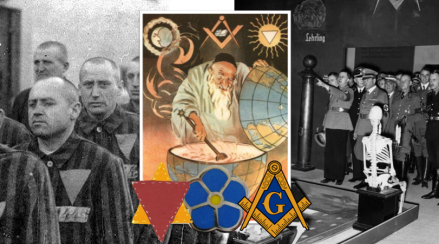
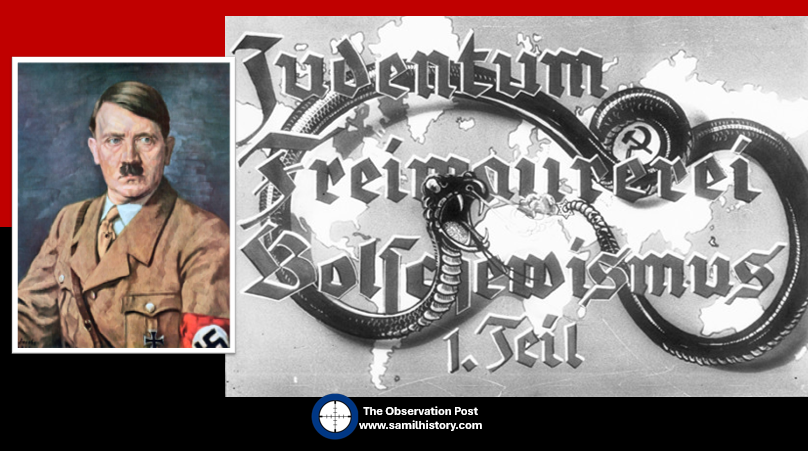
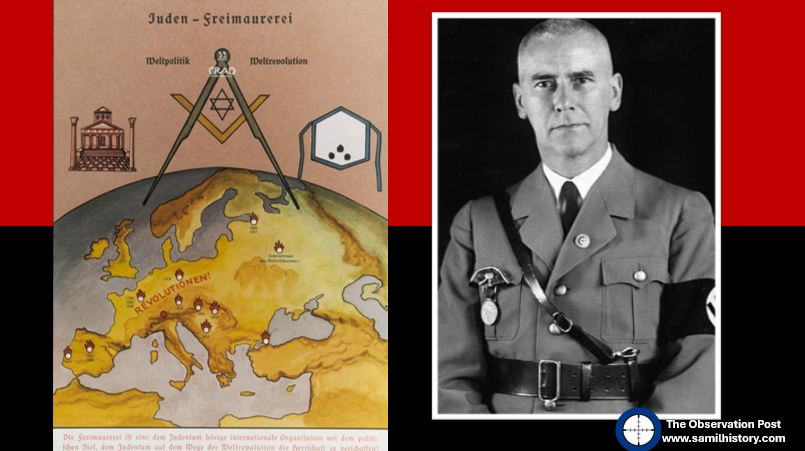
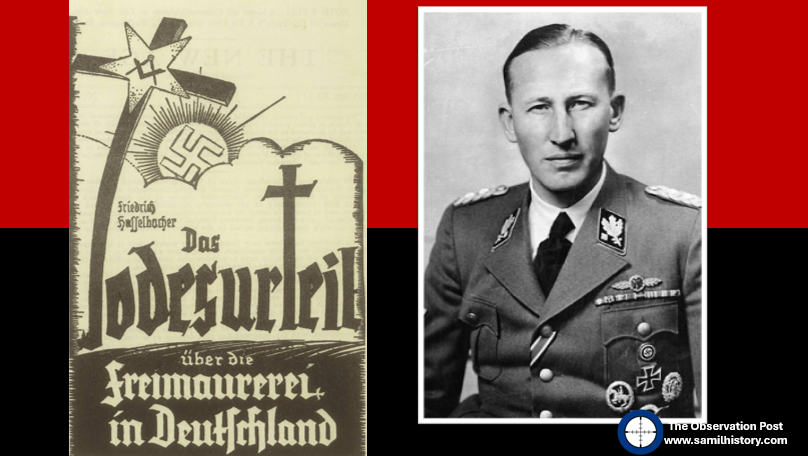
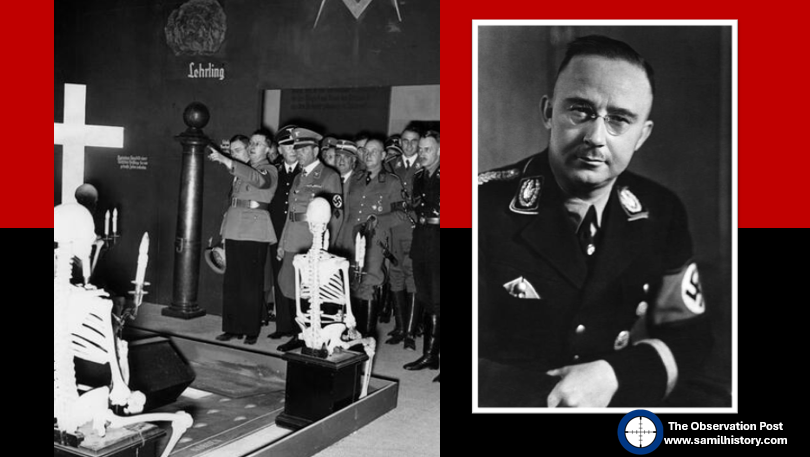
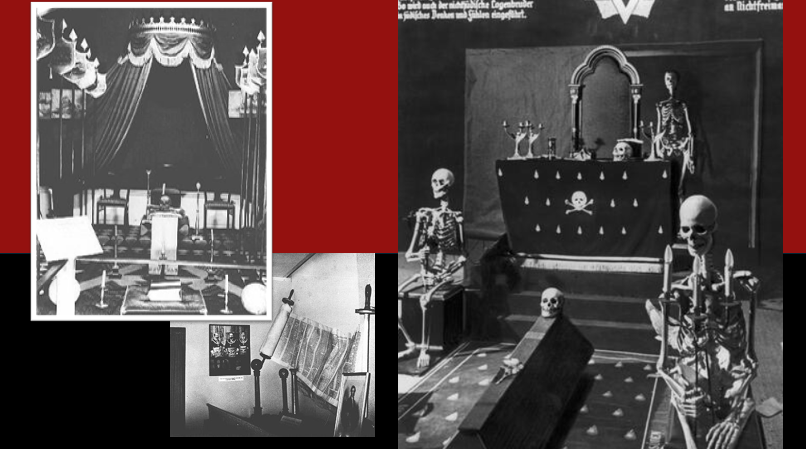
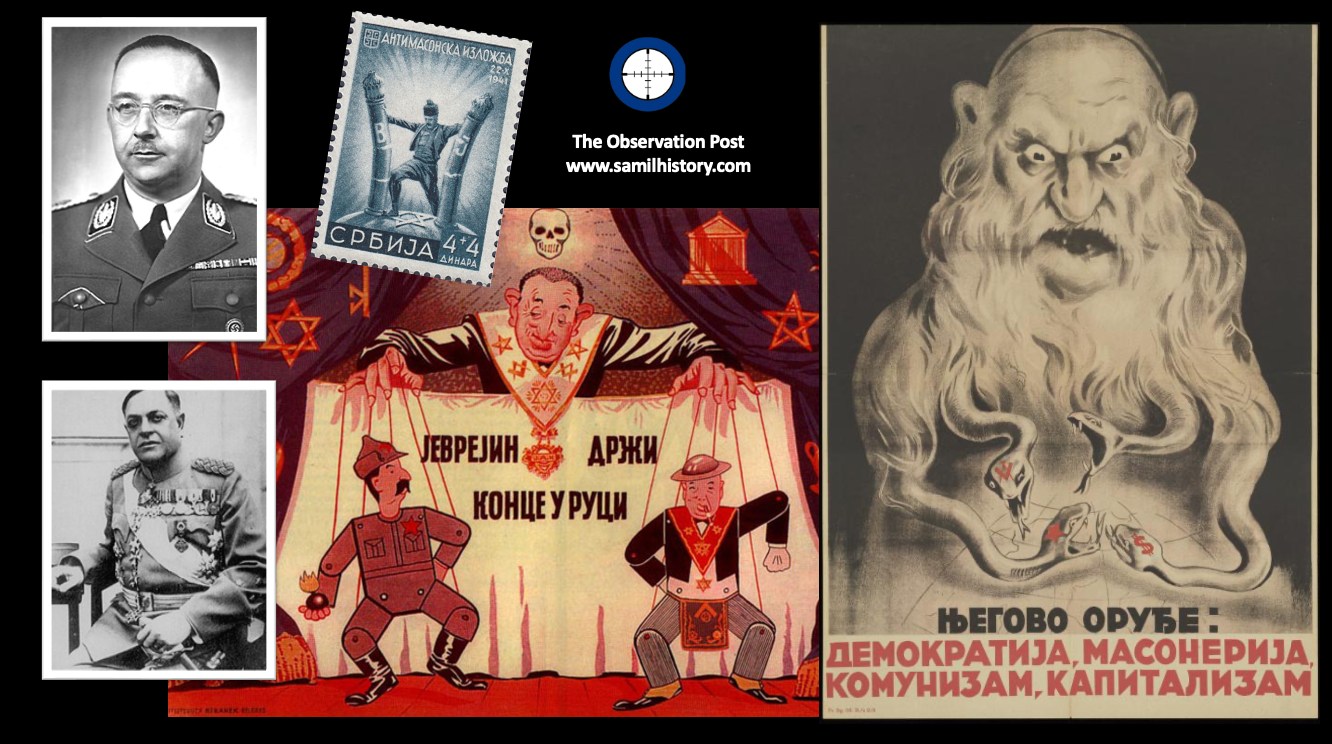
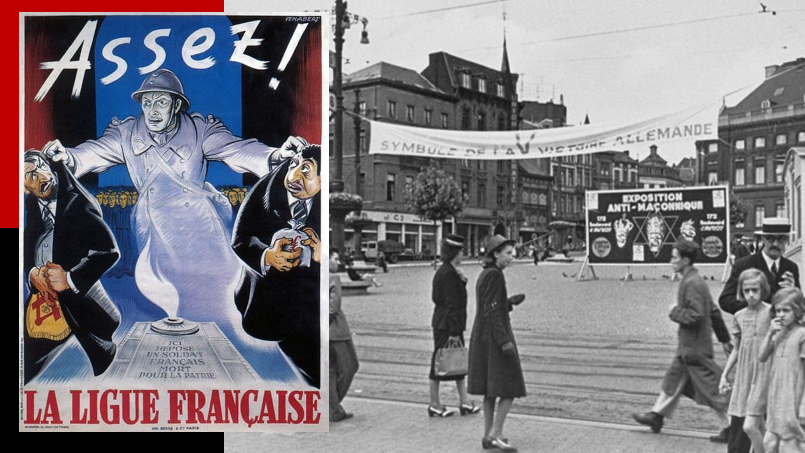
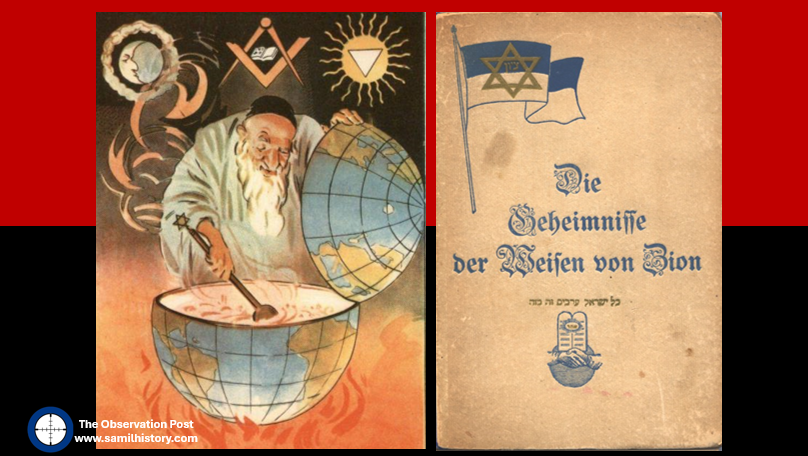
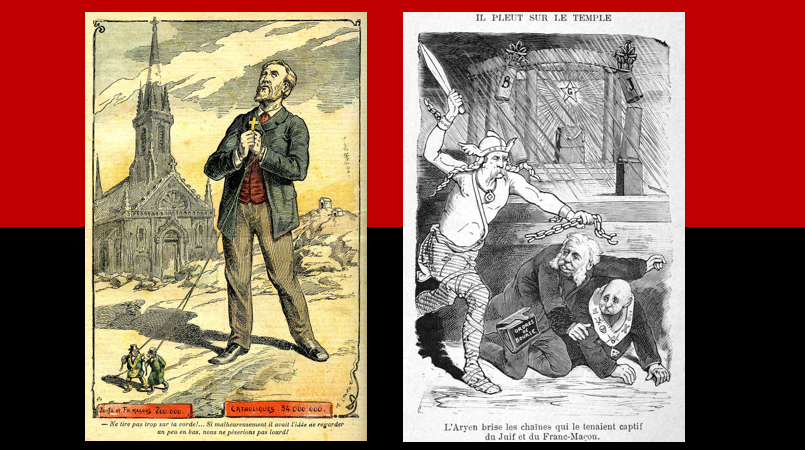
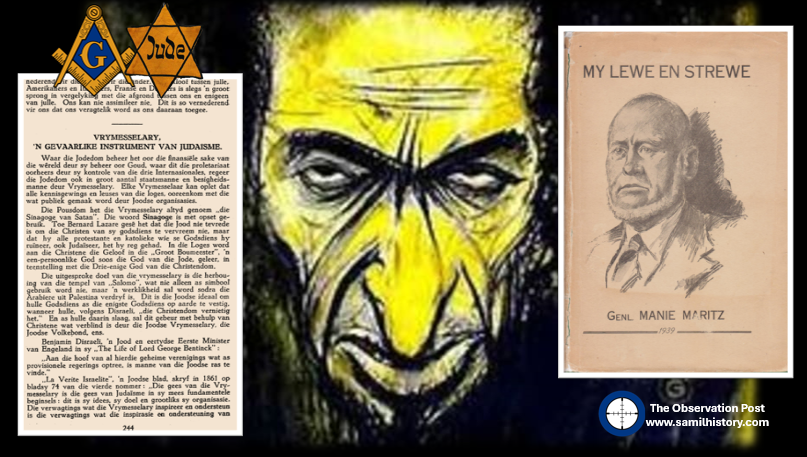
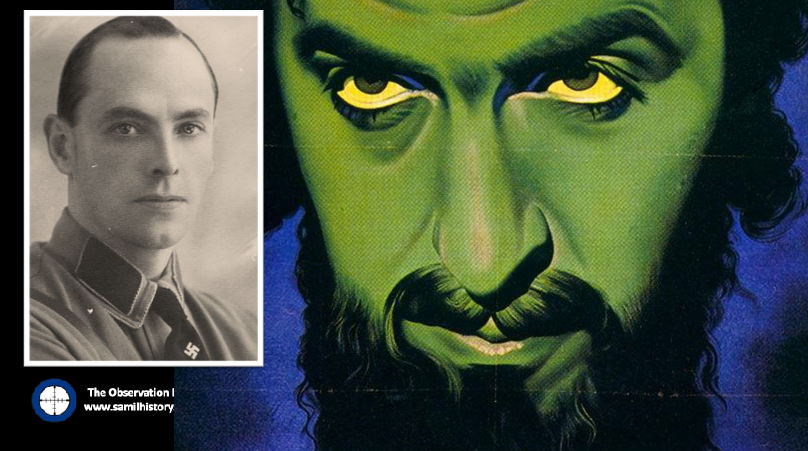
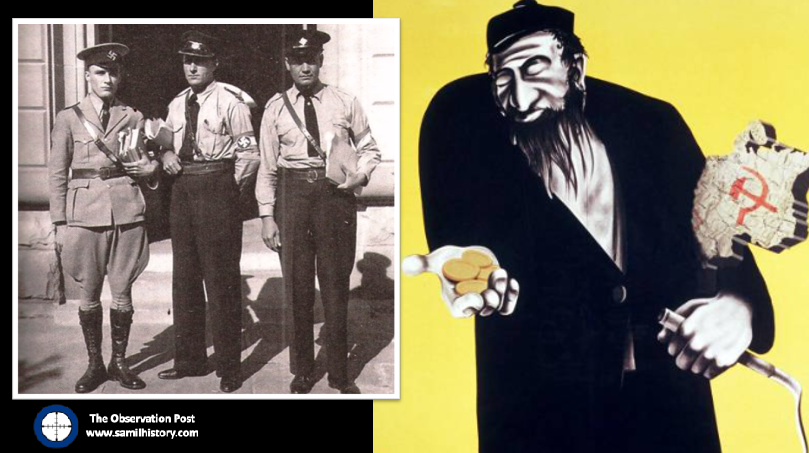
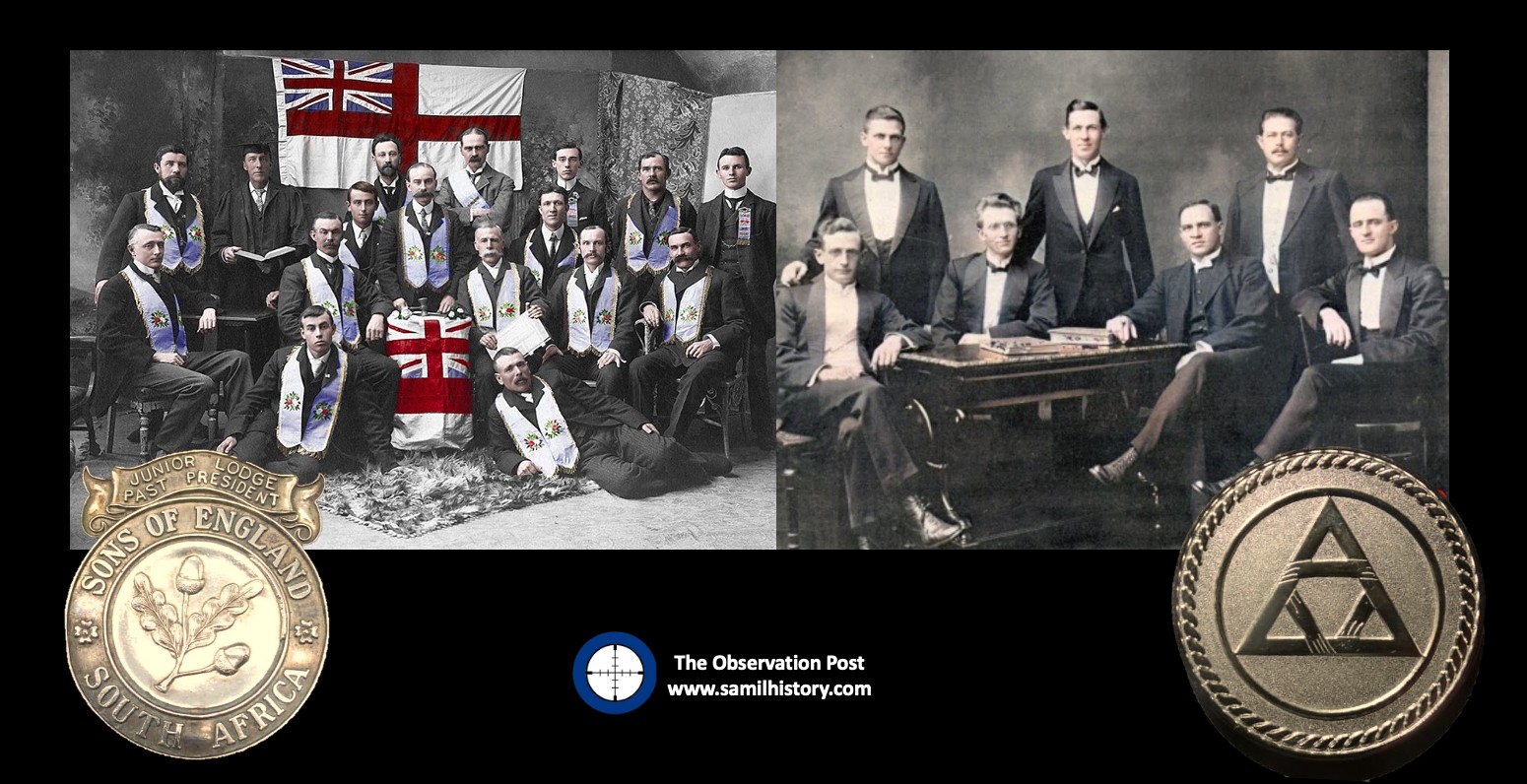
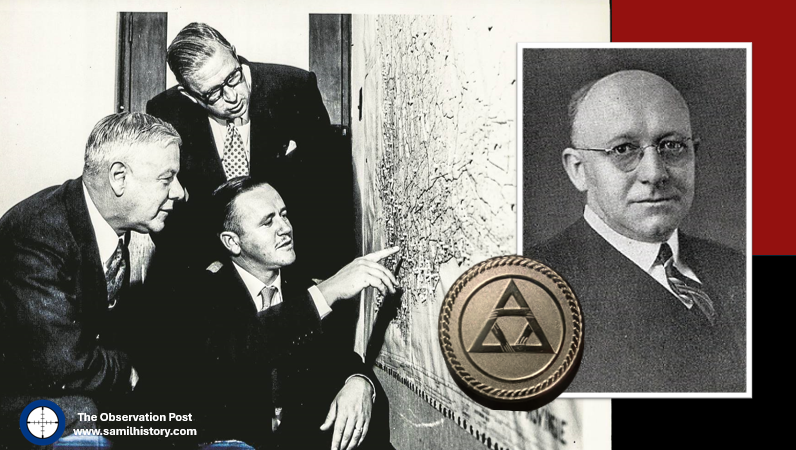
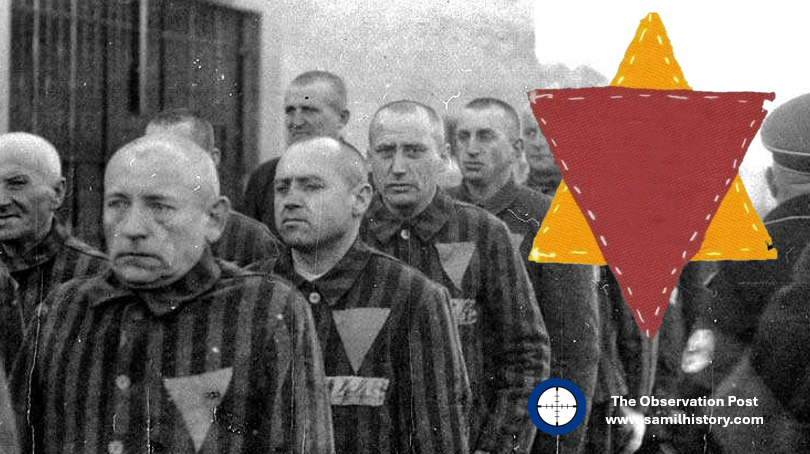
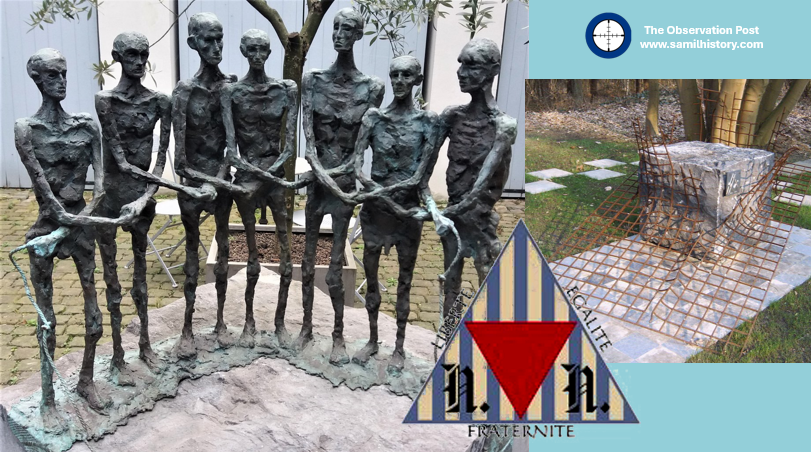
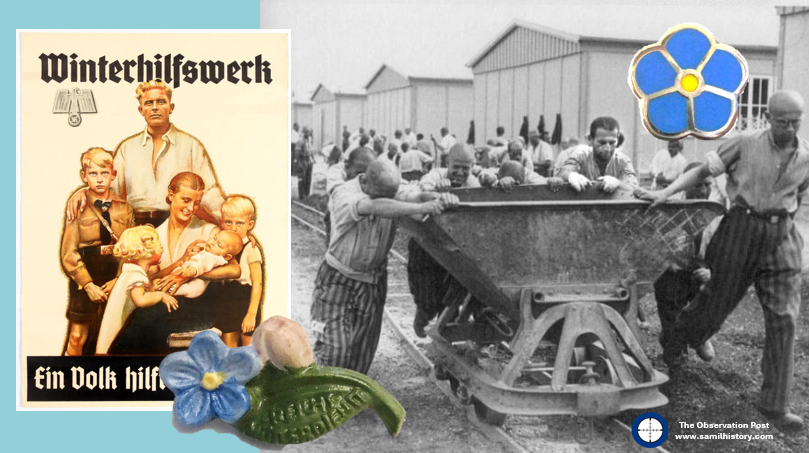
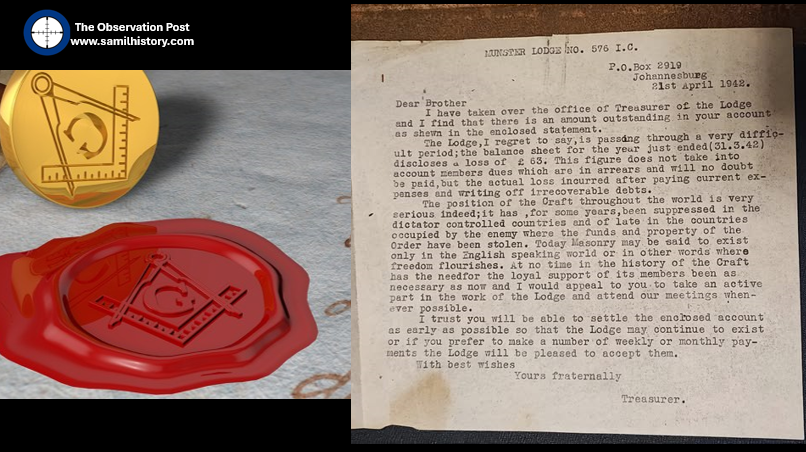
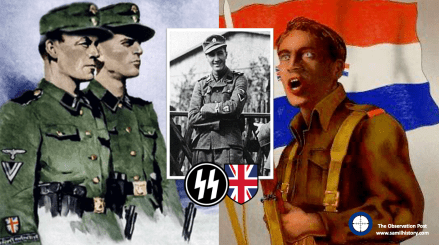
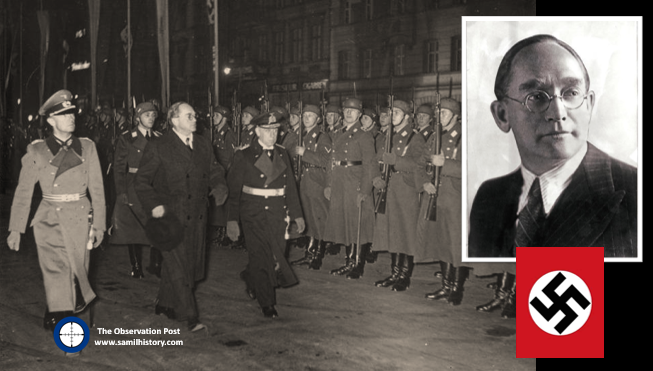
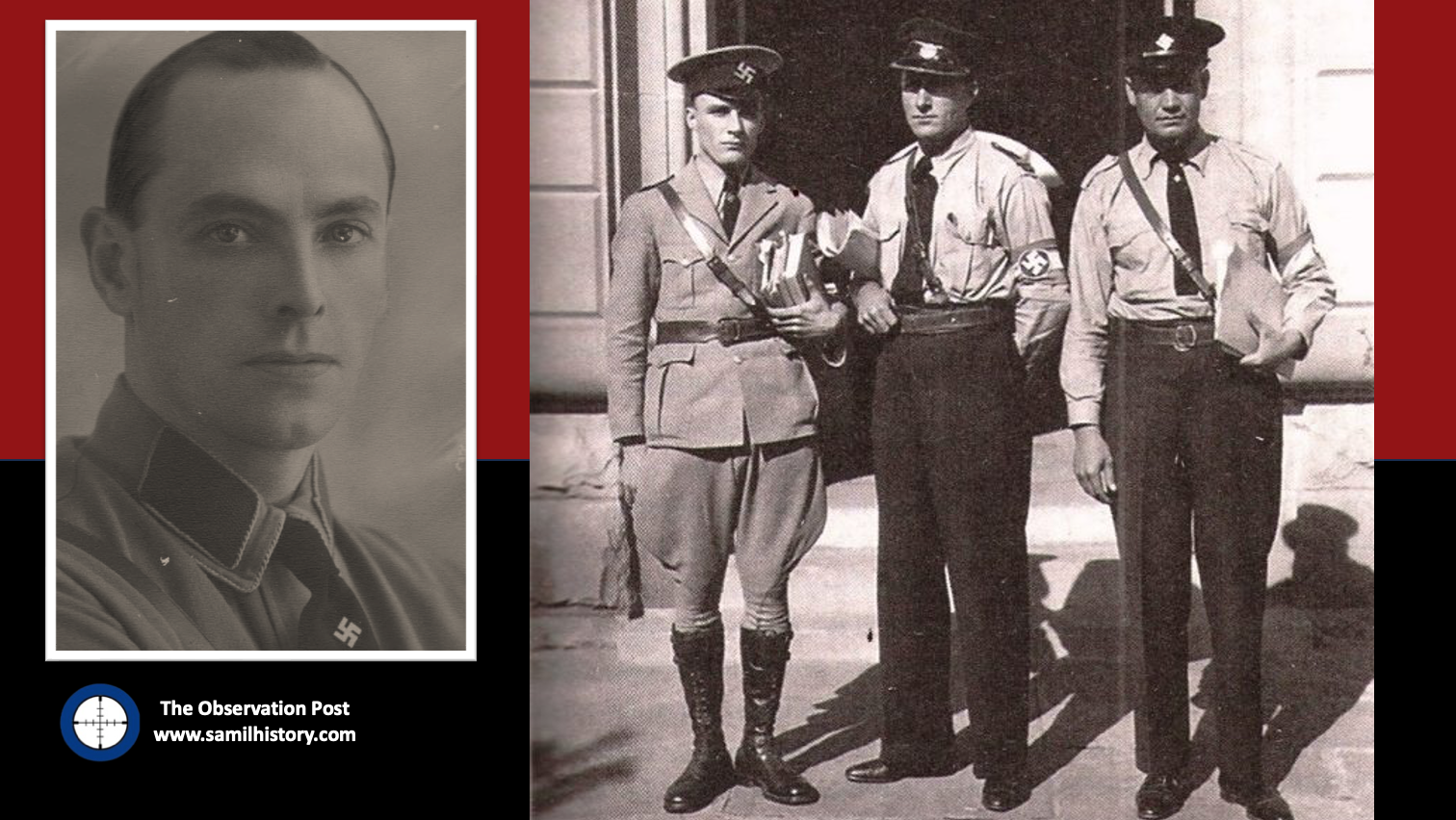
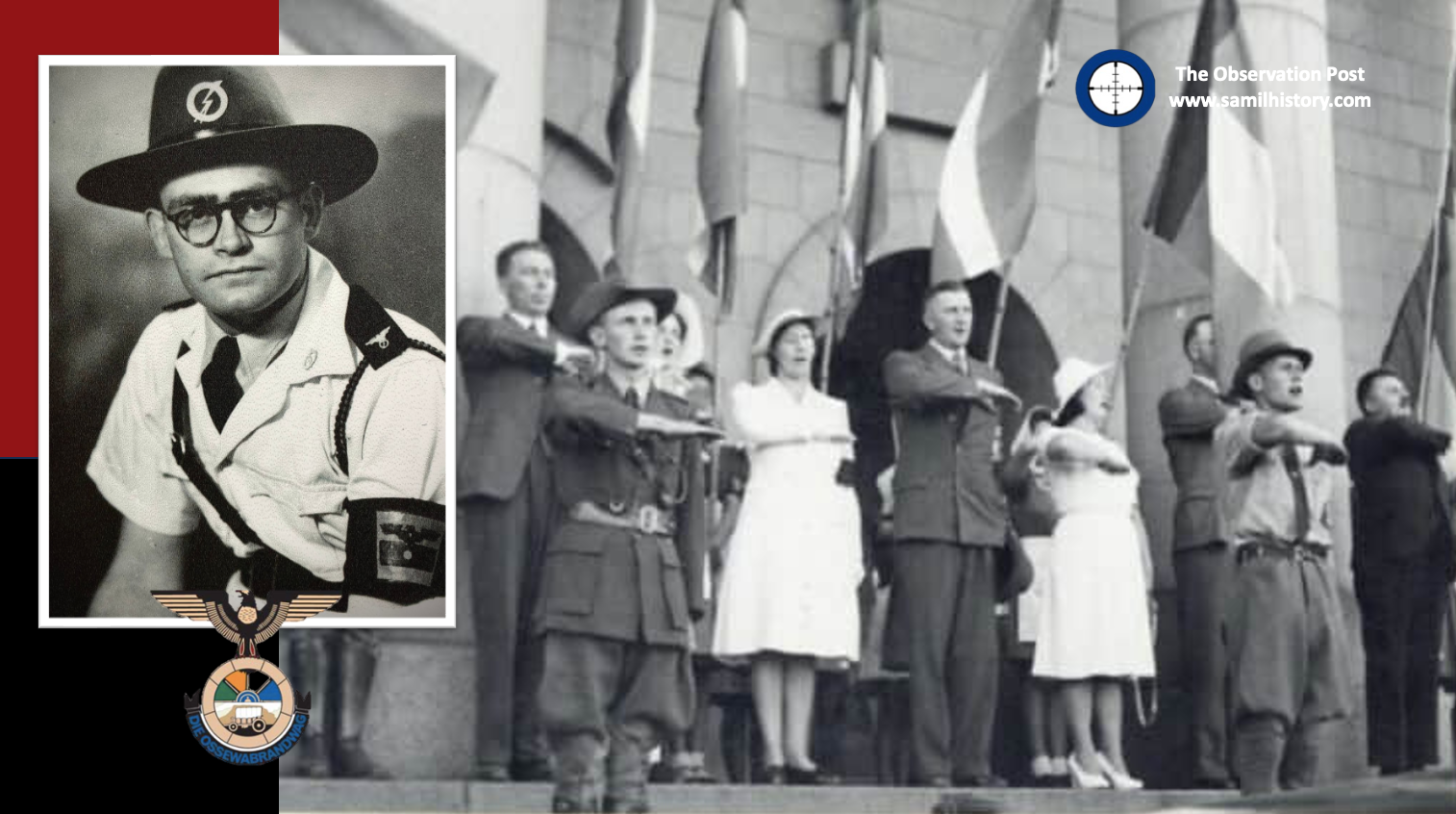
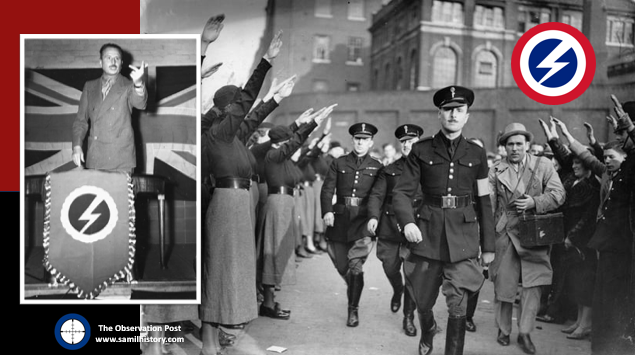
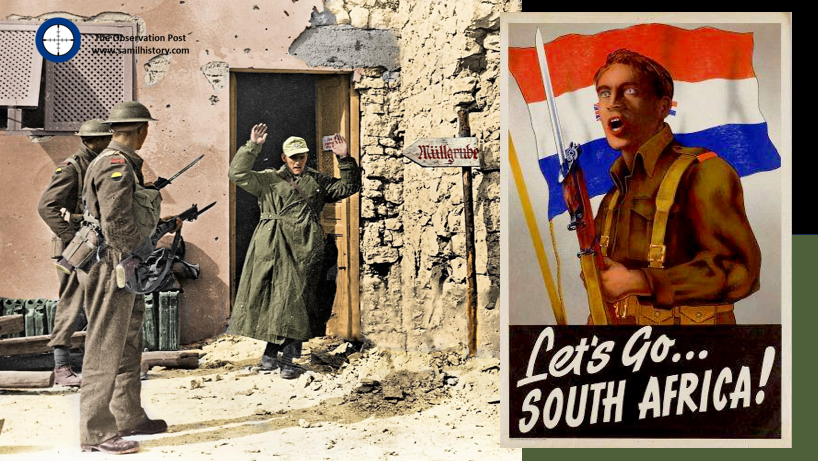
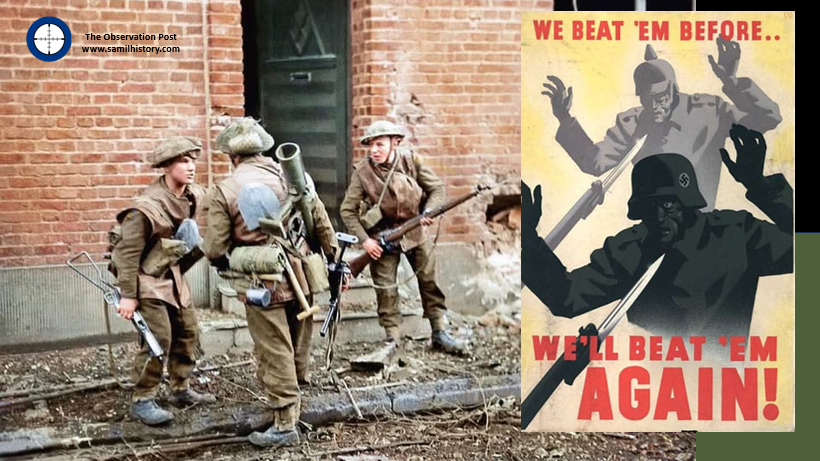
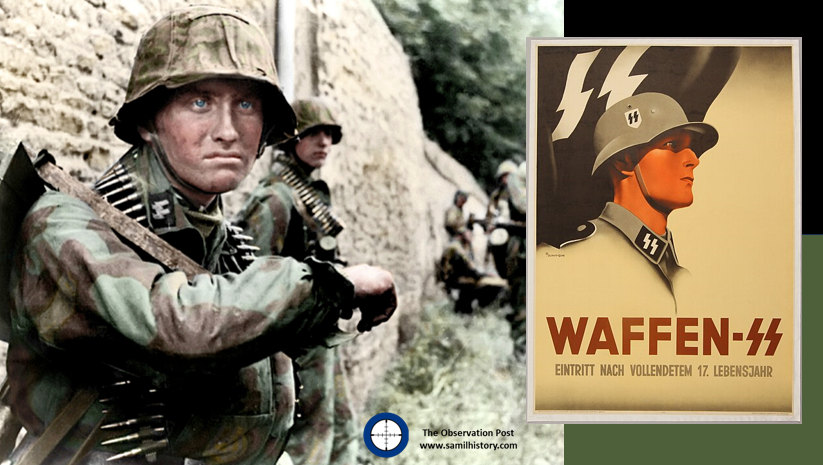
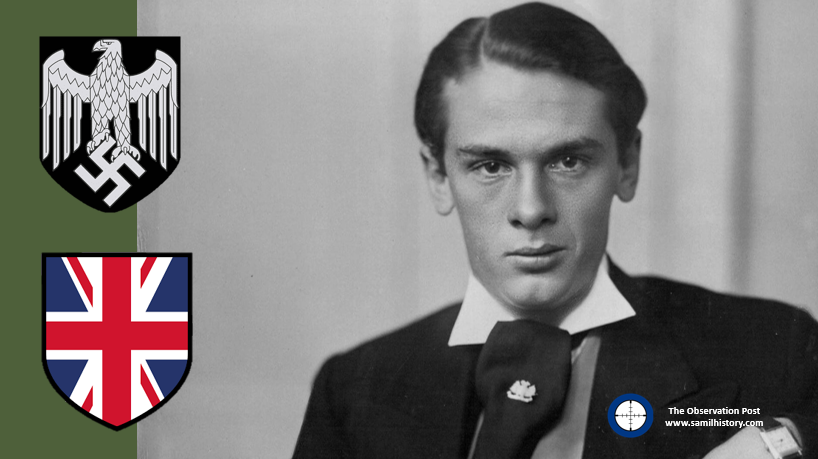
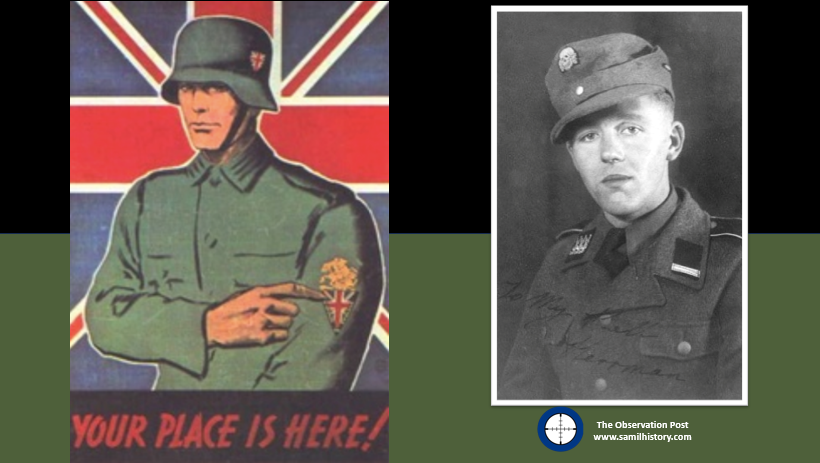
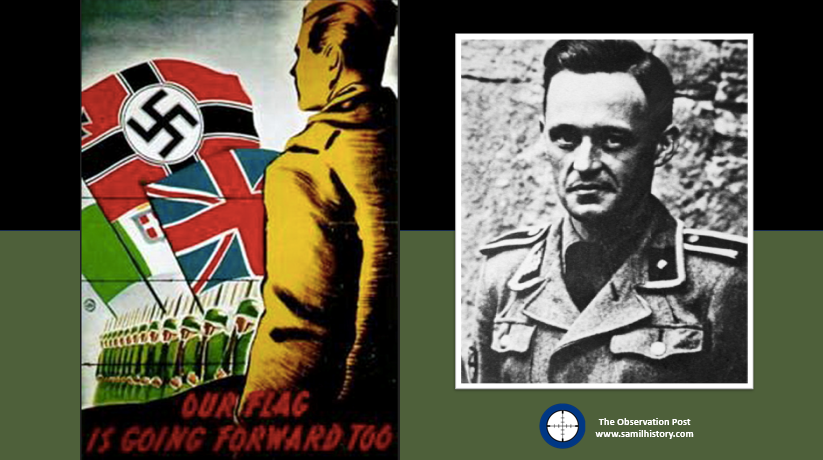
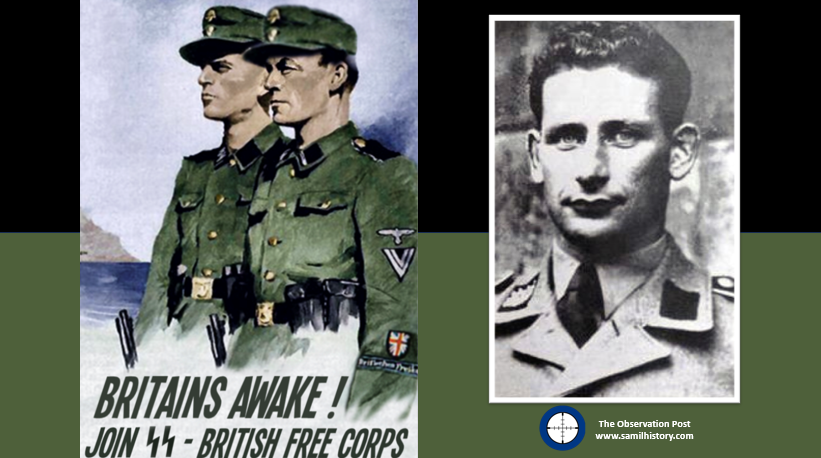
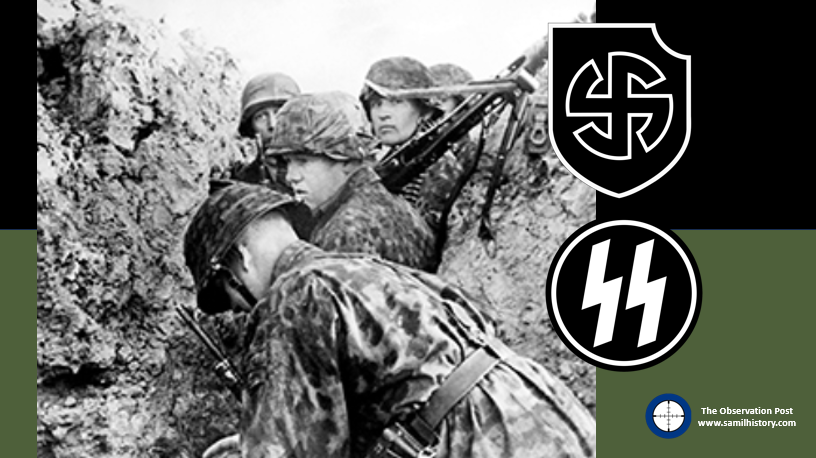
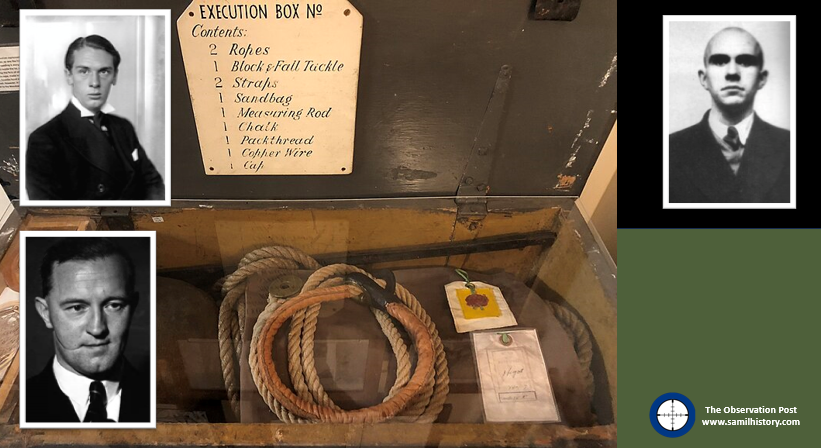
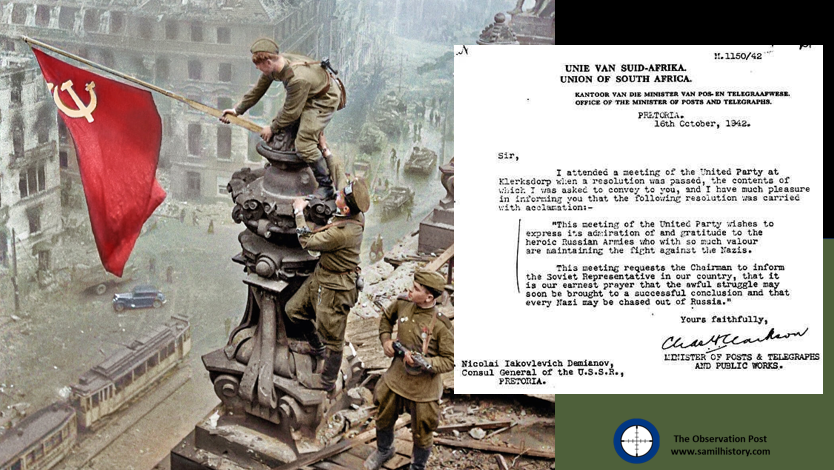
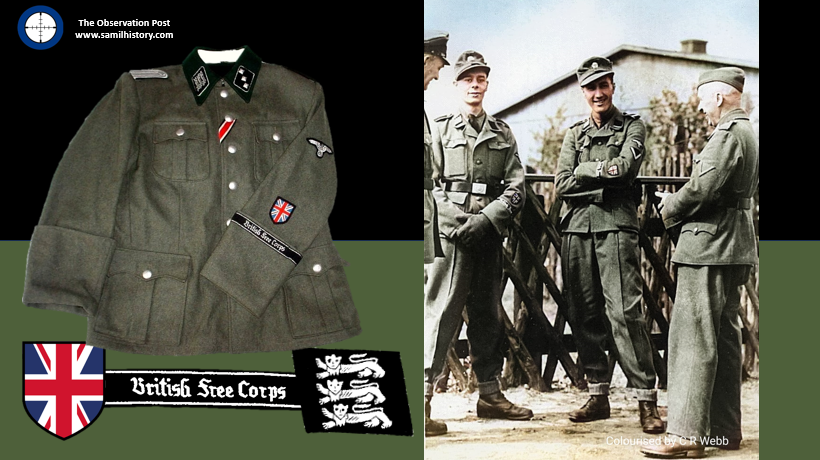
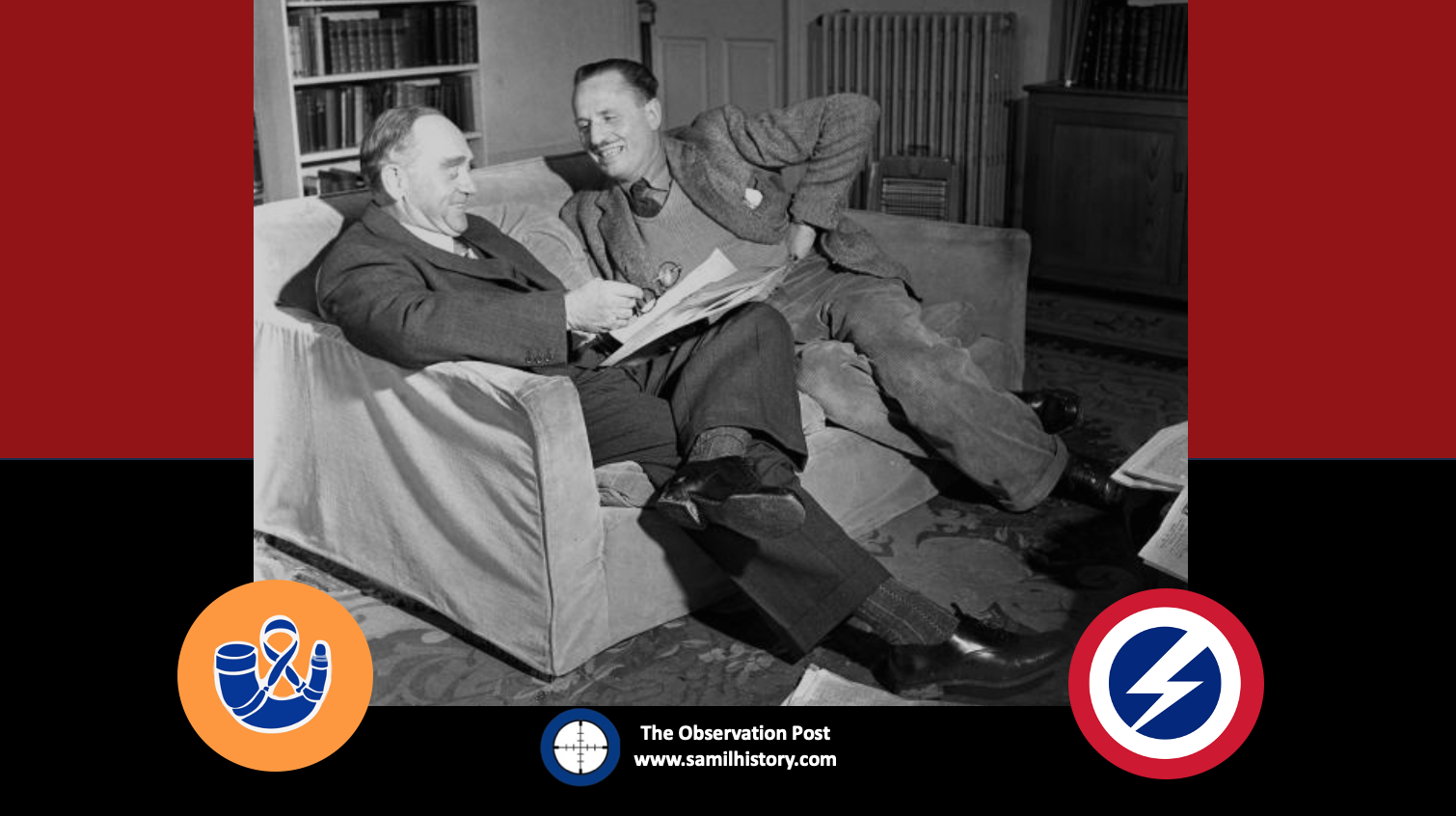
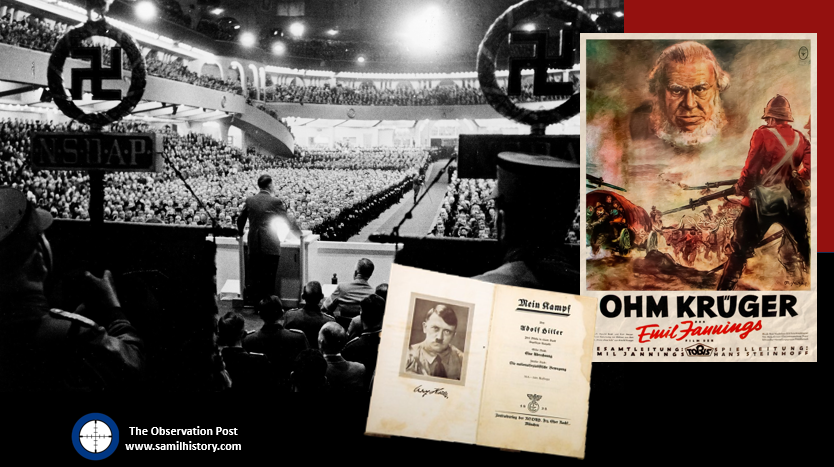
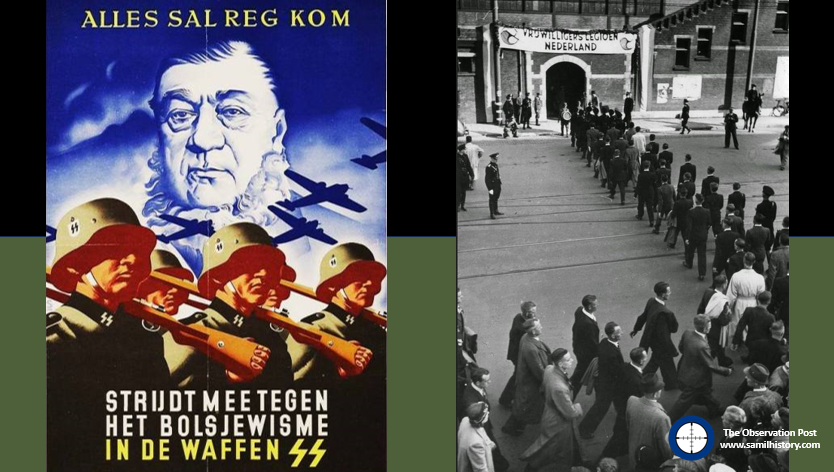
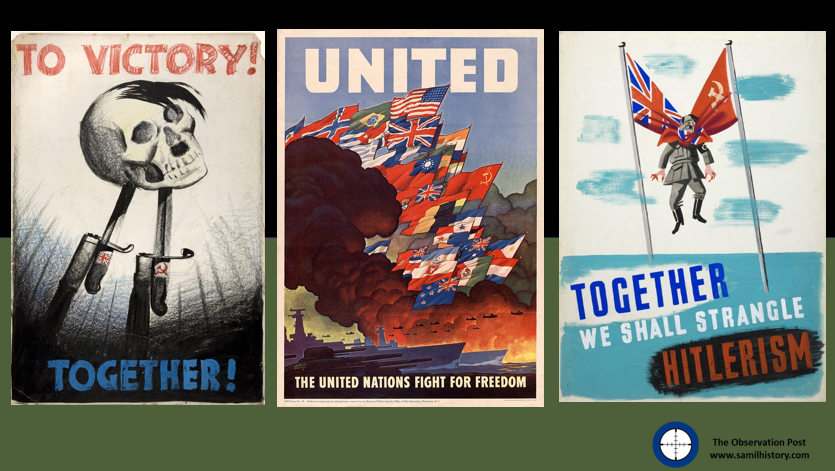

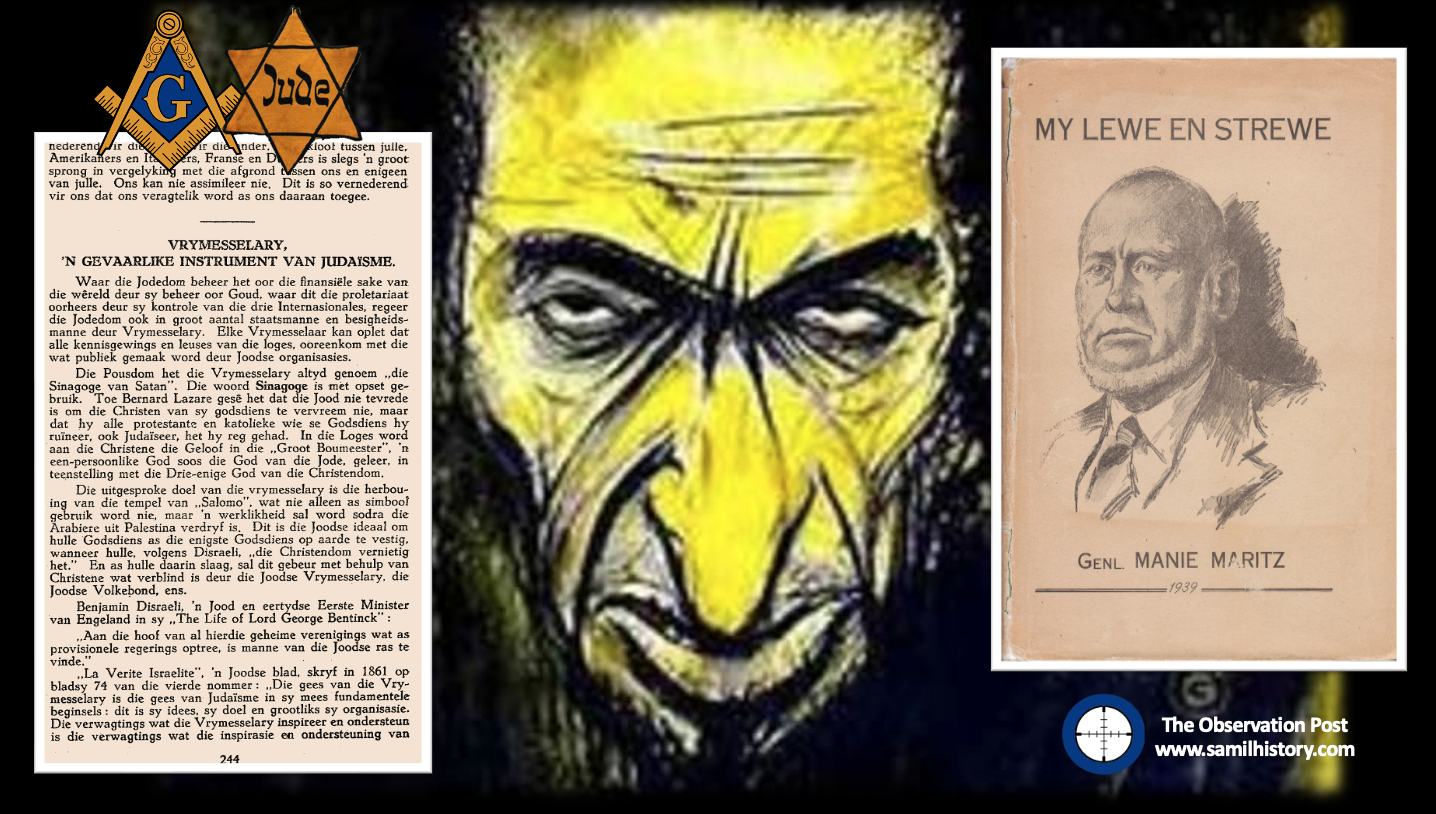

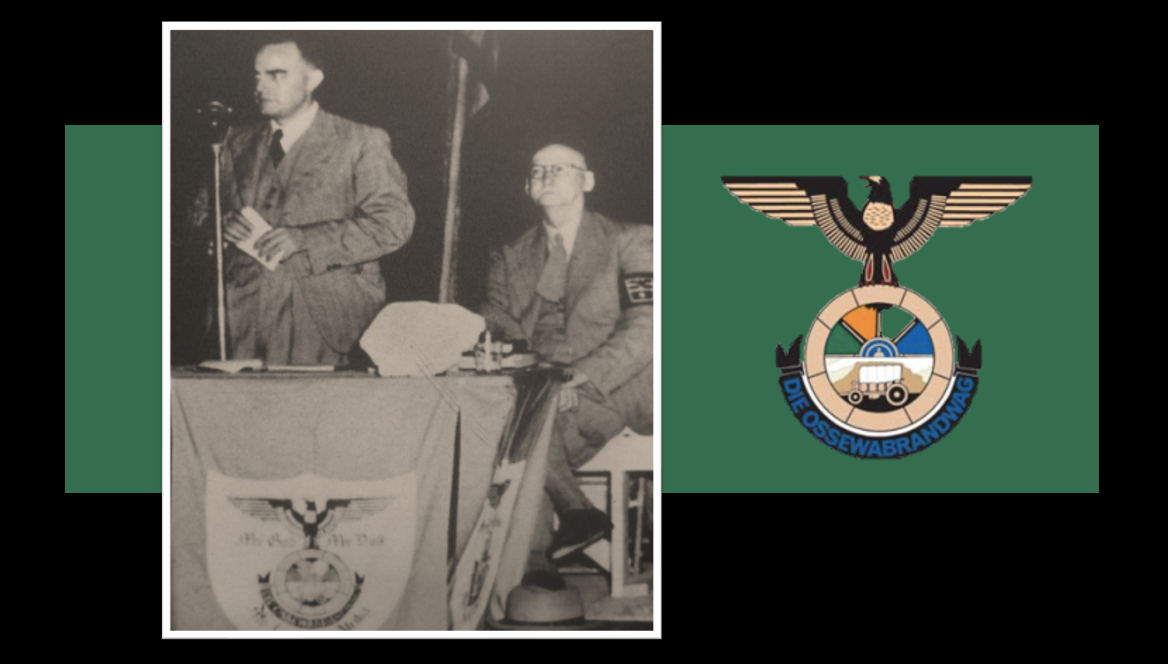




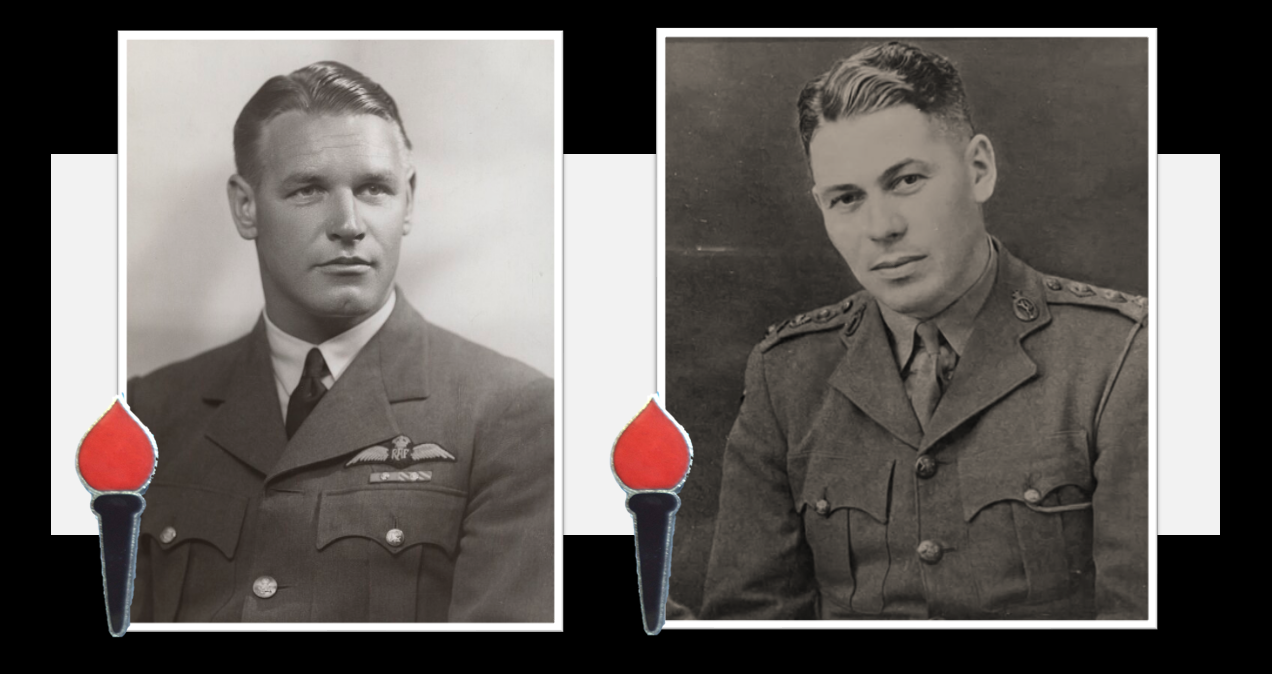
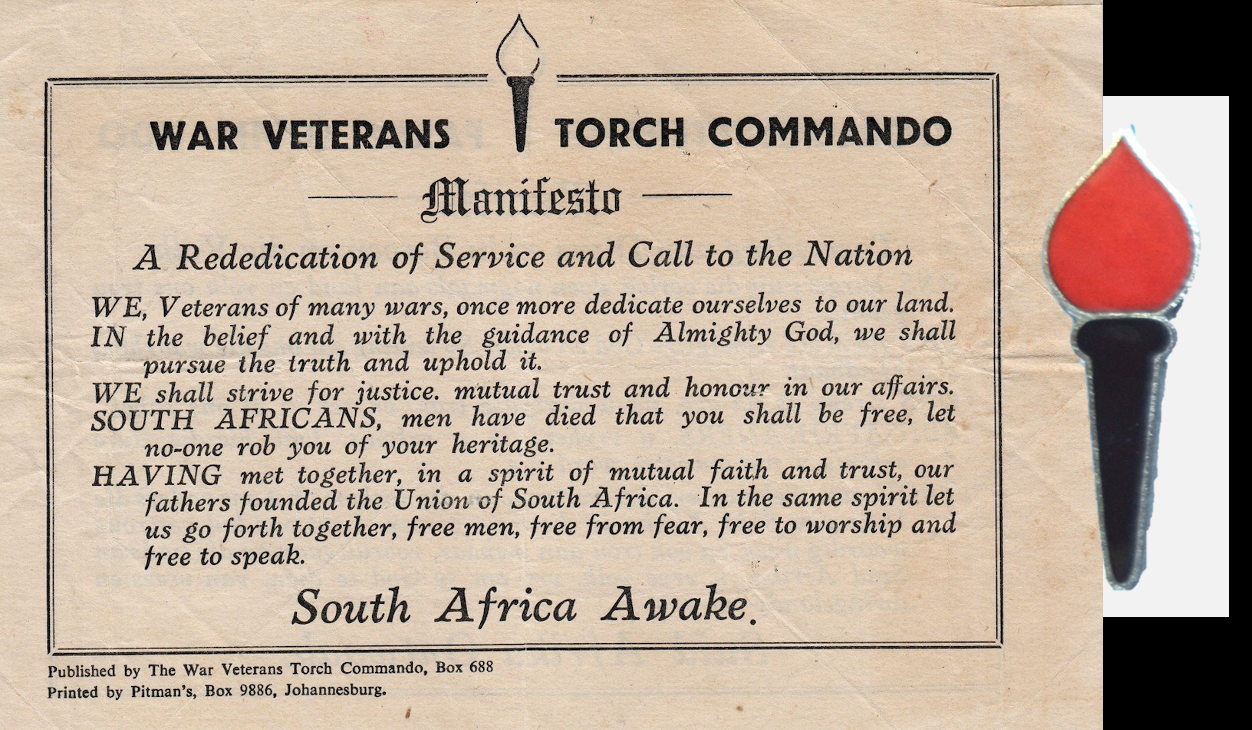
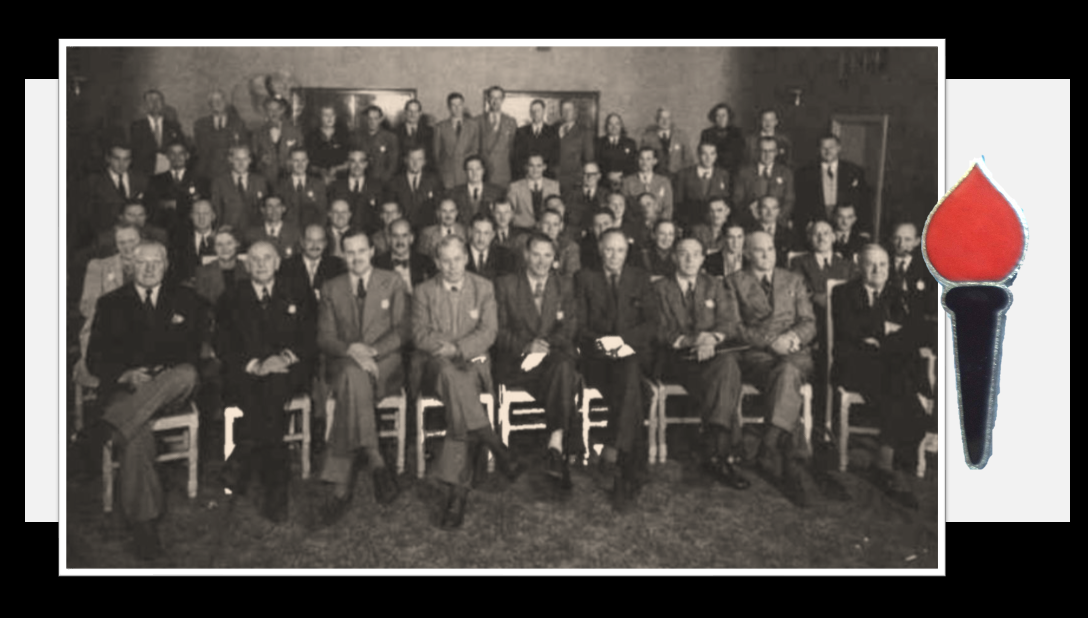


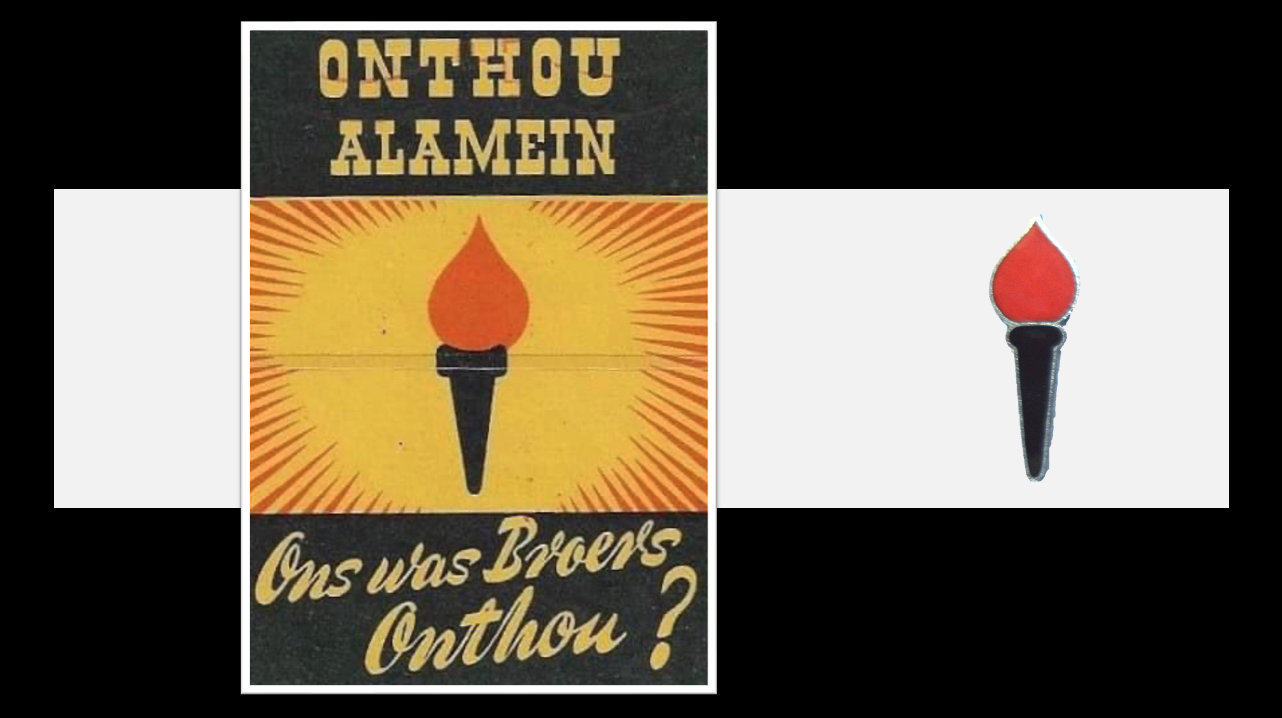
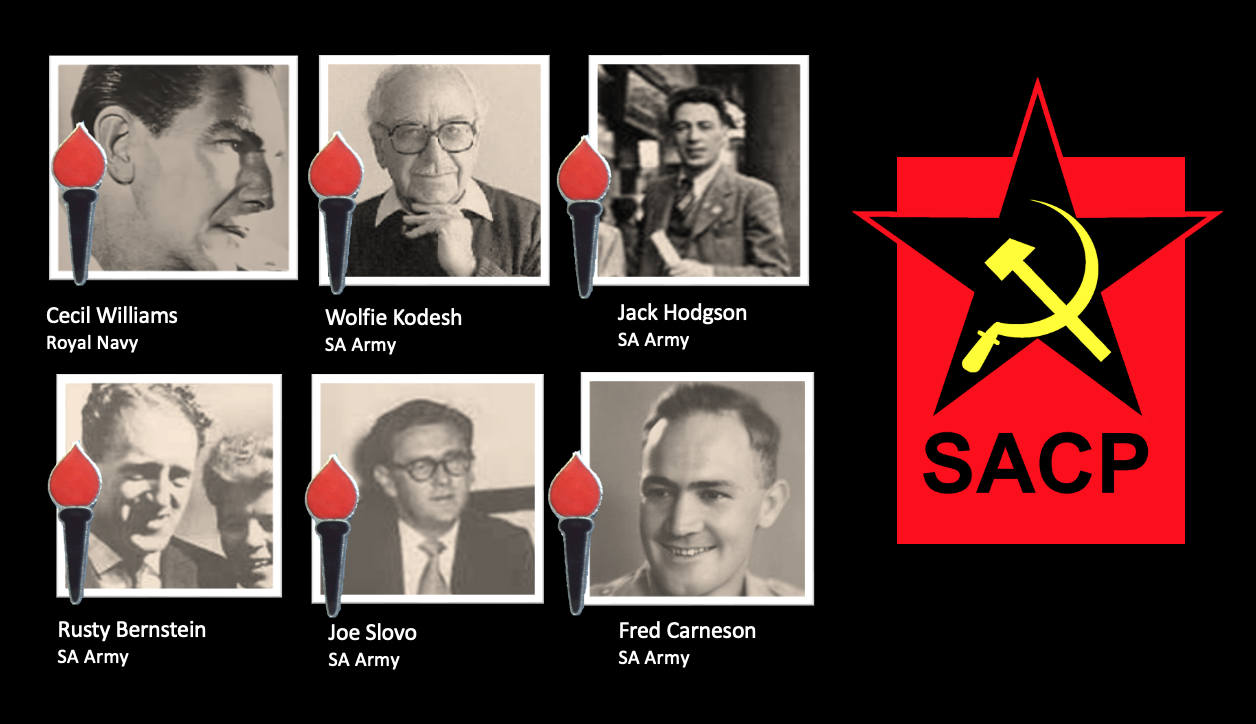
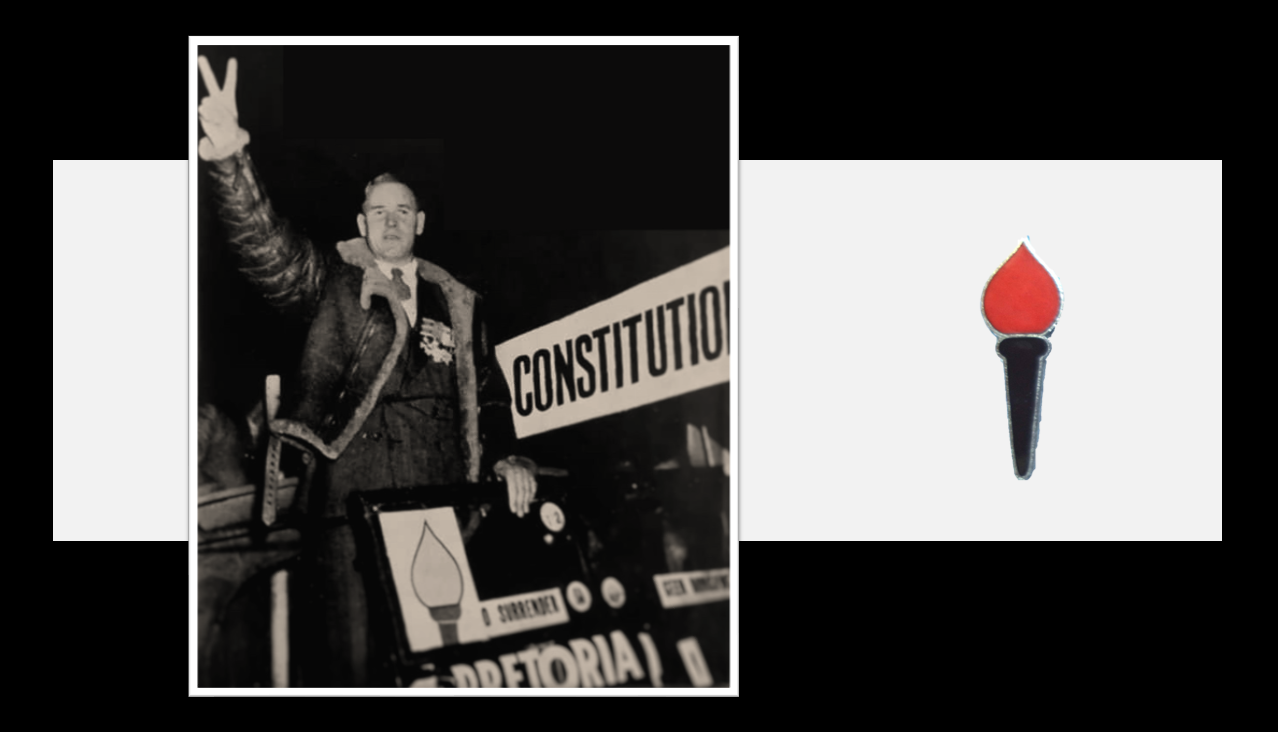
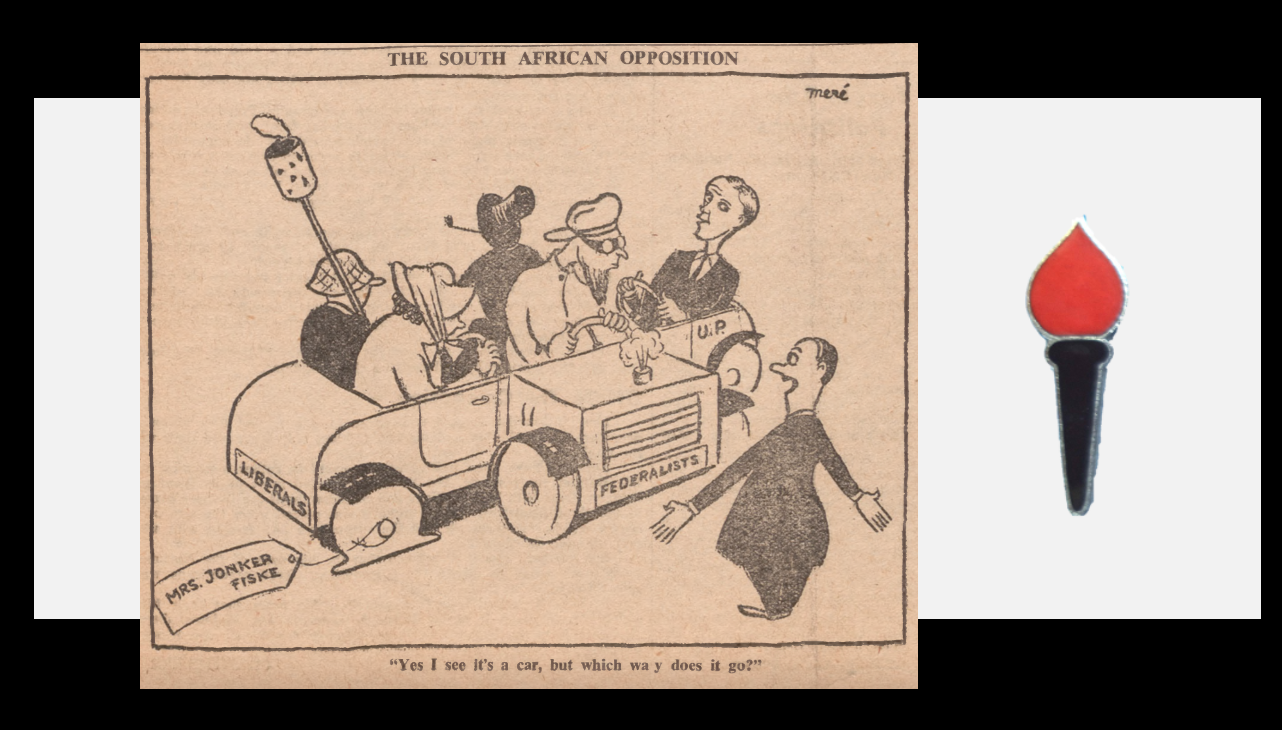












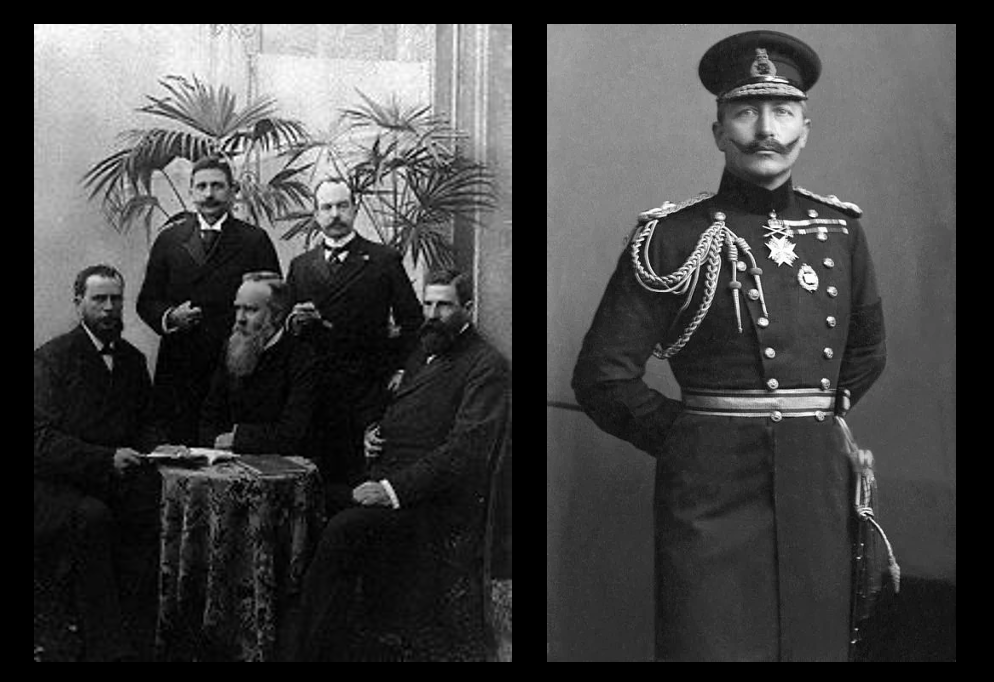


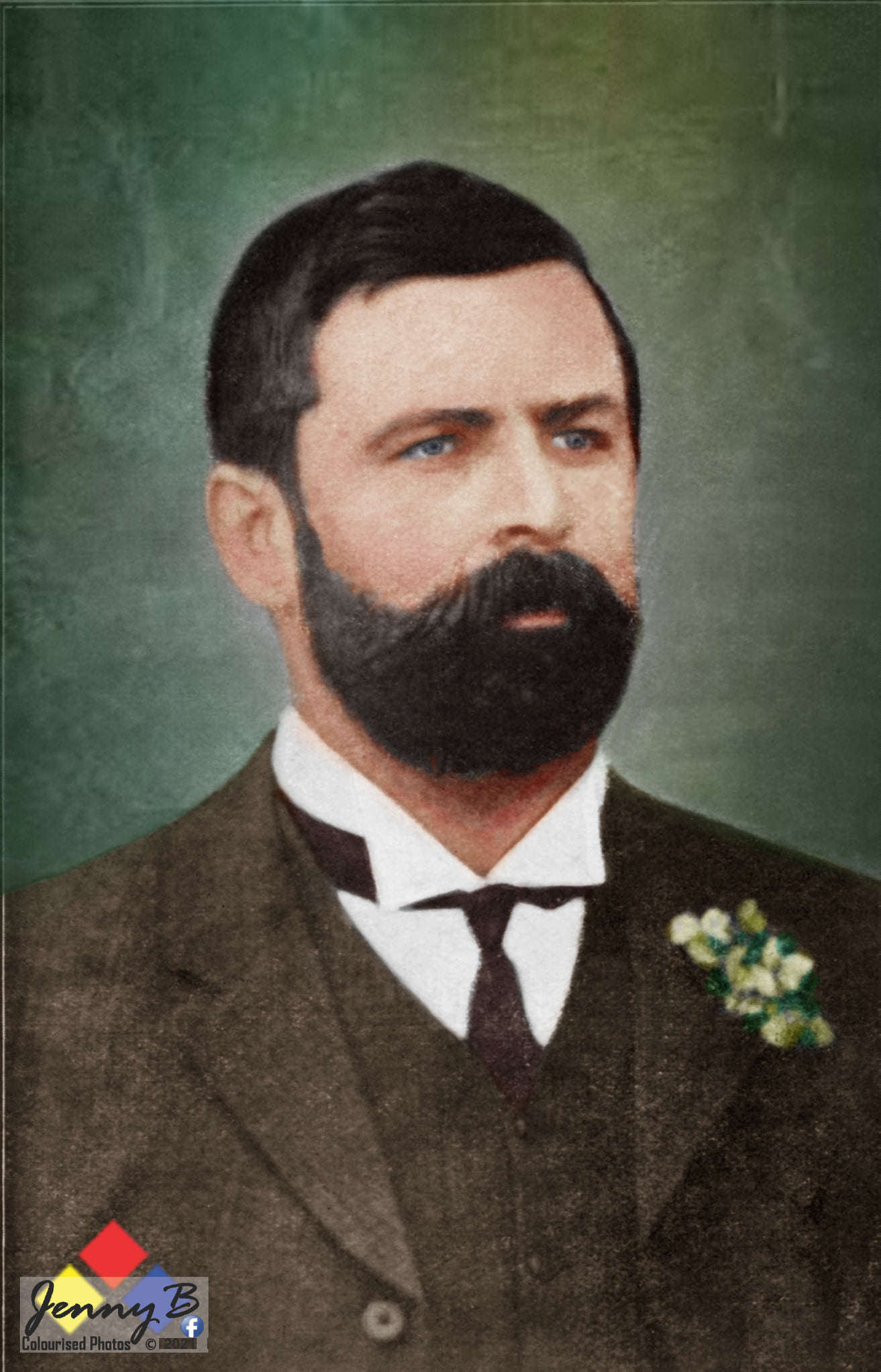




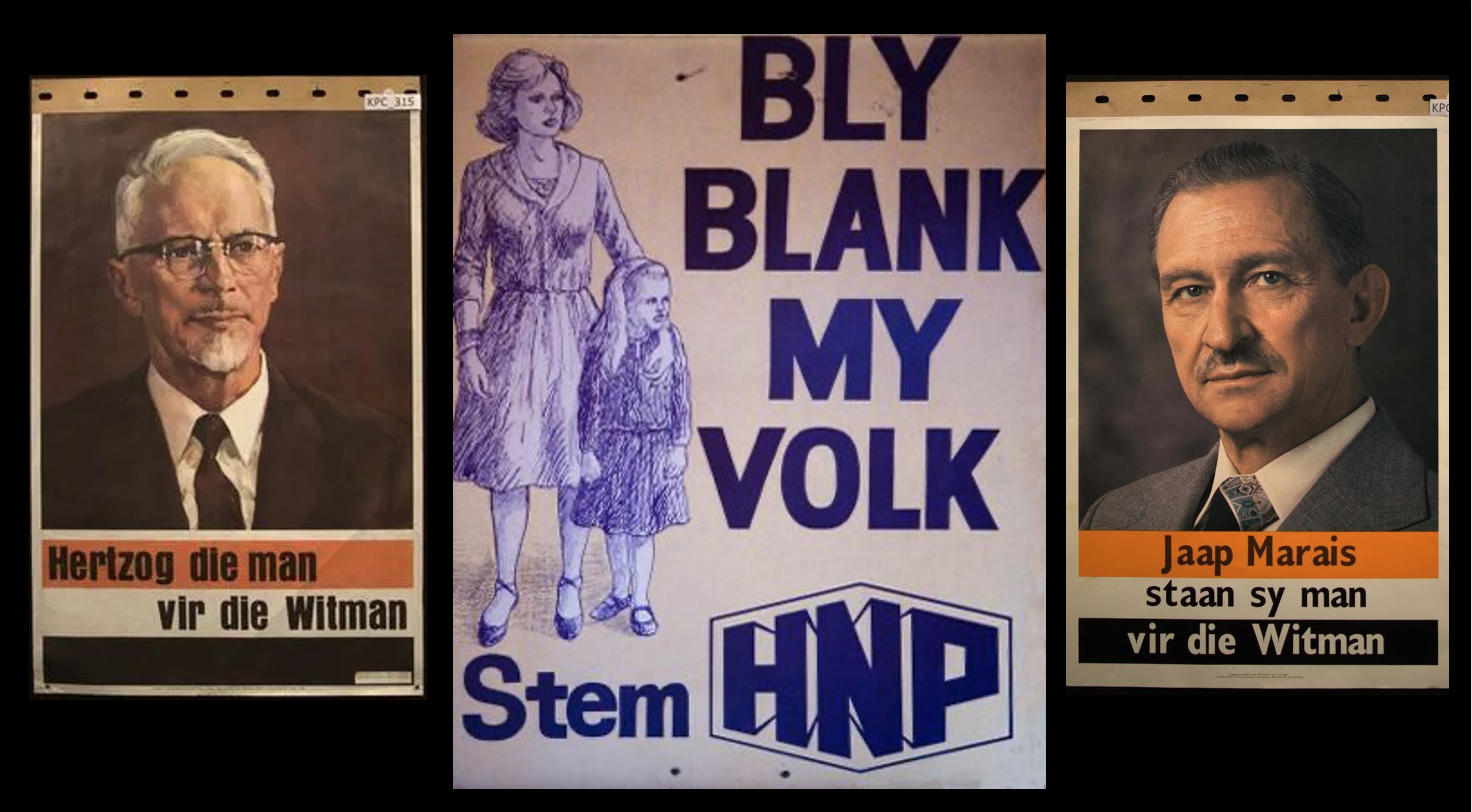

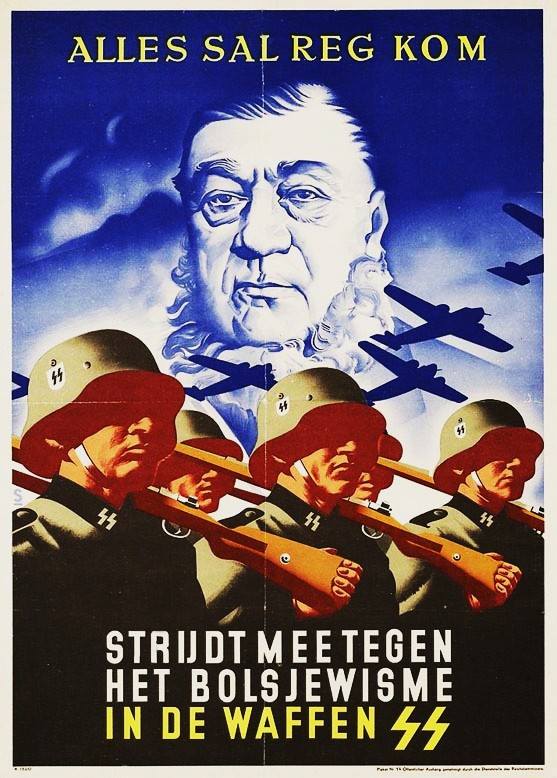
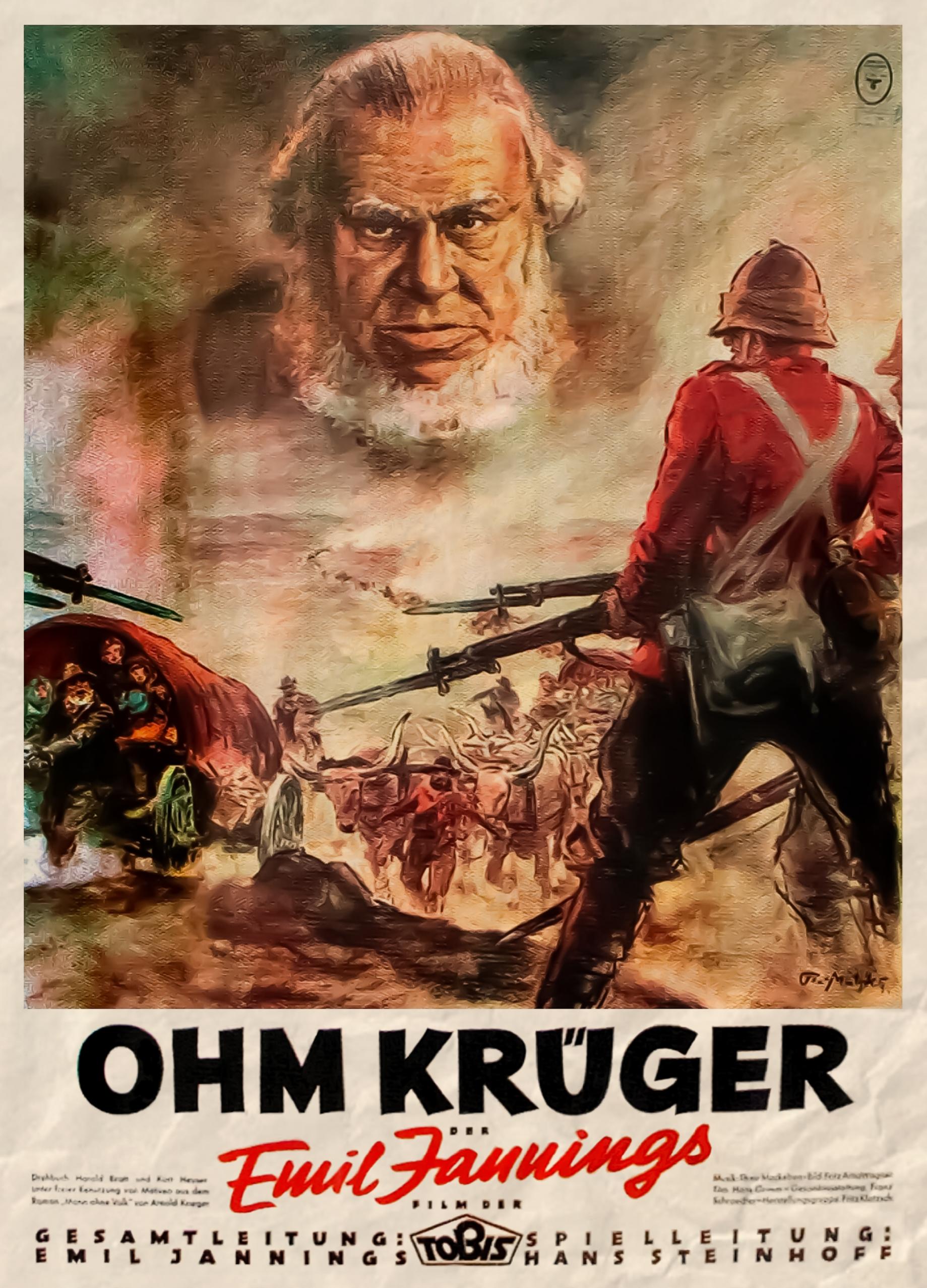

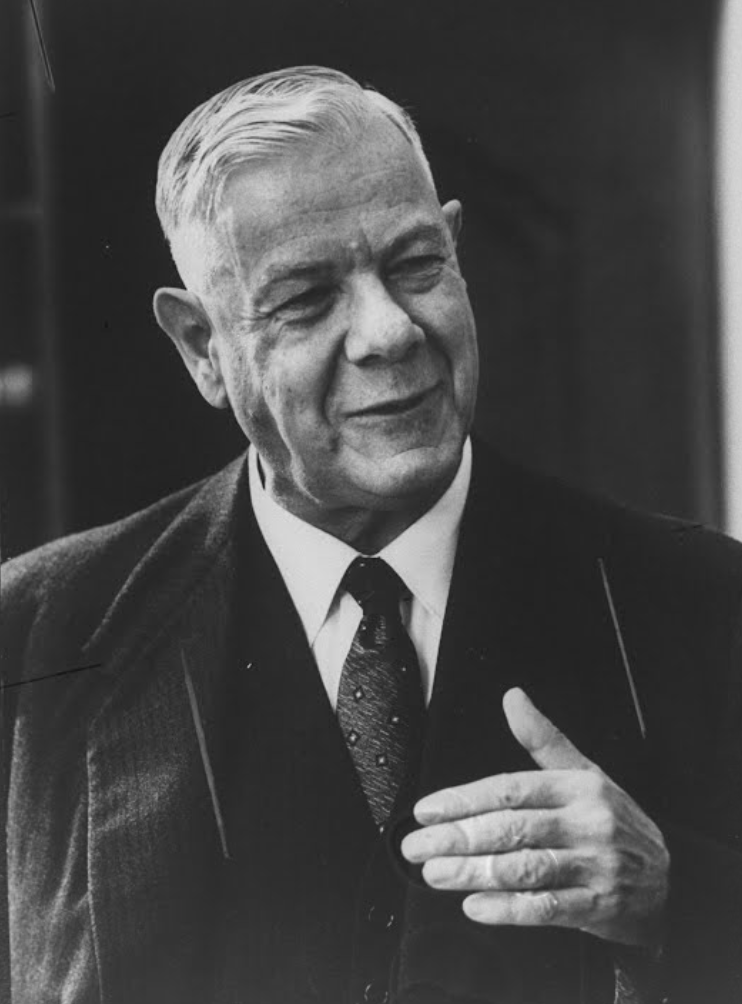
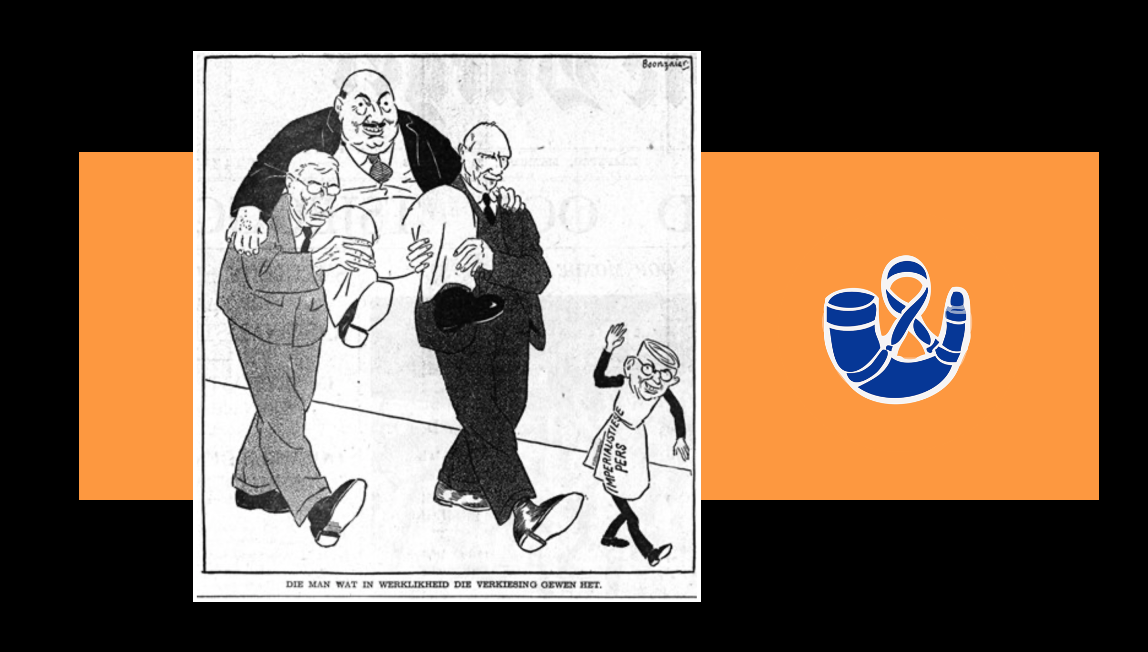

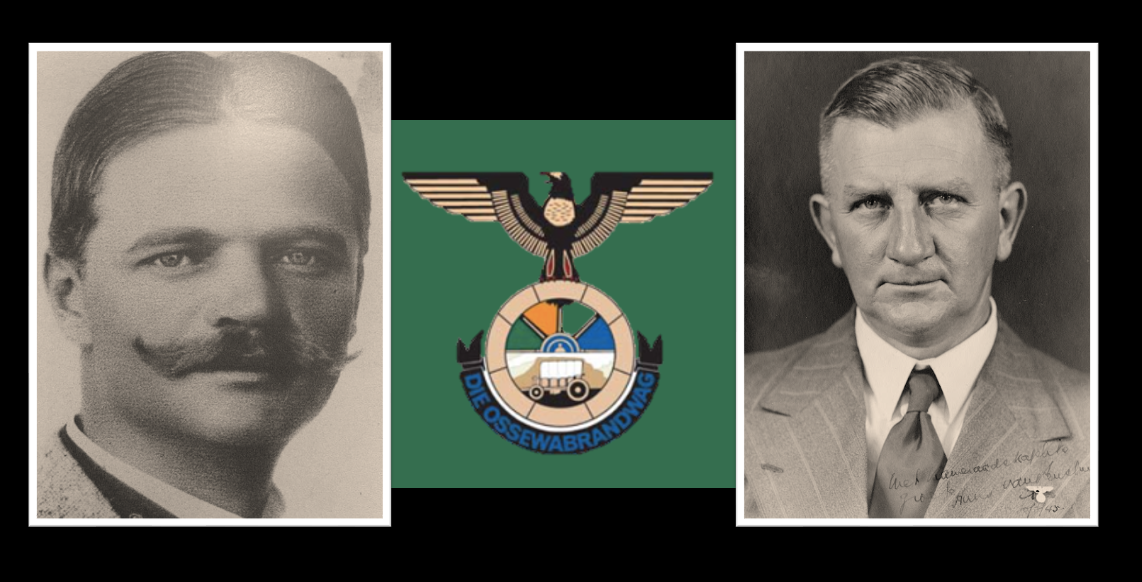
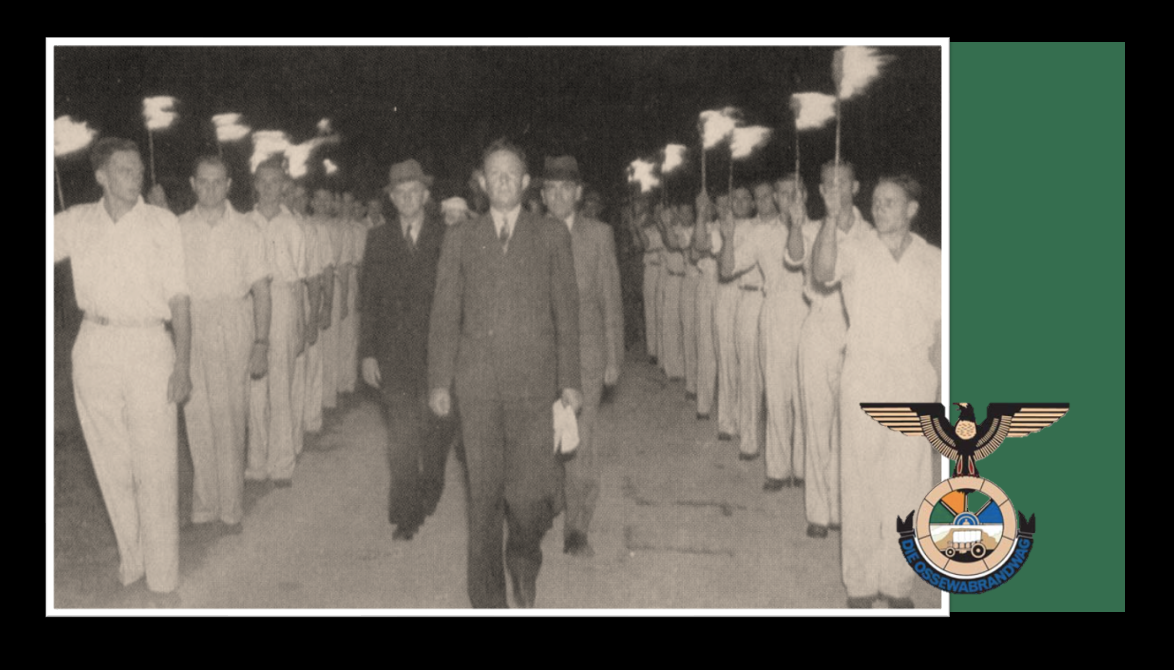
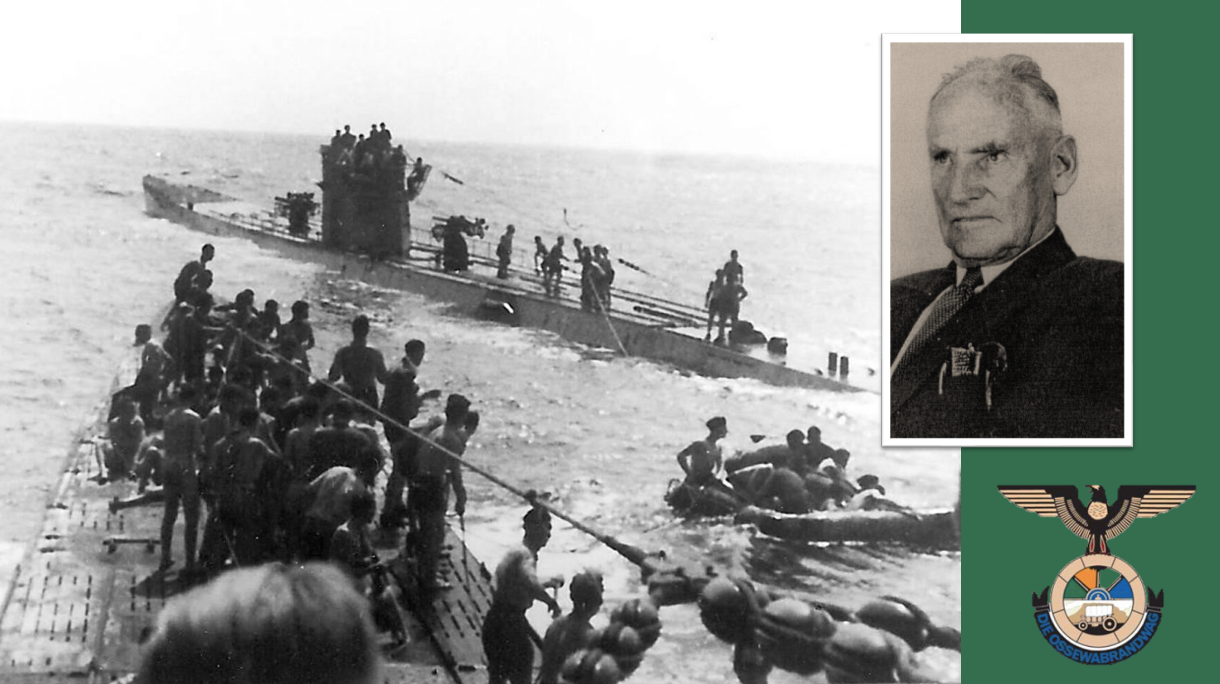
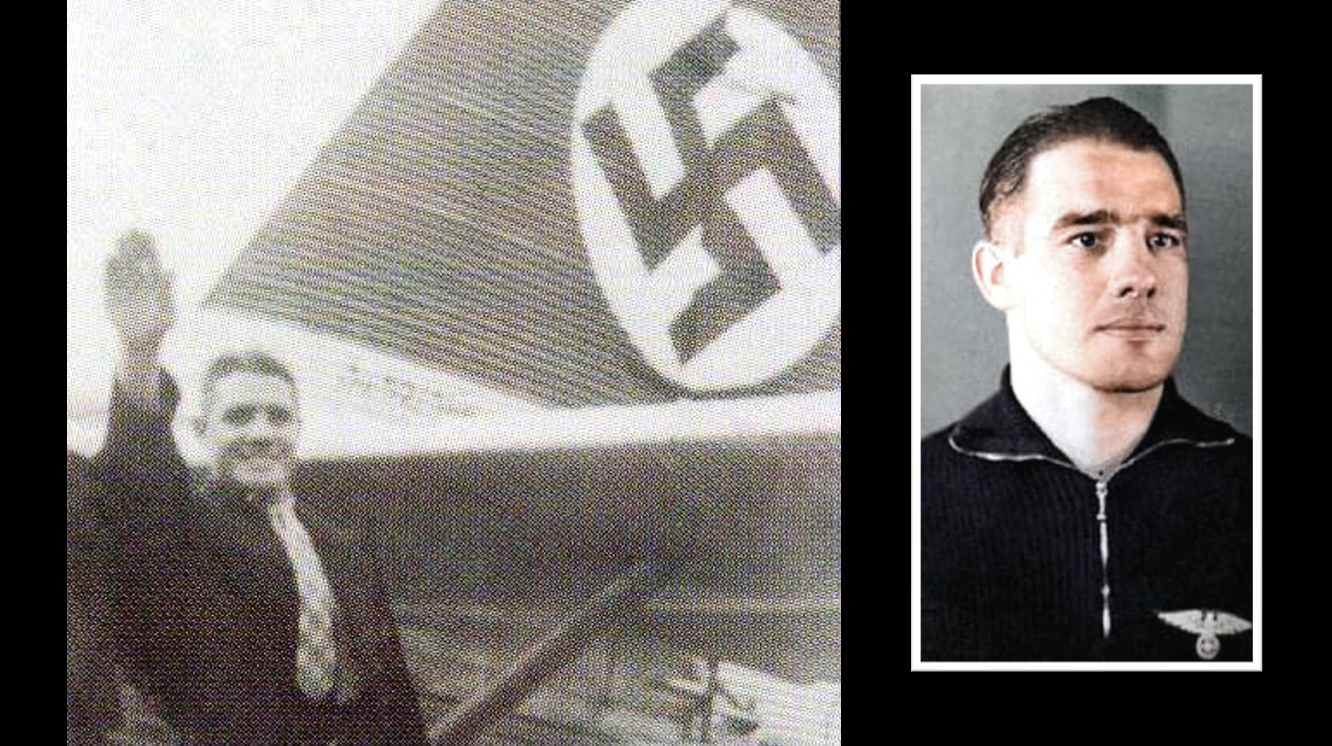
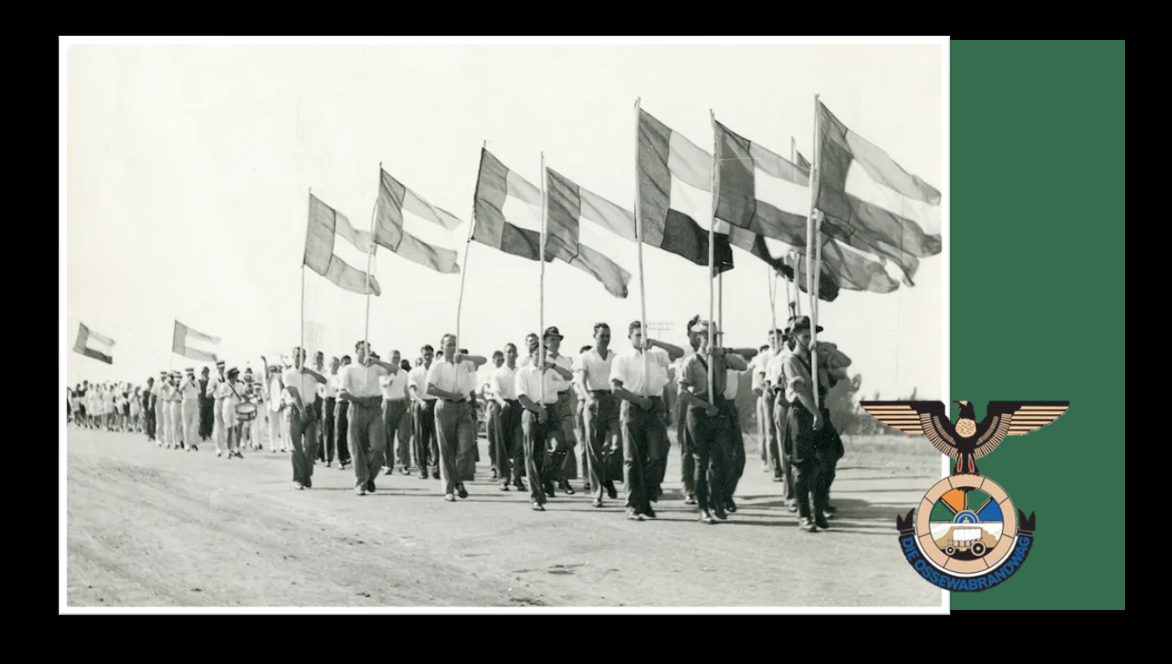

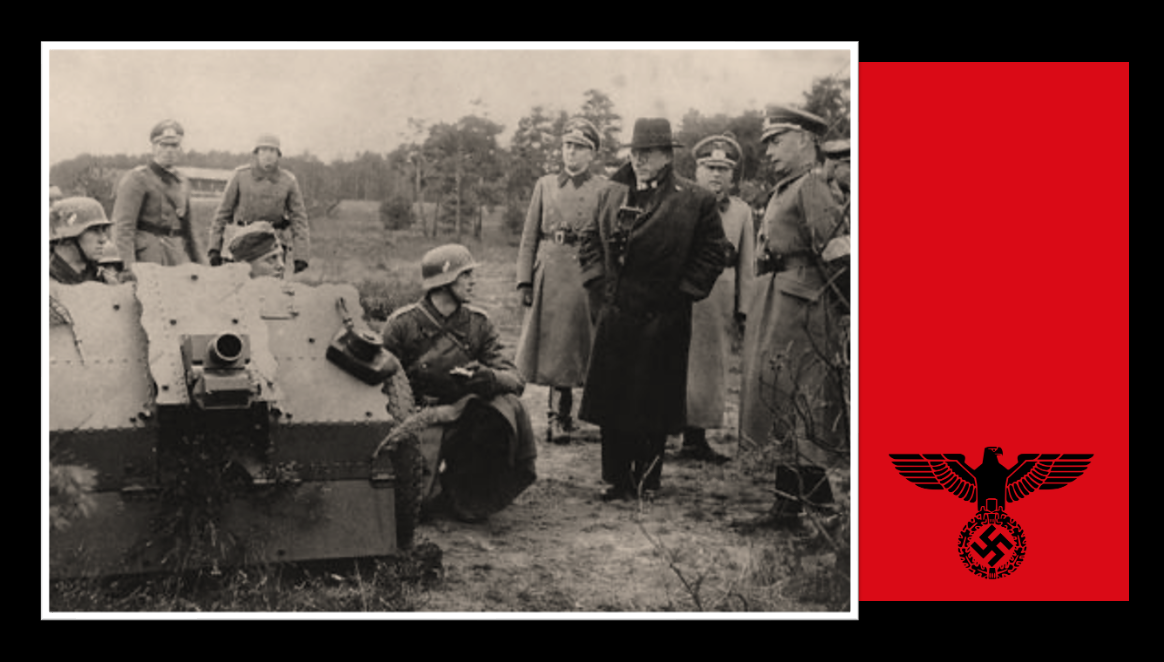
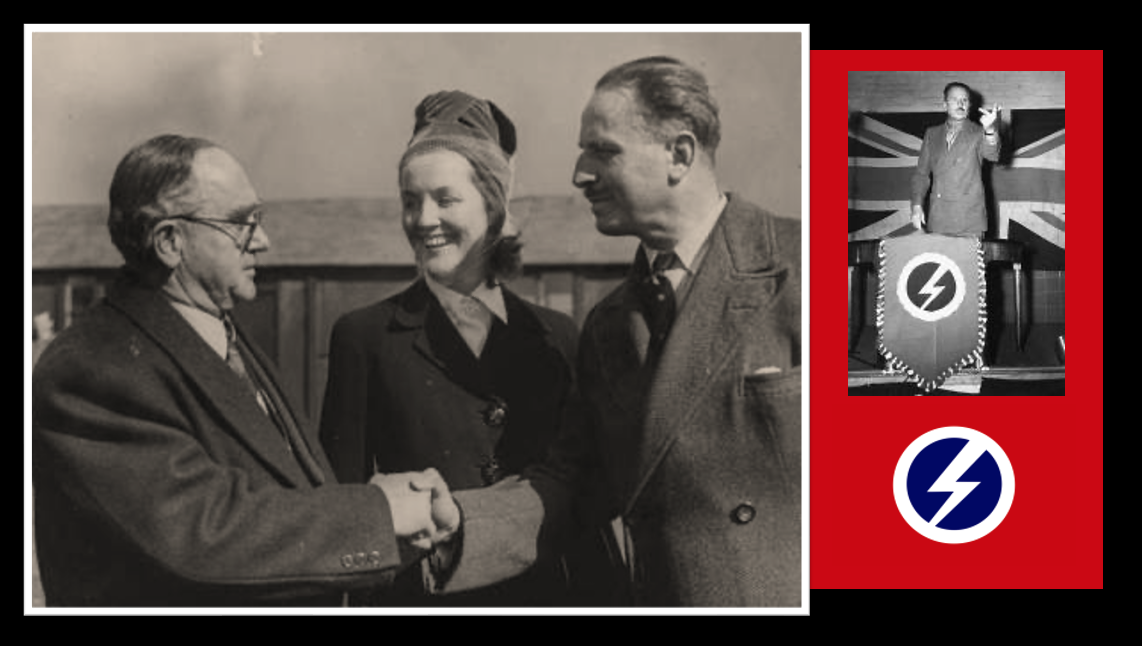
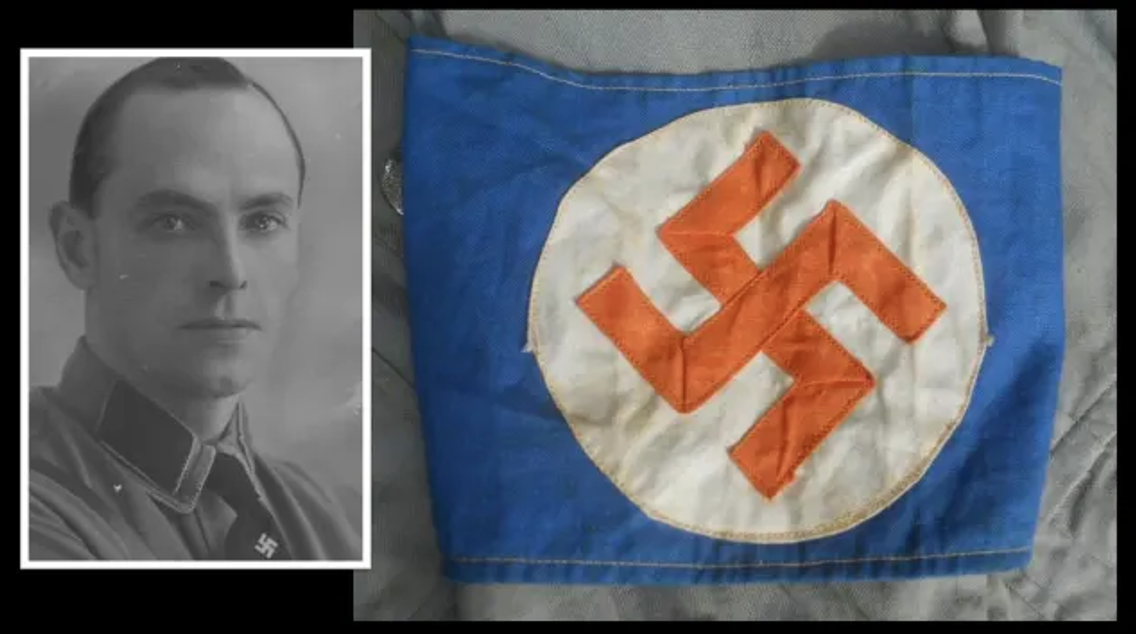


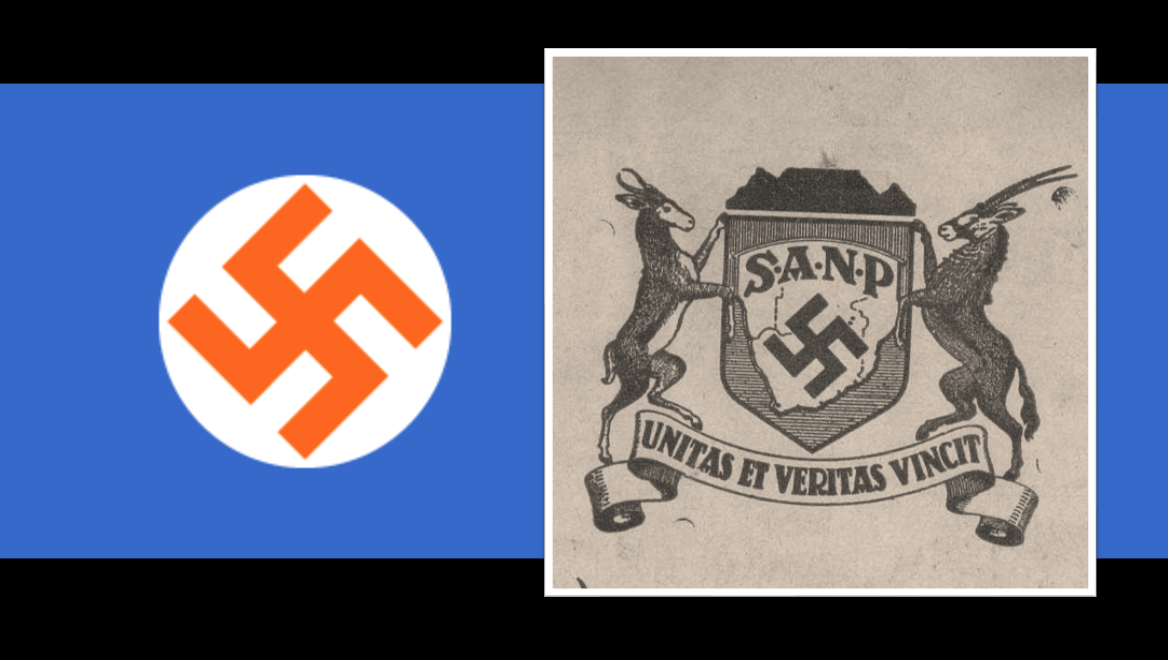
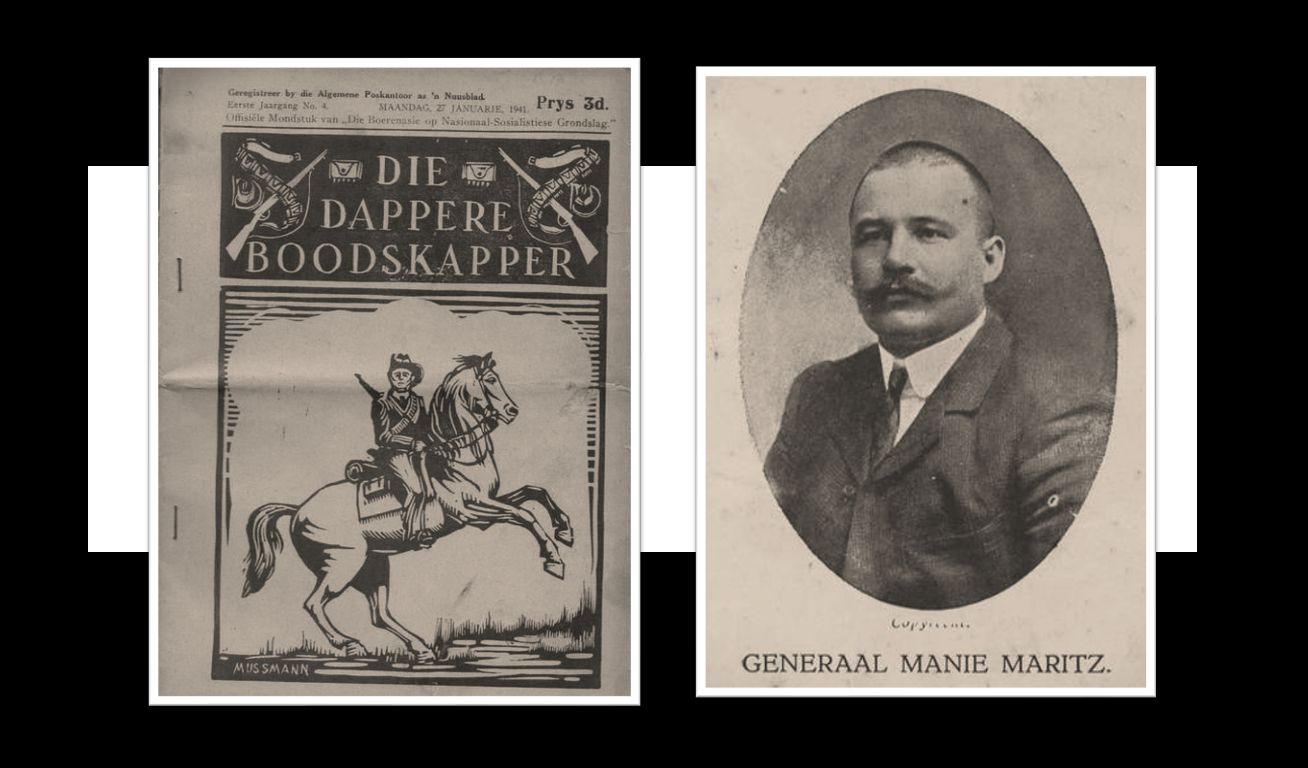
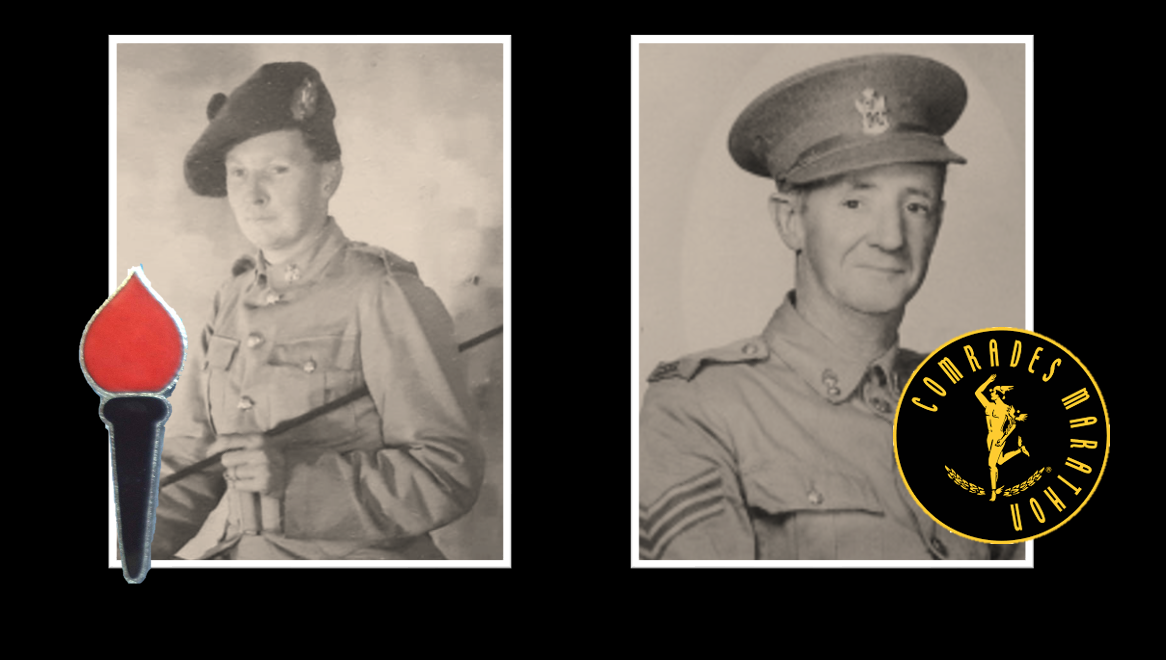
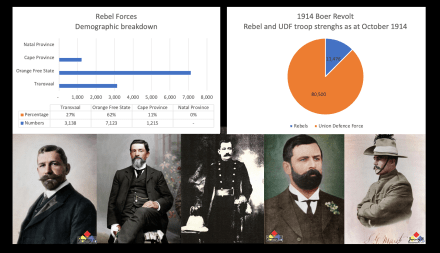

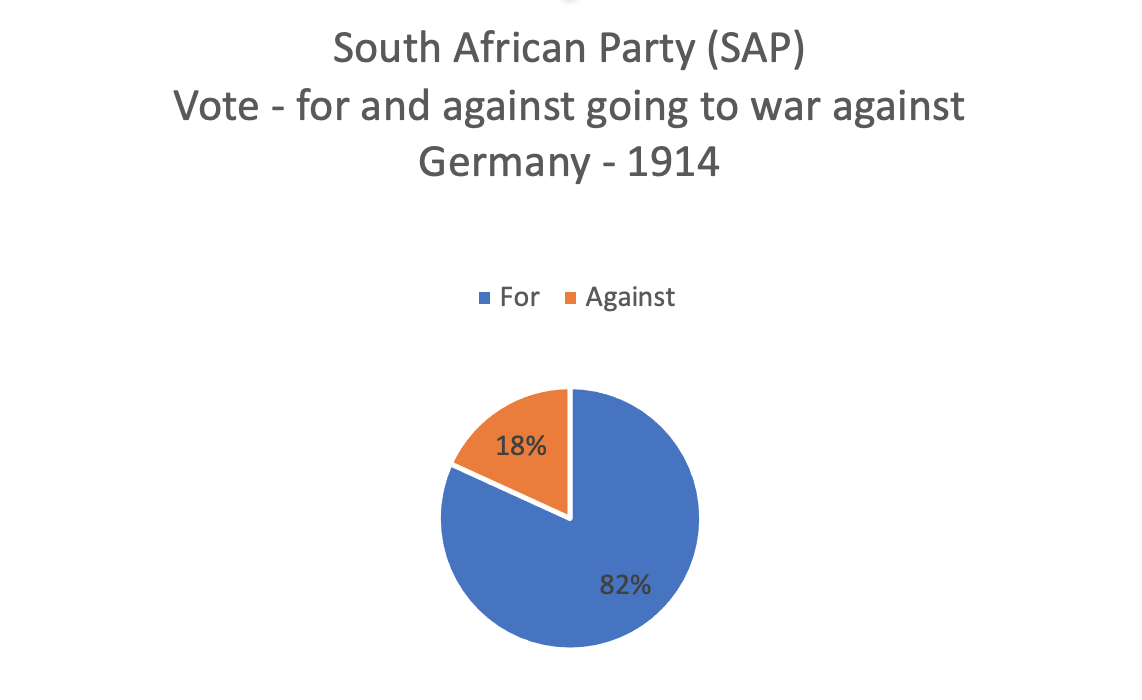
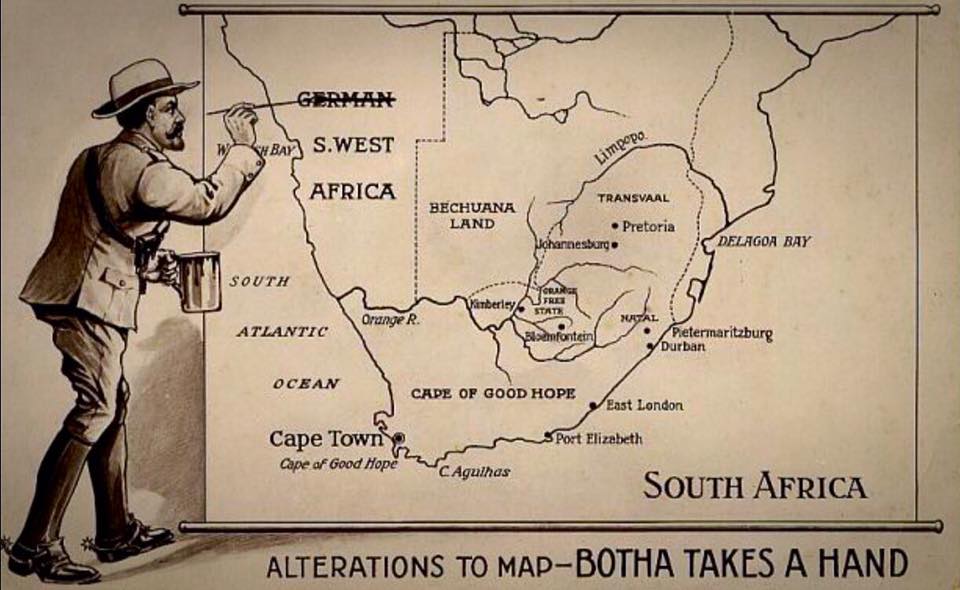
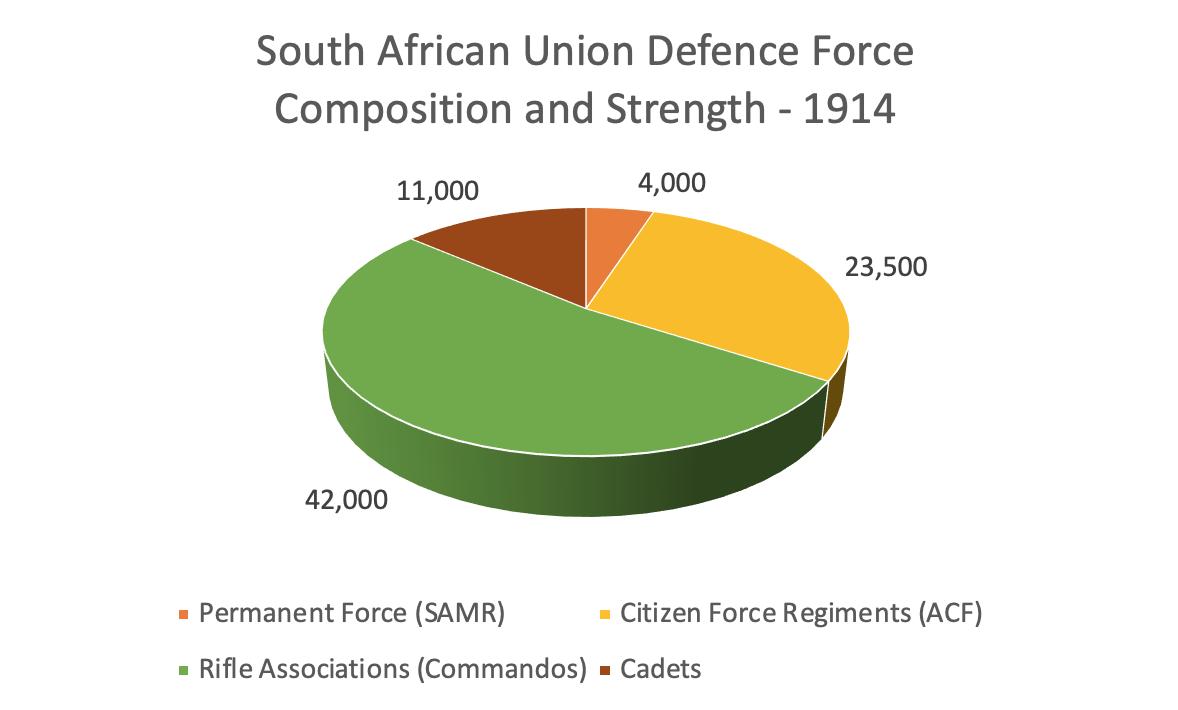
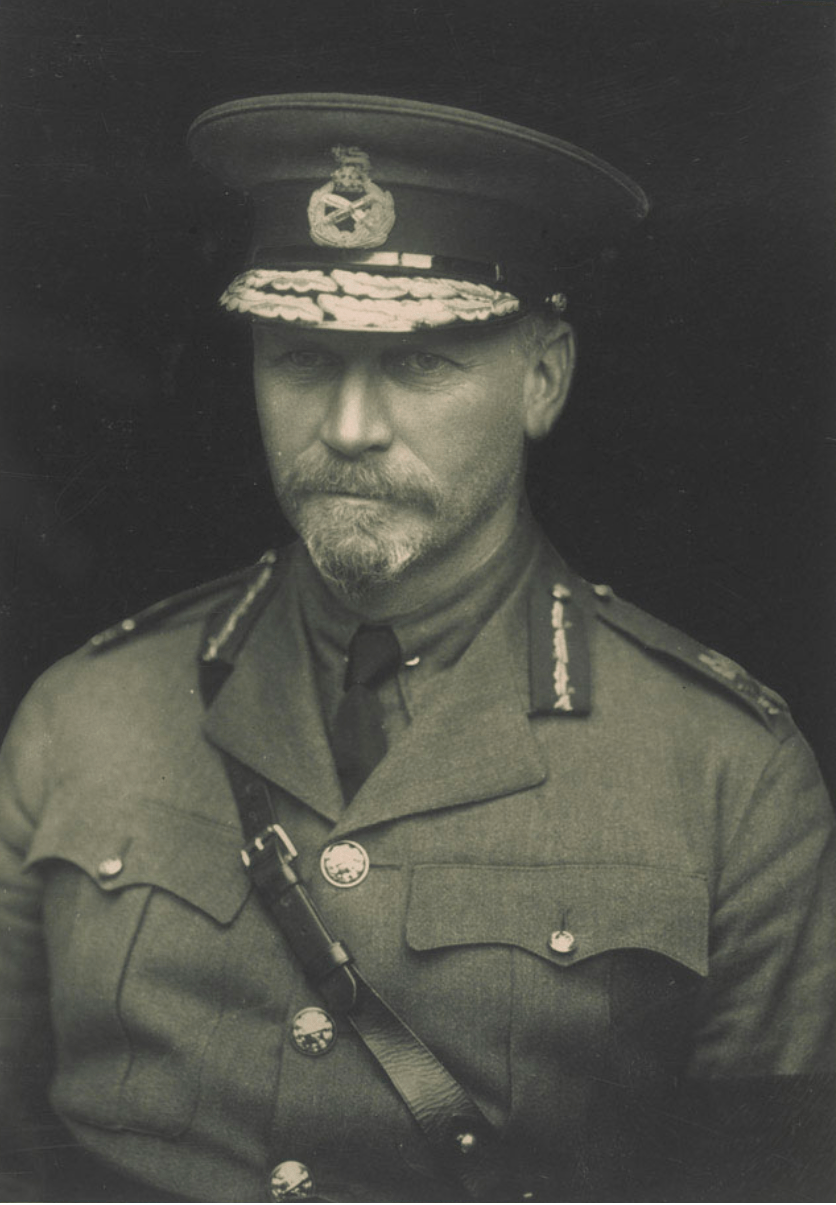
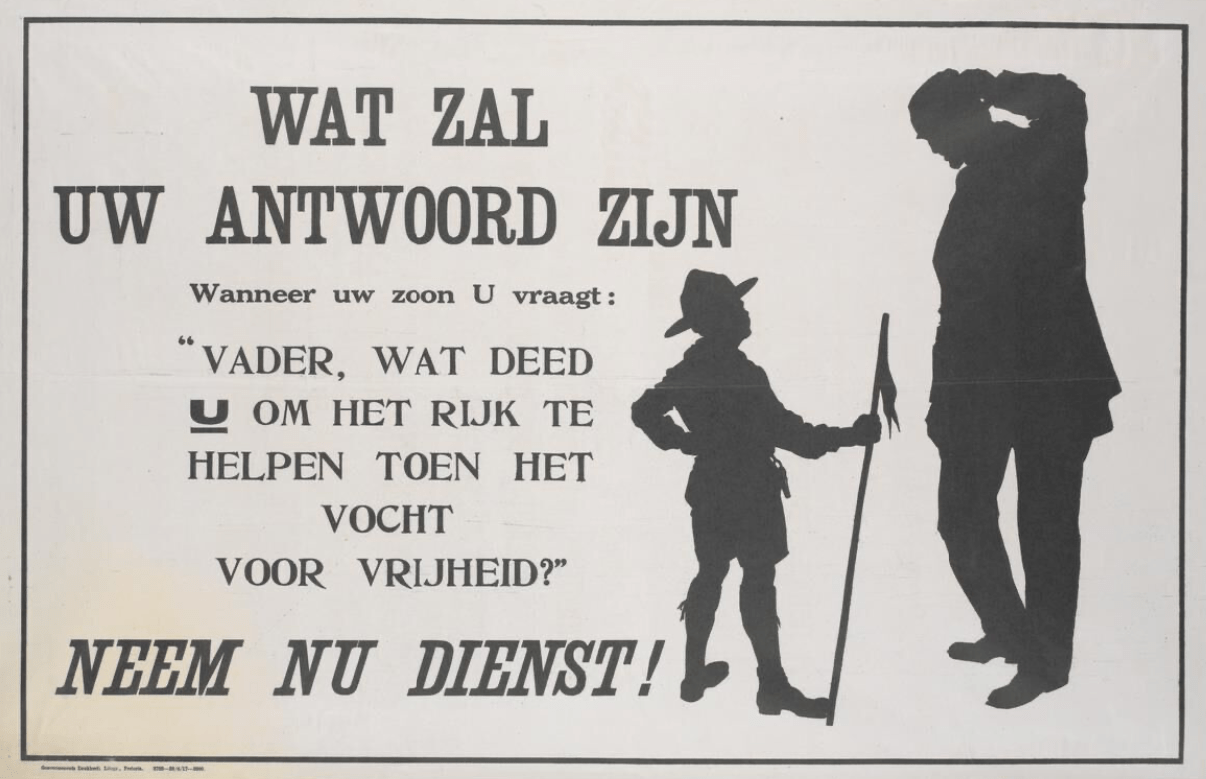
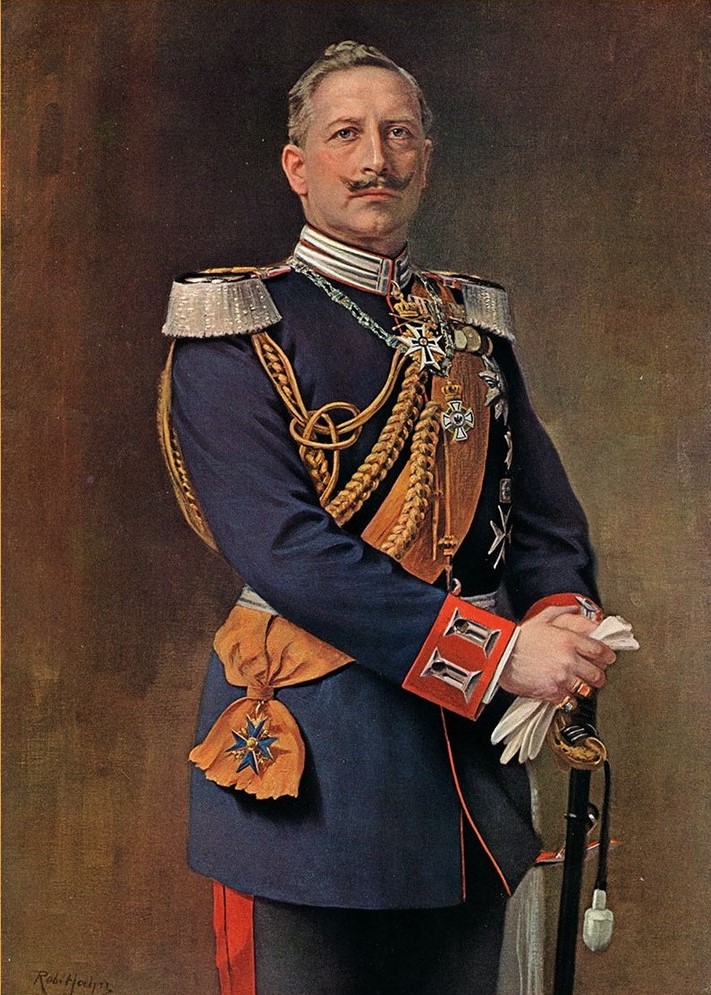
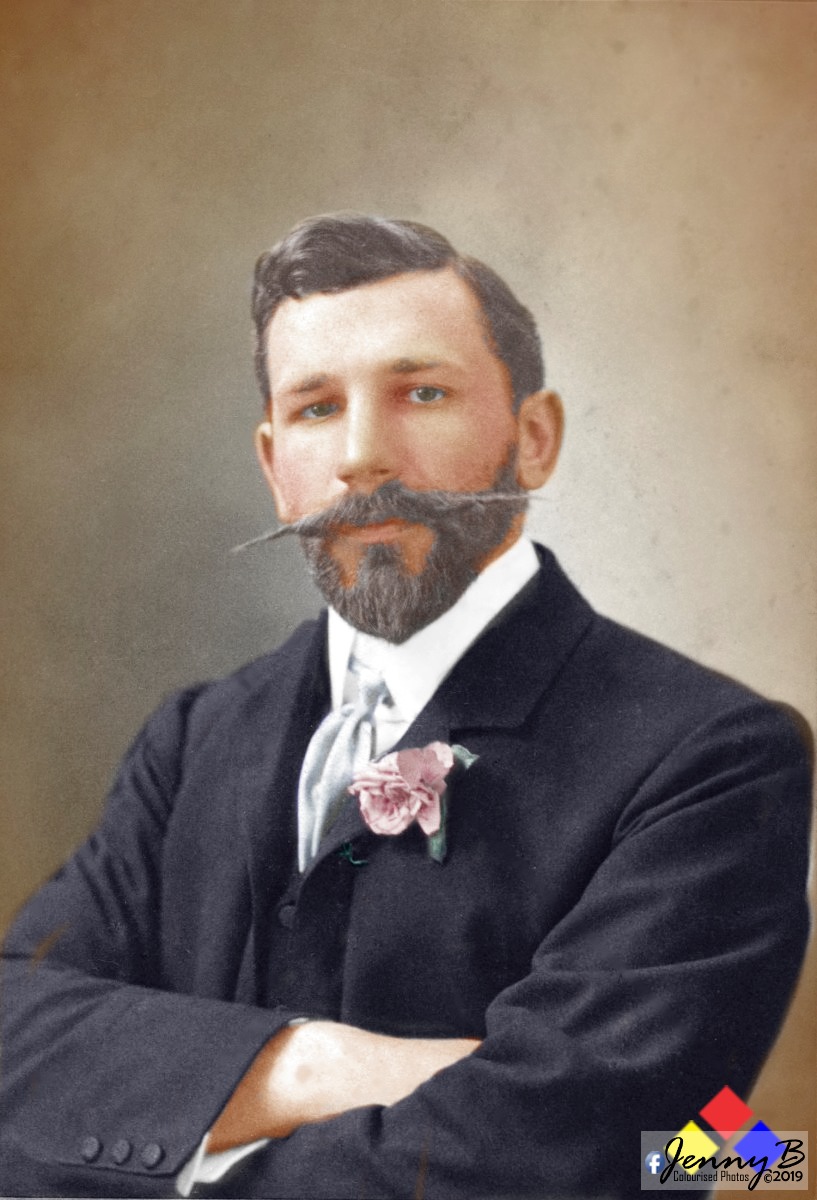
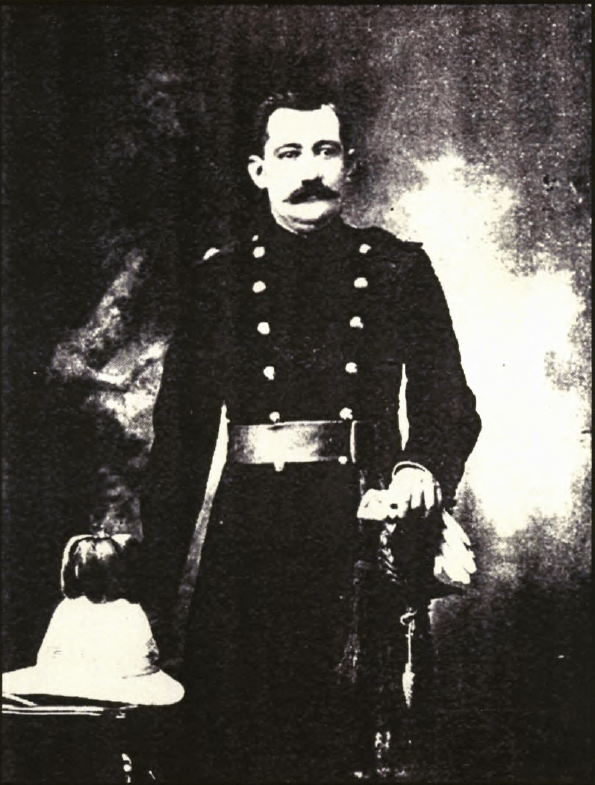

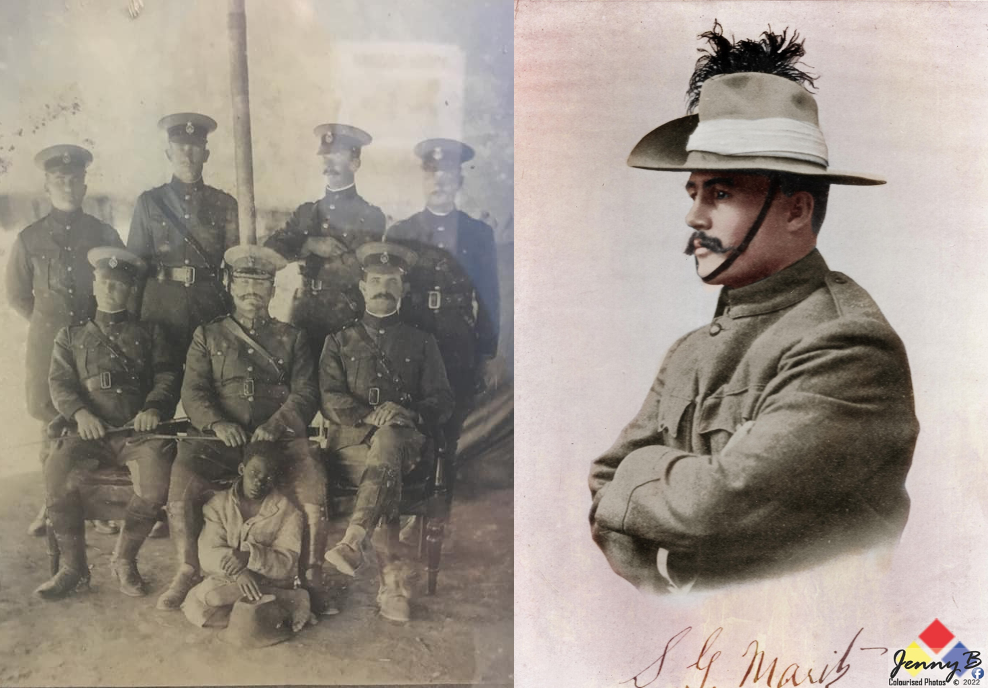
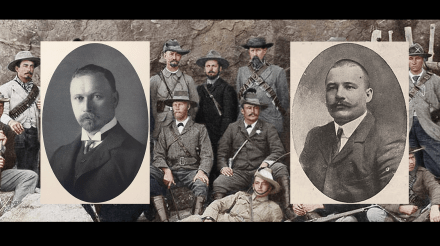
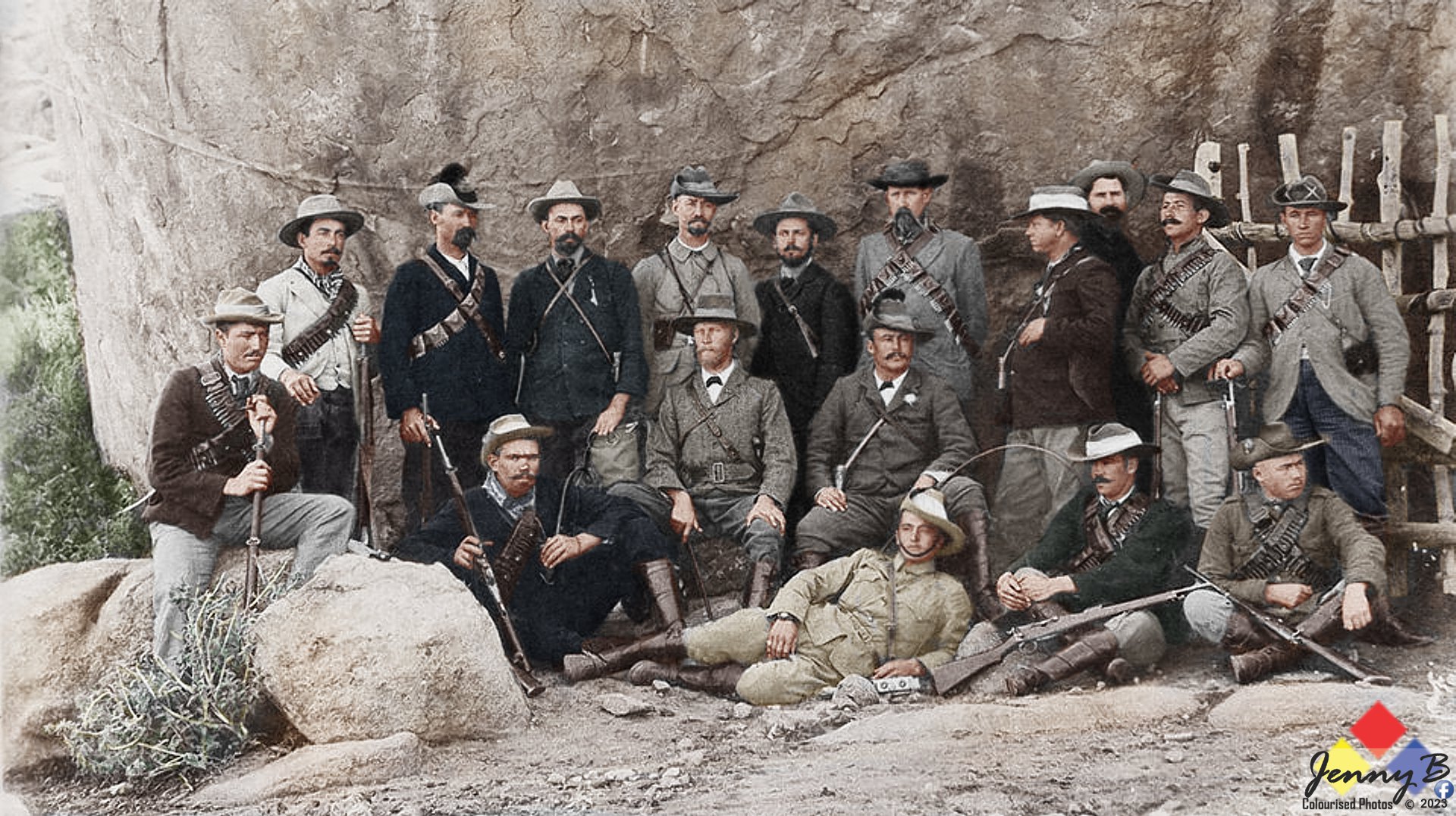
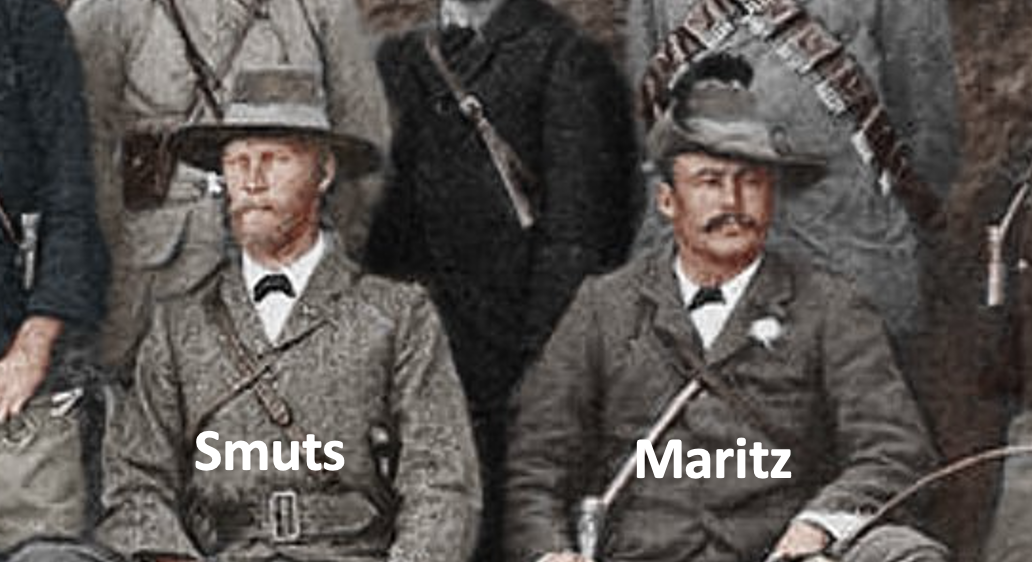




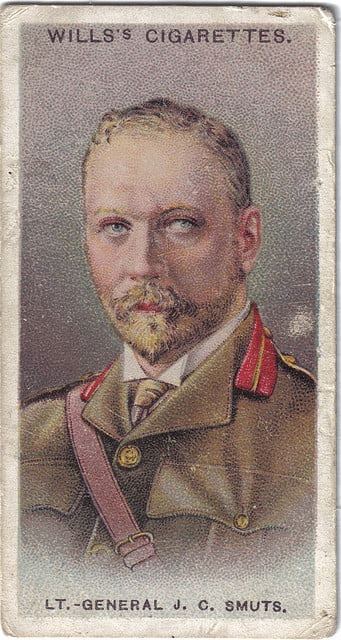
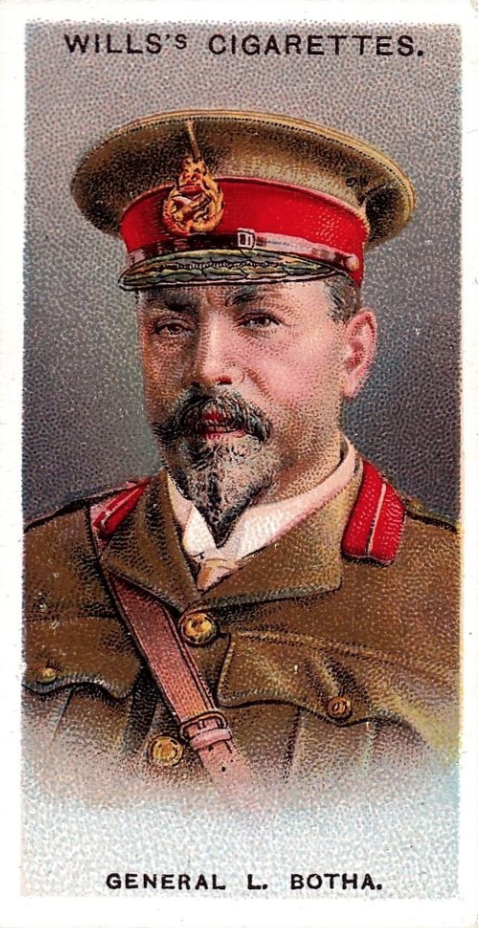

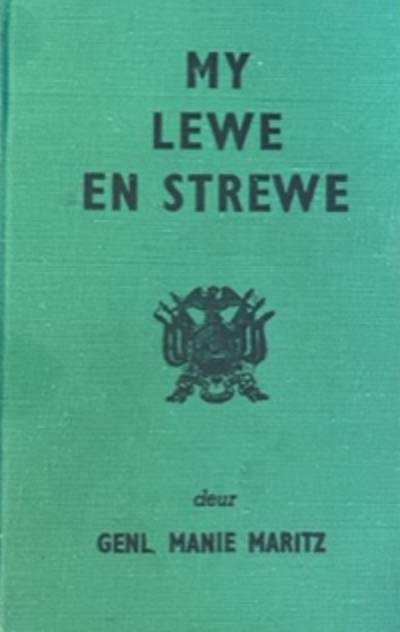
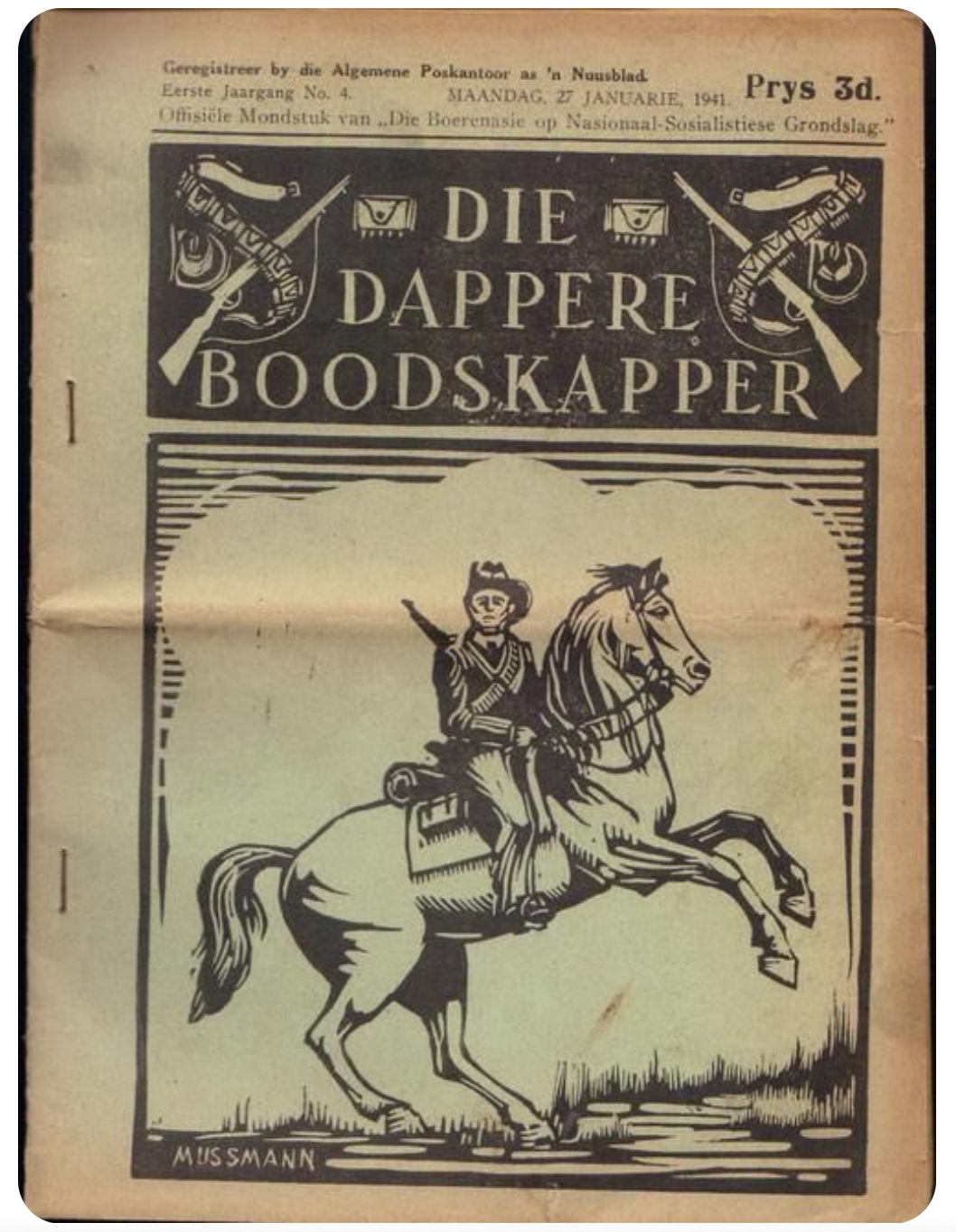
 The Observation Post