Vlamgat ….

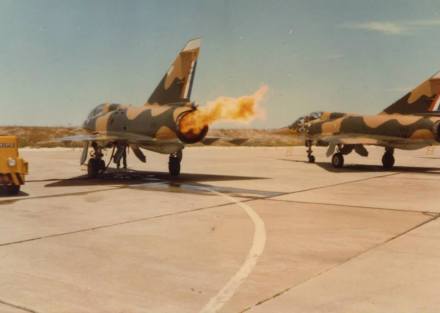
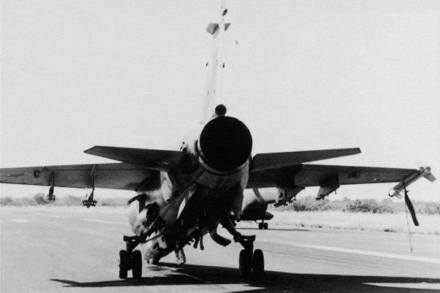
Vlamgat – the term the South African Air Force personnel affectionally called their Mirage fighter jets. Vlamgat means ‘flaming arse’ in direct translation – and for good reason.

Here two Mirage III D2Zs, numbers 843 and 849 at the weapons camp in Langebaan in 1985 – one of which is having a ‘wet start’ – where excess fuel in the combustion chamber and tail pipe is burnt off in a phenomenon called ‘torching’ .. a flaming arse indeed.

Photo copyright, thanks and courtesy to Allan Southern

Glossary of South African Military Terms

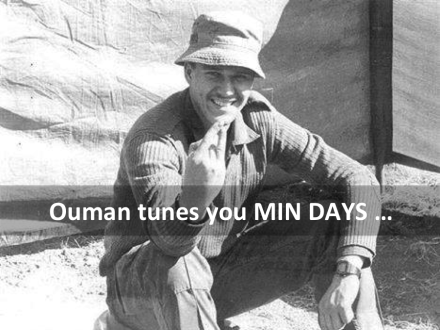
This is for the benefit of those not always understanding the language of a South African military veteran.  This is a glossary of South African military terms compiled by Peter Dickens, David Kiley, Norman Sander and other veterans in The South African Legion, it is by no means definitive of all the terms used, quite a lot can be happily added and please feel free to notify me of any omissions.

Please note this list contains words that can be judged as offensive and objectionable – however as a historic document to capture the slang and terminology it needs to be as objective as possible.

SOUTH AFRICAN DEFENCE FORCE TERMINOLOGY AND SLANG

A)
Aapjas – A long, hooded coat usually with a fake fur lining ( post 1983 issue version ).
Aapkas (1) – metal platform / cage , sited on a radio mast in SWA / Angola ops bases; used as a lookout post / fire director station for base defence mortars.
Aap Kas (2) – also know as the jump simulation cable rig at 44 Para
Aangekla/kla-ed aan – Put on a charge.
AB – Navy.Able Seaman (Lance Corporal)
Adjudant – ( 1 ) commissioned officer appointed as executive officer to unit OC / 2IC .
Adjudant – ( 2 ) abridged Afrikaans form of address for rank of Warrant Officer ( SA Police).

Continue reading

Dress and Bearing of the South African Native Military Corps

Another rare and wonderful original colour photo. During WW2, Great Britain used the Commonwealth to train pilots from all over the world, under a scheme called the Commonwealth Joint Training Plan, a key part of this plan included Waterkloof in Pretoria.

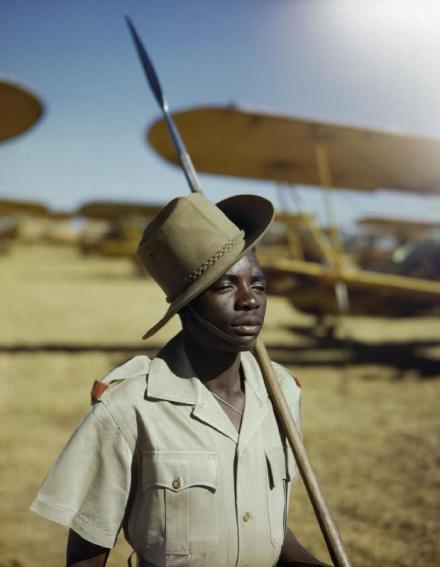
Here a South African soldier from the ‘Native Military Corps’ (NMC) is seen on guard duty at No. 23 Air School at Waterkloof, Pretoria, South Africa, January 1943. The NMC where attached to the South African Army and the South African Air Force in ‘non-combat’ roles.

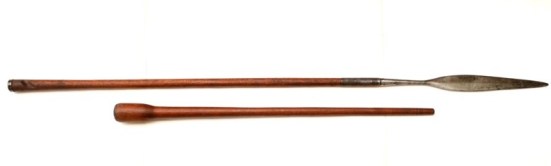
Conventions of time excluded “Black” soldiers from been armed with firearms,  however “traditional” weapons (spears and assagais) where settled on as a compromise (see below UDF issued weapons for the NMC).

390301_120229184313__MG_0155

At the time the government was only willing to utilise Black South African manpower in non-combatant roles such as drivers, mechanics, carpenters, chefs, engineers, stretcher bearers including medical aids and general administration roles. Although it was not uncommon in cases of emergencies that the members of the NMC where provided with firearms to defend positions from enemy attacks (especially during the North Africa and Italy campaigns).

Note the slouch hat worn by all Native Military Corps members (also worn by the South African Native Labour Corps in WW1) and the “Red Oath” Volunteer tabs on his epaulettes, worn by all members of the South African Armed Forces who volunteered to take part in WW2 and join the services (from all ethnic and cultural origins).

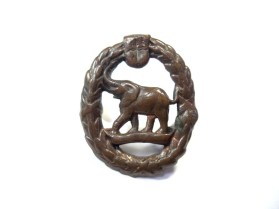
This picture is an excellent example of this corps weapon, uniform, dress and bearing.  The NMC insignia consisted of an African Elephant with the South African coat of arms and encapsulated in a wreath.

269A86C0B4724B0689CF66931FBE0163

As war was declared in 1939 the need for manpower from South Africa increased.  During 1939 at the ANC passed a resolution of Loyalty to the British Commonwealth and Black South African political and traditional leaders expressed their willingness to support Jan Smuts’ declaration of war against Nazi Germany and get behind South Africa’s war efforts, on the condition that they would be able to win concessions and greater political recognition for “Black” South Africans after the war.

The “Native Military Guards” (which went on to become the NMC)  was established in 1940 and had 4 Battalions:

1 st Battalion: amaZulu’s from Zululand now KZN
2nd Battalion: Africans from Northern Transvaal now Mpumalanga & Limpopo
3rd Battalion: amaXhosa from Transkei (Previous Homeland) Eastern Cape
4th Battalion (Witwatersrand Battalion) Were made up of Africans in Urban Areas

Unfortunately a few years after the war, in 1948, the National Party came to power and did not honour any concessions agreed by the ANC with the Smuts government – setting “Black” political representation in South Africa back somewhat and disregarding the fine legacy, sacrifice and history of the NMC and its members.


Image Copyright – Imperial War Museum Collection Copyright.

Precision landing with Rudder and Elevators shot away = SAAF Hero!

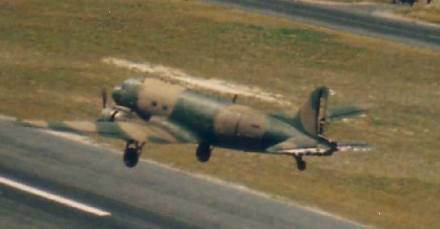
Now there are pilots with skills and then there are a cut above, this pilot is a cut above. On 1 May 1986, a South African Air Force Dakota while on a flight to Ondangwa at about 8000 ft was hit with a soviet SAM-7 shoulder fired surface to air missile. The explosion ripped off most of the Dakota’s tail. To add additional pressure to the crew, the Dakota was full of military VIP passengers including the Chief of the Army.

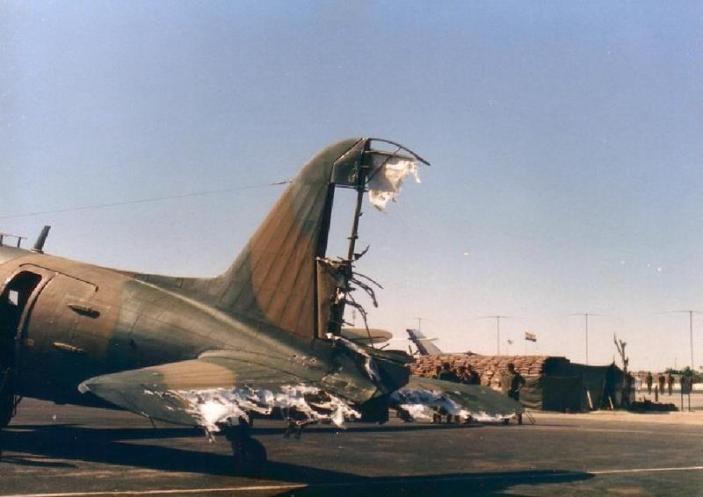
Captain Colin Green slowed the Dakota down to 100 knots in order to keep it under control and put in a mayday call. There was a SAAF helicopter in the area which formatted on him and relayed the damage to him. The helicopter crew also took this amazing picture showing the landing.

1383731_216630021840071_1160172803_n

To note from this picture is that the Dakota has lost all of it’s rudder and both sections of the elevator. This is an unrecoverable situation in most aircraft types and also a situation most pilots cannot recover the aircraft from in any event.

To compensate on the loss of stability Captain Green ordered the passengers around the aircraft to regulate the centre of gravity before going into land. Using flaps and throttle power to control the pitch (up and down) and thus control his decent rate and air speed, he landed it onto the tarmac, ‘greasing’ the centre line in a perfect landing.

Captain Colin Green was later awarded The Chief of the SADF Commendation for his exceptional flying skills.

13124557_1766085276953796_1208176927466124088_n

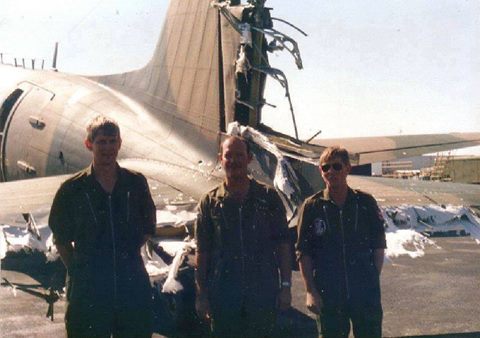
From left to right:
National Serviceman Private Walsh (loadmaster)
Captain Colin Green (aircraft commander)
Lieutenant Mark Moses (co-pilot)

All Heroes.


Written and researched by Peter Dickens.  Images available on Internet, origin unknown .

The forgotten war … South African “mud movers” in Korea

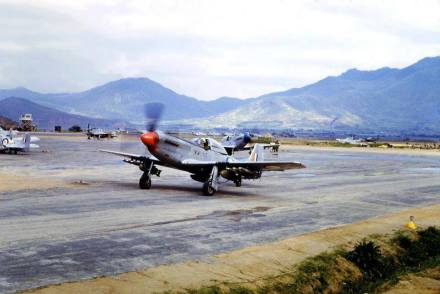
To many South African participation in the Korean War is unknown, but as part of United Nation contributions to the war effort South Africa sent a squadron to South Korea to fight in the Korean War. Here are South African Air Force F51D Mustangs in Korea circa 1951.

The focus of the photograph shows a SAAF 2 Squadron machine which is seen here on its way to the main runway at K10, Chinhae Airbase in South Korea during the war.  Fully armed this SAAF F51D Mustang is setting off on what is properly a ground support role in close support of American troops.  Bombing enemy defensive positions in close support of ground troops is often sarcastically referred to as “mud moving” and highly dangerous as the aircraft has to get right into the battle at very low altitude and speed (the high attrition of South African pilots lost in this role during the war is testimony to that).

Its rare to see such a quality original colour photograph of South Africa’s involvement in the Korean War and much thanks to Ian Pretorius whose shared this magnificent image from his father’s personal collection, then Lt M S (Mike) Pretorius.

Much can be said of South Africa’s involvement in the Korean War and more is to follow on this blog.  For the time being enjoy this great photograph.

Photo copyright Ian Pretorius

The origin of SAAF 1 Squadron’s nickname – “Billy Boys”

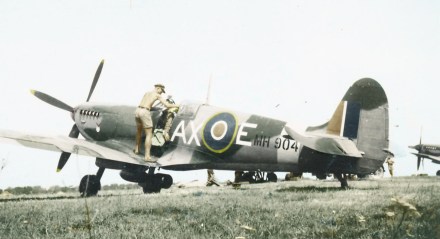
Spitfire Mk IX of South African Air Force’s 1 Squadron preparing for take-off from a Sicilian airfield, perhaps Pachino on 1943, these are the famous “Billy Boys”.  How they got their nickname is actually quite interesting and distinctively South African.

This squadron had an incredible success rate and whenever one of it’s pilots had an aerial victory shooting down an enemy aircraft his fellow South African pilots would all shout “Jou BIELIE” down their radios.

The term “bielie” is an Afrikaans term for a prime example e.g. ‘n bielie van ‘n bul, meaning a prime example of a bull. Calling someone “‘n bielie” is a term of recognition of something special. Calling a pilot that after a successful aerial shoot down would have been equal to saying that he is a prime example of a fighter pilot. “Jou bielie van ‘n skut” meaning “you cracking shot”.

The British Royal Air Force pilots who where on the same frequency as the South Africans where slightly perplexed by the term thinking they where calling out “Billy” instead of “Bielie”, so they quickly started to refer to the SAAF 1 Squadron pilots as “Billy Boys”. The nickname stuck.

To give an idea of the success rate 1 SAAF Squadron total for the war was 165.5 kills, the highest scoring SAAF squadron.

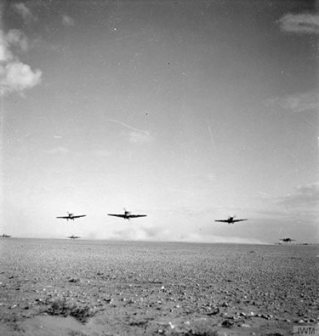
Here are South African Air Force 1 Squadron Hurricanes taking off from Msus, Libya. Image copyright Imperial War Museum.

10649706_376892759147129_7713225561556526636_n

Feature image of SAAF 1 Squadron Spitfire Mk IX colourised and copyright to Tinus Le Roux

“War is 99% boredom and 1% sheer terror”

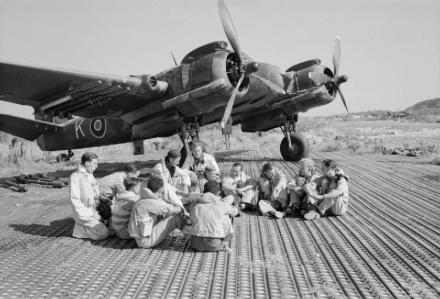
There is an old saying: “War is 99% boredom and 1% sheer terror” and here we see exactly that – aircrews sitting around waiting for instructions, once up in the air, literally in an hour or two they will be in full combat with all the stressors involved in it for only a quarter of an hour or so.

Here aircrews of No. 16 Squadron South African Air Force  and No. 227 Squadron Royal Air Force sitting in a dispersal at Biferno, Italy, prior to taking off to attack a German headquarters building in Dubrovnik, Yugoslavia. A Bristol Beaufighter Mark X, armed with rocket projectiles stands behind them. 14 August 1944.

The Bristol Beaufighter (often referred to simply as the “Beau”) is a multi-role aircraft developed during the Second World War by Bristol Aeroplane Company in the UK. It was originally conceived as a heavy fighter variant of the Bristol Beaufort bomber. The Beaufighter was a versatile aircraft used in service initially as a night fighter, and later mainly in the maritime strike and ground attack roles; it also replaced the earlier Beaufort as a torpedo bomber.  This tough and versatile fighter bomber served in almost all the major Allied forces of the war: Britain, The United States, Canada, Australia, New Zealand and South Africa.

Image and caption copyright Imperial War Museum Collection, additional references Wikipedia.

‘Orange’ is the new ‘Red’

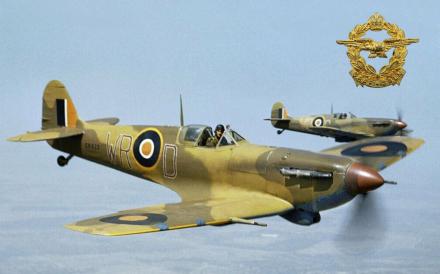
Original colour images of South African Air Force (SAAF) in Gabes in Tunisia April 1943.  Here we see a SAAF Supermarine Spitfire pilot of ER622, No 40 Squadron, SAAF as he confers with his ‘No 2’ after landing at Gabes.  This original colour image  shows off a key identifier that only the South African Air Force squadrons used in the Allied theatre of combat …. ‘Orange’.
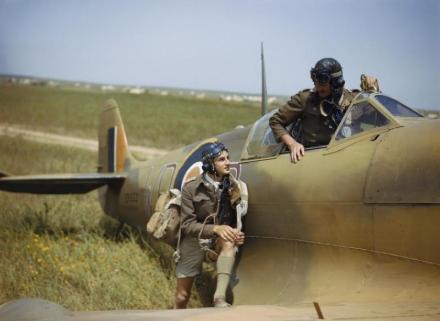
208982_144336619069412_266276853_n

Note the distinctive ‘orange’ dot in the rondel identifier of the South African Spitfires, of all the commonwealth and British aircraft used in the north African campaign, the South Africans where the only ones to have the rondel in the colours of the ‘old’ national flag i.e. Orange, White and Blue on all their aircraft.

All others, British, Australian, New Zealand and Canadian air forces used a red centre in their roundel identifiers to signify the Union Jack (Flag) of Great Britain i.e Red, White and Blue, as seen in this original colour image below.
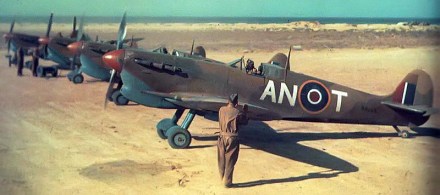
Spitfires

Allied Spitfires in Royal Air Force colour scheme, note the Red, White and Blue identifiers

Also note the officers in first photograph are wearing army rank insignia (not air force), another distinctive attribute specific to South Africa at the time.  To compare the difference in aircraft identifiers, here is the SAAF scheme, as shown by these SAAF 40 Squadron Spitfires in desert scheme.
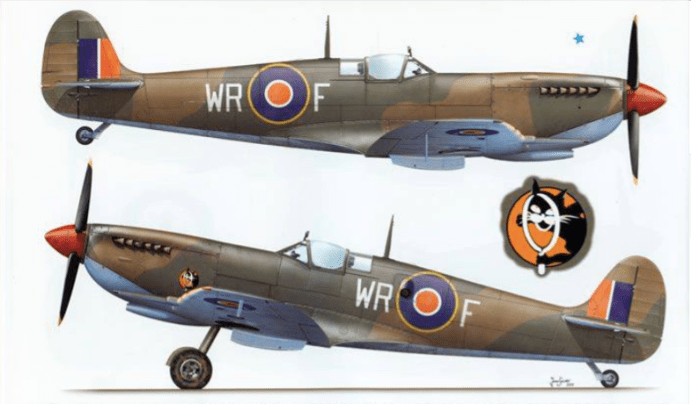
Screen Shot 2016-03-10 at 11.38.51

This distinctive difference in SAAF identifiers to RAF and other commonwealth county’s identifiers was given the SAAF because of Jan Smuts’ influence in forming both the Royal Air Force as the first independent air force and the South African Air Force as the second oldest independent air force.  Also, the SAAF had identified a separate scheme as they were not a ‘Royal’ Air Force – as the RAAF (Royal Australian AF), RNZAF (Royal New Zealand AF) and RCAF (Royal Canadian AF) were.

Squadrons made up of pilots from Allied countries under occupation also flew in the British markings, the difference was a small national identifier usually found on their cowlings, the Dutch 322 Squadron for example used a small Orange triangle and the Poles used a small Red and White square.

A little history of the SAAF Spitfires featured 

As the 8th Army advanced through Libya into Tunisia, SAAF No. 40 squadron flew Tactical Reconnaissance (Tac.R) and Photo Reconnaissance sorties in support of ground operations.

SAAF 40 Squadron converted to the Supermarine Spitfire Vb at the end of February 1943. This variant had clipped wingtips to enhance its low-altitude performance, most notably its roll-speed. Sorties now included vertical and oblique photography, battle area Tac.R, target marking for fighter bombers, searches for night bomber targets, and identification of landmarks for day bomber navigation.

In early 1943 the squadron received Artillery Reconnaissance  training, however, unreliable radios meant that artillery shoots were not as successful as had been hoped. Nevertheless, the squadron continued to report the activities of enemy artillery.

Related work and links

Smuts and the Royal Air Force; The Royal Air Force’s 100th Birthday and its founder – Jan Smuts

Smuts and the Royal Air Force; Centenary of the ‘Smuts Report’, the instrument which gave birth to the Royal Air Force


Researched by Peter Dickens. Image copyright IWM Collection.  Reference Wikipedia

Recovering an irreplaceable aircraft – Capt. I.C. du Plessis HC

7 June 1980. The South African Air Force Mirage F1AZ 237 of Captain Isak C. du Plessis on the runway at Ruacana, after making an emergency landing when he sustained substantial battle damage.

His SAAF Mirage was part of a 16 ship F1AZ force attacking a SWAPO base near Lubango in Angola, it was damaged by two SA-3 ground to air missiles. Losing hydraulic pressure, the use of the nozzle flaps and the navigation computer he radioed for aid.

Whilst Capt. du Plessis struggled to keep the Mirage airborne, Captain “Budgie” Burgers flying a Impala as Telstar radio relay for the mission realised that the aircraft would not make it back to its base at AFB Ondangwa.  He used his considerable navigation experience in the operational area to redirect Capt. du Plessis, using bearings, to AFB Ruacana – a closer forward air base.

Capt. du Plessis managed to land the stricken aircraft at the Ruacana forward airstrip located in South West Africa (now Namibia) without the use of the nose-wheel whilst performing a flapless landing.

Capt. I.C. du Plessis awarded an Honoris Crux – 2nd type for bravery in the recovery of an irreplaceable stricken aircraft and airmanship.

“Pongos” dare to be buzzed by the SAAF’s best!

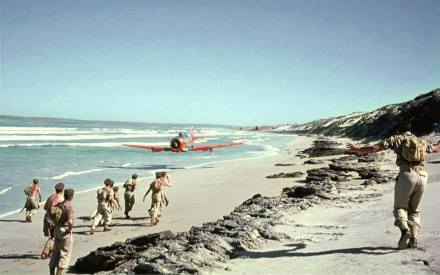
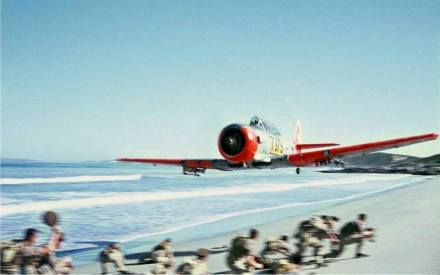
This extremely low flying South African Air Force Harvard was flown as a ‘dare’ to the pilot by the South African ‘pongo’ (army) personnel about to be buzzed.  ‘Pongo’ is a derogatory term used by other arms of the forces, such as the Navy or the Air Force to describe the Army – comes from the British army tradition of saying .. “where the pong (smell) goes – the army goes”.

The pilot of the Harvard is Quentin Mouton, who is currently Chief Pilot of Mango Airlines in South Africa. He said the following about these pictures taken on 2nd October 1964 on a South African aviation forum:

“We were 590 hr pilots at the time and the whole thing was illegal, stupid and needless to say, dangerous. The low flying limit was 200ft (or above, not below).

I would have been court-martialled if the SAAF knew. Too late now.. These pictures were taken 2nd October 64. I was the pilot. The pictures are original and not ‘touched up’.

The ‘Pongos’ were on a route march from Langebaan by the sea to Saldanha.

The previous night in the pub one of them had said: “Julle dink julle kan laag vlieg maar julle sal my nooit laat lê nie” (“You think you can fly low, but you’ll never make me lie down”). Hullo!!!

I went to look for them on the beach in the morning and was alone for the one picture. I was pulling up to avoid them. In the afternoon I had a formation with me and you can see the other aircraft behind me. (piloted by van Zyl, Kempen and Perold)

A friend by the name of Leon Schnetler (one of the pongos) took the pics.

The guy that said “Jy sal my nie laat lê nie” (“You won’t make me lie down”) said afterwards that he was saying to himself as I approached: “Ek sal nie lê nie, ek sal nie lê nie” (“I won’t lie down, I won’t lie down”) and when I had passed he found himself flat on the ground”

This subsequent photograph shows the “Pongos” hitting the deck and just how low that Harvard is.  Certainly not something that would be approved of today, but it does demonstrate the exemplary flying ability and training of SAAF pilots.

1509915_237922069710866_1366684550_n

Memories from the past.

Quentin Mouton – 23,000 hrs, everything up to B747-400, presently Chief pilot MANGO Airlines and still actively flying the B737-800.