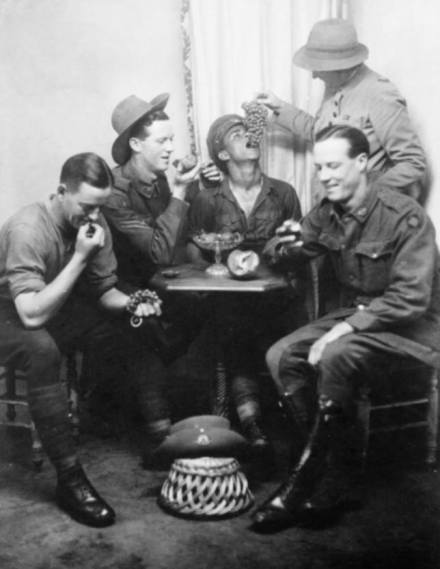
Few (if any) World War One images are available which show the unique bond shared by South African and Australian/New Zealand troops, celebrating our common camaraderie during the World War but this in one – Paris, France. September 1918. A group of Anzac “Diggers” and South African “Springboks” enjoying eating fresh fruit.
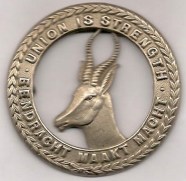
The South African soldiers where known universally as “Springboks” because of their cap badges which featured a Springbok and the motto “Union is Strength” and in Dutch “Eendracht Maakt Macht”.
The motto was that of the newly formed Union of South Africa and referred to the strength that can be obtained by combining the Boer Republics (Transvaal and Orange Free State) with the two British Colonies (Cape and Natal) – it also signified the Union of Afrikaans and English speaking South Africans in a common South African identity. The nickname “Springboks” stayed with South African servicemen and women throughout the First and Second World Wars.
This tradition was however gradually discouraged when the SADF was formed in the 1950’s and the affectionate name for South African soldiers was changed to “Troopies” (Afrikaans for Trooper) instead – the prevailing Afrikaner Nationalist politics of the day wanted to downplay South African service to the British crown in WW1 and WW2 due to prevailing anger felt by nationalists over harsh British tactics used during the Boer War.
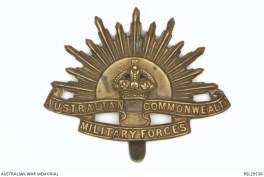
Funnily, the Australian soldiers (called “Diggers”), using typical army humour, dubbed the South African cap badge – “Goat in a Porthole”. The Australian nickname – “Diggers” also comes from the First World War and stems from their reputation of digging trenches – General William Birdwood, the commander of the ANZAC Corps adding in postscript: “You have got through the difficult business, now you have only to dig, dig, dig, until you are safe” – and the nickname stuck.
“Digger” remains the nickname of an Australian and New Zealand (ANZAC) soldier to this day and Australians have adopted it as part of their national value system to mean “mateship” and “pride”.
However due to more political changes in South Africa, the erosion of the nickname in the SADF was one thing – the use of the “Springbok” in sport and other institutions was quite another and many South Africans came to associate it to Apartheid.
For this reason it’s very unlikely that modern South African soldiers will carry the nickname ever again – which is quite sad when you really think about it – as it was never intended to turn out that way and we’ve lost a nugget of heritage forged in camaraderie and war.
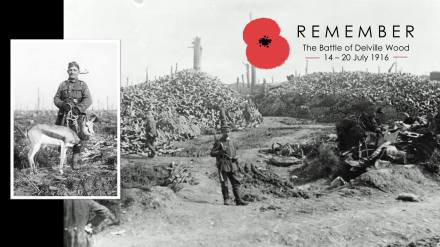
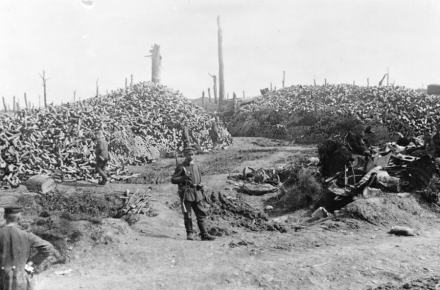
With the commemorations of the Battle of the Somme offensive and the Battle of Delville Wood coming around every year, we remind ourselves once again of the hell endured by the South Africans fighting in the wood, known at the time as “Springboks” – and nothing says it more than seeing the mountainous piles of artillery shells fired at them. In all during the battle 400 shells per minute were being fired into the South African positions no more than a square mile in size – and that went on day after day, hour after hour, minute after minute 400 explosions at a time – now imagine that sort of ‘hellfire’ and ‘sheer terror’ for a moment, and you’ll be in the mind of a Springbok soldier at Delville Wood witnessing it in 1916.
This World War 1 feature photo from the Herr Woerner Eugen Collection, shows the German side opposite the South African offensive at Delville Wood, this German soldier is overseeing the shell case dump nearby the wood. That’s just the spent ammunition, so let’s have a look at the South Africans who took the brunt of this intense barrage and how they came to be there.
“Hold it at all costs”
As part of the initial Somme offensive, the British under Major-General Furse of the 9th Division, had to secure the advance on Longueval, but to do this, Delville Wood (a small wood directly next to Longuval) had to be taken first. Major General Furse had no option but to commit his last reserve—the 1st South African Brigade to do it.
The 1st South African Brigade under Brigadier General Henry Lukin was ordered to advance and to capture Delville Wood on the 14th July 1916 and “hold it at all costs”.
The first attack progressed smoothly and by 07:00 the South Africans had secured the southern half of the wood, by 14:40 the whole wood had been secured, with the exception of a strong German position in the north west adjoining Longueval. The South African troops where now spread along the entire perimeter in groups forming strong–points supported by machine–guns.
But, rather than having “secured” the wood, the brigade was now in a trap, occupying a salient with only the south-western base being in contact with the 26th Brigade in Longueval. All troops were equipped with spades but digging within the perimeter of the wood was made difficult by roots and remnants of tree trunks from the previous day’s artillery fire, making the preparation of proper trenches impossible, with the South Africans having to make do with shallow shell-holes and burrows. With unprepared trenches, a narrow base to their salient and facing over 7,000 German troops, holding the wood was going to be extremely difficult!
The Germans launched one of the heaviest artillery bombardments of the war in an effort to dislodge the South Africans in the wood. It has been estimated that at its peak the rate of firing exceeded 500 shells per minute – even at one stage some references say 600 shells per minute were fired at the South African positions. To think this relentless volley of shelling was into a wood no bigger than a square kilometre in size.
The South Africans began to dig in beating off counter attacks as they did so. The roots and remnants of tree trunks made the preparation of proper trenches impossible and the South Africans had to make do with shallow ones.
The bloodiest battle hell of 1916
Of the 121 officers and 3,032 men of the South African Brigade who launched the initial attack in the wood, only 29 officers and 751 men eventually walked out. These men held their objective at a massive cost, even reverting to hand to hand combat to hold the wood – the depth of bravery required to do this under this fire power is simply staggering to contemplate. The losses sustained by the South Africans were one of the greatest sacrifices of the war.
“…Delville Wood had disintegrated into a shattered wasteland of shattered trees, charred and burning stumps, craters thick with mud and blood, and corpses, corpses everywhere. In places they were piled four deep. Worst of all was the lowing of the wounded. It sounded like a cattle ring at the spring fair….”
The battle is of particular importance to South Africa, as it was the first major engagement entered into by the South African 1st Infantry Brigade on the Western Front. The casualties sustained by this Brigade were of catastrophic proportions, comparable to those encountered by Allied battalions on the first day of the Somme. On the Western Front, units were normally considered to be incapable of combat if their casualties had reached 30% and they were withdrawn once this level had been attained. The South African Brigade suffered losses of 80%, yet they managed to hold the Wood as ordered. This feat has been described as “…the bloodiest battle hell of 1916.”
It was this horrific baptism of fire, of South Africans from across ethnic and cultural divides – fighting as one in union and strength, that the newly formed Union of South Africa’s national identity was forged for the years come.
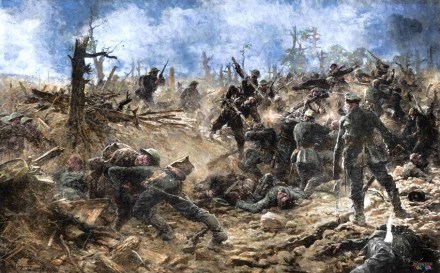
Image copyright: Herr Woerner Eugen Collection – Imperial War Museum, Images of the wood copyright to the Imperial War Museum. Feature Illustration – The Battle of Delville Wood Illustrated London News Lithograph by the Spanish artist – José Simont Guillén (1875-1968). Block images copyright Imperial War Museum.
Lisa Shearin in ‘Bewitched and Betrayed’ said “It’s not treason if you win” and this rings very true to South African traitors from the past and now the present. How history repeating itself in South Africa can be ironic at the best of times, the country’s ethnic diversity will always ensure that one community’s freedom fighter is another community’s terrorist.
This was as true of the Afrikaner Nationalists during the Second World War, as much as it was true to the African Nationalists during the political and armed “struggle” in the more recent past. Both produced ‘traitors’, both had leaders incarcerated, both went on to ultimately govern South Africa and both produced Presidents who were themselves imprisoned as “traitors to the state”. Ironically – both went on to pardon their fellow activists and make heroes of them. The issue of ‘treachery’ set aside by the ‘winner’.
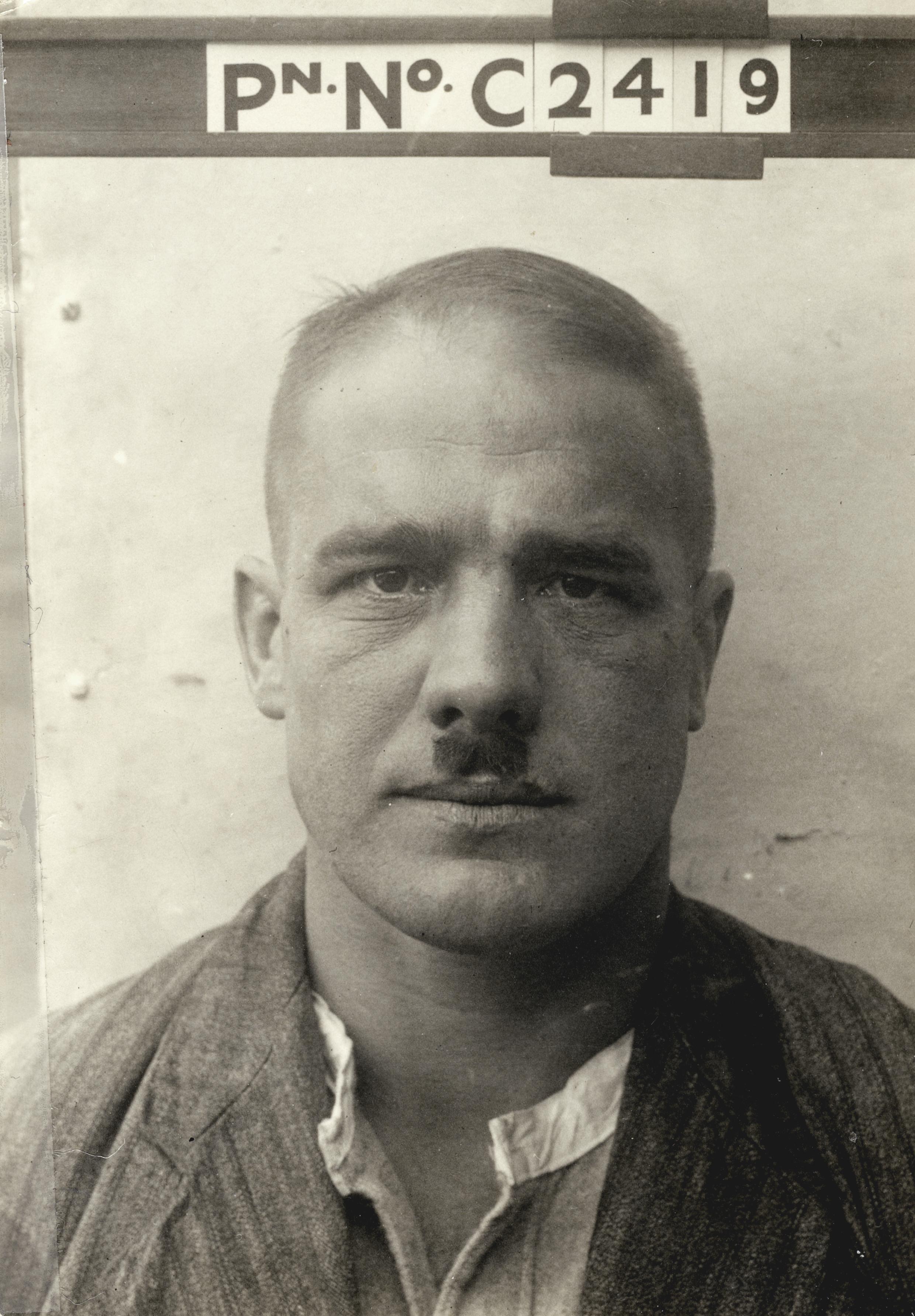
Robey Leibbrandt
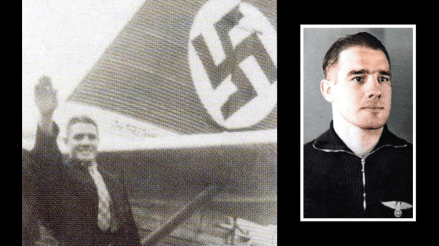
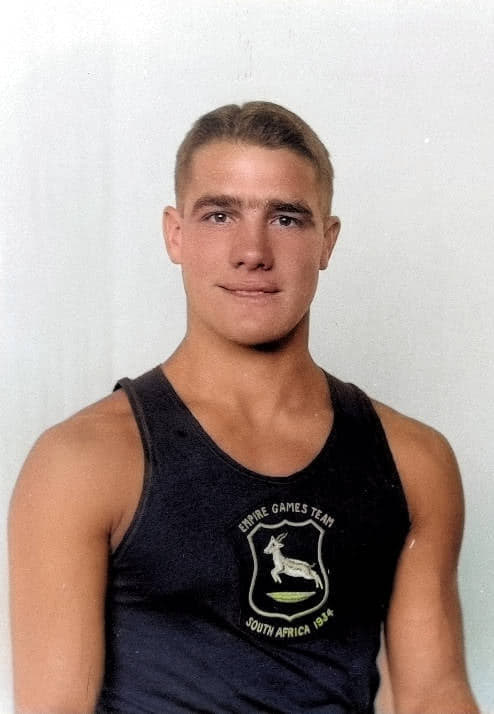
This is the story of one such South African national – Sidney Robey Leibbrandt, who was led by the German military intelligence (Abwehr) during the Second World War under the pseudonym ‘Robert Leibbrand’.
Born in Potchefstroom Leibbrandt was an Afrikaner Nationalist of both German and Irish decent. He was also a South African Olympic boxer, however his political ideology drove him to become a German secret agent and ‘freedom fighter’ – primarily against the British influence and political power within South Africa.
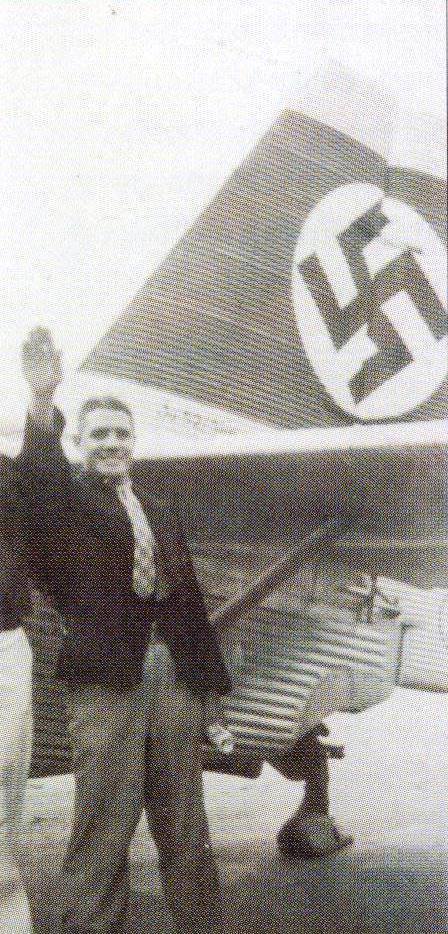
Leibbrandt went to Germany in 1938 to study at the Reich Academy for Gymnastics, and stayed on when war broke out. He joined the German Army, where he became the first South African to be trained as a Fallschirmjäger (paratrooper) and glider pilot. Leibbrandt was trained with the Comrades of the Brandenburgers at a sabotage training course of Abwehr II (Abwehrschool “Quenzgut”) near Brandenburg an der Havel, west of Berlin.
Operation Weissdorn
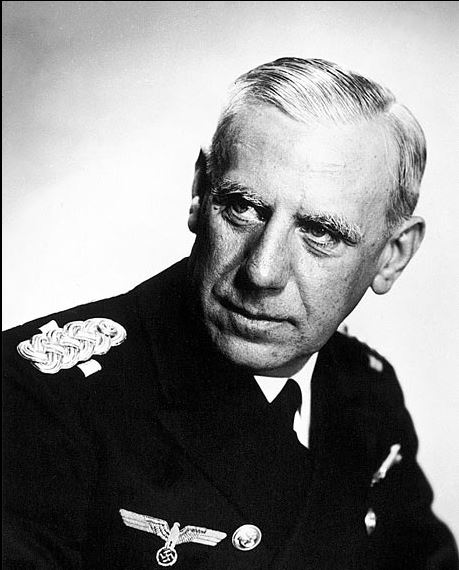
Admiral Wilhelm Canaris
The German Admiral Wilhelm Canaris ordered “Operation Weissdorn” a plan for a coup d’état to overthrow the South African government of General Jan Smuts and assassinate Smuts. Central to the plan was Leibbrandt, who left Germany on 5 April 1941 to lead and execute it.
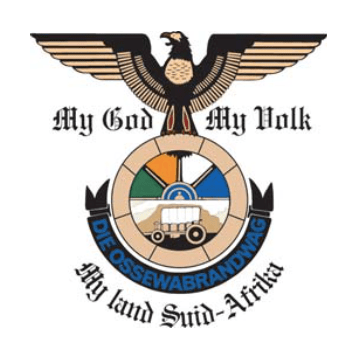
In June 1941, under the code name Walter Kempf, Leibbrandt was dropped on the Namaqualand coast north of Cape Town (Mitchell’s Bay) by a confiscated French sailboat (the Kyloe). His mission was to make contact with the South African pro-Nazi movement, the Ossewabrandwag, and expand his ranks of ‘freedom fighters’.
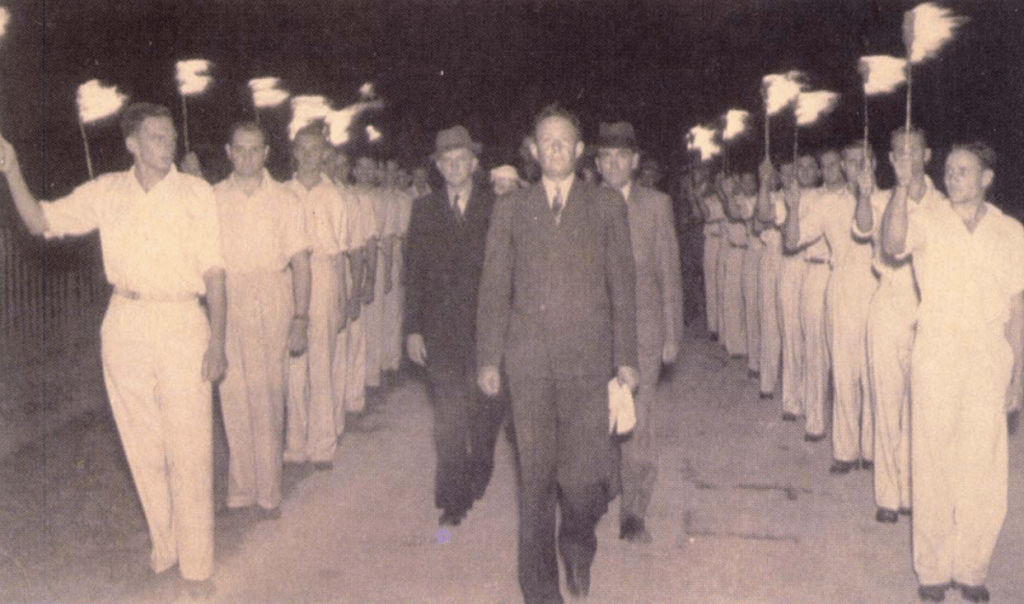
In the 1930’s the chief vehicle of Afrikaner nationalism was the Purified National Party of Dr D.F. Malan, (which went on to become the National Party as we know it today) and in 1938 the National Party celebrated the centennial anniversary of the Great Trek – the Ossewabrandwag was established in commemoration of the Trek, it was led by Dr Johannes Van Rensburg who was a lawyer and also a dedicated admirer of Nazi Germany.
Afrikaner Nationalist Resistance
The role of the Ossewabrandwag (OB) evolved to become a militant one – the nationalist members were unsympathetic to Britain because of the Boer War and became increasingly hostile when South Africa declared war on Germany in 1939. As sympathizers with Nazi Germany they felt their only solution was armed struggle.
Within the ranks of the Ossewabrandwag was a formation of Stormjaers (Assault troops). The nature of the Stormjaers was evidenced by the oath sworn by new recruits: “If I retreat, kill me. If I die, avenge me. If I advance, follow me”
The Stormjaers engaged in sabotage against the South African government. They dynamited electrical power lines and railroads, and cut telegraph and telephone lines (These types of acts were going too far for most Afrikaners and Malan later ordered the National Party to break with the Ossewabranwag in 1942)
Robey Leibbrandt, on landing in Mitchell’s Bay hoped to tap into this large resource of Afrikaner ‘Stormjaers’ in his plan to assassinate Smuts and overthrow the government. He made his way to Cape Town to meet and make arrangements with Dr van Rensburg in Pretoria. However, rather disappointingly he found van Rensburg unsympathetic to his plan. Nothing came of the negotiations. Leibbrandt’s megalomania was enough to deter anyone from cooperating with him, and Dr van Rensburg refused to be drawn. Some sources even point to a physical alternation between van Rensburg and Leibbrandt in their final meeting.
Undeterred Leibbrandt continued in his attempts to drum up support from the Afrikaaner Nationalists winning converts from the Ossewabrandwag and the National Party to support his cause with fiery speeches at meetings held in the Orange Free State and in the Transvaal. These converts to Liebbrandt’s band of ‘Stormjaers’ called ‘The National Socialist Rebels’ took a specific Nazi Blood Oath, and trained in bomb making and sabotage. Their blood oath partly read:
“All my fight and striving is for the freedom and independence of the Afrikaner people of South Africa and for the building up of a National Socialist State in accordance with the ideas of Adolf Hitler.”
Leibbrandt was fully determined in his plot to overthrow the government by force of arms and assassinate Jan Smuts, he famously said the following before leaving for South Africa.
“The signal for the coup d’ etat will shake South Africa to its very foundations. The whole world will understand it. The gigantic leading figure of General Smuts will be felled like a heavy oak tree at the psychological moment. I will commit this deed on my own. It will happen without help or support.” Sydney Robey Leibbrandt (Berlin, March 20, 1941)
Capture
Leibbrandt’s small group of National Socialist Rebels kept the South African government on high alert by committing various sabotage acts. However, the quiet truce between Leibbrandt and van Rensburg quickly developed into open hostility. Leibbrandt, disappointed that the OB did not officially support his mission and its resultant failure began to openly attack Dr van Rensburg as an ‘agent’ of Smuts. This sealed his fate. The OB felt Leibbrandt a liability to their cause.
After Liebbrandt and his group of Stormjaers got into a confrontation and gunfight with UDF soldiers in the autumn of 1942, Leibbrandt went on the run and evaded the police. He was betrayed by fellow nationalists in the Ossewabrandwag who disclosed his location and he was eventually arrested in Pretoria in December 1942. Ironically the arresting officer was Claude Sterley, a fellow Springbok boxer and friend.
To get on top of all the wartime dissent and armed resistance from the nationalists, the South African government also cracked down very heavily on the Ossewabrandwag and the Stormjaers, placing thousands of them in internment camps for the duration of the war. Among the internees was future Prime Minister B. J. Vorster, who was a regional leader (General) of the Ossewabrandwag.
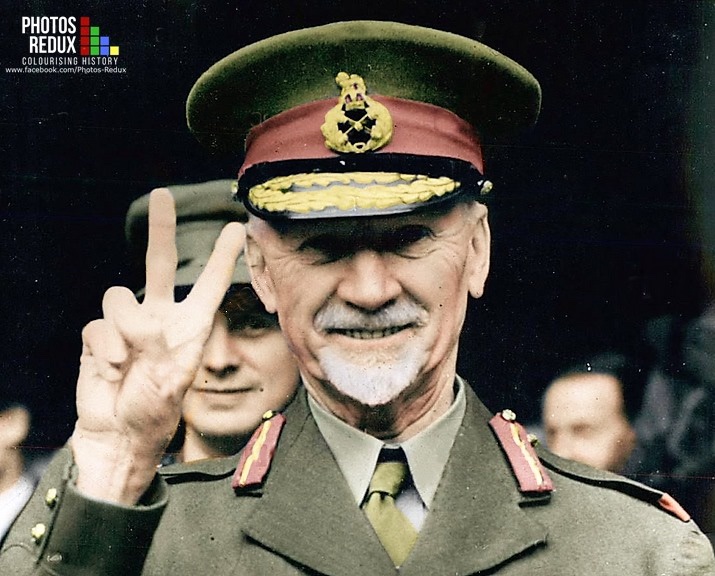
Field Marshal Jan Smuts
On 11 March 1943 Leibbrandt was sentenced to death for high treason. Although Leibbrandt refused to give evidence at any stage in the trial, he claimed that he had acted “for Volk and Führer” and gave the German Salute (Hitler Salute) when he first entered the court, to which several spectators responded and calling “Sieg Heil”. After being sentenced to death, Leibbrandt shouted loudly and clearly “I greet death”.
General Jan Smuts however later commuted his sentence to life imprisonment, confiding that he did not want the blood of another Jopie Fourie on his hands. In this respect Smuts, as an Afrikaner throughout his career usually bowed to a policy of appeasement politics when it came to Afrikaner issues and his ‘Volk’.
This can clearly be seen in the treatment of both ‘traitors’ and enemies of the state – Smuts took a heavy hand to executing the ring leaders of the Rand Revolt who were mainly ‘English’ Communists, but when it came to the Boer Revolt everyone involved was freed, except Jopie Fourie (who had not resigned from the Union Defence Force as an officer when becoming a rebel and therefore had a different case of treason and was court marshalled by the military instead – whereas all the other rebels had resigned). Smuts took the same relatively ‘light handed’ approach to the Ossewabrandwag and clear cases of sedition and treason as was the case with Leibbrandt and chose not to execute them.
It’s not treason if you win
When the National Party was elected to rule in South Africa in 1948, D. F. Malan issued an amnesty over all their fellow war offenders, including the likes of Liebbrandt and the future President BJ Vorster. The National Party then folded the Ossewabrandwag and absorbed their members and structures into the party.
Leibbrandt left the prison and was greeted by crowds of Afrikaner right-wingers and Nationalists as a “folk hero”. The returning servicemen from World War felt it a slap in the face, a blatant political statement as to how much the Afrikaner Nationalists disregarded those who had gone to war against Nazism. To them it was an affront to the sacrifice and loss of thousands of their compatriot South Africans in the war.
Leibbrandt remained politically active in his later life, founding the organisation Anti-Kommunistiese Beskermingsfront (Anti-Communist Protection Front) in 1962, and producing a series of pamphlets titled Ontwaak Suid-Afrika (Wake up South Africa). He was also a passionate sportsman and hunter. Robey Leibbrandt, “Der treue Gefolgsmann” (the loyal follower) died on 1 August 1966 from a heart attack.
The irony is that once in power the rise of African Nationalism (ANC) and their decision to embark on armed resistance mirrors that of the Afrikaner Nationalism. Like the armed wing of the Afrikaner Nationalists – the Ossewabrandwag ‘terrorists’ and ‘traitors’ were imprisoned as enemies of the state, so too were the armed wing of the ANC – Umkhonto we Sizwe. Once in power the Afrikaner Nationalists – the NP – behaved no different to the African Nationalists – the ANC – they built heroes and legacies around their military ‘heroes’, issued pardons and amnesties – and also renamed streets and institutions after them.
In Conclusion
But most ironic is that from the ranks of imprisoned ANC leaders emerged Nelson Mandela, and from the ranks of imprisoned National Party members emerged BJ Vorster – both of whom went on to become President. Strange how history turns and repeats itself.
Both entirely different now, history now looks favourably on Mandela and the African Nationalists (ANC) and its cabal and dismisses their acts of treason in light of a ‘honourable cause’ (liberation from oppression) and history now views Vorster, the Afrikaner Nationalists (NP) and their cabal, like Robey Liebrand and their various acts of treason very unfavourably and point to a ‘dishonourable cause’ (suppression of liberation by oppression).
This brings another famous quote on what qualifies and defines treason, it’s from T.S. Elliot and is very applicable and rings true to the above statement;
“The last temptation is the greatest treason: to do the right deed for the wrong reason”.
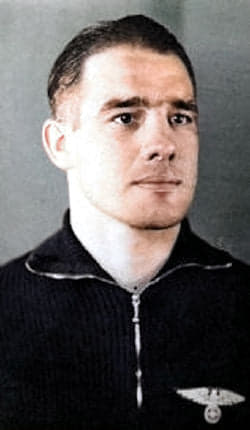
Written and Researched by Peter Dickens. Reference: Wikipedia and extracts from “Volk and Fuhrer” by Hans Strydom. Colourised images of Robey Leibbrandt with thanks to Frans Bedford-Visser. Colourised image of Jan Smuts thanks to Photo Redux.
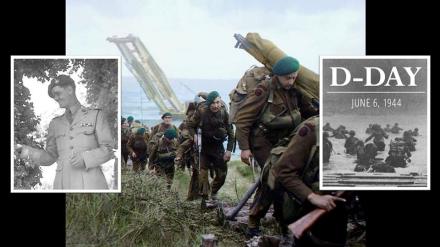
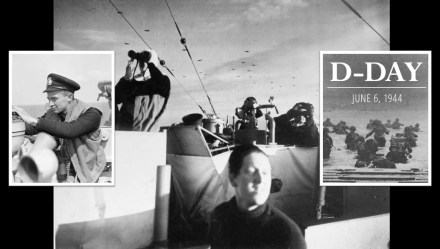
Today we profile another one of those South African heroes who served with the Royal Navy Commandos on D Day and who went on to win a Military Cross for Bravery – Lieutenant D.C. “Tommy” Thomas MC from Maclear in the Transkei.
His most painful recollection of D-Day was the stormy passage he and his contingent had to undergo in crossing the Channel in their landing craft.The seas were running high, and hardly a man escaped sea sickness. They landed in the second wave at first light, their boat receiving a direct hit as they approached the shore, half-a-dozen men being killed, and Thomas found himself up to his neck in water after having jumped form the landing craft as it struck the beach.
The Commandos, having “dumped” their steel helmets, promptly donned their green berets as they went ashore, it being “more comfortable”. They had a specific job to do which was to connect up as soon as possible with the paratroops who had dropped further inland, and encountered fire, but “did not wait to deal with the resistance at the coast, pushing inland instead with all speed”.
Royal Marine Commandos attached to 3rd Division move inland from Sword Beach on the Normandy coast, 6 June 1944.
It was “tough going through the minefields but they got there”. “And were the paratroops glad to see us!” remarked Lt. Thomas, who further remarked that for the next few days none of them knew much of what was happening, and could not be sure whether the invasion was a success or not.
All they knew was “that in their own sector on the left flank of the beach-head they were kept hard at it”, and the toughening they had had in advance was to prove more than useful.
According to plan, they kept on the move all the time -”frigging about” as it was called in Commando terminology, snatching some much-needed sleep in slit-trenches during the day, while at night they were patrols or raids to be carried out. It was while returning from one of these ”nocturnal excursions” that Lieutenant Thomas shared with his sergeant and another man “the benefit of a German hand-grenade”, and was to later return to England with several “little shrapnel souvenirs still in his leg”, but otherwise was “none the worse for wear”.
Commenting on how the Normandy landings compared to his time in North Africa, Lt. Thomas was to say that “it was worse”, elaborating that “for one thing, in the Desert, you could see whom you were fighting, but in Normandy most of the time you couldn’t.”
Lt. Thomas was also to add that he was wondering how he would “be able to settle down on the family farm in the Maclear district of the Transkei after all this excitement”.
Lt Thomas won the Military Cross (MC) for his actions in World War 2. A significant decoration, it is awarded for gallantry in combat. The MC is granted in recognition of “an act or acts of exemplary gallantry during active operations against the enemy on land to all members, of any rank in Our Armed Forces”.
The unfortunate truth is that it was highly likely that his participation in D Day ultimately killed him years later. After the war but he developed an alcohol dependency problem whilst suffering with post traumatic stress disorder (PTSD), very sick he eventually shot himself when he was also diagnosed with cancer. A real tragedy and the end of a fine South African hero, close family and fiends described him as an AMAZING man, brave, humble and very caring.
People who knew him well said he was never the same after the war, and today we honour his extreme sacrifice and we will remember him.
Related Links and Work of South Africans during D Day:
South Africans are seen in this historic image taking part in one of the most bitter battles of World War 2 – Monte Cassino. Overlooked by the ruins of the historic hill-top monastery, South African engineers of 11th Field Company, South African Engineer Corps, clear rubble from ‘Route 6’, the main road through Cassino. The final German resistance had ceased only hours before.
The Battle of Monte Cassino (also known as the Battle for Rome and the Battle for Cassino) was fierce – it was a costly series of four assaults by the American, Polish, Free French, British and Commonwealth Allies against the Winter Line in Italy held by Nazi German and other Axis forces during the Italian Campaign of World War II. The intention was a breakthrough to Rome.
The above images show German soldiers holding their positions in Cassino and a British soldier with a Bren gun assaulting an Axis position amongst the shattered rubble of the Monastery.
Between 17 January and 18 May 1944 the Monte Cassino and the Gustav defences were assaulted by Allied troops, the last Allied assault involving twenty divisions attacking along a twenty-mile front. The German defenders (including crack German airborne troops) were finally driven from their positions, but at a high cost. The capture of Monte Cassino tolled some 55,000 Allied casualties, with German losses being far fewer, estimated at around 20,000 killed and wounded.
Polish troops entered the shattered hill-top monastery, a symbol of German resistance at Cassino, the morning of the 18th May 1944.
The images show the British and Polish flags on top of the Monastery at Cassino on the final day of the assault and surrendering German soldiers.
This is the monastery before and after it was destroyed. Repeated pinpoint artillery attacks on Allied assault troops caused Allied leaders to conclude the monastery at Cassino, which had existed as a benedictine monastery from 529 AD was being used by the Germans as an observation post.
Fears escalated along with casualties, and in spite of a lack of clear evidence, the monastery was marked for destruction. On 15 February American bombers dropped 1,400 tons of high explosives, creating widespread damage. The raid failed to achieve its objective, as German paratroopers occupied the rubble and established excellent defensive positions amid the ruins.
The monetary has since been rebuilt and is a national heritage site.
Image copyrights – Imperial War Museum, reference wikipedia
Pride in “Rooi Lussies”(red tabs), worn by most, branded “Rooi Luisies” (Red Lice) by some.
At the start of World War 2, the South African armed forces were woefully understrength having only 3,500 permanent force members and 14,000 volunteers in citizen force regiments and rifle associations (Active Citizen Force). General Jan Smuts needed to increase these numbers dramatically, and he did not want to institute conscription to do so, the call to fight would be based on volunteerism. The idea was to initiate a Oath declaring the free willing and voluntary nature South Africans felt in going to war against Nazi Germany, Fascist Italy and eventually Imperial Japan. The success of this call for volunteerism is staggering – in the end a total of 342,792 South Africans volunteered to participate in World War 2.
Also of that statistic nearly one quarter of the total ‘white’ adult population at the time volunteered for service, consider what Smuts had achieved, the Nationalists were unable to raise anywhere near these numbers in 1966 to their cause and had to implement forced conscription for the SADF.
The ‘Red Oath’ or ‘Service Oath’ was taken by all these volunteers when joining the South African Union Defence Force (UDF) from 1939, it was a Service Oath to legally enable the Union to send soldiers outside the borders of South Africa (soldiers in the UDF were only legally obliged to protect South Africa itself if it were invaded). The oath read:
“That I will be faithful and bear true allegiance to His Majesty King George VI and his heirs and successors according to law … That I will perform to the best of my ability the duties assigned to me as a volunteer member of the Union Defence Forces … That I will serve anywhere for the duration of the present war and for a period of six months thereafter unless otherwise legally discharged.”
This manifested itself in ‘red epaulettes’ issued to all service-personal who ‘volunteered’ to serve in the armed forces during the war and took the ‘Red Oath’. Sensitive to sympathetic political feelings many Afrikaners had towards Germany, by implementing the oath the Smuts government gave the opportunity for permanent force members sympathetic to Germany to remain in the Union’s forces, and not go to war against them – they just didn’t get to wear the red tabs.
The original ‘red’ oath specified service anywhere in “Africa” and was called the ‘Africa Service Oath’ (ASO), it was changed to the ‘General Service Oath’ (GSO) once the Axis Forces in North Africa were defeated so that volunteers could be used in the European theatre and the word “Africa” was changed to “anywhere”. Those who did not want to fight in Europe and who had taken the ‘Africa’ oath only were returned to the Union.
A handful of permanent force UDF members did not take either red oath, some felt inevitably ‘singled out’ by not wearing the tabs (and in some cases resigned), whilst others took pride in their political convictions and wore their ‘clean’ epaulettes, sans the red strip with pride.
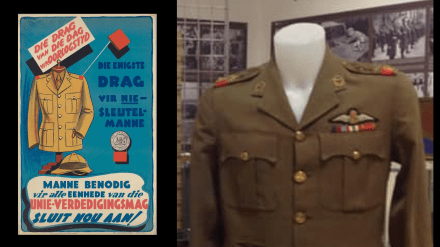
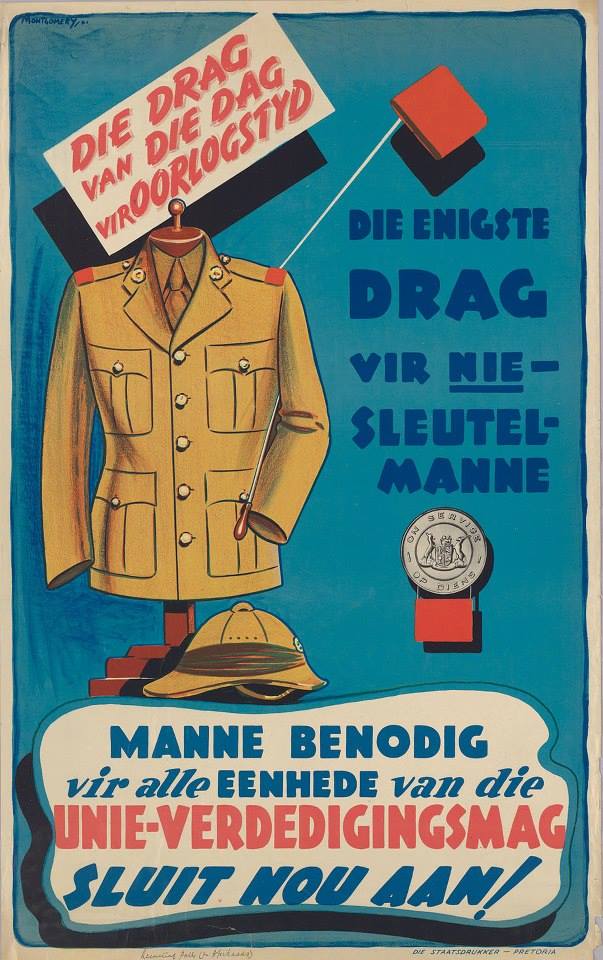
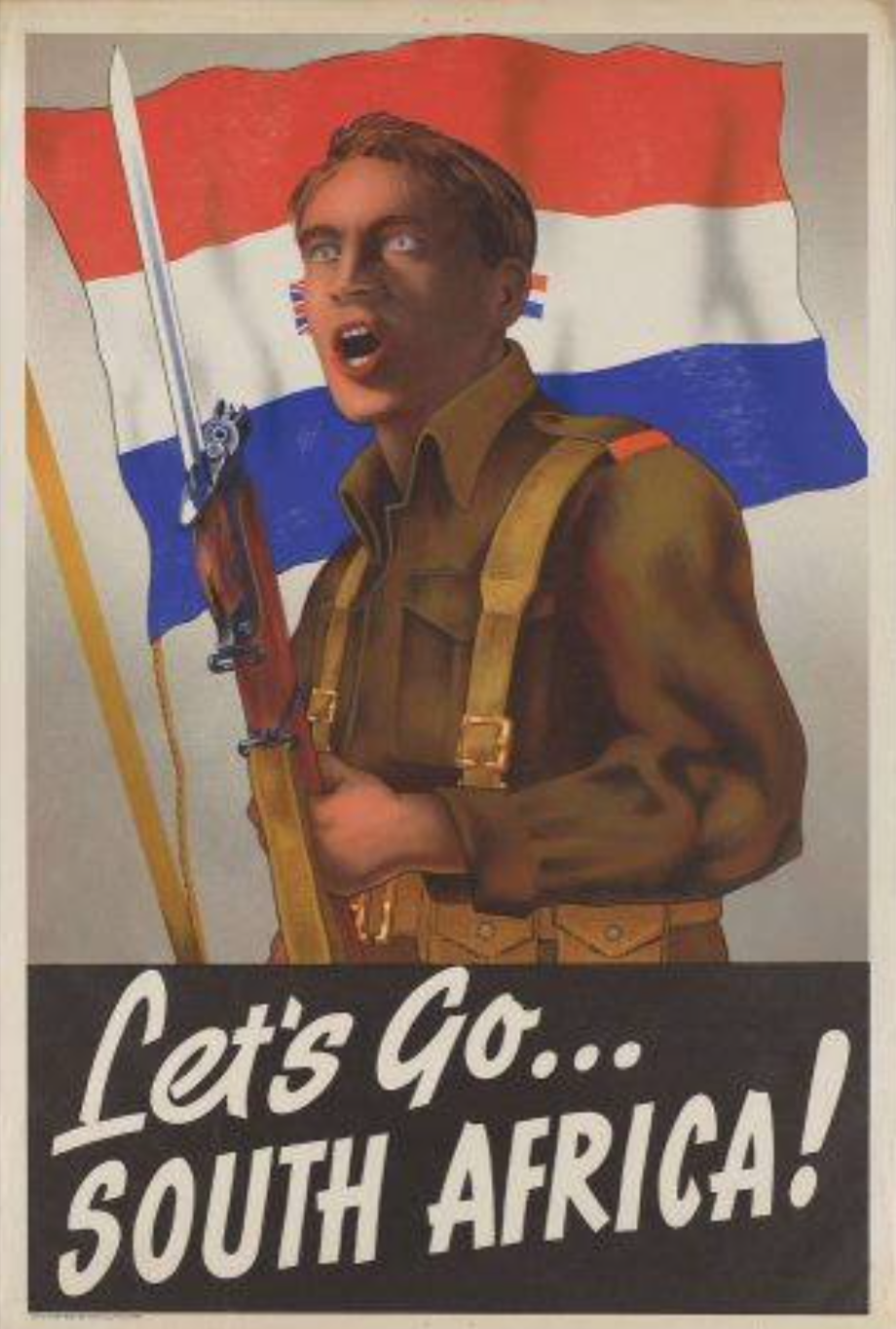
Images: Pride in the Red tabs and Let’s Go South Africa, showing proudly the tabs propaganda posters.
This WW2 South African propaganda poster, promoting the ‘Red Oath’ and the special volunteer epaulette flash worn by all who took the oath and volunteered for service during World War 2 was designed to swing opinion in the Afrikaans community where the wearing of the red flash was seen as an oath to the British and viewed by some as betrayal. In these sections of the Afrikaans community they where called ‘Rooi Luisies’ (Red Lice) instead of ‘Rooi Lussies” (Red Tabs), as a means of degrading those who volunteered.
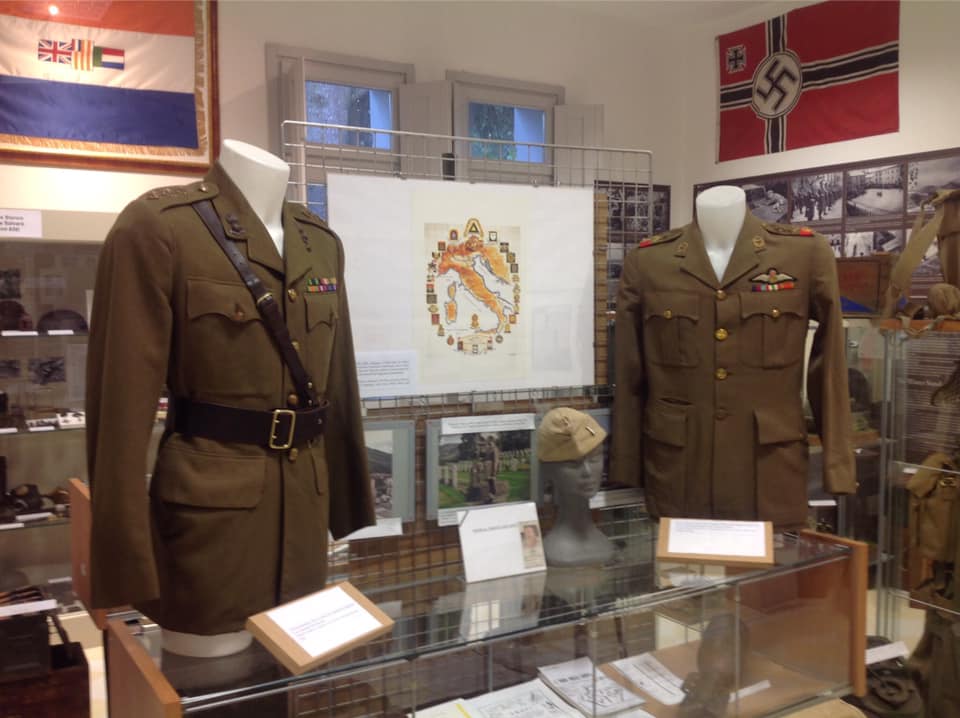
Image: British (left) and South African (right) uniforms from the Italy Campaign during WW2, note the red tabs on the epaulettes.
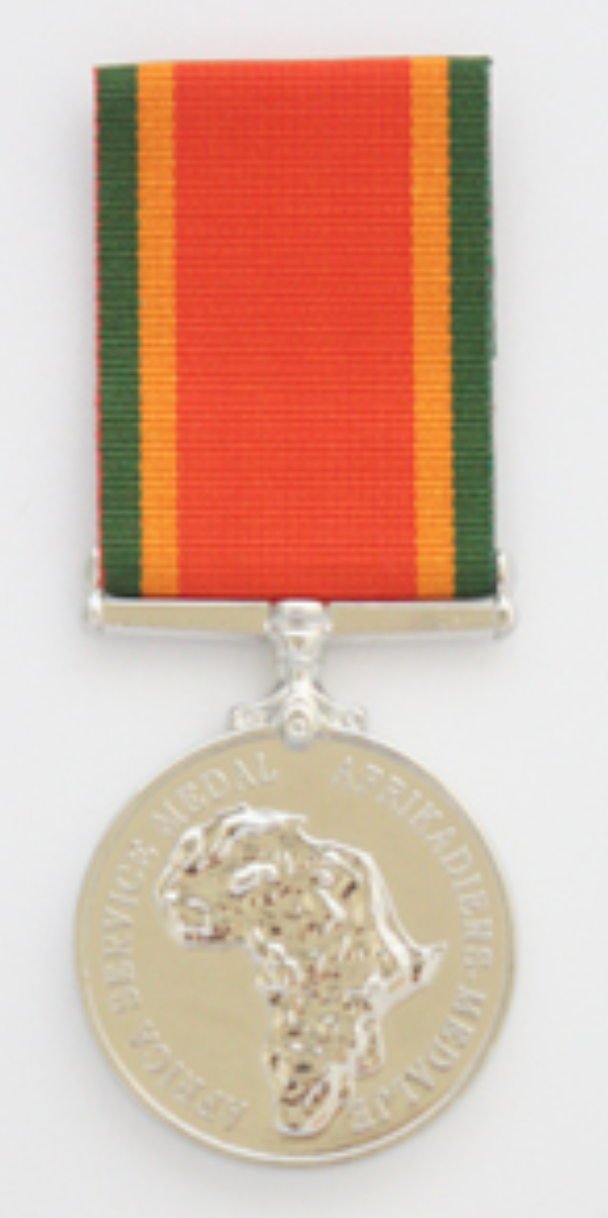
Of interest is the ‘Africa Service Medal’ awarded to all who served in South African Forces during the Second World War, the ‘red tab’ in this medal’s ribbon is symbolic of the The Red Oath taken and the tabs worn.
The ‘Erasmus Reforms’ to the defence force was implemented by FC Erasmus after the Afrikaner Nationalists came to power in 1948. Deemed more necessary when the Nationalists converted the South African Union’s Defence Force to that of the Republic’s Defence Force in 1961 and these reforms would see the idea of the ‘red’ oaths to the British royal family as the symbolic head of South Africa and red tabs removed. Some citizen force regiments however carried on with the tradition as a historical nod to their participation in the Second World War on their step out uniforms, the Cape Town Highlanders a case in point.
Written and Researched by Peter Dickens
References:
The Smuts Government Justification of Emergency Regulations and the impact thereof on The Ossewabrandwag (1939-1945) by Anna La Grange
The Springbok Record – published by the South African Legion
6th June 1944. D Day, a very significant day in the history of mankind, and albeit on a smaller scale quite a number of South Africans did actually participate in it. The South African Naval Force (assisting the Royal Navy) is one such entity that did and this is one of these South African heroes to come from the D-day landings.
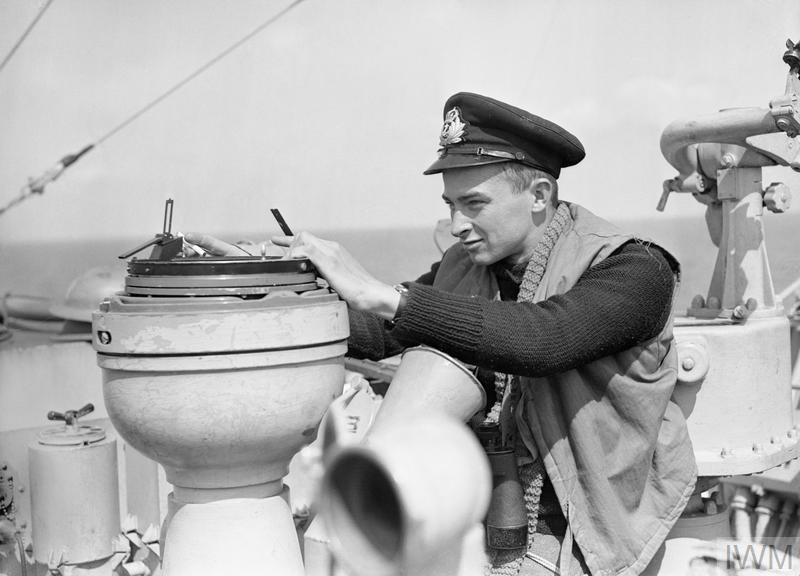
Here Sub Lieutenant Anthony Large BEM, South African Naval Force (Volunteers), of Durban, South Africa, is seen taking a bearing on the ship’s compass on board HMS HOLMES whilst she was helping to guard the Allied supply lines to and from the Normandy beachhead. He won his British Empire Medal BEM whilst he was a rating.
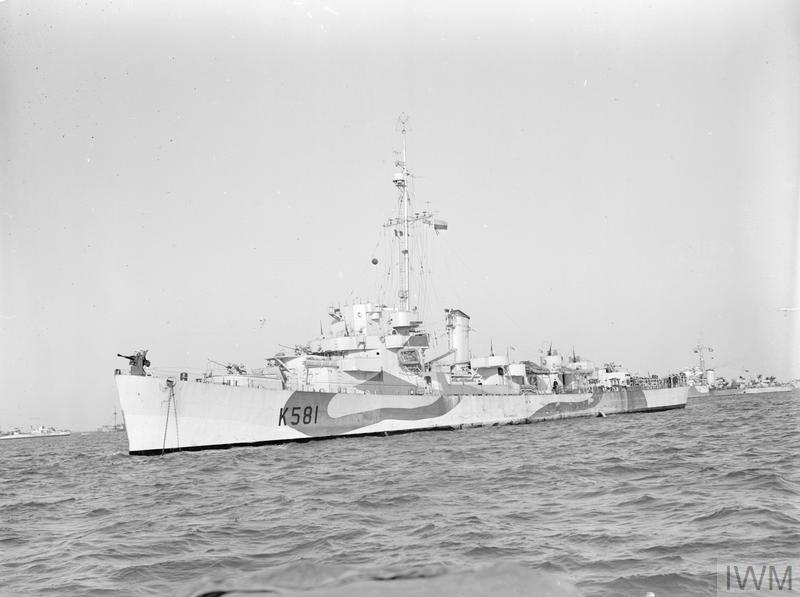
The HMS Holmes (K581) was a Captain Class frigate, originally intended for the United States Navy she was transferred to the Royal Navy before she was finished. The HMS Holmes found itself in the thick of battle during D-Day on the 6th June 1944 as an escort. She was alongside escorting large battleships like the HMS Rodney as they fired at shore targets in Normandy. Operating off the Caen beachhead and Le Havre, this Royal Navy flotilla known as Bombarding Force D, including the HMS Holmes, opened the channel for invading forces.
In this dramatic photograph the crew on the bridge of the frigate HMS Homes keep watch as gliders carrying 6th Airborne Division reinforcements to Normandy pass overhead on the evening of 6 June 1944.
Naval operations for the invasion were described by historian Correlli Barnett as a “never surpassed masterpiece of planning”. In overall command was British Admiral Sir Bertram Ramsay who had served as the Flag Officer at Dover during the Dunkirk evacuation four years earlier.
Operation Neptune, as the ‘D-Day’ operation was codenamed was quite something. Consider these staggering statistics. The invasion fleet was drawn from eight different navies, comprising 6,939 vessels: 1,213 warships, 4,126 landing craft of various types, 736 ancillary craft, and 864 merchant vessels. The majority of the fleet was supplied by the UK, which provided 892 warships and 3,261 landing craft. There were 195,700 naval personnel involved.
HMS Holmes (K581) during Operation Overlord
Available to the British and Canadian sectors were five battleships, 20 cruisers, 65 destroyers, and two monitors. German ships in the area on D-Day included three torpedo boats, 29 fast attack craft, 36 ‘R’ Boats and 36 minesweepers and patrol boats. The Germans also had several U-Boats available, and all the approaches had been heavily mined.
At 05:10, four German torpedo boats reached the Bombarding Force D Task Force and launched fifteen torpedoes, sinking the Norwegian destroyer HNoMS Svenner off Sword beach but missing the battleships HMS Warspite and HMS Ramillies. Not far from this action was our South African hero and the HMS Holmes.
Here the battleship HMS Ramillies shelling German gun batteries in support of the landings on Sword area, 6 June 1944. The photo was taken from the frigate HMS Holmes.
HMS Ramillies Sword area, 6 June 1944.
The British Empire Medal (BEM) awarded to Anthony Large is a significant British decoration, the medal is issued both for gallantry or meticulous service medal, however during the war it was generally awarded for gallantry to uniformed personnel, usually non-commissioned ranks below Warrant Officer.
British Empire Medal (BEM)
Related Links and work on South Africans during D-Day
Many people don’t know it – but a small historic fact, the South African Navy was involved in direct engagements with Imperial Japan during the Second World War.
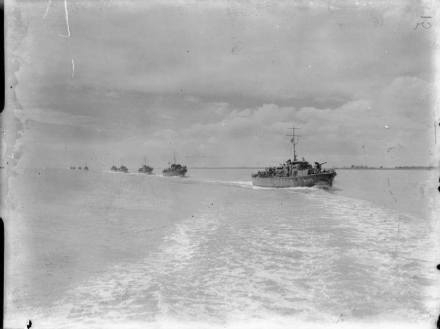
Here ML 475 leads motor launches of the Arakan Coastal Forces in line ahead up the Naaf River on their way to bombard Japanese shore defences and cut cross river communications.
These Coastal Forces were made up of the Royal Indian Navy, the Royal Navy, South African Naval Forces and Burma RNVR and they had covered nearly 30,000 miles in over 40 operations.
Harrassment of Japanese lines of communication and bombardment of shore defences were carried out between the Naaf River and Ramree Islands. Briefed in a Basha hut in their well hidden base, commanding officers return to their ships hidden in the up-river creeks for the nights operations.
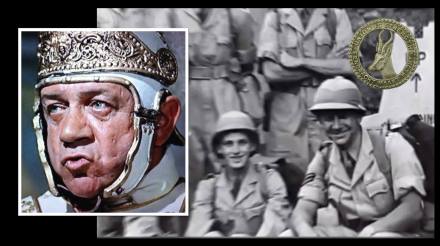
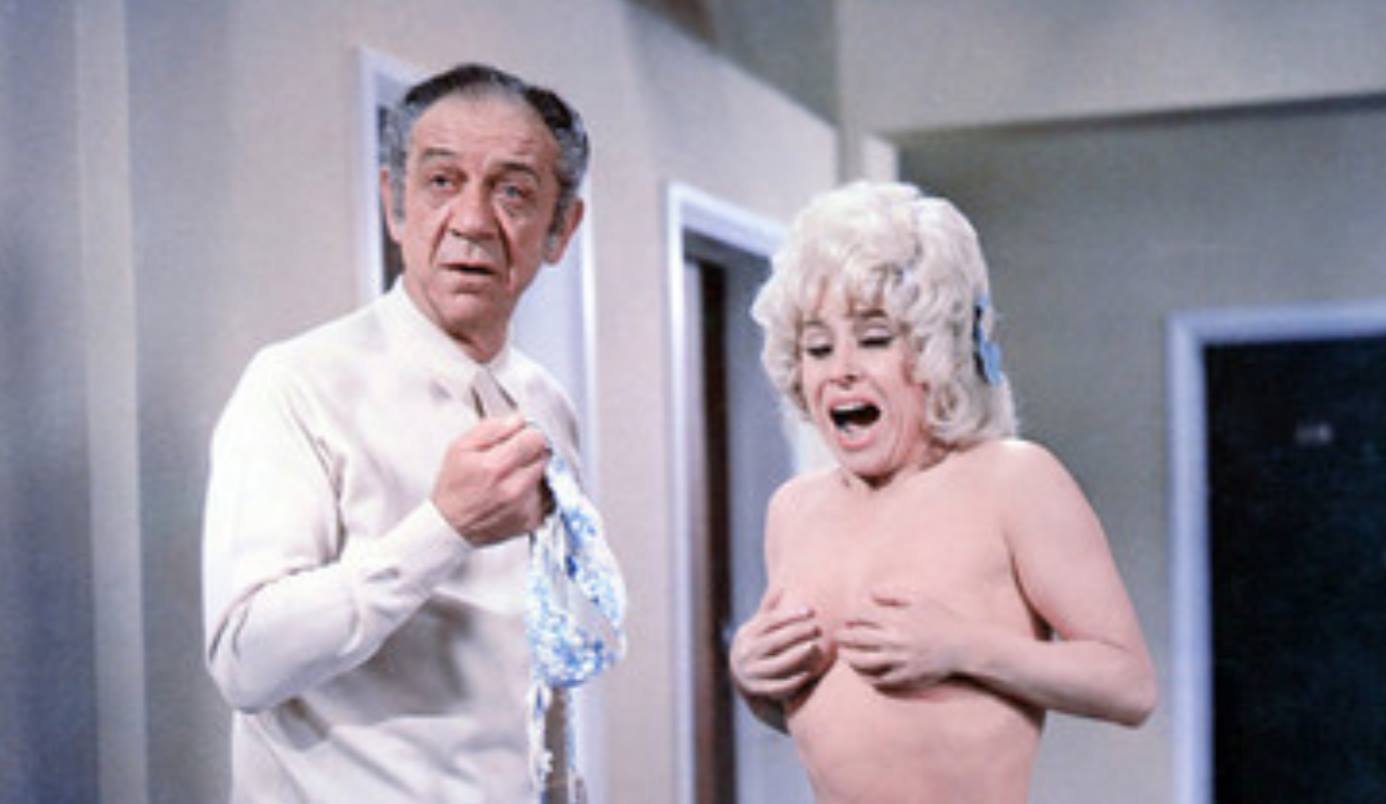
Sid James – was the famous ‘cockney’ Jack the Lad star of the “Carry On” movie series with his legendary trademark ‘naughty’ laugh. He epitomised a London ‘wide-boy’ and exists in British comedy as Super-Star.
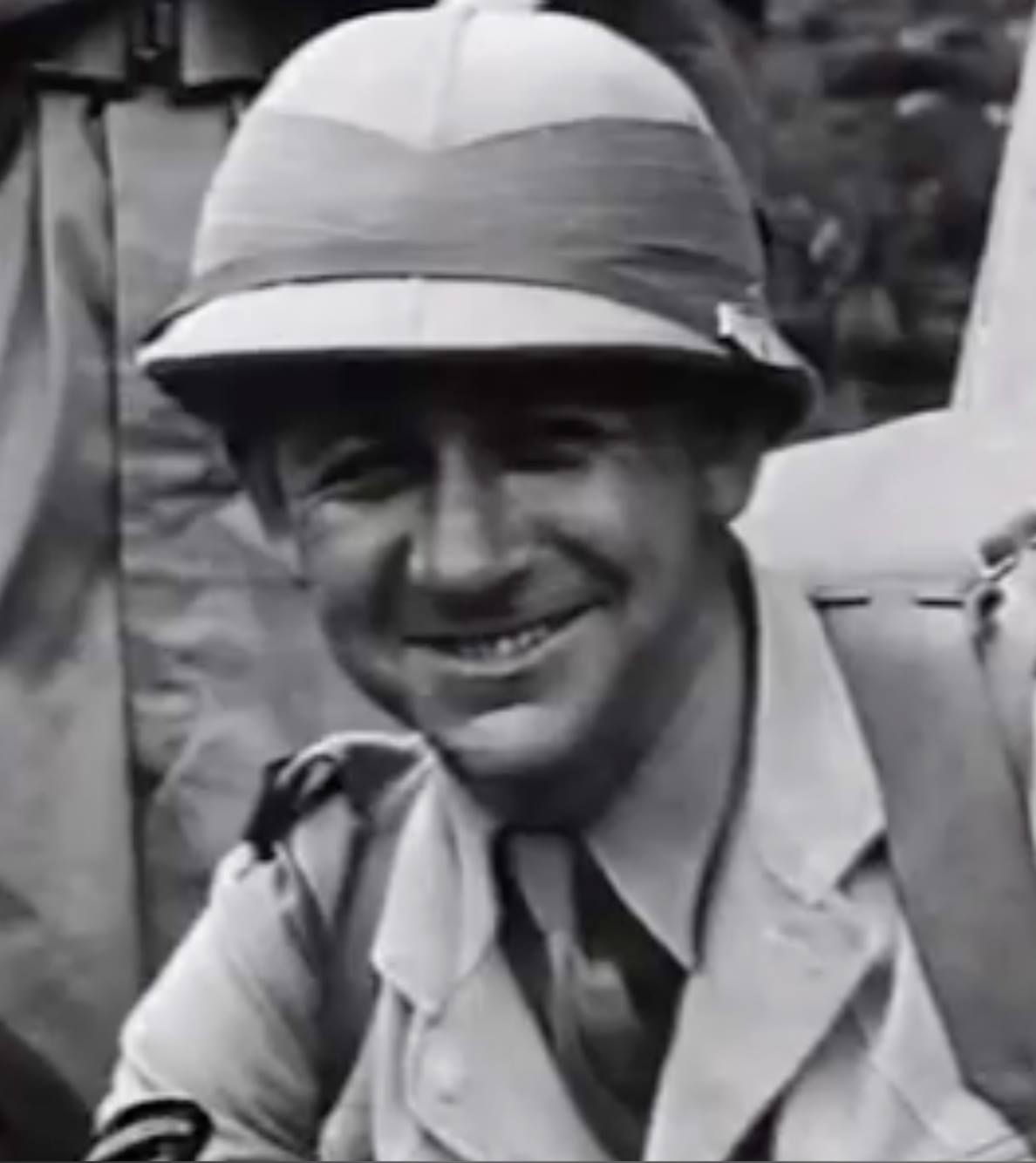
But did you know Sid James was in fact a South African and served in the South African Armed Forces during World War Two?
Not many know this as off-screen Sid was a very private man, and when not in his ‘cockney wide-boy’ character, his South African accent would find its voice.
Sid James was born Solomon Joel Cohen, on 8 May 1913, to Jewish parents, in South Africa, later changing his name to Sidney Joel Cohen, and then Sidney James.
His family lived on Hancock Street in Hillbrow, Johannesburg. Upon moving to Britain later in life, he claimed various previous occupations, including diamond cutter, dance tutor and boxer; in reality he had trained and worked as a hairdresser.
It was at a hairdressing salon in Kroonstad, Orange Free State that he met his first wife. He married Berthe Sadie Delmont, known as Toots, on 12 August 1936 and they had a daughter, Elizabeth, born in 1937. His father-in-law, Joseph Delmont, a Johannesburg businessman, bought a hairdressing salon for James, but within a year he announced that he wanted to become an actor and joined the Johannesburg Repertory Players. Through this group he gained work with the South African Broadcasting Corporation.
Sid’s abandonment of his hairdressing career and then his young bride and child was the last straw for her wealthy father (who apparently ‘put a price’ on our man’s head), so Sid decided to cut his losses and join the army. Sid was never to look back, as when he volunteered to join the South African Army World War 2 had just broken out, and funnily the war aided that aided his emerging career in the performing arts.
After a stationing with the South African Tank Corps in Abysinnia, Sid felt his talents were better used in troop morale, so he joined the Entertainment Unit of The South African Army, he was initially made a corporal and proceeded to put on shows for his fellow troops.
During this time, he was also caught under heavy fire at the notorious ‘Fall of Tobruk’, South Africa’s largest capitulation of arms, he managed to escape Tobruk ahead of Rommel’s forces and was eventually promoted to the rank of Staff Sergeant. Sid was eventually given a commission as a lieutenant in the entertainment unit, and subsequently took up acting as a career.
Around this time he acquired for himself a second wife, another South African – dancer Meg Sergei, and come the war’s end and his demobilisation, the couple’s showbiz ambitions saw them leave their homeland for the glamour of London.
Sid and Meg arrived in the UK on Christmas Day 1946 and, amazingly enough, within days he’d landed himself not just an agent but a small role, the rest is movie and show-biz history.
Ironically Sid died in complete character with his trademark ‘dirty laugh’ at the Empire Theatre on Monday, April 26, 1976. He was appearing in a suitably smutty comedy called ‘The Mating Game’. Sitting next to Sid on the stage was actress Olga Lowe, an old friend from his early days in his native South Africa, and he died of a heart attack staring at her breasts … a “Jack the Lad” to the end.
Written and Researched by Peter Dickens. Reference Wikipedia and The ghost of comic legend Sid James by Ian Robson. Video Clip – YouTube, master image of South African troops in North Africa during World War 2, Imperial War Museum copyright.
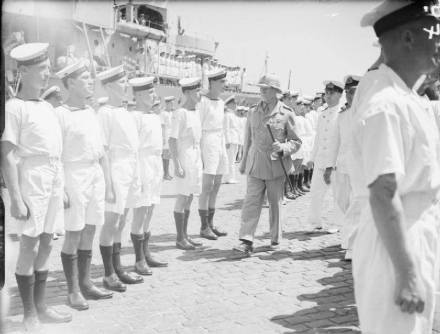
Field Marshal Smuts Visits South African Naval Forces in the Middle East, 16 May 1942
Field Marshal Smuts, in khaki army uniform, inspects massed ranks of South African sailors on the quay side in Alexandria, Egypt, 16 May 1942.



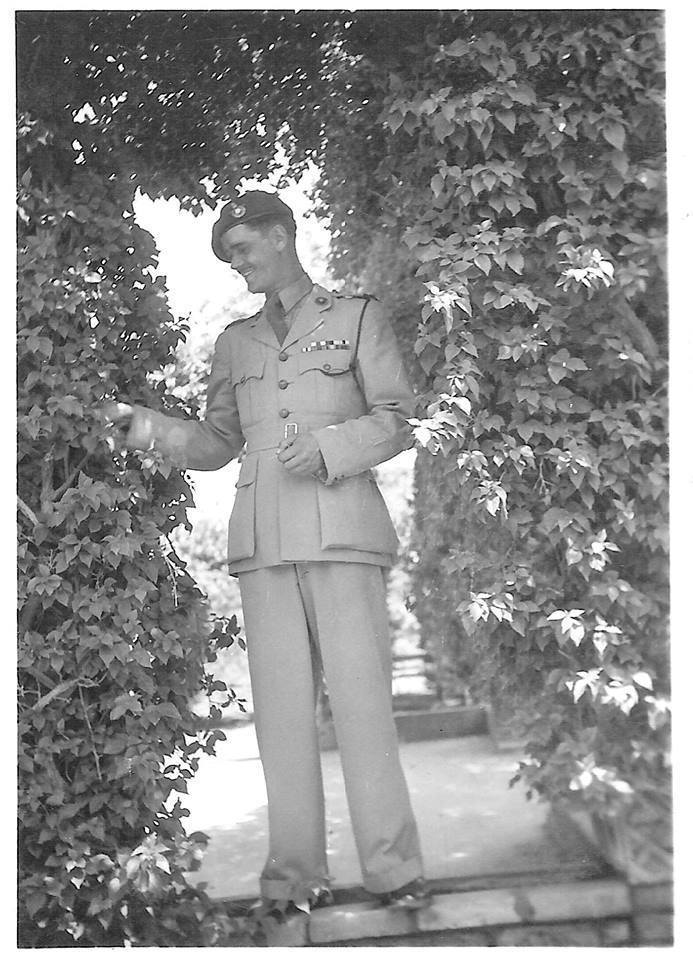 His most painful recollection of D-Day was the stormy passage he and his contingent had to undergo in crossing the Channel in their landing craft.The seas were running high, and hardly a man escaped sea sickness. They landed in the second wave at first light, their boat receiving a direct hit as they approached the shore, half-a-dozen men being killed, and Thomas found himself up to his neck in water after having jumped form the landing craft as it struck the beach.
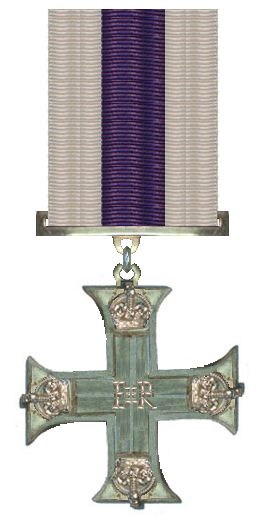 Lt Thomas won the Military Cross (MC) for his actions in World War 2. A significant decoration, it is awarded for gallantry in combat. The MC is granted in recognition of “an act or acts of exemplary gallantry during active operations against the enemy on land to all members, of any rank in Our Armed Forces”.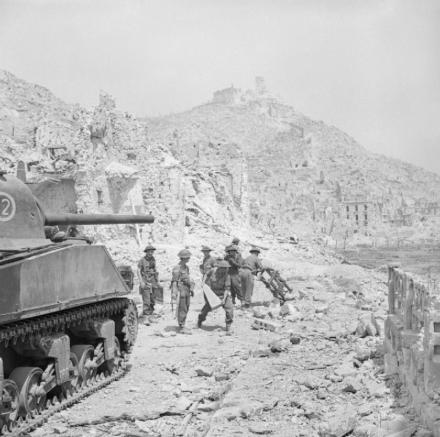








 The Observation Post