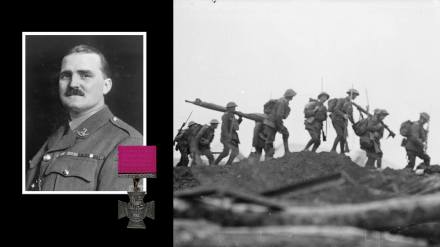
“…. a Herculean of Irish-South African origin with a quite remarkable disregard for danger”.

This is arguably one of the most highest decorated and bravest South African characters you’ll ever meet, a man with a true warrior’s heart.
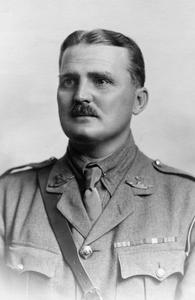
John_Sherwood-Kelly_VC

Lt. Col John Sherwood Kelly VC, CMG, DSO.

Lieutenant Colonel John “Jack” Sherwood Kelly VC CMG DSO joined the Kings Own Scottish Borderers in July 1915 when he was a Major.  The entry into the Regimental history reflects an extraordinary character and neatly sums him up:

“A new Major has joined us. The new Major was a Herculean of Irish-South African origin with a quite remarkable disregard for danger”.

The four-times-wounded Kelly was not a Regular officer but a formidable and experienced commander with a combat record going back to the 1896 Matabele Revolt. During his military career he achieved fame and notoriety for his mixture of heroic exploits and explosive temperament.

His Story, the early years.

The twin sons John Sherwood Kelly and Hubert Henry Kelly were born on 13 January 1880 in Lady Frere in the Cape Colony in South Africa as the son of James Kelly of Irish decent. James Kelly was at one time mayor of Lady Frere and believed in justice for all and was himself a hero. On 08 December 1876 James Kelly saved the lives of 25 people when the Italian ship, SS Nova Bella, ran into trouble at the St John’s river mouth.

John (also called “Jack”) attended the Queenstown Grammar School, Dale College in King William’s Town and St Andrew’s College in Grahamstown. At school John was keener on the outdoor activities such as horse riding and boxing, in which he excelled, than school work. During this period John first lost his mother, with whom he had a very close relationship, when he was only 12 and a year later in 1893 he lost his twin brother Hubert in a riding accident.

The 2nd Anglo-Boer War and the Matabele Revolt

In 1896, age 16, John enlisted in the British South Africa Police (BSAP) and saw action in the Matabele revolt in Rhodesia (now Zimbabwe). With the outbreak of the 2nd Anglo Boer War (1899 – 1902) he enlisted in the Southern Rhodesia Volunteers and saw action as a Trooper in the Relief of Mafeking as a Private in Colonel Plumer’s Column.
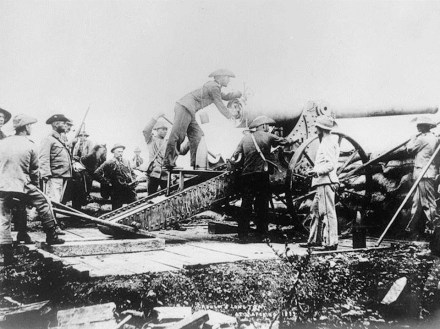
the_boer_war-_1899_-_1902_q82962

Boer Forces with a 94 Pounder ‘Long Tom’ besieging Mafeking

On 08 January 1901 John was commissioned as a Second Lieutenant in the Imperial Light Horse (ILH) and later joined Kitchener’s Fighting Scouts as a Lieutenant and saw action in Rhodesia, Orange Free State and Transvaal. He was twice mentioned in despatches during this time.

After the Anglo Boer War (1899 – 1902) John returned to civilian life were he worked in his father’s store, but this was not what John had in mind, he was a warrior at heart  – and what he does next is an extraordinary journey which sees him take part in battles all over the world.

Somaliland 
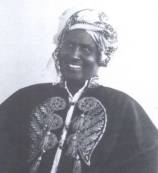
21370948_10155459206776480_6433792642172571671_n

The ‘Mad’ Mullah

Having resigned his commission he volunteered to serve with the British forces again in Somaliland for the 3rd Expedition against Haji Muhammad Abdullah Hassan (known to the British as Mad Mullah) over the period November 1902 to July 1903.

South Africa sent a British Mounted Infantry Company (141 men) from the 4th Bn The King’s Royal Rifle Corps, commanded by Captain G.C. Shakerley, and a Boer Mounted Infantry Company, known as the Somaliland Burgher Corps (100 men) commanded by Captain W. Bonham DSO.   The men brought their own horses and 50% spares for remounts.  In a strange twist, John Sherwood-Kelly joined the Boer Corps. During the period he was promoted to the rank of Sergeant.

In 1904 he was reduced to a Trooper again and returned to South Africa where he worked at first as a trader and later as a recruiter of native labour in the Transkei. In 1905/6 he again saw action during the Zululand Bambatha Rebellion.

Over the period 1906 to 1912 John was involved in the family business in Butterworth which was involved in the recruiting labour for the mines.

The Irish ‘Home Rule’ Crisis 

Finding a lasting solution for the Irish crisis remained a challenge for the British and in 1910 another attempt failed. The situation deteriorated and by 1912/13 the call went out for “all unionists” to return to Ireland. Being from Irish descent John and another brother of his, Edward answered the call and travelled to Ireland where they both joined the Ulster Volunteer Force.
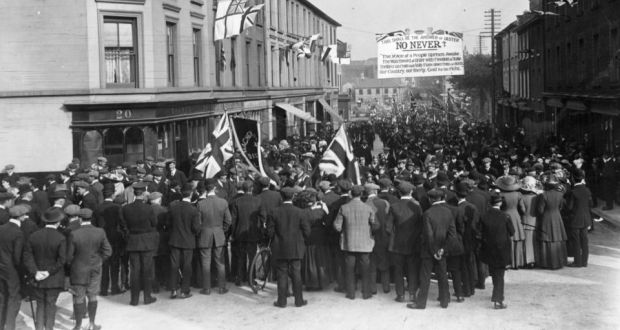
image

Ulster Unionists gather during the Home Rule Crisis in 1910

With war clouds gathering over Europe late 1913 and early 1914 the Irish crisis dropped on the list of priorities and by July 1914 John and Edward travelled to London. John being a man that liked adventure saw the gathering of war clouds as an opportunity for him to become involved.

John soon joined the 2nd Battalion King Edward’s Horse as a Private. With a chest full of medals it was not long before John was promoted to 2nd Lieutenant. During this time John met Nellie Green and soon John and Nellie were active in the London social life.

Gallipoli Campaign and his DSO

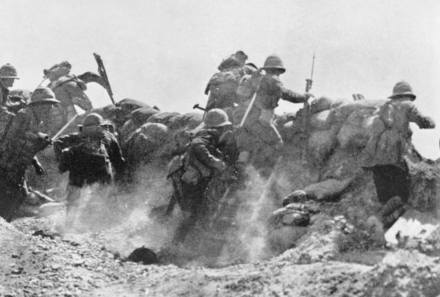
During the Gallipoli campaign a Jack Sherwood-Kelly, would command the King’s Own Scottish Borderers and would be decorated with a Distinguished Service Order (DSO) for his actions.
21414688_10155459245061480_8786904573958492543_o

Kings Own Scottish Borderers on the offensive during the Gallipoli Campaign

On 21 October 1915 John’s lungs got badly burned by gas from the Turks and he was evacuated to the hospital, but returned to the frontline on 28 October. After his return John led his men to in a frontal attack to capture a Turkish trench that was threatening his own forces. Only 6 men returned and John was wounded three times. For this John was awarded the Distinguish Service Order (DSO). The first South African to be awarded the DSO during World War One.

During his leave to recover his wounds, John married Nellie on 22 April 1916. Early May 1916 saw John recalled to the front once again in command of a battalion, this time the 1st Battalion Royal Inniskilling Fusiliers as part of the 29th Division preparing for the upcoming Battle of the Somme.

The Somme Offensive

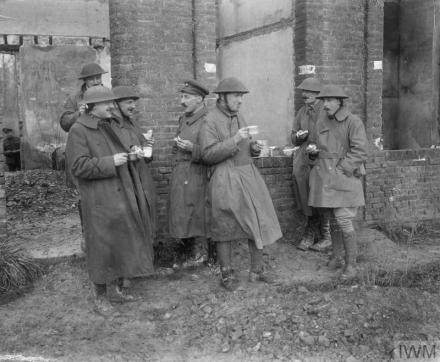
In France, leading his Battalion from the front during the fighting in the Beaumont Hamel sector John was shot through the lung and he was saved by Jack Johnson until he could be evacuated back to London.
somme

Officers of the Royal Inniskilling Fusiliers take a tea break during the Somme Offensive

During July 1916 John and his wife Nellie embarked on a recruiting tour to South Africa where John was received as hero. On his return to England in September 1916 John immediately reported for duty. John remained in England and on 29 November 1916 received his Distinguish Service Order (DSO) from King George V.

During November 1916 John was posted to the 3rd Battalion Kings Own Scottish Borderers as a Major. Very soon after arrival requested to be transferred to the 10th Norfolk Reserve Battalion

On 01 January 1917 John Sherwood Kelly was awarded the Distinguished Order of St Micheal and St George, Third Class or Companion, post nominal CMG. It is awarded for service to the Empire, partly for his recruiting drive in South Africa.

Ypres and Passchendaele

In February 1917 John was again posted to the Royal Inniskilling Fusiliers as Officer Commanding. Early part of 1917 saw a new British offensive in Vimmy and Arras which was followed by offensives in Ypres and Passchendaele. A smaller offensive was planned for November 1917 in the Cambrai sector, using the new weapon “the Mark 1 Tank”.

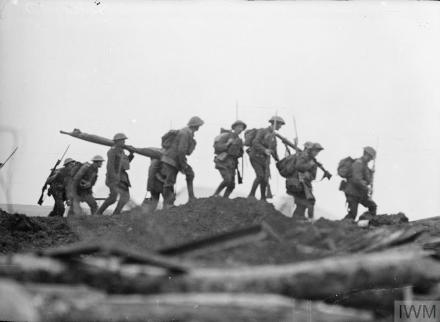
On 20 November 1917, the opening day of the first Battle of Cambrai, 87th Brigade advanced on Marcoing, three miles south-west of Cambrai. 1st Battalion, The Royal Inniskilling Fusiliers, crossed the Canal de St Quentin by the lock east of Marcoing copse.
cambri

Men of the Royal Inniskilling Fusiliers advancing in the Cambrai sector 20th November 1917

For his gallantry during the crossing of the canal and in leading the attack against the enemy defences on the far side, Acting Lieutenant Colonel John Sherwood-Kelly was awarded the highest accolade for bravery – the Victoria Cross. (VC)

Two companies of 1st Battalion, The Border Regiment, crossed the canal by the railway bridge at Marcoing and one at the lock by the railway station at the north-eastern outskirts of the town. During the action Sergeant C. E .Spackman was awarded the VC for attacking a machine-gun which threatened this advance.

In the same action John was also awarded the Victoria Cross (VC). His citation reads as follows:

“For most conspicuous bravery and fearless leading when a party of men of another unit detailed to cover the passage of the canal by his battalion were held up on the near side of the canal by heavy rifle fire directed on the bridge. Lieutenant Colonel Sherwood-Kelly at once ordered covering fire, personally led the leading company of his battalion across the canal and, after crossing, reconnoitred under heavy rifle fire and machine gun fire the high ground held by the enemy.

The left flank of his battalion advancing to the assault of this objective was held up by a thick belt of wire, where upon he crossed to that flank, and with a Lewis gun team, forced his way under heavy fire through obstacles, got the gun into position on the far side, and covered the advance of his battalion through the wire, thereby enabling them to capture the position.

Later, he personally led a charge against some pits from which a heavy fire was being directed on his men, captured the pits, together with five machine guns and forty six prisoners, and killed a large number of the enemy.

The great gallantry displayed by this officer throughout the day inspired the greatest confidence in his men, and it was mainly due to his example and devotion to duty that his battalion was enabled to capture and hold their objective”.

The Germans launched a counter attack which was successfully repelled by the 29th Division during which time Acting Captain A. M. Lascelles, another South African hero, of the 14th Durham Light Infantry who was also awarded a Victoria Cross (VC). John returned to a hospital in London having been gassed again.

On 11 January 1918 the London Gazette reported that John had been awarded the Victoria Cross which he received from King George on 23 January 1918 at Buckingham Palace.

North Russia

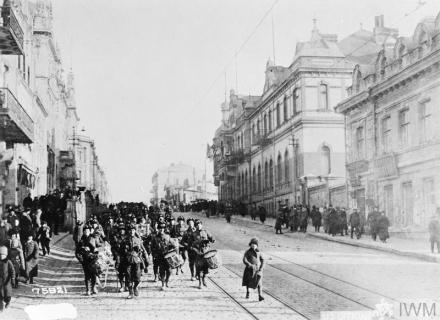
After the end of World War 1, John Sherwood-Kelly took command of the second Battalion of the Hampsire Regiment in the North Russian Campaign in July 1919.  Here he came under criticism from the British Command in Russia, firstly for withdrawing his troops from an attack against the Bolsheviks at Trotsia, he cited improper terrain to attack (it was a mash), no communication and stiff resistance from the Bolsheviks.

But the criticism did not stop there, in 1919 the British developed a new and more effective gas, they chose to trial it on the Bolsheviks. John Sherwood-Kelly was now in command of a very mixed outfit on the railway front as part of the Vologda Force, and he was ordered to carry out the attack on the Bolsheviks under the cover of a large ground discharge of this new poisonous gas.  John objected, possibly because of his experience of gas and wounds he had sustained from it, but also because he felt the objects of the raid could be achieved by other means which did not put his men to overt risk.
russia

Troops of the Hampshire Regiment in Vladivostok 1919

The gas attack did not take place, and John was relieved of his command and returned to Britain.  On arrival, he promptly went to the press and publicly criticised the British campaign in North Russia in the Daily Express and Sunday Express.

Incensed that such a highly decorated officer should be so critical, Churchill wanted an example made, and against all advise not to , John Sherwood Kelly was court marshalled on the 6th October 1919 on the grounds of contravening The Kings Regulations (which restricted officers from dealing with the media on military matters).

John pleaded guilty, but also entered a plea in mitigation, which read:

“I plead with you to believe that the action I took was to protect my men’s lives against needless sacrifice and to save the country from squandering wealth it could ill afford.”

He was found guilty and severely reprimanded. A man of very strong principle he resigned from the Army with the rank of Lieutenant Colonel just two weeks later and entered politics.

Politics

John Kelly-Sherwood stood for the Conservative Party and took part in two General Elections for the constituency of Clay Cross in Derbyshire. His controversial and outspoken style even struck a chord among hardened socialist supporters in this largely mining seat. He was defeated in the 1923 elections and again in 1924. However, true to his character, during the election rallies, Kelly again hit the national headlines having thrashed some hecklers at Langwith.

In later years, Kelly worked for Bolivia Concessions Limited building roads and railways across Bolivia and went big game hunting in Africa where he contracted malaria and died on the 18th August 1931.  He was granted a full military funeral and is buried at Brookwood Military cemetery in Surrey, England.

An incredibly brave man who stood head and shoulders above his peers, his military career and military exploits are nothing short of impressive, a proper leader of men and a pure South African warrior of the highest order. His Victoria Cross is displayed at the National Museum of Military History in Johannesburg for anyone who wants to learn more about South Africa’s finest.


Researched by Peter Dickens with extract from The VC and the GC, The Complete History, published by Methuen, The VC and GC Association in 2013, Wikipedia and Charles Ross’ article for The South African Legion with grateful thanks. Image copyrights – Imperial War Museum.
 

Why the Comrades Marathon is called the ‘Comrades’

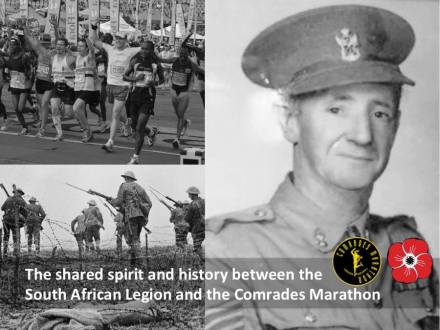
Did you know that “The Comrades Marathon” has a shared spirit and a shared history with The South African Legion of Military Veterans?

As the oldest military veterans organisation in South Africa, the South African Legion was formed at the 1921 Empire Conference (28 February to March 4) in Cape Town as the British Empire Services League (BESL, South Africa) by joining two organisations together – the “Returned Soldiers and Sailors Association” and the “Comrades of the Great War”, which co-incidentally is the organisation after which the term “Comrades” in Comrades Marathon is given.  In the course of history the “BESL South Africa” came to be called “The South African Legion of Military Veterans”.

bokclear3

In the same year – 1921 – Vic Clapham, a World War 1 veteran himself approached the “Comrades of the Great War” with a vision that would result in the worlds greatest ultra marathon nearly one hundred years later.

His idea was that if infantrymen, drafted into the armed forces from sedentary jobs, could endure forced marches over great distances, trained athletes could cover the distance between the two cities of Pietermaritzburg and Durban without great difficulty. Clapham, like the Legion, also wanted to remember those who had fallen in the war, and he felt the best way to honour this was by the ultimate testing of body and mind, and triumphing.

The Natal athletics body was not interested in the idea of a ultra marathon, and thought Clapham was quite mad, so undaunted by the set-back Clapham approached the British Empire Services League of South Africa (now known as the South African Legion), and asked permission to stage the race under their auspices. They ultimately agreed and financially underwrote the first race.

The first 1921 Comrades Marathon was run by Vic Clapham and included a field of 34  runners, of them Sixteen runners completed the 87, 9km (55 mile) downhill race from Pietermaritzburg to Durban. The race was won by Bill Rowan who finished in a time of 8:59:00 and his name is now given to the sub 9 hour medal in today’s race.

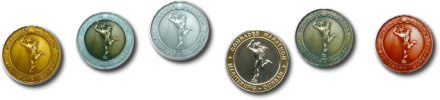
comradesmedals

Left to Right “Modern” Comrades medals

A gold medal for the top 10 finishers
A Wally Hayward for a sub-6 hour time
A Silver for a sub-7:30 time
A Bill Rowan for sub-9
A Bronze for sub-11 and finally
A Vic Clapham for sub-12

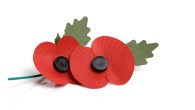
SALegion_FinalLogoLayout_GreenPrintTextAlthough The Comrades Marathon is an independent commercial concern now, The South African Legion has continued its association to the Comrades Marathon over the  years and encourages all participants to wear a Remembrance Poppy in recognition of this history and the sacrifice of the fallen.  In this respect the Comrades Marathon is still in fact a “living memorial” to the Great War (World War 1).
Related Work and Links

Living War Memorial: Comrades Marathon A ‘Living’ War Memorial, The Comrades Marathon

Living War Memorial: Red Cross Children’s Hospital A war memorial in Cape Town which saves children’s lives

Comrades Marathon; Bill Payn Comrades legend, Springbok and war veteran – the remarkable Bill Payn


Written and Researched by Peter Dickens

The ‘2 minutes silence’ is a South African gift to the Act of Remembrance

Many people do not know that the two minutes silence and its association to Armistice Day (11/11/11) or Remembrance Sunday has a South African origin.  It is one of our greatest gifts to humankind, yet most South Africans are completely oblivious of it.

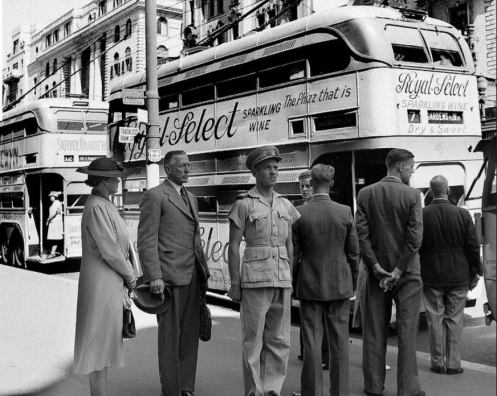
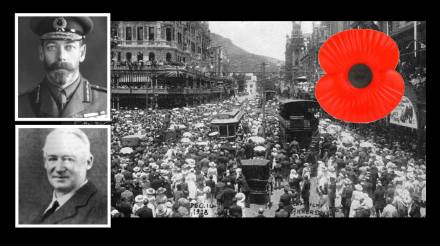
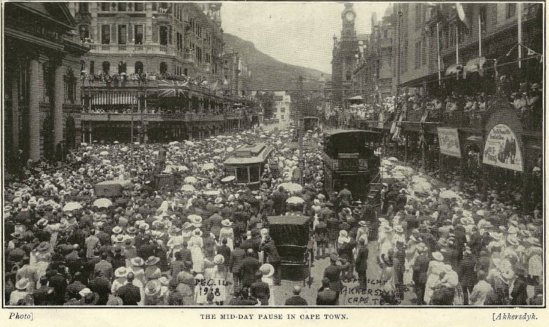
The featured image taken in 1918 is a rare and unique one, it shows South African civilians stopping what they are doing in the middle of Cape Town and standing to attention for two minutes silence, signalled when the noon day gun was fired.  Not common today in Cape Town but a daily occurrence during war years.  So how did this unique practice become a worldwide standard for remembrance?

Read on and learn a little why South Africans should stand proud of what they have given the world; when on Remembrance Sunday and on Armistice day in November, the western world stands silent in remembrance for two minutes … and take heart that this entire ceremony has South African roots.

The end of Word War 1 – Armistice Day 11/11/11

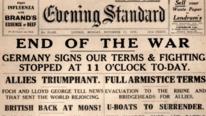
BgtOUCICMAAvwfLAt 05.30 in the morning of 11 November 1918 the Germans signed the Armistice Agreement in a remote railway siding in the heart of the forest of Compiègne. Soon wires were humming with the message : ‘Hostilities will cease at 11.00 today November 11th. Troops will stand fast on the line reached at that hour…’.Thus, at 11.00 on 11 November 1918 the guns on the Western Front in France and Flanders fell silent after more than four years of continuous warfare, warfare that had witnessed the most horrific casualties.World War One (then known as the Great War) had ended.
front

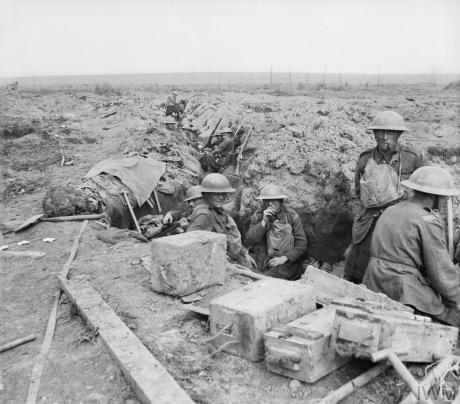
South African troops in a support trench on the Western Front, Fresenberg Ridge, 22 September 1917

The time and date attained an important significance in the post war years and the moment that hostilities ceased became universally associated with the remembrance of those that died in that and subsequent wars and conflicts. The Two Minutes silence to remember all who paid the supreme sacrifice was a result of this expression… and it all began in Cape Town, South Africa.

Cape Town’s unique remembrance during WW1 

When the first casualty lists recording the horrific loss of life in the Battles of the Somme were announced in Cape Town, Mr JA Eagar, a Cape Town businessman, suggested that the congregation of the church he attended observe a special silent pause to remember those in the South African casualty list. It was the church also attended by Sir Percy Fitzpatrick the famous South African author of “Jock of the Bushveld”.

In May 1918, the Mayor of Cape Town, Councillor H. Hands (later Sir Harry Hands) at the suggestion made by Mr. RR Brydon, a Cape Town City Councillor, in a letter to the Cape Times initiated a period of silence to remember the events unfolding on the battlefields of Europe and the sacrifices being made there. Mr Brydon’s son, Maj Walter Brydon, three times wounded and once gassed, was killed on 12 April 1918.

1391458_221953444641062_1918118670_n

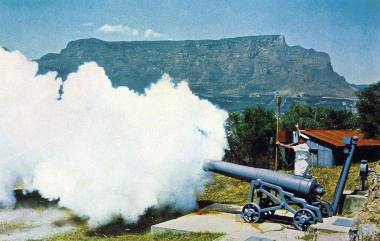
Cape Town’s noon day gun

The pause would follow the firing of the Noon Gun (a tradition instituted in 1902 and fired everyday at 12:00 from Signal Hill), simply put the gun was the most audible signal with which to co-ordinate the event across the city of Cape Town.

The boom of the gun signalling the midday pause of three minutes was heard for the first time on 14 May 1918.  It became the signal for all activity in the Mother City to come to a halt. Everything came to a dead stop while everyone bowed their heads in silent prayer for those in the trenches in Flanders.

As soon as the city fell silent, a trumpeter on the balcony of the Fletcher and Cartwright’s Building on the corner of Adderley and Darling Streets sounded the Last Post, the melancholy strains of which reverberated through the city. Reveille was played at the end of the midday pause.

Screen Shot 2017-04-21 at 16.36.05

Rare photo of the midday pause in Cape Town – 1918

Articles in the newspapers described how trams, taxis and private vehicles stopped, pedestrians came to a halt and most men bared their heads. People stopped what they were doing at their places of work and sat or stood silently. The result of the Mayor’s appeal exceeded all expectations.

One journalist witnessing the midday pause described a young woman dressed in black, who came to a halt on the pavement and furtively dabbed at her eyes with a handkerchief. “One could not but wonder what personal interest she had in the act of remembrance”, he wrote.

A few days later Sir Harry, whose son, Capt Richard Hands, a member of ‘Brydon’s Battery’, had been mortally wounded in the same battle in which Maj Brydon had been killed, decided to shorten the duration of the pause to two minutes, “in order to better retain its hold on the people”.

In terms of the meaning of “two minutes” it was also argued that the first minute is for thanksgiving for those that survived war and the second minute is to remember the fallen.

There is even an eye-witness account of the midday pause in 1918 which eloquently outlines the event – see the Observation Post story on it by following this link: The 2 minutes silence; an eye witness account of South Africa’s unique gift to Remembrance

The midday pause continued daily in Cape Town and was last observed on 17 January 1919, but was revived in Cape Town during the Second World War.  This is another rare photo of soldiers and civilians paused and standing at attention for two minutes of silence on Cape Town’s streets in 1942.

21521_10153711878346480_96703057814447340_n

Rare photo of the midday pause of Remembrance in Cape Town during World War 2 – 1942

Today, the tradition of the midday gun has continued, as any Capetonian can attest – regular as clockwork it goes off at 12:00, and although the pause is no longer part of the ritual in Cape Town, the idea of the ‘pause’ for two minutes remembrance has survived.

That this ritual survived is by no means in a small way either, but in such a way that it now concludes how we as modern human beings in the western world remember the war dead and sacrifice.  It started when it became the official two minute ‘pause’ throughout Britain and the British Commonwealth from 11 November 1919, and here is how that came about, and once again – surprise – we have a South African from Cape Town right at the centre of it.

Step in Sir Percy Fitzpatrick 

Now, back to Sir Percy Fitzpatrick.  He had been impressed by the period of silence kept in his local church after the horrific loss of life at Delville Wood became known and the casualty lists had been read out. He had a personal interest in the daily remembrance as his son, Maj Nugent Fitzpatrick, battery commander of 71st Siege Battery, was killed on 14 December 1917 by a chance shell fired at long range.

Sir Percy was understandably deeply affected by the loss of his favourite son and was also so moved by the dignity and effectiveness of the two minute pause in Cape Town that the date and time of the Armistice inspired him to an annual commemoration on an Imperial basis.

The King Decrees 

Sir Percy then wrote to Lord Milner and described the silence that fell on the city during this daily ritual. Taking into consideration that the guns of war finally fell silent at 11:00 on the 11th day of the 11th month (November), Sir Percy felt that the idea of observing the two-minute silence at that time and on that date, would give the Act of Homage great impact, and proposed that this became an official part of the annual service on Armistice Day.

The meaning behind Sir Percy’s proposal was stated as:

It is due to the women, who have lost and suffered and borne so much, with whom the thought is ever present.
It is due to the children that they know to whom they owe their dear fought freedom.
It is due to the men, and from them, as men.
But far and away, above all else, it is due to those who gave their all, sought no recompense, and with whom we can never re-pay – our Glorious and Immortal Dead.

Sir Percy’s letter was received by Lord Milner on November 4, 1919, reviewed and accepted by the War Cabinet on November 5, and was immediately approved by King George V.

George V, then King of the United Kingdom, shortly afterwards on the 7th November 1919, proclaimed by decree.

“Tuesday next, November 11, is the first anniversary of the Armistice, which stayed the worldwide carnage of the four preceding years and the victory of Right and Freedom. I believe that my people in every part of the Empire fervently wish to perpetuate the meaning of the Great Deliverance, and of those who laid down their lives to achieve it.

To afford an opportunity for the universal expression of their feeling, it is my desire and hope that at the hour when the Armistice comes into force, the eleventh hour of the eleventh day of the eleventh month, there may be for a brief space of two minutes, a complete suspension of all our normal activitiy that at the hour when the Armistice came into force, the 11th hour of the 11th day of the 11th month, there may be for the brief space of two minutes a complete suspension of all our normal activities … so that in perfect stillness, the thoughts of everyone may be concentrated on reverent remembrance of the glorious dead.

Sir Percy when he heard the news that his suggestion had reached the King stated: “I was so stunned by the news that I could not leave the hotel. An hour or two afterwards I received a cable from Lord Long of Wexhall: ‘Thank you. Walter Long.’ Only then did I know that my proposal had reached the King and had been accepted and that the Cabinet knew the source.”

Later, Sir Percy was thanked for his suggestion of the two minute silence by Lord Stamfordham, the King’s Private Secretary who wrote:

Dear Sir Percy,
The King, who learns that you are shortly to leave for South Africa, desires me to assure you that he ever gratefully remembers that the idea of the Two Minute Pause on Armistice Day was due to your initiation, a suggestion readily adopted and carried out with heartfelt sympathy throughout the Empire.
Signed – Stamfordham

And so the tradition of 2 minutes of silence during remembrance occasions was born, a unique South African gift to world, a simple peaceful gesture that in deep solitude remembers the end of all war – not the beginning.

supporting-poppy-appeal


Story and images researched by Peter Dickens.

Image copyrights include The Imperial War Museum and “The Celebration of Peace” Booklet, issued in 1919 by the Cape Town Peace Celebrations committee for distribution throughout the Schools of the Cape Peninsula.

‘Proccy’ – The Highest Decorated South African

Honouring South African heroes and this is one of South Africa’s greatest – in fact he is the highest decorated South African in our military history. Many people don’t know that South Africa has its own World War 1 flying ace and Victoria Cross winner, and this ‘small’ hero comes with some very ‘big’ credentials, he is regarded as the all time highest decorated South African in terms of sheer seniority of the bravery decorations he won (there is a distinction between ‘most’ decorated i.e. number of decorations and medals –  and the ‘highest’ decorated).

Proc1

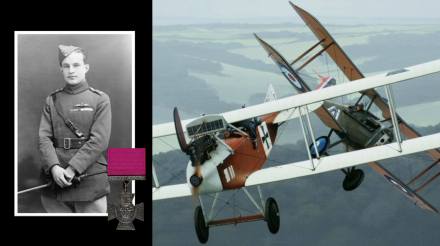
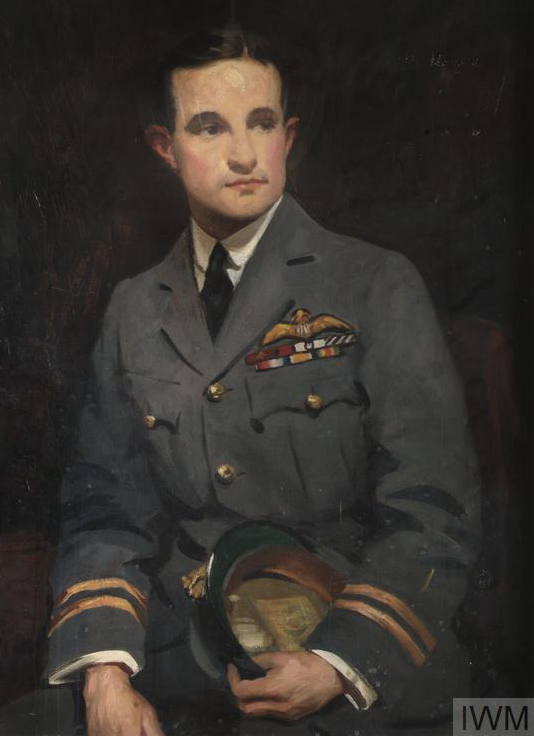
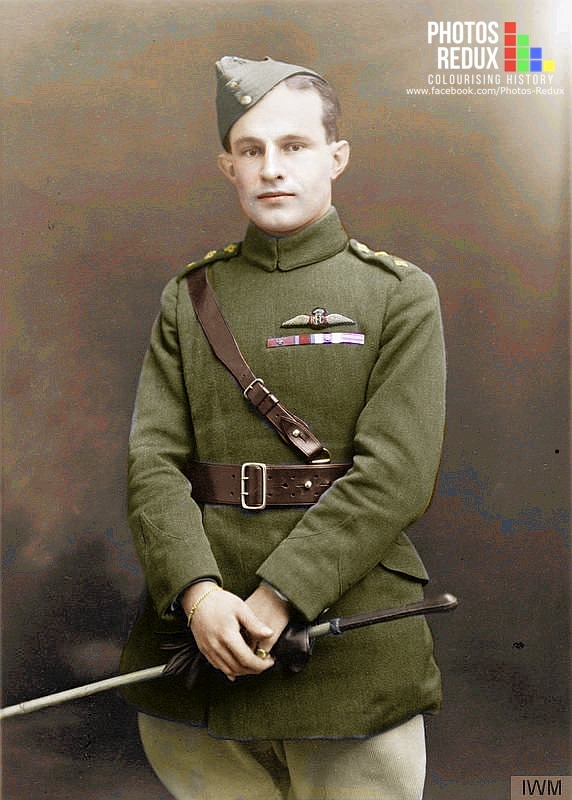
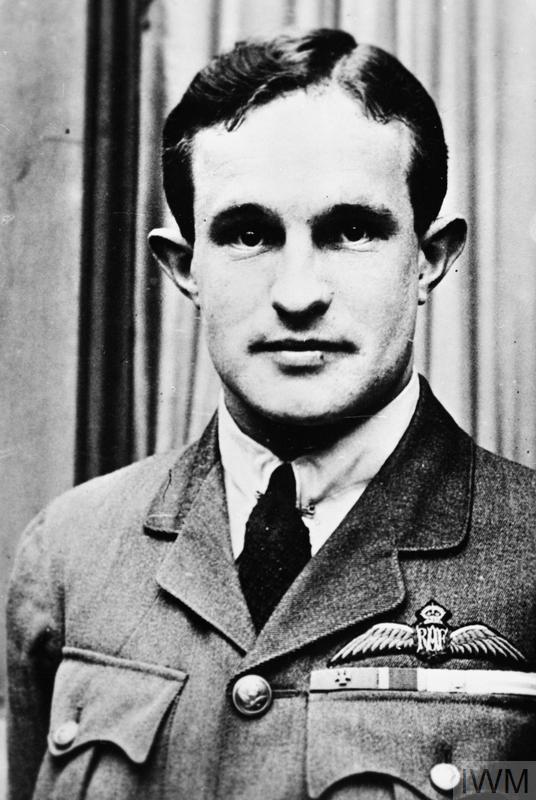
Andrew Beauchamp-Proctor, known to his colleagues and friends simply as ‘Proccy’, was South Africa’s leading First World War flying ace, claiming a staggering 54 aerial victories to his name.

He was born on 4 September 1894 in Mossel Bay, South Africa, and was studying engineering at the University of Cape Town when war broke out. He joined the Union of South Africa Army – the Duke of Edinburgh’s Own Rifles and took part in the German South West Africa campaign, before being demobilised in August 1915 with an honorable discharge. He promptly went to work with the South African Field Telegraph and re-enrolled in university. He managed to complete his third year of college before re-enlisting again, this time with the Royal Flying Corps (he was one of “The Thousand” – the first South Africans to go to England for combat service on the Western Front).

Royal Flying Corps

Andrew Beauchamp-Proctor joined the Royal Flying Corps in March 1917, he was commissioned upon his arrival in England and underwent pilot training.  Despite being only 5′ 2″ tall, so short that he had to use two leather cushions in order to see out of a standard cockpit, he proved an excellent pilot and on completion of training was posted to 84 Squadron in late July 1917.  The squadron, commanded by Major William Sholto Douglas (who would later become OC Fighter Command during the Second World War) was equipping with the then-new S.E.5a.

On 23 September 1917, the 84 Squadron went to France and became one of the most effective scout squadrons in the RFC/RAF (Royal Air Force) during 1918. The squadron would be credited with a victory total of 323 aerial victories, and would produce 25 aces. However, Beauchamp-Proctor would be pre-eminent, with almost triple the number of successes of the second leading ace. He was not particularly esteemed as a flier, but was a deadly shot.

Beauchamp-Proctor’s piloting skills can be judged by the fact he had three landing accidents before he ever shot down an enemy plane. He continued to fly the SE5 with modifications to the aircraft’s seat and controls, something his Philadelphia-born American squadron mate, Joseph “Child Yank” Boudwin, who stood only two inches taller also had to use. The alterations to relatively primitive controls could have contributed to Beauchamp-Proctor’s poor airmanship.

dhm1764pc
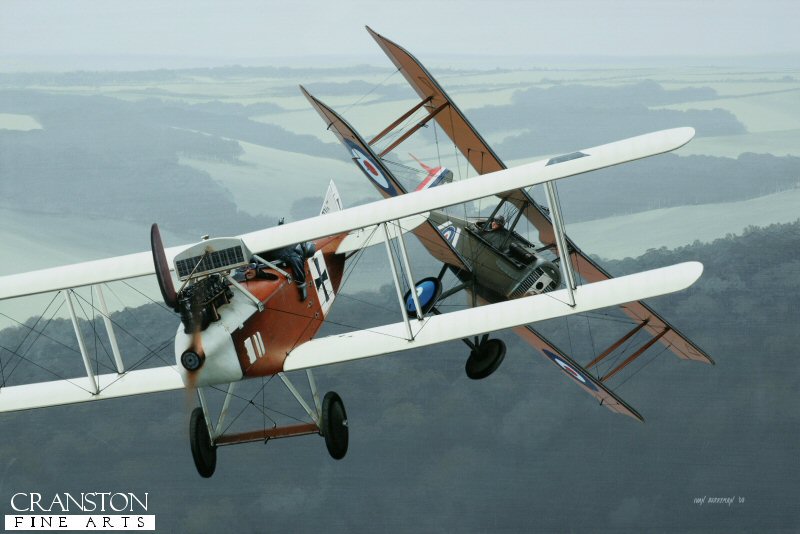
Captain Andrew Beauchamp-Proctor by Ivan Berryman

His initial confirmed victory did not come until the turn of the year. On 3 January 1918, he sent a German two-seater ‘down out of control’. He then claimed four more victories in February, becoming an ace on the final day of the month. Only one of his five victories resulted in the destruction of an enemy; the others were planes sent down as ‘out of control’.

March brought four more victories; three of them were scored within five minutes on 17 March. He tallied one kill in April.

Among his 11 victories for the month of May were 5 on 19 May. On that morning, he knocked an enemy observation plane out of the battle; fifteen minutes later, he destroyed a German Albatros D.V. scout. That evening, at about 6:35 PM, he downed three more Albatros D.Vs. By 31 May, his roll had climbed to 21 victims—16 fighters and five observation aircraft. By this point, he had destroyed six enemy planes single-handed, and shared the destruction of two others. He drove ten down out of control, and shared in another ‘out of control’ victory. Two of his victims were captured. Certainly a creditable record, and like many other aces, with no conquests over balloons.

The next day marked a change of focus for him; he shot down an observation balloon. Balloons, guarded by anti-aircraft artillery and patrolling fighter airplanes, were very dangerous targets. Commonly they were hunted by coordinated packs of fighters. For the remainder of his career, he would choose to try to blind the enemy by concentrating on shooting down kite balloons and observation aircraft. Also notable is the drop in his “out of control” victories; from here on out, the record shows destruction after destruction of the enemy. His June string would only run to 13 June, but in that time, he would destroy four balloons, an observation two-seater and a fighter. Only one fighter went down out of control. On 22 June, he was awarded the Military Cross (MC).

36233118_2167802276782092_3966546802030673920_o

July would pass without incident. On 3 August, he was granted one of the first ever Distinguished Flying Crosses (DFC).

The break in his victory string lasted almost a month, as he went on home leave and helped a recruitment drive for the RAF. On 8 August, he returned and resumed with tally number 29, another balloon.

On 9 August, Beauchamp-Proctor was leading No. 84 Squadron on a patrol over their base at Bertangles, with the diminutive American Joseph “Child Yank” Boudwin and a ‘Giant’ – the six-foot-four tall fellow South African from Germiston – Hugh ‘Dingbat’ Saunders as his wingmen (‘Dingbat’ Saunders would go to become another South African ace, Air Marshal and Knight of the realm – but that is a different story for another day).

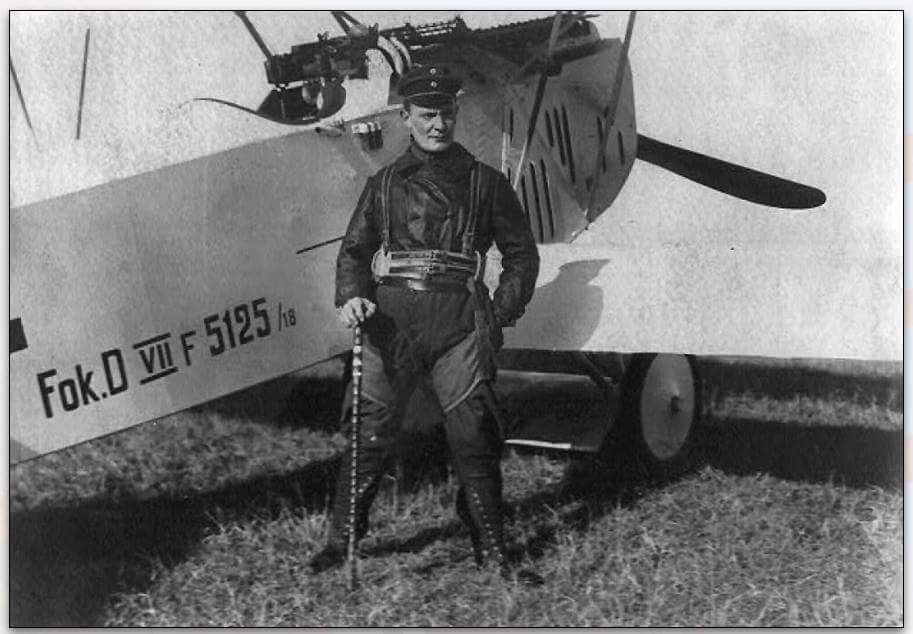
This unusual threesome of two very short chaps ‘Proccy’ and ‘Child Yank’ ‘and one very tall chap ‘Dingbat’ got involved in a heated engagement at 2:00 pm, that involved them in combat against Fokker D.VII fighters of JG I , led that day by the future Nazi Reichsmarschall Hermann Göring.

291ed3d3b624c22e8f9f9d7c2cb55015
Hermann Göring in his Fokker D.VII fighter during WW1

After World War 1, Hermann Göring was to become Adolf Hitler’s right hand man and one of the most powerful figures in the Nazi party that ruled Germany from 1933 to 1945 and took Germany to its darkest place in history.  But that was well in the future, over the western front battlefields of World War 1 Göring was a veteran fighter pilot, and fighter ace, he was even a recipient of the The Blue Max (the highest German bravery award). He was also eventually the last commander of  the famous ‘flying circus’ Jasta 1, the fighter wing once led by ‘The Red Baron’ Manfred von Richthofen.

Unfortunately for both our two South Africans ‘Proccy’ and ‘Dingbat’ and the American ‘Child Yank’ – and the entire world really, none was unsuccessful at bagging Herman Göering and adding him to their kill totals.

‘Proccy’ would eventually claim an additional 14 aircraft, and by the end of the month of August with his claims list extended to 43. One memorable day was 22 August; he attacked a line of six enemy balloon over the British 3rd Corps front. He set the first one afire with his machine guns and forced the other five to the ground, the observers taking to their parachutes. His 15 kills for August would include 5 balloons, all destroyed, and two more two-seater planes. He was now up to 43 victories.

His September claims would be all balloons – four of them.

In the first few days of October, he would destroy three more balloons and three Fokker D.VII  fighters, one of which burned. Another D.VII spun down out of control.

On 8 October, he was hit by ground fire and wounded in the arm, ending his front line service. In all ‘Proccy’ Beauchamp-Proctor’s victory total was 54; two (and one shared) captured enemy aircraft, 13 (and three shared) balloons destroyed, 15 (and one shared) aircraft destroyed, and 15 (and one shared) aircraft ‘out of control’ His 16 balloons downed made him the leading British Empire balloon buster.

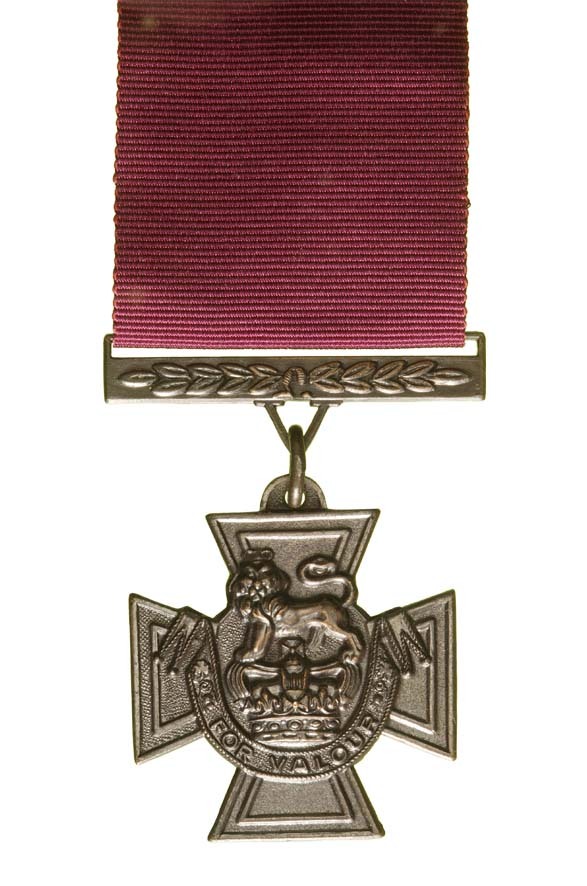
On 2 November, he was awarded the Distinguished Service Order, followed by the Victoria Cross on 30 November.  His Victoria Cross citation explains in detail:

Victoria Cross (VC)

Between 8 August 1918, and 8 October 1918, this officer proved himself victor in 26 decisive combats, destroying 12 enemy kite balloons, 10 enemy aircraft, and driving down 4 other enemy aircraft completely out of control. Between 1 October 1918, and 5 October 1918, he destroyed 2 enemy scouts, burnt 3 enemy kite balloons, and drove down one enemy scout completely out of control.

medal

On 1 October 1918, in a general engagement with about 28 machines, he crashed one Fokker biplane near Fontaine and a second near Ramicourt; on 2 October he burnt a hostile balloon near Selvjgny; on 3 October he drove down, completely out of control, an enemy scout near Mont d’Origny, and burnt a hostile balloon; on 5 October, the third hostile balloon near Bohain. On 8 October 1918, while flying home at a low altitude, after destroying an enemy 2-seater near Maretz, he was painfully wounded in the arm by machine-gun fire, but, continuing, he landed safely at his-aerodrome, and after making his report was admitted to hospital.

In all he has proved himself conqueror over 54 foes, destroying 22 enemy machines, 16 enemy kite balloons, and driving down 16 enemy aircraft completely out of control. Captain Beauchamp-Proctor’s work in attacking enemy troops on the ground and in reconnaissance during the withdrawal following on the Battle of St. Quentin from 21 March 1918, and during the victorious advance of our Armies commencing on 8 August, has been almost unsurpassed in its brilliancy, and as such has made an impression on those serving in his squadron and those around him that will not be easily forgotten.

Capt. Beauchamp-Proctor was awarded Military Cross on 22 June 1918; D.F. Cross on 2 July 1918; Bar to M.C. on 16 September 1918; and Distinguished Service Order on 2 November 1918

The bravest of the brave

To make him the ‘highest’ decorated South African in history, as there is already a small group of South Africans who won the ‘highest decoration’ i.e. Victoria Cross in World War 1 (14 officially in total) and World War 2 (5 in total), Beauchamp-Proctor would also need to have another ‘next’ most senior decoration, he did this with obtaining a Distinguished Service Order (DSO) and a Military Cross (MC).  This puts him on the same level as Percy Hansen, who also won a VC, DSO and MC, the difference, the one which places Beauchamp-Proctor at the top, is that he won the Military Cross twice (with bar) in addition to another decoration – the Distinguished Flying Cross (DFC).

The citations for these decorations are impressive enough on their own, there are as follows:

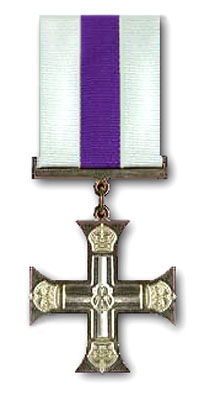
Military Cross (MC)

MilitaryCrossWW1

For conspicuous gallantry and devotion to duty. While on offensive patrol he observed an enemy two-seater plane attempting to cross our lines. He engaged it and opened fire, with the result that it fell over on its side and crashed to earth. On a later occasion, when on patrol, he observed three enemy scouts attacking one of our bombing machines. He attacked one of these, and after firing 100 rounds in it, it fell over on its back and was seen to descend in that position from 5,000 feet. He then attacked another group of hostile scouts, one of which he shot down completely out of control, and another crumpled up and crashed to earth. In addition to these, he has destroyed another hostile machine, and shot down three completely out of control. He has at all times displayed the utmost dash and initiative, and is a patrol leader of great merit and resource.

MC citation, Supplement to the London Gazette, 22 June 1918

Military Cross (MC) Bar

bar

For the award of a Bar to the Military Cross ( MC ) i.e. winning a second Military Cross in addition to Andrew Beauchamp-Proctor’s first MC.

For conspicuous gallantry and devotion to duty while leading offensive patrols. He has lately destroyed three enemy machines, driven down one other completely out of control, and carried out valuable work in attacking enemy troops and transport on the ground from low altitudes. He has done splendid service.

London Gazette, 18 September 1918

Distinguished Flying Cross (DFC)

DFCLG

Lt. (T./Capt.) Andrew Weatherby Beauchamp-Proctor, M.C.

A brilliant and fearless leader of our offensive patrols. His formation has destroyed thirteen enemy machines and brought down thirteen more out of control in a period of a few months. On a recent morning his patrol of five aeroplanes attacked an enemy formation of thirty machines and was successful in destroying two of them. In the evening he again attacked an enemy formation with great dash, destroying one machine and forcing two others to collide, resulting in their destruction.

DFC citation, Supplement to the London Gazette, 3 August 1918

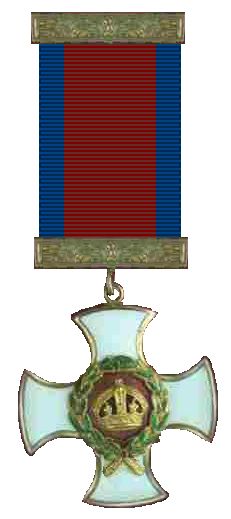
Distinguished Service Order (DSO)

Distinguished_Service_Order_correct

A fighting pilot of great skill, and a splendid leader. He rendered brilliant service on 22 August, when his Flight was detailed to neutralise hostile balloons. Having shot down one balloon in flames, he attacked the occupants of five others in succession with machine-gun fire, compelling the occupants in each case to take to parachutes. He then drove down another balloon to within fifty feet of the ground, when it burst into flames. In all he has accounted for thirty-three enemy machines and seven balloons.

DSO citation, Supplement to the London Gazette, 2 November 1918

That’s a lot of hefty decorations for gallantry and bravery and it makes Beauchamp-Proctor ‘the bravest of the brave’ when it comes the very bravest men South Africa has ever produced.

Post War

Proc2

He was discharged from hospital in March 1919 and embarked on a four-month-long lecture tour of the USA, before returning to England and qualifying as a seaplane pilot with a permanent commission as a Flight Lieutenant in the RAF.

After his VC investiture at Buckingham Palace in November 1919 he was awarded a year’s leave, and this enabled him finish his BSc degree in Engineering.

Beauchamp-Proctor died during a training accident at RAF Hendon in England, on the 21st June 1921 whilst preparing for an air-show.  His aircraft went into a vicious spin after performing a slow loop, and he was killed in the ensuing crash. At least one observer remarked that the loss of control and subsequent crash of the aircraft could have been linked to Proctor’s diminutive size, as noted earlier because of his size, Beauchamp-Proctor had to sit on a cushion to operate his aircraft and the cushion fell out during the loop, rendering him in a difficult position to adequately operate his aircraft and recover the manoeuvre.  He was buried in Mafeking (his home town) in South Africa, following a state funeral.

In Conclusion

There still exists a little confusion over Beauchamp-Proctor’s given name. For decades he was listed as “Anthony” but more recent scholarship indicates “Andrew”, which  is the name on his tombstone.  Whether ‘Proccy’ was an Andrew or Anthony, it matters not a jot, this man epitomised ‘dynamite in a small package’ – ‘Proccy’ was and still remains the bravest of all South Africans to have been awarded gallantry decorations – without any doubt – the ‘Bravest of the Brave’.

36242418_2167827886779531_7890373316714692608_o

Links to other South African World War 1 Victoria Cross recipients

Reginald Hayward VC  “Superhuman powers of endurance and courage” Reginald Hayward VC

William F. Faulds VC Taking gallantry at Delville Wood to a whole new level; William Faulds VC MC

Sherwood Kelly VC “…. a Herculean of Irish-South African origin with a quite remarkable disregard for danger”.

Percy Hansen VC One Lucky Charm wins the Victoria Cross; Percy Hansen VC, DSO, MC

Other South Africans in 84 Squadron during WW1

Hugh ‘Dingbat’ Saunders – Sir ‘Dingbat’ the Knight


Researched and written by Peter Dickens

Image copyright Imperial War Museum Collection.  Portrait by Cowen Donson, Imperial War Museum collection copyright.  Painting Captain Andrew Beauchamp-Proctor by Ivan Berryman – Granston Fine Art. Colourised IWM portrait, thanks to Photos Redux

South Africans in the Battle of Menin Road Ridge – WW1

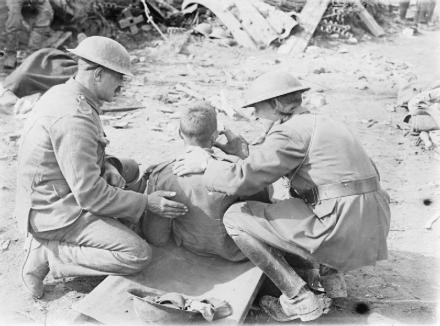
Rare photo of South Africans in action during World War One. Battle of the Menin Road Ridge; part of the Ypres initiatives. A wounded South African being given a hot drink by a Padre and a comrade, after the attack on Potsdam (a German stronghold near Zonnebeke). Near Potijze, 20 September 1917.

Image copyright – The Imperial War Museum