Two South Africans seconded to the Royal Marines were awarded the Military Cross for gallantry on D-Day. This is the citation for one of them Lieutenant Cecil Arthur Douglas Bircher, South African Forces (attached to the Royal Marines).
“Lieutenant Bircher was Officer Commanding Troops in a Landing Craft Tank known as a LCT(A) carrying part of his troop. The craft engines broke down and it was towed from a position off the Isle of Wight to the assault area by a LCT and a LCI. On 6th June 1944 when approaching the beach at Bernieres-sur-Mer these craft had to cast off the LCT(A) which was left drifting sideways in a strong tide about 150 yards from the beach.
Although there was a heavy sea running and the beach was still under close range fire, Lieutenant Bircher, without hesitation plunged into the water and swam about 100 yards to the shore with the beach lines. On arrival on the beach he secured the lines to some stakes, enabling his craft to beach, and disembarked his section of Centaur tanks.
He subsequently led his section from the Canadian Sector in which he had landed into the sector of the 50th (N) Division to which he was attached although enemy opposition still persisted between the two sectors . Throughout the operation Lieutenant Bircher showed personal courage of the highest order and unflinching determination in the most adverse conditions to get his guns into action at the right time and place.”
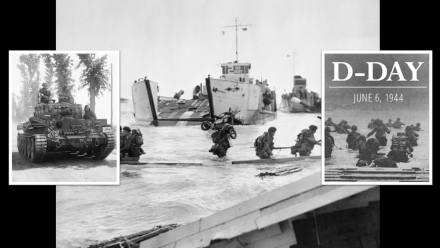
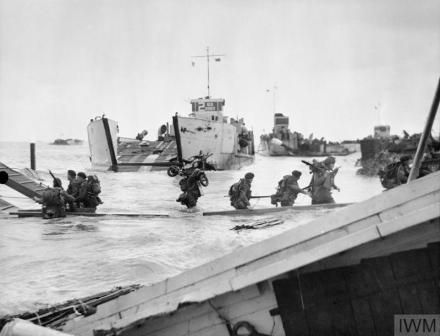
The chosen image shows Commandos of HQ 4th Special Service Brigade, coming ashore from landing craft on Nan Red beach, Juno area, at St Aubin-sur-Mer, 6 June 1944. An LCT (Landing Craft Tank) of the type that Lt Bircher was commanding troops in can be seen in the background.
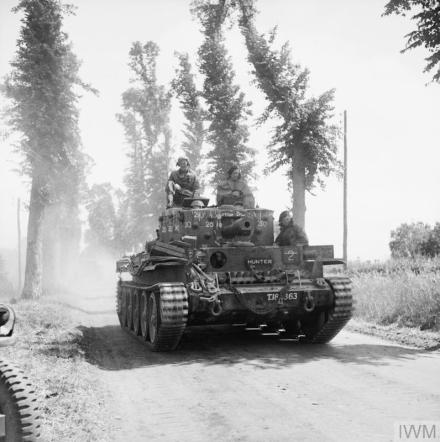
The type of tanks Lieutenant Bircher was off-loading from the LCT were Centaur IV tank of the Royal Marines Armoured Support Group, here is an image of one during Operation Overlord at Tilly-sur-Seulles, 13 June 1944.
Related Links and work on South Africans during D-Day
Posted by Peter Dickens. Image copyright – Imperial War Museum. Caption and citation reference ‘South Africa’s D Day Veterans’ by Cdr W.M. Bisset – SA Naval Museum.
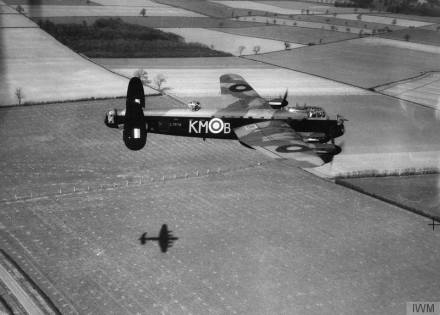
Rare that we see an image of a South African Victoria Cross recipient in action, but this is one such image. Flying this exact Avro Lancaster bomber is a Natal lad – Squadron Leader John Dering Nettleton VC. Now, not many South Africans have heard of him – and why is that?
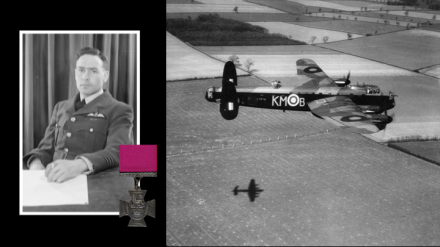
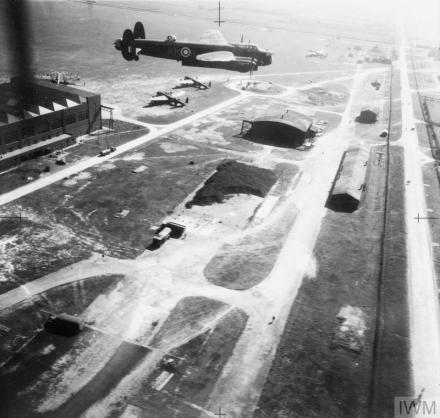
Lancaster B Mark I, L7578 KM-B, of No.97 Squadron RAF, piloted by Squadron Leader J D Nettleton of No. 44 Squadron RAF, flying at low-level over the Lincolnshire countryside during a Squadron practice for the low-level attack on the M.A.N. diesel engineering works at Augsburg. 97 Squadron lent L7578 temporarily to 44 Squadron, who repainted the aircraft with Nettleton’s unit code-letters. Nettleton actually flew R5508 on the operation.
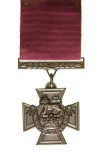
Nettleton is another true South African hero and recipient of the Victoria Cross (VC), the highest and most prestigious award for gallantry in the face of the enemy that can be awarded to British and Commonwealth forces. His VC was one of five awarded to South Africans in World War 2 – however very little is known of their stories in South Africa.
Of South Africa’s VC winners during World War 2 only two are commonly referred to, they are Quentin Smythe VC – see Profiling a true South African Hero – Sgt. Quentin Smythe VC and Edwin Swales VC – see Edwin Swales VC DFC, a South African Hero whose legacy has been eroded! The reason these two are more commonly known is largely because Quentin Smythe VC served in The South African Army and Edwin Swales VC – although a SAAF member attached to the Royal Air Force, had strong ties to his Alma Mater – Durban High School (DHS) who have largely driven his legacy in Durban. But what of the other three; George Gristock VC, Gerard Norton VC and our hero today, John Nettleton VC?
Simply put, after the war, the National Party came to power in 1948 they almost immediately dismissed all South Africans who had served in the war as ‘traitors’ to the country for supporting what they saw as ‘Britain’s war’. During the war the Nationalists had vocally supported Nazi Germany (as Germany had supported the Boer cause during the 2nd Anglo Boer War and Afrikaner nationalism was grounded on punitive British measures taken out on the Boers during this war), many Nationalists had even adopted national socialism and embarked on sedition during the war (see “Mein Kampf shows the way to greatness for South Africa” – The Ossewabrandwag).
For the Nationalists, on the top of the list of ‘traitors’ were the South Africans who distinguished themselves winning Victoria Crosses whilst serving in ‘British’ Regiments or Arms of Service. These were men, who in the eyes of the Nationalists, served the hated British and were not to heralded as heroes, lest their deeds specifically influence young South Africans. For this reason very little in South Africa is named or honoured in the names of Gristock, Norton or Nettleton.
So lets pull away this veil and reveal some true South African heroes whose very noble exploits and deeds in ridding the world of Nazism all of us as can stand very proud of. What better way to start with John Nettleton VC – this is his story.
Avro Lancaster flown by Squadron Leader J D Nettleton, about to cross the western perimeter of RAF Waddington, Lincolnshire with bomb doors open during a practice run.
John Dering Nettleton was born on 28 June 1917 in Nongoma, Natal Province, South Africa, the grandson of Admiral A T D. Nettleton, he was educated at Western Province Preparatory School (WPPS) in Cape Town from 1928-30, Nettleton served as a Naval cadet on the General Botha training ship and then for 18 months in the South African Merchant Marine. He took up civil engineering, working in various parts of South Africa.
Commissioned in the Royal Air Force in December 1938, he then served with Nos. 207, 98 and 185 Squadrons before joining 44 (Rhodesia) Squadron flying the Handley Page Hampden. He took part in a daylight attack on Brest on 24 July 1941 and in a series of other bombing raids and was mentioned in dispatches in September 1940.
John Dering Nettleton VC
Nettleton was promoted Flying Officer in July 1940, Flight Lieutenant in February 1941 and was a Squadron Leader by July 1941. No. 44 Squadron was based at RAF Waddington, Lincolnshire at this time and had taken delivery of Lancasters in late 1941
.In 1942 a daylight bombing mission was planned by RAF Bomber Command against the MAN diesel engine factory at Augsburg in Bavaria, responsible for the production of half of Germany’s U‑boat engines. It was to be the longest low‑level penetration so far made during World War II, and it was the first daylight mission flown by the Command’s new Avro Lancaster.
Nettleton’s citation for his Victoria Cross is quite explanatory of the attack and the rest of the story picks up from here:
Citation:
Squadron Leader Nettleton was the leader of one of two formations of six Lancaster heavy bombers detailed to deliver a low-level attack in daylight on the diesel engine factory at Augsburg in Southern Germany on April 17th, 1942. The enterprise was daring, the target of high military importance. To reach it and get back, some 1,000 miles had to be flown over hostile territory.
Soon after crossing into enemy territory his formation was engaged by 25 to 30 fighters. A running fight ensued. His rear guns went out of action. One by one the aircraft of his formation were shot down until in the end only his and one other remained. The fighters were shaken off but the target was still far distant. There was formidable resistance to be faced.
With great spirit and almost defenceless, he held his two remaining aircraft on their perilous course and after a long and arduous flight, mostly at only 50 feet above the ground, he brought them to Augsburg.
Here anti-aircraft fire of great intensity and accuracy was encountered. The two aircraft came low over the roof tops. Though fired at from point blank range, they stayed the course to drop their bombs true on the target. The second aircraft, hit by flak, burst into flames and crash-landed. The leading aircraft, though riddled with holes, flew safely back to base, the only one of the six to return.
Squadron Leader Nettleton, who has successfully undertaken many other hazardous operations, displayed unflinching determination as well as leadership and valour of the highest order
Citation ends.
Nettleton survived the incident, his damaged Lancaster limping back to the UK, finally landing near Blackpool. His VC was gazetted on 24 April 1942.
Squadron Leader J D Nettleton VC signing his autograph for a factory worker on a visit to open a munitions factory, North Wales.
Nettleton died on 13 July 1943, returning from a raid on Turin in Italy by 295 Lancasters. His Lancaster took off from Dunholme Lodge and was believed to have been shot down by a fighter off the Brest peninsular. FW 190s of 1./SAGr.128 and 8./JG 2 scrambled from bases near Brest in the early hours of 13 July, and at 06:30am intercepted the bomber stream.
A total of eight bombers were claimed, and at least three Lancasters were almost certainly shot down by the German fighters, one of whom was Nettleton. His body and those of his crew were never recovered. All are commemorated on the Runnymede Memorial.
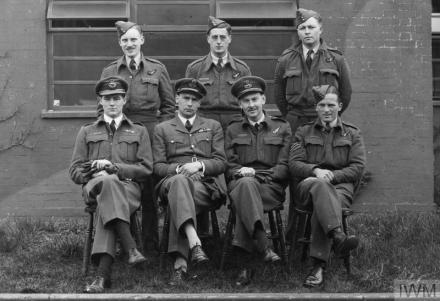
Group photograph of Squadron Leader J D Nettleton (sitting, second from left) and his crew, photographed on their return to Waddington, Lincolnshire, after leading the low-level daylight attack on the M.A.N. diesel engineering works. 17 April 1942.
The truly unfortunate thing about these heroes is that due to political prejudice – starting with the National Party from their election to power in 1948 (post WW2) and now the current political dispensation in South Africa, the African National Congress (ANC) – these VC recipients are almost unclaimed and unknown. The result is that very little is commemorated to their memories in South Africa today.
With no known grave there are very few memorials to John Nettleton VC in South Africa, no roads or state institutions are named after him, nothing really significant in his own country acknowledges him (other than the General Botha training ship which have a acknowledgement to this one of the two ‘sailor’ airmen to serve in the RAF). Like his fellow General Botha training ship compatriot ‘Sailor Malan’, this ‘sailor’ – John Nettleton was also proud to wear the ‘South Africa’ shoulder title on his Royal Airforce uniform (as with all the South African pilots who served in the RAF – see The RAF ‘South Africa’ title worn during The Battle of Britain) and by that simple gesture there is no doubt to where his heart and loyalty lay.
His link to South Africa is so lost to memory that it has even been lost to the British, his name was not even included in the South Africans listed on the Victoria Cross Winners dome at the Commonwealth Gates memorial in central London. It’s not just John Nettleton’s name that is missing from this memorial, there is a very long list of other South African VC recipients unaccounted for on this memorial, such has been the complete disregard.
As South Africans (in South Africa and in the United Kingdom) this has to be addressed, we should hang our collective heads in shame in the way we have treated our national heroes, and if this website goes a way to helping increase awareness of these unsung South African heroes then so much the better.
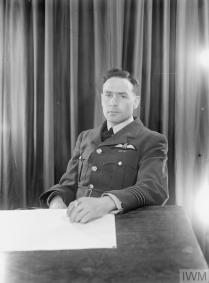
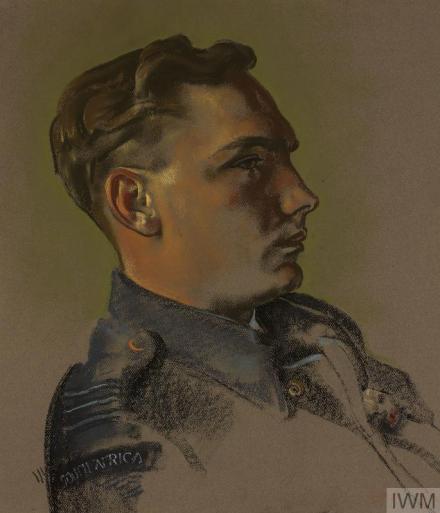
Head and shoulders War Commission portrait of Squadron Leader John Nettleton. He wears his RAF tunic, bearing the medal ribbon of his Victoria Cross, as well as his South Africa shoulder badge. At this time Nettleton commanded 44 Rhodesia Squadron.
Researched and written by Peter Dickens, references and extracts wikipedia and Imperial War Museum.
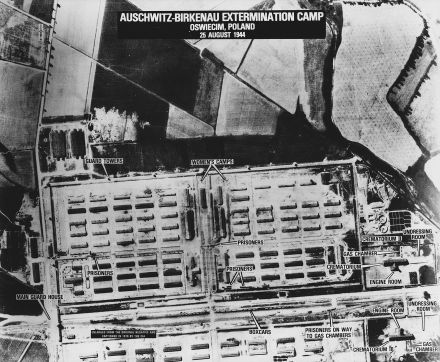
Little known historic fact but it was a South African Air Force reconnaissance aircraft which first discovered and then photographed the Auschwitz-Birkenau extermination camp. This is one of the aerial photos.
Painting by Derrick Dickens of two SAAF Mosquito PR Mk XVI s of 60 Squadron.
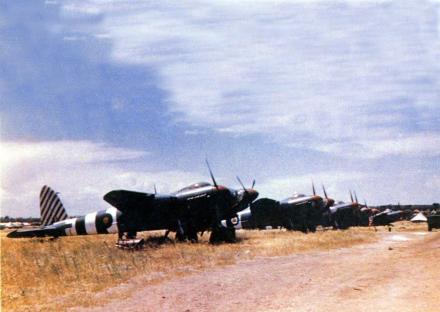
Mosquito XVI aircraft of No. 60 Squadron South African Air Force operating from Foggia Airfield Complex, Southern Italy in 1944, carried out detailed large-scale photographic surveys of German held areas, eventually ranging over the Alps and deep into Germany and German occupied territory.
During one of these missions in Spring 1944, a SAAF 60 Squadron plane piloted by Lt. C.H.H Barry and his navigator Lt. I McIntyre photographed Auschwitz when they went to photograph the rubber refinery plant next to the camp. They were reconnoitring the plant which was earmarked for bombing by the USAAF (USA Air Force).
When the photos of the complex next to the plant were analyzed, they found rows of people lining up in the camp. The photos also showed chimneys and all the other characteristics of a camp for prisoners. This, with other intelligence, brought them to the conclusions that extermination camps existed.
This image is an enlargement of part of a photo of Auschwitz-Birkenau taken by the SAAF on Sortie no. 60PR/694.
Clearly seen on this image is the selection process of a recently arrived transport visible on the ramp has been completed, and those selected to die are being to taken to Crematorium II. Also visible is a cultivated garden in the courtyard of Crematorium II, the open gate into it, and Crematorium III. The basement undressing rooms and gas chambers of both complexes can also be seen.
When these photo’s were taken by 60 Squadron SAAF, the Squadron was working for the USAAF heavy bomber Squadrons in Italy, so the South Africans handed the film to the Americans to analyse and strategise. Kept secret for a long time, these annotated images of the film were only finally released by the Central Intelligence Agency in 1979.
Mosquitos mark XVI of No 60 Squadron South African Air Force, at San Severo Airfield, part of the Foggia Airfield Complex, Southern Italy, 1944. The red and white stripes on the tail fin (known as Barber Shop stripes) served as identification to Allied fighter pilots (especially American pilots) who mistook them for enemy aircraft, incorrectly thinking they where German Me 410’s.
Auschwitz was operational as an extermination camp from May 1940 to January 1945, it held mainly Jews as well as Poles, Romani and Soviet Prisoners of War. In all it is estimated that 1.1 million people were murdered there.
Extermination of human beings deemed undesirable to Nazi German doctrine began on an industrial level at Birkenau in March 1942 when the first gas chamber was established called the “red house” (called Bunker 1 by SS staff). A second brick cottage, the “white house” or Bunker 2, was converted some weeks later. These structures were in use for mass killings until early 1943. Himmler visited the camp in person on 17 and 18 July 1942. He was given a demonstration of a mass killing using the gas chamber in Bunker 2.
In early 1943, the Nazis decided to increase the gassing capacity of Birkenau to an elevated industrial level. Crematorium II, which had been designed as a mortuary with morgues in the basement and ground-level incinerators, was converted into a killing factory by installing gas-tight doors, vents for the Zyklon B (a highly lethal cyanide based pesticide) to be dropped into the chamber, and ventilation equipment to remove the gas thereafter. It went into operation in March. Crematorium III was built using the same design. Crematoria IV and V, designed from the start as gassing centers, were also constructed that spring. By June 1943, all four crematoria were operational. Most of the victims were killed using these four structures.
Towards the end of the war, Himmler, fearing the discovery of this most dark Nazi program of extermination and in need of labour for the German war machine ahead of the Soviet and Allied advances, ordered the evacuation of all concentration camps, charging camp commanders with making sure that “not a single prisoner from the concentration camps falls alive into the hands of the enemy.”
On 17 January 1945, 56,000–58,000 Auschwitz detainees, of whom two-thirds were Jews, were evacuated under guard, most on foot, in severe winter conditions. Thousands of them died in the subsequent death march west.
Auschwitz was eventually liberated on 26 and 27 January by the Red Army (Soviet Russian), the soldiers found 7,500 prisoners alive and over 600 corpses. Among items found by the Soviet soldiers were 370,000 men’s suits, 837,000 women’s garments, and 7.7 tonnes (8.5 short tons) of human hair.
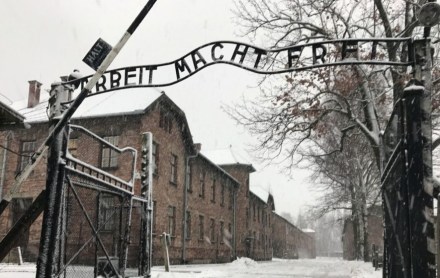
The Auschwitz complex with its false Nazi message “arbeit macht frei” (work sets you free) stands today as a sinister reminder of the cruelty of man, it is a very dark stain on the human race.
Written by Peter Dickens, additional research from Sandy Evan Hanes. Painting by the late Derrick Dickens of SAAF Mosquito copyright Peter Dickens. Photo references and sources include Wikipedia.
Those watching ‘The Great Escape’ re-run on British television this long Christmas weekend – thinking it was an all American and British affair, here’s some more back of the Chappie gum wrapper trivia – the mastermind behind it was a South African, and the escape had very little to do with Americans.
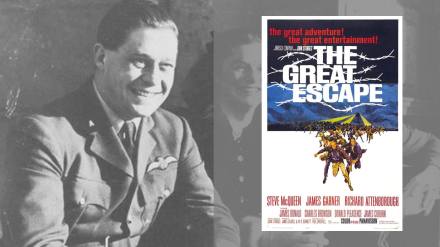
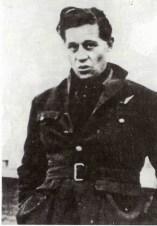
Here is another great South African (seen here at Stalag Luft III). Squadron Leader Roger Joyce Bushell RAF – AAF (30 August 1910 – 29 March 1944) was an Auxiliary Air Force pilot who organised and led the famous escape from the German prisoner of war camp, and also victim of the Stalag Luft III murders when participants in the famous escape were executed by the German Gestapo.
The escape was used as the basis for the film The Great Escape. The character played by Richard Attenborough, Roger Bartlett, is modelled on Roger Bushell. The story about the “Great Escape” was one of the most famous escape stories during WW2. The Great Escape movie is now an institution in The United Kingdom and the United States. Made famous by the swagger of Steve McQueen and his fictional attempted escape attempts culminating in a cross-country motorbike chase (McQueen’s preferred sport) with Nazi Germans in pursuit.
The backdrop of the movie is however a true story and it involves a South African as its leader and not a plucky Briton.
The Real Story of The Great Escape
In the spring of 1943, Roger Bushell masterminded a plot for a major escape of Prisoners of War from Stalag Luft III. Being held in the north compound where British airmen were housed, Bushell as commander of the escape committee channelled the escape effort into probing for weaknesses and looking for opportunities. Falling back on his legal background to represent his scheme, Bushell called a meeting of the escape committee in the camp and not only shocked those present with its scope, but injected into every man a passionate determination to put every energy into the escape. He declared,
“Everyone here in this room is living on borrowed time. By rights we should all be dead! The only reason that God allowed us this extra ration of life is so we can make life hell for the Hun… In North Compound we are concentrating our efforts on completing and escaping through one master tunnel. No private-enterprise tunnels allowed. Three bloody deep, bloody long tunnels will be dug – Tom, Dick and Harry. One will succeed!”
The simultaneous digging of these tunnels would become an advantage if any one of them were discovered by the Germans, because the guards would scarcely imagine that another two could be well under way. The most radical aspect of the plan was not merely the scale of the construction, but also the sheer number of men that Bushell intended to pass through these tunnels. Previous attempts had involved the escape of anything up to a dozen or twenty men, but Bushell was proposing to get over 200 out, all of whom would be wearing civilian clothes and possessing a complete range of forged papers and escape equipment. It was an unprecedented undertaking and would require unparalleled organisation. As the mastermind of the Great Escape, Bushell inherited the codename of “Big X”. The tunnel “Tom” began in a darkened corner of a hall in one of the buildings. “Harry”‘s entrance was carefully hidden under a Stove. The entrance to “Dick” had a very well concealed entrance in a drainage sump. More than 600 prisoners were involved in their construction.
Bushell also organised another mass break out, which occurred on 12 June 1943. This became known as the Delousing Break, when 26 officers escaped by leaving the camp under escort with two fake guards (POWs disguised as guards) supposedly to go to the showers for delousing in the neighbouring compound. All but two were later recaptured and returned to the camp, with the remaining two officers being sent to Oflag IV-C at Colditz for attempting to steal an aircraft.
After the discovery of Tom, construction on Harry was halted. but it resumed in January 1944. On the evening of 24 March, after months of preparation, 200 officers prepared to escape. But things did not go as planned, with only 76 officers managed to get clear of the camp. Among those left behind was 21-year-old RAF Flight Lieutenant Alan Bryett, who refers to Bushell as “the bravest man I ever knew”.
Roger and his partner Bernard Scheidhauer, among the first few to leave the tunnel, successfully boarded a train at Sagan railway station. They were caught the next day at Saarbrücken railway station, waiting for a train to Alsace, which had been annexed from France by Germany.
Bushell and Scheidhauer were murdered three days later by members of the Gestapo. This was a breach of the Geneva Convention and so constituted a war crime. The perpetrators were later tried and executed by the Allies. Fifty of the 76 escapees were killed in the Stalag Luft III murders on Hitler’s direct orders.
It unfortunately was not just Roger Bushell as a South African to suffer this fate, three more South Africans participated and escaped with Roger Bushell in The Great Escape. Lieutenants Gouws, Stevens and McGarr (all South African Air Force) were also recaptured and executed illegally by the Gestapo.
Bushell was posthumously mentioned in Despatches on 8 June 1944 for his services as a POW. This award was recorded in the London Gazette dated 13 June 1946. His name also appears on the war memorial in Hermanus, South Africa, where his parents spent their last years and where they were buried.
Roger Bushell was born in Springs South Africa on the 30th November 1910. He was first schooled in Johannesburg at Park Town School but later moved to England, and in 1929 he spent his first year at Cambridge University where he studied law. His talents however extended far beyond a career in law, as an athlete he had the honour of representing the University, both as a skier and rugby player. He excelled at skiing and during the early 1930’s he was declared the fastest Briton in the downhill category.
In South Africa the memory of Roger Bushell lives on in Hermanus. His name is among those on the War Memorial above the Old Harbour, Roger’s parents were living in Hermanus at the time of his death and his parents also made a presentation to the Hermanus High School, in remembrance of their son who (incidentally) could speak nine languages. The two coveted Roger Bushell prizes for character are still awarded annually at the prize-giving of the school. One prize is awarded annually to the student who has shown the most exemplary signs of character during the year and second one is for the school boy chosen by his fellow students as the best leader.
Roger Bushell’s memorial plaque on the War Memorial in Hermanus, South Africa.
Researched by Peter Dickens, with reference and help from Buskruit Burger and Sandy Evan Hanes.
Sailor Malan – a true South African WW2 flying ace and national hero “in his own words” – and here is a very rare recorded interview with him.
This is a fantastic historical record of a personal interview with the great WW2 South African fighter ace Adolph “Sailor” Malan, DSO & Bar, DFC & Bar.
Note in this recording, clearly taken as a public relations exercise to install confidence in the British public in the Royal Air Force and it’s pilots by the public broadcaster (there were a series of these interviews involving other pilots). Because of this, Sailor Malan comes across as a little over-confident and quite flippant. Its intentional and designed to make killing Germans sterile and combat adventurous.
He also adopts a very plummy British ‘officers’ accent so common to the tone and manner of speaking of this particular officer class during the war, both in Britain and in the Commonwealth. His ‘flat vowel’ South African accent sneaks in here and there, but in all Malan was a very well-educated and travelled man and his command of the English language was exemplary (as was his command of Afrikaans).
Also noteworthy is Sailor Malan’s WW2 era cultural expressions, delivery and sayings which were so typical to Allied Air Force officers at the time – terms like:
“Hun” – meaning Germans – a derogatory term insinuating barbarism dating to the First World War. “Squirt” – meaning a short burst of gun or cannon fire. “Jerry” – meaning Germans – a derogatory term pertinent to the Second World War. “Pumping Lead” – meaning a high rate of machine gun or cannon fire ‘pumped’ into the enemy to kill him “Tally Ho” – a British fox-hunting term meaning to spot a target and call to action. “Cut yourself a slice of cake” – a favourite term used by Sailor Malan (and other pilots) meaning to get into the fight and have a piece of the action.
Having known Lt. Steve Stevens DFC, I remain in total awe of his generation. I met him in Wothing in England and Steve was 96 years young bed-ridden, in pain and weak – but he was no less the man, and this famous featured image of him firing rockets from his South African Air Force (SAAF) Beaufighter during WW2 says everything about him as a fighter pilot, but he was also a devout Christian who pioneered missionary aviation, leading a rich and interesting life. This is a little of his very remarkable story.
Steve Stevens was born on 27th August 1919 in Amesbury, Dorset. His father George was gassed in Salonica during WW1 and was sent to a special medical facility in Aberdeen for mustard gas victims, and he met and married Dora, one of the VAD’s.
Steve’s father was not expected to live past 40. However, in typical Stevens fashion George Alexander Stevens took no notice of this pronouncement and his health improved enough for him to take up a new assignment in the British Army of Occupation in Germany. The family was billeted in a huge house complete with stables, and young Steve was delighted to be placed in the care of a beautiful young fraulien. Steve adored her, and from her learned to speak German better than he could speak English.
However, George’s health deteriorated and after the family was moved around from Switzerland (where Steve became proficient in skiing, jumping and skating), Italy and Ireland on various Army assignments, on medical advice it was agreed that George Stevens’ lungs would not survive the wet European climate, it was recommended that he was to be invalided out of the army and moved to somewhere nice and warm and dry.
So it was that the family left for a life on a farm in South Africa in November 1929. George’s health improved, but Steve’s mother Dora suddenly fell ill and died of a brain tumour when Steve was only 14.
When World War 2 broke out Steve was at the Bible Institute of South Africa. With the decision to close the college for the duration, some of the students joined the Ministry, and Steve joined the South African Air Force (SAAF). Steve was convinced that the prayers offered three times a day by his father and stepmother would keep him safe during the war. Steve joined the SAAF as a trainee air photographer, but soon re-mustered as aircrew.
A Beaufighter
During the War Steve flew air strikes over Yugoslavia with SAAF 19 Squadron, based at Biferno in Italy. These strikes included the daring raid on the occupied walled town of Zuzenberk. The image of Steve firing his rockets is one of the two iconic Beaufighter images of the war. It is astonishing to realise that Steve could accurately hit a target as small as a 44 gallon fuel barrel with his rockets. In Steve’s words;
“This photograph is widely recognised as one of the most famous Beaufighter air- strike photo of WWII. It shows my plane attacking the Nazi-held medieval walled town of Zuzenberk, Yugoslavia. The attack by the South African Air Force resulted in the Yugoslav Partisans recapturing their town that very day.”
And this is the photograph, the SAAF Bristol Beaufighter TF Mark X of No. 16 Squadron South African Air Force seen in the image is been flown by Lt Steve Stevens as he releases its rocket projectiles at an enemy target in the town of Zuzemberk.
The photograph was taken by Lt. Schonveld flying just behind Lt. Stevens (SAAF 19 squadron) who’s Beaufighter is in view while attacking a target in Zuzemberk Feb 1945. Schonveld was a keen photographer and positioned his aircraft in a perfect position behind Stevens to capture this epic shot with the nose camera, but he flew a bit too close and ended with dents in his wings from spent 20mm shell cases from Steve’s aircraft.
Take the time to watch this short video interview of Steve Stevens by Tinus Le Roux, as to how this photograph was taken. It is as insightful as it is fascinating.
Copyright Tinus Le Roux
This photograph is historically well-known and has been published in many writings. It shows the aircraft, fired rockets and target simultaneously in a perfect balanced setting, indeed very rare.
Luckily for all of us, we get to preserve unique insight as both SAAF 16 and 19 Squadrons had unofficially mounted F.24 camera’s in the nose of their Beaufighters which took photographs during their attacks so that reconnaissance aircraft did not have to over fly later to asses the battle damage.
In another raid Steve also photographed Major Tilley attacking the armed German warship SS Kuckuck as Tilley’s number two. It was a desperate sortie which Steve and his fellow pilots fully expected to be a suicide mission. The rockets holed the target under the waterline. The pilots had been briefed by the Partisans that they would face the fire from 140 anti-aircraft guns. Remarkably all four planes returned safely.
Tinus Le Roux interviewed Steve Stevens to capture this attack on the SS Kuckuck, his short video is fascinating, a capture of a man and a time that is truly remarkable, take the time to watch it (many thanks to Tinus for bringing this experience to us)
Copyright: Tinus Le Roux
A Bible
Lt Steve Stevens DFC had a very remarkable life, deeply God-fearing, religion was a very central pillar in all of it.
After the war ended, in 1946, as liaison officer between the South African Air Force and the Royal Air Force in Khartoum, Sudan Steve saw how badly the Christian missionaries needed a plane, not only just to spread the word of Christ, but also to get aid (medicines, foodstuffs and equipment) to remote communities. He joined the MAF, the ‘Mission Aviation Fellowship’ – a group of pilots dedicated to Christian missionary becoming MAF’s first operational pilot to be based in Sudan in 1950.
In Sudan, Steve flew a de Havilland Rapide – an eight-seater twin-engine wood and fabric covered biplane – not best suited for flying in Africa, but the best MAF could find and afford at that juncture. Over time, more and more airstrips were hacked out of jungle, bush, desert and grasslands, and Steve began to fly to other places where no planes had ever been before.
At the end of 1951, Steve experienced some problems with his vision, diagnosed as a detached retina and he lost the sight in one eye. He was grounded , however Steve still felt that his call was still to aviation missionary work so he and his family moved to the UK. He re-established MAF’s UK HQ and worked tirelessly to raise financial, staff and prayer support for the ministry.
In 1970, after more than twenty years of service to the MAF cause, Steve and his wife Kay moved on to become early members of the National Festival of Light, forerunner of today’s CARE organisation. Steve later became Executive Director of Australian Festival of Light.
A Badge
Steve Stevens remained a great advocate and supporter of veterans associations, the MAF and his Christian charities and institutions, throughout his life and was active in his backing all of them until age and frailty forced him to slow down a little, but not entirely, Steve even continued to use the internet and podcasting Christian messaging from his frail care bed. He also actively ran his own website to sell his work and outreach his messages, he became an avid author of all his adventures, his book on his time in the war called “Beaufighter over the Balkans” is a welcome addition to anyones library.
I met Steve Stevens, when the South African Legion of Military Veterans initiated an outreach to him to see if there was anything we could do to help him as a frail care WW2 veteran in his 90’s, I was astounded when he replied that he was at peace with himself and how could he help the Legion instead. Steve then kindly donated signed copies of his books to the Legion so that we could fundraise for other initiatives. Cameron Kinnear and I visited him at his home in England and awarded him a lifetime honoury membership of the South African Legion, and we pinned his SA Legion ‘veterans badge’ on his lapel.
Steve passed away in June 2016 and is survived by his children – Merle, Pam, Coleen and Tim – in addition to his grandchildren. His veterans badge was given back to the SA Legion by his family and, as means of keeping people like Steve in living memory his badge was loaned to me to wear.
This was an extraordinary man you can easily attribute words and values which would describe him as ‘noble’, ‘selfless’, ‘adventurous’, ‘brave’, ‘humble’ and most importantly a man with a solid backbone, unwavering in his belief and demonstrating that rare value of spiritual self actualisation ‘completely at peace with himself and the world’.
This man was cut from a very different cloth to the rest of us mortals, and it is with the greatest pride that I wear his veterans badge and an even bigger privilege that I am allowed to carry his memory.
Capt. Peter Dickens (Retired)
Written by Peter Dickens. Image Copyright: Imperial War Museum. Information Tinus Le Roux and Sandy Evan Haynes. Thanks to Cameron Kinnear for the extraction from his visit with Steve Stevens. Video (SA Legion UK stories: South African Legion UK and EU), “SAAF Beaufighters attack a German Ship – WW2 Pilot Steve Stevens DFC” Produced and Directed by Tinus Le Roux, copyright Tinus Le Roux. “How one of WW2’s greatest rocket air strike photographs was taken: Steve Stevens DFC” Produced and Directed by Tinus Le Roux, copyright Tinus Le Roux.
A very notable South African hero and Victoria Cross winner, Captain Edwin (Ted) Swales VC, DFC (pictured in the centre with his crew) was born in Inanda, Natal, South Africa, he went to Durban High School (DHS) and then joined Natal Mounted Rifles, seeing action in Africa before he transferring to the South African Air Force and then went onto serve with the Royal Air Force (RAF).
In 1945, while with the RAF Pathfinders (No. 582 Squadron), Captain Swales was the Master Bomber and captain of Avro Lancaster III PB538. On 23 February 1945, the very same day as his D.F.C. award was gazetted, Swales led the bombing raid on Pforzheim, Germany.
Swales’ Victoria Cross citation:
“Captain Swales was ‘Master Bomber’ of a force of aircraft which attacked Pforzheim on the night of February 23, 1945. As Master Bomber he had the task of locating the target area with precision and of giving aiming instructions to the main force of bombers in his wake.
Soon after he reached the target area he was engaged by an enemy aircraft and one of his engines was put out of action. His rear guns failed. His crippled aircraft was an easy prey for further attacks. Unperturbed, he carried on with his allotted task; clearly and precisely he issued aiming instructions to the main force. Meanwhile the enemy fighter closed the range and fired again. A second engine of Captain Swales’ aircraft was put out of action. Almost defenceless, he stayed over the target area issuing his aiming instructions until he was satisfied that the attack had achieved its purpose.
It is now known that the attack was one of the most concentrated and successful of the war. Captain Swales did not, however, regard his mission as completed. His aircraft was damaged. Its speed had been so much reduced that it could only with difficulty be kept in the air. The blind-flying instruments were no longer working. Determined at all costs to prevent his aircraft and crew from falling into enemy hands, he set course for home.
After an hour he flew into thin-layered cloud. He kept his course by skilful flying between the layers, but later heavy cloud and turbulent air conditions were met. The aircraft, by now over friendly territory, became more and more difficult to control; it was losing height steadily. Realising that the situation was desperate Captain Swales ordered his crew to bail out. Time was very short and it required all his exertions to keep the aircraft steady while each of his crew moved in turn to the escape hatch and parachuted to safety.
Hardly had the last crew-member jumped when the aircraft plunged to earth. Captain Swales was found dead at the controls. Intrepid in the attack, courageous in the face of danger, he did his duty to the last, giving his life that his comrades might live”
Citation ends:
Although often referred to as being a “Captain” at the time of his last flight, Swales was in fact an ‘Acting’ Major. The S.A.A.F. was using the army ranking system, hence the ranks of ‘Captain’ and of ‘Major’. At the time of his death on 23 February 1945, Swales was aged 29 years. In 1958, the British Air Ministry wrote to the Commonwealth War Graves Commission informing them that the South African Air Force authorities had confirmed that at the time of his death, Swales had in fact held the rank of Major.
A Personal View
It is a great pity that in South Africa that the main Highway in Durban – Edwin Swales Drive has been renamed in support of some of other political narrative rather than to continue to acknowledge such a massive contribution to South Africa’s “honour” by this truly international hero – in whose memory the naming of the highway was originally intended. This is how South Africa’s military heritage is destroyed and it’s how the country’s multi cultural fabric is insidiously removed to support one groups political ideology over that of another.
My personal view. Part of the problem is also the “allowist” nature of South Africans with British roots for whom this man is a hero, they would rather put the issue into a “too hard box” and pursue individual security instead – they themselves are “allowing” this insidious rot to fester rather than really challenging it in a manner South African politicians today are accustomed.
Take a leaf out of the “Student Handbook” if you want things changed in South Africa – I’m not condoning violence in any way – but as a community, students really know how to mobilise in the digital and media age and challenge the status quo. People who want things like this changed and would like to impact a real difference should take a leaf out of that book.
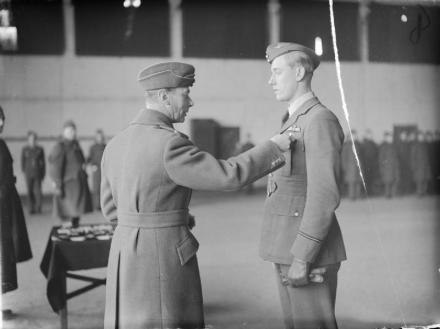
King George VI conferring a Bar to Flying Officer A G Lewis’s Distinguished Flying Cross (DFC) for bravery, in an awards ceremony at Duxford, Cambridgeshire. Lewis, a South African, had just returned to service with No. 249 Squadron RAF after being shot down and badly burnt on 28 September 1940, at which time, during the Battle of Britain, he had himself already shot down 18 enemy aircraft.
To read more about this remarkable South African hero, and how he became a ‘ace in a day’ on two occasions – follow this link to a full observation post article on him:
The Distinguished Flying Cross is a military decoration awarded to personnel of the United Kingdom’s Royal Air Force and other services, and formerly to officers of other Commonwealth countries, instituted for “an act or acts of valour, courage or devotion to duty whilst flying in active operations against the enemy”.
Albert Gerald Lewis was from Kimberley, South Africa, and had the nickname “Zulu”.
Winston Churchill and Field Marshal Jan Smuts accompanied one another just after the D Day landings to General Sir Bernard Montgomery’s headquarters, 12 June 1944.
Left to right: Lieutenant-General Sir Richard O’Connor, commanding VIII Corps; Churchill; Field Marshal Jan Smuts; Montgomery; Field Marshal Sir Alan Brooke, Chief of the Imperial General Staff. Here these Allied commanders are seen looking up at aircraft activity overhead.
An interesting snippet of history happened during this visit by Smuts and Churchill to Monty’s headquarters. While visiting the headquarters and as senior officers stood outside with the Prime Minister (Churchill), Field Marshal Smuts sniffed the air and said, ‘There are some Germans near us now…I can always tell!’” and low and behold, just two days later, “two fully armed German paratroopers emerged from a nearby Rhododendron bush, where they had been hiding all along (they had become isolated from their unit, seeing that they were unable to rejoin they chose to surrender). Had they used their guns and grenades on Churchill (and Smuts), everything would have changed.
There you have it, Smuts’ keen sense of smell and intuition is another attribute you can add to the very very long list of honours attributed to this great South African.
Reference: Nicholas Rankin “Churchill’s Wizards”. Image copyright – The Imperial War Museum.

 Squadron Leader Nettleton was the leader of one of two formations of six Lancaster heavy bombers detailed to deliver a low-level attack in daylight on the diesel engine factory at Augsburg in Southern Germany on April 17th, 1942. The enterprise was daring, the target of high military importance. To reach it and get back, some 1,000 miles had to be flown over hostile territory.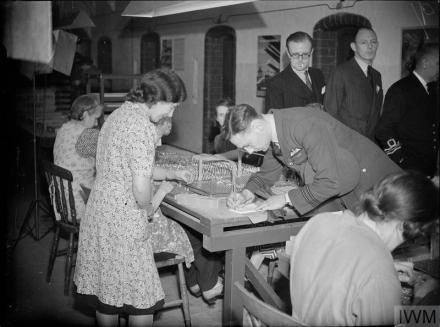




 Here is another great South African (seen here at Stalag Luft III). Squadron Leader Roger Joyce Bushell RAF – AAF (30 August 1910 – 29 March 1944) was an Auxiliary Air Force pilot who organised and led the famous escape from the German prisoner of war camp, and also victim of the Stalag Luft III murders when participants in the famous escape were executed by the German Gestapo.


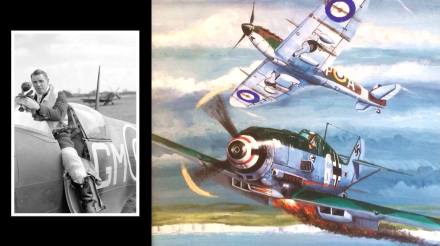
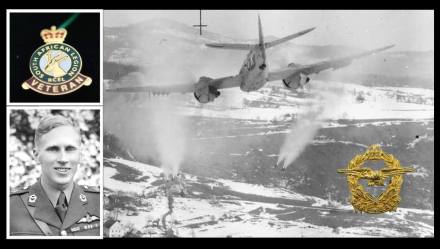
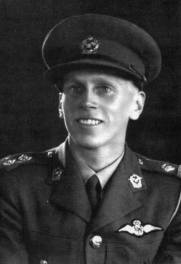 Having known Lt. Steve Stevens DFC, I remain in total awe of his generation. I met him in Wothing in England and Steve was 96 years young bed-ridden, in pain and weak – but he was no less the man, and this famous featured image of him firing rockets from his South African Air Force (SAAF) Beaufighter during WW2 says everything about him as a fighter pilot, but he was also a devout Christian who pioneered missionary aviation, leading a rich and interesting life. This is a little of his very remarkable story.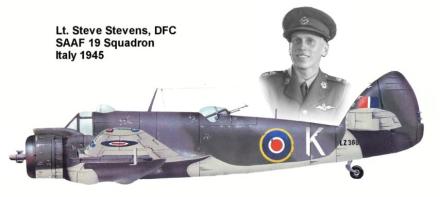
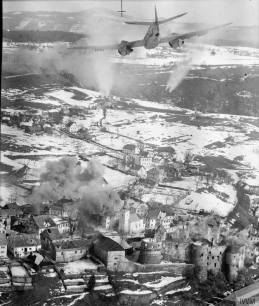 And this is the photograph, the SAAF Bristol Beaufighter TF Mark X of No. 16 Squadron South African Air Force seen in the image is been flown by Lt Steve Stevens as he releases its rocket projectiles at an enemy target in the town of Zuzemberk.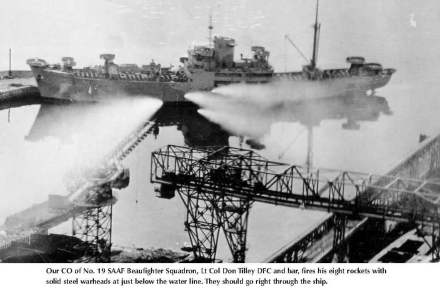
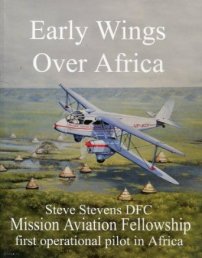 In Sudan, Steve flew a de Havilland Rapide – an eight-seater twin-engine wood and fabric covered biplane – not best suited for flying in Africa, but the best MAF could find and afford at that juncture. Over time, more and more airstrips were hacked out of jungle, bush, desert and grasslands, and Steve began to fly to other places where no planes had ever been before.
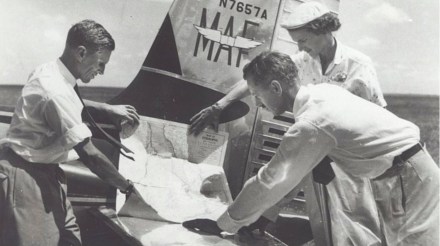 In 1970, after more than twenty years of service to the MAF cause, Steve and his wife Kay moved on to become early members of the National Festival of Light, forerunner of today’s CARE organisation. Steve later became Executive Director of Australian Festival of Light.
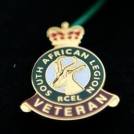 I met Steve Stevens, when the South African Legion of Military Veterans initiated an outreach to him to see if there was anything we could do to help him as a frail care WW2 veteran in his 90’s, I was astounded when he replied that he was at peace with himself and how could he help the Legion instead. Steve then kindly donated signed copies of his books to the Legion so that we could fundraise for other initiatives. Cameron Kinnear and I visited him at his home in England and awarded him a lifetime honoury membership of the South African Legion, and we pinned his SA Legion ‘veterans badge’ on his lapel.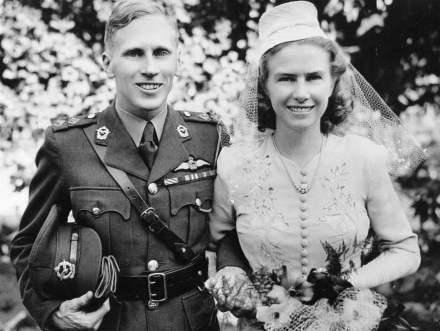
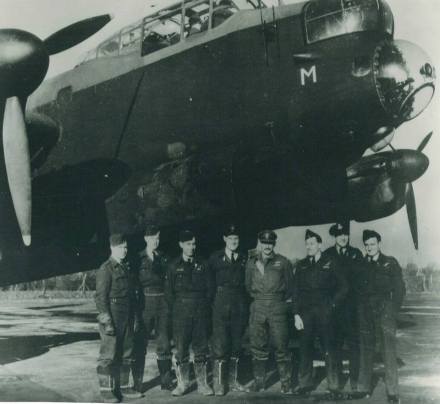
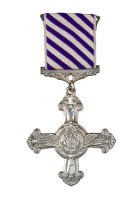 The Distinguished Flying Cross is a military decoration awarded to personnel of the United Kingdom’s Royal Air Force and other services, and formerly to officers of other Commonwealth countries, instituted for “an act or acts of valour, courage or devotion to duty whilst flying in active operations against the enemy”.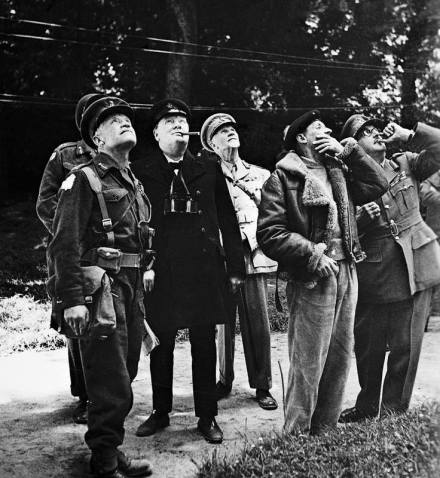
 The Observation Post