The ‘Rise and Fall’ of the Torch Commando

Torch Commando Series – Part 4

The Torch – a mixed bag

On the back of the successful widespread support of ‘The Steel Commando’ and determined to continue the fight to effect regime change, the ‘The Torch Commando’ took shape and it took to a more formalized structure of a central command with devolved authorities in the various regions of South Africa, using military discipline, military styled planning and lines of communication to activate.

Officially launching as the Torch Commando, Group Captain Sailor Malan, the hero of The Battle of Britain was elected National President of the Torch, Major Louis Kane-Berman, a highly respected North Africa and Italy campaign officer, was elected National Chairman. To keep a very even keel, the appointed Patron-in-Chief for the Torch Commando was Nicolaas Jacobus de Wet, the former Chief Justice of South Africa. The National Director was Major Ralph Parrott, a ‘hero’ of the Battle of Tobruk from the Transvaal Scottish who received the Military Cross for bravery. 
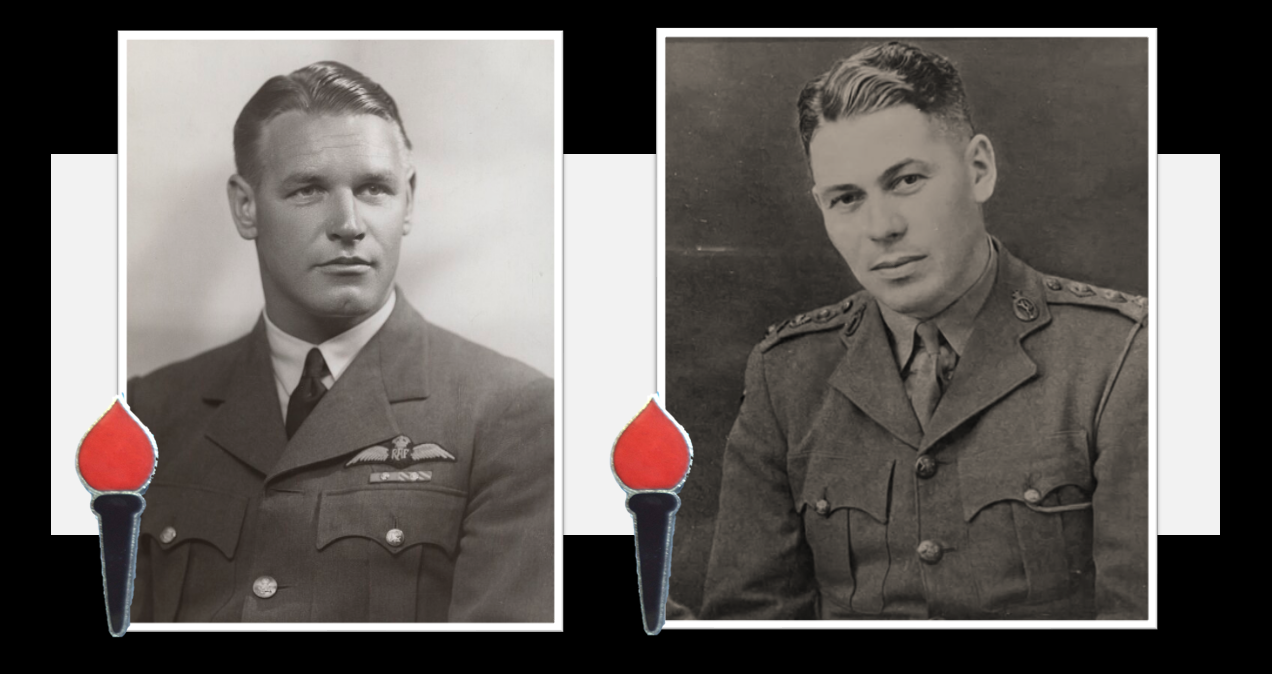
Group Captain Sailor Malan (left) and Major Louis Kane-Berman (right), the top two Torch leaders.

The Torch went to pains to put two English speakers and two Afrikaans speakers at the top of the organisation to reflect balance – critical where white Afrikaners, who made up 60% of the 334,000 South Africans who had volunteered to fight in the war against Nazim. Some, disillusioned with the military’s demobilization and re-integration process and been ‘politically disenfranchised’ had voted for the National Party in 1948 in protest and expecting change to their circumstances, and the Torch sought to ‘bring them back’ to centre-line politics on the ‘camaraderie’ ticket (however, this group was small and fleeting, in the main a ‘Service block’ vote emerged in the United Party’s ambit and it did not really materialize in the National Party’s ambit). 

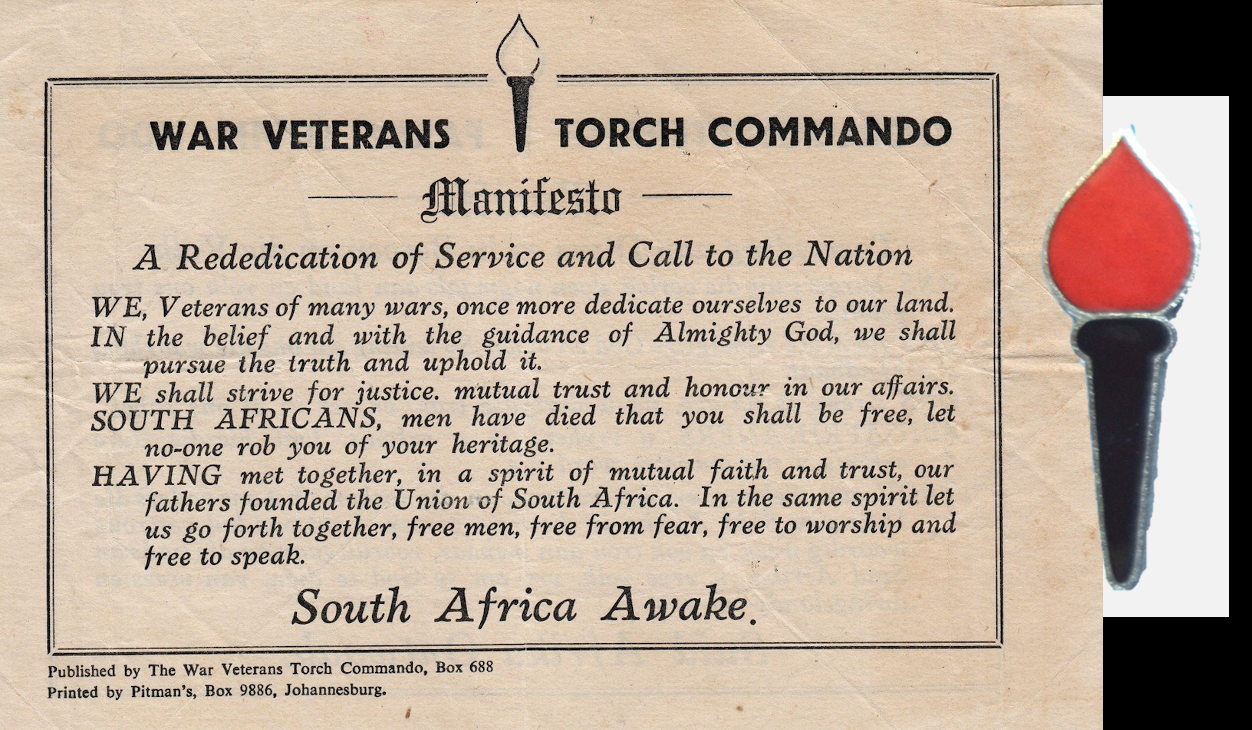
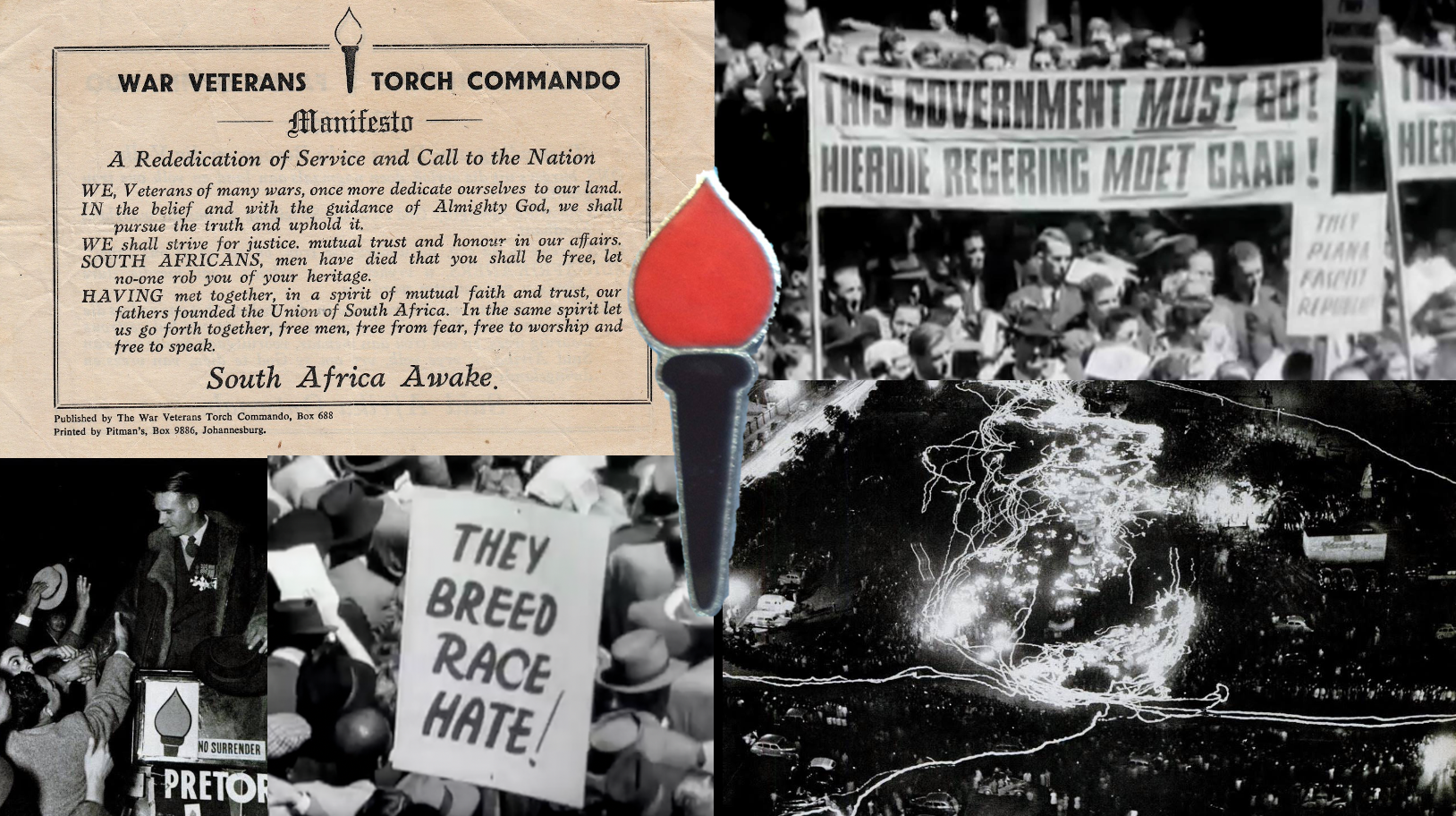
The manifesto of the Torch Commando was released, it was a ‘rededication of service and a call to the nation,’ it read:

We, veterans of many wars, once more dedicate ourselves to our land. In the belief and with the guidance of Almighty God, we shall pursue the truth and uphold it.

We shall strive for justice, mutual trust and honour in all our affairs.

South Africans, men have died that you shall be free, let no-one rob you of your heritage.

Having met together in a spirit of mutual faith and trust, our father’s founded the Union of South Africa. In the same spirit let us go forth together, free men, free from fear, free to worship and free to speak.

South Africa Awake.
Rise of The Torch

All over the country people started to flock into devolved Torch Commando structures and almost immediately ‘joined up’. Hundreds at a time joined new branches springing up outside the major metropole branches/commands in small places like Pinetown, Paarl, Umtata, Amanzimtoti, Eshowe, Dundee, Colenso, Eliot, Strand, Fish Hoek, Sunday’s River Valley, Bedford and Ficksburg. By the end of September 1951 there was a branch in every Reef town and on most of the mines. 

The enthusiasm for ‘The Torch’ (as it became to be known) was almost sporadic and widespread, as if an immediate need of the returned war veterans to express frustration at the National Party’s policy of Apartheid and re-kindle their camaraderie had been answered in a legitimate political pressure group. Such was the support that it took Louis Kane-Berman and Sailor Malan by surprise.
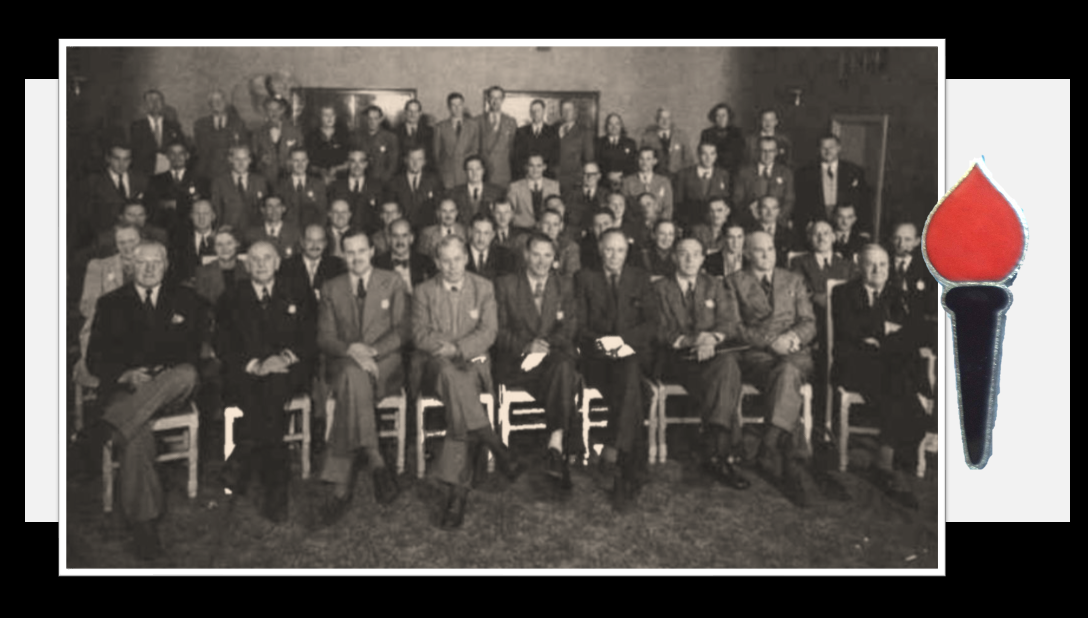
The Torch Commando Executive, Louis Kane-Berman is 4th from the left, Sailor Malan is seated next to him – 5th from the left – photo courtesy the Kane-Berman family.

Within three months of the official launch of the Torch, it had almost 100 000 members enrolled in 206 branches. By the end of January 1952, there were 120 000 members in 350 branches. By mid 1952 the Torch had 250 000 members. 

Membership of The Torch was not exclusive to military service, it was open to all who supported the Torch’s cause. A significant non-veteran joining The Torch was Alan Paton (the famous author and future leader of the Liberal Party). Of its zenith membership of 250,000 members one quarter were white ex-servicemen – about 63,000.  Membership was relatively cheap and accessible – half a crown (about R 100 or £ 5 today’s money), and ‘Torch’ lapel pins and various other ‘Torch’ symbology was adopted by members to signify to others their political convictions and support of ‘The Torch’ and its ideals by way of a ‘badge’ (lapel pin).

Torch Membership – half a crown

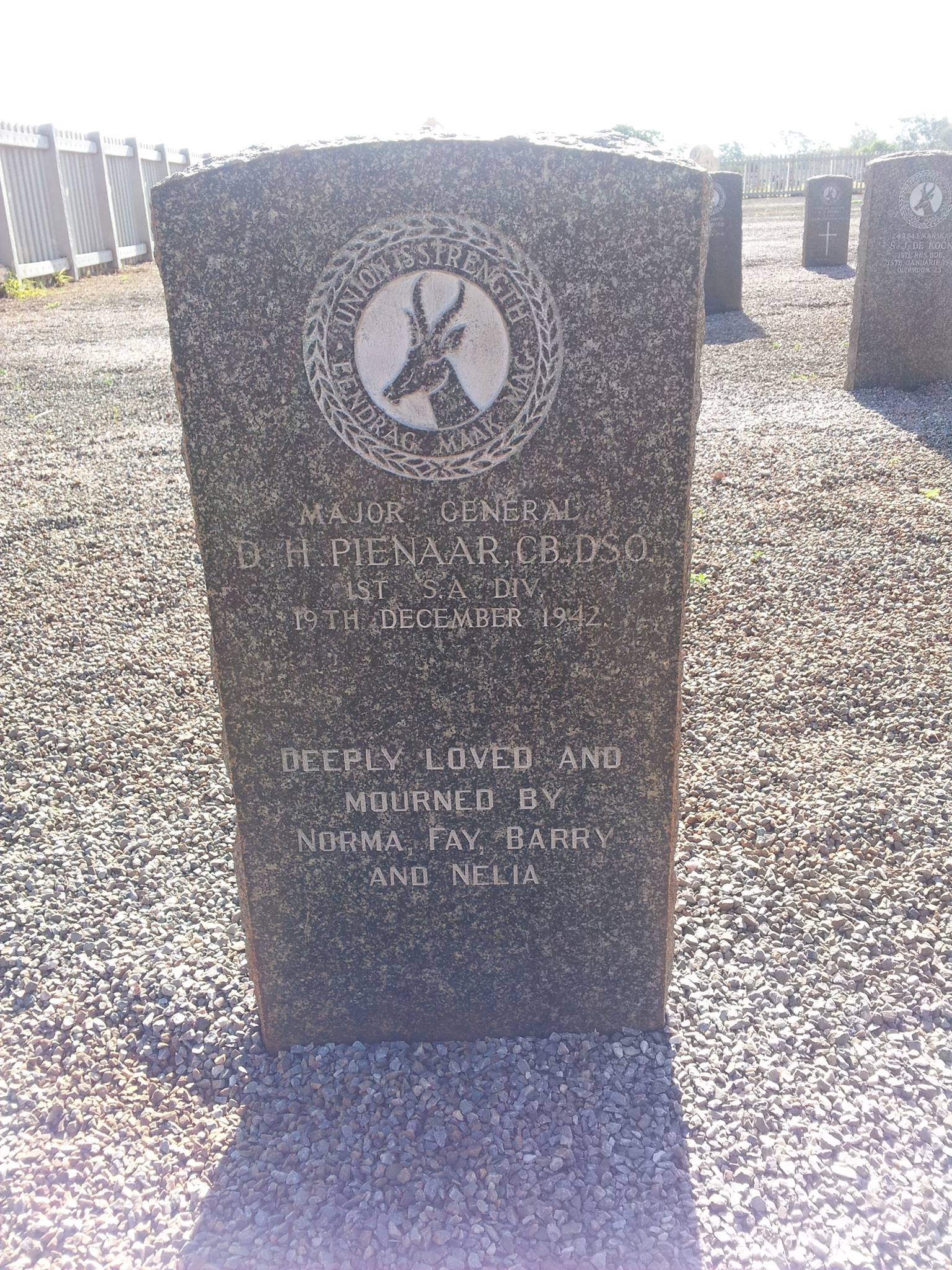
Of major concern to the National Party was the profile of people joining The Torch Commando, members soon included five former Judges, and ten Generals, including the Lieutenant-General George Brink CB, CBE, DSO, who had a very distinguished military career, he was the Commander of the 1st South African Division during the Second World War. In 1942, Brink turned over command of the division to Dan Pienaar and Commanded the Inland Area Command in South Africa from 1942 to 1944. Other Generals joining the Torch were the highly regarded Major General R.C. Wilson and Brigadier A.H. Coy.

Another very notable General joining The Torch Commando was General Kenneth van der Spuy CBE MC, the man who pioneered the formation of South African Air Force (SAAF) under General Smuts’ directives. General Van der Spuy is regarded as the modern father and founder of the SAAF (Smuts would be the ‘Grandfather). After the war he was a key role-player in the establishment of The Springbok Legion and on the executive of the South African Legion of Military Veterans (The South African Legion), South Africa’s prima and largest veterans’ association with 52,000 registered veterans. 

Alarmed by this rapid rise in protesting whites and the profile of members joining The Torch, the National Party did what it did best, and acted ‘decisively’. It looked to the most important ‘feeder’ for the Torch Commando, the military – the Union Defence Force, and immediately instituted a ban on all permanent force members still serving as well as any public servant from joining the Torch, amending The Public Service Act.

General van der Spuy (left) and Lt. General Brink (right)

However, they had difficulty instituting this ban on the Citizen Force units and Regiments – whose members continued to join. The ban in many ways did affect membership as many still in the active employment of the government – either in the military or in the systems like the judiciary were discouraged from joining The Torch, lest they lose their livelihood. 

El Alamein Commemoration Campaign – October 1951

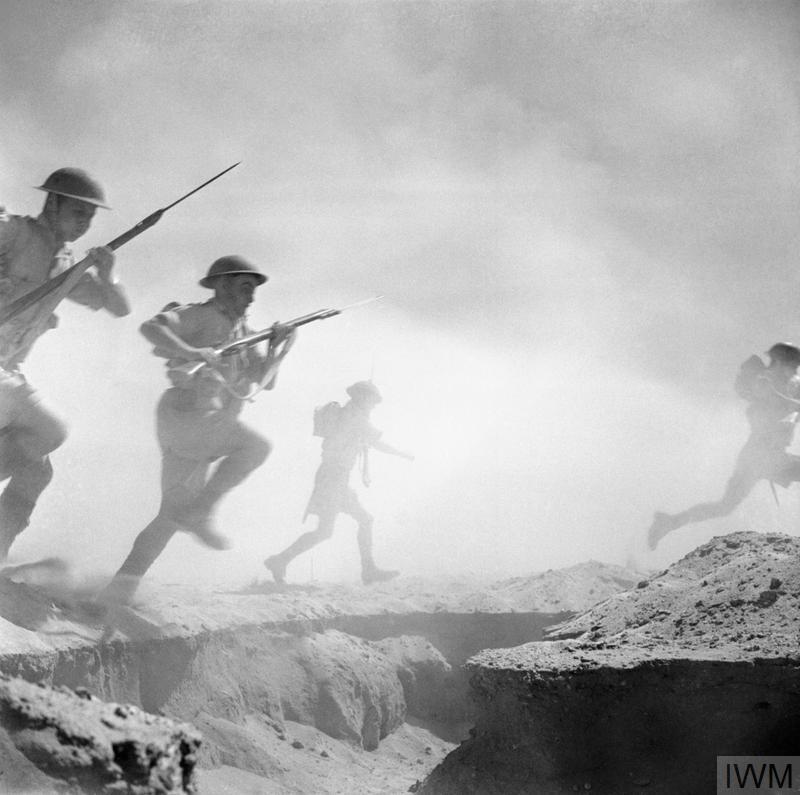
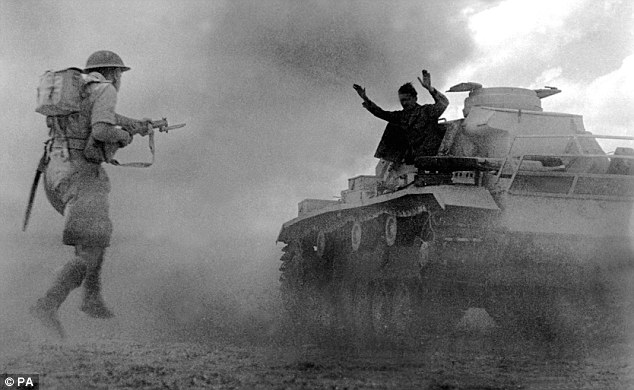
The Torch Commando targeted the anniversary celebrations of the Battle of El Alamein pivoting around the 26th October 1951 to draw countrywide protest and support. In all the El Alamein Commemoration Campaign drew a staggering 150,000 people into active protest against the National Party government. A coordinated protest this size had never been seen in South Africa before.

Ten Days before a mega-rally planned for Johannesburg, Sailor Malan lit a flaming torch outside the Langham Hotel in Johannesburg, the Torch was placed on a ‘Torch Truck’ which then travelled around the country driving up awareness and support and creating media hype (in all it travelled over 6,500 km drumming up support).  A huge crowd greeted the Torch Truck when it finally arrived in Johannesburg just in time for the El Alamein commemoration protest. The Johannesburg torch protest started when veterans carrying flaming Torches gathered at the square next to the City Hall, converging on them four separate mustering points elsewhere in the city came thousands of ex-servicemen and women, twelve abreast, singing the old stirring war songs of their day.

A massive crowd, tens of thousands, gathered around a dais erected among the palm trees on the square to hear speeches from Sailor Malan and Kane-Berman, who told them that the flaming torches were symbolic of the searchlights used at Alamein to guide troops to their objectives and remove the possibility of any man being lost. He said;

“These are the lights of democracy – let them be a source of comfort to the people of this country whatever their language, race, or colour. They convey a message to the people of South Africa in the name of those who fought and lived and in the name of those who fought and died.”

As to the large protests like this one, according to the Star Newspaper on 27th October 1951, the Torch Rallies for EL Alamein Commemoration brought the following numbers, Johannesburg 40,000 protestors, in Cape Town 20,000, in Durban 10,000 and in Pretoria 6,000.  But the protests did not stop at these large events, large bonfires symbolising Torches were lit across the country, some of them on the mountains above Barberton, six in Pretoria, and one at a peak high in the Drakensberg. People gathered also in Benoni, Krugersdorp, Vereeniging, Port Shepstone, Empangeni, and elsewhere. Hundreds of bonfires were lit around Kimberley in a massive ‘fire chain’. These smaller protests were often linked to a bugler playing the Last Post followed by a period of silence for the fallen. 
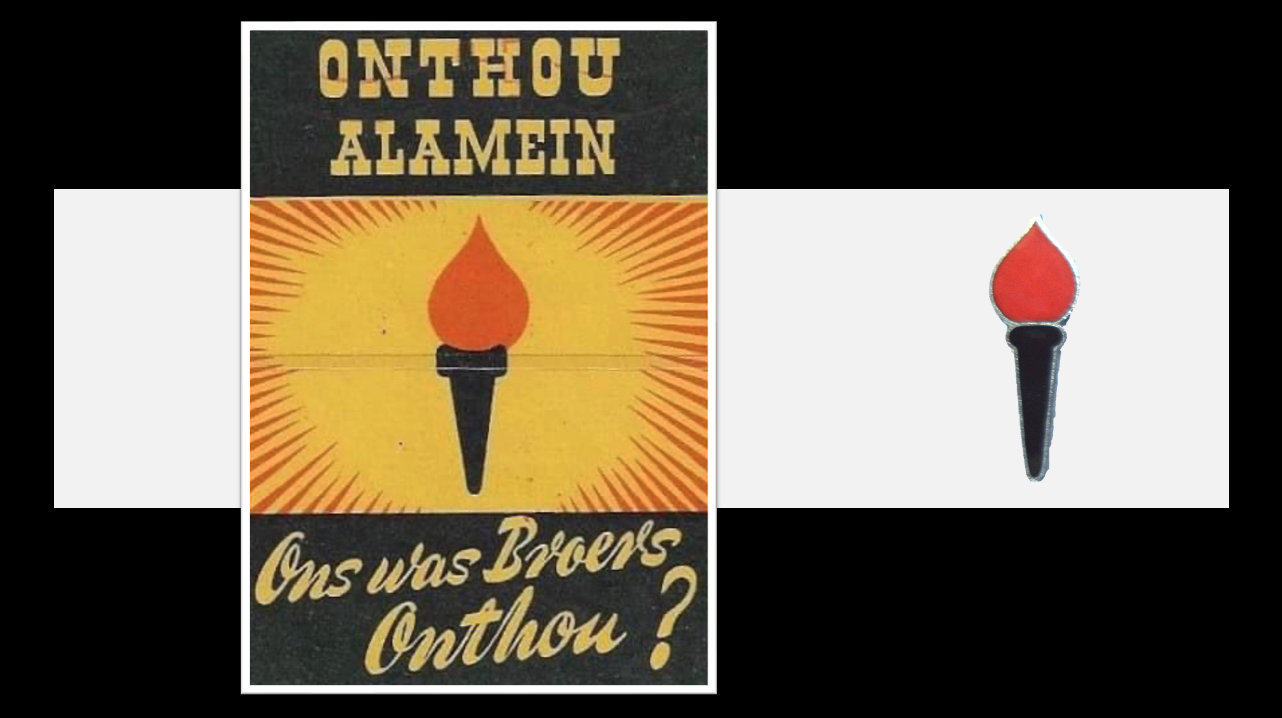
El Alamein Torch Commando protest poster targeted at Afrikaner ex-servicemen to bring them to the Torch’s cause – poster reads ‘Remember Alamein, we were Brothers remember?’

In all, it is estimated that a staggering 150,000 people would ultimately participate in the Torch’s El Alamein Commemoration protests. The government sat up and noticed, the Torch posed a potential military threat. Dr D.F. Malan, South Africa’s Prime Minister announced:

“People content that the Torch will go a little way and then vanish. That is not my view. The Torch Commando is to be taken seriously because it had a military or semi-military character. Private Armies of that nature cannot be tolerated …“

Officially, the government tried to gag the entire protest by way of instructing the SABC not to broadcast on any of the dates or activities, an instruction the broadcaster followed. The Torch tried to initiate the same campaign the following year in October 1952, but their permissions for gatherings were ‘banned’ – declined by Ben Schoeman (an NP Cabinet Minister).

After the El Alamein activations five guiding principles were penned crystallising the objectives of the movement by way of principals:

  • To uphold the spirit and solemn compacts entered into at Union as moral obligations of trust and honour binding upon the people
  • To secure the repeal of any legislation enacted in violation of such obligations
  • To protect the freedom of the individual in worship, language, and speech, and to ensure his right of free access to the courts
  • To eliminate all forms of totalitarianism, whether communist or fascist
  • To promote racial harmony in the Union

Rejection of Communism 

Noteworthy at this point is the Torch Commando in their objectives rejects Communism – they do this primarily because the National Party’s anti-communist legislation is so open ended. It is the legislative tool the National Party would use the Communist Party of South Africa and the Springbok Legion, it would also fundamentally undermine the activities of Torch Commando, and would even be used to curtail, arrest and even gag mainstream politicians in the Liberal Party and the Labour Party.

This was the infamous ‘The Suppression of Communism Act 44 July 1950’. The act was a sweeping act and not really targeted to Communists per se, it was intended for anyone in opposition to Apartheid regardless of political affiliation.

The Act defined communism as any scheme aimed at achieving change–whether economic, social, political, or industrial – “by the promotion of disturbance or disorder” or any act encouraging “feelings of hostility between the European and the non-European races … calculated to further (disorder)”

Thus, the Nationalist government could deem any person (liberal, humanitarian or Communist) to be a ‘communist ‘if it found that person’s aims to be aligned with these aims. After a nominal two-week appeal period, the person’s status as a communist became an un-reviewable matter of fact and subjected the person to being barred from public participation, restricted in movement or even imprisoned. In effect, it could be, and was applied to anyone from both the White community and Black community not buying into Apartheid.

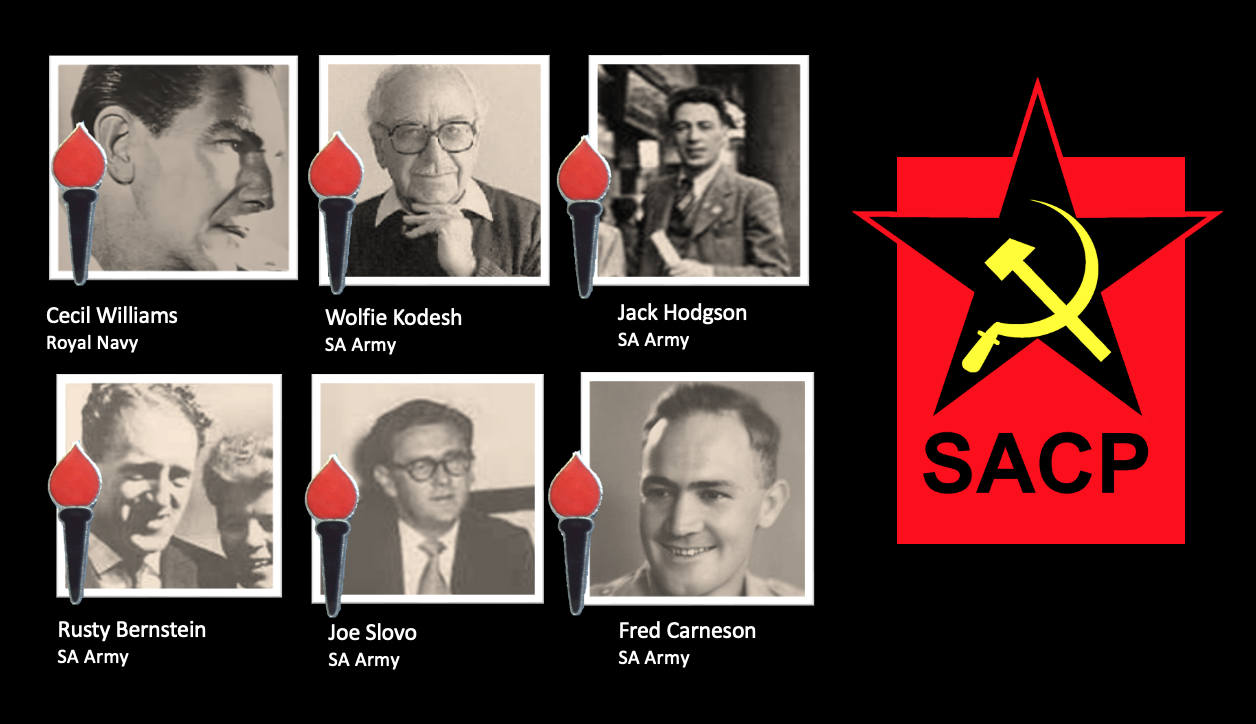
Within the formation of the Torch Commando and paid-up members, were members of The Springbok Legion, and many of them had been members of the Communist Party of South Africa before and after the war. Influential and highly vocal Torchmen like Cecil Williams, Wolfie Kodesh, Jack Hodgson, Rusty Bernstein, Fred Carneson and Joe Slovo were all card carrying and outspoken members of the Communist Party.
Under the edicts of the Suppression of Communism Act 44 July 1950 the Nationalist government could have immediately such down The Torch Commando and arrested its members if it could prove it was a ‘Communist threat’ or carried with it Communist philosophy and ideology. This would force the communist members in the Torch to seek other more robust avenues to political protest like ‘The Congress of Democrats’ – some like Rusty Bernstein, Joe Slovo and Jack Hodgson are even arrested and charged with treason, alongside the likes of Oliver Tambo and Nelson Mandela in 1956.

This rejection of Communism not only kept The Torch Commando clear of repressive government legislation, it also opened the Torch Commando to the great many war veterans and their supporters who feared the advent of Bolshevism and Communism and other forms of socialism like National Socialism (Nazism). By rejecting Communism, The Torch would open itself up to far greater appeal and take a far safer trajectory than toeing the line of its communist members. This would cause a schism between the more robust ‘Springbok Legionnaires’ with Communist leanings would eventually even take aim at The Torch Commando and issue much critique of The Torch in the ex-servicemen’s newspapers like ‘Advance’ whose contributors included the wives of Jack Hodgson – Rica Hodgson and Joe Slovo’s wife – Ruth First, amongst others.

As irony and own goals go, even ‘Advance’ which evolved from ‘The Guardian’ and ‘the Clarion’ from November 1952 to October 1954, becoming the “New Age” in 1962 was eventually banned and closed by the National Party. Such is the nature of ‘white’ politics in South Africa, it’s never held a unitary view.

Smear Campaign

Also the National Party government, being extremely concerned about the influence this movement might have, especially under the leadership of the war hero, acted ‘decisively’ (as was its usual modus operandi) and went about discrediting the Torch Commando and its leaders through means of negative propaganda.

For the rest of his life, Sailor would be completely ridiculed by the Nationalist government. The National Party press caricatured him  ‘a flying poodle’, dressed in his leathers and flying goggles, in the service of Jan Smuts and the Jewish mine-bosses, who they referred to as the “Hochenheimers”.  The National Party openly branded Sailor Malan as an Afrikaner of a ‘different’ and ‘unpatriotic’ kind, a traitor to his country and ‘Volk’ (people).

The ‘Crisis’ Continues – 1952

Dr D.F. Malan also publicly warned Torch Commando members, that as he viewed them as being paramilitary in nature, Torch Commando members who picketed National Party rallies would be met with a violent response, and this would set a nasty tone at grass-root levels.

In the National Party heartland town – Lydenberg, the new year started badly on 11th Jan 1952, emboldened by the governments position on the Torch Commando, a Torch meeting in Lydenberg was violently broken up by Nationalists (in the clash, Charles Bekker, the Torch’s National Organiser’s arm was broken). 

The Torch announced that they would be back before the end of January in a show of strength and force. Commandant Dolf de la Rey, the old Boer War, ZAR veteran headed up the steel commando styed convoy again as hundreds of vehicles descended on Lydenberg. This time the Nationalists thought better of violence and there was no trouble, to drive the point home as to the freedom to assemble and protest a new Torch Commando branch was promptly constituted in Lydenberg. 

Video: AP footage of the Torch Commando in action, note the military styled operations room the use of leaflet drops from the air, also note the marketing materials the ‘V’ for Victory slogan which was a wartime rally call.

Whilst the Torch was focussed on small town grass-root recruitment and expanding demonstrations and branches, things started to go their way as to the ‘Constitutional Crisis’ – in a landmark decision in March 1952, the Appellate Division of the Supreme Court declared the Separate Representation of Voters Act as 

“invalid, null, and void and of no legal force and effect.”

The Torch Commando’s jubilation at the ‘win’ did not last long. Dr D.F Malan declared that courts were not entitled to pass judgement on the will of Parliament. Kane-Berman would warn that 

the fecundity of a mind like that of Dr Dönges cannot be ignored”. He and his colleagues in the Broederbond would find a way “of circumventing this judgement”

And that is exactly what happened next.

The Nationalists acting very un-constitutionally and with unparalleled cynicism over time, would pass the High Court of Parliament Act, effectively removing the autonomy of the Judiciary in matters regarding the Constitution and loaded the Appellate Court with additional NP sympathetic representatives.

So, the ’Constitutional Crisis’ continued.  Sailor Malan was quick to react, of the Nationalists by-passing of the highest court in the land he said:

“The mask of respectability is there for all but the blind to see. The sheepskin has fallen off and the fascist wolf is snarling at the courts. We accuse the government of preferring jungle law to the rule of law. We accuse them of preferring unfettered dictatorship to a constitution which binds them to certain standards of procedure.”

In a co-ordinated and with military precision, Mass Torch protests in major metropoles immediately convened in Umtata – 3,500 people. Pietermaritzburg – 15,000 people, Johannesburg – 20,000 people. In Pretoria 20,000 people gathered despite being teargassed. The Torch leader in Pretoria, John Wilson, said;

Dr Malan was putting himself above the courts in the best tradition of Adolf Hitler and Benito Mussolini”.

Torch Light protest meetings also immediately sprang up in minor metropoles – many in National Party heartland towns – from Groblersdal to Louis Trichardt, further attesting to the gradual conversion of Afrikaner voters and the pulling power of The Torch. 

As to the Constitutional Crisis, regardless of the Torch’s mass protest efforts, the Nationalists pressed ahead, they continued to load the Parliamentary system to get their majority by gerrymandering constituencies, they appointed National Party MP’s as ‘Native Representatives’ in the Senate and illegally incorporated South West African (Namibian) MP’s into the Senate (South West Africa as an ex-German colony was a National Party sympathetic block, given their right wing German sympathies during the war, and although a ‘Protectorate’ was still a separate country).
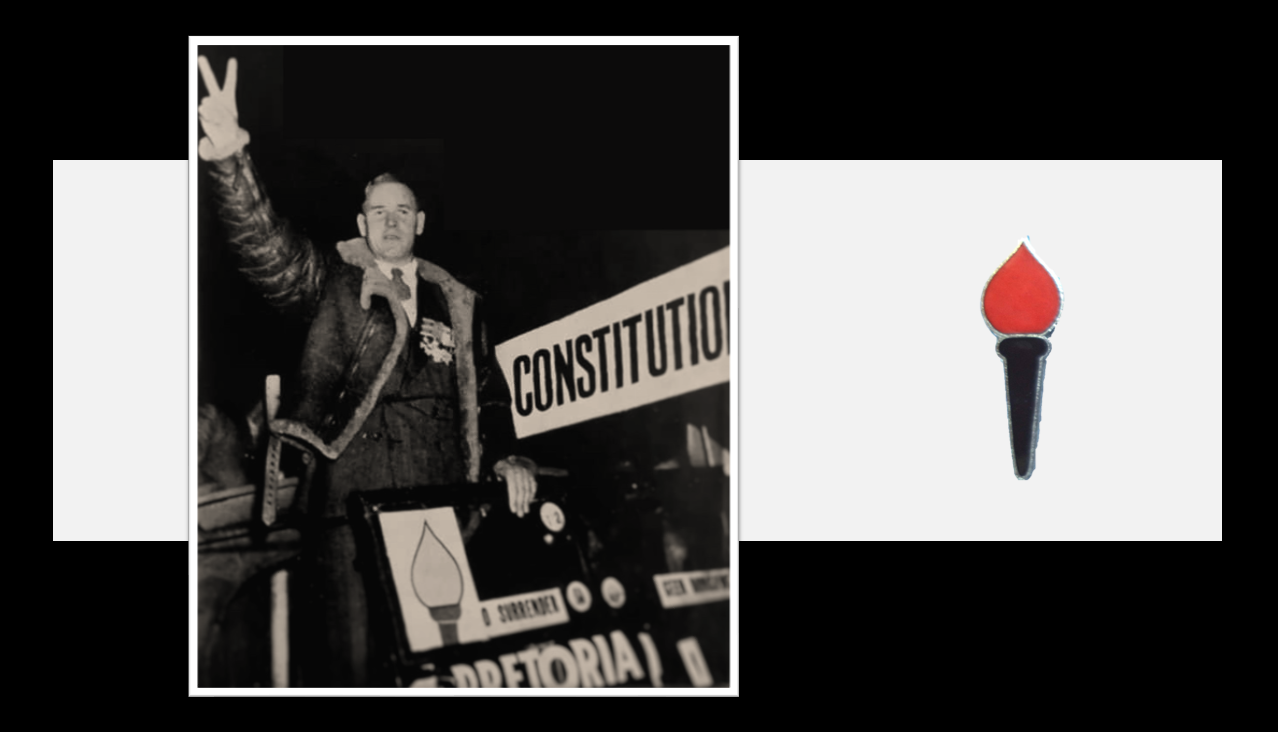
Sailor Malan at a Torch Commando rally in Pretoria, note the ‘V for Victory’ salute and his trademark flying jacket and medals.

Kane-Berman would say of it; 

“a vast section of the people of South Africa are no longer prepared to stomach the totalitarian tendencies of the present government with its piecemeal invasion of their civil liberties and its tinkering with the Constitution.”

Simply put, if the rights of the coloured people could be removed then nobody’s rights were safe. More action was needed, simple protesting by Torchlight was not working, real and meaningful change needed to occur for the Torch to remain relevant. A coalition of all opposition parties who had members who could vote needed to come together in a concerted effort using all forms of politicking to oust the Nationalists constitutionally – by the ballot box. 

This would take shape in an organisation called ‘The United Democratic Front’. 

The United Democratic Front 

The Torch’s mixed bag of moderate ‘pro-democracy’ and firebrand ‘Liberal’ and ‘Communist’ members would also ultimately swing it from an independent ex-serviceman’s popular movement to a political alliance with stated affiliations. 

However, the Torch gradually came to realise that mass protesting would not lead to effective regime change and ‘door to door’ politicking would be required to build ground-swell voter’s block and beat the National Party at the next General election.

Sailor Malan would nail the Torch’s colour’s to the United Party’s mast and say of this move to becoming more of political movement rather than a popular protest movement.

“We have no intention of affiliating with the United Party, but since the National Party was elected to power in a constitutional way, we must fight them constitutionally, and we can only do this by helping the United Party.” (the largest and most viable opposition party).

However, the ‘mixed bag’ of vastly different political views of the Torch’s members would not enable it to rally behind any single political party, Sailor Malan would also say that it would be fatal for the Torch to form a separate party in its own right – so a better vehicle was to needed to enable the Torch to politic at grass-roots across the political spectrum.
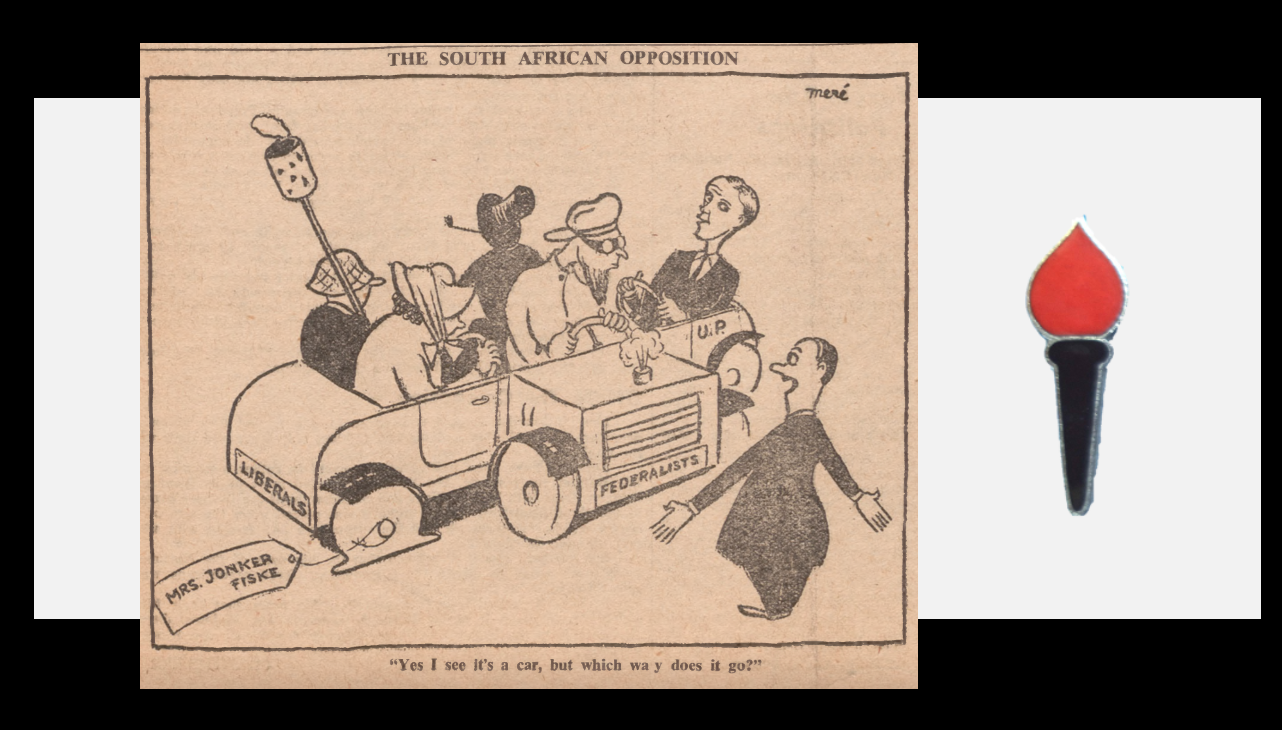
Political Cartoon in Advance shows the opposition to the National Party pulling in different directions. The Torch sitting in the back.

This came in the form of the United Democratic Front (the ‘first’ UDF – the UDF of later years was an entirely different body with the same name) – announced by Koos Strauss on 16th April 1952, the leader of the United Party (UP) as essentially an alliance between the Torch and the UP. The full-makeup of the United Front would be partnership between the Labour Party (LP), the Torch Commando, an organization called ‘The Defenders of the Constitution’ and the United Party (UP). In essence The Torch would remain independent, but it was now free to canvass votes for the UP and the LP in the upcoming 1953 General Election.

To many, the joining of the UDF and opening the Torch to the party politics of the UP and the LP would signal the point where the Torch would ‘jump tracks’ from its singular grass-roots vision of demanding the removal and/or resignation of the National Party as a political pressure group and become a vehicle on which the UP especially could rely on for its party-political aims, its messaging becoming defused as it entered mainstream politics. This would be the first signal of the end of the Torch.

A veiled threat

One area where this political dilution of the Torch occurred in mid April 1952. As an ‘ex-military’ movement it could realistically threaten the government with force, and this made the government very jittery and careful in the way it dealt with the Torch. At a Torch meeting in Greenside, Kane-Berman proposed a ‘National Day of Protest’ and said;

“We will fight constitutionally as long as we are permitted to fight constitutionally, but if this government are foolish enough to attempt unconstitutional action, then I say the Torch Commando will consider very seriously its next step.” 

In his mind the next step would be a national strike and countrywide shutdown, however he also went to give a veiled military threat and said:

“As good soldiers we must have something in reserve!”

The National Party took this statement literally to be a final threat of military force and the idea of National Strike or ‘National Shutdown’ by ‘whites’ would embolden the ‘blacks’ to join in a national revolt – in their eyes a powder-keg. The Afrikaans media jumped on it declaring the Torch as provoking national chaos and drawing ‘blacks’ into ‘white’ politics.  C.R. Swart, the NP Minister of Justice falsely declared that the government had evidence that The Torch was plotting an armed uprising. Then Die Transvaler, falsely reported that the Torch had plans for a coup d’état.

Laughable as this all was Kane-Berman responded:

“I do not doubt that there is a plot afoot, but it is not the one mentioned in the Transvaler report. The real plot is a Nationalist one and it consists of trumping up an excuse to do precisely what Hitler did in Germany – ban opposition movements.”

Foreign newspapers now started picking up on the Afrikaner newspaper news-feed that the Torch was planning a coup d’état. National Party Ministers were so spooked many of them started surrounding themselves with bodyguards – by June, 250 new plainclothes policemen had been appointed to protect National Party Ministers. The whole issue, now blown completely out of proportion was demonstrable of just how fearful of the Torch the National Party had become.

The newly formed United Democratic Front had to jump in to diffuse the situation on behalf of their now aligned Torch Commando. Koos Strauss, the UP leader almost immediately re-iterated that the United Front (the UP and the Torch) intended to fight the battle constitutionally, there would be no national shutdown and there would be no threat of arms. In this way the UP ‘blunted’ the fighting edge and military threat of The Torch and forced its leaders like Kane-Berman to toe the UP’s party-political line and agenda.
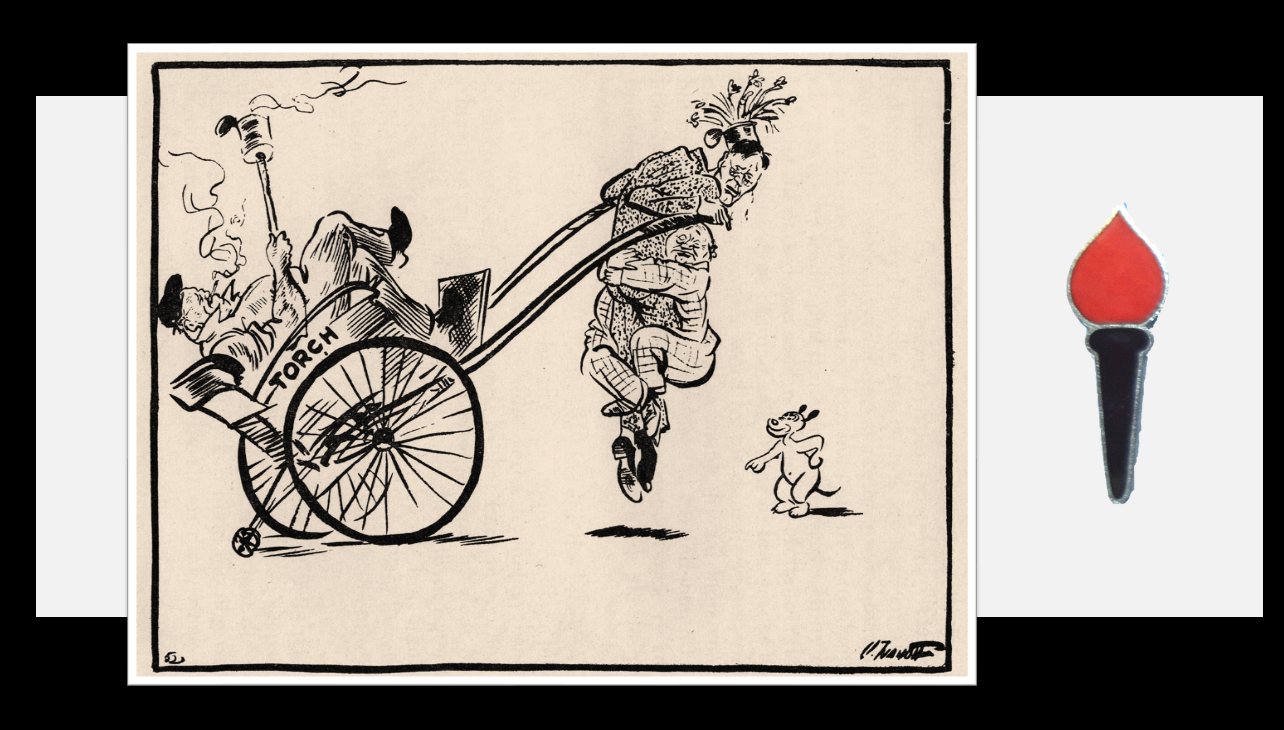
Political Cartoon by Victor Ivanoff over the United Party endeavours to use the Torch Commando to win the 1953 elections, it shows the Torch as the UP’s hinderance.

D-Day commemorations – June 1952

On 6th June 1952, a Torch Commando procession was planned around D-Day anniversary – the invasion of Europe which would see the end of Nazi Germany – a mere 8 years into its celebrations.

A staggering 45,000 people gathered in Durban for a “hands-off-our-constitution” Torch Commando meeting. The meeting was preceded by a pipe band and march into the city of 5,000 Torch members. 

In addition, 2,500 women met in the Durban city hall to dedicate themselves to unseating the Nationalist the government, so impressed by the convictions of the women, and aging Ouma Smuts, Jan Smuts’ widow and darling of ex-servicemen and women even sent them a goodwill message.

Wakkerstroom by-election – June 1952

Also, in June 1952 the National Party incumbent for Wakkerstroom died, forcing a by-election. Wakkerstroom was Jan Smuts old seat when he was ousted in 1924 and had become a National Party strong-hold. It became important because the UP wanted to show it had not lost touch with the rural vote and to the NP it became important as the African National Congress (ANC) had announced it’s ‘Defiance Campaign’ at the same time as the by-election and the NP wanted to show it still held the confidence and will of the voting people (albeit they were only white). 

Torch Commando protest – note the size and the support

Although the seat was a ‘sure win’ for the Nationalists in any event, the Torch decided that a show of unity would be necessary to assert their freedom to assemble and meet anywhere they choose.  The Torch also felt it would be an ideal opportunity to present a friendly face to the rural Afrikaners as militarily non-threatening – a moral opportunity to present themselves as ordinary decent citizens, contrary to the lies that were being told about them in the Afrikaans media. They proposed to set up a nearby ‘camp’ – have a meeting and then have a social gathering and ‘braai’ with the local farmers.

To protect their stronghold and assure themselves of the win the Nationalists announced that the United Front (the Torch in effect) would not be allowed to hold a meeting in the Wakkerstroom constituency. Local officials refused permission for the Torch to road transport equipment to the town – so the Torch charted a Dakota aircraft to fly in with all the necessary. The Police were then ordered to block any Torch Commando convoy, so the convoy simply drove around them on the open veld and entered Wakkerstroom to set up camp.

They held their meeting with no problems from the locals, asserted their right to meet anywhere and then had a braai with the locals who brought meat and vegetables with them, a nice friendly social.

By did all this goodwill and positive spin swing a vote?  Nope, the United Party was soundly beaten at the poll, embarrassingly they had lost ground to the previous vote – on aggregate they had lost more voters to the National Party, in retaining the seat, the NP received 4.9% more votes than it had attracted in the 1948 election. This was taken as a barometer of the general state of the United Party’s appeal to the rural Afrikaner vote.  

Summing up the reasons for the magnitude of the defeat, a United Party memorandum stated:

the National Party candidates and election agents ascribe their success to the existence of the Torch Commando, the Kane-Berman ‘Day of Protest’ statement and the obvious tie up to the non-European protest movement. They were able to lump us (the UP) into a ‘bonte opposisie’ the Torch Commando, the Labour Party, Kahn, Sachs, Carneson (and) the African National Congress.”

By Carneson, they referenced Fred Carneson, a military veteran, leader of the Springbok Legion and a devout Communist. Based on this, the UP executive concluded at a meeting on the 17th July 1952, that in order to re-gain the confidence of their lost rural Afrikaner voters they had little choice but to move the United Party’s platform even closer to that of the National Party. 

This would mean tapering back on the UP’s ‘liberal’ faction and their demand for a universal franchise for both black and white voters and a move towards the UP’s conservative faction who were happy the Cape Franchise for Colourds and who wanted to see an ‘eventual’ qualified franchise for black South Africans. This would spell, not only the death of the United Front, but the Torch Commando and the eventual death of the United Party itself.

On the up, in 1952, the Torch Commando continued to rise at the grass-roots level. Torch meetings attracted 3 000 in Witbank, 500 in Vryheid, 300 in Bathurst, 60 farmers in Salem, 400 at Montagu, 2,000 at Adelaide, 2 000 at Bredasdorp, and thousands again in the main metropoles of Pretoria, Johannesburg, Durban and Cape Town. Torch branches were formed in Oranjemund and Port St Johns. As to rising popularity Danie Craven, the South Africa Springbok rugby stalwart even joined the Torch. 

However, in line with the fear that ‘The Torch’ was planning a military overthrow and National Party hype surrounding this, along with down-right under-handed politics – on the downside Torch rallies and meetings in the latter part of 1952 increasingly came under attack by Afrikaner Nationalists, so much so ‘Torchmen’ started to wear their ‘old tin hat’ brodie steel helmets to meetings. A Torch meeting in   Queenstown was violently broken up, in Brakpan Nationalists lined the streets and spat at a passing Torch rally. A Torch/United Front meeting in Vrededorp was so violently attacked by Nationalists banishing iron bars and nailed sticks that 100 people had to be treated by doctors on site whilst others were taken to hospital. A Torch meeting at Milner Park was attacked and stoned.

The Torch and Race 

One aspect of the Torch Commando that comes under scrutiny of modern ANC political commentators is the ‘whiteness’ of the organization.  They are quick to dismiss it as an irrelevant movement because it was not inclusive of ‘blacks’ … but that would be to completely mis-understand what the Torch was.  So, what’s with the ‘whiteness’?
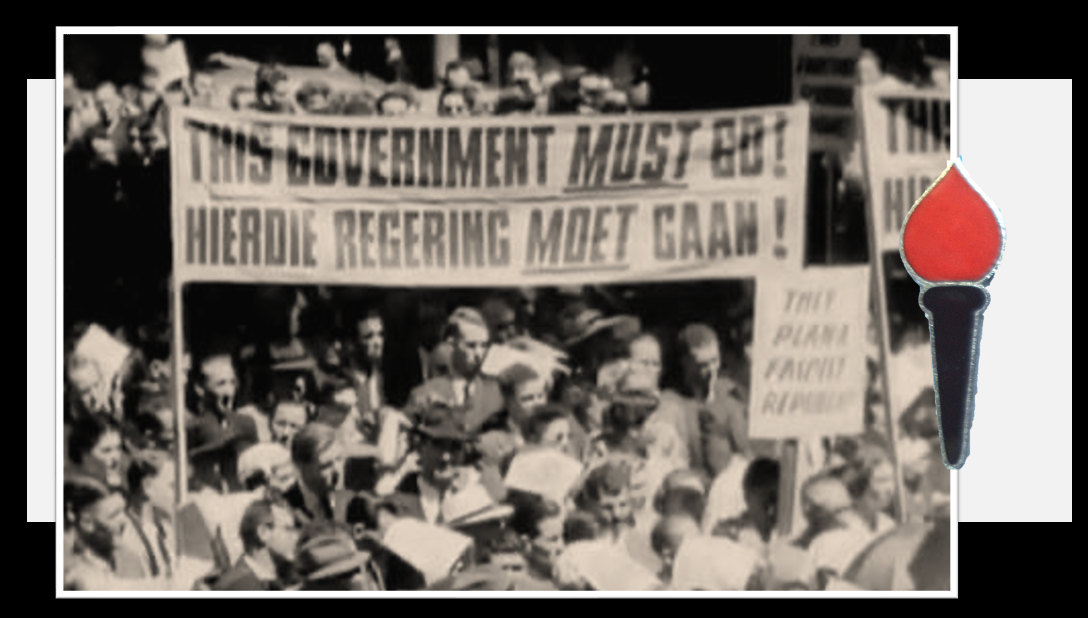
Torch Commando rally – note the placard expressing fear of the National Party’s intentions to implement a ‘white only’ fascist Republic

The Torch had been formed to oppose the violation of the Constitution. Although the violations directly affected the voting rights of coloured people, this violation intended to create a “whites-only” vote – so it was a ‘Constitutional’ fight at the ballot to prevent the on-set of Apartheid in its more sinister forms. Only whites and Coloureds had the franchise, so only they could fight a constitutional fight at the polls and in the greater scheme of ‘white parliamentary constituencies’ the handful of parliamentary constituencies where coloured people were registered on the common voters roll was relatively small – however to this effect The Torch did have a few coloured branches in these constituencies – in the but it remained an almost entirely white organization.

Outside of The Cape, the vast majority in the rest of country of ‘Black’ people did not have ‘the ballot’ so they could not participate at all. Kane-Berman summed it up in October 1952 when he said that because the Torch’s fight was through the ballot box, there was no point in enrolling people who could not vote.

Coloured representation at a Torch Commando protest

Since the Torch did not want to become a political party, the best way of throwing out the NP government in 1953 was to encourage Torch supporters to vote for its two parliamentary partners in the United Front, the United Party and the Labour Party. By late 1953 this had become the key objective of The Torch Commando, and it only really involved ‘whites’ and their ballot.

To illustrate the point, even the Coloured Servicemen felt the Torch was the ‘white man’s fight’ and not theirs.  In July 1952, a letter to Sailor Malan the Kimberley Coloured War Veterans’ Association said;

“No good purpose will be served by us becoming members of your vast organisation, notwithstanding the fact that the Torch came into being on one of the most vital issues affecting the coloured people”.  Our “sincerest wishes that (the Torch) shall grow in strength to face the crisis affecting South Africa …. Coloured people made great sacrifices and paid dearly for their loyalty in assisting to uphold democracy”.

Later in 1952 a group of coloured ex-servicemen declared that they had no desire to become members of the Torch’s fight as;

“(This) constitutional fight is the white man’s fight to re-establish the integrity of his word”.

The Torch’s mixed bag broad church of Communists, Liberals, Moderates and Democrats found common cause and ‘unity’ in their horror at the NP’s plans to violate the Constitution, but in reality true ‘unity’ did not go very much further than that. Any attempt to develop hard-line, defined and detailed policies on race in a country so racially obsessed with vastly different views on it might have split the organisation, so the Torch leadership chose to avoided it as much as possible and focus on what ‘unified’. In any event, the priority was to defeat the NP party in the general election due to be held in March 1953 and they would just focus on that.
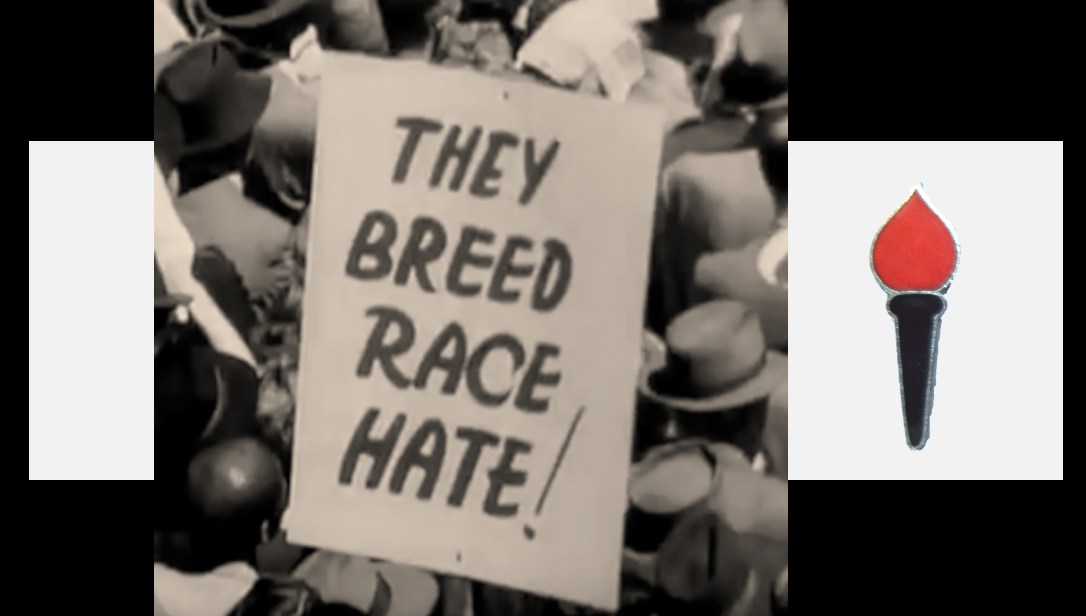
Torch Commando protest placard warning ‘they (the National Party) breed race hate’.

Dr. Maurice McGregor is a regular member of the Torch, but very active and he gives a perspective on the issue as to race and The Torch and its mission, he said; 

“I was in the Torch Commando for about two years and took part in several marches. As I remember it the commando was primarily created to protect democracy, meaning the democratic process, the right to hold political meetings, and this in effect meant protecting the United Party which was the principal opposition to a Nationalist party.”

He goes on to say on the issue of protesting against ‘Apartheid’ his position is one of a typical white United Party voter in the 1940’s and 1950’s many of whom maintained that it was important that Black South Africans be taken out of poverty first, the poverty cycle and lack of education needed to be addressed before any form of franchise is afforded to them. Maurice recalls:

“To say that they held mass protests against apartheid is correct so long as you don’t start defining too precisely what apartheid was about. For example, the torch commando would never have endorsed a vote for Africans, even a very limited vote for those with education and property. But they did oppose the specific steps involved in the application of apartheid such as the bulldozing of Sophia town and the creation of rural ghettos.”

On the racial make-up of The Torch Commando (that been an organisation for ‘white voters’ only) he points out that although predominantly ‘white’ it was not exclusively white, he says;

“(The Torch) was not only white. There were Blacks as well as coloureds in the Torch Commando. But then there were very few Blacks in the Army.”

The ANC’s Defiance Campaign and the Swart Bills

Black resistance to Apartheid was also starting to lean towards violent civilian defiance as the ANC’s Defiance Campaign, officially launched from 26th June 1952, started to descend into full blown rioting in every major metropole around the country by October 1952, this was also not a stated aim of the Torch Commando (Kane-Berman’s National Shutdown statement aside).
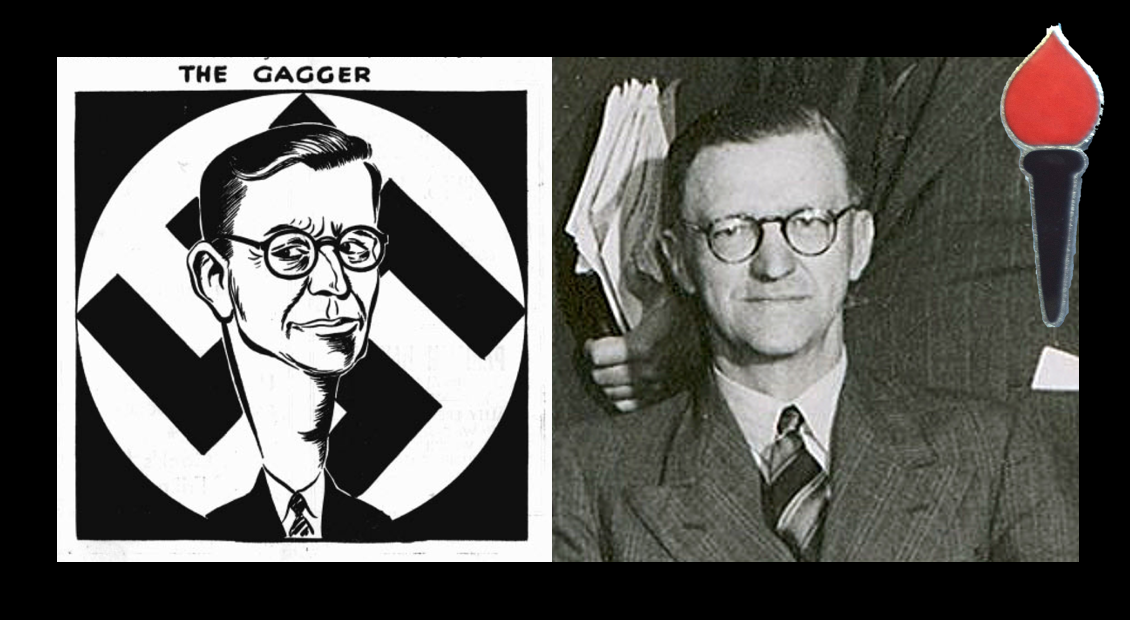
C.R. ‘Blakkie’ Swart as portrayed in Advance – the ‘gagger’ of free speech in front of a Nazi swastika.

It was clear from the nature of the Defiance Campaign that the ANC and The Torch were on different political trajectories. However, the Torch did take a strong position when Kane-Berman in September 1952 and now re-elected as the Chairman of The Torch Commando called on the Nationalist government “to cease its suicidal policy of fanning the flame of race hatred and to meet the non-European leaders in conference.”

The ANC’s Defiance ironically would also trigger the demise of both The Torch and The UP and spit them apart, and it’s not what you think – it would come from the National Party in the form of new statutes and because of polarising views within the United Party to them. So how is that?

In response to ANC’s Defiance Campaign, the National Party behaved ‘typically’ in January 1953, C.R Swart introduced the “Whipping Bill” (giving powers to Police to give lashes to people inciting political violence) and the “Public Safety Bill” (to prevent highly defiant political gatherings in the interests of safety and call a ‘State of Emergency’ when needed). 

ANC Defiance Campaign – commences on the 26 June 1952

Known as the ‘Swart Bills’ the Torch was bitterly opposed to these bills – and not without good reason, the ‘Swart Bills’, which gave the Minister of Justice immense powers in the event of civil unrest. Had these Bills been in place when the Steel Commando rioted in Cape Town in May 1951 the State would have had the powers to imprison and whip the Torch Commando’s executive. However, the United Party dithered over these Bills as the conservative element within the UP felt they were decisive in resolving spin off violence from the ANC’s Defiance Campaign and therefore necessary.

On the other side of the fence, the United Party would support the National Party in passing Swart Bills on the grounds of national security, concerned with the unrest the ANC’s Defiance Campaign was creating whereas the Torch insisted that the bills conflicted with their principles and were the re-curser to fascist dictatorship. 

Louis Kane-Berman argued;

“… unless the Torch Commando take the lead and the initiative in rousing public feeling against these Bills, the lead will be taken by other less responsible organisations (both European and non-European)”

Kane-Berman also, after rioting broke out, stated that;

“we (in the Torch) are not surprised, nor should be the Nationalist leaders be, that extreme elements among the natives have gone berserk.”
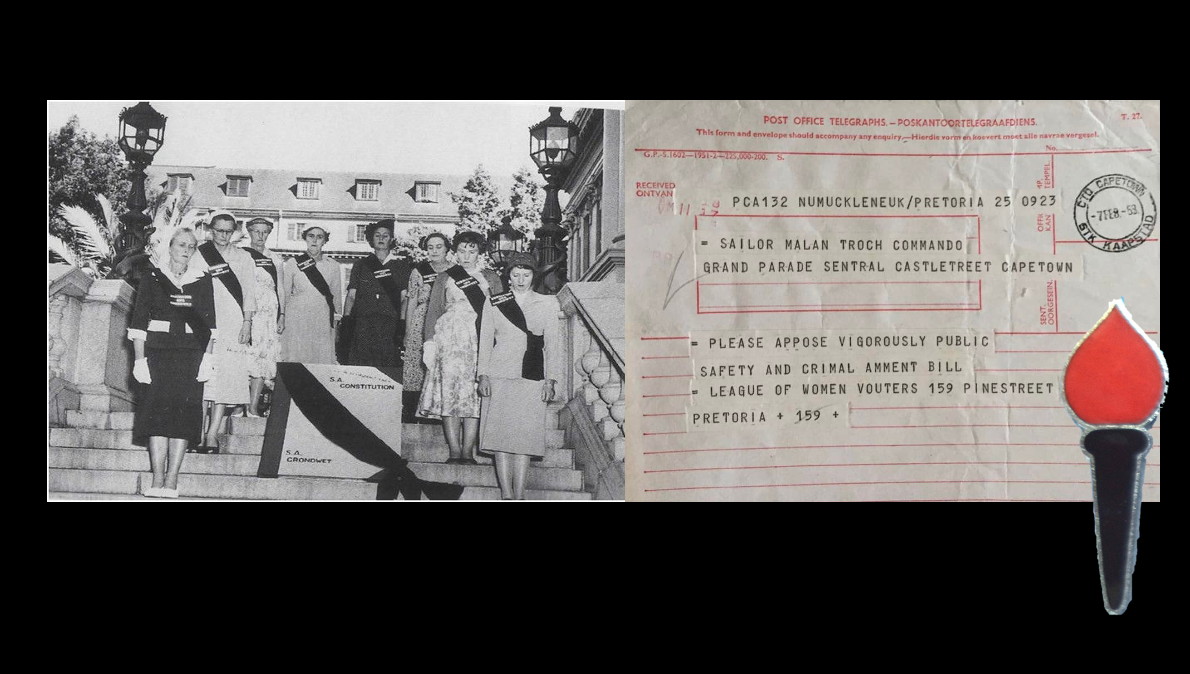
Torch Commando artefact, telegram to Sailor Malan from the League of Women Voters (Black Sash) urging The Torch’s vigorous opposition to the Swart Bills.

The infamous “lunch

The issue over the Swart Bills came to a head when Louis Kane-Berman attended a luncheon hosted by the Torch’s primary benefactor and UP stalwart – Harry Oppenheimer. Harry Oppenheimer pressed Kane-Berman to elaborate on the Torch’s position with regard The Swart Bills, and was highly offended, when a United Party Minister of Parliament with whom Kane-Berman had served alongside in the North African campaign during the war, rebutted Kane-Berman’s argument on the evils of the Bills and detention without trial when and he flippantly stated:

“Louis you are talking nonsense. During the war Smuts threw many Afrikaners into prison without trial and now because the government wants to imprison some …(African)… trouble-makers, you now wish to raise all manner of objections.” 

Alarmed that the United Party (UP) would support the bills, Louis Kane-Berman summoned The Torch Commandos National and Provincial executives and members of provincial executives of the Torch to Cape Town for an emergency meeting, also attended by leaders of the UP and of the Labour Party (LP). The LP was bitterly opposed to the bills. The UP representative, Pilkington-Jordan failed to convince the meeting of the UP position in support of the Swart Bills, so to conclude the meeting the Torch executives “decided unanimously there and then that if these bills went ahead, we would now call a National Day of Protest”. 

Louis Kane-Berman issued a press release reaffirming the Torch’s stance against the Swart Bills on the 8 February 1953 – the invited press gave it a standing ovation so well was it received, “to my surprise” said Kane-Berman later. The press release drew a line in the sand as to The Torch’s political intentions and it immediately put The Torch at loggerheads with the UP and with the likes of Harry Oppenheimer, the Torch’s primary financial benefactor and sponsor.

The Torch had reverted to their original threat of shutting down the country and aligning with the objects of the ANC’s defiance campaign, and almost immediately there was dissent over the call for a ‘National Day of Protest’ within the Torch at a grass-roots level from the Torch’s rank and file who supported the UP. Torch members declaring the ‘day of protest’ as not properly approved by the Torch’s structures – the organisation now fighting internally with its leadership started the slippery slope towards an implosion.

Political cartoon, shows the UP leader Koos Strauss concerned that the Torch Commando, depicted as children getting a little too close to his thatch house for comfort. Courtesy the Kane-Berman family.

The General Election – April 1953

Although Louis Kane-Berman would describe these two bills and the loss of financial support from Oppenheimer and support from the UP as the death-knoll for the Torch, its broader than just that. The real death-knoll would come in the 1953 General Election. The NP went into the election campaigning taking advantage of the unclear UP policies on black emancipation and weak leadership, promoting the ‘red danger – communist – rooi gevaar’ threat of ‘the Torch’ and ‘Springbok Legion’ and the ‘black danger – swart gevaar’ of the ANC and its defiance campaign. The ‘fear factor’ resonated with white voters fearing an uncertain future and seeking strong leadership and structure. 

Again, as in the 1948 election, the National Party did not win a majority vote – it won 45% of the vote, but more importantly it won more constitutional seats, increasing its number of seats from 86 before the election to 94 – bringing it 61% of the ‘Constituency’ vote – well up on its performance in 1948. The UP’s seats dropped from 64 to 57. Labour dropped from 6 to 5. 

Ideological Conflict – Natal

The Torch Commando dithered between two conflicting Constitutional issues, the first surrounding the Cape Coloured Franchise – which in essence called for the maintenance of the South African Union on moral grounds and the second issue, Natal’s sovereignty – which called for a break-up of the South African Union on legal grounds.  Diametrically opposing views indeed.

The ‘Apartheid-Lite’ politics of the UP to attract back the vital marginal ‘white’ voters drawn to the National Party in the 1948 election and the ‘Liberal’ UP Torch members at odds with their party’s politics would ultimately lead to downfall of the Torch (and eventually to the downfall of the UP itself). 

To illustrate the effect of this political feud in which The Torch now found itself in, after the 1953 elections the leader group of the Natal Torch Commando who were in the United Party, split from the United Party to form their own ‘Union Federal Party.’ The Party stood for full enfranchisement of Indian and Coloured voters and a qualified franchise for Black voters. As much as Sailor Malan tried to assure all that their choice was not that of The Torch and the Torch had nothing to do with it or its stated aims, key members of the Torch resigned over the matter – including The Patron in Chief.

Critical to The Torch’s strategy was that it attempted to avoid been party political and simply be a ‘mixed bag’ of political views, with the idea of re-igniting the old war time camaraderie to swing the ‘service vote’ so as to oust the National Party at the ballot box through a united front of political opposition. 

It made it clear that although a ‘militant’ movement it was not a ‘military’ one. It liked to hint at its potential to become a military threat but made it very clear that it was not an armed resistance movement or military wing of any political party, it also made it clear that it was not a ‘political party’ – it left its members to campaign and politic for any party in opposition to the National Party. This wishy-washy standpoint would lead some of its members into military resistance and others into political resistance and would count as one of the reasons for the movement’s ultimate downfall.

A heady combination of the 1953 UP Election loss, the firebrand anti-Apartheid Liberals and Communists in the Torch and the state’s legislature actions banning or politically restricting members of The Torch – would all result in the final nail in the Torch’s coffin.

Demise

In June 1953, the Torch met in Johannesburg for its second national congress and decided by a narrow majority to continue, but in reality – without meeting its first raison d’etre – the removal of the NP in 1953 General Elections – the Torch was done and it ceased to really exist.

As to the Torch’s second raison d’etre – the Removal of Coloureds from the Common Voters roll to stop the slide to more sinister Apartheid legislation and a Republic – after the 1953 elections the National Party was able to complete its strategy of loading the senate and by-passing the Judiciary and by 1956 the Colourds were removed from the voters roll. That opened the way forward for Apartheid proper and by 1960, the ‘Union’ Constitution would fall apart when a South African Republic was declared with a ‘whites only’ vote with the aid of ‘whites only’ voters in SWA (Namibia) to swing a tiny referendum majority (just 1%) to a National Party ‘Keep South Africa White’ referendum promise.

As to the United Democratic Front. After the 1953 elections, the UP’s demise was also set. It’s firebrand Torch Commando members in it would split the party and form the Liberal Party and the Progressive Party. The UP would attempt re-direct Koos Strauss’ conservative approach to include a more palatable ‘ex-services’ appeal by appointing the very popular ex-services choice – Sir De Villiers Graaf to lead it. But, it was done, the Progressive Party split, led by ‘Torchmen’ like Colin Eglin would eventually take over as official opposition and the UP would cease to exist.  The Labour Party in turn would also lose relevance in the battery of ‘Anti-Communist’ legislation, ‘whites only’ participation legislation and ‘banning’ of its members and would also cease to exist.

Dr Maurice McGregor, our eyewitness Torchman to the demise of the Torch offers a slightly different view on The Torch Commando, he did not see the collapse as been caused by suppressive actions of the National Party and he differs from the view that the Torch collapsed because the United Party tried to pull the Torch to ‘toe the line’ on with its policies creating disunity and ultimately become directionless. 

What Dr Maurice McGregor recalls is a ‘implosion’ – not because of the United Party, but because of an anathema towards Nazism – an internal moral dilemma. This is what he said;

“The torch commando eliminated itself at the peak of its power through fear of creating a paramilitary organization like the Greyshirts in Germany. I was in was actually the last March that the organization took part in. We marched in the dark to ‘protect’ a United party meeting and had to survive a shower of stones coming in over our heads. As the discussion went afterwards, we had the personnel and could very easily have put together a group to deal with such thugs, but the leadership, as indeed many of us, we’re extremely nervous of creating a private army which would take paramilitary action and considered that such an act would be an antidemocratic thing. So, the organization dissolved itself.”

He summarises the Torch very accurately, per the Torch’s initial role – that of a ‘Political Pressure Group’ and not that of a political party whose mandate is the machinery of political reform, nor that of a political movement seeking reform through social dissonance and revolution. A Political Pressure Group is defined as a special interest group which seeks to influence Government policy in a particular direction. Such groups do not seek Government control or responsibility for policy. Maurice summarised The Torch Commando as;

“It was … a history rewrite with a very definite slant … to try to define the slant … the Torch Commando was there primarily to check erosion of the democratic process, and it did try to protect the very limited coloured vote in the Cape. It also opposed various applications and extensions of Apartheid. But it kept away from advocating any real reform, saying that that such decisions should be made by a functioning democratic system.”

The Torch’s demise as a comprehensive and organised ‘whole’ of ‘whites in opposition to Apartheid would see future white political resistance terminally fractured, isolated and largely ineffective. This is the first significant mass of ‘pro-democracy’ whites against Apartheid as a ‘whole’ – it would not be given a political voice again as a ‘whole’ again until F.W. de Klerk’s Yes/No referendum in 1992.

To wrap it up Louis Kane-Berman and some colleagues would use some of the remaining funds in the Torch Commando’s financial accounts for donations – which they gave to the Memorable Order of Tin Hats (MOTH), the Black Sash and St Nicolas Home for Boys. Donations were also made to Chief Albert Luthuli, the President of the ANC and to Professor Z.K. Matthews at Fort Hare University.

Michael Fridjhon concluded his paper on The Torch Commando in 1976 stated:

The Torch became nothing. It was a bubble which burst over the South African political scene. It vanished almost as suddenly as it emerged”.  

In Conclusion

However, nothing is further from the truth, with respect to Michael Fridjhon he would have been barred from accessing information on Torch Commando and its members because of Apartheid policies banning such information an access in 1976 – he would have been unable to see ‘the golden thread’ – who from The Torch Commando did what after it folded – what happened next?  We can research this now – so, let’s pick up where he would have been unable to and ask ourselves what happens next – what legacy does the Torch Commando leave, where do the ‘dots’ connecting its thread to the armed and political struggle go?

The Torch Commando for the most part was ‘written out of history’ by The National Party and remains ‘written out’ for political expedience by the current government. It is a ‘inconvenient truth’ as it highlights a mass movement of pro-democratic white people not in alignment with Apartheid. It challenges the prevailing malaise of thinking in South Africa – that everything prior to 1994 was ‘evil’ and white South Africans must therefore share a collective ‘guilt’.

Torch Commando rally – note the demographic profile is almost exclusively middle class ‘white’.

The Torch Commando stands testament to the fact that the majority of white people in South Africa did not vote for Apartheid and as much a quarter of the entire voting bloc – 250,000 white people actively hit the streets in protest against Apartheid. It’s a prevailing and undisputed fact that the Torch Commando protests are the first mass actions against Apartheid, they pre-date the African National Congress’ Defiance Campaign – so as to a inconvenient truth to the current ANC narrative, the first significant mass actions where led by white South Africans and not black South Africans – a testament to the fact that the struggle against Apartheid was an ideological and moral struggle and not one of race.

The Torch Commando – next instalment 

What follows next is called ‘The Smoking Gun’ – please click through to this Observation Post link which covers in this phase depth.

The Torch Commando – Part 5; The Smoking Gun


Written and Researched by Peter Dickens

References:

Written testimony of Dr Maurice McGregor submitted to Peter Dickens: 20th December 2016.

The Torch Commando & The Politics of White Opposition. South Africa 1951-1953, a Seminar Paper submission to Wits University – 1976 by Michael Fridjhon.

The South African Parliamentary Opposition 1948 – 1953, a Doctorate submission to Natal University – 1989 by William Barry White. 

The influence of Second World War military service on prominent White South African veterans in opposition politics 1939 – 1961. A Masters submission to Stellenbosch University – 2021 by Graeme Wesley Plint 

The Rise and Fall of The Torch Commando – Politicsweb 2018 by John Kane-Berman. Large extracts taken from the late John Kane-Berman memoirs of his father Louis Kane-Berman with the kind permission of the Kane-Berman family.

Raising Kane – The Story of the Kane-Bermans by John Kane-Berman, Private Circulation, May 2018

The White Armed Struggle against Apartheid – a Seminar Paper submission to The South African Military History Society – 10th Oct 2019 by Peter Dickens 

Sailor Malan fights his greatest Battle: Albert Flick 1952. 

Sailor Malan – By Oliver Walker 1953. 

Lazerson, Whites in the Struggle Against Apartheid.  

The White Tribe of Africa: 1981: By David Harrison

Ordinary Springboks: White Servicemen and Social Justice in South Africa, 1939-1961. By Neil Roos.

Related Work

Torch Commando Series – Part 1 The Nazification of the Afrikaner Right

Torch Commando Series – Part 2  The Steel Commando

Torch Commando Series – Part 3 The War Veterans’ Action Committee

Torch Commando – ‘New’ rare footage of The Torch Commando in action, the first mass protests against Apartheid by WW2 veterans.

The Torch Commando Series

The Smoking Gun of the White Struggle against Apartheid!

The Observation Post published 5 articles on the The Torch Commando outlining the history of the movement, this was done ahead of the 60th anniversary of the death of Sailor Malan and Yvonne Malan’ commemorative lecture on him “I fear no man”. To easily access all the key links and the respective content here they are in sequence.

In part 1, we outlined the Nazification of the Afrikaner right prior to and during World War 2 and their ascent to power in a shock election win in 1948 as the Afrikaner National Party – creating the groundswell of indignation and protest from the returning war veterans, whose entire raison d’etre for going to war was to get rid of Nazism.

For the in-depth article follow this link: The Nazification of the Afrikaner Right

In part 2, in response to National Party’s plans to amend the constitution to make way for Apartheid legislation, we outlined the political nature of the military veterans’ associations and parties and the formation of the War Veterans Action Committee (WVAC) under the leadership of Battle of Britain hero – Group Captain Sailor Malan in opposition to it.  Essentially bringing together firebrand Springbok Legionnaires and the United Party’s military veteran leaders into a moderate and centre-line steering committee with broad popular appeal across the entire veteran voting bloc. 

For the in-depth article follow this link: The War Veterans’ Action Committee

In Part 3, we cover the opening salvo of WVAC in a protest in April 1951 at the War Cenotaph in Johannesburg followed by the ratification of four demands at two mass rallies in May 1951. They take these demands to Nationalists in Parliament in a ‘Steel Commando’ convoy converging on Cape Town. Led by Group Captain Sailor Malan and another Afrikaner – Commandant Dolf de la Rey, a South African War (1899-1902) veteran of high standing their purpose is to raise support from Afrikaner and English veterans alike and they converge with a ‘Torchlight’ rally of 60,000 protestors and hand their demands to parliament. 

For the in-depth article follow this link: The Steel Commando

In Part 4, in response to the success of The Steel Commando Cape Town protest, we then look at the rise of the Torch Commando as South Africa’s largest and most significant mass protest movement in the early 1950’s pre-dating the ANC’s defiance campaign. Political dynamics within the Torch see its loyalties stretched across the South African opposition politics landscape, the Torch eventually aiding the United Party’s (UP) grassroots campaigning whilst at the same time caught up in Federal breakaway parties and the Natal issue. The introduction of the ‘Swart Bills’ in addition to ‘coloured vote constitutional crisis’ going ahead despite ineffectual protests causes a crisis within the Torch. This and the UP’s losses in by-elections in the lead up to and the 1953 General Election itself spurs the eventual demise of The Torch Commando.

For the in-depth article follow this link: The ‘Rise and Fall’ of the Torch Commando

In Part 5, we conclude the Series on The Torch Commando with ‘The Smoking Gun’. The Smoking Gun traces what the Torch Commando members do after the movement collapses, significantly two political parties spin out the Torch Commando – the Liberal Party of South Africa and the Union Federal Party. The Torch also significantly impacts the United Party and the formation of the breakaway Progressive Party who embark on formal party political resistance to Apartheid and are the precursor of the modern day Democratic Alliance. The Torch’s Communists party members take a leading role in the ANC’s armed wing MK, and the Torch’s liberals spin off the NCL and ARM armed resistance movements from the Liberal Party. We conclude with CODESA.

For an in-depth article follow this link: The Smoking Gun

Rommel’s aide-de-camp was a South African

It’s a little known fact, one of Field Marshal Erwin Rommel’s key officers, a person in his ‘Inner Circle’ and his personal advisor and aide was in fact a South African.  Very few South Africans joined the Nazi military forces during the Second World War, there are a number of South West Africans (now Namibia) who joined Nazi Germany’s armed forces whilst South West Africa was a South African Protectorate, which is understandable given South West Africa used to be a German colony prior to World War 1 and they were all of German heritage. A handful of South African Prisoners of War even joined or were coerced to join the Waffen SS during the war itself.

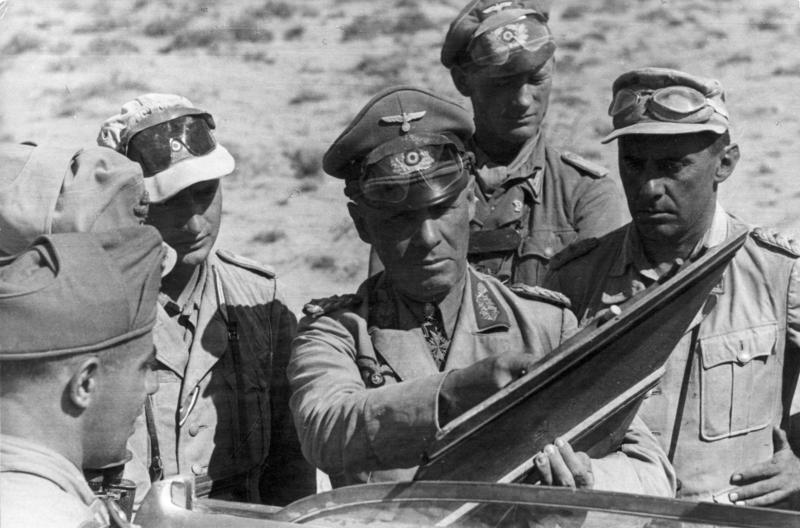
Nordafrika, Erwin Rommel mit Offizieren

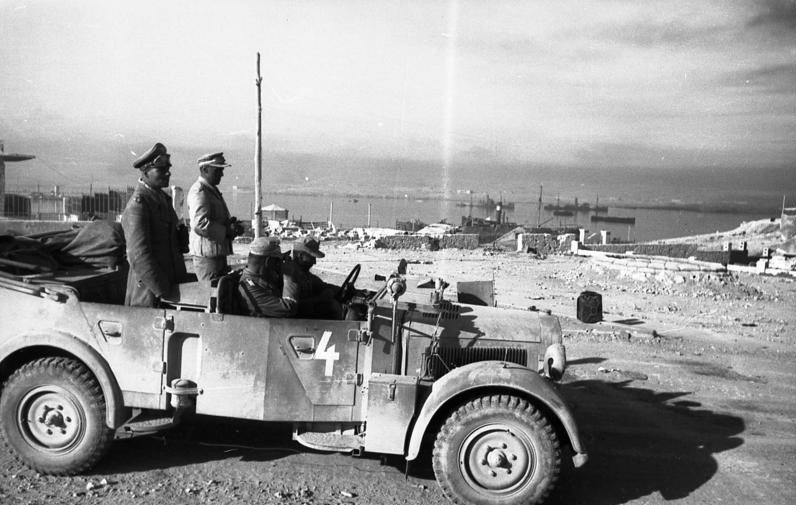
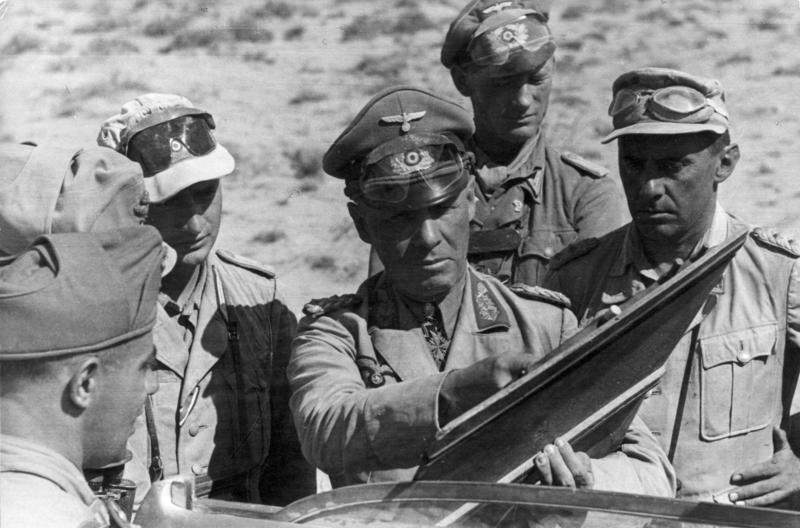
General Rommel (centre) briefing fellow officers

However there are two who served on General Rommel’s staff, the first is his driver, Lt. Hellmut von Liepzig who was a naturalised South West African and the second was Lt. Heinz Werner Schmidt, a naturalised South African. Let’s examine Schmidt:

Heinz Werner Schmidt

To be fair to Heinz Schmidt, he was born in South Africa to German parents, and at a very young age he moved around Africa with his family, classified as ‘volkdeutsche’ spending more of his formative years and completing his university education in Germany itself, becoming a dual national with a German citizenship in addition to his South African one.  Leaving South Africa at the age of 4 he regarded himself as German above all and was swept up with the rest of the country in the euphoria of Nazism.  When war broke out, he was in a unique position – he had a choice.  He could choose to fighting for either South Africa and the Allied cause or Germany (as his dual citizenship allowed), he even had the choice of sitting the war out in South Africa (service was voluntary), he chose to his convictions to support the Nazi cause and became a German Army officer.

At one point in the war he found himself in command of Wehrmacht units directly engaging South African Army units and then, more ironically, with Europe and Germany devastated he engaged his South African birthright which gave him sanctuary in South Africa itself after the war.   In fact he built two very successful South African companies and one is a well-known household brand.

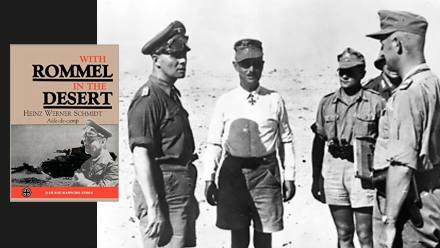
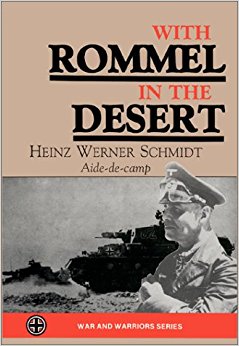
So lets examine who Heinz Schmidt was and what he did. Born in South Africa, Lieutenant Heinz Schmidt served in North Africa as Erwin Rommel’s (“The Desert Fox”) personal aid and advisor – an aide-de-camp in military speak.  As he was “South African-born” he was therefore considered, in line with military logic, an expert on Africa. Already a veteran of the Polish Campaign, Schmidt joined Rommel’s staff in March 1941 from Eritrea and was subsequently present during a number of battles in Egypt and later Tunisia, and was later to write a bestseller depicting his years with Rommel, namely “With Rommel in the Desert”.

29983573_2123096807919306_5892126050487020083_o

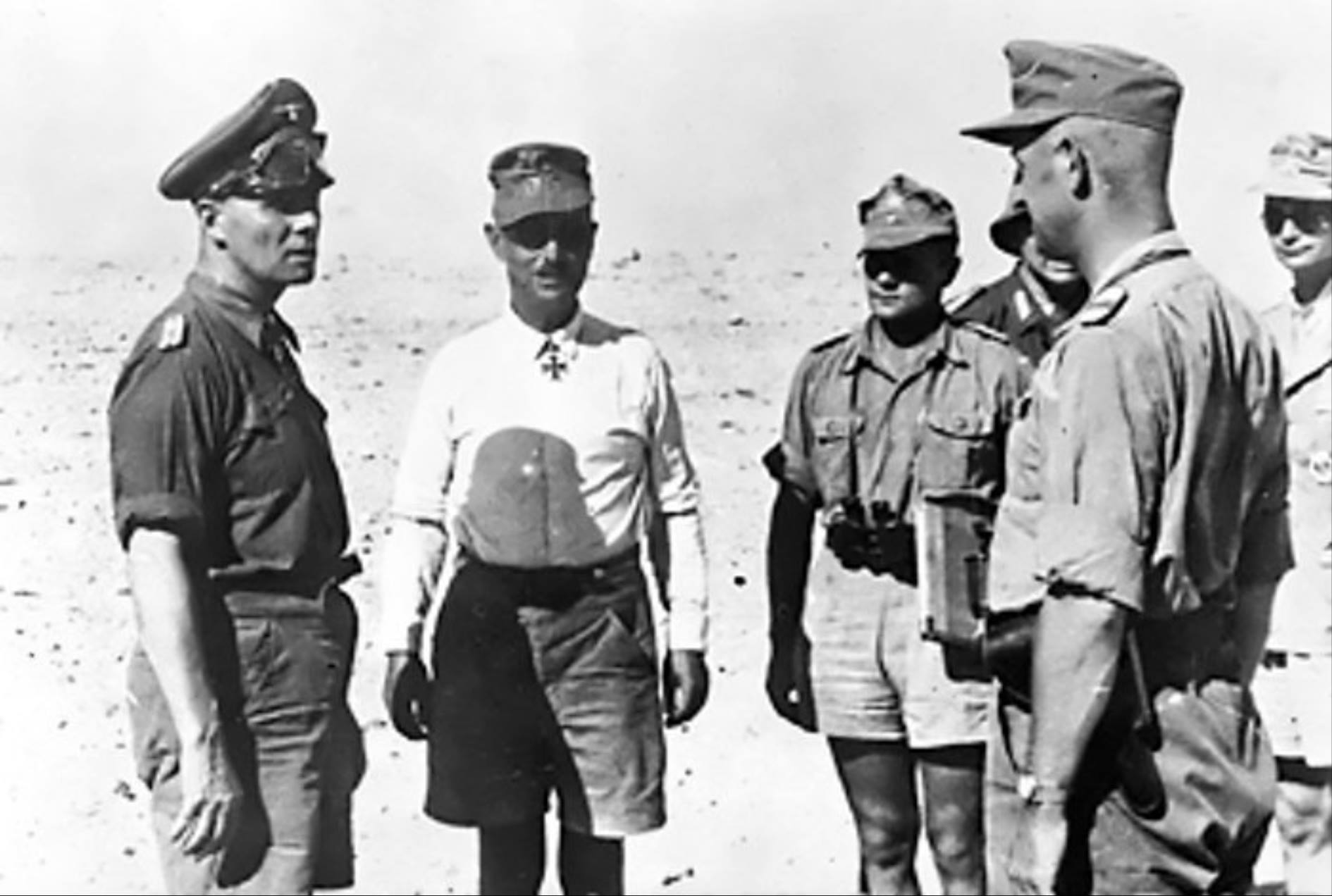
Heinz Schmidt with General Rommel – Schmidt is third from the left.

Werner Schmidt by his own admission was surprised that General Rommel took him on as his advisor as he really did not have a depth knowledge of Africa, however been the only officer in Rommel’s inner circle of officers with a smattering of African heritage he found himself the only man for the job, and he happily took it on.

Lieutenant Heinz Werner Schmidt also had a sound combat record, just days before he was appointed as the aide-de-camp to General Erwin Rommel, he was commanding a heavy weapons company.  In fact Schmidt played a key role in overrunning the South African positions on 23rd November 1941 during the Battle of Sidi Rezegh.  He found himself in the thick of things with the German Wehrmacht’s 115 Rifle Regiment which lined up to attack the South African’s flank and over ran them.

Lieutenant Heinz Werner Schmidt described the scene as follows:

“We headed straight for the enemy tanks. I glanced back. Behind me was a fan of our vehicles—a curious assortment of all types—spread out as far as the eye could see. There were armoured troop carriers, cars of various kinds, caterpillars hauling mobile guns, heavy trucks with infantry, and motorized anti-aircraft units. Thus we roared on towards the enemy ‘barricade.’

“I stared at the front fascinated. Right ahead was the erect figure of the Colonel commanding the regiment. On the left close by and slightly to the rear of him was the Major’s car. Tank shells were whizzing through the air. The defenders (editors note: the South African Brigade) were firing from every muzzle of their 25-pounders and their little 2-pounder anti-tank guns. We raced on at a suicidal pace.”

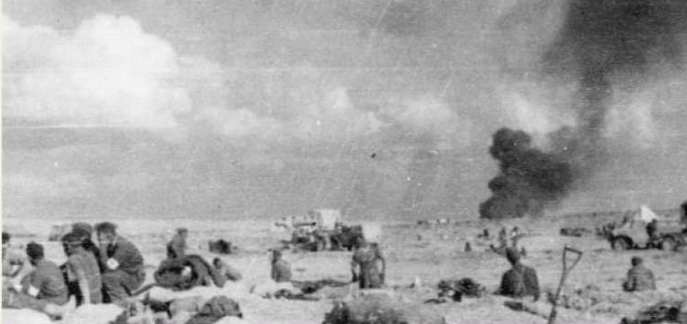
Sidi Rezegh

Battle scene at Sidi Rezegh November 1941

So, here we have a very unique instance in South African military history a ‘South African’ commanding enemy troops in direct combat against his ‘countrymen’.  In an action which devastated South African forces in defeat with the loss of many South African lives.

Lieutenant Heinz Werner Schmidt went on to have a very successful stint as Rommel’s advisor for the balance of the North African campaign, and his book on Rommel is regarded as one the most insightful works on Field Marshal Rommel.

Post War

What happened to Heinz Schmidt and in what actions he took part after the North African campaign is unclear, we know that he lived with Rommel and was even present at his 50th birthday on 15 November 1941. Heinz ended his book with the end of the African campaign – it was about Rommel after all, he did not elaborate on his movements and units in which he served, what his units did or on which front he served (Eastern, Western or Italian) after the Afrika Korps was defeated, and even after Rommel death.

What is clear is that Heinz Schmidt survived the war and like many Wehrmacht officers sought sanctuary outside wore torn Germany.  Fortunately for Heinz the very Nazi sympathetic National Party came to power in South Africa in 1948, three short years after the end of World War 2.  Heinz now chose to embrace his South African citizenship and return to his birthplace, South Africa to re-start his life.

51F3EDR4KVL._SY344_BO1,204,203,200_He moved to a small German community in Natal called ‘New Germany’, located just inland from Durban.  ‘New Germany’ was established well before World War 2 in 1848 by a party of 183 German immigrants.  With the strong cultural ties to Germany, German social clubs and many German compatriots, this island of German heritage in South Africa proved ideal for Heinz Schmidt to start again, and he did so with great success.
He started two companies which are now household brands in South Africa, Pineware and Gedore tools, Pineware makes household appliances under its own brand, anyone who has bought a Pineware toaster, iron or electrical appliance will know it.  Gedore tools makes the Wera line of tools.  Pineware was sold to Lion Match.

By all accounts he was a friendly and charming man, he had many humorous stories of his time with Rommel and was regularly seen at Remembrance Parades in Durban. Heinz Schmidt died in Durban after a short illness, aged 90, in 2007. At the time his holding company business, H. W. Schmidt Industrials, was family owned.

In Conclusion

There you have it, another tale of a person highly sympathetic to the German cause who found success in post 1948 Nationalist South Africa. He unfortunately (rightly or wrongly) joins Robey Leibbrand and others who enjoyed political or business success in full sanctuary under the National Party government and as a result he was never held to account to his actions fighting against his own countrymen.

Treason is generally legally defined as citizen ‘taking up arms’ against the country of his of citizenship.  In the case of dual citizenship (as was the case with Heinz Schmidt), if the person did not renounce his citizenship of the country he went to war against (which he did not) the usual practice during and after the war was to convict the person of treason, in the other Allied nations – especially the UK, USA and Australia many people like Heinz faced the same situation after the war, especially in the cases were their dual nationals and even nationals had joined the Waffen SS and German Wehrmacht, most received very light sentences and fines, in exceptional cases those found guilty of High Treason were executed or handed life sentences.

After the war, a commission called the Barrett Commission was assembled to look into all South Africans and South West African’s who had joined Nazi German forces during the war. The commissions findings and lists were completed in late 1947, and withheld pending outcome of the 1948 elections. When the National Party won the elections in 1948, two Nationalist MP’s – Frans Erasmus and Blackie Swart removed all copies of the Barrett report and intelligence files on German collaboration and embargoed them (some of these files have only recently been re-opened). They then issued a general amnesty for all South Africans tried for treason or awaiting sentence, and in 1948 they all walked free.

The North African campaign was regarded as the ‘gentlemen’s war’ by all forces fighting it, primarily because it was fought according to the conventions. Whether Heinz would have been simply regarded defeated Wehrmacht officer at the end of the war holding a dual nationality, had no recored of war crime and had not violated his South African citizenship rights. And then subsequently allowed to get on with his life in South Africa as a simple veteran is a matter of conjecture – we will never know as it was never challenged.

The issue of treason aside, his book is however a sentinel work on Field Marshal Erwin Rommel – the ‘Desert Fox’ and it gives a unique and valuable historic insight into someone who is arguably regarded as one of the best military commanders of the war. Heinz Schmidt lived with and went to war with Rommel, his story is both very interesting and very unique.

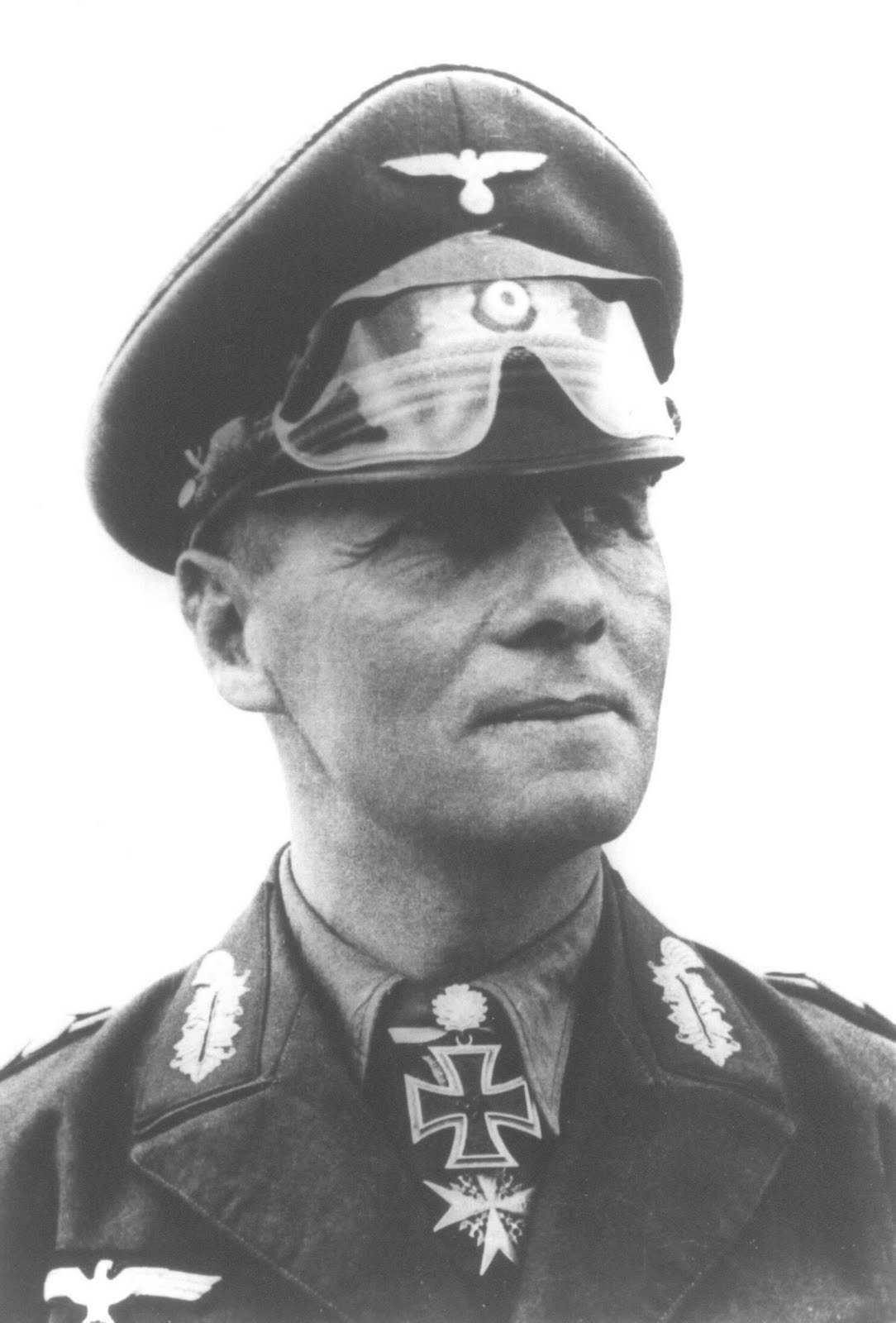
erwin-rommelTo give an idea of the value his book from an insight perspective, the famous Rommel quotable quote as to using captured ‘booty’ (enemy equipment) for personal use is thanks to Schmidt’s work. Rommel, whose signature British issue goggles often worn above his visor on his cap said “Booty is permissible I assume; even for a general“. A quote which now finds itself in use in military outfits the world over when reasoning over the use of ‘booty’.
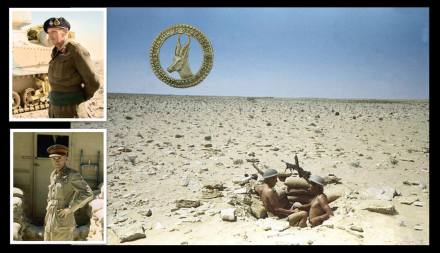
With that, as South Africans we find ourselves contributing again to a rich military heritage with our own very unique history highlighting of our lessor known past of ‘Nazi’ collaborators and World War 2 Wehrmacht veterans.

Related Work

Sidi RezeghSidi Rezegh – “The South African sacrifice resulted in the turning point of the battle”

Fall of Tobruk; “Defeat is one thing; Disgrace is another!” South Africa’s biggest capitulation of arms – Tobruk

El Alamein; “General Pienaar, tell your South African Division they have done well”; The Battle of El Alamein

Robey Leibbrandt; A South African traitor & ‘Operation Weissdorn’

The South African Nazi Party; South Africa’s Nazi Party; The ‘Gryshemde’

The Ossewabrandwag; “Mein Kampf shows the way to greatness for South Africa” – The Ossewabrandwag

South Africans in the Waffen SS; South African Nazi in the Waffen SS ‘British Free Corps’

Oswald Pirow; South Africa’s ‘Neuordnung’ and Oswald Pirow


Written and researched by Peter Dickens.  Reference ‘With Rommel in the Desert’ by Heinz Werner Schmidt and Werner Schmidt’s published obituary.

“General Pienaar, tell your South African Division they have done well”; The Battle of El Alamein

Recently military institutions and veteran organisations have been marking a landmark in world history, the 75th anniversary of the Battle of El Alamein, as usual there has been much fanfare to celebrate this in the United Kingdom – it’s a definitive battle which for the first time gave the British and Commonwealth a glimmer of hope – this battle was to the British and Commonwealth forces what the Battle of Kursk was to the Russians.  It’s a big deal.

South Africa played a key role in the Battle of El Alamein, in fact it was a battle on which much South African life was sacrificed on the crucible of war, after the fall of Tobruk South African honour was at stake and this battle went a long way to redeem it. However, as usual, there was a low-key reaction in South Africa marking this anniversary – it was very much contained to the odd South African Legion of military veterans branch and MOTH shell-hole to remember it.

302751_157777027725371_581485150_n

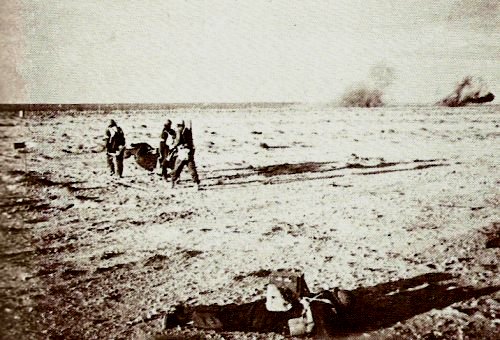
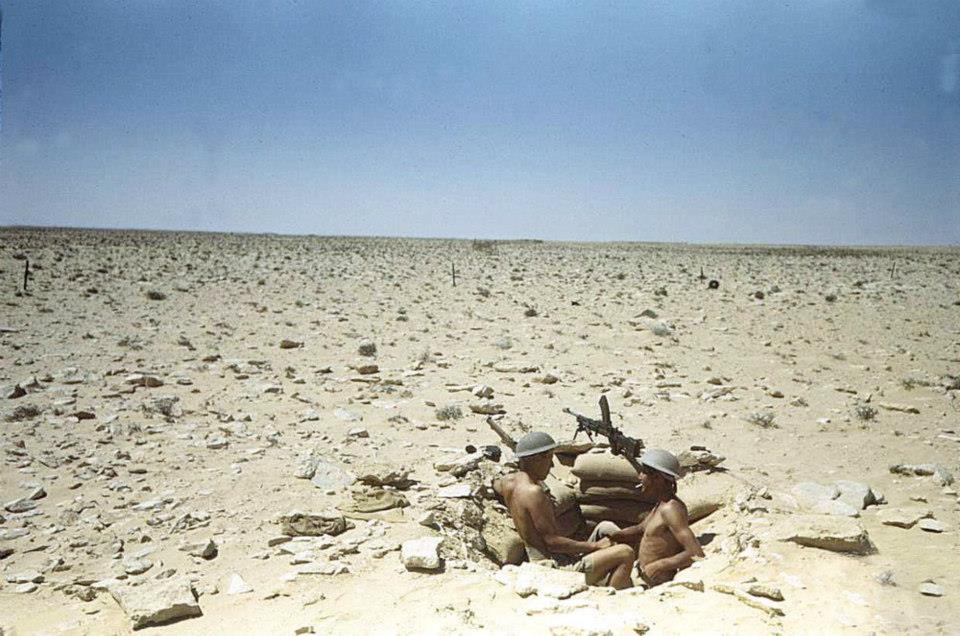
Original colour photo taken of a South African position in the North African theatre of operations in 1942 – note the bleak and hard landscape

To the older generation in South Africa, terms such as the ‘Knightsbridge Box’, the ‘Desert  Fox’, the ‘Cauldron’ and the ‘Gazala Gallop’ were common knowledge, as were these words by General Montgomery “General Pienaar, tell your South African Division they have done well”, in fact these words were a sensation at the time and seen as a national redemption.  But they are now lost completely to the new generation of South Africans.

So, lets give a little recognition to South African sacrifice in this tide turning battle, understand why it is so important and understand why this understated signal sent from General Bernard Montgomery to General Dan Pienaar meant so very much to the generation which came before us.

Prelude to The Battle of El Alamein

For the South Africans the 2nd battle of El Alamein needs to be looked in context of these events – The  Battle of Sidi Rezegh, the Battle of Gazala, the Surrender of Tobruk and the 1st Battle of El Alamein.

The Battle of Sidi Rezegh; (see Sidi Rezegh – South African blood helps turn the tide in North Africa), in November 1941 saw the 1st South African Division’s 5th Brigade fight themselves down, literally to the last man in an outstanding degree of bravery, their sacrifice – to lessen the impact of Rommel’s drive and help save the day for the British to fight another day.

For the 1st South African Division this outstanding action in the field was added to by The Battle of Gazala; By March 1942 the 1st South African Division was deployed along the Gazala line (they made up the Northern sector).  The Gazala line was to the west of Tobruk, the task of defending Tobruk was also left up the South Africans, this time the 2nd South African Infantry Division under General Klopper.

Energised and re-armed General Erwin Rommel – the ‘Desert Fox’, advanced on Egypt (and Tobruk) in May 1942, their mission was to take the Suez Canal and cut Britain from her vast empire (and resources) in the Middle East, India and the Far East.

Nordafrika, Erwin Rommel mit Offizieren

General Erwin Rommel (centre) with his staff

Rommel’s armoured advance with at least 10,000 vehicles hit the Allied’s ‘Gazala line’ and then headed south, to make a long sweeping right-hook around the southern end of the line.  They swept past the British 7th Armoured Division in the south and headed back north behind the Gazala line.  The Allied forces reeled and re-deployed catching up with Rommel’s forces in an area known as “The Cauldron” situated between Bir Hakeim and Tobruk. Three days of armoured fighting ensued in the area of ‘the Cauldron’ and Rommel applied pressure in ‘the Cauldron’ ultimately destroying the Allied defenders.

Rommel’s Axis forces then continued to push east to Egypt and forced the British Guards Brigade to withdraw from the Knightsbridge Box on the Gazala Line back to the Tobruk perimeter.  Now on the back-foot, on the 14th June, the British command authorised the withdraw of all units from the Gazala line, and thus began the ‘Gazala Gallop,’ a very hasty retreat.

The Gazala Gallop The 1st South African Division was ordered by British Command to withdraw along the coastal road back towards Tobruk.  They withdrew to series of defensive boxes and actions at Williams Post, Best Post, “Point 187,” Commonwealth Keep and then Acroma. The 21st and 15th Panzer attacks forced the 1st SA Division to fight a rearguard action and to withdraw through each of the respective boxes. Chased by Rommel’s tanks and driving east, the 1st South African division was now spread out between the original Gazala defences and Tobruk trying to make their way east.

By 15 June 1942, the British and Commonwealth forces had started the ‘Gazala Gallop’ in earnest (sarcastically referred because of the rapid nature of the retreat) and withdrew to a new defensive line – set up further east on the Egyptian border at an insignificant railway siding called El Alamein.  This was to be the ‘Last Stand’ by the British and Commonwealth Forces, behind El Alamein lay Rommel’s prize – Egypt.  However this left Tobruk, and the 2nd South African Division defending it isolated and highly vulnerable to Rommel’s advance.

The Fall of Tobruk;  It should have come as no surprise that the South African 2nd Division defending Tobruk would eventually be overtaken by Rommel’s rapid advance, the defences were in a poor state when the South Africans were tasked with defending it and they were ‘on their own’ without air support given the rapid withdrawal of British and Commonwealth forces from the Gazala line.  But this did not stop searing criticism from the British Command and especially Churchill who would go on to refer as South Africa’s capitulation at Tobruk as a ‘disgrace’ and his ‘lowest moment’ in the war.  See “Defeat is one thing; Disgrace is another!” South Africa’s biggest capitulation of arms – Tobruk

Tobruk, Rommel, Bayerlein, englische Kriegsgefangene

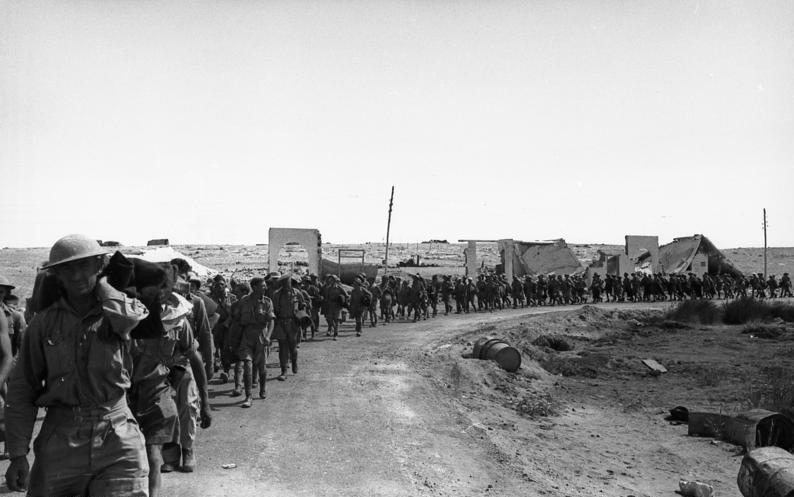
General Erwin Rommel inspects South African and British POW after the fall of Tobruk

In a nutshell, Tobruk was the largest loss of arms in South African military history, Rommel ‘bagged’ 32,000 British and South African defenders, using a Axis force half the size of the defenders’ force and he took just one day to do it.  The Fall of Tobruk opened Rommel to the Suez and therefore left Britain’s war and her entire empire in the balance.  It also left the proud South African military command and fighting reputation in absolute shreds.

It would now be up to South Africa’s remaining division, the 1st SA Division, to recover South Africa’s pride – the opportunity would come in the Battle of El Alamein.

The 1st Battle of El Alamein

Having arrived back from the Gazala Line, the 1st South African division spent two weeks improving their defences at El Alamein in what was known as the “Alamein Box”.

The Battle of El Alamein would be fought over a simple railway siding on the Egyptian border, in the middle of ‘nowhere’. But it was more than a railway siding, it was the gateway to the Axis forces invasion of Egypt and of significant strategic importance, a loss at El Alamein for the British and Commonwealth forces would mean the loss of  what Churchill referred to as the ‘second front’ – in effect it would have been the end of the British and commonwealth forces in the war – the outcome and future of the war (with future American involvement) would have looked very different should El Alamein have been lost – a lot depended on winning it.

25487271_2064239743805013_1711650788919122180_o

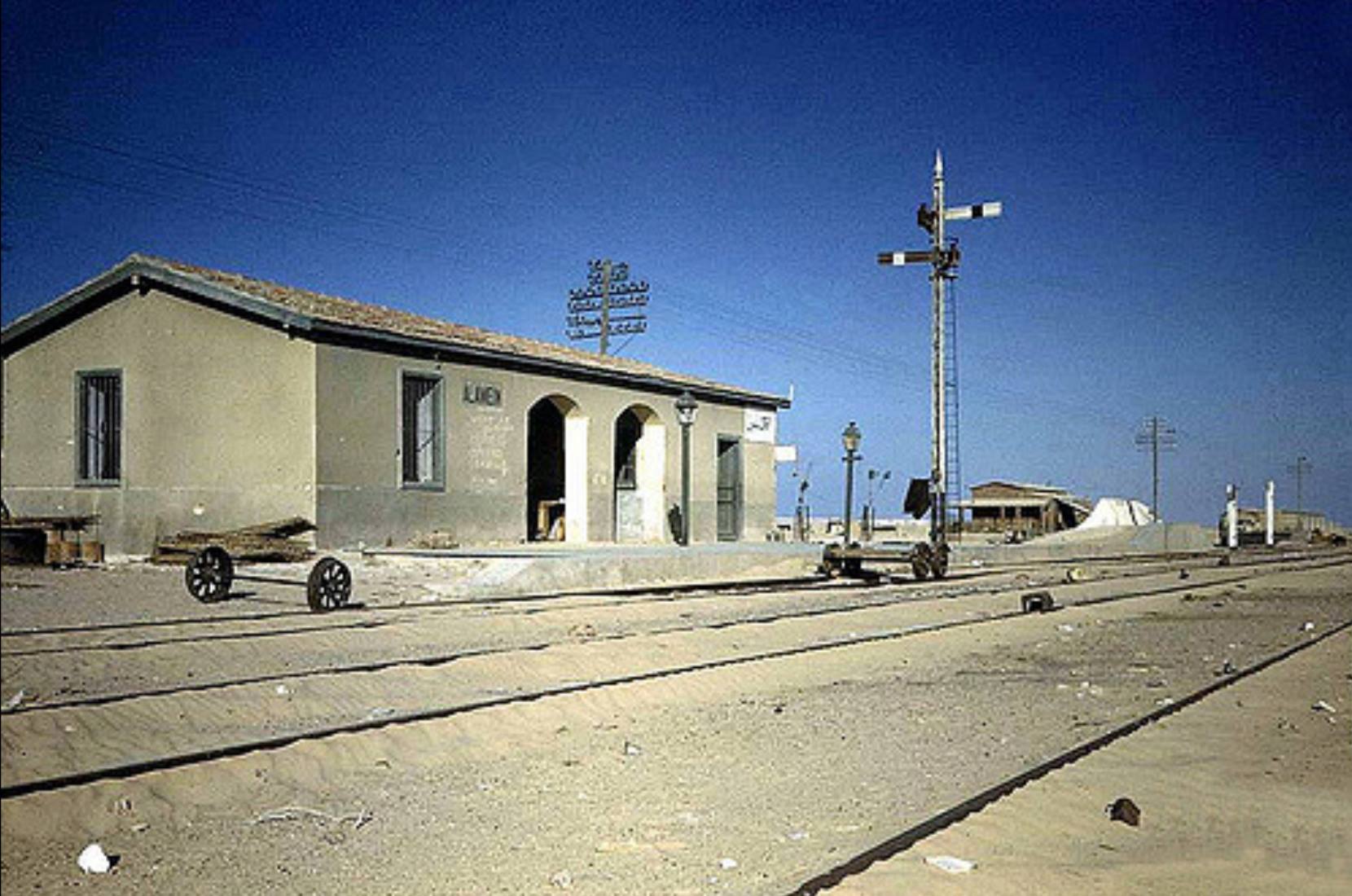
A rare wartime original colour photo of El Alamein railway station, taken October1942. It looks somewhat dilapidated now.

For Hitler the invasion of Russia, now in full swing was more important, and the action in North Africa for the German ‘Afrika Korps’ had been to appease and assist their key ally – Italy and Mussolini’s African colonial ambitions and conquests.  Although of lessor importance the North African campaign drew key resources, equipment – planes, tanks and personnel as well as critical leadership away from the Russian campaign to deal with an ambition to take Egypt and the Suez Canal, knock Britain out the war completely and support Italy’s ambitions.  It was to a degree the ‘second front’ Hitler had wanted to avoid.

General Auchenlik – the British Commander of the 8th Army at the time then issued an order instructing all surplus personnel to be sent back to the Egyptian Delta for rest, re-supply and training, a moved which greatly displeased General Dan Pienaar.

10624891_529650280538042_8160589725628105777_n

General Dan Pienaar

The 1st South African Division, under General Dan Pienaar had been deployed with two brigades of infantry, each accompanied by a battery of artillery to protect the areas west and south of the El Alamein defensive box. Auchinlecks order effectively meant that Pienaar could only hold the box with one under-strength brigade.

It did not take long for Rommel to advance on the El Alamein ‘Box’, At 06:05am on the 30 June 1942 Axis transports were seen advancing to within 2,000 yards of the South African 3rd Brigade positions and they were engaged with machine and anti-tank gun fire by British units.

The South Africans were soon in the fight alongside their British and Commonwealth counter-parts and the Rand Light Infantry drove off German towed artillery, whilst the South African Air Force bombed Rommel’s supply columns. An hour later, by 07:30am the Germans had been halted and were pinned down by the South Africans, determined to avenge Gazala and the surrender of Tobruk.

For three days, 30 June to 3 July Brigadier Bobby Palmer’s 3 SA Brigade Group courageously and successfully halted the Afrika Korps’ continuous attacks on the parts of the El-Alamein Box held by the South Africans.  He held a line some 10 km long with only 1 000 infantrymen.

Counter-attacks by the South Africans found them stretched into untenable positions and the British command resolved to remove the South Africans to the rear to rest them citing they had been under too much combat stress and should they capitulate, as had been the case with the 2nd SA Div at Tobruk, it would be a political nightmare.  Both South African Divisions in the war would have been captured and it would surely spell the end of South Africa’s war effort and the Smuts government.

The intension was to replace them with an Australian division, however General Pienaar would have none of it, he famously stated to an American war correspondent  “Here I stop, I’ve retreated far enough, whether we hold the damn thing or not!”

Mussolini had flown to a nearby enemy held airfield so as not to miss out on a triumphal Roman entry into Cairo. He had not anticipated a very defiant thin line of red-tabbed Springboks and other British and Commonwealth soldiers literally stopping him in his tracks.

The Axis advance had been stopped all along the Allied line of defence at El Alamein by the 27th July and a stalemate ensued giving the British time to make changes and prepare to go on the counter-attack, this was to be the upcoming decisive battle – the 2nd Battle of El Alamein.

A Change in British Command

Outraged by the conduct of the war in the Middle East, especially the loss on the Gazala line, the surrender of the Tobruk and the hasty ‘Gallop’ retreat,  Churchill headed off to Egypt in August 1942 to make some sweeping changes to British Command.  When adding the surrender of Singapore to the mix just previously to Tobruk, it was clear to Churchill that the British Empire needed to be saved and his direct intervention in command inevitable.

South Africa played a role in advising Churchill on changes to be made to Command and the entire strategy of the war going forward, in August 1942 General Smuts was requested to meet Churchill in Cairo, here they decided on a new war strategy.

Smuts and Churchill

Winston Churchill with Jan Smuts at the British Embassy in Cairo, 5 August 1942.

On the 5th August 1942, Winston Churchill even paid a surprise and informal visit to the South African Division. He remarked: ‘It is a long time since I was in South Africa.’  to a group of South Africans and one of the men humorously replied: ‘Yes Sir, you were in the bag then, weren’t you?’ (referring to Winston Churchill’s time spent as a Prisoner of War during the 2nd Anglo Boer War courtesy of the Boers).

General Auchenlik and his Eighth Army staff, were all given the boot (a little unfairly as Auchenlik had stabilised the Allied position after the First Battle of El Alamein). Churchill’s preferred replacement was initially not General Bernard Montgomery, he was Churchill’s second choice, General William Gott was appointed to head up the 8th Army.  Unfortunately General Gott was killed in action on 7 August 1942 when his aircraft was shot down.

General Montgomery was duly appointed to lead the 8th Army, and a decisive and very popular decision that proved to be (despite a terse relationship between Montgomery and Churchill – and notwithstanding that the two of them were polar opposite in character).

The 2nd Battle of El Alamein 

General ‘Monty’ Montgomery then set about on a massive troop and equipment build-up and extensive training and moral boosting speeches had the British forces ready.  He knew the first part of the offensive would require breaching a massive German/Italian mine-field which separated the two forces, he also knew that the headlong offensive was 1st World War in thinking, only with the use of an incredible amount of armour – as such ‘attrition’ (a battle of casualties by numbers) would play a major factor and Monty needed a vast force to overcome it.

Sapper

South African engineers training with mine detection equipment in North Africa. British and Commonwealth forces trained intensively in minefield clearance in preparation for the Second Battle of El Alamein.

In the interim South African engineers and sappers set themselves up training for the very large and very important mine clearing job to come.

Operation Lightfoot – Break-in

2_Battle_of_El_Alamein_014

Start Line Deployments for the 2nd Battle of El Alamein

The 1st South African Division played a spearhead role on the opening of the 2nd Battle of El Alamein. It had to breach the German minefield which had been sown with more than half a million mines – with a dab of military humour this part of the 2nd Battle of El Alamein was called ‘Operation Lightfoot’.  South African sappers were to play a significant role opening up the minefield to allow the Allied and South African forces to push through.

General Montgomery’s basic idea was that the Australians and Highlanders were to force a northern corridor through the Axis (German/Italian) minefields while the New Zealanders and South Africans were to do the same in the southern sector.

The 1st Infantry Division (South Africa), was tasked to attack on a two-brigade front to secure the southern end of Mieiriya Ridge. The Indian 4th and Northumbrian 50th Divisions were deployed to their south and to the north was the 2nd New Zealand Division.

Al Alamein

A 25-pdr gun firing during the British night artillery barrage which opened Second Battle of El Alamein, 23 October 1942.

The South Africans were to attack towards the south-west with 2nd SA Infantry Brigade (under the command of Brig. W.H.E. Poole) on the right and the 3rd SA Infantry Brigade (under the Command of Brig. R. Palmer) on the left. The 1st SA Infantry Brigade was deployed further south and was responsible for creating an anti-tank screen to protect the left flank of the South African attack.

Operation Lightfoot started at 2140 on 23rd October 1942 with a five-hour artillery barrage fire plan, the start of which signified H-Hour for the infantry assault.  General Pienaar had deployed each of the lead brigades, with on battalion leading for the first phase to the “red line”  – after a pause of an hour and a quarter, the two trailing battalions would pass though to the final objective on Miteiriya Ridge.

581520_199581196878287_2116978767_n

Lucas Majozi DCM

The South African 1st and 2nd Field Force Brigades (FFB), as soon after the battle began, became pinned down in the German Axis forces minefield by intense German machine gun and artillery fire. The South African infantrymen suffered very severe casualties.

Throughout the night of 23 October, the stretcher-bearers worked under heavy enemy fire, tending to the wounded and evacuating them from the battlefield.  Amongst these Black Native Military Corps (NMC) non-combatant medics rescuing their White combatant counterparts was Lucas Majozi who went on to win a DCM for gallantry. See “With bullets in his body he returned … into a veritable hell of machine gun fire”; Lucas Majozi DCM

By 08:00, the following morning on 24th October the South African objective, Miteiriya Ridge was finally secured, after a very long night of fighting and a very high rate of attrition by way of casualties.

The South African sacrifice in taking Miteiriya Ridge, spurred General Montgomery to send his now famous congratulatory signal on the 24th October 1942 to General Dan Pienaar acknowledging that the 1 SA Division had met all its objectives set for the Battle of Alamein.

Crumbling Operations

By the 25th October the Battle of El Alamein moved into the ‘crumbling actions/operations’ phase.  British Command on the 26th October ordered the South African 1st Division to “side-step” north and occupy the area initially held by the New Zealand Division and the 9th Armoured Brigade.

The South Africans were now stretched on a wider front, between the Australians and 51st Division in the north and the Indian 4th Division on Ruweisat Ridge, with 5th SA Brigade on the right, 3rd SA Brigade on its left and 1st SA Brigade being pulled back as the divisional reserve.

El Alamein 2

El Alamein 1942: British infantry advances through the dust and smoke of the battle.

All in by the evening of 26 October (as from the H-Hour on the 23rd), the South Africans had suffered 600 casualties (the British had 2000 casualties as well as 1,000 Australians and 1000 New Zealanders).

Operation Supercharge – Break Out

By the 2nd November 1942, contrary to Hitler’s instructions – Rommel had started to withdraw. The final plan to destroy the Axis forces, code-named “Supercharge” was put into action. The 1st SA Division played no role in this phase of the operation – but the South African armoured cars attached to XXX Corps were actively involved in the attempted destruction and subsequent pursuit.

On the 4 November, after repeated attempts at breaking through the Axis lines – Lt-Col Reeves-Moore lead the South African armoured cars into the rear of the Axis positions, “….the eager children of any mechanized pursuit… scampered at dawn into the open desert beyond the mines and trenches and guns, to make their exuberant mischief amid the disintegrating enemy”.

They soon started causing the havoc for which they had been intended – A Sqn capturing two German 88 mm guns, two 105 mm guns, two 110mm guns, a Breda portee, six trucks and 130 prisoners; while B Sqn captured five trucks, a staff car, one 105 mm and one 150 mm gun and 100 prisoners within a matter of hours.

article-2327460-07D8D878000005DC-816_634x390

A German Panzer III tank crewman surrenders to an advancing Allied soldier during the Battle of El Alamein, 1942

While the South African armoured cars were dashing west, the remaining elements of 1st South African Division had moved further north and over the previous two nights had relieved the 51st Highland Division 51st Highland Division.  During the night of 3/4 November, the last unit to move into its new position was the 1st Cape Town Highlanders who moved during a major artillery barrage in support of an attack by the 5th Indian Infantry Brigade. The regiment awoke on the 4th November to silence and the absence of gunfire, save for the sound of Allied vehicles advancing west in pursuit of the retreating enemy.

For the 1st South African Division, the war in North Africa had ended.

The loss of General Dan Pienaar

25626160_885298981647845_7204091414452226149_oThe Division returned to South Africa and General Pienaar and eleven other officers boarded a South African Air Force (SAAF) Lockheed Lodestar on 17 December to fly the final command structure back to South Africa.
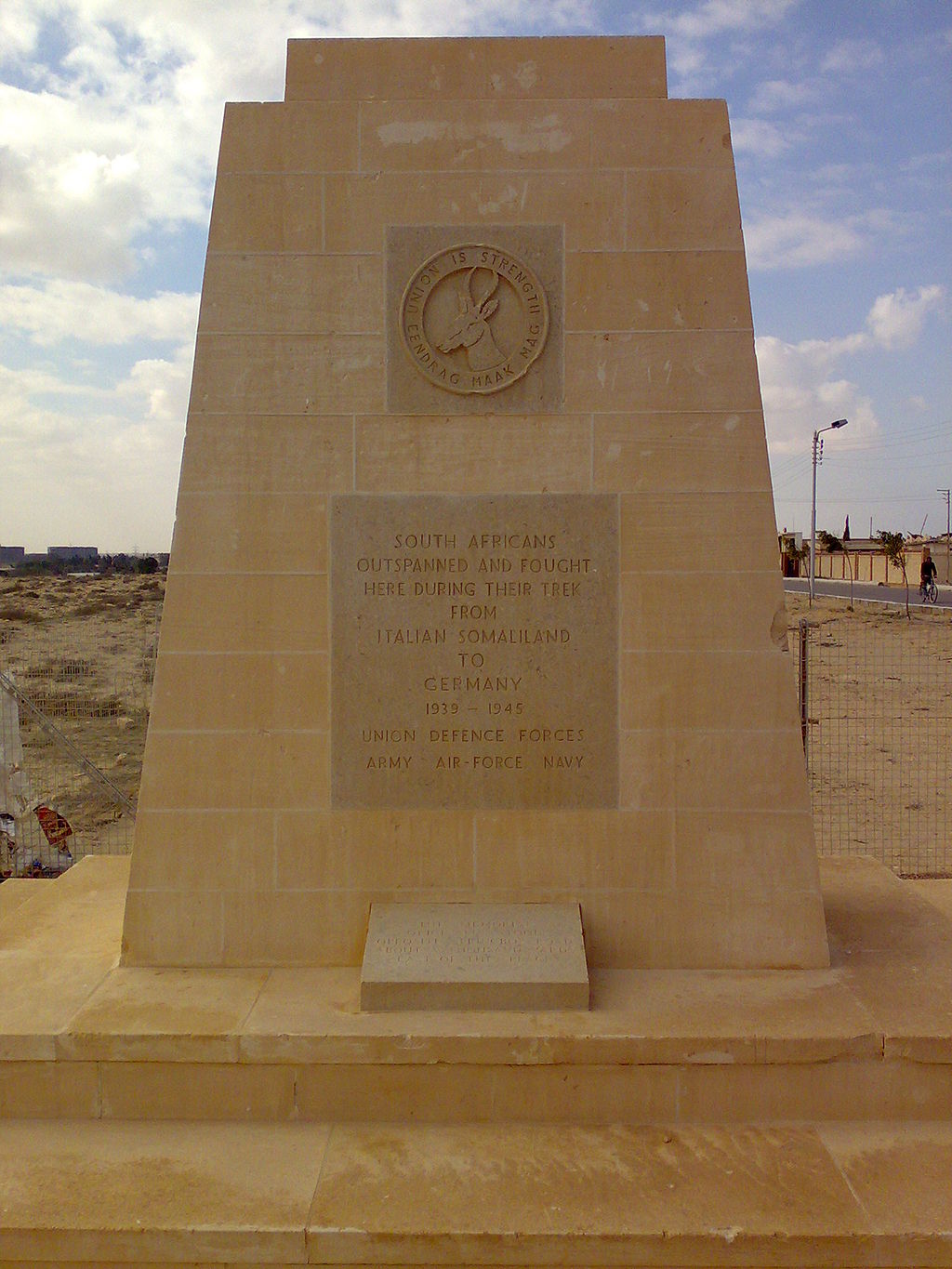
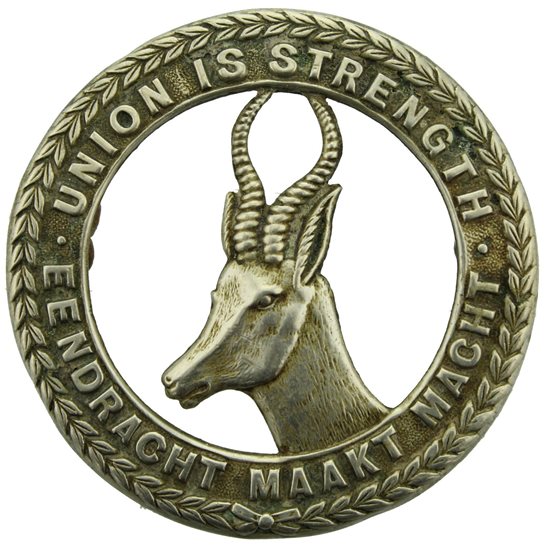
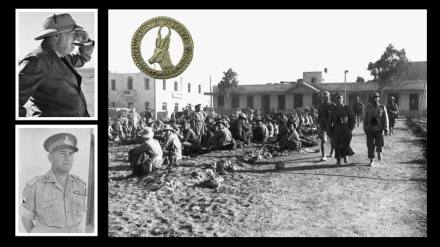
The SAAF aircraft stopped to re-fuel at Kisumu on the shores of Lake Victoria.  It was reputed that General Pienaar was in a hurry to get going and this may have pushed the pilot into taking risks, on takeoff on 19 December, the aircraft plunged into the lake, killing all on board.

With that came the sad ending of the very popular General Dan Pienaar, he was described in an obituary in the Chicago Tribune as being acknowledged by all military authorities as “one of the best fighting leaders the British have found in this war”.

The End of the Beginning

After the 1st South African Infantry Division’s job was done in North Africa it was disbanded and the 6th South African Armoured Division was formed to continue with South Africa’s World War 2 contribution.   The British Command, still relatively unhappy with the Tobruk incident initially wanted to side-line the 6th South African Armoured Division and allocated it just to go to Palestine – in what was really a side-show – for the rest of the war.

1024px-South_African_Memorial_El_Alamein
Memorial to South Africans at El Alamein Commonwealth Cemetery

At this point it is actually Churchill who comes around to bat for the South Africans, despite his anger and lambasting of the South Africa military establishment as a ‘disgrace’ over Tobruk, it is Churchill (influenced by Jan Smuts) who insisted that the South African 6th Armoured Division join the main thrust of the war in Italy and not sit it out in Palestine.

The 6th South African Armoured Division then went on to serve in Italy with great gallantry and distinction – taking with it the recovered country pride so hard for by the 1st South African Division at Tobruk, to an even higher accolade.

The Battle of El Alamein plays such a significant in the outcome of World War 2, Winston Churchill once remarked; “before Alamein, we never had a victory – after Alamein we never had a defeat” and more famously that Alamein marked the ‘end of the beginning‘ of World War 2.

In Conclusion

That South Africa played such a critical part in this pivot moment of history is often overlooked, it’s not something most South Africans are even aware of and it really is something which needs to be redressed by the time the centenary of this battle comes around.  Hopefully by this time it’s not confined to a couple of South African Legion branches and few MOTH shell-holes dotted around South Africa to remember it.

Lest we forget this Battle and path of sacrifice taken by some of the finest South Africans we have ever known, people to whom we as a nation owe a massive debt of gratitude.  Also, it really is not for politicians to remember the war dead, it really isn’t their job and given the nature of politics to ask them to do so is to dishonour both the sacrifice and the dead.  Let’s face it, the African National Congress (ANC) government are not up for it nor are they the proper people to do it in the first place (and to be honest nor were the old National Party government the right people either).

It is up to the veterans fraternity and each and every person that has served in a South African military uniform to carry this flame of remembrance on behalf of those who have come before them – as is the generally accepted practice in the UK, USA, Canada, Australia and New Zealand.  When we as South Africans veterans snap out of our collective apathy and get that part together, sharing in our most honoured history and stand in a unified cause in our thousands, only then will we get our remembrance occasions aligned and honour these men and women properly.

0aayzhghjgfjhf9999777_7


Written and Researched by Peter Dickens.  Extracts and references taken from The Military History Journal, Vol 9 No 2 – December 1992 ‘GENERAL PIENAAR, TELL YOUR SOUTH AFRICAN DIVISION THEY HAVE DONE WELL’ – General Montgomery; 24 October 1942. By A B Theunissen.  Other references include The Imperial War Museum (with photo copyrights were shown), Wikipedia and a Biography of Jan Christian Smuts (1870-1950) By Beat Lenel.


Tobruk – “Defeat is one thing; Disgrace is another!”

South Africa’s worst military defeat – The Fall of Tobruk

The featured photograph of Field Marshal Rommel inspecting South African and British Prisoners of War (POW’s) after the fall of Tobruk is very telling of South Africa’s singular biggest capitulation of arms in its proud military history.  Sir Winston Churchill, who rather embarrassingly on his trip to Washington had to hear the news from President Roosevelt, was to famously later write on his feelings about the fall of Tobruk:

“This was one of the heaviest blows I can recall during the war. Not only were the military effects grim, but it affected the reputation of British arms ……. Defeat is one thing; disgrace is another.”

So let’s have a look at why this loss of a small North African coastal port in World War 2 affected the British in this way, its ramifications for the British and South Africans, and why Churchill chose such a harsh rebuke of South African military prowess – which prior to Tobruk had been held in high regard and after Tobruk the South African military establishment literally had to fight an uphill battle in Italy to earn their respect again and recover their honour.  In effect we need to ask ourselves if this was indeed a fair comment, so let’s have a look at what actually happened.

church
The Prime Minister, Mr Winston Churchill, chatting with British Army General Staff Officers during his tour of the Western Desert.

The Rats of Tobruk

The Rats of Tobruk was a nickname given to the soldiers who held the small Libyan port of Tobruk against Rommel’s German ‘Afrika Corps”and their Italian axis forces.  Rommel had laid siege to the port in his push to invade Egypt, these hardened, belligerent  soldiers effectively put Rommel’s plans on hold as they dogmatically dug in and resisted for 8 long months.  The siege started on 10 April 1941 and was only to end later in November 1941.

They consisted of  around 14,000 Australian soldiers from the 9th Australian Division commanded by Lieutenant General Leslie Morshead, accompanied by regiments of British artillery, the Polish Independent Carpathian Rifle Brigade and 3rd Indian Motor Brigade – reporting to Australian command.  In all they constituted about 30 000 troops – a very strong garrison.

At the time the port was surrounded by a strong line of defences, the garrison had air support, and Rommel had been at the end of his supply lines. Early Axis attacks were disorganised affairs that were easily fought off, and by the time Rommel was able to launch a stronger assault the defenders were really dug in ready to meet him. The defence of Tobruk became one of the iconic moments of the entire British war effort.

It dominated strategy in the desert in 1941, and the relief of Tobruk was the target of the unsuccessful Operation Brevity and Operation Battleaxe. The siege was finally lifted as a result of Operation Crusader and in the aftermath Rommel was forced to retreat west out of Cyrenaica, ending the year back at his starting point.

aus 2
The ‘Rats of Tobruk’ – some of the 15,000 men of General Morshead’s 9th Australian Division shelter in caves during an air raid during the siege of Tobruk. After six months besieged in the vital supply port the Australians were evacuated by sea and relieved by fresh troops. 823 men had been killed, 2214 wounded and 700 captured.

Tobruk was held in hero status and its defenders, the ‘rats’ went into the annuals of history as legends.

South African Honour to defend Tobruk

Tobruk secured, the Australians finally relieved and cycled out, by 1942 the Allied Middle East Command decided to leave a ‘temporary’ force to hold Tobruk while a new strike force was built up near the new frontier – on the Gazala line to the west.

1024px-MajGenHBKlopper
Major General Klopper

The ‘honour’ of defending Tobruk was given to the South Africans. The new  garrison was to be formed by the 2nd South African Infantry Division with Major General Hendrik Balzazar Klopper in command.  General H.B. Klopper, was a school teacher before joining the South African Army. He was a Major General of one month’s standing when he was given overall command of Tobruk with limited combat experience.  In all the same number of troops, over 30 000 were given to him to defend Tobruk if attacked, as had been the troop strength with the Australians earlier.  Only with some relatively small but key differences.

Simply put, the defences of Tobruk weren’t as solid in 1942 as they had been in 1941. The main reason for this was that large numbers of mines had been lifted and moved to the Gazala line, as had a great deal of the barbed wire. The tank traps and anti-tank ditch were also in a very poor state and had begun to silt up with sand. Although not ideal, this condition of the defences left to Klopper was highlighted as the cause of the defeat in the subsequent military tribunal held after the war – and it effectively exonerated him of the defeat – however modern historians are now pointing to the fact that General Klopper had more than enough resources at his disposal to mount a convincing defence.

These historians point out his plus side, and its impressive, General Klopper had at his disposal some fine fighting units and very good equipment, he had his own division, the second South African Infantry Division, as well as some British and Commonwealth detachments – 60 Infantry Tanks of the 32nd Army Tank Brigade, the 201st Guards Brigade, the 11th Indian Infantry Brigade, three regiments of field artillery and two of medium artillery. There were 35 000 men in total. Tobruk had also now become a major supply base for the Gazala Line, and as a result was also crammed full of stores, ammunition and equipment.

But, again on the down side, unlike the Australians, there was little chance of solid air support for the South Africans, as the Desert Air Force had been forced to retreat to Sidi Barrani, and there were only fifteen 6-pounder anti-tank guns in the fortress.

There was also another very important difference, this time some of the defending troops were exhausted, their morale was lower, and the garrison was filled with a feeling of insecurity and impermanence.  Something later historians would point it out as a failing as General Klopper had not inspired change or adequately dealt with it, other sources point to the relative inexperience of the South African troops, stating that although morale amoungst the South Africans specifically has high, their Commander himself was out of his depth.

That all said, what’s the big deal surrounding this tiny Libyan port – why’s was it so important to the North African Desert campaign? The answer is simply because it was the only deep water harbour in the theatre of operations – critical for supply and shipping of fuel, equipment and munitions to either the Axis forces or the Allied forces. To this end Tobruk was a key strategic asset – and all the Allied commanders knew it.

The fatal flaw

In terms of the defence perimeter, the Western and Southern sides of the port were well defended by the South Africans, but the East side was weak, and it proved to be fatal.

The eastern perimeter defences were left in a very weak state, and now they were to be defended by mainly Indian regiments reporting to General Kloppers command located in the centre.   The 2/5th Mahrattas and the 2/7th Gurkas were great fighting units and till that point had been involved in the thick of fighting, so they had been pulled to rear to recuperate and these men were utterly exhausted.

14-d32580d27e

An even more critical flaw in planning was an underestimate of German resolve, by both the Allied command and General Klopper. Erwin Rommel’s was utterly resolved to take Tobruk once and for all, his entire campaign to invade Egypt depended on it, and unlike the earlier siege of Tobruk with its Australian defenders, now he was going to throw just about everything at his disposal into the advance on Tobruk.  He replenished and reinvigorated his forces, consolidated his plans and began his advance east again.

The Desert Fox Attacks 

General Erwin Rommel had a fearsome reputation amongst the Allied Forces and was nicknamed ‘The Desert Fox’ by his enemy because of his skill in manoeuvre and deception, as usual for Rommel he also devised a ruse for capturing Tobruk.

Only his infantry approached the western perimeter, while his mobile forces swept on past, to give the impression that the German and Italian armour was heading straight for the Egyptian border (sending radio messages to that effect to complete the ruse).  He then swung his mobile armoured forces around and attacked Tobruk from its weak point – the eastern perimeter.

Rommel’s zero hour was 05h20 on 20 June 1942. As dawn broke long black lines of tanks, trucks and infantry slowly started to move forward. As it grew louder and closer to Tobruk waves of German Stukas and Ju 88’s aircraft appeared overhead (Rommel pressed every single Axis airplane in service in North Africa into taking Tobruk).

As the heavy artillery began to fire, the planes released their bombs and quickly got out of the way for the next wave, operating a shuttle service between the defence perimeter and El Adem airfield, 10 miles away. They pounded a gap open 600 yards wide. Behind them, under cover of artillery barrage and half-hidden by smoke and dust, German and Italian sappers raced forward to lift mines and bridge the tank traps with tanks and infantry racing through the gaps. As they move forward, they lit green, red and purple flares and the Stukas dropped their bombs just ahead of the advancing, multi-coloured smoke screen while the other planes and artillery blasted the South African rear (the seaward side of the port) with shells and bombs.

Tobruk, Rommel, Bayerlein, Panzer III
German armour and Rommel encicling Tobruk

The situation inside Tobruk under this juggernaut attack very quickly became very desperate.  It literally became a fight for survival and into the fight went everyone,  including the ‘non combative’ members of The South African Native Military Corps who were given rifles and expected to fight on the front line with everyone else.  As the fight became more and more desperate, three small minesweepers, two of them South African – the HMSAS Bever and HMSAS Parktown were called into port to take on evacuation duties.

Both the Bever and the Parktown acquitted themselves in the highest order whilst under a hail of shelling and bombing – and please feel free to refer to two earlier Observation Posts’ links for an in-depth profile on their brave fight – “Under a hail of shells”; Recounting the bravery and loss of HMSAS Bever and The feisty South African minesweeper that went down fighting – HMSAS Parktown

Inside Tobruk the situation was chaotic. General Klopper – his Head Quarters now bombed out, his radio and telephone wrecked and his code booked destroyed, lost the last vestige of control.

Left with no choice General Klopper and staff could do nothing but watch the German Panzers (tanks) race past their headquarters on their way to capture the fuel dumps in the harbour.

Tobruk, beschädigte Häuser, Soldaten
South African troops in disarray as Tobruk capitulates

Some British and South African troops managed to break out and make their way back to Allied lines, whilst most stayed and fought a lost cause as grimly and with as much determination as they could. By dawn on 21 June 1942, Tobruk was just a pile of ruins with a massive pall of smoke reaching up into the atmosphere.  The harbour riddled with the wrecks of destroyed ships.  General Klopper gave his compass and staff car to 7 young South African soldiers determined to escape, saying, ”I wish I was coming with you.”

Surrender and shame

Shortly afterwards a small party of officers set off in a truck with a little white flag of surrender fluttering over the hood to negotiate terms of surrender, and by 09h40 Tobruk was officially turned over to Rommel. Soon after, a large white flag was hoisted over the South African Head Quarters by South African Native Military Corps drivers.

And that was it. Major-General KIopper formally surrendered with 32,000 men, including 10,722 South Africans of the 2nd Infantry Division, of whom 1,200 were members of the Native Military Corps, and all the British and Commonwealth units under his command.  Of the two South African Infantry Divisions in the North African combat zone of operations, one entire division (literally half of the South African Army’s fighting force in North Africa) went into captivity.  This and thousands of tonnes of resources – the Germans captured 2,000 tons of fuel, 5,000 tons of provisions, 2,000 vehicles and large stockpiles of ammunition – the situation now for the Allies in North Africa was a very grim one indeed.

Tobruk, Rommel, Bayerlein, englische Kriegsgefangene
Erwin Rommel inspects South African POW in Tobruk

Britain’s entire war effort was now compromised and very much in the balance, the fight from here out would be a herculean one.  It was also the single biggest capitulation of South African forces in the country’s history – before or since.  Now you can begin to see Churchill’s point, as to him it seemed more than a ‘defeat’ and more of a ‘disgrace’ – as in the Battle of Britain in 1940, without this vital deep water port, the British and Allied armed forces by 1942 found themselves once again with their backs against a wall – and as a result South Africa was going to get the full blame for it by literally every single Commonwealth country, Allied country and the British themselves.

Captivity

The South African, British and other Commonwealth units forced to march across the desert to an Italian POW camp.  The Italian treatment of South African and British prisoners of war was nothing short of diabolical, prisoners were murdered, punitive measures on food allocations and other atrocities became normative.

Tobruk, englische Kriegsgefangene
British and South African troops marching into captivity after Tobruk falls.

However an even worse treatment was reserved for Black members of the South African Native Military Corps and the Indian troops in captivity.  German and Italian forces displayed a complete disregard for the rights of the Indian or black POWs as they did not view them as regular troops due to Nazi and Facist doctrine and in-bred racism .

There are however accounts of bravery whilst in captivity, with a number of escape attempts and escapes.  Even that General Klopper himself managed to escape captivity in 1943.

One notable heroic deed in captivity at Tobruk was that of a South African Native Military Corps man – Job Maseko, who created a bomb using a condensed milk tin, cordite taken from bullets and an extremely long fuse to blow up a German freighter ship (F Type) in Tobruk harbour as a retaliation for his treatment as a black man and those of his colleagues by the Italians.  To learn more of his heroic tale please visit this Observation Post link Job Maseko; one very remarkable South African war hero

Rommel’s Success  

After 2 years in British hands Tobruk had fallen in 2 days, Rommel had captured enough supplies to carry him on his drive to invade Egypt. On 22 June 1942, Rommel received a message from the Fuhrer – Adolph Hitler, informing him that at the age 49 he had just been appointed Germany’s youngest Field Marshal.

Rommel celebrated that night with canned pineapple and a small glass of whisky, but after dinner he wrote his wife, ”Hitler has made me a Field Marshal. I would much rather he had given me one more division.

Tobruk, Rommel und Bayerlein, Hafen
Rommel surveying Tobruk after he captures it

But true to character, by the very next day he was on the advance again.  His order: ”Soldiers of the Panzer Army Africa! Now we must utterly destroy the enemy! During the coming days I shall be making great demands upon you once more, so that we may reach our goal.” The Nile.

Rommel would never get to the Nile and take Egypt.  For Winston Churchill the German advance in North Africa was the desperately needed ‘second front’ which would see the end of Nazi Germany, for the Germans however the North African campaign was nothing more than a side-show in support of Italian imperialism in Africa.  The bulk of their military effort was focussed on the invasion of Soviet Russia. Hitler discontinued the attack on Malta and refused to send Rommel adequate supplies, these actions would make defeat in the North African desert for Germany and Italy inevitable.

Consequences for the British and South Africans

Ironically there was an upside to the Fall of Tobruk, The defeat did have some positives. It forced Churchill and the British to fundamentally re-appraise the Command and strategy in North Africa.  It led to a shake up of Command which would see General Bernard Montgomery take over overall Command of the British 8th Army (after Churchill’s original replacement, General William Gott was killed in action). Under ‘Monty’ the entire operation received a boost in resources, purpose and training (including much-needed American armour).  Monty and the 8th Army would then go on to victory at El Alamein and more successive victories for the British and Commonwealth forces followed (eventually with American assistance when they entered the war), and it would see the entire German Afrika Corps pushed back completely from North Africa and into captivity.  The issue of Tobruk and Britain ‘against the wall’ gradually became a distant memory.

monty
Lieutenant General B L Montgomery, General Officer Commanding Eighth Army, watches the beginning of the German retreat from El Alamein from the turret of his Grant Tank. He is wearing his famous tank beret.

The remaining South African forces in North Africa i.e, The 1st South African Infantry Division would go on to recover their reputation somewhat in these strings of success under Montgomery, also starting with Battle of El Alamein.  However Tobruk continued to haunt them and the British still remained dubious of South Africa’s military prowess by the time the next phase i.e. the Italian campaign came around.

After the 1st South African Infantry Division’s job was done in North Africa, the 6th South African Armoured Division was formed to continue with South Africa’s World War 2 contribution.   The British initially wanted to side-line the 6th South African Armoured Division and allocated it just to go to Palestine – in what was really a side-show.

At this point it is actually Churchill who comes around to bat for the South Africans, despite his anger and lambasting of the South Africa military establishment as a ‘disgrace’ over Tobruk, it is Churchill (influenced by Jan Smuts) who insisted that the South African 6th Armoured Division join the main thrust of the war in Italy and not sit it out in Palestine.  The 6th South African Armoured Division then went on to serve in Italy with great gallantry and distinction – and ultimately recovered the country’s pride.

General Klopper’s career post Tobruk

The fall of Tobruk came as a shattering blow to the British public and British morale. General Klopper came in for most of the criticism, but was he entirely to blame?  The inquest into the Fall of Tobruk found fundamental short-falls in overall British Command and the decision to invest in Tobruk and concluded that General Klopper was placed in an extremely difficult position at Tobruk from which he had little hope of a proper defence – the circumstances he had faced were very different to those the Australians had faced before.  In conclusion to the inquest General Klopper was exonerated for the loss of Tobruk.

General Klopper however did come into a hail of controversy as to his command ability and experience subsequently to the inquest, and had South Africa remained a British Dominion after the war it would have been doubtful that his career would have advanced.

Luckily for General Klopper, the Afrikaner Nationalist government came into power in 1948, and he found more favour with them than he did under the old Smuts government. The new Nationalist Minister of Defence, Frans Erasmus and his ‘Erasmus Reforms’ of Union Defence Force sought to advance ‘Afrikaner’ personnel above all else – and he saw to it that Klopper was very controversially promoted to serve on the Army Chief of Staff from 1951 to 1953. After that a stellar career ensued as he was promoted to Inspector-General from 1953 to 1956, and finally he took the most honoured position in the South African Defence force as Commandant-General, which is the head of the South African Defence Force, a post he held from 1956 to 1958.

In conclusion

To answer the question of whether Churchill’s comment that South Africa’s capitulation at Tobruk was the difference between ‘defeat’ and ‘disgrace’ it can honestly be said that Churchill’s comment is somewhat unfair, however given the circumstances and the timing it is understandable that he was enraged, the consequences were very bleak for the British War effort.

Churchill was equally vicious in his remarks as to his own forces when the British garrison at Singapore capitulated due to poor command earlier in February 1942 with an equal consequence in the Asian Pacific field of operations. On Singapore’s fall Churchill asserted that the British commander General Percival’s decision to surrender was “the worst disaster and largest capitulation in British history”.

So we have to take Churchill and his comments in context of the man, his politics and the circumstances he found himself in. Also, in the end it is Churchill himself who plays a role in recovering South Africa’s pride by insisting the 6th Armoured Division take part in the  Italy campaign – even placing British Household Division Guards under South African 6th Armoured Division command as their Infantry support.  In the greater scheme of things South Africans can hold their heads very high in the role they played ridding the world of Nazism in what Smuts would call ‘the Great War for Liberty and man’s Freedom’ – Churchill’s need to alliterate one of his quotes aside.

0aayzhghjgfjhf9999777_7

Researched by Peter Dickens  

References – Wikipedia, Extracts and references from. THE GREATEST MILITARY REVERSALOF SOUTH AFRICAN ARMS: THE FALL OFTOBRUK 1942, AN AVOIDABLE BLUNDER OR ANINEVITABLE DISASTER? by David Katz. Extracts from Military History Journal Vol 7 No 6 – December 1988 TOBRUK – 1942 Compiled and translated from the official War Diary of the German Supreme Command by Jochen OEO Mahncke.  Image copyrights – Imperial War Museum. Narratives from North Africa: South African Prisoner of War experience following the fall of Tobruk, June 1942 by Karen Horn.

Cruel history, Italian tankers in inferior tanks were actually very courageous!

You may have heard the joke the old South African World War 2 North African campaign veterans used to often tell about ‘Italian Bravery’ – how many gears does an Italian tank have?  Answer; one forward and four in reverse!

History is very cruel to these very brave Italian tankers fighting alongside Nazi German forces and the likes of Rommel against the South Africans, British and Allied forces.

Weighting only 14 tons, by Allied standards the Italian M13/40 tank was seen as a light tank. For the unfortunate crews who manned it, it was nothing short of a death-trap.

Its semi-automatic 47 mm Ansaldo 47/32 gun could penetrate 1.7 inches (43mm) of armour at 550 yards (503 m), making it more than adequate to deal with most allied tanks -saved for the cumbersome Matildas- and its diesel engine had a low probability of catching fire when hit, but it lacked power which made the M13/40 a slow moving target, specially off-road.

WGB-IT-102-5
Although it had armour deemed adequate by 1940 standards, this was made of low quality steel which lacked tensile strength, resulting in a higher probability to shatter when hit, spraying the crew inside with deadly pieces of metal from their own armour.

To these men in dark blue overalls, destined to fight on unequal terms, history has often been cruel. Nevertheless, time and again, they charged gallantly against a superior adversary, often paying the ultimate price for their courage.

Note on the main featured image: The number 3 on the turret and the rectangle with a white stripe identifies this tank as the 3rd tank of first Platoon. The rectangle background colour identified the Company, the number of stripes the Platoon.

These Italian tanks were easy prey to the British, South African and other Commonwealth and Allied forces, here a member of the crew of an Italian M13/40 tank giving himself up near Gazala. His captor might be a soldier of the Polish Independent Carpathian Rifles Brigade (part of the British and ‘Allied’ forces in North Africa).

iti

As courageous the Italian tankers in these tanks were, so too were the Australian ones, as captured kit, including tanks were always handy as they afforded more protection than not having the convenience of armour at all.  Here’s an interesting colourised photograph of the re-taking of Tobruk by the Allied forces.

Note the port installations as they burn again over the harbour on 24 January 1941. Of interest to this article, note in the foreground, here later version M11/40 (on the left) and M11/39 (on the right) Italian tanks can be seen, under new ‘ownership’. White kangaroo symbols can be seen on the tanks, now the possessions of the 6th Australian Division.

30729702_836630043176023_1104169962190143488_o

Related Work and Links

Tobruk; “Defeat is one thing; Disgrace is another!” South Africa’s biggest capitulation of arms – Tobruk

Tobruk; The feisty South African minesweeper that went down fighting – HMSAS Parktown

Tobruk; Job Maseko; one very remarkable South African war hero


Researched and Written by Peter Dickens.  Original’s source of feature photograph unknown, feature image, colourising and caption by “In colour veritas”.  Insert image – Imperial War Museum copyright. Colourised Australian M11 tanks by Benjamin Thomas, Photographer: Lieutenant L.B. Davis, No. 1 Army Film & Photographic Unit – Imperial War Museum.

“We fought as one, black and white”; the South African Native Military Corps ‘at arms’

Now what is truly remarkable about this photograph?  Well it shows a bunch of armed South African soldiers during World War 2 who by all accounts never carried a firearm and by directive were not allowed to either.  These are members of the South African Native Military Corps (NMC), and it’s proof positive that there is no such thing as skin colour or ‘Segregation’ legislation when under fire.

sanmmc

This photograph was taken by Warren Loader’s Grandfather Noel Edgar Fuller while serving with The Royal Durban Light Infantry (DLI) B Coy in North Africa during WW2. What makes this photo remarkable is the DLI L/Cpl is standing next to three armed members of the South African Native Military Corps (NMC).

So, visual proof that .303 Lee Enfields were issued to some members of the NMC, but what is the validity of this rare photograph?

Official Policy

163497_146794905490250_702739084_nDuring the Second World War the South African government of the day held out that members of the NMC could only function in non-combatant roles, and were not allowed to carry firearms whereas funnily members of the Cape Corps (Cape Coloured members) where fully armed and enrolled in combatant roles.  In terms of the race politics of the day, on the arming of Black soldiers at the beginning of war, Smuts’ government had to bow to the pressures of his opposition, the Nationalists, led by DF Malan.
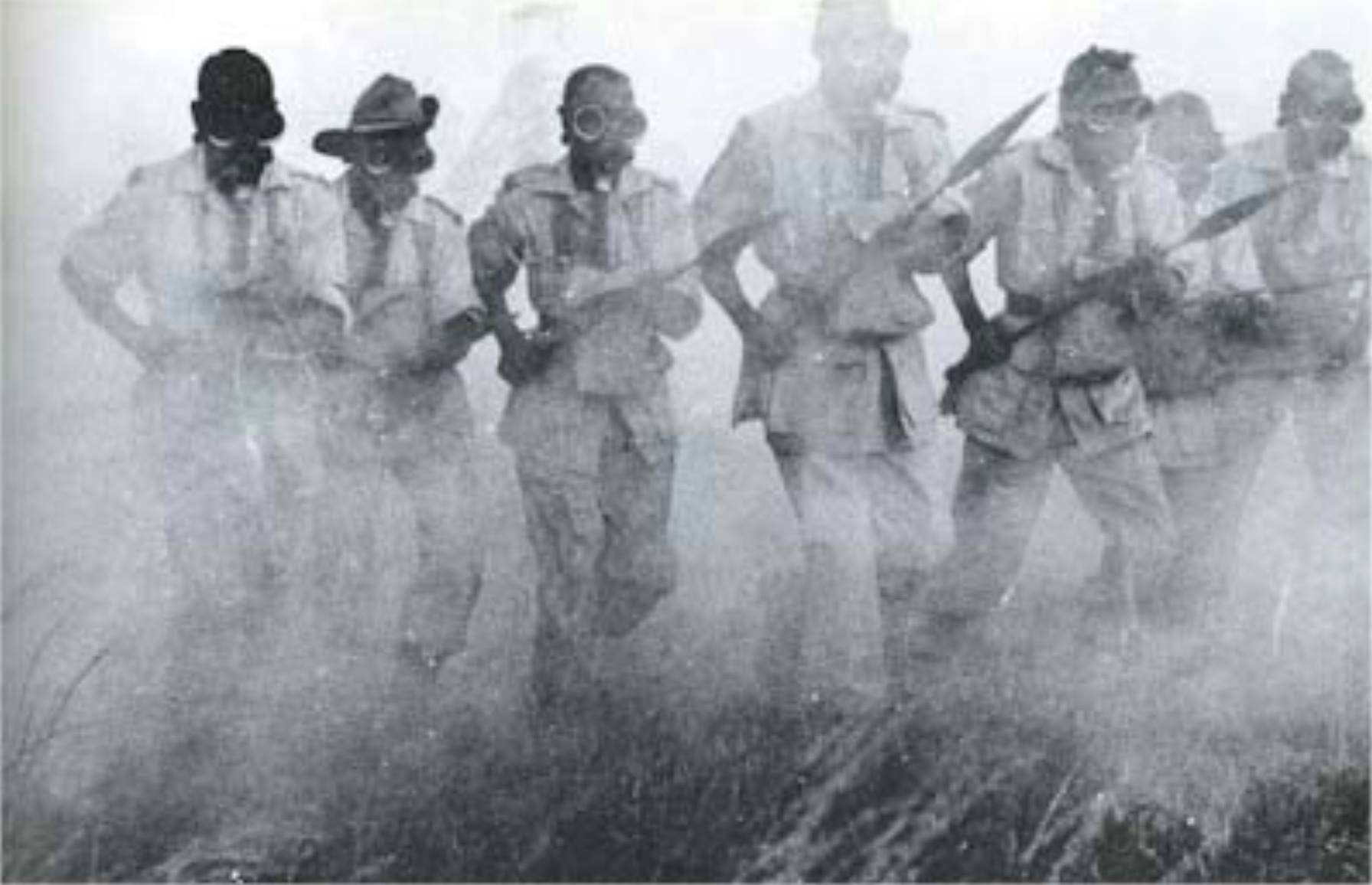
The Nationalists were vociferously opposed to black South Africans in the army at all, even unarmed. As Dr D.F. Malan was to be quoted in Parliament: “To every Afrikaner, the use of black troops against Europeans is abhorrent.”

Faced with all this opposition in Parliament from the official opposition bench Smuts had little choice, he needed men to fight, and had to tap South Africa’s black population for resources.  So he found a way by striking compromise, they could carry traditional weapons in the form of spears and knobkerries.

The president of the ANC in the war years, Dr AB Xuma, responded: “They are expected to fight aeroplanes, tanks and enemy artillery with knobkerries and assegais. What mockery.”

Arming the Native Military Corps with Spears 

So, in a counter-intuitive move to the National Party’s objections and statements to the Smuts government, the Native Military Corps were trained in traditional weapons (other than firearms) which they were allowed to carry.  This was a long spear, and bear in mind spears are very deadly (as the British fighting at the Battle of Isaldwana found out) – but lets face it, spears were very out of date in the context of modern war, but they pressed on and in training the South African Native military corps even trained to charge with the spear, even through tear-gas screens.

24955656_2059510197611301_4990790189144305175_o

South African Native Military Corps members charging with traditional spears into a teargas screen

Secretly arming the some Native Military Corps members with Firearms 

All this political segregation and racial discrimination became quite irrelevant when serving in combat areas and in many instances serving Regiments, Units and Sections of the South African Army quite quickly issued firearms to their NMC ‘support’ members – and this photo of DLI members stands testament of such practice.

Thier lives – Black or White, depended on it, and logic prevailed.  As is often the case in combat, the man who joins you in the fight is your brother – irrespective of the colour of his skin – in combat there is no such thing as racial segregation in a foxhole.

The caption written on Noel Edgar Fuller’s photo is “our Lance Corporal and his two native pals”. Quite a lot can be seen and said to this remarkable snapshot into the attitude of the time versus the attitude of soldiers.

Job Maseko MM

Job-Maseko

Job Maseko MM

In addition to snapshots like Noel’s one, there are actual accounts of South African Native Military Corps getting into the fight at the Fall of Tobruk, and it produced one highly decorated South African from the SA NMC.

During the Fall of Tobruk, over 1200 NMC members found themselves in a frontal attack by Rommel and his Axis forces.  Many of them were quickly issued rifles and ammunition and got into the fight alongside their white compatriots. Job Maseko was one and he ferried ammunition to the other NMC members who had been issued rifles and were in the thick of the fighting.

After the Fall of Tobruk (South Africa’s greatest capitulation of arms, Job found himself and other NMC members taken prisoner of war.  Made of stern stuff, whilst been put to work by the Germans on the Tobruk dock loading and off-loading Axis suppliers, Job secretly created a bomb using a condensed milk tin, cordite taken from bullets and an extremely long fuse.  His intention, sink a ship!

Job placed his home-made bomb deep inside the bowels of a German freight ship (and “F” Boat) that was docked in the harbour at Tobruk.   He skilfully placed it next to fuel barrels for maximum effect, lit the fuse and made good his escape.  Had he been caught, as a Black POW,  he would have certainly been put to death if not tortured first.

Job waited and later the ship shuddered from a huge internal explosion and sank almost immediately into the harbour.

He later escaped from Tobruk and walked, for three long weeks though the desert and through enemy lines, all the way to El Alamein, he intended joining the battle there as he had fixed an old German radio he had found which informed him about General Montgomery’s epic and tide turning battle at El Alamein.  We still await the full historical account of this remarkable man as very little is known to this day, rest assured historians are now writing it.

Sergeant Petrus Dlamini

Now consider this remarkable first hand account of armed Native Military Corps soldiers in the thick of the fight at El-Alamein

The Germans ran away. Now we were having short magazine guns, we pushed them. They said we went 300 miles … (we were in the) 8th Army led by (British Field-Marshal Bernard). Montgomery. Those Germans never came back. We fought as one; black and white soldiers.” — Sergeant Petrus Dlamini speaking about the battle of El Alamein to filmmaker Vincent Moloi

After 1948 this history was held back from the ‘White’ population and to a very large degree from the ‘Black’ population for political expediency ,it is only been recounted now with the very few remaining NMC members.  In effect South Africans were denied the opportunity to know their own history.

All that is starting to change now. From their recollections we know that, although black soldiers left South Africa armed only with spears, when they got “Up North” (to the North and East African campaigns) many were armed with rifles.  We also know now some even fought alongside white soldiers in the thick of battle.

Sergeant Petrus Dlamini spoke of being at Sidi Rezegh, Mersa Matru, Tripoli, Garowe in then Abyssinia and El Alamein before he went by boat to Italy with the South African 1st Division. He remembered doing guard duty in North Africa.

He says: “There, at Garowe, we were guarding as a sentry. We were guarding with assegai.” But just a few months later, Dlamini adds: “It was said — I heard a rumour — that the superiors [commanding officers] of South Africa, England and Australia said we must be given guns. Those guns were taken from the Italians in Kenya. They gave them to us and we were taught how to put ammunition and we were training with guns”.

Lee enfield

Short Magazine .303 Lee Enfield No. 4 Mk 1, standard issue

“Then we went to El Alamein and they took these [Italian] guns that were not right and they gave us short magazine Lee-Enfield .303. We got them at El Alamein.”  The Lee-Enfield .303 short magazine was the standard rifle issued to all British and Commonwealth troops.

This has been verified in an article in the South African Historical Journal by historian LWF Grundling, who says: “Recruits received rifle musketry training, which was seriously handicapped by the defective Italian rifles with which they were issued.”

30806253_2129588687270118_9148612884307489711_o

General Sir Pierre van Ryneveld

According to this research it was General Sir Pierre van Ryneveld himself who instructed the commanding officers in North Africa to arm black soldiers with Lee-Enfield rifles before El Alamein.  No small player, General Sir Pierre van Ryneveld was the Chief of General Staff (which today is known as Chief of the South African National Defence Force) and led the South African war effort in the Second World War.

But this does not seem to have been mentioned in despatches (possibly because of the petty race political ramifications back in South Africa of the Nationalists).

Sergeant Dlamini said: “In the front line we were accompanied by whites. When we go to fight the Germans we were mixed.”

He spoke vividly of the battles he was in. Moloi recorded his description of the battle of El Alamein.

“It was like bees, those German planes together with our planes, the Royal Air Force and the South African Air Force. Many died there. Shots were like falling rain. They would hit here and here where you are sitting. When you are sleeping in your trench you would hear sounds of bombs all the time, when you wake up you would see those injured and those who are dead.”

Dlamini says they were with the 8th Army. as they pushed the Afrika Korps and Axis forces out of Africa, he goes on “It [the 8th Army] pushed. Ai! Man! It was terrible, soldiers were lying dead, black and white, but the Germans were retreating and we kept following them. The Germans ran away. Now we were having short magazine guns. We pushed them. They said we went 300 miles … 8th Army led by Montgomery. Those Germans never came back. They went down together with the Italians you see.”

998120_170186736484400_630113539_n

Rare original colour photograph of a NMC Field Kitchen in North Africa campaign, note the high degree of integration of the South African soldiers represented.

Dlamini added: “We were one. We fought as one; black and white soldiers. Here in South Africa (before we went up north) we were treated differently. Blacks were sleeping this side, whites on the other side. When we arrived in Egypt we mixed. If we made a queue, in front would be a white person, behind would be a black person then a white person. We were one.”

And, perhaps explaining why he had not spoken of his experiences before, he added: “You know the heart of a soldier. Your feelings die. You are always angry.”

Besides Moloi’s interviews with Dlamini, and with several other black World War II veterans, almost no records of the wartime experiences of black soldiers exist. And as it’s probably too late now to collect more, Moloi’s transcribed and translated interviews are a national treasure.

Lucas Majozi DCM

581520_199581196878287_2116978767_n

Lucas Majozi DCM

Adding to Job Maseko’s gallantry, another NMC man was to attain hero status during the Second World War was Lucas Majozi, a man who performed a feat very similar to Pvt. Desmond Doss (who has a movie ‘Hacksaw Ridge’ made over his gallantry and US ‘medal of honour’), and like Doss, as an unarmed medic Lucas time and again exposed himself and walked into the hell of machine gun fire as an unarmed medic to rescue a large number of critically injured ‘white’ South African soldiers on the battlefield during the Battle of El Alamein, so much so he became riddled with bullets himself and eventually collapsed.

This is South Africa’s own ‘hacksaw ridge’ and movies should be made of it, Lucas Majozi should be elevated to the highest accolades of gallantry we have to offer today.  He remains the NMC with the highest decoration to this day – the Distinguished Conduct Medal.

Politically inconvenient ‘Sacrifice’

600x951It’s an often ignored fact and statistic – one which most certainly the National government after 1948 did not want widely published, lest national heroes be made of these ‘Black’ men.  Simply put the ‘Black’ contributions to World War 1 and World War 2 were quite literally erased from the narrative of the war after 1948 and dismissed by the incoming Apartheid government as ‘traitors’ (a tag also suffered by their ‘White’ counterparts) for serving the ‘British’.
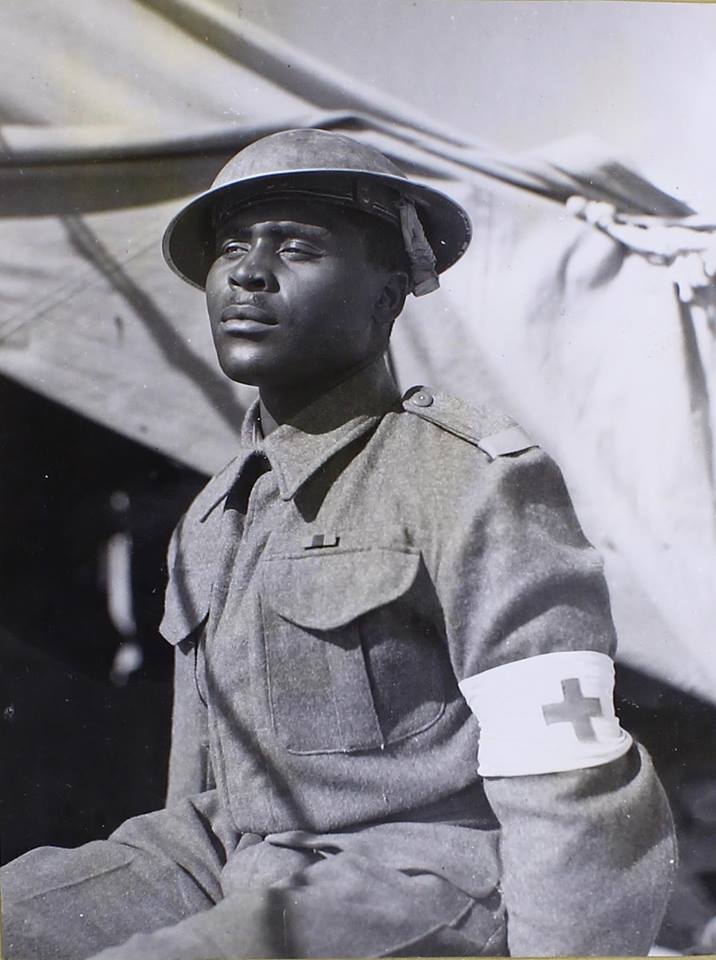
Bear in mind when reviewing what this actually means to the prevailing opinions by many South Africans of the war (White and Black)  – approximately 40% of the standing South African servicemen in WW2 where persons of “colour”.  In all more than 146,000 whites, 83,000 blacks, and 2,500 people of mixed race served in the standing forces of the Union of South Africa at this time.  Mull that over for a minute.

The sacrifice of the men of the Native Military Corps no less significant – if you think that as ‘non combatants’ this corps came through unscathed by war, also think again – this is the honour role of those NMC members who laid down their lives during the war, their sacrifice is literally quite eye-opening:

In total approximately 1655 Native Military Corps members died during World War 2, read that again – One Thousand Six Hundred and Fifty Five ‘Black’ South African soldiers died during World War 2.  That’s almost three times the number who died on the SS Mendi during World War 1, and that’s only from one ‘Corps’.

Put into context, nearly as many South Africans died during the entire 23 years of fighting during the Border War in the 70’s and 80’s when approximately 2013 South African service personnel died – from all arms of the military …. yet, here we are talking about only ‘one’ single Corps of Black South Africans and only five years of conflict.  Consider that the book shelves on South African history are stuffed full of books on the Border War and not one single book is dedicated to the history of the South African Native Military Corps in World War 2.  There is also almost nothing by way of definitive work on the unit history on the internet.

In Conclusion

It must be noted that this policy of arming NMC was not a universal one and only seemed to have been actioned with certain members in front line units or when combat situations demanded it, in reality reason finally prevailed.

It also seems that once high intensity combat operations abated these rifles were handed back. For the most part many NMC members went through the war in non-combatant roles and unarmed in roles like supply truck drivers, medics, chefs, bomb loaders, engineering labour (rail and bridge-building) etc.

It is unfortunate that after the war, and when the Nationalists ascended to power in 1948, that the NMC was disbanded and history scrubbed.  They were excluded from national parades and would sit under a tree and tell their stories to anyone prepared to listen.  Their stories really becoming fable in the Black community only, any record of NMC using weapons was generally written out the state’s historical narrative, interviews with them disregarded and these priceless historical nuggets are only starting to re-surface now in a post Apartheid epoch.

269A86C0B4724B0689CF66931FBE0163

NMC Insignia

The history of the South African Native Military Corps needs to resurface – it’s screaming out for more definitive works and information access – this featured photograph alone calls for it.  We need to fundamentally rethink who and what has been sacrificed to military conflict by South Africans of all ethnic origins, we need to completely re-dress how we honour them and we need to take some serious perspective.

Related Work and Links:

Native Military Corps Dress and Bearing: Dress and Bearing of the South African Native Military Corps

Job Maseko; Job Maseko; one very remarkable South African war hero.

Lucas Majozi; “With bullets in his body he returned … into a veritable hell of machine gun fire”; Lucas Majozi DCM

Skin colour in combat;  Skin colour is irrelevant in a foxhole!

Native Military Corps honour roll;  NMC Honour Roll, Delville Wood official website


Written by Peter Dickens.  Image copyright of NMC members holding weapons to Warren Loader, used with his kind permission.  Paintings of Job Maseko and Lucas Majozi by Neville Lewis copyright.  Quotes obtained from ‘Memories of black South African soldiers who bore arms and fought in War II’ by Marilyn Honikman

“With bullets in his body he returned … into a veritable hell of machine gun fire”; Lucas Majozi DCM

26731192_771151183084761_2191212210362043742_n

Lucas Majozi DCM

A very notable South African hero. The highest decoration awarded to a Black South African soldier during the Second World War was the DCM (Distinguished Conduct Medal) awarded to Lucas Majozi (1916-1969).  Read on for the story of one of South Africa’s bravest.

Lucas Majozi volunteered to fight in the 2nd World War, however as he was a black man, race politics in South Africa dictated that he could only join the Native Military Corps (NMC) in a non-combat role, which meant he and all other South African ‘Bantu’ fighting in World War 2 could not carry a firearm – unlike the Cape Coloured Corps, which could carry firearms and take a combat role.  This did not however keep the Native Military Corps away from the perils of fighting and NMC were often fight right in the middle of the fighting.  To read up a little more of this, see Observation Post ‘Armed’ SA Native Military Corps in WW2 – this Corps screams out for a definitive work! .

So how does an unarmed NMC soldier get to win one of the highest accolades for bravery in World War 2?

The answer lies in Lucas Majozi’s personality and character, he was a proper South African warrior and although he would be unarmed he volunteered to become a medic working as a stretcher bearer in the thick of fighting to bring wounded men back from harm to aid stations, an extremely dangerous job.  Like another Native Military Corps hero – Job Maseko, Lucas Majozi by his actions was also to become one of South Africa’s fighting legends.  To read more on Job Maseko and his remarkable bravery read this Observation. Post: Job Maseko; one very remarkable South African war hero

So lets have a look at Lucas Majozi, his account is a truly inspirational one, a very remarkable act of bravery and courage.

nmc

Bardia, taken earlier 31st December 1941, black stretcher-bearers in action under fire (photo : R.Masters from The Kaffrarian Rifles of FL Coleman).

The end of the beginning 

The DCM was the second highest British award for gallantry after the Victoria Cross. It was awarded to Lucas Majozi for the great bravery that he displayed during the game-changing 2nd battle of El Alamein which commenced on 23 October 1942 when the British 8th Army under command of General Bernard Montgomery attacked the German/Italian forces under command of Field Marshal Erwin Rommel.

The Battle of El Alamein plays such a significant in the outcome of World War 2, Winston Churchill once remarked; “before Alamein, we never had a victory – after Alamein we never had a defeat” and more famously that Alamein marked the ‘end of the beginning‘ of World War 2.

Operation Lightfoot

The 1st South African Division played a spearhead role. It had to breach the German minefield which had been sown with more than half a million mines – with a dab of military humour this part of the 2nd Battle of El Alamein was called ‘Operation Lightfoot’.  South African sappers were to play a significant role opening up the minefield to allow the Allied and South African forces to push through.

General Montgomery’s basic idea was that the Australians and Highlanders were to force a northern corridor through the Axis (German/Italian) minefields while the New Zealanders and South Africans were to do the same in the southern sector.

alamein 1

A 25-pdr gun firing during the British night artillery barrage which opened Second Battle of El Alamein, 23 October 1942. Imperial War Museum Copyright

The 1st Infantry Division (South Africa), under the overall command of General Dan Pienaar was tasked attack on a two-brigade front to secure the southern end of Mieiriya Ridge. The Indian 4th and Northumbrian 50th Divisions were deployed to their south and to the north was the 2nd New Zealand Division.

The South Africans were to attack towards the south-west with 2nd SA Infantry Brigade (under the command of Brig. W.H.E. Poole) on the right and the 3rd SA Infantry Brigade (under the Command of Brig. R. Palmer) on the left. The 1st SA Infantry Brigade was deployed further south and was responsible for creating an anti-tank screen to protect the left flank of the South African attack.

Our hero – Lucas Majozi was deployed with Brig. Poole in the 2nd SA Infantry Brigade to attack the South West, and he was in support of the 1st and 2nd Field Force Battalions (FFB) which were basically South African Infantry Corps battalions.

Crumbling Actions

Operation Lightfoot started at 2140 on 23 October with a five-hour fire plan, the start of which signified H-Hour for the infantry assault.  General Pienaar had deployed each of the lead brigades, with on battalion leading for the first phase to the “red line”  – after a pause of an hour and a quarter, the two trailing battalions would pass though to the final objective on Miteiriya Ridge.  By 08:00, the following morning on 24th October the South African objective, Miteiriya Ridge was finally secured, after a very long night of fighting and a very high rate of attrition by way of casualties (the rate of attrition was on a World War 1 scale dubbed ‘crumbling actions’ by General Montgomery who chose this tactic). By the evening of 26 October (as from the H-Hour on the 23rd), the South Africans had suffered 600 casualties (the British had 2000 casualties as well as 1,000 Australians 1000 New Zealanders).

alamein2

El Alamein 1942: Wounded British soldiers wait on stretchers for attention at an Advanced Dressing Station. A Royal Army Medical Corps officer gives a drink to one of the wounded (Imperial War Museum Copyright)

Into all these  ‘crumbling actions,’ of high rates of attrition and loads of casualties comes Lucas Majozi and his remarkable tale of individual bravery.

Pinned down in the Axis minefield 

The South African 1st and 2nd Field Force Brigades (FFB), as soon after the battle began, became pinned down in the German Axis forces minefield by intense German machine gun and artillery fire. The South African infantrymen suffered very severe casualties.

Throughout the night of 23 October, the stretcher-bearers worked under heavy enemy fire, tending to the wounded and evacuating them from the battlefield.  Amongst these Black NMC non-combatant medics rescuing their White combatant counterparts was Lucas Majozi (see related article Skin colour is irrelevant in a foxhole!).  His citation says everything about his actions:

The DCM for Lucas Majozi

Citation given to Lucas Majozi, NMC, for the Distinguished Conduct Medal is given below: No N 17525 Cpl Lucas Majozi, NMC, a Zulu from Zastron, Orange Free State att. FFB – Distinguished Conduct Medal.

Screen Shot 2017-12-10 at 13.56.07

Lucas Majozi

‘On the night of October 23-24, Majozi accompanied his company into action as a stretcher-bearer. In the later stages of the action when he was within 100 yards of the enemy and under heavy fire, he thought nothing of his personal safety and continued to evacuate casualties assisted by co-bearers.

He was then wounded by shrapnel, but he continued evacuating the wounded. Told by a medical corporal to go back to the regimental aid post, he replied that there were many wounded men still in the minefield.

He went back, and with the assistance of other stretcher-bearers, he brought back more wounded. After his co-bearer had become a casualty, he did not waver, but carried wounded men back alone on his back to the aid post.

When he was eventually told by the Company Commander to go back, he smilingly refused and remained on duty, working incessantly till he collapsed next morning through sheer exhaustion, stiffness, and loss of blood. His extreme devotion to duty and gallant conduct under continuous enemy fire throughout the night saved the lives of many wounded men who would otherwise have died through loss of blood or possible further wounds.’

Here is a copy of the original signal:

19095677_1542172835815645_8910920999632652268_o

Aftermath 

The British and Commonwealth forces, including the South Africans were able to break out of their initial objectives by the 2nd of November 1942 and the Axis forces were turned in retreat, a retreat from which they never recovered.

To get a full appraisal of the South African actions at El Alamein, follow this link “General Pienaar, tell your South African Division they have done well”; The Battle of El Alamein

Praise 

10624891_529650280538042_8160589725628105777_n

General Dan Pienaar

At a parade in Egypt after the battle of El Alamein, the commander of the 1st South African Division, Major-General Daniel Hermanus Pienaar (popularly known as Dan Pienaar) said of Lucas Majozi:

‘This soldier did most magnificent and brave things. With a number of bullets in his body he returned time after time into a veritable hell of machine gun fire to pull out wounded men. He is a man of whom South Africa can well be proud. He is a credit to his country.’

Post War

581520_199581196878287_2116978767_n

Lucas Majozi DCM ‘Official Portrait’

After the war, Majozi returned to the town of his birth, Zastron. In 1948 he joined the South African Police (SAP), attaining the rank of sergeant.  Like all returning South Africa World War 2 heroes (white and black) his legacy and great deed was to be sidelined by the incoming Nationalist government in 1948 and his story lost to many future generations – even today.

In particular the two Black NMC men – Majozi and Maseko who received bravery decorations were somewhat downplayed over the Apartheid years by the Nationalist government and not honoured as national heroes.

Lucas Majozi died in 1969.  The South African National Museum of Military History is in possession of both this portrait by the famous artist, Neville Lewis and his medal group.  His legacy today is marked by a display at the Delville Wood Museum in France, the SA National History Museum in Saxonwald, a street in Zastron is also named after him.  The MOTH (Memorable Order of Tin Hats) Shellhole (clubhouse) for military veterans in Riebeek Kasteel (Western Cape) is also called the Majozi Shellhole in his honour.

Many say he should have received the Victoria Cross (the highest award for gallantry) but did not because he was a black man and due to race politics was not recommended for one – in either event his case should be reviewed by the British issuing authority with the perseverance of the South African National Defence Force attache in London.

He remains a true South African warrior and hero deserving of more of our praise and recognition.


Written and Researched by Peter Dickens. Photographic references Imperial War Museum and Wikipedia. Lucas Majozi DCM official portrait by Neville Lewis – accredited state artist.