Very broadly, at the end of The Second World War (1939-1945), returning white South African soldiers found themselves in three broad veteran association camps, either in an returned serviceman organisation called The Springbok Legion – which was highly politicised, steeped in ‘liberal’ and ‘labour’ politics and trade unionist in its manifesto, or as ‘Smuts-men’, they found themselves in the more sedate and larger South African Legion and Memorable Order of Tin Hats (MOTH) veteran associations with their remembrance manifestos, and they returned to the ‘centre-line’ and ‘democratic’ politics of the United Party (UP), their decision to go to war reinforced their conviction to Smuts’ brand of politics and call to arms.
In the chapter on the ‘Nazification of the Afrikaner Right’ we looked at the rise of Nazism and Fascism during the war in South Africa and the amalgamation of Pro-Nazi and Neo-Nazi movements into the Afrikaner Nationalist Party after their shock election win in 1948. The advent of ‘Apartheid’ into South African policy and moves to amend the South African constitution caused widespread angst amongst the ex-servicemen, how had just returned from eradicating the world of Nazism and fascism in WW2 and now they found a home-grown version of it had come into power.
As the National Party consolidated its power after its election win in 1948, sporadic small protests and picketing of ex-servicemen broke out around the country at by-elections and the like protesting the gradual implementation of racially divisive policies around the country. The National Party using plain thuggery drawn from the old Ossewabrandwag structures continued to violently disrupt opposition United Party (UP) and Labour Party (LP) political meetings well beyond the 1948 elections. During various by-elections, UP and LP politicians depended on ex-servicemen to aid them with canvassing and for physical protection from the National Party’s thugs disrupting their political rallies.
On one side of these picketing and ‘protection’ activities around by-elections and political meetings were members of the Springbok Legion (SL), at the time dominated by firebrand Legionnaires, with a significantly strong ‘Jewish’ veteran demographic and with equally strong Liberal and Communist leanings, and they were bent on more aggressive outcomes and military solution to advent of the National Party – whose National Socialist philosophy and whose strong anti-sematic and anti-communism politicking before and during the war posed a significant threat to many of them who had Jewish heritage and/or Communist leanings.
The Springbok Legion
The Springbok Legion (SL) was born along labour manifesto principles during World War 2 seeking (amongst others) equity for Black and White servicemen. The Springbok Legion is initially formed in 1941 within a debating society comprised of members of the 9th Recce Battalion of the South African Tank Corps, at the Kafferskraal training camp near Klerksdorp. By mid 1941, two similar soldiers’ groups formed. One called the ‘Soldiers’ Interests Committee’ formed by members of the 1 South African Brigade (1 SA Bde) in Addis Ababa. The other was the Union of Soldiers, which was also created in Egypt by soldiers of t1 SA Bde. Over time, they agreed to merge these three debating societies/committees together to form ‘The Springbok Legion’.
The aims and objectives of the Springbok Legion were enunciated in its ‘Soldiers Manifesto’. The Springbok Legion was open to all servicemen regardless of race or gender and was avowedly anti-fascist and anti-racist.
Initially led by Jock Isacowitz as the National Chairman – a previously ‘Liberal’ student at Witwatersrand University before joining the South African Army, Isacowitz would be the guiding force behind the establishment of The Torch Commando and later he also became a founding member of the Liberal Party of South Africa.
‘Liberals’ like Isacowitz and Leslie Rubin, as well as future United Party stalwarts like Vic Clapham and anti-Apartheid activists like Brian Bunting made up a significant part of the Springbok Legion, however the Springbok Legion’s membership and leadership also contains Communist Party of South Africa stalwarts who had served in the UDF during the war – key amongst them were Wolfie Kodesh, Rusty Bernstein, Joe Slovo, Cecil Williams, Fred Carneson and Jack Hodgson (all of whom would become founders of the African National Congress’ MK military wing). Cecil Williams for example had served in the Royal Navy during the war, he would become the administrative officer of the Torch Commando’s “Steel Commando”, later he would famously be arrested whilst being ‘chauffeured’ by Nelson Mandela post Sharpeville to get Mandela around to his political meetings.
Cecil Williams
Although politically very ‘firebrand’ the Springbok Legion often sought out the sage advice of General Jan Smuts, and Smuts had a soft-spot for them calling them “my boys”).
Motivations for joining The Springbok Legion as a veteran’s association differ, Fred Carneson had served as signaller and saw action in East Africa and North Africa, he was badly injured at the Battle of El Alamein. He would highlight the divide in the Afrikaner diaspora caused by the Nazi leaning Ossewabrandwag and the National Party – and would say of the formation of The Springbok Legion:
“(the Springbok Legion) became a vehicle in the South African Army for a lot of progressive thinking, on the race issue as well, amongst white South African soldiers … We took up all sorts of issues there – not only the question of increasing family allowances and things that were hitting their pockets and their families, but on political issues calling for sterner measures against the Broederbond and against the Ossewadrandwag.”
Rare photograph of Jan Smuts addressing a Springbok Legion meeting.
Fred Carneson went on to say:
“the bulk of the South African Army were Afrikaners, not English-speaking, and they were also bloody fed up with this lot (the Ossewabrandwag et al). Some of them were being beaten up when they went to their hometowns and their dorps (villages) by these anti-war elements. The Springbok Legion organized a huge demonstration in Johannesburg which smashed up a Nationalist Party conference, again with whites turning out in force, and a hell of a lot of Afrikaners ex-servicemen. I remember one huge Afrikaner coming along there carrying a rope, and he says, ‘If I put my hands on Malan (referencing Dr. D.F. Malan, the National Party leader) I’m going to hang the bastard!’ … that was the strength of feeling that arose then against those they regarded as traitors, who tried to stab them in the back when they were fighting.”
On the returning white servicemen and women, Afrikaner and English, Carelson would offer an interesting insight on their disposition to race, an insight fundamentally at odds with the National Party and its doctrine, he said:
“… you seldom heard any anti-black sentiment amongst the white soldiers. If you’re in an army and a man’s on your side, you respect him, you see. They saw people of different races fighting together on the same side against the common enemy. This couldn’t but have an effect on their general thinking”.
Wolfie Kodesh offers a differing perspective on why he joined The Springbok Legion, Kodesh is also a combat veteran seeing action in both North Africa and Italy. He becomes politicised during the Italy campaign when he realises that it’s the poor lower class most affected by the bombing campaigns who see their houses bombed flat – whilst the rich upper class and their houses remain relatively unaffected – he identifies in a ‘class’ war and equates it with the Black and Coloured communities in South Africa. He finally decides to join the Springbok Legion and says …
I got involved in the SL to “overcome this racialism, which was like poison. After all, Hitler had been a racist against the Jews – he said he was going to do the same thing to the blacks. Here were the South African whites doing the same thing as Hitler said he would do … this is wrong … and I have to do my bit towards getting rid of it.”
Branches of the SL were established in Johannesburg, Cape Town and Durban. Membership to the SL was open to all races and to women (although few women joined). Black Africans, Indians and Coloureds also joined the SL, men like Peter Kay Selepe, a WW2 veteran and an organiser of the African National Congress (ANC) in Orlando (although few Black members joined – only 98).
Joe Slovo (left) is seen in his South African Army uniform (and Signaler insignia) in the feature image with fellow South African soldiers Mike Feldman and Barney Fehler.
The Springbok Legion acted as political pressure group on issues relating to housing, equality, pensions etc and not a political party, members were encouraged to become active in their mainstream political parties – like the United Party and the Labour Party.
The South African Legion
The South African Legion – then known as ‘The South African Legion of the British Empire Services League’, it was founded by Jan Smuts in 1921 was the ‘official’ national body for all South African veterans, and it took a formal approach when dealing with the Nationalist government and its policies as they impacted Black, Indian and Cape Coloured veterans – choosing to try and negotiate with the government via the formal and non-confrontational channels made available to it as the national body for veterans. The South African Legion is South Africa’s prima and largest veterans’ association with 52,000 registered military veterans.
Involved in both The Springbok Legion and the South African Legion is the very influential General Kenneth van der Spuy CBE MC, he is the man who pioneered the formation of South African Air Force (SAAF) under General Smuts’ directives. General Van der Spuy is regarded as the modern father and founder of the SAAF (Smuts would be the Grandfather). After the war he was a key role-player in the establishment of The Springbok Legion and on the National Executive of The South African Legion.
General van der Spuy – South African Legion
General van der Spuy became increasingly frustrated with The South African Legion position of remaining ‘apolitical’ but quietly’ supporting the anti-apartheid causes in the veteran’s community simply by opening their branches up to them, so he looked to the politically charged Springbok Legion to do what he referred to as the South African Legion’s “painfully correct whisper of polite protest” at the National Party’s policies to become a “shout” of protest instead, thereby encouraging members of the South African Legion to join hands with these concerned veterans in the SL and eventually join the Torch Commando along with General van der Spuy when it is formed.
The United Party
On the other side of the veteran’s diaspora is the largest political Party – the United Party (UP) led by Jan Smuts during wartime, although in the 1943 General Election they come out victorious, Jan Smuts receives an unprecedented level of support, and they command 75% of the house. However, after the end of the war in 1945 the United Party becomes complacent and directionless, even more so after their shock election loss in 1948 to the National Party.
Smuts (right) consults Hofmeyr (left) during WW2
Jan Smuts had intended that his deputy and protégé Jan H Hofmeyr, a ‘Liberal’ in every sense of the word (the nephew of the Afrikaner Bondsman “Onze Jan”), Hofmeyr was the effective PM of South Africa through most of WW2 and like Smuts was farsighted in matters on race – far more than his peers in the United Party. Tragically, he died young at 53 years in 1948. At his funeral Smuts said of him:
“Here was the wonder child of South Africa, with a record with which South Africa shows no parallel, who from his youngest years beat all records, whose achievement in a comparatively brief life shows no parallel in this land, and whose star at the end was still rising ..He has passed on, but his service and the high spirit in which he sought to serve his country and his fellow-men of all races remain our abiding possessions. This is a better and richer country for his service, and his message will not be forgotten.”
It was the first significant setback for the United Party and a more liberal outlook on race, and within two short years of Jan Hofmeyr’s death, Smuts too would pass on – this been the UP’s second and most significant setback. In essence the party had lost both of its key visionaries, and Smuts had been the ‘glue’ holding the party together and giving it direction.
The UP was sorely in need of an injection of young blood and firebrand politics – and it found this in the returning servicemen who were highly politicised influences and equally angered with the National Party’s flirtation with Nazism prior to and during the war. In all they would form a ‘ex-services’ caucus with the United Party and Parliamentary politics.
Captain Sir de Villiers Graaf
Notably amongst this UP faction was Captain Harry Oppenheimer, who, aside from being a significant economic and political powerhouse, served as an intelligence officer in the 4th South African armoured brigade during the war. Son of the industrialist Earnest Oppenheimer, Harry became the UP Minister of Parliament for Kimberley, as a prominent South African businessman, industrialist and philanthropist. Oppenheimer was ranked as one of the wealthiest people in the world and was considered South Africa’s foremost industrialist for four decades. He would become the key financial benefactor behind the Torch Commando.
The second notable UP member was Captain Sir de Villiers Graaf, a veteran of North Africa and been taken Prisoner of War (POW) during the fall of Tobruk, given an MBE for his relief efforts amongst prisoners, he would eventually lead the UP, and although not a Torch Commando member, he would become the official liaison officer between the Torch and the UP in 1952.
Also within the UP fold was Major Louis Kane-Berman, a veteran of both the North African and Italy campaigns and Democratic politics pioneers – Louis Kane-Berman would become the National Chairman of the Torch Commando.
Also of significance in this group of UP members was L/Cpl. Colin Eglin who had joined the 6th South African Armoured Division fighting in the Italian Apennines around Florence as part of the Cape Town Highlanders – Colin Eglin “the egg” would become a future Progressive Party powerhouse politician, cutting his political teeth in the UP and Torch Commando. Eglin could already see the malaise and disarray the UP had landed in when he said of the UP:
“morale was low; organisation pathetic; policy and ideology were confused and ambivalent. In this situation, the old- guard leadership looked for someone other than themselves to blame.”
L/Cpl Colin Eglin
Finally in the UP, Lt. Vic Clapham Jr., who had served in the SA Tank Corps in WW2 as a Lieutenant, and who was the son of the famous World War 1 veteran who started the Comrades Marathon, also Vic Clapham – Vic Clapham Jr. was an ex-Springbok Legionnaire, he had resigned from the SL National Executive in 1945 and he was now United Party stalwart. Vic Clapham would act as the conduit between his old chums in the SL with his new chums in the UP, and the two groups of concerned veterans from the Springbok Legion and the United Party decided to join hands and consolidated in April 1951 to form the ‘War Veteran’s Action Committee – WVAC’ (the WVAC was to evolve into The Torch Commando).
The leadership team of the WVAC was made up of veterans perceived as ‘moderate’ (as opposed to the more firebrand ‘Communists’ in the Springbok Legion) to present a broader appeal across the political spectrum. It’s also a balanced committee between ‘English’ and ‘Afrikaners’ – designed to address the polarisation in Afrikaner politics and bring Afrikaner voters who had served in the military during WW2 back to mainstream and moderate politics.
Lt Vic Clapham jnr.
The leaders appointed were Group Captain Adolph ‘Sailor’ Malan, Major Louis Kane-Berman, Major Ralph Parrott (a UP man who had served in the Transvaal Scottish in the South African Army and was awarded the Military Cross for bravery in the Battle of Tobruk), Major Jacob Pretorius (ex-SAAF and also a UP man) and Lt. Colonel Doreen Dunning – who during the war was the Officer Commanding the South African Women’s Auxiliary Air Force (SAWAAF). Harry Oppenheimer, not wanting to take a forward role pushed for Sailor Malan (Oppenheimer’s former Private Secretary) to take the role as the leader of the WVAC.
In the company of greats, Lt Col. Doreen Dunning (also remembered as Doreen Hooper) is an interesting appointment, she was one of the founders of the South African Women’s Auxiliary Air Force (WAAF) during the Second World War (1939-1945), she was highly respected SAAF officer, wartime heroine and a pioneering female aviator. At the outbreak of war, she had more than 2 000 flying hours to her credit. At the incredibly early age of 24 she was the youngest officer in the British Commonwealth to attain the rank she held.
Lt Col. Doreen Dunning portrait by Neville Lewis (1941)
Fair haired and blue eyed, she had a quiet, forceful personality combined with outstanding ability and tact which made her eminently suitable for the responsible administrative post that she held both in the South African Air Force and now as secretary to The Torch Commando.
Major Louis Kane- Berman is also a significant appointment as he would go on to be the Chairman of The Torch Commando, next to Sailor Malan his history and activities would shape white service-men resistance to Apartheid. He in fact is the powerhouse behind the Torch running its daily and hands-on activities. Louis Kane- Berman was highly popular, the son of Edith Kane-Berman, Chief Commandant of the Red Cross. He attested as a signaller in the Signal’s corps of the South African Army, he would see combat in both North Africa and Italy as a company commander. Post war he gets very involved in rallying ex-servicemen to protect the UP speakers and presents himself as an ideal candidate for WVAC.
Louis Kane-Berman in his later life was also extensively involved in the National War Memorial Fund and he would remain in ‘liberal’ and ‘federal’ politics most of his life and play a key role in the Union Federal Party.
Major Louis Kane-Berman, image courtesy the Kane-Berman family
It is important at this stage to cover Sailor Malan’s appointment, and why he is regarded as such a significant war hero and why he is forever linked to The Torch Commando as part of its public façade. Here’s some background on Sailor’s ‘metal’.
Group Captain Sailor Malan
Sailor Malan agreed to join the WVAC only on the proviso that his internal principles were adhered to. These been the political injustices suffered by people of colour in South Africa and resisting the government’s anti-constitutionalism and their drift towards a local brand of Nazism. Sailor is to be the ‘face’ of WVAC as he is highly recognisable and intensely popular across the board – he is the son of an Afrikaner father and a ‘English’ mother and sees himself as a South African first and foremost with strong Afrikaner ties and heritage.
Group Captain Adolph ‘Sailor’ Malan DSO (Bar) DFC (Bar)
Adolph Gysbert “Sailor” Malan stemmed from Wellington in the Western Cape, an Afrikaans speaking ‘plaas japie’ he learned to shoot and hunt from a very young age. He was the younger brother to “Bull” Malan and as a result had secondary opportunities prevalent to the times when the first born received academic and career preference.
He was also bullied at school, and in this he would forever forge a deep hatred for ‘bullies’ – he would always stand up for the ‘little guy’ and this would manifest itself in his convictions to battle against a ‘bully’ Nazi state as part of the Royal Air Force’s “Few”, a ‘no fear’ approach and he saw killing Nazi pilots and aircrew as necessary for the good of humankind. Later in life he also held no fear whatsoever of the National Party politician ‘bullies’ who had flirted with Nazism and saw them in the same light.
Named ‘Sailor’ after a stint in the Navy on the SATS General Botha and as a merchantman. He experienced the rise of authoritarianism in Germany in his frequent visits to Hamburg and Keil as a merchant sailor before 1939. Identifying Nazism as the enemy, he joined the Royal Air Force (RAF) in 1940 in preparation for the war. His British loyalism and revulsion of fascism were also shared by his brother “Bull” Malan, who participated in the invasion of Madagascar in 1942 and later killed in action.
In his career as a naval merchantman, Sailor also becomes increasing exposed to various cultures and nationalities and takes on an embracing and tolerant view. During the Battle of Britain, the British relied on pilots from the Commonwealth to make up a critical pilot shortage and Sailor Malan was one of these pilots and with him came pilots from all over the world, of all colours and of all cultures (there was no such thing as a ‘colour bar’ in the Royal Air Force) – from commonwealth countries like India, Burma, Rhodesia, Jamaica, Australia, New Zealand, South Africa and Canada, as well as pilots from Poland, France, Czechoslovakia and the USA. They made up almost one-third of the RAF pilots involved in the Battle of Britain – a demographic fundamentally different to the image so often created of these men as a bunch of tea drinking ‘tally-ho’ young white English.
Sailor Malan with fellow fighter pilot Vincent Bunting of 611 Sq. speaking with Biggin Hill’s – January 1943
Funnily, ‘Sailor’ would however develop a rather plummy English accent, and fellow pilots thought they were dealing with a English officer until they saw his ‘South Africa’ shoulder titles on his RAF uniform, his close fellow pilots would also nickname him ‘Hitler’ as a humorous take on his real first name, Adolph, however ‘Sailor’ as a nickname generally wins out and the name by which everyone gets to know him. However, it’s his combat record, coolness under fire, promotions and decorations alone are simply astonishing. To hear Sailor in his own words during the Battle of Britain, follow this link Sailor Malan; in his own words!
He first took part in evacuation of Dunkirk. During this battle he first exhibited his fearless and implacable fighting spirit. To demonstrate his nature, in one incident he was able to coolly change the light bulb in his gunsight while in combat and then quickly return to the fray.
When the Battle of Britain begun, 74 Squadron (known as ‘The Tigers’) was to take the full heat of the battle in what was known as ‘hell’s corner’ over Kent, the squadron was eventually based at the now famous ‘Biggin Hill’ aerodrome in the thick of the battle. Malan would famously develop “my ten rules of air fighting” which would change the RAF’s doctrine and contribute to Britains victory in the Battle of Britain – to read more on these rules, follow this link: ‘Ten of my rules for air fighting’ – Sailor Malan
Sailor Malan was given command of 74 Squadron, with the rank of Acting Squadron Leader at the height of the Battle of Britain on 8th August 1940. Three days later the Squadron was in battle. The day became forever known, “Sailor’s August the Eleventh”. The order was received at twenty minutes past seven to intercept a hostile raid approaching Dover. Little did the squadron know that they would participate in four separate air battles that day. When the Squadron returned to base after the fourth sortie, they had downed an astounding 38 enemy aircraft. Sailor Malan said later, in one of his masterly understatements:
“Thus ended a very successful morning of combat.”
Sailor Malan also worked on public relations to keep the British morale high. Here is a rare radio interview (follow Observation post link Sailor Malan – “in his own words”.
By D Day (i.e. Operation Overlord, the liberation of France and subsequently Western Europe), Sailor Malan was in command of 145 (Free French) Fighter Wing and was himself leading a section of the wing over the beaches during the landings in Normandy.
Sailor was a ruthless, skilful, and deadly hunter and killer, in all Sailor Malan scored 27 enemy aircraft kills, seven shared destroyed, three probably destroyed and 16 damaged. He was to receive the Distinguished Service Order decoration – not once, but twice and well as the Distinguished Flying Cross decoration, again not once – but twice. The Citations for the DSO’s and DFC’s say everything about his combat prowess and are worth a mention and a listing given their status:
Sailor Malan’s decorations and medals
Distinguished Service Order & Bar (DSO). In Sailor’s case the two DSO are awarded for bravery. Here are the citations;
Distinguished Service Order. Acting Squadron Leader Adolph Gysbert Malan, DFC (37604), Royal Air Force, No.74 Squadron. December 24th, 1940.
“This officer has commanded his squadron with outstanding success over an intensive period of air operations and, by his brilliant leadership, skill and determination has contributed to the success obtained. Since early in August 1940, the squadron has destroyed at least 84 enemy aircraft and damaged many more. Squadron Leader Malan has himself destroyed at least eighteen hostile aircraft and possibly another six.”
And on 22nd July, 1941:
Bar to the DSO. Acting Wing Commander Adolph Gysbert Malan, DSO, DFC (37604) Royal Air Force.
“This officer has displayed the greatest courage and disdain of the enemy whilst leading his Wing on numerous recent operations over Northern France. His cool judgement, exceptional determination and ability have enabled him to increase his confirmed victories over enemy aircraft from 19 to 28, in addition to a further 20 damaged and probably destroyed. His record and behaviour have earned for him the greatest admiration and devotion of his comrades in the Wing. During the past fortnight the Wing has scored heavily against the enemy with 42 hostile aircraft destroyed, a further 15 probably destroyed and 11 damaged.”
Distinguished Flying Cross & Bar. This this is still a ‘decoration’ and not a ‘medal’ so it’s very high on the senior level, and in Sailor’s case both times it is awarded for exceptional flying and bravery. Here are the citations for his Distinguished Flying Crosses;
Flight Lieutenant Adolph Gysbert Malan. (37604), Royal Air Force. June 11th, 1940.
“During May 1940, this officer has led his flight, and on certain occasions his squadron, on ten offensive patrols in Northern France. He has personally shot down two enemy aircraft and, probably, three others. Flight Lieutenant Malan has displayed great skill, courage and relentless determination in his attacks upon the enemy.”
Bar to the DFC. August 13th, 1940:
Flight Lieutenant Adolph Gysbert Malan. (37604), Royal Air Force.
“Since the end of May, 1940, this officer has continued to lead his flight and, on many occasions the squadron, in numerous successful engagements against the enemy. During the Dunkirk operations he shot down three enemy aircraft and assisted in destroying a further three. In June, 1940, during a night attack by enemy aircraft, he shot down two Heinkel 111’s. His magnificent leadership, skill and courage have been largely responsible for the many successes obtained by his squadron.”
British and Commonwealth Medals include:
1939-45 Star with Battle of Britain clasp
The Air Crew Europe Star with France and Germany clasp
The Defence Medal
The War Medal (1939-1945) – with a mid Oak Leaf or MiD (Mentioned in Dispatches). The Oak Leaf on Sailor’s ribbon of this medal indicates the award of the King’s Commendation for Brave Conduct.
Foreign Decorations include:
Legion of Honour (France) Officer Grade
Croix de Guerre (France)
Croix de guerre (Belgium) with bronze palm. The Bronze Palm means Sailor Malan was ‘Mentioned in Dispatches’ by the War Office specifically for a performing heroic or significant deed.
Czecho-Slovakian Military Cross
To read more on Sailor Malan’s medals follow this link; Sailor’s medals
To understand Sailor Malan as a military leader, Bill Skinner DFC, with whom Sailor often flew, summed up Sailor Malan very well when he said of him:
“He was a born leader and natural pilot of the first order. Complete absence of balderdash. As far as he was concerned, you either did your job properly, or you were on your way. He inspired his air crews by his dynamic and forceful personality, and by the fact that he set such a high standard in his flying.”
Sailor Malan was one of the most outstanding British Fighter Command’s fighter pilots of the 1939-45 war, by the end of 1941 was the top scorer – a record which he held for three years. But he was much more than an individual performer. He remains one of the highest scoring fighter aces to have served with Fighter Command and one of The Few as described by Sir Winston Churchill, who also incidentally became Godfather to Sailor’s new-born son – Jonathan Malan. He had assimilated the fierce and fanatical “tiger spirit” of his squadron, and this ‘Sky Tiger’ spirit he inspired in others and in so carried the Squadron to its great deeds. He literally lived and breathed the squadron’s motto – I fear no man.
The Battle of Britain and D Day moulded Sailor Malan as a champion for freedom, he simply held the view that shooting down Nazi aircraft was good for humanity, and this fearlessness translated into his personal politics. Sailor Malan left the Royal Air Force and returned to South Africa in 1946. He joined Anglo American as Harry Oppenheimer’s personal secretary, and later it was Oppenheimer who would turn to Sailor Malan as the best candidate, given his exemplary war record, his liberal disposition, leadership and likeable personality – to lead The War Veterans Action Committee as its President.
In Sailor Malan’s own words, he would sum up his intentions and what the WVAC and The Torch Commando was all about – of its primary mission, he said:
“The Torch Commando was established to oppose the police state, abuse of state power, censorship, racism, the removal of the coloured vote and other oppressive manifestations of the creeping fascism of the National Party regime”.
Opening Shots
The opening protest by the WVAC started on a relatively small scale, on the 21st April 1951 at the cenotaph near the Johannesburg City Hall commemorating soldiers who had died in World War 1 and World War 2. The WVAC ex-servicemen present, in protest against the advent of National Party’s Apartheid policies pledged themselves to defend the values for which their comrades had died, and to demonstrate their intention they draped a coffin in the National Flag to symbolize the death of the South African constitution and placed a placard to that effect.
The ’constitutional crisis’ they referred to on the plagued is the opening shot of the National Party to implement their barrage of ‘Grand Apartheid’ laws, the crisis began earlier in 1951 when the National Party announced proposed legislation called the ‘Separate Representation Act’ to remove so-called ‘Coloureds’ from the Common Voters Roll – correctly this incorporated all franchise qualified ‘Black’ and ‘Coloured’ voters in the Western Cape – known as the Cape Franchise, in essence ‘Coloureds’ and Whites were on the same voters roll since the abolishment of slavery and ‘apprenticeships’ from 1853. To change the constitution required a 2/3 majority of MP’s at a joint sitting of both Houses of Parliament (National Assembly and the Senate).
The constitution of the Union of South Africa was rock solid to prevent right wing racial politics of the old Boer Republics of the Transvaal and Orange Free State from interfering with it. To many white South Africans this part of the Union’s Constitution was a “solemn compact” at the very core of the Union – legally and morally binding and for the time being the Cape Franchise kept an uneasy peace on issues relating ‘black’ political emancipation.
The National Party did not have the required majority by way of popular vote. However, they had a plan, they were to gerrymander, load the Senate with new National Party seats and pass legislation to get their majority and push their legislation through.
The Separate Representation Act caused significant outrage – the war veteran’s concern was that removing Coloureds from the voters roll, as they constituted a significant voting bloc, would pave the way for future and more sinister racially based Apartheid legislation, the complete marginalisation of ‘black’ political representation and a break-up of the Union’s constitution to form a ‘white Afrikaner’ Republic and breaking the ‘Union’ and British Dominion status on a ‘whites-only’ voting ticket.
The Torch Commando – next instalment
What follows next is called ‘The Steel Commando’ – please click through to this Observation Post link which covers this phase in depth.
South African History Association (on-line) ‘Tracing the unbreakable thread’
Military History Journal , Vol 5 No 5 – June 1982, Flying High: The Story of the Women’s Auxiliary Air Force 1939-1945. By Major Marjorie Egerton Bird and Molly Botes
The Torch Commando & The Politics of White Opposition. South Africa 1951-1953, a Seminar Paper submission to Wits University – 1976 by Michael Fridjhon.
The South African Parliamentary Opposition 1948 – 1953, a Doctorate submission to Natal University – 1989 by William Barry White.
The influence of Second World War military service on prominent White South African veterans in opposition politics 1939 – 1961. A Masters submission to Stellenbosch University – 2021 by Graeme Wesley Plint
The Rise and Fall of The Torch Commando – Politicsweb 2018 by John Kane-Berman
The White Armed Struggle against Apartheid – a Seminar Paper submission to The South African Military History Society – 10th Oct 2019 by Peter Dickens
Not for ourselves – a history of the South African Legion by Arthur Blake
Sailor Malan fights his greatest Battle: Albert Flick 1952.
Sailor Malan – By Oliver Walker 1953.
Lazerson, Whites in the Struggle Against Apartheid.
The White Tribe of Africa: 1981: By David Harrison
Ordinary Springboks: White Servicemen and Social Justice in South Africa, 1939-1961. By Neil Roos.
Sailor Malan fights his greatest Battle: By Albert Flick 1952.
Kimberley Calls and Recalls. Life Magazine, 25 June 1951.
The Smoking Gun of the White Struggle against Apartheid!
The Observation Post published 5 articles on the The Torch Commando outlining the history of the movement, this was done ahead of the 60th anniversary of the death of Sailor Malan and Yvonne Malan’ commemorative lecture on him “I fear no man”. To easily access all the key links and the respective content here they are in sequence.
In part 1, we outlined the Nazification of the Afrikaner right prior to and during World War 2 and their ascent to power in a shock election win in 1948 as the Afrikaner National Party – creating the groundswell of indignation and protest from the returning war veterans, whose entire raison d’etre for going to war was to get rid of Nazism.
In part 2, in response to National Party’s plans to amend the constitution to make way for Apartheid legislation, we outlined the political nature of the military veterans’ associations and parties and the formation of the War Veterans Action Committee (WVAC) under the leadership of Battle of Britain hero – Group Captain Sailor Malan in opposition to it. Essentially bringing together firebrand Springbok Legionnaires and the United Party’s military veteran leaders into a moderate and centre-line steering committee with broad popular appeal across the entire veteran voting bloc.
In Part 3, we cover the opening salvo of WVAC in a protest in April 1951 at the War Cenotaph in Johannesburg followed by the ratification of four demands at two mass rallies in May 1951. They take these demands to Nationalists in Parliament in a ‘Steel Commando’ convoy converging on Cape Town. Led by Group Captain Sailor Malan and another Afrikaner – Commandant Dolf de la Rey, a South African War (1899-1902) veteran of high standing their purpose is to raise support from Afrikaner and English veterans alike and they converge with a ‘Torchlight’ rally of 60,000 protestors and hand their demands to parliament.
In Part 4, in response to the success of The Steel Commando Cape Town protest, we then look at the rise of the Torch Commando as South Africa’s largest and most significant mass protest movement in the early 1950’s pre-dating the ANC’s defiance campaign. Political dynamics within the Torch see its loyalties stretched across the South African opposition politics landscape, the Torch eventually aiding the United Party’s (UP) grassroots campaigning whilst at the same time caught up in Federal breakaway parties and the Natal issue. The introduction of the ‘Swart Bills’ in addition to ‘coloured vote constitutional crisis’ going ahead despite ineffectual protests causes a crisis within the Torch. This and the UP’s losses in by-elections in the lead up to and the 1953 General Election itself spurs the eventual demise of The Torch Commando.
In Part 5, we conclude the Series on The Torch Commando with ‘The Smoking Gun’. The Smoking Gun traces what the Torch Commando members do after the movement collapses, significantly two political parties spin out the Torch Commando – the Liberal Party of South Africa and the Union Federal Party. The Torch also significantly impacts the United Party and the formation of the breakaway Progressive Party who embark on formal party political resistance to Apartheid and are the precursor of the modern day Democratic Alliance. The Torch’s Communists party members take a leading role in the ANC’s armed wing MK, and the Torch’s liberals spin off the NCL and ARM armed resistance movements from the Liberal Party. We conclude with CODESA.
One of the key reasons the Torch Commando’s leadership was somewhat sidelined and even gagged by the National Party, eventually resulting in the suppression of its legacy and removal from the general consciousness of South Africans is this …. the underpinning of Afrikaner Christian Nationalism with German National Socialism.
To view history in its correct context, one must see the characters in their time, see things from their view – see what issues of the day are driving their actions and thoughts and NOT to see them in the context of 21st Century social constructs and opinions. What this history will show us is that Nazism is not central to Afrikanerdom in any way, shape or form, it manifests itself on the ‘rump’ of Afrikanerdom in a small group of Afrikaner Republican zealots bent on supporting of Germany through all its manifestations from its brand of Imperialism to Nazism.
Exactly as Nazism did in Germany, it’s a cancer and it could come to infect and destroy the liberal and moderate political constructs of Afrikaner politics and eventually destroy the pillars of democracy inherent in ‘white’ politics as a whole. Furthermore, using the same Nazi dogma of oppression, this minority of nationalist zealots would gerrymander and even violently consolidate themselves into an unassailable position verging on a one-party tyrannical state.
To the Torch Commando members and to other returning South African World War 2 veterans in various political parties and veteran associations, the accent of the National Party to power in 1948 was not so much that their policies of Apartheid sought to repress South African blacks and deny them the franchise – that was secondary to their cause, the major issue presenting itself to these war veterans was that The National Party constituted a Nazi and Fascist threat to South Africa.
This Nazi and Fascist threat globally was a threat that had just been to war against – in 1945, just three years previously to the National Party coming into power, Adolf Hitler and Benito Mussolini were both dead and 11,023 South Africans died in the process of making that happen – all of them comrades in arms. To say these war veterans had no tolerance for Nazism or Fascism would be an understatement, to say they feared it would be an absolute truism.
Almost to a man, the National Party leadership and elite had either flirted with Nazism or had become full-blown National Socialists in support of Nazi Germany prior to and during the Second World War. Consider the amount of pro-Nazi and Neo-Nazi organisations that formed on the far right of white Afrikanerdom prior to and during the war, they were:
The ‘Ossewabrandwag’ (Ox Wagon Sentinel) – led by Dr. Hans van Rensburg.
The ‘Grey-shirts’ – The South African Christian National Socialist Party (SANP) – led by Louis Weichardt.
The ‘Democratic Movement’ – led by Manie Wessels and Chris Havemann.
The ‘Broederbond’ (Afrikaner Brotherhood) – led by Dr. Nico Diedericks.
The ‘New Order’ – led by Oswald Pirow.
The ‘Black-shirts’ – the Volksbeweging (People’s Movement) or ‘African Gentile Organisation’ led by H.S. Terblanche.
The ‘Brown-shirts’ – The ‘Bond van Nasionale Werkers’ (National Workers Union) led by Johannes Bruwer.
The National Socialist Rebels – led by Robey Leibbrandt.
The Boerenasie (Boer Nation) movement – led by Manie Maritz.
All these movements and parties were folded into the National Party after the war in one way or another, with many of their members taking up key positions in the National Party in government and related state organs and parastatals.
The ‘Malanazi’ as published in ‘Blikfakkel’ the Torch Commando’s mouthpiece in June 1952 – political cartoon by Berry – served to ridicule Dr. D.F. Malan, the Prime Minister and leader of The National Party, humorously depicted as a poor cousin of Nazism.
With the global condemnation of Nazism and the establishment of the United Nations in the wake of the war to prevent such an ideology threatening mankind again, the National Party were very quick to bury this past – they would choose to identify their resistance to Jan Smuts’ call to arms against Nazi Germany as an ‘anti-British’ one and not a pro-Nazi one (a hangover of hatred for Britain from the Boer War). Nazism in 1948 was political hot potato, in fact it was sheer political suicide and the Nationalists needed to bury their Nazi past and fast.
To do this, in July 1948, mere months after the National Party won the election. The National Party’s new head of Defence – F.C. Erasmus walked into Colonel Charles Powell’s office at the National Intelligence archive, he promptly dismissed Colonel Powell on the spot with 24 hours’ notice. He then proceeded to remove “two lorries” worth of wartime Broederbond and Ossewabrandwag intelligence documentation linking them to Nazism – never to be seen again.
Formal complaints to the new Minister of Justice to reinstate the military intelligence archive were just ignored. Later, to the continued amazement of all, whenever there was a press conference and B.J. Vorster taken to task on any of his Nazi or Broederbond past he would often smugly turn around to any young whippersnapper journalist trying to set a record straight and simply say “prove it”.
The problem was an organisation called ‘The Torch Commando’ and the war veterans themselves, they were very aware of who in the National Party cabal had been in support of Nazi Germany and its ideology, and in all of their own press, The Springbok Legions’ newsletter ‘Advance’, the Torch Commando’s newsletter ‘Blikfakkel’ and other ‘English’ medium mainstream press, constantly published articles, opinions, letters and cartoons linking Afrikaner Nationalism to Nazism. When in the ’English liberal’ newspaper media whenever Torch Commando leaders were interviewed, they consistently highlighted the National Party’s Nazi root and called them out.
C.R. Swart as portrayed in Advance
So, where there’s smoke there is fire, let’s have a holistic and complete view of how Nazism as an ideology has played a role in the establishment of Christian Nationalism and Apartheid and who are the personalities who are in the National Party who have flirted or adopted the edicts of Nazism into their politics and policies.
The split in the Afrikaner diaspora
The Afrikaner right wing political romance with Germany starts with the South African War (1899-1902) i.e., Boer War 2 and it starts with the Zuid-Afrikaansche Republiek (ZAR or Transvaal Republic) and Orange Free State (OFS) Republican Afrikaners – and as an Afrikaner whole they are a minority population – as Afrikaners go the Boer Republics’ Afrikaners combined do not reflect Afrikanerdom nor the views for the majority of Afrikaners in Southern Africa.
The population of South Africa in 1899 was approximately 4.7 million persons with 3.5 million Black Africans making up 74% of the total. Whites, numbering 830,000 made up only 18% of the entire population. Asians and Coloureds total 400,000 or 8%. In total 480,000 are Afrikaans-speaking whites and they total 58% of the white population.
The Transvaal’s Afrikaners made up only 31% of the total number of Afrikaners in South Africa, with the Orange Free State having 15%. This total of 46% (approximately 219,000 people) shows that when war broke out, less than half of the total Afrikaners in South Africa were in the two republics that declared war on Great Britain. The British Cape Colony and Natal Colony, containing 54% of the Afrikaners, or 260,000 persons never rose up and declared war against the British (Cape Rebels accounted only about 10,000 persons).
The underpinning reality is that the Republics Boer Generals planning the war and the Republics Boer politicians claiming “Africa for the Afrikaner” failed to appreciate that many of the Cape Afrikaners were pretty happy under British administration for the near 100 years they are subjected to it, contented with the Cape franchise, many of them urbanised middle class and well to do and of the landed class many were very wealthy – as a demographic they are fundamentally different to their isolated and struggling frontier farming (Boer) Afrikaner brethren ‘up north’.
Poverty, famine and hardship was not an overarching issue in the British Colonies for many ‘whites’ (Boer and Brit) in 1899 – nor does it seem that there was any fundamental discontent with their governance, representation and political disposition – and many simply did not view the ZAR’s “Krugerism” as a viable ideology or system of governance for Southern Africa – in fact Prime Minister William Schreiner, John X. Merriman and Jacobus Sauer had moved many in the Cape Colony’s branch of the Afrikaner Bond and Afrikaners in the Cape Colony in general closer to the British way of thinking.
After the Boer War ends in 1902, one of the peace terms is that independence will be guaranteed for the old republics under a British realm of influence, so in 1910, the Union of South Africa is declared as an independent country (a Dominion) with the old Boer ‘Bittereinder’ leadership – Louis Botha and Jan Smuts at the helm. This key split of Afrikaners however remains – many of the Cape, Natal and many Transvaal urbanised Afrikaners relatively happy with the idea of a ‘Union’ – the fusion of British and Afrikaner interests (and they now constitute the majority), however, here is a minority who remain Anglophobes because of the Boer War and are determined to return to the ideals of Republicanism and covert the old ZAR ‘Krugerism’ ideology.
This schism in white Afrikanerdom is important to the eventual rise of the Broederbond, Ossewabrandwag and the National Party as they try to bring the ‘Cape Afrikaner’ and ‘Boer Afrikaner’ together into a singular identity under a Christian Nationalist banner using a white Voortrekker and Boer hegemony, all underpinned with a cocktail of Weimar Eugenics and National Socialism. This schism runs throughout Afrikaner history until 1948 and it is the key differential which The Torch Commando tries to influence through the vote in 1952.
The Adulterous Romance
The Afrikaner romance with Germany has three key points, the first is a minority of Afrikaners have German Heritage – the majority have a Dutch, Flemish or French heritage, and the German free-burgers are seen as part of the hereditary make-up and culture of white Afrikanerdom. The second is a simple telegram and the third is a rifle.
The telegram is related to the Boer War, its reputed to have been sent to President Kruger by Kaiser Wilhelm II congratulating him on dealing with the Jameson Raid in 1896 – the telegram read:
“I express to you my sincere congratulations that you and your people, without appealing to the help of friendly powers, have succeeded, by your own energetic action against the armed bands which invaded your country as disturbers of the peace, in restoring peace and in maintaining the independence of the country against attack from without.”
President Kruger then published the telegram far and wide as proof positive that Germany was in support of the Boer Republic and its claims that Britain intended to invade it. It would give the Boers the confidence and leverage in their many conflicting areas they had with the super-power Great Britain, in the belief that if there was to be an inevitable war, Germany as another super-power, will come to the aid of the Boer Republics.
Image: Boer delegation to Germany and Kaiser Wilhelm II in his British Field Marshal uniform.
In truth, Kaiser Wilhelm II would deny personally sending the telegram, and claimed it was part of internal plot and political intrigue, he was also very angry with Kruger’s promotion of the telegram as some sort of treatise for military support, denying that he ever had intentions of establishing relations with the ZAR and he had no malice to Britain and would never support the ZAR in any war against them (see: Secret History of To-Day by Allen Upward).
The rifle is the German manufactured MAUSER model 1895 and 1896 carbine rifle (they also used the Norwegian made Krag-Jorgensen rifle). The Mauser Model 1896 became the icon it was a bolt-action rifle that fired 7x57mm rounds and was equipped with a five-round magazine. It was regarded as a more superior rifle to the British Lee-Metford rifle of the time.
In the months before the start of the Boer War in October 1899, the Boer Republics purchased 30,000 Mauser rifles, and 1,000,000 rounds of smokeless ammunition for it. Other weapons, including modern field guns and automatic weapons were purchased from the German armaments manufacturer Krupp. The rally call for Boer Republican troops became “Through God and the Mauser”.
To the average Republican mounted infantryman, this overwhelming supply of German weaponry left a legacy that Germany was their key ally, in truth German armaments manufactures, Mauser and Krupp were happy to receive orders of this magnitude, they made a lot of money from the two Boer Republics. Not one single German weapon sold to the Boer republics qualified as a subsidy or gift, and the German government made no effort to finance any of these weapons for the Boer cause.
Germany was just happy to sell them the weapons, as inconvenient truth goes, British arms manufacturers also sold weapons to the Boer Republics – the ZAR was minted with taxation from gold and made for a very profitable customer.
In so far as adulterous this relationship goes, for all the benefit Germany was getting from selling arms to the Boers, they give all their support to Britain instead. Germany would even go as far as lending its military strategising to the British to help them win the Boer war – and as inconvenient truths go the strategy devised for the British by Kaiser Wilhelm II and his planners includes scorched earth and concentration camp policies (see: John C.G. Röhl: The Kaiser and England during the Boer War).
As to manpower only a handful of Germans in their private capacity (local and foreign), 500 or so, volunteered join Boer Commando’s during the war – no assistance in fighting manpower was afforded the Boers by the German government in any way.
In fact, Kaiser Wilhelm II flatly refused to entertain any Boer delegation sent to Germany. Boer delegations did raise a little money from private donators, but that’s it – there was never any official public contribution by the German government to the Boer cause – ever. Germany wanted to avoid conflict with Britain – who by convention and legal treatise at the time held suzerainty limitations over the two Boer Republics preventing them from engaging in foreign policies and entering into foreign treaties (see: the London Convention 1881). That … and to the Kaiser, the British Royal family were all his blood relatives – it was a family matter.
The Boer Revolt
However, all this adultery still did not resonate with many in the Boer community who almost illogically saw Germany as an Ally. This would re-materialise when the First World War 1914 – 1918 swings into action, and the newly formed South African Union declares war against Germany, not in the service of the British Empire, but in the service of South Africa’s own territorial expansions as agreed between the British and Boer delegations at the Union Conference of 1909 – the Parliamentary vote is a landslide in favour of The South African Party’s (SAP) proposal to invade German South West Africa (GSWA) and declare war on Germany. The SAP is the ‘Afrikaner’ party – it’s made up of all the old Boer War ‘Bittereinder’ Generals and the old Afrikaner Bond politicians – the opposition Imperial Party (the ‘English’ party) – also overwhelmingly in favour of it.
The vote is 92 = For invasion of German South West Africa (GSWA) and 12 = Against. Of these 12 SAP individuals (or 18% of the SAP), only 3 of them are notable and become highly vocal anti-war campaigners demanding that South Africa remain neutral – Ministers Barry Hertzog, Koos de la Rey and Christiaan de Wet.
In trying to raise resignations from the South African Union Defence Force in protest, Koos de la Rey would be tragically killed in a road-block misunderstanding. General Christiaan de Wet would however join up with UDF officers – Major Jan Kemp, General Beyers and a rogue UDF commander on the GSWA border with intense pro-German, pro-white supremacy and anti-sematic sentiments by the name of Lt. Col Manie Martiz, all three would go into open sedition trying to evoke a coup d’etat using promised GSWA troops in support of their Boer Commandos.
The Boer Revolt of 1914 was poorly planned and poorly executed, it managed to raise only 11,476 Boers who were poorly armed infantrymen against 80,500 well-armed UDF personnel (the rebels are outnumbered 8 to 1 in effect) and the Revolt drew no significant support from the Afrikaner community in the Transvaal, and virtually no support whatsoever from the Afrikaner communities in the Cape Province and Natal Province. It also drew no support from the Union Defence Force Afrikaners – who made up 60% of the force. It also gained no traction whatsoever with the ‘English’ white population (who made up 40% of the white demographic) and it drew absolutely no support from the real majority – the coloured, Indian and Black people of South Africa.
Without support from either the broader Afrikaner diaspora or the South African population as a whole and without good military doctrine and planning backing them, the rebels were quickly crushed by the Union’s Defence Force and the revolt only lasted a couple of months.
The Boer Revolt and its impact on Afrikaner Nationalism
Albeit small and insignificant to the outcome of WW1 and the invasion of German South West Africa, the 1914 Boer Revolt is important in the evolution of the Afrikaner Nationalist right wing for four reasons.
Upfront is one of the primary political ramifications, of the few 18 odd very pro-Germany and pro-neutrality South African Party (SAP) Ministers of Parliament – General Barry Hertzog does not go with the sedition of his peers in revolt – instead he decides to leave the SAP and form his own political party in opposition to Botha and Smuts in the SAP, he goes mainstream and establishes the ‘National Party’.
Secondly, where the 1914 Boer Revolt did take traction was in the Orange Free State. The 11,500 strong Boer rebels were primarily made up of destitute Orange Free State Boers, 7,123 or 62% of the total force – many having come through a drought and agricultural reforms on the back of the devastation of their farms during Boer War 2 (see Sandra Swart Desperate Men: The 1914 Rebellion and the Polities of Poverty). They were simply desperate ‘Bywoners’ (landless farmers or sharecroppers) promised a better life if the rebellion was successful.
In the very next year’s General Election – the 1915 Election held during WW1, the National Party entered the political sphere for the first time, of the 130 available seats, the National Party won 26 of them, the majority of them from the Orange Free State where they dominated, winning 16 or the 17 available seats. It must be noted here, the ‘Afrikaner’ voting block is only partly split (about one third) – the SAP, the moderate Afrikaners under Botha and Smuts in support of Union and Imperialism, hold the lion’s share of seats – 54 in total, and are able to remain the governing party. Right wing Afrikaner Nationalism, in support of Republicanism, is still a minority and even have fewer seats than the official opposition – the ‘English’ Unionist Party.
Thirdly, of the 4 main remaining rebel leaders (General Beyers drowned in action), 2 of them – ‘General’ Jan kemp and ‘General’ Manie Martiz went into Nationalist politics. Jan Kemp spent 10 months in prison for treason, then Botha and Smuts agreed to release him on the condition that he may not participate in any politics – a promise Kemp almost immediately broke entering politics as a National Party MP under Hertzog in 1920, by 1940, in opposition to South Africa entering WW2 against Nazi Germany, he joined the Reunited National Party under Dr. D.F. Malan. ‘General’ Manie Maritz, the Rebellion’s ringleader spent a couple of months in jail for treason, thereafter he was released on an amnesty given by Hertzog, he would enter politics as the leader of an antisemitic, one-party state, National Socialist (Nazi) inspired ‘Boerenasie’ party prior to World War 2 (more on this later).
Finally, Jopie Fourie, who was sentenced to death for High Treason as he had not taken the precaution of resigning his Union Defence Force (UDF) commission before embarking on an armed revolt and was captured still wearing his UDF uniform. After his execution, Jopie Fourie would become the central martyr of the Afrikaner Nationalist cause, he would be politically pitched as the ‘true’ Afrikaner and in a bizarre twist on the definition of treason, the real traitors (Smuts and his Afrikaner cabal) had executed the hero of Afrikanerdom. Fourie’s spilled blood on his home soil would nurture Afrikaner identity and bring the Nazi creed of ‘Blut und Boden’ (Blood and Soil) into Christian Nationalism.
His final letter would become Nationalist’s rally call, he wrote:
“The tree which has been planted and which is wetted with my blood will grow large and bear delightful fruit”.
True Afrikaner ‘volk’ were to be demarcated as different to the treasonous Afrikaner ‘volk’ – to be a true Afrikaner was to be an avowed Afrikaner Nationalist. Jopie Fourie, British rule and the concentration camps of Boer War 2 would also become central to ‘the politics of pain’ on which the entire premise of Christian Nationalism would be established.
The establishment of the National Party
The Nazification of Afrikaner right-wing politics, starts in earnest with the establishment of the National Party (NP) in 1914, General Hertzog’s break-away. The National Party’s founding was also rooted in disagreements of ‘Union’ among South African Party politicians, particularly because Prime Minister Louis Botha sought a ‘unitary’ Unionist state with singular purpose called ‘one-stream’ and General Hertzog who sought a ‘two-stream’ state which separated English and Afrikaners completely. Incorporated into the ‘Two-Stream’ ideology was the fierce adherence to ‘Krugerism’ – ‘Krugerism’ has the old ZAR ‘grondwet’ constitution at its centre.
General Barry Hertzog
The racial separation and ideological purpose of the old Zuid-Afrikaanse Republic (ZAR) separating not just Afrikaner and English but also all the ‘Bantu’ (Black Africans) in addition. With an oligarchy philosophy underpinning it, and the sense of ‘Boer’ Nationalism ahead of all other races in servitude to a Boer hegemony, the religious reincorporation of the white Boer nation as the ‘Chosen People’, racially superior and with a divine right to rule all South Africa. The idea is an ‘oligarchy’ devolved from a ‘theocracy’ (not secular at all – State and Church are very linked) whose focus was on cultural prejudice (not acculturation).
Krugerism’s oligarchy system of government would ensure no real political emancipation for non-whites, essentially Anglophobe in nature and with a discrimination outlook on minority groups – Jews in particular. The National Party’s stated aim is also the upliftment of Afrikaners, especially those dispossessed or marginalised as a result of the South African War (1899-1902) i.e., Boer War 2.
The ‘Politics of Pain’ also factored into the Nationalist ideology – i.e., the need to preserve Afrikaner identity by what was defined as a century long British tyranny, which ultimately manifested itself in the destruction of Boer farms and families during the 2nd Boer War. In essence it generated a victim mentality, and this preservation of Boer Nationalism and identity was paramount to the survival of the ‘Boer’ race – and if that required the subjugation by force of all other races and cultures threatening its ‘survival’, then so be it.
Apartheid as an ideology had not fully taken shape at this stage, the Nationalists were pretty loose in defining exactly how they intended to implement ‘Krugerism’. They were thrust into the pound seats as the ruling party in a pact government running South Africa after the Miners’ Strike in 1922. To become the ruling party Hertzog did not have enough votes, they were still a minority party – so he had to go in coalition with the Labour Party, an ‘English’ constituted socialist party – mainly ‘Communists’ in effect representing a white working proletariat – the Labour Party’s popularity had also surged after the 1922 Miner’s Strike riding on the resentment of working-class whites of Smuts’ heavy-handed tactics when dealing with it.
From 1924, they were able to define and tighten legislation around segregation, implement labour legislation in favour of whites and they managed to cap immigration of Jews in particular to South Africa, however they were tempered somewhat by their coalition partners. These ‘moderate’ politicians in coalition prevented the Nationalists from tampering with the constitution too much, so they found themselves supporting British Dominion and ‘Union’ and having to tolerate The Cape Franchise (Cape coloureds on the common voters roll).
To hold onto power, Hertzog would even go into ‘Fusion’ with Smuts’ SAP and form a new entity called the United Party in 1934. This caused a breakaway called the ‘Purified National Party’ on the 5th July 1935 which stood to the far right politically, under the leadership of Dr D.F. Malan (a doctor in Divinity and a minister of the NG Church) – and it stood in abject rejection of the ideals of Union and Britain, it stood on the Krugerism ideal that God had ordained the white Afrikaner as a ‘chosen people’ to rule all of South Africa – and sought the return to Republicanism under an Afrikaner hegemony along with clearer ideologies on racial segregation. It was also a very small party at this stage. Of the 153 seats in Parliament, they won only 27 as a new entrant in the 1938 General Elections.
The 1938 Great Trek Centennial – a sacred happening
In the mid 1930’s in Europe, Nazism and Fascism were also taking hold as popular movements, in South Africa fringe Nazi movements on the far right of Afrikanerdom were also taking shape. Also operating in this sphere was a secret society called the Broederbond concerned with Afrikaner ‘advancement’, these ideologies would come together in 1938 during the 100 year centenary celebration of the Great Trek, and from it would stem political and cultural movements which would all come into conflict with a future democratic South Africa.
The Broederbond itself would fledge a ‘Christian Nationalism’ ideology using the Centennial and so too out of it would come the very right leaning, anti-British and Nazi Germany supporting Ossewabrandwag (Ox Wagon Sentinel). It would also see a polarisation of what was defined as ‘Afrikanerdom’ along racial purity lines.
Henning Klopper on his Ox-Wagon named – The ‘Piet Retief’ leave Cape Town to commence the 1938 Centenary of The Great Trek.
So, here’s some background on the centenary trek itself. On the 8th August 1938, Henning Klopper’s two Ox Wagons called the Piet Retief’ and the ‘Andries Pretorius’, stood at the foot of Jan van Riebeeck’s statue in Cape Town. As the ox-teams were harnessed a huge crowd of over 100,000 people gathered. The wagons were to replicate the ‘Great Trek’ and were to be joined by more wagons and people as it passed through towns on a trek to inaugurate the planned Voortrekker Monument outside Pretoria for a massive celebration on the one hundredth anniversary of the Battle of Blood River. The Broederbond, doing what it did so well, co-ordinated the ideas and concepts behind the Centennial Trek which would follow “Die Pad van Suid-Afrika”, a symbolic ‘road to South Africa’s nationhood’ taken by the Voortrekkers.
Image: “Die Pad van Suid-Afrika”, a symbolic ‘road to South Africa’s nationhood’ becomes an emotive call to nationhood by the Ossewabrandwag on the back of the 1938 Centenary trek
In this way the Broederbond hoped to (and did) bastardise history along Afrikaner nationalist principles – they would literally use the Great trek as the central reason for South Africa’s raison d’être’ and ignore the histories of all the other population groups and their role in establishing South Africa. They would go one step further and bastardise the Great Trek as a ‘white’ only Afrikaner exercise, and thereby ignore Afrikaner roots in the ‘brown’ (slave and Xhoi Xhoi) cultures of South Africa, it would also ignore the ‘coloured’ workers and servants who accompanied the trekkers (some references give this as a 1:1 ratio – one trekker to one African or black servant/labourer) and split Afrikanerdom along racial lines alienating it from its actual roots and history.
To put perspective on the political hyperbole and artificial segregation offered by the Broederbond. The real history of the Afrikaner, Afrikaans and the Afrikaner culture is a critical part of South African history, the true roots of it lie in a conjoint merger of various cultures – white, slave and indigenous peoples – starting way back in the old Cape Dutch Colony – Afrikanerdom’ and the Afrikaans language has a shared heritage – Black and White, it certainly is not a Broederbond/National Party interpretation of the history; a romantic tale of a ‘all-white’ trek to freedom, flavoured with a Nationalist ideology and readily mixed with heady concoction of eugenics and religion.
Henning Klopper, would say;
“We ask the entire Afrikanerdom to take part in the festival celebration in this spirit. We long that nothing shall hinder the Afrikaner people as a whole from taking part. This movement is born from the People; may the People carry it in their hearts all the way to Pretoria and Blood River. Let us build up a monument for Afrikaner hearts. May this simple trek bind together in love those Afrikaner hearts which do not yet beat together. We dedicate these wagons to our People and to our God.”
By that he hoped to combine the ‘Cape white Afrikaners’ with the ‘Boer white Afrikaners’ in the symbology of the Great Trek under a fabricated Nationalist ideal and only meant ‘White’ Afrikaners and not really the Afrikaner people as a ‘whole’ – certainly not coloured Afrikaners, black Afrikaners or even Jewish Afrikaners.
Klopper in a later interview went on to say;
“we never had a symbol before; the ox-wagon became that symbol” which is not altogether surprising as only a fraction of Afrikaners were proper Voortrekkers but the Ox Wagon (and the gunpowder horn) would now be the National symbology.
National Party emblem
This symbology would later be adopted by the National Party as their logo.
Towns in all parts of the country vied for the privilege of a visit from one of the wagons. Several other treks besides Henning Klopper’s were organised. In the end six more wagons threaded their way to the capital from distant points; four others went to the site of the battle at Blood River for a commemoration service on the 16th December, stopping along the way to re-name street after street in countless towns and villages after one or another Voortrekker hero, and laying imprints of the wagons wheels in freshly laid cement at many halts (there are still ‘imprints’ at my hometown in Hermanus).
This image: titled “blanke skoonheid” or “white beauty’ encapsulates the Centenary Trek perfectly, here girls from the Voortrekker School in Pietermaritzburg celebrate the arrival of the ox wagons. The “blanke skoonheid” does not just refer to the white dresses and bonnets (or ‘kappies’) but also infers that this festival was about the further assertion of white power. (The photograph taken between 18 and 20 November 1938. By Henry Murray).
With overriding patriotism, born alongside the Centenary Trek was a new South African anthem “Die Stem van Suid-Afrika” (the voice of South Africa), the anthem now part of the South African official anthem, however when the song was amalgamated in the 90’s with Nkosi Sikelel’ iAfrika the “die kreun van ossewa” (the groan of Ox Wagons) bit was purposely omitted as it only reflected one culture’s history in South Africa and not the rest.
There were beards: The organizational committee of Koeberg also made their beards. “Many men grew their beards specifically for the 1938 Voortrekker Centenary as supposed proof of their masculinity as men who identified as Afrikaners.”
Thousands of men grew beards and women made Voortrekker bonnets and garb along the way, a cultural rise took place and when the procession arrived outside Pretoria, 200,000 people greeted them. Human teams, flanked by outriders, dragged the Ox-Wagons into places of honour. Three women descendants of Voortrekker leaders of Retief, Pretorius and Potgieter then laid the foundation stone of the Voortrekker Monument. ‘A sacred event’ had taken place.
Henning Klopper was so amazed at just how successful the 1938 Centenary Trek in ‘uniting’ white ‘Afrikanerdom’ under the banner of the Voortrekkers and creating a new national identity – he would call on divine providence and call it a “Sacred Happening” – God’s will that the white Afrikaner lead South Africa as the chosen people.
The Road to War
As noted previously, Prime Minister Barry Hertzog had merged his conservative ‘National Party’ with Jan Smuts’ more democratic ‘South African Party’ to form a “Fusion” party called the ‘United Party’, the two old Boer War Bittereinder Generals in coalition – General Hertzog remained Prime Minister and General Smuts his deputy. Dr. D.F. Malan had split from the Fusion coalition and formed the ‘Pure’ National Party to the right of Hertzog’s Afrikaner Nationalists in the United Party coalition. The ’Pure’ National Party would turn their vitriol against Hertzog, who they now regarded as traitorous as Smuts and a British puppet.
Hertzog’s United Party cabinet, a curious mix of hard conservatives like Jan Kemp and democratic progressives like Jan Smuts and Patrick Duncan.
Within the United Party, by the late 1930’s things had started to come to a head between Hertzog and Smuts. One issue was South West Africa (Namibia), now under South African Union mandate, and part of Smuts’ and the Union’s vision for ‘Greater South Africa’.
Hertzog’s right hand-man, Oswald Pirow – the National Party’s Minister of Defence and a devout Nazi supporter and admirer of Adolf Hitler had been sent by Hertzog to the Nazi German state on a number of ‘unofficial’ state visits – in doing so Pirow would meet Hitler and assure him of Afrikaner support of the Reich and that should there be war against the British – South Africa would remain neutral and should Germany win they could re-claim their old colony of South West Africa as German (something Hitler re-iterated to Pirow as a fait accompli). More on Pirow later.
Things would really come to a full head when Britain and France declared war against Nazi Germany on the 3rd of September 1939 and it would throw this entire careful political balance out the window and polarise the Afrikaner political landscape completely.
South Africa, as a British dominion, would hold an emergency debate as to whether South Africa should remain neutral or also declare war against Hitler and Nazi Germany (as a Dominion it was free to make its own laws and free of Westminster’s laws, South Africa was not in servitude to Britain – so if South Africa wished to remain neutral by way of a Parliamentary majority – then Britain would uphold that decision).
The next day, 4th of September 1939, a three-way debate ensued primarily between the two factions in the United Party and the Pure Nationalists. As the United Party was loaded with Hertzog’s Nationalists and there was also Malan’s Nationalists in opposition, Hertzog was very confident he had the combined Afrikaner nationalist majority to carry his motion of neutrality. As was Hertzog’s position against Smuts in 1914 demanding South Africa neutrality in World War 1, siding with German’s cause, so too Hertzog’s position against the same man – Smuts, in 1939 demanding neutrality in the war against Nazi Germany in World War 2.
Prime Minister Hertzog would argue in his speech that Hitler’s invasion of Poland and annexations of Austria and Czechoslovakia was not an indication that Hitler aspired to world conquest, and Afrikaners well understood the Germans right to struggle for their own self-determination against the hostility of the outside world. Germany’s actions constituted no threat to South African security whatsoever and a policy of neutrality under these circumstances was the only logical policy to adopt.
General Smuts would reply in his speech that since the fate of South West Africa would depend on the outcome of the war, South Africa’s interests were virtually involved. Furthermore, South Africa was part of the Commonwealth whose fate now hung in the balance, to stand aside from the conflict would be to expose the whole civilised world to danger.
Smuts’ amendment to Hertzog’s Motion of Neutrality was carried by 80 votes to 67 votes on the 4th September 1939 and South Africa found itself at war against Nazi Germany.
Surprised at the outcome, Hertzog promptly resigned, leaving the South African Premiership and the leadership of the United Party to General Jan Smuts and both he and some of his supporters left the United Party.
An interesting lapel pin with Jan Smuts’ profile on it, it was worn by Smuts supporters to commemorate a Parliamentary debate, that is why the date on the pin is so important: 4 .9 .1939
On the 23rd November 1939 the National Party’s “Malanites” and “Hertzognites” met and tried to reconcile their differences, they could not, the stumbling block was Republicanism – the ‘Pure’ Malanite Nationalists wanted a Republic regardless, Hertzog felt that a break from Union and the declaration of Republic could only take place if both Afrikaner and English whites were in agreement with the idea.
To the ‘Malanite’ Nationalists, the UP’s decision to go to war had vindicated their intensive segregationist policies which they had been following since 1934, and that Hertzog’s flirtation with English speakers ‘rights’ was delusional (the Malanites classified English speakers as secondary citizens, albeit they made up around 40% of the white population).
Unable to reconcile, Dr. D.F. Malan seized the opportunity to take over leadership of all ‘Afrikanerdom’ and cast Hertzog out into the political wilderness. Hertzog tried again on 5th November 1940 at the National Party’s Convention to reaffirm his position on English-speakers rights, falling on deaf ears, he grabbed his hat and walked out of the National Party – forever.
General Barry Hertzog’s U Turn to Nazism
In his retirement from politics, and in his private life, no longer walking ‘coalition’ and ‘fusion’ political tightropes and toeing UP party-political lines, General Hertzog felt confident to reveal his true colours. He performed an especially remarkable volte-face (U-Turn) when, just after leaving the National Party over his defence of English-speakers’ rights, he suddenly became a champion of full-blown National Socialism (Nazism).
Angered by his treatment by Dr D.F. Malan and the endless machinations of National party politicians, General Hertzog issued a press statement in October 1941 in which he excoriated “liberal capitalism” and the democratic party system, while praising National Socialism, as in keeping with the traditions of the Afrikaner, and as a system National Socialism simply had to be adapted to South African needs under the oversight of a one-party state dictatorship.
General Hertzog’s press release led to frenzied activity as the various Afrikaner pro-Nazi and anti-war factions tried to reunite. In the months following Hertzog’s pro-Nazi declaration Germany was joined by Japan, and the Axis forces won victory after victory. This was the point where Smuts was at his most perilous and the Smuts Government really feared that all could easily be lost. The National Party at this point even gave Dr. D.F. Malan dictatorial powers over his party to meet the Hertzog induced “crisis.”
According to Hertzog’s officially appointed biographer C.M. van den Heever, in his ‘General J.B.M Hertzog’ published in 1944; the following on Hertzog’s volte-face towards Nazism over this period is noted:
“Hertzog became “bitterly disappointed in the democratic system, with its capitalist foundations and press influence, for he had cause to know that the voice of the majority is not only the voice of wisdom … he was convinced that a new world order was on its way … after his retirement … he became more inclined towards National Socialism, by which he meant the adaption of the old Free State model republic to modern conditions, using the best from recent European experiments. … He regarded National Socialism as suited to the moral and religious outlook of the Afrikaner; indeed, he considered that the constitution of the old Free State Republic was based on it.”
It is also in General Hertzog’s private life that we find a compelling case as to Hertzog’s disposition to Nazism, and it’s a case of ‘like father like son’ and here we find General Hertzog’s son, Dr. Albert Hertzog who followed his fathers’ footsteps into politics.
Dr. Albert Hertzog was a key figure in the Afrikaner Broederbond, in 1948 he stood as a National Party candidate, becoming a Minister of Parliament. Dr. Albert Hertzog’s views were extreme, he wanted to nationalise the gold mines and as devout National Socialist he looked to reforming Afrikaner and white labour unions – especially the Afrikaner Bond of Mineworkers. He even advocated state control of the entire economy.
So extremely right wing in his views, Dr. Albert Hertzog eventually found the National Party too ‘liberal’ for his liking and came to loggerheads with them – he was removed from the party, and he moved to establish the Neo-Nazi Herstigte Nasionale Party (Reconstituted National Party) or HNP in 1969 and head it up as a breakaway to the extreme right of the NP. Joining him as his deputy was Jaap Marais, an ex-Ossewabrandwag stalwart and National Party Minister, who along with Dr Albert Hertzog harboured such extreme National Socialist views that he too was eventually removed from the National Party.
The Split in the Afrikaner diaspora – Part 2
As with the clear 60/40 split in the white Afrikaner diaspora prior to the South African War (1899-1902) a.k.a Boer War 2, between the ‘republican’ conservative Afrikaners (the minority) and the ‘Imperial’ moderate Afrikaners (the majority), a split carried through to Union in 1910 and then through World War 1 (1914-1918) – so too does this split remain highly apparent after Smuts declares war against Nazi Germany in 1939 to commence World War 2 (1939-1945).
In 1943 (mid-way into World War 2) whilst the conservative pro-Nazi (and pro-Republic) and the opposing moderate pro-Smuts movements (and pro-Union) within Afrikanerdom are at its peak a General Election is held. The result is surprising, as it reveals literally no change and an outpouring of majority support for Smuts and a war alongside Britain against Germany – from the ‘English’ and ‘Afrikaans’ population groups alike.
The United Party under Smuts and affiliated parties in support of Dominion and Union manage 509,000 odd votes and the Afrikaner Nationalist Party and its affiliated Afrikaner party in support of Republicanism achieves 337,000 votes. In terms of ‘seats’ the pro-Union moderates in support of Britain command 2/3 of the house – nearly 75% of the vote.
This is why the 1948 elections – a mere 5 years later is such a surprise. Mid way through Smuts’ second Prime Ministership he enjoys unprecedented support and the National Party is very much a minority with a fringe ideology and no real threat to the Union’s political construct. So, what’s going on?
On another continent Adolf Hitler and his propaganda ministry are making strong overtones to connect Nazism to Afrikaner Nationalism and tapping into Boer War mythology using just about every medium and propaganda tool available to them.
Hitler would record in his book ‘Mein Kampf’ that in his youth;
“The Boer War came, like a glow of lightning on the far horizon. Day after day I used to gaze intently at the newspapers, and I almost ‘devoured’ the telegrams and communiqués, overjoyed to think that I could witness that heroic struggle, even from so great a distance…”
Then on the 30th January 1940, with Nazi Germany at the height of its influence and popularity, Adolf Hitler gave a speech at the Sportspalast and stated the following on The Boer War;
“They (Britain) waged war for gold mines and mastery over diamond mines”
Hitler then went on in the same speech to say of the Boer War:
“After all, this entire blockade warfare is nothing other than a war against women and children just as once was the case in the Boer War … It was then that the concentration camps were invented. England locked up women and children in these camps. Over 20,000 Boer women (and children) died wretchedly at the time.”
Just about every sentence Hitler is uttering here is either pure falsehood or a half truth – blaming the British for “inventing” the “Konzentrationslager”, painting the camps as “locked” prisons, and implying the British wage genocide and not war. This ‘Pro-Boer’ Nationalism morphs into an entire Nazi propaganda campaign surrounding the Boer’s struggle against Britain – one which is regarded as the most influential and successful Nazi propaganda campaigns ever devised.
Hitler, giving a speech at the Sportspalast
What Hitler is also doing in his speech is using his intense ‘fame’, peaking in 1940, across Germany, Western Europe and the globe in many respects. With this statement he achieves three things:
Firstly, he demonises the British (the only real “enemy” he has left in 1940) as an enemy of the German people, but also – most importantly – an enemy to Europeans at large – and he uses the Boer War for this purpose as it is in living memory for many Europeans, this deflects the focus on Germany as the enemy to Britain as the true enemy of Europe.
Nazism and the concept of the 3rd Reich was a lot more popular in Europe in the lead up to World War 2 than most people would believe now. In fact its position as “anti-bolshevist” (anti-Communist) and as “anti-Judeo Capital” found vast popular appeal in right wing and conservative parties across Europe – especially in France, the Netherlands and Belgium, these people would see Nazi Germany as liberators – not invaders.
Secondly, Hitler is reinforcing Anglophobia and Republicanism in South Africa through propaganda and he is giving re-assurance to the Afrikaner nationalist cause from Berlin. To the home grown South African pro-Nazi movements like the Ossewabrandwag, the Broederbond and Afrikaner nationalists this is manna from heaven – to all these South African Hitler admirers and their followers, Hitler’s assurance that the British committed a Boer ‘Genocide’ is music to their ears. They all attested to the concept that the British had tried to ethnically cleanse South Africa of the Boer nation during the war – and here one of the world’s greatest leaders, a 20th Century iconoclast who agreed with them, and whose not to believe Adolf Hitler? He is a European powerhouse, he’s at the helm of a super-power like Britain and now he’s standing up to Britain and telling it as it is – if it comes from Hitler it’s a truism, the British committed Boer Genocide and stole the Boer’s gold … and it does not end there, Hitler goes further … much further.
During a press interview Hermann Göring (the spokesperson on behalf of Adolf Hitler), took a leaf out his Führer’s leader’s book on the Boer War when he deflected a challenge from Sir Nevile Henderson, the British ambassador to Berlin who protested about the German government’s use of concentration camps for the political ‘re-education’ of German’s dissonant non-believers in Nazism and opposition in 1935, and using a ‘press stunt’ Göring dramatically sprung up, walked over to a bookcase and like a thespian actor, grabbed a German encyclopedia opening it at “Konzentratinslager” he read out loud,
“First used by the British, in the South African War”.
Although factually incorrect – the Spanish (not the British) first used concentration camps in the Cuban civil war in 1896, his action served as a skilful stroke of deflection of which Hermann Göring was a past master.
Dr. Joseph Goebbels was a propaganda mastermind, he was also a rabid, almost insane follower of his Führer, Adolf Hitler and a devout Nazi, and he would kick this affiliation between Nazism and Afrikaner nationalism up a gear.
In printed media, the German propaganda machine would go even further on the back of Hitler’s speeches and use an image of Paul Kruger and the Boer War on propaganda posters to recruit Waffen SS troops in the Netherlands and Belgium, with whom these countries had an affinity for the Boer War. Both these countries proved highly fruitful in recruiting Waffen SS troops as they feared Bolshevism more than Nazism and for these conservative sections of the populations Nazism had an appeal (not to be confused with the SS, the Waffen SS also comprised ‘non-German’ and ‘foreign’ battalions – and later in the war they proved to be ferocious and devout combatants).
Next up in Goebbels’ propaganda arsenal was radio. Joseph Goebbels made this radio address on 19 April 1940, on the eve of Adolph Hitler’s birthday and said:
“On 3 September last year (1939), two hours after English plutocracy declared war on the German Reich, the British Prime Minister Chamberlain gave a radio speech …The point of the speech was that England had no intention of waging war against the German people … get rid of the Führer or so-called Hitlerism …. At the beginning of the war, however, they sang the same old song …. Its melody was dull and worn out. British plutocracy had tried to persuade the Boers during the South African war of the same thing. Britain was only fighting Krugerism. As is well known, that did not stop them from allowing countless thousands of women and children to starve in English concentration camps”.
Radio Zeesen was also part of Goebbels’ arsenal, it was a Nazi German ‘International’ propaganda service radio station broadcasting in short wave in eighteen different foreign languages including Afrikaans, it broadcasted both Hitler’s speeches and Goebbels’ messages – and eagerly picked by devout Afrikaner Nationalists in South Africa.
Also, Goebbels loved, literally adored movies and the moving picture industry, he regarded this industry as his single most powerful propaganda tool, and he made a number of propaganda movies that came to define the Nazi legacy. However only four of his movies won the much-converted Reich Propaganda Ministry’s “Film of the Nation” rating. Movies deemed critical viewing for national identity in Nazi Germany – Heimkhehr (1941) – an anti-Polish movie, Der große König (1942) – a movie about Frederick the Great of Prussia, Die Entlassung (1942) – a movie about the dismissal of Otto von Bismarck and finally …… Ohm Krüger (1941), a movie about Paul Kruger and the Boer War. So, in forging a German national identity, the Boer War and the plight of the Afrikaner take centre stage.
Ohm Krüger (Uncle Kruger ) is a propaganda masterpiece from beginning to end. Although the plot has nothing to do with Germany, the story centres around a character which the Germans could admire, “Uncle” Paul Kruger – a man the Propaganda Minister wants to draw parallels to Adolf Hitler, who he deems is also a man with a common touch, from a simple background and one who is thrust into extraordinary circumstances due to international aggression and a conspiracy of greedy ‘foreigners’.
The film highlights Boer Nationalism on the pillars of liberty and freedom, Boer Republicanism, Boer racial superiority over ‘treacherous’ black natives, it portrays the British as underhanded and murderous, stealing Boer gold, prepared to hang Boer patriots in concentration camps, they starve Boer women to death and line up British troops to mow down innocent Boer women in their hundreds, shooting them in the back as they flee the British onslaught – you get the picture.. to see Ohm Krüger in full – with English sub titles, here is the YouTube link:
So how does this propaganda fare?
It’s a massive success, a propagandistic blockbuster, it’s by far the most expensive film produced in Nazi Germany up to that time with a 5.5 million Reich Marks budget and a massive film lot outside Berlin that resembles a mini-South Africa with 100 Longhorn cattle and African huts. Ohm Krüger offers plenty of entertainment – ‘wild west’ frontier grit alongside its vivid battle scenes, as if John Ford’s Monument Valley had been transposed onto South Africa’s Transvaal region.
It is first screened on 4th April 1941 in Germany, and it’s rolled out across Europe – it opens in Italy in September 1941, France on the 1st October 1941, Hungary on the 19th December 1941, Finland on the 15th March 1942 and it even makes it to Japan on the 2nd September 1943. It makes it way right across Europe – Bulgaria, Austria, Netherlands, Belgium etc.
Both locally and internationally, it is received to rapturous applause. It is pitched as the European cinema equivalent to ‘Gone with the wind’ and it’s a winner – literally, not only the first movie to win the converted ‘Film of the Nation’ and the award for ‘Film of Special Value in terms of state policy and art’, but importantly – it also wins the Mussolini Cup for the Best Foreign Film at the 1941 Venice Film Festival.
The movie is so popular, the Nazi propaganda machine even decided to re-release it in 1944. In the end – millions of people see it, today it is regarded as Nazi propaganda master stroke. However, as irony goes the Nazi propaganda machine ‘Bans’ the movie in 1945, not because it’s a great yarn, entertaining and an outstanding propaganda piece – but because they are concerned that the graphic massacre of Boer women at the end of the movie would upset the female population of Germany concerned about their treatment at the hands of the counter-attacking and invading Soviet Union and other Allied armies at the end of the war.
The Broederbond’s influence
As noted previously, the guiding force behind the rebirth of all his Christian Nationalist spirit in South Africa was the Afrikaner Broederbond (Association of Brothers or Afrikaner Brotherhood), as a secret society it gradually come to assume a dominant position in the affairs of the Afrikaner ‘volk’. The ‘Broederbond’ formally adopted Christian Nationalism as its basic ideology in their manifesto.
General Jan Smuts and the Broederbond where diametrically opposed to one another, later during the Second World War he would correctly summarise the Broederbond when he banned public servants in 1944 from joining it and called it out as
“A dangerous, cunning, political Fascist organization.”
Prior to the war and sitting in the wings of the Broederbond was Dr. Hendrik Verwoerd (the Architect of Apartheid), he was a predominant Broederbond member, National Party leader and would become a future Prime Minister of South Africa. Dutch by birth, he honed his studies in sociology and psychology in Germany and there is no doubt he was exposed to German politics and the rise of Nazism at the time. Verwoerd showed his colours early on when, the South African Nazi ‘Black shirts’ (more on them later) held a large rally and protested the arrival of the S.S. Stuttgart in Cape Town on the 27th October 1936 with 600 Jewish refugees on board.
The arrival of the SS Stuttgart in Cape Town
The Nationalists joined hands with the Blackshirts in support of their protest and a few days later on 4 November, Dr Theophilus E. Dönges (future NP Acting Prime Minister) would nail the Nationalists colours to the mast and said:
“The Jew is an insoluble element in every national life.”
They were joined by Dr Verwoerd and five fellow professors from Stellenbosch University who all went in deputation to the government to protest against the immigration of Jews from Nazi Germany. Frans Erasmus (the future National Party Minister of Defence) would go further on the matter and even officially thank the Blackshirts on behalf of The National Party for bringing the attention of the “Jewish problem to the Afrikaner ‘volk’.”
Dr H.F. Verwoerd
Dr Verwoerd, although he had not joined a Nazi grouping or Nazi styled resistance movement like the Ossewabrandwag during the war, was also found compliant in promoting the aims of Nazi Germany and Nazi philosophy whilst he was editor of ‘Die Transvaaler’ prior to and during the war in a landmark legal case. Justice Millin, in a 25,000-word judgement concluded that:
“Dr Verwoerd caused to be published a large body of matter which was on the same general lines as matter coming to the Union in the Afrikaans transmissions from Zeesen (a Nazi radio mouthpiece broadcasting in Afrikaans) and which was calculated to make the Germans look upon Die Transvaler as a most useful adjunct to this propaganda service”.
Another admirer on Nazism in the wings was Dr Nico Diedericks, the Chairman of the Broederbond during the war, a future NP State President who had studied in Nazi Germany and was reputed to have attended the Nazi’s Anti-Communist training school in Berlin whilst there. Piet Meyer, another head of the Broederbond and Ossewabrandwag General (and future Head of the SABC) so admired Nazi Germany he befriended Hitler’s chief of staff, Rudolf Hess, who even taught him to ski.
The use of media to promote the aims of Nazism to the Afrikaner ‘volk’ did not stop there.
Alongside Verwoerd as the editor of ‘Die Transvaaler’ is ‘Die Burger’ which was established by the Nationalists as their official mouthpiece in 1915 and Dr D.F. Malan (also a Broederbond member) as its first editor – an ‘anti-Smuts’ paper it was going to be from the get-go. By the mid 1930’s it had become popular in right leaning European newspapers in countries like Germany to target Jews with what is now known as “the great Jewish Capitalist conspiracy lie” – Jews were demonised as ‘fat cats’ using capital exploitation to the detriment of ‘ordinary’ non-Jewish folk and this image and symbology found itself into all visual media – including (and especially) political cartoons.
In South Africa, this trend for demonising Jews in political cartooning found favour in publications like the Die Burger, and especially in the works of D.C. Boonzaier, himself an anti-imperialist, pro-republican, pro-nationalism and anti-capitalist. He created a caricature figure called Hoggenheimer specifically for Die Burger – a derogatory figure designed to depict a fat and bloated Jewish capitalist with a play on ‘hog” or pig, the character made a number of appearances and also served to lampoon Ernest Oppenheimer, the German Jewish Mining Industrialist who made South Africa his home.
Image: This cartoon by D.C. Boonzaier was published in Die Burger, 23 May, 1938. The bloated caricature Hoggenheimer is been carried on the shoulders of JBM Hertzog and Jan Smuts following the United Party’s landslide victory over the ‘purified’ Nationalists. The caption alludes to ‘Jewish Capital’ as the real winners and the United Party was a puppet in servitude to its Jewish master.
It remains ironic, Julius Streicher, the infamous Nazi propagandist is the only German civilian executed by hanging for war times after the Nuremberg Trials, precisely for “vitriolic antisemitic propaganda” which “incited genocide” whist he was the publisher of the Newspaper ‘Der Stürmer’ – whereas no such fate awaited Dr.Hendrick Verwoerd and Albertus Lourens Geyer who published similar sentiment in ‘Die Transvaaler’ and ‘Die Burger’ nor did the publishers and editors of ‘Die Waarheid’ (the SANP mouthpiece), Die O.B. (the Ossewanbrandwag mouthpiece) and ‘Die Dappere Boodskapper’ (the Boerenasie mouthpiece) who all also published antisemitic and pro-Nazi rhetoric, instead many of them are promoted to high offices in The National Party after the war and richly rewarded for their efforts, much to the bewilderment of the Jewish community.
On the education front, using a similar tactic used by Hitler and his Nazi propaganda ministry, the Broederbond made it an aim of theirs to ‘re-educate’ the Afrikaner nation along the ideals of Afrikaner Christian Nationalism. An example of this occurred during the war when on the morning of the 13th of December 1943 a small group of military intelligence officers infiltrated the Afrikaner Teachers Training College in Bloemfontein. They placed microphones and eavesdropped on an Afrikaner educationalists congress taking place in Bloemfontein – intelligence revealed it was a front for a Broederbond meeting intent on mapping South Africa’s future under the ideology of Christian Nationalism – and outlining how they would infiltrate the education system to do it. They traced vehicle registrations of many in attendance to known Broederbond members and highlighted Albert Hertzog, Nico Diederichs, Hendrick Verwoerd and Henning Klopper as the ringleaders (a line-up of some significant heavy-weight National Party leaders).
From both inside and out the Nationalists were making a mark promoting Nazism, and none more so than the following affiliated organisations, let’s start with the biggest one – The Ossewabrandwag.
The Ossewabrandwag (OB)
The Ossewabrandwag (OB) was officially established in 1938 to commemorate the centennial of the Great Trek as devised by Henning Klopper and the Broederbond. It was intended to be a ‘cultural’ organisation on which to spread the white Afrikaner nationalist message and idealised Afrikaner hegemony proposed by the Broederbond. Its name – meaning “Ox Wagon Sentinel” was derived from the idea that Afrikaner Nationalism and Voortrekker symbology and identity would spread like a wildfire from Afrikaner heart to Afrikaner heart. The OB is set up in parallel to the National Party – in fact they are both joined at the hip.
Col Laas (left) and Dr. van Rensburg (right)
The OB is initially led by Colonel J.C.C. Laas – a Union Defence Force (UDF) officer with who held the ideals of National Socialism in high regard, so much so he would go on enter main-stream politics and establish a Neo-Nazi party called the Boerenasie, which Manie Maritz would eventually take over (more on this later).
Taking part in the 1938 Ox Wagon Centennial, leading one of the groups was Dr Johannes (Hans) van Rensburg, a lawyer who served in the Union Defence Force was the Union’s Secretary of Justice, in 1933 he had been to Germany in his capacity as Secretary and met both Hitler and Goering as well as other Nazi officials, he was deeply impressed with both the leadership and discipline offered by Nazism and became an admirer.
Dr. van Rensburg took over the OB from Col. Laas, and under Dr. van Rensburg the OB saw unprecedented growth – by the start of World War 2 it was a massive organisation of some 300,000 members, it had evolved away from being a mere ‘cultural movement’ forwarding Nationalist Afrikaner identity, to an active domestic para-military movement with strong Nazi overtones and open channels to Nazi Germany to aid their submarine activities around South Africa.
Dr. Hans van Rensburg flanked at a OB Torch rally
When it was established relations between the National Party and the Ossewabrandwag were cordial, with most members of the Ossewabrandwag belonging to the party as well. At the higher levels, National Party leaders like P.O. Sauer and F. Erasmus. Three future National Party South African Prime Ministers/State Presidents held key leadership positions in the Ossewabrandwag. ‘Generals’ like C.R. Swart (later South Africa’s first State President) was a member of the Groot Raad (Chief Council) of the Ossewabrandwag, B.J. Vorster (later to become Prime Minister of South Africa) was a keynote OB leader and formed the OB’s Cape Branch and even PW Botha (future South African State President) joined the Ossewabrandwag and worked with Vorster to establish the OB’s Cape branch.
Other National Party stalwarts where also prominent in the Ossewabrandwag organisation, Eric Louw, for example – who later to become the National Party’s Foreign Minister. To say the National Party and the Ossewabrandwag were, to coin a phrase, “two peas in the same pod” is an absolute truism.
The relationship between the Ossewabrandwag and National Party at first was very well-defined and D.F. Malan even met with OB leaders in Bloemfontein which resulted in declaration known as the ‘Cradock Agreement’. It specified the two operating spheres of the two respective organizations. They undertook not to meddle in each other’s affairs and the National Party endeavoured to focus on Afrikanerdom in the party-political sphere, while the Ossewabrandwag was to operate on the other fronts of the ‘volk’ (white Afrikaans people’s).
Dr Van Rensburg, having now resigned his commission as an officer in the UDF, had always professed to be a National Socialist, as an open admirer of Nazi Germany and Adolph Hitler, and the ideas, uniforms and rituals of membership adopted by the OB had a distinctive Nazi leaning as a result.
Image: An Ossewabrandwag ‘Kommandant’ in full para-military uniform with lapel badges, ‘crested eagle’ epaulettes and ‘lightning bolt’ cap badge insignia. In addition he is wearing a sam-browne belt and lanyard. His ‘green’ arm band signifies his rank – using the ‘crested eagle’ again and horizontal lines for scale of seniority.
In terms of OB political thinking, Afrikaans would be the only official language in a free, independent, Christian-Nationalist Republic. The English-speaking South Africans, regarded as an “un-national” element, would be condemned to an inferior status. Anti-Communism was an important backbone of OB policy in line with Nazi aggression toward Communism.
The emphasis of the OB was also on race and racial purity. Members were exhorted to “think with your blood”, and the Nazi creed of “Blut und Boden” (Blood and Soil) was promoted as an OB value. The Ossewabrandwag’s newsletter O.B. would state this clearly on 28 October 1942 when it said:
“Family, blood, and native soil’ – that is, next to our religion and our love of freedom, our greatest and our most sacred national heritage”.
The OB always displayed an exaggerated interest in physical culture and the need for dictatorial discipline. Dr. van Rensburg would write:
“Give us a master! Give us bonds which tie us to a stable way of life”.
On issues of family value, the leaders of the OB proclaimed that the duty of the man was to work and fight and the duty of the woman to create and tend the home and family. In essence the OB was based on the Führer principle, fighting against the British Empire, anti-capitalist in nature – they called for the removal and expropriation of “British-Jewish” controlled capital, the communists, the Jews and the system of parliamentarism. All based on the principles of National Socialism (Nazism).
Dr Hans van Rensburg being sworn in – OB swearing in ceremony
In 1940, as South Africa was fighting in the North African theatre of operations on the side of the Allies, the OB created an elite organization known as the Stormjaers – the storm troopers of Afrikanerdom. The formation of the Stormjaers (English meaning: Assault troops) was in essence a paramilitary wing of the OB. The nature of the Stormjaers was drawn upon the lines of Nazi Germany’s army ‘Storm troopers’, as were the Nazi and fascist rituals and salutes, this is evidenced by the oath sworn in a by new recruits (in some instances a firearm was levelled at them whilst they read the oath):
“If I retreat, kill me. If I die, avenge me. If I advance, follow me.”
The Stormjaers were deployed in variety of military operations ranging from the defence of Nationalist political platforms to pure sabotage, they dynamited post offices and railway lines and cut telephone wires. Dr. van Rensburg even wrote:
“The Ossewabrandwag regards itself as the soldiery of the (South African) Republic . . . the Ossewabrandwag is the political action front of Afrikanerdom.”
The ideologies of the Nazis were penetrating deep into right-wing Afrikaner political identity. In 1940, directly after Nazi German decisive victories in Europe, Otto du Plessis (later to become Administrator of the Cape under the National Party) published a pamphlet – The Revolution of the Twentieth Century – in which he openly espoused the Ossewabrandwag’s policy of totalitarianism.
One very predominant leader of the Ossewabrandwag was Balthazar Johannes (B.J.) Vorster, South Africa’s future Prime Minister. Along with like-minded OB colleagues he regarded the war as an opportunity to get rid of the hated domination of the United Kingdom of South Africa and welcomed the Nazis as allies in their fight.
Image: OB ‘General’ B.J. ‘John’ Vorster at a OB rally
The firebrand nature of the Ossewabrandwag appealed to Vorster more than the National Party, so while South African troops were helping to make the world safe from Hitler’s National Socialism, Vorster was appointed as a ‘General’ in the Ossewabrandwag for the Port Elizabeth district to promote the National Socialism doctrine back home. On his politics he famously announced the Ossewabrandwag’s position on Nazism and said in 1942:
‘We stand for Christian Nationalism which is an ally of National Socialism. You can call this anti-democratic principle dictatorship if you wish. In Italy it is called Fascism, in Germany National Socialism (Nazism) and in South Africa, Christian Nationalism.”
B.J. Vorster was eventually arrested under the emergency regulations in September 1942, he immediately went on hunger strike and after two months was transferred to Koffiefontein internment camp as prisoner No. 2229/42 in Hut 48, Camp 1. B.J. Vorster was eventually released on parole in January 1944 and placed under house arrest.
Interned alongside BJ Vorster was another Ossewabrandwag member Hendrik Johan van den Bergh who eventually went on to become the founder of the Bureau of State Security (B.O.S.S.), an intelligence agency created under the National Party on 16 May 1969 as a Nazi SS styled jackboot agency to enforce Apartheid. Van den Bergh was to become known as the “tall assassin” given his physical height.
The Rev. Koot Vorster (B.J. Vorster’s brother), a Dutch Reformed Church minister, and like his brother was also a predominant Ossewabrandwag leader, crystalised this idea of Afrikaner totalitarianism when he summed up the pro-Hitler and Pro-Nazi standpoint of the OBW during an address to a student group on September 15, 1940 and said:
“Hitler’s ‘Mein Kampf’ shows the way to greatness – the path of South Africa. Hitler gave the Germans a calling. He gave them a fanaticism which causes them to stand back for no one. We must follow this example because only by such holy fanaticism can the Afrikaner nation achieve its calling.”
Kowie Marais, an OB member, years later recalled in an interview the admiration he and his friends held for Hitler:
“We thought he (Hitler) might rejuvenate western civilization…against the communist-socialist trends that were creeping in from the east. We thought it was the dawn of a new era.”
The Ossewabrandwag WW2 Insurgency campaign
The ‘subversion’ activities of the OB were not exactly irrelevant and they were not that of a ‘cultural organisation’. From the outset of the war a series of violent incidents took place between statutory force South African soldiers and the Ossewabrandwag.
This was to cumulate on Friday 31 January 1941, when van Rensburg was due to hold a meeting at the Johannesburg City Hall when a riot broke out between OB Stormjaers and South African Union Defence Force soldiers who were determined not to allow van Rensburg to have a platform for his support of Nazi Germany – with whom they were now at war with. The battle raged in downtown Johannesburg for two days. Armoured cars were brought in to eventually quell the violence.
OB Bombing campaign
Other OB insurgency operations included a series of explosions over a large area of mines at Klerksdorp, Vereeniging, Delmas and in Potchefstroom the OB blew up power lines on the 29th January 1942. All telegraph and telephone communication between Bloemfontein and the rest of South Africa were dislocated in one attack in February 1942. Railway, telegraph, and telephone lines in various parts of the Free State were destroyed in February 1942. Fifty-eight Stormjaers were eventually charged with high treason, and a quantity of hand grenades were found. Stormjaers also blew up two telephone poles behind the Pretoria Central Jail but were never captured.
Two other Stormjaers, Visser and van Blerk were convicted of a bombing at the Benoni Post Office, as a result of which an innocent bystander was killed, they were both sentenced to death (The sentence was commuted to life imprisonment). A few members of the OB were shot while trying to escape from internment camps or jails, the most known was the dramatic pursuit OB General, Johannes van der Walt, who was shot while on the run near Krugersdorp.
Very central to OB activities during World War 2 was also the co-ordination of spy networks and spy insurgents sent to South Africa, the most notorious of which where Hans Rooseboom – codename Peters and Lothar Sittig – codename Felix. OB members actively participated in setting up of radio broadcast stations for these spies and provided them with a network of OB members focused primarily on shipping in and out of South African ports. The information radioed to the German Abwehr (the German military-intelligence service) who in turn relayed the intelligence to the hunter submarine packs operating off South Africa’s coastline. It is not known exactly how much tonnage sunk and lives lost are attributed to the OB directly, but what is certain is that they are also responsible for it and played a role directly in Italy’s and Germany’s war efforts.
U-156 and U-507 assisting survivors sinking the Laconia in the Indian Ocean, 15 Sept 1942 – insert Lothar Sittig – codename Felix
The Nazi German wartime propaganda machine even returned the favour to the OB, viewing the activities of the Ossewabrandwag as a very positive contribution to their fight and Dr. Van Rensburg was even played up over Radio Zeesen as the real leader of the Afrikaner people.
The National Party even came out in direct support of the OB’s insurgency when the Smuts’ government resolved to detain and ban members of the OB, Dr D.F. Malan defended the OB in a speech on 5 March 1941, saying:
“The Ossewabrandwag has been accused of lending itself to subversive activities and also of encouraging them. Now I say: Carry out your threat. Ban it. Prevent it and prevent its meetings. If the Ossewabrandwag decides to be passively disobedient and refuses to be dissolved . . . I shall share the consequences with the Ossewabrandwag. At this stage I am prepared to say to you that if the government decides upon that act and the Ossewabrandwag decides not to submit, I shall keep my pledge”.
It was a clear message to Smuts’ government that the unity in the ranks of the two Afrikanerdom movements – the NP on the ‘Political’ front and the ‘OB’ on the ‘cultural’ front remained as strong as ever, even during wartime.
Operation Weissdorn and the National Socialist Rebels
During the war, in Nazi Germany a plan is hatched with the idea of inserting a German military trained South African National Socialist zealot by the name of Sidney Robey Leibbrandt, with the expressed objective to work with the Ossewabrandwag and its Stormjaers to over-throw Smuts’ Union government through an Afrikaner Nationalist armed revolt.
Image: Robey Leibbrandt leaving Nazi Germany giving a ‘Hitler’ salute – insert Leibbrandt in German military attire
Born in Potchefstroom Leibbrandt was an Afrikaner Nationalist of both German and Irish decent. He was also a South African Olympic boxer, Leibbrandt went to Germany in 1938 to study at the Reich Academy for Gymnastics, and stayed on when war broke out. He joined the German Army, where he became the first South African to be trained as a Fallschirmjäger (paratrooper) and glider pilot. Leibbrandt was trained with the Comrades of the Brandenburgers at a sabotage training course of Abwehr II (Abwehrschool “Quenzgut”) near Brandenburg an der Havel, west of Berlin.
The German Admiral Wilhelm Canaris ordered “Operation Weissdorn” a plan for a coup d’état to overthrow the South African government of General Jan Smuts and assassinate Smuts. Central to the plan was Leibbrandt, who left Germany on 5 April 1941 to lead and execute it.
“The signal for the coup d’ etat will shake South Africa to its very foundations. The whole world will understand it. The gigantic leading figure of General Smuts will be felled like a heavy oak tree at the psychological moment. I will commit this deed on my own. It will happen without help or support.”
Robey Leibbrandt (Berlin, March 20, 1941)
In June 1941, under the code name Walter Kempf, Leibbrandt was dropped on the Namaqualand coast north of Cape Town (Mitchell’s Bay) by a confiscated French sailboat (the Kyloe). Such was his megalomania, thuggery and aggression that even the radio operator who was earmarked to come ashore with him refused to do so, citing fear for his life and remained on-board the yacht instead (the Captain and crew were also relieved to get rid of Leibbrandt such an annoyance he had become).
His mission was to make contact with the Ossewabrandwag, meet with Dr. van Rensburg in his role as Kommandant General of the Ossewabrandwag and inform him that Germany desired he take over OB military operations expand the OB ‘Stormjaers’ ranks. He made his way to Pretoria and meet with Dr. van Rensburg. The equally megalomaniac van Rensburg would have none of it and refused to recognise Robey Leibbrandt outright, a row broke out and the two became irreconcilable.
Robey Leibbrandt would find within the Ossewabrandwag supporters who staunchly followed National Socialism, start his own organisation and he would overcome the leadership crisis by getting them to swear alliance to him in person – in blood. Taking a leaf out of his hero’s book, Adolf Hitler who used a similar oath to get the German military establishment to swear sole allegiance to him as the sole and legitimate leader of the German Volk by name, so too did Robey Leibbrandt get his followers to swear allegiance to him as the only legitimate Afrikaner leader, by name.
The blood signature oath read as follows:
“I stand before God and swear this sacred oath that I, as an Afrikaner, will faithfully serve my Volk and Vaderland with my whole heart, body, soul and mind, along the lines indicated to me by the leader of the National Socialist Rebels in the person of Robey Leibbrandt and no one else, from now until death. The deep seriousness with which I recognise myself as a National Socialist Rebel finds expression in the blood with which I forever bind my person through the medium of my signature. I am nothing. My Volk is all. God be with us. The Vierkleur on High.”
OB members carrying the old ZAR republican flag on parade – “The Vierkeur on High”
Not to miss out on the legitimacy of Adolf Hitler as the supreme leader, the blood oath also partly read as follows:
“All my fight and striving is for the freedom and independence of the Afrikaner people of South Africa and for the building up of a National Socialist State in accordance with the ideas of Adolf Hitler.”
Leibbrandt’s small group of National Socialist Rebels kept the South African government on high alert by committing various sabotage acts. However, the quiet truce between Leibbrandt and van Rensburg quickly developed into open hostility. Leibbrandt, disappointed that the OB did not officially support his mission and its resultant failure began to openly attack Dr van Rensburg as an ‘agent’ of Smuts. This sealed his fate.
Posing a significant threat to the Ossewabrandwag – both in terms of drawing members, ideology and in leadership and overall control of the Afrikaner right-wing, the Ossewabrandwag would engage the tired old philosophy of the ‘enemy of my enemy is my friend’ and sell out the National Socialist Rebels and Robey Leibbrandt to the British. British Intelligence documents uncovered in the British National Archives in 2005, revealed that Hans van Rensburg sold out Robey Leibbrandt’s base of operations to the British SIS (Secret Intelligence Service) who in turn tipped off General Jan Smuts, which in turn led to Leibbrandt’s capture by the Union of South Africa’s security forces on Christmas Eve, 1941. Ironically the arresting officer was Claude Sterley, a fellow Springbok boxer and friend.
Charged and found guilty of High Treason, Robey Leibbrandt was sentenced to death on the 11 March 1943. Although Leibbrandt refused to give evidence at any stage in the trial, he claimed that he had acted “for Volk and Führer” and gave the German Salute (Hitler Salute) when he first entered the court, to which several spectators responded and calling “Sieg Heil”. After being sentenced to death, Leibbrandt shouted loudly and clearly “I greet death”.
His sentence was commuted to life in prison by General Jan Smuts, the South African premier, some sources say it was because Smuts and Leibbrandt’s father served together during the South African War (1899-1902) and Smuts had a high regard for Leibbrand’s Dad, other sources point to Smuts not wanting the blood of yet another Jopie Fourie martyr on his hands. In any event, when the National Party government came to power in 1948, Leibbrandt was officially pardoned and walked out a free man – much to the disgust of the hundreds of thousands of South African’s who had fought against Nazism and his ilk during the war.
Leibbrandt became politically active in his later life on the far right of the political spectrum, founding the organisation Anti-Kommunistiese Beskermingsfront (Anti-Communist Protection Front) in 1962, and producing a series of pamphlets titled Ontwaak Suid-Afrika (Wake up South Africa). His son, Izan (Nazi spelled backwards) became a senior officer in the South African Defence Force.
The New Order
Oswald Pirow over his period in office under General Barry Hertzog in the South African Union holds three portfolios, he starts as the Minister of Justice, then he’s appointed Minister of Railways and Harbours, and from 1933 to 1939 he was Minister of Defence.
He is an Afrikaner Nationalist of strong German heritage (in fact at home he only uses German as a mother tongue). As Defence Minister he was sent on official visits on behalf of the Hertzog government to both Nazi Germany and Fascist Italy. His mission was one of appeasement, to meet with Hitler, Ribbentrop and Goering and try to establish Anglo-German rapprochement as well as assure them of South Africa’s neutrality under the Hertzog government. In discussions with Hitler, he also assures him that a Afrikaner Nationalist would be a sympathetic government to Nazi Germany’s claim to return her previous colony of German South West Africa (Namibia). He is also after German aircraft as he was very involved in establishing South African Airways, under his watch both Heinkel bombers and Junkers transport aircraft enter South African Air Force and South African Airways fleets respectively.
Pirow’s solution to easing British and German tension prior to the war, which he proposed to Hitler, was for the British to agree with the Nazi policy of “Drang nach Osten” (meaning yearning or ‘thrust’ towards the East for ‘living space’ as Hitler put it in his book ‘Mein Kampf’) and in return Hitler should allow all the Jewish people living in Germany to leave. In reality this offer would never have happened as it would have required Britain, by way of a parliamentary agreement, to renege on its commitment to Poland as an ally. However, Pirow also had another mission, that of building a South African partnership for a post war Nazi world.
Oswald Pirow in Nazi Germany, November 1938 in Berlin inspecting a honour guard from the German Luftwaffe (Air Force), to his left is Wilhelm Canaris, to his right Ernst Seifert.
In 1936 Pirow attended the Olympic Games in National Socialist (Nazi) Germany and in 1938 again visited Europe, including Spain, Portugal and Germany. These visits confirmed his admiration for this new style of government in Europe and, in particular, for National Socialism (Nazism). A vehement anti-communist – Pirow vowed to legislate communism out of existence, he also became an admirer of Adolf Hitler – especially after his meeting with him.
During this tours he also met Benito Mussolini, António de Oliveira Salazar and Francisco Franco and became convinced that a European war was imminent, with a resounding Nazi victory assured. The future Pirow predicted was one of global Nazism.
When General Jan Smuts committed South Africa to war against Nazi Germany, Pirow found his position in government as a Minister of Parliament and his position in the ‘Fusion’ United Party untenable. He had given his support in 1939 to Hertzog’s neutrality policy. He then resigned along with Hertzog and took no part in Smuts’ reformatted war-time government. Instead Pirow launched the South African version of the “New Order” within the D.F. Malan’s breakaway National Party, backing the idea of a Nazi style one-party state dictatorship.
His new political grouping took its name from his 1940 ‘New Order in South Africa’ pamphlet in which Pirow embraced the ideology of Nazi globalisation. To understand what the concept of the “New Order” was – the New Order (German: Neuordnung) was the political order which Nazi Germany wanted to impose on the conquered areas under its dominion, it entailed the creation of a pan-German racial state structured according to Nazi ideology to ensure the supremacy of an Aryan-Nordic master race along with territorial expansion and colonisation.
Hitler’s ‘New Order’ concept is important as it would guide Pirow’s thinking after the war, because although Hitler focussed primarily on Eastern Europe ‘Lebensraum’ (‘living space’) his plan also extend to Asia, India, South America and North America in ‘post war’ fascist dominated world, and like any plan for globalisation, Africa also played a role in the New Order.
Oswald Pirow as a special South African envoy inspecting German Infantry and military capability in 1938
Hitler’s overall intentions for the future organisation of Africa was based on a plan which divided the continent into three big parts. The northern third of Africa was to be assigned to Germany’s Axis partner – Italy. The central part of Africa would fall under German rule. The remaining southern sector would be controlled by a pro-Nazi Afrikaner state built along racial grounds.
German Foreign Minister Ribbentrop had communicated this plan with South African leaders sympathetic to Nazism, and a key channel for this communication were his meetings with Oswald Pirow whilst he was on his visits to Nazi Germany on behalf of the Hertzog government. Ribbentrop informed the Afrikaner Nationalist leaders that once Germany had won the war, Germany was to reclaim its former colony of German South-West Africa (now Namibia), then a mandate would be given to an Afrikaner Nationalist led South Africa as a sort of ‘war compensation’ which would include the territorial acquisitions of the British protectorates of Swaziland, Basutoland (Lesotho), Bechuanaland (Botswana) and the colony of Southern Rhodesia (Zimbabwe).
Oswald Pirow ( left) at a reception of the Nazi Foreign Minister Joachim von Ribbentrop in conversation with Erhard Milch (right) and Walter Hevel on November 19, 1938
Dr. Malan initially tolerated the actions of Oswald Pirow’s South African adaption of the 3rd Reich’s ‘New Order’ however very soon Malan came to realise what the extreme ideology of The New Order was about, and he immediately saw it as a divisive influence on the Afrikaner nationalist movement. Fearful of a split in Afrikaner nationalism over support for extreme Nazism at the Nationalists Transvaal party congress of August 1941, Malan forced through a motion ending the New Order’s propaganda activities, particularly their insistence on a one-party state on a ‘Führer’ principle.
Although restricted by Dr. Malan, the New Order continued to exist and Pirow and 17 of his New Order supporters continued to be associated with the National Party and continued to attend their caucus meetings. The New Order finally broke from the National Party altogether in 1942, after both D.F. Malan and J.G. Strijdom realising the tide of war was turning against Nazi Germany publicly rejected Nazism.
Pirow returned to his legal practice, and after the war formulated a partnership with Sir Oswald Mosley. Mosley was an ex-British MP and an infamous British Nazi, he led the British Union of Fascists (BUF), a Neo-Nazi British organisation following the edicts of the ‘New Order’ in the United Kingdom. Mosley was imprisoned at the outbreak of World War 2 in 1940 for his extreme views in support of the enemy (Nazi Germany) and the BUF was outlawed. He was released in 1943.
Oswald Pirow and Mosley collaborated together in earnest when they met in London in April 1948 and they developed an idea for the division of Africa into exclusively black and white areas and the founding an anti-communist group to be known as the ‘enemies of the Soviet Union’. The two Oswalds came up with what were known as the Mosley-Pirow Proposals, which advocated the extension of the South African National Party’s Apartheid ideology and concept to include the entire continent of Africa.
The idea they came up with was that two-thirds of sub saharan Africa would be advocated for ‘Black States’ and one-third would be for ‘White states’. Where the two of them differed on their concept of ‘Eurafrica’ (which they conjointly coined), Pirow felt that ‘sweated labour’ would need to be forced whereas Mosley felt that unskilled Labour, needed in the ‘white states,’ was to be traded for from the ‘black states’ in return for technical assistance at some ‘later stage’.
Oswald Pirow (left) and Oswald Mosley (right) and inserted with his emblem.
The relationship with Pirow and Mosley started to break down after their ‘Eurafrica proposals’ were launched. Pirow came to realise that virtually nobody took Mosley seriously, people generally dismissed both him and his economic and political treatise out of hand as an extreme oddity.
Very famously Pirow, back in his legal guise, acted as the public prosecutor on behalf of the Apartheid State during the Treason Trial of 1956. The Treason Trial was a trial in which 156 people, including Nelson Mandela, were arrested in a raid and accused of treason in South Africa in 1956, an unsuccessful trial in the end they were found not guilty of treason (the Rivonia trial came later).
Oswald Pirow’s influence in South African politics and Apartheid is far-reaching. The Tomlinson Commission – which investigated the validity of the idea Apartheid was not a new creation, and its findings were based in part on findings made by the Native Economic Commission in 1932 and on preparatory work done by Oswald Pirow.
The South African National Socialist Movement (SANP) and ‘the shirts’.
Now we come to the various ‘shirt’ movements of which the most significant is The South African Christian National Socialist Movement also referenced as the South African Gentile National Socialist Movement or SANP. More commonly they were also known at the time as the ‘Gryshemde’ in Afrikaans and ‘Grey-shirts’ in English.
Louis Weichardt (left) and a SANP armband right
Led by Louis Theodor Weichardt, a native of Paarl in the Western Cape and of German descent, the organisation is established on the 26thOctober 1933, he founded South Africa’s Nazi party equivalent – The South African Christian National Socialist Movement (SANP) with a paramilitary section, modelled on Nazi Germany’s brown-shirted Sturmabteilung) called the ‘Gryshemde’ (Grey shirts).
Their uniform, insignia and flags were distinctively Nazi with the swastika front and forward. Of interest, is the use of Orange, Blue and White in the Nazi swastika configuration – this was intentionally done to reflect the national colours of the South African flag at the time, the ‘Oranje-blanje-blou’ (Orange, White and Blue).
SANP bunting, flags, armbands and shirts, image courtesy Ulrich Duebe, the current owner of the collection.
Other ‘shirt’ organisations form in parallel to the Grey-shirts albeit a little smaller, they include the equally devout and Nazi ‘Black-shirts’ – the Volksbeweging (People’s Movement) or ‘African Gentile Organisation’ which is led by H.S. Terblanche. In addition, the ‘Brown-shirts’ – The ‘Bond van Nasionale Werkers’ (National Workers Union) led by Johannes Bruwer.
Central to their cause in the late 1930’s where Jewish immigrants escaping Nazi Germany to South Africa, and their numbers were growing significantly over the decade – in response the SANP launched a campaign calling for an end to Jewish immigration and arranged mass protests. Their primary communication mouthpiece was a newspaper called “Die Waarheid” (the truth) which was nothing more than a vehicle to spread Nazi doctrine in South Africa. Die Waarheid held a Nazi swastika on its masthead.
The nature of the movement was clearly seen in March 1934 when the SANP held a rally in Aberdeen in the Eastern Cape, Harry Victor Inch – one of the Greyshirt leaders – announced that he had in his possession a ‘stolen’ document from a Port Elizabeth synagogue – signed by its Rabbi – which outlined a secret plot by the Jews to destroy the Christian religion and civilisation.
The Rabbi in question, Rabbi Abraham Levy, took the SANP Greyshirts to court in Grahamstown and in a landmark case the document was scrutinised legally, it was found to be a complete falsehood and fabricated by the SANP. As a result three Greyshirt leaders were fined and Harry Victor Inch was found guilty of perjury and was sentenced to serve six years and three months in prison for forging documents defaming the Jewish race and swearing under oath that those documents were genuine. Inch and his fellow defendants, David Hermanus Olivier and Johannes Strauss von Moltke faced other charges which grew out of the Grahamstown trial.
The result has been widely hailed here as a complete vindication of the Jewish people and of Rabbi Abraham Levy who brought the lawsuit against the Grey Shirt leaders. As the leader of the SANP, Weichardt was arrested and imprisoned during World War II at Koffiefontein detention barracks by the Smuts’ government as an ‘enemy of the state’ – along with all the other far right pro-Nazi Germany, anti-British militants and held there for the duration of the war.
Weichardt disbanded his Nazi party in 1948 and closely worked with Oswald Pirow’s ‘New Order’. Moving on, Weichardt then gave his full attention and allegiance to D.F. Malan and the National Party (NP) itself. He had a very successful political career with the NP and went on to become the National Party’s senator from Natal Province from 1956 to 1970.
The folding in of SANP leadership into the National Party’s political sphere would have a resounding impact on the future of not only the majority of ‘Black’ South Africans (who were viewed as ‘inferior’ peoples by these hard liners), but also minority white ethnic groups like South Africa’s very large Jewish community. The arrogance of this underpinning politics is seen with Louis Weichardt himself, who, on becoming an elected National Party Parliamentarian quickly covered up his dubious history as a full-blown card-carrying Nazi, and rather infamously declared that he had never been against the ‘Jewish race’ but only against the actions of certain ‘Jewish communists’. Not a single Jew, in his ‘opinion’ had suffered through his actions.
The Boerenasie (Boer Nation) movement
As noted earlier, the Afrikaner nationalist hero and leader of the Boer Revolt in 1914, ‘General’ Manie Maritz decided to end his self-imposed exile after the 1st World War ended and returned to the Union of South Africa in 1923. The Smuts government treating him very kindly by way of reconciliation, and all things considered for a crime as serious as treason he received a short imprisonment of three years. Luckily for Maritz, Hertzog’s National party won the 1924 election and Maritz was granted full amnesty and walked free having only served three months.
Maritz took to farming, but came under the influence of National Socialism (Nazism) in 1936 and founded a ‘anti-parliamentary’(dictatorship led) party called the Volksparty (People’s Party) in 1940. Maritz also took control of another ultra-right, national socialist, pro-Nazi movement initially set up by Colonel J.C. Laas. According to Brian Bunting in the Rise of the Afrikaner Reich, Colonel J.C Laas was a cloak-and-dagger character who surrounded his activities with an atmosphere of mystery and proved himself to be unable to satisfy either his friends or his enemies. In October 1940 he was relieved of his command in the Ossewabrandwag and replaced Dr. Hans van Rensburg. Colonel Laas later established Die Boerenasie, but after a while he also abandoned it.
The “Boerenasie” (The Boer Nation) party, was then merged the Manie Maritz’ Volksparty and it continued as a merger under Die Boerenasie banner with Maritz at the helm. Maritz became known as a very outspoken proponent of The Third Reich and admirer of Adolf Hitler. During this time, he had also developed a theory about the alleged Jewish conspiracy and interference in South African and world politics and became a fanatical Antisemite.
Maritz would detail his Antisemitic and National Socialist views in his autobiography ‘My Lewe en Strewe’ (My life and Aspiration) which he published in 1939, a book regarded as lacking in objectivity, inciting racial hatred and like his hero Adolf Hitler’s book ‘Mein Kampf’ (My Struggle) Maritz’ book was full of emotional and racially driven rhetoric. He was even taken to court over all the anti-Semitic statements he made in his book, found guilty of fomenting racial hatred and he was fined £75.
Manie Maritz had served under Jan Smuts in the South African War (1899-1902) i.e Boer War 2, Maritz playing a leading role in Smuts’ Commando. At the centre of ‘Bittereinder’ war heroes, one could not find a more vastly differing view than that of Smuts’ and Maritz’. Smuts was extremely wary of the dangers of Nazism and Adolf Hitler, who he accused of being a “false messiah” and whose Nazi symbology of the swastika Smuts called “the crooked cross” in reference to it being a corruption of true Christianity.
On antisemitism, Maritz held a polarising opposite view to Smuts, Jan Smuts was a devout Zionist, Smuts believed in the establishment of Israel as nation state, supported Jewish immigration and refugees (even controversially as Prime Minister he was involved in rescuing 200 Jewish orphans from the ‘Pogroms’ in the Ukraine in 1921, bringing them to safety in South Africa). Smuts supported the ‘Balfour Agreement’ which gave rise to Israel, he was also a personal friend of Chaim Weizmann, the President of the Zionist Organization. Weizmann went on to become the first President of Israel. Smuts is so loved and honoured in Israel that even today a kibbutz in Ramat Yohanan is named in his honour.
It is however difficult to say if Smuts would have interned Maritz again for his Nazi sympathies along with the other strong proponents of Nazism during the 2nd World War as Maritz’ life ended tragically and very early on in the war, he died in a car accident in Pretoria on the 20th December 1940. Probably, had he lived, Smuts and Maritz would have been at extreme loggerheads and Maritz back on the warpath with the Union – and very possibly back in jail.
Die Boerenasie continued after Maritz died under the leadership of S.K. Rudman, from Natal, who was known for his frenetic pronouncements on racial affairs in the columns of various Sunday Press newspapers.
The split in the Afrikaner diaspora – part 3
A mere 3 years after WW2 ended, the National Party found itself in power and there was no doubt that their wartime sympathies and even direct support of Nazi Germany and their National Socialist (Nazi) styled ‘Christian Nationalism’ philosophy was influencing National Party government policy.
Of the 1,000,000-adult voters in the 1948 General Election (the full actual vote count is 1,065,971 voters) – more or less as numbers go – 550,000 voted against Apartheid (for Jan Smuts’ United Party and their more liberal parties – The Labour Party etc.) as opposed to 450,000 who voted in favour of Apartheid (for the Afrikaner Nationalists – the re-united National Party and Afrikaner Party coalition). The ‘coloured’ vote – the Cape Franchise has within it approximately 50,000 voters and these have almost exclusively gone with the United Party and its partners (one of the National Party’s intended aims is to remove their franchise), so we can deduce that about 500,000 whites and 50,000 coloureds have voted against Apartheid.
Coming into government in 1948 was a ‘minority’ party winning on constitutional grounds and not a popular one – the Afrikaner voting diaspora is still split over the issue of Apartheid and the majority of whites (and Coloureds) did not vote for the National Party, they voted for Smuts’ United Party. The National Party by 1948 had honed their political philosophy, Dr. Verwoerd had packaged it into legalise and called it ‘Apartheid’ and it was an intoxicating cocktail of Krugerism, Christian Nationalism, Nazism and Weimar Eugenics.
Like the German National Socialist Party in Germany, the Afrikaner National Party had also come to power as a minority in South Africa with a flawed and unwanted ideology, and like Hitler who could not believe his luck in the July of 1932, Dr. Malan could not believe his luck in May 1948. Like the Nazi party had to do from 1933 to stay in power using repressive legislation, gerrymandering, loaded referendums to reconstruct the constitution, immediate banning of Communism (and liberal resistance), re-educate the masses to the nationalist doctrine, mould the Police and Military in their own image, and then use there powerful military and police tools of state to violently suppress opposition and political dissent under the banner of “national interests” – so too the Afrikaner Nationalists would have to do (and history shows us they would emulate their Nazi heroes perfectly).
By the early 1950’s the South African National Party (NP) government was littered with men, who, prior to the war and during the war where strongly sympathetic to the Nazi cause, and had actually declared themselves as full-blown National Socialists during the war as members of the following organisations, the Ossewabrandwag (OB) and its ‘Stormjaers’ (Storm Troopers) military wing, the Nazi Party of South Africa – the South African Christian National Socialist Movement (SANP) – Grey, Black and Brownshirts and the Nazi world expansionist order in South Africa – The New Order (NO) and the Boernasie Party.
Men like, B.J. Vorster (Broederdond, OB ‘General’ and future NP Prime Minister and President of South Africa), Oswald Pirow (Founder of the NO – NP Cabinet Minister and future National Prosecutor), Hendrik van den Bergh (OB – future NP head of State Security), Johannes von Moltke (leader and founder of the SANP and now NP Minister and the NP leader in SWA), P.O. Sauer (OB ‘General’ – now NP Cabinet Minister), Frans Erasmus (OB ‘General’ – now NP Cabinet Minister), Dr Hendrik Verwoerd (Broederbond and future Prime Minister), C.R. Swart (OB member – future NP State President), P.W. Botha (Broederbond, OB member – and future President of South Africa), Eric Louw (OB – future NP Cabinet Minister), Dr Nico Diedericks (Broederbond and future NP State President), Jaap Marais (OB – now NP Cabinet Minister and future co-founder of the ultra-right Herstigte Nasionale Party), Dr Albert Hertzog (now a NP minister and future co-founder of the ultra-right Herstigte Nasionale Party) and Louis Weichardt (Founder of the SANP and now a NP Minister), Piet Meyer (Broederbond, OB General and future head of SABC) to name just a few.
This was the very philosophy the returning South African servicemen and women had been fighting against, the “war for freedom” against the anti-Judea/Christian “crooked cross” (swastika) philosophy and its false messiah as Smuts had called Germany’s National Socialism doctrine and Adolph Hitler. To the returned South African war veterans, by 1951, this flirtation with Nazim by the National Party was unforgiveable and something had to be done.
In Conclusion
The result would be the formation of the ‘War Veterans Action Committee’ (WVAC), it’s the beginning of the Torch Commando and it’s a coming together of the old ‘Smuts men’ who answered the call to go to war currently in firebrand veterans organisations like the Springbok Legion, sedate veterans organisations like the South African Legion and Memorable Order of Tin Hats (MOTH) and the military veterans who found themselves in mainstream politics in the United Party and the Labour Party after the war.
They are all concerned veterans, the ‘Nazification’ of South African politics is something they dread and fear. With the co-ordination of Vic Clapham Jr., who had served in the SA Tank Corps in WW2 as a Lieutenant (he was also the son of the famous World War 1 veteran who started the Comrades Marathon, also Vic Clapham). Vic Clapham Jr. was an ex-Springbok Legionnaire and now United Party stalwart, these primary two groups of concerned veterans i.e., those from the Springbok Legion and those from the United Party decided to join hands and consolidated in April 1951 to form the ‘War Veteran’s Action Committee – WVAC’ (the WVAC was to evolve into The Torch Commando).
Vic Clapham Jnr (Left) and Vic Clapham Snr (right)
The leadership team of the WVAC was made up of veterans perceived as ‘moderate’ (as opposed to the more firebrand ‘Communists’ in the Springbok Legion) to present a broader appeal across the political spectrum. It’s also a balanced committee between ‘English’ and ‘Afrikaners’ – designed to address the polarisation in Afrikaner politics and bring Afrikaner voters who had served in the military during WW2 back to mainstream and moderate politics.
The leaders appointed were Group Captain Adolph ‘Sailor’ Malan, Major Louis Kane- Berman, Major Ralph Parrott, Major Jacob Pretorius (ex-SAAF) and Major Doreen Dunning – who during the war was the Officer Commanding the South African Women’s Auxiliary Air Force (SAWAAF). Harry Oppenheimer, the patron and financier of the committee, pushed for Sailor Malan (Oppenheimer’s former Private Secretary) to take the role as the leader of the WVAC. Sailor Malan agreed only on the proviso that his internal principles were adhered to. These been the political injustices suffered by people of colour in South Africa and resisting the government’s anti-constitutionalism and their drift towards a local brand of Nazism.
Look out for the next instalments of The Torch Commando – which will cover their rise and fall from 1951 to 1953, the political fall-out they create and what these ‘Torchmen’ do after the Sharpeville Massacre in 1960 – in both armed resistance movements and mainstream political resistance.
As this research field includes the ‘racial constructs’ of Krugerism leading up and including Boer War 2 (1899-1902) and as an ideology and its role in establishing The National Party (and the onset of ‘Apartheid’) from 1914. In addition it also includes the ‘Nazification of the Afrikaner Right’ from 1936 and the political awakening of returning Afrikaner World War 2 veterans from 1950 because of it – the Observation Post often gets comments on both the blog and social media that it is somehow biased to the ‘British’ and ‘Afrikaner bashing’ or ‘Boer bashing’ – it is neither.
What the Observation Post elects to highlight are the actual demographics, the economic history and not the political history peddled for political gain. It elects to highlight the progressive political deeds of Afrikaner military heroes like Dolf de la Rey and Sailor Malan, and all the Afrikaner military men in the Torch Commando whose legacies were buried by the Afrikaner Nationalists for decades and men whose truth must now ‘out’.
Given the current political assault on Afrikanerdom in modern South Africa this is key to understanding Afrikanerdom in its proper historical context – sans the National Party and now the African National Congress’ interpretation of it.
The Torch Commando – next instalment
What follows next is called ‘The War Veterans Action Committee’ – please click through to this Observation Post link which covers this phase in depth.
The Torch Commando & The Politics of White Opposition. South Africa 1951-1953, a Seminar Paper submission to Wits University – 1976 by Michael Fridjhon.
The South African Parliamentary Opposition 1948 – 1953, a Doctorate submission to Natal University – 1989 by William Barry White.
The influence of Second World War military service on prominent White South African veterans in opposition politics 1939 – 1961. A Masters submission to Stellenbosch University – 2021 by Graeme Wesley Plint
The Rise and Fall of The Torch Commando – Politicsweb 2018 by John Kane-Berman
The White Armed Struggle against Apartheid – a Seminar Paper submission to The South African Military History Society – 10th Oct 2019 by Peter Dickens
Not for ourselves – a history of the South African Legion by Arthur Blake
Echoes of David Irving – The Greyshirt Trial of 1934” by David M. Scher.
Dr. Evert Kleynhans – Hitler’s Spies, Secret agents and the intelligence war in South Africa, 1939-1945. Published 2021
Dr. Garth Benneyworth – Sol Plaatje University – Correspondence 16/2/2023
Sailor Malan fights his greatest Battle: Albert Flick 1952.
Sailor Malan – By Oliver Walker 1953.
Lazerson, Whites in the Struggle Against Apartheid.
Pro-Nazi Subversion in South Africa, 1939-1941: By Patrick J. Furlong.
The Rise of the South African Reich: 1964: By Brian Bunting
The White Tribe of Africa: 1981: By David Harrison
National Socialism and Nazism in South Africa: The case of L.T. Weichardt and his Greyshirt movements, 1933-1946: By Werner Bouwer
Ordinary Springboks: White Servicemen and Social Justice in South Africa, 1939-1961. By Neil Roos.
The Final Prize: The Broederbond by Norman Levy: South African History On-line (SAHO) War and the formation of Afrikaner nationalism: By Anne Samson: Great War in Africa Association.
Volk and Fuhrer. By Hans Strydom.
Kaapse rebelle van die Hantam-karoo. By Eben Nel
General Jan Smuts and his First World War in Africa 1914 -1917. By Dr David Katz
Desperate Men: The 1914 Rebellion and the Polities of Poverty. By Sandra Swart
John Bottomly; ‘The Orange Free State and the Rebellion of 1914: the influence of industrialisation, poverty and poor whitism’
André Wessels; Afrikaner (Boer) Rebellion (Union of South Africa) 2018.
The Kaiser and England during the Boer War. By John C.G. Röhl
Chapter XXIII The Boer Rebellion. By Sol Plaatje
The Issac Ochberg Story on-line website by Lionel Slier 07/18/201
Sailor Malan fights his greatest Battle: By Albert Flick 1952.
Kimberley Calls and Recalls. Life Magazine, 25 June 1951.
‘Very Deeply Dyed in Black’ Sir Oswald Mosley and the Resurrection of British Fascism After 1945. By Graham Macklin. NSDAP Office of Colonial Policy.
Ribbontrop’s proposals to South Africa, The Rise and Fall of the Third Reich. By William Shirer, 1974 edition.
Ohm Kruger/Uncle Kruger: The notorious of Nazi Germany’s Anti-British Statements. By Blaine Taylor
The Smoking Gun of the White Struggle against Apartheid!
The Observation Post published 5 articles on the The Torch Commando outlining the history of the movement, this was done ahead of the 60th anniversary of the death of Sailor Malan and Yvonne Malan’ commemorative lecture on him “I fear no man”. To easily access all the key links and the respective content here they are in sequence.
In part 1, we outlined the Nazification of the Afrikaner right prior to and during World War 2 and their ascent to power in a shock election win in 1948 as the Afrikaner National Party – creating the groundswell of indignation and protest from the returning war veterans, whose entire raison d’etre for going to war was to get rid of Nazism.
In part 2, in response to National Party’s plans to amend the constitution to make way for Apartheid legislation, we outlined the political nature of the military veterans’ associations and parties and the formation of the War Veterans Action Committee (WVAC) under the leadership of Battle of Britain hero – Group Captain Sailor Malan in opposition to it. Essentially bringing together firebrand Springbok Legionnaires and the United Party’s military veteran leaders into a moderate and centre-line steering committee with broad popular appeal across the entire veteran voting bloc.
In Part 3, we cover the opening salvo of WVAC in a protest in April 1951 at the War Cenotaph in Johannesburg followed by the ratification of four demands at two mass rallies in May 1951. They take these demands to Nationalists in Parliament in a ‘Steel Commando’ convoy converging on Cape Town. Led by Group Captain Sailor Malan and another Afrikaner – Commandant Dolf de la Rey, a South African War (1899-1902) veteran of high standing their purpose is to raise support from Afrikaner and English veterans alike and they converge with a ‘Torchlight’ rally of 60,000 protestors and hand their demands to parliament.
In Part 4, in response to the success of The Steel Commando Cape Town protest, we then look at the rise of the Torch Commando as South Africa’s largest and most significant mass protest movement in the early 1950’s pre-dating the ANC’s defiance campaign. Political dynamics within the Torch see its loyalties stretched across the South African opposition politics landscape, the Torch eventually aiding the United Party’s (UP) grassroots campaigning whilst at the same time caught up in Federal breakaway parties and the Natal issue. The introduction of the ‘Swart Bills’ in addition to ‘coloured vote constitutional crisis’ going ahead despite ineffectual protests causes a crisis within the Torch. This and the UP’s losses in by-elections in the lead up to and the 1953 General Election itself spurs the eventual demise of The Torch Commando.
In Part 5, we conclude the Series on The Torch Commando with ‘The Smoking Gun’. The Smoking Gun traces what the Torch Commando members do after the movement collapses, significantly two political parties spin out the Torch Commando – the Liberal Party of South Africa and the Union Federal Party. The Torch also significantly impacts the United Party and the formation of the breakaway Progressive Party who embark on formal party political resistance to Apartheid and are the precursor of the modern day Democratic Alliance. The Torch’s Communists party members take a leading role in the ANC’s armed wing MK, and the Torch’s liberals spin off the NCL and ARM armed resistance movements from the Liberal Party. We conclude with CODESA.
In researching The Torch Commando, quite often the word ‘Steel Commando’ comes in. Now, what exactly was The Steel Commando – some have incorrectly ventured that it was an equivalent to the ‘Greyshirts’ i.e. the strongmen enforcers within a political party – this is not the case, in fact the Steel Commando has an interesting origin, both in history and name. Central to the Steel Commando is the idea of winning hearts and minds – in the Steel Commando’s case it’s very much the Afrikaner ‘heart and mind’ they are after.
So, quick re-cap to my favourite area of research – The Torch Commando, a post-World War 2 mass-movement of ‘white’ ex-military servicemen, a political pressure group against the accent of the National Party into power in 1948 and their first submissions of Grand Apartheid legislation from 1950. It was not an insignificant movement, at its zenith The Torch Commando boasted 250,000 paid up members and as inconvenient truth goes, when it was formed it becomes the first mass anti-Apartheid protest movement, starting in April 1951, its origin pre-dates the African National Congress’ (ANC) ‘Defiance Campaign’ – which is their first mass mobilised protest against Apartheid and started in June 1952. The part that also does not sit with the current ‘struggle’ ANC rhetoric, the Torch Commando was almost exclusively ‘white’.
The dynamics behind the National Party’s ascent to power without a majority vote in 1948 have been vastly researched but suffice it to say that for returning War Veterans from WW2, fighting against Nazism, the advent of a political party with numerous leaders who had been directly and/or indirectly flirting with Nazism during the war as a net result of organisations like the Ox Wagon Sentinel (Ossewabrandwag) and other Neo Nazi factions merging with The National Party was an abhorrent idea and an insult to the sacrifice of their comrades in arms.
The outrage to this and the implementation of the first Acts and Bills that would become ‘Apartheid’ would result in a merger of war veteran members of the Springbok Legion veteran’s association and war veterans predominant in the United Party’s political structures in April 1951 – the ‘War Veteran’s Action Committee WVAC (the WVAC was to eventually evolve into The Torch Commando) under the leadership of the charismatic war-time fighter ace – Adolph Gysbert Malan, DSO & Bar, DFC & Bar, better known as Sailor Malan, a veteran with Afrikaans heritage. The WVAC is careful to balance its demography to reflect the views of both Afrikaners and English-speaking whites who had participated in all South Africa’s Wars and it is balanced 50/50 Afrikaans/English in its make-up. Now, the question is why did they have to do that – why the focus?
Sailor Malan during The Battle of Britain – note his ‘South Africa’ shoulder flash on his RAF uniform
The answer to this question has its origins in the way the South African Union Defence Force has been constructed and the way the South African public voting bloc – those eligible to vote is constructed and its dynamics. So, let’s look at the Defence Force.
The Union Defence Force
The South African Union Defence Force (UDF) from its origins in 1914 was carefully constructed by Jan Smuts to have an Afrikaner and English ratio of 60% Afrikaners and 40% English speaking whites, a proportional representation of the actual demographic of South Africa – at first – for World War 1 starting in 1914, the Afrikaners primarily exist in the ‘Rifle Associations’ which are effectively the old Boer Republic’s Commandos and the English speaking South Africans exist in the ACF ‘Active Citizen Force’ Regiments – like the Royal Natal Carbineers, South African Light Horse and Durban Light Infantry, most of whom have origin in the old Natal and Cape Colony ‘Colonial Forces’ during the Boer War.
By the time the Second World War swings around in 1939 the UDF is a slightly different beast, but it still has its 60/40 ratio of Afrikaans to English, with Afrikaners in the majority, Jan Smuts calls out for volunteers, joining the Union Defence Force from the adult ‘white’ base of approximately 1,000,000 people in 1940 is 211,000 whites (with 120,000 Black, Coloured and Indian service personnel in addition).
It’s an extraordinary response to a call-up to military service on voluntary lines, South Africa is one of the few participating countries in the Allied war effort not to implement conscription and as a population ratio – nearly a quarter of all white South African adults actively seeking service.
Contrary to the myth asserted by the old National Party. The idea that 2nd World War was primarily fought by the ‘English’ white South Africans who had an affinity to Britain, Smuts had somehow turned ‘British’ and true ‘Afrikaners’ sat out the war as members of organisations like the Ossewabrandwag and the National Party either desiring neutrality due to a universal disgust with all things British (a hang-over from the Boer War) or in active support of Germany. However, this is a myth – it’s simply untrue.
The truth is that Smuts’ call had as much resonance with white Afrikaners as it did with white ‘English’ – of the white population volunteering for service, the pool reflects the national demographic split of the 60/40. So, approximately 127,000 Afrikaners and 84,000 ‘English’ – the Afrikaners are still the majority. Smuts’ call is simply broadly accepted by both white communities and extremely popular – fact, this is again where Economic History starts to tear gaping holes into ‘Political’ history narratives.
The voting bloc
Now let’s look at the white and coloured voting bloc and its dynamics. After the war ends in 1945, the National Party rather surprisingly wins the General Election in 1948, NOT by a majority, it’s a minority government winning on ‘constitutional’ grounds (number of seats) and NOT a popular one.
Of the 1,000,000-adult voters in 1948 (the full actual vote count is 1,065,971 voters) – more or less as numbers go – 550,000 voted against Apartheid (for Jan Smuts’ United Party and their more liberal parties – The Labour Party etc.) as opposed to 450,000 who voted in favour of Apartheid (for the Afrikaner Nationalists – the re-united National Party and Afrikaner Party coalition). The ‘coloured’ vote – the Cape Franchise has within it approximately 50,000 voters and these have almost exclusively gone with the United Party and its partners (one of the National Party’s intended aims is to remove their franchise), so we can deduce that about 500,000 whites and 50,000 coloureds have voted against Apartheid.
Dr D.F. Malan (left) leader of the National Party and General Jan Smuts (right) leader of the United Party
This alone qualifies an inconvenient truth. So much for the rather incorrect modern argument put forward by the ANC and other Black Nationalists that ‘white’ people in South Africa as a coherent whole voted to maintain their ‘privilege’ and are therefore responsible for Apartheid and the renumeration of black society hobbled by it. That agreement is simply not true – the majority of whites did not vote for Apartheid – the proof is in the statistics.
Albeit not a majority, clearly some Afrikaner ex-servicemen in the military veteran ‘service’ voting bloc have been moved to support Afrikaner Nationalism – prior to the election the National Party did a large degree of “swart gevaar” (Black Danger) fear mongering around Jan Smuts’ declaration that “segregation had fallen on evil days” and this has resonated with some Afrikaner servicemen, disillusioned in their discharge from the UDF, feeling vulnerable and seeking fundamental reforms within an Afrikaner hegemony.
What the War Veterans Action Committee (WVAC) aims to do is woo these white Afrikaans ex-servicemen voters back to either the United Party or the Labour Party. They also want to encourage ex-Afrikaner servicemen from Boer War 2 and World War 1 to join hands with the World War 2 veterans as a show of unified strength that many in Afrikaans community are simply not in favour of Apartheid – even some of the old highly regarded and much-loved Republican Boer War veterans who are still around.
The opening shots
The War Veterans Action Committee (WVAC) kicked off their mission with a protest at the Johannesburg Cenotaph on 21st April 1951 during a commemoration service – laying a coffin draped in the national flag as a symbol to depict the death of the Constitution.
The first protest action of the WVAC
So, after the Cenotaph parade, the War Veterans Action Committee (WVAC) elected to ‘ramp-up’ their resistance and hold bigger protests using military precision and planning to activate the significant ‘ex-services’ vote and its supporters, so as to bring about regime change through the ballot box.
On the 4th May 1951, two political rallies were held, one Durban attracted 6,000 people and a second larger one 25,000 people strong, attended by Sailor Malan was held in Johannesburg. The protest marches were held at night and flaming torches were carried for effect – the Torches became symbols of ‘hope’, ‘freedom’ and ‘light’ – and would ultimately be the trademark of the movement with carriers known as “Torch-men”. The proposed idea to the audience was to initiate a ‘crusade’ against the Afrikaner Nationalists in the same spirit as their ‘crusade’ against Hitler and for the same reasons.
The Johannesburg rally saw more than 5,000 veterans ‘on-parade’ carrying Torches march from Noord Street near the railway station to the Johannesburg City Hall. They we joined by approximately 15,000 civilians as they gathered outside the City Hall. Sailor Malan was to outline this intention to crusade when he referred to the ideals for which the Second World War was fought:
“The strength of this gathering is evidence that the men and women who fought in the war for freedom still cherish what they fought for. We are determined not to be denied the fruits of that victory.”
Sailor Malan
At these meetings on 4th May the following resolutions were taken and unanimously agreed:
We ex-servicemen and women and other citizens assembled here protest in the strongest possible terms against the action of the present government in proposing to violate the spirit of the Constitution.
We solemnly pledge ourselves to take every constitutional step in the interests of our country to enforce an immediate General Election.
We call on other ex-servicemen and women, ex-service organisations and democratic South Africans to pledge themselves to this cause.
We resolve that the foregoing resolutions be forwarded to the Prime Minister and the leaders of the other political parties.
A further meeting was held in Port Elizabeth, attended by 5,000 people, at this meeting the following resolution was outlined;
“This meeting condemns the present government for violating the liberties for which the wars of 1914 – 1918 and 1939 – 1945 were fought and for disregarding the moral undertakings enshrined in our Constitution. We pledge ourselves to continue the struggle to ensure we and our children live in true democracy.”
A manifesto would be released on the 13th May and the war veterans resolved to form a ‘Steel Commando’ to send these four resolutions of protest directly to Parliament in Cape Town. A jeep convoy was put together with precision from all major metropoles to convene in Cape Town on the 28th May 1951. But why the term “Steel Commando” – what resonance would that have and what were the objects of using this concept? Here again – this has a distinctive Afrikaner heritage and appeal. So, here’s some background.
The Steel Commando – an Afrikaner root
Just prior to World War 2, the Broederbond under the directive of its Chairman, Henning Klopper conceived a travelling carnival to celebrate the 100-year anniversary of the Great Trek – it was known as the 1938 Great Trek Centenary its purpose was the establishment of a unified Afrikaner identity under a white ‘Voortrekker’ hegemony – the underpinning of Afrikanerdom with a Christian Nationalism ideology. The long and short, this travelling caravan of Voortrekker wagons traversing to the most rural parts of South Africa on their way to the Blood River battle-ground and the future site of the Voortrekker monument outside Pretoria to lay its cornerstone … it was a massive success, resonating with Afrikaners country-wide and bringing together the impossible – the Boer Afrikaner and the Cape Afrikaner under a ‘white’ Voortrekker’s “path for South Africa” banner.
Henning Klopper’s Ox-Wagons named – The ‘Piet Retief’ and the ‘Andries Pretorius, leave Cape Town from the foot of Jan van Riebeeck’s statue to commence the 1938 Centenary of The Great Trek.
Two years later, during World War 2, the recruitment of white Afrikaners to volunteer for war service became paramount to Union’s Defence Force wartime objectives. Dr Ernie Malherbe and a group of academics, notably Alfred Hoernle and Leo Marquard, persuaded General Smuts to set up, under Malherbe, a corps of information officers to counter subversion in the armed forces generated by the likes of the Ossewabrandwag and the Broederbond and to stimulate the Afrikaner troops and potential white Afrikaner recruits to consider what they were actually fighting for.
Colonel Malherbe would take a leaf out of the Broederbond’s 1938 Centenary Trek used to ‘unify’ the Afrikaner – a round the country travelling carnival covering just about every town and village in the remotest areas. Only this time Colonel Malherbe intended that the travelling carnival ‘unify’ the Afrikaner behind Smuts’ call to arms to fight with Britain and France on the side of the Allies. He would use armoured cars instead of ox-wagons and his message was almost diametrically opposite to that of the Broederbonds’.
Colonel Malherbe would call his countrywide travelling carnival – The Steel Commando, added to this would be a propaganda and recruitment pamphlet dropping campaign from SAAF aircraft called the Air Commando. The Steel Commando would consist of vehicle to carry a full military band, various armoured cars and a truck converted into a mobile recruitment station.
Critical to the Steel Commando would be a contingent of old Republican Boer War veterans (South African War 1899-1902) to give it a sense of ‘Afrikanerdom’ and ‘duty’ to South Africa. The term ‘Commando’ would be given to the convoy – solely because it resonated with old Republics ‘Kommandos’ of the Boer war and as a result had Afrikaner appeal.
This convoy would enter small rural and farming towns with the fanfare of the marching band ahead of it, flanked by the Boer War Republican veterans and the recruiting station behind. Was it effective in capturing the Afrikaner hearts and minds as the Centenary Trek had been? The truthful answer is – yes. In all the South African standing forces in WW2, Malherbe was satisfied in the objects of The Steel Commando – the single majority ethnic group in the South African Union’s Defence Force during World War 2 were white Afrikaners (126,600 of them).
Images: World War 2 recruitment posters targeted at white Afrikaners – note the poster drawing on the ‘the road to South Africa’ commencing from The Battle of Blood River to the Boer War Commandos to the South African Union Army – the title “Still loyal to the path of South Africa” is a direct play on the 1938 Centennial Trek which the Broederbond pitched as “Die Pad van Suid-Afrika,” a symbolic ‘path’ to South Africa’s nationhood taken by the Voortrekkers. This poster attests that joining the Smuts appeal to war is the true path to nationhood.
To see the effect of a Steel Commando parade, this video outlines one addressed by Smuts as a demonstration of the achievements of recruitment is very telling – note the extensive use of Boer Commando veterans.
What the Steel Commando and Colonel Malherbe’s recruitment drive also did was literally split the Afrikaner ‘hearts and minds’ in two, one half supporting the National Party’s call to neutrality or the Ossewabrandwag’s call to directly support Nazi Germany – and the other half of white ‘Afrikanerdom’ – supporting the ideals of Union between English and Afrikaans, General Smuts’ policies and the Allied war against Nazi Germany.
The Steel Commando … repurposed
So, to whip up support for their Anti-Apartheid cause, and how to whip up the planned mega-torchlight rally in Cape Town to hand over the demands? The War Veterans Action Committee took a leaf out of Colonel Malherbe’s Union Defence Force ‘Steel Commando’ recruitment drive. They would not even change the name, the WVAC’s ‘Steel Commando’ would be run along the same lines with military precision. All around the country from far flung places vehicles would converge with the Steel Commando and the Commando itself would drive through multiple towns and villages whipping up publicity and support.
To balance the authority of the Steel Commando been both for ‘English’ and ‘Afrikaners’ alike and give it a high appeal, leading the ‘Steel Commando’ convoy to Cape Town a big hitting Afrikaner war hero – Kommandant Dolf de la Rey, a South African War (1899-1902) i.e. Boer War 2 veteran of high standing in the old Republican Forces of the Boer War. Part of Commandant Dolf de la Rey’s legacy was that he was reputed to have been involved in the actions around Ladysmith which resulted in the capture of Winston Churchill. Kommandant de la Rey was also affectionally given the term ‘Oom’ by the publicity machine to conjure up respect from the Afrikaner community.
The ‘Steel Commando’ convoy gathered media attention and grew in size as it converged on Cape Town on the 28th May, a crowd of 4,000 greeted it as it converged in Somerset West before heading to Cape Town that evening.
This is a rare News reel of The Steel Commando drive – Note Kmdt Dolf de la Rey and the Republican Boer War veterans with him.
One newspaper correspondent wrote of it:
“Cape Town staged a fantastic welcome for Kmdt de la Rey and Group Captain Malan, he related the enthusiasm of the crowd to the same that liberation armies received in Europe.”
The Johannesburg Star said:
“The Commando formed the most democratic contingent ever to march together in the Union. Civil servants found themselves alongside the coloured men who swept the streets they were marching so proudly upon. In the front jeep rode Oom Dolf de la Rey, a white-haired old Boer of seventy-four, who looked so startlingly like the late General Jan Smuts that people looked twice at him and then cheered wildly. Oom (Uncle Dolf) was the man who, as a young burgher on commando fifty years before, had captured Winston Churchill, then a war correspondent with the Imperial forces in South Africa. In the second jeep stood a younger man with tousled brown hair, his hazel eyes cold and angry, the man who had been the most famed fighter pilot in all the RAF — Adolph Gysbert Malan, known all over the world as Sailor. He was the real hero of the hour. The people tried to mob him. Men and women, white as well as brown, crowded round his jeep and stretched out their hands to touch him”.
In Cape Town, the Steel Commando arrived to a packed crowd of protesters on The Grand Parade outside the City Hall of between 55,000 to 65,000 people – consisting of whites and coloureds, supporters and veterans alike (veterans were estimated at 10,000). Many holding burning torches as had now become the trademark of the movement. Spooked by it all the National Party were convinced that a military coup was on and as a precautionary measure placed manned machine gun positions around the rooftop of the nearby Houses of Parliament.
Sailor Malan was literally carried on shoulders by cheering crowds to give his speech. Joined by Dolf de la Rey and even future Afrikaner anti-apartheid activist and fellow war veteran Mattheus Uys Krige as well as the English speaking South African war-time soprano and heroine who led them in song – Perla Gibson. In Sailor Malan’s speech to the crowd famously accused the national party government at this rally of;
“Depriving us of our freedom, with a fascist arrogance that we have not experienced since Hitler and Mussolini met their fate”.
Sailor Malan
During the rally in Cape Town, Dolf de la Rey took the microphone and laid into the National Party, as a respected Boer War vet he pulled no punches. Also, this is an inconvenient truth, Dolf de la Rey headed up an entire contingent of Boer War, Boer Republican Afrikaner veterans, on the Steel Commando – all of whom did not feel that Apartheid as outlined by the National Party was reflective of them as Afrikaners.
After the speeches formalities of the protest were closed, a group of mainly ‘coloured’ protestors and some ‘torch-men’ veterans rose-up in violent resistance and surged up the hill to the Houses of Parliament and clashed with the Police, the resultant violence left about 160 people injured and damaged the windows and railings of the ‘Groote Kerk.’
Now that there had been a clash with Police, the Afrikaner changed their tune and stance towards the War Veterans accusing them of starting violent riots and insurrection – threating a military coup. Johannes ‘Hans’ Strydom (National Party Minister and future NP Prime Minister) finally warned the war veterans that he would use the South African security forces against;
“Those who are playing with fire and speaking of civil war and rebellion”.
Hans Strydom
Although the violence was dismissed by the War Veterans as not being of their making and unplanned, the Nationalists fear of violent military insurrection was not unfounded, both John Lang and Jock Isacowitz would later admit that the intention of many of the ‘torch-men’ on protest that day was always to surge on to Parliament and “throw out the Nationalists.”
The Nationalists continued to position the Torch as a national threat attempting a violent overthrow. This statement was equally quickly rebutted as nothing but shameful rhetoric by the National Party’s official opposition – the United Party. So, the Nationalists went further and targeted the personalities of Malan and de la Rey, bottom line is they did not want young Afrikaners influenced by these two national war heroes.
Sailor Malan was an easy target, he was the product of a Afrikaans father and English mother – he quickly became “the King’s poodle” and “an Afrikaner of a different kind” – not welcome in the Afrikaner laager. But, problem with ‘Oom Dolf’, here was a Afrikaner Boer War hero pure and applied, beyond the National Party’s criticism and reproach, so what did they do? They quietly dismissed him on his ‘Oom’ status, a senile old man, positioning him as somehow irrelevant, a patronising .. Ja Oom!
Formation of the Torch Commando
On the back of the successful widespread support of ‘The Steel Commando’ and determined to continue the fight to effect regime change, the ‘The Torch Commando’ took shape and it took to a more formalized structure of a central command with devolved authorities in the various regions of South Africa, using military discipline, military styled planning and lines of communication to activate.
Officially launching as the Torch Commando, Group Captain Sailor Malan was elected National President of the Torch, Major Louis Kane-Berman was elected National Chairman. To keep with the Afrikaner appeal and skew, the appointed Patron-in-Chief for the Torch Commando was Nicolaas Jacobus de Wet, the former Chief Justice of South Africa. Finally, the National Director was Major Ralph Parrott, a ‘hero’ of the Battle of Tobruk from the Transvaal Scottish who received the Military Cross for bravery.
The Torch Commando is yet another demonstration of the rich tapestry of Afrikaner war veterans not in support of Apartheid – Afrikaners either joining or supporting the likes of Dolf de la Rey and Adolph ‘Sailor’ Malan in The Torch Commando would include many heavy-weight Afrikaner hitters, people like Mattheus Uys Krige – 2nd World War, correspondent and POW, poet and novelist, Torch Commando member and life-long anti-Apartheid campaigner. General Kenneth Reid van der Spuy – 1st World War and 2nd World War veteran and regional leader in the Torch Commando. General George Brink – 1st World War and 2nd World War veteran and a regional leader in the Torch Commando. Major Jacob Pretorius – 2nd World War and leader in the Torch Commando. Pvt Pieter Beyleveld – 2nd World War veteran, Labour Party and Springbok Legion, Torch Commando activist and life-long anti-apartheid campaigner.
Other Afrikaners would support the Torch, people like Lieutenant (Dr) Jan Steytler – 2nd World War veteran founder of the Progressive Party and Liberal politician. Captain (Sir) De-villiers Graaff – 2nd World War veteran, opposition United Party leader and New Republic Party founder, life-long anti-apartheid campaigner and supporter of the Torch Commando (in fact he hosted Sailor Malan on his ‘Steel Commando’ protest drive). Lt Harold Strachan – 2nd World War veteran, member of the Liberal Party, Congress of Democrats and Communist Party (he also became a founding member of MK). Major Pieter van der Byl – 1st World War veteran, South African Party, United Party and anti-Apartheid opposition stalwart and finally Colonel Ernst Gideon Malherbe – 2nd World War veteran, educator and famous South African academic.
The Commando would grow from strength to strength over the next couple of years, reaching a zenith of 250,000 members – nearly a quarter of the voting bloc and a significant threat to the National Party – do look out for the next Observation Post on The Torch Commando which will cover its rise.
In Conclusion
It is a very incorrect assumption to go with the old National Party rhetoric that they represented the interests of the majority of whites in South Africa, and to be a true Afrikaner you had to be an Afrikaner Nationalist. It is also very incorrect to connect Afrikaner identity to the white Voortrekker hegemony as devised by the Broederbond in their ‘Christian Nationalism’ construct in 1938, and most importantly – it is very incorrect to believe that Afrikaners are a homogeneous group with a homogeneous identity and as a group are all collectively responsible for Apartheid from 1948. The Torch Commando and the nature of Afrikanerdom prior to the National Party coming into power in 1948 is proof positive, that the majority of whites and a significant part of the Afrikaner nation were simply not on board with the idea of Apartheid.
Editors Note:
As this research field includes the ‘racial constructs’ of Krugerism leading up and including Boer War 2 (1899-1902) and as an ideology and its role in establishing The National Party (and the onset of ‘Apartheid’) from 1914. In addition it also includes the ‘Nazification of the Afrikaner Right’ from 1936 and the political awakening of returning Afrikaner World War 2 veterans from 1950 because of it – the Observation Post often gets comments on both the blog and social media that it is somehow biased to the ‘British’ and ‘Afrikaner bashing’ or ‘Boer bashing’ – it is neither.
What the Observation Post elects to highlight are the actual demographics, the economic history and not the political history peddled for political gain. It elects to highlight the progressive political deeds of Afrikaner military heroes like Dolf de la Rey and Sailor Malan, and all the Afrikaner military men in the Torch Commando whose legacies were buried by the Afrikaner Nationalists for decades and men whose truth must now ‘out’.
Given the current political assault on Afrikanerdom in modern South Africa this is key to understanding Afrikanerdom in its proper historical context – sans the National Party and now the African National Congress’ interpretation of it.
The Torch Commando – next instalment
What follows next is called ‘The Rise and Fall of the Torch Commando’ – please click through to this Observation Post link which covers in this phase depth.
The Torch Commando & The Politics of White Opposition. South Africa 1951-1953, a Seminar Paper submission to Wits University – 1976 by Michael Fridjhon.
The South African Parliamentary Opposition 1948 – 1953, a Doctorate submission to Natal University – 1989 by William Barry White.
The influence of Second World War military service on prominent White South African veterans in opposition politics 1939 – 1961. A Masters submission to Stellenbosch University – 2021 by Graeme Wesley Plint
The Rise and Fall of The Torch Commando – Politicsweb 2018 by John Kane-Berman
The White Armed Struggle against Apartheid – a Seminar Paper submission to The South African Military History Society – 10th Oct 2019 by Peter Dickens
Sailor Malan fights his greatest Battle: Albert Flick 1952.
Sailor Malan – Oliver Walker 1953.
You-tube AP video footage of The Torch Commando.
Lazerson, Whites in the Struggle Against Apartheid.
Neil Roos. Ordinary Springboks: White Servicemen and Social Justice in South Africa, 1939-1961.
“Not for ourselves” – a history of the South African Legion by Arthur Blake.
Pro-Nazi Subversion in South Africa, 1939-1941: By Patrick J. Furlong.
The Rise of the South African Reich: 1964: By Brian Bunting
The White Tribe of Africa: 1981: By David Harrison
National Socialism and Nazism in South Africa: The case of L.T. Weichardt and his Greyshirt movements, 1933-1946: By Werner Bouwer
The Final Prize: The Broederbond by Norman Levy: South African History On-line (SAHO) War and the formation of Afrikaner nationalism: By Anne Samson: Great War in Africa Association
Colourised photo of Sailor Malan – thanks to Photos Redux
Related Work
This work falls part of preparation work for a seminar on Sailor Malan called ‘I fear no man’ by Dr Yvonne Malan, scheduled for 16th September 2023 in Kimberley, here’s the link “I Fear No Man” – Sailor Malan Memorial Lecture
The Torch Commando Series
The Smoking Gun of the White Struggle against Apartheid!
The Observation Post published 5 articles on the The Torch Commando outlining the history of the movement, this was done ahead of the 60th anniversary of the death of Sailor Malan and Yvonne Malan’ commemorative lecture on him “I fear no man”. To easily access all the key links and the respective content here they are in sequence.
In part 1, we outlined the Nazification of the Afrikaner right prior to and during World War 2 and their ascent to power in a shock election win in 1948 as the Afrikaner National Party – creating the groundswell of indignation and protest from the returning war veterans, whose entire raison d’etre for going to war was to get rid of Nazism.
In part 2, in response to National Party’s plans to amend the constitution to make way for Apartheid legislation, we outlined the political nature of the military veterans’ associations and parties and the formation of the War Veterans Action Committee (WVAC) under the leadership of Battle of Britain hero – Group Captain Sailor Malan in opposition to it. Essentially bringing together firebrand Springbok Legionnaires and the United Party’s military veteran leaders into a moderate and centre-line steering committee with broad popular appeal across the entire veteran voting bloc.
In Part 3, we cover the opening salvo of WVAC in a protest in April 1951 at the War Cenotaph in Johannesburg followed by the ratification of four demands at two mass rallies in May 1951. They take these demands to Nationalists in Parliament in a ‘Steel Commando’ convoy converging on Cape Town. Led by Group Captain Sailor Malan and another Afrikaner – Commandant Dolf de la Rey, a South African War (1899-1902) veteran of high standing their purpose is to raise support from Afrikaner and English veterans alike and they converge with a ‘Torchlight’ rally of 60,000 protestors and hand their demands to parliament.
In Part 4, in response to the success of The Steel Commando Cape Town protest, we then look at the rise of the Torch Commando as South Africa’s largest and most significant mass protest movement in the early 1950’s pre-dating the ANC’s defiance campaign. Political dynamics within the Torch see its loyalties stretched across the South African opposition politics landscape, the Torch eventually aiding the United Party’s (UP) grassroots campaigning whilst at the same time caught up in Federal breakaway parties and the Natal issue. The introduction of the ‘Swart Bills’ in addition to ‘coloured vote constitutional crisis’ going ahead despite ineffectual protests causes a crisis within the Torch. This and the UP’s losses in by-elections in the lead up to and the 1953 General Election itself spurs the eventual demise of The Torch Commando.
In Part 5, we conclude the Series on The Torch Commando with ‘The Smoking Gun’. The Smoking Gun traces what the Torch Commando members do after the movement collapses, significantly two political parties spin out the Torch Commando – the Liberal Party of South Africa and the Union Federal Party. The Torch also significantly impacts the United Party and the formation of the breakaway Progressive Party who embark on formal party political resistance to Apartheid and are the precursor of the modern day Democratic Alliance. The Torch’s Communists party members take a leading role in the ANC’s armed wing MK, and the Torch’s liberals spin off the NCL and ARM armed resistance movements from the Liberal Party. We conclude with CODESA.
Very often when I read website or social media military history commentary on the 1914 Boer Revolt – I often come across the phasing that Louis Botha (usually incorrectly referenced as Jan Smuts) went against the will of the ‘majority’ of Afrikaners and therefore the general will of the white voting population in South Africa, when he declared war against Imperial Germany in 1914 and invaded German South West Africa (GSWA) – now on the side of Britain and its main ally – France. The result is a general upsurgence of Republicanism and a desire to re-engage the Boer War (a sort of Boer War 3) in an outpouring of widespread support by the Boer nation for Germany and against Britain (a legacy hangover from the Boer War). South Africa was forced into an unwanted war to do the British Empire’s bidding and the Boere would have none of it!
The problem with the above assertion is that it is pure bunk, its unfounded, as once again Military History (doctrine, strategy and tactics) and Economic History (stats and demographics) tell a different tale entirely and once again the ‘cold facts’ rip the ‘Political’ interpretation of the history apart (this is why I just love both economic and military history). So, let’s examine these ‘cold facts’ – the hard statistics – the numbers and see how they hold up, let’s also examine military doctrine and see how that holds against the numbers. Let’s challenge the history and establish why this above assertion is purely politically inspired fantasy.
The Vote
Upfront is the vote to go to war. The arrival of World War 1 in 1914 is both a blessing and a curse for the Boer led government of the newly formed Union of South Africa. Both Botha as Prime Minister and Smuts as his ‘right hand man’ were walking a tight rope – as Boer commanders they represented a faction of the new “Union”, balancing the two small old Boer Republic’s politics and laws with those of all the British colonies and protectorates surrounding them (six large British territories and their interests in them in effect) – so they are obliged to support Britain as the major player in the region, and honour their word to them, the oath that brought about peace – that’s the ‘curse’.
The ‘blessing’ to the Union government is that the war presents them with an ideal opportunity to realise the expansive border of ‘Greater South Africa’ as envisioned and concluded in the Union conference in 1909 – as this border also specifies the eventual inclusion of German South West Africa into South Africa in the first phase of the ‘Greater’ South Arica Union and eventually even bits of German East Africa would be included in the second phase of South Africa’s territorial advancement.
So it’s really no surprise, that when the decision to go to war is put to the vote in the Boer led and very independent Union of South Africa Parliament (at Union, Britain takes a figurehead role, the South African Union’s Parliament and legal construct is not governed by Westminster, its fee to make its own laws) – and the result is not what your Apartheid era school history teacher plugged – it’s a staggering vote of confidence by nearly all the Boer MP’s favouring going to war alongside Britain (and France) against Germany, by a landslide – literally. Consider the result.
92 = For invasion of German South West Africa (GSWA) by the Union of South Africa
12 = Against
So, as to the ‘majority’ of Afrikaners NOT wanting war with Germany, that is simply untrue, the Afrikaner community’s representatives in Parliament were overwhelmingly in favour of war against Germany. This is also where some ‘Boer Romantic’ commentators on the 1914 Revolt make a fundamental mistake, the Union of South Africa’s decision to conquer German South West Africa (Namibia) was NOT just a service to the ‘British Empire’ – it was largely in service to the objects of The Union of South Africa and its own territorial expansion ambitions and the prescribed ‘sphere of influence’ over the Southern African region as a whole (as agreed by all Boer and British leaders involved in the Union conference in 1909).
Put another way, that’s 88% in favour of going to war alongside Britain and 12% against. In so far as the politics goes, the South African Party (SAP) headed up by Louis Botha, and comprising all the old Boer War Generals and the old Afrikaner Bond is by far the majority party, it’s the Afrikaner’s representative party in government (the National Party came later) … statistically speaking the breakdown of Parliament is as follows:
South African Party, Louis Botha leader – 66 seats
Unionist Party, Starr Jameson leader – 36 seats
Labour Party, Frederic Creswell leader – 3 seats
Simply put, to see who the “Afrikaner” representatives are and who are the “English” i.e. British affiliated parties, the SAP is the ‘Afrikaner’ party – the ‘British’ party is most certainly Starr Jameson’s Imperial Party (you may remember Starr Jameson as the leader of the infamous Jameson Raid). The Labour Party is a British (English) unionist construct, its voters are the miners on the Johannesburg gold reef mainly.
From that it can be deduced that he majority of the ‘Afrikaner’ SAP have voted FOR going to war alongside Britain against Germany – of the SAP – 54 votes, or 82% of the SAP’s ministers are pro-war alongside Britain and her allies. It is only on the very rump of this party that we find the AGAINST voters, and of these 12 individuals (or 18% of the SAP), only 3 of them are notable and become highly vocal anti-war campaigners – Barry Hertzog, Koos de la Rey and Christiaan de Wet.
In this respect, between the three of them, although vocal they are really a small voice at odds with the legitimate elected government construct, the vast majority of South Africa’s representatives, and even most of their own peers. In truth, they are also not just “pro-German’ – at this stage they are intrinsically at odds with the idea of ‘Union’ and it’s agreed objects – seeking minority rule under a ‘Boer Republican’ hegemony instead.
Political cartoon of the day captures the Union’s territorial ambitions
The UDF Construct and its ’Afrikaner’ nature
Jan Smuts, as the Minister of Defence at this time had also been busy amalgamating the armed forces of the republics with those of the colonial citizen force regiments to form the Union Defence Force i.e. the UDF (in much the same way as the SADF was amalgamated with other forces in 1994 to form the SANDF – with the same challenges).
The UDF had taken shape to consist of a small contingent of Permanent Force, the Permanent Force basically comprises some 4,000 odd members and consists of a HQ, some admin and training staff and a mounted military constabulary of 5 regiments called the South African Mounted Rifles (SAMR) – these are a combination of members of the old British colonial mounted regiments like the Cape Mounted Rifles and old Boer Kommando members making the military their profession. They make up only 5% of the total UDF strength.
But the backbone would remain essentially voluntarily forces in a two-stream approach, the old ‘English’ colonial citizen force regiments – Transvaal Scottish, Royal Natal Carbineers, Royal Durban Light Infantry etc comprise what is collectively known as ‘Active Citizen Force’ (ACF) and to begin with they tend be ‘English’ speaking and led. There are 23,000 ACF members (29% of the total UDF mustering).
The greater part of the UDF backbone however is the ‘Afrikaans’ citizen force “skiet” Commandos known as the ‘Rifle Association Mounted Infantry’ working in parallel to the ACF. This is the old Transvaal and Orange Free State Boer Republic’s Boer Kommando system in effect. They are collectively called the “Rifle Associations” or RA and comprise 42,000 members (or 52% of the complete UDF strength) and they are the majority in the new UDF construct.
It was a careful construct to keep everyone happy, but the point is this, it was NOT “British” – Imperial British troops present in South Africa after the Boer War had all returned to the United Kingdom, any engagement the Union of South Africa was going to fight in World War 1 in Africa, whether foreign or domestic, was going to be made up of ‘South Africans’ and led by ‘South Africans’ – and in truth it was commanded by the old Republic’s ‘Bittereinder’ Boer Generals – primarily Botha (as Prime Minister was Commander in Chief) and Smuts (as Botha’s Minister of Defence) – and by way of construction the vast majority of the force is of ‘Afrikaans’ origin (not English) and part of a mounted infantry construct (RA and SAMR).
General Jan Smuts during WW1
Smuts is beginning to outline military doctrine for the UDF and he has a greater disposition to the Boer ‘way of fighting’ i.e. mobility which is heavily reliant on mounted infantry. The UDF is fortunate, at the end of the Boer War in 1902, the British (and Colonial forces) emerge as the singular worldwide authority on Counter Insurgency warfare (we know this today as COIN) and the old Boer Republican forces emerge as the worldwide authority on Insurgency warfare. Thus the UDF is now being built along the lines of using effective combined arms with high degrees of mobility to deal with both conventional warfare (as is the requirement of any statutory force) in the event a Colonial Power in Africa (e.g. Portugal or Germany) invades the Union and any domestic insurgencies (initially ‘internal’ threats are defined as potential Black African uprisings and the UDF doctrine is been developed to counter-act it).
Intrinsic in the UDF’s DNA at this point is the use of COIN in the rural warfare context (they have not been tested in the urban context, that would only really happen with the Miners’ strike in 1922). Also, a key learning for the UDF is that towards the end of Boer War 2, the British turn to highly mobile ‘Seek and Destroy’ columns known as “Commando Hunts” to put an end to the final ‘Bittereinder Kommandos’ – essentially matching mobility with mobility but with greater firepower and ‘combined arms’. This institutional knowledge will play a major role in the upcoming 1914 Boer Revolt.
Smuts is happy to cherry pick, basically he’s happy to bring all that’s great and good about the British culture of warfare – their discipline and drill (sorely lacking in the Boer army), their uniforms and rank structures (sorely lacking in the Boer army) and their very effective use of combined arms warfare and joint arms warfare (also sorely lacking in the Boer army) and combine it with the Boer culture of warfare – the use of mobility, and applying high rates of survivability thinking to tactics of assault and defence (both of which are sorely lacking in the British army).
WW1 UDF Recruitment poster targeted at Afrikaners
Smuts will build into the UDF the doctrine of highly mobile ‘combined arms’ – mainly the effective use of mounted infantry, armour and artillery (and other ‘arms’) all acting in unison and speed. It’s a doctrine of “manoeuvre” using the Clausewitzian concept – using superior and simultaneous advances along “exterior” lines (a concentration in space) on an enemy using “interior” lines (known as a concentration of time) of communication and supply. Under General Jan Smuts the UDF is shaping into a very effective fighting force, one that is far ahead of the old Boer Republics strategic and tactical constructs and doctrine which focused mainly on “interior lines”. This will have far reaching consequences for the Boer Revolt and the rebels.
The Afrikaner disposition to Germany
Smuts was also sensitive to the fact that many Afrikaners shared German heritage and they (falsely) believed that Germany extensively supported the Boer cause during Boer War 2 – ‘falsely’ because in fact, Germany was happy to ‘sell’ them arms (as did the British arms manufacturers) at a premium and send some medical assistance later on, however Germany withdrew their support officially – they provided no troops and no substantial funding to the Republican Boer War effort whatsoever.
Kaiser Wilhelm II
Kaiser Wilhelm II, although sending a letter to Kruger congratulating him on the Jameson Raid victory (given the Boer nation their false sense of ‘support’), in fact refused point blank to receive any Boer representations and after the ‘Black Week’ Boer victories during Boer War 2 in late 1899, he and his Generals compiled a military strategy, not to help the Boers, but to help the British win the war (he was after all related to the British monarchy – part of the family so to speak) and shared it with them instead – Kaiser Wilhelm II even proudly proclaiming at the end of the Boer War that the British had followed his plan precisely as he had outlined it to them and it was the German plan that won the war for the British – not Field Marshal Frederick Robert’s plan and as inconvenient truths go the Kaiser’s plan involved scorched earth policies and concentration camps. (see: John C.G. Röhl: The Kaiser and England during the Boer War).
Ethnic Germans (local and foreign) volunteering to join Boer Commandos also qualified very few (550 odd) – far more Anglo-Irish, Dutch and Flemish joined the Boers (5,500 odd). A Boer leader delegation, including Botha and de Wet visited Germany after the war in 1902, and although they received a grand welcome and ovations, they were never officially received, Kaiser Wilhelm II flatly refused to entertain any Boer delegation sent to Germany.
Boer delegations did raise a little money from private donators and a Boer help fund, but that’s it – there was never any official public contribution by the German government to the Boer cause – ever. Germany wanted to avoid conflict with Britain – who by convention and legal treatise at the time held suzerainty limitations over the two Boer Republics preventing them from engaging in foreign policies and entering into treaties. However, all this still did not resonate with many in the Boer community who almost illogically saw Germany as an Ally. Now, I bet none of this was in your Nationalistic inspired history teachings.
Left: Boer delegation to Europe and the USA in 1900 to try and solicit help for the Republics – with very limited success. Right: Kaiser Wilhelm II in a British Field Marshal uniform – he was made a Field Marshal in the British Army in 1909 by his relative – King Edward VII just after Queen Victoria’s death.
Smuts would argue the case for war, not on the basis of warring against Germany on the side of ‘Britain’, but for supporting the other old Boer Republic’s supporters – France, Belgium and the Netherlands in their war against a hostile and aggressive Germany busy de-stabilising western and eastern Europe, and Smuts was very aware of the vast majority of Boers had Dutch, Belgian and French roots, as opposed to the ones with German roots. He would use the same argument again for his declaration of war against Germany in World War 2.
Smuts however anticipated that the decision to go to war, although largely supported by the Afrikaner political elite and leadership, would have with it a handful of resignations from the Union’s Defence Force from those strongly in favour of Germany and whose sheer hatred of the British superseded everything, and the Union government received exactly that – a “handful” – nothing that would fundamentally compromise the UDF’s fighting ability or construct, the UDF remained at its 80,000 men strong capability and it remained with its primarily strong ‘Afrikaans’ demographic skew, contrary to the thinking of wishful Boer Romantic modern-day arm-chair Generals, there was no large gravitation of Afrikaners from the ‘Rifle Associations’ (Kommandos) and other arms of the UDF over to the German cause, nor was there a large wave of resignations from the UDF, in fact there was very little, verging on none – less than 1%.
General Christiaan Frederik Beyers
Of the handful of resignations which were received, a rather long-winded one came from General Christiaan Beyers, the UDF’s Commandant General in charge of the Active Citizen Force (ACF) and his was the most important resignation. As previously noted, prior to the decision to go to war against Germany, Smuts and Botha’s old friend and highly respected comrade, General Koos de la Rey had been one of the handful of Parliamentary Ministers vocally against the decision to invade GSWA and advocated neutrality, and because of his popularity his opinion held massive sway over the old Boer Republic’s Afrikaner electorate – nevertheless he was persuaded by Louis Botha and Jan Smuts not to take actions which may arouse the Boers, he then held a political rally for only 800 Boers who felt strongly over the matter and took a reconciliatory approach – contrary to what the attendees expected of him.
Major Jan Kemp in UDF uniform
General De la Rey seemed torn over his decision, and he was then targeted by General Beyers to join him for meeting with Major Jan Kemp, a mid-line UDF officer who had also resigned – the purpose of the meeting; Beyers and Kemp wanted to persuade de la Rey to take a stronger stand and initiate more Union Defence Force resignations to try and compromise its fighting capability. Joining the conspiracy was another heavyweight – the significant Boer General and Parliamentary Minister, Christiaan de Wet.
What follows next is well documented, however the generally accepted and investigated history concludes; General De la Rey and General Beyers were travelling in a soft top sedan car to their meeting with Major Kemp and did not stop at a Police blockade set up to capture a notorious gang of robbers and murderers called The Foster Gang. One of the Policeman fired a warning shot into the road to get them to stop, the bullet ricocheted and hit De la Rey, killing him.
It was tragedy – plain and simple, and both Botha and Smuts were devasted at the loss of their friend, as a signal to the inevitable accusations of ‘political assassination’ both Botha and Smuts attended De la Rey’s funeral in front of thousands of mourning Boers, they appeared without any bodyguard at the mercy of the assembly – a token of no malice intended, and there were no protests or accusations from the mourners.
Jacobus Hercules de la Rey
Regardless, despite sound and tested enquiries and court cases, and the Nationalists having full scope and the resources at hand for 40 years to uncover a ‘plot’ – no concrete proof has emerged of a plot by Smuts to kill De la Rey whatsoever – ‘conspiracy theory’ nevertheless grew out of the incident which would plague Smuts in future years, and it still does.
It is also generally understood that with the death of De La Rey, that would probably have been the extent of Boer resistance to the war, and it would have devolved into simple political protest and peaceful demonstrations, had it not been for one single man … Lt. Colonel Manie Maritz, who had an especially strong disposition towards Germany having served in German South West Africa and he commanded a small UDF force at Upington, on the border with German South West Africa (GSWA).
A treacherous soup
The day after de la Rey’s funeral, Kemp, Beyers and de Wet addressed a large crowd at Lichtenberg, calling on protest meetings against the decision to invade GSWA. Manie Maritz however took a far more robust position than Kemp, Beyers and de Wet, he instead went into open sedition and started ignoring Smuts’ and his other Commander’s orders been sent to him. Intel told Smuts that Maritz had joined the Germans, however contradictory to Smuts’ usual manner of decisiveness, he vacillated instead hoping to persuade Maritz not to revolt and get him to see reason.
Lt Col Manie Maritz, front and centre in his South African Union uniform and his staff behind him – his ‘Agter-ryer’ (man-servant) is at his heels (It’s the man-servant’s expression and position that is most interesting as in many ways it gives away Maritz who is a very outspoken racist and has no regard for people of colour).
Not dissuaded by Smuts and bent on a sedition, Maritz resigned his commission from the Union Defence Force and openly rebelled on 9 October, taking just 300 odd of his UDF soldiers with him when he went over to the Germans. Maritz arrested all the UDF officers and men under his command who were unwilling to join the Germans, and then sent them forward as prisoners into German South West Africa (GSWA).
Smuts sent Major Barend ‘Ben’ Bouwer over to deal with Maritz’ sedition and insubordination (both Bouwer and Maritz had served under Smuts in his Commando during Boer War 2 and he hoped Bouwer could reason with Maritz). Maritz however also promptly took Bouwer prisoner along with his fellow officers, he was subsequently released and sent back with the ultimatum from Maritz to the Union Government:
The ultimatum read that unless the Union Government guaranteed safe passage of his fellow plotting Generals (De Wet, Beyers, Kemp et al), to his position on the GSWA border by the 11th October he would immediately attack General Brits’ UDF forces preparing to invade GSWA and then he would invade the Union of South Africa.
Major Ben Bouwer reported that Maritz was in possession of some guns belonging to the Germans, and that he held the rank of General commanding the German troops. He also had a force of Germans under him in addition to his own rebel commando.
To drive Maritz’ point home, Major Bouwer was shown an agreement between Maritz and the Governor of German South West Africa guaranteeing the independence of the Union as a Republic, ceding Walfish Bay and certain other portions of the Union to the Germans, and undertaking that the Germans would only invade the Union on the invitation of Maritz.
Major Bouwer was shown numerous telegrams and helio messages dating back to the beginning of September. Maritz boasted that he had ample guns, rifles, ammunition, and money from the Germans, and that he would overrun the whole of South Africa.
In response to Maritz’ action and ultimatum, on 12 October, the Union government imposed martial law across the whole of South Africa. On proclaiming martial law, Smuts, the eternal reconciler, immediately called again for “reason” and urged the rebels not to be swayed by “foreign agents influencing them”.
The ‘Boer Revolt’ or ‘Maritz Revolt’ or ‘Five Shilling Rebellion’ as it would also become known was underway, and with their sedition hand now played by Maritz in the Cape Colony, his fellow conspirators – Beyers, Kemp and de Wet had no choice, now ‘in for a penny and in for a pound’ they all broke their ties with the Union and went into open armed rebellion against their lawfully elected government – raising Commando’s primarily from the Transvaal and Orange Free State to come to Maritz’ aid.
The ‘Five Shillings Rebellion’ reference came about when de Wet, entered the town of Reitz on a recruitment drive, called together the inhabitants and said:
“I was charged before for beating a native boy. I only did it with a small shepherd’s whip, and for that I was fined 5/–”.
Hearing about the speech later, Jan Smuts referred to the rising as “the Five Shilling Rebellion” as a means of belittling the rebels, the baseless promises of wealth to the desperate and the aims of the revolt.
The stated objective: Maritz issued a proclamation by way of an objective:
“The former South African Republic and Orange Free State as well as the Cape Province and Natal are proclaimed free from British control and independent, and every White inhabitant of the mentioned areas, of whatever nationality, are hereby called upon to take their weapons in their hands and realize the long-cherished ideal of a Free and Independent South Africa.”
In other words, to take by force, the former British Colonies and re-start the Boer War, resistance to the declaration by any “white” in the entire Union of South Africa would be treated by Maritz’ Provisional Government as treasonous.
Sabre Waving
Generally in social media and web based articles on the Boer Revolt you get the impression that this was a significant military threat and social movement, but that’s not the case – in fact all these threats by Maritz as to invading South Africa, crushing the UDF’s intensions on invading GSWA, declaring a Afrikaner Republic under a white Boer hegemony with the aid of Germany are nothing more than ‘sabre waving’ – from a military doctrine perspective they are nothing more than unsubstantiated and baseless threats.
So, let’s look at the military doctrine and establish what sort of threat from the rebels and Germany the South African Union defence force is facing, what’s the magnitude of the problem with regard the Boer Revolt that they have to deal with, what is the rebel forces calibre, construct and fighting capability? – Let’s look at the numbers.
To attain their objective, the Rebels raised 11,476 Boers. The South African Union Defence Force strength to ready itself for World War 1, all in, including all its reserves is 80,500 troops (without even considering the Rhodesian troops mustered for the GSWA campaign under South African command). That means the Boer Rebels are outnumbered on a ratio of 8 to 1.
Military doctrine will always dictate that a force needs to be twice the size of the opposing force (2:1) if an effective ‘invasion’ is feasible and victory within grasp, more so (and more troops than a 2:1 advantage) if the intention is the occupation and annexation of a country. For the Boer Rebels to be successful in their object to defeat an 80,000 strong UDF they require a force of 160,000 men (that’s 3x more than the entire Boer Republican forces had in Boer War 2 which at their zenith numbered 40,000).
Obviously, their hope and intention, albeit somewhat fanciful and arrogant, was that the UDF would capitulate with a mass walk out of all its Afrikaner demographic – estimated at some 50,000 odd people – but that simply did not happen. On an 8:1 ratio disadvantage the Boer Revolt stood absolutely no chance of success, even if this UDF number reduced sizeably there would still be at a disadvantage with almost no chance of success.
But the intention was that Germany would combine with the Boere, the Germans in GSWA would join forces with the Boers right? We need to augment the numbers with German troops. Total German strength in GSWA is 3,000 odd well trained German Schutztruppe and 2,000 odd trained German militaria – about 5,000 in total. At best another 2,000 can be mustered from local Boere and German settlers in GSWA. If we add 7,000 German troops to the Boer Rebels’ 11,500 troops we get 18,500 troops MAX. Against the UDF’s 80,500 that still is nowhere near enough to affect a victorious outcome, they are still heavily outnumbered by 4 to 1.
German ‘Camel Corps’ in German South West Africa
There is also no German expeditionary force from elsewhere making its way to GSWA, they are heavily committed to the European theatres of operations. Also, unlike in their East Africa colony, the German military in GSWA is unable to raise many local Askari black troops to augment their numbers, a hang-over from the Herero and Namaqua genocide which gives them no real traction with the black inhabitants of GSWA.
The idea that the Germans in GSWA could link up with a Boer Revolt (unless substantially supported) and invade South Africa is fanciful at best.
Now, let’s look at the Rebel Forces capability and make-up. It is important to note, the Rebel force was not made up entirely of first rate ex-UDF soldiers going against their counterparts, the rebel force was primarily made up of destitute Orange Free State Boers having come through a drought and agricultural reforms on the back of the devastation of their farms during Boer War 2.
Many of these Free State Boers as has been pointed out by historians like Sandra Swart (Desperate Men: The 1914 Rebellion and the Polities of Poverty’ in South African Historical Journal, Vol 42) and John Bottomly (The Orange Free State and the Rebellion of 1914: the influence of industrialisation, poverty and poor whitism: pages 29-73), were simply desperate ‘Bywoners’ (landless farmers or share-croppers) promised a better life if the rebellion was successful.
Consider the statistics of the Boer rebels and from where they came, and you’ll see how the above statement holds true. 7,123 (62%) of the Boer Rebels came from the Orange Free State – the least populace, most rural and economically worse off province in the Union. As an aside, to gauge the extent of success of Maritz’ proclamation and its resonance across the broader Afrikaner community across the whole of South Africa, the rebel leaders were only able to motivate 1,215 (12%) of the Boer Rebels from the Cape province – the biggest province in the Union with the largest Afrikaans population. The balance coming from the Transvaal – which considering its very urbanised and significant population is negligible in the bigger scheme of the Transvaal’s demographic make-up, and no real support from Natal whatsoever.
The Potchefstroom Herald at the time best tried to explain why there was no traction behind the revolt from Cape Afrikaners and the black/brown African communities in this quote – and not surprisingly it boils down to the lack of suffrage and plain racism in the old Republics;
“When these high officers of the Defence Force in Transvaal and Orange “Free” State rebelled and joined the Germans with their commandos, the Dutchmen of the Cape (presumably because “they vote side by side with the Kafirs”) denounced the treachery in unmistakable terms. The South African party at the Cape beat up its followers to the support of the Government, and the voice of the Cape section of the Dutch Reformed Church rang from pulpit and platform in denunciation of disloyalty and treason. But in the Northern Provinces, where white men are pampered and guarded by the Government against the so-called humiliation of allowing native taxpayers to vote, there the rebellion, having been regarded with seeming approval, gained a marvellous impetus.”
Plaatjie: The Boer Rebellion – snippet from the Potchefstroom Herald
As a unified, coherent, trained and fully armed force, the Rebel Boers were not.
They were desperate and landless farmers in the main up against fully trained, motivated, even mechanised in some instances, and properly armed UDF soldiers who had an 8:1 numerical advantage. As noted earlier, in terms of doctrine the UDF under Jan Smuts’ design, command and control was focussed on effective deployment of combined arms in an enveloping role – all based on high manoeuvrability – up against this very modern military construct was a rebel force which only really consisted of ‘old school’ mounted infantry Commandos with ‘old school’ Boer command and control doctrine leading it – they had no light artillery support, no supply logistics to speak of, no armoured cars, no heavy guns, no machine guns and no motorised support – whereas the UDF had all of these.
UDF armoured cars during GSWA campaign – 1914
In essence the Boer Rebels were using an outdated military doctrine originally intended to quell poorly armed Black African uprisings – a Commando, and it was simply complete folly to pitch such doctrine against a modern military using a doctrine of both combined arms and joint arms. The Rebels were simply no match and it quickly showed.
Whilst still focussing much of the UDF’s resources on the invasion plans and logistics for the GSWA campaign, General Louis Botha would primarily use just the Rifle Associations to counteract the rebellion, insistent that the British ‘stay out of it’, this was going to be the Boer leaders sorting their differences out between themselves – so ‘Brother against Brother’ and in effect the UDF’s Afrikaners outnumbered the rebel Afrikaners 4 to 1. As also noted earlier, intrinsic in the UDF’s institutional memory and doctrine was the British idea of “hunting” Commandos using what was termed as a “flying column” of combined arms – a spill over of the British tactic from Boer War 2.
The long and short the rebellion was almost immediately repelled and then very quickly crushed as Botha’s UDF Rifle Associations with some Active Citizen Force elements in support used these ‘Flying Columns’ and effectively hunted the Rebel Commandos down as they tried to make their way to assist Maritz on the GSWA border. The revolt would last a couple of months only.
Image: The last pursuit of Major Kemp. A South African Union ‘Flying column’ crossing the Orange River after him.
Reconciliation
As Dr David Katz in his work ‘General Jan Smuts and his First World War in Africa 1914 -1917) points out. Jan Smuts, eternally the one Boer General keeping a level head and seeking reconciliation and understanding, and when it was clear the rebellion had failed, Smuts called for a ‘Blanket Amnesty’ across the board for the Boer Rebel leaders and their troops if they laid down their arms. General Louis Botha, the Commander in Chief, on the other hand took a much harder and less reconciliatory line than his colleague – he was livid at the sheer betrayal, the sheer waste of lives, resources and time it took and the complete stupidity of it all – an unsupported revolt against a lawfully elected government with absolutely no chance of success. It was reported that he once joking said to Jan Smuts “Let’s face it Jannie, you’re no General!” By that he meant Smuts was far too reconciliatory and soft-hearted – as far as Louis Botha was concerned, under the edicts of martial law, all rebels, officers and men alike should be tried, the most treasonous of which, the leaders, put up against a wall and shot – even if they were all his old friends.
Smuts however persevered – Botha eventually agreed to an Amnesty, but for the rank and file only, the Boer Rebel leaders would have to be prosecuted. The amnesty, excluding the Rebel leadership, was in put place from 12th to 21st November 1914, and with it the 1914 Boer Rebellion was effectively over, by the end of November General de Wet’s force alone was down to only 40 men. Rear actions and isolated and desperate battles continued to be fought for a couple of months by woefully under-strength hard liners refusing surrender and amnesty, but by the end of January 1915 the rebellion was over.
Of the Rebel leadership now having surrendered, Botha and Smuts would again be especially magnanimous, considering the Union was in a state of war externally and in a state of martial law internally – and this was 1914 ‘World War 1’ – people were put in front of firing squads for ‘cowardice’ and being AWOL (absent without leave) – let alone ‘sedition’ and ‘treason’. Smuts would treat the Rebels in general very kindly, literally with kid gloves, all the time urging reason, understanding and reconciliation.
General Christiaan Rudolf de Wet
Of the main rebel leaders, General Christiaan Beyers tragically drowned in the Vaal River whilst attempting to desperately evade capture on 8th December 1914. General Christiaan de Wet was captured during the amnesty and sentenced to six years imprisonment, with a fine of £2000, he was released by Botha and Smuts after one year’s imprisonment, after giving a written promise to take no further part in politics.
Major Jan Kemp was captured on the 2nd of February 1915 and sentenced to 7 years imprisonment, with a fine of £1000. However, a mere 10 months into his sentence Botha and Smuts agreed to release him – also on the condition that he may not participate in any politics – a promise Kemp almost immediately broke entering politics as a National Party MP under Hertzog in 1920. Ironically he accompanied Hertzog and joined with Jan Smuts in the Fusion government, however by 1940, in opposition to South Africa entering WW2 against Nazi Germany, he joined the Reunited National Party until his death in 1946.
Lt. Colonel Manie Maritz would evade capture and escape into German South West Africa, at the conclusion of the GSWA campaign and the Union Defence Force’s victory and annexation of the territory (the first real victory for the Allies against Imperial Germany in WW1), Maritz would again evade capture, going into self-imposed exile in Angola, Spain, Portugal and then Mozambique. He would re-enter South Africa in 1923 and spend a couple of months in jail for treason, thereafter he would enter into politics as the leader of an antisemitic, one-party state, National Socialist (Nazi) inspired ‘Boerenasie’ party prior to World War 2.
Jopie Fourie
Of all the other leaders – junior and mid-level rebel officers who were also captured. All were sentenced to short imprisonments and fines, almost all of them walking free within a year … except for just one man … Captain Jopie Fourie was executed for ‘High Treason’ having not resigned his UDF officers commission, captured still wearing his UDF officer’s uniform and opening fire on his fellow UDF troops whilst under a ‘white flag’ of truce – in one skirmish Jopie Fourie’s men shot dead Captain William Allan-King, the much loved and popular Native Affairs administrator, whilst he was attending to a wounded man.
Retribution for William Allan-King was coming, many in the English, Native and Coloured communities wanted Jopie Fourie dead, the South African Union Defence Force wanted him dead, many Afrikaners related to or who had affiliation to the Afrikaner UDF men he killed wanted him dead … and this was WW1 and Martial Law after all – there was no way anyone could get him out of this one with a no-nonsense leader like General Louis Botha as Prime Minister and in charge of stays of execution – not just one but on three distinctive charges of high treason, not in a month of Sundays was this possible – a story on Jopie needs a little more space – so follow this Observation Post link to Jopie’s story: What about Jopie?
To pay for all their fines the Bloemfontein newspaper ‘Het Volksblad’ established the ‘Halfkroonfonds’ (Half-a-Crown Fund). Shop owners and other people whose property had been damaged during the rebellion were able to claim compensation, leading to the establishment of the Helpmekaar Beweging (the Help-One-Another Movement). By the end of 1917, all the debts were paid.
Of the handling of the 1914 Boer Revolt, Louis Botha would summarise Smuts role and leadership, when he said of him;
“Nobody can appreciate sufficiently the great work General Smuts has done – greater than any man throughout this unhappy period. At his post day and night, his brilliant intellect, his calm judgement, his amazing energy and his undaunted courage have been assets of inestimable value to the Union in her hour of trial.”
As a rebellion with any chance of success consider just what a small minority they represented – no Cape Province or Natal Afrikaner would really come near it (and the majority of Afrikaners lived in the Cape), of the Afrikaners in the Transvaal and OFS they were unable to raise an effective fighting force, the vast majority of Afrikaners in the armed forces remained in the UDF, the vast majority of Afrikaner political leaders remained behind Botha and Smuts and they gained no traction whatsoever to raise anything from the Black and Coloured communities (the real ‘vast’ majority) – no “Askari” troops whatsoever, and they got no support whatsoever from the white South Africans of British decent – who by way of ‘white’ population were not insignificant in size (about 40% of the white population total), the ‘English’ whites commanding massive swathes of white population groups in the Transvaal (most of Johannesburg and the reef), Natal (most of Durban) and the Cape Colony (especially in Cape Town and the Eastern Cape).
What if?
Now we can ask the question “what if the Rebellion took traction?” What next? Assuming the UDF internally imploded and a 10,000 strong Boer army with a 7,000 strong German army in support could annex the whole of South Africa, however implausible – consider the scale of white, coloured and black population groups that would resist it.
Also consider the British reaction to it, the probability that a couple of thousand mounted infantrymen, lightly armed, could take British held ports like Cape Town, Port Elizabeth and Durban or their Naval Base in Simonstown. As a modern military construct, the UDF at this stage ops out of developing a Navy of its own because the Royal Navy provides this service to the UDF on the back of operating their Simonstown Base as sovereign British territory. As a ‘joint arm’ to the UDF construct the Royal Navy is an incredibly powerful instrument.
HMS Goliath – pre-dreadnaught class, extensive use during the East Africa Campaign.
The Royal Navy is Britain’s true military might, and it’s the world’s undisputed naval power – a very big hitter, in 1914 it’s bigger than the French and American navies combined. For the British in 1914 the ‘Army’ is very secondary to the control of its trading empire worldwide – the primary tool is the Navy. Defending (and even assaulting) ports is what the Royal Navy does, it’s their speciality and just one British battleship has more firepower on it than the entire Boer Rebel army combined – think about that.
Also, to consider with the hindsight of history, what would Britain do to re-establish its influence in Southern Africa with a rebel Boer Republic (with German backing) now declared – incorporating hundreds of thousands of people who consider themselves British subjects or under British protectorate, citizens and subjects who want nothing to do with the racist constructs of Boer Republicanism. Indeed, what would Britain do … it would, when the opportunity arose, return its Expeditionary Force to South Africa and simply take the country back – only this time it would have the benefit of all the technological advances of World War 1 – tanks, chemical warfare, fighter aircraft, bomber aircraft etc.
Also, as Germany was defeated in WW1, an unsupported Boer Republican government would not hold out and Britain would have to intervene by 1918. The question then is how would the Boer nation hold out? As a population the Boer nation was devastated by the South African War (1899-1902) and they had no armaments industry, with a renewed British military intervention and all the new technology of warfare available to them, the Boer nation would simply not survive the onslaught.
But – you may ask, the Boere did manage to get a ‘white’ Republic for themselves in 1948 without the support of Germany, and Britain didn’t invade – so it’s possible right? Again, this is after WW1 – not WW2, Britain is still an Imperial Empire and a colonial power, at the heart of which are its ‘Dominions’ – of which South Africa is one, and a key one at that (the other ‘Dominions’ are Ireland, Canada, Australia, and New Zealand). In any event, look at how Dr. H.F. Verwoerd’s ‘Keep South Africa White’ Republic worked out in the end.
To Jan Smuts (and Louis Botha), the idea that a Boer Republic could be resurrected ended with the Boer War, South Africa was now intertwined as a British and Boer construct – Union had seen to that, and all the Boer war leaders had sworn an oath to uphold it, they had given their word (Smuts would remark that a nation who goes back on its word is not a nation at all).
Smuts would also take an almost paternal approach to his much loved nation and try and gently try to steer the Boer nation away from inflicting more harm on itself, he would however consistently be thwarted by a minority of Afrikaners on the rump of Afrikanerdom, who against all odds are blindly bent on re-instating a Boer Republic with its intensive racially driven constructs (based on Krugerism) over the whole of South Africa and they are also wholeheartedly bent on supporting Germany – through both its Imperial and subsequent Nazi manifestations.
Conclusion
In the end the Boer Revolt did little in terms of its military objectives, it managed to delay the invasion plans of GSWA for a couple of months only whilst the UDF dealt with it, however in the end the GSWA campaign was a decisive victory for the Union and the territory successfully annexed under ‘Greater South Africa’ in a trusteeship – as was the Union’s expressed casus belli for entering the war.
As has been statistically proven – the Boer Revolt did NOT evoke a widespread desire from the Afrikaner community in the greater South Africa for a Boer Republic with Germany as its supporter. The Boer Revolt did NOT reflect the sentiment of the majority of the Afrikaans community nor that of the majority of its leaders. The Boer Revolt did NOT inspire the old Boer War Commando system and the majority of Afrikaner fighting men to join with it, in fact they did the opposite. The Boer Revolt also did NOT compromise the Union Defence Force in any way, shape or form whatsoever.
From a military doctrine perspective, The Boer Revolt was poorly planned and poorly executed. The rebels were always going to be woefully outnumbered with completely insufficient firepower to do the task expected of them – in truth they had no chance of success – zero. The use of outdated mounted infantry doctrine against a modern military construct using combined and joint arms with a mobility ethos was also only ever going to end in a disaster for the rebels. In truth, not one single critical military objective of the Boer Revolt was met.
What the 1914 Boer Revolt did however do was plant the seeds for political division and is one of the key propaganda tools used by the Nationalists to create the deep split in Afrikaner outlooks. Louis Botha would look at the Rebellion as complete folly, a waste of time and an utter waste of life – a sort of Boer equivalent of the Charge of the Light Brigade, with the same disastrous consequence. Botha’s political opponents would look at it rather romantically instead – a sort of ‘Boer Last Stand’. It stands today in some Afrikaner communities, precisely because of its ‘Romanticism’ and ‘political currency’ and not because of its military prowess or even its unattainable objectives.
Written and Researched by Peter Dickens
References:
Statistics, data and references sourced from the following:
Eben Nel; ‘Kaapse rebelle van die Hantam-karoo’
Dr David Brock Katz; ‘General Jan Smuts and his First World War in Africa 1914 -1917’
Dr Evert Kleynhans and Dr David Brock Katz; ’20 Battles – searching for a South African Way of War 1913 – 2013’
Sandra Swart; ‘Desperate Men: The 1914 Rebellion and the Polities of Poverty’
John Bottomly; ‘The Orange Free State and the Rebellion of 1914: the influence of industrialisation, poverty and poor whitism’
André Wessels; Afrikaner (Boer) Rebellion (Union of South Africa) 2018.
Brian Bunting; ‘The Rise of the Afrikaner Reich’
John C.G. Röhl: ‘The Kaiser and England during the Boer War’
I’m currently researching the Torch Commando for an academic seminar I’m involved in on Sailor Malan to be held in Kimberley in September 2023, part of this is researching the ‘Nazification of the Afrikaner Right’ which triggered the returning South African WW2 veterans into mass protest when the National Party came to power in 1948. In doing this we uncover more “inconvenient history” and nothing more inconvenient to our general understanding is the sudden conversion of the much loved (in white South African circles at least) Prime Minister, General J.B.M. Hertzog … to Nazism.
What! No way, we’ve heard about all the ‘Pure’ Afrikaner Nationalists flirting with Nazim, how now General James Barry Munnik Hertzog? He was all about the South African ‘Union’ with Jan Smuts! This was no ‘Nazi ‘surely!
But I’m afraid here’s some more history that your Apartheid period schoolteacher either glossed over or had no clue about. But let’s cover a little of Hertzog’s background to this infamous U-turn first.
Hertzog’s political career in a nutshell
Much is written about General Barry Hertzog. A complex character, his popularity amongst Afrikaners was cemented when as a ‘Bittereinder’ Boer War General, he played a pivot role alongside Generals Louis Botha, Koos de la Rey and Jan Smuts in the Peace agreement that ended the Boer War. He joined Botha, and Smuts to form the South African Party (SAP) and was key to the establishment of ‘Union’ which saw a South African Union formed out of the two old Boer Republics and two primary British Colonies under the British family of nations, established in 1910, with Louis Botha as the country’s first Prime Minister.
Issues within the SAP would however start to come to head between Hertzog and Botha when Hertzog chose neutrality when the First World War broke out with Imperial Germany in 1914, Hertzog then joined a small minority of Ministers who voted against invading German South West Africa (the vote was 92: In Favour and 12: Against – going to war against Imperial Germany).
He would ultimately break away from the SAP later in 1914, found and head up the National Party after a disagreement with Prime Minister Botha, who favoured a ‘one-stream’ policy (English and Afrikaners together policy) as opposed to Hertzog’s ‘Two-Stream’ which sought a separate development of English and Afrikaans to protect Afrikaans culture (an early form of Apartheid). He would state of British Imperialism at this time, that he would remain committed to it, on the proviso that it benefited the white Afrikaner, the minute it did not, he would happily break with it.
After the Miner’s Strike (Rebellion) in 1922, Jan Smuts’ Prime Ministership and the reign of the SAP was lost, and Hertzog was able to come into power under the National Party banner by climbing into bed with the Labour Party (‘English’ white ‘Bolsheviks’ in effect) in a very uneasy coalition. Although clipped somewhat by the Labour Party as to the maintenance of Union under the British flag (Hertzog leaned to Republicanism) the ‘majority’ National Party was now able to pass extensive ‘segregation’ based legislation, and even change the national flag from the ‘Red Duster’ to the OBB (Orange, White and Blue) incorporating the old Boer Republic flags.
With respect to the South African Union, despite at times harbouring deep wishes for the re-establishment of Boer Republicanism and the possible unbundling of the Union. After the Belfour Declaration of 1926, of which Hertzog was the South African representative and signatory, he remained committed to Union, and to South Africa’s status as a British Dominion. Having played a key role in the agreement he believed that the Balfour Declaration of 1926 had granted sufficient autonomy to British dominions and negated any idea of any overt British Imperialism or influence playing any sort of significant role in South Africa’s future. South Africa (like Canada and Australia) had ‘figurehead’ British monarchist representation, but could crack on with its own laws and independence, completely free of Westminster.
The Balfour Declaration 1924: King George V (front, centre) with his prime ministers at the 1926 Imperial Conference – Monroe (Newfoundland), Coates (New Zealand), Bruce (Australia), Hertzog (South Africa), Cosgrave (Irish Free State), Mackenzie King (Canada) and Baldwin (United Kingdom).
The Balfour Declaration of 1926 would be Hertzog’s crowning achievement and personal pride. However dynamics within the electorate in by 1934, would see the Hertzog’s National Party out of its coalition with Labour and into “Fusion” with Jan Smuts’ opposition South African Party to maintain its authority and Hertzog’s Premiership over South Africa. The decision in this “Fusion” would see Hertzog and Smuts shelve their respective parties and form a new entity called The United Party (UP) – essentially to consolidate a white hegemony in South Africa with a better balance between white English and Afrikaans speakers.
By this stage Hertzog would become the longest serving South Africa Premier in history, presiding over no less than 4 governments. Hertzog’s mantra as Prime Minister revolved around the reconciliation of white Afrikaans and English speakers as the only viable path for South Africa, in this respect he became an intense supporter of “English Rights” and he continued his commitment to South Africa remaining a British Dominion. Hertzog and his Nationalist cabal within the UP are however still able to continue to with segregationist and race-based policies, albeit these were ‘softened’ significantly by the more liberal Smuts and his cabal.
Hertzog’s United Party cabinet, a curious mix of hard conservatives like Jan Kemp and democratic progressives like Jan Smuts and Patrick Duncan.
A small group of disgruntled nationalists ‘on the rump’ of the party would however break away from Hertzog’s nationalists and form the ‘Pure’ National Party or Herenigde Nasionale Party (Reunited National Party) – under the leadership of Dr. D.F. Malan. They would turn their vitriol against Hertzog, who they now regarded as traitorous as Smuts and a British puppet.
On the other hand, within The United Party, by the late 1930’s things had started to come to a head between Hertzog and Smuts. One issue was South West Africa (Namibia), now under South African Union mandate, and part of Smuts’ and the Union’s vision for ‘Greater South Africa’.
Hertzog’s right hand-man, Oswald Pirow – the National Party’s Minister of Defence and a devout Nazi supporter and admirer of Adolf Hitler had been sent by Hertzog to the Nazi German state on a number of ‘unofficial’ state visits – in doing so Pirow would meet Hitler and assure him of Afrikaner support of the Reich and that should there be war against the British – South Africa would remain neutral and should Germany win they could re-claim their old colony of South West Africa as German (something Hitler re-iterated to Pirow as a fait accompli).
Oswald Pirow in Nazi Germany, November 1938 in Berlin inspecting a honour guard from the German Luftwaffe (Air Force), to his left is Wilhelm Canaris, to his right Ernst Seifert.
Things would really come to a full head when Britain and France declared war against Nazi Germany in 1939. A Parliamentary three-way debate would take place at the beginning of September 1939 primarily between the two factions in the United Party and the Pure Nationalists now in opposition, as to whether South Africa should go to war against Germany or remain neutral. As the United Party was loaded with Hertzog’s Nationalists and there was also Malan’s Nationalists in opposition, Hertzog was very confident he had the majority to carry his motion of neutrality.
Prime Minister Hertzog would argue in his speech that Hitler’s invasion of Poland and annexations of Austria and Czechoslovakia was not an indication that Hitler aspired to world conquest, and Afrikaners well understood the Germans right to struggle for their own self-determination against the hostility of the outside world. Germany’s actions constituted no threat to South African security whatsoever and a policy of neutrality under these circumstances was the only logical policy to adopt.
General Smuts would reply in his speech that since the fate of South West Africa would depend on the outcome of the war, South Africa’s interests were virtually involved. Furthermore, South Africa was part of the Commonwealth whose fate now hung in the balance, to stand aside from the conflict would be to expose the whole civilised world to danger.
Smuts’ amendment to Hertzog’s Motion of Neutrality was carried by 80 votes to 67 votes on the 4th September 1939 and South Africa found itself at war against Nazi Germany. Surprised at the outcome, Hertzog promptly resigned, leaving the South African Premiership and the leadership of the United Party to General Jan Smuts and both he and some of his supporters left the United Party.
Field Marshal Smuts with a ‘V’ for Victory and the pin commemorating his win over Hertzog’s motion of neutrality on the 4-9-1939
On the 23rd November 1939 the National Party’s “Malanites” and “Hertzognites” met and tried to reconcile their differences, they could not, the stumbling block was Republicanism – the ‘Pure’ Malanite Nationalists wanted a Republic regardless, Hertzog felt that a break from Union and the declaration of Republic could only take place if both Afrikaner and English whites were in agreement with the idea.
To the ‘Malanite’ Nationalists, the UP’s decision to go to war had vindicated their intensive segregationist policies which they had been following since 1934, and that Hertzog’s flirtation with English speakers ‘rights’ was delusional (the Malanites classified English speakers as secondary citizens, albeit they made up around 40% of the white population). Unable to reconcile, Dr. D.F. Malan seized the opportunity to take over leadership of all ‘Afrikanerdom’ and cast Hertzog out into the political wilderness. Hertzog tried again on 5th November 1940 at the National Party’s Convention to reaffirm his position on English-speakers rights, falling on deaf ears, he grabbed his hat and walked out of the National Party – forever.
In his retirement from politics, and in his private life, no longer walking ‘coalition’ and ‘fusion’ political tightropes and toeing UP party-political lines, Hertzog felt confident to reveal his true colours. He performed an especially remarkable volte-face (U-Turn) when, just after leaving the National Party over his defence of English-speakers’ rights, he suddenly became a champion of full-blown National Socialism (Nazism).
Angered by his treatment by Dr D.F. Malan and the endless machinations of National party politicians, General Hertzog issued a press statement in October 1941 in which he excoriated “liberal capitalism” and the democratic party system, while praising National Socialism, as in keeping with the traditions of the Afrikaner, and as a system National Socialism simply had to be adapted to South African needs under the oversight of a one-party state dictatorship.
General Hertzog’s press release led to frenzied activity as the various Afrikaner pro-Nazi and anti-war factions tried to reunite. In the months following Hertzog’s pro-Nazi declaration Germany was joined by Japan, and the Axis forces won victory after victory. This was the point where Smuts was at his most perilous and the Smuts Government really feared that all could easily be lost. The National Party at this point even gave Dr. D.F. Malan dictatorial powers over his party to meet the Hertzog induced “crisis.”
The United Party’s Secretary Louis Esselen even wrote to Sidney Waterson, the wartime Minister of Transport that General Hertzog was ready to be proclaimed saviour of the Afrikaner volk once the war was lost.
According to Hertzog’s officially appointed biographer C.M. van den Heever, in his ‘General J.B.M Hertzog’ published in 1944; the following on Hertzog’s volte-face towards Nazism over this period is noted:
“Hertzog became “bitterly disappointed in the democratic system, with its capitalist foundations and press influence, for he had cause to know that the voice of the majority is not only the voice of wisdom … he was convinced that a new world order was on its way … after his retirement … he became more inclined towards National Socialism, by which he meant the adaption of the old Free State model republic to modern conditions, using the best from recent European experiments. … He regarded National Socialism as suited to the moral and religious outlook of the Afrikaner; indeed, he considered that the constitution of the old Free State Republic was based on it.”
As it happened the Malan’s Nationalists were not able to reconcile with all the pro-Nazi Afrikaner factions – the Ossewabrandwag, the Greyshirts (and the other ‘shirt’ movements), the New Order and the Boerenasie. The ‘Greyshirts’ – The South African Christian National Socialist Movement (SANP) themselves were unable to convince anyone to accept their rather opportunistic leader Louis Weichardt to be appointed as Führer under Hertzog’s ceremonial patronage. Dr. D.F. Malan was certainly unwilling to be usurped by anybody as the leader of “Afrikanerdom” – he had fought very hard to get to this position and rid the party of Hertzog, and even the Ossewabrandwag leader Dr Hans van Rensberg, a man who also converted the idea of Führer for himself, would ultimately find himself on the wrong side of Malan.
Also, according to C.M. van den Heever, Hertzog became increasingly private and isolated. Also noted is that Hertzog started to become seriously ill a year later in 1942 passing away on the 21st November 1942 aged 74. Some apologists to Hertzog’s volte-face and sojourn with Nazism point to his illness and him becoming ‘senile’ – however he was also considered by many to have been well within his faculties a year before in 1941 when he published his pro-National Socialist press release.
That said, his turn to Nazism, given his entire political career and his strong position on ‘Fusion’ and equality between English and Afrikaans speakers along with ‘Union’ – his turn to Nazism seems a little out of character – his illness and realisation that he was closing in on his twilight years may have played a role in that he may have wanted ‘to get it off his chest’, or he may have genuinely become completely mentally discombobulated.
Like father like son?
Barry and Albert Hertzog
However, it’s in his private life and not in his public life that we find a more compelling clue, and in retirement especially he was very much focussed on his family. They say ‘the apple does not fall far from the tree’ and here we find General Hertzog’s son, Dr. Albert Hertzog who followed his fathers’ footsteps into politics.
Dr. Albert Hertzog was a key figure in the Afrikaner Broederbond, in 1948 he stood as a National Party candidate, becoming a Minister of Parliament. Dr. Albert Hertzog’s views were extreme, he wanted to nationalise the gold mines and as devout National Socialist he looked to reforming Afrikaner and white labour unions – especially the Afrikaner Bond of Mineworkers. He even advocated state control of the entire economy.
So extremely right wing in his views, Dr. Albert Hertzog eventually found the National Party too ‘liberal’ for his liking and came to loggerheads with them – he was removed from the party, and he moved to establish the Herstigte Nasionale Party (Reconstituted National Party) or HNP in 1969 and head it up as a breakaway to the extreme right of the NP. Joining him as his deputy was Jaap Marais, an ex-Ossewabrandwag stalwart and National Party Minister, who along with Dr Albert Hertzog harboured such extreme National Socialist views that he too was removed from the NP.
The HNP bordered on a Neo-Nazi party in its mandate, advocating complete racial segregation with ‘Pure’ white Afrikaners in full control, dictatorial government, ‘Blood and Land’ ideals and the only official language in South Africa was to be Afrikaans. The party would see the likes of Eugène Terre’Blanche emerge from it (forming the neo-Nazi – afrikaner weerstandsbeweging – AWB) and believe it or not the HNP still exists in modern South Africa today with a mandate to revert to Verwoerdian Apartheid – such is our free democracy, but how they realistically intend to do this is anyone’s guess.
Legacy
General Hertzog was a much-loved leader, and that’s attested by his oversight over 4 governments, he carefully balanced Smuts’ ‘liberals’ against the more conservative Nationalists and as a result had a tenure over South Africa that even exceeded Smuts’ – and this has not been matched by a South African premier since – even in the modern democratic era. His disposition to ‘reconciliation’ of Afrikaners and English with Smuts alongside him was his downfall in the face of the extreme Afrikaner Nationalists advocating a return to ‘Krugerism’, and an all-encompassing Afrikaner ‘white’ Republic, with the emerging Broederbond advocating a Weimar Eugenics and National Socialist infused definition of Afrikaner ‘Christian Nationalism’ in addition.
Had it remained there, history would have been kinder to General Barry Hertzog. Unfortunately, his volte-face to accept National Socialism (Nazism) at the very end of his career will forever tarnish his legacy, as there is literally no way it can be shaken off. In this respect he joins the likes of all the other National Party members who embraced National Socialism as an ideology prior to and during the war (some even after the war) – B.J. Vorster, Oswald Pirow, Hendrik van den Bergh, Johannes von Moltke, P.O. Sauer, Frans Erasmus, C.R. Swart, P.W. Botha, Eric Louw, General Manie Maritz, Jaap Marais, Louis Weichardt, The Rev. Koot Vorster, Dr. Hendrik Verwoerd, Henning Klopper, Dr. Nico Diedericks, Piet Meyer, General Rudolph Hiemstra, Dr. Eben Dönges, Dr. Hans van Rensberg and even his own son … Dr. Albert Hertzog.
The Springbok Legion and the Torch Commando, consisting of returning World War 2 veterans repeatedly warned that the under the thin veneer of Afrikaner Nationalism dwelt full blown National Socialism (Nazism), and they pointed repeatedly at the likes of Pirow, Vorster, Erasmus, Verwoerd and Swart. At the helm of the National Party during the 1950’s was Dr. D.F. Malan, and he was just about the only Afrikaner Nationalist in the NP’s leader element who had not either partly or fully embraced Nazism as a political ideology prior to and during World War 2.
The ‘Malanazi’ as published in ‘Blikfakkel’ the Torch Commando’s mouthpiece in June 1952 – political cartoon by Berry – served to ridicule Dr. D.F. Malan, the Prime Minister and leader of The National Party, humorously depicted as a poor cousin of Nazism.
The National Party spent years covering up its National Socialist affiliations, declaring they were just “anti-British” during WW2 and promoted “neutrality” and not war with Nazi Germany – a “no, Nazi to be seen here .. move on!” approach. But this argument starts to really fall about when you look at General Hertzog’s conversion to Nazism in addition to the rest, the National Party’s founder, its most successful premier and cornerstone for the party for over three decades.
Written and Researched by Peter Dickens
References:
Pro-Nazi Subversion in South Africa, 1939-1941: By Patrick J. Furlong.
General J.B.M Hertzog: Official biography published 1944: By C.M. van den Heever.
The Rise of the South African Reich: 1964: By Brian Bunting
The White Tribe of Africa: 1981: By David Harrison
National Socialism and Nazism in South Africa: The case of L.T. Weichardt and his Greyshirt movements, 1933-1946: By Werner Bouwer
The Final Prize: The Broederbond by Norman Levy: South African History On-line (SAHO) War and the formation of Afrikaner nationalism: By Anne Samson: Great War in Africa Association
Sitting here in 2023 listening to yet another Nationalist, this time an African Nationalist President urging a Constitutional workshop to forward Nationalistic aims of land appropriation and ‘economic transformation’ in the guise of building a national ‘rainbow’ identity to redress the past, to pass off his own parties political inadequacies and flaws as been a ‘constitutional’ right to fight the wrongs committed “on the many” by what he termed “the state that came before us”.
Typical, comes the universal cry, the ANC playing the ‘Apartheid’ card yet again, corrupt as ever now even trying to manipulate the constitution for their own duplicitous aims. Our beloved and hard fought South African Republic becoming like the Republic of Zimbabwe, another ‘Banana Republic’.
The ‘politics of pain’ rearing its political head, the ‘race card’ played again and again – however playing the race card is nothing new to Nationalists, it has been played for many decades by any ‘nation’ seeking freedom and ‘identity’– and herein lies a deep irony when it comes to creating Republics out of the ideology of singular ‘nationhood’ – there is always another ‘race’ to blame for it – a license to target another national group as the origins of all their economic, social and political woes.
Even President Ramaposha did not shy away from it one bit – the ‘state before’ his (i.e., the Old National Party ‘Apartheid’ Republic) excelled in it, the idea that a ‘wounded’ nation, dealt a terrible misdeed, must for the survival of its identity and ‘nationhood’ oppress other nationalities/cultures/languages and even entire nation states.
Republic to Union and back again!
As military veterans we stand by our hard-fought freedoms, from those who fought the ‘cold’ war of communism versus capitalism, and those of us who served to see the country through transition to an all embracing democracy. We all covet the ideals of freedoms so protected in our Republic’s constitution – it came with a lot of blood and toil.
To see clearly how these ideals of a ‘Democratically Free Republic’ are transitioning to a ‘Banana Republic’ as all the government owned and run utilities and the SANDF, slowly collapses around us is distressing. The fear of another ‘Zimbabwe’ looming large as Eskom turns the country’s economy on and off.
So, how did South Africa go from its lofty ideals of a Union, a ‘federation of states and nations’ in 1910, to a Banana Republic? Intriguing question and it has to do with the old argument between British Imperialists and Boer Imperialists as to under whose ‘influence’ Southern Africa should be managed (only if it was ‘European’ civilisation leading it mind) – an argument with started long before The South African War (1899-1902) and one that leads directly to the Union of South Africa and it is one which eventually leads to the formation of the Republic of South Africa – as the likes of two Afrikaners, Jan Smuts and D.F. Malan would go hammer and tongs at each other over the issue for decades.
The white Afrikaner Nationalist right wing and their continued obsession with creating a Afrikaner led Republic from the “Limpopo to the Cape”, and the white English and many moderate white Afrikaners happy with a ‘Union’ along Federal lines of all states in Southern Africa (Colonial, Protectorate and Republic) with British Dominion oversight – like Australia and Canada. The net outcome of it all today – the fully democratic Republic of South Africa – or ‘Banana Republic’ as it is sarcastically referred to, ironically by these same white Republicans and Unionists, who either inadvertently or even directly created it for themselves.
Written as far back as 1900 by Leo Amery, in the middle of the South African War (1899-1902) in his History of the Boer War, was this completely differing outlook, those of the Unionists and those of the Republicans and it is clearly mapped out. It’s very insightful for the time. Here it is:
“Those who believe in progress, in honest government, in political liberty and equality, must upon true statement of the facts, be on the side of England. Those to whom nationalism is all in all, who hold the creation of a nation state, with racial and linguistic characteristics of its own, is the one supreme object of political development – an object justifying every means for its attainment – will naturally be on the side of the Afrikaner Republics.”
Please note: By 1900, Britain regarded itself as a Constitutional Monarchy (where Parliament and Royalty for all intents and purposes of actual governance – are separate) and Parliament considered a ‘Liberal Democracy’ – a tussle between ‘Whigs’ (Liberals) and ‘Tories’ (Conservatives) with a ‘human rights’ agenda (equality and suffrage), secular in nature and with an acculturation focus i.e., getting various cultural groupings to adopt British values and governing principles as their own, whilst at the same time keeping their cultural identity and individual liberties – even in the context of Empire, that was (and remains) the basis of Britain’s Parliamentary system and it needs to read into the context of its time in history and the franchise – which believe it or not was ‘multi-cultural’ and ‘qualified’ – even for 1900. Funnily, the same philosophy even exists to this day, in essence it has not changed.
Also please note: The Boer Republics at the time were regarded Nationalist Republics run entirely opposite to the British, they were seen as ‘oligarchies’ or even as devolved ‘theocracies’ (not secular at all – State and Church are linked) whose focus was on cultural prejudice (not acculturation in any real respect) i.e., ‘them and us’ and a complete separation of Boer values from all others, almost a cultural assimilation of imposition – and in so combining their ‘Nationalism’ and ‘identity’ into a unilateral ‘nation state’. This manifested itself in the Boer Republic’s Parliamentary systems and needs to be read into the context of its time in history and the franchise as well (which at the time was exclusively ‘Boer’ and ‘white’). Funnily, the same philosophy resurfaced in 1961 when the whole of the Union of South Africa declared itself a Republic.
Obsessing over Republics
So, what’s with the ‘Boer’ obsession with the ideals of Republics and the idea of Boers tacking their identity to them – sheer nationalism?
As far back as South Africa’s initial colonisation goes, Republican ideology has accompanied it. It starts with the Dutch East India Company (VOC) in the Cape Colony with the establishment of ‘Free Burghers’ – these ‘Free Burgers’ held their freedom as paramount, many of them escaping religious and nationality persecution in Europe. The Cape Colony fell under a Dutch Republic government with the VOC as an administrator and the ‘Free Burgher’ colonies fell under it, this Dutch Republic was later replaced by a French Republic vassal state called the Batavian Republic.
Contrary to a mainstream belief, these ‘Free Burghers’ and their fierce need for independence from a meddling state would not start with the British, it would start with the Dutch! .. Huh, how so? Well, here’s some little known history not usually found in a school history book ..
By 1795, dissatisfaction with the Dutch East India Company caused the Free Burghers of Swellendam to declare their own Republic, and Hermanus Steyn its President of the‘Republic of Swellendam’. It lasted until the 1st British occupation of the Cape. Not just The Republic of Swellendam, the Free Burghers of Graaf-Reinet, also in 1795, had issues with the Dutch East India Company on policies regarding the frontier and tax, and they too declared the Republic of Graaf-Reinet, it also lasted until the 1st British occupation of the Cape in its war against the French.
Images: The declaration of the Republic of Swellendam, and Southern Africa’s first real President, President Hermanus Steyn of the Republic of Swellendam 1795.
The 2nd British occupation of the Cape after the defeat of the Batavian Republic and the French Republic brought with it policies some of the Dutch speaking Burghers could not abide by. The British had been protecting the Dutch aristocracy during their Napoleonic and Batavian exile – after the Battle of Waterloo in 1815 finally settled the matter, the Dutch sold their Cape Colony to the British to aid in the re-establishment of their country (£6,000,000 then, now worth £150,000,000 or ZAR 3,380,000,000 – more or less). So here’s another inconvenient truth, the British did not ‘steal’ the Cape Colony from the Dutch, the Dutch sold it fair and square to the British to help them re-build the Netherlands after the Napoleonic wars.
The British outlook on suffrage as opposed to the Dutch one would clash in their new colony from the get go. Dissatisfaction started when the British banned Dutch slave traders from entering any Cape port from 15th June 1814, squeezing labour supply, then the British announced the abolition of slavery completely in 1834, they also announced a universal qualified franchise vote putting some ex-slaves and black citizens on the same footing as some white ones.
To top this indignity to the Burghers, the British announced English as the only official language in the Cape Colony and issued terms for the compensation of slaves which were viewed as unacceptable. Burghers had to go to Britain to get their compensation, an impossibility for many slave owners on the frontiers especially – and the amount been compensated was deemed as way under-valued in any event. With this indignity, and with their fierce need for independence – language, identity and religion, some Cape Burghers on the far-flung Colony’s frontiers (estimated at only 7.8% of the total population) upped sticks a year later in 1835 in a “Great” Trek to form a whole bunch of new Republics north of the Cape Colony’s border.
Consider why a Republic, Republics by now are based on their lofty French Republic ideals of Liberty, Equality and Fraternity are highly appealing to anyone seeking ‘Freedom’, they also should be free of domination and oversight (theoretically) by other states, and for a people seeking a separate national identity and nation state this is very appealing. But and it’s a BIG BUT, the types of Republics these Burghers were seeking to establish would manifest a version of racial servitude taken with them, strict in Calvinism and steeped in the Old Testament these ‘Burghers’ saw themselves as God’s ‘Chosen People’ in Africa – a superior race, certainly to their slaves and local African inhabitants, which they simply dismissed as “Kafir” (an Arabic term adopted from Muslim slaves and banished exiles from the Dutch East Indies) meaning “heathens” and therefore unworthy under God – the idea the hated British came up with – that slaves and heathens could hold the same rights as them in future – was an abhorrent one – and herein would lie a future problem (and future derogatory term).
A heady concoction of the ideals Liberty, Equality and Fraternity – but only for the white ‘Free-Burgher’ Nation – within their strong confines of identity, and one in which the ‘servitude’ of other racial groups played a key role – they would have to either barter or shoot their way in to gain land to establish Republics, and they did both. They would also need a disenfranchised labour class to work the vast tracks of arid farmland or in household servitude, they would source this labour either locally when they got there, primarily through a old Dutch/VOC indentured slavery system called the “inboekstelsel” system or take labour and servants with them – and they did both.
It is estimated in some historical sources that the ratio of Voortrekker/Trek Boer to Servant/Labour taken with them from the Cape Colony commencing in 1835 was as much as 1:1. This ratio is easily seen in this sad statistic, of the recorded 282 white Voortrekkers killed along the Bloukrans during the Zulu attacks of the 16th and 17th February 1838, there are 250 ‘black’ servants also recorded as killed by the Zulu’s in addition to their white benefactors. A homogeneous trek of white trekkers the Great Trek was not.
The inboekselings system was widely used by the Boers in the region that would ultimately comprise the Transvaal, the system had its origins in driving Khoi-Khoi to labour in the Cape by the Dutch/VOC, and was still in use by the Batavian Republic (French) when they controlled the Cape. It was a system of ‘indentured slavery’ (indentured or contracted labour with limited or no rights) – primarily of Black women and children captured by force and indentured to their Boer masters till 25 years of age for the men and 21 years of age for women, it also formed a lucrative trade for struggling farmers on the frontiers of the Transvaal known as ‘Black Gold’. It is also not a ‘tiny’ or isolated affair, as numbers go, Keith Breckenridge in ‘his work ‘power without knowledge’ estimates the ratio between inboekstelsel labour and white Voortrekker by 1866 as 1:10 (10% of the population).
Trekboers crossing the Karoo by Charles Davidson Bell, unusual, but do note the Black servants and labour in foreground – an omission from many (if not most) contemporary Nationalist inspired Voortrekker and Trekboer paintings, sculptures and illustrations of the trekkers.
In either event – and another inconvenient truth, between the labour taken with them by the Boer trekkers and the labour acquired when they got to their destinations, within all the future Republics declared by the trekking Boers, there would exist from the very beginning a very large class of displaced black servants and indentured black labourers who were given no rights whatsoever – no right to own land, no right to political representation and no suffrage whatsoever. Most inboekselings remained with the farmers after their indenture period terminated as employed farm labour and servants and in this way the Boer Republican governments also sought to create a ‘black’ buffer class between themselves and the tribal Africans. They would exist on Boer farms in separated conditions in their ‘kraal’ – a very large separated sub-class and disenfranchised social construct which would remain with the Afrikaner communities for nearly two centuries and one that can still be seen in rural areas to this day.
The British, as a world Super-power at this time also found itself playing ‘Global Policeman’ with the abolition of slavery, world over and engaging its Navy to stop the trade, especially along the west and east coasts of Africa. But it did not stop at just its Navy, it uses every means at its disposal, military and legal. On indentured labour/slavery, British policy would remain a little hazy as they practiced the system in Natal bringing indentured labour to work primarily on the sugar cane farms – both servitude and highly exploitative in nature Indian indentured labourers started arriving in Natal from 16 November 1860, albeit a less forceful version that the old Dutch inboekstelsel system, the ‘Coolie’ system (now a derogatory term) focussed on adult labourers free willing to enter into a contract for five years in ‘bonded’ labour with no rights and thereafter as ‘free-men’ they were able to buy or rent land, houses and open businesses – and even form political groups – albeit these concessions (clipped by harsh ‘immigration laws’) were highly limited in terms of both opportunities and human rights (all of which however was certainly not the case in the inboekstelsel system where there were literally no real concessions at all).
The Orange Free State Republic
The Orange Free State Republic was established by a combination of ‘trek Boers’ and ‘Voortrekkers’ having settled there (there is a slight difference between these Boers depending on when these Boers left the Cape, one set are natural migrants, the other set protested the British. But here’s the confusing part and the rather inconvenient truth when it comes to the general narrative, it was a British territory BEFORE it became a Boer Republic.
So, when these ‘Voortrekkers’ and ‘Trek Boers’ entered the Transorangia territory, re-named the British Orange River Sovereignty in 1848, they were subject to anti-slavery laws – these laws remained in place when it was later mutually agreed at the Orange River Convention in 1854 that Britain’s Sovereignty be administrated by Boers and they could declare a Republic of their own, but only as a proviso that the Orange Free State Republic established 23 February 1854, remain a British Suzerainty state (vassal state) under British oversight – so no slavery allowed in the Republic of Orange Free State from the get go. Also, the Orange Free State would never attain full independence since its inception to its end, it would at all times be a British Suzerainty, even up to and including the South African War (1899-1902) i.e. The Boer War.
The Orange Free State, chose to ally itself with its sister state, the Zuid-Afrikaanse Republiek (ZAR), in their dispute with the British leading to the South African War (1899 – 1902) and joined with the ZAR to invade the surrounding British Colonies and Protectorates in Oct 1899. The result to their declaration of war against Britain is a counter-attack which would see the Orange Free State Republic annexed by the British in March 1900 when they took their capital Bloemfontein, a mere 6 months after the Orange Free State declared war against Britain and it was officially renamed and ratified as the ‘Orange River Colony’ by the British a the end of hostilities in 1902.
A conglomeration of Boer Republics
The British at the Sand River Convention in January 1852 would allow the establishment and amalgamation of Boer Republics north of the Vaal River as fully autonomous, only on the proviso that they were not to practice slavery (indentured slavery was a different matter). Unable to practice slavery proper, they enjoyed their autonomy and they would come up with legal and social compacts which defined class structures and franchise along racial and ‘national’ lines, as at 1852 most would become part of the ZAR, however due to the very isolated nature of these Boer groupings the ZAR did not really start to take shape until 1860. So let’s look at all these Republics and consider the number of Republics formed by trekking Boers (Voortrekkers and Trek Boers) and what happened to them;
The Republic of Zoutpansberg (1835-1864), incorporated into the Zuid-Afrikaanse Republiek (ZAR) as a result of the 1st Boer War against the British (Transvaal War).
The Republic of Winburg (1836 -1844)and The Republic of Potchefstroom (1837-1844) amalgamated after 1844 to form the Winburg-Potchefstroom Republic till 1848. Eventually incorporated into the Zuid-Afrikaanse Republiek (ZAR).
Natalia Republic (1839 -1843), established after the Voortrekker victory over the Zulu nation at the Battle of Blood River, named Natália after the Portuguese term for Christmas (the day they discovered Natal). The Republic came to an end in 1843 when British forces annexed it to form the Natal Colony, most of the local Voortrekkers then trekked northwest into the the Zuid-Afrikaanse Republiek (ZAR) – which held massive swathes of Northern Natal.
The Republic of Klip River (1847-1848), established by Voortrekkers and is now modern-day Ladysmith, the British annexed it as part of the Natal Colony, naming the township ‘Windsor’ and then later re-naming it ‘Lady Smith’ after Sir Harry Smith’s Spanish wife.
Lydenberg Republic (1849 – 1860), established by Voortrekkers, it merged with a second Voortrekker Republic, the Utrecht Republic (1852-1858) and then both merged with the Zuid-Afrikaanse Republiek (ZAR).
Klien Vrystaat Republic (1876 – 1891), established by Voortrekkers on land bought from the Swazi King Mbandzini around a township they established called Piet Retief, now controversially renamed eMkhondo. The Republic was incorporated into the Zuid-Afrikaanse Republiek (ZAR).
The Republic of Stellaland (1882 – 1883) and the State of Goshen (1882 – 1883), both Republics established by Boer mercenaries awarded the land by the Twana Chief Moshoette for their assistance in his battles against the Mankurwane and Montshiwa Tswana factions. The two Republics merged to become the United States of Stellaland until 1885. In a land grab the Zuid-Afrikaanse Republiek (ZAR) annexed it, in response to the Tswana chiefs requesting protection from Boer expansion and aggression, in 1885 the British annexed Bechuanaland in two parts, the Bechuanaland Protectorate (modern Botswana) and British Bechuanaland (later part of the Cape Colony), the United States of Stellaland was annexed as part of British Bechuanaland.
New Republic (1884 – 1888), also established by Boer mercenaries brought in by the Zulu King Dinuzulu to defeat his Zulu rivals, their compensation was land along the Mfolozi River. The Boers declared it a Republic and ‘Vryheid’ its capital. Long and short after a lot of conformation between the British and the Boers and the British and the Zulu, it was incorporated into Zuid-Afrikaanse Republiek (ZAR) and after the South African War (1899-1902) it was incorporated into the Natal Colony by the British.
Republic of Upingtonia/Lijdensrust (1885 – 1887). Declared on 20 October 1885 as a Boer Republic, it was originally named Upingtonia, but changed its name soon after. In 1887, it was merged into German South West Africa (Namibia).
The British did it too!
So, here’s an inconvenient truth – one your school text book would have gleaned over, its not just a Boer disposition to declaring mini Republics everywhere in South Africa, British settlers in South Africa did it too. When diamonds were discovered in South Africa in 1866 a flood of treasure hunters, especially from England, streamed to the diamond Fields around Kimberley.
Ownership of the diamond fields was contested by the Boer Republics of the Orange Free State and the ZAR, as well as various other groups, including the Cape Colony, the Griquas under the leadership of Andries Waterboer, and the Batlhaping, who were ruled by Chief Mankuroane. Before the issue could be arbitrated, the ZAR President Andries Pretorius decided to act unilaterally and declare the Diamond Fields as theirs in 1870. The Immigrant miners were so enraged, a former British sailor called Stafford Parker organised his fellow countrymen and drove all the ZAR officials out of the area and on the 30th July 1870, the Klipdrift Republic was declared and by December of the same year about 10,000 British settlers had made their home in the new republic.
Parker was elected as the President of the new republic, which was also called the Digger’s Republic and the Republic of Griqualand West. The Republic existed for an extremely short time, on 27 October, 1871 the British took possession of it after the matter of the diamond fields was arbitrated, and declared as belonging to the Griquas and it subsequently became a British protectorate (the Griquas fearing future Boer aggression, and unable to effectively administrate diamond claims and foreign miners – called in the British).
Zuid-Afrikaanse Republiek (1852-1877, 1881-1902)
The Zuid-Afrikaanse Republiek – sometimes outlined as the Zuid-Afrikaansche Republiek (South African Republic) or Transvaal Republic or ZAR has two lives, the ZAR (1852-1877) was initially established by Voortrekkers, whereupon its Parliament (Raad) voluntarily dissolved its status as a Republic and requested the British to convert it to a British Colony called the British Colony of the Transvaal (1877-1881) instead. Dispute, mainly over taxes, land concessions to African tribes made by the British and issues surrounding Boer sovereignty, eventually kicked off the ‘Transvaal War 1880-1881’ (or 1st Anglo Boer War) and the Republic was re-established as a Boer Republic after their victory over the British at the Battle of Majuba in 1881 – but only on PROVISO it too became a British Suzerainty state (vassal state) under British oversight – much the same status as the Orange Free State Republic.
The re-established ZAR (1881-1902) was again the main protagonist in the dispute with the British (over many reasons to be discussed another day) leading to the ‘South African War’ (1899-1902) hence the official name of the name of the war (not the “Boer War”). The ZAR’s invasion of British Colonies and Protectorates in Oct 1899 (not just the Cape and Natal Colonies, the ZAR and OFS Republican forces also invaded the Bechuanaland protectorate i.e. Botswana and Southern Rhodesia) and it would signal the official declaration of war, the British counter-attack would see the ZAR conventionally capitulate its capital 9 months later. The ZAR would cease to be a Republic and became a British colony again when it was re-proclaimed as the ‘British Colony of the Transvaal’ again on 1st September 1900 (after Pretoria fell to the British in the June of that year) and ratified it as a British colony at the end of hostilities in 1902. It remained The British Colony of the Transvaal (1902-1910) again until Union.
As a ‘fully independent’ Boer Republic, free of another Nation states’ oversight (Britain), the ZAR only really existed for a mere 15 years – but this did not deter the desire for ‘freedom’ from Britain by many of its white Boer population, and this was reinforced by the devastation to their society and economy caused by the South African War (1899-1902) or 2nd Anglo Boer War.
The idea of a ‘Union’
The ‘British’ i.e., the United Kingdom is essentially a union of four separate nation states with varying degrees of devolved authority. It is not a leap in logic to see how the idea of a union has resonance with them. As early as 1875 The Earl of Carnarvon, Henry Herbert – the British Colonial Secretary, approached the Orange Free State and the Transvaal Republics and tried to organise a federation of the British and Boer territories modelled on the 1867 federation of the French and English provinces of Canada.
The liberal Cape government also objected to the plan for ideological concerns; Its formal response, conveyed to London via Sir Henry Barkly had been that any federation with what were regarded as “illiberal” Boer republics would compromise the rights and franchise of the Cape’s Black citizens, and was therefore unacceptable.
The 4th Earl of Carnarvon, Henry Herbert
Although this initial attempt of Federation by Henry Herbert failed, the concept remained. By 1902 the landscape of Southern Africa had changed with many more British territories bordering the old Boer ones, not just the Cape Colony and the Natal Colony, it included Rhodesia South (now Zimbabwe) and North (now Zambia) and the British Protectorates of Bechuanaland (now Botswana), Lesotho and Swaziland in addition. Some sort of peace and balance between these two antagonists was needed to allow for a stable governance of the region, the Boer Republics lay in tatters after the war, but the desire and fight to re-establish them remained.
The British were only able to secure a Peace treaty with the Boers at the end of the South African War (1899-1902) – on the CONDITION that Boer self-governance would be re-examined again in the near future. The British had also insisted that The Cape Franchise (a vote for Blacks based on a qualified franchise) be extended to include the old Boer Republics as a Peace Term to end the Boer War, bringing the issue of political emancipation for the region’s Black population sharply into focus.
General Jan Smuts attending the Peace negotiations with the British, was not only a skilful ‘Bitter-einder’ Boer General but also a skilful lawyer. Smuts was able to convince the British to put this issue of ‘black franchise’ on a back burner to be dealt with by a ‘future’ and ‘independent’ government in South Africa making its laws suitable to the region and not Britain insisting on applying its Westminster laws on the unwilling Boers. This would allow the old conservative Boer Republic’s laws on race division and exclusion to be upheld in their regions and the more liberal Cape Colony and British Protectorate laws on race inclusion to exist in their regions, at least for a little longer until the well-meaning British Colonial and Boer Republic ‘white’ politicians living in South Africa could resolve it.
The British would leave the amalgamation of their interests in Southern Africa with those of the Boer Republics interests to a future government in which the Boer Generals would have a significant say. So, long and short, something had to be done.
So, here’s some inconvenient truths, very often on Boer War forums, a grouping of Boer Romantics still hung up on Pakenham’s idea that the war was all about gold and diamonds, flat ignore the British historians who repeatedly point out it was about suffrage and human rights (both ‘miners’ in the ZAR and the black population groups inside or adjacent to the two Boer Republics). The Boer Romantics dismiss this as Britain paying “lip service” to African rights and not really that serious about it. However, look at this way – to end the Boer War, the first proper round of peace negotiations where held at Middleburg in February 1901, and the British demanded a “colour blind” qualified franchise, as existed in the Cape and other British territories be extended to the Boer Republics in addition as a peace term. The British also insisted on ‘representative’ governance of the Boer Republics after the war (mainly dealing with the quick inclusion for disenfranchised ‘foreign’ white miners in the ZAR in their political process and the establishment of their political ambitions).
The First attempt at Peace during the 2nd Boer War – Middleburg 28th Feb 1901
So important to the Boers that their racial laws and franchise constructs remain in place, that they rejected these terms outright and walked away from the peace table. The uneasy truth is they were prepared to continue the ‘Guerrilla Phase’ i.e. Bittereinder campaign and endure the scorched earth farm burning policies and the displacement and death of their women and children in concentration camps for 13 more months of really savage war, rather than concede to a more representational system of government – and the British on the other hand were well prepared to continue such was their resolve.
The issue of a ‘black’ franchise would remain on the cards and even laid down again in May 1902 at the Treaty of Vereeniging (literally there were little real changes from the Middleburg Feb 1901 conference’s terms of surrender other than some British concessions on the Cape Rebels and an increase in war compensation funds to fix damaged farms), and here the issue of black enfranchisement was kicked into the long grass with the assurances and promises from ALL the Boer Generals (not just Botha and Smuts) that it would be dealt with in a future self-governance construct (the future ‘Union’). This is NOT just “lip service” as to human rights on behalf of the British, or for that matter the Boers – the issue was costing lives and of course this was not the only issue the Boers walked away from the negotiation table over in 1901, but it certainly is a major and on-going ideological dispute between Boer and Brit.
A well-meaning congress of ‘Closer Union’
So, all the protagonists put aside their vast differences aside after the end of the South African (Boer) war in 1902 and got together to nut out a solution in 1908 and 1909, known as ‘The Closer Union Convention’ it was the CODESA of its day, a ‘whose who’ of modern Southern African history .., the old ‘Boer’ Generals – de la Rey, Hertzog, Smuts, Botha, de Wet and Burger even sucked it up long enough to sit opposite the likes of Starr Jameson and be nice. Notably, it also includes Southern Rhodesia (more on this later). Have a look at this photo of it, it’s a stella cast of the heads and ministers of every British colony and ex-Republic (now a British colony) in Southern Africa.
Front row (left to right): Hon. J.W. Saner, (Commissioner for Public Works); Hon. J.X. Merriman, (Prime Minister, Cape Colony): Hon. M.T. Steyn (Vice-President of Convention); Hon. A. Fischer, (Prime Minister, Orange River Colony), Lord J.H. de Villiers (President of the Convention), Right Hon. General Louis Botha, (Prime Minister, Transvaal); Right Hon. F.R. Moor, (Prime Minister, Natal), Sir W.H. Milton (Administrator of Southern Rhodesia), Sir J.P. Fitzpatrick.
Second row: Hon. E.H. Walton; Hon. Colonel E.M. Greene (Minister of Railways and Harbours); Mr H.C. van de Heerden; Dr J.H.M. Beck, Mr G.H. Maasdorp, Mr H.L. Lindsay; Hon. F.S. Malan (Secretary for Agriculture); General S.W. Burger; Hon. Dr T.W. Smartt; Hon. General C.R. de Wet (Minister of Agriculture); Right Hon Dr L.S. Jameson; Hon. H.C. Hall (Treasurer); Hon. General J.B.M. Hertzog (Attorney General); Mr C.F. Kilpin (Clerk of House of Assembly and Chief Secretary of Convention).
Third row: General J. H. de la Rey; Mr W.R. Morcom; Hon A. Brown; Mr T. Hyslop; Mr J.W. Jagger; Hon. C.J. Smythe; Sir G.H. Farrar; Hon. General J.C. Smuts (Colonial Secretary); Mr A.M.N. de Villiers (Clerk to House of Assembly, ORC and Secretary of Convention).
Fourth row: Mr G.T. Plowman (Secretary to the Prime Minister of Natal and Secretary to Convention); Mr W.E. Bok (Private Secretary to Prime Minister of Transvaal); Mr G.F. Hofmeyr (Clerk of House of Assembly Transvaal and Secretary to Convention); Colonel W.E.M. Stanford; Hon. C.P.J Coghlan.
Mahatma Gandhi would even speak at the Conversion and bring up the issues surrounding Indian indentured labour immigration, Indian ‘free passengers’ and all of their rights. The solution they all came up with, a ‘Union’ was needed, a grouping of federated states, much the same as had been proposed in 1875 by Henry Herbert along his ‘Canadian model’. It would publish ‘The Framework of Union’ explaining the ‘Union’s’ constitutional frameworks as following the likes of the United States of America and Canada. It would then go on to lay down the constitutional framework for the future South African Union.
However, key to this ‘balance’ of British and Boer interests and unity would be the eventual inclusion of Rhodesia in the South African Union, also key would be the eventual inclusion in the South African Union of the British Protectorates of Bechuanaland (Botswana), Lesotho and Swaziland.
What’s missing from this well-meaning congress? Clearly it was the Black African political representatives, this idea of Union was to be progressed without their input. Clearly, they needed a political voice as a homogenous group of ‘Africans’, and it’s a large reason why The African National Congress was formed just 4 years later in 1912, originally as the South African Native National Congress (SANNC) and made up of a ‘conservative’ African intellectual class – ‘Christian’ in its central ideology.
Also, from the outset, the degree of ‘devolved authority’ to the ‘federated states’ was an issue. The Union of South Africa would carry a highly ‘centralised’ government and the likes of Olive Schreiner who was vehemently opposed to a centralised system of government for the new Union and advocated a highly devolved confederation instead, and berated the negotiators as being “men selling their souls and the future.” She, was not wrong, and as we will see in the future, the ‘centralisation’ of government would undermine the future ideals of ‘greater union’ after 1910 and also find a happy matrimonial bed for the South African ‘Banana’ Republic to thrive after 1994.
The South African Union … and it’s not what you think!
This is an expansive subject, bear with me, I’ll make it as brisk as possible. Let’s look at the ‘Union’ argument for South Africa, and upfront this is going to shock many – The South African Union as we know it, is not the South African Union that Smuts and his cronies envisioned, not by a long shot.
The central mechanism to attain ‘Union’ from the Boer perspective starts is a little known political party called ‘Het Volk’ – a party essentially led by a Louis Botha and Jan Smuts in partnership, and a party that would eventually pull together all the old Boer war Generals (including Hertzog) and the leading British Colonial parties into a unified entity – ‘The South African Party’ (the SAP or ‘Sappe’). Its mantra was ‘Union’, its chief philosophy was ‘reconcilliation’ and its chief visionary – Smuts.
For all the ballyhoo of Nelson Mandela being the ‘father of South Africa’ that’s not true, the ‘father of South Africa’ was Jan Smuts – period, and Smuts did not envisage South Africa on its current borders – it was much much bigger. Even before The South African War (Boer War) 1899-1906, the Afrikaner Bond, established in 1881 had as its stated aim a unitary Afrikaner Republic from “the Cape to the Zambezi”, even Smuts had already started articulating his views a greater ZAR incorporating the British colonies from 1895, Kruger and his cabal had always been expansionists – bear in mind ‘Swaziland’ was not a British protectorate at the start of the Boer War, it was annexed by the Zuid-Afrikaanse Republic (ZAR) in an expansionist grab, along with more bits of Zululand in a bid to extend the borders to include a eastern sea port, plans and threats were even afoot for a Boer invasion of southern Rhodesia – the Adendorff trek. In fact ‘Botswana’ as we know it now was established to protect the Tswana from Kruger’s ever westward expansionism – now, not many people know that!
Cecil Rhodes thought the same way with his British South Africa Company, only his idea specified ‘British influence’ – hence the clash of under ‘whose influence’ and whose ‘laws’ all this expansionism and regional control would take place (British Unionist or Boer Republican) – its an ideological clash between Boer and Brit.
To conclude the Boer War, the Peace Treaty at Vereeniging settled the issue under whose influence all this imperialism, expansionism and unionism would take place – either Boer or Brit. The British demanding a settlement as long as South Africa remained part of the British family of nations, and with the goal of ‘self government’ for the entire region – to be shared by both ex-Boer Republic and ex-British Colony leadership.
By the conclusion of the Union Congress in 1909, the declaration of Union in 1910, and the conclusion of World War 1 in 1918, Smuts’ vision for a Greater South African Union bordered on a ‘United States of Africa’ on a federalism ideology. A proper Union, a system of inter-dependent states pivoted around Smuts’ central philosophy of ‘union is strength’ a philosophy which would all eventually evolve into his philosophy of ‘holism’.
Smuts’ expansionist thinking took South Africa’s borders over the Zambezi River – literally all the way to the equator. Here’s Smuts’ map of it, and note his personal marks of A and B, the map is in three phases:
Image: Jan Smuts’ map marking the phases of Union
Phase 1, the initial South African ‘Union’, which would incorporate Lesotho and Swaziland.
Phase 2, this would be followed by the incorporation of Bechuanaland (Botswana), German South West Africa (Namibia), the southern half of Portuguese East Africa (Mozambique – Delagoa bay) and Southern Rhodesia (Zimbabwe).
Phase 3,’Greater South Africa’ does not stop at Phase 2, the next phase would see half of modern Angola, the rest of modern Mozambique (the north part of Portuguese East Africa), the whole of modern Zambia (Northern Rhodesia) and the whole of modern Malawi joining the South African ‘Union’.
So, what went wrong with a Federation?
Field Marshal Jan Smuts
So, we nearly had a ‘United States of Africa’ a Federation of individual states like Australia, the USA, United Kingdom and Canada – bet you didn’t learn that in your history books. Life may have seen substantially different – Apartheid would probably not have happened, Rhodesian UDI would probably not have happened, even the Angolan Border War would probably not have happened (Southern Angola and SWA would have been part of the Union). So, what was right with the thinking and what was wrong?
On the right side was Smuts’ ideals of globalism and holism – the inter-dependency of peoples, nations and cultures on one another (politically and economically) – this thinking would see Smuts steer in the ideals of the Commonwealth of Nations (instead of ‘Empire’), the United Nations (instead of the League of Nations), and the same philosophy has been implemented after Smuts’ death in 1950 – we’ve seen European Economic Union and closer to home ‘BRIX’ and the Southern African Development Community (SADC) zone.
On the down-side was this persistent problem of Afrikaner Nationalists demanding Republicanism in their likeness, and the on-going issues of segregation and ‘white’ Imperialism in the territories concerned. Even Smuts saw this ‘United States of Africa’ under some sort of white patronage with a qualification franchise to gradually bring Black indigenous tribes into the edicts of western democracy – a gradual transformation to full political emancipation within institutions of western governance – and who can blame Smuts here, even as liberal globalist and a man ‘ahead’ of his time, he was also a pragmatist and a man ‘of’ his time. Smuts understood and often said “a politician cannot move faster than his electorate” (or lose his ticket) – and in his case his electorate was mainly ‘white’ and intensively racially divided and very fearful of a ‘Black’ future.
However, the two big de-railers of this ‘United States of Africa’ were the white voters, suitably enfranchised in South Africa and Rhodesia – oddly, both diametrically apposed and in fear of one another.
At Union in 1910, it was hoped that British Protectorates of Bechuanaland (Botswana), Lesotho and Swaziland would be incorporated. The difficulty in Smuts’ dream was the word British ‘Protectorate’ – they were not British ‘Colonies’. They could not be legally forced into Federation; they were tribal Kingdoms (and still are) and had all requested British protection in response to Boer expansionism and to avoid being swallowed up by the Boer republics.
These Protectorates opted on a ‘wait and see’ strategy – wait to see what ‘Rhodesia’ would do, as this would ‘balance’ Afrikaner nationalism and its race laws which were still apparent in the old Transvaal and Orange Free State legal constructs, Botha and Smuts had still not been able to institute the black qualification franchise vote as required by the British at the end of Boer War in 1902.
Thomas Pakenham (a travel writer and Irish Republican) would make one very good conclusion in his first authoritative work considered history ‘The Boer War’ – and its one which we can agree on, he said the Boer nation would never concede a vote franchise to the Blacks, regardless of promises given and would conclude that the nation which truly came off the worse in Boer War 2 was not the Afrikaner one – despite the white concentration camps and scorched earth policies, but it was the Tribal Blacks and their nationhood who would be the greatest losers. Try as they might Botha and Smuts would never be able to shift this needle. If anyone is wondering why South Africa has great big holes in the middle of it comprising the Kingdoms of Lesotho and Swaziland – this is why. Botha and Smuts however went ahead with Union in the hope that this burning question of black franchise qualification would be settled by Southern Rhodesia (Zimbabwe).
With Southern Rhodesia on board, as was planned at the ‘The Closer Union Convention’ a year before in 1909, and even with the South African Act passed in 1909 which outlined ‘Union’ as it made way for the inclusion of Rhodesia as the 5th province in the Union. It would now be up to Rhodesia who would provide the balance between the main British territories of Rhodesia, Natal and Cape Colony – with their more liberated approaches to enfranchisement than those of the two old Boer Republics – and in the end the ‘majority’ of progressively minded whites in the region would win out and the small but burgeoning desire for ‘white’ Afrikaner Republics would be kept at bay by sheer democracy and a willingness for greater Union.
So, up to the Rhodesians to decide the future South African Union and political balance then. Winston Churchill once said, “The best argument against democracy is a five-minute conversation with the average voter” (incidentally Churchill was also then the Colonial Secretary to Southern Africa) and in the case of Union this became a truism as the Rhodesians took the matter to a referendum, they called a vote on the matter on the 27th October 1922. Option 1: ‘Responsible Government’ (own independence) or Option 2: ‘Union with South Africa’.
In Rhodesia, the prevailing government opinion was that Union with South Africa was inevitable, it was supported by the United Kingdom’s government, the South African government, and the British South Africa Company – all of whom favoured the Union option. But (like BREXIT recently), the government was out of touch. The Rhodesian enfranchised voters (mainly white, some black) were afraid of ‘Boer’ policy interfering in Rhodesian politics and fearing the extreme segregationist and race law issues latent in South Africa’s old Boer Republic provinces opted out of Union voting 59% in favour of ‘Responsible Government’ instead.
Thus ‘nearly’ ended any dreams Smuts had of a ‘Greater South Africa’ or ‘United States of Africa’. It was only 1922, and there was still time and the whole of German South West Africa to consider, which after it was annexed by the Union of South Africa during World War 1 was a South African ‘mandate’ with League of Nations oversight. Jan Smuts have even proposed it be re-named after his friend, fellow Boer General and now the Union’s first Prime Minister – Louis Botha as “Bothaland” (bet you did not see that in your school books either). Bothaland did not go ahead, but Smuts, determined that Union through ‘annexation’ go ahead and ignoring the League of Nations mandates he even tried (again) to name South West Africa as a 5th Province of the Union of South Africa as late as the 17th October 1946. The new United Nation’s defeating Smuts claims in 1946, reducing the Union’s powers over the territory and placing it under ‘Trusteeship’ instead (primarily concerned over black rights) – that was really the end of Smuts’ expansionist Greater South African Union as South Africa never really had ‘full’ legal authority over South West Africa in the past and now going into future, as hard Smuts tried, it never would have full authority and its mandate over the territory was later set by the United Nations to expire in 1966.
Many ex-Rhodesians today lament their decision, as without the power of a large Southern African Federation behind them, they would be left alone to deal with mounting political pressure, especially over the issues of franchise and political emancipation. It laid the bed-rock conflict and for ‘right wing’ Rhodesians trying to hold onto segregation and the qualified franchise system within a white parliamentary construct as long as possible to come to power and declare a “Unilateral Declaration of Independence” in 1965, led by a very conservative Ian Smith and form … you guessed it, a Republic! The Republic of Rhodesia 1970-79.
So, let’s look again to the other problematic part of the Union’s mandate – South West Africa (Namibia) for which act of full Union was (and remained) elusive, the voting population by way of white settlers was small, an all-white affair made up of conservative German settlers who were almost equalled in numbers by Afrikaner settlers venturing into the territory. They would eventually deliver the final blow and bring about the ultimate collapse of the ‘Union of South Africa’ and the forwarding of a ‘expansionist’ white Afrikaner Republic instead.
What! South West Africa (SWA) ended the South African Union – no way! Well, it did, and its also the reason the Nats hung onto it as tightly and as long as they did, even occupying it with sheer military and police force when the South African mandate over the territory expired in 1966 – kicking off the Border War 1966-1989, so here’s why SWA was so important to the National Party and how they did it:
The Nats and their South African Republic.
The return of the idea of a Republic starts with the formation of the National Party in 1914 by Afrikaner Nationalists soon after the establishment of the Union of South Africa. Its founding was rooted in disagreements of ‘Union’ among South African Party politicians (remember ‘Het Volk’ and the formation of the SAP), particularly Prime Minister Louis Botha who sought a ‘unitary’ Unionist state with singular purpose called ‘one-stream’ and his first Minister of Justice, General J.B.M. Hertzog who sought a ‘two-stream’ state which separated English and Afrikaners.
Incorporated into the ‘Two-Stream’ ideology was the fierce adherence to ‘Krugerism’ – the racial separation and ideological purpose of the old Zuid-Afrikaanse Republic (ZAR) separating not just Afrikaner and English but also all the ‘Bantu’ in addition. With a oligarchy philosophy underpinning it, and the sense of ‘Boer’ Nationalism ahead of all other races in servitude to the Boer cause, the religious reincorporation of the ‘Chosen Race’ – white supremacy in effect. The ‘Politics of Pain’ also factored into the Nationalist ideology – i.e. the need to preserve Afrikaner identity by what was defined as a century long British tyranny, which ultimately manifested itself in the destruction of Boer farms and families during the 2nd Boer War. In essence it generated a victim mentality, and this preservation of Boer Nationalism and identity was paramount to the survival of the ‘Boer’ race – and if that required the subjugation by force of the ‘British’ and all other races and cultures threatening its ‘survival’ for that matter, then so be it.
The formation of the National Party was directly at odds with the aims and objectives of the Closer Union Convention of 1909 – the convention designed to end the Boer and British antagonism for once and for all.
Apartheid as an ideology had not really fully and clearly taken shape at this stage, the Nationalists were pretty loose in defining exactly how they intended to implement ‘Krugerism’, they sat in the pound seats running South Africa in coalition with the Labour Party (the ‘Communists’ in effect) after the Miners’ Strike in 1922 and in ‘Fusion’ with Smuts’ United Party in 1934 generally supporting British Dominion and ‘Union’ – this caused a breakaway called the ‘Purified National Party’ on the 5th July 1935 which stood to the far right politically, under the leadership of Dr D.F. Malan – and it stood in abject rejection of Union and demanding the return to Afrikaner Republicanism along with clearer ideology on racial segregation called Apartheid – this was all ultimately resolved by two events really – the Great Trek Centenary Trek in 1938 and the Second World War (1939-1945).
Henning Klopper, the Chairman of a young and up and coming ‘Broederbond’ initiated the 1938 Great Trek Centenary Trek to artificially bind and brand ‘all’ Afrikaners as decedents of the pioneers (Voortrekkers), symbolic of a ‘white’ Afrikaner hegemony paving the path of future unitary South Africa under white Afrikaner patronage. Long and short, although very fantastical and completely historically incorrect – it worked.
Afrikaner Christian Nationalism as an ideology outlined by the Broederbond as their official ideology, using the ‘Voortrekkers’ as a binding source of National pride and identity, would ultimately come to define ‘Afrikanerdom’. Even today, if you search ‘Afrikanerdom’ on-line you get a ‘whites-only’ Nationalistic hegemony of what qualifies an Afrikaner.
Smuts (right) and D.F. Malan (left)
Dr D.F. Malan would define the National Party’s ideology of Afrikanerdom when he said in November 1939. “An Afrikaner is one who, whether speaking the same language or attending the same church as myself or not, cherished the same Nationalist ideas. That is why I willingly fight against General Smuts. I do not consider him an Afrikaner.” An Afrikaner, in other words, was one who was prepared to accept the hegemony of the National Party and not those Afrikaners inclined to Unionism, Libertarianism or Liberal Democracy in the United Party and certainly not those like Bram Fischer in the Communist Party. This idea of ‘Afrikanerdom’ also did not extend to Black and Coloured Afrikaners or even Jewish Afrikaners who identified themselves as such.
Christian Nationalism would also be adopted by the Ossewabrandwag – the Ox-Wagon Fire Watch or OB which originated because of 1938 Centenary Great Trek (named because the Centenary trek spread Christian Nationalism and Afrikaner Nationalism like ‘wildfire’), an organisation which drew over 250,000 plus Afrikaner members under the auspices of a ‘cultural society’ on a ‘anti-British’ ticket – and was ultimately infiltrated and coupled to the ideologies of National Socialism (Nazism) through its leadership and their love affair with Nazi Germany and Adolf Hitler.
The Ossewabrandwag along with other Pro-Nazi Germany organisations like the ‘South African Gentile National Socialist Movement’ or Greyshirts, the ‘National Socialist Rebels’, the ‘Blackshirts’ and Oswald Pirows’ ‘New Order’ ensured that the ideology of National Socialism and Christian Nationalism was fused when all these movements were folded into the ‘Purified National Party’ – now re-named just the ‘Herenigde’ (Re-united) National Party’ after Hertzog resigned over Smuts’ decision to go to war against Nazi Germany. Only this time the Re-United National Party and its Afrikaner nationalists are now powered by a white supremacist nationalist cocktail of Nazism, Christian Nationalism and Apartheid – focussed solely on doing away with Union and implementing a ‘White’ Afrikaner Republic instead, they would undo all the work done by progressive Afrikaners like Smuts and Botha and well-meaning English South Africans of British origin – D.F. Malan and his cabal went on the political path with this sole objective in mind and time and again declared their aim for a Afrikaner Republic – where ‘English’ citizenship would take a de-facto secondary status along with all other ‘Non-Afrikaners’ like Jews, Indians, Coloureds and Blacks.
We all know about Jan Smuts’ shock defeat in 1948, where an Afrikaner Party coalition comprising The Re-United National Party and the Afrikaner Party squeezed out the United Party on the back of substantive gerrymandering and a fear campaign driving discontent over future black enfranchisement, after winning the two Afrikaner Parties merged to re-establish their original name – the National Party – however, a significant problem existed for the National Party’s dreams and promises of a Republic – their win was not a popular (majority) vote win at all – the majority of whites (English and great many Afrikaners) and the Cape Coloureds did not vote for Apartheid (in 1948 more or less as numbers go – 550,000 voted against Apartheid as opposed to 450,000 who voted in favour), and therefore the National Party still did not have the majority necessary in Parliament to change the South African constitution from a Union to a Republic (another inconvenient truth to the current ANC narratives – the majority of whites, regardless of privilege – did not vote for ‘Apartheid’).
So, what did the National Party do to get their Republican dream, well they cheated really, to gain their majority of 2/3 for a constitutional change they needed to pack the senate with more National Party friendly seats, and they needed to get rid of the Coloured Franchise (remember – in the Western Cape ‘Coloureds’ and Whites were on the same voters roll since the abolishment of slavery and ‘apprenticeships’ from 1853).
The National Party proposed legislation called ‘the Separate Representation Act’ in 1951 to remove ‘Coloureds’ from the Common Voters Roll. Amongst other measures to negate and by-pass the judiciary, they turned to ‘South West Africa’ to push their majority.
Images : The Torch Commando, 250,000 white people alone in open protest countrywide against the removal of Coloureds from the common voters roll and the advent of a ‘Facist Republic’ (see rally placard) – a quarter of the white vote bloc on the streets protesting and demanding the resignation of the National Party government.
As discussed earlier, convenient for the National Party was Smuts’ old Unionist expansion plan, where Smuts had looked to Rhodesia to ‘balance’ Republican politics in South Africa, now with Rhodesia out of the equation, the nationalists looked to South West Africa to reinforce their Republican politics (and if you are an old SADF vet who still thinks you were only in SWA to fight communists – this next bit is going to sting a little manne).
Dr H.F. Verwoerd
One of the first acts passed when the National Party came to power in 1948, was the South West Africa Affairs Act of 1949 Amendment, which went against the wishes of South West Africa’s Trusteeship in the United Nations – it ‘illegally’ gave representation in the South African Parliament to whites only in South West Africa, it gave them 6 seats in the South African House of Assembly and 4 seats in the Senate and it also illegally gave all whites in South West Africa a vote in South African affairs and elections.
This was to the advantage of the National Party who enjoyed strong support by the ethnic Germans as the National Party had through many of its organs expressed support for Imperial Germany and subsequently Nazi Germany during the two war world wars. Such was the support that from 1950 to 1977 all of South West Africa’s parliamentary seats in South Africa’s Parliament were held by the National Party.
On the Cape Coloured Franchise, The Separate Representation Act as put forward by the National Party in 1951 went ahead after the National Party overcame the powers of the judiciary through packing it to by-pass the constitution. The ultimate removal of the Cape Coloureds (some 50,000 voters) from the Common Voters roll in 1956 would pave the way for future and more sinister racially based Apartheid legislation, the complete marginalisation of ‘black’ political representation and it would open the way to the National Party’s dream of a Referendum to take South Africa out of its British Dominion and ‘Union’ status completely to become a White Afrikaner Republic.
By 1960 the National Party was ready, Dr H.F. Verwoerd was now at the helm and a referendum on the matter of Union vs. Republic was held. Single question “In Favour of a Union or Republic” – yes or no. The heavy media campaign to propose the Republic was a “Unite and Keep South Africa White” proposition and the promise of white’s only enclave in South Africa (and SWA). The entire campaign and proposal rejected outright by the majority of South Africans. It went ahead on 5th Oct 1960 and the National Party won it, but by a sliver – 1%, only 70,000 votes – and here’s how the maths worked to do it.
Image: National Party Campaigner 1960
The illegal ‘white only’ sympathetic South West African (Namibian) voters gave Verwoerd 20,000 Pro-Republic votes and by unconstitutionally removing the Cape Coloureds from the Common Voters Roll he was able to minus 50,000 Anti-Republic votes. Then by ‘banning’ or ‘gagging’ almost all strong opposing ‘white’ voices in the Liberal Party, Congress of Democrats, United Party and Labour Party using the Anti-Communist Act and the ‘Treason Trial’ (which lasted from 1956 to 1961) – basically, silencing many white Unionist opposition almost completely. The Net result was the sliver of 1% – the 70,000 votes he needed for a ‘Republic’.
The result was a White’s Only Apartheid Republic, declared on the 31st May 1961 in which a foreign country’s white voters played a significant role in establishing the Republic, a Republic rejected by the British Commonwealth of Nations (from which South Africa almost immediately resigned – also read ‘kicked out’) and the near majority of voters in South Africa itself (whites), the Coloured community now disenfranchised and the Black Community when the ANC and Nelson Mandela personally formally rejected the referendum, his letter on the matter of Unions and Republics is most insightful when he said, rather prophetically:
“The adoption of this part of the resolution did not mean that (the ANC) conference preferred a monarchy to a republican form of government. Such considerations were unimportant and irrelevant. The point at issue, and which was emphasised over and over again by (ANC) delegates, was that a minority Government had decided to proclaim a White Republic under which the living conditions of the African people would continue to deteriorate.”
Images: 1960 Union vs Republic campaign.
On track to a Banana Republic
We all know the history of Apartheid, 1960 was the turning point, the massacre at Sharpeville took place on the 21 March 1960 and a white Liberal Party activist attempted to assassinate Verwoerd on the 9th April 1960 at the Rand Show by shooting him in the head. The immediate jackbooted swoop down on the progressive whites (English and Afrikaans) in the United Party, the Liberal Party, the Labour Party and all ‘Black’, ‘Coloured’ and ‘Indian’ political movements and parties by the South African police in 1960/61 was unprecedented, as they literally imprisoned, banned, gagged and deported many of the country’s leadership deemed ‘unpatriotic’ to the Afrikaner Nationalist cause. That action was to change the course of South Africa as it was to change the course of the African National Congress.
So what does the Apartheid Republic of H.F. Verwoerd possibly have to do with the mess we are in now, the ANC are responsible for the mess were in – not the Nats right? It’s an ANC Republic now. Well, wrong – the Afrikaner Nationalists and their desire for a Republic are as much responsible for African Nationalists and their desire for a Republic and the main reason … the “Politics of Pain”. Let me explain.
Remember the ‘Closer Union Convention’ of 1909 to remedy the antagonisms which under-pinned the South African War (1899-1902). The National Party came about in 1914 as they simply could not “bury the hatchet” and focus on Unionism – as a small fringe party at that stage (and they have always been ‘fringe’ in the greater sense of the population of South Africa), they were still determined in their focus of reinstating ‘Krugerism’ and the ultimate dream of a White Afrikaner Republic spanning from Cape Point to the Zambezi, sans British interference. The British had caused them substantial harm, starting with the indignation kicking off the Great Trek and ending with Boer War 2 as the British used scorched earth and concentration camp policies to ultimately win the Guerrilla Phase of the war – which had a massive impact on ‘Boer’ society and psyche.
Added to this in 1914 was the decision to go to war against German Imperial Axis forces in World War 1, by an independent Union of South Africa. By a vast majority vote in the South African Union Parliament comprising a majority Boer (SAP) government – a staggering 92 MP’s voted in favour of invading South West Africa and siding with Great Britain and only 4, yup – only 4 MP’s voted against (an inconvenient truth that’s often conveniently ignored by contemporary Boer Romantics today who repeatedly state the ‘majority’ were against “Smuts’ war”), this kicked off the Maritz Revolt in the same year 1914 – which again sought in its stated objectives to create a Afrikaner Republic, from the Cape to the Zambezi – and with the aid of the Imperial Germany via South West Africa they hoped see the British out (of South Africa and all its surrounding British protectorates) – aid which was never really forthcoming and a revolt doomed from the get go because of lack of any significant support and resolve, from either the Afrikaans or English communities.
At the same time, and forming in parallel to the National Party in 1914 is the South African Native National Congress (the original ANC), formed in 1914 also in response to Closer Union Convention’ of 1909 and the announcement of The South African Union in 1910, only this time they are on a mission of ‘inclusion’ – as they had been ‘excluded’ from the convention and their political aspirations and desires had not been properly accounted – sending their delegation to the United Kingdom in 1914 and again in 1919. Small beginnings, like their Afrikaner Nationalist counterparts they are also just burgeoning.
The 1914 South African Native National Congress delegation to Britain (Left to Right: Walter Rubusana, Thomas Mapikela, Saul Msane, John Dube and Sol Plaatjie.
The ANC sought inclusion, representation and political emancipation throughout South Africa’s tenure as a ‘Union’ and calling on the United Kingdom to assist in this quest became their mission. At this stage the ANC is no means ‘radicalised’ – its central tenants are for the recognition of an African national identity. In fact, like the Afrikaner Nationalists, they were ‘Conservatives’ on the political spectrum – focused on protecting a moral and social order they correctly perceived to be under attack. They are also nationalists in the pure sense of it, aspiring to a unified National identity for all Black South Africans (regardless of tribe).
At this stage the ANC is also relatively happy with the idea of Union’s independence with British dominion oversight and protection as it is far more disposed to working with them to gain political emancipation than any Afrikaner Republic would. The ‘Politics of Pain’ although beginning to germinate had not yet fully entered their ideology and rhetoric as a full blown foundation stone, the advent of Apartheid in 1948 would see to that.
The Politics of Pain
This ‘Republicanism’ and ‘anti-British’ desire the Afrikaner Nationalists had was underpinned by the belief that the British had done the Boer nation an injustice, not just in 1899, this started with the abolition of their slaves in 1834 when small groups decided to leave the Cape Colony and start forming their own Boer Republics along racist lines, with their basis solidly rooted in Afrikaner “Nationalism”. This ‘injustice’ to their ‘freedoms’ begins the ‘politics of pain’ central to the concept of Nationalism – an injustice caused by the tyranny of another ‘nation’ on it, such that the survival of the repressed nation depends on it usurping its power over anything that would threaten it again and controlling its own destiny.
This led directly to the desire, and the eventual realisation of the Apartheid Republic. But in realising this Apartheid state in 1961, the ANC and all other opposition to it (including white) would need to be banned, murdered, imprisoned, gagged or exiled.
By 1960/1961 the ANC, a previous ‘conservative’ congress, was also forced into armed resistance and into coalition with the Pan African Congress (far left radicalised African Nationalists) and a tripartite alliance with ‘Labour’ – The Congress of South African Trade Unions (COSATU) and the Communist Party of South Africa (CPSA). With that came the journey of ANC from a ‘Conservative and Christian’ African Nationalist platform to ‘Sankarism’ and ‘African Socialism’ a heady concoction that at times even borders on National Socialism (similar to the old edicts of Afrikaner Christian Nationalism). This African Nationalist love affair with out-dated Communist and Socialist ideologies is something the ANC carries proudly on its sleeve and even through the world has moved on they continue to try and resurrect this socio-economic system – that it has been historically proven unworkable time and time gain and even seen by many ex-Communist countries as a crime against humanity is simply ignored. Yet on we go.
The politics of pain again, and it rears itself throughout the ‘Struggle’ years – injustice, pain and trauma caused to the Black population by the Apartheid state – and by the ‘white settlers’ not part of nation’s soil – foreigners, seeking to exploit their minerals and labour. To overcome this was the need to for a unified black consciousness who when it comes to power will seek to usurp its power over anything that would threaten the ‘Mzanzi’ Nation – a term now firmly entrenched in the South African national identity and lexicon. The penalty for ‘Apartheid’ – land and capital appropriation without compensation from the ‘white’ owners of it (in much the same way Nazi Germans appropriated through the same legislation – land and capital belonging to Jews).
Nationalism in a nutshell
Let’s examine ‘Nationalism’ for a minute – and this is Nationalism in the context of Hegemonic Nationalism, as said – to be this sort of Nationalist you need an extreme sense of ‘identity’ formed by a ‘trauma’ and a political and economic ‘enemy’. In the case of the Weimar Republic or German Reich (realm) 1871-1945 … before World War 2, the Nationalist Socialists (Nazi party) believing in a ‘Aryan’ (white) supremacy as to be a ‘proper German’ or sense of national identity, forms on the back of great injustice dealt to it by the ‘Allies’ (mainly France) during World War 1 – the war, its death and destruction and the indignation of the Treaty of Versailles leaves an enduring scar on the psyche on the German nation. So that’s the ‘Political’ enemy sorted, now for the economic -‘Jewish Monopoly Capital’ – the Jews profiteering from the misery of World War 1 and exploiting ordinary white Germans. The result – a German Reich run on extreme Nationalist lines with a very high incidence of state involvement and an Aryan nation’s survival guaranteed by drawing compensation from the state and its captured Jewish Capital, a race of peoples they were very happy to wipe off the face of the planet for their own ‘Aryan’ survival.
Afrikaner Nationalism – similar belief to National Socialism in Christian Nationalism i.e., a belief in an all-White Afrikaner hegemony to be a ‘proper Afrikaner’. Dealt a great injustice by the ‘British’ during Boer War 2 – the war, its death and destruction and indignation of the peace treaty leaves an enduring scar on the psyche on the Afrikaner nation. So that’s the ‘Political’ enemy sorted, now for the economic -‘British (and Jewish) Monopoly Capital’ the British profiteering from the misery of war stealing the Boer’s rightful claim to gold and diamonds and exploiting ordinary white Afrikaners. The result – a Afrikaner Republic run on extreme Nationalist lines with a very high incidence of state involvement to ensure the survival of the Afrikaner nation whilst drawing compensation from the state – and they went about it with all manner of cronyism setting up mineral and farm produce price fixing boards and creating monopolies and duopolies and state owned companies – even legislating ‘job reservation barriers’ and ‘colour bars’ ostensibly for White Afrikaner economic advancement only (the ‘poor white’ problem argued as a result of, you guessed it – the British and their Boer War 2 scorched earth policy).
African Nationalism, and here we look at African Nationalism as practiced under the principles of Sankarism and Pan-Africanism, which is central to the philosophy put forward by the African National Congress, its ‘RET’ Radical Economic Transformation faction and their related cousins – the Economic Freedom Fighters (the EFF). Again, a ‘Black’ Pan-African hegemony or identification with it. Dealt a great injustice by ‘Apartheid and Colonisation’ (the Europeans – read ‘whites’) and ‘the struggle’ – i.e. the war, its death and socio-economic destruction and indignation leaves an enduring scar on the psyche on the Black African nation. So that’s the ‘Political’ enemy, now for the economic -‘White Monopoly Capital’ the ‘whites’ profiteering from the capital and minerals rightfully belonging to the Africans and exploiting ‘Black’ labour to do it. The result – a ‘Banana’ Republic run on extreme Nationalist lines to ensure the liberty of the ‘Black’ nation with a very high incidence toward state involvement and control (nationalisation) whilst also drawing compensation from both the state and private concerns for the past economic “hobbling” of a enslaved and exploited black nation (pitched as ‘the previously disenfranchised’).
Jerm just nails this historic twist in his political cartoon.
In Conclusion
Nationalism, whether practiced by African Nationalists or Afrikaner Nationalists are two different peas in the same pod. The current ‘Banana’ Republic is a direct consequence of the Apartheid Republic which came before it. The Apartheid Republic was a consequence of Union, the Union was a consequence of the conflict between Boer Republicanism and British Imperialism.
The ‘Keep South Africa White” Republic pipe-dream of Dr. H.F. Verwoerd and his cabal in 1960 was an abhorrent and short lived testament to Boer independence with disastrous consequences for just about everyone – and Boer Generals like Smuts and Botha recognised the danger of hanging onto this idea from the get-go, General Jan Smuts even going so far as to say of National Party’s concept of Apartheid –
“The idea that the natives must all be removed and confined in their own kraals is in my opinion the greatest nonsense I have ever heard.”
This love affair with Nationalism is ultimately reflected in one of the greatest ironies, but not surprising if we understand Nationalism, when the Afrikaner National Party (NP – repositioned as the ‘New’ NP after 1997) folded up shop on the 5th August 2005 and all their members “walked the floor” to join their African nationalist cousins in the African National Congress (ANC) in coalition and membership. Proof positive of the ideological conjugal bed.
The cyclical nature of history has always shown that minorities cannot hold control over majorities indefinitely – and the two always roll over on one another, and where consensus elects a fiercely Nationalistic government, there is a tendency for that government to gravitate to Kleptocracy – and the Afrikaner Nationalists did it, so too now the African Nationalists – a rule by a elitist grouping (a real minority), consolidating absolute power (which corrupts absolutely) and helping itself to the state’s wealth. History fortunately shows us the majority will eventually see them out again (and the sooner the better for the ‘democratic’ South African Republic really).
On the left is a political cartoon from the 1950’s by Bob Connolly – it’s part of a series called “Fat Nat” and targets the National Party’s appetite for Kleptocracy – as does the political cartoon on the right lampooning President Ramaphosa and the ANC.
This also an historic truism, in the great fight of ‘right’ against ‘wrong’ world over – history has always sided with those who fight for human suffrage and emancipation as been on the side of the morally ‘good’ fight. The defenders of regimes which oppress and deny human suffrage and emancipation are always deemed as been on the side of the morally ‘bad’ fight. The net result has seen regimes like Verwoerd’s Afrikaner Republic come and go, often discarded to the scrapheap of history and irreconcilable within decades, whereas Unions which have individual liberties enshrined in their constitutions tend to last (as bumpy as the road gets at times) – the USA’s Bill of Rights, the Swiss Federal Charter and Bills of Rights and the British Magna Carta and all its subsequent Charters and legal interpretations have generally ensured the survival of these Unions over centuries.
Now, what about ‘Unionism’ were Smuts, Botha, Merriman and their ilk on the right track? Well, consider this, the Southern African Development Community (SADC) comprises all of Smuts’ 3rd Phase ‘Greater South Africa’ countries: Angola, Botswana, Eswatini, Lesotho, Malawi, Mozambique, Namibia, South Africa, Zambia and Zimbabwe. And it’s even bigger now as this political, security and economic alliance now also includes the Comoros, Democratic Republic of Congo, Madagascar, Mauritius, Seychelles and Tanzania. Also, strangely enough the ideals of Pan-Africanism as aspired to by the ANC and EFF (and obviously the Pan Africanist Congress) speaks very strongly to a unified African construct.
The mission of SADC is similar to that of the Greater South African Union, that is to promote sustainable and co-dependent and equitable economic growth and socio-economic development throughout the region. The obvious difference, Smuts saw ‘Pretoria’ as the capital and the regional economic driver as Johannesburg, with Federated control from Pretoria (like Washington D.C. controls the USA’s ‘Union’ and New York its business hub) … and, here’s the problem child – only with ‘white civilisation’ guiding progress.
This ‘white stewardship’ of the Victorian period clearly would not work out after World War 2 and with historic hindsight would never have been sustainable going forward, however Jan Smuts played ‘the long game’ – by January 1942, even Jan Smuts had seen the end of ‘white Imperialism’ when he admitted at an Institution of Race Relations conference that “segregation has fallen on evil days” and by the time Smuts drafted and ratified the preamble of another “Union” the United Nations (UN) in October 1945 he was all about human rights and suffrage, subscribing to reaffirming “faith in fundamental human rights, in the dignity and worth of the human person, in the equal rights of men and women and of nations large and small.” (preamble to the UN as drafted by Smuts).
One has to wonder, had Jan Smuts and the Greater South African Union been given time and space, and had the Afrikaner nationalist ideals of a White’s Only Republic not resurfaced as a reality, Apartheid not implemented with such Nationalist vigour, and a less radicalised view of Pan-Africanism in Southern Africa not come around because of Apartheid and Colonial whites clutching onto power once their mandates were well past their ‘sell-by’ dates – whether we would have been on a substantively different trajectory than what we have today … I wonder.
So what does the 1938 Great Trek Centenary have in common with Sailor Malan’s returning war veterans anti-apartheid movement – The Torch Commando?
Well, it’s all in the name – ‘Steel Commando’ – so what is a Steel Commando and what the heck does it have to do with the famous 1938 Great Trek Centenary defining Afrikanerdom and Sailor Malan’s later ’Torch Commando’ in 1951.
So here’s the backdrop:
The 1938 Great Trek Centenary
In 1938, the Broederbond under the directive of its Chairman, Henning Klopper sought to use the centenary of Great Trek to unite the ‘Cape Afrikaners’ and the ‘Boere Afrikaners’ under the symbology of the Great trek. In this endeavour artificially creating a shared heritage. He started a Great Trek re-enactment with two Ox-Wagons in Cape Town and addressed the large crowd of 20,000 spectators by saying;
“We ask the entire Afrikanerdom to take part in the festival celebration in this spirit. We long that nothing shall hinder the Afrikaner people as a whole from taking part. This movement is born from the People; may the People carry it in their hearts all the way to Pretoria and Blood River. Let us build up a monument for Afrikaner hearts. May this simple trek bind together in love those Afrikaner hearts which do not yet beat together. We dedicate these wagons to our People and to our God.”
By that he hoped to combine the ‘Cape white Afrikaners’ with the ‘Boer white Afrikaners’ in the symbology of the Great Trek under a fabricated Nationalist ideal of Christian Nationalism – and only meant ‘White’ Afrikaners in the Broederbond’s definition of what constituted ‘Afrikanerdom’ and not really the Afrikaans speaking peoples as a ‘whole’ – certainly not the Coloured and Black Afrikaners. The Trek celebration would be pitched as an assertion of Afrikaner white power in South Africa and the Trek as the true path to a overall South African nationhood and identity and ignore the histories of everyone else – black and white – in creating a future South African identity.
In any event the trek re-enactment was very successful in re-aligning white Afrikaner identity under the Christian Nationalist ideal. In the end eight wagons from all around the country threaded their way to Pretoria to lay the cornerstone of the Voortrekker monument – in front of a crowd of 200,000 people. Whilst at the same time, four ox-wagons went to the site of the battle at Blood River for a commemoration service on the 16th December. The wagons stopping in countless towns and villages all around the country along the way to re-name street after street after one or another Voortrekker hero, and laying imprints of the wagons wheels in freshly laid cement at many halts (there are still ‘imprints’ at my hometown in Hermanus).
Images: Henning Klopper’s Ox-Wagons named – The ‘Piet Retief’ and the ‘Andries Pretorius, leave Cape Town from the foot of Jan van Riebeeck’s statue to commence the 1938 Centenary of The Great Trek.
The Broederbond had staggered onto the ideal way to ‘unify’ the Afrikaner – a round the country travelling carnival – from the cities to the platteland, on to far flung corners and everything in between. Henning Klopper himself amazed at the reaction and the success of it all – so much so he turned to divine intervention and called it a “sacred happening”.
The Ossewabrandwag
A mere two short years after the Centenary Trek, South Africa was at war with Nazi Germany. Leading up to the war, the South African government was a ‘Fusion’ coalition party between the National Party under Prime Minister Barry Hertzog and General Jan Smuts’ South African Party as his deputy – in an entity called The United Party. The decision to go to war was won by Smuts and a majority vote. Hertzog, whose National Party was already splitting along more radical right lines with the advent of the ‘Pure’ National Party resigned and Smuts became the wartime Prime Minister.
Another one of the primary reasons for the National Party gravitating to radical right-wing lines was the Ox-wagon Great Trek Centennial of 1938. One of the wagon group’s leaders during the trek was Dr Johannes Van Rensburg, a lawyer who had served previously as National Party ‘Secretary of Justice’ in 1933 and was a part-time Union Defence Force officer – he had been to Germany in his capacity as Secretary and met both Hitler and Göring as well as other Nazi officials, he was deeply impressed with both the leadership and discipline offered by Nazism and became an admirer.
So, from the Centenary event in celebration of this coming together of Afrikaner identity under a white-only Afrikaner Nationalism came a cultural movement called the Ossewabrandwag (meaning Ox Wagon Sentinel or ‘Fire Watch’) – abbreviated OB – eventually led by Dr Johannes van Rensberg. Formed in 1938, the ‘Fire’ part of the OB name referred to the rapidly spreading “wildfire” of Christian Nationalism and ‘white’ Afrikanerdom set off by the 1938 Ox-Wagon Centenary Trek, eventually gaining about 250,000 – 300,000 members in total.
The Ossewabrandwag at the on-set was loosely associated to Dr D.F. Malan’s ‘Pure’ National Party. However so as not to tread on one another’s feet, the relationship between the Ossewabrandwag and National Party needed to be formalised. So Dr D.F. Malan met with OB leaders on the 29th October 1940 which resulted in declaration known as the ‘Cradock Protocol’. It specified the two operating spheres of the two respective organisations. They undertook not to meddle in each others affairs and the National Party endeavoured to work for white Afrikanerdom and Christian Nationalism in the “political” sphere while the OB would operate on the “cultural” front.
Images: Ossewabrandwag members on parade and taking a Nazi styled salute
Resigning from the Union Defence Force, when war was declared, Dr Johannes Van Rensburg moved to promote the edicts of Nazism in the OB and even directly support the Nazi Germany war effort-ordinating espionage activities for German submarines, the OB under his leadership also evolved away from being a mere ‘cultural movement’ forwarding Nationalist Afrikaner identity, to an active domestic para-military movement with strong Nazi convictions.
Dr Van Rensburg, having resigned as an officer in the Union Defence Force at the start of the war, had always professed been a National Socialist, and as an open admirer of Nazi Germany and Adolph Hitler, the ideas and rituals of membership of the OB had a distinctive Nazi leaning as a result.
Officially, the National Party – when under Hertzog and then under Dr D.F. Malan took the position of ‘neutrality’ as to South Africa’s wartime involvement, but in reality hundreds of thousands of Afrikaner Nationalists were joining openly pro-Nazi Germany movements like the Ossewabrandwag (OB) and its ‘Stormjaers’ (Storm Troopers) military wing, the Nazi Party of South Africa – the South African Christian National Socialist Movement (SANP), the National Socialist Rebels under Robey Leibbrandt, a Nazi Germany insurgent and the Nazi world expansionist order in South Africa – The New Order (NO) under Oswald Pirow who had served as a National Party Defence Minister under Hertzog.
The Steel Commando
The recruitment of white Afrikaners to volunteer for war service became paramount to Union’s Defence Force wartime objectives. On the other side of the Afrikaner coin stood Afrikaners like General Jan Smuts and Dr Ernest Malherbe, who had also been swept up in the enthusiasm of 1938 Great Trek Centenary and the establishment of a unified Afrikaner identity, but not buying into its underpinning Christian Nationalism ideology.
The Malherbe family, for example, being descendants of a French Huguenot and Afrikaners to their core had nothing in common with the Broederbond but had been caught up with all the Afrikanerdom of the 1938 Centenary Trek. At Blood River on 15 December, in the shade of one of the Centenary trek wagons, Dr Ernie Malherbe’s father-in-law, Dominee Paul Nel, baptised their daughter Betty-Jane with water from the Blood River.
When South Africa declared war, Dr Ernie Malherbe and a group of academics, notably Alfred Hoernle and Leo Marquard, persuaded General Smuts to set up, under Malherbe, a corps of information officers to counter subversion in the armed forces generated by the likes of the Ossewabrandwag and the Broederbond and to stimulate the Afrikaner troops and potential white Afrikaner recruits to consider what they were fighting for. Smuts then made Malherbe Director of Military Intelligence with the rank of Colonel. Henceforward South African propaganda which had just been focused on countering Nazi propaganda became much more positive and more South African in its orientation.
Images; World War 2 recruitment posters targeted at white Afrikaners – note the poster drawing on the ‘the road to South Africa’ commencing from The Battle of Blood River to the Boer War Commandos to the South African Union Army – the title “Still loyal to the path of South Africa” is a direct play on the 1938 Centennial Trek which the Broederbond pitched as “Die Pad van Suid-Afrika,” a symbolic ‘path’ to South Africa’s nationhood taken by the Voortrekkers. This poster attests that joining the Smuts appeal to war is the true path to nationhood.
Critical to Smuts’ call for volunteers to serve in combat regiments was the white Afrikaner nation (as ‘whites’ and ‘coloureds’ were only deemed eligible to carry firearms in the military per segregationist policies and not ‘blacks’). The Union’s Defence Force at the beginning of the war was woefully under strength. Simply put, without the white Afrikaners volunteering for war-time service, South Africa’s wartime commitments for combatants would be ineffectual.
Colonel Malherbe would take a leaf out of the Broederbond’s 1938 Centenary Trek used to ‘unify’ the Afrikaner – a round the country travelling carnival covering just about every town and village in the remotest areas. Only this time Colonel Malherbe intended that the travelling carnival ‘unify’ the Afrikaner behind Smuts’ call to arms to fight with Britain and France on the side of the Allies. He would use armoured cars instead of ox-wagons and his message was almost diametrically opposite to that of the Broederbonds’.
Colonel Malherbe would call his countrywide travelling carnival – The Steel Commando, added to this would be a propaganda and recruitment pamphlet dropping campaign from SAAF aircraft called the Air Commando. The Steel Commando would consist of vehicle to carry a full military band, various armoured cars and a truck converted into a mobile recruitment station. Critical to the Steel Commando would be a contingent of old Republican Boer War veterans (South African War 1899-1902) to give it a sense of ‘Afrikanerdom’ and ‘duty’ to South Africa. The term ‘Commando’ would be given to the convoy – solely because it resonated with old Republics ‘Kommandos’ of the Boer war and as a result had Afrikaner appeal. Isie Smuts (called ‘Ouma’), Jan Smuts’ wife and very popular amongst Afrikaners, young and old, was also positioned as a volksmoeder (people’s mother) a term originated in the Boer War and was initially drawn upon by Afrikaner nationalists to represent ‘the mother of the nation’ connected to the concentration camps – Isie Smuts would become a volksmoeder for the Union’s wartime cause comforting the Afrikaner men and women in uniform and the country’s ‘First Lady.’
This convoy would enter small rural and farming towns with the fanfare of the marching band ahead of it, flanked by the Boer War Republican veterans and the recruiting station behind.
Was it effective in capturing the Afrikaner hearts and minds as the Centenary Trek had been? The truthful answer is – yes. In all the South African standing forces in WW2 comprised 334,000 full-time and voluntary service personnel, 211,000 were White, 77,000 were Blacks and 46,000 were Coloureds and Indians. Of the 211,000 whites, 60% were estimated by Malherbe as being white ‘Afrikaners’ – 126,600 – the majority ethnic group in the South African Union’s Defence Force during World War 2.
To see the effect of a Steel Commando parade, this video outlines one addressed by Smuts as a demonstration of the achievements of recruitment is very telling – note the extensive use of Boer Commando veterans.
What the Steel Commando and Colonel Malherbe’s recruitment drive also did was literally spit the Afrikaner ‘hearts and minds’ in two, one half supporting the National Party’s call to neutrality or the Ossewabrandwag’s call to directly support Nazi Germany – and the other half of white ‘Afrikanerdom’ – supporting the ideals of Union between English and Afrikaans, General Smuts’ policies and the Allied war against Nazi Germany.
Post 1948
The dynamics behind the National Party’s accent to power without a majority vote in 1948 have been vastly researched but suffice it to say that for returning War Veterans from WW2, fighting against Nazism, the advent of a political party with numerous leaders who had been directly and/or indirectly flirting with Nazism during the war as a net result of organisations like the Ox Wagon Sentinel (Ossewabrandwag) and other Neo Nazi factions merging with The National Party was an abhorrent idea and an insult to the sacrifice of their comrades in arms.
The War Veteran’s Action Committee
The outrage to this and the implementation of the first Acts and Bills that would become ‘Apartheid’ would result in a merger of war veteran members of the Springbok Legion veteran’s association and war veterans predominant in the United Party’s political structures in April 1951 – the ‘War Veteran’s Action Committee WVAC (the WVAC was to eventually evolve into The Torch Commando) under the leadership of the charismatic war-time fighter ace – Sailor Malan, a veteran with Afrikaans heritage. Pains were taken to ensure the make-up of the WVAC was 50/50 English/Afrikaans.
The WVAC kicked off their mission with a protest at the Johannesburg Cenotaph on 21st April 1951 during a commemoration service – laying a coffin draped in the national flag as a symbol to depict the death of the Constitution. They ramped their protests up with three torchlight protests in Port Elizabeth, Johannesburg and Durban. At these protests, comprising over 30,000 people in total, a set of resolutions were ratified to take to Cape Town and present to Parliament. The resolutions basically were a warning to the government that the military veteran community would embark on a political struggle unless the National Party government resigns.
Steel Commando (version 2)
But how to whip up support for their cause, and how to whip up the planned mega-torchlight rally in Cape Town to hand over the demands? Here the WVAC took a leaf out of Colonel Malherbe’s Union Defence Force ‘Steel Commando’ recruitment drive. They would not even change the name, the WVAC’s ‘Steel Commando’ would be run along the same lines with military precision. All around the country from far flung places vehicles would converge with the Steel Commando and the Commando itself would drive through multiple towns and villages whipping up publicity and support.
The Steel Commando of the WVAC (Torch Commando) would, as a primary objective also look to recruit, all the Afrikaans war veterans who in their minds may have erroneously voted for the National Party in 1948 and call them back to Smuts’ more moderate politics. To this end, as Colonel Malherbe had done using Republican Boer War veterans, the WVAC would do exactly the same with their version of the Steel Commando and use the old Boer War Veterans. Kommandant Dolf de la Rey, a Boer War veteran whose Commando had been involved in capturing Winston Churchill and national hero was appointed to lead The Steel Commando with Sailor Malan as his 2nd in Command – two Afrikaner war heroes leading the convoy. They would also keep the term Commando when the WVAC formed ‘The Torch Commando’ later as a nod to Afrikaner heritage. Kommandant de la Rey was also affectionally given the term ‘Oom’ by the publicity machine to conjure up respect from the Afrikaner community. This sentiment can be seen in the newspaper reporting outlined as follows:
Of the Steel Commando trip to Cape Town, wrote one newspaper correspondent: “Cape Town staged a fantastic welcome” for Kmdt de la Rey and Group Captain Malan, he related the enthusiasm of the crowd to the same that liberation armies received in Europe. The Johannesburg Star said: “The Commando formed the most democratic contingent ever to march together in the Union. Civil servants found themselves alongside the colored men who swept the streets they were marching so proudly upon.”
“In the front jeep rode Oom Dolf de la Rey, a white-haired old Boer of seventy-four, who looked so startlingly like the late General Jan Smuts that people looked twice at him and then cheered wildly. Oom (Uncle Dolf) was the man who, as a young burgher on commando fifty years before, had captured Winston Churchill, then a war correspondent with the Imperial forces in South Africa.In the second jeep stood a younger man with tousled brown hair, his hazel eyes cold and angry, the man who had been the most famed fighter pilot in all the RAF — Adolph Gysbert Malan, known all over the world as Sailor. He was the real hero of the hour. The people tried to mob him. Men and women, white as well as brown, crowded round his jeep and stretched out their hands to touch him.”
Video: The Steel Commando on-route to Cape Town – note the use of Boer War Kommando veterans.
The ‘Steel Commando’ convoy gathered media attention and grew in size as it converged on Cape Town on the 28th May, a crowd of 4,000 greeted it as it converged in Somerset West before heading to Cape Town that evening. In Cape Town, the Steel Commando arrived to a packed crowd of protesters on The Grand Parade outside the City Hall of between 55,000 to 65,000 people – consisting of whites and coloureds, supporters and veterans alike (veterans were estimated at 10,000). Many holding burning torches as had now become the trademark of the movement. Spooked by it all the National Party were convinced that a military coup was on and as a precautionary measure placed manned machine gun positions around the rooftop of the nearby Houses of Parliament.
Sailor Malan was literally carried on shoulders by cheering crowds to give his speech. Joined by Dolf de la Rey and even future Afrikaner anti-apartheid activist and fellow war veteran Mattheus Uys Krige as well as the English speaking South African war-time soprano and heroine who led them in song – Perla Gibson. In Sailor Malan’s speech to the crowd famously accused the national party government at this rally of;
“Depriving us of our freedom, with a fascist arrogance that we have not experienced since Hitler and Mussolini met their fate”.
Images: Kommandant Dolf de la Rey and Group Captain Sailor Malan addressing crowds at the Steel Commando in Cape Town
Buoyed by the success of The Steel Commando, The Torch Commando would officially form and would in the course of time rise to 250,000 plus members – so if one asks – was The Steel Commando as successful as its original concept – the pre-war 1938 Ox-Wagon centennial staged by the Broederbond, and whose idea was drawn on by Colonel Malherbe for the Defence Forces’ Steel Commando’ wartime recruitment drive, the answer is yes, and here’s why;
In Conclusion
The white population voting base in 1951 was estimated about 1,000,000 whites. 250,000 whites had polarised to Ossewabrandwag radically politically right on the back of the 1938 Great Trek ‘Ox Wagon’ Centennial .. and 250,000 whites had gravitated radically politically left on the back of The Torch Commando. Literally driving a dividing line between the white voting base (English and Afrikaans) – half in support of Apartheid and half against Apartheid.
It would also splinter the white Afrikaner voter base and the Broederbond’s attempt at a shared Afrikaner National identity, the majority would be swayed by Christian Nationalism as an ideology and keep the National Party in government on a slim margin, becoming more entrenched as the National Party engaged gerrymandering and jack-boot totalitarian politics going into the future – however a significant portion of white Afrikaners would remain ‘Smuts-men’ and resist Christian Nationalism for many years to come – they simply would not buy into the Broederbond’s initial tenants of bringing ‘Afrikanerdom’ under the singular banner of ‘white’ Afrikaner Nationalism and saw it for what it was – a corruption of Afrikaner history, exclusive, hateful and divisive.
The irony, all this fracturing would be caused by the same vehicle to ‘unify’ the white Afrikaner – a travelling carnival appealing directly to the hearts and minds of far flung rural white Afrikaners, initially conceived by the Broederbond to drive an Apartheid agenda starting in Cape Town and picked up in the end, a tad over a decade later, by the Torch Commando to drive an anti-Apartheid agenda – to the same far flung rural white Afrikaners and in a twist of fate ending up back where it all started – Cape Town.
This article has been a long time in coming because it’s really a simple soldier’s story … it’s mine … and I’m a real son-of-a-bitch to consolidate myself with and as such this has been very hard to put together. However, I hope it gives some insight into what it was like to serve in the South African Defence Force (SADF) from the unbanning of the ANC and release of Nelson Mandela on 11 February 1990 to the landmark year for the transformation of South Africa’s democracy in April 1994.
It’s also a testament and a cathartic exercise, as … ta da! No surprise to anyone who knows me personally and what I went through with Covid 19, but I was diagnosed with Post Traumatic Stress Disorder (PTSD). So, no surprise on the Covid front, but it’s the root of the PTSD that’s the real problem, and it boils down to my time in the SADF from 1990 to 1994, it settled on ‘Trust’ or lack thereof really.
“Ag Fok man! No more PTSD G3/K3 Fucked Up Kak” some of my fellow veteran buddies may jump to, heck at one stage I felt the same. But bear with me ‘manne’, this is not a ‘outreach’ or a ‘call for help’ .. I’m solid, in good spirits and very stable (more on this later). What my therapy disclosed is in fact a very interesting bit of history not often held up in the narrative of 1994 and it possesses a load of inconvenient truths, that’s what this story is really all about. So, here goes;
Wit en Swart Gevaar (White and Black Danger)
In 1990 Whilst the now ‘unbanned’ African National Congress (ANC) was finding its political feet and locating itself to ‘Shell House’ near Bree Street in Johannesburg, I was located at Witwatersrand Command’s new HQ Building – also in Bree Street a block away – the nearby old HQ at the bottom of Twist Street called the ‘Drill Hall’ had been all but abandoned after it was bombed by a ‘lone’ ANC cadre – who oddly was a ‘white Afrikaner’ from a top Upper Middle Class Afrikaans school, Linden High School, and who had some serious ‘Daddy issues’ with his Conservative father and upbringing. With the building now declared ‘unsafe’ the HQ had moved next door. Here begins my problem in trying to define the enemy – as we had been conditioned by the old Afrikaner Nationalists and in the SADF that the ‘enemy’ was a ‘Swart Gevaar’ (Black Danger) and a ‘Rooi Gevaar’ (Communist Red Danger) – not a ‘Wit Gevaar’ (White Danger) with a Upper Middle-Class sense of Liberalism as the bomber in question, Hein Grosskopf, was.
Hein GrosskopfThe Drill Hall
So, here I am, a freshy minted National Serviceman ‘one-pip’ Loot ( 2nd Lieutenant or Subaltern) seconded to Wit (Witwatersrand) Command Operations (Ops) from my initial placement at D-Ops (Directive Operations) located in a underground circular shafted ‘nuclear proof’ building in Pretoria called Blenny, the building whose Top Secret Ops room looked like a scene out of Dr Strangelove had its entry bunker located near the Pretoria Prison. This underground building is now falling derelict as a SAAF HQ, in my time the personnel stationed there were known as the ‘Blenny rats’ for obvious reasons, and funnily I can count myself as one.
My job at Wit Command (not ‘Wits’ Command mind – that designation was for the nearby University) was to provide Operation Support and send Top Secret daily SITREP (situation reports) from Wit Command to D Ops at Blenny, or just been a ‘Bicycle’ as my fellow senior officers called ‘one pip’ 2nd Lieutenants (you can ‘trap’ i.e. peddle/stamp on a bicycle), the lowest rung on the officer rank profile.
Whilst parking in my cushy post in the Ops room in September 1990 processing a whack of casualties reported on Johannesburg’s railway lines as the ANC dealt with ‘sellouts’ by throwing them off the commuter trains, the Railways Police and Army Group 18 collecting the corpses and sending reports to me for the daily SITREP and suddenly ‘bang’ another bomb blast (more like a muffled ‘thump’ actually), this one a couple of city blocks away in nearby Doornfontein and the target is the old Beeld Newspaper Offices, the bomb later turned out to be placed by the Orde Boerevolk – one of the spin-off militant White Supremacist Groups. Swart Gevaar suddenly turned Wit Gevaar again. Luckily nobody killed.
This ‘White’ Danger did not end there for me that month. Being a ‘bicycle’, 2nd Lieutenant I was given the shift nobody wanted, the weekend shift in the Ops room, the ‘Commandants’ (Lt. Colonels – and there were loads of them in Army Ops), were all at home enjoying their braai’s and brander’s. It was a 24 hour on – 48 hour off gig with no brass around so I enjoyed it. Late on a Saturday night, its all quite and I’m stretched out on a cot behind the signaller’s station watching TV and enjoying my lekker time in the ‘Mag’ when a white Ford Cortina pulled up in Bree Street, four white men in the car, out step two, one of them wearing a AWB arm band hangs back standing watch and the other walks up to the entrance of Wit Command and calmy shoots a 21 Battalion sentry on duty in the reception in the head.
21 (Two-One) Battalion was a ethnic Black Battalion – the SADF was ethnically funny that way, so this was basically a white extremist shooting a black SADF troop as a terror attack. I hear the gunshot, then get a frantic call from the guard room. There is no medic support and only one other officer on the base, so I grab a hand-held radio and the emergency medic bag and give instructions to the signaller to stay on the radio and relay messages. The troopie is fortunately alive, the bullet having passed through his jaw as he flinched away from his attacker’s gun. I patch him up with bandages from the medical kit bag and radio the signaller to call an emergency medical evacuation. I then issue an order to the 21 Battalion Guard Commander to double the guard, take note from witnesses as to what happened and then back to my post to disturb my senior officer’s weekend. ‘Wit Gevaar’ had struck Wit Command again.
Image : AWB Clandestine paramilitary
Given the general carnage in the country created by the AWB, the Inkata Freedom Party (IFP) and African National Congress (ANC) at this time it did not take long for the ANC version of ‘Swart Gevaar’ and it would hit me directly again about two weeks later in October 1990 when I received a desperate call over the Ops room phone from an ANC informant, his cover blown and an angry ANC mob had turned up outside his house in Soweto. I was unable to get an extraction to him in the time that it took for the mob to break down the door and the line go dead after I had to listen to his desperate pleading to me for help, the Police picked up his body later. The dismissive and rather racist attitude of one of the other officers present to the whole incident .. “just another kaffir.”
Shortly after that in October ANC ‘danger’ turned to IFP ‘danger,’ same scenario I’m sat on the weekend in the Ops room enjoying my cushy 24 hours on 48 hours off. This incident strangely happened on a Sunday afternoon, so again the Command is relatively silent manned only by a skeleton staff. Odd for a Sunday, but a small group of IFP supporters banishing traditional weapons (deadly spears and pangas in reality) had made its way down Twist Street from Hillbrow and was making its way past the old Drill Hall to Bree Street, which, as it was still a SADF installation had a group of 21 Battalion guards staying in it. One troop was casually standing outside having a smoke, and I don’t know if it was a ethnic retaliation of Zulu sentiment for a Black SADF troop, but in any event, he got attacked – hit by a panga as he lifted his arms to prevent a killing blow.
Same drill as previous – no medics around and only 2 officers on the base, grab radio to relay instructions, grab bomb bandages, immediately double the guard, relay instructions to my signaller. I get to the troop and start bandaging him up, however as the panga had severed veins and done other general carnage in both his arms it took some bomb bandages and applied pressure to get it the bleeding under control before an ambulance arrived.
Image: Inkata Freedom Party member taunts a black SADF soldier
He lived, but the strange bit for me, next morning – Monday early, I had been up all night and my uniform was covered in blood. The Commandant, whose lekker branders and braai weekend I had once again disturbed, came in earlier than expected at 06:30am, called me in ‘on orders’, and whilst ‘kakking me out’ from high told me I was derelict in my duty for not wearing barrier gloves when treating a casualty, who, as he was a black man (and to his racially ‘verkrampt’ mind) he would likely have AIDS, thus I was endangering myself as government property. That there were no barrier gloves around was not an excuse – and as some sort of punitive measure, he then instructed me to attend the morning parade on the open ground on the Command’s car park (as Ops Officers we had usually been excluded from it). I objected on the basis that I could not change my uniform in time, but he would have none of it.
So, there I stood, an officer on parade covered in blood from saving yet another lowly regarded ‘black’ troopie, watching the sun come up over a Johannesburg skyline on a crisp clear day (if you’ve lived in Johannesburg, you’ll know what this is like, it’s the town’s only redeeming factor – it’s stunning) all the time thinking to my myself “this is one fucked up institution.”
There were more instances of the random nature of violence at the time, I was called to and attended to the stabbing of a woman (later criticised by a Commandant for calling a emergency ambulance for a mere ‘civilian’) – she had a very deep stab wound about two inches above her mons pubis into her lower intestines which looked pretty bad to me, so I called it and I have no regrets. I was also called to help with a off duty white troop who staggered into the Command late Saturday night with a blunt trauma to the back of the skull and subsequently pissed himself and went into shock.
Oh, and if the general populace wasn’t bad enough, then there were the ‘own team’ military ‘idiots’ which posed a danger all of their own, my first ‘Padre’ call out as an Ops officer was for a troop shot dead by his buddy playing around with his 9mm side-arm, and some months later on after a morning parade walking back to the Bree Street building I had to deal with an accidental discharge gunshot in the guardroom of the old Drill Hall which saw two troops with severe gunshot wounds (a conscript Corporal in counter-intelligence decided to check R4 assault rifles standing on their bi-pods on the ground, one discharged taking off a big chunk of his calf muscle which was in front of the muzzle, the bullet then entering both legs of a 21 Battalion guard standing opposite him).
One thing was very certain to me … everyone, black and white .. from white right wing Afrikaners to left wing English and Afrikaner whites .. to militant and angry Zulus, Tswanas and Xhosas and just about everyone in between was a threat to my life whilst in uniform. These instances whilst serving as an Ops officer would later serve as the basis of stressor trigger during my Covid experience. To me in 1990 there was no such thing as a ‘friendly’, extreme racism, danger and hate coursed in all directions and the old Nationalist idea of the ‘Gevaar’ was a crock of shit.
Wit Command Citizen Force
On finishing my National Service (NS) stint, I immediately landed up in my designated Citizen Force Unit, 15 Reception Depot (15 OVD/RCD) which was part of Wit Command and basically handled the bi-annual National Service intakes and call-ups (reserve forces included). It also provided surplus personnel to assist in Wit Command’s administration, and that included Operations and Intelligence work. By 1991, I was back doing ‘camps’ and had impressed my new Commanding Officer (CO) enough to earn my second ‘pip’ and now I was a substantiated Full Lieutenant, an officer good and proper. I had previously keenly jumped at a role as a Convoy Commander escorting raw SADF recruits to their allocated training bases.
Images of Nasrec NSM intakes circa 1990-1993. Photo of Lt. Col Mannie Alho (then a Captain) and Miss South Africa, Michelle Bruce at an intake courtesy Mannie Alho.
These were ‘fully armed’ operations as NSM intakes were regarded as a ‘soft’ and very ‘public’ target, of much value for an act of terrorism. As such each convoy needed an armed escort with a lot of Intelligence and logistics support. If you need to know how dangerous – consider how many times a recruitment station has been bombed in the Iraq and/or Afghanistan conflicts. I volunteered for the furthest and most difficult escort as the Convoy Commander – the bi-annual call up to 8 South African Infantry Battalion in Upington (8 SAI). My ‘escort’ troops were made up of Wit Command reservists, some from Personal Services but most of them with Infantry Battalion backgrounds, Border War veterans in the main and highly experienced.
1994
By 1994 I had really earned my spurs doing ‘long distance’ Convoy Command. In early 1993 my CO – Lt. Col Mannie Alho had seen enough potential in me to kick me off to do a ‘Captain’s Course’ at Personal Services School at Voortrekkerhoogte in Pretoria. At the beginning of 1994 Colonel Alho called me in, handed me a promotion to Captain and gave me his old Captain’s ‘bush pips’ epaulettes he had in his drawer – a gesture and epaulettes I treasure to this day.
Images: … erm, me – in case anyone is wondering why the ‘Bokkop’ (Infantry beret), I started off at 5 SAI, then PSC, then back in an infantry role in Ops.
At this time around Wit Command, a number of significant things happened involving all of us in 15 RCD to some degree or other – some less so, others more so. It was a BIG year. In all, these instances would really question who the enemy was in any soldier’s mind serving in the ‘old’ SADF at that time.
The Reserve Call-Up – 1994
Firstly, the call up of the SADF Reserve in the Witwatersrand area to secure the country for its democratic transformation. Generally, in 1994 the SADF was running out of National Servicemen – the ‘backbone’ of the SADF, the annual January and July intake of ‘white’ conscripts had dwindled alarmingly. Generally, the white public saw the writing on the wall as to the end of Apartheid and the end of whites-only conscription program and simply refused to abide their national service call-ups.
As to the ‘Permanent Force’ (PF), the professional career element of the SADF, many senior officers (and a great many Commandants) along with warrant officers and some senior NCO’s took an early retirement package. They had seen the writing on the wall as to their role in the Apartheid security machine and felt they had been ‘sold out’ by the very apparatus they had sworn their allegiance to. Some would head into politics in the Conservative Party, others would join the AWB structure and other ‘Boerevolk’ resistance movements and some took their Truth and Reconciliation Commission (TRC) amnesty’s and quietly retired. Others would just bow out honourably, their time done. Nearly all of them totally fed up with FW De Klerk and his cabal and feeling utterly betrayed by them – even to this day, and I meet many in military veteran circles.
As to the other part of the SADF ‘backbone’ of which I was one – the Citizen Force, then made up almost exclusively of ‘white’ ex-National Service members now undertaking their ten odd years of ‘camp’ commitments. In 1994, it was on the cards that a future ‘whites only’ conscription would be stopped, but the problem was a great many soldiers would be needed to stop the country falling into a violent abyss and continuing its journey to a free fully democratic election. To keep up with resourcing requirements, the government contested that ‘whites only’ conscripts who had completed their National Service and were now serving in citizen force Regiments and Commandos must continue to do so and attend their call ups (or risk being fined).
Many were simply sick and tired of the situation; they had done their ‘Border Duty’ and ‘Townships’ and had seen the writing on the wall. They knew the Citizen Force structures would be toothless trying to enforce the camp call-ups and ‘fines’. Many just didn’t bother with a camp call up and just wanted to get on with their professional and family lives. A small few however split their loyalty on political grounds and made their way into the AWB and other Boerevolk Armed Resistance movements instead.
Copyright Ian Berry
Images: AWB Training – note the use of parts of SADF ‘Browns’ uniform
However, and this is a truism, a great many of these active reservists (the vast majority) stayed on out of sheer loyalty to serve their country no matter what, and to serve their comrades (a powerful bond of brotherhood develops when you serve) and to execute their mandates as well trained and professional military personnel. It was to this element of the Citizen Force that the government would ultimately turn to for help and implore them to volunteer to steer the country to democracy. Even the old ‘End Conscription Campaign’ anti-apartheid movement moved to support the ‘camper call up’ for the 1994 general elections.
Personally, I found the SADF military personnel moving to join the AWB and other White Supremist groupings very disappointing as I honestly believe they were hoodwinked and misled. Whilst serving in the SADF, the AWB presented itself as a very distinct enemy and they had no problems targeting the SADF – of that I had first-hand experience, so very little doubt. I find myself often in military veteran circles in contact with some of these veterans and must say I still find it difficult to reconcile with them.
The country’s military also can’t just ‘sommer’ fall apart when a new political party is elected, the loyalty and oath on my officer’s commission is not party political it’s to the State. As a soldier, acting against the State is an act of sedition and all it did was show up these SADF soldiers as loyal to political causes, in this case the National Party’s Apartheid policy and not to the country per se, the military, or their fellow comrades-in-arms still in the military. Having any of them on the ‘inside’ at this time simply qualified them in my eyes as yet another form of ‘Wit Gevaar’.
To secure the transition of the country to its new democratic epoch, CODESA (the Committee overseeing the establishment of a new constitution and transition of power) proposed the National Peacekeeping Force (NPK), a hastily assembled force consisting of SADF soldiers, some ‘Bantustan’ Defence Force soldiers and ANC MK cadres, to conduct peace-keeping security operations and secure the 1994 election. The NPK was a disaster, SADF officers complained of the very poor battle form and discipline, especially of the ANC ‘cadres’ and pointed to basic cowardice. All this materialised in the accidental shooting and killing of the world renown press photographer, Ken Oosterbroek by a NPK member nervously taking cover behind journalists advancing on a IFP stronghold. The NPK was finally confined to barracks in disgrace and quietly forgotten about (even to this day).
Images: National Peacekeeping Force in Johannesburg and surrounds
So, it was the old SADF that would have to do the job of taking the country into democracy. I was at the Command when this news came in on the NPK, and I must say I was very relieved, I felt we had been held back ‘chomping at the bit’ literally, and this was our opportunity to shine. It was the opportunity for all involved in the SADF at the time to redeem its image so badly battered by its association to Apartheid and the controversial decision in the mid 80’s to deploy the SADF in the Townships against an ‘internal enemy’ (protesting South African citizens in reality) as opposed to the ‘Rooi Gevaar’ enemy on the Namibia/Angola border (MPLA, SWAPO and Cuban Troops). Added to this were the emerging confessions of political assassinations by Civil Co-Operation Bureau (CCB) members, a SADF clandestine ‘black-ops’ group off the hinge and operating outside the law.
The decreasing pools of experienced SADF soldiers, the increasing violence between ANC and IFP supporters, the substantial increase in attacks and bombings by armed ‘Boerevolk’ white supremacist movements like the AWB and others, and the disaster that was the ‘National Peacekeeping Force’ and its disbandment; all forced CODESA and the FW de Klerk government to call-up the SADF’s National Reservists. This was done to boost troop numbers and inject experience into the ranks, take over where the NPK left off, and secure the country’s democratic transition and elections.
A Reception Depots primary role is ‘mustering’ and this does not matter if it’s a citizen recruit for Military Service – conscript or volunteer or the mustering of the country’s National Citizen Force Reserve. The mustering of the SADF Reserve in Johannesburg took place at Group 18 (Doornkop) Army Base near Soweto and as 15 Reception Depot I was there with our officer group to process the call-ups, see to their uniform and kit needs and forward these Reservists to their designated units to make them ‘Operational’.
Operational Citizen Force members in Johannesburg and surrounds during 1994
Swaggering around the hanger rammed full of reservists, as a newly minted Captain and trying to look important, I was tasked with dealing with a handful of reservists who had abided the call-up but turned up wearing civilian clothes and no ‘balsak’ kitbag and uniforms in sight. The Army regulations at time allowed National Servicemen to demobilise but they had to keep their uniforms in case they are called back. I was to send them to the Quarter Master Hanger to get them kitted out again but had to ask what they did with their uniforms. Expecting a “I got fat and grew out of it” or “the gardener needed it more” I got a response I did not expect. They all destroyed or disposed of their SADF uniforms – three said they had even ceremonially burned their uniforms when they left the SADF they hated serving in it so much. All of them said; despite this, for this occasion, the securing of a new dawn democracy, for this they would gladly return and serve again, they just needed new browns. It got me thinking, and I felt we were really standing on the precipice of history and as ‘men of the hour’ we were going a great thing. We were the men who, at an hour of great need, had heeded the call to serve the country, and we were to advance human kind and deliver full political emancipation to all South Africans, regardless of race, sex or culture…. heady stuff indeed!
t
Images: SADF Citizen Force members guarding polling stations and securing ballots during the 1994 election.
A very ‘Noble Call’ and I felt very privileged and excited at the time that I was involved in such an undertaking, I felt like my old ‘Pops’ (Grandfather) did when the country called for volunteers to fight Nazism in World War 2. We were most certainly on a great precipice.
I don’t want to get into the “look at it now” as I type this in 2022 during Stage 5 loadshedding. That was not the issue in 1994, the ANC miss-management and plundering of the country of its finances decades later was not on the cards then, what was on the cards was the disbandment of an oppressive political regime looking after a tiny sect of Afrikaner Nationalists and in the interests of a minority of white people only, and one which was trampling on the rights of just about everyone else. The idea of a country, a ‘rainbow nation’ with one of the most liberated constitutions in the world was paramount at the time, and I’m very proud of my role in this (albeit small), my UNITAS medal for my role in all this still sits proudly on my medal rack.
Newspaper at the time capturing the mutual confidence in the future of a ‘new South Africa’ and avoiding ‘the abyss.’
These ‘white’ ex-conscript reservists guarded election booths, gave armed escort to ballot boxes, patrolled the ‘townships’ keeping APLA, ANC, IFP and AWB insurgents away from killing people – black and white in the hopes of disrupting the election. If you think this was a rather ‘safe’ walk in the park gig, the ‘war’ or ‘struggle’ was over, think again. I accompanied Group 42 soldiers later in an armoured convoy into Soweto and it was hair raising to say the least. Which brings me to the next incident in 1994.
The Shell House Massacre – 1994
As noted, earlier Shell House was located a block away from Wit Command and was the ANC’s Head Office in the early 90’s (Letuli House came later). On the 28 March 1994, IFP supporters 20,000 in number marched on the ANC Head Office in protest against the 1994 elections scheduled for the next month. A dozen ANC members opened fire on the IFP crowd killing 19 people, ostensibly on the orders of Nelson Mandela. SADF soldiers from Wit Command mainly reservists and national servicemen were called to the scene, on arrival, to save lives they put themselves between the ANC shooters and the IFP supporters and along with the South African Police brought about calm and an end to the massacre.
I was not there that day, but some of my colleagues at Wit Command were and all of them would experience ‘elevated’ stress and take a hard line, fully armed response when it came to dealing with protests, especially on how quickly they could go pear shaped. This would permeate to all of us in our dealings with this kind of protesting (more on this later). If you think this incident was yet another in many at this time, note the photo of the dead IFP Zulu man, shot by an ANC gunman, his shoes taken off for his journey to the after-life, and then note the three very nervous but determined SADF servicemen from Wit Command putting themselves in harm’s way to prevent more death.
Images: Shell House Massacre
The Bree Street bombing and 1994 Johannesburg terrorist spree
Not even a few weeks after the Shell House Massacre, the ANC HQ on the same little patch on Bree Street as Wit Command was to be hit again, and this time it was as destruction outside Shell House was on an epic level.
The bomb went off on 24th April 1994 near Shell-house on Bree Street and was (and still is) regarded as the largest act of bombing terrorism in Johannesburg’s history’. It was part of a bombing spree focussed mainly around Johannesburg which left 21 people dead and over 100 people with injuries between April 24 and April 27, 1994. The worst and most deadly campaign of terrorist bombings in the history of the city.
And … it was not the ANC, nope, my old enemy in 1990 had reappeared with vengeance, it was ‘Wit Gevaar,’ it was the Afrikaner Weerstandsbeweging (AWB) again. Luckily, I was not at our HQ at Wit Command when the bomb went off, however I was there afterward to see the carnage – the whole city block was sheer destruction – everywhere.
The thunderous blast of a 150 pounds of explosives set off at 09:50 am left a waist-deep crater in the street about midway between the national and regional headquarters of the African National Congress, shattered glass and building structures for blocks and lacerated scores of passers-by on the quiet Sunday streets and residents in the surrounding high-rise buildings. It was the deadliest blast of its kind in South Africa since 1983.
Images: AWB Bree Street Bombing
A total of 7 people were dead in Bree Street, mostly by-standers and civilians from all racial and ethnic groups and 92 people in total were injured. The only reason behind the low death toll is that the bomb went off (and was planned) for a Sunday when the streets were relatively empty. Even though it was a Sunday, members of the Army from Wit Command, SAP and especially SADF Medics quickly moved in to secure the bomb blast area and treat the wounded.
The AWB bombing campaign did not stop there, it continued at pace, the very next day on April 25 a bomb was placed in a trailer allegedly belonging to the AWB leader, Eugene Terre’Blanche (the AWB later claimed it had lost the trailer during its disastrous Bophuthatswana campaign). The Trailer was towed to Germiston where it was left and then detonated in Odendaal Street near the taxi rank at about 8.45am. Again, civilian by-standers took the toll, 10 people were killed and over 100 injured.
Later in the day on April 25 at 11.45am, a pipe bomb detonated at a taxi rank on the Westonaria-Carletonville road, injuring 5 people. Earlier, at about 7.45am, a pipe bomb went off at a taxi rank on the corner of Third and Park streets in Randfontein, injuring 6 people. At 8.30pm on the same day, a pipe bomb attack at a restaurant on the corner of Bloed Street and 7th Avenue in Pretoria killed 3 and injured 4.
To prevent more bomb-blasts in Johannesburg’s city centre on the election day and the lead up to it, Johannesburg’s city centre was locked down by the SADF using reams of razor wire and armed guards. The election booths themselves in the high-density parts of the city became small fortresses with a heavy armed SADF presence, all done so people in the city centre could vote in the full knowledge they were safe to do so.
Then, just two short days later, on the Election Day itself, 27th April 1994 the final AWB election bombing campaign attack came in the form of a car bomb at the then Jan Smuts International Airport (now OR Tambo International). The bomb was placed at this high-profile target so as to create fear on the Election Day itself. The blast left the concourse outside the airport’s International Departures terminal damaged along with a number of parked vehicles on the concourse. Ten people were injured in this blast. If the AWB was going to make an international statement on their objection to the 1994 Election Day itself, this was it.
Images: AWB Jan Smuts Airport Bombing
To try and understand my context, this was violence in the ‘white danger’ context of the ‘Struggle’ it was on top of such a general surge of violence at the time I was serving that was the ‘black danger’, the townships of Johannesburg burned as the IFP and ANC went at one another hammer and tongs leaving thousands dead and wounded. The Human Rights Committee (HRC) estimated that between July 1990 and June 1993, some 4 756 people were killed in politically in mainly IFP and ANC related violence in Gauteng alone. In the period immediately following the announcement of an election date, the death toll in Gauteng rose to four times its previous levels.
Armed ANC, APLA and IFP driven unrest in Johannesburg Townships 1994
I often look at the SADF conscripts from this period – the post 1989 intakes, as having more violent exposure than the majority of SADF veterans called up for the Border War which ended in 1989. Our experience ‘the post 1989 intakes’ was fundamentally different to that experienced by the Border War veterans who stopped doing camps after 1989, and I stand by that. I see this difference in old SADF social media groups especially, if a Border War vet posts a picture showing the war against the MPLA and PLAN prior to 1989 that’s fine, post a picture of the elections showing the AWB mobilising or the MK amalgamation in 1994 and its too ‘political’ for them – our war doesn’t count, it’s all a little too ‘blurred’ for them – no clear cut Rooi-Gevaar and Swart-Gevaar see – no clear cut ‘enemy’, it just doesn’t make sense to them.
The elections, as we all know went ahead, history marched on, but I must smile at the inconvenient truth of it all, it was the SADF, and more specifically the white conscripts serving their camp commitments, who brought the final vehicle of full democracy to South Africa – the vote itself. There was not an ANC MK cadre in sight at the election doing any sort of security, they played no role whatsoever, in fact at the time they were part of the problem and not part of the solution, and their efforts in the NPK deemed too inexperienced, so they were sidelined. The ANC and PAC military wings fell at the last hurdle, they didn’t make it over the finish line of Apartheid bathed in glory, in fact they came over the line a bloody disgrace. To watch them in their misguided sense of heroism today just brings up a wry smile from me.
Integrated Military Intakes
Later in 1994, as a Mustering Depot, we naturally became involved in implementing the newly developed ‘Voluntary Military Service’ program. This was the first multi-racial intake of male and female SANDF recruits. The Voluntary Military System (VMS) was originally established as a substitute for the defunct ‘whites only’ involuntary national service system (NS) and the ‘Indian’ and ‘coloured’ voluntary national service. Also, out the window where the ethnic intakes into ‘Black’ battalions.
In terms of the VMS, volunteers had to undergo ten months basic military training, followed by a further obligation of eight annual commitments of 30 days in the Regiments and Commandos (the Reservist Conventional Forces). The objective was to create a feeder system for the Reservist Conventional forces and eventually balance the ethnic make-up of Reservist Regiments (up to this point they were a near ‘all-white’ affair with black troops and officers gradually joining them).
Our first VMS intake at Nasrec in early January 1995 was historic and very telling. In 15 RCD, some of our battle hardened and experienced escorts had to re-programmed a little. We introduced a policy of minimal force, we were no longer at war and we had to change mindset. We replaced our pre-intake shooting range manoeuvres with ‘hand to hand’ self-defence training instead. The photo on this article shows our escorts getting this training – it was very necessary and vital, times had changed.
Image: 15 RCD Hand to Hand Training NASREC – My photo.
Our intelligence had picked up chatter that the local ANC structures planned to disrupt the intake by spreading the word that the army was now employing – ‘Jobs’, ‘Jobs’, Jobs’ after all was an ANC election promise in 1994 and this a first opportunity for delivery on their promise, you merely had to turn up at Nasrec and a ‘job in the defence’ was yours. Anyone with a brain knows a political party cannot promise jobs, an economy creates jobs – but this did not (and still does not) deter the ANC on trying to fulfil their own propaganda.
And so it happened, two sets of people turned up, one set with ‘call-up’ papers, vetted by the military before mustering and one set, just turning up. The job seekers naturally started to get very upset, angry and uneasy with being turned away and a potentially violent situation began to brew with a large and growingly angry crowd. A couple of other officers and I were called to the situation, and it suddenly occurred to me, as comic as it is serious, that the 9mm Star pistol issued to me was a piece of shit and one of the two issued magazines had a faulty spring – so pretty useless if things go south – and angry crowds for whatever reason in South Africa, even lack of electricity or a delayed train, can get very violent. So much for Denel’s (Armscor) best, but the SADF was like that when it came to issuing weapons and ammo – uber self-confident, during my basic training at 5 SAI and Junior Leaders (JL’s) training at Voortrekkerhoogte, the standard operation procedure (SOP) was only 5 rounds (bullets) per guard – I often wonder how MK would have reacted if their Intel knew just how underprepared and over-confident the SADF was sometimes.
Images: NASREC response, 1995 VMS Intake: My photos
We got to the ‘flashpoint’, and to this day I can kiss Staff Sergeant Diesel, who jumped up onto a Mamba Armoured Personnel Carrier (APC), two of which had been brought up, grabbed a loud hailer an told them calmly to go to Wit Command and then he quickly handed out a stack of application forms. His mannerism as a larger-than-life guy and likeability as a person immediately diffusing the situation as they all set off – either home or to Wit Command armed with the correct information.
The intake went on without any further incidence and I have the privilege of having the only photographs of this historic day. I asked VMS recruits what their expectations where, for many ‘white’ VMS recruits their parents (and fathers specifically) wanted them to have the military discipline and camaraderie they had experienced in the old SADF as a life purpose, the ‘black’ VMS recruits were different, they immediately wanted to sign up as permanent force members and make the military a full-time career – they saw the VMS system as a ‘In’.
The First Multiracial Intake: My Photos – Peter Dickens copyright
The VMS system of mustering also went ahead for the first multi-racial female intake, so as to address the balance of female personnel and officers, black and white in the Reserve forces, again I was proud to be involved in that ‘call up’ and again hold the only historic pictures of it. However, again, the general sense that I picked up was these women were holding out for full time military careers, but nevertheless it was critical that militarily trained females were sorely in need to modernise the South African military.
First Integrated Female Intake circa 1998: My Photos – Peter Dickens copyright
For the latter reason, the objective of the VMS was not initially met, many VMS service personnel, after doing their basic training, were in fact able to secure these permanent force contracts as the force experienced a contraction of trained personnel after 1994 and the VMS personnel proved an easy and trained recruiting pool. By 2006 the VMS system had all but served its role and was disbanded, the Reserve Force Regiments would recruit directly under a newly constructed training programme, and with that came the bigger changes that integration required.
Also, I don’t really want to hear the ‘it was the beginning of the end’ bit so many vets now feel, the SADF had to change, ‘whites only’ conscription had to change and Apartheid as an ideology was simply unsustainable and had to go. The SADF had to change – dividing units on colour and ethnicity was not practical, segregation had fallen on evil days to quote Field Marshal Jan Smuts. The Defence Force had to become reflective of the country at large – the extreme lack of Black African commissioned officers in 1994, in an African Defence Force nogal, was alone reflective of a system of extreme racial bias.
SANDF VMS Intake circa 1997, my photos
Remember, in 1994 nobody could predict the future, many held a belief that structured and balanced politics would happen, the Mandela Magic was everywhere, from 1990 to 1994 the violence was extreme and as a nation we had narrowly skirted ‘the abyss’ with a miracle settlement. In 1994, nobody foresaw Jacob Zuma and the ANC’s pilfering of the state from 2009, nor did they see the ANC’s extreme restructuring of the SANDF in their likeness, the ‘rot’ starting as early as 1999 when General Georg Meiring, a SADF stalwart and now the Chief of the SANDF, was dismissed on trumpeted up allegations of presenting a false coupe, making way for General Siphiwe Nyanda, a ANC MK cadre whose subsequent career as Jacob Zuma’s Communications Minister is a corruption riddled disgrace.
The MK Intake – 1994 to 1996
Finally on the 1994 line-up, the amalgamation of the Defence Structures with non-statute forces, the ‘Swart Gevaar’ terrorists. From 1994, 15 Reception Depot became involved to a degree with the mustering of ANC and PAC political armies into the newly SANDF. At this stage I was a SSO3 (Senior Staff Officer 3IC) at 15 Reception Depot and had the privilege to work closely with Sergeant Major Cyril Lane Blake, the unit’s Regimental Sergeant Major (RSM) who had been involved with the non-statutory force intake from an Intelligence standpoint. Mustering of MK and APLA took place at Personnel Services School, a military base in Voortrekkerhoogte and at Wallmannstal military base, many of these MK members were then destined to go to De Brug army base for training and integration.
Of interest was the intake itself, of the ANC Umkhonto weSizwe (MK) veterans, only half of them really qualified as trained soldiers, these were the MK members trained overseas – mainly in Angola, they were made up mainly of the old cadres (old guard) of Mandela’s period, trained by the ex-WW2 veterans like Joe Slovo, and they were recruited to MK after the Sharpeville Massacre (a very small contingent) and then the Seventy Sixes (the big contingent), those who were recruited after the 1976 Riots, added to this was a trickle from the 1980’s riots who made it to their Angolan training camps. Out of 32,000 odd MK veterans, there were only about 12,000 MK veterans who were accepted as proper military veterans (about half of them), the rest were ‘stone throwers’ (as some sarcastically called them) recruited rapidly into the ANC MK ranks in 1990 the very minute they were ‘unbanned’ and they just constituted political dissidents with little military experience if any and no formalised military training whatsoever.
Images: MK Intake into the SANDF issued with old SADF ‘Browns’ – Copyright Reuters, RSM Cyril Lane-Blake, my photo and finally ANC supporters appearing in ‘uniform’ as MK at Mandela’s inauguration in 1994.
Of the ‘Untrained’ MK veterans, many of these were the ‘MK’ cadres from the so called ‘self-defence units’ in the townships who had regularly gone about holding ‘peoples courts’ and sentencing people to death with ‘necklaces’ (placing a car tyre around the persons neck, dousing it in petrol and setting it alight).
Also, but not unsurprisingly there were MK ‘chances’ – people joining the intake pretending to be MK so they could get a ‘job in the defence’, BMATT (British Military Advisory Training Team), the British Military task force assigned to the integration, and even the ‘proper’ MK cadres themselves, had a heck of a job trying to identify these chance takers, and a great many ‘slipped’ through with falsified CV’s.
This would later result in what BMATT politely called a ‘hardening of attitudes’ in their report to Parliament, when it come to the way statutory force members viewed these ‘non-statutory’ force members and MK generally, an attitude which in my opinion is getting ‘even harder’ as the years go on as some of these MK vets really show their colours to all of South Africa – involved in corrupt and outright criminal behaviour, degenerating and demeaning themselves, their organisation and their ‘victory’ now well tarnished.
What amazed me was just how structured the MK was when it came to the their proper military veterans, I had been conditioned by the SADF that they were a rag-tag outfit and incompetent at best, but that wasn’t completely true, they had a highly structured command and very defined specialised units ranging from a Chief of Staff, Operations, Ordnance, Intelligence, Engineering, Anti-Aircraft, Artillery to Counter Intelligence/Communications (propaganda), and attached to nearly to all of it was a very detailed Soviet styled military Political Commissar structure. They even had unit designations, and many out of the half of them that had been trained, had decent military training.
I don’t want to get to the Pan African Congress’ APLA veterans, I was told they generally treated their SADF escorts with utter disdain.
Their problem (MK and APLA) is that they were asked to identify and verify all their members for their military credentials, and they quickly pointed out who was and who was not a trained military veteran, and this caused the huge division in the MK veteran structures we see today. The split of the Umkhonto weSizwe Military Veterans Association (MKMVA) and the MK Council recently is a case in point – the MK Council are the ones with the military ‘struggle’ credentials and the MKMVA have all the members who do not have any meaningful military ‘struggle’ credentials at all, they’ve all joined Jacob Zuma’s RET hence the reason the current ANC no longer wants to recognise them.
This makes me laugh uncontrollably when the MKMVA used to wheel out Carl Niehaus in his purchased PEP store MK camouflage fatigues pretending to be a military veteran, when in truth he is anything but one, and it makes me cry when the Department of Military Veterans squander all their time and money on the 12,000 odd MK ‘non-veterans’ trying to give them and their families un-earned veteran benefits and bring harmony to the ANC and they almost completely ignore their primary mandate – the 500,000 odd statutory force veterans, proper military veterans – solely because many of them (the majority mind) served in the old SADF and of that a great majority where conscripts.
In 1999, I was assigned to escort Joe Modise, the ex MK Commander in Chief, and Paratus (the SADF/SANDF) mouthpiece published it, yes, I admit it – I even shook his hand (we’ll there is a published photo to prove it – so no point hiding the fact), but again, at this stage in the SANDF we were still confident in the country, little did I know he would be dead two years later and embroiled in yet another ANC corruption and arms buying controversy. I did some more VMS work after that, but that signalled the beginning of the end of my service, reception depots had outgrown their use after 2002 and mothballed – in fact they are still mothballed, waiting for the day to muster the general populace in the event the country goes to war again.
Image: Joe Modise and myself – Peter Dickens copyright
Oh, and if this sounds a bit personal, it is, here’s a big “Fuck You” middle finger to the politically motivated pressure groups in ANC led government departments currently trying to delist the old SADF ‘conscripts’ as military veterans on the basis that they ‘served Apartheid’ and not recognising their role in bringing democracy to South Africa, whereas their ‘heroes’ in MK did. The historic record stands, there’s no changing it and as things go even this missive is now primary documentation for future generations of South Africans to read and assimilate – from someone ‘who was there’ and is a genuine ‘military veteran’ – true reconciliation comes with facing the truth comrades, just saying.
Back to PTSD
So, enough to do with the ANC and their Parliament of Clowns, the old ‘Swart Gevaar’ fast becoming a newly reinvigorated ‘Swart Gevaar’ of their own making and back to the serious stuff and all the ‘Wit Gevaar and Swart Gevaar’ from 1990 to 1994 forming my general mental mistrust of just about everything.
Whilst in hospital with Covid I had a psychological mistrust of efforts been made by Doctors, Nurses and medical assistants (Black and White), I was convinced they were out to kill me and efforts to pump lifesaving high pressure oxygen into me were met with an unnatural resistance and a self-induced gag reflex. To give you an idea of how bad this ‘mistrust’ was, if personnel so much as tried to ‘turn’ me to change bedding or wash me I would go into a panic attack, which resulted in rapid rapid thoracic breathing upsetting my body’s oxygen levels to the point of oxygen starvation and renal nerve release (I’d literally piss myself) – a simple ‘turn’ would become a life and death matter – and nobody could make sense of it, me included. So, in desperation .. enter stage right … the hospital Psychologist … and stage left my lifelong confidant, a solid Free State ‘Bittereinder Boertjie’ with the mental tenacity of a Ratel (an African Honey Badger) … my wife.
To define and understand PTSD, as it’s a much-brandished word nowadays with anyone having experienced a high stress incident claiming it, many using it as an excuse. PTSD is best explained a stressor bucket in your head, you’re born with it and its empty. In life stressful events are sometimes internalised and start to fill your bucket, your bucket usually makes it underfilled to the end of your life and you don’t have a mental meltdown and things make sense and you’re stable, the bucket is very resilient. What happens to military personnel especially is that the stressors they experience are often far beyond normal and it fills the bucket up at an early stage, right up to the ‘nearly full’ mark in some extreme cases, after some significant stressors are added to it later in life, anything really but usually the D’s – Disease, Debt, Divorce and Death. For Military veterans these ‘D’s’ can then ‘tip’ the bucket over and you start to psychologically have a meltdown. This is the reason why PTSD is gradually becoming more and more apparent in ex-SADF conscripts and PF members as they get older.
In extreme cases in the military, you can have that meltdown whilst serving, the old battle fatigue syndrome, repeated life and death experiences unrelentingly occurring end on end filling up the stressor bucket and finally your last one tips the bucket, produces meltdown and you’re withdrawn from the line. Refer to Spike Milligan’s autobiography ‘Mussolini, his part in my downfall’ of his time as a gunner in WW2 and you’ll see how this plays out in a serving combatant.
In therapy trying to get to the bottom on what initially filled my bucket up, and on this the Psychologist and my wife and I settled on ‘mistrust’ initially rooted deep in in my psyche whilst I was in the Army. Mistrust as I could not distinguish foe from friend, ‘swart gevaar from wit gevaar,’ and to me everyone was a ‘enemy’ – that enemy or ‘gevaar’ now included most hospital staff – black and white, and I was the only one who could fight my way out – no help required thanks.
To say my Covid condition was bad and a PTSD issue on its own would be an understatement, I had even died to be brought back with CPR on one occasion and knocked on the Pearly Gates a great deal more with more near death experiences than I can shake a stick at. I was intubated on a ventilator and placed in an induced coma for a full month. This was followed up with two collapsed lungs and a battery of deadly infections, two serious bouts of bronchitis and then bronchial pneumonia. To my knowledge, I walked into history as one of a mere handful of Covid patients to survive the disease with the number of infections and complications I had – 4 months in ICU, 2 months in High Care and another 2 months of Step Down therapy as I even had to learn to simply take a shit in a toilet and even walk again – a total of 8 months spent in hospital and a further 4 months as a oxygen supplement dependent outpatient, before been given an ‘all clear’ a full year later and taken off all drugs and supplemental oxygen.
This is pretty big story for another day, and a lot of people are very intrigued by it, so I am writing a book on it called ‘I’m not dead yet’ – my dark military sense of humour aside, do look out for it.
Images: Me recovering from a coma, giving my best army ‘salute’ just before both lungs collapsed and me sitting up for the first time once lungs drains were removed – copyright Peter Dickens
It took all that to ‘tip my stressor bucket’ – and no doubt I had a massive life and death fight on my hands, but I would have to say this in all honesty, I was substantially compromised by a latent mistrust I picked up as a young man in the Army, especially in 1990. Unlocking that, helped unlock the gag reflexes, which unlocked the fear and ultimately set me on a journey to a healthy recovery – physically and mentally.
Dragon Slaying
Many years after my service, a fellow military veteran, Norman Sander (and ex Sergeant Major in the Natal Carbineers) and I had lunch in London with an ex-BMATT officer, Colonel Paul Davis who had been involved in the South African Forces integration and at one stage headed up the BMATT delegation. He said something interesting, according to the Colonel, the South African Defence Force training modules where draconian at best and styled on the old Nazi Waffen SS model, which demanded absolute iron cast discipline, absolute obedience and absolute goal driven determination to function across multiple voluntary and conscripted outfits often ethnically separated. Notwithstanding his view, I’ve attested to this before, had I not undergone this “draconian” training as an SADF officer I would not have survived my Covid experience, no matter how bad it got I knew I had more in the tank, I’d pushed these limits whilst ‘pissing blood for my pips’ in the SADF as a young man and understood my breaking point from a early age, without this intrinsic knowledge and iron cast focus I would be dead, of that there is absolutely no doubt.
My Commission signed by President F.W. de Klerk, one of his last acts of office
In Conclusion
Now, I’m no ‘Grensvegter’ (Border Warrior), I’m a simple pen pusher, my service pales into insignificance compared to a great many veterans, many I’ve had the privilege to serve with, true soldiers fighting a brutal war in a brutal manner. Nope, I’m not one of those, and nor can I ever be, and nor do I pretend to be, to them the kudos of valour and I mean it.
Here’s a simple thought on my time as a Military Conscript and then a Volunteer, this quote from Czech author Milan Kundera and it resonates with me the most;
“The struggle of man against power is the struggle of memory against forgetting.”
What this means to us SADF conscripts turned volunteers in 1994, we were on a journey, a ‘struggle’ if you will, to take our fellow citizens out of political oppression into political emancipation and liberty. If we forget our stories in this great struggle, discard them as irrelevant because we are no longer politically convenient, vanquished as ‘SADF’ baby killing monsters, and passed over as fighting for some sort of WOKE idea of ‘white privilege’ – if we don’t resist this and choose ‘forgetting’ instead, then we ultimately betray ourselves, we’ve lost.
On PTSD, it’s manageable for most, but you must get to those internalised ‘stressors’ and truly understand what they are and what caused them. Un-internalising the stressors is a first big step to ridding yourself of PTSD, and that’s why I can say in all honesty I’m happy and stable.
So, I thank all you who have made it to this last part of my ‘story,’ it really is a simple soldier’s small tale with a great deal of political ‘struggle’, and I really hope you’ve picked up some interesting historical snippets on the way, especially the ones which are not really in the broad ANC narrative today of ‘the struggle’ leading to 1994. The ‘truth’ will eventually ‘out’ and I sincerely believe that, and I believe its cathartic and from a cognitive therapy perspective a very necessary ‘out’.
A memoir: By Capt. Peter Albert Dickens (Happily Retired)
Here we like to keep those little inconvenient truths alive and put out a little perspective, this time on the fury around death penalty ‘executions’ during the Apartheid epoch. However this time we look at the ‘other side’ of the general narrative surrounding this subject, this looks at the ANC and their use of the death penalty.
On the 22nd August in 1996, seeking amnesty for its human rights abuses, the African National Congress (ANC) dropped a bombshell when it presents the Truth and Reconciliation Commission (TRC) with a 300-page analysis documenting the ANC’s uMkhonto we Sizwe (MK) armed wing’s abuses during ‘the struggle’ period.
The document named thirty-four (34) ANC members who were executed by ANC military tribunals at their external MK bases in Angola. That’s more ANC cadre’s officially executed by their own hand than the Apartheid state managed to officially execute – almost three times as many … think about that!
What where these executions for? Most of them where cited as mutiny, murder and rape in Angola between 1980 and 1989.
ANC MK cadres in exile
As to ‘Mutiny’ Thabo Mbeki told the TRC that a serious mutiny broke out in Pango in 1984 with the MK mutineers using machine-guns and other heavy weapons to kill the camp commanders and other MK soldiers. A military tribunal was set up by the ANC’s national executive committee and 7 MK cadres who shot other cadres were given the death penalty and executed.
There were also isolated cases in which MK recruits were executed by MK after they were tried and convicted of crimes such as raping and murdering local villagers. Examples of this;
Thabo Makhubethe was found guilty of raping an Angolan woman. A MK military tribunal ordered that he be executed by firing squad. The sentence was carried out in 1984 in Luanda. In another case, Josiah Malhobane and Jeremiah Maleka indulged in heavy drinking in Milange randomly shot at shoppers at a local market, killing two Angolan women and seriously injuring another woman and child. They were executed by a MK firing squad in 1989 at Milange.
As to South African law and the ‘Apartheid’ state, no capital punishment was executed by any SADF military tribunal under ‘military law’ during the ‘struggle’ years. In terms of the Apartheid state and civilian law, a case of ‘murder’ had to be proven before a death sentence given – it’s why so many ANC cadres were given life sentences for high treason and not death sentences, it’s also the reason why relatively few MK cadres were executed by the state’s judiciary. In all the state officially executed 14 ANC and MK cadres, they were:
In 1964 and 1965, 6 MK men were executed – Vuvisile Mini, Wilson Khayinga, Zinkile Mkhaba, Daniel Ndongeni, Nolani Mpentse and Samual Jonas for the murder of a civilian who they alleged was a police informer and other killings.
In 1977, MK cadre, Solomon Mahlangu was executed for the murder of two innocent John Orr store employees during a shoot out with Police.
In 1983, MK cadres, Marcus Motaung, Jerry Mosololi and Simon Mogoerane (also known as the Moroka Three)– were executed by the state for attacks on Police stations and the murder of 4 Policemen.
In 1985, Benjamin Moloise, a poet and ANC activist (not MK) was executed for allegedly murdering a Policeman.
In 1986 MK cadre, Andrew Zondo was executed for placing a bomb at a shopping centre in Amanzimtoti which killed two adults and three children and injuring 161 other civilians. Alongside him two other ANC members were executed, Sipho Xulu and Clarence Payi – for murdering a famous ANC underground operative Ben Langa who they accused of being a government informer.
The last MK person to be hanged by the state was Jeffrey Boesman Mangena in 1989 for murdering a school teacher he accused of being a sellout.
There is also a thick irony in that the international community – including the United Nations, numerous civic organisations and even the ANC themselves called on the Apartheid State to remove the death penalty as unjust and save their comrades, at the same time the ANC was implementing the death penalty with impunity, free of any legal oversight to make their own rules and with no international or civic backlash whatsoever.
This is not a tit for tat saying – look at ANC they’re bad and the old Afrikaner nationalist government is ‘good’ – its not to say the Apartheid government didn’t kill, certainly by way of ‘execution’ many more MK cadres were killed. However these murderous ‘executions’ were done by clandestine organs of state operating outside the law in many instances – the military’s CCB ‘Civil Co-operation Bureau’ and the Vlakplaas C1 unit of the ‘Police Security Branch’ to name just two. The ANC in turn executed many civilians using necklacing and other methods under the guise of the MK’s ‘self defence units’ and their ‘peoples courts’ in the townships – unhinged from any legitimate legal oversight or international condemnation again. The net result, under the ruse of ‘Total War’ – both sides in this conflict were equally guilty of many, many transgressions of human rights.
The point, is that the ANC in modern-day South Africa like to see themselves as ‘roses’ in this struggle, they’ve positioned themselves as the ‘darlings’ in the fight for democracy in South Africa, some of these cited MK members executed by the Apartheid state are eternally celebrated in the media almost unrelentingly as national heroes .. and … nothing .. absolute crickets is said of all the MK members executed by their own hand, let alone the execution by MK (outside and inside South Africa) of innocent civilians – no visits to their families by well meaning ANC officials with apologies galore.
The truth is the ANC’s hands are as blood soaked as the old National Party when it comes to human rights abuses, and here’s the inconvenient bit – the old Nats are long gone, and the ANC continue to trample on our civilian rights to this very day as the country’s political elite and governing party; pillaging the state coffers, murdering one another over political appointments and government contracts and the likes of Dlamini-Zuma and Bheki Cele running the country like a Police State.
As to The Truth and Reconciliation Commission, whether the ‘truth’ ultimately set everyone free, including the ANC and its dire record of capital punishment executions, that can still be debated. However what is certain, as to Zaprio’s cartoon with Desmond Tutu, is that the gap between the ‘truth’ and that of ‘reconciliation’ is growing ever wider in South Africa today.
The big question remains for us as a nation as to who we should highlight as a war hero and who should we not – if not the ANC for helping ‘end’ Apartheid (an ironic case of an organisation steeped in human rights abuses ending a human rights abuser) – then who? To read an article on who and what qualifies war heroes for which we can all celebrate go to the following link; Tainted “Military Heroes” vs. Real Military Heroes
So often, when posting anything on Jan Smuts we get a tirade of slander, often masked as some sort of ‘truth’, certainly to the belligerent group who find themselves in a vortex of anger whenever Smuts is mentioned, or for that matter the same belligerence occurs whenever there is a move to strike at the old National Party and call them out for what they where .. Nazis.
So where does this all stem from? I’ve interviewed people who recall the onset of all this Afrikaner Nationalist inspired history in the past decades under Apartheid. The general opinion .. whose making this stuff up? .. what the heck! Ideas like an empty hinterland rich for the Boer nations taking a legitimate claim to it, migrating black tribes from the north meeting a white tribe migrating from the south in the middle having never met before, small clans of brave Voortrekkers beating back entire armies of treasonous blacks with a holy bible and powder shot, a British inspired Nazi styled extermination camp system in South Africa, an evil traitorous Jan Smuts arranging the British firing squad for Jopie Fourie – where did all this rubbish come from?
In case someone thinks I’m being insensitive at this stage, I’m not, I’m not saying the concentration camp system as was outlined in the South African War 1899 to 1902 did not exist, nor am I saying that it was not painful and tragic – it did exist and its a very painful past, what I am saying is that the education that lies behind it has been shrouded in a very false and flawed package of Nationalist thinking. Here’s why – here’s ‘the smoking gun’:
The Broederbond
The 1st executive council of the Afrikaner Broederbond in 1918.
The culprit for all of this is the Broederbond. There I said it, and I’m not trying to be some conspiracy theory nut job pointing towards a secret society for the world’s problems. No, this is a truth, based on a fact and a real life secret organisation with sinister goals. Here’s how the Broederbond ‘pulled the wool’ over everyones eyes in South Africa and manipulated the entire South African education system to their vicarious objectives, and in the long run successfully implemented ‘National Christian Education’ as the go-to framework for millions of South Africans, of all colours, then and to come in the future.
During Jan Smuts’ time as Prime Minister and the United Party in the pound seats, Smuts proposed the ‘dual medium’ education system – simple really in its idea, he wanted to bring Afrikaans speaking and English speaking coming together, sharing a common humanity and understanding each others cultures. The idea would be that certain subjects for English kids would be taught and written in Afrikaans and certain subjects for Afrikaans kids would be taught in English and examined in English. The classes and education would remain ‘separate’ but the playground would be a common area. The idea was that a natural cultural assimilation would eventually take root. The idea found favour in the thousands of Afrikaner and English service personnel during the war years with a 80% plus approval rating. At that stage in South Africa even in the old British ‘Regiments’ of the Union Defence Force it was becoming ‘good form’ for officers to be commanding and conversing in Afrikaans. Things were generally on the ‘up’.
Then, all of a sudden, the South African Military Intelligence Services started to pick up chatter, kids were returning home from school with concocted slander on Jan Smuts and the ruling party, false senses of national identity and incorrect historical interpretations, sheer hatred of all things British and extreme pro views on Nazism and the nobility of the German war effort, added to this were worrying views on Jewish capital and the Jewish exploitation in South Africa of ‘poor white Afrikaners’. It started up almost everywhere at once and it was ‘taught to them’.
Military intelligence swung into action in an attempt to find the root of all of this, this potentially posed a danger to South Africa’s war efforts. Early in the morning on the 13th December 1943 a small group of military intelligence officers infiltrated the Afrikaner Teachers Training College in Bloemfontein. They placed microphones and eavesdropped on an Afrikaner educationalists congress taking place in Bloemfontein – intelligence revealed it was a front for a Broederbond meeting intent on mapping South Africa’s future in the world of education. They traced vehicle registrations of many in attendance to known Broederbond members and highlighted Albert Hertzog, Nico Diederichs, Hendrick Verwoerd and Henning Klopper as the ringleaders (a line up of some significant heavy-weight National Party leaders).
Field Marshal Jan Smuts
What they took down whilst surveilling the meeting was nothing short of mind blowing, there was an intensive focus by the Broederbond on the country’s educators to dispel with Smuts’ policy and build both educators and the education system along Nationalist lines, to hit Smuts’ policy at the very basic and very weakest link – the children .. anti-Smuts and nationalist ideals would begin at a early developmental stage, such that the ‘education’ in National Christian dogma was ingrained by adulthood, an undeniable ‘fact’ would be fostered – people would simply know no better.
The investigation, led by the head of intelligence Colonel E.G. Malherbe, opened up more evidence over the years, a massive reservoir of intelligence, papers, transcripts, photographs began to grow – showing especially the Broederbond’s grip on the education systems and the reformed dutch churches. Netted in all this intelligence was also all the secret discussions, transcripts and alliances with Nazi Germany and the use of Nazi dogma in National Christian ideology.
Colonel Ernst G. Malherbe
They intercepted Broederbond correspondence calling for the infiltration on the Union Defence Force with aligned brothers from the Dutch Reformed Church to bolster the number of chaplains and start to undermine the war effort at the vulnerable point of dealing with soldiers religious frameworks
It was all presented to General Smuts by Colonel Malherbe with the recommendation to stamp out the Broederbond with immediate effect, cut it away before it really took root. Smuts , as was his nature, took a cautionary route when dealing with this Afrikaner faction. Malherbe asked Smuts to ‘name and shame’ publicly all the members of the Broederbond, warn the public on the influenced education their kids were receiving – issue a public notice in the press. Smuts decided instead to try and round up the ring-leaders and ring-fence them in Koffiefontein, he did not want all the reputable Dominees of the Afrikaans churches named and shamed as well as honourable men in the education and school board systems unduly battered in the media. He felt, much to Maherbe’s disillusionment with him, that a negotiated and moral influence on the matter would be best. He would however ‘ban’ any Brother working in a government job if he did not resign from the Broederbond – many did, and a handful stood firm. He had after all, what Malherbe would later say was “a soft spot for the church”.
The Broederbond in an unprecedented first came out in public and immediately started with the smoke and mirrors, the then Chair of the Bond Professor J.C. van Rooy declared in selected media that Smuts’ attack on the Broederbond as an unjust, unsubstantiated, unGodly attack on honest people in a simple ‘cultural society’ – nothing more. We now all know the aims of this ‘cultural society’ and it was State Capture .. on an epic level, it made the ANC’s attempt in recent years look like a child’s play .. why, the Nats got away with it, the ANC is yet to.
Broederbond Chairman – Prof J.C van Rooy
And if you think this program of Nationalist influence on our education small, think again. From the on-set of the historical discourse of the Afrikaner in Africa is a bias – at the very root of the Nationalist mythology, the simple fact that on the curriculum was the ‘discovery’ of a largely empty land and settlement of the Cape by the Dutch, a kind of ‘first rights’ to the country with Jan van Riebeeck nobly leading it. It begins with the famous painting of a benevolent bunch of Dutch settles carrying a Dutch Prinsenvlag (Prince Flag) coming in peace and trade – with a stoic religion and a civilising mind. Now, the fact is the British colonised the Cape BEFORE the Dutch, in fact 30 odd years before – huh! You Lie! Comes the chorus. So here’s some rather inconvenient truth.
The first flag to fly over the Cape was NOT the Prinsenvlag, the first flag was King James the 1st of England and Scotland – the Union Jack (known then as the British Flag without the Ireland inclusion). The flag was planted on Signal Hill in 1620 – long before the Dutch did it in 1652. That’s how insanely biased the National party narrative has become. If you think I’m telling ‘Porkies’, look it up for yourself, 27 March 1620 – The Unitie one of three British ships arrives in Table Bay from England, a small settlement had already existed there to furnish passing Spanish, British, Portuguese and Dutch traders. Two of the Commanders of these ships, Captain Humphrey Fitzherbert and Captain Andrew Shilling hoist the Union Jack on the slopes of Signal Hill calling it King James Mount and take possession of the entire countryside in the name of the British Monarch. Here they planned a plantation similar to that established by the Virginia Company at Jamestown. The settlement would have provided a revitalising stop on the way to the East but nothing came of the plan .. so what happens next? As historians we don’t really know, there is a conflicting account, we do however know it’s been ‘written out’ of the narrative – I can assure you there are now some serious historians ‘on the case’ now.
But the long and short is that the Cape was obviously left to the Dutch to also settle on the 6th April 1652, and even that is nothing but a footnote, it was neither the Dutch or the British that settled the Cape, it was the Khoi and San and as inconvenience goes there is proof of their farming and permanent settlements here which date back 2000 years … to the time of Christ – the Colonial period is but a ‘blip’ in the original peoples account of things. Bottom line, our understanding of our conjoint history of South Africa – white, black, Afrikaans, Coloured, Indian etc etc was off to a very bad start – the absolute beginning chapter 1 is so flawed you can drive a truck through it – the funny bit, this nationalist folklore made it onto our banknotes, into monuments, into textbooks and net net into our shared psyche as South Africans .. and its all not worth the paper its written on.
Left to their devises with their hatreds, bias and convoluted history, the Broerderbond carried on with influencing key institutions moving ‘brothers’ into key positions and pivots and pockets of power. Their activities given a massive boost in 1948 when the Nationalists unexpectedly won a General Election. Snapping up the opportunity to cover all their tracks, and distance the new government and many of its elected officials from their nazi ideologies and alignments during the war – they sprung into immediate action.
Prime Minister B.J. Vorster (National Party)Frans Erasmus – Minister of Defence (National Party)
In July 1948, mere months after the National Party won the election, Colonel Malherbe’s successor Colonel Charles Powell (Colonel Malherbe was by the time the Vice Chancellor of the University of Natal), was sitting in the National Intelligence archive and in came none other than the National Party’s new head of Defence – F.C. Erasmus – who promptly dismissed Colonel Powell on the spot with a 24 hours notice. He then proceeded to remove “two lorries” worth of Broederbond documentation from the archive – never to be seen again. Formal complaints to the new Minister of Justice to reinstate the military intelligence archive were just ignored. Luckily and I mean luckily for us much of this was recorded in Malherbe’s book ‘Education in South Africa’.
Later, to the continued amazement of all, whenever there was a press conference and B.J Vorster taken to task on any of his Nazi or Broederbond past he would often smugly turn around to any young whippersnapper trying to set a record straight and simply say “prove it”.
Conclusion
Nothing like the art of deniability and the art of deception, the tragedy now is a ever growing and ever more deceived Afrikaner sub-culture, forever set to grind an imaginary sword against an imaginary injustice, and to forever come out and yell ‘veraaier’ and ‘Kings puppet’ at arguably the best of the Afrikaner nation – from Jan Smuts to Sailor Malan. Tragic, because its in these men, Smuts et al that the salvation of modern white Afrikaners lie, in the pro-democratic forward thinking Afrikaner ‘liberals’, the ones that fought Apartheid with every bone in their bodies – not their detractors, this little band of radical right wing nationalists and their ‘point of view’ on history needs to be left in the dust – or there is no moving on and all that white Afrikaners hold dear to their culture, language and heritage will ultimately be decimated in the march of time and the symbolism of Apartheid becomes intrinsically transfixed to Afrikaaners and Afrikanerdom as a whole.
Written and researched by Peter Dickens
—————————————–
References
Malherbe, Earnest G ‘Education in South Africa’ 1977 and ‘The Bilingual School’ 1945. The ‘White tribe of Africa’ David Harrison 1987. Day to Day history of the South African Navy – Chris Bennett.


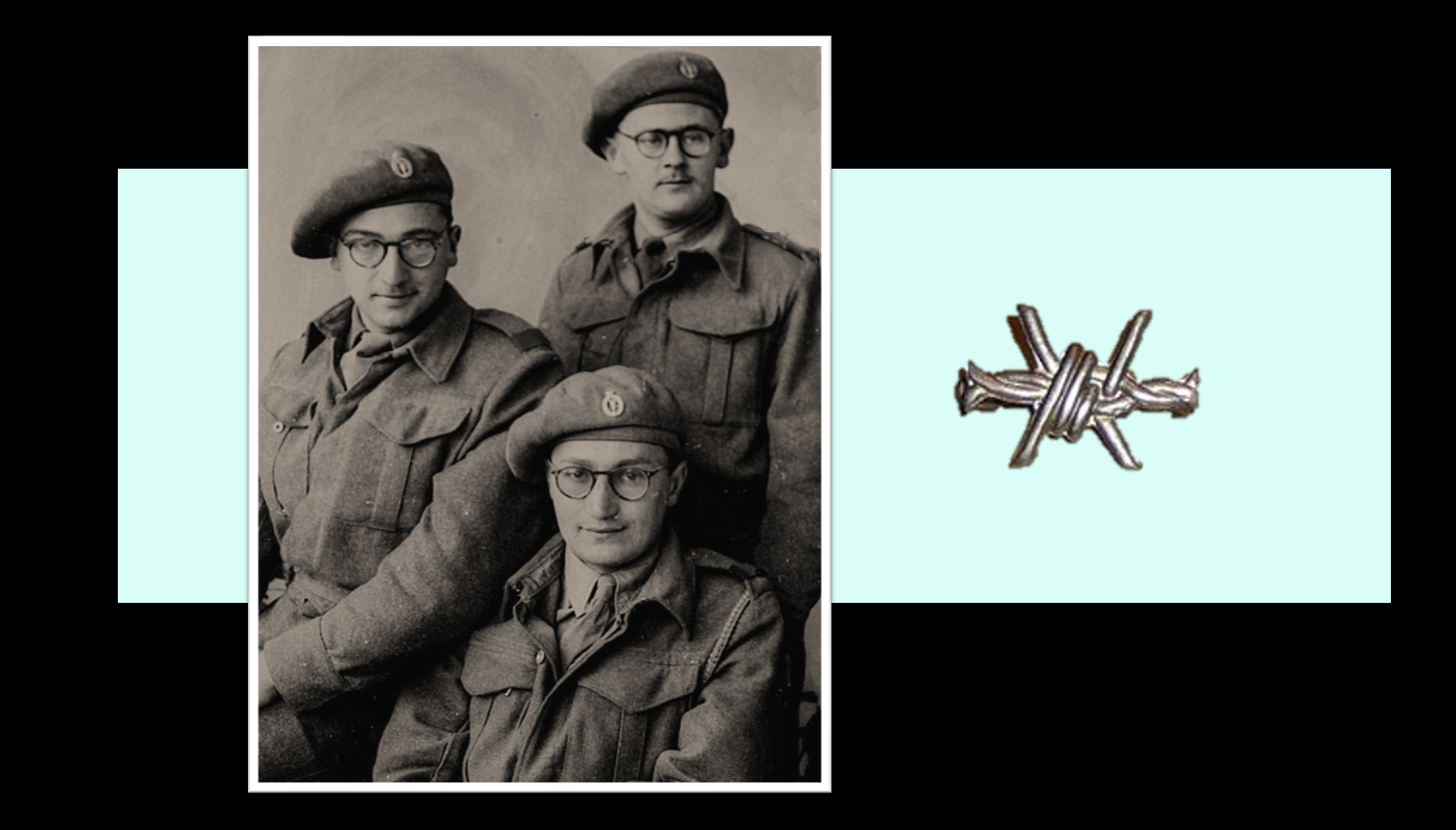
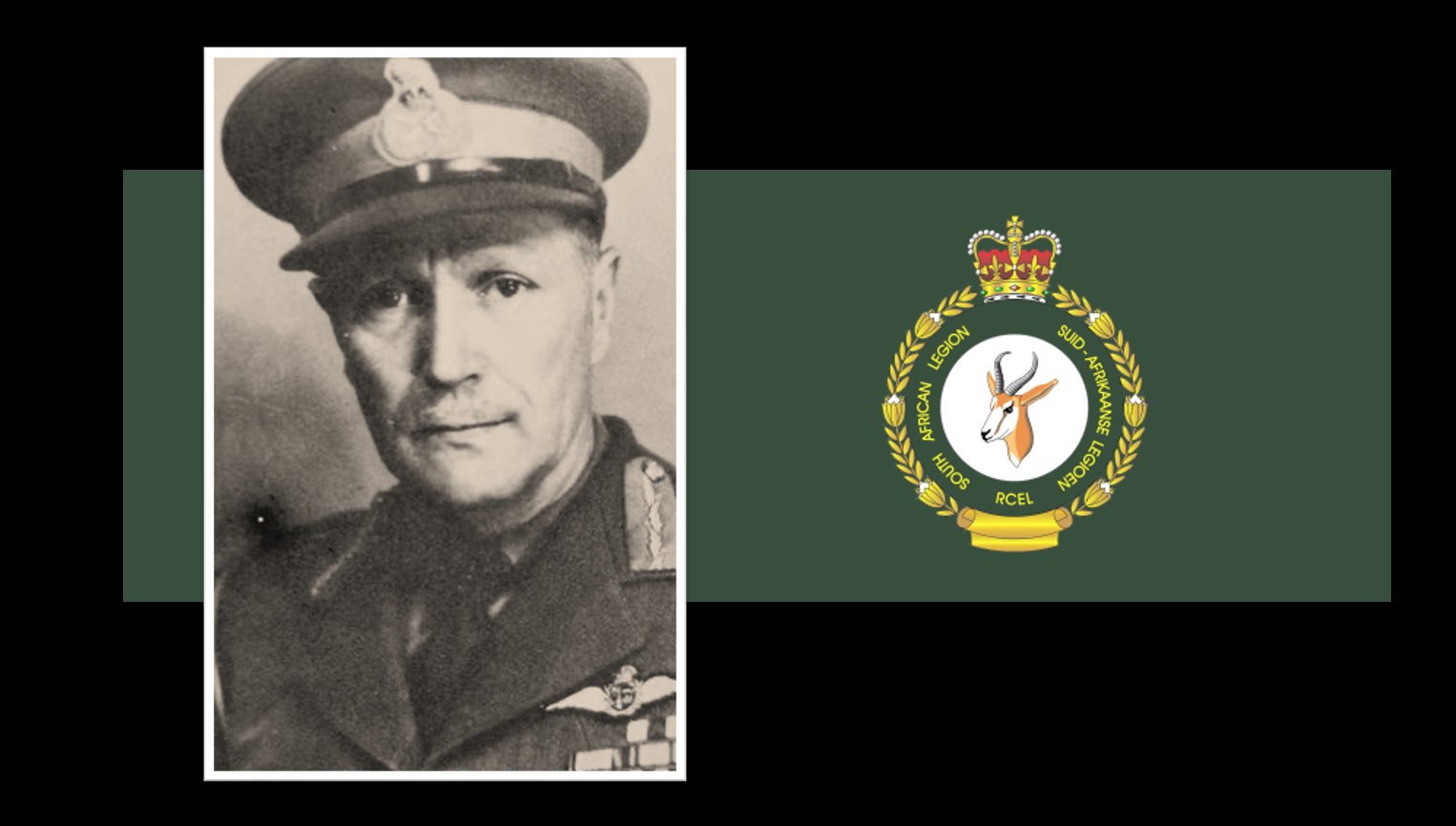
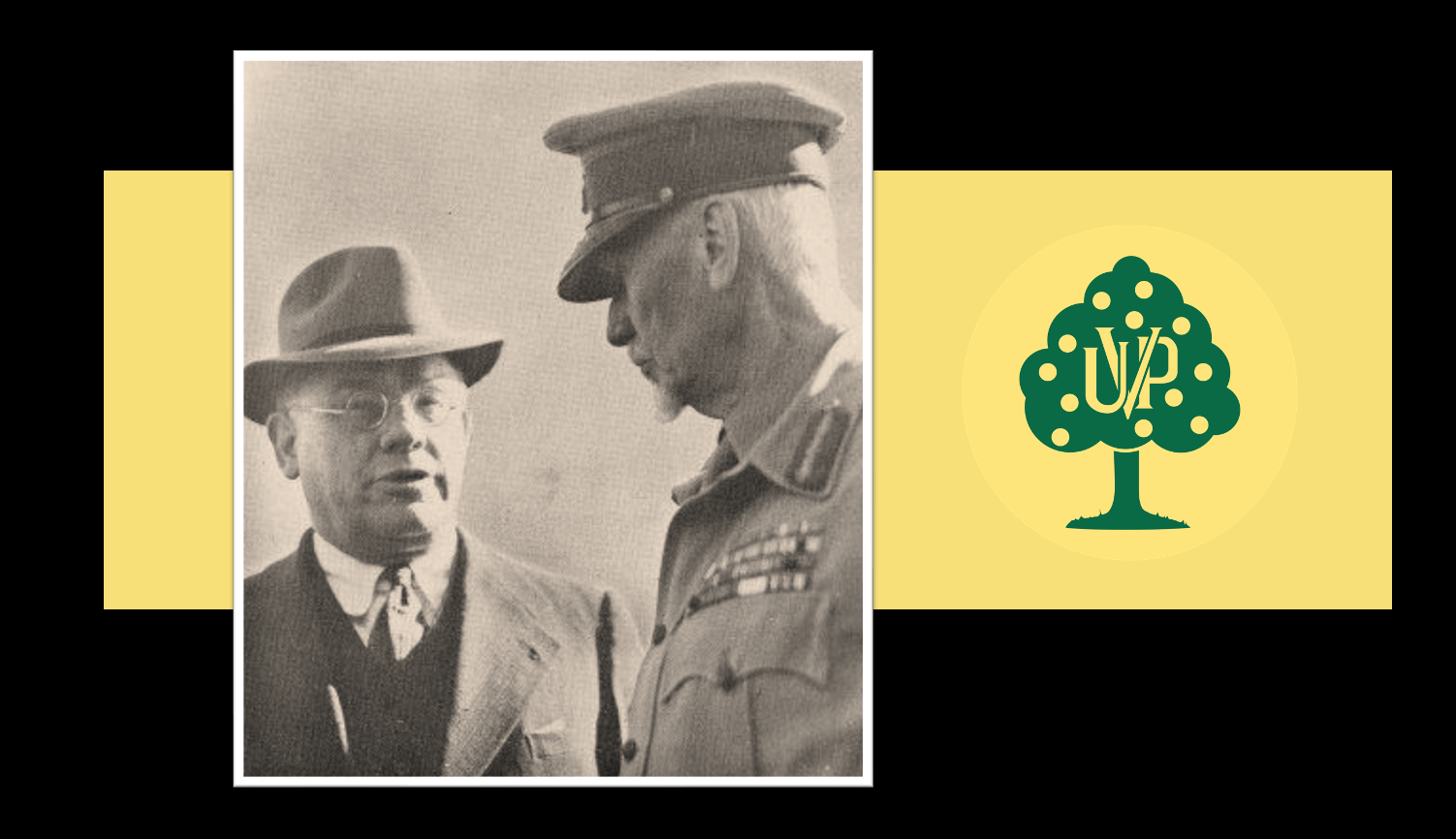
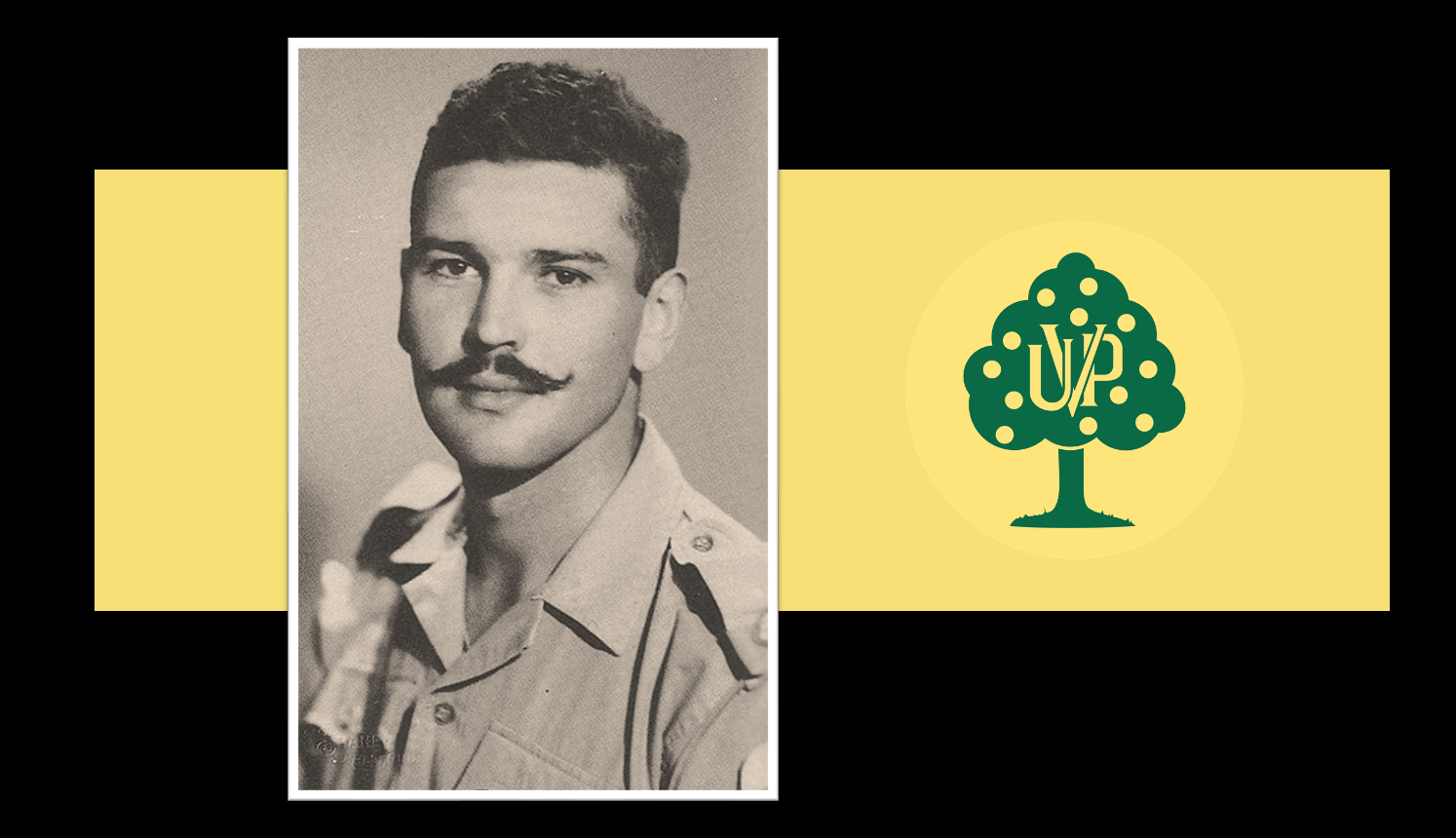
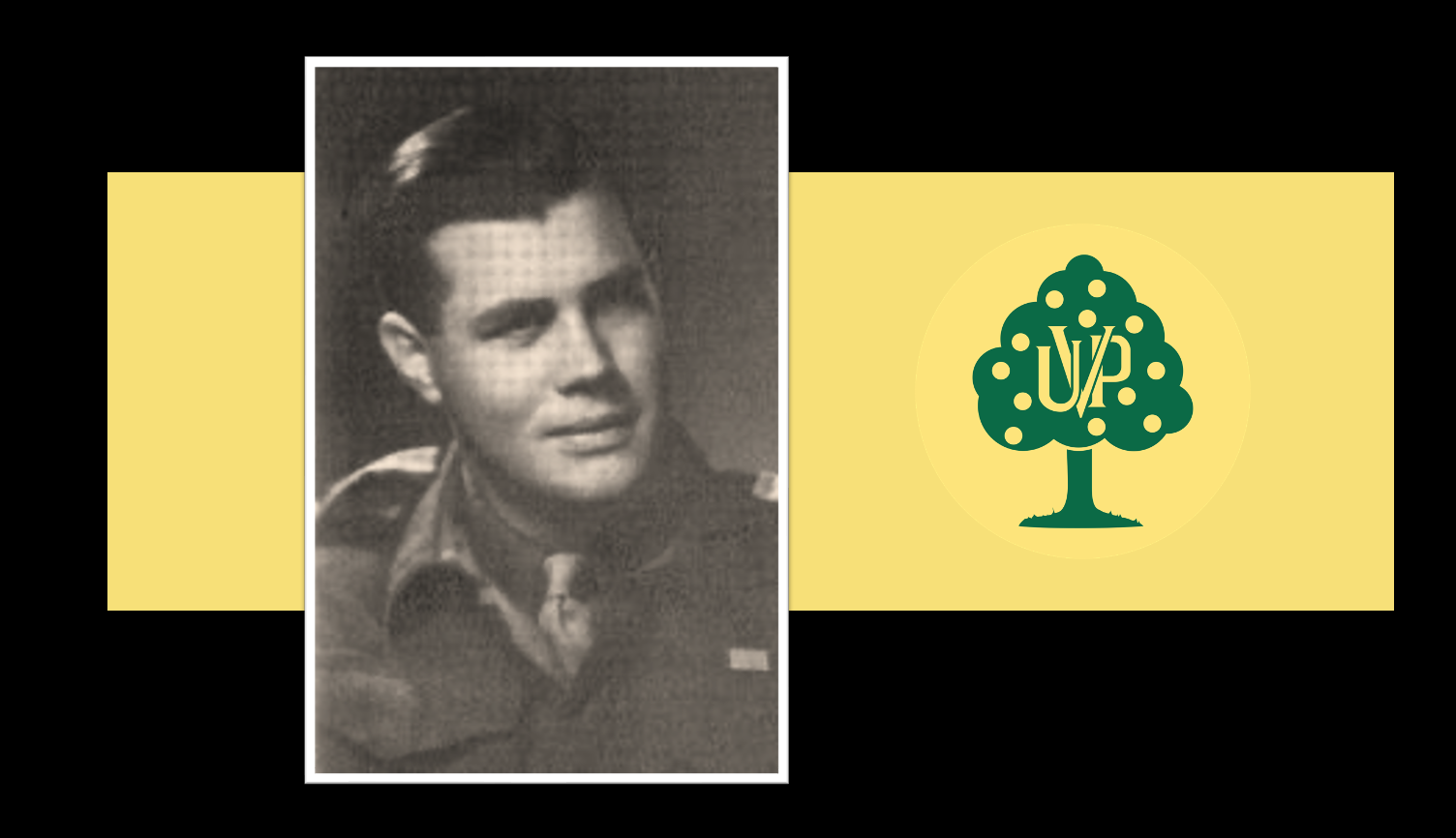


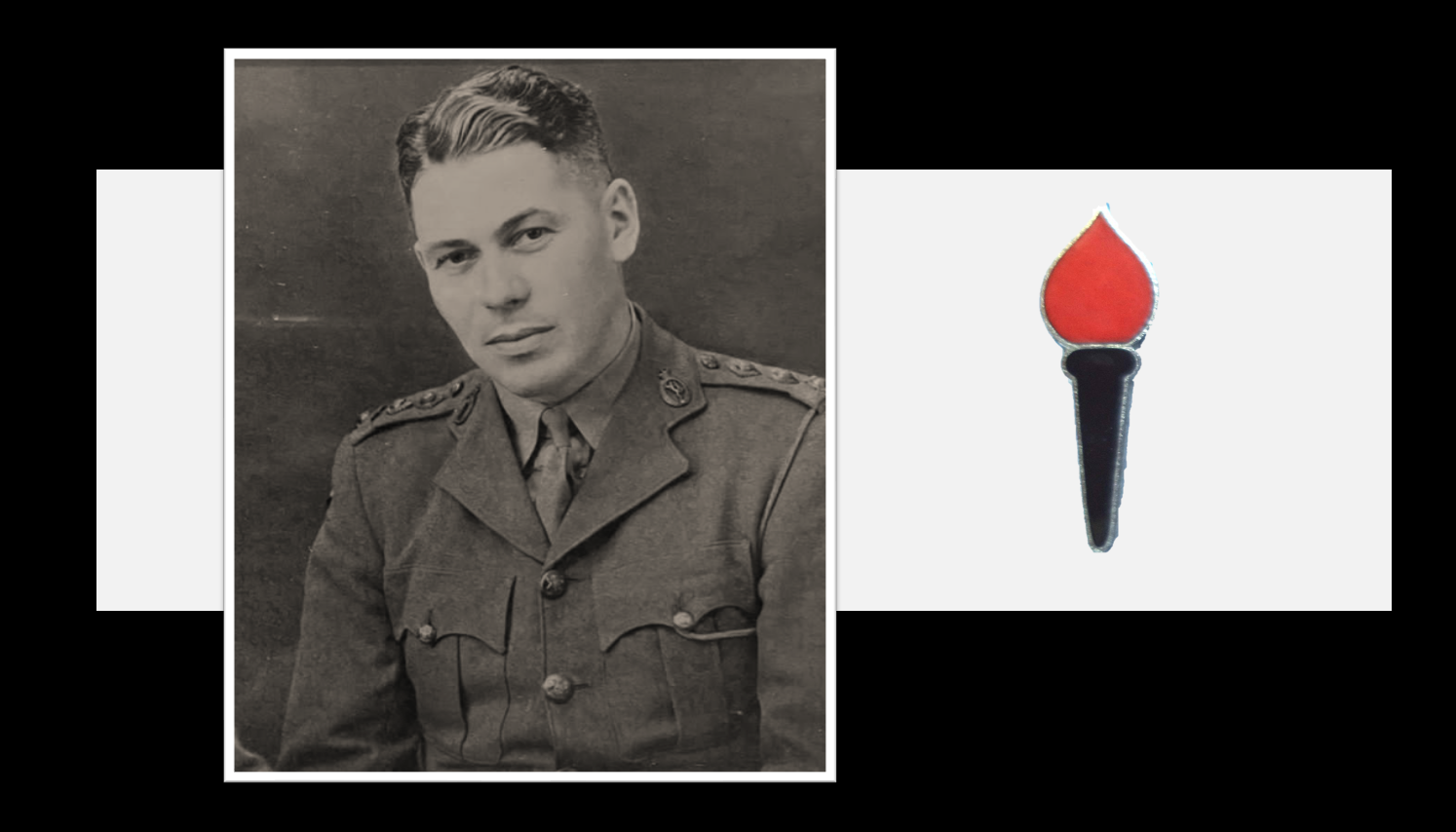


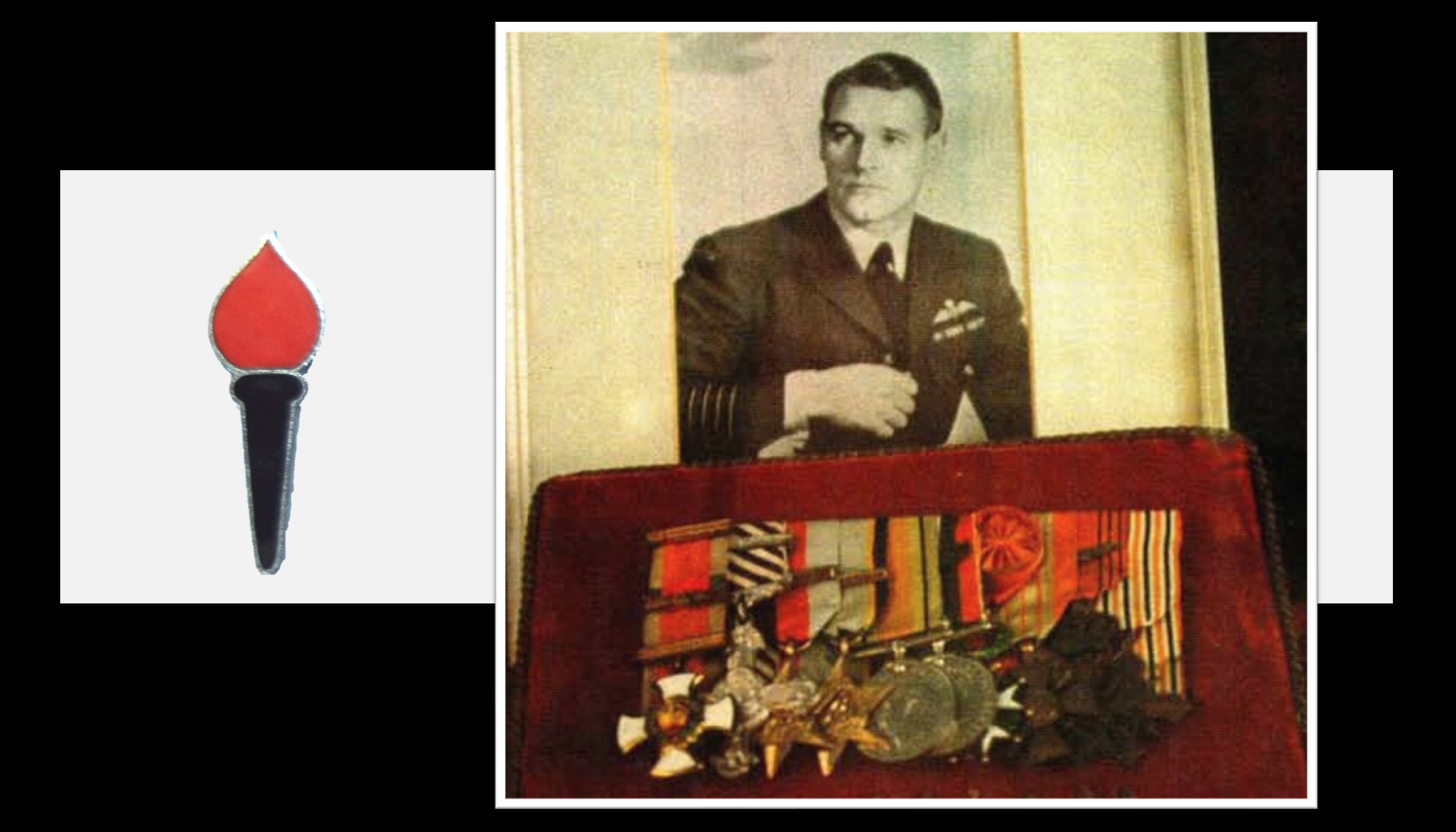
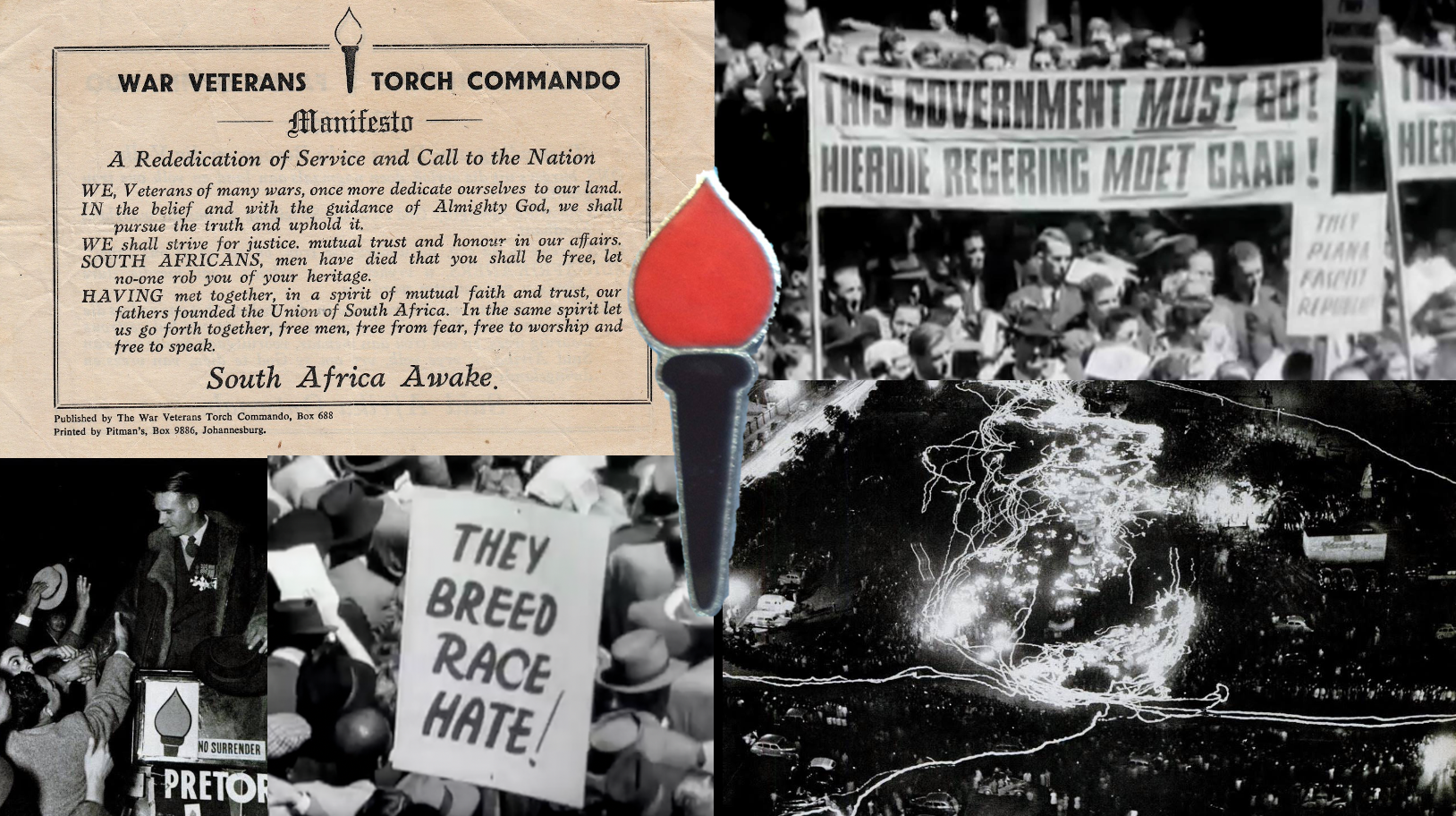

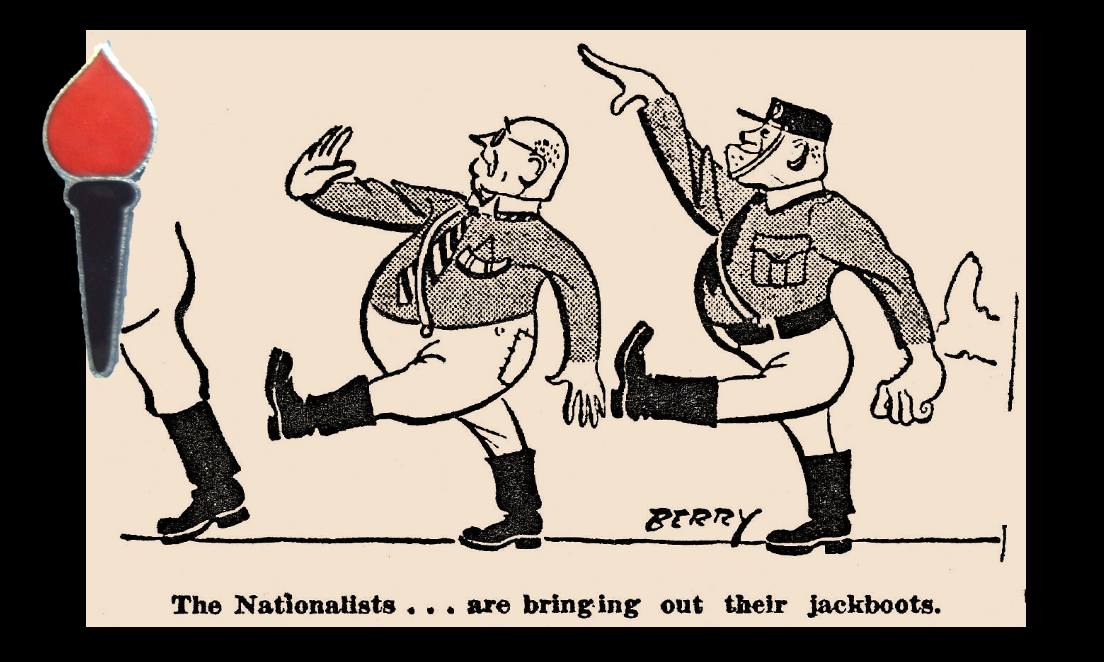
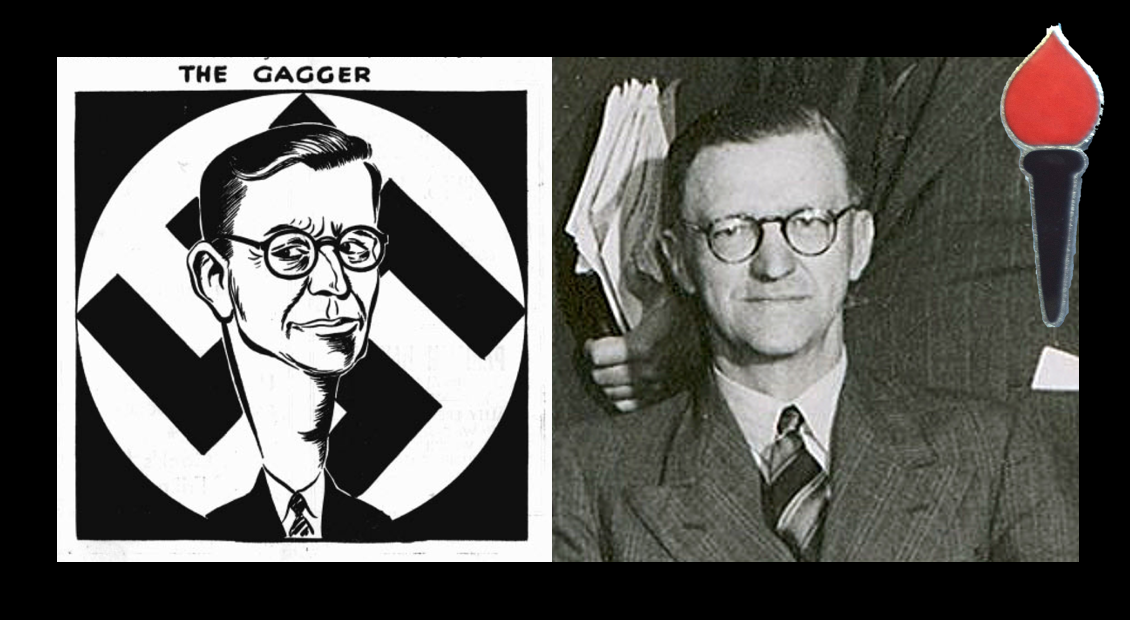
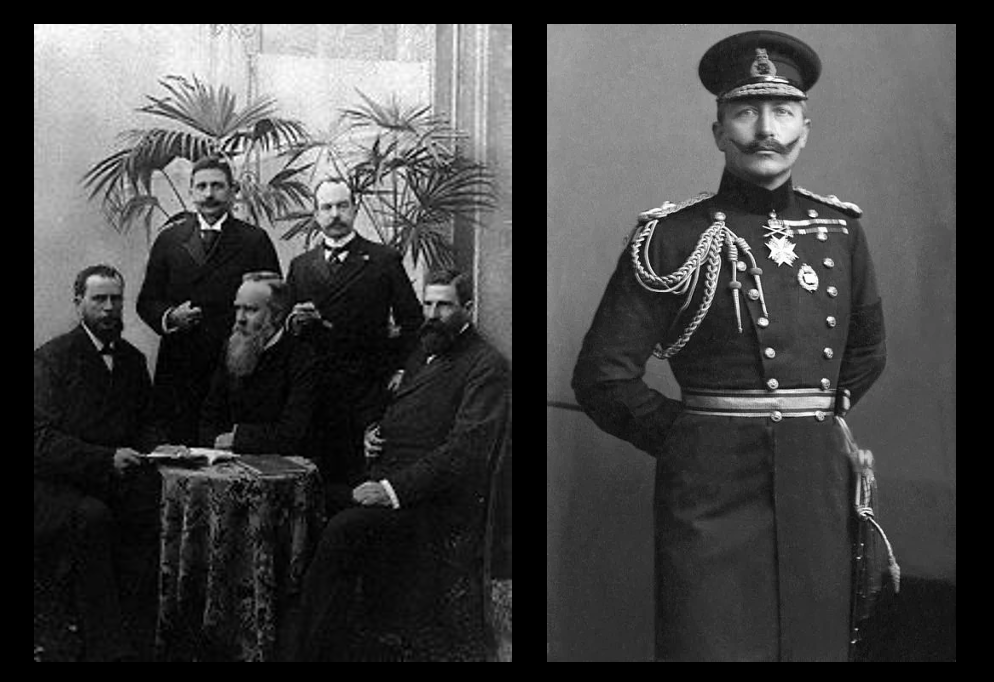


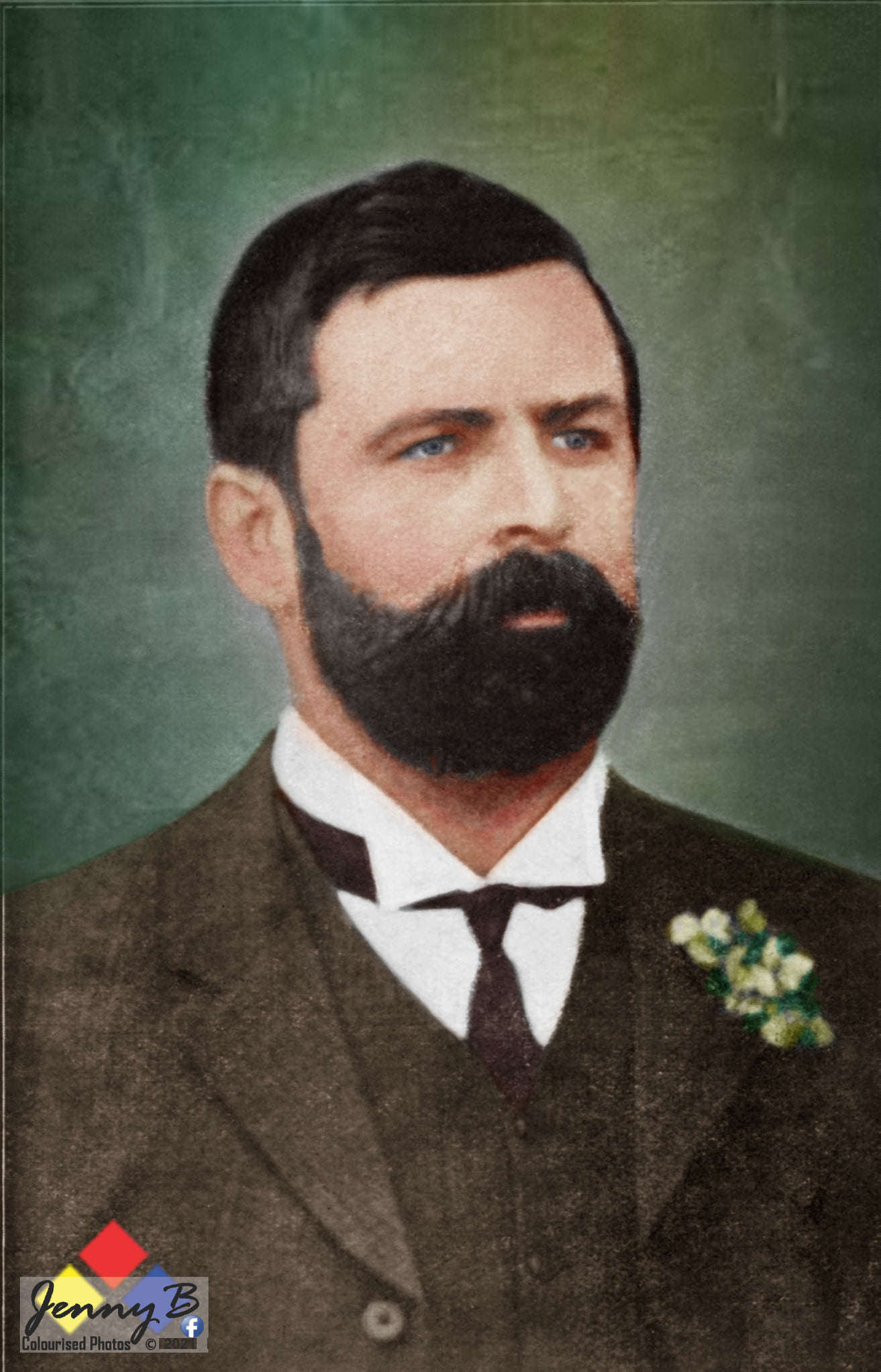
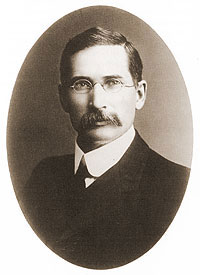


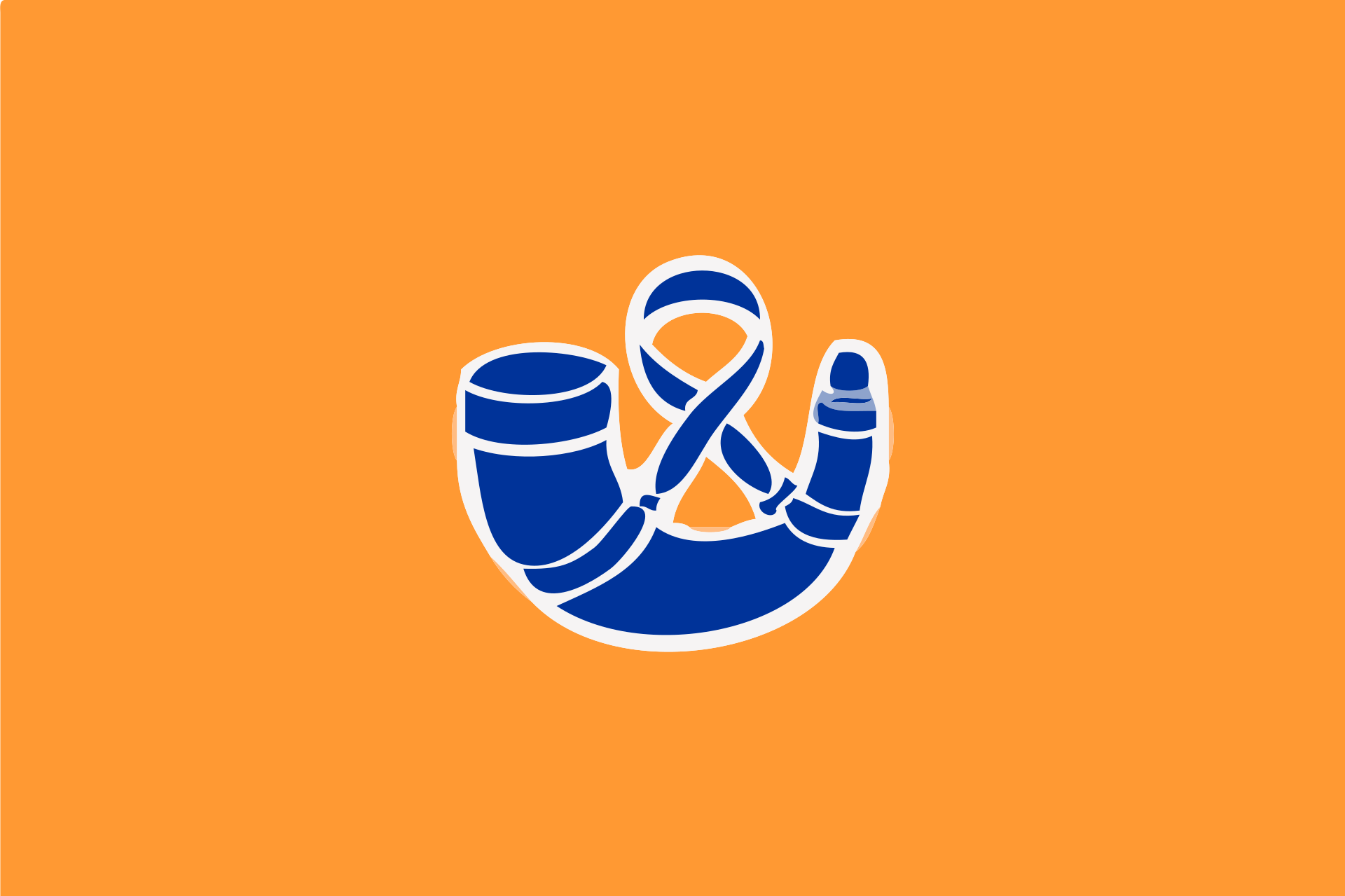


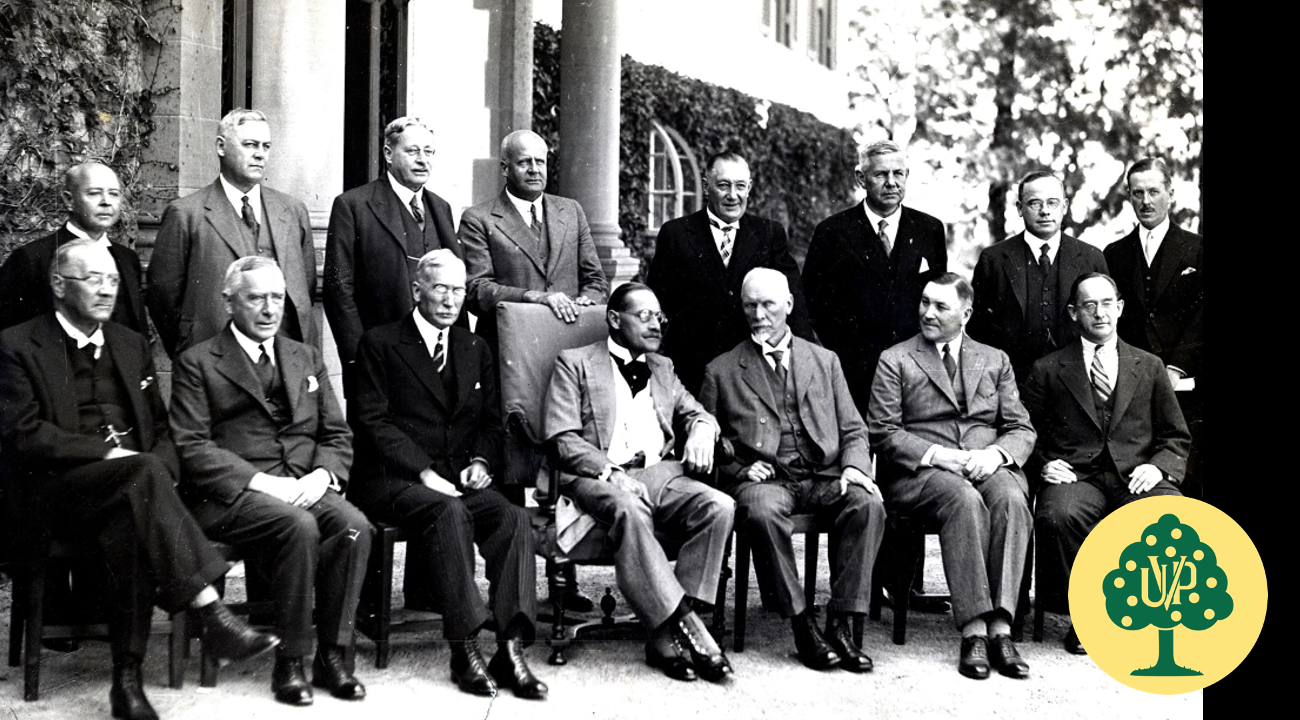

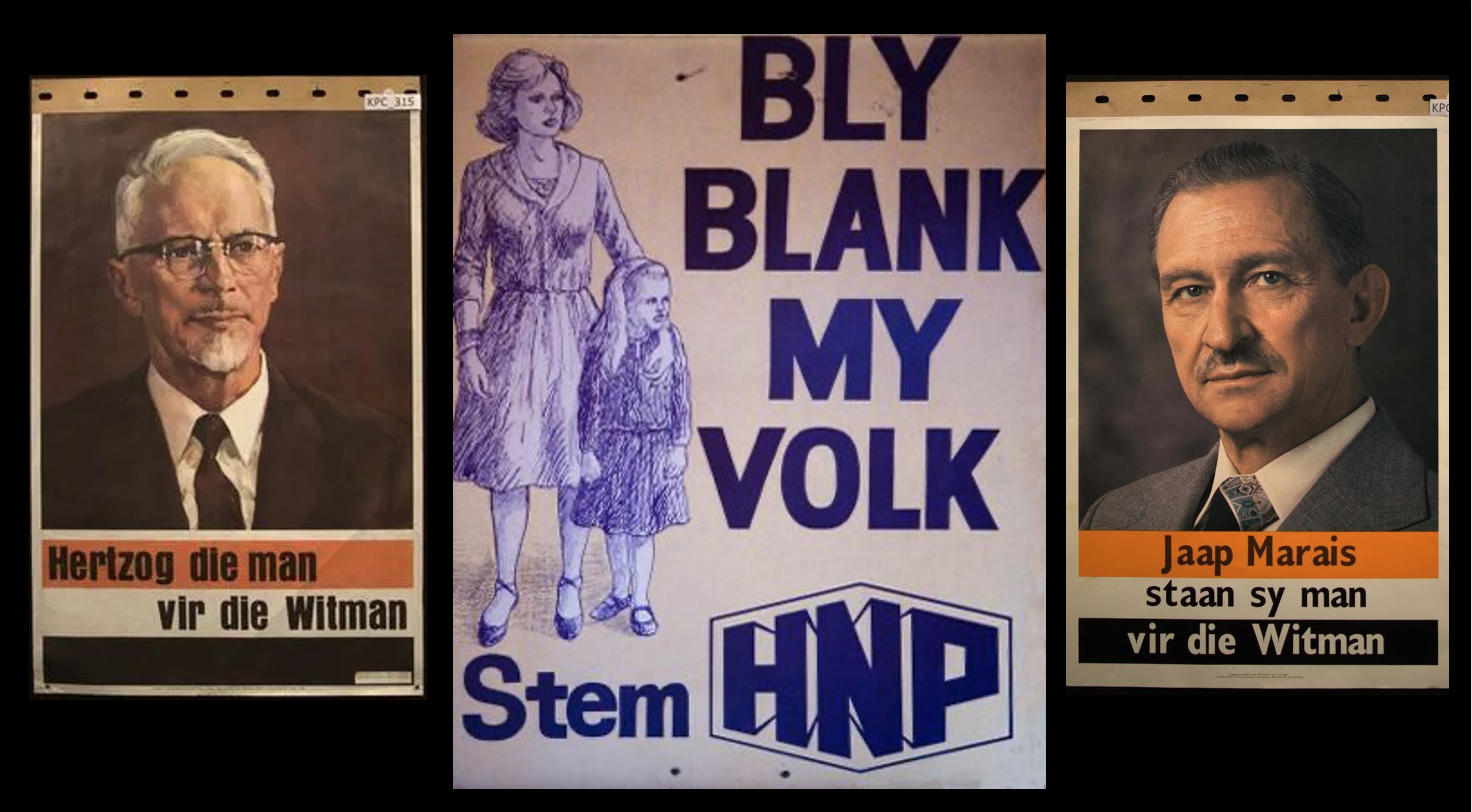

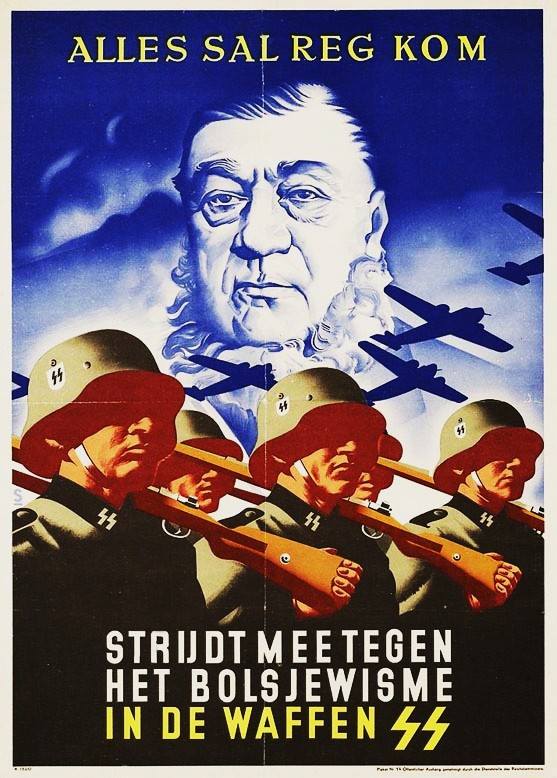
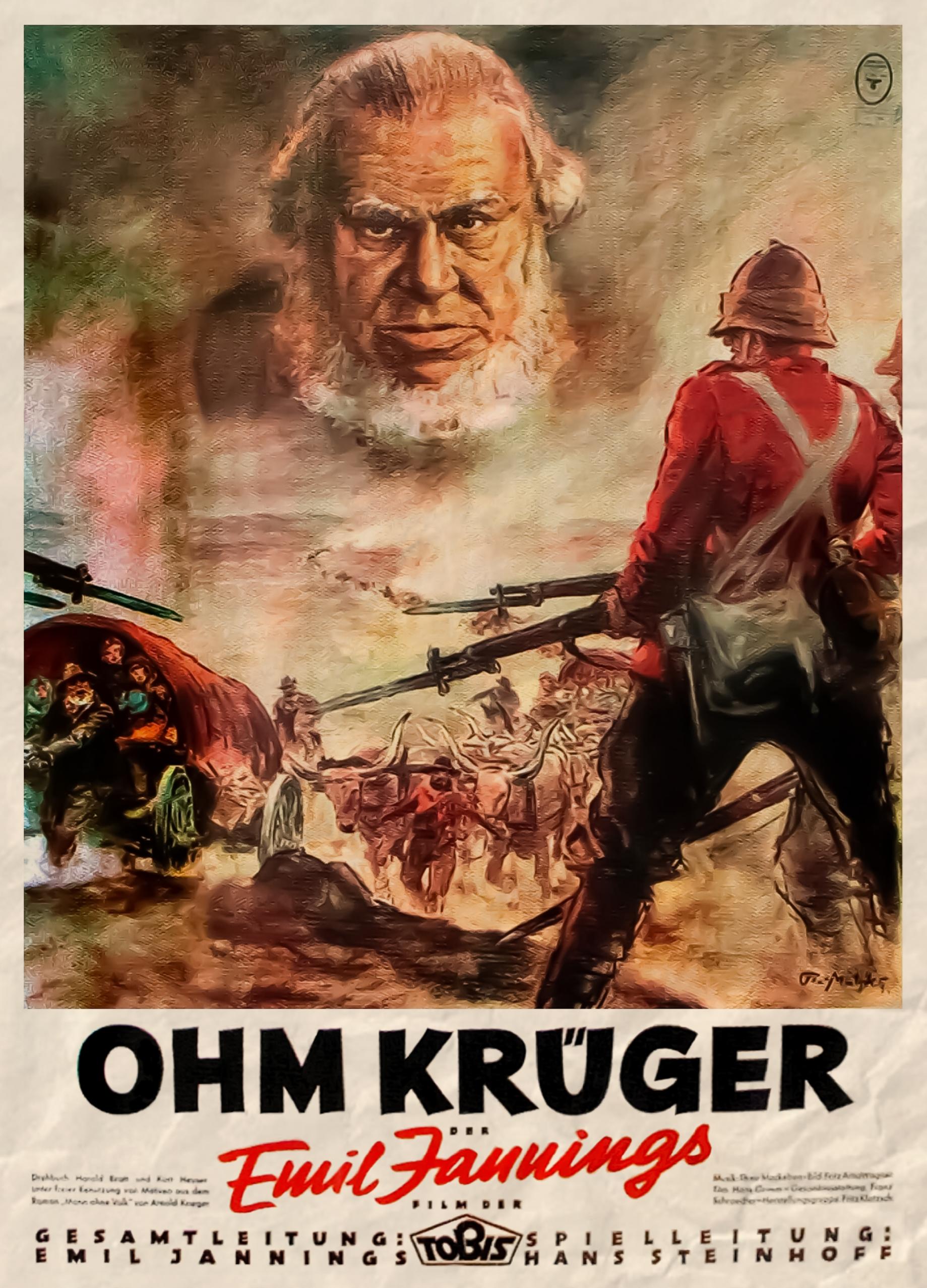

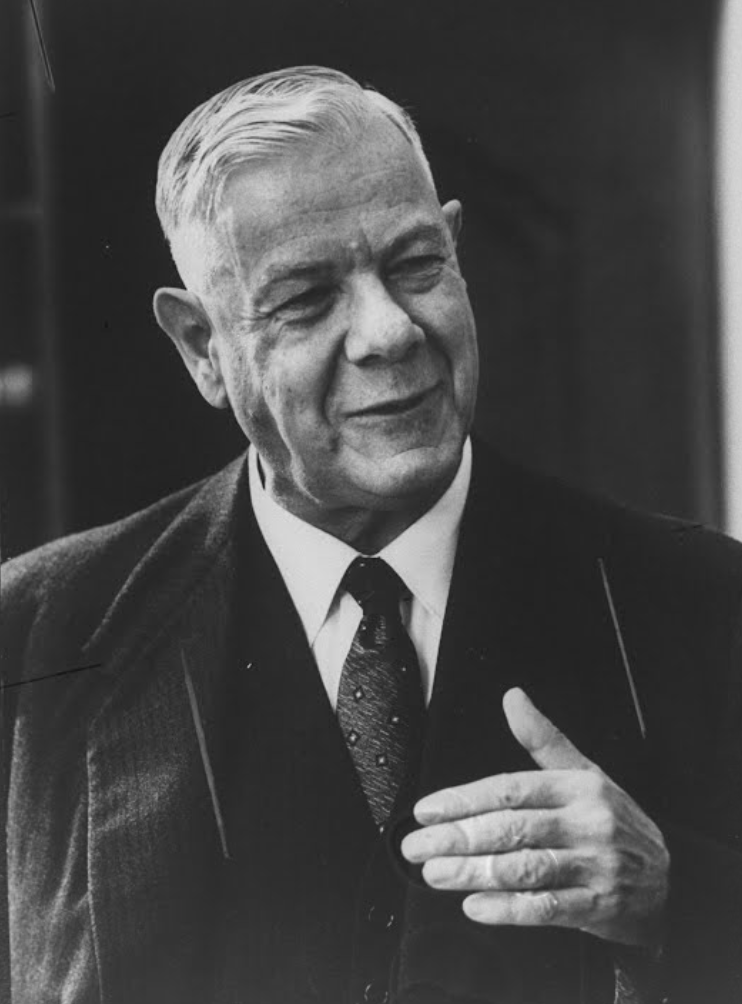
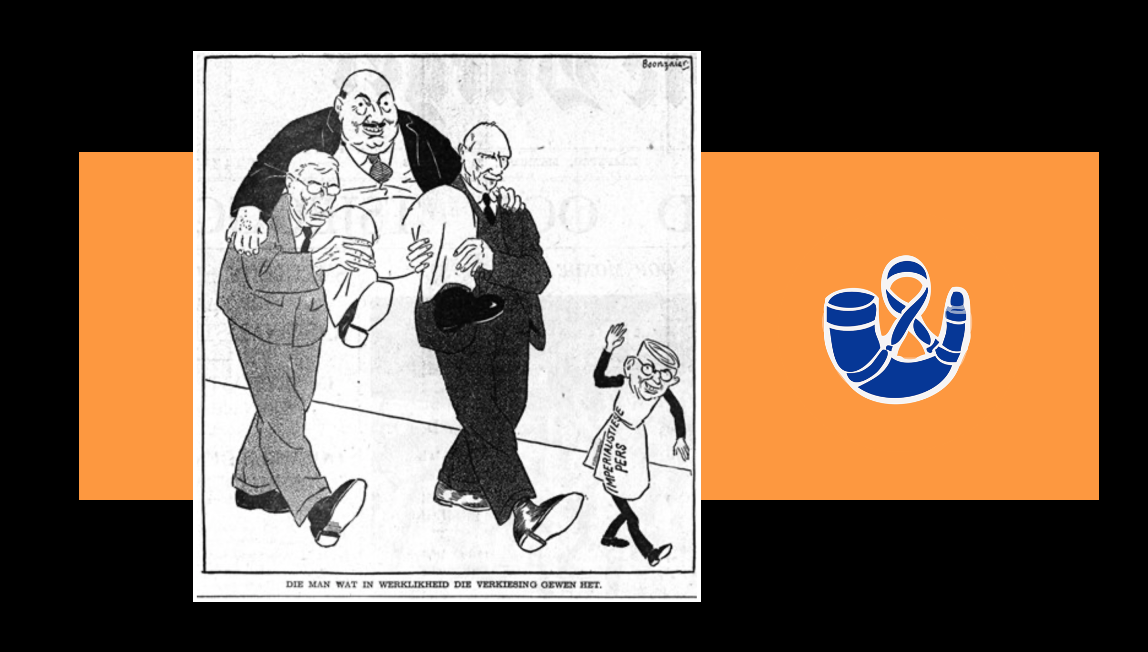

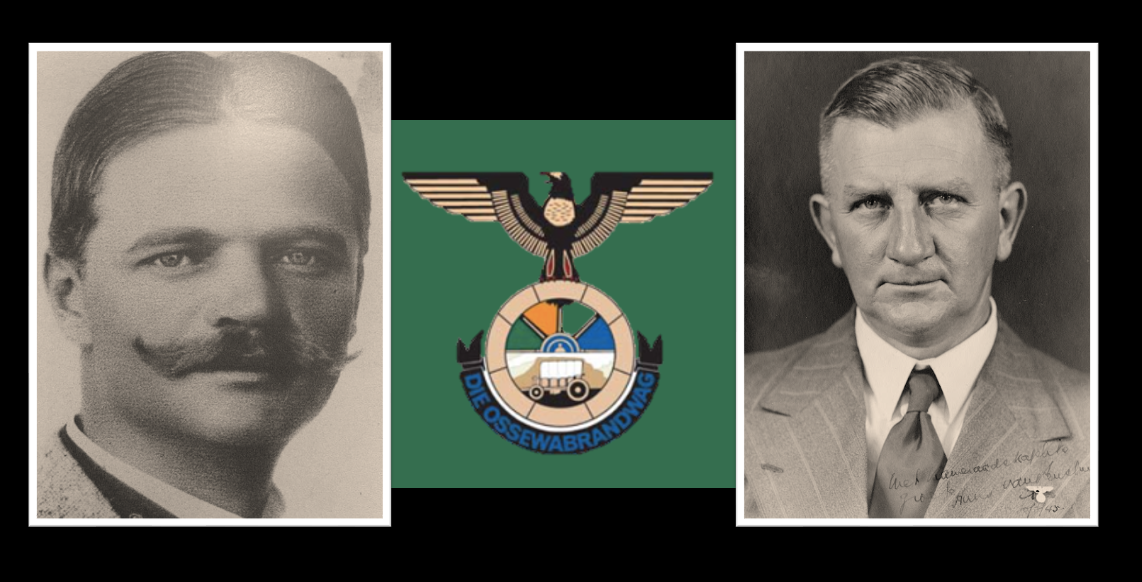
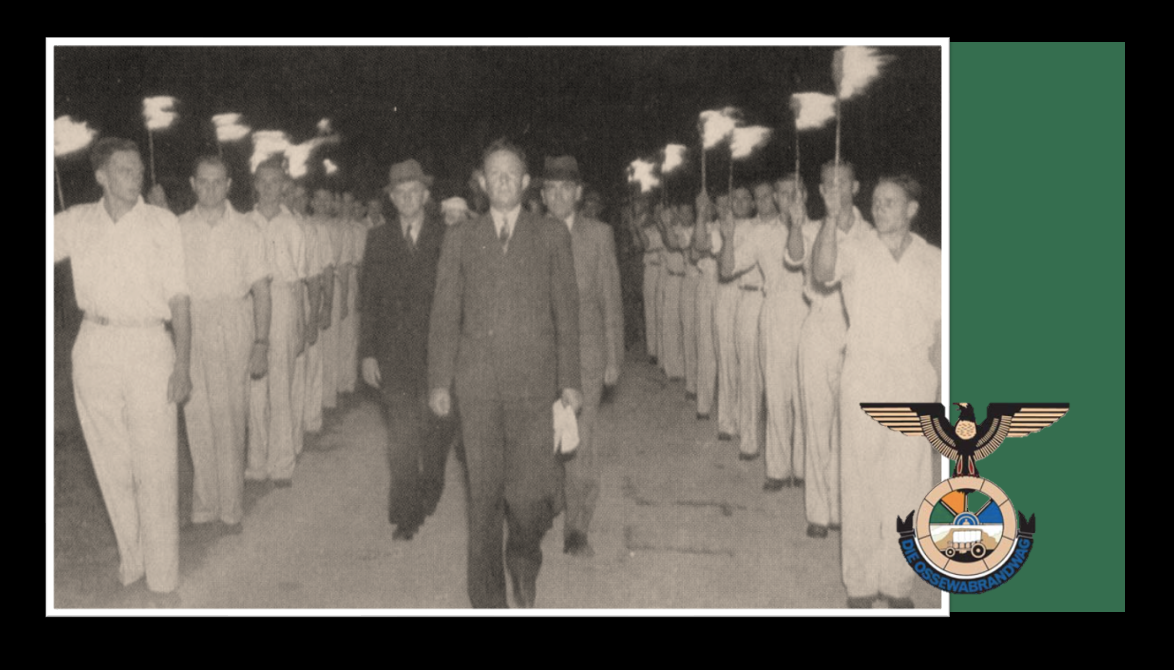


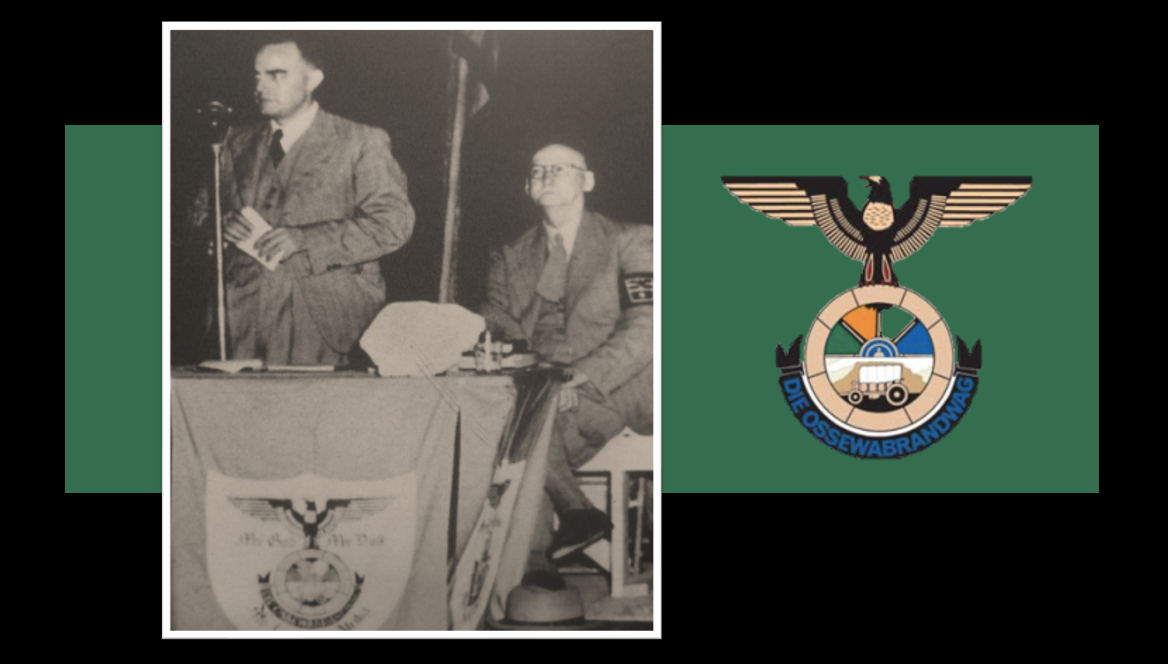

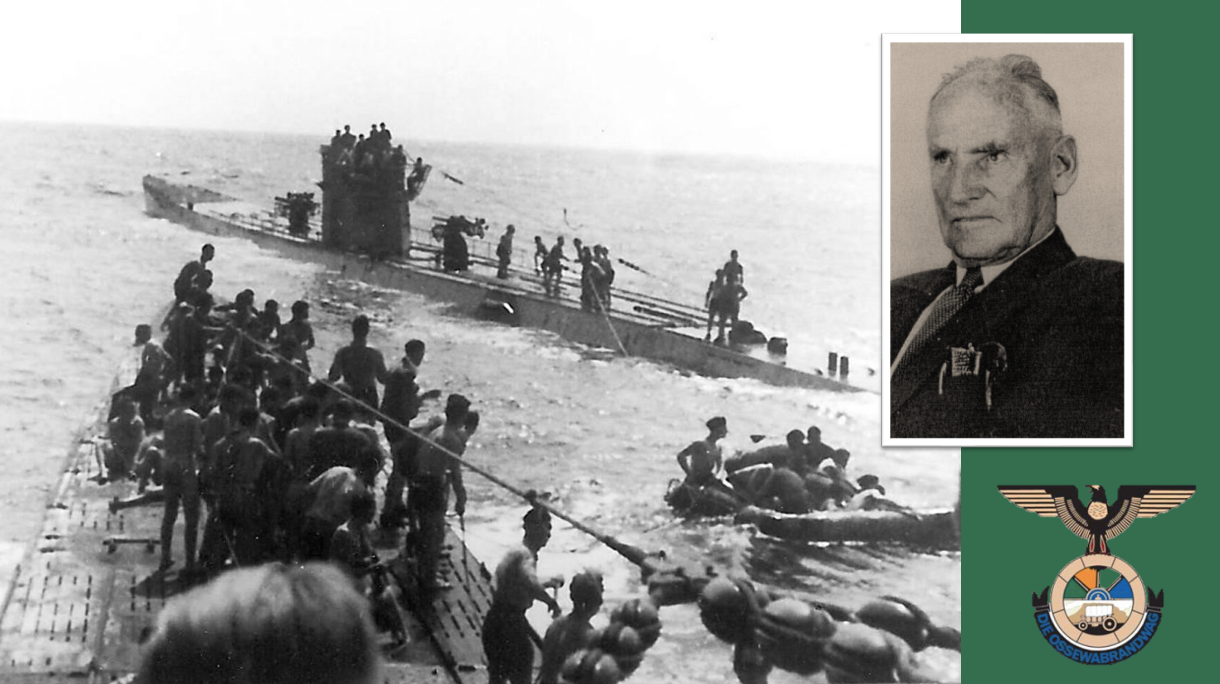
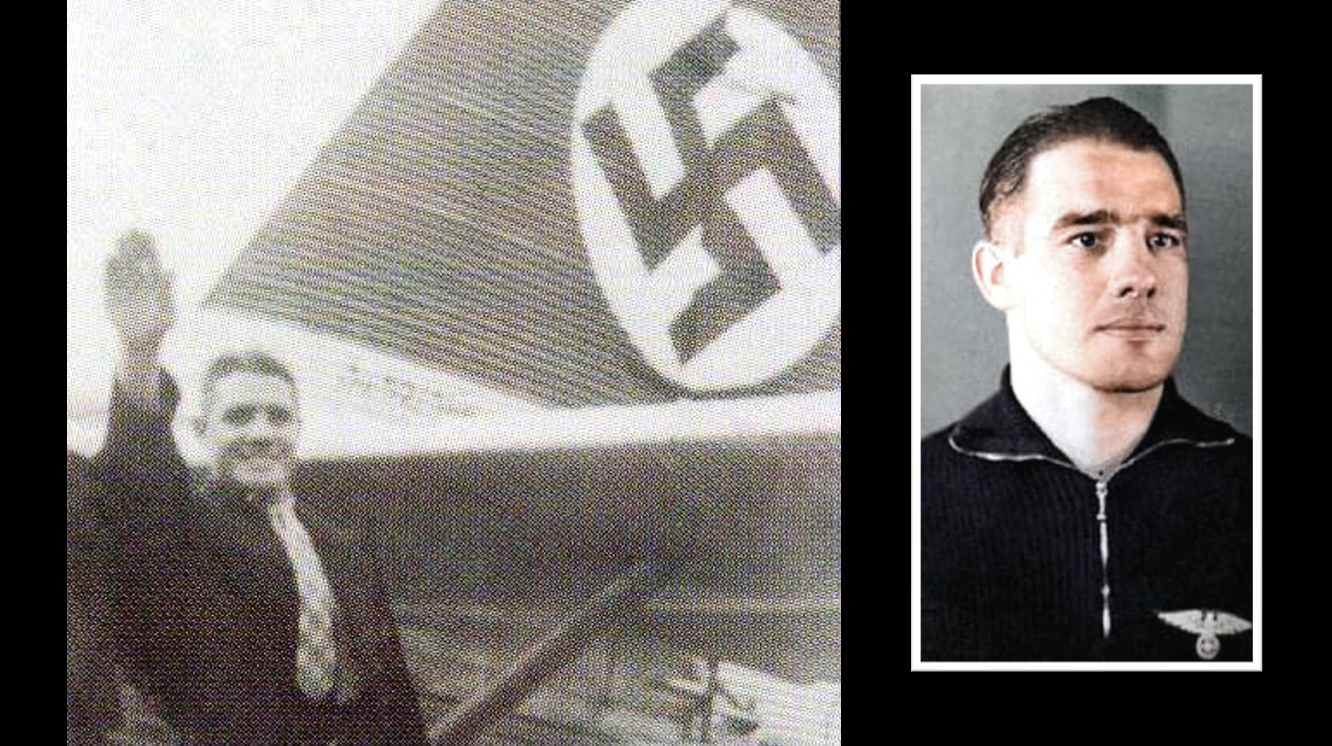
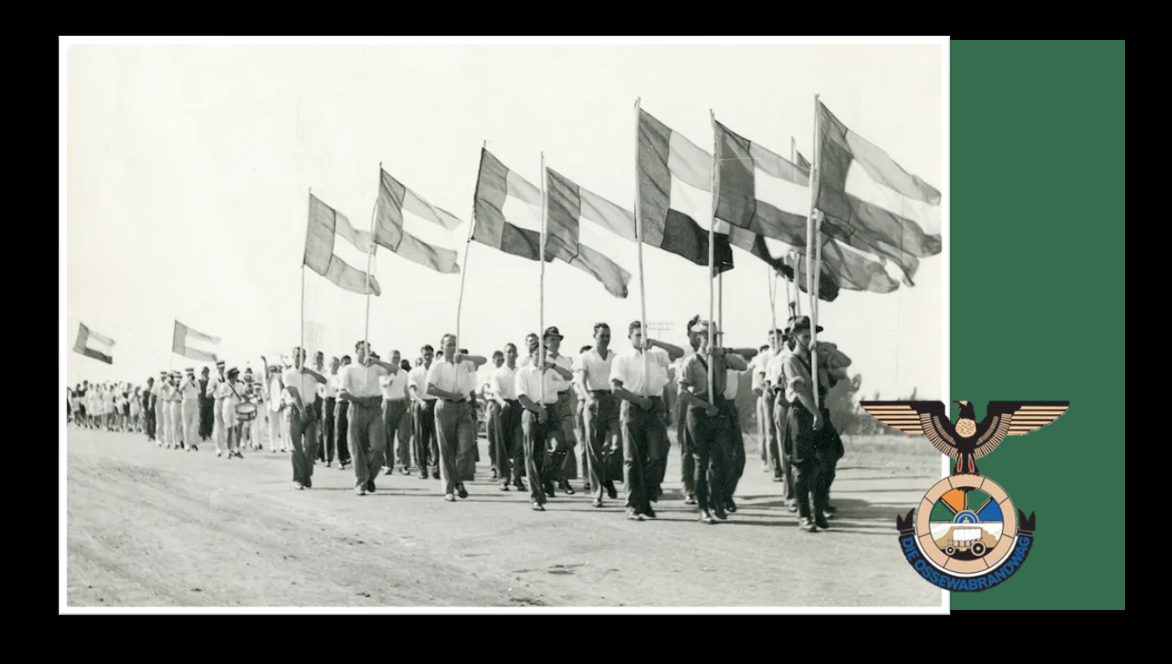

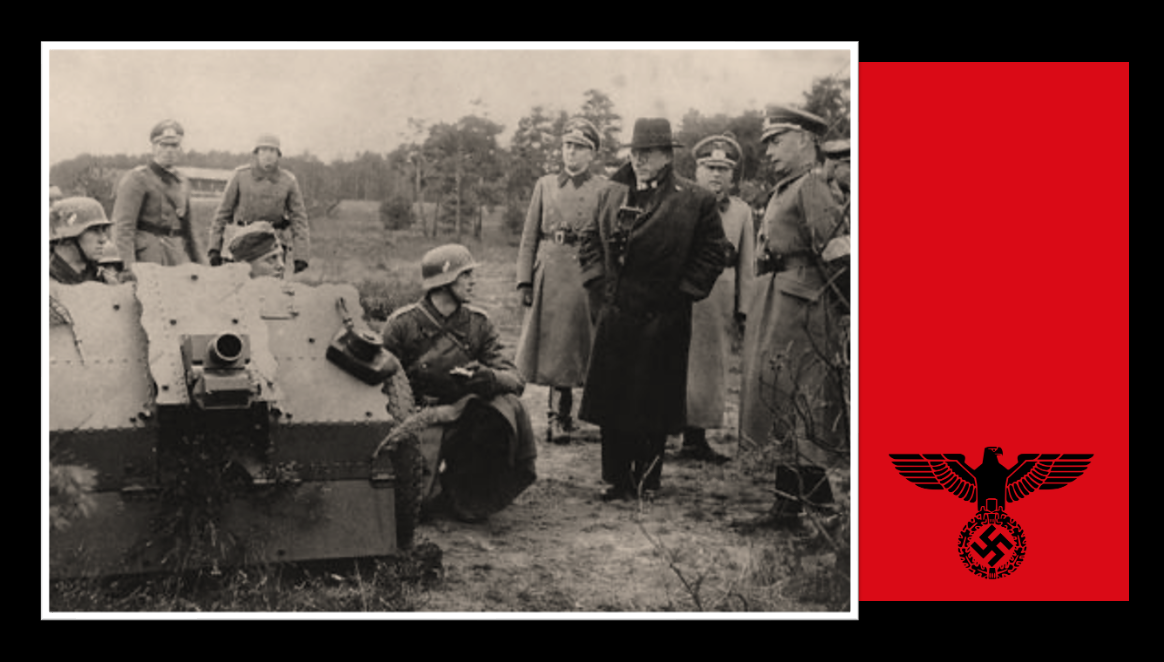
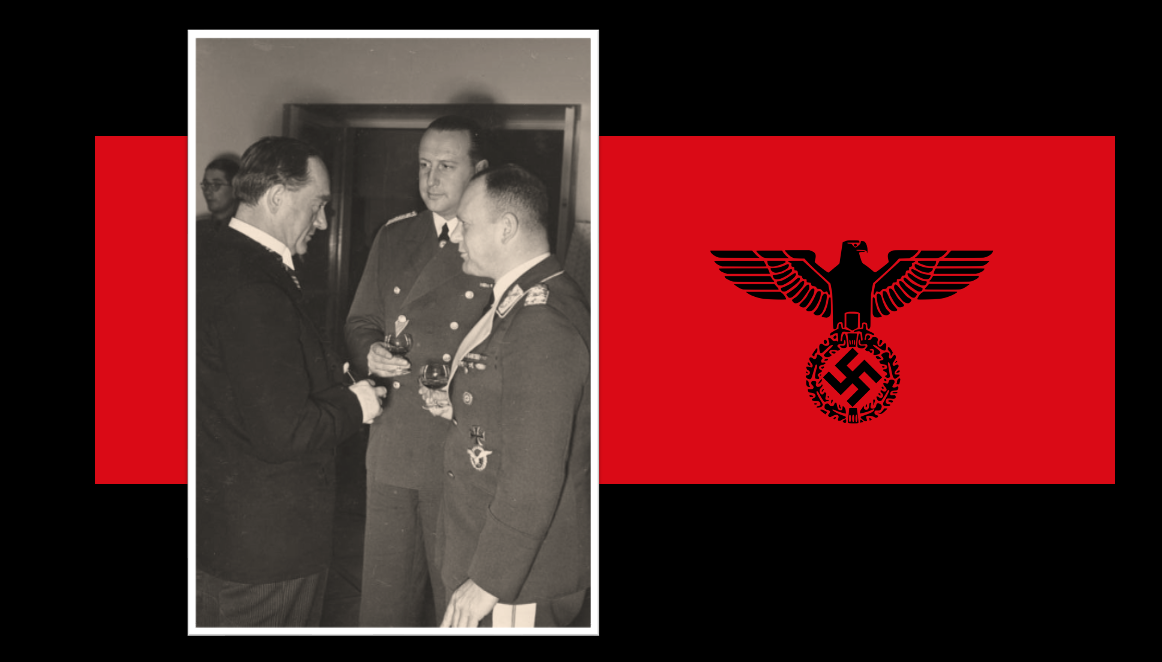
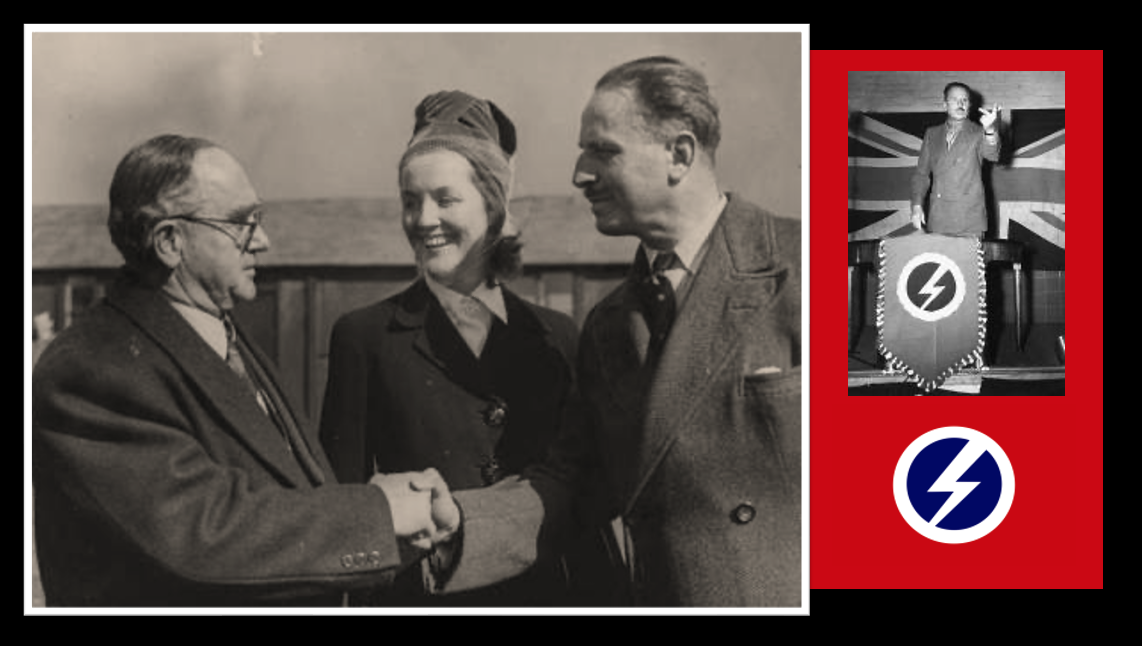
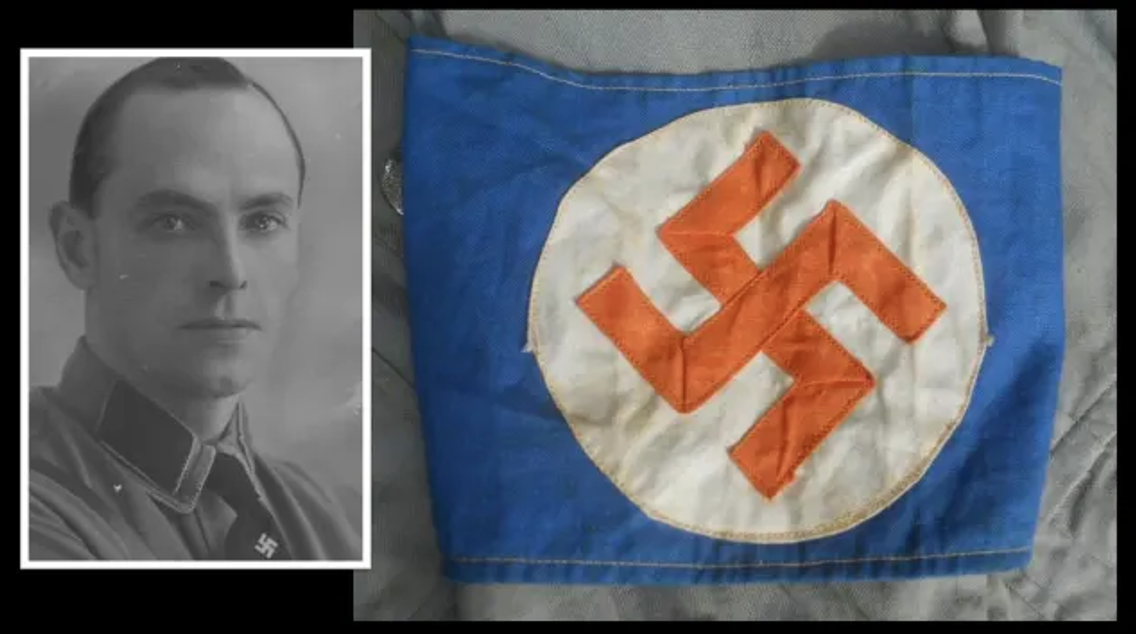


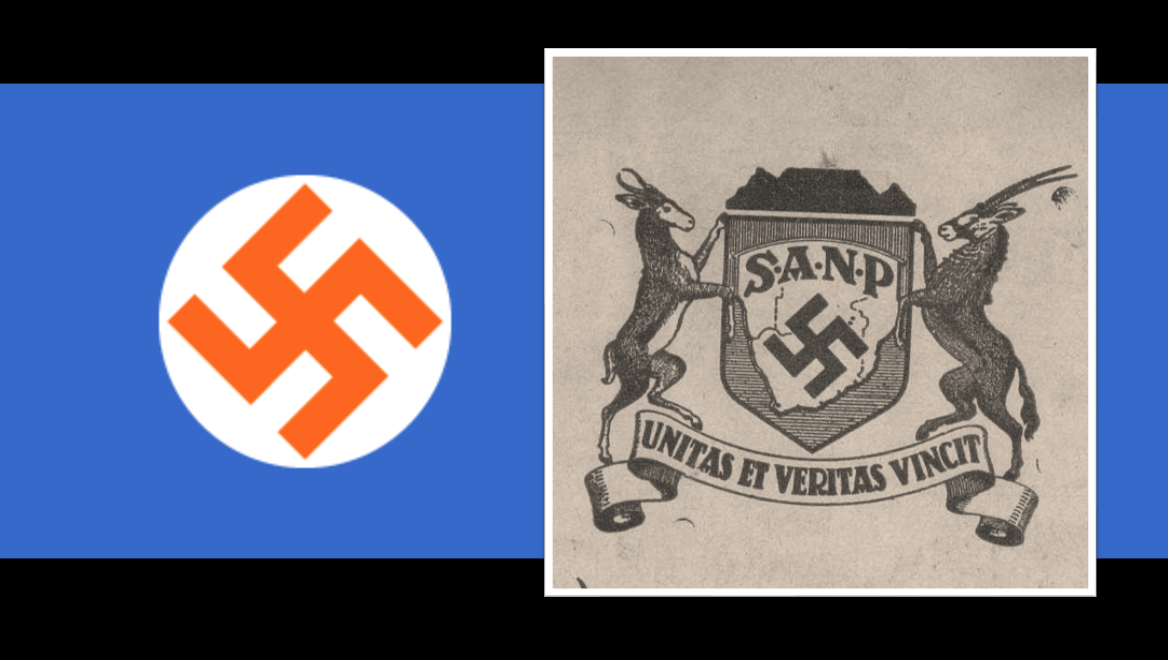
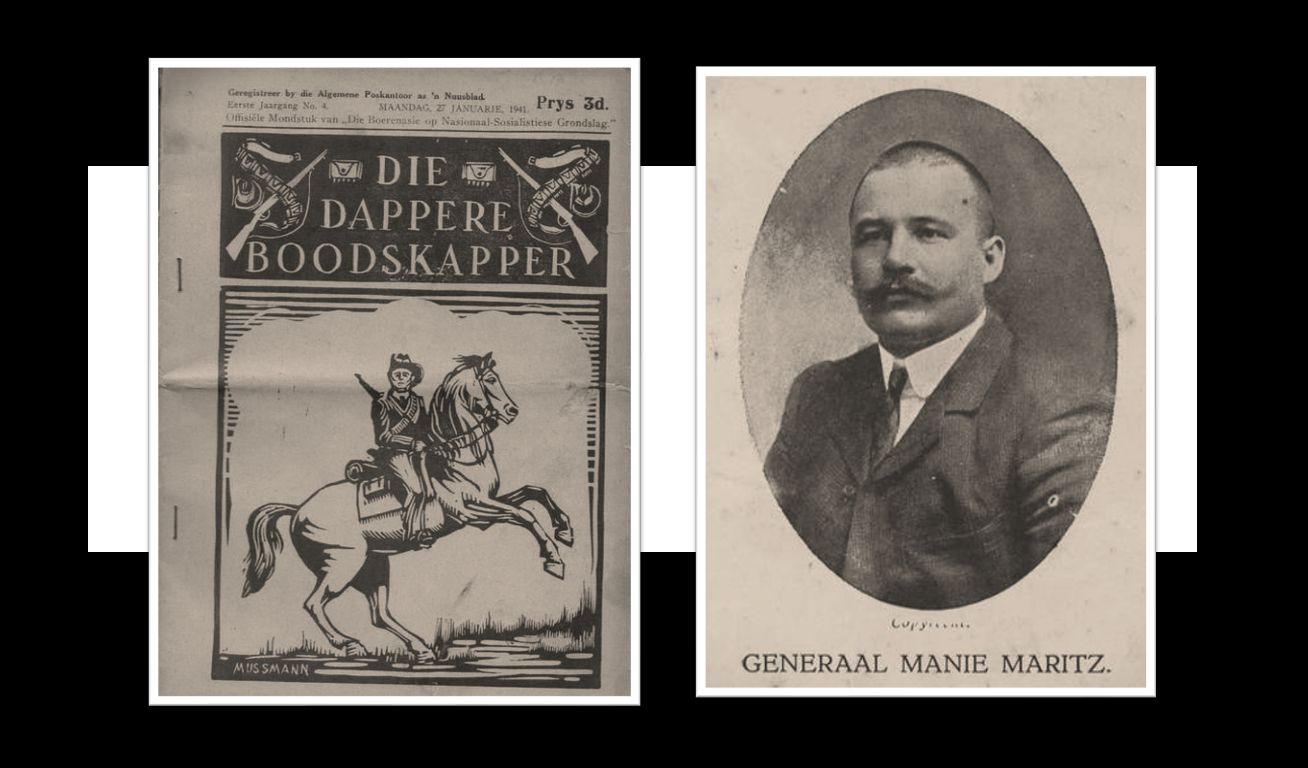
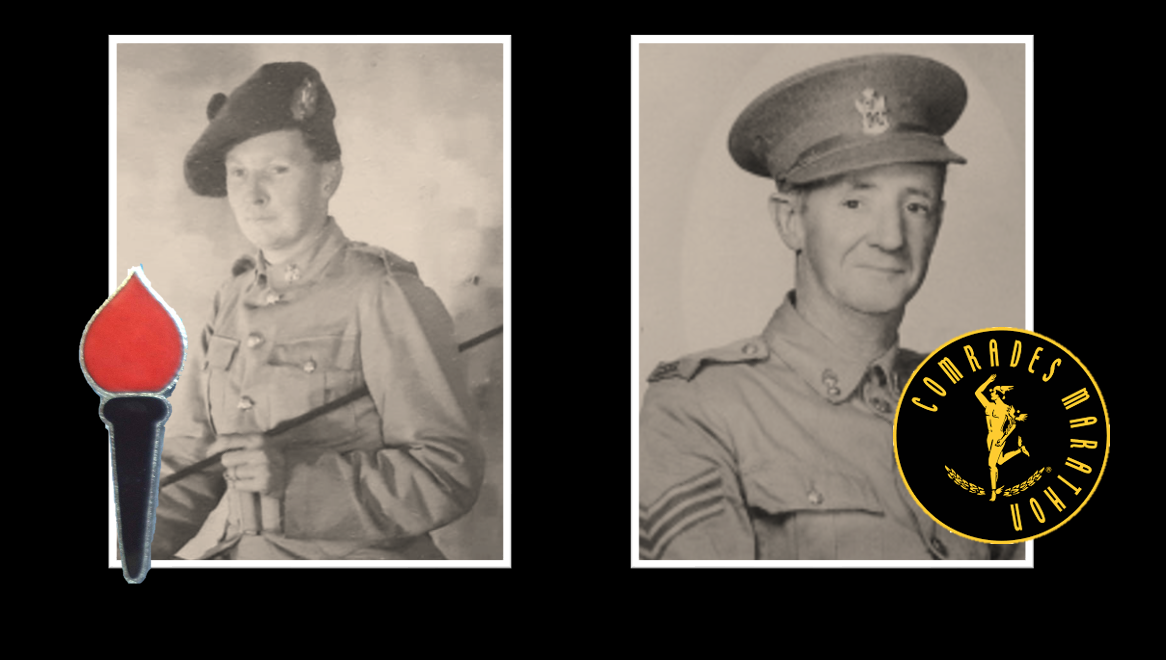
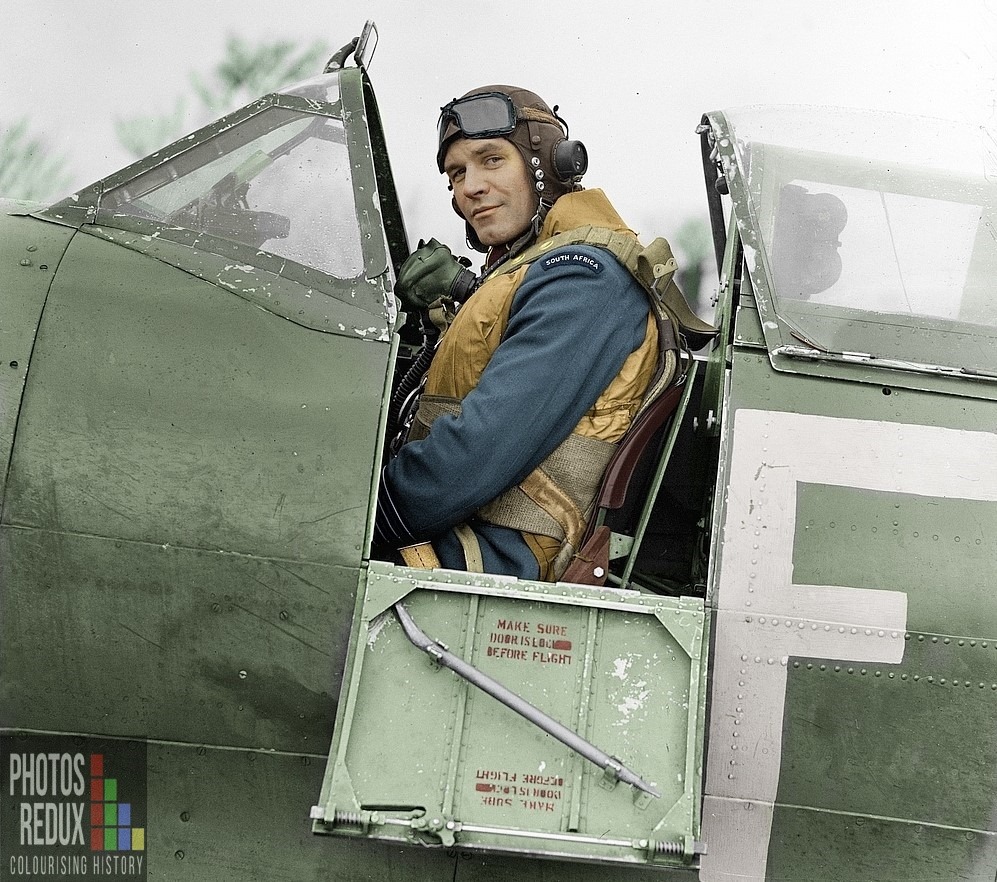
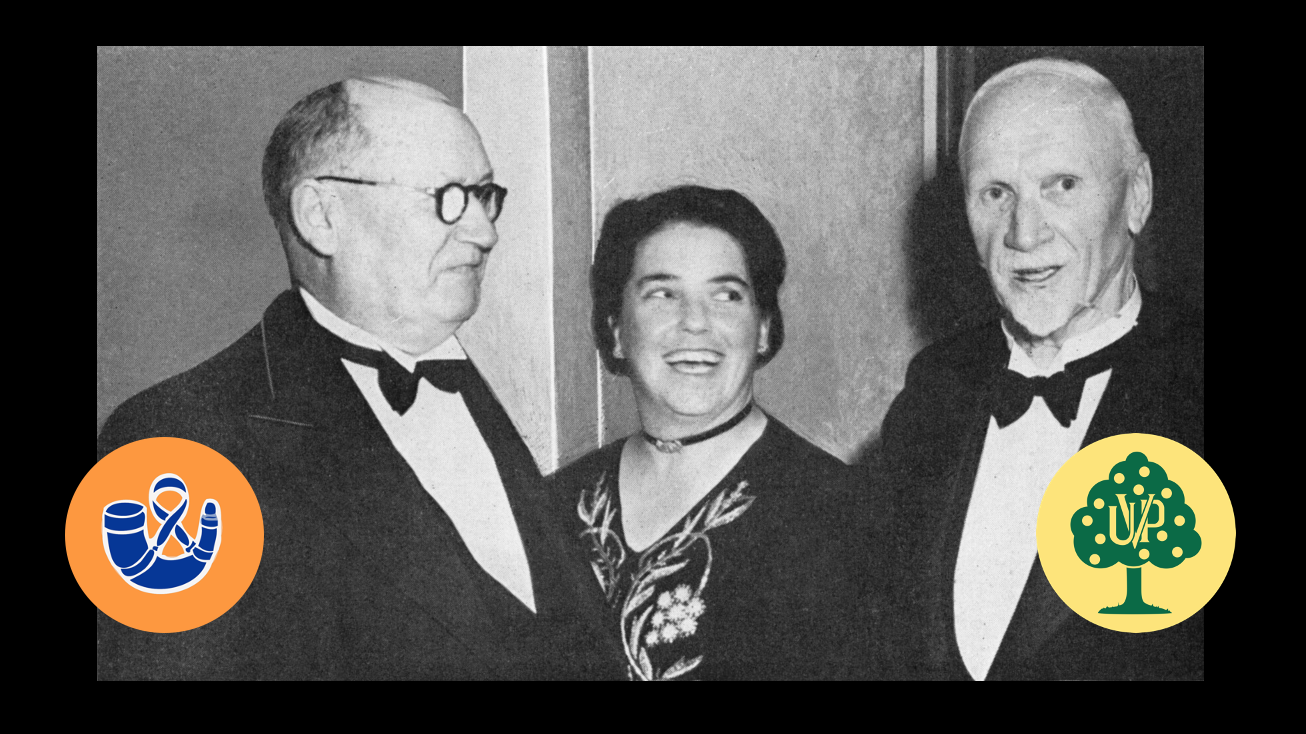
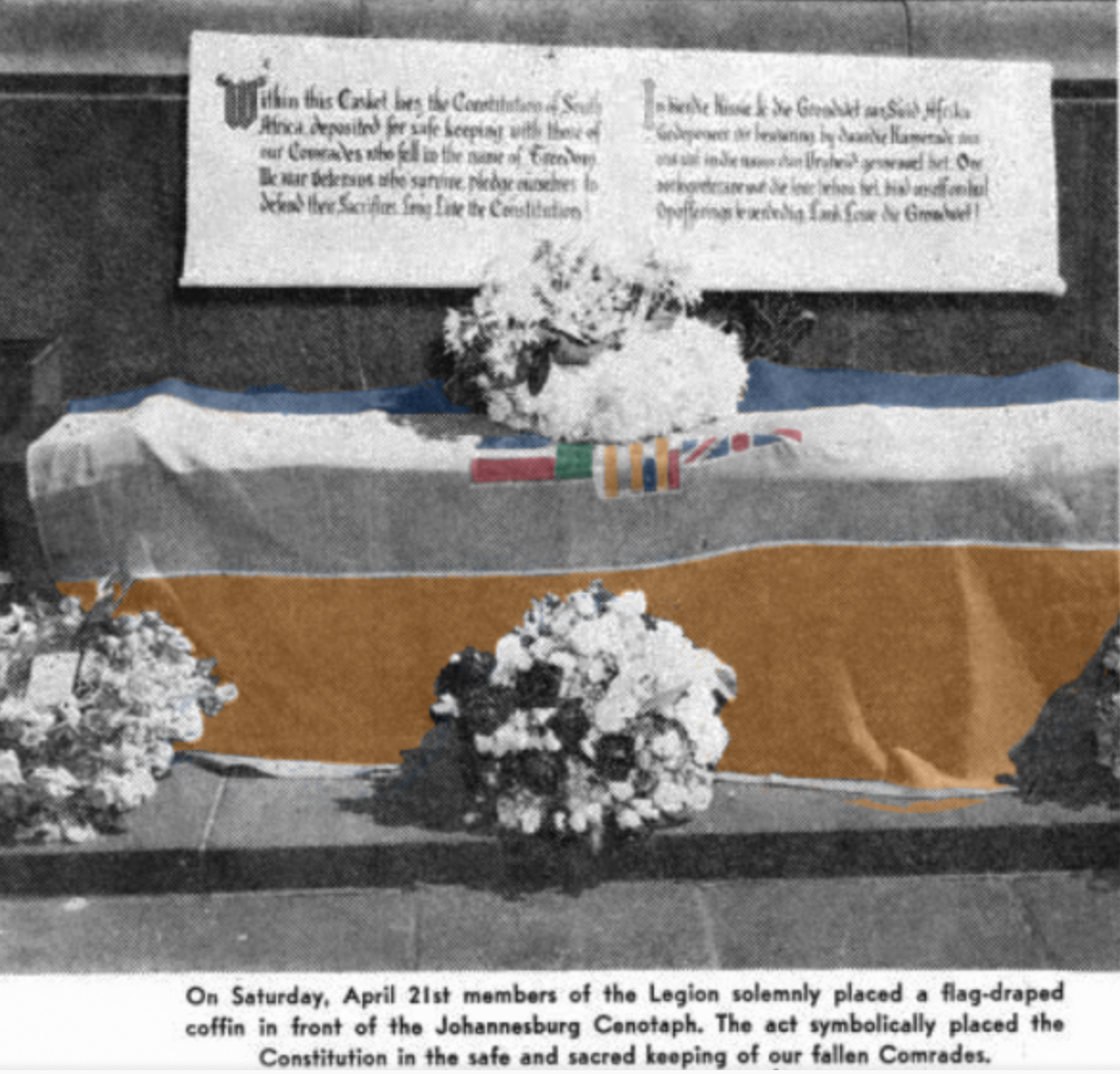
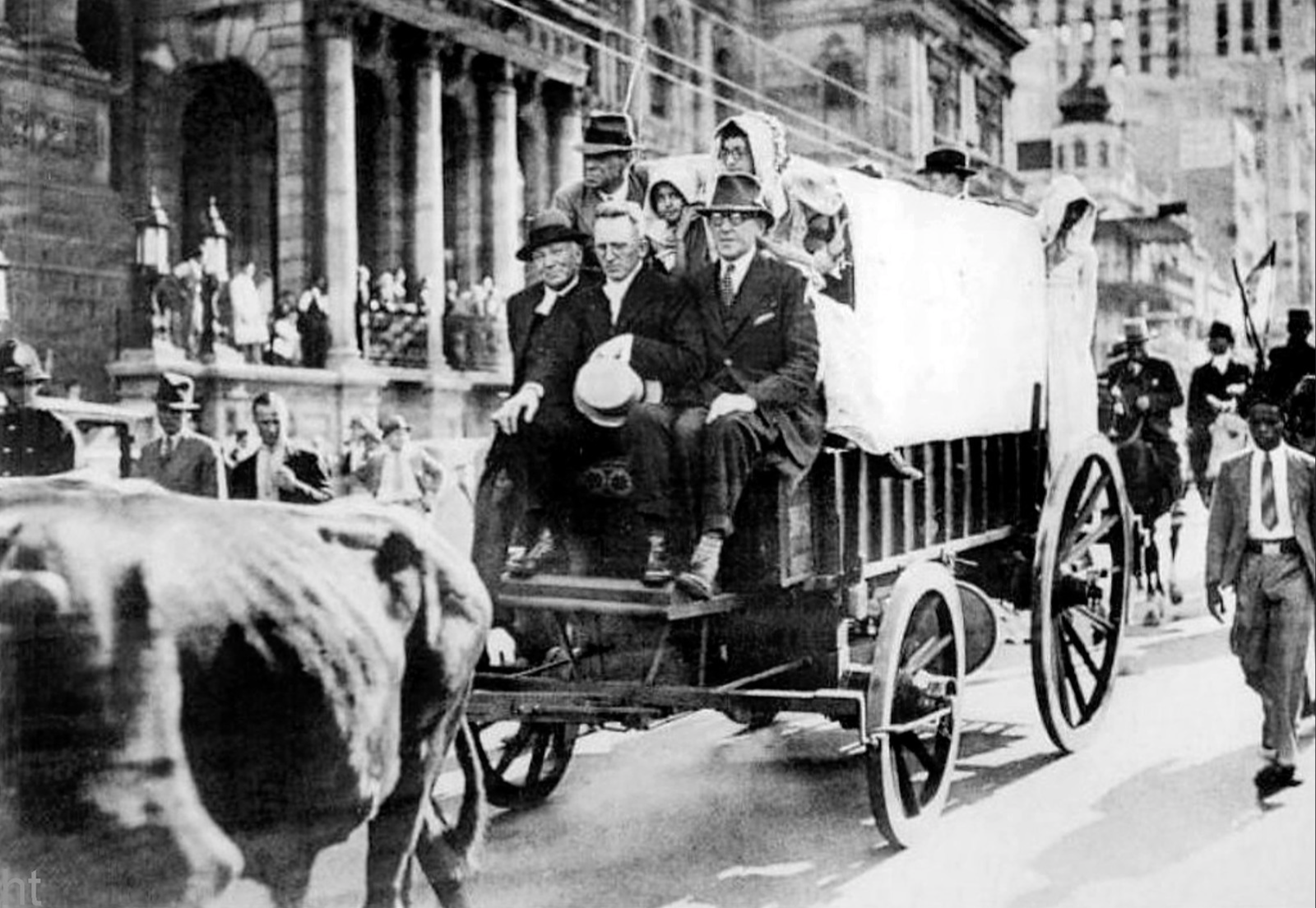
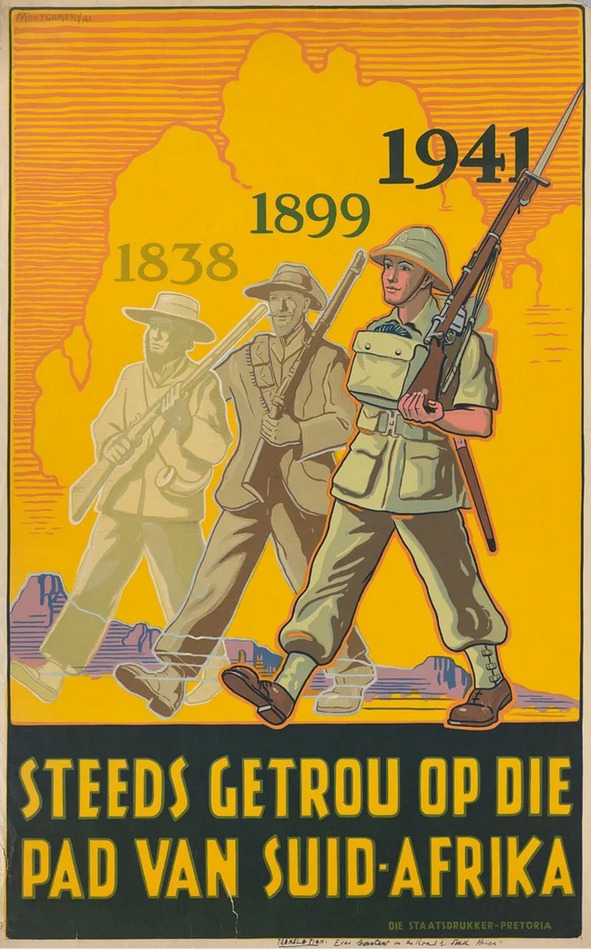
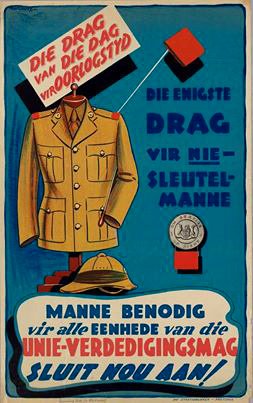
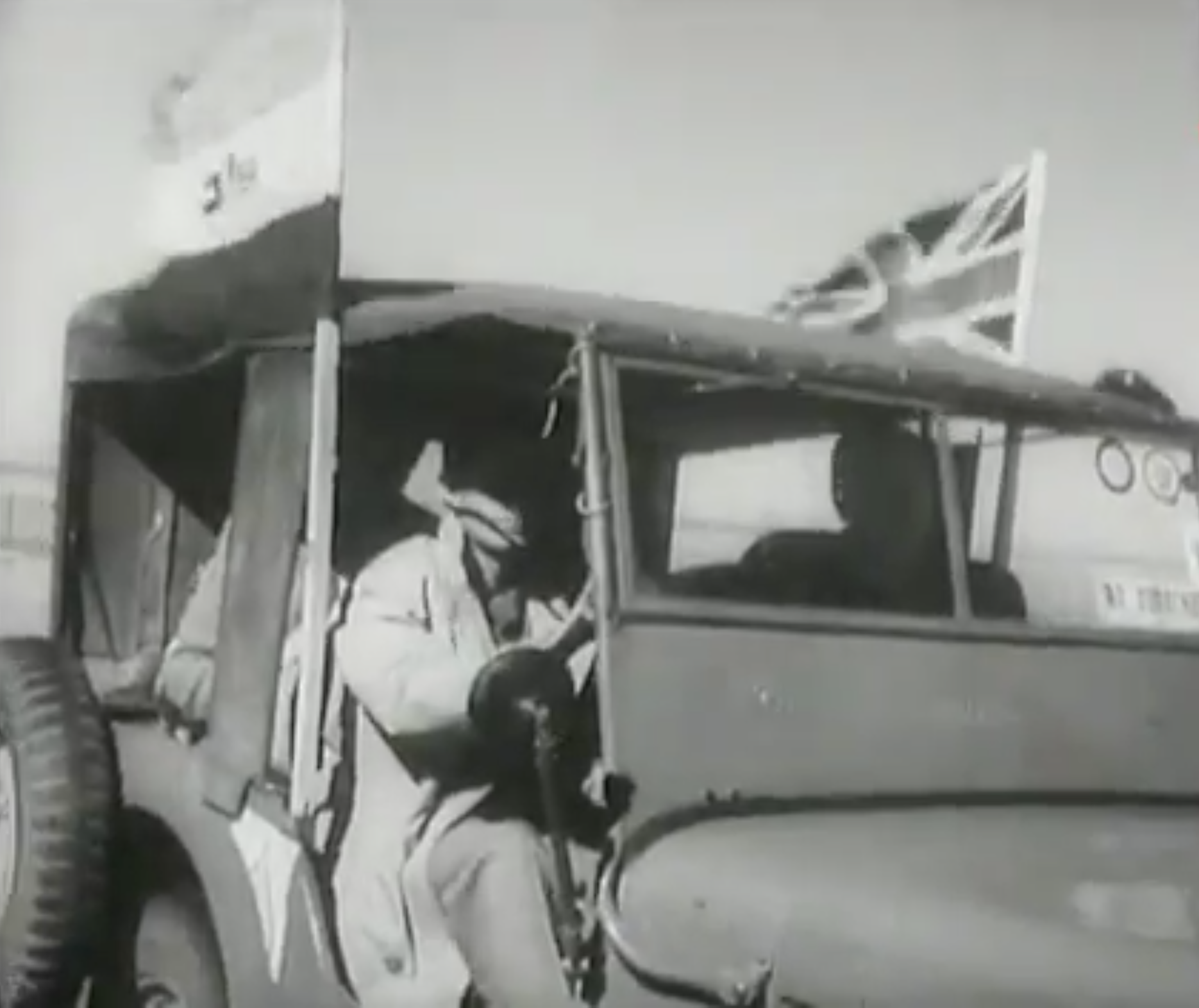
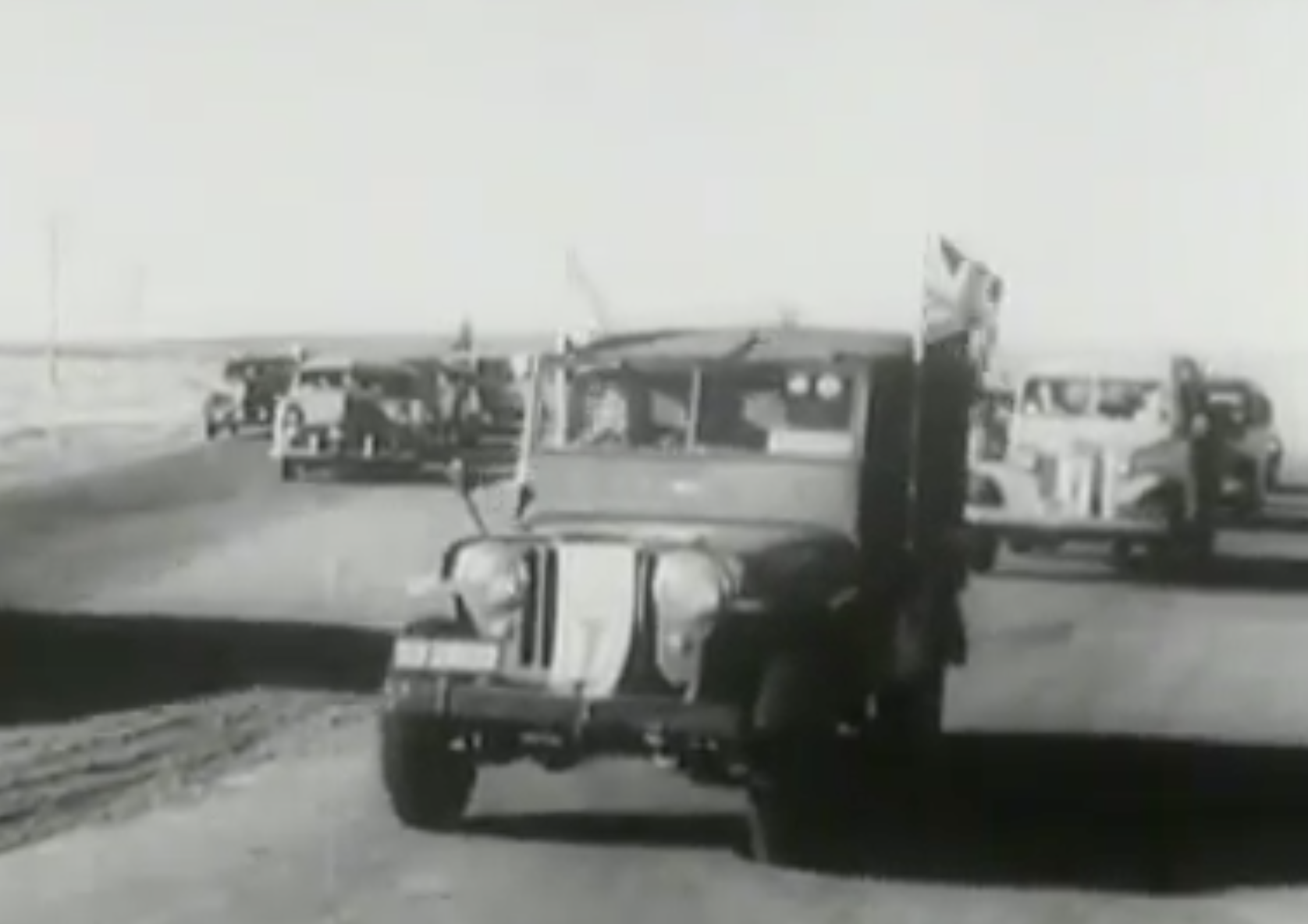
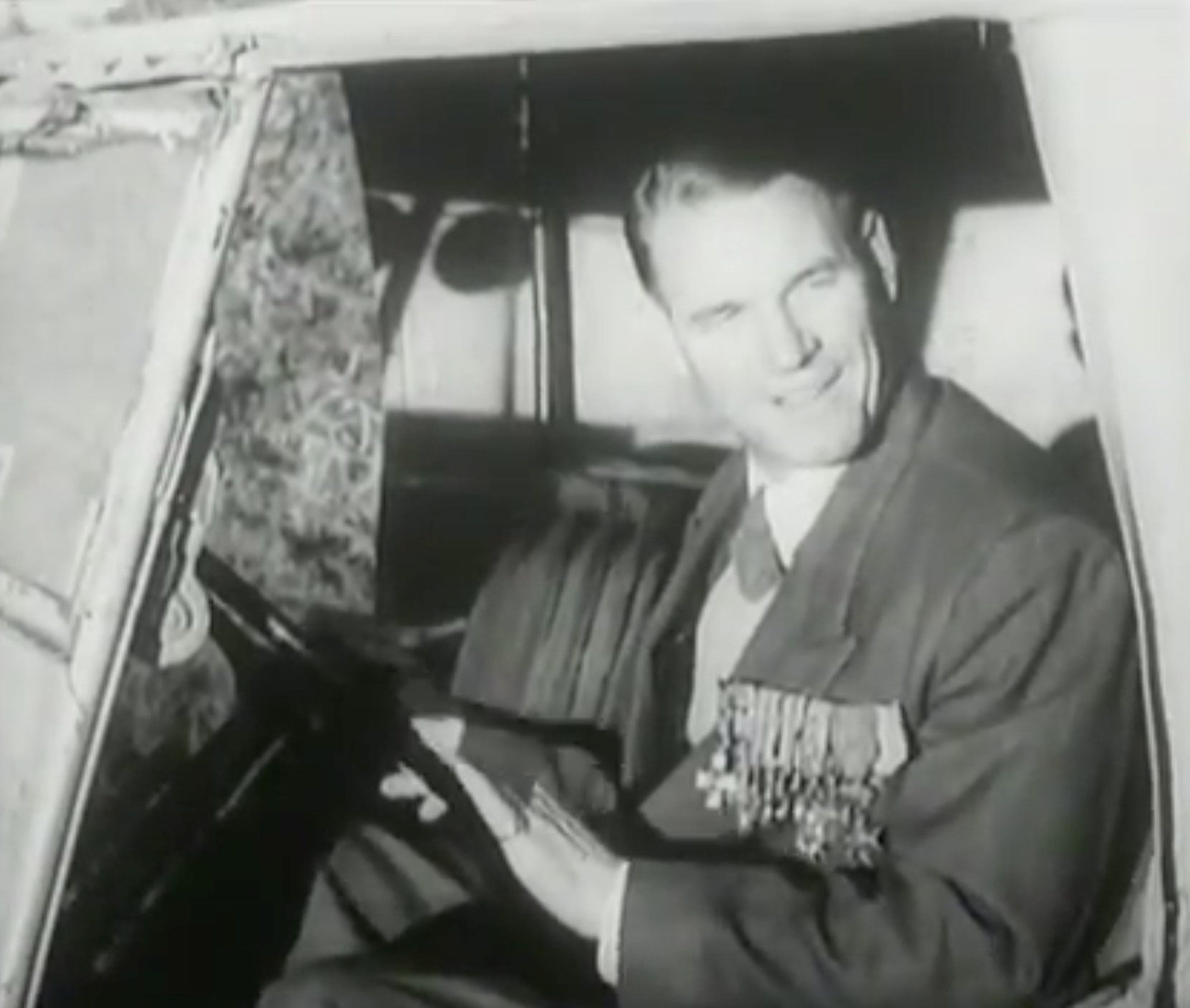
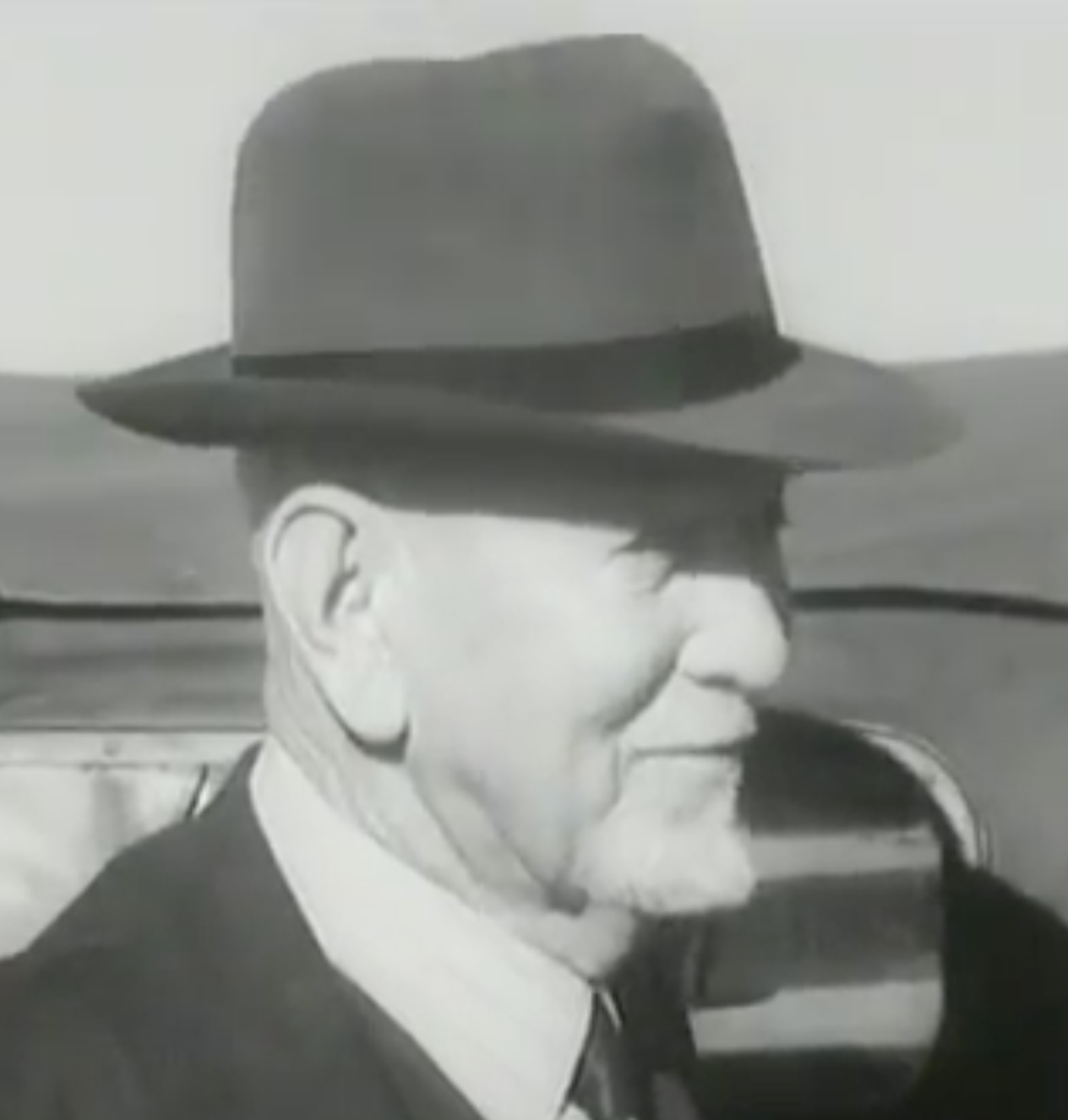
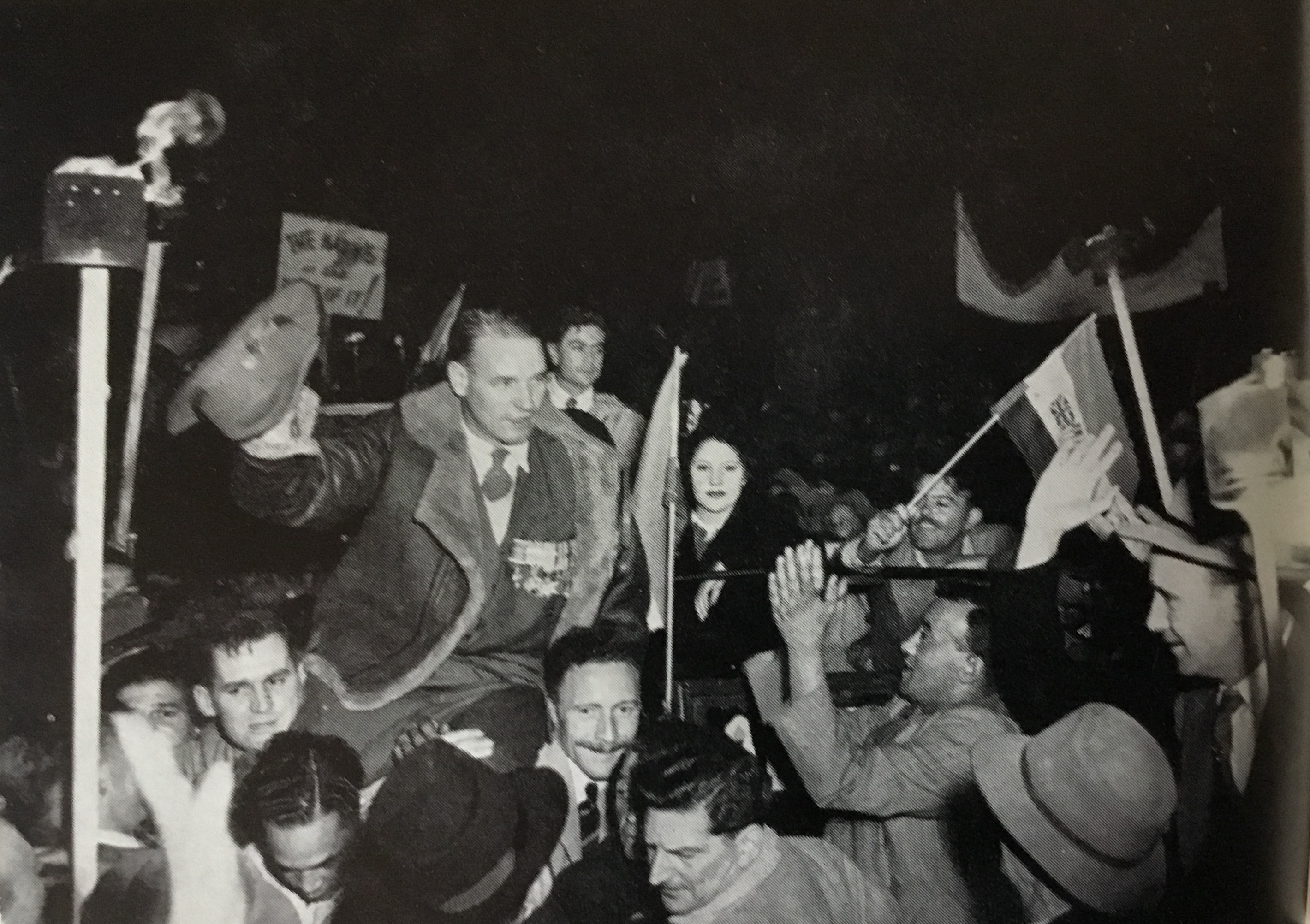
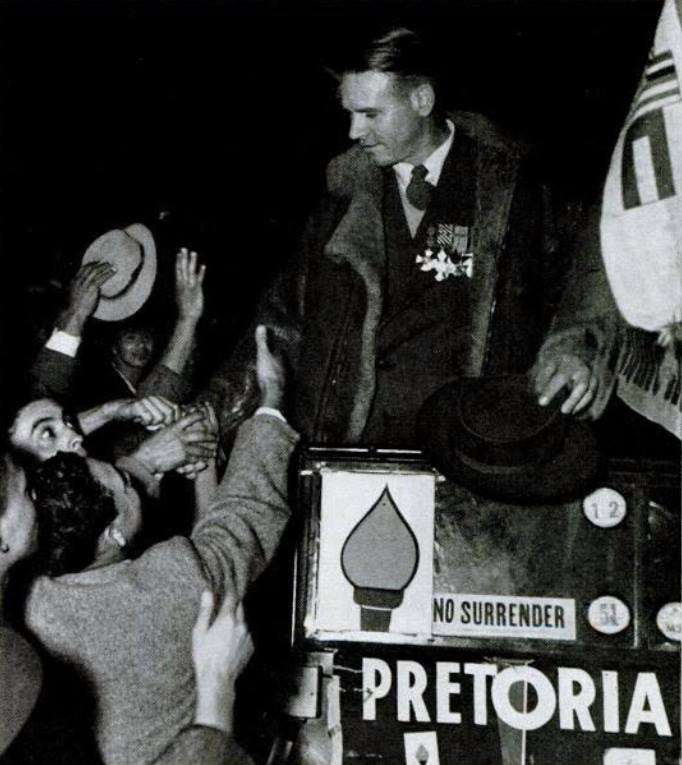
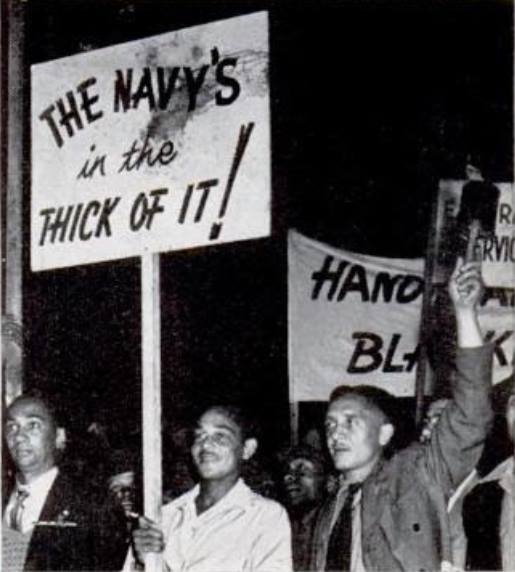
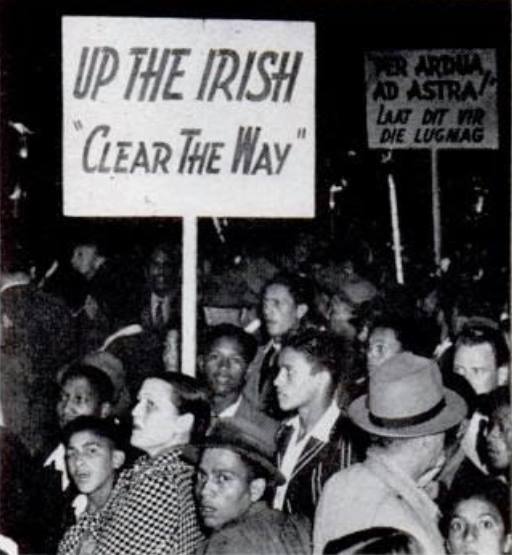
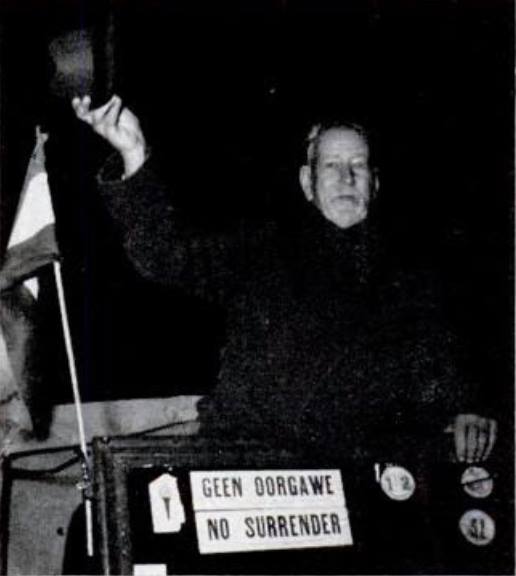
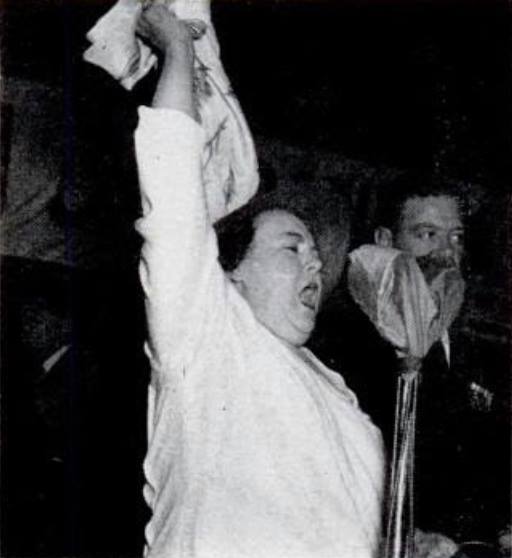
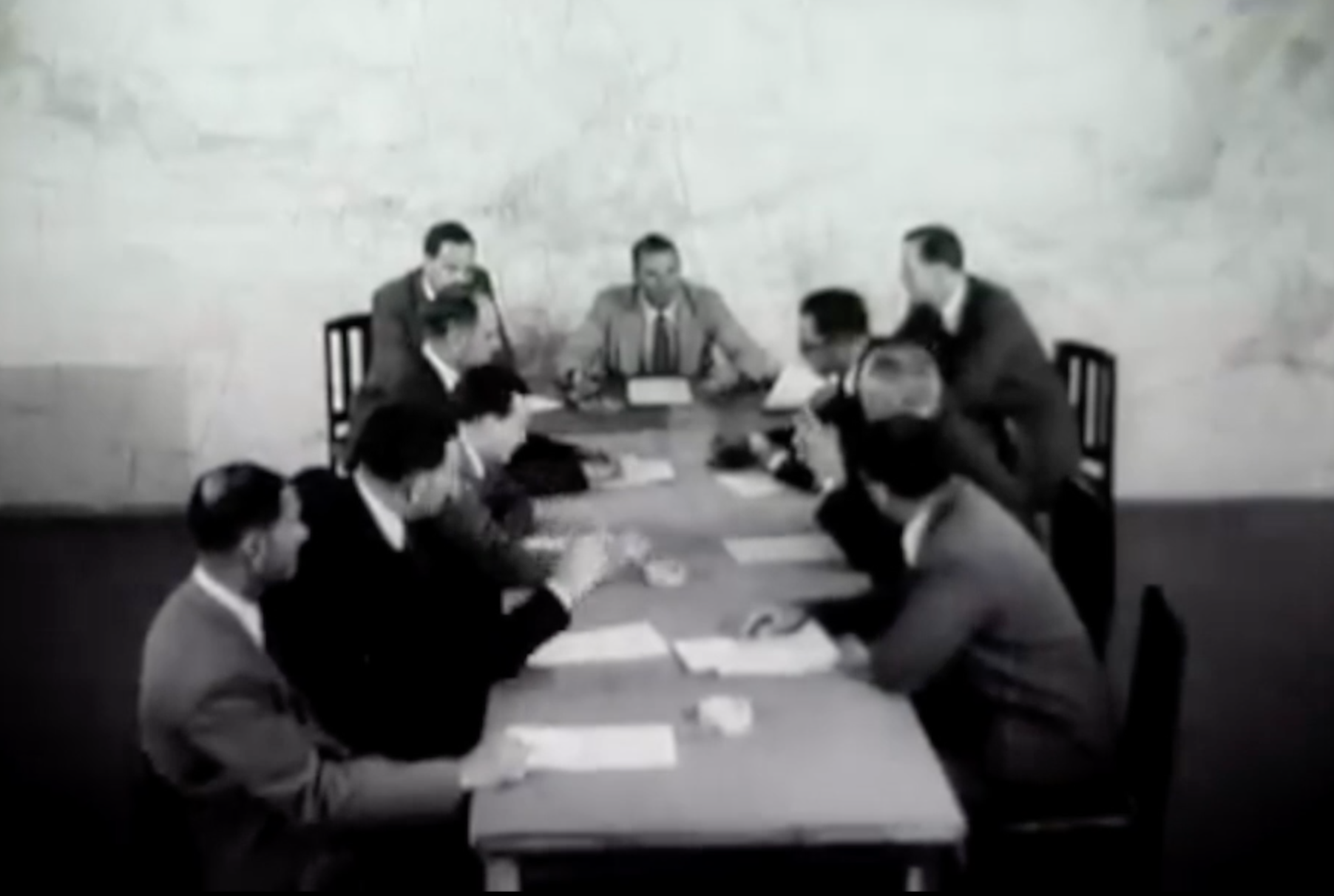
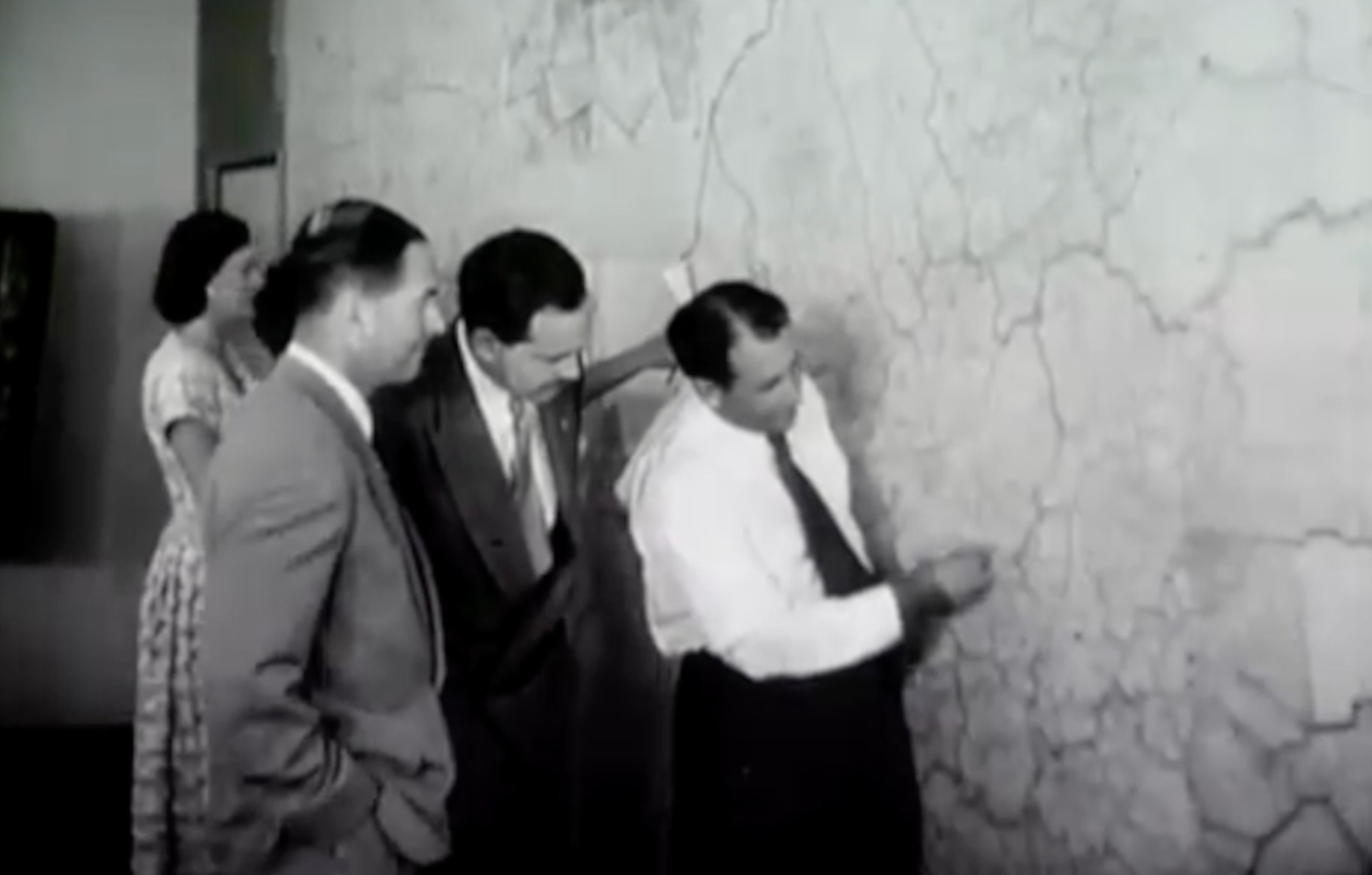
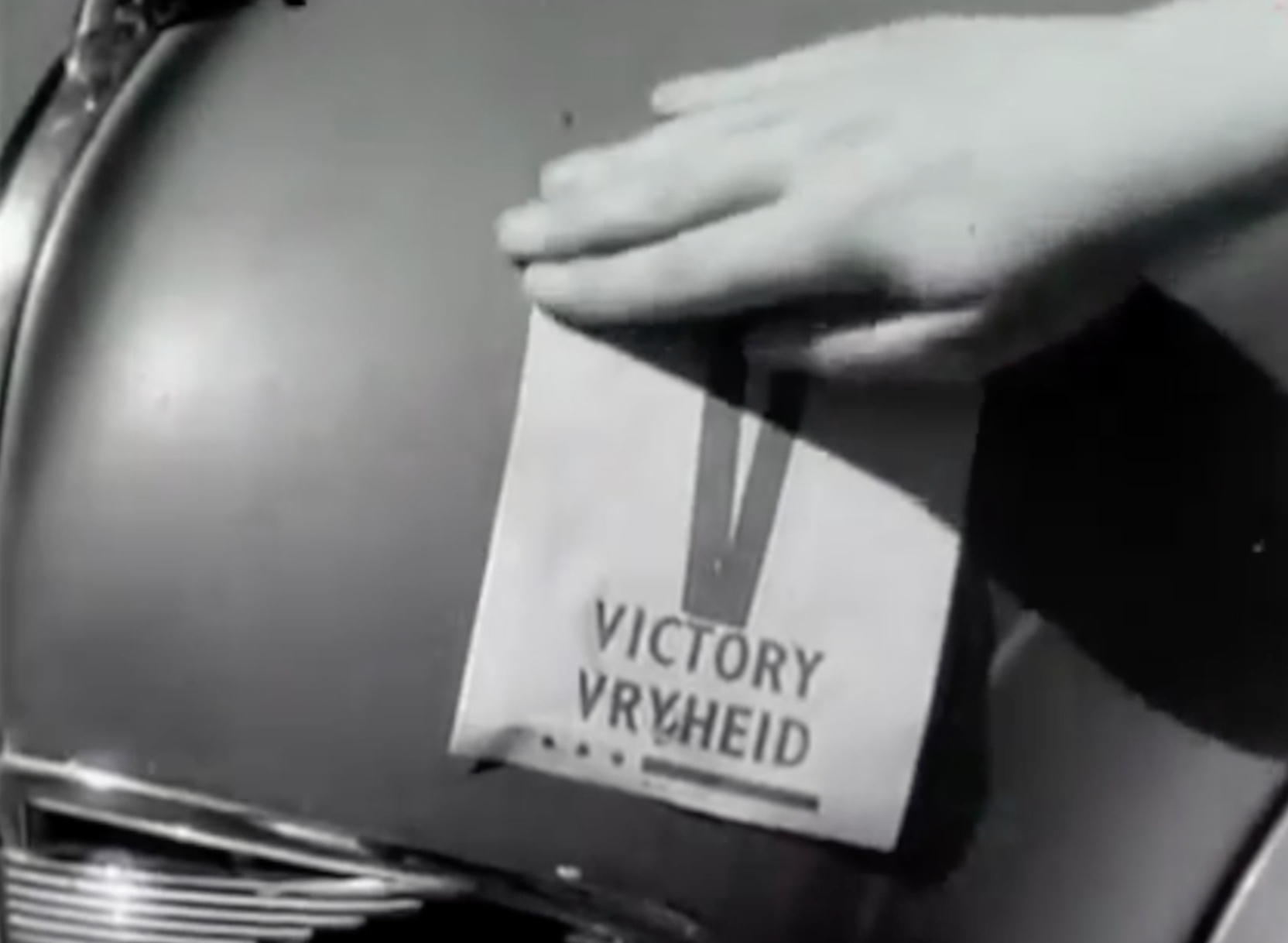
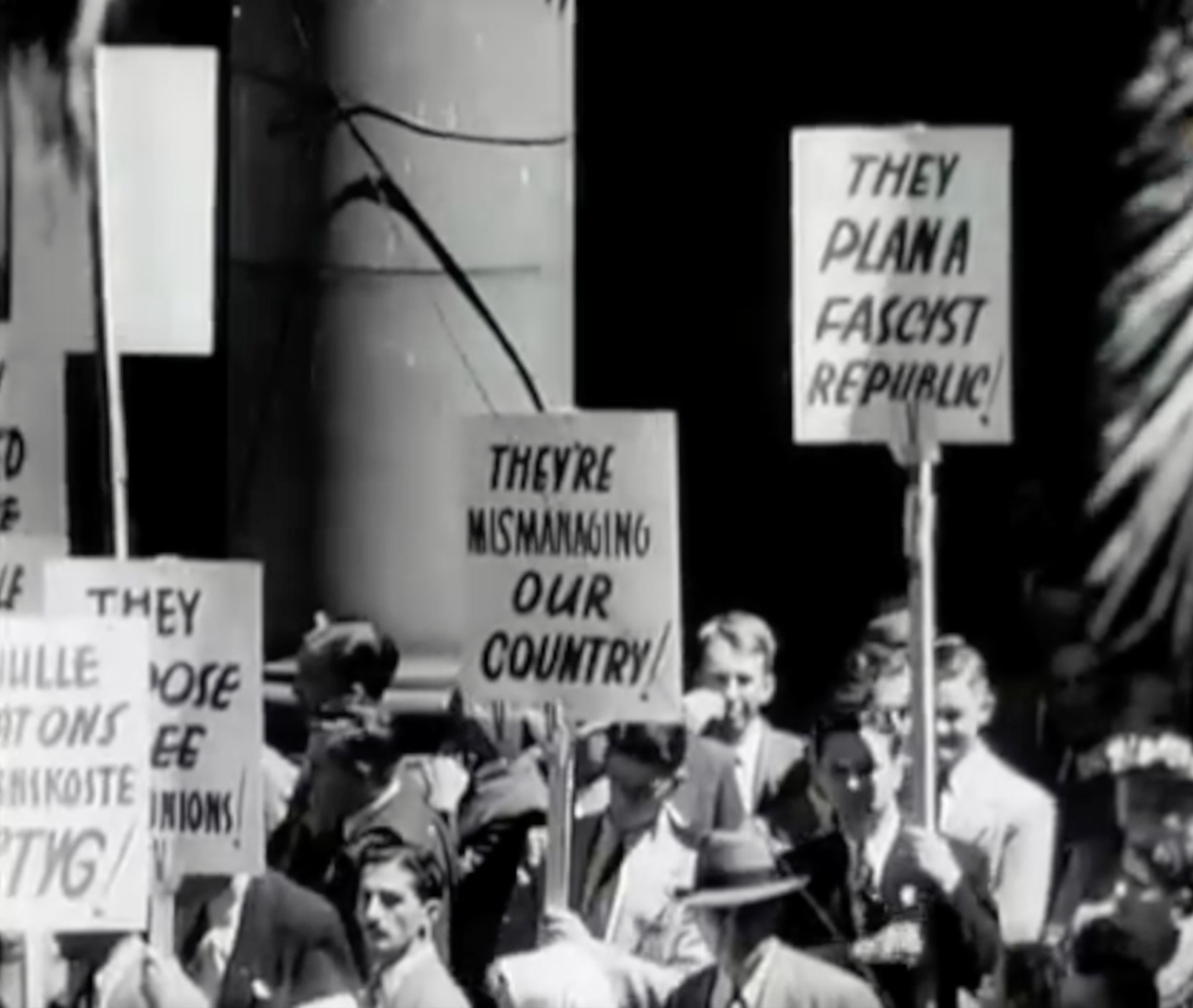
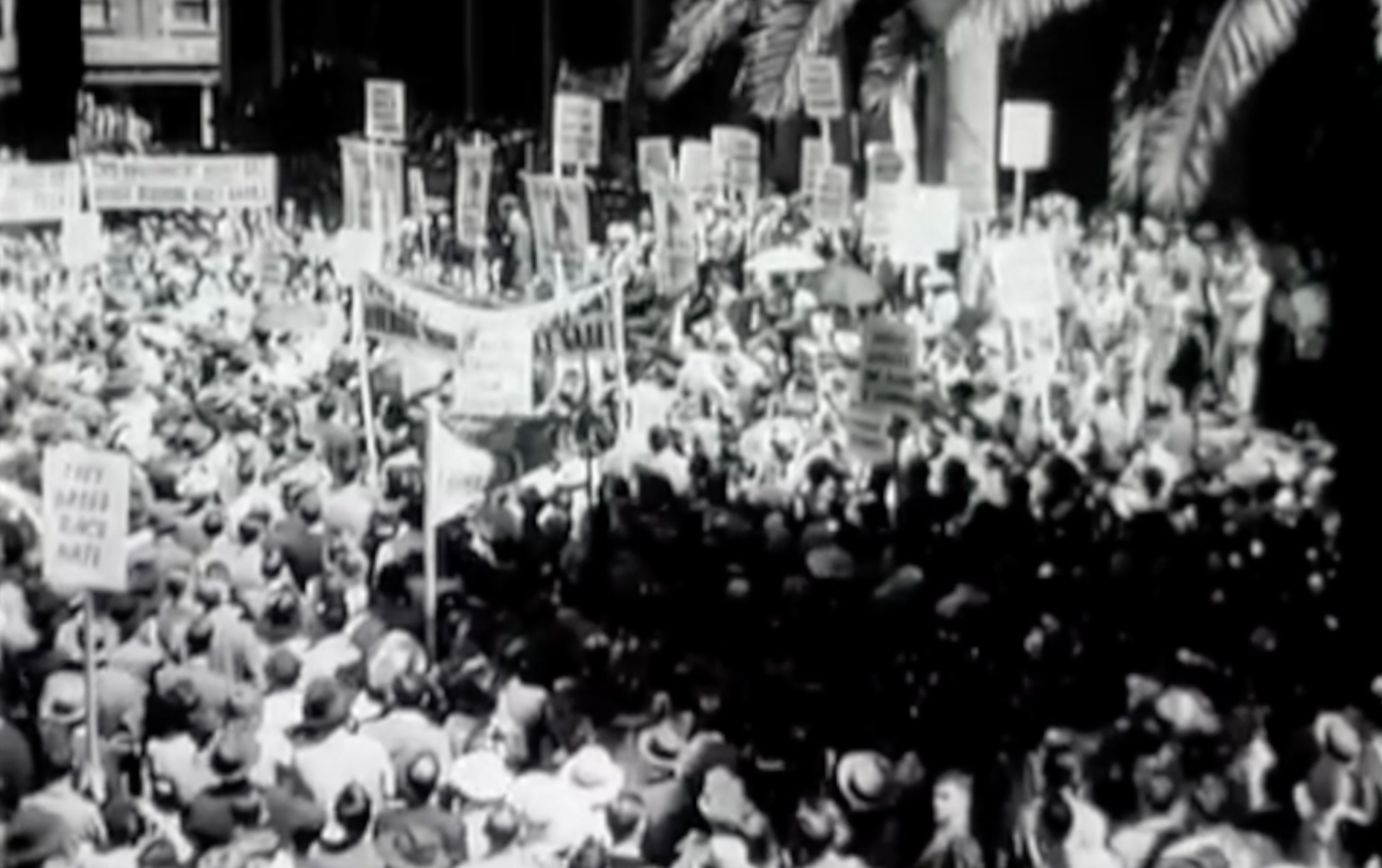
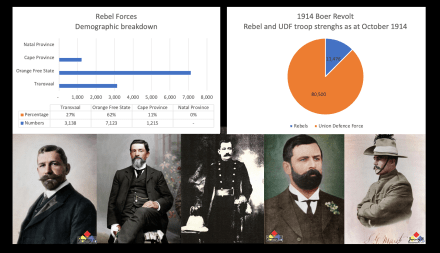

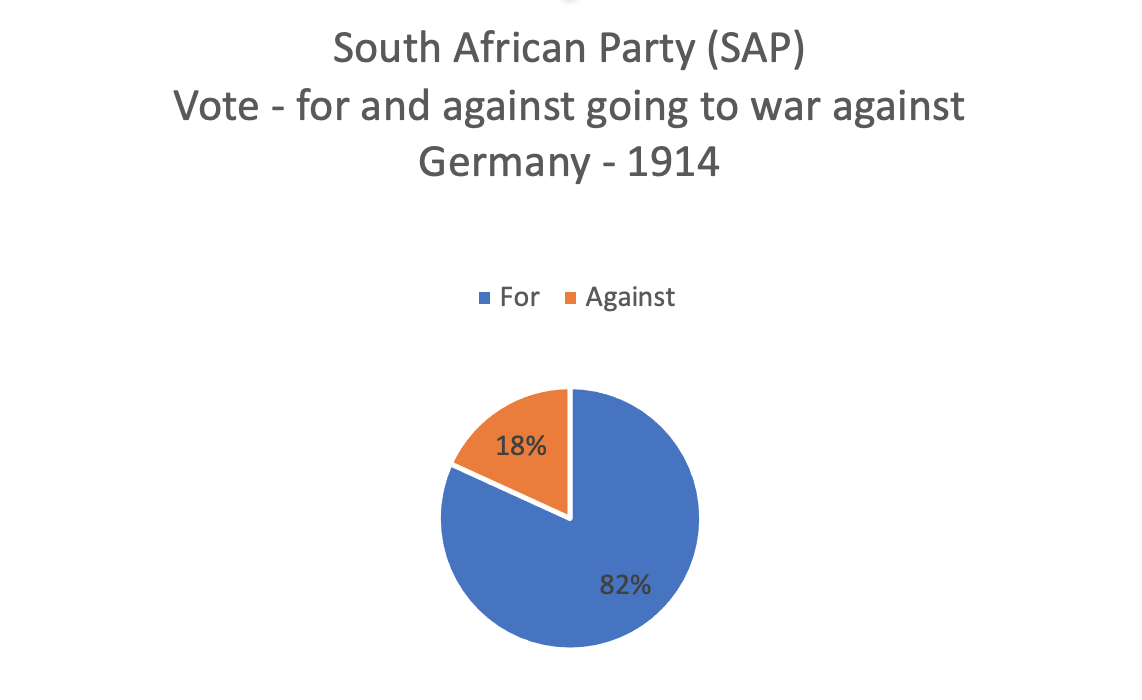
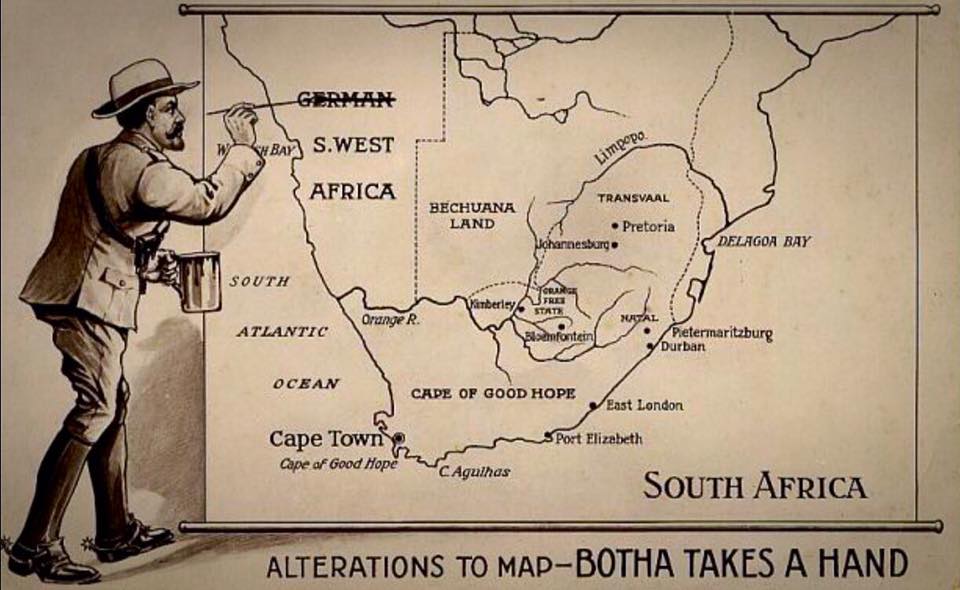
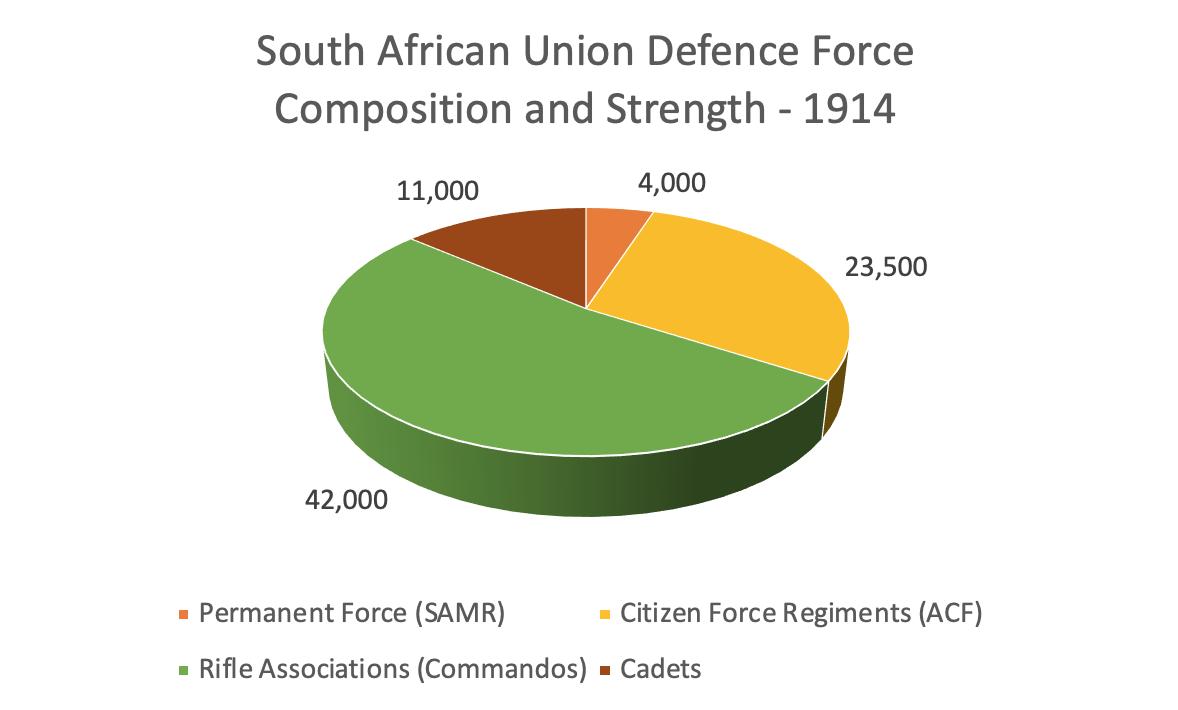
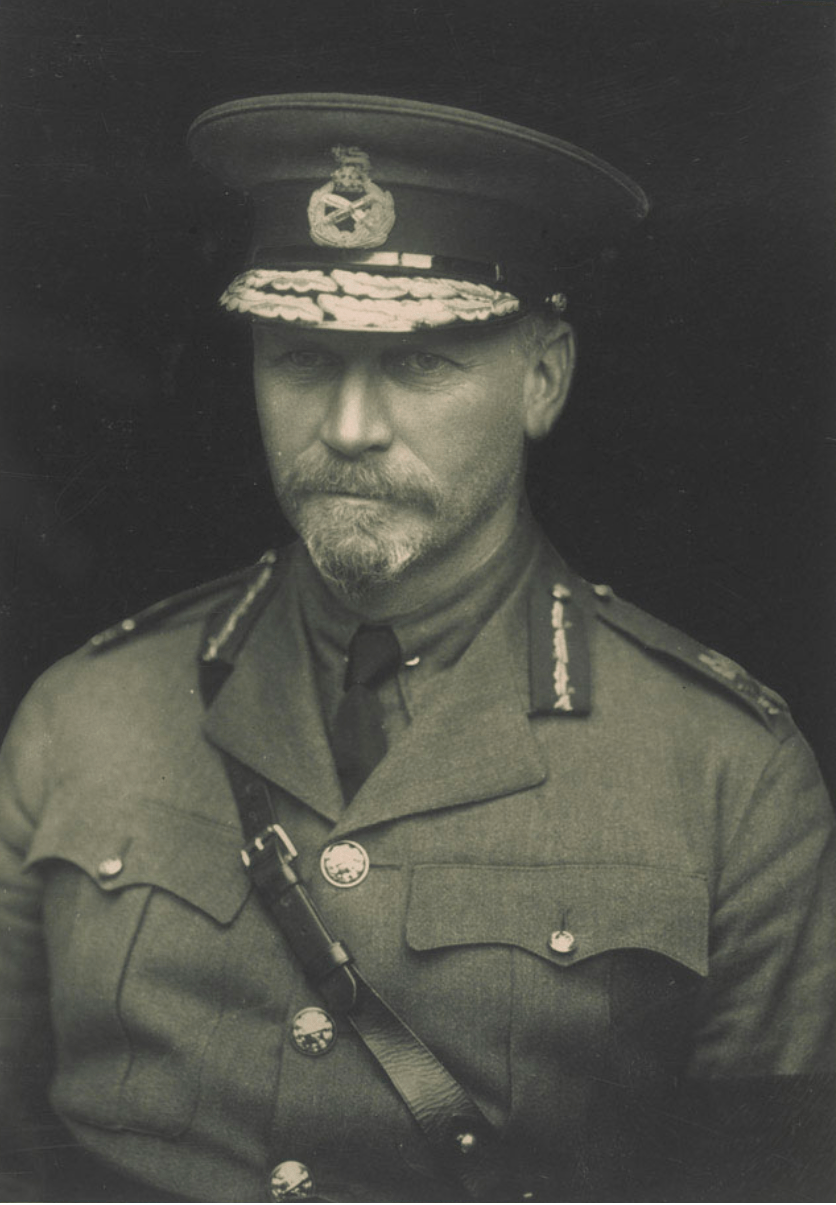
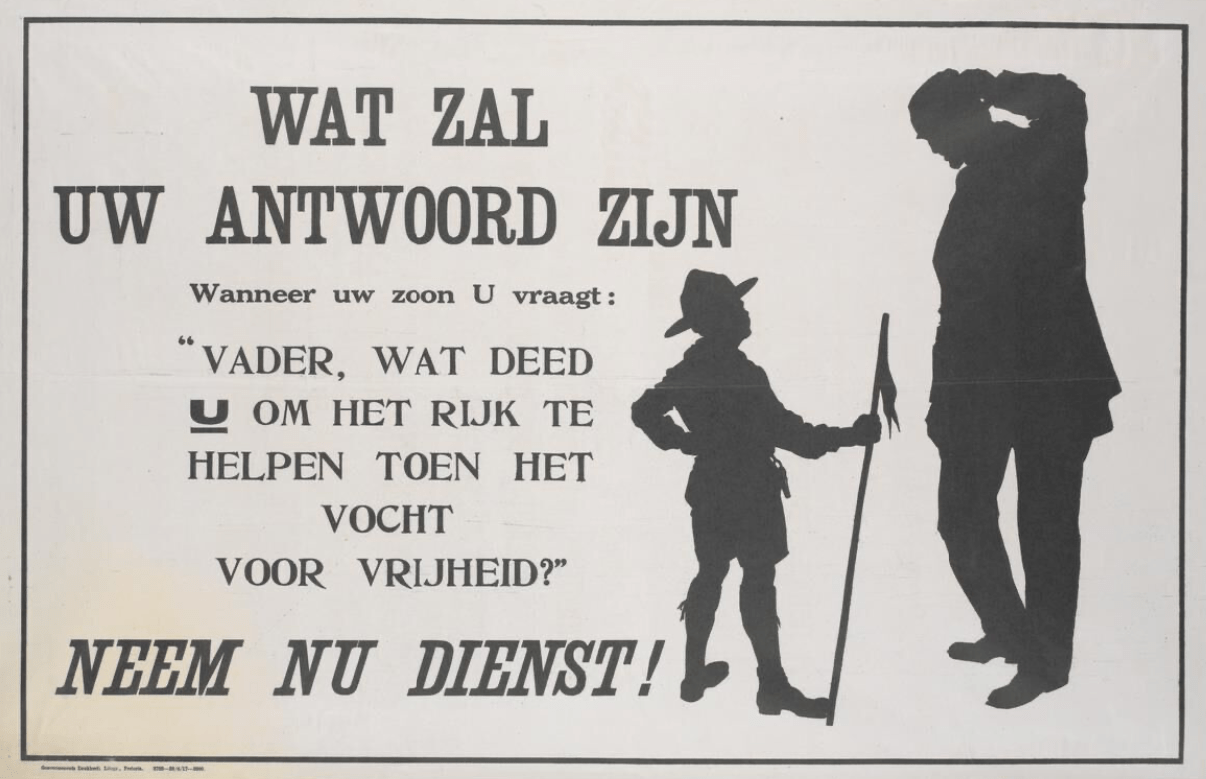
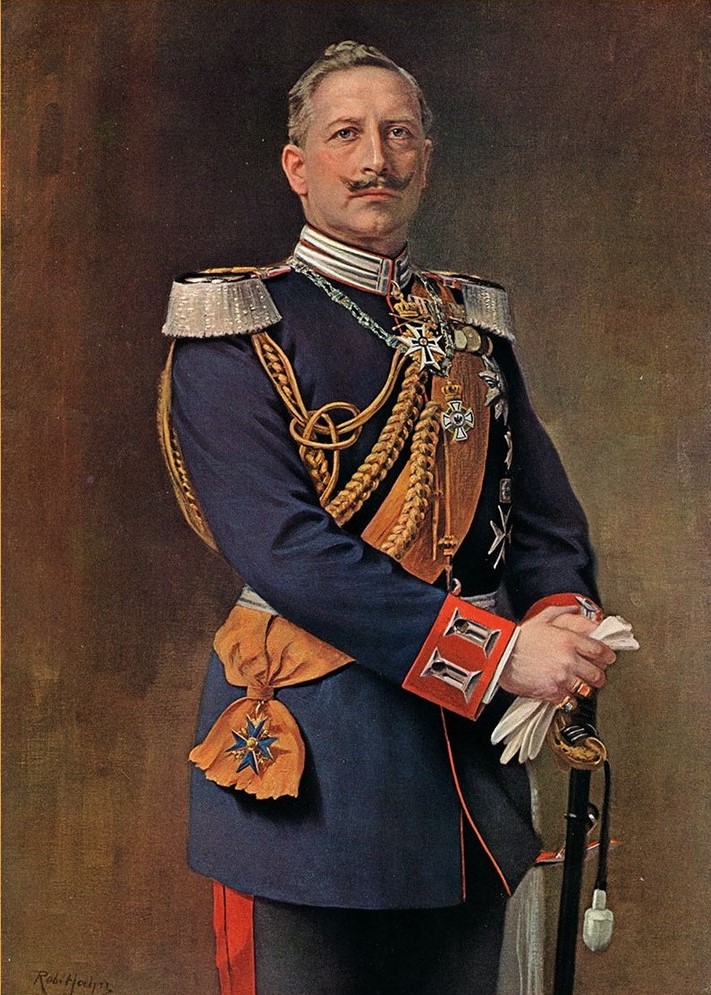
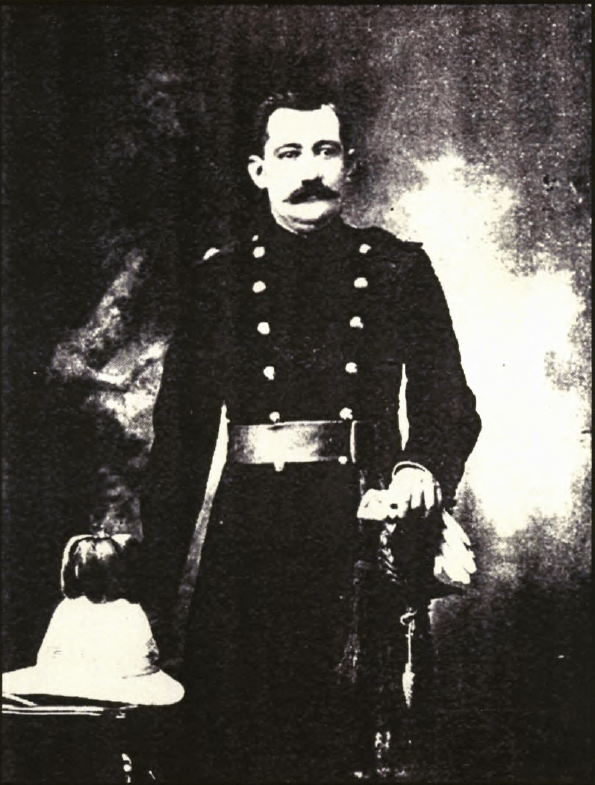

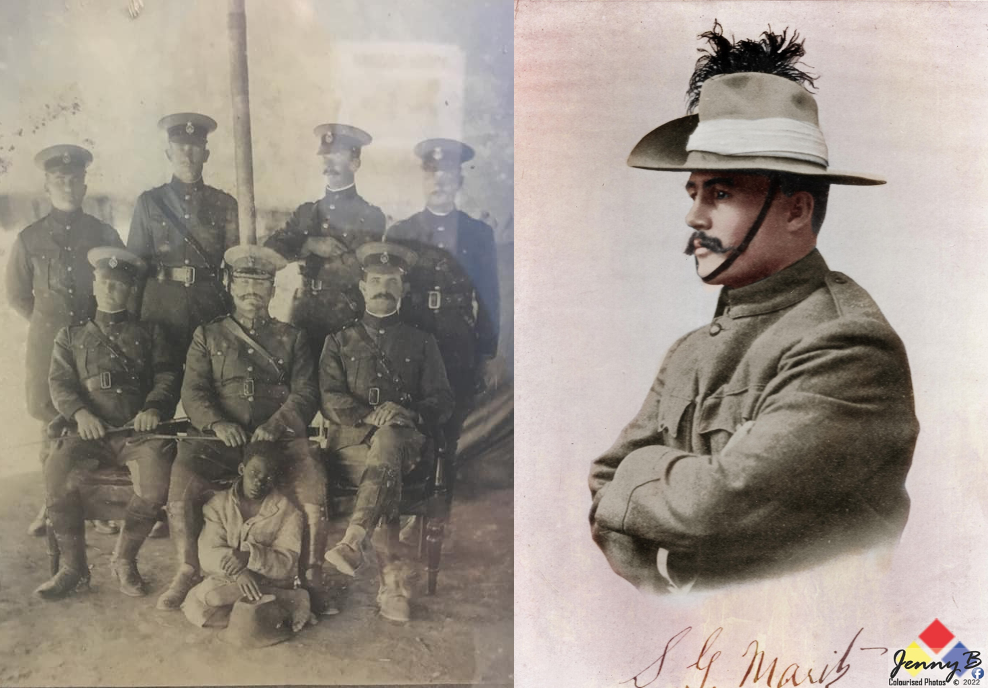
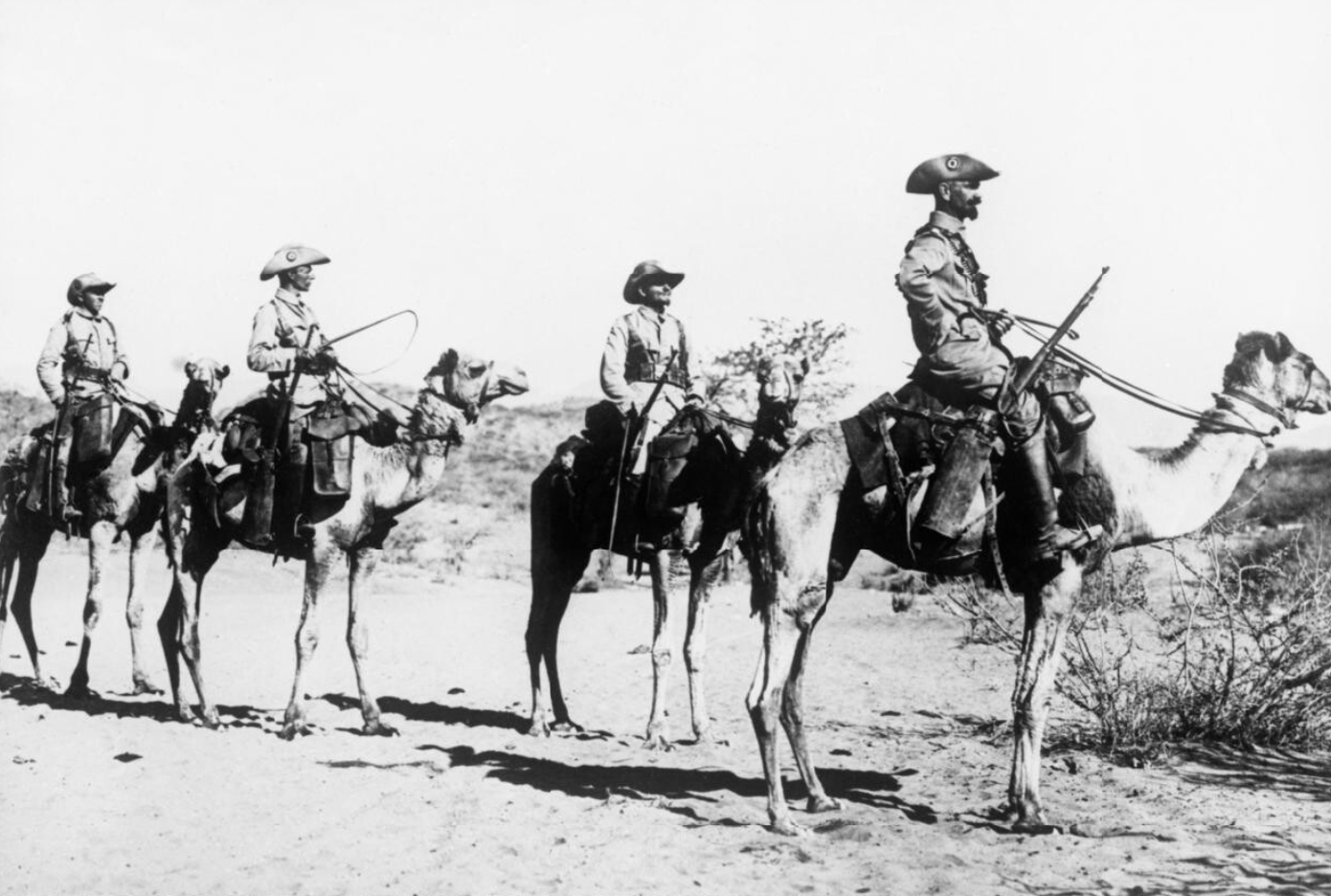
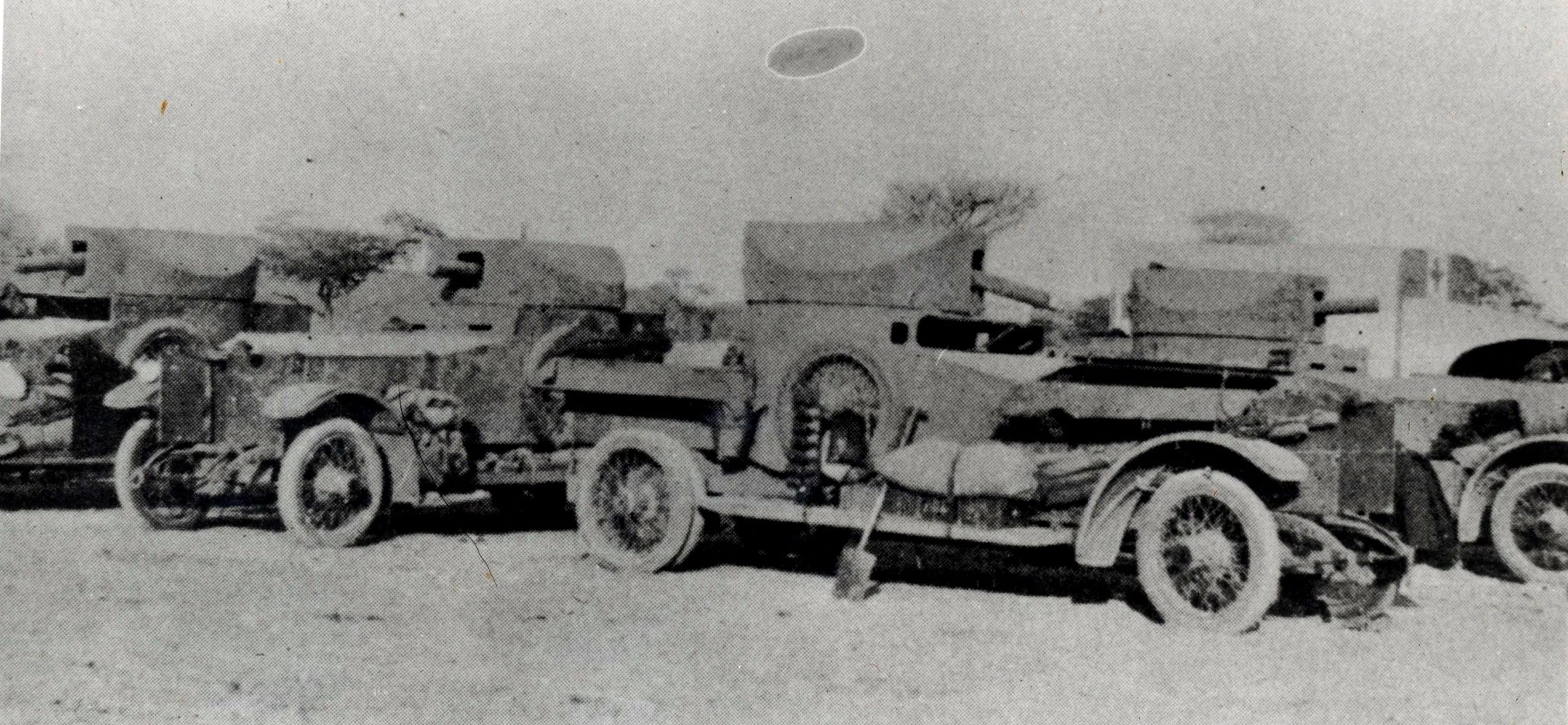
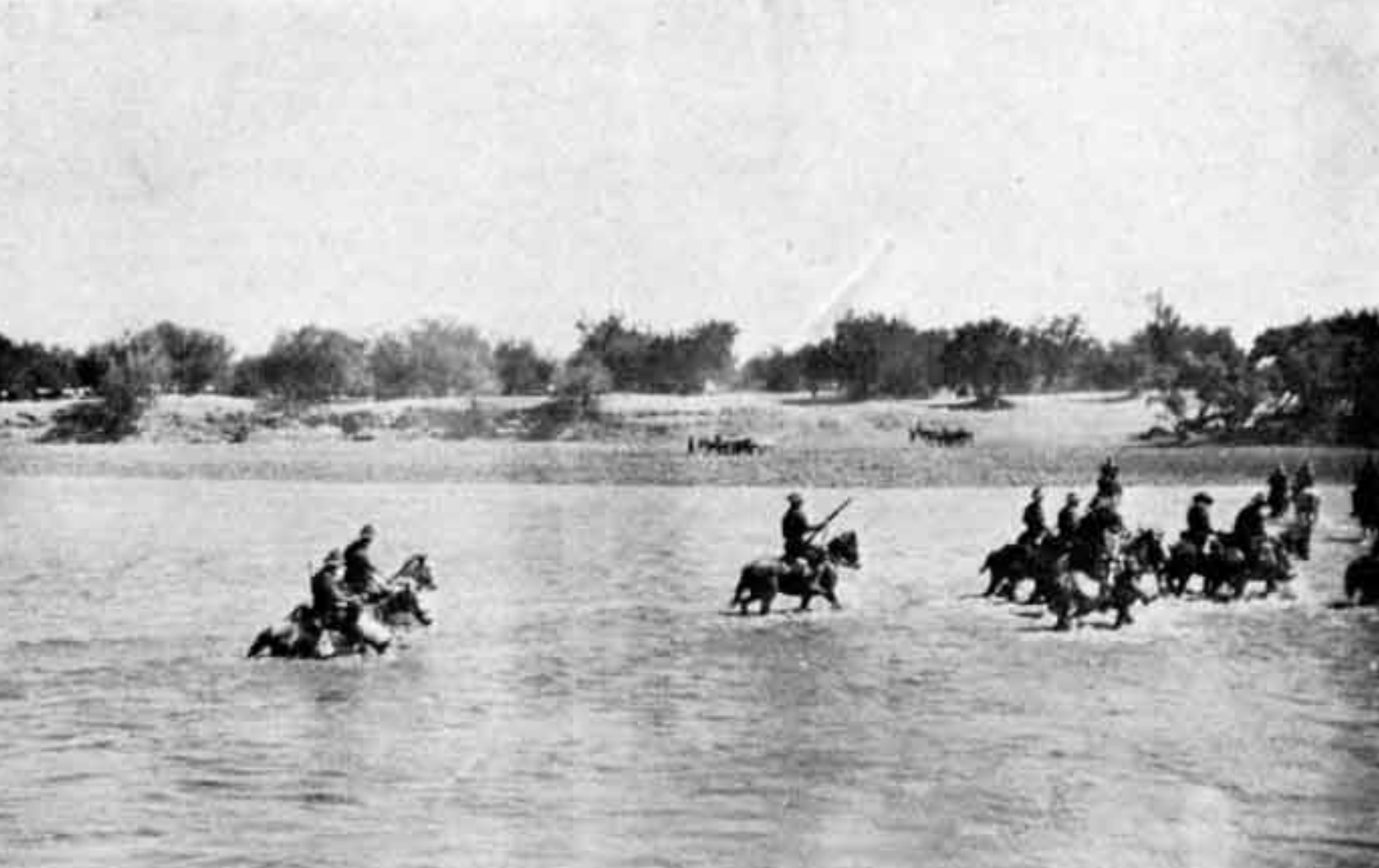
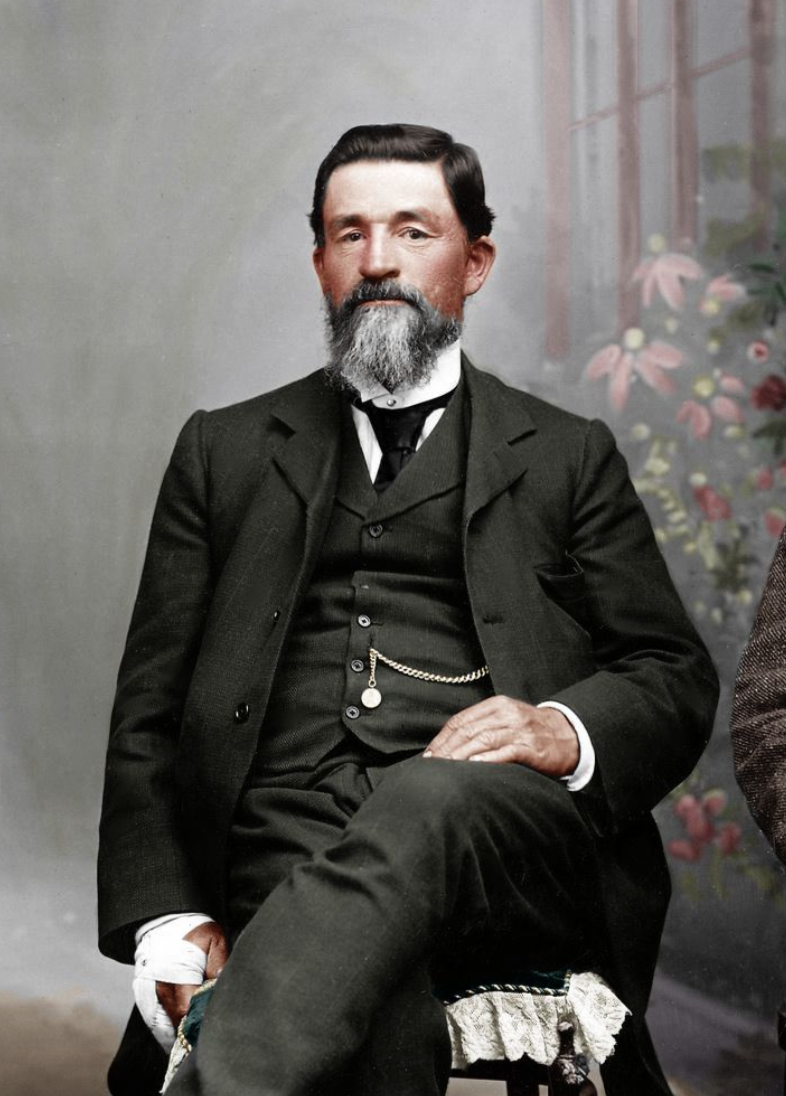
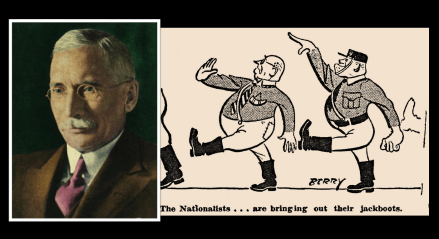
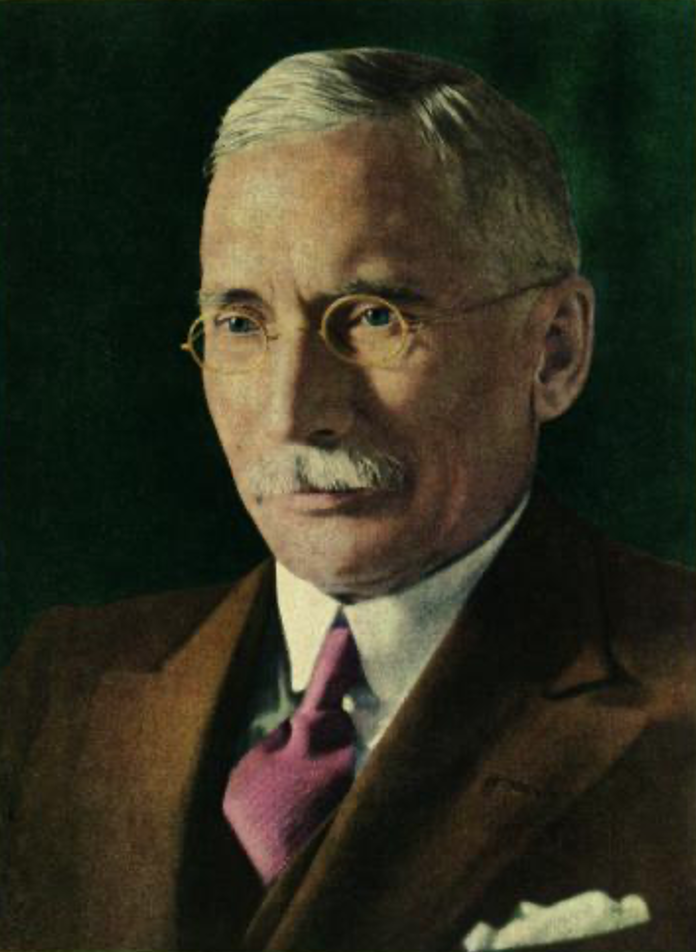
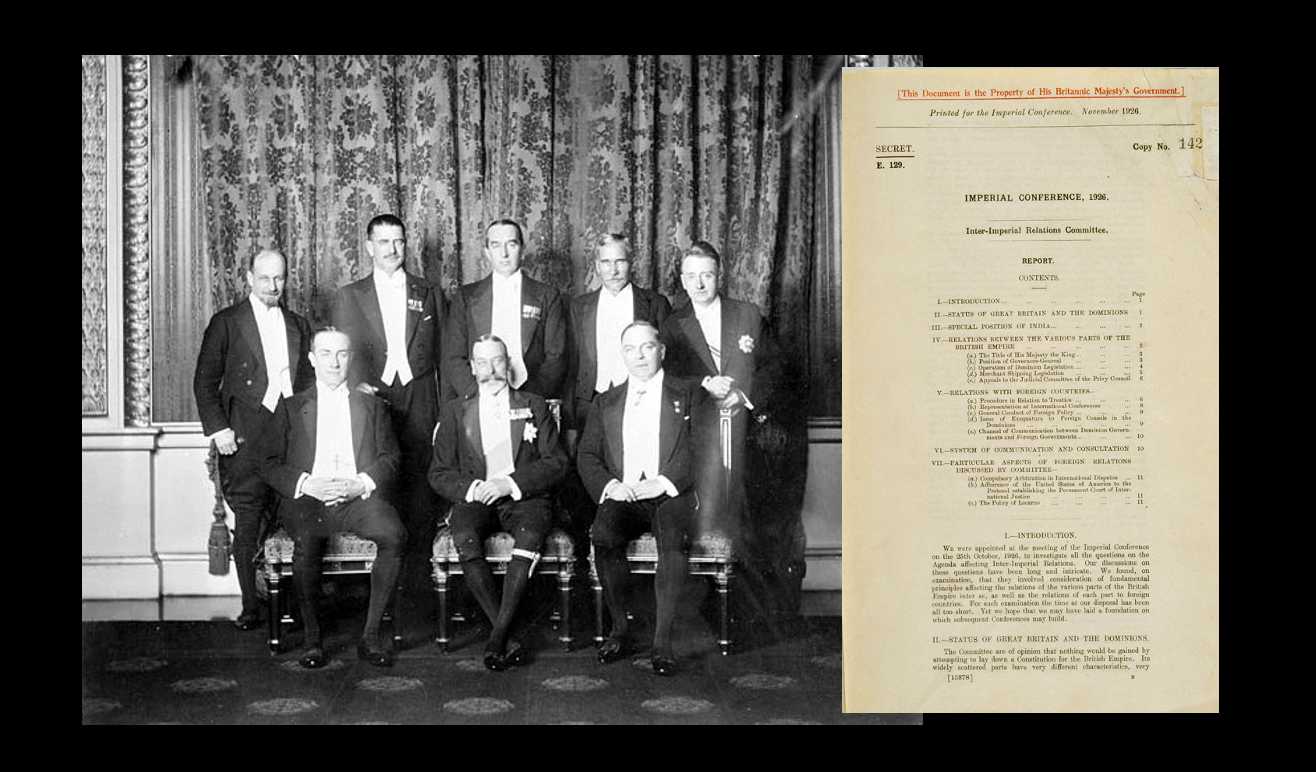
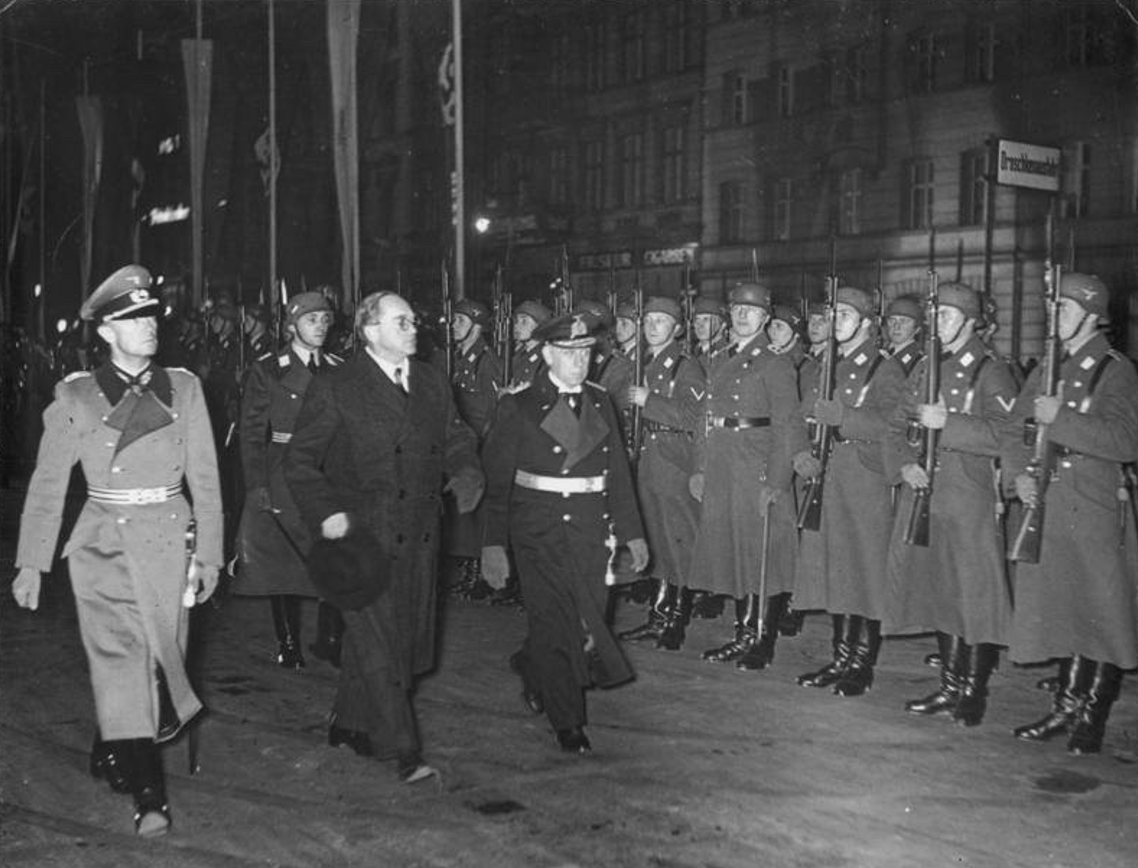
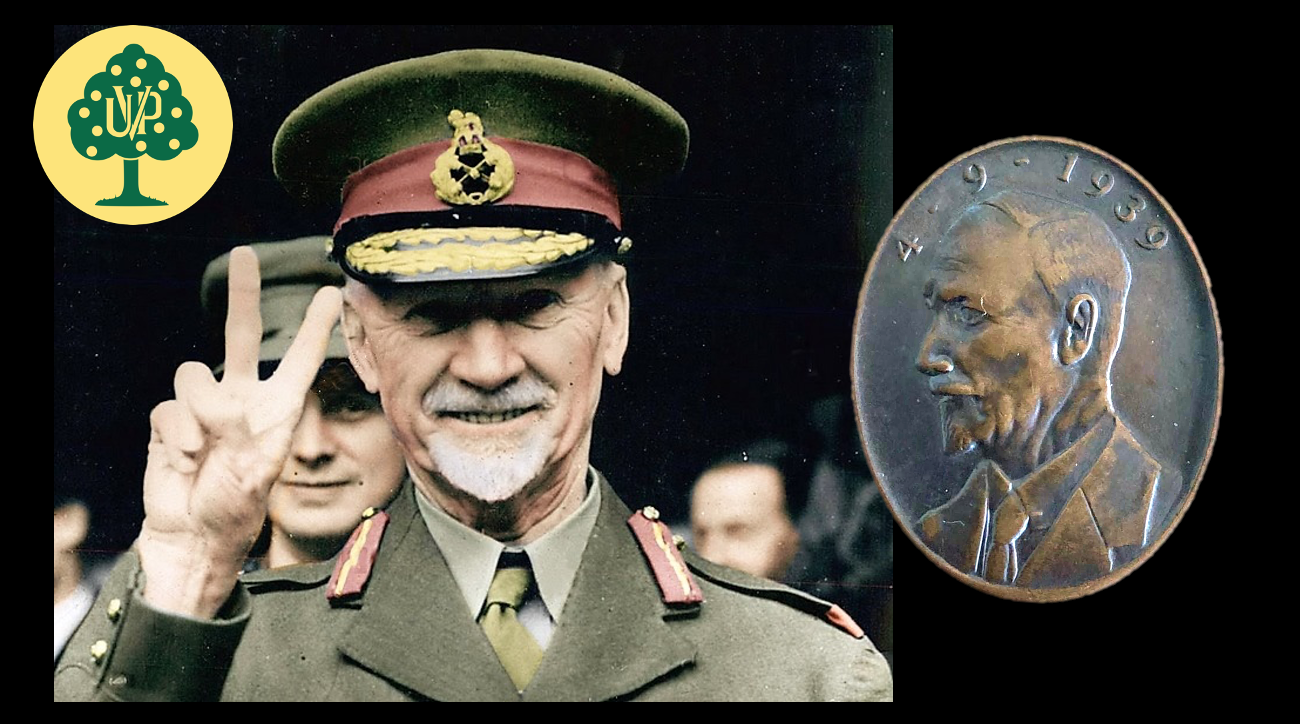
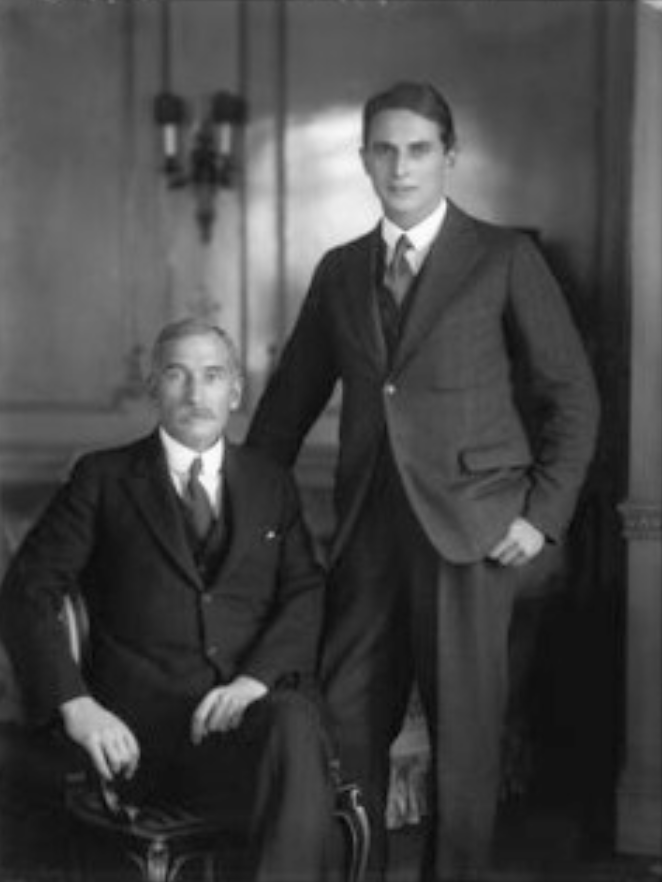
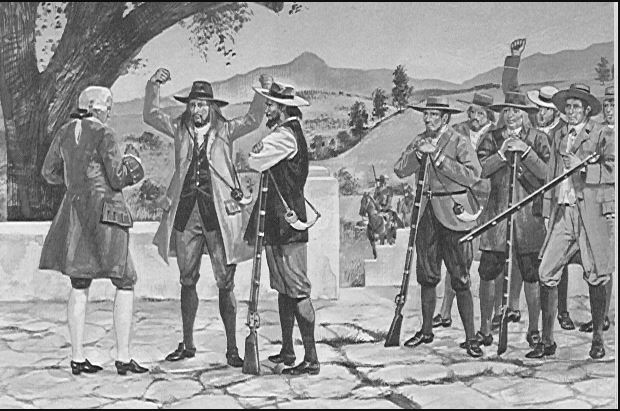
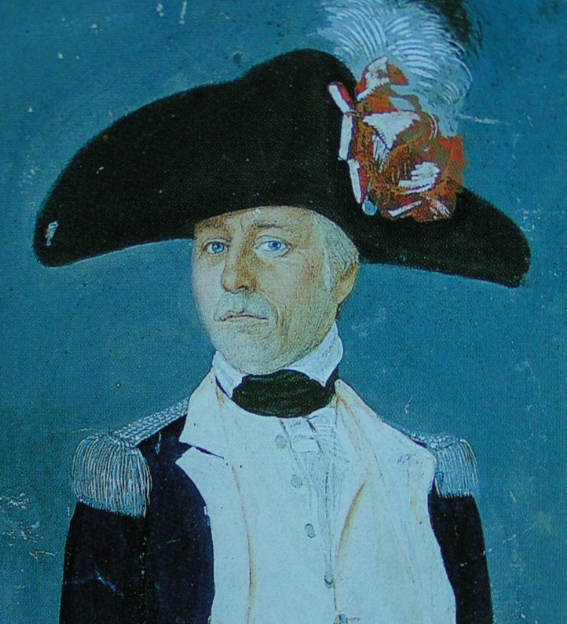
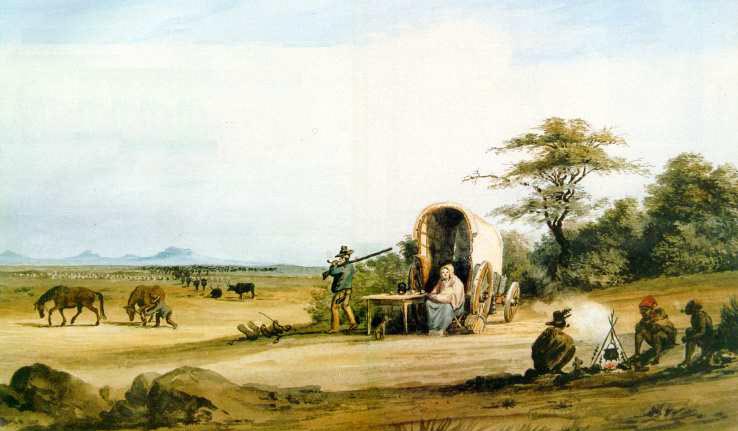
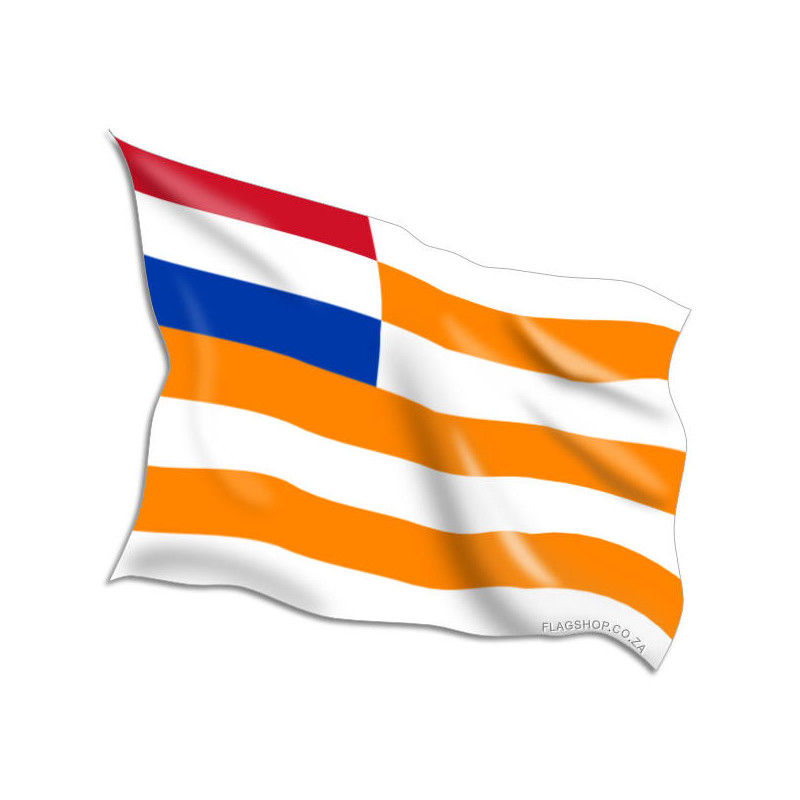
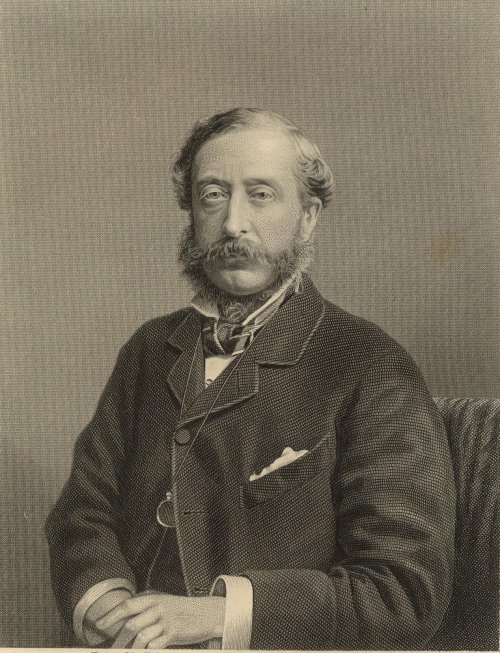
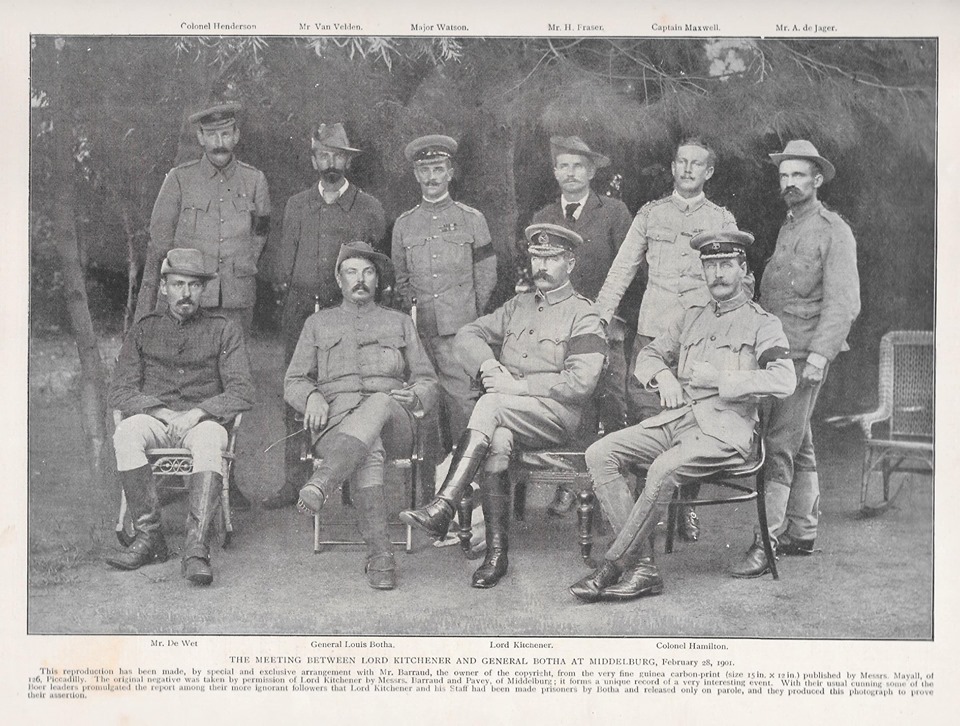
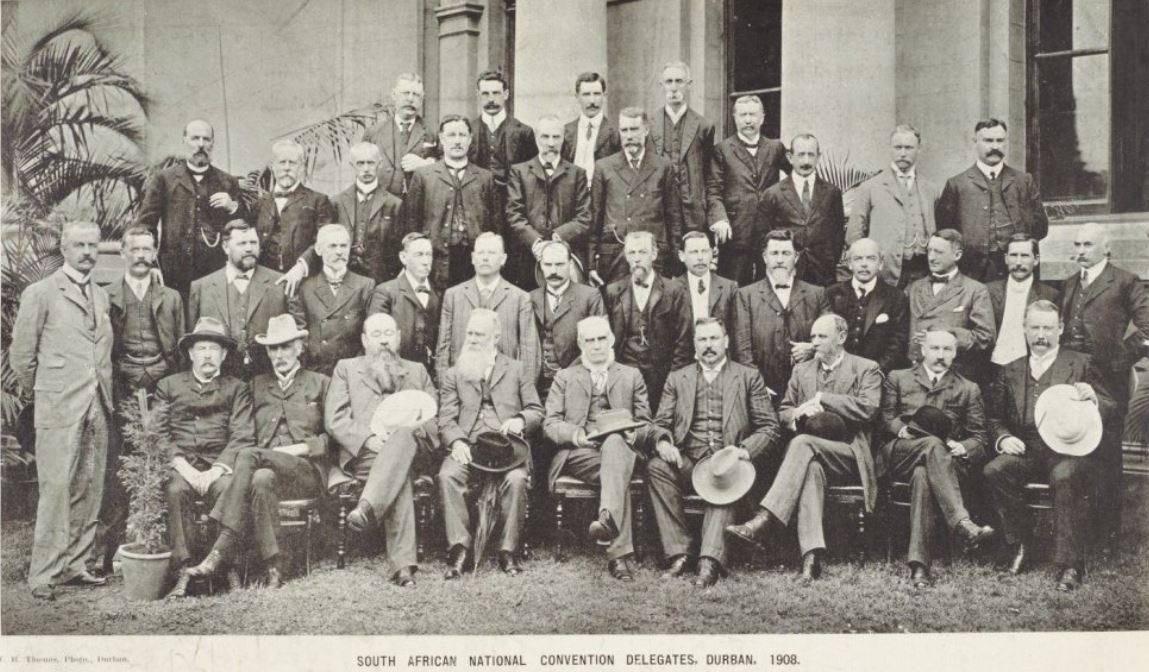


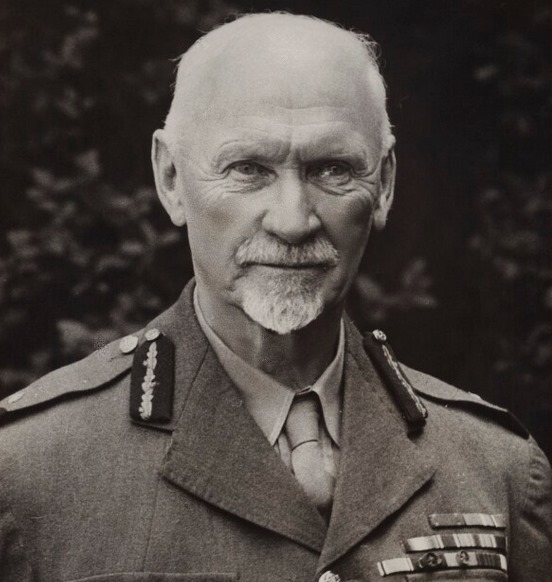
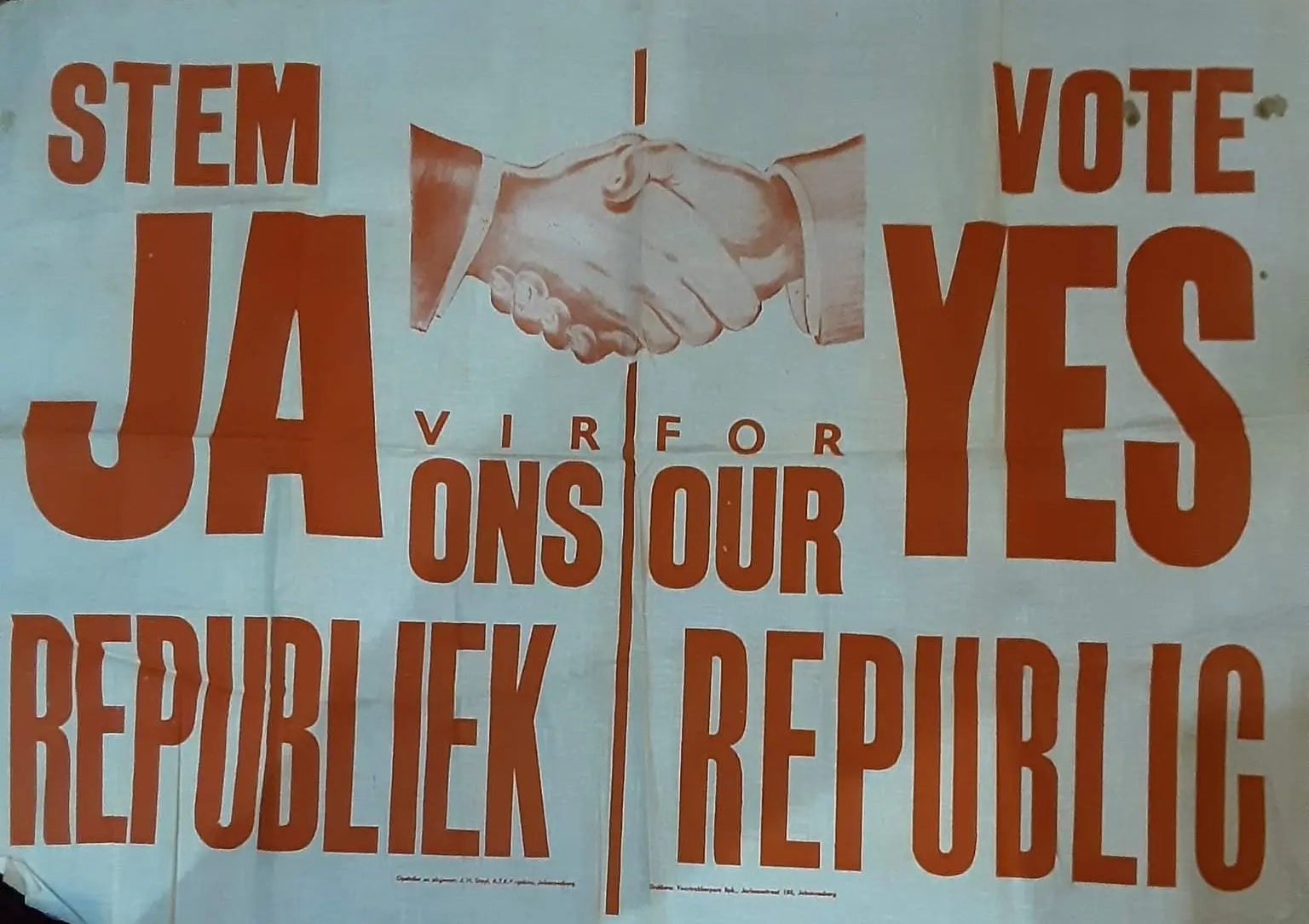
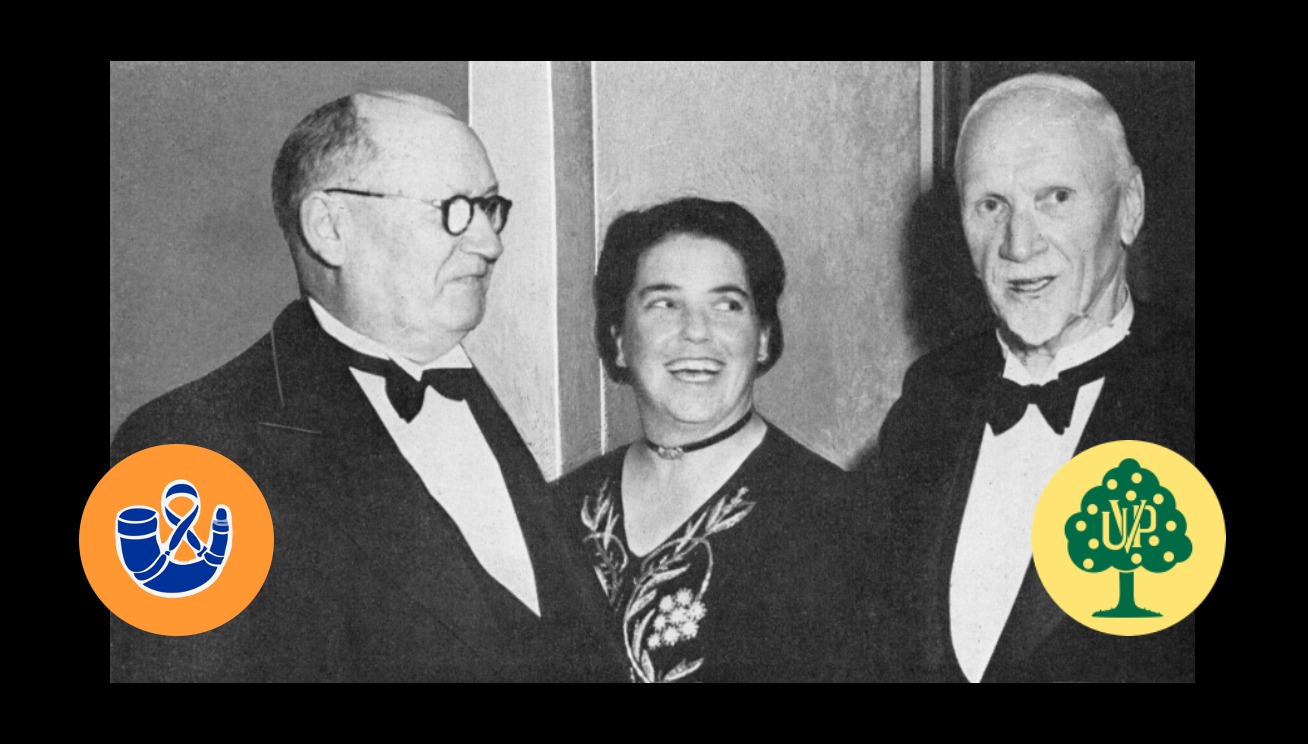
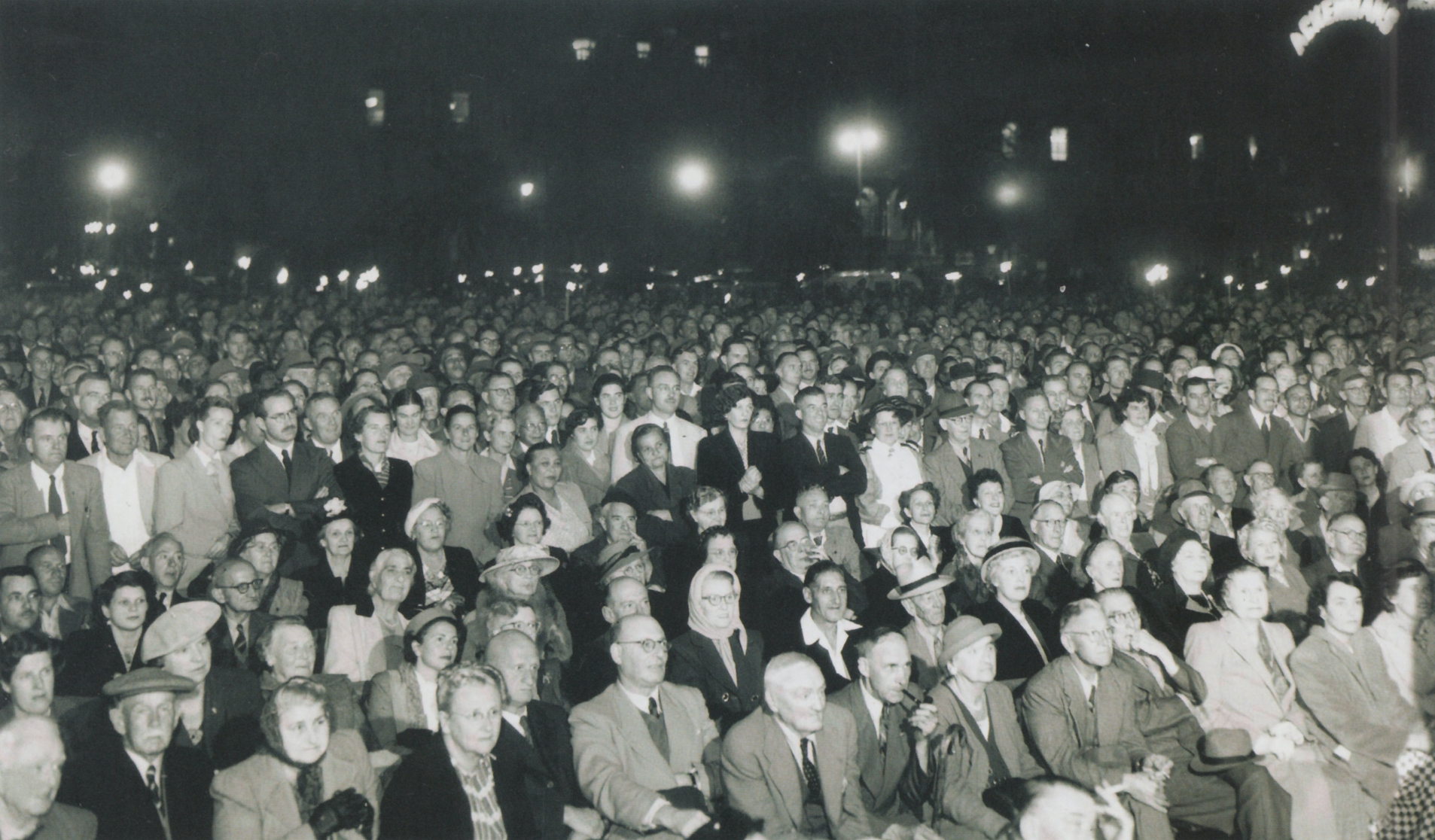
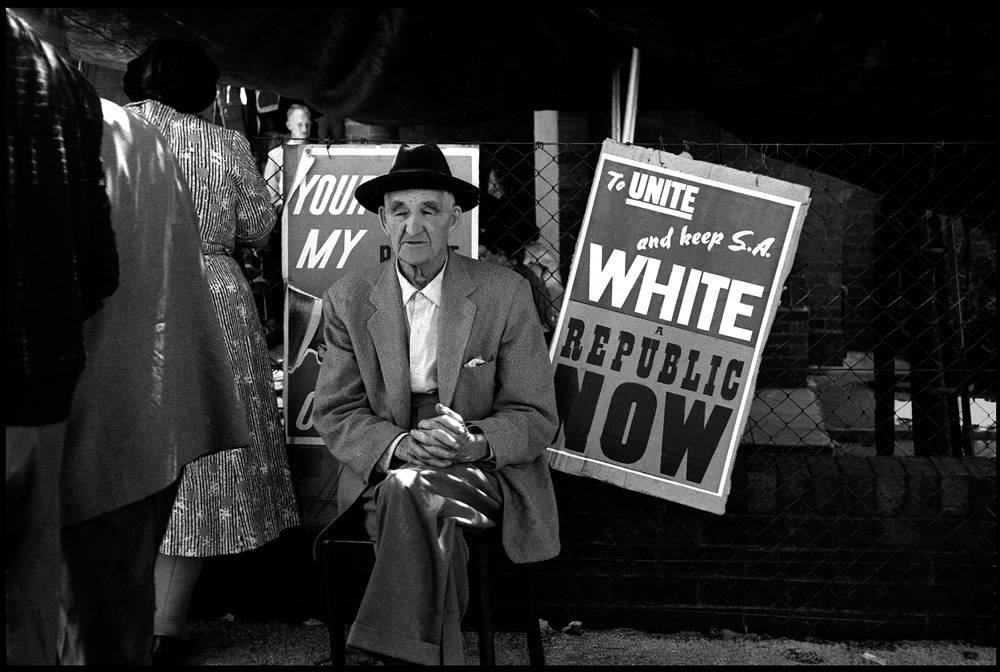
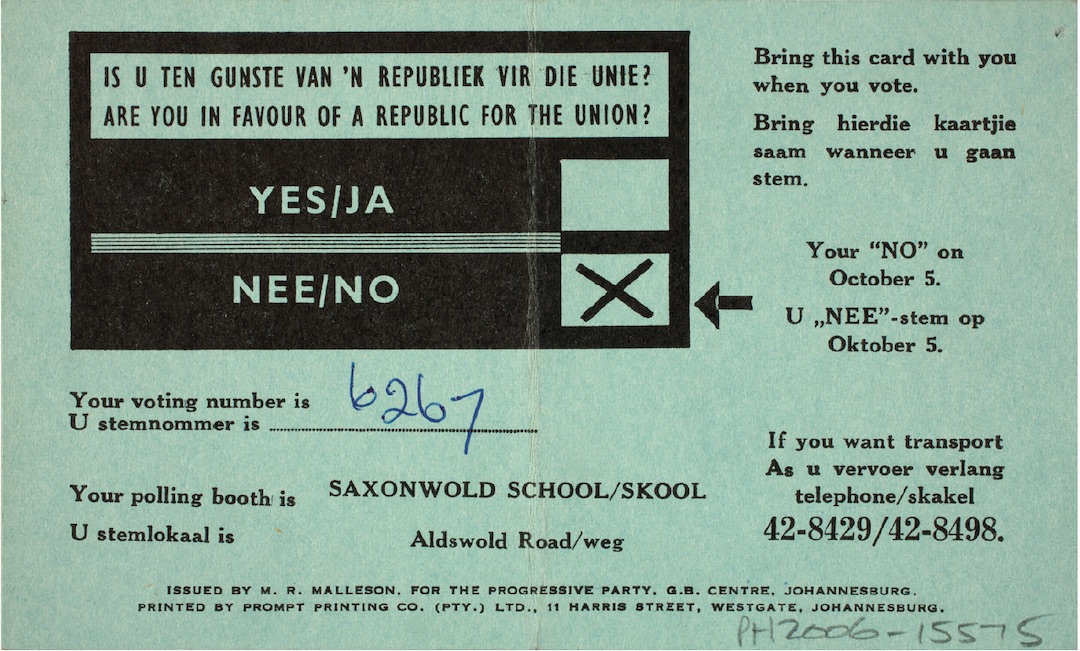
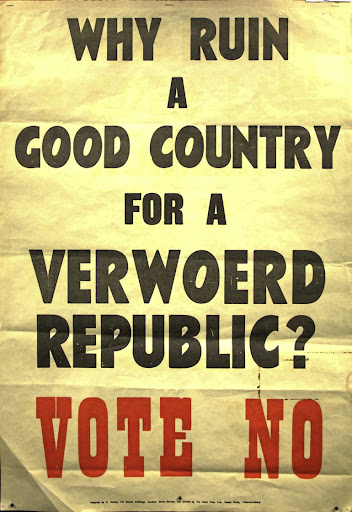
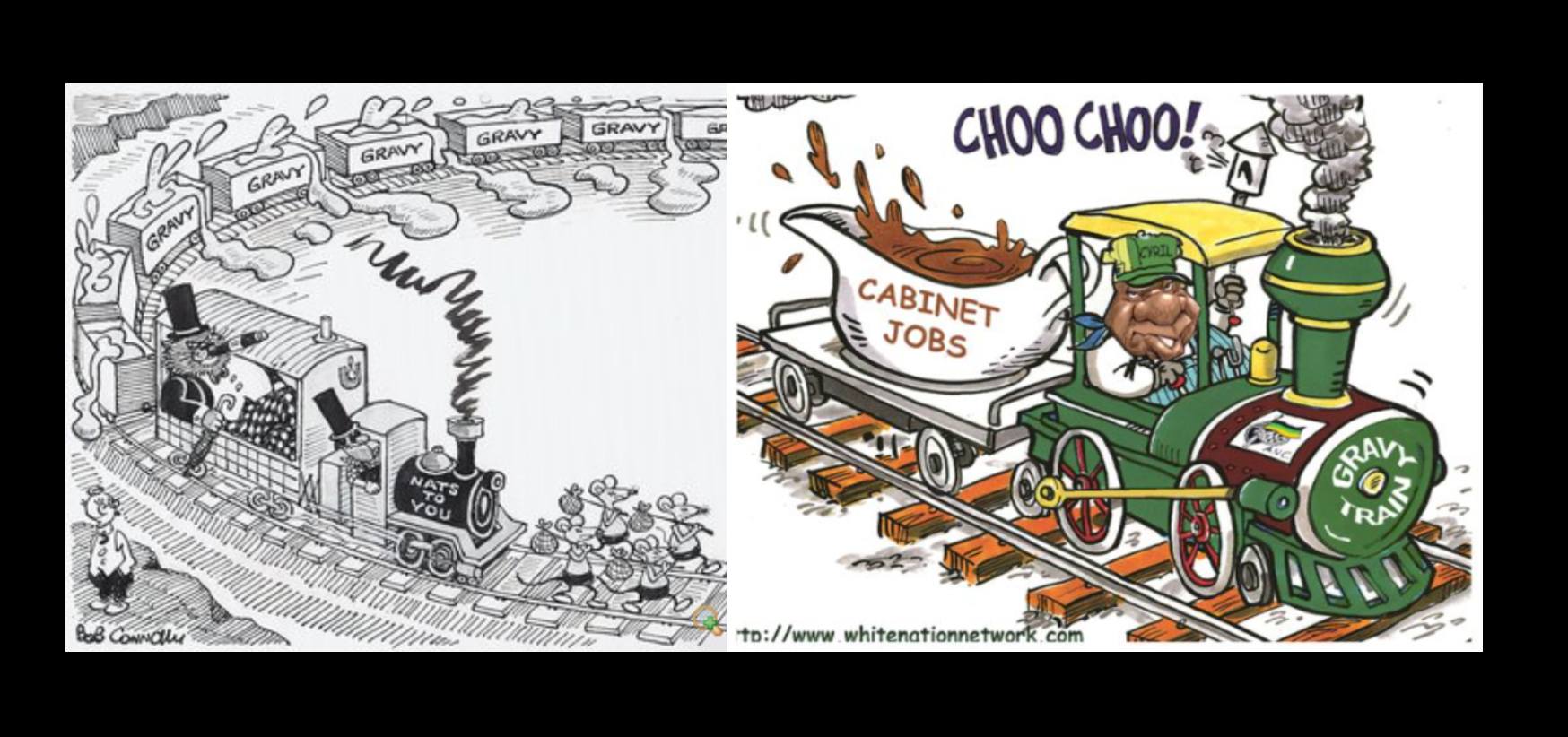
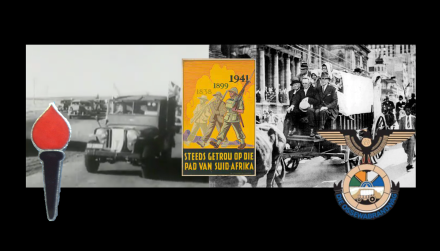

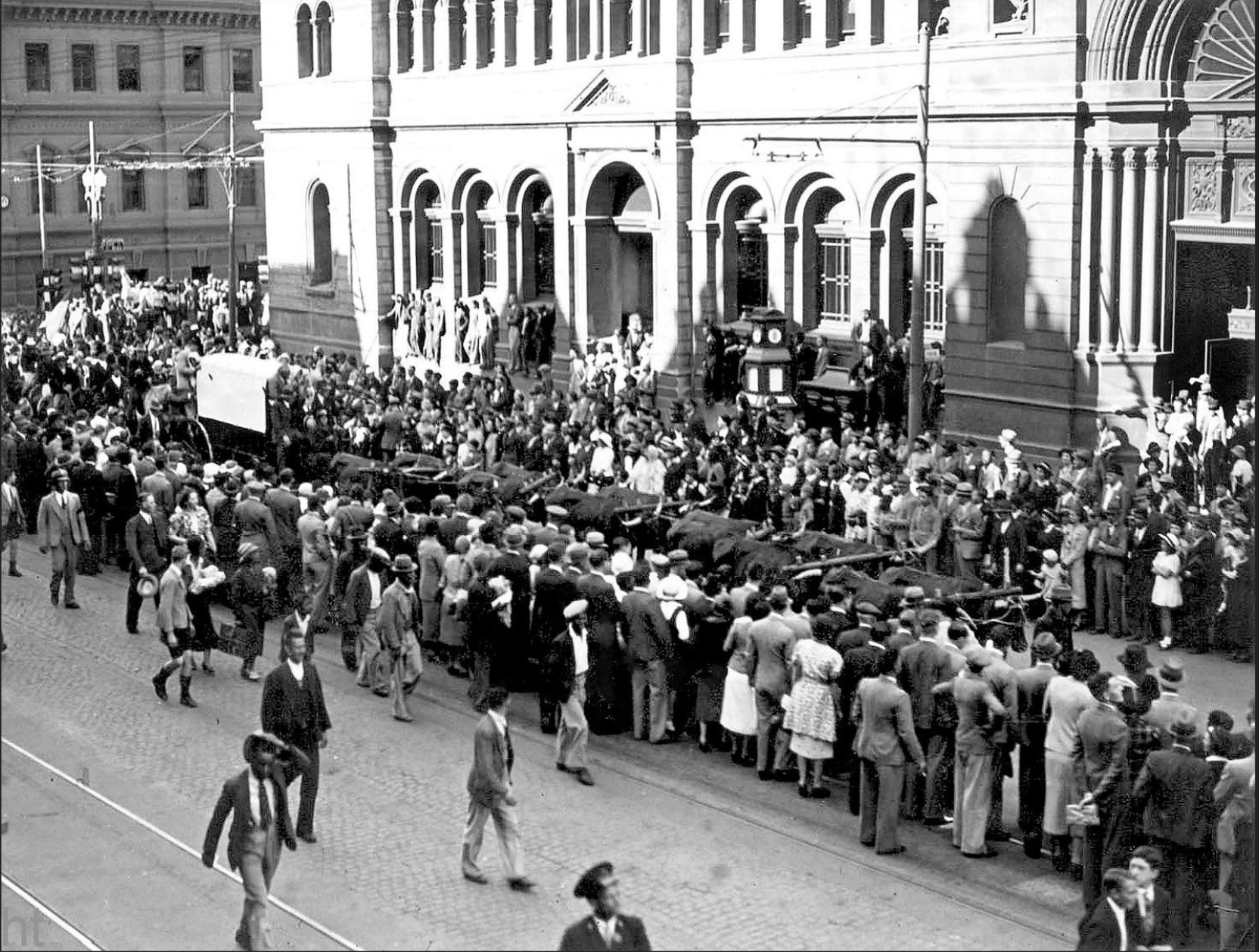
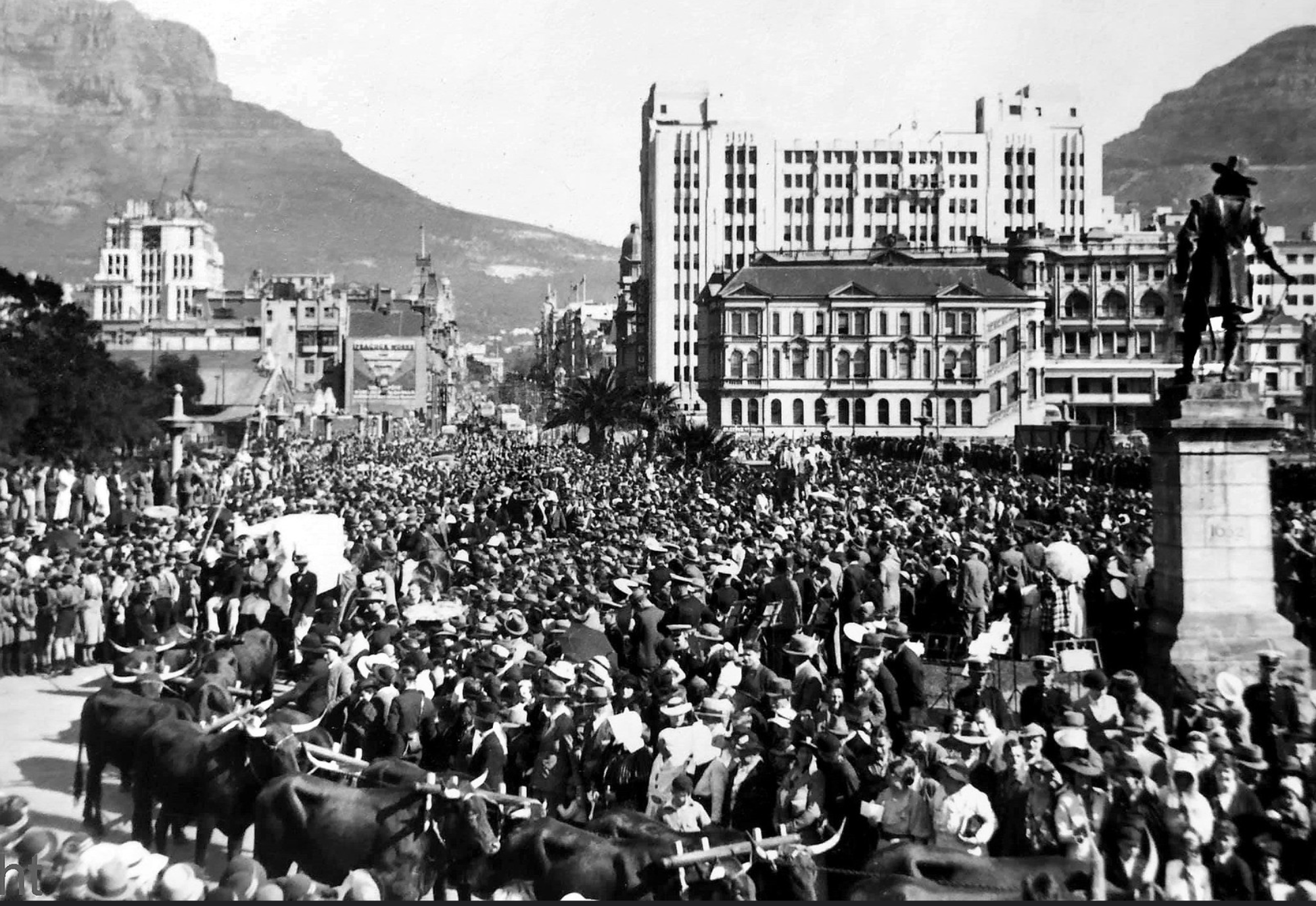
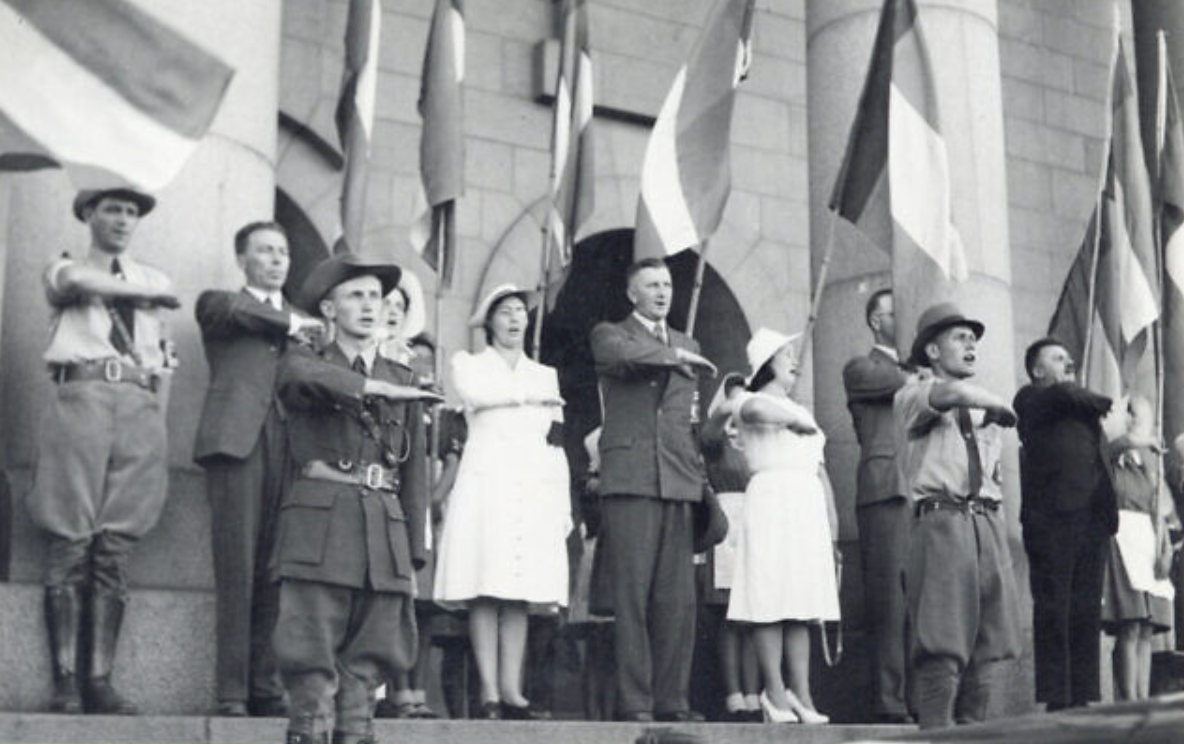

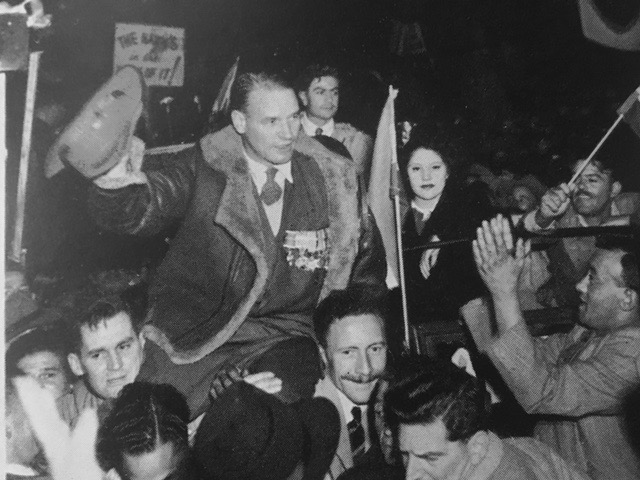


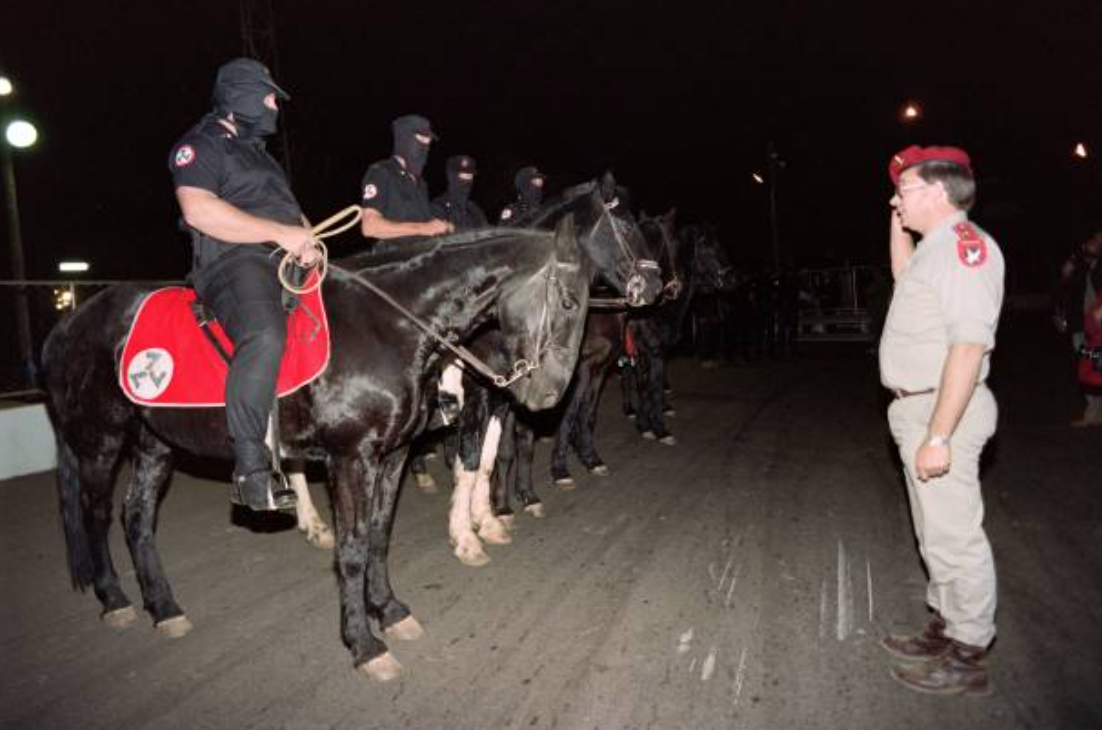
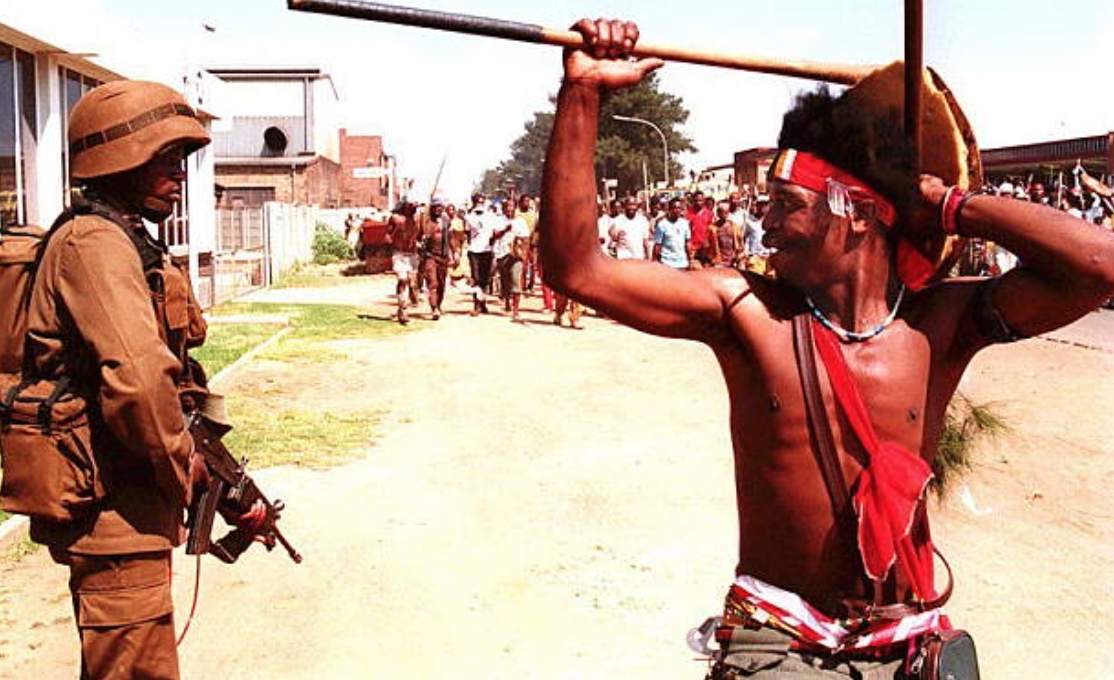




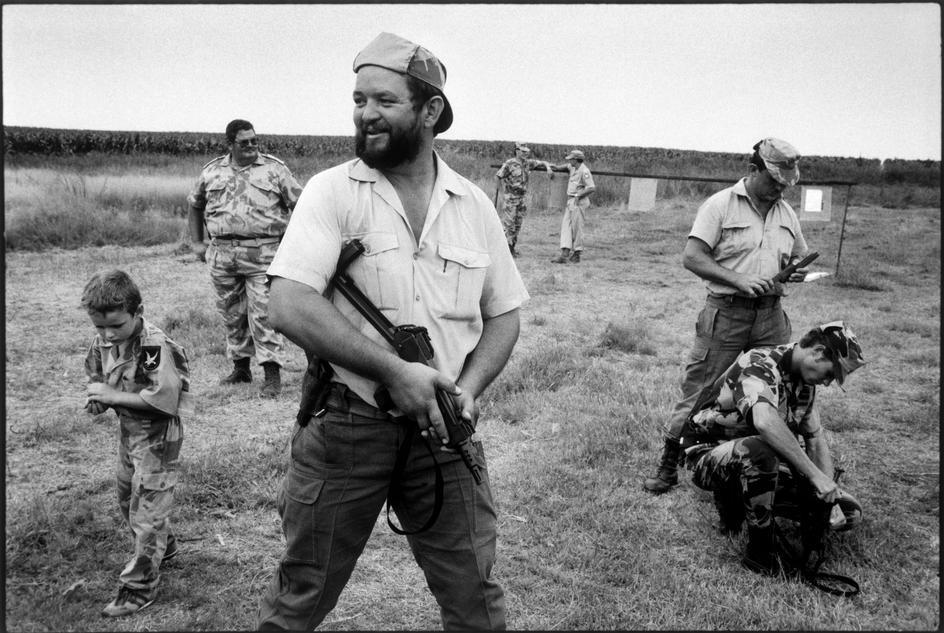


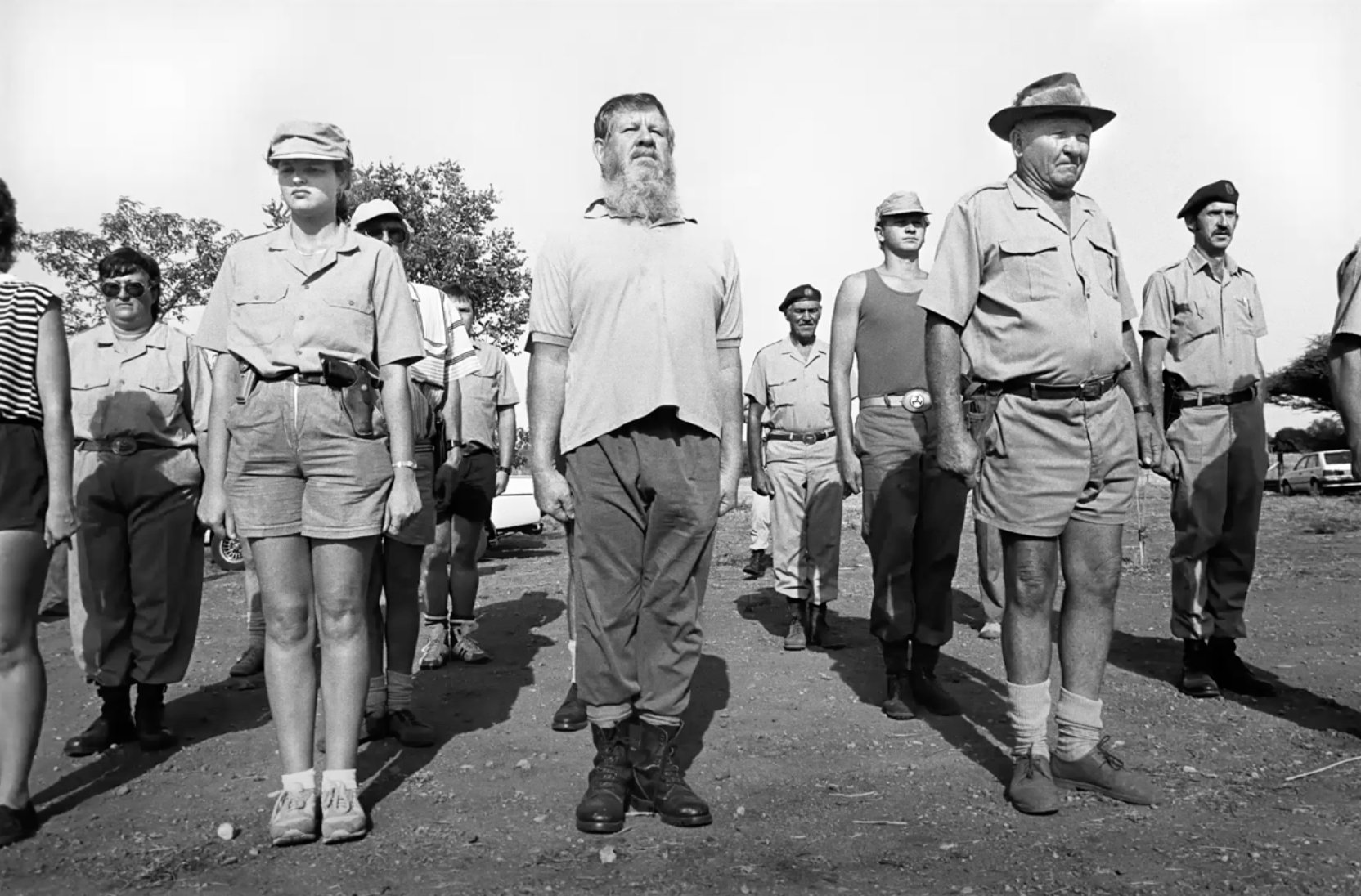

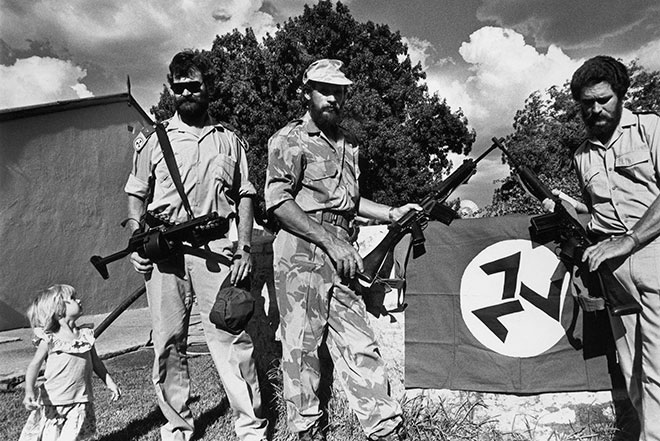

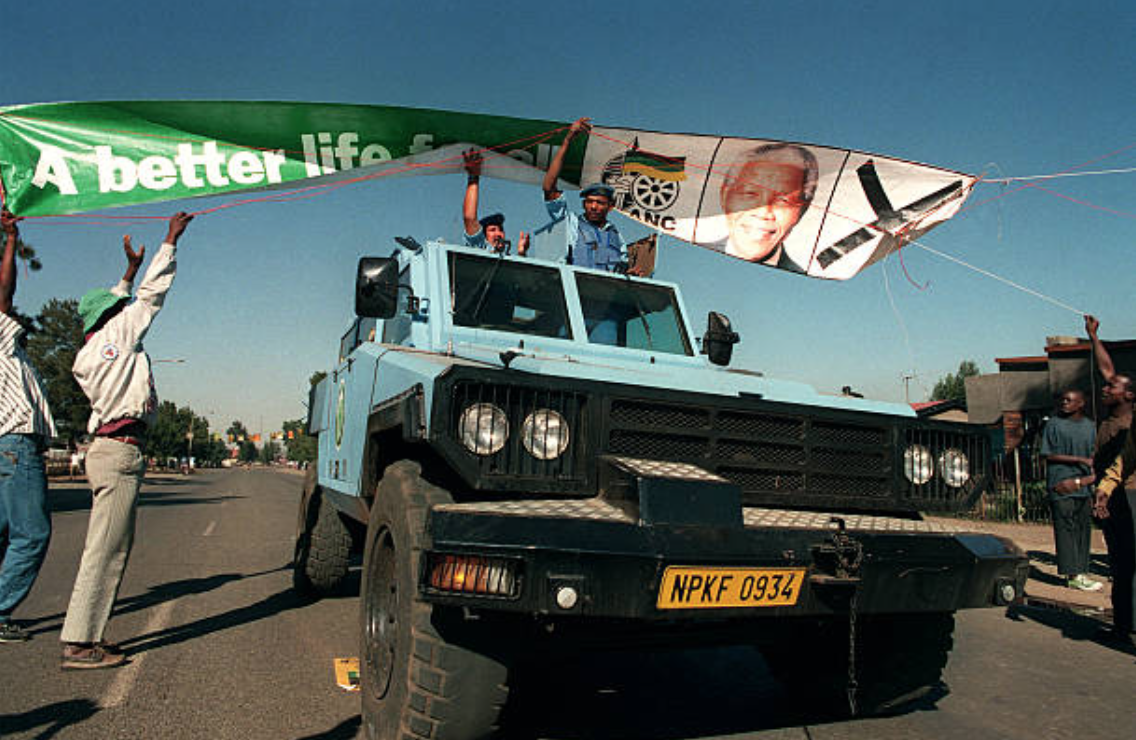


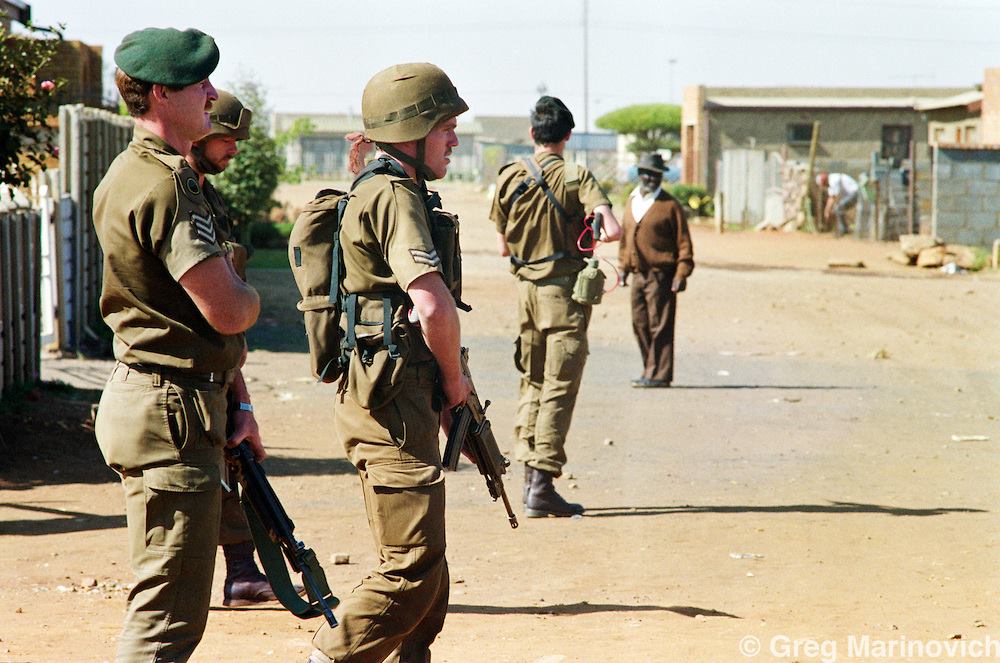
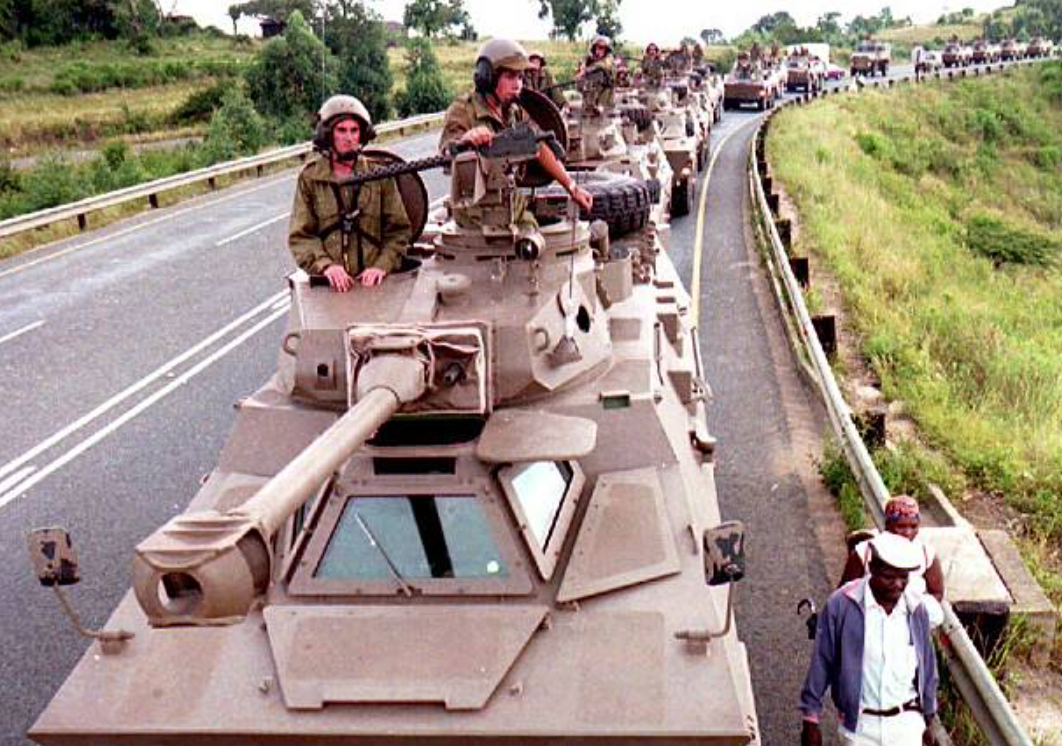


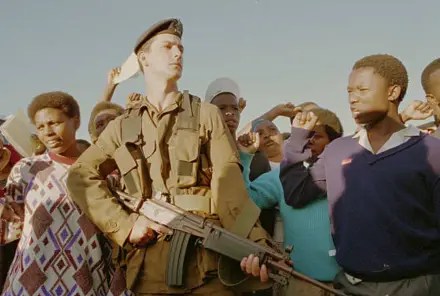
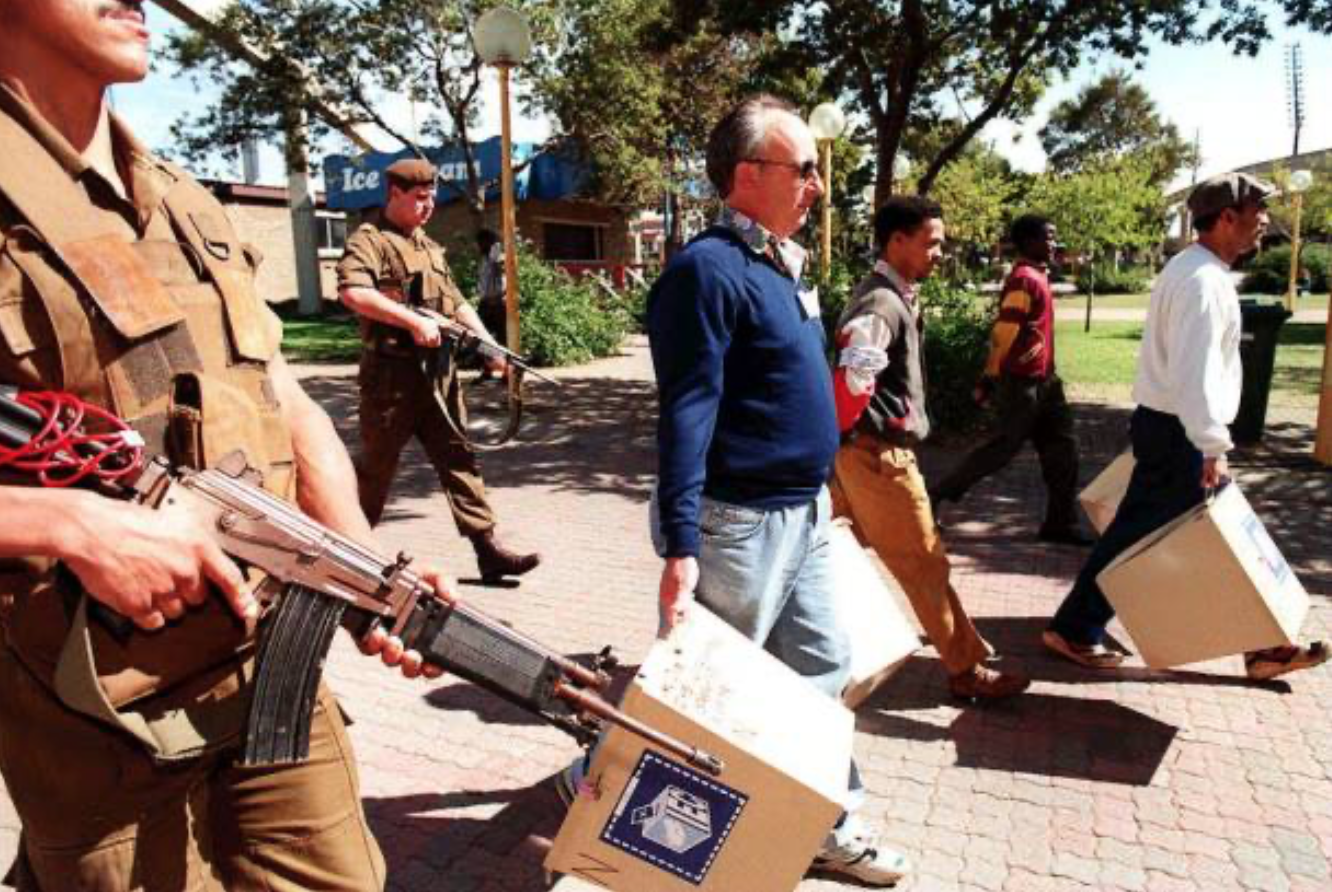

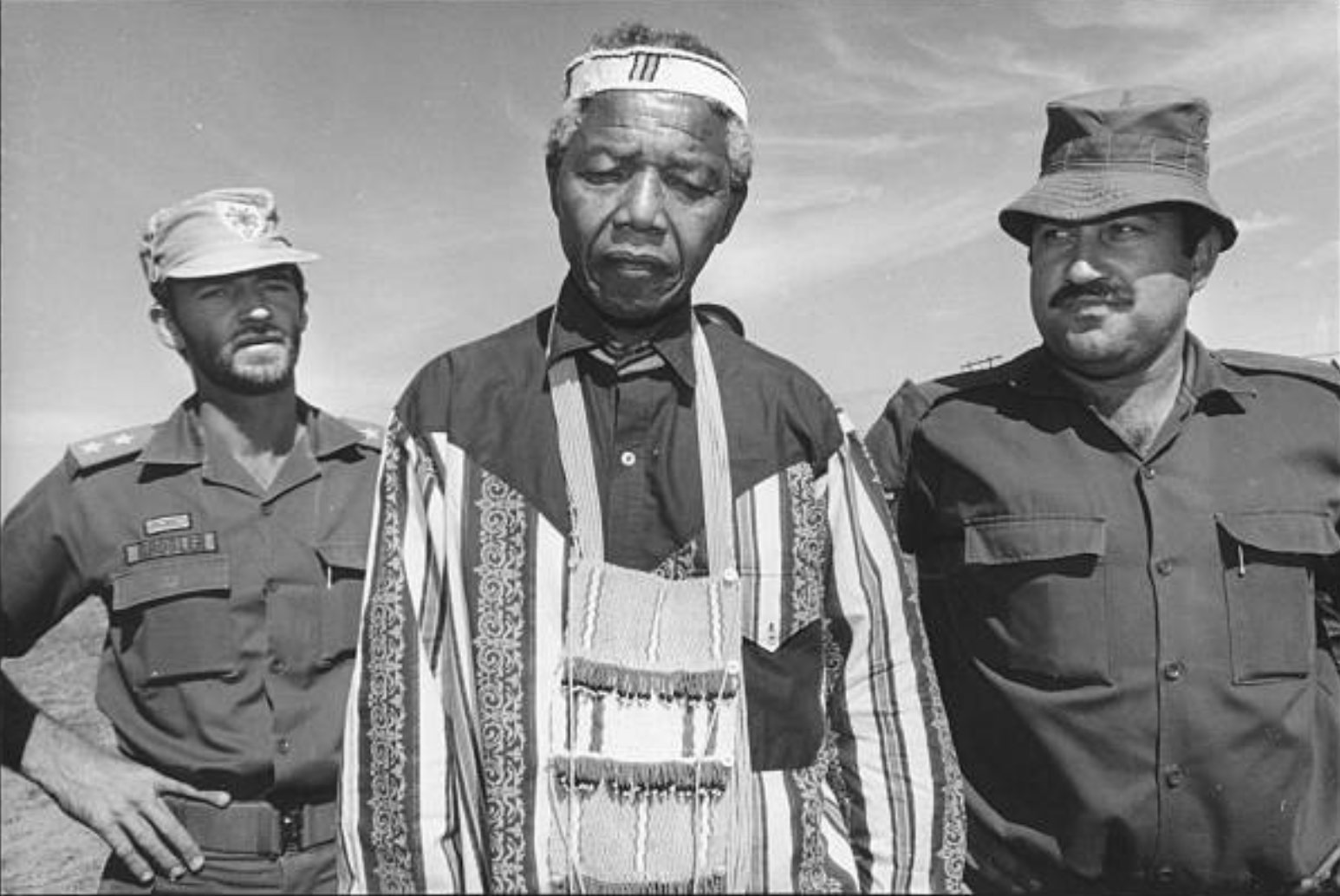
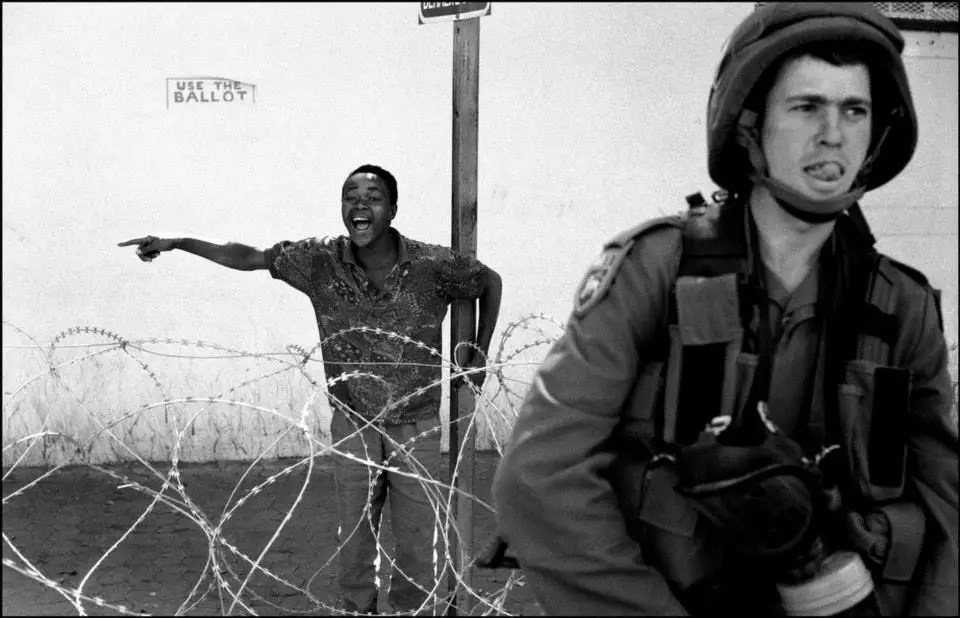
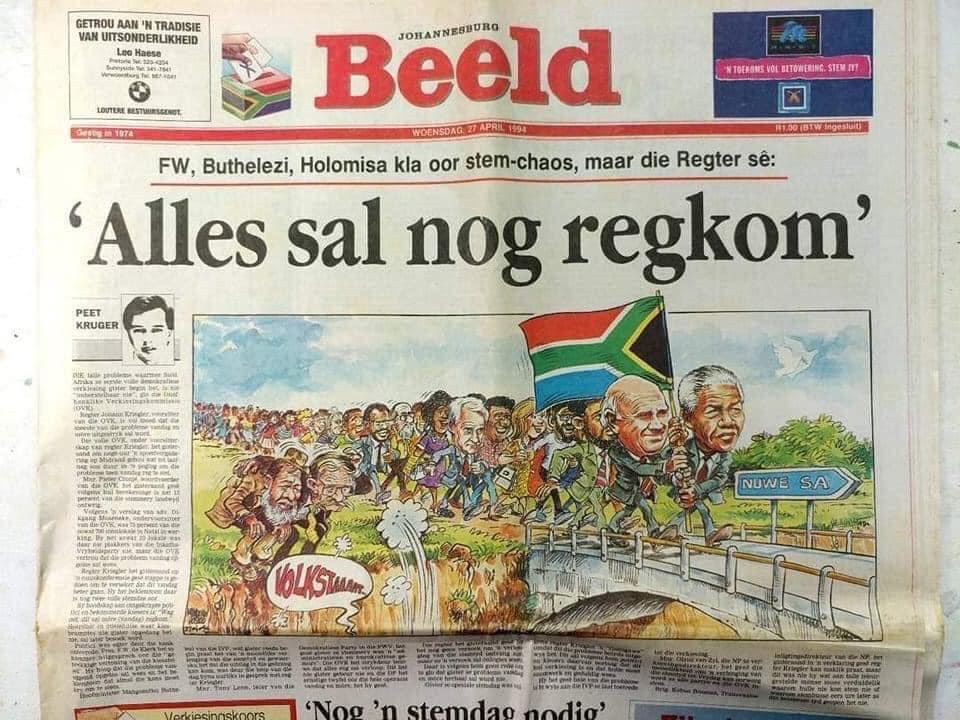
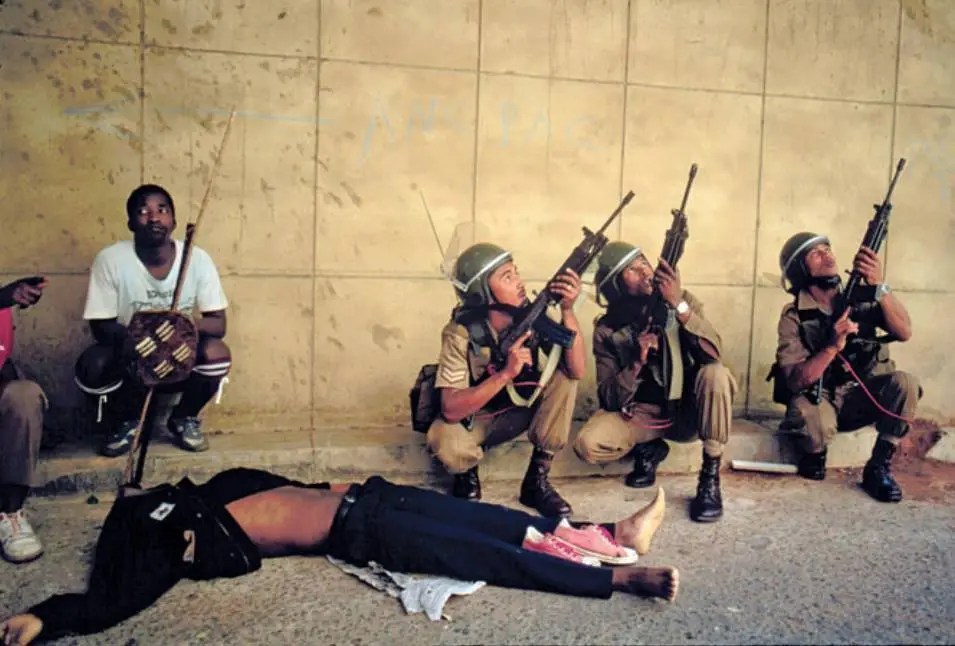
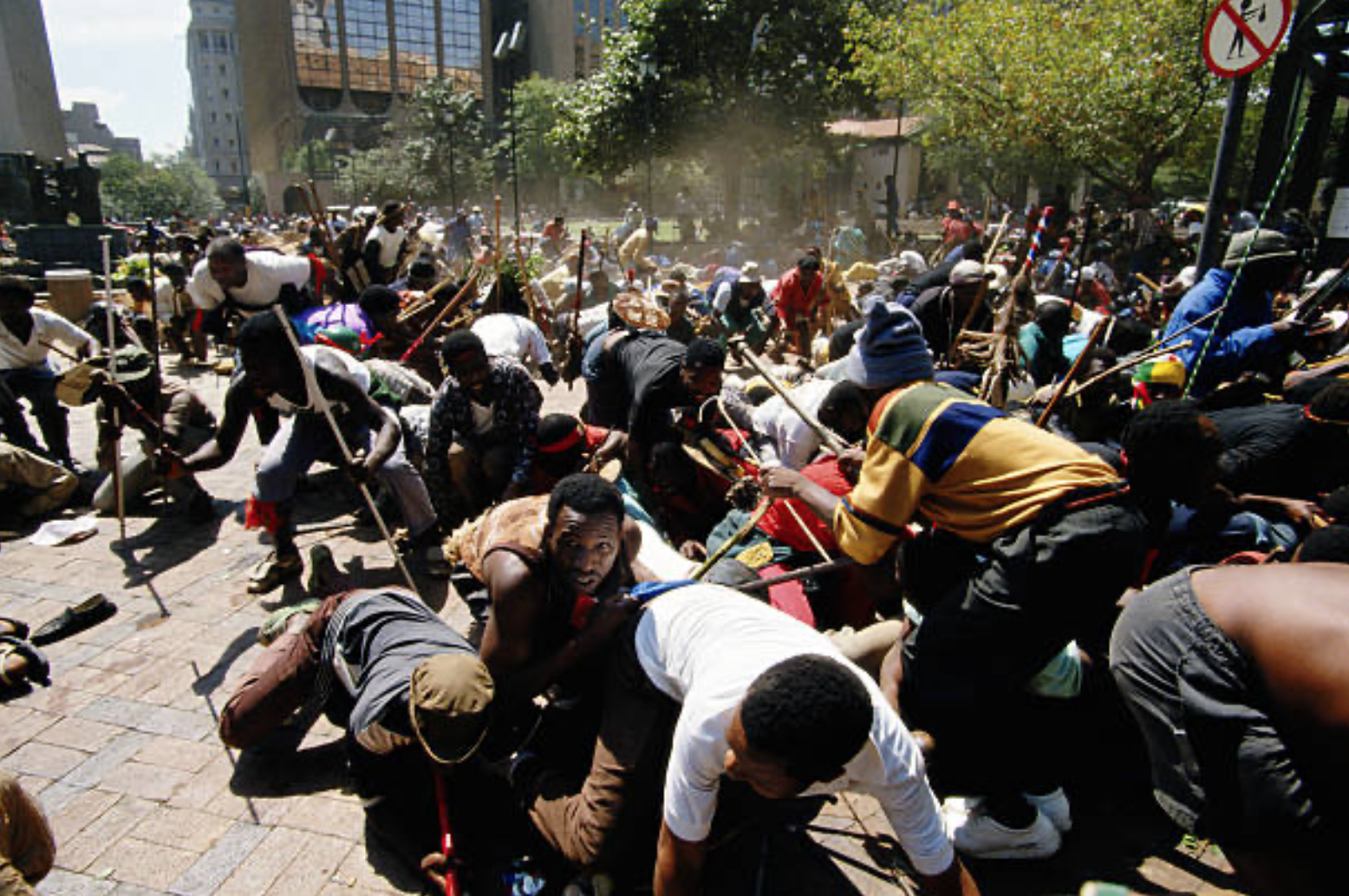
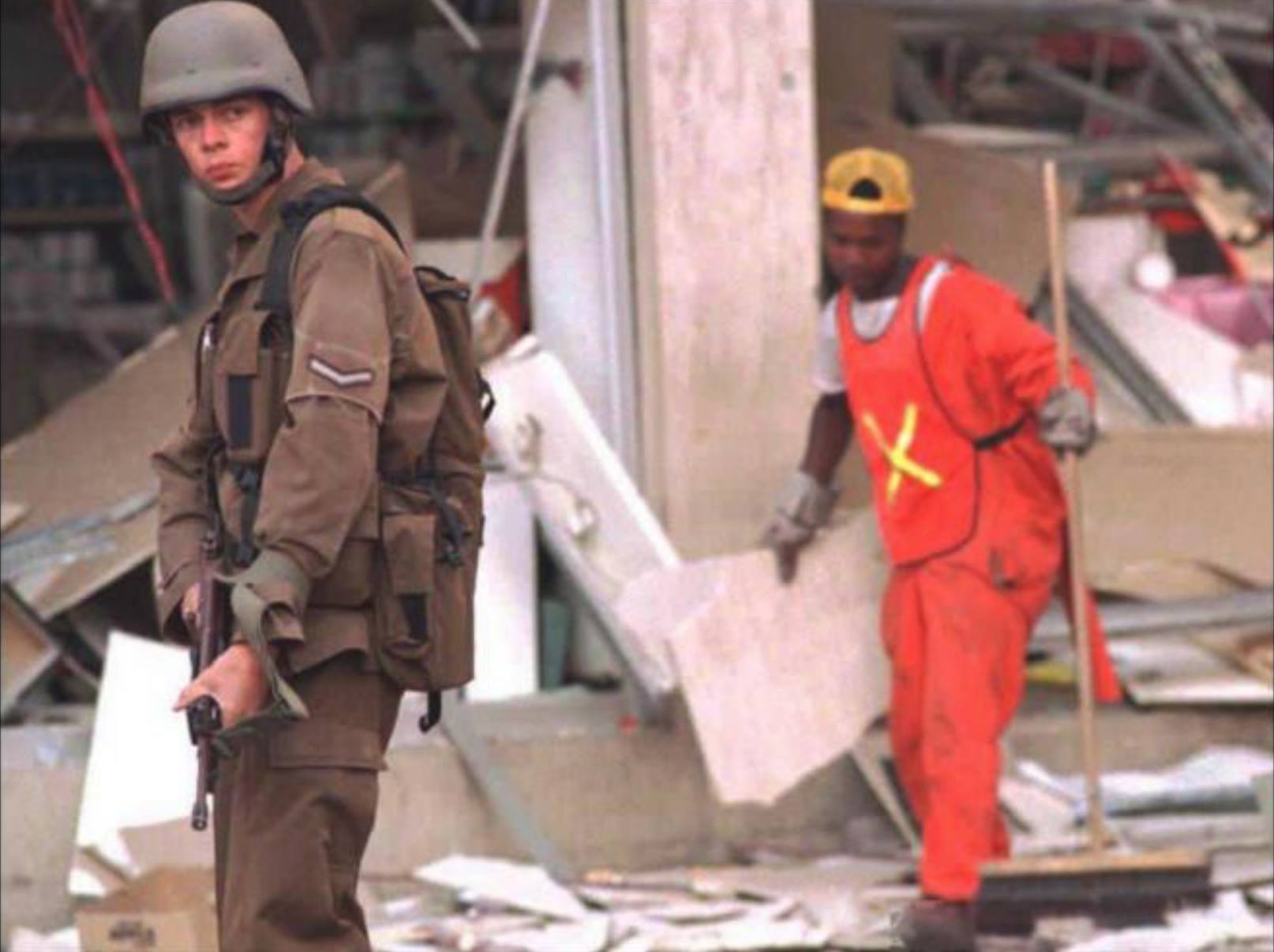
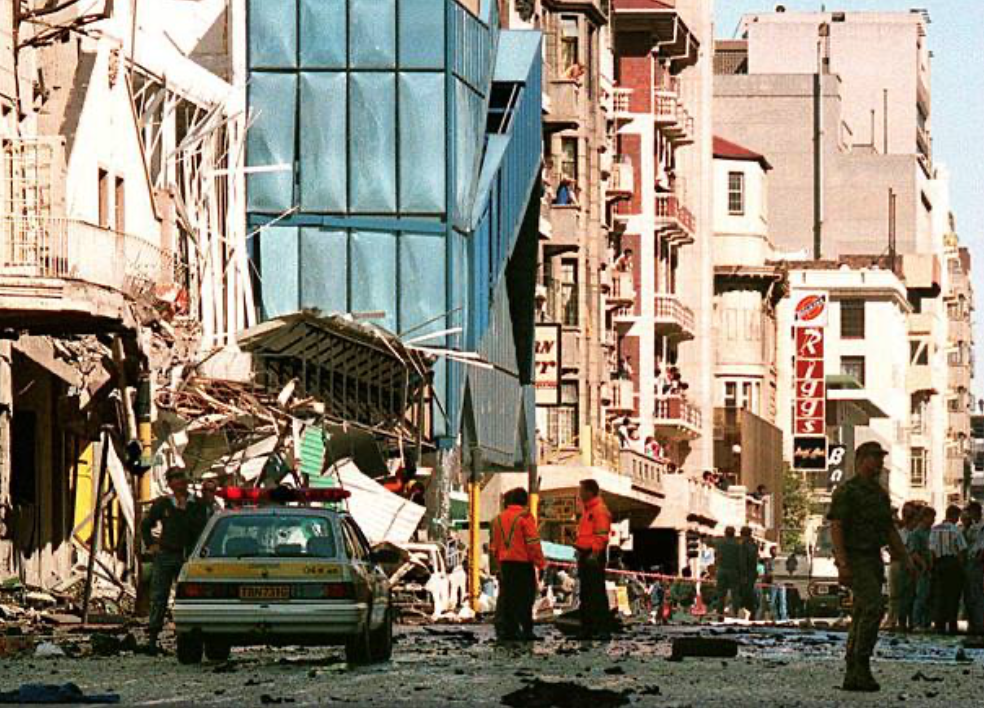



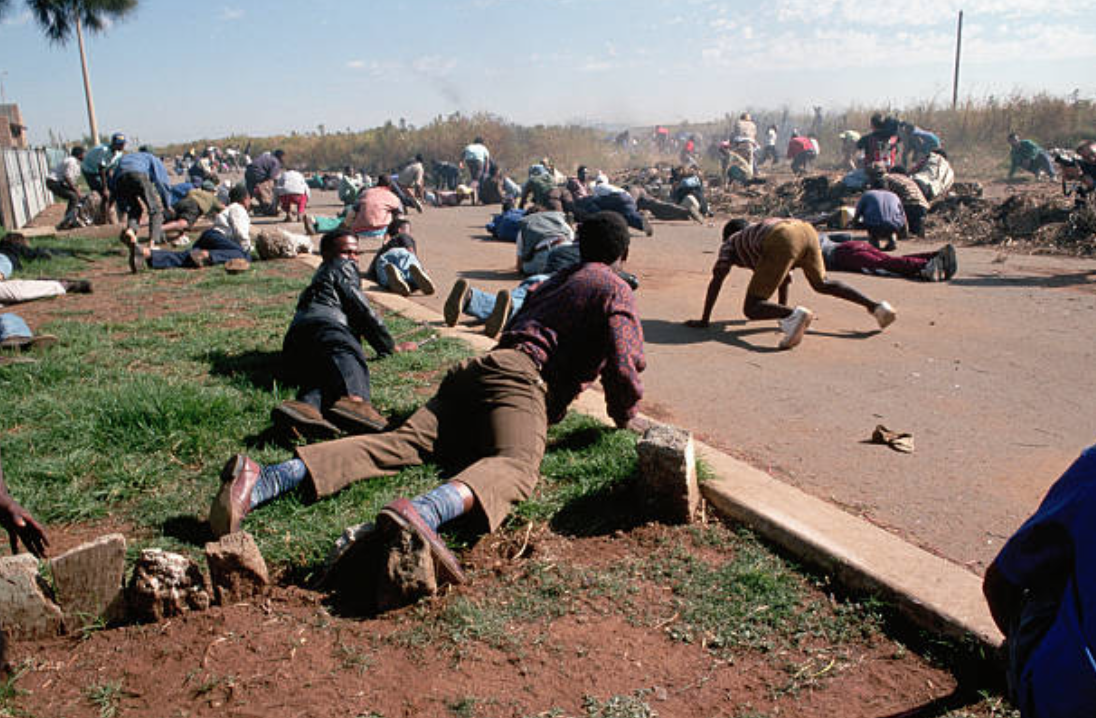




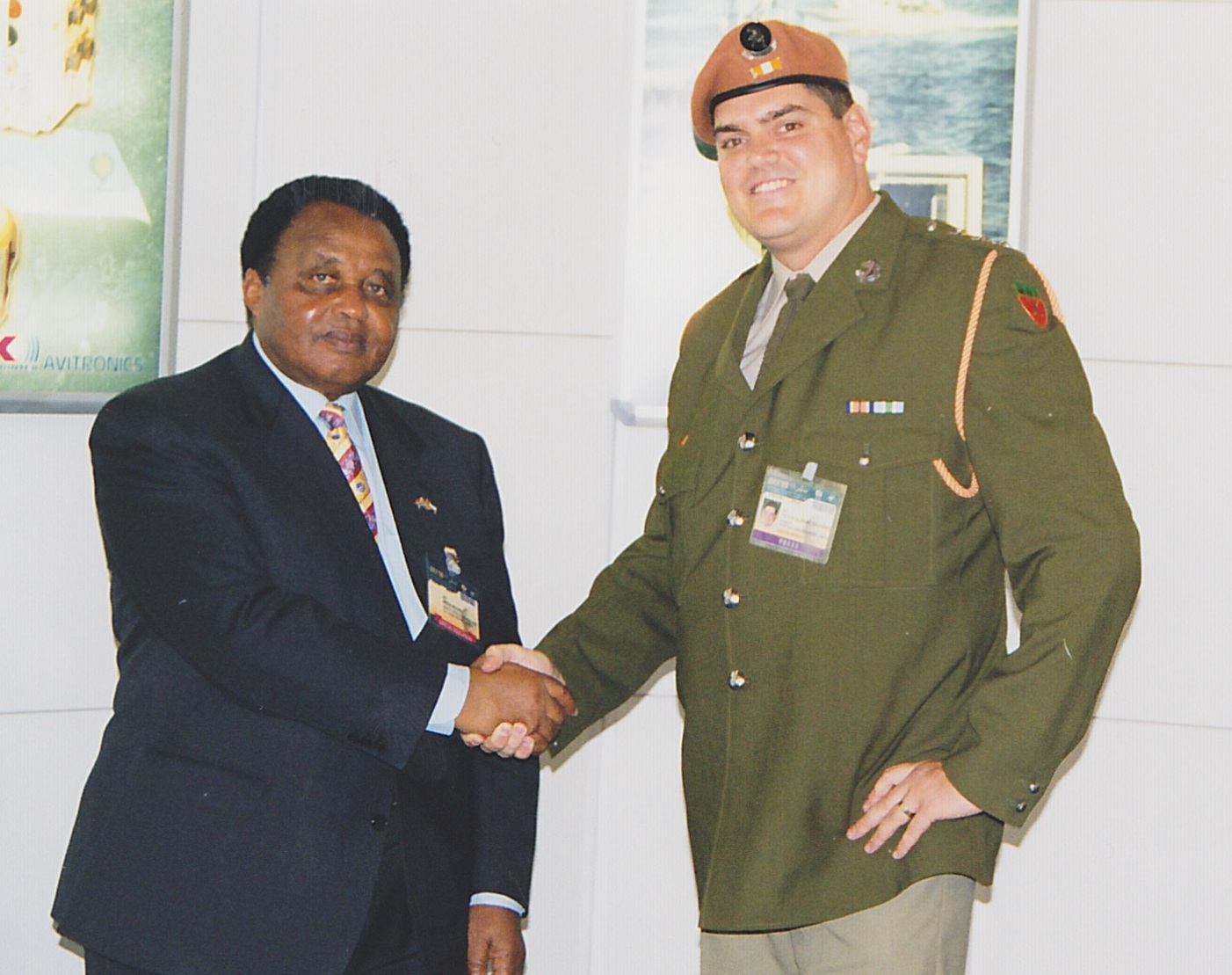
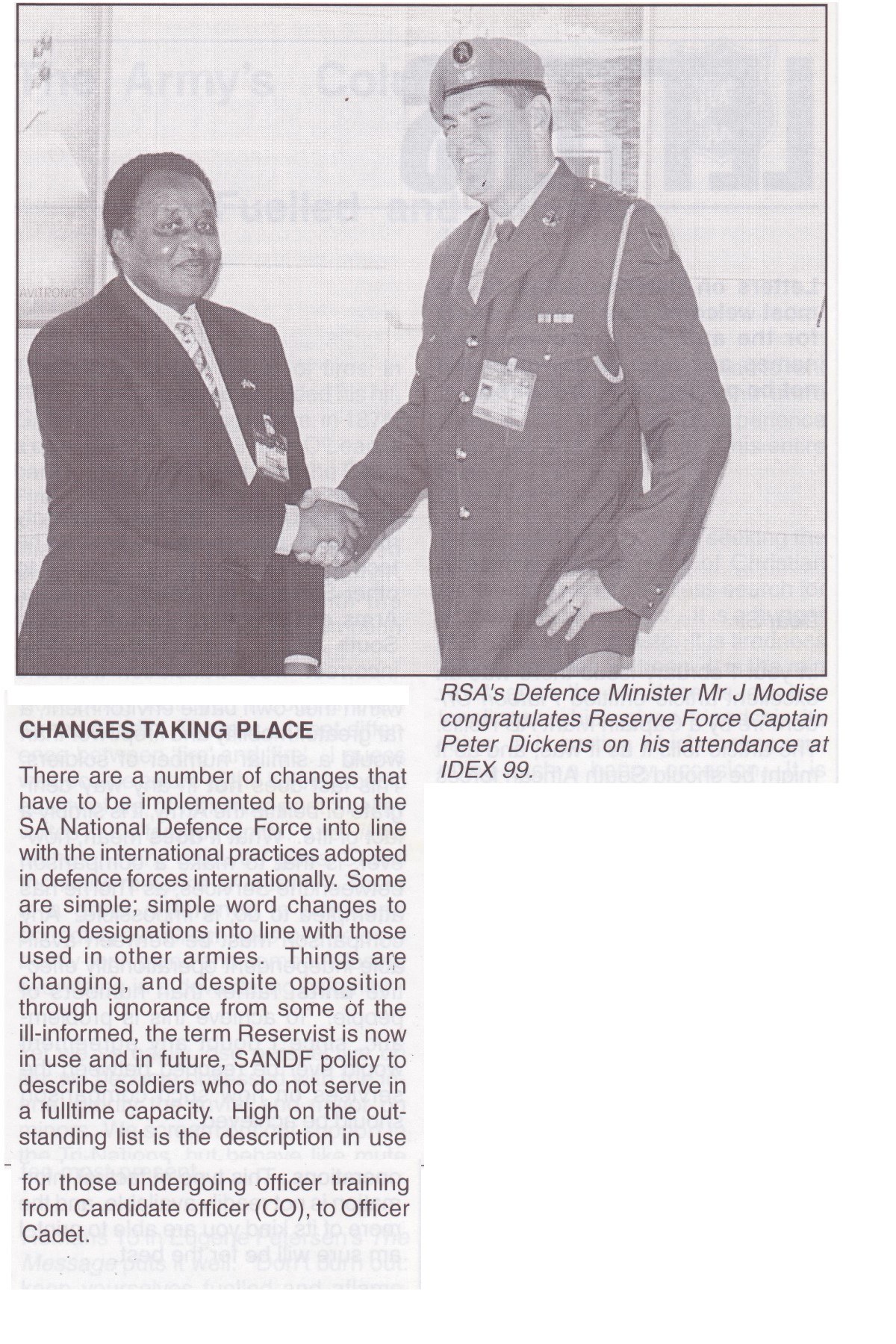


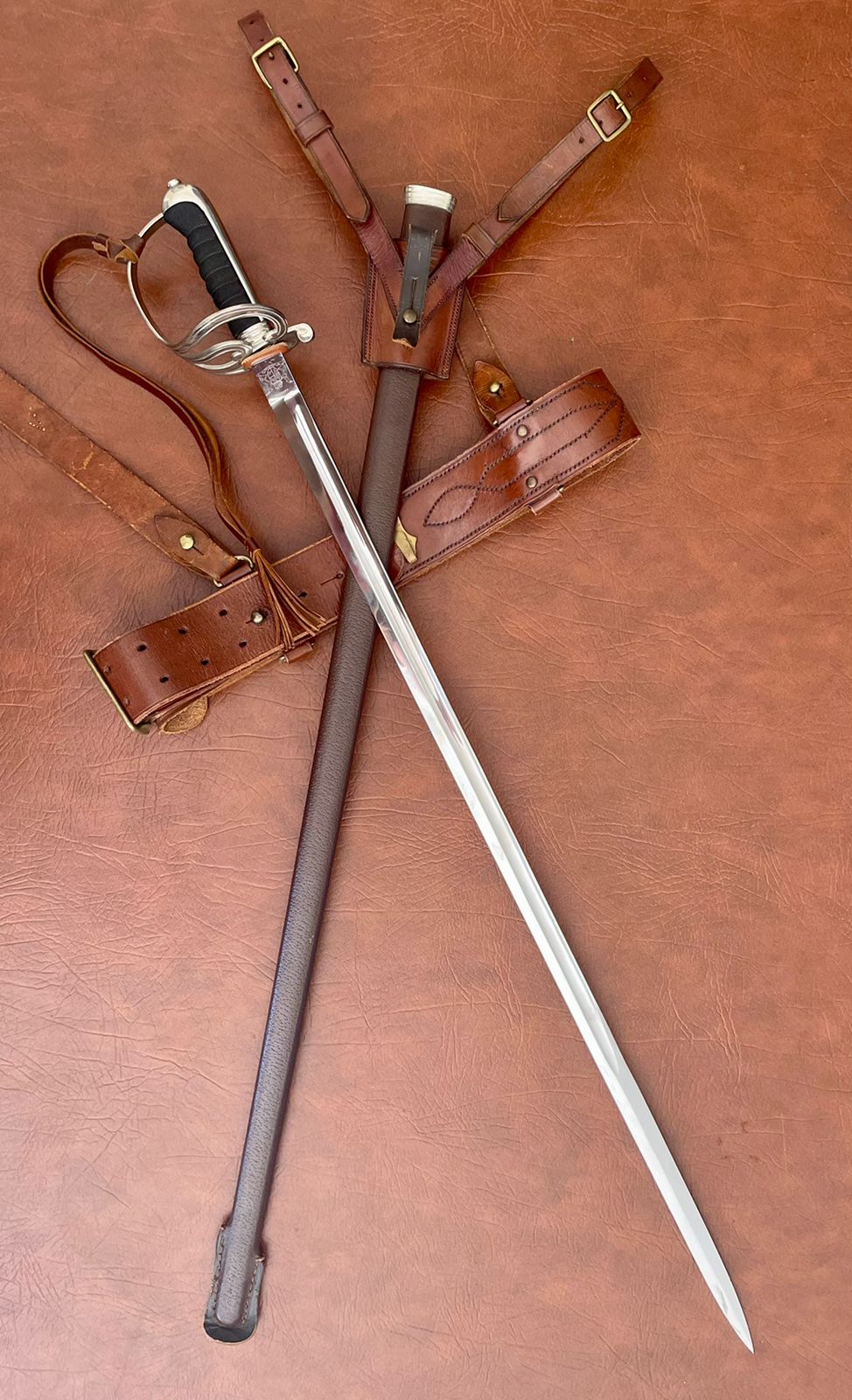
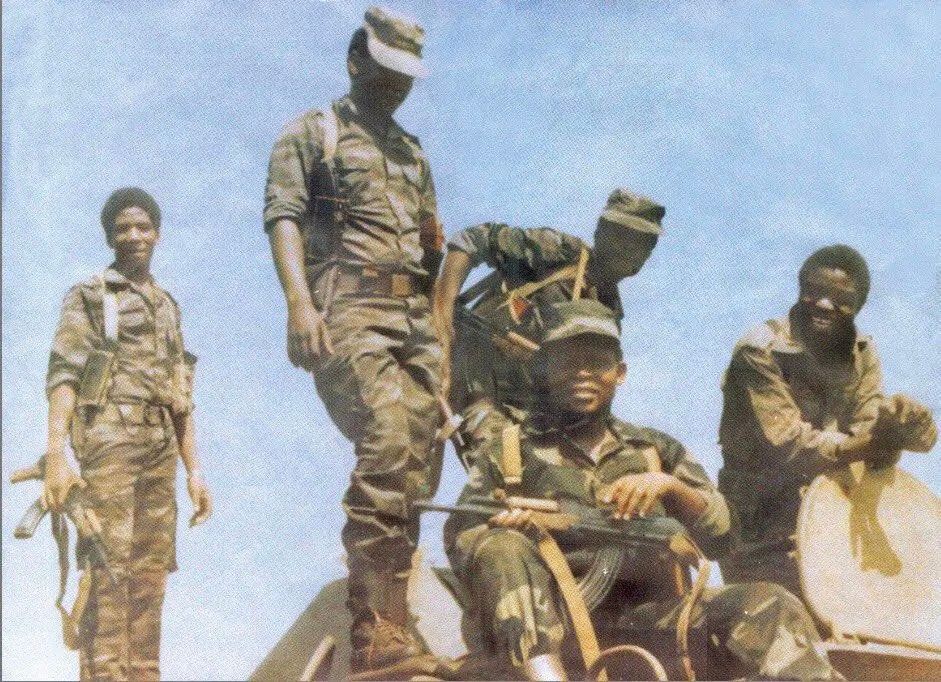
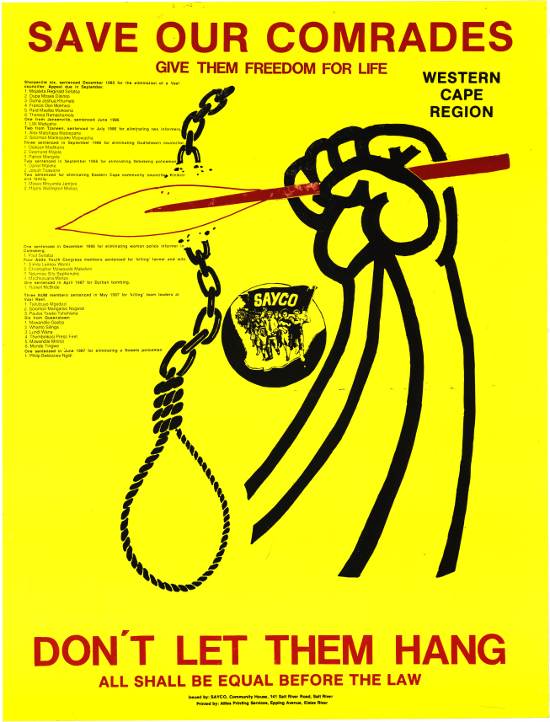
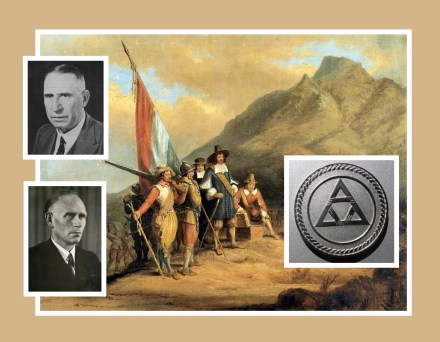
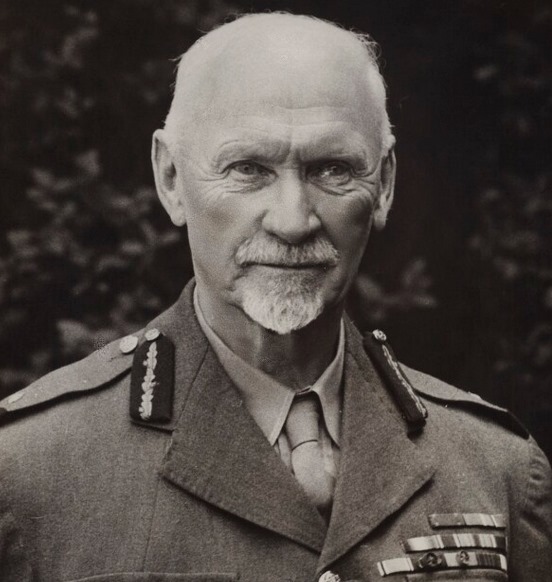
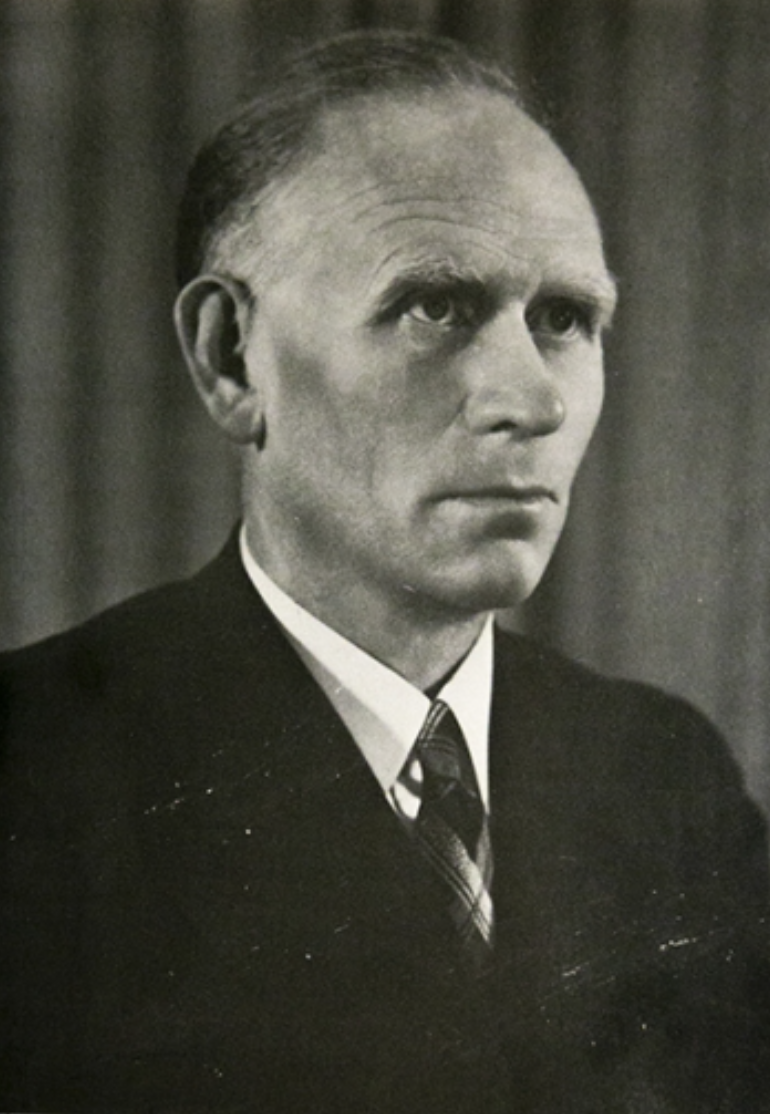
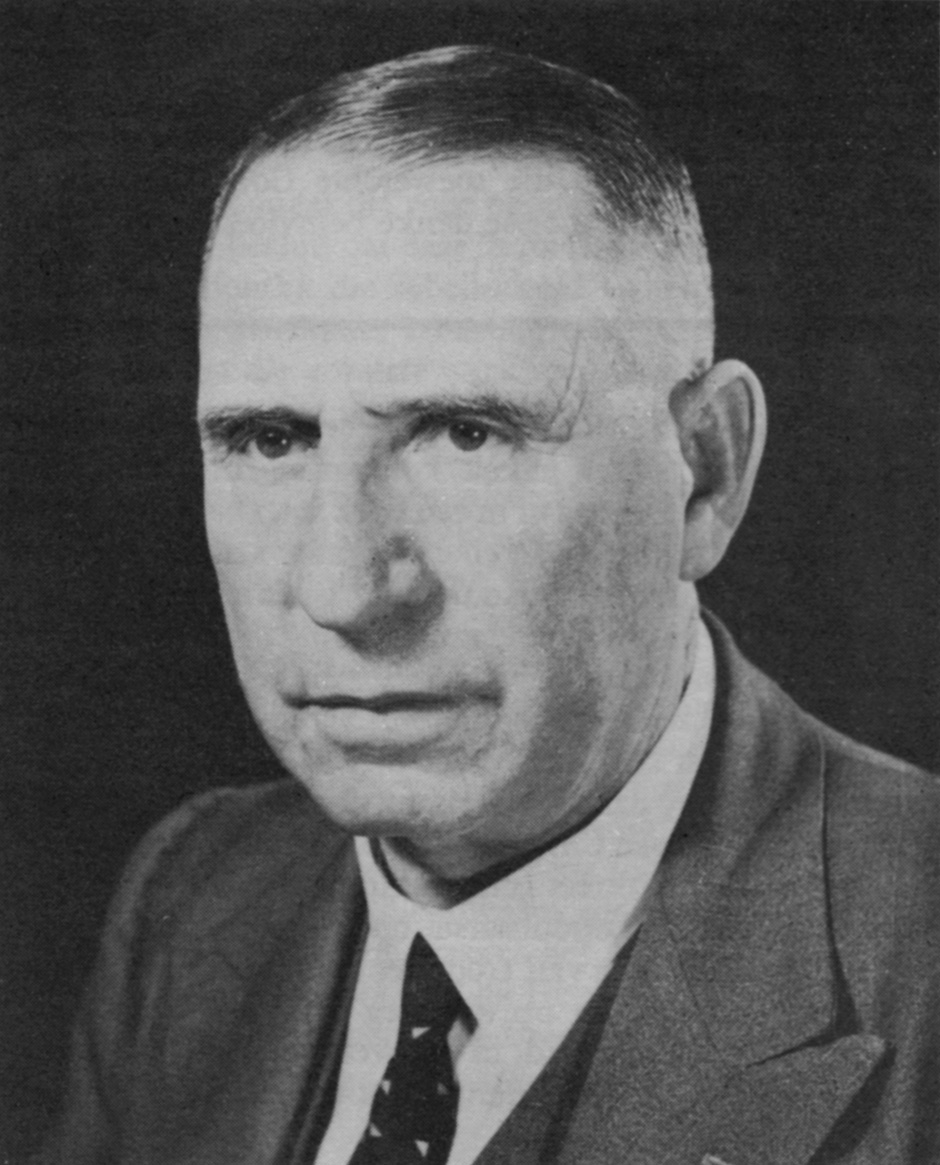
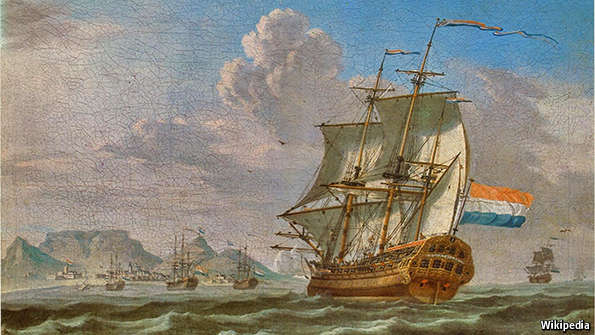
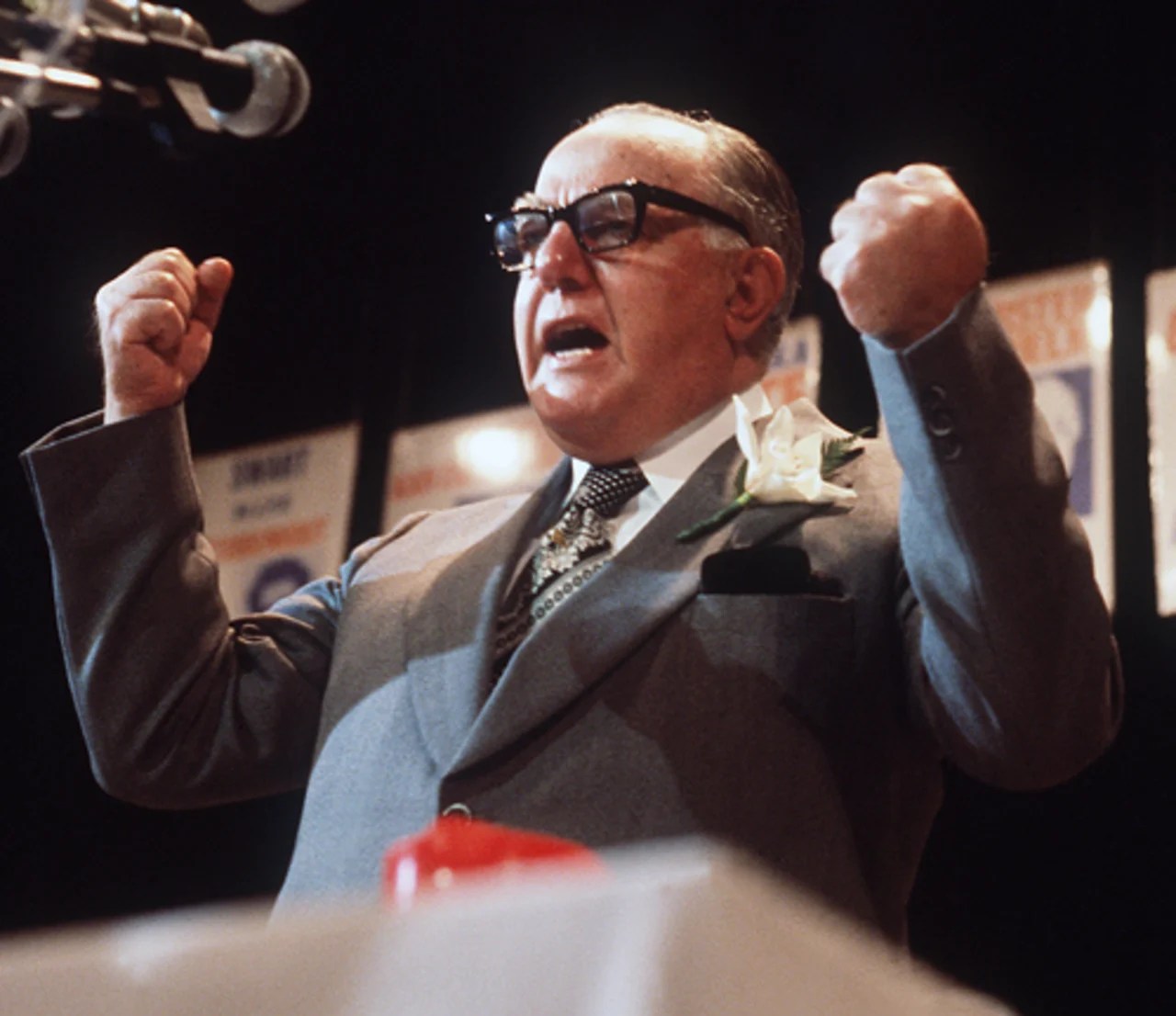
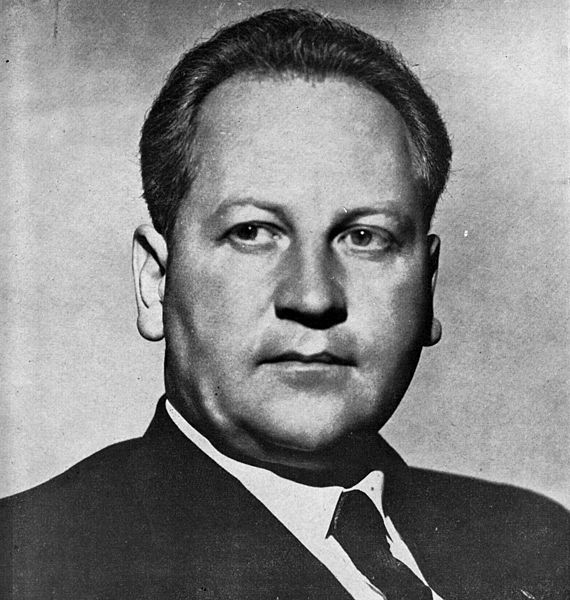
 The Observation Post