This is for the benefit of those not always understanding the language of a South African military veteran. This is a glossary of South African military terms compiled by Peter Dickens, David Kiley, Norman Sander and other veterans in The South African Legion, it is by no means definitive of all the terms used, quite a lot can be happily added and please feel free to notify me of any omissions.
Please note this list contains words that can be judged as offensive and objectionable – however as a historic document to capture the slang and terminology it needs to be as objective as possible.
SOUTH AFRICAN DEFENCE FORCE TERMINOLOGY AND SLANG
A)
Aapjas – A long, hooded coat usually with a fake fur lining ( post 1983 issue version ).
Aapkas (1) – metal platform / cage , sited on a radio mast in SWA / Angola ops bases; used as a lookout post / fire director station for base defence mortars.
Aap Kas (2) – also know as the jump simulation cable rig at 44 Para
Aangekla/kla-ed aan – Put on a charge.
AB – Navy.Able Seaman (Lance Corporal)
Adjudant – ( 1 ) commissioned officer appointed as executive officer to unit OC / 2IC .
Adjudant – ( 2 ) abridged Afrikaans form of address for rank of Warrant Officer ( SA Police).
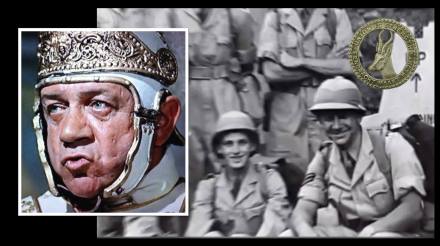
Sid James – was the famous ‘cockney’ Jack the Lad star of the “Carry On” movie series with his legendary trademark ‘naughty’ laugh. He epitomised a London ‘wide-boy’ and exists in British comedy as Super-Star.
But did you know Sid James was in fact a South African and served in the South African Armed Forces during World War Two?
Not many know this as off-screen Sid was a very private man, and when not in his ‘cockney wide-boy’ character, his South African accent would find its voice.
Sid James was born Solomon Joel Cohen, on 8 May 1913, to Jewish parents, in South Africa, later changing his name to Sidney Joel Cohen, and then Sidney James.
His family lived on Hancock Street in Hillbrow, Johannesburg. Upon moving to Britain later in life, he claimed various previous occupations, including diamond cutter, dance tutor and boxer; in reality he had trained and worked as a hairdresser.
It was at a hairdressing salon in Kroonstad, Orange Free State that he met his first wife. He married Berthe Sadie Delmont, known as Toots, on 12 August 1936 and they had a daughter, Elizabeth, born in 1937. His father-in-law, Joseph Delmont, a Johannesburg businessman, bought a hairdressing salon for James, but within a year he announced that he wanted to become an actor and joined the Johannesburg Repertory Players. Through this group he gained work with the South African Broadcasting Corporation.
Sid’s abandonment of his hairdressing career and then his young bride and child was the last straw for her wealthy father (who apparently ‘put a price’ on our man’s head), so Sid decided to cut his losses and join the army. Sid was never to look back, as when he volunteered to join the South African Army World War 2 had just broken out, and funnily the war aided that aided his emerging career in the performing arts.
After a stationing with the South African Tank Corps in Abysinnia, Sid felt his talents were better used in troop morale, so he joined the Entertainment Unit of The South African Army, he was initially made a corporal and proceeded to put on shows for his fellow troops.
During this time, he was also caught under heavy fire at the notorious ‘Fall of Tobruk’, South Africa’s largest capitulation of arms, he managed to escape Tobruk ahead of Rommel’s forces and was eventually promoted to the rank of Staff Sergeant. Sid was eventually given a commission as a lieutenant in the entertainment unit, and subsequently took up acting as a career.
Around this time he acquired for himself a second wife, another South African – dancer Meg Sergei, and come the war’s end and his demobilisation, the couple’s showbiz ambitions saw them leave their homeland for the glamour of London.
Sid and Meg arrived in the UK on Christmas Day 1946 and, amazingly enough, within days he’d landed himself not just an agent but a small role, the rest is movie and show-biz history.
Ironically Sid died in complete character with his trademark ‘dirty laugh’ at the Empire Theatre on Monday, April 26, 1976. He was appearing in a suitably smutty comedy called ‘The Mating Game’. Sitting next to Sid on the stage was actress Olga Lowe, an old friend from his early days in his native South Africa, and he died of a heart attack staring at her breasts … a “Jack the Lad” to the end.
Written and Researched by Peter Dickens. Reference Wikipedia and The ghost of comic legend Sid James by Ian Robson. Video Clip – YouTube, master image of South African troops in North Africa during World War 2, Imperial War Museum copyright.
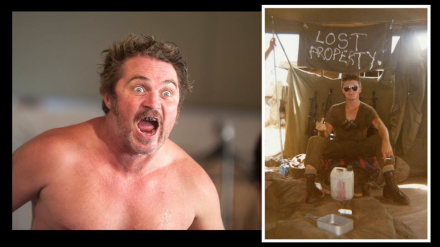
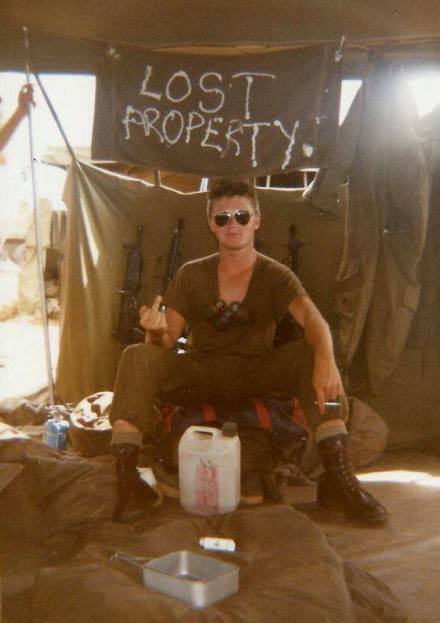
The Border War also saw some pretty famous future personalities and this is one for all the EastEnders fans (the famous on going British soap opera), this fun photo is Alex Ferns during his stint in the South African Army on the Angolan border – Alex is best known for his EastEnders role as Trevor Morgan, “Britain’s most-hated soap villain”.
Alex was a 2 Special Service Battalion (SSB) Gunner in 1989 and affectionately regarded by his fellow brothers in arms as “hell raiser of epic proportions” he was their units “go to guy” during heavy physical training exercises and he used to sing his heart out and always lifted the spirits of the men around him. They had many an ‘oppie’ (a ‘beasting’ or Punishment PT’) together and many a dust up with other units. Because Scotland is his country of birth they regarded him as the ” mad Scotsman” often rousing his buddies to the call. Highly likeable, inspirational and great bloke to all who knew him.
We wish him the best of luck in his television career that has vaulted him to the dizzy heights of a true ‘soap star’ and British cultural icon.
Alex Ferns’ Bio
Alex Ferns also made an appearance in The Ghost and the Darkness (1996) before various television roles, including Trevor Morgan in the BBC soap opera EastEnders from 2000 to 2002. In 2005, Ferns played Lieutenant Gordon in the highly acclaimed trilingual film Joyeux Noël, which was nominated for Best Foreign Language Film at the Oscars, Golden Globe Awards and the BAFTAs.
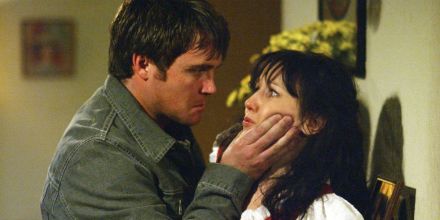
Trevor and Mo, in the domestic abuse storyline for EastEnders, Alex Ferns as hard-man and abuser with Kacey Ainsworth
In 2003 Ferns appeared as Draco Malfoy in a Harry Potter sketch for Comic Relief.
In 2004 he played Commander Martin Brooke, the lead role, in the short-lived ITV series Making Waves. In the same year he appeared in Man Dancin’, a Festival Film & TV production, which won a number of awards on the festival circuit, including Outstanding Original Screenplay at the Sacramento Film Festival. He has also appeared on Coronation Street.
He has also appeared in the 2006 movie Shadow Man, as Schmitt, also starring Steven Seagal.
His theatrical work includes the role of the “tapeworm” (a hallucination) in I.D., a play about Dimitri Tsafendas and his assassination of South African Prime Minister Hendrik Verwoerd, the 2008 national tour of Agatha Christie’s murder mystery And Then There Were None, and Little Shop of Horrors as the Dentist. In 2011 he took the role of Scottish gangster Jimmy Boyle in the play about his life, The Hardman, during a Scottish tour to positive reviews.
Recent photograph of Alex Ferns with a possible comeback to EastEnders
He also made a brief appearance in the Smirnoff Vodka advert in 2009. Ferns took part in TV series Celebrity Coach Trip, partnered with friend Ricky Groves. He starred as Luther in the 2011 London revival and subsequent UK tour of South Pacific. In 2013, he starred as Lee in True West at Glasgow’s Citizen’s Theatre. In 2014, he starred in 24: Live Another Day.
Born in Lennoxtown, Scotland, Alex lived in South Africa for 17 years and studied drama at the University of Cape Town before returning to the United Kingdom in 1991. Whilst in South Africa the military conscription regulations were changed to include ‘white’ foreign nationals with South African residencies, and Alex was conscripted into the South African Defence Force as a ‘National Serviceman’ or he would certainly have faced deportation and even imprisonment.
Alex Ferns has been married to South African-born actress Jennifer Woodburne since 1996. They currently live in London with their two sons, Cameron and Mackenzie.
To see Alex’s skill transforming from ‘nice guy’ to ‘hard-man’ in EastEnders, have a cuppa tea (as EastEnders fans do) and take a look at this famous clip from the series;
Photo courtesy of BJ Taylor and story on Alex in the SADF courtesy of Gary Smith. Video clip BBC EastEnders. Feature image Alex Ferns in True West Rehearsals Photo: Tim Morozzo
Honouring South African heroes and this is one of South Africa’s greatest – in fact he is the highest decorated South African in our military history. Many people don’t know that South Africa has its own World War 1 flying ace and Victoria Cross winner, and this ‘small’ hero comes with some very ‘big’ credentials, he is regarded as the all time highest decorated South African in terms of sheer seniority of the bravery decorations he won (there is a distinction between ‘most’ decorated i.e. number of decorations and medals – and the ‘highest’ decorated).
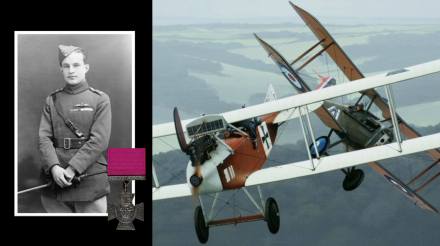
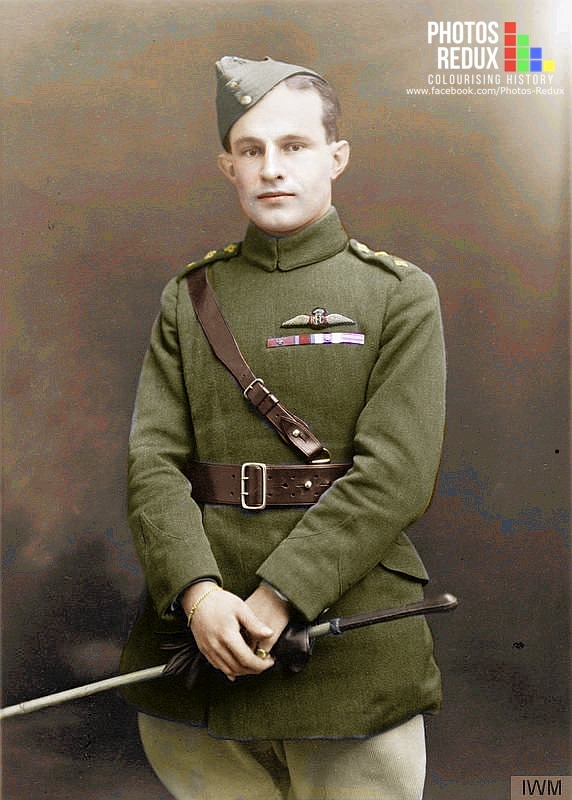
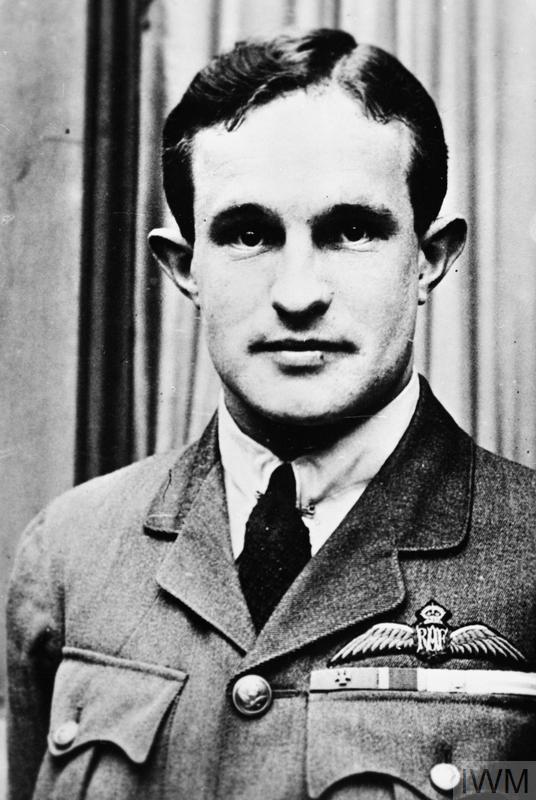
Andrew Beauchamp-Proctor, known to his colleagues and friends simply as ‘Proccy’, was South Africa’s leading First World War flying ace, claiming a staggering 54 aerial victories to his name.
He was born on 4 September 1894 in Mossel Bay, South Africa, and was studying engineering at the University of Cape Town when war broke out. He joined the Union of South Africa Army – the Duke of Edinburgh’s Own Rifles and took part in the German South West Africa campaign, before being demobilised in August 1915 with an honorable discharge. He promptly went to work with the South African Field Telegraph and re-enrolled in university. He managed to complete his third year of college before re-enlisting again, this time with the Royal Flying Corps (he was one of “The Thousand” – the first South Africans to go to England for combat service on the Western Front).
Royal Flying Corps
Andrew Beauchamp-Proctor joined the Royal Flying Corps in March 1917, he was commissioned upon his arrival in England and underwent pilot training. Despite being only 5′ 2″ tall, so short that he had to use two leather cushions in order to see out of a standard cockpit, he proved an excellent pilot and on completion of training was posted to 84 Squadron in late July 1917. The squadron, commanded by Major William Sholto Douglas (who would later become OC Fighter Command during the Second World War) was equipping with the then-new S.E.5a.
On 23 September 1917, the 84 Squadron went to France and became one of the most effective scout squadrons in the RFC/RAF (Royal Air Force) during 1918. The squadron would be credited with a victory total of 323 aerial victories, and would produce 25 aces. However, Beauchamp-Proctor would be pre-eminent, with almost triple the number of successes of the second leading ace. He was not particularly esteemed as a flier, but was a deadly shot.
Beauchamp-Proctor’s piloting skills can be judged by the fact he had three landing accidents before he ever shot down an enemy plane. He continued to fly the SE5 with modifications to the aircraft’s seat and controls, something his Philadelphia-born American squadron mate, Joseph “Child Yank” Boudwin, who stood only two inches taller also had to use. The alterations to relatively primitive controls could have contributed to Beauchamp-Proctor’s poor airmanship.
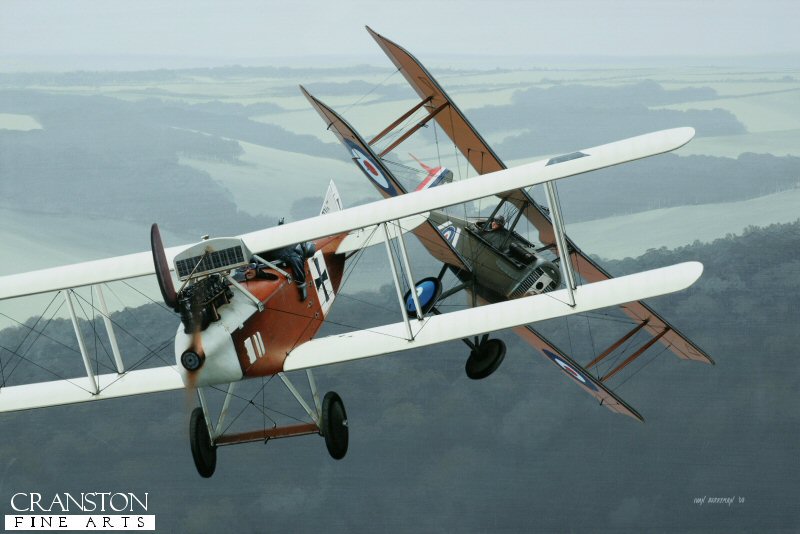
Captain Andrew Beauchamp-Proctor by Ivan Berryman
His initial confirmed victory did not come until the turn of the year. On 3 January 1918, he sent a German two-seater ‘down out of control’. He then claimed four more victories in February, becoming an ace on the final day of the month. Only one of his five victories resulted in the destruction of an enemy; the others were planes sent down as ‘out of control’.
March brought four more victories; three of them were scored within five minutes on 17 March. He tallied one kill in April.
Among his 11 victories for the month of May were 5 on 19 May. On that morning, he knocked an enemy observation plane out of the battle; fifteen minutes later, he destroyed a German Albatros D.V. scout. That evening, at about 6:35 PM, he downed three more Albatros D.Vs. By 31 May, his roll had climbed to 21 victims—16 fighters and five observation aircraft. By this point, he had destroyed six enemy planes single-handed, and shared the destruction of two others. He drove ten down out of control, and shared in another ‘out of control’ victory. Two of his victims were captured. Certainly a creditable record, and like many other aces, with no conquests over balloons.
The next day marked a change of focus for him; he shot down an observation balloon. Balloons, guarded by anti-aircraft artillery and patrolling fighter airplanes, were very dangerous targets. Commonly they were hunted by coordinated packs of fighters. For the remainder of his career, he would choose to try to blind the enemy by concentrating on shooting down kite balloons and observation aircraft. Also notable is the drop in his “out of control” victories; from here on out, the record shows destruction after destruction of the enemy. His June string would only run to 13 June, but in that time, he would destroy four balloons, an observation two-seater and a fighter. Only one fighter went down out of control. On 22 June, he was awarded the Military Cross (MC).
July would pass without incident. On 3 August, he was granted one of the first ever Distinguished Flying Crosses (DFC).
The break in his victory string lasted almost a month, as he went on home leave and helped a recruitment drive for the RAF. On 8 August, he returned and resumed with tally number 29, another balloon.
On 9 August, Beauchamp-Proctor was leading No. 84 Squadron on a patrol over their base at Bertangles, with the diminutive American Joseph “Child Yank” Boudwin and a ‘Giant’ – the six-foot-four tall fellow South African from Germiston – Hugh ‘Dingbat’ Saunders as his wingmen (‘Dingbat’ Saunders would go to become another South African ace, Air Marshal and Knight of the realm – but that is a different story for another day).
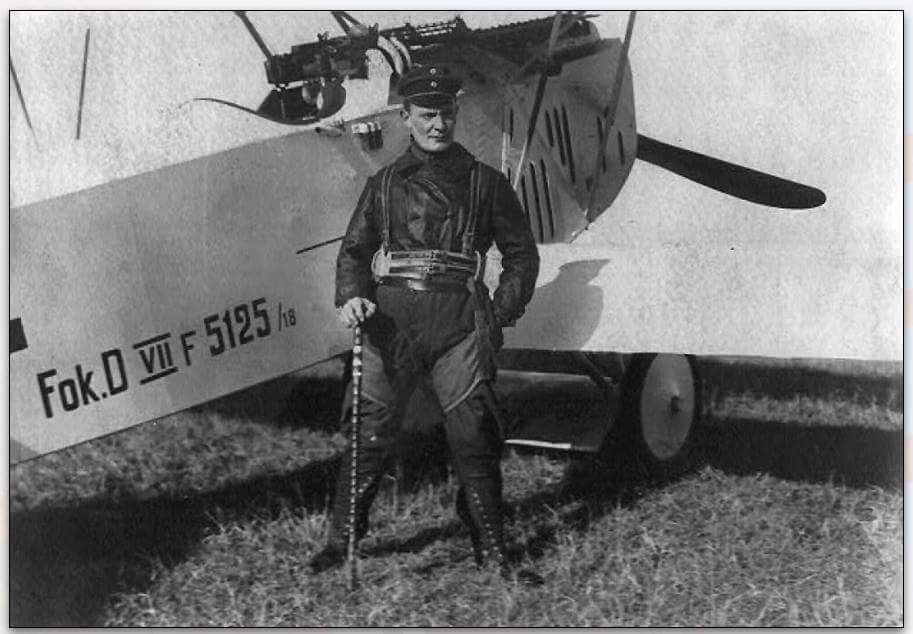
This unusual threesome of two very short chaps ‘Proccy’ and ‘Child Yank’ ‘and one very tall chap ‘Dingbat’ got involved in a heated engagement at 2:00 pm, that involved them in combat against Fokker D.VII fighters of JG I , led that day by the future Nazi Reichsmarschall Hermann Göring.
Hermann Göring in his Fokker D.VII fighter during WW1
After World War 1, Hermann Göring was to become Adolf Hitler’s right hand man and one of the most powerful figures in the Nazi party that ruled Germany from 1933 to 1945 and took Germany to its darkest place in history. But that was well in the future, over the western front battlefields of World War 1 Göring was a veteran fighter pilot, and fighter ace, he was even a recipient of the The Blue Max (the highest German bravery award). He was also eventually the last commander of the famous ‘flying circus’ Jasta 1, the fighter wing once led by ‘The Red Baron’ Manfred von Richthofen.
Unfortunately for both our two South Africans ‘Proccy’ and ‘Dingbat’ and the American ‘Child Yank’ – and the entire world really, none was unsuccessful at bagging Herman Göering and adding him to their kill totals.
‘Proccy’ would eventually claim an additional 14 aircraft, and by the end of the month of August with his claims list extended to 43. One memorable day was 22 August; he attacked a line of six enemy balloon over the British 3rd Corps front. He set the first one afire with his machine guns and forced the other five to the ground, the observers taking to their parachutes. His 15 kills for August would include 5 balloons, all destroyed, and two more two-seater planes. He was now up to 43 victories.
His September claims would be all balloons – four of them.
In the first few days of October, he would destroy three more balloons and three Fokker D.VII fighters, one of which burned. Another D.VII spun down out of control.
On 8 October, he was hit by ground fire and wounded in the arm, ending his front line service. In all ‘Proccy’ Beauchamp-Proctor’s victory total was 54; two (and one shared) captured enemy aircraft, 13 (and three shared) balloons destroyed, 15 (and one shared) aircraft destroyed, and 15 (and one shared) aircraft ‘out of control’ His 16 balloons downed made him the leading British Empire balloon buster.
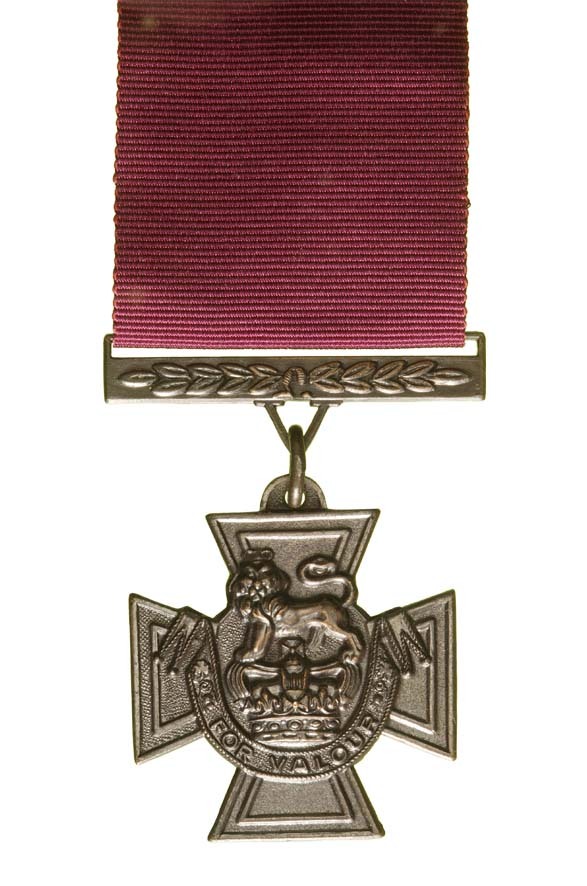
On 2 November, he was awarded the Distinguished Service Order, followed by the Victoria Cross on 30 November. His Victoria Cross citation explains in detail:
Victoria Cross (VC)
Between 8 August 1918, and 8 October 1918, this officer proved himself victor in 26 decisive combats, destroying 12 enemy kite balloons, 10 enemy aircraft, and driving down 4 other enemy aircraft completely out of control. Between 1 October 1918, and 5 October 1918, he destroyed 2 enemy scouts, burnt 3 enemy kite balloons, and drove down one enemy scout completely out of control.
On 1 October 1918, in a general engagement with about 28 machines, he crashed one Fokker biplane near Fontaine and a second near Ramicourt; on 2 October he burnt a hostile balloon near Selvjgny; on 3 October he drove down, completely out of control, an enemy scout near Mont d’Origny, and burnt a hostile balloon; on 5 October, the third hostile balloon near Bohain. On 8 October 1918, while flying home at a low altitude, after destroying an enemy 2-seater near Maretz, he was painfully wounded in the arm by machine-gun fire, but, continuing, he landed safely at his-aerodrome, and after making his report was admitted to hospital.
In all he has proved himself conqueror over 54 foes, destroying 22 enemy machines, 16 enemy kite balloons, and driving down 16 enemy aircraft completely out of control. Captain Beauchamp-Proctor’s work in attacking enemy troops on the ground and in reconnaissance during the withdrawal following on the Battle of St. Quentin from 21 March 1918, and during the victorious advance of our Armies commencing on 8 August, has been almost unsurpassed in its brilliancy, and as such has made an impression on those serving in his squadron and those around him that will not be easily forgotten.
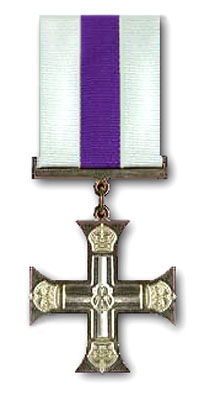
Capt. Beauchamp-Proctor was awarded Military Cross on 22 June 1918; D.F. Cross on 2 July 1918; Bar to M.C. on 16 September 1918; and Distinguished Service Order on 2 November 1918
The bravest of the brave
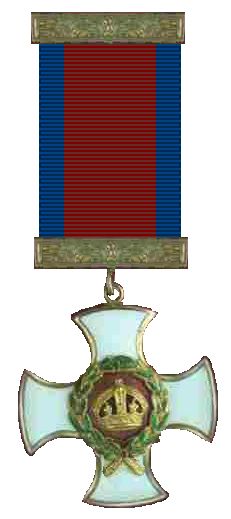
To make him the ‘highest’ decorated South African in history, as there is already a small group of South Africans who won the ‘highest decoration’ i.e. Victoria Cross in World War 1 (14 officially in total) and World War 2 (5 in total), Beauchamp-Proctor would also need to have another ‘next’ most senior decoration, he did this with obtaining a Distinguished Service Order (DSO) and a Military Cross (MC). This puts him on the same level as Percy Hansen, who also won a VC, DSO and MC, the difference, the one which places Beauchamp-Proctor at the top, is that he won the Military Cross twice (with bar) in addition to another decoration – the Distinguished Flying Cross (DFC).
The citations for these decorations are impressive enough on their own, there are as follows:
Military Cross (MC)
For conspicuous gallantry and devotion to duty. While on offensive patrol he observed an enemy two-seater plane attempting to cross our lines. He engaged it and opened fire, with the result that it fell over on its side and crashed to earth. On a later occasion, when on patrol, he observed three enemy scouts attacking one of our bombing machines. He attacked one of these, and after firing 100 rounds in it, it fell over on its back and was seen to descend in that position from 5,000 feet. He then attacked another group of hostile scouts, one of which he shot down completely out of control, and another crumpled up and crashed to earth. In addition to these, he has destroyed another hostile machine, and shot down three completely out of control. He has at all times displayed the utmost dash and initiative, and is a patrol leader of great merit and resource.
MC citation, Supplement to the London Gazette, 22 June 1918
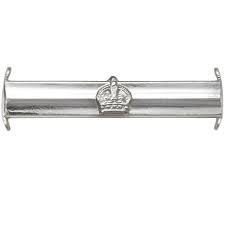
Military Cross (MC) Bar
For the award of a Bar to the Military Cross ( MC ) i.e. winning a second Military Cross in addition to Andrew Beauchamp-Proctor’s first MC.
For conspicuous gallantry and devotion to duty while leading offensive patrols. He has lately destroyed three enemy machines, driven down one other completely out of control, and carried out valuable work in attacking enemy troops and transport on the ground from low altitudes. He has done splendid service.
London Gazette, 18 September 1918
Distinguished Flying Cross (DFC)
Lt. (T./Capt.) Andrew Weatherby Beauchamp-Proctor, M.C. A brilliant and fearless leader of our offensive patrols. His formation has destroyed thirteen enemy machines and brought down thirteen more out of control in a period of a few months. On a recent morning his patrol of five aeroplanes attacked an enemy formation of thirty machines and was successful in destroying two of them. In the evening he again attacked an enemy formation with great dash, destroying one machine and forcing two others to collide, resulting in their destruction.
DFC citation, Supplement to the London Gazette, 3 August 1918
Distinguished Service Order (DSO)
A fighting pilot of great skill, and a splendid leader. He rendered brilliant service on 22 August, when his Flight was detailed to neutralise hostile balloons. Having shot down one balloon in flames, he attacked the occupants of five others in succession with machine-gun fire, compelling the occupants in each case to take to parachutes. He then drove down another balloon to within fifty feet of the ground, when it burst into flames. In all he has accounted for thirty-three enemy machines and seven balloons.
DSO citation, Supplement to the London Gazette, 2 November 1918
That’s a lot of hefty decorations for gallantry and bravery and it makes Beauchamp-Proctor ‘the bravest of the brave’ when it comes the very bravest men South Africa has ever produced.
Post War
He was discharged from hospital in March 1919 and embarked on a four-month-long lecture tour of the USA, before returning to England and qualifying as a seaplane pilot with a permanent commission as a Flight Lieutenant in the RAF.
After his VC investiture at Buckingham Palace in November 1919 he was awarded a year’s leave, and this enabled him finish his BSc degree in Engineering.
Beauchamp-Proctor died during a training accident at RAF Hendon in England, on the 21st June 1921 whilst preparing for an air-show. His aircraft went into a vicious spin after performing a slow loop, and he was killed in the ensuing crash. At least one observer remarked that the loss of control and subsequent crash of the aircraft could have been linked to Proctor’s diminutive size, as noted earlier because of his size, Beauchamp-Proctor had to sit on a cushion to operate his aircraft and the cushion fell out during the loop, rendering him in a difficult position to adequately operate his aircraft and recover the manoeuvre. He was buried in Mafeking (his home town) in South Africa, following a state funeral.
In Conclusion
There still exists a little confusion over Beauchamp-Proctor’s given name. For decades he was listed as “Anthony” but more recent scholarship indicates “Andrew”, which is the name on his tombstone. Whether ‘Proccy’ was an Andrew or Anthony, it matters not a jot, this man epitomised ‘dynamite in a small package’ – ‘Proccy’ was and still remains the bravest of all South Africans to have been awarded gallantry decorations – without any doubt – the ‘Bravest of the Brave’.
Links to other South African World War 1 Victoria Cross recipients
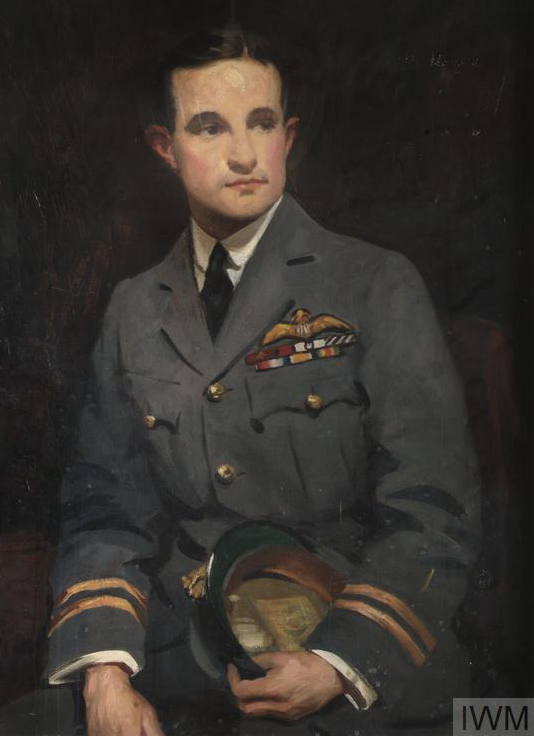
Image copyright Imperial War Museum Collection. Portrait by Cowen Donson, Imperial War Museum collection copyright. Painting Captain Andrew Beauchamp-Proctor by Ivan Berryman – Granston Fine Art. Colourised IWM portrait, thanks to Photos Redux
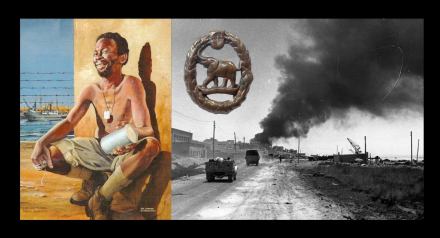
Job Maseko is a very notable South African hero of the Second World War. He was a member of the South African Native Military Corps (NMC) and was decorated with the Military Medal for gallantry. So how is it that a NMC member, a corps not allowed to officially carry firearms, gets to into the fight and wins this decoration. Simply put he single-handedly blew up an enemy ship. Read on for the story of a very remarkable man.
Job Maseko was employed as a delivery man in Springs before he volunteered for service in the Second World War and joined the South African Native Military Corps (NMC). After completion of basic training, he was sent to North Africa, attached to the 2nd South African Infantry Division. Members of the NMC took up any support role in the Division which did not require the handling of a firearm. They were given a vast range of different roles – anything from drivers, military cooks, engineers, stretcher bearers to bomb loaders. South African race laws at the time provided that serving ‘black’ men could not carry firearms, they were however issued spears as a ‘traditional weapon’ for guard and ceremonial duty, but that was about it (see related Observation Post Dress and Bearing of the South African Native Military Corps).
128 000 ‘Black’ South African soldiers volunteered to take part in World War 2 (nearly 40% of the standing army) and members of the NMC often found themselves in perilous circumstances and were exposed to the rigours and dangers of war as much as any another soldier. Some of these restrictions on the use of weapons quickly went out the window when in a combat zone, and somewhere along the line Job Maseko also learned a bomb making skill (see related Observation Post ‘Armed’ SA Native Military Corps in WW2 – this Corps screams out for a definitive work!).
The fall of Tobruk
General Klopper
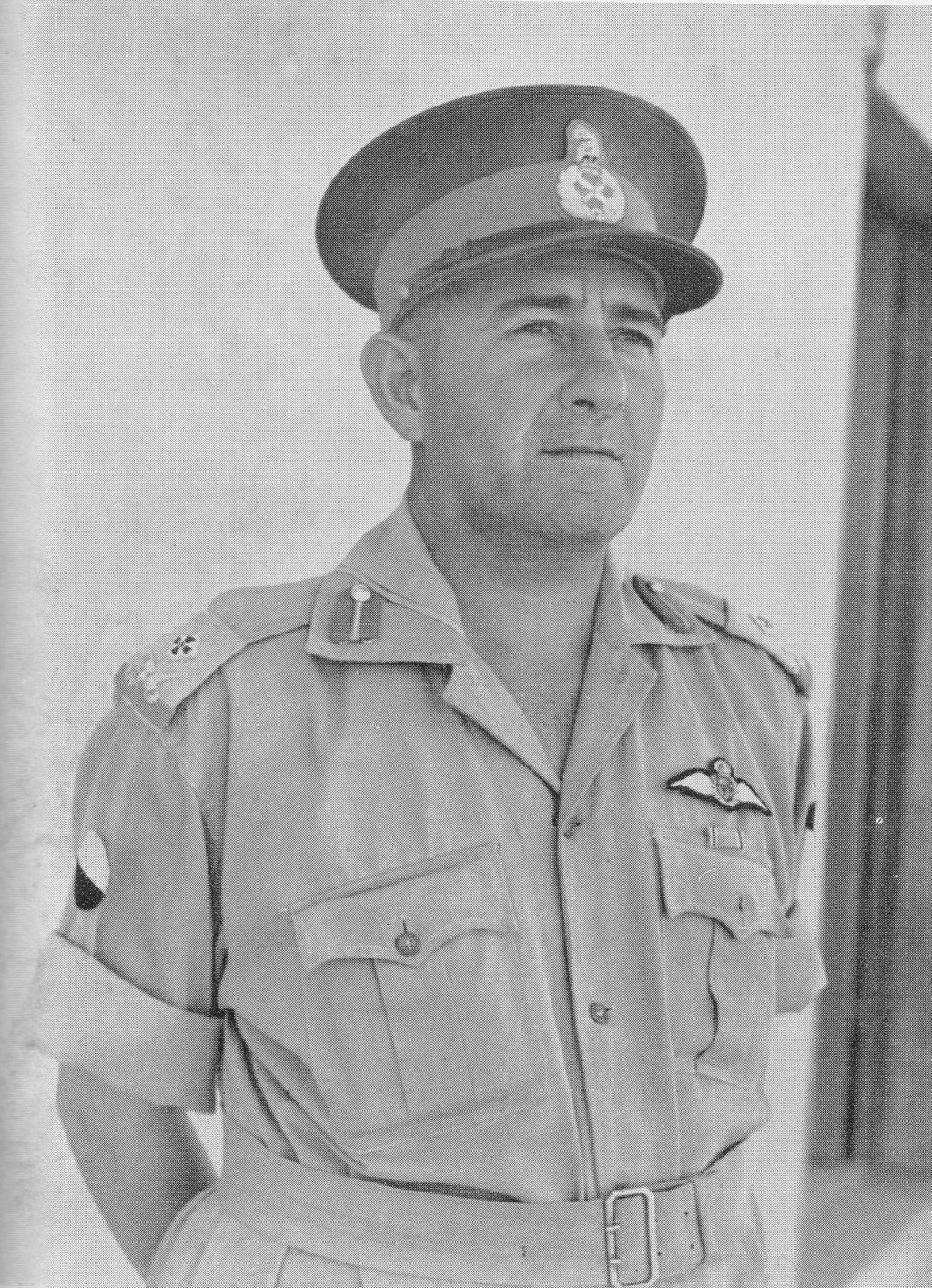
In 1941 the Australians had held Tobruk for 9 months, until Rommel’s withdrawal of his Axis forces to the west. Tobruk secured, by 1942 the Allied Middle East Command decided to leave a smaller ‘temporary’ force to hold Tobruk while a new strike force was built up near the frontier. The task of defending Tobruk was left to the South Africans. The new garrison was to be formed by the 2nd South African Infantry Division with General Klopper, a farmer from the Orange Free State before the war, and a major general of only one month’s standing, given command of Tobruk. In addition, units of British and Indian detachments fell under South African command defending Tobruk. Into this deployment also fell our hero – Job Maseko.
It is generally understood that by this stage Tobruk’s defences were in a poor shape with much of the armour and artillery taken away to the new frontier, the Western and Southern sides of the port were well defended by the South Africans, but the East side was weak, and it proved to be fatal.
As usual, Rommel had devised a ruse for capturing Tobruk. Only his infantry approached the western perimeter, while his mobile forces swept on past, to give the impression that the German and Italian armour was heading straight for the Egyptian border (sending radio messages to that effect to complete the ruse). He then swung his mobile armoured forces around and attacked Tobruk from its weak point – the eastern perimeter.
Rommel’s zero hour was 05h20 on 20 June 1942. As dawn broke long black lines of tanks, trucks and infantry slowly started to move forward. As it grew louder and closer to Tobruk waves of German Stukas and Ju 88’s aircraft appeared overhead (Rommel pressed every single Axis airplane in service in North Africa into taking Tobruk).
As the heavy artillery began to fire, the planes released their bombs and quickly got out of the way for the next wave, operating a shuttle service between the defence perimeter and El Adem airfield, 10 miles away. They pounded a gap open 600 yards wide. Behind them, under cover of artillery barrage and half-hidden by smoke and dust, German and Italian sappers raced forward to lift mines and bridge the tank traps with tanks and infantry racing through the gaps. As they move forward, they lit green, red and purple flares and the Stukas dropped their bombs just ahead of the advancing, multi-coloured smoke screen while the other planes and artillery blasted the South African rear (the seaward side of the port) with shells and bombs.
Rommel and German armour entering Tobruk
Into this desperate fight for survival went everyone, including members of The Native Military Corps. Job Maseko worked as a stretcher bearer, doing profoundly dangerous work, rescuing wounded men, as the defence of Tobruk became more desperate, Job and other black colleagues were given rifles and expected to fight on the front line with everyone else.
Inside Tobruk the situation was chaotic. General Klopper – his HQ’s bombed out, his radio and telephone wrecked and his code booked destroyed, lost the last vestige of control. Tobruk fell by the evening. Job Maseko became a prisoner of war (POW) on 21 June 1942 when Major-General KIopper, surrendered to Rommel at Tobruk with 32000 men, including 10,722 South Africans of the 2nd Infantry Division, of whom 1,200 were members of the Native Military Corps. It was the single biggest capitulation of South African forces in the country’s history – before or since.
Erwin Rommel inspecting South African POW after Tobruk falls
Job and many others were forced to march across the desert to an Italian POW camp. The Italian treatment of South African prisoners of war was nothing short of diabolical, however an even worse treatment was reserved for Black members of the South African Native Military Corps in captivity. German and Italian forces displayed a complete disregard for the rights of coloured or black POWs as they did not view them as regular troops.
One account recalls how black soldiers were shot by drunk German guards while been marched to the POW camp, and the account goes further to say that in Tobruk camp, black South African POWs were forced “under threat of death” to do war work, which was contrary to the Geneva Convention.
Another report claims Indian and Black prisoners at Tobruk were not allowed to take cover whenever the Allied bombers later bombed the port, furthermore their food was totally inadequate – they were only given one packet of biscuits per day and water rations were kept to a minimum.
Allied POW at Tobruk
There were also examples of Black South African POW escaping from the camp perimeter with their white counterparts to scrounge for food in the town, and Job Maseko was one. The Black POWs, as they were put to war work in the harbour (something most their white counterparts were excluded from) – mainly offloading ships. Desperate for food they would sometimes return to the camp with ‘acquired’ sacks of corn meal (mieliemeal), one account from De Lisle recalls that the unfortunate consequence was that hungry English and South Africans white POW would lay siege to their tents (the Black POW) at night to beg for their food.
The diabolical treatment of Black POW forced Job Maseko to taken action against his captors, to quote him “because of our ill-treatment by the enemy, especially the Italians, and because I felt it a duty in this way to assist my own people”.
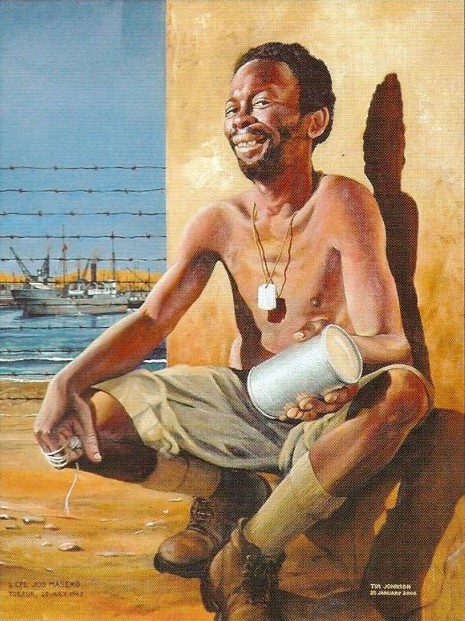
As with his Biblical namesake, Job was made of tough stuff and with the help of some comrades whilst on mundane prisoner duties to go down to the docks, Job created a bomb using a condensed milk tin, cordite taken from bullets and an extremely long fuse.
Job placed his home-made bomb deep inside the bowels of a German freight ship (and “F” Boat) that was docked in the harbour at Tobruk. He skilfully placed it next to fuel barrels for maximum effect, lit the fuse and made good his escape. Had he been caught, as a Black POW, he would have certainly been put to death if not tortured first.
Job waited and later the ship shuddered from a huge internal explosion and sank almost immediately into the harbour. After the war Job Maseko was able to point out the exact place where the ship was berthed and sure enough divers found it on the sea bed.
He later escaped from Tobruk and walked, for three long weeks though the desert and through enemy lines, all the way to El Alamein, he intended joining the battle there as he had fixed an old German radio he had found which informed him about General Montgomery’s epic and tide turning battle at El Alamein. We still await the full historical account of this remarkable man as very little is known to this day, rest assured historians are now writing it.
For his actions, Job Maseko was later presented with the Military Medal (MM) by Major-General F H Theron. The following extract enshrines his heroism, bear in mind when reading this, it is made even more remarkable in that Job Maseko as a ‘black’ African could only be deployed in a non combat role:
The King has been graciously pleased to approve the following award in recognition of gallant and distinguished service in the Middle East:-
Military Medal No N 4448 L/Cpl Job Masego [sic) – Native Military Corps
Citation For meritorious and courageous action in that on or about the 21st July, while a Prisoner of War, he, Job Masego, sank a fully laden enemy steamer – probably an “F” boat – while moored in Tobruk Harbour.
This he did by placing a small tin filled with gunpowder in among drums of petrol in the hold, leading a fuse therefrom to the hatch and lighting the fuse upon closing the hatch.
In carrying out this deliberately planned action, Job Masego displayed ingenuity, determination and complete disregard of personal safety from punishment by the enemy or from the ensuing explosion which set the vessel alight.’
The Victoria Cross Controversy
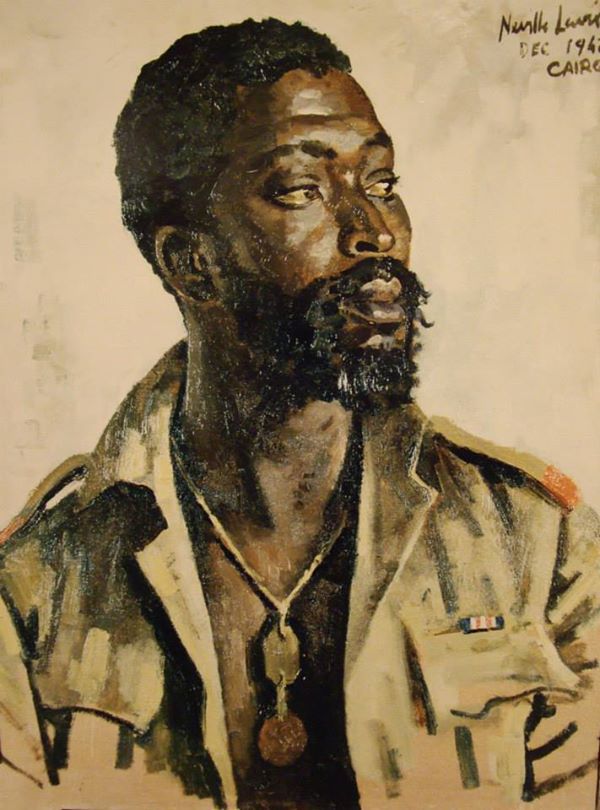
For his actions Job Maseko was initially recommended for a Victoria Cross but according to Neville Lewis, the first official war artist for South Africa during the Second World War, Job Maseko was awarded the Military Medal instead as he was ‘only an African’. It is hoped that actions currently been taken by the SANDF Military Attache in the United Kingdom to redress this issue with British government and re-open his case so it will be met with a correct interpretation of Job Maseko’s actions without the ‘race’ factor as part of the deliberation, and his actions considered as one worthy of the Victoria Cross or not (as may be the case).
Later in Life
Black ex-South African POW in Tripoli awaiting repatriation after the war
After been released Lance Corporal Job Maseko returned to South Africa. “Apartheid” was to be implemented a few short years after the war ended in 1948 when the Nationalists came to power beating Smuts. Job Maseko’s legacy slipped away from the general consciousness – along with many deeds of South African servicemen in World War 2, black and white. He became a poor man and died in 1952 when he was accidentally hit by a train. He was so broke at the time he was buried with borrowed money in the Payneville Township Cemetery in Springs. A very sad way to see the end of a national hero.
Today, to honour this unassuming hero, the community of KwaThema near Springs has a primary school in the township named after him. The main road linking the town of Springs to KwaThema Township has also been named after him. He is honoured at both the Delville Wood museum in France and the South African Museum of Military History in Johannesburg, A South African fighting ship the SAS Kobie Coetzee has also now been renamed the SAS Job Maseko in recognition of this very brave South African.
He can truly take the mantle of a proper South African warrior and stands shoulder to shoulder with all the other great South Africans who have earned the highest accolades of gallantry.
Written and Researched by Peter Dickens, References wikipedia, The incredible true tale of Job Maseko – the man who sunk a ship whilst a prisoner by Stephen Liddell. Narratives from North Africa: South African Prisoner of War experience following the fall of Tobruk, June 1942 by Karen Horn. Artwork credits: . Job Maskeko official portrait by Neville Lewis. Job Maseko holding explosive by Tim Johnson, copyright Tim Johnson website: http://www.timjohn.co.za
Now this is a very notable South African, and a true hero – Sgt Quentin George Murray Smythe VC, who won the Victoria Cross in the Western Desert on 5 June 1942. The Victoria Cross (VC) is the highest military decoration awarded for valour “in the face of the enemy” to members of the British armed forces and various Commonwealth countries (of which South Africa is one).
Quentin George Murray Smythe, was born in Nottingham Road, Natal, South Africa on 6 August 1916 as son of Edric Smythe. He was the grandson of the First Administrator of Natal, Charles Smyhte. Quentin Smythe attended the Estcourt High School in Estcourt. After his education he started farming in Richmond.
During the Second World War, Quentin Smythe served with the 1st Battalion Royal Natal Carabineers, 1st SA Infantry Division, South African Forces in the East Africa Campaign against the Italians before moving to the Western Desert against the German and Italian Axis Forces.
On May 26, 1942, Rommel’s Afrika Korps attacked the British Army ( which had just been weakened by losing two divisions, an Armoured Brigade and some squadrons of the Desert Air Force to the Far East ) in order to pre-empt a new British offensive. The Germans hoped to capture Tobruk and, ultimately, to drive the British back to Alexandria, although this attempt was finally checked at El Alamein by Auchinleck the next month.
A German gun crew manning a 3.7 cm Pak 36 anti-tank gun in the Western Desert, during the Gazala offensive, June 1942.
The initial attack caught the British off-balance, but they recovered and fought back, forcing the Germans to take up a defensive position, which became known as ‘The Cauldron’. Unfortunately, the British were at this stage equipped with tanks and guns which were inferior to the Germans’, and after a number of desperate battles they had to fall back.
On June 5 the South African forces were holding a position in the north of the line (which consisted of defensive “boxes” separated by minefields), and when Rommel launched a heavy attack in the northern sector he encountered strong and determined resistance. The cost in casualties on both sides was high. Smythe, who was then a sergeant, realised that there was no officer to command his platoon and took charge himself, leading his men in an attack on the enemy’s strong point at Alem Hamza, 20 miles south of Gazala
His citation in attacking Axis Forces says just about everything as to how this hero earned his VC and reads as follows:
No. 4458 Sergeant Quentin George Murray Smythe, South African Forces.
For conspicuous gallantry in action in the Alem Hamza area on the 5th June,
“1942. During the attack on an enemy strong point in which his officer was severely wounded; Sergeant Smythe took command of the platoon although suffering from a shrapnel wound in the forehead. The strong point having been overrun, our troops came under enfilade fire from an enemy machine-gun nest. Realising the threat to his position, Sergeant Smythe himself stalked and destroyed the nest with hand grenades, capturing, the crew. Though weak from loss of blood, he continued to lead the advance, and on encountering an anti-tank gun position again attacked it single-handed and captured the crew. He was directly responsible for killing several of the enemy, shooting some and bayonetting another as they withdrew.
After consolidation he received orders for a withdrawal, which he successfully executed, defeating skilfully an enemy attempt at encirclement.
Throughout the engagement Sergeant Smythe displayed remarkable disregard for danger, and his leadership and courage were an inspiration to his men.”
Citation was gazetted on 11 September 1942, see this rare Associated Press video of the actual award ceremony where Sgt. Smythe received his Victoria Cross from Maj. General Dan Pienaar.
When Sgt. Smythe VC returned to South Africa, he returned a national hero, he had won the country’s first Victoria Cross in the Second World War. In all five South African’s won the Victoria Cross during World War 2, of which there are only two very well known recipients, these been our hero today, Quentin Smythe VC and Edwin Swales VC (see Edwin Swales VC DFC, a South African Hero whose legacy has been eroded!)
Sgt Smythe is well known because he enjoyed great media attention and was presented to the Premier Jan Smuts and this PAHÉ footage captures the occasion.
On leaving the Department of Defence he returned to farming in the Richmond area of Natal. He was an outstanding marksman, a passionate conservationist and animal lover. He died from cancer in Durban, aged 81 in October 1997 and was buried with military honours by his Regiment – The Natal Carabineers. He left three sons, a daughter and 11 grandchildren.
His Victoria Cross is now part of Lord Ashcroft’s collection and is kept in the Imperial War Museum in London.
Researched by Peter Dickens. Image Copyrights – Imperial War Museum. Video copyrights Associated Press and British PATHÉ respectively.
Some little known South African military history that we can all be very proud of, take the time to read how South Africans are still appreciated to this day in Italy for saving a small town’s civilian population from been totally massacred by the Nazi SS. This from 2008 issue of The Roman Forum magazine:
Marzabotto – An Italian town’s appreciation to South African troops for rescuing them from total annihilation after the massacre nearby townspeople by Nazi SS during World War 2.
Today, deep in the heart of Italy’s Apennine mountains between Bologna and the Po valley, in the communities of Castiglione dei Pepoli, Monte Stanco, Grizzana Morandi and the surrounding area local people gather annually not only to celebrate their towns’ emancipation from Nazi forces in the autumn of 1944 by the 6th Armoured Division from South Africa, but even to raise the South African flag in ceremony.
Their gratitude is so great, because this area was the site of the biggest, yet least-known, massacre of innocent civilians in Italy during WWII: the Marzabotto Massacre.
It was an exceptionally bleak atrocity for Italy, as it involved the extinction of an entire ‘race’- on 3 October 1944, German and Austrian SS troops were ordered to purge the entire area of Monte Sole and Monte Ruminci, because the townspeople of Marzabotto, Grizzana Morandi, and Monzuno were suspected of helping and supplying Italian partisans along the Gothic Line, which Hitler himself had ordered to be kept at all costs to sever south Italy and Allied forces from the industrialised and developed north.
Here Allied and German SS forces saw out the last winter of WWII, tired, cold, depleted, neither able to advance or retreat. Here is where the Allies eventually broke through the following Spring, spelling the end of the war in Italy. Before that, Nazi troops literally marched into every town and exterminated every living thing in sight. Women, children, young babies and the elderly alike were killed by gunfire and with grenades.
By sunset 3 October, Marzabotto’s and Monzuno’s unique population of mountain people, nearly two thousand people, were entirely exterminated.
The SS then started moving into Grizzana Morandi and Monte Stanco herding the townspeople into two groups in no particular order. The first group (half the population) were slaughtered that night, the remaining group was to be executed the next morning.
On 4 October 1944, the executions had already started, when out of nowhere a group of Allied soldiers who had been sent to patrol and scout the area, unaware of the purge, appeared and engaged the SS in combat. After a long battle they managed to drive the Nazis off well behind the Gothic Line, saving the few remaining people of Monte Sole. This group of soldiers was the 6th Armoured Division of South Africa.
The South Africans had been the first Allied troops to arrive in the area; British, American, New Zealand, Rhodesian, Australian, and Indian troops arrived some three days later from the nearby American base in Livergnago (dubbed ‘Liver & Onions’ by soldiers) with food and supplies for the towns’ afflicted victims and set up Allied camps along what is today one of Italy’s most famous war commemoration sites – the Gothic Line.
Hence, the people of Monte Sole celebrate South Africa every year, because the few survivors (some even today), owed their lives to the 6th Armoured Division.
A new street connecting Castiglionei dei Pepoli and the entire area with the Bologna-Modena highway was unveiled in November 2007 was named in honour of the South African 6th Armoured Division.
(May 2008 issue of The Roman Forum magazine)
Tanks of the South African 6th Armoured Division firing on German positions at Monte Sole and Montebello at the start of the attack which ended in the breakthrough to Bologna. April 1945.
Aftermath
The Marzabotto massacre was a mass murder of at least 770 civilians by Nazi Germans. It is the worst massacre of civilians committed by the Waffen SS in Western Europe during the war. The massacre was in reprisal for the local support given to the Italian Partisans and Resistance by the townspeople between 29 September and 5 October 1944, SS-Surmbannfuher Walter Reder led members of the 16th SS Panzergrenadier Division Reichesfuhrer-SS to systematically kill hundreds of people in Marzabotto. They also killed numerous residents of the adjacent villages of Grizzana Morandi and Monzuno.
Walter Reder’s Trial
The Allies tried two Nazi Germans for the massacre, Max Simon and Walter Reder. Simon received the death sentence which was changed later to life in prison, he was released in 1954 and died in 1961. Reder was handed over to the Italians sentenced to life in prison, and released in 1985, he died in 1991
Remembrance
Claudio Chiste’, the Chairman of the South African Legion of Military Veterans – England branch visited the area to pay homage to this incident in October 2017 – here is the mausoleum and plaque dedicated to the 6th South African Armoured Division by a grateful local population for their rescue from systematic German massacre (note the triangular symbol which was the 6th South African Armoured Division’s insignia).
Researched by Peter Dickens. Primary extract May 2008 issue of The Roman Forum magazine), additional source – wikipedia. Photo copyright and much thanks to Claudio Chiste’ for his dedication. Additional image copyright, Imperial War Museum.
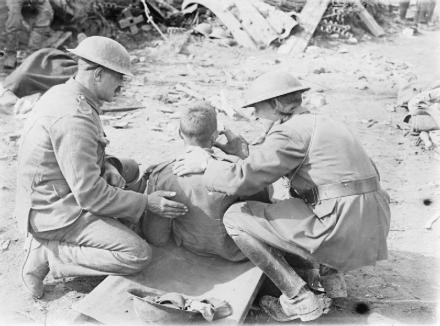
Rare photo of South Africans in action during World War One. Battle of the Menin Road Ridge; part of the Ypres initiatives. A wounded South African being given a hot drink by a Padre and a comrade, after the attack on Potsdam (a German stronghold near Zonnebeke). Near Potijze, 20 September 1917.
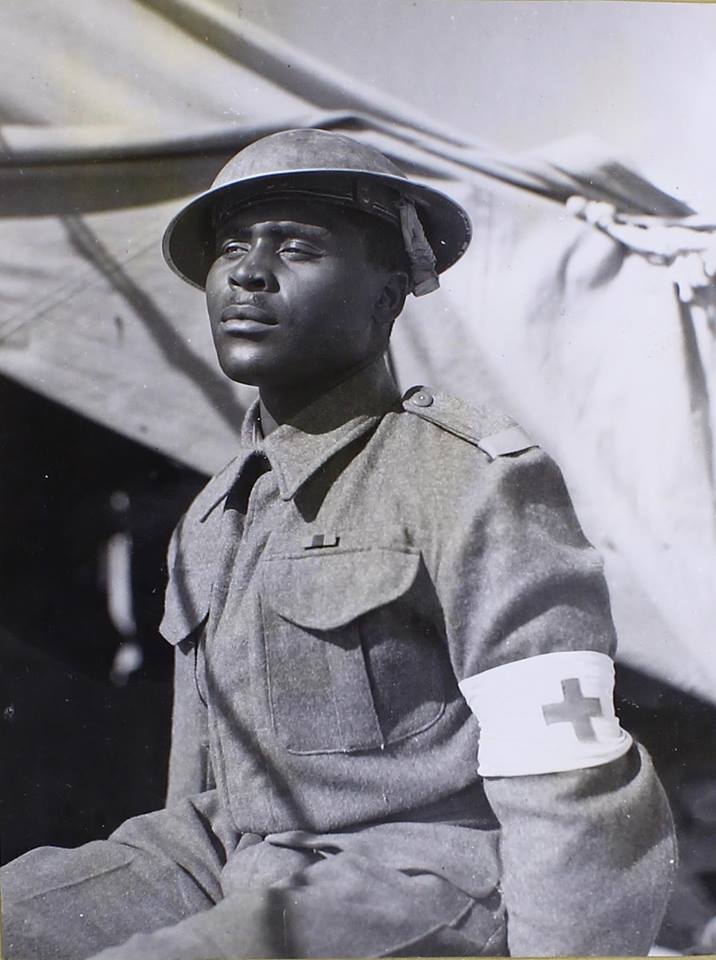
A very notable South African hero. The highest decoration awarded to a Black South African soldier during the Second World War was the DCM (Distinguished Conduct Medal) awarded to Lucas Majozi (1916-1969). Read on for the story of one of South Africa’s bravest.
Lucas Majozi volunteered to fight in the 2nd World War, however as he was a black man, race politics in South Africa dictated that he could only join the Native Military Corps (NMC) in a non-combat role, which meant he and all other South African ‘Bantu’ fighting in World War 2 could not carry a firearm – unlike the Cape Coloured Corps, which could carry firearms and take a combat role. This did not however keep the Native Military Corps away from the perils of fighting and NMC were often fight right in the middle of the fighting. To read up a little more of this, see Observation Post ‘Armed’ SA Native Military Corps in WW2 – this Corps screams out for a definitive work! .
So how does an unarmed NMC soldier get to win one of the highest accolades for bravery in World War 2?
The answer lies in Lucas Majozi’s personality and character, he was a proper South African warrior and although he would be unarmed he volunteered to become a medic working as a stretcher bearer in the thick of fighting to bring wounded men back from harm to aid stations, an extremely dangerous job. Like another Native Military Corps hero – Job Maseko, Lucas Majozi by his actions was also to become one of South Africa’s fighting legends. To read more on Job Maseko and his remarkable bravery read this Observation. Post: Job Maseko; one very remarkable South African war hero
So lets have a look at Lucas Majozi, his account is a truly inspirational one, a very remarkable act of bravery and courage.
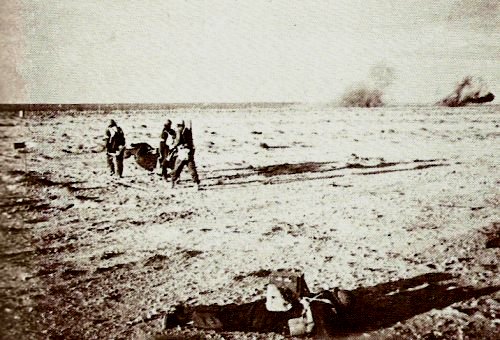
Bardia, taken earlier 31st December 1941, black stretcher-bearers in action under fire (photo : R.Masters from The Kaffrarian Rifles of FL Coleman).
The end of the beginning
The DCM was the second highest British award for gallantry after the Victoria Cross. It was awarded to Lucas Majozi for the great bravery that he displayed during the game-changing 2nd battle of El Alamein which commenced on 23 October 1942 when the British 8th Army under command of General Bernard Montgomery attacked the German/Italian forces under command of Field Marshal Erwin Rommel.
The Battle of El Alamein plays such a significant in the outcome of World War 2, Winston Churchill once remarked; “before Alamein, we never had a victory – after Alamein we never had a defeat” and more famously that Alamein marked the ‘end of the beginning‘ of World War 2.
Operation Lightfoot
The 1st South African Division played a spearhead role. It had to breach the German minefield which had been sown with more than half a million mines – with a dab of military humour this part of the 2nd Battle of El Alamein was called ‘Operation Lightfoot’. South African sappers were to play a significant role opening up the minefield to allow the Allied and South African forces to push through.
General Montgomery’s basic idea was that the Australians and Highlanders were to force a northern corridor through the Axis (German/Italian) minefields while the New Zealanders and South Africans were to do the same in the southern sector.
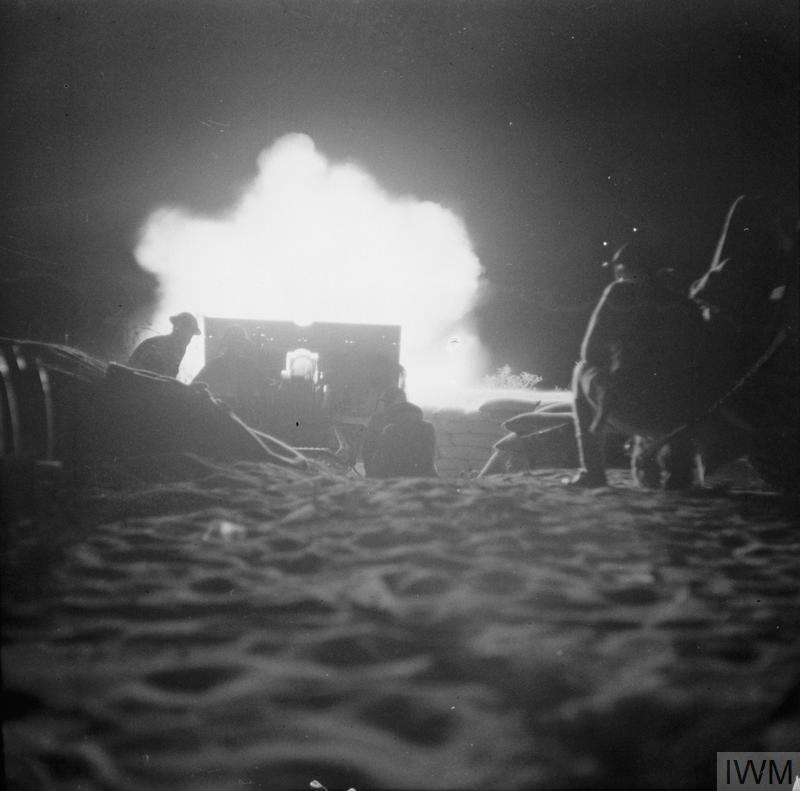
A 25-pdr gun firing during the British night artillery barrage which opened Second Battle of El Alamein, 23 October 1942. Imperial War Museum Copyright
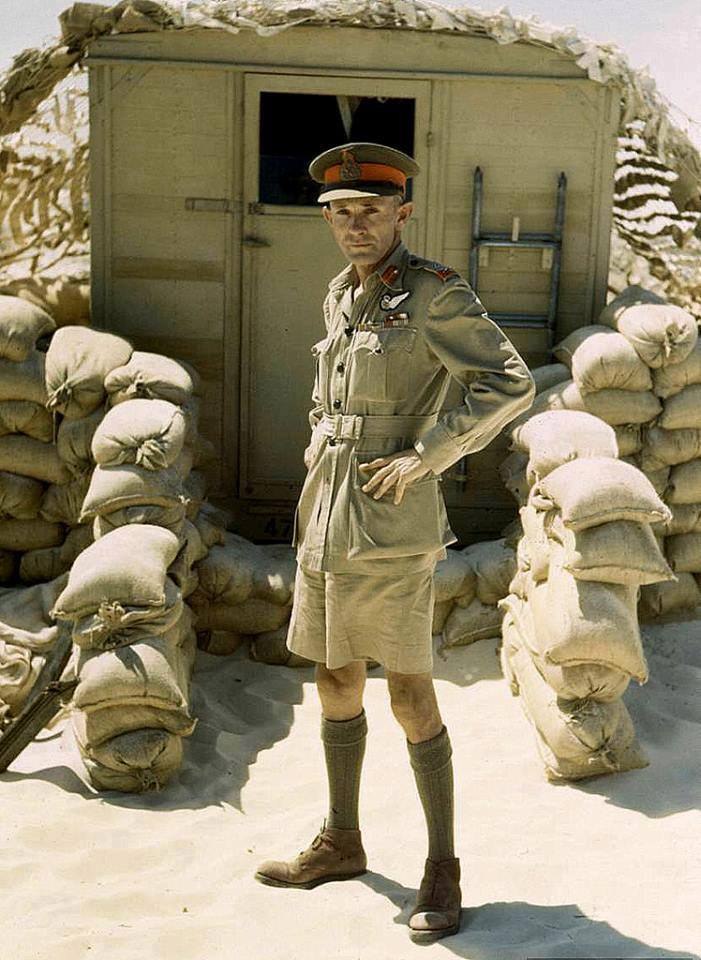
The 1st Infantry Division (South Africa), under the overall command of General Dan Pienaar was tasked attack on a two-brigade front to secure the southern end of Mieiriya Ridge. The Indian 4th and Northumbrian 50th Divisions were deployed to their south and to the north was the 2nd New Zealand Division.
The South Africans were to attack towards the south-west with 2nd SA Infantry Brigade (under the command of Brig. W.H.E. Poole) on the right and the 3rd SA Infantry Brigade (under the Command of Brig. R. Palmer) on the left. The 1st SA Infantry Brigade was deployed further south and was responsible for creating an anti-tank screen to protect the left flank of the South African attack.
Our hero – Lucas Majozi was deployed with Brig. Poole in the 2nd SA Infantry Brigade to attack the South West, and he was in support of the 1st and 2nd Field Force Battalions (FFB) which were basically South African Infantry Corps battalions.
Crumbling Actions
Operation Lightfoot started at 2140 on 23 October with a five-hour fire plan, the start of which signified H-Hour for the infantry assault. General Pienaar had deployed each of the lead brigades, with on battalion leading for the first phase to the “red line” – after a pause of an hour and a quarter, the two trailing battalions would pass though to the final objective on Miteiriya Ridge. By 08:00, the following morning on 24th October the South African objective, Miteiriya Ridge was finally secured, after a very long night of fighting and a very high rate of attrition by way of casualties (the rate of attrition was on a World War 1 scale dubbed ‘crumbling actions’ by General Montgomery who chose this tactic). By the evening of 26 October (as from the H-Hour on the 23rd), the South Africans had suffered 600 casualties (the British had 2000 casualties as well as 1,000 Australians 1000 New Zealanders).
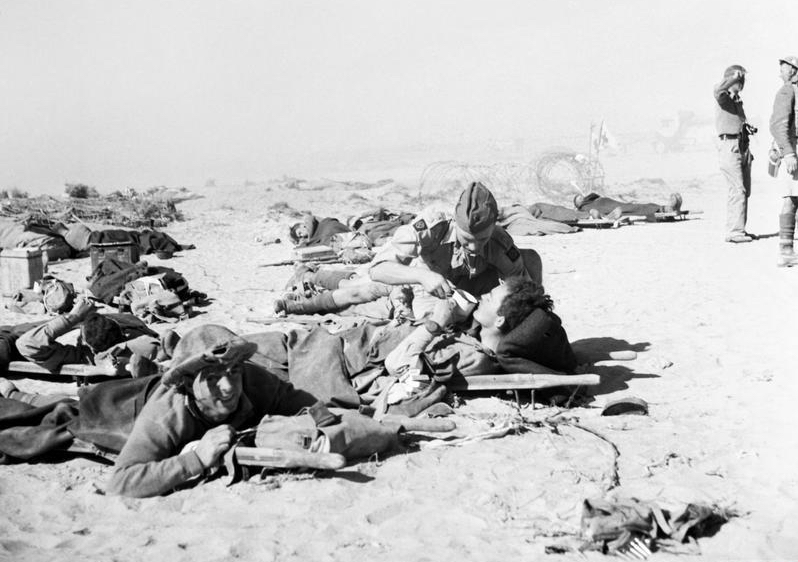
El Alamein 1942: Wounded British soldiers wait on stretchers for attention at an Advanced Dressing Station. A Royal Army Medical Corps officer gives a drink to one of the wounded (Imperial War Museum Copyright)
Into all these ‘crumbling actions,’ of high rates of attrition and loads of casualties comes Lucas Majozi and his remarkable tale of individual bravery.
Pinned down in the Axis minefield
The South African 1st and 2nd Field Force Brigades (FFB), as soon after the battle began, became pinned down in the German Axis forces minefield by intense German machine gun and artillery fire. The South African infantrymen suffered very severe casualties.
Throughout the night of 23 October, the stretcher-bearers worked under heavy enemy fire, tending to the wounded and evacuating them from the battlefield. Amongst these Black NMC non-combatant medics rescuing their White combatant counterparts was Lucas Majozi (see related article Skin colour is irrelevant in a foxhole!). His citation says everything about his actions:
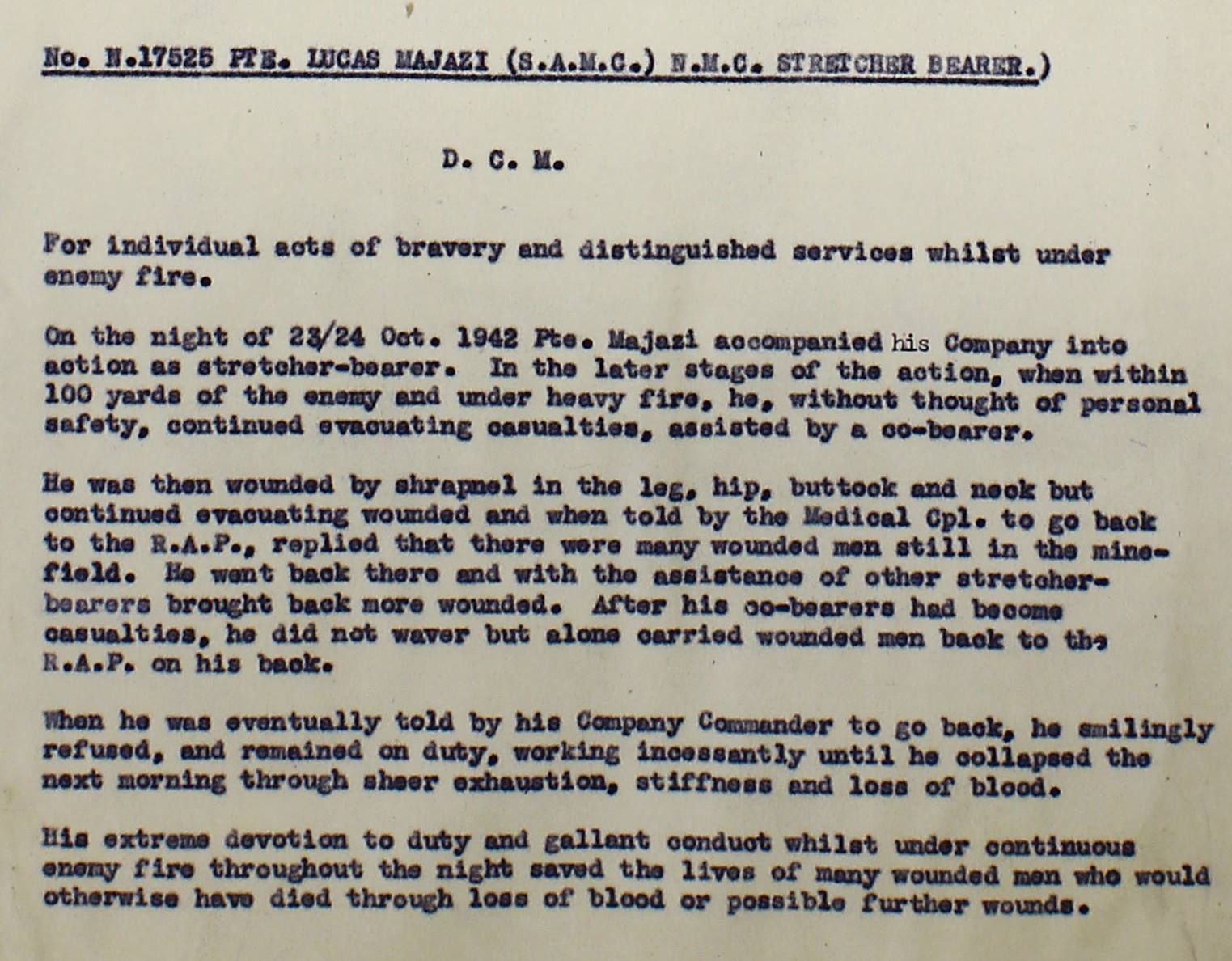
The DCM for Lucas Majozi
Citation given to Lucas Majozi, NMC, for the Distinguished Conduct Medal is given below: No N 17525 Cpl Lucas Majozi, NMC, a Zulu from Zastron, Orange Free State att. FFB – Distinguished Conduct Medal.
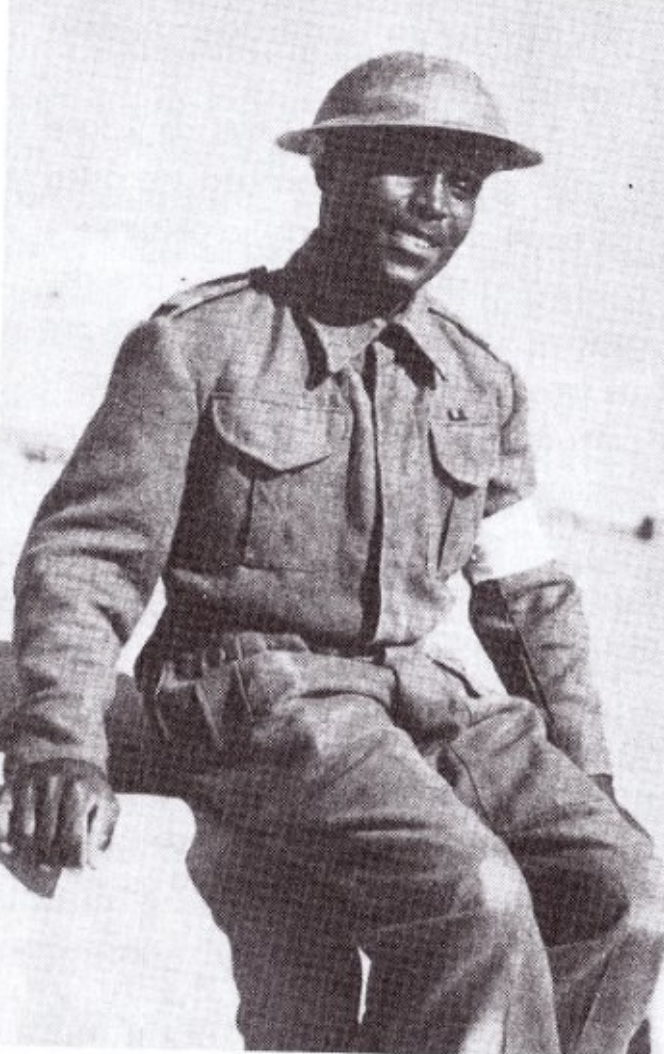
Lucas Majozi
‘On the night of October 23-24, Majozi accompanied his company into action as a stretcher-bearer. In the later stages of the action when he was within 100 yards of the enemy and under heavy fire, he thought nothing of his personal safety and continued to evacuate casualties assisted by co-bearers.
He was then wounded by shrapnel, but he continued evacuating the wounded. Told by a medical corporal to go back to the regimental aid post, he replied that there were many wounded men still in the minefield.
He went back, and with the assistance of other stretcher-bearers, he brought back more wounded. After his co-bearer had become a casualty, he did not waver, but carried wounded men back alone on his back to the aid post.
When he was eventually told by the Company Commander to go back, he smilingly refused and remained on duty, working incessantly till he collapsed next morning through sheer exhaustion, stiffness, and loss of blood. His extreme devotion to duty and gallant conduct under continuous enemy fire throughout the night saved the lives of many wounded men who would otherwise have died through loss of blood or possible further wounds.’
Here is a copy of the original signal:
Aftermath
The British and Commonwealth forces, including the South Africans were able to break out of their initial objectives by the 2nd of November 1942 and the Axis forces were turned in retreat, a retreat from which they never recovered.
At a parade in Egypt after the battle of El Alamein, the commander of the 1st South African Division, Major-General Daniel Hermanus Pienaar (popularly known as Dan Pienaar) said of Lucas Majozi:
‘This soldier did most magnificent and brave things. With a number of bullets in his body he returned time after time into a veritable hell of machine gun fire to pull out wounded men. He is a man of whom South Africa can well be proud. He is a credit to his country.’
Post War
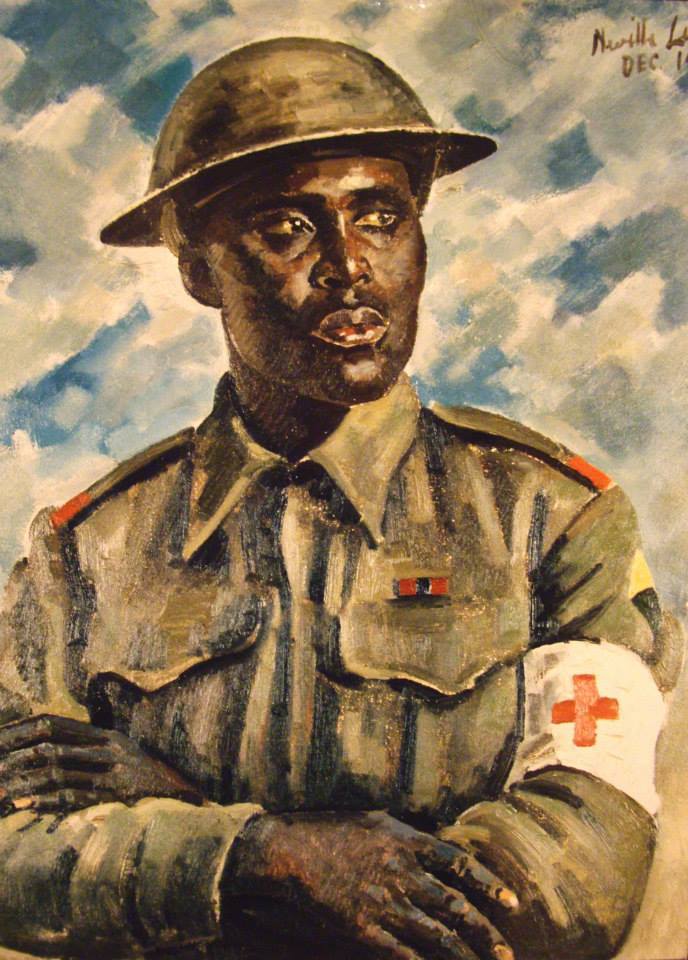
Lucas Majozi DCM ‘Official Portrait’
After the war, Majozi returned to the town of his birth, Zastron. In 1948 he joined the South African Police (SAP), attaining the rank of sergeant. Like all returning South Africa World War 2 heroes (white and black) his legacy and great deed was to be sidelined by the incoming Nationalist government in 1948 and his story lost to many future generations – even today.
In particular the two Black NMC men – Majozi and Maseko who received bravery decorations were somewhat downplayed over the Apartheid years by the Nationalist government and not honoured as national heroes.
Lucas Majozi died in 1969. The South African National Museum of Military History is in possession of both this portrait by the famous artist, Neville Lewis and his medal group. His legacy today is marked by a display at the Delville Wood Museum in France, the SA National History Museum in Saxonwald, a street in Zastron is also named after him. The MOTH (Memorable Order of Tin Hats) Shellhole (clubhouse) for military veterans in Riebeek Kasteel (Western Cape) is also called the Majozi Shellhole in his honour.
Many say he should have received the Victoria Cross (the highest award for gallantry) but did not because he was a black man and due to race politics was not recommended for one – in either event his case should be reviewed by the British issuing authority with the perseverance of the South African National Defence Force attache in London.
He remains a true South African warrior and hero deserving of more of our praise and recognition.
Written and Researched by Peter Dickens. Photographic references Imperial War Museum and Wikipedia. Lucas Majozi DCM official portrait by Neville Lewis – accredited state artist.










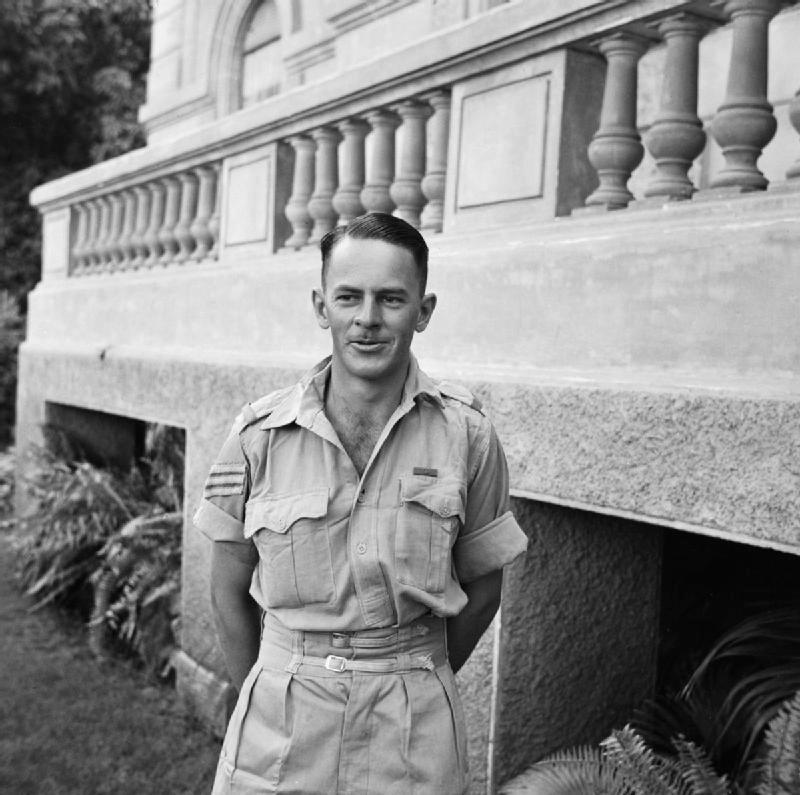 Now this is a very notable South African, and a true hero – Sgt Quentin George Murray Smythe VC, who won the Victoria Cross in the Western Desert on 5 June 1942. The Victoria Cross (VC) is the highest military decoration awarded for valour “in the face of the enemy” to members of the British armed forces and various Commonwealth countries (of which South Africa is one).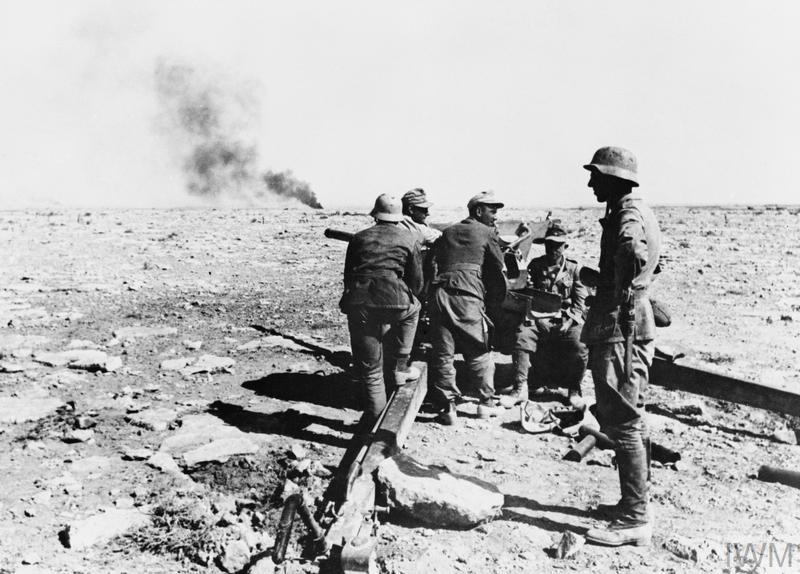








 The Observation Post